
SoS Team
3.4k Posts

SoS Team
Report
Block User
5 Following
377 Followers
155 Liked
Posts
All
Quotes
·
--
Have you noticed how $BTC keeps sweeping the lows just enough to keep shorts feeling completely safe?
Traders sit around waiting for even cheaper prices, missing the reversal entirely and then scrambling to get in later. That hesitation is how you lose out on the real moves.
The market has been doing this on purpose, taking out those lows repeatedly so that opening a long feels like the stupidest thing you could do. Everyone stays short or on the sidelines convinced lower is coming. This psychological barrier is what allows the actual accumulation to happen quietly.
Rather than falling for it, start watching for failed sweeps. When a low gets taken and price doesn't follow through with more selling, that's the time to begin scaling in. Do it with $ETH as well if the pattern matches, keeping your size conservative so you can adjust.
This same dynamic showed up in $BNB not long ago, trapping bears who refused to flip. The ones who acted against the crowd captured the upside.
What's your take on whether we're closer to a squeeze than more downside?
#Bitcoin #CryptoTrading #MarketPsychology
Have you noticed how $BTC keeps sweeping the lows just enough to keep shorts feeling completely safe?
Traders sit around waiting for even cheaper prices, missing the reversal entirely and then scrambling to get in later. That hesitation is how you lose out on the real moves.
The market has been doing this on purpose, taking out those lows repeatedly so that opening a long feels like the stupidest thing you could do. Everyone stays short or on the sidelines convinced lower is coming. This psychological barrier is what allows the actual accumulation to happen quietly.
Rather than falling for it, start watching for failed sweeps. When a low gets taken and price doesn't follow through with more selling, that's the time to begin scaling in. Do it with $ETH as well if the pattern matches, keeping your size conservative so you can adjust.
This same dynamic showed up in $BNB not long ago, trapping bears who refused to flip. The ones who acted against the crowd captured the upside.
What's your take on whether we're closer to a squeeze than more downside?
#Bitcoin #CryptoTrading #MarketPsychology
Traders sit around waiting for even cheaper prices, missing the reversal entirely and then scrambling to get in later. That hesitation is how you lose out on the real moves.
The market has been doing this on purpose, taking out those lows repeatedly so that opening a long feels like the stupidest thing you could do. Everyone stays short or on the sidelines convinced lower is coming. This psychological barrier is what allows the actual accumulation to happen quietly.
Rather than falling for it, start watching for failed sweeps. When a low gets taken and price doesn't follow through with more selling, that's the time to begin scaling in. Do it with $ETH as well if the pattern matches, keeping your size conservative so you can adjust.
This same dynamic showed up in $BNB not long ago, trapping bears who refused to flip. The ones who acted against the crowd captured the upside.
What's your take on whether we're closer to a squeeze than more downside?
#Bitcoin #CryptoTrading #MarketPsychology

29
·
--
Here's what happened when $BTC spent days grinding lower and liquidating every long that tried to fade the move.
The pain of getting stopped out on bounce after bounce is familiar to anyone who has tried catching a falling knife. You keep adding size thinking the reversal is close, only to watch leverage turn a small loss into a blown account.
Over 72 hours last week $BTC rejected $91,500 four separate times, wiping out $280 million in longs while funding stayed positive. The same pressure hit $ETH, trapping even more leveraged buyers who refused to step aside. Most people treated each dip as an entry instead of noticing how one-sided the punishment had become.
When price keeps hitting the same side over and over, trapped positions turn into fuel. That pressure finally released in a sharp 6 percent squeeze that also lifted $ETH and $SOL as shorts got forced to cover. The warning is straightforward: these violent reversals usually arrive after the majority of overleveraged traders are already gone, leaving the remaining longs underwater or liquidated.
Anyone else seeing this same psychology setup forming in other pairs right now?
#MarketPsychology #CryptoTrading #RiskManagement
Here's what happened when $BTC spent days grinding lower and liquidating every long that tried to fade the move.
The pain of getting stopped out on bounce after bounce is familiar to anyone who has tried catching a falling knife. You keep adding size thinking the reversal is close, only to watch leverage turn a small loss into a blown account.
Over 72 hours last week $BTC rejected $91,500 four separate times, wiping out $280 million in longs while funding stayed positive. The same pressure hit $ETH , trapping even more leveraged buyers who refused to step aside. Most people treated each dip as an entry instead of noticing how one-sided the punishment had become.
When price keeps hitting the same side over and over, trapped positions turn into fuel. That pressure finally released in a sharp 6 percent squeeze that also lifted $ETH and $SOL as shorts got forced to cover. The warning is straightforward: these violent reversals usually arrive after the majority of overleveraged traders are already gone, leaving the remaining longs underwater or liquidated.
Anyone else seeing this same psychology setup forming in other pairs right now?
#MarketPsychology #CryptoTrading #RiskManagement
The pain of getting stopped out on bounce after bounce is familiar to anyone who has tried catching a falling knife. You keep adding size thinking the reversal is close, only to watch leverage turn a small loss into a blown account.
Over 72 hours last week $BTC rejected $91,500 four separate times, wiping out $280 million in longs while funding stayed positive. The same pressure hit $ETH , trapping even more leveraged buyers who refused to step aside. Most people treated each dip as an entry instead of noticing how one-sided the punishment had become.
When price keeps hitting the same side over and over, trapped positions turn into fuel. That pressure finally released in a sharp 6 percent squeeze that also lifted $ETH and $SOL as shorts got forced to cover. The warning is straightforward: these violent reversals usually arrive after the majority of overleveraged traders are already gone, leaving the remaining longs underwater or liquidated.
Anyone else seeing this same psychology setup forming in other pairs right now?
#MarketPsychology #CryptoTrading #RiskManagement

53
·
--
If you are still trying to short every local breakdown, stop now.
Watching the market grind down while waiting for lower entries only to get caught on the wrong side of a sudden reversal is painful. Most traders end up completely paralyzed by fear right before the real move happens.
The market just ran the classic liquidity playbook on $BTC. When price repeatedly punishes long positions, it creates a dangerous sense of comfort for late shorts. It conditions participants to expect deeper discounts, making it psychologically difficult to step in and buy.
Some argue that continuing downside momentum on assets like $ETH makes shorting the safer play here. But when the entire room leans heavily to one side, price almost always explodes in the opposite direction to punish consensus. The broader trend remains your best guide, so fighting it during exhaustive sweeps rarely ends well.
Are you still waiting for lower price targets, or do you think the local bottom is already locked in?
#Bitcoin #CryptoTrading #MarketPsychology
If you are still trying to short every local breakdown, stop now.
Watching the market grind down while waiting for lower entries only to get caught on the wrong side of a sudden reversal is painful. Most traders end up completely paralyzed by fear right before the real move happens.
The market just ran the classic liquidity playbook on $BTC . When price repeatedly punishes long positions, it creates a dangerous sense of comfort for late shorts. It conditions participants to expect deeper discounts, making it psychologically difficult to step in and buy.
Some argue that continuing downside momentum on assets like $ETH makes shorting the safer play here. But when the entire room leans heavily to one side, price almost always explodes in the opposite direction to punish consensus. The broader trend remains your best guide, so fighting it during exhaustive sweeps rarely ends well.
Are you still waiting for lower price targets, or do you think the local bottom is already locked in?
#Bitcoin #CryptoTrading #MarketPsychology
Watching the market grind down while waiting for lower entries only to get caught on the wrong side of a sudden reversal is painful. Most traders end up completely paralyzed by fear right before the real move happens.
The market just ran the classic liquidity playbook on $BTC . When price repeatedly punishes long positions, it creates a dangerous sense of comfort for late shorts. It conditions participants to expect deeper discounts, making it psychologically difficult to step in and buy.
Some argue that continuing downside momentum on assets like $ETH makes shorting the safer play here. But when the entire room leans heavily to one side, price almost always explodes in the opposite direction to punish consensus. The broader trend remains your best guide, so fighting it during exhaustive sweeps rarely ends well.
Are you still waiting for lower price targets, or do you think the local bottom is already locked in?
#Bitcoin #CryptoTrading #MarketPsychology

19
·
--
Have you noticed how the market consistently conditions everyone to lean the wrong way right before a massive reversal?
Most traders end up sitting on their hands waiting for lower entries, only to watch price aggressively launch without them and get forced into chasing green candles.
Take the recent price action on $BTC as a classic case study in market psychology. When price continuously punishes longs by sweeping the lows, it creates a false sense of security for aggressive short sellers. It makes opening a long position feel unnatural and keeps the crowd waiting endlessly for deeper discounts.
Liquidity always seeks the path of least resistance. Once the majority gets completely one-sided and sidelines their capital, the market rarely waits for permission before moving violently in the opposite direction, pulling assets like $ETH along with it. The trend remains your primary anchor, yet traders constantly try to front-run tops and bottoms against momentum.
Where do you think the next major liquidity pocket is hiding?
#Bitcoin #CryptoTrading #MarketPsychology
Have you noticed how the market consistently conditions everyone to lean the wrong way right before a massive reversal?
Most traders end up sitting on their hands waiting for lower entries, only to watch price aggressively launch without them and get forced into chasing green candles.
Take the recent price action on $BTC as a classic case study in market psychology. When price continuously punishes longs by sweeping the lows, it creates a false sense of security for aggressive short sellers. It makes opening a long position feel unnatural and keeps the crowd waiting endlessly for deeper discounts.
Liquidity always seeks the path of least resistance. Once the majority gets completely one-sided and sidelines their capital, the market rarely waits for permission before moving violently in the opposite direction, pulling assets like $ETH along with it. The trend remains your primary anchor, yet traders constantly try to front-run tops and bottoms against momentum.
Where do you think the next major liquidity pocket is hiding?
#Bitcoin #CryptoTrading #MarketPsychology
Most traders end up sitting on their hands waiting for lower entries, only to watch price aggressively launch without them and get forced into chasing green candles.
Take the recent price action on $BTC as a classic case study in market psychology. When price continuously punishes longs by sweeping the lows, it creates a false sense of security for aggressive short sellers. It makes opening a long position feel unnatural and keeps the crowd waiting endlessly for deeper discounts.
Liquidity always seeks the path of least resistance. Once the majority gets completely one-sided and sidelines their capital, the market rarely waits for permission before moving violently in the opposite direction, pulling assets like $ETH along with it. The trend remains your primary anchor, yet traders constantly try to front-run tops and bottoms against momentum.
Where do you think the next major liquidity pocket is hiding?
#Bitcoin #CryptoTrading #MarketPsychology

22
·
--
update $LYNKS
flagged $lynks at 83k, now 276k. 3.3x
update $LYNKS
flagged $lynks at 83k, now 276k. 3.3x
flagged $lynks at 83k, now 276k. 3.3x
4
·
--
If you're still hunting for lower prices after getting chopped on $BTC longs, stop now.
Traders keep losing money the same way. They get flushed out of longs then sit waiting for even cheaper entries while shorts feel safer with every low sweep.
Some still believe the downtrend has more room because every rally has been sold. That view is understandable after watching longs get punished repeatedly.
But market psychology works the other way too. When price keeps beating the same side over and over, it eventually snaps violently in the opposite direction.
Right now most participants find it almost impossible to open longs and are parked in shorts waiting for more downside. That crowded positioning is exactly when $ETH and $BTC tend to squeeze hardest. The trend will be your friend once it confirms. Stop looking for shorts just because recent action made it feel obvious.
Where do you think this goes from here?
#Bitcoin #CryptoTrading #MarketPsychology
If you're still hunting for lower prices after getting chopped on $BTC longs, stop now.
Traders keep losing money the same way. They get flushed out of longs then sit waiting for even cheaper entries while shorts feel safer with every low sweep.
Some still believe the downtrend has more room because every rally has been sold. That view is understandable after watching longs get punished repeatedly.
But market psychology works the other way too. When price keeps beating the same side over and over, it eventually snaps violently in the opposite direction.
Right now most participants find it almost impossible to open longs and are parked in shorts waiting for more downside. That crowded positioning is exactly when $ETH and $BTC tend to squeeze hardest. The trend will be your friend once it confirms. Stop looking for shorts just because recent action made it feel obvious.
Where do you think this goes from here?
#Bitcoin #CryptoTrading #MarketPsychology
Traders keep losing money the same way. They get flushed out of longs then sit waiting for even cheaper entries while shorts feel safer with every low sweep.
Some still believe the downtrend has more room because every rally has been sold. That view is understandable after watching longs get punished repeatedly.
But market psychology works the other way too. When price keeps beating the same side over and over, it eventually snaps violently in the opposite direction.
Right now most participants find it almost impossible to open longs and are parked in shorts waiting for more downside. That crowded positioning is exactly when $ETH and $BTC tend to squeeze hardest. The trend will be your friend once it confirms. Stop looking for shorts just because recent action made it feel obvious.
Where do you think this goes from here?
#Bitcoin #CryptoTrading #MarketPsychology

62
·
--
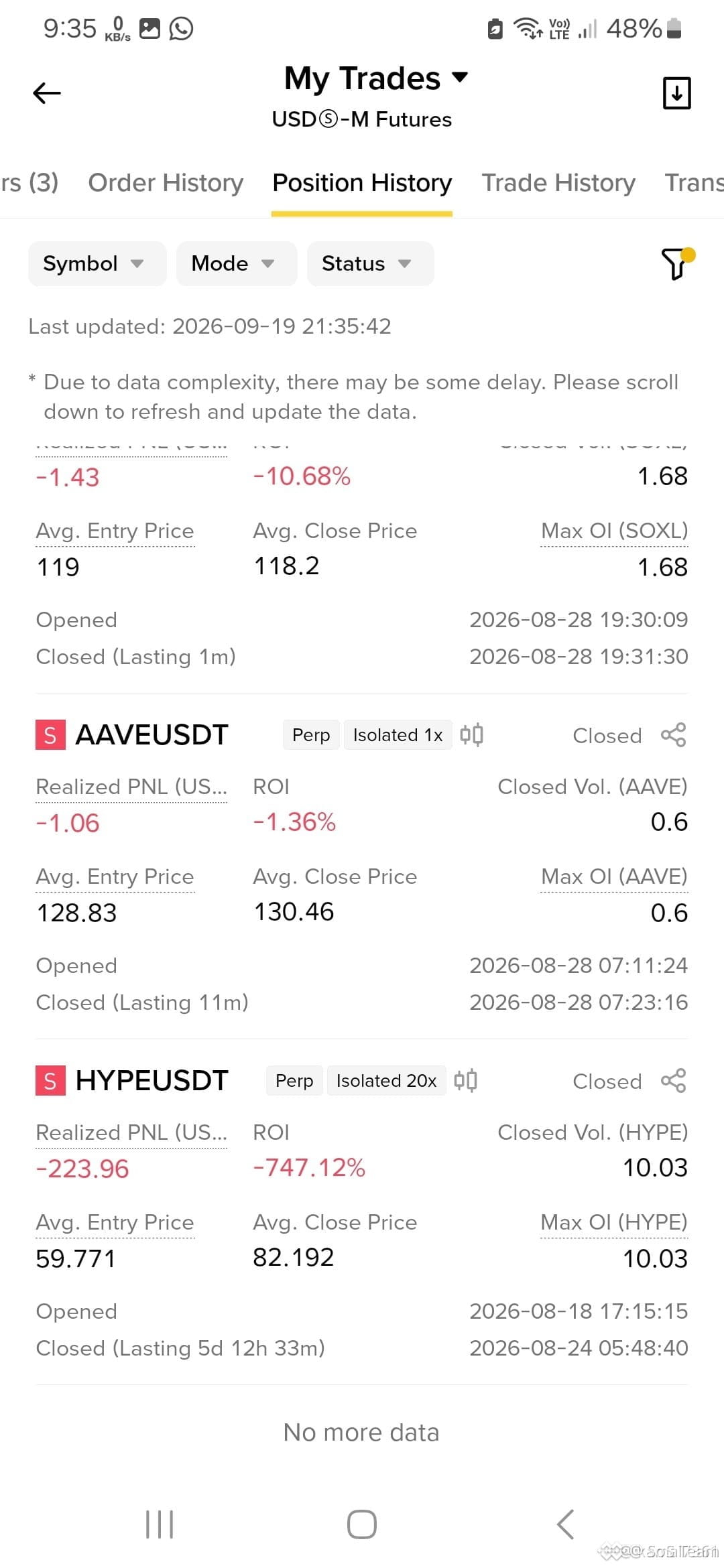
Have you noticed how beginner luck in leverage trading is often the most expensive thing that can happen to your portfolio?
Most traders do not blow their accounts because they lack technical chart skills. They blow up because early green candles convince them that risk management is optional, turning a single unhedged mistake into an emotional spiral.
Take a recent case where a beginner started with just $75 and walked away with a $41 profit during their first week trading $BTC contracts. That initial win created instant overconfidence, prompting an immediate $200 deposit. The very next position was opened without a stop loss, wiping out the entire balance in a single volatile move.
Instead of stepping back, the classic revenge-trading trap took over. Another $600 was deposited to chase back the deficit across multiple choppy $ETH and $BNB positions, only to vanish within days. In less than three weeks, an innocent $75 experiment turned into a painful loss of over $800.
At what point in your trading journey did you realize that capital preservation matters far more than trying to win back a loss?
#CryptoTrading #FuturesTrading #RiskManagement
Have you noticed how beginner luck in leverage trading is often the most expensive thing that can happen to your portfolio?
Most traders do not blow their accounts because they lack technical chart skills. They blow up because early green candles convince them that risk management is optional, turning a single unhedged mistake into an emotional spiral.
Take a recent case where a beginner started with just $75 and walked away with a $41 profit during their first week trading $BTC contracts. That initial win created instant overconfidence, prompting an immediate $200 deposit. The very next position was opened without a stop loss, wiping out the entire balance in a single volatile move.
Instead of stepping back, the classic revenge-trading trap took over. Another $600 was deposited to chase back the deficit across multiple choppy $ETH and $BNB positions, only to vanish within days. In less than three weeks, an innocent $75 experiment turned into a painful loss of over $800.
At what point in your trading journey did you realize that capital preservation matters far more than trying to win back a loss?
#CryptoTrading #FuturesTrading #RiskManagement
Most traders do not blow their accounts because they lack technical chart skills. They blow up because early green candles convince them that risk management is optional, turning a single unhedged mistake into an emotional spiral.
Take a recent case where a beginner started with just $75 and walked away with a $41 profit during their first week trading $BTC contracts. That initial win created instant overconfidence, prompting an immediate $200 deposit. The very next position was opened without a stop loss, wiping out the entire balance in a single volatile move.
Instead of stepping back, the classic revenge-trading trap took over. Another $600 was deposited to chase back the deficit across multiple choppy $ETH and $BNB positions, only to vanish within days. In less than three weeks, an innocent $75 experiment turned into a painful loss of over $800.
At what point in your trading journey did you realize that capital preservation matters far more than trying to win back a loss?
#CryptoTrading #FuturesTrading #RiskManagement
98
·
--
Most retail traders lose money not because they pick the wrong setups, but because they buy after the breakout has already happened.
We have all felt the pain of watching a quiet asset hover in accumulation, ignoring the setup, and then impulsively buying the top once green candles take over.
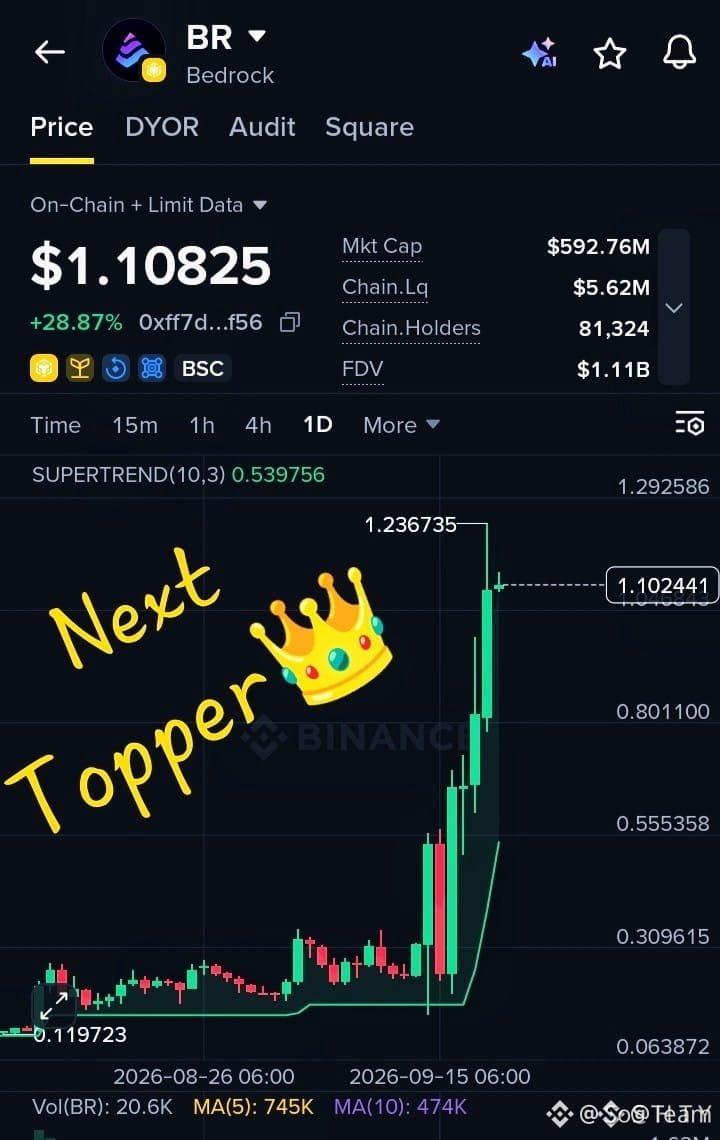
During previous market cycles, the cleanest expansions came from recognizing quiet consolidation before the crowd caught on. Right now, $BR is trading near 0.62728 with a subtle 2.8% gain, largely flying under the radar while broad market attention fixates on $BTC dominance.
When an asset builds a structured base at these levels, projected ranges between 2.16 and 2.43 become realistic extension targets rather than wishful thinking. The math on a 100% rally is straightforward, but holding through early chop requires patience that most participants lack. Much like early accumulation setups on $ETH, entering before momentum takes over makes all the difference.
Are you taking positions during quiet consolidation phases, or do you wait for confirmed breakout volume?
#CryptoTrading #Altcoins #TradingStrategy
Most retail traders lose money not because they pick the wrong setups, but because they buy after the breakout has already happened.
We have all felt the pain of watching a quiet asset hover in accumulation, ignoring the setup, and then impulsively buying the top once green candles take over.
During previous market cycles, the cleanest expansions came from recognizing quiet consolidation before the crowd caught on. Right now, $BR is trading near 0.62728 with a subtle 2.8% gain, largely flying under the radar while broad market attention fixates on $BTC dominance.
When an asset builds a structured base at these levels, projected ranges between 2.16 and 2.43 become realistic extension targets rather than wishful thinking. The math on a 100% rally is straightforward, but holding through early chop requires patience that most participants lack. Much like early accumulation setups on $ETH , entering before momentum takes over makes all the difference.
Are you taking positions during quiet consolidation phases, or do you wait for confirmed breakout volume?
#CryptoTrading #Altcoins #TradingStrategy
We have all felt the pain of watching a quiet asset hover in accumulation, ignoring the setup, and then impulsively buying the top once green candles take over.
During previous market cycles, the cleanest expansions came from recognizing quiet consolidation before the crowd caught on. Right now, $BR is trading near 0.62728 with a subtle 2.8% gain, largely flying under the radar while broad market attention fixates on $BTC dominance.
When an asset builds a structured base at these levels, projected ranges between 2.16 and 2.43 become realistic extension targets rather than wishful thinking. The math on a 100% rally is straightforward, but holding through early chop requires patience that most participants lack. Much like early accumulation setups on $ETH , entering before momentum takes over makes all the difference.
Are you taking positions during quiet consolidation phases, or do you wait for confirmed breakout volume?
#CryptoTrading #Altcoins #TradingStrategy
342
·
--
Picture this: you wake up to green candles everywhere, only to realize your short position just got wiped out in minutes.
Most traders still think aggressive pumps happen solely because organic spot buyers step in, but the harsh reality is that forced liquidations are often the real fuel behind these sudden spikes.
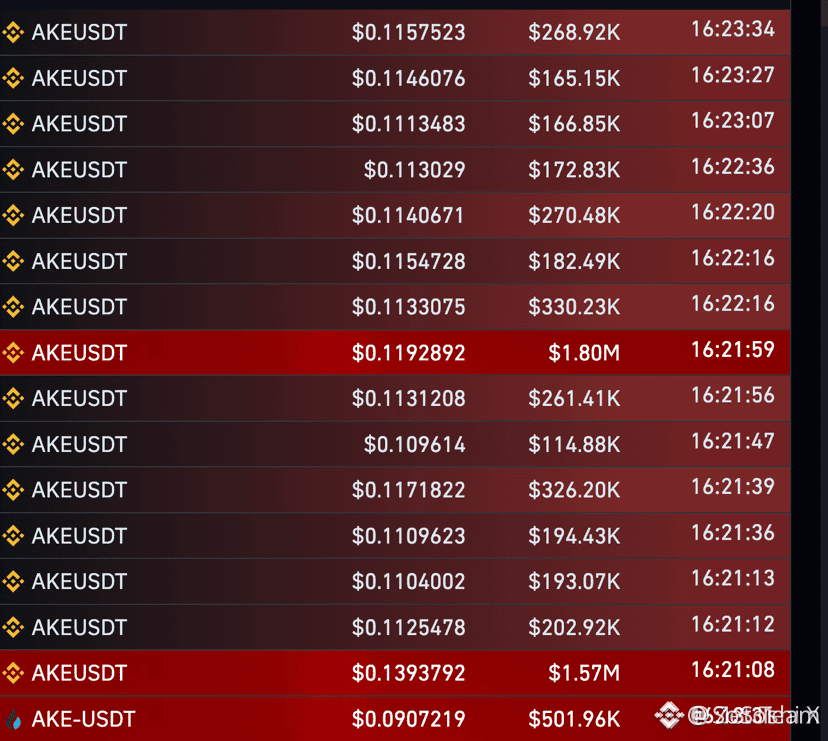
When $AKE pushed through the $0.11 to $0.12 range, millions of dollars in short liquidations triggered a massive squeeze, much like what we frequently witness on volatile pairs like $TRB and $GAS during their early breakout phases. The mechanics are identical: as cascading stops get hit, market buys execute automatically, driving the price even higher regardless of spot demand.
With heavy leverage building up, the bigger fish are usually hunting for the next cluster of stops sitting overhead. Anyone stepping into leverage right now should remember that chasing counter-trend shorts into high open interest rarely ends well.
Where do you think the next major liquidity pocket is sitting?
#Binance #CryptoTrading #ShortSqueeze
Picture this: you wake up to green candles everywhere, only to realize your short position just got wiped out in minutes.
Most traders still think aggressive pumps happen solely because organic spot buyers step in, but the harsh reality is that forced liquidations are often the real fuel behind these sudden spikes.
When $AKE pushed through the $0.11 to $0.12 range, millions of dollars in short liquidations triggered a massive squeeze, much like what we frequently witness on volatile pairs like $TRB and $GAS during their early breakout phases. The mechanics are identical: as cascading stops get hit, market buys execute automatically, driving the price even higher regardless of spot demand.
With heavy leverage building up, the bigger fish are usually hunting for the next cluster of stops sitting overhead. Anyone stepping into leverage right now should remember that chasing counter-trend shorts into high open interest rarely ends well.
Where do you think the next major liquidity pocket is sitting?
#Binance #CryptoTrading #ShortSqueeze
Most traders still think aggressive pumps happen solely because organic spot buyers step in, but the harsh reality is that forced liquidations are often the real fuel behind these sudden spikes.
When $AKE pushed through the $0.11 to $0.12 range, millions of dollars in short liquidations triggered a massive squeeze, much like what we frequently witness on volatile pairs like $TRB and $GAS during their early breakout phases. The mechanics are identical: as cascading stops get hit, market buys execute automatically, driving the price even higher regardless of spot demand.
With heavy leverage building up, the bigger fish are usually hunting for the next cluster of stops sitting overhead. Anyone stepping into leverage right now should remember that chasing counter-trend shorts into high open interest rarely ends well.
Where do you think the next major liquidity pocket is sitting?
#Binance #CryptoTrading #ShortSqueeze
754
·
--
🟩 $DUEL - #ROBINHOOD gamble
0x6d0f5047704ca09d73c946612dc98ef62561fd5c
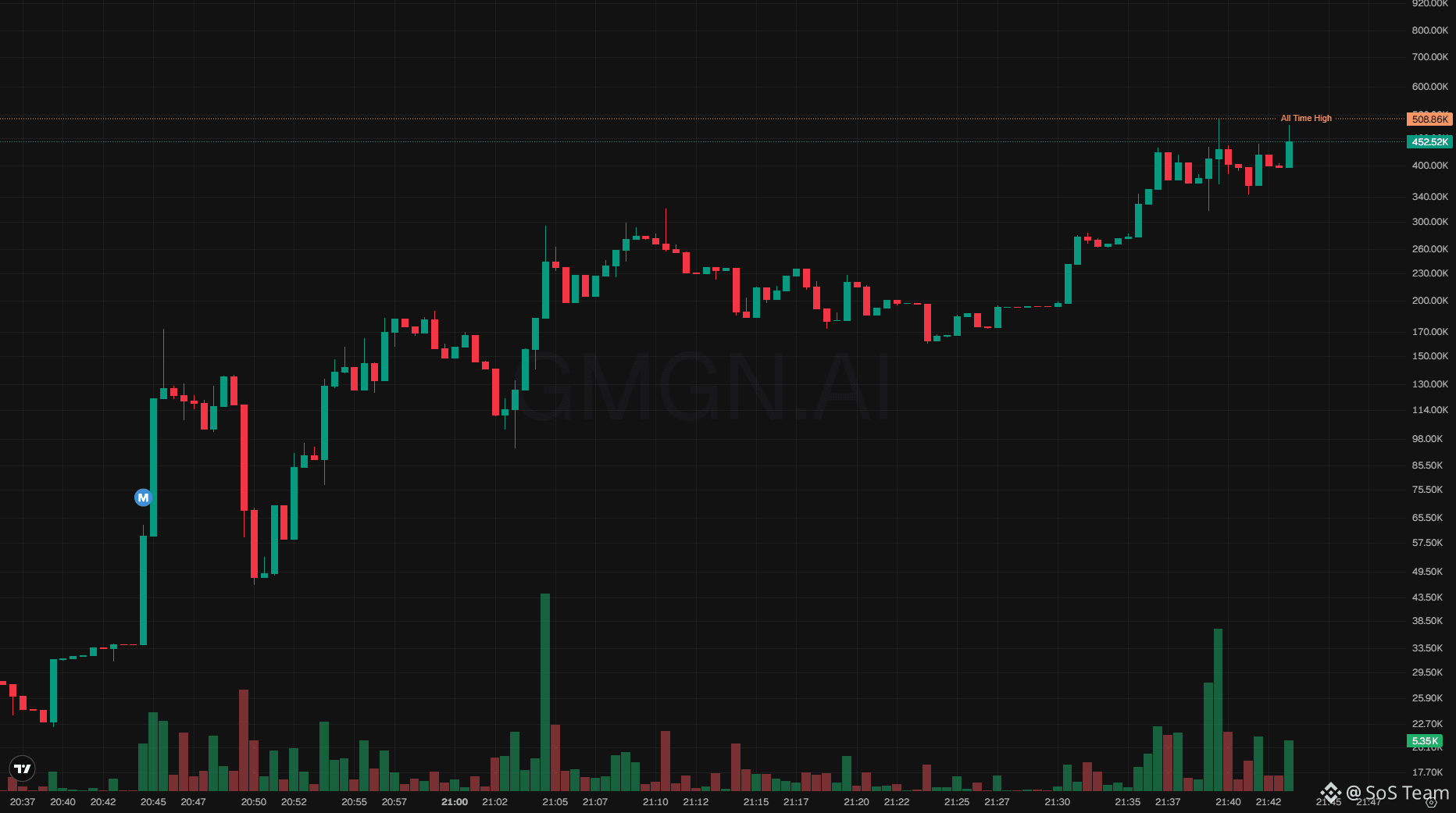
mcap: $453K
fair fight energy with the shield and crossed swords logo locking in honest competition, pulled from that permissionless ai evaluation market where prompts get thrown into the ring head to head for real reviews. dyor
https://gmgn.ai/robinhood/token/0x6d0f5047704ca09d73c946612dc98ef62561fd5c
https://t.me/based_eth_bot?start=0x6d0f5047704ca09d73c946612dc98ef62561fd5c
🟩 $DUEL - #ROBINHOOD gamble
0x6d0f5047704ca09d73c946612dc98ef62561fd5c
mcap: $453K
fair fight energy with the shield and crossed swords logo locking in honest competition, pulled from that permissionless ai evaluation market where prompts get thrown into the ring head to head for real reviews. dyor
https://gmgn.ai/robinhood/token/0x6d0f5047704ca09d73c946612dc98ef62561fd5c
https://t.me/based_eth_bot?start=0x6d0f5047704ca09d73c946612dc98ef62561fd5c
0x6d0f5047704ca09d73c946612dc98ef62561fd5c
mcap: $453K
fair fight energy with the shield and crossed swords logo locking in honest competition, pulled from that permissionless ai evaluation market where prompts get thrown into the ring head to head for real reviews. dyor
https://gmgn.ai/robinhood/token/0x6d0f5047704ca09d73c946612dc98ef62561fd5c
https://t.me/based_eth_bot?start=0x6d0f5047704ca09d73c946612dc98ef62561fd5c
428
·
--
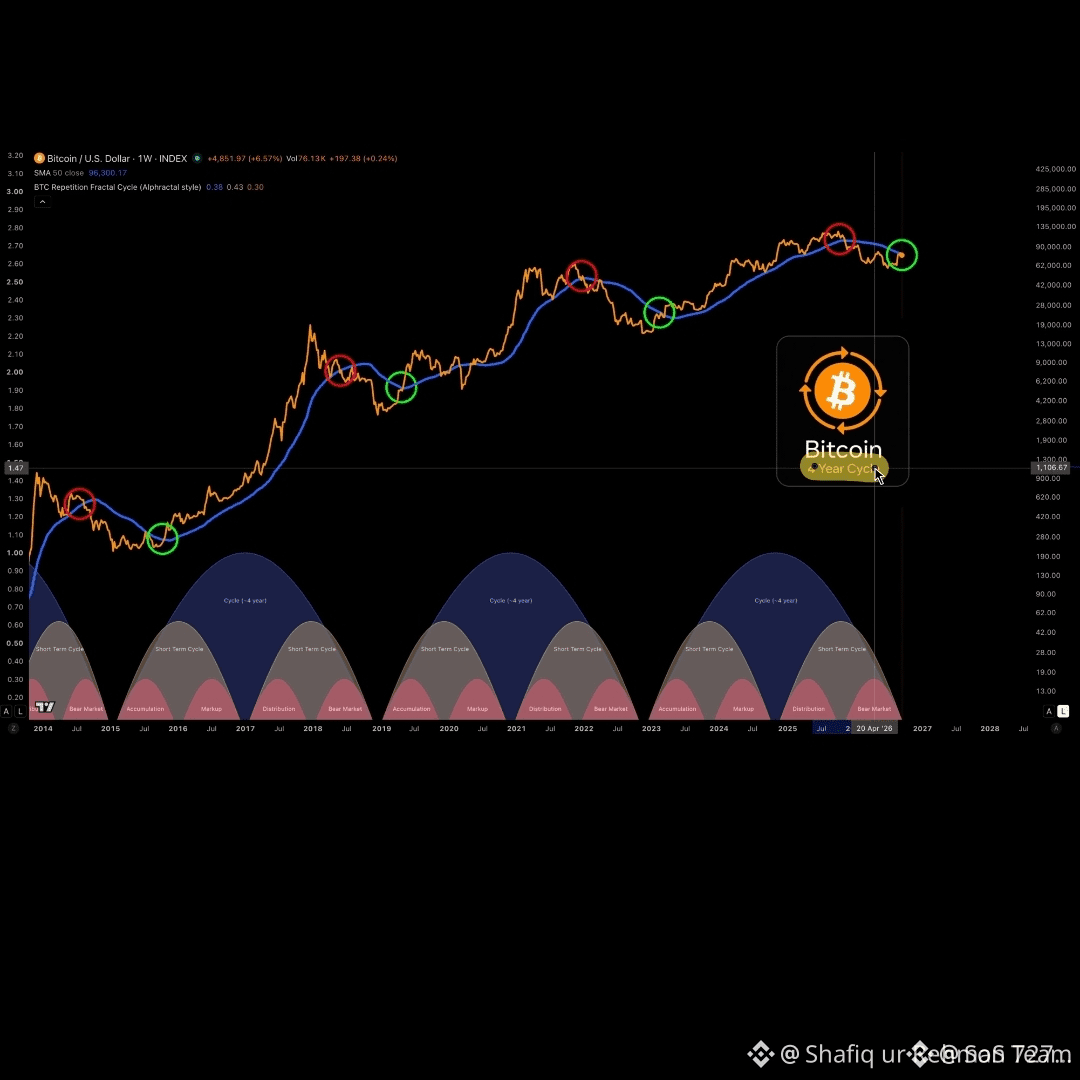
Picture this: while most traders were busy overanalyzing short-term chop, Michael Saylor dropped hints that MicroStrategy is preparing for another massive Bitcoin buy.
Most retail investors get trapped chasing green candles right after $BTC surges 5.89%, only to panic and sell at the first sign of a pullback. It is the classic cycle of hesitating during accumulation and then buying the top out of pure FOMO.
Look at how corporate balance sheets approach market liquidity compared to retail traders. When MicroStrategy hints at expanding its reserves, it drives institutional confidence that pushed $MSTR up 8.93% in trading volume. They are executing the exact playbook seen in previous accumulation phases, treating every consolidation as a liquidity window rather than a danger zone.
Comparing this to traditional corporate cash reserves, holding hard assets on a public balance sheet was once considered reckless. Today, that systematic treasury model has set a precedent that other companies are slowly beginning to replicate.
Where do you think institutional accumulation takes the market from here?
#Bitcoin #Strategy #Crypto
Picture this: while most traders were busy overanalyzing short-term chop, Michael Saylor dropped hints that MicroStrategy is preparing for another massive Bitcoin buy.
Most retail investors get trapped chasing green candles right after $BTC surges 5.89%, only to panic and sell at the first sign of a pullback. It is the classic cycle of hesitating during accumulation and then buying the top out of pure FOMO.
Look at how corporate balance sheets approach market liquidity compared to retail traders. When MicroStrategy hints at expanding its reserves, it drives institutional confidence that pushed $MSTR up 8.93% in trading volume. They are executing the exact playbook seen in previous accumulation phases, treating every consolidation as a liquidity window rather than a danger zone.
Comparing this to traditional corporate cash reserves, holding hard assets on a public balance sheet was once considered reckless. Today, that systematic treasury model has set a precedent that other companies are slowly beginning to replicate.
Where do you think institutional accumulation takes the market from here?
#Bitcoin #Strategy #Crypto
Most retail investors get trapped chasing green candles right after $BTC surges 5.89%, only to panic and sell at the first sign of a pullback. It is the classic cycle of hesitating during accumulation and then buying the top out of pure FOMO.
Look at how corporate balance sheets approach market liquidity compared to retail traders. When MicroStrategy hints at expanding its reserves, it drives institutional confidence that pushed $MSTR up 8.93% in trading volume. They are executing the exact playbook seen in previous accumulation phases, treating every consolidation as a liquidity window rather than a danger zone.
Comparing this to traditional corporate cash reserves, holding hard assets on a public balance sheet was once considered reckless. Today, that systematic treasury model has set a precedent that other companies are slowly beginning to replicate.
Where do you think institutional accumulation takes the market from here?
#Bitcoin #Strategy #Crypto
554
·
--
Why is nobody talking about how traditional markets are designed to leave you hanging overnight?
You plan your trades around the opening bell only to wake up to a gap that wipes out your thesis because some announcement hit while you were asleep. That's how crypto traders lose money they never should have.
Traditional equity markets open 8 hours a day, 5 days a week. The other 16 hours plus every weekend prices still move and news still breaks. That gap is the entire reason 24/7 perpetual markets exist in the first place.
While the old system clocks out $BTC can reverse on a single headline, $ETH volatility spikes without warning, and $BNB perps keep trading through it all. The real edge comes from treating this as always-on instead of pretending crypto follows stock hours.
Build systems that work around the clock. Alerts that ping you, stops that trail regardless of time, and position sizes that account for overnight risk. That's how you stop fighting the 24/7 nature of this market.
Where do you think this 24/7 advantage takes us as more capital flows in?
#Crypto #Perpetuals #Trading
Why is nobody talking about how traditional markets are designed to leave you hanging overnight?
You plan your trades around the opening bell only to wake up to a gap that wipes out your thesis because some announcement hit while you were asleep. That's how crypto traders lose money they never should have.
Traditional equity markets open 8 hours a day, 5 days a week. The other 16 hours plus every weekend prices still move and news still breaks. That gap is the entire reason 24/7 perpetual markets exist in the first place.
While the old system clocks out $BTC can reverse on a single headline, $ETH volatility spikes without warning, and $BNB perps keep trading through it all. The real edge comes from treating this as always-on instead of pretending crypto follows stock hours.
Build systems that work around the clock. Alerts that ping you, stops that trail regardless of time, and position sizes that account for overnight risk. That's how you stop fighting the 24/7 nature of this market.
Where do you think this 24/7 advantage takes us as more capital flows in?
#Crypto #Perpetuals #Trading
You plan your trades around the opening bell only to wake up to a gap that wipes out your thesis because some announcement hit while you were asleep. That's how crypto traders lose money they never should have.
Traditional equity markets open 8 hours a day, 5 days a week. The other 16 hours plus every weekend prices still move and news still breaks. That gap is the entire reason 24/7 perpetual markets exist in the first place.
While the old system clocks out $BTC can reverse on a single headline, $ETH volatility spikes without warning, and $BNB perps keep trading through it all. The real edge comes from treating this as always-on instead of pretending crypto follows stock hours.
Build systems that work around the clock. Alerts that ping you, stops that trail regardless of time, and position sizes that account for overnight risk. That's how you stop fighting the 24/7 nature of this market.
Where do you think this 24/7 advantage takes us as more capital flows in?
#Crypto #Perpetuals #Trading

165
·
--
Chasing rogue wicks on isolated order books is one of the fastest ways to lose your capital. Most traders see an anomalous green candle, panic into FOMO, and end up buying the exact top of an illiquid spike before getting instantly wrecked.
We just saw a wild print showing $BTC touching $145k while the broader market is still actively fighting to hold $84k. Some traders will argue that these extreme wicks offer a glimpse into hidden institutional liquidity or future price discovery, claiming thin order books reveal where the market eventually wants to go.
In reality, treating an isolated wick as a macro signal is pure delusion. When depth drops against $USDT, a single aggressive market order can distort the tape by tens of thousands of dollars, but true trend continuation requires broad market consensus rather than a fleeting print.
Did you see that crazy wick, or are you strictly waiting for spot volume to confirm the next move?
#Bitcoin #CryptoTrading #BTC
Chasing rogue wicks on isolated order books is one of the fastest ways to lose your capital. Most traders see an anomalous green candle, panic into FOMO, and end up buying the exact top of an illiquid spike before getting instantly wrecked.
We just saw a wild print showing $BTC touching $145k while the broader market is still actively fighting to hold $84k. Some traders will argue that these extreme wicks offer a glimpse into hidden institutional liquidity or future price discovery, claiming thin order books reveal where the market eventually wants to go.
In reality, treating an isolated wick as a macro signal is pure delusion. When depth drops against $USDT, a single aggressive market order can distort the tape by tens of thousands of dollars, but true trend continuation requires broad market consensus rather than a fleeting print.
Did you see that crazy wick, or are you strictly waiting for spot volume to confirm the next move?
#Bitcoin #CryptoTrading #BTC
We just saw a wild print showing $BTC touching $145k while the broader market is still actively fighting to hold $84k. Some traders will argue that these extreme wicks offer a glimpse into hidden institutional liquidity or future price discovery, claiming thin order books reveal where the market eventually wants to go.
In reality, treating an isolated wick as a macro signal is pure delusion. When depth drops against $USDT, a single aggressive market order can distort the tape by tens of thousands of dollars, but true trend continuation requires broad market consensus rather than a fleeting print.
Did you see that crazy wick, or are you strictly waiting for spot volume to confirm the next move?
#Bitcoin #CryptoTrading #BTC

2.2k
·
--
everyone thinks that crazy 150k print means we are teleporting straight to Valhalla, but chasing illiquid exchange wicks is how most traders get completely wiped out.
ser, ngl watching numbers fly makes people fomo into high-leverage longs at the worst possible time, only to get liquidated minutes later when reality hits.
look at what actually happened with $BTC this morning. the real spot bid pushed price to an $84,000 high for the first time in eight months, backed by roughly $593 million in etf inflows across thursday and friday alone. that is genuine institutional spot demand absorbing supply, not some random leverage squeeze.
meanwhile, that wild $150k spike on the chart was just an isolated bitfinex wick on thin liquidity. if you treat an exchange anomaly like actual market structure while $ETH and major pairs consolidate, the market will take your money every single time.
where do you think this spot momentum takes us once the weekend dust settles?
#Bitcoin #CryptoTrading #Binance
everyone thinks that crazy 150k print means we are teleporting straight to Valhalla, but chasing illiquid exchange wicks is how most traders get completely wiped out.
ser, ngl watching numbers fly makes people fomo into high-leverage longs at the worst possible time, only to get liquidated minutes later when reality hits.
look at what actually happened with $BTC this morning. the real spot bid pushed price to an $84,000 high for the first time in eight months, backed by roughly $593 million in etf inflows across thursday and friday alone. that is genuine institutional spot demand absorbing supply, not some random leverage squeeze.
meanwhile, that wild $150k spike on the chart was just an isolated bitfinex wick on thin liquidity. if you treat an exchange anomaly like actual market structure while $ETH and major pairs consolidate, the market will take your money every single time.
where do you think this spot momentum takes us once the weekend dust settles?
#Bitcoin #CryptoTrading #Binance
ser, ngl watching numbers fly makes people fomo into high-leverage longs at the worst possible time, only to get liquidated minutes later when reality hits.
look at what actually happened with $BTC this morning. the real spot bid pushed price to an $84,000 high for the first time in eight months, backed by roughly $593 million in etf inflows across thursday and friday alone. that is genuine institutional spot demand absorbing supply, not some random leverage squeeze.
meanwhile, that wild $150k spike on the chart was just an isolated bitfinex wick on thin liquidity. if you treat an exchange anomaly like actual market structure while $ETH and major pairs consolidate, the market will take your money every single time.
where do you think this spot momentum takes us once the weekend dust settles?
#Bitcoin #CryptoTrading #Binance

323
·
--
Have you noticed how those violent wicks on perpetual futures almost never show up the same way in actual spot?
Traders keep getting wrecked treating every perp dump as a real crash. That's how you blow up chasing moves that never even hit the cash market.
Perpetual futures can gap when size hits an empty order book. The last trade jumps, local shorts get liquidated, and the wick prints. It looks like the market just collapsed.
Spot, the ETFs, and the global index do not have to follow that print at all. They only move when real bids actually lift the cash market. This happens constantly in $BTC and $ETH, especially when books thin out.
People still treat futures charts as the true price. They're not. Those wicks are often just isolated liquidation cascades, not genuine selling.
What's your take on trading these fake perp moves versus waiting for spot confirmation?
#Bitcoin #CryptoTrading #Perps
Have you noticed how those violent wicks on perpetual futures almost never show up the same way in actual spot?
Traders keep getting wrecked treating every perp dump as a real crash. That's how you blow up chasing moves that never even hit the cash market.
Perpetual futures can gap when size hits an empty order book. The last trade jumps, local shorts get liquidated, and the wick prints. It looks like the market just collapsed.
Spot, the ETFs, and the global index do not have to follow that print at all. They only move when real bids actually lift the cash market. This happens constantly in $BTC and $ETH , especially when books thin out.
People still treat futures charts as the true price. They're not. Those wicks are often just isolated liquidation cascades, not genuine selling.
What's your take on trading these fake perp moves versus waiting for spot confirmation?
#Bitcoin #CryptoTrading #Perps
Traders keep getting wrecked treating every perp dump as a real crash. That's how you blow up chasing moves that never even hit the cash market.
Perpetual futures can gap when size hits an empty order book. The last trade jumps, local shorts get liquidated, and the wick prints. It looks like the market just collapsed.
Spot, the ETFs, and the global index do not have to follow that print at all. They only move when real bids actually lift the cash market. This happens constantly in $BTC and $ETH , especially when books thin out.
People still treat futures charts as the true price. They're not. Those wicks are often just isolated liquidation cascades, not genuine selling.
What's your take on trading these fake perp moves versus waiting for spot confirmation?
#Bitcoin #CryptoTrading #Perps

86
·
--
A single 15-minute candle printing a wick to $145,194 does not mean the market just entered price discovery.
Too many traders wake up in a panic, seeing phantom spikes on isolated charts and market-buying out of pure FOMO. It is one of the quickest ways to donate your hard-earned capital directly into a liquidity trap.
During a recent session, a sudden wick on a thin perpetual contract blasted all the way to 145,194 while that exact candle maintained an open of 78,450, a high of 78,814, and a close of 78,762. If you looked only at that isolated derivatives feed, you would have thought $BTC effortlessly shattered its 52-week high near $126k in seconds.
In reality, underlying spot depth was calmly changing hands in the $80k,$82k range. I have seen this exact scenario play out across multiple cycles, where illiquid leverage books get swept clean while spot markets barely flinch.
When derivatives disconnect from underlying spot $USDT pairs, chasing the wick almost always leaves you holding someone else's bad fill. Real structural moves happen where spot volume leads, not where leveraged books break down.
How do you verify whether a sudden breakout has real spot backing before taking a trade?
#CryptoTrading #Bitcoin #TradingWisdom
A single 15-minute candle printing a wick to $145,194 does not mean the market just entered price discovery.
Too many traders wake up in a panic, seeing phantom spikes on isolated charts and market-buying out of pure FOMO. It is one of the quickest ways to donate your hard-earned capital directly into a liquidity trap.
During a recent session, a sudden wick on a thin perpetual contract blasted all the way to 145,194 while that exact candle maintained an open of 78,450, a high of 78,814, and a close of 78,762. If you looked only at that isolated derivatives feed, you would have thought $BTC effortlessly shattered its 52-week high near $126k in seconds.
In reality, underlying spot depth was calmly changing hands in the $80k,$82k range. I have seen this exact scenario play out across multiple cycles, where illiquid leverage books get swept clean while spot markets barely flinch.
When derivatives disconnect from underlying spot $USDT pairs, chasing the wick almost always leaves you holding someone else's bad fill. Real structural moves happen where spot volume leads, not where leveraged books break down.
How do you verify whether a sudden breakout has real spot backing before taking a trade?
#CryptoTrading #Bitcoin #TradingWisdom
Too many traders wake up in a panic, seeing phantom spikes on isolated charts and market-buying out of pure FOMO. It is one of the quickest ways to donate your hard-earned capital directly into a liquidity trap.
During a recent session, a sudden wick on a thin perpetual contract blasted all the way to 145,194 while that exact candle maintained an open of 78,450, a high of 78,814, and a close of 78,762. If you looked only at that isolated derivatives feed, you would have thought $BTC effortlessly shattered its 52-week high near $126k in seconds.
In reality, underlying spot depth was calmly changing hands in the $80k,$82k range. I have seen this exact scenario play out across multiple cycles, where illiquid leverage books get swept clean while spot markets barely flinch.
When derivatives disconnect from underlying spot $USDT pairs, chasing the wick almost always leaves you holding someone else's bad fill. Real structural moves happen where spot volume leads, not where leveraged books break down.
How do you verify whether a sudden breakout has real spot backing before taking a trade?
#CryptoTrading #Bitcoin #TradingWisdom

402
·
--
Here is what happened when a single 15-minute candle printed an anomalous spike to 145,194 while the rest of the market barely moved.
Traders often lose capital not because their directional thesis was wrong, but because they overlooked liquidity risk. A sudden wick through a thin book can wipe out positions and trigger cascading stop losses before anyone can react.
Looking at the tape, the candle opened at 78,450, reached a normal high of 78,814, and closed at 78,762, yet an isolated perpetual contract briefly ripped to 145,194. Meanwhile, broader spot trading for $BTC was sitting quietly in the $80,000 to $82,000 range, nowhere near the 52-week high of around $126,000. It was not a macro breakout, just a shallow order book getting swept clean.
When market depth dries up, aggressive orders clear out resting limit orders and print phantom prices that do not reflect true consensus. Running high leverage on $ETH or $SOL without verifying underlying order book liquidity exposes you to structural execution risk on top of standard volatility.
How often do you check order book depth before entering a trade?
#CryptoTrading #RiskManagement #Binance
Here is what happened when a single 15-minute candle printed an anomalous spike to 145,194 while the rest of the market barely moved.
Traders often lose capital not because their directional thesis was wrong, but because they overlooked liquidity risk. A sudden wick through a thin book can wipe out positions and trigger cascading stop losses before anyone can react.
Looking at the tape, the candle opened at 78,450, reached a normal high of 78,814, and closed at 78,762, yet an isolated perpetual contract briefly ripped to 145,194. Meanwhile, broader spot trading for $BTC was sitting quietly in the $80,000 to $82,000 range, nowhere near the 52-week high of around $126,000. It was not a macro breakout, just a shallow order book getting swept clean.
When market depth dries up, aggressive orders clear out resting limit orders and print phantom prices that do not reflect true consensus. Running high leverage on $ETH or $SOL without verifying underlying order book liquidity exposes you to structural execution risk on top of standard volatility.
How often do you check order book depth before entering a trade?
#CryptoTrading #RiskManagement #Binance
Traders often lose capital not because their directional thesis was wrong, but because they overlooked liquidity risk. A sudden wick through a thin book can wipe out positions and trigger cascading stop losses before anyone can react.
Looking at the tape, the candle opened at 78,450, reached a normal high of 78,814, and closed at 78,762, yet an isolated perpetual contract briefly ripped to 145,194. Meanwhile, broader spot trading for $BTC was sitting quietly in the $80,000 to $82,000 range, nowhere near the 52-week high of around $126,000. It was not a macro breakout, just a shallow order book getting swept clean.
When market depth dries up, aggressive orders clear out resting limit orders and print phantom prices that do not reflect true consensus. Running high leverage on $ETH or $SOL without verifying underlying order book liquidity exposes you to structural execution risk on top of standard volatility.
How often do you check order book depth before entering a trade?
#CryptoTrading #RiskManagement #Binance

158
·
--
If you are still leaving leveraged positions unprotected on thin order books, this mistake cost traders millions overnight.
Waking up to a liquidated account because of an isolated pricing cascade is every trader's worst nightmare. It wipes out disciplined risk management in seconds before the broader market even registers a move.
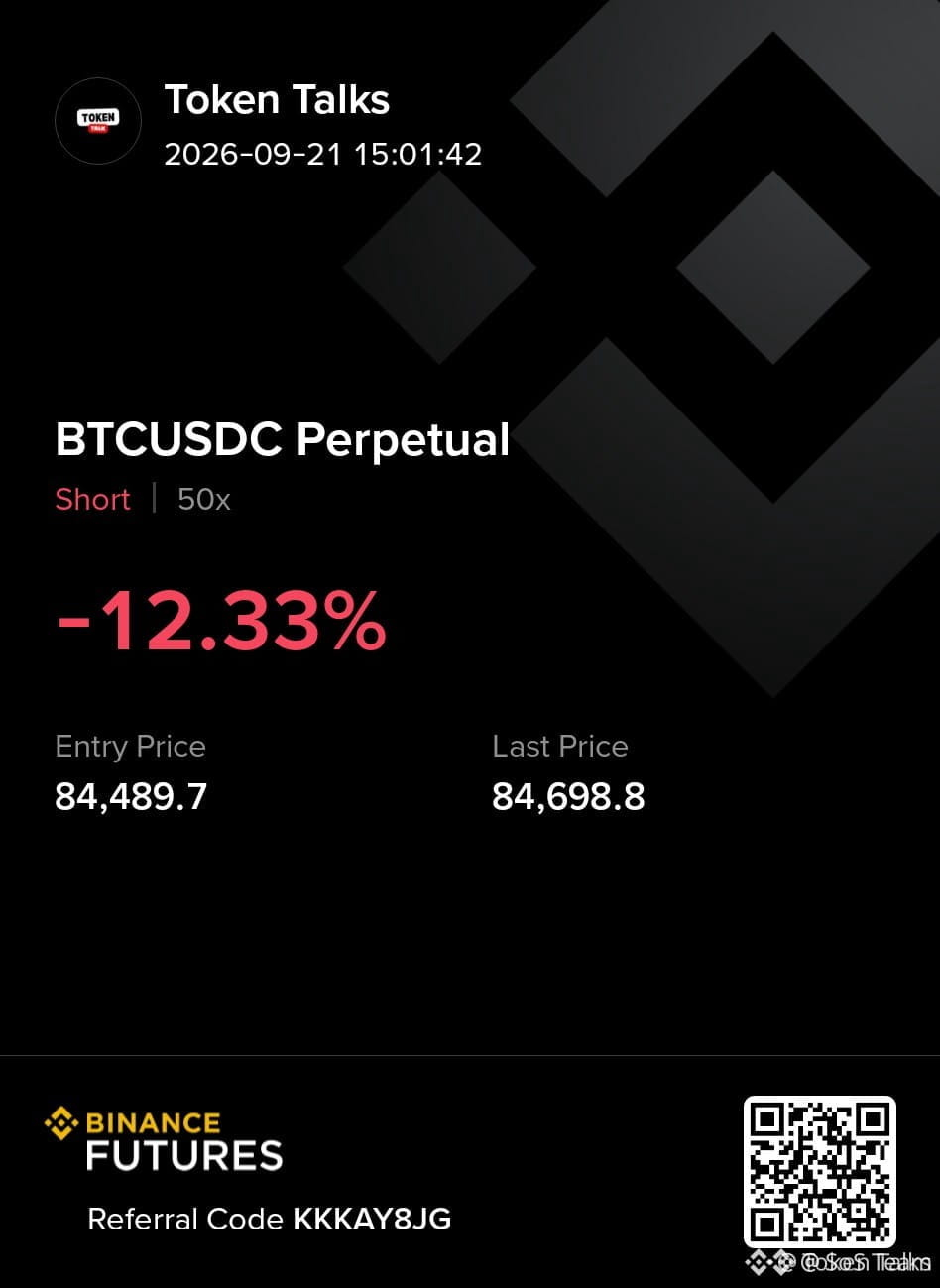
A rogue perpetual contract wick suddenly ripped toward the $145,000 to $150,000 range while spot $BTC held completely steady. Some analysts argue this was simply an aggressive short squeeze triggered by low liquidity that over-leveraged participants should have anticipated. They consider these violent spikes an unavoidable part of crypto volatility.
I take the opposite view. When derivative pricing decouples this violently from spot Bitcoin, it highlights severe structural risks in fragmented liquidity pools. Keeping heavy exposure on thin contracts leaves your positions vulnerable to artificial wipeouts, even while major assets like $ETH remain completely calm across the wider market.
Do you view extreme pricing wicks like this as market manipulation or simply an accepted risk of high leverage?
#Bitcoin #CryptoTrading #Futures
If you are still leaving leveraged positions unprotected on thin order books, this mistake cost traders millions overnight.
Waking up to a liquidated account because of an isolated pricing cascade is every trader's worst nightmare. It wipes out disciplined risk management in seconds before the broader market even registers a move.
A rogue perpetual contract wick suddenly ripped toward the $145,000 to $150,000 range while spot $BTC held completely steady. Some analysts argue this was simply an aggressive short squeeze triggered by low liquidity that over-leveraged participants should have anticipated. They consider these violent spikes an unavoidable part of crypto volatility.
I take the opposite view. When derivative pricing decouples this violently from spot Bitcoin, it highlights severe structural risks in fragmented liquidity pools. Keeping heavy exposure on thin contracts leaves your positions vulnerable to artificial wipeouts, even while major assets like $ETH remain completely calm across the wider market.
Do you view extreme pricing wicks like this as market manipulation or simply an accepted risk of high leverage?
#Bitcoin #CryptoTrading #Futures
Waking up to a liquidated account because of an isolated pricing cascade is every trader's worst nightmare. It wipes out disciplined risk management in seconds before the broader market even registers a move.
A rogue perpetual contract wick suddenly ripped toward the $145,000 to $150,000 range while spot $BTC held completely steady. Some analysts argue this was simply an aggressive short squeeze triggered by low liquidity that over-leveraged participants should have anticipated. They consider these violent spikes an unavoidable part of crypto volatility.
I take the opposite view. When derivative pricing decouples this violently from spot Bitcoin, it highlights severe structural risks in fragmented liquidity pools. Keeping heavy exposure on thin contracts leaves your positions vulnerable to artificial wipeouts, even while major assets like $ETH remain completely calm across the wider market.
Do you view extreme pricing wicks like this as market manipulation or simply an accepted risk of high leverage?
#Bitcoin #CryptoTrading #Futures
343
·
--
everyone thinks an etf filing means $SEI is about to rip but actually this is just canary capital submitting a second amendment and nothing is approved.
the pain is buying that headline then sitting on bags while the sec takes its sweet time. seen too many people fomo in, miss the real entry, and then not know when to exit because the news never actually resolves.
canary filed that second amendment on a staked sei etf, basically extra paperwork answering whatever the regulators flagged. we already watched this exact delay loop with $ETH staking products, where the yield piece kept the whole thing stuck. $SUI holders should pay attention too because if a staked alt etf actually gets through it changes the template for every l1, but that's a long road not a weekend trade.
greed is at 72 so of course people are acting like this is done. ngl the staking yield inside an etf wrapper would be legit if it clears, but treating an amendment like a win is how you get chopped up. ser this is a case study in buying the filing not the approval.
what's your take on how long this actually sits with the sec?
#CanaryFilesSecondAmendmentForStakedSEIETF #EthereumSurpasses #VietnamPlansFirstCryptoLicensesIn2026
everyone thinks an etf filing means $SEI is about to rip but actually this is just canary capital submitting a second amendment and nothing is approved.
the pain is buying that headline then sitting on bags while the sec takes its sweet time. seen too many people fomo in, miss the real entry, and then not know when to exit because the news never actually resolves.
canary filed that second amendment on a staked sei etf, basically extra paperwork answering whatever the regulators flagged. we already watched this exact delay loop with $ETH staking products, where the yield piece kept the whole thing stuck. $SUI holders should pay attention too because if a staked alt etf actually gets through it changes the template for every l1, but that's a long road not a weekend trade.
greed is at 72 so of course people are acting like this is done. ngl the staking yield inside an etf wrapper would be legit if it clears, but treating an amendment like a win is how you get chopped up. ser this is a case study in buying the filing not the approval.
what's your take on how long this actually sits with the sec?
#CanaryFilesSecondAmendmentForStakedSEIETF #EthereumSurpasses #VietnamPlansFirstCryptoLicensesIn2026
the pain is buying that headline then sitting on bags while the sec takes its sweet time. seen too many people fomo in, miss the real entry, and then not know when to exit because the news never actually resolves.
canary filed that second amendment on a staked sei etf, basically extra paperwork answering whatever the regulators flagged. we already watched this exact delay loop with $ETH staking products, where the yield piece kept the whole thing stuck. $SUI holders should pay attention too because if a staked alt etf actually gets through it changes the template for every l1, but that's a long road not a weekend trade.
greed is at 72 so of course people are acting like this is done. ngl the staking yield inside an etf wrapper would be legit if it clears, but treating an amendment like a win is how you get chopped up. ser this is a case study in buying the filing not the approval.
what's your take on how long this actually sits with the sec?
#CanaryFilesSecondAmendmentForStakedSEIETF #EthereumSurpasses #VietnamPlansFirstCryptoLicensesIn2026

280
·
--
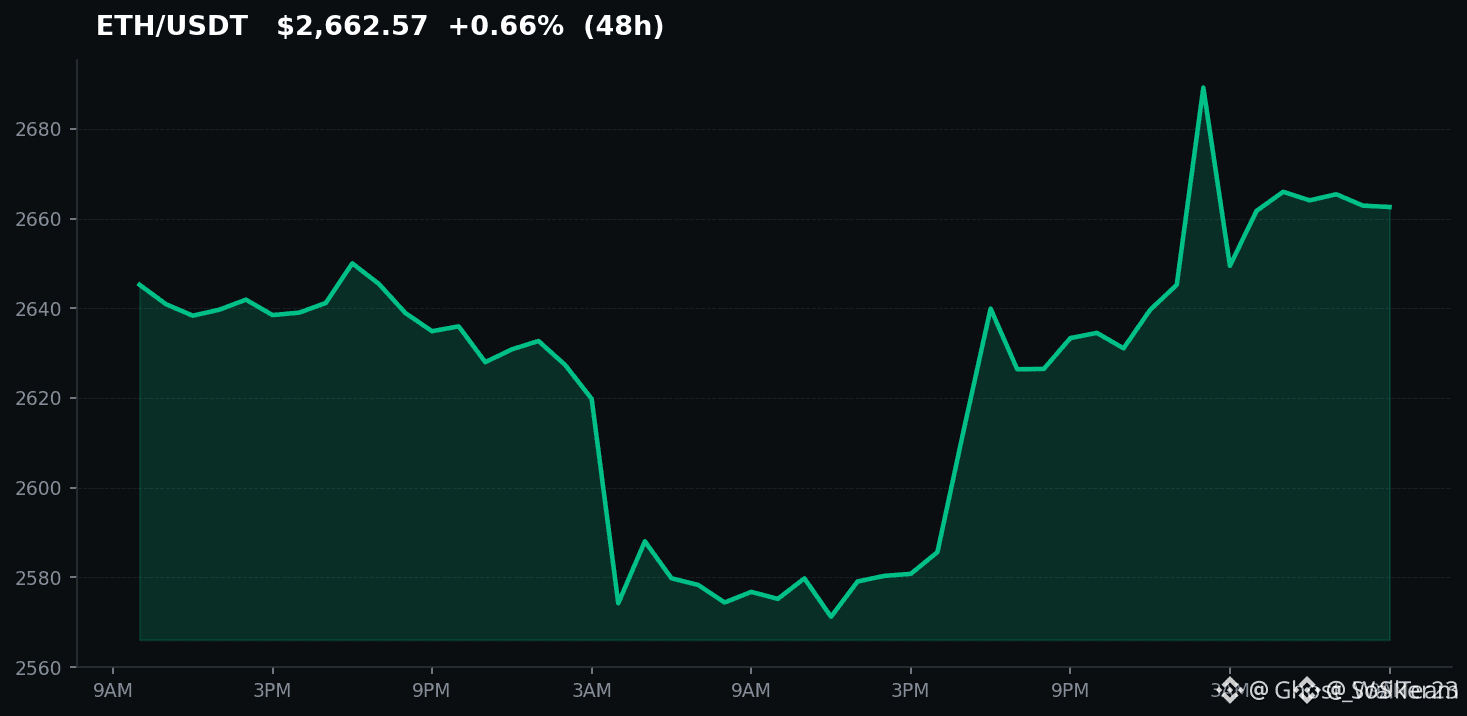
Have you noticed how every time Ethereum outperforms expectations, the entire narrative around Layer 1 dominance quietly resets?
Most traders spend months chasing high-beta rotations into $SUI or fragmented ecosystems, only to find themselves completely offside when the primary liquidity engine actually moves. You end up sitting on underperforming alts, watching capital rotate away while the foundational asset does the heavy lifting.
Look at the recent market action as a case study in structural positioning. While sentiment sits in greed territory, capital is not blindly dispersing across speculative assets. Instead, sustained volume continues validating $ETH as the dominant settlement network, forcing traders who declared it obsolete to reconsider their exposure at much higher price levels.
When market depth consolidates back into core infrastructure, it fundamentally changes risk dynamics across the board. The real edge rarely comes from chasing micro-caps; it comes from recognizing where deep liquidity anchors before the broader market reacts.
Do you think this momentum holds against the rest of the market, or are we just seeing a temporary liquidity squeeze before alts rotate?
#EthereumSurpasses #SaylorHintsStrategyBitcoinBuy
Have you noticed how every time Ethereum outperforms expectations, the entire narrative around Layer 1 dominance quietly resets?
Most traders spend months chasing high-beta rotations into $SUI or fragmented ecosystems, only to find themselves completely offside when the primary liquidity engine actually moves. You end up sitting on underperforming alts, watching capital rotate away while the foundational asset does the heavy lifting.
Look at the recent market action as a case study in structural positioning. While sentiment sits in greed territory, capital is not blindly dispersing across speculative assets. Instead, sustained volume continues validating $ETH as the dominant settlement network, forcing traders who declared it obsolete to reconsider their exposure at much higher price levels.
When market depth consolidates back into core infrastructure, it fundamentally changes risk dynamics across the board. The real edge rarely comes from chasing micro-caps; it comes from recognizing where deep liquidity anchors before the broader market reacts.
Do you think this momentum holds against the rest of the market, or are we just seeing a temporary liquidity squeeze before alts rotate?
#EthereumSurpasses #SaylorHintsStrategyBitcoinBuy
Most traders spend months chasing high-beta rotations into $SUI or fragmented ecosystems, only to find themselves completely offside when the primary liquidity engine actually moves. You end up sitting on underperforming alts, watching capital rotate away while the foundational asset does the heavy lifting.
Look at the recent market action as a case study in structural positioning. While sentiment sits in greed territory, capital is not blindly dispersing across speculative assets. Instead, sustained volume continues validating $ETH as the dominant settlement network, forcing traders who declared it obsolete to reconsider their exposure at much higher price levels.
When market depth consolidates back into core infrastructure, it fundamentally changes risk dynamics across the board. The real edge rarely comes from chasing micro-caps; it comes from recognizing where deep liquidity anchors before the broader market reacts.
Do you think this momentum holds against the rest of the market, or are we just seeing a temporary liquidity squeeze before alts rotate?
#EthereumSurpasses #SaylorHintsStrategyBitcoinBuy
84
Log in to explore more content
Join global crypto users on Binance Square
⚡️ Get latest and useful information about crypto.
💬 Trusted by the world’s largest crypto exchange.
👍 Discover real insights from verified creators.
Email / Phone number
Trending Topics
NEARRisesNearly80%InAWeek
4,039 views
340 Discussing
#nearrisesnearly80%inaweek
🚨 NEAR RALLIES NEARLY 80% IN ONE WEEK
NEAR Protocol’s native token has delivered a major weekly move, gaining roughly 78% over the past seven days and trading around $4.29 on September 21, according to reported CoinGecko data.
📊 WHAT’S DRIVING THE ATTENTION?
• NEAR climbed from roughly $2.20 to above $4.20 within about a week
• NEAR Intents cumulative volume is approaching $30B
• Recent activity around confidential perpetual-futures trading has added another major narrative around the ecosystem
• NEAR’s weekly performance has significantly outpaced the broader crypto market, which gained around 6% over the same period
🔎 WHY IT MATTERS
The rally puts renewed focus on NEAR’s cross-chain liquidity infrastructure, Intents ecosystem and privacy-focused trading developments.
But after such a rapid move, volatility and profit-taking are also important risks to watch. A strong weekly gain does not guarantee that momentum will continue.
📌 WATCH NEXT
Traders may be watching whether NEAR can maintain the recent breakout and whether network activity continues to support the market narrative.
NEAR’s price move is strong — but the next test is whether ecosystem activity can keep pace with the speculation.
$MUBARAK $PHA $NIL
顾清妍
·0 Likes
·1.1k views
MultiversXPlansHardForkRecovery
5,220 views
330 Discussing
CircleLaunchesInstitutionalBTCBackedBorrowing
8,225 views
476 Discussing