

#cryptocustody
cryptocustody
22,527 views
167 Discussing
Hot
Latest

If you're still treating bank custody as a threat instead of a signal, stop now.
Retail traders keep getting wrecked by waiting for "pure" decentralization while missing the actual capital that moves prices. The pain is real: you hold through the chop then watch institutions pile in through the front door you ignored.
Deutsche Bank is launching a digital asset custody service for institutional and corporate clients in Europe, with first onboardings expected this year pending approval. They will store and transfer $BTC, $ETH, and $USDC while managing the wallets and private keys themselves. That is the part most people will hate.
One camp says this kills the whole point of crypto because a bank holding the keys can freeze or seize just like they do with cash. Fair. The other camp sees the obvious: institutions will not self-custody at scale. They need a name they already trust. This is how real size actually enters. Betting against that flow has already left plenty of people buying higher later.
Where do you think this goes from here?
#Bitcoin #CryptoCustody #Institutions
If you're still treating bank custody as a threat instead of a signal, stop now.
Retail traders keep getting wrecked by waiting for "pure" decentralization while missing the actual capital that moves prices. The pain is real: you hold through the chop then watch institutions pile in through the front door you ignored.
Deutsche Bank is launching a digital asset custody service for institutional and corporate clients in Europe, with first onboardings expected this year pending approval. They will store and transfer $BTC , $ETH , and $USDC while managing the wallets and private keys themselves. That is the part most people will hate.
One camp says this kills the whole point of crypto because a bank holding the keys can freeze or seize just like they do with cash. Fair. The other camp sees the obvious: institutions will not self-custody at scale. They need a name they already trust. This is how real size actually enters. Betting against that flow has already left plenty of people buying higher later.
Where do you think this goes from here?
#Bitcoin #CryptoCustody #Institutions
Retail traders keep getting wrecked by waiting for "pure" decentralization while missing the actual capital that moves prices. The pain is real: you hold through the chop then watch institutions pile in through the front door you ignored.
Deutsche Bank is launching a digital asset custody service for institutional and corporate clients in Europe, with first onboardings expected this year pending approval. They will store and transfer $BTC , $ETH , and $USDC while managing the wallets and private keys themselves. That is the part most people will hate.
One camp says this kills the whole point of crypto because a bank holding the keys can freeze or seize just like they do with cash. Fair. The other camp sees the obvious: institutions will not self-custody at scale. They need a name they already trust. This is how real size actually enters. Betting against that flow has already left plenty of people buying higher later.
Where do you think this goes from here?
#Bitcoin #CryptoCustody #Institutions
46
Institutional adoption sounds like a massive win until you realize banks holding your private keys defeats the entire point of crypto.
Most retail traders celebrate every time a legacy bank enters the space, only to get trapped later when regulatory freezes or counterparty risks hit centralized custodians. We spent years trying to escape third-party control, yet the market keeps cheering for traditional finance to hold the master key.
Deutsche Bank is rolling out a digital asset custody service for European institutions to store and transfer selected assets like $BTC and $ETH alongside stablecoins like EURC. The catch is straightforward: the bank manages the wallets and holds the private keys entirely, subject to regional regulatory approvals.
When a traditional banking giant controls the keys, those assets are exposed to the same jurisdictional freezes and systemic balance sheet risks that crypto was built to circumvent. Institutional liquidity is great, but giving custody back to legacy intermediaries brings old-school financial vulnerability right back to the table.
Do you think institutional custody helps the space or just rebuilds the legacy banking trap?
#Bitcoin #CryptoCustody #InstitutionalCrypto
Institutional adoption sounds like a massive win until you realize banks holding your private keys defeats the entire point of crypto.
Most retail traders celebrate every time a legacy bank enters the space, only to get trapped later when regulatory freezes or counterparty risks hit centralized custodians. We spent years trying to escape third-party control, yet the market keeps cheering for traditional finance to hold the master key.
Deutsche Bank is rolling out a digital asset custody service for European institutions to store and transfer selected assets like $BTC and $ETH alongside stablecoins like EURC. The catch is straightforward: the bank manages the wallets and holds the private keys entirely, subject to regional regulatory approvals.
When a traditional banking giant controls the keys, those assets are exposed to the same jurisdictional freezes and systemic balance sheet risks that crypto was built to circumvent. Institutional liquidity is great, but giving custody back to legacy intermediaries brings old-school financial vulnerability right back to the table.
Do you think institutional custody helps the space or just rebuilds the legacy banking trap?
#Bitcoin #CryptoCustody #InstitutionalCrypto
Most retail traders celebrate every time a legacy bank enters the space, only to get trapped later when regulatory freezes or counterparty risks hit centralized custodians. We spent years trying to escape third-party control, yet the market keeps cheering for traditional finance to hold the master key.
Deutsche Bank is rolling out a digital asset custody service for European institutions to store and transfer selected assets like $BTC and $ETH alongside stablecoins like EURC. The catch is straightforward: the bank manages the wallets and holds the private keys entirely, subject to regional regulatory approvals.
When a traditional banking giant controls the keys, those assets are exposed to the same jurisdictional freezes and systemic balance sheet risks that crypto was built to circumvent. Institutional liquidity is great, but giving custody back to legacy intermediaries brings old-school financial vulnerability right back to the table.
Do you think institutional custody helps the space or just rebuilds the legacy banking trap?
#Bitcoin #CryptoCustody #InstitutionalCrypto
72
Deutsche Bank just announced crypto custody for institutions, and here's the twist: not a single coin has to be bought because of it.
This is exactly the kind of headline that makes people FOMO in at the local top. Then the pump bleeds out and they're stuck holding bags waiting for "institutional money" that never arrives on their schedule.
Here's what custody actually means: the bank holds keys for clients who already own the assets. It's safekeeping, not demand. No bank treasury is suddenly allocating to Bitcoin because of this press release. And read the fine print , the launch is "subject to the regulatory process," which is finance-speak for approvals, delays, and revised timelines. The initial scope only covers $BTC, $ETH and selected stablecoins, so when they say "selected," expect names like $USDT to clear the vetting while everything else stays locked out for now.
The pattern I keep seeing play out: headline drops, price pumps on the news, then bleeds over the following weeks because real flows arrive in quarters, not hours. If you bought the announcement, you're often just exit liquidity for people who read past the headline. Trade the actual flows when the service goes live, not the press release promising it.
How do you handle institutional news like this , fade the pump, or wait for the real flows?
#CryptoCustody #InstitutionalAdoption #Bitcoin
Deutsche Bank just announced crypto custody for institutions, and here's the twist: not a single coin has to be bought because of it.
This is exactly the kind of headline that makes people FOMO in at the local top. Then the pump bleeds out and they're stuck holding bags waiting for "institutional money" that never arrives on their schedule.
Here's what custody actually means: the bank holds keys for clients who already own the assets. It's safekeeping, not demand. No bank treasury is suddenly allocating to Bitcoin because of this press release. And read the fine print , the launch is "subject to the regulatory process," which is finance-speak for approvals, delays, and revised timelines. The initial scope only covers $BTC , $ETH and selected stablecoins, so when they say "selected," expect names like $USDT to clear the vetting while everything else stays locked out for now.
The pattern I keep seeing play out: headline drops, price pumps on the news, then bleeds over the following weeks because real flows arrive in quarters, not hours. If you bought the announcement, you're often just exit liquidity for people who read past the headline. Trade the actual flows when the service goes live, not the press release promising it.
How do you handle institutional news like this , fade the pump, or wait for the real flows?
#CryptoCustody #InstitutionalAdoption #Bitcoin
This is exactly the kind of headline that makes people FOMO in at the local top. Then the pump bleeds out and they're stuck holding bags waiting for "institutional money" that never arrives on their schedule.
Here's what custody actually means: the bank holds keys for clients who already own the assets. It's safekeeping, not demand. No bank treasury is suddenly allocating to Bitcoin because of this press release. And read the fine print , the launch is "subject to the regulatory process," which is finance-speak for approvals, delays, and revised timelines. The initial scope only covers $BTC , $ETH and selected stablecoins, so when they say "selected," expect names like $USDT to clear the vetting while everything else stays locked out for now.
The pattern I keep seeing play out: headline drops, price pumps on the news, then bleeds over the following weeks because real flows arrive in quarters, not hours. If you bought the announcement, you're often just exit liquidity for people who read past the headline. Trade the actual flows when the service goes live, not the press release promising it.
How do you handle institutional news like this , fade the pump, or wait for the real flows?
#CryptoCustody #InstitutionalAdoption #Bitcoin
58

·
--
Why is nobody talking about Deutsche Bank quietly building the one institutional rail crypto has actually been missing?
Retail keeps getting wrecked on every bank adoption rumor because those stories never connected to how institutions actually move money. You buy high on the headline and watch it fade when the operational reality never shows up.
Deutsche Bank intends to launch regulated digital-asset custody for institutional and corporate clients across Europe this year, subject to the regulatory process. The starting lineup is $BTC, $ETH and selected stablecoins.
What the coverage is skipping is the balance-sheet connectivity. Deutsche Bank already operates inside the cash management, securities services, collateral and settlement systems that large players use daily. Adding crypto custody here wires digital assets directly into that existing machinery rather than creating another isolated offering.
This is the real-world case study of institutional integration done properly. Not a marketing exercise. The friction for serious capital finally drops.
Where do you think this takes $BTC and $ETH once the pipe is live?
#Bitcoin #Ethereum #CryptoCustody
Why is nobody talking about Deutsche Bank quietly building the one institutional rail crypto has actually been missing?
Retail keeps getting wrecked on every bank adoption rumor because those stories never connected to how institutions actually move money. You buy high on the headline and watch it fade when the operational reality never shows up.
Deutsche Bank intends to launch regulated digital-asset custody for institutional and corporate clients across Europe this year, subject to the regulatory process. The starting lineup is $BTC , $ETH and selected stablecoins.
What the coverage is skipping is the balance-sheet connectivity. Deutsche Bank already operates inside the cash management, securities services, collateral and settlement systems that large players use daily. Adding crypto custody here wires digital assets directly into that existing machinery rather than creating another isolated offering.
This is the real-world case study of institutional integration done properly. Not a marketing exercise. The friction for serious capital finally drops.
Where do you think this takes $BTC and $ETH once the pipe is live?
#Bitcoin #Ethereum #CryptoCustody
Retail keeps getting wrecked on every bank adoption rumor because those stories never connected to how institutions actually move money. You buy high on the headline and watch it fade when the operational reality never shows up.
Deutsche Bank intends to launch regulated digital-asset custody for institutional and corporate clients across Europe this year, subject to the regulatory process. The starting lineup is $BTC , $ETH and selected stablecoins.
What the coverage is skipping is the balance-sheet connectivity. Deutsche Bank already operates inside the cash management, securities services, collateral and settlement systems that large players use daily. Adding crypto custody here wires digital assets directly into that existing machinery rather than creating another isolated offering.
This is the real-world case study of institutional integration done properly. Not a marketing exercise. The friction for serious capital finally drops.
Where do you think this takes $BTC and $ETH once the pipe is live?
#Bitcoin #Ethereum #CryptoCustody

71
·
--
Most retail investors still believe institutional capital enters crypto through speculative hype, but the biggest money moves only when old infrastructure quietly plugs into the network.
Too many traders get burned chasing green candles during bear rallies, completely missing the structural shifts that actually dictate multi-year cycles. We keep waiting for liquidity to magically appear while ignoring where traditional finance is actually building pipes.
Deutsche Bank is preparing to roll out regulated digital asset custody for its institutional and corporate client base in Europe this year. The initial rollout focuses on foundational assets like $BTC and $ETH alongside selected stablecoins. Having watched several cycles play out, the quiet infrastructure buildout always precedes the real liquidity waves.
The real breakthrough here is direct balance-sheet connectivity rather than another speculative retail portal. Deutsche Bank already powers the core machinery for enterprise cash management, collateral, and securities settlement across global markets. Integrating digital asset custody into that existing plumbing removes the compliance friction that kept conservative treasuries on the sidelines for years.
Do you think traditional bank custody will accelerate true adoption, or does it compromise why we built this space in the first place?
#CryptoCustody #InstitutionalAdoption #Bitcoin
Most retail investors still believe institutional capital enters crypto through speculative hype, but the biggest money moves only when old infrastructure quietly plugs into the network.
Too many traders get burned chasing green candles during bear rallies, completely missing the structural shifts that actually dictate multi-year cycles. We keep waiting for liquidity to magically appear while ignoring where traditional finance is actually building pipes.
Deutsche Bank is preparing to roll out regulated digital asset custody for its institutional and corporate client base in Europe this year. The initial rollout focuses on foundational assets like $BTC and $ETH alongside selected stablecoins. Having watched several cycles play out, the quiet infrastructure buildout always precedes the real liquidity waves.
The real breakthrough here is direct balance-sheet connectivity rather than another speculative retail portal. Deutsche Bank already powers the core machinery for enterprise cash management, collateral, and securities settlement across global markets. Integrating digital asset custody into that existing plumbing removes the compliance friction that kept conservative treasuries on the sidelines for years.
Do you think traditional bank custody will accelerate true adoption, or does it compromise why we built this space in the first place?
#CryptoCustody #InstitutionalAdoption #Bitcoin
Too many traders get burned chasing green candles during bear rallies, completely missing the structural shifts that actually dictate multi-year cycles. We keep waiting for liquidity to magically appear while ignoring where traditional finance is actually building pipes.
Deutsche Bank is preparing to roll out regulated digital asset custody for its institutional and corporate client base in Europe this year. The initial rollout focuses on foundational assets like $BTC and $ETH alongside selected stablecoins. Having watched several cycles play out, the quiet infrastructure buildout always precedes the real liquidity waves.
The real breakthrough here is direct balance-sheet connectivity rather than another speculative retail portal. Deutsche Bank already powers the core machinery for enterprise cash management, collateral, and securities settlement across global markets. Integrating digital asset custody into that existing plumbing removes the compliance friction that kept conservative treasuries on the sidelines for years.
Do you think traditional bank custody will accelerate true adoption, or does it compromise why we built this space in the first place?
#CryptoCustody #InstitutionalAdoption #Bitcoin

65

·
--

Article
Deutsche Bank to Offer Bitcoin, Ether Custody to European InstitutionsDeutsche Bank’s new digital asset custody service means institutional investors can finally store $BTC and $ETH safely in Europe.
---
Hook:
Did you know that until now, most European institutions had to rely on foreign custodians to hold their crypto assets? Deutsche Bank’s upcoming launch changes that.
The Concept
Custody is the secure storage of digital assets, similar to how a bank holds your cash in a vault. For crypto, it means protecting private keys, ensuring compliance, and providing insurance. Deutsche Bank is planning to roll out a European custody solution this year, initially covering Bitcoin ($BTC), Ethereum ($ETH), and a handful of stablecoins. This move signals that traditional finance is catching up with the crypto world, offering a trusted bridge for institutional players who need regulatory compliance and robust security.
Real‑World Example
Imagine a European pension fund that wants to allocate a portion of its portfolio to $BTC. Previously, the fund would have to send its assets to a custodian outside the EU, navigating cross‑border regulations and potential data privacy issues. With Deutsche Bank’s custody, the pension fund can keep its holdings within the EU, benefit from local regulatory oversight, and still enjoy the liquidity and growth potential of $BTC and $ETH. The bank’s infrastructure will handle key management, transaction signing, and audit trails, giving investors peace of mind.
Takeaway
If you’re an institutional investor or a crypto‑savvy portfolio manager, keep an eye on Deutsche Bank’s rollout. It could become the go-to solution for secure, compliant crypto holdings in Europe. Consider how this might simplify your asset management and reduce regulatory friction.
Engagement Question
What other digital assets would you want a European custodian to support next? #CryptoCustody #DeutscheBank #InstitutionalCrypto #BTC #ETH
Deutsche Bank to Offer Bitcoin, Ether Custody to European Institutions
Deutsche Bank’s new digital asset custody service means institutional investors can finally store $BTC and $ETH safely in Europe.
---
Hook:
Did you know that until now, most European institutions had to rely on foreign custodians to hold their crypto assets? Deutsche Bank’s upcoming launch changes that.
The Concept
Custody is the secure storage of digital assets, similar to how a bank holds your cash in a vault. For crypto, it means protecting private keys, ensuring compliance, and providing insurance. Deutsche Bank is planning to roll out a European custody solution this year, initially covering Bitcoin ($BTC ), Ethereum ($ETH ), and a handful of stablecoins. This move signals that traditional finance is catching up with the crypto world, offering a trusted bridge for institutional players who need regulatory compliance and robust security.
Real‑World Example
Imagine a European pension fund that wants to allocate a portion of its portfolio to $BTC . Previously, the fund would have to send its assets to a custodian outside the EU, navigating cross‑border regulations and potential data privacy issues. With Deutsche Bank’s custody, the pension fund can keep its holdings within the EU, benefit from local regulatory oversight, and still enjoy the liquidity and growth potential of $BTC and $ETH . The bank’s infrastructure will handle key management, transaction signing, and audit trails, giving investors peace of mind.
Takeaway
If you’re an institutional investor or a crypto‑savvy portfolio manager, keep an eye on Deutsche Bank’s rollout. It could become the go-to solution for secure, compliant crypto holdings in Europe. Consider how this might simplify your asset management and reduce regulatory friction.
Engagement Question
What other digital assets would you want a European custodian to support next? #CryptoCustody #DeutscheBank #InstitutionalCrypto #BTC #ETH
---
Hook:
Did you know that until now, most European institutions had to rely on foreign custodians to hold their crypto assets? Deutsche Bank’s upcoming launch changes that.
The Concept
Custody is the secure storage of digital assets, similar to how a bank holds your cash in a vault. For crypto, it means protecting private keys, ensuring compliance, and providing insurance. Deutsche Bank is planning to roll out a European custody solution this year, initially covering Bitcoin ($BTC ), Ethereum ($ETH ), and a handful of stablecoins. This move signals that traditional finance is catching up with the crypto world, offering a trusted bridge for institutional players who need regulatory compliance and robust security.
Real‑World Example
Imagine a European pension fund that wants to allocate a portion of its portfolio to $BTC . Previously, the fund would have to send its assets to a custodian outside the EU, navigating cross‑border regulations and potential data privacy issues. With Deutsche Bank’s custody, the pension fund can keep its holdings within the EU, benefit from local regulatory oversight, and still enjoy the liquidity and growth potential of $BTC and $ETH . The bank’s infrastructure will handle key management, transaction signing, and audit trails, giving investors peace of mind.
Takeaway
If you’re an institutional investor or a crypto‑savvy portfolio manager, keep an eye on Deutsche Bank’s rollout. It could become the go-to solution for secure, compliant crypto holdings in Europe. Consider how this might simplify your asset management and reduce regulatory friction.
Engagement Question
What other digital assets would you want a European custodian to support next? #CryptoCustody #DeutscheBank #InstitutionalCrypto #BTC #ETH
37

·
--
SEC Crypto Custody Rules Rewrite Enters White House Review2026-09-11
According to The Defiant, the SEC’s planned rewrite of crypto custody rules has entered the White House review process. The proposed rules would cover investment advisers and investment companies, and further clarify the boundaries of digital asset custody.
The impact on the industry is not only about regulatory classification. Custodial services need to explain more clearly: who controls the assets, how signature authority is allocated, whether operations can be paused in case of anomalies, and which control paths remain trustworthy after recovery. If regulatory text continues to be specified, when users compare different products, they should not only look at the interface and the scope of assets, but also at permissions and recovery mechanisms.
SEC Crypto Custody Rules Rewrite Enters White House Review
2026-09-11
According to The Defiant, the SEC’s planned rewrite of crypto custody rules has entered the White House review process. The proposed rules would cover investment advisers and investment companies, and further clarify the boundaries of digital asset custody.
The impact on the industry is not only about regulatory classification. Custodial services need to explain more clearly: who controls the assets, how signature authority is allocated, whether operations can be paused in case of anomalies, and which control paths remain trustworthy after recovery. If regulatory text continues to be specified, when users compare different products, they should not only look at the interface and the scope of assets, but also at permissions and recovery mechanisms.
According to The Defiant, the SEC’s planned rewrite of crypto custody rules has entered the White House review process. The proposed rules would cover investment advisers and investment companies, and further clarify the boundaries of digital asset custody.
The impact on the industry is not only about regulatory classification. Custodial services need to explain more clearly: who controls the assets, how signature authority is allocated, whether operations can be paused in case of anomalies, and which control paths remain trustworthy after recovery. If regulatory text continues to be specified, when users compare different products, they should not only look at the interface and the scope of assets, but also at permissions and recovery mechanisms.
77

🚀 $SQ UNVEILS FEDERAL BANK CHARTER PLAY, WHALES ARE LISTENING! 🦈
Block’s push for a national trust bank isn’t just paperwork – it’s a strategic strike to lock institutional liquidity under a federally‑backed umbrella. The OCC’s recent green light for peers like Coinbase and Circle shows regulators are finally opening the floodgates for crypto‑grade custody. 🦈
If the charter lands, $SQ could roll out seamless custody for BTC and stablecoins, pulling in the same whale‑scale deposits that currently fuel off‑chain vaults. Expect a surge in on‑chain inflows and a fresh liquidity wave as smart money re‑positions. 📊⚡
💬 Are you ready to ride the custody wave with $SQ ?
⚠️ Not financial advice. Always manage your risk. 🛡️
🏷️ #SQ #BankCharter #CryptoCustody #WhalePlay
🔥 💎
🚀 $SQ UNVEILS FEDERAL BANK CHARTER PLAY, WHALES ARE LISTENING! 🦈
Block’s push for a national trust bank isn’t just paperwork – it’s a strategic strike to lock institutional liquidity under a federally‑backed umbrella. The OCC’s recent green light for peers like Coinbase and Circle shows regulators are finally opening the floodgates for crypto‑grade custody. 🦈
If the charter lands, $SQ could roll out seamless custody for BTC and stablecoins, pulling in the same whale‑scale deposits that currently fuel off‑chain vaults. Expect a surge in on‑chain inflows and a fresh liquidity wave as smart money re‑positions. 📊⚡
💬 Are you ready to ride the custody wave with $SQ ?
⚠️ Not financial advice. Always manage your risk. 🛡️
🏷️ #SQ #BankCharter #CryptoCustody #WhalePlay
🔥 💎
Block’s push for a national trust bank isn’t just paperwork – it’s a strategic strike to lock institutional liquidity under a federally‑backed umbrella. The OCC’s recent green light for peers like Coinbase and Circle shows regulators are finally opening the floodgates for crypto‑grade custody. 🦈
If the charter lands, $SQ could roll out seamless custody for BTC and stablecoins, pulling in the same whale‑scale deposits that currently fuel off‑chain vaults. Expect a surge in on‑chain inflows and a fresh liquidity wave as smart money re‑positions. 📊⚡
💬 Are you ready to ride the custody wave with $SQ ?
⚠️ Not financial advice. Always manage your risk. 🛡️
🏷️ #SQ #BankCharter #CryptoCustody #WhalePlay
🔥 💎
17
·
--
Orionx Shutdown: For Custodial Platforms, the Hardest Reconciliation May Not Be On-Chain Balances2026-09-07
Cointelegraph reported that Orionx, the Tether-backed Chilean crypto trading platform, will permanently shut down. A forensic audit found that over $7 million in customer assets were transferred to wallets not managed by the platform; the platform said its top priority is to return customer assets as much as possible, and withdrawals are temporarily suspended.
According to Cointelegraph, an audit compared the platform's system records with on-chain verifiable data and found that the BTC, ETH, XRP, and POL balances recorded on the books exceeded the amounts actually held in custody addresses. The report also said a criminal complaint alleged that some assets left custody between 2018 and 2021 and flowed into other platform accounts, but former executives involved denied the allegations, and the cause of the asset shortfall remains unclear.
Orionx Shutdown: For Custodial Platforms, the Hardest Reconciliation May Not Be On-Chain Balances
2026-09-07
Cointelegraph reported that Orionx, the Tether-backed Chilean crypto trading platform, will permanently shut down. A forensic audit found that over $7 million in customer assets were transferred to wallets not managed by the platform; the platform said its top priority is to return customer assets as much as possible, and withdrawals are temporarily suspended.
According to Cointelegraph, an audit compared the platform's system records with on-chain verifiable data and found that the BTC, ETH, XRP, and POL balances recorded on the books exceeded the amounts actually held in custody addresses. The report also said a criminal complaint alleged that some assets left custody between 2018 and 2021 and flowed into other platform accounts, but former executives involved denied the allegations, and the cause of the asset shortfall remains unclear.
Cointelegraph reported that Orionx, the Tether-backed Chilean crypto trading platform, will permanently shut down. A forensic audit found that over $7 million in customer assets were transferred to wallets not managed by the platform; the platform said its top priority is to return customer assets as much as possible, and withdrawals are temporarily suspended.
According to Cointelegraph, an audit compared the platform's system records with on-chain verifiable data and found that the BTC, ETH, XRP, and POL balances recorded on the books exceeded the amounts actually held in custody addresses. The report also said a criminal complaint alleged that some assets left custody between 2018 and 2021 and flowed into other platform accounts, but former executives involved denied the allegations, and the cause of the asset shortfall remains unclear.
78
·
--
EURR begins pilot, custody rules enter review: what’s next for the market2026-09-06
According to The Defiant RSS, Revolut has begun rolling out EURR to some customers in three countries, with Bridge participating as the regulated issuer; Bridge reports circulation of 374 euros, while Circle’s EURC stands at 394.5 million euros.[1]
The same report also said that the SEC’s rewrite of custody rules for crypto assets has entered White House review, with plans to cover investment advisers and investment companies and to explicitly address digital asset custody; an earlier 2023 proposal had been withdrawn.[1]
The common impact of these two pieces of news on the industry is to shift attention back from whether assets are on-chain to operational controls: how payment permissions are set, how anomalies are paused, how custody records are retained, and how systems are restored after an outage. EURR’s actual expansion and the final rule text still await later confirmation, and it would be inappropriate to describe a pilot or review as a full rollout.
EURR begins pilot, custody rules enter review: what’s next for the market
2026-09-06
According to The Defiant RSS, Revolut has begun rolling out EURR to some customers in three countries, with Bridge participating as the regulated issuer; Bridge reports circulation of 374 euros, while Circle’s EURC stands at 394.5 million euros.[1]
The same report also said that the SEC’s rewrite of custody rules for crypto assets has entered White House review, with plans to cover investment advisers and investment companies and to explicitly address digital asset custody; an earlier 2023 proposal had been withdrawn.[1]
The common impact of these two pieces of news on the industry is to shift attention back from whether assets are on-chain to operational controls: how payment permissions are set, how anomalies are paused, how custody records are retained, and how systems are restored after an outage. EURR’s actual expansion and the final rule text still await later confirmation, and it would be inappropriate to describe a pilot or review as a full rollout.
According to The Defiant RSS, Revolut has begun rolling out EURR to some customers in three countries, with Bridge participating as the regulated issuer; Bridge reports circulation of 374 euros, while Circle’s EURC stands at 394.5 million euros.[1]
The same report also said that the SEC’s rewrite of custody rules for crypto assets has entered White House review, with plans to cover investment advisers and investment companies and to explicitly address digital asset custody; an earlier 2023 proposal had been withdrawn.[1]
The common impact of these two pieces of news on the industry is to shift attention back from whether assets are on-chain to operational controls: how payment permissions are set, how anomalies are paused, how custody records are retained, and how systems are restored after an outage. EURR’s actual expansion and the final rule text still await later confirmation, and it would be inappropriate to describe a pilot or review as a full rollout.
83
·
--
SEC Crypto Asset Custody Rules Enter Review: What Can and Cannot Be Confirmed NowThe U.S. SEC’s “Amendments to the Custody Rules” has entered the proposed rulemaking stage. The regulatory agenda indicates that the project would modernize the custody rules for investment adviser clients’ assets and investment company fund assets, and include crypto assets in the scope that needs to be addressed.[1]
This is not a set of newly effective requirements. Public materials currently do not provide the text of the proposed rules, nor do they specify which entities would be recognized as custodial for crypto assets, what the specific control standards would be, or which existing provisions would be amended. The agenda only lists the NPRM target date as October 2026, with no statutory deadline.[1]
SEC Crypto Asset Custody Rules Enter Review: What Can and Cannot Be Confirmed Now
The U.S. SEC’s “Amendments to the Custody Rules” has entered the proposed rulemaking stage. The regulatory agenda indicates that the project would modernize the custody rules for investment adviser clients’ assets and investment company fund assets, and include crypto assets in the scope that needs to be addressed.[1]
This is not a set of newly effective requirements. Public materials currently do not provide the text of the proposed rules, nor do they specify which entities would be recognized as custodial for crypto assets, what the specific control standards would be, or which existing provisions would be amended. The agenda only lists the NPRM target date as October 2026, with no statutory deadline.[1]
This is not a set of newly effective requirements. Public materials currently do not provide the text of the proposed rules, nor do they specify which entities would be recognized as custodial for crypto assets, what the specific control standards would be, or which existing provisions would be amended. The agenda only lists the NPRM target date as October 2026, with no statutory deadline.[1]
96

·
--
#SECSendsCryptoCustodyRuleToWhiteHouse 🚨 Regulatory Watch: The SEC’s crypto custody rule has reportedly moved to the White House for review. Clearer custody standards could be an important step for institutional adoption and stronger investor confidence. 💰📈
#SEC #Crypto #CryptoCustody #Bitcoin #BTC #DigitalAssets #BİNANCESQUARE
#SECSendsCryptoCustodyRuleToWhiteHouse 🚨 Regulatory Watch: The SEC’s crypto custody rule has reportedly moved to the White House for review. Clearer custody standards could be an important step for institutional adoption and stronger investor confidence. 💰📈
#SEC #Crypto #CryptoCustody #Bitcoin #BTC #DigitalAssets #BİNANCESQUARE
#SEC #Crypto #CryptoCustody #Bitcoin #BTC #DigitalAssets #BİNANCESQUARE
1
271

·
--
Private keys caused 40% of crypto hacks
Smart contracts get the blame for crypto hacks, but 40% of $16 billion in losses stem from compromised private keys. The real vulnerability is human: lost seeds, phishing attacks, and insecure storage.
New solutions are emerging. Multi-signature wallets require multiple approvals before transactions execute. Social recovery systems let users regain access through trusted contacts. MPC (multi-party computation) splits keys across devices, eliminating single points of failure. Companies like ZenGo and Uniswap's wallet now ship these features by default.
Institutional adopters are leading the charge. Matrixdock, Brevant, and NodeNetwork secured custody upgrades after the $2B summer losses. BitGo reported a 60% drop in key-related incidents post-2026. The shift isn't just technical—it's cultural. Users finally understand that "not your keys, not your crypto" has a flip side: "not your hardware, not your security."
Mobile-first recovery options are gaining ground. Gmail-style "forgot password" flows for crypto wallets are no longer science fiction. The question isn't whether decentralized identity will scale—it's how quickly legacy systems can catch up.
Will private key management become the next UX battleground for mass adoption? Drop your take below. 👇
#PrivateKeySecurity #CryptoCustody #WalletInnovations
Private keys caused 40% of crypto hacks
Smart contracts get the blame for crypto hacks, but 40% of $16 billion in losses stem from compromised private keys. The real vulnerability is human: lost seeds, phishing attacks, and insecure storage.
New solutions are emerging. Multi-signature wallets require multiple approvals before transactions execute. Social recovery systems let users regain access through trusted contacts. MPC (multi-party computation) splits keys across devices, eliminating single points of failure. Companies like ZenGo and Uniswap's wallet now ship these features by default.
Institutional adopters are leading the charge. Matrixdock, Brevant, and NodeNetwork secured custody upgrades after the $2B summer losses. BitGo reported a 60% drop in key-related incidents post-2026. The shift isn't just technical—it's cultural. Users finally understand that "not your keys, not your crypto" has a flip side: "not your hardware, not your security."
Mobile-first recovery options are gaining ground. Gmail-style "forgot password" flows for crypto wallets are no longer science fiction. The question isn't whether decentralized identity will scale—it's how quickly legacy systems can catch up.
Will private key management become the next UX battleground for mass adoption? Drop your take below. 👇
#PrivateKeySecurity #CryptoCustody #WalletInnovations
Smart contracts get the blame for crypto hacks, but 40% of $16 billion in losses stem from compromised private keys. The real vulnerability is human: lost seeds, phishing attacks, and insecure storage.
New solutions are emerging. Multi-signature wallets require multiple approvals before transactions execute. Social recovery systems let users regain access through trusted contacts. MPC (multi-party computation) splits keys across devices, eliminating single points of failure. Companies like ZenGo and Uniswap's wallet now ship these features by default.
Institutional adopters are leading the charge. Matrixdock, Brevant, and NodeNetwork secured custody upgrades after the $2B summer losses. BitGo reported a 60% drop in key-related incidents post-2026. The shift isn't just technical—it's cultural. Users finally understand that "not your keys, not your crypto" has a flip side: "not your hardware, not your security."
Mobile-first recovery options are gaining ground. Gmail-style "forgot password" flows for crypto wallets are no longer science fiction. The question isn't whether decentralized identity will scale—it's how quickly legacy systems can catch up.
Will private key management become the next UX battleground for mass adoption? Drop your take below. 👇
#PrivateKeySecurity #CryptoCustody #WalletInnovations
25
·
--
I just spent 10 minutes scrolling through crypto Twitter and realized I forgot to do my own taxes. Meanwhile, ESMA's like the crypto mom, telling custody providers to stop neglecting their "household chores" - aka proper risk management.
The EU securities regulator's got its eye on key management, incident response, and third-party tech reliance, essentially saying "you better keep your own crypto house in order." #CryptoCustody #RegulatorGottaRegulate
Guess you can say this is the EU's way of telling custody providers to "not your keys, not your wallet" isn't just a cool phrase, it's a hard requirement now.
So, custody providers: are you ready to upgrade your crypto security game?
I just spent 10 minutes scrolling through crypto Twitter and realized I forgot to do my own taxes. Meanwhile, ESMA's like the crypto mom, telling custody providers to stop neglecting their "household chores" - aka proper risk management.
The EU securities regulator's got its eye on key management, incident response, and third-party tech reliance, essentially saying "you better keep your own crypto house in order." #CryptoCustody #RegulatorGottaRegulate
Guess you can say this is the EU's way of telling custody providers to "not your keys, not your wallet" isn't just a cool phrase, it's a hard requirement now.
So, custody providers: are you ready to upgrade your crypto security game?
The EU securities regulator's got its eye on key management, incident response, and third-party tech reliance, essentially saying "you better keep your own crypto house in order." #CryptoCustody #RegulatorGottaRegulate
Guess you can say this is the EU's way of telling custody providers to "not your keys, not your wallet" isn't just a cool phrase, it's a hard requirement now.
So, custody providers: are you ready to upgrade your crypto security game?
23

·
--

Article
Securing Institutional Wealth: The New Era of Custody 🏦
The institutional adoption of $BTC
{spot}(BTCUSDT)
demands a radical shift in how digital assets are secured and stored. Gone are the days when simple hardware wallets sufficed for corporate balance sheets. Today, financial giants require highly sophisticated enterprise infrastructure, blending multi-party computation (MPC) with deep cold storage to safeguard multi-billion-dollar positions. 🔒
This structural upgrade is happening concurrently with major global regulatory updates. Frameworks like Europe’s MiCA and clearer guidelines across Asia are transforming the landscape from an unregulated frontier into a compliant, predictable market. These legal guardrails provide institutional compliance departments with the exact clarity they need to deploy capital into the network built by @Bitcoinworld .
As regular banks open up custody desks and offer direct access to digital assets, the boundary between legacy finance and decentralized networks is dissolving completely. Secure, regulated storage ensures that sovereign wealth can safely settle on the world's most resilient ledger. 🛡️ $U
{spot}(UUSDT)
#ChinaSupremeCourtVirtualCurrencyRules #cryptocustody #MiCA #FinanceRegulation #InstitutionalAdoption
Securing Institutional Wealth: The New Era of Custody
🏦
The institutional adoption of $BTC
demands a radical shift in how digital assets are secured and stored. Gone are the days when simple hardware wallets sufficed for corporate balance sheets. Today, financial giants require highly sophisticated enterprise infrastructure, blending multi-party computation (MPC) with deep cold storage to safeguard multi-billion-dollar positions. 🔒
This structural upgrade is happening concurrently with major global regulatory updates. Frameworks like Europe’s MiCA and clearer guidelines across Asia are transforming the landscape from an unregulated frontier into a compliant, predictable market. These legal guardrails provide institutional compliance departments with the exact clarity they need to deploy capital into the network built by @Bitcoinworld .
As regular banks open up custody desks and offer direct access to digital assets, the boundary between legacy finance and decentralized networks is dissolving completely. Secure, regulated storage ensures that sovereign wealth can safely settle on the world's most resilient ledger. 🛡️ $U
#ChinaSupremeCourtVirtualCurrencyRules #cryptocustody #MiCA #FinanceRegulation #InstitutionalAdoption
The institutional adoption of $BTC
demands a radical shift in how digital assets are secured and stored. Gone are the days when simple hardware wallets sufficed for corporate balance sheets. Today, financial giants require highly sophisticated enterprise infrastructure, blending multi-party computation (MPC) with deep cold storage to safeguard multi-billion-dollar positions. 🔒
This structural upgrade is happening concurrently with major global regulatory updates. Frameworks like Europe’s MiCA and clearer guidelines across Asia are transforming the landscape from an unregulated frontier into a compliant, predictable market. These legal guardrails provide institutional compliance departments with the exact clarity they need to deploy capital into the network built by @Bitcoinworld .
As regular banks open up custody desks and offer direct access to digital assets, the boundary between legacy finance and decentralized networks is dissolving completely. Secure, regulated storage ensures that sovereign wealth can safely settle on the world's most resilient ledger. 🛡️ $U
#ChinaSupremeCourtVirtualCurrencyRules #cryptocustody #MiCA #FinanceRegulation #InstitutionalAdoption
47
·
--
Crypto Custody Just Got a Whole Lot SmarterIn a move that could revolutionize the way we think about cryptocurrency security, South Korea's National Police Agency has partnered with Upbit's parent company, Dunamu, to custody seized digital assets. But what exactly does this mean, and how will it impact the crypto landscape?
THE CONCEPT (Cryptocurrency Custody Explained)
#CryptoCustody #DigitalAssetSecurity
In simple terms, cryptocurrency custody refers to the secure storage and management of digital assets. Think of it like a high-tech safe where valuable assets are locked away from would-be thieves. For institutions and individuals alike, having a reliable custodian can provide peace of mind and confidence in their investments.
THE REAL-WORLD EXAMPLE
As we mentioned earlier, Dunamu has been contracted by the National Police Agency to custody seized digital assets for the next year. This partnership will allow the agency to have a trusted third-party expert handle the secure storage and management of these assets, minimizing the risk of loss or theft. In return, Dunamu gets to demonstrate its expertise in cryptocurrency management and provide a valuable service to the government.
THE TAKEAWAY (Get Involved)
So how can you benefit from this development? By understanding the importance of reliable cryptocurrency custody, you can take steps to safeguard your own digital assets. Whether it's choosing a reputable exchange or exploring alternative custodian solutions, the key is to stay informed and proactive when it comes to securing your crypto.
ENGAGEMENT QUESTION
What do you think is the most significant implication of this partnership for the broader crypto ecosystem? Will it usher in a new era of trust and security, or is there more work to be done? Share your thoughts with us in the comments below!
Crypto Custody Just Got a Whole Lot Smarter
In a move that could revolutionize the way we think about cryptocurrency security, South Korea's National Police Agency has partnered with Upbit's parent company, Dunamu, to custody seized digital assets. But what exactly does this mean, and how will it impact the crypto landscape?
THE CONCEPT (Cryptocurrency Custody Explained)
#CryptoCustody #DigitalAssetSecurity
In simple terms, cryptocurrency custody refers to the secure storage and management of digital assets. Think of it like a high-tech safe where valuable assets are locked away from would-be thieves. For institutions and individuals alike, having a reliable custodian can provide peace of mind and confidence in their investments.
THE REAL-WORLD EXAMPLE
As we mentioned earlier, Dunamu has been contracted by the National Police Agency to custody seized digital assets for the next year. This partnership will allow the agency to have a trusted third-party expert handle the secure storage and management of these assets, minimizing the risk of loss or theft. In return, Dunamu gets to demonstrate its expertise in cryptocurrency management and provide a valuable service to the government.
THE TAKEAWAY (Get Involved)
So how can you benefit from this development? By understanding the importance of reliable cryptocurrency custody, you can take steps to safeguard your own digital assets. Whether it's choosing a reputable exchange or exploring alternative custodian solutions, the key is to stay informed and proactive when it comes to securing your crypto.
ENGAGEMENT QUESTION
What do you think is the most significant implication of this partnership for the broader crypto ecosystem? Will it usher in a new era of trust and security, or is there more work to be done? Share your thoughts with us in the comments below!
THE CONCEPT (Cryptocurrency Custody Explained)
#CryptoCustody #DigitalAssetSecurity
In simple terms, cryptocurrency custody refers to the secure storage and management of digital assets. Think of it like a high-tech safe where valuable assets are locked away from would-be thieves. For institutions and individuals alike, having a reliable custodian can provide peace of mind and confidence in their investments.
THE REAL-WORLD EXAMPLE
As we mentioned earlier, Dunamu has been contracted by the National Police Agency to custody seized digital assets for the next year. This partnership will allow the agency to have a trusted third-party expert handle the secure storage and management of these assets, minimizing the risk of loss or theft. In return, Dunamu gets to demonstrate its expertise in cryptocurrency management and provide a valuable service to the government.
THE TAKEAWAY (Get Involved)
So how can you benefit from this development? By understanding the importance of reliable cryptocurrency custody, you can take steps to safeguard your own digital assets. Whether it's choosing a reputable exchange or exploring alternative custodian solutions, the key is to stay informed and proactive when it comes to securing your crypto.
ENGAGEMENT QUESTION
What do you think is the most significant implication of this partnership for the broader crypto ecosystem? Will it usher in a new era of trust and security, or is there more work to be done? Share your thoughts with us in the comments below!
16

🚀 Guveno platform is revolutionizing crypto custody for your applications!
Guveno is now added to PyPI, offering fast and secure custody solutions for multi-chain cryptocurrencies. It enables developers to create and manage wallets and receive instant notifications for assets like Bitcoin, Ethereum, XRP, and Polkadot—making it ideal for exchanges and fintech companies.
━━━━━━━━━━━━━━
📊 Impact: 📈 High
🏷️ OTHER
#CryptoCustody #PyPI #MultiChain #Fintech #BlockchainDev
🔗 Source: https://pypi.org/project/guveno/
🚀 Guveno platform is revolutionizing crypto custody for your applications!
Guveno is now added to PyPI, offering fast and secure custody solutions for multi-chain cryptocurrencies. It enables developers to create and manage wallets and receive instant notifications for assets like Bitcoin, Ethereum, XRP, and Polkadot—making it ideal for exchanges and fintech companies.
━━━━━━━━━━━━━━
📊 Impact: 📈 High
🏷️ OTHER
#CryptoCustody #PyPI #MultiChain #Fintech #BlockchainDev
🔗 Source: https://pypi.org/project/guveno/
Guveno is now added to PyPI, offering fast and secure custody solutions for multi-chain cryptocurrencies. It enables developers to create and manage wallets and receive instant notifications for assets like Bitcoin, Ethereum, XRP, and Polkadot—making it ideal for exchanges and fintech companies.
━━━━━━━━━━━━━━
📊 Impact: 📈 High
🏷️ OTHER
#CryptoCustody #PyPI #MultiChain #Fintech #BlockchainDev
🔗 Source: https://pypi.org/project/guveno/
20

·
--
Bullish
Verified
#citiplansbitcoincustodyforinstitutionsthisyear
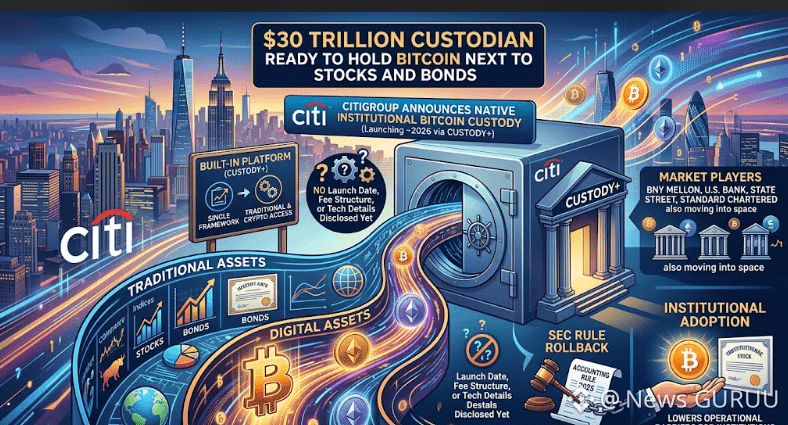
🚨 CITI PLANS NATIVE BITCOIN CUSTODY! ₿
Citigroup plans to launch institutional Bitcoin custody later in 2026 through its new Custody+ platform, allowing clients to hold traditional and crypto assets within one framework.
🏦 With major custodians already expanding into digital assets, easier bank-based custody could lower a key barrier to institutional Bitcoin adoption.
🎯 TRADING VIEW: BUY 📈
This is a long-term bullish signal for BTC adoption as institutional infrastructure continues to expand.
❓ Could Citi’s Bitcoin custody push accelerate institutional BTC demand? "CLICK ON THE BELOW YELLOW COIN TAG TO GO TO DESIRED TRADING PAGE TO GET BENEFIT TRADE"$BTC $VELVET $HEMI
{spot}(HEMIUSDT)
{future}(VELVETUSDT)
{spot}(BTCUSDT)
#cryptocustody #US30YearYieldHitsHighestSince2002
#citiplansbitcoincustodyforinstitutionsthisyear
🚨 CITI PLANS NATIVE BITCOIN CUSTODY! ₿
Citigroup plans to launch institutional Bitcoin custody later in 2026 through its new Custody+ platform, allowing clients to hold traditional and crypto assets within one framework.
🏦 With major custodians already expanding into digital assets, easier bank-based custody could lower a key barrier to institutional Bitcoin adoption.
🎯 TRADING VIEW: BUY 📈
This is a long-term bullish signal for BTC adoption as institutional infrastructure continues to expand.
❓ Could Citi’s Bitcoin custody push accelerate institutional BTC demand? "CLICK ON THE BELOW YELLOW COIN TAG TO GO TO DESIRED TRADING PAGE TO GET BENEFIT TRADE"$BTC $VELVET $HEMI
#cryptocustody #US30YearYieldHitsHighestSince2002
🚨 CITI PLANS NATIVE BITCOIN CUSTODY! ₿
Citigroup plans to launch institutional Bitcoin custody later in 2026 through its new Custody+ platform, allowing clients to hold traditional and crypto assets within one framework.
🏦 With major custodians already expanding into digital assets, easier bank-based custody could lower a key barrier to institutional Bitcoin adoption.
🎯 TRADING VIEW: BUY 📈
This is a long-term bullish signal for BTC adoption as institutional infrastructure continues to expand.
❓ Could Citi’s Bitcoin custody push accelerate institutional BTC demand? "CLICK ON THE BELOW YELLOW COIN TAG TO GO TO DESIRED TRADING PAGE TO GET BENEFIT TRADE"$BTC $VELVET $HEMI
#cryptocustody #US30YearYieldHitsHighestSince2002
1
783
·
--
Why Getting a MiCA License Is Just the Start of the Real Battle
Many assumed that landing a MiCA license would be the finish line for crypto custodians in Europe. It turns out that is only where the pressure actually begins.
Regulators across the region are shifting focus from approving firms to scrutinizing how they actually operate day to day. Winning authorization proves a company can meet the paperwork bar. Keeping it now means proving ongoing controls, clean asset segregation, transparent reserves, and airtight security around client funds.
For custodians, this changes the game. Compliance is no longer a one-time hurdle but a continuous obligation, with supervisors watching liquidity, governance, and operational resilience long after the license is granted. Firms that treated authorization as the goal may find themselves unprepared for sustained oversight.
The upside is meaningful. Tougher standards can build the institutional trust that has kept large capital on the sidelines. If custodians can prove they safeguard assets under real regulatory pressure, Europe could become one of the most credible homes for digital-asset infrastructure.
The message is clear: surviving the license process is easy compared to surviving the supervision that follows.
Do you think stricter custodian oversight will pull more institutional money into crypto? 👇
#MiCA #CryptoCustody #CryptoRegulation
Why Getting a MiCA License Is Just the Start of the Real Battle
Many assumed that landing a MiCA license would be the finish line for crypto custodians in Europe. It turns out that is only where the pressure actually begins.
Regulators across the region are shifting focus from approving firms to scrutinizing how they actually operate day to day. Winning authorization proves a company can meet the paperwork bar. Keeping it now means proving ongoing controls, clean asset segregation, transparent reserves, and airtight security around client funds.
For custodians, this changes the game. Compliance is no longer a one-time hurdle but a continuous obligation, with supervisors watching liquidity, governance, and operational resilience long after the license is granted. Firms that treated authorization as the goal may find themselves unprepared for sustained oversight.
The upside is meaningful. Tougher standards can build the institutional trust that has kept large capital on the sidelines. If custodians can prove they safeguard assets under real regulatory pressure, Europe could become one of the most credible homes for digital-asset infrastructure.
The message is clear: surviving the license process is easy compared to surviving the supervision that follows.
Do you think stricter custodian oversight will pull more institutional money into crypto? 👇
#MiCA #CryptoCustody #CryptoRegulation
Many assumed that landing a MiCA license would be the finish line for crypto custodians in Europe. It turns out that is only where the pressure actually begins.
Regulators across the region are shifting focus from approving firms to scrutinizing how they actually operate day to day. Winning authorization proves a company can meet the paperwork bar. Keeping it now means proving ongoing controls, clean asset segregation, transparent reserves, and airtight security around client funds.
For custodians, this changes the game. Compliance is no longer a one-time hurdle but a continuous obligation, with supervisors watching liquidity, governance, and operational resilience long after the license is granted. Firms that treated authorization as the goal may find themselves unprepared for sustained oversight.
The upside is meaningful. Tougher standards can build the institutional trust that has kept large capital on the sidelines. If custodians can prove they safeguard assets under real regulatory pressure, Europe could become one of the most credible homes for digital-asset infrastructure.
The message is clear: surviving the license process is easy compared to surviving the supervision that follows.
Do you think stricter custodian oversight will pull more institutional money into crypto? 👇
#MiCA #CryptoCustody #CryptoRegulation
64
🇸🇬 BitGo expands its presence in Singapore as its global client base grows
BitGo, which specializes in digital asset custody services for institutions, has opened a new office in Singapore. This expansion comes as its global client base has doubled, reflecting growing institutional demand for regulated digital asset solutions in the Asia-Pacific region.
━━━━━━━━━━━━━━
📊 Impact: 📈 High
🏷️ EXCHANGE
#BitGo #Singapore #CryptoCustody #InstitutionalCrypto #DigitalAssets
📰 Source: cryptobriefing.com
🇸🇬 BitGo expands its presence in Singapore as its global client base grows
BitGo, which specializes in digital asset custody services for institutions, has opened a new office in Singapore. This expansion comes as its global client base has doubled, reflecting growing institutional demand for regulated digital asset solutions in the Asia-Pacific region.
━━━━━━━━━━━━━━
📊 Impact: 📈 High
🏷️ EXCHANGE
#BitGo #Singapore #CryptoCustody #InstitutionalCrypto #DigitalAssets
📰 Source: cryptobriefing.com
BitGo, which specializes in digital asset custody services for institutions, has opened a new office in Singapore. This expansion comes as its global client base has doubled, reflecting growing institutional demand for regulated digital asset solutions in the Asia-Pacific region.
━━━━━━━━━━━━━━
📊 Impact: 📈 High
🏷️ EXCHANGE
#BitGo #Singapore #CryptoCustody #InstitutionalCrypto #DigitalAssets
📰 Source: cryptobriefing.com
48
Log in to explore more content
Join global crypto users on Binance Square
⚡️ Get latest and useful information about crypto.
💬 Trusted by the world’s largest crypto exchange.
👍 Discover real insights from verified creators.
Email / Phone number
Trending Topics
1
#CircleMints500MUSDCOnSolana
13,945 views
557 Discussing
2
#PolymarketBankFailureBetsDrawFDICConcern
29,495 views
745 Discussing
3
#BlackRockBuildsTokenizedPortfoliosForOndo
23,452 views
507 Discussing
4
#BitwiseFilesToListNEARETFOnNYSEArca
23,701 views
473 Discussing
5
#SECCommissionerPeirceToLeaveOct2
24,175 views
393 Discussing
6
#SECSaysBuybacksUpgradesDontMakeTokenSecurity
24,071 views
339 Discussing
7
#StrategyProposesDailyDividendsForPreferreds
3,315 views
105 Discussing
8
#CircleTetherFreezeBitgetHackerWallet
2,665 views
63 Discussing
9
#CoinMarketCapCompletesCoinglassAcquisition
6,014 views
86 Discussing
10
#QNTRises39%
85,607 views
1,433 Discussing