
#dieselprice
dieselprice
2,543 views
11 Discussing
Hot
Latest

According to the latest monitoring data released by the American Automobile Association (AAA) as of last Saturday, the national average price of diesel in the United States has officially broken through the $6.50 per gallon mark, reaching $6.505—an all-time high. Notably, it has taken less than 10 days for U.S. diesel prices to cross the $6 threshold. Just since the beginning of this month, diesel prices have surged by more than 87 cents, showing an extreme pattern of nearly continuous day-to-day increases, completely shattering the record peak set in 2022.
Diesel is the absolute lifeblood of modern industrial logistics and commercial transportation. In the short term, its violent price spike is far more damaging to the macroeconomy than ordinary gasoline. This supply-side crisis, triggered directly by geopolitical conflict and severe disruptions to the energy supply chain, has immediately pushed up baseline operating costs for U.S. trucking, agricultural production, and manufacturing. Against the backdrop of a market-wide expectation that inflation has entered a downward channel, diesel’s record-breaking surge is undoubtedly a heavy blow to the Federal Reserve’s efforts to combat inflation, and it could even completely reverse improving expectations regarding inflation persistence.
From the perspective of transmission mechanisms in traditional financial markets, the rapid rise in the risk of a second round of inflation is forcing the market to reassess its interest-rate path. The strong pass-through of energy costs into the prices of end-consumption goods will significantly shrink the Federal Reserve’s room to cut rates in the future, and it even raises the possibility that it could push the Fed back toward a more hawkish stance. U.S. Treasury yields and the U.S. dollar index are likely to remain range-bound at elevated levels, supported by renewed inflation expectations, which in turn will directly suppress valuation repair in risk assets such as U.S. stocks—while the shadow of tightening liquidity returns to once again cloud the macro market.
For the cryptocurrency market, cost-push inflation of this kind is often the most dangerous macro environment. Macro liquidity will be unable to ease materially, and when combined with the diversion of safe-haven demand caused by geopolitical crises, risk assets led by $BTC will face sustained pressure from capital outflows. Investors must remain highly cautious and must not gamble blindly on liquidity easing. With both stagflation risk and policy uncertainty hitting the market from two directions, the probability of deeper valuation pullbacks is rising sharply.
#DieselPrice #EnergyCrisis #MacroEconomy
According to the latest monitoring data released by the American Automobile Association (AAA) as of last Saturday, the national average price of diesel in the United States has officially broken through the $6.50 per gallon mark, reaching $6.505—an all-time high. Notably, it has taken less than 10 days for U.S. diesel prices to cross the $6 threshold. Just since the beginning of this month, diesel prices have surged by more than 87 cents, showing an extreme pattern of nearly continuous day-to-day increases, completely shattering the record peak set in 2022.
Diesel is the absolute lifeblood of modern industrial logistics and commercial transportation. In the short term, its violent price spike is far more damaging to the macroeconomy than ordinary gasoline. This supply-side crisis, triggered directly by geopolitical conflict and severe disruptions to the energy supply chain, has immediately pushed up baseline operating costs for U.S. trucking, agricultural production, and manufacturing. Against the backdrop of a market-wide expectation that inflation has entered a downward channel, diesel’s record-breaking surge is undoubtedly a heavy blow to the Federal Reserve’s efforts to combat inflation, and it could even completely reverse improving expectations regarding inflation persistence.
From the perspective of transmission mechanisms in traditional financial markets, the rapid rise in the risk of a second round of inflation is forcing the market to reassess its interest-rate path. The strong pass-through of energy costs into the prices of end-consumption goods will significantly shrink the Federal Reserve’s room to cut rates in the future, and it even raises the possibility that it could push the Fed back toward a more hawkish stance. U.S. Treasury yields and the U.S. dollar index are likely to remain range-bound at elevated levels, supported by renewed inflation expectations, which in turn will directly suppress valuation repair in risk assets such as U.S. stocks—while the shadow of tightening liquidity returns to once again cloud the macro market.
For the cryptocurrency market, cost-push inflation of this kind is often the most dangerous macro environment. Macro liquidity will be unable to ease materially, and when combined with the diversion of safe-haven demand caused by geopolitical crises, risk assets led by $BTC will face sustained pressure from capital outflows. Investors must remain highly cautious and must not gamble blindly on liquidity easing. With both stagflation risk and policy uncertainty hitting the market from two directions, the probability of deeper valuation pullbacks is rising sharply.
#DieselPrice #EnergyCrisis #MacroEconomy
Diesel is the absolute lifeblood of modern industrial logistics and commercial transportation. In the short term, its violent price spike is far more damaging to the macroeconomy than ordinary gasoline. This supply-side crisis, triggered directly by geopolitical conflict and severe disruptions to the energy supply chain, has immediately pushed up baseline operating costs for U.S. trucking, agricultural production, and manufacturing. Against the backdrop of a market-wide expectation that inflation has entered a downward channel, diesel’s record-breaking surge is undoubtedly a heavy blow to the Federal Reserve’s efforts to combat inflation, and it could even completely reverse improving expectations regarding inflation persistence.
From the perspective of transmission mechanisms in traditional financial markets, the rapid rise in the risk of a second round of inflation is forcing the market to reassess its interest-rate path. The strong pass-through of energy costs into the prices of end-consumption goods will significantly shrink the Federal Reserve’s room to cut rates in the future, and it even raises the possibility that it could push the Fed back toward a more hawkish stance. U.S. Treasury yields and the U.S. dollar index are likely to remain range-bound at elevated levels, supported by renewed inflation expectations, which in turn will directly suppress valuation repair in risk assets such as U.S. stocks—while the shadow of tightening liquidity returns to once again cloud the macro market.
For the cryptocurrency market, cost-push inflation of this kind is often the most dangerous macro environment. Macro liquidity will be unable to ease materially, and when combined with the diversion of safe-haven demand caused by geopolitical crises, risk assets led by $BTC will face sustained pressure from capital outflows. Investors must remain highly cautious and must not gamble blindly on liquidity easing. With both stagflation risk and policy uncertainty hitting the market from two directions, the probability of deeper valuation pullbacks is rising sharply.
#DieselPrice #EnergyCrisis #MacroEconomy
55

🚨 US diesel prices hit an all-time high 🚨
According to the NYT, diesel fuel prices in the United States have risen to the highest level ever. This is a new shock for the world’s largest economy, as diesel is the main fuel for freight transport, agriculture, and construction.
Real-world impact: Higher diesel prices mean surging logistics costs, which in turn drive up consumer goods prices and add more pressure to already hot inflation. The stock market could react negatively, especially transport, airline, and retail stocks.
Hot spot: This is not just a U.S. issue, but also a signal that global energy prices are still on an upward trend, affecting every economy.
Will the Fed act more aggressively to curb inflation, or accept weaker growth as the trade-off? The answer will shape markets in the coming weeks.
#DieselPrice $BTC
{spot}(BTCUSDT)
🚨 US diesel prices hit an all-time high 🚨
According to the NYT, diesel fuel prices in the United States have risen to the highest level ever. This is a new shock for the world’s largest economy, as diesel is the main fuel for freight transport, agriculture, and construction.
Real-world impact: Higher diesel prices mean surging logistics costs, which in turn drive up consumer goods prices and add more pressure to already hot inflation. The stock market could react negatively, especially transport, airline, and retail stocks.
Hot spot: This is not just a U.S. issue, but also a signal that global energy prices are still on an upward trend, affecting every economy.
Will the Fed act more aggressively to curb inflation, or accept weaker growth as the trade-off? The answer will shape markets in the coming weeks.
#DieselPrice $BTC
According to the NYT, diesel fuel prices in the United States have risen to the highest level ever. This is a new shock for the world’s largest economy, as diesel is the main fuel for freight transport, agriculture, and construction.
Real-world impact: Higher diesel prices mean surging logistics costs, which in turn drive up consumer goods prices and add more pressure to already hot inflation. The stock market could react negatively, especially transport, airline, and retail stocks.
Hot spot: This is not just a U.S. issue, but also a signal that global energy prices are still on an upward trend, affecting every economy.
Will the Fed act more aggressively to curb inflation, or accept weaker growth as the trade-off? The answer will shape markets in the coming weeks.
#DieselPrice $BTC
201

·
--
Verified
#USDieselMarginsTopRecord$100ABarrel
#DieselPrice #Oil
🚨 Diesel just hit a record — and crude oil isn’t the reason.
$VELVET ,$CL ,$BTW
{future}(BTWUSDT)
{future}(CLUSDT)
{future}(VELVETUSDT)
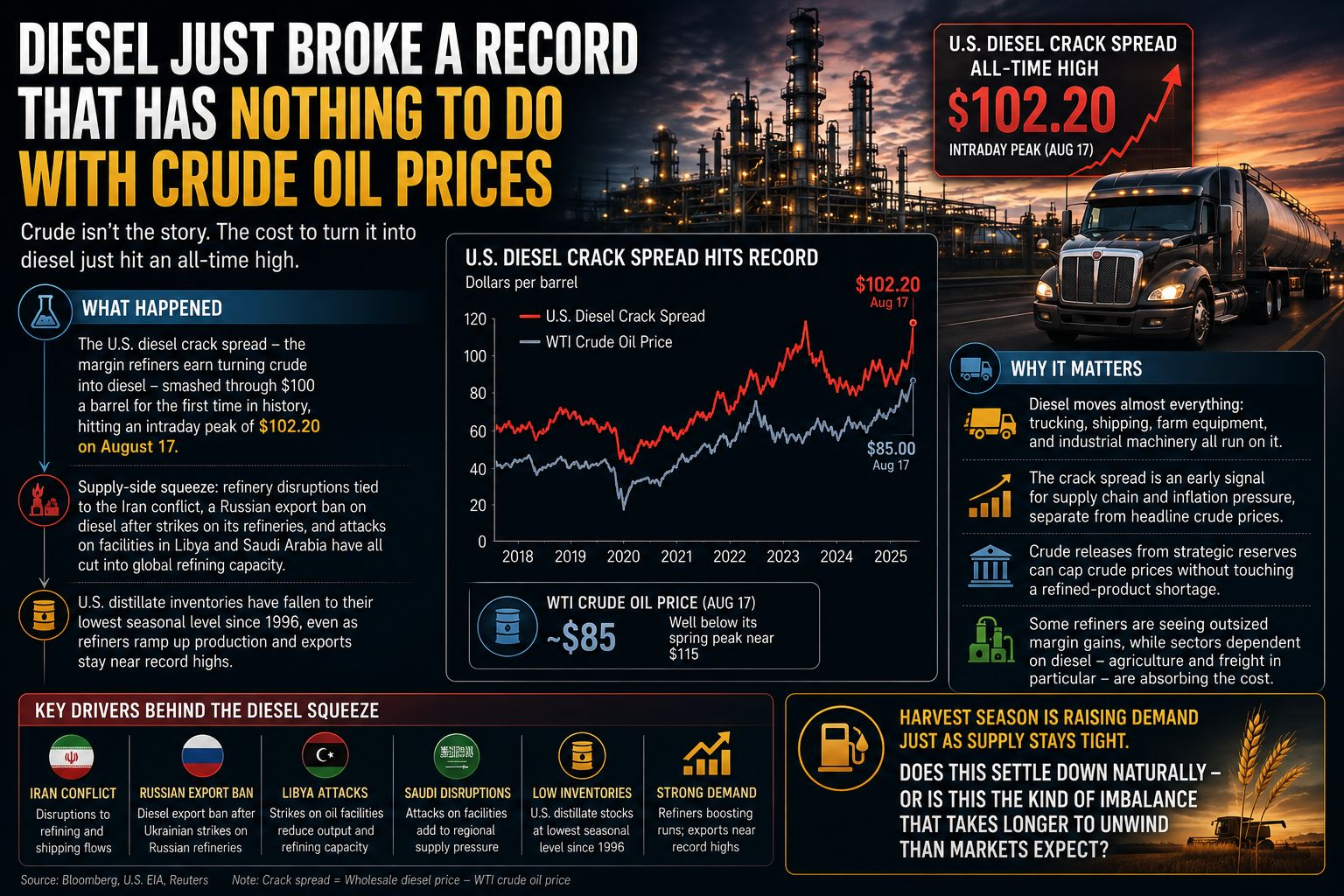
The US diesel crack spread, which measures the margin refiners make from turning crude into diesel, surged above $100/barrel for the first time, reaching an intraday $102.20 on August 17.
Meanwhile, WTI was around $85, showing the pressure is coming from refined-product supply.
What’s driving it:
⛽ Refinery disruptions
🇷🇺 Russian diesel export restrictions
🔥 Damage to refineries and energy infrastructure
📉 US distillate inventories at their lowest seasonal level since 1996
For traders, this matters because diesel powers trucking, shipping, agriculture, and industry. A prolonged shortage could add fresh pressure to transportation costs and inflation.
Is this a temporary supply squeeze — or the start of a longer diesel shortage?
#Energy #Inflation #Trading
#USDieselMarginsTopRecord$100ABarrel
#DieselPrice #Oil
🚨 Diesel just hit a record — and crude oil isn’t the reason.
$VELVET ,$CL ,$BTW
The US diesel crack spread, which measures the margin refiners make from turning crude into diesel, surged above $100/barrel for the first time, reaching an intraday $102.20 on August 17.
Meanwhile, WTI was around $85, showing the pressure is coming from refined-product supply.
What’s driving it:
⛽ Refinery disruptions
🇷🇺 Russian diesel export restrictions
🔥 Damage to refineries and energy infrastructure
📉 US distillate inventories at their lowest seasonal level since 1996
For traders, this matters because diesel powers trucking, shipping, agriculture, and industry. A prolonged shortage could add fresh pressure to transportation costs and inflation.
Is this a temporary supply squeeze — or the start of a longer diesel shortage?
#Energy #Inflation #Trading
#DieselPrice #Oil
🚨 Diesel just hit a record — and crude oil isn’t the reason.
$VELVET ,$CL ,$BTW
The US diesel crack spread, which measures the margin refiners make from turning crude into diesel, surged above $100/barrel for the first time, reaching an intraday $102.20 on August 17.
Meanwhile, WTI was around $85, showing the pressure is coming from refined-product supply.
What’s driving it:
⛽ Refinery disruptions
🇷🇺 Russian diesel export restrictions
🔥 Damage to refineries and energy infrastructure
📉 US distillate inventories at their lowest seasonal level since 1996
For traders, this matters because diesel powers trucking, shipping, agriculture, and industry. A prolonged shortage could add fresh pressure to transportation costs and inflation.
Is this a temporary supply squeeze — or the start of a longer diesel shortage?
#Energy #Inflation #Trading
1
255
🔴 US Diesel Hits Historic Peaks — Transportation Costs and CPI Face New Pressure
The American Automobile Association (AAA) has just confirmed: retail diesel prices in the US have surged to the highest level on record. This is not only a shock for truck drivers, but also a warning signal for the entire supply chain and inflation.
Why does it matter? Diesel is the primary fuel for freight transportation—from agricultural products to consumer goods. When diesel prices rise, logistics costs rise as well, and finally consumers have to pay more at every shelf. This could push next month’s CPI higher than expected, making the Fed’s fight against inflation even more difficult.
The crude oil market is also reacting strongly. If this uptrend continues, the pressure on the US and global economies will grow further. The question is: Will the Fed be forced to raise interest rates more aggressively to rein in inflation, or accept a recession in exchange for price stability?
This is a golden time to closely monitor oil price movements and macroeconomic indicators.
#DieselPrice #cpi #45NgayTuDoTaiChinh $BTC $ETH $SOL
🔴 US Diesel Hits Historic Peaks — Transportation Costs and CPI Face New Pressure
The American Automobile Association (AAA) has just confirmed: retail diesel prices in the US have surged to the highest level on record. This is not only a shock for truck drivers, but also a warning signal for the entire supply chain and inflation.
Why does it matter? Diesel is the primary fuel for freight transportation—from agricultural products to consumer goods. When diesel prices rise, logistics costs rise as well, and finally consumers have to pay more at every shelf. This could push next month’s CPI higher than expected, making the Fed’s fight against inflation even more difficult.
The crude oil market is also reacting strongly. If this uptrend continues, the pressure on the US and global economies will grow further. The question is: Will the Fed be forced to raise interest rates more aggressively to rein in inflation, or accept a recession in exchange for price stability?
This is a golden time to closely monitor oil price movements and macroeconomic indicators.
#DieselPrice #cpi #45NgayTuDoTaiChinh $BTC $ETH $SOL
The American Automobile Association (AAA) has just confirmed: retail diesel prices in the US have surged to the highest level on record. This is not only a shock for truck drivers, but also a warning signal for the entire supply chain and inflation.
Why does it matter? Diesel is the primary fuel for freight transportation—from agricultural products to consumer goods. When diesel prices rise, logistics costs rise as well, and finally consumers have to pay more at every shelf. This could push next month’s CPI higher than expected, making the Fed’s fight against inflation even more difficult.
The crude oil market is also reacting strongly. If this uptrend continues, the pressure on the US and global economies will grow further. The question is: Will the Fed be forced to raise interest rates more aggressively to rein in inflation, or accept a recession in exchange for price stability?
This is a golden time to closely monitor oil price movements and macroeconomic indicators.
#DieselPrice #cpi #45NgayTuDoTaiChinh $BTC $ETH $SOL
262


·
--
Diesel prices soar as Trump says war impact will pass 🚨
Increasingly, the focus is also on the economic cracks caused by the war. Trump initially dismissed this, pointing out that the US is an oil exporter and should not be troubled by disruptions to supplies through the Strait of Hormuz.
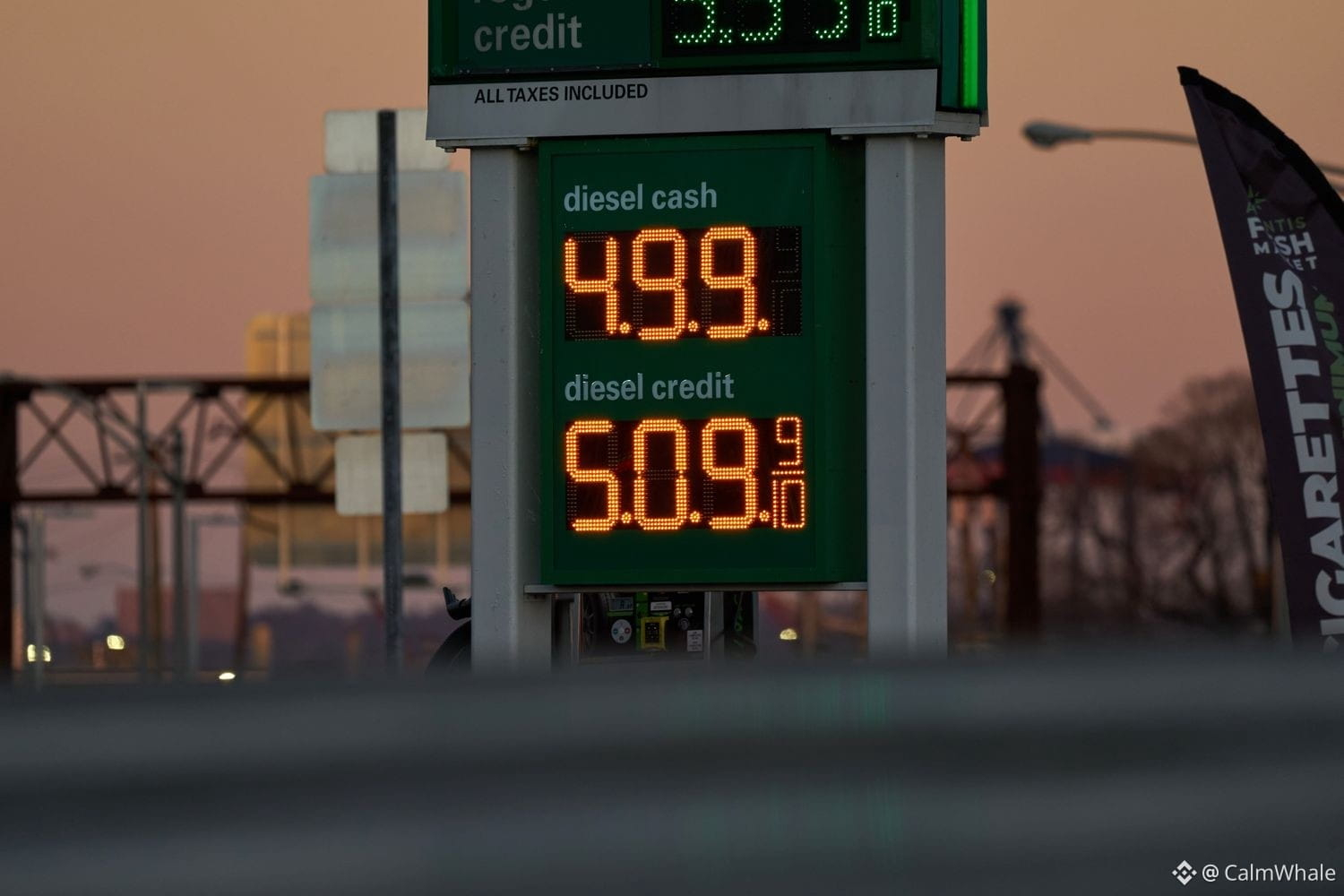
But that has proved wrong, as there has been a ripple effect on the US economy, particularly on the price of diesel, the primary fuel used to transport goods to supermarket shelves. This is something the American public has seen skyrocket.
It is not just the price of petrol at the pump; the cost of everyday staples in supermarkets is also rising because of higher transport costs.
President Trump continues to insist that everything will return to normal once the war is over, but he has offered no clear timeline. He initially said it would take days, then weeks, and now it remains a matter of waiting for a response that the US will accept.
$OSMO | $GTC | $INJ
#BREAKING #news #TRUMP #DieselPrice #IranRejectsUSPeacePlan
Diesel prices soar as Trump says war impact will pass 🚨
Increasingly, the focus is also on the economic cracks caused by the war. Trump initially dismissed this, pointing out that the US is an oil exporter and should not be troubled by disruptions to supplies through the Strait of Hormuz.
But that has proved wrong, as there has been a ripple effect on the US economy, particularly on the price of diesel, the primary fuel used to transport goods to supermarket shelves. This is something the American public has seen skyrocket.
It is not just the price of petrol at the pump; the cost of everyday staples in supermarkets is also rising because of higher transport costs.
President Trump continues to insist that everything will return to normal once the war is over, but he has offered no clear timeline. He initially said it would take days, then weeks, and now it remains a matter of waiting for a response that the US will accept.
$OSMO | $GTC | $INJ
#BREAKING #news #TRUMP #DieselPrice #IranRejectsUSPeacePlan
Increasingly, the focus is also on the economic cracks caused by the war. Trump initially dismissed this, pointing out that the US is an oil exporter and should not be troubled by disruptions to supplies through the Strait of Hormuz.
But that has proved wrong, as there has been a ripple effect on the US economy, particularly on the price of diesel, the primary fuel used to transport goods to supermarket shelves. This is something the American public has seen skyrocket.
It is not just the price of petrol at the pump; the cost of everyday staples in supermarkets is also rising because of higher transport costs.
President Trump continues to insist that everything will return to normal once the war is over, but he has offered no clear timeline. He initially said it would take days, then weeks, and now it remains a matter of waiting for a response that the US will accept.
$OSMO | $GTC | $INJ
#BREAKING #news #TRUMP #DieselPrice #IranRejectsUSPeacePlan

1
2.5k

·
--
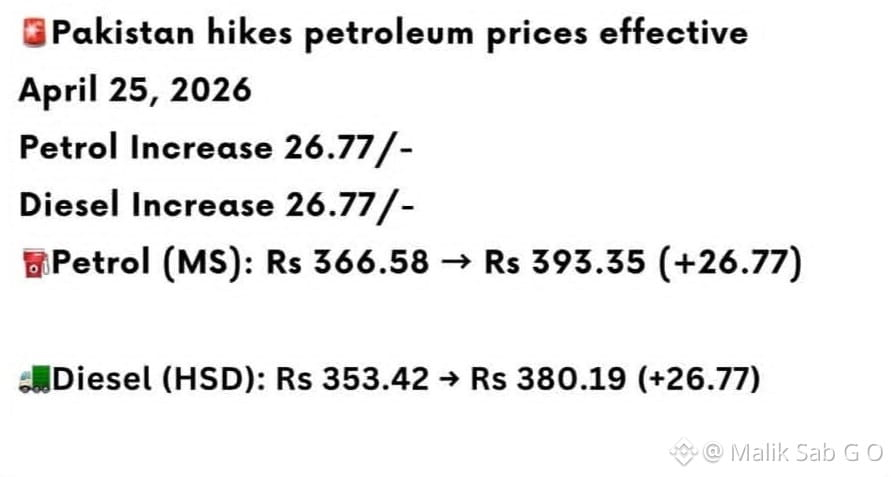
🚨Pakistan hikes petroleum prices effective April 25, 2026
⛽️Petrol (MS): Rs 366.58 → Rs 393.35 (+26.77)
🚛Diesel (HSD): Rs 353.42 → Rs 380.19 (+26.77)
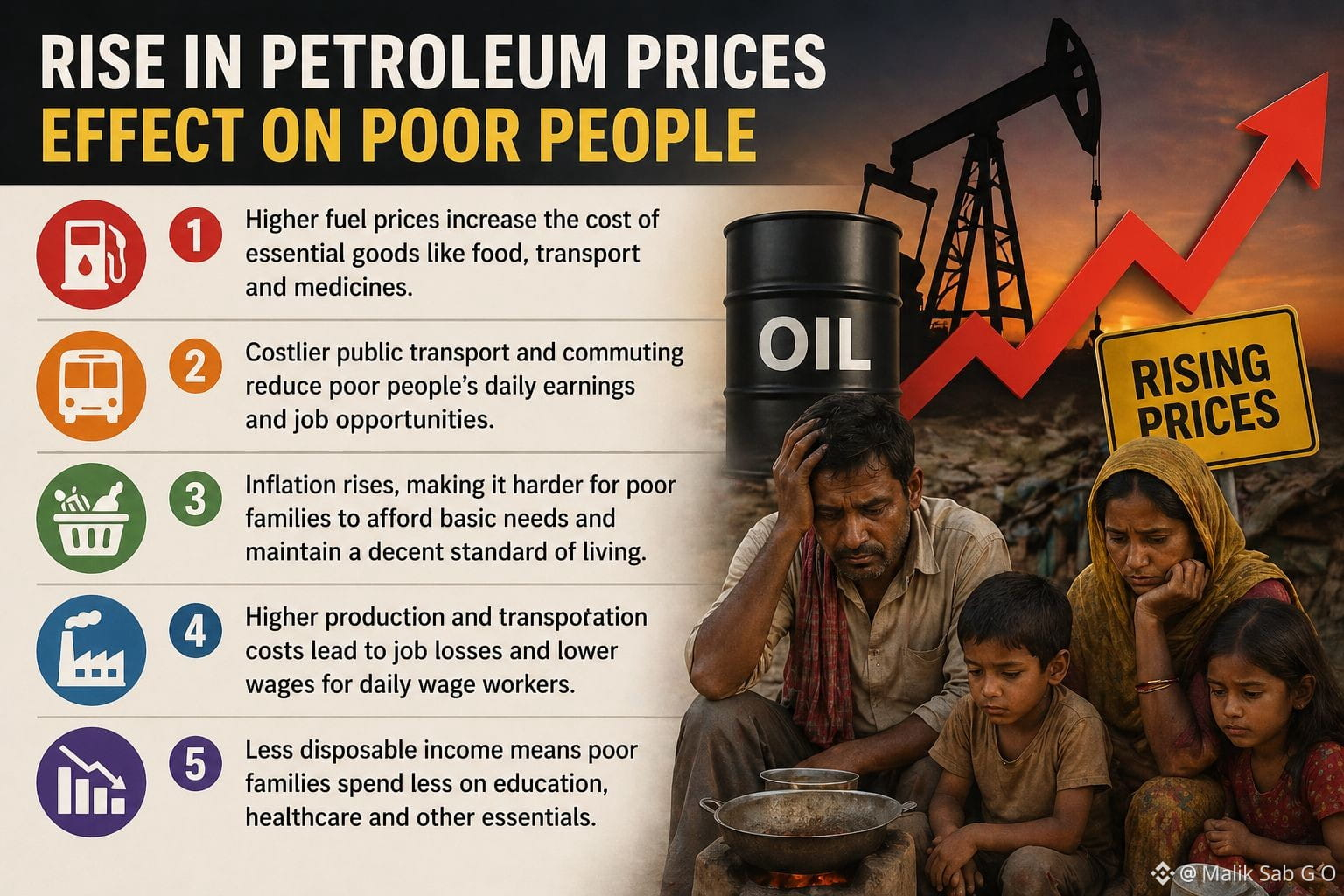
Rising petroleum prices hit poor people the hardest.
Transport fares increase, making daily travel expensive for workers and students.
Food and essential goods become costlier due to higher delivery expenses.
Low-income families struggle to manage household budgets and basic necessities.
Overall, fuel price hikes deepen poverty and reduce living standards.
#islamabad #islamabadbeautyofpakistan #reels #petrol #DieselPrice
🚨Pakistan hikes petroleum prices effective April 25, 2026
⛽️Petrol (MS): Rs 366.58 → Rs 393.35 (+26.77)
🚛Diesel (HSD): Rs 353.42 → Rs 380.19 (+26.77)
Rising petroleum prices hit poor people the hardest.
Transport fares increase, making daily travel expensive for workers and students.
Food and essential goods become costlier due to higher delivery expenses.
Low-income families struggle to manage household budgets and basic necessities.
Overall, fuel price hikes deepen poverty and reduce living standards.
#islamabad #islamabadbeautyofpakistan #reels #petrol #DieselPrice
⛽️Petrol (MS): Rs 366.58 → Rs 393.35 (+26.77)
🚛Diesel (HSD): Rs 353.42 → Rs 380.19 (+26.77)
Rising petroleum prices hit poor people the hardest.
Transport fares increase, making daily travel expensive for workers and students.
Food and essential goods become costlier due to higher delivery expenses.
Low-income families struggle to manage household budgets and basic necessities.
Overall, fuel price hikes deepen poverty and reduce living standards.
#islamabad #islamabadbeautyofpakistan #reels #petrol #DieselPrice
3
10
609

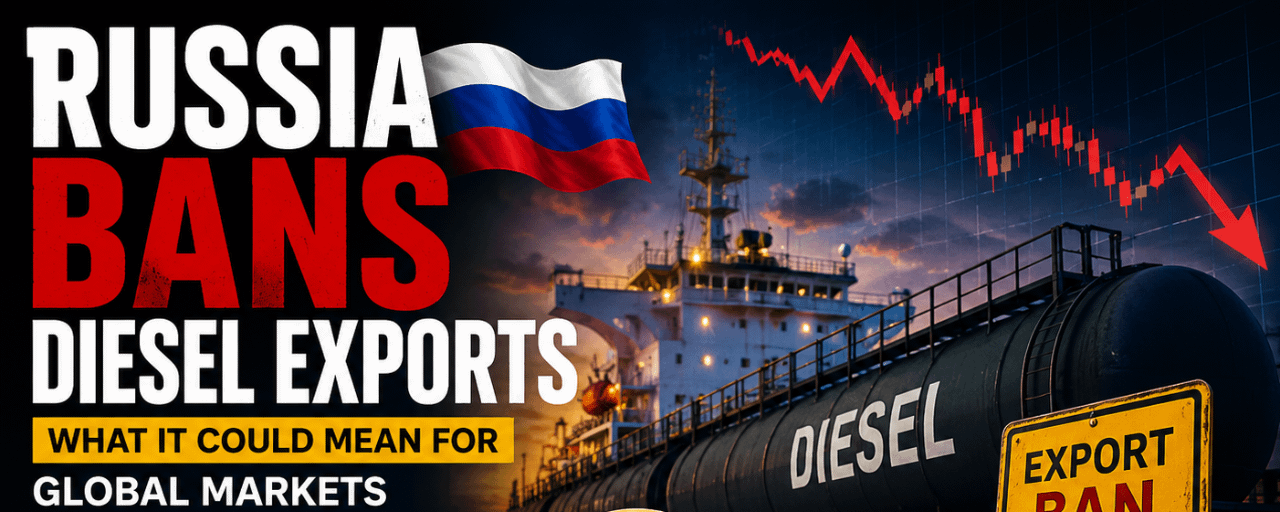
Article
Russia Bans Diesel Exports: What It Could Mean for Global MarketsRussia's latest decision to restrict diesel exports has drawn the attention of global financial markets. As one of the world's major fuel exporters, any disruption in Russian diesel supply can have ripple effects across energy prices, inflation, and even risk assets like cryptocurrencies.
Why Is This Important?
Diesel is essential for transportation, agriculture, manufacturing, and logistics. A reduction in exports could tighten global supply, potentially pushing fuel prices higher in regions that depend on imported diesel.
Higher energy costs often increase business expenses, which can influence inflation and central bank policies.
Potential Market Impact
⛽ Rising diesel prices may increase global transportation costs.📈 Higher inflation could keep interest rates elevated for longer.📉 Risk assets, including cryptocurrencies, may experience short-term volatility.🌍 Countries relying on imported fuel could face additional economic pressure.
What Could This Mean for Bitcoin?
Bitcoin does not directly depend on diesel prices, but macroeconomic events often affect investor sentiment.
If higher energy prices lead to inflation concerns, markets may become more cautious in the short term. On the other hand, if investors look for alternative stores of value during economic uncertainty, Bitcoin could attract renewed interest.
The overall impact will depend on how global markets respond and whether the export restrictions remain temporary or become long-term.
What Traders Should Watch
Crude oil and diesel price movements.Inflation data from major economies.Central bank policy announcements.Bitcoin's reaction around key support and resistance levels.
Maintaining proper risk management remains essential, especially during periods of increased market uncertainty.
Final Thoughts
Russia's diesel export restrictions highlight how geopolitical and energy-related developments can influence global financial markets. While the immediate effects may be strongest in the energy sector, crypto traders should continue monitoring macroeconomic news, as it often shapes market sentiment and price action.
Disclaimer: This article is for informational purposes only and should not be considered financial or investment advice. Always conduct your own research before making trading or investment decisions.
#russia #DieselPrice #EnergyMarkets #oil #bitcoin
Russia Bans Diesel Exports: What It Could Mean for Global Markets
Russia's latest decision to restrict diesel exports has drawn the attention of global financial markets. As one of the world's major fuel exporters, any disruption in Russian diesel supply can have ripple effects across energy prices, inflation, and even risk assets like cryptocurrencies.
Why Is This Important?
Diesel is essential for transportation, agriculture, manufacturing, and logistics. A reduction in exports could tighten global supply, potentially pushing fuel prices higher in regions that depend on imported diesel.
Higher energy costs often increase business expenses, which can influence inflation and central bank policies.
Potential Market Impact
⛽ Rising diesel prices may increase global transportation costs.📈 Higher inflation could keep interest rates elevated for longer.📉 Risk assets, including cryptocurrencies, may experience short-term volatility.🌍 Countries relying on imported fuel could face additional economic pressure.
What Could This Mean for Bitcoin?
Bitcoin does not directly depend on diesel prices, but macroeconomic events often affect investor sentiment.
If higher energy prices lead to inflation concerns, markets may become more cautious in the short term. On the other hand, if investors look for alternative stores of value during economic uncertainty, Bitcoin could attract renewed interest.
The overall impact will depend on how global markets respond and whether the export restrictions remain temporary or become long-term.
What Traders Should Watch
Crude oil and diesel price movements.Inflation data from major economies.Central bank policy announcements.Bitcoin's reaction around key support and resistance levels.
Maintaining proper risk management remains essential, especially during periods of increased market uncertainty.
Final Thoughts
Russia's diesel export restrictions highlight how geopolitical and energy-related developments can influence global financial markets. While the immediate effects may be strongest in the energy sector, crypto traders should continue monitoring macroeconomic news, as it often shapes market sentiment and price action.
Disclaimer: This article is for informational purposes only and should not be considered financial or investment advice. Always conduct your own research before making trading or investment decisions.
#russia #DieselPrice #EnergyMarkets #oil #bitcoin
Why Is This Important?
Diesel is essential for transportation, agriculture, manufacturing, and logistics. A reduction in exports could tighten global supply, potentially pushing fuel prices higher in regions that depend on imported diesel.
Higher energy costs often increase business expenses, which can influence inflation and central bank policies.
Potential Market Impact
⛽ Rising diesel prices may increase global transportation costs.📈 Higher inflation could keep interest rates elevated for longer.📉 Risk assets, including cryptocurrencies, may experience short-term volatility.🌍 Countries relying on imported fuel could face additional economic pressure.
What Could This Mean for Bitcoin?
Bitcoin does not directly depend on diesel prices, but macroeconomic events often affect investor sentiment.
If higher energy prices lead to inflation concerns, markets may become more cautious in the short term. On the other hand, if investors look for alternative stores of value during economic uncertainty, Bitcoin could attract renewed interest.
The overall impact will depend on how global markets respond and whether the export restrictions remain temporary or become long-term.
What Traders Should Watch
Crude oil and diesel price movements.Inflation data from major economies.Central bank policy announcements.Bitcoin's reaction around key support and resistance levels.
Maintaining proper risk management remains essential, especially during periods of increased market uncertainty.
Final Thoughts
Russia's diesel export restrictions highlight how geopolitical and energy-related developments can influence global financial markets. While the immediate effects may be strongest in the energy sector, crypto traders should continue monitoring macroeconomic news, as it often shapes market sentiment and price action.
Disclaimer: This article is for informational purposes only and should not be considered financial or investment advice. Always conduct your own research before making trading or investment decisions.
#russia #DieselPrice #EnergyMarkets #oil #bitcoin
1
92
Log in to explore more content
Join global crypto users on Binance Square
⚡️ Get latest and useful information about crypto.
💬 Trusted by the world’s largest crypto exchange.
👍 Discover real insights from verified creators.
Email / Phone number
Trending Topics
1
#AIStocksWhatNext
373,395 views
2,996 Discussing
2
#BitcoinBreaksAboveMayHighNears$86K
15,017 views
192 Discussing
3
#DogecoinRises15%
48,017 views
995 Discussing
4
#$14BBitcoinOptionsExpireFriday
3,898 views
89 Discussing
5
#BNBMarketCapPassesBNYMellon
30,273 views
711 Discussing
6
#CryptoMarketCapReclaims$3Trillion
5,166 views
82 Discussing
7
#MuseOvertakesChatGPTAsTopFreeIOSApp
17,850 views
534 Discussing
8
#TokenizedStockPlatformsCouldLaunchNextQuarter
28,268 views
588 Discussing
9
#StrategyAdds950Bitcoin
35,325 views
685 Discussing
10
#CardanoAddedToX402KitForADAPayments
30,021 views
658 Discussing