
#defi
defi
56.5M views
294,782 Discussing
Hot
Latest

⚡ $UNI SURGES 21% ON HEAVY VOLUME AS DEFI CAPITAL ROTATION INITIATES! 🌊
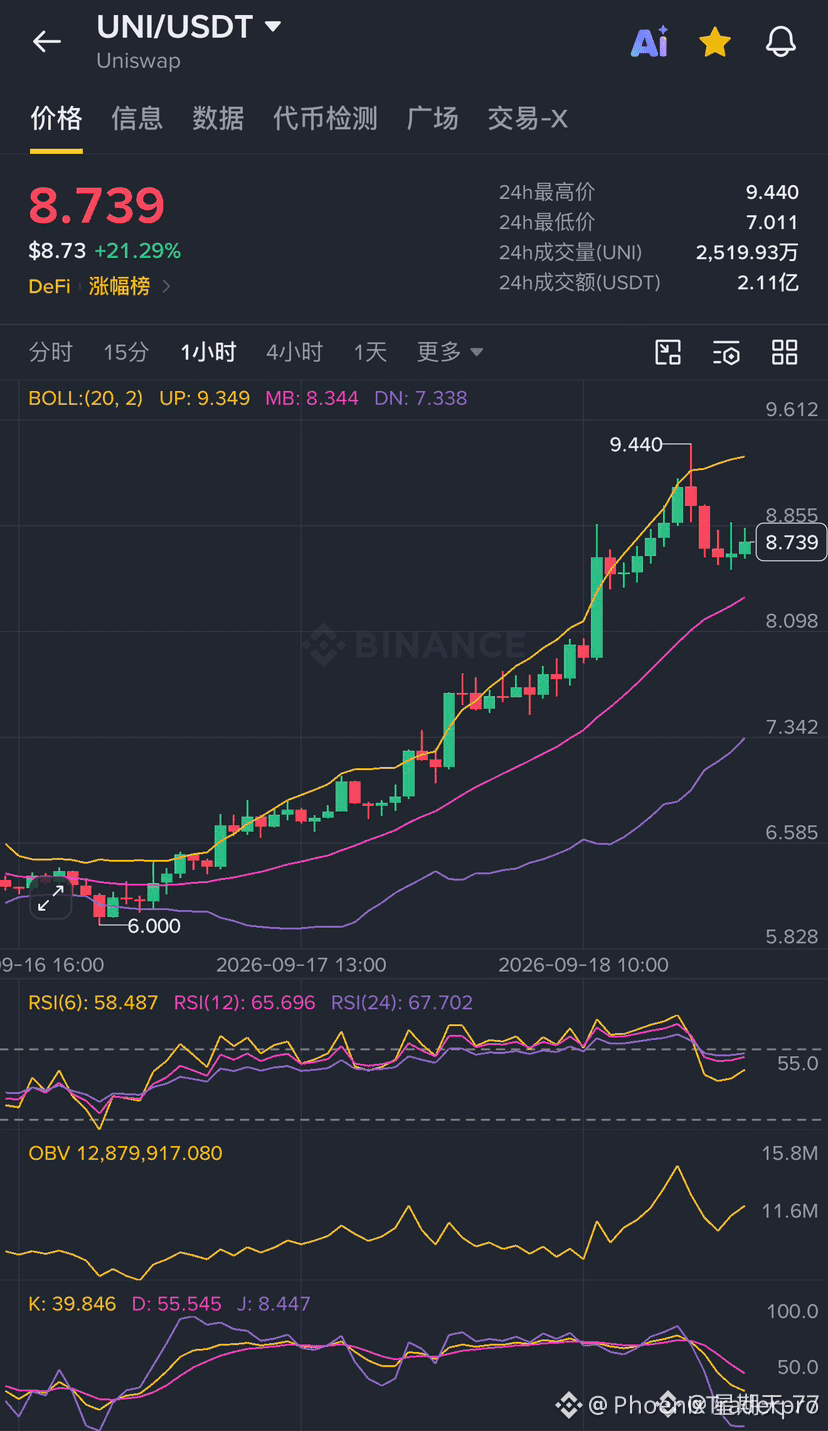
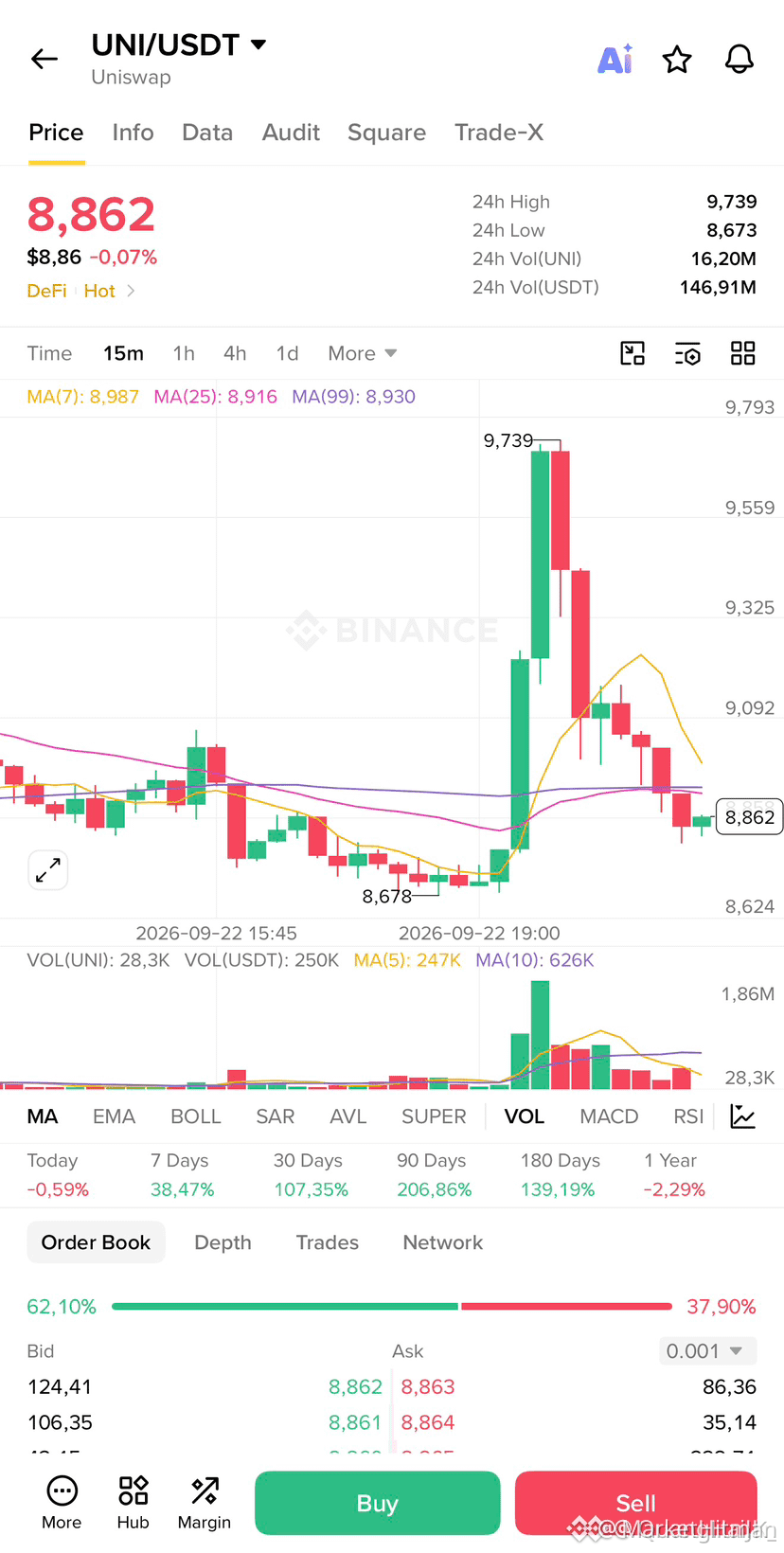
$UNI spearheaded the DeFi sector revival with a crisp 21.29% expansion toward 9.44 before cooling down to 8.73. 📊 Market structure on higher timeframes favors continuation, backed by an impressive $211M in volume confirming institutional capital deployment rather than an isolated pump.
📌 However, momentum indicators are showing short-term exhaustion on the hourly chart as profit-taking hits the local high. ⚡ Chasing momentum after a vertical push is sloppy execution — smart money waits for price to digest this move and bid the retest near middle Bollinger support.
🤔 Are you holding out for a clean pullback to set up your position, or expecting buyers to front-run 9.44? 👇
⚠️ Not financial advice. Always manage your risk. 🛡️
🏷️ #UNI #DeFi #Altcoins #Crypto
⚡ 🦈
⚡ $UNI SURGES 21% ON HEAVY VOLUME AS DEFI CAPITAL ROTATION INITIATES! 🌊
$UNI spearheaded the DeFi sector revival with a crisp 21.29% expansion toward 9.44 before cooling down to 8.73. 📊 Market structure on higher timeframes favors continuation, backed by an impressive $211M in volume confirming institutional capital deployment rather than an isolated pump.
📌 However, momentum indicators are showing short-term exhaustion on the hourly chart as profit-taking hits the local high. ⚡ Chasing momentum after a vertical push is sloppy execution — smart money waits for price to digest this move and bid the retest near middle Bollinger support.
🤔 Are you holding out for a clean pullback to set up your position, or expecting buyers to front-run 9.44? 👇
⚠️ Not financial advice. Always manage your risk. 🛡️
🏷️ #UNI #DeFi #Altcoins #Crypto
⚡ 🦈
$UNI spearheaded the DeFi sector revival with a crisp 21.29% expansion toward 9.44 before cooling down to 8.73. 📊 Market structure on higher timeframes favors continuation, backed by an impressive $211M in volume confirming institutional capital deployment rather than an isolated pump.
📌 However, momentum indicators are showing short-term exhaustion on the hourly chart as profit-taking hits the local high. ⚡ Chasing momentum after a vertical push is sloppy execution — smart money waits for price to digest this move and bid the retest near middle Bollinger support.
🤔 Are you holding out for a clean pullback to set up your position, or expecting buyers to front-run 9.44? 👇
⚠️ Not financial advice. Always manage your risk. 🛡️
🏷️ #UNI #DeFi #Altcoins #Crypto
⚡ 🦈
1
47

·
--
Uniswap’s UNI token just surged over 15% in 24 hours, hitting $10.50 and pushing its market cap above $6.5 billion!
If you are new to crypto, Uniswap is the biggest decentralized exchange (DEX) on Ethereum. It lets you swap tokens directly from your wallet without a middleman. UNI is the governance token, meaning holders get to vote on how the protocol evolves — like deciding fee structures or new features. It originally launched in 2020 with a famous airdrop rewarding early users.
This recent pump comes alongside massive trading volume near $2.3 billion, showing renewed interest in DeFi blue chips. While price action is exciting, remember that governance tokens derive value from the protocol's actual usage and revenue potential.
Always do your own research before buying the hype.
#UNI #DeFi
What feature would you vote for if you held UNI governance power?
Uniswap’s UNI token just surged over 15% in 24 hours, hitting $10.50 and pushing its market cap above $6.5 billion!
If you are new to crypto, Uniswap is the biggest decentralized exchange (DEX) on Ethereum. It lets you swap tokens directly from your wallet without a middleman. UNI is the governance token, meaning holders get to vote on how the protocol evolves — like deciding fee structures or new features. It originally launched in 2020 with a famous airdrop rewarding early users.
This recent pump comes alongside massive trading volume near $2.3 billion, showing renewed interest in DeFi blue chips. While price action is exciting, remember that governance tokens derive value from the protocol's actual usage and revenue potential.
Always do your own research before buying the hype.
#UNI #DeFi
What feature would you vote for if you held UNI governance power?
If you are new to crypto, Uniswap is the biggest decentralized exchange (DEX) on Ethereum. It lets you swap tokens directly from your wallet without a middleman. UNI is the governance token, meaning holders get to vote on how the protocol evolves — like deciding fee structures or new features. It originally launched in 2020 with a famous airdrop rewarding early users.
This recent pump comes alongside massive trading volume near $2.3 billion, showing renewed interest in DeFi blue chips. While price action is exciting, remember that governance tokens derive value from the protocol's actual usage and revenue potential.
Always do your own research before buying the hype.
#UNI #DeFi
What feature would you vote for if you held UNI governance power?
76

·
--
Unlocking the Power of Pearl: The Next Wave of DeFi Liquidity
The decentralized finance landscape is constantly evolving, and Pearl has emerged as an intriguing player to watch. Originally gaining traction as a key ve(3,3) decentralized exchange, Pearl has carved out a unique niche by focusing on real-world assets (RWAs) and yield-generating stablecoins.
At its core, Pearl utilizes a vote-escrowed model designed to align the interests of token holders, liquidity providers, and protocols. Users lock up PEARL tokens to receive vePEARL, giving them voting power to direct emissions to specific pools and earn a share of protocol fees. This self-sustaining flywheel is engineered to attract deep liquidity, particularly for tokenized assets.
What makes Pearl particularly interesting in today's market is the resurgence of the RWA narrative. As traditional finance yields become more competitive, DeFi protocols are rushing to bring off-chain yields on-chain. Pearl acts as a liquidity engine for these assets. By providing a platform where tokenized assets can be traded efficiently, Pearl bridges the gap between traditional finance and DeFi.
However, like any high-yield protocol, Pearl is not without risks. The ve(3,3) model relies heavily on consistent trading volume to sustain high yields. If volume drops, the incentive structure can experience downward pressure on the token price. Investors should closely monitor the protocol's Total Value Locked (TVL) and daily trading volumes, which serve as vital health indicators for the ecosystem.
As the RWA narrative continues to mature throughout 2024, Pearl remains a high-beta bet on the future of tokenized assets. If the platform can successfully scale its partnerships and maintain its yield flywheel, it could play a crucial role in the next generation of DeFi liquidity.
What are your thoughts on Pearl's ve(3,3) model? Are you bullish on the RWA narrative? Let us know in the comments.
#DeFi #RealWorldAssets #CryptoAnalysis
Unlocking the Power of Pearl: The Next Wave of DeFi Liquidity
The decentralized finance landscape is constantly evolving, and Pearl has emerged as an intriguing player to watch. Originally gaining traction as a key ve(3,3) decentralized exchange, Pearl has carved out a unique niche by focusing on real-world assets (RWAs) and yield-generating stablecoins.
At its core, Pearl utilizes a vote-escrowed model designed to align the interests of token holders, liquidity providers, and protocols. Users lock up PEARL tokens to receive vePEARL, giving them voting power to direct emissions to specific pools and earn a share of protocol fees. This self-sustaining flywheel is engineered to attract deep liquidity, particularly for tokenized assets.
What makes Pearl particularly interesting in today's market is the resurgence of the RWA narrative. As traditional finance yields become more competitive, DeFi protocols are rushing to bring off-chain yields on-chain. Pearl acts as a liquidity engine for these assets. By providing a platform where tokenized assets can be traded efficiently, Pearl bridges the gap between traditional finance and DeFi.
However, like any high-yield protocol, Pearl is not without risks. The ve(3,3) model relies heavily on consistent trading volume to sustain high yields. If volume drops, the incentive structure can experience downward pressure on the token price. Investors should closely monitor the protocol's Total Value Locked (TVL) and daily trading volumes, which serve as vital health indicators for the ecosystem.
As the RWA narrative continues to mature throughout 2024, Pearl remains a high-beta bet on the future of tokenized assets. If the platform can successfully scale its partnerships and maintain its yield flywheel, it could play a crucial role in the next generation of DeFi liquidity.
What are your thoughts on Pearl's ve(3,3) model? Are you bullish on the RWA narrative? Let us know in the comments.
#DeFi #RealWorldAssets #CryptoAnalysis
The decentralized finance landscape is constantly evolving, and Pearl has emerged as an intriguing player to watch. Originally gaining traction as a key ve(3,3) decentralized exchange, Pearl has carved out a unique niche by focusing on real-world assets (RWAs) and yield-generating stablecoins.
At its core, Pearl utilizes a vote-escrowed model designed to align the interests of token holders, liquidity providers, and protocols. Users lock up PEARL tokens to receive vePEARL, giving them voting power to direct emissions to specific pools and earn a share of protocol fees. This self-sustaining flywheel is engineered to attract deep liquidity, particularly for tokenized assets.
What makes Pearl particularly interesting in today's market is the resurgence of the RWA narrative. As traditional finance yields become more competitive, DeFi protocols are rushing to bring off-chain yields on-chain. Pearl acts as a liquidity engine for these assets. By providing a platform where tokenized assets can be traded efficiently, Pearl bridges the gap between traditional finance and DeFi.
However, like any high-yield protocol, Pearl is not without risks. The ve(3,3) model relies heavily on consistent trading volume to sustain high yields. If volume drops, the incentive structure can experience downward pressure on the token price. Investors should closely monitor the protocol's Total Value Locked (TVL) and daily trading volumes, which serve as vital health indicators for the ecosystem.
As the RWA narrative continues to mature throughout 2024, Pearl remains a high-beta bet on the future of tokenized assets. If the platform can successfully scale its partnerships and maintain its yield flywheel, it could play a crucial role in the next generation of DeFi liquidity.
What are your thoughts on Pearl's ve(3,3) model? Are you bullish on the RWA narrative? Let us know in the comments.
#DeFi #RealWorldAssets #CryptoAnalysis
47




Partly True
@HaedalProtocol Lending Vault: Smarter Lending Has Arrived on Sui
@HaedalProtocol , already a cornerstone of liquid staking on Sui through its haSUI token (over $200M in cumulative TVL across the ecosystem), is taking a new step forward with the launch of its Lending Vault.
Until now, anyone wanting to lend assets on Sui had to manually pick between several protocols Navi, Scallop, Suilend, and others each with its own rates, risk profile, and liquidity depth. This fragmentation forces active users to monitor multiple interfaces just to chase the best yield, a time-consuming task that isn't exactly beginner-friendly.
The Lending Vault flips this logic on its head. Instead of betting on a single protocol, it acts as a meta-strategy layer, automatically splitting and rebalancing deposited capital across the best lending opportunities available on Sui. Three mechanisms drive this:
- Active strategy management, adjusted to shifting market conditions
- Continuous reallocation of liquidity toward the most profitable venues
- Automatic reward compounding, so gains keep generating more gains
This move builds on Haedal's broader roadmap the team already evolved its former haeVault product into a more advanced liquidity offering in late 2025. Brick by brick, Haedal is assembling a full yield ecosystem around haSUI: staking, market making, and now aggregated lending.
For Sui, whose lending sector is maturing fast, this kind of aggregation layer could be a real catalyst pooling liquidity more efficiently, improving capital efficiency across the board, and giving everyday users access to strategies once reserved for power users.
$HAEDAL #Haedal #SUİ #defi #LiquidStaking
@Haedal Protocol Lending Vault: Smarter Lending Has Arrived on Sui
@Haedal Protocol , already a cornerstone of liquid staking on Sui through its haSUI token (over $200M in cumulative TVL across the ecosystem), is taking a new step forward with the launch of its Lending Vault.
Until now, anyone wanting to lend assets on Sui had to manually pick between several protocols Navi, Scallop, Suilend, and others each with its own rates, risk profile, and liquidity depth. This fragmentation forces active users to monitor multiple interfaces just to chase the best yield, a time-consuming task that isn't exactly beginner-friendly.
The Lending Vault flips this logic on its head. Instead of betting on a single protocol, it acts as a meta-strategy layer, automatically splitting and rebalancing deposited capital across the best lending opportunities available on Sui. Three mechanisms drive this:
- Active strategy management, adjusted to shifting market conditions
- Continuous reallocation of liquidity toward the most profitable venues
- Automatic reward compounding, so gains keep generating more gains
This move builds on Haedal's broader roadmap the team already evolved its former haeVault product into a more advanced liquidity offering in late 2025. Brick by brick, Haedal is assembling a full yield ecosystem around haSUI: staking, market making, and now aggregated lending.
For Sui, whose lending sector is maturing fast, this kind of aggregation layer could be a real catalyst pooling liquidity more efficiently, improving capital efficiency across the board, and giving everyday users access to strategies once reserved for power users.
$HAEDAL #Haedal #SUİ #defi #LiquidStaking
@Haedal Protocol , already a cornerstone of liquid staking on Sui through its haSUI token (over $200M in cumulative TVL across the ecosystem), is taking a new step forward with the launch of its Lending Vault.
Until now, anyone wanting to lend assets on Sui had to manually pick between several protocols Navi, Scallop, Suilend, and others each with its own rates, risk profile, and liquidity depth. This fragmentation forces active users to monitor multiple interfaces just to chase the best yield, a time-consuming task that isn't exactly beginner-friendly.
The Lending Vault flips this logic on its head. Instead of betting on a single protocol, it acts as a meta-strategy layer, automatically splitting and rebalancing deposited capital across the best lending opportunities available on Sui. Three mechanisms drive this:
- Active strategy management, adjusted to shifting market conditions
- Continuous reallocation of liquidity toward the most profitable venues
- Automatic reward compounding, so gains keep generating more gains
This move builds on Haedal's broader roadmap the team already evolved its former haeVault product into a more advanced liquidity offering in late 2025. Brick by brick, Haedal is assembling a full yield ecosystem around haSUI: staking, market making, and now aggregated lending.
For Sui, whose lending sector is maturing fast, this kind of aggregation layer could be a real catalyst pooling liquidity more efficiently, improving capital efficiency across the board, and giving everyday users access to strategies once reserved for power users.
$HAEDAL #Haedal #SUİ #defi #LiquidStaking

Mht ahmat _crypto_trader_235:
Super
9
2
12
664

·
--
DeFi's most underestimated feature isn't yield. It's liquidation.
In traditional finance, forced deleveraging is slow — margin calls arrive by email, brokers call, days pass. In DeFi, liquidation is code. It executes the second collateral crosses threshold, no exceptions, no mercy.
That design choice shapes the entire market. Automated liquidations mean leverage unwinds mechanically, and mechanical unwinds beget cascades: one liquidation pushes price toward the next liquidation level, which triggers another. This is why crypto drawdowns are vertical and recoveries are stair-shaped. The system doesn't choose to panic — it's built to.
The interesting consequence: open interest and aggregate loan health are better cycle gauges than sentiment. When funding is elevated and lending markets are maxed, the market has pre-committed its own downside. When positions are flushed and lending utilization is low, the fuel for the next squeeze is already stored.
The protocols that understood this early built differently — gradual liquidations, dutch auctions, partial fills instead of binary cliffs. They're not just protecting users; they're damping the reflexive loops that amplify every cycle.
Leverage isn't evil. Unmanaged leverage is. DeFi made liquidation honest — it removed the broker's discretion, the bailouts, the delay. What it revealed is that most market fragility was never about technology. It was always about the debt underneath.
$BTC $ETH $SOL
#DeFi #Crypto #Liquidations #OnChain #MarketStructure
DeFi's most underestimated feature isn't yield. It's liquidation.
In traditional finance, forced deleveraging is slow — margin calls arrive by email, brokers call, days pass. In DeFi, liquidation is code. It executes the second collateral crosses threshold, no exceptions, no mercy.
That design choice shapes the entire market. Automated liquidations mean leverage unwinds mechanically, and mechanical unwinds beget cascades: one liquidation pushes price toward the next liquidation level, which triggers another. This is why crypto drawdowns are vertical and recoveries are stair-shaped. The system doesn't choose to panic — it's built to.
The interesting consequence: open interest and aggregate loan health are better cycle gauges than sentiment. When funding is elevated and lending markets are maxed, the market has pre-committed its own downside. When positions are flushed and lending utilization is low, the fuel for the next squeeze is already stored.
The protocols that understood this early built differently — gradual liquidations, dutch auctions, partial fills instead of binary cliffs. They're not just protecting users; they're damping the reflexive loops that amplify every cycle.
Leverage isn't evil. Unmanaged leverage is. DeFi made liquidation honest — it removed the broker's discretion, the bailouts, the delay. What it revealed is that most market fragility was never about technology. It was always about the debt underneath.
$BTC $ETH $SOL
#DeFi #Crypto #Liquidations #OnChain #MarketStructure
In traditional finance, forced deleveraging is slow — margin calls arrive by email, brokers call, days pass. In DeFi, liquidation is code. It executes the second collateral crosses threshold, no exceptions, no mercy.
That design choice shapes the entire market. Automated liquidations mean leverage unwinds mechanically, and mechanical unwinds beget cascades: one liquidation pushes price toward the next liquidation level, which triggers another. This is why crypto drawdowns are vertical and recoveries are stair-shaped. The system doesn't choose to panic — it's built to.
The interesting consequence: open interest and aggregate loan health are better cycle gauges than sentiment. When funding is elevated and lending markets are maxed, the market has pre-committed its own downside. When positions are flushed and lending utilization is low, the fuel for the next squeeze is already stored.
The protocols that understood this early built differently — gradual liquidations, dutch auctions, partial fills instead of binary cliffs. They're not just protecting users; they're damping the reflexive loops that amplify every cycle.
Leverage isn't evil. Unmanaged leverage is. DeFi made liquidation honest — it removed the broker's discretion, the bailouts, the delay. What it revealed is that most market fragility was never about technology. It was always about the debt underneath.
$BTC $ETH $SOL
#DeFi #Crypto #Liquidations #OnChain #MarketStructure
42

·
--
Bullish
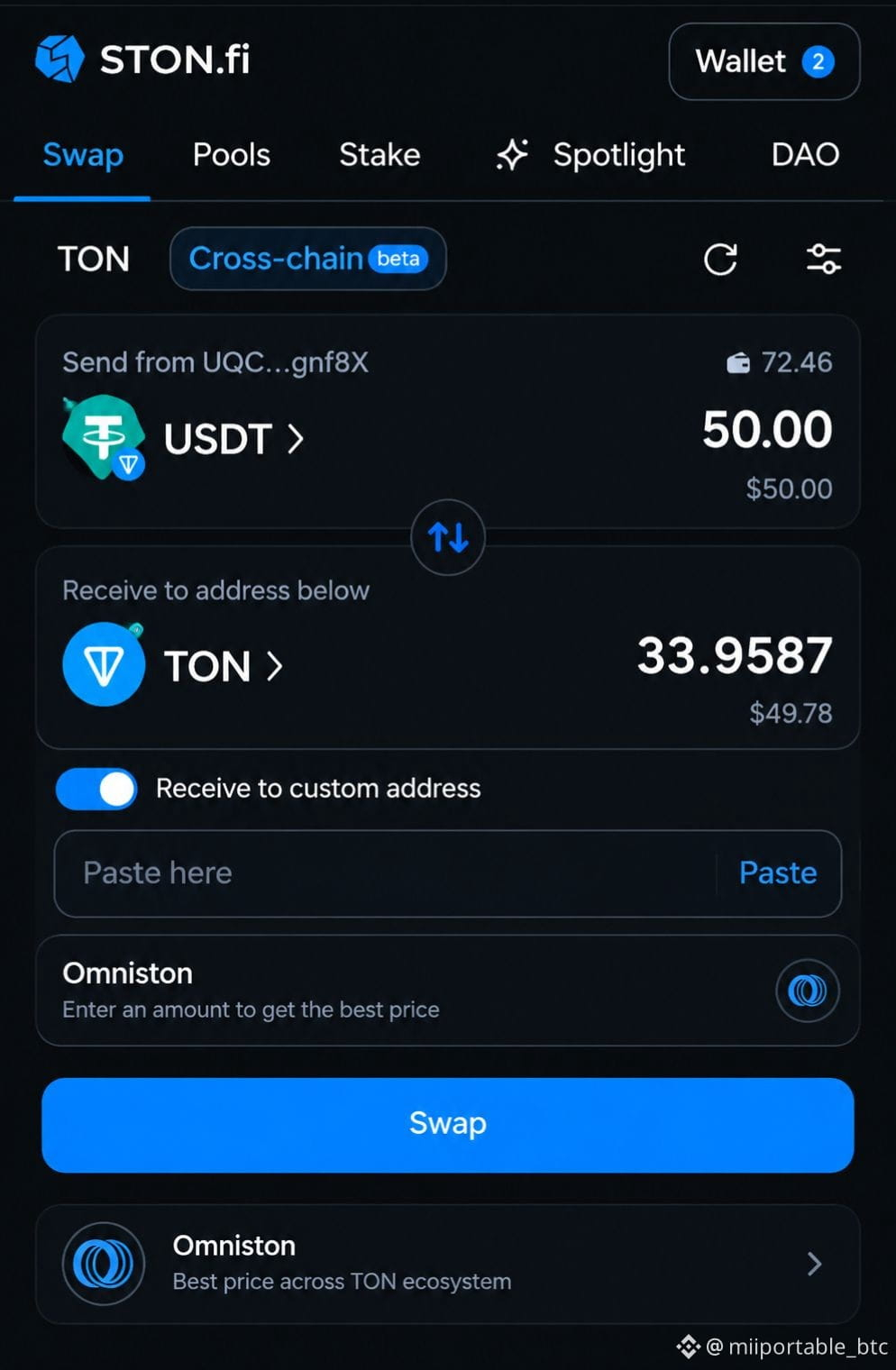
draft:Does a cross.chain route work the same going both directions? Testing STON.fi TON to TRON USDT route showed a detail worth flagging before assuming yes.
Setting up USDT on TON as the source and USDT on TRON as the destination, with a custom receiving address entered, the address field displayed a red outline rather than the usual confirmation state. That's worth paying attention to specifically because address formats differ meaningfully between TON and TRON, and a validation flag at this stage is the interface doing its job, catching a potential mismatch before funds move rather than after.
This is a useful reminder for anyone using cross chain custom address routing generally, not just on this specific route. Always confirm the destination address is validated and correctly formatted for the destination chain before confirming a swap, and treat any visual warning state in the interface as something to resolve, not skip past.
TON continues to be worth watching for interface details like this, since a validation catch at the address level is a small but meaningful part of what actually keeps cross chain swaps safe in practice.
Ston.fi: https://ston.fi/
Cross chain: https://app.ston.fi/swap
@ton_blockchain @stonfi #TON #defi #Omniston $GRAM
{future}(GRAMUSDT)
draft:Does a cross.chain route work the same going both directions? Testing STON.fi TON to TRON USDT route showed a detail worth flagging before assuming yes.
Setting up USDT on TON as the source and USDT on TRON as the destination, with a custom receiving address entered, the address field displayed a red outline rather than the usual confirmation state. That's worth paying attention to specifically because address formats differ meaningfully between TON and TRON, and a validation flag at this stage is the interface doing its job, catching a potential mismatch before funds move rather than after.
This is a useful reminder for anyone using cross chain custom address routing generally, not just on this specific route. Always confirm the destination address is validated and correctly formatted for the destination chain before confirming a swap, and treat any visual warning state in the interface as something to resolve, not skip past.
TON continues to be worth watching for interface details like this, since a validation catch at the address level is a small but meaningful part of what actually keeps cross chain swaps safe in practice.
Ston.fi: https://ston.fi/
Cross chain: https://app.ston.fi/swap
@Ton Network @STONfi DEX #TON #defi #Omniston $GRAM
Setting up USDT on TON as the source and USDT on TRON as the destination, with a custom receiving address entered, the address field displayed a red outline rather than the usual confirmation state. That's worth paying attention to specifically because address formats differ meaningfully between TON and TRON, and a validation flag at this stage is the interface doing its job, catching a potential mismatch before funds move rather than after.
This is a useful reminder for anyone using cross chain custom address routing generally, not just on this specific route. Always confirm the destination address is validated and correctly formatted for the destination chain before confirming a swap, and treat any visual warning state in the interface as something to resolve, not skip past.
TON continues to be worth watching for interface details like this, since a validation catch at the address level is a small but meaningful part of what actually keeps cross chain swaps safe in practice.
Ston.fi: https://ston.fi/
Cross chain: https://app.ston.fi/swap
@Ton Network @STONfi DEX #TON #defi #Omniston $GRAM
220

·
--
🦈 REAL REVENUE OVER HYPOTHETICALLY BIG PROMISES: WHY $HYPE IS FLIPPING DEFI REALITY! ⚡
Hyperliquid is breaking out of the speculative sandbox with $83M in monthly fees and $65M feeding protocol revenue. 📊 While traditional DEXs rely on pure narrative fumes, $HYPE is anchored by over $10B in daily perp volume and $14.3B in open interest.
💡 The structural breakthrough lies in HIP-3, expanding markets into real-world assets while top-tier exchange integrations funnel seamless liquidity. 🌊 With core trading fees actively accumulating $HYPE , this protocol is evolving into a full-scale financial infrastructure. 💬 Do you see protocol revenue taking over pure narrative trading this year? 👇
⚠️ Not financial advice. Always manage your risk. 🛡️
🏷️ #HYPE #DeFi #ProtocolRevenue #Crypto
🔥 💎
🦈 REAL REVENUE OVER HYPOTHETICALLY BIG PROMISES: WHY $HYPE IS FLIPPING DEFI REALITY! ⚡
Hyperliquid is breaking out of the speculative sandbox with $83M in monthly fees and $65M feeding protocol revenue. 📊 While traditional DEXs rely on pure narrative fumes, $HYPE is anchored by over $10B in daily perp volume and $14.3B in open interest.
💡 The structural breakthrough lies in HIP-3, expanding markets into real-world assets while top-tier exchange integrations funnel seamless liquidity. 🌊 With core trading fees actively accumulating $HYPE , this protocol is evolving into a full-scale financial infrastructure. 💬 Do you see protocol revenue taking over pure narrative trading this year? 👇
⚠️ Not financial advice. Always manage your risk. 🛡️
🏷️ #HYPE #DeFi #ProtocolRevenue #Crypto
🔥 💎
Hyperliquid is breaking out of the speculative sandbox with $83M in monthly fees and $65M feeding protocol revenue. 📊 While traditional DEXs rely on pure narrative fumes, $HYPE is anchored by over $10B in daily perp volume and $14.3B in open interest.
💡 The structural breakthrough lies in HIP-3, expanding markets into real-world assets while top-tier exchange integrations funnel seamless liquidity. 🌊 With core trading fees actively accumulating $HYPE , this protocol is evolving into a full-scale financial infrastructure. 💬 Do you see protocol revenue taking over pure narrative trading this year? 👇
⚠️ Not financial advice. Always manage your risk. 🛡️
🏷️ #HYPE #DeFi #ProtocolRevenue #Crypto
🔥 💎
151

·
--
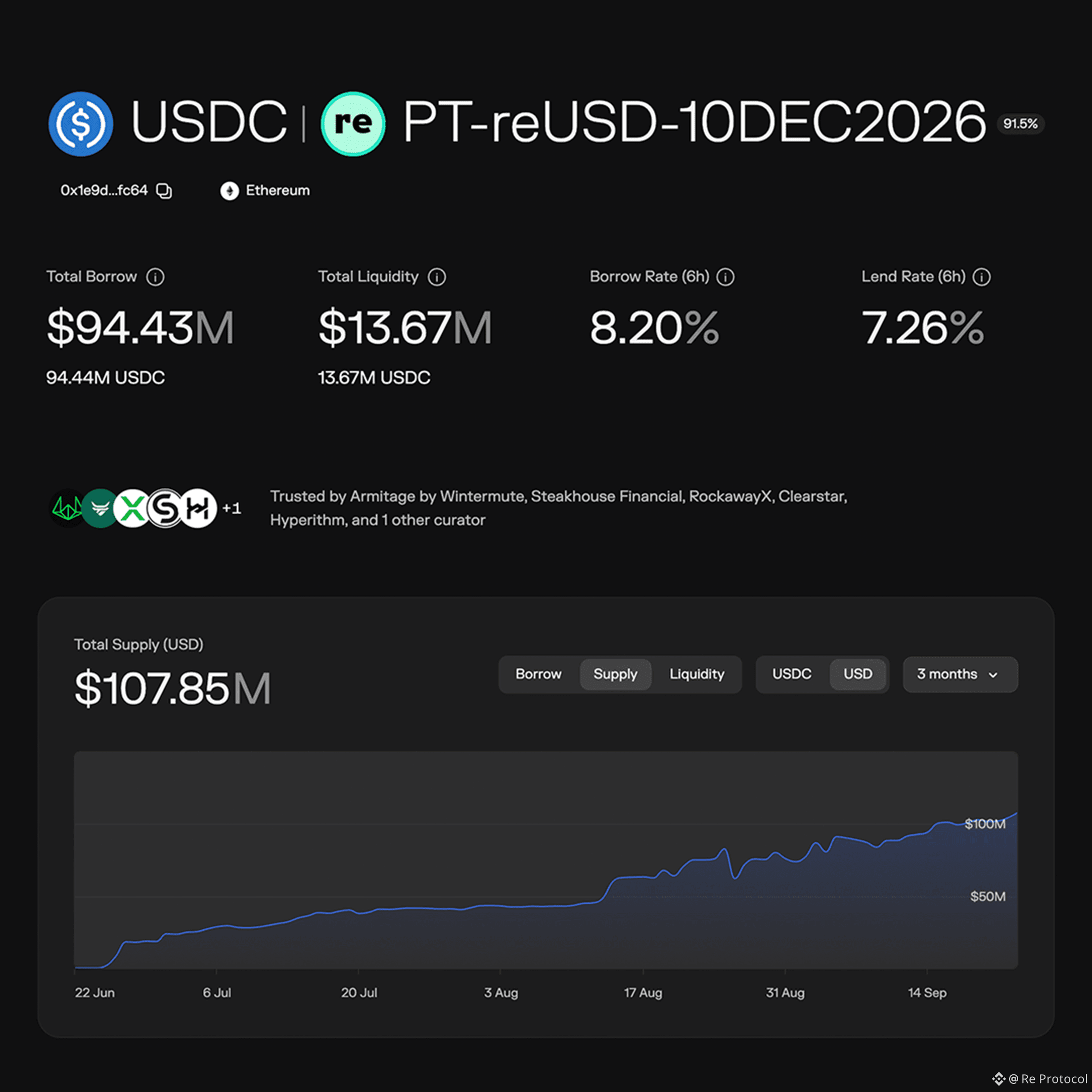
The USDC / PT-reUSD market on Morpho crossed $100M+ in supply.
If you're sitting on idle USDC, lend it against PT-reUSD for 7.26% APY.
Real-world yield composable at scale.
Lend here:
https://app.morpho.org/ethereum/variable/0x1e9d614631a7df0ec07fb05b2c8cb2491575fd1a63a33bf187a6afb295a4fc64/usdc-pt-reusd-10dec2026
#reinsurance #RWA #DeFi #TradFi
The USDC / PT-reUSD market on Morpho crossed $100M+ in supply.
If you're sitting on idle USDC, lend it against PT-reUSD for 7.26% APY.
Real-world yield composable at scale.
Lend here:
https://app.morpho.org/ethereum/variable/0x1e9d614631a7df0ec07fb05b2c8cb2491575fd1a63a33bf187a6afb295a4fc64/usdc-pt-reusd-10dec2026
#reinsurance #RWA #DeFi #TradFi
If you're sitting on idle USDC, lend it against PT-reUSD for 7.26% APY.
Real-world yield composable at scale.
Lend here:
https://app.morpho.org/ethereum/variable/0x1e9d614631a7df0ec07fb05b2c8cb2491575fd1a63a33bf187a6afb295a4fc64/usdc-pt-reusd-10dec2026
#reinsurance #RWA #DeFi #TradFi
1
2
65

·
--
🚨 NOTIONAL FINANCE ESCROW EXPLOITED FOR $1.7M AS SMART MONEY MONITORS $ETH ROTATION! 💣
An institutional-grade escrow breach routed $1.7M in DAI and USDC directly into 689 ETH before moving through mixing protocols. While retail panic focuses on contract risk, order flow reveals institutional capital remains unfazed across macro market structures. 🔍
Smart money treats this as an isolated liquidity extraction rather than systemic DeFi risk, keeping structural positioning intact across privacy-centric assets like $ZEC and $DASH . Isolated exploits rarely alter broader trend bias unless core stablecoin pegs are compromised. 💡
💬 Do you view this exploit as a localized escrow failure or a catalyst for institutional risk reduction? 👇
⚠️ Not financial advice. Always manage your risk. 🛡️
🏷️ #ETH #ZEC #DASH #DeFi #MarketStructure
🎯 🦈
🚨 NOTIONAL FINANCE ESCROW EXPLOITED FOR $1.7M AS SMART MONEY MONITORS $ETH ROTATION! 💣
An institutional-grade escrow breach routed $1.7M in DAI and USDC directly into 689 ETH before moving through mixing protocols. While retail panic focuses on contract risk, order flow reveals institutional capital remains unfazed across macro market structures. 🔍
Smart money treats this as an isolated liquidity extraction rather than systemic DeFi risk, keeping structural positioning intact across privacy-centric assets like $ZEC and $DASH . Isolated exploits rarely alter broader trend bias unless core stablecoin pegs are compromised. 💡
💬 Do you view this exploit as a localized escrow failure or a catalyst for institutional risk reduction? 👇
⚠️ Not financial advice. Always manage your risk. 🛡️
🏷️ #ETH #ZEC #DASH #DeFi #MarketStructure
🎯 🦈
An institutional-grade escrow breach routed $1.7M in DAI and USDC directly into 689 ETH before moving through mixing protocols. While retail panic focuses on contract risk, order flow reveals institutional capital remains unfazed across macro market structures. 🔍
Smart money treats this as an isolated liquidity extraction rather than systemic DeFi risk, keeping structural positioning intact across privacy-centric assets like $ZEC and $DASH . Isolated exploits rarely alter broader trend bias unless core stablecoin pegs are compromised. 💡
💬 Do you view this exploit as a localized escrow failure or a catalyst for institutional risk reduction? 👇
⚠️ Not financial advice. Always manage your risk. 🛡️
🏷️ #ETH #ZEC #DASH #DeFi #MarketStructure
🎯 🦈


247

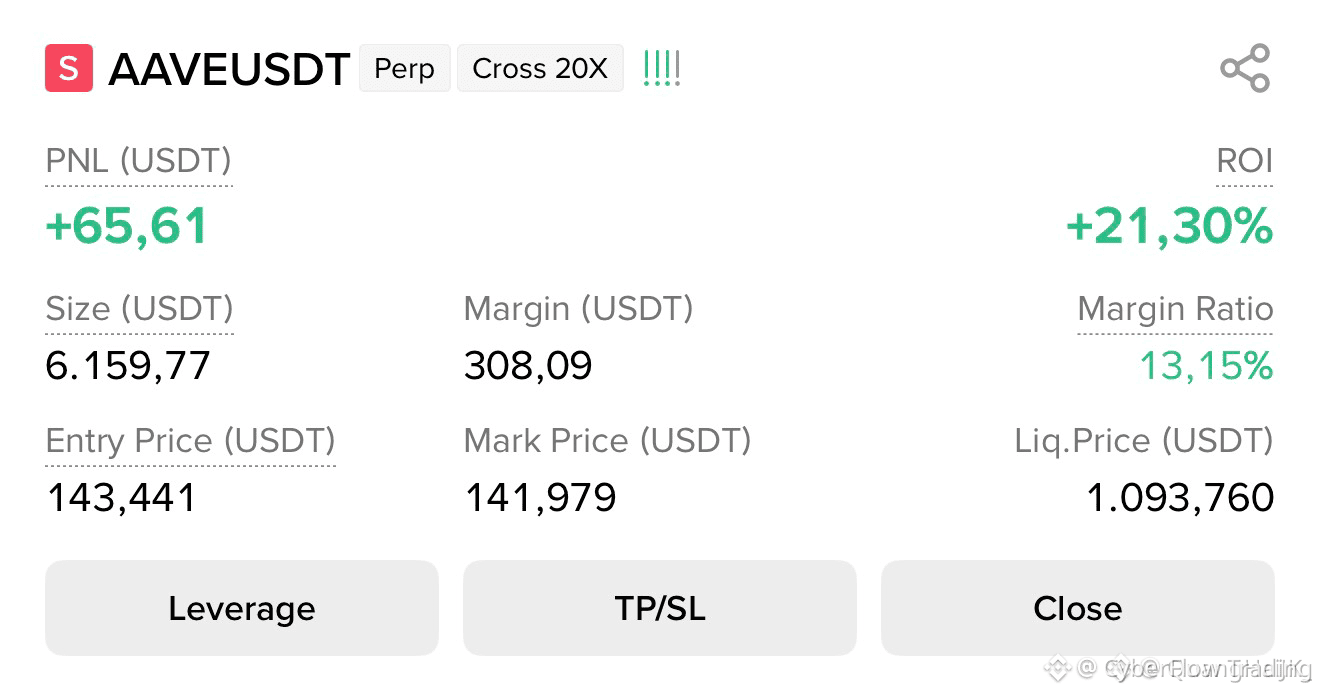
📉 $AAVE HEAVY SUPPLY AT RESISTANCE SIGNS DOWNSIDE EXHAUSTION! 🚨
Entry: 142 - 147 ⚡
Target: 137 - 105 🎯
Stop Loss: 148 ⚠️
📌 $AAVE is showing clear exhaustion right into the 142-147 supply zone, where aggressive sell orders are suppressing upside attempts. 📊 Sellers are defending this structural level tightly while buying volume fades on lower timeframes.
💡 An invalidation cap at 148 protects the position cleanly, setting up a sharp short opportunity down toward lower liquidity pockets. 📉 If this supply wall holds, the slide down could be swift. 💬 Are you riding this short setup down to support or waiting for a complete liquidity sweep below 105? 👇
⚠️ Not financial advice. Always manage your risk. 🛡️
🏷️ #AAVE #ShortSetup #DeFi #Crypto
🐻 🔻
📉 $AAVE HEAVY SUPPLY AT RESISTANCE SIGNS DOWNSIDE EXHAUSTION! 🚨
Entry: 142 - 147 ⚡
Target: 137 - 105 🎯
Stop Loss: 148 ⚠️
📌 $AAVE is showing clear exhaustion right into the 142-147 supply zone, where aggressive sell orders are suppressing upside attempts. 📊 Sellers are defending this structural level tightly while buying volume fades on lower timeframes.
💡 An invalidation cap at 148 protects the position cleanly, setting up a sharp short opportunity down toward lower liquidity pockets. 📉 If this supply wall holds, the slide down could be swift. 💬 Are you riding this short setup down to support or waiting for a complete liquidity sweep below 105? 👇
⚠️ Not financial advice. Always manage your risk. 🛡️
🏷️ #AAVE #ShortSetup #DeFi #Crypto
🐻 🔻
Entry: 142 - 147 ⚡
Target: 137 - 105 🎯
Stop Loss: 148 ⚠️
📌 $AAVE is showing clear exhaustion right into the 142-147 supply zone, where aggressive sell orders are suppressing upside attempts. 📊 Sellers are defending this structural level tightly while buying volume fades on lower timeframes.
💡 An invalidation cap at 148 protects the position cleanly, setting up a sharp short opportunity down toward lower liquidity pockets. 📉 If this supply wall holds, the slide down could be swift. 💬 Are you riding this short setup down to support or waiting for a complete liquidity sweep below 105? 👇
⚠️ Not financial advice. Always manage your risk. 🛡️
🏷️ #AAVE #ShortSetup #DeFi #Crypto
🐻 🔻
33

📊 INSTITUTIONAL ON-CHAIN VOLUMES PUSH $GMGN 24H FEE REVENUE TO $2.59M ATH LEVELS! 🦈
On-chain order flow across BSC and emerging chain activity is driving unprecedented revenue metrics for $GMGN , recording $2.59M in 24-hour fees. 📊 Institutional-grade engagement has generated $37.96M over the past 30 days, matching the highest conviction liquidity regimes seen in recent market history.
🔍 This dramatic fee expansion reflects smart money positioning and heavy trading velocity moving through high-demand DEX infrastructure. 💡 As protocol cash flows rival peak historical benchmarks, on-chain footprint analysis signals sustained capital retention across major liquidity hubs. 💬 Do you expect this cross-chain volume expansion to sustain its momentum into the coming weeks? 👇
⚠️ Not financial advice. Always manage your risk. 🛡️
🏷️ #GMGN #OnChainData #DeFi #MarketStructure
⚡ 🎯
📊 INSTITUTIONAL ON-CHAIN VOLUMES PUSH $GMGN 24H FEE REVENUE TO $2.59M ATH LEVELS! 🦈
On-chain order flow across BSC and emerging chain activity is driving unprecedented revenue metrics for $GMGN , recording $2.59M in 24-hour fees. 📊 Institutional-grade engagement has generated $37.96M over the past 30 days, matching the highest conviction liquidity regimes seen in recent market history.
🔍 This dramatic fee expansion reflects smart money positioning and heavy trading velocity moving through high-demand DEX infrastructure. 💡 As protocol cash flows rival peak historical benchmarks, on-chain footprint analysis signals sustained capital retention across major liquidity hubs. 💬 Do you expect this cross-chain volume expansion to sustain its momentum into the coming weeks? 👇
⚠️ Not financial advice. Always manage your risk. 🛡️
🏷️ #GMGN #OnChainData #DeFi #MarketStructure
⚡ 🎯
On-chain order flow across BSC and emerging chain activity is driving unprecedented revenue metrics for $GMGN , recording $2.59M in 24-hour fees. 📊 Institutional-grade engagement has generated $37.96M over the past 30 days, matching the highest conviction liquidity regimes seen in recent market history.
🔍 This dramatic fee expansion reflects smart money positioning and heavy trading velocity moving through high-demand DEX infrastructure. 💡 As protocol cash flows rival peak historical benchmarks, on-chain footprint analysis signals sustained capital retention across major liquidity hubs. 💬 Do you expect this cross-chain volume expansion to sustain its momentum into the coming weeks? 👇
⚠️ Not financial advice. Always manage your risk. 🛡️
🏷️ #GMGN #OnChainData #DeFi #MarketStructure
⚡ 🎯
3

·
--
everyone thinks onchain transparency is our biggest edge, but actually it is the exact reason bots and trackers keep frontrunning your trades and draining your positions.
most degens are exhausted from getting sandwich attacked or having their leverage hunted because every move is broadcast to the entire mempool. it is like playing poker with all your cards face up on the table and wondering why you keep bleeding capital.
take a look at what zama is building right now to fix this mess. they are deploying fully homomorphic encryption to keep assets and balances completely encrypted while still usable onchain, meaning your strategy stays private without breaking composability.
their rollout with $MORPHO confidential vaults is a solid case study of where this is heading. instead of exposing your exact debt thresholds and collateral ratios to predatory liquidators, your positions stay shielded while you earn yield on assets like $ETH without turning into exit liquidity.
ngl having encrypted execution onchain might finally solve the structural leak that retail has been suffering from for years.
where do you think private defi goes from here?
#DeFi #Crypto #BinanceSquare
everyone thinks onchain transparency is our biggest edge, but actually it is the exact reason bots and trackers keep frontrunning your trades and draining your positions.
most degens are exhausted from getting sandwich attacked or having their leverage hunted because every move is broadcast to the entire mempool. it is like playing poker with all your cards face up on the table and wondering why you keep bleeding capital.
take a look at what zama is building right now to fix this mess. they are deploying fully homomorphic encryption to keep assets and balances completely encrypted while still usable onchain, meaning your strategy stays private without breaking composability.
their rollout with $MORPHO confidential vaults is a solid case study of where this is heading. instead of exposing your exact debt thresholds and collateral ratios to predatory liquidators, your positions stay shielded while you earn yield on assets like $ETH without turning into exit liquidity.
ngl having encrypted execution onchain might finally solve the structural leak that retail has been suffering from for years.
where do you think private defi goes from here?
#DeFi #Crypto #BinanceSquare
most degens are exhausted from getting sandwich attacked or having their leverage hunted because every move is broadcast to the entire mempool. it is like playing poker with all your cards face up on the table and wondering why you keep bleeding capital.
take a look at what zama is building right now to fix this mess. they are deploying fully homomorphic encryption to keep assets and balances completely encrypted while still usable onchain, meaning your strategy stays private without breaking composability.
their rollout with $MORPHO confidential vaults is a solid case study of where this is heading. instead of exposing your exact debt thresholds and collateral ratios to predatory liquidators, your positions stay shielded while you earn yield on assets like $ETH without turning into exit liquidity.
ngl having encrypted execution onchain might finally solve the structural leak that retail has been suffering from for years.
where do you think private defi goes from here?
#DeFi #Crypto #BinanceSquare

60

·
--
Article
What Is a DEX? A Beginner’s Guide to Decentralized ExchangesIf you are learning about DeFi, one term you will come across repeatedly is DEX.
DEX stands for Decentralized Exchange.
But what makes an exchange decentralized, and how is it different from a traditional centralized exchange?
Let’s break it down.
What Is a DEX?
A decentralized exchange is a blockchain-based platform that allows users to trade crypto assets directly through smart contracts.
Instead of depositing your assets into an exchange-controlled account, you generally connect your own crypto wallet and interact with the DEX through a blockchain transaction.
This introduces a different model of trading:
Wallet → Smart Contract → Blockchain
The exchange logic is handled by blockchain-based smart contracts rather than relying entirely on a centralized company to execute and custody trades.
DEX vs CEX
The easiest way to understand a DEX is to compare it with a centralized exchange, or CEX.
A centralized exchange typically operates through a company that manages the trading platform and, depending on the service, may hold users’ assets.
DEX is designed around smart contracts and self-custody.
With a DEX, the user generally keeps control of their wallet and authorizes transactions themselves.
This difference is important because custody and execution work differently in the two models.
How Does a DEX Work?
Most modern DEXs use smart contracts to facilitate trading.
A simplified process looks like this:
1. Connect Your Wallet
You connect a compatible crypto wallet to the DEX.
Your assets remain in your wallet until you approve a transaction.
2. Choose Your Trading Pair
You select the asset you want to trade and the asset you want to receive.
For example:
Token A → Token B
3. Check the Trade
Before confirming, the interface may show information such as:
- Exchange rate
- Network fee
- Price impact
- Slippage
- Minimum amount received
4. Approve the Transaction
You authorize the transaction from your wallet.
The blockchain then processes the interaction with the DEX's smart contract.
5. Receive the Asset
If the transaction executes successfully, the swapped asset arrives in your wallet.
The entire process can happen without creating a traditional exchange account.
Where Does the Liquidity Come From?
This is one of the most important concepts in DeFi.
Many DEXs use liquidity pools.
A liquidity pool contains crypto assets supplied by users known as liquidity providers.
For example, a pool could contain two assets that traders can swap between.
When someone makes a trade, the smart contract interacts with the available liquidity in the pool.
Liquidity providers may receive a portion of trading fees according to the rules of the protocol.
This creates an ecosystem where:
Traders use liquidity → Liquidity providers supply liquidity → The protocol facilitates the swap
We will explore liquidity pools and liquidity providers in more detail later in this series.
What Is an AMM?
Many DEXs use a mechanism called an Automated Market Maker, or AMM.
An AMM uses mathematical rules and liquidity pools to determine how trades are executed instead of relying on a traditional order book.
This is one of the major innovations behind modern decentralized trading.
Rather than waiting for a specific buyer and seller to match, users can trade against available liquidity.
But AMMs also introduce concepts such as price impact, slippage, and impermanent loss.
These are important topics for anyone using DeFi.
Advantages of DEXs
DEXs can provide several important features.
Self-Custody
Users can generally maintain control of their assets through their own wallets.
On-Chain Transparency
Transactions and smart-contract activity can often be verified on the blockchain.
Open Access
Depending on the blockchain and protocol, users may be able to interact with a DEX without opening a traditional exchange account.
DeFi Integration
DEXs can interact with other decentralized applications and smart contracts, making them an important part of the broader DeFi ecosystem.
What Are the Risks?
Decentralized does not mean risk-free.
Users should understand several risks before trading on a DEX.
Smart Contract Risk
A vulnerability in a smart contract can potentially lead to loss of funds.
Slippage
The final execution price may differ from the expected price, especially when liquidity is limited or markets move quickly.
Price Impact
Large trades can move the price within a liquidity pool.
Network Fees
Every blockchain transaction may require a network fee.
Irreversible Transactions
Blockchain transactions are generally difficult or impossible to reverse once confirmed.
Fake Tokens and Malicious Contracts
Users must verify token addresses and interact with legitimate protocols. A DEX does not automatically make every token or contract safe.
Why DEXs Matter
DEXs represent a major shift in how digital assets can be exchanged.
Instead of relying entirely on a centralized intermediary, decentralized exchanges use:
Wallets + Smart Contracts + Blockchain + Liquidity
This model is one of the foundations of decentralized finance.
But understanding what a DEX is only gives us the starting point.
The next question is even more important:
How does a DEX actually determine the price of a token and execute a swap?
That takes us to the next topic in this series:
What Is an AMM? — Understanding Automated Market Makers
Stay tuned as we continue breaking down DeFi, one concept at a time.
#CryptoEducation #DeFi #DEX #Blockchain
What Is a DEX? A Beginner’s Guide to Decentralized Exchanges
If you are learning about DeFi, one term you will come across repeatedly is DEX.
DEX stands for Decentralized Exchange.
But what makes an exchange decentralized, and how is it different from a traditional centralized exchange?
Let’s break it down.
What Is a DEX?
A decentralized exchange is a blockchain-based platform that allows users to trade crypto assets directly through smart contracts.
Instead of depositing your assets into an exchange-controlled account, you generally connect your own crypto wallet and interact with the DEX through a blockchain transaction.
This introduces a different model of trading:
Wallet → Smart Contract → Blockchain
The exchange logic is handled by blockchain-based smart contracts rather than relying entirely on a centralized company to execute and custody trades.
DEX vs CEX
The easiest way to understand a DEX is to compare it with a centralized exchange, or CEX.
A centralized exchange typically operates through a company that manages the trading platform and, depending on the service, may hold users’ assets.
DEX is designed around smart contracts and self-custody.
With a DEX, the user generally keeps control of their wallet and authorizes transactions themselves.
This difference is important because custody and execution work differently in the two models.
How Does a DEX Work?
Most modern DEXs use smart contracts to facilitate trading.
A simplified process looks like this:
1. Connect Your Wallet
You connect a compatible crypto wallet to the DEX.
Your assets remain in your wallet until you approve a transaction.
2. Choose Your Trading Pair
You select the asset you want to trade and the asset you want to receive.
For example:
Token A → Token B
3. Check the Trade
Before confirming, the interface may show information such as:
- Exchange rate
- Network fee
- Price impact
- Slippage
- Minimum amount received
4. Approve the Transaction
You authorize the transaction from your wallet.
The blockchain then processes the interaction with the DEX's smart contract.
5. Receive the Asset
If the transaction executes successfully, the swapped asset arrives in your wallet.
The entire process can happen without creating a traditional exchange account.
Where Does the Liquidity Come From?
This is one of the most important concepts in DeFi.
Many DEXs use liquidity pools.
A liquidity pool contains crypto assets supplied by users known as liquidity providers.
For example, a pool could contain two assets that traders can swap between.
When someone makes a trade, the smart contract interacts with the available liquidity in the pool.
Liquidity providers may receive a portion of trading fees according to the rules of the protocol.
This creates an ecosystem where:
Traders use liquidity → Liquidity providers supply liquidity → The protocol facilitates the swap
We will explore liquidity pools and liquidity providers in more detail later in this series.
What Is an AMM?
Many DEXs use a mechanism called an Automated Market Maker, or AMM.
An AMM uses mathematical rules and liquidity pools to determine how trades are executed instead of relying on a traditional order book.
This is one of the major innovations behind modern decentralized trading.
Rather than waiting for a specific buyer and seller to match, users can trade against available liquidity.
But AMMs also introduce concepts such as price impact, slippage, and impermanent loss.
These are important topics for anyone using DeFi.
Advantages of DEXs
DEXs can provide several important features.
Self-Custody
Users can generally maintain control of their assets through their own wallets.
On-Chain Transparency
Transactions and smart-contract activity can often be verified on the blockchain.
Open Access
Depending on the blockchain and protocol, users may be able to interact with a DEX without opening a traditional exchange account.
DeFi Integration
DEXs can interact with other decentralized applications and smart contracts, making them an important part of the broader DeFi ecosystem.
What Are the Risks?
Decentralized does not mean risk-free.
Users should understand several risks before trading on a DEX.
Smart Contract Risk
A vulnerability in a smart contract can potentially lead to loss of funds.
Slippage
The final execution price may differ from the expected price, especially when liquidity is limited or markets move quickly.
Price Impact
Large trades can move the price within a liquidity pool.
Network Fees
Every blockchain transaction may require a network fee.
Irreversible Transactions
Blockchain transactions are generally difficult or impossible to reverse once confirmed.
Fake Tokens and Malicious Contracts
Users must verify token addresses and interact with legitimate protocols. A DEX does not automatically make every token or contract safe.
Why DEXs Matter
DEXs represent a major shift in how digital assets can be exchanged.
Instead of relying entirely on a centralized intermediary, decentralized exchanges use:
Wallets + Smart Contracts + Blockchain + Liquidity
This model is one of the foundations of decentralized finance.
But understanding what a DEX is only gives us the starting point.
The next question is even more important:
How does a DEX actually determine the price of a token and execute a swap?
That takes us to the next topic in this series:
What Is an AMM? — Understanding Automated Market Makers
Stay tuned as we continue breaking down DeFi, one concept at a time.
#CryptoEducation #DeFi #DEX #Blockchain
DEX stands for Decentralized Exchange.
But what makes an exchange decentralized, and how is it different from a traditional centralized exchange?
Let’s break it down.
What Is a DEX?
A decentralized exchange is a blockchain-based platform that allows users to trade crypto assets directly through smart contracts.
Instead of depositing your assets into an exchange-controlled account, you generally connect your own crypto wallet and interact with the DEX through a blockchain transaction.
This introduces a different model of trading:
Wallet → Smart Contract → Blockchain
The exchange logic is handled by blockchain-based smart contracts rather than relying entirely on a centralized company to execute and custody trades.
DEX vs CEX
The easiest way to understand a DEX is to compare it with a centralized exchange, or CEX.
A centralized exchange typically operates through a company that manages the trading platform and, depending on the service, may hold users’ assets.
DEX is designed around smart contracts and self-custody.
With a DEX, the user generally keeps control of their wallet and authorizes transactions themselves.
This difference is important because custody and execution work differently in the two models.
How Does a DEX Work?
Most modern DEXs use smart contracts to facilitate trading.
A simplified process looks like this:
1. Connect Your Wallet
You connect a compatible crypto wallet to the DEX.
Your assets remain in your wallet until you approve a transaction.
2. Choose Your Trading Pair
You select the asset you want to trade and the asset you want to receive.
For example:
Token A → Token B
3. Check the Trade
Before confirming, the interface may show information such as:
- Exchange rate
- Network fee
- Price impact
- Slippage
- Minimum amount received
4. Approve the Transaction
You authorize the transaction from your wallet.
The blockchain then processes the interaction with the DEX's smart contract.
5. Receive the Asset
If the transaction executes successfully, the swapped asset arrives in your wallet.
The entire process can happen without creating a traditional exchange account.
Where Does the Liquidity Come From?
This is one of the most important concepts in DeFi.
Many DEXs use liquidity pools.
A liquidity pool contains crypto assets supplied by users known as liquidity providers.
For example, a pool could contain two assets that traders can swap between.
When someone makes a trade, the smart contract interacts with the available liquidity in the pool.
Liquidity providers may receive a portion of trading fees according to the rules of the protocol.
This creates an ecosystem where:
Traders use liquidity → Liquidity providers supply liquidity → The protocol facilitates the swap
We will explore liquidity pools and liquidity providers in more detail later in this series.
What Is an AMM?
Many DEXs use a mechanism called an Automated Market Maker, or AMM.
An AMM uses mathematical rules and liquidity pools to determine how trades are executed instead of relying on a traditional order book.
This is one of the major innovations behind modern decentralized trading.
Rather than waiting for a specific buyer and seller to match, users can trade against available liquidity.
But AMMs also introduce concepts such as price impact, slippage, and impermanent loss.
These are important topics for anyone using DeFi.
Advantages of DEXs
DEXs can provide several important features.
Self-Custody
Users can generally maintain control of their assets through their own wallets.
On-Chain Transparency
Transactions and smart-contract activity can often be verified on the blockchain.
Open Access
Depending on the blockchain and protocol, users may be able to interact with a DEX without opening a traditional exchange account.
DeFi Integration
DEXs can interact with other decentralized applications and smart contracts, making them an important part of the broader DeFi ecosystem.
What Are the Risks?
Decentralized does not mean risk-free.
Users should understand several risks before trading on a DEX.
Smart Contract Risk
A vulnerability in a smart contract can potentially lead to loss of funds.
Slippage
The final execution price may differ from the expected price, especially when liquidity is limited or markets move quickly.
Price Impact
Large trades can move the price within a liquidity pool.
Network Fees
Every blockchain transaction may require a network fee.
Irreversible Transactions
Blockchain transactions are generally difficult or impossible to reverse once confirmed.
Fake Tokens and Malicious Contracts
Users must verify token addresses and interact with legitimate protocols. A DEX does not automatically make every token or contract safe.
Why DEXs Matter
DEXs represent a major shift in how digital assets can be exchanged.
Instead of relying entirely on a centralized intermediary, decentralized exchanges use:
Wallets + Smart Contracts + Blockchain + Liquidity
This model is one of the foundations of decentralized finance.
But understanding what a DEX is only gives us the starting point.
The next question is even more important:
How does a DEX actually determine the price of a token and execute a swap?
That takes us to the next topic in this series:
What Is an AMM? — Understanding Automated Market Makers
Stay tuned as we continue breaking down DeFi, one concept at a time.
#CryptoEducation #DeFi #DEX #Blockchain
79

·
--
If you are still executing on-chain trades without privacy layers, you are actively giving away your edge to front-runners.
Every transaction you broadcast exposes your positioning, liquidation thresholds, and wallet history to MEV bots and copy-traders waiting to exploit your entries.
$NEAR is quietly overhauling trading infrastructure by rolling out private deposits and withdrawals, integrating directly with $HYPE to enable private perpetuals, and scaling cross-chain Intents. Some purists argue that total on-chain transparency is the bedrock of DeFi security, claiming obfuscation invites regulatory friction. But in reality, high-volume traders simply cannot survive in a transparent environment where predatory algorithms front-run every significant size order.
Infrastructure like this bridges the gap between decentralized custody and institutional-grade execution. As cross-chain intents expand, privacy stops being an optional luxury for retail and becomes fundamental execution defense.
Will integrated privacy on perpetuals finally push institutional volume entirely on-chain, or will regulatory pushback slow adoption?
#DeFi #CryptoTrading #Privacy
If you are still executing on-chain trades without privacy layers, you are actively giving away your edge to front-runners.
Every transaction you broadcast exposes your positioning, liquidation thresholds, and wallet history to MEV bots and copy-traders waiting to exploit your entries.
$NEAR is quietly overhauling trading infrastructure by rolling out private deposits and withdrawals, integrating directly with $HYPE to enable private perpetuals, and scaling cross-chain Intents. Some purists argue that total on-chain transparency is the bedrock of DeFi security, claiming obfuscation invites regulatory friction. But in reality, high-volume traders simply cannot survive in a transparent environment where predatory algorithms front-run every significant size order.
Infrastructure like this bridges the gap between decentralized custody and institutional-grade execution. As cross-chain intents expand, privacy stops being an optional luxury for retail and becomes fundamental execution defense.
Will integrated privacy on perpetuals finally push institutional volume entirely on-chain, or will regulatory pushback slow adoption?
#DeFi #CryptoTrading #Privacy
Every transaction you broadcast exposes your positioning, liquidation thresholds, and wallet history to MEV bots and copy-traders waiting to exploit your entries.
$NEAR is quietly overhauling trading infrastructure by rolling out private deposits and withdrawals, integrating directly with $HYPE to enable private perpetuals, and scaling cross-chain Intents. Some purists argue that total on-chain transparency is the bedrock of DeFi security, claiming obfuscation invites regulatory friction. But in reality, high-volume traders simply cannot survive in a transparent environment where predatory algorithms front-run every significant size order.
Infrastructure like this bridges the gap between decentralized custody and institutional-grade execution. As cross-chain intents expand, privacy stops being an optional luxury for retail and becomes fundamental execution defense.
Will integrated privacy on perpetuals finally push institutional volume entirely on-chain, or will regulatory pushback slow adoption?
#DeFi #CryptoTrading #Privacy

99



If you're still broadcasting every move on public chains, stop now.
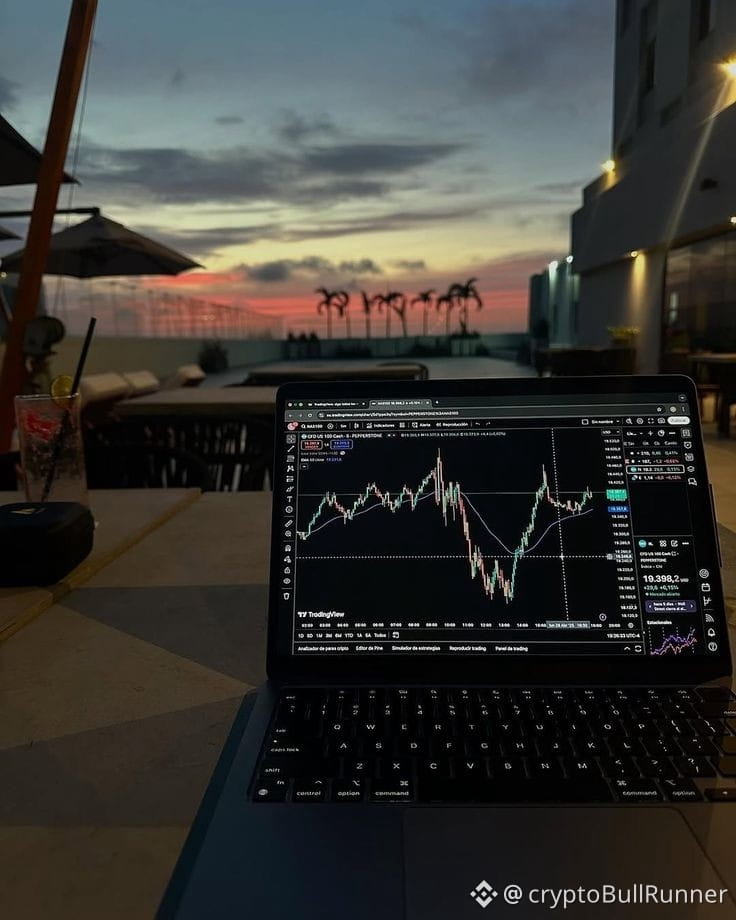
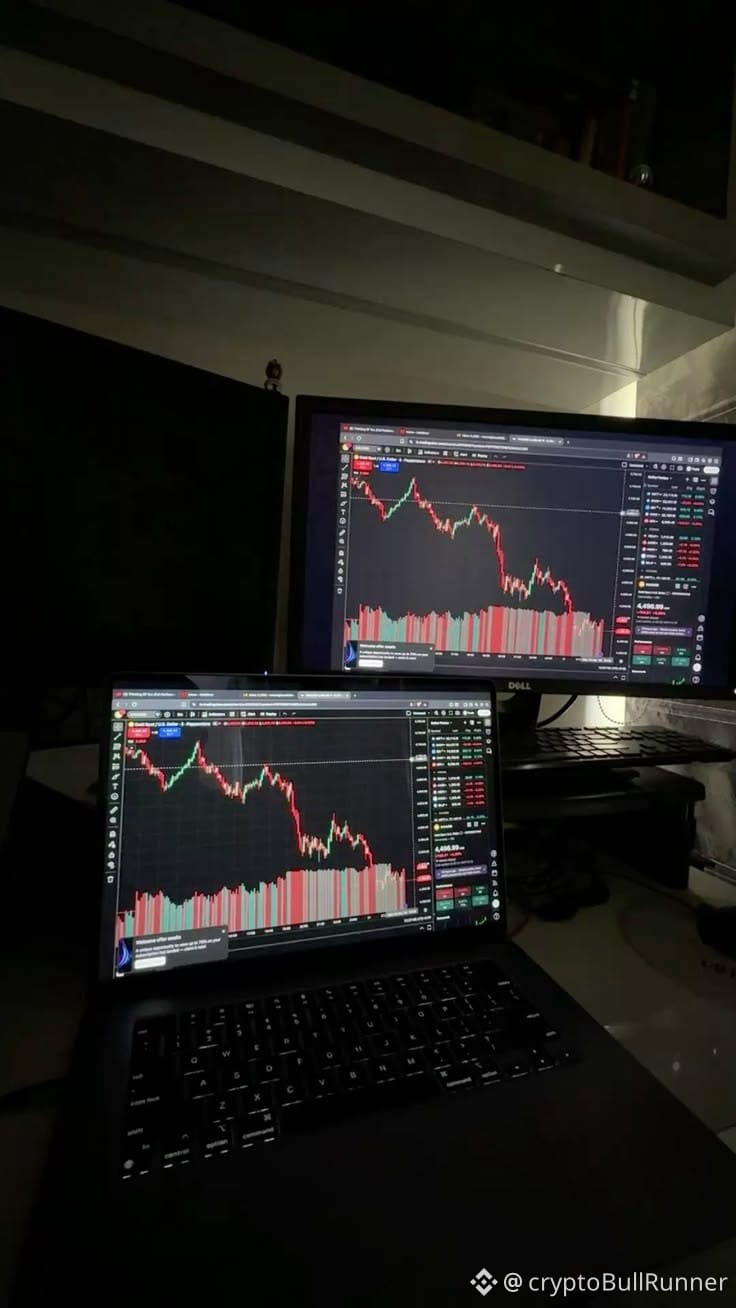
Watching your alpha get copied and sandwiched in real time is a special kind of pain. Traders have lost millions to MEV bots and copycats simply because everything sits in the open.
The narrative is shifting toward private trading, cross-chain settlement and confidential DeFi. We saw a similar rush into privacy coins like $ZEC back in 2017, but it mostly stayed theoretical while public chains exploded. This time $NEAR is actually shipping cross-chain tools that keep things quieter, and $ZAMA is building the confidential computing stack that could make DeFi private without breaking it.
It's the same cycle we always get. First everyone loves transparency until the exploits and the tracking start hurting. Then the smart ones look for the next layer of protection.
What's your take on whether this privacy push actually sticks this time?
#Crypto #DeFi #Privacy
If you're still broadcasting every move on public chains, stop now.
Watching your alpha get copied and sandwiched in real time is a special kind of pain. Traders have lost millions to MEV bots and copycats simply because everything sits in the open.
The narrative is shifting toward private trading, cross-chain settlement and confidential DeFi. We saw a similar rush into privacy coins like $ZEC back in 2017, but it mostly stayed theoretical while public chains exploded. This time $NEAR is actually shipping cross-chain tools that keep things quieter, and $ZAMA is building the confidential computing stack that could make DeFi private without breaking it.
It's the same cycle we always get. First everyone loves transparency until the exploits and the tracking start hurting. Then the smart ones look for the next layer of protection.
What's your take on whether this privacy push actually sticks this time?
#Crypto #DeFi #Privacy
Watching your alpha get copied and sandwiched in real time is a special kind of pain. Traders have lost millions to MEV bots and copycats simply because everything sits in the open.
The narrative is shifting toward private trading, cross-chain settlement and confidential DeFi. We saw a similar rush into privacy coins like $ZEC back in 2017, but it mostly stayed theoretical while public chains exploded. This time $NEAR is actually shipping cross-chain tools that keep things quieter, and $ZAMA is building the confidential computing stack that could make DeFi private without breaking it.
It's the same cycle we always get. First everyone loves transparency until the exploits and the tracking start hurting. Then the smart ones look for the next layer of protection.
What's your take on whether this privacy push actually sticks this time?
#Crypto #DeFi #Privacy

297

everyone thinks on-chain transparency is a feature but actually it's becoming a trap for anyone trying to size up.
ngl you've felt this ser. you enter a position, wallet trackers clock you, copytraders pile in, and you become exit liquidity. that's the real tax of public defi right now.
the shift toward private trading, cross-chain settlement and confidential defi is already underway and $ZEC is the clearest case study. people wrote it off for years and now privacy rails are suddenly relevant again.
$NEAR is handling the cross-chain settlement side with chain abstraction so you can move value without broadcasting every hop. zama is building confidential defi with fully homomorphic encryption so contracts compute without exposing your bags. this isn't three random names. it's where the narrative is actually rotating.
most people will keep farming the same transparent chains until this is already crowded. then they'll fomo the top like always.
anyone else seeing this rotation?
#privacy #DeFi #CrossChain
everyone thinks on-chain transparency is a feature but actually it's becoming a trap for anyone trying to size up.
ngl you've felt this ser. you enter a position, wallet trackers clock you, copytraders pile in, and you become exit liquidity. that's the real tax of public defi right now.
the shift toward private trading, cross-chain settlement and confidential defi is already underway and $ZEC is the clearest case study. people wrote it off for years and now privacy rails are suddenly relevant again.
$NEAR is handling the cross-chain settlement side with chain abstraction so you can move value without broadcasting every hop. zama is building confidential defi with fully homomorphic encryption so contracts compute without exposing your bags. this isn't three random names. it's where the narrative is actually rotating.
most people will keep farming the same transparent chains until this is already crowded. then they'll fomo the top like always.
anyone else seeing this rotation?
#privacy #DeFi #CrossChain
ngl you've felt this ser. you enter a position, wallet trackers clock you, copytraders pile in, and you become exit liquidity. that's the real tax of public defi right now.
the shift toward private trading, cross-chain settlement and confidential defi is already underway and $ZEC is the clearest case study. people wrote it off for years and now privacy rails are suddenly relevant again.
$NEAR is handling the cross-chain settlement side with chain abstraction so you can move value without broadcasting every hop. zama is building confidential defi with fully homomorphic encryption so contracts compute without exposing your bags. this isn't three random names. it's where the narrative is actually rotating.
most people will keep farming the same transparent chains until this is already crowded. then they'll fomo the top like always.
anyone else seeing this rotation?
#privacy #DeFi #CrossChain

249

·
--
Hyperliquid is leading the crypto revenue charts with a massive $429M generated! 📈
This highlights strong product-market fit in decentralized perpetuals, proving that high-performance DEXs can drive sustainable real yield through organic trading volume. ⚡
By utilizing fee buybacks and expanding its L1 ecosystem, Hyperliquid continues to show extremely bullish momentum for decentralized derivatives. 🔥
Do you think DEXs will overtake centralized exchanges in perpetual volume this year? 🧠
#Hyperliquid #DeFi #PerpetualTrading .
Hyperliquid is leading the crypto revenue charts with a massive $429M generated! 📈
This highlights strong product-market fit in decentralized perpetuals, proving that high-performance DEXs can drive sustainable real yield through organic trading volume. ⚡
By utilizing fee buybacks and expanding its L1 ecosystem, Hyperliquid continues to show extremely bullish momentum for decentralized derivatives. 🔥
Do you think DEXs will overtake centralized exchanges in perpetual volume this year? 🧠
#Hyperliquid #DeFi #PerpetualTrading .
This highlights strong product-market fit in decentralized perpetuals, proving that high-performance DEXs can drive sustainable real yield through organic trading volume. ⚡
By utilizing fee buybacks and expanding its L1 ecosystem, Hyperliquid continues to show extremely bullish momentum for decentralized derivatives. 🔥
Do you think DEXs will overtake centralized exchanges in perpetual volume this year? 🧠
#Hyperliquid #DeFi #PerpetualTrading .

167
·
--
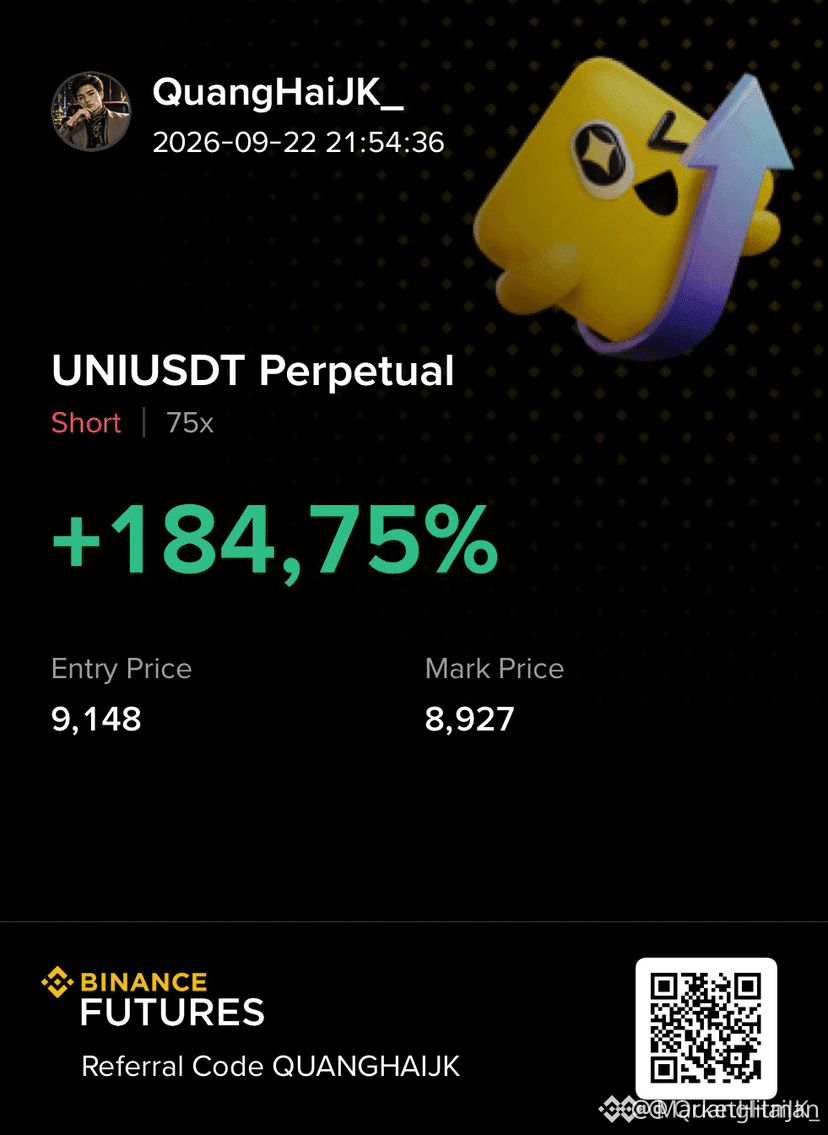
🟢 $UNI DIVERGENT VOLUME SIGNALS THE NEXT WAVE OF DEFI MOMENTUM IS LOADING! 🚀
Smart money is quietly soaking up supply on $UNI as decentralized exchange volume reaches a major inflection point. 📊 Order flow shows aggressive spot accumulation holding firm despite broader market volatility, setting the stage for a sharp volatility expansion.
Technical indicators are flashing a textbook bullish continuation sequence on the higher timeframes, pushing bears onto their back foot. 💡 When liquidity shifts back toward blue-chip DeFi leaders, momentum moves faster than the crowd expects.
💬 Are you riding the momentum on $UNI here or waiting for a deeper retest of support? 👇
⚠️ Not financial advice. Always manage your risk. 🛡️
🏷️ #UNI #DeFi #Altcoins #Bullish
🎯 ⚡
🟢 $UNI DIVERGENT VOLUME SIGNALS THE NEXT WAVE OF DEFI MOMENTUM IS LOADING! 🚀
Smart money is quietly soaking up supply on $UNI as decentralized exchange volume reaches a major inflection point. 📊 Order flow shows aggressive spot accumulation holding firm despite broader market volatility, setting the stage for a sharp volatility expansion.
Technical indicators are flashing a textbook bullish continuation sequence on the higher timeframes, pushing bears onto their back foot. 💡 When liquidity shifts back toward blue-chip DeFi leaders, momentum moves faster than the crowd expects.
💬 Are you riding the momentum on $UNI here or waiting for a deeper retest of support? 👇
⚠️ Not financial advice. Always manage your risk. 🛡️
🏷️ #UNI #DeFi #Altcoins #Bullish
🎯 ⚡
Smart money is quietly soaking up supply on $UNI as decentralized exchange volume reaches a major inflection point. 📊 Order flow shows aggressive spot accumulation holding firm despite broader market volatility, setting the stage for a sharp volatility expansion.
Technical indicators are flashing a textbook bullish continuation sequence on the higher timeframes, pushing bears onto their back foot. 💡 When liquidity shifts back toward blue-chip DeFi leaders, momentum moves faster than the crowd expects.
💬 Are you riding the momentum on $UNI here or waiting for a deeper retest of support? 👇
⚠️ Not financial advice. Always manage your risk. 🛡️
🏷️ #UNI #DeFi #Altcoins #Bullish
🎯 ⚡
20
Log in to explore more content
Join global crypto users on Binance Square
⚡️ Get latest and useful information about crypto.
💬 Trusted by the world’s largest crypto exchange.
👍 Discover real insights from verified creators.
Email / Phone number
Trending Topics
1
#AIStocksWhatNext
526,440 views
3,914 Discussing
2
#IranSetsConditionsToEndSevenMonthWar
0 views
0 Discussing
3
#CardanoJoinsX402PaymentStandard
0 views
0 Discussing
4
#BitcoinTops$87KAtEightMonthHigh
1,687 views
40 Discussing
5
#ZECBreaksAbove$1600AtRecordHigh
758 views
29 Discussing
6
#BitwiseNEARStakingETPAssetsTop$100M
14,685 views
61 Discussing
7
#BitcoinBreaksAboveMayHighNears$86K
24,457 views
245 Discussing
8
#DogecoinRises15%
82,309 views
1,411 Discussing
9
#$14BBitcoinOptionsExpireFriday
7,098 views
105 Discussing
10
#BNBMarketCapPassesBNYMellon
50,225 views
1,058 Discussing