
#cryptorisk
cryptorisk
1.6M views
2,520 Discussing
Hot
Latest

·
--
The Illusion of Diversification in Crypto
Crypto portfolios love to look diversified. You hold BTC, ETH, SOL, a handful of L2s, some DeFi tokens, maybe a meme or two. On a calm day the correlation matrix looks healthy — different narratives, different chains, different sectors.
Then a liquidation cascade hits. And everything moves together. Down.
This is the dirty secret of crypto diversification: intra-asset correlation spikes to near 1.0 during stress events. The portfolio you thought was a collection of uncorrelated bets becomes one single bet — the bet that crypto goes up.
The data backs this up. March 2020 crash — BTC/ETH correlation went from 0.3 to 0.9 in 48 hours. November 2022 FTX collapse — same pattern. Every major drawdown tells the same story: in the moment that matters most for risk management, diversification fails.
So what actually works?
Stablecoin allocation is the real diversifier. Not flashy, not exciting, but it's the only asset class in crypto with genuinely negative correlation during drawdowns. A 20-30% stablecoin buffer isn't dead capital — it's dry powder for the next cascade.
Position sizing matters more than asset selection. If your largest position can take you out of the game, you're not diversified regardless of how many tokens you hold.
Time diversification beats asset diversification. Dollar-cost averaging across cycles reduces the risk of being all-in at the worst possible moment. The investors who survive multiple cycles aren't the ones who picked the best tokens — they're the ones who never went all-in at once.
$BTC $ETH $SOL
#CryptoRisk #PortfolioManagement #Diversification #RiskManagement #CryptoInvesting
The Illusion of Diversification in Crypto
Crypto portfolios love to look diversified. You hold BTC, ETH, SOL, a handful of L2s, some DeFi tokens, maybe a meme or two. On a calm day the correlation matrix looks healthy — different narratives, different chains, different sectors.
Then a liquidation cascade hits. And everything moves together. Down.
This is the dirty secret of crypto diversification: intra-asset correlation spikes to near 1.0 during stress events. The portfolio you thought was a collection of uncorrelated bets becomes one single bet — the bet that crypto goes up.
The data backs this up. March 2020 crash — BTC/ETH correlation went from 0.3 to 0.9 in 48 hours. November 2022 FTX collapse — same pattern. Every major drawdown tells the same story: in the moment that matters most for risk management, diversification fails.
So what actually works?
Stablecoin allocation is the real diversifier. Not flashy, not exciting, but it's the only asset class in crypto with genuinely negative correlation during drawdowns. A 20-30% stablecoin buffer isn't dead capital — it's dry powder for the next cascade.
Position sizing matters more than asset selection. If your largest position can take you out of the game, you're not diversified regardless of how many tokens you hold.
Time diversification beats asset diversification. Dollar-cost averaging across cycles reduces the risk of being all-in at the worst possible moment. The investors who survive multiple cycles aren't the ones who picked the best tokens — they're the ones who never went all-in at once.
$BTC $ETH $SOL
#CryptoRisk #PortfolioManagement #Diversification #RiskManagement #CryptoInvesting
Crypto portfolios love to look diversified. You hold BTC, ETH, SOL, a handful of L2s, some DeFi tokens, maybe a meme or two. On a calm day the correlation matrix looks healthy — different narratives, different chains, different sectors.
Then a liquidation cascade hits. And everything moves together. Down.
This is the dirty secret of crypto diversification: intra-asset correlation spikes to near 1.0 during stress events. The portfolio you thought was a collection of uncorrelated bets becomes one single bet — the bet that crypto goes up.
The data backs this up. March 2020 crash — BTC/ETH correlation went from 0.3 to 0.9 in 48 hours. November 2022 FTX collapse — same pattern. Every major drawdown tells the same story: in the moment that matters most for risk management, diversification fails.
So what actually works?
Stablecoin allocation is the real diversifier. Not flashy, not exciting, but it's the only asset class in crypto with genuinely negative correlation during drawdowns. A 20-30% stablecoin buffer isn't dead capital — it's dry powder for the next cascade.
Position sizing matters more than asset selection. If your largest position can take you out of the game, you're not diversified regardless of how many tokens you hold.
Time diversification beats asset diversification. Dollar-cost averaging across cycles reduces the risk of being all-in at the worst possible moment. The investors who survive multiple cycles aren't the ones who picked the best tokens — they're the ones who never went all-in at once.
$BTC $ETH $SOL
#CryptoRisk #PortfolioManagement #Diversification #RiskManagement #CryptoInvesting
126

·
--

Article
CFTC’s New Crypto Regulation Proposal Could Trigger a 30%+ Market ShiftThe U.S. Commodity Futures Trading Commission (CFTC) has just filed a formal proposal with the White House to regulate crypto transactions after the Clarity Act failed to pass this week, setting the stage for a potential regulatory overhaul that could send the market tumbling or rallying by as much as 30% in the next 48 hours.
Why this matters now: The proposal arrives at a critical juncture when on‑chain activity for $BTC and $ETH has already dipped 12% in the last 24 hours, and institutional on‑ramps like Coinbase and Binance have seen a 25% drop in daily trading volume. Smart money is watching closely because the new rules could impose stricter reporting requirements, potentially tightening liquidity and forcing a re‑allocation of capital toward more compliant assets.
What smart money is doing: Hedge funds are already reallocating 18% of their crypto exposure to regulated securities and stablecoins, while institutional investors are tightening risk parameters on their crypto portfolios. #RegulationWatch #CryptoRisk #MarketSentiment
Forward signal: If the CFTC’s proposal is approved, we should see a sharp sell‑off below the $28,500 support level for $BTC, with a potential breakout to $35,000 if the market interprets the regulation as a signal of increased institutional acceptance. #BTC
Is your portfolio ready for a regulatory shock?
CFTC’s New Crypto Regulation Proposal Could Trigger a 30%+ Market Shift
The U.S. Commodity Futures Trading Commission (CFTC) has just filed a formal proposal with the White House to regulate crypto transactions after the Clarity Act failed to pass this week, setting the stage for a potential regulatory overhaul that could send the market tumbling or rallying by as much as 30% in the next 48 hours.
Why this matters now: The proposal arrives at a critical juncture when on‑chain activity for $BTC and $ETH has already dipped 12% in the last 24 hours, and institutional on‑ramps like Coinbase and Binance have seen a 25% drop in daily trading volume. Smart money is watching closely because the new rules could impose stricter reporting requirements, potentially tightening liquidity and forcing a re‑allocation of capital toward more compliant assets.
What smart money is doing: Hedge funds are already reallocating 18% of their crypto exposure to regulated securities and stablecoins, while institutional investors are tightening risk parameters on their crypto portfolios. #RegulationWatch #CryptoRisk #MarketSentiment
Forward signal: If the CFTC’s proposal is approved, we should see a sharp sell‑off below the $28,500 support level for $BTC , with a potential breakout to $35,000 if the market interprets the regulation as a signal of increased institutional acceptance. #BTC
Is your portfolio ready for a regulatory shock?
Why this matters now: The proposal arrives at a critical juncture when on‑chain activity for $BTC and $ETH has already dipped 12% in the last 24 hours, and institutional on‑ramps like Coinbase and Binance have seen a 25% drop in daily trading volume. Smart money is watching closely because the new rules could impose stricter reporting requirements, potentially tightening liquidity and forcing a re‑allocation of capital toward more compliant assets.
What smart money is doing: Hedge funds are already reallocating 18% of their crypto exposure to regulated securities and stablecoins, while institutional investors are tightening risk parameters on their crypto portfolios. #RegulationWatch #CryptoRisk #MarketSentiment
Forward signal: If the CFTC’s proposal is approved, we should see a sharp sell‑off below the $28,500 support level for $BTC , with a potential breakout to $35,000 if the market interprets the regulation as a signal of increased institutional acceptance. #BTC
Is your portfolio ready for a regulatory shock?
48

Here's what happened when traders began handing routine swaps and workflow steps to a personal AI agent and treating it like a safer pair of hands.
Most people in this market already lose money by not knowing when to exit. Adding an agent that can act without you in the loop just hides the same mistake behind a cleaner interface.
Mira presents itself as a personal AI agent that helps users interact with digital tasks and workflows more naturally. The idea is you speak, it executes. In crypto that execution layer is the entire risk. We have watched $FET and $TAO narratives pull attention every time AI agents trend, and the pattern is consistent. The product demo looks smooth. The live environment does not.
One wrong approval is enough.
What most people missed is that natural language does not reduce the attack surface. It conceals it. If $MIRA or any similar agent ever sits between you and your funds, the failure is silent until the balance is gone.
Anyone else seeing this gap between the pitch and the actual custody risk?
#AIAgents #CryptoRisk #Binance
Here's what happened when traders began handing routine swaps and workflow steps to a personal AI agent and treating it like a safer pair of hands.
Most people in this market already lose money by not knowing when to exit. Adding an agent that can act without you in the loop just hides the same mistake behind a cleaner interface.
Mira presents itself as a personal AI agent that helps users interact with digital tasks and workflows more naturally. The idea is you speak, it executes. In crypto that execution layer is the entire risk. We have watched $FET and $TAO narratives pull attention every time AI agents trend, and the pattern is consistent. The product demo looks smooth. The live environment does not.
One wrong approval is enough.
What most people missed is that natural language does not reduce the attack surface. It conceals it. If $MIRA or any similar agent ever sits between you and your funds, the failure is silent until the balance is gone.
Anyone else seeing this gap between the pitch and the actual custody risk?
#AIAgents #CryptoRisk #Binance
Most people in this market already lose money by not knowing when to exit. Adding an agent that can act without you in the loop just hides the same mistake behind a cleaner interface.
Mira presents itself as a personal AI agent that helps users interact with digital tasks and workflows more naturally. The idea is you speak, it executes. In crypto that execution layer is the entire risk. We have watched $FET and $TAO narratives pull attention every time AI agents trend, and the pattern is consistent. The product demo looks smooth. The live environment does not.
One wrong approval is enough.
What most people missed is that natural language does not reduce the attack surface. It conceals it. If $MIRA or any similar agent ever sits between you and your funds, the failure is silent until the balance is gone.
Anyone else seeing this gap between the pitch and the actual custody risk?
#AIAgents #CryptoRisk #Binance

281

Here's what happened when two wallets quietly became the default home for most people holding $TON.
Most traders treat wallet choice like an afterthought. They download whatever looks biggest, dump funds in, and only learn about exit risk when they cannot get out.
My Wallet and Gram Wallet now sit among the largest crypto wallets for TON and other networks. That concentration is the part almost nobody flagged. When a large share of $TON, $NOT, and $USDT sits behind two interfaces, one phishing wave or one backend incident can hit far more people than a typical token collapse. Users who never exported a seed, never tested a restore, and never split their stack find out the expensive way. Size made these apps convenient. It also made them a target.
The pattern is old. A few wallets absorb the crowd, security habits get lazy, and the next incident does the teaching.
Where are you actually keeping your $TON if one of these wallets has a bad week?
#TON #WalletSecurity #CryptoRisk
Here's what happened when two wallets quietly became the default home for most people holding $TON.
Most traders treat wallet choice like an afterthought. They download whatever looks biggest, dump funds in, and only learn about exit risk when they cannot get out.
My Wallet and Gram Wallet now sit among the largest crypto wallets for TON and other networks. That concentration is the part almost nobody flagged. When a large share of $TON, $NOT , and $USDT sits behind two interfaces, one phishing wave or one backend incident can hit far more people than a typical token collapse. Users who never exported a seed, never tested a restore, and never split their stack find out the expensive way. Size made these apps convenient. It also made them a target.
The pattern is old. A few wallets absorb the crowd, security habits get lazy, and the next incident does the teaching.
Where are you actually keeping your $TON if one of these wallets has a bad week?
#TON #WalletSecurity #CryptoRisk
Most traders treat wallet choice like an afterthought. They download whatever looks biggest, dump funds in, and only learn about exit risk when they cannot get out.
My Wallet and Gram Wallet now sit among the largest crypto wallets for TON and other networks. That concentration is the part almost nobody flagged. When a large share of $TON, $NOT , and $USDT sits behind two interfaces, one phishing wave or one backend incident can hit far more people than a typical token collapse. Users who never exported a seed, never tested a restore, and never split their stack find out the expensive way. Size made these apps convenient. It also made them a target.
The pattern is old. A few wallets absorb the crowd, security habits get lazy, and the next incident does the teaching.
Where are you actually keeping your $TON if one of these wallets has a bad week?
#TON #WalletSecurity #CryptoRisk

46

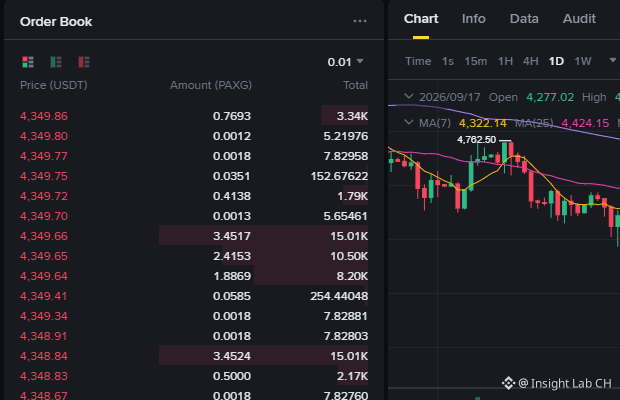
In the latest global financial market trading sessions, both safe-haven assets and the sovereign bond market saw notable fluctuations at the same time. The yield on UK 30-year government bonds plunged by 10 basis points to 5.76% during the day, marking the largest single-day decline since May last year. Meanwhile, the precious metals market saw strong buy-side momentum. Gold jumped by nearly $15 to $4,350 per troy ounce during the day, up 2.07%. Silver also rose in sync by $0.40, with its price climbing to $64.63 per troy ounce. The synchronized moves in these two representative assets clearly reflect that market funds are undergoing aggressive repricing.
The sharp drop in long-end government bond yields alongside the strong rally in precious metals is usually not a signal of healthy liquidity expansion. Instead, it reflects global funds adopting a defensive hedge as macro uncertainty intensifies and tail risks from stagflation increase. The sudden decline in long-term interest rates suggests the market has deep doubts about the growth momentum of the economy in the mid- to long term—potentially even pricing in recession risk ahead of time. At the same time, gold’s breakout rally highlights concerns that sovereign credit and fiat currencies are being eroded by inflation and geopolitical uncertainty. Compared with earlier market optimism about a soft landing, the asset-pricing trend right now more clearly indicates that safe-haven sentiment is rapidly heating up.
For traditional financial markets overall, this pattern of cross-asset linkage implies that risk appetite is contracting materially. Large swings in the bond yield curve often intensify liquidity differentiation across capital markets. Equity assets with rich valuations are likely to face valuation reassessment pressure. When gold and defensive fixed-income assets become the funds’ refuge, volatility in commodities and cyclical sectors will rise significantly, and any “crowding into defensive sectors” could further suppress the upside room for risk assets.
Translated to the cryptocurrency market, investors should remain highly cautious. Although some views attempt to classify crypto assets represented by $BTC as digital safe havens, in extreme liquidity conditions driven by macro risk aversion, crypto markets are often first categorized as high-beta risk assets. If risk-off sentiment leads to tighter external liquidity or triggers broad deleveraging, funds are more likely to withdraw from high-volatility assets and return to cash and hard defensive instruments. Faced with short-term macro headwinds, chasing prices blindly carries substantial pullback risk. Investors should be alert to downside pressure on crypto markets caused by liquidity being diverted away from them.
#Gold #BondYields #CryptoRisk
In the latest global financial market trading sessions, both safe-haven assets and the sovereign bond market saw notable fluctuations at the same time. The yield on UK 30-year government bonds plunged by 10 basis points to 5.76% during the day, marking the largest single-day decline since May last year. Meanwhile, the precious metals market saw strong buy-side momentum. Gold jumped by nearly $15 to $4,350 per troy ounce during the day, up 2.07%. Silver also rose in sync by $0.40, with its price climbing to $64.63 per troy ounce. The synchronized moves in these two representative assets clearly reflect that market funds are undergoing aggressive repricing.
The sharp drop in long-end government bond yields alongside the strong rally in precious metals is usually not a signal of healthy liquidity expansion. Instead, it reflects global funds adopting a defensive hedge as macro uncertainty intensifies and tail risks from stagflation increase. The sudden decline in long-term interest rates suggests the market has deep doubts about the growth momentum of the economy in the mid- to long term—potentially even pricing in recession risk ahead of time. At the same time, gold’s breakout rally highlights concerns that sovereign credit and fiat currencies are being eroded by inflation and geopolitical uncertainty. Compared with earlier market optimism about a soft landing, the asset-pricing trend right now more clearly indicates that safe-haven sentiment is rapidly heating up.
For traditional financial markets overall, this pattern of cross-asset linkage implies that risk appetite is contracting materially. Large swings in the bond yield curve often intensify liquidity differentiation across capital markets. Equity assets with rich valuations are likely to face valuation reassessment pressure. When gold and defensive fixed-income assets become the funds’ refuge, volatility in commodities and cyclical sectors will rise significantly, and any “crowding into defensive sectors” could further suppress the upside room for risk assets.
Translated to the cryptocurrency market, investors should remain highly cautious. Although some views attempt to classify crypto assets represented by $BTC as digital safe havens, in extreme liquidity conditions driven by macro risk aversion, crypto markets are often first categorized as high-beta risk assets. If risk-off sentiment leads to tighter external liquidity or triggers broad deleveraging, funds are more likely to withdraw from high-volatility assets and return to cash and hard defensive instruments. Faced with short-term macro headwinds, chasing prices blindly carries substantial pullback risk. Investors should be alert to downside pressure on crypto markets caused by liquidity being diverted away from them.
#Gold #BondYields #CryptoRisk
The sharp drop in long-end government bond yields alongside the strong rally in precious metals is usually not a signal of healthy liquidity expansion. Instead, it reflects global funds adopting a defensive hedge as macro uncertainty intensifies and tail risks from stagflation increase. The sudden decline in long-term interest rates suggests the market has deep doubts about the growth momentum of the economy in the mid- to long term—potentially even pricing in recession risk ahead of time. At the same time, gold’s breakout rally highlights concerns that sovereign credit and fiat currencies are being eroded by inflation and geopolitical uncertainty. Compared with earlier market optimism about a soft landing, the asset-pricing trend right now more clearly indicates that safe-haven sentiment is rapidly heating up.
For traditional financial markets overall, this pattern of cross-asset linkage implies that risk appetite is contracting materially. Large swings in the bond yield curve often intensify liquidity differentiation across capital markets. Equity assets with rich valuations are likely to face valuation reassessment pressure. When gold and defensive fixed-income assets become the funds’ refuge, volatility in commodities and cyclical sectors will rise significantly, and any “crowding into defensive sectors” could further suppress the upside room for risk assets.
Translated to the cryptocurrency market, investors should remain highly cautious. Although some views attempt to classify crypto assets represented by $BTC as digital safe havens, in extreme liquidity conditions driven by macro risk aversion, crypto markets are often first categorized as high-beta risk assets. If risk-off sentiment leads to tighter external liquidity or triggers broad deleveraging, funds are more likely to withdraw from high-volatility assets and return to cash and hard defensive instruments. Faced with short-term macro headwinds, chasing prices blindly carries substantial pullback risk. Investors should be alert to downside pressure on crypto markets caused by liquidity being diverted away from them.
#Gold #BondYields #CryptoRisk
10

·
--
Picture this: market infrastructure is expanding rapidly, opening the floodgates to new instruments and retail access faster than most risk models can adapt.
Most market participants mistake sheer market access for a guaranteed edge, only to get caught off guard by fragmented liquidity and aggressive downside cascades when volatility spikes.
When Richard Teng recently highlighted that financial markets are evolving with more choice and participation methods, drawing over 474.4k views and hundreds of interactions in just four hours, the underlying takeaway was clear. Expanding access to assets like $BTC and deeper derivatives on $BNB inevitably increases market complexity. More entry points mean liquidity spreads thin across venues, making sudden liquidations on $ETH far more brutal for those leaning heavily on leverage without proper hedging.
Broader participation builds long-term utility, but it also creates structural traps for anyone unprepared for sudden liquidity gaps.
Where do you think the biggest hidden risk lies as market access continues to expand?
#CryptoRisk #MarketStructure #TradingStrategy
Picture this: market infrastructure is expanding rapidly, opening the floodgates to new instruments and retail access faster than most risk models can adapt.
Most market participants mistake sheer market access for a guaranteed edge, only to get caught off guard by fragmented liquidity and aggressive downside cascades when volatility spikes.
When Richard Teng recently highlighted that financial markets are evolving with more choice and participation methods, drawing over 474.4k views and hundreds of interactions in just four hours, the underlying takeaway was clear. Expanding access to assets like $BTC and deeper derivatives on $BNB inevitably increases market complexity. More entry points mean liquidity spreads thin across venues, making sudden liquidations on $ETH far more brutal for those leaning heavily on leverage without proper hedging.
Broader participation builds long-term utility, but it also creates structural traps for anyone unprepared for sudden liquidity gaps.
Where do you think the biggest hidden risk lies as market access continues to expand?
#CryptoRisk #MarketStructure #TradingStrategy
Most market participants mistake sheer market access for a guaranteed edge, only to get caught off guard by fragmented liquidity and aggressive downside cascades when volatility spikes.
When Richard Teng recently highlighted that financial markets are evolving with more choice and participation methods, drawing over 474.4k views and hundreds of interactions in just four hours, the underlying takeaway was clear. Expanding access to assets like $BTC and deeper derivatives on $BNB inevitably increases market complexity. More entry points mean liquidity spreads thin across venues, making sudden liquidations on $ETH far more brutal for those leaning heavily on leverage without proper hedging.
Broader participation builds long-term utility, but it also creates structural traps for anyone unprepared for sudden liquidity gaps.
Where do you think the biggest hidden risk lies as market access continues to expand?
#CryptoRisk #MarketStructure #TradingStrategy

27

·
--
Bearish
The beginner’s biggest mistake—thinking only about “how much I’ll earn,” not “how much I can lose”
When people come into crypto, the first instinct is to find a coin with Xs or open futures with 20x leverage on the whole pot. Usually it ends in liquidation after a couple of candles, followed by stories about how “crypto is a scam.”
Basic risk management that actually saves your balance:
Free cash rule: Never put on the exchange money that you’ll need to live on in the next month. If the market drops by 30%, you shouldn’t rush to lock in the loss in panic.
Don’t trade with 100% of your depot: There should always be some portion in stablecoins (for example, in the same Simple Earn with a flexible interest rate). This isn’t just income—it’s your insurance so you can calmly buy back the dip when everyone else is panicking.
Stop-losses and position sizing: Entering a single trade for more than 3–5% of your balance is pure lottery, not trading.
The market isn’t going anywhere—opportunities are here every day. The main task is to preserve your deposit, so you have something to take advantage of these opportunities.
What was your most painful lesson in risk management throughout all your time in crypto?
#RiskManagement #BinanceSquare #BinanceUkraine #CryptoRisk
$ETH
{future}(ETHUSDT)
The beginner’s biggest mistake—thinking only about “how much I’ll earn,” not “how much I can lose”
When people come into crypto, the first instinct is to find a coin with Xs or open futures with 20x leverage on the whole pot. Usually it ends in liquidation after a couple of candles, followed by stories about how “crypto is a scam.”
Basic risk management that actually saves your balance:
Free cash rule: Never put on the exchange money that you’ll need to live on in the next month. If the market drops by 30%, you shouldn’t rush to lock in the loss in panic.
Don’t trade with 100% of your depot: There should always be some portion in stablecoins (for example, in the same Simple Earn with a flexible interest rate). This isn’t just income—it’s your insurance so you can calmly buy back the dip when everyone else is panicking.
Stop-losses and position sizing: Entering a single trade for more than 3–5% of your balance is pure lottery, not trading.
The market isn’t going anywhere—opportunities are here every day. The main task is to preserve your deposit, so you have something to take advantage of these opportunities.
What was your most painful lesson in risk management throughout all your time in crypto?
#RiskManagement #BinanceSquare #BinanceUkraine #CryptoRisk
$ETH
When people come into crypto, the first instinct is to find a coin with Xs or open futures with 20x leverage on the whole pot. Usually it ends in liquidation after a couple of candles, followed by stories about how “crypto is a scam.”
Basic risk management that actually saves your balance:
Free cash rule: Never put on the exchange money that you’ll need to live on in the next month. If the market drops by 30%, you shouldn’t rush to lock in the loss in panic.
Don’t trade with 100% of your depot: There should always be some portion in stablecoins (for example, in the same Simple Earn with a flexible interest rate). This isn’t just income—it’s your insurance so you can calmly buy back the dip when everyone else is panicking.
Stop-losses and position sizing: Entering a single trade for more than 3–5% of your balance is pure lottery, not trading.
The market isn’t going anywhere—opportunities are here every day. The main task is to preserve your deposit, so you have something to take advantage of these opportunities.
What was your most painful lesson in risk management throughout all your time in crypto?
#RiskManagement #BinanceSquare #BinanceUkraine #CryptoRisk
$ETH
2
140

·
--
Option 1: Direct & Warning Tone (Best for quick feed engagement)
Over the next 24 hours, $LSK might give a hard lesson to anyone opening long positions. Reminder: this is the same asset that once crashed from $34 down to $0.07. Historical trends matter—going long here carries extreme risk. Stay cautious out there. #Crypto_Jobs🎯 #Trading #LSk
Option 2: Analytical & Cautionary (More professional)
Extreme volatility alert for $LSK over the next 24 hours. Traders holding long positions should manage their risk carefully. Considering its historical massive drop from $34 to $0.07, betting on a sustained rally right now is playing with fire. Trade smart and protect your capital. #BinanceSquare #LSK
Option 3: Short & Punchy (For maximum visibility)
Head up traders: $LSK looks ready for some intense liquidations on long positions within the next 24 hours. Don't forget its history—from $34 all the way down to $0.07. High risk of heading further down. Think twice before leveraging up!
#LSK #CryptoRisk #Binance
Option 1: Direct & Warning Tone (Best for quick feed engagement)
Over the next 24 hours, $LSK might give a hard lesson to anyone opening long positions. Reminder: this is the same asset that once crashed from $34 down to $0.07. Historical trends matter—going long here carries extreme risk. Stay cautious out there. #Crypto_Jobs🎯 #Trading #LSk
Option 2: Analytical & Cautionary (More professional)
Extreme volatility alert for $LSK over the next 24 hours. Traders holding long positions should manage their risk carefully. Considering its historical massive drop from $34 to $0.07, betting on a sustained rally right now is playing with fire. Trade smart and protect your capital. #BinanceSquare #LSK
Option 3: Short & Punchy (For maximum visibility)
Head up traders: $LSK looks ready for some intense liquidations on long positions within the next 24 hours. Don't forget its history—from $34 all the way down to $0.07. High risk of heading further down. Think twice before leveraging up!
#LSK #CryptoRisk #Binance
Over the next 24 hours, $LSK might give a hard lesson to anyone opening long positions. Reminder: this is the same asset that once crashed from $34 down to $0.07. Historical trends matter—going long here carries extreme risk. Stay cautious out there. #Crypto_Jobs🎯 #Trading #LSk
Option 2: Analytical & Cautionary (More professional)
Extreme volatility alert for $LSK over the next 24 hours. Traders holding long positions should manage their risk carefully. Considering its historical massive drop from $34 to $0.07, betting on a sustained rally right now is playing with fire. Trade smart and protect your capital. #BinanceSquare #LSK
Option 3: Short & Punchy (For maximum visibility)
Head up traders: $LSK looks ready for some intense liquidations on long positions within the next 24 hours. Don't forget its history—from $34 all the way down to $0.07. High risk of heading further down. Think twice before leveraging up!
#LSK #CryptoRisk #Binance
235

·
--
Here is what happened when one of the biggest collapses in financial history refused to stay buried. Most market participants assume old risk is fully priced in once the dust settles, but unresolved legal overhangs create a false sense of security that blinds traders to secondary contagion and sentiment traps.
When FTX collapsed, billions vanished overnight and retail traders bore the brunt of the fallout. The recent move by Sam Bankman-Fried to petition the US Supreme Court to overturn his fraud conviction is not just courtroom drama. It is a stark reminder of how central points of failure can leave long-lasting institutional scars on the entire ecosystem, subtly distorting capital flow across major assets like $BTC while speculative tokens like $FTT react erratically to headline noise.
The risk here is complacency. Betting on narrative rebounds or assuming institutional fallout has zero remaining counterparty impact usually ends with retail holding illiquid bags. When legal precedents get tested at the highest level, regulatory scrutiny tightens across the board, raising compliance hurdles and shifting liquidity away from high-risk corners into safer havens like $SOL and pure spot holdings.
How much hidden counterparty risk do you think the market is still overlooking?
#CryptoRisk #FTX #MarketAnalysis
Here is what happened when one of the biggest collapses in financial history refused to stay buried. Most market participants assume old risk is fully priced in once the dust settles, but unresolved legal overhangs create a false sense of security that blinds traders to secondary contagion and sentiment traps.
When FTX collapsed, billions vanished overnight and retail traders bore the brunt of the fallout. The recent move by Sam Bankman-Fried to petition the US Supreme Court to overturn his fraud conviction is not just courtroom drama. It is a stark reminder of how central points of failure can leave long-lasting institutional scars on the entire ecosystem, subtly distorting capital flow across major assets like $BTC while speculative tokens like $FTT react erratically to headline noise.
The risk here is complacency. Betting on narrative rebounds or assuming institutional fallout has zero remaining counterparty impact usually ends with retail holding illiquid bags. When legal precedents get tested at the highest level, regulatory scrutiny tightens across the board, raising compliance hurdles and shifting liquidity away from high-risk corners into safer havens like $SOL and pure spot holdings.
How much hidden counterparty risk do you think the market is still overlooking?
#CryptoRisk #FTX #MarketAnalysis
When FTX collapsed, billions vanished overnight and retail traders bore the brunt of the fallout. The recent move by Sam Bankman-Fried to petition the US Supreme Court to overturn his fraud conviction is not just courtroom drama. It is a stark reminder of how central points of failure can leave long-lasting institutional scars on the entire ecosystem, subtly distorting capital flow across major assets like $BTC while speculative tokens like $FTT react erratically to headline noise.
The risk here is complacency. Betting on narrative rebounds or assuming institutional fallout has zero remaining counterparty impact usually ends with retail holding illiquid bags. When legal precedents get tested at the highest level, regulatory scrutiny tightens across the board, raising compliance hurdles and shifting liquidity away from high-risk corners into safer havens like $SOL and pure spot holdings.
How much hidden counterparty risk do you think the market is still overlooking?
#CryptoRisk #FTX #MarketAnalysis
149

🚨 $BTC SLIPS AS ESMA FLAGS CRYPTO‑FINANCE LINK RISKS 🟢
ESMA’s latest bulletin pulls the curtain back on crypto‑finance entanglements, flagging tokenized equities, DeFi exploits and prediction markets as potential spill‑over channels. 🦈 Smart‑money eyes the structural links, knowing that a breach in one arena can echo through traditional desks.
Meanwhile $BTC slipped 2.2% to $76,568, trading a wide 78,564‑76,464 range with robust volume, yet the move isn’t a direct ESMA trigger. 📊 The dip underscores volatility, urging traders to respect the new risk overlay before chasing the rebound.
💬 Are you scaling back $BTC or doubling down on the dip?
⚠️ Not financial advice. Always manage your risk. 🛡️
🏷️ #BTC #Regulation #CryptoRisk #MarketAnalysis
🚀 🔥
🚨 $BTC SLIPS AS ESMA FLAGS CRYPTO‑FINANCE LINK RISKS 🟢
ESMA’s latest bulletin pulls the curtain back on crypto‑finance entanglements, flagging tokenized equities, DeFi exploits and prediction markets as potential spill‑over channels. 🦈 Smart‑money eyes the structural links, knowing that a breach in one arena can echo through traditional desks.
Meanwhile $BTC slipped 2.2% to $76,568, trading a wide 78,564‑76,464 range with robust volume, yet the move isn’t a direct ESMA trigger. 📊 The dip underscores volatility, urging traders to respect the new risk overlay before chasing the rebound.
💬 Are you scaling back $BTC or doubling down on the dip?
⚠️ Not financial advice. Always manage your risk. 🛡️
🏷️ #BTC #Regulation #CryptoRisk #MarketAnalysis
🚀 🔥
ESMA’s latest bulletin pulls the curtain back on crypto‑finance entanglements, flagging tokenized equities, DeFi exploits and prediction markets as potential spill‑over channels. 🦈 Smart‑money eyes the structural links, knowing that a breach in one arena can echo through traditional desks.
Meanwhile $BTC slipped 2.2% to $76,568, trading a wide 78,564‑76,464 range with robust volume, yet the move isn’t a direct ESMA trigger. 📊 The dip underscores volatility, urging traders to respect the new risk overlay before chasing the rebound.
💬 Are you scaling back $BTC or doubling down on the dip?
⚠️ Not financial advice. Always manage your risk. 🛡️
🏷️ #BTC #Regulation #CryptoRisk #MarketAnalysis
🚀 🔥
55

·
--
🔴 $BTC UNDER SCRUTINY: ESMA'S WARNINGS COULD REDEFINE RISK PLAY
Entry: 76,568.73 ⚡
Target: 78,564.39 🚀
Stop Loss: 76,464.00 ⚠️
📊 ESMA’s recent alert flags tokenized equities, DeFi exploits, and prediction markets as vectors where crypto stress could seep into traditional finance. The regulator’s language underscores a structural pivot—not a crisis—but the market’s 2.2% dip hints at heightened sensitivity. 🦈
🔍 Smart‑money flows now weigh the integrity of cross‑asset bridges; any breach in these nascent layers could trigger liquidity hunts across the board. Institutional eyes are scanning for mis‑aligned risk matrices before the next order block flips. 📈
💬 How will the tightening regulatory lens reshape crypto liquidity on top‑tier exchanges? 👇
⚠️ Not financial advice. Always manage your risk. 🛡️
🏷️ #BTC #Regulation #RiskManagement #CryptoRisk
🦈 ⚡
🔴 $BTC UNDER SCRUTINY: ESMA'S WARNINGS COULD REDEFINE RISK PLAY
Entry: 76,568.73 ⚡
Target: 78,564.39 🚀
Stop Loss: 76,464.00 ⚠️
📊 ESMA’s recent alert flags tokenized equities, DeFi exploits, and prediction markets as vectors where crypto stress could seep into traditional finance. The regulator’s language underscores a structural pivot—not a crisis—but the market’s 2.2% dip hints at heightened sensitivity. 🦈
🔍 Smart‑money flows now weigh the integrity of cross‑asset bridges; any breach in these nascent layers could trigger liquidity hunts across the board. Institutional eyes are scanning for mis‑aligned risk matrices before the next order block flips. 📈
💬 How will the tightening regulatory lens reshape crypto liquidity on top‑tier exchanges? 👇
⚠️ Not financial advice. Always manage your risk. 🛡️
🏷️ #BTC #Regulation #RiskManagement #CryptoRisk
🦈 ⚡
Entry: 76,568.73 ⚡
Target: 78,564.39 🚀
Stop Loss: 76,464.00 ⚠️
📊 ESMA’s recent alert flags tokenized equities, DeFi exploits, and prediction markets as vectors where crypto stress could seep into traditional finance. The regulator’s language underscores a structural pivot—not a crisis—but the market’s 2.2% dip hints at heightened sensitivity. 🦈
🔍 Smart‑money flows now weigh the integrity of cross‑asset bridges; any breach in these nascent layers could trigger liquidity hunts across the board. Institutional eyes are scanning for mis‑aligned risk matrices before the next order block flips. 📈
💬 How will the tightening regulatory lens reshape crypto liquidity on top‑tier exchanges? 👇
⚠️ Not financial advice. Always manage your risk. 🛡️
🏷️ #BTC #Regulation #RiskManagement #CryptoRisk
🦈 ⚡
37

·
--
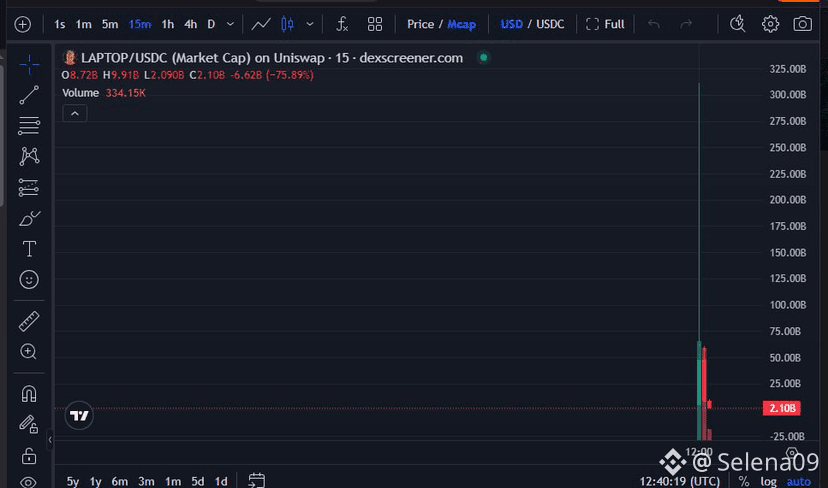
🚨 $LAPTOP caught my attention more for its risks than its price action.
The memecoin is directly associated with Hunter Biden, so beyond liquidity and tokenomics, there’s another major risk: its value can be heavily driven by one person’s name and a political narrative.
For a newly launched token with thin liquidity and extreme volatility, I’d look at who’s behind it + token distribution + liquidity before looking at the percentage gain.
Just my personal risk assessment, not financial advice.
#Laptop #memecoin #CryptoRisk #Crypto #CryptoNews $TRUMP $MELANIA $IOST
🚨 $LAPTOP caught my attention more for its risks than its price action.
The memecoin is directly associated with Hunter Biden, so beyond liquidity and tokenomics, there’s another major risk: its value can be heavily driven by one person’s name and a political narrative.
For a newly launched token with thin liquidity and extreme volatility, I’d look at who’s behind it + token distribution + liquidity before looking at the percentage gain.
Just my personal risk assessment, not financial advice.
#Laptop #memecoin #CryptoRisk #Crypto #CryptoNews $TRUMP $MELANIA $IOST
The memecoin is directly associated with Hunter Biden, so beyond liquidity and tokenomics, there’s another major risk: its value can be heavily driven by one person’s name and a political narrative.
For a newly launched token with thin liquidity and extreme volatility, I’d look at who’s behind it + token distribution + liquidity before looking at the percentage gain.
Just my personal risk assessment, not financial advice.
#Laptop #memecoin #CryptoRisk #Crypto #CryptoNews $TRUMP $MELANIA $IOST
5
4.2k

·
--
🚨 $MEME LAUNCH ALERT: A LIQUIDITY TRAP FOR SNIPERS 🐻
🦈 Institutional flow analysis shows a pre‑launch order block forming at the mint, immediately saturated by a wave of automated snipers. Their speed eclipses retail latency, turning the initial liquidity pool into a hostile zone. 📊 Historical memecoin launches—Trump coin and peers—exhibit a repeatable pattern: rapid supply dump, followed by a sharp price collapse as smart money extracts the premium. The risk‑reward asymmetry is heavily tilted toward the downside, making any chase a money trap. 💬 Are you staying on the sidelines or risking the inevitable squeeze? 👇
⚠️ Not financial advice. Always manage your risk. 🛡️
🏷️ #MEME #SniperAlert #CryptoRisk #Memecoin
🔥 🦈
🚨 $MEME LAUNCH ALERT: A LIQUIDITY TRAP FOR SNIPERS 🐻
🦈 Institutional flow analysis shows a pre‑launch order block forming at the mint, immediately saturated by a wave of automated snipers. Their speed eclipses retail latency, turning the initial liquidity pool into a hostile zone. 📊 Historical memecoin launches—Trump coin and peers—exhibit a repeatable pattern: rapid supply dump, followed by a sharp price collapse as smart money extracts the premium. The risk‑reward asymmetry is heavily tilted toward the downside, making any chase a money trap. 💬 Are you staying on the sidelines or risking the inevitable squeeze? 👇
⚠️ Not financial advice. Always manage your risk. 🛡️
🏷️ #MEME #SniperAlert #CryptoRisk #Memecoin
🔥 🦈
🦈 Institutional flow analysis shows a pre‑launch order block forming at the mint, immediately saturated by a wave of automated snipers. Their speed eclipses retail latency, turning the initial liquidity pool into a hostile zone. 📊 Historical memecoin launches—Trump coin and peers—exhibit a repeatable pattern: rapid supply dump, followed by a sharp price collapse as smart money extracts the premium. The risk‑reward asymmetry is heavily tilted toward the downside, making any chase a money trap. 💬 Are you staying on the sidelines or risking the inevitable squeeze? 👇
⚠️ Not financial advice. Always manage your risk. 🛡️
🏷️ #MEME #SniperAlert #CryptoRisk #Memecoin
🔥 🦈
57

·
--
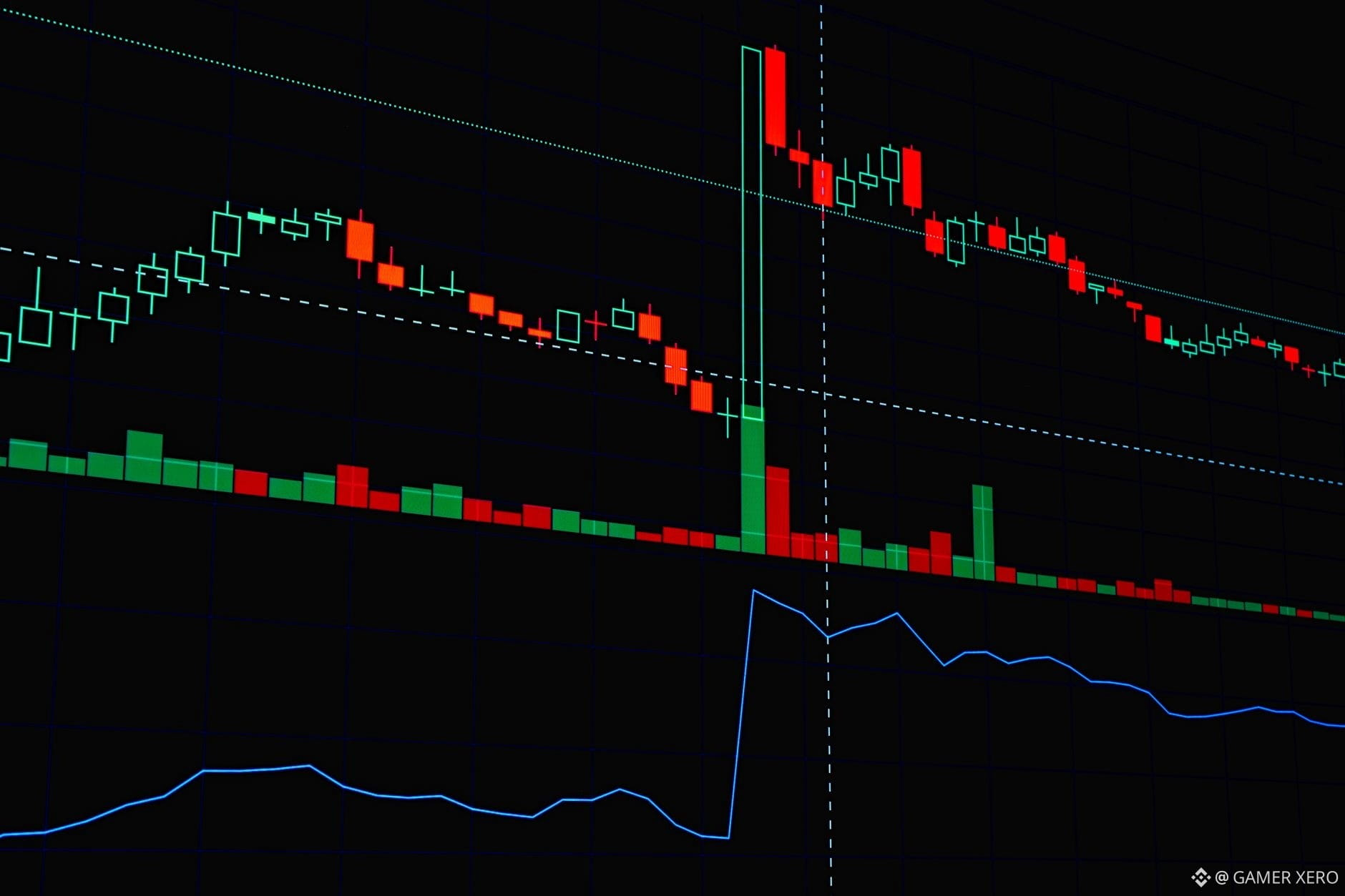
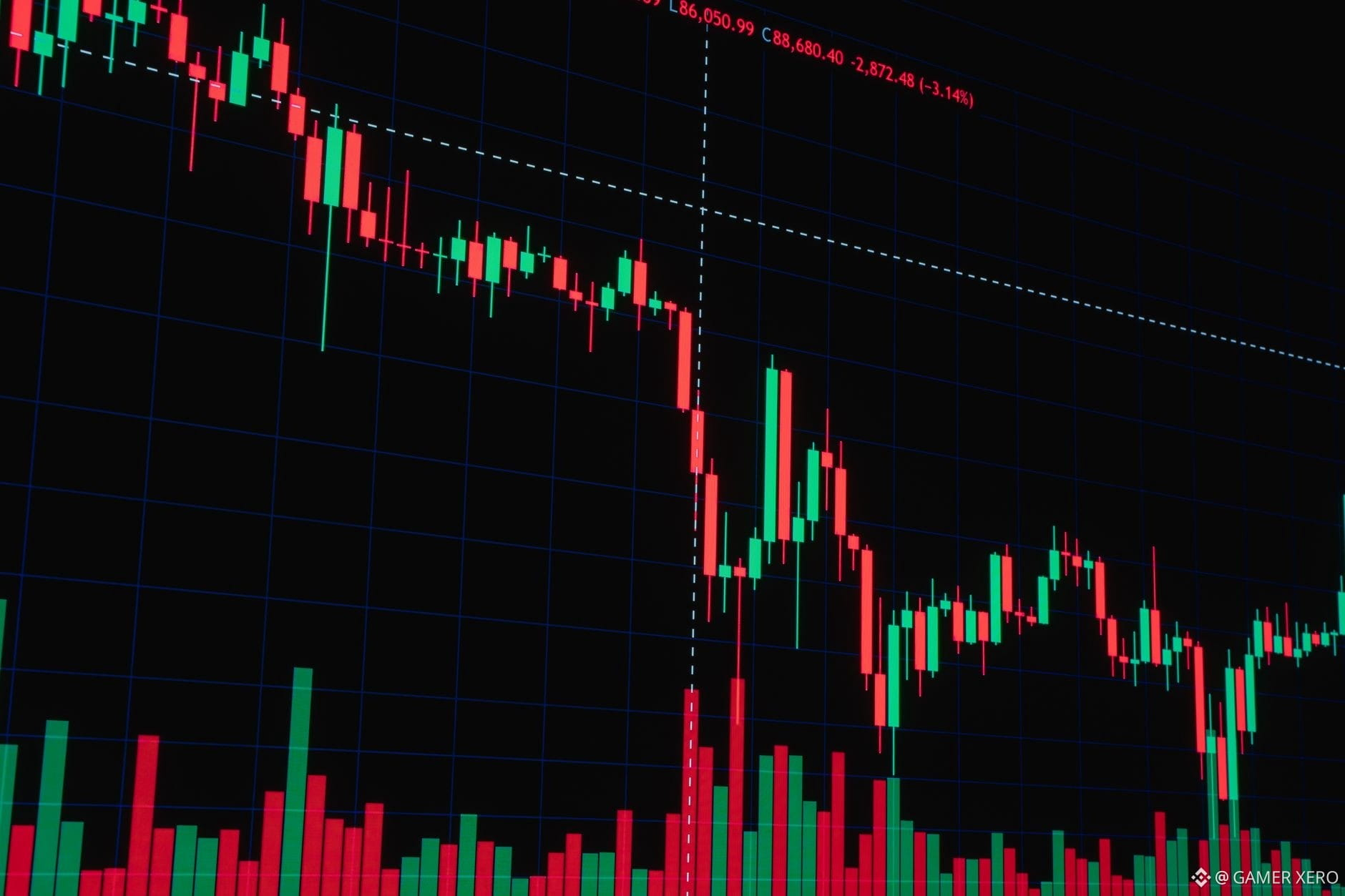
$BTC is hovering around $78,552, a tight range that makes it easy to slip into a loss if you let emotions drive the trade. One way to keep that from happening is to base every entry on a predefined stop‑loss and a clear risk‑per‑trade rule.
Start with your total capital—say $10,000. Decide you’ll never risk more than 1 % on a single position, so your max loss is $100. Look at the current chart and set a stop‑loss a few percent below the entry, for example $77,800, which is roughly a 0.95 % move. The distance between entry and stop is $752; $100 ÷ $752 ≈ 0.13 BTC. That means you’d buy about 0.13 BTC, not the full $10,000 stake. If the price rebounds, your profit potential stays proportional to the risk you took.
By treating every trade as a small, controlled experiment, you remove the fear of “missing out” and let the market move you, not the other way around. How do you currently size your positions when the market is sideways?
#CryptoRisk #CapitalPreservation #TradingDiscipline #GAMERXERO
$BTC is hovering around $78,552, a tight range that makes it easy to slip into a loss if you let emotions drive the trade. One way to keep that from happening is to base every entry on a predefined stop‑loss and a clear risk‑per‑trade rule.
Start with your total capital—say $10,000. Decide you’ll never risk more than 1 % on a single position, so your max loss is $100. Look at the current chart and set a stop‑loss a few percent below the entry, for example $77,800, which is roughly a 0.95 % move. The distance between entry and stop is $752; $100 ÷ $752 ≈ 0.13 BTC. That means you’d buy about 0.13 BTC, not the full $10,000 stake. If the price rebounds, your profit potential stays proportional to the risk you took.
By treating every trade as a small, controlled experiment, you remove the fear of “missing out” and let the market move you, not the other way around. How do you currently size your positions when the market is sideways?
#CryptoRisk #CapitalPreservation #TradingDiscipline #GAMERXERO
Start with your total capital—say $10,000. Decide you’ll never risk more than 1 % on a single position, so your max loss is $100. Look at the current chart and set a stop‑loss a few percent below the entry, for example $77,800, which is roughly a 0.95 % move. The distance between entry and stop is $752; $100 ÷ $752 ≈ 0.13 BTC. That means you’d buy about 0.13 BTC, not the full $10,000 stake. If the price rebounds, your profit potential stays proportional to the risk you took.
By treating every trade as a small, controlled experiment, you remove the fear of “missing out” and let the market move you, not the other way around. How do you currently size your positions when the market is sideways?
#CryptoRisk #CapitalPreservation #TradingDiscipline #GAMERXERO
33

·
--
🦈 $CRO EXPLOIT REVERSED BUT $9M OFF‑CHAIN LOSS LINGERS 🚨
📊 The attacker artificially pumped the thinly‑traded TONIC token, using the inflated price as collateral to siphon $120.4 M across nine markets. Cronos’ validators halted the chain, rolled back 10,961 blocks, and restored $111.2 M, but $9.19 M vanished off‑chain and remains unrecovered. ⚡
💡 This event underscores how thin liquidity pools become a playground for smart‑money liquidity sweeps, exposing systemic risk in cross‑chain collateral frameworks. The network resumed production within 11 hours, yet the residual loss may pressure users to reassess risk buffers. 👇
⚠️ Not financial advice. Always manage your risk. 🛡️
🏷️ #CRO #Exploit #CryptoRisk #SmartMoney
🔥 🦈
🦈 $CRO EXPLOIT REVERSED BUT $9M OFF‑CHAIN LOSS LINGERS 🚨
📊 The attacker artificially pumped the thinly‑traded TONIC token, using the inflated price as collateral to siphon $120.4 M across nine markets. Cronos’ validators halted the chain, rolled back 10,961 blocks, and restored $111.2 M, but $9.19 M vanished off‑chain and remains unrecovered. ⚡
💡 This event underscores how thin liquidity pools become a playground for smart‑money liquidity sweeps, exposing systemic risk in cross‑chain collateral frameworks. The network resumed production within 11 hours, yet the residual loss may pressure users to reassess risk buffers. 👇
⚠️ Not financial advice. Always manage your risk. 🛡️
🏷️ #CRO #Exploit #CryptoRisk #SmartMoney
🔥 🦈
📊 The attacker artificially pumped the thinly‑traded TONIC token, using the inflated price as collateral to siphon $120.4 M across nine markets. Cronos’ validators halted the chain, rolled back 10,961 blocks, and restored $111.2 M, but $9.19 M vanished off‑chain and remains unrecovered. ⚡
💡 This event underscores how thin liquidity pools become a playground for smart‑money liquidity sweeps, exposing systemic risk in cross‑chain collateral frameworks. The network resumed production within 11 hours, yet the residual loss may pressure users to reassess risk buffers. 👇
⚠️ Not financial advice. Always manage your risk. 🛡️
🏷️ #CRO #Exploit #CryptoRisk #SmartMoney
🔥 🦈
19
·
--
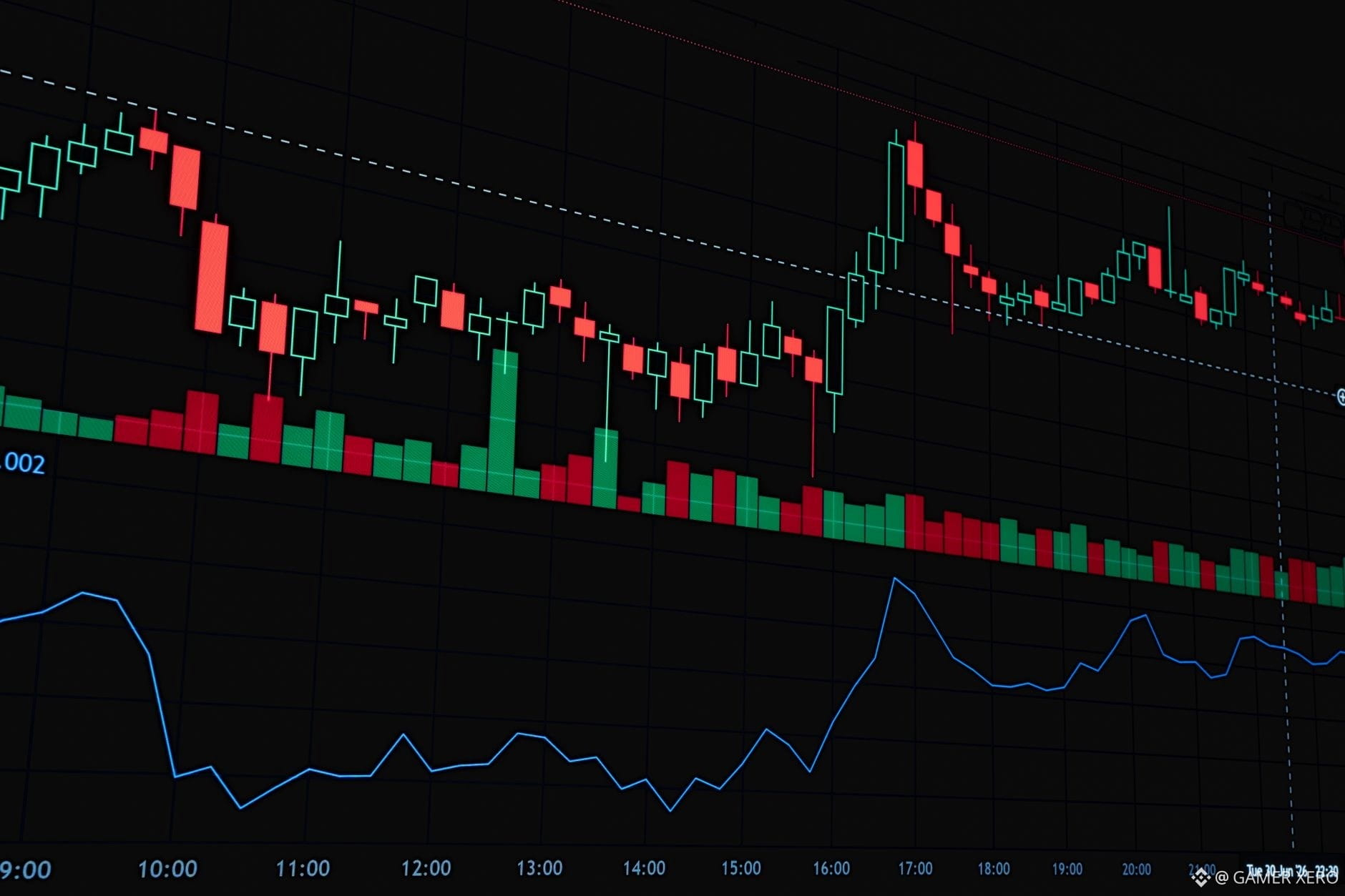
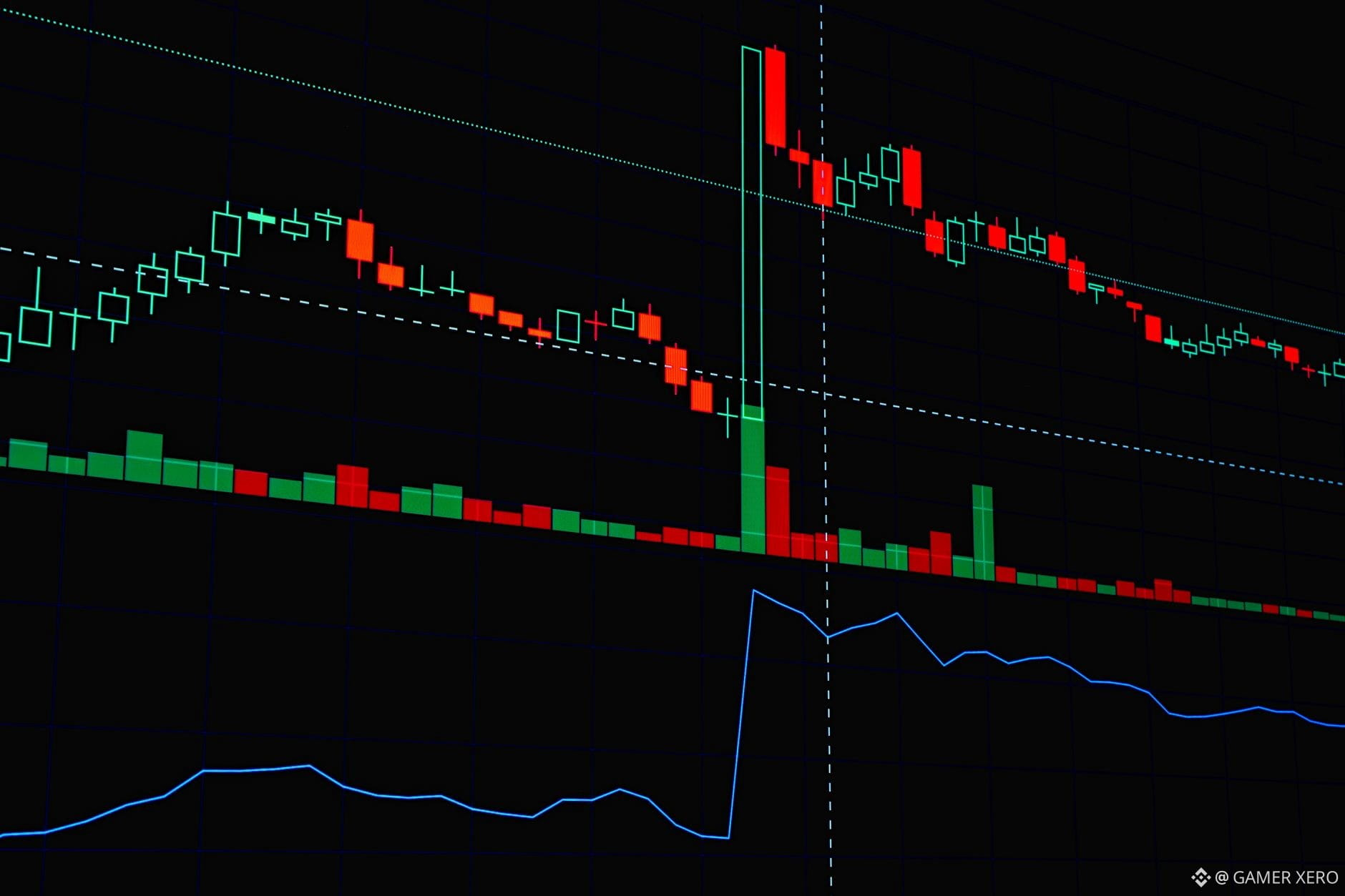
Seeing $BTC wobble around $78,819 with a 24‑hour range of just $1,246 (high $79,926, low $78,680) makes it a textbook case for tightening risk caps. My rule of thumb: never let any single position exceed 5 % of total equity when volatility is under 2 %. With $BTC’s recent -0.98 % move, a 5 % cap translates to a $3,940 exposure per $100k portfolio – enough to stay in the game if the price slides a couple of hundred points, but small enough to survive the next swing.
Diversification works hand‑in‑hand with that cap. I pair $BTC with a lower‑beta asset like $ETH, whose 24‑hour swing is -0.55 % and a tighter $48 spread. Allocating 3 % to $BTC and 2 % to $ETH spreads correlation risk while keeping the combined crypto slice at 5 % of the portfolio. If the market drops 10 % across the board, the loss on the crypto slice is roughly 0.5 % of total equity, which is easier to recover with a disciplined drawdown plan (e.g., adding back only after a 20 % rebound in the slice).
How do you balance position size and diversification when the market stays in a tight band?
#CryptoRisk #PortfolioManagement #RiskControl #GAMERXERO
Seeing $BTC wobble around $78,819 with a 24‑hour range of just $1,246 (high $79,926, low $78,680) makes it a textbook case for tightening risk caps. My rule of thumb: never let any single position exceed 5 % of total equity when volatility is under 2 %. With $BTC ’s recent -0.98 % move, a 5 % cap translates to a $3,940 exposure per $100k portfolio – enough to stay in the game if the price slides a couple of hundred points, but small enough to survive the next swing.
Diversification works hand‑in‑hand with that cap. I pair $BTC with a lower‑beta asset like $ETH , whose 24‑hour swing is -0.55 % and a tighter $48 spread. Allocating 3 % to $BTC and 2 % to $ETH spreads correlation risk while keeping the combined crypto slice at 5 % of the portfolio. If the market drops 10 % across the board, the loss on the crypto slice is roughly 0.5 % of total equity, which is easier to recover with a disciplined drawdown plan (e.g., adding back only after a 20 % rebound in the slice).
How do you balance position size and diversification when the market stays in a tight band?
#CryptoRisk #PortfolioManagement #RiskControl #GAMERXERO
Diversification works hand‑in‑hand with that cap. I pair $BTC with a lower‑beta asset like $ETH , whose 24‑hour swing is -0.55 % and a tighter $48 spread. Allocating 3 % to $BTC and 2 % to $ETH spreads correlation risk while keeping the combined crypto slice at 5 % of the portfolio. If the market drops 10 % across the board, the loss on the crypto slice is roughly 0.5 % of total equity, which is easier to recover with a disciplined drawdown plan (e.g., adding back only after a 20 % rebound in the slice).
How do you balance position size and diversification when the market stays in a tight band?
#CryptoRisk #PortfolioManagement #RiskControl #GAMERXERO
52
·
--
$BTC is trading just under $79,900, barely moving beyond its 24‑hour band of $79,233‑$80,560. That tight range is a perfect classroom for risk control. I start every trade by defining how much of my account I’m willing to lose if the market turns – usually 1 % of total capital. With a $10,000 portfolio that’s $100. If I place a stop‑loss $300 below entry, the maximum loss per coin is $300 × quantity = $100, so the position size works out to 0.33 BTC. That tiny stake keeps my account safe while still letting me stay in the game when the price resumes its swing.
Emotional discipline is the other half. When price nudges the lower edge of the band, I resist the urge to add more just because the market feels “cheap.” Instead, I wait for the price to respect a clear support level or for a candle to close above the midpoint before re‑evaluating. This prevents the common mistake of doubling‑down into a losing trade and protects the capital needed for future setups.
Do you use a fixed‑percentage rule for stop‑loss sizing, or do you adapt it to volatility?
#CryptoRisk #TradingTips #CapitalPreservation #GAMERXERO
$BTC is trading just under $79,900, barely moving beyond its 24‑hour band of $79,233‑$80,560. That tight range is a perfect classroom for risk control. I start every trade by defining how much of my account I’m willing to lose if the market turns – usually 1 % of total capital. With a $10,000 portfolio that’s $100. If I place a stop‑loss $300 below entry, the maximum loss per coin is $300 × quantity = $100, so the position size works out to 0.33 BTC. That tiny stake keeps my account safe while still letting me stay in the game when the price resumes its swing.
Emotional discipline is the other half. When price nudges the lower edge of the band, I resist the urge to add more just because the market feels “cheap.” Instead, I wait for the price to respect a clear support level or for a candle to close above the midpoint before re‑evaluating. This prevents the common mistake of doubling‑down into a losing trade and protects the capital needed for future setups.
Do you use a fixed‑percentage rule for stop‑loss sizing, or do you adapt it to volatility?
#CryptoRisk #TradingTips #CapitalPreservation #GAMERXERO
Emotional discipline is the other half. When price nudges the lower edge of the band, I resist the urge to add more just because the market feels “cheap.” Instead, I wait for the price to respect a clear support level or for a candle to close above the midpoint before re‑evaluating. This prevents the common mistake of doubling‑down into a losing trade and protects the capital needed for future setups.
Do you use a fixed‑percentage rule for stop‑loss sizing, or do you adapt it to volatility?
#CryptoRisk #TradingTips #CapitalPreservation #GAMERXERO


1
127
·
--
Picture this: a token trades at $0.95 while both its reported market cap and fully diluted valuation sit near $670 million.
For traders chasing a fresh $PONS move, the price can look deceptively accessible. But a sub-$1 token is not automatically cheap, and focusing on unit price alone can turn FOMO into an expensive mistake.
The key signal is valuation. At roughly $670 million in market cap and $670 million in FDV, $PONS appears to have little gap between circulating and fully diluted supply, potentially reducing future unlock pressure compared with low-float launches.
That does not remove the downside. A $670 million valuation already prices in substantial expectations, so weak liquidity, concentrated ownership, or fading demand could lead to sharp losses. Compare the valuation and market structure with assets like $BTC and $ETH before treating $0.95 as a bargain.
What risk do you think traders are overlooking here?
#PONS #CryptoRisk #Tokenomics
Picture this: a token trades at $0.95 while both its reported market cap and fully diluted valuation sit near $670 million.
For traders chasing a fresh $PONS move, the price can look deceptively accessible. But a sub-$1 token is not automatically cheap, and focusing on unit price alone can turn FOMO into an expensive mistake.
The key signal is valuation. At roughly $670 million in market cap and $670 million in FDV, $PONS appears to have little gap between circulating and fully diluted supply, potentially reducing future unlock pressure compared with low-float launches.
That does not remove the downside. A $670 million valuation already prices in substantial expectations, so weak liquidity, concentrated ownership, or fading demand could lead to sharp losses. Compare the valuation and market structure with assets like $BTC and $ETH before treating $0.95 as a bargain.
What risk do you think traders are overlooking here?
#PONS #CryptoRisk #Tokenomics
For traders chasing a fresh $PONS move, the price can look deceptively accessible. But a sub-$1 token is not automatically cheap, and focusing on unit price alone can turn FOMO into an expensive mistake.
The key signal is valuation. At roughly $670 million in market cap and $670 million in FDV, $PONS appears to have little gap between circulating and fully diluted supply, potentially reducing future unlock pressure compared with low-float launches.
That does not remove the downside. A $670 million valuation already prices in substantial expectations, so weak liquidity, concentrated ownership, or fading demand could lead to sharp losses. Compare the valuation and market structure with assets like $BTC and $ETH before treating $0.95 as a bargain.
What risk do you think traders are overlooking here?
#PONS #CryptoRisk #Tokenomics
23
Picture this: a token starts sliding, and the team deploys its vault to defend the price.
For holders, that support can look like a safe entry. The danger is mistaking a temporary slowdown for real demand and buying before the market has found a floor.
Here’s the part most people miss: spending treasury reserves can absorb some selling pressure, but it cannot create buyers who do not exist. Once the vault runs low, the same imbalance returns, often with less capital available to manage the next wave.
Whether it is $BTC, $ETH, or $SOL, sustainable support comes from genuine demand, not finite reserves. A defended chart can delay price discovery, but it cannot cancel it.
How do you tell the difference between real accumulation and treasury-funded support?
#CryptoRisk #MarketLiquidity #TradingStrategy
Picture this: a token starts sliding, and the team deploys its vault to defend the price.
For holders, that support can look like a safe entry. The danger is mistaking a temporary slowdown for real demand and buying before the market has found a floor.
Here’s the part most people miss: spending treasury reserves can absorb some selling pressure, but it cannot create buyers who do not exist. Once the vault runs low, the same imbalance returns, often with less capital available to manage the next wave.
Whether it is $BTC , $ETH , or $SOL , sustainable support comes from genuine demand, not finite reserves. A defended chart can delay price discovery, but it cannot cancel it.
How do you tell the difference between real accumulation and treasury-funded support?
#CryptoRisk #MarketLiquidity #TradingStrategy
For holders, that support can look like a safe entry. The danger is mistaking a temporary slowdown for real demand and buying before the market has found a floor.
Here’s the part most people miss: spending treasury reserves can absorb some selling pressure, but it cannot create buyers who do not exist. Once the vault runs low, the same imbalance returns, often with less capital available to manage the next wave.
Whether it is $BTC , $ETH , or $SOL , sustainable support comes from genuine demand, not finite reserves. A defended chart can delay price discovery, but it cannot cancel it.
How do you tell the difference between real accumulation and treasury-funded support?
#CryptoRisk #MarketLiquidity #TradingStrategy

47
·
--
Everyone thinks a big closed profit means the trade is under control, but actually unrealized losses can reverse the whole picture fast.
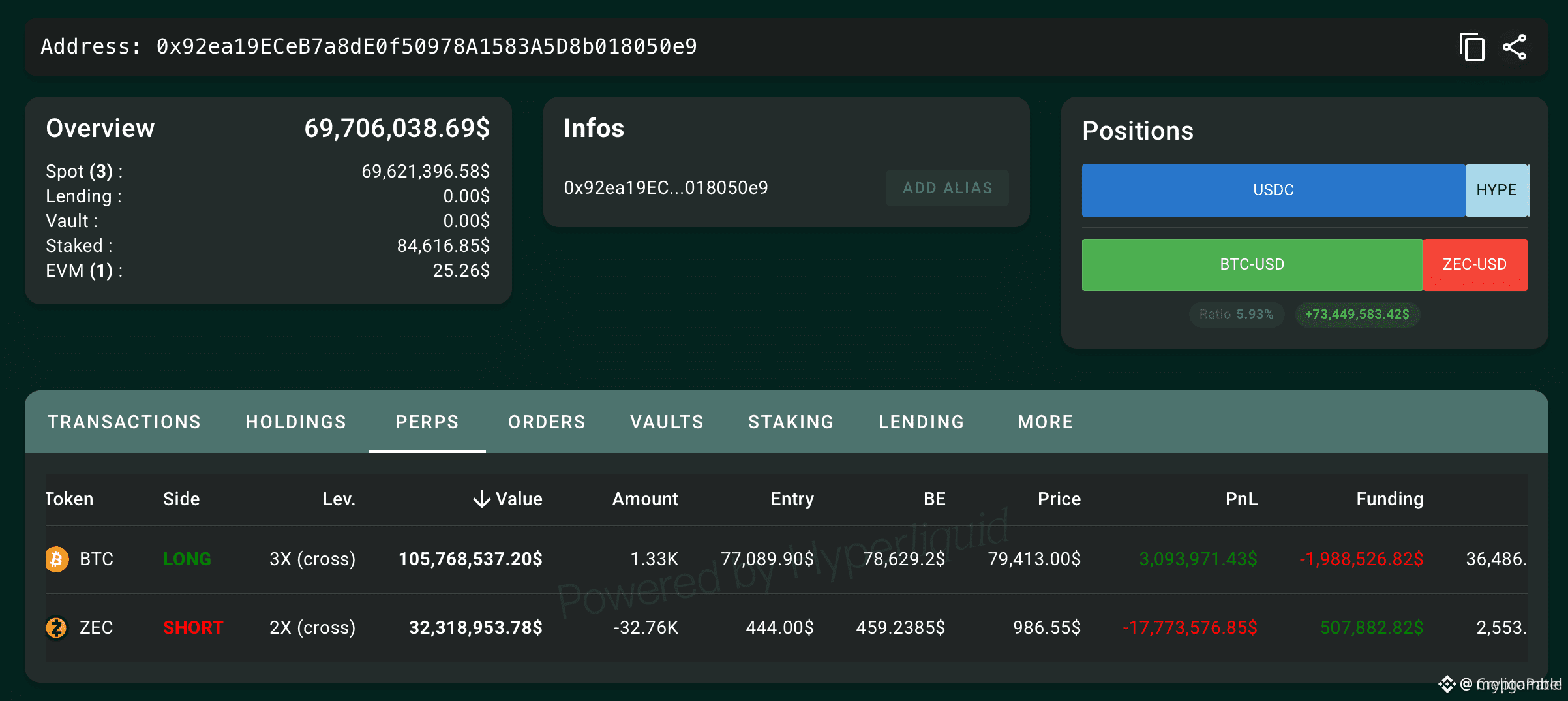
Seeing +62,686.30 USDT in closed PnL can create dangerous confidence, especially when a live $ZEC futures position has already turned red. It’s like counting yesterday’s winnings while today’s bet is still running.
Here are 3 risks to watch: 1) Closed PnL is money already booked, while paper losses are still changing. 2) A small -0.03% move can grow quickly with leverage. 3) Strong 1-day rankings, even a Top 28 result, can tempt traders to ignore exits and hold too long.
Treat $ZEC risk separately from past gains in $USDT, just as you would with a leveraged $BTC position. Set the exit before emotions take over, because a green history does not protect an open trade.
How do you manage a winning account when the current position turns red?
#ZEC #FuturesTrading #CryptoRisk
Everyone thinks a big closed profit means the trade is under control, but actually unrealized losses can reverse the whole picture fast.
Seeing +62,686.30 USDT in closed PnL can create dangerous confidence, especially when a live $ZEC futures position has already turned red. It’s like counting yesterday’s winnings while today’s bet is still running.
Here are 3 risks to watch: 1) Closed PnL is money already booked, while paper losses are still changing. 2) A small -0.03% move can grow quickly with leverage. 3) Strong 1-day rankings, even a Top 28 result, can tempt traders to ignore exits and hold too long.
Treat $ZEC risk separately from past gains in $USDT, just as you would with a leveraged $BTC position. Set the exit before emotions take over, because a green history does not protect an open trade.
How do you manage a winning account when the current position turns red?
#ZEC #FuturesTrading #CryptoRisk
Seeing +62,686.30 USDT in closed PnL can create dangerous confidence, especially when a live $ZEC futures position has already turned red. It’s like counting yesterday’s winnings while today’s bet is still running.
Here are 3 risks to watch: 1) Closed PnL is money already booked, while paper losses are still changing. 2) A small -0.03% move can grow quickly with leverage. 3) Strong 1-day rankings, even a Top 28 result, can tempt traders to ignore exits and hold too long.
Treat $ZEC risk separately from past gains in $USDT, just as you would with a leveraged $BTC position. Set the exit before emotions take over, because a green history does not protect an open trade.
How do you manage a winning account when the current position turns red?
#ZEC #FuturesTrading #CryptoRisk
82
Log in to explore more content
Join global crypto users on Binance Square
⚡️ Get latest and useful information about crypto.
💬 Trusted by the world’s largest crypto exchange.
👍 Discover real insights from verified creators.
Email / Phone number
Trending Topics
1
#AIStocksWhatNext
398,758 views
3,124 Discussing
2
#BitwiseNEARStakingETPAssetsTop$100M
176 views
22 Discussing
3
#MUBARAKRisesOver66%In24Hours
0 views
5 Discussing
4
#BitcoinBreaksAboveMayHighNears$86K
17,038 views
206 Discussing
5
#DogecoinRises15%
54,454 views
1,045 Discussing
6
#$14BBitcoinOptionsExpireFriday
4,508 views
94 Discussing
7
#BNBMarketCapPassesBNYMellon
34,066 views
750 Discussing
8
#CryptoMarketCapReclaims$3Trillion
5,972 views
86 Discussing
9
#MuseOvertakesChatGPTAsTopFreeIOSApp
19,647 views
555 Discussing
10
#TokenizedStockPlatformsCouldLaunchNextQuarter
30,989 views
611 Discussing