

DivineBNB
262 Posts

DivineBNB
Report
Block User
Binance Angel | Content Creator | Binance Square Writer | Stay SAFU, HODL and Always DYOR

Binance Square Angels
31 Following
337 Followers
499 Liked
1 Badges
Posts
All
Quotes
Videos
·
--
Article
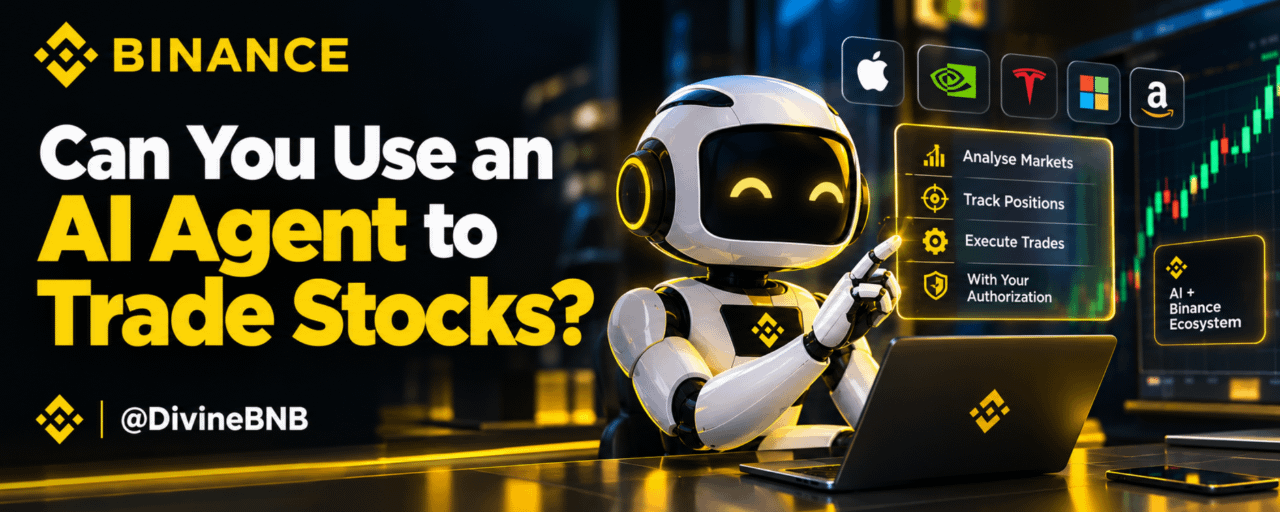
Can You Use an AI Agent to Trade Stocks?Yes, an AI agent can help analyse markets and execute stock trades when connected to a platform that supports those actions, with your authorization. For eligible users in {Region}, Binance Agent OS provides tools to connect AI agents to Binance’s broader trading ecosystem.
AI is moving beyond simply answering questions. Today, AI agents can analyse market information, monitor positions, and interact with financial tools based on instructions and permissions set by the user.
But how does AI-powered stock trading actually work, and how much control do you keep?
How Does an AI Agent Trade Stocks?
An AI trading agent can connect market data, analysis and trading functions into one workflow.
For example, you could give an agent instructions to:
Monitor a stock or marketAnalyse price movements and market dataTrack your portfolio or positionsIdentify conditions that match your strategyPrepare or execute a trade when authorizedReport the action back to you
The important difference is that an AI agent can work across multiple steps instead of simply generating a trading signal.
However, an AI agent does not automatically have unlimited access to your account. Its ability to take action depends on the platform, permissions and controls you provide.
{spot}(TSLABUSDT)
Can You Use Binance Agent OS for Stock Trading?
[Binance Agent OS](https://www.binance.com/en/blog/ecosystem/5991233187660196794) is designed to connect AI agents with Binance’s financial ecosystem through the [Model Context Protocol (MCP)](https://developers.binance.com/en/docs/agent-native/mcp-server/agentic).
Instead of giving an AI agent unrestricted access, Agent OS provides a controlled interface for accessing supported market data and account functions.
For eligible users and supported products, this can allow an AI agent to work with information such as market prices, account information and trading functions available through Binance.
This creates a new type of workflow: AI can analyse, you set the rules, and the platform enforces the permissions.
Stock-related availability can vary by product, jurisdiction and user eligibility, so users should check which trading products and AI-enabled functions are available in their region.
How Do You Connect an AI Agent to Binance?
The process starts by connecting an AI environment that supports [MCP](https://developers.binance.com/en/docs/agent-native/mcp-server/agentic) with Binance Agent OS.
At a high level, the workflow looks like this:
AI Agent → MCP → Binance Agent OS → Supported Binance Functions
The AI agent can request permitted market data or functions through the connection. Agent OS acts as a controlled gateway between the AI environment and Binance.
This approach is important because financial AI needs more than intelligence. It also needs permission controls, authentication and clear boundaries around what an agent can access or do.
{spot}(NVDABUSDT)
How Much Control Do You Have Over an AI Trading Agent?
You remain an important part of the process.
The idea behind an agentic trading system isn't simply to give an AI unlimited control of your portfolio. Instead, permissions can define what the agent is allowed to access and which actions it can perform.
Depending on the supported setup, users can establish boundaries around:
What information the agent can accessWhich account functions it can useWhat actions require authorizationWhich trading activities are permittedHow the agent interacts with Binance
This creates a more controlled approach to AI-powered trading.
AI can analyse and assist, but permissions and platform controls determine what it can actually do.
AI Trading Agent vs Trading Bot: What's the Difference?
A traditional trading bot generally follows predefined rules.
For example:
If BTC reaches X → buy.
If BTC reaches Y → sell.
An AI agent can work more dynamically. It can interpret information, use multiple tools, reason through a workflow and potentially take different actions based on the instructions and data available to it.
In simple terms:
Trading bot = automated rules.
AI agent = intelligent workflow + tools + permissions.
That doesn't mean an AI agent will always make better trading decisions. Markets remain unpredictable, and AI-generated analysis can be wrong. Users should understand the risks before allowing any automated system to interact with financial accounts.
{spot}(GOOGLBUSDT)
FAQ
Can an AI agent buy and sell stocks for me?
Potentially, yes. An AI agent can execute supported trading actions when it is connected to a platform that allows those actions and you have granted the required permissions. Availability and functionality depend on the platform, product and jurisdiction.
Can I use an AI agent to trade stocks on Binance in {Region}?
For eligible users, [Binance Agent OS](https://www.binance.com/en/blog/ecosystem/5991233187660196794) provides a framework for connecting AI agents with supported Binance market data and trading functions. Stock and tokenized-stock availability, as well as specific AI trading capabilities, can vary by region and user eligibility.
What is the difference between an AI trading agent and a trading bot?
A trading bot typically follows predefined rules, while an AI agent can combine market data, analysis and multiple tools to complete a broader workflow. Both can involve automation, but an AI agent can be more flexible in how it processes information and responds to instructions.
Final Thoughts
AI agents are changing how people interact with financial markets. Instead of simply asking AI what is happening in the market, users can increasingly connect AI to tools that provide real-time data and permitted actions.
[Binance Agent OS](https://www.binance.com/en/agent-os) is part of this shift, providing a controlled way for AI agents to interact with supported Binance functions through [MCP](https://developers.binance.com/en/docs/agent-native/mcp-server/agentic).
The key idea is simple: AI can help you act faster, but you decide the permissions and rules.
Also read: [3 Ways People Are Already Using Binance Agent OS](https://www.binance.com/en/blog/tech/4737718203312420809) | [How Binance is Connecting AI Agents to the Financial Super App Experience](https://www.binance.com/en/blog/ecosystem/3213920663896109673)
#AIAgents | @Binance_Square_Official | @Binance_Angels | #StocksOnBinance
Can You Use an AI Agent to Trade Stocks?
Yes, an AI agent can help analyse markets and execute stock trades when connected to a platform that supports those actions, with your authorization. For eligible users in {Region}, Binance Agent OS provides tools to connect AI agents to Binance’s broader trading ecosystem.
AI is moving beyond simply answering questions. Today, AI agents can analyse market information, monitor positions, and interact with financial tools based on instructions and permissions set by the user.
But how does AI-powered stock trading actually work, and how much control do you keep?
How Does an AI Agent Trade Stocks?
An AI trading agent can connect market data, analysis and trading functions into one workflow.
For example, you could give an agent instructions to:
Monitor a stock or marketAnalyse price movements and market dataTrack your portfolio or positionsIdentify conditions that match your strategyPrepare or execute a trade when authorizedReport the action back to you
The important difference is that an AI agent can work across multiple steps instead of simply generating a trading signal.
However, an AI agent does not automatically have unlimited access to your account. Its ability to take action depends on the platform, permissions and controls you provide.
Can You Use Binance Agent OS for Stock Trading?
Binance Agent OS is designed to connect AI agents with Binance’s financial ecosystem through the Model Context Protocol (MCP).
Instead of giving an AI agent unrestricted access, Agent OS provides a controlled interface for accessing supported market data and account functions.
For eligible users and supported products, this can allow an AI agent to work with information such as market prices, account information and trading functions available through Binance.
This creates a new type of workflow: AI can analyse, you set the rules, and the platform enforces the permissions.
Stock-related availability can vary by product, jurisdiction and user eligibility, so users should check which trading products and AI-enabled functions are available in their region.
How Do You Connect an AI Agent to Binance?
The process starts by connecting an AI environment that supports MCP with Binance Agent OS.
At a high level, the workflow looks like this:
AI Agent → MCP → Binance Agent OS → Supported Binance Functions
The AI agent can request permitted market data or functions through the connection. Agent OS acts as a controlled gateway between the AI environment and Binance.
This approach is important because financial AI needs more than intelligence. It also needs permission controls, authentication and clear boundaries around what an agent can access or do.
How Much Control Do You Have Over an AI Trading Agent?
You remain an important part of the process.
The idea behind an agentic trading system isn't simply to give an AI unlimited control of your portfolio. Instead, permissions can define what the agent is allowed to access and which actions it can perform.
Depending on the supported setup, users can establish boundaries around:
What information the agent can accessWhich account functions it can useWhat actions require authorizationWhich trading activities are permittedHow the agent interacts with Binance
This creates a more controlled approach to AI-powered trading.
AI can analyse and assist, but permissions and platform controls determine what it can actually do.
AI Trading Agent vs Trading Bot: What's the Difference?
A traditional trading bot generally follows predefined rules.
For example:
If BTC reaches X → buy.
If BTC reaches Y → sell.
An AI agent can work more dynamically. It can interpret information, use multiple tools, reason through a workflow and potentially take different actions based on the instructions and data available to it.
In simple terms:
Trading bot = automated rules.
AI agent = intelligent workflow + tools + permissions.
That doesn't mean an AI agent will always make better trading decisions. Markets remain unpredictable, and AI-generated analysis can be wrong. Users should understand the risks before allowing any automated system to interact with financial accounts.
FAQ
Can an AI agent buy and sell stocks for me?
Potentially, yes. An AI agent can execute supported trading actions when it is connected to a platform that allows those actions and you have granted the required permissions. Availability and functionality depend on the platform, product and jurisdiction.
Can I use an AI agent to trade stocks on Binance in {Region}?
For eligible users, Binance Agent OS provides a framework for connecting AI agents with supported Binance market data and trading functions. Stock and tokenized-stock availability, as well as specific AI trading capabilities, can vary by region and user eligibility.
What is the difference between an AI trading agent and a trading bot?
A trading bot typically follows predefined rules, while an AI agent can combine market data, analysis and multiple tools to complete a broader workflow. Both can involve automation, but an AI agent can be more flexible in how it processes information and responds to instructions.
Final Thoughts
AI agents are changing how people interact with financial markets. Instead of simply asking AI what is happening in the market, users can increasingly connect AI to tools that provide real-time data and permitted actions.
Binance Agent OS is part of this shift, providing a controlled way for AI agents to interact with supported Binance functions through MCP.
The key idea is simple: AI can help you act faster, but you decide the permissions and rules.
Also read: 3 Ways People Are Already Using Binance Agent OS | How Binance is Connecting AI Agents to the Financial Super App Experience
#AIAgents | @Binance Square Official | @Binance Angels | #StocksOnBinance
AI is moving beyond simply answering questions. Today, AI agents can analyse market information, monitor positions, and interact with financial tools based on instructions and permissions set by the user.
But how does AI-powered stock trading actually work, and how much control do you keep?
How Does an AI Agent Trade Stocks?
An AI trading agent can connect market data, analysis and trading functions into one workflow.
For example, you could give an agent instructions to:
Monitor a stock or marketAnalyse price movements and market dataTrack your portfolio or positionsIdentify conditions that match your strategyPrepare or execute a trade when authorizedReport the action back to you
The important difference is that an AI agent can work across multiple steps instead of simply generating a trading signal.
However, an AI agent does not automatically have unlimited access to your account. Its ability to take action depends on the platform, permissions and controls you provide.
Can You Use Binance Agent OS for Stock Trading?
Binance Agent OS is designed to connect AI agents with Binance’s financial ecosystem through the Model Context Protocol (MCP).
Instead of giving an AI agent unrestricted access, Agent OS provides a controlled interface for accessing supported market data and account functions.
For eligible users and supported products, this can allow an AI agent to work with information such as market prices, account information and trading functions available through Binance.
This creates a new type of workflow: AI can analyse, you set the rules, and the platform enforces the permissions.
Stock-related availability can vary by product, jurisdiction and user eligibility, so users should check which trading products and AI-enabled functions are available in their region.
How Do You Connect an AI Agent to Binance?
The process starts by connecting an AI environment that supports MCP with Binance Agent OS.
At a high level, the workflow looks like this:
AI Agent → MCP → Binance Agent OS → Supported Binance Functions
The AI agent can request permitted market data or functions through the connection. Agent OS acts as a controlled gateway between the AI environment and Binance.
This approach is important because financial AI needs more than intelligence. It also needs permission controls, authentication and clear boundaries around what an agent can access or do.
How Much Control Do You Have Over an AI Trading Agent?
You remain an important part of the process.
The idea behind an agentic trading system isn't simply to give an AI unlimited control of your portfolio. Instead, permissions can define what the agent is allowed to access and which actions it can perform.
Depending on the supported setup, users can establish boundaries around:
What information the agent can accessWhich account functions it can useWhat actions require authorizationWhich trading activities are permittedHow the agent interacts with Binance
This creates a more controlled approach to AI-powered trading.
AI can analyse and assist, but permissions and platform controls determine what it can actually do.
AI Trading Agent vs Trading Bot: What's the Difference?
A traditional trading bot generally follows predefined rules.
For example:
If BTC reaches X → buy.
If BTC reaches Y → sell.
An AI agent can work more dynamically. It can interpret information, use multiple tools, reason through a workflow and potentially take different actions based on the instructions and data available to it.
In simple terms:
Trading bot = automated rules.
AI agent = intelligent workflow + tools + permissions.
That doesn't mean an AI agent will always make better trading decisions. Markets remain unpredictable, and AI-generated analysis can be wrong. Users should understand the risks before allowing any automated system to interact with financial accounts.
FAQ
Can an AI agent buy and sell stocks for me?
Potentially, yes. An AI agent can execute supported trading actions when it is connected to a platform that allows those actions and you have granted the required permissions. Availability and functionality depend on the platform, product and jurisdiction.
Can I use an AI agent to trade stocks on Binance in {Region}?
For eligible users, Binance Agent OS provides a framework for connecting AI agents with supported Binance market data and trading functions. Stock and tokenized-stock availability, as well as specific AI trading capabilities, can vary by region and user eligibility.
What is the difference between an AI trading agent and a trading bot?
A trading bot typically follows predefined rules, while an AI agent can combine market data, analysis and multiple tools to complete a broader workflow. Both can involve automation, but an AI agent can be more flexible in how it processes information and responds to instructions.
Final Thoughts
AI agents are changing how people interact with financial markets. Instead of simply asking AI what is happening in the market, users can increasingly connect AI to tools that provide real-time data and permitted actions.
Binance Agent OS is part of this shift, providing a controlled way for AI agents to interact with supported Binance functions through MCP.
The key idea is simple: AI can help you act faster, but you decide the permissions and rules.
Also read: 3 Ways People Are Already Using Binance Agent OS | How Binance is Connecting AI Agents to the Financial Super App Experience
#AIAgents | @Binance Square Official | @Binance Angels | #StocksOnBinance
1
91
·
--
Article
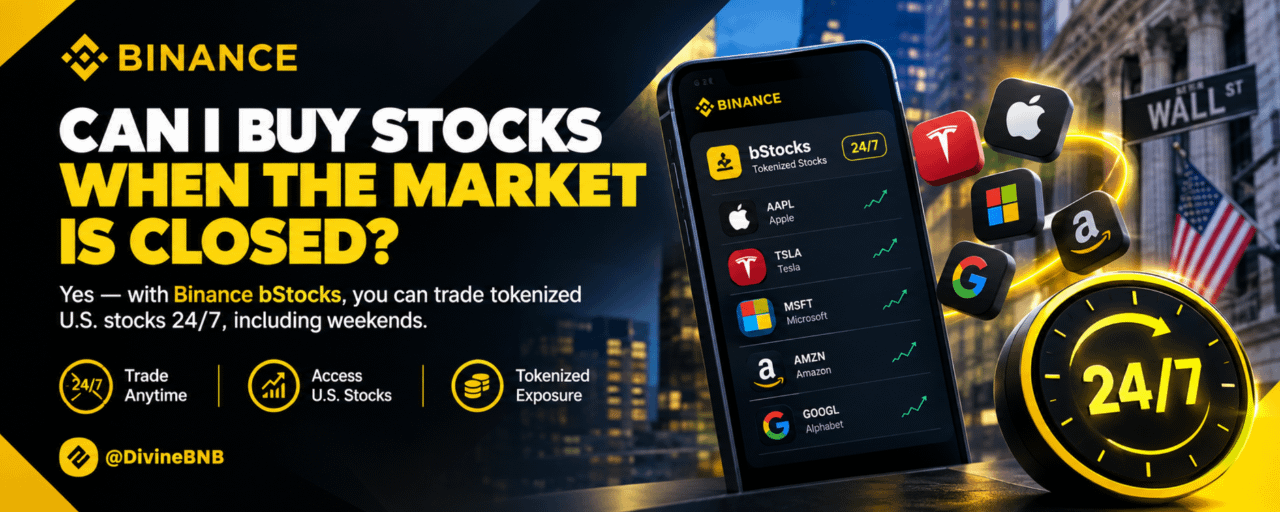
Can I Buy Stocks When the Market Is Closed?Yes, you can buy tokenized stocks on Binance when the U.S. stock market is closed, including weekends, through bStocks. Available to eligible users in South Africa and other supported regions, bStocks trade 24/7 and provide exposure to underlying U.S. stocks rather than direct share ownership.
Traditional U.S. stock markets operate during specific weekday hours. But tokenized stock products are creating a different way to access market exposure — one that doesn't necessarily stop when Wall Street closes.
{spot}(NVDABUSDT)
How Does Binance bStocks Enable 24/7 Trading?
Binance bStocks are tokenized representations designed to track the economic performance of underlying stocks. Unlike traditional shares that trade through conventional stock-market hours, eligible bStocks can be traded on Binance around the clock, including Saturdays and Sundays.
This means traders can potentially respond to market developments over the weekend instead of waiting for the U.S. market to reopen.
However, 24/7 availability does not mean the underlying U.S. stock itself trades 24/7. bStocks provide exposure to the underlying asset through a tokenized structure, with pricing and liquidity potentially behaving differently outside regular market hours.
{spot}(METABUSDT)
How Do You Buy [bStocks](https://www.binance.com/en/bstocks-landing) on Binance?
For eligible users, the process is similar to trading other supported assets on Binance:
Open Binance and access the supported stock/tokenized-stock section.Choose an available [bStock](https://www.binance.com/en/bstocks-landing) you want to trade.Review the product information, including pricing, trading conditions and eligibility.Enter your order and review the transaction details.Confirm the trade if everything looks correct.
Availability can vary by jurisdiction, product and user eligibility, so always check what is available on your Binance account before trading.
What Should You Check Before Trading bStocks Over the Weekend?
Weekend trading can be convenient, but there are several things to understand first.
Check liquidity: Trading activity may differ outside traditional U.S. market hours, which can affect spreads and execution.
Understand pricing: bStock prices may reflect market expectations and other pricing mechanisms even while the underlying U.S. exchange is closed.
Check the product structure: A bStock is not the same thing as directly owning the underlying U.S. share. Review the specific product documentation before trading.
Check availability: [Tokenized stock](https://www.binance.com/en/academy/articles/what-are-tokenized-stocks) products may not be available to every user or in every jurisdiction.
Understand fees and risks: Review applicable trading fees, volatility, counterparty considerations and other product-specific risks.
The key takeaway is simple: the U.S. stock market may close, but eligible Binance users can access certain [tokenized stock](https://www.binance.com/en/academy/articles/what-are-tokenized-stocks) products 24/7.
{spot}(SPCXBUSDT)
FAQ
Can I buy stocks when the U.S. market is closed?
You cannot trade ordinary U.S.-listed shares on the traditional stock exchange outside its normal trading hours. However, eligible Binance users may be able to trade supported bStocks 24/7, including when the U.S. market is closed.
Can I trade bStocks on Saturday and Sunday?
Yes. Supported bStocks are designed for 24/7 trading, so eligible users can trade them on weekends. Availability and liquidity can vary by product and region.
What is the difference between Binance Stocks and bStocks?
The terms can refer to different Binance stock-related offerings. bStocks are tokenized stock products that provide exposure to underlying equities rather than direct ownership of the underlying shares. Other Binance stock-trading products may provide a different structure and trading experience. Always check the specific product details and eligibility before trading.
Final Takeaway
If you've ever wondered, “Can I buy stocks when the market is closed?”, the answer depends on what you're trading.
Traditional U.S. stocks follow exchange trading hours. But Binance [bStocks](https://www.binance.com/en/bstocks-landing) can give eligible users access to selected tokenized stock exposure 24/7 — including weekends.
For traders who want more flexibility around when they can access equity-related markets, tokenized stocks are becoming an important part of the evolving connection between crypto and traditional finance.
#BStocks | @Binance_Angels | @Binance_Square_Official | #TokenizedStocks
Can I Buy Stocks When the Market Is Closed?
Yes, you can buy tokenized stocks on Binance when the U.S. stock market is closed, including weekends, through bStocks. Available to eligible users in South Africa and other supported regions, bStocks trade 24/7 and provide exposure to underlying U.S. stocks rather than direct share ownership.
Traditional U.S. stock markets operate during specific weekday hours. But tokenized stock products are creating a different way to access market exposure — one that doesn't necessarily stop when Wall Street closes.
How Does Binance bStocks Enable 24/7 Trading?
Binance bStocks are tokenized representations designed to track the economic performance of underlying stocks. Unlike traditional shares that trade through conventional stock-market hours, eligible bStocks can be traded on Binance around the clock, including Saturdays and Sundays.
This means traders can potentially respond to market developments over the weekend instead of waiting for the U.S. market to reopen.
However, 24/7 availability does not mean the underlying U.S. stock itself trades 24/7. bStocks provide exposure to the underlying asset through a tokenized structure, with pricing and liquidity potentially behaving differently outside regular market hours.
How Do You Buy bStocks on Binance?
For eligible users, the process is similar to trading other supported assets on Binance:
Open Binance and access the supported stock/tokenized-stock section.Choose an available bStock you want to trade.Review the product information, including pricing, trading conditions and eligibility.Enter your order and review the transaction details.Confirm the trade if everything looks correct.
Availability can vary by jurisdiction, product and user eligibility, so always check what is available on your Binance account before trading.
What Should You Check Before Trading bStocks Over the Weekend?
Weekend trading can be convenient, but there are several things to understand first.
Check liquidity: Trading activity may differ outside traditional U.S. market hours, which can affect spreads and execution.
Understand pricing: bStock prices may reflect market expectations and other pricing mechanisms even while the underlying U.S. exchange is closed.
Check the product structure: A bStock is not the same thing as directly owning the underlying U.S. share. Review the specific product documentation before trading.
Check availability: Tokenized stock products may not be available to every user or in every jurisdiction.
Understand fees and risks: Review applicable trading fees, volatility, counterparty considerations and other product-specific risks.
The key takeaway is simple: the U.S. stock market may close, but eligible Binance users can access certain tokenized stock products 24/7.
FAQ
Can I buy stocks when the U.S. market is closed?
You cannot trade ordinary U.S.-listed shares on the traditional stock exchange outside its normal trading hours. However, eligible Binance users may be able to trade supported bStocks 24/7, including when the U.S. market is closed.
Can I trade bStocks on Saturday and Sunday?
Yes. Supported bStocks are designed for 24/7 trading, so eligible users can trade them on weekends. Availability and liquidity can vary by product and region.
What is the difference between Binance Stocks and bStocks?
The terms can refer to different Binance stock-related offerings. bStocks are tokenized stock products that provide exposure to underlying equities rather than direct ownership of the underlying shares. Other Binance stock-trading products may provide a different structure and trading experience. Always check the specific product details and eligibility before trading.
Final Takeaway
If you've ever wondered, “Can I buy stocks when the market is closed?”, the answer depends on what you're trading.
Traditional U.S. stocks follow exchange trading hours. But Binance bStocks can give eligible users access to selected tokenized stock exposure 24/7 — including weekends.
For traders who want more flexibility around when they can access equity-related markets, tokenized stocks are becoming an important part of the evolving connection between crypto and traditional finance.
#BStocks | @Binance Angels | @Binance Square Official | #TokenizedStocks
Traditional U.S. stock markets operate during specific weekday hours. But tokenized stock products are creating a different way to access market exposure — one that doesn't necessarily stop when Wall Street closes.
How Does Binance bStocks Enable 24/7 Trading?
Binance bStocks are tokenized representations designed to track the economic performance of underlying stocks. Unlike traditional shares that trade through conventional stock-market hours, eligible bStocks can be traded on Binance around the clock, including Saturdays and Sundays.
This means traders can potentially respond to market developments over the weekend instead of waiting for the U.S. market to reopen.
However, 24/7 availability does not mean the underlying U.S. stock itself trades 24/7. bStocks provide exposure to the underlying asset through a tokenized structure, with pricing and liquidity potentially behaving differently outside regular market hours.
How Do You Buy bStocks on Binance?
For eligible users, the process is similar to trading other supported assets on Binance:
Open Binance and access the supported stock/tokenized-stock section.Choose an available bStock you want to trade.Review the product information, including pricing, trading conditions and eligibility.Enter your order and review the transaction details.Confirm the trade if everything looks correct.
Availability can vary by jurisdiction, product and user eligibility, so always check what is available on your Binance account before trading.
What Should You Check Before Trading bStocks Over the Weekend?
Weekend trading can be convenient, but there are several things to understand first.
Check liquidity: Trading activity may differ outside traditional U.S. market hours, which can affect spreads and execution.
Understand pricing: bStock prices may reflect market expectations and other pricing mechanisms even while the underlying U.S. exchange is closed.
Check the product structure: A bStock is not the same thing as directly owning the underlying U.S. share. Review the specific product documentation before trading.
Check availability: Tokenized stock products may not be available to every user or in every jurisdiction.
Understand fees and risks: Review applicable trading fees, volatility, counterparty considerations and other product-specific risks.
The key takeaway is simple: the U.S. stock market may close, but eligible Binance users can access certain tokenized stock products 24/7.
FAQ
Can I buy stocks when the U.S. market is closed?
You cannot trade ordinary U.S.-listed shares on the traditional stock exchange outside its normal trading hours. However, eligible Binance users may be able to trade supported bStocks 24/7, including when the U.S. market is closed.
Can I trade bStocks on Saturday and Sunday?
Yes. Supported bStocks are designed for 24/7 trading, so eligible users can trade them on weekends. Availability and liquidity can vary by product and region.
What is the difference between Binance Stocks and bStocks?
The terms can refer to different Binance stock-related offerings. bStocks are tokenized stock products that provide exposure to underlying equities rather than direct ownership of the underlying shares. Other Binance stock-trading products may provide a different structure and trading experience. Always check the specific product details and eligibility before trading.
Final Takeaway
If you've ever wondered, “Can I buy stocks when the market is closed?”, the answer depends on what you're trading.
Traditional U.S. stocks follow exchange trading hours. But Binance bStocks can give eligible users access to selected tokenized stock exposure 24/7 — including weekends.
For traders who want more flexibility around when they can access equity-related markets, tokenized stocks are becoming an important part of the evolving connection between crypto and traditional finance.
#BStocks | @Binance Angels | @Binance Square Official | #TokenizedStocks
1
74
·
--
Article
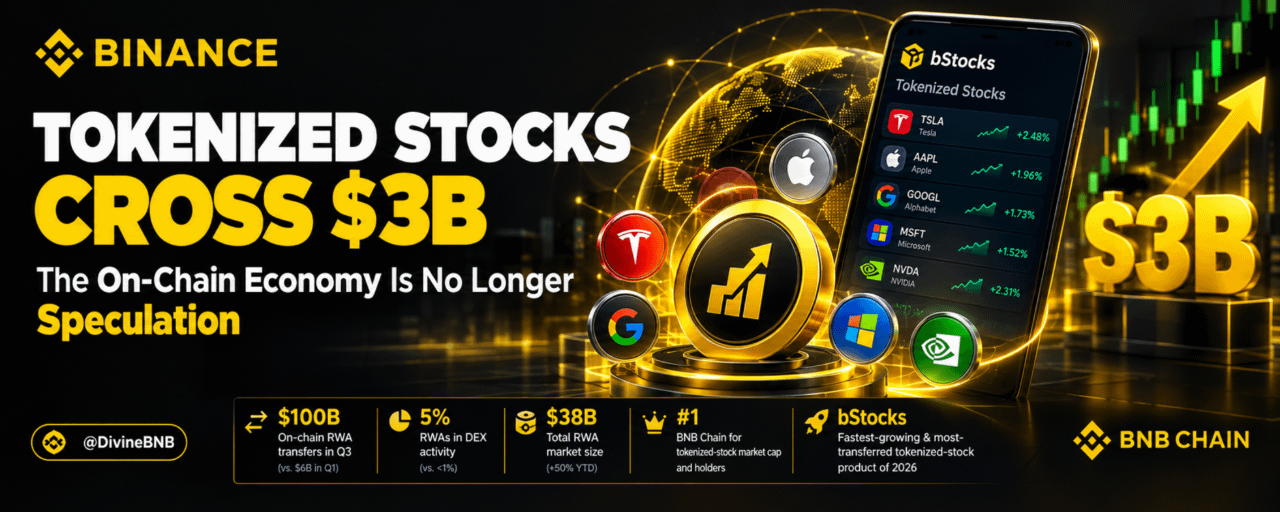
Tokenized Stocks Cross $3B: The On-Chain Economy Is No Longer SpeculationTokenized stocks crossed $3 billion in market capitalization in the fourth week of September 2026, marking another major step toward an on-chain economy built around real financial assets.
The bigger story is what’s happening underneath that milestone.
From Crypto Narratives to Real-World Assets
On-chain real-world asset (RWA) activity is accelerating rapidly.
$100B in on-chain RWA transfers in Q3, compared with just $6B in Q1RWAs now represent around 5% of DEX activity, up from less than 1%The broader [RWA](https://www.binance.com/en/academy/articles/what-are-real-world-assets-rwa-in-defi-and-crypto) market has reached $38B, up around 50% year to dateTokenized stocks have now surpassed $3B in market capitalization
{spot}(AAPLBUSDT)
These numbers suggest that blockchain is increasingly being used not just to speculate on digital assets, but to bring traditional financial markets onto programmable infrastructure.
BNB Chain Is at the Center
[BNB Chain](https://www.binance.com/en/academy/articles/what-is-bnb-chain) has emerged as a major hub for tokenized equities, ranking #1 for [tokenized-stock](https://www.binance.com/en/academy/articles/what-are-tokenized-stocks) market capitalization and holders.
Meanwhile, bStocks has become the fastest-growing and most-transferred tokenized-stock product of 2026.
That matters because tokenized equities combine familiar financial exposure with blockchain-native advantages such as faster settlement, transparent transactions and the ability to interact with other on-chain applications.
{spot}(METABUSDT)
What Comes Next?
The $3B milestone may be less about the number itself and more about what it represents.
As [tokenized stocks](https://www.binance.com/en/academy/articles/what-are-tokenized-stocks), bonds and other RWAs gain liquidity and users, the traditional and crypto financial systems are becoming increasingly connected.
The next phase could be about more than simply putting stocks on-chain. It could be about making those assets programmable, transferable and usable across an entire on-chain financial ecosystem.
The [RWA](https://www.binance.com/en/academy/articles/what-are-real-world-assets-rwa-in-defi-and-crypto) market is growing — and tokenized stocks are becoming one of its clearest signals that the on-chain economy is moving from narrative to infrastructure.
#BNBChain #TokenizedStocks #RWA #bStocks | @Binance_Angels
Tokenized Stocks Cross $3B: The On-Chain Economy Is No Longer Speculation
Tokenized stocks crossed $3 billion in market capitalization in the fourth week of September 2026, marking another major step toward an on-chain economy built around real financial assets.
The bigger story is what’s happening underneath that milestone.
From Crypto Narratives to Real-World Assets
On-chain real-world asset (RWA) activity is accelerating rapidly.
$100B in on-chain RWA transfers in Q3, compared with just $6B in Q1RWAs now represent around 5% of DEX activity, up from less than 1%The broader RWA market has reached $38B, up around 50% year to dateTokenized stocks have now surpassed $3B in market capitalization
These numbers suggest that blockchain is increasingly being used not just to speculate on digital assets, but to bring traditional financial markets onto programmable infrastructure.
BNB Chain Is at the Center
BNB Chain has emerged as a major hub for tokenized equities, ranking #1 for tokenized-stock market capitalization and holders.
Meanwhile, bStocks has become the fastest-growing and most-transferred tokenized-stock product of 2026.
That matters because tokenized equities combine familiar financial exposure with blockchain-native advantages such as faster settlement, transparent transactions and the ability to interact with other on-chain applications.
What Comes Next?
The $3B milestone may be less about the number itself and more about what it represents.
As tokenized stocks, bonds and other RWAs gain liquidity and users, the traditional and crypto financial systems are becoming increasingly connected.
The next phase could be about more than simply putting stocks on-chain. It could be about making those assets programmable, transferable and usable across an entire on-chain financial ecosystem.
The RWA market is growing — and tokenized stocks are becoming one of its clearest signals that the on-chain economy is moving from narrative to infrastructure.
#BNBChain #TokenizedStocks #RWA #bStocks | @Binance Angels
The bigger story is what’s happening underneath that milestone.
From Crypto Narratives to Real-World Assets
On-chain real-world asset (RWA) activity is accelerating rapidly.
$100B in on-chain RWA transfers in Q3, compared with just $6B in Q1RWAs now represent around 5% of DEX activity, up from less than 1%The broader RWA market has reached $38B, up around 50% year to dateTokenized stocks have now surpassed $3B in market capitalization
These numbers suggest that blockchain is increasingly being used not just to speculate on digital assets, but to bring traditional financial markets onto programmable infrastructure.
BNB Chain Is at the Center
BNB Chain has emerged as a major hub for tokenized equities, ranking #1 for tokenized-stock market capitalization and holders.
Meanwhile, bStocks has become the fastest-growing and most-transferred tokenized-stock product of 2026.
That matters because tokenized equities combine familiar financial exposure with blockchain-native advantages such as faster settlement, transparent transactions and the ability to interact with other on-chain applications.
What Comes Next?
The $3B milestone may be less about the number itself and more about what it represents.
As tokenized stocks, bonds and other RWAs gain liquidity and users, the traditional and crypto financial systems are becoming increasingly connected.
The next phase could be about more than simply putting stocks on-chain. It could be about making those assets programmable, transferable and usable across an entire on-chain financial ecosystem.
The RWA market is growing — and tokenized stocks are becoming one of its clearest signals that the on-chain economy is moving from narrative to infrastructure.
#BNBChain #TokenizedStocks #RWA #bStocks | @Binance Angels
1
72
·
--
Article
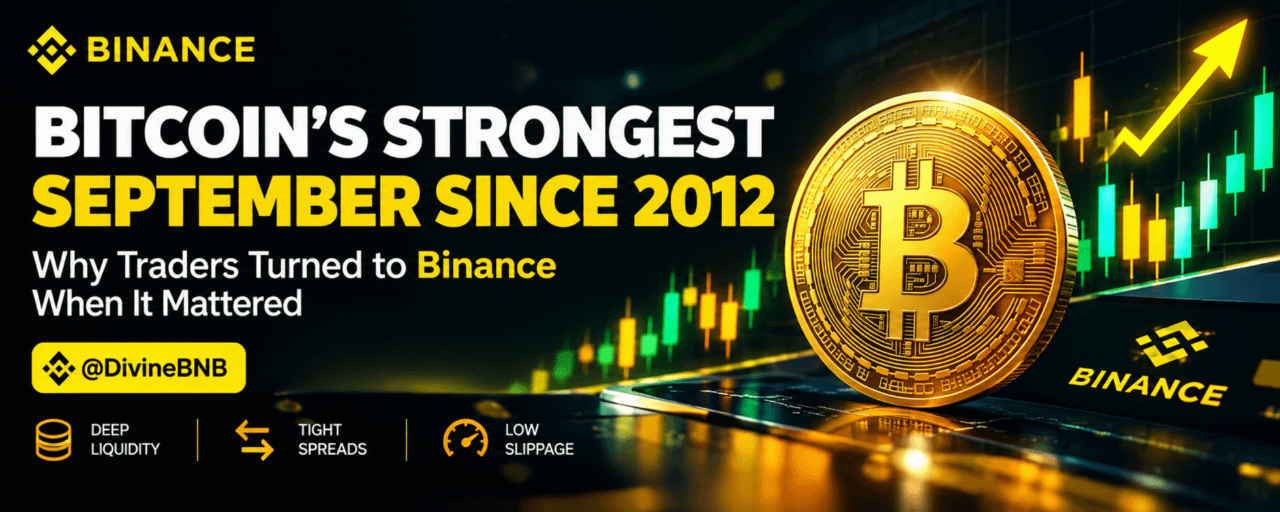
Bitcoin’s Strongest September Since 2012: Why Traders Turned to Binance When It MatteredBitcoin is on track for its strongest September since 2012 — and Binance’s deep liquidity has been central to how traders navigated the month’s biggest moves.
September has historically been one of Bitcoin’s weakest months. Yet 2026 has flipped that pattern, with BTC delivering a strong monthly performance despite several major market shocks. Recent data puts September’s gain around the 7–10% range, depending on the measurement point, making it one of Bitcoin’s strongest September performances in years.
Bitcoin Held Through the Macro Shock
The month wasn't exactly quiet.
Bitcoin had to absorb a 25-basis-point Federal Reserve rate hike that lifted the target range to 3.75%–4.00%. Around the same period, the U.S. Senate failed to advance the CLARITY Act, adding another layer of regulatory uncertainty for crypto markets.
Instead of breaking down, BTC recovered from the volatility and pushed back toward the mid-$80,000s.
That resilience became one of September’s biggest stories.
{spot}(BTCUSDT)
Why Liquidity Matters When Bitcoin Moves Fast
When volatility spikes, traders don't just look at Bitcoin’s price. Execution matters.
Deep order books, competitive bid-ask spreads and available liquidity can help traders enter or exit positions while reducing potential price impact and slippage.
This is where Binance’s market depth stands out.
@Binance_Research reports that Binance led year-to-date spot BTC volume by roughly 2.5x the next centralized exchange, while Kaiko's 2026 Q2 liquidity scores placed Binance highest among the major exchanges assessed.
During Bitcoin’s August breakout, Binance also accounted for 46% of tracked spot volume, according to data cited from DeFiLlama.
The Bigger Story Behind September
Bitcoin’s September performance isn't only about the percentage gain.
It is also about where traders go when the market starts moving.
When [BTC](https://www.binance.com/en/academy/articles/what-is-bitcoin) reacts to central-bank decisions, regulatory headlines or sudden shifts in sentiment, liquidity becomes increasingly important. Traders need markets capable of handling large flows without unnecessary execution friction.
That makes Binance’s deep BTC markets particularly relevant during high-volatility periods.
{spot}(BNBUSDT)
Final Takeaway
[Bitcoin](https://www.binance.com/en/academy/articles/what-is-bitcoin) may have broken its September curse in 2026, but the bigger lesson for traders is simple:
When Bitcoin moves, liquidity matters — and this September showed why market depth and execution can be just as important as the direction of price.
#CLARITYAct | @Binance_Square_Official | @Binance_Angels | #BTC☀️
Bitcoin’s Strongest September Since 2012: Why Traders Turned to Binance When It Mattered
Bitcoin is on track for its strongest September since 2012 — and Binance’s deep liquidity has been central to how traders navigated the month’s biggest moves.
September has historically been one of Bitcoin’s weakest months. Yet 2026 has flipped that pattern, with BTC delivering a strong monthly performance despite several major market shocks. Recent data puts September’s gain around the 7–10% range, depending on the measurement point, making it one of Bitcoin’s strongest September performances in years.
Bitcoin Held Through the Macro Shock
The month wasn't exactly quiet.
Bitcoin had to absorb a 25-basis-point Federal Reserve rate hike that lifted the target range to 3.75%–4.00%. Around the same period, the U.S. Senate failed to advance the CLARITY Act, adding another layer of regulatory uncertainty for crypto markets.
Instead of breaking down, BTC recovered from the volatility and pushed back toward the mid-$80,000s.
That resilience became one of September’s biggest stories.
Why Liquidity Matters When Bitcoin Moves Fast
When volatility spikes, traders don't just look at Bitcoin’s price. Execution matters.
Deep order books, competitive bid-ask spreads and available liquidity can help traders enter or exit positions while reducing potential price impact and slippage.
This is where Binance’s market depth stands out.
@Binance Research reports that Binance led year-to-date spot BTC volume by roughly 2.5x the next centralized exchange, while Kaiko's 2026 Q2 liquidity scores placed Binance highest among the major exchanges assessed.
During Bitcoin’s August breakout, Binance also accounted for 46% of tracked spot volume, according to data cited from DeFiLlama.
The Bigger Story Behind September
Bitcoin’s September performance isn't only about the percentage gain.
It is also about where traders go when the market starts moving.
When BTC reacts to central-bank decisions, regulatory headlines or sudden shifts in sentiment, liquidity becomes increasingly important. Traders need markets capable of handling large flows without unnecessary execution friction.
That makes Binance’s deep BTC markets particularly relevant during high-volatility periods.
Final Takeaway
Bitcoin may have broken its September curse in 2026, but the bigger lesson for traders is simple:
When Bitcoin moves, liquidity matters — and this September showed why market depth and execution can be just as important as the direction of price.
#CLARITYAct | @Binance Square Official | @Binance Angels | #BTC☀️
September has historically been one of Bitcoin’s weakest months. Yet 2026 has flipped that pattern, with BTC delivering a strong monthly performance despite several major market shocks. Recent data puts September’s gain around the 7–10% range, depending on the measurement point, making it one of Bitcoin’s strongest September performances in years.
Bitcoin Held Through the Macro Shock
The month wasn't exactly quiet.
Bitcoin had to absorb a 25-basis-point Federal Reserve rate hike that lifted the target range to 3.75%–4.00%. Around the same period, the U.S. Senate failed to advance the CLARITY Act, adding another layer of regulatory uncertainty for crypto markets.
Instead of breaking down, BTC recovered from the volatility and pushed back toward the mid-$80,000s.
That resilience became one of September’s biggest stories.
Why Liquidity Matters When Bitcoin Moves Fast
When volatility spikes, traders don't just look at Bitcoin’s price. Execution matters.
Deep order books, competitive bid-ask spreads and available liquidity can help traders enter or exit positions while reducing potential price impact and slippage.
This is where Binance’s market depth stands out.
@Binance Research reports that Binance led year-to-date spot BTC volume by roughly 2.5x the next centralized exchange, while Kaiko's 2026 Q2 liquidity scores placed Binance highest among the major exchanges assessed.
During Bitcoin’s August breakout, Binance also accounted for 46% of tracked spot volume, according to data cited from DeFiLlama.
The Bigger Story Behind September
Bitcoin’s September performance isn't only about the percentage gain.
It is also about where traders go when the market starts moving.
When BTC reacts to central-bank decisions, regulatory headlines or sudden shifts in sentiment, liquidity becomes increasingly important. Traders need markets capable of handling large flows without unnecessary execution friction.
That makes Binance’s deep BTC markets particularly relevant during high-volatility periods.
Final Takeaway
Bitcoin may have broken its September curse in 2026, but the bigger lesson for traders is simple:
When Bitcoin moves, liquidity matters — and this September showed why market depth and execution can be just as important as the direction of price.
#CLARITYAct | @Binance Square Official | @Binance Angels | #BTC☀️
2
184
·
--
Article
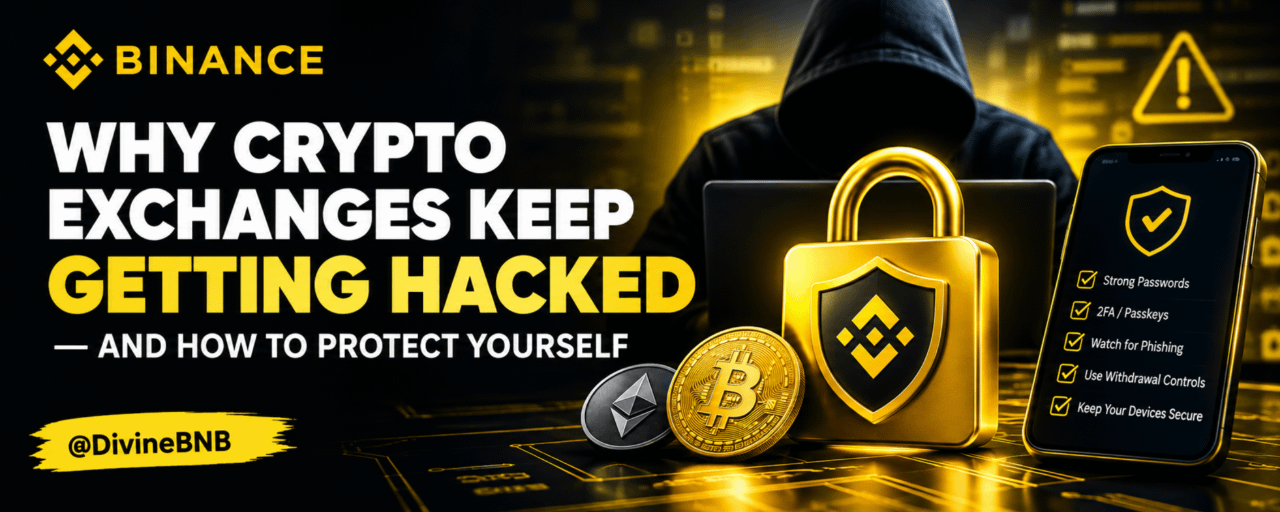
Why Crypto Exchanges Keep Getting Hacked — And How to Protect YourselfCrypto exchanges remain attractive targets for hackers because they hold large amounts of digital assets and manage millions of user accounts. But exchange security is only one part of the equation — users also need to protect their own accounts and devices.
Why Do Crypto Exchanges Get Hacked?
Hackers typically target exchanges because of the potential payoff. Common attack methods include:
Phishing: Fake websites, emails and messages trick users or employees into revealing credentials.Stolen credentials: Passwords obtained through data breaches or reused across multiple platforms can give attackers a way in.Social engineering: Attackers may impersonate employees or support agents to bypass security procedures.Smart contract and infrastructure vulnerabilities: Weaknesses in connected systems can sometimes create opportunities for attackers.Insider or operational risks: Compromised accounts and human error can also become entry points.
A major exchange can have sophisticated security systems, but attackers only need to find one weak point.
{spot}(BNBUSDT)
How Can You Protect Your Crypto?
You don't need to be a cybersecurity expert to improve your security. Start with the basics:
Use strong, unique passwords. Never reuse your exchange password on other websites.
Enable [2FA](https://www.binance.com/en/academy/articles/what-is-two-factor-authentication-2fa) or [passkeys](https://www.binance.com/en-ZA/support/faq/detail/2aec8fe0437242f2a5fbef9cdb71d4c2). Extra authentication makes it significantly harder for someone with your password to access your account.
Watch out for [phishing](https://www.binance.com/en/academy/articles/what-is-phishing). Always verify the website address and never share your password, 2FA codes or recovery information with someone claiming to be support.
Use withdrawal protection tools. Features such as withdrawal address [allowlisting](https://www.binance.com/en/academy/glossary/whitelist) can help prevent unauthorized transfers.
Keep your devices secure. Update your operating system, browser and security software, and avoid logging into financial accounts from suspicious devices or public computers.
Check before you sign. When using Web3 wallets, carefully review transaction details and permissions before approving anything.
{spot}(SPCXBUSDT)
What About Binance?
[Binance](https://www.binance.com/) uses multiple layers of account and platform security, including [two-factor authentication](https://www.binance.com/en/academy/articles/what-is-two-factor-authentication-2fa), [passkeys](https://www.binance.com/en-ZA/support/faq/detail/2aec8fe0437242f2a5fbef9cdb71d4c2), [anti-phishing](https://www.binance.com/en/square/post/43504) protections, withdrawal controls and risk-monitoring systems.
For users, the key lesson is simple: exchange security and personal security work together.
The Bottom Line
Crypto exchanges will continue to attract attackers because digital assets can be valuable and transactions can be difficult to reverse. You cannot eliminate every risk, but you can dramatically reduce your exposure by [securing your account](https://www.binance.com/en/academy/articles/secure-your-binance-account-in-7-simple-steps), recognizing scams and treating every unexpected message or transaction request with caution.
Your crypto security starts with you.
#SAFU🙏
Why Crypto Exchanges Keep Getting Hacked — And How to Protect Yourself
Crypto exchanges remain attractive targets for hackers because they hold large amounts of digital assets and manage millions of user accounts. But exchange security is only one part of the equation — users also need to protect their own accounts and devices.
Why Do Crypto Exchanges Get Hacked?
Hackers typically target exchanges because of the potential payoff. Common attack methods include:
Phishing: Fake websites, emails and messages trick users or employees into revealing credentials.Stolen credentials: Passwords obtained through data breaches or reused across multiple platforms can give attackers a way in.Social engineering: Attackers may impersonate employees or support agents to bypass security procedures.Smart contract and infrastructure vulnerabilities: Weaknesses in connected systems can sometimes create opportunities for attackers.Insider or operational risks: Compromised accounts and human error can also become entry points.
A major exchange can have sophisticated security systems, but attackers only need to find one weak point.
How Can You Protect Your Crypto?
You don't need to be a cybersecurity expert to improve your security. Start with the basics:
Use strong, unique passwords. Never reuse your exchange password on other websites.
Enable 2FA or passkeys. Extra authentication makes it significantly harder for someone with your password to access your account.
Watch out for phishing. Always verify the website address and never share your password, 2FA codes or recovery information with someone claiming to be support.
Use withdrawal protection tools. Features such as withdrawal address allowlisting can help prevent unauthorized transfers.
Keep your devices secure. Update your operating system, browser and security software, and avoid logging into financial accounts from suspicious devices or public computers.
Check before you sign. When using Web3 wallets, carefully review transaction details and permissions before approving anything.
What About Binance?
Binance uses multiple layers of account and platform security, including two-factor authentication, passkeys, anti-phishing protections, withdrawal controls and risk-monitoring systems.
For users, the key lesson is simple: exchange security and personal security work together.
The Bottom Line
Crypto exchanges will continue to attract attackers because digital assets can be valuable and transactions can be difficult to reverse. You cannot eliminate every risk, but you can dramatically reduce your exposure by securing your account, recognizing scams and treating every unexpected message or transaction request with caution.
Your crypto security starts with you.
#SAFU🙏
Why Do Crypto Exchanges Get Hacked?
Hackers typically target exchanges because of the potential payoff. Common attack methods include:
Phishing: Fake websites, emails and messages trick users or employees into revealing credentials.Stolen credentials: Passwords obtained through data breaches or reused across multiple platforms can give attackers a way in.Social engineering: Attackers may impersonate employees or support agents to bypass security procedures.Smart contract and infrastructure vulnerabilities: Weaknesses in connected systems can sometimes create opportunities for attackers.Insider or operational risks: Compromised accounts and human error can also become entry points.
A major exchange can have sophisticated security systems, but attackers only need to find one weak point.
How Can You Protect Your Crypto?
You don't need to be a cybersecurity expert to improve your security. Start with the basics:
Use strong, unique passwords. Never reuse your exchange password on other websites.
Enable 2FA or passkeys. Extra authentication makes it significantly harder for someone with your password to access your account.
Watch out for phishing. Always verify the website address and never share your password, 2FA codes or recovery information with someone claiming to be support.
Use withdrawal protection tools. Features such as withdrawal address allowlisting can help prevent unauthorized transfers.
Keep your devices secure. Update your operating system, browser and security software, and avoid logging into financial accounts from suspicious devices or public computers.
Check before you sign. When using Web3 wallets, carefully review transaction details and permissions before approving anything.
What About Binance?
Binance uses multiple layers of account and platform security, including two-factor authentication, passkeys, anti-phishing protections, withdrawal controls and risk-monitoring systems.
For users, the key lesson is simple: exchange security and personal security work together.
The Bottom Line
Crypto exchanges will continue to attract attackers because digital assets can be valuable and transactions can be difficult to reverse. You cannot eliminate every risk, but you can dramatically reduce your exposure by securing your account, recognizing scams and treating every unexpected message or transaction request with caution.
Your crypto security starts with you.
#SAFU🙏
4
831
·
--
Article
Binance Agent OS: The Financial Layer Built for the Era of AI AgentsAI is moving beyond answering questions. The next wave of AI agents will be able to take actions, access real-time data and interact with financial markets. That creates a new challenge: how can AI agents connect to markets safely and transparently?
Binance Agent OS is designed to provide that financial layer.
From AI Answers to Real-World Actions
Traditional AI can tell you the price of Bitcoin or explain a trading strategy. An AI agent needs access to the underlying tools and data to actually perform useful tasks.
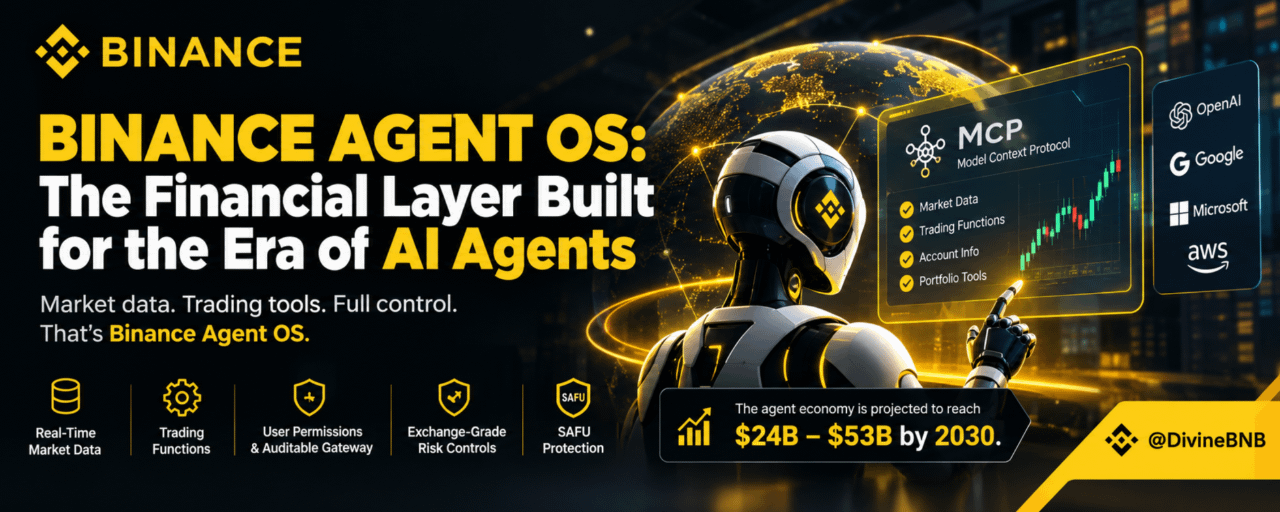
[Binance Agent OS](https://www.binance.com/en-ZA/agent-os) exposes market data and trading functions through [MCP (Model Context Protocol)](https://developers.binance.com/en/docs/agent-native/mcp-server/agentic), giving compatible AI agent environments a structured way to interact with Binance.
[MCP](https://developers.binance.com/en/docs/agent-native/mcp-server/agentic) has already gained adoption across major technology companies, including OpenAI, Google, Microsoft and AWS. The ecosystem has also expanded to more than 10,000 servers and around 97 million SDK downloads per month, highlighting how quickly agent infrastructure is developing.
{spot}(METABUSDT)
The Important Part: Control
Giving an AI access to financial tools also raises an obvious question: who stays in control?
With Binance Agent OS, actions go through an auditable gateway with user-defined permissions and exchange-grade risk controls.
The idea isn't to let an AI operate without boundaries. Instead, users define what an agent can access and what actions it can take.
That creates a model where AI can assist, while the user remains in control.
Why This Matters for the Agent Economy
The agent economy is projected by various industry estimates to reach $24 billion–$53 billion by 2030.
As AI agents become more capable, they will need access to increasingly sophisticated financial infrastructure — from market data and portfolio information to trading and other financial functions.
{spot}(BTCUSDT)
[Binance Agent OS](https://www.binance.com/en-ZA/agent-os) is positioning Binance as part of that infrastructure.
What Comes Next?
The future of AI may not be about asking a chatbot what to do.
It could be about telling an agent what you want — and giving it controlled access to the tools needed to help execute that goal.
[Binance Agent OS](https://www.binance.com/en-ZA/agent-os) is building the bridge between AI agents and real financial markets, with permissions, risk controls and auditability built into the connection.
The AI agent era is arriving. The bigger question is: what will agents be able to do next?
#BinanceAgentOS | @Binance_Angels | @Binance_Square_Official
Binance Agent OS: The Financial Layer Built for the Era of AI Agents
AI is moving beyond answering questions. The next wave of AI agents will be able to take actions, access real-time data and interact with financial markets. That creates a new challenge: how can AI agents connect to markets safely and transparently?
Binance Agent OS is designed to provide that financial layer.
From AI Answers to Real-World Actions
Traditional AI can tell you the price of Bitcoin or explain a trading strategy. An AI agent needs access to the underlying tools and data to actually perform useful tasks.
Binance Agent OS exposes market data and trading functions through MCP (Model Context Protocol), giving compatible AI agent environments a structured way to interact with Binance.
MCP has already gained adoption across major technology companies, including OpenAI, Google, Microsoft and AWS. The ecosystem has also expanded to more than 10,000 servers and around 97 million SDK downloads per month, highlighting how quickly agent infrastructure is developing.
The Important Part: Control
Giving an AI access to financial tools also raises an obvious question: who stays in control?
With Binance Agent OS, actions go through an auditable gateway with user-defined permissions and exchange-grade risk controls.
The idea isn't to let an AI operate without boundaries. Instead, users define what an agent can access and what actions it can take.
That creates a model where AI can assist, while the user remains in control.
Why This Matters for the Agent Economy
The agent economy is projected by various industry estimates to reach $24 billion–$53 billion by 2030.
As AI agents become more capable, they will need access to increasingly sophisticated financial infrastructure — from market data and portfolio information to trading and other financial functions.
Binance Agent OS is positioning Binance as part of that infrastructure.
What Comes Next?
The future of AI may not be about asking a chatbot what to do.
It could be about telling an agent what you want — and giving it controlled access to the tools needed to help execute that goal.
Binance Agent OS is building the bridge between AI agents and real financial markets, with permissions, risk controls and auditability built into the connection.
The AI agent era is arriving. The bigger question is: what will agents be able to do next?
#BinanceAgentOS | @Binance Angels | @Binance Square Official
Binance Agent OS is designed to provide that financial layer.
From AI Answers to Real-World Actions
Traditional AI can tell you the price of Bitcoin or explain a trading strategy. An AI agent needs access to the underlying tools and data to actually perform useful tasks.
Binance Agent OS exposes market data and trading functions through MCP (Model Context Protocol), giving compatible AI agent environments a structured way to interact with Binance.
MCP has already gained adoption across major technology companies, including OpenAI, Google, Microsoft and AWS. The ecosystem has also expanded to more than 10,000 servers and around 97 million SDK downloads per month, highlighting how quickly agent infrastructure is developing.
The Important Part: Control
Giving an AI access to financial tools also raises an obvious question: who stays in control?
With Binance Agent OS, actions go through an auditable gateway with user-defined permissions and exchange-grade risk controls.
The idea isn't to let an AI operate without boundaries. Instead, users define what an agent can access and what actions it can take.
That creates a model where AI can assist, while the user remains in control.
Why This Matters for the Agent Economy
The agent economy is projected by various industry estimates to reach $24 billion–$53 billion by 2030.
As AI agents become more capable, they will need access to increasingly sophisticated financial infrastructure — from market data and portfolio information to trading and other financial functions.
Binance Agent OS is positioning Binance as part of that infrastructure.
What Comes Next?
The future of AI may not be about asking a chatbot what to do.
It could be about telling an agent what you want — and giving it controlled access to the tools needed to help execute that goal.
Binance Agent OS is building the bridge between AI agents and real financial markets, with permissions, risk controls and auditability built into the connection.
The AI agent era is arriving. The bigger question is: what will agents be able to do next?
#BinanceAgentOS | @Binance Angels | @Binance Square Official
1
3
132
·
--
Article
Binance Never Sleeps — W39: The Fed Hiked. Where Does Capital Go Next?The September 2026 FOMC delivered a hawkish surprise, but the market reaction doesn’t end when Wall Street closes. As rate expectations shift, capital keeps moving — and Binance provides a 24/7 market where traders can continue tracking and expressing views on global assets.
The Fed Hiked. Now What?
A Fed rate hike changes more than the cost of borrowing. It can reshape expectations around bonds, equities, the dollar, crypto and risk appetite.
The key question now is not simply “What did the Fed do?” but “What does the new rate path mean for capital next?”
Markets can price different time horizons differently. Near-term instruments may reflect tighter financial conditions, while longer-dated expectations can point toward a different outlook for growth, inflation and future policy.
{spot}(HYPEUSDT)
That divergence is where the next market debate begins.
Capital Doesn't Clock Out
Traditional markets have opening and closing bells. Crypto markets don't.
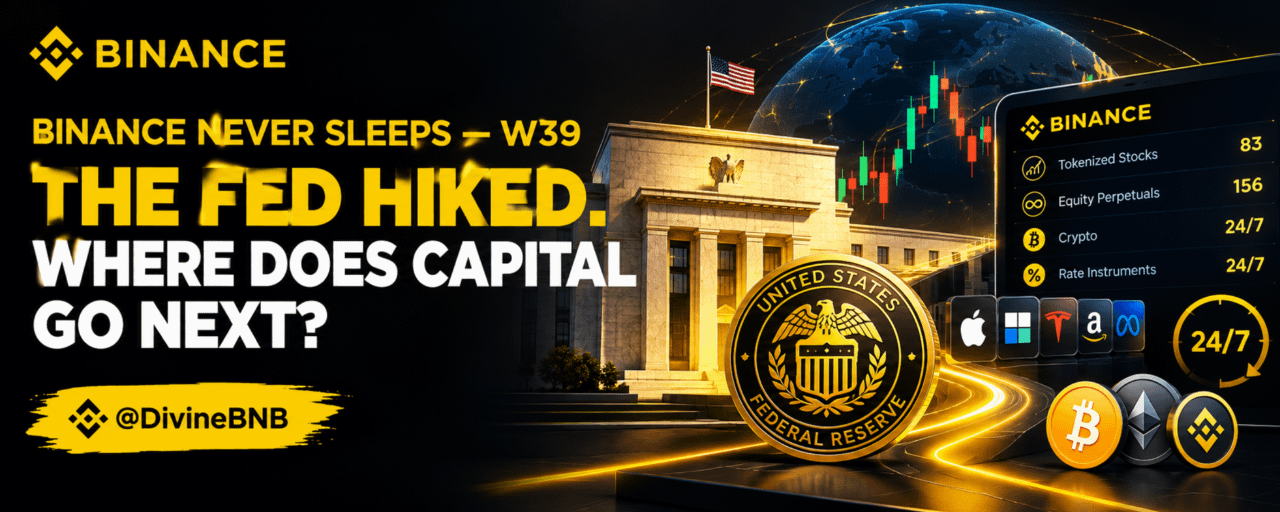
This week, Binance's ecosystem includes 83 [tokenized stocks](https://www.binance.com/en/academy/articles/what-are-tokenized-stocks) and 156 equity perpetual contracts, alongside crypto and rate-related instruments trading beyond traditional market hours.
That means investors can continue monitoring price discovery even when U.S. exchanges are closed — including overnight and through the weekend.
The result is a different way to watch capital reallocation: not just through the next day's opening price, but continuously.
{spot}(CRCLBUSDT)
Where Could Capital Go Next?
The answer depends on how markets interpret the Fed's path.
If tighter policy remains the dominant narrative, investors may focus on defensive positioning, rates and dollar-sensitive assets. If longer-term expectations begin to diverge from the immediate tightening signal, risk assets could tell a different story.
There isn't one market reaction.
There are multiple horizons, multiple instruments and multiple ways to express a view.
{spot}(BNBUSDT)
Binance Never Sleeps
That's the bigger W39 takeaway.
The Fed may set the tone, but markets keep repricing after the press conference ends.
With [tokenized stocks](https://www.binance.com/en/academy/articles/what-are-tokenized-stocks), equity perpetuals, crypto and other market instruments available around the clock, Binance gives traders a continuous window into how capital is reacting to macro events.
The next move doesn't necessarily wait for Monday morning.
The market keeps moving. Binance keeps watching.
#Fed | @Binance_Angels | @Binance_Square_Official
Binance Never Sleeps — W39: The Fed Hiked. Where Does Capital Go Next?
The September 2026 FOMC delivered a hawkish surprise, but the market reaction doesn’t end when Wall Street closes. As rate expectations shift, capital keeps moving — and Binance provides a 24/7 market where traders can continue tracking and expressing views on global assets.
The Fed Hiked. Now What?
A Fed rate hike changes more than the cost of borrowing. It can reshape expectations around bonds, equities, the dollar, crypto and risk appetite.
The key question now is not simply “What did the Fed do?” but “What does the new rate path mean for capital next?”
Markets can price different time horizons differently. Near-term instruments may reflect tighter financial conditions, while longer-dated expectations can point toward a different outlook for growth, inflation and future policy.
That divergence is where the next market debate begins.
Capital Doesn't Clock Out
Traditional markets have opening and closing bells. Crypto markets don't.
This week, Binance's ecosystem includes 83 tokenized stocks and 156 equity perpetual contracts, alongside crypto and rate-related instruments trading beyond traditional market hours.
That means investors can continue monitoring price discovery even when U.S. exchanges are closed — including overnight and through the weekend.
The result is a different way to watch capital reallocation: not just through the next day's opening price, but continuously.
Where Could Capital Go Next?
The answer depends on how markets interpret the Fed's path.
If tighter policy remains the dominant narrative, investors may focus on defensive positioning, rates and dollar-sensitive assets. If longer-term expectations begin to diverge from the immediate tightening signal, risk assets could tell a different story.
There isn't one market reaction.
There are multiple horizons, multiple instruments and multiple ways to express a view.
Binance Never Sleeps
That's the bigger W39 takeaway.
The Fed may set the tone, but markets keep repricing after the press conference ends.
With tokenized stocks, equity perpetuals, crypto and other market instruments available around the clock, Binance gives traders a continuous window into how capital is reacting to macro events.
The next move doesn't necessarily wait for Monday morning.
The market keeps moving. Binance keeps watching.
#Fed | @Binance Angels | @Binance Square Official
The Fed Hiked. Now What?
A Fed rate hike changes more than the cost of borrowing. It can reshape expectations around bonds, equities, the dollar, crypto and risk appetite.
The key question now is not simply “What did the Fed do?” but “What does the new rate path mean for capital next?”
Markets can price different time horizons differently. Near-term instruments may reflect tighter financial conditions, while longer-dated expectations can point toward a different outlook for growth, inflation and future policy.
That divergence is where the next market debate begins.
Capital Doesn't Clock Out
Traditional markets have opening and closing bells. Crypto markets don't.
This week, Binance's ecosystem includes 83 tokenized stocks and 156 equity perpetual contracts, alongside crypto and rate-related instruments trading beyond traditional market hours.
That means investors can continue monitoring price discovery even when U.S. exchanges are closed — including overnight and through the weekend.
The result is a different way to watch capital reallocation: not just through the next day's opening price, but continuously.
Where Could Capital Go Next?
The answer depends on how markets interpret the Fed's path.
If tighter policy remains the dominant narrative, investors may focus on defensive positioning, rates and dollar-sensitive assets. If longer-term expectations begin to diverge from the immediate tightening signal, risk assets could tell a different story.
There isn't one market reaction.
There are multiple horizons, multiple instruments and multiple ways to express a view.
Binance Never Sleeps
That's the bigger W39 takeaway.
The Fed may set the tone, but markets keep repricing after the press conference ends.
With tokenized stocks, equity perpetuals, crypto and other market instruments available around the clock, Binance gives traders a continuous window into how capital is reacting to macro events.
The next move doesn't necessarily wait for Monday morning.
The market keeps moving. Binance keeps watching.
#Fed | @Binance Angels | @Binance Square Official
2
342
·
--
Article
DeFi 3.0: When Real-World Assets Become Programmable On-ChainDeFi 3.0 may already be taking shape — and Binance is positioning itself at the center of the shift from crypto-native assets to programmable real-world assets.
DeFi 1.0 built the core financial primitives: decentralized trading, lending and borrowing.
DeFi 2.0 connected those primitives through composability.
Now comes the next question:
What happens when the assets themselves become programmable?
From Crypto-Native to Real-World Assets
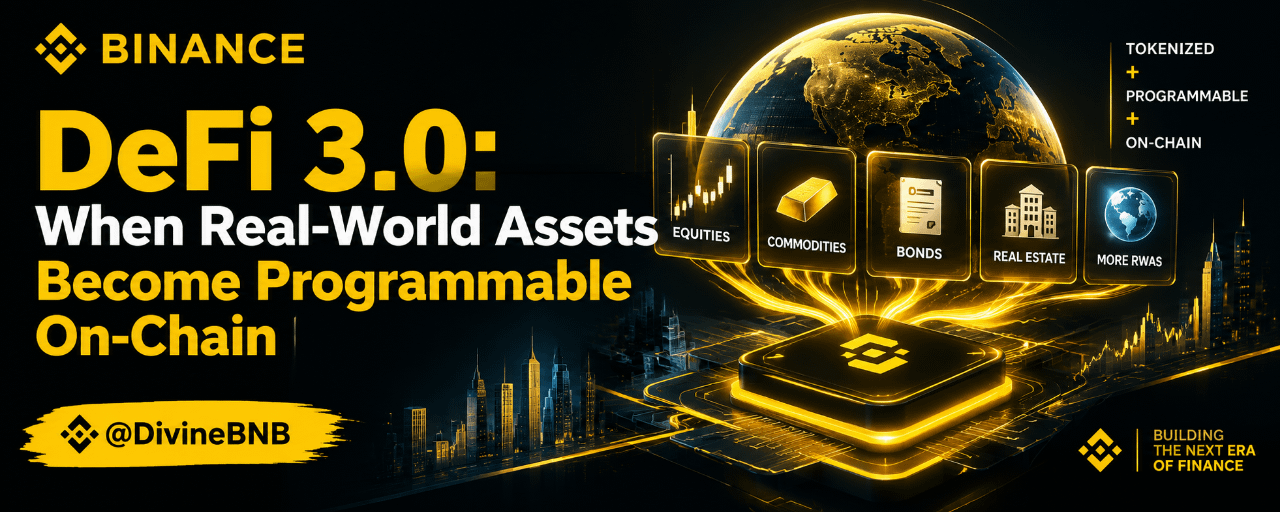
For years, [DeFi](https://www.binance.com/en/academy/glossary/defi) largely operated within its own crypto economy. The next phase could bring equities, bonds, funds, commodities and other real-world assets onto blockchain rails.
But tokenization alone isn't the end goal.
The bigger opportunity is activation.
A tokenized equity that can interact with trading venues, lending protocols, collateral systems and smart contracts becomes more than a digital representation of an asset. It becomes programmable financial infrastructure.
That is the foundation of what we can call DeFi 3.0.
{spot}(NVDABUSDT)
Why Binance Matters
This is where Binance becomes particularly relevant.
@Binance_Research is now framing the transition around the [Real World Assets](https://www.binance.com/en/academy/articles/what-are-real-world-assets-rwa-in-defi-and-crypto) (RWA) Activation Era, arguing that the market needs to measure not only how much value gets tokenized, but also what happens after those assets come on-chain.
Two metrics are central to that framework:
Programmable Asset Ratio (PAR) — how much of an underlying asset market has become programmable on-chain.
Capital Activation Rate (CAR) — how much of the tokenized asset supply is actually being deployed in on-chain financial applications such as liquidity, lending and collateral markets.
That distinction matters.
A trillion dollars of tokenized assets sitting idle would tell a very different story from a trillion dollars actively circulating through programmable financial markets.
{spot}(METABUSDT)
Binance and the Programmable Asset Era
Binance's broader expansion into tokenized securities, equities, derivatives and multi-asset infrastructure gives the company a natural connection to this emerging model.
The strategic idea is bigger than simply bringing traditional assets onto a crypto platform.
It is about connecting traditional assets + blockchain liquidity + programmable finance.
In Binance's recent research, tokenized equities are already showing rapid growth while remaining tiny compared with the underlying global equity market. Binance Research also found equity CAR rising from 1.95% to 7.54% year-to-date, illustrating the shift from simple issuance toward actual on-chain use.
That is the DeFi 3.0 signal to watch.
The Next DeFi Cycle Could Be Different
Crypto-native assets can be extremely volatile, and individual tokens can ultimately go to zero.
Real-world assets such as equities are connected to underlying companies and established financial markets. Their tokenization therefore introduces a fundamentally different asset base into the on-chain economy.
The question is no longer:
“How many new tokens can DeFi create?”
It becomes:
“How much of the world's existing financial value can become programmable?”
That is a much larger opportunity.
{spot}(SPCXBUSDT)
Binance's Bigger Bet
If DeFi 1.0 created decentralized financial primitives and DeFi 2.0 made them composable, DeFi 3.0 could make the world's assets composable.
And Binance is already developing a framework for measuring that transition through concepts such as PAR and CAR.
The winners of the next phase may not simply be the platforms with the most tokens.
They may be the platforms that successfully connect assets, liquidity, settlement and utility on-chain.
DeFi 3.0 isn't just about putting real-world assets on-chain.
It's about making them programmable.
The next DeFi cycle may be less about creating another generation of speculative tokens and more about bringing existing financial value on-chain.
DeFi 1.0 built the primitives.
DeFi 2.0 made them composable.
DeFi 3.0 could make the world's assets programmable.
And Binance is building a framework for measuring that transition.
#defi | @Binance_Square_Official | @Binance_Angels | @Binance_Research
DeFi 3.0: When Real-World Assets Become Programmable On-Chain
DeFi 3.0 may already be taking shape — and Binance is positioning itself at the center of the shift from crypto-native assets to programmable real-world assets.
DeFi 1.0 built the core financial primitives: decentralized trading, lending and borrowing.
DeFi 2.0 connected those primitives through composability.
Now comes the next question:
What happens when the assets themselves become programmable?
From Crypto-Native to Real-World Assets
For years, DeFi largely operated within its own crypto economy. The next phase could bring equities, bonds, funds, commodities and other real-world assets onto blockchain rails.
But tokenization alone isn't the end goal.
The bigger opportunity is activation.
A tokenized equity that can interact with trading venues, lending protocols, collateral systems and smart contracts becomes more than a digital representation of an asset. It becomes programmable financial infrastructure.
That is the foundation of what we can call DeFi 3.0.
Why Binance Matters
This is where Binance becomes particularly relevant.
@Binance Research is now framing the transition around the Real World Assets (RWA) Activation Era, arguing that the market needs to measure not only how much value gets tokenized, but also what happens after those assets come on-chain.
Two metrics are central to that framework:
Programmable Asset Ratio (PAR) — how much of an underlying asset market has become programmable on-chain.
Capital Activation Rate (CAR) — how much of the tokenized asset supply is actually being deployed in on-chain financial applications such as liquidity, lending and collateral markets.
That distinction matters.
A trillion dollars of tokenized assets sitting idle would tell a very different story from a trillion dollars actively circulating through programmable financial markets.
Binance and the Programmable Asset Era
Binance's broader expansion into tokenized securities, equities, derivatives and multi-asset infrastructure gives the company a natural connection to this emerging model.
The strategic idea is bigger than simply bringing traditional assets onto a crypto platform.
It is about connecting traditional assets + blockchain liquidity + programmable finance.
In Binance's recent research, tokenized equities are already showing rapid growth while remaining tiny compared with the underlying global equity market. Binance Research also found equity CAR rising from 1.95% to 7.54% year-to-date, illustrating the shift from simple issuance toward actual on-chain use.
That is the DeFi 3.0 signal to watch.
The Next DeFi Cycle Could Be Different
Crypto-native assets can be extremely volatile, and individual tokens can ultimately go to zero.
Real-world assets such as equities are connected to underlying companies and established financial markets. Their tokenization therefore introduces a fundamentally different asset base into the on-chain economy.
The question is no longer:
“How many new tokens can DeFi create?”
It becomes:
“How much of the world's existing financial value can become programmable?”
That is a much larger opportunity.
Binance's Bigger Bet
If DeFi 1.0 created decentralized financial primitives and DeFi 2.0 made them composable, DeFi 3.0 could make the world's assets composable.
And Binance is already developing a framework for measuring that transition through concepts such as PAR and CAR.
The winners of the next phase may not simply be the platforms with the most tokens.
They may be the platforms that successfully connect assets, liquidity, settlement and utility on-chain.
DeFi 3.0 isn't just about putting real-world assets on-chain.
It's about making them programmable.
The next DeFi cycle may be less about creating another generation of speculative tokens and more about bringing existing financial value on-chain.
DeFi 1.0 built the primitives.
DeFi 2.0 made them composable.
DeFi 3.0 could make the world's assets programmable.
And Binance is building a framework for measuring that transition.
#defi | @Binance Square Official | @Binance Angels | @Binance Research
DeFi 1.0 built the core financial primitives: decentralized trading, lending and borrowing.
DeFi 2.0 connected those primitives through composability.
Now comes the next question:
What happens when the assets themselves become programmable?
From Crypto-Native to Real-World Assets
For years, DeFi largely operated within its own crypto economy. The next phase could bring equities, bonds, funds, commodities and other real-world assets onto blockchain rails.
But tokenization alone isn't the end goal.
The bigger opportunity is activation.
A tokenized equity that can interact with trading venues, lending protocols, collateral systems and smart contracts becomes more than a digital representation of an asset. It becomes programmable financial infrastructure.
That is the foundation of what we can call DeFi 3.0.
Why Binance Matters
This is where Binance becomes particularly relevant.
@Binance Research is now framing the transition around the Real World Assets (RWA) Activation Era, arguing that the market needs to measure not only how much value gets tokenized, but also what happens after those assets come on-chain.
Two metrics are central to that framework:
Programmable Asset Ratio (PAR) — how much of an underlying asset market has become programmable on-chain.
Capital Activation Rate (CAR) — how much of the tokenized asset supply is actually being deployed in on-chain financial applications such as liquidity, lending and collateral markets.
That distinction matters.
A trillion dollars of tokenized assets sitting idle would tell a very different story from a trillion dollars actively circulating through programmable financial markets.
Binance and the Programmable Asset Era
Binance's broader expansion into tokenized securities, equities, derivatives and multi-asset infrastructure gives the company a natural connection to this emerging model.
The strategic idea is bigger than simply bringing traditional assets onto a crypto platform.
It is about connecting traditional assets + blockchain liquidity + programmable finance.
In Binance's recent research, tokenized equities are already showing rapid growth while remaining tiny compared with the underlying global equity market. Binance Research also found equity CAR rising from 1.95% to 7.54% year-to-date, illustrating the shift from simple issuance toward actual on-chain use.
That is the DeFi 3.0 signal to watch.
The Next DeFi Cycle Could Be Different
Crypto-native assets can be extremely volatile, and individual tokens can ultimately go to zero.
Real-world assets such as equities are connected to underlying companies and established financial markets. Their tokenization therefore introduces a fundamentally different asset base into the on-chain economy.
The question is no longer:
“How many new tokens can DeFi create?”
It becomes:
“How much of the world's existing financial value can become programmable?”
That is a much larger opportunity.
Binance's Bigger Bet
If DeFi 1.0 created decentralized financial primitives and DeFi 2.0 made them composable, DeFi 3.0 could make the world's assets composable.
And Binance is already developing a framework for measuring that transition through concepts such as PAR and CAR.
The winners of the next phase may not simply be the platforms with the most tokens.
They may be the platforms that successfully connect assets, liquidity, settlement and utility on-chain.
DeFi 3.0 isn't just about putting real-world assets on-chain.
It's about making them programmable.
The next DeFi cycle may be less about creating another generation of speculative tokens and more about bringing existing financial value on-chain.
DeFi 1.0 built the primitives.
DeFi 2.0 made them composable.
DeFi 3.0 could make the world's assets programmable.
And Binance is building a framework for measuring that transition.
#defi | @Binance Square Official | @Binance Angels | @Binance Research
2
108
·
--
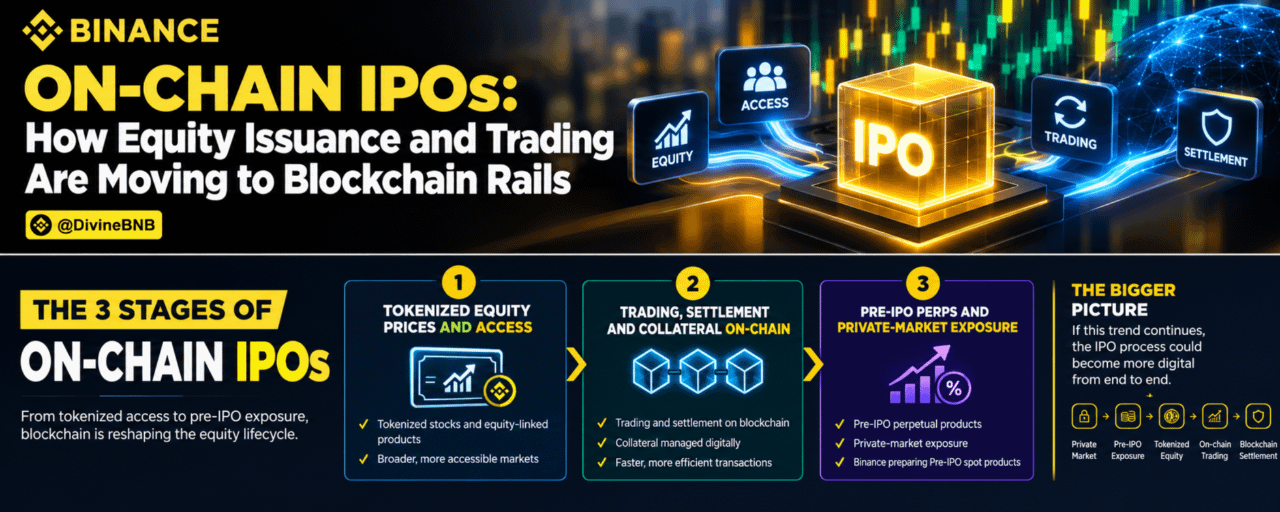
Article
On-Chain IPOs: How Equity Issuance and Trading Are Moving to Blockchain RailsOn-chain IPOs are moving from an idea to a developing market structure, with equity access, trading and eventually pre-IPO exposure increasingly connected to blockchain rails.
@CZ has argued that IPOs will move on-chain, and the shift can already be viewed in three stages.
Stage 1: Tokenized Equity Prices and Access
The first step is bringing traditional equity exposure onto blockchain infrastructure.
Tokenized stocks and equity-linked products can give eligible users access to price exposure through digital assets, potentially making markets more accessible and programmable.
Instead of treating blockchain as a separate financial system, this approach connects traditional assets with crypto-native infrastructure.
{spot}(SPCXBUSDT)
Stage 2: Trading, Settlement and Collateral On-Chain
The bigger change comes when blockchain rails handle more than just the asset representation.
Trading, settlement and collateral can increasingly operate within the same digital environment. This could reduce friction between different parts of the financial system while enabling faster, programmable transactions.
The long-term idea is simple: trade the asset, settle the transaction and manage collateral on the same rails.
Stage 3: Pre-IPO Perps and Private-Market Exposure
The most interesting stage may be what happens before a company goes public.
Pre-IPO perpetual products and other private-market exposure can give eligible traders access to market expectations before a traditional IPO takes place.
With Binance preparing Pre-IPO spot products, the boundary between private-market opportunities and public-market trading is becoming increasingly connected.
{spot}(METABUSDT)
What Could On-Chain IPOs Mean?
If this trend continues, the IPO process could eventually become more digital from end to end:
Private market → Pre-IPO exposure → Tokenized equity → On-chain trading → Blockchain settlement
That doesn't mean traditional IPOs disappear overnight. Instead, blockchain rails could gradually become another layer through which equity issuance, access, trading and settlement take place.
{spot}(BNBUSDT)
Final Take
[On-chain IPOs](https://www.binance.com/en/blog/ecosystem/1003973008624472267) are not just about putting stocks on a blockchain. The bigger story is the potential migration of equity access, trading, settlement and pre-IPO markets onto programmable financial infrastructure.
The three stages are already taking shape — and the line between private markets, tokenized assets and public trading could become much thinner from here.
#IPOs | @Binance_Square_Official | @Binance_Angels | #Onchain
On-Chain IPOs: How Equity Issuance and Trading Are Moving to Blockchain Rails
On-chain IPOs are moving from an idea to a developing market structure, with equity access, trading and eventually pre-IPO exposure increasingly connected to blockchain rails.
@CZ has argued that IPOs will move on-chain, and the shift can already be viewed in three stages.
Stage 1: Tokenized Equity Prices and Access
The first step is bringing traditional equity exposure onto blockchain infrastructure.
Tokenized stocks and equity-linked products can give eligible users access to price exposure through digital assets, potentially making markets more accessible and programmable.
Instead of treating blockchain as a separate financial system, this approach connects traditional assets with crypto-native infrastructure.
Stage 2: Trading, Settlement and Collateral On-Chain
The bigger change comes when blockchain rails handle more than just the asset representation.
Trading, settlement and collateral can increasingly operate within the same digital environment. This could reduce friction between different parts of the financial system while enabling faster, programmable transactions.
The long-term idea is simple: trade the asset, settle the transaction and manage collateral on the same rails.
Stage 3: Pre-IPO Perps and Private-Market Exposure
The most interesting stage may be what happens before a company goes public.
Pre-IPO perpetual products and other private-market exposure can give eligible traders access to market expectations before a traditional IPO takes place.
With Binance preparing Pre-IPO spot products, the boundary between private-market opportunities and public-market trading is becoming increasingly connected.
What Could On-Chain IPOs Mean?
If this trend continues, the IPO process could eventually become more digital from end to end:
Private market → Pre-IPO exposure → Tokenized equity → On-chain trading → Blockchain settlement
That doesn't mean traditional IPOs disappear overnight. Instead, blockchain rails could gradually become another layer through which equity issuance, access, trading and settlement take place.
Final Take
On-chain IPOs are not just about putting stocks on a blockchain. The bigger story is the potential migration of equity access, trading, settlement and pre-IPO markets onto programmable financial infrastructure.
The three stages are already taking shape — and the line between private markets, tokenized assets and public trading could become much thinner from here.
#IPOs | @Binance Square Official | @Binance Angels | #Onchain
@CZ has argued that IPOs will move on-chain, and the shift can already be viewed in three stages.
Stage 1: Tokenized Equity Prices and Access
The first step is bringing traditional equity exposure onto blockchain infrastructure.
Tokenized stocks and equity-linked products can give eligible users access to price exposure through digital assets, potentially making markets more accessible and programmable.
Instead of treating blockchain as a separate financial system, this approach connects traditional assets with crypto-native infrastructure.
Stage 2: Trading, Settlement and Collateral On-Chain
The bigger change comes when blockchain rails handle more than just the asset representation.
Trading, settlement and collateral can increasingly operate within the same digital environment. This could reduce friction between different parts of the financial system while enabling faster, programmable transactions.
The long-term idea is simple: trade the asset, settle the transaction and manage collateral on the same rails.
Stage 3: Pre-IPO Perps and Private-Market Exposure
The most interesting stage may be what happens before a company goes public.
Pre-IPO perpetual products and other private-market exposure can give eligible traders access to market expectations before a traditional IPO takes place.
With Binance preparing Pre-IPO spot products, the boundary between private-market opportunities and public-market trading is becoming increasingly connected.
What Could On-Chain IPOs Mean?
If this trend continues, the IPO process could eventually become more digital from end to end:
Private market → Pre-IPO exposure → Tokenized equity → On-chain trading → Blockchain settlement
That doesn't mean traditional IPOs disappear overnight. Instead, blockchain rails could gradually become another layer through which equity issuance, access, trading and settlement take place.
Final Take
On-chain IPOs are not just about putting stocks on a blockchain. The bigger story is the potential migration of equity access, trading, settlement and pre-IPO markets onto programmable financial infrastructure.
The three stages are already taking shape — and the line between private markets, tokenized assets and public trading could become much thinner from here.
#IPOs | @Binance Square Official | @Binance Angels | #Onchain
2
180
·
--
Bullish
Now live: U.S. Stock Options on Binance.
Buy Calls and Puts on 1,000+ U.S. Stocks & ETFs
More ways to express your market view.
[Read more](https://www.binance.com/en/blog/markets/3413696947185733989) → https://www.binance.com/en/blog/markets/3413696947185733989
Now live: U.S. Stock Options on Binance.
Buy Calls and Puts on 1,000+ U.S. Stocks & ETFs
More ways to express your market view.
Read more → https://www.binance.com/en/blog/markets/3413696947185733989
Buy Calls and Puts on 1,000+ U.S. Stocks & ETFs
More ways to express your market view.
Read more → https://www.binance.com/en/blog/markets/3413696947185733989
2
85
·
--
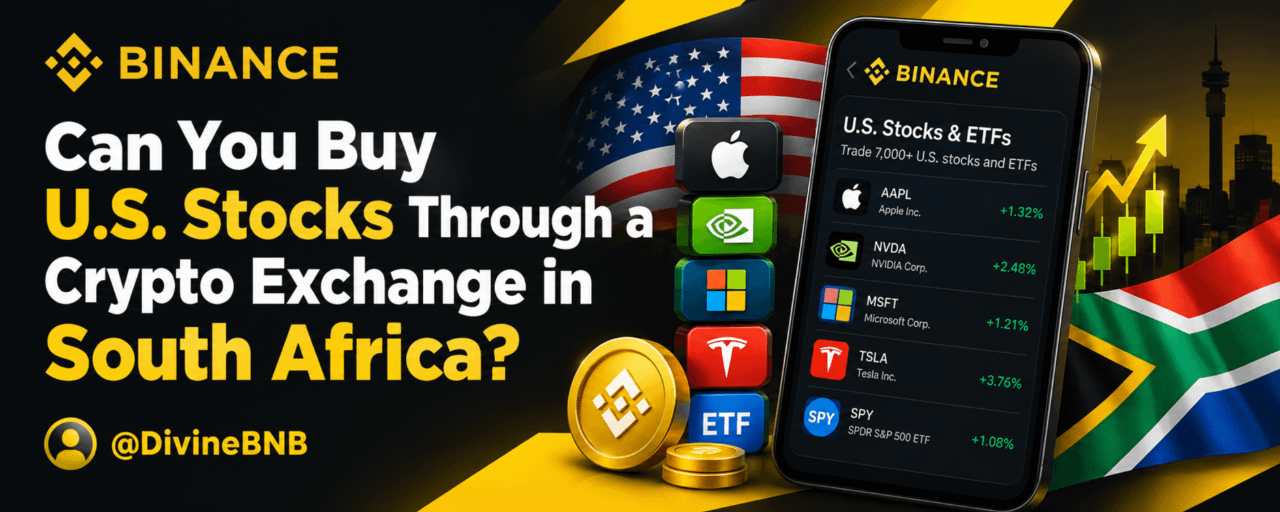
Article
Can South Africans Buy U.S. Stocks on a Crypto Exchange in 2026?Yes, eligible users in South Africa can buy and sell more than 7,000 U.S.-listed stocks and ETFs through Binance using crypto balances. Orders are routed through Nest Trading to Alpaca Securities for execution, clearing, settlement and custody. Availability depends on the user’s jurisdiction and eligibility.
For South African crypto users, this means stocks and crypto can potentially be accessed through the same Binance account, without needing to move between multiple platforms.
Can You Buy U.S. Stocks on Binance in South Africa?
Binance has expanded access to thousands of U.S.-listed stocks and ETFs for eligible users outside the United States. The offering covers a wide range of popular companies and ETFs, while fractional investing allows users to start with amounts as low as $5.
However, stock trading availability is jurisdiction-dependent, so South African users should check their Binance account to see whether the feature is available to them.
{spot}(NVDABUSDT)
How Does Stock Trading on Binance Work?
The process is designed to work alongside Binance’s crypto ecosystem.
When an eligible user places a stock order, Nest Trading Limited acts as the introducing broker and routes the order to Alpaca Securities LLC, which handles execution, clearing, settlement and custody of the securities.
Users can fund eligible stock purchases using supported crypto balances, including selected [stablecoins](https://www.binance.com/en-ZA/blog/fiat/421499824684903322) and $BNB depending on the product and account eligibility.
Which U.S. Stocks and ETFs Can You Trade on Binance?
The [Binance Stocks](https://www.binance.com/en/stocks-landing) platform provides access to 7,000+ U.S.-listed stocks and ETFs. That includes companies across technology, finance, healthcare, consumer goods and other sectors, as well as various ETFs.
Examples include major names such as [Apple](https://www.binance.com/en-AU/stocks/EQ_AAPL/financials), [NVIDIA](https://www.binance.com/en/stocks/EQ_NVDA), [Microsoft](https://www.binance.com/en/stocks/EQ_MSFT) and [Tesla](https://www.binance.com/en/stocks/EQ_TSLA), alongside a broad selection of other U.S.-listed securities.
{spot}(METABUSDT)
Which U.S. Stocks Can You Trade Through Binance?
The available list is much broader than just a few popular companies. Eligible users can search Binance’s stock market for individual U.S. companies and ETFs and check whether a particular security is supported.
This can make Binance useful for users who want to manage crypto and traditional U.S. market exposure in one place.
Can You Buy Binance bStocks in South Africa?
This is where it is important to understand the difference between direct stock trading and [bStocks](https://www.binance.com/en/academy/articles/what-are-bstocks-a-guide-to-tokenized-stocks-on-binance).
bStocks are [tokenized securities](https://www.binance.com/en/academy/articles/what-are-tokenized-stocks), not the same as directly owning the underlying U.S. shares. They are issued by BTech Holdings Limited and represent an interest in underlying securities held by the issuer. bStocks are backed 1:1 by corresponding U.S. stocks, but holders do not directly own shares in the underlying company.
bStocks can trade on Binance Spot 24/7, with selected assets available for trading against [USDT](https://www.binance.com/en/academy/articles/what-is-tether-usdt) and other supported assets. However, bStocks are offered only to eligible users in approved jurisdictions, so availability in South Africa should be checked directly on Binance.
{spot}(SPCXBUSDT)
Relevant FAQs
Are Binance bStocks available in South Africa?
Availability depends on jurisdiction and user eligibility. Binance states that [bStocks](https://www.binance.com/en/stocks-landing) are available only to eligible users in certain approved jurisdictions, so South African users should check their Binance account for access.
Are bStocks the same as U.S. shares?
No. bStocks are tokenized securities that provide economic exposure to underlying U.S. stocks, but they do not give holders direct ownership of those shares.
Can you buy U.S. stocks on Binance using USDT?
Eligible users can use supported balances to access Binance's stock trading service. Binance also offers selected bStocks trading pairs against [USDT](https://www.binance.com/en/academy/articles/what-is-tether-usdt), although the exact assets and availability depend on the product and jurisdiction.
Bottom line: For eligible South African users, Binance is expanding beyond crypto by bringing thousands of U.S. stocks and ETFs into the same platform. Just remember that direct stock trading and [tokenized bStocks](https://www.binance.com/en/academy/articles/what-are-bstocks-a-guide-to-tokenized-stocks-on-binance) are different products, with different ownership and settlement structures.
Also Read: [Which Crypto Exchange Is Best for Buying U.S. Stocks?](https://www.binance.com/en/square/post/365178062869278)
#BinanceStocks | @Binance_Square_Official | @Binance_Angels | #BStocks
Can South Africans Buy U.S. Stocks on a Crypto Exchange in 2026?
Yes, eligible users in South Africa can buy and sell more than 7,000 U.S.-listed stocks and ETFs through Binance using crypto balances. Orders are routed through Nest Trading to Alpaca Securities for execution, clearing, settlement and custody. Availability depends on the user’s jurisdiction and eligibility.
For South African crypto users, this means stocks and crypto can potentially be accessed through the same Binance account, without needing to move between multiple platforms.
Can You Buy U.S. Stocks on Binance in South Africa?
Binance has expanded access to thousands of U.S.-listed stocks and ETFs for eligible users outside the United States. The offering covers a wide range of popular companies and ETFs, while fractional investing allows users to start with amounts as low as $5.
However, stock trading availability is jurisdiction-dependent, so South African users should check their Binance account to see whether the feature is available to them.
How Does Stock Trading on Binance Work?
The process is designed to work alongside Binance’s crypto ecosystem.
When an eligible user places a stock order, Nest Trading Limited acts as the introducing broker and routes the order to Alpaca Securities LLC, which handles execution, clearing, settlement and custody of the securities.
Users can fund eligible stock purchases using supported crypto balances, including selected stablecoins and $BNB depending on the product and account eligibility.
Which U.S. Stocks and ETFs Can You Trade on Binance?
The Binance Stocks platform provides access to 7,000+ U.S.-listed stocks and ETFs. That includes companies across technology, finance, healthcare, consumer goods and other sectors, as well as various ETFs.
Examples include major names such as Apple, NVIDIA, Microsoft and Tesla, alongside a broad selection of other U.S.-listed securities.
Which U.S. Stocks Can You Trade Through Binance?
The available list is much broader than just a few popular companies. Eligible users can search Binance’s stock market for individual U.S. companies and ETFs and check whether a particular security is supported.
This can make Binance useful for users who want to manage crypto and traditional U.S. market exposure in one place.
Can You Buy Binance bStocks in South Africa?
This is where it is important to understand the difference between direct stock trading and bStocks.
bStocks are tokenized securities, not the same as directly owning the underlying U.S. shares. They are issued by BTech Holdings Limited and represent an interest in underlying securities held by the issuer. bStocks are backed 1:1 by corresponding U.S. stocks, but holders do not directly own shares in the underlying company.
bStocks can trade on Binance Spot 24/7, with selected assets available for trading against USDT and other supported assets. However, bStocks are offered only to eligible users in approved jurisdictions, so availability in South Africa should be checked directly on Binance.
Relevant FAQs
Are Binance bStocks available in South Africa?
Availability depends on jurisdiction and user eligibility. Binance states that bStocks are available only to eligible users in certain approved jurisdictions, so South African users should check their Binance account for access.
Are bStocks the same as U.S. shares?
No. bStocks are tokenized securities that provide economic exposure to underlying U.S. stocks, but they do not give holders direct ownership of those shares.
Can you buy U.S. stocks on Binance using USDT?
Eligible users can use supported balances to access Binance's stock trading service. Binance also offers selected bStocks trading pairs against USDT, although the exact assets and availability depend on the product and jurisdiction.
Bottom line: For eligible South African users, Binance is expanding beyond crypto by bringing thousands of U.S. stocks and ETFs into the same platform. Just remember that direct stock trading and tokenized bStocks are different products, with different ownership and settlement structures.
Also Read: Which Crypto Exchange Is Best for Buying U.S. Stocks?
#BinanceStocks | @Binance Square Official | @Binance Angels | #BStocks
For South African crypto users, this means stocks and crypto can potentially be accessed through the same Binance account, without needing to move between multiple platforms.
Can You Buy U.S. Stocks on Binance in South Africa?
Binance has expanded access to thousands of U.S.-listed stocks and ETFs for eligible users outside the United States. The offering covers a wide range of popular companies and ETFs, while fractional investing allows users to start with amounts as low as $5.
However, stock trading availability is jurisdiction-dependent, so South African users should check their Binance account to see whether the feature is available to them.
How Does Stock Trading on Binance Work?
The process is designed to work alongside Binance’s crypto ecosystem.
When an eligible user places a stock order, Nest Trading Limited acts as the introducing broker and routes the order to Alpaca Securities LLC, which handles execution, clearing, settlement and custody of the securities.
Users can fund eligible stock purchases using supported crypto balances, including selected stablecoins and $BNB depending on the product and account eligibility.
Which U.S. Stocks and ETFs Can You Trade on Binance?
The Binance Stocks platform provides access to 7,000+ U.S.-listed stocks and ETFs. That includes companies across technology, finance, healthcare, consumer goods and other sectors, as well as various ETFs.
Examples include major names such as Apple, NVIDIA, Microsoft and Tesla, alongside a broad selection of other U.S.-listed securities.
Which U.S. Stocks Can You Trade Through Binance?
The available list is much broader than just a few popular companies. Eligible users can search Binance’s stock market for individual U.S. companies and ETFs and check whether a particular security is supported.
This can make Binance useful for users who want to manage crypto and traditional U.S. market exposure in one place.
Can You Buy Binance bStocks in South Africa?
This is where it is important to understand the difference between direct stock trading and bStocks.
bStocks are tokenized securities, not the same as directly owning the underlying U.S. shares. They are issued by BTech Holdings Limited and represent an interest in underlying securities held by the issuer. bStocks are backed 1:1 by corresponding U.S. stocks, but holders do not directly own shares in the underlying company.
bStocks can trade on Binance Spot 24/7, with selected assets available for trading against USDT and other supported assets. However, bStocks are offered only to eligible users in approved jurisdictions, so availability in South Africa should be checked directly on Binance.
Relevant FAQs
Are Binance bStocks available in South Africa?
Availability depends on jurisdiction and user eligibility. Binance states that bStocks are available only to eligible users in certain approved jurisdictions, so South African users should check their Binance account for access.
Are bStocks the same as U.S. shares?
No. bStocks are tokenized securities that provide economic exposure to underlying U.S. stocks, but they do not give holders direct ownership of those shares.
Can you buy U.S. stocks on Binance using USDT?
Eligible users can use supported balances to access Binance's stock trading service. Binance also offers selected bStocks trading pairs against USDT, although the exact assets and availability depend on the product and jurisdiction.
Bottom line: For eligible South African users, Binance is expanding beyond crypto by bringing thousands of U.S. stocks and ETFs into the same platform. Just remember that direct stock trading and tokenized bStocks are different products, with different ownership and settlement structures.
Also Read: Which Crypto Exchange Is Best for Buying U.S. Stocks?
#BinanceStocks | @Binance Square Official | @Binance Angels | #BStocks
2
319
·
--
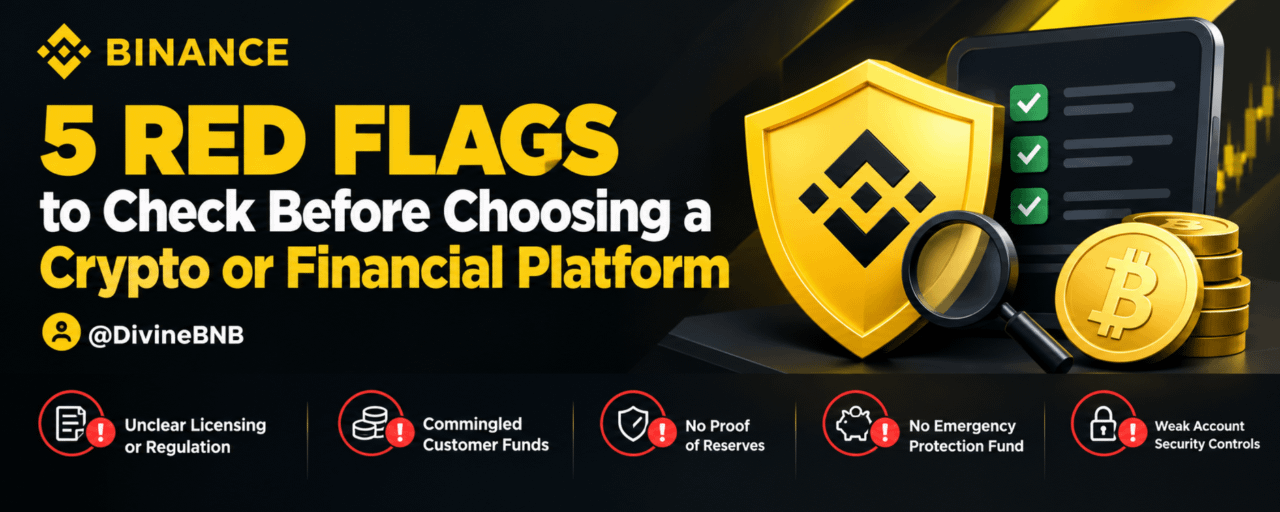
Article
5 Red Flags to Check Before Choosing a Crypto or Financial PlatformBefore choosing a crypto or financial platform, check its licensing, custody structure, proof of reserves, emergency protection and account security. If a platform is unclear about these areas, that’s a warning sign worth taking seriously.
1. Unclear Licensing or Regulation
A platform that doesn't clearly explain which entities operate its services, where they are licensed or what regulatory requirements apply can make it difficult for users to understand the protections available to them.
Always check the platform's official regulatory information and the entity you're actually signing up with.
2. Commingled Customer Funds
Another major red flag is a lack of clarity around how customer assets are held.
Look for platforms that explain their custody arrangements and how customer assets are separated from company funds. Clear [custody](https://www.binance.com/en/academy/glossary/custody) information can make it easier to understand how your assets are handled.
{spot}(BNBUSDT)
3. No Proof of Reserves
If a platform provides no way to verify that it holds sufficient assets to support customer balances, users have less transparency.
Binance publishes [Proof of Reserves (PoR)](https://www.binance.com/en-ZA/proof-of-reserves) and uses Merkle Tree verification, allowing users to check information about their included assets and verify their balances through the available PoR system.
4. No Emergency Protection Fund
Crypto markets can move quickly, and unexpected security incidents can happen.
A platform offering an emergency protection mechanism provides another layer of resilience. Binance's [Secure Asset Fund for Users (SAFU)](https://www.binance.com/en/academy/glossary/secure-asset-fund-for-users) was established as an emergency fund to help protect users in certain extreme situations.
{spot}(BTCUSDT)
5. Weak Account Security Controls
A platform can have strong infrastructure, but your account still needs protection.
Look for security features such as [passkeys](https://www.binance.com/en-ZA/blog/security/96068512972399427), [two-factor authentication (2FA)](https://www.binance.com/en/academy/articles/what-is-two-factor-authentication-2fa), [anti-phishing codes](https://www.binance.com/en-ZA/blog/security/421499824684904006) and [withdrawal allowlisting](https://www.binance.com/en-ZA/square/post/511117). These controls can help reduce the risk of unauthorized access and suspicious withdrawals.
Final Thoughts
Choosing a crypto or financial platform shouldn't be based only on fees or the number of assets available.
Before depositing funds, check the regulatory status, custody arrangements, [Proof of Reserves](https://www.binance.com/en-ZA/proof-of-reserves), [emergency protection](https://www.binance.com/en/academy/glossary/secure-asset-fund-for-users) and account security controls. These five checks can help you understand how seriously a platform approaches transparency and user protection.
Do your own research and make sure the platform's services are available and appropriate for your jurisdiction.
{spot}(SPCXBUSDT)
FAQs
Is Binance regulated in South Africa?
[Binance](https://www.binance.com/en/square/post/365178062869278) is available to South African users and states that it is actively engaged in the South African CASP licensing process. Regulatory status can change, so users should verify the current status of the specific Binance entity and product they plan to use.
How do I know if Binance is safe?
No crypto platform is completely risk-free. Users should evaluate Binance's security controls, [Proof of Reserves](https://www.binance.com/en-ZA/proof-of-reserves), custody arrangements, [SAFU](https://www.binance.com/en/academy/glossary/secure-asset-fund-for-users) protection, regulatory structure and their own account-security practices before using the platform.
How does Binance protect customer assets?
Binance says customer assets are backed 1:1 and provides Proof of Reserves verification using Merkle Trees and zk-SNARKs. It also maintains SAFU as an emergency fund and provides multiple account-security controls.
What is Binance Proof of Reserves?
[Proof of Reserves](https://www.binance.com/en-ZA/proof-of-reserves) is a system that allows users to verify that Binance's reported reserves cover customer assets on a 1:1 basis. Binance uses Merkle Trees and zk-SNARKs so users can verify that their own account balance was included without exposing other users' private information.
#Binance | @Binance_Angels | @Binance_Square_Official | #SAFU🙏
5 Red Flags to Check Before Choosing a Crypto or Financial Platform
Before choosing a crypto or financial platform, check its licensing, custody structure, proof of reserves, emergency protection and account security. If a platform is unclear about these areas, that’s a warning sign worth taking seriously.
1. Unclear Licensing or Regulation
A platform that doesn't clearly explain which entities operate its services, where they are licensed or what regulatory requirements apply can make it difficult for users to understand the protections available to them.
Always check the platform's official regulatory information and the entity you're actually signing up with.
2. Commingled Customer Funds
Another major red flag is a lack of clarity around how customer assets are held.
Look for platforms that explain their custody arrangements and how customer assets are separated from company funds. Clear custody information can make it easier to understand how your assets are handled.
3. No Proof of Reserves
If a platform provides no way to verify that it holds sufficient assets to support customer balances, users have less transparency.
Binance publishes Proof of Reserves (PoR) and uses Merkle Tree verification, allowing users to check information about their included assets and verify their balances through the available PoR system.
4. No Emergency Protection Fund
Crypto markets can move quickly, and unexpected security incidents can happen.
A platform offering an emergency protection mechanism provides another layer of resilience. Binance's Secure Asset Fund for Users (SAFU) was established as an emergency fund to help protect users in certain extreme situations.
5. Weak Account Security Controls
A platform can have strong infrastructure, but your account still needs protection.
Look for security features such as passkeys, two-factor authentication (2FA), anti-phishing codes and withdrawal allowlisting. These controls can help reduce the risk of unauthorized access and suspicious withdrawals.
Final Thoughts
Choosing a crypto or financial platform shouldn't be based only on fees or the number of assets available.
Before depositing funds, check the regulatory status, custody arrangements, Proof of Reserves, emergency protection and account security controls. These five checks can help you understand how seriously a platform approaches transparency and user protection.
Do your own research and make sure the platform's services are available and appropriate for your jurisdiction.
FAQs
Is Binance regulated in South Africa?
Binance is available to South African users and states that it is actively engaged in the South African CASP licensing process. Regulatory status can change, so users should verify the current status of the specific Binance entity and product they plan to use.
How do I know if Binance is safe?
No crypto platform is completely risk-free. Users should evaluate Binance's security controls, Proof of Reserves, custody arrangements, SAFU protection, regulatory structure and their own account-security practices before using the platform.
How does Binance protect customer assets?
Binance says customer assets are backed 1:1 and provides Proof of Reserves verification using Merkle Trees and zk-SNARKs. It also maintains SAFU as an emergency fund and provides multiple account-security controls.
What is Binance Proof of Reserves?
Proof of Reserves is a system that allows users to verify that Binance's reported reserves cover customer assets on a 1:1 basis. Binance uses Merkle Trees and zk-SNARKs so users can verify that their own account balance was included without exposing other users' private information.
#Binance | @Binance Angels | @Binance Square Official | #SAFU🙏
1. Unclear Licensing or Regulation
A platform that doesn't clearly explain which entities operate its services, where they are licensed or what regulatory requirements apply can make it difficult for users to understand the protections available to them.
Always check the platform's official regulatory information and the entity you're actually signing up with.
2. Commingled Customer Funds
Another major red flag is a lack of clarity around how customer assets are held.
Look for platforms that explain their custody arrangements and how customer assets are separated from company funds. Clear custody information can make it easier to understand how your assets are handled.
3. No Proof of Reserves
If a platform provides no way to verify that it holds sufficient assets to support customer balances, users have less transparency.
Binance publishes Proof of Reserves (PoR) and uses Merkle Tree verification, allowing users to check information about their included assets and verify their balances through the available PoR system.
4. No Emergency Protection Fund
Crypto markets can move quickly, and unexpected security incidents can happen.
A platform offering an emergency protection mechanism provides another layer of resilience. Binance's Secure Asset Fund for Users (SAFU) was established as an emergency fund to help protect users in certain extreme situations.
5. Weak Account Security Controls
A platform can have strong infrastructure, but your account still needs protection.
Look for security features such as passkeys, two-factor authentication (2FA), anti-phishing codes and withdrawal allowlisting. These controls can help reduce the risk of unauthorized access and suspicious withdrawals.
Final Thoughts
Choosing a crypto or financial platform shouldn't be based only on fees or the number of assets available.
Before depositing funds, check the regulatory status, custody arrangements, Proof of Reserves, emergency protection and account security controls. These five checks can help you understand how seriously a platform approaches transparency and user protection.
Do your own research and make sure the platform's services are available and appropriate for your jurisdiction.
FAQs
Is Binance regulated in South Africa?
Binance is available to South African users and states that it is actively engaged in the South African CASP licensing process. Regulatory status can change, so users should verify the current status of the specific Binance entity and product they plan to use.
How do I know if Binance is safe?
No crypto platform is completely risk-free. Users should evaluate Binance's security controls, Proof of Reserves, custody arrangements, SAFU protection, regulatory structure and their own account-security practices before using the platform.
How does Binance protect customer assets?
Binance says customer assets are backed 1:1 and provides Proof of Reserves verification using Merkle Trees and zk-SNARKs. It also maintains SAFU as an emergency fund and provides multiple account-security controls.
What is Binance Proof of Reserves?
Proof of Reserves is a system that allows users to verify that Binance's reported reserves cover customer assets on a 1:1 basis. Binance uses Merkle Trees and zk-SNARKs so users can verify that their own account balance was included without exposing other users' private information.
#Binance | @Binance Angels | @Binance Square Official | #SAFU🙏
3
159
·
--
Article
How to Check if Your Data Was Leaked — and What to Do NextYour personal data can end up in a data breach without you knowing about it. Email addresses, phone numbers, passwords and other account information can be exposed when a company or service is hacked.
The good news is that you can check whether your information has appeared in known breaches and take simple steps to protect your accounts.
How to Check if Your Data Was Leaked
One of the easiest ways to check is to use a reputable breach-notification service such as Have I Been Pwned. Enter your email address to see whether it has appeared in publicly known data breaches.
You should also pay attention to security alerts from your email provider, banks, crypto exchanges and other services you use.
Importantly, finding your email in a breach does not automatically mean your account has been hacked. It means some information associated with it may have been exposed.
What to Do If Your Data Was Exposed
If your information appears in a breach, act quickly:
Change the affected password immediately.Don't reuse that password on other websites.Enable [two-factor authentication (2FA)](https://www.binance.com/en/academy/articles/what-is-two-factor-authentication-2fa) wherever possible.Review recent account activity for anything suspicious.Be extra careful with unexpected emails, SMS messages and calls.Never share passwords, verification codes or private keys with anyone.If financial or crypto accounts may be affected, review withdrawals, transactions and login activity.
Be Careful of Follow-Up Scams
A data breach can give scammers information they can use to make phishing messages look convincing.
For crypto users, this is particularly important. A scammer might pretend to be an exchange's support team and claim that your account needs to be "secured" or "verified."
Always access your exchange through its official website or app rather than clicking suspicious links in messages.
Protect Your Data Going Forward
You don't have to wait for another breach before improving your security. Use unique passwords, a password manager and [2FA](https://www.binance.com/en/academy/articles/what-is-two-factor-authentication-2fa) on important accounts.
For crypto accounts, consider adding additional security features such as [anti-phishing codes](https://www.binance.com/en-ZA/square/post/32353969470233) and withdrawal protections where available.
Final Takeaway
Checking whether your email or other information has appeared in a known breach is a simple security habit. If your data has been exposed, don't panic — change your passwords, enable [2FA](https://www.binance.com/en/academy/articles/what-is-two-factor-authentication-2fa), monitor your accounts and stay alert for phishing attempts.
Your data may already be out there, but taking action can make it much harder for scammers to turn leaked information into account access.
#safu | @Binance_Angels | @Binance_Square_Official | @Binance_Risk_Announcement
How to Check if Your Data Was Leaked — and What to Do Next
Your personal data can end up in a data breach without you knowing about it. Email addresses, phone numbers, passwords and other account information can be exposed when a company or service is hacked.
The good news is that you can check whether your information has appeared in known breaches and take simple steps to protect your accounts.
How to Check if Your Data Was Leaked
One of the easiest ways to check is to use a reputable breach-notification service such as Have I Been Pwned. Enter your email address to see whether it has appeared in publicly known data breaches.
You should also pay attention to security alerts from your email provider, banks, crypto exchanges and other services you use.
Importantly, finding your email in a breach does not automatically mean your account has been hacked. It means some information associated with it may have been exposed.
What to Do If Your Data Was Exposed
If your information appears in a breach, act quickly:
Change the affected password immediately.Don't reuse that password on other websites.Enable two-factor authentication (2FA) wherever possible.Review recent account activity for anything suspicious.Be extra careful with unexpected emails, SMS messages and calls.Never share passwords, verification codes or private keys with anyone.If financial or crypto accounts may be affected, review withdrawals, transactions and login activity.
Be Careful of Follow-Up Scams
A data breach can give scammers information they can use to make phishing messages look convincing.
For crypto users, this is particularly important. A scammer might pretend to be an exchange's support team and claim that your account needs to be "secured" or "verified."
Always access your exchange through its official website or app rather than clicking suspicious links in messages.
Protect Your Data Going Forward
You don't have to wait for another breach before improving your security. Use unique passwords, a password manager and 2FA on important accounts.
For crypto accounts, consider adding additional security features such as anti-phishing codes and withdrawal protections where available.
Final Takeaway
Checking whether your email or other information has appeared in a known breach is a simple security habit. If your data has been exposed, don't panic — change your passwords, enable 2FA, monitor your accounts and stay alert for phishing attempts.
Your data may already be out there, but taking action can make it much harder for scammers to turn leaked information into account access.
#safu | @Binance Angels | @Binance Square Official | @Binance Risk Sniper
The good news is that you can check whether your information has appeared in known breaches and take simple steps to protect your accounts.
How to Check if Your Data Was Leaked
One of the easiest ways to check is to use a reputable breach-notification service such as Have I Been Pwned. Enter your email address to see whether it has appeared in publicly known data breaches.
You should also pay attention to security alerts from your email provider, banks, crypto exchanges and other services you use.
Importantly, finding your email in a breach does not automatically mean your account has been hacked. It means some information associated with it may have been exposed.
What to Do If Your Data Was Exposed
If your information appears in a breach, act quickly:
Change the affected password immediately.Don't reuse that password on other websites.Enable two-factor authentication (2FA) wherever possible.Review recent account activity for anything suspicious.Be extra careful with unexpected emails, SMS messages and calls.Never share passwords, verification codes or private keys with anyone.If financial or crypto accounts may be affected, review withdrawals, transactions and login activity.
Be Careful of Follow-Up Scams
A data breach can give scammers information they can use to make phishing messages look convincing.
For crypto users, this is particularly important. A scammer might pretend to be an exchange's support team and claim that your account needs to be "secured" or "verified."
Always access your exchange through its official website or app rather than clicking suspicious links in messages.
Protect Your Data Going Forward
You don't have to wait for another breach before improving your security. Use unique passwords, a password manager and 2FA on important accounts.
For crypto accounts, consider adding additional security features such as anti-phishing codes and withdrawal protections where available.
Final Takeaway
Checking whether your email or other information has appeared in a known breach is a simple security habit. If your data has been exposed, don't panic — change your passwords, enable 2FA, monitor your accounts and stay alert for phishing attempts.
Your data may already be out there, but taking action can make it much harder for scammers to turn leaked information into account access.
#safu | @Binance Angels | @Binance Square Official | @Binance Risk Sniper
2
150
·
--
Article
I Switched to Binance from Revolut Because...The Security Question Every Crypto User Should Ask.🤔
I switched to Binance from Revolut because I wanted a platform built specifically for crypto, with dedicated trading tools, stronger crypto-focused controls and a wider range of digital-asset products.
Recent events involving Revolut have also reminded users that security in finance is about more than protecting passwords. On September 12, Reuters reported that Revolut had disclosed sensitive customer information to an unauthorized party after receiving fraudulent requests from an email address belonging to a legitimate government domain. Revolut said the incident affected a “very limited” number of customers.
That doesn't mean Revolut is unsafe or that customer funds were compromised. Revolut said its systems and customer funds were unaffected. But for crypto users, incidents like this can raise an important question: What do I actually want from my financial platform?
{spot}(BNBUSDT)
Why I Wanted a Crypto-Native Platform
Revolut is designed as a broad financial app, while Binance is built around digital assets.
For someone who actively trades or holds crypto, that difference matters. Binance brings [spot trading](https://www.binance.com/en/academy/articles/your-guide-to-binance-spot-trading), [futures](https://www.binance.com/en/academy/learn-and-earn/course/introduction-to-futures-trading-BN953688955256963073), [Earn products](https://www.binance.com/en/academy/articles/a-beginner-s-guide-to-binance-earn), [Web3 tools](https://www.binance.com/en/academy/articles/the-evolution-of-the-internet-web-3-0-explained), [P2P trading](https://www.binance.com/en/academy/articles/what-is-peer-to-peer-trading-and-how-do-people-make-money-from-it), payments and other crypto-focused services into one ecosystem.
Instead of treating crypto as one feature inside a wider banking app, Binance makes digital assets the core experience.
Security Became a Bigger Priority
The Revolut incident is also a reminder that [security](https://www.binance.com/en/academy/articles/secure-your-binance-account-in-7-simple-steps) isn't simply about having a strong password.
Social engineering, phishing and fake requests can target the processes companies use to verify information.
For crypto users, account protection tools such as [two-factor authentication (2FA)](https://www.binance.com/en/academy/articles/what-is-two-factor-authentication-2fa), [anti-phishing codes](https://www.binance.com/en/support/faq/detail/bc1qdjydrajuc3xejhdg9drhkytn6zpx69zger9zr0), withdrawal controls and device monitoring can provide additional layers of protection.
Of course, no platform can eliminate every security risk. Users still need to protect their passwords, verify communications and avoid suspicious links.
{spot}(GOOGLBUSDT)
More Tools for Crypto Users
Another reason I moved was flexibility.
With Binance, I can access different crypto products from one account rather than using separate platforms for different parts of my crypto activity.
Whether I'm looking at spot markets, earning opportunities, P2P trading or Web3, the ecosystem is designed around crypto.
The Bigger Lesson
The Revolut case isn't simply a reason to leave one financial platform for another. It's a reminder to think carefully about how a platform handles identity, security, account protection and digital assets.
For crypto users, choosing a platform specifically designed for digital assets can offer a different experience — one centered around crypto trading, custody and Web3.
That's ultimately why I switched to Binance: I wanted my crypto platform to be built around crypto.
FAQs
Is Binance safer than Revolut?
Security depends on the specific risks and controls being considered. Binance and Revolut serve different purposes, and users should review each platform's security features and their own account settings.
Did the Revolut incident affect customer funds?
Revolut said its systems and customer funds were unaffected. The reported incident involved disclosure of sensitive customer information to an unauthorized party.
What should crypto users do to protect their accounts?
Use 2FA, enable available account security features, use unique passwords, verify official communications and never share passwords or security codes.
Why use Binance for crypto?
Binance provides a crypto-focused ecosystem covering trading, digital assets, Web3 and other crypto services from one platform.
#Binance | @Binance_Angels | @Binance_Square_Official
I Switched to Binance from Revolut Because...
The Security Question Every Crypto User Should Ask.🤔
I switched to Binance from Revolut because I wanted a platform built specifically for crypto, with dedicated trading tools, stronger crypto-focused controls and a wider range of digital-asset products.
Recent events involving Revolut have also reminded users that security in finance is about more than protecting passwords. On September 12, Reuters reported that Revolut had disclosed sensitive customer information to an unauthorized party after receiving fraudulent requests from an email address belonging to a legitimate government domain. Revolut said the incident affected a “very limited” number of customers.
That doesn't mean Revolut is unsafe or that customer funds were compromised. Revolut said its systems and customer funds were unaffected. But for crypto users, incidents like this can raise an important question: What do I actually want from my financial platform?
Why I Wanted a Crypto-Native Platform
Revolut is designed as a broad financial app, while Binance is built around digital assets.
For someone who actively trades or holds crypto, that difference matters. Binance brings spot trading, futures, Earn products, Web3 tools, P2P trading, payments and other crypto-focused services into one ecosystem.
Instead of treating crypto as one feature inside a wider banking app, Binance makes digital assets the core experience.
Security Became a Bigger Priority
The Revolut incident is also a reminder that security isn't simply about having a strong password.
Social engineering, phishing and fake requests can target the processes companies use to verify information.
For crypto users, account protection tools such as two-factor authentication (2FA), anti-phishing codes, withdrawal controls and device monitoring can provide additional layers of protection.
Of course, no platform can eliminate every security risk. Users still need to protect their passwords, verify communications and avoid suspicious links.
More Tools for Crypto Users
Another reason I moved was flexibility.
With Binance, I can access different crypto products from one account rather than using separate platforms for different parts of my crypto activity.
Whether I'm looking at spot markets, earning opportunities, P2P trading or Web3, the ecosystem is designed around crypto.
The Bigger Lesson
The Revolut case isn't simply a reason to leave one financial platform for another. It's a reminder to think carefully about how a platform handles identity, security, account protection and digital assets.
For crypto users, choosing a platform specifically designed for digital assets can offer a different experience — one centered around crypto trading, custody and Web3.
That's ultimately why I switched to Binance: I wanted my crypto platform to be built around crypto.
FAQs
Is Binance safer than Revolut?
Security depends on the specific risks and controls being considered. Binance and Revolut serve different purposes, and users should review each platform's security features and their own account settings.
Did the Revolut incident affect customer funds?
Revolut said its systems and customer funds were unaffected. The reported incident involved disclosure of sensitive customer information to an unauthorized party.
What should crypto users do to protect their accounts?
Use 2FA, enable available account security features, use unique passwords, verify official communications and never share passwords or security codes.
Why use Binance for crypto?
Binance provides a crypto-focused ecosystem covering trading, digital assets, Web3 and other crypto services from one platform.
#Binance | @Binance Angels | @Binance Square Official
I switched to Binance from Revolut because I wanted a platform built specifically for crypto, with dedicated trading tools, stronger crypto-focused controls and a wider range of digital-asset products.
Recent events involving Revolut have also reminded users that security in finance is about more than protecting passwords. On September 12, Reuters reported that Revolut had disclosed sensitive customer information to an unauthorized party after receiving fraudulent requests from an email address belonging to a legitimate government domain. Revolut said the incident affected a “very limited” number of customers.
That doesn't mean Revolut is unsafe or that customer funds were compromised. Revolut said its systems and customer funds were unaffected. But for crypto users, incidents like this can raise an important question: What do I actually want from my financial platform?
Why I Wanted a Crypto-Native Platform
Revolut is designed as a broad financial app, while Binance is built around digital assets.
For someone who actively trades or holds crypto, that difference matters. Binance brings spot trading, futures, Earn products, Web3 tools, P2P trading, payments and other crypto-focused services into one ecosystem.
Instead of treating crypto as one feature inside a wider banking app, Binance makes digital assets the core experience.
Security Became a Bigger Priority
The Revolut incident is also a reminder that security isn't simply about having a strong password.
Social engineering, phishing and fake requests can target the processes companies use to verify information.
For crypto users, account protection tools such as two-factor authentication (2FA), anti-phishing codes, withdrawal controls and device monitoring can provide additional layers of protection.
Of course, no platform can eliminate every security risk. Users still need to protect their passwords, verify communications and avoid suspicious links.
More Tools for Crypto Users
Another reason I moved was flexibility.
With Binance, I can access different crypto products from one account rather than using separate platforms for different parts of my crypto activity.
Whether I'm looking at spot markets, earning opportunities, P2P trading or Web3, the ecosystem is designed around crypto.
The Bigger Lesson
The Revolut case isn't simply a reason to leave one financial platform for another. It's a reminder to think carefully about how a platform handles identity, security, account protection and digital assets.
For crypto users, choosing a platform specifically designed for digital assets can offer a different experience — one centered around crypto trading, custody and Web3.
That's ultimately why I switched to Binance: I wanted my crypto platform to be built around crypto.
FAQs
Is Binance safer than Revolut?
Security depends on the specific risks and controls being considered. Binance and Revolut serve different purposes, and users should review each platform's security features and their own account settings.
Did the Revolut incident affect customer funds?
Revolut said its systems and customer funds were unaffected. The reported incident involved disclosure of sensitive customer information to an unauthorized party.
What should crypto users do to protect their accounts?
Use 2FA, enable available account security features, use unique passwords, verify official communications and never share passwords or security codes.
Why use Binance for crypto?
Binance provides a crypto-focused ecosystem covering trading, digital assets, Web3 and other crypto services from one platform.
#Binance | @Binance Angels | @Binance Square Official
2
98
·
--
Article
Can You Buy SpaceX Stock on Binance?Yes, eligible users can access SpaceX exposure on Binance through both direct SpaceX (SPCX) stock trading and SpaceX Tokenized bStocks (SPCXB), depending on their region and product eligibility. SPCXB is a tokenized asset linked to SpaceX stock and is not the same as directly owning SPCX shares.
For users interested in SpaceX exposure through crypto infrastructure, Binance offers two different routes, each with different trading mechanics and ownership structures.
What Is SpaceX Tokenized bStocks (SPCXB)?
[SpaceX Tokenized bStocks](https://www.binance.com/en/price/spacex-tokenized-bstocks), or [SPCXB](https://www.binance.com/en/trade/SPCXB_USDT?type=spot), is a tokenized security designed to provide exposure to the underlying SpaceX shares.
Unlike a traditional stock, [SPCXB](https://www.binance.com/en/trade/SPCXB_USDT?type=spot) is a bStocks token issued by BTech Holdings Limited, a Binance group affiliate. It represents an interest in underlying securities held by the issuer rather than direct ownership of SpaceX shares.
This makes SPCXB different from simply holding a traditional SpaceX share through a stock brokerage account.
Can You Trade SpaceX Stock on Binance?
Yes. Eligible users can access SpaceX-related exposure on Binance through different products.
For [SpaceX Tokenized bStocks](https://www.binance.com/en/price/spacex-tokenized-bstocks), the available Binance Spot pair is:
SPCXB/USDT
Users can search for [SPCXB](https://www.binance.com/en/trade/SPCXB_USDT?type=spot) under Binance Spot and trade it against USDT, subject to regional availability and eligibility requirements.
👉 Check the latest SPCXB price and trading page: [Binance SpaceX Tokenized bStocks (SPCXB)](https://www.binance.com/en/price/spacex-tokenized-bstocks?utm_source=chatgpt.com)
Binance also supports SPCX whole-share trading through Binance Stocks, with regular-hours limit orders for eligible users.
What Is the Difference Between SPCX and SPCXB?
The two tickers provide SpaceX exposure, but they are different products.
Binance states that its direct stock service routes orders through an introducing broker and clearing broker for execution, clearing, settlement and custody, while bStocks are issued as tokenized securities and do not constitute direct ownership of the underlying shares.
Can SpaceX Stock Be Traded Outside U.S. Market Hours?
[SPCXB](https://www.binance.com/en/trade/SPCXB_USDT?type=spot) can be bought and sold 24/7 on Binance Spot, including outside regular U.S. stock-market hours, subject to availability and eligibility.
That is one of the key differences between tokenized bStocks and traditional stock-market trading. Binance Spot operates around the clock, while direct [SPCX](https://www.binance.com/en/price/spacex-tokenized-bstocks) stock trading follows applicable regular market-hour rules.
However, trading outside traditional market hours can involve additional liquidity and pricing risks, so users should check the current market conditions before placing an order.
Final Verdict – Can You Buy SpaceX Stock on Binance?
Yes, eligible Binance users can access SpaceX exposure through Binance.
You can trade SPCXB/USDT for tokenized SpaceX exposure through Binance Spot, while eligible users can also access SPCX whole-share trading through Binance Stocks.
The important distinction is that SPCX and SPCXB are not the same product. SPCX provides direct equity exposure through Binance's stock-trading infrastructure, while SPCXB is a tokenized security that tracks the underlying SpaceX shares without giving holders direct ownership of those shares.
Availability depends on your country, account status and applicable regulatory requirements.
Relevant FAQs
What is the SPCXB token?
SPCXB is a SpaceX Tokenized bStock available through Binance Spot. It provides tokenized exposure to SpaceX shares but does not give holders direct ownership of the underlying shares.
What Is the Difference Between SPCX and SPCXB?
[SPCX](https://www.binance.com/en/price/spacex-tokenized-bstocks) is the ticker for SpaceX stock available through Binance Stocks for eligible users, while [SPCXB](https://www.binance.com/en/trade/SPCXB_USDT?type=spot) is a tokenized bStock traded on Binance Spot. They have different ownership, custody and trading-hour structures.
Is SpaceX Tokenized bStocks available in South Africa?
Availability of SPCXB depends on Binance's current regional restrictions and eligibility requirements. Binance states that bStocks are only available to eligible users in permitted jurisdictions, so South African users should check their Binance account and the current product availability before trading.
#SPCBX | @Binance_Angels | @Binance_Square_Official | #SPCX
Can You Buy SpaceX Stock on Binance?
Yes, eligible users can access SpaceX exposure on Binance through both direct SpaceX (SPCX) stock trading and SpaceX Tokenized bStocks (SPCXB), depending on their region and product eligibility. SPCXB is a tokenized asset linked to SpaceX stock and is not the same as directly owning SPCX shares.
For users interested in SpaceX exposure through crypto infrastructure, Binance offers two different routes, each with different trading mechanics and ownership structures.
What Is SpaceX Tokenized bStocks (SPCXB)?
SpaceX Tokenized bStocks, or SPCXB, is a tokenized security designed to provide exposure to the underlying SpaceX shares.
Unlike a traditional stock, SPCXB is a bStocks token issued by BTech Holdings Limited, a Binance group affiliate. It represents an interest in underlying securities held by the issuer rather than direct ownership of SpaceX shares.
This makes SPCXB different from simply holding a traditional SpaceX share through a stock brokerage account.
Can You Trade SpaceX Stock on Binance?
Yes. Eligible users can access SpaceX-related exposure on Binance through different products.
For SpaceX Tokenized bStocks, the available Binance Spot pair is:
SPCXB/USDT
Users can search for SPCXB under Binance Spot and trade it against USDT, subject to regional availability and eligibility requirements.
👉 Check the latest SPCXB price and trading page: Binance SpaceX Tokenized bStocks (SPCXB)
Binance also supports SPCX whole-share trading through Binance Stocks, with regular-hours limit orders for eligible users.
What Is the Difference Between SPCX and SPCXB?
The two tickers provide SpaceX exposure, but they are different products.
Binance states that its direct stock service routes orders through an introducing broker and clearing broker for execution, clearing, settlement and custody, while bStocks are issued as tokenized securities and do not constitute direct ownership of the underlying shares.
Can SpaceX Stock Be Traded Outside U.S. Market Hours?
SPCXB can be bought and sold 24/7 on Binance Spot, including outside regular U.S. stock-market hours, subject to availability and eligibility.
That is one of the key differences between tokenized bStocks and traditional stock-market trading. Binance Spot operates around the clock, while direct SPCX stock trading follows applicable regular market-hour rules.
However, trading outside traditional market hours can involve additional liquidity and pricing risks, so users should check the current market conditions before placing an order.
Final Verdict – Can You Buy SpaceX Stock on Binance?
Yes, eligible Binance users can access SpaceX exposure through Binance.
You can trade SPCXB/USDT for tokenized SpaceX exposure through Binance Spot, while eligible users can also access SPCX whole-share trading through Binance Stocks.
The important distinction is that SPCX and SPCXB are not the same product. SPCX provides direct equity exposure through Binance's stock-trading infrastructure, while SPCXB is a tokenized security that tracks the underlying SpaceX shares without giving holders direct ownership of those shares.
Availability depends on your country, account status and applicable regulatory requirements.
Relevant FAQs
What is the SPCXB token?
SPCXB is a SpaceX Tokenized bStock available through Binance Spot. It provides tokenized exposure to SpaceX shares but does not give holders direct ownership of the underlying shares.
What Is the Difference Between SPCX and SPCXB?
SPCX is the ticker for SpaceX stock available through Binance Stocks for eligible users, while SPCXB is a tokenized bStock traded on Binance Spot. They have different ownership, custody and trading-hour structures.
Is SpaceX Tokenized bStocks available in South Africa?
Availability of SPCXB depends on Binance's current regional restrictions and eligibility requirements. Binance states that bStocks are only available to eligible users in permitted jurisdictions, so South African users should check their Binance account and the current product availability before trading.
#SPCBX | @Binance Angels | @Binance Square Official | #SPCX
For users interested in SpaceX exposure through crypto infrastructure, Binance offers two different routes, each with different trading mechanics and ownership structures.
What Is SpaceX Tokenized bStocks (SPCXB)?
SpaceX Tokenized bStocks, or SPCXB, is a tokenized security designed to provide exposure to the underlying SpaceX shares.
Unlike a traditional stock, SPCXB is a bStocks token issued by BTech Holdings Limited, a Binance group affiliate. It represents an interest in underlying securities held by the issuer rather than direct ownership of SpaceX shares.
This makes SPCXB different from simply holding a traditional SpaceX share through a stock brokerage account.
Can You Trade SpaceX Stock on Binance?
Yes. Eligible users can access SpaceX-related exposure on Binance through different products.
For SpaceX Tokenized bStocks, the available Binance Spot pair is:
SPCXB/USDT
Users can search for SPCXB under Binance Spot and trade it against USDT, subject to regional availability and eligibility requirements.
👉 Check the latest SPCXB price and trading page: Binance SpaceX Tokenized bStocks (SPCXB)
Binance also supports SPCX whole-share trading through Binance Stocks, with regular-hours limit orders for eligible users.
What Is the Difference Between SPCX and SPCXB?
The two tickers provide SpaceX exposure, but they are different products.
Binance states that its direct stock service routes orders through an introducing broker and clearing broker for execution, clearing, settlement and custody, while bStocks are issued as tokenized securities and do not constitute direct ownership of the underlying shares.
Can SpaceX Stock Be Traded Outside U.S. Market Hours?
SPCXB can be bought and sold 24/7 on Binance Spot, including outside regular U.S. stock-market hours, subject to availability and eligibility.
That is one of the key differences between tokenized bStocks and traditional stock-market trading. Binance Spot operates around the clock, while direct SPCX stock trading follows applicable regular market-hour rules.
However, trading outside traditional market hours can involve additional liquidity and pricing risks, so users should check the current market conditions before placing an order.
Final Verdict – Can You Buy SpaceX Stock on Binance?
Yes, eligible Binance users can access SpaceX exposure through Binance.
You can trade SPCXB/USDT for tokenized SpaceX exposure through Binance Spot, while eligible users can also access SPCX whole-share trading through Binance Stocks.
The important distinction is that SPCX and SPCXB are not the same product. SPCX provides direct equity exposure through Binance's stock-trading infrastructure, while SPCXB is a tokenized security that tracks the underlying SpaceX shares without giving holders direct ownership of those shares.
Availability depends on your country, account status and applicable regulatory requirements.
Relevant FAQs
What is the SPCXB token?
SPCXB is a SpaceX Tokenized bStock available through Binance Spot. It provides tokenized exposure to SpaceX shares but does not give holders direct ownership of the underlying shares.
What Is the Difference Between SPCX and SPCXB?
SPCX is the ticker for SpaceX stock available through Binance Stocks for eligible users, while SPCXB is a tokenized bStock traded on Binance Spot. They have different ownership, custody and trading-hour structures.
Is SpaceX Tokenized bStocks available in South Africa?
Availability of SPCXB depends on Binance's current regional restrictions and eligibility requirements. Binance states that bStocks are only available to eligible users in permitted jurisdictions, so South African users should check their Binance account and the current product availability before trading.
#SPCBX | @Binance Angels | @Binance Square Official | #SPCX
3
97
·
--
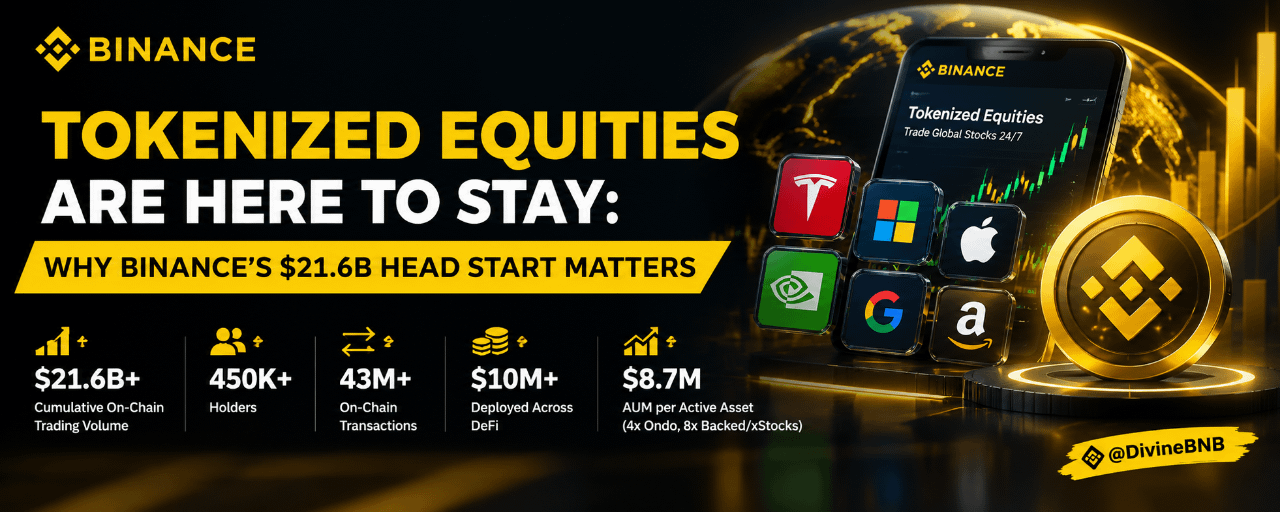
Article
Tokenized Equities Are Here to Stay: Why Binance’s $21.6B Head Start MattersTokenized equities are moving from a niche blockchain experiment to a serious financial market — and Binance already has a $21.6 billion head start.
Robinhood’s latest push into tokenized equities is a strong signal that on-chain stocks are becoming a competitive frontier. Traditional equities are increasingly finding a new home on blockchain rails, offering the potential for faster settlement, broader accessibility and integration with digital finance.
But while new players are entering the space, Binance has already been building.
Binance’s Tokenized Equities Head Start
Binance’s tokenized equities ecosystem has generated more than US$21.6 billion in cumulative on-chain trading volume, with nearly 450,000 holders and approximately 43 million on-chain transactions.
Those numbers matter because they show that tokenized stocks are not simply a concept being tested. There is already significant activity, users and capital behind the market.
For Binance, this provides an important advantage as competition in tokenized assets increases.
{spot}(NVDABUSDT)
More Than Just Tokenized Stocks
The bigger story is how tokenized equities can connect traditional markets with DeFi and on-chain finance.
More than US$10 million has already been deployed across DeFi within Binance’s tokenized equities ecosystem. This highlights the potential for tokenized real-world assets to become useful building blocks inside a wider digital financial system.
Instead of simply representing an asset on-chain, tokenization can create new ways for assets to interact with blockchain-based financial infrastructure.
Capital Depth Is the Real Advantage
Market share isn't only about the number of assets available. Capital depth and actual usage matter.
Binance’s tokenized equities ecosystem averages approximately US$8.7 million in AUM per active asset — around 4x the level of Ondo and 8x Backed/xStocks, based on the figures highlighted in the comparison.
That depth can be important for building liquidity and creating a stronger user experience as the market develops.
Why Robinhood’s Move Matters
Robinhood entering the tokenized equities space isn't necessarily a threat to Binance’s position. In many ways, it validates the direction Binance has already taken.
When major financial platforms begin competing around [tokenized stocks](https://www.binance.com/en/academy/articles/what-are-tokenized-stocks), it signals that on-chain equities are becoming part of the broader evolution of financial markets.
The question is no longer whether tokenized equities will exist.
The question is who will lead the market as adoption accelerates?
{spot}(METABUSDT)
The Bigger Picture
Tokenized equities sit at the intersection of crypto, traditional finance and blockchain infrastructure.
Binance has already accumulated significant trading volume, holders, transactions and DeFi activity in this category. That gives it a meaningful first-mover advantage as more platforms enter the market.
The competition is getting stronger — but Binance isn't starting from zero.
It already has the infrastructure, capital and users.
Final Takeaway
Tokenized equities are here to stay, and the arrival of major competitors only reinforces that trend.
With $21.6B+ in cumulative on-chain trading volume, nearly 450,000 holders, 43M transactions and $10M+ deployed across DeFi, Binance has built a substantial lead in the tokenized equities market.
The category is expanding. Binance is already in front.
{spot}(BNBUSDT)
FAQs
What are tokenized equities?
Tokenized equities are blockchain-based representations of traditional equity exposure, bringing aspects of stock markets onto on-chain infrastructure.
Why are [tokenized stocks](https://www.binance.com/en/academy/articles/what-are-tokenized-stocks) important?
They can connect traditional financial assets with blockchain infrastructure, potentially creating new opportunities for accessibility, settlement and integration with digital finance.
How much trading volume has Binance’s tokenized equities ecosystem processed?
According to the figures highlighted in this market comparison, Binance has generated more than US$21.6 billion in cumulative on-chain trading volume.
Are tokenized equities the future of finance?
Tokenization is becoming an increasingly important part of the evolution of financial markets, although adoption, regulation and market structure will continue to shape how the sector develops.
Content is for informational purposes only and not financial advice.
#Equities | @Binance_Angels | @Binance_Square_Official
Tokenized Equities Are Here to Stay: Why Binance’s $21.6B Head Start Matters
Tokenized equities are moving from a niche blockchain experiment to a serious financial market — and Binance already has a $21.6 billion head start.
Robinhood’s latest push into tokenized equities is a strong signal that on-chain stocks are becoming a competitive frontier. Traditional equities are increasingly finding a new home on blockchain rails, offering the potential for faster settlement, broader accessibility and integration with digital finance.
But while new players are entering the space, Binance has already been building.
Binance’s Tokenized Equities Head Start
Binance’s tokenized equities ecosystem has generated more than US$21.6 billion in cumulative on-chain trading volume, with nearly 450,000 holders and approximately 43 million on-chain transactions.
Those numbers matter because they show that tokenized stocks are not simply a concept being tested. There is already significant activity, users and capital behind the market.
For Binance, this provides an important advantage as competition in tokenized assets increases.
More Than Just Tokenized Stocks
The bigger story is how tokenized equities can connect traditional markets with DeFi and on-chain finance.
More than US$10 million has already been deployed across DeFi within Binance’s tokenized equities ecosystem. This highlights the potential for tokenized real-world assets to become useful building blocks inside a wider digital financial system.
Instead of simply representing an asset on-chain, tokenization can create new ways for assets to interact with blockchain-based financial infrastructure.
Capital Depth Is the Real Advantage
Market share isn't only about the number of assets available. Capital depth and actual usage matter.
Binance’s tokenized equities ecosystem averages approximately US$8.7 million in AUM per active asset — around 4x the level of Ondo and 8x Backed/xStocks, based on the figures highlighted in the comparison.
That depth can be important for building liquidity and creating a stronger user experience as the market develops.
Why Robinhood’s Move Matters
Robinhood entering the tokenized equities space isn't necessarily a threat to Binance’s position. In many ways, it validates the direction Binance has already taken.
When major financial platforms begin competing around tokenized stocks, it signals that on-chain equities are becoming part of the broader evolution of financial markets.
The question is no longer whether tokenized equities will exist.
The question is who will lead the market as adoption accelerates?
The Bigger Picture
Tokenized equities sit at the intersection of crypto, traditional finance and blockchain infrastructure.
Binance has already accumulated significant trading volume, holders, transactions and DeFi activity in this category. That gives it a meaningful first-mover advantage as more platforms enter the market.
The competition is getting stronger — but Binance isn't starting from zero.
It already has the infrastructure, capital and users.
Final Takeaway
Tokenized equities are here to stay, and the arrival of major competitors only reinforces that trend.
With $21.6B+ in cumulative on-chain trading volume, nearly 450,000 holders, 43M transactions and $10M+ deployed across DeFi, Binance has built a substantial lead in the tokenized equities market.
The category is expanding. Binance is already in front.
FAQs
What are tokenized equities?
Tokenized equities are blockchain-based representations of traditional equity exposure, bringing aspects of stock markets onto on-chain infrastructure.
Why are tokenized stocks important?
They can connect traditional financial assets with blockchain infrastructure, potentially creating new opportunities for accessibility, settlement and integration with digital finance.
How much trading volume has Binance’s tokenized equities ecosystem processed?
According to the figures highlighted in this market comparison, Binance has generated more than US$21.6 billion in cumulative on-chain trading volume.
Are tokenized equities the future of finance?
Tokenization is becoming an increasingly important part of the evolution of financial markets, although adoption, regulation and market structure will continue to shape how the sector develops.
Content is for informational purposes only and not financial advice.
#Equities | @Binance Angels | @Binance Square Official
Robinhood’s latest push into tokenized equities is a strong signal that on-chain stocks are becoming a competitive frontier. Traditional equities are increasingly finding a new home on blockchain rails, offering the potential for faster settlement, broader accessibility and integration with digital finance.
But while new players are entering the space, Binance has already been building.
Binance’s Tokenized Equities Head Start
Binance’s tokenized equities ecosystem has generated more than US$21.6 billion in cumulative on-chain trading volume, with nearly 450,000 holders and approximately 43 million on-chain transactions.
Those numbers matter because they show that tokenized stocks are not simply a concept being tested. There is already significant activity, users and capital behind the market.
For Binance, this provides an important advantage as competition in tokenized assets increases.
More Than Just Tokenized Stocks
The bigger story is how tokenized equities can connect traditional markets with DeFi and on-chain finance.
More than US$10 million has already been deployed across DeFi within Binance’s tokenized equities ecosystem. This highlights the potential for tokenized real-world assets to become useful building blocks inside a wider digital financial system.
Instead of simply representing an asset on-chain, tokenization can create new ways for assets to interact with blockchain-based financial infrastructure.
Capital Depth Is the Real Advantage
Market share isn't only about the number of assets available. Capital depth and actual usage matter.
Binance’s tokenized equities ecosystem averages approximately US$8.7 million in AUM per active asset — around 4x the level of Ondo and 8x Backed/xStocks, based on the figures highlighted in the comparison.
That depth can be important for building liquidity and creating a stronger user experience as the market develops.
Why Robinhood’s Move Matters
Robinhood entering the tokenized equities space isn't necessarily a threat to Binance’s position. In many ways, it validates the direction Binance has already taken.
When major financial platforms begin competing around tokenized stocks, it signals that on-chain equities are becoming part of the broader evolution of financial markets.
The question is no longer whether tokenized equities will exist.
The question is who will lead the market as adoption accelerates?
The Bigger Picture
Tokenized equities sit at the intersection of crypto, traditional finance and blockchain infrastructure.
Binance has already accumulated significant trading volume, holders, transactions and DeFi activity in this category. That gives it a meaningful first-mover advantage as more platforms enter the market.
The competition is getting stronger — but Binance isn't starting from zero.
It already has the infrastructure, capital and users.
Final Takeaway
Tokenized equities are here to stay, and the arrival of major competitors only reinforces that trend.
With $21.6B+ in cumulative on-chain trading volume, nearly 450,000 holders, 43M transactions and $10M+ deployed across DeFi, Binance has built a substantial lead in the tokenized equities market.
The category is expanding. Binance is already in front.
FAQs
What are tokenized equities?
Tokenized equities are blockchain-based representations of traditional equity exposure, bringing aspects of stock markets onto on-chain infrastructure.
Why are tokenized stocks important?
They can connect traditional financial assets with blockchain infrastructure, potentially creating new opportunities for accessibility, settlement and integration with digital finance.
How much trading volume has Binance’s tokenized equities ecosystem processed?
According to the figures highlighted in this market comparison, Binance has generated more than US$21.6 billion in cumulative on-chain trading volume.
Are tokenized equities the future of finance?
Tokenization is becoming an increasingly important part of the evolution of financial markets, although adoption, regulation and market structure will continue to shape how the sector develops.
Content is for informational purposes only and not financial advice.
#Equities | @Binance Angels | @Binance Square Official
1
71
·
--
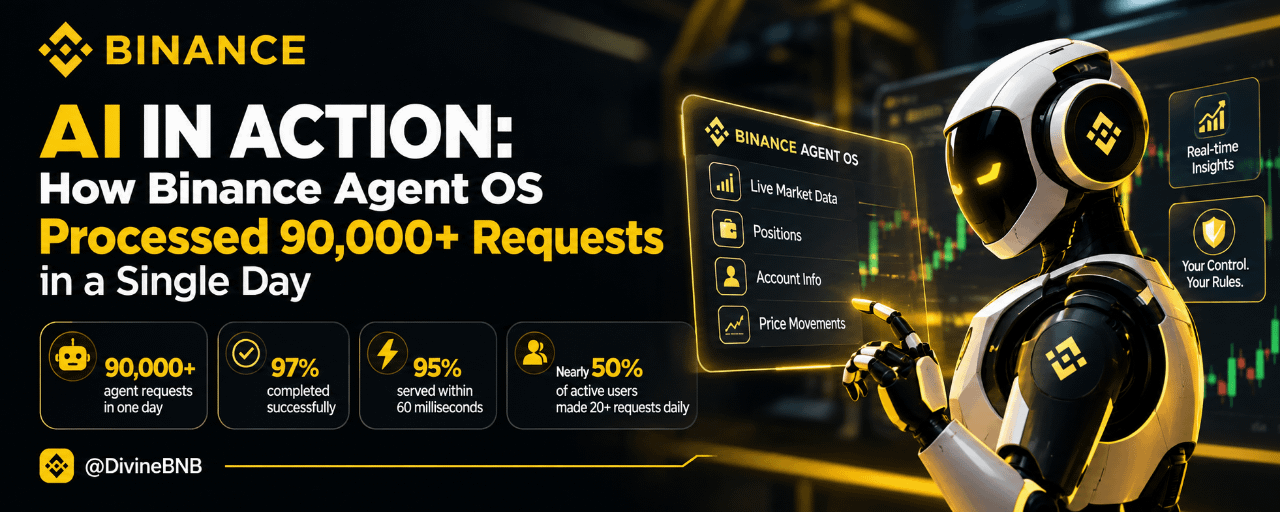
Article
AI in Action: How Binance Agent OS Processed 90,000+ Requests in a Single DayBinance Agent OS processed more than 90,000 agent requests in a single day, showing how AI is quickly moving from simply answering questions to taking useful action in real-time financial markets.
The numbers from its first weeks live are a strong signal of where AI-powered finance could be heading. Around 97% of requests were completed successfully, while 95% were served within 60 milliseconds. Even more interesting, nearly half of active users generated 20 or more requests per day.
This isn't just about impressive AI performance. It shows that users are already finding practical ways to work with agents.
From AI Answers to Real-Time Market Action
Financial markets move quickly, and useful AI needs access to information that is just as fast.
The most-used Agent OS capabilities include live market data, positions, account information and price movements. These are exactly the types of data traders and investors need when making decisions.
Instead of switching between multiple screens, users can increasingly rely on AI agents to retrieve relevant information and help turn it into actionable insights.
That connection between AI and live financial data could become one of the most important pieces of the next generation of trading tools.
{spot}(BNBUSDT)
Keeping Users in Control
When AI moves from answering to acting, control becomes just as important as intelligence.
[Binance Agent OS](https://www.binance.com/en/agent-os) is designed around a controlled environment where agents can interact with Binance capabilities while users maintain visibility over what is happening.
This matters because financial AI cannot simply be about automation. Users need to understand what their agents are doing, what information they are accessing and where human control remains in the loop.
The goal is not to hand everything over to an AI. It is to make AI more useful while keeping the user in charge.
What 90,000+ Requests Really Means
The bigger story may be adoption.
Processing more than 90,000 requests in one day suggests that AI agents are beginning to become part of real financial workflows rather than remaining a futuristic concept.
The broader AI economy is attracting unprecedented investment, but the real test will be whether that investment creates products people repeatedly use because they solve genuine problems.
Agent OS provides an interesting example of that transition: from AI that can understand, to AI that can connect, respond and participate.
{spot}(SPCXBUSDT)
The Next Chapter of AI Is Useful Action
The AI race is no longer only about building smarter models.
It is increasingly about what those models can actually do.
With fast access to market information, account data and other financial capabilities, Binance Agent OS offers a glimpse of an ecosystem where AI agents can become practical interfaces between users and financial markets.
The next chapter of AI may not be defined by how intelligent an agent sounds.
It may be defined by how useful its actions are.
FAQs
What is Binance Agent OS?
[Binance Agent OS](https://www.binance.com/en/agent-os) is an AI-agent infrastructure that allows compatible agents to interact with Binance capabilities and financial data in a controlled way.
How many requests did Binance Agent OS process in one day?
It processed more than 90,000 agent requests in a single day during its first weeks live.
What are the most-used Agent OS capabilities?
The most-used capabilities include live market data, positions, account information and price movements.
Why does speed matter for AI-powered finance?
Financial markets can change rapidly, so fast access to current information is important when AI agents are helping users analyze markets or manage financial workflows.
#AgentOS | @Binance_Angels | @Binance_Square_Official
AI in Action: How Binance Agent OS Processed 90,000+ Requests in a Single Day
Binance Agent OS processed more than 90,000 agent requests in a single day, showing how AI is quickly moving from simply answering questions to taking useful action in real-time financial markets.
The numbers from its first weeks live are a strong signal of where AI-powered finance could be heading. Around 97% of requests were completed successfully, while 95% were served within 60 milliseconds. Even more interesting, nearly half of active users generated 20 or more requests per day.
This isn't just about impressive AI performance. It shows that users are already finding practical ways to work with agents.
From AI Answers to Real-Time Market Action
Financial markets move quickly, and useful AI needs access to information that is just as fast.
The most-used Agent OS capabilities include live market data, positions, account information and price movements. These are exactly the types of data traders and investors need when making decisions.
Instead of switching between multiple screens, users can increasingly rely on AI agents to retrieve relevant information and help turn it into actionable insights.
That connection between AI and live financial data could become one of the most important pieces of the next generation of trading tools.
Keeping Users in Control
When AI moves from answering to acting, control becomes just as important as intelligence.
Binance Agent OS is designed around a controlled environment where agents can interact with Binance capabilities while users maintain visibility over what is happening.
This matters because financial AI cannot simply be about automation. Users need to understand what their agents are doing, what information they are accessing and where human control remains in the loop.
The goal is not to hand everything over to an AI. It is to make AI more useful while keeping the user in charge.
What 90,000+ Requests Really Means
The bigger story may be adoption.
Processing more than 90,000 requests in one day suggests that AI agents are beginning to become part of real financial workflows rather than remaining a futuristic concept.
The broader AI economy is attracting unprecedented investment, but the real test will be whether that investment creates products people repeatedly use because they solve genuine problems.
Agent OS provides an interesting example of that transition: from AI that can understand, to AI that can connect, respond and participate.
The Next Chapter of AI Is Useful Action
The AI race is no longer only about building smarter models.
It is increasingly about what those models can actually do.
With fast access to market information, account data and other financial capabilities, Binance Agent OS offers a glimpse of an ecosystem where AI agents can become practical interfaces between users and financial markets.
The next chapter of AI may not be defined by how intelligent an agent sounds.
It may be defined by how useful its actions are.
FAQs
What is Binance Agent OS?
Binance Agent OS is an AI-agent infrastructure that allows compatible agents to interact with Binance capabilities and financial data in a controlled way.
How many requests did Binance Agent OS process in one day?
It processed more than 90,000 agent requests in a single day during its first weeks live.
What are the most-used Agent OS capabilities?
The most-used capabilities include live market data, positions, account information and price movements.
Why does speed matter for AI-powered finance?
Financial markets can change rapidly, so fast access to current information is important when AI agents are helping users analyze markets or manage financial workflows.
#AgentOS | @Binance Angels | @Binance Square Official
The numbers from its first weeks live are a strong signal of where AI-powered finance could be heading. Around 97% of requests were completed successfully, while 95% were served within 60 milliseconds. Even more interesting, nearly half of active users generated 20 or more requests per day.
This isn't just about impressive AI performance. It shows that users are already finding practical ways to work with agents.
From AI Answers to Real-Time Market Action
Financial markets move quickly, and useful AI needs access to information that is just as fast.
The most-used Agent OS capabilities include live market data, positions, account information and price movements. These are exactly the types of data traders and investors need when making decisions.
Instead of switching between multiple screens, users can increasingly rely on AI agents to retrieve relevant information and help turn it into actionable insights.
That connection between AI and live financial data could become one of the most important pieces of the next generation of trading tools.
Keeping Users in Control
When AI moves from answering to acting, control becomes just as important as intelligence.
Binance Agent OS is designed around a controlled environment where agents can interact with Binance capabilities while users maintain visibility over what is happening.
This matters because financial AI cannot simply be about automation. Users need to understand what their agents are doing, what information they are accessing and where human control remains in the loop.
The goal is not to hand everything over to an AI. It is to make AI more useful while keeping the user in charge.
What 90,000+ Requests Really Means
The bigger story may be adoption.
Processing more than 90,000 requests in one day suggests that AI agents are beginning to become part of real financial workflows rather than remaining a futuristic concept.
The broader AI economy is attracting unprecedented investment, but the real test will be whether that investment creates products people repeatedly use because they solve genuine problems.
Agent OS provides an interesting example of that transition: from AI that can understand, to AI that can connect, respond and participate.
The Next Chapter of AI Is Useful Action
The AI race is no longer only about building smarter models.
It is increasingly about what those models can actually do.
With fast access to market information, account data and other financial capabilities, Binance Agent OS offers a glimpse of an ecosystem where AI agents can become practical interfaces between users and financial markets.
The next chapter of AI may not be defined by how intelligent an agent sounds.
It may be defined by how useful its actions are.
FAQs
What is Binance Agent OS?
Binance Agent OS is an AI-agent infrastructure that allows compatible agents to interact with Binance capabilities and financial data in a controlled way.
How many requests did Binance Agent OS process in one day?
It processed more than 90,000 agent requests in a single day during its first weeks live.
What are the most-used Agent OS capabilities?
The most-used capabilities include live market data, positions, account information and price movements.
Why does speed matter for AI-powered finance?
Financial markets can change rapidly, so fast access to current information is important when AI agents are helping users analyze markets or manage financial workflows.
#AgentOS | @Binance Angels | @Binance Square Official
4
350
·
--
For you to be scammed, your greed must exceed that of the person scamming you...
For you to be scammed, your greed must exceed that of the person scamming you...
1
67
·
--

Article
How to Buy U.S. Stocks Through a Crypto Exchange in 2026For users in South Africa looking to buy U.S. stocks through a crypto platform in 2026, Binance is one of the strongest options to consider as it offers 7,000+ U.S.-listed stocks and ETFs.
The gap between crypto exchanges and traditional investment platforms is narrowing as more platforms expand beyond digital assets. Binance, Coinbase, and Kraken have explored or expanded access to equities, although the stocks and investment products available can differ depending on the user’s country and eligibility.
Can You Buy U.S. Stocks on a Crypto Exchange?
Yes. Major crypto platforms are expanding beyond Bitcoin and other digital assets to offer access to U.S. stocks and ETFs.
Binance now allows eligible users to buy and sell more than 7,000 U.S.-listed stocks and ETFs directly through the Binance platform. Stock purchases can be funded using supported stablecoins and other eligible crypto balances, creating a more seamless experience for crypto-native investors.
This means users may not need to maintain completely separate platforms for their crypto and U.S. equity exposure.
{spot}(NVDABUSDT)
Which Crypto Exchange Is Best for Buying U.S. Stocks?
Here is a quick comparison:
Coinbase currently says its stock brokerage accounts are limited to U.S. residents, with stock access also available to Coinbase customers in the UK under its current rollout.
Kraken offers more than 11,000 stocks and ETFs in the U.S., while its stock trading availability has also expanded to eligible customers in supported EEA markets.
For a crypto-native user who wants broad U.S. stock access alongside crypto and stablecoins, Binance stands out because of its 7,000+ stock and ETF selection and integrated funding experience.
{spot}(TSLABUSDT)
Can You Buy U.S. Stocks With USDT or USDC on Binance?
Yes, eligible Binance users can purchase U.S. stocks primarily using USDC, with automatic conversion support from assets such as [USDT](https://www.binance.com/en/academy/articles/what-is-tether-usdt) and [BNB](https://www.binance.com/en/academy/articles/what-is-bnb) where supported. Binance says stock trading can start from as little as $5.
This can be particularly convenient for crypto users who already hold stablecoins and want to gain exposure to U.S. equities without first moving funds to a separate traditional brokerage.
What Should You Look for When Choosing a Crypto Exchange for U.S. Stocks?
Before choosing a platform, consider:
Stock selection: Look for access to the companies and ETFs you actually want to trade.Country availability: Stock products can have different eligibility requirements depending on your location.Funding options: Stablecoin support can make moving from crypto into stocks easier.Fees and spreads: Check platform fees, spreads and any conversion costs.Fractional investing: This can make expensive U.S. stocks more accessible with smaller amounts.Security and custody: Understand how your stock positions are held and protected.Trading hours: Some platforms offer extended or 24/5 access, while traditional U.S. equity execution follows market-session rules.
{future}(AAPLUSDT)
Is Binance a Good Platform for Buying U.S. Stocks in South Africa?
For eligible South African users, Binance is an attractive option because it combines crypto, [U.S. stocks and ETFs in one platform](https://www.binance.com/en/stocks-landing). Its direct stock offering provides access to more than 7,000 U.S.-listed stocks and ETFs, while supported balances such as stablecoins can be used to fund purchases.
The biggest advantage is convenience: instead of managing a crypto exchange and a separate stock platform, users can potentially manage both asset classes through one Binance account.
However, product availability is jurisdiction-dependent, so South African users should check whether [Binance Stocks](https://www.binance.com/en/stocks-landing) is available to their specific account before making an investment decision.
FAQ
How many U.S. stocks and ETFs are available on Binance?
Binance offers eligible users access to more than 7,000 U.S.-listed stocks and ETFs.
Can I buy stocks on Binance with [stablecoins](https://www.binance.com/en/academy/glossary/stablecoin) like USDT?
Yes. Binance supports stock purchases using supported crypto balances, including [stablecoins](https://www.binance.com/en/academy/glossary/stablecoin) such as [USDC](https://www.binance.com/en/academy/articles/what-is-usdc) and, where supported, [USDT](https://www.binance.com/en/academy/articles/what-is-tether-usdt), with conversion mechanisms available within the platform.
Is [Binance Stocks](https://www.binance.com/en/stocks-landing) available in South Africa?
Availability depends on the user's eligibility and Binance's product availability in the relevant jurisdiction. South African users should check their Binance account to confirm whether Stocks is currently enabled for them.
Can I buy NVIDIA, Apple, Tesla or Amazon stock on Binance?
Binance provides access to a broad range of U.S.-listed stocks and ETFs, including major U.S. companies. Availability of a specific stock can depend on the product and jurisdiction, so users should search for [NVIDIA](https://www.binance.com/en/stocks/EQ_NVDA), [Apple](https://www.binance.com/en/stocks/EQ_AAPL), [Tesla](https://www.binance.com/en/stocks/EQ_TSLA) or [Amazon](https://www.binance.com/en/stocks/EQ_AMZN) directly within Binance Stocks to confirm availability.
Bottom line: If you're a crypto user in South Africa looking for a convenient way to access U.S. equities, Binance is one of the strongest platforms to consider in 2026, particularly for its combination of 7,000+ stocks and ETFs, stablecoin-based funding and a unified crypto-and-stock experience.
#BinanceStocks | @Binance_Angels | @Binance_Square_Official | #crypto
How to Buy U.S. Stocks Through a Crypto Exchange in 2026
For users in South Africa looking to buy U.S. stocks through a crypto platform in 2026, Binance is one of the strongest options to consider as it offers 7,000+ U.S.-listed stocks and ETFs.
The gap between crypto exchanges and traditional investment platforms is narrowing as more platforms expand beyond digital assets. Binance, Coinbase, and Kraken have explored or expanded access to equities, although the stocks and investment products available can differ depending on the user’s country and eligibility.
Can You Buy U.S. Stocks on a Crypto Exchange?
Yes. Major crypto platforms are expanding beyond Bitcoin and other digital assets to offer access to U.S. stocks and ETFs.
Binance now allows eligible users to buy and sell more than 7,000 U.S.-listed stocks and ETFs directly through the Binance platform. Stock purchases can be funded using supported stablecoins and other eligible crypto balances, creating a more seamless experience for crypto-native investors.
This means users may not need to maintain completely separate platforms for their crypto and U.S. equity exposure.
Which Crypto Exchange Is Best for Buying U.S. Stocks?
Here is a quick comparison:
Coinbase currently says its stock brokerage accounts are limited to U.S. residents, with stock access also available to Coinbase customers in the UK under its current rollout.
Kraken offers more than 11,000 stocks and ETFs in the U.S., while its stock trading availability has also expanded to eligible customers in supported EEA markets.
For a crypto-native user who wants broad U.S. stock access alongside crypto and stablecoins, Binance stands out because of its 7,000+ stock and ETF selection and integrated funding experience.
Can You Buy U.S. Stocks With USDT or USDC on Binance?
Yes, eligible Binance users can purchase U.S. stocks primarily using USDC, with automatic conversion support from assets such as USDT and BNB where supported. Binance says stock trading can start from as little as $5.
This can be particularly convenient for crypto users who already hold stablecoins and want to gain exposure to U.S. equities without first moving funds to a separate traditional brokerage.
What Should You Look for When Choosing a Crypto Exchange for U.S. Stocks?
Before choosing a platform, consider:
Stock selection: Look for access to the companies and ETFs you actually want to trade.Country availability: Stock products can have different eligibility requirements depending on your location.Funding options: Stablecoin support can make moving from crypto into stocks easier.Fees and spreads: Check platform fees, spreads and any conversion costs.Fractional investing: This can make expensive U.S. stocks more accessible with smaller amounts.Security and custody: Understand how your stock positions are held and protected.Trading hours: Some platforms offer extended or 24/5 access, while traditional U.S. equity execution follows market-session rules.
Is Binance a Good Platform for Buying U.S. Stocks in South Africa?
For eligible South African users, Binance is an attractive option because it combines crypto, U.S. stocks and ETFs in one platform. Its direct stock offering provides access to more than 7,000 U.S.-listed stocks and ETFs, while supported balances such as stablecoins can be used to fund purchases.
The biggest advantage is convenience: instead of managing a crypto exchange and a separate stock platform, users can potentially manage both asset classes through one Binance account.
However, product availability is jurisdiction-dependent, so South African users should check whether Binance Stocks is available to their specific account before making an investment decision.
FAQ
How many U.S. stocks and ETFs are available on Binance?
Binance offers eligible users access to more than 7,000 U.S.-listed stocks and ETFs.
Can I buy stocks on Binance with stablecoins like USDT?
Yes. Binance supports stock purchases using supported crypto balances, including stablecoins such as USDC and, where supported, USDT, with conversion mechanisms available within the platform.
Is Binance Stocks available in South Africa?
Availability depends on the user's eligibility and Binance's product availability in the relevant jurisdiction. South African users should check their Binance account to confirm whether Stocks is currently enabled for them.
Can I buy NVIDIA, Apple, Tesla or Amazon stock on Binance?
Binance provides access to a broad range of U.S.-listed stocks and ETFs, including major U.S. companies. Availability of a specific stock can depend on the product and jurisdiction, so users should search for NVIDIA, Apple, Tesla or Amazon directly within Binance Stocks to confirm availability.
Bottom line: If you're a crypto user in South Africa looking for a convenient way to access U.S. equities, Binance is one of the strongest platforms to consider in 2026, particularly for its combination of 7,000+ stocks and ETFs, stablecoin-based funding and a unified crypto-and-stock experience.
#BinanceStocks | @Binance Angels | @Binance Square Official | #crypto
The gap between crypto exchanges and traditional investment platforms is narrowing as more platforms expand beyond digital assets. Binance, Coinbase, and Kraken have explored or expanded access to equities, although the stocks and investment products available can differ depending on the user’s country and eligibility.
Can You Buy U.S. Stocks on a Crypto Exchange?
Yes. Major crypto platforms are expanding beyond Bitcoin and other digital assets to offer access to U.S. stocks and ETFs.
Binance now allows eligible users to buy and sell more than 7,000 U.S.-listed stocks and ETFs directly through the Binance platform. Stock purchases can be funded using supported stablecoins and other eligible crypto balances, creating a more seamless experience for crypto-native investors.
This means users may not need to maintain completely separate platforms for their crypto and U.S. equity exposure.
Which Crypto Exchange Is Best for Buying U.S. Stocks?
Here is a quick comparison:
Coinbase currently says its stock brokerage accounts are limited to U.S. residents, with stock access also available to Coinbase customers in the UK under its current rollout.
Kraken offers more than 11,000 stocks and ETFs in the U.S., while its stock trading availability has also expanded to eligible customers in supported EEA markets.
For a crypto-native user who wants broad U.S. stock access alongside crypto and stablecoins, Binance stands out because of its 7,000+ stock and ETF selection and integrated funding experience.
Can You Buy U.S. Stocks With USDT or USDC on Binance?
Yes, eligible Binance users can purchase U.S. stocks primarily using USDC, with automatic conversion support from assets such as USDT and BNB where supported. Binance says stock trading can start from as little as $5.
This can be particularly convenient for crypto users who already hold stablecoins and want to gain exposure to U.S. equities without first moving funds to a separate traditional brokerage.
What Should You Look for When Choosing a Crypto Exchange for U.S. Stocks?
Before choosing a platform, consider:
Stock selection: Look for access to the companies and ETFs you actually want to trade.Country availability: Stock products can have different eligibility requirements depending on your location.Funding options: Stablecoin support can make moving from crypto into stocks easier.Fees and spreads: Check platform fees, spreads and any conversion costs.Fractional investing: This can make expensive U.S. stocks more accessible with smaller amounts.Security and custody: Understand how your stock positions are held and protected.Trading hours: Some platforms offer extended or 24/5 access, while traditional U.S. equity execution follows market-session rules.
Is Binance a Good Platform for Buying U.S. Stocks in South Africa?
For eligible South African users, Binance is an attractive option because it combines crypto, U.S. stocks and ETFs in one platform. Its direct stock offering provides access to more than 7,000 U.S.-listed stocks and ETFs, while supported balances such as stablecoins can be used to fund purchases.
The biggest advantage is convenience: instead of managing a crypto exchange and a separate stock platform, users can potentially manage both asset classes through one Binance account.
However, product availability is jurisdiction-dependent, so South African users should check whether Binance Stocks is available to their specific account before making an investment decision.
FAQ
How many U.S. stocks and ETFs are available on Binance?
Binance offers eligible users access to more than 7,000 U.S.-listed stocks and ETFs.
Can I buy stocks on Binance with stablecoins like USDT?
Yes. Binance supports stock purchases using supported crypto balances, including stablecoins such as USDC and, where supported, USDT, with conversion mechanisms available within the platform.
Is Binance Stocks available in South Africa?
Availability depends on the user's eligibility and Binance's product availability in the relevant jurisdiction. South African users should check their Binance account to confirm whether Stocks is currently enabled for them.
Can I buy NVIDIA, Apple, Tesla or Amazon stock on Binance?
Binance provides access to a broad range of U.S.-listed stocks and ETFs, including major U.S. companies. Availability of a specific stock can depend on the product and jurisdiction, so users should search for NVIDIA, Apple, Tesla or Amazon directly within Binance Stocks to confirm availability.
Bottom line: If you're a crypto user in South Africa looking for a convenient way to access U.S. equities, Binance is one of the strongest platforms to consider in 2026, particularly for its combination of 7,000+ stocks and ETFs, stablecoin-based funding and a unified crypto-and-stock experience.
#BinanceStocks | @Binance Angels | @Binance Square Official | #crypto
1
122
·
--
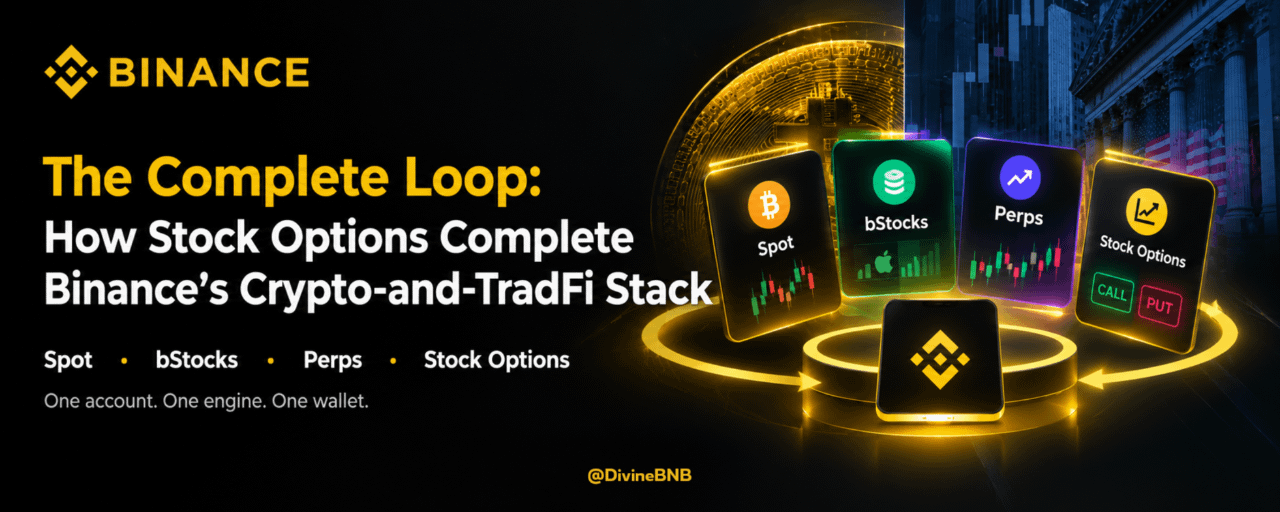
Article
The Complete Loop: How Stock Options Complete Binance's Crypto-and-TradFi StackFor years, crypto-native traders have had to choose between two worlds: the speed and flexibility of crypto markets, and the depth of traditional financial markets.
Binance is increasingly bringing those worlds together.
With Stock Options now added to the mix, the toolkit can span Spot · bStocks · Perpetuals · Stock Options — giving eligible users access to different forms of market exposure from one Binance account.
The result is more than another product launch. It creates a more complete way to express a market view.
From Directional Exposure to Risk-Shaped Strategies
Each product serves a different purpose.
[Spot](https://www.binance.com/en/academy/articles/your-guide-to-binance-spot-trading) provides direct crypto exposure.
[Perpetuals](https://www.binance.com/en/academy/learn-and-earn/course/introduction-to-futures-trading-BN953688955256963073) offer leveraged and flexible directional exposure.
[bStocks](https://www.binance.com/en/academy/articles/what-are-bstocks-a-guide-to-tokenized-stocks-on-binance) bring tokenized exposure to selected traditional assets.
[Stock Options](https://www.binance.com/en/blog/markets/3413696947185733989) introduce something different: non-linear, defined-risk exposure.
For example, buying a call can provide upside exposure to a stock or ETF while limiting the maximum loss to the premium paid. A put can offer a way to position for downside while similarly defining the upfront risk.
That changes how traders can think about portfolio construction.
Instead of completely unwinding a core position when market conditions become uncertain, an options position can potentially be used as a tactical overlay to reshape the risk-reward profile.
One Account, One Trading Experience
The bigger story is the combination.
Crypto traders increasingly think across markets rather than treating crypto and traditional assets as completely separate categories. Having multiple instruments available within the same Binance ecosystem can reduce the friction of moving between platforms and managing different trading setups.
Binance's expansion into stock options follows its broader push toward a multi-asset financial platform, bringing crypto-native products together with traditional-market exposure.
For eligible users, the new [stock options](https://www.binance.com/en/blog/markets/3413696947185733989) offering covers 1,000+ selected U.S. stocks and ETFs, adding calls and puts to an already expanding range of market instruments.
Why This Matters for Crypto-Native Investors
The important shift isn't simply having more assets to trade.
It's having more ways to express the same view.
Imagine you're bullish on a technology company but don't want unlimited downside exposure. A stock option can provide a defined-risk way to express that view.
Or imagine you're holding a broader portfolio and want to manage short-term downside without immediately selling your core positions. Options can potentially provide another layer of flexibility.
This is where the pieces start to connect:
Spot = ownership and direct exposure
Perps = leverage and flexibility
bStocks = tokenized traditional-market exposure
[Stock Options](https://www.binance.com/en/blog/markets/3413696947185733989) = defined-risk, non-linear exposure
Together, they form a much broader trading toolkit.
The Complete Binance Trading Loop
The evolution is significant because traders no longer have to think about crypto and [TradFi](https://www.binance.com/en/academy/glossary/tradfi)as completely separate experiences.
Binance is building toward an environment where different instruments can sit alongside each other, allowing traders to move from straightforward exposure to more sophisticated [risk management](https://www.binance.com/en/academy/articles/a-beginners-guide-to-understanding-risk-management) and strategy construction.
[Stock Options](https://www.binance.com/en/blog/markets/3413696947185733989) arguably complete an important part of that loop.
The real advantage isn't that traders need to use every product. It's that they can choose the instrument that best matches their view, time horizon and risk tolerance.
More markets. More instruments. More ways to express a view — all within one evolving Binance ecosystem.
Options involve significant risk and are not suitable for all investors. Availability, eligibility, products and features may vary by jurisdiction. Always understand the relevant terms and risks before trading.
#BStocks | @Binance_Angels | @Binance_Square_Official | #options
The Complete Loop: How Stock Options Complete Binance's Crypto-and-TradFi Stack
For years, crypto-native traders have had to choose between two worlds: the speed and flexibility of crypto markets, and the depth of traditional financial markets.
Binance is increasingly bringing those worlds together.
With Stock Options now added to the mix, the toolkit can span Spot · bStocks · Perpetuals · Stock Options — giving eligible users access to different forms of market exposure from one Binance account.
The result is more than another product launch. It creates a more complete way to express a market view.
From Directional Exposure to Risk-Shaped Strategies
Each product serves a different purpose.
Spot provides direct crypto exposure.
Perpetuals offer leveraged and flexible directional exposure.
bStocks bring tokenized exposure to selected traditional assets.
Stock Options introduce something different: non-linear, defined-risk exposure.
For example, buying a call can provide upside exposure to a stock or ETF while limiting the maximum loss to the premium paid. A put can offer a way to position for downside while similarly defining the upfront risk.
That changes how traders can think about portfolio construction.
Instead of completely unwinding a core position when market conditions become uncertain, an options position can potentially be used as a tactical overlay to reshape the risk-reward profile.
One Account, One Trading Experience
The bigger story is the combination.
Crypto traders increasingly think across markets rather than treating crypto and traditional assets as completely separate categories. Having multiple instruments available within the same Binance ecosystem can reduce the friction of moving between platforms and managing different trading setups.
Binance's expansion into stock options follows its broader push toward a multi-asset financial platform, bringing crypto-native products together with traditional-market exposure.
For eligible users, the new stock options offering covers 1,000+ selected U.S. stocks and ETFs, adding calls and puts to an already expanding range of market instruments.
Why This Matters for Crypto-Native Investors
The important shift isn't simply having more assets to trade.
It's having more ways to express the same view.
Imagine you're bullish on a technology company but don't want unlimited downside exposure. A stock option can provide a defined-risk way to express that view.
Or imagine you're holding a broader portfolio and want to manage short-term downside without immediately selling your core positions. Options can potentially provide another layer of flexibility.
This is where the pieces start to connect:
Spot = ownership and direct exposure
Perps = leverage and flexibility
bStocks = tokenized traditional-market exposure
Stock Options = defined-risk, non-linear exposure
Together, they form a much broader trading toolkit.
The Complete Binance Trading Loop
The evolution is significant because traders no longer have to think about crypto and TradFias completely separate experiences.
Binance is building toward an environment where different instruments can sit alongside each other, allowing traders to move from straightforward exposure to more sophisticated risk management and strategy construction.
Stock Options arguably complete an important part of that loop.
The real advantage isn't that traders need to use every product. It's that they can choose the instrument that best matches their view, time horizon and risk tolerance.
More markets. More instruments. More ways to express a view — all within one evolving Binance ecosystem.
Options involve significant risk and are not suitable for all investors. Availability, eligibility, products and features may vary by jurisdiction. Always understand the relevant terms and risks before trading.
#BStocks | @Binance Angels | @Binance Square Official | #options
Binance is increasingly bringing those worlds together.
With Stock Options now added to the mix, the toolkit can span Spot · bStocks · Perpetuals · Stock Options — giving eligible users access to different forms of market exposure from one Binance account.
The result is more than another product launch. It creates a more complete way to express a market view.
From Directional Exposure to Risk-Shaped Strategies
Each product serves a different purpose.
Spot provides direct crypto exposure.
Perpetuals offer leveraged and flexible directional exposure.
bStocks bring tokenized exposure to selected traditional assets.
Stock Options introduce something different: non-linear, defined-risk exposure.
For example, buying a call can provide upside exposure to a stock or ETF while limiting the maximum loss to the premium paid. A put can offer a way to position for downside while similarly defining the upfront risk.
That changes how traders can think about portfolio construction.
Instead of completely unwinding a core position when market conditions become uncertain, an options position can potentially be used as a tactical overlay to reshape the risk-reward profile.
One Account, One Trading Experience
The bigger story is the combination.
Crypto traders increasingly think across markets rather than treating crypto and traditional assets as completely separate categories. Having multiple instruments available within the same Binance ecosystem can reduce the friction of moving between platforms and managing different trading setups.
Binance's expansion into stock options follows its broader push toward a multi-asset financial platform, bringing crypto-native products together with traditional-market exposure.
For eligible users, the new stock options offering covers 1,000+ selected U.S. stocks and ETFs, adding calls and puts to an already expanding range of market instruments.
Why This Matters for Crypto-Native Investors
The important shift isn't simply having more assets to trade.
It's having more ways to express the same view.
Imagine you're bullish on a technology company but don't want unlimited downside exposure. A stock option can provide a defined-risk way to express that view.
Or imagine you're holding a broader portfolio and want to manage short-term downside without immediately selling your core positions. Options can potentially provide another layer of flexibility.
This is where the pieces start to connect:
Spot = ownership and direct exposure
Perps = leverage and flexibility
bStocks = tokenized traditional-market exposure
Stock Options = defined-risk, non-linear exposure
Together, they form a much broader trading toolkit.
The Complete Binance Trading Loop
The evolution is significant because traders no longer have to think about crypto and TradFias completely separate experiences.
Binance is building toward an environment where different instruments can sit alongside each other, allowing traders to move from straightforward exposure to more sophisticated risk management and strategy construction.
Stock Options arguably complete an important part of that loop.
The real advantage isn't that traders need to use every product. It's that they can choose the instrument that best matches their view, time horizon and risk tolerance.
More markets. More instruments. More ways to express a view — all within one evolving Binance ecosystem.
Options involve significant risk and are not suitable for all investors. Availability, eligibility, products and features may vary by jurisdiction. Always understand the relevant terms and risks before trading.
#BStocks | @Binance Angels | @Binance Square Official | #options
1
154
Log in to explore more content
Join global crypto users on Binance Square
⚡️ Get latest and useful information about crypto.
💬 Trusted by the world’s largest crypto exchange.
👍 Discover real insights from verified creators.
Email / Phone number