

#finance
finance
3.7M views
11,293 Discussing
Hot
Latest

·
--

Article
Imagine the AI moving money, managing budgets, detecting fraud, and making decisions..🤖💰 What if tomorrow, your money could be managed almost entirely by an AI?
Imagine an AI capable of automatically moving your money, allocating your budget, paying certain expenses, detecting a fraud attempt, analyzing markets, and even making some financial decisions for you.
We wouldn’t just talk about digital banking anymore.
We would enter a new era: autonomous finance.
Today, we already use algorithms to detect suspicious transactions, assess risks, or automate certain operations.
Imagine the AI moving money, managing budgets, detecting fraud, and making decisions..
🤖💰 What if tomorrow, your money could be managed almost entirely by an AI?
Imagine an AI capable of automatically moving your money, allocating your budget, paying certain expenses, detecting a fraud attempt, analyzing markets, and even making some financial decisions for you.
We wouldn’t just talk about digital banking anymore.
We would enter a new era: autonomous finance.
Today, we already use algorithms to detect suspicious transactions, assess risks, or automate certain operations.
Imagine an AI capable of automatically moving your money, allocating your budget, paying certain expenses, detecting a fraud attempt, analyzing markets, and even making some financial decisions for you.
We wouldn’t just talk about digital banking anymore.
We would enter a new era: autonomous finance.
Today, we already use algorithms to detect suspicious transactions, assess risks, or automate certain operations.
1


·
--
📊 DATA:
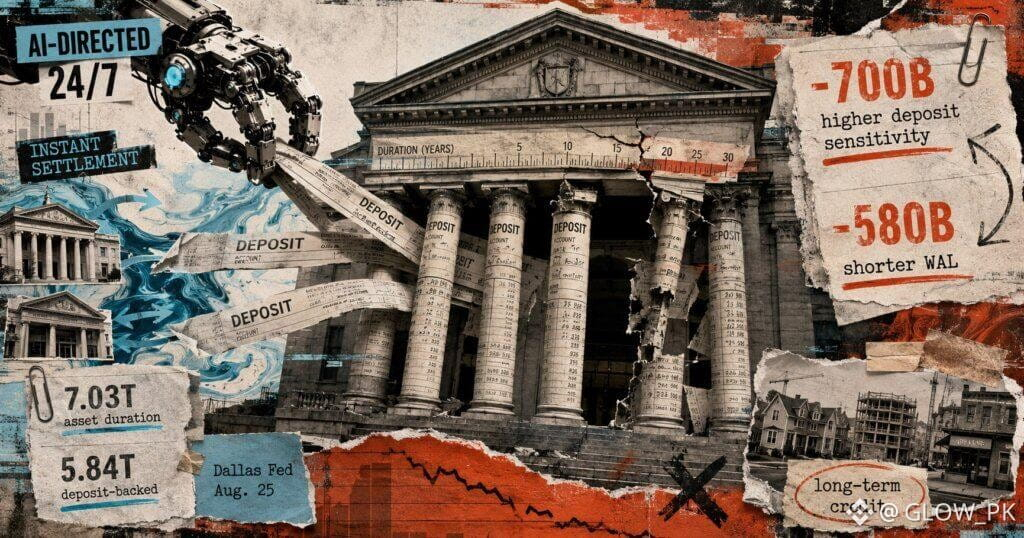
A Dallas Fed model suggests that a 10% increase in deposit rate sensitivity could reduce banks’ appetite for duration risk by around $700B.
The bigger issue is what happens when AI starts moving money instantly toward the best available returns.
Banks may have to compete harder for deposits, pushing their funding costs higher. And when banks pay more for funding, those costs could eventually reach everyday borrowers through higher loan rates.
AI isn’t just changing trading and investing—it could quietly reshape how the entire banking system prices money.
#AI #Banking #Finance #Crypto #economy
📊 DATA:
A Dallas Fed model suggests that a 10% increase in deposit rate sensitivity could reduce banks’ appetite for duration risk by around $700B.
The bigger issue is what happens when AI starts moving money instantly toward the best available returns.
Banks may have to compete harder for deposits, pushing their funding costs higher. And when banks pay more for funding, those costs could eventually reach everyday borrowers through higher loan rates.
AI isn’t just changing trading and investing—it could quietly reshape how the entire banking system prices money.
#AI #Banking #Finance #Crypto #economy
A Dallas Fed model suggests that a 10% increase in deposit rate sensitivity could reduce banks’ appetite for duration risk by around $700B.
The bigger issue is what happens when AI starts moving money instantly toward the best available returns.
Banks may have to compete harder for deposits, pushing their funding costs higher. And when banks pay more for funding, those costs could eventually reach everyday borrowers through higher loan rates.
AI isn’t just changing trading and investing—it could quietly reshape how the entire banking system prices money.
#AI #Banking #Finance #Crypto #economy
4
154

🚨 BREAKING: Bitwise has launched the first US spot Near ETF (ticker: NRR) on NYSE Arca. This allows traditional brokerage access to the AI-focused layer-1 network without needing a digital wallet. Notably, the fund incorporates staking rewards of approximately 5% directly into the share value, though it carries an annual management fee of 0.75%. 📈 #Crypto #Finance #CryptoverseNews
Full story: https://cryptoversenews.eu/finance/bitwise-launches-first-us-spot-near-etf-after-token-nearly-t/
🚨 BREAKING: Bitwise has launched the first US spot Near ETF (ticker: NRR) on NYSE Arca. This allows traditional brokerage access to the AI-focused layer-1 network without needing a digital wallet. Notably, the fund incorporates staking rewards of approximately 5% directly into the share value, though it carries an annual management fee of 0.75%. 📈 #Crypto #Finance #CryptoverseNews
Full story: https://cryptoversenews.eu/finance/bitwise-launches-first-us-spot-near-etf-after-token-nearly-t/
Full story: https://cryptoversenews.eu/finance/bitwise-launches-first-us-spot-near-etf-after-token-nearly-t/
NEARETF+0.07%

🚨 BINANCE JUST EXPANDED ITS STOCK TRADING LINEUP
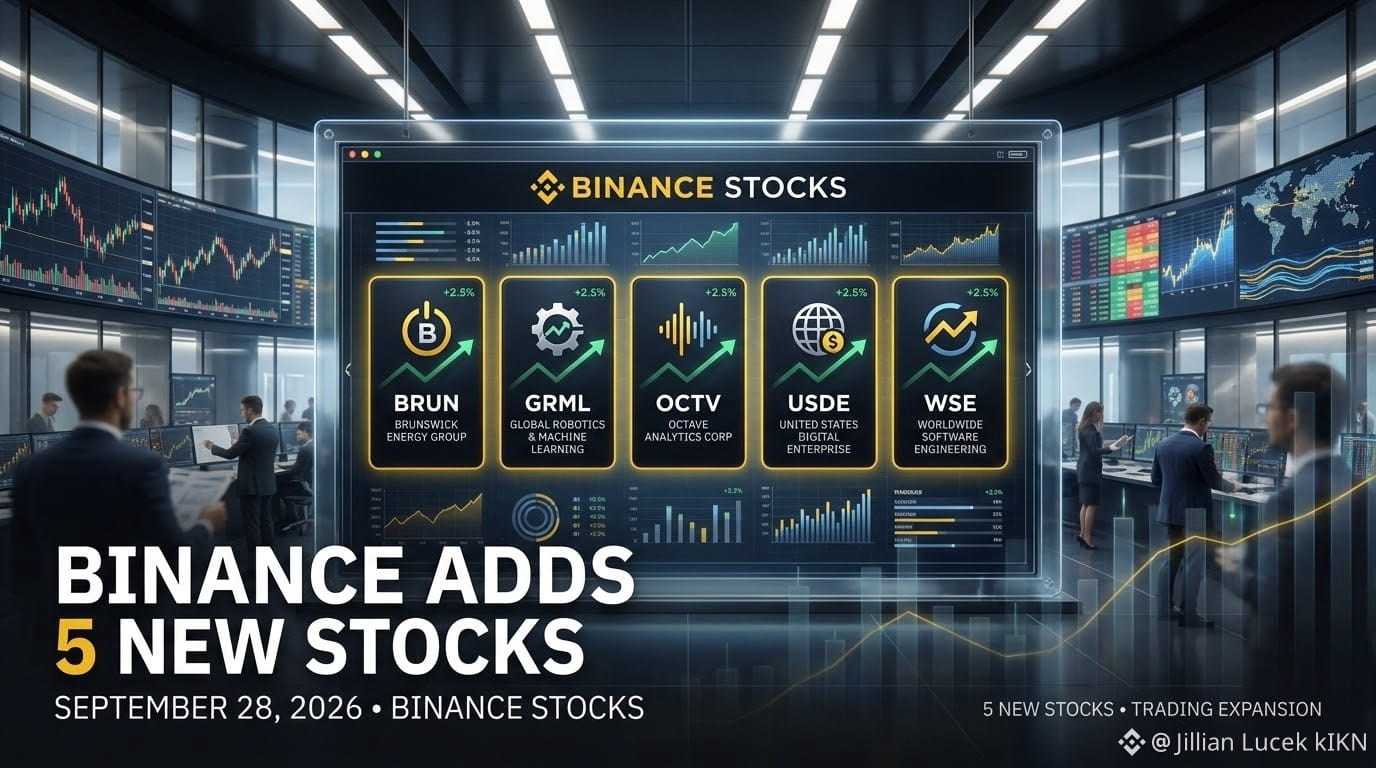
Binance has announced the addition of five new stocks to Binance Stocks starting September 28, 2026 at 13:30 UTC.
The newly added assets are:
🔹 BRUN — Boost Run Inc. Class A
🔹 GRML — Greenland Mines Ltd.
🔹 OCTV — Octave Intelligence plc Class B
🔹 USDE — StablecoinX Inc. Class A
🔹 WSE — Wise Group plc Class A
Binance says these stocks will also become eligible for Fully Paid Securities Lending (FPSL) after the applicable T+1 settlement, subject to the relevant conditions.
This is another example of the trading platform expanding beyond traditional crypto assets and bringing more market instruments into its ecosystem.
Availability can depend on your country or region, so always check the official Binance interface and applicable eligibility requirements before trading.
Interesting direction for Binance Stocks. 👀
#Binance #BinanceStocks #Stocks #TradFi #Trading #Finance #Web3 #Crypto
Binance's official announcement confirms the five additions and the September 28 launch time.
🚨 BINANCE JUST EXPANDED ITS STOCK TRADING LINEUP
Binance has announced the addition of five new stocks to Binance Stocks starting September 28, 2026 at 13:30 UTC.
The newly added assets are:
🔹 BRUN — Boost Run Inc. Class A
🔹 GRML — Greenland Mines Ltd.
🔹 OCTV — Octave Intelligence plc Class B
🔹 USDE — StablecoinX Inc. Class A
🔹 WSE — Wise Group plc Class A
Binance says these stocks will also become eligible for Fully Paid Securities Lending (FPSL) after the applicable T+1 settlement, subject to the relevant conditions.
This is another example of the trading platform expanding beyond traditional crypto assets and bringing more market instruments into its ecosystem.
Availability can depend on your country or region, so always check the official Binance interface and applicable eligibility requirements before trading.
Interesting direction for Binance Stocks. 👀
#Binance #BinanceStocks #Stocks #TradFi #Trading #Finance #Web3 #Crypto
Binance's official announcement confirms the five additions and the September 28 launch time.
Binance has announced the addition of five new stocks to Binance Stocks starting September 28, 2026 at 13:30 UTC.
The newly added assets are:
🔹 BRUN — Boost Run Inc. Class A
🔹 GRML — Greenland Mines Ltd.
🔹 OCTV — Octave Intelligence plc Class B
🔹 USDE — StablecoinX Inc. Class A
🔹 WSE — Wise Group plc Class A
Binance says these stocks will also become eligible for Fully Paid Securities Lending (FPSL) after the applicable T+1 settlement, subject to the relevant conditions.
This is another example of the trading platform expanding beyond traditional crypto assets and bringing more market instruments into its ecosystem.
Availability can depend on your country or region, so always check the official Binance interface and applicable eligibility requirements before trading.
Interesting direction for Binance Stocks. 👀
#Binance #BinanceStocks #Stocks #TradFi #Trading #Finance #Web3 #Crypto
Binance's official announcement confirms the five additions and the September 28 launch time.
OCTVUS+3.32%
BRUNUS-3.14%
GRMLUS+3.41%
81

·
--
📉 Nike Faces Another Price-Target Cut
$NKE.US
{stock_us}(NKE.US)
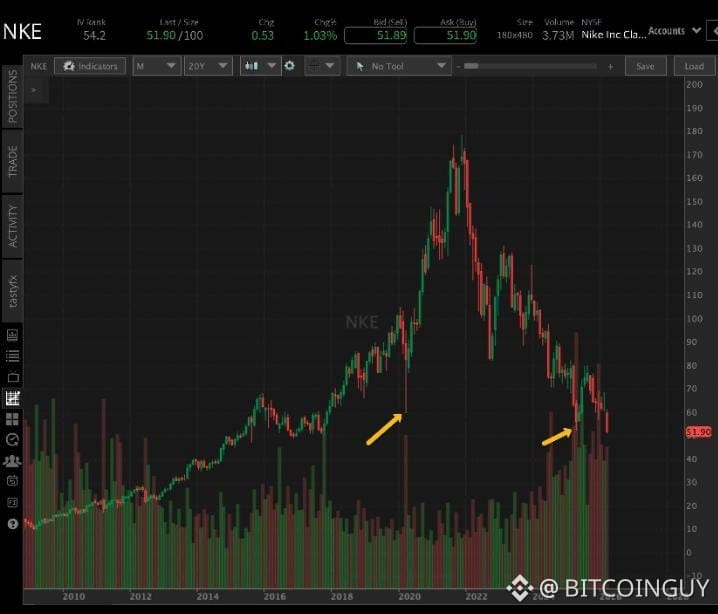
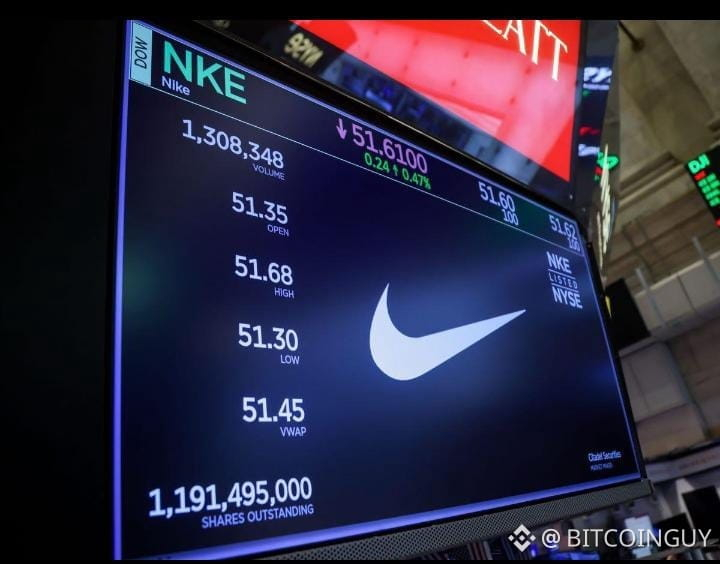
(NKE) is under renewed pressure after Piper Sandler lowered its price target from $45 to $38, representing roughly a 15.6% reduction.
At around $35.60–$35.75, the stock is already trading below the new target, highlighting continued investor concerns around Nike’s near-term outlook.
The key question now: Can Nike regain momentum and turn the current weakness into a recovery opportunity?
#Nike #StockMarket #MarketNews #Trading#Finance
📉 Nike Faces Another Price-Target Cut
$NKE.US
(NKE) is under renewed pressure after Piper Sandler lowered its price target from $45 to $38, representing roughly a 15.6% reduction.
At around $35.60–$35.75, the stock is already trading below the new target, highlighting continued investor concerns around Nike’s near-term outlook.
The key question now: Can Nike regain momentum and turn the current weakness into a recovery opportunity?
#Nike #StockMarket #MarketNews #Trading#Finance
$NKE.US
(NKE) is under renewed pressure after Piper Sandler lowered its price target from $45 to $38, representing roughly a 15.6% reduction.
At around $35.60–$35.75, the stock is already trading below the new target, highlighting continued investor concerns around Nike’s near-term outlook.
The key question now: Can Nike regain momentum and turn the current weakness into a recovery opportunity?
#Nike #StockMarket #MarketNews #Trading#Finance
NKEUS-0.50%
285

·
--
- No markdown (so plain text, no markdown formatting like **, # headings, etc.)
- 180-220 words total (including everything, presumably including hashtags line)
- Use a simple table format with plain dashes (no special characters). So we need a table using plain dashes for separators, like:
Feature | Staking | Savings
--- | --- | ---
APY | 5-15% | 0.5-3%
Risk | Market volatility | Low, insured
Liquidity | Varies (lock-up) | High
Control | Self-custody | Bank custody
But must use plain dashes, not markdown? Actually they said "simple table format with plain dashes (no special characters)". Probably they want something like:
Feature - Staking - Savings
--- - --- - ---
APY - 5-15% - 0.5-3%
Risk - Market volatility - Low, insured
Liquidity - Varies (lock-up) - High
Control - Self-custody - Bank custody
But "plain dashes" might mean using dashes for separators, not markdown table syntax. But they said "simple table format with plain dashes (no special characters)". Could interpret as using dashes to separate columns, like:
Feature - Staking - Savings
APY - 5-15% - 0.5-3%
Risk - Market volatility - Low, insured
Liquidity - Varies (lock-up) - High
Control - Self-custody - Bank custody
But that is not a table with alignment. But it's okay.
We need to be objective, show pros and cons of both sides.
Word count: 180-220 words. Let's target around 200 words.
We need to end with: "Which side are you on? Let us know!" Then final line: "#HODL #Altseason #CryptoVsTraditional #Finance"
No markdown, so just plain text.
We must ensure total word count
- No markdown (so plain text, no markdown formatting like **, # headings, etc.)
- 180-220 words total (including everything, presumably including hashtags line)
- Use a simple table format with plain dashes (no special characters). So we need a table using plain dashes for separators, like:
Feature | Staking | Savings
--- | --- | ---
APY | 5-15% | 0.5-3%
Risk | Market volatility | Low, insured
Liquidity | Varies (lock-up) | High
Control | Self-custody | Bank custody
But must use plain dashes, not markdown? Actually they said "simple table format with plain dashes (no special characters)". Probably they want something like:
Feature - Staking - Savings
--- - --- - ---
APY - 5-15% - 0.5-3%
Risk - Market volatility - Low, insured
Liquidity - Varies (lock-up) - High
Control - Self-custody - Bank custody
But "plain dashes" might mean using dashes for separators, not markdown table syntax. But they said "simple table format with plain dashes (no special characters)". Could interpret as using dashes to separate columns, like:
Feature - Staking - Savings
APY - 5-15% - 0.5-3%
Risk - Market volatility - Low, insured
Liquidity - Varies (lock-up) - High
Control - Self-custody - Bank custody
But that is not a table with alignment. But it's okay.
We need to be objective, show pros and cons of both sides.
Word count: 180-220 words. Let's target around 200 words.
We need to end with: "Which side are you on? Let us know!" Then final line: "#HODL #Altseason #CryptoVsTraditional #Finance"
No markdown, so just plain text.
We must ensure total word count
- 180-220 words total (including everything, presumably including hashtags line)
- Use a simple table format with plain dashes (no special characters). So we need a table using plain dashes for separators, like:
Feature | Staking | Savings
--- | --- | ---
APY | 5-15% | 0.5-3%
Risk | Market volatility | Low, insured
Liquidity | Varies (lock-up) | High
Control | Self-custody | Bank custody
But must use plain dashes, not markdown? Actually they said "simple table format with plain dashes (no special characters)". Probably they want something like:
Feature - Staking - Savings
--- - --- - ---
APY - 5-15% - 0.5-3%
Risk - Market volatility - Low, insured
Liquidity - Varies (lock-up) - High
Control - Self-custody - Bank custody
But "plain dashes" might mean using dashes for separators, not markdown table syntax. But they said "simple table format with plain dashes (no special characters)". Could interpret as using dashes to separate columns, like:
Feature - Staking - Savings
APY - 5-15% - 0.5-3%
Risk - Market volatility - Low, insured
Liquidity - Varies (lock-up) - High
Control - Self-custody - Bank custody
But that is not a table with alignment. But it's okay.
We need to be objective, show pros and cons of both sides.
Word count: 180-220 words. Let's target around 200 words.
We need to end with: "Which side are you on? Let us know!" Then final line: "#HODL #Altseason #CryptoVsTraditional #Finance"
No markdown, so just plain text.
We must ensure total word count
2
Token buybacks on a working network don’t automatically make crypto a security, *if no promises of yield or management effort are made*. That’s key for projects avoiding regulatory classification. But if the system isn't live, those same promises could still trigger Howey test scrutiny. Reality check: this is guidance, not law. #Crypto #Finance #CryptoverseNews
Full story: https://cryptoversenews.eu/finance/sec-staff-says-token-buybacks-don-t-make-crypto-a-security-i/
Token buybacks on a working network don’t automatically make crypto a security, *if no promises of yield or management effort are made*. That’s key for projects avoiding regulatory classification. But if the system isn't live, those same promises could still trigger Howey test scrutiny. Reality check: this is guidance, not law. #Crypto #Finance #CryptoverseNews
Full story: https://cryptoversenews.eu/finance/sec-staff-says-token-buybacks-don-t-make-crypto-a-security-i/
Full story: https://cryptoversenews.eu/finance/sec-staff-says-token-buybacks-don-t-make-crypto-a-security-i/
58

·
--
The Chees e King is here 🧀 Today’s Cheese Index is 7/10—on the verge of overheating. Retail traders are getting ready to make a big move 🔥.
The number of fake-coin (shanzhai coin) top-ups surged by 160% within two weeks, hitting the highest level in nearly a year. Retail traders think a dump is coming 📉. But $BTC is steady at $83,897, and the whale wallet ratio is even higher at 1.66, indicating the main players haven’t really left. This is just wash-trading to dump and shake out liquidity. “By pushing the order flow into exchanges, the big players are only doing it to drain the last bullet from weak hands.”
On-chain data tells us that moving coins often uses volatility tactics just before a pump. Don’t see the surge in top-ups and rush to cut losses 📉.
📚 Cheese Mini-Lesson: A big spike in exchange top-ups = coins being moved into exchanges. While it increases potential selling pressure, it also means the coins are changing hands quickly.
🔮 Cheese Prediction: If BTC holds steady above $83k this week, the altcoin season index is expected to break above 35/50, with the verification date on 2026-10-06.
💡 What retail traders can do today: Watch whether altcoins are compressing volume while trading sideways, and don’t chase pumps.
(These are purely personal observations, not investment advice.)
With the altcoin top-up surge, will you take profits and go with spot—or keep clashing with the main players?
The Cheese King updates every day, and retail traders survive on information 🧀
#defi #BTC #finance #markets
The Chees e King is here 🧀 Today’s Cheese Index is 7/10—on the verge of overheating. Retail traders are getting ready to make a big move 🔥.
The number of fake-coin (shanzhai coin) top-ups surged by 160% within two weeks, hitting the highest level in nearly a year. Retail traders think a dump is coming 📉. But $BTC is steady at $83,897, and the whale wallet ratio is even higher at 1.66, indicating the main players haven’t really left. This is just wash-trading to dump and shake out liquidity. “By pushing the order flow into exchanges, the big players are only doing it to drain the last bullet from weak hands.”
On-chain data tells us that moving coins often uses volatility tactics just before a pump. Don’t see the surge in top-ups and rush to cut losses 📉.
📚 Cheese Mini-Lesson: A big spike in exchange top-ups = coins being moved into exchanges. While it increases potential selling pressure, it also means the coins are changing hands quickly.
🔮 Cheese Prediction: If BTC holds steady above $83k this week, the altcoin season index is expected to break above 35/50, with the verification date on 2026-10-06.
💡 What retail traders can do today: Watch whether altcoins are compressing volume while trading sideways, and don’t chase pumps.
(These are purely personal observations, not investment advice.)
With the altcoin top-up surge, will you take profits and go with spot—or keep clashing with the main players?
The Cheese King updates every day, and retail traders survive on information 🧀
#defi #BTC #finance #markets
The number of fake-coin (shanzhai coin) top-ups surged by 160% within two weeks, hitting the highest level in nearly a year. Retail traders think a dump is coming 📉. But $BTC is steady at $83,897, and the whale wallet ratio is even higher at 1.66, indicating the main players haven’t really left. This is just wash-trading to dump and shake out liquidity. “By pushing the order flow into exchanges, the big players are only doing it to drain the last bullet from weak hands.”
On-chain data tells us that moving coins often uses volatility tactics just before a pump. Don’t see the surge in top-ups and rush to cut losses 📉.
📚 Cheese Mini-Lesson: A big spike in exchange top-ups = coins being moved into exchanges. While it increases potential selling pressure, it also means the coins are changing hands quickly.
🔮 Cheese Prediction: If BTC holds steady above $83k this week, the altcoin season index is expected to break above 35/50, with the verification date on 2026-10-06.
💡 What retail traders can do today: Watch whether altcoins are compressing volume while trading sideways, and don’t chase pumps.
(These are purely personal observations, not investment advice.)
With the altcoin top-up surge, will you take profits and go with spot—or keep clashing with the main players?
The Cheese King updates every day, and retail traders survive on information 🧀
#defi #BTC #finance #markets
168


Article
INCOME REQUIRES CASH FLOW, LIQUIDITY, AND PLANNINGWhen capital needs to finance current or future expenses, the role of the portfolio changes.
The goal is no longer just to accumulate wealth. It is necessary to think about how the capital can generate resources to meet needs over time.
This involves three important points: cash flow, liquidity, and predictability.
Flow represents the ability to transform assets into available resources. Liquidity determines how easy and how quickly it is to access this capital. Predictability helps align available resources with expenses that may already be known.
INCOME REQUIRES CASH FLOW, LIQUIDITY, AND PLANNING
When capital needs to finance current or future expenses, the role of the portfolio changes.
The goal is no longer just to accumulate wealth. It is necessary to think about how the capital can generate resources to meet needs over time.
This involves three important points: cash flow, liquidity, and predictability.
Flow represents the ability to transform assets into available resources. Liquidity determines how easy and how quickly it is to access this capital. Predictability helps align available resources with expenses that may already be known.
The goal is no longer just to accumulate wealth. It is necessary to think about how the capital can generate resources to meet needs over time.
This involves three important points: cash flow, liquidity, and predictability.
Flow represents the ability to transform assets into available resources. Liquidity determines how easy and how quickly it is to access this capital. Predictability helps align available resources with expenses that may already be known.
1
45
Article
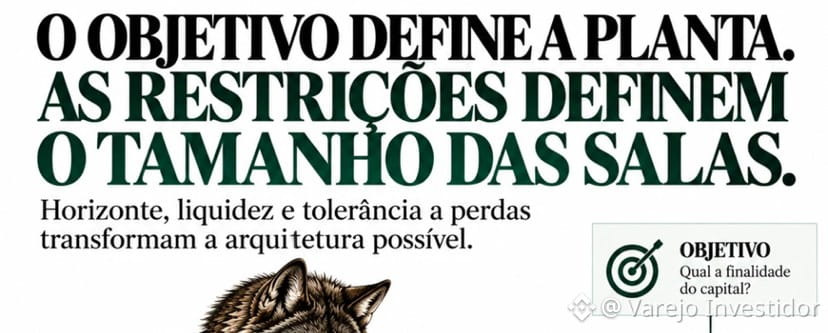
CONSTRAINTS ARE PART OF THE STRATEGYA portfolio is not built only from the goal. Constraints also determine which structures may make sense.
The first point is to understand the purpose of the capital. Then, it is necessary to assess when this money will be needed, what level of liquidity is important, and how much fluctuation can be supported.
These factors completely change the possible composition.
Capital that needs to be available in a short time may require a different structure from that intended for a horizon of many years. Likewise, someone with a low tolerance for losses may need to deal with a different exposure than someone who can withstand large fluctuations.
CONSTRAINTS ARE PART OF THE STRATEGY
A portfolio is not built only from the goal. Constraints also determine which structures may make sense.
The first point is to understand the purpose of the capital. Then, it is necessary to assess when this money will be needed, what level of liquidity is important, and how much fluctuation can be supported.
These factors completely change the possible composition.
Capital that needs to be available in a short time may require a different structure from that intended for a horizon of many years. Likewise, someone with a low tolerance for losses may need to deal with a different exposure than someone who can withstand large fluctuations.
The first point is to understand the purpose of the capital. Then, it is necessary to assess when this money will be needed, what level of liquidity is important, and how much fluctuation can be supported.
These factors completely change the possible composition.
Capital that needs to be available in a short time may require a different structure from that intended for a horizon of many years. Likewise, someone with a low tolerance for losses may need to deal with a different exposure than someone who can withstand large fluctuations.
1
33
·
--
🚨 Breaking: Bitget Hit for $290 Million, Hackers Even Ask for Help in a Public Discord!
The Bitget exchange was attacked by hackers, and within just 30 minutes, $290 million in assets began transferring. Investigations further found that suspected participants posted in a public Discord chat room, asking for help to launder money. Even after Chainlink urgently upgraded cross-chain bridge technology and THORChain refused to freeze the $6 million worth of hacker funds transferred to BTC, on-chain defensive responses still lagged behind the speed of the attack.
Frequent hacker attacks have sparked a decentralized security crisis, but the market greed index remains as high as 74, with BTC holding at $82,919. Retail investors should not assume that keeping assets on centralized platforms guarantees safety—large players have already begun dispersing their positions into cold wallets to hedge systemic risk.
“Risk-control vulnerabilities in exchanges are a nightmare for retail investors. The security of cross-chain bridges and centralized platforms isn’t based on statements—it relies on real, on-chain defenses.”
*(The above is purely personal observation, not investment advice.)*
Hackers’ public money-laundering shows that security mechanisms have failed—do you still dare to put all your assets in an exchange right now?
The Cheese King updates daily, taking you to see what the big players are doing 🧀
#markets #finance #BTC #ethereum
🚨 Breaking: Bitget Hit for $290 Million, Hackers Even Ask for Help in a Public Discord!
The Bitget exchange was attacked by hackers, and within just 30 minutes, $290 million in assets began transferring. Investigations further found that suspected participants posted in a public Discord chat room, asking for help to launder money. Even after Chainlink urgently upgraded cross-chain bridge technology and THORChain refused to freeze the $6 million worth of hacker funds transferred to BTC, on-chain defensive responses still lagged behind the speed of the attack.
Frequent hacker attacks have sparked a decentralized security crisis, but the market greed index remains as high as 74, with BTC holding at $82,919. Retail investors should not assume that keeping assets on centralized platforms guarantees safety—large players have already begun dispersing their positions into cold wallets to hedge systemic risk.
“Risk-control vulnerabilities in exchanges are a nightmare for retail investors. The security of cross-chain bridges and centralized platforms isn’t based on statements—it relies on real, on-chain defenses.”
*(The above is purely personal observation, not investment advice.)*
Hackers’ public money-laundering shows that security mechanisms have failed—do you still dare to put all your assets in an exchange right now?
The Cheese King updates daily, taking you to see what the big players are doing 🧀
#markets #finance #BTC #ethereum
The Bitget exchange was attacked by hackers, and within just 30 minutes, $290 million in assets began transferring. Investigations further found that suspected participants posted in a public Discord chat room, asking for help to launder money. Even after Chainlink urgently upgraded cross-chain bridge technology and THORChain refused to freeze the $6 million worth of hacker funds transferred to BTC, on-chain defensive responses still lagged behind the speed of the attack.
Frequent hacker attacks have sparked a decentralized security crisis, but the market greed index remains as high as 74, with BTC holding at $82,919. Retail investors should not assume that keeping assets on centralized platforms guarantees safety—large players have already begun dispersing their positions into cold wallets to hedge systemic risk.
“Risk-control vulnerabilities in exchanges are a nightmare for retail investors. The security of cross-chain bridges and centralized platforms isn’t based on statements—it relies on real, on-chain defenses.”
*(The above is purely personal observation, not investment advice.)*
Hackers’ public money-laundering shows that security mechanisms have failed—do you still dare to put all your assets in an exchange right now?
The Cheese King updates daily, taking you to see what the big players are doing 🧀
#markets #finance #BTC #ethereum
383

·
--
Blockchain can also be used by traditional banks.
The ECB has launched Pontes, a system that makes it possible to settle transactions carried out on blockchain infrastructures using central bank money.
The idea is not to replace the euro with a cryptocurrency, but to connect financial markets to this new infrastructure.
So blockchain is not only about crypto.
#BlockchainNews #Finance
$BTC
$USDT
{spot}(BTCUSDT)
Blockchain can also be used by traditional banks.
The ECB has launched Pontes, a system that makes it possible to settle transactions carried out on blockchain infrastructures using central bank money.
The idea is not to replace the euro with a cryptocurrency, but to connect financial markets to this new infrastructure.
So blockchain is not only about crypto.
#BlockchainNews #Finance
$BTC
$USDT
The ECB has launched Pontes, a system that makes it possible to settle transactions carried out on blockchain infrastructures using central bank money.
The idea is not to replace the euro with a cryptocurrency, but to connect financial markets to this new infrastructure.
So blockchain is not only about crypto.
#BlockchainNews #Finance
$BTC
$USDT
1
175
Article
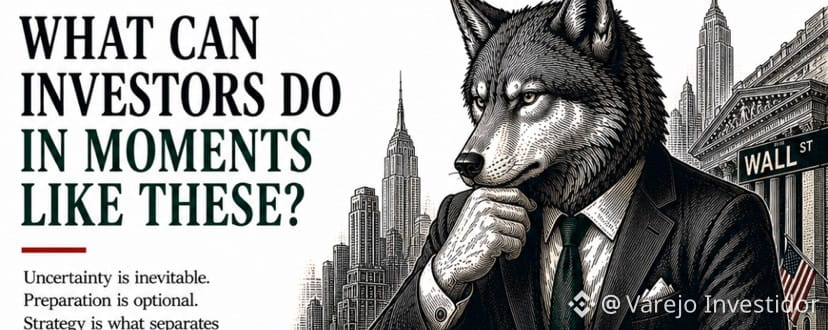
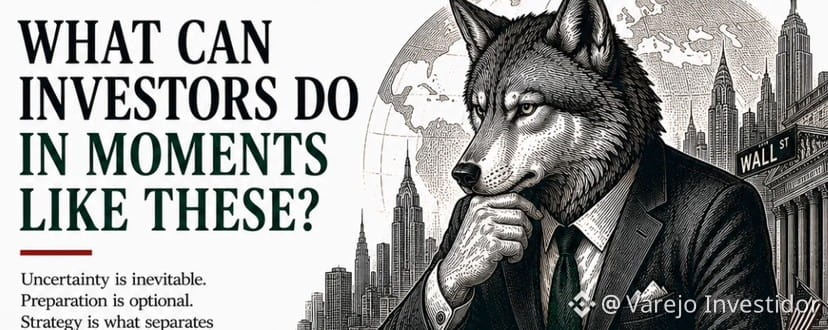
THE ADVANTAGE IS NOT KNOWING WHAT COMES NEXTMarkets rarely move according to a clean script. Political shocks, monetary decisions, supply disruptions and changes in investor sentiment can arrive simultaneously, making short-term reactions difficult to interpret.
That is where portfolio structure becomes important.
A resilient approach begins with understanding exposure. An investor can ask how much capital depends on one country, one currency, one sector, one economic scenario or one source of liquidity.
Correlation also matters. Holding several assets does not automatically create diversification if those assets tend to respond to the same underlying risk.
Another important dimension is optionality. Liquidity can provide flexibility when valuations change, while excessive leverage can reduce that flexibility precisely when uncertainty rises.
Time horizon matters as well. A temporary market drawdown and a permanent deterioration in an asset’s fundamentals are different events and require different analysis.
The broader lesson is that uncertainty cannot be eliminated, but its consequences can be studied.
Instead of building a portfolio around a single forecast, investors can examine multiple scenarios:
What happens if inflation stays elevated?
What happens if growth slows?
What happens if liquidity improves?
What happens if geopolitical risk intensifies?
The objective is not to predict every turn in the market.
It is to construct a framework that can continue functioning when the original assumptions are challenged.
#Oil #economy #Finance
#Investment
$QQQ.ETF
{etf_us}(QQQ.ETF)
$EEMA.ETF
{etf_us}(EEMA.ETF)
$TLTP.ETF
{etf_us}(TLTP.ETF)
THE ADVANTAGE IS NOT KNOWING WHAT COMES NEXT
Markets rarely move according to a clean script. Political shocks, monetary decisions, supply disruptions and changes in investor sentiment can arrive simultaneously, making short-term reactions difficult to interpret.
That is where portfolio structure becomes important.
A resilient approach begins with understanding exposure. An investor can ask how much capital depends on one country, one currency, one sector, one economic scenario or one source of liquidity.
Correlation also matters. Holding several assets does not automatically create diversification if those assets tend to respond to the same underlying risk.
Another important dimension is optionality. Liquidity can provide flexibility when valuations change, while excessive leverage can reduce that flexibility precisely when uncertainty rises.
Time horizon matters as well. A temporary market drawdown and a permanent deterioration in an asset’s fundamentals are different events and require different analysis.
The broader lesson is that uncertainty cannot be eliminated, but its consequences can be studied.
Instead of building a portfolio around a single forecast, investors can examine multiple scenarios:
What happens if inflation stays elevated?
What happens if growth slows?
What happens if liquidity improves?
What happens if geopolitical risk intensifies?
The objective is not to predict every turn in the market.
It is to construct a framework that can continue functioning when the original assumptions are challenged.
#Oil #economy #Finance
#Investment
$QQQ.ETF
$EEMA.ETF
$TLTP.ETF
That is where portfolio structure becomes important.
A resilient approach begins with understanding exposure. An investor can ask how much capital depends on one country, one currency, one sector, one economic scenario or one source of liquidity.
Correlation also matters. Holding several assets does not automatically create diversification if those assets tend to respond to the same underlying risk.
Another important dimension is optionality. Liquidity can provide flexibility when valuations change, while excessive leverage can reduce that flexibility precisely when uncertainty rises.
Time horizon matters as well. A temporary market drawdown and a permanent deterioration in an asset’s fundamentals are different events and require different analysis.
The broader lesson is that uncertainty cannot be eliminated, but its consequences can be studied.
Instead of building a portfolio around a single forecast, investors can examine multiple scenarios:
What happens if inflation stays elevated?
What happens if growth slows?
What happens if liquidity improves?
What happens if geopolitical risk intensifies?
The objective is not to predict every turn in the market.
It is to construct a framework that can continue functioning when the original assumptions are challenged.
#Oil #economy #Finance
#Investment
$QQQ.ETF
$EEMA.ETF
$TLTP.ETF
TLTPETF-0.30%
EEMAETF-0.74%
QQQETF+0.66%
2
166
Article
WHY THE DOLLAR SITS AT THE CENTER OF GLOBAL FINANCEThe U.S. dollar’s international role is not based on a single factor. It has developed through decades of trade, financial markets, banking relationships and reserve management.
A major part of the system comes from the fact that international transactions frequently involve dollar-denominated assets and liabilities. Commodities and financial contracts can be priced in dollars, while banks, corporations and governments may hold dollar reserves or borrow in the currency.
This creates a network effect.
GLOBAL TRADE → DOLLAR SETTLEMENT → FINANCIAL MARKETS → RESERVE DEMAND
The more deeply a currency is integrated into international commerce and finance, the more infrastructure exists around it. Banks maintain dollar liquidity, institutions hold dollar assets and companies manage exposures through global currency markets.
That structure also means changes in U.S. monetary conditions can have consequences well beyond the United States. Interest rates, liquidity and the value of the dollar can influence capital flows, emerging markets, commodities and corporate financing conditions.
The important distinction is between the dollar itself and the system built around it.
Reserve currencies are supported not only by economic size, but also by financial infrastructure, market depth, institutional frameworks and international demand.
Understanding that network helps explain why the dollar remains such an important variable in global markets.
#oil #market #finance #economy
$TLTP.ETF
$GLWB
{spot}(GLWBUSDT)
$EEM.ETF
{etf_us}(EEM.ETF)
{stock_us}(UUUU.US)
WHY THE DOLLAR SITS AT THE CENTER OF GLOBAL FINANCE
The U.S. dollar’s international role is not based on a single factor. It has developed through decades of trade, financial markets, banking relationships and reserve management.
A major part of the system comes from the fact that international transactions frequently involve dollar-denominated assets and liabilities. Commodities and financial contracts can be priced in dollars, while banks, corporations and governments may hold dollar reserves or borrow in the currency.
This creates a network effect.
GLOBAL TRADE → DOLLAR SETTLEMENT → FINANCIAL MARKETS → RESERVE DEMAND
The more deeply a currency is integrated into international commerce and finance, the more infrastructure exists around it. Banks maintain dollar liquidity, institutions hold dollar assets and companies manage exposures through global currency markets.
That structure also means changes in U.S. monetary conditions can have consequences well beyond the United States. Interest rates, liquidity and the value of the dollar can influence capital flows, emerging markets, commodities and corporate financing conditions.
The important distinction is between the dollar itself and the system built around it.
Reserve currencies are supported not only by economic size, but also by financial infrastructure, market depth, institutional frameworks and international demand.
Understanding that network helps explain why the dollar remains such an important variable in global markets.
#oil #market #finance #economy
$TLTP.ETF
$GLWB
$EEM.ETF
A major part of the system comes from the fact that international transactions frequently involve dollar-denominated assets and liabilities. Commodities and financial contracts can be priced in dollars, while banks, corporations and governments may hold dollar reserves or borrow in the currency.
This creates a network effect.
GLOBAL TRADE → DOLLAR SETTLEMENT → FINANCIAL MARKETS → RESERVE DEMAND
The more deeply a currency is integrated into international commerce and finance, the more infrastructure exists around it. Banks maintain dollar liquidity, institutions hold dollar assets and companies manage exposures through global currency markets.
That structure also means changes in U.S. monetary conditions can have consequences well beyond the United States. Interest rates, liquidity and the value of the dollar can influence capital flows, emerging markets, commodities and corporate financing conditions.
The important distinction is between the dollar itself and the system built around it.
Reserve currencies are supported not only by economic size, but also by financial infrastructure, market depth, institutional frameworks and international demand.
Understanding that network helps explain why the dollar remains such an important variable in global markets.
#oil #market #finance #economy
$TLTP.ETF
$GLWB
$EEM.ETF
1
41
Article
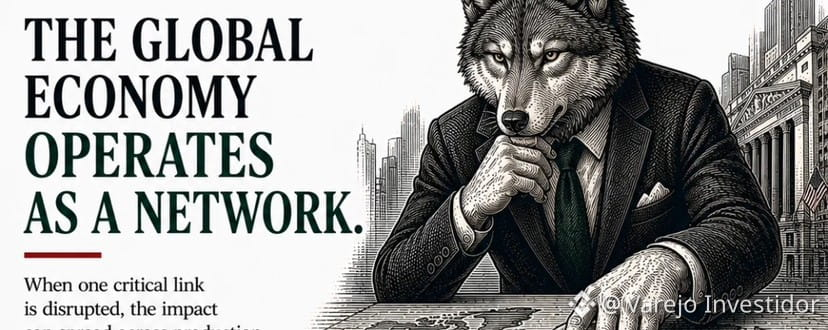
WHEN ONE LINK BREAKS, THE WORLD FEELS ITGlobalization has created an economic system where production, transportation and consumption are tightly connected across borders.
A disruption in one important location can therefore travel through several layers of the supply chain.
Imagine a manufacturer reducing output. Fewer goods become available for export. Importers receive less supply, inventories tighten and markets begin competing for the remaining products. If demand does not fall at the same speed, prices can rise.
The chain illustrated here is straightforward:
PRODUCTION → EXPORTS → SUPPLY → PRICES
But the real complexity comes from the network behind it. A single product can depend on raw materials from one country, components from another, manufacturing somewhere else and transportation through several ports before reaching its final consumer.
This interconnected structure has created enormous efficiency, but it has also created dependencies.
That is why investors increasingly need to look beyond individual companies and examine the infrastructure surrounding them. Ports, shipping routes, industrial capacity, commodities, energy and international trade can all influence corporate results and market expectations.
A disruption does not have to happen everywhere to become economically relevant.
In a connected economy, the key question is not simply where the problem started.
It is how many other parts of the network depend on that point.
#oil #economy #Investment #Finance
$XOM.US
$XAU
{future}(XAUUSDT)
$XAG
{future}(XAGUSDT)
{etf_us}(GLD.ETF)
WHEN ONE LINK BREAKS, THE WORLD FEELS IT
Globalization has created an economic system where production, transportation and consumption are tightly connected across borders.
A disruption in one important location can therefore travel through several layers of the supply chain.
Imagine a manufacturer reducing output. Fewer goods become available for export. Importers receive less supply, inventories tighten and markets begin competing for the remaining products. If demand does not fall at the same speed, prices can rise.
The chain illustrated here is straightforward:
PRODUCTION → EXPORTS → SUPPLY → PRICES
But the real complexity comes from the network behind it. A single product can depend on raw materials from one country, components from another, manufacturing somewhere else and transportation through several ports before reaching its final consumer.
This interconnected structure has created enormous efficiency, but it has also created dependencies.
That is why investors increasingly need to look beyond individual companies and examine the infrastructure surrounding them. Ports, shipping routes, industrial capacity, commodities, energy and international trade can all influence corporate results and market expectations.
A disruption does not have to happen everywhere to become economically relevant.
In a connected economy, the key question is not simply where the problem started.
It is how many other parts of the network depend on that point.
#oil #economy #Investment #Finance
$XOM.US
$XAU
$XAG
A disruption in one important location can therefore travel through several layers of the supply chain.
Imagine a manufacturer reducing output. Fewer goods become available for export. Importers receive less supply, inventories tighten and markets begin competing for the remaining products. If demand does not fall at the same speed, prices can rise.
The chain illustrated here is straightforward:
PRODUCTION → EXPORTS → SUPPLY → PRICES
But the real complexity comes from the network behind it. A single product can depend on raw materials from one country, components from another, manufacturing somewhere else and transportation through several ports before reaching its final consumer.
This interconnected structure has created enormous efficiency, but it has also created dependencies.
That is why investors increasingly need to look beyond individual companies and examine the infrastructure surrounding them. Ports, shipping routes, industrial capacity, commodities, energy and international trade can all influence corporate results and market expectations.
A disruption does not have to happen everywhere to become economically relevant.
In a connected economy, the key question is not simply where the problem started.
It is how many other parts of the network depend on that point.
#oil #economy #Investment #Finance
$XOM.US
$XAU
$XAG
2
203

·
--
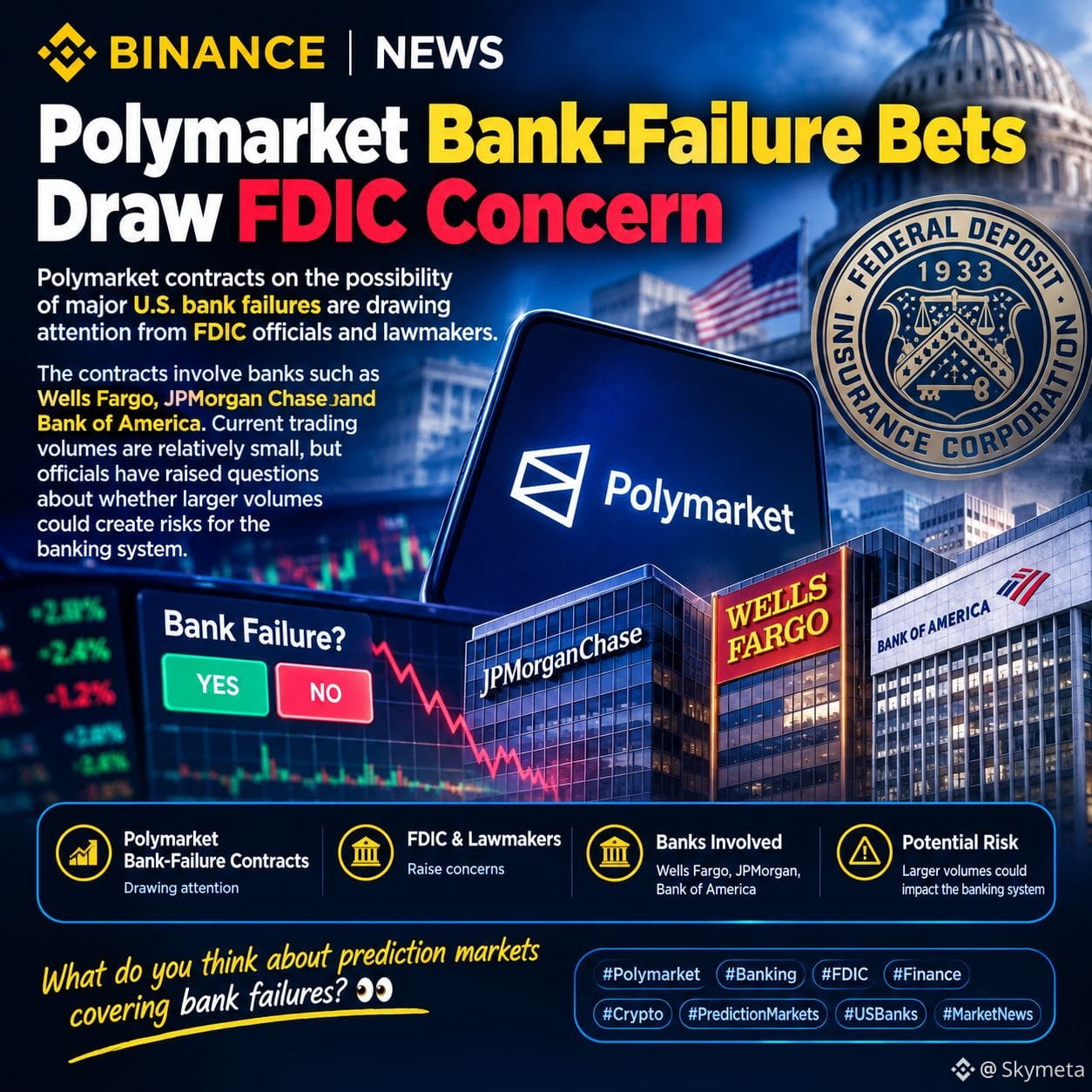
#PolymarketBankFailureBetsDrawFDICConcern
Polymarket contracts on the possibility of major U.S. bank failures are drawing attention from FDIC officials and lawmakers.
The contracts involve banks such as Wells Fargo, JPMorgan Chase and Bank of America. Current trading volumes are relatively small, but officials have raised questions about whether larger volumes could create risks for the banking system. �
Yahoo Finance +1
What do you think about prediction markets covering bank failures? 👀
#Polymarket #Banking #FDIC #Finance #PolymarketBankFailureBetsDrawFDICConcern #MarketNews
#PolymarketBankFailureBetsDrawFDICConcern
Polymarket contracts on the possibility of major U.S. bank failures are drawing attention from FDIC officials and lawmakers.
The contracts involve banks such as Wells Fargo, JPMorgan Chase and Bank of America. Current trading volumes are relatively small, but officials have raised questions about whether larger volumes could create risks for the banking system. �
Yahoo Finance +1
What do you think about prediction markets covering bank failures? 👀
#Polymarket #Banking #FDIC #Finance #PolymarketBankFailureBetsDrawFDICConcern #MarketNews
Polymarket contracts on the possibility of major U.S. bank failures are drawing attention from FDIC officials and lawmakers.
The contracts involve banks such as Wells Fargo, JPMorgan Chase and Bank of America. Current trading volumes are relatively small, but officials have raised questions about whether larger volumes could create risks for the banking system. �
Yahoo Finance +1
What do you think about prediction markets covering bank failures? 👀
#Polymarket #Banking #FDIC #Finance #PolymarketBankFailureBetsDrawFDICConcern #MarketNews
BACUS-0.22%
JPMUS-0.37%
WFCUS+0.13%
118
Article
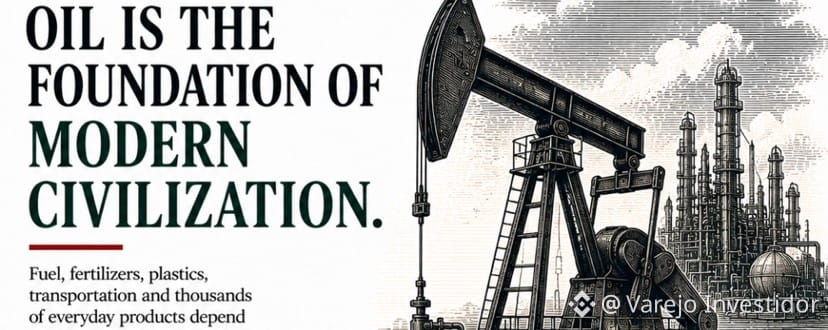
WHY OIL STILL MATTERS TO ALMOST EVERYTHINGLook around modern life and oil is rarely visible, yet its influence is everywhere.
Its role goes far beyond gasoline. Petroleum is embedded in transportation, industrial production, agriculture, chemicals, packaging, plastics and countless products used every day.
That makes oil more than an energy commodity. It is a fundamental input across multiple layers of the global economy.
Consider the chain:
OIL → TRANSPORTATION → PRODUCTION → AGRICULTURE → CONSUMPTION
A change in energy costs can therefore travel through the economy in unexpected ways. Higher fuel expenses can increase shipping costs. More expensive transportation can raise production expenses. Agriculture can also be affected through fuel, machinery, fertilizers and other petroleum-related inputs.
The result is a complex relationship between energy markets and the prices consumers ultimately face.
This is also why crude oil remains strategically important for governments, corporations and financial markets. Its importance is not limited to how much a barrel costs today. What matters is how energy availability and transportation costs influence economic activity across the entire supply chain.
For investors, the broader lesson is simple: commodities rarely exist in isolation.
Oil connects energy with industry, agriculture, logistics and consumption.
Understanding that network can provide a different perspective on why movements in the energy market can eventually appear in corporate earnings, inflation expectations and financial assets around the world.
#oil #Irã #economy #Finance
$CVX.US
{stock_us}(CVX.US)
$XOM.US
{stock_us}(XOM.US)
$OXY.US
{stock_us}(OXY.US)
WHY OIL STILL MATTERS TO ALMOST EVERYTHING
Look around modern life and oil is rarely visible, yet its influence is everywhere.
Its role goes far beyond gasoline. Petroleum is embedded in transportation, industrial production, agriculture, chemicals, packaging, plastics and countless products used every day.
That makes oil more than an energy commodity. It is a fundamental input across multiple layers of the global economy.
Consider the chain:
OIL → TRANSPORTATION → PRODUCTION → AGRICULTURE → CONSUMPTION
A change in energy costs can therefore travel through the economy in unexpected ways. Higher fuel expenses can increase shipping costs. More expensive transportation can raise production expenses. Agriculture can also be affected through fuel, machinery, fertilizers and other petroleum-related inputs.
The result is a complex relationship between energy markets and the prices consumers ultimately face.
This is also why crude oil remains strategically important for governments, corporations and financial markets. Its importance is not limited to how much a barrel costs today. What matters is how energy availability and transportation costs influence economic activity across the entire supply chain.
For investors, the broader lesson is simple: commodities rarely exist in isolation.
Oil connects energy with industry, agriculture, logistics and consumption.
Understanding that network can provide a different perspective on why movements in the energy market can eventually appear in corporate earnings, inflation expectations and financial assets around the world.
#oil #Irã #economy #Finance
$CVX.US
$XOM.US
$OXY.US
Its role goes far beyond gasoline. Petroleum is embedded in transportation, industrial production, agriculture, chemicals, packaging, plastics and countless products used every day.
That makes oil more than an energy commodity. It is a fundamental input across multiple layers of the global economy.
Consider the chain:
OIL → TRANSPORTATION → PRODUCTION → AGRICULTURE → CONSUMPTION
A change in energy costs can therefore travel through the economy in unexpected ways. Higher fuel expenses can increase shipping costs. More expensive transportation can raise production expenses. Agriculture can also be affected through fuel, machinery, fertilizers and other petroleum-related inputs.
The result is a complex relationship between energy markets and the prices consumers ultimately face.
This is also why crude oil remains strategically important for governments, corporations and financial markets. Its importance is not limited to how much a barrel costs today. What matters is how energy availability and transportation costs influence economic activity across the entire supply chain.
For investors, the broader lesson is simple: commodities rarely exist in isolation.
Oil connects energy with industry, agriculture, logistics and consumption.
Understanding that network can provide a different perspective on why movements in the energy market can eventually appear in corporate earnings, inflation expectations and financial assets around the world.
#oil #Irã #economy #Finance
$CVX.US
$XOM.US
$OXY.US
OXYUS+0.09%
XOMUS+0.98%
CVXUS+0.09%
1
50
·
--
The user wants a comparison post about crypto remittance vs bank wire transfers, focusing on speed and cost. Requirements:
- No markdown
- 180-220 words
- Simple table with plain dashes (no special characters)
- Objective, pros and cons of both
- End with: "Which side are you on? Let us know!"
- Final line: #Avalanche #AVAX #CryptoVsTraditional #Finance
- No extra formatting, no thinking, just the post text
I need to write a post that's 180-220 words, includes a simple table using dashes, covers both sides objectively, ends with the required phrase and hashtags.
Let me draft:
First, intro paragraph. Then table. Then analysis. Then closing.
Word count target: 180-220 words.
Table format: plain dashes, like:
Crypto Remittance | Bank Wire Transfer
--- | ---
Speed | ...
Cost | ...
Accessibility | ...
etc.
But "no special characters" - plain dashes only. So maybe:
Crypto Remittance - Bank Wire Transfer
Speed - Minutes to hours - 1-5 business days
Cost - Low (often <1%) - High ($15-$50 + FX markup)
Accessibility - 24/7, global - Banking hours, limited corridors
Transparency - On-chain visible - Opaque fees
Reversibility - Usually irreversible - Reversible (chargebacks)
Regulation - Varies by jurisdiction - Heavily regulated
But that's not a table with columns. The requirement: "simple table format with plain dashes". Could be:
Feature - Crypto Remittance - Bank Wire Transfer
Speed - Minutes to hours - 1-5 business days
Cost - Low (often <1%) - High ($15-$50 + FX markup)
Accessibility - 24/7, global - Banking hours, limited corridors
Transparency - On-chain visible - Opaque fees
Reversibility - Usually irreversible - Reversible (chargebacks)
Regulation - Varies - Heavily regulated
The user wants a comparison post about crypto remittance vs bank wire transfers, focusing on speed and cost. Requirements:
- No markdown
- 180-220 words
- Simple table with plain dashes (no special characters)
- Objective, pros and cons of both
- End with: "Which side are you on? Let us know!"
- Final line: #Avalanche #AVAX #CryptoVsTraditional #Finance
- No extra formatting, no thinking, just the post text
I need to write a post that's 180-220 words, includes a simple table using dashes, covers both sides objectively, ends with the required phrase and hashtags.
Let me draft:
First, intro paragraph. Then table. Then analysis. Then closing.
Word count target: 180-220 words.
Table format: plain dashes, like:
Crypto Remittance | Bank Wire Transfer
--- | ---
Speed | ...
Cost | ...
Accessibility | ...
etc.
But "no special characters" - plain dashes only. So maybe:
Crypto Remittance - Bank Wire Transfer
Speed - Minutes to hours - 1-5 business days
Cost - Low (often <1%) - High ($15-$50 + FX markup)
Accessibility - 24/7, global - Banking hours, limited corridors
Transparency - On-chain visible - Opaque fees
Reversibility - Usually irreversible - Reversible (chargebacks)
Regulation - Varies by jurisdiction - Heavily regulated
But that's not a table with columns. The requirement: "simple table format with plain dashes". Could be:
Feature - Crypto Remittance - Bank Wire Transfer
Speed - Minutes to hours - 1-5 business days
Cost - Low (often <1%) - High ($15-$50 + FX markup)
Accessibility - 24/7, global - Banking hours, limited corridors
Transparency - On-chain visible - Opaque fees
Reversibility - Usually irreversible - Reversible (chargebacks)
Regulation - Varies - Heavily regulated
- No markdown
- 180-220 words
- Simple table with plain dashes (no special characters)
- Objective, pros and cons of both
- End with: "Which side are you on? Let us know!"
- Final line: #Avalanche #AVAX #CryptoVsTraditional #Finance
- No extra formatting, no thinking, just the post text
I need to write a post that's 180-220 words, includes a simple table using dashes, covers both sides objectively, ends with the required phrase and hashtags.
Let me draft:
First, intro paragraph. Then table. Then analysis. Then closing.
Word count target: 180-220 words.
Table format: plain dashes, like:
Crypto Remittance | Bank Wire Transfer
--- | ---
Speed | ...
Cost | ...
Accessibility | ...
etc.
But "no special characters" - plain dashes only. So maybe:
Crypto Remittance - Bank Wire Transfer
Speed - Minutes to hours - 1-5 business days
Cost - Low (often <1%) - High ($15-$50 + FX markup)
Accessibility - 24/7, global - Banking hours, limited corridors
Transparency - On-chain visible - Opaque fees
Reversibility - Usually irreversible - Reversible (chargebacks)
Regulation - Varies by jurisdiction - Heavily regulated
But that's not a table with columns. The requirement: "simple table format with plain dashes". Could be:
Feature - Crypto Remittance - Bank Wire Transfer
Speed - Minutes to hours - 1-5 business days
Cost - Low (often <1%) - High ($15-$50 + FX markup)
Accessibility - 24/7, global - Banking hours, limited corridors
Transparency - On-chain visible - Opaque fees
Reversibility - Usually irreversible - Reversible (chargebacks)
Regulation - Varies - Heavily regulated
58
·
--
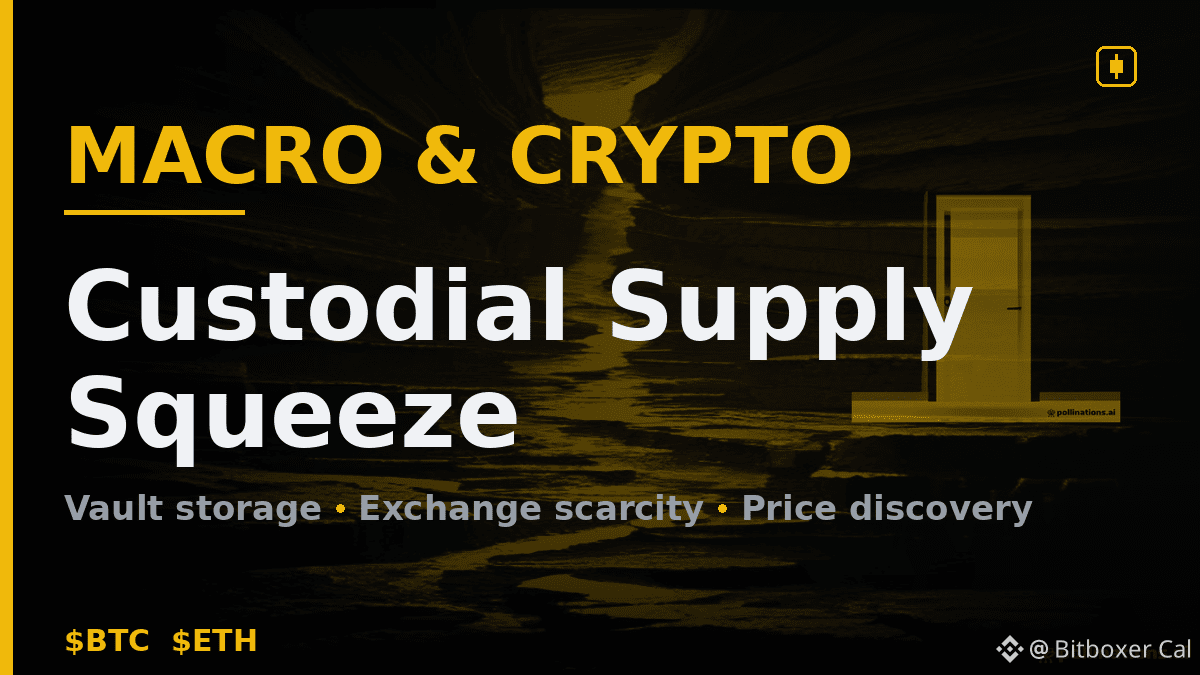
Institutional $BTC demand is triggering a brutal supply squeeze by dragging circulating coins into cold, regulated vaults.
Every time ETF issuers back their shares, they strip liquid supply from open exchanges, leaving a thinner order book to absorb the pressure. Ignore the noise and watch the net daily flow; that’s where you’ll see the true intensity of this custodial vacuum.
$BTC $ETH #Bitcoin #Finance #Web3
Institutional $BTC demand is triggering a brutal supply squeeze by dragging circulating coins into cold, regulated vaults.
Every time ETF issuers back their shares, they strip liquid supply from open exchanges, leaving a thinner order book to absorb the pressure. Ignore the noise and watch the net daily flow; that’s where you’ll see the true intensity of this custodial vacuum.
$BTC $ETH #Bitcoin #Finance #Web3
Every time ETF issuers back their shares, they strip liquid supply from open exchanges, leaving a thinner order book to absorb the pressure. Ignore the noise and watch the net daily flow; that’s where you’ll see the true intensity of this custodial vacuum.
$BTC $ETH #Bitcoin #Finance #Web3
82
Log in to explore more content
Join global crypto users on Binance Square
⚡️ Get latest and useful information about crypto.
💬 Trusted by the world’s largest crypto exchange.
👍 Discover real insights from verified creators.
Email / Phone number
Trending Topics
1
#BitcoinClears$85200
210 views
57 Discussing
2
#AltcoinSeasonIndexHoldsAbove60For5Days
3,869 views
365 Discussing
3
#BitcoinSlipsBelow$84000
1,416 views
79 Discussing
4
#USADPAdds90000JobsInSeptember
587 views
173 Discussing
5
#USCorePCEEasesTo3%InAugust
532 views
156 Discussing
6
#KospiPostsWorstQuarterSince2020
1,522 views
211 Discussing
7
#SECToClarifyOnChainFundraisingRules
6,989 views
380 Discussing
8
#UKFCAOpensCryptoFirmAuthorization
10,604 views
346 Discussing
9
#JapanMOFStudyGroupOnTokenizedGovtBonds
9,084 views
298 Discussing
10
#QNTRises287%
47,390 views
671 Discussing