
#war
war
1.8M views
3,528 Discussing
Hot
Latest

·
--
CNN reports that the US is planning a large-scale military campaign against Houthi militants in Yemen.
Right as Bitcoin starts to surge dramatically.
Trump wants to start a new war again.
#war #TRUMP
CNN reports that the US is planning a large-scale military campaign against Houthi militants in Yemen.
Right as Bitcoin starts to surge dramatically.
Trump wants to start a new war again.
#war #TRUMP
Right as Bitcoin starts to surge dramatically.
Trump wants to start a new war again.
#war #TRUMP
1
257


Article
Zelenskyy Says Ukraine Is Ready to Suspend Attacks on Moscow Until MondayAccording to Wallstreetcn, Ukrainian President Volodymyr Zelenskyy said that he had spoken with a representative of U.S. President Donald Trump, and that from that day until Monday, September 7, Ukraine was willing to halt attacks on Moscow and hoped that Russia would also suspend attacks on Kyiv. He said that a planned diplomatic event for September 6 in Kyiv, with the participation of a U.S. team, had been finalized, and that the Ukrainian side was ready for substantive negotiations with U.S. presidential envoy Witkoff and Kushner.
Zelenskyy Says Ukraine Is Ready to Suspend Attacks on Moscow Until Monday
According to Wallstreetcn, Ukrainian President Volodymyr Zelenskyy said that he had spoken with a representative of U.S. President Donald Trump, and that from that day until Monday, September 7, Ukraine was willing to halt attacks on Moscow and hoped that Russia would also suspend attacks on Kyiv. He said that a planned diplomatic event for September 6 in Kyiv, with the participation of a U.S. team, had been finalized, and that the Ukrainian side was ready for substantive negotiations with U.S. presidential envoy Witkoff and Kushner.
1
709


·
--
Bullish
The US-Iran war will end in a day or two, so all markets will go up immediately after the trade, so be sure to place your stop loss
$BTC #usiran #war
The US-Iran war will end in a day or two, so all markets will go up immediately after the trade, so be sure to place your stop loss
$BTC #usiran #war
$BTC #usiran #war
16

·
--
Bullish
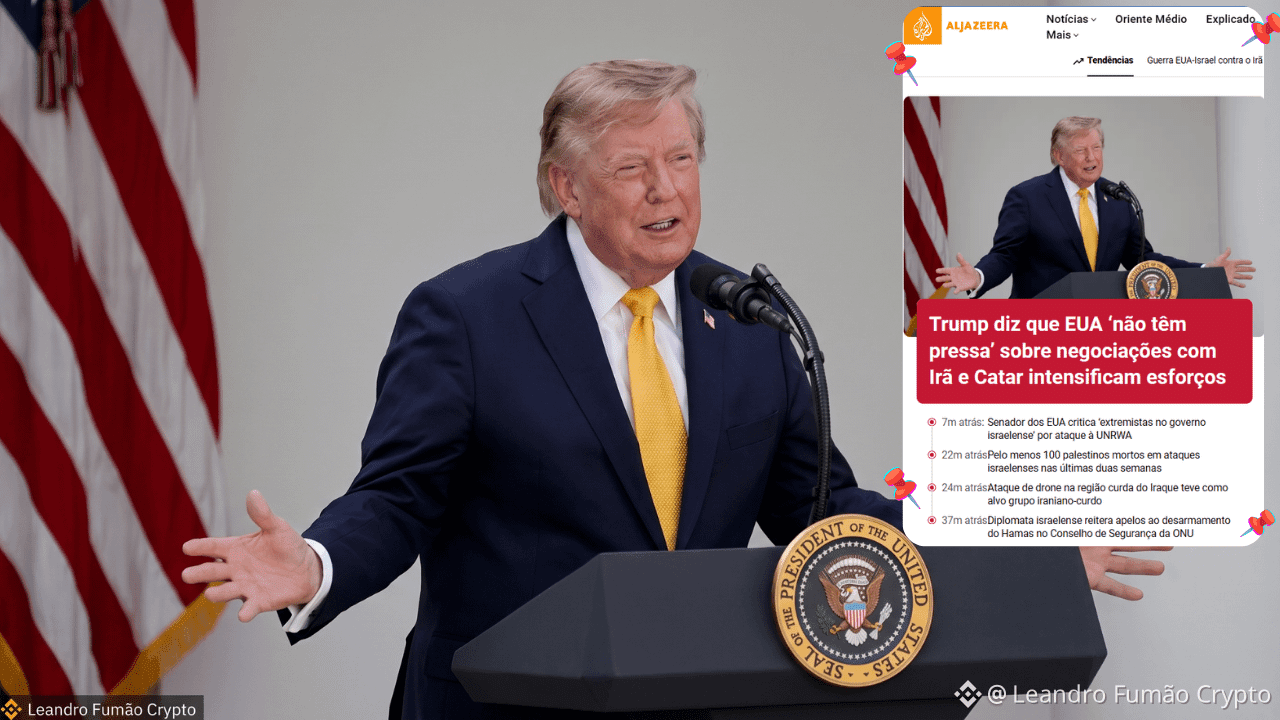
💥👱🏻♂️📢🔊 BREAK DOWN WHAT THE U.S. “SAYS IT WON’T PRESS” FOR AS NEGOTIATIONS WITH IRAN GET STALLED IN THE REGION ↔ CATHAR’S INTERNATIONAL DIPLOMACY EFFORTS DUE TO THE ATTACKS❗❕❗
The President of the United States said Washington is not in a hurry to reach an agreement with Iran, while Qatar is increasing its mediation efforts in the region.
𝔻𝕖𝕤𝕥𝕒𝕢𝕦𝕖: Donald $TRUMP stated that the U.S. “is not in a hurry” regarding negotiations with Iran. At the same time, Qatar is stepping up diplomatic efforts to try to move the dialogue forward. A U.S. senator criticized “extremists in the Israeli government” for the attack on UNRWA. At least 100 Palestinians were killed in Israeli attacks over the past two weeks.
⤑ A drone strike in Iraq’s Kurdish region targeted an Iranian-Kurdish group. The Israeli diplomat reiterated at the UN Security Council the calls for Hamas to be disarmed.
⤑ The statement by $TRUMP that the U.S. is not in a hurry reinforces the strategy of prolonged pressure on Iran, betting on economic attrition and the blockade.
⤑ Meanwhile, Qatar tries to keep channels of dialogue open. The humanitarian situation in Gaza remains dire, with dozens of recent deaths, and the tension is also spreading to Iraq and international diplomacy at the UN.
⚠️💬 Is $TRUMP ’s lack of urgency in the negotiations a tactic to push Iran to back down, or a sign that an agreement is becoming more and more distant?
#Trump's #iran #war
💥👱🏻♂️📢🔊 BREAK DOWN WHAT THE U.S. “SAYS IT WON’T PRESS” FOR AS NEGOTIATIONS WITH IRAN GET STALLED IN THE REGION ↔ CATHAR’S INTERNATIONAL DIPLOMACY EFFORTS DUE TO THE ATTACKS❗❕❗
The President of the United States said Washington is not in a hurry to reach an agreement with Iran, while Qatar is increasing its mediation efforts in the region.
𝔻𝕖𝕤𝕥𝕒𝕢𝕦𝕖: Donald $TRUMP stated that the U.S. “is not in a hurry” regarding negotiations with Iran. At the same time, Qatar is stepping up diplomatic efforts to try to move the dialogue forward. A U.S. senator criticized “extremists in the Israeli government” for the attack on UNRWA. At least 100 Palestinians were killed in Israeli attacks over the past two weeks.
⤑ A drone strike in Iraq’s Kurdish region targeted an Iranian-Kurdish group. The Israeli diplomat reiterated at the UN Security Council the calls for Hamas to be disarmed.
⤑ The statement by $TRUMP that the U.S. is not in a hurry reinforces the strategy of prolonged pressure on Iran, betting on economic attrition and the blockade.
⤑ Meanwhile, Qatar tries to keep channels of dialogue open. The humanitarian situation in Gaza remains dire, with dozens of recent deaths, and the tension is also spreading to Iraq and international diplomacy at the UN.
⚠️💬 Is $TRUMP ’s lack of urgency in the negotiations a tactic to push Iran to back down, or a sign that an agreement is becoming more and more distant?
#Trump's #iran #war
The President of the United States said Washington is not in a hurry to reach an agreement with Iran, while Qatar is increasing its mediation efforts in the region.
𝔻𝕖𝕤𝕥𝕒𝕢𝕦𝕖: Donald $TRUMP stated that the U.S. “is not in a hurry” regarding negotiations with Iran. At the same time, Qatar is stepping up diplomatic efforts to try to move the dialogue forward. A U.S. senator criticized “extremists in the Israeli government” for the attack on UNRWA. At least 100 Palestinians were killed in Israeli attacks over the past two weeks.
⤑ A drone strike in Iraq’s Kurdish region targeted an Iranian-Kurdish group. The Israeli diplomat reiterated at the UN Security Council the calls for Hamas to be disarmed.
⤑ The statement by $TRUMP that the U.S. is not in a hurry reinforces the strategy of prolonged pressure on Iran, betting on economic attrition and the blockade.
⤑ Meanwhile, Qatar tries to keep channels of dialogue open. The humanitarian situation in Gaza remains dire, with dozens of recent deaths, and the tension is also spreading to Iraq and international diplomacy at the UN.
⚠️💬 Is $TRUMP ’s lack of urgency in the negotiations a tactic to push Iran to back down, or a sign that an agreement is becoming more and more distant?
#Trump's #iran #war
2
1.1k


·
--
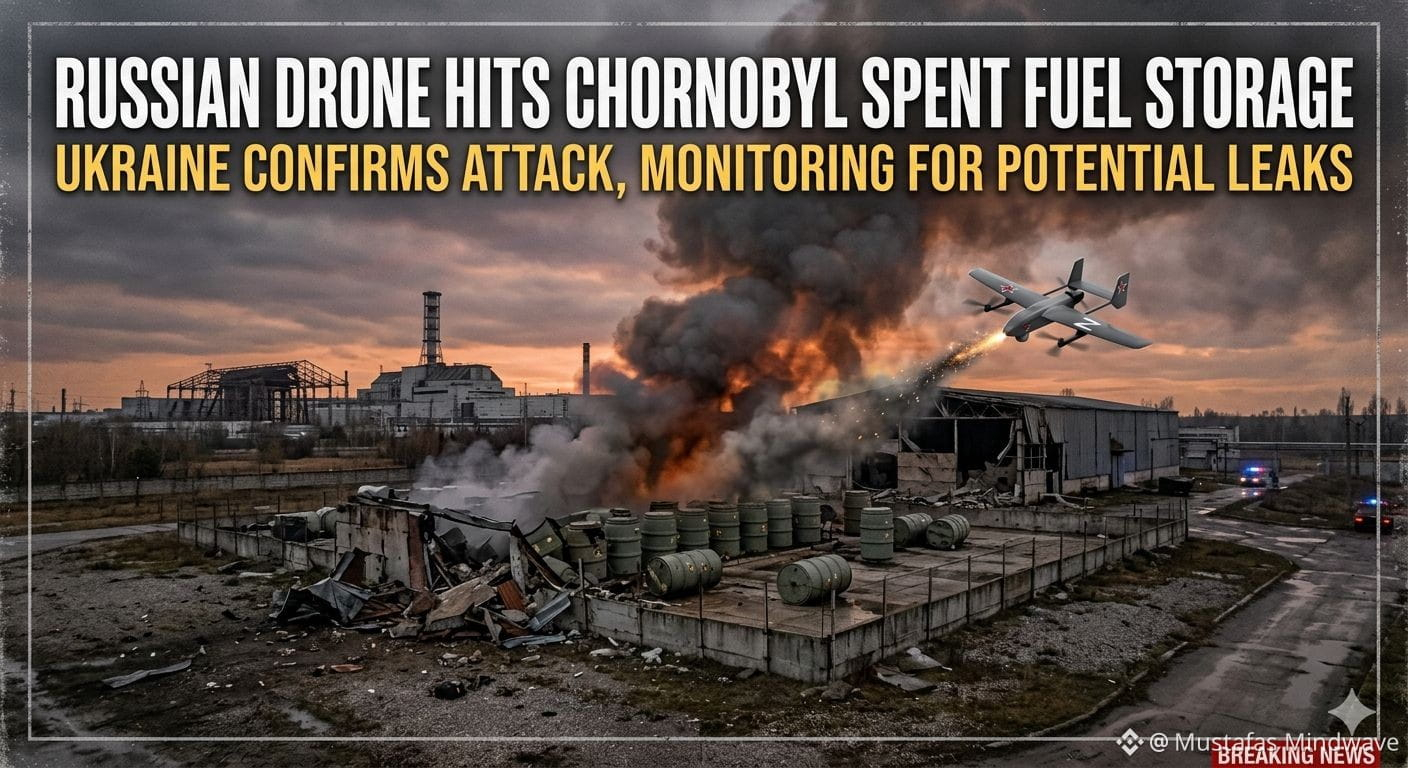
🚨 BREAKING: 🇺🇦🇷🇺
Ukraine says a Russian drone has struck a nuclear-fuel storage facility near the Chornobyl site, raising fresh concerns about nuclear safety in the region.
Ukrainian officials claim the attack caused damage to infrastructure near the containment area, though radiation levels have reportedly remained within normal limits so far.
The strike is the latest escalation in a war where energy sites, infrastructure, and critical facilities have increasingly come under threat.
International observers are once again warning that any incident near Chornobyl carries extremely high risk due to the sensitive nature of the site and remaining radioactive material in the area.
For now, assessments are ongoing, but the situation has triggered renewed global concern. 👀
#ukraine #russia #Chornobyl #war #BinanceSquare
🚨 BREAKING: 🇺🇦🇷🇺
Ukraine says a Russian drone has struck a nuclear-fuel storage facility near the Chornobyl site, raising fresh concerns about nuclear safety in the region.
Ukrainian officials claim the attack caused damage to infrastructure near the containment area, though radiation levels have reportedly remained within normal limits so far.
The strike is the latest escalation in a war where energy sites, infrastructure, and critical facilities have increasingly come under threat.
International observers are once again warning that any incident near Chornobyl carries extremely high risk due to the sensitive nature of the site and remaining radioactive material in the area.
For now, assessments are ongoing, but the situation has triggered renewed global concern. 👀
#ukraine #russia #Chornobyl #war #BinanceSquare
Ukraine says a Russian drone has struck a nuclear-fuel storage facility near the Chornobyl site, raising fresh concerns about nuclear safety in the region.
Ukrainian officials claim the attack caused damage to infrastructure near the containment area, though radiation levels have reportedly remained within normal limits so far.
The strike is the latest escalation in a war where energy sites, infrastructure, and critical facilities have increasingly come under threat.
International observers are once again warning that any incident near Chornobyl carries extremely high risk due to the sensitive nature of the site and remaining radioactive material in the area.
For now, assessments are ongoing, but the situation has triggered renewed global concern. 👀
#ukraine #russia #Chornobyl #war #BinanceSquare
338
·
--
Article
US/Iran war – current situation (as of late May 2026)The conflict started Feb 28, 2026 with US and Israeli strikes on Iran. It’s now been running ∼3 months.
Where things stand right now:
1. Fragile ceasefire in place since April 8, but it’s shaky. On Tuesday the US carried out strikes in Iran’s southern Hormozgan province targeting missile sites and boats laying mines. The US calls it “defensive”, Iran calls it a “gross violation” of the ceasefire.
2. Strait of Hormuz remains mostly closed. It normally carries ∼20% of global oil/LNG. Reopening it is the main condition for the ceasefire holding. Talks are ongoing in Qatar/Islamabad, but no signed deal yet.
3. Casualties: Estimates vary. Iran reports 3,468 killed, 26,500 injured. US/Israel estimate 6,000+ Iranian military killed. US losses: 15 killed, 538 wounded.
4. Negotiations: Both sides say progress on a memo to halt war and restart shipping, with 60 days to tackle nuclear issues. Iran wants $24B in frozen assets released. Trump says deal “proceeding nicely” but ready for more strikes.
---
Impact on international markets
The war has been the main driver of energy and risk markets since Feb:
1. Oil & Energy
- Brent spiked to ∼$100/barrel after the latest US strikes. It jumped 3.6-4% on Tuesday alone.
- WTI diverged: Fell to $93.89 as US markets caught up to Monday’s selloff.
- Supply shock: Closure of Hormuz has cut ∼9-11 million bpd of supply. Analysts now expect a 750k bpd deficit for 2026 vs a 1.63M bpd surplus forecast before the war.
- Outlook: Goldman now sees Brent averaging $85 for 2026. J.P. Morgan expects $100 in Q2 2026, falling to $80 by year-end. If Hormuz stays closed 4-6 weeks, Brent could hit $100+.
2. Equities
- US markets mixed: S&P 500 and Nasdaq hit record highs Tuesday on AI optimism and hope for a deal. Dow was down.
- Europe slipped: STOXX 600 fell 0.6% on doubts about peace.
- Asia up: Nikkei jumped 1.8% to record levels. Gulf markets mostly advanced on peace hopes.
- Energy stocks volatile: Energy equities rallied with oil, but fell hard when ceasefire hopes rose. Exxon, Chevron down 6%+ on ceasefire news.
3. Broader macro effects
- Inflation pressure: Elevated oil is feeding into fuel, fertilizer, food costs. Analysts warn stagflation risk if Hormuz stays closed.
- Central banks: Fed, ECB, BOE rate paths are shifting as markets now price higher inflation risk. BOJ says Middle East will factor into rate-hike timing.
- Dollar: Gained as safe haven. Dollar index at 99.09.
- Demand impact: S&P Global cut 2026 oil demand growth forecast by 700k bpd to 400k bpd. About 40% of global refining capacity affected.
4. Market sentiment
Markets are pricing in “a lot of good news” on a deal. If a real agreement hits, analysts think markets are “ready to take off”. But every strike/flare-up causes oil spikes and equity jitters.
Bottom line:
You’re in a ceasefire-but-not-peace phase. Markets are volatile and hinged on 2 things: 1) Does Hormuz reopen, and 2) Do US-Iran talks produce a signed deal on nuclear/uranium issues. Until then expect oil near $95-100 and elevated geopolitical risk premium across equities and currencies.
#war
#Market_Update
#MarketSentimentToday #bitcoin
US/Iran war – current situation (as of late May 2026)
The conflict started Feb 28, 2026 with US and Israeli strikes on Iran. It’s now been running ∼3 months.
Where things stand right now:
1. Fragile ceasefire in place since April 8, but it’s shaky. On Tuesday the US carried out strikes in Iran’s southern Hormozgan province targeting missile sites and boats laying mines. The US calls it “defensive”, Iran calls it a “gross violation” of the ceasefire.
2. Strait of Hormuz remains mostly closed. It normally carries ∼20% of global oil/LNG. Reopening it is the main condition for the ceasefire holding. Talks are ongoing in Qatar/Islamabad, but no signed deal yet.
3. Casualties: Estimates vary. Iran reports 3,468 killed, 26,500 injured. US/Israel estimate 6,000+ Iranian military killed. US losses: 15 killed, 538 wounded.
4. Negotiations: Both sides say progress on a memo to halt war and restart shipping, with 60 days to tackle nuclear issues. Iran wants $24B in frozen assets released. Trump says deal “proceeding nicely” but ready for more strikes.
---
Impact on international markets
The war has been the main driver of energy and risk markets since Feb:
1. Oil & Energy
- Brent spiked to ∼$100/barrel after the latest US strikes. It jumped 3.6-4% on Tuesday alone.
- WTI diverged: Fell to $93.89 as US markets caught up to Monday’s selloff.
- Supply shock: Closure of Hormuz has cut ∼9-11 million bpd of supply. Analysts now expect a 750k bpd deficit for 2026 vs a 1.63M bpd surplus forecast before the war.
- Outlook: Goldman now sees Brent averaging $85 for 2026. J.P. Morgan expects $100 in Q2 2026, falling to $80 by year-end. If Hormuz stays closed 4-6 weeks, Brent could hit $100+.
2. Equities
- US markets mixed: S&P 500 and Nasdaq hit record highs Tuesday on AI optimism and hope for a deal. Dow was down.
- Europe slipped: STOXX 600 fell 0.6% on doubts about peace.
- Asia up: Nikkei jumped 1.8% to record levels. Gulf markets mostly advanced on peace hopes.
- Energy stocks volatile: Energy equities rallied with oil, but fell hard when ceasefire hopes rose. Exxon, Chevron down 6%+ on ceasefire news.
3. Broader macro effects
- Inflation pressure: Elevated oil is feeding into fuel, fertilizer, food costs. Analysts warn stagflation risk if Hormuz stays closed.
- Central banks: Fed, ECB, BOE rate paths are shifting as markets now price higher inflation risk. BOJ says Middle East will factor into rate-hike timing.
- Dollar: Gained as safe haven. Dollar index at 99.09.
- Demand impact: S&P Global cut 2026 oil demand growth forecast by 700k bpd to 400k bpd. About 40% of global refining capacity affected.
4. Market sentiment
Markets are pricing in “a lot of good news” on a deal. If a real agreement hits, analysts think markets are “ready to take off”. But every strike/flare-up causes oil spikes and equity jitters.
Bottom line:
You’re in a ceasefire-but-not-peace phase. Markets are volatile and hinged on 2 things: 1) Does Hormuz reopen, and 2) Do US-Iran talks produce a signed deal on nuclear/uranium issues. Until then expect oil near $95-100 and elevated geopolitical risk premium across equities and currencies.
#war
#Market_Update
#MarketSentimentToday #bitcoin
Where things stand right now:
1. Fragile ceasefire in place since April 8, but it’s shaky. On Tuesday the US carried out strikes in Iran’s southern Hormozgan province targeting missile sites and boats laying mines. The US calls it “defensive”, Iran calls it a “gross violation” of the ceasefire.
2. Strait of Hormuz remains mostly closed. It normally carries ∼20% of global oil/LNG. Reopening it is the main condition for the ceasefire holding. Talks are ongoing in Qatar/Islamabad, but no signed deal yet.
3. Casualties: Estimates vary. Iran reports 3,468 killed, 26,500 injured. US/Israel estimate 6,000+ Iranian military killed. US losses: 15 killed, 538 wounded.
4. Negotiations: Both sides say progress on a memo to halt war and restart shipping, with 60 days to tackle nuclear issues. Iran wants $24B in frozen assets released. Trump says deal “proceeding nicely” but ready for more strikes.
---
Impact on international markets
The war has been the main driver of energy and risk markets since Feb:
1. Oil & Energy
- Brent spiked to ∼$100/barrel after the latest US strikes. It jumped 3.6-4% on Tuesday alone.
- WTI diverged: Fell to $93.89 as US markets caught up to Monday’s selloff.
- Supply shock: Closure of Hormuz has cut ∼9-11 million bpd of supply. Analysts now expect a 750k bpd deficit for 2026 vs a 1.63M bpd surplus forecast before the war.
- Outlook: Goldman now sees Brent averaging $85 for 2026. J.P. Morgan expects $100 in Q2 2026, falling to $80 by year-end. If Hormuz stays closed 4-6 weeks, Brent could hit $100+.
2. Equities
- US markets mixed: S&P 500 and Nasdaq hit record highs Tuesday on AI optimism and hope for a deal. Dow was down.
- Europe slipped: STOXX 600 fell 0.6% on doubts about peace.
- Asia up: Nikkei jumped 1.8% to record levels. Gulf markets mostly advanced on peace hopes.
- Energy stocks volatile: Energy equities rallied with oil, but fell hard when ceasefire hopes rose. Exxon, Chevron down 6%+ on ceasefire news.
3. Broader macro effects
- Inflation pressure: Elevated oil is feeding into fuel, fertilizer, food costs. Analysts warn stagflation risk if Hormuz stays closed.
- Central banks: Fed, ECB, BOE rate paths are shifting as markets now price higher inflation risk. BOJ says Middle East will factor into rate-hike timing.
- Dollar: Gained as safe haven. Dollar index at 99.09.
- Demand impact: S&P Global cut 2026 oil demand growth forecast by 700k bpd to 400k bpd. About 40% of global refining capacity affected.
4. Market sentiment
Markets are pricing in “a lot of good news” on a deal. If a real agreement hits, analysts think markets are “ready to take off”. But every strike/flare-up causes oil spikes and equity jitters.
Bottom line:
You’re in a ceasefire-but-not-peace phase. Markets are volatile and hinged on 2 things: 1) Does Hormuz reopen, and 2) Do US-Iran talks produce a signed deal on nuclear/uranium issues. Until then expect oil near $95-100 and elevated geopolitical risk premium across equities and currencies.
#war
#Market_Update
#MarketSentimentToday #bitcoin
1
232

·
--
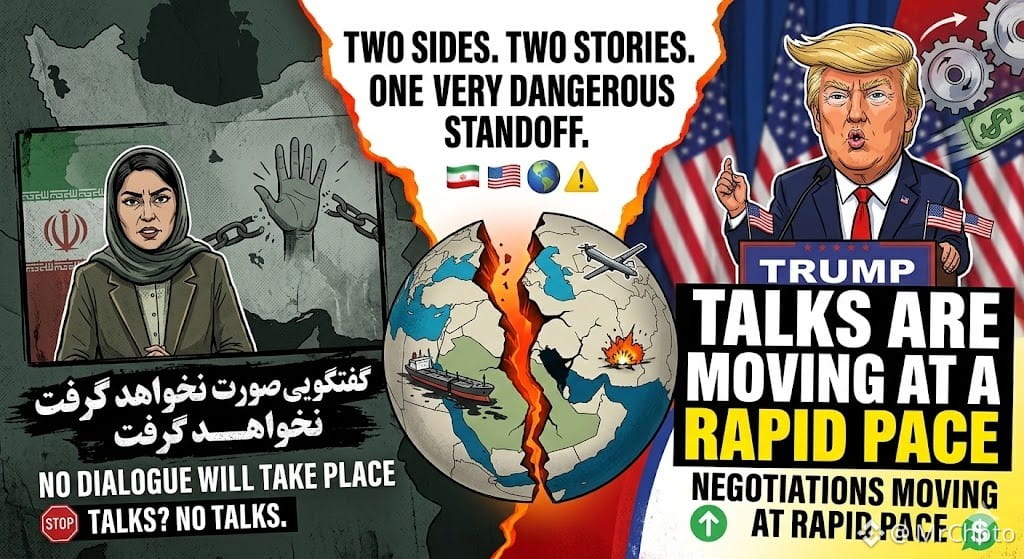
Iranian air defence reportedly brought down a U.S. or Israeli drone, which later crashed inside Iraqi territory.
Early assessments suggest it may have been a Hermes 900 conducting surveillance of Iranian missile launch sites.#war #IranAttackIsrael #
Iranian air defence reportedly brought down a U.S. or Israeli drone, which later crashed inside Iraqi territory.
Early assessments suggest it may have been a Hermes 900 conducting surveillance of Iranian missile launch sites.#war #IranAttackIsrael #
Early assessments suggest it may have been a Hermes 900 conducting surveillance of Iranian missile launch sites.#war #IranAttackIsrael #
176
·
--
Bullish
Verified
The Fragile Landscape of the US-Iran Conflict
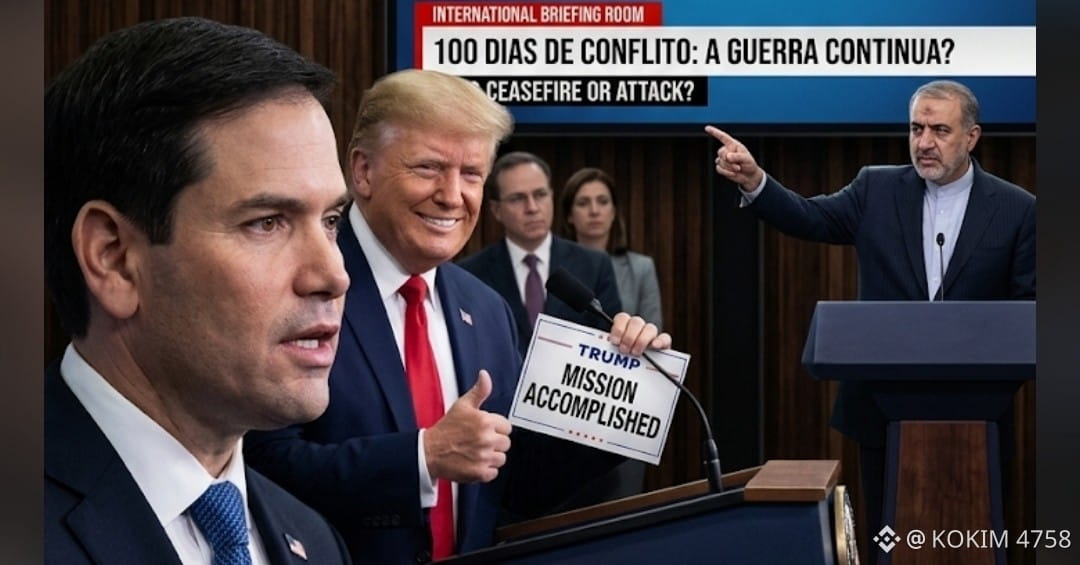
The tension in the Middle East has hit a new level, raising red flags in international diplomacy. The Iranian government has accused the United States of violating the ceasefire agreement that was in place. This accusation came right after American forces carried out strategic bombings on radar installations and monitoring systems along the southern coast of Iranian territory. In immediate retaliation, Tehran launched missiles towards Kuwait and Bahrain, ramping up the hostile atmosphere in the region.
On the flip side, US Secretary of State Marco Rubio publicly declared that the offensive phase of attacks is over and that the country has achieved victory in the dispute. Despite Washington's closure talk, the reality shows that lasting peace is still far from reach. The direct confrontation has hit a historic milestone of one hundred days, highlighting that the truce pact between the two powers is extremely unstable and poses a serious risk to global stability.
$币安人生 $JTO $EPIC
#Geopolitics
#usa
#iran
#war
The Fragile Landscape of the US-Iran Conflict
The tension in the Middle East has hit a new level, raising red flags in international diplomacy. The Iranian government has accused the United States of violating the ceasefire agreement that was in place. This accusation came right after American forces carried out strategic bombings on radar installations and monitoring systems along the southern coast of Iranian territory. In immediate retaliation, Tehran launched missiles towards Kuwait and Bahrain, ramping up the hostile atmosphere in the region.
On the flip side, US Secretary of State Marco Rubio publicly declared that the offensive phase of attacks is over and that the country has achieved victory in the dispute. Despite Washington's closure talk, the reality shows that lasting peace is still far from reach. The direct confrontation has hit a historic milestone of one hundred days, highlighting that the truce pact between the two powers is extremely unstable and poses a serious risk to global stability.
$币安人生 $JTO $EPIC
#Geopolitics
#usa
#iran
#war
The tension in the Middle East has hit a new level, raising red flags in international diplomacy. The Iranian government has accused the United States of violating the ceasefire agreement that was in place. This accusation came right after American forces carried out strategic bombings on radar installations and monitoring systems along the southern coast of Iranian territory. In immediate retaliation, Tehran launched missiles towards Kuwait and Bahrain, ramping up the hostile atmosphere in the region.
On the flip side, US Secretary of State Marco Rubio publicly declared that the offensive phase of attacks is over and that the country has achieved victory in the dispute. Despite Washington's closure talk, the reality shows that lasting peace is still far from reach. The direct confrontation has hit a historic milestone of one hundred days, highlighting that the truce pact between the two powers is extremely unstable and poses a serious risk to global stability.
$币安人生 $JTO $EPIC
#Geopolitics
#usa
#iran
#war
3
1.6k

·
--
#DonaldTrump
#war
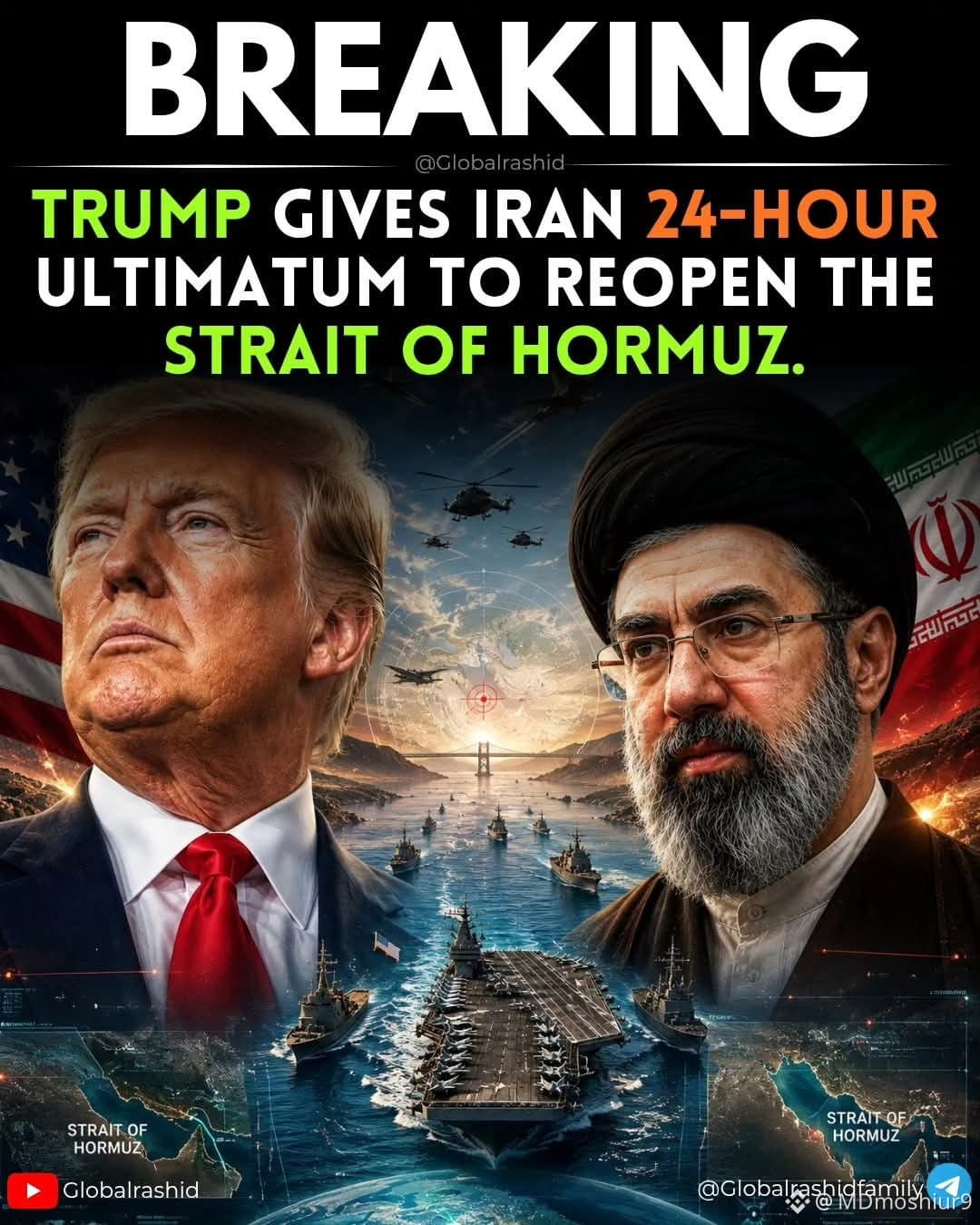
Trump Gives Iran 24-Hour Ultimatum to Reopen the Strait of Hormuz
Tensions in the Middle East have escalated once again after U.S. President Donald Trump reportedly issued a 24-hour ultimatum to Iran, demanding that the Strait of Hormuz be reopened for global shipping.
The Strait of Hormuz is one of the world's most important energy chokepoints, with nearly **20% of global oil shipments** passing through it every day. Any disruption to this route can send shockwaves through global energy markets, increase shipping costs, and fuel inflation worldwide.
If the waterway remains blocked, markets could react sharply. Oil prices may surge, global stock markets could face increased volatility, and investors may shift toward safe-haven assets such as **gold**. The crypto market could also experience heightened volatility as geopolitical uncertainty rises.
At this stage, it remains unclear how Iran will respond to the ultimatum. The next 24 hours could prove critical, with the potential to influence global trade, financial markets, and the broader geopolitical landscape.
Disclaimer: This post is for informational purposes only and is based on publicly circulating reports. The situation is developing rapidly, and official updates may change as new information becomes available.
#DonaldTrump
#war
Trump Gives Iran 24-Hour Ultimatum to Reopen the Strait of Hormuz
Tensions in the Middle East have escalated once again after U.S. President Donald Trump reportedly issued a 24-hour ultimatum to Iran, demanding that the Strait of Hormuz be reopened for global shipping.
The Strait of Hormuz is one of the world's most important energy chokepoints, with nearly **20% of global oil shipments** passing through it every day. Any disruption to this route can send shockwaves through global energy markets, increase shipping costs, and fuel inflation worldwide.
If the waterway remains blocked, markets could react sharply. Oil prices may surge, global stock markets could face increased volatility, and investors may shift toward safe-haven assets such as **gold**. The crypto market could also experience heightened volatility as geopolitical uncertainty rises.
At this stage, it remains unclear how Iran will respond to the ultimatum. The next 24 hours could prove critical, with the potential to influence global trade, financial markets, and the broader geopolitical landscape.
Disclaimer: This post is for informational purposes only and is based on publicly circulating reports. The situation is developing rapidly, and official updates may change as new information becomes available.
#war
Trump Gives Iran 24-Hour Ultimatum to Reopen the Strait of Hormuz
Tensions in the Middle East have escalated once again after U.S. President Donald Trump reportedly issued a 24-hour ultimatum to Iran, demanding that the Strait of Hormuz be reopened for global shipping.
The Strait of Hormuz is one of the world's most important energy chokepoints, with nearly **20% of global oil shipments** passing through it every day. Any disruption to this route can send shockwaves through global energy markets, increase shipping costs, and fuel inflation worldwide.
If the waterway remains blocked, markets could react sharply. Oil prices may surge, global stock markets could face increased volatility, and investors may shift toward safe-haven assets such as **gold**. The crypto market could also experience heightened volatility as geopolitical uncertainty rises.
At this stage, it remains unclear how Iran will respond to the ultimatum. The next 24 hours could prove critical, with the potential to influence global trade, financial markets, and the broader geopolitical landscape.
Disclaimer: This post is for informational purposes only and is based on publicly circulating reports. The situation is developing rapidly, and official updates may change as new information becomes available.
340


·
--
Bullish
JUST IN: $STRAX
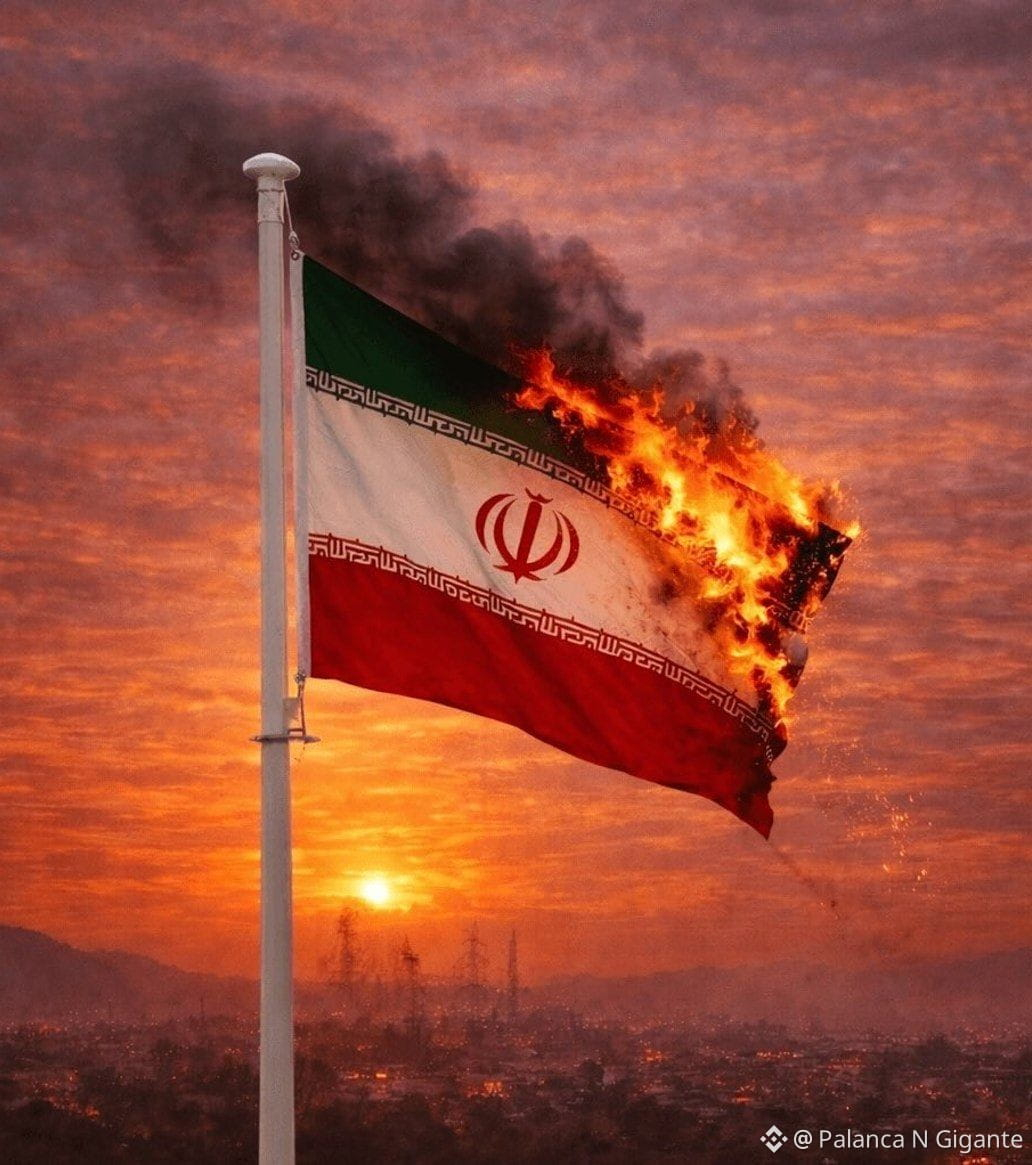
The US Secretary of War says: "if we need to negotiate with bombs, we will negotiate with bombs." $VELVET 🇺🇸🇮🇷
"And we're really good at it." $HMSTR
{spot}(STRAXUSDT)
{future}(VELVETUSDT)
{spot}(HMSTRUSDT)
#news #war #usa #IranIsraelConflict #USMilitaryToBlockadeStraitOfHormuz
JUST IN: $STRAX
The US Secretary of War says: "if we need to negotiate with bombs, we will negotiate with bombs." $VELVET 🇺🇸🇮🇷
"And we're really good at it." $HMSTR
#news #war #usa #IranIsraelConflict #USMilitaryToBlockadeStraitOfHormuz
The US Secretary of War says: "if we need to negotiate with bombs, we will negotiate with bombs." $VELVET 🇺🇸🇮🇷
"And we're really good at it." $HMSTR
#news #war #usa #IranIsraelConflict #USMilitaryToBlockadeStraitOfHormuz

167

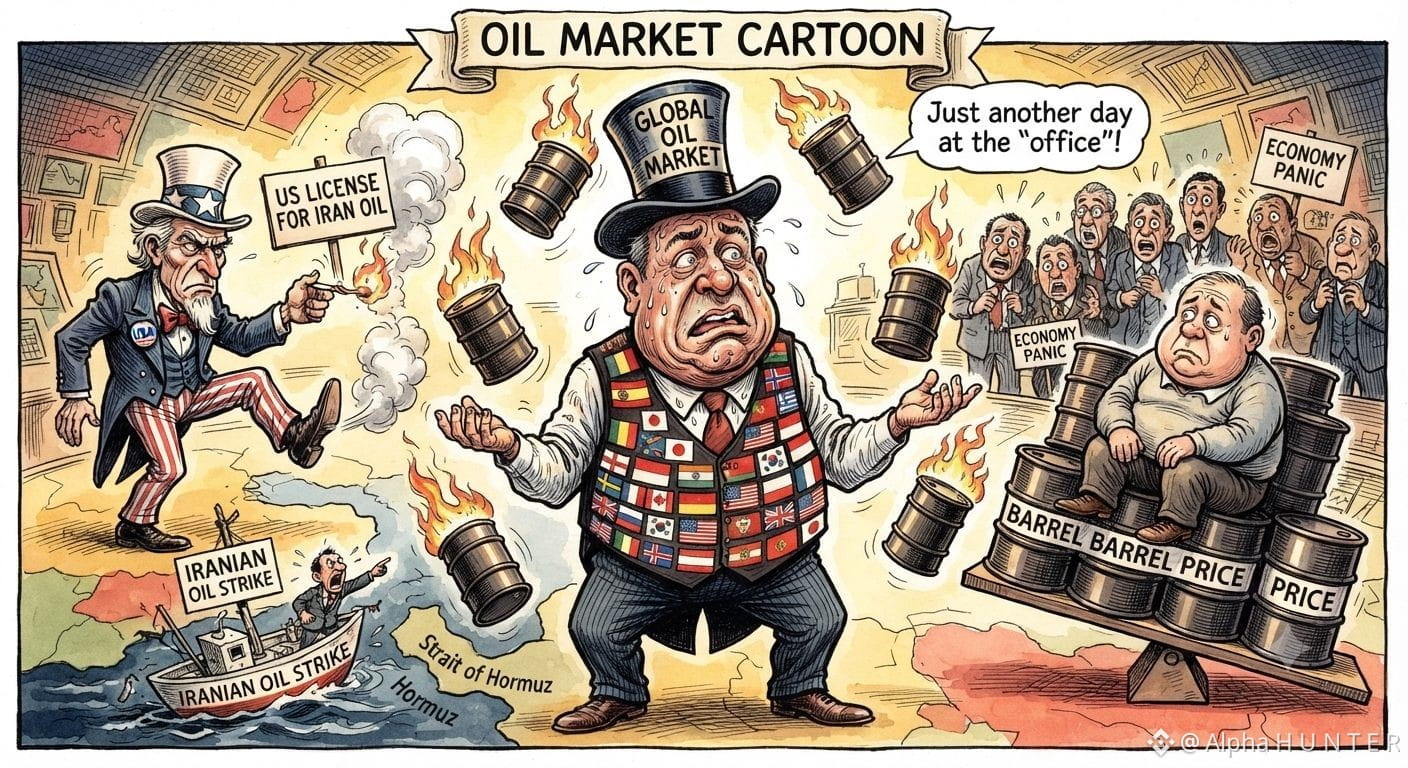
🔥Geopolitical Tension: US Revokes Iranian Oil Export License.
In a decisive move that may impact global energy markets, the United States has revoked the license that previously allowed Iran to sell its oil on the international market. This decision comes in response to recent Iranian strikes in the Strait of Hormuz, raising concerns about potential disruptions to global oil supplies and upward pressure on prices.
#Alpha HUNTER #OilPrice #iran #war
$BZ
{future}(BZUSDT)
$CL
{future}(CLUSDT)
🔥Geopolitical Tension: US Revokes Iranian Oil Export License.
In a decisive move that may impact global energy markets, the United States has revoked the license that previously allowed Iran to sell its oil on the international market. This decision comes in response to recent Iranian strikes in the Strait of Hormuz, raising concerns about potential disruptions to global oil supplies and upward pressure on prices.
#Alpha HUNTER #OilPrice #iran #war
$BZ
$CL
In a decisive move that may impact global energy markets, the United States has revoked the license that previously allowed Iran to sell its oil on the international market. This decision comes in response to recent Iranian strikes in the Strait of Hormuz, raising concerns about potential disruptions to global oil supplies and upward pressure on prices.
#Alpha HUNTER #OilPrice #iran #war
$BZ
$CL
2
37

·
--
The Iran-Iraq situation blew up again—this time it’s real 💥
Iran has taken out Kuwait’s oil facilities, and there are also two oil tankers that exploded in the Strait of Hormuz. Crude oil practically took off, up more than 4%.
This isn’t just about oil— the entire Middle East supply chain is being affected.
From striking military targets to hitting infrastructure, the escalation is happening a bit too fast. Syria, however, has become the winner—by using trucks to move oil out, it’s now one of the biggest export ports in the Middle East.
In times like this, safe-haven funds will definitely flow into assets like $BTC. The more chaotic geopolitics gets, the harder the case for crypto becomes.
#BTC #Crypto #War #Oil #DeFi
NFA DYOR
The Iran-Iraq situation blew up again—this time it’s real 💥
Iran has taken out Kuwait’s oil facilities, and there are also two oil tankers that exploded in the Strait of Hormuz. Crude oil practically took off, up more than 4%.
This isn’t just about oil— the entire Middle East supply chain is being affected.
From striking military targets to hitting infrastructure, the escalation is happening a bit too fast. Syria, however, has become the winner—by using trucks to move oil out, it’s now one of the biggest export ports in the Middle East.
In times like this, safe-haven funds will definitely flow into assets like $BTC . The more chaotic geopolitics gets, the harder the case for crypto becomes.
#BTC #Crypto #War #Oil #DeFi
NFA DYOR
Iran has taken out Kuwait’s oil facilities, and there are also two oil tankers that exploded in the Strait of Hormuz. Crude oil practically took off, up more than 4%.
This isn’t just about oil— the entire Middle East supply chain is being affected.
From striking military targets to hitting infrastructure, the escalation is happening a bit too fast. Syria, however, has become the winner—by using trucks to move oil out, it’s now one of the biggest export ports in the Middle East.
In times like this, safe-haven funds will definitely flow into assets like $BTC . The more chaotic geopolitics gets, the harder the case for crypto becomes.
#BTC #Crypto #War #Oil #DeFi
NFA DYOR
146

·
--
Article
Iranian Foreign Minister: Iran Will Not Accept a Ceasefire, Only an End to the WarIranian Foreign Minister Araghchi has stated that Iran will not accept a ceasefire in the ongoing conflict, emphasizing instead that the country will only agree to an end to the war. According to Jin10, Araghchi made this declaration, underscoring Iran’s firm stance on the issue.
This position indicates that Iran is not interested in a temporary halt or pause in hostilities but is seeking a complete resolution that concludes the conflict altogether. The statement reflects Iran’s commitment to its strategic objectives and its rejection of interim agreements that do not lead to a full de-escalation.
The remarks come amid heightened tensions and ongoing military activities, with Iran maintaining that only a definitive end to the war would be acceptable. This stance may influence regional diplomacy and negotiations, as other parties involved in the conflict consider Iran’s position and its implications for future peace talks.
The declaration also signals a potential shift in Iran’s diplomatic approach, emphasizing its focus on a comprehensive resolution rather than short-term ceasefire agreements. The international community will be closely observing how this stance impacts ongoing efforts to resolve the conflict and whether it leads to renewed negotiations or further escalation. #Iran #War #Diplomacy
Iranian Foreign Minister: Iran Will Not Accept a Ceasefire, Only an End to the War
Iranian Foreign Minister Araghchi has stated that Iran will not accept a ceasefire in the ongoing conflict, emphasizing instead that the country will only agree to an end to the war. According to Jin10, Araghchi made this declaration, underscoring Iran’s firm stance on the issue.
This position indicates that Iran is not interested in a temporary halt or pause in hostilities but is seeking a complete resolution that concludes the conflict altogether. The statement reflects Iran’s commitment to its strategic objectives and its rejection of interim agreements that do not lead to a full de-escalation.
The remarks come amid heightened tensions and ongoing military activities, with Iran maintaining that only a definitive end to the war would be acceptable. This stance may influence regional diplomacy and negotiations, as other parties involved in the conflict consider Iran’s position and its implications for future peace talks.
The declaration also signals a potential shift in Iran’s diplomatic approach, emphasizing its focus on a comprehensive resolution rather than short-term ceasefire agreements. The international community will be closely observing how this stance impacts ongoing efforts to resolve the conflict and whether it leads to renewed negotiations or further escalation. #Iran #War #Diplomacy
This position indicates that Iran is not interested in a temporary halt or pause in hostilities but is seeking a complete resolution that concludes the conflict altogether. The statement reflects Iran’s commitment to its strategic objectives and its rejection of interim agreements that do not lead to a full de-escalation.
The remarks come amid heightened tensions and ongoing military activities, with Iran maintaining that only a definitive end to the war would be acceptable. This stance may influence regional diplomacy and negotiations, as other parties involved in the conflict consider Iran’s position and its implications for future peace talks.
The declaration also signals a potential shift in Iran’s diplomatic approach, emphasizing its focus on a comprehensive resolution rather than short-term ceasefire agreements. The international community will be closely observing how this stance impacts ongoing efforts to resolve the conflict and whether it leads to renewed negotiations or further escalation. #Iran #War #Diplomacy
20

Iran–U.S. Conflict and the Global Stock Market: Risks Opportunities, and What Investors Should WatchGeopolitical tensions between Iran and the United States have once again become a major focus for global financial markets. Whenever conflict in the Middle East escalates, investors closely monitor oil prices, inflation, and the stability of international trade routes. While political events create uncertainty, they also present opportunities for disciplined long-term investors.
Why Markets React
The Middle East is one of the world's most important energy-producing regions. Any military confrontation involving Iran raises concerns about oil production and the security of the Strait of Hormuz, a key shipping route for global energy supplies. Rising oil prices can increase transportation and manufacturing costs, putting upward pressure on inflation and influencing central bank policies.
Impact on Global Stock Markets
During periods of heightened tension, stock markets often experience increased volatility rather than a sustained collapse. Investors typically move capital into "safe-haven" assets such as gold, the U.S. dollar, and government bonds. Energy companies may benefit from higher oil prices, while airlines, tourism, and transportation companies often face increased costs. Technology and growth stocks can also become more volatile as investors reduce exposure to risk.
However, history has shown that markets frequently recover once the immediate uncertainty begins to ease. Recent reports indicate that signs of diplomatic progress between the United States and Iran have helped boost investor confidence, with equity markets rebounding as oil prices moderated.
Key Sectors to Watch
Energy: Oil and gas producers may benefit from higher crude oil prices.Defense: Defense manufacturers often receive increased investor attention during geopolitical conflicts.Gold and Precious Metals: Gold typically attracts investors seeking stability.Technology: High-quality technology companies may experience short-term volatility but often recover as market sentiment improves.Airlines and Travel: These sectors may face pressure from higher fuel costs and reduced travel demand.
What Investors Should Do
Successful investing requires discipline rather than emotional reactions to headlines. Investors should:
Maintain a diversified portfolio.Focus on financially strong companies.Avoid panic selling during periods of market volatility.Keep sufficient cash available for future investment opportunities.Monitor developments in oil prices, inflation, and central bank decisions.
Outlook
The future direction of global markets will depend largely on whether diplomatic efforts reduce tensions or whether the conflict expands further. A prolonged conflict could lead to higher inflation, slower global economic growth, and continued market volatility. On the other hand, successful negotiations or a lasting ceasefire could improve investor confidence and support a recovery in global equity markets.
Conclusion
The Iran–U.S. conflict serves as a reminder that geopolitical events can significantly influence financial markets. While short-term uncertainty may create volatility, long-term investors who remain patient, diversified, and focused on fundamentals are often better positioned to navigate changing market conditions. Rather than reacting to fear, investors should continue to evaluate economic data, corporate earnings, and long-term investment opportunities before making portfolio decisions.
#BTC #war #market #Binance #BitcoinHitsOneMonthHigh$65700ThenPullsBack
Iran–U.S. Conflict and the Global Stock Market: Risks Opportunities, and What Investors Should Watch
Geopolitical tensions between Iran and the United States have once again become a major focus for global financial markets. Whenever conflict in the Middle East escalates, investors closely monitor oil prices, inflation, and the stability of international trade routes. While political events create uncertainty, they also present opportunities for disciplined long-term investors.
Why Markets React
The Middle East is one of the world's most important energy-producing regions. Any military confrontation involving Iran raises concerns about oil production and the security of the Strait of Hormuz, a key shipping route for global energy supplies. Rising oil prices can increase transportation and manufacturing costs, putting upward pressure on inflation and influencing central bank policies.
Impact on Global Stock Markets
During periods of heightened tension, stock markets often experience increased volatility rather than a sustained collapse. Investors typically move capital into "safe-haven" assets such as gold, the U.S. dollar, and government bonds. Energy companies may benefit from higher oil prices, while airlines, tourism, and transportation companies often face increased costs. Technology and growth stocks can also become more volatile as investors reduce exposure to risk.
However, history has shown that markets frequently recover once the immediate uncertainty begins to ease. Recent reports indicate that signs of diplomatic progress between the United States and Iran have helped boost investor confidence, with equity markets rebounding as oil prices moderated.
Key Sectors to Watch
Energy: Oil and gas producers may benefit from higher crude oil prices.Defense: Defense manufacturers often receive increased investor attention during geopolitical conflicts.Gold and Precious Metals: Gold typically attracts investors seeking stability.Technology: High-quality technology companies may experience short-term volatility but often recover as market sentiment improves.Airlines and Travel: These sectors may face pressure from higher fuel costs and reduced travel demand.
What Investors Should Do
Successful investing requires discipline rather than emotional reactions to headlines. Investors should:
Maintain a diversified portfolio.Focus on financially strong companies.Avoid panic selling during periods of market volatility.Keep sufficient cash available for future investment opportunities.Monitor developments in oil prices, inflation, and central bank decisions.
Outlook
The future direction of global markets will depend largely on whether diplomatic efforts reduce tensions or whether the conflict expands further. A prolonged conflict could lead to higher inflation, slower global economic growth, and continued market volatility. On the other hand, successful negotiations or a lasting ceasefire could improve investor confidence and support a recovery in global equity markets.
Conclusion
The Iran–U.S. conflict serves as a reminder that geopolitical events can significantly influence financial markets. While short-term uncertainty may create volatility, long-term investors who remain patient, diversified, and focused on fundamentals are often better positioned to navigate changing market conditions. Rather than reacting to fear, investors should continue to evaluate economic data, corporate earnings, and long-term investment opportunities before making portfolio decisions.
#BTC #war #market #Binance #BitcoinHitsOneMonthHigh$65700ThenPullsBack
Why Markets React
The Middle East is one of the world's most important energy-producing regions. Any military confrontation involving Iran raises concerns about oil production and the security of the Strait of Hormuz, a key shipping route for global energy supplies. Rising oil prices can increase transportation and manufacturing costs, putting upward pressure on inflation and influencing central bank policies.
Impact on Global Stock Markets
During periods of heightened tension, stock markets often experience increased volatility rather than a sustained collapse. Investors typically move capital into "safe-haven" assets such as gold, the U.S. dollar, and government bonds. Energy companies may benefit from higher oil prices, while airlines, tourism, and transportation companies often face increased costs. Technology and growth stocks can also become more volatile as investors reduce exposure to risk.
However, history has shown that markets frequently recover once the immediate uncertainty begins to ease. Recent reports indicate that signs of diplomatic progress between the United States and Iran have helped boost investor confidence, with equity markets rebounding as oil prices moderated.
Key Sectors to Watch
Energy: Oil and gas producers may benefit from higher crude oil prices.Defense: Defense manufacturers often receive increased investor attention during geopolitical conflicts.Gold and Precious Metals: Gold typically attracts investors seeking stability.Technology: High-quality technology companies may experience short-term volatility but often recover as market sentiment improves.Airlines and Travel: These sectors may face pressure from higher fuel costs and reduced travel demand.
What Investors Should Do
Successful investing requires discipline rather than emotional reactions to headlines. Investors should:
Maintain a diversified portfolio.Focus on financially strong companies.Avoid panic selling during periods of market volatility.Keep sufficient cash available for future investment opportunities.Monitor developments in oil prices, inflation, and central bank decisions.
Outlook
The future direction of global markets will depend largely on whether diplomatic efforts reduce tensions or whether the conflict expands further. A prolonged conflict could lead to higher inflation, slower global economic growth, and continued market volatility. On the other hand, successful negotiations or a lasting ceasefire could improve investor confidence and support a recovery in global equity markets.
Conclusion
The Iran–U.S. conflict serves as a reminder that geopolitical events can significantly influence financial markets. While short-term uncertainty may create volatility, long-term investors who remain patient, diversified, and focused on fundamentals are often better positioned to navigate changing market conditions. Rather than reacting to fear, investors should continue to evaluate economic data, corporate earnings, and long-term investment opportunities before making portfolio decisions.
#BTC #war #market #Binance #BitcoinHitsOneMonthHigh$65700ThenPullsBack
1
70

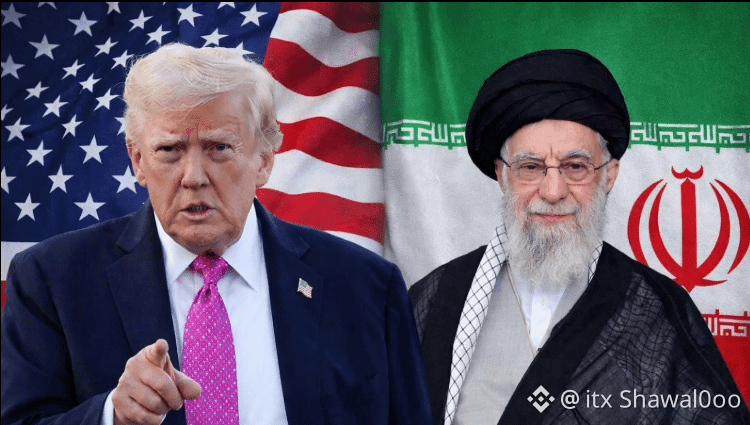
Recent reports indicate that tensions between the United States and Iran have escalated again despite ongoing ceasefire and diplomatic negotiations. Fresh military exchanges were reported over the weekend, including U.S. strikes on Iranian military targets and Iranian retaliatory attacks involving drones and missiles.
Kuwait confirmed that its air-defense systems intercepted multiple missiles and drones during the latest escalation, raising concerns that the conflict could spread further across the Gulf region.
At the same time, diplomatic talks are continuing. U.S. officials say negotiations for a broader agreement remain active, while Iranian officials accuse Washington of violating ceasefire commitments.
The ongoing conflict has also disrupted regional air travel, with several airlines adjusting routes across parts of the Middle East
Oil prices remain sensitive to developments around the Strait of Hormuz.
Global investors are watching for any disruption to energy supplies.
Safe-haven assets such as gold have seen increased demand during periods of escalation.
Military tensions remain high, but diplomatic channels are still open, with mediators working to prevent a wider regional conflict
#USAndIranTradeShotInTheStraitOfHormuz #war #TrendingTopic #MarketSentimentToday
$BTC
{future}(BTCUSDT)
$BNB
{future}(BNBUSDT)
Recent reports indicate that tensions between the United States and Iran have escalated again despite ongoing ceasefire and diplomatic negotiations. Fresh military exchanges were reported over the weekend, including U.S. strikes on Iranian military targets and Iranian retaliatory attacks involving drones and missiles.
Kuwait confirmed that its air-defense systems intercepted multiple missiles and drones during the latest escalation, raising concerns that the conflict could spread further across the Gulf region.
At the same time, diplomatic talks are continuing. U.S. officials say negotiations for a broader agreement remain active, while Iranian officials accuse Washington of violating ceasefire commitments.
The ongoing conflict has also disrupted regional air travel, with several airlines adjusting routes across parts of the Middle East
Oil prices remain sensitive to developments around the Strait of Hormuz.
Global investors are watching for any disruption to energy supplies.
Safe-haven assets such as gold have seen increased demand during periods of escalation.
Military tensions remain high, but diplomatic channels are still open, with mediators working to prevent a wider regional conflict
#USAndIranTradeShotInTheStraitOfHormuz #war #TrendingTopic #MarketSentimentToday
$BTC
$BNB
Kuwait confirmed that its air-defense systems intercepted multiple missiles and drones during the latest escalation, raising concerns that the conflict could spread further across the Gulf region.
At the same time, diplomatic talks are continuing. U.S. officials say negotiations for a broader agreement remain active, while Iranian officials accuse Washington of violating ceasefire commitments.
The ongoing conflict has also disrupted regional air travel, with several airlines adjusting routes across parts of the Middle East
Oil prices remain sensitive to developments around the Strait of Hormuz.
Global investors are watching for any disruption to energy supplies.
Safe-haven assets such as gold have seen increased demand during periods of escalation.
Military tensions remain high, but diplomatic channels are still open, with mediators working to prevent a wider regional conflict
#USAndIranTradeShotInTheStraitOfHormuz #war #TrendingTopic #MarketSentimentToday
$BTC
$BNB
127
·
--
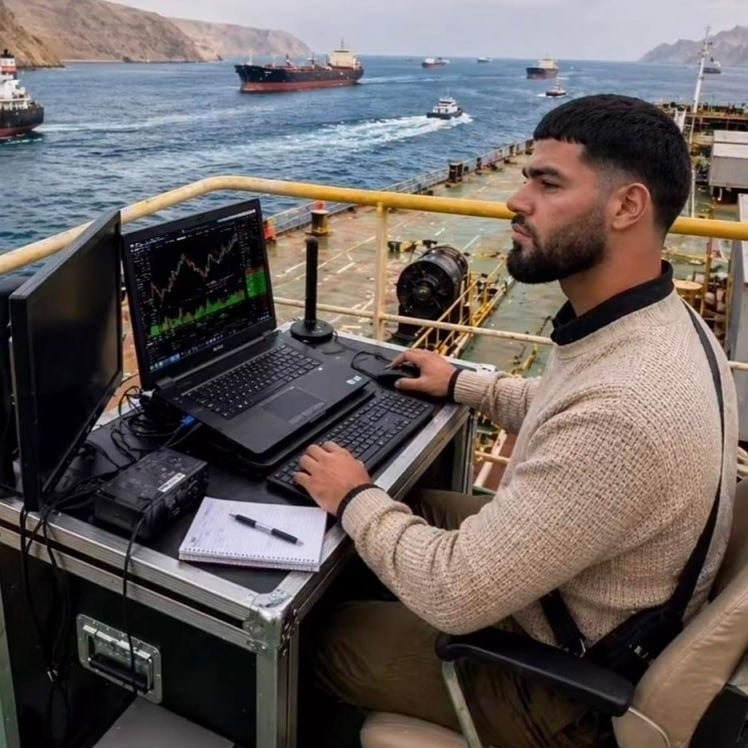
My view is that the U.S. did not achieve its stated objectives in this conflict. As a result, markets may not view a U.S.–Iran deal as a clear positive development. Iran appears to have gained the most strategically, and any peace agreement could potentially trigger a market reassessment rather than the rally many investors expect. #BTC #war
My view is that the U.S. did not achieve its stated objectives in this conflict. As a result, markets may not view a U.S.–Iran deal as a clear positive development. Iran appears to have gained the most strategically, and any peace agreement could potentially trigger a market reassessment rather than the rally many investors expect. #BTC #war
193


·
--
#war
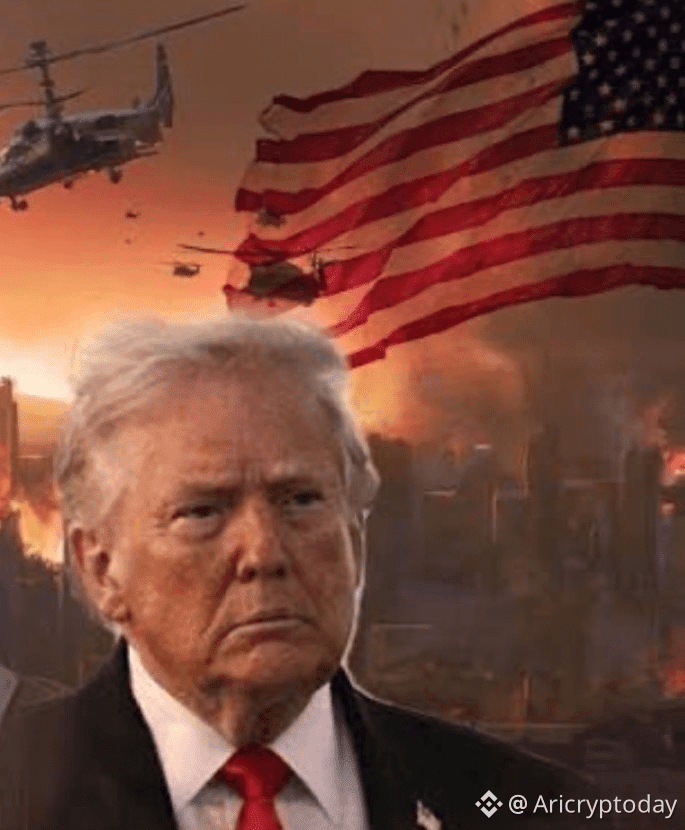
Lets talk about how this recent war had affected our daily lives and how so many innocent lives perished.
#war
Lets talk about how this recent war had affected our daily lives and how so many innocent lives perished.
Lets talk about how this recent war had affected our daily lives and how so many innocent lives perished.
186
Log in to explore more content
Join global crypto users on Binance Square
⚡️ Get latest and useful information about crypto.
💬 Trusted by the world’s largest crypto exchange.
👍 Discover real insights from verified creators.
Email / Phone number
Trending Topics
1
#NEARRisesNearly80%InAWeek
17,166 views
648 Discussing
2
#MultiversXPlansHardForkRecovery
16,272 views
507 Discussing
3
#CircleLaunchesInstitutionalBTCBackedBorrowing
17,764 views
637 Discussing
4
#BitcoinHits$85K
22,121 views
259 Discussing
5
#ZetaChainVotesToMigrateZETAToSolana
14,081 views
392 Discussing
6
#ECBStartsBlockchainEuroSettlement
33,038 views
688 Discussing
7
#SouthAfricaProposesCryptoExchangeControls
45,047 views
855 Discussing
8
#SolanaCutsTargetSlotTimeTo250ms
48,011 views
779 Discussing
9
#EthereumSurpasses$2700
27,692 views
230 Discussing
10
#CanaryFilesSecondAmendmentForStakedSEIETF
61,617 views
1,096 Discussing