
#dowjonesadds591.99points
dowjonesadds591.99points
Hot
Latest

Verified
Wall Street just closed a shortened Black Friday session with serious momentum, and crypto traders should pay attention. 📈
Friday’s Market Close (Nov 27):
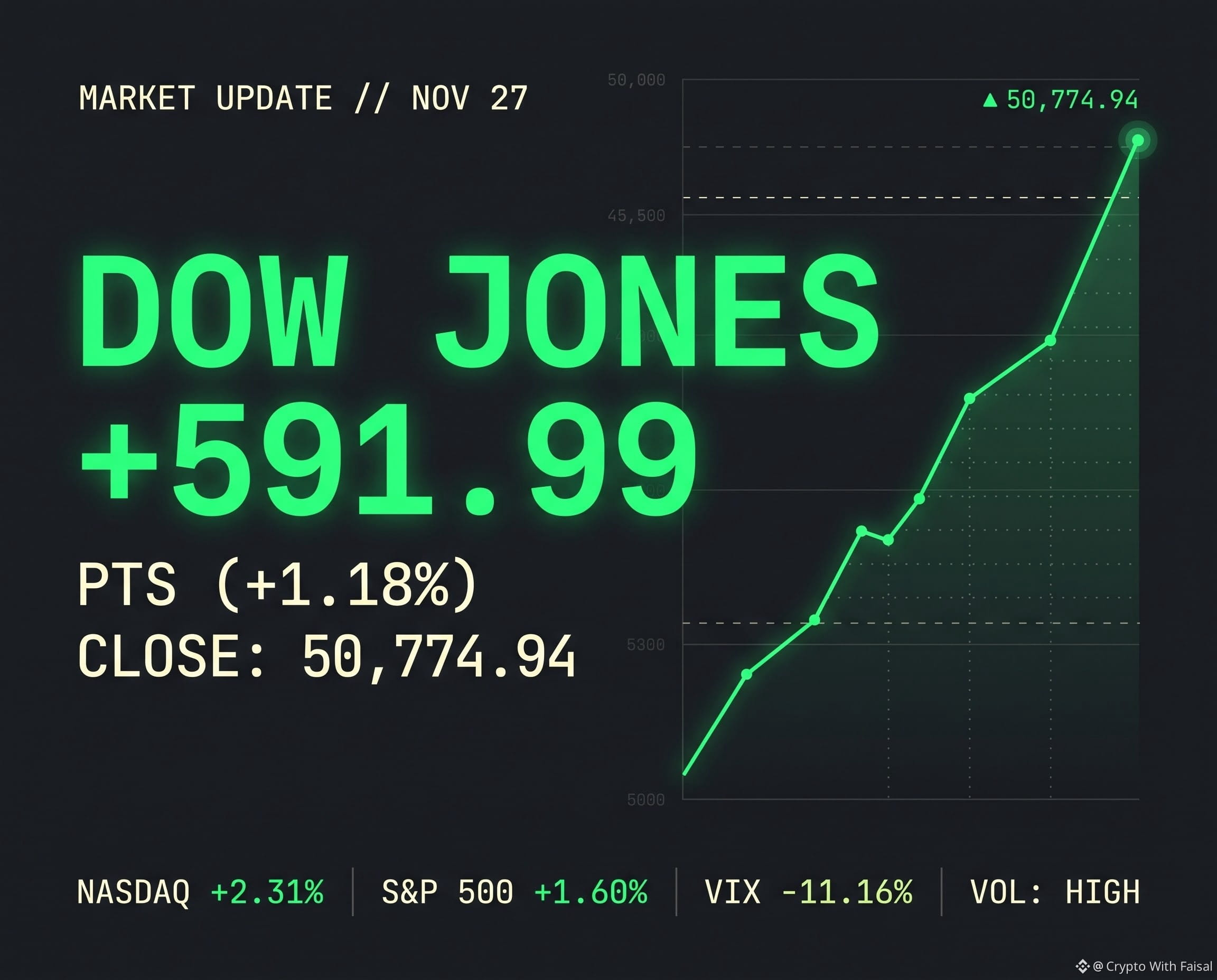
• Dow Jones: +591.99 pts (+1.18%) to 50,774.94 — 4th straight green session
• Nasdaq: +543.70 pts (+2.31%) to 24,129.50
• S&P 500: +1.60% to 7,297.49, sealing its strongest week since April 2025
• VIX: Dropped 11.16% to 23.81 as fear cooled off
What drove the bounce? Bargain hunting across AI, semiconductors, and Black Friday retail leaders pulled buyers back into risk assets ahead of the weekend. 🏦
Trader takeaway: Don't chase blindly on thin holiday liquidity. With December Fed rate-hike expectations still looming, Monday’s full institutional open will show if this risk-on push holds or fades. 📊
Are you positioning long into Monday's open or waiting for confirmation? Drop your setup below. 👇
$BTC $ETH $EVAA
{future}(EVAAUSDT)
{future}(BTCUSDT)
{future}(ETHUSDT)
#dowjonesadds591.99points #MacroWatch #MarketUpdate #DowJones
Wall Street just closed a shortened Black Friday session with serious momentum, and crypto traders should pay attention. 📈
Friday’s Market Close (Nov 27):
• Dow Jones: +591.99 pts (+1.18%) to 50,774.94 — 4th straight green session
• Nasdaq: +543.70 pts (+2.31%) to 24,129.50
• S&P 500: +1.60% to 7,297.49, sealing its strongest week since April 2025
• VIX: Dropped 11.16% to 23.81 as fear cooled off
What drove the bounce? Bargain hunting across AI, semiconductors, and Black Friday retail leaders pulled buyers back into risk assets ahead of the weekend. 🏦
Trader takeaway: Don't chase blindly on thin holiday liquidity. With December Fed rate-hike expectations still looming, Monday’s full institutional open will show if this risk-on push holds or fades. 📊
Are you positioning long into Monday's open or waiting for confirmation? Drop your setup below. 👇
$BTC $ETH $EVAA
#dowjonesadds591.99points #MacroWatch #MarketUpdate #DowJones
Klochen:
#EVAA eso
3
6
10.8k

·
--
Bullish
#dowjonesadds591.99points
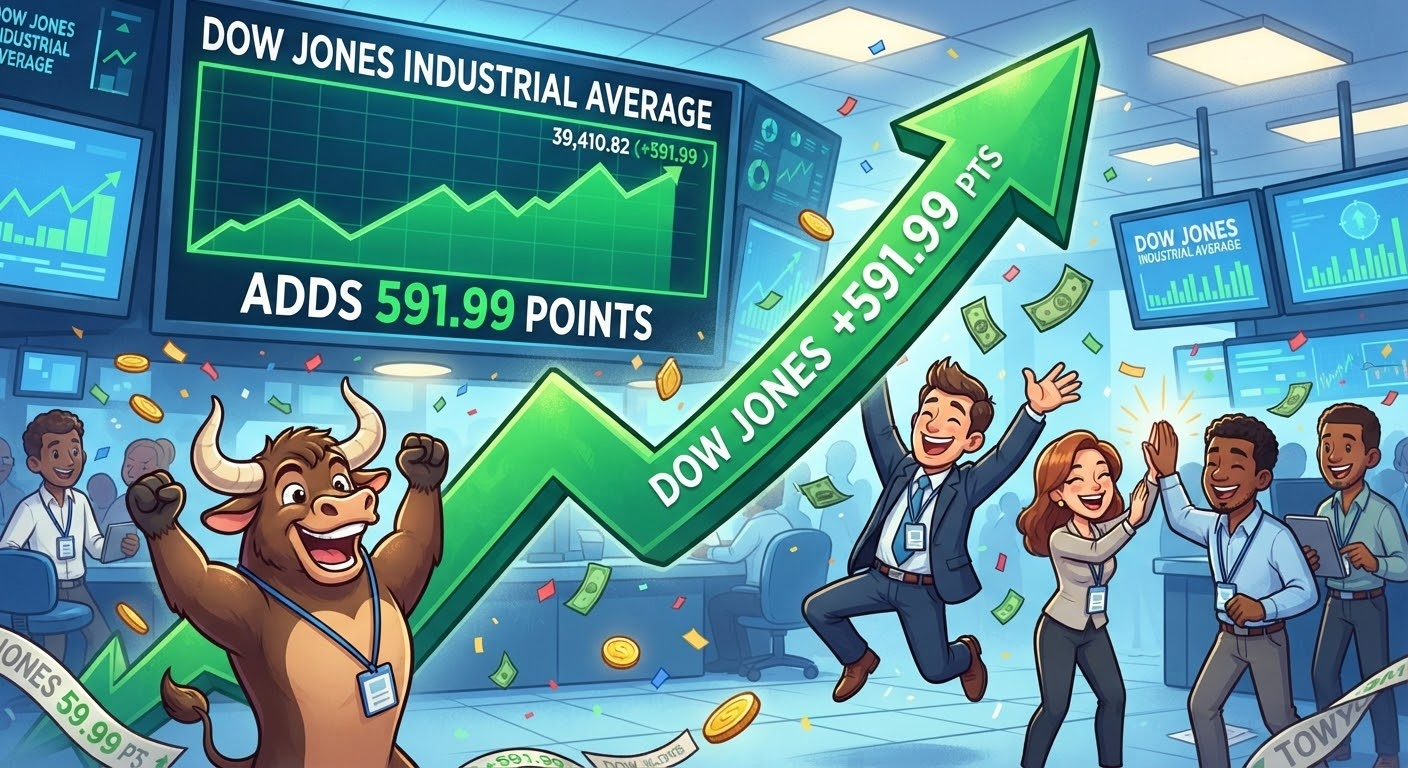
WALL STREET ROARS BACK AS THE DOW JONES JUMPS NEARLY 600 POINTS! 📈
U.S. stocks delivered a powerful rally as the Dow Jones Industrial Average surged 591.99 points, reflecting renewed buying interest across the market.
The strong move signals improving investor sentiment after recent market uncertainty and heavy selling pressure. Investors are closely watching economic data, Federal Reserve expectations, and developments in global markets to determine whether this recovery can continue.
A stronger stock market can also influence crypto sentiment, as Bitcoin and other digital assets often react to changes in broader risk appetite.
However, one positive session does not automatically confirm a lasting recovery. Traders will be watching whether buyers can maintain momentum in the coming sessions.
The big question now: Is Wall Street starting a stronger recovery, or is this just temporary relief?
Markets can turn quickly, so staying alert is more important than chasing the rally.
#stockmarket #DowJones #WallStreet
191

·
--
#dowjonesadds591.99points 🚨 WALL STREET JUST DELIVERED A MASSIVE BLACK FRIDAY RALLY! 📈🔥
U.S. stocks closed Friday's shortened Black Friday trading session with strong gains, sending a potential risk-on signal across global financial markets.
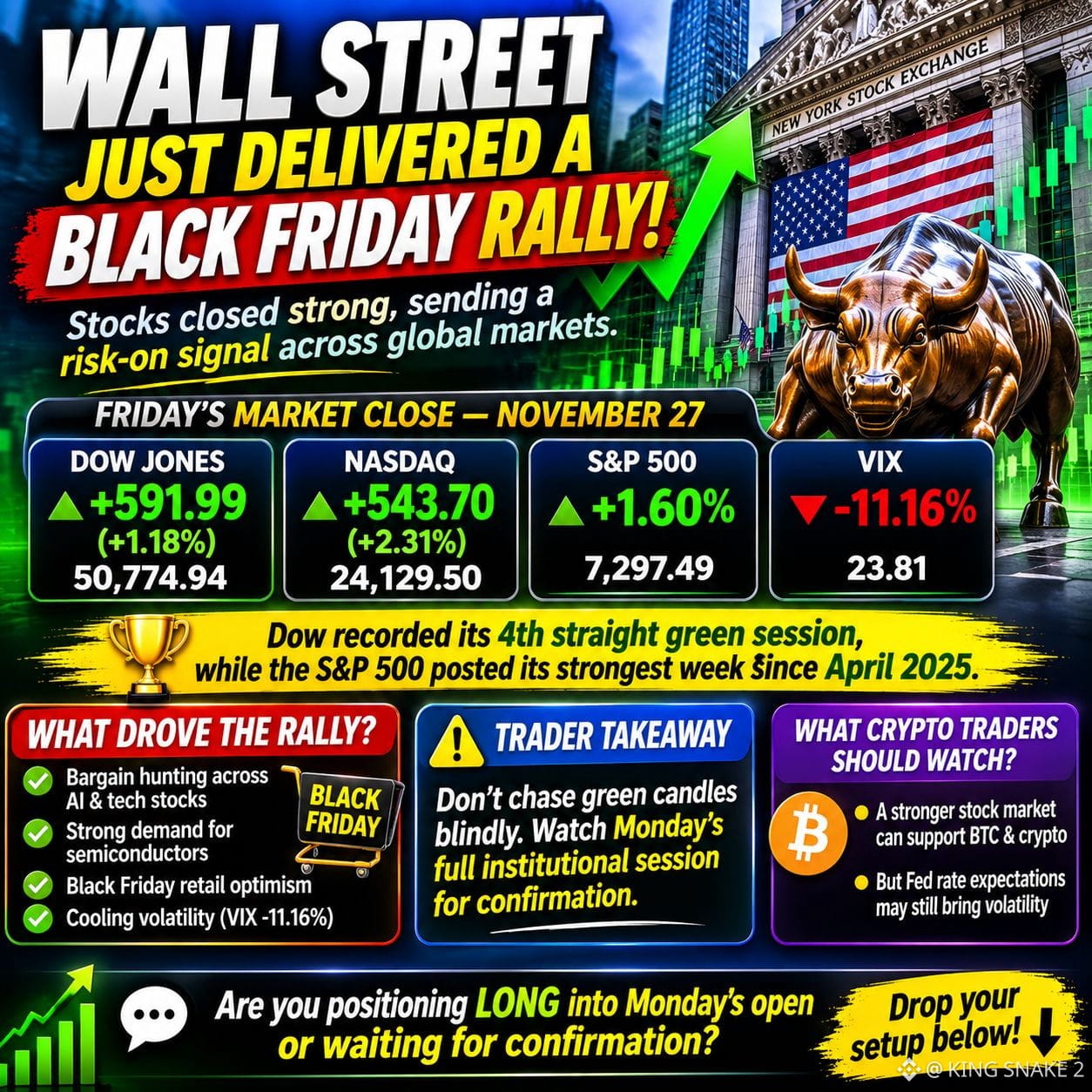
📊 FRIDAY'S MARKET CLOSE — NOVEMBER 27
🟢 Dow Jones: +591.99 points (+1.18%) to 50,774.94
🟢 Nasdaq: +543.70 points (+2.31%) to 24,129.50
🟢 S&P 500: +1.60% to 7,297.49
🟢 VIX: -11.16% to 23.81
🔥 The Dow recorded its fourth consecutive positive session, while the S&P 500 posted its strongest weekly performance since April 2025.
WHAT DROVE THE RALLY?
Several factors helped bring buyers back into the market:
🔹 Bargain hunting across technology and AI stocks.
🔹 Strong demand for semiconductor companies.
🔹 Black Friday retail optimism.
🔹 Cooling market volatility as the VIX declined.
⚠️ WHAT SHOULD CRYPTO TRADERS WATCH?
A stronger stock market can improve overall risk appetite, potentially supporting Bitcoin and other cryptocurrencies.
However, don't assume that a Wall Street rally automatically means a crypto rally.
Thin holiday liquidity and Federal Reserve rate expectations could still create unexpected volatility.
📌 MY TRADER TAKEAWAY:
Don't chase green candles blindly. Watch Monday's full institutional session for confirmation before taking aggressive positions.
👇 WHAT'S YOUR STRATEGY?
🟢 Going LONG into Monday's open?
🔴 Looking for a SHORT opportunity?
⏳ Or waiting for confirmation?
Share your thoughts!
Follow Me More Updates:
#WallStreet #Bitcoin #BTC #Nasdaq
CLICK TO BELOW TRADE👇
$BTC $ETH $EVAA
{future}(EVAAUSDT)
{future}(ETHUSDT)
{future}(BTCUSDT)
#dowjonesadds591.99points 🚨 WALL STREET JUST DELIVERED A MASSIVE BLACK FRIDAY RALLY! 📈🔥
U.S. stocks closed Friday's shortened Black Friday trading session with strong gains, sending a potential risk-on signal across global financial markets.
📊 FRIDAY'S MARKET CLOSE — NOVEMBER 27
🟢 Dow Jones: +591.99 points (+1.18%) to 50,774.94
🟢 Nasdaq: +543.70 points (+2.31%) to 24,129.50
🟢 S&P 500: +1.60% to 7,297.49
🟢 VIX: -11.16% to 23.81
🔥 The Dow recorded its fourth consecutive positive session, while the S&P 500 posted its strongest weekly performance since April 2025.
WHAT DROVE THE RALLY?
Several factors helped bring buyers back into the market:
🔹 Bargain hunting across technology and AI stocks.
🔹 Strong demand for semiconductor companies.
🔹 Black Friday retail optimism.
🔹 Cooling market volatility as the VIX declined.
⚠️ WHAT SHOULD CRYPTO TRADERS WATCH?
A stronger stock market can improve overall risk appetite, potentially supporting Bitcoin and other cryptocurrencies.
However, don't assume that a Wall Street rally automatically means a crypto rally.
Thin holiday liquidity and Federal Reserve rate expectations could still create unexpected volatility.
📌 MY TRADER TAKEAWAY:
Don't chase green candles blindly. Watch Monday's full institutional session for confirmation before taking aggressive positions.
👇 WHAT'S YOUR STRATEGY?
🟢 Going LONG into Monday's open?
🔴 Looking for a SHORT opportunity?
⏳ Or waiting for confirmation?
Share your thoughts!
Follow Me More Updates:
#WallStreet #Bitcoin #BTC #Nasdaq
CLICK TO BELOW TRADE👇
$BTC $ETH $EVAA
1
393

·
--
#dowjonesadds591.99points
Wall Street wrapped up a shortened Black Friday session with a strong push higher as bargain hunting in beaten-down AI, semiconductor, and retail names lifted risk appetite.
Friday’s Market Close (Nov 27, 2026 — 1:00 PM ET):
Dow Jones: +591.99 pts (+1.18%) to 50,774.94 — its 4th straight green session and a +5.46% weekly climb
S&P 500: +114.71 pts (+1.60%) to 7,297.49 (+5.6% for the week)
Nasdaq: +543.70 pts (+2.31%) to 24,129.50 (+6.68% for the week)
What’s in focus: Buyers stepped back into semiconductors and AI stocks after a volatile stretch, alongside Black Friday retail names. At the same time, expectations around a potential December Federal Reserve rate hike and ongoing debates over AI valuations and spending are keeping traders cautious heading into Monday’s full session.
Is this bounce the start of a steadier recovery, or a relief rally ahead of more volatility?
#dowjonesadds591.99points #DowJones #StockMarket #Macro $BTC $GOOGLB
1
121
#DowJonesAdds591.99Points
🟢💥 WALL STREET EXPLODES! DOW JUMPS +591.99 POINTS!
AI FEAR OVER? Market says YES!
→ Dow Jones: +591.99 points (+1.18%)
→ Close: 50,774.94
→ S&P 500: +114.71 (+1.60%) → 7,297.49
→ Nasdaq: +543.70 (+2.31%) → 24,129.50
Source: Reuters / Dow Jones Market Data — Friday, 27 Nov 2026
BEST WEEK IN MORE THAN A YEAR! 🏆
→ Dow This Week: +5.46% (+2,627.61 points)
→ S&P 500 This Week: +5.6%
→ Nasdaq This Week: +6.68%
→ Dow: Up 4 straight days!
→ Best week since October 2022!
WHAT DROVE THE RALLY?
Battered AI stocks came back STRONG!
→ Nvidia: +0.8% — recovered after the weak session
→ SanDisk: +16% — Data storage star!
→ Lumentum: Sharp gain — Optical / AI
→ Dell: Sharp gain — Servers / AI
→ Amazon, Microsoft, Meta, Oracle: ALL GREEN!
WHY?
→ AI bubbles fear cooling down
→ Buyers stepped in after volatile week
→ Black Friday short session — 1 PM ET close — still strong buying!
WHAT DOES IT MEAN FOR CRYPTO?
→ Risk-on is BACK!
→ When US stocks rally, BTC / ETH usually follow!
→ Watch: $BTC, $ETH, $SOL next week!
Is the AI crash OVER?
Or is this just a bounce before another drop? 👇
BULLISH 🚀 or TRAP 🪤 ?
#DowJones #WallStreetNews #stockmarket #bitcoin
$DIA $SPY $NVDA
249

·
--
Verified
Wall Street capped off a roller coaster Thanksgiving week with a powerful rally during Friday’s shortened Black Friday session as the Dow Jones Industrial Average added 591.99 points or 1.18 percent to close at 50774.94. Extending its winning streak to four consecutive sessions the blue chip index locked in a massive 5.46 percent weekly surge marking its strongest percentage gain since October 2022.
Broad buying swept across major benchmarks as battered artificial intelligence and technology shares staged a decisive comeback. The S&P 500 climbed 1.60 percent to 7297.49 while the Nasdaq Composite jumped 2.31 percent to 24129.50. Heavyweights including Amazon Meta AMD and Broadcom powered the advance alongside strong holiday retail forecasts projecting $12.9 billion in Black Friday online spending. Meanwhile the Cboe Volatility Index tumbled over 11 percent to 23.81 signaling immediate relief for institutional desks.
Yet the rally faces a major macroeconomic test ahead of the December Federal Reserve policy meeting where stubborn inflation has hardened expectations for another quarter point rate hike.
Does this historic four day surge mark the true beginning of a year end breakout or will hawkish central bank policy cap equities in December? Share your market outlook in the comments below.
#DowJonesAdds591.99Points
$AAPL.US
{stock_us}(AAPL.US)
$NVDA.US
{stock_us}(NVDA.US)
$TSLA.US
{web3_wallet_create}(10x42778037d69350508cdd34d9fa17053970591101)
Wall Street capped off a roller coaster Thanksgiving week with a powerful rally during Friday’s shortened Black Friday session as the Dow Jones Industrial Average added 591.99 points or 1.18 percent to close at 50774.94. Extending its winning streak to four consecutive sessions the blue chip index locked in a massive 5.46 percent weekly surge marking its strongest percentage gain since October 2022.
Broad buying swept across major benchmarks as battered artificial intelligence and technology shares staged a decisive comeback. The S&P 500 climbed 1.60 percent to 7297.49 while the Nasdaq Composite jumped 2.31 percent to 24129.50. Heavyweights including Amazon Meta AMD and Broadcom powered the advance alongside strong holiday retail forecasts projecting $12.9 billion in Black Friday online spending. Meanwhile the Cboe Volatility Index tumbled over 11 percent to 23.81 signaling immediate relief for institutional desks.
Yet the rally faces a major macroeconomic test ahead of the December Federal Reserve policy meeting where stubborn inflation has hardened expectations for another quarter point rate hike.
Does this historic four day surge mark the true beginning of a year end breakout or will hawkish central bank policy cap equities in December? Share your market outlook in the comments below.
#DowJonesAdds591.99Points
$AAPL.US
$NVDA.US
$TSLA.US

AAPLUS+1.03%
TSLAUS+4.91%
NVDAUS+0.32%
Trader M08:
Crypto did not join this rally. On Binance spot BTC closed Friday at 59,923, down about 1% on the same day the Dow added 1.18%, and it sits only about 1% above this week's open while the Dow gained 5.46%. If a December hike is close to fully priced, I'm watching which side closes that gap next week.
4
1
11
821

·
--
Bearish
#dowjonesadds591.99points
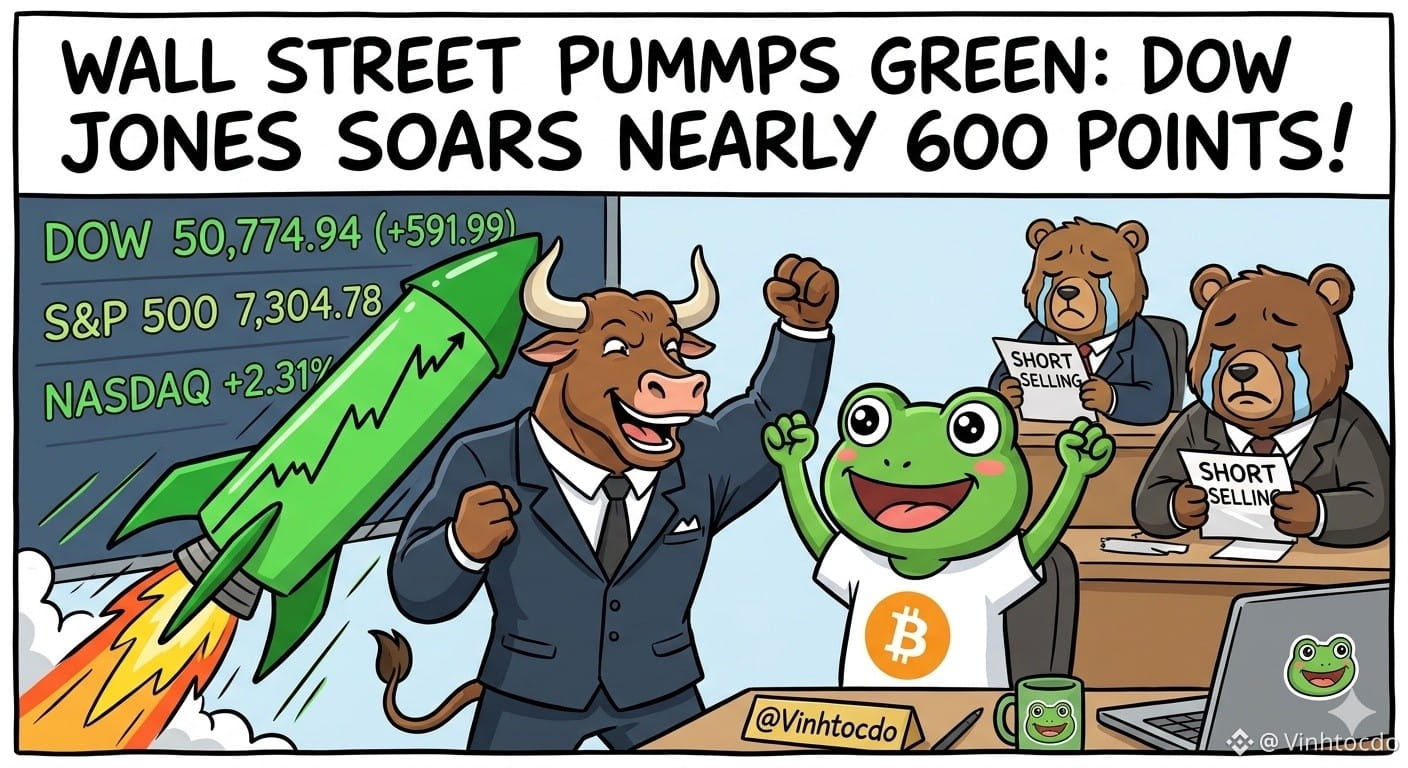
WALL STREET TURNS BRIGHT GREEN: DOW JONES SOARS NEARLY 600 POINTS! 🚀📈
The U.S. stock market on November 27 left short sellers crying out in dismay as all three major indexes surged sharply. The S&P 500 topped 7,304 points, while the Nasdaq jumped 2.31%!
Specifically, the #DowJonesAdds591.99Points rally pushed the Dow Jones Industrial Average to 50,774.94 points, up 1.18%. When traditional capital pours into risk assets, risk-on sentiment can quickly spread to the crypto market, creating a strong boost to liquidity.
What should traders do? Don’t just stand on the sidelines and watch the market run! Keep a close eye on Bitcoin’s price action and top tech coins (AI/Layer 1), but remember to manage your position sizes, don’t FOMO into green candles, and always set tight stop-losses!
This is not financial advice.
👇 Click below to trade and support me:
$BTC
{spot}(BTCUSDT)
$ETH
{spot}(ETHUSDT)
$PORTAL
{future}(PORTALUSDT)
#StockMarket #CryptoNews #Macro #Bitcoin #Altcoins #VINHTOCDO
#dowjonesadds591.99points
WALL STREET TURNS BRIGHT GREEN: DOW JONES SOARS NEARLY 600 POINTS! 🚀📈
The U.S. stock market on November 27 left short sellers crying out in dismay as all three major indexes surged sharply. The S&P 500 topped 7,304 points, while the Nasdaq jumped 2.31%!
Specifically, the #DowJonesAdds591.99Points rally pushed the Dow Jones Industrial Average to 50,774.94 points, up 1.18%. When traditional capital pours into risk assets, risk-on sentiment can quickly spread to the crypto market, creating a strong boost to liquidity.
What should traders do? Don’t just stand on the sidelines and watch the market run! Keep a close eye on Bitcoin’s price action and top tech coins (AI/Layer 1), but remember to manage your position sizes, don’t FOMO into green candles, and always set tight stop-losses!
This is not financial advice.
👇 Click below to trade and support me:
$BTC
$ETH
$PORTAL
#StockMarket #CryptoNews #Macro #Bitcoin #Altcoins #VINHTOCDO
11
5.6k

·
--
#dowjonesadds591.99points
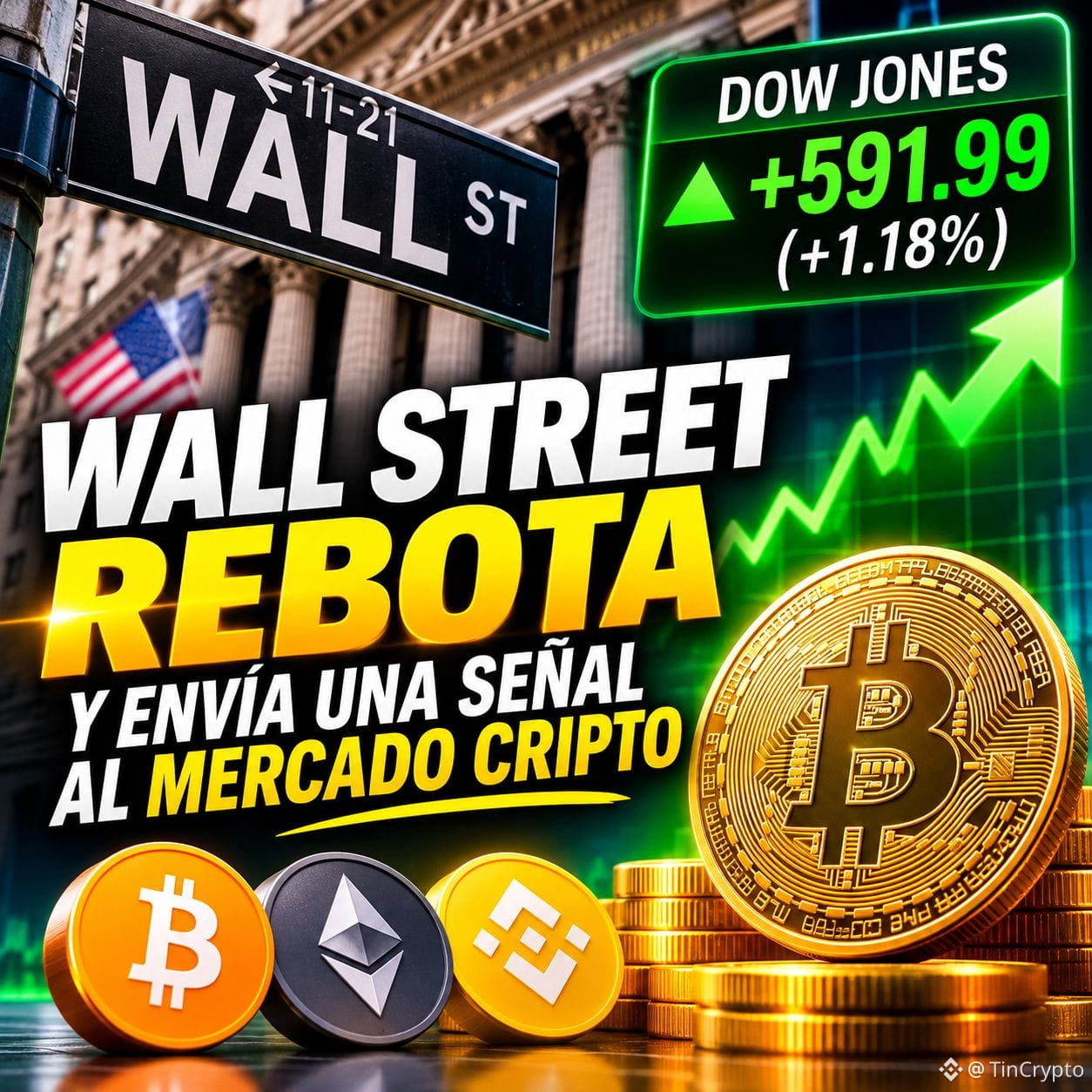
🚨 WALL STREET REBOUNDS AND SENDS A SIGNAL TO THE CRYPTO MARKET
The Dow Jones closed Friday up 591.99 points (+1.18%), at 50,774.94 points.
But there’s an even more interesting detail:
📈 Nasdaq: +2.31%.
📈 S&P 500: +1.60%.
📈 Dow Jones: +1.18%.
The recovery in tech stocks strengthens risk appetite and puts Bitcoin and cryptocurrencies back in the spotlight.
🔎 The big question: Are we seeing the start of a new bullish run, or just a temporary rebound?
I’m keeping an eye on BTC and how the market reacts over the next few sessions.
Will you take advantage of this momentum to get into Bitcoin, or would you rather wait for market confirmation on Monday? What strategy are you following?
$BTC $ETH
#MacroWatch #MarketUpdate #DowJones
1
2
259

·
--
Verified
#dowjonesadds591.99points
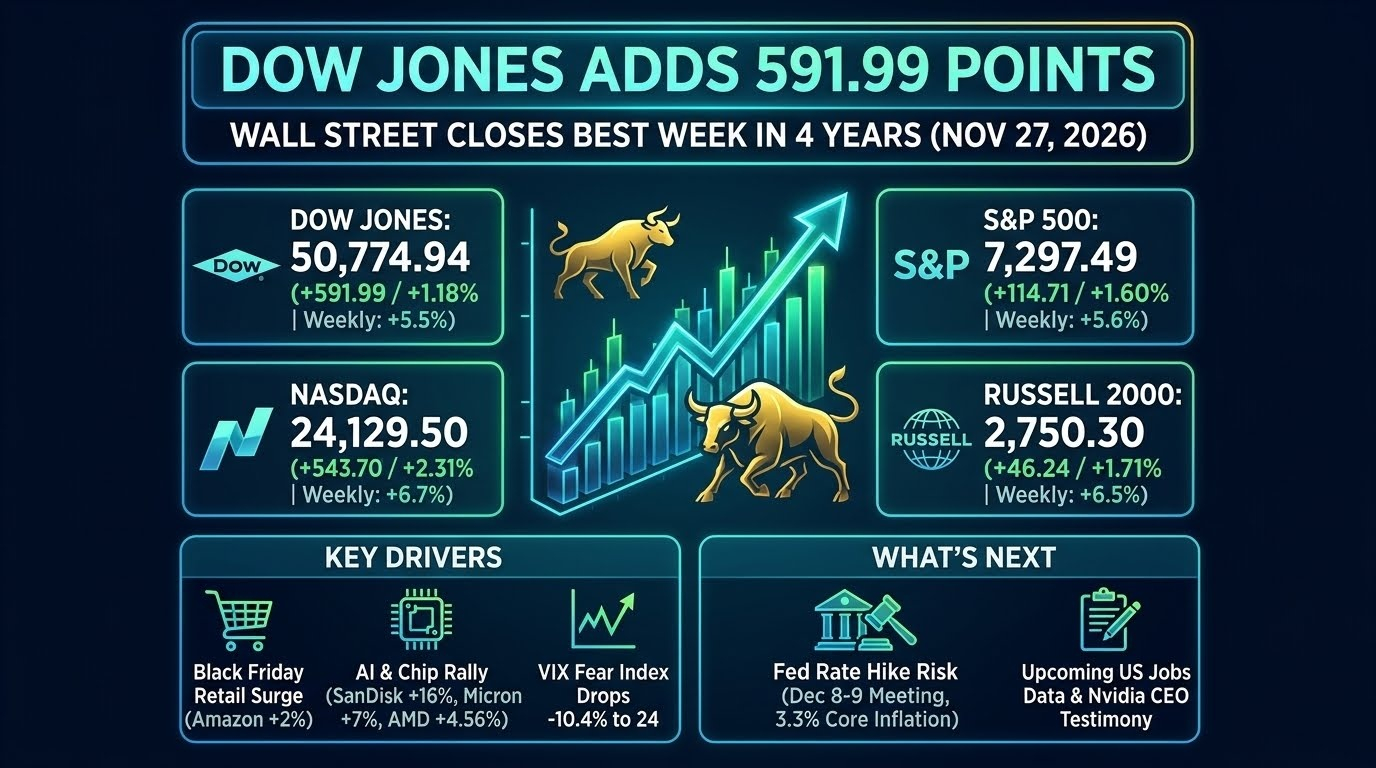
Describes the Dow Jones index rising 591.99 points (1.18%) to close at 50,774.94 points on Friday, November 27, 2026, and ending its best week in four years (+5.5%) 📈🔔
Market Data: The S&P 500 rose 1.60% to 7,297.49, while the Nasdaq gained 2.31% to 24,129.50 📊🚀Why Did It Rise? Black Friday shopping optimism boosted retail 🛍️, while buying in cheaper AI and chip stocks (Micron, AMD, SanDisk) lifted the market 💻⚡What’s Next? Asian markets are also expected to open higher on Monday 🌍 However, expectations that the Fed could raise interest rates at its December 8–9 meeting due to elevated core inflation at 3.3%, along with U.S. employment data due next week, could cause market volatility 🏦⚖️
$TAG $SNXX $NIGHT
{future}(NIGHTUSDT)
{future}(SNXXUSDT)
{alpha}(560x208bf3e7da9639f1eaefa2de78c23396b0682025)
#dowjonesadds591.99points
Describes the Dow Jones index rising 591.99 points (1.18%) to close at 50,774.94 points on Friday, November 27, 2026, and ending its best week in four years (+5.5%) 📈🔔
Market Data: The S&P 500 rose 1.60% to 7,297.49, while the Nasdaq gained 2.31% to 24,129.50 📊🚀Why Did It Rise? Black Friday shopping optimism boosted retail 🛍️, while buying in cheaper AI and chip stocks (Micron, AMD, SanDisk) lifted the market 💻⚡What’s Next? Asian markets are also expected to open higher on Monday 🌍 However, expectations that the Fed could raise interest rates at its December 8–9 meeting due to elevated core inflation at 3.3%, along with U.S. employment data due next week, could cause market volatility 🏦⚖️
$TAG $SNXX $NIGHT
1
448

WALL STREET CLOSED IN THE GREEN, BUT THE CRYPTO MARKET DIDN’T FOLLOW. WHAT THIS REVEALS ABOUT THE REAL FLOW
જ⁀➴
The Dow Jones gained 591.99 points and closed at 50,774.94, up 1.18 percent. The S&P 500 topped 7,304 points, and the Nasdaq surged 2.31 percent. Short sellers got no respite.
What the headline hides. $BTC is trading at 59,772, down 3.03 percent, while stocks were rising. Traditional capital moved into risk, but not crypto risk. It moved into regulated risk.
What this means for traders. Risk-on in stocks isn’t synonymous with liquidity in crypto. These are two markets with separate flows, and institutional investors choose the market with clear rules first. The thesis of direct spillover is only confirmed when Bitcoin ETFs record consistent inflows.
The plan is to track both markets in parallel, but trade each according to its own structure. Watch BTC ETF flows, diversify your capital between Bitcoin and technology cryptocurrencies, and set a tight stop-loss. Don’t chase the index’s green candle thinking crypto will follow suit.
$BTW
$IDOL
This is not financial advice.
CLICK BELOW TO TRADE AND SUPPORT ME
Follow the page and turn on notifications. Don’t fall behind. Whatever the next update is, I’ll post it here first.
#dowjonesadds591.99points
{spot}(BTCUSDT)
{future}(BTWUSDT)
{future}(IDOLUSDT)
WALL STREET CLOSED IN THE GREEN, BUT THE CRYPTO MARKET DIDN’T FOLLOW. WHAT THIS REVEALS ABOUT THE REAL FLOW
જ⁀➴
The Dow Jones gained 591.99 points and closed at 50,774.94, up 1.18 percent. The S&P 500 topped 7,304 points, and the Nasdaq surged 2.31 percent. Short sellers got no respite.
What the headline hides. $BTC is trading at 59,772, down 3.03 percent, while stocks were rising. Traditional capital moved into risk, but not crypto risk. It moved into regulated risk.
What this means for traders. Risk-on in stocks isn’t synonymous with liquidity in crypto. These are two markets with separate flows, and institutional investors choose the market with clear rules first. The thesis of direct spillover is only confirmed when Bitcoin ETFs record consistent inflows.
The plan is to track both markets in parallel, but trade each according to its own structure. Watch BTC ETF flows, diversify your capital between Bitcoin and technology cryptocurrencies, and set a tight stop-loss. Don’t chase the index’s green candle thinking crypto will follow suit.
$BTW
$IDOL
This is not financial advice.
CLICK BELOW TO TRADE AND SUPPORT ME
Follow the page and turn on notifications. Don’t fall behind. Whatever the next update is, I’ll post it here first.
#dowjonesadds591.99points

1
166

·
--
#dowjonesadds591.99points
WALL STREET SEES GREEN: DOW JONES SOARS NEARLY 600 POINTS! 🚀📈
On the U.S. stock market during the November 27 session, short sellers could only “cry out in despair”: the three major indices rose sharply in unison, the S&P 500 topped 7,304 points, and the Nasdaq surged 2.31%!
More specifically, the #DowJonesAdds591.99Points surge brought the Dow Jones Industrial Average to 50,774.94 points (up 1.18%). When traditional capital flows into risk assets, optimism (Risk-on) quickly spreads to the cryptocurrency market, significantly boosting liquidity.
What should traders do? Don’t stand on the sidelines watching the market take off! Keep a close eye on Bitcoin and major technology-focused cryptocurrencies (AI/Layer 1), but remember to diversify your capital, don’t give in to FOMO by chasing green candles, and always set tight stop-loss orders!
This does not constitute financial advice.
👇 Click below to make a trade and support me:
$BTC
{future}(BTCUSDT)
$BTW
{future}(BTWUSDT)
$IDOL
{future}(IDOLUSDT)
#dowjonesadds591.99points
WALL STREET SEES GREEN: DOW JONES SOARS NEARLY 600 POINTS! 🚀📈
On the U.S. stock market during the November 27 session, short sellers could only “cry out in despair”: the three major indices rose sharply in unison, the S&P 500 topped 7,304 points, and the Nasdaq surged 2.31%!
More specifically, the #DowJonesAdds591.99Points surge brought the Dow Jones Industrial Average to 50,774.94 points (up 1.18%). When traditional capital flows into risk assets, optimism (Risk-on) quickly spreads to the cryptocurrency market, significantly boosting liquidity.
What should traders do? Don’t stand on the sidelines watching the market take off! Keep a close eye on Bitcoin and major technology-focused cryptocurrencies (AI/Layer 1), but remember to diversify your capital, don’t give in to FOMO by chasing green candles, and always set tight stop-loss orders!
This does not constitute financial advice.
👇 Click below to make a trade and support me:
$BTC
$BTW
$IDOL
521

#DowJonesAdds591.99Points
AI x CAPITAL MARKETS INTELLIGENCE 11
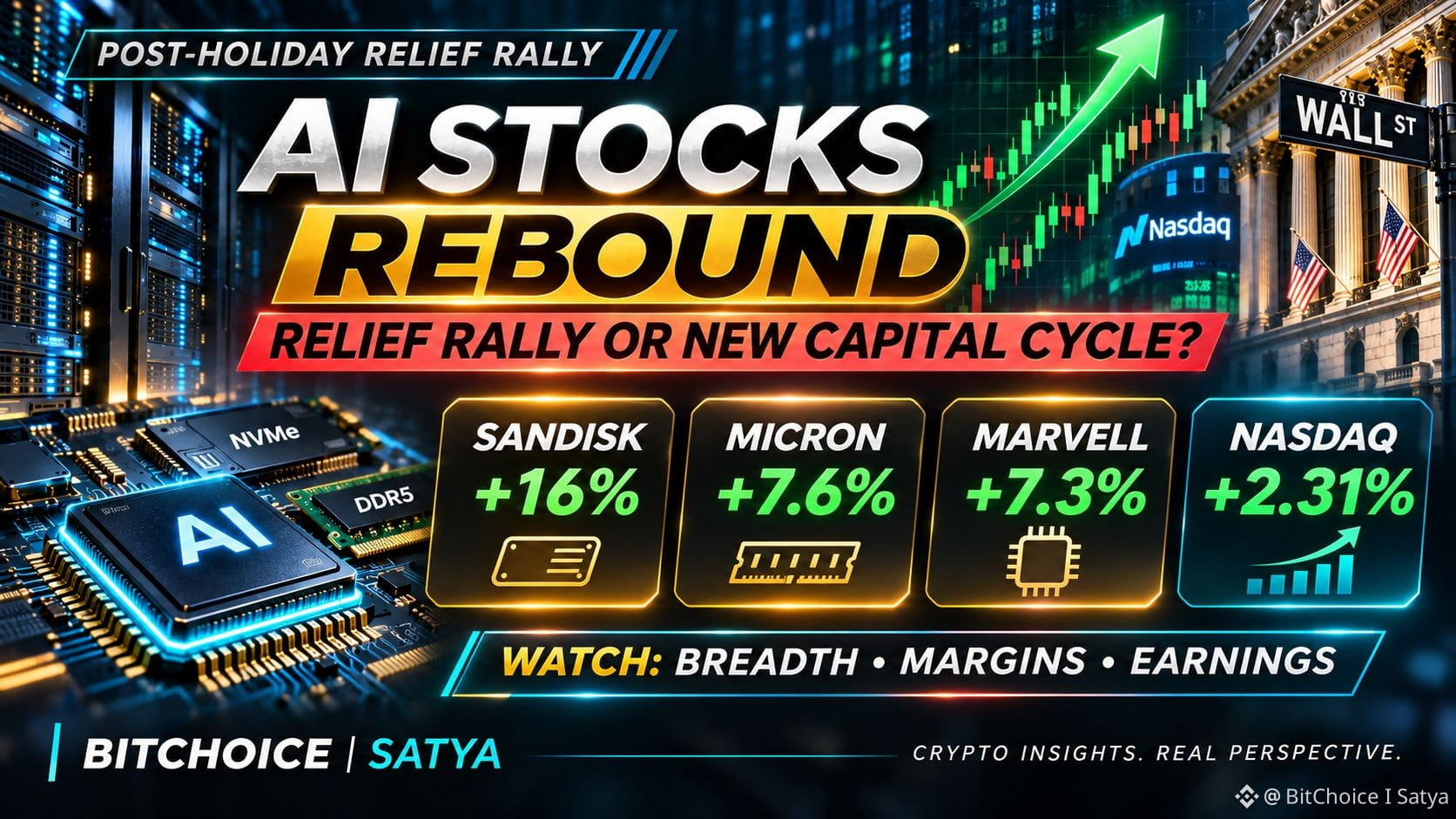
AI STOCKS REBOUND: RELIEF RALLY OR NEW CAPITAL CYCLE?
Friday's Wall Street rebound was led by beaten-down AI infrastructure stocks. SanDisk gained nearly 16%, Micron 7.6% and Marvell 7.3%. Nasdaq rose 2.31%, while the Dow added about 592 points.
BITCHOICE PERSPECTIVE
A rebound in memory and storage stocks is encouraging, but rising prices do not establish a new capital cycle. The fundamental test is whether AI infrastructure demand translates into sustainable margins and free cash flow.
Watch earnings revisions, memory pricing, credit spreads and post-holiday market breadth. For BTC, improving ETF flows and spot demand would offer independent confirmation.
Sources: Reuters, AP, Barron's | Nov 27, 2026
CRYPTO INSIGHTS. REAL PERSPECTIVE.
$BTC
{spot}(BTCUSDT)
#Aİ
#DowJonesAdds591.99Points
AI x CAPITAL MARKETS INTELLIGENCE 11
AI STOCKS REBOUND: RELIEF RALLY OR NEW CAPITAL CYCLE?
Friday's Wall Street rebound was led by beaten-down AI infrastructure stocks. SanDisk gained nearly 16%, Micron 7.6% and Marvell 7.3%. Nasdaq rose 2.31%, while the Dow added about 592 points.
BITCHOICE PERSPECTIVE
A rebound in memory and storage stocks is encouraging, but rising prices do not establish a new capital cycle. The fundamental test is whether AI infrastructure demand translates into sustainable margins and free cash flow.
Watch earnings revisions, memory pricing, credit spreads and post-holiday market breadth. For BTC, improving ETF flows and spot demand would offer independent confirmation.
Sources: Reuters, AP, Barron's | Nov 27, 2026
CRYPTO INSIGHTS. REAL PERSPECTIVE.
$BTC
#Aİ
146

·
--
Verified
🚨 ETHEREUM JUST CHOSE LONG-TERM SCALABILITY OVER SHORT-TERM COMFORT — DEVELOPERS ARE TAKING A BIG RISK!
Ethereum developers have agreed to KEEP the controversial storage fee changes in the upcoming Glamsterdam upgrade, despite warnings that thousands of existing smart contracts could be affected.
The proposed EIP-8037 increases the cost of creating permanent on-chain data to prevent Ethereum's database from becoming unsustainable.
Here's the problem: Developers have identified around 200 potential issues, with 24 requiring contract upgrades or user migrations. The final public test is scheduled for December 15.
🔥 MY TAKE:
This is a necessary move for Ethereum's long-term future, but execution matters.
Short term, $ETH could face uncertainty as developers race to fix compatibility issues.
Long term, more sustainable storage pricing could unlock higher network capacity, better scalability and a stronger foundation for institutional adoption.
I'm cautiously bullish on Ethereum's infrastructure roadmap, but the December test will be a critical checkpoint.
ETHEREUM MUST SCALE WITHOUT BREAKING THE ECOSYSTEM THAT BUILT IT.
$AAVE $UNI $LDO
#ethereumglamsterdamkeepsstoragefeechange #VitalikWantsWalletChipDesignsOpened #EvolveAtBinanceBlockchainWeek #ClaudeAccusedOfDroppingUserPreferences #DowJonesAdds591.99Points
1
3
1.7k

Article
Europe In Recession HEAR ME OUT NOW!!!!
France Just Slipped Into a Recession and the Warning Signs Are Already Here.
Something big is happening in Europe. And no, it's not another banking meltdown or a typical slowdown. This time, the pressure is sitting right at the core of the euro zone: France.
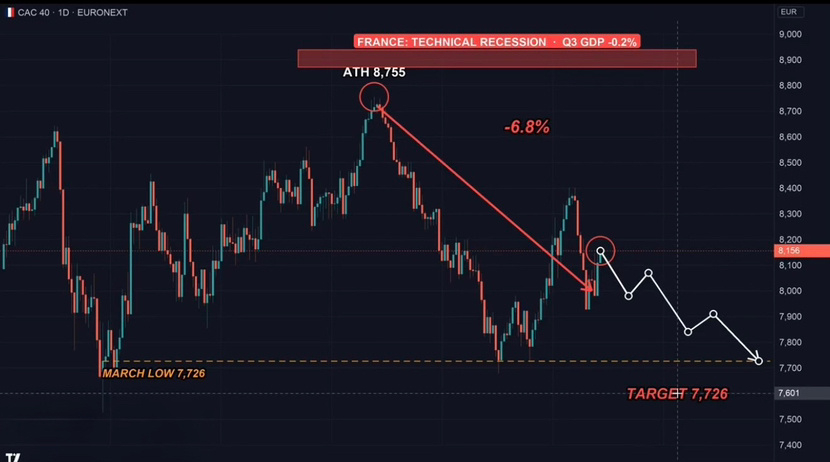
The first red flag? The GDP data. INSEE just revised Q3 down to -0.2%, from -0.1%.
Right now, three silent fault lines inside France are straining at the same time:
1️⃣ An economy that keeps shrinking
2️⃣ A 5.4% budget deficit
3️⃣ A divided parliament 5 months before a presidential election
Any one of these snapping would be enough to shake Europe. All three converging right now? Everything falls apart.
Let's start with the one building the fastest: the growth shock.
French GDP has now declined every quarter since the end of last year. Q2 was revised down to -0.02%. Q3 came in at -0.2%.
In other words: the euro zone's second-biggest economy is officially in a technical recession.
And this isn't speculation. It's already visible in the data: business investment down 0.8%, exports down 1.6%, foreign trade dragging 0.6 points off growth.
If this feels familiar, it should. Europe's debt crisis in 2010 also started with growth and deficit numbers nobody could fix. Only now, it's the core, not the edge.
Why does this matter so much? Because the whole euro zone takes its cue from France and Germany: bonds, banks, the euro, credit, the ECB.
If France shakes, the entire euro zone shakes.
Now layer the budget on top of this.
The government's 0.5% growth target for this year is now all but out of reach. The 2027 budget wants to cut the deficit from 5.4% to 5.0%, and the minority government is struggling to pass it.
Finance Minister Roland Lescure: "We must adopt a budget as soon as possible with a non-negotiable deficit target of 5%."
Less growth means less tax. Less tax means a bigger deficit. A bigger deficit means more debt.
France doesn't just get hit, it amplifies the shock.
And then there's the stock market.
The CAC 40 closed at 8,156 today. That's 6.8% below its August 7 record of 8,755.
So what actually sets off the next leg down?
➡️ A failed 2027 budget.
Here's what happens next.
Phase 1:
French bond yields jump.
The spread over Germany widens.
The euro slides.
French banks sell off.
The CAC 40 drops back to its March low of 7,726.
This is a confidence shock, not a solvency crisis and it moves fast.
Then comes the inevitable response: emergency budget deals, ECB promises, maybe even new spending cuts in an election year.
It stabilizes the market… but it doesn't fix growth.
Final thought: Europe can absorb a recession.
What it can't absorb is a disorderly France.
2027 is when that pressure finally breaks.
First with a recession, then with the biggest political test the euro has faced in a decade.
#EvolveAtBinanceBlockchainWeek #VitalikWantsWalletChipDesignsOpened #ChainflipVaultTheftHaltsProtocol #ChinaBlockchainIDRulesEffectMarch2027 #DowJonesAdds591.99Points
Europe In Recession
HEAR ME OUT NOW!!!!
France Just Slipped Into a Recession and the Warning Signs Are Already Here.
Something big is happening in Europe. And no, it's not another banking meltdown or a typical slowdown. This time, the pressure is sitting right at the core of the euro zone: France.
The first red flag? The GDP data. INSEE just revised Q3 down to -0.2%, from -0.1%.
Right now, three silent fault lines inside France are straining at the same time:
1️⃣ An economy that keeps shrinking
2️⃣ A 5.4% budget deficit
3️⃣ A divided parliament 5 months before a presidential election
Any one of these snapping would be enough to shake Europe. All three converging right now? Everything falls apart.
Let's start with the one building the fastest: the growth shock.
French GDP has now declined every quarter since the end of last year. Q2 was revised down to -0.02%. Q3 came in at -0.2%.
In other words: the euro zone's second-biggest economy is officially in a technical recession.
And this isn't speculation. It's already visible in the data: business investment down 0.8%, exports down 1.6%, foreign trade dragging 0.6 points off growth.
If this feels familiar, it should. Europe's debt crisis in 2010 also started with growth and deficit numbers nobody could fix. Only now, it's the core, not the edge.
Why does this matter so much? Because the whole euro zone takes its cue from France and Germany: bonds, banks, the euro, credit, the ECB.
If France shakes, the entire euro zone shakes.
Now layer the budget on top of this.
The government's 0.5% growth target for this year is now all but out of reach. The 2027 budget wants to cut the deficit from 5.4% to 5.0%, and the minority government is struggling to pass it.
Finance Minister Roland Lescure: "We must adopt a budget as soon as possible with a non-negotiable deficit target of 5%."
Less growth means less tax. Less tax means a bigger deficit. A bigger deficit means more debt.
France doesn't just get hit, it amplifies the shock.
And then there's the stock market.
The CAC 40 closed at 8,156 today. That's 6.8% below its August 7 record of 8,755.
So what actually sets off the next leg down?
➡️ A failed 2027 budget.
Here's what happens next.
Phase 1:
French bond yields jump.
The spread over Germany widens.
The euro slides.
French banks sell off.
The CAC 40 drops back to its March low of 7,726.
This is a confidence shock, not a solvency crisis and it moves fast.
Then comes the inevitable response: emergency budget deals, ECB promises, maybe even new spending cuts in an election year.
It stabilizes the market… but it doesn't fix growth.
Final thought: Europe can absorb a recession.
What it can't absorb is a disorderly France.
2027 is when that pressure finally breaks.
First with a recession, then with the biggest political test the euro has faced in a decade.
#EvolveAtBinanceBlockchainWeek #VitalikWantsWalletChipDesignsOpened #ChainflipVaultTheftHaltsProtocol #ChinaBlockchainIDRulesEffectMarch2027 #DowJonesAdds591.99Points
137


·
--
Verified
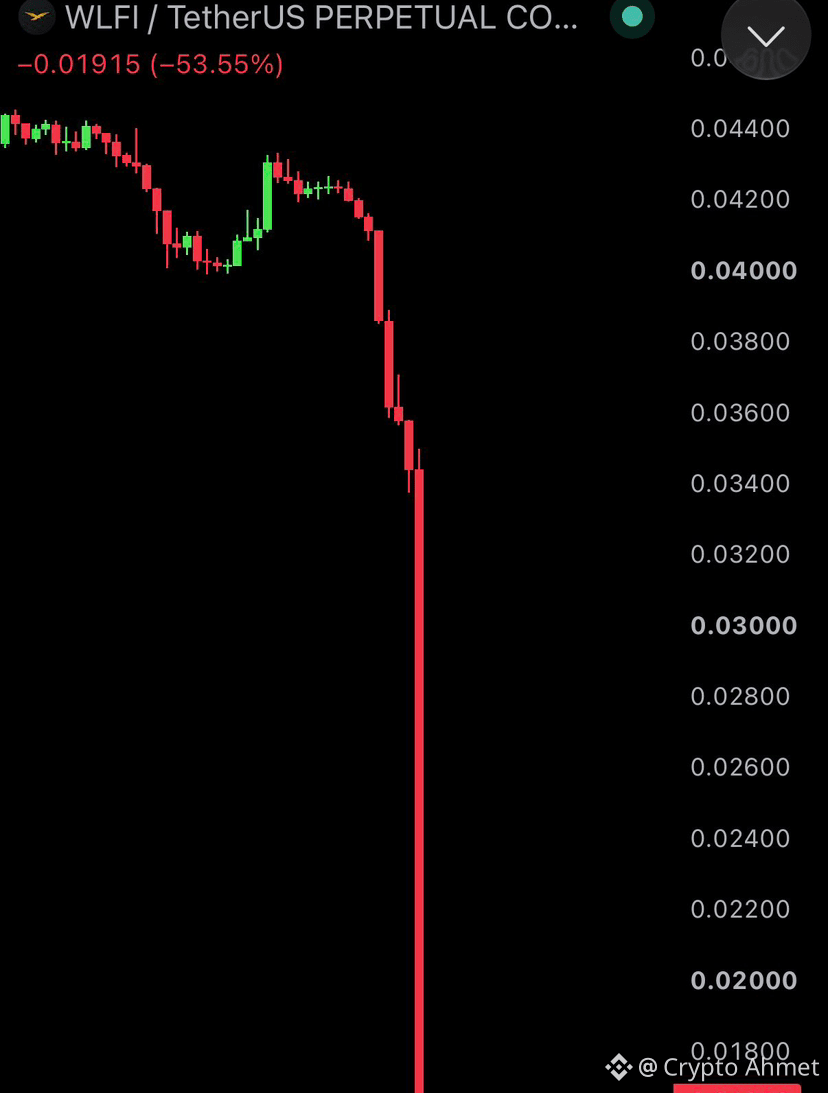
🚨 MASSIVE CRASH: TRUMP FAMILY-LINKED CRYPTO PROJECT $WLFI PLUNGES 53% IN JUST 60 MINUTES! ❗️😱
World Liberty Financial (#WLFI ), the crypto project tied to the Trump family, has suffered a staggering 53% collapse in the past hour, sending shockwaves through the crypto market! 🔻
$TRUMP $DOGE
#EvolveAtBinanceBlockchainWeek #ColdcardFlawLeadsToTheftOfAtLeast1789BTC #VitalikWantsWalletChipDesignsOpened #DowJonesAdds591.99Points
oussamadz34:
هههههه لأنهم اخذو لأرباح وانتهو اكيد حيخرجو فلوسهم استغلال نزول السووق
3
5
2.6k

·
--
Bullish
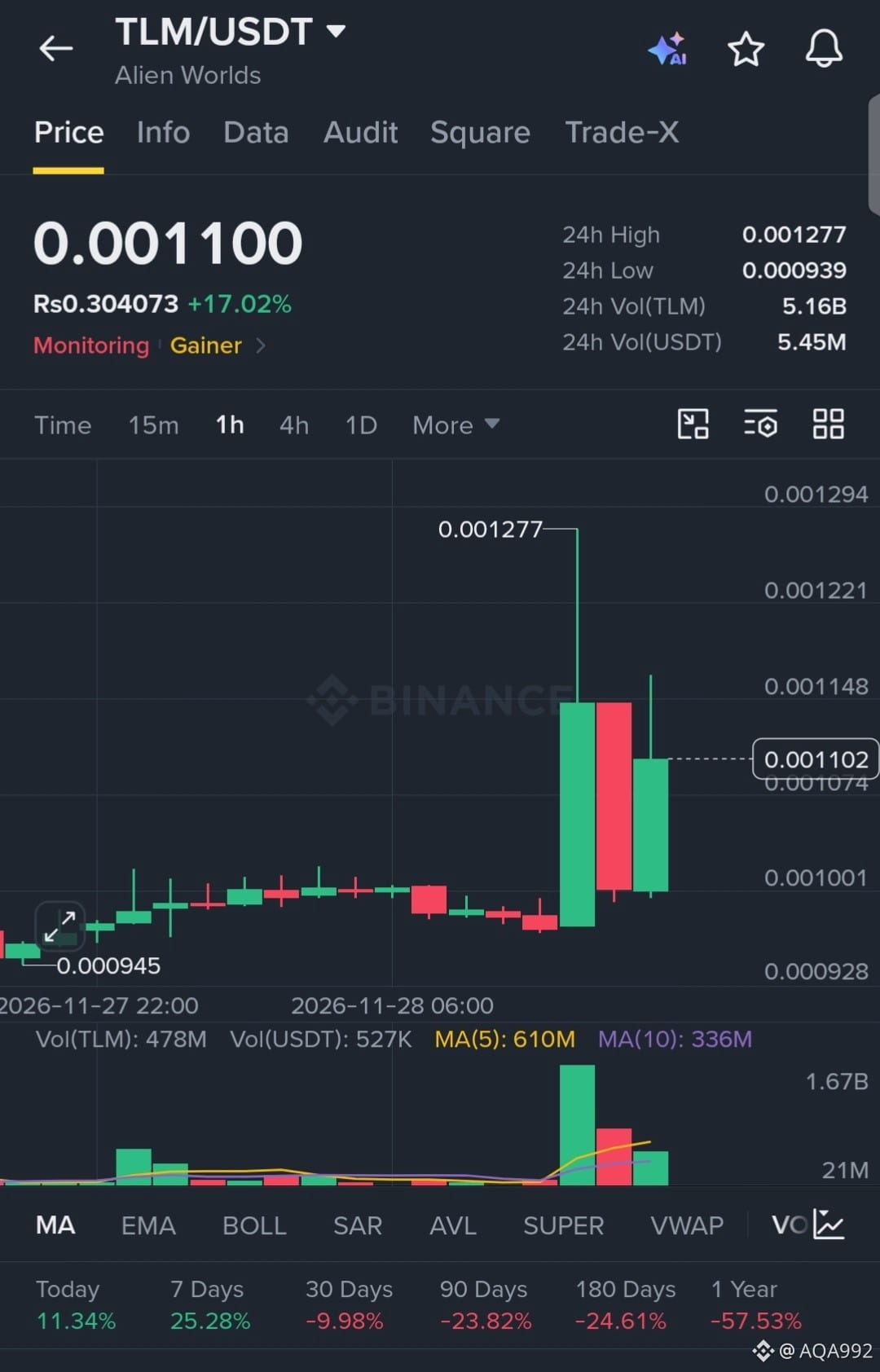
$TLM
Massive volume expansion has triggered a violent breakout, shattering previous resistance. The structure has completely shifted bullish. We are looking for a continuation entry as the price consolidates above the breakout zone, preparing for the next leg up.
EP: 0.001100
TP: 0.001220, 0.001350
SL: 0.001020
Disciplined risk. Let the setup play out.
$TLM
#EvolveAtBinanceBlockchainWeek
#ChainflipVaultTheftHaltsProtocol
#VitalikWantsWalletChipDesignsOpened
#MalaysiaFirstBitcoinETFToListOnDecember2
#DowJonesAdds591.99Points
{future}(TLMUSDT)
$TLM
Massive volume expansion has triggered a violent breakout, shattering previous resistance. The structure has completely shifted bullish. We are looking for a continuation entry as the price consolidates above the breakout zone, preparing for the next leg up.
EP: 0.001100
TP: 0.001220, 0.001350
SL: 0.001020
Disciplined risk. Let the setup play out.
$TLM
#EvolveAtBinanceBlockchainWeek
#ChainflipVaultTheftHaltsProtocol
#VitalikWantsWalletChipDesignsOpened
#MalaysiaFirstBitcoinETFToListOnDecember2
#DowJonesAdds591.99Points
1
125

·
--
Bullish
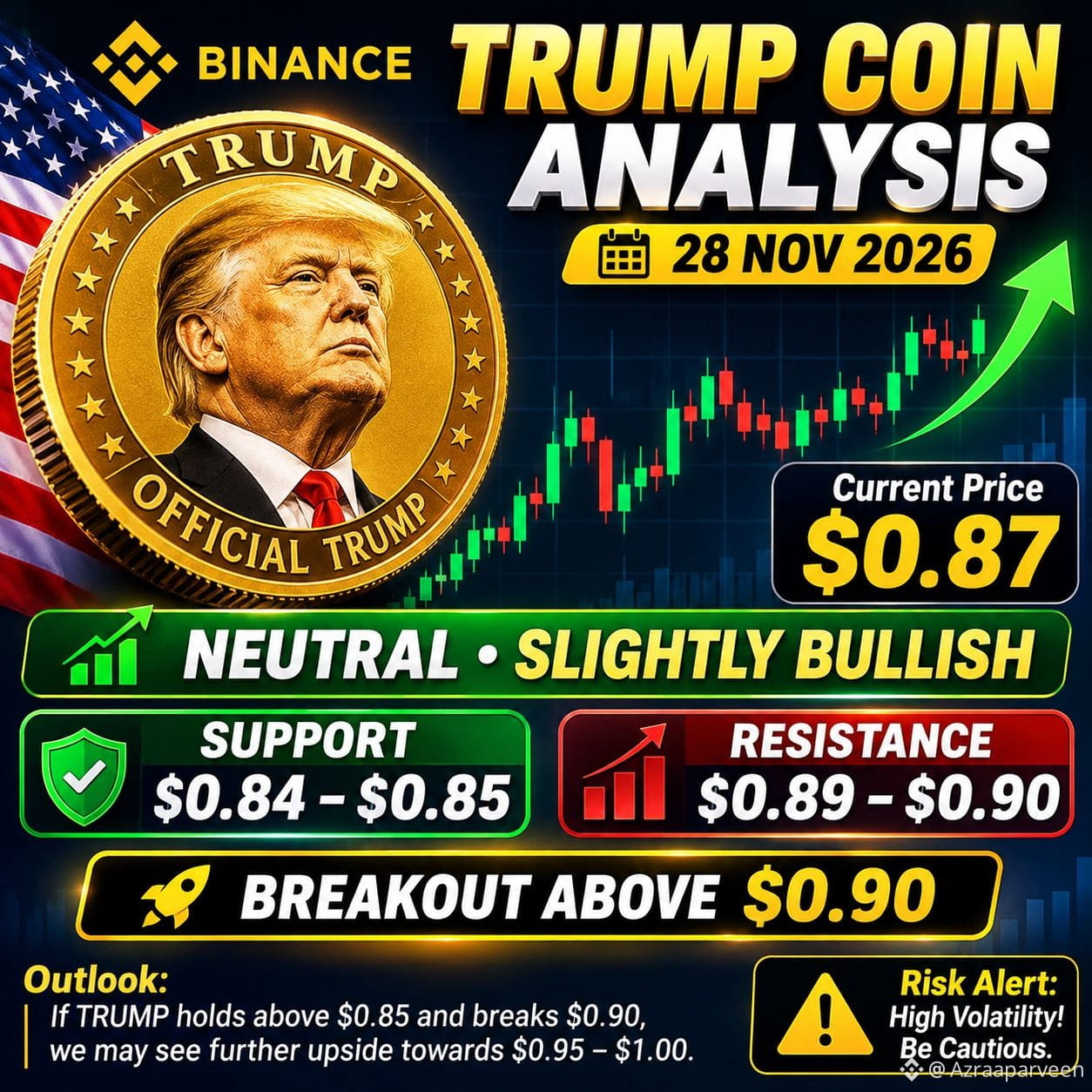
$TRUMP (TRUMP) – Market Analysis
📅 28 November 2026
Market Outlook: Neutral to Slightly Bullish 📈
$TRUMP coin is showing a small recovery after recent selling pressure. Price is currently around $0.87, with trading volume near $295 million over the last 24 hours. However, the coin is still trading significantly below its previous all-time high, so volatility remains high.
Key levels to watch:
🟢 Support: $0.84–$0.85
🟡 Resistance: $0.89–$0.90
🚀 Breakout zone: Above $0.90 with strong volume
🔻 Bearish risk: Below $0.84
volume, a short-term recovery may continue. But rejection near resistance could bring another downside move.
My view: Neutral — bullish momentum needs confirmation. Avoid chasing sudden pumps and watch volume closely.#Trump's #cryptouniverseofficial #EvolveAtBinanceBlockchainWeek #DowJonesAdds591.99Points
{spot}(TRUMPUSDT)
$TRUMP (TRUMP) – Market Analysis
📅 28 November 2026
Market Outlook: Neutral to Slightly Bullish 📈
$TRUMP coin is showing a small recovery after recent selling pressure. Price is currently around $0.87, with trading volume near $295 million over the last 24 hours. However, the coin is still trading significantly below its previous all-time high, so volatility remains high.
Key levels to watch:
🟢 Support: $0.84–$0.85
🟡 Resistance: $0.89–$0.90
🚀 Breakout zone: Above $0.90 with strong volume
🔻 Bearish risk: Below $0.84
volume, a short-term recovery may continue. But rejection near resistance could bring another downside move.
My view: Neutral — bullish momentum needs confirmation. Avoid chasing sudden pumps and watch volume closely.#Trump's #cryptouniverseofficial #EvolveAtBinanceBlockchainWeek #DowJonesAdds591.99Points
581
Article
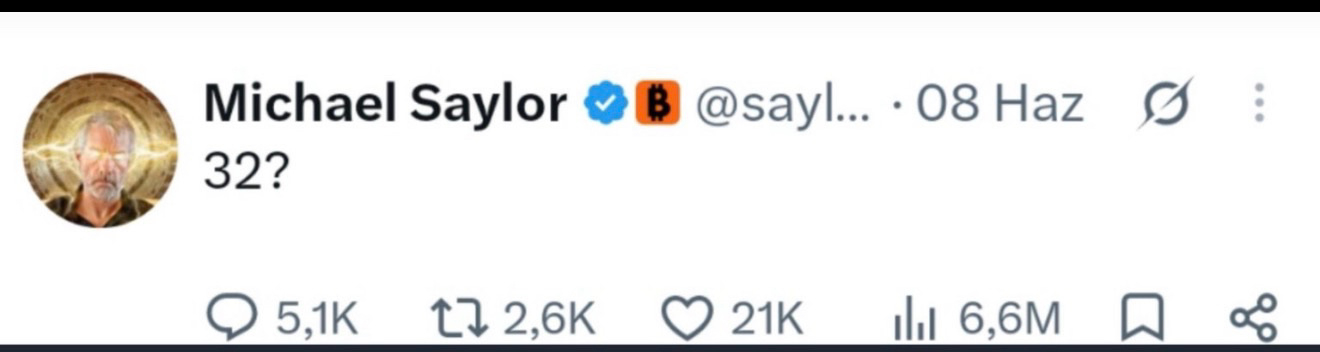
May be.What if Bitcoin drops to $32,000?
Michael Saylor sold 32 Bitcoin, remember?
Why 32? Why not 50 or 100, but 32?
Maybe they're giving us the price they'll crash Bitcoin to in advance through a subliminal message. Maybe they'll bring the price down to the blue line at the bottom, to the yellow circle
Then, sometime around September–October 2027, we look up and find that Bitcoin has bottomed out at $32,000
#EvolveAtBinanceBlockchainWeek #ChainflipVaultTheftHaltsProtocol #VitalikWantsWalletChipDesignsOpened #ColdcardFlawLeadsToTheftOfAtLeast1789BTC #DowJonesAdds591.99Points
May be.
What if Bitcoin drops to $32,000?
Michael Saylor sold 32 Bitcoin, remember?
Why 32? Why not 50 or 100, but 32?
Maybe they're giving us the price they'll crash Bitcoin to in advance through a subliminal message. Maybe they'll bring the price down to the blue line at the bottom, to the yellow circle
Then, sometime around September–October 2027, we look up and find that Bitcoin has bottomed out at $32,000
#EvolveAtBinanceBlockchainWeek #ChainflipVaultTheftHaltsProtocol #VitalikWantsWalletChipDesignsOpened #ColdcardFlawLeadsToTheftOfAtLeast1789BTC #DowJonesAdds591.99Points
80

[https://www.binance.com/download?utm_medium=screenshot](https://www.binance.com/download?utm_medium=screenshot)#EvolveAtBinanceBlockchainWeek #ChainflipVaultTheftHaltsProtocol #EthereumGlamsterdamKeepsStorageFeeChange #DowJonesAdds591.99Points
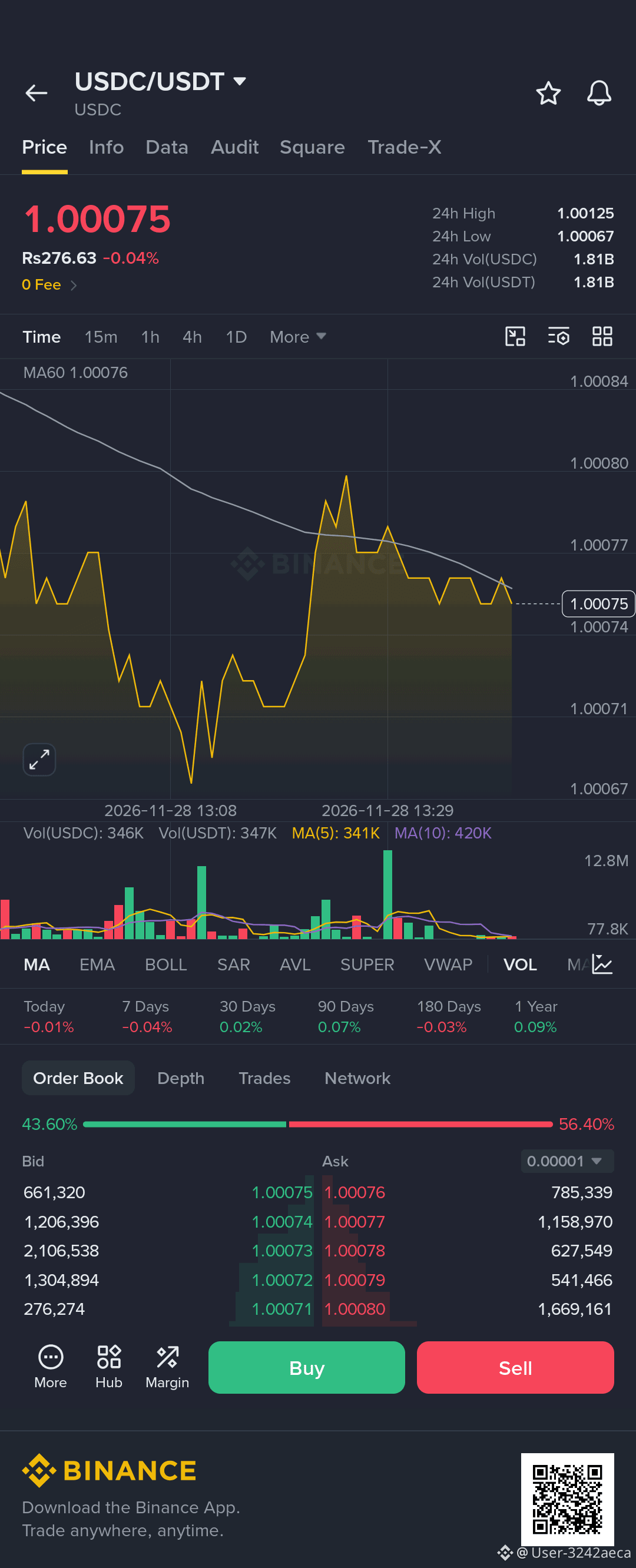
{spot}(USDCUSDT)
$USDC
https://www.binance.com/download?utm_medium=screenshot#EvolveAtBinanceBlockchainWeek #ChainflipVaultTheftHaltsProtocol #EthereumGlamsterdamKeepsStorageFeeChange #DowJonesAdds591.99Points
$USDC
$USDC
2
Article
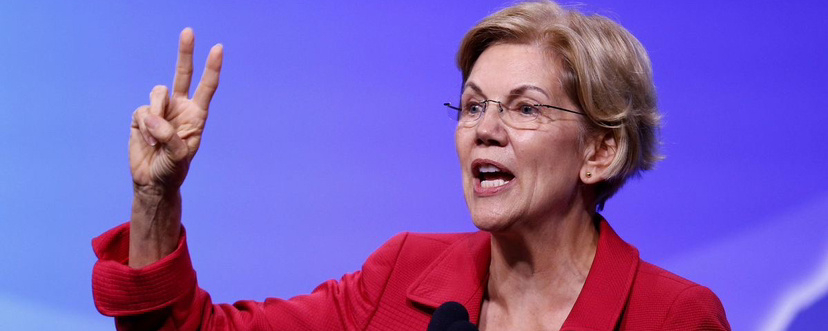
Elizabeth Warren VS. CryptoWARNING: ELIZABETH WARREN WANTS THE SEC TO KILL TWO #CRYPTO RULES THAT WOULD LIMIT GLOBAL CRYPTO GROWTH.
THE LETTERS ACCUSE THE SEC OF CREATING "SPECIAL TREATMENT" FOR CRYPTO.
→ RULE 1: "REGULATION CRYPTO ASSETS". IT WOULD LET CRYPTO PROJECTS RAISE LIMITED MONEY WITHOUT REGISTERING WITH THE SEC
→ RULE 2: THE ORDER THAT LETS PLATFORMS TRADE TOKENIZED STOCKS UNDER TEMPORARY EXEMPTIONS
→ WARREN, VAN HOLLEN, TINA SMITH AND JACK REED SIGNED THE LETTERS
THE SEC CHAIR, PAUL ATKINS, CALLS THE TOKENIZED STOCK ORDER A FIVE-YEAR INTERIM MEASURE.
THE SEC HAS NOT WITHDRAWN EITHER ONE.
WHO WINS THIS FIGHT: WARREN OR WALL STREET ON THE BLOCKCHAIN? 👀🚨 WARNING: SENATOR ELIZABETH WARREN WANTS THE #SEC TO KILL TWO CRYPTO RULES.
HER LETTERS WARN THEY COULD CREATE A "SHADOW STOCK MARKET".
THE LETTERS ACCUSE THE SEC OF CREATING "SPECIAL TREATMENT" FOR CRYPTO.
→ RULE 1: "REGULATION CRYPTO ASSETS". IT WOULD LET CRYPTO PROJECTS RAISE LIMITED MONEY WITHOUT REGISTERING WITH THE SEC
→ RULE 2: THE ORDER THAT LETS PLATFORMS TRADE TOKENIZED STOCKS UNDER TEMPORARY EXEMPTIONS
→ WARREN, VAN HOLLEN, TINA SMITH AND JACK REED SIGNED THE LETTERS
THE SEC CHAIR, PAUL ATKINS, CALLS THE TOKENIZED STOCK ORDER A FIVE-YEAR INTERIM MEASURE.
THE SEC HAS NOT WITHDRAWN EITHER ONE.
WHO WINS THIS FIGHT: WARREN OR WALL STREET ON THE BLOCKCHAIN?
#EvolveAtBinanceBlockchainWeek #ColdcardFlawLeadsToTheftOfAtLeast1789BTC #ColdcardFlawLeadsToTheftOfAtLeast1789BTC #DowJonesAdds591.99Points #AnzaUrgesSolanaNodesUpgradeAgave
Elizabeth Warren VS. Crypto
WARNING: ELIZABETH WARREN WANTS THE SEC TO KILL TWO #CRYPTO RULES THAT WOULD LIMIT GLOBAL CRYPTO GROWTH.
THE LETTERS ACCUSE THE SEC OF CREATING "SPECIAL TREATMENT" FOR CRYPTO.
→ RULE 1: "REGULATION CRYPTO ASSETS". IT WOULD LET CRYPTO PROJECTS RAISE LIMITED MONEY WITHOUT REGISTERING WITH THE SEC
→ RULE 2: THE ORDER THAT LETS PLATFORMS TRADE TOKENIZED STOCKS UNDER TEMPORARY EXEMPTIONS
→ WARREN, VAN HOLLEN, TINA SMITH AND JACK REED SIGNED THE LETTERS
THE SEC CHAIR, PAUL ATKINS, CALLS THE TOKENIZED STOCK ORDER A FIVE-YEAR INTERIM MEASURE.
THE SEC HAS NOT WITHDRAWN EITHER ONE.
WHO WINS THIS FIGHT: WARREN OR WALL STREET ON THE BLOCKCHAIN? 👀🚨 WARNING: SENATOR ELIZABETH WARREN WANTS THE #SEC TO KILL TWO CRYPTO RULES.
HER LETTERS WARN THEY COULD CREATE A "SHADOW STOCK MARKET".
THE LETTERS ACCUSE THE SEC OF CREATING "SPECIAL TREATMENT" FOR CRYPTO.
→ RULE 1: "REGULATION CRYPTO ASSETS". IT WOULD LET CRYPTO PROJECTS RAISE LIMITED MONEY WITHOUT REGISTERING WITH THE SEC
→ RULE 2: THE ORDER THAT LETS PLATFORMS TRADE TOKENIZED STOCKS UNDER TEMPORARY EXEMPTIONS
→ WARREN, VAN HOLLEN, TINA SMITH AND JACK REED SIGNED THE LETTERS
THE SEC CHAIR, PAUL ATKINS, CALLS THE TOKENIZED STOCK ORDER A FIVE-YEAR INTERIM MEASURE.
THE SEC HAS NOT WITHDRAWN EITHER ONE.
WHO WINS THIS FIGHT: WARREN OR WALL STREET ON THE BLOCKCHAIN?
#EvolveAtBinanceBlockchainWeek #ColdcardFlawLeadsToTheftOfAtLeast1789BTC #ColdcardFlawLeadsToTheftOfAtLeast1789BTC #DowJonesAdds591.99Points #AnzaUrgesSolanaNodesUpgradeAgave
THE LETTERS ACCUSE THE SEC OF CREATING "SPECIAL TREATMENT" FOR CRYPTO.
→ RULE 1: "REGULATION CRYPTO ASSETS". IT WOULD LET CRYPTO PROJECTS RAISE LIMITED MONEY WITHOUT REGISTERING WITH THE SEC
→ RULE 2: THE ORDER THAT LETS PLATFORMS TRADE TOKENIZED STOCKS UNDER TEMPORARY EXEMPTIONS
→ WARREN, VAN HOLLEN, TINA SMITH AND JACK REED SIGNED THE LETTERS
THE SEC CHAIR, PAUL ATKINS, CALLS THE TOKENIZED STOCK ORDER A FIVE-YEAR INTERIM MEASURE.
THE SEC HAS NOT WITHDRAWN EITHER ONE.
WHO WINS THIS FIGHT: WARREN OR WALL STREET ON THE BLOCKCHAIN? 👀🚨 WARNING: SENATOR ELIZABETH WARREN WANTS THE #SEC TO KILL TWO CRYPTO RULES.
HER LETTERS WARN THEY COULD CREATE A "SHADOW STOCK MARKET".
THE LETTERS ACCUSE THE SEC OF CREATING "SPECIAL TREATMENT" FOR CRYPTO.
→ RULE 1: "REGULATION CRYPTO ASSETS". IT WOULD LET CRYPTO PROJECTS RAISE LIMITED MONEY WITHOUT REGISTERING WITH THE SEC
→ RULE 2: THE ORDER THAT LETS PLATFORMS TRADE TOKENIZED STOCKS UNDER TEMPORARY EXEMPTIONS
→ WARREN, VAN HOLLEN, TINA SMITH AND JACK REED SIGNED THE LETTERS
THE SEC CHAIR, PAUL ATKINS, CALLS THE TOKENIZED STOCK ORDER A FIVE-YEAR INTERIM MEASURE.
THE SEC HAS NOT WITHDRAWN EITHER ONE.
WHO WINS THIS FIGHT: WARREN OR WALL STREET ON THE BLOCKCHAIN?
#EvolveAtBinanceBlockchainWeek #ColdcardFlawLeadsToTheftOfAtLeast1789BTC #ColdcardFlawLeadsToTheftOfAtLeast1789BTC #DowJonesAdds591.99Points #AnzaUrgesSolanaNodesUpgradeAgave
1
Log in to explore more content
Join global crypto users on Binance Square
⚡️ Get latest and useful information about crypto.
💬 Trusted by the world’s largest crypto exchange.
👍 Discover real insights from verified creators.
Email / Phone number
Trending Topics
1
#EvolveAtBinanceBlockchainWeek
1.6M views
16,615 Discussing
2
#ColdcardFlawLeadsToTheftOfAtLeast1789BTC
9,805 views
121 Discussing
3
#ChainflipVaultTheftHaltsProtocol
15,965 views
281 Discussing
4
#MalaysiaFirstBitcoinETFToListOnDecember2
8,248 views
124 Discussing
5
#VitalikWantsWalletChipDesignsOpened
24,011 views
364 Discussing
6
#DowJonesAdds591.99Points
11,437 views
80 Discussing
7
#SECIssuesNoActionLetterOnMoleculeModel
1,025 views
20 Discussing
8
#ClaudeAccusedOfDroppingUserPreferences
7,737 views
95 Discussing
9
#AnzaUrgesSolanaNodesUpgradeAgave
8,579 views
156 Discussing
10
#EthereumGlamsterdamKeepsStorageFeeChange
51,300 views
496 Discussing