
#vitalikwantswalletchipdesignsopened
vitalikwantswalletchipdesignsopened
Hot
Latest


·
--
Vitalik Calls for Hardware Wallet Chips to Be Open to Factory Drawings; Ledger CTO Questions VerifiabilityEthereum co-founder Vitalik Buterin has proposed making hardware wallet chip designs available down to factory drawings, while Ledger CTO Charles Guillemet questioned whether that would verify the hardware users receive. According to Odaily, Buterin said independent reviewers could compare physical chips with their designs, using infrared imaging and, to detect finer tampering, potentially dismantling chips layer by layer; he added that the approach would not eliminate the need for trust entirely.
Guillemet said publishing chip designs cannot prove that a user’s device matches the specifications, and that open source is not itself a security property: review by multiple people does not guarantee safety. Trezor Safe 7 uses a layered design combining a certified closed-source chip, an open-design chip and a main microcontroller. Ledger’s Donjon team previously used a laser to bypass the TROPIC01 chip’s firmware-signature check. Trezor said its layered design means that vulnerability alone cannot expose users’ PINs or funds.
Vitalik Calls for Hardware Wallet Chips to Be Open to Factory Drawings; Ledger CTO Questions Verifiability
Ethereum co-founder Vitalik Buterin has proposed making hardware wallet chip designs available down to factory drawings, while Ledger CTO Charles Guillemet questioned whether that would verify the hardware users receive. According to Odaily, Buterin said independent reviewers could compare physical chips with their designs, using infrared imaging and, to detect finer tampering, potentially dismantling chips layer by layer; he added that the approach would not eliminate the need for trust entirely.
Guillemet said publishing chip designs cannot prove that a user’s device matches the specifications, and that open source is not itself a security property: review by multiple people does not guarantee safety. Trezor Safe 7 uses a layered design combining a certified closed-source chip, an open-design chip and a main microcontroller. Ledger’s Donjon team previously used a laser to bypass the TROPIC01 chip’s firmware-signature check. Trezor said its layered design means that vulnerability alone cannot expose users’ PINs or funds.
Guillemet said publishing chip designs cannot prove that a user’s device matches the specifications, and that open source is not itself a security property: review by multiple people does not guarantee safety. Trezor Safe 7 uses a layered design combining a certified closed-source chip, an open-design chip and a main microcontroller. Ledger’s Donjon team previously used a laser to bypass the TROPIC01 chip’s firmware-signature check. Trezor said its layered design means that vulnerability alone cannot expose users’ PINs or funds.
1
3
3.4k

·
--
🚨 VITALIK WANTS CRYPTO WALLET CHIP DESIGNS OPEN — BUT LEDGER CTO DISAGREES! 🔐
Ethereum co-founder Vitalik Buterin believes crypto security should go beyond open-source software. He wants hardware wallet chip designs to be publicly available so independent experts can inspect and verify the hardware protecting users' private keys.
🔍 Here’s why it matters:
• Open chip designs: Vitalik says manufacturers should share detailed physical chip layouts, known as GDS files.🗃️
• Better verification: Independent experts could compare real chips with their published designs to detect hidden modifications.
• Ledger's response: Its CTO argues that publishing designs alone cannot prove the actual chip matches the blueprint.
• The bigger debate: Should crypto hardware prioritize transparency, or rely on a combination of open and closed security systems?
🔐 Hardware wallet security is about more than protecting private keys — it's also about trusting the device that stores them.
💬 Who makes the stronger argument — Vitalik or Ledger's CTO?
$ETH - $SKY - $SENT
{future}(ETHUSDT)
{future}(SKYUSDT)
{future}(SENTUSDT)
#CryptoSecurity #VitalikButerin #HardwareWallets
#VitalikWantsWalletChipDesignsOpened
"Should hardware wallet chip designs be open-source"!?⚡
🚨 VITALIK WANTS CRYPTO WALLET CHIP DESIGNS OPEN — BUT LEDGER CTO DISAGREES! 🔐
Ethereum co-founder Vitalik Buterin believes crypto security should go beyond open-source software. He wants hardware wallet chip designs to be publicly available so independent experts can inspect and verify the hardware protecting users' private keys.
🔍 Here’s why it matters:
• Open chip designs: Vitalik says manufacturers should share detailed physical chip layouts, known as GDS files.🗃️
• Better verification: Independent experts could compare real chips with their published designs to detect hidden modifications.
• Ledger's response: Its CTO argues that publishing designs alone cannot prove the actual chip matches the blueprint.
• The bigger debate: Should crypto hardware prioritize transparency, or rely on a combination of open and closed security systems?
🔐 Hardware wallet security is about more than protecting private keys — it's also about trusting the device that stores them.
💬 Who makes the stronger argument — Vitalik or Ledger's CTO?
$ETH - $SKY - $SENT
#CryptoSecurity #VitalikButerin #HardwareWallets
#VitalikWantsWalletChipDesignsOpened
"Should hardware wallet chip designs be open-source"!?⚡
🟢 Yes — Full transparency 🔓
🔴 No — Security first 🔐
23 hr(s) left
17

·
--
🚨 VITALIK WANTS OPEN-SOURCE CHIPS — ETHEREUM'S NEXT BIG FRONTIER MAY BE HARDWARE SECURITY!
Ethereum co-founder Vitalik Buterin is pushing for a major shift in hardware security: making chip designs publicly verifiable, not just their software.
His November 26 proposal argues that manufacturers should disclose physical chip layouts (GDS files), allowing independent experts to check whether actual hardware matches its approved design.
Why now? Recent hardware wallet supply-chain attacks involving Ledger and Trezor have highlighted a serious vulnerability: hackers can compromise devices before they even reach customers.
🔥 THE INVESTMENT OPPORTUNITY:
This could create demand for secure hardware, open-source semiconductor manufacturing and independent chip auditing.
My outlook:
🟢 $ETH: Positive long-term narrative as Ethereum expands its decentralization philosophy into hardware security, but no immediate direct price catalyst.
🟢 Hardware security sector: Potential beneficiary if verifiable chip standards gain adoption.
🟡 $NVDA: Limited direct impact. Performance-focused AI chips and security-focused wallet chips serve different markets.
⚠️ One obstacle: Ledger's CTO has challenged the idea, arguing that open-source designs alone cannot guarantee that manufactured chips are genuine.
My prediction: The next major crypto security narrative could extend beyond private keys to the physical silicon protecting them.
👀 Is open-source hardware the next trillion-dollar technology opportunity, or an idea that will struggle against semiconductor manufacturers' commercial interests?
$ETH $BTC $NVDA $AMD $XLM
#vitalikwantswalletchipdesignsopened
🚨 VITALIK WANTS OPEN-SOURCE CHIPS — ETHEREUM'S NEXT BIG FRONTIER MAY BE HARDWARE SECURITY!
Ethereum co-founder Vitalik Buterin is pushing for a major shift in hardware security: making chip designs publicly verifiable, not just their software.
His November 26 proposal argues that manufacturers should disclose physical chip layouts (GDS files), allowing independent experts to check whether actual hardware matches its approved design.
Why now? Recent hardware wallet supply-chain attacks involving Ledger and Trezor have highlighted a serious vulnerability: hackers can compromise devices before they even reach customers.
🔥 THE INVESTMENT OPPORTUNITY:
This could create demand for secure hardware, open-source semiconductor manufacturing and independent chip auditing.
My outlook:
🟢 $ETH : Positive long-term narrative as Ethereum expands its decentralization philosophy into hardware security, but no immediate direct price catalyst.
🟢 Hardware security sector: Potential beneficiary if verifiable chip standards gain adoption.
🟡 $NVDA : Limited direct impact. Performance-focused AI chips and security-focused wallet chips serve different markets.
⚠️ One obstacle: Ledger's CTO has challenged the idea, arguing that open-source designs alone cannot guarantee that manufactured chips are genuine.
My prediction: The next major crypto security narrative could extend beyond private keys to the physical silicon protecting them.
👀 Is open-source hardware the next trillion-dollar technology opportunity, or an idea that will struggle against semiconductor manufacturers' commercial interests?
$ETH $BTC $NVDA $AMD $XLM
#vitalikwantswalletchipdesignsopened

3

·
--
Bearish
#vitalikwantswalletchipdesignsopened
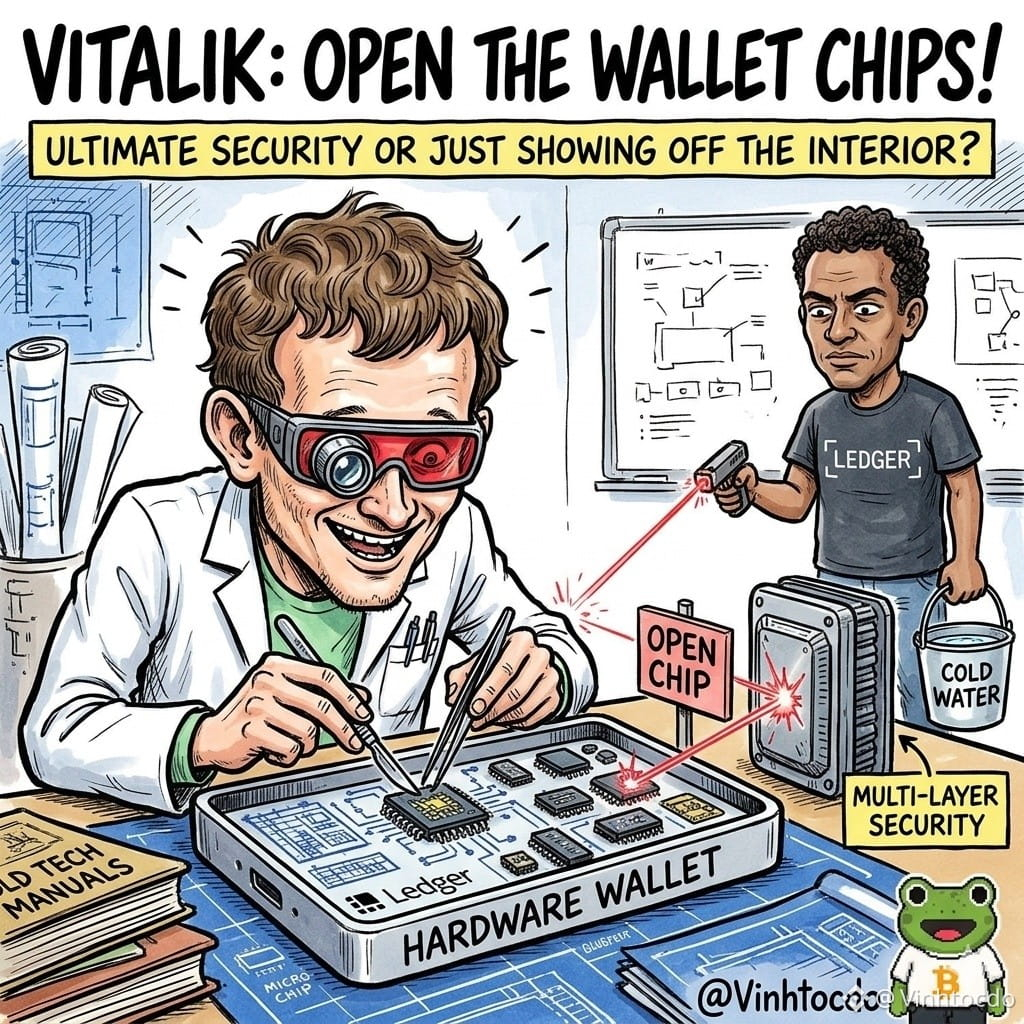
VITALIK DEMANDS A DEEP DIVE DOWN TO THE COLD WALLET CHIP BLUEPRINTS: TOP-TIER SECURITY OR JUST SHOWING OFF THE INSIDE? 🤯
Cold wallet folks, there’s some seriously spicy tech drama to follow lately!
Here’s what happened: “high priest” Vitalik Buterin just came up with a bold idea: he wants hardware wallet makers to disclose their chip designs down to the factory blueprints. The goal is to let experts inspect them with infrared rays and even “dissect” them, peeling back each physical chip layer to check for any planted “backdoors.”
Sounds convincing, but Ledger CTO Charles Guillemet quickly poured cold water on the idea: making blueprints public doesn’t prove that the wallet in your hand is identical to the design, and open-source code doesn’t automatically become a bulletproof shield. In fact, Ledger’s team previously used a laser to pierce the signature-checking layer of the open TROPIC01 chip on the Trezor Safe 7, forcing Trezor to use a multilayer architecture (combining both closed and open chips) to protect users’ PINs and assets.
So what should traders do amid this “battle of the insides”? Stay calm, folks! Whether the chip is closed or open, the final line of defense is still your own cool head. Always buy wallets directly from the manufacturer, carefully check the security seals, keep your recovery phrase (seed phrase) offline, and never blindly sign unfamiliar contracts.
*Note: This is not financial advice.*
Click below to trade and support me! 👇
$ETH
{spot}(ETHUSDT)
$BTC
{spot}(BTCUSDT)
$PORTAL
{future}(PORTALUSDT)
#HardwareWallet #CryptoSecurity #VitalikButerin #Ledger #Web3Safety #VINHTOCDO
#vitalikwantswalletchipdesignsopened
VITALIK DEMANDS A DEEP DIVE DOWN TO THE COLD WALLET CHIP BLUEPRINTS: TOP-TIER SECURITY OR JUST SHOWING OFF THE INSIDE? 🤯
Cold wallet folks, there’s some seriously spicy tech drama to follow lately!
Here’s what happened: “high priest” Vitalik Buterin just came up with a bold idea: he wants hardware wallet makers to disclose their chip designs down to the factory blueprints. The goal is to let experts inspect them with infrared rays and even “dissect” them, peeling back each physical chip layer to check for any planted “backdoors.”
Sounds convincing, but Ledger CTO Charles Guillemet quickly poured cold water on the idea: making blueprints public doesn’t prove that the wallet in your hand is identical to the design, and open-source code doesn’t automatically become a bulletproof shield. In fact, Ledger’s team previously used a laser to pierce the signature-checking layer of the open TROPIC01 chip on the Trezor Safe 7, forcing Trezor to use a multilayer architecture (combining both closed and open chips) to protect users’ PINs and assets.
So what should traders do amid this “battle of the insides”? Stay calm, folks! Whether the chip is closed or open, the final line of defense is still your own cool head. Always buy wallets directly from the manufacturer, carefully check the security seals, keep your recovery phrase (seed phrase) offline, and never blindly sign unfamiliar contracts.
*Note: This is not financial advice.*
Click below to trade and support me! 👇
$ETH
$BTC
$PORTAL
#HardwareWallet #CryptoSecurity #VitalikButerin #Ledger #Web3Safety #VINHTOCDO
408

·
--
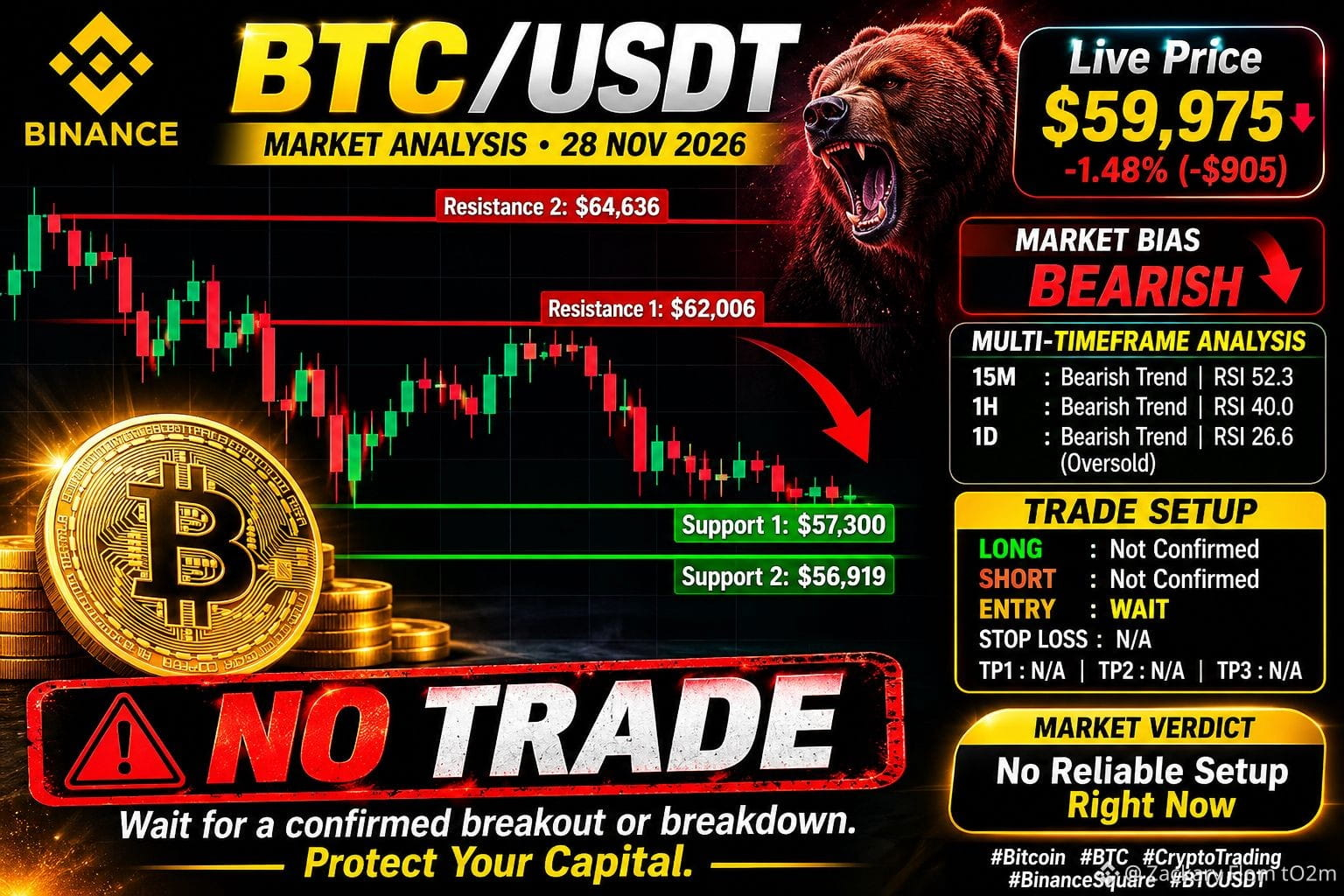
You think locking your seed phrase in a hardware wallet makes it safe? Vitalik posted this week that the chip could have been tampered with even before it left the factory, and that’s exactly how those Ledger devices were compromised in October—the seed phrases were stolen directly, and now the same issue has been found in machines sold in Germany too. He argues that chip design should be open source all the way down to the factory schematics, so people can compare the physical device against the drawings. Ledger’s CTO isn’t convinced, saying that open-sourcing the schematics still can’t prove the chip in your hand was actually made according to them; it’s basically wishful thinking. $BTC is now 60196 dollars, down 1.8% in 24 hours, $ETH 1670 dollars. #VitalikWantsWalletChipDesignsOpened Your hardware wallet: do you trust open-source schematics, or a big brand’s reputation?
You think locking your seed phrase in a hardware wallet makes it safe? Vitalik posted this week that the chip could have been tampered with even before it left the factory, and that’s exactly how those Ledger devices were compromised in October—the seed phrases were stolen directly, and now the same issue has been found in machines sold in Germany too. He argues that chip design should be open source all the way down to the factory schematics, so people can compare the physical device against the drawings. Ledger’s CTO isn’t convinced, saying that open-sourcing the schematics still can’t prove the chip in your hand was actually made according to them; it’s basically wishful thinking. $BTC is now 60196 dollars, down 1.8% in 24 hours, $ETH 1670 dollars. #VitalikWantsWalletChipDesignsOpened Your hardware wallet: do you trust open-source schematics, or a big brand’s reputation?
6

·
--
ETH wallet security draws attention|Verifiable chips remain the goal|Don’t chase the news at current prices
My view is that this hot topic should be treated as a reminder of custody risks, not as immediate good news for ETH. A trending topic, #VitalikWantsWalletChipDesigns, has appeared on Binance Square. I checked Vitalik’s original post from November 26: he was discussing open-source chip designs and the hardware wallet supply chain. Making only high-level design files such as Verilog public still makes it difficult to obtain a physical chip and verify it layer by layer. If designs were made open down to the physical GDS layout, alongside verifiable process documentation, professional auditors would have a more direct basis for comparison with the physical chip. He also explicitly noted that this kind of microscopic inspection is not something every ordinary user can do at home. The article is about security and technical discussion; it is not an Ethereum mainnet proposal, a standard already adopted across the board by wallet manufacturers, or an announcement of changes to ETH protocol parameters.
Why does this matter to the crypto market? Self-custody gives users control of their private keys, but if a hardware device is tampered with in the supply chain, correct software usage cannot eliminate physical-layer risks. For long-term holders, this affects the choice of purchase channel, device verification, distributed storage, and regular checks of permissions; for institutions, it could affect hardware auditing and custody costs. Gradual improvements in security could help build trust, but moving from a research article to mass production, auditing, and adoption takes engineering work and time. It cannot be directly interpreted as new demand for ETH today. In particular, don’t see “open chip designs” and conclude that a particular brand of wallet is already unsafe; the article points to a gap in verifiability, not a vulnerability warning about all devices.
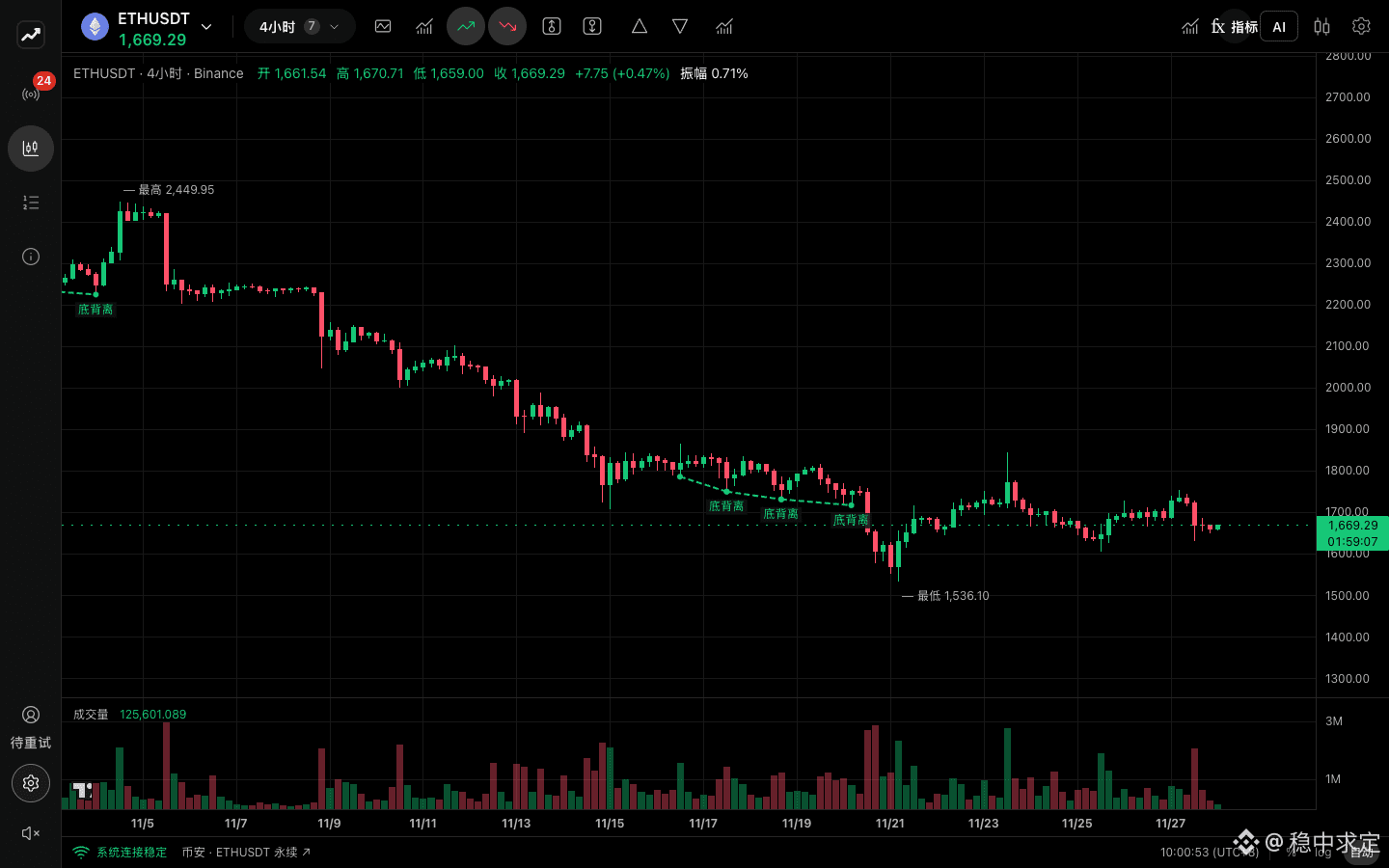
The market has not yet priced in any clear event. When I checked Kraken ETH/USD early this morning Beijing time, the latest trade was around $1,667.55, with a rolling 24-hour open of $1,660.91, a high of $1,752.33, and a low of $1,632.16. The price is in the lower half of the range and slightly above the open, but has not recovered the upper end. Discussion of the trending topic on Binance Square is also far below that of mainstream macro topics, so it cannot explain all the volatility. I’m more focused on whether wallet manufacturers subsequently publish auditable physical designs and independent inspection results, and whether ETF flows and risk appetite improve in tandem. If such evidence does not emerge, this security topic may have very limited short-term price impact.
If I were trading this myself, I would stay out for now, with a neutral bias and a position size of 0. I would only consider a leveraged-free spot long if ETH’s four-hour candle closes above $1,705, then retests the $1,695–$1,705 range without breaking below it, and market depth remains normal. The initial position would be at most 0.15% of total capital. If triggered, I would take half off at the first target of $1,735 and close the remaining position at the second target of $1,770. I would set a stop-loss at $1,678 and exit if a four-hour candle closes back below $1,678. If the price first breaks below $1,632, I would cancel the long plan; if a device security incident is confirmed by the manufacturer, I would secure assets first and consider trading later. Without a trigger, I would remain flat and watch, rather than present the buzz around the discussion as a reason for prices to rise.
Sources: Vitalik’s original post, trending topics on Binance Square, and publicly available Kraken quotes. #VitalikWantsWalletChipDesignsOpened #ETH
This is solely my personal market observation and does not constitute investment advice.
11

·
--
Article
Vitalik on Opening Hardware Wallet Chip Designs: Self-Custody Security Is About More Than Seed Phrases, and ETH Isn’t an Immediate BuyVitalik on Opening Hardware Wallet Chip Designs: Self-Custody Security Is About More Than Seed Phrases, and ETH Isn’t an Immediate Buy
At around 10:00 a.m. Beijing time on November 28, `#VitalikWantsWalletChipDesignsOpened` appeared at No. 7 on the Binance Square trending list, with the page showing “2 Discussing.” The facts behind this topic are not that Ethereum changed its protocol or that a wallet has been compromised. Rather, Vitalik has taken the question of “whether hardware can be trusted” deeper, into the physical layout of chips and the manufacturing process.
I. What exactly did Vitalik propose?
On November 26, Vitalik Buterin published “A Shallow Dive into Open-Source Chip Design,” tracing the subject from chip design languages to transistors, silicon wafers, and geometric structures. His key point is that publishing only higher-level code such as Verilog is usually not enough for outside parties to verify whether a finished chip was actually manufactured as intended. For specialist organizations to have more direct grounds for comparison, the disclosure needs to extend to lower-level GDS physical layouts, along with manufacturing process documentation.
Vitalik on Opening Hardware Wallet Chip Designs: Self-Custody Security Is About More Than Seed Phrases, and ETH Isn’t an Immediate Buy
Vitalik on Opening Hardware Wallet Chip Designs: Self-Custody Security Is About More Than Seed Phrases, and ETH Isn’t an Immediate Buy
At around 10:00 a.m. Beijing time on November 28, `#VitalikWantsWalletChipDesignsOpened` appeared at No. 7 on the Binance Square trending list, with the page showing “2 Discussing.” The facts behind this topic are not that Ethereum changed its protocol or that a wallet has been compromised. Rather, Vitalik has taken the question of “whether hardware can be trusted” deeper, into the physical layout of chips and the manufacturing process.
I. What exactly did Vitalik propose?
On November 26, Vitalik Buterin published “A Shallow Dive into Open-Source Chip Design,” tracing the subject from chip design languages to transistors, silicon wafers, and geometric structures. His key point is that publishing only higher-level code such as Verilog is usually not enough for outside parties to verify whether a finished chip was actually manufactured as intended. For specialist organizations to have more direct grounds for comparison, the disclosure needs to extend to lower-level GDS physical layouts, along with manufacturing process documentation.
109
·
--
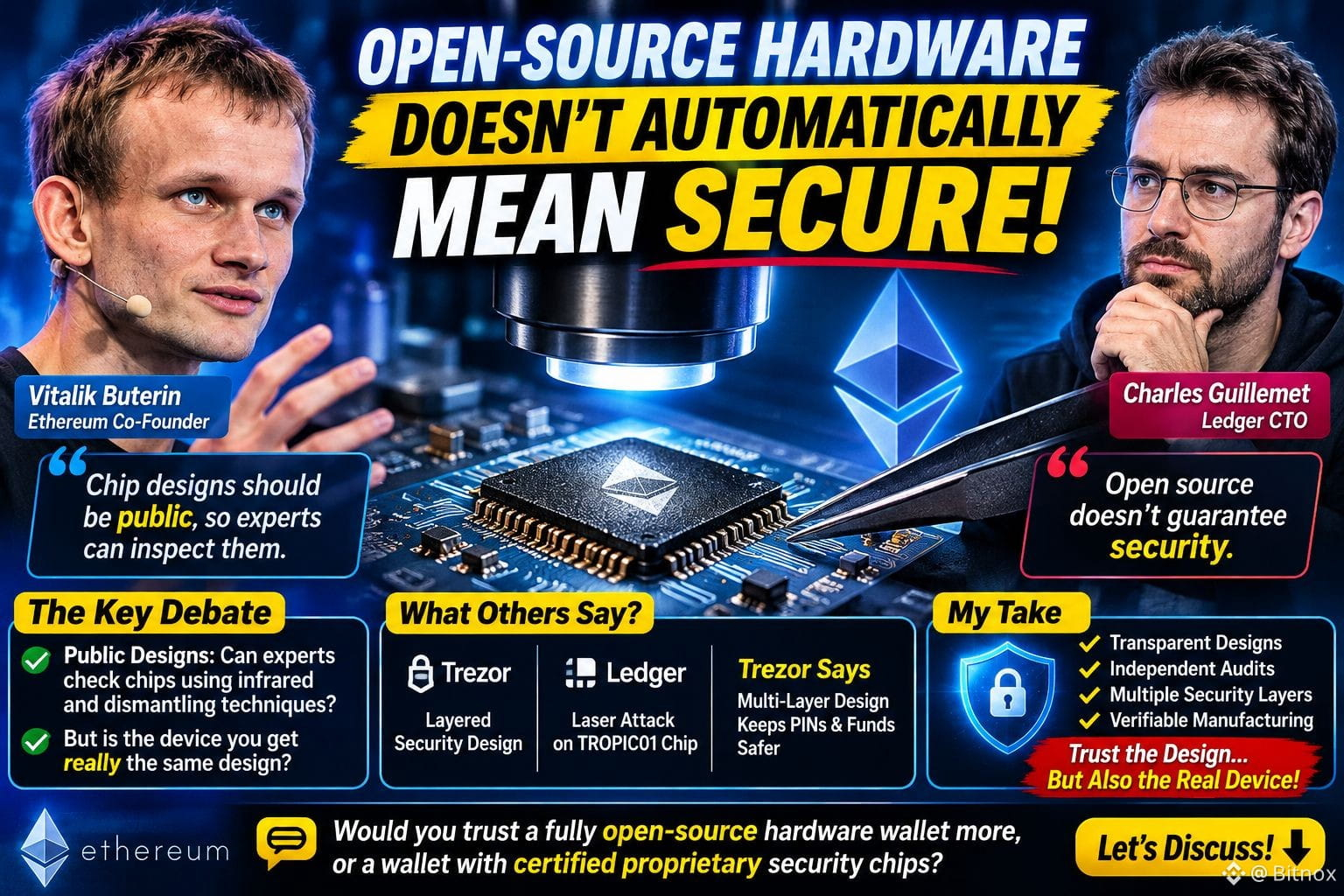
🔐 OPEN-SOURCE HARDWARE DOESN'T AUTOMATICALLY MEAN SECURE!
A new debate has emerged between Ethereum co-founder Vitalik Buterin and Ledger's CTO Charles Guillemet over the security of hardware wallets.
💡 Vitalik's Perspective: He believes hardware wallet chip designs should be publicly available, even down to factory-level drawings. Independent experts could then inspect physical chips using infrared imaging and advanced techniques to detect hidden modifications.
⚠️ Ledger's Counterargument: Charles Guillemet raises an important concern: Publishing a chip's design doesn't prove that the actual device in your hands matches those specifications.
And he's right about one thing: Open source doesn't automatically guarantee security.
🔍 The Bigger Picture:
• Trezor is experimenting with a layered security architecture. • Ledger's Donjon team previously demonstrated a laser-based attack against the TROPIC01 chip. • Trezor argues that its multi-layered architecture prevents that vulnerability alone from exposing users' PINs or funds.
🚀 My Take:
The future of crypto security shouldn't depend on trusting a single company.
We need transparent designs, independent hardware audits, multiple security layers, and verifiable manufacturing processes.
Because there's a big difference between trusting the design and trusting the actual device.
One question for the crypto community:
Would you trust a fully open-source hardware wallet more, or a wallet with certified proprietary security chips?
👇 Let's discuss!
#VitalikWantsWalletChipDesignsOpened #Ledger #Trezor #CryptoSecurity #HardwareWallet
$BTC $ETH $BNB
28

·
--
Bullish
$PORTAL is showing a potential short-on-rejection setup after an explosive rally and long liquidation activity near $0.0222.
Buyers have pushed price sharply higher, but resistance around $0.041–$0.0425 could attract profit-taking. Wait for bearish confirmation before entering.
EP: $0.0410–$0.0420 TP1: $0.0380 TP2: $0.0350 TP3: $0.0320 SL: $0.0440
The recent rally has created significant volatility and nearby liquidity above the recent high. A rejection followed by a failed retest would support the short; a sustained breakout invalidates this setup.
Let's go Trade now $PORTAL
{spot}(PORTALUSDT)
#VitalikWantsWalletChipDesignsOpened #EthereumGlamsterdamKeepsStorageFeeChange #ChinaBlockchainIDRulesEffectMarch2027 #MoneroFalls13%OnDelistings #MalaysiaFirstBitcoinETFToListOnDecember2
$PORTAL is showing a potential short-on-rejection setup after an explosive rally and long liquidation activity near $0.0222.
Buyers have pushed price sharply higher, but resistance around $0.041–$0.0425 could attract profit-taking. Wait for bearish confirmation before entering.
EP: $0.0410–$0.0420 TP1: $0.0380 TP2: $0.0350 TP3: $0.0320 SL: $0.0440
The recent rally has created significant volatility and nearby liquidity above the recent high. A rejection followed by a failed retest would support the short; a sustained breakout invalidates this setup.
Let's go Trade now $PORTAL
#VitalikWantsWalletChipDesignsOpened #EthereumGlamsterdamKeepsStorageFeeChange #ChinaBlockchainIDRulesEffectMarch2027 #MoneroFalls13%OnDelistings #MalaysiaFirstBitcoinETFToListOnDecember2
288

·
--
Article
⛽ Ethereum Glamsterdam: Storing Data Is Set to Cost More#EthereumGlamsterdamKeepsStorageFeeChange
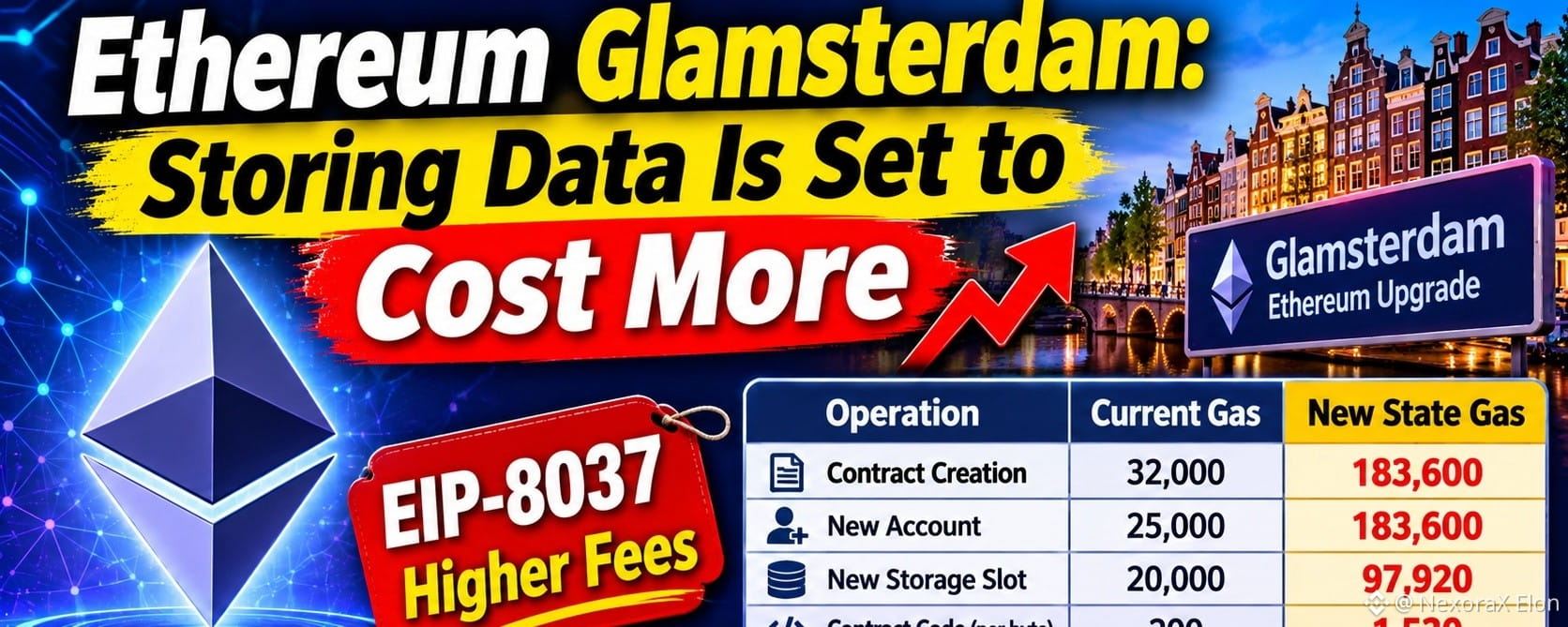
Ethereum developers are moving ahead with a change that will make creating new data on the network significantly more expensive. ⛽ At their November 26 call, they reached rough consensus to keep the Glamsterdam upgrade as specified, including the debated EIP-8037. The new fees are not live on mainnet yet. 🗓️
💰 What Changes With EIP-8037?
EIP-8037 raises the cost of creating state: data such as new accounts, storage entries and contract code that nodes must keep. 💾 It also meters this “state gas” separately from execution gas.
Operation
Current gas
New state gas
🏗️ Contract creation charge
32,000
183,600
👤 New account via a call
25,000
183,600
📦 New storage slot
20,000
97,920
📜 Contract code, per byte
200
1,530
Some operations also carry separate execution gas, so these figures are not the full transaction cost. 🧮 Your final bill in ETH will still depend on the network’s gas price.
🌱 Why Make Storage More Expensive?
Every new piece of state adds to what Ethereum nodes must maintain. 🖥️ As the network raises its capacity, that database could grow much faster. Heavier hardware demands may make running a node harder and weaken decentralization.
EIP-8037 puts a consistent price on each new byte. ⚖️ It targets average state growth of about 120 GiB per year at a reference block gas limit of 150 million. The goal is to scale while keeping the chain manageable.
⚠️ The Risk for Existing Contracts
Some applications assume gas costs will stay the same. 🧩 Hardcoded gas limits or fixed gas allowances could cause transactions to run out of gas after the upgrade.
• 🔎 Up to 15,000 of roughly 90 million contracts are reported as affected.
• 🔧 Most can reportedly keep working with small adjustments.
• 📍 Testing identified about 200 specific trouble spots.
• 🚨 24 contracts need an upgrade or migration before the change takes effect.
The headline number therefore does not mean 15,000 contracts will definitely break. 🛠️ Builders should still test their apps and review gas estimates now.
🗓️ What Happens Next?
• 🧪 December 15, 2026: Glamsterdam is scheduled to activate on the Hoodi testnet around 19:12 UTC. The most serious contract fixes are also due that day.
• ⏳ January 10, 2027: deadline for the remaining fixes.
• 🚀 Mainnet: not expected before mid-January 2027, and most likely in late January or early February, if Hoodi testing goes smoothly.
Hoodi was originally planned for October 26 but was postponed over security concerns. 🔐 A clean test is the last major checkpoint before mainnet.
🏁 Lean Chain or Builder Risk?
The case for EIP-8037 is long-term health: controlling state growth helps Ethereum scale. 🌐 The concern is short-term disruption, especially for apps built around old gas assumptions. Developers who prepare early will be in a stronger position. 💪 Users should follow official updates from the apps they rely on.
💬 Is keeping Ethereum lean worth the cost, or is the change too risky for builders? 👇
⚠️
#Ethereum #Glamsterdam #EIP8037 #ETH #CryptoNews
Sources, checked November 28, 2026: CoinPaprika · Gas cost tables, EIP-8007 · EIP-8037 · Ethereum Foundation testnet announcement#FearGreedIndexFallsTo10ExtremeFear #WhaleHolds1.38MHYPELongUp$34M #SpeculatorsCutNasdaqFuturesBy17%In6Weeks #VitalikWantsWalletChipDesignsOpened
⛽ Ethereum Glamsterdam: Storing Data Is Set to Cost More
#EthereumGlamsterdamKeepsStorageFeeChange
Ethereum developers are moving ahead with a change that will make creating new data on the network significantly more expensive. ⛽ At their November 26 call, they reached rough consensus to keep the Glamsterdam upgrade as specified, including the debated EIP-8037. The new fees are not live on mainnet yet. 🗓️
💰 What Changes With EIP-8037?
EIP-8037 raises the cost of creating state: data such as new accounts, storage entries and contract code that nodes must keep. 💾 It also meters this “state gas” separately from execution gas.
Operation
Current gas
New state gas
🏗️ Contract creation charge
32,000
183,600
👤 New account via a call
25,000
183,600
📦 New storage slot
20,000
97,920
📜 Contract code, per byte
200
1,530
Some operations also carry separate execution gas, so these figures are not the full transaction cost. 🧮 Your final bill in ETH will still depend on the network’s gas price.
🌱 Why Make Storage More Expensive?
Every new piece of state adds to what Ethereum nodes must maintain. 🖥️ As the network raises its capacity, that database could grow much faster. Heavier hardware demands may make running a node harder and weaken decentralization.
EIP-8037 puts a consistent price on each new byte. ⚖️ It targets average state growth of about 120 GiB per year at a reference block gas limit of 150 million. The goal is to scale while keeping the chain manageable.
⚠️ The Risk for Existing Contracts
Some applications assume gas costs will stay the same. 🧩 Hardcoded gas limits or fixed gas allowances could cause transactions to run out of gas after the upgrade.
• 🔎 Up to 15,000 of roughly 90 million contracts are reported as affected.
• 🔧 Most can reportedly keep working with small adjustments.
• 📍 Testing identified about 200 specific trouble spots.
• 🚨 24 contracts need an upgrade or migration before the change takes effect.
The headline number therefore does not mean 15,000 contracts will definitely break. 🛠️ Builders should still test their apps and review gas estimates now.
🗓️ What Happens Next?
• 🧪 December 15, 2026: Glamsterdam is scheduled to activate on the Hoodi testnet around 19:12 UTC. The most serious contract fixes are also due that day.
• ⏳ January 10, 2027: deadline for the remaining fixes.
• 🚀 Mainnet: not expected before mid-January 2027, and most likely in late January or early February, if Hoodi testing goes smoothly.
Hoodi was originally planned for October 26 but was postponed over security concerns. 🔐 A clean test is the last major checkpoint before mainnet.
🏁 Lean Chain or Builder Risk?
The case for EIP-8037 is long-term health: controlling state growth helps Ethereum scale. 🌐 The concern is short-term disruption, especially for apps built around old gas assumptions. Developers who prepare early will be in a stronger position. 💪 Users should follow official updates from the apps they rely on.
💬 Is keeping Ethereum lean worth the cost, or is the change too risky for builders? 👇
⚠️
#Ethereum #Glamsterdam #EIP8037 #ETH #CryptoNews
Sources, checked November 28, 2026: CoinPaprika · Gas cost tables, EIP-8007 · EIP-8037 · Ethereum Foundation testnet announcement#FearGreedIndexFallsTo10ExtremeFear #WhaleHolds1.38MHYPELongUp$34M #SpeculatorsCutNasdaqFuturesBy17%In6Weeks #VitalikWantsWalletChipDesignsOpened
1
128
·
--
Article
🚨 Monero Sell-Off: KuCoin Delisting Puts XMR Under Pressure#MoneroFalls13%OnDelistings
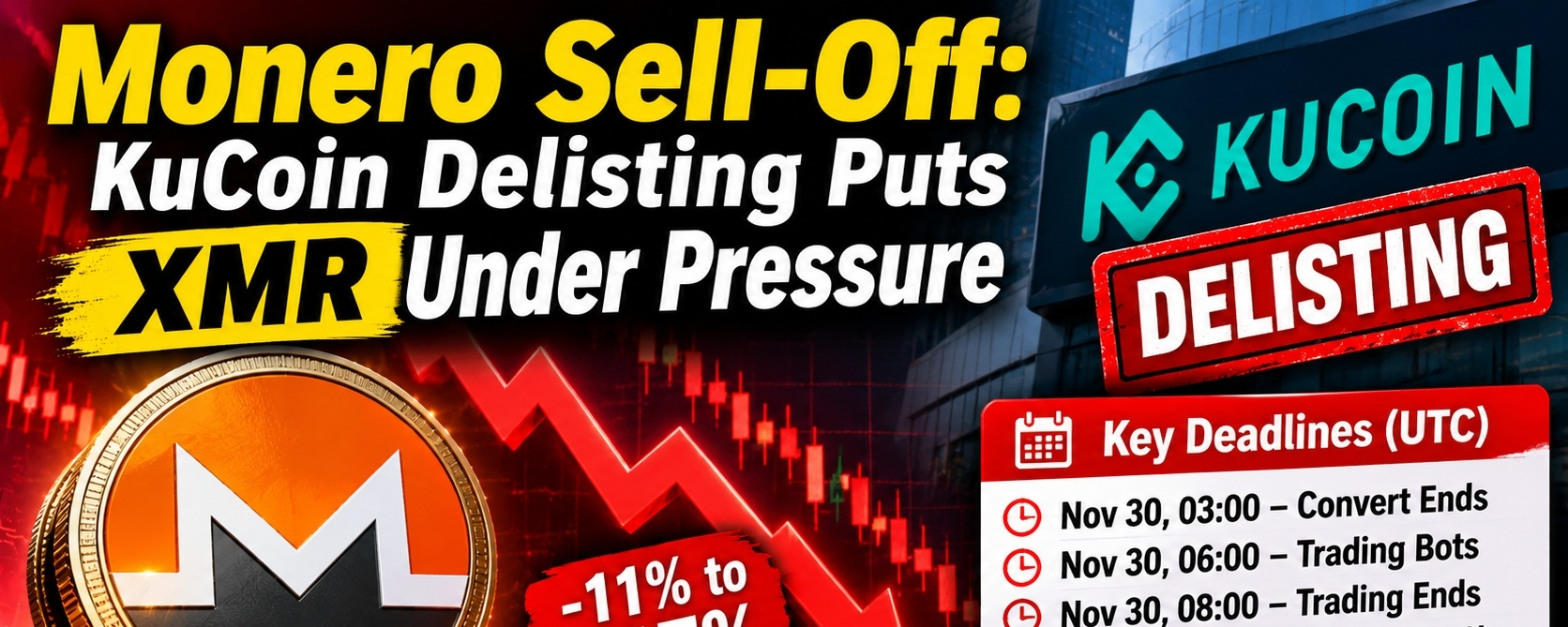
Monero (XMR) suffered a sharp double-digit sell-off 📉 after KuCoin announced on November 26 that it will delist the privacy-focused coin. Reported losses ranged from about 11% to 17%, depending on when the price was measured. 😮
📊 What Happened?
KuCoin will remove four spot pairs: XMR/USDT, XMR/USDC, XMR/ETH and XMR/BTC. The exchange cited its platform policies but gave no specific reason. 🤔
⏰ Key deadlines (UTC):
• 🔄 November 30, 03:00: XMR support on KuCoin Convert ends.
• 🤖 November 30, 06:00: XMR trading bots shut down.
• 🛑 November 30, 08:00: spot trading ends and open orders are cancelled.
• 🏦 November 30: XMR stops counting as VIP Loan collateral.
• 📤 December 31, 08:00: withdrawals are scheduled to close, though KuCoin may close them earlier.
Deposits are already closed. 🔒 The move follows MEXC, which suspended XMR spot trading and delisted its perpetual futures earlier in November.
⚠️ Why Does This Matter?
KuCoin was a major home for XMR trading. 💧 CoinGecko data cited by BlockchainReporter showed it handling about 60% of the reported volume it tracked across major pairs on November 26. Exchange-reported volumes are unaudited, so treat that figure as indicative.
Losing such a venue can mean:
• 🚪 Fewer places to buy and sell XMR
• 💦 Thinner liquidity
• ↔️ Wider spreads
• 🎢 Sharper price swings
• ⚡ Extra pressure on borrowers who must replace XMR collateral or risk liquidation
The delisting is not the whole story. 🔍 XMR was already falling before the announcement, down from its early-November levels.
🕵️ The Privacy Coin Challenge
Monero hides transaction amounts and wallet addresses by default. 🛡️ That protects user privacy, but it also draws regulatory scrutiny. Binance delisted XMR in 2024, and Kraken ended support in the European Economic Area later that year.
🇪🇺 From July 10, 2027, the EU’s anti-money-laundering rules will bar regulated crypto firms from supporting accounts involving anonymity-enhancing coins. The rules do not ban individuals from holding them in self-custody wallets. KuCoin has not linked its decision to these rules.
🔮 What’s Next for XMR?
Monero has not disappeared from the market. 🌐 Venues including Kraken (outside the European Economic Area), HTX, Bitfinex, Poloniex and WhiteBIT were still listed as options after the KuCoin notice. Availability depends on your location.
👀 What traders should watch:
• 📌 Whether the price stabilizes after trading closes on November 30
• 📊 Whether volume moves smoothly to other exchanges
• ↔️ Whether spreads widen
• 📰 Whether more platforms announce delistings
🧳 KuCoin users: cancel open orders, decide whether to sell or withdraw, and avoid waiting until the final day. Use only official KuCoin notices and double-check your wallet address.
🏁 Final Thoughts
This sell-off shows how much exchange access can influence a cryptocurrency’s price. 💡 Monero keeps its privacy-focused identity, but shrinking access to centralized exchanges is a real challenge. Whether this is a temporary shock or part of a longer trend will depend on liquidity, regulation and user demand. Manage risk carefully and do your own research. 🧠
💬 Is this a temporary setback for Monero, or will more exchanges follow? 👇#WhaleHolds1.38MHYPELongUp$34M #SpeculatorsCutNasdaqFuturesBy17%In6Weeks #VitalikWantsWalletChipDesignsOpened #PBOCDefinesHighRateDepositsCutsCDThreshold
⚠️
#Monero #XMR #KuCoin #PrivacyCoins #CryptoNews
Sources, checked November 28, 2026: BlockchainReporter · Cointelegraph via CryptoNews · Crypto Briefing
🚨 Monero Sell-Off: KuCoin Delisting Puts XMR Under Pressure
#MoneroFalls13%OnDelistings
Monero (XMR) suffered a sharp double-digit sell-off 📉 after KuCoin announced on November 26 that it will delist the privacy-focused coin. Reported losses ranged from about 11% to 17%, depending on when the price was measured. 😮
📊 What Happened?
KuCoin will remove four spot pairs: XMR/USDT, XMR/USDC, XMR/ETH and XMR/BTC. The exchange cited its platform policies but gave no specific reason. 🤔
⏰ Key deadlines (UTC):
• 🔄 November 30, 03:00: XMR support on KuCoin Convert ends.
• 🤖 November 30, 06:00: XMR trading bots shut down.
• 🛑 November 30, 08:00: spot trading ends and open orders are cancelled.
• 🏦 November 30: XMR stops counting as VIP Loan collateral.
• 📤 December 31, 08:00: withdrawals are scheduled to close, though KuCoin may close them earlier.
Deposits are already closed. 🔒 The move follows MEXC, which suspended XMR spot trading and delisted its perpetual futures earlier in November.
⚠️ Why Does This Matter?
KuCoin was a major home for XMR trading. 💧 CoinGecko data cited by BlockchainReporter showed it handling about 60% of the reported volume it tracked across major pairs on November 26. Exchange-reported volumes are unaudited, so treat that figure as indicative.
Losing such a venue can mean:
• 🚪 Fewer places to buy and sell XMR
• 💦 Thinner liquidity
• ↔️ Wider spreads
• 🎢 Sharper price swings
• ⚡ Extra pressure on borrowers who must replace XMR collateral or risk liquidation
The delisting is not the whole story. 🔍 XMR was already falling before the announcement, down from its early-November levels.
🕵️ The Privacy Coin Challenge
Monero hides transaction amounts and wallet addresses by default. 🛡️ That protects user privacy, but it also draws regulatory scrutiny. Binance delisted XMR in 2024, and Kraken ended support in the European Economic Area later that year.
🇪🇺 From July 10, 2027, the EU’s anti-money-laundering rules will bar regulated crypto firms from supporting accounts involving anonymity-enhancing coins. The rules do not ban individuals from holding them in self-custody wallets. KuCoin has not linked its decision to these rules.
🔮 What’s Next for XMR?
Monero has not disappeared from the market. 🌐 Venues including Kraken (outside the European Economic Area), HTX, Bitfinex, Poloniex and WhiteBIT were still listed as options after the KuCoin notice. Availability depends on your location.
👀 What traders should watch:
• 📌 Whether the price stabilizes after trading closes on November 30
• 📊 Whether volume moves smoothly to other exchanges
• ↔️ Whether spreads widen
• 📰 Whether more platforms announce delistings
🧳 KuCoin users: cancel open orders, decide whether to sell or withdraw, and avoid waiting until the final day. Use only official KuCoin notices and double-check your wallet address.
🏁 Final Thoughts
This sell-off shows how much exchange access can influence a cryptocurrency’s price. 💡 Monero keeps its privacy-focused identity, but shrinking access to centralized exchanges is a real challenge. Whether this is a temporary shock or part of a longer trend will depend on liquidity, regulation and user demand. Manage risk carefully and do your own research. 🧠
💬 Is this a temporary setback for Monero, or will more exchanges follow? 👇#WhaleHolds1.38MHYPELongUp$34M #SpeculatorsCutNasdaqFuturesBy17%In6Weeks #VitalikWantsWalletChipDesignsOpened #PBOCDefinesHighRateDepositsCutsCDThreshold
⚠️
#Monero #XMR #KuCoin #PrivacyCoins #CryptoNews
Sources, checked November 28, 2026: BlockchainReporter · Cointelegraph via CryptoNews · Crypto Briefing
1
183
·
--
Article
🇨🇳 China’s Blockchain Identity Rules: The Road to March 2027#FearGreedIndexFallsTo10ExtremeFear
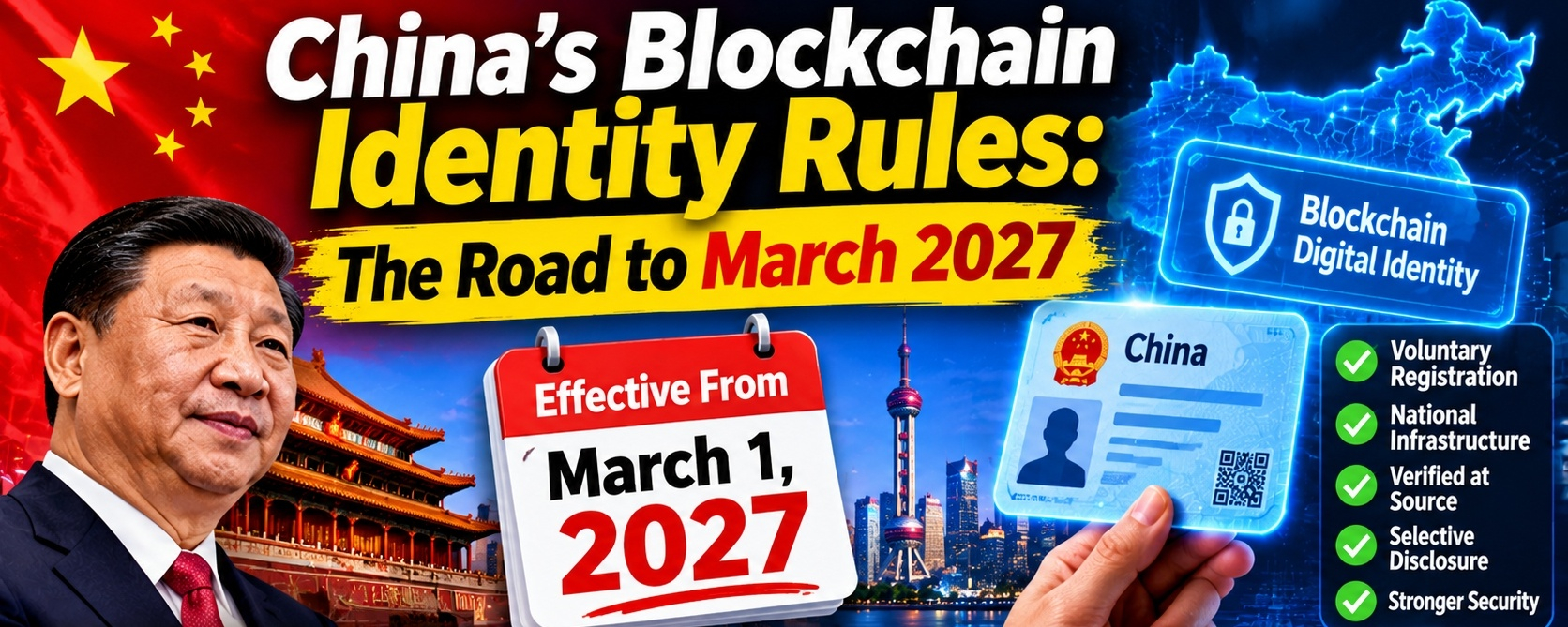
China has published new rules for blockchain-based digital identity, set to take effect on March 1, 2027. 🗓️ Released on November 27 by 11 government bodies, including the Cyberspace Administration of China and the People’s Bank of China, they aim to make identity checks work across regions, industries and online platforms. 🔗
🆔 How the System Works
• ✅ Voluntary registration: people, organizations and even industrial equipment and goods can receive identities.
• ⛓️ National infrastructure: an “identity chain” built on China’s National Blockchain Network will be run by an authorized operator.
• 🏛️ Verified at the source: recognized authorities check applications before identities are issued.
• 📜 Verifiable credentials: users could prove a qualification or other fact without exposing a full record.
• 🔑 Private keys: users are responsible for keeping them safe.
Imagine proving you hold a professional certificate without sending your complete education file. 🎓 That is the selective-disclosure idea at the center of the framework.
🛡️ Privacy Limits
The rules require data minimization: services should collect only what they need. 🔍 Verification activity cannot be used for cross-platform user profiling or targeted marketing. Providers must also maintain security protections and respond to incidents.
At the same time, identities remain anchored to government verification systems. 🏛️ How privacy protection works in practice will be an important test.
🌐 Where It Could Be Used
• 💴 Digital yuan: mutual recognition with digital RMB identities is encouraged.
• 🧾 Tax: verification and authorization.
• 🚚 Transport and customs: credential checks that could simplify processes.
• 🏢 Public bidding: confirming bidders’ identities.
• 🤖 AI agents: identifying software agents and what they are allowed to do.
• 🌏 Cross-border services: cooperation with overseas identity providers under safe, controlled conditions.
💡 What It Means for Blockchain
This is a major signal that China sees blockchain as public digital infrastructure. 🏗️ It does not open the door to crypto trading: restrictions on cryptocurrency activity in mainland China remain. 🚫 Readers should not treat this news as automatic support for any identity token.
👀 What to Watch Before March 2027
• 🧩 Which platforms and credential providers connect first
• ⚙️ How technical standards and authorization rules develop
• 💴 How the digital yuan link takes shape
• 🔐 How privacy limits are enforced
• 🌍 Whether cross-border recognition becomes practical
China is also targeting 2030 to largely complete its national blockchain infrastructure. 🚀
🏁 Final Thoughts
China’s framework could reduce repeated identity checks and give blockchain a practical role in daily services. ✨ Its success will depend on adoption, security, interoperability and public trust. The March 2027 start date is not the finish line: it is when the next stage of testing in the real world begins. 📈
💬 Could blockchain identity make online verification safer, or will privacy remain the biggest concern? 👇
⚠️ This article is for information only and is not financial advice.
#China #Blockchain #DigitalIdentity #Web3 #CryptoNews
Sources, checked November 28, 2026: Asia Daily · Cointelegraph via TradingView#Citi$35BRiskAssetErrorTriggersExits #PBOCDefinesHighRateDepositsCutsCDThreshold #VitalikWantsWalletChipDesignsOpened #WhaleHolds1.38MHYPELongUp$34M
🇨🇳 China’s Blockchain Identity Rules: The Road to March 2027
#FearGreedIndexFallsTo10ExtremeFear
China has published new rules for blockchain-based digital identity, set to take effect on March 1, 2027. 🗓️ Released on November 27 by 11 government bodies, including the Cyberspace Administration of China and the People’s Bank of China, they aim to make identity checks work across regions, industries and online platforms. 🔗
🆔 How the System Works
• ✅ Voluntary registration: people, organizations and even industrial equipment and goods can receive identities.
• ⛓️ National infrastructure: an “identity chain” built on China’s National Blockchain Network will be run by an authorized operator.
• 🏛️ Verified at the source: recognized authorities check applications before identities are issued.
• 📜 Verifiable credentials: users could prove a qualification or other fact without exposing a full record.
• 🔑 Private keys: users are responsible for keeping them safe.
Imagine proving you hold a professional certificate without sending your complete education file. 🎓 That is the selective-disclosure idea at the center of the framework.
🛡️ Privacy Limits
The rules require data minimization: services should collect only what they need. 🔍 Verification activity cannot be used for cross-platform user profiling or targeted marketing. Providers must also maintain security protections and respond to incidents.
At the same time, identities remain anchored to government verification systems. 🏛️ How privacy protection works in practice will be an important test.
🌐 Where It Could Be Used
• 💴 Digital yuan: mutual recognition with digital RMB identities is encouraged.
• 🧾 Tax: verification and authorization.
• 🚚 Transport and customs: credential checks that could simplify processes.
• 🏢 Public bidding: confirming bidders’ identities.
• 🤖 AI agents: identifying software agents and what they are allowed to do.
• 🌏 Cross-border services: cooperation with overseas identity providers under safe, controlled conditions.
💡 What It Means for Blockchain
This is a major signal that China sees blockchain as public digital infrastructure. 🏗️ It does not open the door to crypto trading: restrictions on cryptocurrency activity in mainland China remain. 🚫 Readers should not treat this news as automatic support for any identity token.
👀 What to Watch Before March 2027
• 🧩 Which platforms and credential providers connect first
• ⚙️ How technical standards and authorization rules develop
• 💴 How the digital yuan link takes shape
• 🔐 How privacy limits are enforced
• 🌍 Whether cross-border recognition becomes practical
China is also targeting 2030 to largely complete its national blockchain infrastructure. 🚀
🏁 Final Thoughts
China’s framework could reduce repeated identity checks and give blockchain a practical role in daily services. ✨ Its success will depend on adoption, security, interoperability and public trust. The March 2027 start date is not the finish line: it is when the next stage of testing in the real world begins. 📈
💬 Could blockchain identity make online verification safer, or will privacy remain the biggest concern? 👇
⚠️ This article is for information only and is not financial advice.
#China #Blockchain #DigitalIdentity #Web3 #CryptoNews
Sources, checked November 28, 2026: Asia Daily · Cointelegraph via TradingView#Citi$35BRiskAssetErrorTriggersExits #PBOCDefinesHighRateDepositsCutsCDThreshold #VitalikWantsWalletChipDesignsOpened #WhaleHolds1.38MHYPELongUp$34M
1
511



·
--
Bullish
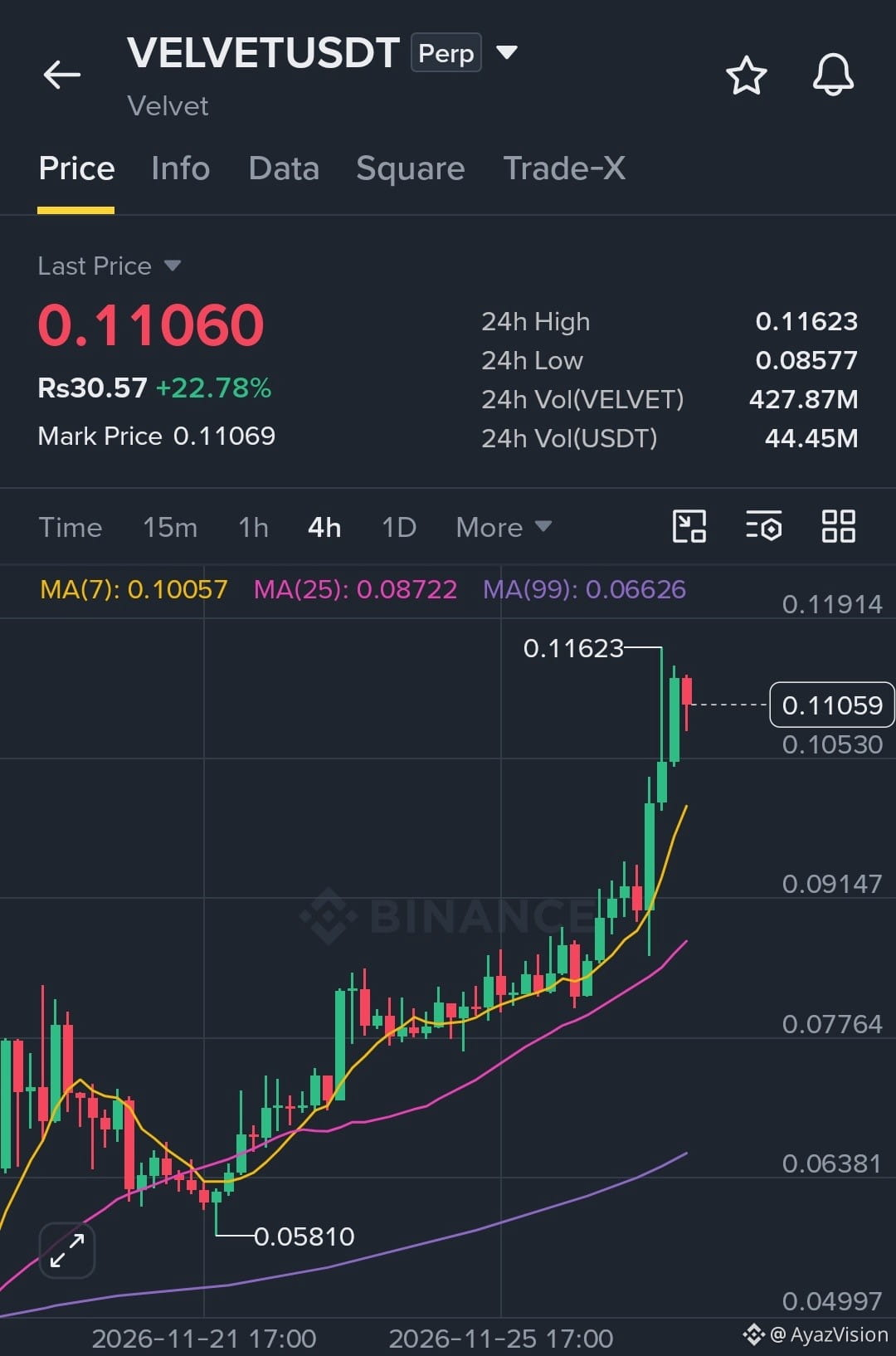
$VELVET is up +22.78% to 0.11060, continuing its strong uptrend from the 0.05810 base and holding well above its 7 MA (0.10057), 25 MA (0.08722), and 99 MA (0.06626), though it's currently pulling back slightly from the new 24h high of 0.11623—wait for a clean 4H break and close above 0.11700 to confirm the next leg up. 🚀
Entry: 0.10600 – 0.11000
Targets:
· TP1: 0.11800 🎯
· TP2: 0.12600 🎯
· TP3: 0.13500 🎯
Stop Loss: 0.09800 🛑
Trade Here 👉 $VELVET
{future}(VELVETUSDT)
#VELVETUSDT #VitalikWantsWalletChipDesignsOpened #MoneroFalls13%OnDelistings #Crypto #Binance
$VELVET is up +22.78% to 0.11060, continuing its strong uptrend from the 0.05810 base and holding well above its 7 MA (0.10057), 25 MA (0.08722), and 99 MA (0.06626), though it's currently pulling back slightly from the new 24h high of 0.11623—wait for a clean 4H break and close above 0.11700 to confirm the next leg up. 🚀
Entry: 0.10600 – 0.11000
Targets:
· TP1: 0.11800 🎯
· TP2: 0.12600 🎯
· TP3: 0.13500 🎯
Stop Loss: 0.09800 🛑
Trade Here 👉 $VELVET
#VELVETUSDT #VitalikWantsWalletChipDesignsOpened #MoneroFalls13%OnDelistings #Crypto #Binance
Entry: 0.10600 – 0.11000
Targets:
· TP1: 0.11800 🎯
· TP2: 0.12600 🎯
· TP3: 0.13500 🎯
Stop Loss: 0.09800 🛑
Trade Here 👉 $VELVET
#VELVETUSDT #VitalikWantsWalletChipDesignsOpened #MoneroFalls13%OnDelistings #Crypto #Binance
1
59

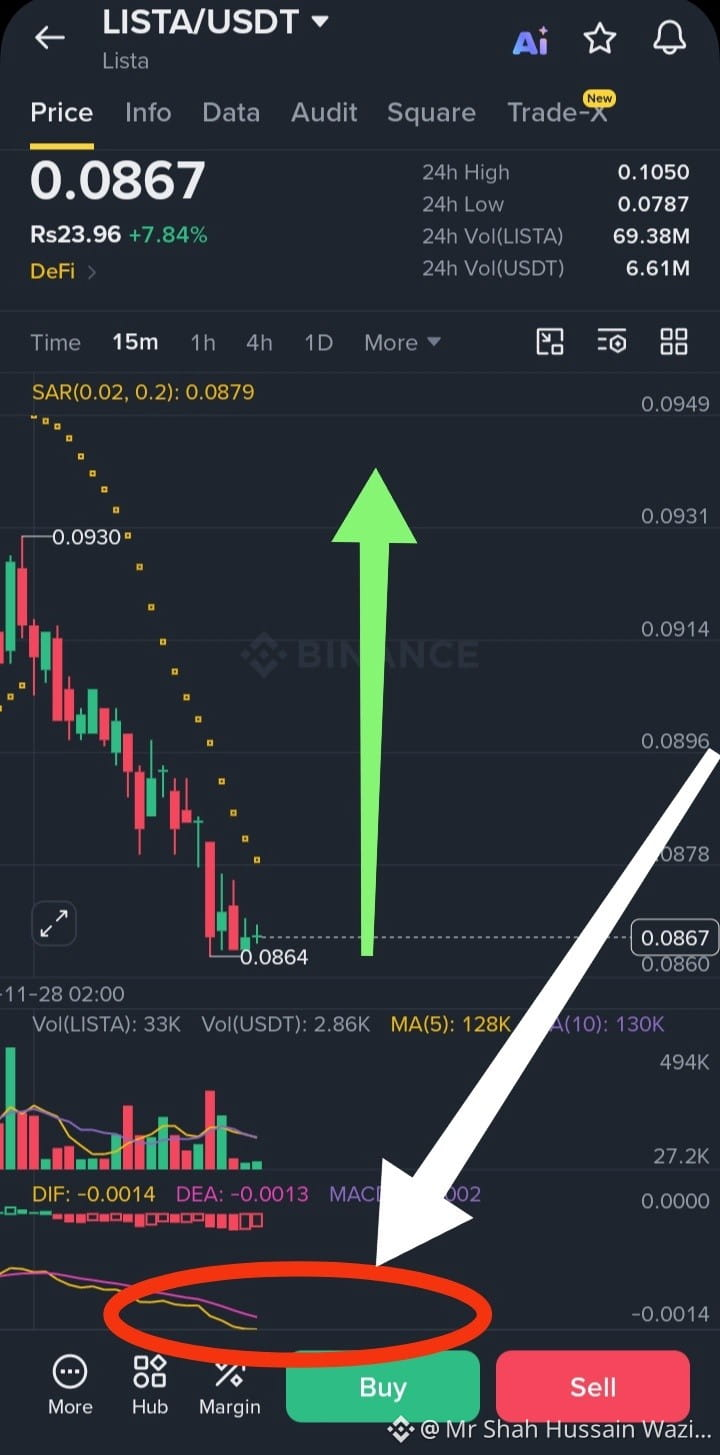
Are You Ready....$LISTA 🤔🚀🚀👍🔜
.
..
.
#Lista #LISTAAirdrop #EthereumGlamsterdamKeepsStorageFeeChange #MoneroFalls13%OnDelistings #VitalikWantsWalletChipDesignsOpened
$LISTA
{spot}(LISTAUSDT)
Are You Ready....$LISTA 🤔🚀🚀👍🔜
.
..
.
#Lista #LISTAAirdrop #EthereumGlamsterdamKeepsStorageFeeChange #MoneroFalls13%OnDelistings #VitalikWantsWalletChipDesignsOpened
$LISTA
.
..
.
#Lista #LISTAAirdrop #EthereumGlamsterdamKeepsStorageFeeChange #MoneroFalls13%OnDelistings #VitalikWantsWalletChipDesignsOpened
$LISTA
41

·
--
Bearish
{future}(ICNTUSDT)
$ICNT
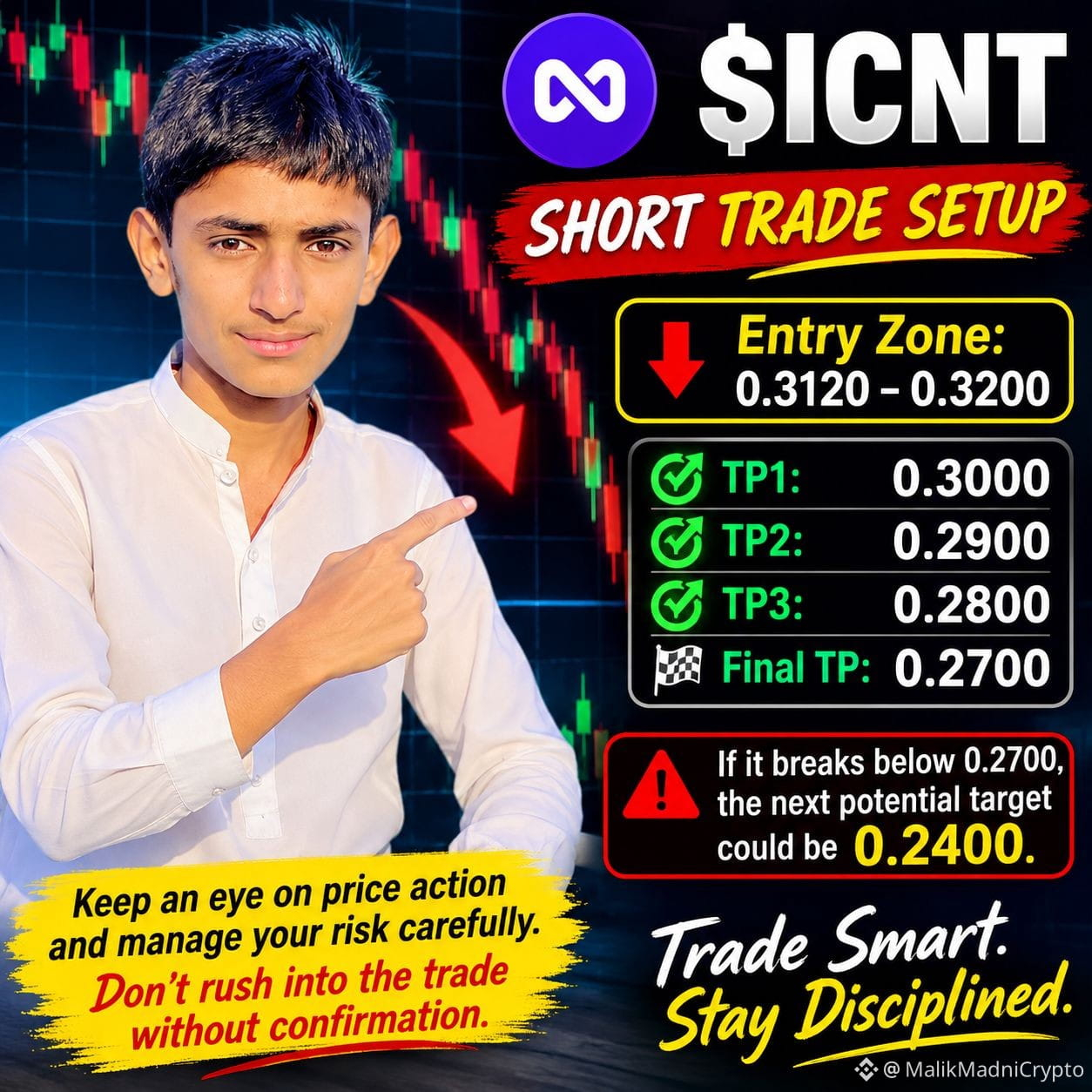
🔴 $ICNT – SHORT TRADE SETUP
ICNT is showing potential downside momentum, and I'm watching for a possible short opportunity around the following entry zones.
📉 Entry Zone: 0.3120 – 0.3200
🎯 Profit Targets:
- TP1: 0.3000
- TP2: 0.2900
- TP3: 0.2800
- Final TP: 0.2700
⚠️ Extended Downside Target: If bearish momentum continues and price breaks below 0.2700, the next potential target could be 0.2400.
Keep an eye on price action and manage your risk carefully. Don't rush into the trade without confirmation.
Trade smart. Stay disciplined. 📊
#ICNTToken #ICNTWorldDomination #EthereumGlamsterdamKeepsStorageFeeChange #VitalikWantsWalletChipDesignsOpened
33


·
--
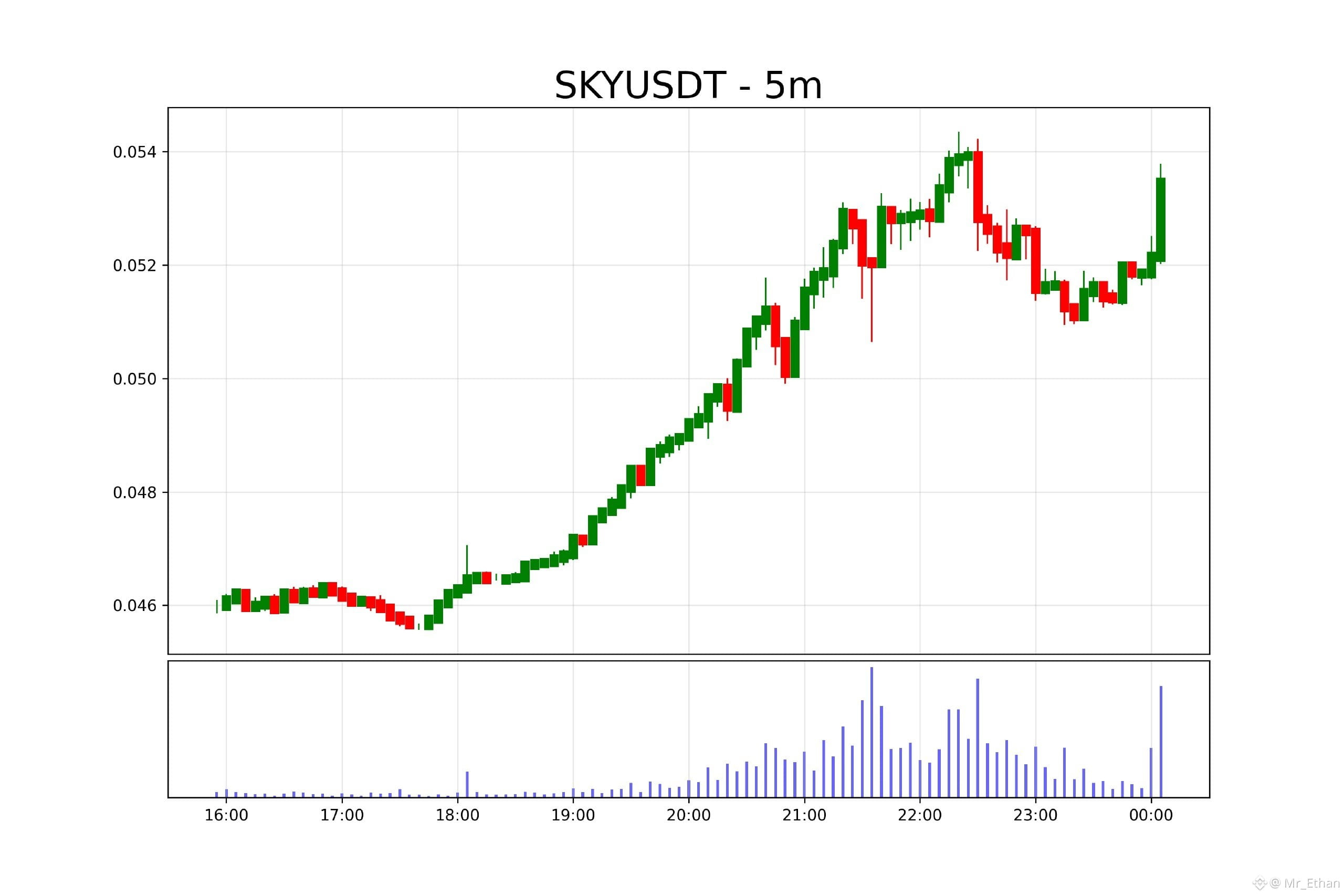
🚀 $SKY
BULLISH MOMENTUM BUILDING! VOLUME SURGE ALERT 🔥
SKYUSDT VIP Trade Setup
Current Price: 0.05346
Entry Range: 0.05200 – 0.05350 TP1: 0.05600 TP2: 0.06000 Final Target: 0.06500 Stop Loss: 0.04900
Market Outlook: SKY is showing strong bullish momentum, with 24-hour gains of 14.5% and volume increasing by 397.3%. Buyers are stepping in aggressively, but resistance near 0.05600 needs to break for further upside. Holding the entry zone could support another bullish move.
⚠️ Risk Management: Avoid chasing the pump. Wait for a confirmed entry, use a stop loss, and manage your risk carefully.
Trade on $SKY
{spot}(SKYUSDT)
#EthereumGlamsterdamKeepsStorageFeeChange #VitalikWantsWalletChipDesignsOpened
🚀 $SKY
BULLISH MOMENTUM BUILDING! VOLUME SURGE ALERT 🔥
SKYUSDT VIP Trade Setup
Current Price: 0.05346
Entry Range: 0.05200 – 0.05350 TP1: 0.05600 TP2: 0.06000 Final Target: 0.06500 Stop Loss: 0.04900
Market Outlook: SKY is showing strong bullish momentum, with 24-hour gains of 14.5% and volume increasing by 397.3%. Buyers are stepping in aggressively, but resistance near 0.05600 needs to break for further upside. Holding the entry zone could support another bullish move.
⚠️ Risk Management: Avoid chasing the pump. Wait for a confirmed entry, use a stop loss, and manage your risk carefully.
Trade on $SKY
#EthereumGlamsterdamKeepsStorageFeeChange #VitalikWantsWalletChipDesignsOpened
100


·
--
Bullish
I've got my eyes on $BTW right now, and this liquidation activity is definitely worth watching. Binance recorded a $12.283K short liquidation around $1.06022. That's an interesting signal because buyers may be gaining strength, potentially creating room for another upward move.
I'm watching for a confirmed bullish entry rather than jumping in blindly. Here's the setup I'm considering.
BTW/USDT – LONG TRADE SETUP
Entry Zone: $1.0450 – $1.0650
Take Profit Targets:
TP1: $1.0850
TP2: $1.1100
TP3: $1.1450
Stop Loss: $1.0180
Pro Tips:
Wait for bullish confirmation around the entry zone.
Look for increasing buying volume before opening a position.
Don't chase the price if it pumps too quickly.
Secure partial profits at TP1.
Consider moving your stop loss to breakeven after TP1.
Keep position size under control and avoid excessive leverage.
My Strategy: BTW is showing an interesting liquidation signal, and I'm watching whether buyers can maintain control above $1.0600. If momentum builds, the upside targets could become attractive.
Patience is the real edge in trading. Wait for confirmation, follow your risk management, and never risk more than you can afford to lose.
Trade smart, stay disciplined!
$BTW
{future}(BTWUSDT)
$LAB
{future}(LABUSDT)
#VitalikWantsWalletChipDesignsOpened
#ChinaBlockchainIDRulesEffectMarch2027
#ClaudeAccusedOfDroppingUserPreferences
I've got my eyes on $BTW right now, and this liquidation activity is definitely worth watching. Binance recorded a $12.283K short liquidation around $1.06022. That's an interesting signal because buyers may be gaining strength, potentially creating room for another upward move.
I'm watching for a confirmed bullish entry rather than jumping in blindly. Here's the setup I'm considering.
BTW/USDT – LONG TRADE SETUP
Entry Zone: $1.0450 – $1.0650
Take Profit Targets:
TP1: $1.0850
TP2: $1.1100
TP3: $1.1450
Stop Loss: $1.0180
Pro Tips:
Wait for bullish confirmation around the entry zone.
Look for increasing buying volume before opening a position.
Don't chase the price if it pumps too quickly.
Secure partial profits at TP1.
Consider moving your stop loss to breakeven after TP1.
Keep position size under control and avoid excessive leverage.
My Strategy: BTW is showing an interesting liquidation signal, and I'm watching whether buyers can maintain control above $1.0600. If momentum builds, the upside targets could become attractive.
Patience is the real edge in trading. Wait for confirmation, follow your risk management, and never risk more than you can afford to lose.
Trade smart, stay disciplined!
$BTW
$LAB
#VitalikWantsWalletChipDesignsOpened
#ChinaBlockchainIDRulesEffectMarch2027
#ClaudeAccusedOfDroppingUserPreferences
63
Log in to explore more content
Join global crypto users on Binance Square
⚡️ Get latest and useful information about crypto.
💬 Trusted by the world’s largest crypto exchange.
👍 Discover real insights from verified creators.
Email / Phone number
Trending Topics
1
#VitalikWantsWalletChipDesignsOpened
311 views
30 Discussing
2
#ChinaBlockchainIDRulesEffectMarch2027
7,104 views
131 Discussing
3
#ClaudeAccusedOfDroppingUserPreferences
177 views
10 Discussing
4
#EthereumGlamsterdamKeepsStorageFeeChange
37,571 views
382 Discussing
5
#CanMarketsReboundAfterThanksgiving?
559,129 views
3,514 Discussing
6
#MoneroFalls13%OnDelistings
81,659 views
643 Discussing
7
#MalaysiaFirstBitcoinETFToListOnDecember2
1,182 views
23 Discussing
8
#ColdcardFlawLeadsToTheftOfAtLeast1789BTC
506 views
9 Discussing
9
#OpenAISuesAppleOverAllegedTradeSecretTheft
896 views
12 Discussing
10
#HYPESpotETFNetOutflow1.03M
0 views
1 Discussing