
#ethereumglamsterdamkeepsstoragefeechange
ethereumglamsterdamkeepsstoragefeechange
Hot
Latest

·
--
Verified
🚨 ETHEREUM JUST CHOSE LONG-TERM SCALABILITY OVER SHORT-TERM COMFORT — DEVELOPERS ARE TAKING A BIG RISK!
Ethereum developers have agreed to KEEP the controversial storage fee changes in the upcoming Glamsterdam upgrade, despite warnings that thousands of existing smart contracts could be affected.
The proposed EIP-8037 increases the cost of creating permanent on-chain data to prevent Ethereum's database from becoming unsustainable.
Here's the problem: Developers have identified around 200 potential issues, with 24 requiring contract upgrades or user migrations. The final public test is scheduled for December 15.
🔥 MY TAKE:
This is a necessary move for Ethereum's long-term future, but execution matters.
Short term, $ETH could face uncertainty as developers race to fix compatibility issues.
Long term, more sustainable storage pricing could unlock higher network capacity, better scalability and a stronger foundation for institutional adoption.
I'm cautiously bullish on Ethereum's infrastructure roadmap, but the December test will be a critical checkpoint.
ETHEREUM MUST SCALE WITHOUT BREAKING THE ECOSYSTEM THAT BUILT IT.
$AAVE $UNI $LDO
#ethereumglamsterdamkeepsstoragefeechange #VitalikWantsWalletChipDesignsOpened #EvolveAtBinanceBlockchainWeek #ClaudeAccusedOfDroppingUserPreferences #DowJonesAdds591.99Points
1
4
1.9k

·
--
Verified
#ethereumglamsterdamkeepsstoragefeechange
Ethereum just made storing data a lot more expensive ⛽
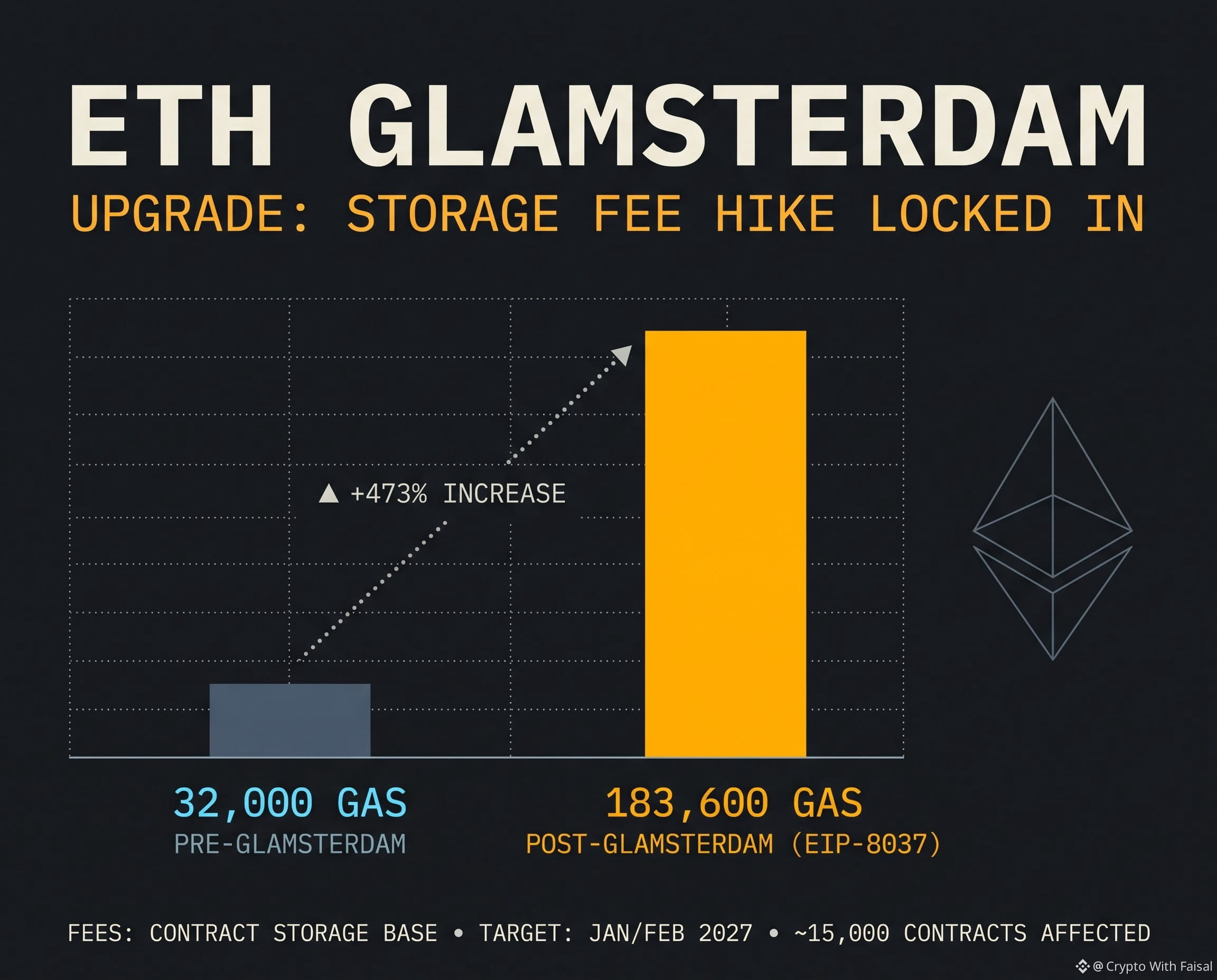
Devs decided to keep the contested EIP-8037 fee in the Glamsterdam upgrade: deploying a new contract jumps from 32,000 to 183,600 gas in storage charges alone.
Up to 15,000 existing contracts could run out of gas mid-transaction. Final test is 15 Dec on Hoodi, mainnet likely late Jan or early Feb.
Worth it to keep the chain lean — or too risky for builders? 👇
#Ethereum #Glamsterdam #CryptoNews #ETH

1.7k

·
--
Bullish
Verified
Ethereum devs know 15,000 contracts could break. They kept the change anyway.
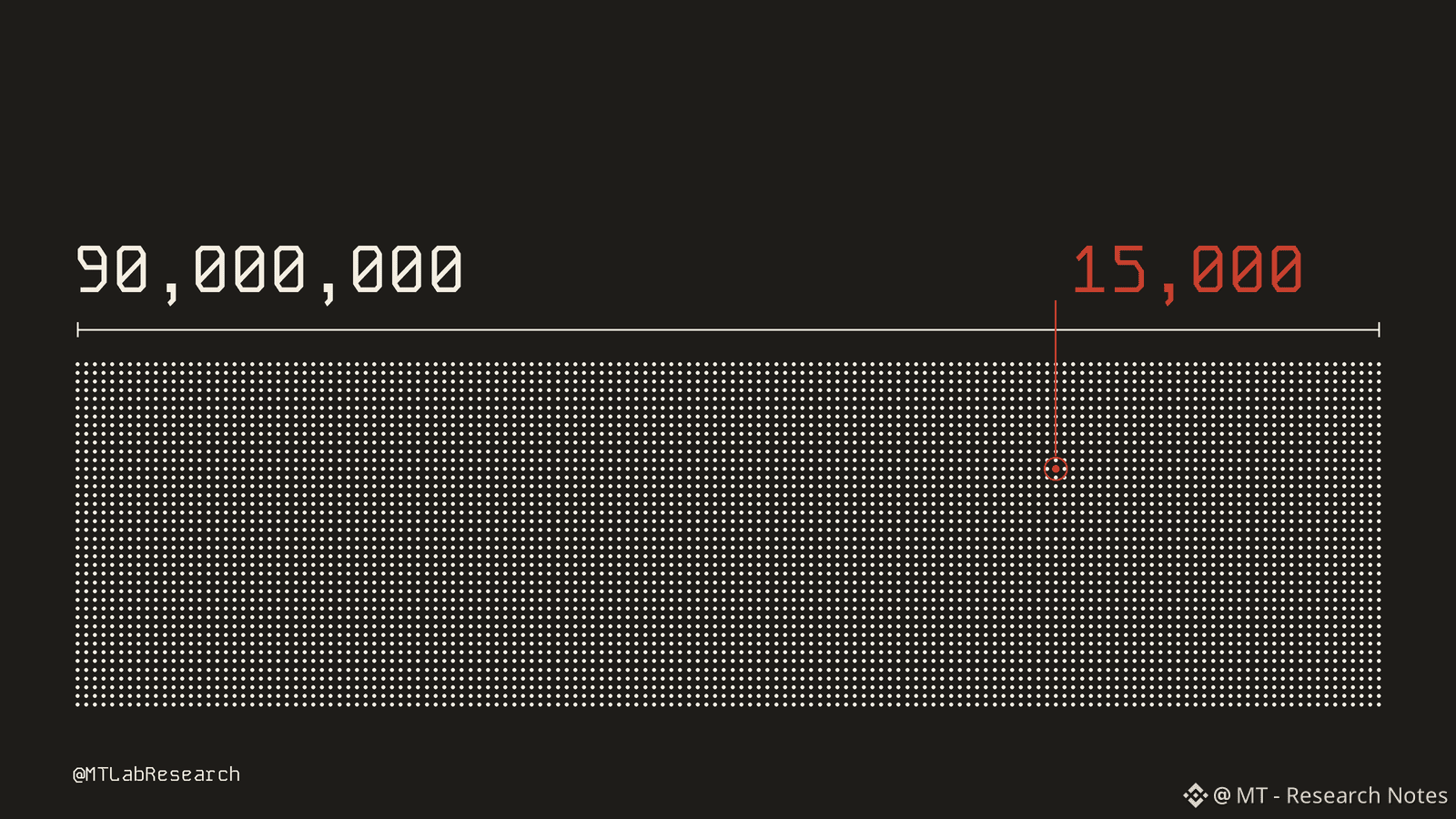
On Nov 26, Ethereum's core developers agreed to keep a new storage fee in Glamsterdam, the next big upgrade (per CoinDesk). The scary number is 15,000. The number that matters is 90 million.
What changes? Adding permanent data to Ethereum gets much more expensive. Creating a smart contract (a small program that lives on the chain) goes from a 32,000 gas base fee to 183,600, before other charges. Gas is Ethereum's unit for pricing work. That is almost 6x, by my math.
Why do it on purpose? Glamsterdam fits more activity into every block. Without a brake, the database every node must store would swell faster. The fee is the brake.
Why is it a fight? Some old contracts were built around the old prices. Under the new ones they can run out of gas halfway through a transaction and fail. Ethereum Foundation developer Marius van der Wijden estimates up to 15,000 are exposed. Security firm ChainSecurity found about 200 problems in bridges, wallets and exchanges. Most can be fixed with a config change, but 24 need an upgrade or a move of users and funds.
Now the denominator. Ethereum has roughly 90 million contracts. 15,000 is about 1 in 6,000, by my math, and it is an upper estimate of exposed, not a count of broken. Still, a small share can sit in places that hold real money.
The dates that matter:
> Dec 15: final public test and the deadline for the serious fixes
> Jan 10: deadline for the rest
> Mainnet: no earlier than mid-January, more likely late January or early February, per developers
Some preparations I am planning right now:
- If the apps you use publish a Glamsterdam fix note before Dec 15, that is a good sign.
- If they stay silent, that is the question to ask them.
- If the Dec 15 test goes badly, the schedule could slip again.
Some devs say pulling the gas changes would delay the upgrade 4-6 months.
Delay 4-6 months, or ship with a fix deadline, what would you pick? $ETH
{future}(ETHUSDT)
Experience, not financial advice.
#EthereumGlamsterdamKeepsStorageFeeChange
Ethereum devs know 15,000 contracts could break. They kept the change anyway.
On Nov 26, Ethereum's core developers agreed to keep a new storage fee in Glamsterdam, the next big upgrade (per CoinDesk). The scary number is 15,000. The number that matters is 90 million.
What changes? Adding permanent data to Ethereum gets much more expensive. Creating a smart contract (a small program that lives on the chain) goes from a 32,000 gas base fee to 183,600, before other charges. Gas is Ethereum's unit for pricing work. That is almost 6x, by my math.
Why do it on purpose? Glamsterdam fits more activity into every block. Without a brake, the database every node must store would swell faster. The fee is the brake.
Why is it a fight? Some old contracts were built around the old prices. Under the new ones they can run out of gas halfway through a transaction and fail. Ethereum Foundation developer Marius van der Wijden estimates up to 15,000 are exposed. Security firm ChainSecurity found about 200 problems in bridges, wallets and exchanges. Most can be fixed with a config change, but 24 need an upgrade or a move of users and funds.
Now the denominator. Ethereum has roughly 90 million contracts. 15,000 is about 1 in 6,000, by my math, and it is an upper estimate of exposed, not a count of broken. Still, a small share can sit in places that hold real money.
The dates that matter:
> Dec 15: final public test and the deadline for the serious fixes
> Jan 10: deadline for the rest
> Mainnet: no earlier than mid-January, more likely late January or early February, per developers
Some preparations I am planning right now:
- If the apps you use publish a Glamsterdam fix note before Dec 15, that is a good sign.
- If they stay silent, that is the question to ask them.
- If the Dec 15 test goes badly, the schedule could slip again.
Some devs say pulling the gas changes would delay the upgrade 4-6 months.
Delay 4-6 months, or ship with a fix deadline, what would you pick? $ETH
Experience, not financial advice.
#EthereumGlamsterdamKeepsStorageFeeChange
803

·
--
Verified
Ethereum (ETH) Latest News — 27 November 2026
Ethereum developers announce a major upgrade milestone
Ethereum developers have agreed to move forward with the upcoming Glamsterdam network upgrade.
According to a report published on November 27, 2026:
December 15, 2026: Glamsterdam is scheduled to activate on the Hoodi testnet.
Developers are keeping the proposed upgrade specifications.
The upgrade aims to improve Ethereum's network capabilities.
No mainnet activation date has been confirmed.
#ETHETFsApproved #Ethereum #EthereumGlamsterdamKeepsStorageFeeChange #CoinClub #EthereumGlamsterdamKeepsStorageFeeChange

1
2
639

·
--
Verified
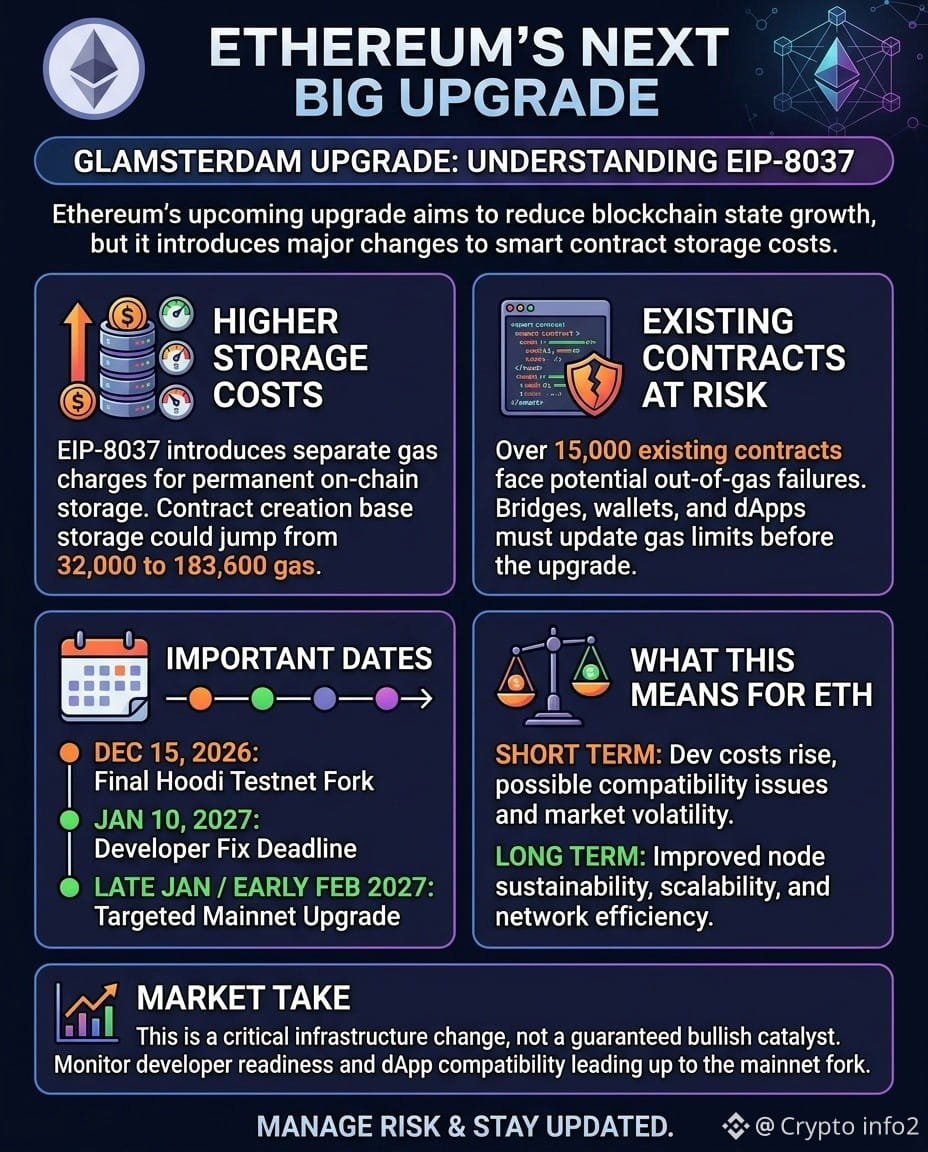
#ethereumglamsterdamkeepsstoragefeechange 🚨 ETHEREUM'S NEXT BIG UPGRADE IS COMING — BUT THERE'S A CATCH!
Ethereum developers have locked in the Glamsterdam upgrade, keeping the controversial EIP-8037 storage fee increase.
This could significantly change how developers build and deploy smart contracts on Ethereum. Here's what you need to know. 👇
🔹 1. Higher Storage Fees
EIP-8037 introduces a separate gas charge for creating permanent on-chain storage.
Contract creation base storage costs could jump from 32,000 to 183,600 gas.
The goal? Reduce blockchain state bloat and make running Ethereum nodes more sustainable.
🔹 2. Existing Contracts Face Risks
Up to 15,000 existing contracts could potentially experience out-of-gas failures if their gas limits aren't updated.
Bridges, wallets and other dApps may need technical adjustments before the upgrade.
🔹 3. Important Dates
📅 December 15, 2026 — Final Hoodi testnet fork.
📅 January 10, 2027 — Developer fix deadlines.
📅 Late January / Early February 2027 — Targeted Ethereum mainnet upgrade.
🔹 4. What This Means for ETH
Short Term: Developers may face additional costs, testing requirements and compatibility issues.
Long Term: Reducing state growth could improve Ethereum's sustainability, scalability and network efficiency.
📊 MY MARKET TAKE
This is an important infrastructure change, not automatically a bullish price catalyst.
Traders should watch developer updates, dApp compatibility and market reaction as the upgrade approaches.
Ethereum's long-term health matters, but the transition needs to be handled carefully.
🔥 YOUR OPINION?
Is EIP-8037 a smart move to protect Ethereum's future, or does increasing storage costs create unnecessary risks for existing dApps?
Follow Me More Updates:
Drop your thoughts below! 👇
#Ethereum #ETH #Glamsterdam #CryptoNews
CLICK TO BELOW TRADE👇
$ARB $UNI $ETH
{future}(ETHUSDT)
{future}(UNIUSDT)
{future}(ARBUSDT)
#ethereumglamsterdamkeepsstoragefeechange 🚨 ETHEREUM'S NEXT BIG UPGRADE IS COMING — BUT THERE'S A CATCH!
Ethereum developers have locked in the Glamsterdam upgrade, keeping the controversial EIP-8037 storage fee increase.
This could significantly change how developers build and deploy smart contracts on Ethereum. Here's what you need to know. 👇
🔹 1. Higher Storage Fees
EIP-8037 introduces a separate gas charge for creating permanent on-chain storage.
Contract creation base storage costs could jump from 32,000 to 183,600 gas.
The goal? Reduce blockchain state bloat and make running Ethereum nodes more sustainable.
🔹 2. Existing Contracts Face Risks
Up to 15,000 existing contracts could potentially experience out-of-gas failures if their gas limits aren't updated.
Bridges, wallets and other dApps may need technical adjustments before the upgrade.
🔹 3. Important Dates
📅 December 15, 2026 — Final Hoodi testnet fork.
📅 January 10, 2027 — Developer fix deadlines.
📅 Late January / Early February 2027 — Targeted Ethereum mainnet upgrade.
🔹 4. What This Means for ETH
Short Term: Developers may face additional costs, testing requirements and compatibility issues.
Long Term: Reducing state growth could improve Ethereum's sustainability, scalability and network efficiency.
📊 MY MARKET TAKE
This is an important infrastructure change, not automatically a bullish price catalyst.
Traders should watch developer updates, dApp compatibility and market reaction as the upgrade approaches.
Ethereum's long-term health matters, but the transition needs to be handled carefully.
🔥 YOUR OPINION?
Is EIP-8037 a smart move to protect Ethereum's future, or does increasing storage costs create unnecessary risks for existing dApps?
Follow Me More Updates:
Drop your thoughts below! 👇
#Ethereum #ETH #Glamsterdam #CryptoNews
CLICK TO BELOW TRADE👇
$ARB $UNI $ETH

BrainRot:
Currently there are so many L2-s leaching off from $ETH that the coin and chain can't evolve. Everyone and their grandma are "building on etherium". The result ? So many shitcoins that they killed the main coin..So yes, I say let them evolve and let them wipe out many usless low caps ,maybe than Etherium will finaly get to its rightfull place in crypto.
1
5
5.1k

·
--
Article
⛽ Ethereum Glamsterdam: Storing Data Is Set to Cost More#EthereumGlamsterdamKeepsStorageFeeChange
Ethereum developers are moving ahead with a change that will make creating new data on the network significantly more expensive. ⛽ At their November 26 call, they reached rough consensus to keep the Glamsterdam upgrade as specified, including the debated EIP-8037. The new fees are not live on mainnet yet. 🗓️
💰 What Changes With EIP-8037?
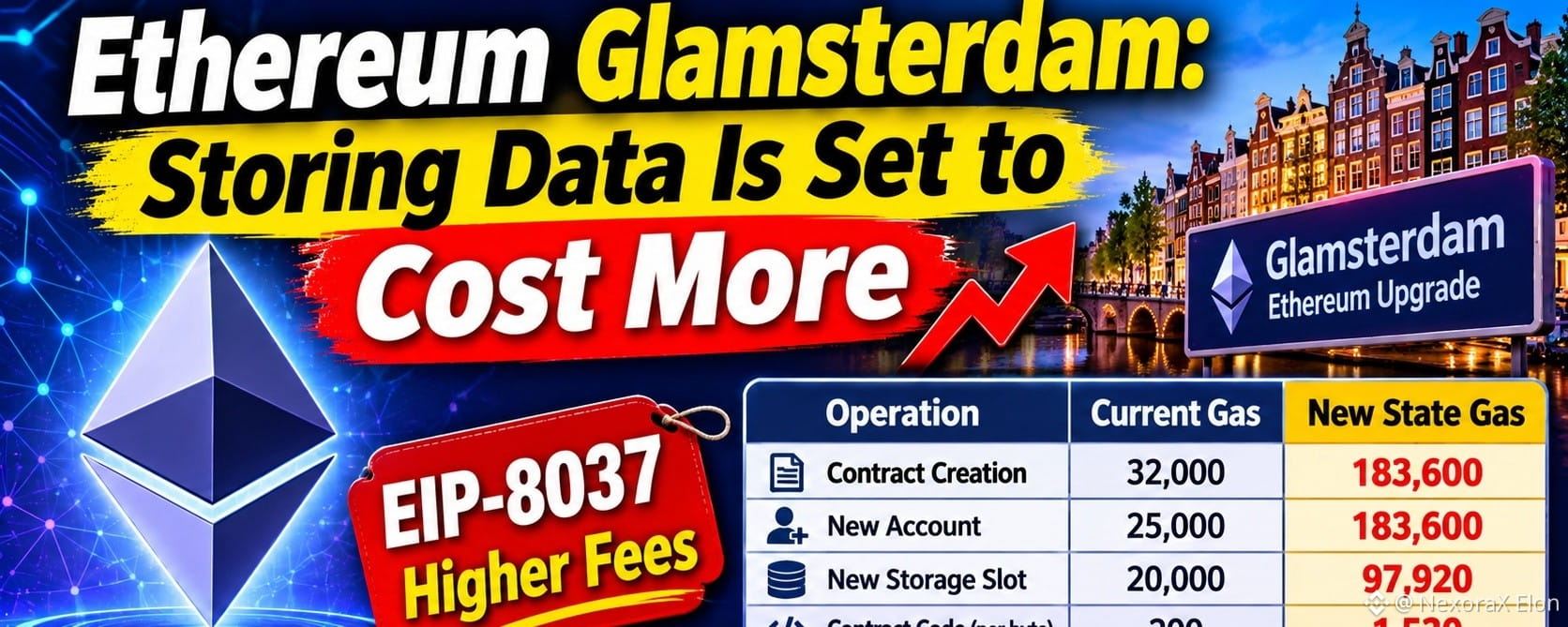
EIP-8037 raises the cost of creating state: data such as new accounts, storage entries and contract code that nodes must keep. 💾 It also meters this “state gas” separately from execution gas.
Operation
Current gas
New state gas
🏗️ Contract creation charge
32,000
183,600
👤 New account via a call
25,000
183,600
📦 New storage slot
20,000
97,920
📜 Contract code, per byte
200
1,530
Some operations also carry separate execution gas, so these figures are not the full transaction cost. 🧮 Your final bill in ETH will still depend on the network’s gas price.
🌱 Why Make Storage More Expensive?
Every new piece of state adds to what Ethereum nodes must maintain. 🖥️ As the network raises its capacity, that database could grow much faster. Heavier hardware demands may make running a node harder and weaken decentralization.
EIP-8037 puts a consistent price on each new byte. ⚖️ It targets average state growth of about 120 GiB per year at a reference block gas limit of 150 million. The goal is to scale while keeping the chain manageable.
⚠️ The Risk for Existing Contracts
Some applications assume gas costs will stay the same. 🧩 Hardcoded gas limits or fixed gas allowances could cause transactions to run out of gas after the upgrade.
• 🔎 Up to 15,000 of roughly 90 million contracts are reported as affected.
• 🔧 Most can reportedly keep working with small adjustments.
• 📍 Testing identified about 200 specific trouble spots.
• 🚨 24 contracts need an upgrade or migration before the change takes effect.
The headline number therefore does not mean 15,000 contracts will definitely break. 🛠️ Builders should still test their apps and review gas estimates now.
🗓️ What Happens Next?
• 🧪 December 15, 2026: Glamsterdam is scheduled to activate on the Hoodi testnet around 19:12 UTC. The most serious contract fixes are also due that day.
• ⏳ January 10, 2027: deadline for the remaining fixes.
• 🚀 Mainnet: not expected before mid-January 2027, and most likely in late January or early February, if Hoodi testing goes smoothly.
Hoodi was originally planned for October 26 but was postponed over security concerns. 🔐 A clean test is the last major checkpoint before mainnet.
🏁 Lean Chain or Builder Risk?
The case for EIP-8037 is long-term health: controlling state growth helps Ethereum scale. 🌐 The concern is short-term disruption, especially for apps built around old gas assumptions. Developers who prepare early will be in a stronger position. 💪 Users should follow official updates from the apps they rely on.
💬 Is keeping Ethereum lean worth the cost, or is the change too risky for builders? 👇
⚠️
#Ethereum #Glamsterdam #EIP8037 #ETH #CryptoNews
Sources, checked November 28, 2026: CoinPaprika · Gas cost tables, EIP-8007 · EIP-8037 · Ethereum Foundation testnet announcement#FearGreedIndexFallsTo10ExtremeFear #WhaleHolds1.38MHYPELongUp$34M #SpeculatorsCutNasdaqFuturesBy17%In6Weeks #VitalikWantsWalletChipDesignsOpened
⛽ Ethereum Glamsterdam: Storing Data Is Set to Cost More
#EthereumGlamsterdamKeepsStorageFeeChange
Ethereum developers are moving ahead with a change that will make creating new data on the network significantly more expensive. ⛽ At their November 26 call, they reached rough consensus to keep the Glamsterdam upgrade as specified, including the debated EIP-8037. The new fees are not live on mainnet yet. 🗓️
💰 What Changes With EIP-8037?
EIP-8037 raises the cost of creating state: data such as new accounts, storage entries and contract code that nodes must keep. 💾 It also meters this “state gas” separately from execution gas.
Operation
Current gas
New state gas
🏗️ Contract creation charge
32,000
183,600
👤 New account via a call
25,000
183,600
📦 New storage slot
20,000
97,920
📜 Contract code, per byte
200
1,530
Some operations also carry separate execution gas, so these figures are not the full transaction cost. 🧮 Your final bill in ETH will still depend on the network’s gas price.
🌱 Why Make Storage More Expensive?
Every new piece of state adds to what Ethereum nodes must maintain. 🖥️ As the network raises its capacity, that database could grow much faster. Heavier hardware demands may make running a node harder and weaken decentralization.
EIP-8037 puts a consistent price on each new byte. ⚖️ It targets average state growth of about 120 GiB per year at a reference block gas limit of 150 million. The goal is to scale while keeping the chain manageable.
⚠️ The Risk for Existing Contracts
Some applications assume gas costs will stay the same. 🧩 Hardcoded gas limits or fixed gas allowances could cause transactions to run out of gas after the upgrade.
• 🔎 Up to 15,000 of roughly 90 million contracts are reported as affected.
• 🔧 Most can reportedly keep working with small adjustments.
• 📍 Testing identified about 200 specific trouble spots.
• 🚨 24 contracts need an upgrade or migration before the change takes effect.
The headline number therefore does not mean 15,000 contracts will definitely break. 🛠️ Builders should still test their apps and review gas estimates now.
🗓️ What Happens Next?
• 🧪 December 15, 2026: Glamsterdam is scheduled to activate on the Hoodi testnet around 19:12 UTC. The most serious contract fixes are also due that day.
• ⏳ January 10, 2027: deadline for the remaining fixes.
• 🚀 Mainnet: not expected before mid-January 2027, and most likely in late January or early February, if Hoodi testing goes smoothly.
Hoodi was originally planned for October 26 but was postponed over security concerns. 🔐 A clean test is the last major checkpoint before mainnet.
🏁 Lean Chain or Builder Risk?
The case for EIP-8037 is long-term health: controlling state growth helps Ethereum scale. 🌐 The concern is short-term disruption, especially for apps built around old gas assumptions. Developers who prepare early will be in a stronger position. 💪 Users should follow official updates from the apps they rely on.
💬 Is keeping Ethereum lean worth the cost, or is the change too risky for builders? 👇
⚠️
#Ethereum #Glamsterdam #EIP8037 #ETH #CryptoNews
Sources, checked November 28, 2026: CoinPaprika · Gas cost tables, EIP-8007 · EIP-8037 · Ethereum Foundation testnet announcement#FearGreedIndexFallsTo10ExtremeFear #WhaleHolds1.38MHYPELongUp$34M #SpeculatorsCutNasdaqFuturesBy17%In6Weeks #VitalikWantsWalletChipDesignsOpened
幂达:
The headline jump — a new storage slot going from 20,000 to 97,920 gas — looks dramatic, but the article's own detail matters more: only 24 contracts reportedly need an upgrade or migration. The practical deadline is January 10 for fixes, so builders with hardcoded gas limits should test on Hoodi from December 15 rather than wait for mainnet.
1
1
169

·
--
$ETH KEEPS GLAMSTERDAM'S STORAGE FEE CHANGE — WHAT DOES IT MEAN FOR ETH?
$ETH developers have retained EIP-8037 in the upcoming Glamsterdam upgrade despite smart contract compatibility concerns. The Hoodi testnet activation is scheduled for December 15, putting $ETH 's network changes under the spotlight.
#ETH #Glamsterdam #CryptoNews #blockchain #EthereumGlamsterdamKeepsStorageFeeChange
{spot}(ETHUSDT)
$ETH KEEPS GLAMSTERDAM'S STORAGE FEE CHANGE — WHAT DOES IT MEAN FOR ETH?
$ETH developers have retained EIP-8037 in the upcoming Glamsterdam upgrade despite smart contract compatibility concerns. The Hoodi testnet activation is scheduled for December 15, putting $ETH 's network changes under the spotlight.
#ETH #Glamsterdam #CryptoNews #blockchain #EthereumGlamsterdamKeepsStorageFeeChange
35

#EthereumGlamsterdamKeepsStorageFeeChange $ETH +0
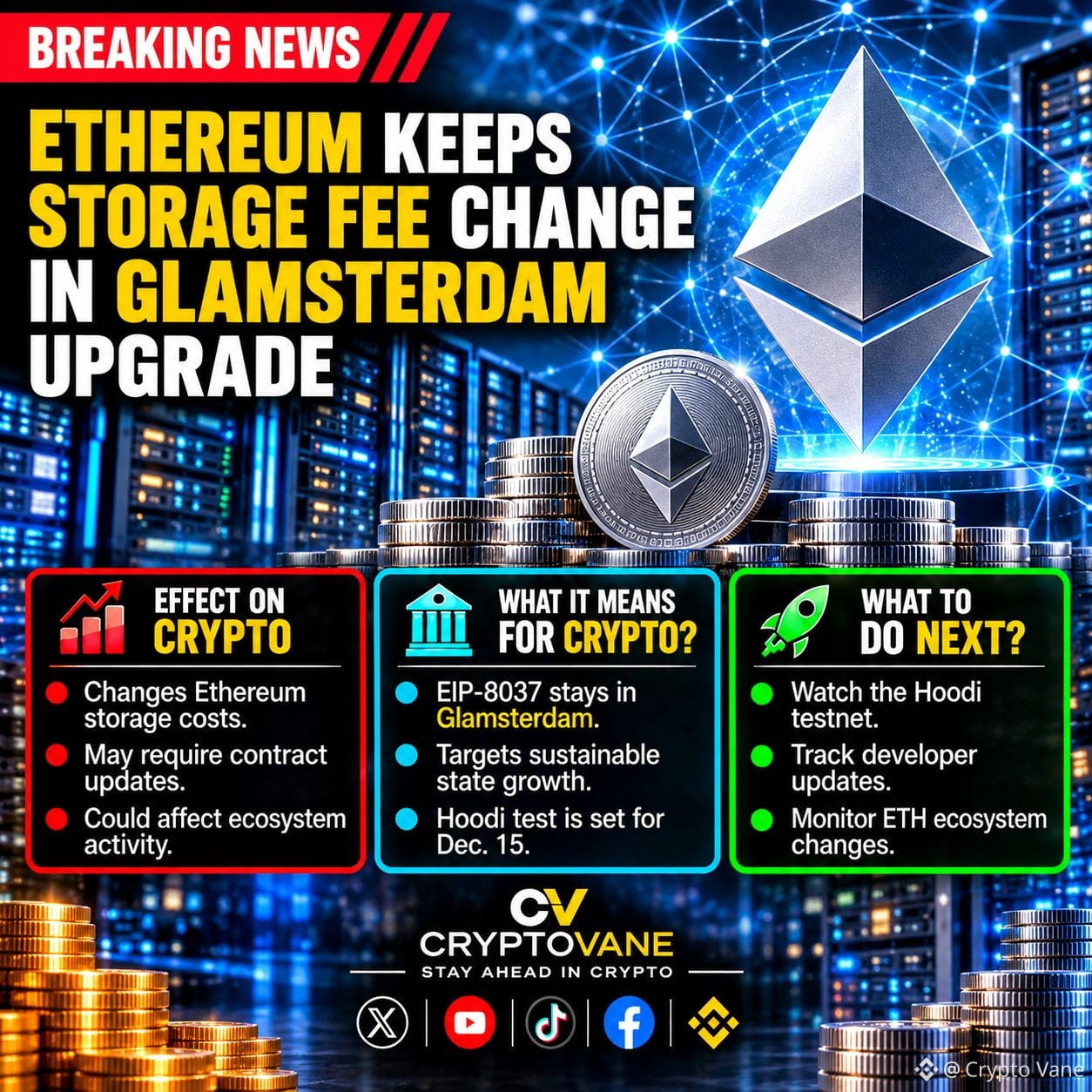
Ethereum’s Glamsterdam upgrade is cleared for a December test on the Hoodi testnet.
The upgrade will keep EIP-8037, raising storage gas from 32,000 to 183,600.
Up to 15,000 existing contracts could hit out-of-gas errors when the change goes live.
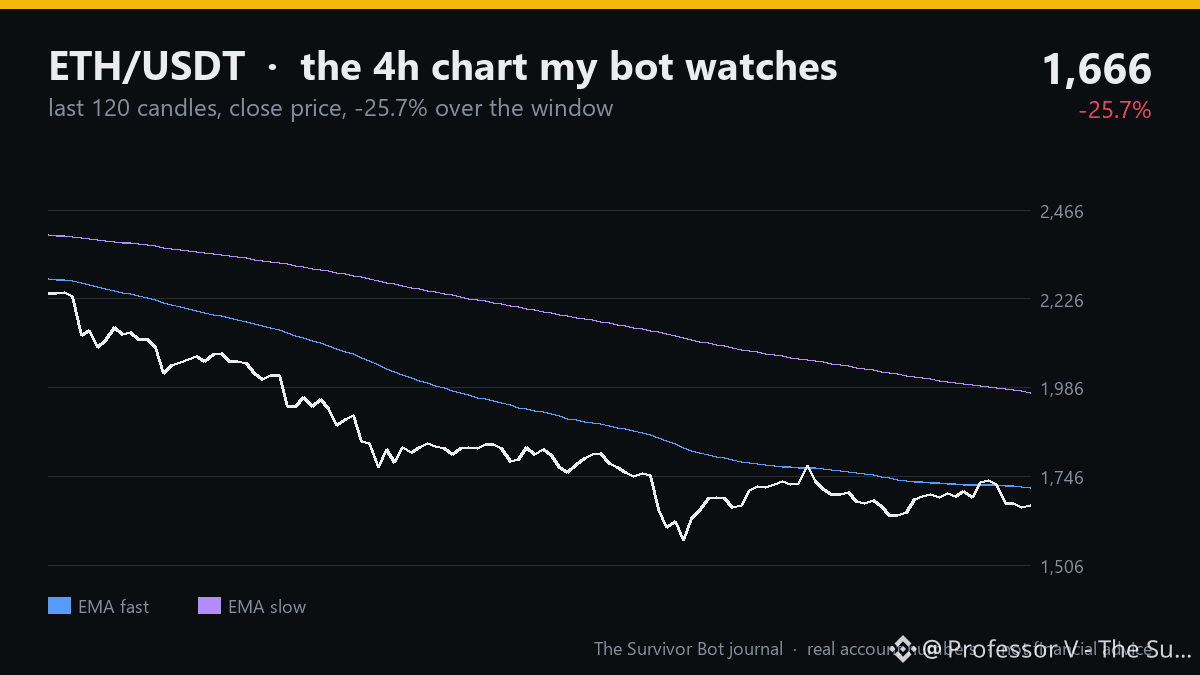
My bot has no open positions and equity sits at 94.1 USDT, down 68.86% since start.
With $BTC in a weak downtrend and daily bias “down,” the bot’s rule set blocks new longs on alts.
News mood is neutral (-0.07), so the bot stays idle, waiting for a bullish trigger before risking 0.75-1.5% of equity.
Levels I’m watching on ETH: entry 0, stop 0.
Follow to watch a real bot account (started with 100 USDT) survive in public, one rule at a time.
#EthereumGlamsterdamKeepsStorageFeeChange #TheSurvivorBot
85

Verified
Ethereum core devs just locked in the Glamsterdam upgrade—and they are keeping the controversial EIP-8037 storage fee hike.
Here is what every ETH trader and builder needs to watch:
🔹 The Fee Shift: Creating new permanent on-chain data gets a separate gas charge to stop node bloat. Contract creation base storage jumps from 32,000 to 183,600 gas.
🔹 The Risk: Up to 15,000 existing contracts—including bridges and wallets—face out-of-gas failures unless updated.
🔹 Key Dates: Final Hoodi testnet fork hits Dec 15, dev fix deadlines run through Jan 10, and mainnet targets late Jan or early Feb 2027.
Trader’s Take: Expect short-term noise as dApps scramble to patch gas limits over the next six weeks. Long term, curbing state bloat keeps Ethereum scalable and protects network health.
Smart move for ETH longevity, or too risky for live dApps? Drop your take below 👇
$ETH $UNI $ARB
{future}(ARBUSDT)
{future}(UNIUSDT)
{future}(ETHUSDT)
#ethereumglamsterdamkeepsstoragefeechange #Ethereum
Ethereum core devs just locked in the Glamsterdam upgrade—and they are keeping the controversial EIP-8037 storage fee hike.
Here is what every ETH trader and builder needs to watch:
🔹 The Fee Shift: Creating new permanent on-chain data gets a separate gas charge to stop node bloat. Contract creation base storage jumps from 32,000 to 183,600 gas.
🔹 The Risk: Up to 15,000 existing contracts—including bridges and wallets—face out-of-gas failures unless updated.
🔹 Key Dates: Final Hoodi testnet fork hits Dec 15, dev fix deadlines run through Jan 10, and mainnet targets late Jan or early Feb 2027.
Trader’s Take: Expect short-term noise as dApps scramble to patch gas limits over the next six weeks. Long term, curbing state bloat keeps Ethereum scalable and protects network health.
Smart move for ETH longevity, or too risky for live dApps? Drop your take below 👇
$ETH $UNI $ARB
#ethereumglamsterdamkeepsstoragefeechange #Ethereum
2
4.5k

·
--
#EthereumGlamsterdamKeepsStorageFeeChange
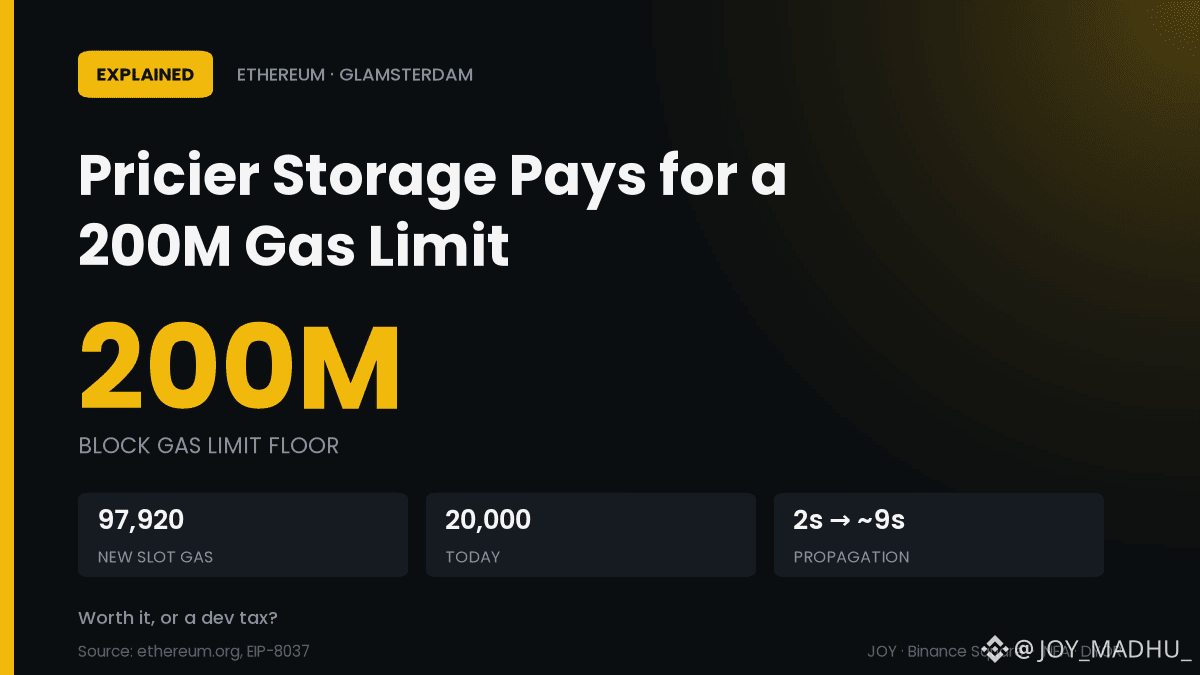
🛣️ The Fee Hike Is the Price of a 200M Gas Limit
Ethereum devs say pricier state is what lets Glamsterdam lift capacity without bloating every node's disk.
📊 Glamsterdam enables a 200M block gas limit floor, per ethereum.org
📈 New storage slot: 97,920 gas vs 20,000 now, about 5x
⏱️ ePBS stretches block propagation from 2 seconds to about 9
🏦 State growth target: 120 GiB a year at a 150M reference limit
Zoom out: pricier new state buys more blockspace for everything else.
Worth it if L1 fees fall by mid-2027, or a dev tax? 👇
$ETH
#EthereumGlamsterdamKeepsStorageFeeChange #Ethereum #ETH
70


·
--
Article
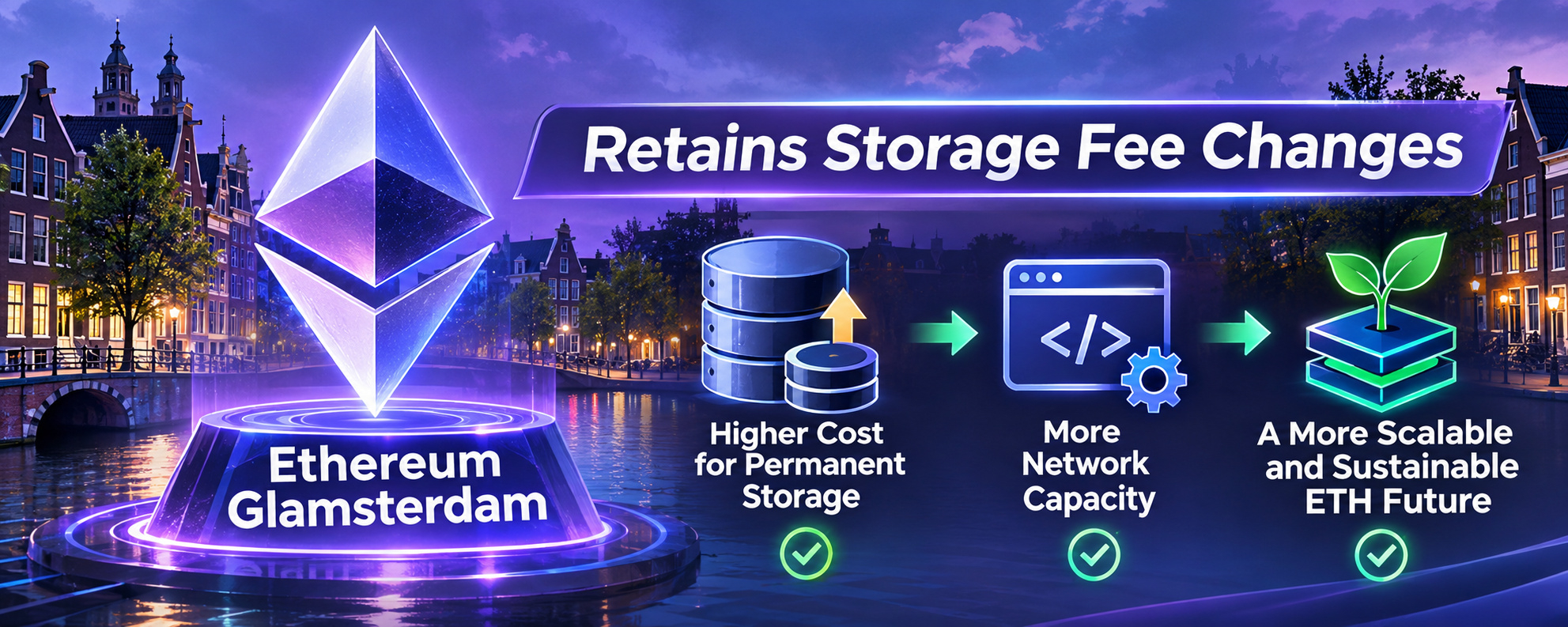
ETHEREUM GLAMSTERDAM RETAINS STORAGE FEE CHANGES TO UNLOCK A MORE SCALABLE AND SUSTAINABLE ETH FUTUREthereum developers have decided to stick with one of the most controversial changes in the upcoming Glamsterdam upgrade, even though it could create problems for some existing smart contracts.
What caught my attention about this decision is that Ethereum is deliberately making certain operations more expensive while trying to make the network more scalable and efficient in the long run. It might sound contradictory at first, but there is an important reason behind it.
Every time someone deploys a smart contract, creates a new account or adds permanent data to Ethereum, the network's state can grow. Node operators have to maintain this information, and as the ecosystem expands, managing that data becomes increasingly demanding.
The problem is that Ethereum cannot keep increasing its transaction capacity without considering the long-term consequences of storage growth.
This is exactly what EIP-8037 is designed to address. The proposal changes how Ethereum charges for creating permanent blockchain state, making storage-intensive operations significantly more expensive.
Instead of allowing applications to consume permanent network resources at relatively low costs, Ethereum wants its gas pricing to better reflect the actual burden these operations place on the network.
I think the most interesting part is that higher storage costs do not necessarily mean higher transaction fees for everyone. Sending ETH between existing accounts is very different from deploying a complex smart contract or creating thousands of new storage entries.
By adjusting these costs, Ethereum could potentially increase its overall transaction capacity while keeping storage growth under control. If implemented successfully, this could help reduce congestion without making node operation excessively demanding.
However, the transition is not going to be easy.
Many existing smart contracts were developed years ago using Ethereum's previous gas pricing rules. Some of these contracts rely on fixed gas limits, which could become insufficient once the new pricing structure takes effect.
Imagine a decentralized application that has been operating normally for years suddenly experiencing failed transactions because the underlying network changes how it calculates gas. That is a genuine concern for developers.
DeFi platforms, bridges, wallets and other blockchain applications may need to review their infrastructure carefully before Glamsterdam reaches the mainnet.
What makes the situation even more complicated is that not every smart contract can be easily upgraded. Immutability is one of blockchain's greatest strengths, but it can also become a challenge when the underlying technology evolves.
Ethereum developers could have removed the controversial proposal to avoid these immediate problems. Instead, they have chosen to retain it and continue working on compatibility solutions.
To me, this reflects the difficult reality of building blockchain infrastructure. Avoiding a problem today does not necessarily mean it disappears tomorrow.
If Ethereum continues attracting more users, financial institutions and decentralized applications, its storage requirements will likely continue growing. Without a sustainable approach, operating a node could eventually become more expensive and less accessible.
That would create concerns about decentralization, something Ethereum has spent years trying to protect.
The reported December 15, 2026, Hoodi testnet activation will therefore be an important milestone. Developers will have another opportunity to examine how the revised gas structure affects existing applications, transaction execution and overall network stability.
The mainnet activation remains dependent on successful testing, and further delays cannot be ruled out.
For ordinary users, the biggest question is whether Glamsterdam will eventually improve their experience. Greater network capacity could help reduce congestion, but the actual impact on transaction fees will depend on demand and how applications adapt to the new rules.
From a $ETH perspective, I believe the long-term infrastructure improvements deserve more attention than immediate price speculation.
A blockchain that can accommodate increasing activity without sacrificing decentralization could become more attractive to developers and institutions. However, even a successful upgrade does not guarantee an immediate market rally.
What makes Glamsterdam important is that Ethereum is addressing a problem that becomes more difficult as the network grows.
Increasing transaction speeds is one thing. Building a network capable of supporting years of expansion without overwhelming its infrastructure is another.
Ethereum's decision to retain the storage fee changes shows that its developers are willing to make difficult compromises rather than ignore fundamental technical challenges.
The coming weeks will reveal whether Ethereum can successfully balance higher storage costs, smart contract compatibility and greater network capacity.
In my view, Glamsterdam is not simply another network upgrade. It is an attempt to ensure that Ethereum's future growth does not become its biggest weakness.
Not financial advice, just information.
#EthereumGlamsterdamKeepsStorageFeeChange
ETHEREUM GLAMSTERDAM RETAINS STORAGE FEE CHANGES TO UNLOCK A MORE SCALABLE AND SUSTAINABLE ETH FUTUR
Ethereum developers have decided to stick with one of the most controversial changes in the upcoming Glamsterdam upgrade, even though it could create problems for some existing smart contracts.
What caught my attention about this decision is that Ethereum is deliberately making certain operations more expensive while trying to make the network more scalable and efficient in the long run. It might sound contradictory at first, but there is an important reason behind it.
Every time someone deploys a smart contract, creates a new account or adds permanent data to Ethereum, the network's state can grow. Node operators have to maintain this information, and as the ecosystem expands, managing that data becomes increasingly demanding.
The problem is that Ethereum cannot keep increasing its transaction capacity without considering the long-term consequences of storage growth.
This is exactly what EIP-8037 is designed to address. The proposal changes how Ethereum charges for creating permanent blockchain state, making storage-intensive operations significantly more expensive.
Instead of allowing applications to consume permanent network resources at relatively low costs, Ethereum wants its gas pricing to better reflect the actual burden these operations place on the network.
I think the most interesting part is that higher storage costs do not necessarily mean higher transaction fees for everyone. Sending ETH between existing accounts is very different from deploying a complex smart contract or creating thousands of new storage entries.
By adjusting these costs, Ethereum could potentially increase its overall transaction capacity while keeping storage growth under control. If implemented successfully, this could help reduce congestion without making node operation excessively demanding.
However, the transition is not going to be easy.
Many existing smart contracts were developed years ago using Ethereum's previous gas pricing rules. Some of these contracts rely on fixed gas limits, which could become insufficient once the new pricing structure takes effect.
Imagine a decentralized application that has been operating normally for years suddenly experiencing failed transactions because the underlying network changes how it calculates gas. That is a genuine concern for developers.
DeFi platforms, bridges, wallets and other blockchain applications may need to review their infrastructure carefully before Glamsterdam reaches the mainnet.
What makes the situation even more complicated is that not every smart contract can be easily upgraded. Immutability is one of blockchain's greatest strengths, but it can also become a challenge when the underlying technology evolves.
Ethereum developers could have removed the controversial proposal to avoid these immediate problems. Instead, they have chosen to retain it and continue working on compatibility solutions.
To me, this reflects the difficult reality of building blockchain infrastructure. Avoiding a problem today does not necessarily mean it disappears tomorrow.
If Ethereum continues attracting more users, financial institutions and decentralized applications, its storage requirements will likely continue growing. Without a sustainable approach, operating a node could eventually become more expensive and less accessible.
That would create concerns about decentralization, something Ethereum has spent years trying to protect.
The reported December 15, 2026, Hoodi testnet activation will therefore be an important milestone. Developers will have another opportunity to examine how the revised gas structure affects existing applications, transaction execution and overall network stability.
The mainnet activation remains dependent on successful testing, and further delays cannot be ruled out.
For ordinary users, the biggest question is whether Glamsterdam will eventually improve their experience. Greater network capacity could help reduce congestion, but the actual impact on transaction fees will depend on demand and how applications adapt to the new rules.
From a $ETH perspective, I believe the long-term infrastructure improvements deserve more attention than immediate price speculation.
A blockchain that can accommodate increasing activity without sacrificing decentralization could become more attractive to developers and institutions. However, even a successful upgrade does not guarantee an immediate market rally.
What makes Glamsterdam important is that Ethereum is addressing a problem that becomes more difficult as the network grows.
Increasing transaction speeds is one thing. Building a network capable of supporting years of expansion without overwhelming its infrastructure is another.
Ethereum's decision to retain the storage fee changes shows that its developers are willing to make difficult compromises rather than ignore fundamental technical challenges.
The coming weeks will reveal whether Ethereum can successfully balance higher storage costs, smart contract compatibility and greater network capacity.
In my view, Glamsterdam is not simply another network upgrade. It is an attempt to ensure that Ethereum's future growth does not become its biggest weakness.
Not financial advice, just information.
#EthereumGlamsterdamKeepsStorageFeeChange
Anaya Khan ㅤㅤㅤㅤㅤ:
Interesting tradeoff honestly, better scalability matters, but existing smart contracts shouldn't become unexpected casualties
2
2
178

·
--
Verified
#ethereumglamsterdamkeepsstoragefeechange 🚨 ETHEREUM'S NEXT BIG UPGRADE IS COMING — BUT THERE'S A CATCH!
Ethereum's upcoming Glamsterdam upgrade could introduce major changes to smart contract storage costs through EIP-8037.
The goal? Make Ethereum more sustainable by reducing blockchain state growth. But developers may face new challenges along the way. 👇
🔹 1. Higher Storage Costs
EIP-8037 proposes a separate gas charge for permanent on-chain storage. Contract creation storage costs could rise significantly, potentially changing how developers deploy smart contracts.
🔹 2. Existing Contracts at Risk
Some existing contracts may face out-of-gas issues if they aren't properly updated. Bridges, wallets, and dApps could require additional testing and adjustments.
🔹 3. Important Dates
📅 December 15, 2026 — Targeted final Hoodi testnet fork.
📅 January 10, 2027 — Developer fix deadline.
📅 Late January / Early February 2027 — Targeted Ethereum mainnet upgrade.
🔹 4. What This Means for ETH
Short Term: Higher development costs, compatibility concerns, and potential volatility.
Long Term: Better state management could support Ethereum's sustainability and network efficiency.
📊 MY MARKET TAKE
This is an important infrastructure development, but it's not automatically a bullish catalyst for ETH.
Watch developer readiness, dApp compatibility, and official upgrade announcements before making trading decisions.
🔥 YOUR OPINION?
Is EIP-8037 a smart move to protect Ethereum's future, or could higher storage costs create unnecessary risks for existing dApps?
👇 Drop your thoughts in the comments!
Follow for more crypto updates and market insights.
#Ethereum #ETH #Glamsterdam #EIP8037
CLICK TO BELOW TRADE👇
$ARB $UNI $ETH
{future}(ETHUSDT)
{future}(UNIUSDT)
{future}(ARBUSDT)
#ethereumglamsterdamkeepsstoragefeechange 🚨 ETHEREUM'S NEXT BIG UPGRADE IS COMING — BUT THERE'S A CATCH!
Ethereum's upcoming Glamsterdam upgrade could introduce major changes to smart contract storage costs through EIP-8037.
The goal? Make Ethereum more sustainable by reducing blockchain state growth. But developers may face new challenges along the way. 👇
🔹 1. Higher Storage Costs
EIP-8037 proposes a separate gas charge for permanent on-chain storage. Contract creation storage costs could rise significantly, potentially changing how developers deploy smart contracts.
🔹 2. Existing Contracts at Risk
Some existing contracts may face out-of-gas issues if they aren't properly updated. Bridges, wallets, and dApps could require additional testing and adjustments.
🔹 3. Important Dates
📅 December 15, 2026 — Targeted final Hoodi testnet fork.
📅 January 10, 2027 — Developer fix deadline.
📅 Late January / Early February 2027 — Targeted Ethereum mainnet upgrade.
🔹 4. What This Means for ETH
Short Term: Higher development costs, compatibility concerns, and potential volatility.
Long Term: Better state management could support Ethereum's sustainability and network efficiency.
📊 MY MARKET TAKE
This is an important infrastructure development, but it's not automatically a bullish catalyst for ETH.
Watch developer readiness, dApp compatibility, and official upgrade announcements before making trading decisions.
🔥 YOUR OPINION?
Is EIP-8037 a smart move to protect Ethereum's future, or could higher storage costs create unnecessary risks for existing dApps?
👇 Drop your thoughts in the comments!
Follow for more crypto updates and market insights.
#Ethereum #ETH #Glamsterdam #EIP8037
CLICK TO BELOW TRADE👇
$ARB $UNI $ETH
3
2.6k

🚨 BREAKING: Ethereum Glamsterdam Keeps Storage Fee Change
Ethereum community tracks the Glamsterdam storage fee update across 233 posts and 21,203 views on Binance Square.
Network upgrades shift cost structures for validators and developers alike.
Will this adjustment optimize gas efficiency or complicate data availability on-chain?
Not financial advice. DYOR.
#EthereumGlamsterdamKeepsStorageFeeChange $ETH
#EthereumGlamsterdamKeepsStorageFeeChange $ETH
198

·
--
Bullish
Verified
#ethereumglamsterdamkeepsstoragefeechange
⟠ Ethereum's Glamsterdam Upgrade Keeps Storage Fee Changes in Focus
Ethereum's upcoming Glamsterdam upgrade continues to highlight the importance of improving network efficiency, scalability, and long-term sustainability.
One area drawing attention is storage-related fee changes. Ethereum's approach to managing network storage costs matters because blockchain data comes with long-term infrastructure demands.
🔎 Why It Matters:
• Better storage economics could support network sustainability.
• Fee adjustments may influence how developers interact with Ethereum.
• Infrastructure improvements can strengthen Ethereum's long-term ecosystem.
• Network efficiency remains important as blockchain adoption grows.
📊 Trader's Perspective:
I'm slightly optimistic about Ethereum's long-term development. However, technical upgrades don't automatically create immediate buying pressure.
Traders should watch the official upgrade details, implementation progress, and ETH market reaction before drawing stronger conclusions.
Ethereum's long-term strength will depend on how effectively it balances scalability, affordability, and decentralization.
#Ethereum #ETH #Glamsterdam #Blockchain
$HAEDAL $BTW $ICNT
{future}(ICNTUSDT)
{future}(BTWUSDT)
{future}(HAEDALUSDT)
#ethereumglamsterdamkeepsstoragefeechange
⟠ Ethereum's Glamsterdam Upgrade Keeps Storage Fee Changes in Focus
Ethereum's upcoming Glamsterdam upgrade continues to highlight the importance of improving network efficiency, scalability, and long-term sustainability.
One area drawing attention is storage-related fee changes. Ethereum's approach to managing network storage costs matters because blockchain data comes with long-term infrastructure demands.
🔎 Why It Matters:
• Better storage economics could support network sustainability.
• Fee adjustments may influence how developers interact with Ethereum.
• Infrastructure improvements can strengthen Ethereum's long-term ecosystem.
• Network efficiency remains important as blockchain adoption grows.
📊 Trader's Perspective:
I'm slightly optimistic about Ethereum's long-term development. However, technical upgrades don't automatically create immediate buying pressure.
Traders should watch the official upgrade details, implementation progress, and ETH market reaction before drawing stronger conclusions.
Ethereum's long-term strength will depend on how effectively it balances scalability, affordability, and decentralization.
#Ethereum #ETH #Glamsterdam #Blockchain
$HAEDAL $BTW $ICNT

1k

·
--
#EthereumGlamsterdamKeepsStorageFeeChange
Analytical & Builder-Oriented (Best for Farcaster / LinkedIn)After a 7-week delay, Ethereum’s Glamsterdam upgrade is back on track for a December 15 Hoodi testnet launch—with EIP-8037 intact.
By separating execution gas from permanent storage costs, Ethereum protects node health and L1 scaling. However, security audits flagged ~200 compatibility issues across bridges, wallets, and legacy contracts before January’s mainnet target.
Is breaking legacy assumptions worth keeping Ethereum’s state lean? Drop your take below.
#Ethereum
#BinanceSquareFamily
45

·
--
🚨 ETHEREUM'S GLAMSTERDAM UPGRADE: BULLISH OR BEARISH?
Ethereum ($ETH ) developers have agreed to move forward with EIP-8037 and storage fee adjustments as part of the Glamsterdam upgrade.
📌 What's changing?
* Ethereum will reprice certain storage-related operations.
* The goal is better resource management and long-term scalability.
* Around 15,000 existing smart contracts could be affected, potentially requiring updates.
* The next public test round is expected on December 15.
My market view:
📈 Short-term: A bounce is possible. 📉 Long-term: The trend remains bearish.
Key levels to watch:
* First support: $1,860
* Potential downside target: $2,100
⚠️ Don't rush into longs. Wait for confirmation, use trailing stop-losses, and stay ready for volatility.
Trade smart, not on hype!
{future}(ETHUSDT)
#EthereumGlamsterdamKeepsStorageFeeChange
🚨 ETHEREUM'S GLAMSTERDAM UPGRADE: BULLISH OR BEARISH?
Ethereum ($ETH ) developers have agreed to move forward with EIP-8037 and storage fee adjustments as part of the Glamsterdam upgrade.
📌 What's changing?
* Ethereum will reprice certain storage-related operations.
* The goal is better resource management and long-term scalability.
* Around 15,000 existing smart contracts could be affected, potentially requiring updates.
* The next public test round is expected on December 15.
My market view:
📈 Short-term: A bounce is possible. 📉 Long-term: The trend remains bearish.
Key levels to watch:
* First support: $1,860
* Potential downside target: $2,100
⚠️ Don't rush into longs. Wait for confirmation, use trailing stop-losses, and stay ready for volatility.
Trade smart, not on hype!
#EthereumGlamsterdamKeepsStorageFeeChange
1
51

·
--
Bullish
Verified
#ethereumglamsterdamkeepsstoragefeechange
ETHEREUM DEVELOPERS STAND FIRM ON GLAMSTERDAM'S STORAGE FEE CHANGE! ⚙️
Ethereum's core developers have agreed to keep the planned storage-fee changes in the upcoming Glamsterdam upgrade, despite concerns about compatibility with existing smart contracts.
The proposal aims to make the cost of storing permanent data more accurately reflect the resources required to maintain Ethereum's growing blockchain. This could help prevent excessive database growth and support the network's long-term scalability.
However, the decision also brings challenges. Some existing smart contracts may struggle with the new gas requirements, meaning developers need to review and update vulnerable applications before the upgrade moves forward.
The final public test is scheduled for December 15, giving teams an important window to identify and fix potential issues.
Ethereum is preparing for a bigger future, but that growth comes with technical challenges.
The real test will be whether Glamsterdam can improve scalability while keeping the network reliable for users and developers.
#Ethereum #ETH #blockchain $ETH
2.4k

·
--
This storage fee shift is totally overblown noise 📉
Everyone is panicking over minor data costs while ignoring the real trend
Traders should just look past the chatter and focus on the main range
Real liquidity does not care about these tiny structural updates
I am changing zero trades based on this trending topic today
Proof I am wrong is if volume actually floods the order books this week
Agree?
#EthereumGlamsterdamKeepsStorageFeeChange #CryptoNews
12

·
--

Article
Ethereum Keeps Glamsterdam Storage Fee Changes Despite Contract Risks#EthereumGlamsterdamKeepsStorageFeeChange Ethereum developers have agreed to retain the controversial storage-fee changes in the upcoming Glamsterdam upgrade, ending weeks of debate and testing delays.
What's changing?
The upgrade includes EIP-8037 and EIP-8038, which increase the gas costs of creating and accessing permanent blockchain data. The goal is to prevent Ethereum's database from growing too quickly as network capacity expands.
Why is it controversial?
Developers warn that up to 15,000 existing smart contracts could be affected. Some applications may run out of gas during transactions because they were designed around older fee assumptions.
What's next?
Developers are keeping the current proposal unchanged.Teams must address serious compatibility issues.The final public Hoodi test is scheduled for December 15, 2026.Ethereum's mainnet upgrade date has not yet been confirmed.
Why it matters:
Ethereum is trying to make its network more scalable and sustainable without compromising existing applications. The challenge is implementing higher storage costs without disrupting the ecosystem.
The big question: Is Ethereum making the right long-term decision, or is it taking unnecessary risks with existing smart contracts?
#Ethereum #ETHETFsApproved #blockchain #CryptoNews
Ethereum Keeps Glamsterdam Storage Fee Changes Despite Contract Risks
#EthereumGlamsterdamKeepsStorageFeeChange Ethereum developers have agreed to retain the controversial storage-fee changes in the upcoming Glamsterdam upgrade, ending weeks of debate and testing delays.
What's changing?
The upgrade includes EIP-8037 and EIP-8038, which increase the gas costs of creating and accessing permanent blockchain data. The goal is to prevent Ethereum's database from growing too quickly as network capacity expands.
Why is it controversial?
Developers warn that up to 15,000 existing smart contracts could be affected. Some applications may run out of gas during transactions because they were designed around older fee assumptions.
What's next?
Developers are keeping the current proposal unchanged.Teams must address serious compatibility issues.The final public Hoodi test is scheduled for December 15, 2026.Ethereum's mainnet upgrade date has not yet been confirmed.
Why it matters:
Ethereum is trying to make its network more scalable and sustainable without compromising existing applications. The challenge is implementing higher storage costs without disrupting the ecosystem.
The big question: Is Ethereum making the right long-term decision, or is it taking unnecessary risks with existing smart contracts?
#Ethereum #ETHETFsApproved #blockchain #CryptoNews
74

#ethereumglamsterdamkeepsstoragefeechange keeping storage fee changes in Ethereum's Glamsterdam upgrade highlights ongoing efforts to better price state growth and long-term node overhead across the network. On-chain storage imposes permanent burdens on validators and full nodes, making fee adjustments vital for sustainable scaling and healthier decentralization. While contract deployers and storage-heavy apps may face higher costs, cleaner state economics can support long-term network efficiency and ETH value accrual. Builders are watching implementation details closely to see how gas and storage economics balance out . $BTC $ETH $DOGE
{spot}(DOGEUSDT)
{spot}(ETHUSDT)
{spot}(BTCUSDT)
#ethereumglamsterdamkeepsstoragefeechange keeping storage fee changes in Ethereum's Glamsterdam upgrade highlights ongoing efforts to better price state growth and long-term node overhead across the network. On-chain storage imposes permanent burdens on validators and full nodes, making fee adjustments vital for sustainable scaling and healthier decentralization. While contract deployers and storage-heavy apps may face higher costs, cleaner state economics can support long-term network efficiency and ETH value accrual. Builders are watching implementation details closely to see how gas and storage economics balance out . $BTC $ETH $DOGE

59
Log in to explore more content
Join global crypto users on Binance Square
⚡️ Get latest and useful information about crypto.
💬 Trusted by the world’s largest crypto exchange.
👍 Discover real insights from verified creators.
Email / Phone number
Trending Topics
1
#EvolveAtBinanceBlockchainWeek
1.6M views
16,717 Discussing
2
#ColdcardFlawLeadsToTheftOfAtLeast1789BTC
12,950 views
162 Discussing
3
#ChainflipVaultTheftHaltsProtocol
18,522 views
309 Discussing
4
#MalaysiaFirstBitcoinETFToListOnDecember2
10,076 views
132 Discussing
5
#VitalikWantsWalletChipDesignsOpened
26,171 views
381 Discussing
6
#DowJonesAdds591.99Points
13,502 views
87 Discussing
7
#ClaudeAccusedOfDroppingUserPreferences
8,583 views
97 Discussing
8
#SECIssuesNoActionLetterOnMoleculeModel
1,402 views
22 Discussing
9
#AnzaUrgesSolanaNodesUpgradeAgave
9,110 views
159 Discussing
10
#EthereumGlamsterdamKeepsStorageFeeChange
52,328 views
501 Discussing