
#cryptouniverseofficial
cryptouniverseofficial
40.6M views
68,860 Discussing
Hot
Latest

·
--
Ai and meme coins could bring some interesting opportunities.
My next-cycle targets:
$TAO → $350
$RENDER → $3.50
$PEPE → $0.000010
$SHIB → $0.000009
These are speculative targets, not guaranteed returns.
Which one could outperform the others?
#cryptouniverseofficial #altcoins
Ai and meme coins could bring some interesting opportunities.
My next-cycle targets:
$TAO → $350
$RENDER → $3.50
$PEPE → $0.000010
$SHIB → $0.000009
These are speculative targets, not guaranteed returns.
Which one could outperform the others?
#cryptouniverseofficial #altcoins
My next-cycle targets:
$TAO → $350
$RENDER → $3.50
$PEPE → $0.000010
$SHIB → $0.000009
These are speculative targets, not guaranteed returns.
Which one could outperform the others?
#cryptouniverseofficial #altcoins

681
·
--
DeFi could have another strong comeback.
My future price watchlist:
$AAVE — $150–$220
$UNI — $7–$10
$ENA — $0.16–$0.25
$JUP — $0.35–$0.55
$ONDO — $0.45–$0.70
I will be watching adoption, volume and ecosystem growth.
Which coin looks most promising?
#altcoins #cryptouniverseofficial
DeFi could have another strong comeback.
My future price watchlist:
$AAVE — $150–$220
$UNI — $7–$10
$ENA — $0.16–$0.25
$JUP — $0.35–$0.55
$ONDO — $0.45–$0.70
I will be watching adoption, volume and ecosystem growth.
Which coin looks most promising?
#altcoins #cryptouniverseofficial
My future price watchlist:
$AAVE — $150–$220
$UNI — $7–$10
$ENA — $0.16–$0.25
$JUP — $0.35–$0.55
$ONDO — $0.45–$0.70
I will be watching adoption, volume and ecosystem growth.
Which coin looks most promising?
#altcoins #cryptouniverseofficial

1
871

·
--
Article
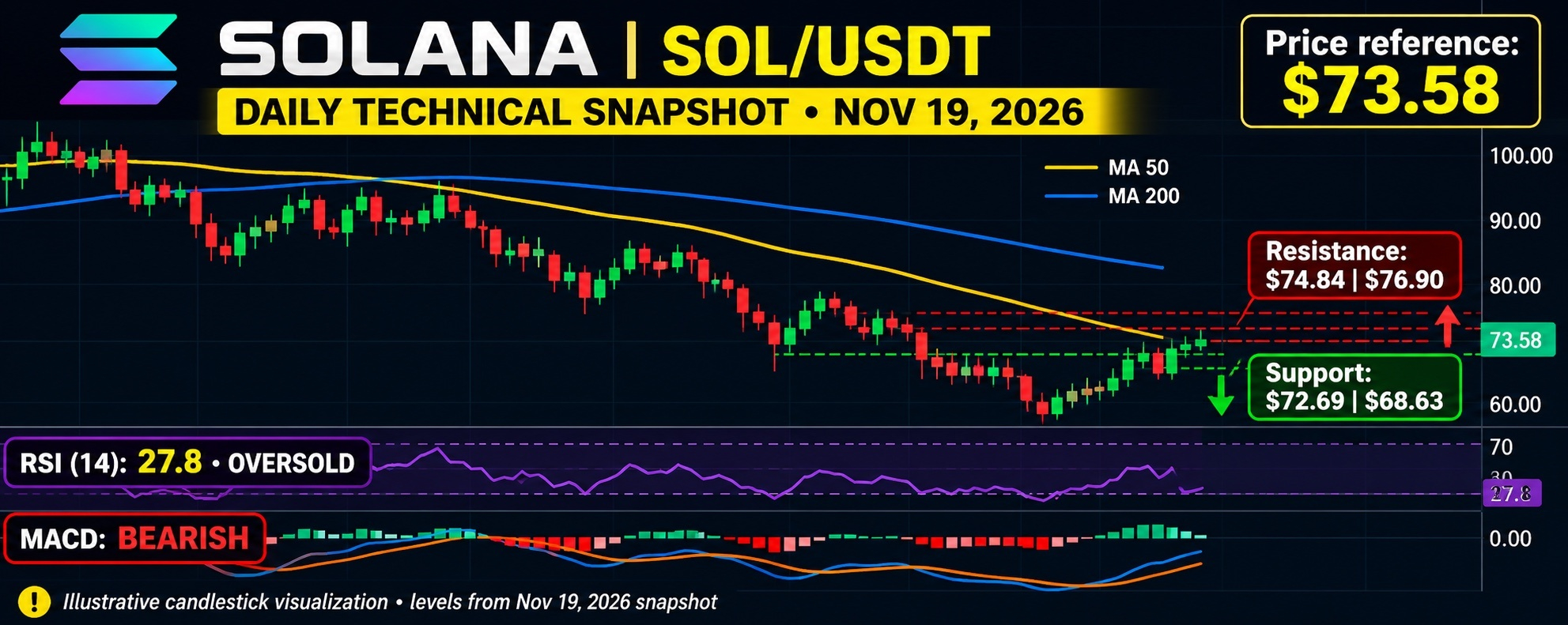
🚨 $SOLANA: BEARISH PRESSURE OR A POWERFUL COMEBACK AHEAD?Solana ( $SOL ) is approaching a critical technical zone where the next move could define its short-term direction.
📊 Technical Breakdown:
$SOL is showing a strong bearish structure, with price trading below major moving averages. RSI near 28 signals oversold conditions, while MACD remains negative, confirming that sellers still have momentum. Key support sits around $72.70, followed by $68.60. Resistance stands near $74.80–$76.90.
🔥 Market Prediction:
A strong-volume breakout above $77 could open the door toward $87 and potentially $95. However, losing $72 could expose SOL to another move toward $68 or even $64. An oversold RSI may trigger a relief bounce, but a confirmed trend reversal requires stronger buying pressure.
💡 Smart Insight: Watch volume, RSI recovery and MACD crossover before assuming the bulls are back. Solana’s next major move could create opportunities—but risk management remains essential.
#sol #solana #cryptouniverseofficial #altcoins
{future}(SOLUSDT)
🚨 $SOLANA: BEARISH PRESSURE OR A POWERFUL COMEBACK AHEAD?
Solana ( $SOL ) is approaching a critical technical zone where the next move could define its short-term direction.
📊 Technical Breakdown:
$SOL is showing a strong bearish structure, with price trading below major moving averages. RSI near 28 signals oversold conditions, while MACD remains negative, confirming that sellers still have momentum. Key support sits around $72.70, followed by $68.60. Resistance stands near $74.80–$76.90.
🔥 Market Prediction:
A strong-volume breakout above $77 could open the door toward $87 and potentially $95. However, losing $72 could expose SOL to another move toward $68 or even $64. An oversold RSI may trigger a relief bounce, but a confirmed trend reversal requires stronger buying pressure.
💡 Smart Insight: Watch volume, RSI recovery and MACD crossover before assuming the bulls are back. Solana’s next major move could create opportunities—but risk management remains essential.
#sol #solana #cryptouniverseofficial #altcoins
2
1.1k

📉 $BTC: THE LAST CYCLE SCRIPT IS LIVE.Most traders are still in denial, just like the previous bear market.
▪️ $64,000 — The final bull trap is complete.
▪️ $63,000 — Officially lost.
▪️ 3 to 5 Days — Until the real floor is reached.
Bookmark this post. Come back in 5 days. ⏳
$BTC #Bitcoin #cryptouniverseofficial #CanBTCReboundAfterFallingBelow60K? $BTC rypto
📉 $BTC: THE LAST CYCLE SCRIPT IS LIVE.
Most traders are still in denial, just like the previous bear market.
▪️ $64,000 — The final bull trap is complete.
▪️ $63,000 — Officially lost.
▪️ 3 to 5 Days — Until the real floor is reached.
Bookmark this post. Come back in 5 days. ⏳
$BTC #Bitcoin #cryptouniverseofficial #CanBTCReboundAfterFallingBelow60K? $BTC rypto
▪️ $64,000 — The final bull trap is complete.
▪️ $63,000 — Officially lost.
▪️ 3 to 5 Days — Until the real floor is reached.
Bookmark this post. Come back in 5 days. ⏳
$BTC #Bitcoin #cryptouniverseofficial #CanBTCReboundAfterFallingBelow60K? $BTC rypto
181
·
--
AI and blockchain could be an interesting combination in the next cycle.
My 3 coins to watch:
$RENDER — $2–$3
$FET — $0.18–$0.28
$TIA — $0.50–$0.80
Real adoption will matter more than hype.
Which one would you choose?
#cryptouniverseofficial #altcoins
AI and blockchain could be an interesting combination in the next cycle.
My 3 coins to watch:
$RENDER — $2–$3
$FET — $0.18–$0.28
$TIA — $0.50–$0.80
Real adoption will matter more than hype.
Which one would you choose?
#cryptouniverseofficial #altcoins
My 3 coins to watch:
$RENDER — $2–$3
$FET — $0.18–$0.28
$TIA — $0.50–$0.80
Real adoption will matter more than hype.
Which one would you choose?
#cryptouniverseofficial #altcoins

143


Article
PEPE 🐸🐸 CAN PEPE SURPRISE THE MARKET AGAIN?
PEPE has already shown how powerful community sentiment can be in the memecoin market.
But the next big move will depend on several factors:
🔹 Market liquidity
🔹 Community engagement
🔹 Trading volume
🔹 Overall crypto market direction
🔹 Investor sentiment
Memecoins can move incredibly fast in both directions. Never confuse excitement with guaranteed profit.
💚 Do you believe PEPE still has another major rally ahead?
Share your thoughts below!
#PEPE #memecoin #cryptouniverseofficial #BİNANCESQUARE
PEPE 🐸
🐸 CAN PEPE SURPRISE THE MARKET AGAIN?
PEPE has already shown how powerful community sentiment can be in the memecoin market.
But the next big move will depend on several factors:
🔹 Market liquidity
🔹 Community engagement
🔹 Trading volume
🔹 Overall crypto market direction
🔹 Investor sentiment
Memecoins can move incredibly fast in both directions. Never confuse excitement with guaranteed profit.
💚 Do you believe PEPE still has another major rally ahead?
Share your thoughts below!
#PEPE #memecoin #cryptouniverseofficial #BİNANCESQUARE
104


Article
🚨 BINANCE TARGETS $6.5 BILLION IN GLOBAL CRYPTO ASSET FREEZE!🚨 Binance Targets $6.5B in Global Asset Freeze After Massive Hack: A Turning Point for Crypto Security?
November 21, 2026 | Crypto News & Market Analysis
The cryptocurrency industry is facing a major security test after Binance secured a $6.5 billion worldwide asset-freezing order from the Abu Dhabi Global Market (ADGM) Courts.
The legal action follows a massive October 29 cyberattack that affected approximately $6.3 billion in cryptocurrency assets across multiple blockchains.
But this is more than a legal battle. It could become an important moment in the future of global crypto security.
🌍 What Happened?
Binance obtained a worldwide freezing injunction targeting unidentified individuals allegedly responsible for the attack.
The order is designed to help cryptocurrency companies, exchanges and other partners identify and freeze assets connected to the stolen funds.
According to reports:
Approximately $6.3 billion in assets were affected by the October attack.
Around $2.85 billion had been frozen or intercepted.
Binance's legal team identified approximately 26,000 wallet addresses connected to stolen assets.
The freezing order covers $6.5 billion.
Importantly, the $6.5 billion figure represents the amount covered by the legal order, not the amount already recovered.
⚖️ Why Is the Abu Dhabi Court Order Important?
One particularly interesting development is that the court orders can be served through blockchain-related channels.
This could help financial institutions and crypto companies respond more quickly when stolen assets move between wallets.
It also demonstrates how traditional legal systems and blockchain technology may work together to fight financial crime.
🔐 Can Crypto Exchanges Become Safer?
This incident highlights several important security priorities:
Stronger wallet protection.
Multi-layer transaction authorization.
Real-time suspicious transaction monitoring.
Faster cooperation between international exchanges.
Better protection against phishing and insider-related risks.
No cryptocurrency platform is completely immune to cyberattacks. Strong security systems and transparent incident reporting remain essential.
🚀 What Does This Mean for the Future of Crypto?
The Binance case could encourage other exchanges to improve their security infrastructure and strengthen cooperation with regulators.
However, freezing cryptocurrency is not the same as recovering it. Some assets may be difficult to retrieve, especially if they have moved into decentralized or non-freezable cryptocurrencies.
The legal proceedings and asset recovery efforts are still ongoing.
💬 YOUR OPINION MATTERS!
Do you believe this $6.5 billion court order will change the future of cryptocurrency security?
🔵 YES – Crypto security will become stronger.
🔴 NO – Hackers will always find new vulnerabilities.
🟡 MAYBE – It depends on international cooperation.
👇 Share your thoughts in the comments!
Follow for more breaking cryptocurrency news, Binance updates and blockchain analysis.
#Binance #CryptoSecurity #cryptouniverseofficial #blockchain #BinanceSquareTalks
DISCLAIMER: This article is for informational and educational purposes only. It is not financial or investment advice. Always conduct your own research (DYOR).
🚨 BINANCE TARGETS $6.5 BILLION IN GLOBAL CRYPTO ASSET FREEZE!
🚨 Binance Targets $6.5B in Global Asset Freeze After Massive Hack: A Turning Point for Crypto Security?
November 21, 2026 | Crypto News & Market Analysis
The cryptocurrency industry is facing a major security test after Binance secured a $6.5 billion worldwide asset-freezing order from the Abu Dhabi Global Market (ADGM) Courts.
The legal action follows a massive October 29 cyberattack that affected approximately $6.3 billion in cryptocurrency assets across multiple blockchains.
But this is more than a legal battle. It could become an important moment in the future of global crypto security.
🌍 What Happened?
Binance obtained a worldwide freezing injunction targeting unidentified individuals allegedly responsible for the attack.
The order is designed to help cryptocurrency companies, exchanges and other partners identify and freeze assets connected to the stolen funds.
According to reports:
Approximately $6.3 billion in assets were affected by the October attack.
Around $2.85 billion had been frozen or intercepted.
Binance's legal team identified approximately 26,000 wallet addresses connected to stolen assets.
The freezing order covers $6.5 billion.
Importantly, the $6.5 billion figure represents the amount covered by the legal order, not the amount already recovered.
⚖️ Why Is the Abu Dhabi Court Order Important?
One particularly interesting development is that the court orders can be served through blockchain-related channels.
This could help financial institutions and crypto companies respond more quickly when stolen assets move between wallets.
It also demonstrates how traditional legal systems and blockchain technology may work together to fight financial crime.
🔐 Can Crypto Exchanges Become Safer?
This incident highlights several important security priorities:
Stronger wallet protection.
Multi-layer transaction authorization.
Real-time suspicious transaction monitoring.
Faster cooperation between international exchanges.
Better protection against phishing and insider-related risks.
No cryptocurrency platform is completely immune to cyberattacks. Strong security systems and transparent incident reporting remain essential.
🚀 What Does This Mean for the Future of Crypto?
The Binance case could encourage other exchanges to improve their security infrastructure and strengthen cooperation with regulators.
However, freezing cryptocurrency is not the same as recovering it. Some assets may be difficult to retrieve, especially if they have moved into decentralized or non-freezable cryptocurrencies.
The legal proceedings and asset recovery efforts are still ongoing.
💬 YOUR OPINION MATTERS!
Do you believe this $6.5 billion court order will change the future of cryptocurrency security?
🔵 YES – Crypto security will become stronger.
🔴 NO – Hackers will always find new vulnerabilities.
🟡 MAYBE – It depends on international cooperation.
👇 Share your thoughts in the comments!
Follow for more breaking cryptocurrency news, Binance updates and blockchain analysis.
#Binance #CryptoSecurity #cryptouniverseofficial #blockchain #BinanceSquareTalks
DISCLAIMER: This article is for informational and educational purposes only. It is not financial or investment advice. Always conduct your own research (DYOR).
1
24

Spreadsheet trade journal to track variance vs. execution errors?A clean spreadsheet trade journal separates variance vs. execution errors by pairing objective pre-trade risk/plan fields with standardized post-trade tags and simple formula-driven summaries. If a trade breaks a rule, it gets flagged immediately—so you can filter out process mistakes and see whether your underlying setup and ATR/risk sizing actually have positive expectancy.
1. Core Columns for a Clean Trade Log
Keep one row per closed trade and group columns in logical left-to-right order so you can use standard Excel/Sheets formulas (SUMIFS, COUNTIFS, AVERAGEIFS) without clutter:
2. Standardized Tags for Variance vs. Execution Errors
Use dropdown data validation (Data > Data Validation > List) on your tag columns so spelling never drifts and summary formulas stay accurate:
Rule_Compliance (Binary Gate):Pass — Setup, stop placement, sizing cap, and cool-off rules were followed.Breach — Any rule was broken (even if the trade ended up green).Outcome_Type (Primary Bucket):Normal_Variance — Rules were followed cleanly, stop was hit or setup failed to follow through.Execution_Error — A rule, sizing cap, order/stop habit, or emotional guardrail was violated.Regime_Mismatch — Rules were followed, but setups are repeatedly failing in current volatility/trend conditions.Error_Tag (Specific Mistake Label — use "None" when Pass):FOMO_Early_Entry — Entered before confirmation or chased an extended candle.Oversized_Position — Exceeded allowed dollar risk or let leverage dictate size.Stop_Moved_Or_Skipped — Widened stop mid-trade, removed stop, or exited late on emotion.Revenge_Or_Tilt — Traded out of frustration, after a loss, or during a cool-off window.Correlated_Stacking — Stacked overlapping exposure across correlated markets/trades.Bad_Fill_Or_Slippage — Entered/exited poorly around news spikes or thin liquidity without accounting for spread/slippage.
3. Essential Summary Metrics & Sheet Layout Tips
Keep a Summary / Dashboard block (or second tab) driven by formulas so you never hand-count stats:
Variance vs. Breach Split: Count how many trades are Pass vs. Breach, and compare average Realized_R on Pass trades against Breach trades—breaches often drag down averages sharply.Loss Breakdown by Bucket: Track total $ and count of losses under Normal_Variance, Execution_Error, and Regime_Mismatch so you know whether to fix execution habits, adjust regime filters, or simply accept normal variance.Layout Hygiene: Put one table per sheet (avoid side-by-side summary tables next to your trade rows), freeze the header row, format dates and currency consistently, and set page setup to Landscape, Fit to 1 Page Wide if you export or print clean review sheets. (This is trade-journaling methodology, not financial advice.)
#Binance #cryptouniverseofficial #Follow4more
Spreadsheet trade journal to track variance vs. execution errors?
A clean spreadsheet trade journal separates variance vs. execution errors by pairing objective pre-trade risk/plan fields with standardized post-trade tags and simple formula-driven summaries. If a trade breaks a rule, it gets flagged immediately—so you can filter out process mistakes and see whether your underlying setup and ATR/risk sizing actually have positive expectancy.
1. Core Columns for a Clean Trade Log
Keep one row per closed trade and group columns in logical left-to-right order so you can use standard Excel/Sheets formulas (SUMIFS, COUNTIFS, AVERAGEIFS) without clutter:
2. Standardized Tags for Variance vs. Execution Errors
Use dropdown data validation (Data > Data Validation > List) on your tag columns so spelling never drifts and summary formulas stay accurate:
Rule_Compliance (Binary Gate):Pass — Setup, stop placement, sizing cap, and cool-off rules were followed.Breach — Any rule was broken (even if the trade ended up green).Outcome_Type (Primary Bucket):Normal_Variance — Rules were followed cleanly, stop was hit or setup failed to follow through.Execution_Error — A rule, sizing cap, order/stop habit, or emotional guardrail was violated.Regime_Mismatch — Rules were followed, but setups are repeatedly failing in current volatility/trend conditions.Error_Tag (Specific Mistake Label — use "None" when Pass):FOMO_Early_Entry — Entered before confirmation or chased an extended candle.Oversized_Position — Exceeded allowed dollar risk or let leverage dictate size.Stop_Moved_Or_Skipped — Widened stop mid-trade, removed stop, or exited late on emotion.Revenge_Or_Tilt — Traded out of frustration, after a loss, or during a cool-off window.Correlated_Stacking — Stacked overlapping exposure across correlated markets/trades.Bad_Fill_Or_Slippage — Entered/exited poorly around news spikes or thin liquidity without accounting for spread/slippage.
3. Essential Summary Metrics & Sheet Layout Tips
Keep a Summary / Dashboard block (or second tab) driven by formulas so you never hand-count stats:
Variance vs. Breach Split: Count how many trades are Pass vs. Breach, and compare average Realized_R on Pass trades against Breach trades—breaches often drag down averages sharply.Loss Breakdown by Bucket: Track total $ and count of losses under Normal_Variance, Execution_Error, and Regime_Mismatch so you know whether to fix execution habits, adjust regime filters, or simply accept normal variance.Layout Hygiene: Put one table per sheet (avoid side-by-side summary tables next to your trade rows), freeze the header row, format dates and currency consistently, and set page setup to Landscape, Fit to 1 Page Wide if you export or print clean review sheets. (This is trade-journaling methodology, not financial advice.)
#Binance #cryptouniverseofficial #Follow4more
255
Liquidity trade-offs between multilateral netting in a CCP and gross atomic settlement on DLT.The choice between multilateral netting (the traditional CCP model) and gross atomic settlement (the native DLT model) represents a fundamental trade-off in market infrastructure: liquidity efficiency versus settlement risk.
Key Structural Differences
Multilateral Netting (CCP Model): A central counterparty (CCP) steps in as buyer to every seller and seller to every buyer. At the end of a clearing cycle (or across intraday batches), the CCP calculates a single net cash offset and net asset delivery obligations for each participant.Gross Atomic Settlement (DLT Model): Every transaction is executed independently and synchronously on a shared ledger ($T+0$). Transaction A does not depend on Transaction B to settle, and both cash and asset legs execute instantly or revert completely.
Core Liquidity Trade-Offs
1. Cash & Collateral Efficiency vs. Pre-Funding Requirements
Multilateral Netting: High liquidity efficiency. If Market Maker A sells $100M of stock to Bank B, and buys $98M of the same stock from Bank C, Bank A only needs to deliver $2M in cash net at settlement. CCP netting often reduces gross cash and securities settlement obligations by 75% to 90%+.Gross Atomic Settlement: Low liquidity efficiency. Bank A must have $98M of cash ready to execute the buy order instantly, and the asset holder must have $100M of stock pre-funded on-chain. Without intraday credit or automated liquidity pools, gross atomic settlement drastically increases upfront capital lock-up.
2. Settlement Risk vs. Margin Requirements
Multilateral Netting: Introduces interim credit and replacement-cost risk during the $T+1$ (or $T+2$) exposure window. To offset this risk, clearing members must post initial margin (collateral buffers) and variation margin (daily mark-to-market cash flows) to the CCP.Gross Atomic Settlement: Eliminates principal settlement risk (Delivery-versus-Payment failure) and replacement-cost risk because settlement occurs instantly upon execution. Participants no longer need to post multi-day initial margin buffers for executed trades.
3. Intraday Credit Dependency vs. Immediate Finality
Multilateral Netting: Relies heavily on unsecured or secured intraday credit lines extended by clearing banks and central banks to facilitate cash flows throughout the trading day prior to net batch settlement.Gross Atomic Settlement: Removes dependency on credit-backed settlement windows. However, it transfers the burden to real-time liquidity management, forcing treasury desks to hold larger buffers of tokenized cash (e.g., tokenized deposits, wholesale CBDCs) or tokenized collateral 24/7.
Comparative Overview
Emerging Hybrid Architectures
To capture the risk reduction of DLT without suffering severe liquidity drag, modern infrastructure projects (such as the Bank of England's Digital Securities Sandbox) explore hybrid DLT clearing models:
Off-Chain Netting with On-Chain Atomic Batch Settlement: Smart contracts aggregate and net trade commitments off-chain (or in micro-batches), executing net settlement state updates periodically (e.g., hourly or end-of-day) on-chain.Automated On-Chain Intraday Liquidity Facilities: Programmable liquidity protocols automatically issue flash loans or collateralized intraday liquidity against tokenized HQLA (High-Quality Liquid Assets) at the exact millisecond of atomic execution.
#blockchain #cryptouniverseofficial #Binance
Liquidity trade-offs between multilateral netting in a CCP and gross atomic settlement on DLT.
The choice between multilateral netting (the traditional CCP model) and gross atomic settlement (the native DLT model) represents a fundamental trade-off in market infrastructure: liquidity efficiency versus settlement risk.
Key Structural Differences
Multilateral Netting (CCP Model): A central counterparty (CCP) steps in as buyer to every seller and seller to every buyer. At the end of a clearing cycle (or across intraday batches), the CCP calculates a single net cash offset and net asset delivery obligations for each participant.Gross Atomic Settlement (DLT Model): Every transaction is executed independently and synchronously on a shared ledger ($T+0$). Transaction A does not depend on Transaction B to settle, and both cash and asset legs execute instantly or revert completely.
Core Liquidity Trade-Offs
1. Cash & Collateral Efficiency vs. Pre-Funding Requirements
Multilateral Netting: High liquidity efficiency. If Market Maker A sells $100M of stock to Bank B, and buys $98M of the same stock from Bank C, Bank A only needs to deliver $2M in cash net at settlement. CCP netting often reduces gross cash and securities settlement obligations by 75% to 90%+.Gross Atomic Settlement: Low liquidity efficiency. Bank A must have $98M of cash ready to execute the buy order instantly, and the asset holder must have $100M of stock pre-funded on-chain. Without intraday credit or automated liquidity pools, gross atomic settlement drastically increases upfront capital lock-up.
2. Settlement Risk vs. Margin Requirements
Multilateral Netting: Introduces interim credit and replacement-cost risk during the $T+1$ (or $T+2$) exposure window. To offset this risk, clearing members must post initial margin (collateral buffers) and variation margin (daily mark-to-market cash flows) to the CCP.Gross Atomic Settlement: Eliminates principal settlement risk (Delivery-versus-Payment failure) and replacement-cost risk because settlement occurs instantly upon execution. Participants no longer need to post multi-day initial margin buffers for executed trades.
3. Intraday Credit Dependency vs. Immediate Finality
Multilateral Netting: Relies heavily on unsecured or secured intraday credit lines extended by clearing banks and central banks to facilitate cash flows throughout the trading day prior to net batch settlement.Gross Atomic Settlement: Removes dependency on credit-backed settlement windows. However, it transfers the burden to real-time liquidity management, forcing treasury desks to hold larger buffers of tokenized cash (e.g., tokenized deposits, wholesale CBDCs) or tokenized collateral 24/7.
Comparative Overview
Emerging Hybrid Architectures
To capture the risk reduction of DLT without suffering severe liquidity drag, modern infrastructure projects (such as the Bank of England's Digital Securities Sandbox) explore hybrid DLT clearing models:
Off-Chain Netting with On-Chain Atomic Batch Settlement: Smart contracts aggregate and net trade commitments off-chain (or in micro-batches), executing net settlement state updates periodically (e.g., hourly or end-of-day) on-chain.Automated On-Chain Intraday Liquidity Facilities: Programmable liquidity protocols automatically issue flash loans or collateralized intraday liquidity against tokenized HQLA (High-Quality Liquid Assets) at the exact millisecond of atomic execution.
#blockchain #cryptouniverseofficial #Binance
1
Technical mechanics of DLT-based atomic settlement vs traditional T+1 settlement post-trade clearingAtomic settlement executes both legs of a trade—the security transfer and the cash/collateral leg—as a single, indivisible state transition on a ledger (either both succeed simultaneously or neither occurs), whereas traditional T+1 settlement separates trade matching, multilateral netting, margining, and final delivery across distinct systems and batch windows over roughly 24 hours.
The chart illustrates the settlement exposure horizon—the window between trade execution and final settlement/value date during which counterparty and replacement-cost risk remain open. T+1 compresses this window compared to T+2, while atomic settlement shrinks the exposure duration toward near-zero at the transaction level.
1. Traditional T+1 Post-Trade Clearing Mechanics
In a T+1 market (such as US equities or UK/EU initiatives moving in that direction), clearing and settlement are staged across specialized infrastructures:
Trade Capture & Novation: Once an order matches on an exchange or venue, clearing instructions route to a Central Counterparty (CCP). Through novation, the CCP steps in as the buyer to every seller and the seller to every buyer, assuming counterparty credit risk.Multilateral Netting: Rather than settling every gross trade individually, the CCP aggregates obligations across counterparties and instruments to compute net positions—dramatically reducing the volume of cash and securities that must actually move.Margining & Risk Controls: Because final settlement occurs on T+1T+1T+1, participants post initial margin (to cover potential adverse price moves over a liquidation horizon) and exchange variation margin (mark-to-market daily/intraday cash flows) to protect the CCP against default.Batch / Cutoff Settlement (DvP): On settlement day, securities move on a Central Securities Depository (CSD) ledger while cash moves via commercial bank money, central bank reserves, or a Real-Time Gross Settlement (RTGS) system under Delivery-versus-Payment (DvP) rules, often across scheduled batch windows or cutoffs.
2. DLT-Based Atomic Settlement Mechanics
Atomic settlement re-architects post-trade execution around programmable shared state and conditional finality:
Single-State or Cross-Ledger Atomicity: Both the tokenized asset leg and the payment/collateral leg (e.g., tokenized deposits, wholesale CBDC/RTGS tokens, or qualifying stablecoins) are locked and updated conditionally within a single atomic workflow—using smart contracts on a unified ledger or cross-chain/cross-ledger coordination protocols (such as atomic swaps or coordinated escrow/lock mechanisms).All-or-Nothing Finality: If the buyer lacks sufficient tokenized cash or the seller lacks the tokenized security (or fails pre-trade compliance/credit checks), the state transition reverts cleanly with no partial leg left dangling.Pre-Funded vs. Credit-Backed Execution: Pure atomic settlement requires assets/liquidity to be available at the moment of execution. Where institutional trading relies on intraday credit lines, daylight overdrafts, or netted liquidity pools, pure atomicity can clash with credit-based leverage unless paired with intraday liquidity facilities or hybrid clearing models.Programmable Collateral & Margin: Tokenized securities or money market fund shares can be pledged, rehypothecated, or released via smart contract rules rather than manual back-office instructions and batch reconciliations.
3. Side-by-Side Technical Comparison
4. Why Clearing Houses Still Matter Under DLT
Instant settlement does not automatically erase every risk in market infrastructure:
Liquidity Fragmentation: Settling every trade gross on-chain can demand more upfront cash/collateral than multilateral netting, especially in high-volume derivatives or dealer markets.Credit, Leverage, and Default Management: Traders using leverage, margin loans, or forward/derivatives exposures still need risk engines, default waterfalls, and collateral valuation.Regulatory & Operational Resilience: Regulators—including the Bank of England through its Clearing House Development Phase Pathway—focus on governance, cyber/operational resilience, legal finality, and systemic risk even when settlement rails use DLT.
#blockchain #cryptouniverseofficial #Binance
Technical mechanics of DLT-based atomic settlement vs traditional T+1 settlement post-trade clearing
Atomic settlement executes both legs of a trade—the security transfer and the cash/collateral leg—as a single, indivisible state transition on a ledger (either both succeed simultaneously or neither occurs), whereas traditional T+1 settlement separates trade matching, multilateral netting, margining, and final delivery across distinct systems and batch windows over roughly 24 hours.
The chart illustrates the settlement exposure horizon—the window between trade execution and final settlement/value date during which counterparty and replacement-cost risk remain open. T+1 compresses this window compared to T+2, while atomic settlement shrinks the exposure duration toward near-zero at the transaction level.
1. Traditional T+1 Post-Trade Clearing Mechanics
In a T+1 market (such as US equities or UK/EU initiatives moving in that direction), clearing and settlement are staged across specialized infrastructures:
Trade Capture & Novation: Once an order matches on an exchange or venue, clearing instructions route to a Central Counterparty (CCP). Through novation, the CCP steps in as the buyer to every seller and the seller to every buyer, assuming counterparty credit risk.Multilateral Netting: Rather than settling every gross trade individually, the CCP aggregates obligations across counterparties and instruments to compute net positions—dramatically reducing the volume of cash and securities that must actually move.Margining & Risk Controls: Because final settlement occurs on T+1T+1T+1, participants post initial margin (to cover potential adverse price moves over a liquidation horizon) and exchange variation margin (mark-to-market daily/intraday cash flows) to protect the CCP against default.Batch / Cutoff Settlement (DvP): On settlement day, securities move on a Central Securities Depository (CSD) ledger while cash moves via commercial bank money, central bank reserves, or a Real-Time Gross Settlement (RTGS) system under Delivery-versus-Payment (DvP) rules, often across scheduled batch windows or cutoffs.
2. DLT-Based Atomic Settlement Mechanics
Atomic settlement re-architects post-trade execution around programmable shared state and conditional finality:
Single-State or Cross-Ledger Atomicity: Both the tokenized asset leg and the payment/collateral leg (e.g., tokenized deposits, wholesale CBDC/RTGS tokens, or qualifying stablecoins) are locked and updated conditionally within a single atomic workflow—using smart contracts on a unified ledger or cross-chain/cross-ledger coordination protocols (such as atomic swaps or coordinated escrow/lock mechanisms).All-or-Nothing Finality: If the buyer lacks sufficient tokenized cash or the seller lacks the tokenized security (or fails pre-trade compliance/credit checks), the state transition reverts cleanly with no partial leg left dangling.Pre-Funded vs. Credit-Backed Execution: Pure atomic settlement requires assets/liquidity to be available at the moment of execution. Where institutional trading relies on intraday credit lines, daylight overdrafts, or netted liquidity pools, pure atomicity can clash with credit-based leverage unless paired with intraday liquidity facilities or hybrid clearing models.Programmable Collateral & Margin: Tokenized securities or money market fund shares can be pledged, rehypothecated, or released via smart contract rules rather than manual back-office instructions and batch reconciliations.
3. Side-by-Side Technical Comparison
4. Why Clearing Houses Still Matter Under DLT
Instant settlement does not automatically erase every risk in market infrastructure:
Liquidity Fragmentation: Settling every trade gross on-chain can demand more upfront cash/collateral than multilateral netting, especially in high-volume derivatives or dealer markets.Credit, Leverage, and Default Management: Traders using leverage, margin loans, or forward/derivatives exposures still need risk engines, default waterfalls, and collateral valuation.Regulatory & Operational Resilience: Regulators—including the Bank of England through its Clearing House Development Phase Pathway—focus on governance, cyber/operational resilience, legal finality, and systemic risk even when settlement rails use DLT.
#blockchain #cryptouniverseofficial #Binance
1
What ERP systems and sub-ledger software integrate crypto multi-sig wallets with K-IFRS ledgers?#southkoreaplanstolet3500listedfirmsbuybitcoin
Integrating multi-sig hardware and MPC institutional wallets with K-IFRS general ledgers requires a three-tier architecture. Standard enterprise ERPs (like SAP S/4HANA or Oracle Cloud) cannot natively ingest raw blockchain telemetry or calculate moving-average cost basis under K-IFRS.
To bridge this gap, organizations deploy specialized crypto sub-ledger middleware that normalizes raw on-chain events into structured journal entries (JEs) formatted for standard Enterprise Resource Planning (ERP) ingestion.
1. Key Sub-Ledger Middleware Platforms
Crypto sub-ledgers connect multi-sig vault APIs directly to ERP chart-of-accounts:
Cryptio: Enterprise-grade sub-ledger designed for high-volume corporate treasuries. It features native connectors for MPC vaults (Fireblocks, Fordefi) and multi-sig protocols (Safe), offering K-IFRS/IFRS-compliant revaluation and automated impairment modules.Bitwave: Focuses on enterprise treasury workflows, tax-lot management, and impairment accounting under both US GAAP and IFRS. It maps multi-sig wallet approvals and gas fees directly into corporate expenses and ledger line items.TRES Finance: Provides continuous auditing and sub-ledger reconciliation across complex multi-sig setups, staking contracts, and institutional custody accounts, piping verified trial balance entries into main accounting suites.Lukka Prime & Enterprise Offers institutional-grade pricing valuation engines paired with a sub-ledger framework to calculate fair-value impairment losses under active-market K-IFRS rules.
2. Supported ERP Systems & Native Modules
The target General Ledger (GL) absorbs the pre-processed journal entries from the sub-ledger middleware:
3. Technical Integration Mechanism
Step 1: Wallet Data Ingestion
The sub-ledger connects via read-only APIs or extended public keys (xpub/ypub/zpub) to track wallet activities without retaining spending authority.
Step 2: K-IFRS Classification & Valuation
The middleware tags transactions according to K-IFRS (e.g., Intangible Asset vs. Inventory):
Cost-Basis Calculation: Applies Moving-Average or Weighted-Average accounting to calculate historical cost.Impairment Recognition: Evaluates daily active-market pricing data from local South Korean exchanges (Upbit, Bithumb). If market value falls below carrying cost, it automatically generates an Impairment Loss Journal Entry.
Step 3: Localized Compliance & ERP Posting
Before generating final GL postings, the middleware attaches metadata—such as counterparty VASP identity details for Travel Rule verification. It then pushes formatted double-entry journal logs (Debit: Intangible Asset, Credit: Retained Earnings / Realized Gain) directly into the ERP's primary or secondary ledgers.
#cryptouniverseofficial #Bianace
What ERP systems and sub-ledger software integrate crypto multi-sig wallets with K-IFRS ledgers?
#southkoreaplanstolet3500listedfirmsbuybitcoin
Integrating multi-sig hardware and MPC institutional wallets with K-IFRS general ledgers requires a three-tier architecture. Standard enterprise ERPs (like SAP S/4HANA or Oracle Cloud) cannot natively ingest raw blockchain telemetry or calculate moving-average cost basis under K-IFRS.
To bridge this gap, organizations deploy specialized crypto sub-ledger middleware that normalizes raw on-chain events into structured journal entries (JEs) formatted for standard Enterprise Resource Planning (ERP) ingestion.
1. Key Sub-Ledger Middleware Platforms
Crypto sub-ledgers connect multi-sig vault APIs directly to ERP chart-of-accounts:
Cryptio: Enterprise-grade sub-ledger designed for high-volume corporate treasuries. It features native connectors for MPC vaults (Fireblocks, Fordefi) and multi-sig protocols (Safe), offering K-IFRS/IFRS-compliant revaluation and automated impairment modules.Bitwave: Focuses on enterprise treasury workflows, tax-lot management, and impairment accounting under both US GAAP and IFRS. It maps multi-sig wallet approvals and gas fees directly into corporate expenses and ledger line items.TRES Finance: Provides continuous auditing and sub-ledger reconciliation across complex multi-sig setups, staking contracts, and institutional custody accounts, piping verified trial balance entries into main accounting suites.Lukka Prime & Enterprise Offers institutional-grade pricing valuation engines paired with a sub-ledger framework to calculate fair-value impairment losses under active-market K-IFRS rules.
2. Supported ERP Systems & Native Modules
The target General Ledger (GL) absorbs the pre-processed journal entries from the sub-ledger middleware:
3. Technical Integration Mechanism
Step 1: Wallet Data Ingestion
The sub-ledger connects via read-only APIs or extended public keys (xpub/ypub/zpub) to track wallet activities without retaining spending authority.
Step 2: K-IFRS Classification & Valuation
The middleware tags transactions according to K-IFRS (e.g., Intangible Asset vs. Inventory):
Cost-Basis Calculation: Applies Moving-Average or Weighted-Average accounting to calculate historical cost.Impairment Recognition: Evaluates daily active-market pricing data from local South Korean exchanges (Upbit, Bithumb). If market value falls below carrying cost, it automatically generates an Impairment Loss Journal Entry.
Step 3: Localized Compliance & ERP Posting
Before generating final GL postings, the middleware attaches metadata—such as counterparty VASP identity details for Travel Rule verification. It then pushes formatted double-entry journal logs (Debit: Intangible Asset, Credit: Retained Earnings / Realized Gain) directly into the ERP's primary or secondary ledgers.
#cryptouniverseofficial #Bianace
ORCL-5.25%
SAPUS+2.35%
20

·
--

Article
Peter Schiff Issues a Serious Warning: Could America Be the Biggest Loser in a Bitcoin Crash?The crypto market is already facing significant pressure, but economist Peter Schiff has raised a much bigger question about the future of Bitcoin and the US economy.
Schiff, a longtime Bitcoin critic, believes America's growing involvement in the cryptocurrency industry could expose the country to greater financial losses if another major market crash occurs.
And his latest statement is getting attention.
What did Peter Schiff actually say?
On November 19, Schiff posted:
"Thanks in part to Trump, the U.S. is now the crypto superpower and Bitcoin capital of the world. Unfortunately, that means the U.S. will lead the world in financial losses and suffer the most economic collateral damage as a result of the coming Bitcoin and crypto crash."
His argument is straightforward: the more deeply a country becomes involved in an industry, the greater its potential exposure when that industry faces a major downturn.
Why is this warning important right now?
Bitcoin recently dropped below the $60,000 psychological level, reaching approximately $59,381 on November 20.
The pressure isn't limited to crypto.
Traditional technology stocks have also been struggling, while concerns about interest rates, institutional capital flows and market valuations are adding uncertainty.
There is another important development.
US spot Bitcoin ETFs recorded approximately $582 million in net outflows on November 19, including a record $541 million withdrawal from BlackRock's IBIT fund.
These developments show that institutional demand is facing pressure alongside the broader market.
Is Peter Schiff predicting something bigger?
Schiff has consistently questioned Bitcoin's long-term value, so his latest warning should be viewed in that context.
His concerns include:
• America's increasing exposure to Bitcoin and crypto businesses.
• Institutional investors holding significant Bitcoin positions.
• Potential financial stress if Bitcoin prices fall further.
• Possible connections between crypto market losses and traditional finance.
However, there is an important distinction: Schiff has not provided a quantified estimate of potential US economic losses. His warning is a bearish forecast, not proof that a financial crisis is coming.
My perspective
What makes this situation interesting is the difference between short-term market sentiment and long-term adoption.
The United States has been positioning itself as a major player in the digital asset industry. That can create opportunities, but it can also increase exposure to market volatility.
A deeper crypto correction would test how resilient institutional investors, companies and financial markets really are.
The question isn't just whether Bitcoin can recover.
It's how much damage a prolonged downturn could cause beyond the crypto market itself.
Let's discuss 👇
Do you agree with Peter Schiff?
Is America's growing involvement in Bitcoin a long-term advantage, or could it become a financial risk during the next major crash?
Share your opinion below.
#Bitcoin #PeterSchiff #BTC #CryptoMarket#cryptouniverseofficial yptoNews #bitcoincrash #blackRock #CryptoEconomy #BinanceSquare
Peter Schiff Issues a Serious Warning: Could America Be the Biggest Loser in a Bitcoin Crash?
The crypto market is already facing significant pressure, but economist Peter Schiff has raised a much bigger question about the future of Bitcoin and the US economy.
Schiff, a longtime Bitcoin critic, believes America's growing involvement in the cryptocurrency industry could expose the country to greater financial losses if another major market crash occurs.
And his latest statement is getting attention.
What did Peter Schiff actually say?
On November 19, Schiff posted:
"Thanks in part to Trump, the U.S. is now the crypto superpower and Bitcoin capital of the world. Unfortunately, that means the U.S. will lead the world in financial losses and suffer the most economic collateral damage as a result of the coming Bitcoin and crypto crash."
His argument is straightforward: the more deeply a country becomes involved in an industry, the greater its potential exposure when that industry faces a major downturn.
Why is this warning important right now?
Bitcoin recently dropped below the $60,000 psychological level, reaching approximately $59,381 on November 20.
The pressure isn't limited to crypto.
Traditional technology stocks have also been struggling, while concerns about interest rates, institutional capital flows and market valuations are adding uncertainty.
There is another important development.
US spot Bitcoin ETFs recorded approximately $582 million in net outflows on November 19, including a record $541 million withdrawal from BlackRock's IBIT fund.
These developments show that institutional demand is facing pressure alongside the broader market.
Is Peter Schiff predicting something bigger?
Schiff has consistently questioned Bitcoin's long-term value, so his latest warning should be viewed in that context.
His concerns include:
• America's increasing exposure to Bitcoin and crypto businesses.
• Institutional investors holding significant Bitcoin positions.
• Potential financial stress if Bitcoin prices fall further.
• Possible connections between crypto market losses and traditional finance.
However, there is an important distinction: Schiff has not provided a quantified estimate of potential US economic losses. His warning is a bearish forecast, not proof that a financial crisis is coming.
My perspective
What makes this situation interesting is the difference between short-term market sentiment and long-term adoption.
The United States has been positioning itself as a major player in the digital asset industry. That can create opportunities, but it can also increase exposure to market volatility.
A deeper crypto correction would test how resilient institutional investors, companies and financial markets really are.
The question isn't just whether Bitcoin can recover.
It's how much damage a prolonged downturn could cause beyond the crypto market itself.
Let's discuss 👇
Do you agree with Peter Schiff?
Is America's growing involvement in Bitcoin a long-term advantage, or could it become a financial risk during the next major crash?
Share your opinion below.
#Bitcoin #PeterSchiff #BTC #CryptoMarket#cryptouniverseofficial yptoNews #bitcoincrash #blackRock #CryptoEconomy #BinanceSquare
95
Cryptographic techniques do K-IFRS auditors use to verify corporate crypto ownership#southkoreaplanstolet3500listedfirmsbuybitcoin
Under K-IFRS and South Korean financial audit expectations, a public blockchain address only proves that coins sit at an address—it does not prove the company controls the spending authority, nor that control is exclusive. Because private keys are the functional equivalent of bearer control and exposing them destroys asset security, auditors rely on asymmetric cryptography, read-only derivation proofs, and structured multi-party signing rituals rather than ever viewing or taking custody of raw private keys.
1. Challenge-Response Digital Signatures (Nonces)
This is the core cryptographic proof of control over a wallet address:
How it works: The auditor generates a fresh, unpredictable nonce (a random challenge string, often including an audit timestamp, engagement ID, and the specific public wallet address).Signing & verification: A designated signer uses the wallet's private key (via an air-gapped hardware signer or MPC signing device) to sign the challenge message without moving any funds. The auditor verifies the resulting digital signature mathematically against the known public key / wallet address using elliptic curve cryptography (such as ECDSA on Bitcoin/EVM chains or EdDSA on other networks).Why a nonce matters: Without a fresh challenge, a company could replay a previously signed message or rely on a third party who only has stale signing access.
2. Extended Public Keys (xpub / ypub / zpub) & Read-Only Derivation
For hierarchical deterministic (HD) wallets, auditors avoid checking addresses one by one manually:
How it works: The entity shares read-only extended public keys (such as xpub/zpub in Bitcoin or read-only account public keys/view keys where supported) rather than seed phrases or private keys.What it proves: Auditors can deterministically derive the tree of receiving and change addresses controlled by that wallet path and reconcile every on-chain UTXO or account balance against the corporate sub-ledger—reducing the risk of cherry-picking only favorable addresses or omitting change addresses.Key boundary: Extended public keys allow address derivation and balance/transaction inspection, not spending—though auditors still treat extended public keys as sensitive because they can link multiple addresses belonging to the same treasury.
3. Multi-Sig & MPC Threshold Attestation
Institutional treasuries rarely use a single private key. Instead, control is split across multiple signers or key shares using Multi-Signature (m-of-n) smart contracts/scripts or Multi-Party Computation (MPC) threshold signatures:
How it works: Rather than assembling a single private key in memory, key shares remain isolated across separate hardware modules, officers, or custodians. During an audit walkthrough, authorized signers produce a valid threshold signature on the auditor's challenge message while observing segregation-of-duties rules (for example, demonstrating that no single individual holds enough key shares or quorum weight to unilaterally move funds).Exclusive/unencumbered control check: Auditors also check smart contracts, co-signer policies, and custodial agreements to verify that no external party holds co-signing veto power, lien rights, or hidden sweeping privileges that would contradict exclusive corporate control.
4. Merkle Proofs & Cryptographic Reserve / Custody Attestations
When assets sit with a third-party custodian or omnibus/segregated setup, cryptographic proofs pair with independent third-party confirmations:
Merkle-tree inclusion proofs: Used when a custodian aggregates balances across clients and publishes cryptographic proofs showing a specific client's balance leaf is included inside a committed Merkle root tied to verifiable on-chain addresses.Why auditors still pair cryptography with legal/custodial evidence: A signature proves signing capability at a point in time, not legal title, absence of off-chain pledges/loans, or ongoing security after the test. Auditors therefore combine cryptographic signing tests with custodial confirmations, smart-contract/governance inspection, and blockchain transaction tracing.
#cryptouniverseofficial #Bianace #Follow4more
Cryptographic techniques do K-IFRS auditors use to verify corporate crypto ownership
#southkoreaplanstolet3500listedfirmsbuybitcoin
Under K-IFRS and South Korean financial audit expectations, a public blockchain address only proves that coins sit at an address—it does not prove the company controls the spending authority, nor that control is exclusive. Because private keys are the functional equivalent of bearer control and exposing them destroys asset security, auditors rely on asymmetric cryptography, read-only derivation proofs, and structured multi-party signing rituals rather than ever viewing or taking custody of raw private keys.
1. Challenge-Response Digital Signatures (Nonces)
This is the core cryptographic proof of control over a wallet address:
How it works: The auditor generates a fresh, unpredictable nonce (a random challenge string, often including an audit timestamp, engagement ID, and the specific public wallet address).Signing & verification: A designated signer uses the wallet's private key (via an air-gapped hardware signer or MPC signing device) to sign the challenge message without moving any funds. The auditor verifies the resulting digital signature mathematically against the known public key / wallet address using elliptic curve cryptography (such as ECDSA on Bitcoin/EVM chains or EdDSA on other networks).Why a nonce matters: Without a fresh challenge, a company could replay a previously signed message or rely on a third party who only has stale signing access.
2. Extended Public Keys (xpub / ypub / zpub) & Read-Only Derivation
For hierarchical deterministic (HD) wallets, auditors avoid checking addresses one by one manually:
How it works: The entity shares read-only extended public keys (such as xpub/zpub in Bitcoin or read-only account public keys/view keys where supported) rather than seed phrases or private keys.What it proves: Auditors can deterministically derive the tree of receiving and change addresses controlled by that wallet path and reconcile every on-chain UTXO or account balance against the corporate sub-ledger—reducing the risk of cherry-picking only favorable addresses or omitting change addresses.Key boundary: Extended public keys allow address derivation and balance/transaction inspection, not spending—though auditors still treat extended public keys as sensitive because they can link multiple addresses belonging to the same treasury.
3. Multi-Sig & MPC Threshold Attestation
Institutional treasuries rarely use a single private key. Instead, control is split across multiple signers or key shares using Multi-Signature (m-of-n) smart contracts/scripts or Multi-Party Computation (MPC) threshold signatures:
How it works: Rather than assembling a single private key in memory, key shares remain isolated across separate hardware modules, officers, or custodians. During an audit walkthrough, authorized signers produce a valid threshold signature on the auditor's challenge message while observing segregation-of-duties rules (for example, demonstrating that no single individual holds enough key shares or quorum weight to unilaterally move funds).Exclusive/unencumbered control check: Auditors also check smart contracts, co-signer policies, and custodial agreements to verify that no external party holds co-signing veto power, lien rights, or hidden sweeping privileges that would contradict exclusive corporate control.
4. Merkle Proofs & Cryptographic Reserve / Custody Attestations
When assets sit with a third-party custodian or omnibus/segregated setup, cryptographic proofs pair with independent third-party confirmations:
Merkle-tree inclusion proofs: Used when a custodian aggregates balances across clients and publishes cryptographic proofs showing a specific client's balance leaf is included inside a committed Merkle root tied to verifiable on-chain addresses.Why auditors still pair cryptography with legal/custodial evidence: A signature proves signing capability at a point in time, not legal title, absence of off-chain pledges/loans, or ongoing security after the test. Auditors therefore combine cryptographic signing tests with custodial confirmations, smart-contract/governance inspection, and blockchain transaction tracing.
#cryptouniverseofficial #Bianace #Follow4more
1
Public & institutional firms must establish a rigorous Internal Control System for Assets (ICS-VA).#southkoreaplanstolet3500listedfirmsbuybitcoin
To satisfy the Financial Services Commission (FSC) and Financial Supervisory Service (FSS) guidelines under K-IFRS and the Virtual Asset User Protection Act (VAUPA), South Korean public and institutional firms must establish a rigorous Internal Control System for Virtual Assets (ICS-VA).
Because South Korean external auditors (under KICPA oversight) face regulatory scrutiny regarding crypto balance sheet attestations, companies must bridge traditional financial reporting controls with cryptographic security protocols.
Core Internal Compliance Controls Architecture
1. Custody & Key Management Controls
Under FSS audit guidelines, proving the physical existence and exclusive ownership of digital assets without exposing private keys to internal fraud is the primary compliance hurdle.
Segregation of Key Authority (MPC / Multi-Sig): Single-signature wallets are prohibited for corporate treasuries. Operations require a Multi-Party Computation (MPC) or Multi-Signature (e.g., 3-of-5) setup where key shards are distributed across executive roles (e.g., CFO, Chief Compliance Officer, and External Licensed Custodian).Cold Storage Enforcement: A minimum of 80% to 90% of corporate crypto assets must be held in offline cold storage wallets physically separated from network connectivity.Qualified Institutional Custodians: Treasury departments that choose not to self-custody must contract exclusively with KoFIU-registered Virtual Asset Service Providers (VASPs) or licensed institutional bank custodians.
2. Accounting & Transaction Authorization Controls
5% Equity Capital Cap Monitoring: Treasury systems must incorporate programmatic caps that flag and block order executions that would cause total crypto acquisitions within a rolling 12-month period to exceed 5% of equity capital.Mandatory OTC Desk Routing: Direct corporate trading on retail exchange order books is prohibited. All transactions must be executed via approved, real-name verified corporate accounts on regulated Over-The-Counter (OTC) desks.Dual-Control Dual-Custody (Maker-Checker): Initiating an OTC trade or wallet transfer requires a tiered workflow:Initiator: Finance Officer drafts the order.Checker: Compliance Officer verifies Travel Rule recipient data.Approver: CFO signs via MPC/hardware module.
3. Financial Reporting & Audit Procedures (K-IFRS Specific)
External auditors validating K-IFRS balance sheets execute specific substantive procedures:
4. Anti-Money Laundering (AML) & Fraud Prevention Controls
White-Listed Address Registry: Corporations must maintain an internal whitelist of pre-approved withdrawal and deposit wallet addresses. Transfers to unapproved third-party addresses are systemically blocked.Continuous Transaction Monitoring: Integration of automated blockchain analytics tools (e.g., Chainalysis, Elliptic) to flag incoming transactions associated with darknet markets, mixers (e.g., Tornado Cash), or illicit sources before assets touch the balance sheet.Whistleblower & Insider Trading Guardrails: Explicit internal policy prohibiting board members, finance employees, and IT key managers from trading personal digital assets during corporate treasury execution windows to prevent front-running.
#blockchain #cryptouniverseofficial #Binance
Public & institutional firms must establish a rigorous Internal Control System for Assets (ICS-VA).
#southkoreaplanstolet3500listedfirmsbuybitcoin
To satisfy the Financial Services Commission (FSC) and Financial Supervisory Service (FSS) guidelines under K-IFRS and the Virtual Asset User Protection Act (VAUPA), South Korean public and institutional firms must establish a rigorous Internal Control System for Virtual Assets (ICS-VA).
Because South Korean external auditors (under KICPA oversight) face regulatory scrutiny regarding crypto balance sheet attestations, companies must bridge traditional financial reporting controls with cryptographic security protocols.
Core Internal Compliance Controls Architecture
1. Custody & Key Management Controls
Under FSS audit guidelines, proving the physical existence and exclusive ownership of digital assets without exposing private keys to internal fraud is the primary compliance hurdle.
Segregation of Key Authority (MPC / Multi-Sig): Single-signature wallets are prohibited for corporate treasuries. Operations require a Multi-Party Computation (MPC) or Multi-Signature (e.g., 3-of-5) setup where key shards are distributed across executive roles (e.g., CFO, Chief Compliance Officer, and External Licensed Custodian).Cold Storage Enforcement: A minimum of 80% to 90% of corporate crypto assets must be held in offline cold storage wallets physically separated from network connectivity.Qualified Institutional Custodians: Treasury departments that choose not to self-custody must contract exclusively with KoFIU-registered Virtual Asset Service Providers (VASPs) or licensed institutional bank custodians.
2. Accounting & Transaction Authorization Controls
5% Equity Capital Cap Monitoring: Treasury systems must incorporate programmatic caps that flag and block order executions that would cause total crypto acquisitions within a rolling 12-month period to exceed 5% of equity capital.Mandatory OTC Desk Routing: Direct corporate trading on retail exchange order books is prohibited. All transactions must be executed via approved, real-name verified corporate accounts on regulated Over-The-Counter (OTC) desks.Dual-Control Dual-Custody (Maker-Checker): Initiating an OTC trade or wallet transfer requires a tiered workflow:Initiator: Finance Officer drafts the order.Checker: Compliance Officer verifies Travel Rule recipient data.Approver: CFO signs via MPC/hardware module.
3. Financial Reporting & Audit Procedures (K-IFRS Specific)
External auditors validating K-IFRS balance sheets execute specific substantive procedures:
4. Anti-Money Laundering (AML) & Fraud Prevention Controls
White-Listed Address Registry: Corporations must maintain an internal whitelist of pre-approved withdrawal and deposit wallet addresses. Transfers to unapproved third-party addresses are systemically blocked.Continuous Transaction Monitoring: Integration of automated blockchain analytics tools (e.g., Chainalysis, Elliptic) to flag incoming transactions associated with darknet markets, mixers (e.g., Tornado Cash), or illicit sources before assets touch the balance sheet.Whistleblower & Insider Trading Guardrails: Explicit internal policy prohibiting board members, finance employees, and IT key managers from trading personal digital assets during corporate treasury execution windows to prevent front-running.
#blockchain #cryptouniverseofficial #Binance
70

·
--
Bullish
.$DOGE – Still a Community Favorite! 🐕🔥
{future}(DOGEUSDT)
Dogecoincontinues to capture attention with its strong community and unique crypto identity. Could $DOGE surprise the market with its next big move? 👀
{spot}(ZECUSDT)
{spot}(GLMUSDT)
Stay informed, stay patient, and follow the market! 📈
#DOGE #Dogecoin #cryptouniverseofficial #BinanceSquare #BinanceBlockchainWeek
.$DOGE – Still a Community Favorite! 🐕🔥
Dogecoincontinues to capture attention with its strong community and unique crypto identity. Could $DOGE surprise the market with its next big move? 👀
Stay informed, stay patient, and follow the market! 📈
#DOGE #Dogecoin #cryptouniverseofficial #BinanceSquare #BinanceBlockchainWeek
Dogecoincontinues to capture attention with its strong community and unique crypto identity. Could $DOGE surprise the market with its next big move? 👀
Stay informed, stay patient, and follow the market! 📈
#DOGE #Dogecoin #cryptouniverseofficial #BinanceSquare #BinanceBlockchainWeek

Anik128:
very much 💞
1
2
308
Proposed corporate (South Korea's) crypto framework compare to US corporate treasury holdings#southkoreaplanstolet3500listedfirmsbuybitcoin
South Korea’s emerging guidelines under the draft Digital Asset Basic Act set up a highly regulated, corporate-governed pathway to Bitcoin exposure. This contrasts sharply with the unrestrained, capital-markets-driven "Bitcoin Treasury Company" model pioneered by U.S. firms like Strategy (formerly MicroStrategy).
The primary differences lie across regulatory philosophy, risk constraints, capital structure, and asset scope.
Key Comparison
Core Structural Distinctions
1. Hedged Diversification vs. Pure-Play Leveraged Strategy
South Korea (Conservative Allocation): The Financial Services Commission (FSC) framework is designed to let standard operating companies (e.g., KOSPI tech or industrial firms) diversify a small fraction of their surplus cash into crypto assets. The 5% equity capital cap ensures that crypto remains a secondary treasury asset rather than defining the company's core valuation.U.S. / MicroStrategy (Financial Engineering): Strategy acts essentially as a Bitcoin holding vehicle with a software business attached. It regularly issues convertible debt, preferred stock, and new shares specifically to buy more Bitcoin (issuing billions in securities to maximize "BTC Yield").
2. Regulatory Risk Management
South Korea: By restricting corporate access to the Top 20 digital assets and implementing formal over-the-counter (OTC) trade desk rules, South Korean regulators aim to prevent market manipulation, retail volatility spillover, and speculative corporate collapses.United States: While U.S. financial accounting standard updates (FASB fair-value rules) have made holding Bitcoin easier for American balance sheets, there are no statutory limits on how much crypto a U.S. board of directors can buy.
3. Impact on Local Market Liquidity
Historically, South Korea’s crypto market has been dominated by retail traders, giving rise to the structural "Kimchi Premium" (where local prices exceed global market rates during peak demand). Permitting ~3,500 listed firms to buy through regulated OTC channels introduces deep institutional liquidity, which is expected to normalize pricing gaps against global markets over time.
#cryptouniverseofficial #BTC #Binance #Followforemore
Proposed corporate (South Korea's) crypto framework compare to US corporate treasury holdings
#southkoreaplanstolet3500listedfirmsbuybitcoin
South Korea’s emerging guidelines under the draft Digital Asset Basic Act set up a highly regulated, corporate-governed pathway to Bitcoin exposure. This contrasts sharply with the unrestrained, capital-markets-driven "Bitcoin Treasury Company" model pioneered by U.S. firms like Strategy (formerly MicroStrategy).
The primary differences lie across regulatory philosophy, risk constraints, capital structure, and asset scope.
Key Comparison
Core Structural Distinctions
1. Hedged Diversification vs. Pure-Play Leveraged Strategy
South Korea (Conservative Allocation): The Financial Services Commission (FSC) framework is designed to let standard operating companies (e.g., KOSPI tech or industrial firms) diversify a small fraction of their surplus cash into crypto assets. The 5% equity capital cap ensures that crypto remains a secondary treasury asset rather than defining the company's core valuation.U.S. / MicroStrategy (Financial Engineering): Strategy acts essentially as a Bitcoin holding vehicle with a software business attached. It regularly issues convertible debt, preferred stock, and new shares specifically to buy more Bitcoin (issuing billions in securities to maximize "BTC Yield").
2. Regulatory Risk Management
South Korea: By restricting corporate access to the Top 20 digital assets and implementing formal over-the-counter (OTC) trade desk rules, South Korean regulators aim to prevent market manipulation, retail volatility spillover, and speculative corporate collapses.United States: While U.S. financial accounting standard updates (FASB fair-value rules) have made holding Bitcoin easier for American balance sheets, there are no statutory limits on how much crypto a U.S. board of directors can buy.
3. Impact on Local Market Liquidity
Historically, South Korea’s crypto market has been dominated by retail traders, giving rise to the structural "Kimchi Premium" (where local prices exceed global market rates during peak demand). Permitting ~3,500 listed firms to buy through regulated OTC channels introduces deep institutional liquidity, which is expected to normalize pricing gaps against global markets over time.
#cryptouniverseofficial #BTC #Binance #Followforemore
105

·
--
3 Key Rules to Keep in Mind During a Prolonged Dip ⚠️
Extended red streaks often push traders toward emotional over-trading or unplanned entries. Keep these three basics front and center:
• Position Sizing: Avoid deploying everything at once or into a single spot.
• Clear Plan / Levels: Don’t enter trades without defined risk or invalidation.
• Emotional Discipline: Guard against both panic selling and impulsive FOMO.
Markets cycle through pullbacks, and protecting your capital comes first. What is your read on market sentiment right now?
Not financial advice. Always do your own research.
#cryptouniverseofficial #TradingSignals #tradingpsychology #BinanceSquare #dyor
52

·
--
Bearish
JUST IN: Crypto continues to crash
Whats happening guys? why crypto crashing ? anyone please explain .
$BTC falls under $59,000
$ETH falls under $1,700
$SOL falls under $70
Over $90,000,000,000+ wiped out from the crypto market cap in the past 24 hours.
#cryptouniverseofficial #BTC☀️ #Solana #Ethereum #CZBİNANCE
{spot}(BTCUSDT)
{spot}(ETHUSDT)
{spot}(SOLUSDT)
JUST IN: Crypto continues to crash
Whats happening guys? why crypto crashing ? anyone please explain .
$BTC falls under $59,000
$ETH falls under $1,700
$SOL falls under $70
Over $90,000,000,000+ wiped out from the crypto market cap in the past 24 hours.
#cryptouniverseofficial #BTC☀️ #Solana #Ethereum #CZBİNANCE
Whats happening guys? why crypto crashing ? anyone please explain .
$BTC falls under $59,000
$ETH falls under $1,700
$SOL falls under $70
Over $90,000,000,000+ wiped out from the crypto market cap in the past 24 hours.
#cryptouniverseofficial #BTC☀️ #Solana #Ethereum #CZBİNANCE
2
15
·
--
Bearish
I already said this 3 hours ago short $BTC 😂
now -3% $BTC down from my call .
#bitcoin #cryptouniverseofficial #bearishmomentum
{spot}(BTCUSDT)
I already said this 3 hours ago short $BTC 😂
now -3% $BTC down from my call .
#bitcoin #cryptouniverseofficial #bearishmomentum
now -3% $BTC down from my call .
#bitcoin #cryptouniverseofficial #bearishmomentum
Boldy7
·
--
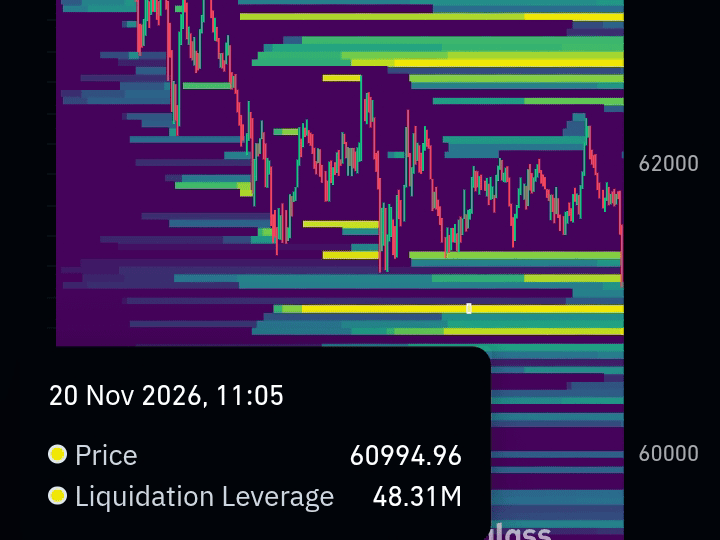
BearishShort $BTC 48M liquidity at 60994 range
2
72

·
--

Article
Bullish🚀🔥 THE FUTURE IS BULLISH! 🐂💚
Crypto is more than just a market — it's a movement, a revolution, and a vision of the future. 🌍⚡
Every market cycle brings new opportunities, every challenge builds stronger believers, and every innovation takes us one step closer to a decentralized world.
Binance continues to be a major force in the global crypto ecosystem, bringing millions of people closer to digital assets, blockchain technology, and the future of finance. 💛
📈 Keep building.
🔥 Keep believing.
💎 Stay strong through every market cycle.
🚀 Never stop pushing forward.
The bears may bring the noise, but the bulls bring the vision. We are here for innovation, adoption, and long-term growth!
ONE COMMUNITY. ONE VISION. INFINITE POSSIBILITIES.
STAY BULLISH! 🐂🟢
#Binance #Bullish #Crypto #Bitcoin #Blockchain #Web3 #cryptouniverseofficial ryptoCommunity #BNB
Bullish
🚀🔥 THE FUTURE IS BULLISH! 🐂💚
Crypto is more than just a market — it's a movement, a revolution, and a vision of the future. 🌍⚡
Every market cycle brings new opportunities, every challenge builds stronger believers, and every innovation takes us one step closer to a decentralized world.
Binance continues to be a major force in the global crypto ecosystem, bringing millions of people closer to digital assets, blockchain technology, and the future of finance. 💛
📈 Keep building.
🔥 Keep believing.
💎 Stay strong through every market cycle.
🚀 Never stop pushing forward.
The bears may bring the noise, but the bulls bring the vision. We are here for innovation, adoption, and long-term growth!
ONE COMMUNITY. ONE VISION. INFINITE POSSIBILITIES.
STAY BULLISH! 🐂🟢
#Binance #Bullish #Crypto #Bitcoin #Blockchain #Web3 #cryptouniverseofficial ryptoCommunity #BNB
77
Log in to explore more content
Join global crypto users on Binance Square
⚡️ Get latest and useful information about crypto.
💬 Trusted by the world’s largest crypto exchange.
👍 Discover real insights from verified creators.
Email / Phone number
Trending Topics
1
#CanBTCReboundAfterFallingBelow60K?
0 views
397 Discussing
2
#GlobalStocksFaceLongestLosingStreakSince2023
0 views
439 Discussing
3
#AnthropicPlungesTowardIPOPriceonDay2
0 views
148 Discussing
4
#GaoTengBitcoinETFListsOnHKEX
0 views
351 Discussing
5
#TradFiForBeginners
946,825 views
5,745 Discussing
6
#NvidiaBoardReportedlySplitOverHuang’sReturn
258,674 views
2,538 Discussing
7
#TetherBurns8BillionUSDTInPast20Days
0 views
141 Discussing
8
#BitcoinWalletSignatureFlawExploitableWithinSeconds
0 views
67 Discussing
9
#CanGTA6'sLaunchLiftTTWOShares?
207,868 views
1,783 Discussing
10
#HongKongProposesSFCLicensingForFourVirtualAssetServices
404 views
35 Discussing