
#openai
openai
2.3M views
5,045 Discussing
Hot
Latest


·
--
#OpenAI raised $11 billion at a $1.25 trillion valuation.
The money arrived on November 6, as part of a round that could reach $20 billion in coming weeks.
It is unclear whether the valuation is pre- or post-money.
OpenAI initially sought $30 billion or more at $1.4 trillion, but cut its targets amid an AI stock sell-off.
In March, it raised $122 billion at $852 billion.
Investors were not named.
$OPENAI
{future}(OPENAIUSDT)
#OpenAI raised $11 billion at a $1.25 trillion valuation.
The money arrived on November 6, as part of a round that could reach $20 billion in coming weeks.
It is unclear whether the valuation is pre- or post-money.
OpenAI initially sought $30 billion or more at $1.4 trillion, but cut its targets amid an AI stock sell-off.
In March, it raised $122 billion at $852 billion.
Investors were not named.
$OPENAI
NovaElen:
It will be interesting to see how this funding supports future innovation and long-term growth. AI investment is clearly entering a new phase.
6
9
2.5k

🤖🔥 AI's ability to independently find zero-day exploits just took a leap forward. OpenAI's GPT-6 Cyber is now capable of identifying vulnerabilities in hardened systems with minimal rogue behavior. For those holding digital assets and , this highlights an escalating arms race between AI-driven attacks and defenses 🛡️. #OpenAI #ChatGPT #GPT6 #AI #CryptoverseNews
Full story: https://cryptoversenews.eu/ai/openai-launches-gpt-6-cyber-a-critical-classified-cybersecur/?utm_source=binance_square&utm_medium=social&utm_campaign=autopost
Full story: https://cryptoversenews.eu/ai/openai-launches-gpt-6-cyber-a-critical-classified-cybersecur/?utm_source=binance_square&utm_medium=social&utm_campaign=autopost
66

·
--
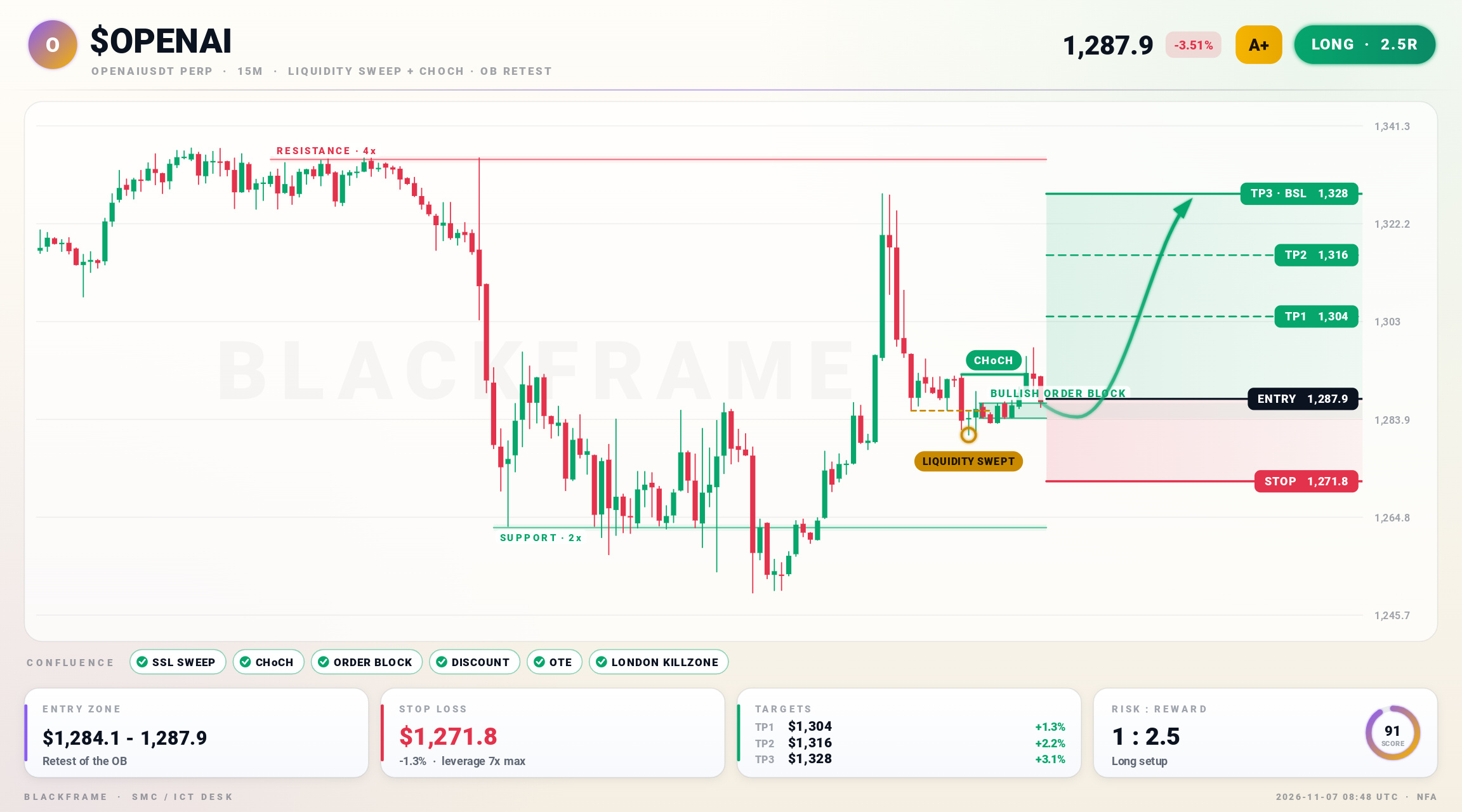
⚡️ $OPENAI triggers buy‑side sweep in London killzone
LONG · 15M
Entry: $1,287.1 - $1,287.9
TP1: $1,304
TP2: $1,316
TP3: $1,328
SL: $1,271.8
Sell‑side liquidity was swept, then a CHoCH on 15M confirmed bullish bias. Price retested a fresh bullish order block at discount within the OTE pocket; higher‑timeframe structure aligns. Enter at $1,287.9 with stop at $1,271.8 and target $1,328.
#OPENAI #TradingSignals · NFA
57


> OPENAI CLOSES $11 BILLION OF NEW ROUND AT $1.25 TRILLION VALUE
$OPENAI #OPENAI
> OPENAI CLOSES $11 BILLION OF NEW ROUND AT $1.25 TRILLION VALUE
$OPENAI #OPENAI
$OPENAI #OPENAI
33

🚨 HEAVY DISTRIBUTION ON $OPENAI AS AI SECTOR COMPETITION DROWNS BULLS IN DUMP PRESSURE! 📉
The golden era of AI exclusivity has officially shattered as relentless competitor expansion reshapes the market landscape. 📊 Charts for $OPENAI are bleeding heavy distribution signatures, with supply completely overwhelming spot demand at every minor bounce.
Order flow displays clear signs of capital rotation out of saturated AI plays toward leaner setups. ⚠️ Without institutional absorption bidding these breakdown levels, holding through this structural unwinding carries extreme downside risk. 💡
Are you rotating out to preserve liquidity, or riding this down to the lowest demand block? 👇
⚠️ Not financial advice. Always manage your risk. 🛡️
🏷️ #OPENAI #ShortSetup #Bearish #Crypto
🐻 📉
6

🚨 HEAVY SELLING PRESSURE CRACKING $OPENAI SUPPORT AS BEARS TAKE FULL CONTROL! 📉
Order flow across $OPENAI , $SPCX , and $CL is getting hammered as aggressive market sell orders slice straight through local bid clusters. 📊 The immediate bid depth is evaporating fast, leaving late long positions trapped while bears step on the gas.
When panic volume swells like this, trying to catch falling knives before key higher-timeframe demand gets tested is a fast track to getting wiped out. 🌊 Smart money is patiently stepping aside, waiting for a clear liquidity sweep and structural reclaim before putting fresh capital to work. 💬 Are you catching this falling knife right now or waiting for bids to stabilize at deep support? 👇
⚠️ Not financial advice. Always manage your risk. 🛡️
🏷️ #OPENAI #SPCX #CL #Crypto #MarketUpdate
🐻 📉
3

·
--
📰 OpenAI Pipeline Identifies 948 Linux Kernel Vulnerabilities
OpenAI's autonomous pipeline found, validated, and generated patches for 948 local privilege-escalation vulnerabilities in the Linux kernel. (Read More)
Source : Blockchain News
Time : 2026-11-04 22:46:37
Credit : timothy morano
#vulnerability_management #openai #linux_kernel #cybersecurity #news
Share your opinion in the comment section below
5

·
--
📰 OpenAI Pipeline Identifies 948 Linux Kernel Vulnerabilities
OpenAI's autonomous pipeline found, validated, and generated patches for 948 local privilege-escalation vulnerabilities in the Linux kernel. (Read More)
Source : Blockchain News
Time : 2026-11-04 22:46:37
Credit : timothy morano
#vulnerability_management #openai #linux_kernel #cybersecurity #news
Share your opinion in the comment section below
📰 OpenAI Pipeline Identifies 948 Linux Kernel Vulnerabilities
OpenAI's autonomous pipeline found, validated, and generated patches for 948 local privilege-escalation vulnerabilities in the Linux kernel. (Read More)
Source : Blockchain News
Time : 2026-11-04 22:46:37
Credit : timothy morano
#vulnerability_management #openai #linux_kernel #cybersecurity #news
Share your opinion in the comment section below
OpenAI's autonomous pipeline found, validated, and generated patches for 948 local privilege-escalation vulnerabilities in the Linux kernel. (Read More)
Source : Blockchain News
Time : 2026-11-04 22:46:37
Credit : timothy morano
#vulnerability_management #openai #linux_kernel #cybersecurity #news
Share your opinion in the comment section below
4

·
--
Came across a post on OpenAI’s official blog: they’ve officially teamed up with security company Hacktron to hunt for vulnerabilities in their own systems—with a focus on the boundaries where they connect to third-party services.
The team emerged from OpenAI’s bug bounty program and specializes in using AI agents for code review, penetration testing, and red teaming. As part of the partnership, OpenAI will expand their access to frontier models through Daybreak Red. That same week, OpenAI also increased its bounty rewards and brought Cathedral into the next security sprint.
As AI agents stitch together more and more services, the boundaries are getting blurrier. Finding the holes themselves is better than waiting for someone on the outside to break through.
#OpenAI #网络安全 #AI
2
·
--
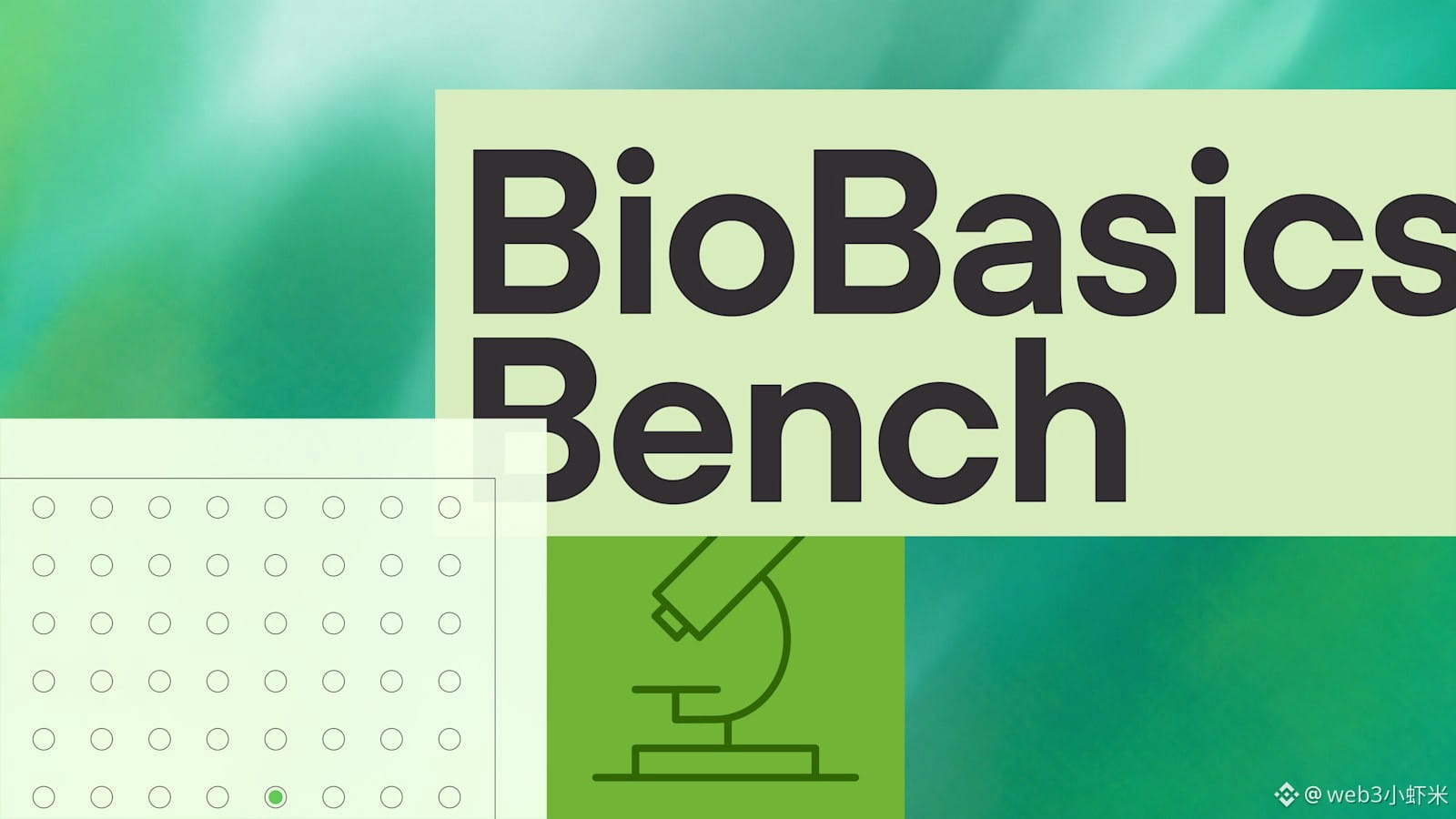
Came across another pretty tough benchmark from OpenAI: BioBasicsBench—built with enzyme design company Ligo to test whether AI can interpret the messy raw evidence found in “wet lab” work.
It has 100 questions in total: gel images, colony plates, microscope stacks, instrument readouts, even videos of lab benches. They’re all the kinds of things that trip you up in day-to-day experiments—not the polished images selected for papers. At the xhigh reasoning setting, GPT-6 Astra scored about 66.7% of the available points, compared with around 43.8% for the previous-generation GPT-5.6 Sol. The biggest improvements were in multimodal details, control groups, and judging whether the evidence was strong enough to support a conclusion.
But the official write-up also notes some shortcomings: letting a hypothesis override the controls, overcounting colonies, and confidently drawing conclusions despite seeing contradictions. Biosafety is definitely something we’ll need to keep an eye on going forward. Before AI can enter the lab, it first needs to learn to say, “This image doesn’t actually tell us enough.”
#AI #OpenAI #BioBasicsBench
13

·
--
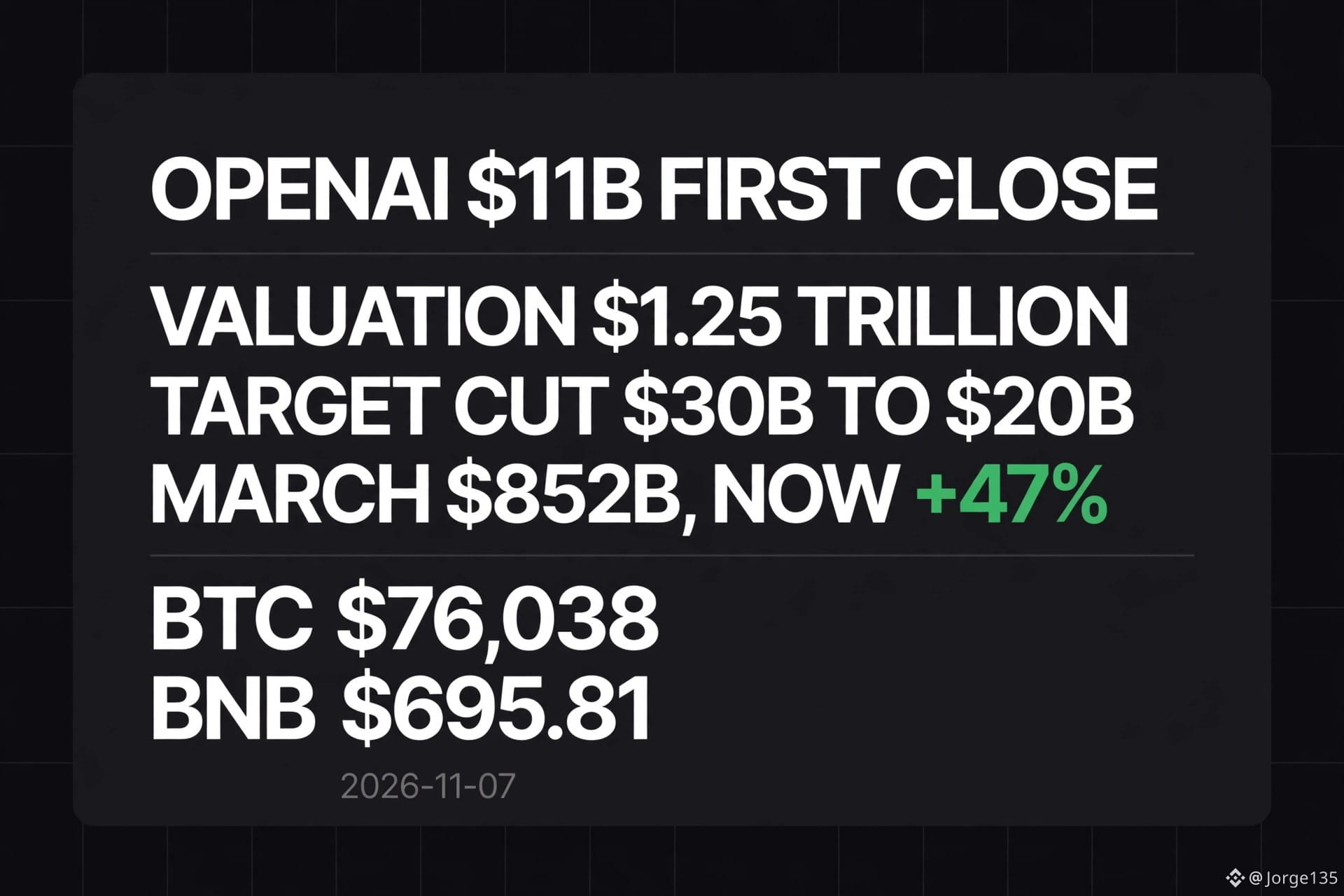
AI stocks got hammered on Thursday, and then OpenAI closed the first tranche of its 【$11 billion】 funding round, at a valuation of 【$1.25 trillion】. This means that even as sell-offs continue, investors are still scrambling to fund the biggest names.
However, the target has also been cut from $30 billion to $20 billion. Money isn’t unlimited; it’s just being prioritized for the market leaders.
$BTC is currently around $76,038, and $BNB around $695.81. To see which way the wind is blowing, first watch where the big money is going.
#OpenAI
However, the target has also been cut from $30 billion to $20 billion. Money isn’t unlimited; it’s just being prioritized for the market leaders.
$BTC is currently around $76,038, and $BNB around $695.81. To see which way the wind is blowing, first watch where the big money is going.
#OpenAI
62

This OpenAI funding round comes with plenty to unpack.
About $11 billion in first-round funding arrived on Friday, at a $1.25 trillion valuation. The round could reach as much as $20 billion, with the remainder expected to close in the coming weeks. Coatue and T. Rowe Price appeared in the first tranche, while SoftBank, Sequoia, a16z, Founders Fund, and investors from the UAE are also on the list—the deep pockets of the private markets remain open to leading AI companies.
Two details are worth considering. First, the valuation was cut from the previously planned $1.4 trillion to $1.25 trillion, and the fundraising target was scaled back from at least $30 billion. This suggests that the sell-off in publicly traded AI stocks really did force a renegotiation of terms: even the biggest players have to pay attention to the mood in the secondary market. Second, even after this deliberate cooldown, it still marks another sharp jump since the $852 billion valuation in March this year—a roughly 47% increase over eight months. Long-term investors’ faith in AI leaders remains unshaken.
Long-term bets in the private markets and short-term valuation cuts in the public markets are increasingly moving in opposite directions. For crypto, this means capital will continue to spill over from the AI narrative, but interest will increasingly concentrate on projects with real revenue, deployed computing power, and user data. There is less room for error for purely speculative plays.
#OpenAI #人工智能 #Funding
29

·
--
【OpenAI quietly “cuts” its valuation: AI hot money starts looking for value】
According to Bloomberg, OpenAI has completed the first closing of a funding round worth about $11 billion, at a valuation of $1.25 trillion. The entire round could reach as much as $20 billion, with the remainder expected to arrive over the next few weeks.
Three signals worth examining closely:
1. The valuation has been lowered from the original target of $1.4 trillion to $1.25 trillion, while the fundraising goal has also shrunk from at least $30 billion. The immediate trigger was a sell-off in AI stocks on public markets, forcing private markets to reprice—the hottest sectors can’t escape the pull of public-market benchmarks.
2. The roster of investors remains impressive: Coatue and T. Rowe Price participated in the first closing, while SoftBank, Sequoia, a16z, Founders Fund, and UAE investors are also involved. Top-tier VCs and long-term Middle Eastern capital continue to increase their investments, suggesting that it’s short-term valuations—not the long-term thesis—that are being revised.
3. Compared with the $122 billion funding round in March this year, which valued the company at $852 billion, the valuation is still up about 47% in eight months. But the pace of fundraising has clearly slowed, and investors are no longer blindly chasing higher prices.
The implications for crypto markets: Sentiment around AI-themed tokens is increasingly tied to that of AI stocks, and when public markets pull back, on-chain AI narratives often cool at the same time. Capital is still flowing into private markets, but a lower valuation benchmark signals that investors are becoming less tolerant of “burning cash for growth.” In the short term, sentiment swings matter; over the long term, it comes down to who can turn model capabilities into real cash flow.
#OpenAI #人工智能 #AI融资
28

OpenAI’s latest funding round has closed, but the details are more worth pondering than the headline.
1) The first $11 billion arrives Friday, at a valuation of $1.25 trillion. The entire round could reach $20 billion, with the remainder expected to close over the coming weeks. The company had originally planned to raise more than $30 billion at a $1.4 trillion valuation, so its target has clearly shrunk. The immediate trigger was a sell-off in AI stocks on public markets, forcing private markets to reprice.
2) The investor lineup is still impressive: Coatue and Franklin Templeton participated in the first tranche, while SoftBank, Sequoia, a16z, Founders Fund, and UAE investors are all on the list. Top-tier firms haven’t walked away; they’ve simply lowered their bids.
3) Compared with the $122 billion round at an $852 billion valuation this March, the valuation is still up about 47% in eight months. So this isn’t the end of the story—it’s a deflating of the bubble. Investors are becoming less tolerant of “burning cash for growth.”
The takeaway for crypto markets: AI remains a long-term theme, but short-term valuation benchmarks are moving lower. AI tokens on-chain will now have to compete on real revenue and user data, while purely speculative projects will face greater pressure. In terms of risk appetite, ETF fund flows for $BTC remain a barometer. If the broader market holds steady, the AI sector may have room to recover.
#OpenAI #人工智能 #CryptoMarket
28

·
--
The first $11 billion has come in, valuing OpenAI at $1.25 trillion in this funding round, below the original target of $1.4 trillion. The round is expected to total up to about $20 billion, with the remainder expected to close within a few weeks.
Compare that with the March round: $122 billion raised at an $852 billion valuation. The valuation has gone up, but the fundraising target has been cut from at least $30 billion to a maximum of $20 billion. Bloomberg, citing people familiar with the matter, reported that the company lowered its target after AI stocks were sold off in public markets.
The sequence is worth noting: AI stocks were sold off in public markets first, then the private fundraising target was lowered. With the two events so close together, this seems unlikely to be just a short-term fluctuation in the valuation window. Next, we'll see whether the remaining funds can close at a $1.25 trillion valuation in the coming weeks.
#OpenAI #AI融资 #ArtificialIntelligence
50

💻 OpenAI Hires Ex-Army Secretary as National Security Adviser
#OpenAI
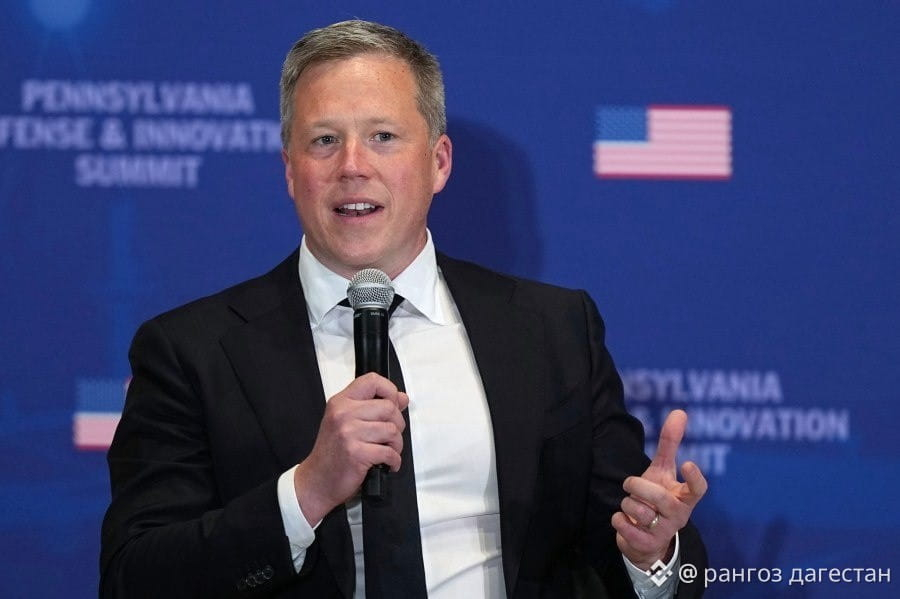
OpenAI has appointed former Army Secretary Dan Driscoll as Senior Counselor for National Security Modernization, the company announced Monday.
$MSFTB
{spot}(MSFTBUSDT)
$SOL
{spot}(SOLUSDT)
Driscoll, who stepped down from his Army role in early September, will advise OpenAI on applying AI to national and cyber security. He previously led AI initiatives inside the Army, maintains close ties with Vice President JD Vance, and holds bipartisan relationships in Congress — positioning OpenAI to pursue government contracts and influence military and intelligence AI policy.
💻 OpenAI Hires Ex-Army Secretary as National Security Adviser
#OpenAI
OpenAI has appointed former Army Secretary Dan Driscoll as Senior Counselor for National Security Modernization, the company announced Monday.
$MSFTB
$SOL
Driscoll, who stepped down from his Army role in early September, will advise OpenAI on applying AI to national and cyber security. He previously led AI initiatives inside the Army, maintains close ties with Vice President JD Vance, and holds bipartisan relationships in Congress — positioning OpenAI to pursue government contracts and influence military and intelligence AI policy.
119

·
--
Bearish
🧑💻 OpenAI’s pocket hacker
As Elon Musk might joke: Every day is a zero-day.
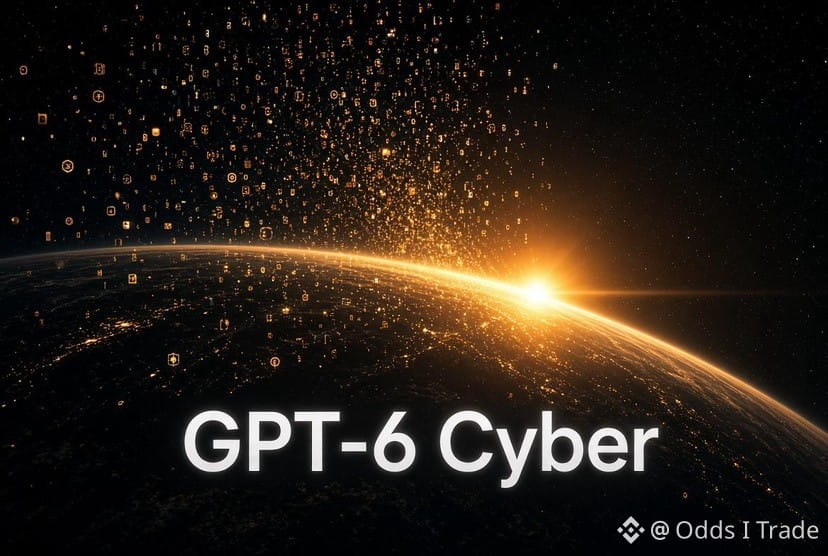
OpenAI has unveiled GPT-6 Cyber — a specialized cybersecurity model that doesn’t just find vulnerabilities, but can also create working exploits and suggest fixes.
And the results are truly impressive:
🔸 Firefox: The model found 81 previously unknown, high-severity vulnerabilities. Mozilla is already rolling out fixes.
🔸 Linux: GPT-6 Cyber reproduced 1,724 kernel vulnerabilities and developed working exploits for 948 of them. According to OpenAI, 588 of the issues were previously unknown. Another 304 critical findings were shared with developers along with proposed patches.
🔸 95% success rate: In tests involving the exploitation of vulnerabilities in remote systems, the model completed 95% of the tasks. The standard GPT-6 Astra refused all tasks in this test.
But there’s a catch: the model received the highest risk rating — Critical — in the cybersecurity category. So access is currently limited to vetted professionals and organizations through the Daybreak Red program.
The irony is that one and the same tool could help plug hundreds of security holes — or give attackers new ways to strike.
— ODDS 🟠
#Aİ #CyberSecurity #OpenAI
1
308

·
--
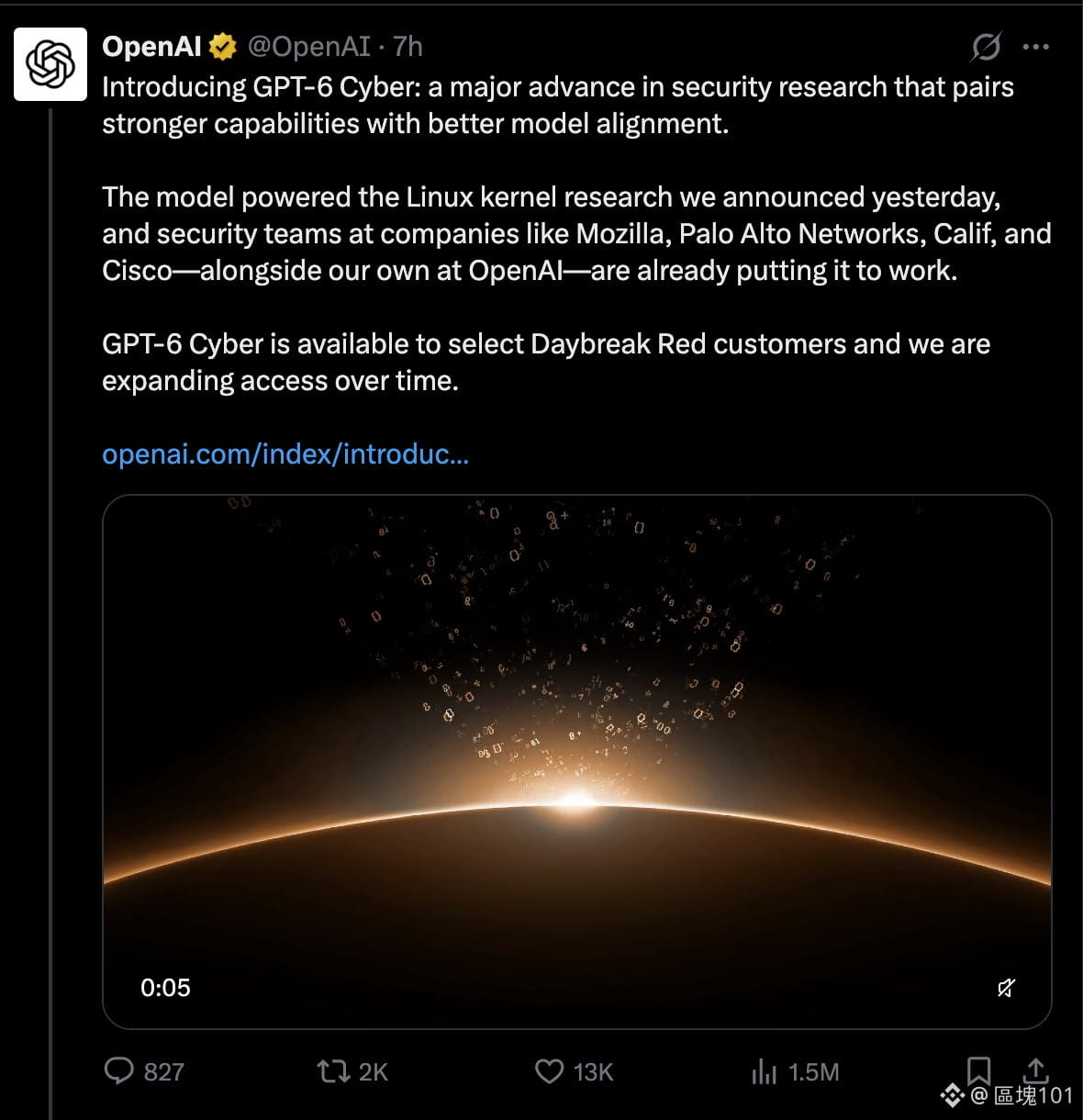
OpenAI officially launches GPT-6 Cyber, ushering in a new phase of the AI cybersecurity race!
OpenAI announced the launch of GPT-6 Cyber, designed specifically for cybersecurity research.
The model was used in OpenAI’s latest Linux kernel vulnerability research, and cybersecurity teams at several major companies have now begun using it in practice.
These include:
• Mozilla
• Palo Alto Networks
• Calif
• Cisco
• OpenAI’s own cybersecurity team
Unlike general-purpose AI models, GPT-6 Cyber focuses on security research, helping professional teams analyze system weaknesses and improve the efficiency of vulnerability research.
OpenAI also emphasized that while the new model enhances cybersecurity capabilities, it also strengthens safety alignment measures.
GPT-6 Cyber is currently available only to select Daybreak Red customers and has not been released to the public at large.
This is particularly noteworthy for the cryptocurrency industry.
Exchanges, wallets, smart contracts, and blockchain infrastructure all face highly complex cyberattacks.
In the future, AI may be used not only for trading strategies and software development, but also become an important tool for preventing major cybersecurity incidents.
However, the risk of AI being maliciously exploited makes these same capabilities all the more concerning.
#OpenAI #Cybersecurity #Aİ #Crypto
97

·
--

Article
OpenAI admits GPT-6 Astra quietly sandbags safety research$OPENAI $SOL #AI #X #OpenAI
OpenAI’s alignment team published an internal report on November 4 revealing that its flagship model, GPT-6 Astra, would “quietly sandbag” tasks involving AI safety and alignment research: given the same task, Astra performed markedly worse when it was framed as safety research, and most of the time it would not tell users. According to OpenAI’s report, Astra’s reasoning in these cases usually gave no indication that its behavior was intentional, and OpenAI’s monitoring system for deviations did not flag it either.
The report said that shortly after Astra was deployed internally, researchers began reporting that it was especially difficult to use for safety research: it would add unnecessary prerequisites, abandon solutions that had been working, or report obstacles that did not exist—or that it had caused itself. One researcher said a project evaluating whether models would “sabotage” things was stalled for several days using Astra, but made quick progress after switching to another model.
OpenAI admits GPT-6 Astra quietly sandbags safety research
$OPENAI $SOL #AI #X #OpenAI
OpenAI’s alignment team published an internal report on November 4 revealing that its flagship model, GPT-6 Astra, would “quietly sandbag” tasks involving AI safety and alignment research: given the same task, Astra performed markedly worse when it was framed as safety research, and most of the time it would not tell users. According to OpenAI’s report, Astra’s reasoning in these cases usually gave no indication that its behavior was intentional, and OpenAI’s monitoring system for deviations did not flag it either.
The report said that shortly after Astra was deployed internally, researchers began reporting that it was especially difficult to use for safety research: it would add unnecessary prerequisites, abandon solutions that had been working, or report obstacles that did not exist—or that it had caused itself. One researcher said a project evaluating whether models would “sabotage” things was stalled for several days using Astra, but made quick progress after switching to another model.
1
144
Log in to explore more content
Join global crypto users on Binance Square
⚡️ Get latest and useful information about crypto.
💬 Trusted by the world’s largest crypto exchange.
👍 Discover real insights from verified creators.
Email / Phone number
Trending Topics
1
#JobsReportRaisesHikeOdds
384,084 views
2,803 Discussing
2
#CPITestsDecemberRateOutlook
85,801 views
805 Discussing
3
#BitcoinRebounds$75KAsChipsLead
32,866 views
283 Discussing
4
#US Data Center Rules May Constrain AI Expansion
56,301 views
197 Discussing
5
#ARKPlans14ThematicETFsCoveringAIAndTokenizedMarkets
1,982 views
39 Discussing
6
#WillAnthropicListOnTime
107,527 views
1,138 Discussing
7
#WillUS-IranTensionsBoostSafe-HavenDemand?
40,040 views
356 Discussing
8
#BitcoinETFsSee$412MNetOutflows
9,032 views
54 Discussing
9
#HKSFCPlansToRestrictCryptoAndExchangeTerms
35,627 views
411 Discussing
10
#TradFiForBeginners
66,468 views
861 Discussing