
#mineria
mineria
169,418 views
225 Discussing
Hot
Latest


Article
HOW ARE A NODE AND A MINER DIFFERENT?
In Bitcoin, there are two activities that are often confused: verifying blockchain information and participating in the production of new blocks....
Although both are important to the system's operation, they are not the same task.
A full node verifies. A miner participates in the competition to produce blocks.
But this difference deserves a more precise explanation...
WHAT ROLE DOES EACH ONE PLAY?
A full node uses the software it runs to check that blocks and transactions comply with the protocol rules.
HOW ARE A NODE AND A MINER DIFFERENT?
In Bitcoin, there are two activities that are often confused: verifying blockchain information and participating in the production of new blocks....
Although both are important to the system's operation, they are not the same task.
A full node verifies. A miner participates in the competition to produce blocks.
But this difference deserves a more precise explanation...
WHAT ROLE DOES EACH ONE PLAY?
A full node uses the software it runs to check that blocks and transactions comply with the protocol rules.
1
93

Verified
Article
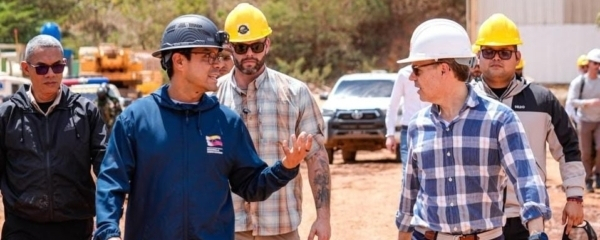
John Barrett: U.S. companies are ready to develop mining in VenezuelaThe U.S. chargé d’affaires in Venezuela, John Barrett, stated that U.S. companies, “leaders in innovation and technology,” are ready to work in Venezuelan territory.
The U.S. chargé d’affaires in Venezuela, John Barrett, announced that U.S. companies in the mining sector are ready to develop investments in the country.
Following a visit to the Chocó Plant and the Santa Bárbara and VBK gold mines of the Venezuelan Mining Corporation (CVM), in Bolívar state, the U.S. official said he was able to see the “great potential” in the sector.
John Barrett: U.S. companies are ready to develop mining in Venezuela
The U.S. chargé d’affaires in Venezuela, John Barrett, stated that U.S. companies, “leaders in innovation and technology,” are ready to work in Venezuelan territory.
The U.S. chargé d’affaires in Venezuela, John Barrett, announced that U.S. companies in the mining sector are ready to develop investments in the country.
Following a visit to the Chocó Plant and the Santa Bárbara and VBK gold mines of the Venezuelan Mining Corporation (CVM), in Bolívar state, the U.S. official said he was able to see the “great potential” in the sector.
548

🚨 BINANCE WILL SHUT DOWN ITS MINING SERVICE: DEADLINE AND WHAT TO DO
Binance confirmed that on November 10, 2026, at 04:00 Argentina time (07:00 UTC), Binance Pool and several associated services will cease operating.
⚠️ WHAT WILL STOP WORKING?
🔸 Binance Pool (a group of miners who share computing power).
🔸 Pool Savings and Cloud Mining.
🔸 Transaction Accelerator.
🔸 Mining alerts and API (automatic connection between systems).
🛠️ IF YOU USE THESE SERVICES:
1️⃣ Reconfigure your equipment to use another pool before the shutdown.
2️⃣ Review and withdraw any eligible Pool Savings positions.
3️⃣ Save your records: historical pages will no longer be available on 11/24.
4️⃣ Make sure your account can receive any pending rewards or refunds. Binance will process them according to the applicable terms.
📊 SCENARIOS
🔴 Risk: equipment not migrated or positions not managed by the deadline.
🟡 Watch: normal operation until the announced shutdown.
🟢 Improvement: orderly migration and settlement of eligible balances.
📌 OUR TAKE
This is the shutdown of a mining service, NOT the Binance exchange or $BTC trading.
This does not constitute an automatic BUY or SELL signal for Bitcoin.
📌 ALERT / NEWS / CONTEXT
#Binance #bitcoin #mineria #Crypto
129
Verified
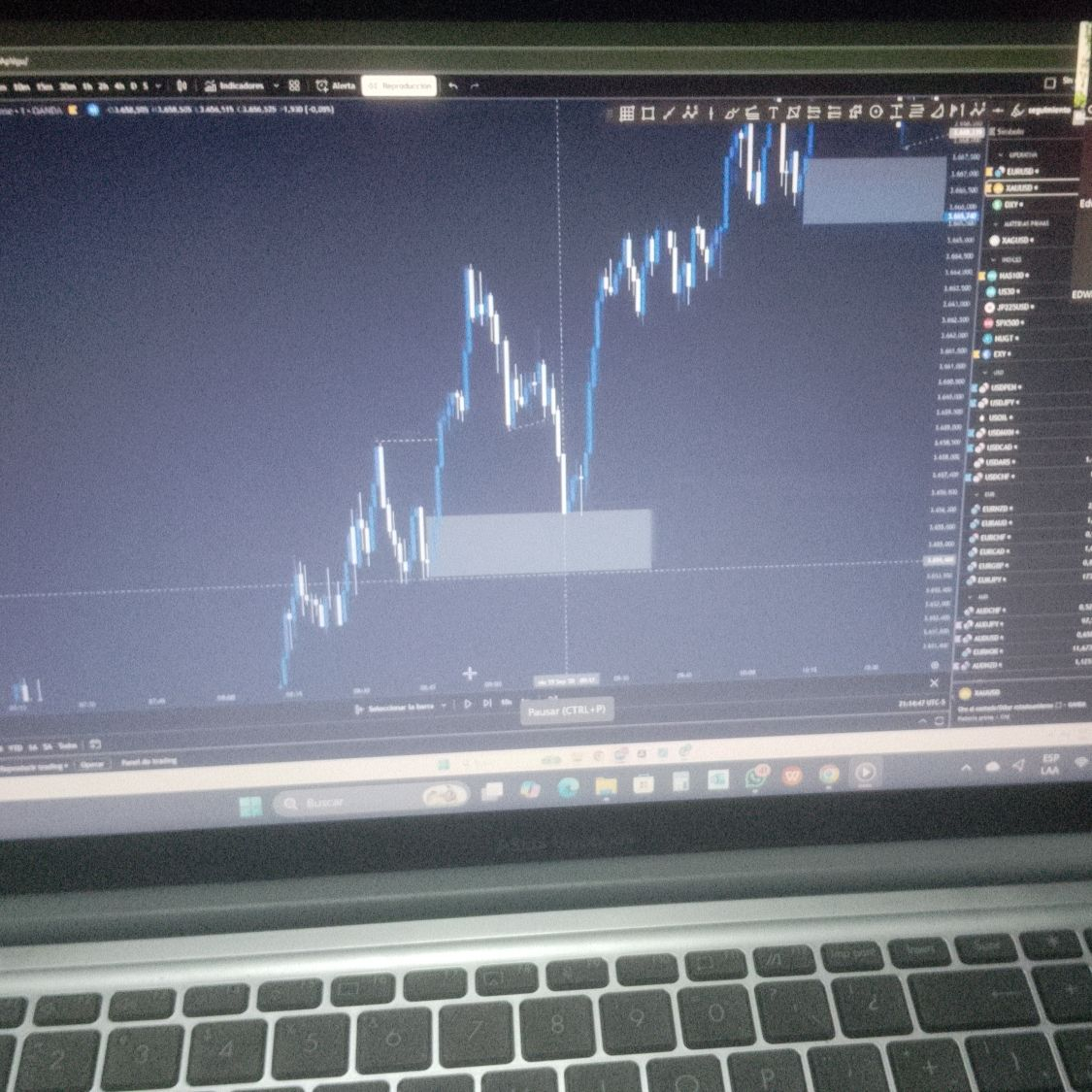
💻 Luke Dashjr wants to penalize profitable miners on his separate Bitcoin network, freezing funds or removing the subsidy for one month. It doesn’t make it more secure; instead, it defines which mining he wants to support, even if that leaves it more vulnerable.
#BTC #Binance #BinanceSquare #mineria
$BTC
{future}(BTCUSDT)
$BNB
{future}(BNBUSDT)
$ETH
{future}(ETHUSDT)
💻 Luke Dashjr wants to penalize profitable miners on his separate Bitcoin network, freezing funds or removing the subsidy for one month. It doesn’t make it more secure; instead, it defines which mining he wants to support, even if that leaves it more vulnerable.
#BTC #Binance #BinanceSquare #mineria
$BTC
$BNB
$ETH
#BTC #Binance #BinanceSquare #mineria
$BTC
$BNB
$ETH

1
735

·
--

Article
🔥 CRYPTO MINING How a pool works and cloud mining.📌 QUICK SUMMARY
- A mining pool brings together many miners to split rewards
- Cloud mining rents out power but scams are rampant
- If you're a newbie, buying crypto directly is safer
👇 Keep reading to get the full scoop
What is cryptocurrency mining?
It's the process of creating new coins and validating transactions
Miners use powerful computers to solve mathematical problems
The first one to solve it gets a reward
In Bitcoin, the reward today is 3.125 BTC per block
🔥 CRYPTO MINING How a pool works and cloud mining.
📌 QUICK SUMMARY
- A mining pool brings together many miners to split rewards
- Cloud mining rents out power but scams are rampant
- If you're a newbie, buying crypto directly is safer
👇 Keep reading to get the full scoop
What is cryptocurrency mining?
It's the process of creating new coins and validating transactions
Miners use powerful computers to solve mathematical problems
The first one to solve it gets a reward
In Bitcoin, the reward today is 3.125 BTC per block
189
·
--
Mining in America, viable? Central American countries without electrical infrastructure could offer in a niche to aspire to mine profitably? I read you in the comments #miningpool #miners #mineria #MiningOpportunity
Mining in America, viable? Central American countries without electrical infrastructure could offer in a niche to aspire to mine profitably? I read you in the comments #miningpool #miners #mineria #MiningOpportunity
105

·
--
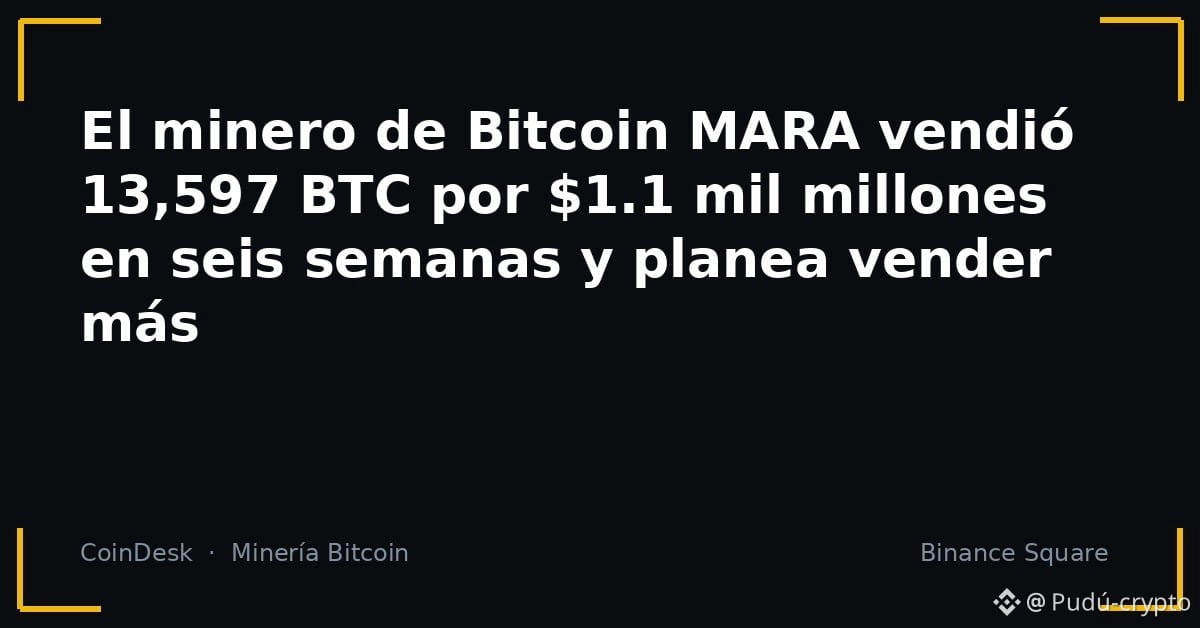
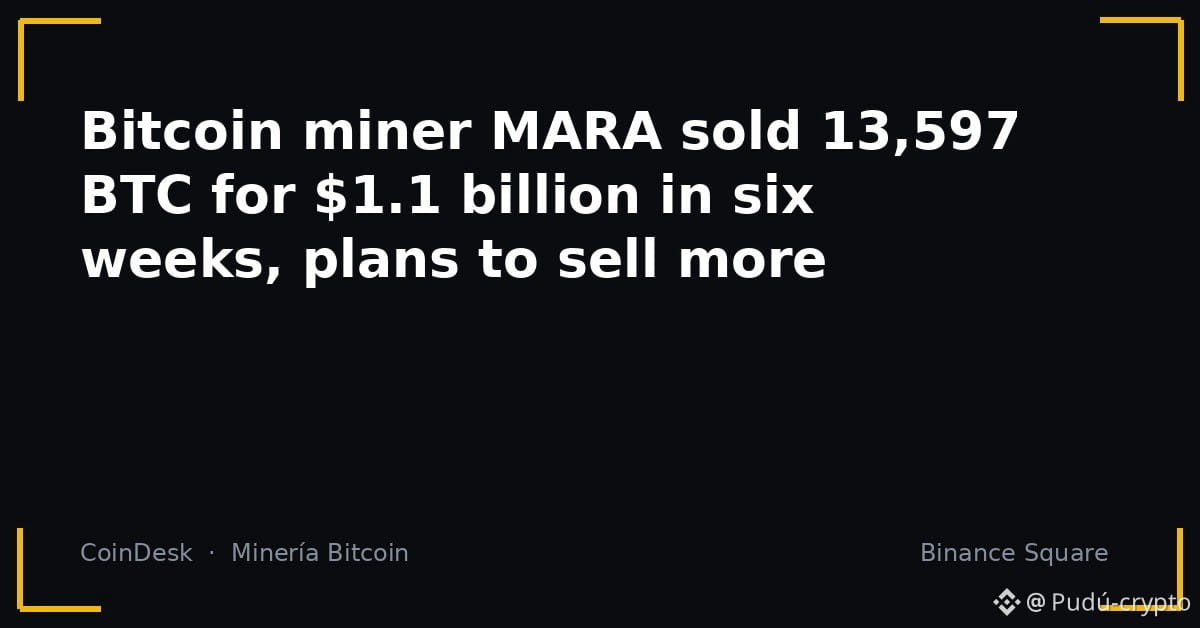
MARA let go of a significant portion of its reserves.
The mining company sold 13,597 units of $BTC in six weeks.
They raised $1.1 billion from this move.
With that money, they paid off all their crypto-backed loans.
Now they say the rest of their coins will fund data centers for artificial intelligence.
It’s a pretty clear strategic shift toward tech infrastructure.
What do you think of this treasury move?
#Bitcoin #MARA #Mining
126
Article
CAMIVEN promotes proposal for new regulations governing mining activity in VenezuelaThe trade association representing businesses in Venezuela’s private mining sector is calling for the industry to be revitalized so it can become a driver of development and exports, as it was in the past alongside the oil industry.
The Venezuelan Mining Chamber (CAMIVEN) has submitted a formal proposal for regulations implementing the new Organic Mining Law, published in Extraordinary Official Gazette No. 7,020 on April 16, 2026. The proposal is intended to improve the legal framework, stimulate mining activity as a strategic pillar of the economy, and revive exports.
CAMIVEN promotes proposal for new regulations governing mining activity in Venezuela
The trade association representing businesses in Venezuela’s private mining sector is calling for the industry to be revitalized so it can become a driver of development and exports, as it was in the past alongside the oil industry.
The Venezuelan Mining Chamber (CAMIVEN) has submitted a formal proposal for regulations implementing the new Organic Mining Law, published in Extraordinary Official Gazette No. 7,020 on April 16, 2026. The proposal is intended to improve the legal framework, stimulate mining activity as a strategic pillar of the economy, and revive exports.
The Venezuelan Mining Chamber (CAMIVEN) has submitted a formal proposal for regulations implementing the new Organic Mining Law, published in Extraordinary Official Gazette No. 7,020 on April 16, 2026. The proposal is intended to improve the legal framework, stimulate mining activity as a strategic pillar of the economy, and revive exports.
12


Verified
$BNB Binance Pool shuts down: What does it really mean, and how does it affect $BTC Bitcoin?
Many people have seen the news about Binance Pool shutting down this Tuesday, November 10, and are wondering what impact it will have. Here’s a simple, straightforward explanation:
1. What is a mining “pool”?
Mining Bitcoin on your own these days is like playing the lottery: it’s very hard to win. That’s why thousands of miners connect their machines to a “pool” (a shared group) to combine their computing power. When the group solves a block of transactions, the BTC reward is distributed among everyone. Binance had offered this service since 2020.
2. What happened to Binance Pool?
The numbers show that miners had already been gradually leaving:
- Its computing power fell by 65% in recent months.
- During the last week, out of the nearly 925 blocks mined worldwide, Binance Pool managed to find just one block (only 0.11% of the network).
- Because of this low activity, the service will officially go offline on November 10 at 07:00 UTC (along with cloud mining and the transaction accelerator).
3. Will the machines be turned off, or will money be lost?
Not at all. Bitcoin mining is flexible: when a pool shuts down, miners don’t turn off their equipment; they simply change the internet address in their machines’ settings and move to other major pools (such as Foundry USA, AntPool, or F2Pool).
Your funds on the Binance exchange are not at risk, and this has nothing to do with spot or futures trading.
With Binance leaving the scene, most of those miners are concentrating in the world’s two or three largest pools. This has reopened a discussion in the community about whether Bitcoin’s mining power is becoming concentrated in too few hands.
Do you think it’s risky for just two or three pools to control most of Bitcoin’s mining power, or do you trust the network’s decentralization?
#bitcoin #binancepool #Mineria
{future}(BTCUSDT)
{future}(BNBUSDT)
$BNB Binance Pool shuts down: What does it really mean, and how does it affect $BTC Bitcoin?
Many people have seen the news about Binance Pool shutting down this Tuesday, November 10, and are wondering what impact it will have. Here’s a simple, straightforward explanation:
1. What is a mining “pool”?
Mining Bitcoin on your own these days is like playing the lottery: it’s very hard to win. That’s why thousands of miners connect their machines to a “pool” (a shared group) to combine their computing power. When the group solves a block of transactions, the BTC reward is distributed among everyone. Binance had offered this service since 2020.
2. What happened to Binance Pool?
The numbers show that miners had already been gradually leaving:
- Its computing power fell by 65% in recent months.
- During the last week, out of the nearly 925 blocks mined worldwide, Binance Pool managed to find just one block (only 0.11% of the network).
- Because of this low activity, the service will officially go offline on November 10 at 07:00 UTC (along with cloud mining and the transaction accelerator).
3. Will the machines be turned off, or will money be lost?
Not at all. Bitcoin mining is flexible: when a pool shuts down, miners don’t turn off their equipment; they simply change the internet address in their machines’ settings and move to other major pools (such as Foundry USA, AntPool, or F2Pool).
Your funds on the Binance exchange are not at risk, and this has nothing to do with spot or futures trading.
With Binance leaving the scene, most of those miners are concentrating in the world’s two or three largest pools. This has reopened a discussion in the community about whether Bitcoin’s mining power is becoming concentrated in too few hands.
Do you think it’s risky for just two or three pools to control most of Bitcoin’s mining power, or do you trust the network’s decentralization?
#bitcoin #binancepool #Mineria
1
17
3.4k

Paraguay Part 2: The 1,000 MW at stake in the future of mining
After the collapse of Ueno Bank, there’s another story in Paraguay that the crypto market should be watching.
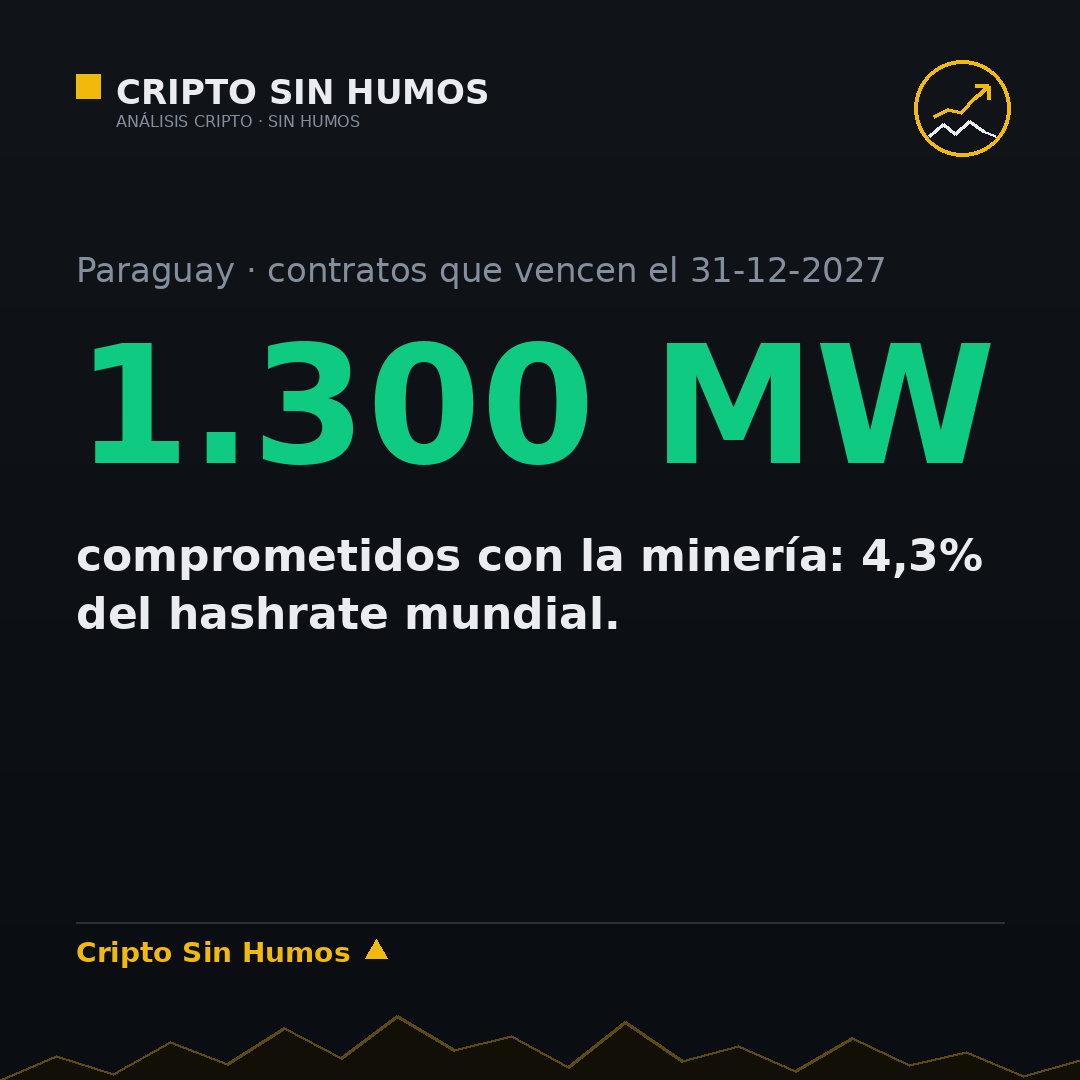
The country accounts for 4.3% of the global hashrate. ANDE, the state-owned power utility, has contracts with dozens of energy-intensive companies totaling 1,000 to 1,300 MW, with rates in US dollars and a non-extendable expiration date: December 31, 2027.
The sector pays around US$350 million a year. But the debate has shifted: there are proposals to cap mining at 700 MW and reserve energy for AI data centers, which pay more per MWh (US$48.91 compared with US$44 for mining), with a minimum rate of US$56 per MWh for the electricity-intensive sector.
For the global market, the question is what happens to 4.3% of the hashrate if those contracts aren’t renewed. For Paraguay, the question is whether it wants to be a mining country or a source of cheap energy for others.
Both answers affect energy prices and, in the long term, the cost of mining bitcoin.
What would you do: renew the contracts or raise the rate?
#Bitcoin #Mineria #BinanceSquare
This is not financial advice. Do your own research before investing.
349
·
--
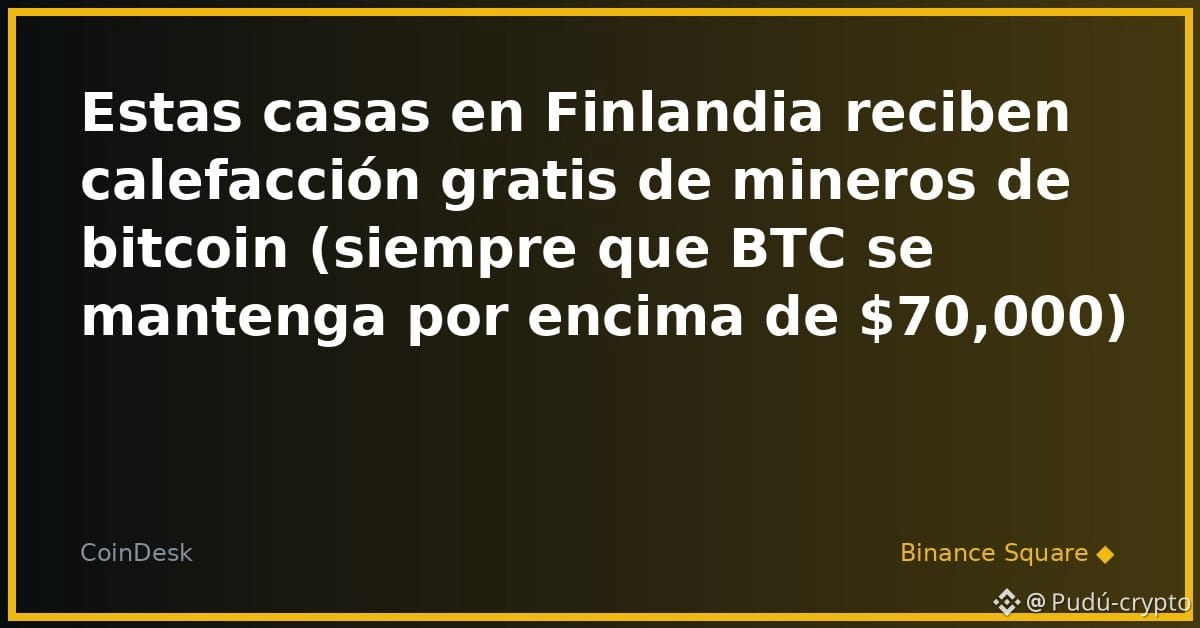
There’s an interesting way to make use of the heat generated by mining.
A startup in Finland installed 30 mining rigs for $BTC to heat homes.
What’s interesting is that the rigs generate more money than they spend on electricity.
As long as the price of $BTC stays above $70,000, the system is profitable.
It’s an efficient way to combine technology with everyday energy use.
What do you think of this use for mining?
#Bitcoin #Mineria #Technology
133
Only 900,000 BTC left to mine: what it really means for 2028
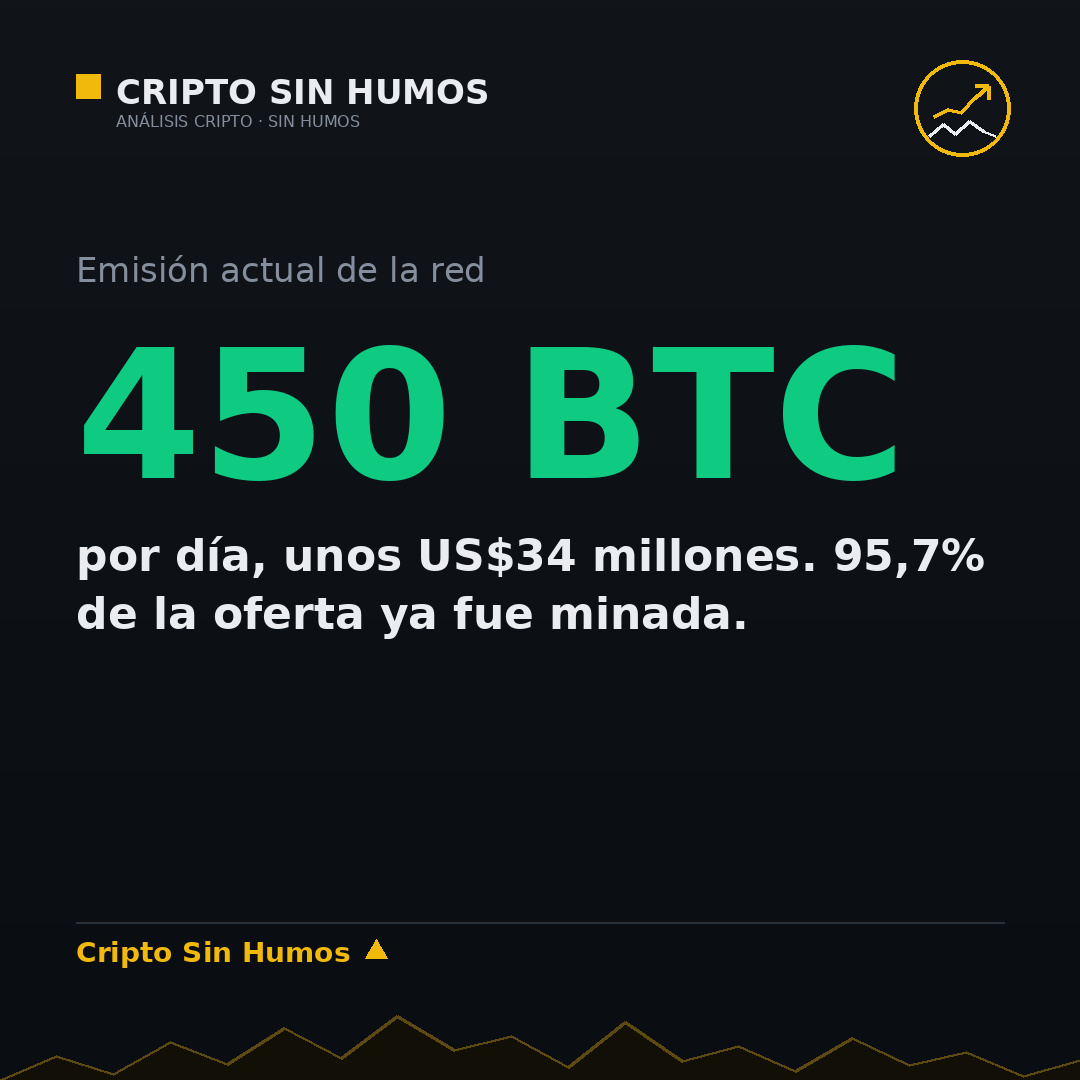
20.10 million bitcoin have already been mined: 95.7% of the 21 million. The 20 millionth block was reached on March 9, 2026. Today, the network issues about 450 coins per day, worth around US$34 million at current prices.
In April 2028, the halving will bring that figure down to ~225 BTC per day. New supply becomes marginal. That’s why the long-term price depends increasingly on demand—ETFs, companies, funds—and less and less on issuance.
That’s where Paraguay comes in, and not by coincidence: it accounts for 4.3% of the global hashrate, has 1,000 to 1,300 MW contracted with ANDE, pays around US$350 million a year for energy, and its contracts expire on December 31, 2027. If they aren’t renewed, that hashrate will move elsewhere—and the mining landscape with it.
What’s certain: scarcity is already priced in. What isn’t priced in is who controls the energy and who holds the keys.
Will the 2028 halving be the first one that doesn’t move the price?
#Bitcoin #Mineria #BinanceSquare
This is not financial advice. Do your own research before investing.
137
·
--
The Bitcoin mining sector is taking opposite paths.
Riot just closed a $28 billion contract for AI services.
To make it happen, they sold part of their $BTC reserve.
Meanwhile, Hut 8 didn't fare as well.
They reported lower revenue and higher operating costs.
It's interesting to see how two companies in the same sector are reacting so differently to the current market.
One is making a major bet on artificial intelligence, while the other is struggling with its numbers.
What do you think about this shift in focus toward AI?
#Bitcoin #Mineria #AI
33

·
--
Verified
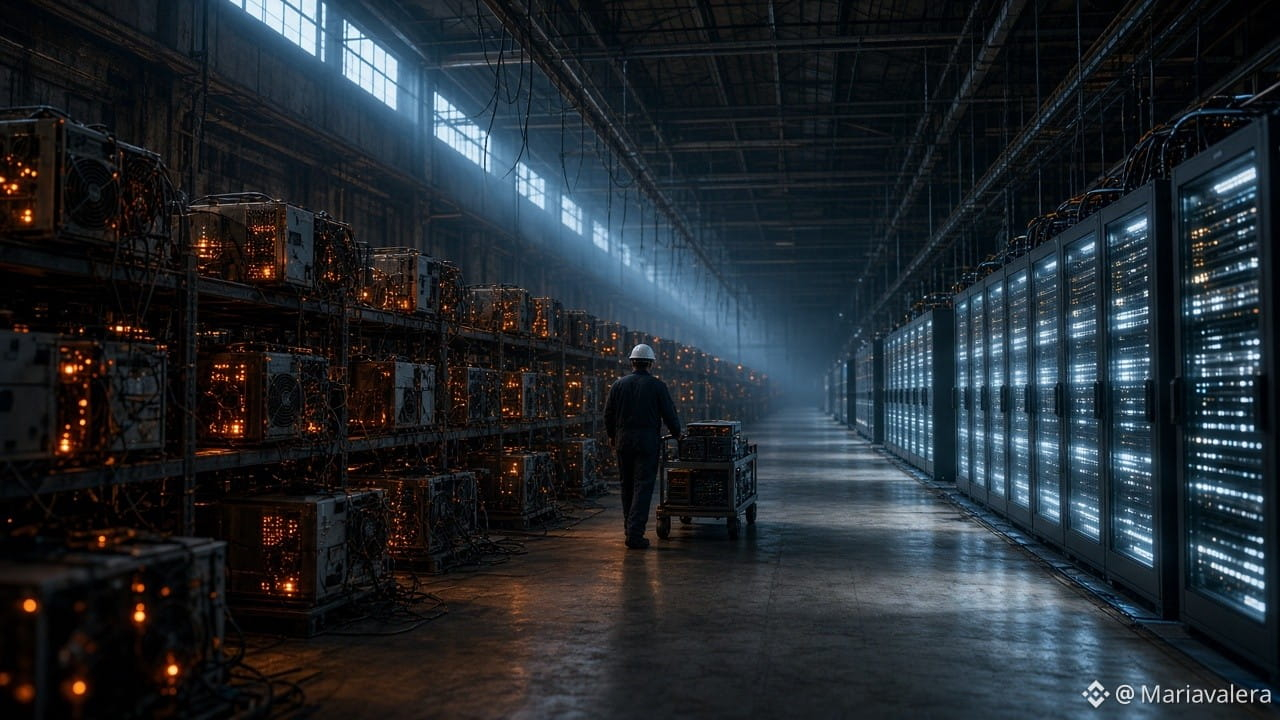
🚨 One of Wall Street’s BIGGEST Bitcoin miners sold another 1,000 BTC… bringing its total for the year to over 23,000 👀
The companies that mine Bitcoin are selling it off to bet on artificial intelligence.
⛏️ MARA, one of the largest publicly traded miners, sold another 1,000 BTC, worth about $80 million. In the first half of the year alone, it had already sold 23,093. That money is going toward paying off debt and building data centers for AI.
⚠️ The problem is that mining is getting more and more expensive. Network difficulty rose nearly 6% this month, so each machine earns fewer coins using the same amount of electricity. And now, AI cloud companies are running out of loans, adding pressure for miners that switched to that business.
₿ Bitcoin closed at 80,006 yesterday, Monday, and is hovering around 79,700 today. Meanwhile, Bitcoin ETFs saw inflows of $110 million again after two days of outflows.
💡 What this means for your wallet: when miners sell, more supply enters the market, putting the brakes on price increases. But if Wall Street keeps buying through ETFs, that selling gets absorbed. The Fed will decide interest rates this Wednesday, and that’s when we’ll see which side has the upper hand.
What do you think will win: miners’ selling or Wall Street’s buying? 👇
#Bitcoin #BTC #Fed #Mineria #CriptoNoticias
692

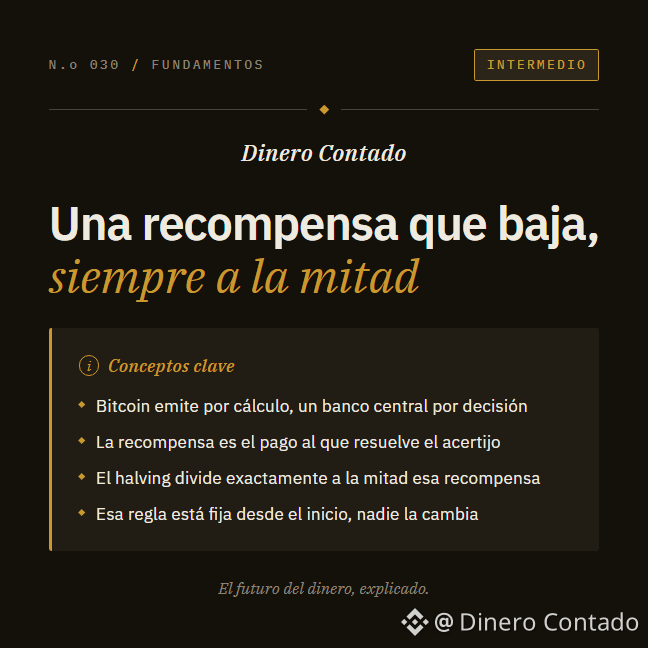
Every $BTC new coin comes from a calculation, not a printing press.
Someone turns on a powerful computer and competes against thousands of others to solve a mathematical puzzle. The first to solve it adds the next block of transactions to the chain. And the network pays them for it—with coins that didn’t exist a second earlier.
That payment has a built-in limit. The protocol has a written rule: after a certain number of blocks, the payment is cut exactly in half. It doesn’t grow or change at anyone’s discretion; it’s simply cut. Again and again, always in half from the previous amount, approaching zero without ever quite reaching it.
The payment earned by whoever mines is called the block reward. And the cut that divides it in two is called a halving.
KEY CONCEPTS
- The reward isn’t fixed forever: it decreases according to a rule in the code, not anyone’s decision.
- Mining isn’t guaranteed profit: electricity, hardware, and competition all come into play.
- Halving isn’t exclusive to Bitcoin: other networks that use mining have similar adjustments.
- You can’t mine with just any laptop anymore: today it requires specialized equipment and a lot of computing power.
Just as a central bank decides how much money to print, the code of $BTC decides how much to issue. But that rule is set from the start, and no one can change it midway.
Transparency: Binance may pay us a commission if you trade after clicking an asset symbol or a price link in this post.
#Mineria #Halving #Criptomonedas #LedgerConfirmsUnauthorizedHardwareImplantInUserDevice #Blockchain
1
121

·
--
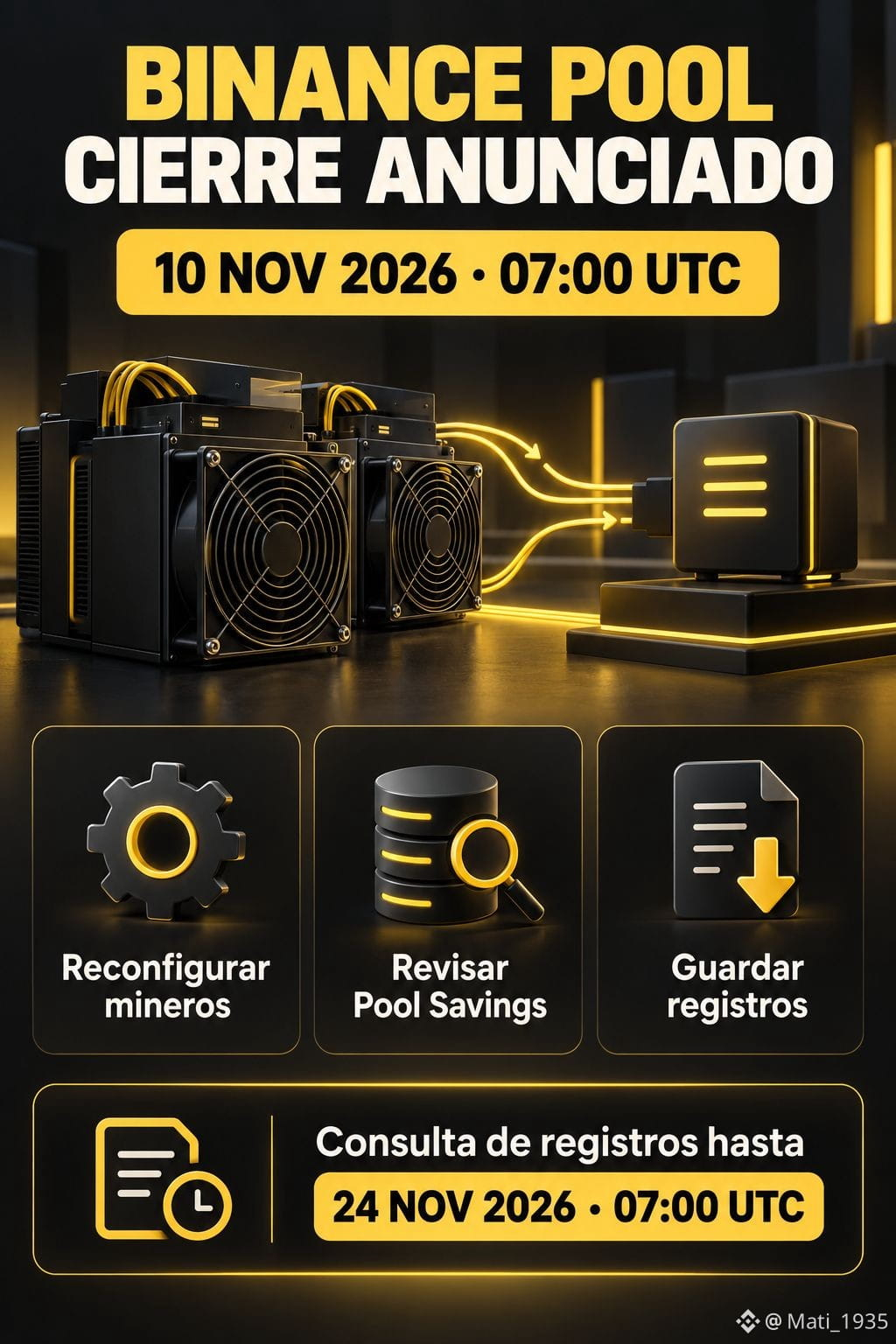
Binance Pool will close on November 10: key dates for miners
Binance announced on October 13 that it will close Binance Pool and its associated services on November 10, 2026, at 07:00 UTC. These include Pool Savings, Cloud Mining, the transaction accelerator, and pool alerts and APIs.
Equipment disconnections will begin at the cutoff, and mining addresses will be deactivated. Shares submitted after that will no longer be accepted or generate new rewards.
The notice asks users to reconfigure their miners to another pool before the closure and check how to redeem their Pool Savings positions. It also asks them to complete any applicable account and identity requirements before November 10 at 23:59 UTC to facilitate pending payments.
Eligible rewards, balances, or refunds will be processed after the cutoff, subject to product terms and applicable checks.
Records will remain available for consultation, where available, until November 24 at 07:00 UTC. Binance recommends saving any necessary reports.
BTC and BCH are among the pool's coins. The operational risk for users is leaving equipment connected to deactivated destinations or losing access to their history without having saved it.
Market reading: at 21:35 UTC on October 14, Binance Spot showed BTC at 81,917.99 USDT (-1.82% in 24 hours) and BCH at 269.90 USDT (-1.68%). These movements do not prove an effect from the announcement. The closure requires users to arrange continuity for their mining; by itself, it does not signal the future price of these coins.
$BTC $BCH $USDT
Educational Content. Not financial advice.
#BinancePool #Bitcoin #BitcoinCash #Mineria #EducacionCripto
54
When someone sends $BTC, the transaction isn’t recorded instantly. First, it competes against thousands of computers trying to guess an exact number. It’s that simple. And that tough.
Those computers bundle pending transactions into a block and attach an arbitrary number called a nonce. They run the whole package through a function that turns any data into a fixed code of letters and numbers: a hash. If the code doesn’t meet the required rule (for example, starting with several zeros), they try another nonce. And another. And another. No elegant equations. Just brute force, attempt after attempt, nonstop. The first computer to find the right nonce earns the right to add that block to the chain and claim the reward.
This work of trying numbers until one is right, block after block, is called mining.
KEY CONCEPTS
- It’s not about solving an equation with pencil and paper. It’s pure trial and error: trying random numbers until one meets the condition.
- Not just any computer will do. You need hardware designed to repeat those attempts nonstop, at high speed.
- Mining doesn’t guarantee a profit. If another computer finds the number first, your work is worth nothing.
- Joining a mining pool improves your chances of earning a reward, but doesn’t guarantee a profit: the reward is shared among everyone who contributed computing power.
Each block in the chain carries the evidence of that real effort. That’s why changing old data would mean repeating that entire race from scratch, against the whole network.
Transparency: Binance may pay us a commission if you trade after clicking an asset symbol or a price link in this post.
#Mineria #Criptomonedas #Blockchain #CryptoFundamentals
When someone sends $BTC , the transaction isn’t recorded instantly. First, it competes against thousands of computers trying to guess an exact number. It’s that simple. And that tough.
Those computers bundle pending transactions into a block and attach an arbitrary number called a nonce. They run the whole package through a function that turns any data into a fixed code of letters and numbers: a hash. If the code doesn’t meet the required rule (for example, starting with several zeros), they try another nonce. And another. And another. No elegant equations. Just brute force, attempt after attempt, nonstop. The first computer to find the right nonce earns the right to add that block to the chain and claim the reward.
This work of trying numbers until one is right, block after block, is called mining.
KEY CONCEPTS
- It’s not about solving an equation with pencil and paper. It’s pure trial and error: trying random numbers until one meets the condition.
- Not just any computer will do. You need hardware designed to repeat those attempts nonstop, at high speed.
- Mining doesn’t guarantee a profit. If another computer finds the number first, your work is worth nothing.
- Joining a mining pool improves your chances of earning a reward, but doesn’t guarantee a profit: the reward is shared among everyone who contributed computing power.
Each block in the chain carries the evidence of that real effort. That’s why changing old data would mean repeating that entire race from scratch, against the whole network.
Transparency: Binance may pay us a commission if you trade after clicking an asset symbol or a price link in this post.
#Mineria #Criptomonedas #Blockchain #CryptoFundamentals

1
359
·
--
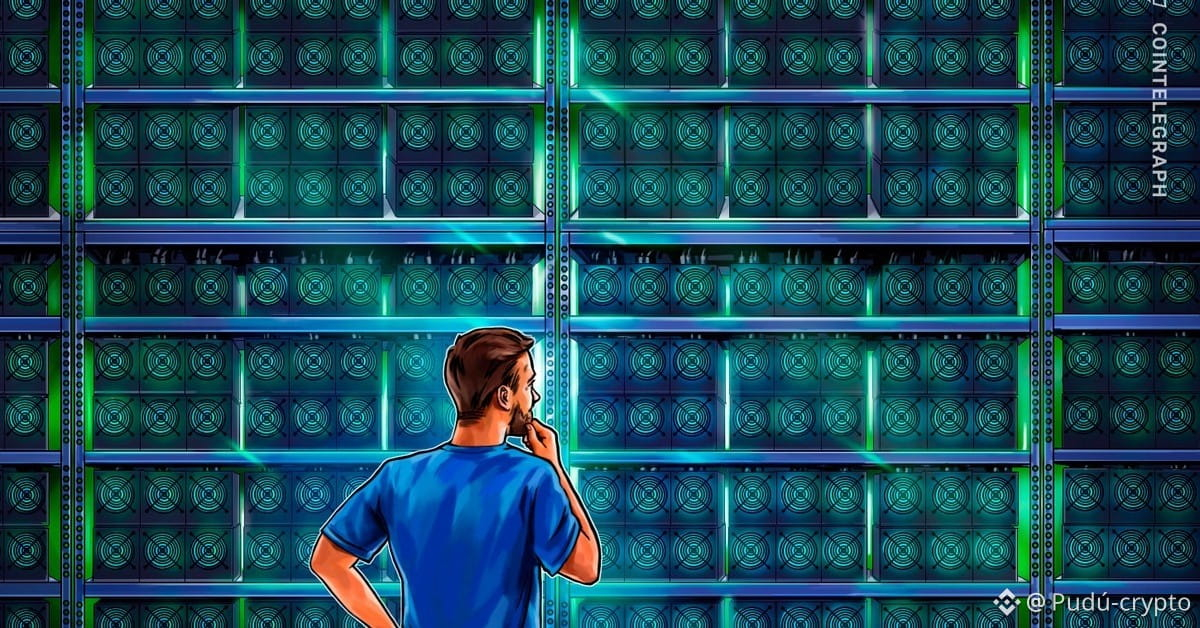
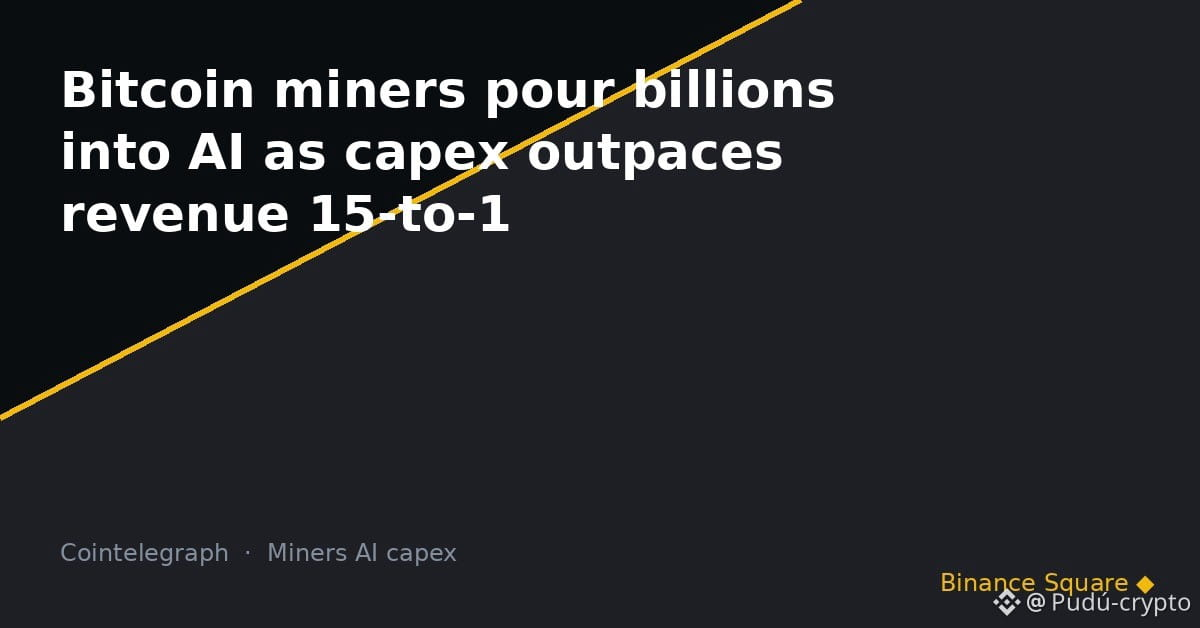
The miners of $BTC estão betting everything on artificial intelligence.
Nine public companies spent more than $5 billion on AI infrastructure and high-performance computing during the first half of 2026.
The revenue generated by these new operations was barely $341 million.
The gap between what they spend and what actually comes in is staggering.
They’re investing 15 times more than they can currently bill.
It’s a risky move to diversify beyond traditional mining.
What do you think about this shift in focus?
#Bitcoin #IA #Mining
79

·
--

Article
Venezuela and Angola focus on energy and mining: the nod that looks toward the crypto marketVenezuela and Angola sat back down at the same table. At the 81st General Assembly of the United Nations in New York, Foreign Minister Félix Plasencia met with his Angolan counterpart, Tété António, to review the bilateral agenda and determine where cooperation between the two countries is headed. The focus of the meeting: energy and mining, with the promise of unlocking new investment opportunities.
For a portal like PitbullChain, which lives side by side with the day-to-day of the P2P market and the behavior of the parallel dollar, the obvious question is this: does this affect the pocket of Venezuelans who exchange USDT every day? The short answer is no, not immediately. The long answer deserves nuance.
Venezuela and Angola focus on energy and mining: the nod that looks toward the crypto market
Venezuela and Angola sat back down at the same table. At the 81st General Assembly of the United Nations in New York, Foreign Minister Félix Plasencia met with his Angolan counterpart, Tété António, to review the bilateral agenda and determine where cooperation between the two countries is headed. The focus of the meeting: energy and mining, with the promise of unlocking new investment opportunities.
For a portal like PitbullChain, which lives side by side with the day-to-day of the P2P market and the behavior of the parallel dollar, the obvious question is this: does this affect the pocket of Venezuelans who exchange USDT every day? The short answer is no, not immediately. The long answer deserves nuance.
For a portal like PitbullChain, which lives side by side with the day-to-day of the P2P market and the behavior of the parallel dollar, the obvious question is this: does this affect the pocket of Venezuelans who exchange USDT every day? The short answer is no, not immediately. The long answer deserves nuance.
44

·
--
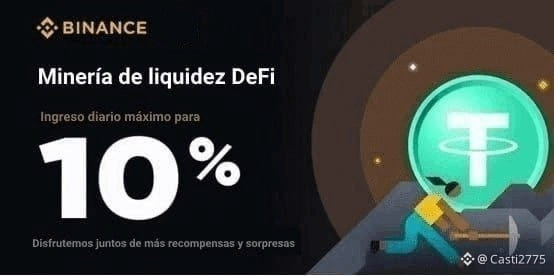
#informacion Important: Today, the DeFi liquidity mining rewards have been distributed to users’ pool accounts. Users who participated in liquidity mining can now withdraw their rewards directly from the pool page.
#mineria #pools #DeFi! $USDC
#informacion Important: Today, the DeFi liquidity mining rewards have been distributed to users’ pool accounts. Users who participated in liquidity mining can now withdraw their rewards directly from the pool page.
#mineria #pools #DeFi! $USDC
#mineria #pools #DeFi! $USDC
164
Log in to explore more content
Join global crypto users on Binance Square
⚡️ Get latest and useful information about crypto.
💬 Trusted by the world’s largest crypto exchange.
👍 Discover real insights from verified creators.
Email / Phone number
Trending Topics
1
#USPPIMissMayEaseBTCPressure
53,473 views
819 Discussing
2
#BitcoinCoreDisclosesTorTrafficVulnerability
22,302 views
442 Discussing
3
#WhatWillDriveCryptoandStocks’NextRebound?
171,088 views
1,659 Discussing
4
#BitcoinBreaksBelow200WeekMovingAverage
59,508 views
545 Discussing
5
#SpaceXTeslaMergerTalksWouldCombine30220BTC
19,807 views
299 Discussing
6
#Anthropic’s6xIPODemandSignalsPotentialRecordRaise
59,764 views
753 Discussing
7
#USCryptoETFsLose$1.48BInFiveDays
2,881 views
52 Discussing
8
#KoreaDigitalAssetBasicActFinalDraftExpectedEarlyJanuary
3,908 views
24 Discussing
9
#RippleRLUSDMarketCapSurpassesPayPalPYUSD
12,887 views
160 Discussing
10
#JaneStreetNearlyOctuplesFidelityBitcoinETFHoldings
28,742 views
272 Discussing