
#binancepool
binancepool
147,667 views
267 Discussing
Hot
Latest
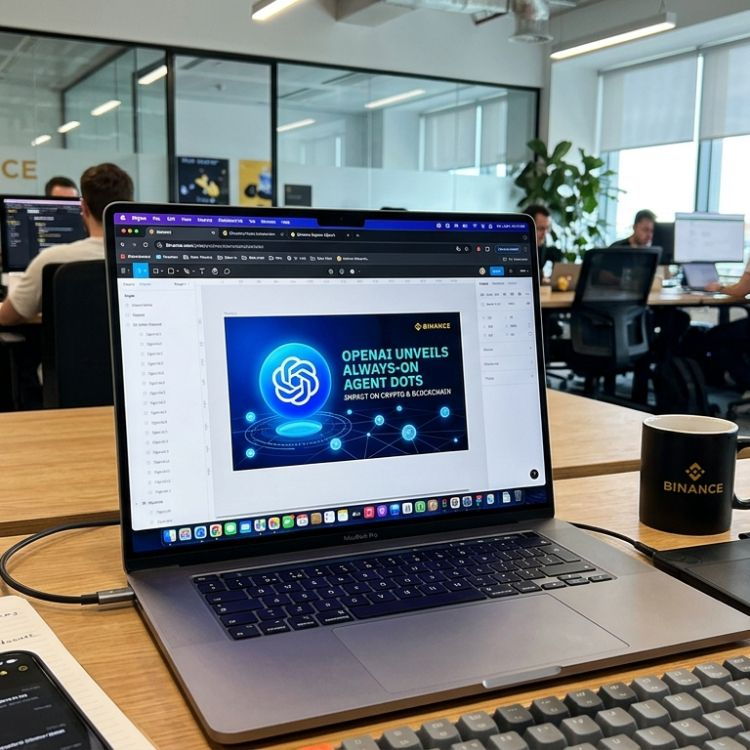
Binance Pool Update: Important Change on Nov 10
Binance Pool will stop its services on Nov 10, 2026 at 07:00 UTC.
Pool hashrate has changed from 26 EH/s to around 9.2 EH/s in recent months.
Miners are advised to check their Pool Savings balance and update their mining settings before Nov 10.
Have you already updated your settings? Let me know in comments.
#BinancePool #BitcoinMining #CryptoNews
Binance Pool Update: Important Change on Nov 10
Binance Pool will stop its services on Nov 10, 2026 at 07:00 UTC.
Pool hashrate has changed from 26 EH/s to around 9.2 EH/s in recent months.
Miners are advised to check their Pool Savings balance and update their mining settings before Nov 10.
Have you already updated your settings? Let me know in comments.
#BinancePool #BitcoinMining #CryptoNews
31


Verified
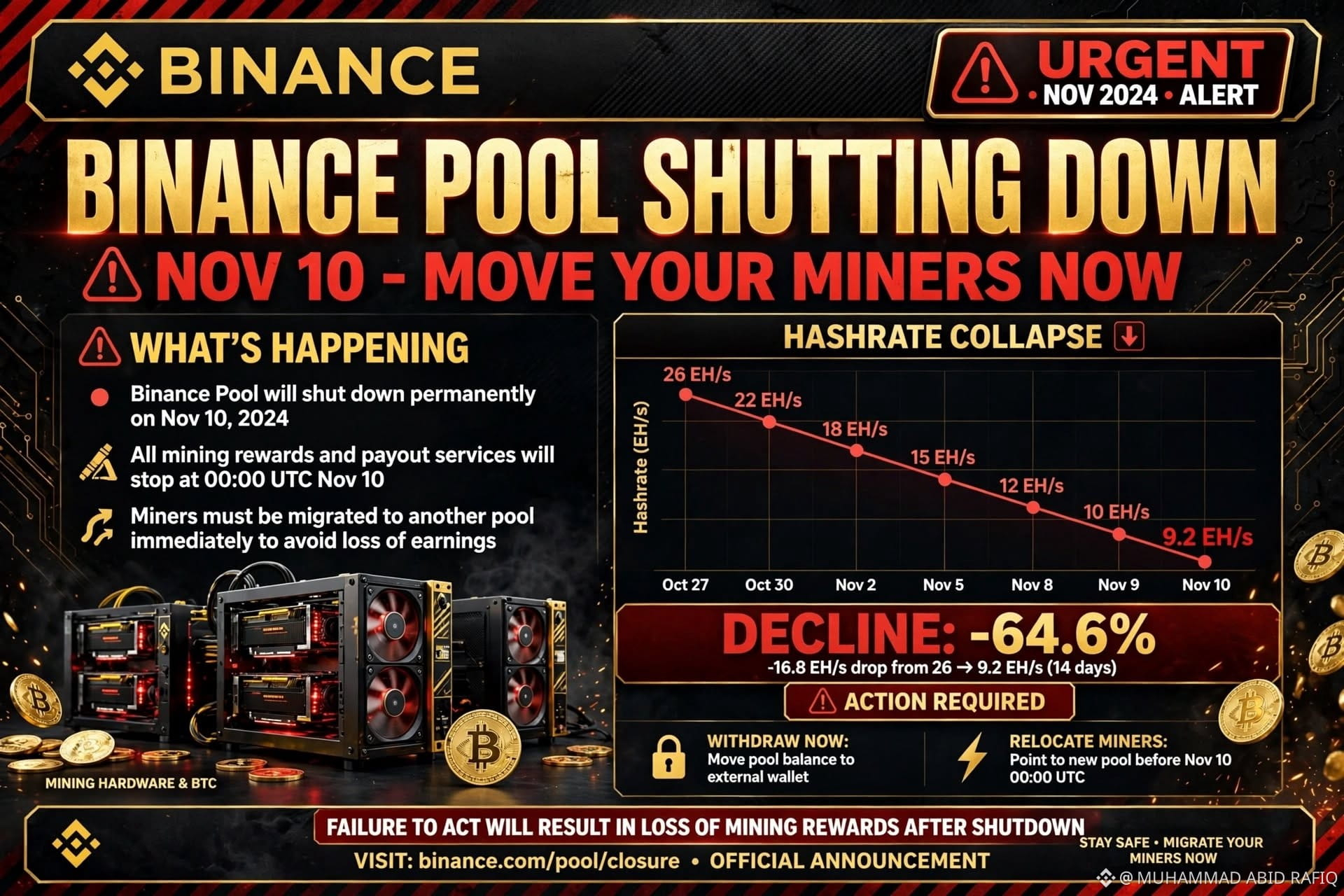
$BNB Binance Pool shuts down: What does it really mean, and how does it affect $BTC Bitcoin?
Many people have seen the news about Binance Pool shutting down this Tuesday, November 10, and are wondering what impact it will have. Here’s a simple, straightforward explanation:
1. What is a mining “pool”?
Mining Bitcoin on your own these days is like playing the lottery: it’s very hard to win. That’s why thousands of miners connect their machines to a “pool” (a shared group) to combine their computing power. When the group solves a block of transactions, the BTC reward is distributed among everyone. Binance had offered this service since 2020.
2. What happened to Binance Pool?
The numbers show that miners had already been gradually leaving:
- Its computing power fell by 65% in recent months.
- During the last week, out of the nearly 925 blocks mined worldwide, Binance Pool managed to find just one block (only 0.11% of the network).
- Because of this low activity, the service will officially go offline on November 10 at 07:00 UTC (along with cloud mining and the transaction accelerator).
3. Will the machines be turned off, or will money be lost?
Not at all. Bitcoin mining is flexible: when a pool shuts down, miners don’t turn off their equipment; they simply change the internet address in their machines’ settings and move to other major pools (such as Foundry USA, AntPool, or F2Pool).
Your funds on the Binance exchange are not at risk, and this has nothing to do with spot or futures trading.
With Binance leaving the scene, most of those miners are concentrating in the world’s two or three largest pools. This has reopened a discussion in the community about whether Bitcoin’s mining power is becoming concentrated in too few hands.
Do you think it’s risky for just two or three pools to control most of Bitcoin’s mining power, or do you trust the network’s decentralization?
#bitcoin #binancepool #Mineria
{future}(BTCUSDT)
{future}(BNBUSDT)
$BNB Binance Pool shuts down: What does it really mean, and how does it affect $BTC Bitcoin?
Many people have seen the news about Binance Pool shutting down this Tuesday, November 10, and are wondering what impact it will have. Here’s a simple, straightforward explanation:
1. What is a mining “pool”?
Mining Bitcoin on your own these days is like playing the lottery: it’s very hard to win. That’s why thousands of miners connect their machines to a “pool” (a shared group) to combine their computing power. When the group solves a block of transactions, the BTC reward is distributed among everyone. Binance had offered this service since 2020.
2. What happened to Binance Pool?
The numbers show that miners had already been gradually leaving:
- Its computing power fell by 65% in recent months.
- During the last week, out of the nearly 925 blocks mined worldwide, Binance Pool managed to find just one block (only 0.11% of the network).
- Because of this low activity, the service will officially go offline on November 10 at 07:00 UTC (along with cloud mining and the transaction accelerator).
3. Will the machines be turned off, or will money be lost?
Not at all. Bitcoin mining is flexible: when a pool shuts down, miners don’t turn off their equipment; they simply change the internet address in their machines’ settings and move to other major pools (such as Foundry USA, AntPool, or F2Pool).
Your funds on the Binance exchange are not at risk, and this has nothing to do with spot or futures trading.
With Binance leaving the scene, most of those miners are concentrating in the world’s two or three largest pools. This has reopened a discussion in the community about whether Bitcoin’s mining power is becoming concentrated in too few hands.
Do you think it’s risky for just two or three pools to control most of Bitcoin’s mining power, or do you trust the network’s decentralization?
#bitcoin #binancepool #Mineria
1
11
2.5k

·
--
⚠️ BINANCE POOL USERS - READ THIS
Binance Pool is CLOSING on 10 Nov 2026 at 07:00 UTC (1:00 PM Bangladesh Time).
This includes Binance Pool, Pool Savings, Cloud Mining and Transaction Accelerator.
What will happen if you ignore?
❌ Your miner will STOP working on 10 Nov. Shares after 07:00 UTC will not be accepted.
❌ Your BNB / USDT in Pool Savings will STOP earning interest.
❌ After 24 Nov at 07:00 UTC, Pool pages will become INACCESSIBLE.
Do this BEFORE 10 Nov:
✅ Move your BTC / ETC / KAS / DOGE / ZEC miner to another pool NOW.
✅ Go to Pool > Pool Savings > REDEEM ALL your USDT / BNB.
✅ Move your BNB / USDT to Spot Wallet.
✅ Complete KYC before 10 Nov, 23:59 UTC, or your pending rewards may be stuck.
✅ Download your Pool history before 24 Nov.
Note: This is ONLY for Binance Pool users. Your BTC / BNB / USDT in Spot Wallet is 100% SAFE. Don't panic.
$BTC $BNB $USDT
#BTC #BNB #USDT #BinancePool #CryptoNews

1
1
101

·
--
【Deadline reminder | Binance Pool to shut down on November 10】
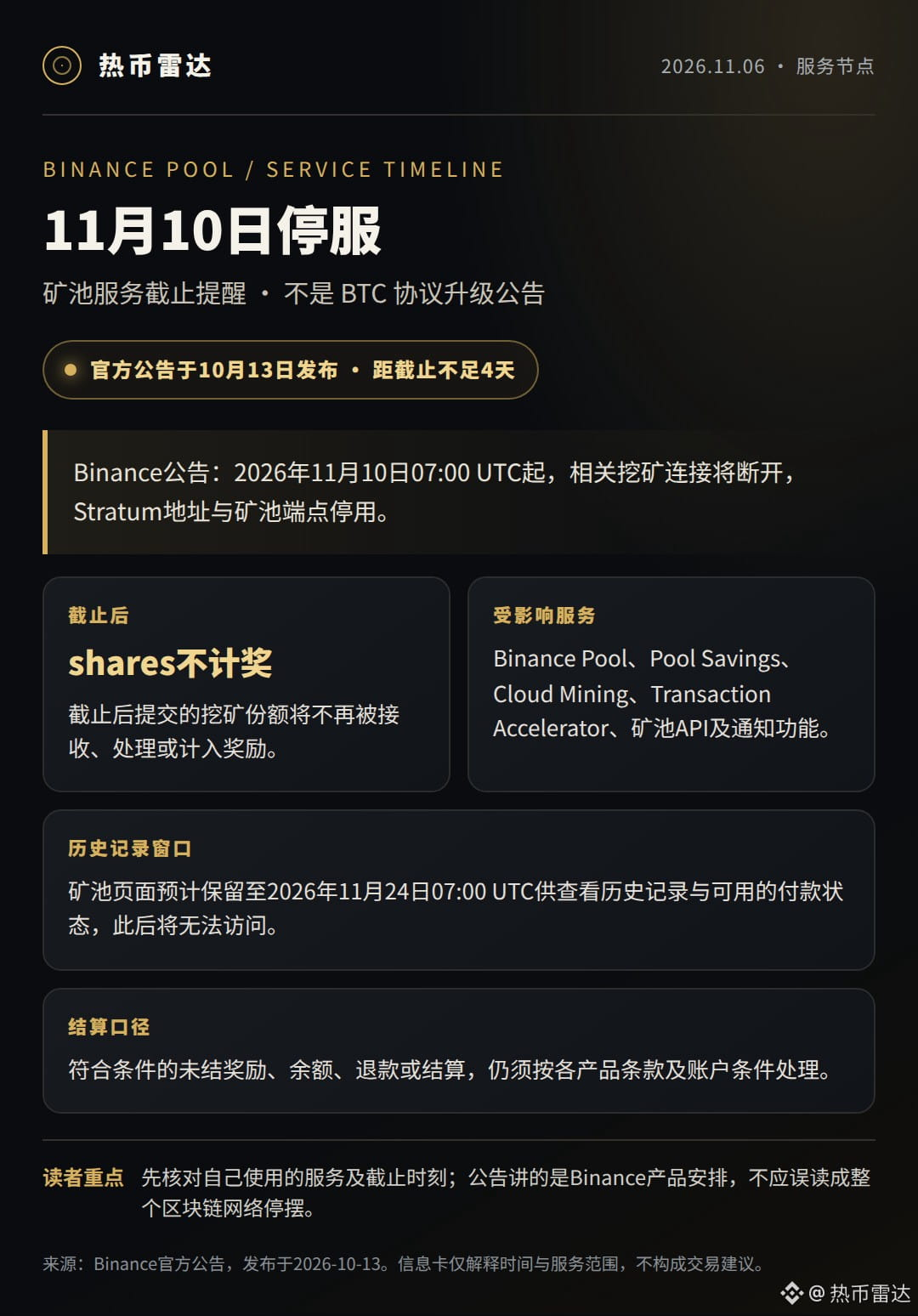
Bottom line: This is the shutdown of Binance Pool services, announced on October 13 and now nearing its deadline—not an official announcement that the BTC protocol is shutting down. The notice states that mining connections will be disconnected and Stratum addresses closed starting at 07:00 UTC on November 10. Shares submitted after that will no longer be accepted, processed, or rewarded.
The affected services also include Pool Savings, Cloud Mining, Transaction Accelerator, the mining pool API, and notifications. Eligible unpaid rewards, balances, or refunds will still be handled according to the relevant product rules. Historical data pages are expected to remain available until 07:00 UTC on November 24, after which they will no longer be accessible.
The notice concerns changes to Binance's platform services. With less than four days until the deadline, users of these services should check the rules and timing for their respective products. Which matters most to you: switching connections, settlement conditions, or the historical records access window?
Source: Official Binance announcement https://www.binance.com/en/support/announcement/detail/2b45800173fd44f48b4517f25f941434
Disclosure: This content may qualify for Binance Square Write to Earn. Eligibility for rewards and their amounts are subject to the platform's rules and are not guaranteed. Not investment advice.
#BinancePool #BitcoinMining
178

⚠️ BINANCE POOL WILL BE SHUT DOWN: MINERS SHOULD PREPARE
Binance has confirmed that it will permanently shut down Binance Pool and related services on 10/11/2026 at 07:00 UTC.
The original announcement was published on 13/10/2026 and sets out the shutdown of:
• Binance Pool
• Pool Savings
• Cloud Mining
• Transaction Accelerator
• Hashrate alerts and mining APIs
📅 IMPORTANT DEADLINES
10/11, 07:00 — services will be shut down and Stratum addresses deactivated. Shares submitted after this time will not be credited.
10/11, 23:59 — recommended deadline to complete the checks and procedures required to receive outstanding amounts.
24/11, 07:00 — access to Binance Pool’s historical pages will end.
Binance advises miners to move their equipment to another pool, redeem applicable positions, and save their records before the respective deadlines.
Eligible pending rewards may continue to be processed according to the product rules. The shutdown does not mean that balances will automatically be lost.
Official source: https://www.binance.com/pt/support/announcement/detail/2b45800173fd44f48b4517f25f941434
$BNB $BTC $ETH #BinancePool #BitcoinMining #MineracaoBitcoin #Bitcoin #Criptomoedas

34

·
--
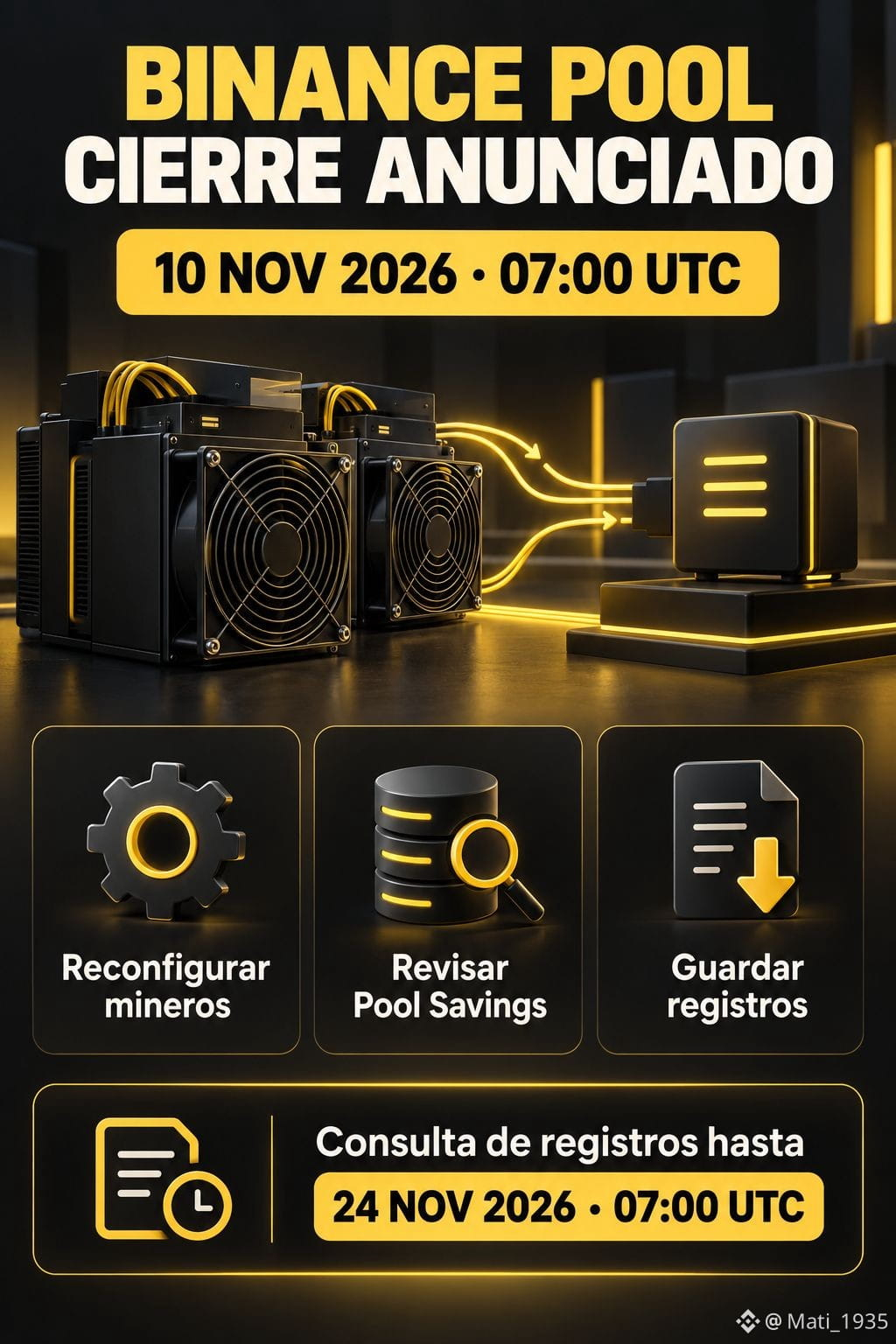
Binance Pool will close on November 10: key dates for miners
Binance announced on October 13 that it will close Binance Pool and its associated services on November 10, 2026, at 07:00 UTC. These include Pool Savings, Cloud Mining, the transaction accelerator, and pool alerts and APIs.
Equipment disconnections will begin at the cutoff, and mining addresses will be deactivated. Shares submitted after that will no longer be accepted or generate new rewards.
The notice asks users to reconfigure their miners to another pool before the closure and check how to redeem their Pool Savings positions. It also asks them to complete any applicable account and identity requirements before November 10 at 23:59 UTC to facilitate pending payments.
Eligible rewards, balances, or refunds will be processed after the cutoff, subject to product terms and applicable checks.
Records will remain available for consultation, where available, until November 24 at 07:00 UTC. Binance recommends saving any necessary reports.
BTC and BCH are among the pool's coins. The operational risk for users is leaving equipment connected to deactivated destinations or losing access to their history without having saved it.
Market reading: at 21:35 UTC on October 14, Binance Spot showed BTC at 81,917.99 USDT (-1.82% in 24 hours) and BCH at 269.90 USDT (-1.68%). These movements do not prove an effect from the announcement. The closure requires users to arrange continuity for their mining; by itself, it does not signal the future price of these coins.
$BTC $BCH $USDT
Educational Content. Not financial advice.
#BinancePool #Bitcoin #BitcoinCash #Mineria #EducacionCripto
54

🚨 BINANCE POOL IS CLOSING—HERE IS WHAT MINERS NEED TO KNOW
Binance has announced that Binance Pool’s mining services will close on 10 November 2026 at 07:00 UTC.
Important: Binance itself is not shutting down. This announcement applies specifically to its mining-pool services. (cf-workers-proxy-cyt.pages.dev)
After the deadline:
⛏️ Mining connections and endpoints will be disabled
⛏️ New mining shares will no longer be accepted⛏️ Shares submitted afterwards will not be credited
If you currently mine through Binance Pool, do not wait until the final day:
✅ Choose a reputable alternative mining pool
✅ Update your mining equipment’s pool settings
✅ Review payout records and minimum thresholds
✅ Watch for fake “migration” links and support messages
This is primarily an operational change, not automatically a bearish signal for $BTC. However, it could temporarily redistribute hash power among competing mining pools.
Are you affected by the closure and which mining pool will you use next?
Follow Crypto & Capital for clear market updates and practical investor education.
#BinancePool #BitcoinMining #Binance #CryptoNews #Cryptocurrency

62

·
--
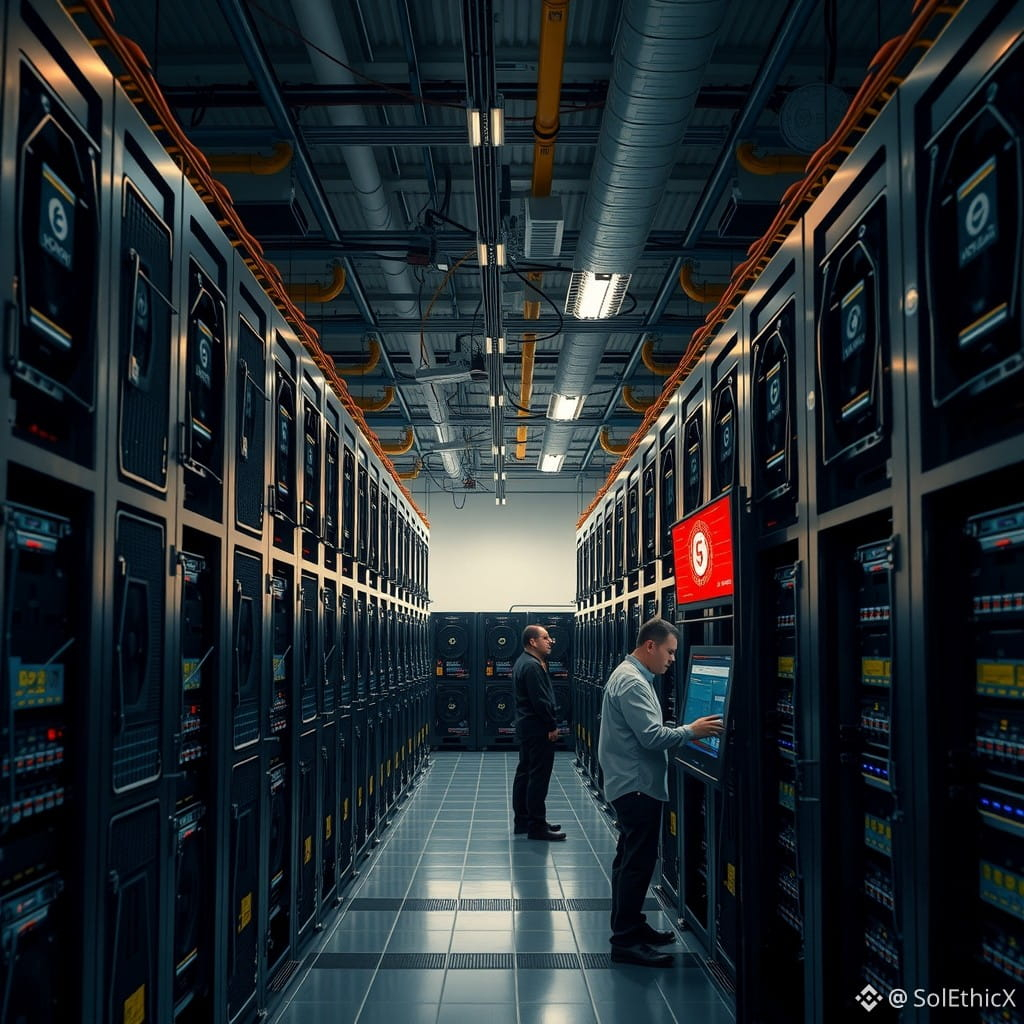
Binance announced it will shut down its Bitcoin mining pool and related services, including Pool Savings, Cloud Mining and Transaction Accelerator, effective 07:00 UTC on November 10. The move ends six years of operation for Binance Pool, marking a retreat from the company's mining infrastructure activities. Users are advised to redirect their mining hardware to other pools before the cutoff date to avoid disruption. Miners must reconfigure their equipment to point to alternative pools before the shutdown to maintain operations. The decision reflects Binance's shifting focus away from direct mining services amid broader industry changes. The announcement was made on October 13, 2026.
#BinancePool #MiningShutdown #CryptoNews
$BTC
#BinancePool #MiningShutdown #CryptoNews
$BTC
33

·
--
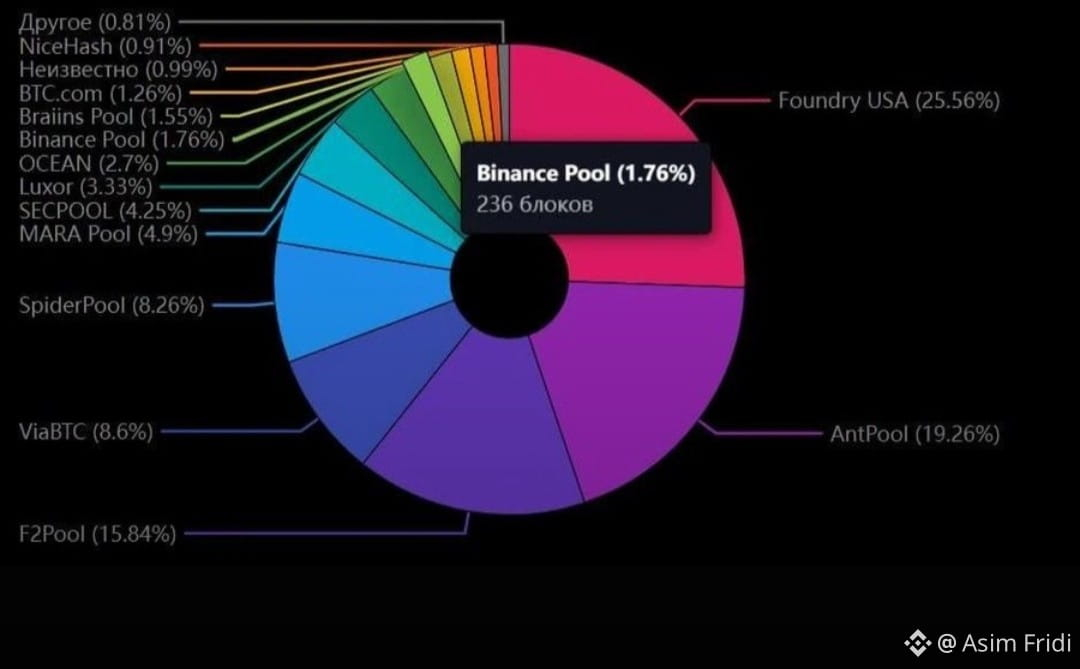
Update: Binance will shut down.
Binance Pool and related services, including Pool Savings, Cloud Mining, and Transaction Accelerator, on November 10th.
#binancepool
Update: Binance will shut down.
Binance Pool and related services, including Pool Savings, Cloud Mining, and Transaction Accelerator, on November 10th.
#binancepool
Binance Pool and related services, including Pool Savings, Cloud Mining, and Transaction Accelerator, on November 10th.
#binancepool
59

🚨 BREAKING: Binance is Shutting Down Its Mining Pool!
Big news for all miners ⛏️
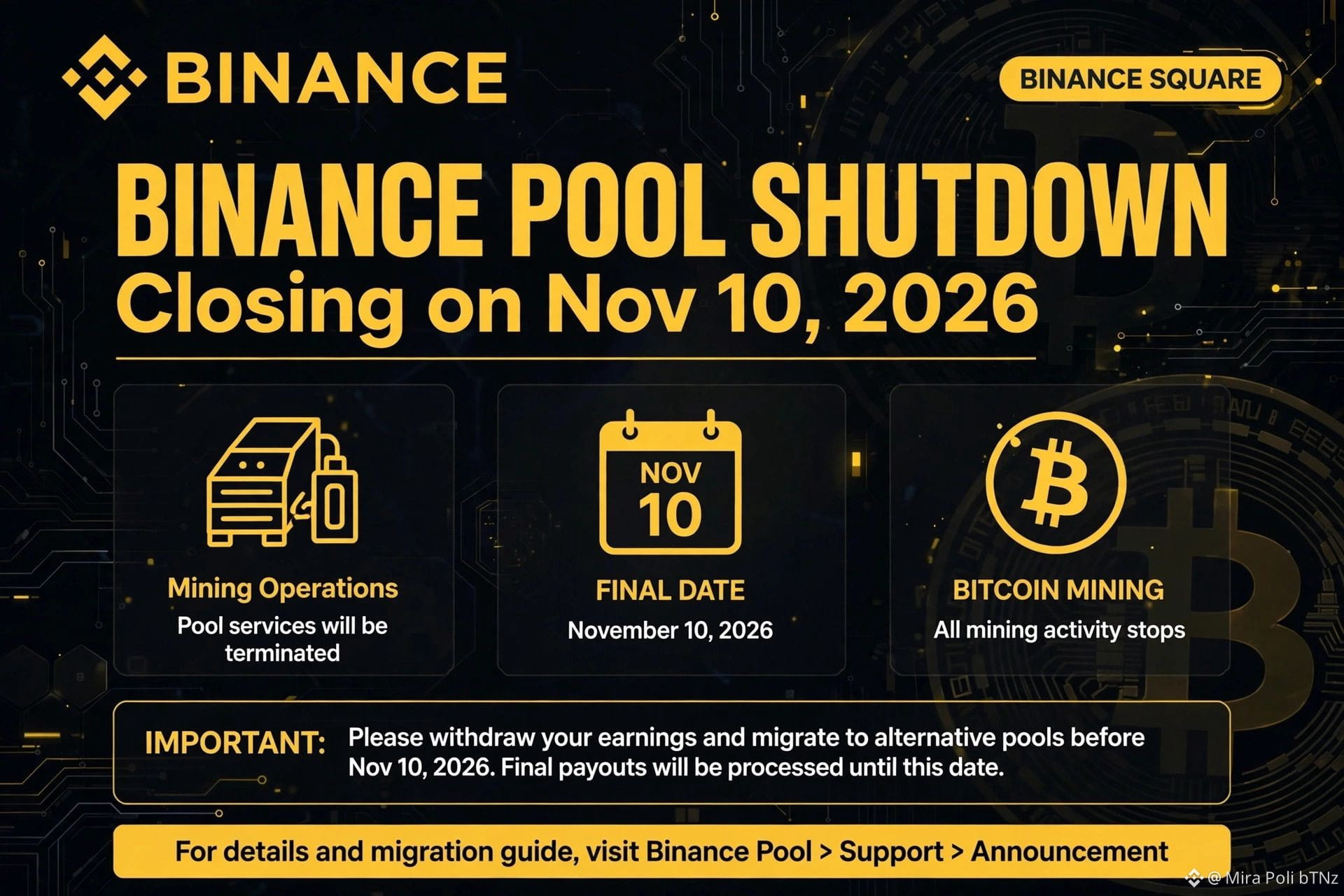
Binance has officially announced that it will permanently close Binance Pool and all related services on November 10, 2026 at 07:00 UTC.
What is closing?
• Binance Pool (BTC & other coins)
• Pool Savings
• Cloud Mining
• Transaction Accelerator
What you MUST do before Nov 10:
1. Move your miners to another pool (Foundry, Antpool, ViaBTC etc)
2. Redeem your Pool Savings positions
3. Download your mining history - records will only be available till Nov 24, after that they will be gone forever.
Binance Pool started in April 2020 and ran for over 6 years. Binance says this is part of its "ongoing product review".
Are you affected by this? Let me know in comments 👇
#Binance #BinancePool $BTC #CryptoNews #BreakingNews #BitcoinMining
114

·
--
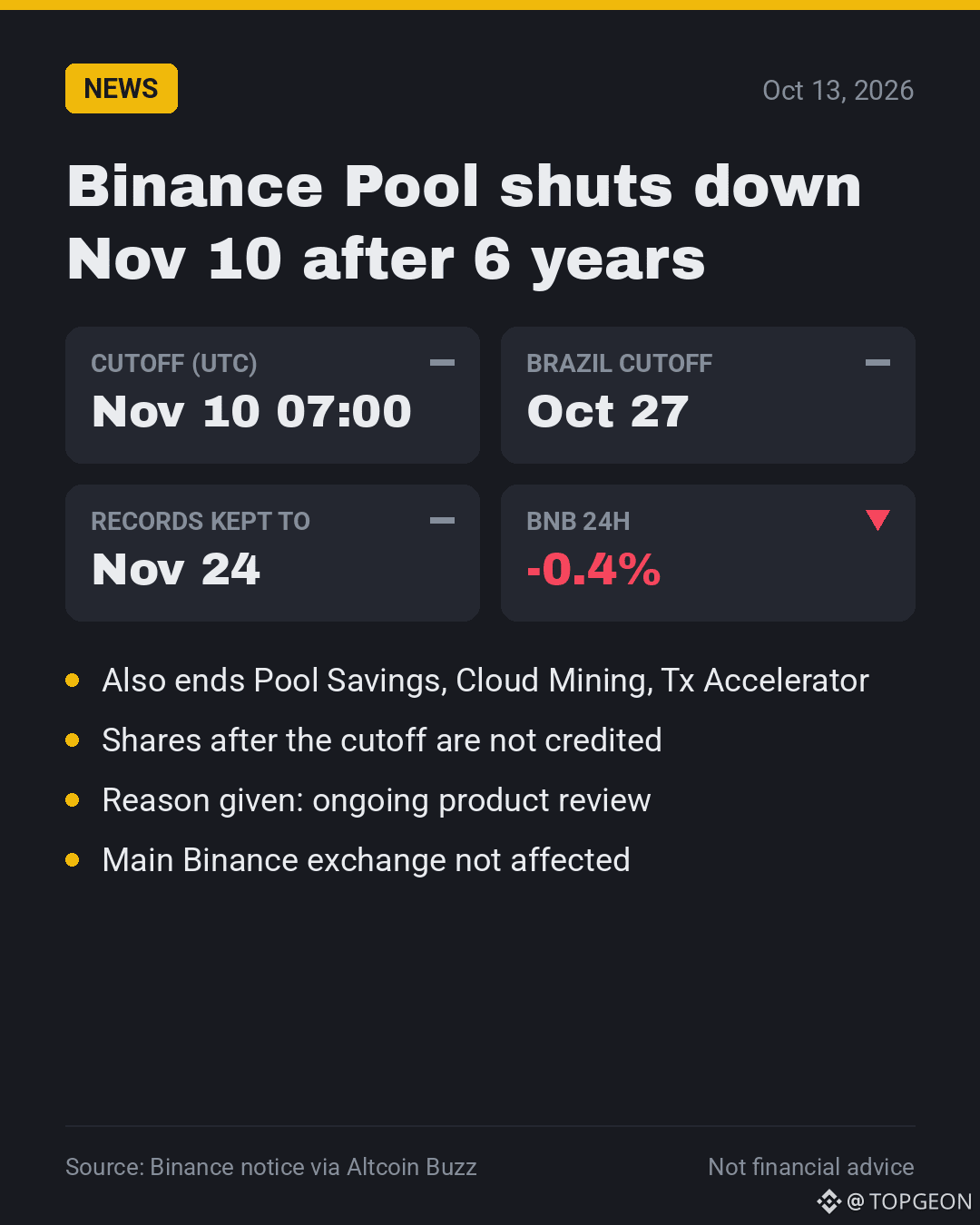
⛏️ Binance Pool closes Nov 10: $BTC miners must move hashrate
• Cutoff: Nov 10, 07:00 UTC, after a 6-year run since 2020
• Pool Savings, Cloud Mining and Tx Accelerator end too
• Brazil users lose access early, on Oct 27
• Payout history stays viewable until Nov 24
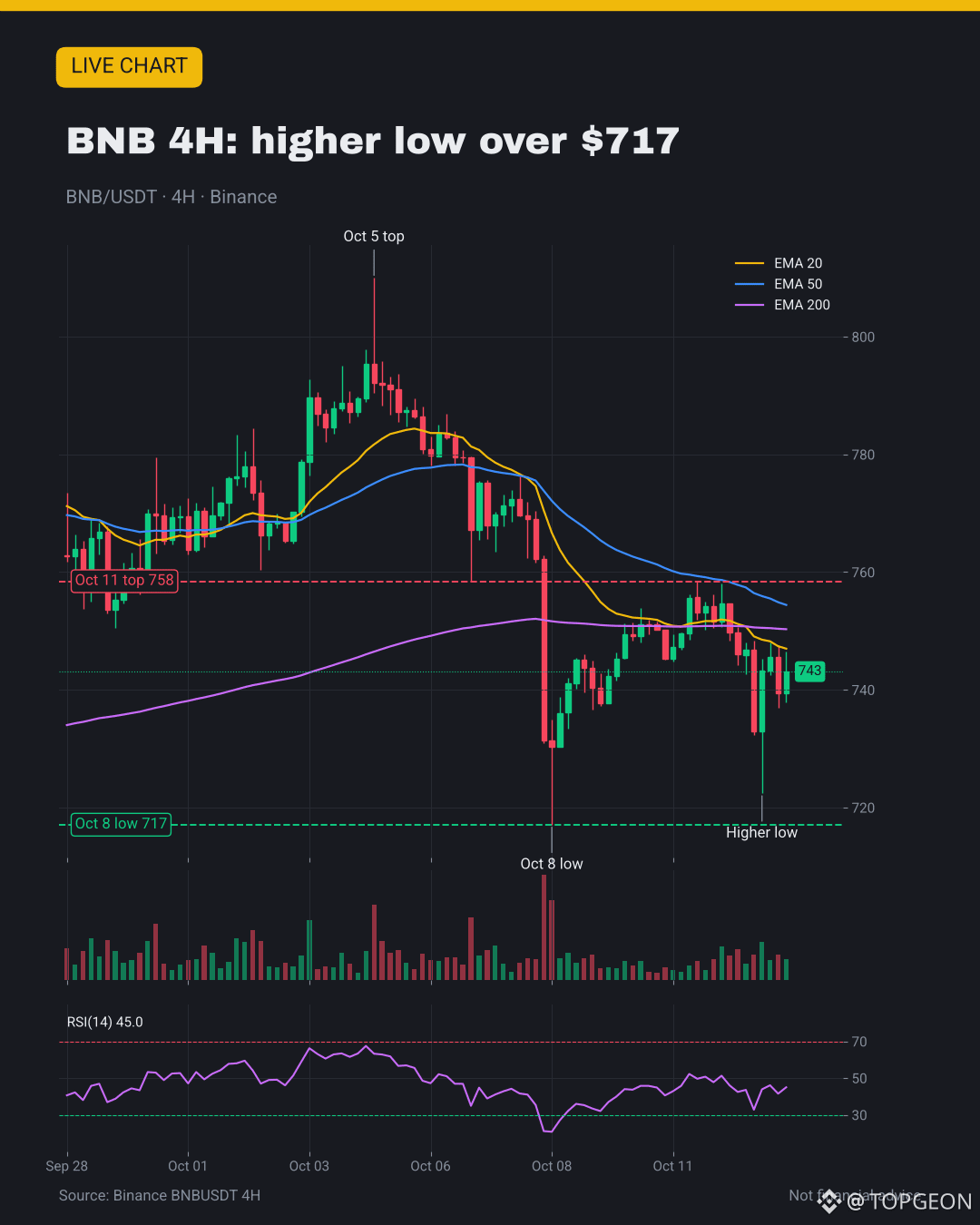
• Main exchange not affected; $BNB $742, -0.4% today
🎯 My take: no price shock; BNB holding over $717 keeps the higher low
💬 Do you mine, and which pool are you moving to? 👇
#BinancePool #BitcoinMining #BNB
23

·
--
Bearish
Binance Pool will operate until November 10, 07:00 UTC. Cloud Mining, Pool Savings, and Transaction Accelerator are going with it.
The explanation: “ongoing review.” That’s it.
The pool itself is small for network $BTC : 9 blocks out of 1,067 in a week, ranking 11th. Foundry USA mined 270 that same week, AntPool 229.
The network won’t feel it.
Those who used Cloud Mining or kept anything in Pool Savings will feel it. The product simply disappears for them, with a one-sentence explanation.
Dates, briefly:
By 07:00 UTC on November 10 — miners should move to another pool, and withdraw everything from Pool Savings. Shares up to that point will still count.
By 23:59 UTC that same day — get everything sorted out with your account so payouts can be processed in time.
On November 24, even the pages with history will be closed.
I’m not changing anything myself based on the news: $BNB
{spot}(BNBUSDT)
still in place, stablecoins are in Simple Earn Flexible
#Binance #binancepool
Binance Pool will operate until November 10, 07:00 UTC. Cloud Mining, Pool Savings, and Transaction Accelerator are going with it.
The explanation: “ongoing review.” That’s it.
The pool itself is small for network $BTC : 9 blocks out of 1,067 in a week, ranking 11th. Foundry USA mined 270 that same week, AntPool 229.
The network won’t feel it.
Those who used Cloud Mining or kept anything in Pool Savings will feel it. The product simply disappears for them, with a one-sentence explanation.
Dates, briefly:
By 07:00 UTC on November 10 — miners should move to another pool, and withdraw everything from Pool Savings. Shares up to that point will still count.
By 23:59 UTC that same day — get everything sorted out with your account so payouts can be processed in time.
On November 24, even the pages with history will be closed.
I’m not changing anything myself based on the news: $BNB
still in place, stablecoins are in Simple Earn Flexible
#Binance #binancepool
1
69

·
--
Important notice for Binance Pool users: The platform will shut down the pool and its related services on November 10 at 07:00 UTC (10:00 Istanbul time). This includes Pool Savings, cloud mining, transaction acceleration, and mining APIs. Afterward, endpoints will be disabled and no new mining shares will be counted. Binance recommends redirecting mining devices before the deadline, reviewing Pool Savings positions, and saving records. History pages will remain available only until November 24. Do you use any of these services?
Most traded on Binance at the time of observation — October 13, 16:00 Istanbul time: $USDC, $BTC, $ETH, based on the 24-hour trading volume of USDT pairs. This is a general market update and is not causally related to the pool shutdown announcement. Source: Binance Spot API.
#BinancePool #Mining
Important notice for Binance Pool users: The platform will shut down the pool and its related services on November 10 at 07:00 UTC (10:00 Istanbul time). This includes Pool Savings, cloud mining, transaction acceleration, and mining APIs. Afterward, endpoints will be disabled and no new mining shares will be counted. Binance recommends redirecting mining devices before the deadline, reviewing Pool Savings positions, and saving records. History pages will remain available only until November 24. Do you use any of these services?
Most traded on Binance at the time of observation — October 13, 16:00 Istanbul time: $USDC , $BTC , $ETH , based on the 24-hour trading volume of USDT pairs. This is a general market update and is not causally related to the pool shutdown announcement. Source: Binance Spot API.
#BinancePool #Mining
Most traded on Binance at the time of observation — October 13, 16:00 Istanbul time: $USDC , $BTC , $ETH , based on the 24-hour trading volume of USDT pairs. This is a general market update and is not causally related to the pool shutdown announcement. Source: Binance Spot API.
#BinancePool #Mining

78

Article
Beginner Binance Pool Tutorial: How to Mine on BinanceBinance Pool is a Binance feature for crypto mining. So this is not a feature for buying coins like Spot/Convert, but a place where you connect your mining machine to the Binance pool so your mining results go into your Binance account.
Practical steps for beginners:
1. Log in to your Binance account
First, log in to your Binance account. To join Binance Pool, you need a regular Binance account.
2. Open the Pool Mining menu
In the Binance app/website, find:More
then Pool Mining
Then go to the Mining Dashboard.
Beginner Binance Pool Tutorial: How to Mine on Binance
Binance Pool is a Binance feature for crypto mining. So this is not a feature for buying coins like Spot/Convert, but a place where you connect your mining machine to the Binance pool so your mining results go into your Binance account.
Practical steps for beginners:
1. Log in to your Binance account
First, log in to your Binance account. To join Binance Pool, you need a regular Binance account.
2. Open the Pool Mining menu
In the Binance app/website, find:More
then Pool Mining
Then go to the Mining Dashboard.
Practical steps for beginners:
1. Log in to your Binance account
First, log in to your Binance account. To join Binance Pool, you need a regular Binance account.
2. Open the Pool Mining menu
In the Binance app/website, find:More
then Pool Mining
Then go to the Mining Dashboard.
191

·
--
Just found out mining doesn’t have to buy million-dollar rigs 😱
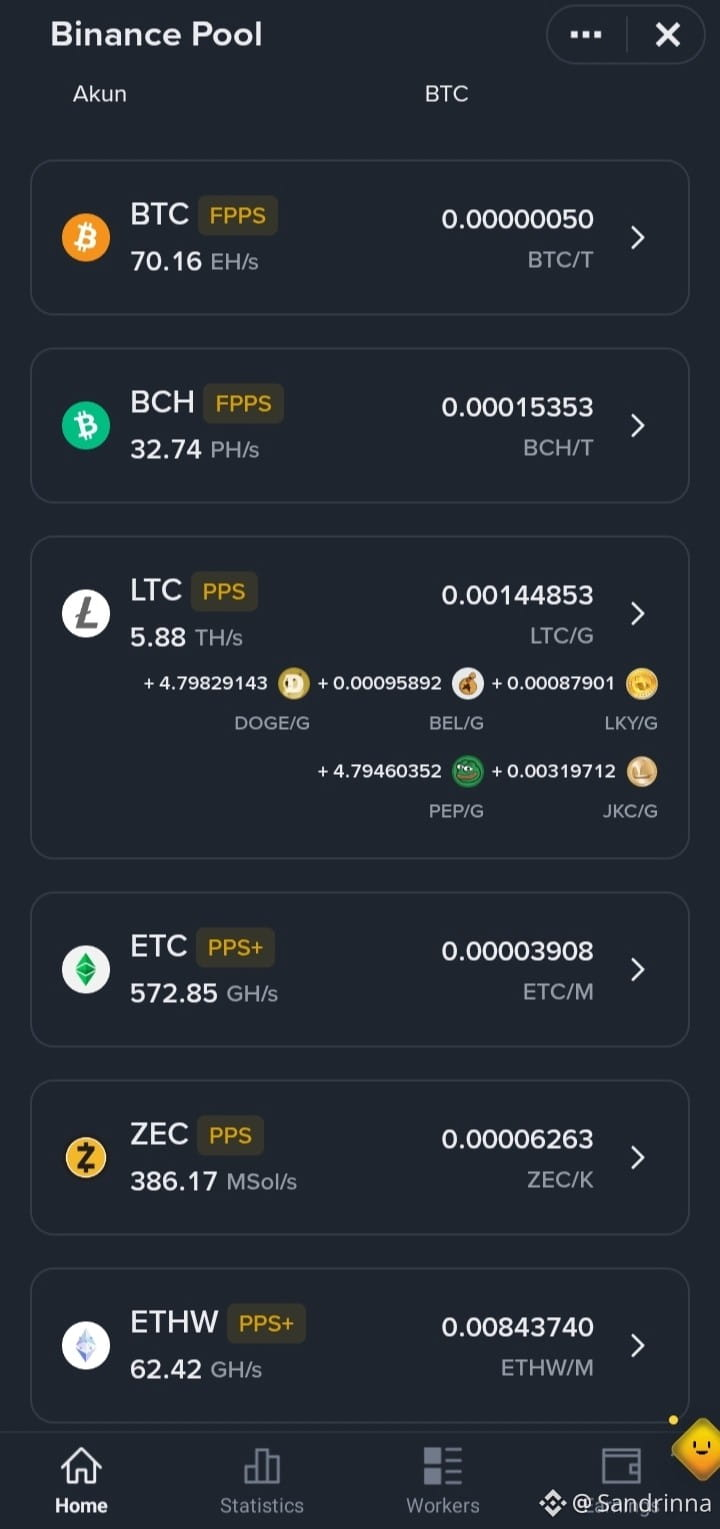
You can just use Binance Pool—your phone can monitor it 24/7.
Payments $BTC , LTC, ETC come into the account every day. FPPS is no longer afraid of fluctuations.
If you’ve been mining on Binance Pool, where are you? 👇
[LINK HERE](https://accounts.binance.com/id/register?ref=C7EFJRF1)
#BinancePool #minnnigbitcoin
Just found out mining doesn’t have to buy million-dollar rigs 😱
You can just use Binance Pool—your phone can monitor it 24/7.
Payments $BTC , LTC, ETC come into the account every day. FPPS is no longer afraid of fluctuations.
If you’ve been mining on Binance Pool, where are you? 👇
LINK HERE
#BinancePool #minnnigbitcoin
You can just use Binance Pool—your phone can monitor it 24/7.
Payments $BTC , LTC, ETC come into the account every day. FPPS is no longer afraid of fluctuations.
If you’ve been mining on Binance Pool, where are you? 👇
LINK HERE
#BinancePool #minnnigbitcoin
5
1.9k

Holding $BNB 162.4 USDT
⚠️ DUTT: WhatsApp’s fake crypto platform
The Civil Guard is investigating three people in Valencia, the Balearic Islands and Granada for fraud and money laundering, and froze nearly €6,000.
📊 Crypto roundup: Binance Pool, Solana and GOPAX
AI agents made 68.3 million stablecoin payments in the third quarter, but totaling just US$3.7 million.
#WhatsApp #crypto #binancepool #solana #GOPAX停摆 $SOL $BNB

81
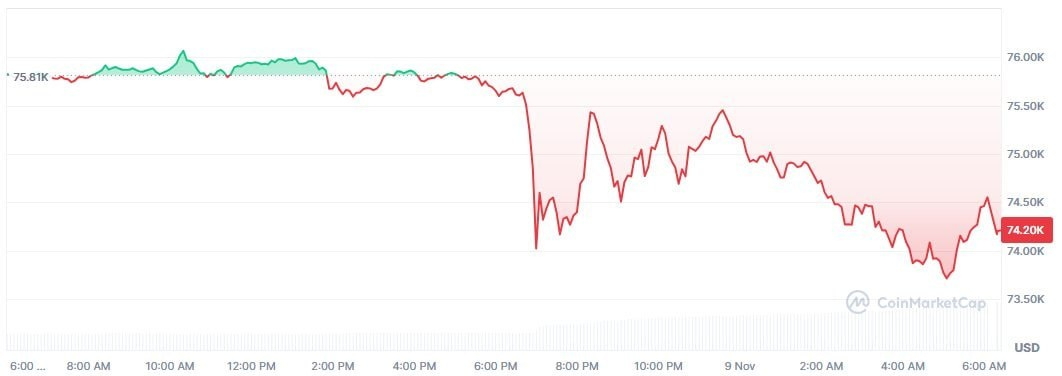
📉Bitcoin's price lost the USD 75,000 support level. Analysts are divided: some see a buying opportunity; others warn that the decline may not be over.
🔹A leadership crisis at Nvidia, including an investigation into its CEO, is negatively affecting the prices of bitcoin and tech stocks.
🔹El Salvador and Kyrgyzstan signed a memorandum on bitcoin. The digital asset agencies of both countries formalized an agreement to exchange regulatory knowledge.
🔹Binance Pool and its related Bitcoin mining services are shutting down tomorrow. Users should take action and reconfigure their equipment.
🔹Vitalik Buterin criticizes the narrative that focuses on ETH as a deflationary asset. The developer says attention should instead be focused on turning it into a store of value.
#VitalikButerin #Salvador #Kyrgyzstan #binancepool #NvidiaInvestigatesAfterHuang’sAffairApology $ETH $BTC $NVDA
Alexander Guevara
·
--
Bitcoin drops to $73,477 in a 15-minute plunge as liquidations exceed $1 billion
Bitcoin's price fell from $75,690 to $73,477 in just 15 minutes on Sunday night, marking its lowest price since early 2025, as weekend market conditions significantly intensified selling.
The move triggered more than $1 billion in liquidations across cryptocurrency markets. Two macroeconomic developments added pressure: an Nvidia-related scandal and stalled Iran nuclear negotiations, both of which weighed on risk appetite during a period of reduced market liquidity.
🥷⚡️ After months, I'm making another Spot purchase for $BTC ⚡️📈:
Let's see if it drops further next week so I can keep accumulating
You know the drill
#BTC #NVIDIA #TradingSignals #MacroEconomics #Spot $NVDA
24


Article
BINANCE IS ENDING BINANCE POOL: MINERS SHOULD PREPARE FOR A MAJOR CHANGE!Binance has just made an important announcement: several services related to cryptocurrency mining will be discontinued starting November 10, 2026, at 07:00 UTC.
This decision affects Binance Pool, Cloud Mining, and several related features.
🔎 WHICH SERVICES ARE AFFECTED?
According to Binance's official announcement:
- ⛏️ Binance Pool: pool mining services will be discontinued.
- ☁️ Cloud Mining: cloud mining services will be discontinued.
- 💰 Pool Savings: the associated savings service will be discontinued.
BINANCE IS ENDING BINANCE POOL: MINERS SHOULD PREPARE FOR A MAJOR CHANGE!
Binance has just made an important announcement: several services related to cryptocurrency mining will be discontinued starting November 10, 2026, at 07:00 UTC.
This decision affects Binance Pool, Cloud Mining, and several related features.
🔎 WHICH SERVICES ARE AFFECTED?
According to Binance's official announcement:
- ⛏️ Binance Pool: pool mining services will be discontinued.
- ☁️ Cloud Mining: cloud mining services will be discontinued.
- 💰 Pool Savings: the associated savings service will be discontinued.
296

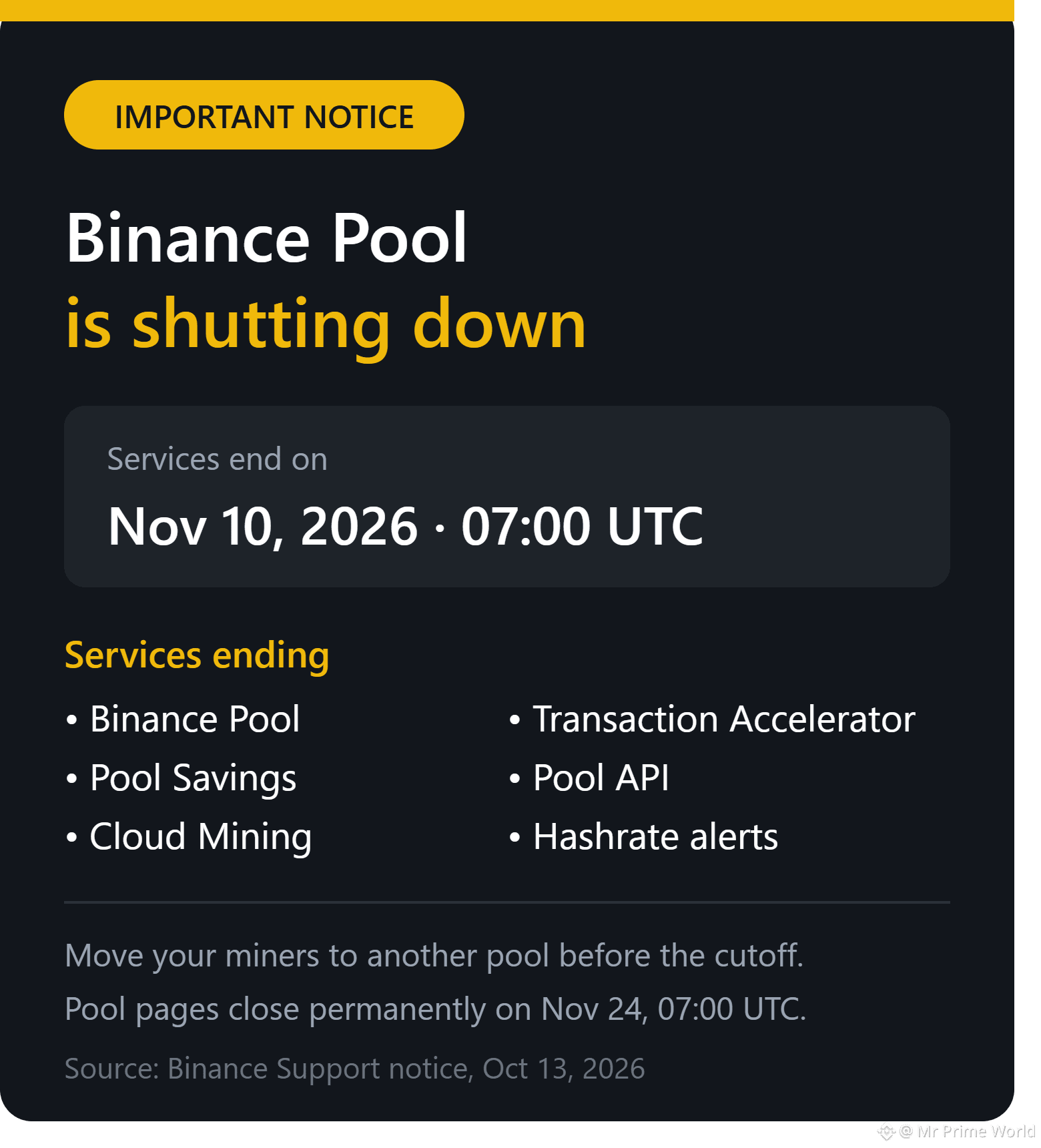
⚠️ Binance Pool Is Shutting Down on November 10, 2026
On October 13, Binance announced that it will discontinue Binance Pool and related services as part of an ongoing review of its products and services.
📅 Key dates (UTC)
🔹 November 10, 2026, 07:00: Binance Pool and all related services end
🔹 November 10, 2026, 23:59: Deadline to complete any required account steps (such as identity verification) to receive eligible remaining amounts
🔹 November 24, 2026, 07:00: Pool pages close permanently
🛑 Services ending
Binance Pool Pool Savings Cloud Mining Transaction Accelerator Mining pool API, Telegram hashrate alerts and email notifications
✅ What miners should do
1️⃣ Point your mining equipment to another pool before the cutoff to avoid interruptions
2️⃣ Redeem or cancel any active Pool Savings positions
3️⃣ Check your account so eligible rewards or refunds can be processed
4️⃣ Save any historical records and payout details before November 24
📌 Eligible outstanding rewards and balances will be handled under Binance’s product terms and compliance checks. Always read the official notice for the full conditions.
ℹ️ This announcement covers the mining pool and related services only. It does not mention any closure of the main exchange.
🔗 Source: Binance Support, “Notice on the Closure of Binance Pool Services” (October 13, 2026)
💬 Did you use Binance Pool? Which pool are you moving to? Share below 👇
#Binance #binancepool #Mining #Crypto #BinanceSquare
{spot}(DOTUSDT)
{spot}(ETCUSDT)
⚠️ Binance Pool Is Shutting Down on November 10, 2026
On October 13, Binance announced that it will discontinue Binance Pool and related services as part of an ongoing review of its products and services.
📅 Key dates (UTC)
🔹 November 10, 2026, 07:00: Binance Pool and all related services end
🔹 November 10, 2026, 23:59: Deadline to complete any required account steps (such as identity verification) to receive eligible remaining amounts
🔹 November 24, 2026, 07:00: Pool pages close permanently
🛑 Services ending
Binance Pool Pool Savings Cloud Mining Transaction Accelerator Mining pool API, Telegram hashrate alerts and email notifications
✅ What miners should do
1️⃣ Point your mining equipment to another pool before the cutoff to avoid interruptions
2️⃣ Redeem or cancel any active Pool Savings positions
3️⃣ Check your account so eligible rewards or refunds can be processed
4️⃣ Save any historical records and payout details before November 24
📌 Eligible outstanding rewards and balances will be handled under Binance’s product terms and compliance checks. Always read the official notice for the full conditions.
ℹ️ This announcement covers the mining pool and related services only. It does not mention any closure of the main exchange.
🔗 Source: Binance Support, “Notice on the Closure of Binance Pool Services” (October 13, 2026)
💬 Did you use Binance Pool? Which pool are you moving to? Share below 👇
#Binance #binancepool #Mining #Crypto #BinanceSquare
1
72

·
--
Verified
Binance Pool Is Closing — What Matters Most for Affected Miners?
Binance has announced that Binance Pool and related services will end on November 10, 2026. The change affects mining services, not the entire Binance exchange. For affected users, planning ahead and understanding the transition are important.
What's your view?👇
Disclaimer: DYOR. This is not financial advice.
#BinancePool #CryptoNews #BitcoinMining #Binance #CryptoCommunity
Moving to another pool
0%
Checking unpaid rewards
0%
Saving mining records
0%
I’m not affected
0%
0 votes • Voting closed
61
Log in to explore more content
Join global crypto users on Binance Square
⚡️ Get latest and useful information about crypto.
💬 Trusted by the world’s largest crypto exchange.
👍 Discover real insights from verified creators.
Email / Phone number
Trending Topics
1
#NvidiaInvestigatesAfterHuang’sAffairApology
179,961 views
1,628 Discussing
2
#BitcoinFiveWeeklyLosses
209,552 views
2,088 Discussing
3
#AIChipSlumpNasdaq
112,058 views
1,290 Discussing
4
#CPITestsDecemberRateOutlook
631,450 views
2,753 Discussing
5
#AnthropicRejectsIPODelayValuationinQuestion
31,006 views
375 Discussing
6
#CryptoLiquidationsReach$1.16BIn24Hours
7,733 views
39 Discussing
7
#BrentCrudeDrops3.8%To$94.56
7,522 views
21 Discussing
8
#EUInstitutionsInviteIndustryToSetTokenizedSecuritiesStandards
1,596 views
15 Discussing
9
#ChinaCACListsFiveIssuesAffectingBlockchainFilings
12,518 views
145 Discussing
10
#UKBanksCanNowApplyToConductCryptoAssetBusiness
10,957 views
103 Discussing