

#liquidnetworkhacked
liquidnetworkhacked
11,124 views
15 Discussing
Hot
Latest

·
--
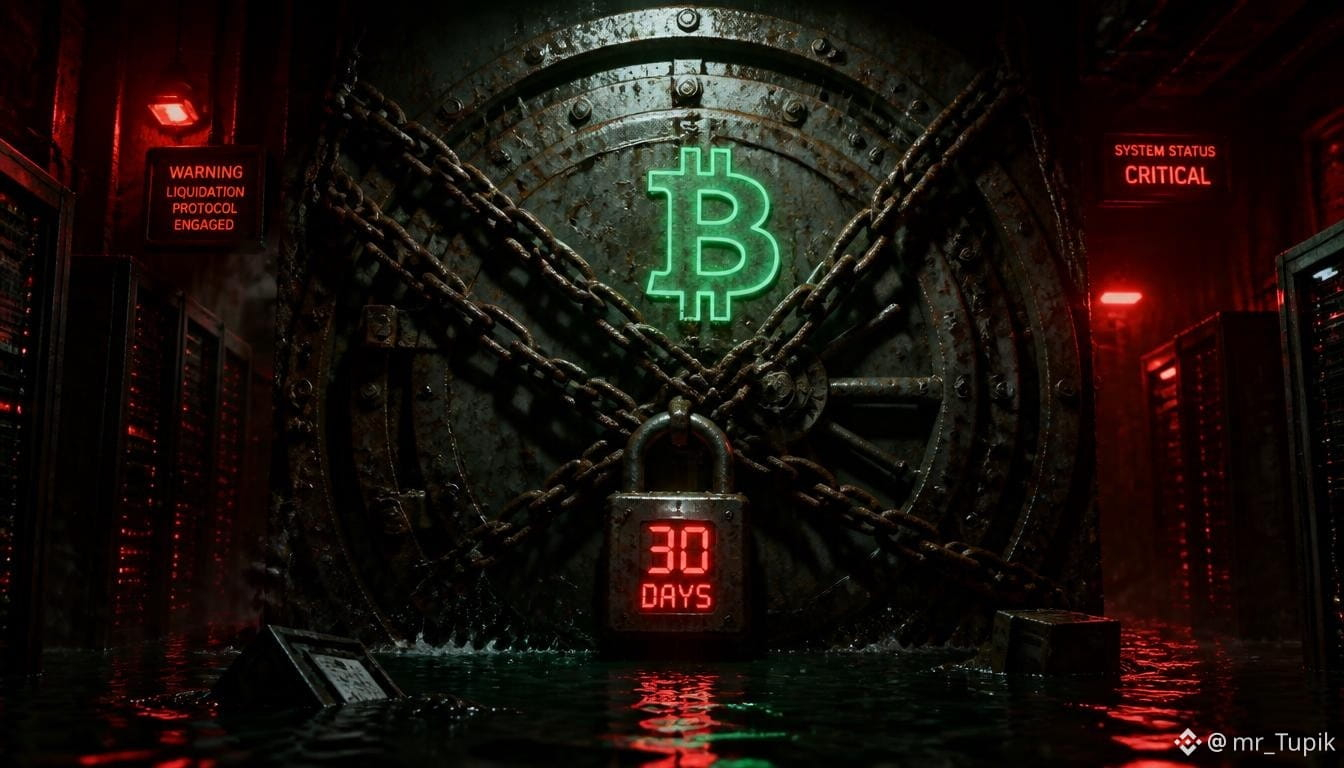
Your Bitcoin is blocked, and the infrastructure is bleeding out. ⚠️
The illusion of absolute security has collapsed. A major Liquid Network breach of $320 million (a Bitcoin Layer 2) exposed a catastrophic vulnerability. The attackers managed, without any collateral, to mint synthetic L-BTC tokens out of thin air and completely drain the federation reserves.
While the team desperately tried to patch a software bug and held talks with so-called “white hackers” in an effort to recover at least part of the funds, the damage had already been done. Bull Bitcoin users are trapped—they face a painful 30-day wait just to get their frozen BTC back. The network is paralyzed, operations have been halted, and the fate of millions in assets remains unknown.
This is the primary nightmare of secondary financial layers: your Bitcoin may be safe on the main blockchain, but the bridges you trust are nothing more than a fragile house of cards. When a hack happens, you no longer control your keys—you only have a 30-day countdown to complete despair.
#LiquidNetworkHacked #BitcoinHacks #CryptoExploit #BitcoinSecurity #cryptocrash
Your Bitcoin is blocked, and the infrastructure is bleeding out. ⚠️
The illusion of absolute security has collapsed. A major Liquid Network breach of $320 million (a Bitcoin Layer 2) exposed a catastrophic vulnerability. The attackers managed, without any collateral, to mint synthetic L-BTC tokens out of thin air and completely drain the federation reserves.
While the team desperately tried to patch a software bug and held talks with so-called “white hackers” in an effort to recover at least part of the funds, the damage had already been done. Bull Bitcoin users are trapped—they face a painful 30-day wait just to get their frozen BTC back. The network is paralyzed, operations have been halted, and the fate of millions in assets remains unknown.
This is the primary nightmare of secondary financial layers: your Bitcoin may be safe on the main blockchain, but the bridges you trust are nothing more than a fragile house of cards. When a hack happens, you no longer control your keys—you only have a 30-day countdown to complete despair.
#LiquidNetworkHacked #BitcoinHacks #CryptoExploit #BitcoinSecurity #cryptocrash
The illusion of absolute security has collapsed. A major Liquid Network breach of $320 million (a Bitcoin Layer 2) exposed a catastrophic vulnerability. The attackers managed, without any collateral, to mint synthetic L-BTC tokens out of thin air and completely drain the federation reserves.
While the team desperately tried to patch a software bug and held talks with so-called “white hackers” in an effort to recover at least part of the funds, the damage had already been done. Bull Bitcoin users are trapped—they face a painful 30-day wait just to get their frozen BTC back. The network is paralyzed, operations have been halted, and the fate of millions in assets remains unknown.
This is the primary nightmare of secondary financial layers: your Bitcoin may be safe on the main blockchain, but the bridges you trust are nothing more than a fragile house of cards. When a hack happens, you no longer control your keys—you only have a 30-day countdown to complete despair.
#LiquidNetworkHacked #BitcoinHacks #CryptoExploit #BitcoinSecurity #cryptocrash
173


Article
Perpetrators who called themselves "good hackers"On September 6, 2026, approximately 4,000 BTC, worth approximately $320 million, was withdrawn from the Liquid Network federation wallet, a Bitcoin sidechain developed by Blockstream. This is almost 95% of all network reserves: before the incident, just over 4,200 BTC were stored in the treasury, and after the attack, according to the Blockstream Proof of Reserves page, only about 207 BTC remained. The network was immediately shut down, bridge nodes were disabled, and exchanges suspended L-BTC deposits and withdrawals.
Technical mechanism: emission bug, not stolen keys
According to preliminary data from Bitcoin Magazine, the cause was an error in the L-BTC issuance logic on the side chain - the attackers were able to “draw” more than 4,000 L-BTC tokens that actually had no collateral, taking advantage of a consensus bug. Since from the point of view of the internal logic of the network the transaction looked legitimate, the hardware security modules (HSMs) of the federation members automatically signed a request to withdraw real bitcoin from the reserves - in fact, the system itself “believed” that the fake tokens should be exchanged for real coins.
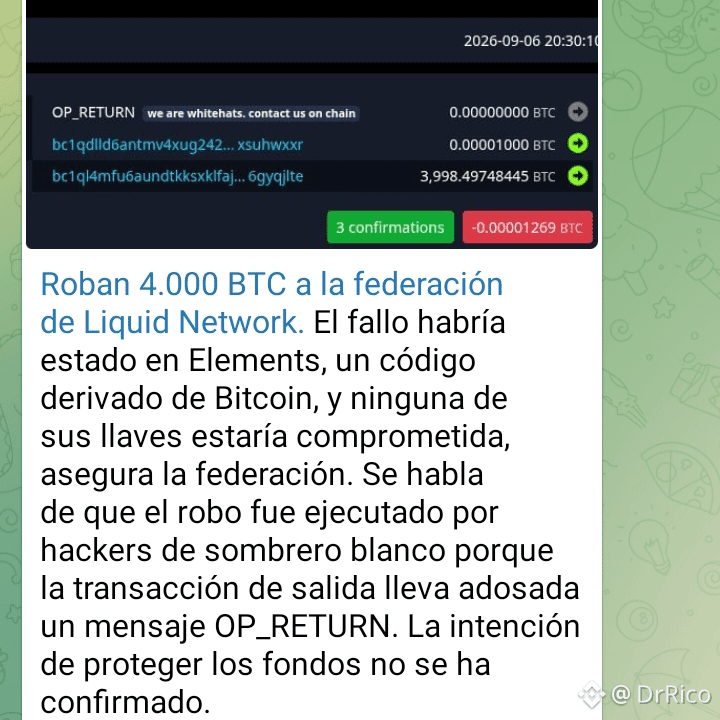
After withdrawing about 3,996 BTC to an external address, the attackers almost immediately signed a new transaction with a text message in the OP_RETURN field: “We are the ‘good guys.’ Contact us via blockchain.” The term “white-hat hackers” traditionally refers to security researchers who exploit vulnerabilities without malicious intent and typically return funds — sometimes for a reward. The Liquid Network team officially named the attackers as such, saying that Blockstream was attempting to reach out via a signed on-chain message.
However, there is currently no evidence that the funds will actually be returned - the industry is treating this statement with cautious skepticism, as similar wording is often used by attackers with other intentions to buy time for negotiations on a “reward”. An important nuance: other assets issued on the Liquid Network - including USDT, DePix and tokenized real assets (RWA) - were not affected by the attack, only the Bitcoin reserves that provide L-BTC were affected.
According to Aneurin Flynn, CEO of cybersecurity company FailSafe, preliminary data points to the exact bug that allowed the unauthorized issuance of L-BTC:
“With around 95% of reserves withdrawn and the network halted, the incident exposes a critical weakness in Liquid’s validation and provisioning model.”
This hack was far from the first blow to trust in the crypto market infrastructure in recent weeks: just a week before, an unknown attacker withdrew $6 million from a credit platform associated with Crypto.com, and in August, the hacking of the Coldcard hardware wallet caused a huge uproar, which called into question the security of even offline storage of crypto assets.
Who is Liquid Network?
Liquid Network, founded in 2018 by Blockstream — a company co-founded by Adam Beck, one of the crypto pioneers whose work was mentioned in the original Bitcoin whitepaper — is used by exchanges specifically to speed up settlements, as the main Bitcoin chain is often congested and expensive for fast transfers. The network’s clients include venues such as BTSE, Bitfinex and BitMEX. The company has not yet said when it plans to resume operations on the network, nor has it disclosed details of its negotiations with the alleged “good guys.”
#LiquidNetworkHacked
Perpetrators who called themselves "good hackers"
On September 6, 2026, approximately 4,000 BTC, worth approximately $320 million, was withdrawn from the Liquid Network federation wallet, a Bitcoin sidechain developed by Blockstream. This is almost 95% of all network reserves: before the incident, just over 4,200 BTC were stored in the treasury, and after the attack, according to the Blockstream Proof of Reserves page, only about 207 BTC remained. The network was immediately shut down, bridge nodes were disabled, and exchanges suspended L-BTC deposits and withdrawals.
Technical mechanism: emission bug, not stolen keys
According to preliminary data from Bitcoin Magazine, the cause was an error in the L-BTC issuance logic on the side chain - the attackers were able to “draw” more than 4,000 L-BTC tokens that actually had no collateral, taking advantage of a consensus bug. Since from the point of view of the internal logic of the network the transaction looked legitimate, the hardware security modules (HSMs) of the federation members automatically signed a request to withdraw real bitcoin from the reserves - in fact, the system itself “believed” that the fake tokens should be exchanged for real coins.
After withdrawing about 3,996 BTC to an external address, the attackers almost immediately signed a new transaction with a text message in the OP_RETURN field: “We are the ‘good guys.’ Contact us via blockchain.” The term “white-hat hackers” traditionally refers to security researchers who exploit vulnerabilities without malicious intent and typically return funds — sometimes for a reward. The Liquid Network team officially named the attackers as such, saying that Blockstream was attempting to reach out via a signed on-chain message.
However, there is currently no evidence that the funds will actually be returned - the industry is treating this statement with cautious skepticism, as similar wording is often used by attackers with other intentions to buy time for negotiations on a “reward”. An important nuance: other assets issued on the Liquid Network - including USDT, DePix and tokenized real assets (RWA) - were not affected by the attack, only the Bitcoin reserves that provide L-BTC were affected.
According to Aneurin Flynn, CEO of cybersecurity company FailSafe, preliminary data points to the exact bug that allowed the unauthorized issuance of L-BTC:
“With around 95% of reserves withdrawn and the network halted, the incident exposes a critical weakness in Liquid’s validation and provisioning model.”
This hack was far from the first blow to trust in the crypto market infrastructure in recent weeks: just a week before, an unknown attacker withdrew $6 million from a credit platform associated with Crypto.com, and in August, the hacking of the Coldcard hardware wallet caused a huge uproar, which called into question the security of even offline storage of crypto assets.
Who is Liquid Network?
Liquid Network, founded in 2018 by Blockstream — a company co-founded by Adam Beck, one of the crypto pioneers whose work was mentioned in the original Bitcoin whitepaper — is used by exchanges specifically to speed up settlements, as the main Bitcoin chain is often congested and expensive for fast transfers. The network’s clients include venues such as BTSE, Bitfinex and BitMEX. The company has not yet said when it plans to resume operations on the network, nor has it disclosed details of its negotiations with the alleged “good guys.”
#LiquidNetworkHacked
Technical mechanism: emission bug, not stolen keys
According to preliminary data from Bitcoin Magazine, the cause was an error in the L-BTC issuance logic on the side chain - the attackers were able to “draw” more than 4,000 L-BTC tokens that actually had no collateral, taking advantage of a consensus bug. Since from the point of view of the internal logic of the network the transaction looked legitimate, the hardware security modules (HSMs) of the federation members automatically signed a request to withdraw real bitcoin from the reserves - in fact, the system itself “believed” that the fake tokens should be exchanged for real coins.
After withdrawing about 3,996 BTC to an external address, the attackers almost immediately signed a new transaction with a text message in the OP_RETURN field: “We are the ‘good guys.’ Contact us via blockchain.” The term “white-hat hackers” traditionally refers to security researchers who exploit vulnerabilities without malicious intent and typically return funds — sometimes for a reward. The Liquid Network team officially named the attackers as such, saying that Blockstream was attempting to reach out via a signed on-chain message.
However, there is currently no evidence that the funds will actually be returned - the industry is treating this statement with cautious skepticism, as similar wording is often used by attackers with other intentions to buy time for negotiations on a “reward”. An important nuance: other assets issued on the Liquid Network - including USDT, DePix and tokenized real assets (RWA) - were not affected by the attack, only the Bitcoin reserves that provide L-BTC were affected.
According to Aneurin Flynn, CEO of cybersecurity company FailSafe, preliminary data points to the exact bug that allowed the unauthorized issuance of L-BTC:
“With around 95% of reserves withdrawn and the network halted, the incident exposes a critical weakness in Liquid’s validation and provisioning model.”
This hack was far from the first blow to trust in the crypto market infrastructure in recent weeks: just a week before, an unknown attacker withdrew $6 million from a credit platform associated with Crypto.com, and in August, the hacking of the Coldcard hardware wallet caused a huge uproar, which called into question the security of even offline storage of crypto assets.
Who is Liquid Network?
Liquid Network, founded in 2018 by Blockstream — a company co-founded by Adam Beck, one of the crypto pioneers whose work was mentioned in the original Bitcoin whitepaper — is used by exchanges specifically to speed up settlements, as the main Bitcoin chain is often congested and expensive for fast transfers. The network’s clients include venues such as BTSE, Bitfinex and BitMEX. The company has not yet said when it plans to resume operations on the network, nor has it disclosed details of its negotiations with the alleged “good guys.”
#LiquidNetworkHacked
6

·
--

Article
Liquid Network Resumes Operations After $320M Hack With Return of 3,400 Bitcoins — What’s Next?After the hack that shook the cryptocurrency community with $320 million, the Liquid network has returned to operating almost normally. However, one of its main functions—converting LBTC back into bitcoin via "peg-out" operations—remains suspended.
The good news is that block production and routine transactions have been running normally since September 10, giving users a second chance to transfer LBTC across the network. As the gradual recovery process continues, users can now use platforms, wallets, and other ecosystem services related to Liquid, though caution still remains, as the full Bitcoin associated with the incident has not yet been restored.
Liquid Network Resumes Operations After $320M Hack With Return of 3,400 Bitcoins — What’s Next?
After the hack that shook the cryptocurrency community with $320 million, the Liquid network has returned to operating almost normally. However, one of its main functions—converting LBTC back into bitcoin via "peg-out" operations—remains suspended.
The good news is that block production and routine transactions have been running normally since September 10, giving users a second chance to transfer LBTC across the network. As the gradual recovery process continues, users can now use platforms, wallets, and other ecosystem services related to Liquid, though caution still remains, as the full Bitcoin associated with the incident has not yet been restored.
The good news is that block production and routine transactions have been running normally since September 10, giving users a second chance to transfer LBTC across the network. As the gradual recovery process continues, users can now use platforms, wallets, and other ecosystem services related to Liquid, though caution still remains, as the full Bitcoin associated with the incident has not yet been restored.
3

·
--
#LiquidNetworkHacked
#Blockstream
Resumption of blocks after the theft of 4000 BTC on September 6, and Blockstream washes its hands of the payment for the ransom for the stolen BTC from this company 😳😳😳😳😳😳😳😳😳
you steal what's stolen, you keep it
$BTC
#LiquidNetworkHacked
#Blockstream
Resumption of blocks after the theft of 4000 BTC on September 6, and Blockstream washes its hands of the payment for the ransom for the stolen BTC from this company 😳😳😳😳😳😳😳😳😳
you steal what's stolen, you keep it
$BTC
#Blockstream
Resumption of blocks after the theft of 4000 BTC on September 6, and Blockstream washes its hands of the payment for the ransom for the stolen BTC from this company 😳😳😳😳😳😳😳😳😳
you steal what's stolen, you keep it
$BTC


209

·
--
Liquid you produce blocks again. From the exploit of about 4,000 $BTC , 3,400 returned. There are about 598.5 left out. Blockstream published the statement today: no payment, they don’t accept the white-hat story, and Adam Back says he will cover the peg 1:1 of L-BTC.
The peg-outs remain closed while they rebuild the reserve. The gap, if confirmed, is absorbed by the company, not the holder who gets scared and sells OTC.
Does that coverage seem sufficient to you, or has the damage to confidence in the federated sidechains already been done?
Source: The Block
#LiquidNetworkHacked
{spot}(BTCUSDT)
Liquid you produce blocks again. From the exploit of about 4,000 $BTC , 3,400 returned. There are about 598.5 left out. Blockstream published the statement today: no payment, they don’t accept the white-hat story, and Adam Back says he will cover the peg 1:1 of L-BTC.
The peg-outs remain closed while they rebuild the reserve. The gap, if confirmed, is absorbed by the company, not the holder who gets scared and sells OTC.
Does that coverage seem sufficient to you, or has the damage to confidence in the federated sidechains already been done?
Source: The Block
#LiquidNetworkHacked
The peg-outs remain closed while they rebuild the reserve. The gap, if confirmed, is absorbed by the company, not the holder who gets scared and sells OTC.
Does that coverage seem sufficient to you, or has the damage to confidence in the federated sidechains already been done?
Source: The Block
#LiquidNetworkHacked

4
10.3k

·
--
Hackers returned 3,400 BTC—this might be the most surreal “theft” in the crypto world
Today, there’s a sequel to the news that Liquid Network was hacked and 4,000 BTC were stolen:
The hackers returned 3,400 BTC, leaving about 600 BTC (around $47 million) still unaccounted for.
And they didn’t do it quietly—they returned it through BTC transaction notes to negotiate with the project team.
Once the vulnerability was fixed, they paid the money back—an all-too-perfect “white-hat hacker” script.
Honestly, you can’t even imagine this in traditional finance.
It’s like a bank gets robbed, and the robber calls to say, “Once you’ve fixed the security, I’ll return your money.” That’s not a robber—that’s an auditor.
But that’s exactly what makes crypto so interesting:
Code is law; vulnerabilities are the entry point; paying back depends entirely on conscience.
Back to the market: BTC is still trading around 785,000 yuan, grinding sideways today.
Attention has shifted from “what to do after a theft” to “what happens with CPI the day after tomorrow.”
After all, a $300 million security incident is just a ripple in a market cap of $1.5 trillion.
What can truly move the broader market, though, is still whatever the Fed decides.
My strategy today: mostly stay on the sidelines; don’t bet on direction before the CPI.
If you want to keep up with my real-time trades, click my avatar to enter the chat room—code word: “stay on the sidelines.”
As soon as the CPI data comes out, I’ll interpret it there immediately.
#BinanceSquare #bitcoin #LiquidNetworkHacked #加密市场
Hackers returned 3,400 BTC—this might be the most surreal “theft” in the crypto world
Today, there’s a sequel to the news that Liquid Network was hacked and 4,000 BTC were stolen:
The hackers returned 3,400 BTC, leaving about 600 BTC (around $47 million) still unaccounted for.
And they didn’t do it quietly—they returned it through BTC transaction notes to negotiate with the project team.
Once the vulnerability was fixed, they paid the money back—an all-too-perfect “white-hat hacker” script.
Honestly, you can’t even imagine this in traditional finance.
It’s like a bank gets robbed, and the robber calls to say, “Once you’ve fixed the security, I’ll return your money.” That’s not a robber—that’s an auditor.
But that’s exactly what makes crypto so interesting:
Code is law; vulnerabilities are the entry point; paying back depends entirely on conscience.
Back to the market: BTC is still trading around 785,000 yuan, grinding sideways today.
Attention has shifted from “what to do after a theft” to “what happens with CPI the day after tomorrow.”
After all, a $300 million security incident is just a ripple in a market cap of $1.5 trillion.
What can truly move the broader market, though, is still whatever the Fed decides.
My strategy today: mostly stay on the sidelines; don’t bet on direction before the CPI.
If you want to keep up with my real-time trades, click my avatar to enter the chat room—code word: “stay on the sidelines.”
As soon as the CPI data comes out, I’ll interpret it there immediately.
#BinanceSquare #bitcoin #LiquidNetworkHacked #加密市场
Today, there’s a sequel to the news that Liquid Network was hacked and 4,000 BTC were stolen:
The hackers returned 3,400 BTC, leaving about 600 BTC (around $47 million) still unaccounted for.
And they didn’t do it quietly—they returned it through BTC transaction notes to negotiate with the project team.
Once the vulnerability was fixed, they paid the money back—an all-too-perfect “white-hat hacker” script.
Honestly, you can’t even imagine this in traditional finance.
It’s like a bank gets robbed, and the robber calls to say, “Once you’ve fixed the security, I’ll return your money.” That’s not a robber—that’s an auditor.
But that’s exactly what makes crypto so interesting:
Code is law; vulnerabilities are the entry point; paying back depends entirely on conscience.
Back to the market: BTC is still trading around 785,000 yuan, grinding sideways today.
Attention has shifted from “what to do after a theft” to “what happens with CPI the day after tomorrow.”
After all, a $300 million security incident is just a ripple in a market cap of $1.5 trillion.
What can truly move the broader market, though, is still whatever the Fed decides.
My strategy today: mostly stay on the sidelines; don’t bet on direction before the CPI.
If you want to keep up with my real-time trades, click my avatar to enter the chat room—code word: “stay on the sidelines.”
As soon as the CPI data comes out, I’ll interpret it there immediately.
#BinanceSquare #bitcoin #LiquidNetworkHacked #加密市场

光福:
1
1.8k
10
102
1.8k
·
--
Liquid Network lost almost all of its reserve of $BTC in a single move. An actor identified as a white hat asked that the bug be patched and returned 3.400 of the ~4.000 BTC. They kept about $47 million.
No federation keys were compromised: it was a bug in Elements that allowed L-BTC to be created without real backing. The network remains paused.
Does this reinforce the idea that Bitcoin sidechains need more audits, or does it simply show that the federated model will always have blind spots?
Source: CoinDesk
#LiquidNetworkHacked
{spot}(BTCUSDT)
Liquid Network lost almost all of its reserve of $BTC in a single move. An actor identified as a white hat asked that the bug be patched and returned 3.400 of the ~4.000 BTC. They kept about $47 million.
No federation keys were compromised: it was a bug in Elements that allowed L-BTC to be created without real backing. The network remains paused.
Does this reinforce the idea that Bitcoin sidechains need more audits, or does it simply show that the federated model will always have blind spots?
Source: CoinDesk
#LiquidNetworkHacked
No federation keys were compromised: it was a bug in Elements that allowed L-BTC to be created without real backing. The network remains paused.
Does this reinforce the idea that Bitcoin sidechains need more audits, or does it simply show that the federated model will always have blind spots?
Source: CoinDesk
#LiquidNetworkHacked

1
2
3
10.4k

💥CONFIRMED💥: Hacker returns 3400 $BTC which hours earlier had stolen from Liquid Network. There are still 598 remaining to be returned for a value of 47 million dollars. Will this be the reward requested by the “white hat”?#LiquidNetworkHacked
{spot}(BTCUSDT)
💥CONFIRMED💥: Hacker returns 3400 $BTC which hours earlier had stolen from Liquid Network. There are still 598 remaining to be returned for a value of 47 million dollars. Will this be the reward requested by the “white hat”?#LiquidNetworkHacked

1
631

🚨 $320M in BTC drained from Liquid.
Around 4,000 BTC moved through SideSwap in just 23 minutes.
But this wasn’t a classic private-key theft — the reported issue involved an Elements software bug.
The bigger lesson? Bitcoin’s base layer remained untouched, while the sidechain took the hit.
#Bitcoin #BTC #LiquidNetworkHacked #CryptoPatience
🚨 $320M in BTC drained from Liquid.
Around 4,000 BTC moved through SideSwap in just 23 minutes.
But this wasn’t a classic private-key theft — the reported issue involved an Elements software bug.
The bigger lesson? Bitcoin’s base layer remained untouched, while the sidechain took the hit.
#Bitcoin #BTC #LiquidNetworkHacked #CryptoPatience
Around 4,000 BTC moved through SideSwap in just 23 minutes.
But this wasn’t a classic private-key theft — the reported issue involved an Elements software bug.
The bigger lesson? Bitcoin’s base layer remained untouched, while the sidechain took the hit.
#Bitcoin #BTC #LiquidNetworkHacked #CryptoPatience
26
·
--
Nearly 4,000 $BTC left Liquid Network this weekend. The actors left an on-chain message: “we are whitehats”. Now they are negotiating with Blockstream to get the funds back… but only after the bug is patched on all nodes.
Is this an ethical hack or a reminder that sidechains are still the weak link? Bridge trust is being put to the test once again.
Would you trust an on-chain promise of $320 million?
Source: Decrypt
#LiquidNetworkHacked
{spot}(BTCUSDT)
Nearly 4,000 $BTC left Liquid Network this weekend. The actors left an on-chain message: “we are whitehats”. Now they are negotiating with Blockstream to get the funds back… but only after the bug is patched on all nodes.
Is this an ethical hack or a reminder that sidechains are still the weak link? Bridge trust is being put to the test once again.
Would you trust an on-chain promise of $320 million?
Source: Decrypt
#LiquidNetworkHacked
Is this an ethical hack or a reminder that sidechains are still the weak link? Bridge trust is being put to the test once again.
Would you trust an on-chain promise of $320 million?
Source: Decrypt
#LiquidNetworkHacked

1
2
231
·
--
#HackersAttack
😳😳😳😳
#LiquidNetworkHacked
The hack of the LiquidNetwork federation for 4000 BTC 😳😳😳😳😳😳😳😳😳
$BTC
as I said earlier, this has been the year of hacks!!!
#HackersAttack
😳😳😳😳
#LiquidNetworkHacked
The hack of the LiquidNetwork federation for 4000 BTC 😳😳😳😳😳😳😳😳😳
$BTC
as I said earlier, this has been the year of hacks!!!
😳😳😳😳
#LiquidNetworkHacked
The hack of the LiquidNetwork federation for 4000 BTC 😳😳😳😳😳😳😳😳😳
$BTC
as I said earlier, this has been the year of hacks!!!
229

·
--
Bearish
🚨 4,000 BTC have vanished… and their value is approaching $320 million!
The infrastructure associated with Liquid Network was hit by a massive withdrawal operation targeting around 4,000 $BTC from the Federation wallet.
What’s interesting is that the perpetrators described themselves as “White Hats,” opening the door to bigger questions:
Was it a real theft?
Or was it an exploitation of a security vulnerability in order to expose it?
And will the funds be returned to their owners?
In the world of crypto, a single vulnerability can turn into losses of hundreds of millions within minutes.
That’s where the importance of security, continuous auditing, and proper private-key management comes in. 🔐
#Bitcoin #LiquidNetworkHacked #CryptoSecurity #blockchain #CryptoNews
🚨 4,000 BTC have vanished… and their value is approaching $320 million!
The infrastructure associated with Liquid Network was hit by a massive withdrawal operation targeting around 4,000 $BTC from the Federation wallet.
What’s interesting is that the perpetrators described themselves as “White Hats,” opening the door to bigger questions:
Was it a real theft?
Or was it an exploitation of a security vulnerability in order to expose it?
And will the funds be returned to their owners?
In the world of crypto, a single vulnerability can turn into losses of hundreds of millions within minutes.
That’s where the importance of security, continuous auditing, and proper private-key management comes in. 🔐
#Bitcoin #LiquidNetworkHacked #CryptoSecurity #blockchain #CryptoNews
The infrastructure associated with Liquid Network was hit by a massive withdrawal operation targeting around 4,000 $BTC from the Federation wallet.
What’s interesting is that the perpetrators described themselves as “White Hats,” opening the door to bigger questions:
Was it a real theft?
Or was it an exploitation of a security vulnerability in order to expose it?
And will the funds be returned to their owners?
In the world of crypto, a single vulnerability can turn into losses of hundreds of millions within minutes.
That’s where the importance of security, continuous auditing, and proper private-key management comes in. 🔐
#Bitcoin #LiquidNetworkHacked #CryptoSecurity #blockchain #CryptoNews

3
6
707

·
--
bitcoin does not care anyway! #LiquidNetworkHacked
bitcoin does not care anyway! #LiquidNetworkHacked
70
Log in to explore more content
Join global crypto users on Binance Square
⚡️ Get latest and useful information about crypto.
💬 Trusted by the world’s largest crypto exchange.
👍 Discover real insights from verified creators.
Email / Phone number
Trending Topics
1
#CircleMints500MUSDCOnSolana
78,043 views
1,802 Discussing
2
#PolymarketBankFailureBetsDrawFDICConcern
84,072 views
1,679 Discussing
3
#BlackRockBuildsTokenizedPortfoliosForOndo
74,548 views
1,193 Discussing
4
#BitwiseFilesToListNEARETFOnNYSEArca
62,602 views
977 Discussing
5
#SECCommissionerPeirceToLeaveOct2
61,073 views
795 Discussing
6
#SECSaysBuybacksUpgradesDontMakeTokenSecurity
50,691 views
596 Discussing
7
#StrategyProposesDailyDividendsForPreferreds
11,035 views
218 Discussing
8
#CircleTetherFreezeBitgetHackerWallet
12,459 views
133 Discussing
9
#CoinMarketCapCompletesCoinglassAcquisition
12,564 views
168 Discussing
10
#QNTRises39%
112,266 views
1,667 Discussing