

#islamicfinance
islamicfinance
725,262 views
659 Discussing
Hot
Latest

7% APR on $USDT — but where does the 7% actually come from? 🧐
Binance renewed its USDT Simple Earn Flexible offer today:
• Up to 1,000 USDT → 7% APR
• Above 1,000 USDT → approximately 3% APR
• Flexible redemption
• Campaign: Sept. 25 → Oct. 8
But the 7% is actually two components:
**≈3% Real-Time APR
* 4% Bonus Tiered APR
= up to 7%**
And Binance’s terms contain an important detail:
👉 Binance says both the real-time APR and additional tiered APR are funded by Binance’s own funds.
🕌 For Muslim investors, this is exactly why looking only at the word “APR” isn’t enough to reach a Shariah conclusion.
The next questions should be:
What contractual relationship is created when USDT is subscribed to Simple Earn?
What rights does Binance receive over the deposited assets?
Why is Binance paying the return?
Does the underlying arrangement constitute lending, investment, a promotional incentive, or another structure?
The source of the money and the contractual reason for receiving it are both relevant.
I’m not declaring Binance Simple Earn halal or haram here.
📌 Don’t ask only “How much does it pay?” Ask “Why am I being paid?”
That is a much better starting point for Shariah research.
Would you like a full breakdown of how Binance Simple Earn Flexible actually works contractually?
#IslamicFinance #USDT #BinanceEarn #HalalCryptoGuide
Educational only — not financial advice or a fatwa.
7% APR on $USDT — but where does the 7% actually come from? 🧐
Binance renewed its USDT Simple Earn Flexible offer today:
• Up to 1,000 USDT → 7% APR
• Above 1,000 USDT → approximately 3% APR
• Flexible redemption
• Campaign: Sept. 25 → Oct. 8
But the 7% is actually two components:
**≈3% Real-Time APR
* 4% Bonus Tiered APR
= up to 7%**
And Binance’s terms contain an important detail:
👉 Binance says both the real-time APR and additional tiered APR are funded by Binance’s own funds.
🕌 For Muslim investors, this is exactly why looking only at the word “APR” isn’t enough to reach a Shariah conclusion.
The next questions should be:
What contractual relationship is created when USDT is subscribed to Simple Earn?
What rights does Binance receive over the deposited assets?
Why is Binance paying the return?
Does the underlying arrangement constitute lending, investment, a promotional incentive, or another structure?
The source of the money and the contractual reason for receiving it are both relevant.
I’m not declaring Binance Simple Earn halal or haram here.
📌 Don’t ask only “How much does it pay?” Ask “Why am I being paid?”
That is a much better starting point for Shariah research.
Would you like a full breakdown of how Binance Simple Earn Flexible actually works contractually?
#IslamicFinance #USDT #BinanceEarn #HalalCryptoGuide
Educational only — not financial advice or a fatwa.
Binance renewed its USDT Simple Earn Flexible offer today:
• Up to 1,000 USDT → 7% APR
• Above 1,000 USDT → approximately 3% APR
• Flexible redemption
• Campaign: Sept. 25 → Oct. 8
But the 7% is actually two components:
**≈3% Real-Time APR
* 4% Bonus Tiered APR
= up to 7%**
And Binance’s terms contain an important detail:
👉 Binance says both the real-time APR and additional tiered APR are funded by Binance’s own funds.
🕌 For Muslim investors, this is exactly why looking only at the word “APR” isn’t enough to reach a Shariah conclusion.
The next questions should be:
What contractual relationship is created when USDT is subscribed to Simple Earn?
What rights does Binance receive over the deposited assets?
Why is Binance paying the return?
Does the underlying arrangement constitute lending, investment, a promotional incentive, or another structure?
The source of the money and the contractual reason for receiving it are both relevant.
I’m not declaring Binance Simple Earn halal or haram here.
📌 Don’t ask only “How much does it pay?” Ask “Why am I being paid?”
That is a much better starting point for Shariah research.
Would you like a full breakdown of how Binance Simple Earn Flexible actually works contractually?
#IslamicFinance #USDT #BinanceEarn #HalalCryptoGuide
Educational only — not financial advice or a fatwa.
67
🚨 $HYPE is officially LIVE on Binance Spot.
But before buying because of the listing, understand what you’re actually getting exposure to.
Binance opened Hyperliquid ($HYPE ) Spot trading today with:
• HYPE/USDT
• HYPE/USDC
• HYPE/TRY
• 0 BNB listing fee
• Withdrawals opening Sept. 25 at 11:00 UTC
• Binance Seed Tag applied
Binance describes Hyperliquid as a blockchain designed around a fully on-chain open financial system.
And this is where research becomes important.
🕌 For Muslim investors, screening HYPE the token shouldn’t stop at asking whether Spot trading itself uses leverage.
You should also investigate:
• What gives HYPE its utility and demand?
• How important are perpetual derivatives to the Hyperliquid ecosystem?
• Where do protocol revenues come from?
• How does the token economically interact with those activities?
• What staking, fee and governance mechanisms exist?
I’m not declaring HYPE halal or haram.
The important lesson is:
📌 Buying a token on Spot does not automatically answer whether the token’s underlying utility and ecosystem fit your Shariah criteria.
Binance itself is warning traders that HYPE is relatively new and may experience high volatility.
Listing ≠ endorsement. Spot ≠ automatic Shariah approval. Research the underlying project.
👇 Should I do a full HYPE Shariah-research breakdown next?
#Hyperliquid #Binance #IslamicFinance #HalalCryptoGuide
Educational only — not financial advice or a fatwa.
{spot}(HYPEUSDT)
🚨 $HYPE is officially LIVE on Binance Spot.
But before buying because of the listing, understand what you’re actually getting exposure to.
Binance opened Hyperliquid ($HYPE ) Spot trading today with:
• HYPE/USDT
• HYPE/USDC
• HYPE/TRY
• 0 BNB listing fee
• Withdrawals opening Sept. 25 at 11:00 UTC
• Binance Seed Tag applied
Binance describes Hyperliquid as a blockchain designed around a fully on-chain open financial system.
And this is where research becomes important.
🕌 For Muslim investors, screening HYPE the token shouldn’t stop at asking whether Spot trading itself uses leverage.
You should also investigate:
• What gives HYPE its utility and demand?
• How important are perpetual derivatives to the Hyperliquid ecosystem?
• Where do protocol revenues come from?
• How does the token economically interact with those activities?
• What staking, fee and governance mechanisms exist?
I’m not declaring HYPE halal or haram.
The important lesson is:
📌 Buying a token on Spot does not automatically answer whether the token’s underlying utility and ecosystem fit your Shariah criteria.
Binance itself is warning traders that HYPE is relatively new and may experience high volatility.
Listing ≠ endorsement. Spot ≠ automatic Shariah approval. Research the underlying project.
👇 Should I do a full HYPE Shariah-research breakdown next?
#Hyperliquid #Binance #IslamicFinance #HalalCryptoGuide
Educational only — not financial advice or a fatwa.
But before buying because of the listing, understand what you’re actually getting exposure to.
Binance opened Hyperliquid ($HYPE ) Spot trading today with:
• HYPE/USDT
• HYPE/USDC
• HYPE/TRY
• 0 BNB listing fee
• Withdrawals opening Sept. 25 at 11:00 UTC
• Binance Seed Tag applied
Binance describes Hyperliquid as a blockchain designed around a fully on-chain open financial system.
And this is where research becomes important.
🕌 For Muslim investors, screening HYPE the token shouldn’t stop at asking whether Spot trading itself uses leverage.
You should also investigate:
• What gives HYPE its utility and demand?
• How important are perpetual derivatives to the Hyperliquid ecosystem?
• Where do protocol revenues come from?
• How does the token economically interact with those activities?
• What staking, fee and governance mechanisms exist?
I’m not declaring HYPE halal or haram.
The important lesson is:
📌 Buying a token on Spot does not automatically answer whether the token’s underlying utility and ecosystem fit your Shariah criteria.
Binance itself is warning traders that HYPE is relatively new and may experience high volatility.
Listing ≠ endorsement. Spot ≠ automatic Shariah approval. Research the underlying project.
👇 Should I do a full HYPE Shariah-research breakdown next?
#Hyperliquid #Binance #IslamicFinance #HalalCryptoGuide
Educational only — not financial advice or a fatwa.
81
Binance Wallet now offers up to 4.75% APR just for HOLDING stablecoins.
But there is one sentence in Binance’s announcement I think Muslim investors should read before judging the product:
The rewards are funded by promotional contributions from partners — Binance says they are NOT yield returns on the eligible stablecoin itself.
The new Hold to Earn supports:
• U — ~1.5% APR
• USDe — ~4.75% APR
• USDS — ~3.6% APR
There is no staking or lock-up. Assets remain self-custodied in Binance Keyless Wallet and can still be transferred, swapped or traded. Rewards are calculated from the lowest hourly balance each day and can be claimed weekly.
🕌 Why does this distinction matter for Muslim investors?
Seeing the word “APR” does not by itself explain the contractual source of a return.
Before reaching a Shariah conclusion, investigate:
• Who funds the reward?
• Why are they paying it?
• Is it promotional, lending income, staking income or something else?
• Does holding the underlying stablecoin itself involve additional structures that require review?
• What contractual conditions apply?
I am not declaring Hold to Earn, U, USDe or USDS halal or haram.
The useful lesson is simpler:
📌 Don’t judge a crypto product from the APR label alone. Trace where the money actually comes from.
Would you like me to break down USDe vs USDS vs ordinary fiat-backed stablecoins next?
#IslamicFinance #Stablecoins #HalalCryptoGuide
Educational only — not financial advice or a fatwa.
Binance Wallet now offers up to 4.75% APR just for HOLDING stablecoins.
But there is one sentence in Binance’s announcement I think Muslim investors should read before judging the product:
The rewards are funded by promotional contributions from partners — Binance says they are NOT yield returns on the eligible stablecoin itself.
The new Hold to Earn supports:
• U — ~1.5% APR
• USDe — ~4.75% APR
• USDS — ~3.6% APR
There is no staking or lock-up. Assets remain self-custodied in Binance Keyless Wallet and can still be transferred, swapped or traded. Rewards are calculated from the lowest hourly balance each day and can be claimed weekly.
🕌 Why does this distinction matter for Muslim investors?
Seeing the word “APR” does not by itself explain the contractual source of a return.
Before reaching a Shariah conclusion, investigate:
• Who funds the reward?
• Why are they paying it?
• Is it promotional, lending income, staking income or something else?
• Does holding the underlying stablecoin itself involve additional structures that require review?
• What contractual conditions apply?
I am not declaring Hold to Earn, U, USDe or USDS halal or haram.
The useful lesson is simpler:
📌 Don’t judge a crypto product from the APR label alone. Trace where the money actually comes from.
Would you like me to break down USDe vs USDS vs ordinary fiat-backed stablecoins next?
#IslamicFinance #Stablecoins #HalalCryptoGuide
Educational only — not financial advice or a fatwa.
But there is one sentence in Binance’s announcement I think Muslim investors should read before judging the product:
The rewards are funded by promotional contributions from partners — Binance says they are NOT yield returns on the eligible stablecoin itself.
The new Hold to Earn supports:
• U — ~1.5% APR
• USDe — ~4.75% APR
• USDS — ~3.6% APR
There is no staking or lock-up. Assets remain self-custodied in Binance Keyless Wallet and can still be transferred, swapped or traded. Rewards are calculated from the lowest hourly balance each day and can be claimed weekly.
🕌 Why does this distinction matter for Muslim investors?
Seeing the word “APR” does not by itself explain the contractual source of a return.
Before reaching a Shariah conclusion, investigate:
• Who funds the reward?
• Why are they paying it?
• Is it promotional, lending income, staking income or something else?
• Does holding the underlying stablecoin itself involve additional structures that require review?
• What contractual conditions apply?
I am not declaring Hold to Earn, U, USDe or USDS halal or haram.
The useful lesson is simpler:
📌 Don’t judge a crypto product from the APR label alone. Trace where the money actually comes from.
Would you like me to break down USDe vs USDS vs ordinary fiat-backed stablecoins next?
#IslamicFinance #Stablecoins #HalalCryptoGuide
Educational only — not financial advice or a fatwa.
37
15%+ APR sounds attractive. But the percentage is NOT the first thing I would investigate.
Binance’s latest Yield Arena currently shows BTC and ETH Dual Investment at 15% APR or more.
At first glance, someone might see:
BTC + 15% APR = earning yield on Bitcoin
But that’s an incomplete picture.
Binance describes Dual Investment as a structured product where you agree to buy or sell crypto at a selected price and future settlement date while earning rewards.
Binance also warns that you may ultimately be required to trade at a price less favorable than the market price on settlement day.
So the real question isn’t:
❌ “Is 15% APR good?”
It is:
🔍 “What financial contract am I entering to generate that 15%?”
🕌 For Muslim investors, this distinction is especially important.
Before evaluating a yield product, investigate:
• What creates the return?
• Is there a predetermined buy/sell obligation?
• How is settlement determined?
• Are derivatives/options involved?
• What happens if the market moves sharply?
I’m not declaring Binance Dual Investment halal or haram here.
But APR alone tells us almost nothing about the Shariah structure of an investment.
The same principle applies across crypto:
Don’t chase the percentage. Understand the contract producing it.
👇 Would you use a Shariah research checklist before entering a high-yield crypto product?
#IslamicFinance #CryptoEducation #HalalCryptoGuide
Educational only — not financial advice or a fatwa.
15%+ APR sounds attractive. But the percentage is NOT the first thing I would investigate.
Binance’s latest Yield Arena currently shows BTC and ETH Dual Investment at 15% APR or more.
At first glance, someone might see:
BTC + 15% APR = earning yield on Bitcoin
But that’s an incomplete picture.
Binance describes Dual Investment as a structured product where you agree to buy or sell crypto at a selected price and future settlement date while earning rewards.
Binance also warns that you may ultimately be required to trade at a price less favorable than the market price on settlement day.
So the real question isn’t:
❌ “Is 15% APR good?”
It is:
🔍 “What financial contract am I entering to generate that 15%?”
🕌 For Muslim investors, this distinction is especially important.
Before evaluating a yield product, investigate:
• What creates the return?
• Is there a predetermined buy/sell obligation?
• How is settlement determined?
• Are derivatives/options involved?
• What happens if the market moves sharply?
I’m not declaring Binance Dual Investment halal or haram here.
But APR alone tells us almost nothing about the Shariah structure of an investment.
The same principle applies across crypto:
Don’t chase the percentage. Understand the contract producing it.
👇 Would you use a Shariah research checklist before entering a high-yield crypto product?
#IslamicFinance #CryptoEducation #HalalCryptoGuide
Educational only — not financial advice or a fatwa.
Binance’s latest Yield Arena currently shows BTC and ETH Dual Investment at 15% APR or more.
At first glance, someone might see:
BTC + 15% APR = earning yield on Bitcoin
But that’s an incomplete picture.
Binance describes Dual Investment as a structured product where you agree to buy or sell crypto at a selected price and future settlement date while earning rewards.
Binance also warns that you may ultimately be required to trade at a price less favorable than the market price on settlement day.
So the real question isn’t:
❌ “Is 15% APR good?”
It is:
🔍 “What financial contract am I entering to generate that 15%?”
🕌 For Muslim investors, this distinction is especially important.
Before evaluating a yield product, investigate:
• What creates the return?
• Is there a predetermined buy/sell obligation?
• How is settlement determined?
• Are derivatives/options involved?
• What happens if the market moves sharply?
I’m not declaring Binance Dual Investment halal or haram here.
But APR alone tells us almost nothing about the Shariah structure of an investment.
The same principle applies across crypto:
Don’t chase the percentage. Understand the contract producing it.
👇 Would you use a Shariah research checklist before entering a high-yield crypto product?
#IslamicFinance #CryptoEducation #HalalCryptoGuide
Educational only — not financial advice or a fatwa.
36
Would you spend 50+ USDT on a prediction trade just to earn 5 extra Alpha Points?
Binance Wallet launched a new promotion today:
Complete a qualifying Buy trade of more than 50 USDT in the Soccer category of Binance Prediction → receive 5 additional Binance Alpha Points.
The promotion runs until September 29 and the reward can only be earned once.
But for Muslim users, I think there is a much more important lesson here.
🕌 Never let an airdrop, bonus or points reward make you skip researching the activity required to earn it.
Before participating, ask:
• What exactly am I paying for?
• What determines whether I gain or lose money?
• Am I purchasing an asset or entering a prediction contract?
• Does the structure involve wagering or other Shariah concerns?
• Would I still enter this transaction if there were no Alpha Points reward?
I’m not issuing a halal/haram ruling on Binance Prediction here.
But a promotional reward doesn’t change the underlying transaction.
📌 Evaluate the activity first. Evaluate the reward second.
That principle applies far beyond this campaign—to airdrops, trading competitions, referral bonuses and other crypto incentives.
👇 Would 5 Alpha Points influence your decision to participate?
#IslamicFinance #BinanceAlpha #HalalCryptoGuide
Educational only — not financial advice or a fatwa.
Would you spend 50+ USDT on a prediction trade just to earn 5 extra Alpha Points?
Binance Wallet launched a new promotion today:
Complete a qualifying Buy trade of more than 50 USDT in the Soccer category of Binance Prediction → receive 5 additional Binance Alpha Points.
The promotion runs until September 29 and the reward can only be earned once.
But for Muslim users, I think there is a much more important lesson here.
🕌 Never let an airdrop, bonus or points reward make you skip researching the activity required to earn it.
Before participating, ask:
• What exactly am I paying for?
• What determines whether I gain or lose money?
• Am I purchasing an asset or entering a prediction contract?
• Does the structure involve wagering or other Shariah concerns?
• Would I still enter this transaction if there were no Alpha Points reward?
I’m not issuing a halal/haram ruling on Binance Prediction here.
But a promotional reward doesn’t change the underlying transaction.
📌 Evaluate the activity first. Evaluate the reward second.
That principle applies far beyond this campaign—to airdrops, trading competitions, referral bonuses and other crypto incentives.
👇 Would 5 Alpha Points influence your decision to participate?
#IslamicFinance #BinanceAlpha #HalalCryptoGuide
Educational only — not financial advice or a fatwa.
Binance Wallet launched a new promotion today:
Complete a qualifying Buy trade of more than 50 USDT in the Soccer category of Binance Prediction → receive 5 additional Binance Alpha Points.
The promotion runs until September 29 and the reward can only be earned once.
But for Muslim users, I think there is a much more important lesson here.
🕌 Never let an airdrop, bonus or points reward make you skip researching the activity required to earn it.
Before participating, ask:
• What exactly am I paying for?
• What determines whether I gain or lose money?
• Am I purchasing an asset or entering a prediction contract?
• Does the structure involve wagering or other Shariah concerns?
• Would I still enter this transaction if there were no Alpha Points reward?
I’m not issuing a halal/haram ruling on Binance Prediction here.
But a promotional reward doesn’t change the underlying transaction.
📌 Evaluate the activity first. Evaluate the reward second.
That principle applies far beyond this campaign—to airdrops, trading competitions, referral bonuses and other crypto incentives.
👇 Would 5 Alpha Points influence your decision to participate?
#IslamicFinance #BinanceAlpha #HalalCryptoGuide
Educational only — not financial advice or a fatwa.
46
Seeing “APR” on Binance does NOT automatically tell you whether the return is interest.
Today Binance launched a new $PLUME Simple Earn Flexible promotion with 70 $BNB in additional APR Boost rewards.
But look at how Binance describes the reward structure:
• Hold PLUME in Simple Earn Flexible
• Receive the existing Real-Time APR
• Receive an additional daily BNB APR Boost during the campaign
• Binance says the promotional BNB rewards are contributed by the protocol team specifically for promotional activities
That distinction matters.
🕌 For Muslim investors, simply seeing “5% APR,” “yield,” or “Earn” is not enough to determine the Shariah status of a product.
The more useful questions are:
Where does the return come from?
Is it a promotional reward?
Lending income?
Staking/network rewards?
Trading activity?
Another protocol mechanism?
Two products can display an APR on the same screen while generating that return in completely different ways.
I’m not declaring $PLUME Simple Earn halal or haram here. The underlying Real-Time APR mechanism still needs to be understood separately from the promotional BNB giveaway.
📌 Don’t judge the label. Trace the source of the yield.
👇 Should I make a simple “Where does the yield come from?” checklist for Binance Earn products?
#IslamicFinance #BinanceEarn #HalalCryptoGuide
Educational only — not financial advice or a fatwa.
{spot}(PLUMEUSDT)
Seeing “APR” on Binance does NOT automatically tell you whether the return is interest.
Today Binance launched a new $PLUME Simple Earn Flexible promotion with 70 $BNB in additional APR Boost rewards.
But look at how Binance describes the reward structure:
• Hold PLUME in Simple Earn Flexible
• Receive the existing Real-Time APR
• Receive an additional daily BNB APR Boost during the campaign
• Binance says the promotional BNB rewards are contributed by the protocol team specifically for promotional activities
That distinction matters.
🕌 For Muslim investors, simply seeing “5% APR,” “yield,” or “Earn” is not enough to determine the Shariah status of a product.
The more useful questions are:
Where does the return come from?
Is it a promotional reward?
Lending income?
Staking/network rewards?
Trading activity?
Another protocol mechanism?
Two products can display an APR on the same screen while generating that return in completely different ways.
I’m not declaring $PLUME Simple Earn halal or haram here. The underlying Real-Time APR mechanism still needs to be understood separately from the promotional BNB giveaway.
📌 Don’t judge the label. Trace the source of the yield.
👇 Should I make a simple “Where does the yield come from?” checklist for Binance Earn products?
#IslamicFinance #BinanceEarn #HalalCryptoGuide
Educational only — not financial advice or a fatwa.
Today Binance launched a new $PLUME Simple Earn Flexible promotion with 70 $BNB in additional APR Boost rewards.
But look at how Binance describes the reward structure:
• Hold PLUME in Simple Earn Flexible
• Receive the existing Real-Time APR
• Receive an additional daily BNB APR Boost during the campaign
• Binance says the promotional BNB rewards are contributed by the protocol team specifically for promotional activities
That distinction matters.
🕌 For Muslim investors, simply seeing “5% APR,” “yield,” or “Earn” is not enough to determine the Shariah status of a product.
The more useful questions are:
Where does the return come from?
Is it a promotional reward?
Lending income?
Staking/network rewards?
Trading activity?
Another protocol mechanism?
Two products can display an APR on the same screen while generating that return in completely different ways.
I’m not declaring $PLUME Simple Earn halal or haram here. The underlying Real-Time APR mechanism still needs to be understood separately from the promotional BNB giveaway.
📌 Don’t judge the label. Trace the source of the yield.
👇 Should I make a simple “Where does the yield come from?” checklist for Binance Earn products?
#IslamicFinance #BinanceEarn #HalalCryptoGuide
Educational only — not financial advice or a fatwa.
123
Most people will read this as “Binance invested $100M.”
The more interesting question is: why does Binance want USDC to become much more important inside its ecosystem?
Binance has reportedly invested $100 MILLION in Circle, the company behind USDC.
And this isn’t just a passive investment.
The expanded partnership is expected to bring USDC into more Binance products, including savings/investment offerings, while Binance may also provide incentives such as reduced fees on USDC trading pairs.
That matters because stablecoins are becoming much more than something traders temporarily hold between trades.
They increasingly sit underneath:
• Trading pairs
• Payments
• Lending
• Yield products
• Tokenized assets
• Cross-border settlement
🕌 For Muslim investors, there’s an important distinction here.
Holding or transferring a stablecoin is one question.
Putting that same stablecoin into a product promising a return is a different contractual question.
Before using any USDC “Earn,” lending or yield product, research:
Where does the return actually come from?
Interest from lending, trading incentives, protocol rewards and other revenue structures should not automatically be treated as equivalent simply because the same stablecoin is involved.
I’m not declaring USDC—or any Binance product—halal or haram.
📌 The token may stay the same while the financial contract around it changes completely.
That’s why understanding the source of yield matters.
👇 Would you like me to make a simple checklist for researching whether a crypto “Earn” product contains interest or other Shariah concerns?
$USDC
#USDC #IslamicFinance #HalalCryptoGuide
Educational only — not financial advice or a fatwa.
{spot}(USDCUSDT)
Most people will read this as “Binance invested $100M.”
The more interesting question is: why does Binance want USDC to become much more important inside its ecosystem?
Binance has reportedly invested $100 MILLION in Circle, the company behind USDC.
And this isn’t just a passive investment.
The expanded partnership is expected to bring USDC into more Binance products, including savings/investment offerings, while Binance may also provide incentives such as reduced fees on USDC trading pairs.
That matters because stablecoins are becoming much more than something traders temporarily hold between trades.
They increasingly sit underneath:
• Trading pairs
• Payments
• Lending
• Yield products
• Tokenized assets
• Cross-border settlement
🕌 For Muslim investors, there’s an important distinction here.
Holding or transferring a stablecoin is one question.
Putting that same stablecoin into a product promising a return is a different contractual question.
Before using any USDC “Earn,” lending or yield product, research:
Where does the return actually come from?
Interest from lending, trading incentives, protocol rewards and other revenue structures should not automatically be treated as equivalent simply because the same stablecoin is involved.
I’m not declaring USDC—or any Binance product—halal or haram.
📌 The token may stay the same while the financial contract around it changes completely.
That’s why understanding the source of yield matters.
👇 Would you like me to make a simple checklist for researching whether a crypto “Earn” product contains interest or other Shariah concerns?
$USDC
#USDC #IslamicFinance #HalalCryptoGuide
Educational only — not financial advice or a fatwa.
The more interesting question is: why does Binance want USDC to become much more important inside its ecosystem?
Binance has reportedly invested $100 MILLION in Circle, the company behind USDC.
And this isn’t just a passive investment.
The expanded partnership is expected to bring USDC into more Binance products, including savings/investment offerings, while Binance may also provide incentives such as reduced fees on USDC trading pairs.
That matters because stablecoins are becoming much more than something traders temporarily hold between trades.
They increasingly sit underneath:
• Trading pairs
• Payments
• Lending
• Yield products
• Tokenized assets
• Cross-border settlement
🕌 For Muslim investors, there’s an important distinction here.
Holding or transferring a stablecoin is one question.
Putting that same stablecoin into a product promising a return is a different contractual question.
Before using any USDC “Earn,” lending or yield product, research:
Where does the return actually come from?
Interest from lending, trading incentives, protocol rewards and other revenue structures should not automatically be treated as equivalent simply because the same stablecoin is involved.
I’m not declaring USDC—or any Binance product—halal or haram.
📌 The token may stay the same while the financial contract around it changes completely.
That’s why understanding the source of yield matters.
👇 Would you like me to make a simple checklist for researching whether a crypto “Earn” product contains interest or other Shariah concerns?
$USDC
#USDC #IslamicFinance #HalalCryptoGuide
Educational only — not financial advice or a fatwa.
36
🚨 Binance just expanded bStocks into Margin — and Muslim investors should understand what changes when a “stock” becomes collateral.
Binance announced today that bStocks can now be used as collateral across Cross Margin and Portfolio Margin accounts.
That means an investor may now:
hold a tokenized security → use it as collateral → take on margin exposure
But there’s an important detail buried in Binance’s own disclosure:
📌 bStocks are NOT stocks or shares and do not give you direct ownership of the underlying company’s shares.
They are classified as certificates representing certain financial instruments.
Now add margin to that structure, and there are multiple layers to understand:
Underlying company
↓
bStock certificate/tokenized security
↓
Collateral
↓
Margin borrowing / leveraged exposure
🕌 For Muslim investors, screening the underlying company alone may therefore be insufficient.
Separate questions may include:
• What exactly does the bStock holder legally own?
• How closely does it represent the underlying security?
• What happens when that instrument becomes collateral?
• Is borrowing involved?
• What fees or financing mechanisms apply to the margin position?
I’m not declaring bStocks or this margin feature halal or haram.
The broader principle is more useful:
📌 A Shariah-compliant underlying company does not automatically answer whether every financial structure built around its shares is Shariah-compliant.
Before using a product, understand both the asset AND the contract.
👇 Should I break down the complete bStocks structure — from the real share to the tokenized certificate to margin collateral — next?
#IslamicFinance #BinanceStocks #HalalCryptoGuide
Educational only — not financial advice or a fatwa.
🚨 Binance just expanded bStocks into Margin — and Muslim investors should understand what changes when a “stock” becomes collateral.
Binance announced today that bStocks can now be used as collateral across Cross Margin and Portfolio Margin accounts.
That means an investor may now:
hold a tokenized security → use it as collateral → take on margin exposure
But there’s an important detail buried in Binance’s own disclosure:
📌 bStocks are NOT stocks or shares and do not give you direct ownership of the underlying company’s shares.
They are classified as certificates representing certain financial instruments.
Now add margin to that structure, and there are multiple layers to understand:
Underlying company
↓
bStock certificate/tokenized security
↓
Collateral
↓
Margin borrowing / leveraged exposure
🕌 For Muslim investors, screening the underlying company alone may therefore be insufficient.
Separate questions may include:
• What exactly does the bStock holder legally own?
• How closely does it represent the underlying security?
• What happens when that instrument becomes collateral?
• Is borrowing involved?
• What fees or financing mechanisms apply to the margin position?
I’m not declaring bStocks or this margin feature halal or haram.
The broader principle is more useful:
📌 A Shariah-compliant underlying company does not automatically answer whether every financial structure built around its shares is Shariah-compliant.
Before using a product, understand both the asset AND the contract.
👇 Should I break down the complete bStocks structure — from the real share to the tokenized certificate to margin collateral — next?
#IslamicFinance #BinanceStocks #HalalCryptoGuide
Educational only — not financial advice or a fatwa.
Binance announced today that bStocks can now be used as collateral across Cross Margin and Portfolio Margin accounts.
That means an investor may now:
hold a tokenized security → use it as collateral → take on margin exposure
But there’s an important detail buried in Binance’s own disclosure:
📌 bStocks are NOT stocks or shares and do not give you direct ownership of the underlying company’s shares.
They are classified as certificates representing certain financial instruments.
Now add margin to that structure, and there are multiple layers to understand:
Underlying company
↓
bStock certificate/tokenized security
↓
Collateral
↓
Margin borrowing / leveraged exposure
🕌 For Muslim investors, screening the underlying company alone may therefore be insufficient.
Separate questions may include:
• What exactly does the bStock holder legally own?
• How closely does it represent the underlying security?
• What happens when that instrument becomes collateral?
• Is borrowing involved?
• What fees or financing mechanisms apply to the margin position?
I’m not declaring bStocks or this margin feature halal or haram.
The broader principle is more useful:
📌 A Shariah-compliant underlying company does not automatically answer whether every financial structure built around its shares is Shariah-compliant.
Before using a product, understand both the asset AND the contract.
👇 Should I break down the complete bStocks structure — from the real share to the tokenized certificate to margin collateral — next?
#IslamicFinance #BinanceStocks #HalalCryptoGuide
Educational only — not financial advice or a fatwa.
42
🚨 Binance is adding 25 new stocks today — but “available on Binance” does NOT mean every one should be evaluated the same way.
Look closer at today’s new Binance Stocks lineup.
Alongside ordinary company shares, it includes:
• Individual company stocks
• Gold exposure through $IAUM.ETF
• Silver exposure through $SIVR.ETF
• A 2× Long $DRAM.ETF product
• 2× Long SK Hynix
• 2× Short SK Hynix
Binance also says these securities can become eligible for Fully Paid Securities Lending (FPSL) once trades settle.
🕌 For Muslim investors, this distinction matters.
Researching a normal company share is not necessarily the same exercise as researching:
an ETF → a leveraged ETF → an inverse/short product → or securities lending.
Even if two products reference the same company or asset, their contract structure, leverage, financing mechanisms, underlying holdings and method of generating returns can differ substantially.
I’m not declaring any of today’s products halal or haram.
The useful rule is:
📌 Don’t Shariah-screen the ticker only. Screen the structure too.
Before buying, ask:
1. What do I actually own?
2. What assets does the product hold?
3. Is leverage or short exposure involved?
4. How is that exposure created?
5. Am I separately opting into securities lending?
👇 Should I build a simple 5-step Shariah research checklist for stocks and ETFs on Binance?
#IslamicFinance #BinanceStocks #HalalCryptoGuide
Educational only — not financial advice or a fatwa.
🚨 Binance is adding 25 new stocks today — but “available on Binance” does NOT mean every one should be evaluated the same way.
Look closer at today’s new Binance Stocks lineup.
Alongside ordinary company shares, it includes:
• Individual company stocks
• Gold exposure through $IAUM.ETF
• Silver exposure through $SIVR.ETF
• A 2× Long $DRAM.ETF product
• 2× Long SK Hynix
• 2× Short SK Hynix
Binance also says these securities can become eligible for Fully Paid Securities Lending (FPSL) once trades settle.
🕌 For Muslim investors, this distinction matters.
Researching a normal company share is not necessarily the same exercise as researching:
an ETF → a leveraged ETF → an inverse/short product → or securities lending.
Even if two products reference the same company or asset, their contract structure, leverage, financing mechanisms, underlying holdings and method of generating returns can differ substantially.
I’m not declaring any of today’s products halal or haram.
The useful rule is:
📌 Don’t Shariah-screen the ticker only. Screen the structure too.
Before buying, ask:
1. What do I actually own?
2. What assets does the product hold?
3. Is leverage or short exposure involved?
4. How is that exposure created?
5. Am I separately opting into securities lending?
👇 Should I build a simple 5-step Shariah research checklist for stocks and ETFs on Binance?
#IslamicFinance #BinanceStocks #HalalCryptoGuide
Educational only — not financial advice or a fatwa.
Look closer at today’s new Binance Stocks lineup.
Alongside ordinary company shares, it includes:
• Individual company stocks
• Gold exposure through $IAUM.ETF
• Silver exposure through $SIVR.ETF
• A 2× Long $DRAM.ETF product
• 2× Long SK Hynix
• 2× Short SK Hynix
Binance also says these securities can become eligible for Fully Paid Securities Lending (FPSL) once trades settle.
🕌 For Muslim investors, this distinction matters.
Researching a normal company share is not necessarily the same exercise as researching:
an ETF → a leveraged ETF → an inverse/short product → or securities lending.
Even if two products reference the same company or asset, their contract structure, leverage, financing mechanisms, underlying holdings and method of generating returns can differ substantially.
I’m not declaring any of today’s products halal or haram.
The useful rule is:
📌 Don’t Shariah-screen the ticker only. Screen the structure too.
Before buying, ask:
1. What do I actually own?
2. What assets does the product hold?
3. Is leverage or short exposure involved?
4. How is that exposure created?
5. Am I separately opting into securities lending?
👇 Should I build a simple 5-step Shariah research checklist for stocks and ETFs on Binance?
#IslamicFinance #BinanceStocks #HalalCryptoGuide
Educational only — not financial advice or a fatwa.
DRAMETF+1.84%
115
🚨 Binance is teaching users about U.S. stock options this week — but Muslim investors should know something important before trading them.
Buying an option is NOT the same as buying the underlying stock.
Binance now offers call and put options on 1,000+ U.S. stocks and ETFs, and its current educational campaign specifically highlights these products.
An option gives you a contractual right to buy or sell a security at a specified price before expiry.
You pay a premium for that right.
But you do not own the underlying shares simply because you bought the option.
🕌 And unlike many crypto questions where scholars may differ substantially, there is significant institutional Shariah guidance on conventional financial-market options.
The International Islamic Fiqh Academy states that options contracts as currently traded in international financial markets are not permissible under Shariah.
AAOIFI’s Shariah Standard No. 20 likewise states that conventional options are not permitted in their formation or trading.
So don’t assume:
“The underlying stock is Shariah-compliant → therefore its option must also be Shariah-compliant.”
The underlying asset and the contract used to gain exposure to it are two separate questions.
📌 Save this principle:
Don’t research only WHAT you’re investing in.
Research HOW you’re investing in it.
👇 Should the next post explain why scholars distinguish owning a share from buying an option on that share?
#IslamicFinance #Binance #CryptoEducation #HalalCryptoGuide
Educational only. For personal religious rulings, consult a qualified Shariah scholar.
🚨 Binance is teaching users about U.S. stock options this week — but Muslim investors should know something important before trading them.
Buying an option is NOT the same as buying the underlying stock.
Binance now offers call and put options on 1,000+ U.S. stocks and ETFs, and its current educational campaign specifically highlights these products.
An option gives you a contractual right to buy or sell a security at a specified price before expiry.
You pay a premium for that right.
But you do not own the underlying shares simply because you bought the option.
🕌 And unlike many crypto questions where scholars may differ substantially, there is significant institutional Shariah guidance on conventional financial-market options.
The International Islamic Fiqh Academy states that options contracts as currently traded in international financial markets are not permissible under Shariah.
AAOIFI’s Shariah Standard No. 20 likewise states that conventional options are not permitted in their formation or trading.
So don’t assume:
“The underlying stock is Shariah-compliant → therefore its option must also be Shariah-compliant.”
The underlying asset and the contract used to gain exposure to it are two separate questions.
📌 Save this principle:
Don’t research only WHAT you’re investing in.
Research HOW you’re investing in it.
👇 Should the next post explain why scholars distinguish owning a share from buying an option on that share?
#IslamicFinance #Binance #CryptoEducation #HalalCryptoGuide
Educational only. For personal religious rulings, consult a qualified Shariah scholar.
Buying an option is NOT the same as buying the underlying stock.
Binance now offers call and put options on 1,000+ U.S. stocks and ETFs, and its current educational campaign specifically highlights these products.
An option gives you a contractual right to buy or sell a security at a specified price before expiry.
You pay a premium for that right.
But you do not own the underlying shares simply because you bought the option.
🕌 And unlike many crypto questions where scholars may differ substantially, there is significant institutional Shariah guidance on conventional financial-market options.
The International Islamic Fiqh Academy states that options contracts as currently traded in international financial markets are not permissible under Shariah.
AAOIFI’s Shariah Standard No. 20 likewise states that conventional options are not permitted in their formation or trading.
So don’t assume:
“The underlying stock is Shariah-compliant → therefore its option must also be Shariah-compliant.”
The underlying asset and the contract used to gain exposure to it are two separate questions.
📌 Save this principle:
Don’t research only WHAT you’re investing in.
Research HOW you’re investing in it.
👇 Should the next post explain why scholars distinguish owning a share from buying an option on that share?
#IslamicFinance #Binance #CryptoEducation #HalalCryptoGuide
Educational only. For personal religious rulings, consult a qualified Shariah scholar.
66
🚨 Not every “tokenized stock” is the same — and the SEC just made that distinction much more important.
A token tracking a stock price and a token carrying actual shareholder rights can be fundamentally different products.
The SEC has introduced a temporary 5-year framework for certain U.S. stocks to trade onchain.
But look at the requirements:
• The tokenized stock must carry the same rights and privileges as the corresponding traditional share
• That includes dividend and voting rights
• The underlying company can object to an unaffiliated third party tokenizing its shares
• Smart contracts must be public and auditable
• Trading must stop when the underlying stock is halted
• Synthetic tokens that merely recreate stock exposure aren’t included in this framework
🕌 Why should Muslim investors care?
When researching tokenized equities, asking only:
“Is the company Shariah-compliant?”
may be incomplete.
You should also understand:
What exactly does my token represent?
Do I receive ownership rights?
Is there a real underlying security?
Or am I simply receiving synthetic price exposure?
I’m not declaring any tokenized-stock product halal or haram.
The lesson is:
📌 Same ticker ≠ necessarily the same contract or ownership structure.
👇 Should I make a checklist for researching tokenized stocks before investing?
#TokenizedStocks #IslamicFinance #CryptoEducation #HalalCryptoGuide
Educational only — not financial advice or a fatwa.
🚨 Not every “tokenized stock” is the same — and the SEC just made that distinction much more important.
A token tracking a stock price and a token carrying actual shareholder rights can be fundamentally different products.
The SEC has introduced a temporary 5-year framework for certain U.S. stocks to trade onchain.
But look at the requirements:
• The tokenized stock must carry the same rights and privileges as the corresponding traditional share
• That includes dividend and voting rights
• The underlying company can object to an unaffiliated third party tokenizing its shares
• Smart contracts must be public and auditable
• Trading must stop when the underlying stock is halted
• Synthetic tokens that merely recreate stock exposure aren’t included in this framework
🕌 Why should Muslim investors care?
When researching tokenized equities, asking only:
“Is the company Shariah-compliant?”
may be incomplete.
You should also understand:
What exactly does my token represent?
Do I receive ownership rights?
Is there a real underlying security?
Or am I simply receiving synthetic price exposure?
I’m not declaring any tokenized-stock product halal or haram.
The lesson is:
📌 Same ticker ≠ necessarily the same contract or ownership structure.
👇 Should I make a checklist for researching tokenized stocks before investing?
#TokenizedStocks #IslamicFinance #CryptoEducation #HalalCryptoGuide
Educational only — not financial advice or a fatwa.
A token tracking a stock price and a token carrying actual shareholder rights can be fundamentally different products.
The SEC has introduced a temporary 5-year framework for certain U.S. stocks to trade onchain.
But look at the requirements:
• The tokenized stock must carry the same rights and privileges as the corresponding traditional share
• That includes dividend and voting rights
• The underlying company can object to an unaffiliated third party tokenizing its shares
• Smart contracts must be public and auditable
• Trading must stop when the underlying stock is halted
• Synthetic tokens that merely recreate stock exposure aren’t included in this framework
🕌 Why should Muslim investors care?
When researching tokenized equities, asking only:
“Is the company Shariah-compliant?”
may be incomplete.
You should also understand:
What exactly does my token represent?
Do I receive ownership rights?
Is there a real underlying security?
Or am I simply receiving synthetic price exposure?
I’m not declaring any tokenized-stock product halal or haram.
The lesson is:
📌 Same ticker ≠ necessarily the same contract or ownership structure.
👇 Should I make a checklist for researching tokenized stocks before investing?
#TokenizedStocks #IslamicFinance #CryptoEducation #HalalCryptoGuide
Educational only — not financial advice or a fatwa.
60
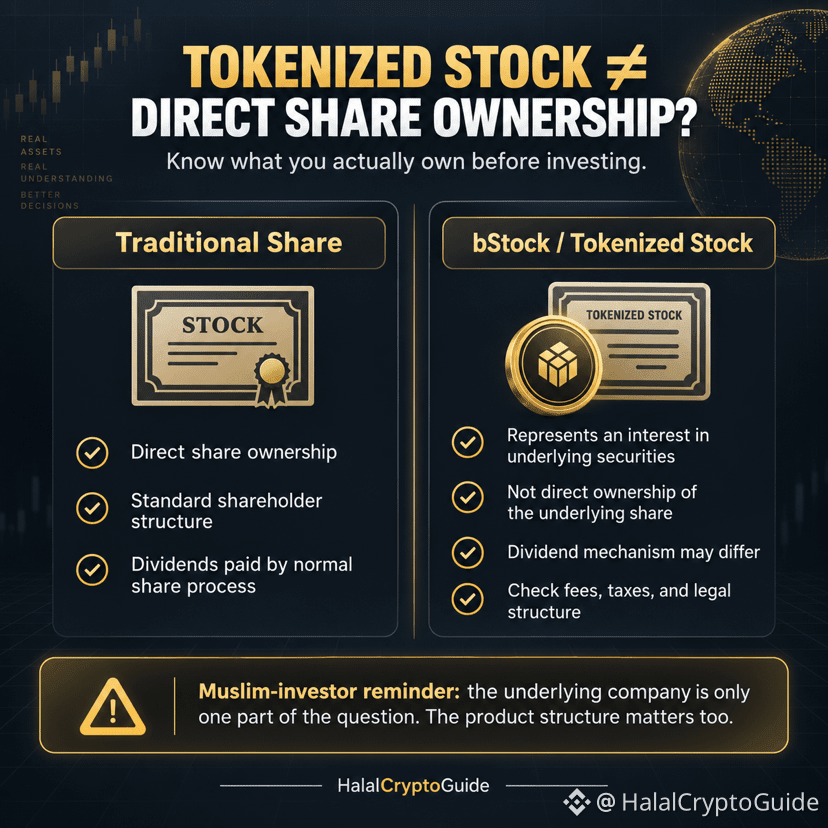
🚨 Binance bStocks can now pass through dividends — but Muslim investors should notice one important detail.
Holding a tokenized stock is not necessarily the same legal structure as owning the actual share.
Binance confirmed dividend distributions for AVGOB, QQQB, METAB and STXB holders.
Instead of simply paying the gross cash dividend:
• Applicable taxes, fees and costs are deducted
• The remaining dividend is reinvested
• Eligible holders receive additional/fractional bStock units
But here’s the detail worth understanding:
Binance states that bStocks represent an interest in underlying securities and do not give holders direct ownership of the underlying shares.
🕌 For a Muslim investor, this means looking only at whether the underlying company seems permissible may not answer the whole Shariah question.
The contract structure, what the token legally represents, ownership, dividend mechanism and underlying company’s activities/financial ratios can all matter.
I’m not declaring bStocks halal or haram here. The point is simpler:
📚 Understand what you actually own before investing.
👇 Would you like me to make a full breakdown comparing real shares vs tokenized stocks vs crypto tokens from a Shariah-awareness perspective?
#bStocks #Binance #IslamicFinance #HalalCryptoGuide
Educational only — not financial advice or a fatwa.
🚨 Binance bStocks can now pass through dividends — but Muslim investors should notice one important detail.
Holding a tokenized stock is not necessarily the same legal structure as owning the actual share.
Binance confirmed dividend distributions for AVGOB, QQQB, METAB and STXB holders.
Instead of simply paying the gross cash dividend:
• Applicable taxes, fees and costs are deducted
• The remaining dividend is reinvested
• Eligible holders receive additional/fractional bStock units
But here’s the detail worth understanding:
Binance states that bStocks represent an interest in underlying securities and do not give holders direct ownership of the underlying shares.
🕌 For a Muslim investor, this means looking only at whether the underlying company seems permissible may not answer the whole Shariah question.
The contract structure, what the token legally represents, ownership, dividend mechanism and underlying company’s activities/financial ratios can all matter.
I’m not declaring bStocks halal or haram here. The point is simpler:
📚 Understand what you actually own before investing.
👇 Would you like me to make a full breakdown comparing real shares vs tokenized stocks vs crypto tokens from a Shariah-awareness perspective?
#bStocks #Binance #IslamicFinance #HalalCryptoGuide
Educational only — not financial advice or a fatwa.
Holding a tokenized stock is not necessarily the same legal structure as owning the actual share.
Binance confirmed dividend distributions for AVGOB, QQQB, METAB and STXB holders.
Instead of simply paying the gross cash dividend:
• Applicable taxes, fees and costs are deducted
• The remaining dividend is reinvested
• Eligible holders receive additional/fractional bStock units
But here’s the detail worth understanding:
Binance states that bStocks represent an interest in underlying securities and do not give holders direct ownership of the underlying shares.
🕌 For a Muslim investor, this means looking only at whether the underlying company seems permissible may not answer the whole Shariah question.
The contract structure, what the token legally represents, ownership, dividend mechanism and underlying company’s activities/financial ratios can all matter.
I’m not declaring bStocks halal or haram here. The point is simpler:
📚 Understand what you actually own before investing.
👇 Would you like me to make a full breakdown comparing real shares vs tokenized stocks vs crypto tokens from a Shariah-awareness perspective?
#bStocks #Binance #IslamicFinance #HalalCryptoGuide
Educational only — not financial advice or a fatwa.
86

·
--
🚨 Is Crypto Really Haram? Let's Discuss Respectfully.
Millions of people use crypto every day, while many respected scholars have issued different opinions. Some consider many forms of crypto impermissible, while others distinguish between owning digital assets and speculative or leveraged trading.
One point most scholars agree on: ❌ Gambling and excessive speculation are prohibited. Using high leverage or treating trading like gambling is very different from discussing whether owning certain digital assets is permissible.
💭 So here's my question for the Binance Square community:
🔹 Can cryptocurrencies become "Maal" (wealth/property) if they gain widespread acceptance and are regulated? 🔹 Or do you believe crypto remains impermissible regardless?
👇 Share your opinion in the comments:
🟢 "MAAL" — if you believe some cryptocurrencies can be permissible under certain conditions.
🔴 "HARAM" — if you believe crypto is impermissible.
⚠️ Please keep the discussion respectful. This post is for learning and exchanging views, not issuing fatwas. Always consult qualified scholars for religious rulings.
$LAB
{future}(LABUSDT)
$EVAA
{future}(EVAAUSDT)
$CLO
{future}(CLOUSDT)
❤️ Like • 🔄 Share • 💬 Comment
#Crypto #IslamicFinance #Blockchain #BinanceSquare #Bitcoin #Trading #DYOR #Discussion #Web3
🚨 Is Crypto Really Haram? Let's Discuss Respectfully.
Millions of people use crypto every day, while many respected scholars have issued different opinions. Some consider many forms of crypto impermissible, while others distinguish between owning digital assets and speculative or leveraged trading.
One point most scholars agree on: ❌ Gambling and excessive speculation are prohibited. Using high leverage or treating trading like gambling is very different from discussing whether owning certain digital assets is permissible.
💭 So here's my question for the Binance Square community:
🔹 Can cryptocurrencies become "Maal" (wealth/property) if they gain widespread acceptance and are regulated? 🔹 Or do you believe crypto remains impermissible regardless?
👇 Share your opinion in the comments:
🟢 "MAAL" — if you believe some cryptocurrencies can be permissible under certain conditions.
🔴 "HARAM" — if you believe crypto is impermissible.
⚠️ Please keep the discussion respectful. This post is for learning and exchanging views, not issuing fatwas. Always consult qualified scholars for religious rulings.
$LAB
$EVAA
$CLO
❤️ Like • 🔄 Share • 💬 Comment
#Crypto #IslamicFinance #Blockchain #BinanceSquare #Bitcoin #Trading #DYOR #Discussion #Web3
Millions of people use crypto every day, while many respected scholars have issued different opinions. Some consider many forms of crypto impermissible, while others distinguish between owning digital assets and speculative or leveraged trading.
One point most scholars agree on: ❌ Gambling and excessive speculation are prohibited. Using high leverage or treating trading like gambling is very different from discussing whether owning certain digital assets is permissible.
💭 So here's my question for the Binance Square community:
🔹 Can cryptocurrencies become "Maal" (wealth/property) if they gain widespread acceptance and are regulated? 🔹 Or do you believe crypto remains impermissible regardless?
👇 Share your opinion in the comments:
🟢 "MAAL" — if you believe some cryptocurrencies can be permissible under certain conditions.
🔴 "HARAM" — if you believe crypto is impermissible.
⚠️ Please keep the discussion respectful. This post is for learning and exchanging views, not issuing fatwas. Always consult qualified scholars for religious rulings.
$LAB
$EVAA
$CLO
❤️ Like • 🔄 Share • 💬 Comment
#Crypto #IslamicFinance #Blockchain #BinanceSquare #Bitcoin #Trading #DYOR #Discussion #Web3
3
1
294
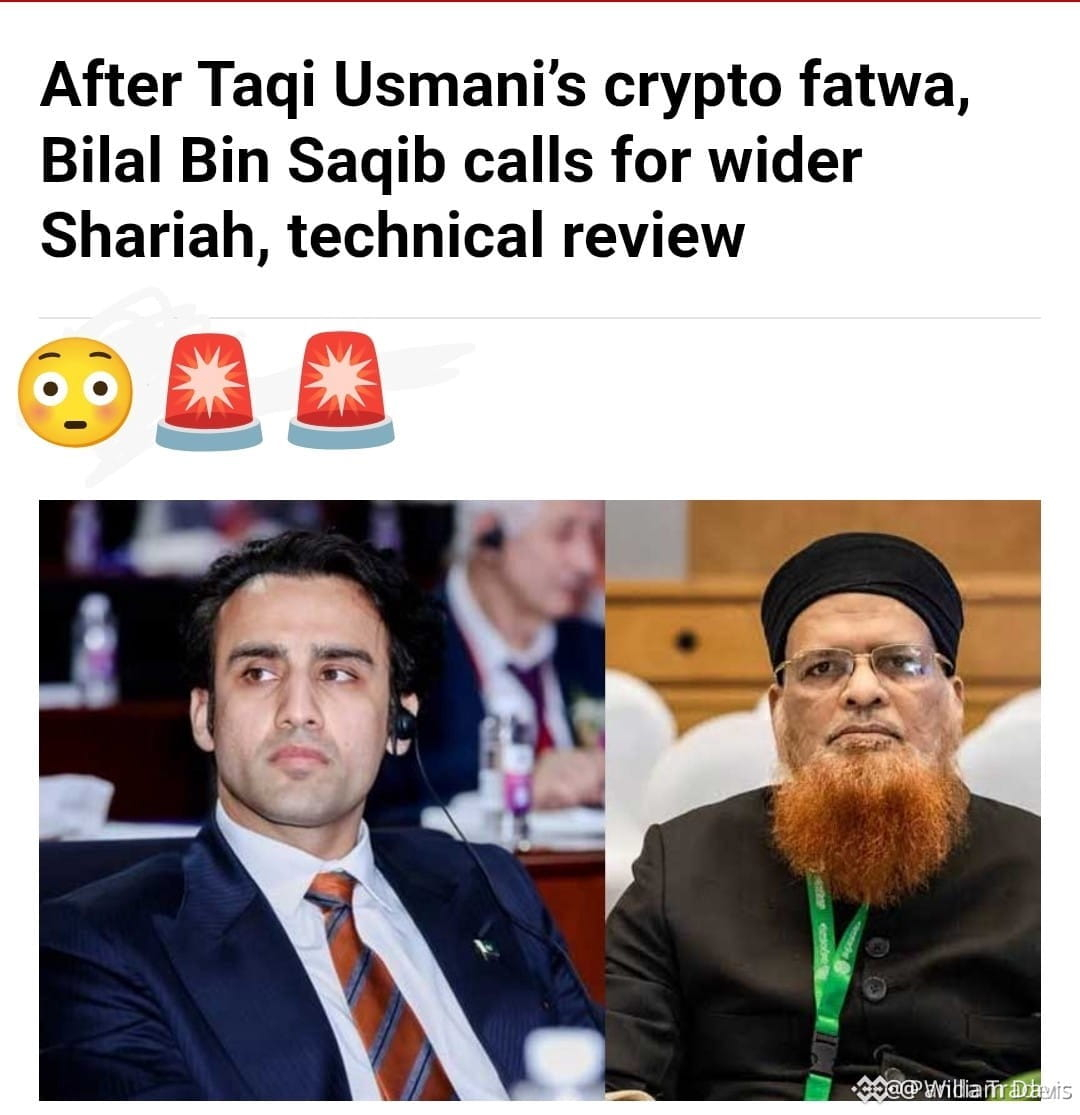
$BTC $SOL $ETH FACE SHARIAH SCRUTINY — PAKISTAN DEBATE INTENSIFIES 🔥
Pakistan’s Darul Uloom Karachi has ruled crypto not permissible as Shariah-compliant wealth, but the debate is far from settled. Key distinction: spot holdings differ from leveraged futures and meme-coin gambling. With over 200 million potential users in a fast-adopting market, any regulatory clarity—or ambiguity—can ripple into global order flow.
The real issue isn’t technology versus tradition; it’s whether scholars, regulators, and blockchain experts can align before a final ruling impacts millions. Will this fatwa shift liquidity away from Pakistani exchanges or just push trading underground?
Not financial advice. Always manage your risk.
#BTC #IslamicFinance #Debate #CryptoRegulation
🔥
$BTC $SOL $ETH FACE SHARIAH SCRUTINY — PAKISTAN DEBATE INTENSIFIES 🔥
Pakistan’s Darul Uloom Karachi has ruled crypto not permissible as Shariah-compliant wealth, but the debate is far from settled. Key distinction: spot holdings differ from leveraged futures and meme-coin gambling. With over 200 million potential users in a fast-adopting market, any regulatory clarity—or ambiguity—can ripple into global order flow.
The real issue isn’t technology versus tradition; it’s whether scholars, regulators, and blockchain experts can align before a final ruling impacts millions. Will this fatwa shift liquidity away from Pakistani exchanges or just push trading underground?
Not financial advice. Always manage your risk.
#BTC #IslamicFinance #Debate #CryptoRegulation
🔥
Pakistan’s Darul Uloom Karachi has ruled crypto not permissible as Shariah-compliant wealth, but the debate is far from settled. Key distinction: spot holdings differ from leveraged futures and meme-coin gambling. With over 200 million potential users in a fast-adopting market, any regulatory clarity—or ambiguity—can ripple into global order flow.
The real issue isn’t technology versus tradition; it’s whether scholars, regulators, and blockchain experts can align before a final ruling impacts millions. Will this fatwa shift liquidity away from Pakistani exchanges or just push trading underground?
Not financial advice. Always manage your risk.
#BTC #IslamicFinance #Debate #CryptoRegulation
🔥
106

🚨 STOP Losing Money on Haram Crypto! How to Trade 100% Halal on Binance Spot 🕌✨
Did you know that millions of Muslim traders are losing their wealth simply because they don't know the difference between Halal and Haram in crypto? If you want barakah (blessing) in your wealth, you must avoid Futures and Leverage.
Here is your ultimate 3-step guide to 100% Halal Crypto Investing on Binance Spot market:
1️⃣ Strictly Stick to Spot Trading 📈
Spot trading means you buy the actual asset with your own money. No borrowing, no interest (Riba), and no liquidation risks. You own the coin! This aligns perfectly with Islamic finance. Avoid Futures/Margin trading at all costs, as leverage is highly academic-disputed and involves extreme speculation (Gharar).
2️⃣ Project Shariah Screening 🔍
Before clicking buy on coins like $BTC, $ETH, or $BNB, always check the project's utility.
• Halal: Projects solving real-world digital problems, cloud storage, decentralization, or technology infrastructure.
• Haram: Projects built entirely around interest lending, gambling, casinos, or pure algorithmic hype without any real-world utility.
3️⃣ Calculate Your Zakat Automatically 📊
Halal investing doesn't stop at buying; you must purify your wealth. You can screen your favorite tokens and use external Islamic tools to calculate your annual crypto Zakat properly.
💡 Action Step for Barakah:
Don't wait for a market crash. If you want to build a clean, risk-managed portfolio today, start accumulation immediately through Binance Spot.
Click the chart below to check the real-time Halal project status and start your clean journey:
👉 $BTC
👉 $BNB
👉 $ETH
#HalalCrypto #CryptoInvesting #BinanceSpot #WriteToEarn #IslamicFinance
🚨 STOP Losing Money on Haram Crypto! How to Trade 100% Halal on Binance Spot 🕌✨
Did you know that millions of Muslim traders are losing their wealth simply because they don't know the difference between Halal and Haram in crypto? If you want barakah (blessing) in your wealth, you must avoid Futures and Leverage.
Here is your ultimate 3-step guide to 100% Halal Crypto Investing on Binance Spot market:
1️⃣ Strictly Stick to Spot Trading 📈
Spot trading means you buy the actual asset with your own money. No borrowing, no interest (Riba), and no liquidation risks. You own the coin! This aligns perfectly with Islamic finance. Avoid Futures/Margin trading at all costs, as leverage is highly academic-disputed and involves extreme speculation (Gharar).
2️⃣ Project Shariah Screening 🔍
Before clicking buy on coins like $BTC, $ETH, or $BNB, always check the project's utility.
• Halal: Projects solving real-world digital problems, cloud storage, decentralization, or technology infrastructure.
• Haram: Projects built entirely around interest lending, gambling, casinos, or pure algorithmic hype without any real-world utility.
3️⃣ Calculate Your Zakat Automatically 📊
Halal investing doesn't stop at buying; you must purify your wealth. You can screen your favorite tokens and use external Islamic tools to calculate your annual crypto Zakat properly.
💡 Action Step for Barakah:
Don't wait for a market crash. If you want to build a clean, risk-managed portfolio today, start accumulation immediately through Binance Spot.
Click the chart below to check the real-time Halal project status and start your clean journey:
👉 $BTC
👉 $BNB
👉 $ETH
#HalalCrypto #CryptoInvesting #BinanceSpot #WriteToEarn #IslamicFinance
Did you know that millions of Muslim traders are losing their wealth simply because they don't know the difference between Halal and Haram in crypto? If you want barakah (blessing) in your wealth, you must avoid Futures and Leverage.
Here is your ultimate 3-step guide to 100% Halal Crypto Investing on Binance Spot market:
1️⃣ Strictly Stick to Spot Trading 📈
Spot trading means you buy the actual asset with your own money. No borrowing, no interest (Riba), and no liquidation risks. You own the coin! This aligns perfectly with Islamic finance. Avoid Futures/Margin trading at all costs, as leverage is highly academic-disputed and involves extreme speculation (Gharar).
2️⃣ Project Shariah Screening 🔍
Before clicking buy on coins like $BTC, $ETH, or $BNB, always check the project's utility.
• Halal: Projects solving real-world digital problems, cloud storage, decentralization, or technology infrastructure.
• Haram: Projects built entirely around interest lending, gambling, casinos, or pure algorithmic hype without any real-world utility.
3️⃣ Calculate Your Zakat Automatically 📊
Halal investing doesn't stop at buying; you must purify your wealth. You can screen your favorite tokens and use external Islamic tools to calculate your annual crypto Zakat properly.
💡 Action Step for Barakah:
Don't wait for a market crash. If you want to build a clean, risk-managed portfolio today, start accumulation immediately through Binance Spot.
Click the chart below to check the real-time Halal project status and start your clean journey:
👉 $BTC
👉 $BNB
👉 $ETH
#HalalCrypto #CryptoInvesting #BinanceSpot #WriteToEarn #IslamicFinance
2
1
100
Welcome to "Halal Crypto" Page! | Welcome to Halal Crypto! 🕋✨
We are delighted to announce the launch of this educational platform dedicated to providing analysis and news of the cryptocurrency market in accordance with Islamic Sharia guidelines and rulings. Our aim is to help you navigate the world of digital assets with purity and confidence.
📌 What will we provide here?
Accurate analyses exclusively for the spot market.
Review of digital projects to ensure they are free from doubts of riba (usury) or gambling.
Educational content to enable the Muslim investor to make informed financial decisions.
🚫 What you will not find here:
No promotion of futures contracts (Futures).
No use of financial leverage or prohibited speculation.
No misleading or promotion of fake projects.
Follow us to receive daily updates, and let’s invest wisely and with purity! 🚀
Welcome to Halal Crypto Hub! 🕋✨
We are thrilled to launch this educational space dedicated to analyzing the cryptocurrency market strictly within Sharia-compliant frameworks. Our goal is to help you navigate digital assets with clarity and peace of mind.
📌 What We Offer Here:
In-depth technical analysis focused exclusively on the Spot Market.
Screening of crypto assets to ensure they avoid Riba (usury) or gambling mechanics.
Educational resources empowering Muslim investors to make mindful financial choices.
🚫 What You Will Never Find Here:
No promotion of Futures or derivatives.
No leverage or high-risk margin trading mechanisms.
No deceptive hype or "shilling" of unveri$fied projects.
Follow us for daily compliant market insights, and let's grow our wealth ethically! 🚀
#HalalCrypto #CryptoNews #SpotTrading #IslamicFinance #BinanceSquare
Welcome to "Halal Crypto" Page! | Welcome to Halal Crypto! 🕋✨
We are delighted to announce the launch of this educational platform dedicated to providing analysis and news of the cryptocurrency market in accordance with Islamic Sharia guidelines and rulings. Our aim is to help you navigate the world of digital assets with purity and confidence.
📌 What will we provide here?
Accurate analyses exclusively for the spot market.
Review of digital projects to ensure they are free from doubts of riba (usury) or gambling.
Educational content to enable the Muslim investor to make informed financial decisions.
🚫 What you will not find here:
No promotion of futures contracts (Futures).
No use of financial leverage or prohibited speculation.
No misleading or promotion of fake projects.
Follow us to receive daily updates, and let’s invest wisely and with purity! 🚀
Welcome to Halal Crypto Hub! 🕋✨
We are thrilled to launch this educational space dedicated to analyzing the cryptocurrency market strictly within Sharia-compliant frameworks. Our goal is to help you navigate digital assets with clarity and peace of mind.
📌 What We Offer Here:
In-depth technical analysis focused exclusively on the Spot Market.
Screening of crypto assets to ensure they avoid Riba (usury) or gambling mechanics.
Educational resources empowering Muslim investors to make mindful financial choices.
🚫 What You Will Never Find Here:
No promotion of Futures or derivatives.
No leverage or high-risk margin trading mechanisms.
No deceptive hype or "shilling" of unveri$fied projects.
Follow us for daily compliant market insights, and let's grow our wealth ethically! 🚀
#HalalCrypto #CryptoNews #SpotTrading #IslamicFinance #BinanceSquare
We are delighted to announce the launch of this educational platform dedicated to providing analysis and news of the cryptocurrency market in accordance with Islamic Sharia guidelines and rulings. Our aim is to help you navigate the world of digital assets with purity and confidence.
📌 What will we provide here?
Accurate analyses exclusively for the spot market.
Review of digital projects to ensure they are free from doubts of riba (usury) or gambling.
Educational content to enable the Muslim investor to make informed financial decisions.
🚫 What you will not find here:
No promotion of futures contracts (Futures).
No use of financial leverage or prohibited speculation.
No misleading or promotion of fake projects.
Follow us to receive daily updates, and let’s invest wisely and with purity! 🚀
Welcome to Halal Crypto Hub! 🕋✨
We are thrilled to launch this educational space dedicated to analyzing the cryptocurrency market strictly within Sharia-compliant frameworks. Our goal is to help you navigate digital assets with clarity and peace of mind.
📌 What We Offer Here:
In-depth technical analysis focused exclusively on the Spot Market.
Screening of crypto assets to ensure they avoid Riba (usury) or gambling mechanics.
Educational resources empowering Muslim investors to make mindful financial choices.
🚫 What You Will Never Find Here:
No promotion of Futures or derivatives.
No leverage or high-risk margin trading mechanisms.
No deceptive hype or "shilling" of unveri$fied projects.
Follow us for daily compliant market insights, and let's grow our wealth ethically! 🚀
#HalalCrypto #CryptoNews #SpotTrading #IslamicFinance #BinanceSquare
2
2
104

·
--
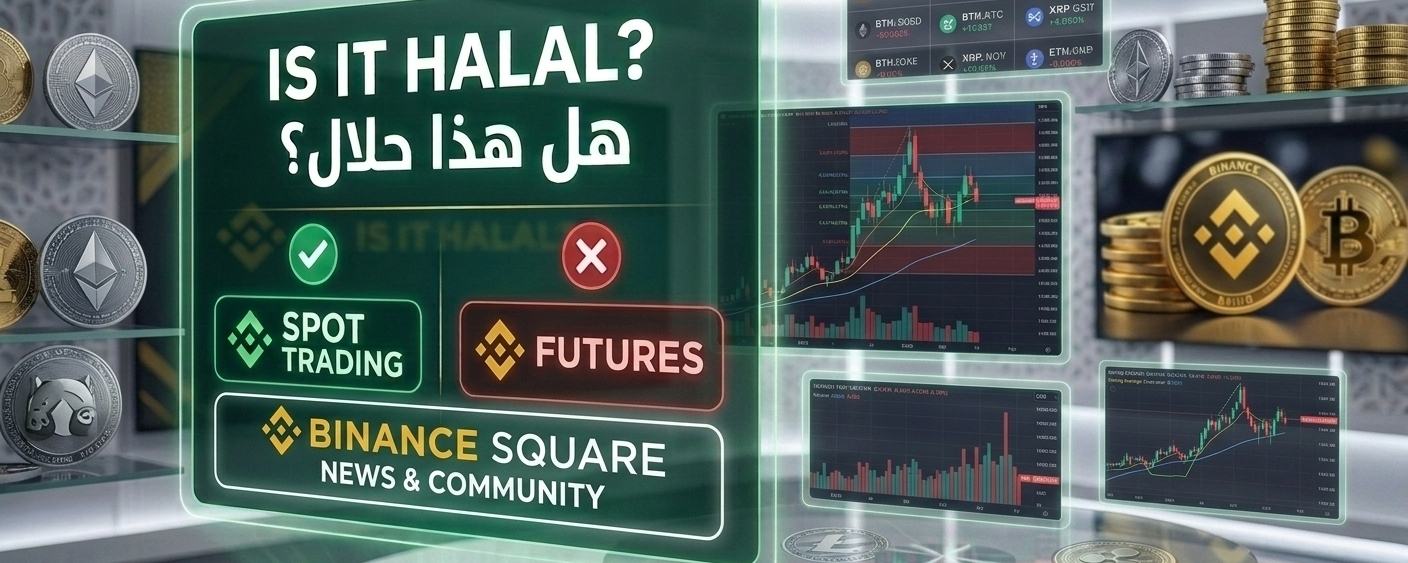
Article
Is it Halal?" – 5 Signs You're Accidentally Trading HaramYou intend to trade halal. You avoid futures. You don't touch interest. But many Muslims unknowingly cross into haram territory through small mistakes. Here are 5 red flags to check today
1. You're Using "Stop-Loss" with Borrowed Margin
· A stop-loss is fine on spot trading.
· But if your exchange automatically borrows funds to keep your position open (common in margin trading), you've entered a Riba contract.
· Fix: Only use spot stop-losses. Never enable "auto-borrow."
2. You're Trading Coins Before Their Whitepaper Exists
· If the team hasn't published a clear purpose, you're betting on hope.
· This is Gharar (excessive uncertainty).
· Fix: Only trade coins with published, audited whitepapers and known teams.
3. You're Following "Pump and Dump" Groups on Telegram
· These groups coordinate buying a random coin to inflate price, then insiders sell first.
· You are either: (a) being deceived, or (b) deceiving others.
· Both are haram (fraud/deception).
· Fix: Leave every "signal group" that promises guaranteed pumps.
4. You Don't Know Who Is Behind the Project
· Anonymous founders (Satoshi is the exception, not the rule) hide accountability.
· If a project scams you, you cannot pursue justice or return funds.
· Islamic finance requires transparency and accountability.
· Fix: Prefer projects with doxxed, verifiable teams.
5. You're Trading During Friday Prayer Time
· This is often forgotten. When Jumu'ah begins, trading should stop until prayer ends.
· Missing Jumu'ah for a trade puts dunya (this world) above deen (faith).
· Fix: Set a calendar alert. Close screens 10 minutes before Khutbah.
Quick Checklist Before Your Next Trade:
Question If NO → Don't Trade
Does this coin have a real use case? ❌ Gharar
Is the team known and transparent? ❌ Risk of fraud
Am I trading spot (not futures)? ❌ Riba
Is it outside Jumu'ah time? ❌ Missing prayer
Am I copying a "pump" group? ❌ Deception
Question for you: Which of these 5 mistakes have you made before? Be honest — this helps everyone learn.
#halalcoins #TradingMistake #IslamicFinance #SpotTrading
Is it Halal?" – 5 Signs You're Accidentally Trading Haram
You intend to trade halal. You avoid futures. You don't touch interest. But many Muslims unknowingly cross into haram territory through small mistakes. Here are 5 red flags to check today
1. You're Using "Stop-Loss" with Borrowed Margin
· A stop-loss is fine on spot trading.
· But if your exchange automatically borrows funds to keep your position open (common in margin trading), you've entered a Riba contract.
· Fix: Only use spot stop-losses. Never enable "auto-borrow."
2. You're Trading Coins Before Their Whitepaper Exists
· If the team hasn't published a clear purpose, you're betting on hope.
· This is Gharar (excessive uncertainty).
· Fix: Only trade coins with published, audited whitepapers and known teams.
3. You're Following "Pump and Dump" Groups on Telegram
· These groups coordinate buying a random coin to inflate price, then insiders sell first.
· You are either: (a) being deceived, or (b) deceiving others.
· Both are haram (fraud/deception).
· Fix: Leave every "signal group" that promises guaranteed pumps.
4. You Don't Know Who Is Behind the Project
· Anonymous founders (Satoshi is the exception, not the rule) hide accountability.
· If a project scams you, you cannot pursue justice or return funds.
· Islamic finance requires transparency and accountability.
· Fix: Prefer projects with doxxed, verifiable teams.
5. You're Trading During Friday Prayer Time
· This is often forgotten. When Jumu'ah begins, trading should stop until prayer ends.
· Missing Jumu'ah for a trade puts dunya (this world) above deen (faith).
· Fix: Set a calendar alert. Close screens 10 minutes before Khutbah.
Quick Checklist Before Your Next Trade:
Question If NO → Don't Trade
Does this coin have a real use case? ❌ Gharar
Is the team known and transparent? ❌ Risk of fraud
Am I trading spot (not futures)? ❌ Riba
Is it outside Jumu'ah time? ❌ Missing prayer
Am I copying a "pump" group? ❌ Deception
Question for you: Which of these 5 mistakes have you made before? Be honest — this helps everyone learn.
#halalcoins #TradingMistake #IslamicFinance #SpotTrading
1. You're Using "Stop-Loss" with Borrowed Margin
· A stop-loss is fine on spot trading.
· But if your exchange automatically borrows funds to keep your position open (common in margin trading), you've entered a Riba contract.
· Fix: Only use spot stop-losses. Never enable "auto-borrow."
2. You're Trading Coins Before Their Whitepaper Exists
· If the team hasn't published a clear purpose, you're betting on hope.
· This is Gharar (excessive uncertainty).
· Fix: Only trade coins with published, audited whitepapers and known teams.
3. You're Following "Pump and Dump" Groups on Telegram
· These groups coordinate buying a random coin to inflate price, then insiders sell first.
· You are either: (a) being deceived, or (b) deceiving others.
· Both are haram (fraud/deception).
· Fix: Leave every "signal group" that promises guaranteed pumps.
4. You Don't Know Who Is Behind the Project
· Anonymous founders (Satoshi is the exception, not the rule) hide accountability.
· If a project scams you, you cannot pursue justice or return funds.
· Islamic finance requires transparency and accountability.
· Fix: Prefer projects with doxxed, verifiable teams.
5. You're Trading During Friday Prayer Time
· This is often forgotten. When Jumu'ah begins, trading should stop until prayer ends.
· Missing Jumu'ah for a trade puts dunya (this world) above deen (faith).
· Fix: Set a calendar alert. Close screens 10 minutes before Khutbah.
Quick Checklist Before Your Next Trade:
Question If NO → Don't Trade
Does this coin have a real use case? ❌ Gharar
Is the team known and transparent? ❌ Risk of fraud
Am I trading spot (not futures)? ❌ Riba
Is it outside Jumu'ah time? ❌ Missing prayer
Am I copying a "pump" group? ❌ Deception
Question for you: Which of these 5 mistakes have you made before? Be honest — this helps everyone learn.
#halalcoins #TradingMistake #IslamicFinance #SpotTrading
106

·
--
Bullish
Partly True
🔥BREAKING: A new Islamic ruling (FATWA) from Dar-ul-Ifta Faizan-e-Shariat states that cryptocurrency is not inherently haram. According to the fatwa, buying, selling, and transferring crypto can be permissible under specific Shariah-compliant conditions.
The ruling recognizes cryptocurrency as a transferable digital asset, similar to software, domain names, copyrights, and other legally owned digital property. However, it emphasizes that crypto transactions must remain free from Riba (interest), gambling, fraud, deception, and fake or unlawful activities.
The fatwa also advises investors to avoid highly speculative meme coins due to their extreme risk and instead consider more stable or asset-backed cryptocurrencies. It further clarifies that price volatility alone does not make crypto haram, as fluctuations are common in many lawful assets.
Key takeaway: Crypto itself is not automatically forbidden the nature of the transaction, the type of asset, and compliance with Islamic principles determine whether it is halal or not.
Source: Dar-ul-Ifta Faizan-e-Shariat | Reference 9351 | Issued: July 15, 2026
#Crypto #Bitcoin #Blockchain #IslamicFinance #CryptoNews $BTC
{spot}(BTCUSDT)
$ETH
{spot}(ETHUSDT)
$BNB
{spot}(BNBUSDT)
🔥BREAKING: A new Islamic ruling (FATWA) from Dar-ul-Ifta Faizan-e-Shariat states that cryptocurrency is not inherently haram. According to the fatwa, buying, selling, and transferring crypto can be permissible under specific Shariah-compliant conditions.
The ruling recognizes cryptocurrency as a transferable digital asset, similar to software, domain names, copyrights, and other legally owned digital property. However, it emphasizes that crypto transactions must remain free from Riba (interest), gambling, fraud, deception, and fake or unlawful activities.
The fatwa also advises investors to avoid highly speculative meme coins due to their extreme risk and instead consider more stable or asset-backed cryptocurrencies. It further clarifies that price volatility alone does not make crypto haram, as fluctuations are common in many lawful assets.
Key takeaway: Crypto itself is not automatically forbidden the nature of the transaction, the type of asset, and compliance with Islamic principles determine whether it is halal or not.
Source: Dar-ul-Ifta Faizan-e-Shariat | Reference 9351 | Issued: July 15, 2026
#Crypto #Bitcoin #Blockchain #IslamicFinance #CryptoNews $BTC
$ETH
$BNB
The ruling recognizes cryptocurrency as a transferable digital asset, similar to software, domain names, copyrights, and other legally owned digital property. However, it emphasizes that crypto transactions must remain free from Riba (interest), gambling, fraud, deception, and fake or unlawful activities.
The fatwa also advises investors to avoid highly speculative meme coins due to their extreme risk and instead consider more stable or asset-backed cryptocurrencies. It further clarifies that price volatility alone does not make crypto haram, as fluctuations are common in many lawful assets.
Key takeaway: Crypto itself is not automatically forbidden the nature of the transaction, the type of asset, and compliance with Islamic principles determine whether it is halal or not.
Source: Dar-ul-Ifta Faizan-e-Shariat | Reference 9351 | Issued: July 15, 2026
#Crypto #Bitcoin #Blockchain #IslamicFinance #CryptoNews $BTC
$ETH
$BNB
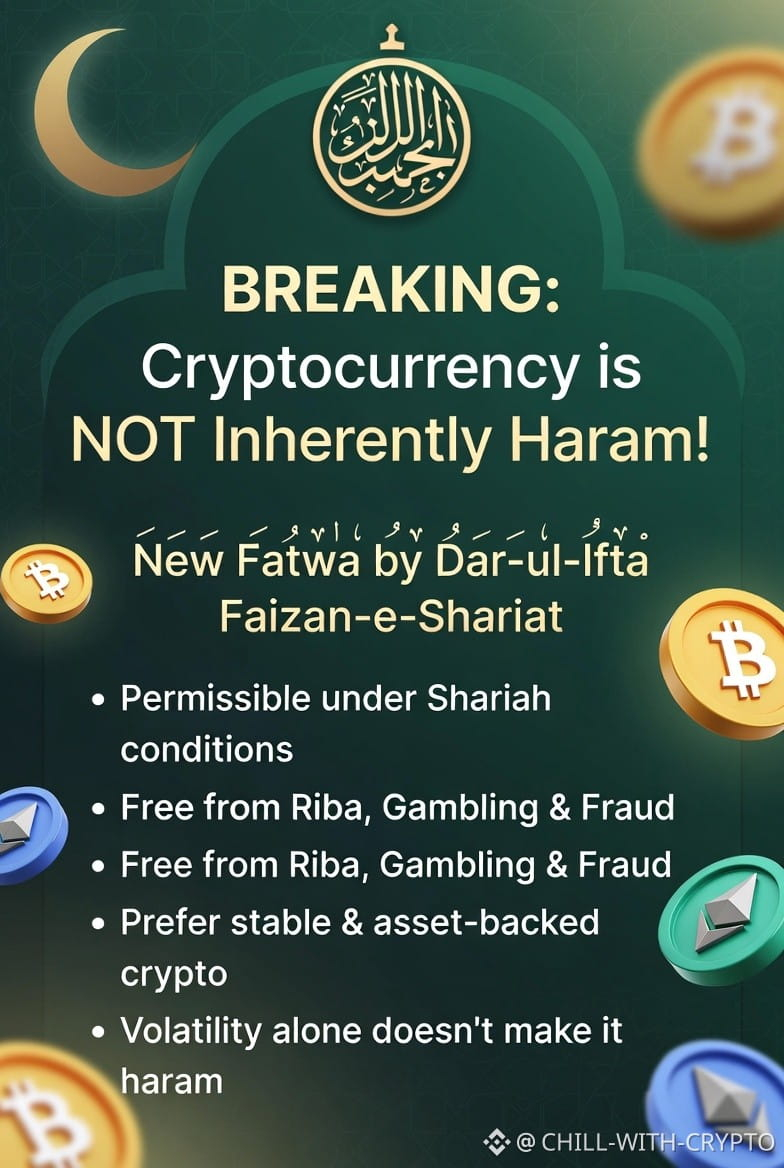
53

·
--
Pakistan’s crypto chief is fighting for digital assets! This news reveals a crucial conversation happening in Pakistan about cryptocurrency. An important religious scholar has advised against using crypto for payments, citing Islamic principles. This doesn't mean crypto is banned, but it sparks a debate about its role in the country. The virtual assets regulator is actively seeking dialogue, which is a positive sign. It shows they want to understand concerns and find common ground, rather than impose an outright ban. This "dialogue" is key to finding a regulatory path forward. This situation highlights the ongoing global challenge of integrating new technologies like crypto with existing cultural, legal, and religious frameworks. How nations adapt to this will shape crypto adoption. A clear regulatory framework, which could emerge from this dialogue, is vital for long-term growth. While some nations debate, we saw $SXT rise over 25% today, showing the market's dynamism. What do you think is the future of crypto in Islamic finance? #CryptoRegulation #IslamicFinance #GlobalAdoption $BTC
Pakistan’s crypto chief is fighting for digital assets! This news reveals a crucial conversation happening in Pakistan about cryptocurrency. An important religious scholar has advised against using crypto for payments, citing Islamic principles. This doesn't mean crypto is banned, but it sparks a debate about its role in the country. The virtual assets regulator is actively seeking dialogue, which is a positive sign. It shows they want to understand concerns and find common ground, rather than impose an outright ban. This "dialogue" is key to finding a regulatory path forward. This situation highlights the ongoing global challenge of integrating new technologies like crypto with existing cultural, legal, and religious frameworks. How nations adapt to this will shape crypto adoption. A clear regulatory framework, which could emerge from this dialogue, is vital for long-term growth. While some nations debate, we saw $SXT rise over 25% today, showing the market's dynamism. What do you think is the future of crypto in Islamic finance? #CryptoRegulation #IslamicFinance #GlobalAdoption $BTC
85

·
--
Hidden in plain sight, most traders think Shariah compliant assets are limited to traditional Islamic markets. But what if I told you that Tether Gold just opened the floodgates to a potentially massive new investor base?
#TetherGold #IslamicFinance #GoldBackedTokens
The signal is clear: Tether Gold has secured Shariah certification for XAU₮, marking a significant milestone in the token's global appeal. This is no small feat, as it paves the way for partnerships with Islamic banks and institutions in countries with significant Shia populations, like Iran, Indonesia, and Malaysia.
The interpretation is stark: with Shariah compliance, XAU₮ can now tap into a $4.4 trillion global Islamic finance market, expanding its pool of potential investors and amplifying the token's use case.
The watch list is clear: monitor the price action of XAU₮ and Tether's overall market capitalization as mainstream Islamic finance institutions begin to take notice.
Will Tether Gold's Shariah certification spark a gold rush in Islamic finance?
Hidden in plain sight, most traders think Shariah compliant assets are limited to traditional Islamic markets. But what if I told you that Tether Gold just opened the floodgates to a potentially massive new investor base?
#TetherGold #IslamicFinance #GoldBackedTokens
The signal is clear: Tether Gold has secured Shariah certification for XAU₮, marking a significant milestone in the token's global appeal. This is no small feat, as it paves the way for partnerships with Islamic banks and institutions in countries with significant Shia populations, like Iran, Indonesia, and Malaysia.
The interpretation is stark: with Shariah compliance, XAU₮ can now tap into a $4.4 trillion global Islamic finance market, expanding its pool of potential investors and amplifying the token's use case.
The watch list is clear: monitor the price action of XAU₮ and Tether's overall market capitalization as mainstream Islamic finance institutions begin to take notice.
Will Tether Gold's Shariah certification spark a gold rush in Islamic finance?
#TetherGold #IslamicFinance #GoldBackedTokens
The signal is clear: Tether Gold has secured Shariah certification for XAU₮, marking a significant milestone in the token's global appeal. This is no small feat, as it paves the way for partnerships with Islamic banks and institutions in countries with significant Shia populations, like Iran, Indonesia, and Malaysia.
The interpretation is stark: with Shariah compliance, XAU₮ can now tap into a $4.4 trillion global Islamic finance market, expanding its pool of potential investors and amplifying the token's use case.
The watch list is clear: monitor the price action of XAU₮ and Tether's overall market capitalization as mainstream Islamic finance institutions begin to take notice.
Will Tether Gold's Shariah certification spark a gold rush in Islamic finance?
21
Log in to explore more content
Join global crypto users on Binance Square
⚡️ Get latest and useful information about crypto.
💬 Trusted by the world’s largest crypto exchange.
👍 Discover real insights from verified creators.
Email / Phone number
Trending Topics
1
#PolymarketBankFailureBetsDrawFDICConcern
273 views
37 Discussing
2
#BlackRockBuildsTokenizedPortfoliosForOndo
150 views
15 Discussing
3
#BitwiseFilesToListNEARETFOnNYSEArca
929 views
50 Discussing
4
#SECCommissionerPeirceToLeaveOct2
859 views
40 Discussing
5
#SECSaysBuybacksUpgradesDontMakeTokenSecurity
2,430 views
72 Discussing
6
#StrategyProposesDailyDividendsForPreferreds
29 views
8 Discussing
7
#CircleTetherFreezeBitgetHackerWallet
169 views
18 Discussing
8
#CoinMarketCapCompletesCoinglassAcquisition
889 views
39 Discussing
9
#QNTRises39%
63,509 views
1,259 Discussing
10
#EthereumBreaksAbove$2700
5,640 views
126 Discussing