
#gdp
gdp
460,322 views
886 Discussing
Hot
Latest

The UK Office for National Statistics is set to release a comprehensive batch of July macroeconomic data, covering monthly GDP, seasonally adjusted goods trade balance, industrial production, and manufacturing output figures. This release provides a direct look into the health of the British economy as markets assess the trajectory of broader European economic performance.
These indicators are crucial because they serve as a benchmark for evaluating whether the UK economy is sustaining growth momentum or succumbing to contractionary headwinds under elevated interest rates. Investors will closely measure actual prints against market consensus to gauge the Bank of England's potential policy path regarding upcoming rate decisions.
In broader financial markets, surprise beats or misses will trigger immediate repricing across the British Pound (GBP), UK gilt yields, and European equities. A robust reading could lift the Sterling and firm up bond yields, whereas sluggish output figures may weigh on risk assets and spur safe-haven flows toward gold and the US Dollar.
For the crypto sector, macroeconomic data surprises from major G7 economies influence global liquidity expectations and overall risk tolerance. Steady economic conditions in Europe help maintain broader risk appetite for assets like $BTC, while severe economic weakness could heighten volatility and spur short-term caution across digital asset markets.
#uk #gdp #macroeconomics
The UK Office for National Statistics is set to release a comprehensive batch of July macroeconomic data, covering monthly GDP, seasonally adjusted goods trade balance, industrial production, and manufacturing output figures. This release provides a direct look into the health of the British economy as markets assess the trajectory of broader European economic performance.
These indicators are crucial because they serve as a benchmark for evaluating whether the UK economy is sustaining growth momentum or succumbing to contractionary headwinds under elevated interest rates. Investors will closely measure actual prints against market consensus to gauge the Bank of England's potential policy path regarding upcoming rate decisions.
In broader financial markets, surprise beats or misses will trigger immediate repricing across the British Pound (GBP), UK gilt yields, and European equities. A robust reading could lift the Sterling and firm up bond yields, whereas sluggish output figures may weigh on risk assets and spur safe-haven flows toward gold and the US Dollar.
For the crypto sector, macroeconomic data surprises from major G7 economies influence global liquidity expectations and overall risk tolerance. Steady economic conditions in Europe help maintain broader risk appetite for assets like $BTC , while severe economic weakness could heighten volatility and spur short-term caution across digital asset markets.
#uk #gdp #macroeconomics
These indicators are crucial because they serve as a benchmark for evaluating whether the UK economy is sustaining growth momentum or succumbing to contractionary headwinds under elevated interest rates. Investors will closely measure actual prints against market consensus to gauge the Bank of England's potential policy path regarding upcoming rate decisions.
In broader financial markets, surprise beats or misses will trigger immediate repricing across the British Pound (GBP), UK gilt yields, and European equities. A robust reading could lift the Sterling and firm up bond yields, whereas sluggish output figures may weigh on risk assets and spur safe-haven flows toward gold and the US Dollar.
For the crypto sector, macroeconomic data surprises from major G7 economies influence global liquidity expectations and overall risk tolerance. Steady economic conditions in Europe help maintain broader risk appetite for assets like $BTC , while severe economic weakness could heighten volatility and spur short-term caution across digital asset markets.
#uk #gdp #macroeconomics
16

·
--
The UK Office for National Statistics has released a series of macroeconomic data for July. The figures show that the UK’s near-three-month GDP growth as of July reached 0.4%, which not only exceeded the market’s expectation of 0.3%, but also held steady compared with the previous month. Meanwhile, July’s industrial production month-on-month rose 0.9%, significantly above the expected 0.2% and breaking away from the prior month’s contraction of 0.5%. In addition, July’s seasonally adjusted goods trade deficit narrowed to £20.965 billion, better than the forecast for a deficit of £22.3 billion.
Overall, these data points clearly outperformed the market’s earlier conservative expectations, indicating that the UK real economy still shows decent resilience on the industrial and foreign trade fronts. A recovery in manufacturing combined with an improvement in the trade deficit directly supported near-term economic momentum, easing market concerns that the UK might fall into stagnation.
In traditional financial markets, economic data coming in above expectations may force the Bank of England to weigh more considerations in its subsequent interest-rate-cut schedule. The pound sterling received fundamental support in the short term, and movements in gilt yields also reflect the market recalibrating the policy paths of European and other major global central banks.
As for the crypto market, while a single set of UK data may have limited direct impact on major assets such as $BTC , improving resilience in non-U.S. dollar currency economies can affect the U.S. Dollar Index’s trajectory, indirectly influencing the liquidity environment for global risk assets. Overall, the macro fundamentals appear steady, and both bulls and bears maintain a balanced standoff at current levels.#英国经济 #宏观经济 #GDP
The UK Office for National Statistics has released a series of macroeconomic data for July. The figures show that the UK’s near-three-month GDP growth as of July reached 0.4%, which not only exceeded the market’s expectation of 0.3%, but also held steady compared with the previous month. Meanwhile, July’s industrial production month-on-month rose 0.9%, significantly above the expected 0.2% and breaking away from the prior month’s contraction of 0.5%. In addition, July’s seasonally adjusted goods trade deficit narrowed to £20.965 billion, better than the forecast for a deficit of £22.3 billion.
Overall, these data points clearly outperformed the market’s earlier conservative expectations, indicating that the UK real economy still shows decent resilience on the industrial and foreign trade fronts. A recovery in manufacturing combined with an improvement in the trade deficit directly supported near-term economic momentum, easing market concerns that the UK might fall into stagnation.
In traditional financial markets, economic data coming in above expectations may force the Bank of England to weigh more considerations in its subsequent interest-rate-cut schedule. The pound sterling received fundamental support in the short term, and movements in gilt yields also reflect the market recalibrating the policy paths of European and other major global central banks.
As for the crypto market, while a single set of UK data may have limited direct impact on major assets such as $BTC , improving resilience in non-U.S. dollar currency economies can affect the U.S. Dollar Index’s trajectory, indirectly influencing the liquidity environment for global risk assets. Overall, the macro fundamentals appear steady, and both bulls and bears maintain a balanced standoff at current levels.#英国经济 #宏观经济 #GDP
Overall, these data points clearly outperformed the market’s earlier conservative expectations, indicating that the UK real economy still shows decent resilience on the industrial and foreign trade fronts. A recovery in manufacturing combined with an improvement in the trade deficit directly supported near-term economic momentum, easing market concerns that the UK might fall into stagnation.
In traditional financial markets, economic data coming in above expectations may force the Bank of England to weigh more considerations in its subsequent interest-rate-cut schedule. The pound sterling received fundamental support in the short term, and movements in gilt yields also reflect the market recalibrating the policy paths of European and other major global central banks.
As for the crypto market, while a single set of UK data may have limited direct impact on major assets such as $BTC , improving resilience in non-U.S. dollar currency economies can affect the U.S. Dollar Index’s trajectory, indirectly influencing the liquidity environment for global risk assets. Overall, the macro fundamentals appear steady, and both bulls and bears maintain a balanced standoff at current levels.#英国经济 #宏观经济 #GDP
11

The latest data released by the UK’s Office for National Statistics shows that the UK’s economic performance in July was broadly stronger than market expectations. Specifically, over the three months to July, GDP grew by 0.4% month-on-month, exceeding the expected 0.3%. In July, industrial production surged 0.9% month-on-month, significantly better than expectations of 0.2% and the prior reading of -0.5%. Manufacturing output also rose by 0.2%. In addition, the seasonally adjusted goods trade deficit narrowed to £20.965 billion in July, outperforming the expected deficit of £22.3 billion.
On the surface, the rebound in multiple macro indicators suggests stronger resilience in the UK economy. However, from a structural perspective, this batch of upside-surprising data is not enough to support an optimistic outlook over the medium to long term. The industrial production rebound at this stage largely has the character of a technical catch-up after earlier weakness. Meanwhile, stubborn domestic services inflation in the UK and elevated labor costs have not been fundamentally alleviated. Strong economic data has, in fact, sharply narrowed the Bank of England’s (BoE) remaining room for further rate cuts within the year, extending the squeeze cycle that high interest rates impose on the real economy.
In traditional financial markets, strong economic and trade data boosted the pound and UK government bond yields, and market expectations for an aggressive easing stance from the BoE have clearly cooled. As policy divergence among global central banks intensifies, uncertainty around liquidity prospects has increased. Elevated risk-free yields have weighed on risk assets overall, making capital more cautious when facing major markets whose valuations are already at relatively high levels.
For cryptocurrency markets, the cooling of rate-cut expectations in Europe’s major economies is not necessarily positive. A slowdown in global liquidity release directly constrains the pace of incremental capital inflows into the crypto ecosystem. If the macro environment continues to maintain tight pressure, core risk assets such as $BTC may face a longer period of liquidity-driven contests and wide-ranging volatility. Investors should be alert to the risk of valuation pullbacks brought about by slowly rising signs that macro rates are nearing their peak. #英国经济 #GDP #Macroeconomic Analysis
The latest data released by the UK’s Office for National Statistics shows that the UK’s economic performance in July was broadly stronger than market expectations. Specifically, over the three months to July, GDP grew by 0.4% month-on-month, exceeding the expected 0.3%. In July, industrial production surged 0.9% month-on-month, significantly better than expectations of 0.2% and the prior reading of -0.5%. Manufacturing output also rose by 0.2%. In addition, the seasonally adjusted goods trade deficit narrowed to £20.965 billion in July, outperforming the expected deficit of £22.3 billion.
On the surface, the rebound in multiple macro indicators suggests stronger resilience in the UK economy. However, from a structural perspective, this batch of upside-surprising data is not enough to support an optimistic outlook over the medium to long term. The industrial production rebound at this stage largely has the character of a technical catch-up after earlier weakness. Meanwhile, stubborn domestic services inflation in the UK and elevated labor costs have not been fundamentally alleviated. Strong economic data has, in fact, sharply narrowed the Bank of England’s (BoE) remaining room for further rate cuts within the year, extending the squeeze cycle that high interest rates impose on the real economy.
In traditional financial markets, strong economic and trade data boosted the pound and UK government bond yields, and market expectations for an aggressive easing stance from the BoE have clearly cooled. As policy divergence among global central banks intensifies, uncertainty around liquidity prospects has increased. Elevated risk-free yields have weighed on risk assets overall, making capital more cautious when facing major markets whose valuations are already at relatively high levels.
For cryptocurrency markets, the cooling of rate-cut expectations in Europe’s major economies is not necessarily positive. A slowdown in global liquidity release directly constrains the pace of incremental capital inflows into the crypto ecosystem. If the macro environment continues to maintain tight pressure, core risk assets such as $BTC may face a longer period of liquidity-driven contests and wide-ranging volatility. Investors should be alert to the risk of valuation pullbacks brought about by slowly rising signs that macro rates are nearing their peak. #英国经济 #GDP #Macroeconomic Analysis
On the surface, the rebound in multiple macro indicators suggests stronger resilience in the UK economy. However, from a structural perspective, this batch of upside-surprising data is not enough to support an optimistic outlook over the medium to long term. The industrial production rebound at this stage largely has the character of a technical catch-up after earlier weakness. Meanwhile, stubborn domestic services inflation in the UK and elevated labor costs have not been fundamentally alleviated. Strong economic data has, in fact, sharply narrowed the Bank of England’s (BoE) remaining room for further rate cuts within the year, extending the squeeze cycle that high interest rates impose on the real economy.
In traditional financial markets, strong economic and trade data boosted the pound and UK government bond yields, and market expectations for an aggressive easing stance from the BoE have clearly cooled. As policy divergence among global central banks intensifies, uncertainty around liquidity prospects has increased. Elevated risk-free yields have weighed on risk assets overall, making capital more cautious when facing major markets whose valuations are already at relatively high levels.
For cryptocurrency markets, the cooling of rate-cut expectations in Europe’s major economies is not necessarily positive. A slowdown in global liquidity release directly constrains the pace of incremental capital inflows into the crypto ecosystem. If the macro environment continues to maintain tight pressure, core risk assets such as $BTC may face a longer period of liquidity-driven contests and wide-ranging volatility. Investors should be alert to the risk of valuation pullbacks brought about by slowly rising signs that macro rates are nearing their peak. #英国经济 #GDP #Macroeconomic Analysis
54

·
--
The UK’s Office for National Statistics (ONS) has just released a series of July economic data with several unexpectedly positive signals. Specifically, GDP growth over the three months up to July reached 0.4%, surpassing the forecast of 0.3%. The major driver came from industrial production, which rose 0.9%, well above expectations of 0.2% and rebounding strongly from the 0.5% decline in the previous period. The trade deficit also narrowed significantly to -£209.65 billion, compared with a forecast of -£223 billion.
The UK’s economic picture is showing stronger resilience than many recession scenarios previously warned about. The combination of industrial production’s recovery and improved trade is helping to ease near-term recession pressure, reflecting that domestic demand and exports still maintain a certain degree of staying power.
For financial markets, these figures beating expectations provide additional grounds for the Bank of England (BoE) to maintain a cautious stance and not rush to ease monetary policy. The British pound (GBP) received near-term support, while UK government bond yields could remain elevated due to expectations of deep rate cuts being pushed back.
For the crypto market, more stable macro sentiment in Europe helps reinforce overall risk appetite, but the fact that major central banks keep interest rates high for longer remains a constraint limiting the surge of cheap liquidity into $BTC. #kinhte_anh #GDP #vimo
The UK’s Office for National Statistics (ONS) has just released a series of July economic data with several unexpectedly positive signals. Specifically, GDP growth over the three months up to July reached 0.4%, surpassing the forecast of 0.3%. The major driver came from industrial production, which rose 0.9%, well above expectations of 0.2% and rebounding strongly from the 0.5% decline in the previous period. The trade deficit also narrowed significantly to -£209.65 billion, compared with a forecast of -£223 billion.
The UK’s economic picture is showing stronger resilience than many recession scenarios previously warned about. The combination of industrial production’s recovery and improved trade is helping to ease near-term recession pressure, reflecting that domestic demand and exports still maintain a certain degree of staying power.
For financial markets, these figures beating expectations provide additional grounds for the Bank of England (BoE) to maintain a cautious stance and not rush to ease monetary policy. The British pound (GBP) received near-term support, while UK government bond yields could remain elevated due to expectations of deep rate cuts being pushed back.
For the crypto market, more stable macro sentiment in Europe helps reinforce overall risk appetite, but the fact that major central banks keep interest rates high for longer remains a constraint limiting the surge of cheap liquidity into $BTC . #kinhte_anh #GDP #vimo
The UK’s economic picture is showing stronger resilience than many recession scenarios previously warned about. The combination of industrial production’s recovery and improved trade is helping to ease near-term recession pressure, reflecting that domestic demand and exports still maintain a certain degree of staying power.
For financial markets, these figures beating expectations provide additional grounds for the Bank of England (BoE) to maintain a cautious stance and not rush to ease monetary policy. The British pound (GBP) received near-term support, while UK government bond yields could remain elevated due to expectations of deep rate cuts being pushed back.
For the crypto market, more stable macro sentiment in Europe helps reinforce overall risk appetite, but the fact that major central banks keep interest rates high for longer remains a constraint limiting the surge of cheap liquidity into $BTC . #kinhte_anh #GDP #vimo
73
·
--
The UK Office for National Statistics is set to release a series of key economic data for July, including month-on-month GDP (QoQ), seasonally adjusted goods trade balance, as well as indicators such as industrial output and manufacturing output. This batch of closely released macroeconomic figures will directly reflect the actual state of the UK’s economy at the start of the third quarter.
As one of Europe’s major economies, the performance of this set of UK data is crucial for assessing local inflation and stagflation risks. Markets have previously been divided on the outlook for overall European growth. If the manufacturing sector and GDP data come in weak, it may strengthen expectations for the Bank of England’s subsequent rate-cut pace; conversely, if resilience exceeds expectations, the timing of policy shifts could be delayed again.
From the perspective of traditional financial markets, after the data is released, the GBP/USD exchange rate and UK government bond yields typically experience short-term fluctuations, which may in turn lead to minor adjustments in the US Dollar Index and European stock market sentiment. In the current global period of liquidity sensitivity, any changes in policy expectations from major central banks will transmit through exchange rates to broader asset classes.
For the crypto market, although the UK’s single economic indicators are not likely to directly impact $BTC as dramatically as the Federal Reserve or US core data, macro-level expectations for fiat liquidity remain a key backdrop influencing overall risk appetite. In the short term, market sentiment is leaning toward waiting and watching; investors may consider maintaining a neutral stance and observing once the data becomes clearer.
#英国经济 #GDP #macroeconomic data
The UK Office for National Statistics is set to release a series of key economic data for July, including month-on-month GDP (QoQ), seasonally adjusted goods trade balance, as well as indicators such as industrial output and manufacturing output. This batch of closely released macroeconomic figures will directly reflect the actual state of the UK’s economy at the start of the third quarter.
As one of Europe’s major economies, the performance of this set of UK data is crucial for assessing local inflation and stagflation risks. Markets have previously been divided on the outlook for overall European growth. If the manufacturing sector and GDP data come in weak, it may strengthen expectations for the Bank of England’s subsequent rate-cut pace; conversely, if resilience exceeds expectations, the timing of policy shifts could be delayed again.
From the perspective of traditional financial markets, after the data is released, the GBP/USD exchange rate and UK government bond yields typically experience short-term fluctuations, which may in turn lead to minor adjustments in the US Dollar Index and European stock market sentiment. In the current global period of liquidity sensitivity, any changes in policy expectations from major central banks will transmit through exchange rates to broader asset classes.
For the crypto market, although the UK’s single economic indicators are not likely to directly impact $BTC as dramatically as the Federal Reserve or US core data, macro-level expectations for fiat liquidity remain a key backdrop influencing overall risk appetite. In the short term, market sentiment is leaning toward waiting and watching; investors may consider maintaining a neutral stance and observing once the data becomes clearer.
#英国经济 #GDP #macroeconomic data
As one of Europe’s major economies, the performance of this set of UK data is crucial for assessing local inflation and stagflation risks. Markets have previously been divided on the outlook for overall European growth. If the manufacturing sector and GDP data come in weak, it may strengthen expectations for the Bank of England’s subsequent rate-cut pace; conversely, if resilience exceeds expectations, the timing of policy shifts could be delayed again.
From the perspective of traditional financial markets, after the data is released, the GBP/USD exchange rate and UK government bond yields typically experience short-term fluctuations, which may in turn lead to minor adjustments in the US Dollar Index and European stock market sentiment. In the current global period of liquidity sensitivity, any changes in policy expectations from major central banks will transmit through exchange rates to broader asset classes.
For the crypto market, although the UK’s single economic indicators are not likely to directly impact $BTC as dramatically as the Federal Reserve or US core data, macro-level expectations for fiat liquidity remain a key backdrop influencing overall risk appetite. In the short term, market sentiment is leaning toward waiting and watching; investors may consider maintaining a neutral stance and observing once the data becomes clearer.
#英国经济 #GDP #macroeconomic data
5
The UK’s Office for National Statistics is set to release GDP for July, the seasonally adjusted goods trade balance, and data on industrial and manufacturing output. Against the backdrop of an overall slowdown in economic momentum across Europe, this batch of closely scheduled macro data provides a critical window for assessing the UK’s economic resilience and the Bank of England’s policy room.
From a macro fundamentals perspective, the market is highly focused on whether the UK is slipping into a stagflation-like predicament characterized by low growth alongside stubborn inflation. If the growth and output figures come in below expectations, it will directly erode confidence in a soft landing for the economy; conversely, if the data shows signs of stickiness, the Bank of England may have to keep its pace of rate cuts more restrained, limiting the speed of incremental easing in liquidity.
In traditional financial markets, macro data that misses expectations typically increases downward pressure on the pound and boosts demand for safe-haven assets such as core sovereign bonds. Weak global macro fundamentals often feed through to the US Dollar Index as well, indirectly suppressing the valuation rebound space for risk assets.
As for the cryptocurrency market, sluggish growth in Europe’s major economies further reinforces obstacles to the global liquidity recovery. During a phase in which macro uncertainty continues to build, risk assets led by $BTC are prone to face dual pressure from liquidity returning outflows and rising risk premia. Investors should remain alert to short-term downside risks driven by volatility in sentiment.
#英国经济 #GDP #Macro Analysis
The UK’s Office for National Statistics is set to release GDP for July, the seasonally adjusted goods trade balance, and data on industrial and manufacturing output. Against the backdrop of an overall slowdown in economic momentum across Europe, this batch of closely scheduled macro data provides a critical window for assessing the UK’s economic resilience and the Bank of England’s policy room.
From a macro fundamentals perspective, the market is highly focused on whether the UK is slipping into a stagflation-like predicament characterized by low growth alongside stubborn inflation. If the growth and output figures come in below expectations, it will directly erode confidence in a soft landing for the economy; conversely, if the data shows signs of stickiness, the Bank of England may have to keep its pace of rate cuts more restrained, limiting the speed of incremental easing in liquidity.
In traditional financial markets, macro data that misses expectations typically increases downward pressure on the pound and boosts demand for safe-haven assets such as core sovereign bonds. Weak global macro fundamentals often feed through to the US Dollar Index as well, indirectly suppressing the valuation rebound space for risk assets.
As for the cryptocurrency market, sluggish growth in Europe’s major economies further reinforces obstacles to the global liquidity recovery. During a phase in which macro uncertainty continues to build, risk assets led by $BTC are prone to face dual pressure from liquidity returning outflows and rising risk premia. Investors should remain alert to short-term downside risks driven by volatility in sentiment.
#英国经济 #GDP #Macro Analysis
From a macro fundamentals perspective, the market is highly focused on whether the UK is slipping into a stagflation-like predicament characterized by low growth alongside stubborn inflation. If the growth and output figures come in below expectations, it will directly erode confidence in a soft landing for the economy; conversely, if the data shows signs of stickiness, the Bank of England may have to keep its pace of rate cuts more restrained, limiting the speed of incremental easing in liquidity.
In traditional financial markets, macro data that misses expectations typically increases downward pressure on the pound and boosts demand for safe-haven assets such as core sovereign bonds. Weak global macro fundamentals often feed through to the US Dollar Index as well, indirectly suppressing the valuation rebound space for risk assets.
As for the cryptocurrency market, sluggish growth in Europe’s major economies further reinforces obstacles to the global liquidity recovery. During a phase in which macro uncertainty continues to build, risk assets led by $BTC are prone to face dual pressure from liquidity returning outflows and rising risk premia. Investors should remain alert to short-term downside risks driven by volatility in sentiment.
#英国经济 #GDP #Macro Analysis
41

The UK’s Office for National Statistics is set to release a range of key macroeconomic indicators for July, including month-on-month GDP data, the seasonally adjusted trade balance in goods, and industrial and manufacturing output. Against the backdrop of slowing momentum in overall European economic growth, this batch of closely watched data will become the key basis for the market to assess the direction of the UK’s economic fundamentals in the second half of the year.
From a macroeconomic fundamentals perspective, the market is closely monitoring whether there will be marginal improvement in UK production-side performance. If industrial and manufacturing output demonstrates resilience, it would help alleviate concerns that the economy may be sliding into stagflation, while also providing clearer guidance for the Bank of England’s subsequent monetary policy path—enabling the market to adjust overly pessimistic recession expectations.
In traditional financial markets, if economic data comes in better than gloomy expectations, the British pound may rebound at key technical support levels, which in turn could suppress the upward slope of the US Dollar Index. When the dollar’s trajectory is hindered, it typically eases pressure on global risk assets by releasing liquidity, and can improve short-term risk appetite in foreign exchange and commodity markets.
For the cryptocurrency market, if major European economies can avoid a severe recession, it would help maintain stability in global liquidity conditions. Once extreme tail risks at the macro level are ruled out, capital is more inclined to flow into higher-volatility assets; major cryptocurrencies such as <0-9]{11}$BTC </0-9]{11} are expected to break upward from a technical perspective after a period of sideways consolidation. 📊
#gdp #宏观经济 #Bank of England
The UK’s Office for National Statistics is set to release a range of key macroeconomic indicators for July, including month-on-month GDP data, the seasonally adjusted trade balance in goods, and industrial and manufacturing output. Against the backdrop of slowing momentum in overall European economic growth, this batch of closely watched data will become the key basis for the market to assess the direction of the UK’s economic fundamentals in the second half of the year.
From a macroeconomic fundamentals perspective, the market is closely monitoring whether there will be marginal improvement in UK production-side performance. If industrial and manufacturing output demonstrates resilience, it would help alleviate concerns that the economy may be sliding into stagflation, while also providing clearer guidance for the Bank of England’s subsequent monetary policy path—enabling the market to adjust overly pessimistic recession expectations.
In traditional financial markets, if economic data comes in better than gloomy expectations, the British pound may rebound at key technical support levels, which in turn could suppress the upward slope of the US Dollar Index. When the dollar’s trajectory is hindered, it typically eases pressure on global risk assets by releasing liquidity, and can improve short-term risk appetite in foreign exchange and commodity markets.
For the cryptocurrency market, if major European economies can avoid a severe recession, it would help maintain stability in global liquidity conditions. Once extreme tail risks at the macro level are ruled out, capital is more inclined to flow into higher-volatility assets; major cryptocurrencies such as <0-9]{11}$BTC </0-9]{11} are expected to break upward from a technical perspective after a period of sideways consolidation. 📊
#gdp #宏观经济 #Bank of England
From a macroeconomic fundamentals perspective, the market is closely monitoring whether there will be marginal improvement in UK production-side performance. If industrial and manufacturing output demonstrates resilience, it would help alleviate concerns that the economy may be sliding into stagflation, while also providing clearer guidance for the Bank of England’s subsequent monetary policy path—enabling the market to adjust overly pessimistic recession expectations.
In traditional financial markets, if economic data comes in better than gloomy expectations, the British pound may rebound at key technical support levels, which in turn could suppress the upward slope of the US Dollar Index. When the dollar’s trajectory is hindered, it typically eases pressure on global risk assets by releasing liquidity, and can improve short-term risk appetite in foreign exchange and commodity markets.
For the cryptocurrency market, if major European economies can avoid a severe recession, it would help maintain stability in global liquidity conditions. Once extreme tail risks at the macro level are ruled out, capital is more inclined to flow into higher-volatility assets; major cryptocurrencies such as <0-9]{11}$BTC </0-9]{11} are expected to break upward from a technical perspective after a period of sideways consolidation. 📊
#gdp #宏观经济 #Bank of England
43
·
--
The UK Office for National Statistics (ONS) is preparing to release a series of key economic data for July, including GDP growth, seasonally adjusted goods trade balance, as well as industrial and manufacturing production indicators. This data set provides a comprehensive snapshot of the health of the UK economy in Q3.
This set of figures is particularly crucial for the market in assessing whether the UK’s economic recovery momentum can remain stable. The actual results versus expectations will directly affect the Bank of England (BoE) monetary policy easing path, especially as policymakers weigh the pace of the next interest-rate cuts.
In traditional financial markets, this economic report is expected to cause immediate volatility in the British pound (GBP) and yields on UK government bonds (Gilts). If GDP exceeds expectations, the GBP could see a short-term rebound, but it would also slow expectations for rate cuts. Conversely, weaker data would increase pressure on the BoE and shift foreign capital flows.
For the crypto market, developments from major economies outside the US are playing an increasingly important role in shaping global liquidity. A weaker economic outlook in Europe may trigger a more cautious risk sentiment, but central banks accelerating monetary easing would be a long-term positive catalyst for capital flowing into risk assets such as $BTC.
#gdp #anh #macroeconomics
The UK Office for National Statistics (ONS) is preparing to release a series of key economic data for July, including GDP growth, seasonally adjusted goods trade balance, as well as industrial and manufacturing production indicators. This data set provides a comprehensive snapshot of the health of the UK economy in Q3.
This set of figures is particularly crucial for the market in assessing whether the UK’s economic recovery momentum can remain stable. The actual results versus expectations will directly affect the Bank of England (BoE) monetary policy easing path, especially as policymakers weigh the pace of the next interest-rate cuts.
In traditional financial markets, this economic report is expected to cause immediate volatility in the British pound (GBP) and yields on UK government bonds (Gilts). If GDP exceeds expectations, the GBP could see a short-term rebound, but it would also slow expectations for rate cuts. Conversely, weaker data would increase pressure on the BoE and shift foreign capital flows.
For the crypto market, developments from major economies outside the US are playing an increasingly important role in shaping global liquidity. A weaker economic outlook in Europe may trigger a more cautious risk sentiment, but central banks accelerating monetary easing would be a long-term positive catalyst for capital flowing into risk assets such as $BTC .
#gdp #anh #macroeconomics
This set of figures is particularly crucial for the market in assessing whether the UK’s economic recovery momentum can remain stable. The actual results versus expectations will directly affect the Bank of England (BoE) monetary policy easing path, especially as policymakers weigh the pace of the next interest-rate cuts.
In traditional financial markets, this economic report is expected to cause immediate volatility in the British pound (GBP) and yields on UK government bonds (Gilts). If GDP exceeds expectations, the GBP could see a short-term rebound, but it would also slow expectations for rate cuts. Conversely, weaker data would increase pressure on the BoE and shift foreign capital flows.
For the crypto market, developments from major economies outside the US are playing an increasingly important role in shaping global liquidity. A weaker economic outlook in Europe may trigger a more cautious risk sentiment, but central banks accelerating monetary easing would be a long-term positive catalyst for capital flowing into risk assets such as $BTC .
#gdp #anh #macroeconomics
96
·
--
The EU statistical office has just released the latest economic data for the euro area’s second quarter. The figures show that the euro area’s second-quarter GDP (year-on-year, final reading) came in at 1.2%, beating the market consensus of 1.0% and slightly improving from the prior figure of 1.0%. At the same time, the second-quarter seasonally adjusted employment (quarter-on-quarter, final reading) grew by 0.1%, exactly in line with both expectations and the previous figure, indicating a solid overall performance.
In terms of the data itself, this suggests that despite a range of external uncertainties, the European economy has demonstrated slightly stronger-than-expected resilience. A modest outperformance in GDP growth, combined with a gently expanding labor market, implies that the probability of the euro area falling into a deep recession in the short term is further reduced. It is not as fragile as many might have imagined.
From the perspective of macro financial assets, this data—slightly better than expected—gives the European Central Bank’s policy timeline a bit more room for balance. With economic fundamentals supported, it may mean the interest-rate cut path does not need to be overly aggressive. In the near term, the euro and European government bond yields are likely to maintain a relatively stable range of fluctuations, while global macro liquidity expectations remain in a neutral “wait-and-see” mode.
As for the crypto market, macro data from major economies in the US and Europe more often serves as a barometer for global risk appetite. At present, market liquidity conditions are still in a contest phase, and there has been no signal of one-way, aggressive easing. Overall sentiment among market participants remains cautious and objective. Going forward, the trends of mainstream assets such as $BTC should still be assessed comprehensively in light of the Federal Reserve’s subsequent actions and shifts in overall macro liquidity.
#欧元区 #GDP #macroeconomy
The EU statistical office has just released the latest economic data for the euro area’s second quarter. The figures show that the euro area’s second-quarter GDP (year-on-year, final reading) came in at 1.2%, beating the market consensus of 1.0% and slightly improving from the prior figure of 1.0%. At the same time, the second-quarter seasonally adjusted employment (quarter-on-quarter, final reading) grew by 0.1%, exactly in line with both expectations and the previous figure, indicating a solid overall performance.
In terms of the data itself, this suggests that despite a range of external uncertainties, the European economy has demonstrated slightly stronger-than-expected resilience. A modest outperformance in GDP growth, combined with a gently expanding labor market, implies that the probability of the euro area falling into a deep recession in the short term is further reduced. It is not as fragile as many might have imagined.
From the perspective of macro financial assets, this data—slightly better than expected—gives the European Central Bank’s policy timeline a bit more room for balance. With economic fundamentals supported, it may mean the interest-rate cut path does not need to be overly aggressive. In the near term, the euro and European government bond yields are likely to maintain a relatively stable range of fluctuations, while global macro liquidity expectations remain in a neutral “wait-and-see” mode.
As for the crypto market, macro data from major economies in the US and Europe more often serves as a barometer for global risk appetite. At present, market liquidity conditions are still in a contest phase, and there has been no signal of one-way, aggressive easing. Overall sentiment among market participants remains cautious and objective. Going forward, the trends of mainstream assets such as $BTC should still be assessed comprehensively in light of the Federal Reserve’s subsequent actions and shifts in overall macro liquidity.
#欧元区 #GDP #macroeconomy
In terms of the data itself, this suggests that despite a range of external uncertainties, the European economy has demonstrated slightly stronger-than-expected resilience. A modest outperformance in GDP growth, combined with a gently expanding labor market, implies that the probability of the euro area falling into a deep recession in the short term is further reduced. It is not as fragile as many might have imagined.
From the perspective of macro financial assets, this data—slightly better than expected—gives the European Central Bank’s policy timeline a bit more room for balance. With economic fundamentals supported, it may mean the interest-rate cut path does not need to be overly aggressive. In the near term, the euro and European government bond yields are likely to maintain a relatively stable range of fluctuations, while global macro liquidity expectations remain in a neutral “wait-and-see” mode.
As for the crypto market, macro data from major economies in the US and Europe more often serves as a barometer for global risk appetite. At present, market liquidity conditions are still in a contest phase, and there has been no signal of one-way, aggressive easing. Overall sentiment among market participants remains cautious and objective. Going forward, the trends of mainstream assets such as $BTC should still be assessed comprehensively in light of the Federal Reserve’s subsequent actions and shifts in overall macro liquidity.
#欧元区 #GDP #macroeconomy
15
The European statistical office today released key macroeconomic revision data for the euro area’s second quarter. The data show that the euro area’s GDP year-on-year final figure for the second quarter came in at 1.2%, higher than the market-wide expectation of 1.00% and the previous reading of 1.00%. At the same time, second-quarter seasonally adjusted employment levels recorded 0.1% quarter-on-quarter, matching both expectations and the prior figure. On the surface, despite multiple geopolitical pressures and a high interest-rate environment, Europe’s economy still displays a certain degree of resilience and has not slipped into a technical recession.
However, when examining the deeper macroeconomic logic, this seemingly upbeat set of economic and employment data is not entirely beneficial for the current macro liquidity environment. GDP’s upside rebound to 1.2%, alongside a sluggish but ongoing expansion in the labor market, suggests that the risk of sticky underlying inflation facing the European Central Bank (ECB) remains a concern that cannot be ignored. The market’s prior optimistic pricing that the ECB will enter a continuous, rapid rate-cutting cycle is very likely to be revised in the face of such resilience-favoring data, further compressing the space for a shift toward easier policy.
In traditional financial markets, the stronger-than-expected economic data would support a strengthening of the euro exchange rate and provide upward support to yields on Europe’s core sovereign bonds. Against the complex backdrop of the policy tug-of-war between the U.S. and European central banks, if the ECB slows the pace of easing due to economic resilience, the downward headwind for global long-end risk-free rates would become significantly stronger. For risk assets whose valuations are already elevated and that rely extremely heavily on abundant global liquidity, overheated or overly resilient macro data can instead create potential pressure from higher discount rates.
For the crypto market, this implies that in the short term, there is little sign of incremental liquidity arising from large-scale, coordinated easing by global central banks. With the tail effects of macro tightening likely to persist, risk assets such as $BTC will continue to face suppression from tighter macro liquidity, and bulls’ positioning lacks strong catalysts. Investors, when confronted with seemingly optimistic economic data, should therefore be more alert to the risk of liquidity contraction caused by interest rates staying in restrictive territory for longer.
#eurozone #GDP #ECB
The European statistical office today released key macroeconomic revision data for the euro area’s second quarter. The data show that the euro area’s GDP year-on-year final figure for the second quarter came in at 1.2%, higher than the market-wide expectation of 1.00% and the previous reading of 1.00%. At the same time, second-quarter seasonally adjusted employment levels recorded 0.1% quarter-on-quarter, matching both expectations and the prior figure. On the surface, despite multiple geopolitical pressures and a high interest-rate environment, Europe’s economy still displays a certain degree of resilience and has not slipped into a technical recession.
However, when examining the deeper macroeconomic logic, this seemingly upbeat set of economic and employment data is not entirely beneficial for the current macro liquidity environment. GDP’s upside rebound to 1.2%, alongside a sluggish but ongoing expansion in the labor market, suggests that the risk of sticky underlying inflation facing the European Central Bank (ECB) remains a concern that cannot be ignored. The market’s prior optimistic pricing that the ECB will enter a continuous, rapid rate-cutting cycle is very likely to be revised in the face of such resilience-favoring data, further compressing the space for a shift toward easier policy.
In traditional financial markets, the stronger-than-expected economic data would support a strengthening of the euro exchange rate and provide upward support to yields on Europe’s core sovereign bonds. Against the complex backdrop of the policy tug-of-war between the U.S. and European central banks, if the ECB slows the pace of easing due to economic resilience, the downward headwind for global long-end risk-free rates would become significantly stronger. For risk assets whose valuations are already elevated and that rely extremely heavily on abundant global liquidity, overheated or overly resilient macro data can instead create potential pressure from higher discount rates.
For the crypto market, this implies that in the short term, there is little sign of incremental liquidity arising from large-scale, coordinated easing by global central banks. With the tail effects of macro tightening likely to persist, risk assets such as $BTC will continue to face suppression from tighter macro liquidity, and bulls’ positioning lacks strong catalysts. Investors, when confronted with seemingly optimistic economic data, should therefore be more alert to the risk of liquidity contraction caused by interest rates staying in restrictive territory for longer.
#eurozone #GDP #ECB
However, when examining the deeper macroeconomic logic, this seemingly upbeat set of economic and employment data is not entirely beneficial for the current macro liquidity environment. GDP’s upside rebound to 1.2%, alongside a sluggish but ongoing expansion in the labor market, suggests that the risk of sticky underlying inflation facing the European Central Bank (ECB) remains a concern that cannot be ignored. The market’s prior optimistic pricing that the ECB will enter a continuous, rapid rate-cutting cycle is very likely to be revised in the face of such resilience-favoring data, further compressing the space for a shift toward easier policy.
In traditional financial markets, the stronger-than-expected economic data would support a strengthening of the euro exchange rate and provide upward support to yields on Europe’s core sovereign bonds. Against the complex backdrop of the policy tug-of-war between the U.S. and European central banks, if the ECB slows the pace of easing due to economic resilience, the downward headwind for global long-end risk-free rates would become significantly stronger. For risk assets whose valuations are already elevated and that rely extremely heavily on abundant global liquidity, overheated or overly resilient macro data can instead create potential pressure from higher discount rates.
For the crypto market, this implies that in the short term, there is little sign of incremental liquidity arising from large-scale, coordinated easing by global central banks. With the tail effects of macro tightening likely to persist, risk assets such as $BTC will continue to face suppression from tighter macro liquidity, and bulls’ positioning lacks strong catalysts. Investors, when confronted with seemingly optimistic economic data, should therefore be more alert to the risk of liquidity contraction caused by interest rates staying in restrictive territory for longer.
#eurozone #GDP #ECB
9
The European Union’s statistical office has released the latest economic data for the euro area’s second quarter. The figures show that the final year-over-year GDP growth rate for the euro area in Q2 came in at 1.2%, significantly higher than market expectations and the previous figure of 1.00%. Meanwhile, the seasonally adjusted final quarter-over-quarter employment figures for Q2 recorded 0.1%, perfectly matching both expectations and the previous value of 0.10%.
From a macro fundamentals perspective, the GDP growth rebound that outperformed expectations to 1.2% indicates that Europe’s core economies, after earlier slowdown, are demonstrating very strong resilience. The stability in the job market provides a solid foundation for domestic demand, while improvements in the momentum of economic expansion have also effectively eased market concerns—previously—about the euro area falling into stagflation or recession, resulting in healthy underlying support.
For traditional financial markets, strong economic indicators, to a certain extent, bolster the attractiveness of euro-denominated assets and divert some safe-haven demand from the U.S. dollar index. As growth expectations for major global economies diverge and gradually stabilize, global macro liquidity risk appetite has clearly rebounded, creating upside space for valuation corrections in global risk assets.
Looking at trends in the crypto market, the cooling of hard-landing risks in the global macro economy directly boosts long-side confidence. A weaker U.S. dollar together with a renewed improvement in risk appetite is forming a combined force, providing ample liquidity premium for risk assets headed by $BTC . If the broader market continues to sustain a volume-expanding rebound structure, crypto assets may be poised to enter a new round of trend-breaking rallies.📈
#欧元区 #GDP #Macroeconomy
The European Union’s statistical office has released the latest economic data for the euro area’s second quarter. The figures show that the final year-over-year GDP growth rate for the euro area in Q2 came in at 1.2%, significantly higher than market expectations and the previous figure of 1.00%. Meanwhile, the seasonally adjusted final quarter-over-quarter employment figures for Q2 recorded 0.1%, perfectly matching both expectations and the previous value of 0.10%.
From a macro fundamentals perspective, the GDP growth rebound that outperformed expectations to 1.2% indicates that Europe’s core economies, after earlier slowdown, are demonstrating very strong resilience. The stability in the job market provides a solid foundation for domestic demand, while improvements in the momentum of economic expansion have also effectively eased market concerns—previously—about the euro area falling into stagflation or recession, resulting in healthy underlying support.
For traditional financial markets, strong economic indicators, to a certain extent, bolster the attractiveness of euro-denominated assets and divert some safe-haven demand from the U.S. dollar index. As growth expectations for major global economies diverge and gradually stabilize, global macro liquidity risk appetite has clearly rebounded, creating upside space for valuation corrections in global risk assets.
Looking at trends in the crypto market, the cooling of hard-landing risks in the global macro economy directly boosts long-side confidence. A weaker U.S. dollar together with a renewed improvement in risk appetite is forming a combined force, providing ample liquidity premium for risk assets headed by $BTC . If the broader market continues to sustain a volume-expanding rebound structure, crypto assets may be poised to enter a new round of trend-breaking rallies.📈
#欧元区 #GDP #Macroeconomy
From a macro fundamentals perspective, the GDP growth rebound that outperformed expectations to 1.2% indicates that Europe’s core economies, after earlier slowdown, are demonstrating very strong resilience. The stability in the job market provides a solid foundation for domestic demand, while improvements in the momentum of economic expansion have also effectively eased market concerns—previously—about the euro area falling into stagflation or recession, resulting in healthy underlying support.
For traditional financial markets, strong economic indicators, to a certain extent, bolster the attractiveness of euro-denominated assets and divert some safe-haven demand from the U.S. dollar index. As growth expectations for major global economies diverge and gradually stabilize, global macro liquidity risk appetite has clearly rebounded, creating upside space for valuation corrections in global risk assets.
Looking at trends in the crypto market, the cooling of hard-landing risks in the global macro economy directly boosts long-side confidence. A weaker U.S. dollar together with a renewed improvement in risk appetite is forming a combined force, providing ample liquidity premium for risk assets headed by $BTC . If the broader market continues to sustain a volume-expanding rebound structure, crypto assets may be poised to enter a new round of trend-breaking rallies.📈
#欧元区 #GDP #Macroeconomy
5

·
--
The US economy is slamming on the brakes! In Q2, the final GDP reading was only 1.5%, down from 2.1% in Q1—clearly cooling off. Consumption and exports are still propping things up, but government spending has stalled.
The colder the economy gets, the closer rate cuts become. By September, the Fed really can’t not cut rates anymore. Once the liquidity gate opens, risk assets will always be the first to benefit.
In the short term, be careful of fake sell-offs triggered by recession panic, but remember: liquidity easing has never failed to benefit crypto—it only arrives late. If it drops, that’s your chance to get on board.
$BTC $ETH
#GDP #RateCuts
The US economy is slamming on the brakes! In Q2, the final GDP reading was only 1.5%, down from 2.1% in Q1—clearly cooling off. Consumption and exports are still propping things up, but government spending has stalled.
The colder the economy gets, the closer rate cuts become. By September, the Fed really can’t not cut rates anymore. Once the liquidity gate opens, risk assets will always be the first to benefit.
In the short term, be careful of fake sell-offs triggered by recession panic, but remember: liquidity easing has never failed to benefit crypto—it only arrives late. If it drops, that’s your chance to get on board.
$BTC $ETH
#GDP #RateCuts
The colder the economy gets, the closer rate cuts become. By September, the Fed really can’t not cut rates anymore. Once the liquidity gate opens, risk assets will always be the first to benefit.
In the short term, be careful of fake sell-offs triggered by recession panic, but remember: liquidity easing has never failed to benefit crypto—it only arrives late. If it drops, that’s your chance to get on board.
$BTC $ETH
#GDP #RateCuts
236

·
--
Bearish
🚨 US INFLATION DATA IS IN 🇺🇸
PCE Inflation came in at 3.7%, hotter than the 3.6% expectation. 📈
🇺🇸 Q2 GDP (2nd Estimate): 1.5%
➡️ In line with the previous estimate.
🔥 Hotter-than-expected inflation
➕ No improvement in GDP growth
This could put additional pressure on markets and keep expectations for easier Fed policy in check.
⚠️ Bearish setup for risk assets.
Now watch the market reaction. 👀
#PCE #Inflation #GDP #FederalReserve
🚨 US INFLATION DATA IS IN 🇺🇸
PCE Inflation came in at 3.7%, hotter than the 3.6% expectation. 📈
🇺🇸 Q2 GDP (2nd Estimate): 1.5%
➡️ In line with the previous estimate.
🔥 Hotter-than-expected inflation
➕ No improvement in GDP growth
This could put additional pressure on markets and keep expectations for easier Fed policy in check.
⚠️ Bearish setup for risk assets.
Now watch the market reaction. 👀
#PCE #Inflation #GDP #FederalReserve
PCE Inflation came in at 3.7%, hotter than the 3.6% expectation. 📈
🇺🇸 Q2 GDP (2nd Estimate): 1.5%
➡️ In line with the previous estimate.
🔥 Hotter-than-expected inflation
➕ No improvement in GDP growth
This could put additional pressure on markets and keep expectations for easier Fed policy in check.
⚠️ Bearish setup for risk assets.
Now watch the market reaction. 👀
#PCE #Inflation #GDP #FederalReserve
Mohd Jumaa
·
--
🇺🇸 US PCE INFLATION DATA 1 HOUR TO GO ⏳
One of the most important economic releases for traders today.
📊 Forecast: 3.6%
Three possible outcomes:
🟢 Below 3.6% → Inflation is cooling → Risk sentiment could improve 📈
🟡 At 3.6% → In line with expectations → Market reaction could still be positive
🔴 Above 3.6% → Inflation remains hotter than expected → Risk assets could face selling pressure 📉
⚠️ The key is not just the number itself watch how the market reacts to the actual data versus expectations.
With only 1 hour left, volatility could pick up quickly after the release.
Stay patient. Manage risk. Trade the reaction, not the prediction. 🎯
#PCE #Inflation #USData #FederalReserve
One of the most important economic releases for traders today.
📊 Forecast: 3.6%
Three possible outcomes:
🟢 Below 3.6% → Inflation is cooling → Risk sentiment could improve 📈
🟡 At 3.6% → In line with expectations → Market reaction could still be positive
🔴 Above 3.6% → Inflation remains hotter than expected → Risk assets could face selling pressure 📉
⚠️ The key is not just the number itself watch how the market reacts to the actual data versus expectations.
With only 1 hour left, volatility could pick up quickly after the release.
Stay patient. Manage risk. Trade the reaction, not the prediction. 🎯
#PCE #Inflation #USData #FederalReserve

51

·
--
🔴 HIGH IMPACT — Wednesday August 26
PCE + GDP Q2 2nd Estimate 🔥 biggest data day of the week
📅 8:30 AM ET
< cite index="24-1">July personal income and spending, PCE inflation, the second estimate of Q2 GDP and preliminary durable-goods orders all arrive on August 26 — the week's primary market catalyst.</cite>
< cite index="23-1">GDP expected to slow from 2.1% to 1.5%</cite> — a significant downgrade. And PCE drops the same morning — the Fed's favorite inflation gauge right before Warsh speaks Friday. Hot PCE = hike risk returns. Cool PCE = cut narrative confirmed. This is the setup for Jackson Hole. 🌡️
#inflation #PCE #gdp #dyor
{future}(XAGUSDT)
{future}(BTCUSDT)
{future}(BNBUSDT)
🔴 HIGH IMPACT — Wednesday August 26
PCE + GDP Q2 2nd Estimate 🔥 biggest data day of the week
📅 8:30 AM ET
< cite index="24-1">July personal income and spending, PCE inflation, the second estimate of Q2 GDP and preliminary durable-goods orders all arrive on August 26 — the week's primary market catalyst.</cite>
< cite index="23-1">GDP expected to slow from 2.1% to 1.5%</cite> — a significant downgrade. And PCE drops the same morning — the Fed's favorite inflation gauge right before Warsh speaks Friday. Hot PCE = hike risk returns. Cool PCE = cut narrative confirmed. This is the setup for Jackson Hole. 🌡️
#inflation #PCE #gdp #dyor
PCE + GDP Q2 2nd Estimate 🔥 biggest data day of the week
📅 8:30 AM ET
< cite index="24-1">July personal income and spending, PCE inflation, the second estimate of Q2 GDP and preliminary durable-goods orders all arrive on August 26 — the week's primary market catalyst.</cite>
< cite index="23-1">GDP expected to slow from 2.1% to 1.5%</cite> — a significant downgrade. And PCE drops the same morning — the Fed's favorite inflation gauge right before Warsh speaks Friday. Hot PCE = hike risk returns. Cool PCE = cut narrative confirmed. This is the setup for Jackson Hole. 🌡️
#inflation #PCE #gdp #dyor
111

🇺🇸 US GDP DATA COULD MOVE CRYPTO! 📊
The upcoming U.S. GDP update could trigger major volatility in Bitcoin and altcoins.
📈 Stronger-than-expected GDP → possible rate pressure → bearish for crypto
📉 Weaker-than-expected GDP → rate-cut hopes → potentially bullish for crypto
Watch $BTC closely around the GDP release. 🚨
#Crypto #BTC #GDP #FederalReserve #Binance
🇺🇸 US GDP DATA COULD MOVE CRYPTO! 📊
The upcoming U.S. GDP update could trigger major volatility in Bitcoin and altcoins.
📈 Stronger-than-expected GDP → possible rate pressure → bearish for crypto
📉 Weaker-than-expected GDP → rate-cut hopes → potentially bullish for crypto
Watch $BTC closely around the GDP release. 🚨
#Crypto #BTC #GDP #FederalReserve #Binance
The upcoming U.S. GDP update could trigger major volatility in Bitcoin and altcoins.
📈 Stronger-than-expected GDP → possible rate pressure → bearish for crypto
📉 Weaker-than-expected GDP → rate-cut hopes → potentially bullish for crypto
Watch $BTC closely around the GDP release. 🚨
#Crypto #BTC #GDP #FederalReserve #Binance
BULLISH 📈
70%
BEARISH 📉
30%
10 votes • Voting closed
106

·
--
Article
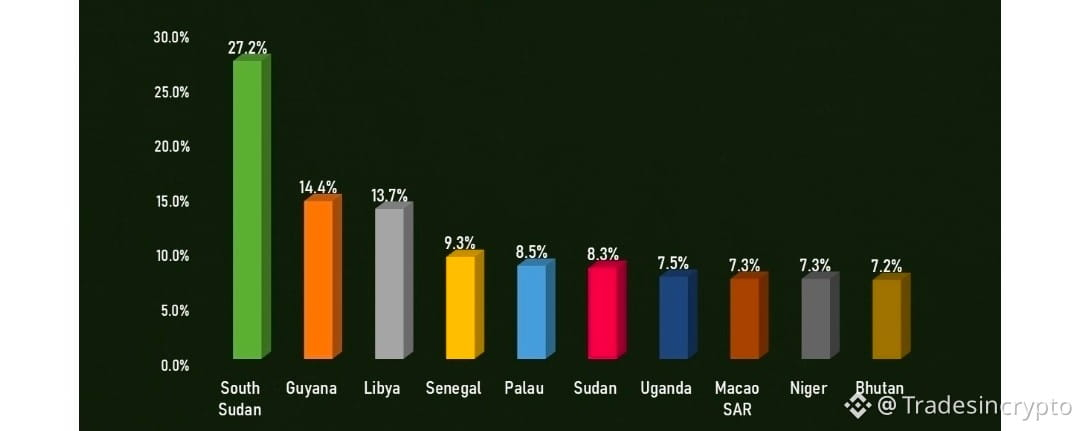
📈🌍The Top 10 Fastest Growing Economies in The World 2025South Sudan is the world’s fastest-growing economy in 2025, with a projected GDP growth of 27.2%.Africa has the highest number of rapidly growing economies, with six countries on the list such as South Sudan, Libya, Senegal, Sudan, Uganda, and Niger.Oil and natural resources drive growth in most countries; however, some countries are also growing through hydropower, tourism, and economic reform.
🇸🇸 South Sudan (27.2%)
South Sudan is expected to be the fastest-growing economy in 2025, with a high GDP growth rate of 27.2%. As the youngest nation in the world, the country has faced multiple challenges related to political instability, civil war, and a lack of infrastructure. However, recent peace agreements in the country have provided hope for economic revival. South Sudan’s high projected growth is contributed by the country’s oil sector, which constitutes the majority of its revenue.
🇬🇾 Guyana (14.4%)
Guyana has the second highest projected GDP growth rate of 14.4% globally. Before the oil boom, Guyana’s economy was based on agriculture, with sugar, rice, and gold being the largest contributors to its GDP. However, the discovery of vast oil reserves off the coast has been a game-changer for the country’s economy. Additionally, the oil extraction projects by international corporations have brought massive foreign direct investment (FDI) into Guyana, which improved its growth path.
🇱🇾 Libya (13.7%)
With a projected GDP growth rate of 13.7%, Libya is experiencing rapid economic growth. The country’s strategic location in North Africa has placed it an important country in regional trade. Libya’s economy is largely dependent on oil exports, which contribute more than 90% of its GDP. Additionally, the government’s efforts to improve governance and transparency in the oil sector attract lots of international investment in the country.
🇸🇳 Senegal (9.3%)
Senegal is one of the most stable economies in West Africa. The country’s offshore oil and gas reserves play a key role in making Senegal one of the fastest-growing economies in the region. The discovery of offshore oil and gas reserves is the main driver of the country’s economic growth.
Additionally, Senegal’s government attracts massive foreign investment through a business-friendly environment and incentives. The “Plan for an Emerging Senegal” plays an important role in industrialization, urbanization, and digitalization for long-term growth.
🇵🇼 Palau (8.5%)
Palau is a small island nation, known for its beautiful beaches and marine biodiversity. Its pristine natural beauty has made it a popular destination for ecotourists. Therefore, tourism plays a key role in boosting the country’s economic growth and development. Additionally, Palau heavily depends on financial support from the United States through the Compact of Free Association, which plays an important role in sustaining its economy.
🇸🇩 Sudan (8.3%)
The economy of Sudan has long been dependent on oil, agriculture, and minerals. However, when South Sudan became independent in 2011, Sudan lost many oil-rich areas, which hurt its economy. Now, the country is working on a major economic reform plan. Investments in farming, such as better irrigation and modern techniques, are helping increase production. Also, the recent removal of U.S. sanctions and new economic policies are creating opportunities for growth.
🇺🇬 Uganda (7.5%)
Uganda’s economy is heavily dependent on agriculture. Coffee is a major export commodity of the country, which plays a key role in its economic growth. Additionally, Uganda also benefits from the discovery of oil reserves in the Albertine Basin, which could help the economy grow even more in the future.
🇲🇴 Macao (7.3%)
Macao SAR’s economy is heavily dependent on the gaming and tourism industries. These industries attract millions of visitors from mainland China and the world. It is known as the “Las Vegas of Asia,” due to its status as a major hub for casino tourism.
🇳🇪 Niger (7.3%)
Niger is one of the fastest-growing economies in Africa. The country is rich in natural resources, including uranium, oil, and other minerals. Uranium is a key export commodity of Niger, which plays a key role in the country’s rapid economic growth. Additionally, improved regional trade and the country’s ongoing projects in agriculture and energy sectors have contributed to its fast economic growth and development globally.
🇧🇹 Bhutan (7.2%)
Bhutan is expected to have a strong GDP growth of 7.2% in 2025, ranking among the top ten. The country’s investments in hydropower projects serve as a key driver of its growth. Particularly, hydropower exports to India are the major contributors to the country’s economic growth.
$BTC
$AAPL.US
$GOOGL.US
#GDP
📈🌍The Top 10 Fastest Growing Economies in The World 2025
South Sudan is the world’s fastest-growing economy in 2025, with a projected GDP growth of 27.2%.Africa has the highest number of rapidly growing economies, with six countries on the list such as South Sudan, Libya, Senegal, Sudan, Uganda, and Niger.Oil and natural resources drive growth in most countries; however, some countries are also growing through hydropower, tourism, and economic reform.
🇸🇸 South Sudan (27.2%)
South Sudan is expected to be the fastest-growing economy in 2025, with a high GDP growth rate of 27.2%. As the youngest nation in the world, the country has faced multiple challenges related to political instability, civil war, and a lack of infrastructure. However, recent peace agreements in the country have provided hope for economic revival. South Sudan’s high projected growth is contributed by the country’s oil sector, which constitutes the majority of its revenue.
🇬🇾 Guyana (14.4%)
Guyana has the second highest projected GDP growth rate of 14.4% globally. Before the oil boom, Guyana’s economy was based on agriculture, with sugar, rice, and gold being the largest contributors to its GDP. However, the discovery of vast oil reserves off the coast has been a game-changer for the country’s economy. Additionally, the oil extraction projects by international corporations have brought massive foreign direct investment (FDI) into Guyana, which improved its growth path.
🇱🇾 Libya (13.7%)
With a projected GDP growth rate of 13.7%, Libya is experiencing rapid economic growth. The country’s strategic location in North Africa has placed it an important country in regional trade. Libya’s economy is largely dependent on oil exports, which contribute more than 90% of its GDP. Additionally, the government’s efforts to improve governance and transparency in the oil sector attract lots of international investment in the country.
🇸🇳 Senegal (9.3%)
Senegal is one of the most stable economies in West Africa. The country’s offshore oil and gas reserves play a key role in making Senegal one of the fastest-growing economies in the region. The discovery of offshore oil and gas reserves is the main driver of the country’s economic growth.
Additionally, Senegal’s government attracts massive foreign investment through a business-friendly environment and incentives. The “Plan for an Emerging Senegal” plays an important role in industrialization, urbanization, and digitalization for long-term growth.
🇵🇼 Palau (8.5%)
Palau is a small island nation, known for its beautiful beaches and marine biodiversity. Its pristine natural beauty has made it a popular destination for ecotourists. Therefore, tourism plays a key role in boosting the country’s economic growth and development. Additionally, Palau heavily depends on financial support from the United States through the Compact of Free Association, which plays an important role in sustaining its economy.
🇸🇩 Sudan (8.3%)
The economy of Sudan has long been dependent on oil, agriculture, and minerals. However, when South Sudan became independent in 2011, Sudan lost many oil-rich areas, which hurt its economy. Now, the country is working on a major economic reform plan. Investments in farming, such as better irrigation and modern techniques, are helping increase production. Also, the recent removal of U.S. sanctions and new economic policies are creating opportunities for growth.
🇺🇬 Uganda (7.5%)
Uganda’s economy is heavily dependent on agriculture. Coffee is a major export commodity of the country, which plays a key role in its economic growth. Additionally, Uganda also benefits from the discovery of oil reserves in the Albertine Basin, which could help the economy grow even more in the future.
🇲🇴 Macao (7.3%)
Macao SAR’s economy is heavily dependent on the gaming and tourism industries. These industries attract millions of visitors from mainland China and the world. It is known as the “Las Vegas of Asia,” due to its status as a major hub for casino tourism.
🇳🇪 Niger (7.3%)
Niger is one of the fastest-growing economies in Africa. The country is rich in natural resources, including uranium, oil, and other minerals. Uranium is a key export commodity of Niger, which plays a key role in the country’s rapid economic growth. Additionally, improved regional trade and the country’s ongoing projects in agriculture and energy sectors have contributed to its fast economic growth and development globally.
🇧🇹 Bhutan (7.2%)
Bhutan is expected to have a strong GDP growth of 7.2% in 2025, ranking among the top ten. The country’s investments in hydropower projects serve as a key driver of its growth. Particularly, hydropower exports to India are the major contributors to the country’s economic growth.
$BTC
$AAPL.US
$GOOGL.US
#GDP
🇸🇸 South Sudan (27.2%)
South Sudan is expected to be the fastest-growing economy in 2025, with a high GDP growth rate of 27.2%. As the youngest nation in the world, the country has faced multiple challenges related to political instability, civil war, and a lack of infrastructure. However, recent peace agreements in the country have provided hope for economic revival. South Sudan’s high projected growth is contributed by the country’s oil sector, which constitutes the majority of its revenue.
🇬🇾 Guyana (14.4%)
Guyana has the second highest projected GDP growth rate of 14.4% globally. Before the oil boom, Guyana’s economy was based on agriculture, with sugar, rice, and gold being the largest contributors to its GDP. However, the discovery of vast oil reserves off the coast has been a game-changer for the country’s economy. Additionally, the oil extraction projects by international corporations have brought massive foreign direct investment (FDI) into Guyana, which improved its growth path.
🇱🇾 Libya (13.7%)
With a projected GDP growth rate of 13.7%, Libya is experiencing rapid economic growth. The country’s strategic location in North Africa has placed it an important country in regional trade. Libya’s economy is largely dependent on oil exports, which contribute more than 90% of its GDP. Additionally, the government’s efforts to improve governance and transparency in the oil sector attract lots of international investment in the country.
🇸🇳 Senegal (9.3%)
Senegal is one of the most stable economies in West Africa. The country’s offshore oil and gas reserves play a key role in making Senegal one of the fastest-growing economies in the region. The discovery of offshore oil and gas reserves is the main driver of the country’s economic growth.
Additionally, Senegal’s government attracts massive foreign investment through a business-friendly environment and incentives. The “Plan for an Emerging Senegal” plays an important role in industrialization, urbanization, and digitalization for long-term growth.
🇵🇼 Palau (8.5%)
Palau is a small island nation, known for its beautiful beaches and marine biodiversity. Its pristine natural beauty has made it a popular destination for ecotourists. Therefore, tourism plays a key role in boosting the country’s economic growth and development. Additionally, Palau heavily depends on financial support from the United States through the Compact of Free Association, which plays an important role in sustaining its economy.
🇸🇩 Sudan (8.3%)
The economy of Sudan has long been dependent on oil, agriculture, and minerals. However, when South Sudan became independent in 2011, Sudan lost many oil-rich areas, which hurt its economy. Now, the country is working on a major economic reform plan. Investments in farming, such as better irrigation and modern techniques, are helping increase production. Also, the recent removal of U.S. sanctions and new economic policies are creating opportunities for growth.
🇺🇬 Uganda (7.5%)
Uganda’s economy is heavily dependent on agriculture. Coffee is a major export commodity of the country, which plays a key role in its economic growth. Additionally, Uganda also benefits from the discovery of oil reserves in the Albertine Basin, which could help the economy grow even more in the future.
🇲🇴 Macao (7.3%)
Macao SAR’s economy is heavily dependent on the gaming and tourism industries. These industries attract millions of visitors from mainland China and the world. It is known as the “Las Vegas of Asia,” due to its status as a major hub for casino tourism.
🇳🇪 Niger (7.3%)
Niger is one of the fastest-growing economies in Africa. The country is rich in natural resources, including uranium, oil, and other minerals. Uranium is a key export commodity of Niger, which plays a key role in the country’s rapid economic growth. Additionally, improved regional trade and the country’s ongoing projects in agriculture and energy sectors have contributed to its fast economic growth and development globally.
🇧🇹 Bhutan (7.2%)
Bhutan is expected to have a strong GDP growth of 7.2% in 2025, ranking among the top ten. The country’s investments in hydropower projects serve as a key driver of its growth. Particularly, hydropower exports to India are the major contributors to the country’s economic growth.
$BTC
$AAPL.US
$GOOGL.US
#GDP
73
·
--
🌍📈Top 10 Countries with the Largest Shadow Economy in 2025.
The global informal economy is worth around $12 trillion, which covers a significant part of economic activity worldwide.
China, the U.S., and India are the top three countries with the largest informal economies in the world.
Countries with lower regulatory enforcement or high unemployment usually have a larger share of informal activity within the informal economy.
China
China is the world’s second-largest economy, with a GDP of $19 trillion. The country’s shadow economy is valued at $3.7 trillion, making it 20% of its total economy. China’s economic rise has formalized a large portion of its labor force, however, the shadow economy remains deeply rooted due to high migration, unregistered businesses, and tax avoidance.
According to the World Bank, China’s tax-to-GDP ratio stands at approximately 7%.
United States
The U.S. has the world’s largest economy by nominal GDP. The country has an informal economy worth about $1.4 trillion, or about 5% of its GDP. This is relatively low compared to China, due to the stronger regulations and tax systems in the United States. Still, the shadow economy exists in sectors like domestic work, gig labor, and undocumented immigration-based employment.
India
India is the fifth-largest economy in the world. The country has the third-largest shadow economy globally, which stands at $951 billion, making it about 26% of its GDP.
$GAL
$LTC
#GDP
🌍📈Top 10 Countries with the Largest Shadow Economy in 2025.
The global informal economy is worth around $12 trillion, which covers a significant part of economic activity worldwide.
China, the U.S., and India are the top three countries with the largest informal economies in the world.
Countries with lower regulatory enforcement or high unemployment usually have a larger share of informal activity within the informal economy.
China
China is the world’s second-largest economy, with a GDP of $19 trillion. The country’s shadow economy is valued at $3.7 trillion, making it 20% of its total economy. China’s economic rise has formalized a large portion of its labor force, however, the shadow economy remains deeply rooted due to high migration, unregistered businesses, and tax avoidance.
According to the World Bank, China’s tax-to-GDP ratio stands at approximately 7%.
United States
The U.S. has the world’s largest economy by nominal GDP. The country has an informal economy worth about $1.4 trillion, or about 5% of its GDP. This is relatively low compared to China, due to the stronger regulations and tax systems in the United States. Still, the shadow economy exists in sectors like domestic work, gig labor, and undocumented immigration-based employment.
India
India is the fifth-largest economy in the world. The country has the third-largest shadow economy globally, which stands at $951 billion, making it about 26% of its GDP.
$GAL
$LTC
#GDP
The global informal economy is worth around $12 trillion, which covers a significant part of economic activity worldwide.
China, the U.S., and India are the top three countries with the largest informal economies in the world.
Countries with lower regulatory enforcement or high unemployment usually have a larger share of informal activity within the informal economy.
China
China is the world’s second-largest economy, with a GDP of $19 trillion. The country’s shadow economy is valued at $3.7 trillion, making it 20% of its total economy. China’s economic rise has formalized a large portion of its labor force, however, the shadow economy remains deeply rooted due to high migration, unregistered businesses, and tax avoidance.
According to the World Bank, China’s tax-to-GDP ratio stands at approximately 7%.
United States
The U.S. has the world’s largest economy by nominal GDP. The country has an informal economy worth about $1.4 trillion, or about 5% of its GDP. This is relatively low compared to China, due to the stronger regulations and tax systems in the United States. Still, the shadow economy exists in sectors like domestic work, gig labor, and undocumented immigration-based employment.
India
India is the fifth-largest economy in the world. The country has the third-largest shadow economy globally, which stands at $951 billion, making it about 26% of its GDP.
$GAL
$LTC
#GDP
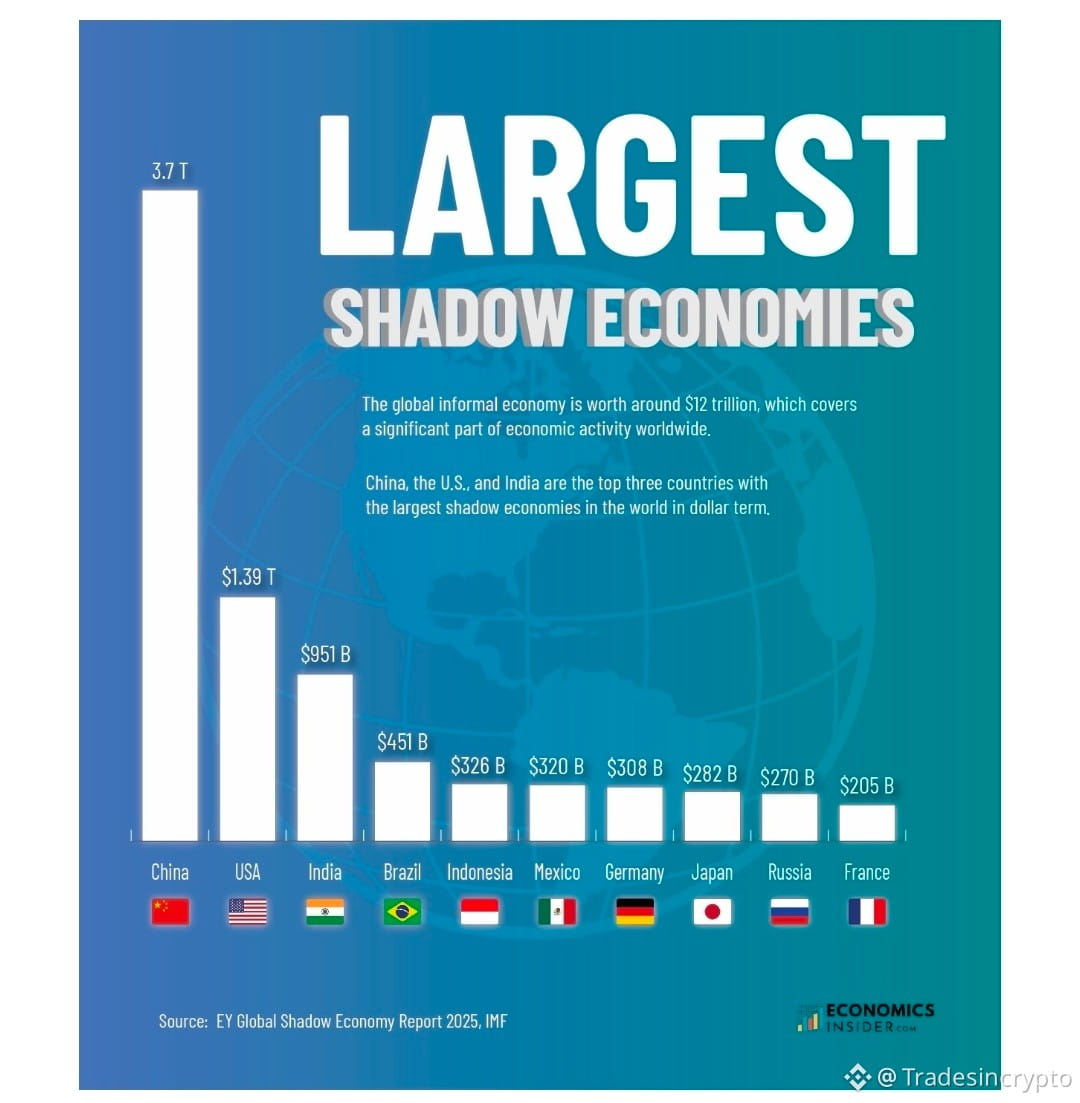
152

·
--
The relationship between GDP and the crypto market—most people never really understand it.
First, the conclusion: the crypto market is not an “economic barometer.” It is a “thermometer for liquidity.”
How does GDP affect the crypto market? Three transmission channels:
Channel 1: GDP growth → central bank stance → liquidity → BTC
- Strong U.S. GDP → inflation pressure → the Fed dares not cut rates → liquidity tight → BTC under pressure
- Weak U.S. GDP → recession worries → expectations of central bank easing → liquidity loosens → BTC takes off
What was the underlying logic behind the bull market in 2024?
It wasn’t “crypto fundamentals.” It was: the U.S. economy slowing down → expectations of rate cuts → global liquidity pumping → money flowing into risk assets.
BTC is essentially a “hedging instrument for U.S. dollar liquidity.” GDP determines the central bank’s actions; the central bank determines how much money there is. How much money there is determines the direction of BTC.
Channel 2: GDP structure → capital preferences → sector rotation
- Traditional economy strong (manufacturing, infrastructure) → funds prefer cyclical stocks → crypto looks quiet
- Tech economy strong (AI, internet) → funds prefer growth → crypto follows tech stocks
- Economy not doing well → capital seeks “alternative assets” → gold and BTC benefit
Channel 3: Divergence in GDP across countries → exchange rates → arbitrage → crypto volatility
Japan’s GDP is weak, but it still hikes rates; the U.S. GDP is relatively okay, but it wants to cut rates—
Global GDP divergence → exchange-rate swings → closing arbitrage trades → crypto gets “a needle in the vein.”
The yen panic on August 5, 2024, and the recent yen turmoil are both products of this chain.
A GDP observation guide for people in the crypto space:
1. Watch the “combo” of U.S. GDP and CPI—GDP strong + CPI high = rate hikes = bearish for BTC; GDP weak + CPI low = rate cuts = bullish for BTC
2. GDP is a slow-moving variable—don’t check it every day. Use quarterly data; focus on the trend, not single data points
3. The real signal is the “central bank’s reaction to GDP”—the data itself isn’t what matters; what matters is how the central bank interprets it
A painful truth:
In the crypto market, 90% of the action is driven by “what the central bank decides”—
And what the central bank decides, 90% of the time, depends on GDP and inflation.
You think you’re trading crypto, but in reality, you’re trading the management of central bank expectations.
Final line:
GDP is the economy’s heartbeat, and BTC is the shadow of liquidity.
The speed of the heartbeat determines the length of the shadow—once you understand GDP, you understand the big direction of the crypto market.
But remember: the big direction is for patient people; short-term players should still watch your K-line.
#GDP #BTC #liquidity
The relationship between GDP and the crypto market—most people never really understand it.
First, the conclusion: the crypto market is not an “economic barometer.” It is a “thermometer for liquidity.”
How does GDP affect the crypto market? Three transmission channels:
Channel 1: GDP growth → central bank stance → liquidity → BTC
- Strong U.S. GDP → inflation pressure → the Fed dares not cut rates → liquidity tight → BTC under pressure
- Weak U.S. GDP → recession worries → expectations of central bank easing → liquidity loosens → BTC takes off
What was the underlying logic behind the bull market in 2024?
It wasn’t “crypto fundamentals.” It was: the U.S. economy slowing down → expectations of rate cuts → global liquidity pumping → money flowing into risk assets.
BTC is essentially a “hedging instrument for U.S. dollar liquidity.” GDP determines the central bank’s actions; the central bank determines how much money there is. How much money there is determines the direction of BTC.
Channel 2: GDP structure → capital preferences → sector rotation
- Traditional economy strong (manufacturing, infrastructure) → funds prefer cyclical stocks → crypto looks quiet
- Tech economy strong (AI, internet) → funds prefer growth → crypto follows tech stocks
- Economy not doing well → capital seeks “alternative assets” → gold and BTC benefit
Channel 3: Divergence in GDP across countries → exchange rates → arbitrage → crypto volatility
Japan’s GDP is weak, but it still hikes rates; the U.S. GDP is relatively okay, but it wants to cut rates—
Global GDP divergence → exchange-rate swings → closing arbitrage trades → crypto gets “a needle in the vein.”
The yen panic on August 5, 2024, and the recent yen turmoil are both products of this chain.
A GDP observation guide for people in the crypto space:
1. Watch the “combo” of U.S. GDP and CPI—GDP strong + CPI high = rate hikes = bearish for BTC; GDP weak + CPI low = rate cuts = bullish for BTC
2. GDP is a slow-moving variable—don’t check it every day. Use quarterly data; focus on the trend, not single data points
3. The real signal is the “central bank’s reaction to GDP”—the data itself isn’t what matters; what matters is how the central bank interprets it
A painful truth:
In the crypto market, 90% of the action is driven by “what the central bank decides”—
And what the central bank decides, 90% of the time, depends on GDP and inflation.
You think you’re trading crypto, but in reality, you’re trading the management of central bank expectations.
Final line:
GDP is the economy’s heartbeat, and BTC is the shadow of liquidity.
The speed of the heartbeat determines the length of the shadow—once you understand GDP, you understand the big direction of the crypto market.
But remember: the big direction is for patient people; short-term players should still watch your K-line.
#GDP #BTC #liquidity
First, the conclusion: the crypto market is not an “economic barometer.” It is a “thermometer for liquidity.”
How does GDP affect the crypto market? Three transmission channels:
Channel 1: GDP growth → central bank stance → liquidity → BTC
- Strong U.S. GDP → inflation pressure → the Fed dares not cut rates → liquidity tight → BTC under pressure
- Weak U.S. GDP → recession worries → expectations of central bank easing → liquidity loosens → BTC takes off
What was the underlying logic behind the bull market in 2024?
It wasn’t “crypto fundamentals.” It was: the U.S. economy slowing down → expectations of rate cuts → global liquidity pumping → money flowing into risk assets.
BTC is essentially a “hedging instrument for U.S. dollar liquidity.” GDP determines the central bank’s actions; the central bank determines how much money there is. How much money there is determines the direction of BTC.
Channel 2: GDP structure → capital preferences → sector rotation
- Traditional economy strong (manufacturing, infrastructure) → funds prefer cyclical stocks → crypto looks quiet
- Tech economy strong (AI, internet) → funds prefer growth → crypto follows tech stocks
- Economy not doing well → capital seeks “alternative assets” → gold and BTC benefit
Channel 3: Divergence in GDP across countries → exchange rates → arbitrage → crypto volatility
Japan’s GDP is weak, but it still hikes rates; the U.S. GDP is relatively okay, but it wants to cut rates—
Global GDP divergence → exchange-rate swings → closing arbitrage trades → crypto gets “a needle in the vein.”
The yen panic on August 5, 2024, and the recent yen turmoil are both products of this chain.
A GDP observation guide for people in the crypto space:
1. Watch the “combo” of U.S. GDP and CPI—GDP strong + CPI high = rate hikes = bearish for BTC; GDP weak + CPI low = rate cuts = bullish for BTC
2. GDP is a slow-moving variable—don’t check it every day. Use quarterly data; focus on the trend, not single data points
3. The real signal is the “central bank’s reaction to GDP”—the data itself isn’t what matters; what matters is how the central bank interprets it
A painful truth:
In the crypto market, 90% of the action is driven by “what the central bank decides”—
And what the central bank decides, 90% of the time, depends on GDP and inflation.
You think you’re trading crypto, but in reality, you’re trading the management of central bank expectations.
Final line:
GDP is the economy’s heartbeat, and BTC is the shadow of liquidity.
The speed of the heartbeat determines the length of the shadow—once you understand GDP, you understand the big direction of the crypto market.
But remember: the big direction is for patient people; short-term players should still watch your K-line.
#GDP #BTC #liquidity
134

·
--

Article
Thailand's National Agency Expects Third-Quarter GDP to ImproveThailand’s national agency has expressed optimism about the country’s economic outlook for the third quarter, expecting an improvement in GDP. The agency’s forecasts suggest a positive trajectory as economic activities continue to recover from previous slowdowns.
According to Jin10, officials indicated that the recovery is supported by several factors, including increased domestic consumption, a rebound in exports, and ongoing government stimulus measures. These elements are expected to contribute to a more robust economic performance in the upcoming months.
The outlook aligns with recent data showing steady improvements in various sectors, providing hope that Thailand’s economy will regain momentum after a challenging period. The agency’s statement underscores confidence that the economic fundamentals are strengthening, paving the way for a better Q3.
Economists and market analysts will be closely watching upcoming economic indicators and policy developments to assess whether the anticipated growth materializes. The positive outlook from the national agency offers some reassurance for investors and policymakers aiming to sustain economic stability and growth. #Thailand #GDP #EconomicRecovery
Thailand's National Agency Expects Third-Quarter GDP to Improve
Thailand’s national agency has expressed optimism about the country’s economic outlook for the third quarter, expecting an improvement in GDP. The agency’s forecasts suggest a positive trajectory as economic activities continue to recover from previous slowdowns.
According to Jin10, officials indicated that the recovery is supported by several factors, including increased domestic consumption, a rebound in exports, and ongoing government stimulus measures. These elements are expected to contribute to a more robust economic performance in the upcoming months.
The outlook aligns with recent data showing steady improvements in various sectors, providing hope that Thailand’s economy will regain momentum after a challenging period. The agency’s statement underscores confidence that the economic fundamentals are strengthening, paving the way for a better Q3.
Economists and market analysts will be closely watching upcoming economic indicators and policy developments to assess whether the anticipated growth materializes. The positive outlook from the national agency offers some reassurance for investors and policymakers aiming to sustain economic stability and growth. #Thailand #GDP #EconomicRecovery
According to Jin10, officials indicated that the recovery is supported by several factors, including increased domestic consumption, a rebound in exports, and ongoing government stimulus measures. These elements are expected to contribute to a more robust economic performance in the upcoming months.
The outlook aligns with recent data showing steady improvements in various sectors, providing hope that Thailand’s economy will regain momentum after a challenging period. The agency’s statement underscores confidence that the economic fundamentals are strengthening, paving the way for a better Q3.
Economists and market analysts will be closely watching upcoming economic indicators and policy developments to assess whether the anticipated growth materializes. The positive outlook from the national agency offers some reassurance for investors and policymakers aiming to sustain economic stability and growth. #Thailand #GDP #EconomicRecovery
32
·
--

Article
Thailand's Q2 GDP Rises 1.9%, Beating Reuters Poll EstimateThailand's second-quarter gross domestic product (GDP) grew by 1.9% compared to the same period last year, surpassing the expectations of a 1.7% increase according to a Reuters poll. The official data indicates a stronger-than-anticipated recovery for Thailand’s economy, driven by a combination of domestic consumption, exports, and government spending.
The GDP growth figures highlight a resilient economic performance amid global uncertainties and regional challenges. The stronger-than-expected increase suggests that Thailand’s economic rebound is gaining momentum, supported by improved export demand and ongoing domestic economic activities.
Economists and analysts view this positive growth rate as a sign of stabilization and recovery, potentially paving the way for continued expansion in the upcoming quarters. The Thai government has been implementing policies aimed at boosting economic activity, and these results may reinforce confidence in the country’s economic outlook.
As the country moves forward, market participants will be monitoring upcoming economic indicators and policy measures that could influence Thailand’s growth trajectory further. The Q2 GDP data provides a promising outlook for Thailand’s economic resilience and potential for sustained recovery. #Thailand #GDP #EconomicGrowth
Thailand's Q2 GDP Rises 1.9%, Beating Reuters Poll Estimate
Thailand's second-quarter gross domestic product (GDP) grew by 1.9% compared to the same period last year, surpassing the expectations of a 1.7% increase according to a Reuters poll. The official data indicates a stronger-than-anticipated recovery for Thailand’s economy, driven by a combination of domestic consumption, exports, and government spending.
The GDP growth figures highlight a resilient economic performance amid global uncertainties and regional challenges. The stronger-than-expected increase suggests that Thailand’s economic rebound is gaining momentum, supported by improved export demand and ongoing domestic economic activities.
Economists and analysts view this positive growth rate as a sign of stabilization and recovery, potentially paving the way for continued expansion in the upcoming quarters. The Thai government has been implementing policies aimed at boosting economic activity, and these results may reinforce confidence in the country’s economic outlook.
As the country moves forward, market participants will be monitoring upcoming economic indicators and policy measures that could influence Thailand’s growth trajectory further. The Q2 GDP data provides a promising outlook for Thailand’s economic resilience and potential for sustained recovery. #Thailand #GDP #EconomicGrowth
The GDP growth figures highlight a resilient economic performance amid global uncertainties and regional challenges. The stronger-than-expected increase suggests that Thailand’s economic rebound is gaining momentum, supported by improved export demand and ongoing domestic economic activities.
Economists and analysts view this positive growth rate as a sign of stabilization and recovery, potentially paving the way for continued expansion in the upcoming quarters. The Thai government has been implementing policies aimed at boosting economic activity, and these results may reinforce confidence in the country’s economic outlook.
As the country moves forward, market participants will be monitoring upcoming economic indicators and policy measures that could influence Thailand’s growth trajectory further. The Q2 GDP data provides a promising outlook for Thailand’s economic resilience and potential for sustained recovery. #Thailand #GDP #EconomicGrowth
31
Log in to explore more content
Join global crypto users on Binance Square
⚡️ Get latest and useful information about crypto.
💬 Trusted by the world’s largest crypto exchange.
👍 Discover real insights from verified creators.
Email / Phone number
Trending Topics
1
#AIStocksWhatNext
133,288 views
1,635 Discussing
2
#BitcoinBreaksAboveMayHighNears$86K
3,370 views
61 Discussing
3
#DogecoinRises15%
8,374 views
389 Discussing
4
#$14BBitcoinOptionsExpireFriday
369 views
36 Discussing
5
#BNBMarketCapPassesBNYMellon
4,397 views
282 Discussing
6
#CryptoMarketCapReclaims$3Trillion
840 views
34 Discussing
7
#MuseOvertakesChatGPTAsTopFreeIOSApp
4,568 views
277 Discussing
8
#TokenizedStockPlatformsCouldLaunchNextQuarter
7,006 views
306 Discussing
9
#StrategyAdds950Bitcoin
11,417 views
399 Discussing
10
#CardanoAddedToX402KitForADAPayments
15,897 views
504 Discussing