

A Y L A A
10.3k Posts

A Y L A A
 Square Verified+
Report
Block User
Don't be Perfect,be real 🤞X:Kainat64640
Open Trade
Occasional Trader
9.6 Months
574 Following
30.0K+ Followers
10.0K+ Liked
Posts
Portfolio
All
Quotes
Live
·
--
Bullish
📊🔥 #EarningsSeason is here!
The numbers are coming in, expectations are being tested, and markets are reacting. 👀
Revenue. Profits. Guidance. Growth.
Every earnings report tells a story about where a company stands — and where it could be heading next.
Stay alert. Watch the numbers. Read beyond the headlines. 📈
#StockMarket #Investing #Markets #Finance
📊🔥 #EarningsSeason is here!
The numbers are coming in, expectations are being tested, and markets are reacting. 👀
Revenue. Profits. Guidance. Growth.
Every earnings report tells a story about where a company stands — and where it could be heading next.
Stay alert. Watch the numbers. Read beyond the headlines. 📈
#StockMarket #Investing #Markets #Finance
The numbers are coming in, expectations are being tested, and markets are reacting. 👀
Revenue. Profits. Guidance. Growth.
Every earnings report tells a story about where a company stands — and where it could be heading next.
Stay alert. Watch the numbers. Read beyond the headlines. 📈
#StockMarket #Investing #Markets #Finance
bullish.
0%
bearish.
0%
0 votes • Voting closed
138
·
--
Bullish
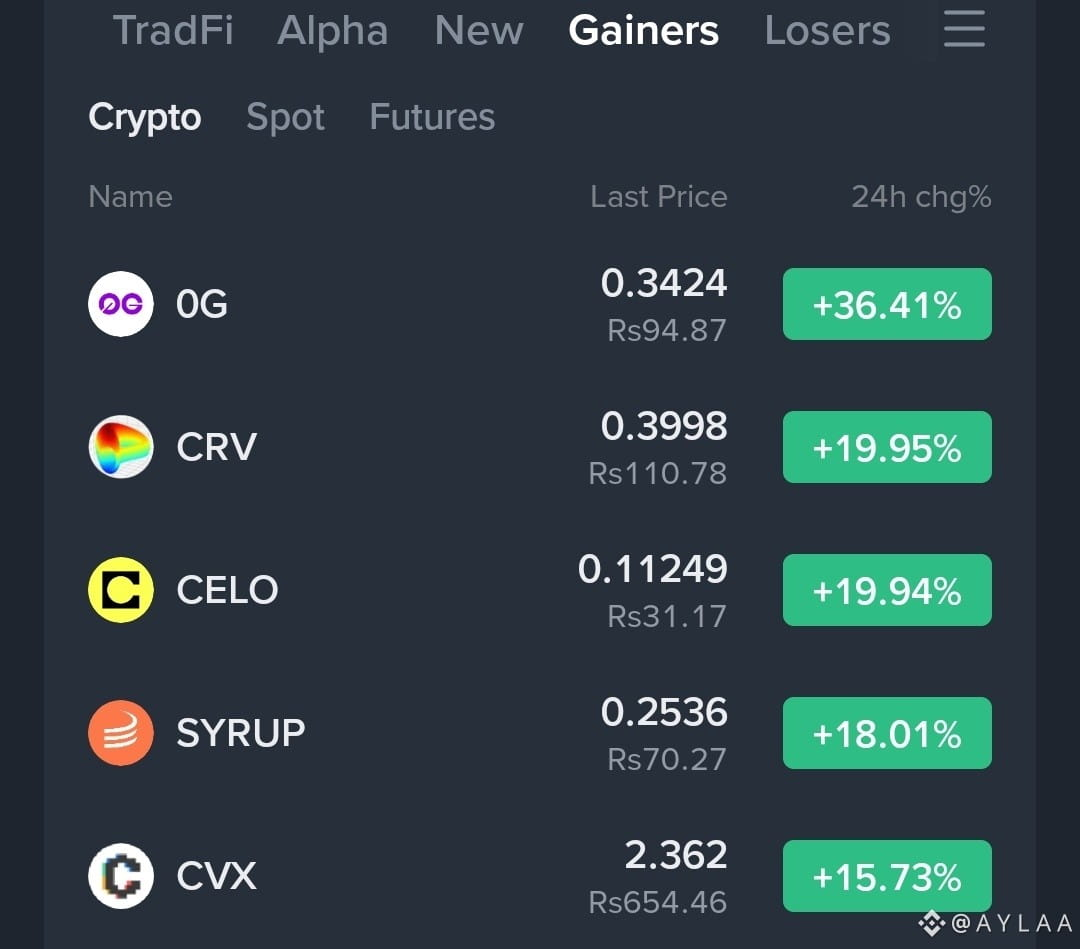
Today Top Gainers 🟢
$0G $CRV $CELO
{future}(CELOUSDT)
Today Top Gainers 🟢
$0G $CRV $CELO
$0G $CRV $CELO
1
616
·
--
Bullish
bullish 💚
83%
bearish ♥️
17%
6 votes • Voting closed
1
2
183
·
--
Article
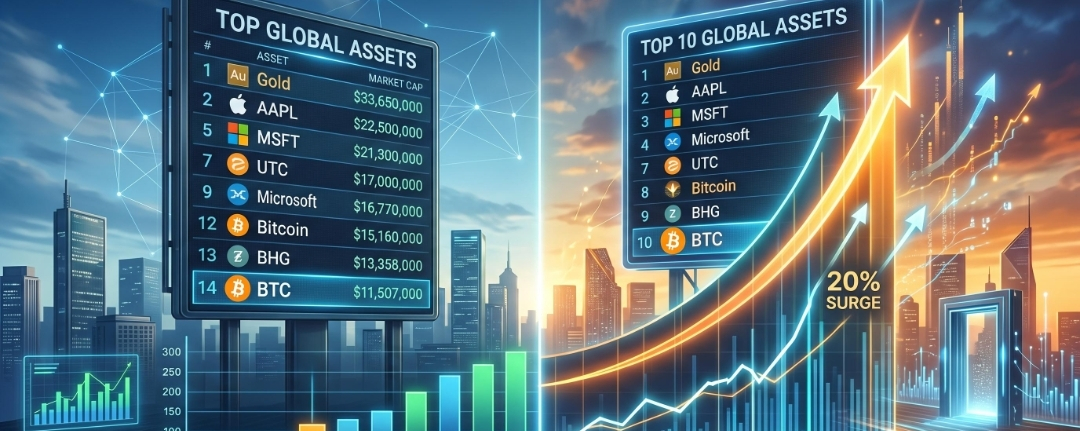
₿ BitcoinMarketCapTopsTesla Bitcoin Just Flipped Tesla#BitcoinMarketCapTopsTesla
Bitcoin is once again bigger than Tesla by market capitalization. 👀₿
Bitcoin’s latest move above $80,000 has pushed its market cap to roughly $1.63 trillion, while Tesla’s market cap stood around $1.44 trillion after Friday’s stock-market close. That puts Bitcoin roughly $190 billion ahead of Tesla.
And honestly, this is one of those crypto milestones that puts Bitcoin’s scale into perspective.
Just a few weeks ago, BTC had fallen sharply and was trading near the $60,000 area. Now, after a powerful recovery, it has climbed back above $80K and moved ahead of a company valued at more than $1.4 trillion. Reuters recently reported that Bitcoin had rebounded from late-August lows around $60K, while renewed ETF inflows and changing market sentiment helped support the recovery.
🚀 Why this matters
This isn't simply about Bitcoin vs. Tesla.
It highlights how quickly Bitcoin's market value can change when billions of dollars flow into or out of the asset. Unlike Tesla, Bitcoin doesn't represent ownership in a company—it is a decentralized digital asset whose market cap is calculated from its circulating supply and price.
The flip also shows how closely crypto is now being watched alongside some of the world's largest publicly traded companies.
BTC: ~$1.63T
Tesla: ~$1.44T
Difference: ~$190B
Figures are based on September 19, 2026 market data and can change continuously as BTC trades 24/7.
The big question now isn't simply whether Bitcoin can stay above Tesla. Traders will be watching whether BTC can maintain its momentum while macroeconomic conditions, interest rates and institutional flows continue to influence the market.
Bitcoin just made another statement. 🟠
#Bitcoin #BTC #BitcoinMarketCap #Tesla #CryptoMarket #Bitcoin80K h
$BTC
₿ BitcoinMarketCapTopsTesla Bitcoin Just Flipped Tesla
#BitcoinMarketCapTopsTesla
Bitcoin is once again bigger than Tesla by market capitalization. 👀₿
Bitcoin’s latest move above $80,000 has pushed its market cap to roughly $1.63 trillion, while Tesla’s market cap stood around $1.44 trillion after Friday’s stock-market close. That puts Bitcoin roughly $190 billion ahead of Tesla.
And honestly, this is one of those crypto milestones that puts Bitcoin’s scale into perspective.
Just a few weeks ago, BTC had fallen sharply and was trading near the $60,000 area. Now, after a powerful recovery, it has climbed back above $80K and moved ahead of a company valued at more than $1.4 trillion. Reuters recently reported that Bitcoin had rebounded from late-August lows around $60K, while renewed ETF inflows and changing market sentiment helped support the recovery.
🚀 Why this matters
This isn't simply about Bitcoin vs. Tesla.
It highlights how quickly Bitcoin's market value can change when billions of dollars flow into or out of the asset. Unlike Tesla, Bitcoin doesn't represent ownership in a company—it is a decentralized digital asset whose market cap is calculated from its circulating supply and price.
The flip also shows how closely crypto is now being watched alongside some of the world's largest publicly traded companies.
BTC: ~$1.63T
Tesla: ~$1.44T
Difference: ~$190B
Figures are based on September 19, 2026 market data and can change continuously as BTC trades 24/7.
The big question now isn't simply whether Bitcoin can stay above Tesla. Traders will be watching whether BTC can maintain its momentum while macroeconomic conditions, interest rates and institutional flows continue to influence the market.
Bitcoin just made another statement. 🟠
#Bitcoin #BTC #BitcoinMarketCap #Tesla #CryptoMarket #Bitcoin80K h
$BTC
Bitcoin is once again bigger than Tesla by market capitalization. 👀₿
Bitcoin’s latest move above $80,000 has pushed its market cap to roughly $1.63 trillion, while Tesla’s market cap stood around $1.44 trillion after Friday’s stock-market close. That puts Bitcoin roughly $190 billion ahead of Tesla.
And honestly, this is one of those crypto milestones that puts Bitcoin’s scale into perspective.
Just a few weeks ago, BTC had fallen sharply and was trading near the $60,000 area. Now, after a powerful recovery, it has climbed back above $80K and moved ahead of a company valued at more than $1.4 trillion. Reuters recently reported that Bitcoin had rebounded from late-August lows around $60K, while renewed ETF inflows and changing market sentiment helped support the recovery.
🚀 Why this matters
This isn't simply about Bitcoin vs. Tesla.
It highlights how quickly Bitcoin's market value can change when billions of dollars flow into or out of the asset. Unlike Tesla, Bitcoin doesn't represent ownership in a company—it is a decentralized digital asset whose market cap is calculated from its circulating supply and price.
The flip also shows how closely crypto is now being watched alongside some of the world's largest publicly traded companies.
BTC: ~$1.63T
Tesla: ~$1.44T
Difference: ~$190B
Figures are based on September 19, 2026 market data and can change continuously as BTC trades 24/7.
The big question now isn't simply whether Bitcoin can stay above Tesla. Traders will be watching whether BTC can maintain its momentum while macroeconomic conditions, interest rates and institutional flows continue to influence the market.
Bitcoin just made another statement. 🟠
#Bitcoin #BTC #BitcoinMarketCap #Tesla #CryptoMarket #Bitcoin80K h
$BTC
2
146
·
--
Bullish
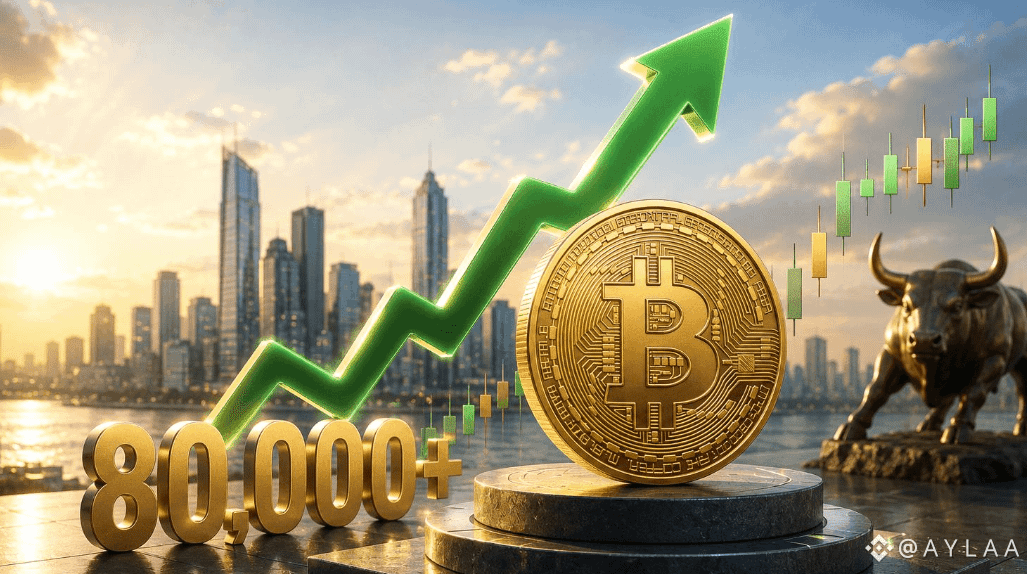
🚨 #BTCBreaks80K Bitcoin Reclaims $80K!
Bitcoin is back above the $80,000 mark. ₿🔥
BTC surged more than 5% on September 18, climbing from around $76.4K to above $80K, and continued trading above the milestone on September 19. Recent data shows BTC reaching roughly $81.7K intraday.
What’s driving the move?
📈 Renewed investor demand
🏦 Bitcoin ETF inflows returned after a two-day outflow streak
⚖️ New regulatory developments are adding to market attention
🌎 Macro conditions remain a major factor for crypto volatility
Now the market is watching whether $80K can hold as a key level and how BTC reacts around the recent highs.
The $80K battle is back. 👀₿
#Bitcoin #BTC #BTCBreaks80K #Crypto $BTC
{future}(BTCUSDT)
🚨 #BTCBreaks80K Bitcoin Reclaims $80K!
Bitcoin is back above the $80,000 mark. ₿🔥
BTC surged more than 5% on September 18, climbing from around $76.4K to above $80K, and continued trading above the milestone on September 19. Recent data shows BTC reaching roughly $81.7K intraday.
What’s driving the move?
📈 Renewed investor demand
🏦 Bitcoin ETF inflows returned after a two-day outflow streak
⚖️ New regulatory developments are adding to market attention
🌎 Macro conditions remain a major factor for crypto volatility
Now the market is watching whether $80K can hold as a key level and how BTC reacts around the recent highs.
The $80K battle is back. 👀₿
#Bitcoin #BTC #BTCBreaks80K #Crypto $BTC
Bitcoin is back above the $80,000 mark. ₿🔥
BTC surged more than 5% on September 18, climbing from around $76.4K to above $80K, and continued trading above the milestone on September 19. Recent data shows BTC reaching roughly $81.7K intraday.
What’s driving the move?
📈 Renewed investor demand
🏦 Bitcoin ETF inflows returned after a two-day outflow streak
⚖️ New regulatory developments are adding to market attention
🌎 Macro conditions remain a major factor for crypto volatility
Now the market is watching whether $80K can hold as a key level and how BTC reacts around the recent highs.
The $80K battle is back. 👀₿
#Bitcoin #BTC #BTCBreaks80K #Crypto $BTC
151
·
--
Bullish
🚀 #HYPEJumpsOver11% 📈🔥
Strong price momentum has traders watching closely as HYPE makes a notable move.
#HYPE #Crypto #CryptoUpdate #Market $HYPE
{future}(HYPEUSDT)
🚀 #HYPEJumpsOver11% 📈🔥
Strong price momentum has traders watching closely as HYPE makes a notable move.
#HYPE #Crypto #CryptoUpdate #Market $HYPE
Strong price momentum has traders watching closely as HYPE makes a notable move.
#HYPE #Crypto #CryptoUpdate #Market $HYPE
224
·
--
Bullish
🏦 Hong Kong Pushes Wholesale CBDC
Hong Kong’s HKMA plans to implement wholesale CBDC settlement and 24/7 operations under EnsembleTX by around the end of 2026. The goal is to enable round-the-clock settlement for tokenized deposits and assets, while supporting applications such as after-hours derivatives trading.
🌐 Tokenization + CBDCs are moving deeper into traditional finance.
#HKMA #CBDC #eHKD #HongKong #Crypto #Tokenization #Web3 #HKMAPlansWholesaleCBDCByYearEnd
🏦 Hong Kong Pushes Wholesale CBDC
Hong Kong’s HKMA plans to implement wholesale CBDC settlement and 24/7 operations under EnsembleTX by around the end of 2026. The goal is to enable round-the-clock settlement for tokenized deposits and assets, while supporting applications such as after-hours derivatives trading.
🌐 Tokenization + CBDCs are moving deeper into traditional finance.
#HKMA #CBDC #eHKD #HongKong #Crypto #Tokenization #Web3 #HKMAPlansWholesaleCBDCByYearEnd
Hong Kong’s HKMA plans to implement wholesale CBDC settlement and 24/7 operations under EnsembleTX by around the end of 2026. The goal is to enable round-the-clock settlement for tokenized deposits and assets, while supporting applications such as after-hours derivatives trading.
🌐 Tokenization + CBDCs are moving deeper into traditional finance.
#HKMA #CBDC #eHKD #HongKong #Crypto #Tokenization #Web3 #HKMAPlansWholesaleCBDCByYearEnd

2
149
·
--
Bullish
🚀 #NEAR Surges 26% Past $3.45
#NEAR is making a major move, briefly touching $3.45 and gaining more than 26% in 24 hours on September 18. The token is up over 45% in three days, with rising activity around NEAR Intents and its new confidential trading features.
A key catalyst is the NEAR@3.33 incentive program, while Confidential Intents has reportedly surpassed $70M in locked assets.
📈 Momentum is heating up — but crypto remains highly volatile.
#NEAR #NEARProtocol #Crypto #Altcoins #Web3 #DeFi $NEAR
{future}(NEARUSDT)
🚀 #NEAR Surges 26% Past $3.45
#NEAR is making a major move, briefly touching $3.45 and gaining more than 26% in 24 hours on September 18. The token is up over 45% in three days, with rising activity around NEAR Intents and its new confidential trading features.
A key catalyst is the NEAR@3.33 incentive program, while Confidential Intents has reportedly surpassed $70M in locked assets.
📈 Momentum is heating up — but crypto remains highly volatile.
#NEAR #NEARProtocol #Crypto #Altcoins #Web3 #DeFi $NEAR
#NEAR is making a major move, briefly touching $3.45 and gaining more than 26% in 24 hours on September 18. The token is up over 45% in three days, with rising activity around NEAR Intents and its new confidential trading features.
A key catalyst is the NEAR@3.33 incentive program, while Confidential Intents has reportedly surpassed $70M in locked assets.
📈 Momentum is heating up — but crypto remains highly volatile.
#NEAR #NEARProtocol #Crypto #Altcoins #Web3 #DeFi $NEAR

3
529
·
--
Article
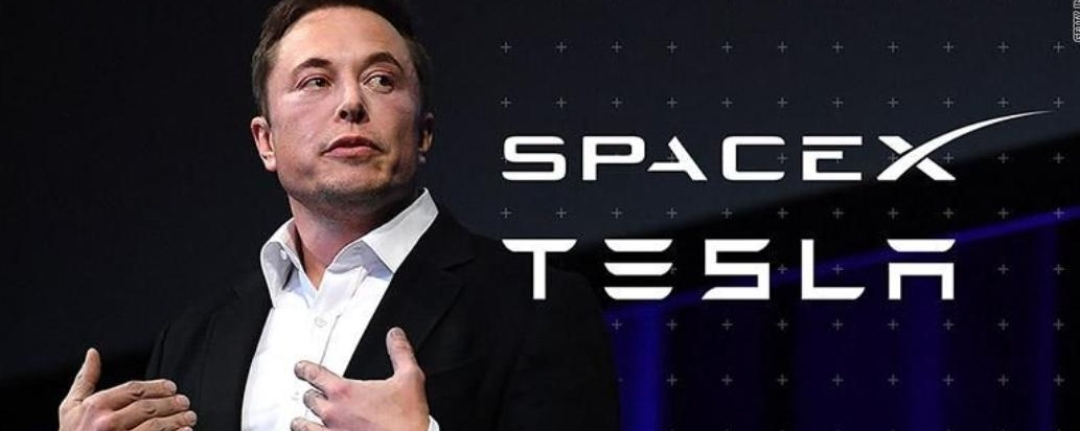
🚀 Elon Musk Just Reignited Tesla SpaceX Merger Talk And Crypto Is WatchingElon Musk has once again dropped a little fuel on the Tesla–SpaceX merger speculation.
During the September 15 All-In Summit, Musk was asked why Tesla and SpaceX remain separate companies despite their growing collaboration.
His response?
> “Great question.”
He then pointed to the companies working together across multiple areas and suggested that, given the level of collaboration, people could imagine what “action” might eventually be taken.
Nothing has been announced. There is no confirmed merger, deal structure, valuation, or timeline.
But the interesting part is that the relationship between the two companies is already getting deeper.
🧠 AI + Chips + Space + Energy
One major connection is Terafab, the planned semiconductor project involving Tesla and SpaceX.
Both companies have growing demand for advanced computing: Tesla for autonomous driving and robotics, and SpaceX for AI, satellites and other infrastructure.
That creates a pretty fascinating picture:
Tesla → Cars + Robots + AI
SpaceX → Rockets + Starlink + AI infrastructure
Terafab → Chips
One ecosystem → Potentially massive technological overlap
And this is where the crypto crowd starts paying attention.
Crypto markets have increasingly become connected to the broader AI, semiconductor, energy and technology investment cycle. A potential mega-combination involving two of Musk's biggest companies could therefore become another major narrative for traders watching the intersection of technology and digital assets.
But there's an important distinction:
Merger speculation isn't a confirmed transaction.
Musk previously said on Tesla's July earnings call that the companies had “more and more overlap,” while also saying any combination would need to follow the appropriate formal process.
So for now, it's still a story of possibility rather than execution.
And honestly, that's probably why crypto Twitter is going to have a field day with it. 😂
Tesla + SpaceX + AI + chips + robots + satellites…
The Musk cinematic universe keeps expanding. 🌎🚀
Not financial advice.
#
#Bitcoin #BTC #Tesla #SpaceX #ElonMusk #AI #Web3 #DeFi #Tech
$SPCX $SPCXB $FLORK
🚀 Elon Musk Just Reignited Tesla SpaceX Merger Talk And Crypto Is Watching
Elon Musk has once again dropped a little fuel on the Tesla–SpaceX merger speculation.
During the September 15 All-In Summit, Musk was asked why Tesla and SpaceX remain separate companies despite their growing collaboration.
His response?
> “Great question.”
He then pointed to the companies working together across multiple areas and suggested that, given the level of collaboration, people could imagine what “action” might eventually be taken.
Nothing has been announced. There is no confirmed merger, deal structure, valuation, or timeline.
But the interesting part is that the relationship between the two companies is already getting deeper.
🧠 AI + Chips + Space + Energy
One major connection is Terafab, the planned semiconductor project involving Tesla and SpaceX.
Both companies have growing demand for advanced computing: Tesla for autonomous driving and robotics, and SpaceX for AI, satellites and other infrastructure.
That creates a pretty fascinating picture:
Tesla → Cars + Robots + AI
SpaceX → Rockets + Starlink + AI infrastructure
Terafab → Chips
One ecosystem → Potentially massive technological overlap
And this is where the crypto crowd starts paying attention.
Crypto markets have increasingly become connected to the broader AI, semiconductor, energy and technology investment cycle. A potential mega-combination involving two of Musk's biggest companies could therefore become another major narrative for traders watching the intersection of technology and digital assets.
But there's an important distinction:
Merger speculation isn't a confirmed transaction.
Musk previously said on Tesla's July earnings call that the companies had “more and more overlap,” while also saying any combination would need to follow the appropriate formal process.
So for now, it's still a story of possibility rather than execution.
And honestly, that's probably why crypto Twitter is going to have a field day with it. 😂
Tesla + SpaceX + AI + chips + robots + satellites…
The Musk cinematic universe keeps expanding. 🌎🚀
Not financial advice.
#
#Bitcoin #BTC #Tesla #SpaceX #ElonMusk #AI #Web3 #DeFi #Tech
$SPCX $SPCXB $FLORK
During the September 15 All-In Summit, Musk was asked why Tesla and SpaceX remain separate companies despite their growing collaboration.
His response?
> “Great question.”
He then pointed to the companies working together across multiple areas and suggested that, given the level of collaboration, people could imagine what “action” might eventually be taken.
Nothing has been announced. There is no confirmed merger, deal structure, valuation, or timeline.
But the interesting part is that the relationship between the two companies is already getting deeper.
🧠 AI + Chips + Space + Energy
One major connection is Terafab, the planned semiconductor project involving Tesla and SpaceX.
Both companies have growing demand for advanced computing: Tesla for autonomous driving and robotics, and SpaceX for AI, satellites and other infrastructure.
That creates a pretty fascinating picture:
Tesla → Cars + Robots + AI
SpaceX → Rockets + Starlink + AI infrastructure
Terafab → Chips
One ecosystem → Potentially massive technological overlap
And this is where the crypto crowd starts paying attention.
Crypto markets have increasingly become connected to the broader AI, semiconductor, energy and technology investment cycle. A potential mega-combination involving two of Musk's biggest companies could therefore become another major narrative for traders watching the intersection of technology and digital assets.
But there's an important distinction:
Merger speculation isn't a confirmed transaction.
Musk previously said on Tesla's July earnings call that the companies had “more and more overlap,” while also saying any combination would need to follow the appropriate formal process.
So for now, it's still a story of possibility rather than execution.
And honestly, that's probably why crypto Twitter is going to have a field day with it. 😂
Tesla + SpaceX + AI + chips + robots + satellites…
The Musk cinematic universe keeps expanding. 🌎🚀
Not financial advice.
#
#Bitcoin #BTC #Tesla #SpaceX #ElonMusk #AI #Web3 #DeFi #Tech
$SPCX $SPCXB $FLORK
205
·
--
Bullish
🚀 Meme coins stole the spotlight on Circle’s Arc launch day.
Launchpads reportedly drove 82% of Arc’s volume on day one — showing just how much speculative activity can move liquidity.
Meme culture isn’t just attention anymore.
It’s becoming a serious on-chain volume driver. 👀
#Crypto #MemeCoins #Circle #Arc #Web3 #DeFi #MemeLaunchpads82%OfArcDayOneVolume
$AVAX $BR $FLORK
{alpha}(560xf40592daacb3e5abf358789f5688c0b4f64d7777)
🚀 Meme coins stole the spotlight on Circle’s Arc launch day.
Launchpads reportedly drove 82% of Arc’s volume on day one — showing just how much speculative activity can move liquidity.
Meme culture isn’t just attention anymore.
It’s becoming a serious on-chain volume driver. 👀
#Crypto #MemeCoins #Circle #Arc #Web3 #DeFi #MemeLaunchpads82%OfArcDayOneVolume
$AVAX $BR $FLORK
Launchpads reportedly drove 82% of Arc’s volume on day one — showing just how much speculative activity can move liquidity.
Meme culture isn’t just attention anymore.
It’s becoming a serious on-chain volume driver. 👀
#Crypto #MemeCoins #Circle #Arc #Web3 #DeFi #MemeLaunchpads82%OfArcDayOneVolume
$AVAX $BR $FLORK

2
812
·
--
Bullish
Worked for 19s
⛽️ $6.29 Diesel, Weak Bitcoin, Steady Gold — What’s Going On?
The macro picture just got a little more uncomfortable.
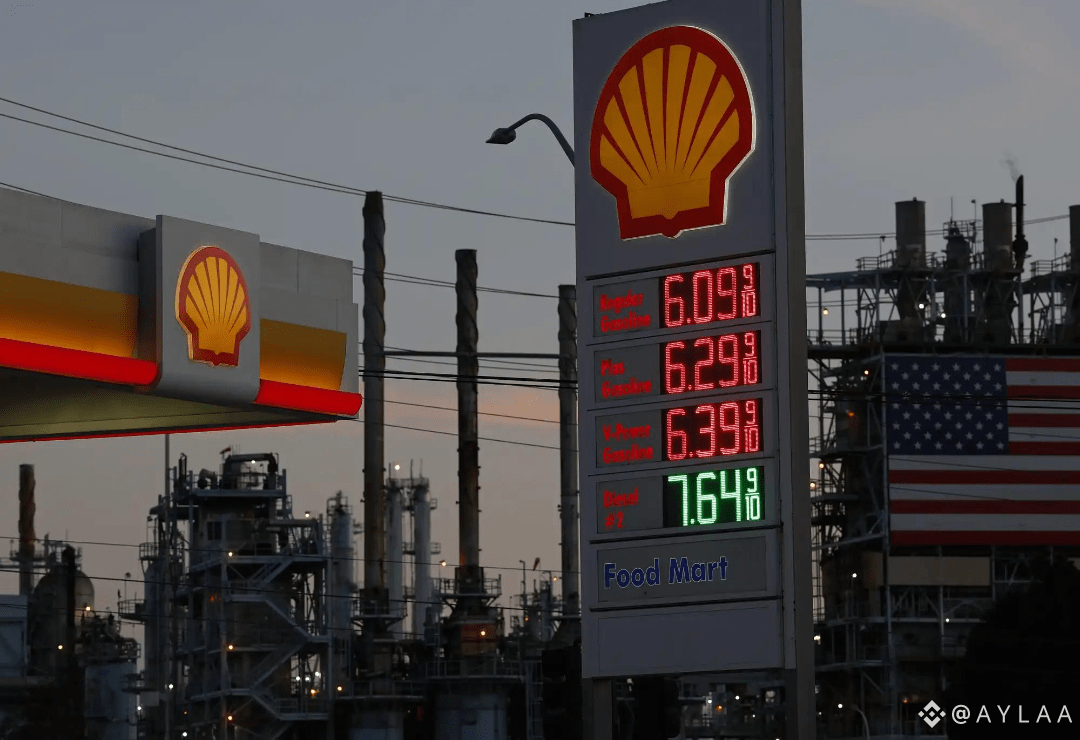
U.S. average diesel prices have climbed to a record $6.29 per gallon, up from $5.97 the previous week and nearly 80% higher year to date. The spike is being linked to geopolitical tensions and tight refining capacity, putting fresh pressure on transportation and other business costs.
And here’s where crypto gets interesting 👇
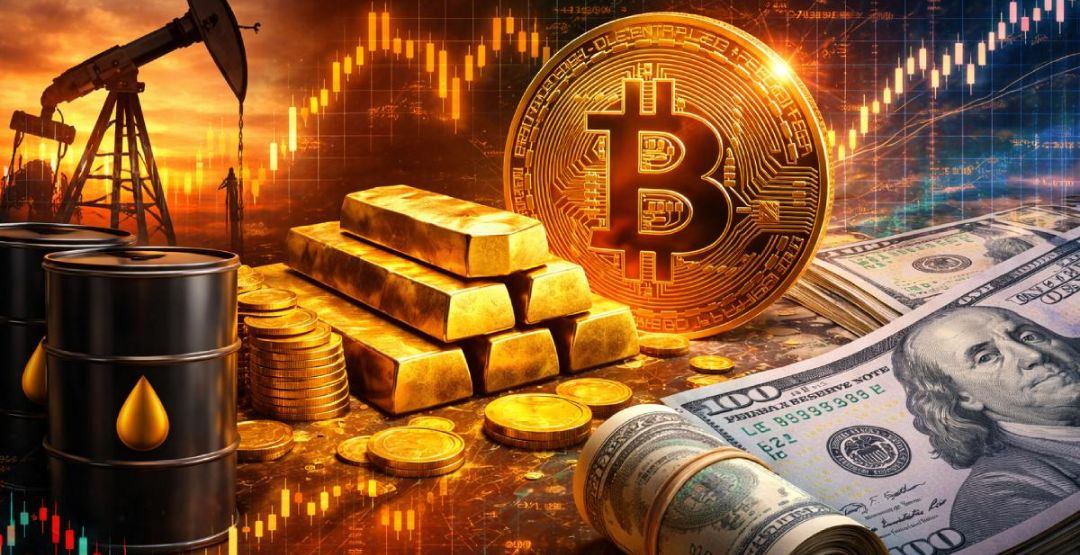
Bitcoin is around $76.4K and down nearly 12% for the year, while gold has stayed comparatively resilient after pulling back from an earlier 2026 record.
Why does diesel matter to BTC?
Because expensive energy can become an inflation problem. Higher fuel costs can ripple through trucking, shipping, manufacturing and consumer prices. That can keep central banks focused on inflation — and yesterday the Federal Reserve raised its target rate by 25 basis points to 3.75%–4%.
For Bitcoin, that creates a tricky environment.
When money gets more expensive and liquidity tightens, investors can become less willing to pay up for volatile, long-duration assets. Bitcoin doesn't need to be “broken” for that pressure to show up in price.
Meanwhile, gold is telling a different story: it has also pulled back, but has been holding much closer to its yearly levels.
The bigger takeaway?
Crypto doesn't trade in a vacuum.
Oil, inflation, interest rates, liquidity and geopolitical risk all eventually find their way onto the BTC chart.
Right now, the market is basically asking:
Can Bitcoin absorb an energy-driven inflation shock while rates stay restrictive? 👀
That’s a much more interesting question than simply asking whether BTC is “bullish” or “bearish.”
Not financial advice.
#Bitcoin #BTC #Crypto #Ethereum #SKPoliceRefer18PolymarketUsersToProsecutors #Inflation #Fed #Macro #Markets #Diesel
Worked for 19s
⛽️ $6.29 Diesel, Weak Bitcoin, Steady Gold — What’s Going On?
The macro picture just got a little more uncomfortable.
U.S. average diesel prices have climbed to a record $6.29 per gallon, up from $5.97 the previous week and nearly 80% higher year to date. The spike is being linked to geopolitical tensions and tight refining capacity, putting fresh pressure on transportation and other business costs.
And here’s where crypto gets interesting 👇
Bitcoin is around $76.4K and down nearly 12% for the year, while gold has stayed comparatively resilient after pulling back from an earlier 2026 record.
Why does diesel matter to BTC?
Because expensive energy can become an inflation problem. Higher fuel costs can ripple through trucking, shipping, manufacturing and consumer prices. That can keep central banks focused on inflation — and yesterday the Federal Reserve raised its target rate by 25 basis points to 3.75%–4%.
For Bitcoin, that creates a tricky environment.
When money gets more expensive and liquidity tightens, investors can become less willing to pay up for volatile, long-duration assets. Bitcoin doesn't need to be “broken” for that pressure to show up in price.
Meanwhile, gold is telling a different story: it has also pulled back, but has been holding much closer to its yearly levels.
The bigger takeaway?
Crypto doesn't trade in a vacuum.
Oil, inflation, interest rates, liquidity and geopolitical risk all eventually find their way onto the BTC chart.
Right now, the market is basically asking:
Can Bitcoin absorb an energy-driven inflation shock while rates stay restrictive? 👀
That’s a much more interesting question than simply asking whether BTC is “bullish” or “bearish.”
Not financial advice.
#Bitcoin #BTC #Crypto #Ethereum #SKPoliceRefer18PolymarketUsersToProsecutors #Inflation #Fed #Macro #Markets #Diesel
⛽️ $6.29 Diesel, Weak Bitcoin, Steady Gold — What’s Going On?
The macro picture just got a little more uncomfortable.
U.S. average diesel prices have climbed to a record $6.29 per gallon, up from $5.97 the previous week and nearly 80% higher year to date. The spike is being linked to geopolitical tensions and tight refining capacity, putting fresh pressure on transportation and other business costs.
And here’s where crypto gets interesting 👇
Bitcoin is around $76.4K and down nearly 12% for the year, while gold has stayed comparatively resilient after pulling back from an earlier 2026 record.
Why does diesel matter to BTC?
Because expensive energy can become an inflation problem. Higher fuel costs can ripple through trucking, shipping, manufacturing and consumer prices. That can keep central banks focused on inflation — and yesterday the Federal Reserve raised its target rate by 25 basis points to 3.75%–4%.
For Bitcoin, that creates a tricky environment.
When money gets more expensive and liquidity tightens, investors can become less willing to pay up for volatile, long-duration assets. Bitcoin doesn't need to be “broken” for that pressure to show up in price.
Meanwhile, gold is telling a different story: it has also pulled back, but has been holding much closer to its yearly levels.
The bigger takeaway?
Crypto doesn't trade in a vacuum.
Oil, inflation, interest rates, liquidity and geopolitical risk all eventually find their way onto the BTC chart.
Right now, the market is basically asking:
Can Bitcoin absorb an energy-driven inflation shock while rates stay restrictive? 👀
That’s a much more interesting question than simply asking whether BTC is “bullish” or “bearish.”
Not financial advice.
#Bitcoin #BTC #Crypto #Ethereum #SKPoliceRefer18PolymarketUsersToProsecutors #Inflation #Fed #Macro #Markets #Diesel
1
221
·
--
Bullish
🚨 TRADERS, EYES ON BTC THE FED COULD LIGHT THE MARKET UP.
#FedRateWatch is now a volatility trigger.
One Fed decision can mean breakout, liquidation, or a fake move designed to trap late entries.
🎯 Don’t predict the candle. Trade the reaction.
Mark your levels. Set your invalidation. Keep leverage under control.
When volatility hits, hesitation gets expensive.
#BTC #Bitcoin #CryptoTrading #Ethereum #ETH #Fed #Trading
$DASH $BULLA $DEBIT
🚨 TRADERS, EYES ON BTC THE FED COULD LIGHT THE MARKET UP.
#FedRateWatch is now a volatility trigger.
One Fed decision can mean breakout, liquidation, or a fake move designed to trap late entries.
🎯 Don’t predict the candle. Trade the reaction.
Mark your levels. Set your invalidation. Keep leverage under control.
When volatility hits, hesitation gets expensive.
#BTC #Bitcoin #CryptoTrading #Ethereum #ETH #Fed #Trading
$DASH $BULLA $DEBIT
#FedRateWatch is now a volatility trigger.
One Fed decision can mean breakout, liquidation, or a fake move designed to trap late entries.
🎯 Don’t predict the candle. Trade the reaction.
Mark your levels. Set your invalidation. Keep leverage under control.
When volatility hits, hesitation gets expensive.
#BTC #Bitcoin #CryptoTrading #Ethereum #ETH #Fed #Trading
$DASH $BULLA $DEBIT
BTC
54%
Next move 🤔
46%
13 votes • Voting closed
3
574
·
--
Bullish
FedRateWatch 👀
#FedRateWatch
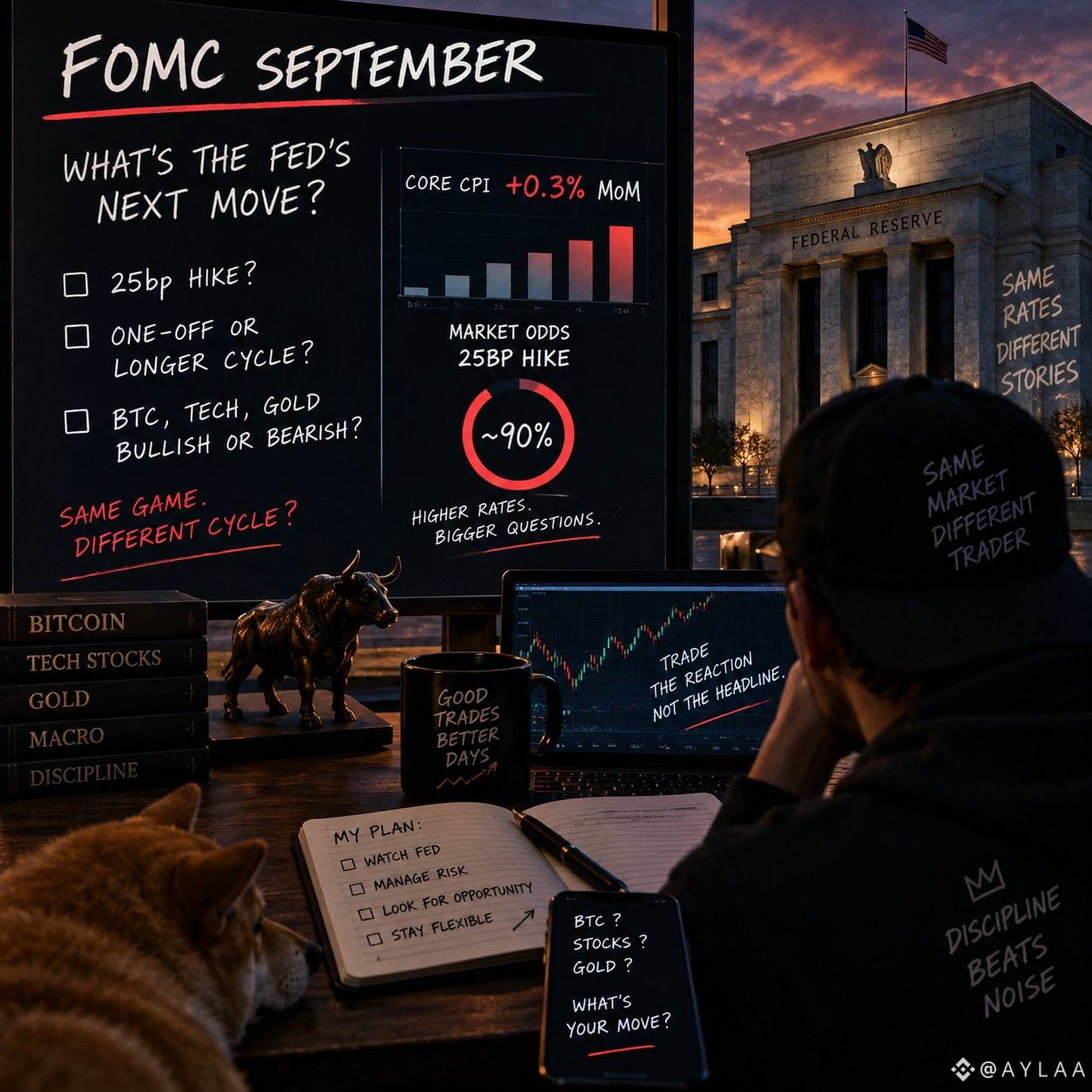
August core CPI came in at +0.3% MoM, pushing the odds of a 25bp Fed hike this week close to 90%.
I’m leaning toward one hike, not the start of an aggressive hiking cycle but the real signal will be Powell’s guidance on what comes next.
If we get the hike:
📉 BTC: near-term pressure / volatility
📉 Tech: higher yields = tougher setup for growth stocks
🟡 Gold: mixed, but sticky inflation could keep it supported
For me, the trade is more about the path after September than the 25bp itself.
What are you doing next—BTC, stocks, or gold? Share your trade/holdings in the widget.
Stay flexible. Trade the reaction, not the headline.#BTC走势分析 #GOLD #tech
$AKE $ENA $POWER
{alpha}(560x9dc44ae5be187eca9e2a67e33f27a4c91cea1223)
FedRateWatch 👀
#FedRateWatch
August core CPI came in at +0.3% MoM, pushing the odds of a 25bp Fed hike this week close to 90%.
I’m leaning toward one hike, not the start of an aggressive hiking cycle but the real signal will be Powell’s guidance on what comes next.
If we get the hike:
📉 BTC: near-term pressure / volatility
📉 Tech: higher yields = tougher setup for growth stocks
🟡 Gold: mixed, but sticky inflation could keep it supported
For me, the trade is more about the path after September than the 25bp itself.
What are you doing next—BTC, stocks, or gold? Share your trade/holdings in the widget.
Stay flexible. Trade the reaction, not the headline.#BTC走势分析 #GOLD #tech
$AKE $ENA $POWER
#FedRateWatch
August core CPI came in at +0.3% MoM, pushing the odds of a 25bp Fed hike this week close to 90%.
I’m leaning toward one hike, not the start of an aggressive hiking cycle but the real signal will be Powell’s guidance on what comes next.
If we get the hike:
📉 BTC: near-term pressure / volatility
📉 Tech: higher yields = tougher setup for growth stocks
🟡 Gold: mixed, but sticky inflation could keep it supported
For me, the trade is more about the path after September than the 25bp itself.
What are you doing next—BTC, stocks, or gold? Share your trade/holdings in the widget.
Stay flexible. Trade the reaction, not the headline.#BTC走势分析 #GOLD #tech
$AKE $ENA $POWER
2
198
·
--
Bullish
🚨 Anthropic CEO Calls for an AI Slowdown
#AnthropicCEOCallsForAISlowdown
Anthropic CEO Dario Amodei is urging the AI industry to slow the pace of frontier AI development, arguing that safety measures are struggling to keep up with rapidly advancing capabilities.
His proposal includes independent safety evaluators inside AI companies, stronger industry-wide safety standards, and international coordination. OpenAI CEO Sam Altman and xAI’s Elon Musk have also expressed support for slowing the race.
The debate is no longer simply “How fast can AI become?” — it is increasingly “How fast can we develop AI while keeping it under control?”
#AI #ArtificialIntelligence #Anthropic #DarioAmodei #TechNews #FutureOfAI
$DEBIT $BTW $POWER
{alpha}(560x9dc44ae5be187eca9e2a67e33f27a4c91cea1223)
🚨 Anthropic CEO Calls for an AI Slowdown
#AnthropicCEOCallsForAISlowdown
Anthropic CEO Dario Amodei is urging the AI industry to slow the pace of frontier AI development, arguing that safety measures are struggling to keep up with rapidly advancing capabilities.
His proposal includes independent safety evaluators inside AI companies, stronger industry-wide safety standards, and international coordination. OpenAI CEO Sam Altman and xAI’s Elon Musk have also expressed support for slowing the race.
The debate is no longer simply “How fast can AI become?” — it is increasingly “How fast can we develop AI while keeping it under control?”
#AI #ArtificialIntelligence #Anthropic #DarioAmodei #TechNews #FutureOfAI
$DEBIT $BTW $POWER
#AnthropicCEOCallsForAISlowdown
Anthropic CEO Dario Amodei is urging the AI industry to slow the pace of frontier AI development, arguing that safety measures are struggling to keep up with rapidly advancing capabilities.
His proposal includes independent safety evaluators inside AI companies, stronger industry-wide safety standards, and international coordination. OpenAI CEO Sam Altman and xAI’s Elon Musk have also expressed support for slowing the race.
The debate is no longer simply “How fast can AI become?” — it is increasingly “How fast can we develop AI while keeping it under control?”
#AI #ArtificialIntelligence #Anthropic #DarioAmodei #TechNews #FutureOfAI
$DEBIT $BTW $POWER

200
·
--
Bullish
🚨 Revolut confirms a serious data breach.
#RevolutConfirmsFakeGovEmailDataBreach
A fake government request tricked the fintech into sharing sensitive customer data, including ID documents and Bitcoin transaction histories.
No customer funds were reportedly affected—but the incident raises major questions about security and verification. 🔐
$龙虾 $LSK $LAB
{alpha}(560x7ec43cf65f1663f820427c62a5780b8f2e25593a)
🚨 Revolut confirms a serious data breach.
#RevolutConfirmsFakeGovEmailDataBreach
A fake government request tricked the fintech into sharing sensitive customer data, including ID documents and Bitcoin transaction histories.
No customer funds were reportedly affected—but the incident raises major questions about security and verification. 🔐
$龙虾 $LSK $LAB
#RevolutConfirmsFakeGovEmailDataBreach
A fake government request tricked the fintech into sharing sensitive customer data, including ID documents and Bitcoin transaction histories.
No customer funds were reportedly affected—but the incident raises major questions about security and verification. 🔐
$龙虾 $LSK $LAB

1
175
·
--
Bullish
🚀 Tokenized stock holders are up 619.1%!
📈 A massive surge in on-chain equity adoption.
🔗 Traditional finance is moving onto blockchain and the momentum is hard to ignore.
The future of stocks may be on-chain.
#TokenizedStockHoldersUp619.1%
$龙虾 $LAB
{alpha}(560x7ec43cf65f1663f820427c62a5780b8f2e25593a)
$NES
{alpha}(560x097acf27503753e77bca940277806156c5925b81)
🚀 Tokenized stock holders are up 619.1%!
📈 A massive surge in on-chain equity adoption.
🔗 Traditional finance is moving onto blockchain and the momentum is hard to ignore.
The future of stocks may be on-chain.
#TokenizedStockHoldersUp619.1%
$龙虾 $LAB
$NES
📈 A massive surge in on-chain equity adoption.
🔗 Traditional finance is moving onto blockchain and the momentum is hard to ignore.
The future of stocks may be on-chain.
#TokenizedStockHoldersUp619.1%
$龙虾 $LAB
$NES
Bulish
86%
Bearish
14%
14 votes • Voting closed
2
1.8k
·
--
Bullish
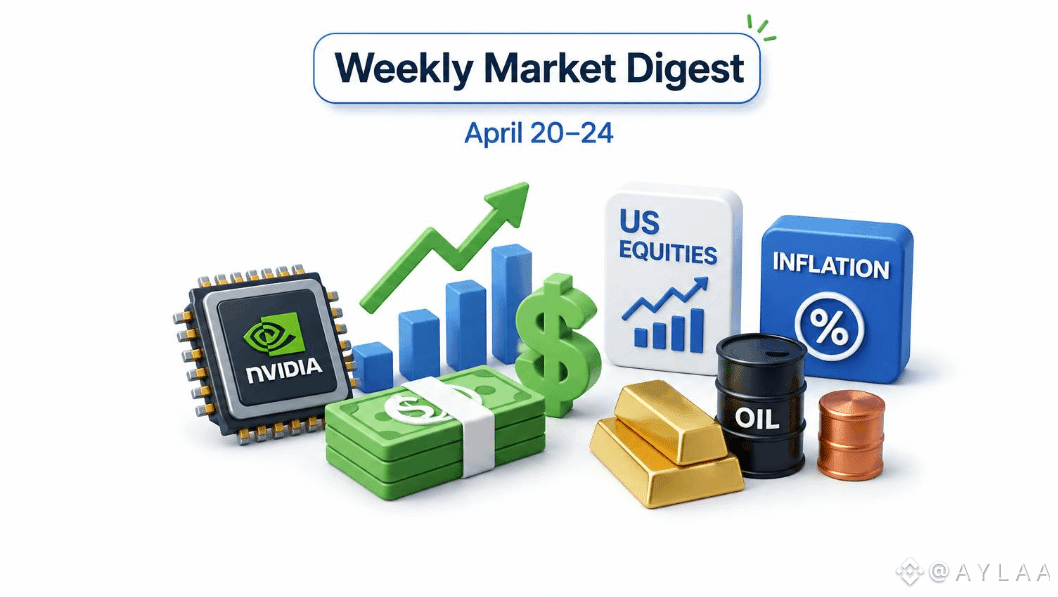
#CPIWatch
CPI Is the Real Test for Stocks
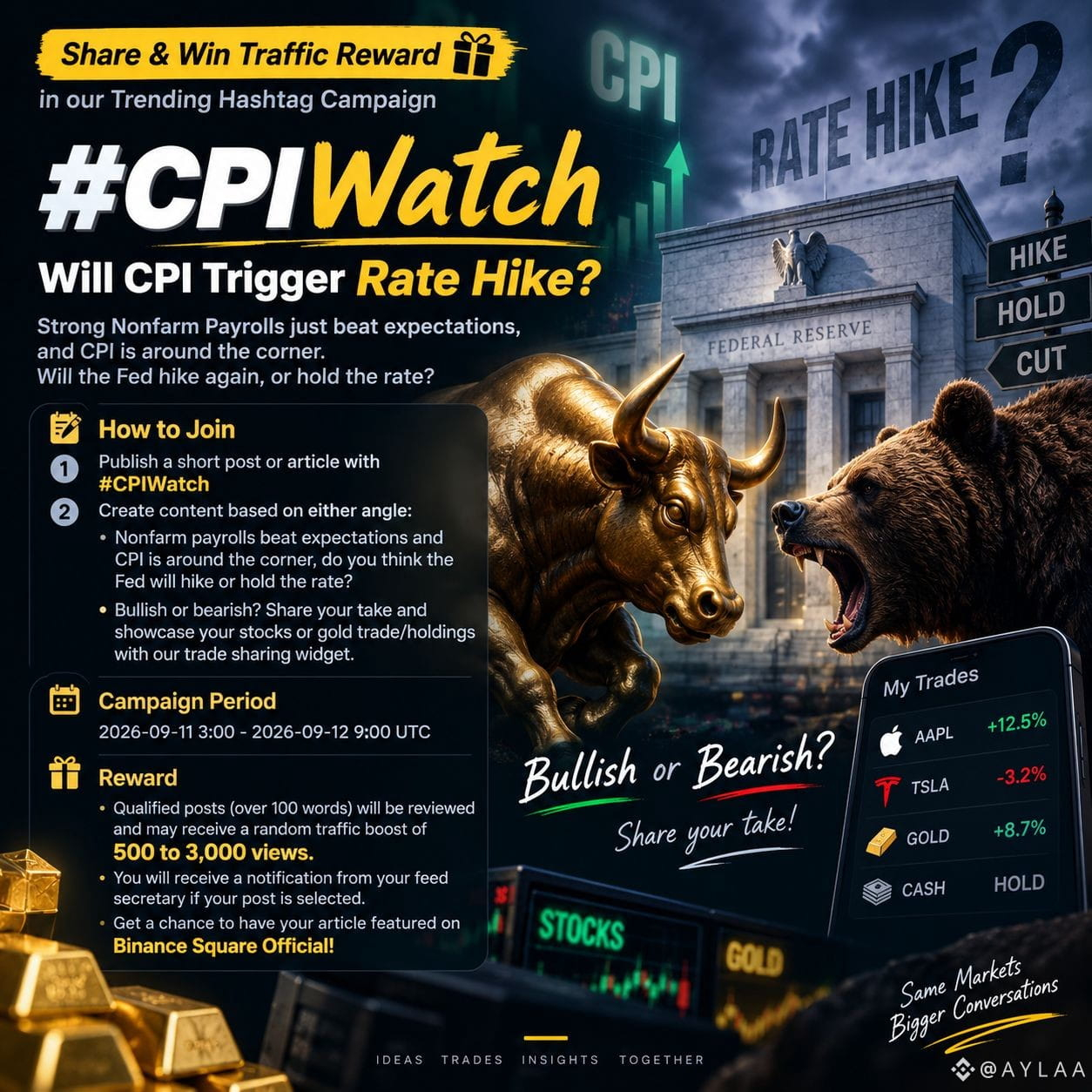
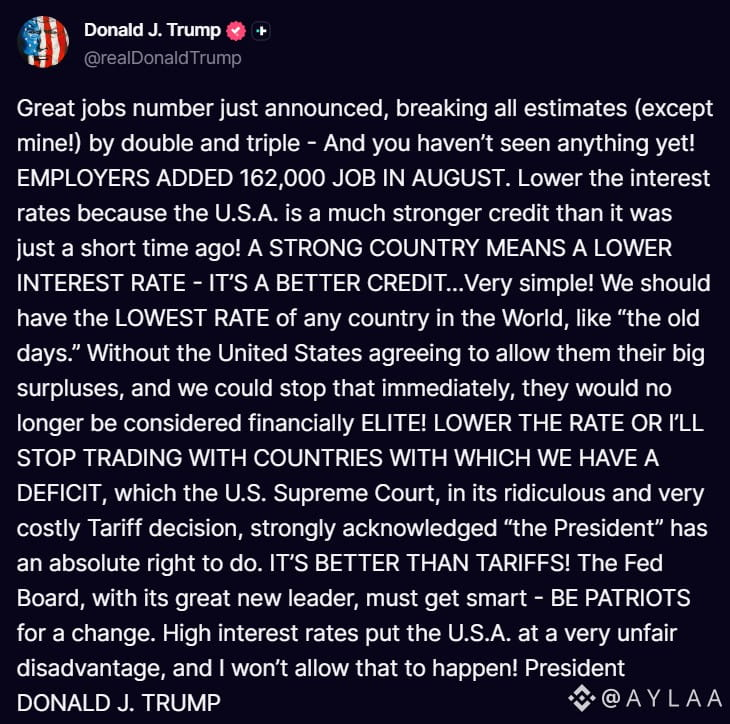
A strong jobs report has kept a September Fed hike firmly on the table, but one payroll number alone probably won’t settle the decision. The next big signal is inflation.
That’s where core CPI matters. If monthly core inflation stays around 0.2%, the case for rushing into another hike is less convincing. Services remain relatively sticky, while moves in oil can create plenty of noise without telling the whole inflation story.
For stocks, the setup is straightforward:
Hot CPI around 0.3%:
Higher yields could pressure long-duration assets first, with names like potentially feeling the move. The broader bid could also weaken as rate expectations adjust.
Soft CPI around 0.2%:
A Fed hold becomes easier to defend, which could support quality growth and mega-cap names.
And don’t ignore gold. A sharp jump in real yields can quickly take some of the hedge premium out of . Recent market action has already shown how higher yields and inflation fears can weigh on both equities and gold.
My approach: less prediction, more process.
Keep exposure controlled. Don’t chase the headline. Let the CPI print confirm the setup before adding risk.
Soft CPI → consider adding.
Hot CPI → step back and wait.
CPI week rewards patience. Getting positioned too early is often how traders end up buying the top of the narrative.
#CPIWatch
$GAIB
{alpha}(560xc19d38925f9f645337b1d1f37baf3c0647a48e50)
$RAYSOL
{future}(RAYSOLUSDT)
$LSK
{future}(LSKUSDT)
#CPIWatch
CPI Is the Real Test for Stocks
A strong jobs report has kept a September Fed hike firmly on the table, but one payroll number alone probably won’t settle the decision. The next big signal is inflation.
That’s where core CPI matters. If monthly core inflation stays around 0.2%, the case for rushing into another hike is less convincing. Services remain relatively sticky, while moves in oil can create plenty of noise without telling the whole inflation story.
For stocks, the setup is straightforward:
Hot CPI around 0.3%:
Higher yields could pressure long-duration assets first, with names like potentially feeling the move. The broader bid could also weaken as rate expectations adjust.
Soft CPI around 0.2%:
A Fed hold becomes easier to defend, which could support quality growth and mega-cap names.
And don’t ignore gold. A sharp jump in real yields can quickly take some of the hedge premium out of . Recent market action has already shown how higher yields and inflation fears can weigh on both equities and gold.
My approach: less prediction, more process.
Keep exposure controlled. Don’t chase the headline. Let the CPI print confirm the setup before adding risk.
Soft CPI → consider adding.
Hot CPI → step back and wait.
CPI week rewards patience. Getting positioned too early is often how traders end up buying the top of the narrative.
#CPIWatch
$GAIB
$RAYSOL
$LSK
CPI Is the Real Test for Stocks
A strong jobs report has kept a September Fed hike firmly on the table, but one payroll number alone probably won’t settle the decision. The next big signal is inflation.
That’s where core CPI matters. If monthly core inflation stays around 0.2%, the case for rushing into another hike is less convincing. Services remain relatively sticky, while moves in oil can create plenty of noise without telling the whole inflation story.
For stocks, the setup is straightforward:
Hot CPI around 0.3%:
Higher yields could pressure long-duration assets first, with names like potentially feeling the move. The broader bid could also weaken as rate expectations adjust.
Soft CPI around 0.2%:
A Fed hold becomes easier to defend, which could support quality growth and mega-cap names.
And don’t ignore gold. A sharp jump in real yields can quickly take some of the hedge premium out of . Recent market action has already shown how higher yields and inflation fears can weigh on both equities and gold.
My approach: less prediction, more process.
Keep exposure controlled. Don’t chase the headline. Let the CPI print confirm the setup before adding risk.
Soft CPI → consider adding.
Hot CPI → step back and wait.
CPI week rewards patience. Getting positioned too early is often how traders end up buying the top of the narrative.
#CPIWatch
$GAIB
$RAYSOL
$LSK
2
404
·
--
Bullish
🇮🇷🇺🇸 Iran Strikes U.S. Base in Kuwait
#IranStrikesUSBaseInKuwait
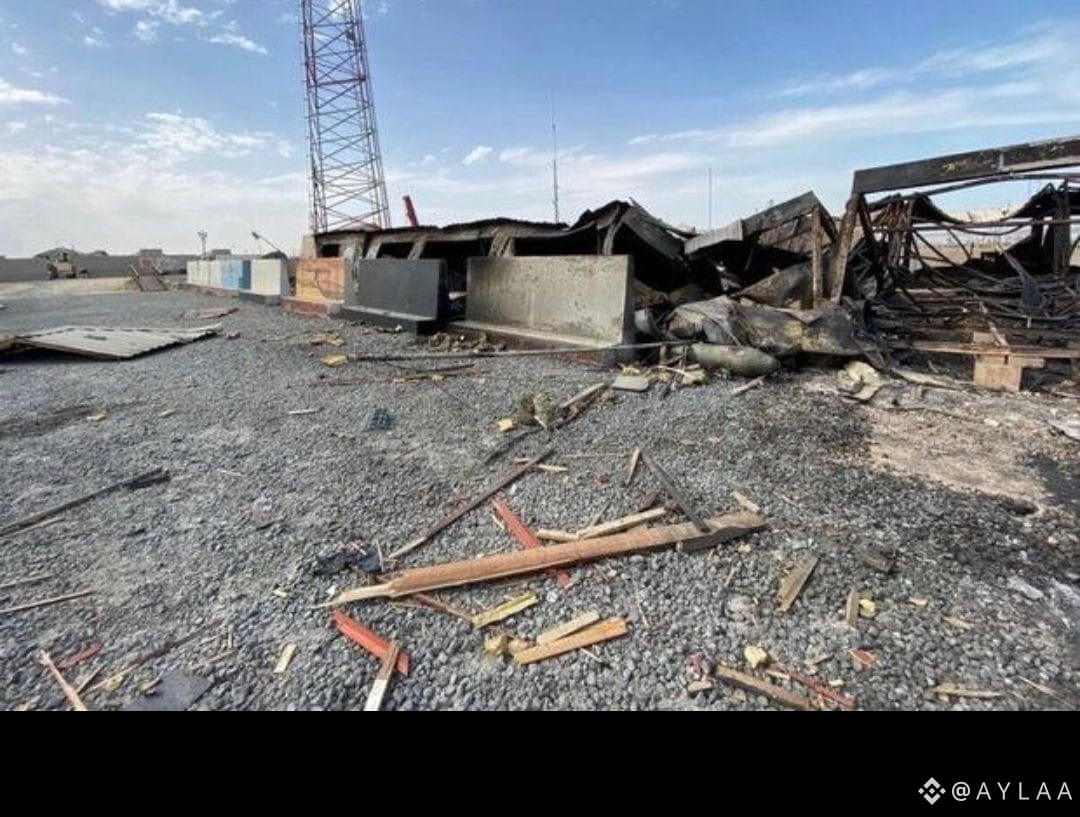
Iran has launched missile and drone attacks targeting U.S. military facilities in Kuwait, including Ali Al Salem Air Base, according to Iranian and regional reports. Kuwait says its air defenses confronted hostile missiles and drones, while some Iranian claims about damage and U.S. casualties remain unverified.
The strikes mark another dangerous escalation in the widening U.S.–Iran conflict, raising fresh concerns about regional security and the stability of the Gulf.
#Iran #Kuwait #US #MiddleEast #IranStrikesUSBaseInKuwait #BreakingNews
🇮🇷🇺🇸 Iran Strikes U.S. Base in Kuwait
#IranStrikesUSBaseInKuwait
Iran has launched missile and drone attacks targeting U.S. military facilities in Kuwait, including Ali Al Salem Air Base, according to Iranian and regional reports. Kuwait says its air defenses confronted hostile missiles and drones, while some Iranian claims about damage and U.S. casualties remain unverified.
The strikes mark another dangerous escalation in the widening U.S.–Iran conflict, raising fresh concerns about regional security and the stability of the Gulf.
#Iran #Kuwait #US #MiddleEast #IranStrikesUSBaseInKuwait #BreakingNews
#IranStrikesUSBaseInKuwait
Iran has launched missile and drone attacks targeting U.S. military facilities in Kuwait, including Ali Al Salem Air Base, according to Iranian and regional reports. Kuwait says its air defenses confronted hostile missiles and drones, while some Iranian claims about damage and U.S. casualties remain unverified.
The strikes mark another dangerous escalation in the widening U.S.–Iran conflict, raising fresh concerns about regional security and the stability of the Gulf.
#Iran #Kuwait #US #MiddleEast #IranStrikesUSBaseInKuwait #BreakingNews
1
2
179
·
--
Bullish
📉 #HangSengCloses18PointsLower
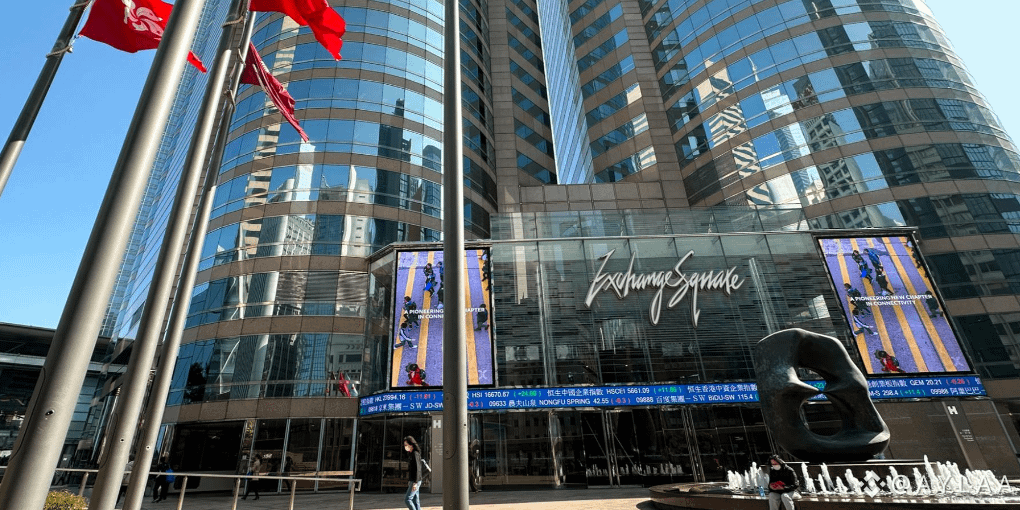
Hong Kong stocks ended slightly lower, with the Hang Seng Index slipping 18 points, reflecting cautious investor sentiment and subdued trading. Investors continue to watch global interest rates, China’s economic outlook and technology stocks for the next market direction.
#HangSeng #HongKongStocks #StockMarket #Markets #Investing
📉 #HangSengCloses18PointsLower
Hong Kong stocks ended slightly lower, with the Hang Seng Index slipping 18 points, reflecting cautious investor sentiment and subdued trading. Investors continue to watch global interest rates, China’s economic outlook and technology stocks for the next market direction.
#HangSeng #HongKongStocks #StockMarket #Markets #Investing
Hong Kong stocks ended slightly lower, with the Hang Seng Index slipping 18 points, reflecting cautious investor sentiment and subdued trading. Investors continue to watch global interest rates, China’s economic outlook and technology stocks for the next market direction.
#HangSeng #HongKongStocks #StockMarket #Markets #Investing
1
429
Log in to explore more content
Join global crypto users on Binance Square
⚡️ Get latest and useful information about crypto.
💬 Trusted by the world’s largest crypto exchange.
👍 Discover real insights from verified creators.
Email / Phone number