
#europeanunion
europeanunion
52,958 views
147 Discussing
Hot
Latest

·
--
Europe has again sparked controversy over financial reform. In a recent TV interview, Maria Luis Albuquerque, the EU Financial Services Commissioner, clearly stated that she rejected banks’ call for a “step-by-step reform” approach. Previously, executives from 11 leading banks from the EU, the UK, and Switzerland had spoken out, urging the EU to first roll out simple regulatory simplification measures and postpone the tougher issues (such as a pan-European deposit insurance scheme). But the Commissioner’s stance was firm: she believes the financial system is interconnected and must be advanced as a whole package. The key is to break down market fragmentation between member states.
What’s particularly interesting here is the tug-of-war between regulators and the traditional banking industry. Banks obviously want the immediate benefits of lower compliance costs and fewer cumbersome procedures, and to delay reforms that are controversial and involve sensitive sovereign-interest allocation. The EU regulator, meanwhile, insists that if the EU does not tackle at once the disagreements between the “home country and host country” and the problem of market fragmentation, piecemeal fixes will do little to enhance the EU’s overall economic competitiveness. This standoff means Europe’s financial integration process is still full of uncertainties.
For traditional financial markets, this regulatory framework uncertainty will likely keep European bank stocks trading at a valuation discount in the short term. The regulatory easing banks are hoping for will not be implemented unilaterally or quickly. And as the overall packaged plan moves forward, it will inevitably come with a long political bargaining and compromise process. Improving the efficiency of cross-border lending and capital flows across Europe will take time, and the dominance of dollar assets in global capital allocation is unlikely to be diverted to European capital markets in the near term.
As for the impact on the crypto space, people can remain neutral and observe. On the one hand, because reforms in Europe’s traditional financial system are progressing slowly and efficiency is constrained by internal power struggles, some cross-border payment and financing needs may keep seeking efficiency via decentralized networks. On the other hand, overall macro liquidity is still constrained by policy bargaining, and risk appetite for capital has not shifted unilaterally. The next key will be the final form of the EU legislation in terms of its text, and the specific direction traditional capital will take under the compliance framework. $BTC
#EuropeanUnion #BankingReform #CryptoMacro
Europe has again sparked controversy over financial reform. In a recent TV interview, Maria Luis Albuquerque, the EU Financial Services Commissioner, clearly stated that she rejected banks’ call for a “step-by-step reform” approach. Previously, executives from 11 leading banks from the EU, the UK, and Switzerland had spoken out, urging the EU to first roll out simple regulatory simplification measures and postpone the tougher issues (such as a pan-European deposit insurance scheme). But the Commissioner’s stance was firm: she believes the financial system is interconnected and must be advanced as a whole package. The key is to break down market fragmentation between member states.
What’s particularly interesting here is the tug-of-war between regulators and the traditional banking industry. Banks obviously want the immediate benefits of lower compliance costs and fewer cumbersome procedures, and to delay reforms that are controversial and involve sensitive sovereign-interest allocation. The EU regulator, meanwhile, insists that if the EU does not tackle at once the disagreements between the “home country and host country” and the problem of market fragmentation, piecemeal fixes will do little to enhance the EU’s overall economic competitiveness. This standoff means Europe’s financial integration process is still full of uncertainties.
For traditional financial markets, this regulatory framework uncertainty will likely keep European bank stocks trading at a valuation discount in the short term. The regulatory easing banks are hoping for will not be implemented unilaterally or quickly. And as the overall packaged plan moves forward, it will inevitably come with a long political bargaining and compromise process. Improving the efficiency of cross-border lending and capital flows across Europe will take time, and the dominance of dollar assets in global capital allocation is unlikely to be diverted to European capital markets in the near term.
As for the impact on the crypto space, people can remain neutral and observe. On the one hand, because reforms in Europe’s traditional financial system are progressing slowly and efficiency is constrained by internal power struggles, some cross-border payment and financing needs may keep seeking efficiency via decentralized networks. On the other hand, overall macro liquidity is still constrained by policy bargaining, and risk appetite for capital has not shifted unilaterally. The next key will be the final form of the EU legislation in terms of its text, and the specific direction traditional capital will take under the compliance framework. $BTC
#EuropeanUnion #BankingReform #CryptoMacro
What’s particularly interesting here is the tug-of-war between regulators and the traditional banking industry. Banks obviously want the immediate benefits of lower compliance costs and fewer cumbersome procedures, and to delay reforms that are controversial and involve sensitive sovereign-interest allocation. The EU regulator, meanwhile, insists that if the EU does not tackle at once the disagreements between the “home country and host country” and the problem of market fragmentation, piecemeal fixes will do little to enhance the EU’s overall economic competitiveness. This standoff means Europe’s financial integration process is still full of uncertainties.
For traditional financial markets, this regulatory framework uncertainty will likely keep European bank stocks trading at a valuation discount in the short term. The regulatory easing banks are hoping for will not be implemented unilaterally or quickly. And as the overall packaged plan moves forward, it will inevitably come with a long political bargaining and compromise process. Improving the efficiency of cross-border lending and capital flows across Europe will take time, and the dominance of dollar assets in global capital allocation is unlikely to be diverted to European capital markets in the near term.
As for the impact on the crypto space, people can remain neutral and observe. On the one hand, because reforms in Europe’s traditional financial system are progressing slowly and efficiency is constrained by internal power struggles, some cross-border payment and financing needs may keep seeking efficiency via decentralized networks. On the other hand, overall macro liquidity is still constrained by policy bargaining, and risk appetite for capital has not shifted unilaterally. The next key will be the final form of the EU legislation in terms of its text, and the specific direction traditional capital will take under the compliance framework. $BTC
#EuropeanUnion #BankingReform #CryptoMacro
27

In a recent television interview, Maria Luis Albuquerque, the EU financial services commissioner, officially rejected calls from the banking industry to split the EU’s financial system reform plan into two parts. Although executives from 11 major banks from the EU, Switzerland and the UK strongly urged that priority be given to pushing forward the short-term “streamlining” process and postponing thorny issues such as the European deposit insurance scheme, Albuquerque insisted that a package approach is necessary in order to fully address cross-border barriers, cumbersome administrative procedures, and the long-standing “home and host country” interest disputes that have plagued Europe.
This stance reveals deeper structural contradictions in Europe’s financial integration process. The banking sector tends to seek rapid regulatory easing to improve profitability, but regulators are committed to a fully linked strategy—meaning that before compromises are reached on key issues, any substantial reduction in regulatory burden will face extremely high political coordination costs. This all-or-nothing bargaining mechanism easily traps policy in a prolonged stalemate, further exposing Europe’s fragmented disadvantage in responding to external competition in financial markets.
For traditional financial markets, the stagnation of bank union reform directly constrains the capital efficiency and cross-border M&A vitality of Europe’s banking industry. Against a backdrop of weak macroeconomic growth and difficulty coordinating fiscal policies, valuations of European bank assets may continue to face pressure, thereby dragging down the euro area’s overall pace of credit expansion and the depth of liquidity in bond markets, and even indirectly weakening the euro’s attractiveness for international settlement.
From the perspective of the crypto market, the inefficiency of reform in the traditional banking system once again confirms the systemic advantages of decentralized liquidity protocols. However, in the short term, Europe’s sluggish traditional financial efficiency may curb overall risk appetite and the pace at which institutional capital moves in. Investors should be alert to rising risk-averse sentiment caused by the spillover of macro uncertainty in Europe. Crypto assets, especially $BTC , still face the risk of range-bound trading and a liquidity discount in the near term in the absence of new support for traditional liquidity.
#EuropeanUnion #BankingReform #Macroeconomics
In a recent television interview, Maria Luis Albuquerque, the EU financial services commissioner, officially rejected calls from the banking industry to split the EU’s financial system reform plan into two parts. Although executives from 11 major banks from the EU, Switzerland and the UK strongly urged that priority be given to pushing forward the short-term “streamlining” process and postponing thorny issues such as the European deposit insurance scheme, Albuquerque insisted that a package approach is necessary in order to fully address cross-border barriers, cumbersome administrative procedures, and the long-standing “home and host country” interest disputes that have plagued Europe.
This stance reveals deeper structural contradictions in Europe’s financial integration process. The banking sector tends to seek rapid regulatory easing to improve profitability, but regulators are committed to a fully linked strategy—meaning that before compromises are reached on key issues, any substantial reduction in regulatory burden will face extremely high political coordination costs. This all-or-nothing bargaining mechanism easily traps policy in a prolonged stalemate, further exposing Europe’s fragmented disadvantage in responding to external competition in financial markets.
For traditional financial markets, the stagnation of bank union reform directly constrains the capital efficiency and cross-border M&A vitality of Europe’s banking industry. Against a backdrop of weak macroeconomic growth and difficulty coordinating fiscal policies, valuations of European bank assets may continue to face pressure, thereby dragging down the euro area’s overall pace of credit expansion and the depth of liquidity in bond markets, and even indirectly weakening the euro’s attractiveness for international settlement.
From the perspective of the crypto market, the inefficiency of reform in the traditional banking system once again confirms the systemic advantages of decentralized liquidity protocols. However, in the short term, Europe’s sluggish traditional financial efficiency may curb overall risk appetite and the pace at which institutional capital moves in. Investors should be alert to rising risk-averse sentiment caused by the spillover of macro uncertainty in Europe. Crypto assets, especially $BTC , still face the risk of range-bound trading and a liquidity discount in the near term in the absence of new support for traditional liquidity.
#EuropeanUnion #BankingReform #Macroeconomics
This stance reveals deeper structural contradictions in Europe’s financial integration process. The banking sector tends to seek rapid regulatory easing to improve profitability, but regulators are committed to a fully linked strategy—meaning that before compromises are reached on key issues, any substantial reduction in regulatory burden will face extremely high political coordination costs. This all-or-nothing bargaining mechanism easily traps policy in a prolonged stalemate, further exposing Europe’s fragmented disadvantage in responding to external competition in financial markets.
For traditional financial markets, the stagnation of bank union reform directly constrains the capital efficiency and cross-border M&A vitality of Europe’s banking industry. Against a backdrop of weak macroeconomic growth and difficulty coordinating fiscal policies, valuations of European bank assets may continue to face pressure, thereby dragging down the euro area’s overall pace of credit expansion and the depth of liquidity in bond markets, and even indirectly weakening the euro’s attractiveness for international settlement.
From the perspective of the crypto market, the inefficiency of reform in the traditional banking system once again confirms the systemic advantages of decentralized liquidity protocols. However, in the short term, Europe’s sluggish traditional financial efficiency may curb overall risk appetite and the pace at which institutional capital moves in. Investors should be alert to rising risk-averse sentiment caused by the spillover of macro uncertainty in Europe. Crypto assets, especially $BTC , still face the risk of range-bound trading and a liquidity discount in the near term in the absence of new support for traditional liquidity.
#EuropeanUnion #BankingReform #Macroeconomics
1

According to a recent report by The Wall Street Journal, Canadian Prime Minister Mark Carney has proposed that Canada become the European Union's first non-European candidate country. European and Canadian officials indicated that Brussels maintains an open attitude toward the initiative, while US officials have expressed skepticism regarding the proposal.
This marks an unprecedented geopolitical pivot. Canada has historically remained firmly anchored within the North American economic sphere through USMCA, making any formal institutional integration with the European single market a significant strategic realignment against shifting transatlantic trade dynamics.
From a macro perspective, closer integration between Ottawa and Brussels could reshape trade flows, energy partnerships, and regulatory frameworks across the Atlantic. However, friction with Washington could inject fresh volatility into currency markets, particularly for the Canadian Dollar and the Euro, while challenging US trade dominance.
For digital assets like $BTC, rising geopolitical realignment and fragmented trade alliances highlight the necessity of neutral, borderless capital. As cross-border financial systems face restructuring, decentralized liquidity networks often benefit from heightened institutional interest.
#Canada #EuropeanUnion #Geopolitics
According to a recent report by The Wall Street Journal, Canadian Prime Minister Mark Carney has proposed that Canada become the European Union's first non-European candidate country. European and Canadian officials indicated that Brussels maintains an open attitude toward the initiative, while US officials have expressed skepticism regarding the proposal.
This marks an unprecedented geopolitical pivot. Canada has historically remained firmly anchored within the North American economic sphere through USMCA, making any formal institutional integration with the European single market a significant strategic realignment against shifting transatlantic trade dynamics.
From a macro perspective, closer integration between Ottawa and Brussels could reshape trade flows, energy partnerships, and regulatory frameworks across the Atlantic. However, friction with Washington could inject fresh volatility into currency markets, particularly for the Canadian Dollar and the Euro, while challenging US trade dominance.
For digital assets like $BTC , rising geopolitical realignment and fragmented trade alliances highlight the necessity of neutral, borderless capital. As cross-border financial systems face restructuring, decentralized liquidity networks often benefit from heightened institutional interest.
#Canada #EuropeanUnion #Geopolitics
This marks an unprecedented geopolitical pivot. Canada has historically remained firmly anchored within the North American economic sphere through USMCA, making any formal institutional integration with the European single market a significant strategic realignment against shifting transatlantic trade dynamics.
From a macro perspective, closer integration between Ottawa and Brussels could reshape trade flows, energy partnerships, and regulatory frameworks across the Atlantic. However, friction with Washington could inject fresh volatility into currency markets, particularly for the Canadian Dollar and the Euro, while challenging US trade dominance.
For digital assets like $BTC , rising geopolitical realignment and fragmented trade alliances highlight the necessity of neutral, borderless capital. As cross-border financial systems face restructuring, decentralized liquidity networks often benefit from heightened institutional interest.
#Canada #EuropeanUnion #Geopolitics
28

According to the latest report from The Wall Street Journal, Canadian Prime Minister Carney has proposed making Canada the EU’s first “candidate country.” European and Canadian officials say Brussels is open to the idea, while U.S. officials have expressed skepticism.
This potential reshuffling of the geopolitical and economic structure is of great strategic significance. If Canada were to build deeper quasi-member or economic integration ties with the EU, it would mean that the transatlantic trade architecture could undergo a historic remaking. For Canada, which has long relied heavily on the North American free-trade framework, diversifying its trade networks would significantly enhance its ability to withstand risks and strengthen long-term economic resilience.
From a macro and traditional financial-market perspective, if this cross-regional economic integration is gradually advanced, it could boost bilateral trade and investment flows between the EU and Canada—injecting new growth momentum into the euro area. At the same time, it may produce incremental diversification effects for a trade settlement system that is predominantly dominated by the U.S. dollar. Overall, capital markets have a generally positive outlook on expectations of deeper cooperation, which could help lift risk appetite for cross-border assets.
For the crypto market, a more open transatlantic flow of capital and a more decentralized trade landscape typically benefit risk assets overall. As global macro liquidity conditions seek a new balance during structural adjustment, core assets such as $BTC are expected to benefit from rising demand for diversified capital allocation. From a technical-structure standpoint, a rebound in risk appetite provides a favorable macro backdrop for stabilizing key support levels.📈
#Canada #EuropeanUnion #Geopolitics
According to the latest report from The Wall Street Journal, Canadian Prime Minister Carney has proposed making Canada the EU’s first “candidate country.” European and Canadian officials say Brussels is open to the idea, while U.S. officials have expressed skepticism.
This potential reshuffling of the geopolitical and economic structure is of great strategic significance. If Canada were to build deeper quasi-member or economic integration ties with the EU, it would mean that the transatlantic trade architecture could undergo a historic remaking. For Canada, which has long relied heavily on the North American free-trade framework, diversifying its trade networks would significantly enhance its ability to withstand risks and strengthen long-term economic resilience.
From a macro and traditional financial-market perspective, if this cross-regional economic integration is gradually advanced, it could boost bilateral trade and investment flows between the EU and Canada—injecting new growth momentum into the euro area. At the same time, it may produce incremental diversification effects for a trade settlement system that is predominantly dominated by the U.S. dollar. Overall, capital markets have a generally positive outlook on expectations of deeper cooperation, which could help lift risk appetite for cross-border assets.
For the crypto market, a more open transatlantic flow of capital and a more decentralized trade landscape typically benefit risk assets overall. As global macro liquidity conditions seek a new balance during structural adjustment, core assets such as $BTC are expected to benefit from rising demand for diversified capital allocation. From a technical-structure standpoint, a rebound in risk appetite provides a favorable macro backdrop for stabilizing key support levels.📈
#Canada #EuropeanUnion #Geopolitics
This potential reshuffling of the geopolitical and economic structure is of great strategic significance. If Canada were to build deeper quasi-member or economic integration ties with the EU, it would mean that the transatlantic trade architecture could undergo a historic remaking. For Canada, which has long relied heavily on the North American free-trade framework, diversifying its trade networks would significantly enhance its ability to withstand risks and strengthen long-term economic resilience.
From a macro and traditional financial-market perspective, if this cross-regional economic integration is gradually advanced, it could boost bilateral trade and investment flows between the EU and Canada—injecting new growth momentum into the euro area. At the same time, it may produce incremental diversification effects for a trade settlement system that is predominantly dominated by the U.S. dollar. Overall, capital markets have a generally positive outlook on expectations of deeper cooperation, which could help lift risk appetite for cross-border assets.
For the crypto market, a more open transatlantic flow of capital and a more decentralized trade landscape typically benefit risk assets overall. As global macro liquidity conditions seek a new balance during structural adjustment, core assets such as $BTC are expected to benefit from rising demand for diversified capital allocation. From a technical-structure standpoint, a rebound in risk appetite provides a favorable macro backdrop for stabilizing key support levels.📈
#Canada #EuropeanUnion #Geopolitics
44

·
--
Bullish
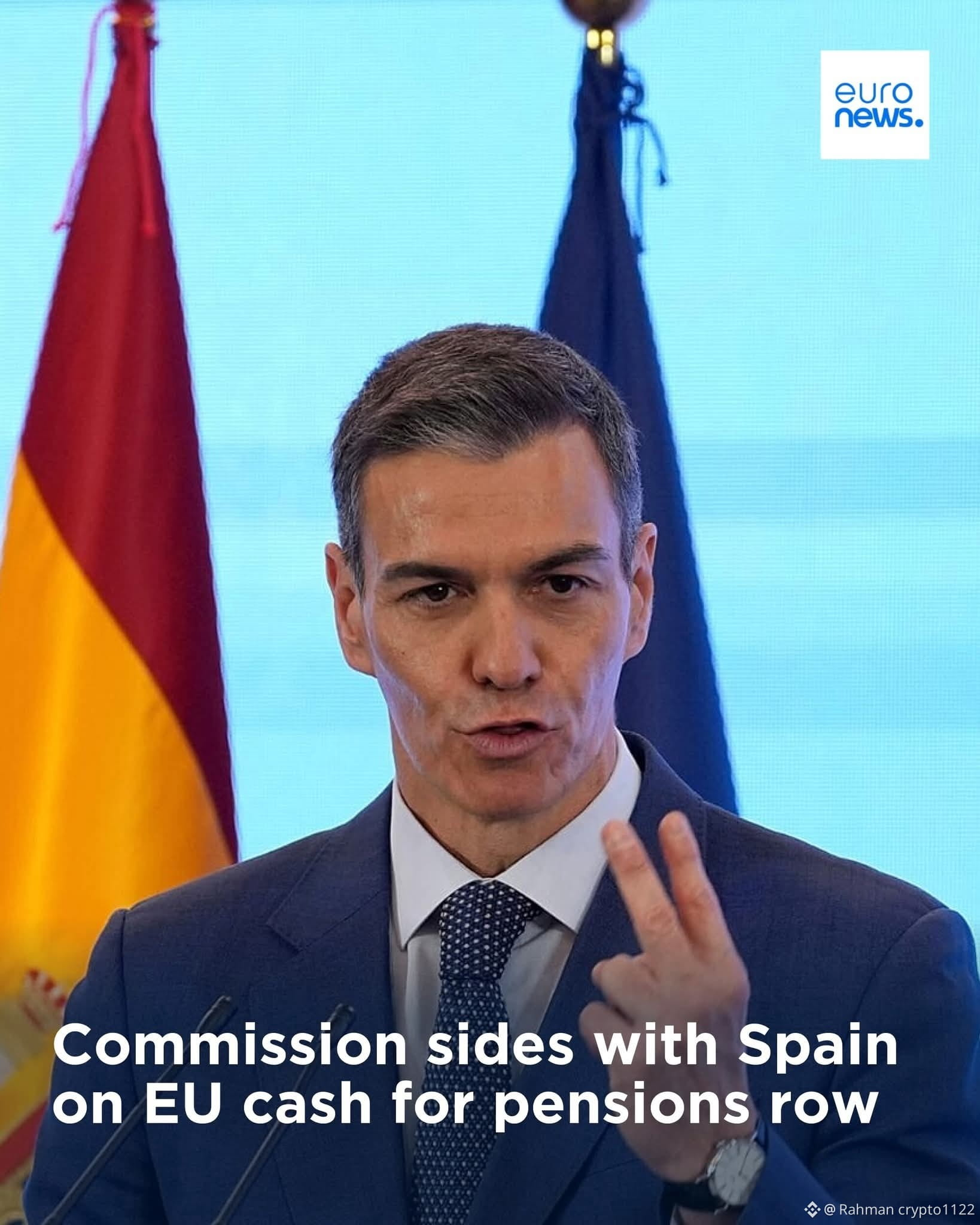
🇪🇺 Tensions are rising in Brussels over allegations that Spain may have used EU recovery-linked funds to support pension payments — claims Madrid strongly denies.
The European Commission has backed Spain, saying it found no evidence of misuse of EU funds, while several Members of the European Parliament are demanding greater transparency and warning that the controversy could damage trust ahead of critical EU budget negotiations.
The debate is already fueling wider divisions between fiscally conservative northern EU states and southern members pushing for broader joint financing mechanisms.
Source: Euronews reporting on EU budget and recovery fund discussions.
#EuropeNews #EU #Spain #EuropeanUnion #BudgetTalks
$XAG
{future}(XAGUSDT)
$XRP
{future}(XRPUSDT)
$BNB
{spot}(BNBUSDT)
🇪🇺 Tensions are rising in Brussels over allegations that Spain may have used EU recovery-linked funds to support pension payments — claims Madrid strongly denies.
The European Commission has backed Spain, saying it found no evidence of misuse of EU funds, while several Members of the European Parliament are demanding greater transparency and warning that the controversy could damage trust ahead of critical EU budget negotiations.
The debate is already fueling wider divisions between fiscally conservative northern EU states and southern members pushing for broader joint financing mechanisms.
Source: Euronews reporting on EU budget and recovery fund discussions.
#EuropeNews #EU #Spain #EuropeanUnion #BudgetTalks
$XAG
$XRP
$BNB
The European Commission has backed Spain, saying it found no evidence of misuse of EU funds, while several Members of the European Parliament are demanding greater transparency and warning that the controversy could damage trust ahead of critical EU budget negotiations.
The debate is already fueling wider divisions between fiscally conservative northern EU states and southern members pushing for broader joint financing mechanisms.
Source: Euronews reporting on EU budget and recovery fund discussions.
#EuropeNews #EU #Spain #EuropeanUnion #BudgetTalks
$XAG
$XRP
$BNB
252

·
--
European Commission Reviewing MiCA Update for Stablecoins & Tokenization!
Fresh update just dropped by CoinMarketCap! The European Commission is officially reviewing whether the landmark Markets in Crypto-Assets (MiCA) regulation should be updated and expanded.
The potential framework changes aim to specifically address tokenized financial instruments and global stablecoin models. As MiCA sets the global benchmark for digital asset compliance, any structural changes to how stablecoins are regulated within the EU could heavily impact liquidity, issuer requirements, and cross-border trading dynamics. Institutional traders are keeping a close watch on this developing regulatory stance.
Do you think updating MiCA will bring more institutional trust to stablecoins, or will it just add heavy red tape and restrict market growth? Drop your predictions below!
#Regulation #MiCA #EuropeanUnion #Stablecoins #BinanceSquare
European Commission Reviewing MiCA Update for Stablecoins & Tokenization!
Fresh update just dropped by CoinMarketCap! The European Commission is officially reviewing whether the landmark Markets in Crypto-Assets (MiCA) regulation should be updated and expanded.
The potential framework changes aim to specifically address tokenized financial instruments and global stablecoin models. As MiCA sets the global benchmark for digital asset compliance, any structural changes to how stablecoins are regulated within the EU could heavily impact liquidity, issuer requirements, and cross-border trading dynamics. Institutional traders are keeping a close watch on this developing regulatory stance.
Do you think updating MiCA will bring more institutional trust to stablecoins, or will it just add heavy red tape and restrict market growth? Drop your predictions below!
#Regulation #MiCA #EuropeanUnion #Stablecoins #BinanceSquare
Fresh update just dropped by CoinMarketCap! The European Commission is officially reviewing whether the landmark Markets in Crypto-Assets (MiCA) regulation should be updated and expanded.
The potential framework changes aim to specifically address tokenized financial instruments and global stablecoin models. As MiCA sets the global benchmark for digital asset compliance, any structural changes to how stablecoins are regulated within the EU could heavily impact liquidity, issuer requirements, and cross-border trading dynamics. Institutional traders are keeping a close watch on this developing regulatory stance.
Do you think updating MiCA will bring more institutional trust to stablecoins, or will it just add heavy red tape and restrict market growth? Drop your predictions below!
#Regulation #MiCA #EuropeanUnion #Stablecoins #BinanceSquare
23
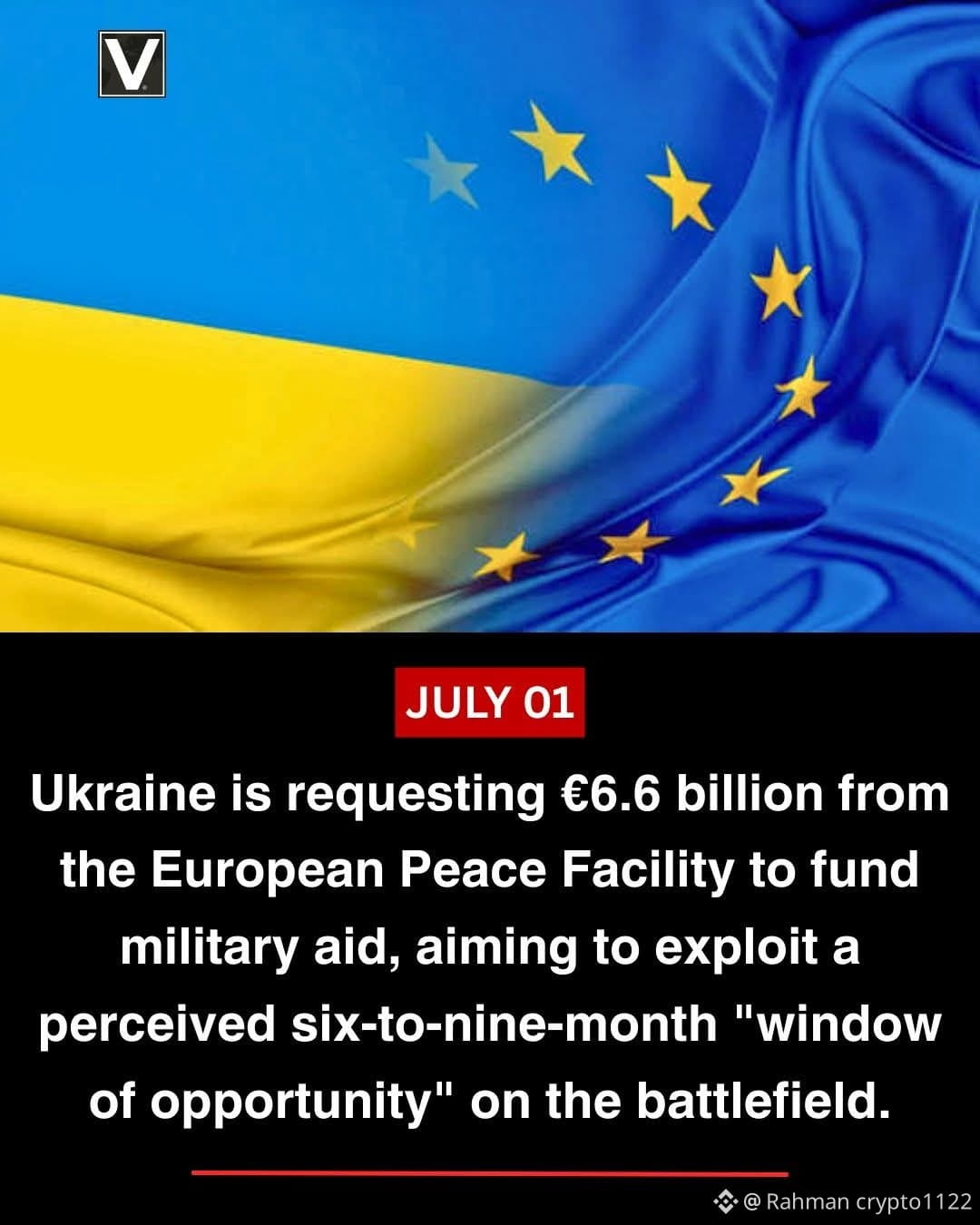
🇺🇦 BREAKING: Ukraine is seeking €6.6 billion from the European Peace Facility to help fund military assistance, citing what officials describe as a six-to-nine-month "window of opportunity" in the conflict.
Officials say Ukraine's total defense needs for the year are estimated at €136 billion, while the current national budget allocates €53 billion, leaving a significant funding gap.
Source: Reuters, July 2026.
#ukraine #EuropeanUnion #EuropeanPeaceFacility #Geopolitics
$SPCXB $XAG $BTC
🇺🇦 BREAKING: Ukraine is seeking €6.6 billion from the European Peace Facility to help fund military assistance, citing what officials describe as a six-to-nine-month "window of opportunity" in the conflict.
Officials say Ukraine's total defense needs for the year are estimated at €136 billion, while the current national budget allocates €53 billion, leaving a significant funding gap.
Source: Reuters, July 2026.
#ukraine #EuropeanUnion #EuropeanPeaceFacility #Geopolitics
$SPCXB $XAG $BTC
Officials say Ukraine's total defense needs for the year are estimated at €136 billion, while the current national budget allocates €53 billion, leaving a significant funding gap.
Source: Reuters, July 2026.
#ukraine #EuropeanUnion #EuropeanPeaceFacility #Geopolitics
$SPCXB $XAG $BTC
1
1
460
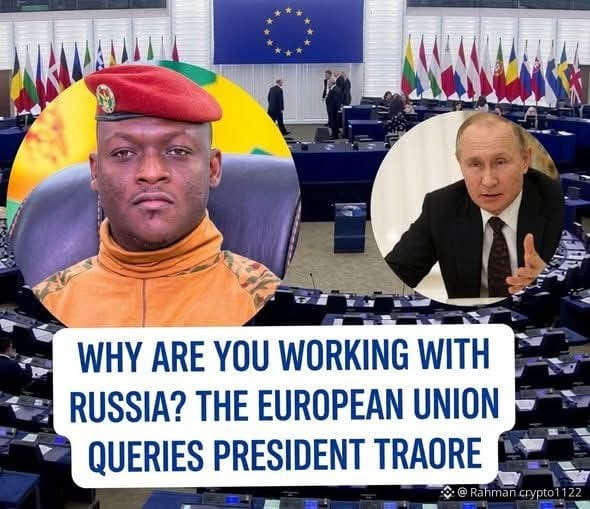
🇪🇺🇧🇫 The European Parliament has adopted a resolution expressing concern over Burkina Faso's political trajectory, including its growing cooperation with Russia following the departure of French and other Western military forces from the Sahel.
The resolution raised issues related to governance, human rights, and civic freedoms under the country's military-led administration. In response, Burkina Faso's Foreign Minister, Karamoko Jean-Marie Traoré, rejected the resolution as interference in national affairs, stating that sovereign nations have the right to choose their own international partners and foreign policy direction.
The dispute has fueled broader debates across Africa about sovereignty, strategic partnerships, and the continent's role in an increasingly multipolar world. It also highlights ongoing discussions about Africa's economic and political relationships with the European Union, China, Russia, and other global powers.
Source: European Parliament Resolution on Burkina Faso (2026), statements from Burkina Faso's Ministry of Foreign Affairs, and official EU communications.
#BurkinaFaso #Africa #EuropeanUnion
$SOL $BTC $BNB
🇪🇺🇧🇫 The European Parliament has adopted a resolution expressing concern over Burkina Faso's political trajectory, including its growing cooperation with Russia following the departure of French and other Western military forces from the Sahel.
The resolution raised issues related to governance, human rights, and civic freedoms under the country's military-led administration. In response, Burkina Faso's Foreign Minister, Karamoko Jean-Marie Traoré, rejected the resolution as interference in national affairs, stating that sovereign nations have the right to choose their own international partners and foreign policy direction.
The dispute has fueled broader debates across Africa about sovereignty, strategic partnerships, and the continent's role in an increasingly multipolar world. It also highlights ongoing discussions about Africa's economic and political relationships with the European Union, China, Russia, and other global powers.
Source: European Parliament Resolution on Burkina Faso (2026), statements from Burkina Faso's Ministry of Foreign Affairs, and official EU communications.
#BurkinaFaso #Africa #EuropeanUnion
$SOL $BTC $BNB
The resolution raised issues related to governance, human rights, and civic freedoms under the country's military-led administration. In response, Burkina Faso's Foreign Minister, Karamoko Jean-Marie Traoré, rejected the resolution as interference in national affairs, stating that sovereign nations have the right to choose their own international partners and foreign policy direction.
The dispute has fueled broader debates across Africa about sovereignty, strategic partnerships, and the continent's role in an increasingly multipolar world. It also highlights ongoing discussions about Africa's economic and political relationships with the European Union, China, Russia, and other global powers.
Source: European Parliament Resolution on Burkina Faso (2026), statements from Burkina Faso's Ministry of Foreign Affairs, and official EU communications.
#BurkinaFaso #Africa #EuropeanUnion
$SOL $BTC $BNB
1
1.3k
·
--
Bearish
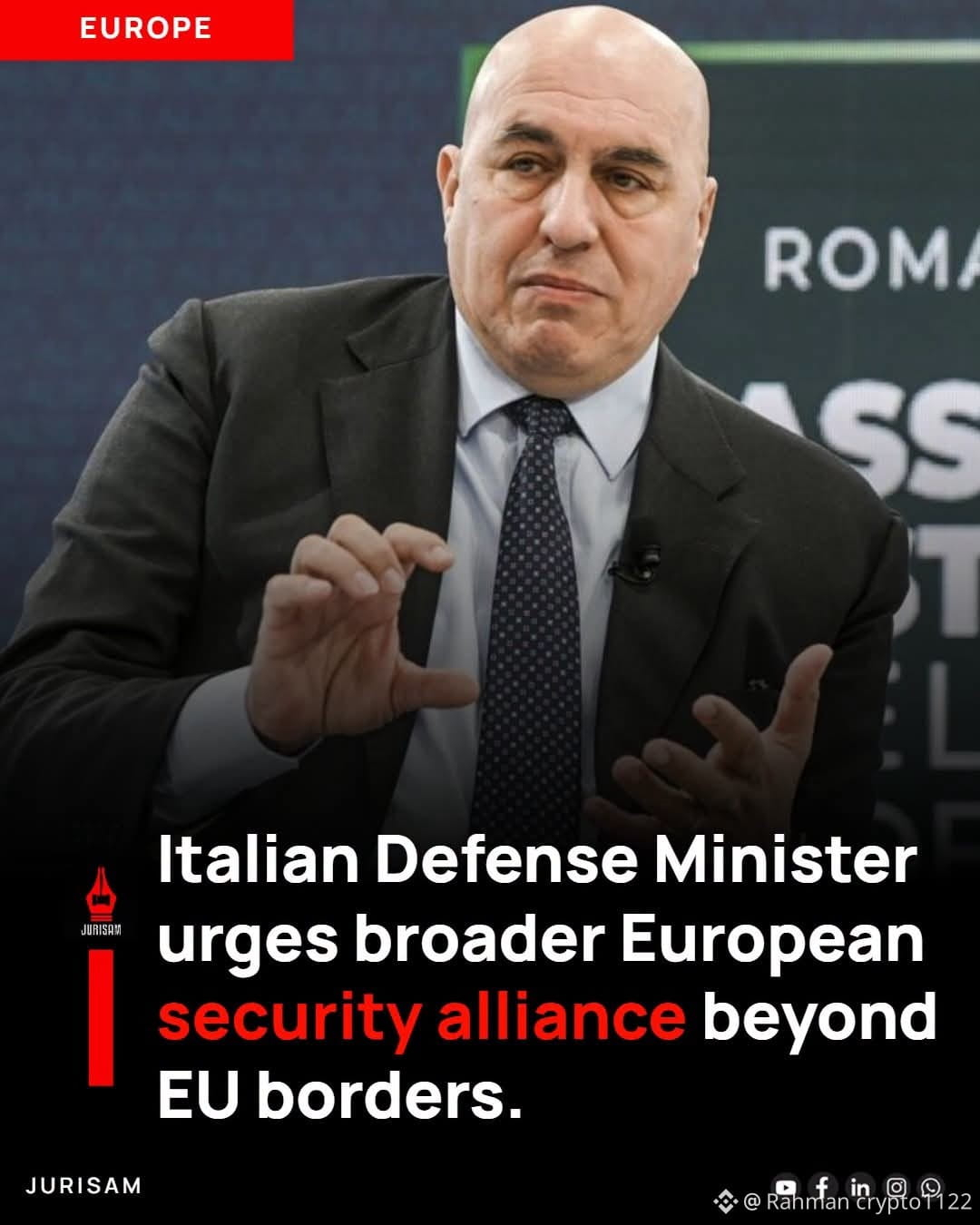
🇮🇹🛡️ Italy Calls for Broader European Security Alliance
Italian Defense Minister Guido Crosetto has urged the creation of a wider European security framework that goes beyond the European Union, proposing the inclusion of key partners such as Türkiye, the United Kingdom, Ukraine, Norway, Switzerland, Moldova, and the Western Balkans.
Speaking to La Stampa, Crosetto warned that Europe must strengthen its own defense capabilities amid growing geopolitical uncertainty and concerns about the future direction of NATO under a potential Trump administration. He argued that a broader security alliance could help close strategic gaps and enhance continental defense cooperation by bringing together major military and security partners both inside and outside the EU.
The proposal reflects ongoing discussions across Europe about increasing strategic autonomy and building a more resilient security architecture in response to evolving global challenges.
📌 Source: Interview with Italian Defense Minister Guido Crosetto published by La Stampa (Italy).
#SecurityAlert #Italy #EuropeanUnion #NATO #UnitedKingdom
$SERAPH $OL $MSFTB
🇮🇹🛡️ Italy Calls for Broader European Security Alliance
Italian Defense Minister Guido Crosetto has urged the creation of a wider European security framework that goes beyond the European Union, proposing the inclusion of key partners such as Türkiye, the United Kingdom, Ukraine, Norway, Switzerland, Moldova, and the Western Balkans.
Speaking to La Stampa, Crosetto warned that Europe must strengthen its own defense capabilities amid growing geopolitical uncertainty and concerns about the future direction of NATO under a potential Trump administration. He argued that a broader security alliance could help close strategic gaps and enhance continental defense cooperation by bringing together major military and security partners both inside and outside the EU.
The proposal reflects ongoing discussions across Europe about increasing strategic autonomy and building a more resilient security architecture in response to evolving global challenges.
📌 Source: Interview with Italian Defense Minister Guido Crosetto published by La Stampa (Italy).
#SecurityAlert #Italy #EuropeanUnion #NATO #UnitedKingdom
$SERAPH $OL $MSFTB
Italian Defense Minister Guido Crosetto has urged the creation of a wider European security framework that goes beyond the European Union, proposing the inclusion of key partners such as Türkiye, the United Kingdom, Ukraine, Norway, Switzerland, Moldova, and the Western Balkans.
Speaking to La Stampa, Crosetto warned that Europe must strengthen its own defense capabilities amid growing geopolitical uncertainty and concerns about the future direction of NATO under a potential Trump administration. He argued that a broader security alliance could help close strategic gaps and enhance continental defense cooperation by bringing together major military and security partners both inside and outside the EU.
The proposal reflects ongoing discussions across Europe about increasing strategic autonomy and building a more resilient security architecture in response to evolving global challenges.
📌 Source: Interview with Italian Defense Minister Guido Crosetto published by La Stampa (Italy).
#SecurityAlert #Italy #EuropeanUnion #NATO #UnitedKingdom
$SERAPH $OL $MSFTB
299
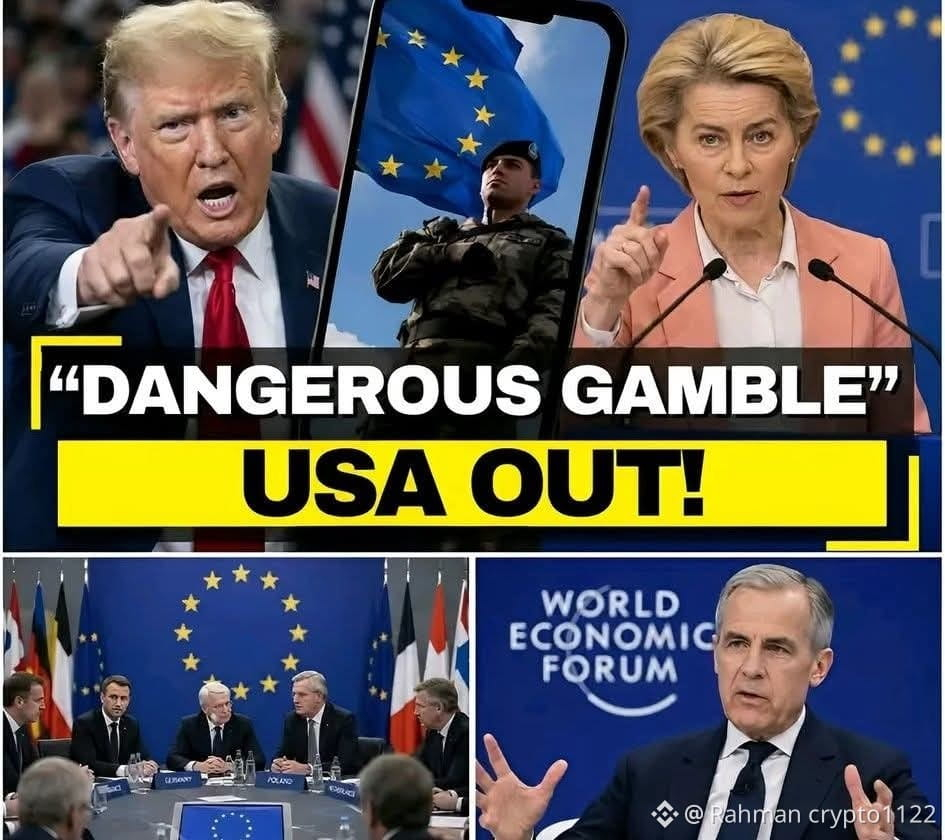
🇪🇺 Europe is openly debating a future less dependent on Washington for security — and the conversation is no longer happening behind closed doors.
A growing group of European lawmakers is calling for stronger strategic autonomy, including deeper military integration and a more independent European defense capability alongside existing NATO structures. The push comes amid rising concerns over long-term U.S. political reliability, defense coordination, and the future balance of transatlantic security.
With Europe operating multiple incompatible tank and fighter jet systems across member states, officials argue that greater defense unity could improve efficiency, readiness, and collective strength in an increasingly unstable world.
Reference: Ongoing debates within the European Union and NATO regarding European strategic autonomy and defense integration.
#Europe #NATO #EuropeanUnion #Defense #Geopolitics
$XAG
{future}(XAGUSDT)
$XAU $XRP
{future}(XAUUSDT)
🇪🇺 Europe is openly debating a future less dependent on Washington for security — and the conversation is no longer happening behind closed doors.
A growing group of European lawmakers is calling for stronger strategic autonomy, including deeper military integration and a more independent European defense capability alongside existing NATO structures. The push comes amid rising concerns over long-term U.S. political reliability, defense coordination, and the future balance of transatlantic security.
With Europe operating multiple incompatible tank and fighter jet systems across member states, officials argue that greater defense unity could improve efficiency, readiness, and collective strength in an increasingly unstable world.
Reference: Ongoing debates within the European Union and NATO regarding European strategic autonomy and defense integration.
#Europe #NATO #EuropeanUnion #Defense #Geopolitics
$XAG
$XAU $XRP
A growing group of European lawmakers is calling for stronger strategic autonomy, including deeper military integration and a more independent European defense capability alongside existing NATO structures. The push comes amid rising concerns over long-term U.S. political reliability, defense coordination, and the future balance of transatlantic security.
With Europe operating multiple incompatible tank and fighter jet systems across member states, officials argue that greater defense unity could improve efficiency, readiness, and collective strength in an increasingly unstable world.
Reference: Ongoing debates within the European Union and NATO regarding European strategic autonomy and defense integration.
#Europe #NATO #EuropeanUnion #Defense #Geopolitics
$XAG
$XAU $XRP
224

·
--
🚨 The European Union is preparing to drop a massive €20 Billion regulatory hammer directly on the crypto markets!
In an aggressive fiscal move, the EU has unveiled a unified plan to enforce a standardized crypto and gambling tax across all member states from 2028 to 2034.
This is a highly coordinated revenue-generation machine explicitly designed to permanently close tax loopholes and squeeze billions out of digital assets.
For retail traders and institutional funds alike, this completely shifts the long-term ROI calculus and permanently alters liquidity flow across Europe.
The era of loose enforcement is officially dead, forcing the smart money to rethink its geographic strategy before the tax traps snap shut.
Will this heavy taxation completely choke innovation and drive capital out of Europe, or is it the mandatory cost of mainstream legitimacy? Sound off below! 👇💶
$TAO | $FET | $RENDER
{spot}(BTCUSDT)
{spot}(ETHUSDT)
{spot}(BNBUSDT)
#EUR #EuropeanUnion #CustodiaBankFedAppealExtension #tax #CryptoNewss
🚨 The European Union is preparing to drop a massive €20 Billion regulatory hammer directly on the crypto markets!
In an aggressive fiscal move, the EU has unveiled a unified plan to enforce a standardized crypto and gambling tax across all member states from 2028 to 2034.
This is a highly coordinated revenue-generation machine explicitly designed to permanently close tax loopholes and squeeze billions out of digital assets.
For retail traders and institutional funds alike, this completely shifts the long-term ROI calculus and permanently alters liquidity flow across Europe.
The era of loose enforcement is officially dead, forcing the smart money to rethink its geographic strategy before the tax traps snap shut.
Will this heavy taxation completely choke innovation and drive capital out of Europe, or is it the mandatory cost of mainstream legitimacy? Sound off below! 👇💶
$TAO | $FET | $RENDER
#EUR #EuropeanUnion #CustodiaBankFedAppealExtension #tax #CryptoNewss
In an aggressive fiscal move, the EU has unveiled a unified plan to enforce a standardized crypto and gambling tax across all member states from 2028 to 2034.
This is a highly coordinated revenue-generation machine explicitly designed to permanently close tax loopholes and squeeze billions out of digital assets.
For retail traders and institutional funds alike, this completely shifts the long-term ROI calculus and permanently alters liquidity flow across Europe.
The era of loose enforcement is officially dead, forcing the smart money to rethink its geographic strategy before the tax traps snap shut.
Will this heavy taxation completely choke innovation and drive capital out of Europe, or is it the mandatory cost of mainstream legitimacy? Sound off below! 👇💶
$TAO | $FET | $RENDER
#EUR #EuropeanUnion #CustodiaBankFedAppealExtension #tax #CryptoNewss

2
2
64
🇪🇺 MiCA Transition Period Ends July 1, 2026 — EU Crypto Firms Face Major Regulatory Deadline
Europe's crypto industry is approaching a critical turning point.
The temporary operating permissions granted under the Markets in Crypto-Assets (MiCA) framework are set to expire on July 1, 2026. Crypto exchanges, brokers, and service providers that have not secured full MiCA authorization by the deadline could lose their legal right to operate across the European Union.
The transition's end may impact millions of users, potentially leading to service restrictions, market exits, or consolidation as companies race to obtain regulatory approval. Firms that successfully secure MiCA licenses will gain access to the EU's unified crypto market, while others risk being left behind.
With the deadline rapidly approaching, the European crypto landscape could undergo one of its biggest reshuffles yet as regulation moves from transition to full enforcement.
🚨 Key Date: July 1, 2026
📜 Impact: Potential loss of operating rights for non-compliant firms
🌍 Result: Major changes in the EU crypto market structure
#Crypto #MiCAs #EuropeanUnion #Bitcoin #Ethereum #CryptoRegulations #Web3 #Blockchain #CryptoNews
🇪🇺 MiCA Transition Period Ends July 1, 2026 — EU Crypto Firms Face Major Regulatory Deadline
Europe's crypto industry is approaching a critical turning point.
The temporary operating permissions granted under the Markets in Crypto-Assets (MiCA) framework are set to expire on July 1, 2026. Crypto exchanges, brokers, and service providers that have not secured full MiCA authorization by the deadline could lose their legal right to operate across the European Union.
The transition's end may impact millions of users, potentially leading to service restrictions, market exits, or consolidation as companies race to obtain regulatory approval. Firms that successfully secure MiCA licenses will gain access to the EU's unified crypto market, while others risk being left behind.
With the deadline rapidly approaching, the European crypto landscape could undergo one of its biggest reshuffles yet as regulation moves from transition to full enforcement.
🚨 Key Date: July 1, 2026
📜 Impact: Potential loss of operating rights for non-compliant firms
🌍 Result: Major changes in the EU crypto market structure
#Crypto #MiCAs #EuropeanUnion #Bitcoin #Ethereum #CryptoRegulations #Web3 #Blockchain #CryptoNews
Europe's crypto industry is approaching a critical turning point.
The temporary operating permissions granted under the Markets in Crypto-Assets (MiCA) framework are set to expire on July 1, 2026. Crypto exchanges, brokers, and service providers that have not secured full MiCA authorization by the deadline could lose their legal right to operate across the European Union.
The transition's end may impact millions of users, potentially leading to service restrictions, market exits, or consolidation as companies race to obtain regulatory approval. Firms that successfully secure MiCA licenses will gain access to the EU's unified crypto market, while others risk being left behind.
With the deadline rapidly approaching, the European crypto landscape could undergo one of its biggest reshuffles yet as regulation moves from transition to full enforcement.
🚨 Key Date: July 1, 2026
📜 Impact: Potential loss of operating rights for non-compliant firms
🌍 Result: Major changes in the EU crypto market structure
#Crypto #MiCAs #EuropeanUnion #Bitcoin #Ethereum #CryptoRegulations #Web3 #Blockchain #CryptoNews
1
42

#EUExtendsCentralContactPointToCASPs 🇪🇺
The **European Union is extending its central contact-point framework to Crypto-Asset Service Providers (CASPs)**, strengthening regulatory oversight and communication between authorities and crypto businesses.
🔎 **Why it matters:**
* 🏦 Greater regulatory supervision of crypto firms
* ⚖️ Stronger compliance and AML/CFT oversight
* 🌐 More coordination between EU authorities
* 🔐 Increased focus on transparency and investor protection
* 📊 Another step toward integrating crypto into the regulated financial system
🔥 **Bottom line:** Europe continues to tighten and formalize the regulatory framework for digital assets, potentially creating a more structured environment for compliant crypto businesses.
### 🔥 Hashtags
#EU #EuropeanUnion #CASP #CryptoAssets #CryptoRegulation #MiCA #MiCAR #DigitalAssets #Cryptocurrency #Crypto #Blockchain #Web3 #DeFi #AML #CFT #Compliance #FinTech #Regulation #CryptoNews #CryptoMarket #Bitcoin #BTC #Ethereum #ETH #Altcoins #Stablecoins #DigitalFinance #InstitutionalCrypto #InvestorProtection #EuropeanCrypto #MarketUpdate #Finance #Trading #Investing $BTC
{spot}(BTCUSDT)
$ETH
{spot}(ETHUSDT)
$EUR
{spot}(EURUSDT)
#EUExtendsCentralContactPointToCASPs 🇪🇺
The **European Union is extending its central contact-point framework to Crypto-Asset Service Providers (CASPs)**, strengthening regulatory oversight and communication between authorities and crypto businesses.
🔎 **Why it matters:**
* 🏦 Greater regulatory supervision of crypto firms
* ⚖️ Stronger compliance and AML/CFT oversight
* 🌐 More coordination between EU authorities
* 🔐 Increased focus on transparency and investor protection
* 📊 Another step toward integrating crypto into the regulated financial system
🔥 **Bottom line:** Europe continues to tighten and formalize the regulatory framework for digital assets, potentially creating a more structured environment for compliant crypto businesses.
### 🔥 Hashtags
#EU #EuropeanUnion #CASP #CryptoAssets #CryptoRegulation #MiCA #MiCAR #DigitalAssets #Cryptocurrency #Crypto #Blockchain #Web3 #DeFi #AML #CFT #Compliance #FinTech #Regulation #CryptoNews #CryptoMarket #Bitcoin #BTC #Ethereum #ETH #Altcoins #Stablecoins #DigitalFinance #InstitutionalCrypto #InvestorProtection #EuropeanCrypto #MarketUpdate #Finance #Trading #Investing $BTC
$ETH
$EUR
The **European Union is extending its central contact-point framework to Crypto-Asset Service Providers (CASPs)**, strengthening regulatory oversight and communication between authorities and crypto businesses.
🔎 **Why it matters:**
* 🏦 Greater regulatory supervision of crypto firms
* ⚖️ Stronger compliance and AML/CFT oversight
* 🌐 More coordination between EU authorities
* 🔐 Increased focus on transparency and investor protection
* 📊 Another step toward integrating crypto into the regulated financial system
🔥 **Bottom line:** Europe continues to tighten and formalize the regulatory framework for digital assets, potentially creating a more structured environment for compliant crypto businesses.
### 🔥 Hashtags
#EU #EuropeanUnion #CASP #CryptoAssets #CryptoRegulation #MiCA #MiCAR #DigitalAssets #Cryptocurrency #Crypto #Blockchain #Web3 #DeFi #AML #CFT #Compliance #FinTech #Regulation #CryptoNews #CryptoMarket #Bitcoin #BTC #Ethereum #ETH #Altcoins #Stablecoins #DigitalFinance #InstitutionalCrypto #InvestorProtection #EuropeanCrypto #MarketUpdate #Finance #Trading #Investing $BTC
$ETH
$EUR

1
86

EU Court Ruling Challenges Hungary’s Anti-LGBTQ+ Law
The European Court of Justice has ruled that Hungary’s 2021 anti-LGBTQ+ legislation violates core European Union values, marking a significant moment in the bloc’s legal and political landscape. The law, introduced under Viktor Orbán, restricted the depiction of LGBTQ+ topics in schools and media, which the court found to be discriminatory and harmful to fundamental rights such as human dignity and freedom of expression.
This landmark judgment reinforces the EU’s commitment to equality, democracy, and the rule of law. It also places pressure on incoming Prime Minister Péter Magyar to address these policies and align Hungary with EU standards.
Beyond Hungary, the decision sets a precedent for holding member states accountable when foundational EU values are undermined, signaling a stronger stance on protecting minority rights across the union.
#HumanRights #EuropeanUnion #LGBTQRights #RuleOfLaw #Equality
$RAVE
{future}(RAVEUSDT)
$TRADOOR
{future}(TRADOORUSDT)
$RIVER
{future}(RIVERUSDT)
EU Court Ruling Challenges Hungary’s Anti-LGBTQ+ Law
The European Court of Justice has ruled that Hungary’s 2021 anti-LGBTQ+ legislation violates core European Union values, marking a significant moment in the bloc’s legal and political landscape. The law, introduced under Viktor Orbán, restricted the depiction of LGBTQ+ topics in schools and media, which the court found to be discriminatory and harmful to fundamental rights such as human dignity and freedom of expression.
This landmark judgment reinforces the EU’s commitment to equality, democracy, and the rule of law. It also places pressure on incoming Prime Minister Péter Magyar to address these policies and align Hungary with EU standards.
Beyond Hungary, the decision sets a precedent for holding member states accountable when foundational EU values are undermined, signaling a stronger stance on protecting minority rights across the union.
#HumanRights #EuropeanUnion #LGBTQRights #RuleOfLaw #Equality
$RAVE
$TRADOOR
$RIVER
The European Court of Justice has ruled that Hungary’s 2021 anti-LGBTQ+ legislation violates core European Union values, marking a significant moment in the bloc’s legal and political landscape. The law, introduced under Viktor Orbán, restricted the depiction of LGBTQ+ topics in schools and media, which the court found to be discriminatory and harmful to fundamental rights such as human dignity and freedom of expression.
This landmark judgment reinforces the EU’s commitment to equality, democracy, and the rule of law. It also places pressure on incoming Prime Minister Péter Magyar to address these policies and align Hungary with EU standards.
Beyond Hungary, the decision sets a precedent for holding member states accountable when foundational EU values are undermined, signaling a stronger stance on protecting minority rights across the union.
#HumanRights #EuropeanUnion #LGBTQRights #RuleOfLaw #Equality
$RAVE
$TRADOOR
$RIVER

1
552
Europe Reasserts Strategic Autonomy as Macron Backs EU Defense Clause
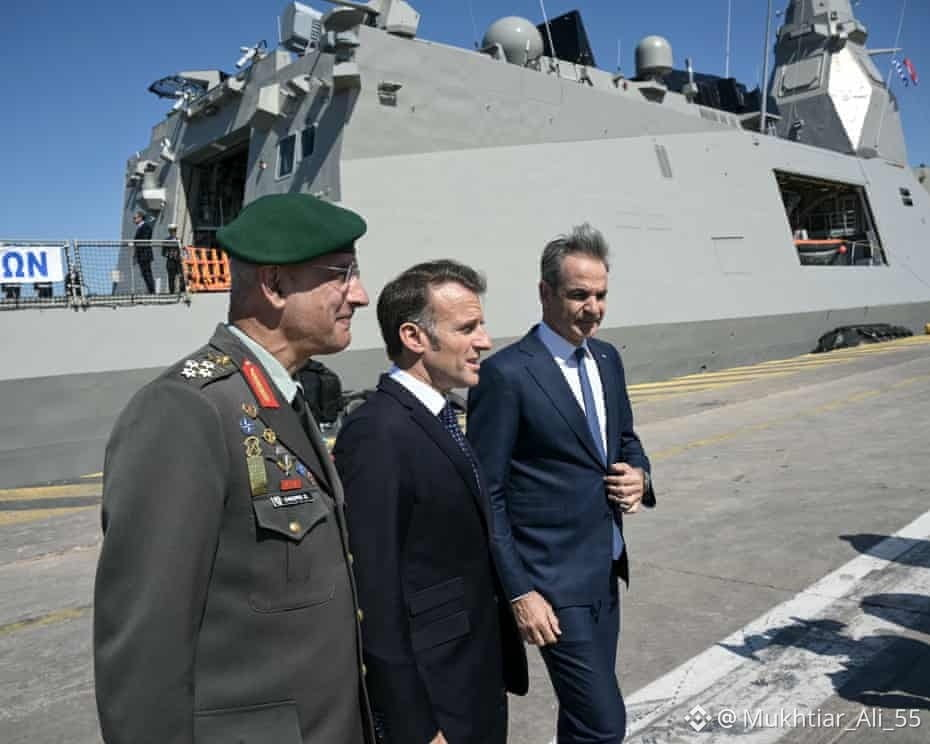
Recent statements by Emmanuel Macron highlight a growing shift in Europe’s security outlook, as confidence in traditional alliances faces new uncertainty. Speaking during his visit to Greece, Macron emphasized that the European Union’s mutual defense clause under the European Union treaty is “not just words,” pointing to recent coordinated military support for Cyprus following a drone attack as proof of its credibility.
The clause, often compared to NATO’s Article 5, is gaining renewed attention as European leaders reassess their reliance on external security guarantees. Macron argued that Europe must strengthen its own defense capabilities, especially amid concerns over shifting U.S. foreign policy under Donald Trump.
Greek Prime Minister Kyriakos Mitsotakis echoed this sentiment, calling recent joint military actions a “gamechanger” and urging EU members to take the bloc’s defense commitments more seriously. Ongoing efforts to formalize how the clause would function in real scenarios reflect a broader push toward strategic autonomy.
As geopolitical tensions rise, Europe appears increasingly focused on building a more self-reliant and coordinated defense framework—one that complements existing alliances while preparing for a more uncertain global landscape.
#EuropeanUnion #NATO #GlobalSecurity #Geopolitics #DefenseStrategy
$VVV
{future}(VVVUSDT)
$PRL
{future}(PRLUSDT)
$JCT
{future}(JCTUSDT)
Europe Reasserts Strategic Autonomy as Macron Backs EU Defense Clause
Recent statements by Emmanuel Macron highlight a growing shift in Europe’s security outlook, as confidence in traditional alliances faces new uncertainty. Speaking during his visit to Greece, Macron emphasized that the European Union’s mutual defense clause under the European Union treaty is “not just words,” pointing to recent coordinated military support for Cyprus following a drone attack as proof of its credibility.
The clause, often compared to NATO’s Article 5, is gaining renewed attention as European leaders reassess their reliance on external security guarantees. Macron argued that Europe must strengthen its own defense capabilities, especially amid concerns over shifting U.S. foreign policy under Donald Trump.
Greek Prime Minister Kyriakos Mitsotakis echoed this sentiment, calling recent joint military actions a “gamechanger” and urging EU members to take the bloc’s defense commitments more seriously. Ongoing efforts to formalize how the clause would function in real scenarios reflect a broader push toward strategic autonomy.
As geopolitical tensions rise, Europe appears increasingly focused on building a more self-reliant and coordinated defense framework—one that complements existing alliances while preparing for a more uncertain global landscape.
#EuropeanUnion #NATO #GlobalSecurity #Geopolitics #DefenseStrategy
$VVV
$PRL
$JCT
Recent statements by Emmanuel Macron highlight a growing shift in Europe’s security outlook, as confidence in traditional alliances faces new uncertainty. Speaking during his visit to Greece, Macron emphasized that the European Union’s mutual defense clause under the European Union treaty is “not just words,” pointing to recent coordinated military support for Cyprus following a drone attack as proof of its credibility.
The clause, often compared to NATO’s Article 5, is gaining renewed attention as European leaders reassess their reliance on external security guarantees. Macron argued that Europe must strengthen its own defense capabilities, especially amid concerns over shifting U.S. foreign policy under Donald Trump.
Greek Prime Minister Kyriakos Mitsotakis echoed this sentiment, calling recent joint military actions a “gamechanger” and urging EU members to take the bloc’s defense commitments more seriously. Ongoing efforts to formalize how the clause would function in real scenarios reflect a broader push toward strategic autonomy.
As geopolitical tensions rise, Europe appears increasingly focused on building a more self-reliant and coordinated defense framework—one that complements existing alliances while preparing for a more uncertain global landscape.
#EuropeanUnion #NATO #GlobalSecurity #Geopolitics #DefenseStrategy
$VVV
$PRL
$JCT
558
EU Faces Renewed Pressure to Act on Israeli Settlement Trade
A renewed debate is unfolding within the European Union as member states reconsider their stance on trade relations with Israel. Led by France and Sweden, a proposal has emerged to impose higher tariffs—and potentially broader restrictions—on goods originating from Israeli settlements in occupied Palestinian territories.
The move reflects growing concern over human rights conditions in Gaza Strip and the West Bank, with countries like Spain, Ireland, and Slovenia calling for a review of the EU-Israel trade agreement. However, divisions persist, as nations including Germany and Italy have previously resisted sanctions.
The proposal underscores increasing pressure on the EU to align its trade policies with its core values, particularly regarding human rights and international law. As discussions continue, the outcome could significantly shape the bloc’s geopolitical approach and its economic relationship with Israel.
#EuropeanUnion #GlobalPolitics #HumanRights #TradePolicy #MiddleEast
$ARIA
{future}(ARIAUSDT)
$BSB
{future}(BSBUSDT)
$BASED
{future}(BASEDUSDT)
EU Faces Renewed Pressure to Act on Israeli Settlement Trade
A renewed debate is unfolding within the European Union as member states reconsider their stance on trade relations with Israel. Led by France and Sweden, a proposal has emerged to impose higher tariffs—and potentially broader restrictions—on goods originating from Israeli settlements in occupied Palestinian territories.
The move reflects growing concern over human rights conditions in Gaza Strip and the West Bank, with countries like Spain, Ireland, and Slovenia calling for a review of the EU-Israel trade agreement. However, divisions persist, as nations including Germany and Italy have previously resisted sanctions.
The proposal underscores increasing pressure on the EU to align its trade policies with its core values, particularly regarding human rights and international law. As discussions continue, the outcome could significantly shape the bloc’s geopolitical approach and its economic relationship with Israel.
#EuropeanUnion #GlobalPolitics #HumanRights #TradePolicy #MiddleEast
$ARIA
$BSB
$BASED
A renewed debate is unfolding within the European Union as member states reconsider their stance on trade relations with Israel. Led by France and Sweden, a proposal has emerged to impose higher tariffs—and potentially broader restrictions—on goods originating from Israeli settlements in occupied Palestinian territories.
The move reflects growing concern over human rights conditions in Gaza Strip and the West Bank, with countries like Spain, Ireland, and Slovenia calling for a review of the EU-Israel trade agreement. However, divisions persist, as nations including Germany and Italy have previously resisted sanctions.
The proposal underscores increasing pressure on the EU to align its trade policies with its core values, particularly regarding human rights and international law. As discussions continue, the outcome could significantly shape the bloc’s geopolitical approach and its economic relationship with Israel.
#EuropeanUnion #GlobalPolitics #HumanRights #TradePolicy #MiddleEast
$ARIA
$BSB
$BASED

1
1
421
Article
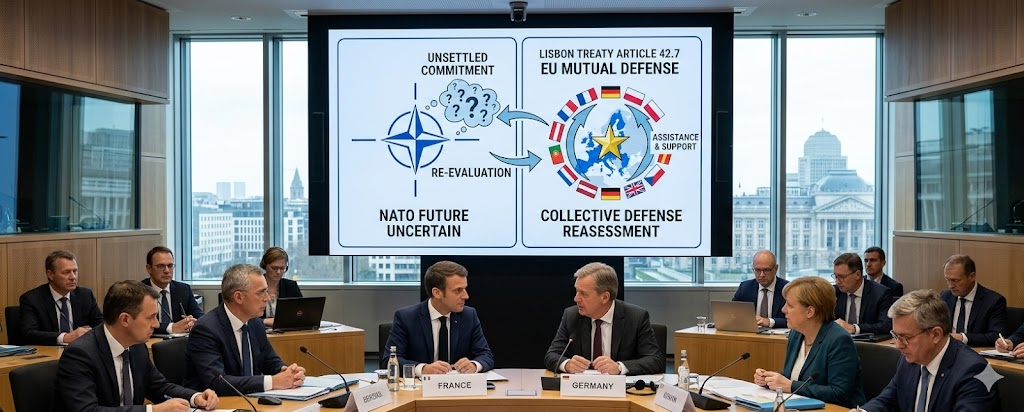
Europe Reassesses Collective Defense as NATO Uncertainty GrowsRising uncertainty around the future of the North Atlantic Treaty Organization (NATO) is prompting European leaders to re-evaluate their own defense mechanisms. With concerns about the long-term commitment of Donald Trump to the alliance, attention has shifted toward a lesser-known provision within the European Union framework: Article 42.7 of the Lisbon Treaty.
This clause obliges EU member states to provide assistance, including military and financial support, if another member is attacked. Although stronger in wording than NATO’s Article 5, it has been invoked only once, following the 2015 Paris attacks. Historically viewed as symbolic, the provision is now gaining renewed relevance as Europe considers scenarios where U.S. backing may be reduced.
Recent discussions among EU leaders have focused on how Article 42.7 could function in practice. Plans are underway to conduct simulation exercises and develop a coordinated response framework. However, experts caution that structural challenges remain significant. Unlike NATO, which operates with a unified command structure and clear defense mandate, the EU’s decision-making process is more complex, involving multiple national interests, legal constraints, and operational limitations.
Key concerns include the EU’s inability to directly fund military operations, differing national rules of engagement, and the absence of a centralized command authority. These factors raise doubts about whether the bloc could effectively respond to a large-scale security threat without NATO’s infrastructure and leadership.
At the same time, Europe is exploring complementary approaches, such as forming “coalitions of the willing” led by major powers like France and the United Kingdom. These flexible alliances may serve as a bridge between EU coordination and NATO capabilities, particularly in crisis scenarios.
While the EU’s defense clause is not seen as a replacement for NATO, it reflects a broader strategic shift. European nations are increasingly preparing for a future where they may need to take greater responsibility for their own security. This evolving landscape highlights both the urgency and complexity of redefining collective defense in a changing geopolitical environment.
#EuropeanUnion #NATO #GlobalSecurity #DefensePolicy #Geopolitics
$MM
{alpha}(560xa5346f91a767b89a0363a4309c8e6c5adc0c4a59)
$DARKSTAR
{alpha}(560xb05f4747eb3d18a3fa4aa3e5c627f02ccc70d005)
$ZEUS
{alpha}(560xa2be3e48170a60119b5f0400c65f65f3158fbeee)
Europe Reassesses Collective Defense as NATO Uncertainty Grows
Rising uncertainty around the future of the North Atlantic Treaty Organization (NATO) is prompting European leaders to re-evaluate their own defense mechanisms. With concerns about the long-term commitment of Donald Trump to the alliance, attention has shifted toward a lesser-known provision within the European Union framework: Article 42.7 of the Lisbon Treaty.
This clause obliges EU member states to provide assistance, including military and financial support, if another member is attacked. Although stronger in wording than NATO’s Article 5, it has been invoked only once, following the 2015 Paris attacks. Historically viewed as symbolic, the provision is now gaining renewed relevance as Europe considers scenarios where U.S. backing may be reduced.
Recent discussions among EU leaders have focused on how Article 42.7 could function in practice. Plans are underway to conduct simulation exercises and develop a coordinated response framework. However, experts caution that structural challenges remain significant. Unlike NATO, which operates with a unified command structure and clear defense mandate, the EU’s decision-making process is more complex, involving multiple national interests, legal constraints, and operational limitations.
Key concerns include the EU’s inability to directly fund military operations, differing national rules of engagement, and the absence of a centralized command authority. These factors raise doubts about whether the bloc could effectively respond to a large-scale security threat without NATO’s infrastructure and leadership.
At the same time, Europe is exploring complementary approaches, such as forming “coalitions of the willing” led by major powers like France and the United Kingdom. These flexible alliances may serve as a bridge between EU coordination and NATO capabilities, particularly in crisis scenarios.
While the EU’s defense clause is not seen as a replacement for NATO, it reflects a broader strategic shift. European nations are increasingly preparing for a future where they may need to take greater responsibility for their own security. This evolving landscape highlights both the urgency and complexity of redefining collective defense in a changing geopolitical environment.
#EuropeanUnion #NATO #GlobalSecurity #DefensePolicy #Geopolitics
$MM
$DARKSTAR
$ZEUS
This clause obliges EU member states to provide assistance, including military and financial support, if another member is attacked. Although stronger in wording than NATO’s Article 5, it has been invoked only once, following the 2015 Paris attacks. Historically viewed as symbolic, the provision is now gaining renewed relevance as Europe considers scenarios where U.S. backing may be reduced.
Recent discussions among EU leaders have focused on how Article 42.7 could function in practice. Plans are underway to conduct simulation exercises and develop a coordinated response framework. However, experts caution that structural challenges remain significant. Unlike NATO, which operates with a unified command structure and clear defense mandate, the EU’s decision-making process is more complex, involving multiple national interests, legal constraints, and operational limitations.
Key concerns include the EU’s inability to directly fund military operations, differing national rules of engagement, and the absence of a centralized command authority. These factors raise doubts about whether the bloc could effectively respond to a large-scale security threat without NATO’s infrastructure and leadership.
At the same time, Europe is exploring complementary approaches, such as forming “coalitions of the willing” led by major powers like France and the United Kingdom. These flexible alliances may serve as a bridge between EU coordination and NATO capabilities, particularly in crisis scenarios.
While the EU’s defense clause is not seen as a replacement for NATO, it reflects a broader strategic shift. European nations are increasingly preparing for a future where they may need to take greater responsibility for their own security. This evolving landscape highlights both the urgency and complexity of redefining collective defense in a changing geopolitical environment.
#EuropeanUnion #NATO #GlobalSecurity #DefensePolicy #Geopolitics
$MM
$DARKSTAR
$ZEUS
1.5k

·
--
MiCA Goes Live in 5 Days. Everything Is About to Change.
July 1 2026. That is the date.
The European Union's MiCA regulation becomes fully enforceable. After that crypto firms without a MiCA license can no longer legally serve EU users.
USDT got delisted in Europe. USDC stayed. That is the power of MiCA.
Strict rules. Heavy obligations. The deadline is now days away rather than years off.
This is a market being reshaped in real time. A small number of licensed winners. A large number of firms facing exit.
Europe is creating the most comprehensive crypto regulatory framework in the world. The rest of the world is watching.
Is this bullish or bearish for crypto long term. I honestly do not know.
What is your take on this.
#MiCA #EuropeanUnion #CryptoRegulation #Stablecoins #CryptoNews
MiCA Goes Live in 5 Days. Everything Is About to Change.
July 1 2026. That is the date.
The European Union's MiCA regulation becomes fully enforceable. After that crypto firms without a MiCA license can no longer legally serve EU users.
USDT got delisted in Europe. USDC stayed. That is the power of MiCA.
Strict rules. Heavy obligations. The deadline is now days away rather than years off.
This is a market being reshaped in real time. A small number of licensed winners. A large number of firms facing exit.
Europe is creating the most comprehensive crypto regulatory framework in the world. The rest of the world is watching.
Is this bullish or bearish for crypto long term. I honestly do not know.
What is your take on this.
#MiCA #EuropeanUnion #CryptoRegulation #Stablecoins #CryptoNews
July 1 2026. That is the date.
The European Union's MiCA regulation becomes fully enforceable. After that crypto firms without a MiCA license can no longer legally serve EU users.
USDT got delisted in Europe. USDC stayed. That is the power of MiCA.
Strict rules. Heavy obligations. The deadline is now days away rather than years off.
This is a market being reshaped in real time. A small number of licensed winners. A large number of firms facing exit.
Europe is creating the most comprehensive crypto regulatory framework in the world. The rest of the world is watching.
Is this bullish or bearish for crypto long term. I honestly do not know.
What is your take on this.
#MiCA #EuropeanUnion #CryptoRegulation #Stablecoins #CryptoNews

151
5
151

·
--
Bullish
$BTC
$INJ
$NEAR
🚀 EU Launches €10 Billion AI Megafactory Initiative
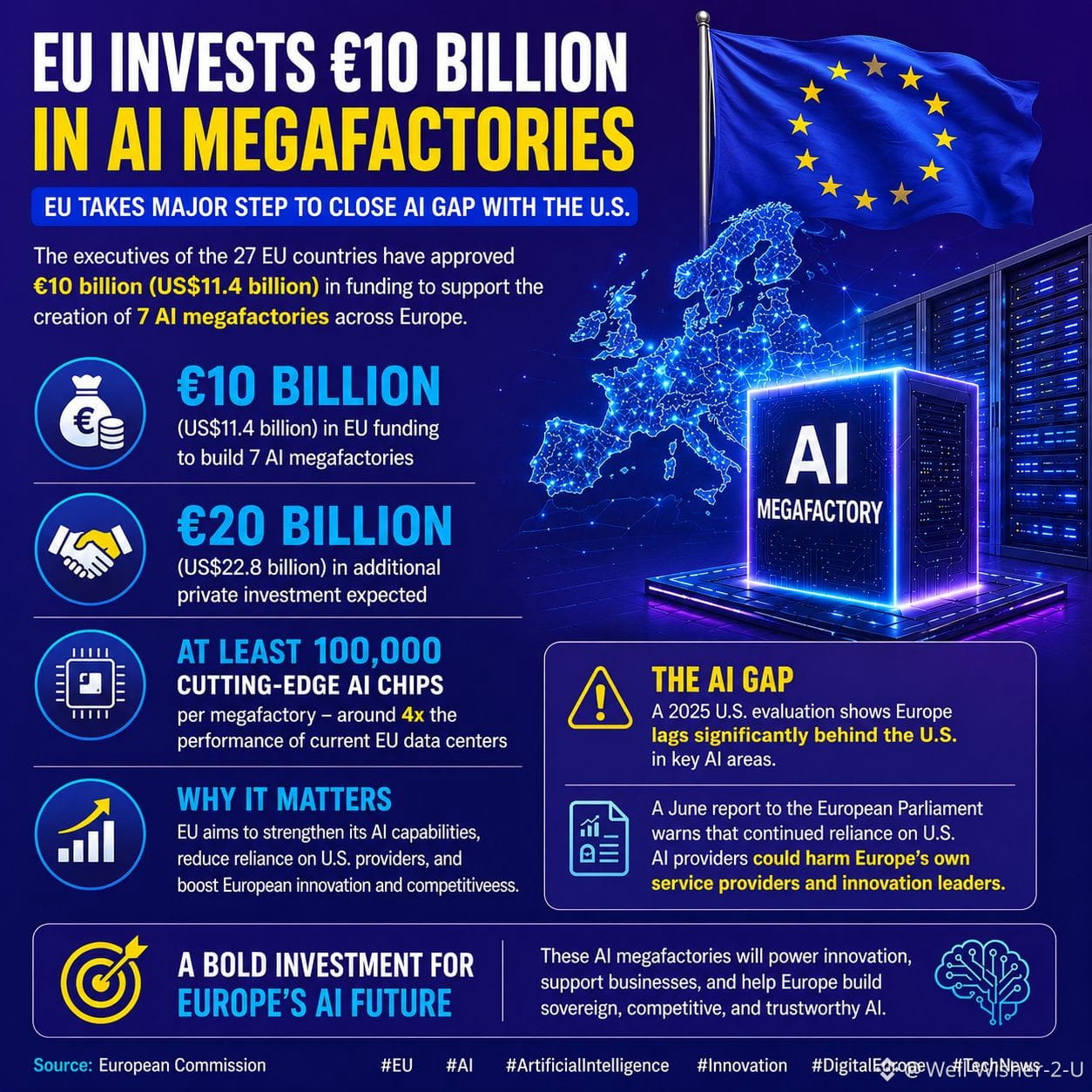
The European Union is making one of its biggest AI investments yet, committing €10 billion ($11.4B) to help build 7 AI megafactories across Europe in a bid to narrow the AI gap with the U.S. and strengthen Europe's technological independence.
🔹 Key Highlights 💶 €10B in public funding to support 7 AI megafactories. 🤝 Expected to attract €20B ($22.8B) in additional private investment. 🖥️ Each facility will feature 100,000+ cutting-edge AI chips, delivering roughly 4× the computing power of today's EU-operated AI data centers. 🏗️ Companies can now submit bids to build these next-generation AI infrastructure projects.
🌍
world is transforming into Artificial Intelligence.
⚡ Bottom Line The global AI race is accelerating, and Europe is making a bold move to secure its position in the next generation of artificial intelligence.
#AI #EuropeanUnion #TechNews #Semiconductors #DigitalTransformation
{spot}(BTCUSDT)
{spot}(NEARUSDT)
{spot}(INJUSDT)
$BTC
$INJ
$NEAR
🚀 EU Launches €10 Billion AI Megafactory Initiative
The European Union is making one of its biggest AI investments yet, committing €10 billion ($11.4B) to help build 7 AI megafactories across Europe in a bid to narrow the AI gap with the U.S. and strengthen Europe's technological independence.
🔹 Key Highlights 💶 €10B in public funding to support 7 AI megafactories. 🤝 Expected to attract €20B ($22.8B) in additional private investment. 🖥️ Each facility will feature 100,000+ cutting-edge AI chips, delivering roughly 4× the computing power of today's EU-operated AI data centers. 🏗️ Companies can now submit bids to build these next-generation AI infrastructure projects.
🌍
world is transforming into Artificial Intelligence.
⚡ Bottom Line The global AI race is accelerating, and Europe is making a bold move to secure its position in the next generation of artificial intelligence.
#AI #EuropeanUnion #TechNews #Semiconductors #DigitalTransformation
$INJ
$NEAR
🚀 EU Launches €10 Billion AI Megafactory Initiative
The European Union is making one of its biggest AI investments yet, committing €10 billion ($11.4B) to help build 7 AI megafactories across Europe in a bid to narrow the AI gap with the U.S. and strengthen Europe's technological independence.
🔹 Key Highlights 💶 €10B in public funding to support 7 AI megafactories. 🤝 Expected to attract €20B ($22.8B) in additional private investment. 🖥️ Each facility will feature 100,000+ cutting-edge AI chips, delivering roughly 4× the computing power of today's EU-operated AI data centers. 🏗️ Companies can now submit bids to build these next-generation AI infrastructure projects.
🌍
world is transforming into Artificial Intelligence.
⚡ Bottom Line The global AI race is accelerating, and Europe is making a bold move to secure its position in the next generation of artificial intelligence.
#AI #EuropeanUnion #TechNews #Semiconductors #DigitalTransformation
132


Trump says the administration expects to impose substantial tariffs on the European Union as soon as possible.
Markets will be watching closely for the potential impact on global trade, the euro, US equities, and investor sentiment as more details emerge.
#TRUMP #EuropeanUnion #Tariffs #TradeWar #breakingnews
Trump says the administration expects to impose substantial tariffs on the European Union as soon as possible.
Markets will be watching closely for the potential impact on global trade, the euro, US equities, and investor sentiment as more details emerge.
#TRUMP #EuropeanUnion #Tariffs #TradeWar #breakingnews
Markets will be watching closely for the potential impact on global trade, the euro, US equities, and investor sentiment as more details emerge.
#TRUMP #EuropeanUnion #Tariffs #TradeWar #breakingnews
1
322
Log in to explore more content
Join global crypto users on Binance Square
⚡️ Get latest and useful information about crypto.
💬 Trusted by the world’s largest crypto exchange.
👍 Discover real insights from verified creators.
Email / Phone number
Trending Topics
1
#SECGrantsInnovationExemptionForTokenizedStocks
0 views
0 Discussing
2
#XRPGains3%AsRippleAddsMPPSupport
0 views
0 Discussing
3
#SPGlobalToAcquireOpenZeppelin
0 views
0 Discussing
4
#BitcoinSurpasses$77000
17,984 views
227 Discussing
5
#ParadigmDisclosesZECHolding
70,715 views
1,070 Discussing
6
#BitcoinETFsShed$450M
26,629 views
219 Discussing
7
#USWeeklyJoblessClaimsFallTo196K
38,810 views
615 Discussing
8
#ArkhamSaysBlackRockBuys$1.5BInETH
6,967 views
72 Discussing
9
#ElSalvadorBTCHoldingsRiseTo7777
68,801 views
886 Discussing
10
#MemeLaunchpads82%OfArcDayOneVolume
69,061 views
1,053 Discussing