

#bankingreform
bankingreform
18,211 views
29 Discussing
Hot
Latest

·
--
Europe has again sparked controversy over financial reform. In a recent TV interview, Maria Luis Albuquerque, the EU Financial Services Commissioner, clearly stated that she rejected banks’ call for a “step-by-step reform” approach. Previously, executives from 11 leading banks from the EU, the UK, and Switzerland had spoken out, urging the EU to first roll out simple regulatory simplification measures and postpone the tougher issues (such as a pan-European deposit insurance scheme). But the Commissioner’s stance was firm: she believes the financial system is interconnected and must be advanced as a whole package. The key is to break down market fragmentation between member states.
What’s particularly interesting here is the tug-of-war between regulators and the traditional banking industry. Banks obviously want the immediate benefits of lower compliance costs and fewer cumbersome procedures, and to delay reforms that are controversial and involve sensitive sovereign-interest allocation. The EU regulator, meanwhile, insists that if the EU does not tackle at once the disagreements between the “home country and host country” and the problem of market fragmentation, piecemeal fixes will do little to enhance the EU’s overall economic competitiveness. This standoff means Europe’s financial integration process is still full of uncertainties.
For traditional financial markets, this regulatory framework uncertainty will likely keep European bank stocks trading at a valuation discount in the short term. The regulatory easing banks are hoping for will not be implemented unilaterally or quickly. And as the overall packaged plan moves forward, it will inevitably come with a long political bargaining and compromise process. Improving the efficiency of cross-border lending and capital flows across Europe will take time, and the dominance of dollar assets in global capital allocation is unlikely to be diverted to European capital markets in the near term.
As for the impact on the crypto space, people can remain neutral and observe. On the one hand, because reforms in Europe’s traditional financial system are progressing slowly and efficiency is constrained by internal power struggles, some cross-border payment and financing needs may keep seeking efficiency via decentralized networks. On the other hand, overall macro liquidity is still constrained by policy bargaining, and risk appetite for capital has not shifted unilaterally. The next key will be the final form of the EU legislation in terms of its text, and the specific direction traditional capital will take under the compliance framework. $BTC
#EuropeanUnion #BankingReform #CryptoMacro
Europe has again sparked controversy over financial reform. In a recent TV interview, Maria Luis Albuquerque, the EU Financial Services Commissioner, clearly stated that she rejected banks’ call for a “step-by-step reform” approach. Previously, executives from 11 leading banks from the EU, the UK, and Switzerland had spoken out, urging the EU to first roll out simple regulatory simplification measures and postpone the tougher issues (such as a pan-European deposit insurance scheme). But the Commissioner’s stance was firm: she believes the financial system is interconnected and must be advanced as a whole package. The key is to break down market fragmentation between member states.
What’s particularly interesting here is the tug-of-war between regulators and the traditional banking industry. Banks obviously want the immediate benefits of lower compliance costs and fewer cumbersome procedures, and to delay reforms that are controversial and involve sensitive sovereign-interest allocation. The EU regulator, meanwhile, insists that if the EU does not tackle at once the disagreements between the “home country and host country” and the problem of market fragmentation, piecemeal fixes will do little to enhance the EU’s overall economic competitiveness. This standoff means Europe’s financial integration process is still full of uncertainties.
For traditional financial markets, this regulatory framework uncertainty will likely keep European bank stocks trading at a valuation discount in the short term. The regulatory easing banks are hoping for will not be implemented unilaterally or quickly. And as the overall packaged plan moves forward, it will inevitably come with a long political bargaining and compromise process. Improving the efficiency of cross-border lending and capital flows across Europe will take time, and the dominance of dollar assets in global capital allocation is unlikely to be diverted to European capital markets in the near term.
As for the impact on the crypto space, people can remain neutral and observe. On the one hand, because reforms in Europe’s traditional financial system are progressing slowly and efficiency is constrained by internal power struggles, some cross-border payment and financing needs may keep seeking efficiency via decentralized networks. On the other hand, overall macro liquidity is still constrained by policy bargaining, and risk appetite for capital has not shifted unilaterally. The next key will be the final form of the EU legislation in terms of its text, and the specific direction traditional capital will take under the compliance framework. $BTC
#EuropeanUnion #BankingReform #CryptoMacro
What’s particularly interesting here is the tug-of-war between regulators and the traditional banking industry. Banks obviously want the immediate benefits of lower compliance costs and fewer cumbersome procedures, and to delay reforms that are controversial and involve sensitive sovereign-interest allocation. The EU regulator, meanwhile, insists that if the EU does not tackle at once the disagreements between the “home country and host country” and the problem of market fragmentation, piecemeal fixes will do little to enhance the EU’s overall economic competitiveness. This standoff means Europe’s financial integration process is still full of uncertainties.
For traditional financial markets, this regulatory framework uncertainty will likely keep European bank stocks trading at a valuation discount in the short term. The regulatory easing banks are hoping for will not be implemented unilaterally or quickly. And as the overall packaged plan moves forward, it will inevitably come with a long political bargaining and compromise process. Improving the efficiency of cross-border lending and capital flows across Europe will take time, and the dominance of dollar assets in global capital allocation is unlikely to be diverted to European capital markets in the near term.
As for the impact on the crypto space, people can remain neutral and observe. On the one hand, because reforms in Europe’s traditional financial system are progressing slowly and efficiency is constrained by internal power struggles, some cross-border payment and financing needs may keep seeking efficiency via decentralized networks. On the other hand, overall macro liquidity is still constrained by policy bargaining, and risk appetite for capital has not shifted unilaterally. The next key will be the final form of the EU legislation in terms of its text, and the specific direction traditional capital will take under the compliance framework. $BTC
#EuropeanUnion #BankingReform #CryptoMacro
30

In a recent television interview, Maria Luis Albuquerque, the EU financial services commissioner, officially rejected calls from the banking industry to split the EU’s financial system reform plan into two parts. Although executives from 11 major banks from the EU, Switzerland and the UK strongly urged that priority be given to pushing forward the short-term “streamlining” process and postponing thorny issues such as the European deposit insurance scheme, Albuquerque insisted that a package approach is necessary in order to fully address cross-border barriers, cumbersome administrative procedures, and the long-standing “home and host country” interest disputes that have plagued Europe.
This stance reveals deeper structural contradictions in Europe’s financial integration process. The banking sector tends to seek rapid regulatory easing to improve profitability, but regulators are committed to a fully linked strategy—meaning that before compromises are reached on key issues, any substantial reduction in regulatory burden will face extremely high political coordination costs. This all-or-nothing bargaining mechanism easily traps policy in a prolonged stalemate, further exposing Europe’s fragmented disadvantage in responding to external competition in financial markets.
For traditional financial markets, the stagnation of bank union reform directly constrains the capital efficiency and cross-border M&A vitality of Europe’s banking industry. Against a backdrop of weak macroeconomic growth and difficulty coordinating fiscal policies, valuations of European bank assets may continue to face pressure, thereby dragging down the euro area’s overall pace of credit expansion and the depth of liquidity in bond markets, and even indirectly weakening the euro’s attractiveness for international settlement.
From the perspective of the crypto market, the inefficiency of reform in the traditional banking system once again confirms the systemic advantages of decentralized liquidity protocols. However, in the short term, Europe’s sluggish traditional financial efficiency may curb overall risk appetite and the pace at which institutional capital moves in. Investors should be alert to rising risk-averse sentiment caused by the spillover of macro uncertainty in Europe. Crypto assets, especially $BTC , still face the risk of range-bound trading and a liquidity discount in the near term in the absence of new support for traditional liquidity.
#EuropeanUnion #BankingReform #Macroeconomics
In a recent television interview, Maria Luis Albuquerque, the EU financial services commissioner, officially rejected calls from the banking industry to split the EU’s financial system reform plan into two parts. Although executives from 11 major banks from the EU, Switzerland and the UK strongly urged that priority be given to pushing forward the short-term “streamlining” process and postponing thorny issues such as the European deposit insurance scheme, Albuquerque insisted that a package approach is necessary in order to fully address cross-border barriers, cumbersome administrative procedures, and the long-standing “home and host country” interest disputes that have plagued Europe.
This stance reveals deeper structural contradictions in Europe’s financial integration process. The banking sector tends to seek rapid regulatory easing to improve profitability, but regulators are committed to a fully linked strategy—meaning that before compromises are reached on key issues, any substantial reduction in regulatory burden will face extremely high political coordination costs. This all-or-nothing bargaining mechanism easily traps policy in a prolonged stalemate, further exposing Europe’s fragmented disadvantage in responding to external competition in financial markets.
For traditional financial markets, the stagnation of bank union reform directly constrains the capital efficiency and cross-border M&A vitality of Europe’s banking industry. Against a backdrop of weak macroeconomic growth and difficulty coordinating fiscal policies, valuations of European bank assets may continue to face pressure, thereby dragging down the euro area’s overall pace of credit expansion and the depth of liquidity in bond markets, and even indirectly weakening the euro’s attractiveness for international settlement.
From the perspective of the crypto market, the inefficiency of reform in the traditional banking system once again confirms the systemic advantages of decentralized liquidity protocols. However, in the short term, Europe’s sluggish traditional financial efficiency may curb overall risk appetite and the pace at which institutional capital moves in. Investors should be alert to rising risk-averse sentiment caused by the spillover of macro uncertainty in Europe. Crypto assets, especially $BTC , still face the risk of range-bound trading and a liquidity discount in the near term in the absence of new support for traditional liquidity.
#EuropeanUnion #BankingReform #Macroeconomics
This stance reveals deeper structural contradictions in Europe’s financial integration process. The banking sector tends to seek rapid regulatory easing to improve profitability, but regulators are committed to a fully linked strategy—meaning that before compromises are reached on key issues, any substantial reduction in regulatory burden will face extremely high political coordination costs. This all-or-nothing bargaining mechanism easily traps policy in a prolonged stalemate, further exposing Europe’s fragmented disadvantage in responding to external competition in financial markets.
For traditional financial markets, the stagnation of bank union reform directly constrains the capital efficiency and cross-border M&A vitality of Europe’s banking industry. Against a backdrop of weak macroeconomic growth and difficulty coordinating fiscal policies, valuations of European bank assets may continue to face pressure, thereby dragging down the euro area’s overall pace of credit expansion and the depth of liquidity in bond markets, and even indirectly weakening the euro’s attractiveness for international settlement.
From the perspective of the crypto market, the inefficiency of reform in the traditional banking system once again confirms the systemic advantages of decentralized liquidity protocols. However, in the short term, Europe’s sluggish traditional financial efficiency may curb overall risk appetite and the pace at which institutional capital moves in. Investors should be alert to rising risk-averse sentiment caused by the spillover of macro uncertainty in Europe. Crypto assets, especially $BTC , still face the risk of range-bound trading and a liquidity discount in the near term in the absence of new support for traditional liquidity.
#EuropeanUnion #BankingReform #Macroeconomics
1

In the latest television interview, European Union financial services commissioner Maria Luis Albuquerque formally rejected a proposal from the banking industry to split the EU financial system reform plan into two parts. Earlier, leaders from 11 top banks in the EU, Switzerland and the UK jointly called for prioritizing short-term “simplified” reforms and postponing deeper issues such as the European deposit insurance scheme. However, Albuquerque made it clear that Europe must adhere to a single, comprehensive “package” reform plan, aimed at cutting administrative procedures, breaking down cross-border business barriers, and moderately easing regulation—ultimately tackling the fragmentation problem that has long plagued European markets.
This stance demonstrates the EU regulatory authorities’ firm determination to promote a unified capital market and a banking union. From a macro structural perspective, fragmentation in the financial system has long been a key reason for Europe’s low capital efficiency. Pushing for an all-encompassing reform package may increase compliance adjustment pressures on traditional banking in the short term, but in the medium to long run, removing cross-border barriers and easing some overly burdensome regulation will significantly release liquidity and capital vitality in Europe’s financial system, injecting stronger growth momentum into the real economy.
From a cross-asset and technology-facing performance standpoint, Europe’s adoption of a bundled, unified financial reform will help bolster medium- to long-term profit expectations for the pan-European banking sector and provide bottom support for the fundamentals of euro-denominated assets. As cross-border barriers are dismantled and administrative costs decline, friction for traditional capital flows will be substantially reduced. This, in turn, will push Europe’s overall credit environment toward a more accommodative and integrated direction, improving the macro liquidity soil for risk assets.
For the crypto market, the integration of Europe’s financial markets and the unification of regulations have unleashed positive spillover effects. A more integrated and less bureaucratic financial ecosystem will accelerate the allocation efficiency of institutions’ compliant capital. With a clearer capital framework in place, mainstream crypto assets such as $BTC are expected to see faster institutional adoption in European markets. When expectations for macro liquidity continue to improve, a rise in overall risk appetite will provide solid support for a technical rebound in the crypto market.
#EU #BankingReform #MacroEconomics
In the latest television interview, European Union financial services commissioner Maria Luis Albuquerque formally rejected a proposal from the banking industry to split the EU financial system reform plan into two parts. Earlier, leaders from 11 top banks in the EU, Switzerland and the UK jointly called for prioritizing short-term “simplified” reforms and postponing deeper issues such as the European deposit insurance scheme. However, Albuquerque made it clear that Europe must adhere to a single, comprehensive “package” reform plan, aimed at cutting administrative procedures, breaking down cross-border business barriers, and moderately easing regulation—ultimately tackling the fragmentation problem that has long plagued European markets.
This stance demonstrates the EU regulatory authorities’ firm determination to promote a unified capital market and a banking union. From a macro structural perspective, fragmentation in the financial system has long been a key reason for Europe’s low capital efficiency. Pushing for an all-encompassing reform package may increase compliance adjustment pressures on traditional banking in the short term, but in the medium to long run, removing cross-border barriers and easing some overly burdensome regulation will significantly release liquidity and capital vitality in Europe’s financial system, injecting stronger growth momentum into the real economy.
From a cross-asset and technology-facing performance standpoint, Europe’s adoption of a bundled, unified financial reform will help bolster medium- to long-term profit expectations for the pan-European banking sector and provide bottom support for the fundamentals of euro-denominated assets. As cross-border barriers are dismantled and administrative costs decline, friction for traditional capital flows will be substantially reduced. This, in turn, will push Europe’s overall credit environment toward a more accommodative and integrated direction, improving the macro liquidity soil for risk assets.
For the crypto market, the integration of Europe’s financial markets and the unification of regulations have unleashed positive spillover effects. A more integrated and less bureaucratic financial ecosystem will accelerate the allocation efficiency of institutions’ compliant capital. With a clearer capital framework in place, mainstream crypto assets such as $BTC are expected to see faster institutional adoption in European markets. When expectations for macro liquidity continue to improve, a rise in overall risk appetite will provide solid support for a technical rebound in the crypto market.
#EU #BankingReform #MacroEconomics
This stance demonstrates the EU regulatory authorities’ firm determination to promote a unified capital market and a banking union. From a macro structural perspective, fragmentation in the financial system has long been a key reason for Europe’s low capital efficiency. Pushing for an all-encompassing reform package may increase compliance adjustment pressures on traditional banking in the short term, but in the medium to long run, removing cross-border barriers and easing some overly burdensome regulation will significantly release liquidity and capital vitality in Europe’s financial system, injecting stronger growth momentum into the real economy.
From a cross-asset and technology-facing performance standpoint, Europe’s adoption of a bundled, unified financial reform will help bolster medium- to long-term profit expectations for the pan-European banking sector and provide bottom support for the fundamentals of euro-denominated assets. As cross-border barriers are dismantled and administrative costs decline, friction for traditional capital flows will be substantially reduced. This, in turn, will push Europe’s overall credit environment toward a more accommodative and integrated direction, improving the macro liquidity soil for risk assets.
For the crypto market, the integration of Europe’s financial markets and the unification of regulations have unleashed positive spillover effects. A more integrated and less bureaucratic financial ecosystem will accelerate the allocation efficiency of institutions’ compliant capital. With a clearer capital framework in place, mainstream crypto assets such as $BTC are expected to see faster institutional adoption in European markets. When expectations for macro liquidity continue to improve, a rise in overall risk appetite will provide solid support for a technical rebound in the crypto market.
#EU #BankingReform #MacroEconomics
18

·
--

Article
OCC Revamps Bank Rules: What It Means for Crypto and Everyday FinanceThe U.S. Office of the Comptroller of the Currency (OCC) has just overhauled its bank supervision manuals, splitting legal breaches into “substantive” and “technical” violations under a risk‑based model. This shift could reshape how banks manage risk, how regulators enforce rules, and ultimately how crypto‑related banking services operate.
Hook: Did you know that banks’ internal rulebooks are about to get a major rewrite that could ripple into the crypto space?
The Concept
The OCC’s new framework separates violations into two categories: substantive (serious, high‑impact breaches) and technical (minor, procedural errors). Think of it like a traffic system: a red light (substantive) stops the car, while a yellow light (technical) just warns the driver. By applying a risk‑based model, regulators can focus enforcement on the biggest threats, saving time and resources. #BankingReform #RiskBasedRegulation
Real‑World Example
Imagine a bank that offers crypto custody services. Under the old system, any mistake—whether a small clerical error or a major security lapse—could trigger the same regulatory response. With the new model, a minor mislabeling of a transaction would be a technical violation, likely resulting in a warning or fine. A serious hack that exposes customer funds, however, would be a substantive violation, prompting a full investigation, hefty fines, and possibly a revocation of the bank’s license. This targeted approach means banks can allocate more resources to preventing big risks while still holding themselves accountable for smaller slip‑ups.
Takeaway
If you’re a crypto enthusiast, this means banks that partner with you will likely adopt stricter security protocols for high‑risk activities. Keep an eye on the banks you trust for custody or lending; they may change their compliance practices to align with the new OCC rules. #CryptoSecurity
Engagement Question
How do you think banks will balance the need for tighter crypto security with the flexibility to innovate? Let me know in the comments!
OCC Revamps Bank Rules: What It Means for Crypto and Everyday Finance
The U.S. Office of the Comptroller of the Currency (OCC) has just overhauled its bank supervision manuals, splitting legal breaches into “substantive” and “technical” violations under a risk‑based model. This shift could reshape how banks manage risk, how regulators enforce rules, and ultimately how crypto‑related banking services operate.
Hook: Did you know that banks’ internal rulebooks are about to get a major rewrite that could ripple into the crypto space?
The Concept
The OCC’s new framework separates violations into two categories: substantive (serious, high‑impact breaches) and technical (minor, procedural errors). Think of it like a traffic system: a red light (substantive) stops the car, while a yellow light (technical) just warns the driver. By applying a risk‑based model, regulators can focus enforcement on the biggest threats, saving time and resources. #BankingReform #RiskBasedRegulation
Real‑World Example
Imagine a bank that offers crypto custody services. Under the old system, any mistake—whether a small clerical error or a major security lapse—could trigger the same regulatory response. With the new model, a minor mislabeling of a transaction would be a technical violation, likely resulting in a warning or fine. A serious hack that exposes customer funds, however, would be a substantive violation, prompting a full investigation, hefty fines, and possibly a revocation of the bank’s license. This targeted approach means banks can allocate more resources to preventing big risks while still holding themselves accountable for smaller slip‑ups.
Takeaway
If you’re a crypto enthusiast, this means banks that partner with you will likely adopt stricter security protocols for high‑risk activities. Keep an eye on the banks you trust for custody or lending; they may change their compliance practices to align with the new OCC rules. #CryptoSecurity
Engagement Question
How do you think banks will balance the need for tighter crypto security with the flexibility to innovate? Let me know in the comments!
Hook: Did you know that banks’ internal rulebooks are about to get a major rewrite that could ripple into the crypto space?
The Concept
The OCC’s new framework separates violations into two categories: substantive (serious, high‑impact breaches) and technical (minor, procedural errors). Think of it like a traffic system: a red light (substantive) stops the car, while a yellow light (technical) just warns the driver. By applying a risk‑based model, regulators can focus enforcement on the biggest threats, saving time and resources. #BankingReform #RiskBasedRegulation
Real‑World Example
Imagine a bank that offers crypto custody services. Under the old system, any mistake—whether a small clerical error or a major security lapse—could trigger the same regulatory response. With the new model, a minor mislabeling of a transaction would be a technical violation, likely resulting in a warning or fine. A serious hack that exposes customer funds, however, would be a substantive violation, prompting a full investigation, hefty fines, and possibly a revocation of the bank’s license. This targeted approach means banks can allocate more resources to preventing big risks while still holding themselves accountable for smaller slip‑ups.
Takeaway
If you’re a crypto enthusiast, this means banks that partner with you will likely adopt stricter security protocols for high‑risk activities. Keep an eye on the banks you trust for custody or lending; they may change their compliance practices to align with the new OCC rules. #CryptoSecurity
Engagement Question
How do you think banks will balance the need for tighter crypto security with the flexibility to innovate? Let me know in the comments!

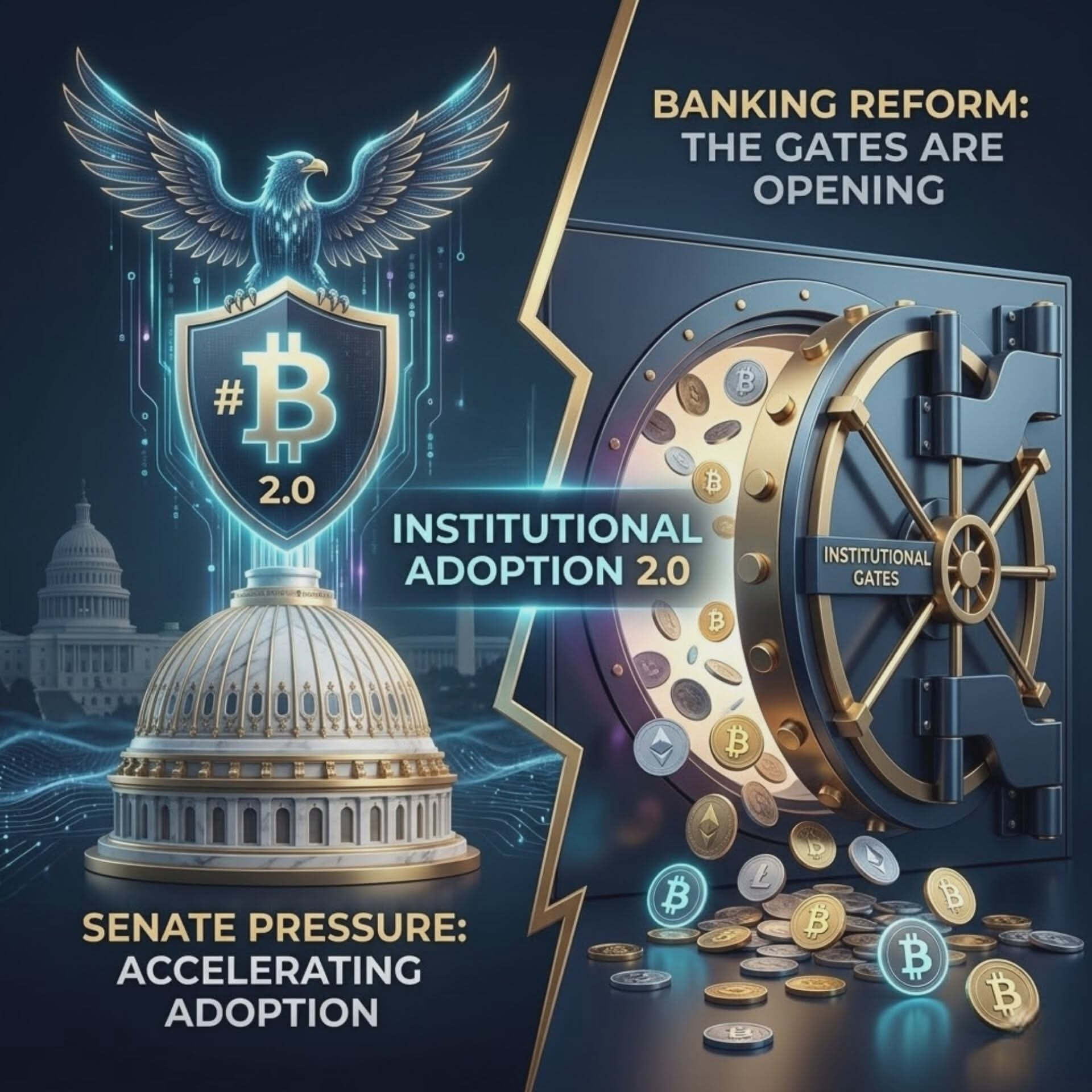
THE GATES ARE OPENING: INSTITUTIONAL ADOPTION 2.0 🇺🇸🏛️
The battle for the future of banking just hit the Senate floor. Today, a powerful group of six pro-crypto senators including Sen. Cynthia Lummis is turning up the heat on U.S. banking regulators. Their mission? To scrap outdated rules and establish a fresh, fair capital framework for digital assets.
This isn’t just red tape; it’s the institutional adoption story of the year. 💎 By challenging the "1,250% risk weight" standards that currently stifle banks, these lawmakers are clearing the path for your local bank to finally engage with $BTC and digital assets on a level playing field.
We are watching the very structure of the American market transform in real-time. The question isn't if banks will touch crypto, it's how fast the regulators will let them.
#CryptoRegulation #BankingReform #BitcoinNews #InstitutionalAdopton #Lummis
🚨 The wall between Wall Street and Bitcoin is crumbling. Do you want banks holding your crypto, or are you sticking to self-custody? 👇
THE GATES ARE OPENING: INSTITUTIONAL ADOPTION 2.0 🇺🇸🏛️
The battle for the future of banking just hit the Senate floor. Today, a powerful group of six pro-crypto senators including Sen. Cynthia Lummis is turning up the heat on U.S. banking regulators. Their mission? To scrap outdated rules and establish a fresh, fair capital framework for digital assets.
This isn’t just red tape; it’s the institutional adoption story of the year. 💎 By challenging the "1,250% risk weight" standards that currently stifle banks, these lawmakers are clearing the path for your local bank to finally engage with $BTC and digital assets on a level playing field.
We are watching the very structure of the American market transform in real-time. The question isn't if banks will touch crypto, it's how fast the regulators will let them.
#CryptoRegulation #BankingReform #BitcoinNews #InstitutionalAdopton #Lummis
🚨 The wall between Wall Street and Bitcoin is crumbling. Do you want banks holding your crypto, or are you sticking to self-custody? 👇
The battle for the future of banking just hit the Senate floor. Today, a powerful group of six pro-crypto senators including Sen. Cynthia Lummis is turning up the heat on U.S. banking regulators. Their mission? To scrap outdated rules and establish a fresh, fair capital framework for digital assets.
This isn’t just red tape; it’s the institutional adoption story of the year. 💎 By challenging the "1,250% risk weight" standards that currently stifle banks, these lawmakers are clearing the path for your local bank to finally engage with $BTC and digital assets on a level playing field.
We are watching the very structure of the American market transform in real-time. The question isn't if banks will touch crypto, it's how fast the regulators will let them.
#CryptoRegulation #BankingReform #BitcoinNews #InstitutionalAdopton #Lummis
🚨 The wall between Wall Street and Bitcoin is crumbling. Do you want banks holding your crypto, or are you sticking to self-custody? 👇
115

#OCCSaysDigitalFirmsCanSeekNationalBankStatus
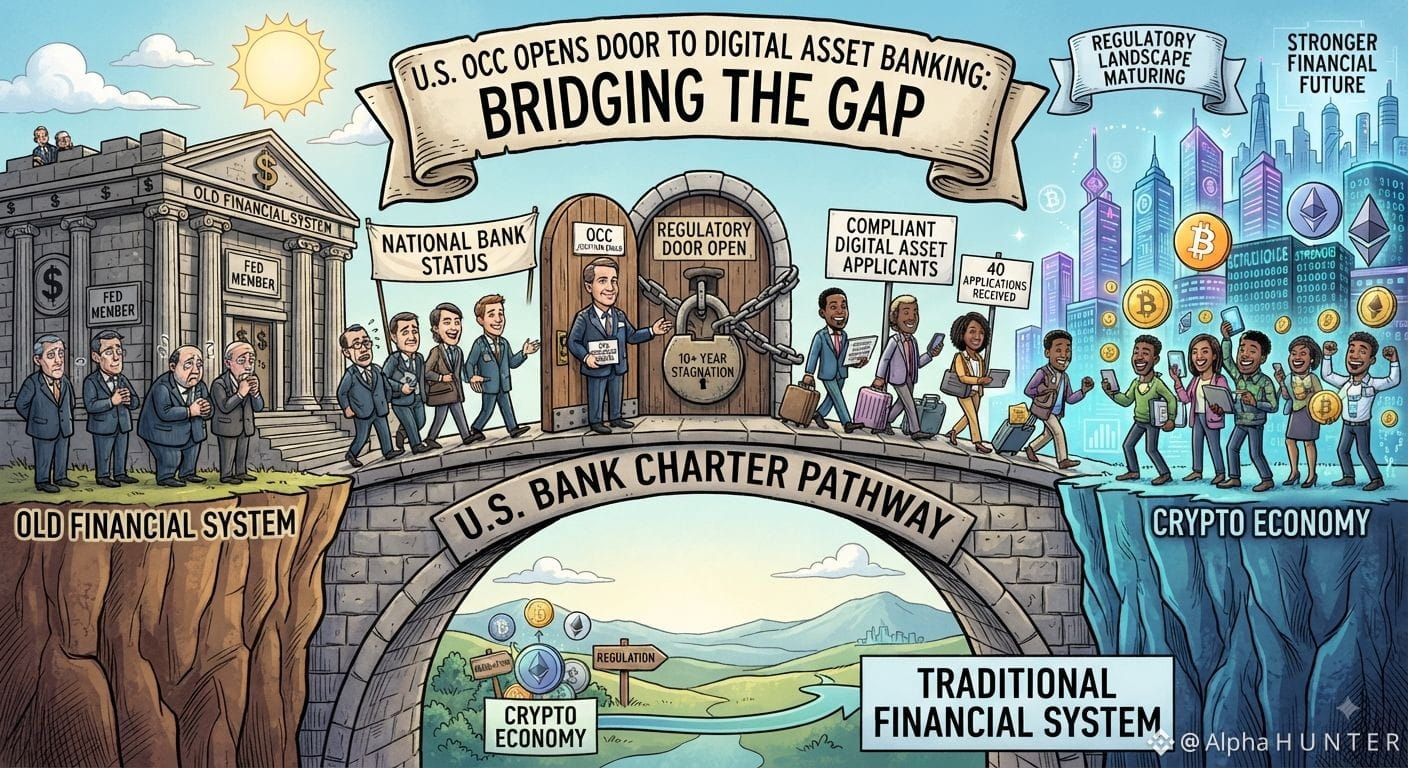
The U.S. Office of the Comptroller of the Currency (OCC) has officially signaled a major shift for the financial sector.
Comptroller Jonathan Gould announced that companies engaged in digital assets and emerging technologies should have a clear pathway to apply for national bank status.
After more than a decade of stagnation in new bank applications, the regulatory door is finally open.
Over the past 18 months, the OCC has already received 40 applications from digital asset firms.
This historic move bridges the gap between traditional banking and the crypto economy.
It provides compliant crypto firms with direct federal integration, boosting institutional trust and long-term adoption.
The regulatory landscape is maturing rapidly, paving the way for a stronger financial future.
#OCC #CryptoRegulation #DigitalAssets #BankingReform
$APR
{future}(APRUSDT)
$VELVET
{future}(VELVETUSDT)
$BTC
{future}(BTCUSDT)
#OCCSaysDigitalFirmsCanSeekNationalBankStatus
The U.S. Office of the Comptroller of the Currency (OCC) has officially signaled a major shift for the financial sector.
Comptroller Jonathan Gould announced that companies engaged in digital assets and emerging technologies should have a clear pathway to apply for national bank status.
After more than a decade of stagnation in new bank applications, the regulatory door is finally open.
Over the past 18 months, the OCC has already received 40 applications from digital asset firms.
This historic move bridges the gap between traditional banking and the crypto economy.
It provides compliant crypto firms with direct federal integration, boosting institutional trust and long-term adoption.
The regulatory landscape is maturing rapidly, paving the way for a stronger financial future.
#OCC #CryptoRegulation #DigitalAssets #BankingReform
$APR
$VELVET
$BTC
The U.S. Office of the Comptroller of the Currency (OCC) has officially signaled a major shift for the financial sector.
Comptroller Jonathan Gould announced that companies engaged in digital assets and emerging technologies should have a clear pathway to apply for national bank status.
After more than a decade of stagnation in new bank applications, the regulatory door is finally open.
Over the past 18 months, the OCC has already received 40 applications from digital asset firms.
This historic move bridges the gap between traditional banking and the crypto economy.
It provides compliant crypto firms with direct federal integration, boosting institutional trust and long-term adoption.
The regulatory landscape is maturing rapidly, paving the way for a stronger financial future.
#OCC #CryptoRegulation #DigitalAssets #BankingReform
$APR
$VELVET
$BTC
163
Log in to explore more content
Join global crypto users on Binance Square
⚡️ Get latest and useful information about crypto.
💬 Trusted by the world’s largest crypto exchange.
👍 Discover real insights from verified creators.
Email / Phone number
Trending Topics
1
#BinanceWillListHyperliquid(HYPE)
17,576 views
501 Discussing
2
#BitcoinFallsBelow$83,000
722 views
20 Discussing
3
#BitcoinFallsToAround$84,600ThisWeek
0 views
0 Discussing
4
#US30YearYieldHighestSince2004
1,151 views
56 Discussing
5
#ETHBreaksAbove$2,700
574 views
20 Discussing
6
#USWeighsPromotingDollarStablecoinsAbroad
24,756 views
870 Discussing
7
#US10YTreasuryYieldHits19YearHigh
21,534 views
655 Discussing
8
#SpotBitcoinETFsInflow$2.31BInFourDays
3,324 views
57 Discussing
9
#BitcoinRejectedAt$87,300Twice
0 views
0 Discussing
10
#BCHJumps28%OnCMEFuturesListing
65,247 views
1,354 Discussing