
#developers
developers
25,037 views
214 Discussing
Hot
Latest

#openailaunchesagentsapipublicbeta
🚨 OpenAI just changed the game for devs! 🚨
The new Agents API is officially in public beta, unlocking the exact infrastructure that runs Codex. Now, you can deploy autonomous, cloud-based AI agents with just a single API call.
Why this is a massive upgrade:
Never Lose Context: The API automatically compacts your earlier context, keeping long-running sessions perfectly on track.
Multi-Agent Power: You can set up a primary agent to delegate subtasks to subagents running concurrently.
Total Flexibility: Choose where to run your compute—use OpenAI's hosted sandbox, self-host on your own infrastructure, or deploy through third-party partners like Vercel and Cloudflare.
The best part? You pay absolutely zero additional fees for the API itself, just standard token and tool usage rates.
What kind of agent are you going to build first? Let's hear it in the comments! 👇
#OpenAI #AIAgents #Developers
$TAO
{future}(TAOUSDT)
$FET
{future}(FETUSDT)
$WLD
{future}(WLDUSDT)
#openailaunchesagentsapipublicbeta
🚨 OpenAI just changed the game for devs! 🚨
The new Agents API is officially in public beta, unlocking the exact infrastructure that runs Codex. Now, you can deploy autonomous, cloud-based AI agents with just a single API call.
Why this is a massive upgrade:
Never Lose Context: The API automatically compacts your earlier context, keeping long-running sessions perfectly on track.
Multi-Agent Power: You can set up a primary agent to delegate subtasks to subagents running concurrently.
Total Flexibility: Choose where to run your compute—use OpenAI's hosted sandbox, self-host on your own infrastructure, or deploy through third-party partners like Vercel and Cloudflare.
The best part? You pay absolutely zero additional fees for the API itself, just standard token and tool usage rates.
What kind of agent are you going to build first? Let's hear it in the comments! 👇
#OpenAI #AIAgents #Developers
$TAO
$FET
$WLD
🚨 OpenAI just changed the game for devs! 🚨
The new Agents API is officially in public beta, unlocking the exact infrastructure that runs Codex. Now, you can deploy autonomous, cloud-based AI agents with just a single API call.
Why this is a massive upgrade:
Never Lose Context: The API automatically compacts your earlier context, keeping long-running sessions perfectly on track.
Multi-Agent Power: You can set up a primary agent to delegate subtasks to subagents running concurrently.
Total Flexibility: Choose where to run your compute—use OpenAI's hosted sandbox, self-host on your own infrastructure, or deploy through third-party partners like Vercel and Cloudflare.
The best part? You pay absolutely zero additional fees for the API itself, just standard token and tool usage rates.
What kind of agent are you going to build first? Let's hear it in the comments! 👇
#OpenAI #AIAgents #Developers
$TAO
$FET
$WLD

353

#openailaunchesagentsapipublicbeta
🚨 Change the game rules for OpenAI developers! 🚨
The new Agents interface is officially available in the general beta, giving you the exact infrastructure that powers Codex. And now you can deploy independent AI agents that run in the cloud with just a single API call.
Why this is a huge update:
Never lose context: the API automatically compresses your previous context, keeping long sessions on track with precision.
Multi-agent power: set up a primary agent to delegate tasks to sub-agents running in parallel.
Total flexibility: choose where to run your compute resources—use OpenAI’s hosted isolated environment, host it yourself on your infrastructure, or deploy through third-party partners like Vercel and Cloudflare.
Best part? You pay no extra fees at all for the API interface itself—only the standard usage rates for tokens and tools.
What kind of agent will you build first? Drop your ideas in the comments! 👇
Please follow up
#OpenAI #AIAgents #Developers
$TAO
{future}(TAOUSDT)
#openailaunchesagentsapipublicbeta
🚨 Change the game rules for OpenAI developers! 🚨
The new Agents interface is officially available in the general beta, giving you the exact infrastructure that powers Codex. And now you can deploy independent AI agents that run in the cloud with just a single API call.
Why this is a huge update:
Never lose context: the API automatically compresses your previous context, keeping long sessions on track with precision.
Multi-agent power: set up a primary agent to delegate tasks to sub-agents running in parallel.
Total flexibility: choose where to run your compute resources—use OpenAI’s hosted isolated environment, host it yourself on your infrastructure, or deploy through third-party partners like Vercel and Cloudflare.
Best part? You pay no extra fees at all for the API interface itself—only the standard usage rates for tokens and tools.
What kind of agent will you build first? Drop your ideas in the comments! 👇
Please follow up
#OpenAI #AIAgents #Developers
$TAO
🚨 Change the game rules for OpenAI developers! 🚨
The new Agents interface is officially available in the general beta, giving you the exact infrastructure that powers Codex. And now you can deploy independent AI agents that run in the cloud with just a single API call.
Why this is a huge update:
Never lose context: the API automatically compresses your previous context, keeping long sessions on track with precision.
Multi-agent power: set up a primary agent to delegate tasks to sub-agents running in parallel.
Total flexibility: choose where to run your compute resources—use OpenAI’s hosted isolated environment, host it yourself on your infrastructure, or deploy through third-party partners like Vercel and Cloudflare.
Best part? You pay no extra fees at all for the API interface itself—only the standard usage rates for tokens and tools.
What kind of agent will you build first? Drop your ideas in the comments! 👇
Please follow up
#OpenAI #AIAgents #Developers
$TAO

1
2
1.5k

·
--
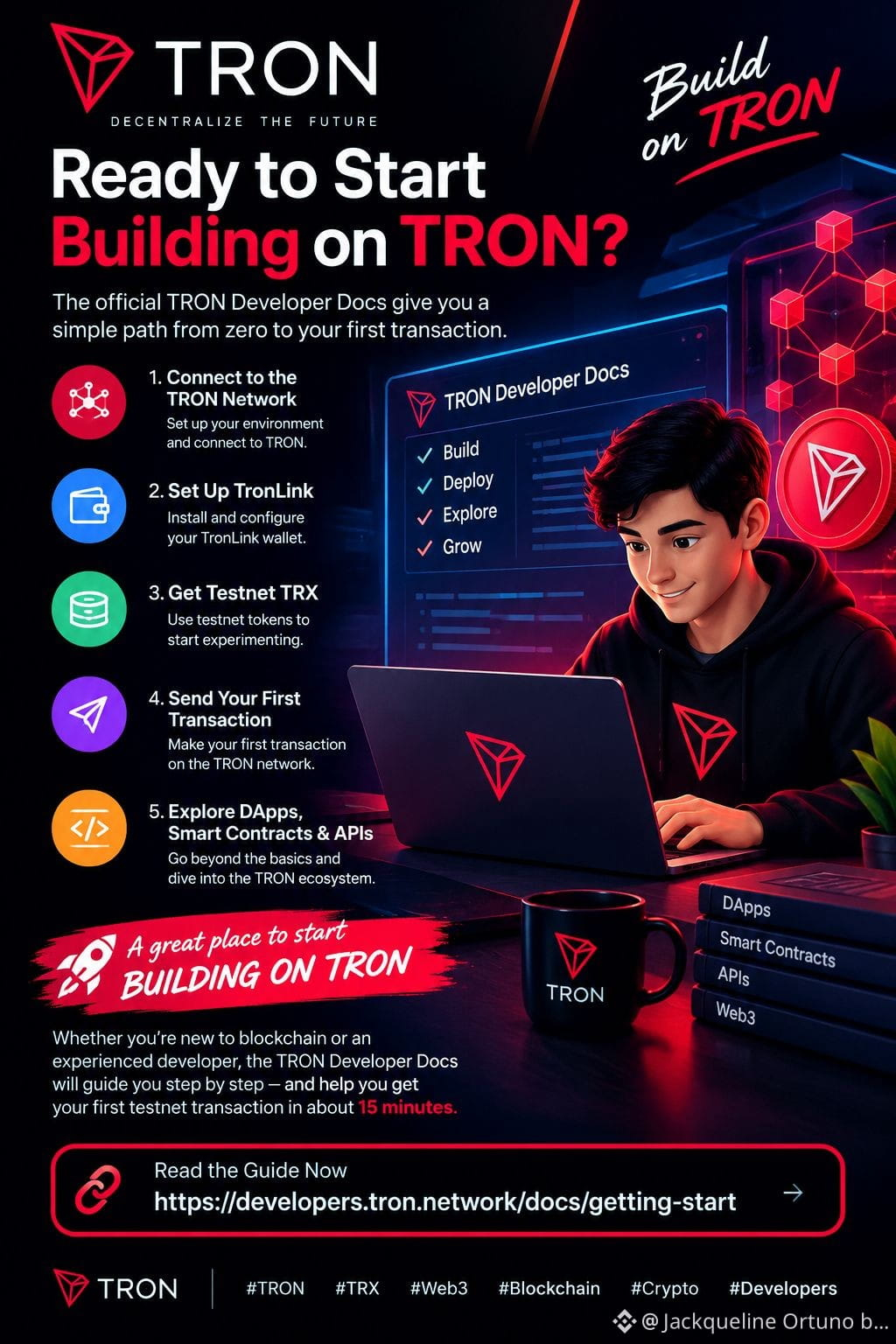
🚀 Want to start building on TRON?
The official $TRX Developer Docs give you a simple path from zero to your first transaction.
⚡ Connect to the TRON network
👛 Set up TronLink
🧪 Get testnet TRX
🔗 Send your first transaction
🛠️ Explore DApps, smart contracts & APIs
Whether you're new to blockchain or an experienced developer, this is a great place to start building on $TRX .
🔗 https://developers.tron.network/docs/getting-start
#TRON #TRX #Web3 #Blockchain #Crypto #Developers 😕
🚀 Want to start building on TRON?
The official $TRX Developer Docs give you a simple path from zero to your first transaction.
⚡ Connect to the TRON network
👛 Set up TronLink
🧪 Get testnet TRX
🔗 Send your first transaction
🛠️ Explore DApps, smart contracts & APIs
Whether you're new to blockchain or an experienced developer, this is a great place to start building on $TRX .
🔗 https://developers.tron.network/docs/getting-start
#TRON #TRX #Web3 #Blockchain #Crypto #Developers 😕
The official $TRX Developer Docs give you a simple path from zero to your first transaction.
⚡ Connect to the TRON network
👛 Set up TronLink
🧪 Get testnet TRX
🔗 Send your first transaction
🛠️ Explore DApps, smart contracts & APIs
Whether you're new to blockchain or an experienced developer, this is a great place to start building on $TRX .
🔗 https://developers.tron.network/docs/getting-start
#TRON #TRX #Web3 #Blockchain #Crypto #Developers 😕
101

DuskEVM & Developers
⚡ DuskEVM: Deploy your Solidity dApps with complete confidentiality
The arrival of DuskEVM changes everything for developers! You can now migrate your Ethereum smart contracts while benefiting from the native confidentiality and ZK proofs from Dusk's Layer 1.
The usual tooling (Solidity, Hardhat) combined with privacy by design!
@Dusk_Foundation #dusk $DUSK #Developers #Ethereum
DuskEVM & Developers
⚡ DuskEVM: Deploy your Solidity dApps with complete confidentiality
The arrival of DuskEVM changes everything for developers! You can now migrate your Ethereum smart contracts while benefiting from the native confidentiality and ZK proofs from Dusk's Layer 1.
The usual tooling (Solidity, Hardhat) combined with privacy by design!
@Dusk #dusk $DUSK #Developers #Ethereum
⚡ DuskEVM: Deploy your Solidity dApps with complete confidentiality
The arrival of DuskEVM changes everything for developers! You can now migrate your Ethereum smart contracts while benefiting from the native confidentiality and ZK proofs from Dusk's Layer 1.
The usual tooling (Solidity, Hardhat) combined with privacy by design!
@Dusk #dusk $DUSK #Developers #Ethereum
43

·
--
For those interested in the tech side
Is code the new currency?
"As an app developer, I see blockchain technology not just as a financial tool, but as the foundation for the next-gen internet. The difference between traditional apps and Web3 lies in 'transparency' and 'ownership'.
As we build software solutions today, I wonder: how will smart contracts change the way we interact with local services in our area?
Do you think decentralized applications (dApps) will become a part of our daily lives in Morocco in the coming years? Share your thoughts. 👇
#Web3 #blockchain #Developers #INNOVATION #Binance "
For those interested in the tech side
Is code the new currency?
"As an app developer, I see blockchain technology not just as a financial tool, but as the foundation for the next-gen internet. The difference between traditional apps and Web3 lies in 'transparency' and 'ownership'.
As we build software solutions today, I wonder: how will smart contracts change the way we interact with local services in our area?
Do you think decentralized applications (dApps) will become a part of our daily lives in Morocco in the coming years? Share your thoughts. 👇
#Web3 #blockchain #Developers #INNOVATION #Binance "
Is code the new currency?
"As an app developer, I see blockchain technology not just as a financial tool, but as the foundation for the next-gen internet. The difference between traditional apps and Web3 lies in 'transparency' and 'ownership'.
As we build software solutions today, I wonder: how will smart contracts change the way we interact with local services in our area?
Do you think decentralized applications (dApps) will become a part of our daily lives in Morocco in the coming years? Share your thoughts. 👇
#Web3 #blockchain #Developers #INNOVATION #Binance "
74

THE TRON DEVELOPER ECOSYSTEM: BUILDING THE FUTURE 🛠️
TRON offers a rich set of tools and resources for developers to build innovative DApps. From the TRON Studio to the comprehensive documentation, we make it easy for developers to get started.
Our active developer community and regular hackathons ensure that there's always something new and exciting being built on TRON. 💡
@TRON DAO
#TRONEcoStar #Developers #Innovation
THE TRON DEVELOPER ECOSYSTEM: BUILDING THE FUTURE 🛠️
TRON offers a rich set of tools and resources for developers to build innovative DApps. From the TRON Studio to the comprehensive documentation, we make it easy for developers to get started.
Our active developer community and regular hackathons ensure that there's always something new and exciting being built on TRON. 💡
@TRON DAO
#TRONEcoStar #Developers #Innovation
TRON offers a rich set of tools and resources for developers to build innovative DApps. From the TRON Studio to the comprehensive documentation, we make it easy for developers to get started.
Our active developer community and regular hackathons ensure that there's always something new and exciting being built on TRON. 💡
@TRON DAO
#TRONEcoStar #Developers #Innovation
22

·
--
Most blockchains talk about attracting developers.
Few talk about the cost of asking developers to learn entirely new systems.
That’s where BTTC takes a different approach.
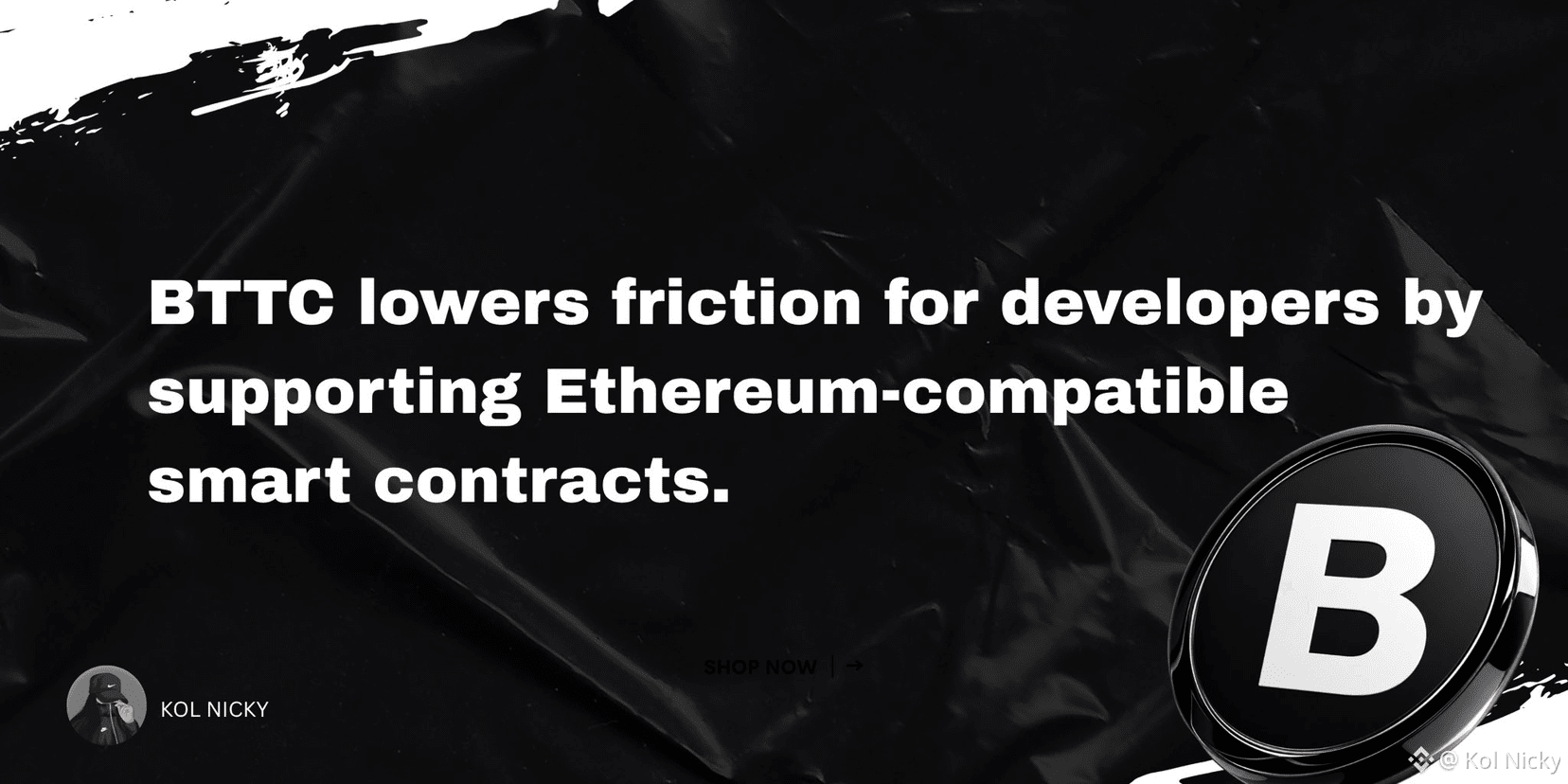
By supporting Ethereum-compatible smart contracts, BTTC reduces one of the largest barriers to ecosystem growth:
developer friction.
This matters more than many realize.
Developers already understand Solidity.
They already use Ethereum tooling.
They already have existing workflows, libraries, and infrastructure.
The easier migration becomes, the easier ecosystem expansion becomes.
Execution layers matter.
But developer experience often determines whether ecosystems actually grow.
The hidden layer is network effects.
Every additional developer brings applications.
Applications attract users.
Users attract liquidity.
Liquidity attracts more builders.
Infrastructure scales when friction falls.
BTTC’s EVM compatibility isn’t simply a technical feature.
It’s a strategy designed to accelerate ecosystem participation by leveraging one of crypto’s largest existing developer communities.
⤞ Website: bt.io
⤞ Twitter: x.com/BitTorrent
⤞ Telegram: t.me/BTTBitTorrent
⤞ GitHub: github.com/bttcprotocol
@BitTorrent_Official @JustinSun #BTTC #EVM #Developers #TRONEcoStar
Most blockchains talk about attracting developers.
Few talk about the cost of asking developers to learn entirely new systems.
That’s where BTTC takes a different approach.
By supporting Ethereum-compatible smart contracts, BTTC reduces one of the largest barriers to ecosystem growth:
developer friction.
This matters more than many realize.
Developers already understand Solidity.
They already use Ethereum tooling.
They already have existing workflows, libraries, and infrastructure.
The easier migration becomes, the easier ecosystem expansion becomes.
Execution layers matter.
But developer experience often determines whether ecosystems actually grow.
The hidden layer is network effects.
Every additional developer brings applications.
Applications attract users.
Users attract liquidity.
Liquidity attracts more builders.
Infrastructure scales when friction falls.
BTTC’s EVM compatibility isn’t simply a technical feature.
It’s a strategy designed to accelerate ecosystem participation by leveraging one of crypto’s largest existing developer communities.
⤞ Website: bt.io
⤞ Twitter: x.com/BitTorrent
⤞ Telegram: t.me/BTTBitTorrent
⤞ GitHub: github.com/bttcprotocol
@BitTorrent_Official @Justin Sun孙宇晨 #BTTC #EVM #Developers #TRONEcoStar
Few talk about the cost of asking developers to learn entirely new systems.
That’s where BTTC takes a different approach.
By supporting Ethereum-compatible smart contracts, BTTC reduces one of the largest barriers to ecosystem growth:
developer friction.
This matters more than many realize.
Developers already understand Solidity.
They already use Ethereum tooling.
They already have existing workflows, libraries, and infrastructure.
The easier migration becomes, the easier ecosystem expansion becomes.
Execution layers matter.
But developer experience often determines whether ecosystems actually grow.
The hidden layer is network effects.
Every additional developer brings applications.
Applications attract users.
Users attract liquidity.
Liquidity attracts more builders.
Infrastructure scales when friction falls.
BTTC’s EVM compatibility isn’t simply a technical feature.
It’s a strategy designed to accelerate ecosystem participation by leveraging one of crypto’s largest existing developer communities.
⤞ Website: bt.io
⤞ Twitter: x.com/BitTorrent
⤞ Telegram: t.me/BTTBitTorrent
⤞ GitHub: github.com/bttcprotocol
@BitTorrent_Official @Justin Sun孙宇晨 #BTTC #EVM #Developers #TRONEcoStar
1
291
TRON'S DEVELOPER GRANTS PROGRAM: FUNDING INNOVATION 🎁
TRON's developer grants program has deployed over $100 million to projects building on our ecosystem.
The application process is straightforward: propose your project, demonstrate capability, receive funding based on milestones.
Recipients receive funding, technical support, marketing assistance, and community access.
For developers with ideas, TRON's grant program provides the resources to build them.
@TRON DAO
#TRONEcoStar #Grants #Developers
TRON'S DEVELOPER GRANTS PROGRAM: FUNDING INNOVATION 🎁
TRON's developer grants program has deployed over $100 million to projects building on our ecosystem.
The application process is straightforward: propose your project, demonstrate capability, receive funding based on milestones.
Recipients receive funding, technical support, marketing assistance, and community access.
For developers with ideas, TRON's grant program provides the resources to build them.
@TRON DAO
#TRONEcoStar #Grants #Developers
TRON's developer grants program has deployed over $100 million to projects building on our ecosystem.
The application process is straightforward: propose your project, demonstrate capability, receive funding based on milestones.
Recipients receive funding, technical support, marketing assistance, and community access.
For developers with ideas, TRON's grant program provides the resources to build them.
@TRON DAO
#TRONEcoStar #Grants #Developers
1
20

·
--
GOAT AI BUILDERS GRANT PROGRAM 🚨
AI agents are becoming more capable every day.
But capability alone doesn’t create an economy.
Useful products do.
That’s why the GOAT launched the AI Builder Grants Program .
Instead of funding AI experiments, the program is focused on helping builders create applications with real world utility.
GOAT Network is looking for teams building:
➲ Agent-powered applications
➲ Automation and productivity tools
➲ Transactional products
➲ AI systems that generate economic activity
Selected builders will receive funding, technical guidance, deployment support, and help integrating key infrastructure needed for agent-based applications.
And for teams that demonstrate strong growth, there’s access to the Singularity Investment pool with up to $1M available for further support.
Apply through the link in the comments
#BTC #AI #Developers
GOAT AI BUILDERS GRANT PROGRAM 🚨
AI agents are becoming more capable every day.
But capability alone doesn’t create an economy.
Useful products do.
That’s why the GOAT launched the AI Builder Grants Program .
Instead of funding AI experiments, the program is focused on helping builders create applications with real world utility.
GOAT Network is looking for teams building:
➲ Agent-powered applications
➲ Automation and productivity tools
➲ Transactional products
➲ AI systems that generate economic activity
Selected builders will receive funding, technical guidance, deployment support, and help integrating key infrastructure needed for agent-based applications.
And for teams that demonstrate strong growth, there’s access to the Singularity Investment pool with up to $1M available for further support.
Apply through the link in the comments
#BTC #AI #Developers
AI agents are becoming more capable every day.
But capability alone doesn’t create an economy.
Useful products do.
That’s why the GOAT launched the AI Builder Grants Program .
Instead of funding AI experiments, the program is focused on helping builders create applications with real world utility.
GOAT Network is looking for teams building:
➲ Agent-powered applications
➲ Automation and productivity tools
➲ Transactional products
➲ AI systems that generate economic activity
Selected builders will receive funding, technical guidance, deployment support, and help integrating key infrastructure needed for agent-based applications.
And for teams that demonstrate strong growth, there’s access to the Singularity Investment pool with up to $1M available for further support.
Apply through the link in the comments
#BTC #AI #Developers
2
1
1
170

I Realized I Was Building an Exchange Instead of Building a Strategy; Hotstuff compact SDKOne night, while fixing another WebSocket issue, it hit me.
I wasn't improving my trading bot.I was spending most of my time rebuilding things exchanges should already provide.Every week it was something new.
A connection dropped.An API changed.A data stream behaved differently than expected.
Instead of working on strategy, I was maintaining infrastructure.
That's when I decided to try Hotstuff's SDK. This is builders heaven in simple term, check out it once, u see real difference..
The Moment Things Got Simpler :-
What I expected was another developer tool.
What I found was less work.
After connecting, I wasn't thinking about authentication flows, data formatting, or managing multiple services.
I was thinking about trading logic again.
That's a big difference.
Because as builders, our goal isn't to create endless layers of plumbing.
Our goal is to build something useful on top of it.
What Actually Impressed Me :-
The best technology is often the technology you stop noticing.
Data arrives where it's supposed to.Orders go through.Risk management is accessible.
Everything works together without forcing me to glue five different systems into one.
There was no "wow" moment.Just fewer problems to solve.And honestly, that's better.
The Bigger Lesson :-
Most builders think they need more tools.
Sometimes what they really need is fewer things to maintain.
The more time I spend improving a strategy instead of fixing infrastructure, the more valuable my work becomes.
That's why I keep coming back.
Not because the SDK is flashy.Not because of a marketing campaign.
Because for the first time in a while, I feel like I'm building what I wanted to build from the start.
And the infrastructure quietly stays in the background where it belongs.
#rwa #Developers #SDK
I Realized I Was Building an Exchange Instead of Building a Strategy; Hotstuff compact SDK
One night, while fixing another WebSocket issue, it hit me.
I wasn't improving my trading bot.I was spending most of my time rebuilding things exchanges should already provide.Every week it was something new.
A connection dropped.An API changed.A data stream behaved differently than expected.
Instead of working on strategy, I was maintaining infrastructure.
That's when I decided to try Hotstuff's SDK. This is builders heaven in simple term, check out it once, u see real difference..
The Moment Things Got Simpler :-
What I expected was another developer tool.
What I found was less work.
After connecting, I wasn't thinking about authentication flows, data formatting, or managing multiple services.
I was thinking about trading logic again.
That's a big difference.
Because as builders, our goal isn't to create endless layers of plumbing.
Our goal is to build something useful on top of it.
What Actually Impressed Me :-
The best technology is often the technology you stop noticing.
Data arrives where it's supposed to.Orders go through.Risk management is accessible.
Everything works together without forcing me to glue five different systems into one.
There was no "wow" moment.Just fewer problems to solve.And honestly, that's better.
The Bigger Lesson :-
Most builders think they need more tools.
Sometimes what they really need is fewer things to maintain.
The more time I spend improving a strategy instead of fixing infrastructure, the more valuable my work becomes.
That's why I keep coming back.
Not because the SDK is flashy.Not because of a marketing campaign.
Because for the first time in a while, I feel like I'm building what I wanted to build from the start.
And the infrastructure quietly stays in the background where it belongs.
#rwa #Developers #SDK
I wasn't improving my trading bot.I was spending most of my time rebuilding things exchanges should already provide.Every week it was something new.
A connection dropped.An API changed.A data stream behaved differently than expected.
Instead of working on strategy, I was maintaining infrastructure.
That's when I decided to try Hotstuff's SDK. This is builders heaven in simple term, check out it once, u see real difference..
The Moment Things Got Simpler :-
What I expected was another developer tool.
What I found was less work.
After connecting, I wasn't thinking about authentication flows, data formatting, or managing multiple services.
I was thinking about trading logic again.
That's a big difference.
Because as builders, our goal isn't to create endless layers of plumbing.
Our goal is to build something useful on top of it.
What Actually Impressed Me :-
The best technology is often the technology you stop noticing.
Data arrives where it's supposed to.Orders go through.Risk management is accessible.
Everything works together without forcing me to glue five different systems into one.
There was no "wow" moment.Just fewer problems to solve.And honestly, that's better.
The Bigger Lesson :-
Most builders think they need more tools.
Sometimes what they really need is fewer things to maintain.
The more time I spend improving a strategy instead of fixing infrastructure, the more valuable my work becomes.
That's why I keep coming back.
Not because the SDK is flashy.Not because of a marketing campaign.
Because for the first time in a while, I feel like I'm building what I wanted to build from the start.
And the infrastructure quietly stays in the background where it belongs.
#rwa #Developers #SDK
1
90

·
--
𝗛𝗼𝘄 𝗚𝗢𝗔𝗧𝗡𝗲𝘁𝘄𝗼𝗿𝗸 𝗜𝘀 𝗕𝘂𝗶𝗹𝗱𝗶𝗻𝗴 𝗔 𝗗𝗲𝘃𝗲𝗹𝗼𝗽𝗲𝗿-𝗙𝗶𝗿𝘀𝘁 𝗘𝗰𝗼𝘀𝘆𝘀𝘁𝗲𝗺.
Most companies think ecosystem growth comes from building a great product and then marketing it aggressively.
In reality, that's rarely how developer ecosystems scale.
Real ecosystems grow because developers trust other developers. Builders teach builders. Communities help communities.
Developers discover them through workshops, hackathons, technical content, open-source contributions and recommendations from people they trust.
@GOATRollup understands this.
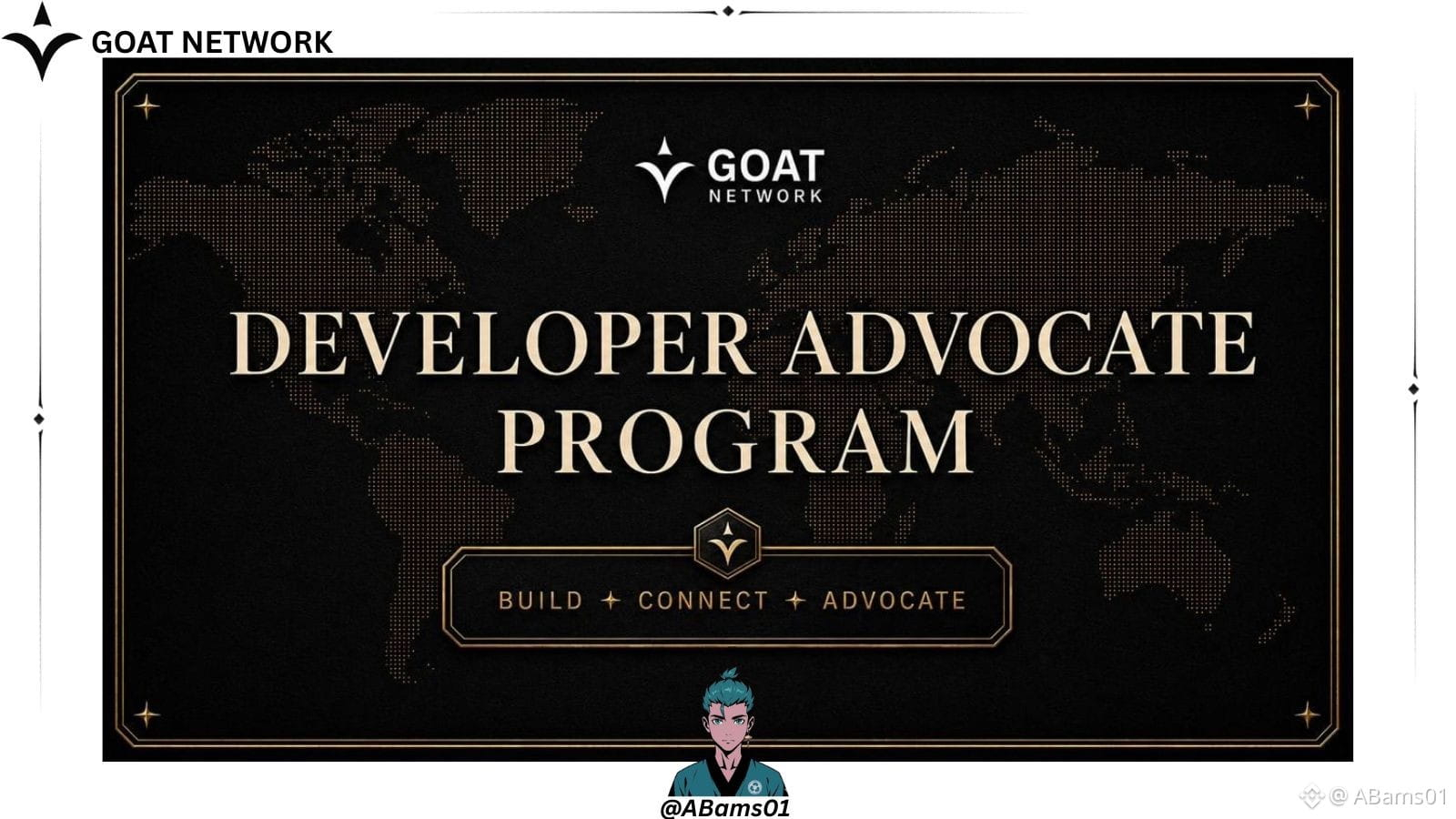
That's why they launched the Dev Advocates Program.
The program is designed for:
• Hackathon organizers and mentors
• University tech club leaders
• Open-source contributors
• Technical content creators
• Web3 and AI community leaders
• Workshop organizers
The objective is education.
Dev Advocates help developers understand tools like AgentKit, x402 and ERC-8004 while supporting builders creating real products.
Participants can host workshops, mentor teams, create educational content, connect builders to grants and provide valuable ecosystem feedback.
Benefits include:
• Up to $500/month
• Performance-based bonuses
• Early access to ecosystem developments
• Direct communication with the GOATNetwork team
• Access to resources and technical support
This approach reflects a simple truth.
If you're already helping developers succeed, this is an opportunity worth exploring.
AgentKit Docs:
https://docs.goat.network/agentkit/getting-started
Builder Grants:
https://goat.network/builder-program
x402 Docs:
https://docs.goat.network/x402/overview
GitHub:
https://github.com/goat-sdk
#Developers
𝗛𝗼𝘄 𝗚𝗢𝗔𝗧𝗡𝗲𝘁𝘄𝗼𝗿𝗸 𝗜𝘀 𝗕𝘂𝗶𝗹𝗱𝗶𝗻𝗴 𝗔 𝗗𝗲𝘃𝗲𝗹𝗼𝗽𝗲𝗿-𝗙𝗶𝗿𝘀𝘁 𝗘𝗰𝗼𝘀𝘆𝘀𝘁𝗲𝗺.
Most companies think ecosystem growth comes from building a great product and then marketing it aggressively.
In reality, that's rarely how developer ecosystems scale.
Real ecosystems grow because developers trust other developers. Builders teach builders. Communities help communities.
Developers discover them through workshops, hackathons, technical content, open-source contributions and recommendations from people they trust.
@GOAT Network understands this.
That's why they launched the Dev Advocates Program.
The program is designed for:
• Hackathon organizers and mentors
• University tech club leaders
• Open-source contributors
• Technical content creators
• Web3 and AI community leaders
• Workshop organizers
The objective is education.
Dev Advocates help developers understand tools like AgentKit, x402 and ERC-8004 while supporting builders creating real products.
Participants can host workshops, mentor teams, create educational content, connect builders to grants and provide valuable ecosystem feedback.
Benefits include:
• Up to $500/month
• Performance-based bonuses
• Early access to ecosystem developments
• Direct communication with the GOATNetwork team
• Access to resources and technical support
This approach reflects a simple truth.
If you're already helping developers succeed, this is an opportunity worth exploring.
AgentKit Docs:
https://docs.goat.network/agentkit/getting-started
Builder Grants:
https://goat.network/builder-program
x402 Docs:
https://docs.goat.network/x402/overview
GitHub:
https://github.com/goat-sdk
#Developers
Most companies think ecosystem growth comes from building a great product and then marketing it aggressively.
In reality, that's rarely how developer ecosystems scale.
Real ecosystems grow because developers trust other developers. Builders teach builders. Communities help communities.
Developers discover them through workshops, hackathons, technical content, open-source contributions and recommendations from people they trust.
@GOAT Network understands this.
That's why they launched the Dev Advocates Program.
The program is designed for:
• Hackathon organizers and mentors
• University tech club leaders
• Open-source contributors
• Technical content creators
• Web3 and AI community leaders
• Workshop organizers
The objective is education.
Dev Advocates help developers understand tools like AgentKit, x402 and ERC-8004 while supporting builders creating real products.
Participants can host workshops, mentor teams, create educational content, connect builders to grants and provide valuable ecosystem feedback.
Benefits include:
• Up to $500/month
• Performance-based bonuses
• Early access to ecosystem developments
• Direct communication with the GOATNetwork team
• Access to resources and technical support
This approach reflects a simple truth.
If you're already helping developers succeed, this is an opportunity worth exploring.
AgentKit Docs:
https://docs.goat.network/agentkit/getting-started
Builder Grants:
https://goat.network/builder-program
x402 Docs:
https://docs.goat.network/x402/overview
GitHub:
https://github.com/goat-sdk
#Developers
1
94
·
--
When Stripe launched its payment APIs, one of its biggest advantages wasn’t the payment network itself.
It was how easy it became for developers to build on top of it.
Instead of spending months creating payment infrastructure from scratch, developers could focus on building products.
The most successful infrastructure often wins because it reduces complexity for builders.
The same principle applies to blockchain ecosystems.
Many users evaluate a network by the applications they can see.
Developers evaluate a network by the tools available underneath.
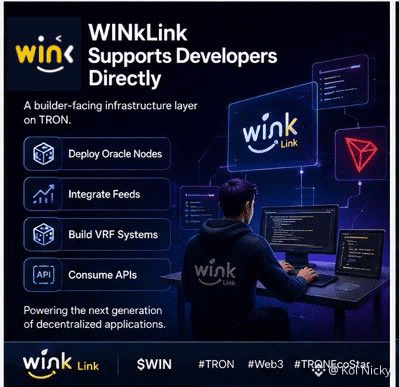
@WINkLink_Official was designed as a builder-facing infrastructure layer within TRON.
Developers can integrate decentralized price feeds into lending markets and financial applications.
They can use Verifiable Random Functions (VRF) for gaming systems, reward mechanisms, and NFT distribution.
They can connect smart contracts to external APIs and off-chain information sources.
They can even participate in the oracle network itself by deploying and operating nodes.
What’s interesting is that every successful application built using these services indirectly strengthens the infrastructure underneath.
The relationship becomes self-reinforcing.
More builders create more applications.
More applications create more oracle requests.
More oracle requests increase the importance of the network providing those services.
Users often measure ecosystem growth through visible products.
Infrastructure providers measure growth through developer activity.
And over the long run, developers are often the ones who determine where innovation happens.
Official Website:
winklink.org/#/home?lang=en…
Official Documentation:
doc.winklink.org/v2/doc/#what-i…
@JustinSun $WIN #Tron #Oracle #Developers #TRONEcoStar
When Stripe launched its payment APIs, one of its biggest advantages wasn’t the payment network itself.
It was how easy it became for developers to build on top of it.
Instead of spending months creating payment infrastructure from scratch, developers could focus on building products.
The most successful infrastructure often wins because it reduces complexity for builders.
The same principle applies to blockchain ecosystems.
Many users evaluate a network by the applications they can see.
Developers evaluate a network by the tools available underneath.
@WINkLink_Official was designed as a builder-facing infrastructure layer within TRON.
Developers can integrate decentralized price feeds into lending markets and financial applications.
They can use Verifiable Random Functions (VRF) for gaming systems, reward mechanisms, and NFT distribution.
They can connect smart contracts to external APIs and off-chain information sources.
They can even participate in the oracle network itself by deploying and operating nodes.
What’s interesting is that every successful application built using these services indirectly strengthens the infrastructure underneath.
The relationship becomes self-reinforcing.
More builders create more applications.
More applications create more oracle requests.
More oracle requests increase the importance of the network providing those services.
Users often measure ecosystem growth through visible products.
Infrastructure providers measure growth through developer activity.
And over the long run, developers are often the ones who determine where innovation happens.
Official Website:
winklink.org/#/home?lang=en…
Official Documentation:
doc.winklink.org/v2/doc/#what-i…
@Justin Sun孙宇晨 $WIN #Tron #Oracle #Developers #TRONEcoStar
It was how easy it became for developers to build on top of it.
Instead of spending months creating payment infrastructure from scratch, developers could focus on building products.
The most successful infrastructure often wins because it reduces complexity for builders.
The same principle applies to blockchain ecosystems.
Many users evaluate a network by the applications they can see.
Developers evaluate a network by the tools available underneath.
@WINkLink_Official was designed as a builder-facing infrastructure layer within TRON.
Developers can integrate decentralized price feeds into lending markets and financial applications.
They can use Verifiable Random Functions (VRF) for gaming systems, reward mechanisms, and NFT distribution.
They can connect smart contracts to external APIs and off-chain information sources.
They can even participate in the oracle network itself by deploying and operating nodes.
What’s interesting is that every successful application built using these services indirectly strengthens the infrastructure underneath.
The relationship becomes self-reinforcing.
More builders create more applications.
More applications create more oracle requests.
More oracle requests increase the importance of the network providing those services.
Users often measure ecosystem growth through visible products.
Infrastructure providers measure growth through developer activity.
And over the long run, developers are often the ones who determine where innovation happens.
Official Website:
winklink.org/#/home?lang=en…
Official Documentation:
doc.winklink.org/v2/doc/#what-i…
@Justin Sun孙宇晨 $WIN #Tron #Oracle #Developers #TRONEcoStar
25
·
--
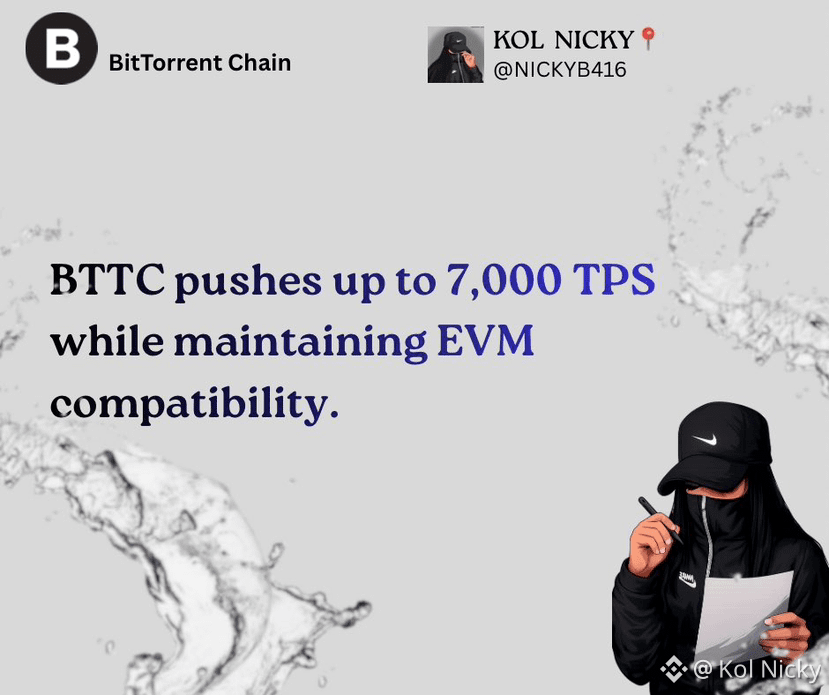
The interesting thing about BTTC isn’t just scalability.
It’s compatibility.
A lot of chains underestimate the importance of developer familiarity.
BTTC supporting EVM-compatible tooling lowers migration friction significantly.
That matters.
Developers already understand Solidity.
They already use Ethereum tooling.
They already know the workflows.
Execution layers matter.
The easier it becomes for builders to deploy across ecosystems, the faster liquidity and applications spread.
This is how infrastructure compounds quietly in the background.
Not through headlines.
Through reduced friction.
The long-term winners in crypto may not be the chains demanding entirely new behavior…
…but the ones integrating smoothly into existing developer and liquidity flows.
@BitTorrent_Official @JustinSun #evm #Tron #Web3 #Developers #TRONEcoStar
The interesting thing about BTTC isn’t just scalability.
It’s compatibility.
A lot of chains underestimate the importance of developer familiarity.
BTTC supporting EVM-compatible tooling lowers migration friction significantly.
That matters.
Developers already understand Solidity.
They already use Ethereum tooling.
They already know the workflows.
Execution layers matter.
The easier it becomes for builders to deploy across ecosystems, the faster liquidity and applications spread.
This is how infrastructure compounds quietly in the background.
Not through headlines.
Through reduced friction.
The long-term winners in crypto may not be the chains demanding entirely new behavior…
…but the ones integrating smoothly into existing developer and liquidity flows.
@BitTorrent_Official @Justin Sun孙宇晨 #evm #Tron #Web3 #Developers #TRONEcoStar
It’s compatibility.
A lot of chains underestimate the importance of developer familiarity.
BTTC supporting EVM-compatible tooling lowers migration friction significantly.
That matters.
Developers already understand Solidity.
They already use Ethereum tooling.
They already know the workflows.
Execution layers matter.
The easier it becomes for builders to deploy across ecosystems, the faster liquidity and applications spread.
This is how infrastructure compounds quietly in the background.
Not through headlines.
Through reduced friction.
The long-term winners in crypto may not be the chains demanding entirely new behavior…
…but the ones integrating smoothly into existing developer and liquidity flows.
@BitTorrent_Official @Justin Sun孙宇晨 #evm #Tron #Web3 #Developers #TRONEcoStar
125

·
--
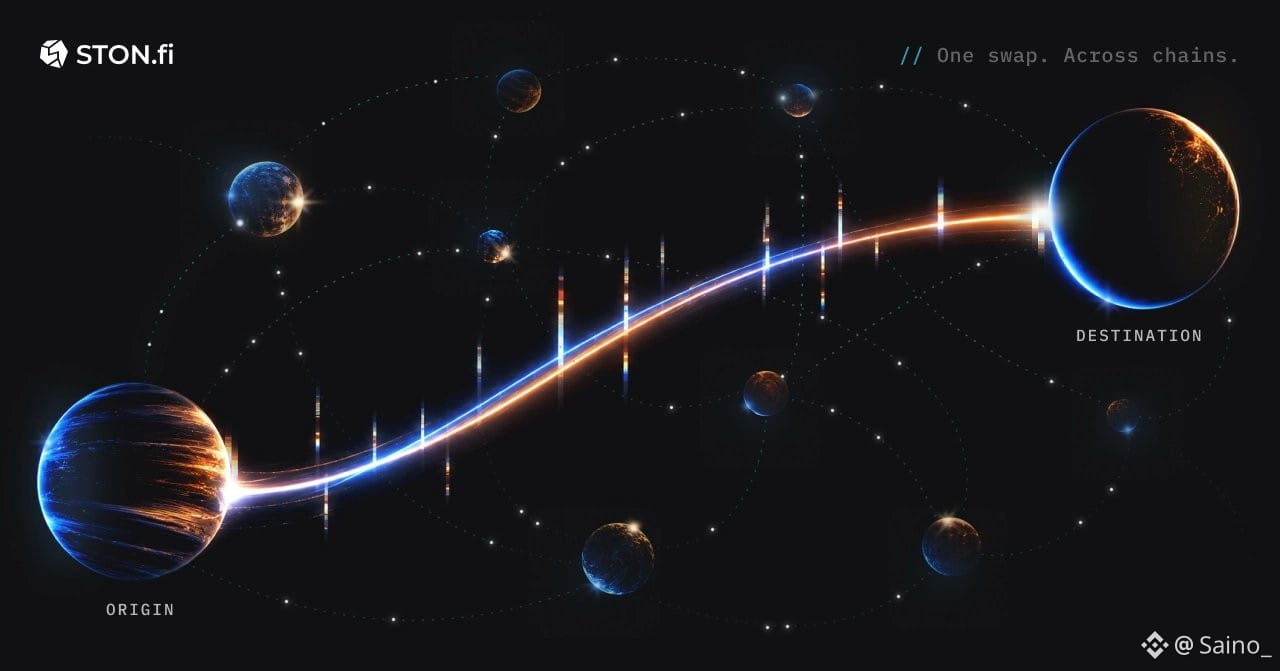
Launching a token on TON? Your liquidity setup matters.
@ston_fi gives token issuers access to several tools designed to help build and grow a market:
▪️ 5.9M+ swappers for direct access to an established user base
▪️ Omniston integration for cross-chain access without building separate infrastructure
▪️ Farming incentives that projects can co-fund to encourage liquidity and participation
For TON builders, the focus is not just launching a token. It is also about liquidity, accessibility, and giving users reasons to participate.
If you are building on TON, STON.fi is worth exploring.
#Web3 #TON #Developers
Launching a token on TON? Your liquidity setup matters.
@ston_fi gives token issuers access to several tools designed to help build and grow a market:
▪️ 5.9M+ swappers for direct access to an established user base
▪️ Omniston integration for cross-chain access without building separate infrastructure
▪️ Farming incentives that projects can co-fund to encourage liquidity and participation
For TON builders, the focus is not just launching a token. It is also about liquidity, accessibility, and giving users reasons to participate.
If you are building on TON, STON.fi is worth exploring.
#Web3 #TON #Developers
@ston_fi gives token issuers access to several tools designed to help build and grow a market:
▪️ 5.9M+ swappers for direct access to an established user base
▪️ Omniston integration for cross-chain access without building separate infrastructure
▪️ Farming incentives that projects can co-fund to encourage liquidity and participation
For TON builders, the focus is not just launching a token. It is also about liquidity, accessibility, and giving users reasons to participate.
If you are building on TON, STON.fi is worth exploring.
#Web3 #TON #Developers
60

#GoogleLaunchesGemini3.5Flash
Speed is everything when you're building. Google launching Gemini 3.5 Flash looks like a massive win for faster response times and lighter, sharper performance. Who else is diving into the API today? 💻🚀
#Developers #Artificiallnteligence
#GoogleLaunchesGemini3.5Flash
Speed is everything when you're building. Google launching Gemini 3.5 Flash looks like a massive win for faster response times and lighter, sharper performance. Who else is diving into the API today? 💻🚀
#Developers #Artificiallnteligence
Speed is everything when you're building. Google launching Gemini 3.5 Flash looks like a massive win for faster response times and lighter, sharper performance. Who else is diving into the API today? 💻🚀
#Developers #Artificiallnteligence
1
111

🚀 Kimi-K3 Takes the Lead in AI Coding
The AI coding race has a new frontrunner. Kimi-K3 has climbed to the top of the Frontend Code Arena, earning 1,679 points and overtaking Claude Fable 5 in the latest Arena rankings.
The result highlights the rapid pace of competition among AI coding assistants, where improvements in frontend development capabilities are becoming a key benchmark. As models continue to evolve, developers gain access to increasingly powerful tools for building, debugging, and accelerating web applications.
The AI leaderboard is changing fast—and Kimi-K3 is setting the pace for now.
#AI #Coding #Frontend #LLM #ArtificialIntelligence #Tech #Developers
$AXIL.US
{stock_us}(AXIL.US)
$AIO
{future}(AIOUSDT)
$GOOGL.US
{stock_us}(GOOGL.US)
🚀 Kimi-K3 Takes the Lead in AI Coding
The AI coding race has a new frontrunner. Kimi-K3 has climbed to the top of the Frontend Code Arena, earning 1,679 points and overtaking Claude Fable 5 in the latest Arena rankings.
The result highlights the rapid pace of competition among AI coding assistants, where improvements in frontend development capabilities are becoming a key benchmark. As models continue to evolve, developers gain access to increasingly powerful tools for building, debugging, and accelerating web applications.
The AI leaderboard is changing fast—and Kimi-K3 is setting the pace for now.
#AI #Coding #Frontend #LLM #ArtificialIntelligence #Tech #Developers
$AXIL.US
$AIO
$GOOGL.US
The AI coding race has a new frontrunner. Kimi-K3 has climbed to the top of the Frontend Code Arena, earning 1,679 points and overtaking Claude Fable 5 in the latest Arena rankings.
The result highlights the rapid pace of competition among AI coding assistants, where improvements in frontend development capabilities are becoming a key benchmark. As models continue to evolve, developers gain access to increasingly powerful tools for building, debugging, and accelerating web applications.
The AI leaderboard is changing fast—and Kimi-K3 is setting the pace for now.
#AI #Coding #Frontend #LLM #ArtificialIntelligence #Tech #Developers
$AXIL.US
$AIO
$GOOGL.US
1
184
·
--
NOWNodes or QuickNode?The better RPC provider depends on the system you are trying to operate.
NOWNodes uses a comparatively direct request-quota model across its shared plans. That can make monthly budgeting easier when you already understand your request volume and mainly need node access, historical data, WebSockets or advanced methods.
QuickNode uses API Credits, so the chain, method class and adjacent data products matter. Its strongest case is often broader than RPC: Streams, Webhooks, filtering and delivery destinations can replace pollers, queues and part of an internal ingestion pipeline.
Before comparing plans, divide the workload into ordinary state reads, logs, historical calls, Trace or Debug requests and event delivery. Then calculate the engineering systems each provider lets you remove. A lower endpoint invoice can still produce a higher total cost if your team has to build and maintain the missing data pipeline.
No authenticated simultaneous latency benchmark was available for this comparison, so TokenToolHub does not invent a performance winner. The guide provides a controlled test specification teams can run with their own traffic mix.
Full comparison:
https://tokentoolhub.com/nownodes-vs-quicknode/
#blockchain #Web3 #Ethereum #CryptoInfrastructure #Developers
NOWNodes or QuickNode?
The better RPC provider depends on the system you are trying to operate.
NOWNodes uses a comparatively direct request-quota model across its shared plans. That can make monthly budgeting easier when you already understand your request volume and mainly need node access, historical data, WebSockets or advanced methods.
QuickNode uses API Credits, so the chain, method class and adjacent data products matter. Its strongest case is often broader than RPC: Streams, Webhooks, filtering and delivery destinations can replace pollers, queues and part of an internal ingestion pipeline.
Before comparing plans, divide the workload into ordinary state reads, logs, historical calls, Trace or Debug requests and event delivery. Then calculate the engineering systems each provider lets you remove. A lower endpoint invoice can still produce a higher total cost if your team has to build and maintain the missing data pipeline.
No authenticated simultaneous latency benchmark was available for this comparison, so TokenToolHub does not invent a performance winner. The guide provides a controlled test specification teams can run with their own traffic mix.
Full comparison:
https://tokentoolhub.com/nownodes-vs-quicknode/
#blockchain #Web3 #Ethereum #CryptoInfrastructure #Developers
NOWNodes uses a comparatively direct request-quota model across its shared plans. That can make monthly budgeting easier when you already understand your request volume and mainly need node access, historical data, WebSockets or advanced methods.
QuickNode uses API Credits, so the chain, method class and adjacent data products matter. Its strongest case is often broader than RPC: Streams, Webhooks, filtering and delivery destinations can replace pollers, queues and part of an internal ingestion pipeline.
Before comparing plans, divide the workload into ordinary state reads, logs, historical calls, Trace or Debug requests and event delivery. Then calculate the engineering systems each provider lets you remove. A lower endpoint invoice can still produce a higher total cost if your team has to build and maintain the missing data pipeline.
No authenticated simultaneous latency benchmark was available for this comparison, so TokenToolHub does not invent a performance winner. The guide provides a controlled test specification teams can run with their own traffic mix.
Full comparison:
https://tokentoolhub.com/nownodes-vs-quicknode/
#blockchain #Web3 #Ethereum #CryptoInfrastructure #Developers
29
·
--
RPC Pricing Beyond RequestsRPC pricing becomes confusing when every provider uses a different accounting unit.
A raw-request plan counts calls directly. A request-unit plan converts calls into RUs. An API-credit plan can apply chain and product multipliers. A compute-unit plan assigns heavier methods more units than lightweight reads.
The correct starting point is a recorded workload, not a provider quota.
Separate standard reads, contract calls, receipts, log queries, archive state, trace methods and streaming recovery. Then add the usage hidden by a clean monthly request total:
• Retries after timeouts and rate limits
• Duplicate transaction polling
• Log-range splitting
• WebSocket reconnects and missed-block backfills
• Failover traffic sent to a second provider
Archive calls deserve their own budget because historical state can require different storage and routing. Log queries deserve their own model because one logical scan may become many RPC requests when the block range must be divided.
Finally, separate monthly consumption from peak capacity. Five million calls spread evenly across a month and five million calls concentrated around a launch do not create the same infrastructure requirement.
Compare the complete monthly economics: included units, overage, throughput, archive access, advanced methods, redundancy and engineering time.
Full TokenToolHub guide:
https://tokentoolhub.com/rpc-pricing-explained/
#blockchain #Web3 #RPCInfra #CryptoInfrastructure #Developers
RPC Pricing Beyond Requests
RPC pricing becomes confusing when every provider uses a different accounting unit.
A raw-request plan counts calls directly. A request-unit plan converts calls into RUs. An API-credit plan can apply chain and product multipliers. A compute-unit plan assigns heavier methods more units than lightweight reads.
The correct starting point is a recorded workload, not a provider quota.
Separate standard reads, contract calls, receipts, log queries, archive state, trace methods and streaming recovery. Then add the usage hidden by a clean monthly request total:
• Retries after timeouts and rate limits
• Duplicate transaction polling
• Log-range splitting
• WebSocket reconnects and missed-block backfills
• Failover traffic sent to a second provider
Archive calls deserve their own budget because historical state can require different storage and routing. Log queries deserve their own model because one logical scan may become many RPC requests when the block range must be divided.
Finally, separate monthly consumption from peak capacity. Five million calls spread evenly across a month and five million calls concentrated around a launch do not create the same infrastructure requirement.
Compare the complete monthly economics: included units, overage, throughput, archive access, advanced methods, redundancy and engineering time.
Full TokenToolHub guide:
https://tokentoolhub.com/rpc-pricing-explained/
#blockchain #Web3 #RPCInfra #CryptoInfrastructure #Developers
A raw-request plan counts calls directly. A request-unit plan converts calls into RUs. An API-credit plan can apply chain and product multipliers. A compute-unit plan assigns heavier methods more units than lightweight reads.
The correct starting point is a recorded workload, not a provider quota.
Separate standard reads, contract calls, receipts, log queries, archive state, trace methods and streaming recovery. Then add the usage hidden by a clean monthly request total:
• Retries after timeouts and rate limits
• Duplicate transaction polling
• Log-range splitting
• WebSocket reconnects and missed-block backfills
• Failover traffic sent to a second provider
Archive calls deserve their own budget because historical state can require different storage and routing. Log queries deserve their own model because one logical scan may become many RPC requests when the block range must be divided.
Finally, separate monthly consumption from peak capacity. Five million calls spread evenly across a month and five million calls concentrated around a launch do not create the same infrastructure requirement.
Compare the complete monthly economics: included units, overage, throughput, archive access, advanced methods, redundancy and engineering time.
Full TokenToolHub guide:
https://tokentoolhub.com/rpc-pricing-explained/
#blockchain #Web3 #RPCInfra #CryptoInfrastructure #Developers
267
·
--
NOWNodes vs ChainstackNOWNodes and Chainstack both remove much of the operational work involved in running blockchain nodes, but their infrastructure models are not identical.
NOWNodes currently presents a direct shared-plan ladder based primarily on monthly request allowances. Its public documentation also covers archive nodes, WebSockets, trace and debug interfaces, Blockbook, gRPC and custom dedicated deployments. This can suit a team that wants broad multi-chain access and straightforward request-based budgeting.
Chainstack currently offers a wider set of infrastructure shapes inside one platform: geo-balanced Global Nodes, Archive Data, Unlimited Node capacity, Dedicated Nodes and Self-Hosted orchestration. That range can suit a team expecting its deployment model to change as traffic, retention and control requirements grow.
The headline quotas are not directly comparable. Chainstack meters shared usage through request units, while NOWNodes publishes monthly request allowances. Archive, trace, debug, WebSocket and dedicated products require their own verification.
Use one controlled benchmark for both providers:
• Same client region
• Same methods and block ranges
• Same concurrency and sample size
• Same timeout and retry settings
• Separate recent-state and archive tests
• p50, p95, p99 and failure-rate recording
Do not claim a provider is faster without running both endpoints under the same conditions. Choose by total ownership cost, method coverage, recovery behavior and migration risk.
Full TokenToolHub comparison:
https://tokentoolhub.com/nownodes-vs-chainstack/
#blockchain #Web3 #RPC #CryptoInfrastructure #Developers
NOWNodes vs Chainstack
NOWNodes and Chainstack both remove much of the operational work involved in running blockchain nodes, but their infrastructure models are not identical.
NOWNodes currently presents a direct shared-plan ladder based primarily on monthly request allowances. Its public documentation also covers archive nodes, WebSockets, trace and debug interfaces, Blockbook, gRPC and custom dedicated deployments. This can suit a team that wants broad multi-chain access and straightforward request-based budgeting.
Chainstack currently offers a wider set of infrastructure shapes inside one platform: geo-balanced Global Nodes, Archive Data, Unlimited Node capacity, Dedicated Nodes and Self-Hosted orchestration. That range can suit a team expecting its deployment model to change as traffic, retention and control requirements grow.
The headline quotas are not directly comparable. Chainstack meters shared usage through request units, while NOWNodes publishes monthly request allowances. Archive, trace, debug, WebSocket and dedicated products require their own verification.
Use one controlled benchmark for both providers:
• Same client region
• Same methods and block ranges
• Same concurrency and sample size
• Same timeout and retry settings
• Separate recent-state and archive tests
• p50, p95, p99 and failure-rate recording
Do not claim a provider is faster without running both endpoints under the same conditions. Choose by total ownership cost, method coverage, recovery behavior and migration risk.
Full TokenToolHub comparison:
https://tokentoolhub.com/nownodes-vs-chainstack/
#blockchain #Web3 #RPC #CryptoInfrastructure #Developers
NOWNodes currently presents a direct shared-plan ladder based primarily on monthly request allowances. Its public documentation also covers archive nodes, WebSockets, trace and debug interfaces, Blockbook, gRPC and custom dedicated deployments. This can suit a team that wants broad multi-chain access and straightforward request-based budgeting.
Chainstack currently offers a wider set of infrastructure shapes inside one platform: geo-balanced Global Nodes, Archive Data, Unlimited Node capacity, Dedicated Nodes and Self-Hosted orchestration. That range can suit a team expecting its deployment model to change as traffic, retention and control requirements grow.
The headline quotas are not directly comparable. Chainstack meters shared usage through request units, while NOWNodes publishes monthly request allowances. Archive, trace, debug, WebSocket and dedicated products require their own verification.
Use one controlled benchmark for both providers:
• Same client region
• Same methods and block ranges
• Same concurrency and sample size
• Same timeout and retry settings
• Separate recent-state and archive tests
• p50, p95, p99 and failure-rate recording
Do not claim a provider is faster without running both endpoints under the same conditions. Choose by total ownership cost, method coverage, recovery behavior and migration risk.
Full TokenToolHub comparison:
https://tokentoolhub.com/nownodes-vs-chainstack/
#blockchain #Web3 #RPC #CryptoInfrastructure #Developers
8
·
--
NEAR RPC Providers ComparedThe right NEAR RPC provider depends on the evidence your application must retrieve, not just the speed of a latest-block request.
Current-state access and archival access are different products. A provider may serve recent balances, contract state and transactions correctly while older blocks, chunks or state have already been removed from the accessible database. If your application performs accounting, historical analytics, investigations or replay, test known old identifiers before committing to a plan.
Finality also changes the workload. NEAR RPC supports several waiting milestones. A user interface may tolerate optimistic execution, while settlement, accounting or cross-chain automation may require finalized execution evidence. Because transactions can create asynchronous receipts, the returned execution outcome matters as much as the initial transaction status.
Shared endpoints are practical for development and moderate production demand. Dedicated hosting becomes easier to justify when sustained request volume, private ingress, predictable capacity, custom retention or operational isolation are real requirements.
Compare providers with one repeatable test set: recent queries, old historical queries, receipt-heavy transactions, expected concurrency, documented limits and observed failure behavior. Do not compare request quotas as if every provider counts work the same way.
Full TokenToolHub comparison:
https://tokentoolhub.com/near-rpc-providers/
#nearprotocol #blockchain #Web3 #CryptoInfrastructure #Developers
NEAR RPC Providers Compared
The right NEAR RPC provider depends on the evidence your application must retrieve, not just the speed of a latest-block request.
Current-state access and archival access are different products. A provider may serve recent balances, contract state and transactions correctly while older blocks, chunks or state have already been removed from the accessible database. If your application performs accounting, historical analytics, investigations or replay, test known old identifiers before committing to a plan.
Finality also changes the workload. NEAR RPC supports several waiting milestones. A user interface may tolerate optimistic execution, while settlement, accounting or cross-chain automation may require finalized execution evidence. Because transactions can create asynchronous receipts, the returned execution outcome matters as much as the initial transaction status.
Shared endpoints are practical for development and moderate production demand. Dedicated hosting becomes easier to justify when sustained request volume, private ingress, predictable capacity, custom retention or operational isolation are real requirements.
Compare providers with one repeatable test set: recent queries, old historical queries, receipt-heavy transactions, expected concurrency, documented limits and observed failure behavior. Do not compare request quotas as if every provider counts work the same way.
Full TokenToolHub comparison:
https://tokentoolhub.com/near-rpc-providers/
#nearprotocol #blockchain #Web3 #CryptoInfrastructure #Developers
Current-state access and archival access are different products. A provider may serve recent balances, contract state and transactions correctly while older blocks, chunks or state have already been removed from the accessible database. If your application performs accounting, historical analytics, investigations or replay, test known old identifiers before committing to a plan.
Finality also changes the workload. NEAR RPC supports several waiting milestones. A user interface may tolerate optimistic execution, while settlement, accounting or cross-chain automation may require finalized execution evidence. Because transactions can create asynchronous receipts, the returned execution outcome matters as much as the initial transaction status.
Shared endpoints are practical for development and moderate production demand. Dedicated hosting becomes easier to justify when sustained request volume, private ingress, predictable capacity, custom retention or operational isolation are real requirements.
Compare providers with one repeatable test set: recent queries, old historical queries, receipt-heavy transactions, expected concurrency, documented limits and observed failure behavior. Do not compare request quotas as if every provider counts work the same way.
Full TokenToolHub comparison:
https://tokentoolhub.com/near-rpc-providers/
#nearprotocol #blockchain #Web3 #CryptoInfrastructure #Developers
71
Log in to explore more content
Join global crypto users on Binance Square
⚡️ Get latest and useful information about crypto.
💬 Trusted by the world’s largest crypto exchange.
👍 Discover real insights from verified creators.
Email / Phone number
Trending Topics
1
#AIStocksWhatNext
655,130 views
4,855 Discussing
2
#21SharesLaunchesEuropesFirstZcashETP
11,781 views
419 Discussing
3
#CardanoJoinsX402PaymentStandard
8,181 views
326 Discussing
4
#BitcoinTops$87KAtEightMonthHigh
7,405 views
82 Discussing
5
#ZECBreaksAbove$1600AtRecordHigh
4,312 views
64 Discussing
6
#BitwiseNEARStakingETPAssetsTop$100M
29,038 views
81 Discussing
7
#BitcoinBreaksAboveMayHighNears$86K
28,194 views
260 Discussing
8
#DogecoinRises15%
104,656 views
1,729 Discussing
9
#$14BBitcoinOptionsExpireFriday
7,969 views
110 Discussing
10
#BNBMarketCapPassesBNYMellon
66,239 views
1,400 Discussing