
#cryptoetfs
cryptoetfs
365,739 views
1,424 Discussing
Hot
Latest

·
--
A headline showing $70.7M in net outflows sounds like pure panic, but the underlying data tells a completely different story.
Most investors look at a single negative headline, dump their spot positions in fear, and end up sitting on the sidelines while institutions finish rotating. I saw this exact emotional overreaction during the brutal chop of 2019 and late 2021.
Last week, U.S. crypto ETFs logged $70.7M in net outflows, yet treating that figure as a blanket exit is where retail gets caught off guard. The broader market did not simply bleed out; capital shifted between asset classes. While funds holding $BTC absorbed the majority of the redemptions, selective accumulation quietly supported $ETH vehicles that had been previously ignored.
After a decade in this market, you learn that divergence is the earliest sign of structural maturity. When every fund dumps together, that is systemic fear. When one product bleeds while capital quietly rotates into another, that is strategic rebalancing.
Where do you think institutional liquidity rotates next from here?
#CryptoETFs #Bitcoin #MarketDynamics
A headline showing $70.7M in net outflows sounds like pure panic, but the underlying data tells a completely different story.
Most investors look at a single negative headline, dump their spot positions in fear, and end up sitting on the sidelines while institutions finish rotating. I saw this exact emotional overreaction during the brutal chop of 2019 and late 2021.
Last week, U.S. crypto ETFs logged $70.7M in net outflows, yet treating that figure as a blanket exit is where retail gets caught off guard. The broader market did not simply bleed out; capital shifted between asset classes. While funds holding $BTC absorbed the majority of the redemptions, selective accumulation quietly supported $ETH vehicles that had been previously ignored.
After a decade in this market, you learn that divergence is the earliest sign of structural maturity. When every fund dumps together, that is systemic fear. When one product bleeds while capital quietly rotates into another, that is strategic rebalancing.
Where do you think institutional liquidity rotates next from here?
#CryptoETFs #Bitcoin #MarketDynamics
Most investors look at a single negative headline, dump their spot positions in fear, and end up sitting on the sidelines while institutions finish rotating. I saw this exact emotional overreaction during the brutal chop of 2019 and late 2021.
Last week, U.S. crypto ETFs logged $70.7M in net outflows, yet treating that figure as a blanket exit is where retail gets caught off guard. The broader market did not simply bleed out; capital shifted between asset classes. While funds holding $BTC absorbed the majority of the redemptions, selective accumulation quietly supported $ETH vehicles that had been previously ignored.
After a decade in this market, you learn that divergence is the earliest sign of structural maturity. When every fund dumps together, that is systemic fear. When one product bleeds while capital quietly rotates into another, that is strategic rebalancing.
Where do you think institutional liquidity rotates next from here?
#CryptoETFs #Bitcoin #MarketDynamics
16

·
--
Why is nobody talking about the rotation hiding inside last week's ETF outflows?
Most traders saw the $70.7M net number and treated it as institutions dumping crypto. That's how you sell $BTC at the wrong time or pile back into $ETH after a single strong Friday.
The actual flows show a split. Bitcoin ETFs finished +$6.1M, then saw $433M come in on Friday as $BTC reclaimed $80K. Solana pulled $60.7M, with BSOL taking $58.7M, nearly 97% of the category. Hyperliquid added $3.1M. Ethereum was the outlier, losing $140.6M despite that Friday bounce.
Capital is not fleeing. It is getting picky. If you are still looking at the net number, you are missing where the real bids are.
The practical step is to track the individual daily prints instead of the weekly total. When late-week money is flooding $BTC and $SOL while $ETH keeps seeing outflows, that is your cue to overweight the former and stay cautious on the latter. Size accordingly.
Where do you think ETH outflows go from here if Bitcoin holds $80K?
#Bitcoin #Solana #CryptoETFs
Why is nobody talking about the rotation hiding inside last week's ETF outflows?
Most traders saw the $70.7M net number and treated it as institutions dumping crypto. That's how you sell $BTC at the wrong time or pile back into $ETH after a single strong Friday.
The actual flows show a split. Bitcoin ETFs finished +$6.1M, then saw $433M come in on Friday as $BTC reclaimed $80K. Solana pulled $60.7M, with BSOL taking $58.7M, nearly 97% of the category. Hyperliquid added $3.1M. Ethereum was the outlier, losing $140.6M despite that Friday bounce.
Capital is not fleeing. It is getting picky. If you are still looking at the net number, you are missing where the real bids are.
The practical step is to track the individual daily prints instead of the weekly total. When late-week money is flooding $BTC and $SOL while $ETH keeps seeing outflows, that is your cue to overweight the former and stay cautious on the latter. Size accordingly.
Where do you think ETH outflows go from here if Bitcoin holds $80K?
#Bitcoin #Solana #CryptoETFs
Most traders saw the $70.7M net number and treated it as institutions dumping crypto. That's how you sell $BTC at the wrong time or pile back into $ETH after a single strong Friday.
The actual flows show a split. Bitcoin ETFs finished +$6.1M, then saw $433M come in on Friday as $BTC reclaimed $80K. Solana pulled $60.7M, with BSOL taking $58.7M, nearly 97% of the category. Hyperliquid added $3.1M. Ethereum was the outlier, losing $140.6M despite that Friday bounce.
Capital is not fleeing. It is getting picky. If you are still looking at the net number, you are missing where the real bids are.
The practical step is to track the individual daily prints instead of the weekly total. When late-week money is flooding $BTC and $SOL while $ETH keeps seeing outflows, that is your cue to overweight the former and stay cautious on the latter. Size accordingly.
Where do you think ETH outflows go from here if Bitcoin holds $80K?
#Bitcoin #Solana #CryptoETFs

68

If you're still treating every crypto ETF as one big blob, stop now. That lazy glance at the weekly net number is how traders keep selling the wrong thing at the wrong time.
Last week's $70.7M net outflow looked like another round of institutions heading for the exits, and plenty of people dumped across the board because of it. They missed the actual rotation happening underneath.
The headline hid a pretty sharp split. $BTC ETFs still managed a modest +$6.1M for the week then ripped $433M in on Friday as Bitcoin reclaimed $80K. $SOL was the real winner, pulling in $60.7M with BSOL alone grabbing $58.7M, basically 97% of the entire Solana category. $ETH stayed the weak link and leaked $140.6M even after a decent Friday bounce. Hyperliquid even snuck in a small +$3.1M.
This feels a lot like those earlier stretches where Ethereum lagged while capital rotated into Bitcoin and the higher-beta names first. Institutions aren't leaving crypto. They're just getting a lot pickier about which horse they want to ride.
Anyone else seeing this rotation out of $ETH into $SOL and $BTC, or is it just another fake-out before the next dump?
#Bitcoin #CryptoETFs #Macro
If you're still treating every crypto ETF as one big blob, stop now. That lazy glance at the weekly net number is how traders keep selling the wrong thing at the wrong time.
Last week's $70.7M net outflow looked like another round of institutions heading for the exits, and plenty of people dumped across the board because of it. They missed the actual rotation happening underneath.
The headline hid a pretty sharp split. $BTC ETFs still managed a modest +$6.1M for the week then ripped $433M in on Friday as Bitcoin reclaimed $80K. $SOL was the real winner, pulling in $60.7M with BSOL alone grabbing $58.7M, basically 97% of the entire Solana category. $ETH stayed the weak link and leaked $140.6M even after a decent Friday bounce. Hyperliquid even snuck in a small +$3.1M.
This feels a lot like those earlier stretches where Ethereum lagged while capital rotated into Bitcoin and the higher-beta names first. Institutions aren't leaving crypto. They're just getting a lot pickier about which horse they want to ride.
Anyone else seeing this rotation out of $ETH into $SOL and $BTC , or is it just another fake-out before the next dump?
#Bitcoin #CryptoETFs #Macro
Last week's $70.7M net outflow looked like another round of institutions heading for the exits, and plenty of people dumped across the board because of it. They missed the actual rotation happening underneath.
The headline hid a pretty sharp split. $BTC ETFs still managed a modest +$6.1M for the week then ripped $433M in on Friday as Bitcoin reclaimed $80K. $SOL was the real winner, pulling in $60.7M with BSOL alone grabbing $58.7M, basically 97% of the entire Solana category. $ETH stayed the weak link and leaked $140.6M even after a decent Friday bounce. Hyperliquid even snuck in a small +$3.1M.
This feels a lot like those earlier stretches where Ethereum lagged while capital rotated into Bitcoin and the higher-beta names first. Institutions aren't leaving crypto. They're just getting a lot pickier about which horse they want to ride.
Anyone else seeing this rotation out of $ETH into $SOL and $BTC , or is it just another fake-out before the next dump?
#Bitcoin #CryptoETFs #Macro

47

·
--
Bullish
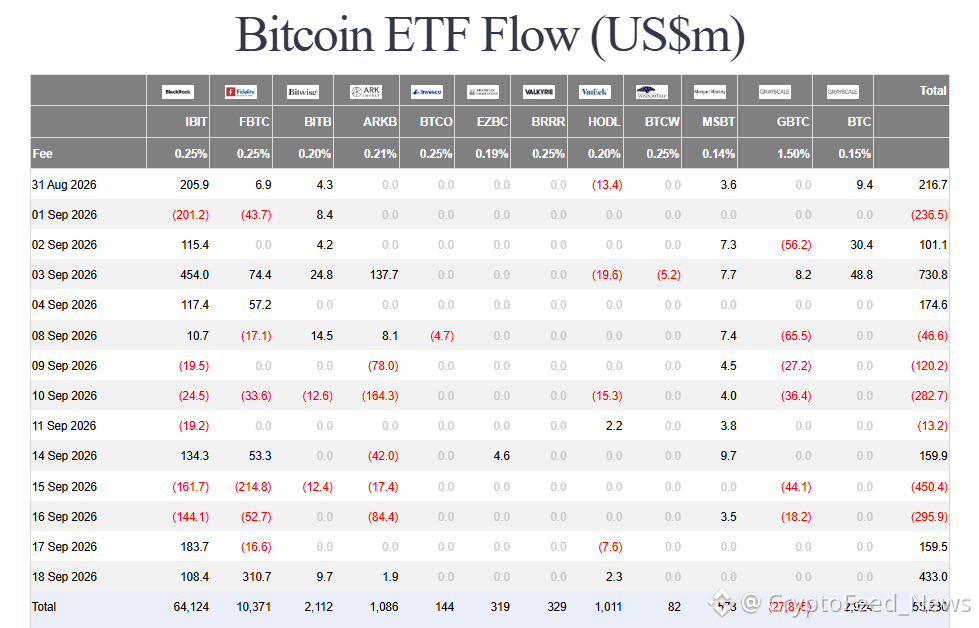
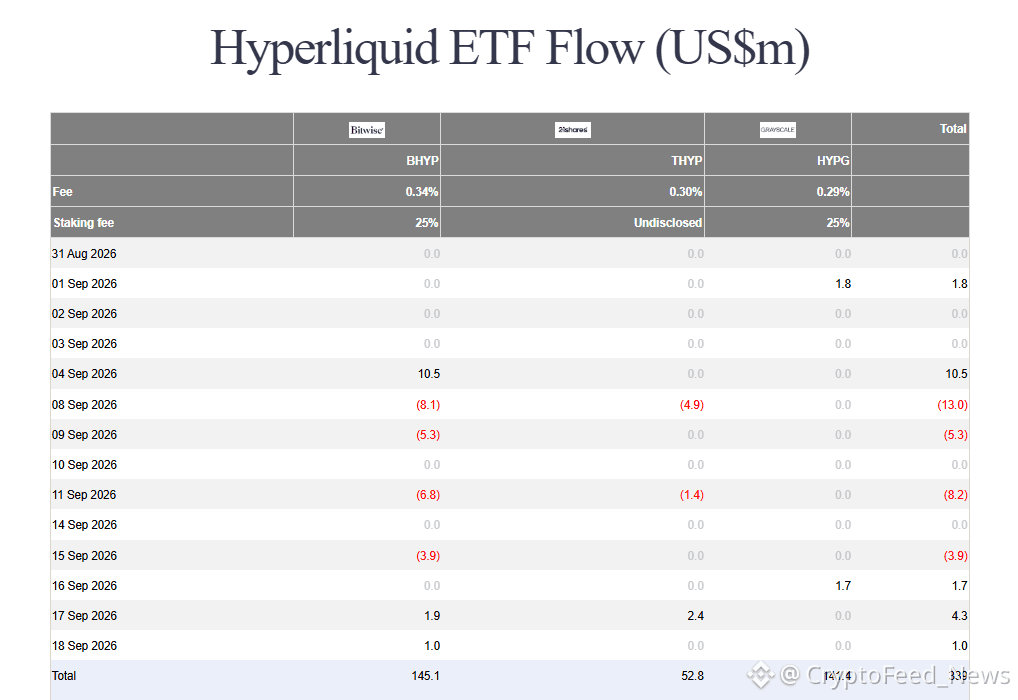
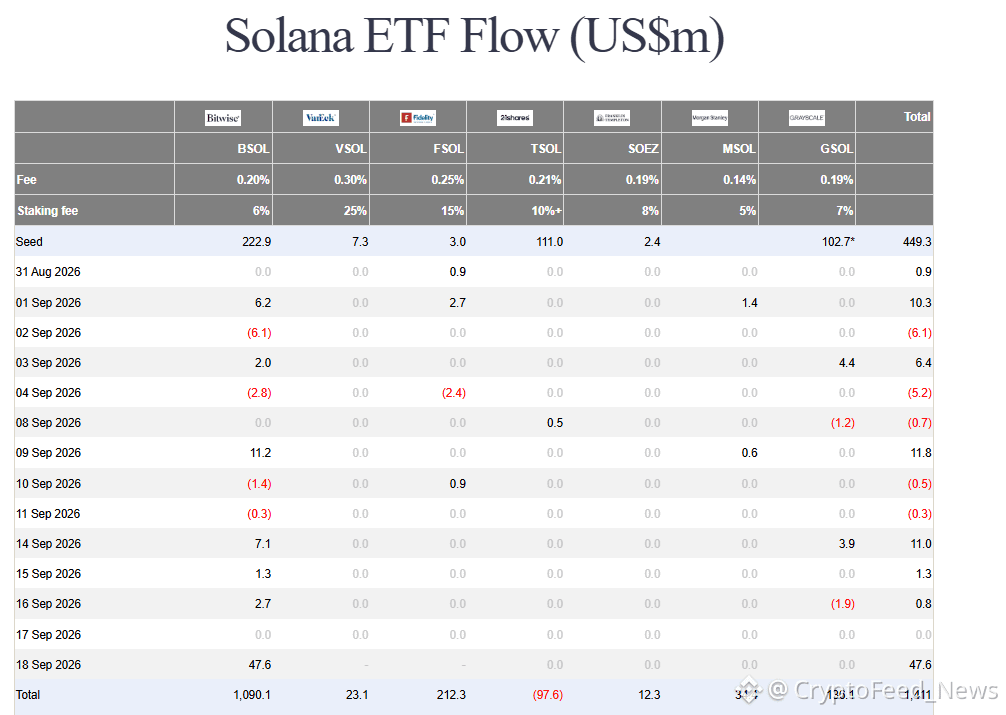
📊 U.S. #CryptoETFs saw $70.7M in net outflows last week, but the numbers hide a big divergence.
🟠 $BTC : +$6.1M
🔵 $ETH : -$140.6M
🟣 $SOL : +$60.7M
⚡ Hyperliquid: +$3.1M
#BitcoinETFs recovered sharply late in the week, with $433M flowing in Friday as BTC reclaimed $80K.
#SolanaETF also stood out, with BSOL attracting $58.7M, nearly 97% of the category's weekly inflows.
But Ethereum remained the weak spot, losing $140.6M despite a strong Friday inflow. 👀 #BTCBreaks80K
📊 U.S. #CryptoETFs saw $70.7M in net outflows last week, but the numbers hide a big divergence.
🟠 $BTC : +$6.1M
🔵 $ETH : -$140.6M
🟣 $SOL : +$60.7M
⚡ Hyperliquid: +$3.1M
#BitcoinETFs recovered sharply late in the week, with $433M flowing in Friday as BTC reclaimed $80K.
#SolanaETF also stood out, with BSOL attracting $58.7M, nearly 97% of the category's weekly inflows.
But Ethereum remained the weak spot, losing $140.6M despite a strong Friday inflow. 👀 #BTCBreaks80K
🟠 $BTC : +$6.1M
🔵 $ETH : -$140.6M
🟣 $SOL : +$60.7M
⚡ Hyperliquid: +$3.1M
#BitcoinETFs recovered sharply late in the week, with $433M flowing in Friday as BTC reclaimed $80K.
#SolanaETF also stood out, with BSOL attracting $58.7M, nearly 97% of the category's weekly inflows.
But Ethereum remained the weak spot, losing $140.6M despite a strong Friday inflow. 👀 #BTCBreaks80K
96

#secreceivesgrayscalelitecointrustetffiling
Litecoin officially steps into the spotlight of exchange-traded funds (ETFs)! 🔦
Have you seen the latest developments? The Securities and Exchange Commission (SEC) is currently reviewing Grayscale’s application to convert the Litecoin Trust into a fully fledged ETF listed on the NYSE Arca.
If you follow the institutional digital asset space, you already know how significant this trend is. Building on the successful roadmap for Bitcoin and Ethereum, a Litecoin ETF would give traditional investors a structured, easy way to gain exposure to one of the oldest alternative coins in the market—without having to manage private keys or wallets.
Why this matters for the broader market:
This isn’t just about Litecoin—it's a major signal for the entire altcoin ecosystem. If regulators show willingness to expand access to spot ETFs beyond BTC and ETH, it could open an entirely new front for institutional-grade adoption of digital assets.
Quick reminder: We’re still in the strict review stage, so there’s no green approval yet. Still, this regulatory process is definitely a development worth keeping on your watchlist as events unfold.
Please follow up
#Litecoin #CryptoETFs #BinanceSquare #CryptoNews
$LTC
{future}(LTCUSDT)
#secreceivesgrayscalelitecointrustetffiling
Litecoin officially steps into the spotlight of exchange-traded funds (ETFs)! 🔦
Have you seen the latest developments? The Securities and Exchange Commission (SEC) is currently reviewing Grayscale’s application to convert the Litecoin Trust into a fully fledged ETF listed on the NYSE Arca.
If you follow the institutional digital asset space, you already know how significant this trend is. Building on the successful roadmap for Bitcoin and Ethereum, a Litecoin ETF would give traditional investors a structured, easy way to gain exposure to one of the oldest alternative coins in the market—without having to manage private keys or wallets.
Why this matters for the broader market:
This isn’t just about Litecoin—it's a major signal for the entire altcoin ecosystem. If regulators show willingness to expand access to spot ETFs beyond BTC and ETH, it could open an entirely new front for institutional-grade adoption of digital assets.
Quick reminder: We’re still in the strict review stage, so there’s no green approval yet. Still, this regulatory process is definitely a development worth keeping on your watchlist as events unfold.
Please follow up
#Litecoin #CryptoETFs #BinanceSquare #CryptoNews
$LTC
Litecoin officially steps into the spotlight of exchange-traded funds (ETFs)! 🔦
Have you seen the latest developments? The Securities and Exchange Commission (SEC) is currently reviewing Grayscale’s application to convert the Litecoin Trust into a fully fledged ETF listed on the NYSE Arca.
If you follow the institutional digital asset space, you already know how significant this trend is. Building on the successful roadmap for Bitcoin and Ethereum, a Litecoin ETF would give traditional investors a structured, easy way to gain exposure to one of the oldest alternative coins in the market—without having to manage private keys or wallets.
Why this matters for the broader market:
This isn’t just about Litecoin—it's a major signal for the entire altcoin ecosystem. If regulators show willingness to expand access to spot ETFs beyond BTC and ETH, it could open an entirely new front for institutional-grade adoption of digital assets.
Quick reminder: We’re still in the strict review stage, so there’s no green approval yet. Still, this regulatory process is definitely a development worth keeping on your watchlist as events unfold.
Please follow up
#Litecoin #CryptoETFs #BinanceSquare #CryptoNews
$LTC

1
31

🔥 The Capital Shift: Top Crypto ETF Trends Dominating the Institutional LandscapeThe integration of #digitalassets into Wall Street’s regulated framework is accelerating at a record pace. While retail day traders focus on short-term liquidations, multi-billion-dollar institutions are aggressively accumulating crypto through spot Exchange-Traded Funds (ETFs).
If you are looking to align your trading strategy with smart money, these are the top crypto ETF developments and metrics defining the market today.
💎 1. The Bitcoin ETF Titans Rebuild Core Positions
Bitcoin spot ETFs remain the absolute gravity center of institutional liquidity. Following a massive three-week run that injected $3.8 billion into the ecosystem, spot buying has created a solid price floor even amid broader macroeconomic turbulence.
• The Runaway Leader: BlackRock’s iShares Bitcoin Trust ($IBIT) has consolidated its throne, now sitting on roughly $71 billion in total assets under management (AUM).
• The Strategy Transition: While low-cost spot alternatives like Fidelity's $FBTC ($18B AUM) capture standard allocations, yield-generating derivatives are gaining major ground. Covered-call strategy ETFs like $YBTC are pulling retail attention by offering targeted income streams built right on top of primary spot portfolios.
🌊 2. The Altcoin Expansion: Solana & XRP Pull Even
The defining story of the current ETF cycle is the rapid growth of non-Bitcoin and non-Ether products, opening up highly diversified access points for traditional allocators.
• Parity Milestones: Spot Solana (SOL) and spot XRP ETFs have pushed deeper into institutional portfolios, near $1.5 billion each in cumulative scale.
• Resilient Inflows: Net flows for these altcoin products have remained consistently positive even on days when Bitcoin records brief capital outflows. Over 1.11 billion XRP tokens are now securely stored inside institutional custodian vaults, pointing to massive, quiet demand accumulation beneath the daily price charts.
🕵️♂️ 3. The Privacy Squeeze: Grayscale’s Zcash ETF Milestone
In the most explosive structural shift of the month, privacy and auditable compliance have taken center stage on traditional stock exchanges.
• Rapid Scaling: Grayscale's spot Zcash ETF ($ZCSH) officially crossed the $500 million AUM milestone on NYSE Arca just two weeks after its debut.
• Supply Shock Mechanics: Backed by major institutional capital matching programs, the fund now holds over 550,000 $ZEC. By effectively locking away roughly 3% of the total circulating supply of Zcash into a regulated corporate wrapper, the product has triggered intense on-chain supply constraints, fundamentally shifting order book behaviors.
💡 The Takeaway for Creators & Traders
The crypto market has matured far beyond individual retail sentiment cycles. The massive scale of these funds means liquidity patterns are dictated by institutional allocation pipelines, options listings, and structural supply shocks.
💬 What is your prediction for the next big crypto ETF asset?
#CryptoETFs #Bitcoin #Solana #XRP
🔥 The Capital Shift: Top Crypto ETF Trends Dominating the Institutional Landscape
The integration of #digitalassets into Wall Street’s regulated framework is accelerating at a record pace. While retail day traders focus on short-term liquidations, multi-billion-dollar institutions are aggressively accumulating crypto through spot Exchange-Traded Funds (ETFs).
If you are looking to align your trading strategy with smart money, these are the top crypto ETF developments and metrics defining the market today.
💎 1. The Bitcoin ETF Titans Rebuild Core Positions
Bitcoin spot ETFs remain the absolute gravity center of institutional liquidity. Following a massive three-week run that injected $3.8 billion into the ecosystem, spot buying has created a solid price floor even amid broader macroeconomic turbulence.
• The Runaway Leader: BlackRock’s iShares Bitcoin Trust ($IBIT) has consolidated its throne, now sitting on roughly $71 billion in total assets under management (AUM).
• The Strategy Transition: While low-cost spot alternatives like Fidelity's $FBTC ($18B AUM) capture standard allocations, yield-generating derivatives are gaining major ground. Covered-call strategy ETFs like $YBTC are pulling retail attention by offering targeted income streams built right on top of primary spot portfolios.
🌊 2. The Altcoin Expansion: Solana & XRP Pull Even
The defining story of the current ETF cycle is the rapid growth of non-Bitcoin and non-Ether products, opening up highly diversified access points for traditional allocators.
• Parity Milestones: Spot Solana (SOL) and spot XRP ETFs have pushed deeper into institutional portfolios, near $1.5 billion each in cumulative scale.
• Resilient Inflows: Net flows for these altcoin products have remained consistently positive even on days when Bitcoin records brief capital outflows. Over 1.11 billion XRP tokens are now securely stored inside institutional custodian vaults, pointing to massive, quiet demand accumulation beneath the daily price charts.
🕵️♂️ 3. The Privacy Squeeze: Grayscale’s Zcash ETF Milestone
In the most explosive structural shift of the month, privacy and auditable compliance have taken center stage on traditional stock exchanges.
• Rapid Scaling: Grayscale's spot Zcash ETF ($ZCSH) officially crossed the $500 million AUM milestone on NYSE Arca just two weeks after its debut.
• Supply Shock Mechanics: Backed by major institutional capital matching programs, the fund now holds over 550,000 $ZEC. By effectively locking away roughly 3% of the total circulating supply of Zcash into a regulated corporate wrapper, the product has triggered intense on-chain supply constraints, fundamentally shifting order book behaviors.
💡 The Takeaway for Creators & Traders
The crypto market has matured far beyond individual retail sentiment cycles. The massive scale of these funds means liquidity patterns are dictated by institutional allocation pipelines, options listings, and structural supply shocks.
💬 What is your prediction for the next big crypto ETF asset?
#CryptoETFs #Bitcoin #Solana #XRP
If you are looking to align your trading strategy with smart money, these are the top crypto ETF developments and metrics defining the market today.
💎 1. The Bitcoin ETF Titans Rebuild Core Positions
Bitcoin spot ETFs remain the absolute gravity center of institutional liquidity. Following a massive three-week run that injected $3.8 billion into the ecosystem, spot buying has created a solid price floor even amid broader macroeconomic turbulence.
• The Runaway Leader: BlackRock’s iShares Bitcoin Trust ($IBIT) has consolidated its throne, now sitting on roughly $71 billion in total assets under management (AUM).
• The Strategy Transition: While low-cost spot alternatives like Fidelity's $FBTC ($18B AUM) capture standard allocations, yield-generating derivatives are gaining major ground. Covered-call strategy ETFs like $YBTC are pulling retail attention by offering targeted income streams built right on top of primary spot portfolios.
🌊 2. The Altcoin Expansion: Solana & XRP Pull Even
The defining story of the current ETF cycle is the rapid growth of non-Bitcoin and non-Ether products, opening up highly diversified access points for traditional allocators.
• Parity Milestones: Spot Solana (SOL) and spot XRP ETFs have pushed deeper into institutional portfolios, near $1.5 billion each in cumulative scale.
• Resilient Inflows: Net flows for these altcoin products have remained consistently positive even on days when Bitcoin records brief capital outflows. Over 1.11 billion XRP tokens are now securely stored inside institutional custodian vaults, pointing to massive, quiet demand accumulation beneath the daily price charts.
🕵️♂️ 3. The Privacy Squeeze: Grayscale’s Zcash ETF Milestone
In the most explosive structural shift of the month, privacy and auditable compliance have taken center stage on traditional stock exchanges.
• Rapid Scaling: Grayscale's spot Zcash ETF ($ZCSH) officially crossed the $500 million AUM milestone on NYSE Arca just two weeks after its debut.
• Supply Shock Mechanics: Backed by major institutional capital matching programs, the fund now holds over 550,000 $ZEC. By effectively locking away roughly 3% of the total circulating supply of Zcash into a regulated corporate wrapper, the product has triggered intense on-chain supply constraints, fundamentally shifting order book behaviors.
💡 The Takeaway for Creators & Traders
The crypto market has matured far beyond individual retail sentiment cycles. The massive scale of these funds means liquidity patterns are dictated by institutional allocation pipelines, options listings, and structural supply shocks.
💬 What is your prediction for the next big crypto ETF asset?
#CryptoETFs #Bitcoin #Solana #XRP
1
493


Are we finally seeing the limits of meme coin demand in traditional finance? I have been watching the institutional crypto space closely, and it is pretty wild to see Bitwise officially closing down its Dogecoin ETF after less than a year on the market. The fund, ticker BWOW, launched back in November 2025 with an impressive $3 million in daily volume on day one, but trading activity dried up completely after that initial hype faded away. 🚀
It really makes me wonder if traditional ETF investors just prefer stickier assets like $BTC and $ETH over speculative meme tokens. While DOGE still commands massive volume on crypto-native exchanges, Wall Street traders clearly did not show up for a wrapper product once the novelty wore off. 📉
What do you think, is this a sign that retail meme energy simply does not translate into ETF inflows? Let me know your thoughts on where meme coins go from here! 💭
#DOGE #CryptoETFs #Dogecoin #Write2Earn
Are we finally seeing the limits of meme coin demand in traditional finance? I have been watching the institutional crypto space closely, and it is pretty wild to see Bitwise officially closing down its Dogecoin ETF after less than a year on the market. The fund, ticker BWOW, launched back in November 2025 with an impressive $3 million in daily volume on day one, but trading activity dried up completely after that initial hype faded away. 🚀
It really makes me wonder if traditional ETF investors just prefer stickier assets like $BTC and $ETH over speculative meme tokens. While DOGE still commands massive volume on crypto-native exchanges, Wall Street traders clearly did not show up for a wrapper product once the novelty wore off. 📉
What do you think, is this a sign that retail meme energy simply does not translate into ETF inflows? Let me know your thoughts on where meme coins go from here! 💭
#DOGE #CryptoETFs #Dogecoin #Write2Earn
It really makes me wonder if traditional ETF investors just prefer stickier assets like $BTC and $ETH over speculative meme tokens. While DOGE still commands massive volume on crypto-native exchanges, Wall Street traders clearly did not show up for a wrapper product once the novelty wore off. 📉
What do you think, is this a sign that retail meme energy simply does not translate into ETF inflows? Let me know your thoughts on where meme coins go from here! 💭
#DOGE #CryptoETFs #Dogecoin #Write2Earn

69
·
--
Have you noticed how the entire market only cares about crypto ETFs that actually launch while treating the rejected ones like they never existed?
Most traders still FOMO into $BTC and $ETH the second an approval headline drops, only to get wrecked on the inevitable dump that follows, completely missing the quieter signals sitting in every failed filing.
Failed crypto ETFs are starting to tell a clearer story than the successful ones. Bitcoin spot products sucked in more than $50 billion in the first year and sent $BTC to all-time highs, yet dozens of other applications for tokens like $SOL never even made it to a vote. Those rejections expose exactly where regulators still see too much manipulation risk or insufficient liquidity, information you cannot get from a green candle. Watch the pattern and you start seeing which narratives traditional money is actually willing to touch versus which ones they quietly treat as too messy.
The practical move is simple. Track every new filing and the SEC’s stated reasons for delay or denial. When they cite custody or surveillance-sharing problems, that is your cue to size positions smaller or wait for better on-chain confirmation instead of chasing the next “ETF incoming” rumor. Failed applications have become a free filter for avoiding the trades that look exciting on Twitter but never survive institutional scrutiny.
Where do you think the next round of rejected ETFs points the market?
#CryptoETFs #Bitcoin #Altcoins
Have you noticed how the entire market only cares about crypto ETFs that actually launch while treating the rejected ones like they never existed?
Most traders still FOMO into $BTC and $ETH the second an approval headline drops, only to get wrecked on the inevitable dump that follows, completely missing the quieter signals sitting in every failed filing.
Failed crypto ETFs are starting to tell a clearer story than the successful ones. Bitcoin spot products sucked in more than $50 billion in the first year and sent $BTC to all-time highs, yet dozens of other applications for tokens like $SOL never even made it to a vote. Those rejections expose exactly where regulators still see too much manipulation risk or insufficient liquidity, information you cannot get from a green candle. Watch the pattern and you start seeing which narratives traditional money is actually willing to touch versus which ones they quietly treat as too messy.
The practical move is simple. Track every new filing and the SEC’s stated reasons for delay or denial. When they cite custody or surveillance-sharing problems, that is your cue to size positions smaller or wait for better on-chain confirmation instead of chasing the next “ETF incoming” rumor. Failed applications have become a free filter for avoiding the trades that look exciting on Twitter but never survive institutional scrutiny.
Where do you think the next round of rejected ETFs points the market?
#CryptoETFs #Bitcoin #Altcoins
Most traders still FOMO into $BTC and $ETH the second an approval headline drops, only to get wrecked on the inevitable dump that follows, completely missing the quieter signals sitting in every failed filing.
Failed crypto ETFs are starting to tell a clearer story than the successful ones. Bitcoin spot products sucked in more than $50 billion in the first year and sent $BTC to all-time highs, yet dozens of other applications for tokens like $SOL never even made it to a vote. Those rejections expose exactly where regulators still see too much manipulation risk or insufficient liquidity, information you cannot get from a green candle. Watch the pattern and you start seeing which narratives traditional money is actually willing to touch versus which ones they quietly treat as too messy.
The practical move is simple. Track every new filing and the SEC’s stated reasons for delay or denial. When they cite custody or surveillance-sharing problems, that is your cue to size positions smaller or wait for better on-chain confirmation instead of chasing the next “ETF incoming” rumor. Failed applications have become a free filter for avoiding the trades that look exciting on Twitter but never survive institutional scrutiny.
Where do you think the next round of rejected ETFs points the market?
#CryptoETFs #Bitcoin #Altcoins
23

Everyone thinks every new crypto ETF launch guarantees endless institutional liquidity, but actually, the wave of inevitable fund liquidations is where the real market risk hides.
Most investors rush to buy asset hype without realizing that low-volume institutional products often get quietly closed down. When an ETF shuts its doors, forced asset liquidations and illiquidity traps can quietly drain your capital while you wait for a rebound.
Think of a niche ETF like a specialty item on a grocery shelf. If customers only purchase staples, the store clears out the slow-moving inventory because keeping the lights on costs more than the item earns. In traditional markets, fund issuers routinely shutter dozens of underperforming products every year simply because maintaining low assets under management becomes unprofitable.
The exact same reality is coming for digital assets. While flagship funds holding $BTC and $ETH capture the vast majority of institutional inflows, smaller proposed baskets holding assets like $SOL will fight for survival. When smaller issuers inevitably pull the plug, forced rebalancing and sudden capital outflows will expose structural weaknesses that standard price charts completely ignore.
How do you think the first major wave of ETF closures will impact underlying spot market liquidity?
#CryptoETFs #BinanceSquare #CryptoMarket
Everyone thinks every new crypto ETF launch guarantees endless institutional liquidity, but actually, the wave of inevitable fund liquidations is where the real market risk hides.
Most investors rush to buy asset hype without realizing that low-volume institutional products often get quietly closed down. When an ETF shuts its doors, forced asset liquidations and illiquidity traps can quietly drain your capital while you wait for a rebound.
Think of a niche ETF like a specialty item on a grocery shelf. If customers only purchase staples, the store clears out the slow-moving inventory because keeping the lights on costs more than the item earns. In traditional markets, fund issuers routinely shutter dozens of underperforming products every year simply because maintaining low assets under management becomes unprofitable.
The exact same reality is coming for digital assets. While flagship funds holding $BTC and $ETH capture the vast majority of institutional inflows, smaller proposed baskets holding assets like $SOL will fight for survival. When smaller issuers inevitably pull the plug, forced rebalancing and sudden capital outflows will expose structural weaknesses that standard price charts completely ignore.
How do you think the first major wave of ETF closures will impact underlying spot market liquidity?
#CryptoETFs #BinanceSquare #CryptoMarket
Most investors rush to buy asset hype without realizing that low-volume institutional products often get quietly closed down. When an ETF shuts its doors, forced asset liquidations and illiquidity traps can quietly drain your capital while you wait for a rebound.
Think of a niche ETF like a specialty item on a grocery shelf. If customers only purchase staples, the store clears out the slow-moving inventory because keeping the lights on costs more than the item earns. In traditional markets, fund issuers routinely shutter dozens of underperforming products every year simply because maintaining low assets under management becomes unprofitable.
The exact same reality is coming for digital assets. While flagship funds holding $BTC and $ETH capture the vast majority of institutional inflows, smaller proposed baskets holding assets like $SOL will fight for survival. When smaller issuers inevitably pull the plug, forced rebalancing and sudden capital outflows will expose structural weaknesses that standard price charts completely ignore.
How do you think the first major wave of ETF closures will impact underlying spot market liquidity?
#CryptoETFs #BinanceSquare #CryptoMarket
28

·
--
The crypto market has seen more ETF rejections than approvals over the past decade, and those failures often moved prices harder than the wins.
That's the pain of chasing every filing. You buy the rumor on $BTC or $ETH, then sit through weeks of delays that drain your account while the crowd panics.
I've been through enough cycles to know the pattern. In 2018 and 2021, rejected Bitcoin ETF applications sent $BTC tumbling 20-30% in days, yet those dips became the best entries for the next leg up.
The successful ones that finally launched in 2024 pulled in tens of billions, proving the demand was always there. Now the failed or delayed filings for assets like $SOL tell a different story. They expose where regulators draw the line, showing which narratives have institutional backing but lack the green light.
A rejection isn't the end. It's often the market's way of shaking out the weak hands before the real move. The ones that don't launch keep the speculation alive longer, creating more volatility to trade.
Where do you think the next wave of ETF attempts lands us?
#CryptoETFs #Bitcoin #Altcoins
The crypto market has seen more ETF rejections than approvals over the past decade, and those failures often moved prices harder than the wins.
That's the pain of chasing every filing. You buy the rumor on $BTC or $ETH , then sit through weeks of delays that drain your account while the crowd panics.
I've been through enough cycles to know the pattern. In 2018 and 2021, rejected Bitcoin ETF applications sent $BTC tumbling 20-30% in days, yet those dips became the best entries for the next leg up.
The successful ones that finally launched in 2024 pulled in tens of billions, proving the demand was always there. Now the failed or delayed filings for assets like $SOL tell a different story. They expose where regulators draw the line, showing which narratives have institutional backing but lack the green light.
A rejection isn't the end. It's often the market's way of shaking out the weak hands before the real move. The ones that don't launch keep the speculation alive longer, creating more volatility to trade.
Where do you think the next wave of ETF attempts lands us?
#CryptoETFs #Bitcoin #Altcoins
That's the pain of chasing every filing. You buy the rumor on $BTC or $ETH , then sit through weeks of delays that drain your account while the crowd panics.
I've been through enough cycles to know the pattern. In 2018 and 2021, rejected Bitcoin ETF applications sent $BTC tumbling 20-30% in days, yet those dips became the best entries for the next leg up.
The successful ones that finally launched in 2024 pulled in tens of billions, proving the demand was always there. Now the failed or delayed filings for assets like $SOL tell a different story. They expose where regulators draw the line, showing which narratives have institutional backing but lack the green light.
A rejection isn't the end. It's often the market's way of shaking out the weak hands before the real move. The ones that don't launch keep the speculation alive longer, creating more volatility to trade.
Where do you think the next wave of ETF attempts lands us?
#CryptoETFs #Bitcoin #Altcoins

29
·
--
Picture this: a major asset manager launches a regulated fund for a meme coin, only to pull the plug less than a year later.
We often watch traders buy into assets assuming that Wall Street validation guarantees endless liquidity, only to realize that packaging cannot manufacture real institutional demand.
Bitwise officially decided to shut down its Dogecoin ETF after struggling to maintain traction over the past twelve months. While spot $BTC and $ETH vehicles absorbed billions in sticky institutional capital, an investment vehicle tracking $DOGE failed to attract the long-term volume needed to keep the lights on.
The contrast shows the sharp divide in how different crypto assets function. Mainstream funds demand clear economic utility and treasury models, while meme assets thrive on decentralized community momentum and 24/7 social velocity that traditional exchange hours cannot capture.
Do you think institutional meme products ever stood a real chance, or was this outcome inevitable from day one?
#Dogecoin #CryptoETFs #Bitwise
Picture this: a major asset manager launches a regulated fund for a meme coin, only to pull the plug less than a year later.
We often watch traders buy into assets assuming that Wall Street validation guarantees endless liquidity, only to realize that packaging cannot manufacture real institutional demand.
Bitwise officially decided to shut down its Dogecoin ETF after struggling to maintain traction over the past twelve months. While spot $BTC and $ETH vehicles absorbed billions in sticky institutional capital, an investment vehicle tracking $DOGE failed to attract the long-term volume needed to keep the lights on.
The contrast shows the sharp divide in how different crypto assets function. Mainstream funds demand clear economic utility and treasury models, while meme assets thrive on decentralized community momentum and 24/7 social velocity that traditional exchange hours cannot capture.
Do you think institutional meme products ever stood a real chance, or was this outcome inevitable from day one?
#Dogecoin #CryptoETFs #Bitwise
We often watch traders buy into assets assuming that Wall Street validation guarantees endless liquidity, only to realize that packaging cannot manufacture real institutional demand.
Bitwise officially decided to shut down its Dogecoin ETF after struggling to maintain traction over the past twelve months. While spot $BTC and $ETH vehicles absorbed billions in sticky institutional capital, an investment vehicle tracking $DOGE failed to attract the long-term volume needed to keep the lights on.
The contrast shows the sharp divide in how different crypto assets function. Mainstream funds demand clear economic utility and treasury models, while meme assets thrive on decentralized community momentum and 24/7 social velocity that traditional exchange hours cannot capture.
Do you think institutional meme products ever stood a real chance, or was this outcome inevitable from day one?
#Dogecoin #CryptoETFs #Bitwise

28
·
--
Here's what happened when Bitwise launched a Dogecoin ETF last year.
Most traders still treat ETF approval like a guaranteed pump and pile in expecting easy inflows. Then they get stuck holding when real demand never shows up and the product quietly dies.
Bitwise is shutting the $DOGE fund down less than a year after it launched. An ETF only gives an asset a distribution channel. It does not create buyers. When assets under management stay too thin, the fees no longer cover the costs and the issuer walks away.
$BTC and $ETH already proved there was genuine institutional appetite. Most other alts have not. This is the part a lot of people missed while they were busy filing more applications.
Where do you think this goes from here for the rest of the altcoin ETF queue?
#CryptoETFs #Dogecoin #Bitcoin
Here's what happened when Bitwise launched a Dogecoin ETF last year.
Most traders still treat ETF approval like a guaranteed pump and pile in expecting easy inflows. Then they get stuck holding when real demand never shows up and the product quietly dies.
Bitwise is shutting the $DOGE fund down less than a year after it launched. An ETF only gives an asset a distribution channel. It does not create buyers. When assets under management stay too thin, the fees no longer cover the costs and the issuer walks away.
$BTC and $ETH already proved there was genuine institutional appetite. Most other alts have not. This is the part a lot of people missed while they were busy filing more applications.
Where do you think this goes from here for the rest of the altcoin ETF queue?
#CryptoETFs #Dogecoin #Bitcoin
Most traders still treat ETF approval like a guaranteed pump and pile in expecting easy inflows. Then they get stuck holding when real demand never shows up and the product quietly dies.
Bitwise is shutting the $DOGE fund down less than a year after it launched. An ETF only gives an asset a distribution channel. It does not create buyers. When assets under management stay too thin, the fees no longer cover the costs and the issuer walks away.
$BTC and $ETH already proved there was genuine institutional appetite. Most other alts have not. This is the part a lot of people missed while they were busy filing more applications.
Where do you think this goes from here for the rest of the altcoin ETF queue?
#CryptoETFs #Dogecoin #Bitcoin

37
Have you noticed how quickly the market forgets that an ETF approval cannot create demand out of thin air?
Too many investors FOMO into narrative rallies assuming an institutional wrapper guarantees upward price action, only to sit on underwater positions when trading volume dries up.
The shutdown of Bitwise's Dogecoin ETF less than a year after launch is a much-needed reality check for the entire industry. While $BTC proved that institutions will allocate heavily to digital assets with strong monetary properties, launching a product for $DOGE exposed the harsh economics of fund management. If capital inflows fail to cover recurring custody and operational overhead, issuers will simply cut their losses and close shop.
To avoid getting trapped in future hype cycles, stop treating ETF filings as guaranteed catalysts. Focus on actual network revenue, continuous on-chain activity, and structural liquidity before positioning into assets like $SOL on filing rumors alone.
Where do you think the market draws the line between sustainable crypto ETFs and short-lived products?
#CryptoETFs #Altcoins #Trading
Have you noticed how quickly the market forgets that an ETF approval cannot create demand out of thin air?
Too many investors FOMO into narrative rallies assuming an institutional wrapper guarantees upward price action, only to sit on underwater positions when trading volume dries up.
The shutdown of Bitwise's Dogecoin ETF less than a year after launch is a much-needed reality check for the entire industry. While $BTC proved that institutions will allocate heavily to digital assets with strong monetary properties, launching a product for $DOGE exposed the harsh economics of fund management. If capital inflows fail to cover recurring custody and operational overhead, issuers will simply cut their losses and close shop.
To avoid getting trapped in future hype cycles, stop treating ETF filings as guaranteed catalysts. Focus on actual network revenue, continuous on-chain activity, and structural liquidity before positioning into assets like $SOL on filing rumors alone.
Where do you think the market draws the line between sustainable crypto ETFs and short-lived products?
#CryptoETFs #Altcoins #Trading
Too many investors FOMO into narrative rallies assuming an institutional wrapper guarantees upward price action, only to sit on underwater positions when trading volume dries up.
The shutdown of Bitwise's Dogecoin ETF less than a year after launch is a much-needed reality check for the entire industry. While $BTC proved that institutions will allocate heavily to digital assets with strong monetary properties, launching a product for $DOGE exposed the harsh economics of fund management. If capital inflows fail to cover recurring custody and operational overhead, issuers will simply cut their losses and close shop.
To avoid getting trapped in future hype cycles, stop treating ETF filings as guaranteed catalysts. Focus on actual network revenue, continuous on-chain activity, and structural liquidity before positioning into assets like $SOL on filing rumors alone.
Where do you think the market draws the line between sustainable crypto ETFs and short-lived products?
#CryptoETFs #Altcoins #Trading

46
$120 million in red on one side versus green everywhere else across the board. Spot Bitcoin funds just took a massive hit, shedding double the amount compared to the previous day. Are institutional investors quietly rotating capital out of $BTC into alternative assets right now? Here is what happened according to CoinDesk: 🔹 Spot Bitcoin ETFs posted a second straight day of outflows, losing $120M on Wednesday. 🔹 Meanwhile, spot funds for ETH and SOL all managed to pull in fresh institutional capital during the same session. Honestly, watching this divergence play out live is fascinating. Might be a good time to keep a much closer eye on altcoin momentum over the next few days. #Write2Earn #Bitcoin #CryptoETFs #CryptoNews
$120 million in red on one side versus green everywhere else across the board. Spot Bitcoin funds just took a massive hit, shedding double the amount compared to the previous day. Are institutional investors quietly rotating capital out of $BTC into alternative assets right now? Here is what happened according to CoinDesk: 🔹 Spot Bitcoin ETFs posted a second straight day of outflows, losing $120M on Wednesday. 🔹 Meanwhile, spot funds for ETH and SOL all managed to pull in fresh institutional capital during the same session. Honestly, watching this divergence play out live is fascinating. Might be a good time to keep a much closer eye on altcoin momentum over the next few days. #Write2Earn #Bitcoin #CryptoETFs #CryptoNews

124
·
--
If you are still buying altcoins purely on ETF approval hype, stop now.
Too many traders confuse regulatory access with real institutional demand, only to watch their positions slowly bleed out when the expected liquidity never shows up.
Bitwise is shutting down its $DOGE ETF less than a year after launch. While some argue that any wrapper provides legitimacy and a path forward, the harsh reality is that an ETF only solves distribution, not appetite. If capital does not flow in, maintaining the fund becomes commercially unsustainable.
Unlike $BTC or $ETH, which have clear institutional narratives around store of value and decentralized infrastructure, speculative assets cannot survive on packaging alone. Traditional finance allocators need a thesis beyond social sentiment before committing billions.
Do you think altcoin ETFs are genuinely viable long-term, or are we going to see a wave of fund liquidations as the novelty wears off?
#Dogecoin #CryptoETFs #Altcoins
If you are still buying altcoins purely on ETF approval hype, stop now.
Too many traders confuse regulatory access with real institutional demand, only to watch their positions slowly bleed out when the expected liquidity never shows up.
Bitwise is shutting down its $DOGE ETF less than a year after launch. While some argue that any wrapper provides legitimacy and a path forward, the harsh reality is that an ETF only solves distribution, not appetite. If capital does not flow in, maintaining the fund becomes commercially unsustainable.
Unlike $BTC or $ETH , which have clear institutional narratives around store of value and decentralized infrastructure, speculative assets cannot survive on packaging alone. Traditional finance allocators need a thesis beyond social sentiment before committing billions.
Do you think altcoin ETFs are genuinely viable long-term, or are we going to see a wave of fund liquidations as the novelty wears off?
#Dogecoin #CryptoETFs #Altcoins
Too many traders confuse regulatory access with real institutional demand, only to watch their positions slowly bleed out when the expected liquidity never shows up.
Bitwise is shutting down its $DOGE ETF less than a year after launch. While some argue that any wrapper provides legitimacy and a path forward, the harsh reality is that an ETF only solves distribution, not appetite. If capital does not flow in, maintaining the fund becomes commercially unsustainable.
Unlike $BTC or $ETH , which have clear institutional narratives around store of value and decentralized infrastructure, speculative assets cannot survive on packaging alone. Traditional finance allocators need a thesis beyond social sentiment before committing billions.
Do you think altcoin ETFs are genuinely viable long-term, or are we going to see a wave of fund liquidations as the novelty wears off?
#Dogecoin #CryptoETFs #Altcoins

30
Getting an approved ETF on Wall Street does not guarantee a single dollar of organic demand.
Most retail traders pile into coins expecting institutional wrappers to automatically send charts upward, only to get stuck holding the bag when reality sets in.
Bitwise is already shutting down its $DOGE ETF less than a year after launch. The hard truth is that fund managers have real maintenance costs, and when Assets Under Management stay flat, keeping the vehicle alive makes zero economic sense. Approval solves distribution logistics, but it cannot manufacture investor appetite out of thin air.
As dozens of altcoins line up hoping for the same institutional momentum as $BTC and $ETH, this closure serves as a warning shot for the entire market. Wall Street is ruthless about cutting products that fail to generate fees, regardless of how strong the online meme community is.
Do you think institutional investors will ever actually care about altcoin ETFs beyond the majors?
#CryptoETFs #Altcoins #MarketAnalysis
Getting an approved ETF on Wall Street does not guarantee a single dollar of organic demand.
Most retail traders pile into coins expecting institutional wrappers to automatically send charts upward, only to get stuck holding the bag when reality sets in.
Bitwise is already shutting down its $DOGE ETF less than a year after launch. The hard truth is that fund managers have real maintenance costs, and when Assets Under Management stay flat, keeping the vehicle alive makes zero economic sense. Approval solves distribution logistics, but it cannot manufacture investor appetite out of thin air.
As dozens of altcoins line up hoping for the same institutional momentum as $BTC and $ETH , this closure serves as a warning shot for the entire market. Wall Street is ruthless about cutting products that fail to generate fees, regardless of how strong the online meme community is.
Do you think institutional investors will ever actually care about altcoin ETFs beyond the majors?
#CryptoETFs #Altcoins #MarketAnalysis
Most retail traders pile into coins expecting institutional wrappers to automatically send charts upward, only to get stuck holding the bag when reality sets in.
Bitwise is already shutting down its $DOGE ETF less than a year after launch. The hard truth is that fund managers have real maintenance costs, and when Assets Under Management stay flat, keeping the vehicle alive makes zero economic sense. Approval solves distribution logistics, but it cannot manufacture investor appetite out of thin air.
As dozens of altcoins line up hoping for the same institutional momentum as $BTC and $ETH , this closure serves as a warning shot for the entire market. Wall Street is ruthless about cutting products that fail to generate fees, regardless of how strong the online meme community is.
Do you think institutional investors will ever actually care about altcoin ETFs beyond the majors?
#CryptoETFs #Altcoins #MarketAnalysis

27
·
--
Everyone thinks getting an ETF approved guarantees that a coin will pump to the moon, but actually, an ETF only provides distribution, not organic demand.
Too many investors rush into the hype before a launch, only to end up holding heavy bags when liquidity completely dries up. It is painful watching your capital bleed simply because you mistook a Wall Street product listing for guaranteed buyer interest.
Think of an ETF like getting shelf space in a massive supermarket. If shoppers do not actively put the product into their carts, the store eventually pulls it off the shelves. That is precisely why Bitwise decided to shut down its $DOGE ETF less than a year after launching. When investor inflows cannot cover the basic operational expenses of managing the fund, keeping it alive makes zero financial sense.
While $BTC proved that institutional appetite can absorb billions, smaller assets cannot automatically copy that playbook. Simply packaging an asset into a fund will not force institutions into $ETH or meme tokens unless there is genuine underlying demand.
Where do you think the next wave of altcoin ETF applications goes from here?
#Dogecoin #CryptoETFs #Binance
Everyone thinks getting an ETF approved guarantees that a coin will pump to the moon, but actually, an ETF only provides distribution, not organic demand.
Too many investors rush into the hype before a launch, only to end up holding heavy bags when liquidity completely dries up. It is painful watching your capital bleed simply because you mistook a Wall Street product listing for guaranteed buyer interest.
Think of an ETF like getting shelf space in a massive supermarket. If shoppers do not actively put the product into their carts, the store eventually pulls it off the shelves. That is precisely why Bitwise decided to shut down its $DOGE ETF less than a year after launching. When investor inflows cannot cover the basic operational expenses of managing the fund, keeping it alive makes zero financial sense.
While $BTC proved that institutional appetite can absorb billions, smaller assets cannot automatically copy that playbook. Simply packaging an asset into a fund will not force institutions into $ETH or meme tokens unless there is genuine underlying demand.
Where do you think the next wave of altcoin ETF applications goes from here?
#Dogecoin #CryptoETFs #Binance
Too many investors rush into the hype before a launch, only to end up holding heavy bags when liquidity completely dries up. It is painful watching your capital bleed simply because you mistook a Wall Street product listing for guaranteed buyer interest.
Think of an ETF like getting shelf space in a massive supermarket. If shoppers do not actively put the product into their carts, the store eventually pulls it off the shelves. That is precisely why Bitwise decided to shut down its $DOGE ETF less than a year after launching. When investor inflows cannot cover the basic operational expenses of managing the fund, keeping it alive makes zero financial sense.
While $BTC proved that institutional appetite can absorb billions, smaller assets cannot automatically copy that playbook. Simply packaging an asset into a fund will not force institutions into $ETH or meme tokens unless there is genuine underlying demand.
Where do you think the next wave of altcoin ETF applications goes from here?
#Dogecoin #CryptoETFs #Binance

17
·
--
Picture this: a major fund manager launches an exchange-traded fund for a top meme coin, only to pull the plug less than a year later.
Most retail traders treat ETF filings as a guaranteed ticket to infinite liquidity and exit pumps. We rush to buy the rumor, assuming institutional packaging automatically creates permanent buy pressure, only to hold heavy bags when the hype evaporates.
That is exactly what just played out with Bitwise shutting down its $DOGE fund. An ETF wrapper grants distribution, but it cannot manufacture organic demand out of thin air. When institutional inflows fail to cover operational upkeep, sponsors simply liquidate the product and walk away.
While $BTC proved that genuine institutional appetite exists for scarce digital commodities, speculative altcoins face a very different reality. As more funds attempt to package tokens like $ETH or smaller caps into traditional vehicles, low volume becomes an existential risk rather than just a slow day of trading.
Which altcoins do you think actually have enough real institutional demand to survive the ETF test?
#Dogecoin #CryptoETFs #Altcoins
Picture this: a major fund manager launches an exchange-traded fund for a top meme coin, only to pull the plug less than a year later.
Most retail traders treat ETF filings as a guaranteed ticket to infinite liquidity and exit pumps. We rush to buy the rumor, assuming institutional packaging automatically creates permanent buy pressure, only to hold heavy bags when the hype evaporates.
That is exactly what just played out with Bitwise shutting down its $DOGE fund. An ETF wrapper grants distribution, but it cannot manufacture organic demand out of thin air. When institutional inflows fail to cover operational upkeep, sponsors simply liquidate the product and walk away.
While $BTC proved that genuine institutional appetite exists for scarce digital commodities, speculative altcoins face a very different reality. As more funds attempt to package tokens like $ETH or smaller caps into traditional vehicles, low volume becomes an existential risk rather than just a slow day of trading.
Which altcoins do you think actually have enough real institutional demand to survive the ETF test?
#Dogecoin #CryptoETFs #Altcoins
Most retail traders treat ETF filings as a guaranteed ticket to infinite liquidity and exit pumps. We rush to buy the rumor, assuming institutional packaging automatically creates permanent buy pressure, only to hold heavy bags when the hype evaporates.
That is exactly what just played out with Bitwise shutting down its $DOGE fund. An ETF wrapper grants distribution, but it cannot manufacture organic demand out of thin air. When institutional inflows fail to cover operational upkeep, sponsors simply liquidate the product and walk away.
While $BTC proved that genuine institutional appetite exists for scarce digital commodities, speculative altcoins face a very different reality. As more funds attempt to package tokens like $ETH or smaller caps into traditional vehicles, low volume becomes an existential risk rather than just a slow day of trading.
Which altcoins do you think actually have enough real institutional demand to survive the ETF test?
#Dogecoin #CryptoETFs #Altcoins

50

·
--
Article
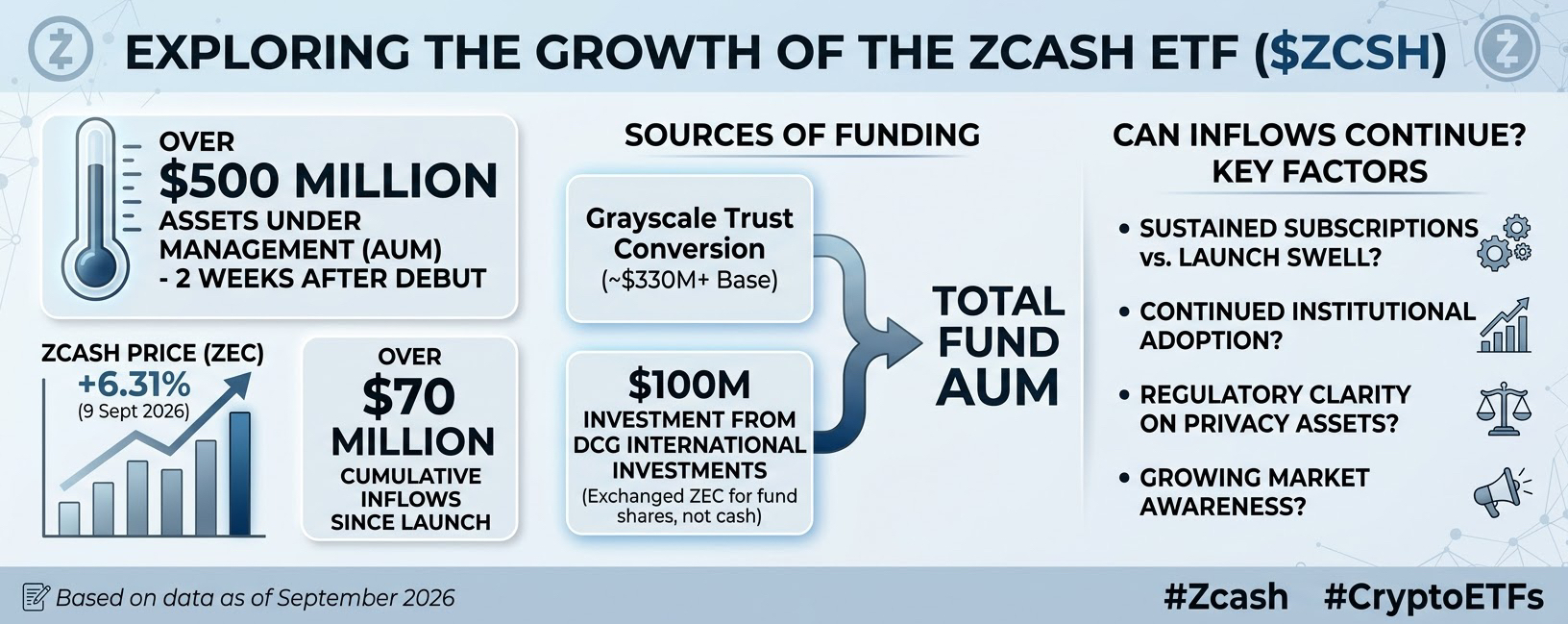
Zcash ETF Crosses $500M AUM: organic Demand or Strategic Allocation?Grayscale’s Zcash ETF ($ZCSH) reached a milestone by crossing $500M in Assets Under Management (AUM) just two weeks post-launch. Coupled with $ZEC gaining solid upward momentum, privacy-focused assets are capturing serious market attention.
A deeper look into the capital composition highlights critical factors driving this growth and outlines what needs to happen to sustain momentum.
Capital Breakdown: Real Inflows vs. Internal Conversion
To assess long-term sustainability, we must separate organic retail/institutional demand from structural re-allocations:
DCG In-Kind Allocation ($100M): DCG International Investments converted existing ZEC holdings directly intoZCSH shares. While this expands the fund’s overall AUM base without selling pressure, it represents an asset restructuring rather than new fiat entering the market.
Trust Conversion (~$330M+ Base): The primary baseline for AUM stems from Grayscale converting its existing 9-year-old Zcash Trust into the spot ETF structure.
* Cumulative Cash Inflows ($70M+): True net-new buying demand stands at over $70M in subscriptions over the first fortnight.
Can the Inflow Velocity Continue?
The initial launch surge is a standard characteristic of major crypto ETP debuts. Transitioning from launch momentum to sustained institutional adoption depends on three core catalysts:
1. Privacy Thesis Shift: Institutional investors are increasingly viewing zero-knowledge privacy protocols as foundational infrastructure rather than pure regulatory liabilities.
2. Secondary Market Liquidity: Continued net inflows require tight bid-ask spreads and deep order books on traditional venues like NYSE Arca.
3. Supply Squeeze Dynamics: As $ZEC is locked into the custodian vault to back ETF shares, liquid circulating exchange supply tightens, magnifying market impact on positive flow days.
Market Perspective
The $100M DCG commitment acts as a strong vote of confidence from major industry backers, anchoring the fund's initial liquidity. However, the key metric to monitor over the coming quarters is daily net cash creation units. Constant, smaller-scale daily cash creations will signal broad-based advisory and retail adoption, proving $ZCSH can function as a long-term engine for Zcash demand.
#Zcash #CryptoETFs #ArifAlpha
Zcash ETF Crosses $500M AUM: organic Demand or Strategic Allocation?
Grayscale’s Zcash ETF ($ZCSH) reached a milestone by crossing $500M in Assets Under Management (AUM) just two weeks post-launch. Coupled with $ZEC gaining solid upward momentum, privacy-focused assets are capturing serious market attention.
A deeper look into the capital composition highlights critical factors driving this growth and outlines what needs to happen to sustain momentum.
Capital Breakdown: Real Inflows vs. Internal Conversion
To assess long-term sustainability, we must separate organic retail/institutional demand from structural re-allocations:
DCG In-Kind Allocation ($100M): DCG International Investments converted existing ZEC holdings directly intoZCSH shares. While this expands the fund’s overall AUM base without selling pressure, it represents an asset restructuring rather than new fiat entering the market.
Trust Conversion (~$330M+ Base): The primary baseline for AUM stems from Grayscale converting its existing 9-year-old Zcash Trust into the spot ETF structure.
* Cumulative Cash Inflows ($70M+): True net-new buying demand stands at over $70M in subscriptions over the first fortnight.
Can the Inflow Velocity Continue?
The initial launch surge is a standard characteristic of major crypto ETP debuts. Transitioning from launch momentum to sustained institutional adoption depends on three core catalysts:
1. Privacy Thesis Shift: Institutional investors are increasingly viewing zero-knowledge privacy protocols as foundational infrastructure rather than pure regulatory liabilities.
2. Secondary Market Liquidity: Continued net inflows require tight bid-ask spreads and deep order books on traditional venues like NYSE Arca.
3. Supply Squeeze Dynamics: As $ZEC is locked into the custodian vault to back ETF shares, liquid circulating exchange supply tightens, magnifying market impact on positive flow days.
Market Perspective
The $100M DCG commitment acts as a strong vote of confidence from major industry backers, anchoring the fund's initial liquidity. However, the key metric to monitor over the coming quarters is daily net cash creation units. Constant, smaller-scale daily cash creations will signal broad-based advisory and retail adoption, proving $ZCSH can function as a long-term engine for Zcash demand.
#Zcash #CryptoETFs #ArifAlpha
A deeper look into the capital composition highlights critical factors driving this growth and outlines what needs to happen to sustain momentum.
Capital Breakdown: Real Inflows vs. Internal Conversion
To assess long-term sustainability, we must separate organic retail/institutional demand from structural re-allocations:
DCG In-Kind Allocation ($100M): DCG International Investments converted existing ZEC holdings directly intoZCSH shares. While this expands the fund’s overall AUM base without selling pressure, it represents an asset restructuring rather than new fiat entering the market.
Trust Conversion (~$330M+ Base): The primary baseline for AUM stems from Grayscale converting its existing 9-year-old Zcash Trust into the spot ETF structure.
* Cumulative Cash Inflows ($70M+): True net-new buying demand stands at over $70M in subscriptions over the first fortnight.
Can the Inflow Velocity Continue?
The initial launch surge is a standard characteristic of major crypto ETP debuts. Transitioning from launch momentum to sustained institutional adoption depends on three core catalysts:
1. Privacy Thesis Shift: Institutional investors are increasingly viewing zero-knowledge privacy protocols as foundational infrastructure rather than pure regulatory liabilities.
2. Secondary Market Liquidity: Continued net inflows require tight bid-ask spreads and deep order books on traditional venues like NYSE Arca.
3. Supply Squeeze Dynamics: As $ZEC is locked into the custodian vault to back ETF shares, liquid circulating exchange supply tightens, magnifying market impact on positive flow days.
Market Perspective
The $100M DCG commitment acts as a strong vote of confidence from major industry backers, anchoring the fund's initial liquidity. However, the key metric to monitor over the coming quarters is daily net cash creation units. Constant, smaller-scale daily cash creations will signal broad-based advisory and retail adoption, proving $ZCSH can function as a long-term engine for Zcash demand.
#Zcash #CryptoETFs #ArifAlpha
125
If you're still judging ETF success solely by the dollar amount of inflows, stop now.
That headline number has fooled more traders than I can count. You see $400 million flood in and you FOMO, missing that it's a rounding error for a massive fund while a smaller competitor just grew 12% overnight.
This is one of those ETF numbers where the percentage matters more than the dollar figure. Think back to the gold ETF days or even the first $BTC products. The funds that exploded weren't always the ones with the biggest raw cash, but the ones capturing a huge slice of their existing pie.
Same thing playing out now with $ETH and even some $SOL related vehicles. An 8% AUM jump in a week tells you more about real demand than a billion dollars into the largest fund.
Where do you think this percentage game goes from here for the next wave of crypto ETFs?
#CryptoETFs #Bitcoin #Ethereum
If you're still judging ETF success solely by the dollar amount of inflows, stop now.
That headline number has fooled more traders than I can count. You see $400 million flood in and you FOMO, missing that it's a rounding error for a massive fund while a smaller competitor just grew 12% overnight.
This is one of those ETF numbers where the percentage matters more than the dollar figure. Think back to the gold ETF days or even the first $BTC products. The funds that exploded weren't always the ones with the biggest raw cash, but the ones capturing a huge slice of their existing pie.
Same thing playing out now with $ETH and even some $SOL related vehicles. An 8% AUM jump in a week tells you more about real demand than a billion dollars into the largest fund.
Where do you think this percentage game goes from here for the next wave of crypto ETFs?
#CryptoETFs #Bitcoin #Ethereum
That headline number has fooled more traders than I can count. You see $400 million flood in and you FOMO, missing that it's a rounding error for a massive fund while a smaller competitor just grew 12% overnight.
This is one of those ETF numbers where the percentage matters more than the dollar figure. Think back to the gold ETF days or even the first $BTC products. The funds that exploded weren't always the ones with the biggest raw cash, but the ones capturing a huge slice of their existing pie.
Same thing playing out now with $ETH and even some $SOL related vehicles. An 8% AUM jump in a week tells you more about real demand than a billion dollars into the largest fund.
Where do you think this percentage game goes from here for the next wave of crypto ETFs?
#CryptoETFs #Bitcoin #Ethereum
19
Log in to explore more content
Join global crypto users on Binance Square
⚡️ Get latest and useful information about crypto.
💬 Trusted by the world’s largest crypto exchange.
👍 Discover real insights from verified creators.
Email / Phone number
Trending Topics
1
#BitcoinHits$85K
1,281 views
80 Discussing
2
#ECBStartsBlockchainEuroSettlement
962 views
149 Discussing
3
#SouthAfricaProposesCryptoExchangeControls
9,807 views
387 Discussing
4
#SolanaCutsTargetSlotTimeTo250ms
11,980 views
346 Discussing
5
#EthereumSurpasses$2700
12,922 views
186 Discussing
6
#CanaryFilesSecondAmendmentForStakedSEIETF
32,651 views
721 Discussing
7
#SaylorHintsStrategyBitcoinBuy
2.4M views
13,608 Discussing
8
#BOJRaisesRatesTo31YearHigh
343,469 views
3,947 Discussing
9
#BuffettStepsDownAsBerkshireChairman
164,971 views
2,200 Discussing
10
#XRPExchangeReservesHitSevenYearLow
189,294 views
1,967 Discussing