
#digitalassets
digitalassets
3.6M views
16,505 Discussing
Hot
Latest

·
--
⚡ Digital Asset Market CLARITY Act Stalls in Congress
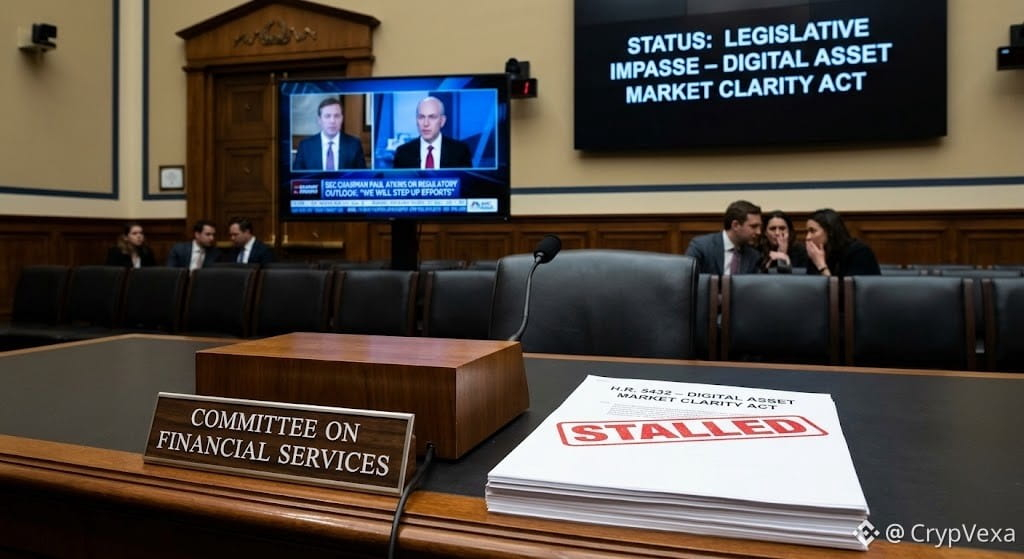
🇺🇸 The Digital Asset Market CLARITY Act has stalled in Congress, delaying efforts to establish clearer rules for crypto assets and define regulatory responsibilities.
📋 The bill aimed to clarify how different digital assets are regulated and which agencies would oversee them.
⚠️ With legislation delayed, SEC and CFTC regulatory actions could remain especially important in shaping the U.S. crypto market.
👀 Could the delay push regulators to play an even bigger role in U.S. crypto policy?
#CLARITYAct #CryptoRegulation #USCrypto #DigitalAssets
⚡ Digital Asset Market CLARITY Act Stalls in Congress
🇺🇸 The Digital Asset Market CLARITY Act has stalled in Congress, delaying efforts to establish clearer rules for crypto assets and define regulatory responsibilities.
📋 The bill aimed to clarify how different digital assets are regulated and which agencies would oversee them.
⚠️ With legislation delayed, SEC and CFTC regulatory actions could remain especially important in shaping the U.S. crypto market.
👀 Could the delay push regulators to play an even bigger role in U.S. crypto policy?
#CLARITYAct #CryptoRegulation #USCrypto #DigitalAssets
🇺🇸 The Digital Asset Market CLARITY Act has stalled in Congress, delaying efforts to establish clearer rules for crypto assets and define regulatory responsibilities.
📋 The bill aimed to clarify how different digital assets are regulated and which agencies would oversee them.
⚠️ With legislation delayed, SEC and CFTC regulatory actions could remain especially important in shaping the U.S. crypto market.
👀 Could the delay push regulators to play an even bigger role in U.S. crypto policy?
#CLARITYAct #CryptoRegulation #USCrypto #DigitalAssets
1
51

·
--
#vietnamplansfirstcryptolicensesin2026
🇻🇳 Vietnam is putting crypto trading on a formal regulatory track.
The country’s pilot crypto-asset market framework took effect in September 2025, and in January 2026 the Ministry of Finance issued the administrative procedures needed to process licenses for crypto-asset trading-market operators.
The requirements are anything but light.
Applicants must be Vietnamese companies with at least VND 10 trillion ($380M+) in contributed charter capital, while foreign ownership is capped at 49%. Platforms must also meet Level 4 information-system security standards and maintain procedures covering custody, trading, AML, transaction monitoring, internal controls and client protection.
Vietnam’s pilot framework allows authorities to select up to five crypto-asset service providers.
That creates a very different environment from an open exchange market: high capital requirements and compliance standards could leave the pilot concentrated among a small number of well-capitalized operators.
The bigger question is what comes next.
Could Vietnam’s regulated approach become a model for other Southeast Asian markets?
#VietnamCrypto2026 #CryptoRegulation #DigitalAssets
#vietnamplansfirstcryptolicensesin2026
🇻🇳 Vietnam is putting crypto trading on a formal regulatory track.
The country’s pilot crypto-asset market framework took effect in September 2025, and in January 2026 the Ministry of Finance issued the administrative procedures needed to process licenses for crypto-asset trading-market operators.
The requirements are anything but light.
Applicants must be Vietnamese companies with at least VND 10 trillion ($380M+) in contributed charter capital, while foreign ownership is capped at 49%. Platforms must also meet Level 4 information-system security standards and maintain procedures covering custody, trading, AML, transaction monitoring, internal controls and client protection.
Vietnam’s pilot framework allows authorities to select up to five crypto-asset service providers.
That creates a very different environment from an open exchange market: high capital requirements and compliance standards could leave the pilot concentrated among a small number of well-capitalized operators.
The bigger question is what comes next.
Could Vietnam’s regulated approach become a model for other Southeast Asian markets?
#VietnamCrypto2026 #CryptoRegulation #DigitalAssets
🇻🇳 Vietnam is putting crypto trading on a formal regulatory track.
The country’s pilot crypto-asset market framework took effect in September 2025, and in January 2026 the Ministry of Finance issued the administrative procedures needed to process licenses for crypto-asset trading-market operators.
The requirements are anything but light.
Applicants must be Vietnamese companies with at least VND 10 trillion ($380M+) in contributed charter capital, while foreign ownership is capped at 49%. Platforms must also meet Level 4 information-system security standards and maintain procedures covering custody, trading, AML, transaction monitoring, internal controls and client protection.
Vietnam’s pilot framework allows authorities to select up to five crypto-asset service providers.
That creates a very different environment from an open exchange market: high capital requirements and compliance standards could leave the pilot concentrated among a small number of well-capitalized operators.
The bigger question is what comes next.
Could Vietnam’s regulated approach become a model for other Southeast Asian markets?
#VietnamCrypto2026 #CryptoRegulation #DigitalAssets

45


Article
Hong Kong’s HKD Stablecoin Just Entered the Tokenized Fund Era🚨 Hong Kong’s HKD stablecoin is moving beyond payments. 🇭🇰💵
On September 18, HKDAP was used by ChinaAMC Hong Kong, OSL and Standard Chartered in a digital money market fund transaction.
HKDAP was used to subscribe for and redeem fund units.
That’s the interesting part. 👀
A regulated stablecoin is now being tested as a bridge between digital money and tokenized investment products.
Payments → Settlement → Funds → Tokenized assets. 🔗
This could be another step toward stablecoins becoming part of traditional financial infrastructure.
🧠 The bigger story isn’t just HKDAP. It’s how stablecoins could connect money with tokenized assets.
$AKE $B2 $MYX
#HKDAP
{alpha}(560x783c3f003f172c6ac5ac700218a357d2d66ee2a2)
{alpha}(560x2c3a8ee94ddd97244a93bc48298f97d2c412f7db)
{alpha}(560xd82544bf0dfe8385ef8fa34d67e6e4940cc63e16)
#Stablecoin #Tokenization #DigitalAssets
Hong Kong’s HKD Stablecoin Just Entered the Tokenized Fund Era
🚨 Hong Kong’s HKD stablecoin is moving beyond payments. 🇭🇰💵
On September 18, HKDAP was used by ChinaAMC Hong Kong, OSL and Standard Chartered in a digital money market fund transaction.
HKDAP was used to subscribe for and redeem fund units.
That’s the interesting part. 👀
A regulated stablecoin is now being tested as a bridge between digital money and tokenized investment products.
Payments → Settlement → Funds → Tokenized assets. 🔗
This could be another step toward stablecoins becoming part of traditional financial infrastructure.
🧠 The bigger story isn’t just HKDAP. It’s how stablecoins could connect money with tokenized assets.
$AKE $B2 $MYX
#HKDAP
#Stablecoin #Tokenization #DigitalAssets
On September 18, HKDAP was used by ChinaAMC Hong Kong, OSL and Standard Chartered in a digital money market fund transaction.
HKDAP was used to subscribe for and redeem fund units.
That’s the interesting part. 👀
A regulated stablecoin is now being tested as a bridge between digital money and tokenized investment products.
Payments → Settlement → Funds → Tokenized assets. 🔗
This could be another step toward stablecoins becoming part of traditional financial infrastructure.
🧠 The bigger story isn’t just HKDAP. It’s how stablecoins could connect money with tokenized assets.
$AKE $B2 $MYX
#HKDAP
#Stablecoin #Tokenization #DigitalAssets
37

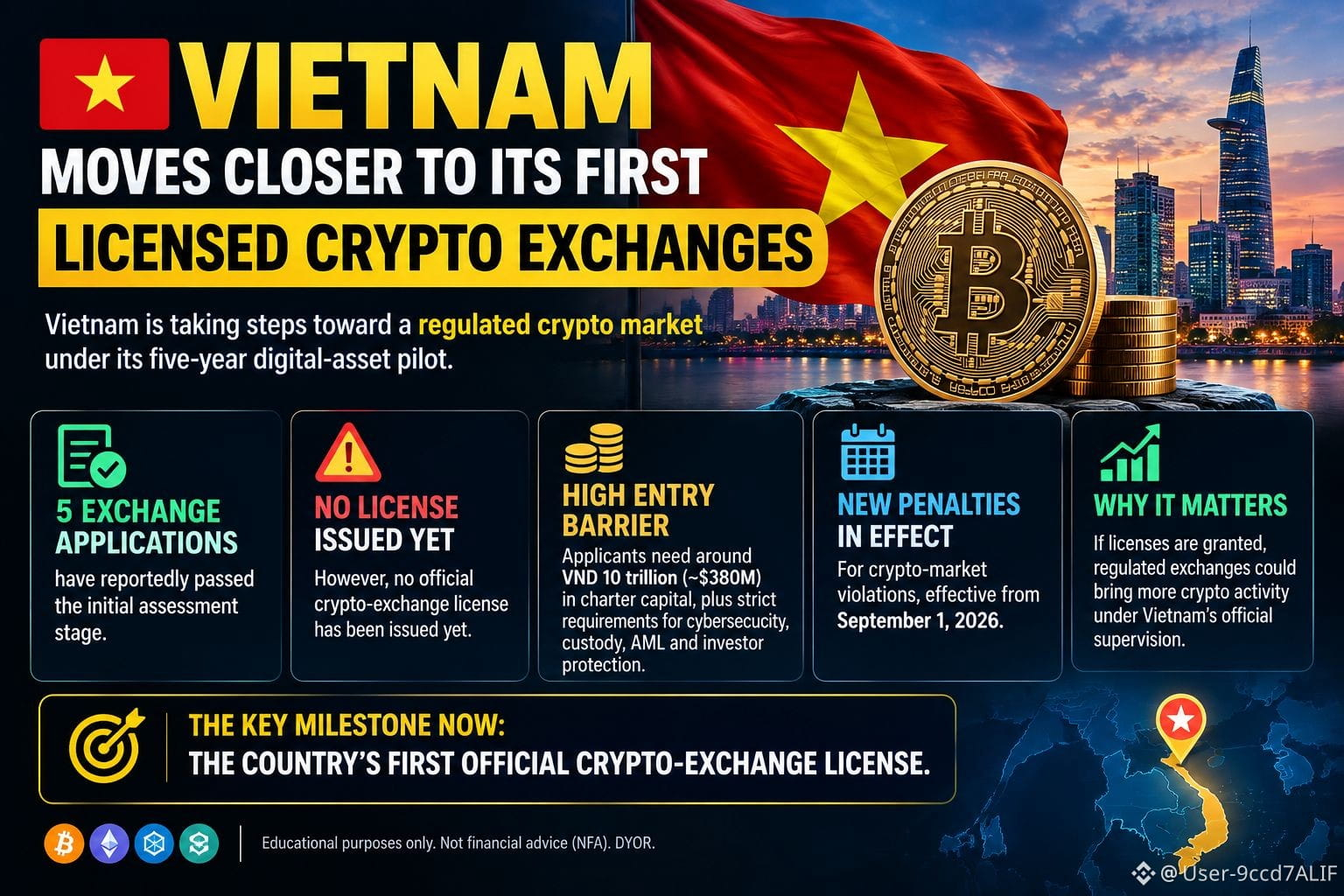
🇻🇳 VIETNAM MOVES CLOSER TO ITS FIRST LICENSED CRYPTO EXCHANGES
Vietnam is taking steps toward a regulated crypto market under its five-year digital-asset pilot.
🔹 5 exchange applications have reportedly passed the initial assessment stage.
⚠️ However, no official crypto-exchange license has been issued yet.
💰 Applicants face a high entry barrier, including around VND 10 trillion (~$380M) in charter capital, plus strict requirements for cybersecurity, custody, AML and investor protection.
📅 New penalties for crypto-market violations also took effect on September 1, 2026.
🔥 Why it matters:
If licenses are granted, regulated exchanges could bring more crypto activity under Vietnam’s official supervision.
👀 The key milestone now: the country’s first official crypto-exchange license.
#CryptoRegulation #CryptoNewss #BinanceSquare #DigitalAssets #blockchain
Educational purposes only. NFA. DYOR.
🇻🇳 VIETNAM MOVES CLOSER TO ITS FIRST LICENSED CRYPTO EXCHANGES
Vietnam is taking steps toward a regulated crypto market under its five-year digital-asset pilot.
🔹 5 exchange applications have reportedly passed the initial assessment stage.
⚠️ However, no official crypto-exchange license has been issued yet.
💰 Applicants face a high entry barrier, including around VND 10 trillion (~$380M) in charter capital, plus strict requirements for cybersecurity, custody, AML and investor protection.
📅 New penalties for crypto-market violations also took effect on September 1, 2026.
🔥 Why it matters:
If licenses are granted, regulated exchanges could bring more crypto activity under Vietnam’s official supervision.
👀 The key milestone now: the country’s first official crypto-exchange license.
#CryptoRegulation #CryptoNewss #BinanceSquare #DigitalAssets #blockchain
Educational purposes only. NFA. DYOR.
Vietnam is taking steps toward a regulated crypto market under its five-year digital-asset pilot.
🔹 5 exchange applications have reportedly passed the initial assessment stage.
⚠️ However, no official crypto-exchange license has been issued yet.
💰 Applicants face a high entry barrier, including around VND 10 trillion (~$380M) in charter capital, plus strict requirements for cybersecurity, custody, AML and investor protection.
📅 New penalties for crypto-market violations also took effect on September 1, 2026.
🔥 Why it matters:
If licenses are granted, regulated exchanges could bring more crypto activity under Vietnam’s official supervision.
👀 The key milestone now: the country’s first official crypto-exchange license.
#CryptoRegulation #CryptoNewss #BinanceSquare #DigitalAssets #blockchain
Educational purposes only. NFA. DYOR.
49

·
--
The biggest crypto ethics debate in Washington may not be about Bitcoin ownership.
It’s about where an official’s financial interest ends when wealth moves through the family.
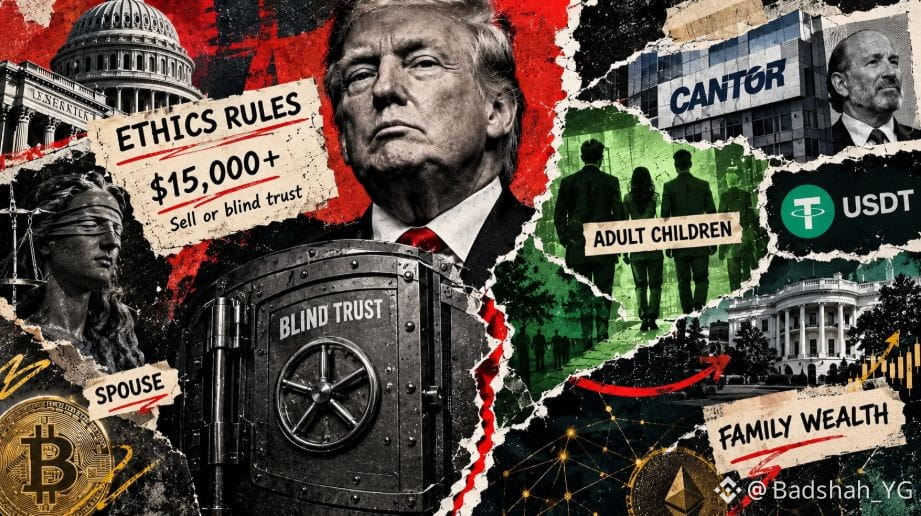
A proposed ethics provision in the U.S. digital-asset market-structure bill would have required certain senior officials holding $15,000+ in qualifying crypto-business equity to either sell it or place it in a qualified blind trust.
Spouses would have faced similar restrictions.
Adult children were different.
That small distinction creates a much bigger question:
Should financial separation stop at the official, or extend further into the family?
The issue becomes especially relevant when an official leaves a company, transfers ownership to adult children, and the family remains economically connected to an industry affected by government policy.
There’s also an important difference between a family transfer and a qualified blind trust.
A blind trust is designed to reduce the official’s knowledge and control over specific investments through an independent trustee. Simply transferring ownership to another family member does not necessarily create the same separation.
The proposed rules never became law after the bill failed to advance on September 15.
But the debate highlights something important for crypto:
As stablecoins, token issuance and digital-asset markets become more connected to public policy, ownership, control and family wealth can become difficult lines to separate.
The technology is new.
The ethics question is much older:
How far should conflict-of-interest rules follow wealth across generations?
#crypto #blockchain #Stablecoins #DigitalAssets #Badshah_YG
$AKE $ZAMA $G
The biggest crypto ethics debate in Washington may not be about Bitcoin ownership.
It’s about where an official’s financial interest ends when wealth moves through the family.
A proposed ethics provision in the U.S. digital-asset market-structure bill would have required certain senior officials holding $15,000+ in qualifying crypto-business equity to either sell it or place it in a qualified blind trust.
Spouses would have faced similar restrictions.
Adult children were different.
That small distinction creates a much bigger question:
Should financial separation stop at the official, or extend further into the family?
The issue becomes especially relevant when an official leaves a company, transfers ownership to adult children, and the family remains economically connected to an industry affected by government policy.
There’s also an important difference between a family transfer and a qualified blind trust.
A blind trust is designed to reduce the official’s knowledge and control over specific investments through an independent trustee. Simply transferring ownership to another family member does not necessarily create the same separation.
The proposed rules never became law after the bill failed to advance on September 15.
But the debate highlights something important for crypto:
As stablecoins, token issuance and digital-asset markets become more connected to public policy, ownership, control and family wealth can become difficult lines to separate.
The technology is new.
The ethics question is much older:
How far should conflict-of-interest rules follow wealth across generations?
#crypto #blockchain #Stablecoins #DigitalAssets #Badshah_YG
$AKE $ZAMA $G
It’s about where an official’s financial interest ends when wealth moves through the family.
A proposed ethics provision in the U.S. digital-asset market-structure bill would have required certain senior officials holding $15,000+ in qualifying crypto-business equity to either sell it or place it in a qualified blind trust.
Spouses would have faced similar restrictions.
Adult children were different.
That small distinction creates a much bigger question:
Should financial separation stop at the official, or extend further into the family?
The issue becomes especially relevant when an official leaves a company, transfers ownership to adult children, and the family remains economically connected to an industry affected by government policy.
There’s also an important difference between a family transfer and a qualified blind trust.
A blind trust is designed to reduce the official’s knowledge and control over specific investments through an independent trustee. Simply transferring ownership to another family member does not necessarily create the same separation.
The proposed rules never became law after the bill failed to advance on September 15.
But the debate highlights something important for crypto:
As stablecoins, token issuance and digital-asset markets become more connected to public policy, ownership, control and family wealth can become difficult lines to separate.
The technology is new.
The ethics question is much older:
How far should conflict-of-interest rules follow wealth across generations?
#crypto #blockchain #Stablecoins #DigitalAssets #Badshah_YG
$AKE $ZAMA $G
1
6
577

·
--
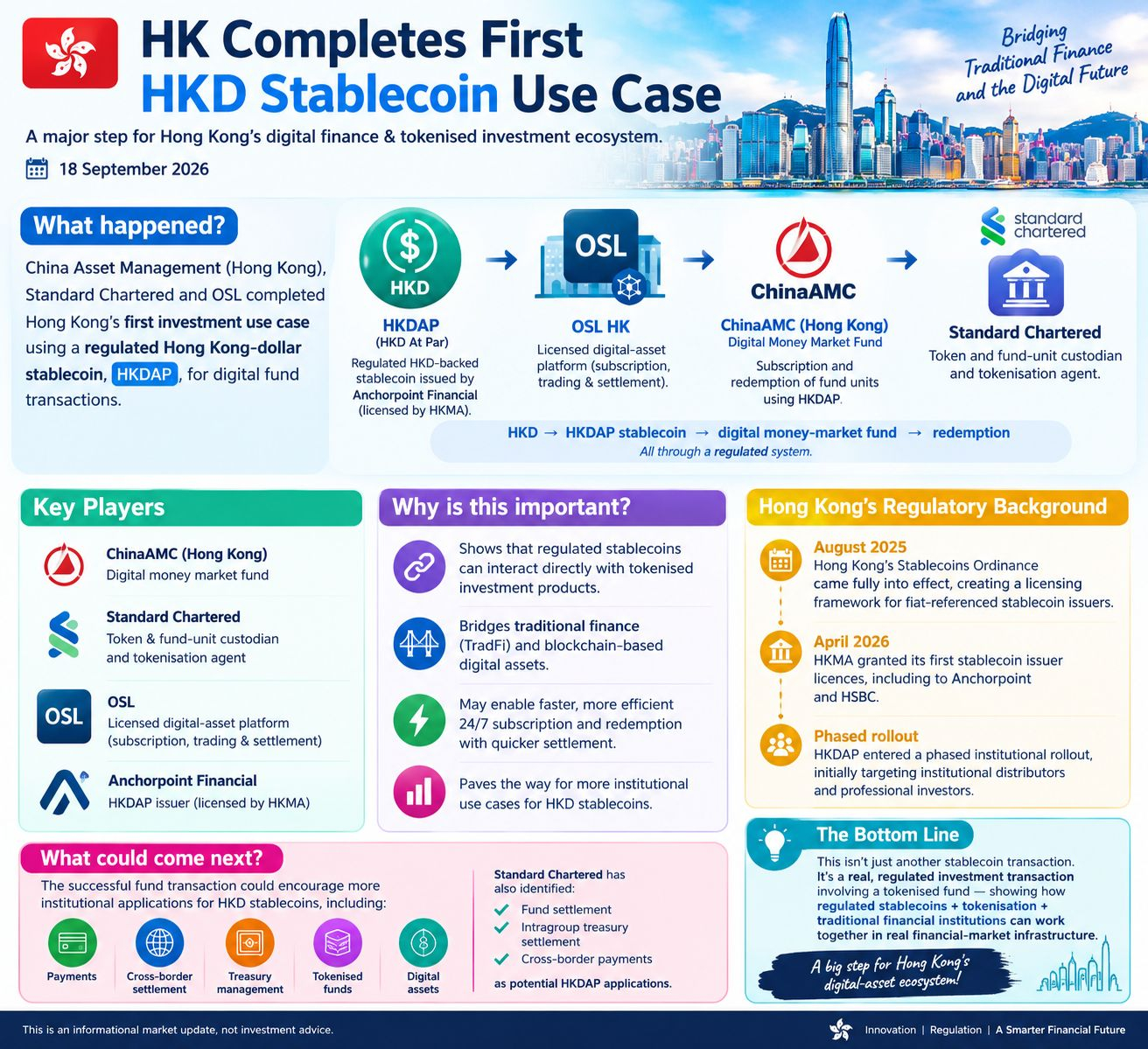
$#HKCompletesFirstHKDStablecoinUseCase HK Completes First HKD Stablecoin Use Case
Hong Kong has reached a major milestone in digital finance with its first investment use case involving a regulated Hong Kong-dollar stablecoin, HKDAP. The transaction involved ChinaAMC (Hong Kong), Standard Chartered, and OSL, connecting stablecoin settlement with a tokenised money-market fund.
This development highlights Hong Kong’s growing focus on regulated stablecoins, tokenisation, and institutional digital assets, potentially opening the door to faster and more efficient fund settlement, treasury management, and cross-border payments.
#HKCompletesFirstHKDStablecoinUseCase #HKDAP #Stablecoin #HongKong #Crypto #DigitalAssets #HKCompletesFirstHKDStablecoinUseCase #LineraShutsDownAfterFundraisingFallsShort
$#HKCompletesFirstHKDStablecoinUseCase HK Completes First HKD Stablecoin Use Case
Hong Kong has reached a major milestone in digital finance with its first investment use case involving a regulated Hong Kong-dollar stablecoin, HKDAP. The transaction involved ChinaAMC (Hong Kong), Standard Chartered, and OSL, connecting stablecoin settlement with a tokenised money-market fund.
This development highlights Hong Kong’s growing focus on regulated stablecoins, tokenisation, and institutional digital assets, potentially opening the door to faster and more efficient fund settlement, treasury management, and cross-border payments.
#HKCompletesFirstHKDStablecoinUseCase #HKDAP #Stablecoin #HongKong #Crypto #DigitalAssets #HKCompletesFirstHKDStablecoinUseCase #LineraShutsDownAfterFundraisingFallsShort
Hong Kong has reached a major milestone in digital finance with its first investment use case involving a regulated Hong Kong-dollar stablecoin, HKDAP. The transaction involved ChinaAMC (Hong Kong), Standard Chartered, and OSL, connecting stablecoin settlement with a tokenised money-market fund.
This development highlights Hong Kong’s growing focus on regulated stablecoins, tokenisation, and institutional digital assets, potentially opening the door to faster and more efficient fund settlement, treasury management, and cross-border payments.
#HKCompletesFirstHKDStablecoinUseCase #HKDAP #Stablecoin #HongKong #Crypto #DigitalAssets #HKCompletesFirstHKDStablecoinUseCase #LineraShutsDownAfterFundraisingFallsShort
93

🚨 XRP BACK IN THE U.S. DIGITAL ASSET STOCKPILE DEBATE 🇺🇸
A U.S. House panel has advanced legislation that would establish a Strategic Bitcoin Reserve and a separate Digital Asset Stockpile.
The proposal could include non-Bitcoin digital assets already held by the U.S. government — putting $XRP back in the spotlight.
⚠️ The bill does NOT authorize the government to purchase XRP.
{spot}(XRPUSDT)
#XRP #Bitcoin #CryptoNews #CryptoRegulation #DigitalAssets
🚨 XRP BACK IN THE U.S. DIGITAL ASSET STOCKPILE DEBATE 🇺🇸
A U.S. House panel has advanced legislation that would establish a Strategic Bitcoin Reserve and a separate Digital Asset Stockpile.
The proposal could include non-Bitcoin digital assets already held by the U.S. government — putting $XRP back in the spotlight.
⚠️ The bill does NOT authorize the government to purchase XRP.
#XRP #Bitcoin #CryptoNews #CryptoRegulation #DigitalAssets
A U.S. House panel has advanced legislation that would establish a Strategic Bitcoin Reserve and a separate Digital Asset Stockpile.
The proposal could include non-Bitcoin digital assets already held by the U.S. government — putting $XRP back in the spotlight.
⚠️ The bill does NOT authorize the government to purchase XRP.
#XRP #Bitcoin #CryptoNews #CryptoRegulation #DigitalAssets

80

#vietnamplansfirstcryptolicensesin2026
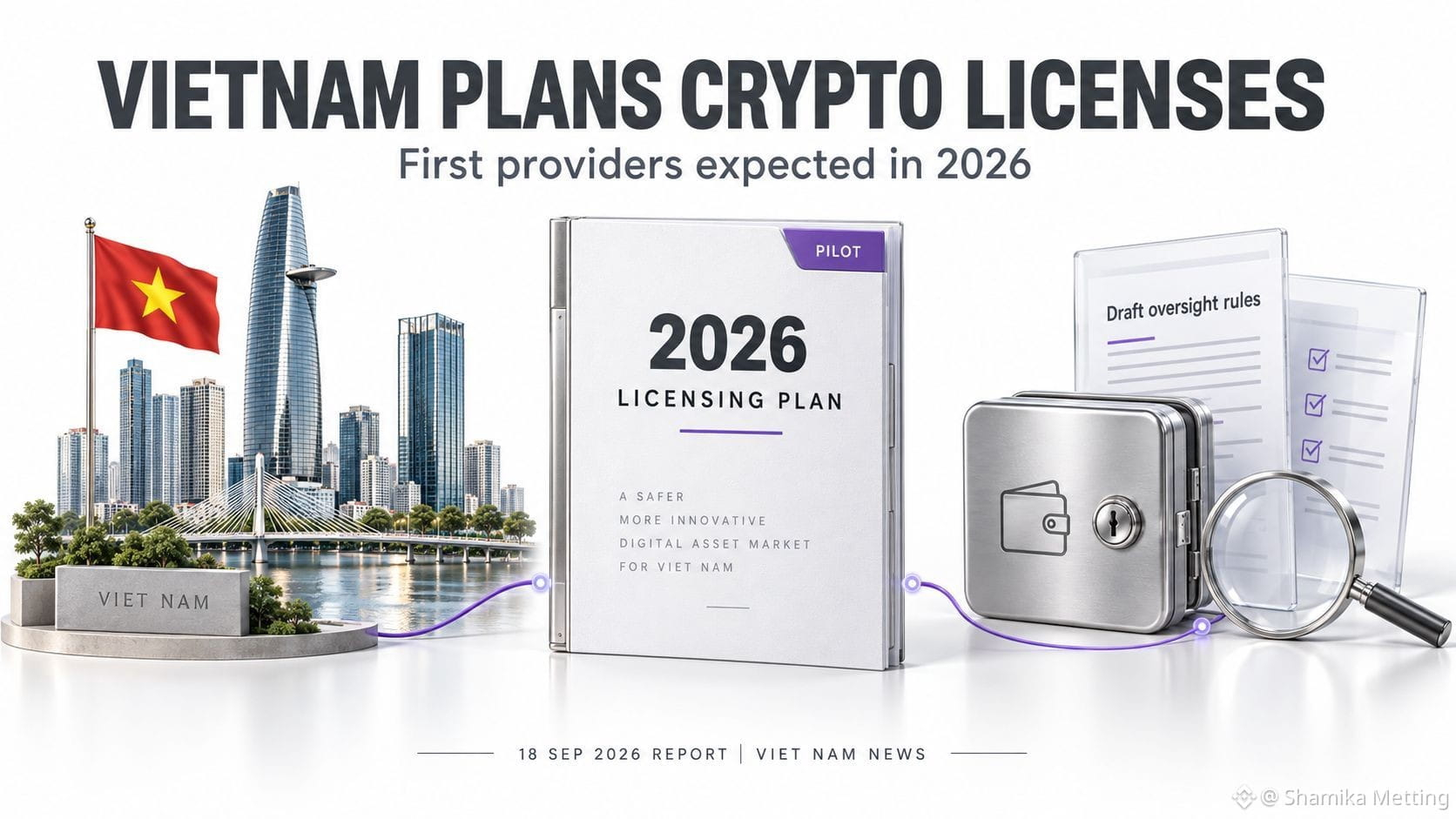
Vietnam plans to issue its first digital asset exchange licenses in 2026 — platform criteria matter
The next milestone for Vietnam in the digital assets space could bring a clearer level of accountability for platforms that handle users’ assets.
According to a report published on September 18, 2026 by the newspaper “Việt Nam News,” the country expects the first companies offering crypto-asset services to receive licenses and begin operating in 2026. This remains an anticipated achievement. The report also outlines proposed requirements for weekly custody reporting and twice-yearly audited reports regarding clients’ assets. These reporting requirements are still preliminary proposals.
The licensing efforts fall within the framework of the pilot scheme issued under Decision 05/2025/NQ-CP, issued on September 9, 2025.
My view: Licensing may give users clearer accountability when choosing where they keep and trade their assets. Its practical value will depend on how the platforms handle custody, withdrawals, disclosures, and complaints once they start operating.
The items worth following up on include the licensed entities mentioned, the final operating requirements, and the actual launch dates. Together, they will show how this framework translates into day-to-day services.
What will matter to you most: transparency in custody, reliable withdrawals, or trading costs?
Please follow up
#VietnamPlansFirstCryptoLicensesIn2026 #DigitalAssets
$AKE $B2 $MYX
#vietnamplansfirstcryptolicensesin2026
Vietnam plans to issue its first digital asset exchange licenses in 2026 — platform criteria matter
The next milestone for Vietnam in the digital assets space could bring a clearer level of accountability for platforms that handle users’ assets.
According to a report published on September 18, 2026 by the newspaper “Việt Nam News,” the country expects the first companies offering crypto-asset services to receive licenses and begin operating in 2026. This remains an anticipated achievement. The report also outlines proposed requirements for weekly custody reporting and twice-yearly audited reports regarding clients’ assets. These reporting requirements are still preliminary proposals.
The licensing efforts fall within the framework of the pilot scheme issued under Decision 05/2025/NQ-CP, issued on September 9, 2025.
My view: Licensing may give users clearer accountability when choosing where they keep and trade their assets. Its practical value will depend on how the platforms handle custody, withdrawals, disclosures, and complaints once they start operating.
The items worth following up on include the licensed entities mentioned, the final operating requirements, and the actual launch dates. Together, they will show how this framework translates into day-to-day services.
What will matter to you most: transparency in custody, reliable withdrawals, or trading costs?
Please follow up
#VietnamPlansFirstCryptoLicensesIn2026 #DigitalAssets
$AKE $B2 $MYX
Vietnam plans to issue its first digital asset exchange licenses in 2026 — platform criteria matter
The next milestone for Vietnam in the digital assets space could bring a clearer level of accountability for platforms that handle users’ assets.
According to a report published on September 18, 2026 by the newspaper “Việt Nam News,” the country expects the first companies offering crypto-asset services to receive licenses and begin operating in 2026. This remains an anticipated achievement. The report also outlines proposed requirements for weekly custody reporting and twice-yearly audited reports regarding clients’ assets. These reporting requirements are still preliminary proposals.
The licensing efforts fall within the framework of the pilot scheme issued under Decision 05/2025/NQ-CP, issued on September 9, 2025.
My view: Licensing may give users clearer accountability when choosing where they keep and trade their assets. Its practical value will depend on how the platforms handle custody, withdrawals, disclosures, and complaints once they start operating.
The items worth following up on include the licensed entities mentioned, the final operating requirements, and the actual launch dates. Together, they will show how this framework translates into day-to-day services.
What will matter to you most: transparency in custody, reliable withdrawals, or trading costs?
Please follow up
#VietnamPlansFirstCryptoLicensesIn2026 #DigitalAssets
$AKE $B2 $MYX
1
63
#hkcompletesfirsthkdstablecoinusecase
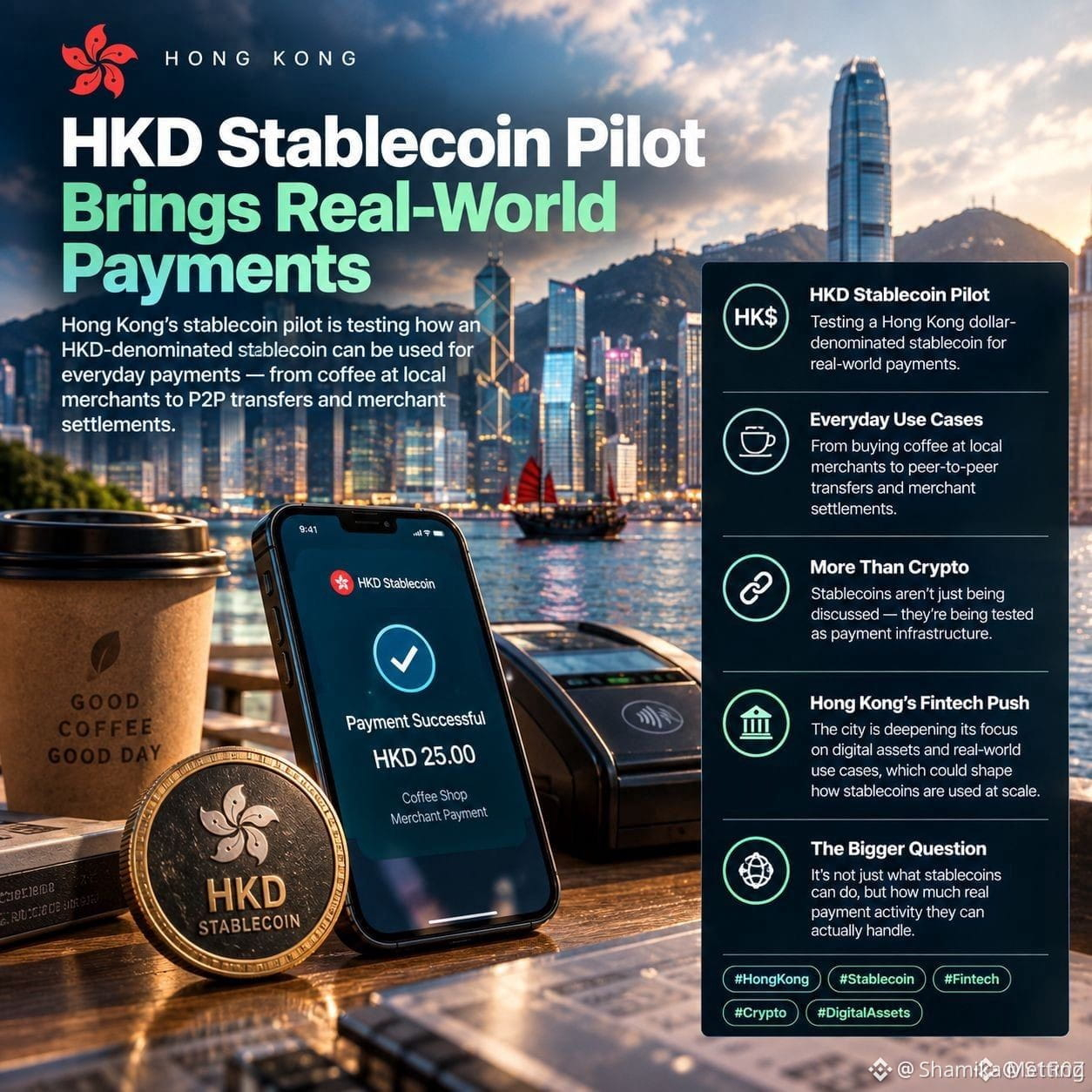
🚨 An experimental project is underway for a stablecoin pegged to the Hong Kong Dollar (HKD) in Hong Kong, to bring digital payments into the real world.
The project is testing how an HKD-pegged stablecoin can be used for everyday payments — from buying coffee at local merchants to person-to-person (P2P) transfers and merchant settlements.
This is the part that deserves attention. Stablecoins are not just a subject for discussion as crypto assets; they’re being tested as payment rails/infrastructure that could connect blockchain technology with today’s financial practices.
It’s clear that Hong Kong is pushing deeper into financial technology and the use of digital assets, and such real-world tests could help shape how stablecoins are adopted on a large scale.
For the broader crypto ecosystem, the focus is now shifting from talking about what stablecoins can do to how much real payment activity they can handle.
Please follow up
$NVDAB $NVDA.US $AAPL.US
#HongKong #stablecoin #fintech #crypto #DigitalAssets
#hkcompletesfirsthkdstablecoinusecase
🚨 An experimental project is underway for a stablecoin pegged to the Hong Kong Dollar (HKD) in Hong Kong, to bring digital payments into the real world.
The project is testing how an HKD-pegged stablecoin can be used for everyday payments — from buying coffee at local merchants to person-to-person (P2P) transfers and merchant settlements.
This is the part that deserves attention. Stablecoins are not just a subject for discussion as crypto assets; they’re being tested as payment rails/infrastructure that could connect blockchain technology with today’s financial practices.
It’s clear that Hong Kong is pushing deeper into financial technology and the use of digital assets, and such real-world tests could help shape how stablecoins are adopted on a large scale.
For the broader crypto ecosystem, the focus is now shifting from talking about what stablecoins can do to how much real payment activity they can handle.
Please follow up
$NVDAB $NVDA.US $AAPL.US
#HongKong #stablecoin #fintech #crypto #DigitalAssets
🚨 An experimental project is underway for a stablecoin pegged to the Hong Kong Dollar (HKD) in Hong Kong, to bring digital payments into the real world.
The project is testing how an HKD-pegged stablecoin can be used for everyday payments — from buying coffee at local merchants to person-to-person (P2P) transfers and merchant settlements.
This is the part that deserves attention. Stablecoins are not just a subject for discussion as crypto assets; they’re being tested as payment rails/infrastructure that could connect blockchain technology with today’s financial practices.
It’s clear that Hong Kong is pushing deeper into financial technology and the use of digital assets, and such real-world tests could help shape how stablecoins are adopted on a large scale.
For the broader crypto ecosystem, the focus is now shifting from talking about what stablecoins can do to how much real payment activity they can handle.
Please follow up
$NVDAB $NVDA.US $AAPL.US
#HongKong #stablecoin #fintech #crypto #DigitalAssets
1
43

🏛️ Pentagon Signals Deeper Interest in Bitcoin and Crypto
U.S. Defense Secretary Pete Hegseth says the Pentagon is advancing classified Bitcoin and crypto-related projects. The news highlights how digital assets are increasingly being discussed beyond finance—across technology, strategy, and national infrastructure.
Bitcoin is becoming a global policy topic, not just a market asset.
$DEXE
{spot}(DEXEUSDT)
$ETH
{spot}(ETHUSDT)
$BTC
{spot}(BTCUSDT)
#Bitcoin #CryptoNews #Web3 #DigitalAssets
🏛️ Pentagon Signals Deeper Interest in Bitcoin and Crypto
U.S. Defense Secretary Pete Hegseth says the Pentagon is advancing classified Bitcoin and crypto-related projects. The news highlights how digital assets are increasingly being discussed beyond finance—across technology, strategy, and national infrastructure.
Bitcoin is becoming a global policy topic, not just a market asset.
$DEXE
$ETH
$BTC
#Bitcoin #CryptoNews #Web3 #DigitalAssets
U.S. Defense Secretary Pete Hegseth says the Pentagon is advancing classified Bitcoin and crypto-related projects. The news highlights how digital assets are increasingly being discussed beyond finance—across technology, strategy, and national infrastructure.
Bitcoin is becoming a global policy topic, not just a market asset.
$DEXE
$ETH
$BTC
#Bitcoin #CryptoNews #Web3 #DigitalAssets
307

·
--
🇺🇸 US CRYPTO LEGISLATION | TWO NEW PATHS OPEN
The crypto regulatory picture has changed quickly over the past few days.
After the CLARITY Act failed to advance in the Senate, two other crypto-focused bills moved forward in the House.
The Digital Asset Tax Certainty Act passed the Ways and Means Committee 38–5, targeting clearer tax treatment for digital assets, including reporting, mining and staking.
At the same time, the American Reserve Modernization Act advanced through the Financial Services Committee 28–21. The bill would establish a Strategic Bitcoin Reserve and require federally held Bitcoin covered by the proposal to remain in reserve for at least 20 years.
These developments don't mean either bill is law yet. Both still face further legislative steps.
For the market, I’d separate regulation from short-term price action. Legislation is a slower-moving factor, while rates, liquidity and sentiment can move BTC much faster.
So rather than chasing headlines, watch how the market reacts around key support levels.
$BTC $ETH $ZEC
#CryptoRegulation #BitcoinReserve #DigitalAssets
🇺🇸 US CRYPTO LEGISLATION | TWO NEW PATHS OPEN
The crypto regulatory picture has changed quickly over the past few days.
After the CLARITY Act failed to advance in the Senate, two other crypto-focused bills moved forward in the House.
The Digital Asset Tax Certainty Act passed the Ways and Means Committee 38–5, targeting clearer tax treatment for digital assets, including reporting, mining and staking.
At the same time, the American Reserve Modernization Act advanced through the Financial Services Committee 28–21. The bill would establish a Strategic Bitcoin Reserve and require federally held Bitcoin covered by the proposal to remain in reserve for at least 20 years.
These developments don't mean either bill is law yet. Both still face further legislative steps.
For the market, I’d separate regulation from short-term price action. Legislation is a slower-moving factor, while rates, liquidity and sentiment can move BTC much faster.
So rather than chasing headlines, watch how the market reacts around key support levels.
$BTC $ETH $ZEC
#CryptoRegulation #BitcoinReserve #DigitalAssets
The crypto regulatory picture has changed quickly over the past few days.
After the CLARITY Act failed to advance in the Senate, two other crypto-focused bills moved forward in the House.
The Digital Asset Tax Certainty Act passed the Ways and Means Committee 38–5, targeting clearer tax treatment for digital assets, including reporting, mining and staking.
At the same time, the American Reserve Modernization Act advanced through the Financial Services Committee 28–21. The bill would establish a Strategic Bitcoin Reserve and require federally held Bitcoin covered by the proposal to remain in reserve for at least 20 years.
These developments don't mean either bill is law yet. Both still face further legislative steps.
For the market, I’d separate regulation from short-term price action. Legislation is a slower-moving factor, while rates, liquidity and sentiment can move BTC much faster.
So rather than chasing headlines, watch how the market reacts around key support levels.
$BTC $ETH $ZEC
#CryptoRegulation #BitcoinReserve #DigitalAssets
70

·
--
🚨 BREAKING: 🇺🇸 A BIG STEP FOR U.S. CRYPTO TAXES
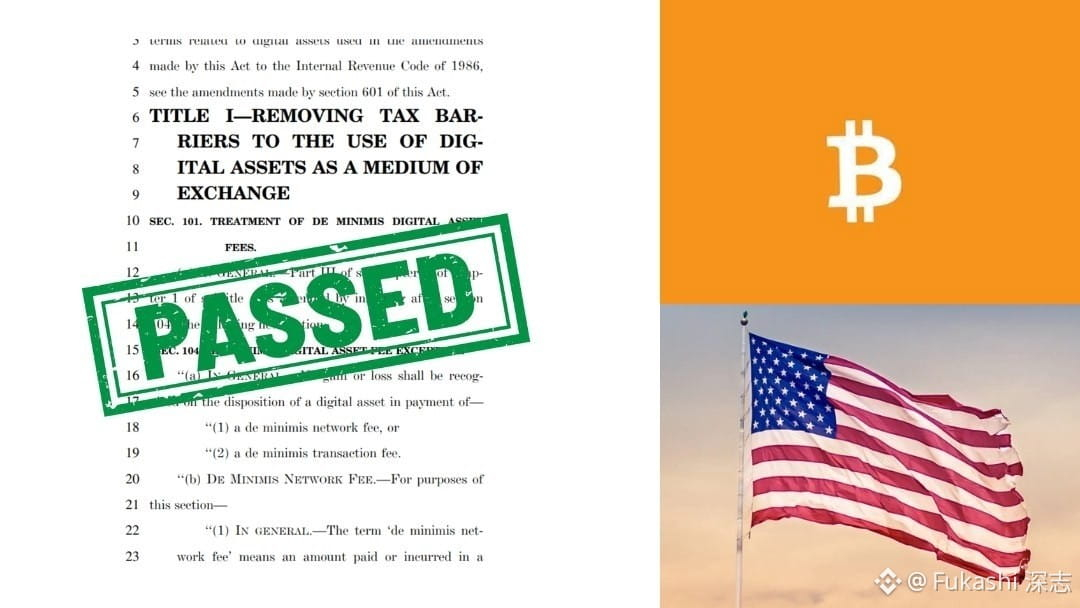
The House Ways and Means Committee has advanced the Digital Asset Tax Certainty Act in a 38–5 vote.
💰 Key proposal: qualifying crypto network/transaction fees of $10 or less could be excluded from gain-or-loss calculations.
📜 The bill also aims to:
• Simplify taxes for everyday digital-asset transactions
• Clarify the treatment of mining & staking rewards
• Apply certain existing tax rules to digital assets
• Create a voluntary disclosure program for taxpayers
⚠️ Important: This is NOT law yet. It still needs to move through Congress.
But the direction is clear: Washington is actively working toward a more defined federal tax framework for crypto. 👀🇺🇸
#BTC #Ethereum #ETH #cryptotax #DigitalAssets
🚨 BREAKING: 🇺🇸 A BIG STEP FOR U.S. CRYPTO TAXES
The House Ways and Means Committee has advanced the Digital Asset Tax Certainty Act in a 38–5 vote.
💰 Key proposal: qualifying crypto network/transaction fees of $10 or less could be excluded from gain-or-loss calculations.
📜 The bill also aims to:
• Simplify taxes for everyday digital-asset transactions
• Clarify the treatment of mining & staking rewards
• Apply certain existing tax rules to digital assets
• Create a voluntary disclosure program for taxpayers
⚠️ Important: This is NOT law yet. It still needs to move through Congress.
But the direction is clear: Washington is actively working toward a more defined federal tax framework for crypto. 👀🇺🇸
#BTC #Ethereum #ETH #cryptotax #DigitalAssets
The House Ways and Means Committee has advanced the Digital Asset Tax Certainty Act in a 38–5 vote.
💰 Key proposal: qualifying crypto network/transaction fees of $10 or less could be excluded from gain-or-loss calculations.
📜 The bill also aims to:
• Simplify taxes for everyday digital-asset transactions
• Clarify the treatment of mining & staking rewards
• Apply certain existing tax rules to digital assets
• Create a voluntary disclosure program for taxpayers
⚠️ Important: This is NOT law yet. It still needs to move through Congress.
But the direction is clear: Washington is actively working toward a more defined federal tax framework for crypto. 👀🇺🇸
#BTC #Ethereum #ETH #cryptotax #DigitalAssets
44

🏦 TOKENIZED STOCKS JUST GOT A BIG REGULATORY PUSH
The U.S. SEC has approved a five-year conditional exemption allowing certain platforms to offer blockchain-based tokenized U.S. stocks.
This could bring traditional equities closer to crypto-style infrastructure.
🔗 Stocks + blockchain = a trend worth watching.
#Tokenization #Blockchain #DigitalAssets
🏦 TOKENIZED STOCKS JUST GOT A BIG REGULATORY PUSH
The U.S. SEC has approved a five-year conditional exemption allowing certain platforms to offer blockchain-based tokenized U.S. stocks.
This could bring traditional equities closer to crypto-style infrastructure.
🔗 Stocks + blockchain = a trend worth watching.
#Tokenization #Blockchain #DigitalAssets
The U.S. SEC has approved a five-year conditional exemption allowing certain platforms to offer blockchain-based tokenized U.S. stocks.
This could bring traditional equities closer to crypto-style infrastructure.
🔗 Stocks + blockchain = a trend worth watching.
#Tokenization #Blockchain #DigitalAssets
1
2

·
--
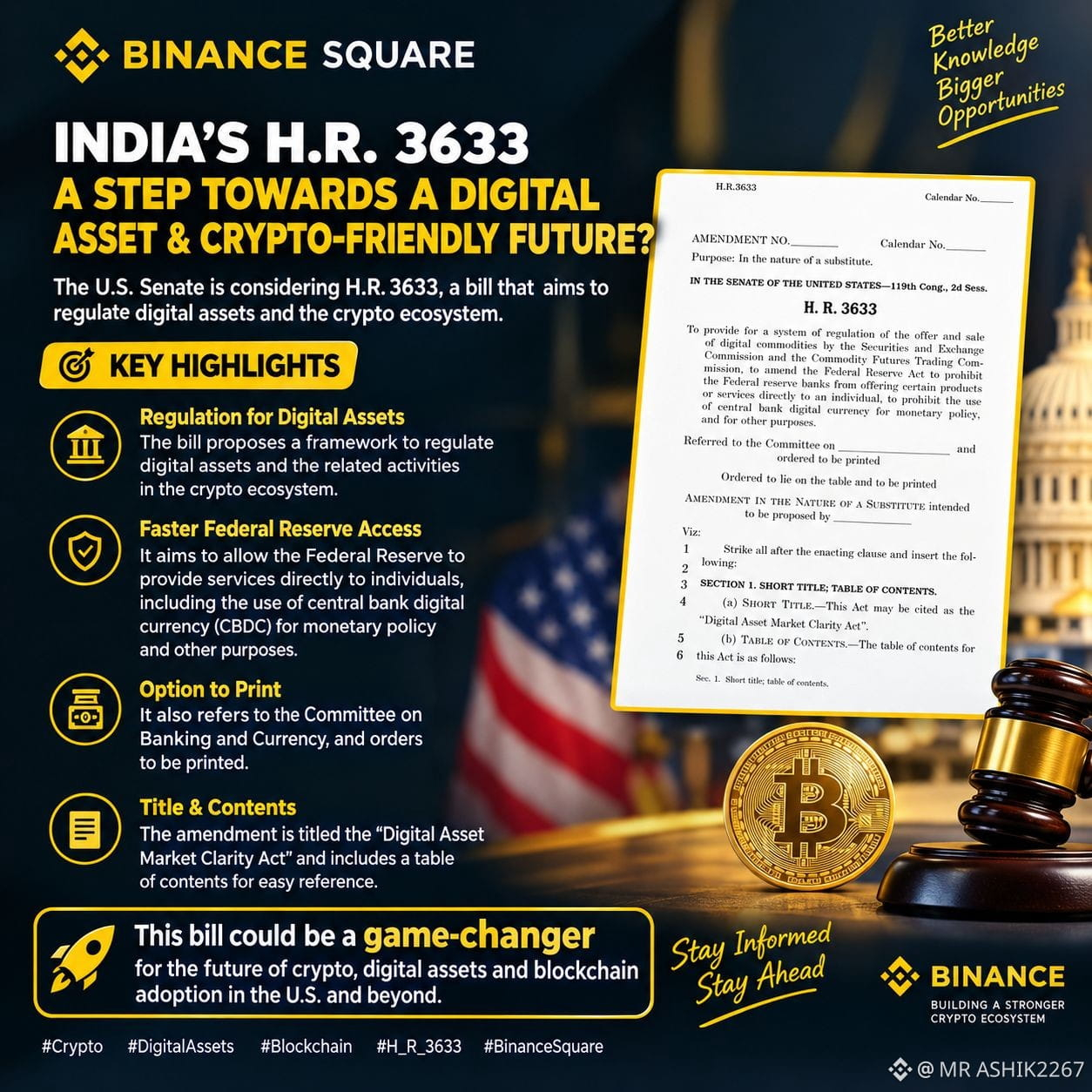
🚨 A Major Development for the Crypto Industry?
The Digital Asset Market CLARITY Act of 2025 (H.R. 3633) is an important piece of U.S. crypto legislation aimed at creating a clearer regulatory framework for digital assets.
The bill addresses areas including:
🔹 Digital Asset Definitions
🔹 SEC & CFTC Regulatory Framework
🔹 Registration of Digital Asset Exchanges, Brokers & Dealers
🔹 Rules for Digital Commodity Transactions
🔹 Treatment of Investment Contract Assets
🔹 Implementation & International Cooperation
The House Agriculture Committee reported the bill favorably in June 2025, with amendments, recommending that the House pass it.
If enacted, the framework could have significant implications for how digital assets and crypto businesses operate in the United States.
📌 Crypto investors should keep a close eye on the legislative process.
What could clearer regulation mean for the next phase of crypto adoption? 👀
Stay informed. Stay ahead. DYOR.
#Crypto #Bitcoin #DigitalAssets #Blockchain #BinanceSquare
🚨 A Major Development for the Crypto Industry?
The Digital Asset Market CLARITY Act of 2025 (H.R. 3633) is an important piece of U.S. crypto legislation aimed at creating a clearer regulatory framework for digital assets.
The bill addresses areas including:
🔹 Digital Asset Definitions
🔹 SEC & CFTC Regulatory Framework
🔹 Registration of Digital Asset Exchanges, Brokers & Dealers
🔹 Rules for Digital Commodity Transactions
🔹 Treatment of Investment Contract Assets
🔹 Implementation & International Cooperation
The House Agriculture Committee reported the bill favorably in June 2025, with amendments, recommending that the House pass it.
If enacted, the framework could have significant implications for how digital assets and crypto businesses operate in the United States.
📌 Crypto investors should keep a close eye on the legislative process.
What could clearer regulation mean for the next phase of crypto adoption? 👀
Stay informed. Stay ahead. DYOR.
#Crypto #Bitcoin #DigitalAssets #Blockchain #BinanceSquare
The Digital Asset Market CLARITY Act of 2025 (H.R. 3633) is an important piece of U.S. crypto legislation aimed at creating a clearer regulatory framework for digital assets.
The bill addresses areas including:
🔹 Digital Asset Definitions
🔹 SEC & CFTC Regulatory Framework
🔹 Registration of Digital Asset Exchanges, Brokers & Dealers
🔹 Rules for Digital Commodity Transactions
🔹 Treatment of Investment Contract Assets
🔹 Implementation & International Cooperation
The House Agriculture Committee reported the bill favorably in June 2025, with amendments, recommending that the House pass it.
If enacted, the framework could have significant implications for how digital assets and crypto businesses operate in the United States.
📌 Crypto investors should keep a close eye on the legislative process.
What could clearer regulation mean for the next phase of crypto adoption? 👀
Stay informed. Stay ahead. DYOR.
#Crypto #Bitcoin #DigitalAssets #Blockchain #BinanceSquare
3
82

·
--
Bullish
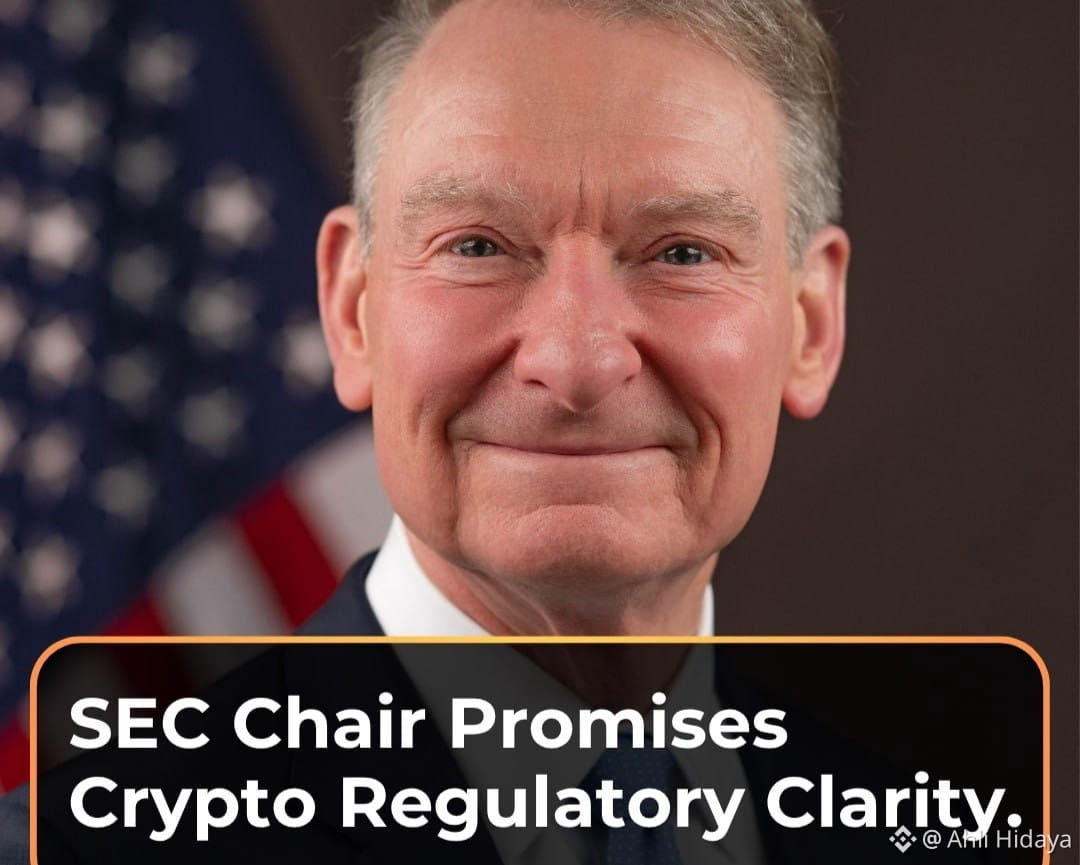
🏛️ SEC Chair Paul Atkins: "Crypto Clarity is Coming, With or Without Legislation!" 🚀
Big regulatory update from Washington! U.S. SEC Chairman Paul Atkins has made it clear that the commission is fully committed to delivering a comprehensive regulatory framework for digital assets, regardless of how congressional bills move.
Here are the key takeaways from his recent roadmap announcement under "Project Crypto":
Independent Action: While pushing for the passage of the CLARITY Act, Atkins emphasized that the SEC will aggressively advance its internal crypto rule-making agenda regardless of legislative bottlenecks.
The Three-Pillar Architecture: The SEC's upcoming framework focuses on three core areas:
Regulation Crypto Assets: Clearer guidelines for token issuance and capital raising.
Transfer-Agent Modernization: Updating decades-old rules to seamlessly integrate blockchain ledgers.
Custody & Self-Custody Framework: Exploring rules that allow investment advisors and state trust companies to properly custody digital assets.
Market Impact: This shift marks a major pivot toward bringing crypto innovation and institutional infrastructure onshore with rational, clear guidelines.
This is a massive step forward for long-term legal certainty in the U.S. market! What are your thoughts on these new SEC steps? Drop them below! 👇
#SEC #PaulAtkins #CryptoRegulation #BinanceSquare #CryptoNews #DigitalAssets ETHBNB$BTC $ETH $BNB
{future}(BTCUSDT)
{future}(ETHUSDT)
{future}(BNBUSDT)
#DYOR!!
🏛️ SEC Chair Paul Atkins: "Crypto Clarity is Coming, With or Without Legislation!" 🚀
Big regulatory update from Washington! U.S. SEC Chairman Paul Atkins has made it clear that the commission is fully committed to delivering a comprehensive regulatory framework for digital assets, regardless of how congressional bills move.
Here are the key takeaways from his recent roadmap announcement under "Project Crypto":
Independent Action: While pushing for the passage of the CLARITY Act, Atkins emphasized that the SEC will aggressively advance its internal crypto rule-making agenda regardless of legislative bottlenecks.
The Three-Pillar Architecture: The SEC's upcoming framework focuses on three core areas:
Regulation Crypto Assets: Clearer guidelines for token issuance and capital raising.
Transfer-Agent Modernization: Updating decades-old rules to seamlessly integrate blockchain ledgers.
Custody & Self-Custody Framework: Exploring rules that allow investment advisors and state trust companies to properly custody digital assets.
Market Impact: This shift marks a major pivot toward bringing crypto innovation and institutional infrastructure onshore with rational, clear guidelines.
This is a massive step forward for long-term legal certainty in the U.S. market! What are your thoughts on these new SEC steps? Drop them below! 👇
#SEC #PaulAtkins #CryptoRegulation #BinanceSquare #CryptoNews #DigitalAssets ETHBNB$BTC $ETH $BNB
#DYOR!!
Big regulatory update from Washington! U.S. SEC Chairman Paul Atkins has made it clear that the commission is fully committed to delivering a comprehensive regulatory framework for digital assets, regardless of how congressional bills move.
Here are the key takeaways from his recent roadmap announcement under "Project Crypto":
Independent Action: While pushing for the passage of the CLARITY Act, Atkins emphasized that the SEC will aggressively advance its internal crypto rule-making agenda regardless of legislative bottlenecks.
The Three-Pillar Architecture: The SEC's upcoming framework focuses on three core areas:
Regulation Crypto Assets: Clearer guidelines for token issuance and capital raising.
Transfer-Agent Modernization: Updating decades-old rules to seamlessly integrate blockchain ledgers.
Custody & Self-Custody Framework: Exploring rules that allow investment advisors and state trust companies to properly custody digital assets.
Market Impact: This shift marks a major pivot toward bringing crypto innovation and institutional infrastructure onshore with rational, clear guidelines.
This is a massive step forward for long-term legal certainty in the U.S. market! What are your thoughts on these new SEC steps? Drop them below! 👇
#SEC #PaulAtkins #CryptoRegulation #BinanceSquare #CryptoNews #DigitalAssets ETHBNB$BTC $ETH $BNB
#DYOR!!
aasho:
Regulation Crypto Assets: Clearer guidelines for token issuance and capital raising.
Transfer-Agent Modernization: Updating decades-old rules to seamlessly integrate blockchain ledgers.
$BNB
1
5
590

·
--
🚨 Two major digital currency bills pass committees in the U.S. House of Representatives! 🇺🇸
Two important bills on digital currencies move to the next stage:🚨 Two major digital currency bills pass committees in the U.S. House of Representatives! 🇺🇸
Two important bills on digital currencies move to the next stage:
1️⃣ American Reserve Modernization Act for 2026
2️⃣ Digital Asset Tax Certainty Act
📜 The two bills are now heading toward a full vote in the House of Representatives, before moving on to the Senate if they are approved.
🚨 Two major digital currency bills pass committees in the U.S. House of Representatives! 🇺🇸 Two important bills on digital currencies move to the next stage:
🚨 Two major digital currency bills pass committees in the U.S. House of Representatives! 🇺🇸
Two important bills on digital currencies move to the next stage:
1️⃣ American Reserve Modernization Act for 2026
2️⃣ Digital Asset Tax Certainty Act
📜 The two bills are now heading toward a full vote in the House of Representatives, before moving on to the Senate if they are approved.
Two important bills on digital currencies move to the next stage:
1️⃣ American Reserve Modernization Act for 2026
2️⃣ Digital Asset Tax Certainty Act
📜 The two bills are now heading toward a full vote in the House of Representatives, before moving on to the Senate if they are approved.
289

Verified
🚨 KBW2026 Announces Partners 📈 Global Digital Asset Leaders Gather 🧠
📊 | $BTC | $ETH | $BNB |
- Please follow, like, and comment to share your views 📈
- KBW2026 is hosted by FactBlock, and the partner list will be announced on September 9
- Key sponsors include Upbit, 0G, BRV, Stable, Tria, and BitGo
- Partners cover key areas such as exchanges, blockchain infrastructure, stablecoins, and institutional digital assets
- This lineup showcases the scale and diversity of Asia’s digital asset ecosystem 🔥
- Boosted by the partner lineup, market sentiment is more bullish; price may see upside volatility in the short term
- Institutional capital inflows may further enhance liquidity, creating room for upside volatility
- Large whale accounts have shown signs of cumulative buying, indicating smart money positioning early
- If more details are announced later, it could further stimulate buy pressure; bullish bias remains in the short term
- Which partner additions do you think will have the biggest impact on the industry? Feel free to comment and discuss
- Stay tuned for our follow-up coverage and share your insights
#Crypto #Blockchain #DigitalAssets #Whales #MarketAnalysis
🚨 KBW2026 Announces Partners 📈 Global Digital Asset Leaders Gather 🧠
📊 | $BTC | $ETH | $BNB |
- Please follow, like, and comment to share your views 📈
- KBW2026 is hosted by FactBlock, and the partner list will be announced on September 9
- Key sponsors include Upbit, 0G, BRV, Stable, Tria, and BitGo
- Partners cover key areas such as exchanges, blockchain infrastructure, stablecoins, and institutional digital assets
- This lineup showcases the scale and diversity of Asia’s digital asset ecosystem 🔥
- Boosted by the partner lineup, market sentiment is more bullish; price may see upside volatility in the short term
- Institutional capital inflows may further enhance liquidity, creating room for upside volatility
- Large whale accounts have shown signs of cumulative buying, indicating smart money positioning early
- If more details are announced later, it could further stimulate buy pressure; bullish bias remains in the short term
- Which partner additions do you think will have the biggest impact on the industry? Feel free to comment and discuss
- Stay tuned for our follow-up coverage and share your insights
#Crypto #Blockchain #DigitalAssets #Whales #MarketAnalysis
📊 | $BTC | $ETH | $BNB |
- Please follow, like, and comment to share your views 📈
- KBW2026 is hosted by FactBlock, and the partner list will be announced on September 9
- Key sponsors include Upbit, 0G, BRV, Stable, Tria, and BitGo
- Partners cover key areas such as exchanges, blockchain infrastructure, stablecoins, and institutional digital assets
- This lineup showcases the scale and diversity of Asia’s digital asset ecosystem 🔥
- Boosted by the partner lineup, market sentiment is more bullish; price may see upside volatility in the short term
- Institutional capital inflows may further enhance liquidity, creating room for upside volatility
- Large whale accounts have shown signs of cumulative buying, indicating smart money positioning early
- If more details are announced later, it could further stimulate buy pressure; bullish bias remains in the short term
- Which partner additions do you think will have the biggest impact on the industry? Feel free to comment and discuss
- Stay tuned for our follow-up coverage and share your insights
#Crypto #Blockchain #DigitalAssets #Whales #MarketAnalysis
819

·
--
Just got a big piece of news! The U.S. House Ways and Means Committee has passed the “Digital Asset Tax Certainty Act,” aiming to simplify the tax burden of everyday use of cryptocurrencies.
While there are some opposing voices on Trump’s side, if this bill can actually be implemented, it’s a real boost for ordinary users using crypto. Just think about how annoying it is to have to keep track of taxes with every transfer—things could become much simpler in the future.
In the short term, the market should react positively, especially projects that focus on daily payments and application scenarios. As $BTC and $ETH are market bellwethers, they’re likely to see a round of gains.
That said, this is only a committee-level approval for now, and it still has to pass the House and the Senate. But the direction is already clear—crypto compliance is taking another step forward, and in the long run, it’s definitely a positive for the entire ecosystem!#CryptoRegulation #DigitalAssets
Just got a big piece of news! The U.S. House Ways and Means Committee has passed the “Digital Asset Tax Certainty Act,” aiming to simplify the tax burden of everyday use of cryptocurrencies.
While there are some opposing voices on Trump’s side, if this bill can actually be implemented, it’s a real boost for ordinary users using crypto. Just think about how annoying it is to have to keep track of taxes with every transfer—things could become much simpler in the future.
In the short term, the market should react positively, especially projects that focus on daily payments and application scenarios. As $BTC and $ETH are market bellwethers, they’re likely to see a round of gains.
That said, this is only a committee-level approval for now, and it still has to pass the House and the Senate. But the direction is already clear—crypto compliance is taking another step forward, and in the long run, it’s definitely a positive for the entire ecosystem!#CryptoRegulation #DigitalAssets
While there are some opposing voices on Trump’s side, if this bill can actually be implemented, it’s a real boost for ordinary users using crypto. Just think about how annoying it is to have to keep track of taxes with every transfer—things could become much simpler in the future.
In the short term, the market should react positively, especially projects that focus on daily payments and application scenarios. As $BTC and $ETH are market bellwethers, they’re likely to see a round of gains.
That said, this is only a committee-level approval for now, and it still has to pass the House and the Senate. But the direction is already clear—crypto compliance is taking another step forward, and in the long run, it’s definitely a positive for the entire ecosystem!#CryptoRegulation #DigitalAssets
422

·
--
🌍 FINANCE IS EVOLVING.
More access.
More choice.
More ways to participate. 🚀
Crypto, digital assets, and tokenization are reshaping how people interact with financial markets.
🔥 The next era of finance is already here.
$BTC $ETH $BNB
#crypto #bitcoin #Finance #DigitalAssets #defi
{spot}(BTCUSDT)
{spot}(ETHUSDT)
{spot}(BNBUSDT)
🌍 FINANCE IS EVOLVING.
More access.
More choice.
More ways to participate. 🚀
Crypto, digital assets, and tokenization are reshaping how people interact with financial markets.
🔥 The next era of finance is already here.
$BTC $ETH $BNB
#crypto #bitcoin #Finance #DigitalAssets #defi
More access.
More choice.
More ways to participate. 🚀
Crypto, digital assets, and tokenization are reshaping how people interact with financial markets.
🔥 The next era of finance is already here.
$BTC $ETH $BNB
#crypto #bitcoin #Finance #DigitalAssets #defi
105

Crypto's Regulatory Crossroads: CLARITY Act Faces State AG Opposition!
A crucial Senate vote looms for the CLARITY Act, a bill aiming to define digital assets. But a fresh wave of opposition from state Attorneys General could complicate its path, sparking a debate on federal vs. state oversight in the crypto space.
Here's a quick look at the situation:
* The CLARITY Act (S. 3539) seeks to establish a clear regulatory framework for digital assets, categorizing them and assigning oversight to relevant federal agencies.
* A bipartisan group of state AGs is now pushing back, warning that the bill could undermine state-level consumer protection efforts and federal enforcement actions.
* Their main concern: the Act might preempt existing state securities laws, potentially creating regulatory gaps or conflicts.
* This opposition comes just as the bill approaches a critical Senate vote, highlighting the growing complexity of crypto regulation.
This evolving regulatory landscape impacts us all. How do you believe federal vs. state oversight should balance consumer protection with innovation in the crypto world? Share your insights! 👇
#CryptoRegulation #CLARITYAct #DigitalAssets #BinanceSquare
Cryptocurrency investments are subject to high market risk. Please do your own research.
Crypto's Regulatory Crossroads: CLARITY Act Faces State AG Opposition!
A crucial Senate vote looms for the CLARITY Act, a bill aiming to define digital assets. But a fresh wave of opposition from state Attorneys General could complicate its path, sparking a debate on federal vs. state oversight in the crypto space.
Here's a quick look at the situation:
* The CLARITY Act (S. 3539) seeks to establish a clear regulatory framework for digital assets, categorizing them and assigning oversight to relevant federal agencies.
* A bipartisan group of state AGs is now pushing back, warning that the bill could undermine state-level consumer protection efforts and federal enforcement actions.
* Their main concern: the Act might preempt existing state securities laws, potentially creating regulatory gaps or conflicts.
* This opposition comes just as the bill approaches a critical Senate vote, highlighting the growing complexity of crypto regulation.
This evolving regulatory landscape impacts us all. How do you believe federal vs. state oversight should balance consumer protection with innovation in the crypto world? Share your insights! 👇
#CryptoRegulation #CLARITYAct #DigitalAssets #BinanceSquare
Cryptocurrency investments are subject to high market risk. Please do your own research.
A crucial Senate vote looms for the CLARITY Act, a bill aiming to define digital assets. But a fresh wave of opposition from state Attorneys General could complicate its path, sparking a debate on federal vs. state oversight in the crypto space.
Here's a quick look at the situation:
* The CLARITY Act (S. 3539) seeks to establish a clear regulatory framework for digital assets, categorizing them and assigning oversight to relevant federal agencies.
* A bipartisan group of state AGs is now pushing back, warning that the bill could undermine state-level consumer protection efforts and federal enforcement actions.
* Their main concern: the Act might preempt existing state securities laws, potentially creating regulatory gaps or conflicts.
* This opposition comes just as the bill approaches a critical Senate vote, highlighting the growing complexity of crypto regulation.
This evolving regulatory landscape impacts us all. How do you believe federal vs. state oversight should balance consumer protection with innovation in the crypto world? Share your insights! 👇
#CryptoRegulation #CLARITYAct #DigitalAssets #BinanceSquare
Cryptocurrency investments are subject to high market risk. Please do your own research.
36
Log in to explore more content
Join global crypto users on Binance Square
⚡️ Get latest and useful information about crypto.
💬 Trusted by the world’s largest crypto exchange.
👍 Discover real insights from verified creators.
Email / Phone number
Trending Topics
1
#AIStocksWhatNext
799,167 views
6,152 Discussing
2
#BitcoinRejectedAt$87,300Twice
0 views
0 Discussing
3
#BCHJumps28%OnCMEFuturesListing
2,861 views
306 Discussing
4
#WallStreetEarningsRevisionsTurnBearish
2,480 views
214 Discussing
5
#DollarIndexReclaims101
1,833 views
182 Discussing
6
#21SharesLaunchesEuropesFirstZcashETP
30,789 views
955 Discussing
7
#CardanoJoinsX402PaymentStandard
20,600 views
691 Discussing
8
#BitcoinTops$87KAtEightMonthHigh
11,230 views
125 Discussing
9
#ZECBreaksAbove$1600AtRecordHigh
7,711 views
103 Discussing
10
#BitwiseNEARStakingETPAssetsTop$100M
36,331 views
102 Discussing