
Crypto__Today
1.8k Posts

Crypto__Today
Report
Block User
Make impactful strides with the all-in-one, intelligent marketing platform designed to accelerate the growth of blockchain projects.Any promo: @Theodore_finch1
Open Trade
Occasional Trader
4.6 Years
11 Following
12.7K+ Followers
11.9K+ Liked
Posts
Portfolio
All
Quotes
Live
PINNED
·
--
Bullish
🚨 RED PACKET GIVEAWAY ALERT! 🚨
✨ HOW TO CLAIM YOUR GIFT:🎁
1️⃣ Follow our community
2️⃣ Like & Share this post to spread the word.
3️⃣ Leave a comment below with your favorite altcoin for 2026! 🚀
Let's win this bull run together! 📈
#Binance #RedPacket #CryptoGiveaway #BinanceSquareFamily #FreeCryptoEarnings
🚨 RED PACKET GIVEAWAY ALERT! 🚨
✨ HOW TO CLAIM YOUR GIFT:🎁
1️⃣ Follow our community
2️⃣ Like & Share this post to spread the word.
3️⃣ Leave a comment below with your favorite altcoin for 2026! 🚀
Let's win this bull run together! 📈
#Binance #RedPacket #CryptoGiveaway #BinanceSquareFamily #FreeCryptoEarnings
✨ HOW TO CLAIM YOUR GIFT:🎁
1️⃣ Follow our community
2️⃣ Like & Share this post to spread the word.
3️⃣ Leave a comment below with your favorite altcoin for 2026! 🚀
Let's win this bull run together! 📈
#Binance #RedPacket #CryptoGiveaway #BinanceSquareFamily #FreeCryptoEarnings

318
6
22
1k
PINNED

Article
DOGS (DOGS) Price Prediction 2024, 2025–2030Explore short and medium-term DOGS price prediction analysis and check long-term DOGS forecasts for 2025, 2030, and beyond.
According to our current DOGS price prediction, the price of DOGS is predicted to rise by 228.05% and reach $ 0.007002 by September 25, 2024. Per our technical indicators, the current sentiment is Bearish while the Fear & Greed Index is showing 55 (Greed). DOGS recorded 5/7 (71%) green days with price volatility over the last 30 days. Based on the DOGS forecast, it's now a bad time to buy DOGS.
Based on the historical price movements of DOGS and the BTC halving cycles, the yearly low DOGS price prediction for 2025 is estimated at $ 0.002134. Meanwhile, the price of DOGS is predicted to reach as high as $ 0.010086 next year. Using the same basis, here is the DOGS price prediction for each year up until 2030.
DOGS price prediction 2025
The DOGS price prediction for 2025 is currently between $ 0.002134 on the lower end and $ 0.010086 on the high end. Compared to today’s price, DOGS could gain 372.57% by 2025 if DOGS reaches the upper price target.
DOGS price prediction 2030
The DOGS price prediction for 2030 is currently between $ 0.005381 on the lower end and $ 0.008725 on the high end. Compared to today’s price, DOGS could gain 308.82% by 2030 if it reaches the upper price target.
DOGS Price Forecast Based on Technical Analysis
Popular DOGS Moving Averages and Oscillators for Mon, Aug 26, 2024
Moving averages (MA) are a popular indicator in all financial markets, designed to smooth price action over a certain amount of time. They are a lagging indicator which means they are influenced by historical price activity. In the table below you can find two types of moving averages, simple moving average (SMA) and exponential moving average (EMA).
DOGS Key Price Levels
Based on today's classical pivot point (P1) with the value of $ 0.00205, DOGS has support levels of $ 0.001864, $ 0.001593, and the strongest at $ 0.001407. Similarly, DOGS resistance levels are at $ 0.002321, $ 0.002507, and $ 0.002778.
#BinanceLaunchpoolDOGS #TelegramCEO #CryptoMarketMoves #BinanceBlockchainWeek #LowestCPI2021
DOGS (DOGS) Price Prediction 2024, 2025–2030
Explore short and medium-term DOGS price prediction analysis and check long-term DOGS forecasts for 2025, 2030, and beyond.
According to our current DOGS price prediction, the price of DOGS is predicted to rise by 228.05% and reach $ 0.007002 by September 25, 2024. Per our technical indicators, the current sentiment is Bearish while the Fear & Greed Index is showing 55 (Greed). DOGS recorded 5/7 (71%) green days with price volatility over the last 30 days. Based on the DOGS forecast, it's now a bad time to buy DOGS.
Based on the historical price movements of DOGS and the BTC halving cycles, the yearly low DOGS price prediction for 2025 is estimated at $ 0.002134. Meanwhile, the price of DOGS is predicted to reach as high as $ 0.010086 next year. Using the same basis, here is the DOGS price prediction for each year up until 2030.
DOGS price prediction 2025
The DOGS price prediction for 2025 is currently between $ 0.002134 on the lower end and $ 0.010086 on the high end. Compared to today’s price, DOGS could gain 372.57% by 2025 if DOGS reaches the upper price target.
DOGS price prediction 2030
The DOGS price prediction for 2030 is currently between $ 0.005381 on the lower end and $ 0.008725 on the high end. Compared to today’s price, DOGS could gain 308.82% by 2030 if it reaches the upper price target.
DOGS Price Forecast Based on Technical Analysis
Popular DOGS Moving Averages and Oscillators for Mon, Aug 26, 2024
Moving averages (MA) are a popular indicator in all financial markets, designed to smooth price action over a certain amount of time. They are a lagging indicator which means they are influenced by historical price activity. In the table below you can find two types of moving averages, simple moving average (SMA) and exponential moving average (EMA).
DOGS Key Price Levels
Based on today's classical pivot point (P1) with the value of $ 0.00205, DOGS has support levels of $ 0.001864, $ 0.001593, and the strongest at $ 0.001407. Similarly, DOGS resistance levels are at $ 0.002321, $ 0.002507, and $ 0.002778.
#BinanceLaunchpoolDOGS #TelegramCEO #CryptoMarketMoves #BinanceBlockchainWeek #LowestCPI2021
According to our current DOGS price prediction, the price of DOGS is predicted to rise by 228.05% and reach $ 0.007002 by September 25, 2024. Per our technical indicators, the current sentiment is Bearish while the Fear & Greed Index is showing 55 (Greed). DOGS recorded 5/7 (71%) green days with price volatility over the last 30 days. Based on the DOGS forecast, it's now a bad time to buy DOGS.
Based on the historical price movements of DOGS and the BTC halving cycles, the yearly low DOGS price prediction for 2025 is estimated at $ 0.002134. Meanwhile, the price of DOGS is predicted to reach as high as $ 0.010086 next year. Using the same basis, here is the DOGS price prediction for each year up until 2030.
DOGS price prediction 2025
The DOGS price prediction for 2025 is currently between $ 0.002134 on the lower end and $ 0.010086 on the high end. Compared to today’s price, DOGS could gain 372.57% by 2025 if DOGS reaches the upper price target.
DOGS price prediction 2030
The DOGS price prediction for 2030 is currently between $ 0.005381 on the lower end and $ 0.008725 on the high end. Compared to today’s price, DOGS could gain 308.82% by 2030 if it reaches the upper price target.
DOGS Price Forecast Based on Technical Analysis
Popular DOGS Moving Averages and Oscillators for Mon, Aug 26, 2024
Moving averages (MA) are a popular indicator in all financial markets, designed to smooth price action over a certain amount of time. They are a lagging indicator which means they are influenced by historical price activity. In the table below you can find two types of moving averages, simple moving average (SMA) and exponential moving average (EMA).
DOGS Key Price Levels
Based on today's classical pivot point (P1) with the value of $ 0.00205, DOGS has support levels of $ 0.001864, $ 0.001593, and the strongest at $ 0.001407. Similarly, DOGS resistance levels are at $ 0.002321, $ 0.002507, and $ 0.002778.
#BinanceLaunchpoolDOGS #TelegramCEO #CryptoMarketMoves #BinanceBlockchainWeek #LowestCPI2021
177
8
1.8k
651.5k
Article
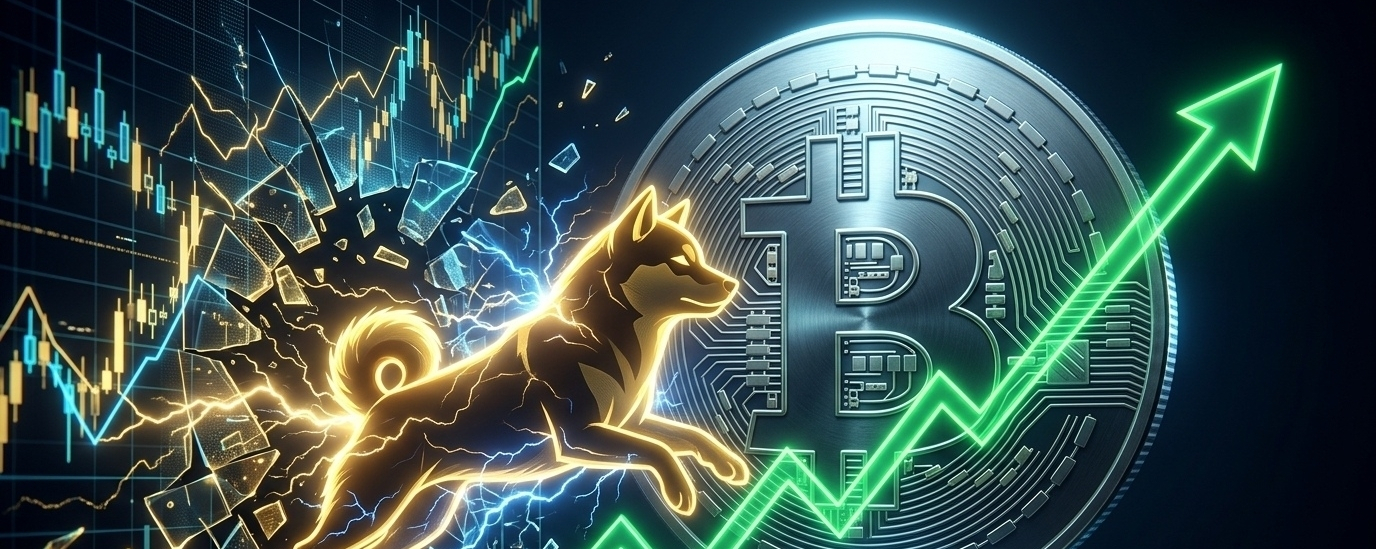
🐕 Dogecoin Outperforms as Rebound Expands Beyond Short Squeeze; Bitcoin Solid Above $85K
📈The cryptocurrency market is witnessing a tactical rotation as the explosive momentum behind the recent short squeeze begins to normalize. Dogecoin (DOGE) is leading the charge over the last 24 hours, registering a massive 15% pump to break back above the $0.10 mark. Meanwhile, Bitcoin (BTC) remains tightly consolidated and steady just above $85,600.
📉 Liquidations Cool Down as Bear Traps Snap
The aggressive leg up over the past few days was heavily accelerated by a violent wave of forced liquidations. According to data from CoinGlass, over $1 billion in total leverage was flushed out within a 24-hour window.
Short Sellers Hammered: Bearish positions accounted for a staggering $844 million (82%) of the total liquidations.Distribution of Pain: Bitcoin driven liquidations made up $608 million of the total wipeout, followed by Ethereum at $181 million.The Aftermath: Because the forced buying engine from short covering has effectively run its course, Bitcoin's price action has turned relatively flat over the last few hours. Analysts note that the next macro leg up will rely entirely on organic spot buying rather than cascading liquidations.
📊 Alternative Layer-1s & Major Tokens Keep the Pace
As capital rotates out of the apex cryptocurrency, selected major altcoins are continuing their upward trajectory alongside the leading meme coin:
XRP (XRP): Jumped 7%, changing hands near $1.52.Solana (SOL): Clocked a solid 5% gain, holding steady just under $117.Ethereum (ETH): Advanced another 3%, currently hovering at $2,740.Binance Coin (BNB): Picked up roughly 1.8% to defend its immediate ascending channel support.The Lone Loser: Zcash (ZEC) stands out as the only major top-tier token deeply stuck in the red, sliding 4% down to the $1,450 level.
Technical & Macro Alignment
The baseline stability above $85,000 indicates a significant shift in market structure. Despite global markets bracing for a highly anticipated geopolitical summit between the U.S. and China, the digital asset ecosystem is flashing resilient institutional demand.
With the derivative leverage leverage cleared out, look for alternative smart-contract layers and major payment tokens to lead near-term volatility while Bitcoin establishes a new baseline floor.
What are your thoughts on this altcoin rotation? Is DOGE setting up a structural macro breakout, or are we looking at a temporary relief pump?
#CryptoMarket #Bitcoin #DOGECOİN #Solana #BinanceSquare
🐕 Dogecoin Outperforms as Rebound Expands Beyond Short Squeeze; Bitcoin Solid Above $85K 📈
The cryptocurrency market is witnessing a tactical rotation as the explosive momentum behind the recent short squeeze begins to normalize. Dogecoin (DOGE) is leading the charge over the last 24 hours, registering a massive 15% pump to break back above the $0.10 mark. Meanwhile, Bitcoin (BTC) remains tightly consolidated and steady just above $85,600.
📉 Liquidations Cool Down as Bear Traps Snap
The aggressive leg up over the past few days was heavily accelerated by a violent wave of forced liquidations. According to data from CoinGlass, over $1 billion in total leverage was flushed out within a 24-hour window.
Short Sellers Hammered: Bearish positions accounted for a staggering $844 million (82%) of the total liquidations.Distribution of Pain: Bitcoin driven liquidations made up $608 million of the total wipeout, followed by Ethereum at $181 million.The Aftermath: Because the forced buying engine from short covering has effectively run its course, Bitcoin's price action has turned relatively flat over the last few hours. Analysts note that the next macro leg up will rely entirely on organic spot buying rather than cascading liquidations.
📊 Alternative Layer-1s & Major Tokens Keep the Pace
As capital rotates out of the apex cryptocurrency, selected major altcoins are continuing their upward trajectory alongside the leading meme coin:
XRP (XRP): Jumped 7%, changing hands near $1.52.Solana (SOL): Clocked a solid 5% gain, holding steady just under $117.Ethereum (ETH): Advanced another 3%, currently hovering at $2,740.Binance Coin (BNB): Picked up roughly 1.8% to defend its immediate ascending channel support.The Lone Loser: Zcash (ZEC) stands out as the only major top-tier token deeply stuck in the red, sliding 4% down to the $1,450 level.
Technical & Macro Alignment
The baseline stability above $85,000 indicates a significant shift in market structure. Despite global markets bracing for a highly anticipated geopolitical summit between the U.S. and China, the digital asset ecosystem is flashing resilient institutional demand.
With the derivative leverage leverage cleared out, look for alternative smart-contract layers and major payment tokens to lead near-term volatility while Bitcoin establishes a new baseline floor.
What are your thoughts on this altcoin rotation? Is DOGE setting up a structural macro breakout, or are we looking at a temporary relief pump?
#CryptoMarket #Bitcoin #DOGECOİN #Solana #BinanceSquare
📉 Liquidations Cool Down as Bear Traps Snap
The aggressive leg up over the past few days was heavily accelerated by a violent wave of forced liquidations. According to data from CoinGlass, over $1 billion in total leverage was flushed out within a 24-hour window.
Short Sellers Hammered: Bearish positions accounted for a staggering $844 million (82%) of the total liquidations.Distribution of Pain: Bitcoin driven liquidations made up $608 million of the total wipeout, followed by Ethereum at $181 million.The Aftermath: Because the forced buying engine from short covering has effectively run its course, Bitcoin's price action has turned relatively flat over the last few hours. Analysts note that the next macro leg up will rely entirely on organic spot buying rather than cascading liquidations.
📊 Alternative Layer-1s & Major Tokens Keep the Pace
As capital rotates out of the apex cryptocurrency, selected major altcoins are continuing their upward trajectory alongside the leading meme coin:
XRP (XRP): Jumped 7%, changing hands near $1.52.Solana (SOL): Clocked a solid 5% gain, holding steady just under $117.Ethereum (ETH): Advanced another 3%, currently hovering at $2,740.Binance Coin (BNB): Picked up roughly 1.8% to defend its immediate ascending channel support.The Lone Loser: Zcash (ZEC) stands out as the only major top-tier token deeply stuck in the red, sliding 4% down to the $1,450 level.
Technical & Macro Alignment
The baseline stability above $85,000 indicates a significant shift in market structure. Despite global markets bracing for a highly anticipated geopolitical summit between the U.S. and China, the digital asset ecosystem is flashing resilient institutional demand.
With the derivative leverage leverage cleared out, look for alternative smart-contract layers and major payment tokens to lead near-term volatility while Bitcoin establishes a new baseline floor.
What are your thoughts on this altcoin rotation? Is DOGE setting up a structural macro breakout, or are we looking at a temporary relief pump?
#CryptoMarket #Bitcoin #DOGECOİN #Solana #BinanceSquare

JOIN & MORE 📈🎉
From Crypto__Today
Fully Claimed
13
33
210
📈 BTC IS SHOWING STRENGTH — WHAT'S NEXT?
$BTC
{future}(BTCUSDT)
is currently showing bullish momentum after an aggressive technical breakout driven by accelerating institutional spot ETF inflows.
📊 MARKET SNAPSHOT
• Current Price: $84,558
• 24H High: $84,699
• 24H Low: $80,149
• Market Cap: $1.64 Trillion
• 24H Change: +4.04%
📈 TECHNICAL VIEW
$BTC is breaking the important $84,000 zone. If buyers maintain momentum, the next resistance areas could come into focus.
👀 LEVELS I'M WATCHING
🟢 Support: $81,500
🟡 Breakout Zone: $85,000
🎯 TP1: $86,500
🎯 TP2: $88,200
🚀 TP3: $91,000
⚠️ If price loses $80,000, this bullish setup becomes weaker.
Not financial advice. DYOR & manage your risk.
BULLISH BTC? 📈
#BTC #BTCUSDT #Binance #Crypto
📈 BTC IS SHOWING STRENGTH — WHAT'S NEXT?
$BTC
is currently showing bullish momentum after an aggressive technical breakout driven by accelerating institutional spot ETF inflows.
📊 MARKET SNAPSHOT
• Current Price: $84,558
• 24H High: $84,699
• 24H Low: $80,149
• Market Cap: $1.64 Trillion
• 24H Change: +4.04%
📈 TECHNICAL VIEW
$BTC is breaking the important $84,000 zone. If buyers maintain momentum, the next resistance areas could come into focus.
👀 LEVELS I'M WATCHING
🟢 Support: $81,500
🟡 Breakout Zone: $85,000
🎯 TP1: $86,500
🎯 TP2: $88,200
🚀 TP3: $91,000
⚠️ If price loses $80,000, this bullish setup becomes weaker.
Not financial advice. DYOR & manage your risk.
BULLISH BTC? 📈
#BTC #BTCUSDT #Binance #Crypto
$BTC
is currently showing bullish momentum after an aggressive technical breakout driven by accelerating institutional spot ETF inflows.
📊 MARKET SNAPSHOT
• Current Price: $84,558
• 24H High: $84,699
• 24H Low: $80,149
• Market Cap: $1.64 Trillion
• 24H Change: +4.04%
📈 TECHNICAL VIEW
$BTC is breaking the important $84,000 zone. If buyers maintain momentum, the next resistance areas could come into focus.
👀 LEVELS I'M WATCHING
🟢 Support: $81,500
🟡 Breakout Zone: $85,000
🎯 TP1: $86,500
🎯 TP2: $88,200
🚀 TP3: $91,000
⚠️ If price loses $80,000, this bullish setup becomes weaker.
Not financial advice. DYOR & manage your risk.
BULLISH BTC? 📈
#BTC #BTCUSDT #Binance #Crypto
🎯 TP1: $86,500
22%
🎯 TP2: $88,200
22%
🚀 TP3: $91,000
56%
9 votes • Voting closed
BTC HIT 85K📈🎉
From Crypto__Today
2
5
203
·
--
Bullish
🔥 NEAR IS SHOWING STRENGTH — WHAT'S NEXT?
$NEAR is currently showing bullish momentum after an explosive network expansion and massive institutional inflows driving layered platform demand.
📊 MARKET SNAPSHOT
• Current Price: $4.12
• 24H High: $4.28
• 24H Low: $3.43
• Market Cap: $5.77 Billion
• 24H Change: +14.33%
📈 TECHNICAL VIEW
$NEAR is breaking the important $4.00 zone. If buyers maintain momentum, the next resistance areas could come into focus.
👀 LEVELS I'M WATCHING
🟢 Support: $3.80
🟡 Breakout Zone: $4.35
🎯 TP1: $4.75
🎯 TP2: $5.20
🚀 TP3: $6.00
⚠️ If price loses $3.40, this bullish setup becomes weaker.
Not financial advice. DYOR & manage your risk.
🔥 BULLISH NEAR?
#NEAR #NEARUSDT #Binance #Crypto
🔥 NEAR IS SHOWING STRENGTH — WHAT'S NEXT?
$NEAR is currently showing bullish momentum after an explosive network expansion and massive institutional inflows driving layered platform demand.
📊 MARKET SNAPSHOT
• Current Price: $4.12
• 24H High: $4.28
• 24H Low: $3.43
• Market Cap: $5.77 Billion
• 24H Change: +14.33%
📈 TECHNICAL VIEW
$NEAR is breaking the important $4.00 zone. If buyers maintain momentum, the next resistance areas could come into focus.
👀 LEVELS I'M WATCHING
🟢 Support: $3.80
🟡 Breakout Zone: $4.35
🎯 TP1: $4.75
🎯 TP2: $5.20
🚀 TP3: $6.00
⚠️ If price loses $3.40, this bullish setup becomes weaker.
Not financial advice. DYOR & manage your risk.
🔥 BULLISH NEAR?
#NEAR #NEARUSDT #Binance #Crypto
$NEAR is currently showing bullish momentum after an explosive network expansion and massive institutional inflows driving layered platform demand.
📊 MARKET SNAPSHOT
• Current Price: $4.12
• 24H High: $4.28
• 24H Low: $3.43
• Market Cap: $5.77 Billion
• 24H Change: +14.33%
📈 TECHNICAL VIEW
$NEAR is breaking the important $4.00 zone. If buyers maintain momentum, the next resistance areas could come into focus.
👀 LEVELS I'M WATCHING
🟢 Support: $3.80
🟡 Breakout Zone: $4.35
🎯 TP1: $4.75
🎯 TP2: $5.20
🚀 TP3: $6.00
⚠️ If price loses $3.40, this bullish setup becomes weaker.
Not financial advice. DYOR & manage your risk.
🔥 BULLISH NEAR?
#NEAR #NEARUSDT #Binance #Crypto

JOIN & MORE📈🎁
From Crypto__Today
5
213
Article
📊 The Altcoin Dilemma: Reclaiming the 200-Day MA vs. The Altseason Illusion
📈The altcoin market is sending highly conflicting signals, leaving traders trying to determine if a true market rotation has begun or if it's another temporary bounce.
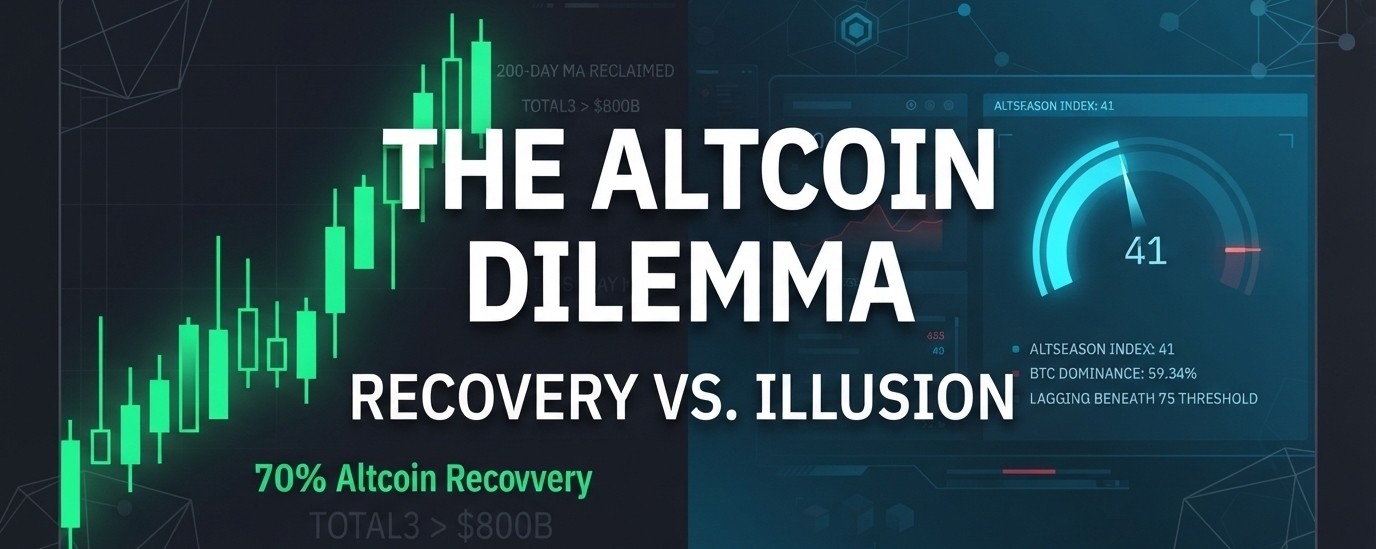
On one hand, data shows that 70% of altcoins listed on Binance have successfully climbed back above their 200-day moving averages. Reclaiming this long-term trend line is generally a strong structural indicator, especially considering many of these assets spent the past year sitting 65% to 85% below this crucial average.
Concurrently, the TOTAL3 market cap—which measures the total valuation of all cryptocurrencies excluding Bitcoin and Ethereum—has broken back above the $800 billion milestone. This marks the highest valuation for the broader altcoin sector in roughly eight months, effectively clearing the previous local high set in May with a strong daily close.
Why the "Altcoin Season Index" Tells a Different Story
Despite these impressive local breakouts against the U.S. dollar, a deeper look at relative performance shows a different narrative. The widely tracked Altcoin Season Index currently sits at 41, remaining well below the critical 75-point threshold required to declare an official "Altseason".
Because the index evaluates performance over a rolling 90-day window, the current reading indicates that fewer than half of the top 50 cryptocurrencies are outperforming Bitcoin (BTC).
Bitcoin Dominance Stays High: BTC dominance remains pinned near 59.34%. While altcoins are gaining value in dollar terms due to broader market liquidity, they are still lagging behind Bitcoin's macro momentum. Selective Rallies: The liquidity entering the altcoin space is highly concentrated rather than broad-based. Layer-2 networks and decentralized finance (DeFi) protocols are commanding the majority of the volume, leaving older or lower-utility tokens behind.
Strategic Takeaway for Traders
The data suggests the market is in a structural transition phase. Altcoins are establishing firm horizontal support levels and clearing major technical boundaries, but Bitcoin remains the primary engine driving market direction.
For an official, explosive Altseason to materialize, the Altcoin Season Index must sustain a push above 75, fueled by a significant drop in Bitcoin dominance and capital rotating aggressively into mid-and-low-cap assets. Until then, managing exposure and focusing on high-volume sectors like Layer-2s and DeFi remains the cautious path forward.
Disclaimer: This article is for informational purposes only and does not constitute financial advice. Always conduct your own research (DYOR) before trading digital assets.
#altcoins #Write2Earn #SaylorHintsStrategyBitcoinBuy #XRPExchangeReservesHitSevenYearLow
📊 The Altcoin Dilemma: Reclaiming the 200-Day MA vs. The Altseason Illusion 📈
The altcoin market is sending highly conflicting signals, leaving traders trying to determine if a true market rotation has begun or if it's another temporary bounce.
On one hand, data shows that 70% of altcoins listed on Binance have successfully climbed back above their 200-day moving averages. Reclaiming this long-term trend line is generally a strong structural indicator, especially considering many of these assets spent the past year sitting 65% to 85% below this crucial average.
Concurrently, the TOTAL3 market cap—which measures the total valuation of all cryptocurrencies excluding Bitcoin and Ethereum—has broken back above the $800 billion milestone. This marks the highest valuation for the broader altcoin sector in roughly eight months, effectively clearing the previous local high set in May with a strong daily close.
Why the "Altcoin Season Index" Tells a Different Story
Despite these impressive local breakouts against the U.S. dollar, a deeper look at relative performance shows a different narrative. The widely tracked Altcoin Season Index currently sits at 41, remaining well below the critical 75-point threshold required to declare an official "Altseason".
Because the index evaluates performance over a rolling 90-day window, the current reading indicates that fewer than half of the top 50 cryptocurrencies are outperforming Bitcoin (BTC).
Bitcoin Dominance Stays High: BTC dominance remains pinned near 59.34%. While altcoins are gaining value in dollar terms due to broader market liquidity, they are still lagging behind Bitcoin's macro momentum. Selective Rallies: The liquidity entering the altcoin space is highly concentrated rather than broad-based. Layer-2 networks and decentralized finance (DeFi) protocols are commanding the majority of the volume, leaving older or lower-utility tokens behind.
Strategic Takeaway for Traders
The data suggests the market is in a structural transition phase. Altcoins are establishing firm horizontal support levels and clearing major technical boundaries, but Bitcoin remains the primary engine driving market direction.
For an official, explosive Altseason to materialize, the Altcoin Season Index must sustain a push above 75, fueled by a significant drop in Bitcoin dominance and capital rotating aggressively into mid-and-low-cap assets. Until then, managing exposure and focusing on high-volume sectors like Layer-2s and DeFi remains the cautious path forward.
Disclaimer: This article is for informational purposes only and does not constitute financial advice. Always conduct your own research (DYOR) before trading digital assets.
#altcoins #Write2Earn #SaylorHintsStrategyBitcoinBuy #XRPExchangeReservesHitSevenYearLow
On one hand, data shows that 70% of altcoins listed on Binance have successfully climbed back above their 200-day moving averages. Reclaiming this long-term trend line is generally a strong structural indicator, especially considering many of these assets spent the past year sitting 65% to 85% below this crucial average.
Concurrently, the TOTAL3 market cap—which measures the total valuation of all cryptocurrencies excluding Bitcoin and Ethereum—has broken back above the $800 billion milestone. This marks the highest valuation for the broader altcoin sector in roughly eight months, effectively clearing the previous local high set in May with a strong daily close.
Why the "Altcoin Season Index" Tells a Different Story
Despite these impressive local breakouts against the U.S. dollar, a deeper look at relative performance shows a different narrative. The widely tracked Altcoin Season Index currently sits at 41, remaining well below the critical 75-point threshold required to declare an official "Altseason".
Because the index evaluates performance over a rolling 90-day window, the current reading indicates that fewer than half of the top 50 cryptocurrencies are outperforming Bitcoin (BTC).
Bitcoin Dominance Stays High: BTC dominance remains pinned near 59.34%. While altcoins are gaining value in dollar terms due to broader market liquidity, they are still lagging behind Bitcoin's macro momentum. Selective Rallies: The liquidity entering the altcoin space is highly concentrated rather than broad-based. Layer-2 networks and decentralized finance (DeFi) protocols are commanding the majority of the volume, leaving older or lower-utility tokens behind.
Strategic Takeaway for Traders
The data suggests the market is in a structural transition phase. Altcoins are establishing firm horizontal support levels and clearing major technical boundaries, but Bitcoin remains the primary engine driving market direction.
For an official, explosive Altseason to materialize, the Altcoin Season Index must sustain a push above 75, fueled by a significant drop in Bitcoin dominance and capital rotating aggressively into mid-and-low-cap assets. Until then, managing exposure and focusing on high-volume sectors like Layer-2s and DeFi remains the cautious path forward.
Disclaimer: This article is for informational purposes only and does not constitute financial advice. Always conduct your own research (DYOR) before trading digital assets.
#altcoins #Write2Earn #SaylorHintsStrategyBitcoinBuy #XRPExchangeReservesHitSevenYearLow
JOIN & CLAIM 🎉📈
From Crypto__Today
2
15
291
Article
🚀 Ethereum Eyes $3,000 as Open Interest Hits 4-Month Peak! 📈The altcoin king is flashing major bullish signals! Ethereum (ETH) has locked in a solid 5% intraday gain, pushing its price up to $2,640.
This upward price action is backed by a massive influx of trading activity. According to data from CoinMarketCap and Binance, ETH’s 24-hour trading volume has skyrocketed by 41%, crossing the $20.45 billion mark.
📊 The Data Behind the Pump
This isn't just a brief retail spike—derivative markets are heating up significantly:
Derivatives Momentum: Ethereum's Open Interest (OI) has surged to a 4-month high, indicating that institutional and leverage traders are aggressively opening new positions.Volume Breakthrough: The $20B+ trading volume confirms heavy liquidity entering the market, providing the necessary fuel to sustain the current breakout.
📈 The Path to $3,000: What Analysts Are Watching
Market analysts are mapping out a clear technical trajectory for ETH to reclaim psychological resistance at $3,000:
Securing the Base ($2,600): Consolidating above the current $2,600 support floor is crucial to clear out short sellers.The Next Hurdle ($2,850): A clean break above the $2,850 resistance level will likely trigger a massive wave of short liquidations, accelerating momentum.The $3,000 Target: With Open Interest at multi-month highs, a continuous squeeze could easily propel ETH straight into the $3,000 zone.
Market Reminder: While the leverage buildup is highly bullish, high Open Interest also increases volatility. Manage your risk carefully!
What's your take? Is ETH hitting $3,000 this week or are we due for a retest? Drop your predictions below!
$ETH
#Ethereum #ETH #CryptoAnalysis #BinanceSquare #Trading
🚀 Ethereum Eyes $3,000 as Open Interest Hits 4-Month Peak! 📈
The altcoin king is flashing major bullish signals! Ethereum (ETH) has locked in a solid 5% intraday gain, pushing its price up to $2,640.
This upward price action is backed by a massive influx of trading activity. According to data from CoinMarketCap and Binance, ETH’s 24-hour trading volume has skyrocketed by 41%, crossing the $20.45 billion mark.
📊 The Data Behind the Pump
This isn't just a brief retail spike—derivative markets are heating up significantly:
Derivatives Momentum: Ethereum's Open Interest (OI) has surged to a 4-month high, indicating that institutional and leverage traders are aggressively opening new positions.Volume Breakthrough: The $20B+ trading volume confirms heavy liquidity entering the market, providing the necessary fuel to sustain the current breakout.
📈 The Path to $3,000: What Analysts Are Watching
Market analysts are mapping out a clear technical trajectory for ETH to reclaim psychological resistance at $3,000:
Securing the Base ($2,600): Consolidating above the current $2,600 support floor is crucial to clear out short sellers.The Next Hurdle ($2,850): A clean break above the $2,850 resistance level will likely trigger a massive wave of short liquidations, accelerating momentum.The $3,000 Target: With Open Interest at multi-month highs, a continuous squeeze could easily propel ETH straight into the $3,000 zone.
Market Reminder: While the leverage buildup is highly bullish, high Open Interest also increases volatility. Manage your risk carefully!
What's your take? Is ETH hitting $3,000 this week or are we due for a retest? Drop your predictions below!
$ETH
#Ethereum #ETH #CryptoAnalysis #BinanceSquare #Trading
This upward price action is backed by a massive influx of trading activity. According to data from CoinMarketCap and Binance, ETH’s 24-hour trading volume has skyrocketed by 41%, crossing the $20.45 billion mark.
📊 The Data Behind the Pump
This isn't just a brief retail spike—derivative markets are heating up significantly:
Derivatives Momentum: Ethereum's Open Interest (OI) has surged to a 4-month high, indicating that institutional and leverage traders are aggressively opening new positions.Volume Breakthrough: The $20B+ trading volume confirms heavy liquidity entering the market, providing the necessary fuel to sustain the current breakout.
📈 The Path to $3,000: What Analysts Are Watching
Market analysts are mapping out a clear technical trajectory for ETH to reclaim psychological resistance at $3,000:
Securing the Base ($2,600): Consolidating above the current $2,600 support floor is crucial to clear out short sellers.The Next Hurdle ($2,850): A clean break above the $2,850 resistance level will likely trigger a massive wave of short liquidations, accelerating momentum.The $3,000 Target: With Open Interest at multi-month highs, a continuous squeeze could easily propel ETH straight into the $3,000 zone.
Market Reminder: While the leverage buildup is highly bullish, high Open Interest also increases volatility. Manage your risk carefully!
What's your take? Is ETH hitting $3,000 this week or are we due for a retest? Drop your predictions below!
$ETH
#Ethereum #ETH #CryptoAnalysis #BinanceSquare #Trading
JOIN & MORE 🎉🎁
From Crypto__Today
33
1
29
250
·
--
Bullish
🔥 $AAVE IS SHOWING STRENGTH — WHAT'S NEXT?
$AAVE is currently showing bullish momentum after rebounding over 8% over the past 24 hours, outpacing the broader market recovery.
📊 MARKET SNAPSHOT
• Current Price: $130.57
• 24H High: $129.92
• 24H Low: $116.37
• Market Cap: $2.01 Billion
• 24H Change: +8.6%
📈 TECHNICAL VIEW
$AAVE is reclaiming the important $125.00 zone.
If buyers maintain momentum, the next resistance areas could come into focus as it breaks past near-term barriers.
👀 LEVELS I'M WATCHING
🟢 Support: $116.00
🟡 Breakout Zone: $133.50
🎯 TP1: $140.50
🎯 TP2: $153.00
🚀 TP3: $167.00
⚠️ If price loses $110.00, this bullish setup becomes weaker.
Not financial advice. DYOR & manage your risk.
🔥 BULLISH OR BEARISH ON $AAVE?
#AAVE #AAVEUSDT #Write2Earn #Crypto #CryptoToday
🔥 $AAVE IS SHOWING STRENGTH — WHAT'S NEXT?
$AAVE is currently showing bullish momentum after rebounding over 8% over the past 24 hours, outpacing the broader market recovery.
📊 MARKET SNAPSHOT
• Current Price: $130.57
• 24H High: $129.92
• 24H Low: $116.37
• Market Cap: $2.01 Billion
• 24H Change: +8.6%
📈 TECHNICAL VIEW
$AAVE is reclaiming the important $125.00 zone.
If buyers maintain momentum, the next resistance areas could come into focus as it breaks past near-term barriers.
👀 LEVELS I'M WATCHING
🟢 Support: $116.00
🟡 Breakout Zone: $133.50
🎯 TP1: $140.50
🎯 TP2: $153.00
🚀 TP3: $167.00
⚠️ If price loses $110.00, this bullish setup becomes weaker.
Not financial advice. DYOR & manage your risk.
🔥 BULLISH OR BEARISH ON $AAVE ?
#AAVE #AAVEUSDT #Write2Earn #Crypto #CryptoToday
$AAVE is currently showing bullish momentum after rebounding over 8% over the past 24 hours, outpacing the broader market recovery.
📊 MARKET SNAPSHOT
• Current Price: $130.57
• 24H High: $129.92
• 24H Low: $116.37
• Market Cap: $2.01 Billion
• 24H Change: +8.6%
📈 TECHNICAL VIEW
$AAVE is reclaiming the important $125.00 zone.
If buyers maintain momentum, the next resistance areas could come into focus as it breaks past near-term barriers.
👀 LEVELS I'M WATCHING
🟢 Support: $116.00
🟡 Breakout Zone: $133.50
🎯 TP1: $140.50
🎯 TP2: $153.00
🚀 TP3: $167.00
⚠️ If price loses $110.00, this bullish setup becomes weaker.
Not financial advice. DYOR & manage your risk.
🔥 BULLISH OR BEARISH ON $AAVE ?
#AAVE #AAVEUSDT #Write2Earn #Crypto #CryptoToday
🎯 TP1: $140.50
13%
🎯 TP2: $153.00
25%
🚀 TP3: $167.00
62%
8 votes • Voting closed
JOIN & MORE
From Crypto__Today
1
4
618
Article
🚨 Historic Shift: XRP Chart Flashes a Bullish Signal Not Seen in 13 Years
📊The global crypto market is dealing with widespread macro volatility, and XRP is sitting right at the center of the storm. After giving back its recent regulatory momentum, XRP is currently trading near $1.29 following a sharp market-wide correction.
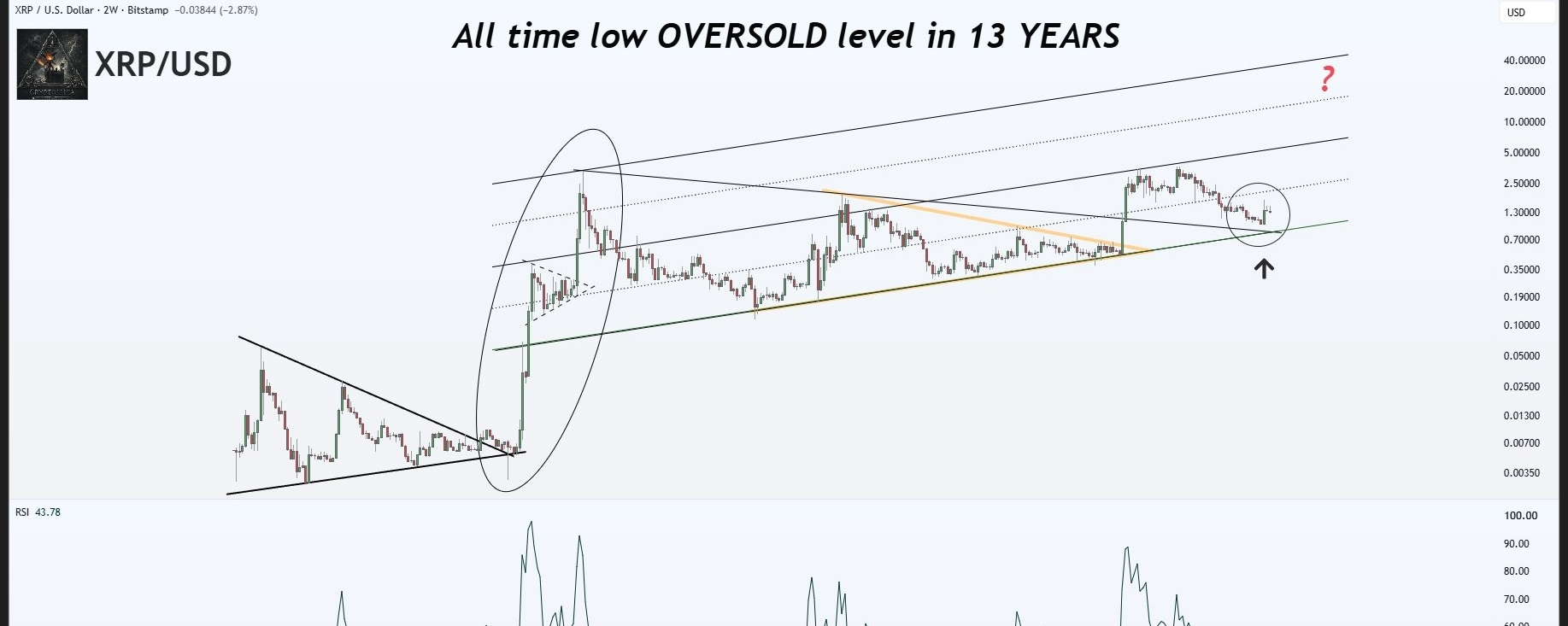
However, beneath the short-term panic, technical analysts have spotted a monumental development on the higher timeframes: XRP's two-week Relative Strength Index (RSI) has just plunged to the lowest level in the token's entire 13-year trading history.
This historic extreme indicates that XRP is sitting in its most technically oversold condition since its launch, setting the stage for a massive structural showdown.
📉 The Anatomy of a 13-Year Technical Extreme
The Relative Strength Index (RSI) is a foundational momentum oscillator used to measure the speed and change of price movements. Typically, an RSI reading below 30 signals that an asset is heavily oversold and due for a trend reversal.
When this happens on a macro scale like the two-week chart, the implications are massive:
Unprecedented Exhaustion: XRP has experienced severe liquidations following the recent U.S. Senate stagnation of the CLARITY Act, flushing out weak hands and late-coming leverage.Extreme Valuation Discount: The two-week RSI dropping to historic lows means the selling pressure has officially pushed beyond the extremes seen during the 2018 bear market bottom and even the initial 2020 SEC lawsuit shock.The Springboard Effect: Historically, when high-utility layer-1 tokens hit multi-year or all-time lows on macro RSI scales, it indicates that sellers are completely exhausted. Any sudden influx of buying volume typically sparks an aggressive, asymmetric bounce.
🏛️ The Fundamental Squeeze: The Fed & Capitol Hill
This extreme technical setup is clashing directly with a high-stakes macroeconomic backdrop. The market is currently digesting the Federal Reserve's hawkish policy shift after interest rates were hiked to a restrictive 3.75%–4.00% target range. Simultaneously, the 10-year U.S. Treasury yield remains pinned near a high 4.95%, applying structural pressure to risk assets.
However, as on-chain data and market experts like Michael Saylor have pointed out, the structural demand for digital assets remains incredibly robust.
While the failure of the CLARITY Act to advance in the Senate caused short-term pain for altcoins, it is also forcing institutional capital to re-evaluate their positions. Veteran whales are holding their ground, and the absolute exhaustion of long-term holder selling pressure means that liquid spot supply on exchanges is exceptionally thin.
🔮 The Trader's Playbook: Crucial Levels to Watch
XRP is coiled like a tight spring at the $1.29 zone. The technical indicators say the asset is deeply oversold, but traders must remain highly disciplined given the broader macro headwinds.
The Support Firewall: XRP needs to firmly defend the $1.25 – $1.28 horizontal support cluster on a weekly closing basis. As long as this floor holds, the historic oversold RSI signal remains highly valid.The Resistance Target: On a relief rally, the first major hurdle for bulls sits at the $1.38 – $1.40 region, which previously acted as local support before the flush out.Risk Strategy: Given that the era of cheap money is staying away for longer, avoid chasing aggressive positions on high leverage. Look for spot accumulation opportunities during maximum fear, and let the historic macro technical indicator play out over the coming weeks.
#XRP #CryptoNews #TechnicalAnalysis #RSI #WhaleAlert
🚨 Historic Shift: XRP Chart Flashes a Bullish Signal Not Seen in 13 Years 📊
The global crypto market is dealing with widespread macro volatility, and XRP is sitting right at the center of the storm. After giving back its recent regulatory momentum, XRP is currently trading near $1.29 following a sharp market-wide correction.
However, beneath the short-term panic, technical analysts have spotted a monumental development on the higher timeframes: XRP's two-week Relative Strength Index (RSI) has just plunged to the lowest level in the token's entire 13-year trading history.
This historic extreme indicates that XRP is sitting in its most technically oversold condition since its launch, setting the stage for a massive structural showdown.
📉 The Anatomy of a 13-Year Technical Extreme
The Relative Strength Index (RSI) is a foundational momentum oscillator used to measure the speed and change of price movements. Typically, an RSI reading below 30 signals that an asset is heavily oversold and due for a trend reversal.
When this happens on a macro scale like the two-week chart, the implications are massive:
Unprecedented Exhaustion: XRP has experienced severe liquidations following the recent U.S. Senate stagnation of the CLARITY Act, flushing out weak hands and late-coming leverage.Extreme Valuation Discount: The two-week RSI dropping to historic lows means the selling pressure has officially pushed beyond the extremes seen during the 2018 bear market bottom and even the initial 2020 SEC lawsuit shock.The Springboard Effect: Historically, when high-utility layer-1 tokens hit multi-year or all-time lows on macro RSI scales, it indicates that sellers are completely exhausted. Any sudden influx of buying volume typically sparks an aggressive, asymmetric bounce.
🏛️ The Fundamental Squeeze: The Fed & Capitol Hill
This extreme technical setup is clashing directly with a high-stakes macroeconomic backdrop. The market is currently digesting the Federal Reserve's hawkish policy shift after interest rates were hiked to a restrictive 3.75%–4.00% target range. Simultaneously, the 10-year U.S. Treasury yield remains pinned near a high 4.95%, applying structural pressure to risk assets.
However, as on-chain data and market experts like Michael Saylor have pointed out, the structural demand for digital assets remains incredibly robust.
While the failure of the CLARITY Act to advance in the Senate caused short-term pain for altcoins, it is also forcing institutional capital to re-evaluate their positions. Veteran whales are holding their ground, and the absolute exhaustion of long-term holder selling pressure means that liquid spot supply on exchanges is exceptionally thin.
🔮 The Trader's Playbook: Crucial Levels to Watch
XRP is coiled like a tight spring at the $1.29 zone. The technical indicators say the asset is deeply oversold, but traders must remain highly disciplined given the broader macro headwinds.
The Support Firewall: XRP needs to firmly defend the $1.25 – $1.28 horizontal support cluster on a weekly closing basis. As long as this floor holds, the historic oversold RSI signal remains highly valid.The Resistance Target: On a relief rally, the first major hurdle for bulls sits at the $1.38 – $1.40 region, which previously acted as local support before the flush out.Risk Strategy: Given that the era of cheap money is staying away for longer, avoid chasing aggressive positions on high leverage. Look for spot accumulation opportunities during maximum fear, and let the historic macro technical indicator play out over the coming weeks.
#XRP #CryptoNews #TechnicalAnalysis #RSI #WhaleAlert
However, beneath the short-term panic, technical analysts have spotted a monumental development on the higher timeframes: XRP's two-week Relative Strength Index (RSI) has just plunged to the lowest level in the token's entire 13-year trading history.
This historic extreme indicates that XRP is sitting in its most technically oversold condition since its launch, setting the stage for a massive structural showdown.
📉 The Anatomy of a 13-Year Technical Extreme
The Relative Strength Index (RSI) is a foundational momentum oscillator used to measure the speed and change of price movements. Typically, an RSI reading below 30 signals that an asset is heavily oversold and due for a trend reversal.
When this happens on a macro scale like the two-week chart, the implications are massive:
Unprecedented Exhaustion: XRP has experienced severe liquidations following the recent U.S. Senate stagnation of the CLARITY Act, flushing out weak hands and late-coming leverage.Extreme Valuation Discount: The two-week RSI dropping to historic lows means the selling pressure has officially pushed beyond the extremes seen during the 2018 bear market bottom and even the initial 2020 SEC lawsuit shock.The Springboard Effect: Historically, when high-utility layer-1 tokens hit multi-year or all-time lows on macro RSI scales, it indicates that sellers are completely exhausted. Any sudden influx of buying volume typically sparks an aggressive, asymmetric bounce.
🏛️ The Fundamental Squeeze: The Fed & Capitol Hill
This extreme technical setup is clashing directly with a high-stakes macroeconomic backdrop. The market is currently digesting the Federal Reserve's hawkish policy shift after interest rates were hiked to a restrictive 3.75%–4.00% target range. Simultaneously, the 10-year U.S. Treasury yield remains pinned near a high 4.95%, applying structural pressure to risk assets.
However, as on-chain data and market experts like Michael Saylor have pointed out, the structural demand for digital assets remains incredibly robust.
While the failure of the CLARITY Act to advance in the Senate caused short-term pain for altcoins, it is also forcing institutional capital to re-evaluate their positions. Veteran whales are holding their ground, and the absolute exhaustion of long-term holder selling pressure means that liquid spot supply on exchanges is exceptionally thin.
🔮 The Trader's Playbook: Crucial Levels to Watch
XRP is coiled like a tight spring at the $1.29 zone. The technical indicators say the asset is deeply oversold, but traders must remain highly disciplined given the broader macro headwinds.
The Support Firewall: XRP needs to firmly defend the $1.25 – $1.28 horizontal support cluster on a weekly closing basis. As long as this floor holds, the historic oversold RSI signal remains highly valid.The Resistance Target: On a relief rally, the first major hurdle for bulls sits at the $1.38 – $1.40 region, which previously acted as local support before the flush out.Risk Strategy: Given that the era of cheap money is staying away for longer, avoid chasing aggressive positions on high leverage. Look for spot accumulation opportunities during maximum fear, and let the historic macro technical indicator play out over the coming weeks.
#XRP #CryptoNews #TechnicalAnalysis #RSI #WhaleAlert
JOIN & MORE 📊🎉
From Crypto__Today
1
1
4
411

Article
Market Rebound: Why the Crypto Market is Up Today Despite the Fed’s Rate HikeThe global #cryptocurrency market cap has staged an impressive recovery, currently trading at $2.58 Trillion, which sits 2.61% above yesterday’s macro low.
This sudden sea of green across trading screens comes just hours after the Federal Reserve enacted a historic policy shift, raising interest rates by a quarter point to a 3.75%–4.00% target range—the central bank's first formal rate hike since 2023.
So, why are digital assets rallying when the Fed just made borrowing money more expensive? The market is reacting to a classic financial phenomenon: the removal of uncertainty.
💡 1. The "Sell the Rumor, Buy the News" Effect
Leading up to Wednesday’s FOMC meeting, futures markets had already priced in an overwhelming 92.7% probability of a rate hike.
Traders had spent the last 48 hours aggressively de-risking, liquidating leveraged positions, and building up stablecoin cash reserves in anticipation of a worst-case macro scenario.
Once Fed Chair Kevin Warsh delivered exactly what the data predicted, the dark cloud of anticipation vanished. With the macro hurdle officially cleared, sidelined capital immediately flooded back into spot markets, triggering a classic relief rally as short-sellers were forced to buy back their positions.
🏛️ 2. Michael Saylor's CLARITY Capital Rotation Play
Another massive fundamental driver behind the bounce—particularly for Bitcoin (BTC)—is the structural fallout from the U.S. Senate’s failure to advance the CLARITY Act.
As MicroStrategy Chairman Michael Saylor predicted, the legislative gridlock surrounding altcoin classification is actively forcing institutional players to alter their deployment strategies.
Instead of taking on high compliance risks by allocating capital into unclassified altcoins that remain targets for the SEC, institutional desks are taking the path of least resistance. They are funneling their capital directly into Bitcoin, which already enjoys absolute regulatory clarity as a programmatic commodity.
📊 3. Absolute Exhaustion of Whale Selling Pressure
On-chain metrics reveal that the underlying supply dynamics for Bitcoin are incredibly tight. Long-term holders (LTHs) spent the month of August aggressively taking profits, dumping a massive 260,000 BTC into market strength.
However, data shows this structural selling pressure has completely flattened out to near-zero levels.
Because veteran whales have stopped distributing their coins, the liquid supply available on exchanges has thinned out dramatically. When exchange order books are this hollowed out, even a modest return of spot buying volume is enough to cause a rapid, outsized upward move in price.
The Trader's Takeaway
While the macro landscape remains fundamentally restrictive with interest rates sitting at 4% and inflation hovering at 3.4%, the crypto market's resilience proves that structural demand is outstripping macro fears.
For retail traders, this green tick shows that the immediate $75,000 support floor for Bitcoin is being fiercely defended by institutional buyers.
Keep an eye on volume continuation over the next 48 hours. Avoid chasing over-extended green candles on high leverage, but recognize that the market's ability to shrug off a hawkish Fed hike signals deep underlying structural strength.
#Bitcoin #CryptoMarket #FedRateHike #OnChain
Market Rebound: Why the Crypto Market is Up Today Despite the Fed’s Rate Hike
The global #cryptocurrency market cap has staged an impressive recovery, currently trading at $2.58 Trillion, which sits 2.61% above yesterday’s macro low.
This sudden sea of green across trading screens comes just hours after the Federal Reserve enacted a historic policy shift, raising interest rates by a quarter point to a 3.75%–4.00% target range—the central bank's first formal rate hike since 2023.
So, why are digital assets rallying when the Fed just made borrowing money more expensive? The market is reacting to a classic financial phenomenon: the removal of uncertainty.
💡 1. The "Sell the Rumor, Buy the News" Effect
Leading up to Wednesday’s FOMC meeting, futures markets had already priced in an overwhelming 92.7% probability of a rate hike.
Traders had spent the last 48 hours aggressively de-risking, liquidating leveraged positions, and building up stablecoin cash reserves in anticipation of a worst-case macro scenario.
Once Fed Chair Kevin Warsh delivered exactly what the data predicted, the dark cloud of anticipation vanished. With the macro hurdle officially cleared, sidelined capital immediately flooded back into spot markets, triggering a classic relief rally as short-sellers were forced to buy back their positions.
🏛️ 2. Michael Saylor's CLARITY Capital Rotation Play
Another massive fundamental driver behind the bounce—particularly for Bitcoin (BTC)—is the structural fallout from the U.S. Senate’s failure to advance the CLARITY Act.
As MicroStrategy Chairman Michael Saylor predicted, the legislative gridlock surrounding altcoin classification is actively forcing institutional players to alter their deployment strategies.
Instead of taking on high compliance risks by allocating capital into unclassified altcoins that remain targets for the SEC, institutional desks are taking the path of least resistance. They are funneling their capital directly into Bitcoin, which already enjoys absolute regulatory clarity as a programmatic commodity.
📊 3. Absolute Exhaustion of Whale Selling Pressure
On-chain metrics reveal that the underlying supply dynamics for Bitcoin are incredibly tight. Long-term holders (LTHs) spent the month of August aggressively taking profits, dumping a massive 260,000 BTC into market strength.
However, data shows this structural selling pressure has completely flattened out to near-zero levels.
Because veteran whales have stopped distributing their coins, the liquid supply available on exchanges has thinned out dramatically. When exchange order books are this hollowed out, even a modest return of spot buying volume is enough to cause a rapid, outsized upward move in price.
The Trader's Takeaway
While the macro landscape remains fundamentally restrictive with interest rates sitting at 4% and inflation hovering at 3.4%, the crypto market's resilience proves that structural demand is outstripping macro fears.
For retail traders, this green tick shows that the immediate $75,000 support floor for Bitcoin is being fiercely defended by institutional buyers.
Keep an eye on volume continuation over the next 48 hours. Avoid chasing over-extended green candles on high leverage, but recognize that the market's ability to shrug off a hawkish Fed hike signals deep underlying structural strength.
#Bitcoin #CryptoMarket #FedRateHike #OnChain
This sudden sea of green across trading screens comes just hours after the Federal Reserve enacted a historic policy shift, raising interest rates by a quarter point to a 3.75%–4.00% target range—the central bank's first formal rate hike since 2023.
So, why are digital assets rallying when the Fed just made borrowing money more expensive? The market is reacting to a classic financial phenomenon: the removal of uncertainty.
💡 1. The "Sell the Rumor, Buy the News" Effect
Leading up to Wednesday’s FOMC meeting, futures markets had already priced in an overwhelming 92.7% probability of a rate hike.
Traders had spent the last 48 hours aggressively de-risking, liquidating leveraged positions, and building up stablecoin cash reserves in anticipation of a worst-case macro scenario.
Once Fed Chair Kevin Warsh delivered exactly what the data predicted, the dark cloud of anticipation vanished. With the macro hurdle officially cleared, sidelined capital immediately flooded back into spot markets, triggering a classic relief rally as short-sellers were forced to buy back their positions.
🏛️ 2. Michael Saylor's CLARITY Capital Rotation Play
Another massive fundamental driver behind the bounce—particularly for Bitcoin (BTC)—is the structural fallout from the U.S. Senate’s failure to advance the CLARITY Act.
As MicroStrategy Chairman Michael Saylor predicted, the legislative gridlock surrounding altcoin classification is actively forcing institutional players to alter their deployment strategies.
Instead of taking on high compliance risks by allocating capital into unclassified altcoins that remain targets for the SEC, institutional desks are taking the path of least resistance. They are funneling their capital directly into Bitcoin, which already enjoys absolute regulatory clarity as a programmatic commodity.
📊 3. Absolute Exhaustion of Whale Selling Pressure
On-chain metrics reveal that the underlying supply dynamics for Bitcoin are incredibly tight. Long-term holders (LTHs) spent the month of August aggressively taking profits, dumping a massive 260,000 BTC into market strength.
However, data shows this structural selling pressure has completely flattened out to near-zero levels.
Because veteran whales have stopped distributing their coins, the liquid supply available on exchanges has thinned out dramatically. When exchange order books are this hollowed out, even a modest return of spot buying volume is enough to cause a rapid, outsized upward move in price.
The Trader's Takeaway
While the macro landscape remains fundamentally restrictive with interest rates sitting at 4% and inflation hovering at 3.4%, the crypto market's resilience proves that structural demand is outstripping macro fears.
For retail traders, this green tick shows that the immediate $75,000 support floor for Bitcoin is being fiercely defended by institutional buyers.
Keep an eye on volume continuation over the next 48 hours. Avoid chasing over-extended green candles on high leverage, but recognize that the market's ability to shrug off a hawkish Fed hike signals deep underlying structural strength.
#Bitcoin #CryptoMarket #FedRateHike #OnChain
JOIN & SHARE 📈🎉
From Crypto__Today
2
1
5
249

Article
Saylor’s Take: Why the CLARITY Act Failure Could Trigger a Massive Institutional Wave Into BitcoinThe digital asset market is adjusting to a major regulatory shift following the U.S. Senate’s failure to advance the long-awaited Digital Asset Market Clarity Act (CLARITY Act).
While the sudden stagnation caused a brief wave of short-term liquidations across the altcoin market, MicroStrategy CEO and Chairman Michael Saylor views this legislative block through an entirely different lens.
Saylor predicts that instead of hurting the crypto ecosystem, the collapse of the CLARITY Act will ultimately act as an unprecedented funnel, forcing institutional capital straight into Bitcoin.
🏛️ The Regulatory Reality Check
The CLARITY Act intended to draw a clear legal line between the SEC and the CFTC, providing explicit guidelines for altcoins like XRP and Solana. The bill's failure leaves the broader crypto ecosystem trapped in regulatory uncertainty.
Michael Saylor argues that this gridlock destroys the short-term case for corporate altcoin investment, leaving only one safe haven:
The Flight to Certainty: Major institutional funds and corporate treasuries cannot navigate ambiguous legal environments. Because the CLARITY Act stalled, altcoins will continue to face aggressive "regulation by enforcement."Bitcoin's Unique Status: Unlike the rest of the market, Bitcoin has already achieved complete regulatory clarity. Global watchdogs, the SEC, and the CFTC have long established that Bitcoin is a programmatic commodity, not a security.Capital Concentration: Saylor believes that institutions looking for digital asset exposure will no longer risk waiting out the gridlock. They will simply take the path of least resistance and allocate 100% of their crypto capital into BTC.
📈 MicroStrategy’s Playbook Proves the Concept
Saylor’s analysis lines up with MicroStrategy’s aggressive corporate treasury strategy. The firm continues to treat Bitcoin as a pristine global reserve asset, completely unbothered by Washington's political gridlock.
With the Federal Reserve ramping up macroeconomic pressure by hiking interest rates to a restrictive 4.00%, traditional cash reserves are actively losing value to structural inflation.
For large institutions, the choice is becoming stark: watch fiat capital slowly degrade in a low-yield bank deposit, face immense compliance risks by speculating on unclassified altcoins, or park capital in a programmatically scarce, legally safe commodity like Bitcoin.
🔮 The Trader's Takeaway
The failure of the CLARITY Act is a classic example of a short-term hurdle paving the way for a long-term structural trend.
While altcoins may experience extended periods of range-bound price action due to regulatory fears, the liquid supply of Bitcoin on spot exchanges is tightening up dramatically. On-chain data shows long-term holders have completely halted their selling pressure, absorbing macro shocks with ease.
If Saylor's prediction proves true, the thinned-out Bitcoin order books are about to face a massive wall of redirected institutional buy pressure. Keep your risk tightly managed, watch for volume spikes on BTC spot pairs, and protect your capital as this macro rotation begins to play out.
#Bitcoin #BTC #MichaelSaylor #MicroStrategy #ClarityAct
Saylor’s Take: Why the CLARITY Act Failure Could Trigger a Massive Institutional Wave Into Bitcoin
The digital asset market is adjusting to a major regulatory shift following the U.S. Senate’s failure to advance the long-awaited Digital Asset Market Clarity Act (CLARITY Act).
While the sudden stagnation caused a brief wave of short-term liquidations across the altcoin market, MicroStrategy CEO and Chairman Michael Saylor views this legislative block through an entirely different lens.
Saylor predicts that instead of hurting the crypto ecosystem, the collapse of the CLARITY Act will ultimately act as an unprecedented funnel, forcing institutional capital straight into Bitcoin.
🏛️ The Regulatory Reality Check
The CLARITY Act intended to draw a clear legal line between the SEC and the CFTC, providing explicit guidelines for altcoins like XRP and Solana. The bill's failure leaves the broader crypto ecosystem trapped in regulatory uncertainty.
Michael Saylor argues that this gridlock destroys the short-term case for corporate altcoin investment, leaving only one safe haven:
The Flight to Certainty: Major institutional funds and corporate treasuries cannot navigate ambiguous legal environments. Because the CLARITY Act stalled, altcoins will continue to face aggressive "regulation by enforcement."Bitcoin's Unique Status: Unlike the rest of the market, Bitcoin has already achieved complete regulatory clarity. Global watchdogs, the SEC, and the CFTC have long established that Bitcoin is a programmatic commodity, not a security.Capital Concentration: Saylor believes that institutions looking for digital asset exposure will no longer risk waiting out the gridlock. They will simply take the path of least resistance and allocate 100% of their crypto capital into BTC.
📈 MicroStrategy’s Playbook Proves the Concept
Saylor’s analysis lines up with MicroStrategy’s aggressive corporate treasury strategy. The firm continues to treat Bitcoin as a pristine global reserve asset, completely unbothered by Washington's political gridlock.
With the Federal Reserve ramping up macroeconomic pressure by hiking interest rates to a restrictive 4.00%, traditional cash reserves are actively losing value to structural inflation.
For large institutions, the choice is becoming stark: watch fiat capital slowly degrade in a low-yield bank deposit, face immense compliance risks by speculating on unclassified altcoins, or park capital in a programmatically scarce, legally safe commodity like Bitcoin.
🔮 The Trader's Takeaway
The failure of the CLARITY Act is a classic example of a short-term hurdle paving the way for a long-term structural trend.
While altcoins may experience extended periods of range-bound price action due to regulatory fears, the liquid supply of Bitcoin on spot exchanges is tightening up dramatically. On-chain data shows long-term holders have completely halted their selling pressure, absorbing macro shocks with ease.
If Saylor's prediction proves true, the thinned-out Bitcoin order books are about to face a massive wall of redirected institutional buy pressure. Keep your risk tightly managed, watch for volume spikes on BTC spot pairs, and protect your capital as this macro rotation begins to play out.
#Bitcoin #BTC #MichaelSaylor #MicroStrategy #ClarityAct
While the sudden stagnation caused a brief wave of short-term liquidations across the altcoin market, MicroStrategy CEO and Chairman Michael Saylor views this legislative block through an entirely different lens.
Saylor predicts that instead of hurting the crypto ecosystem, the collapse of the CLARITY Act will ultimately act as an unprecedented funnel, forcing institutional capital straight into Bitcoin.
🏛️ The Regulatory Reality Check
The CLARITY Act intended to draw a clear legal line between the SEC and the CFTC, providing explicit guidelines for altcoins like XRP and Solana. The bill's failure leaves the broader crypto ecosystem trapped in regulatory uncertainty.
Michael Saylor argues that this gridlock destroys the short-term case for corporate altcoin investment, leaving only one safe haven:
The Flight to Certainty: Major institutional funds and corporate treasuries cannot navigate ambiguous legal environments. Because the CLARITY Act stalled, altcoins will continue to face aggressive "regulation by enforcement."Bitcoin's Unique Status: Unlike the rest of the market, Bitcoin has already achieved complete regulatory clarity. Global watchdogs, the SEC, and the CFTC have long established that Bitcoin is a programmatic commodity, not a security.Capital Concentration: Saylor believes that institutions looking for digital asset exposure will no longer risk waiting out the gridlock. They will simply take the path of least resistance and allocate 100% of their crypto capital into BTC.
📈 MicroStrategy’s Playbook Proves the Concept
Saylor’s analysis lines up with MicroStrategy’s aggressive corporate treasury strategy. The firm continues to treat Bitcoin as a pristine global reserve asset, completely unbothered by Washington's political gridlock.
With the Federal Reserve ramping up macroeconomic pressure by hiking interest rates to a restrictive 4.00%, traditional cash reserves are actively losing value to structural inflation.
For large institutions, the choice is becoming stark: watch fiat capital slowly degrade in a low-yield bank deposit, face immense compliance risks by speculating on unclassified altcoins, or park capital in a programmatically scarce, legally safe commodity like Bitcoin.
🔮 The Trader's Takeaway
The failure of the CLARITY Act is a classic example of a short-term hurdle paving the way for a long-term structural trend.
While altcoins may experience extended periods of range-bound price action due to regulatory fears, the liquid supply of Bitcoin on spot exchanges is tightening up dramatically. On-chain data shows long-term holders have completely halted their selling pressure, absorbing macro shocks with ease.
If Saylor's prediction proves true, the thinned-out Bitcoin order books are about to face a massive wall of redirected institutional buy pressure. Keep your risk tightly managed, watch for volume spikes on BTC spot pairs, and protect your capital as this macro rotation begins to play out.
#Bitcoin #BTC #MichaelSaylor #MicroStrategy #ClarityAct
FOLLOW & MORE 🎁
From Crypto__Today
5
241
Article
⚖️ The Policy Trap: Fed Chair Kevin Warsh Trapped Between Trump's Promises and 3.4% InflationThe global financial markets are reeling as the Federal Reserve delivered on Wall Street's biggest fear. Interest rate futures priced in a definitive 92.7% probability of a rate increase, and the central bank followed through, raising the benchmark rate by a quarter point to a target range of 3.75% to 4.00%.
This monetary squeeze leaves crypto and stock traders on edge. Newly appointed Fed Chair Kevin Warsh is trapped in a brutal political and economic corner.
While Donald Trump appointed Warsh with the core expectation to aggressively cut interest rates to spark growth, the reality of inflation running stubbornly at 3.4% and global crude oil trading back over $100 a barrel has made rate cuts mathematically impossible for the central bank.
🏛️ The Nightmare Scenario for Kevin Warsh
The Federal Open Market Committee (FOMC) voted unanimously (12-0) to execute the first U.S. interest rate hike since 2023. This directly undoes the defensive rate cuts implemented last year, setting off structural friction across Washington:
The Broken Promise: The Trump administration, along with key Treasury officials, have publicly demanded cuts over the past weeks to lower consumer borrowing costs. However, Warsh has asserted the Fed's strict independence.Sticky Consumer Prices: The Personal Consumption Expenditures (PCE) price index remains significantly higher than the Fed’s long-term 2% mandate.Hawkish Stance Maintained: During his high-stakes press conference, Warsh was uncompromising: "Plain fact is that inflation is too high, and has been for too long. Summer inflation readings do not tell me that underlying trends have meaningfully improved."
Worse for markets, the updated economic projections revealed that a sweeping majority of 16 out of 18 participants expect yet another rate hike before the year ends.
📉 What Happens to Bitcoin Now?
For cryptocurrency markets, the return to a tightening cycle represents a major near-term liquidity drain. Bitcoin (BTC) dipped down 3% to trade near the $75,800 – $76,000 range, aggravated by the concurrent failure of the U.S. Senate to advance the regulatory CLARITY Act.
The Bond Market Threat: Bond yields have surged ahead of the Fed's decision. The 10-year Treasury yield touched 5.04%—its highest point since 2007. When risk-free government bonds offer a 5% yield, institutional capital naturally rotates away from speculative, non-yielding assets like Bitcoin and tech equities.The HODLer Firewall: Despite the rate hike and the political tension, on-chain data shows long-term holders (LTHs) have halted their selling pressure after absorbing a massive 260,000 BTC dump. This supply shock is building a strong structural floor.The Silver Lining: Analysts from platforms like CoinDesk point out that if Warsh’s aggressive rate hikes trigger severe cracks in the traditional banking system or balloon the national debt service, smart money may begin treating Bitcoin and Gold as programmatic safe havens against fiat instability.
🔮 The Trader's Takeaway
The era of cheap, easy capital is not returning anytime soon. As long as inflation stays locked above 3%, the Fed will prioritize price stability over political favor, even if it leads to public friction with the White House.
Expect deep volatility across perpetual and spot markets. For retail traders, the best strategy is to defend capital, keep leverage low, and watch for Bitcoin to firmly consolidate above the immediate $75,000 key support floor before attempting to catch an aggressive upward breakout.
#Bitcoin #BTC #KevinWarsh #FedRateHike #Inflation
⚖️ The Policy Trap: Fed Chair Kevin Warsh Trapped Between Trump's Promises and 3.4% Inflation
The global financial markets are reeling as the Federal Reserve delivered on Wall Street's biggest fear. Interest rate futures priced in a definitive 92.7% probability of a rate increase, and the central bank followed through, raising the benchmark rate by a quarter point to a target range of 3.75% to 4.00%.
This monetary squeeze leaves crypto and stock traders on edge. Newly appointed Fed Chair Kevin Warsh is trapped in a brutal political and economic corner.
While Donald Trump appointed Warsh with the core expectation to aggressively cut interest rates to spark growth, the reality of inflation running stubbornly at 3.4% and global crude oil trading back over $100 a barrel has made rate cuts mathematically impossible for the central bank.
🏛️ The Nightmare Scenario for Kevin Warsh
The Federal Open Market Committee (FOMC) voted unanimously (12-0) to execute the first U.S. interest rate hike since 2023. This directly undoes the defensive rate cuts implemented last year, setting off structural friction across Washington:
The Broken Promise: The Trump administration, along with key Treasury officials, have publicly demanded cuts over the past weeks to lower consumer borrowing costs. However, Warsh has asserted the Fed's strict independence.Sticky Consumer Prices: The Personal Consumption Expenditures (PCE) price index remains significantly higher than the Fed’s long-term 2% mandate.Hawkish Stance Maintained: During his high-stakes press conference, Warsh was uncompromising: "Plain fact is that inflation is too high, and has been for too long. Summer inflation readings do not tell me that underlying trends have meaningfully improved."
Worse for markets, the updated economic projections revealed that a sweeping majority of 16 out of 18 participants expect yet another rate hike before the year ends.
📉 What Happens to Bitcoin Now?
For cryptocurrency markets, the return to a tightening cycle represents a major near-term liquidity drain. Bitcoin (BTC) dipped down 3% to trade near the $75,800 – $76,000 range, aggravated by the concurrent failure of the U.S. Senate to advance the regulatory CLARITY Act.
The Bond Market Threat: Bond yields have surged ahead of the Fed's decision. The 10-year Treasury yield touched 5.04%—its highest point since 2007. When risk-free government bonds offer a 5% yield, institutional capital naturally rotates away from speculative, non-yielding assets like Bitcoin and tech equities.The HODLer Firewall: Despite the rate hike and the political tension, on-chain data shows long-term holders (LTHs) have halted their selling pressure after absorbing a massive 260,000 BTC dump. This supply shock is building a strong structural floor.The Silver Lining: Analysts from platforms like CoinDesk point out that if Warsh’s aggressive rate hikes trigger severe cracks in the traditional banking system or balloon the national debt service, smart money may begin treating Bitcoin and Gold as programmatic safe havens against fiat instability.
🔮 The Trader's Takeaway
The era of cheap, easy capital is not returning anytime soon. As long as inflation stays locked above 3%, the Fed will prioritize price stability over political favor, even if it leads to public friction with the White House.
Expect deep volatility across perpetual and spot markets. For retail traders, the best strategy is to defend capital, keep leverage low, and watch for Bitcoin to firmly consolidate above the immediate $75,000 key support floor before attempting to catch an aggressive upward breakout.
#Bitcoin #BTC #KevinWarsh #FedRateHike #Inflation
This monetary squeeze leaves crypto and stock traders on edge. Newly appointed Fed Chair Kevin Warsh is trapped in a brutal political and economic corner.
While Donald Trump appointed Warsh with the core expectation to aggressively cut interest rates to spark growth, the reality of inflation running stubbornly at 3.4% and global crude oil trading back over $100 a barrel has made rate cuts mathematically impossible for the central bank.
🏛️ The Nightmare Scenario for Kevin Warsh
The Federal Open Market Committee (FOMC) voted unanimously (12-0) to execute the first U.S. interest rate hike since 2023. This directly undoes the defensive rate cuts implemented last year, setting off structural friction across Washington:
The Broken Promise: The Trump administration, along with key Treasury officials, have publicly demanded cuts over the past weeks to lower consumer borrowing costs. However, Warsh has asserted the Fed's strict independence.Sticky Consumer Prices: The Personal Consumption Expenditures (PCE) price index remains significantly higher than the Fed’s long-term 2% mandate.Hawkish Stance Maintained: During his high-stakes press conference, Warsh was uncompromising: "Plain fact is that inflation is too high, and has been for too long. Summer inflation readings do not tell me that underlying trends have meaningfully improved."
Worse for markets, the updated economic projections revealed that a sweeping majority of 16 out of 18 participants expect yet another rate hike before the year ends.
📉 What Happens to Bitcoin Now?
For cryptocurrency markets, the return to a tightening cycle represents a major near-term liquidity drain. Bitcoin (BTC) dipped down 3% to trade near the $75,800 – $76,000 range, aggravated by the concurrent failure of the U.S. Senate to advance the regulatory CLARITY Act.
The Bond Market Threat: Bond yields have surged ahead of the Fed's decision. The 10-year Treasury yield touched 5.04%—its highest point since 2007. When risk-free government bonds offer a 5% yield, institutional capital naturally rotates away from speculative, non-yielding assets like Bitcoin and tech equities.The HODLer Firewall: Despite the rate hike and the political tension, on-chain data shows long-term holders (LTHs) have halted their selling pressure after absorbing a massive 260,000 BTC dump. This supply shock is building a strong structural floor.The Silver Lining: Analysts from platforms like CoinDesk point out that if Warsh’s aggressive rate hikes trigger severe cracks in the traditional banking system or balloon the national debt service, smart money may begin treating Bitcoin and Gold as programmatic safe havens against fiat instability.
🔮 The Trader's Takeaway
The era of cheap, easy capital is not returning anytime soon. As long as inflation stays locked above 3%, the Fed will prioritize price stability over political favor, even if it leads to public friction with the White House.
Expect deep volatility across perpetual and spot markets. For retail traders, the best strategy is to defend capital, keep leverage low, and watch for Bitcoin to firmly consolidate above the immediate $75,000 key support floor before attempting to catch an aggressive upward breakout.
#Bitcoin #BTC #KevinWarsh #FedRateHike #Inflation
FOLLOW & MORE 📊🎉
From Crypto__Today
7
16
235

Article
Starship Catalysts: SpaceX Stock Jumps 6% Ahead of Historic Orbital Flight 🚀The private aerospace sector is seeing massive momentum as SpaceX ($SPCXB ) stock surged 5.89% to close at $150.41 on Wednesday, pushing back above its heavily watched $150 IPO baseline. The rally triggered after the company officially locked in September 22, 2026, for the high-stakes launch of Starship Flight 14. This upcoming mission represents a massive engineering shift for Elon Musk's rocket firm: it marks the vehicle’s very first attempt to achieve a stable Earth orbit and generate direct commercial revenue.
The Flight 14 Mission Profile: Moving Out of Suborbit 🏛️
Every single one of Starship’s prior 13 test launches deliberately followed a suborbital trajectory as a safety-first method to gather atmospheric data. Flight 14 completely changes the playbook:
True Orbital Insertion: Operating from Starbase in South Texas, the upper stage intends to fire its Raptor engines to enter a stable 275 km orbit.First Commercial Revenue: The 10-hour orbital mission isn't just a test—it is scheduled to actively deploy 26 next-generation Starlink V3 satellites.Real-Time Abort Gates: According to updated launch filings, the ship will initiate a standard suborbital arc and will only push to formal orbital insertion if real-time structural telemetry confirms the hardware is perfectly operational.Extended Duration Test: The vehicle is programmed to circle the planet six times before executing a single-engine deorbit burn aimed at a precise Pacific Ocean splashdown west of Chile.
Adding to the bullish tailwinds, the Pentagon just confirmed a $17.9 billion line item in its upcoming budget for space-based sensor and interceptor frameworks. This points directly toward Starshield, SpaceX's defense-focused satellite arm, which is already sitting on billions in active military contracts.
Will the Space Rally Hold? The Impending "Share Unlock" Threat 📉
While the engineering milestone is driving short-term retail momentum, institutional traders are highlighting a major fundamental risk that lands just 48 hours after the launch window opens: the post-IPO share unlock event.
SpaceX completed the largest public debut in history in June 2026. On September 24, the standard 90-day post-listing lockup restriction officially expires, opening up millions of shares for early employees and venture backers to liquidate on the open market. If Starship Flight 14 experiences a catastrophic anomaly or hardware loss during re-entry on September 22, the combination of technical friction and the sudden influx of unlock supply on September 24 could trigger a sharp correction.
The Trader's Takeaway 🔮
SpaceX has evolved from a pure aerospace R&D lab into a highly optimized commercial engine combining global telecommunications, defense infrastructure, and deep space exploration. If the vehicle successfully deploys its Starlink V3 payload on Tuesday, it completely validates the bull case for rapid, high-margin constellation scaling. However, with broker targets currently spread dramatically between a conservative $75 and an aggressive $800, smart capital should brace for high volatility. Keep risk exposure balanced as the September 24 share unlock approaches, and watch the pre-launch telemetry closely.
#SpaceX #SPCX #Starship
Starship Catalysts: SpaceX Stock Jumps 6% Ahead of Historic Orbital Flight 🚀
The private aerospace sector is seeing massive momentum as SpaceX ($SPCXB ) stock surged 5.89% to close at $150.41 on Wednesday, pushing back above its heavily watched $150 IPO baseline. The rally triggered after the company officially locked in September 22, 2026, for the high-stakes launch of Starship Flight 14. This upcoming mission represents a massive engineering shift for Elon Musk's rocket firm: it marks the vehicle’s very first attempt to achieve a stable Earth orbit and generate direct commercial revenue.
The Flight 14 Mission Profile: Moving Out of Suborbit 🏛️
Every single one of Starship’s prior 13 test launches deliberately followed a suborbital trajectory as a safety-first method to gather atmospheric data. Flight 14 completely changes the playbook:
True Orbital Insertion: Operating from Starbase in South Texas, the upper stage intends to fire its Raptor engines to enter a stable 275 km orbit.First Commercial Revenue: The 10-hour orbital mission isn't just a test—it is scheduled to actively deploy 26 next-generation Starlink V3 satellites.Real-Time Abort Gates: According to updated launch filings, the ship will initiate a standard suborbital arc and will only push to formal orbital insertion if real-time structural telemetry confirms the hardware is perfectly operational.Extended Duration Test: The vehicle is programmed to circle the planet six times before executing a single-engine deorbit burn aimed at a precise Pacific Ocean splashdown west of Chile.
Adding to the bullish tailwinds, the Pentagon just confirmed a $17.9 billion line item in its upcoming budget for space-based sensor and interceptor frameworks. This points directly toward Starshield, SpaceX's defense-focused satellite arm, which is already sitting on billions in active military contracts.
Will the Space Rally Hold? The Impending "Share Unlock" Threat 📉
While the engineering milestone is driving short-term retail momentum, institutional traders are highlighting a major fundamental risk that lands just 48 hours after the launch window opens: the post-IPO share unlock event.
SpaceX completed the largest public debut in history in June 2026. On September 24, the standard 90-day post-listing lockup restriction officially expires, opening up millions of shares for early employees and venture backers to liquidate on the open market. If Starship Flight 14 experiences a catastrophic anomaly or hardware loss during re-entry on September 22, the combination of technical friction and the sudden influx of unlock supply on September 24 could trigger a sharp correction.
The Trader's Takeaway 🔮
SpaceX has evolved from a pure aerospace R&D lab into a highly optimized commercial engine combining global telecommunications, defense infrastructure, and deep space exploration. If the vehicle successfully deploys its Starlink V3 payload on Tuesday, it completely validates the bull case for rapid, high-margin constellation scaling. However, with broker targets currently spread dramatically between a conservative $75 and an aggressive $800, smart capital should brace for high volatility. Keep risk exposure balanced as the September 24 share unlock approaches, and watch the pre-launch telemetry closely.
#SpaceX #SPCX #Starship
The Flight 14 Mission Profile: Moving Out of Suborbit 🏛️
Every single one of Starship’s prior 13 test launches deliberately followed a suborbital trajectory as a safety-first method to gather atmospheric data. Flight 14 completely changes the playbook:
True Orbital Insertion: Operating from Starbase in South Texas, the upper stage intends to fire its Raptor engines to enter a stable 275 km orbit.First Commercial Revenue: The 10-hour orbital mission isn't just a test—it is scheduled to actively deploy 26 next-generation Starlink V3 satellites.Real-Time Abort Gates: According to updated launch filings, the ship will initiate a standard suborbital arc and will only push to formal orbital insertion if real-time structural telemetry confirms the hardware is perfectly operational.Extended Duration Test: The vehicle is programmed to circle the planet six times before executing a single-engine deorbit burn aimed at a precise Pacific Ocean splashdown west of Chile.
Adding to the bullish tailwinds, the Pentagon just confirmed a $17.9 billion line item in its upcoming budget for space-based sensor and interceptor frameworks. This points directly toward Starshield, SpaceX's defense-focused satellite arm, which is already sitting on billions in active military contracts.
Will the Space Rally Hold? The Impending "Share Unlock" Threat 📉
While the engineering milestone is driving short-term retail momentum, institutional traders are highlighting a major fundamental risk that lands just 48 hours after the launch window opens: the post-IPO share unlock event.
SpaceX completed the largest public debut in history in June 2026. On September 24, the standard 90-day post-listing lockup restriction officially expires, opening up millions of shares for early employees and venture backers to liquidate on the open market. If Starship Flight 14 experiences a catastrophic anomaly or hardware loss during re-entry on September 22, the combination of technical friction and the sudden influx of unlock supply on September 24 could trigger a sharp correction.
The Trader's Takeaway 🔮
SpaceX has evolved from a pure aerospace R&D lab into a highly optimized commercial engine combining global telecommunications, defense infrastructure, and deep space exploration. If the vehicle successfully deploys its Starlink V3 payload on Tuesday, it completely validates the bull case for rapid, high-margin constellation scaling. However, with broker targets currently spread dramatically between a conservative $75 and an aggressive $800, smart capital should brace for high volatility. Keep risk exposure balanced as the September 24 share unlock approaches, and watch the pre-launch telemetry closely.
#SpaceX #SPCX #Starship
SHARE & JOIN 🎉🎁
From Crypto__Today
6
1
19
353
Verified

Article
🚀 Macro Alert: Fed Hikes to 4% — Why 16 Officials Hint They Are Not Done YetThe #Federal Reserve has officially sent shockwaves through global risk markets. On Wednesday, September 16, 2026, the central bank enacted a crucial 25-basis-point interest rate hike, lifting the federal funds target range to 3.75% to 4.00%.
This decision marks the Fed's first interest rate increase since 2023, passing with absolute unanimity as all 12 voting members backed the hawkish maneuver.
However, the real shock for crypto and equity markets wasn't the hike itself—it was the newly released "Dot Plot" projection, revealing that 16 out of 19 Fed officials believe the tightening cycle is not over yet.
📊 Breaking Down the Fed's 4.00% Pivot
The unanimous policy decision shows a central bank deeply concerned with sticky, structural macroeconomic headwinds:
Unanimous Consensus: All 12 voting members of the Federal Open Market Committee (FOMC) agreed that a return to monetary tightening was necessary to cool down persistent economic metrics.The Policy Pivot: After an extended pause following the aggressive 2022–2023 cycle, the Fed has officially broken its multi-year streak of holding or cutting rates.The "Dot Plot" Warning: The Summary of Economic Projections (SEP) delivered the ultimate hawkish surprise. A massive majority of 16 non-voting and voting officials indicated that at least one more rate hike will be required before the end of the year to achieve their long-term target.
Persistent global macro indicators, including crude oil holding stubbornly at $103 a barrel and structural supply shocks, have left the central bank convinced that inflation risks remain heavily tilted to the upside.
📉 Why 16 Officials Demand More Hikes
The market was desperately searching for signs of a "one-and-done" protective hike. Instead, the Fed's hawkish forward guidance stems from three primary economic realities:
Persistent Inflation Pressures: Despite restrictive conditions, underlying consumer demand and structural energy costs continue to pose a threat to the Fed's 2% target.Resilient Labor Market Data: Broad employment numbers have not deteriorated enough to force the central bank into a defensive pause.Preventing Premature Easing Concerns: Fed officials remain determined to avoid the historic policy mistakes of the 1970s, opting to over-tighten rather than let inflation expectations become unanchored.
The Crypto Playbook: How to Position Your Capital
For crypto markets, this rate hike represents a significant near-term liquidity drain. With the 10-year U.S. Treasury yield pushing up to a restrictive 4.95%, the cost of capital is rising, which naturally compresses valuation multiples for speculative digital assets.
Bitcoin (BTC): Having successfully defended the $75,000 structural support zone during the immediate post-announcement volatility, BTC needs to consolidate spot volume here. A failure to hold $75,000 opens the door to a deeper retest of the $72,000 macro liquidity pool.Altcoins: High-beta assets and cross-border tokens like XRP are facing a double-sided squeeze following both the Fed's hike and the recent legislative stagnation of the CLARITY Act on Capitol Hill. Expect severe volatility and potential leverage flushes in the perp markets.
The Strategy: The era of "cheap money" is officially staying away for longer. Avoid over-leveraged long positions, build up your stablecoin cash reserves, and focus on accumulation ranges during deep liquidation wicks rather than chasing green breakout candles.
#Bitcoin #BTC #FedRateHike #MacroEconomics
🚀 Macro Alert: Fed Hikes to 4% — Why 16 Officials Hint They Are Not Done Yet
The #Federal Reserve has officially sent shockwaves through global risk markets. On Wednesday, September 16, 2026, the central bank enacted a crucial 25-basis-point interest rate hike, lifting the federal funds target range to 3.75% to 4.00%.
This decision marks the Fed's first interest rate increase since 2023, passing with absolute unanimity as all 12 voting members backed the hawkish maneuver.
However, the real shock for crypto and equity markets wasn't the hike itself—it was the newly released "Dot Plot" projection, revealing that 16 out of 19 Fed officials believe the tightening cycle is not over yet.
📊 Breaking Down the Fed's 4.00% Pivot
The unanimous policy decision shows a central bank deeply concerned with sticky, structural macroeconomic headwinds:
Unanimous Consensus: All 12 voting members of the Federal Open Market Committee (FOMC) agreed that a return to monetary tightening was necessary to cool down persistent economic metrics.The Policy Pivot: After an extended pause following the aggressive 2022–2023 cycle, the Fed has officially broken its multi-year streak of holding or cutting rates.The "Dot Plot" Warning: The Summary of Economic Projections (SEP) delivered the ultimate hawkish surprise. A massive majority of 16 non-voting and voting officials indicated that at least one more rate hike will be required before the end of the year to achieve their long-term target.
Persistent global macro indicators, including crude oil holding stubbornly at $103 a barrel and structural supply shocks, have left the central bank convinced that inflation risks remain heavily tilted to the upside.
📉 Why 16 Officials Demand More Hikes
The market was desperately searching for signs of a "one-and-done" protective hike. Instead, the Fed's hawkish forward guidance stems from three primary economic realities:
Persistent Inflation Pressures: Despite restrictive conditions, underlying consumer demand and structural energy costs continue to pose a threat to the Fed's 2% target.Resilient Labor Market Data: Broad employment numbers have not deteriorated enough to force the central bank into a defensive pause.Preventing Premature Easing Concerns: Fed officials remain determined to avoid the historic policy mistakes of the 1970s, opting to over-tighten rather than let inflation expectations become unanchored.
The Crypto Playbook: How to Position Your Capital
For crypto markets, this rate hike represents a significant near-term liquidity drain. With the 10-year U.S. Treasury yield pushing up to a restrictive 4.95%, the cost of capital is rising, which naturally compresses valuation multiples for speculative digital assets.
Bitcoin (BTC): Having successfully defended the $75,000 structural support zone during the immediate post-announcement volatility, BTC needs to consolidate spot volume here. A failure to hold $75,000 opens the door to a deeper retest of the $72,000 macro liquidity pool.Altcoins: High-beta assets and cross-border tokens like XRP are facing a double-sided squeeze following both the Fed's hike and the recent legislative stagnation of the CLARITY Act on Capitol Hill. Expect severe volatility and potential leverage flushes in the perp markets.
The Strategy: The era of "cheap money" is officially staying away for longer. Avoid over-leveraged long positions, build up your stablecoin cash reserves, and focus on accumulation ranges during deep liquidation wicks rather than chasing green breakout candles.
#Bitcoin #BTC #FedRateHike #MacroEconomics
This decision marks the Fed's first interest rate increase since 2023, passing with absolute unanimity as all 12 voting members backed the hawkish maneuver.
However, the real shock for crypto and equity markets wasn't the hike itself—it was the newly released "Dot Plot" projection, revealing that 16 out of 19 Fed officials believe the tightening cycle is not over yet.
📊 Breaking Down the Fed's 4.00% Pivot
The unanimous policy decision shows a central bank deeply concerned with sticky, structural macroeconomic headwinds:
Unanimous Consensus: All 12 voting members of the Federal Open Market Committee (FOMC) agreed that a return to monetary tightening was necessary to cool down persistent economic metrics.The Policy Pivot: After an extended pause following the aggressive 2022–2023 cycle, the Fed has officially broken its multi-year streak of holding or cutting rates.The "Dot Plot" Warning: The Summary of Economic Projections (SEP) delivered the ultimate hawkish surprise. A massive majority of 16 non-voting and voting officials indicated that at least one more rate hike will be required before the end of the year to achieve their long-term target.
Persistent global macro indicators, including crude oil holding stubbornly at $103 a barrel and structural supply shocks, have left the central bank convinced that inflation risks remain heavily tilted to the upside.
📉 Why 16 Officials Demand More Hikes
The market was desperately searching for signs of a "one-and-done" protective hike. Instead, the Fed's hawkish forward guidance stems from three primary economic realities:
Persistent Inflation Pressures: Despite restrictive conditions, underlying consumer demand and structural energy costs continue to pose a threat to the Fed's 2% target.Resilient Labor Market Data: Broad employment numbers have not deteriorated enough to force the central bank into a defensive pause.Preventing Premature Easing Concerns: Fed officials remain determined to avoid the historic policy mistakes of the 1970s, opting to over-tighten rather than let inflation expectations become unanchored.
The Crypto Playbook: How to Position Your Capital
For crypto markets, this rate hike represents a significant near-term liquidity drain. With the 10-year U.S. Treasury yield pushing up to a restrictive 4.95%, the cost of capital is rising, which naturally compresses valuation multiples for speculative digital assets.
Bitcoin (BTC): Having successfully defended the $75,000 structural support zone during the immediate post-announcement volatility, BTC needs to consolidate spot volume here. A failure to hold $75,000 opens the door to a deeper retest of the $72,000 macro liquidity pool.Altcoins: High-beta assets and cross-border tokens like XRP are facing a double-sided squeeze following both the Fed's hike and the recent legislative stagnation of the CLARITY Act on Capitol Hill. Expect severe volatility and potential leverage flushes in the perp markets.
The Strategy: The era of "cheap money" is officially staying away for longer. Avoid over-leveraged long positions, build up your stablecoin cash reserves, and focus on accumulation ranges during deep liquidation wicks rather than chasing green breakout candles.
#Bitcoin #BTC #FedRateHike #MacroEconomics
JOIN & MORE 🎁🎉
From Crypto__Today
1
1
3
162
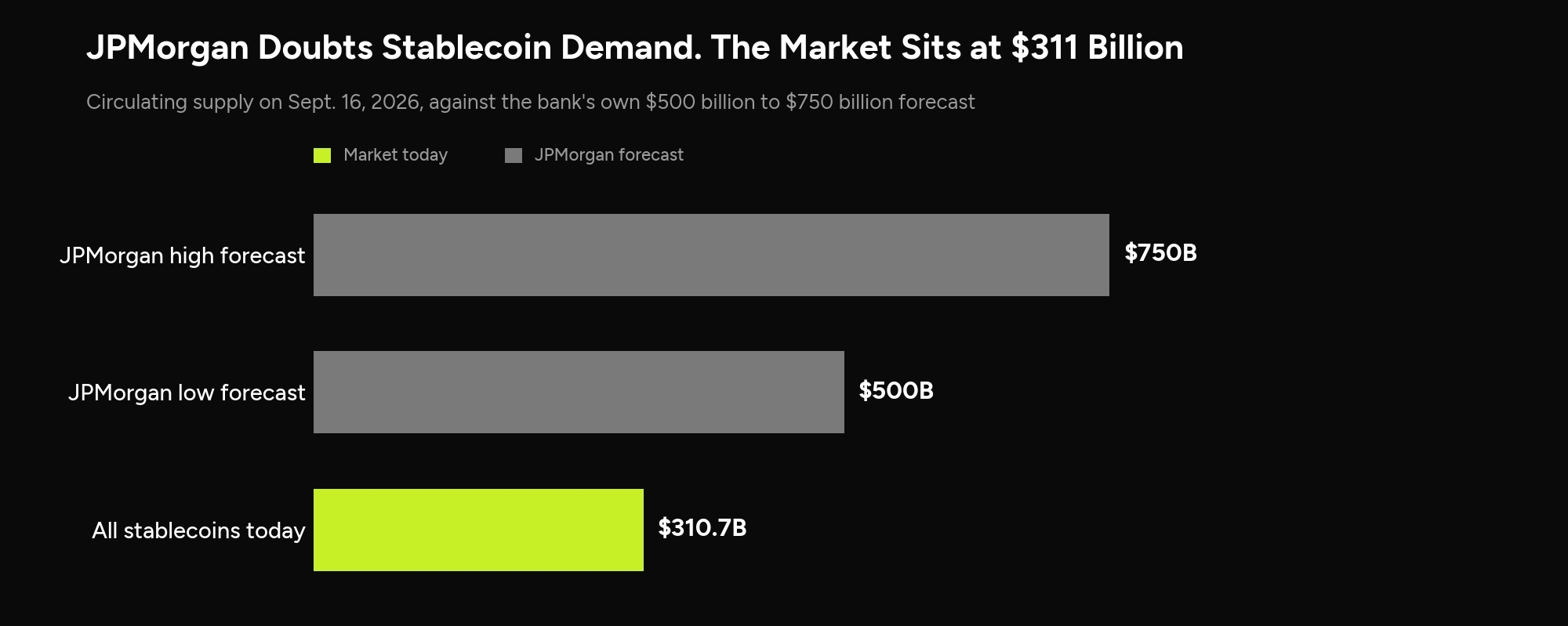
Article
🍿 The Clash of Titans: Tether’s CEO Mocks JPMorgan Over Claims of Low Institutional Stablecoin DemaA fresh war of words has broken out between traditional banking giants and the digital asset ecosystem. Tether CEO Paolo Ardoino publicly mocked JPMorgan Chase, firing back after one of the bank’s top executives downplayed institutional adoption of stablecoins.
The public feud highlights a growing rift between how Wall Street sees digital currency infrastructure and how the actual market is deploying it.
🏛️ The Spark: JPMorgan Downplays Stablecoin Growth
The drama began when a JPMorgan co-president stated that the banking giant sees very little immediate institutional appetite for stablecoins. The bank argued that large corporations and hedge funds are highly hesitant to adopt asset-backed digital tokens due to:
Regulatory Ambiguity: Ongoing friction regarding definitive compliance standards.Counterparty Risks: Reluctance to fully trust non-bank issuers.Existing Infrastructure: A preference for traditional, institutional treasury management rails.
🧊 Tether’s Cold Response: "Imported Ice to the North Pole"
Tether's CEO didn't let the critique slide. Responding with characteristic candor, Paolo Ardoino compared JPMorgan’s comments to observing a "lack of demand from the North Pole for imported ice."
Ardoino's sharp response cuts straight to the core of Tether's business model and massive market dominance:
Tether’s Actual Market: The primary utility for USDT thrives exactly where traditional financial institutions fail—providing instant, borderless liquidity in emerging markets, cross-border trade settlements, and high-velocity crypto markets.Record-Breaking Financials: Tether recently recorded a staggering $5.2 billion profit for the first half of the year, driven heavily by its massive $100B+ portfolio of U.S. Treasury bills.The Irony: Tether is currently one of the largest global buyers of short-term U.S. government debt, outperforming many traditional sovereign states and tier-one Wall Street banks.
🔮 The Market Takeaway
While JPMorgan looks at stablecoins through the narrow lens of conservative domestic corporate treasuries, Tether has already scaled USDT into a foundational global payment rail.
For crypto market participants, this public clash emphasizes that stablecoin growth is completely detached from whether tier-one U.S. commercial banks approve of it. As liquidity continues to flow into digital dollars for international settlement and on-chain yield, stablecoins are proving to be the primary engine driving real-world Web3 adoption.
#Tether #USDT #JPMorgan #Stablecoins #Write2Earn
🍿 The Clash of Titans: Tether’s CEO Mocks JPMorgan Over Claims of Low Institutional Stablecoin Dema
A fresh war of words has broken out between traditional banking giants and the digital asset ecosystem. Tether CEO Paolo Ardoino publicly mocked JPMorgan Chase, firing back after one of the bank’s top executives downplayed institutional adoption of stablecoins.
The public feud highlights a growing rift between how Wall Street sees digital currency infrastructure and how the actual market is deploying it.
🏛️ The Spark: JPMorgan Downplays Stablecoin Growth
The drama began when a JPMorgan co-president stated that the banking giant sees very little immediate institutional appetite for stablecoins. The bank argued that large corporations and hedge funds are highly hesitant to adopt asset-backed digital tokens due to:
Regulatory Ambiguity: Ongoing friction regarding definitive compliance standards.Counterparty Risks: Reluctance to fully trust non-bank issuers.Existing Infrastructure: A preference for traditional, institutional treasury management rails.
🧊 Tether’s Cold Response: "Imported Ice to the North Pole"
Tether's CEO didn't let the critique slide. Responding with characteristic candor, Paolo Ardoino compared JPMorgan’s comments to observing a "lack of demand from the North Pole for imported ice."
Ardoino's sharp response cuts straight to the core of Tether's business model and massive market dominance:
Tether’s Actual Market: The primary utility for USDT thrives exactly where traditional financial institutions fail—providing instant, borderless liquidity in emerging markets, cross-border trade settlements, and high-velocity crypto markets.Record-Breaking Financials: Tether recently recorded a staggering $5.2 billion profit for the first half of the year, driven heavily by its massive $100B+ portfolio of U.S. Treasury bills.The Irony: Tether is currently one of the largest global buyers of short-term U.S. government debt, outperforming many traditional sovereign states and tier-one Wall Street banks.
🔮 The Market Takeaway
While JPMorgan looks at stablecoins through the narrow lens of conservative domestic corporate treasuries, Tether has already scaled USDT into a foundational global payment rail.
For crypto market participants, this public clash emphasizes that stablecoin growth is completely detached from whether tier-one U.S. commercial banks approve of it. As liquidity continues to flow into digital dollars for international settlement and on-chain yield, stablecoins are proving to be the primary engine driving real-world Web3 adoption.
#Tether #USDT #JPMorgan #Stablecoins #Write2Earn
The public feud highlights a growing rift between how Wall Street sees digital currency infrastructure and how the actual market is deploying it.
🏛️ The Spark: JPMorgan Downplays Stablecoin Growth
The drama began when a JPMorgan co-president stated that the banking giant sees very little immediate institutional appetite for stablecoins. The bank argued that large corporations and hedge funds are highly hesitant to adopt asset-backed digital tokens due to:
Regulatory Ambiguity: Ongoing friction regarding definitive compliance standards.Counterparty Risks: Reluctance to fully trust non-bank issuers.Existing Infrastructure: A preference for traditional, institutional treasury management rails.
🧊 Tether’s Cold Response: "Imported Ice to the North Pole"
Tether's CEO didn't let the critique slide. Responding with characteristic candor, Paolo Ardoino compared JPMorgan’s comments to observing a "lack of demand from the North Pole for imported ice."
Ardoino's sharp response cuts straight to the core of Tether's business model and massive market dominance:
Tether’s Actual Market: The primary utility for USDT thrives exactly where traditional financial institutions fail—providing instant, borderless liquidity in emerging markets, cross-border trade settlements, and high-velocity crypto markets.Record-Breaking Financials: Tether recently recorded a staggering $5.2 billion profit for the first half of the year, driven heavily by its massive $100B+ portfolio of U.S. Treasury bills.The Irony: Tether is currently one of the largest global buyers of short-term U.S. government debt, outperforming many traditional sovereign states and tier-one Wall Street banks.
🔮 The Market Takeaway
While JPMorgan looks at stablecoins through the narrow lens of conservative domestic corporate treasuries, Tether has already scaled USDT into a foundational global payment rail.
For crypto market participants, this public clash emphasizes that stablecoin growth is completely detached from whether tier-one U.S. commercial banks approve of it. As liquidity continues to flow into digital dollars for international settlement and on-chain yield, stablecoins are proving to be the primary engine driving real-world Web3 adoption.
#Tether #USDT #JPMorgan #Stablecoins #Write2Earn
1
249
Verified
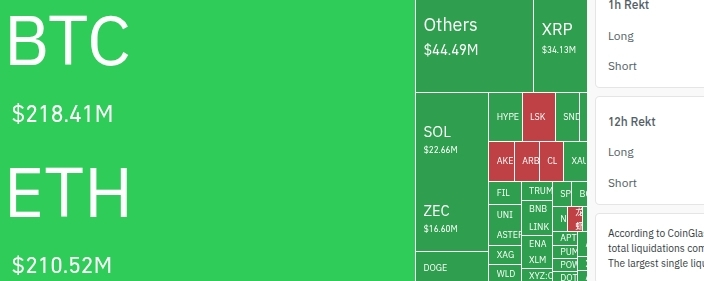
Article
🚨 Double Macro Whammy: Bitcoin and XRP Face Critical Fed Decision Following CLARITY Act StagnationThe global crypto market is sitting on a razor's edge today, September 16, 2026. Traders worldwide are bracing for the Federal Reserve’s crucial interest rate announcement, coming less than 24 hours after a devastating political blow on Capitol Hill.
Yesterday, the highly anticipated Digital Asset Market Clarity Act (CLARITY Act) failed to clear its critical Senate procedural hurdle.
The legislative failure sent immediate shockwaves through the market, causing Bitcoin (BTC) to slide down to $75,860 and XRP to give back its recent momentum, hovering precariously around $1.40.
🏛️ The Death of the CLARITY Act: Why It Stalled
For weeks, the crypto industry was banking on the CLARITY Act to establish definitive legal boundaries between the SEC and the CFTC. The Senate's failure to advance the bill has completely upended short-term regulatory optimism:
Polymarket Collapse: Predictive markets responded ruthlessly, with the passage probability on Polymarket crashing from 31% down to a mere 14%.Legislative Gridlock: With the November midterms rapidly approaching, congressional schedules are locked. Institutional analysts warn that if this window is missed, a similar comprehensive crypto bill might not see the light of day until later in the decade.Impact on XRP & XLM: Cross-border payment tokens like XRP and Stellar (XLM), which rallied over 8% in anticipation of the vote, bore the brunt of the political cooling, experiencing heavy liquidations as leverage was flushed out.
🦅 The Next Strike: Will the Fed Deliver a Knockout Blow?
As if the regulatory setback wasn't enough, the market must now immediately absorb the Federal Reserve's policy verdict. According to the CME Group's CME FedWatch Tool, macroeconomic expectations have taken a distinct hawkish turn:
Rate Hike Concerns: Market participants are pricing in an overwhelming 92.5% probability of a 25-basis-point interest rate hike.Yield Pressure: The 10-year U.S. Treasury yield is holding strong near a restrictive 4.95%, actively draining capital away from risk assets like cryptocurrencies and tech equities.Liquidity Tightening: With oil prices sustained near $103 a barrel, persistent inflationary pressures are forcing the central bank's hand, leaving little room for a dovish surprise.
The Trader's Playbook: Key Levels to Watch
We are entering a period of maximum intraday volatility. The market has already partially priced in the bad news from Washington, but the Fed's post-meeting press conference will dictate the trend for the rest of Q3.
Bitcoin (BTC): If the Fed maintains a strictly hawkish tone, watch for a test of the critical structural support zone at $75,000. Conversely, holding this level despite the bad news would form a strong local bottom.XRP: Having lost its immediate legislative catalyst, XRP needs to establish solid defense at the $1.35 – $1.38 support cluster to prevent a deeper retracement.
Risk Management Rule: Keep your leverage remarkably low today. Protect your capital, secure stablecoin dry powder, and wait for the macro volatility to settle before chasing any aggressive directional breakouts.
#Bitcoin #BTC #XRP #FedDecision #MacroEconomics
🚨 Double Macro Whammy: Bitcoin and XRP Face Critical Fed Decision Following CLARITY Act Stagnation
The global crypto market is sitting on a razor's edge today, September 16, 2026. Traders worldwide are bracing for the Federal Reserve’s crucial interest rate announcement, coming less than 24 hours after a devastating political blow on Capitol Hill.
Yesterday, the highly anticipated Digital Asset Market Clarity Act (CLARITY Act) failed to clear its critical Senate procedural hurdle.
The legislative failure sent immediate shockwaves through the market, causing Bitcoin (BTC) to slide down to $75,860 and XRP to give back its recent momentum, hovering precariously around $1.40.
🏛️ The Death of the CLARITY Act: Why It Stalled
For weeks, the crypto industry was banking on the CLARITY Act to establish definitive legal boundaries between the SEC and the CFTC. The Senate's failure to advance the bill has completely upended short-term regulatory optimism:
Polymarket Collapse: Predictive markets responded ruthlessly, with the passage probability on Polymarket crashing from 31% down to a mere 14%.Legislative Gridlock: With the November midterms rapidly approaching, congressional schedules are locked. Institutional analysts warn that if this window is missed, a similar comprehensive crypto bill might not see the light of day until later in the decade.Impact on XRP & XLM: Cross-border payment tokens like XRP and Stellar (XLM), which rallied over 8% in anticipation of the vote, bore the brunt of the political cooling, experiencing heavy liquidations as leverage was flushed out.
🦅 The Next Strike: Will the Fed Deliver a Knockout Blow?
As if the regulatory setback wasn't enough, the market must now immediately absorb the Federal Reserve's policy verdict. According to the CME Group's CME FedWatch Tool, macroeconomic expectations have taken a distinct hawkish turn:
Rate Hike Concerns: Market participants are pricing in an overwhelming 92.5% probability of a 25-basis-point interest rate hike.Yield Pressure: The 10-year U.S. Treasury yield is holding strong near a restrictive 4.95%, actively draining capital away from risk assets like cryptocurrencies and tech equities.Liquidity Tightening: With oil prices sustained near $103 a barrel, persistent inflationary pressures are forcing the central bank's hand, leaving little room for a dovish surprise.
The Trader's Playbook: Key Levels to Watch
We are entering a period of maximum intraday volatility. The market has already partially priced in the bad news from Washington, but the Fed's post-meeting press conference will dictate the trend for the rest of Q3.
Bitcoin (BTC): If the Fed maintains a strictly hawkish tone, watch for a test of the critical structural support zone at $75,000. Conversely, holding this level despite the bad news would form a strong local bottom.XRP: Having lost its immediate legislative catalyst, XRP needs to establish solid defense at the $1.35 – $1.38 support cluster to prevent a deeper retracement.
Risk Management Rule: Keep your leverage remarkably low today. Protect your capital, secure stablecoin dry powder, and wait for the macro volatility to settle before chasing any aggressive directional breakouts.
#Bitcoin #BTC #XRP #FedDecision #MacroEconomics
Yesterday, the highly anticipated Digital Asset Market Clarity Act (CLARITY Act) failed to clear its critical Senate procedural hurdle.
The legislative failure sent immediate shockwaves through the market, causing Bitcoin (BTC) to slide down to $75,860 and XRP to give back its recent momentum, hovering precariously around $1.40.
🏛️ The Death of the CLARITY Act: Why It Stalled
For weeks, the crypto industry was banking on the CLARITY Act to establish definitive legal boundaries between the SEC and the CFTC. The Senate's failure to advance the bill has completely upended short-term regulatory optimism:
Polymarket Collapse: Predictive markets responded ruthlessly, with the passage probability on Polymarket crashing from 31% down to a mere 14%.Legislative Gridlock: With the November midterms rapidly approaching, congressional schedules are locked. Institutional analysts warn that if this window is missed, a similar comprehensive crypto bill might not see the light of day until later in the decade.Impact on XRP & XLM: Cross-border payment tokens like XRP and Stellar (XLM), which rallied over 8% in anticipation of the vote, bore the brunt of the political cooling, experiencing heavy liquidations as leverage was flushed out.
🦅 The Next Strike: Will the Fed Deliver a Knockout Blow?
As if the regulatory setback wasn't enough, the market must now immediately absorb the Federal Reserve's policy verdict. According to the CME Group's CME FedWatch Tool, macroeconomic expectations have taken a distinct hawkish turn:
Rate Hike Concerns: Market participants are pricing in an overwhelming 92.5% probability of a 25-basis-point interest rate hike.Yield Pressure: The 10-year U.S. Treasury yield is holding strong near a restrictive 4.95%, actively draining capital away from risk assets like cryptocurrencies and tech equities.Liquidity Tightening: With oil prices sustained near $103 a barrel, persistent inflationary pressures are forcing the central bank's hand, leaving little room for a dovish surprise.
The Trader's Playbook: Key Levels to Watch
We are entering a period of maximum intraday volatility. The market has already partially priced in the bad news from Washington, but the Fed's post-meeting press conference will dictate the trend for the rest of Q3.
Bitcoin (BTC): If the Fed maintains a strictly hawkish tone, watch for a test of the critical structural support zone at $75,000. Conversely, holding this level despite the bad news would form a strong local bottom.XRP: Having lost its immediate legislative catalyst, XRP needs to establish solid defense at the $1.35 – $1.38 support cluster to prevent a deeper retracement.
Risk Management Rule: Keep your leverage remarkably low today. Protect your capital, secure stablecoin dry powder, and wait for the macro volatility to settle before chasing any aggressive directional breakouts.
#Bitcoin #BTC #XRP #FedDecision #MacroEconomics
JOIN & MORE 🎉🎁🤝
From Crypto__Today
37
2
41
378
Article
📊 Market Flash: Bitcoin Retakes Center Stage as Fed Interest Rate Verdict ApproachesThe crypto market has shifted into survival mode as macro volatility ramps up. Bitcoin (BTC) is currently trading down 4.5% to $75,860, while Ethereum (ETH) has slipped roughly 7% to $2,477.
This sudden downside pressure stems from two colliding forces: shifting expectations ahead of tomorrow's critical Federal Reserve interest rate decision and sudden political roadblocks surrounding the U.S. CLARITY Act.
🏛️ The CLARITY Act Stalls: Why the Hype Cools Down
Just hours ago, crypto traders were highly optimistic that the U.S. Senate's procedural vote on the Digital Asset Market Clarity Act would usher in long-awaited legal boundaries between the SEC and CFTC. However, reality has set in on Capitol Hill:
Polymarket Odds Collapse: Predictive traders on Polymarket slashed the odds of the CLARITY Act passing in 2026 from 31% down to a minor 14%.Reconciliation Roadblocks: Even if the Senate pushes the bill forward, heavy amendments mean it cannot go straight to the President's desk. It would have to go back to the House for reconciliation.Midterm Election Delays: With the November midterms rapidly approaching, Congress is staring at a packed schedule. Institutional analysts warn that if the bill isn't saved now, a realistic window might not open again until closer to the end of the decade.
📈 Fed Hikes Take Center Stage
Adding fuel to the market correction, interest rate anxiety is rattling speculative assets. According to the CME Group's CME FedWatch Tool, market sentiment has completely inverted.
Traders are now pricing in a crushing 92.5% probability that the Fed will enact a 25 basis point rate hike at the conclusion of its two-day policy meeting tomorrow.
Rising Treasury yields—with the 10-year yield touching a restrictive 4.95%—continue to suck liquid capital out of risk assets, placing a heavy near-term lid on major digital tokens.
What Comes Next for Traders?
This brief sell-off is not driven by failing crypto fundamentals, but by structural macro risks.
If the Fed delivers a surprisingly hawkish tone tomorrow, expect further liquidations down to major structural support at the $75,000 range for BTC. Conversely, if long-term holders continue to hold their ground and absorb the spot selling, a positive surprise from Capitol Hill could immediately thin out order books and trigger a rapid relief bounce.
Keep leverage light, preserve your stablecoin dry powder, and closely track the official macro announcements dropping over the next 24 hours.
#Bitcoin #BTC #MacroEconomics #ClarityAct #FedRate
📊 Market Flash: Bitcoin Retakes Center Stage as Fed Interest Rate Verdict Approaches
The crypto market has shifted into survival mode as macro volatility ramps up. Bitcoin (BTC) is currently trading down 4.5% to $75,860, while Ethereum (ETH) has slipped roughly 7% to $2,477.
This sudden downside pressure stems from two colliding forces: shifting expectations ahead of tomorrow's critical Federal Reserve interest rate decision and sudden political roadblocks surrounding the U.S. CLARITY Act.
🏛️ The CLARITY Act Stalls: Why the Hype Cools Down
Just hours ago, crypto traders were highly optimistic that the U.S. Senate's procedural vote on the Digital Asset Market Clarity Act would usher in long-awaited legal boundaries between the SEC and CFTC. However, reality has set in on Capitol Hill:
Polymarket Odds Collapse: Predictive traders on Polymarket slashed the odds of the CLARITY Act passing in 2026 from 31% down to a minor 14%.Reconciliation Roadblocks: Even if the Senate pushes the bill forward, heavy amendments mean it cannot go straight to the President's desk. It would have to go back to the House for reconciliation.Midterm Election Delays: With the November midterms rapidly approaching, Congress is staring at a packed schedule. Institutional analysts warn that if the bill isn't saved now, a realistic window might not open again until closer to the end of the decade.
📈 Fed Hikes Take Center Stage
Adding fuel to the market correction, interest rate anxiety is rattling speculative assets. According to the CME Group's CME FedWatch Tool, market sentiment has completely inverted.
Traders are now pricing in a crushing 92.5% probability that the Fed will enact a 25 basis point rate hike at the conclusion of its two-day policy meeting tomorrow.
Rising Treasury yields—with the 10-year yield touching a restrictive 4.95%—continue to suck liquid capital out of risk assets, placing a heavy near-term lid on major digital tokens.
What Comes Next for Traders?
This brief sell-off is not driven by failing crypto fundamentals, but by structural macro risks.
If the Fed delivers a surprisingly hawkish tone tomorrow, expect further liquidations down to major structural support at the $75,000 range for BTC. Conversely, if long-term holders continue to hold their ground and absorb the spot selling, a positive surprise from Capitol Hill could immediately thin out order books and trigger a rapid relief bounce.
Keep leverage light, preserve your stablecoin dry powder, and closely track the official macro announcements dropping over the next 24 hours.
#Bitcoin #BTC #MacroEconomics #ClarityAct #FedRate
This sudden downside pressure stems from two colliding forces: shifting expectations ahead of tomorrow's critical Federal Reserve interest rate decision and sudden political roadblocks surrounding the U.S. CLARITY Act.
🏛️ The CLARITY Act Stalls: Why the Hype Cools Down
Just hours ago, crypto traders were highly optimistic that the U.S. Senate's procedural vote on the Digital Asset Market Clarity Act would usher in long-awaited legal boundaries between the SEC and CFTC. However, reality has set in on Capitol Hill:
Polymarket Odds Collapse: Predictive traders on Polymarket slashed the odds of the CLARITY Act passing in 2026 from 31% down to a minor 14%.Reconciliation Roadblocks: Even if the Senate pushes the bill forward, heavy amendments mean it cannot go straight to the President's desk. It would have to go back to the House for reconciliation.Midterm Election Delays: With the November midterms rapidly approaching, Congress is staring at a packed schedule. Institutional analysts warn that if the bill isn't saved now, a realistic window might not open again until closer to the end of the decade.
📈 Fed Hikes Take Center Stage
Adding fuel to the market correction, interest rate anxiety is rattling speculative assets. According to the CME Group's CME FedWatch Tool, market sentiment has completely inverted.
Traders are now pricing in a crushing 92.5% probability that the Fed will enact a 25 basis point rate hike at the conclusion of its two-day policy meeting tomorrow.
Rising Treasury yields—with the 10-year yield touching a restrictive 4.95%—continue to suck liquid capital out of risk assets, placing a heavy near-term lid on major digital tokens.
What Comes Next for Traders?
This brief sell-off is not driven by failing crypto fundamentals, but by structural macro risks.
If the Fed delivers a surprisingly hawkish tone tomorrow, expect further liquidations down to major structural support at the $75,000 range for BTC. Conversely, if long-term holders continue to hold their ground and absorb the spot selling, a positive surprise from Capitol Hill could immediately thin out order books and trigger a rapid relief bounce.
Keep leverage light, preserve your stablecoin dry powder, and closely track the official macro announcements dropping over the next 24 hours.
#Bitcoin #BTC #MacroEconomics #ClarityAct #FedRate
1
154
🚨 Insider Trading Shockwave: 2 Robinhood Engineers Charged in Hyperliquid Futures Front-RunningThe intersection of traditional fintech and decentralized finance (DeFi) is facing intense regulatory scrutiny following a major law enforcement action.
Federal prosecutors announced fraud charges against two Robinhood software engineers linked to a sophisticated insider trading scheme on the Hyperliquid decentralized exchange.
The engineers are accused of using non-public corporate listing data to front-run the market, generating massive profits before token listings went live for public trading.
🔎 The Mechanics of the Front-Running Scheme
The federal indictment outlines a highly coordinated effort to exploit inside knowledge of Robinhood’s upcoming product expansions.
According to the filings, the multi-step operation relied on systemic data leaks:
Access to Inside Information: The engineers used their internal corporate access to monitor Robinhood's secret testing environments and internal roadmaps for upcoming digital asset listings.Exploiting Decentralized Leverage: Before Robinhood publicly announced a new token listing, the duo bought high-leverage perpetual futures contracts for those exact assets on the Hyperliquid DEX.Cashing Out on the Listing Pump: Once Robinhood broadcasted the official listing announcement to its millions of retail users, the token prices regularly spiked. The engineers then immediately liquidated their long positions, reaping significant profits.
🏛️ What Comes Next? Regulatory & Legal Fallout
This case marks a major milestone in financial regulation, showing that regulators can track illicit behavior even when it crosses over onto decentralized protocols.
Here is what the market can expect as the legal proceedings move forward:
Criminal Wire Fraud & Securities Fraud Charges: The engineers face severe federal prison sentences if convicted of wire fraud and conspiracy charges.The Hyperliquid Precedent: This case sets a massive precedent proving that regulators can successfully untangle pseudo-anonymous trading profiles on decentralized order books by cross-referencing IP logs, on-chain flows, and corporate schedules.Internal Fintech Security Audits: Expect Robinhood and rival platforms like Coinbase and Kraken to heavily restrict employee access to listing pipelines and aggressively audit internal data access to prevent similar leaks.
The Trader's Takeaway
For everyday market participants, this case highlights a harsh reality: listing pumps are frequently front-run by institutional or corporate insiders utilizing heavy leverage.
While the immediate regulatory crackdowns may cause brief volatility across top perpetual markets, cleaner and more transparent data tracking is a net positive for long-term retail safety.
Keep a close eye on unusual pre-listing volume spikes on decentralized perpetual protocols, as they often serve as early indicators of upcoming liquidity events.
#Robinhood #Hyperliquid #InsiderTrading #CryptoNews #DeFi
🚨 Insider Trading Shockwave: 2 Robinhood Engineers Charged in Hyperliquid Futures Front-Running
The intersection of traditional fintech and decentralized finance (DeFi) is facing intense regulatory scrutiny following a major law enforcement action.
Federal prosecutors announced fraud charges against two Robinhood software engineers linked to a sophisticated insider trading scheme on the Hyperliquid decentralized exchange.
The engineers are accused of using non-public corporate listing data to front-run the market, generating massive profits before token listings went live for public trading.
🔎 The Mechanics of the Front-Running Scheme
The federal indictment outlines a highly coordinated effort to exploit inside knowledge of Robinhood’s upcoming product expansions.
According to the filings, the multi-step operation relied on systemic data leaks:
Access to Inside Information: The engineers used their internal corporate access to monitor Robinhood's secret testing environments and internal roadmaps for upcoming digital asset listings.Exploiting Decentralized Leverage: Before Robinhood publicly announced a new token listing, the duo bought high-leverage perpetual futures contracts for those exact assets on the Hyperliquid DEX.Cashing Out on the Listing Pump: Once Robinhood broadcasted the official listing announcement to its millions of retail users, the token prices regularly spiked. The engineers then immediately liquidated their long positions, reaping significant profits.
🏛️ What Comes Next? Regulatory & Legal Fallout
This case marks a major milestone in financial regulation, showing that regulators can track illicit behavior even when it crosses over onto decentralized protocols.
Here is what the market can expect as the legal proceedings move forward:
Criminal Wire Fraud & Securities Fraud Charges: The engineers face severe federal prison sentences if convicted of wire fraud and conspiracy charges.The Hyperliquid Precedent: This case sets a massive precedent proving that regulators can successfully untangle pseudo-anonymous trading profiles on decentralized order books by cross-referencing IP logs, on-chain flows, and corporate schedules.Internal Fintech Security Audits: Expect Robinhood and rival platforms like Coinbase and Kraken to heavily restrict employee access to listing pipelines and aggressively audit internal data access to prevent similar leaks.
The Trader's Takeaway
For everyday market participants, this case highlights a harsh reality: listing pumps are frequently front-run by institutional or corporate insiders utilizing heavy leverage.
While the immediate regulatory crackdowns may cause brief volatility across top perpetual markets, cleaner and more transparent data tracking is a net positive for long-term retail safety.
Keep a close eye on unusual pre-listing volume spikes on decentralized perpetual protocols, as they often serve as early indicators of upcoming liquidity events.
#Robinhood #Hyperliquid #InsiderTrading #CryptoNews #DeFi
Federal prosecutors announced fraud charges against two Robinhood software engineers linked to a sophisticated insider trading scheme on the Hyperliquid decentralized exchange.
The engineers are accused of using non-public corporate listing data to front-run the market, generating massive profits before token listings went live for public trading.
🔎 The Mechanics of the Front-Running Scheme
The federal indictment outlines a highly coordinated effort to exploit inside knowledge of Robinhood’s upcoming product expansions.
According to the filings, the multi-step operation relied on systemic data leaks:
Access to Inside Information: The engineers used their internal corporate access to monitor Robinhood's secret testing environments and internal roadmaps for upcoming digital asset listings.Exploiting Decentralized Leverage: Before Robinhood publicly announced a new token listing, the duo bought high-leverage perpetual futures contracts for those exact assets on the Hyperliquid DEX.Cashing Out on the Listing Pump: Once Robinhood broadcasted the official listing announcement to its millions of retail users, the token prices regularly spiked. The engineers then immediately liquidated their long positions, reaping significant profits.
🏛️ What Comes Next? Regulatory & Legal Fallout
This case marks a major milestone in financial regulation, showing that regulators can track illicit behavior even when it crosses over onto decentralized protocols.
Here is what the market can expect as the legal proceedings move forward:
Criminal Wire Fraud & Securities Fraud Charges: The engineers face severe federal prison sentences if convicted of wire fraud and conspiracy charges.The Hyperliquid Precedent: This case sets a massive precedent proving that regulators can successfully untangle pseudo-anonymous trading profiles on decentralized order books by cross-referencing IP logs, on-chain flows, and corporate schedules.Internal Fintech Security Audits: Expect Robinhood and rival platforms like Coinbase and Kraken to heavily restrict employee access to listing pipelines and aggressively audit internal data access to prevent similar leaks.
The Trader's Takeaway
For everyday market participants, this case highlights a harsh reality: listing pumps are frequently front-run by institutional or corporate insiders utilizing heavy leverage.
While the immediate regulatory crackdowns may cause brief volatility across top perpetual markets, cleaner and more transparent data tracking is a net positive for long-term retail safety.
Keep a close eye on unusual pre-listing volume spikes on decentralized perpetual protocols, as they often serve as early indicators of upcoming liquidity events.
#Robinhood #Hyperliquid #InsiderTrading #CryptoNews #DeFi
1
236
📰 The Legal Breakdown: Richard Teng Explains Binance’s Stand in the $61 Million U.S. Seizure CaseThe crypto community woke up to headlines regarding a $61.5 million U.S. asset forfeiture case involving Iranian oil revenues.
Clearing up the immediate market confusion, Binance co-CEO Richard Teng publicly addressed the situation on Tuesday. He firmly stated that the civil forfeiture case was not filed against Binance and does not allege any corporate wrongdoing by the platform.
Instead, the exchange is acting as an active collaborator in a broader U.S. government crackdown on illegal state-backed financing.
🏛️ Inside the Case: Why Was the $61 Million Seized?
The confusion started when a civil forfeiture complaint was unsealed in a Washington, D.C. federal court. The court documents revealed that the U.S. government had successfully seized over $61.5 million in digital assets.
Here are the key operational facts behind the filing:
The Target: The legal actions are directed entirely against an illegal network run by the Islamic Revolutionary Guard Corps (IRGC) and the Quds Force, which used crypto to launder illicit oil revenues.The Funds: The seized cryptocurrency was actually held across several individual accounts hosted on the Binance platform by these bad actors.The Mechanism: The legal filing is a "civil forfeiture in rem" action—a specific legal tool used to seize illicit property itself, rather than bringing criminal charges against the platform where the funds are temporarily stored.
🛡️ Cooperation Over Confrontation
Richard Teng emphasized that this enforcement action highlights Binance’s deep operational transition toward global regulatory alignment and aggressive compliance.
Rather than defending the funds, Binance’s internal security teams proactively identified the suspicious accounts, froze the assets, and worked directly with U.S. federal law enforcement agencies to facilitate the seizure.
This case demonstrates the massive scale of Binance's current monitoring infrastructure, showcasing the company's ability to isolate state-sponsored actors without disrupting standard retail exchange operations.
The Market Takeaway
For users and traders on the platform, this update provides critical clarity. The $61 million seizure is not a new regulatory attack on Binance; rather, it is the direct result of Binance actively enforcing its strict Anti-Money Laundering (AML) and Know-Your-Customer (KYC) protocols.
As crypto platforms continue to bridge the gap with global regulators, high-profile cooperative actions like this show that large-scale compliance is becoming the standard defense against illicit finance.
#Binance #RichardTeng #CryptoNews #Compliance #Regulation
📰 The Legal Breakdown: Richard Teng Explains Binance’s Stand in the $61 Million U.S. Seizure Case
The crypto community woke up to headlines regarding a $61.5 million U.S. asset forfeiture case involving Iranian oil revenues.
Clearing up the immediate market confusion, Binance co-CEO Richard Teng publicly addressed the situation on Tuesday. He firmly stated that the civil forfeiture case was not filed against Binance and does not allege any corporate wrongdoing by the platform.
Instead, the exchange is acting as an active collaborator in a broader U.S. government crackdown on illegal state-backed financing.
🏛️ Inside the Case: Why Was the $61 Million Seized?
The confusion started when a civil forfeiture complaint was unsealed in a Washington, D.C. federal court. The court documents revealed that the U.S. government had successfully seized over $61.5 million in digital assets.
Here are the key operational facts behind the filing:
The Target: The legal actions are directed entirely against an illegal network run by the Islamic Revolutionary Guard Corps (IRGC) and the Quds Force, which used crypto to launder illicit oil revenues.The Funds: The seized cryptocurrency was actually held across several individual accounts hosted on the Binance platform by these bad actors.The Mechanism: The legal filing is a "civil forfeiture in rem" action—a specific legal tool used to seize illicit property itself, rather than bringing criminal charges against the platform where the funds are temporarily stored.
🛡️ Cooperation Over Confrontation
Richard Teng emphasized that this enforcement action highlights Binance’s deep operational transition toward global regulatory alignment and aggressive compliance.
Rather than defending the funds, Binance’s internal security teams proactively identified the suspicious accounts, froze the assets, and worked directly with U.S. federal law enforcement agencies to facilitate the seizure.
This case demonstrates the massive scale of Binance's current monitoring infrastructure, showcasing the company's ability to isolate state-sponsored actors without disrupting standard retail exchange operations.
The Market Takeaway
For users and traders on the platform, this update provides critical clarity. The $61 million seizure is not a new regulatory attack on Binance; rather, it is the direct result of Binance actively enforcing its strict Anti-Money Laundering (AML) and Know-Your-Customer (KYC) protocols.
As crypto platforms continue to bridge the gap with global regulators, high-profile cooperative actions like this show that large-scale compliance is becoming the standard defense against illicit finance.
#Binance #RichardTeng #CryptoNews #Compliance #Regulation
Clearing up the immediate market confusion, Binance co-CEO Richard Teng publicly addressed the situation on Tuesday. He firmly stated that the civil forfeiture case was not filed against Binance and does not allege any corporate wrongdoing by the platform.
Instead, the exchange is acting as an active collaborator in a broader U.S. government crackdown on illegal state-backed financing.
🏛️ Inside the Case: Why Was the $61 Million Seized?
The confusion started when a civil forfeiture complaint was unsealed in a Washington, D.C. federal court. The court documents revealed that the U.S. government had successfully seized over $61.5 million in digital assets.
Here are the key operational facts behind the filing:
The Target: The legal actions are directed entirely against an illegal network run by the Islamic Revolutionary Guard Corps (IRGC) and the Quds Force, which used crypto to launder illicit oil revenues.The Funds: The seized cryptocurrency was actually held across several individual accounts hosted on the Binance platform by these bad actors.The Mechanism: The legal filing is a "civil forfeiture in rem" action—a specific legal tool used to seize illicit property itself, rather than bringing criminal charges against the platform where the funds are temporarily stored.
🛡️ Cooperation Over Confrontation
Richard Teng emphasized that this enforcement action highlights Binance’s deep operational transition toward global regulatory alignment and aggressive compliance.
Rather than defending the funds, Binance’s internal security teams proactively identified the suspicious accounts, froze the assets, and worked directly with U.S. federal law enforcement agencies to facilitate the seizure.
This case demonstrates the massive scale of Binance's current monitoring infrastructure, showcasing the company's ability to isolate state-sponsored actors without disrupting standard retail exchange operations.
The Market Takeaway
For users and traders on the platform, this update provides critical clarity. The $61 million seizure is not a new regulatory attack on Binance; rather, it is the direct result of Binance actively enforcing its strict Anti-Money Laundering (AML) and Know-Your-Customer (KYC) protocols.
As crypto platforms continue to bridge the gap with global regulators, high-profile cooperative actions like this show that large-scale compliance is becoming the standard defense against illicit finance.
#Binance #RichardTeng #CryptoNews #Compliance #Regulation
1
99
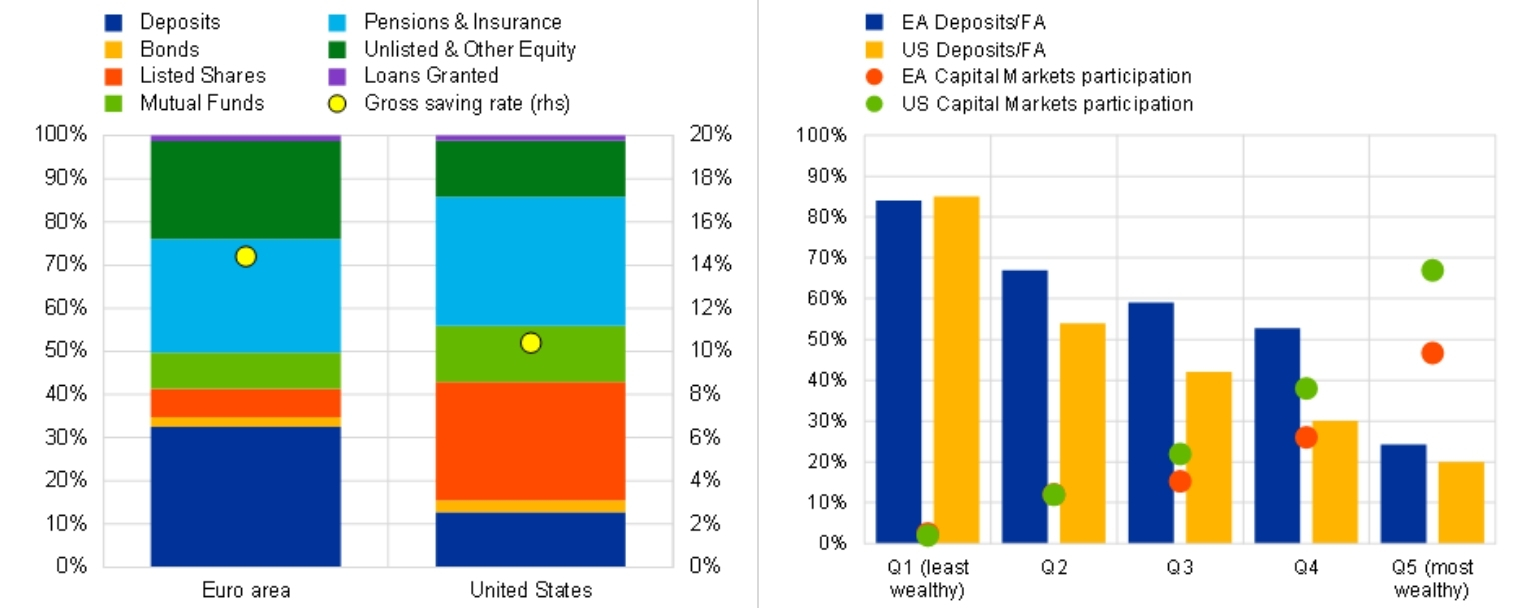
Article
💶 Dormant Wealth: Europeans Hold €10 Trillion in Cash but Completely Refuse to InvestEuropean households are officially sitting on a staggering €10 Trillion ($11.5 Trillion) pile of idle cash.
A groundbreaking report released on Tuesday by the European Central Bank (ECB) reveals a massive gap in wealth creation: nearly 80% of euro area households own absolutely no stocks ormarket-based financial investments.
Instead of letting their wealth grow, a vast majority of citizens choose to keep their money locked away in traditional, low-yield bank deposits.
📊 Breaking Down the €10 Trillion Hoard
The data published in the latest ECB Working Paper highlights a rigid, decades-long bias toward ultra-conservative saving habits across the bloc:
The Cash Concentration: This immense liquid hoard represents roughly one-third of all household financial assets in the Eurozone.Real Estate Overload: Over 60% of total household wealth is tied up strictly in real estate and property.Direct Market Avoidance: Only a minor 4% of European citizens hold a meaningful share of their wealth directly in corporate shares, public bonds, or investment funds.
According to the ECB's Consumer Expectations Survey (CES), the structural refusal to move capital into productive markets stems from three major pain points: high perceived financial risk, low systemic trust in capital markets, and a widespread gap in basic financial literacy.
🏦 The Political Push: The Savings and Investments Union
This severe capital stagnation has triggered a massive legislative reaction within the European Union. As Europe fights an economic productivity slowdown, politicians are desperately trying to build an official Savings and Investments Union (SIU).
The primary goal is to establish streamlined, unified savings and investment accounts (SIAs) to legally guide this idle cash directly into productive corporate innovation and long-term domestic growth.
However, the current policy framework focuses purely on traditional financial infrastructure, leaving disruptive digital asset alternatives entirely out of the equation.
The Crypto Perspective & Takeaway
For global crypto and digital asset markets, Europe's €10 trillion hoard represents an astronomical pool of untapped liquidity.
While traditional European regulators struggle to build consumer trust in fragmented local stock markets, decentralized finance (DeFi) platforms and transparent public blockchains like Bitcoin offer immediate, programmatic alternatives to inflation-impacted bank accounts.
As inflation slowly chips away at the purchasing power of these massive cash reserves, even a tiny 1% structural shift of this European capital pile into digital assets would inject over $115 Billion of fresh, programmatic buying pressure into the global crypto cap.
#Europe #ECB #FinanceNews #MacroEconomics #Savings
💶 Dormant Wealth: Europeans Hold €10 Trillion in Cash but Completely Refuse to Invest
European households are officially sitting on a staggering €10 Trillion ($11.5 Trillion) pile of idle cash.
A groundbreaking report released on Tuesday by the European Central Bank (ECB) reveals a massive gap in wealth creation: nearly 80% of euro area households own absolutely no stocks ormarket-based financial investments.
Instead of letting their wealth grow, a vast majority of citizens choose to keep their money locked away in traditional, low-yield bank deposits.
📊 Breaking Down the €10 Trillion Hoard
The data published in the latest ECB Working Paper highlights a rigid, decades-long bias toward ultra-conservative saving habits across the bloc:
The Cash Concentration: This immense liquid hoard represents roughly one-third of all household financial assets in the Eurozone.Real Estate Overload: Over 60% of total household wealth is tied up strictly in real estate and property.Direct Market Avoidance: Only a minor 4% of European citizens hold a meaningful share of their wealth directly in corporate shares, public bonds, or investment funds.
According to the ECB's Consumer Expectations Survey (CES), the structural refusal to move capital into productive markets stems from three major pain points: high perceived financial risk, low systemic trust in capital markets, and a widespread gap in basic financial literacy.
🏦 The Political Push: The Savings and Investments Union
This severe capital stagnation has triggered a massive legislative reaction within the European Union. As Europe fights an economic productivity slowdown, politicians are desperately trying to build an official Savings and Investments Union (SIU).
The primary goal is to establish streamlined, unified savings and investment accounts (SIAs) to legally guide this idle cash directly into productive corporate innovation and long-term domestic growth.
However, the current policy framework focuses purely on traditional financial infrastructure, leaving disruptive digital asset alternatives entirely out of the equation.
The Crypto Perspective & Takeaway
For global crypto and digital asset markets, Europe's €10 trillion hoard represents an astronomical pool of untapped liquidity.
While traditional European regulators struggle to build consumer trust in fragmented local stock markets, decentralized finance (DeFi) platforms and transparent public blockchains like Bitcoin offer immediate, programmatic alternatives to inflation-impacted bank accounts.
As inflation slowly chips away at the purchasing power of these massive cash reserves, even a tiny 1% structural shift of this European capital pile into digital assets would inject over $115 Billion of fresh, programmatic buying pressure into the global crypto cap.
#Europe #ECB #FinanceNews #MacroEconomics #Savings
A groundbreaking report released on Tuesday by the European Central Bank (ECB) reveals a massive gap in wealth creation: nearly 80% of euro area households own absolutely no stocks ormarket-based financial investments.
Instead of letting their wealth grow, a vast majority of citizens choose to keep their money locked away in traditional, low-yield bank deposits.
📊 Breaking Down the €10 Trillion Hoard
The data published in the latest ECB Working Paper highlights a rigid, decades-long bias toward ultra-conservative saving habits across the bloc:
The Cash Concentration: This immense liquid hoard represents roughly one-third of all household financial assets in the Eurozone.Real Estate Overload: Over 60% of total household wealth is tied up strictly in real estate and property.Direct Market Avoidance: Only a minor 4% of European citizens hold a meaningful share of their wealth directly in corporate shares, public bonds, or investment funds.
According to the ECB's Consumer Expectations Survey (CES), the structural refusal to move capital into productive markets stems from three major pain points: high perceived financial risk, low systemic trust in capital markets, and a widespread gap in basic financial literacy.
🏦 The Political Push: The Savings and Investments Union
This severe capital stagnation has triggered a massive legislative reaction within the European Union. As Europe fights an economic productivity slowdown, politicians are desperately trying to build an official Savings and Investments Union (SIU).
The primary goal is to establish streamlined, unified savings and investment accounts (SIAs) to legally guide this idle cash directly into productive corporate innovation and long-term domestic growth.
However, the current policy framework focuses purely on traditional financial infrastructure, leaving disruptive digital asset alternatives entirely out of the equation.
The Crypto Perspective & Takeaway
For global crypto and digital asset markets, Europe's €10 trillion hoard represents an astronomical pool of untapped liquidity.
While traditional European regulators struggle to build consumer trust in fragmented local stock markets, decentralized finance (DeFi) platforms and transparent public blockchains like Bitcoin offer immediate, programmatic alternatives to inflation-impacted bank accounts.
As inflation slowly chips away at the purchasing power of these massive cash reserves, even a tiny 1% structural shift of this European capital pile into digital assets would inject over $115 Billion of fresh, programmatic buying pressure into the global crypto cap.
#Europe #ECB #FinanceNews #MacroEconomics #Savings
2
333
Log in to explore more content
Join global crypto users on Binance Square
⚡️ Get latest and useful information about crypto.
💬 Trusted by the world’s largest crypto exchange.
👍 Discover real insights from verified creators.
Email / Phone number
Trending Topics
AIStocksWhatNext
88,755 views
1,130 Discussing
Share & Win Traffic Reward in our Trending Hashtag Campaign
✨Topic: What Other Investment Opportunities Remain as AI Stocks Keep Rising?
👉How to Join:
Publish a short post or article with hashtag #AIStocksWhatNext
Share whether you’re bullish or bearish, and post your AI stock holdings or trade — using the trade widget may improve your eligibility.
You can also strengthen your post by sharing data or charts, and avoiding AI-generated images.
✍️Create content based on the below angles:
- Nvidia says chip sales will double next year, and top AI companies keep hitting record revenue, the compute spend behind it is just as staggering. Is AI demand really taking off? And how long can it last? AI stocks are up across the board. Is this a real breakout, or just a short-term bounce?
- Industry leaders are calling to slow down AI development, while Trump plans to build an “AI Force”, claiming AI could account for 25% of U.S. GDP in the future. Whose side are you on? Will state-level backing be a long-term win for AI stocks?
- Are you buying AI stocks? Share your AI-related trade/holdings with our trade sharing widget.
⏰Campaign Period:
- 2026-09-22 7:00 - 2026-09-24 4:00 UTC
🎁Reward:
- Qualified posts that comply with the above guidelines and contain more than 100 words will be reviewed and may receive a random traffic boost of 500 to 3,000 views. You will receive a notification from your feed secretary if your post is selected.
- Get a chance to have your article featured on Binance Square Official
Need ideas for your post? Visit the topic page #AIStocksWhatNext or the Square Guide on How to Post for Better Reach.
Binance Square Official
·189 Likes
·288.2k views
BitcoinBreaksAboveMayHighNears$86K
899 views
29 Discussing
DogecoinRises15%
2,837 views
149 Discussing