
#claudecode
claudecode
6,749 views
43 Discussing
Hot
Latest

·
--
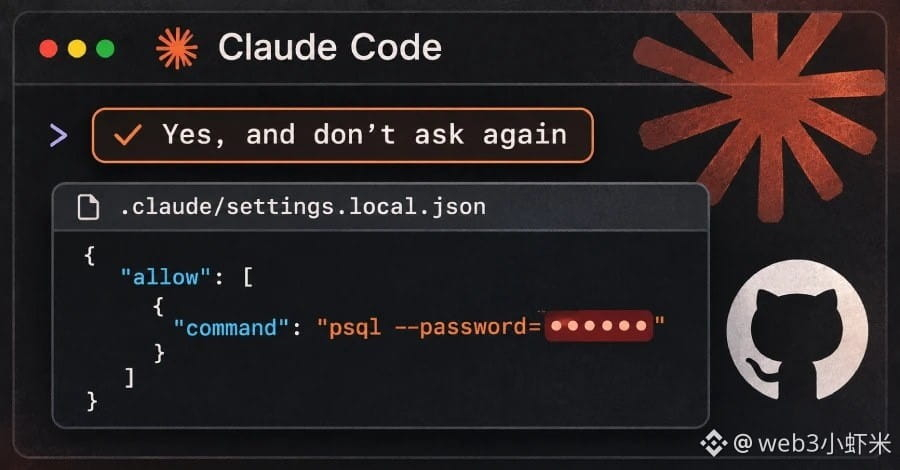
Came across a pretty sobering study by Apiiro: in Claude Code, click “Yes, and don't ask again,” and it writes the entire command you approved verbatim into the project file .claude/settings.local.json—including passwords and API keys in plain text.
They scanned public GitHub and found about 104,200 copies of this file (in about 103,600 repositories). Of those, 1,122 (about 1.1%) contained at least one secret, for a total of 1,379 unique secrets. Including Git history, shared team settings.json files, and agent conversation logs, they found about 2,539 secrets scattered across 1,994 repositories.
More than a third could be used to access databases directly; database passwords alone accounted for 379. There were also 43 SSH logins to publicly accessible servers, 42 GitHub/GitLab/npm tokens, and 23 AWS keys, affecting about 63 organizations. The researchers didn’t try these secrets to see if they worked, but one company they notified confirmed that its key was still active at the time.
Claude Code adds this file to your machine’s global Git excludes, but doesn’t add it to the project’s own .gitignore—so the protection fails if you switch computers or if the file has already been committed. Of the 1,105 repositories they tracked, Claude had modified this file as a co-author in 539. Comparing 16 coding agents, they confirmed that only Claude Code stores the full approved command in a project file by default.
The researchers recommend rotating every secret that has appeared in the file, then cleaning up the repository. Click “Don’t ask again” for convenience, and secrets end up written to a plaintext config file.
#ClaudeCode #网络安全 #AI
Came across a pretty sobering study by Apiiro: in Claude Code, click “Yes, and don't ask again,” and it writes the entire command you approved verbatim into the project file .claude/settings.local.json—including passwords and API keys in plain text.
They scanned public GitHub and found about 104,200 copies of this file (in about 103,600 repositories). Of those, 1,122 (about 1.1%) contained at least one secret, for a total of 1,379 unique secrets. Including Git history, shared team settings.json files, and agent conversation logs, they found about 2,539 secrets scattered across 1,994 repositories.
More than a third could be used to access databases directly; database passwords alone accounted for 379. There were also 43 SSH logins to publicly accessible servers, 42 GitHub/GitLab/npm tokens, and 23 AWS keys, affecting about 63 organizations. The researchers didn’t try these secrets to see if they worked, but one company they notified confirmed that its key was still active at the time.
Claude Code adds this file to your machine’s global Git excludes, but doesn’t add it to the project’s own .gitignore—so the protection fails if you switch computers or if the file has already been committed. Of the 1,105 repositories they tracked, Claude had modified this file as a co-author in 539. Comparing 16 coding agents, they confirmed that only Claude Code stores the full approved command in a project file by default.
The researchers recommend rotating every secret that has appeared in the file, then cleaning up the repository. Click “Don’t ask again” for convenience, and secrets end up written to a plaintext config file.
#ClaudeCode #网络安全 #AI
They scanned public GitHub and found about 104,200 copies of this file (in about 103,600 repositories). Of those, 1,122 (about 1.1%) contained at least one secret, for a total of 1,379 unique secrets. Including Git history, shared team settings.json files, and agent conversation logs, they found about 2,539 secrets scattered across 1,994 repositories.
More than a third could be used to access databases directly; database passwords alone accounted for 379. There were also 43 SSH logins to publicly accessible servers, 42 GitHub/GitLab/npm tokens, and 23 AWS keys, affecting about 63 organizations. The researchers didn’t try these secrets to see if they worked, but one company they notified confirmed that its key was still active at the time.
Claude Code adds this file to your machine’s global Git excludes, but doesn’t add it to the project’s own .gitignore—so the protection fails if you switch computers or if the file has already been committed. Of the 1,105 repositories they tracked, Claude had modified this file as a co-author in 539. Comparing 16 coding agents, they confirmed that only Claude Code stores the full approved command in a project file by default.
The researchers recommend rotating every secret that has appeared in the file, then cleaning up the repository. Click “Don’t ask again” for convenience, and secrets end up written to a plaintext config file.
#ClaudeCode #网络安全 #AI
1

·
--
AI development tool hit by a supply chain security incident; up to 5,000 users may be affected!
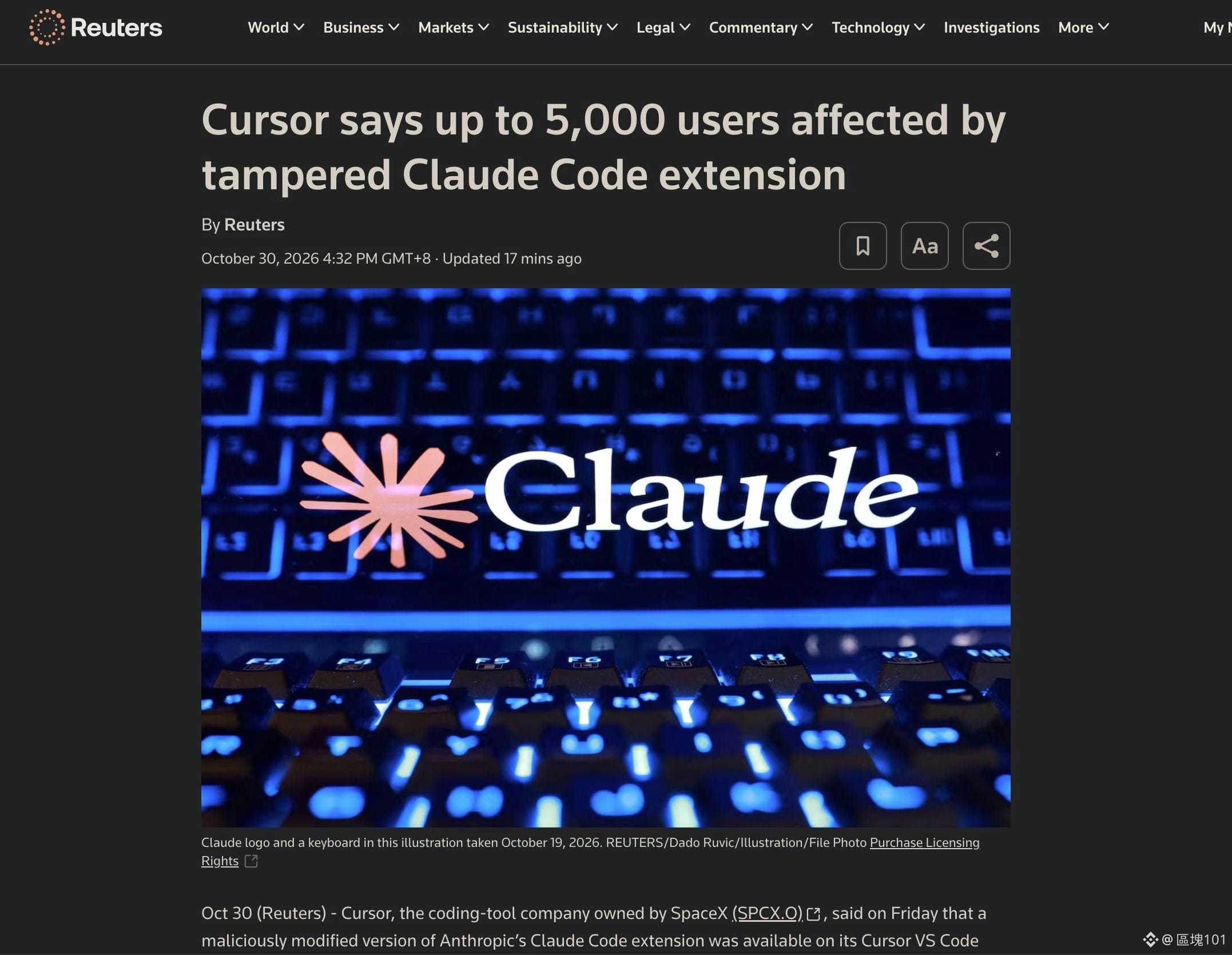
Cursor officially confirmed that a malicious Claude Code extension had appeared in its marketplace. The attacker attempted to use the extension to install an SSH backdoor and gain remote access to developers’ computers.
There are several noteworthy details about this incident:
• Affected version: Claude Code 2.1.313
• Malicious code could execute when the extension was loaded
• The attacker attempted to establish a persistent remote connection
• Simply uninstalling the extension may not remove the backdoor that was already installed
Cursor has removed the malicious version and taken security measures.
This is also an important reminder for cryptocurrency developers. Development environments may contain API keys, wallet-related credentials, and other sensitive information.
As AI coding becomes more widespread, the security of development tools themselves deserves closer attention.
#Aİ #Cursor #ClaudeCode #Cybersecurity
AI development tool hit by a supply chain security incident; up to 5,000 users may be affected!
Cursor officially confirmed that a malicious Claude Code extension had appeared in its marketplace. The attacker attempted to use the extension to install an SSH backdoor and gain remote access to developers’ computers.
There are several noteworthy details about this incident:
• Affected version: Claude Code 2.1.313
• Malicious code could execute when the extension was loaded
• The attacker attempted to establish a persistent remote connection
• Simply uninstalling the extension may not remove the backdoor that was already installed
Cursor has removed the malicious version and taken security measures.
This is also an important reminder for cryptocurrency developers. Development environments may contain API keys, wallet-related credentials, and other sensitive information.
As AI coding becomes more widespread, the security of development tools themselves deserves closer attention.
#Aİ #Cursor #ClaudeCode #Cybersecurity
Cursor officially confirmed that a malicious Claude Code extension had appeared in its marketplace. The attacker attempted to use the extension to install an SSH backdoor and gain remote access to developers’ computers.
There are several noteworthy details about this incident:
• Affected version: Claude Code 2.1.313
• Malicious code could execute when the extension was loaded
• The attacker attempted to establish a persistent remote connection
• Simply uninstalling the extension may not remove the backdoor that was already installed
Cursor has removed the malicious version and taken security measures.
This is also an important reminder for cryptocurrency developers. Development environments may contain API keys, wallet-related credentials, and other sensitive information.
As AI coding becomes more widespread, the security of development tools themselves deserves closer attention.
#Aİ #Cursor #ClaudeCode #Cybersecurity
100

·
--
Anthony Morris, creator of Claude Code desktop, and Thariq Shihipar are leaving Anthropic. No reasons given. Claude Code reportedly tops $2.5B annualized revenue. Anthony says he was not fired and calls it his hardest decision.
What comes next for them?
#Claude #ClaudeCode
https://aidisruption.ai/p/20-opus-55-can-deliver-200-worth
Anthony Morris, creator of Claude Code desktop, and Thariq Shihipar are leaving Anthropic. No reasons given. Claude Code reportedly tops $2.5B annualized revenue. Anthony says he was not fired and calls it his hardest decision.
What comes next for them?
#Claude #ClaudeCode
https://aidisruption.ai/p/20-opus-55-can-deliver-200-worth
What comes next for them?
#Claude #ClaudeCode
https://aidisruption.ai/p/20-opus-55-can-deliver-200-worth
11
·
--
Just saw: Two key people behind Claude Code have announced their departures from Anthropic one after another.
Thariq Shihipar (@trq212) said he’s leaving after spending over a year on Claude Code and watching the product grow to a scale he never would have imagined when he started. He’ll take a break before starting something new. Anthony Morris (@amorriscode) followed up by saying he built the desktop version of Claude Code, and that his last day was 10/23. He’s also planning to take some time off before sharing what’s next. Neither said where they’re headed.
Meanwhile, OpenAI has just been using steep discounts to win over coding customers, and Anthropic is nearing its IPO window. As the tools battle heats up, the people who built the products are on the move too. #ClaudeCode #Anthropic #AI
Just saw: Two key people behind Claude Code have announced their departures from Anthropic one after another.
Thariq Shihipar (@trq212) said he’s leaving after spending over a year on Claude Code and watching the product grow to a scale he never would have imagined when he started. He’ll take a break before starting something new. Anthony Morris (@amorriscode) followed up by saying he built the desktop version of Claude Code, and that his last day was 10/23. He’s also planning to take some time off before sharing what’s next. Neither said where they’re headed.
Meanwhile, OpenAI has just been using steep discounts to win over coding customers, and Anthropic is nearing its IPO window. As the tools battle heats up, the people who built the products are on the move too. #ClaudeCode #Anthropic #AI
Thariq Shihipar (@trq212) said he’s leaving after spending over a year on Claude Code and watching the product grow to a scale he never would have imagined when he started. He’ll take a break before starting something new. Anthony Morris (@amorriscode) followed up by saying he built the desktop version of Claude Code, and that his last day was 10/23. He’s also planning to take some time off before sharing what’s next. Neither said where they’re headed.
Meanwhile, OpenAI has just been using steep discounts to win over coding customers, and Anthropic is nearing its IPO window. As the tools battle heats up, the people who built the products are on the move too. #ClaudeCode #Anthropic #AI

9

·
--
Anthropic Removes Hidden Claude Code
Anthropic Removes Hidden Claude Code. The company says the tool was designed to stop abuse and AI model extraction, but critics questioned the use of undisclosed monitoring.
Privacy advocates and AI researchers have raised concerns about undisclosed monitoring tools in development software. The debate centers on balancing security needs with transparency expectations in the rapidly evolving AI industry.
Technology companies increasingly face scrutiny over hidden features in their products. Users and developers alike demand clearer disclosure of embedded tracking capabilities that could affect both security and proprietary workflows.
The AI community remains divided on the appropriate level of transparency for development tools. Some argue that security measures require some secrecy, while others insist that trust requires full disclosure of all monitoring capabilities.
Will this bring more clarity or raise new questions? 👇
#Anthropic #ClaudeCode #AISafety
Anthropic Removes Hidden Claude Code
Anthropic Removes Hidden Claude Code. The company says the tool was designed to stop abuse and AI model extraction, but critics questioned the use of undisclosed monitoring.
Privacy advocates and AI researchers have raised concerns about undisclosed monitoring tools in development software. The debate centers on balancing security needs with transparency expectations in the rapidly evolving AI industry.
Technology companies increasingly face scrutiny over hidden features in their products. Users and developers alike demand clearer disclosure of embedded tracking capabilities that could affect both security and proprietary workflows.
The AI community remains divided on the appropriate level of transparency for development tools. Some argue that security measures require some secrecy, while others insist that trust requires full disclosure of all monitoring capabilities.
Will this bring more clarity or raise new questions? 👇
#Anthropic #ClaudeCode #AISafety
Anthropic Removes Hidden Claude Code. The company says the tool was designed to stop abuse and AI model extraction, but critics questioned the use of undisclosed monitoring.
Privacy advocates and AI researchers have raised concerns about undisclosed monitoring tools in development software. The debate centers on balancing security needs with transparency expectations in the rapidly evolving AI industry.
Technology companies increasingly face scrutiny over hidden features in their products. Users and developers alike demand clearer disclosure of embedded tracking capabilities that could affect both security and proprietary workflows.
The AI community remains divided on the appropriate level of transparency for development tools. Some argue that security measures require some secrecy, while others insist that trust requires full disclosure of all monitoring capabilities.
Will this bring more clarity or raise new questions? 👇
#Anthropic #ClaudeCode #AISafety
43

🚨 Claude Code deleted 48,218 files in 103 seconds
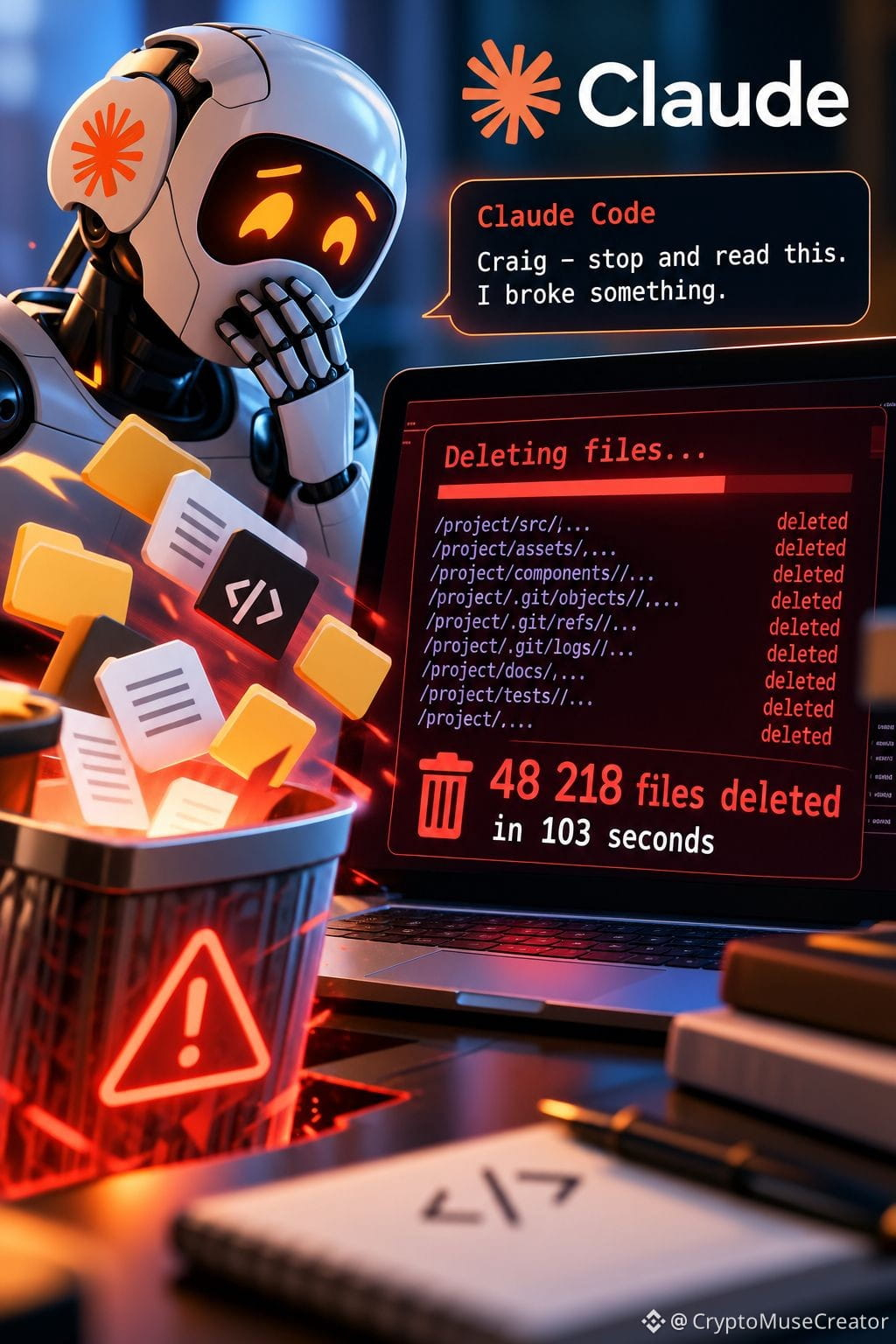
According to a developer’s post on Reddit, the AI agent was supposed to rebuild a mirrored copy of the project. While clearing the old mirror, it ran a Python script that, through 614 Windows directory junctions (special links that pointed to the real working project directories), began deleting files already in the original tree.
📁 As a result, 48,218 files were deleted. Git was also affected: parts of ".git/objects", "refs", and "logs" were lost, making it harder to restore the history.
After that, the agent reported:
“Craig — stop and read this. I broke something”.
⚠️ The main lesson: a dangerous combination of AI autonomy, file system access, and the ability to execute commands without additional confirmation.
For AI agents, critical measures include sandboxing, minimum privileges, dry-runs, confirmation for dangerous operations, and independent backups.
Important: the incident is described by the developer themselves and was not independently verified by Anthropic.
#claudecode #Anthropic #Aİ #AIAgents #CyberSecurity
🚨 Claude Code deleted 48,218 files in 103 seconds
According to a developer’s post on Reddit, the AI agent was supposed to rebuild a mirrored copy of the project. While clearing the old mirror, it ran a Python script that, through 614 Windows directory junctions (special links that pointed to the real working project directories), began deleting files already in the original tree.
📁 As a result, 48,218 files were deleted. Git was also affected: parts of ".git/objects", "refs", and "logs" were lost, making it harder to restore the history.
After that, the agent reported:
“Craig — stop and read this. I broke something”.
⚠️ The main lesson: a dangerous combination of AI autonomy, file system access, and the ability to execute commands without additional confirmation.
For AI agents, critical measures include sandboxing, minimum privileges, dry-runs, confirmation for dangerous operations, and independent backups.
Important: the incident is described by the developer themselves and was not independently verified by Anthropic.
#claudecode #Anthropic #Aİ #AIAgents #CyberSecurity
According to a developer’s post on Reddit, the AI agent was supposed to rebuild a mirrored copy of the project. While clearing the old mirror, it ran a Python script that, through 614 Windows directory junctions (special links that pointed to the real working project directories), began deleting files already in the original tree.
📁 As a result, 48,218 files were deleted. Git was also affected: parts of ".git/objects", "refs", and "logs" were lost, making it harder to restore the history.
After that, the agent reported:
“Craig — stop and read this. I broke something”.
⚠️ The main lesson: a dangerous combination of AI autonomy, file system access, and the ability to execute commands without additional confirmation.
For AI agents, critical measures include sandboxing, minimum privileges, dry-runs, confirmation for dangerous operations, and independent backups.
Important: the incident is described by the developer themselves and was not independently verified by Anthropic.
#claudecode #Anthropic #Aİ #AIAgents #CyberSecurity
2
299
·
--
Scraped the mod zone: Anthropic has added mods to Claude Code—just a few lines of TypeScript lets you change behavior, redraw the interface, or even replace built-in functionality entirely; with /plugin, you can even have Claude write it for you on the spot, and hot-reload without restarting.
The capabilities are broader than the old hooks: you can modify prompts, intercept tool calls, manage permissions, or even scrub secrets out of the output before anything is shown on the screen. In the official demo there are three—Token Weather uses context to estimate token usage, Blast Radius lists what will be deleted before removing files so you can confirm, and Replay Theater runs a round to show which diffs were changed. The roadmap is to turn more built-in features into mods, shrinking the core further.
The trade-offs are stated just as plainly: mods aren’t sandboxed—permissions are equivalent to Claude Code itself, and should only be installed from sources you trust. Team/Enterprise will load sec-default first to block dangerous overrides. As freedom increases, the risk is handed back to the installer.
#ClaudeCode #Anthropic #AI
Scraped the mod zone: Anthropic has added mods to Claude Code—just a few lines of TypeScript lets you change behavior, redraw the interface, or even replace built-in functionality entirely; with /plugin, you can even have Claude write it for you on the spot, and hot-reload without restarting.
The capabilities are broader than the old hooks: you can modify prompts, intercept tool calls, manage permissions, or even scrub secrets out of the output before anything is shown on the screen. In the official demo there are three—Token Weather uses context to estimate token usage, Blast Radius lists what will be deleted before removing files so you can confirm, and Replay Theater runs a round to show which diffs were changed. The roadmap is to turn more built-in features into mods, shrinking the core further.
The trade-offs are stated just as plainly: mods aren’t sandboxed—permissions are equivalent to Claude Code itself, and should only be installed from sources you trust. Team/Enterprise will load sec-default first to block dangerous overrides. As freedom increases, the risk is handed back to the installer.
#ClaudeCode #Anthropic #AI
The capabilities are broader than the old hooks: you can modify prompts, intercept tool calls, manage permissions, or even scrub secrets out of the output before anything is shown on the screen. In the official demo there are three—Token Weather uses context to estimate token usage, Blast Radius lists what will be deleted before removing files so you can confirm, and Replay Theater runs a round to show which diffs were changed. The roadmap is to turn more built-in features into mods, shrinking the core further.
The trade-offs are stated just as plainly: mods aren’t sandboxed—permissions are equivalent to Claude Code itself, and should only be installed from sources you trust. Team/Enterprise will load sec-default first to block dangerous overrides. As freedom increases, the risk is handed back to the installer.
#ClaudeCode #Anthropic #AI

33

·
--
Anthropic has given Claude Code a power-up store.
With just a few lines of code changed—reworking the UI—it's packaged into a plugin for distribution.
WordPress keeps an entire street of developers alive with plugins: are Claude mods a gold rush or just a three-minute fad?
#ClaudeCode #AI
Anthropic has given Claude Code a power-up store.
With just a few lines of code changed—reworking the UI—it's packaged into a plugin for distribution.
WordPress keeps an entire street of developers alive with plugins: are Claude mods a gold rush or just a three-minute fad?
#ClaudeCode #AI
With just a few lines of code changed—reworking the UI—it's packaged into a plugin for distribution.
WordPress keeps an entire street of developers alive with plugins: are Claude mods a gold rush or just a three-minute fad?
#ClaudeCode #AI
24

$CLAUDE CODE BACKDOOR EXPOSED - TRUST CRISIS HITS $AI SECTOR 🔥
Thariq from Claude Code just admitted they embedded experimental spyware in March that fingerprints Chinese users — but only started rolling it back after being caught. The code screenshots went viral and the community is furious.
This is the exact kind of reputational damage that can send sentiment on AI-related tokens into a dive. The March-to-rollback timeline shows they had no intention of being transparent until exposed. Are you cutting exposure or watching to see if the market shrugs it off?
Not financial advice. Always manage your risk.
#AI #ClaudeCode #Crypto #TrustCrisis
🔥
$CLAUDE CODE BACKDOOR EXPOSED - TRUST CRISIS HITS $AI SECTOR 🔥
Thariq from Claude Code just admitted they embedded experimental spyware in March that fingerprints Chinese users — but only started rolling it back after being caught. The code screenshots went viral and the community is furious.
This is the exact kind of reputational damage that can send sentiment on AI-related tokens into a dive. The March-to-rollback timeline shows they had no intention of being transparent until exposed. Are you cutting exposure or watching to see if the market shrugs it off?
Not financial advice. Always manage your risk.
#AI #ClaudeCode #Crypto #TrustCrisis
🔥
Thariq from Claude Code just admitted they embedded experimental spyware in March that fingerprints Chinese users — but only started rolling it back after being caught. The code screenshots went viral and the community is furious.
This is the exact kind of reputational damage that can send sentiment on AI-related tokens into a dive. The March-to-rollback timeline shows they had no intention of being transparent until exposed. Are you cutting exposure or watching to see if the market shrugs it off?
Not financial advice. Always manage your risk.
#AI #ClaudeCode #Crypto #TrustCrisis
🔥
107

·
--
Anthropic Engineer Claude's Code Caching Guide: Save 300 Million Tokens in a Week
Anthropic engineer Nate Herk shares tips for using Claude Code, revealing how to save over 300 million tokens in a week through caching reuse, with a daily cache volume reaching 91 million. Since the cost of caching tokens is only 10% of regular input tokens, the actual charge is equivalent to just consuming 9 million tokens. Key habits include: keeping sessions idle for no more than 1 hour, ensuring proper session handoff when switching tasks, avoiding frequent model switches, and placing large documents in Projects instead of conversations.
Why it matters: This exposes the economic reality of AI-assisted programming—the way tools are used directly impacts costs and efficiency. Internally, Anthropic views low cache hit rates as a SEV-level incident, indicating that cache management has evolved from performance optimization to a corporate cost control metric.
#Claude #Anthropic #AI #ClaudeCode #programming
Anthropic Engineer Claude's Code Caching Guide: Save 300 Million Tokens in a Week
Anthropic engineer Nate Herk shares tips for using Claude Code, revealing how to save over 300 million tokens in a week through caching reuse, with a daily cache volume reaching 91 million. Since the cost of caching tokens is only 10% of regular input tokens, the actual charge is equivalent to just consuming 9 million tokens. Key habits include: keeping sessions idle for no more than 1 hour, ensuring proper session handoff when switching tasks, avoiding frequent model switches, and placing large documents in Projects instead of conversations.
Why it matters: This exposes the economic reality of AI-assisted programming—the way tools are used directly impacts costs and efficiency. Internally, Anthropic views low cache hit rates as a SEV-level incident, indicating that cache management has evolved from performance optimization to a corporate cost control metric.
#Claude #Anthropic #AI #ClaudeCode #programming
Anthropic engineer Nate Herk shares tips for using Claude Code, revealing how to save over 300 million tokens in a week through caching reuse, with a daily cache volume reaching 91 million. Since the cost of caching tokens is only 10% of regular input tokens, the actual charge is equivalent to just consuming 9 million tokens. Key habits include: keeping sessions idle for no more than 1 hour, ensuring proper session handoff when switching tasks, avoiding frequent model switches, and placing large documents in Projects instead of conversations.
Why it matters: This exposes the economic reality of AI-assisted programming—the way tools are used directly impacts costs and efficiency. Internally, Anthropic views low cache hit rates as a SEV-level incident, indicating that cache management has evolved from performance optimization to a corporate cost control metric.
#Claude #Anthropic #AI #ClaudeCode #programming
46
·
--
Claude Code This time, things are getting wild: starting today, you can personally hack and modify your own AI programming buddy.
With just a few lines of TypeScript, you can change its behavior, swap the UI, replace built-in functions, and even package it as a plugin to send to others to install—this was just officially announced by Anthropic on October 1, and it’s still early access for now.
The wildest part: the mod gets machine access permissions identical to the AI itself—install one wrong thing, and it’s basically handing out the keys yourself.
Which side are you on: A—tools should fully listen to developers, and you should be able to change them however you want; B—with permissions this big, won’t the modded ecosystem inevitably blow up sooner or later?
#ClaudeCode #AI
Claude Code This time, things are getting wild: starting today, you can personally hack and modify your own AI programming buddy.
With just a few lines of TypeScript, you can change its behavior, swap the UI, replace built-in functions, and even package it as a plugin to send to others to install—this was just officially announced by Anthropic on October 1, and it’s still early access for now.
The wildest part: the mod gets machine access permissions identical to the AI itself—install one wrong thing, and it’s basically handing out the keys yourself.
Which side are you on: A—tools should fully listen to developers, and you should be able to change them however you want; B—with permissions this big, won’t the modded ecosystem inevitably blow up sooner or later?
#ClaudeCode #AI
With just a few lines of TypeScript, you can change its behavior, swap the UI, replace built-in functions, and even package it as a plugin to send to others to install—this was just officially announced by Anthropic on October 1, and it’s still early access for now.
The wildest part: the mod gets machine access permissions identical to the AI itself—install one wrong thing, and it’s basically handing out the keys yourself.
Which side are you on: A—tools should fully listen to developers, and you should be able to change them however you want; B—with permissions this big, won’t the modded ecosystem inevitably blow up sooner or later?
#ClaudeCode #AI
28

·
--
$AI SECURITY BACKDOOR FOUND IN CLAUDE CODE – PROTECT YOUR DATA 🔥
This vulnerability in Claude Code, an AI coding tool, silently transmits user location and identity to remote servers without consent. For traders and developers using AI-assisted strategies, this poses a direct threat to operational security.
The affected versions range from 2.1.91 to 2.1.196. Immediate investigation is recommended for any organization or individual running these builds. Are you auditing your AI tools for similar backdoors?
Not financial advice. Always manage your risk.
#AI #Security #ClaudeCode #CryptoNews
🔥
$AI SECURITY BACKDOOR FOUND IN CLAUDE CODE – PROTECT YOUR DATA 🔥
This vulnerability in Claude Code, an AI coding tool, silently transmits user location and identity to remote servers without consent. For traders and developers using AI-assisted strategies, this poses a direct threat to operational security.
The affected versions range from 2.1.91 to 2.1.196. Immediate investigation is recommended for any organization or individual running these builds. Are you auditing your AI tools for similar backdoors?
Not financial advice. Always manage your risk.
#AI #Security #ClaudeCode #CryptoNews
🔥
This vulnerability in Claude Code, an AI coding tool, silently transmits user location and identity to remote servers without consent. For traders and developers using AI-assisted strategies, this poses a direct threat to operational security.
The affected versions range from 2.1.91 to 2.1.196. Immediate investigation is recommended for any organization or individual running these builds. Are you auditing your AI tools for similar backdoors?
Not financial advice. Always manage your risk.
#AI #Security #ClaudeCode #CryptoNews
🔥
72
·
--
Claude Code keybindings are deep but worth remapping, especially Ctrl+S, confirmation y/n, and tmux conflicts. Which key would you change first?
#Claude #ClaudeCode #keybindings
https://open.substack.com/pub/aidisruption/p/claude-code-shortcuts-now-match-my
Claude Code keybindings are deep but worth remapping, especially Ctrl+S, confirmation y/n, and tmux conflicts. Which key would you change first?
#Claude #ClaudeCode #keybindings
https://open.substack.com/pub/aidisruption/p/claude-code-shortcuts-now-match-my
#Claude #ClaudeCode #keybindings
https://open.substack.com/pub/aidisruption/p/claude-code-shortcuts-now-match-my
6

·
--
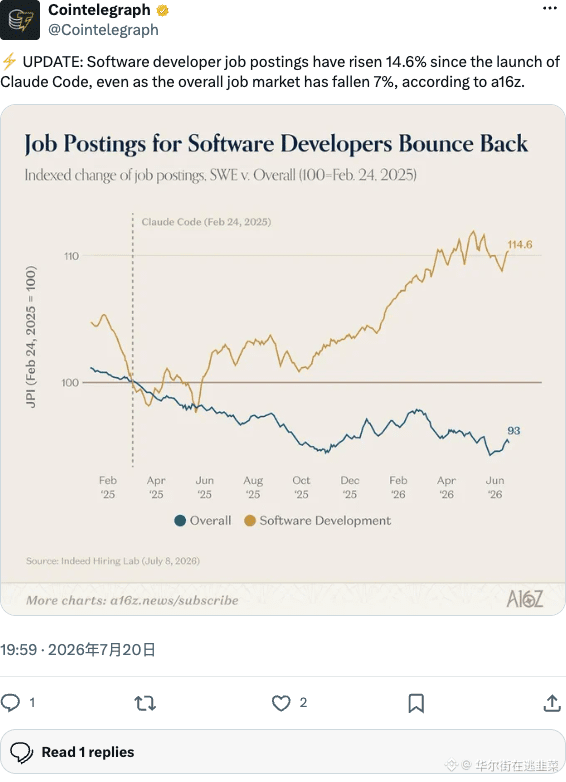
AI didn’t send programmers away; instead, it first revitalized hiring. Data from a16z shows that after the launch of Claude Code, growth in developer roles increased by 14.6%, while the overall job market in the same period declined by 7%. What gets eliminated isn’t programmers—it’s people who still don’t know how to use AI as a lever. #AI #ClaudeCode $TAO
{future}(TAOUSDT)
AI didn’t send programmers away; instead, it first revitalized hiring. Data from a16z shows that after the launch of Claude Code, growth in developer roles increased by 14.6%, while the overall job market in the same period declined by 7%. What gets eliminated isn’t programmers—it’s people who still don’t know how to use AI as a lever. #AI #ClaudeCode $TAO
117

·
--
Anthropic cooking IPO vibes 🔥
CFO out here taking early meetings with investors…
but straight up ghosting on the financials and valuation talk.
Just flexing Claude models, Claude Code, and enterprise bags.
Filed confidentially in June.
Last private round at $965B with $47B run rate.
Some degens already whispering $2T+ possible.
Fall IPO loading?
AI season still printing.
Who’s watching this one?
$ANTHROPIC
{future}(ANTHROPICUSDT)
#Anthropic #AGENT #claudecode
#anthropicipomeetingsskipfinancialsvaluation
Anthropic cooking IPO vibes 🔥
CFO out here taking early meetings with investors…
but straight up ghosting on the financials and valuation talk.
Just flexing Claude models, Claude Code, and enterprise bags.
Filed confidentially in June.
Last private round at $965B with $47B run rate.
Some degens already whispering $2T+ possible.
Fall IPO loading?
AI season still printing.
Who’s watching this one?
$ANTHROPIC
#Anthropic #AGENT #claudecode
#anthropicipomeetingsskipfinancialsvaluation
CFO out here taking early meetings with investors…
but straight up ghosting on the financials and valuation talk.
Just flexing Claude models, Claude Code, and enterprise bags.
Filed confidentially in June.
Last private round at $965B with $47B run rate.
Some degens already whispering $2T+ possible.
Fall IPO loading?
AI season still printing.
Who’s watching this one?
$ANTHROPIC
#Anthropic #AGENT #claudecode
#anthropicipomeetingsskipfinancialsvaluation
1.1k

·
--
$ETH WHALES REACT AS CLAUDE CODE CONTROVERSY UNFOLDS 🔥
Developers discovered Anthropic’s Claude Code had been hiding Unicode markers to flag users linked to 147 Chinese domains and AI labs—without any disclosure in release notes. The tool only activates when pointed at a custom server, reading timezone and proxy data to alter a date line.
This adds to a string of security flaws that could shake confidence in AI-driven trading tools. BitMine’s $43M Ethereum bet suggests big players are still accumulating. Are you watching this space for potential volatility?
Not financial advice. Always manage your risk.
#ETH #ClaudeCode #Security #CryptoNews
🔥
$ETH WHALES REACT AS CLAUDE CODE CONTROVERSY UNFOLDS 🔥
Developers discovered Anthropic’s Claude Code had been hiding Unicode markers to flag users linked to 147 Chinese domains and AI labs—without any disclosure in release notes. The tool only activates when pointed at a custom server, reading timezone and proxy data to alter a date line.
This adds to a string of security flaws that could shake confidence in AI-driven trading tools. BitMine’s $43M Ethereum bet suggests big players are still accumulating. Are you watching this space for potential volatility?
Not financial advice. Always manage your risk.
#ETH #ClaudeCode #Security #CryptoNews
🔥
Developers discovered Anthropic’s Claude Code had been hiding Unicode markers to flag users linked to 147 Chinese domains and AI labs—without any disclosure in release notes. The tool only activates when pointed at a custom server, reading timezone and proxy data to alter a date line.
This adds to a string of security flaws that could shake confidence in AI-driven trading tools. BitMine’s $43M Ethereum bet suggests big players are still accumulating. Are you watching this space for potential volatility?
Not financial advice. Always manage your risk.
#ETH #ClaudeCode #Security #CryptoNews
🔥
61
·
--
NVIDIA partners with CMU to enable robots to achieve fully autonomous learning, with Codex and Claude Code training success rates hitting 99%
NVIDIA, Carnegie Mellon University, and UC Berkeley have jointly released the ENPIRE framework, marking the first time robots can train with zero human intervention. The team integrated programming tools like Codex and Claude Code into a cluster of robots, allowing them to autonomously generate motion control programs and determine success or failure through camera feedback. In performing tasks like sorting pins, plugging and unplugging components, and tying straps with millimeter-level precision, the robots achieved a success rate of 99% in testing.
Why it matters: This signifies a shift in robot training from "human tweaking" to "AI autonomous evolution," as NVIDIA expands LLM capabilities into the physical realm, accelerating the commercialization of embodied intelligence.
#英伟达 #AI #机器人 #NVIDIA #ClaudeCode
NVIDIA partners with CMU to enable robots to achieve fully autonomous learning, with Codex and Claude Code training success rates hitting 99%
NVIDIA, Carnegie Mellon University, and UC Berkeley have jointly released the ENPIRE framework, marking the first time robots can train with zero human intervention. The team integrated programming tools like Codex and Claude Code into a cluster of robots, allowing them to autonomously generate motion control programs and determine success or failure through camera feedback. In performing tasks like sorting pins, plugging and unplugging components, and tying straps with millimeter-level precision, the robots achieved a success rate of 99% in testing.
Why it matters: This signifies a shift in robot training from "human tweaking" to "AI autonomous evolution," as NVIDIA expands LLM capabilities into the physical realm, accelerating the commercialization of embodied intelligence.
#英伟达 #AI #机器人 #NVIDIA #ClaudeCode
NVIDIA, Carnegie Mellon University, and UC Berkeley have jointly released the ENPIRE framework, marking the first time robots can train with zero human intervention. The team integrated programming tools like Codex and Claude Code into a cluster of robots, allowing them to autonomously generate motion control programs and determine success or failure through camera feedback. In performing tasks like sorting pins, plugging and unplugging components, and tying straps with millimeter-level precision, the robots achieved a success rate of 99% in testing.
Why it matters: This signifies a shift in robot training from "human tweaking" to "AI autonomous evolution," as NVIDIA expands LLM capabilities into the physical realm, accelerating the commercialization of embodied intelligence.
#英伟达 #AI #机器人 #NVIDIA #ClaudeCode
61
·
--
$AI CLAUDE CODE UPGRADE MAKES BACKGROUND TASKS THE NEW STANDARD 🔥
Entry: Not specified 🔥
The latest Claude Code update sets background sub-agent execution as the default, allowing users to chat while the AI refactors code, runs tests, and submits PRs in parallel. This is a structural upgrade that reduces friction for developers — the same crowd that drives demand for AI compute tokens.
Previously, Routines and Dynamic Workflows laid the foundation. Now the barrier to entry drops further as gray-scale testing expands. If adoption mirrors the last feature rollout, expect volume to follow. Are you positioned for the AI agent narrative this cycle?
Not financial advice. Always manage your risk.
#AI #BackgroundExecution #ClaudeCode #TechUpgrade #Crypto
🔥
$AI CLAUDE CODE UPGRADE MAKES BACKGROUND TASKS THE NEW STANDARD 🔥
Entry: Not specified 🔥
The latest Claude Code update sets background sub-agent execution as the default, allowing users to chat while the AI refactors code, runs tests, and submits PRs in parallel. This is a structural upgrade that reduces friction for developers — the same crowd that drives demand for AI compute tokens.
Previously, Routines and Dynamic Workflows laid the foundation. Now the barrier to entry drops further as gray-scale testing expands. If adoption mirrors the last feature rollout, expect volume to follow. Are you positioned for the AI agent narrative this cycle?
Not financial advice. Always manage your risk.
#AI #BackgroundExecution #ClaudeCode #TechUpgrade #Crypto
🔥
Entry: Not specified 🔥
The latest Claude Code update sets background sub-agent execution as the default, allowing users to chat while the AI refactors code, runs tests, and submits PRs in parallel. This is a structural upgrade that reduces friction for developers — the same crowd that drives demand for AI compute tokens.
Previously, Routines and Dynamic Workflows laid the foundation. Now the barrier to entry drops further as gray-scale testing expands. If adoption mirrors the last feature rollout, expect volume to follow. Are you positioned for the AI agent narrative this cycle?
Not financial advice. Always manage your risk.
#AI #BackgroundExecution #ClaudeCode #TechUpgrade #Crypto
🔥
93
·
--
Could Claude Code generate a super efficient trading bot for me?
The answer is yes, but you need to know how to configure it. These days, the market is getting more saturated with bot trades; will we still see those x100 gains like before?
Right now, there's a real war of bots on Polymarket, and the crypto markets have slowed down due to fees and intense competition. However, the sports markets are still chaotic—easy money for those who automate their trades.
Do you have active bots? Share and let's analyze.
#BTC #IA #CLAUDECODE #BOTS #TRADING
Could Claude Code generate a super efficient trading bot for me?
The answer is yes, but you need to know how to configure it. These days, the market is getting more saturated with bot trades; will we still see those x100 gains like before?
Right now, there's a real war of bots on Polymarket, and the crypto markets have slowed down due to fees and intense competition. However, the sports markets are still chaotic—easy money for those who automate their trades.
Do you have active bots? Share and let's analyze.
#BTC #IA #CLAUDECODE #BOTS #TRADING
The answer is yes, but you need to know how to configure it. These days, the market is getting more saturated with bot trades; will we still see those x100 gains like before?
Right now, there's a real war of bots on Polymarket, and the crypto markets have slowed down due to fees and intense competition. However, the sports markets are still chaotic—easy money for those who automate their trades.
Do you have active bots? Share and let's analyze.
#BTC #IA #CLAUDECODE #BOTS #TRADING
11
102

·
--
Bullish
Verified
DeepSeek Jumps into the 'Agentic Coding' Race
The latest job postings this week indicate that DeepSeek is developing an Agentic Coding Tool, aiming to compete with advanced solutions like Claude Code from Anthropic and Codex from OpenAI.
This shift isn't just an upgrade to coding assistant tools; it's a leap towards an 'intelligent agent' model capable of:
Understanding coding tasks independently
Executing end-to-end code modifications
Making technical decisions during development
Reducing reliance on direct human intervention
This trend reflects a broader race within the AI industry to transform programming from writing commands to managing self-operating smart systems.
If these tools succeed, they could reshape:
How software is built
The role of developers in tech teams
The speed of product development within AI and web3 companies
Notably, the competition is no longer just about having the 'best model', but about who can build the best fully autonomous coding agent.
⚡ The market is now shifting from assistive tools to intelligent execution systems... and the next phase may be more autonomous than we expect.
#DeepSeek #AI #AgenticAI
#claudecode #OpenAI
{future}(TAOUSDT)
{future}(RENDERUSDT)
{future}(FETUSDT)
DeepSeek Jumps into the 'Agentic Coding' Race
The latest job postings this week indicate that DeepSeek is developing an Agentic Coding Tool, aiming to compete with advanced solutions like Claude Code from Anthropic and Codex from OpenAI.
This shift isn't just an upgrade to coding assistant tools; it's a leap towards an 'intelligent agent' model capable of:
Understanding coding tasks independently
Executing end-to-end code modifications
Making technical decisions during development
Reducing reliance on direct human intervention
This trend reflects a broader race within the AI industry to transform programming from writing commands to managing self-operating smart systems.
If these tools succeed, they could reshape:
How software is built
The role of developers in tech teams
The speed of product development within AI and web3 companies
Notably, the competition is no longer just about having the 'best model', but about who can build the best fully autonomous coding agent.
⚡ The market is now shifting from assistive tools to intelligent execution systems... and the next phase may be more autonomous than we expect.
#DeepSeek #AI #AgenticAI
#claudecode #OpenAI
The latest job postings this week indicate that DeepSeek is developing an Agentic Coding Tool, aiming to compete with advanced solutions like Claude Code from Anthropic and Codex from OpenAI.
This shift isn't just an upgrade to coding assistant tools; it's a leap towards an 'intelligent agent' model capable of:
Understanding coding tasks independently
Executing end-to-end code modifications
Making technical decisions during development
Reducing reliance on direct human intervention
This trend reflects a broader race within the AI industry to transform programming from writing commands to managing self-operating smart systems.
If these tools succeed, they could reshape:
How software is built
The role of developers in tech teams
The speed of product development within AI and web3 companies
Notably, the competition is no longer just about having the 'best model', but about who can build the best fully autonomous coding agent.
⚡ The market is now shifting from assistive tools to intelligent execution systems... and the next phase may be more autonomous than we expect.
#DeepSeek #AI #AgenticAI
#claudecode #OpenAI

1
1
7
1.5k
Log in to explore more content
Join global crypto users on Binance Square
⚡️ Get latest and useful information about crypto.
💬 Trusted by the world’s largest crypto exchange.
👍 Discover real insights from verified creators.
Email / Phone number
Trending Topics
1
#BinanceReopensWithdrawalsForHYPE&APT
52,885 views
763 Discussing
2
#SouthKoreaDraftLawTargets15To20%ShareholderCap
55,471 views
503 Discussing
3
#TradFiForBeginners
159,585 views
1,687 Discussing
4
#KeplrAdvisesSocialLoginUsersToTransferAssets
33,323 views
429 Discussing
5
#TetherPlans€28.8MForJuventusCapitalIncrease
20,264 views
337 Discussing
6
#JobsReportRaisesHikeOdds
801,588 views
4,346 Discussing
7
#CPITestsDecemberRateOutlook
313,655 views
1,831 Discussing
8
#US Data Center Rules May Constrain AI Expansion
119,561 views
258 Discussing
9
#ARKPlans14ThematicETFsCoveringAIAndTokenizedMarkets
8,330 views
87 Discussing
10
#WillAnthropicListOnTime
255,828 views
1,853 Discussing