
#bankofcanada
bankofcanada
8,614 views
37 Discussing
Hot
Latest

Bank of Canada Governor Tiff Macklem, in the latest policy meeting minutes, has sent clear hawkish signals, warning that if gasoline prices remain high for the long term and push up the costs of other goods and services, the central bank may have to restart interest-rate hikes. Although earlier this month the Bank of Canada kept its benchmark rate unchanged at 2.25%, the minutes emphasized that the risk of rising energy costs feeding through into overall CPI is increasing, and that monetary policy must be ready at any time to tighten in order to curb the spread of inflation.
This stance has significantly shattered the market’s previously blind optimism about a major-countries rate-cut cycle. Against the backdrop of widespread expectations that global inflation is under control and that easier policy is just around the corner, Canada’s central bank—an important G7 member—has taken the lead in flagging the risk of second-round inflation triggered by energy costs. This suggests the anti-inflation battle is far from over, and the tail risk that rates will remain elevated for longer (“higher for longer”) or even return to hikes is meaningfully rising.
For traditional financial markets, this hawkish position will directly lift sovereign bond yields, limit the room for valuation that prices in rate-cut expectations, and weigh on highly valued risk assets such as equities. As volatility in commodity prices increases, policy divergence and uncertainty among overseas central banks will fuel a rise in global risk-off sentiment. Safe-haven assets such as the U.S. dollar may receive intermittent support, while investors’ risk appetite faces pressure for a pullback.
For crypto-asset markets, a renewed tightening in expectations for macro liquidity will directly limit the inflow of incremental capital. Risk assets, represented by $BTC , are particularly vulnerable to tests of liquidity withdrawal and valuation pullbacks in the absence of supportive easing narratives. Under the dual pressure of sticky inflation and a firm central-bank stance, investors should remain highly cautious and guard against downside volatility triggered by deleveraging. #BankOfCanada #InterestRates #MacroEconomics
Bank of Canada Governor Tiff Macklem, in the latest policy meeting minutes, has sent clear hawkish signals, warning that if gasoline prices remain high for the long term and push up the costs of other goods and services, the central bank may have to restart interest-rate hikes. Although earlier this month the Bank of Canada kept its benchmark rate unchanged at 2.25%, the minutes emphasized that the risk of rising energy costs feeding through into overall CPI is increasing, and that monetary policy must be ready at any time to tighten in order to curb the spread of inflation.
This stance has significantly shattered the market’s previously blind optimism about a major-countries rate-cut cycle. Against the backdrop of widespread expectations that global inflation is under control and that easier policy is just around the corner, Canada’s central bank—an important G7 member—has taken the lead in flagging the risk of second-round inflation triggered by energy costs. This suggests the anti-inflation battle is far from over, and the tail risk that rates will remain elevated for longer (“higher for longer”) or even return to hikes is meaningfully rising.
For traditional financial markets, this hawkish position will directly lift sovereign bond yields, limit the room for valuation that prices in rate-cut expectations, and weigh on highly valued risk assets such as equities. As volatility in commodity prices increases, policy divergence and uncertainty among overseas central banks will fuel a rise in global risk-off sentiment. Safe-haven assets such as the U.S. dollar may receive intermittent support, while investors’ risk appetite faces pressure for a pullback.
For crypto-asset markets, a renewed tightening in expectations for macro liquidity will directly limit the inflow of incremental capital. Risk assets, represented by $BTC , are particularly vulnerable to tests of liquidity withdrawal and valuation pullbacks in the absence of supportive easing narratives. Under the dual pressure of sticky inflation and a firm central-bank stance, investors should remain highly cautious and guard against downside volatility triggered by deleveraging. #BankOfCanada #InterestRates #MacroEconomics
This stance has significantly shattered the market’s previously blind optimism about a major-countries rate-cut cycle. Against the backdrop of widespread expectations that global inflation is under control and that easier policy is just around the corner, Canada’s central bank—an important G7 member—has taken the lead in flagging the risk of second-round inflation triggered by energy costs. This suggests the anti-inflation battle is far from over, and the tail risk that rates will remain elevated for longer (“higher for longer”) or even return to hikes is meaningfully rising.
For traditional financial markets, this hawkish position will directly lift sovereign bond yields, limit the room for valuation that prices in rate-cut expectations, and weigh on highly valued risk assets such as equities. As volatility in commodity prices increases, policy divergence and uncertainty among overseas central banks will fuel a rise in global risk-off sentiment. Safe-haven assets such as the U.S. dollar may receive intermittent support, while investors’ risk appetite faces pressure for a pullback.
For crypto-asset markets, a renewed tightening in expectations for macro liquidity will directly limit the inflow of incremental capital. Risk assets, represented by $BTC , are particularly vulnerable to tests of liquidity withdrawal and valuation pullbacks in the absence of supportive easing narratives. Under the dual pressure of sticky inflation and a firm central-bank stance, investors should remain highly cautious and guard against downside volatility triggered by deleveraging. #BankOfCanada #InterestRates #MacroEconomics
376

·
--
Royal Bank of Canada (RBC) Chief Economist Francis Donald has recently issued an updated forecast regarding the future monetary policy path of the Bank of Canada. The bank expects that, despite ongoing uncertainty in U.S.-Canada trade, the Bank of Canada may hike interest rates four times next year, ultimately lifting the benchmark rate to 3.25%. This forecast has sparked widespread discussion in macro markets about whether the rate-hiking cycle in advanced economies will resume.
The prediction is noteworthy because most major central banks around the world are currently in a rate-cutting cycle, yet RBC has offered a relatively hawkish outlook. The report notes that although Canada’s overall GDP growth rate for the current and next two years may be below 2%, slowing population growth means that per-capita economic performance is actually strengthening. Combined with sustained momentum from resource-rich western provinces and inflation pressure driven by rising energy prices, there is a realistic basis for the central bank to tighten policy. It also does not rule out the possibility of bringing the first rate hike forward to the end of 2026.
For traditional financial markets, if advanced economies diverge in their monetary policy trajectories, global capital flows and the FX market may face repricing. The Canadian dollar could be supported by rate-expectation dynamics, while higher bond yields may lift overall borrowing costs, introducing new variables for capital liquidity flows in the North American region.
In the crypto market, investors currently mainly anchor to expectations for Federal Reserve liquidity. However, if major overseas central banks shift to rate hikes earlier than expected in response to energy-driven inflation, the pace of global liquidity easing could slow, which may keep risk assets trading in a range as investors weigh liquidity expectations. Going forward, the market will still need to closely monitor real economic data and inflation performance. $BTC
#BankOfCanada #InterestRates #GlobalMacro
Royal Bank of Canada (RBC) Chief Economist Francis Donald has recently issued an updated forecast regarding the future monetary policy path of the Bank of Canada. The bank expects that, despite ongoing uncertainty in U.S.-Canada trade, the Bank of Canada may hike interest rates four times next year, ultimately lifting the benchmark rate to 3.25%. This forecast has sparked widespread discussion in macro markets about whether the rate-hiking cycle in advanced economies will resume.
The prediction is noteworthy because most major central banks around the world are currently in a rate-cutting cycle, yet RBC has offered a relatively hawkish outlook. The report notes that although Canada’s overall GDP growth rate for the current and next two years may be below 2%, slowing population growth means that per-capita economic performance is actually strengthening. Combined with sustained momentum from resource-rich western provinces and inflation pressure driven by rising energy prices, there is a realistic basis for the central bank to tighten policy. It also does not rule out the possibility of bringing the first rate hike forward to the end of 2026.
For traditional financial markets, if advanced economies diverge in their monetary policy trajectories, global capital flows and the FX market may face repricing. The Canadian dollar could be supported by rate-expectation dynamics, while higher bond yields may lift overall borrowing costs, introducing new variables for capital liquidity flows in the North American region.
In the crypto market, investors currently mainly anchor to expectations for Federal Reserve liquidity. However, if major overseas central banks shift to rate hikes earlier than expected in response to energy-driven inflation, the pace of global liquidity easing could slow, which may keep risk assets trading in a range as investors weigh liquidity expectations. Going forward, the market will still need to closely monitor real economic data and inflation performance. $BTC
#BankOfCanada #InterestRates #GlobalMacro
The prediction is noteworthy because most major central banks around the world are currently in a rate-cutting cycle, yet RBC has offered a relatively hawkish outlook. The report notes that although Canada’s overall GDP growth rate for the current and next two years may be below 2%, slowing population growth means that per-capita economic performance is actually strengthening. Combined with sustained momentum from resource-rich western provinces and inflation pressure driven by rising energy prices, there is a realistic basis for the central bank to tighten policy. It also does not rule out the possibility of bringing the first rate hike forward to the end of 2026.
For traditional financial markets, if advanced economies diverge in their monetary policy trajectories, global capital flows and the FX market may face repricing. The Canadian dollar could be supported by rate-expectation dynamics, while higher bond yields may lift overall borrowing costs, introducing new variables for capital liquidity flows in the North American region.
In the crypto market, investors currently mainly anchor to expectations for Federal Reserve liquidity. However, if major overseas central banks shift to rate hikes earlier than expected in response to energy-driven inflation, the pace of global liquidity easing could slow, which may keep risk assets trading in a range as investors weigh liquidity expectations. Going forward, the market will still need to closely monitor real economic data and inflation performance. $BTC
#BankOfCanada #InterestRates #GlobalMacro

Royal Bank of Canada (RBC)’s latest macroeconomic outlook from its chief economist, Francis Donald, says that although uncertainty remains in Canada–U.S. trade relations, the Bank of Canada is expected to raise interest rates four times next year, lifting the policy rate to 3.25%. There is also a possibility that the rate-hiking cycle could begin earlier, as soon as the end of 2026.
In terms of the gap between macro fundamentals and market expectations, the bank forecasts that Canada’s economic growth over the next two years will remain below 2%. However, as population growth slows, Canada’s real economic performance on a per-capita basis is expected to prove more resilient. This hawkish outlook is not driven by fears of stagflation; rather, it is grounded in a healthy logic of an upside surprise in economic recovery, reflecting that the risk-resilience of North American core assets remains strong.
In traditional financial markets, this hawkish forecast will likely provide direct positive support for the Canadian dollar (CAD) exchange rate and may lift the yield curve on Canadian intermediate- to long-term government bonds. As global commodity and energy prices remain resilient, cross-border capital is repricing North America’s anti-inflation resilience, providing a solid fundamental floor for overall risk assets.
For crypto assets, stronger-than-expected real-economy performance implies an extremely low probability of a systemic liquidity crisis. On technical charts, $BTC is building a stable high-level trading and handover platform. As macroeconomic resilience increases, institutional capital’s risk appetite strengthens. Once the market digests the rate-hike expectations for a period of time, the more liquidity-premium crypto market is expected to see a new round of structural breakthroughs driven by risk appetite.📈
#BankOfCanada #InterestRates #MacroEconomics
Royal Bank of Canada (RBC)’s latest macroeconomic outlook from its chief economist, Francis Donald, says that although uncertainty remains in Canada–U.S. trade relations, the Bank of Canada is expected to raise interest rates four times next year, lifting the policy rate to 3.25%. There is also a possibility that the rate-hiking cycle could begin earlier, as soon as the end of 2026.
In terms of the gap between macro fundamentals and market expectations, the bank forecasts that Canada’s economic growth over the next two years will remain below 2%. However, as population growth slows, Canada’s real economic performance on a per-capita basis is expected to prove more resilient. This hawkish outlook is not driven by fears of stagflation; rather, it is grounded in a healthy logic of an upside surprise in economic recovery, reflecting that the risk-resilience of North American core assets remains strong.
In traditional financial markets, this hawkish forecast will likely provide direct positive support for the Canadian dollar (CAD) exchange rate and may lift the yield curve on Canadian intermediate- to long-term government bonds. As global commodity and energy prices remain resilient, cross-border capital is repricing North America’s anti-inflation resilience, providing a solid fundamental floor for overall risk assets.
For crypto assets, stronger-than-expected real-economy performance implies an extremely low probability of a systemic liquidity crisis. On technical charts, $BTC is building a stable high-level trading and handover platform. As macroeconomic resilience increases, institutional capital’s risk appetite strengthens. Once the market digests the rate-hike expectations for a period of time, the more liquidity-premium crypto market is expected to see a new round of structural breakthroughs driven by risk appetite.📈
#BankOfCanada #InterestRates #MacroEconomics
In terms of the gap between macro fundamentals and market expectations, the bank forecasts that Canada’s economic growth over the next two years will remain below 2%. However, as population growth slows, Canada’s real economic performance on a per-capita basis is expected to prove more resilient. This hawkish outlook is not driven by fears of stagflation; rather, it is grounded in a healthy logic of an upside surprise in economic recovery, reflecting that the risk-resilience of North American core assets remains strong.
In traditional financial markets, this hawkish forecast will likely provide direct positive support for the Canadian dollar (CAD) exchange rate and may lift the yield curve on Canadian intermediate- to long-term government bonds. As global commodity and energy prices remain resilient, cross-border capital is repricing North America’s anti-inflation resilience, providing a solid fundamental floor for overall risk assets.
For crypto assets, stronger-than-expected real-economy performance implies an extremely low probability of a systemic liquidity crisis. On technical charts, $BTC is building a stable high-level trading and handover platform. As macroeconomic resilience increases, institutional capital’s risk appetite strengthens. Once the market digests the rate-hike expectations for a period of time, the more liquidity-premium crypto market is expected to see a new round of structural breakthroughs driven by risk appetite.📈
#BankOfCanada #InterestRates #MacroEconomics
143

·
--
Article
CIBC Economist: Bank of Canada Expected to Stay on HoldAccording to Jin10, Andrew Grantham, an economist at CIBC Capital Markets, expects the Bank of Canada to maintain its current interest rate policy without rushing to make changes following the July Consumer Price Index report. The report showed that overall inflation accelerated to 3.0%, slightly exceeding expectations, driven mainly by energy prices and travel costs related to the World Cup.
Despite the uptick in inflation, Grantham noted that core inflation, which excludes volatile items like energy and travel, remained relatively subdued at around 2%. This suggests that the underlying inflation pressures are still moderate, and the bank may prefer to observe more data before adjusting its stance.
The July CPI report has not prompted immediate concern from the Bank of Canada, with Grantham indicating that policymakers are unlikely to accelerate rate hikes or cuts based solely on this data. Instead, the bank is expected to continue monitoring inflation trends and economic indicators before making any significant policy adjustments.
This outlook aligns with the broader cautious approach the Bank of Canada has taken in recent months, balancing the need to control inflation without stifling economic growth. Investors and markets will likely remain attentive to upcoming economic data releases to gauge the central bank’s next move. #BankOfCanada #InterestRates #Inflation
CIBC Economist: Bank of Canada Expected to Stay on Hold
According to Jin10, Andrew Grantham, an economist at CIBC Capital Markets, expects the Bank of Canada to maintain its current interest rate policy without rushing to make changes following the July Consumer Price Index report. The report showed that overall inflation accelerated to 3.0%, slightly exceeding expectations, driven mainly by energy prices and travel costs related to the World Cup.
Despite the uptick in inflation, Grantham noted that core inflation, which excludes volatile items like energy and travel, remained relatively subdued at around 2%. This suggests that the underlying inflation pressures are still moderate, and the bank may prefer to observe more data before adjusting its stance.
The July CPI report has not prompted immediate concern from the Bank of Canada, with Grantham indicating that policymakers are unlikely to accelerate rate hikes or cuts based solely on this data. Instead, the bank is expected to continue monitoring inflation trends and economic indicators before making any significant policy adjustments.
This outlook aligns with the broader cautious approach the Bank of Canada has taken in recent months, balancing the need to control inflation without stifling economic growth. Investors and markets will likely remain attentive to upcoming economic data releases to gauge the central bank’s next move. #BankOfCanada #InterestRates #Inflation
Despite the uptick in inflation, Grantham noted that core inflation, which excludes volatile items like energy and travel, remained relatively subdued at around 2%. This suggests that the underlying inflation pressures are still moderate, and the bank may prefer to observe more data before adjusting its stance.
The July CPI report has not prompted immediate concern from the Bank of Canada, with Grantham indicating that policymakers are unlikely to accelerate rate hikes or cuts based solely on this data. Instead, the bank is expected to continue monitoring inflation trends and economic indicators before making any significant policy adjustments.
This outlook aligns with the broader cautious approach the Bank of Canada has taken in recent months, balancing the need to control inflation without stifling economic growth. Investors and markets will likely remain attentive to upcoming economic data releases to gauge the central bank’s next move. #BankOfCanada #InterestRates #Inflation
15

🇨🇦 Bank of Canada Expected to Hold Rates at 2.25% 📊
Reuters poll: Economists expect the BoC to keep interest rates unchanged on July 15, with inflation risks seen as contained and the economy gradually recovering.
🔹 Rate hold expected well into 2027
🔹 Inflation forecast to ease despite recent uptick
🔹 Stable policy could support the Canadian economy while markets monitor global risks
👀 A steady BoC contrasts with other central banks still facing inflation uncertainty.
Trade Here 👉 $HMSTR | $DOT | $BEAT
{future}(BEATUSDT)
{future}(DOTUSDT)
{future}(HMSTRUSDT)
#JapanUrgesGPIFToBoostDomesticAssets #SKHynixCompletesRecordUSListing #BankofCanada #StreamerClub #Write2Earn
🇨🇦 Bank of Canada Expected to Hold Rates at 2.25% 📊
Reuters poll: Economists expect the BoC to keep interest rates unchanged on July 15, with inflation risks seen as contained and the economy gradually recovering.
🔹 Rate hold expected well into 2027
🔹 Inflation forecast to ease despite recent uptick
🔹 Stable policy could support the Canadian economy while markets monitor global risks
👀 A steady BoC contrasts with other central banks still facing inflation uncertainty.
Trade Here 👉 $HMSTR | $DOT | $BEAT
#JapanUrgesGPIFToBoostDomesticAssets #SKHynixCompletesRecordUSListing #BankofCanada #StreamerClub #Write2Earn
Reuters poll: Economists expect the BoC to keep interest rates unchanged on July 15, with inflation risks seen as contained and the economy gradually recovering.
🔹 Rate hold expected well into 2027
🔹 Inflation forecast to ease despite recent uptick
🔹 Stable policy could support the Canadian economy while markets monitor global risks
👀 A steady BoC contrasts with other central banks still facing inflation uncertainty.
Trade Here 👉 $HMSTR | $DOT | $BEAT
#JapanUrgesGPIFToBoostDomesticAssets #SKHynixCompletesRecordUSListing #BankofCanada #StreamerClub #Write2Earn
298
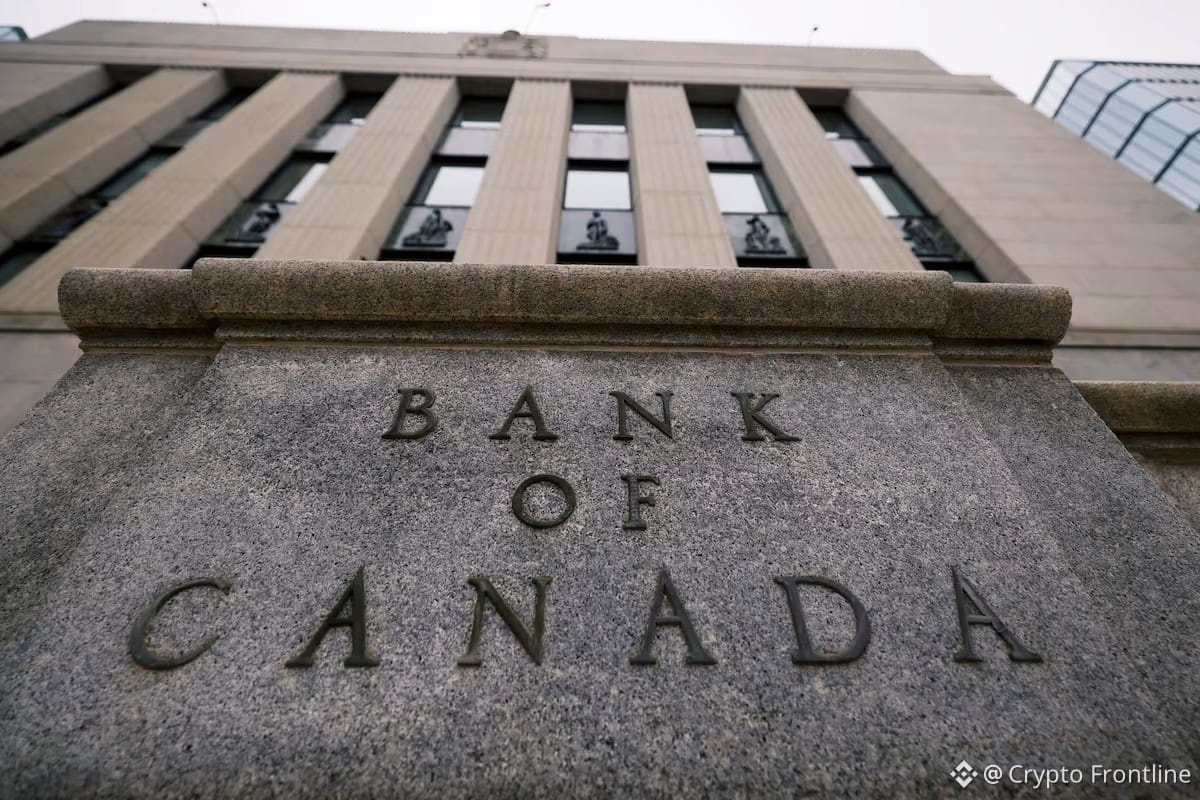
Bank of Canada Governor Tiff Macklem issued a clear warning in the latest policy meeting minutes: although the current policy rate remains at 2.25%, if high gasoline prices persist over the long term and push up overall CPI, the central bank does not rule out restarting rate hikes.
From a macro-technical perspective, this is essentially a textbook preventive hawkish stance, aimed at anchoring market inflation expectations. The minutes explicitly state that there is still no definitive evidence that high energy costs have fully spread to other goods and services. This means that tightening policy has strict preconditions; the baseline scenario remains keeping the current relatively accommodative interest-rate range and will not immediately change the broader downward trend in the rate-cut cycle.
In traditional financial markets, such forward guidance may provide some technical support to the Canadian dollar in the short term and keep short-term government bond yields consolidating near support levels. However, the underlying structure that reflects the global liquidity base having formed and rebounded has not been broken. As long as oil prices do not form an irreversible parabolic surge, this is more like a technical pullback amid a macro range-bound bottoming phase.
For the crypto market, this actually creates an opportunity for risk assets to accumulate at favorable prices. After a brief digestion of macro sentiment, Bitcoin $BTC often finds more solid buy support at key moving averages and liquidity-dense clusters. Once the energy premium falls back, risk appetite will quickly recover, driving the coin price toward a more breakout-driven and explosive trading pattern.
#BankOfCanada #InterestRates #Inflation
Bank of Canada Governor Tiff Macklem issued a clear warning in the latest policy meeting minutes: although the current policy rate remains at 2.25%, if high gasoline prices persist over the long term and push up overall CPI, the central bank does not rule out restarting rate hikes.
From a macro-technical perspective, this is essentially a textbook preventive hawkish stance, aimed at anchoring market inflation expectations. The minutes explicitly state that there is still no definitive evidence that high energy costs have fully spread to other goods and services. This means that tightening policy has strict preconditions; the baseline scenario remains keeping the current relatively accommodative interest-rate range and will not immediately change the broader downward trend in the rate-cut cycle.
In traditional financial markets, such forward guidance may provide some technical support to the Canadian dollar in the short term and keep short-term government bond yields consolidating near support levels. However, the underlying structure that reflects the global liquidity base having formed and rebounded has not been broken. As long as oil prices do not form an irreversible parabolic surge, this is more like a technical pullback amid a macro range-bound bottoming phase.
For the crypto market, this actually creates an opportunity for risk assets to accumulate at favorable prices. After a brief digestion of macro sentiment, Bitcoin $BTC often finds more solid buy support at key moving averages and liquidity-dense clusters. Once the energy premium falls back, risk appetite will quickly recover, driving the coin price toward a more breakout-driven and explosive trading pattern.
#BankOfCanada #InterestRates #Inflation
From a macro-technical perspective, this is essentially a textbook preventive hawkish stance, aimed at anchoring market inflation expectations. The minutes explicitly state that there is still no definitive evidence that high energy costs have fully spread to other goods and services. This means that tightening policy has strict preconditions; the baseline scenario remains keeping the current relatively accommodative interest-rate range and will not immediately change the broader downward trend in the rate-cut cycle.
In traditional financial markets, such forward guidance may provide some technical support to the Canadian dollar in the short term and keep short-term government bond yields consolidating near support levels. However, the underlying structure that reflects the global liquidity base having formed and rebounded has not been broken. As long as oil prices do not form an irreversible parabolic surge, this is more like a technical pullback amid a macro range-bound bottoming phase.
For the crypto market, this actually creates an opportunity for risk assets to accumulate at favorable prices. After a brief digestion of macro sentiment, Bitcoin $BTC often finds more solid buy support at key moving averages and liquidity-dense clusters. Once the energy premium falls back, risk appetite will quickly recover, driving the coin price toward a more breakout-driven and explosive trading pattern.
#BankOfCanada #InterestRates #Inflation
293

·
--
Minutes of the latest policy meeting of the Bank of Canada (BoC) have just been released, signaling a notable warning from Governor Tiff Macklem and other policymakers about the possibility of having to raise interest rates again. Although the BoC kept its policy rate unchanged at 2.25% in the early-month meeting, the agency emphasized that inflation risks appear to be escalating due to pressure from energy costs.
This move highlights the BoC’s heightened caution regarding the risk that oil prices remaining elevated for an extended period could spill over into the basket of other goods and consumer services. While there is currently no clear evidence of a comprehensive spillover effect, officials agree that monetary policy will have to intervene more tightly if energy-price pressures push the CPI upward across a broad range.
The hawkish warning from a G7 central bank is adding further pressure to global financial markets. Expectations of a synchronized wave of monetary easing may be delayed, nudging government bond yields slightly higher and strengthening fiat currencies in the short term.
For the crypto market, this tough message creates a cautious sentiment for speculative capital flows. Macro liquidity cannot be expected to become abundant anytime soon, leaving risk assets such as $BTC đ facing choppy adjustment periods as investors reprice the path of global interest rates.
#BankOfCanada #InterestRates #MacroEconomy
Minutes of the latest policy meeting of the Bank of Canada (BoC) have just been released, signaling a notable warning from Governor Tiff Macklem and other policymakers about the possibility of having to raise interest rates again. Although the BoC kept its policy rate unchanged at 2.25% in the early-month meeting, the agency emphasized that inflation risks appear to be escalating due to pressure from energy costs.
This move highlights the BoC’s heightened caution regarding the risk that oil prices remaining elevated for an extended period could spill over into the basket of other goods and consumer services. While there is currently no clear evidence of a comprehensive spillover effect, officials agree that monetary policy will have to intervene more tightly if energy-price pressures push the CPI upward across a broad range.
The hawkish warning from a G7 central bank is adding further pressure to global financial markets. Expectations of a synchronized wave of monetary easing may be delayed, nudging government bond yields slightly higher and strengthening fiat currencies in the short term.
For the crypto market, this tough message creates a cautious sentiment for speculative capital flows. Macro liquidity cannot be expected to become abundant anytime soon, leaving risk assets such as $BTC đ facing choppy adjustment periods as investors reprice the path of global interest rates.
#BankOfCanada #InterestRates #MacroEconomy
This move highlights the BoC’s heightened caution regarding the risk that oil prices remaining elevated for an extended period could spill over into the basket of other goods and consumer services. While there is currently no clear evidence of a comprehensive spillover effect, officials agree that monetary policy will have to intervene more tightly if energy-price pressures push the CPI upward across a broad range.
The hawkish warning from a G7 central bank is adding further pressure to global financial markets. Expectations of a synchronized wave of monetary easing may be delayed, nudging government bond yields slightly higher and strengthening fiat currencies in the short term.
For the crypto market, this tough message creates a cautious sentiment for speculative capital flows. Macro liquidity cannot be expected to become abundant anytime soon, leaving risk assets such as $BTC đ facing choppy adjustment periods as investors reprice the path of global interest rates.
#BankOfCanada #InterestRates #MacroEconomy
321

Statistics Canada reported on Tuesday that Canada's headline CPI for August fell by 0.1% month-over-month, coming in cooler than market expectations of 0.0% and marking a sharp deceleration from the previous 0.50% print.
This negative inflation print highlights a tangible easing of domestic price pressures, reinforcing the narrative that aggressive central bank tightening is effectively cooling consumer demand. Against the backdrop of volatile global energy markets—with Brent crude hovering above $105/bbl and WTI near $99.47/bbl alongside US plans to refill the SPR—a localized drop in CPI provides critical breathing room for monetary policymakers.
Across broader financial markets, the data tempers hawkish expectations for the Bank of Canada, contrasting sharply with persistent bond market stress in Europe, where UK 2-year gilt yields surged 10 bps to 4.918%. Easing Canadian inflation helps anchor sovereign yields and reduces upward pressure on short-term rates across developed economies.
For crypto assets, confirmation of disinflation in major economies provides a supportive macro backdrop. As rate-hiking cycles near their peaks, downward pressure on speculative capital begins to lift, paving the way for improved liquidity conditions across $BTC and high-beta altcoins.
#MacroEconomics #Inflation #BankOfCanada
Statistics Canada reported on Tuesday that Canada's headline CPI for August fell by 0.1% month-over-month, coming in cooler than market expectations of 0.0% and marking a sharp deceleration from the previous 0.50% print.
This negative inflation print highlights a tangible easing of domestic price pressures, reinforcing the narrative that aggressive central bank tightening is effectively cooling consumer demand. Against the backdrop of volatile global energy markets—with Brent crude hovering above $105/bbl and WTI near $99.47/bbl alongside US plans to refill the SPR—a localized drop in CPI provides critical breathing room for monetary policymakers.
Across broader financial markets, the data tempers hawkish expectations for the Bank of Canada, contrasting sharply with persistent bond market stress in Europe, where UK 2-year gilt yields surged 10 bps to 4.918%. Easing Canadian inflation helps anchor sovereign yields and reduces upward pressure on short-term rates across developed economies.
For crypto assets, confirmation of disinflation in major economies provides a supportive macro backdrop. As rate-hiking cycles near their peaks, downward pressure on speculative capital begins to lift, paving the way for improved liquidity conditions across $BTC and high-beta altcoins.
#MacroEconomics #Inflation #BankOfCanada
This negative inflation print highlights a tangible easing of domestic price pressures, reinforcing the narrative that aggressive central bank tightening is effectively cooling consumer demand. Against the backdrop of volatile global energy markets—with Brent crude hovering above $105/bbl and WTI near $99.47/bbl alongside US plans to refill the SPR—a localized drop in CPI provides critical breathing room for monetary policymakers.
Across broader financial markets, the data tempers hawkish expectations for the Bank of Canada, contrasting sharply with persistent bond market stress in Europe, where UK 2-year gilt yields surged 10 bps to 4.918%. Easing Canadian inflation helps anchor sovereign yields and reduces upward pressure on short-term rates across developed economies.
For crypto assets, confirmation of disinflation in major economies provides a supportive macro backdrop. As rate-hiking cycles near their peaks, downward pressure on speculative capital begins to lift, paving the way for improved liquidity conditions across $BTC and high-beta altcoins.
#MacroEconomics #Inflation #BankOfCanada
1
Royal Bank of Canada (RBC) chief economist Francis Donald has recently released an updated research note on the outlook for monetary policy. He predicts that the Bank of Canada may raise interest rates four times next year, pushing the policy rate up to 3.25%, and warns that the first rate hike could even be brought forward to the end of 2026.
This aggressive shift significantly breaks the market’s previous expectation of a more accommodative stance. Despite uncertainty surrounding trade between the U.S. and Canada, and forecasts that Canada’s GDP growth rates in both the current and coming years will remain below 2%, slower population growth makes real output per capita more resilient. Combined with growth momentum from resource-rich western provinces, potential upside risks in energy prices are prompting the central bank to guard against second-round inflation pressure, highlighting the persistence of structural inflation.
From a macro-financial perspective, if major central banks restart a rate-hike cycle, it would directly lift sovereign bond yields and provide support for the domestic currency. Such policy divergence not only tightens global liquidity conditions by shrinking the window of easier financial conditions, but also sends a hawkish signal to the market—either indicating a tightening cycle is still in effect or that it has not yet fully ended—continuing to weigh on the upside space for overvalued risk assets.
For the crypto market, $BTC is extremely sensitive to marginal changes in liquidity, as are most mainstream altcoins. With major economies facing the shadow of prolonged high interest rates (“Higher for Longer”) and even a potential restart of rate hikes, the inflow of incremental capital will be tightly constrained. Investors should be highly alert to a second hit to risk-asset valuations driven by macro liquidity tightening.📉
#BankOfCanada #MacroEconomy #InterestRates #CryptoLiquidity
Royal Bank of Canada (RBC) chief economist Francis Donald has recently released an updated research note on the outlook for monetary policy. He predicts that the Bank of Canada may raise interest rates four times next year, pushing the policy rate up to 3.25%, and warns that the first rate hike could even be brought forward to the end of 2026.
This aggressive shift significantly breaks the market’s previous expectation of a more accommodative stance. Despite uncertainty surrounding trade between the U.S. and Canada, and forecasts that Canada’s GDP growth rates in both the current and coming years will remain below 2%, slower population growth makes real output per capita more resilient. Combined with growth momentum from resource-rich western provinces, potential upside risks in energy prices are prompting the central bank to guard against second-round inflation pressure, highlighting the persistence of structural inflation.
From a macro-financial perspective, if major central banks restart a rate-hike cycle, it would directly lift sovereign bond yields and provide support for the domestic currency. Such policy divergence not only tightens global liquidity conditions by shrinking the window of easier financial conditions, but also sends a hawkish signal to the market—either indicating a tightening cycle is still in effect or that it has not yet fully ended—continuing to weigh on the upside space for overvalued risk assets.
For the crypto market, $BTC is extremely sensitive to marginal changes in liquidity, as are most mainstream altcoins. With major economies facing the shadow of prolonged high interest rates (“Higher for Longer”) and even a potential restart of rate hikes, the inflow of incremental capital will be tightly constrained. Investors should be highly alert to a second hit to risk-asset valuations driven by macro liquidity tightening.📉
#BankOfCanada #MacroEconomy #InterestRates #CryptoLiquidity
This aggressive shift significantly breaks the market’s previous expectation of a more accommodative stance. Despite uncertainty surrounding trade between the U.S. and Canada, and forecasts that Canada’s GDP growth rates in both the current and coming years will remain below 2%, slower population growth makes real output per capita more resilient. Combined with growth momentum from resource-rich western provinces, potential upside risks in energy prices are prompting the central bank to guard against second-round inflation pressure, highlighting the persistence of structural inflation.
From a macro-financial perspective, if major central banks restart a rate-hike cycle, it would directly lift sovereign bond yields and provide support for the domestic currency. Such policy divergence not only tightens global liquidity conditions by shrinking the window of easier financial conditions, but also sends a hawkish signal to the market—either indicating a tightening cycle is still in effect or that it has not yet fully ended—continuing to weigh on the upside space for overvalued risk assets.
For the crypto market, $BTC is extremely sensitive to marginal changes in liquidity, as are most mainstream altcoins. With major economies facing the shadow of prolonged high interest rates (“Higher for Longer”) and even a potential restart of rate hikes, the inflow of incremental capital will be tightly constrained. Investors should be highly alert to a second hit to risk-asset valuations driven by macro liquidity tightening.📉
#BankOfCanada #MacroEconomy #InterestRates #CryptoLiquidity
138
·
--
Francis Donald, Chief Economist at the Royal Bank of Canada (RBC), has just issued a noteworthy forecast that the Bank of Canada (BoC) may carry out up to four interest-rate hikes over the next year, bringing its policy rate to 3.25%.
The predicted shift toward renewed tightening is driven by the backdrop of strong growth in resource-rich western provinces, along with concerns about inflation pressure from higher energy prices. Although overall GDP growth is expected to remain below 2% and U.S.–Canada trade is still highly uncertain, real per-capita economic performance suggests a more resilient recovery than anticipated.
This view runs counter to the current wave of global monetary easing, creating clear pressure for policy divergence. Yields on Canadian government bonds could face upward pressure, which would support a rebound in the CAD. At the same time, it could also increase liquidity risks in international financial markets if other major central banks are forced to keep interest rates high for longer.
For the crypto market, the signal of tightening from a G7 economy like Canada is a reminder that the era of cheap money has not necessarily returned in an easy way. Speculative capital flowing into high-risk assets such as $BTC c may face a more cautious sentiment over the medium term, as global borrowing costs remain anchored at elevated levels.
#BankOfCanada #InterestRates #MacroEconomics
Francis Donald, Chief Economist at the Royal Bank of Canada (RBC), has just issued a noteworthy forecast that the Bank of Canada (BoC) may carry out up to four interest-rate hikes over the next year, bringing its policy rate to 3.25%.
The predicted shift toward renewed tightening is driven by the backdrop of strong growth in resource-rich western provinces, along with concerns about inflation pressure from higher energy prices. Although overall GDP growth is expected to remain below 2% and U.S.–Canada trade is still highly uncertain, real per-capita economic performance suggests a more resilient recovery than anticipated.
This view runs counter to the current wave of global monetary easing, creating clear pressure for policy divergence. Yields on Canadian government bonds could face upward pressure, which would support a rebound in the CAD. At the same time, it could also increase liquidity risks in international financial markets if other major central banks are forced to keep interest rates high for longer.
For the crypto market, the signal of tightening from a G7 economy like Canada is a reminder that the era of cheap money has not necessarily returned in an easy way. Speculative capital flowing into high-risk assets such as $BTC c may face a more cautious sentiment over the medium term, as global borrowing costs remain anchored at elevated levels.
#BankOfCanada #InterestRates #MacroEconomics
The predicted shift toward renewed tightening is driven by the backdrop of strong growth in resource-rich western provinces, along with concerns about inflation pressure from higher energy prices. Although overall GDP growth is expected to remain below 2% and U.S.–Canada trade is still highly uncertain, real per-capita economic performance suggests a more resilient recovery than anticipated.
This view runs counter to the current wave of global monetary easing, creating clear pressure for policy divergence. Yields on Canadian government bonds could face upward pressure, which would support a rebound in the CAD. At the same time, it could also increase liquidity risks in international financial markets if other major central banks are forced to keep interest rates high for longer.
For the crypto market, the signal of tightening from a G7 economy like Canada is a reminder that the era of cheap money has not necessarily returned in an easy way. Speculative capital flowing into high-risk assets such as $BTC c may face a more cautious sentiment over the medium term, as global borrowing costs remain anchored at elevated levels.
#BankOfCanada #InterestRates #MacroEconomics
125

BREAKING:
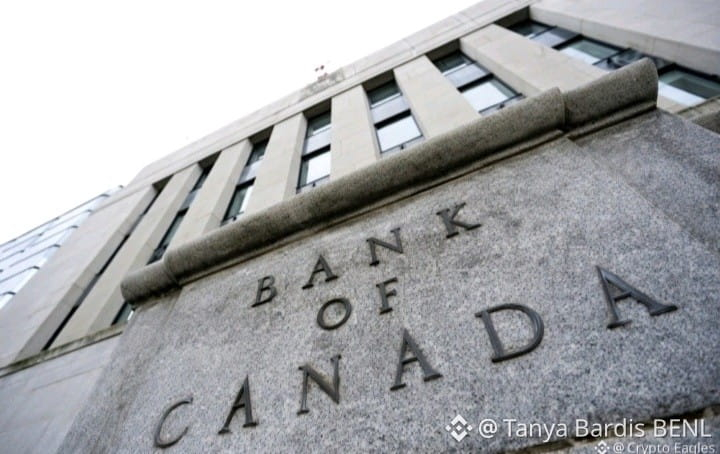
The Bank of Canada has decided to maintain its interest rate at 2.25%.
No changes were made amid ongoing economic assessments.
#BankofCanada
BREAKING:
The Bank of Canada has decided to maintain its interest rate at 2.25%.
No changes were made amid ongoing economic assessments.
#BankofCanada
The Bank of Canada has decided to maintain its interest rate at 2.25%.
No changes were made amid ongoing economic assessments.
#BankofCanada
2
351
Log in to explore more content
Join global crypto users on Binance Square
⚡️ Get latest and useful information about crypto.
💬 Trusted by the world’s largest crypto exchange.
👍 Discover real insights from verified creators.
Email / Phone number
Trending Topics
1
#HKMAPlansWholesaleCBDCByYearEnd
8 views
21 Discussing
2
#NEARSurges26%Past$3.45
5,554 views
65 Discussing
3
#BOJHikesRatesTo31YearHigh
13,946 views
440 Discussing
4
#ChainlinkPowersBottomlinePaymentPlatform
17,678 views
471 Discussing
5
#DtcpayCompletes$25MSeriesA
311 views
20 Discussing
6
#InjectiveLaunchesINJOnSolana
1,212 views
72 Discussing
7
#StellarActivatesProtocol28At211TPS
25,345 views
585 Discussing
8
#SECGrantsInnovationExemptionForTokenizedStocks
20,931 views
454 Discussing
9
#XRPGains3%AsRippleAddsMPPSupport
18,703 views
356 Discussing
10
#SPGlobalToAcquireOpenZeppelin
10,533 views
221 Discussing