

#artificialinteligence
artificialinteligence
1.4M views
1,025 Discussing
Hot
Latest

·
--
Buy pullback in this Al optical stock:
MizuhoMizuho Securities analyst Vijay Rakesh presented a list of top favorites in the semiconductor sector for 2026. The list includes Nvidia, Broadcom and Lumentum Holdings, a company that supplies optical solutions for data centers, which is little known to a wide range of investors, MarketWatch writes. Lumentum's shares have quadrupled over the past year, outperforming both Nvidia and Broadcom.
What are Mizuho's arguments
The analyst noted that companies that make optical components for data centers, such as Lumentum, have room for serious growth as AI-focused data centers switch from copper to fiber optic connections for the sake of increased bandwidth. According to Rakesh, Lumentum's potential remains significant, especially amid demand from Google Cloud Platform and Amazon, . The vendor's share price has jumped 316.5% over the past year. 13 of 23 analysts tracking the stock recommend buying it, according to MarketWatch.
Nvidia and Broadcom, according to Mizuho estimates, will continue to grow due to increased capital expenditures of hyperscalers: in 2026, spending may jump by 32% - up to $540 billion. Additional drivers will be the widespread adoption of AI in the corporate environment and the improvement of neural network models, says the analyst.
Wall Street will be watching the new models closely to confirm that AI's laws of scaling, according to which systems improve as data and resources grow, still work, MarketWatch notes. OpenAI is expected to unveil its next model as early as the first quarter, and it will likely be one of the first models trained on Nvidia's new Blackwell platform, the publication emphasizes.
According to Rakesh, both companies have seen their products increase in energy efficiency by more than 50% from generation to generation, while the total cost of ownership of their AI processors has been steadily decreasing. This makes their solutions more attractive to enterprise customers, the analyst said.
In addition, he noted that he remains positive on Lam Research, which supplies semiconductor manufacturing equipment, as a "key market-leading player."
Market view
Mizuho analyst named AI gas pedal chips and equipment for their production, optical components, as well as memory chips as the most promising areas in the semiconductor sector, but he is cautious about the segments related to electric vehicles and automotive electronics, power semiconductors and analog chips, as well as the markets of personal computers and smartphones, CNBC reports .
"We see the potential for a strong first half of fiscal 2026 as spending on artificial intelligence, investment in chip manufacturing equipment and the growth cycle in the memory market are expected to remain robust. This will support capacity expansion at the largest and mid-sized cloud providers, as well as enterprise and government customers deploying servers for artificial intelligence," the analyst predicted. However, he does not rule out difficulties in the second half of the year and warns of the risk of increased volatility due to the launch of new products, including the Vera Rubin AI platform from Nvidia and solutions from AMD, as well as the possible impact of the midterm elections in the U.S. and in case of a slower reduction in interest rates by the Federal Reserve.
#NVIDIA
#ArtificialInteligence #broadcom
Buy pullback in this Al optical stock: Mizuho
Mizuho Securities analyst Vijay Rakesh presented a list of top favorites in the semiconductor sector for 2026. The list includes Nvidia, Broadcom and Lumentum Holdings, a company that supplies optical solutions for data centers, which is little known to a wide range of investors, MarketWatch writes. Lumentum's shares have quadrupled over the past year, outperforming both Nvidia and Broadcom.
What are Mizuho's arguments
The analyst noted that companies that make optical components for data centers, such as Lumentum, have room for serious growth as AI-focused data centers switch from copper to fiber optic connections for the sake of increased bandwidth. According to Rakesh, Lumentum's potential remains significant, especially amid demand from Google Cloud Platform and Amazon, . The vendor's share price has jumped 316.5% over the past year. 13 of 23 analysts tracking the stock recommend buying it, according to MarketWatch.
Nvidia and Broadcom, according to Mizuho estimates, will continue to grow due to increased capital expenditures of hyperscalers: in 2026, spending may jump by 32% - up to $540 billion. Additional drivers will be the widespread adoption of AI in the corporate environment and the improvement of neural network models, says the analyst.
Wall Street will be watching the new models closely to confirm that AI's laws of scaling, according to which systems improve as data and resources grow, still work, MarketWatch notes. OpenAI is expected to unveil its next model as early as the first quarter, and it will likely be one of the first models trained on Nvidia's new Blackwell platform, the publication emphasizes.
According to Rakesh, both companies have seen their products increase in energy efficiency by more than 50% from generation to generation, while the total cost of ownership of their AI processors has been steadily decreasing. This makes their solutions more attractive to enterprise customers, the analyst said.
In addition, he noted that he remains positive on Lam Research, which supplies semiconductor manufacturing equipment, as a "key market-leading player."
Market view
Mizuho analyst named AI gas pedal chips and equipment for their production, optical components, as well as memory chips as the most promising areas in the semiconductor sector, but he is cautious about the segments related to electric vehicles and automotive electronics, power semiconductors and analog chips, as well as the markets of personal computers and smartphones, CNBC reports .
"We see the potential for a strong first half of fiscal 2026 as spending on artificial intelligence, investment in chip manufacturing equipment and the growth cycle in the memory market are expected to remain robust. This will support capacity expansion at the largest and mid-sized cloud providers, as well as enterprise and government customers deploying servers for artificial intelligence," the analyst predicted. However, he does not rule out difficulties in the second half of the year and warns of the risk of increased volatility due to the launch of new products, including the Vera Rubin AI platform from Nvidia and solutions from AMD, as well as the possible impact of the midterm elections in the U.S. and in case of a slower reduction in interest rates by the Federal Reserve.
#NVIDIA
#ArtificialInteligence #broadcom
What are Mizuho's arguments
The analyst noted that companies that make optical components for data centers, such as Lumentum, have room for serious growth as AI-focused data centers switch from copper to fiber optic connections for the sake of increased bandwidth. According to Rakesh, Lumentum's potential remains significant, especially amid demand from Google Cloud Platform and Amazon, . The vendor's share price has jumped 316.5% over the past year. 13 of 23 analysts tracking the stock recommend buying it, according to MarketWatch.
Nvidia and Broadcom, according to Mizuho estimates, will continue to grow due to increased capital expenditures of hyperscalers: in 2026, spending may jump by 32% - up to $540 billion. Additional drivers will be the widespread adoption of AI in the corporate environment and the improvement of neural network models, says the analyst.
Wall Street will be watching the new models closely to confirm that AI's laws of scaling, according to which systems improve as data and resources grow, still work, MarketWatch notes. OpenAI is expected to unveil its next model as early as the first quarter, and it will likely be one of the first models trained on Nvidia's new Blackwell platform, the publication emphasizes.
According to Rakesh, both companies have seen their products increase in energy efficiency by more than 50% from generation to generation, while the total cost of ownership of their AI processors has been steadily decreasing. This makes their solutions more attractive to enterprise customers, the analyst said.
In addition, he noted that he remains positive on Lam Research, which supplies semiconductor manufacturing equipment, as a "key market-leading player."
Market view
Mizuho analyst named AI gas pedal chips and equipment for their production, optical components, as well as memory chips as the most promising areas in the semiconductor sector, but he is cautious about the segments related to electric vehicles and automotive electronics, power semiconductors and analog chips, as well as the markets of personal computers and smartphones, CNBC reports .
"We see the potential for a strong first half of fiscal 2026 as spending on artificial intelligence, investment in chip manufacturing equipment and the growth cycle in the memory market are expected to remain robust. This will support capacity expansion at the largest and mid-sized cloud providers, as well as enterprise and government customers deploying servers for artificial intelligence," the analyst predicted. However, he does not rule out difficulties in the second half of the year and warns of the risk of increased volatility due to the launch of new products, including the Vera Rubin AI platform from Nvidia and solutions from AMD, as well as the possible impact of the midterm elections in the U.S. and in case of a slower reduction in interest rates by the Federal Reserve.
#NVIDIA
#ArtificialInteligence #broadcom
82

🤖 AI Stocks: What’s Next?
The AI story is moving beyond chatbots.
The next phase could be shaped by AI chips, data centers, robotics, automation, cybersecurity, and the infrastructure needed to power increasingly capable AI systems.
The big question is no longer just “Who is leading AI today?”
It’s “What comes next?”
Watch the technology. Follow the innovation. Stay curious.
#AI #AIStocksWhatNext #ArtificialInteligence
$BTC
{spot}(BTCUSDT)
🤖 AI Stocks: What’s Next?
The AI story is moving beyond chatbots.
The next phase could be shaped by AI chips, data centers, robotics, automation, cybersecurity, and the infrastructure needed to power increasingly capable AI systems.
The big question is no longer just “Who is leading AI today?”
It’s “What comes next?”
Watch the technology. Follow the innovation. Stay curious.
#AI #AIStocksWhatNext #ArtificialInteligence
$BTC
The AI story is moving beyond chatbots.
The next phase could be shaped by AI chips, data centers, robotics, automation, cybersecurity, and the infrastructure needed to power increasingly capable AI systems.
The big question is no longer just “Who is leading AI today?”
It’s “What comes next?”
Watch the technology. Follow the innovation. Stay curious.
#AI #AIStocksWhatNext #ArtificialInteligence
$BTC

96


Article
AI Stocks Are Rising — But Where Does the Next Opportunity Come From?The AI boom may be creating an investment story that goes far beyond semiconductor stocks.
Nvidia continues to signal strong demand for AI computing, while AMD recently crossed the $1 trillion market-cap milestone as investors increasingly focus on AI infrastructure.
But here’s the interesting part.
AI needs more than GPUs.
It needs massive amounts of electricity, data centers, cooling systems, networking equipment, memory and high-speed infrastructureThat creates a second layer of the AI investment cycle
The biggest question now isn't simply “Which AI stock goes higher?
It is:
“Who supplies the infrastructure required to keep the AI economy running?
Data-center power demand is becoming a major bottleneck, while companies across the AI infrastructure chain are raising huge amounts of capital to expand capacity.That’s why I’m watching the broader AI ecosystem—not just the headline chipmakers.
If AI adoption continues accelerating, the next opportunity could come from the picks-and-shovels of AI: energy + data centers + networking + memory + infrastructure.
But valuation and financing risks also matter. Recent market moves show that AI can still experience sharp volatility when investors question the pace or sustainability of spending.
AI stocks may be the headline.
AI infrastructure could be the next chapter.
What part of the AI ecosystem are you watching?#AIStocksWhatNext #NvidiaToBuyAnother$1.5BSBEnergySharesPreIPO #AIStocksWhatNext #Aİ #ArtificialInteligence .
AI Stocks Are Rising — But Where Does the Next Opportunity Come From?
The AI boom may be creating an investment story that goes far beyond semiconductor stocks.
Nvidia continues to signal strong demand for AI computing, while AMD recently crossed the $1 trillion market-cap milestone as investors increasingly focus on AI infrastructure.
But here’s the interesting part.
AI needs more than GPUs.
It needs massive amounts of electricity, data centers, cooling systems, networking equipment, memory and high-speed infrastructureThat creates a second layer of the AI investment cycle
The biggest question now isn't simply “Which AI stock goes higher?
It is:
“Who supplies the infrastructure required to keep the AI economy running?
Data-center power demand is becoming a major bottleneck, while companies across the AI infrastructure chain are raising huge amounts of capital to expand capacity.That’s why I’m watching the broader AI ecosystem—not just the headline chipmakers.
If AI adoption continues accelerating, the next opportunity could come from the picks-and-shovels of AI: energy + data centers + networking + memory + infrastructure.
But valuation and financing risks also matter. Recent market moves show that AI can still experience sharp volatility when investors question the pace or sustainability of spending.
AI stocks may be the headline.
AI infrastructure could be the next chapter.
What part of the AI ecosystem are you watching?#AIStocksWhatNext #NvidiaToBuyAnother$1.5BSBEnergySharesPreIPO #AIStocksWhatNext #Aİ #ArtificialInteligence .
Nvidia continues to signal strong demand for AI computing, while AMD recently crossed the $1 trillion market-cap milestone as investors increasingly focus on AI infrastructure.
But here’s the interesting part.
AI needs more than GPUs.
It needs massive amounts of electricity, data centers, cooling systems, networking equipment, memory and high-speed infrastructureThat creates a second layer of the AI investment cycle
The biggest question now isn't simply “Which AI stock goes higher?
It is:
“Who supplies the infrastructure required to keep the AI economy running?
Data-center power demand is becoming a major bottleneck, while companies across the AI infrastructure chain are raising huge amounts of capital to expand capacity.That’s why I’m watching the broader AI ecosystem—not just the headline chipmakers.
If AI adoption continues accelerating, the next opportunity could come from the picks-and-shovels of AI: energy + data centers + networking + memory + infrastructure.
But valuation and financing risks also matter. Recent market moves show that AI can still experience sharp volatility when investors question the pace or sustainability of spending.
AI stocks may be the headline.
AI infrastructure could be the next chapter.
What part of the AI ecosystem are you watching?#AIStocksWhatNext #NvidiaToBuyAnother$1.5BSBEnergySharesPreIPO #AIStocksWhatNext #Aİ #ArtificialInteligence .
3
1
100


·
--
🇺🇸 Trump woke up and chose AI today 😂
7 posts about AI in one day…
At this point, AI isn’t the golden goose — it’s getting its own campaign office. 🤖😂
“WHOEVER WINS AI, WINS.”
Okay… message received, Mr. President. 😭🔥
#AI #TrumpCrypto #ArtificialInteligence
🇺🇸 Trump woke up and chose AI today 😂
7 posts about AI in one day…
At this point, AI isn’t the golden goose — it’s getting its own campaign office. 🤖😂
“WHOEVER WINS AI, WINS.”
Okay… message received, Mr. President. 😭🔥
#AI #TrumpCrypto #ArtificialInteligence
7 posts about AI in one day…
At this point, AI isn’t the golden goose — it’s getting its own campaign office. 🤖😂
“WHOEVER WINS AI, WINS.”
Okay… message received, Mr. President. 😭🔥
#AI #TrumpCrypto #ArtificialInteligence
81

·
--
AI profits are flooding into Crypto! 💸
Money made in the AI boom is now moving into crypto, boosting BTC and ETH.
What's next? Big money will chase "AI + Crypto" projects (like DePIN). Liquidity will only go to top coins (BTC/ETH) and fast chains (SOL), leaving middle-tier altcoins behind. 🔄
#Crypto #Web3 #ArtificialInteligence #BTC
AI profits are flooding into Crypto! 💸
Money made in the AI boom is now moving into crypto, boosting BTC and ETH.
What's next? Big money will chase "AI + Crypto" projects (like DePIN). Liquidity will only go to top coins (BTC/ETH) and fast chains (SOL), leaving middle-tier altcoins behind. 🔄
#Crypto #Web3 #ArtificialInteligence #BTC
Money made in the AI boom is now moving into crypto, boosting BTC and ETH.
What's next? Big money will chase "AI + Crypto" projects (like DePIN). Liquidity will only go to top coins (BTC/ETH) and fast chains (SOL), leaving middle-tier altcoins behind. 🔄
#Crypto #Web3 #ArtificialInteligence #BTC
118

·
--
TRADING AGENTS WITH ARTIFICIAL INTELLIGENCE (Trading Agents) on OPENLEDGER 🤖⭐
🐙The next big evolution in crypto might not just come from new blockchains… but from autonomous agents powered by AI 🤖
🐙
Imagine systems capable of:
📊 Analyzing markets
⚡ Executing strategies
🔗 Interacting with DeFi
🧠 Learning and optimizing decisions automatically
🐙
That's what makes projects like @OpenLedger interesting, as they're building infrastructure for an economy driven by AI Agents and decentralized automation.
🐙
The combination of AI + Blockchain + DeFi could completely transform the way we interact with financial protocols in the future 🚀
Visit and explore more about OpenLedger ⚡
[👉 Que es OPENLEDGER Y SU ECOSISTEMA 🐙](https://www.binance.com/es-LA/square/post/325078302352417)
[👉 OCTOCLAW AGENTE INTELIGENTE DE OPENLEDGER🐙](https://www.binance.com/es-LA/square/post/325407793159698)
👉 [TRADING AGENTS + IA + DEFI: LA INFRAESTRUCTURA QUE PODRÍA TRANSFORMAR EL ECOSISTEMA CRYPTO🐙](https://www.binance.com/es-LA/square/post/325768408764929)
{spot}(OPENUSDT)
#OpenLedger $OPEN @Openledger #ArtificialInteligence #Aİ
TRADING AGENTS WITH ARTIFICIAL INTELLIGENCE (Trading Agents) on OPENLEDGER 🤖⭐
🐙The next big evolution in crypto might not just come from new blockchains… but from autonomous agents powered by AI 🤖
🐙
Imagine systems capable of:
📊 Analyzing markets
⚡ Executing strategies
🔗 Interacting with DeFi
🧠 Learning and optimizing decisions automatically
🐙
That's what makes projects like @OpenLedger interesting, as they're building infrastructure for an economy driven by AI Agents and decentralized automation.
🐙
The combination of AI + Blockchain + DeFi could completely transform the way we interact with financial protocols in the future 🚀
Visit and explore more about OpenLedger ⚡
👉 Que es OPENLEDGER Y SU ECOSISTEMA 🐙
👉 OCTOCLAW AGENTE INTELIGENTE DE OPENLEDGER🐙
👉 TRADING AGENTS + IA + DEFI: LA INFRAESTRUCTURA QUE PODRÍA TRANSFORMAR EL ECOSISTEMA CRYPTO🐙
#OpenLedger $OPEN @OpenLedger #ArtificialInteligence #Aİ
🐙The next big evolution in crypto might not just come from new blockchains… but from autonomous agents powered by AI 🤖
🐙
Imagine systems capable of:
📊 Analyzing markets
⚡ Executing strategies
🔗 Interacting with DeFi
🧠 Learning and optimizing decisions automatically
🐙
That's what makes projects like @OpenLedger interesting, as they're building infrastructure for an economy driven by AI Agents and decentralized automation.
🐙
The combination of AI + Blockchain + DeFi could completely transform the way we interact with financial protocols in the future 🚀
Visit and explore more about OpenLedger ⚡
👉 Que es OPENLEDGER Y SU ECOSISTEMA 🐙
👉 OCTOCLAW AGENTE INTELIGENTE DE OPENLEDGER🐙
👉 TRADING AGENTS + IA + DEFI: LA INFRAESTRUCTURA QUE PODRÍA TRANSFORMAR EL ECOSISTEMA CRYPTO🐙
#OpenLedger $OPEN @OpenLedger #ArtificialInteligence #Aİ

124

·
--
⚡ WALL STREET IGNORES GLOBAL RISKS AND HITS NEW ALL-TIME HIGHS ⚡
The major U.S. stock indices have just recorded their highest weekly close ever, marking a historic moment for global financial markets.
The S&P 500, Nasdaq, Russell, and Dow Jones are showing extraordinary strength, with impressive performances: +18% for S&P and Russell in eight weeks, +28% for Nasdaq, and new all-time highs for Dow.
What makes this growth particularly surprising is the macroeconomic context.
The market is advancing despite traditionally negative factors: active conflicts in the Middle East, oil above $100 a barrel, inflation at 3.8%, and bond yields at their highest in 19 years.
Under normal conditions, these elements would have slowed down or reversed the trend.
Two main forces are driving the rally. On one side, Nvidia, which reported revenues of $81.6 billion, confirming its position as a leader in the AI revolution.
On the other, about $325 billion in AI investments are fueling the entire economic system, generating a new wave of growth and expectations.
The market is not ignoring the risks but is betting that the economic impact of artificial intelligence outweighs any current negative factors.
So far, this bet is proving to be a winner.
#BREAKING #WallStreet #Market_Update #ArtificialInteligence $NVDA $NVDAon
⚡ WALL STREET IGNORES GLOBAL RISKS AND HITS NEW ALL-TIME HIGHS ⚡
The major U.S. stock indices have just recorded their highest weekly close ever, marking a historic moment for global financial markets.
The S&P 500, Nasdaq, Russell, and Dow Jones are showing extraordinary strength, with impressive performances: +18% for S&P and Russell in eight weeks, +28% for Nasdaq, and new all-time highs for Dow.
What makes this growth particularly surprising is the macroeconomic context.
The market is advancing despite traditionally negative factors: active conflicts in the Middle East, oil above $100 a barrel, inflation at 3.8%, and bond yields at their highest in 19 years.
Under normal conditions, these elements would have slowed down or reversed the trend.
Two main forces are driving the rally. On one side, Nvidia, which reported revenues of $81.6 billion, confirming its position as a leader in the AI revolution.
On the other, about $325 billion in AI investments are fueling the entire economic system, generating a new wave of growth and expectations.
The market is not ignoring the risks but is betting that the economic impact of artificial intelligence outweighs any current negative factors.
So far, this bet is proving to be a winner.
#BREAKING #WallStreet #Market_Update #ArtificialInteligence $NVDA $NVDAon
The major U.S. stock indices have just recorded their highest weekly close ever, marking a historic moment for global financial markets.
The S&P 500, Nasdaq, Russell, and Dow Jones are showing extraordinary strength, with impressive performances: +18% for S&P and Russell in eight weeks, +28% for Nasdaq, and new all-time highs for Dow.
What makes this growth particularly surprising is the macroeconomic context.
The market is advancing despite traditionally negative factors: active conflicts in the Middle East, oil above $100 a barrel, inflation at 3.8%, and bond yields at their highest in 19 years.
Under normal conditions, these elements would have slowed down or reversed the trend.
Two main forces are driving the rally. On one side, Nvidia, which reported revenues of $81.6 billion, confirming its position as a leader in the AI revolution.
On the other, about $325 billion in AI investments are fueling the entire economic system, generating a new wave of growth and expectations.
The market is not ignoring the risks but is betting that the economic impact of artificial intelligence outweighs any current negative factors.
So far, this bet is proving to be a winner.
#BREAKING #WallStreet #Market_Update #ArtificialInteligence $NVDA $NVDAon

2
233

·
--
🚀 The Absolute Growth of $FET: Is $5+ The Next Logical Stop? 📈If you are looking for the strongest narrative of this crypto cycle, look no further than Artificial Intelligence. Numbers don’t lie, and the historical timeline of $FET (Artificial Superintelligence Alliance) proves that this giant is built for macro expansion. 📊
Let’s take a look at how far we've come and where we are heading next. 👇
⏳ The Legendary Timeline of $FET
Look at this year-on-year structural growth. This is what a true fundamental compounding machine looks like:
2022 ➡️ $0.05 (The silent accumulation phase)
2023 ➡️ $0.15 (Building the AI foundation)
2024 ➡️ $0.90 (The major breakout and sector hype)
2025 ➡️ $2.50 (Reaching new macro milestone highs)
2026 ➡️ Loading... ⌛ Now consolidating at $1.20
🧠 The Post-Consolidation Reality: Why $1.20 is a Gift
Many retail traders panic when a coin consolidates, but smart money sees it as an accumulation zone.
After peaking at $2.50, the current healthy retest around the $1.20 area is simply the market absorbing supply and building a massive launchpad for the next leg up. With the $asiASI token merger and the booming decentralized AI agent economy expanding rapidly in 2026, the fundamentals are stronger than ever before.
🎯 My Macro Target: $5.00+ 🚀
The Verdict: Let's see if this narrative proves it right. Given the compounding data and the undeniable multi-billion dollar AI wave, a $5+ target is not just hype—it is structurally highly probable in the coming macro expansion phase.
When the sector rotation hits AI coins again, the thin sell-side order books could lead to sharp, vertical price actions.
What about you? Are you accumulating $FET at these current levels, or are you waiting for the breakout? Drop your targets below! 👇
#FET #ArtificialInteligence #AIAlliance
#CryptoGrowth
🚀 The Absolute Growth of $FET: Is $5+ The Next Logical Stop? 📈
If you are looking for the strongest narrative of this crypto cycle, look no further than Artificial Intelligence. Numbers don’t lie, and the historical timeline of $FET (Artificial Superintelligence Alliance) proves that this giant is built for macro expansion. 📊
Let’s take a look at how far we've come and where we are heading next. 👇
⏳ The Legendary Timeline of $FET
Look at this year-on-year structural growth. This is what a true fundamental compounding machine looks like:
2022 ➡️ $0.05 (The silent accumulation phase)
2023 ➡️ $0.15 (Building the AI foundation)
2024 ➡️ $0.90 (The major breakout and sector hype)
2025 ➡️ $2.50 (Reaching new macro milestone highs)
2026 ➡️ Loading... ⌛ Now consolidating at $1.20
🧠 The Post-Consolidation Reality: Why $1.20 is a Gift
Many retail traders panic when a coin consolidates, but smart money sees it as an accumulation zone.
After peaking at $2.50, the current healthy retest around the $1.20 area is simply the market absorbing supply and building a massive launchpad for the next leg up. With the $asiASI token merger and the booming decentralized AI agent economy expanding rapidly in 2026, the fundamentals are stronger than ever before.
🎯 My Macro Target: $5.00+ 🚀
The Verdict: Let's see if this narrative proves it right. Given the compounding data and the undeniable multi-billion dollar AI wave, a $5+ target is not just hype—it is structurally highly probable in the coming macro expansion phase.
When the sector rotation hits AI coins again, the thin sell-side order books could lead to sharp, vertical price actions.
What about you? Are you accumulating $FET at these current levels, or are you waiting for the breakout? Drop your targets below! 👇
#FET #ArtificialInteligence #AIAlliance
#CryptoGrowth
Let’s take a look at how far we've come and where we are heading next. 👇
⏳ The Legendary Timeline of $FET
Look at this year-on-year structural growth. This is what a true fundamental compounding machine looks like:
2022 ➡️ $0.05 (The silent accumulation phase)
2023 ➡️ $0.15 (Building the AI foundation)
2024 ➡️ $0.90 (The major breakout and sector hype)
2025 ➡️ $2.50 (Reaching new macro milestone highs)
2026 ➡️ Loading... ⌛ Now consolidating at $1.20
🧠 The Post-Consolidation Reality: Why $1.20 is a Gift
Many retail traders panic when a coin consolidates, but smart money sees it as an accumulation zone.
After peaking at $2.50, the current healthy retest around the $1.20 area is simply the market absorbing supply and building a massive launchpad for the next leg up. With the $asiASI token merger and the booming decentralized AI agent economy expanding rapidly in 2026, the fundamentals are stronger than ever before.
🎯 My Macro Target: $5.00+ 🚀
The Verdict: Let's see if this narrative proves it right. Given the compounding data and the undeniable multi-billion dollar AI wave, a $5+ target is not just hype—it is structurally highly probable in the coming macro expansion phase.
When the sector rotation hits AI coins again, the thin sell-side order books could lead to sharp, vertical price actions.
What about you? Are you accumulating $FET at these current levels, or are you waiting for the breakout? Drop your targets below! 👇
#FET #ArtificialInteligence #AIAlliance
#CryptoGrowth
1
1
217

·
--
Bullish
🤖 $FET: THE AI OPPORTUNITY ISN'T OVER
$FET has rewarded patient investors before, and AI adoption continues to drive long-term interest.
✅ Strong AI narrative remains intact
✅ Long-term trend still attracting investors
✅ Early buyers often benefit before market sentiment shifts
📊 Trading View: BUY on pullbacks or HOLD if you're already invested. Avoid chasing sharp rallies—wait for better entry points."CLICK ON THE BELOW YELLOW COIN TAG TO GO TO DESIRED TRADING PAGE TO GET BENEFIT TRADE OK." $FET
#FET #ArtificialInteligence
{spot}(FETUSDT)
🤖 $FET : THE AI OPPORTUNITY ISN'T OVER
$FET has rewarded patient investors before, and AI adoption continues to drive long-term interest.
✅ Strong AI narrative remains intact
✅ Long-term trend still attracting investors
✅ Early buyers often benefit before market sentiment shifts
📊 Trading View: BUY on pullbacks or HOLD if you're already invested. Avoid chasing sharp rallies—wait for better entry points."CLICK ON THE BELOW YELLOW COIN TAG TO GO TO DESIRED TRADING PAGE TO GET BENEFIT TRADE OK." $FET
#FET #ArtificialInteligence
$FET has rewarded patient investors before, and AI adoption continues to drive long-term interest.
✅ Strong AI narrative remains intact
✅ Long-term trend still attracting investors
✅ Early buyers often benefit before market sentiment shifts
📊 Trading View: BUY on pullbacks or HOLD if you're already invested. Avoid chasing sharp rallies—wait for better entry points."CLICK ON THE BELOW YELLOW COIN TAG TO GO TO DESIRED TRADING PAGE TO GET BENEFIT TRADE OK." $FET
#FET #ArtificialInteligence
1
121


Article
Day 1: What Is Artificial Intelligence? The Biggest Technology Shift Since the InternetImagine teaching a child to recognize a cat.
You don’t explain every detail about ears, whiskers, or tails. Instead, you show thousands of pictures of cats. Over time, the child starts recognising cats on their own.
#ArtificialInteligence (AI) learns in a similar way.
Instead of following a fixed set of instructions like traditional software, AI learns patterns from massive amounts of data and uses those patterns to make predictions, answer questions, solve problems, or even create new content.
Traditional #SoftwareUpdate vs Artificial Intelligence
Think about a calculator.
If you type 2 + 2, it will always return 4 because a programmer explicitly wrote that rule.
Now think about ChatGPT.
If you ask it to write a poem, summarize a book, explain #bitcoin or generate code, nobody programmed every possible response. Instead, it learned from enormous amounts of text and predicts what comes next based on patterns it discovered during training.
That’s the biggest difference:
Traditional software follows rules. AI learns rules.
Why Is AI Growing So Fast?
AI has existed for decades, but three things changed everything.
1. Powerful Computing
Modern AI requires enormous computing power.
Companies like $NVDAB build #GPU capable of performing trillions of calculations every second, making today’s AI models possible.
2. Massive Amounts of Data
Every #google search, YouTube video, research paper, book, image, and public website contributes to the digital information that AI systems can learn from.
The more high-quality data available, the better AI becomes.
3. Better Algorithms
Researchers discovered new ways to train neural networks, allowing AI to understand language, recognize images, generate videos, and solve increasingly complex problems.
Together, these three factors created the AI revolution we’re experiencing today.
Where Does AI Already Exist?
You probably use AI every day without noticing.
Examples include:
Google SearchYouTube recommendationsNetflix suggestionsGoogle Maps traffic predictionsChatGPTVoice assistantsEmail spam filtersAI-powered customer supportAI is becoming an invisible layer beneath many of the digital services we rely on.
Why Should Crypto Investors Care?
AI and blockchain are beginning to converge.
AI can automate decisions, while blockchain provides transparency, ownership, and programmable digital assets.
Projects focused on decentralized AI, decentralized computing, data marketplaces, and AI agents are exploring how these technologies can work together.
Understanding AI today may help you better understand where the next wave of innovation could emerge.
The Bigger Picture
Artificial Intelligence is more than another software trend.
It’s becoming a foundational technology—much like electricity or the internet.
Over the coming years, it is expected to reshape healthcare, education, manufacturing, finance, transportation, scientific research, entertainment, and many other industries.
We’re still in the early chapters of this transformation.
The people who invest time in understanding AI today may be better prepared for the opportunities and challenges ahead.
Key Takeaway
Artificial Intelligence isn’t a machine that “thinks” like humans. It’s a system that learns patterns from data to perform tasks that previously required human intelligence.
Question for today’s discussion: Which AI tool has changed your daily life the most, and how do you use it?$GOOGL.US
$AAPLB
Day 1: What Is Artificial Intelligence? The Biggest Technology Shift Since the Internet
Imagine teaching a child to recognize a cat.
You don’t explain every detail about ears, whiskers, or tails. Instead, you show thousands of pictures of cats. Over time, the child starts recognising cats on their own.
#ArtificialInteligence (AI) learns in a similar way.
Instead of following a fixed set of instructions like traditional software, AI learns patterns from massive amounts of data and uses those patterns to make predictions, answer questions, solve problems, or even create new content.
Traditional #SoftwareUpdate vs Artificial Intelligence
Think about a calculator.
If you type 2 + 2, it will always return 4 because a programmer explicitly wrote that rule.
Now think about ChatGPT.
If you ask it to write a poem, summarize a book, explain #bitcoin or generate code, nobody programmed every possible response. Instead, it learned from enormous amounts of text and predicts what comes next based on patterns it discovered during training.
That’s the biggest difference:
Traditional software follows rules. AI learns rules.
Why Is AI Growing So Fast?
AI has existed for decades, but three things changed everything.
1. Powerful Computing
Modern AI requires enormous computing power.
Companies like $NVDAB build #GPU capable of performing trillions of calculations every second, making today’s AI models possible.
2. Massive Amounts of Data
Every #google search, YouTube video, research paper, book, image, and public website contributes to the digital information that AI systems can learn from.
The more high-quality data available, the better AI becomes.
3. Better Algorithms
Researchers discovered new ways to train neural networks, allowing AI to understand language, recognize images, generate videos, and solve increasingly complex problems.
Together, these three factors created the AI revolution we’re experiencing today.
Where Does AI Already Exist?
You probably use AI every day without noticing.
Examples include:
Google SearchYouTube recommendationsNetflix suggestionsGoogle Maps traffic predictionsChatGPTVoice assistantsEmail spam filtersAI-powered customer supportAI is becoming an invisible layer beneath many of the digital services we rely on.
Why Should Crypto Investors Care?
AI and blockchain are beginning to converge.
AI can automate decisions, while blockchain provides transparency, ownership, and programmable digital assets.
Projects focused on decentralized AI, decentralized computing, data marketplaces, and AI agents are exploring how these technologies can work together.
Understanding AI today may help you better understand where the next wave of innovation could emerge.
The Bigger Picture
Artificial Intelligence is more than another software trend.
It’s becoming a foundational technology—much like electricity or the internet.
Over the coming years, it is expected to reshape healthcare, education, manufacturing, finance, transportation, scientific research, entertainment, and many other industries.
We’re still in the early chapters of this transformation.
The people who invest time in understanding AI today may be better prepared for the opportunities and challenges ahead.
Key Takeaway
Artificial Intelligence isn’t a machine that “thinks” like humans. It’s a system that learns patterns from data to perform tasks that previously required human intelligence.
Question for today’s discussion: Which AI tool has changed your daily life the most, and how do you use it?$GOOGL.US
$AAPLB
You don’t explain every detail about ears, whiskers, or tails. Instead, you show thousands of pictures of cats. Over time, the child starts recognising cats on their own.
#ArtificialInteligence (AI) learns in a similar way.
Instead of following a fixed set of instructions like traditional software, AI learns patterns from massive amounts of data and uses those patterns to make predictions, answer questions, solve problems, or even create new content.
Traditional #SoftwareUpdate vs Artificial Intelligence
Think about a calculator.
If you type 2 + 2, it will always return 4 because a programmer explicitly wrote that rule.
Now think about ChatGPT.
If you ask it to write a poem, summarize a book, explain #bitcoin or generate code, nobody programmed every possible response. Instead, it learned from enormous amounts of text and predicts what comes next based on patterns it discovered during training.
That’s the biggest difference:
Traditional software follows rules. AI learns rules.
Why Is AI Growing So Fast?
AI has existed for decades, but three things changed everything.
1. Powerful Computing
Modern AI requires enormous computing power.
Companies like $NVDAB build #GPU capable of performing trillions of calculations every second, making today’s AI models possible.
2. Massive Amounts of Data
Every #google search, YouTube video, research paper, book, image, and public website contributes to the digital information that AI systems can learn from.
The more high-quality data available, the better AI becomes.
3. Better Algorithms
Researchers discovered new ways to train neural networks, allowing AI to understand language, recognize images, generate videos, and solve increasingly complex problems.
Together, these three factors created the AI revolution we’re experiencing today.
Where Does AI Already Exist?
You probably use AI every day without noticing.
Examples include:
Google SearchYouTube recommendationsNetflix suggestionsGoogle Maps traffic predictionsChatGPTVoice assistantsEmail spam filtersAI-powered customer supportAI is becoming an invisible layer beneath many of the digital services we rely on.
Why Should Crypto Investors Care?
AI and blockchain are beginning to converge.
AI can automate decisions, while blockchain provides transparency, ownership, and programmable digital assets.
Projects focused on decentralized AI, decentralized computing, data marketplaces, and AI agents are exploring how these technologies can work together.
Understanding AI today may help you better understand where the next wave of innovation could emerge.
The Bigger Picture
Artificial Intelligence is more than another software trend.
It’s becoming a foundational technology—much like electricity or the internet.
Over the coming years, it is expected to reshape healthcare, education, manufacturing, finance, transportation, scientific research, entertainment, and many other industries.
We’re still in the early chapters of this transformation.
The people who invest time in understanding AI today may be better prepared for the opportunities and challenges ahead.
Key Takeaway
Artificial Intelligence isn’t a machine that “thinks” like humans. It’s a system that learns patterns from data to perform tasks that previously required human intelligence.
Question for today’s discussion: Which AI tool has changed your daily life the most, and how do you use it?$GOOGL.US
$AAPLB
GOOGLUS-0.54%
AAPLB-2.33%
106

·
--
The Hidden Cost of AI: The Impending Energy Crisis Explained (2026 Guide)Description
Discover the hidden energy cost of Artificial Intelligence. Learn why AI consumes massive amount of electricity, how data centers affect the environment, and what solutions can make AI more sustainable.
Table of Contents
Introduction
What Is the Hidden Cost of AI?
Why AI Uses So Much Energy
How AI Data Centers Consume Electricity
Environmental Impact of AI
AI and Carbon Emissions
Green AI Solutions
Future of AI Energy
FAQs
Conclusion
Introduction
Artificial Intelligence (AI) is changing industries, improving productivity, and making everyday life more convenient. From virtual assistants and recommendation systems to self-driving cars and advanced AI chatbots, AI is becoming an essential part of modern technology. However, behind these remarkable innovations lies a growing challenge that many people rarely discuss the enormous amount of energy required to develop and operate AI systems.
Training advanced AI models and running millions of daily user requests require powerful computers and large-scale data centers that consume significant amounts of electricity. As AI adoption continues to grow worldwide, its energy demand is increasing rapidly, raising concerns about electricity consumption, environmental sustainability, and carbon emissions.
Experts believe that if AI development continues without improvements in energy efficiency, the technology sector could place increasing pressure on power grids and contribute to climate-related challenges. This hidden energy cost is becoming one of the most important discussions surrounding the future of Artificial Intelligence.
In this article, we'll explore why AI consumes so much energy, how data centers impact the environment, the risks of an increasing AI energy demand, and the innovative solutions being developed to create a more sustainable future.
What Is the Hidden Cost of AI?
Artificial Intelligence has transformed the way people work, learn, create, and communicate. However, behind every AI-powered chatbot, image generator, recommendation system, or virtual assistant lies a vast network of powerful computers consuming enormous amounts of energy. This often-overlooked impact is known as the hidden cost of AI.
The hidden cost of AI refers to the significant amount of electricity, computing power, cooling systems, water resources, and digital infrastructure required to train, deploy, and operate modern AI models. While interacting with AI may seem as simple as typing a question into a website or mobile app, each request is processed by thousands of high-performance processors inside massive data centers operating 24 hours a day.
These facilities require continuous electricity to power advanced graphics processing units (GPUs), central processing units (CPUs), storage devices, networking equipment, and sophisticated cooling systems that prevent hardware from overheating. In many cases, cooling these servers also requires substantial amounts of water, adding another environmental consideration.
Training a large AI model is especially energy-intensive. Before an AI system can answer questions, generate images, or understand language, it must process enormous datasets and perform trillions of mathematical calculations over weeks or even months. Even after training is complete, the model continues consuming energy every time users interact with it.
Understanding the hidden cost of AI is essential because it highlights that the future of Artificial Intelligence depends not only on smarter algorithms but also on developing more energy-efficient hardware, cleaner power sources, and sustainable data center technologies. Balancing technological innovation with environmental responsibility will be one of the biggest challenges of the AI era.
Why AI Uses So Much Energy
Artificial Intelligence performs an enormous number of calculations every second to understand language, recognize images, generate videos, make predictions, and solve complex problems. Unlike traditional software, which follows predefined instructions, AI models must process vast amounts of data using powerful hardware. This computational intensity makes AI one of the most energy-demanding technologies in the digital world.
From training large language models to responding to millions of user requests every day, AI systems require continuous access to high-performance computing resources. In addition to powering processors, data centers must also provide storage, networking, and advanced cooling systems, all of which contribute to significant electricity consumption.
1. Training Large AI Models
Training an advanced AI model is one of the most energy-intensive stages of its lifecycle. During training, the model analyzes enormous datasets containing text, images, videos, audio, and other information to learn patterns and relationships.
This process can take weeks or even months, with thousands of specialized processors working simultaneously to perform trillions of mathematical calculations.
Training Requires
Massive datasets
Thousands of GPUs and AI accelerators
Continuous high-speed computation
Large-scale storage systems
High-bandwidth networking
Because training runs continuously, it consumes vast amounts of electricity before the AI model is even available to users.
2. Running Millions of AI Requests
Energy consumption does not stop once an AI model has been trained. Every time someone interacts with an AI application, additional computing power is required.
Each request whether generating text, creating an image, translating a language, answering a question, or recommending a movie requires servers to process information in real time.
Common AI Tasks Include
Text generation
Image creation
Video generation
Voice recognition
Language translation
Personalized recommendations
Search assistance
With millions of users making billions of requests every day, AI systems require constant computational resources and a continuous supply of electricity.
3. High-Performance Hardware
Modern AI depends on specialized hardware designed for large-scale computation.
Unlike ordinary computers, AI data centers rely heavily on:
Graphics Processing Units (GPUs)
Tensor Processing Units (TPUs)
AI accelerators
High-speed memory
Specialized networking equipment
These processors can perform thousands of operations simultaneously, making them ideal for AI workloads. However, they also consume significantly more electricity than traditional computer processors because they operate continuously under heavy computational loads.
4. Cooling Requirements
Powerful AI processors generate a tremendous amount of heat while operating. If temperatures become too high, equipment performance can decline or hardware may be damaged.
To keep servers running safely and efficiently, data centers use advanced cooling technologies such as:
Industrial air conditioning
Liquid cooling systems
Water-based cooling
Heat exchangers
Intelligent airflow management
These cooling systems require large amounts of electricity and, in some facilities, significant quantities of water. In many AI data centers, cooling represents a major portion of overall energy use.
5. Always-On Data Centers
AI services are expected to be available at any time, from anywhere in the world. To provide uninterrupted access, data centers operate 24 hours a day, 7 days a week.
This means they continuously consume energy for:
Computing
Storage
Networking
Security systems
Backup power
Cooling infrastructure
Even during periods of lower user activity, these facilities must remain operational to ensure reliable service.
Why Understanding AI's Energy Use Matters
The growing popularity of Artificial Intelligence means demand for computing power will continue to rise. As AI models become larger and more capable, they require increasingly powerful hardware, larger data centers, and greater amounts of electricity. This creates important challenges related to energy supply, environmental sustainability, and carbon emissions.
Recognizing why AI uses so much energy is the first step toward developing more efficient algorithms, designing energy-saving hardware, expanding renewable energy use, and building greener data centers. These innovations will help ensure that the future growth of Artificial Intelligence remains both technologically advanced and environmentally sustainable.
How AI Data Centers Consume Electricity
AI data centers are the foundation of modern Artificial Intelligence. Every time you ask an AI chatbot a question, generate an image, create a video, or receive personalized recommendations, your request is processed inside one of these highly advanced facilities. Although users interact with AI through simple websites or mobile apps, the actual computing takes place in massive data centers filled with powerful hardware operating around the clock.
Unlike traditional server facilities, AI data centers are specifically designed to handle extremely demanding computational workloads. They require enormous amounts of electricity not only to process AI tasks but also to power supporting infrastructure such as cooling systems, networking equipment, storage devices, and backup power systems. As AI adoption continues to grow across industries, the number and size of these data centers are increasing rapidly, placing greater demand on global energy resources.
What AI Data Centers Contain
Modern AI data centers include thousands of interconnected components working together to deliver fast, reliable AI services.
Key Components Include:
Thousands of high-performance servers
AI processors (GPUs and AI accelerators)
Large-scale storage systems
High-speed networking equipment
Backup power supplies
Advanced cooling infrastructure
Each component consumes electricity continuously to ensure AI systems remain available 24 hours a day.
1. High-Performance Servers
The servers inside AI data centers perform billions of calculations every second. These machines process user requests, run AI models, store information, and communicate with other servers across the network.
Because thousands of servers operate simultaneously, they require a constant and reliable electricity supply to maintain performance and prevent interruptions.
2. AI Processors (GPUs)
Graphics Processing Units (GPUs) are the primary computing engines behind modern Artificial Intelligence. Compared to standard computer processors, GPUs are designed to perform thousands of mathematical operations in parallel, making them ideal for training and running AI models.
However, this exceptional performance comes with high energy demands. A single AI server may contain multiple GPUs, each consuming significant amounts of electricity during continuous operation.
3. Large-Scale Storage Systems
AI models rely on enormous datasets that must be stored, accessed, and updated efficiently. Data centers use advanced storage systems to manage petabytes of information, including text, images, videos, audio files, and training data.
These storage devices operate continuously, consuming electricity even when they are not actively processing user requests.
4. High-Speed Networking Equipment
Thousands of servers inside a data center must communicate with one another at extremely high speeds. Specialized networking equipment transfers massive amounts of information between processors, storage systems, and external users.
Networking Infrastructure Includes
High-speed switches
Fiber-optic connections
Network routers
Data transmission hardware
Maintaining these high-speed networks requires continuous electrical power.
5. Backup Power Supplies
Because AI services are expected to be available at all times, data centers cannot afford unexpected power outages.
To ensure uninterrupted operation, they include backup systems such as:
Uninterruptible Power Supplies (UPS)
Battery storage systems
Emergency generators
Redundant electrical infrastructure
These systems provide reliable operation during power failures while adding to the facility's overall energy requirements.
6. Advanced Cooling Infrastructure
Powerful AI hardware generates a tremendous amount of heat during operation. Without effective cooling, servers could overheat, reducing performance or causing equipment damage.
To maintain safe operating temperatures, AI data centers use advanced cooling technologies such as:
Industrial air conditioning
Liquid cooling systems
Water-based cooling
Intelligent airflow management
Heat exchangers
Cooling systems often account for a significant share of a data center's total electricity consumption, making energy-efficient cooling a major focus for the industry.
24/7 Continuous Operation
Unlike many businesses that operate only during working hours, AI data centers run 24 hours a day, 7 days a week. They must remain available at all times to serve users around the world.
Electricity is continuously required for:
AI computations
Data storage
Network communication
Cooling systems
Security monitoring
Backup infrastructure
Even when user demand decreases, the facility continues consuming energy to ensure reliable service and rapid response times.
Growing Global Electricity Demand
As Artificial Intelligence becomes increasingly integrated into healthcare, education, finance, manufacturing, entertainment, transportation, and scientific research, demand for AI computing continues to rise. To support this growth, technology companies are building larger and more powerful data centers across the world.
While these facilities drive innovation and economic growth, they also increase global electricity consumption. This has encouraged governments, researchers, and technology companies to invest in renewable energy, energy-efficient hardware, and sustainable data center designs that reduce environmental impact while supporting the future expansion of Artificial Intelligence.
Environmental Impact of AI
Artificial Intelligence is driving innovation across healthcare, education, transportation, finance, and many other industries. It helps solve complex problems, improves productivity, and creates new opportunities for businesses and individuals. However, as AI adoption continues to grow, so does its environmental footprint.
Modern AI systems require enormous amounts of computing power, electricity, cooling infrastructure, and specialized hardware. As a result, the rapid expansion of AI has raised important concerns about energy consumption, carbon emissions, water usage, and the long-term sustainability of large-scale data centers.
Understanding these environmental challenges is essential for ensuring that AI continues to benefit society while minimizing its impact on the planet.
1. Increased Electricity Demand
AI models require significant computing resources for both training and daily operation. Every AI-generated response, image, video, or recommendation consumes electricity inside large data centers.
As millions of people and businesses rely on AI every day, the demand for electricity continues to increase. Technology companies are building larger data centers and expanding computing infrastructure to meet this growing demand.
2. Greater Carbon Emissions
Many data centers are powered by electricity generated from fossil fuels such as coal and natural gas. When this happens, the energy required to operate AI systems contributes indirectly to greenhouse gas emissions.
The environmental impact depends largely on the energy source used.
Data centers powered by renewable energy generally have a lower carbon footprint.
Facilities relying on fossil fuels produce higher carbon emissions.
For this reason, many technology companies are investing in renewable energy projects to reduce the environmental impact of AI.
3. Higher Water Usage for Cooling
AI servers generate large amounts of heat while processing complex calculations. To prevent overheating, many data centers use advanced cooling systems that require substantial quantities of water.
Water may be used for:
Liquid cooling systems
Cooling towers
Temperature regulation
Heat removal
In regions experiencing water shortages, responsible water management has become an important consideration for sustainable AI infrastructure.
4. Pressure on Renewable Energy Resources
As AI demand grows, more electricity is needed to power expanding data centers. Even when renewable energy sources such as solar and wind are used, increased AI workloads create additional demand for clean electricity.
Technology companies must balance AI growth with investments in:
Solar power
Wind energy
Hydroelectric power
Battery storage
Energy-efficient infrastructure
Expanding renewable energy production is essential for supporting future AI development sustainably.
5. Expansion of Large Data Centers
The increasing popularity of AI has led to the construction of larger and more powerful data centers around the world.
These facilities require:
Large amounts of land
Extensive electrical infrastructure
Cooling equipment
High-speed networking systems
Backup power facilities
Although data centers enable AI innovation, their expansion also increases energy consumption and places greater demands on local infrastructure and natural resources.
6. Increased Electronic Waste (E-Waste)
AI technology evolves rapidly, requiring companies to upgrade hardware frequently to keep pace with growing computational demands.
Older equipment may eventually be replaced, including:
GPUs
Servers
Storage devices
Networking hardware
Cooling equipment
If these components are not properly recycled or reused, they contribute to electronic waste, creating additional environmental challenges.
Responsible recycling and sustainable hardware management help reduce the environmental impact of AI infrastructure.
How the AI Industry Is Responding
Researchers, governments, and technology companies recognize these environmental challenges and are actively working to make AI more sustainable.
Current efforts include:
Developing energy-efficient AI models
Designing low-power processors
Building greener data centers
Using renewable energy sources
Improving cooling technologies
Recycling and reusing hardware
Optimizing AI algorithms to require less computing power
These innovations aim to reduce AI's environmental footprint while maintaining high performance.
AI and Carbon Emissions
Artificial Intelligence has the potential to solve some of the world's biggest challenges, but it also has an environmental footprint. One of the most significant concerns is the carbon emissions associated with the electricity required to train and operate AI systems. Every AI-generated response, image, video, or recommendation depends on powerful computers running inside data centers, and the environmental impact of these operations largely depends on how that electricity is produced.
When AI data centers are powered by fossil fuels such as coal, oil, or natural gas, they indirectly contribute to the release of carbon dioxide (CO₂) and other greenhouse gases. These emissions play a major role in climate change by trapping heat in the Earth's atmosphere and increasing global temperatures.
The carbon footprint of AI is not the same everywhere. It varies depending on the location of the data center, the efficiency of its hardware, and the source of the electricity it uses. Facilities powered by renewable energy such as solar, wind, hydroelectric, or geothermal power generally produce far lower carbon emissions than those that rely heavily on fossil fuels.
#Aİ #ArtificialInteligence
The Hidden Cost of AI: The Impending Energy Crisis Explained (2026 Guide)
Description
Discover the hidden energy cost of Artificial Intelligence. Learn why AI consumes massive amount of electricity, how data centers affect the environment, and what solutions can make AI more sustainable.
Table of Contents
Introduction
What Is the Hidden Cost of AI?
Why AI Uses So Much Energy
How AI Data Centers Consume Electricity
Environmental Impact of AI
AI and Carbon Emissions
Green AI Solutions
Future of AI Energy
FAQs
Conclusion
Introduction
Artificial Intelligence (AI) is changing industries, improving productivity, and making everyday life more convenient. From virtual assistants and recommendation systems to self-driving cars and advanced AI chatbots, AI is becoming an essential part of modern technology. However, behind these remarkable innovations lies a growing challenge that many people rarely discuss the enormous amount of energy required to develop and operate AI systems.
Training advanced AI models and running millions of daily user requests require powerful computers and large-scale data centers that consume significant amounts of electricity. As AI adoption continues to grow worldwide, its energy demand is increasing rapidly, raising concerns about electricity consumption, environmental sustainability, and carbon emissions.
Experts believe that if AI development continues without improvements in energy efficiency, the technology sector could place increasing pressure on power grids and contribute to climate-related challenges. This hidden energy cost is becoming one of the most important discussions surrounding the future of Artificial Intelligence.
In this article, we'll explore why AI consumes so much energy, how data centers impact the environment, the risks of an increasing AI energy demand, and the innovative solutions being developed to create a more sustainable future.
What Is the Hidden Cost of AI?
Artificial Intelligence has transformed the way people work, learn, create, and communicate. However, behind every AI-powered chatbot, image generator, recommendation system, or virtual assistant lies a vast network of powerful computers consuming enormous amounts of energy. This often-overlooked impact is known as the hidden cost of AI.
The hidden cost of AI refers to the significant amount of electricity, computing power, cooling systems, water resources, and digital infrastructure required to train, deploy, and operate modern AI models. While interacting with AI may seem as simple as typing a question into a website or mobile app, each request is processed by thousands of high-performance processors inside massive data centers operating 24 hours a day.
These facilities require continuous electricity to power advanced graphics processing units (GPUs), central processing units (CPUs), storage devices, networking equipment, and sophisticated cooling systems that prevent hardware from overheating. In many cases, cooling these servers also requires substantial amounts of water, adding another environmental consideration.
Training a large AI model is especially energy-intensive. Before an AI system can answer questions, generate images, or understand language, it must process enormous datasets and perform trillions of mathematical calculations over weeks or even months. Even after training is complete, the model continues consuming energy every time users interact with it.
Understanding the hidden cost of AI is essential because it highlights that the future of Artificial Intelligence depends not only on smarter algorithms but also on developing more energy-efficient hardware, cleaner power sources, and sustainable data center technologies. Balancing technological innovation with environmental responsibility will be one of the biggest challenges of the AI era.
Why AI Uses So Much Energy
Artificial Intelligence performs an enormous number of calculations every second to understand language, recognize images, generate videos, make predictions, and solve complex problems. Unlike traditional software, which follows predefined instructions, AI models must process vast amounts of data using powerful hardware. This computational intensity makes AI one of the most energy-demanding technologies in the digital world.
From training large language models to responding to millions of user requests every day, AI systems require continuous access to high-performance computing resources. In addition to powering processors, data centers must also provide storage, networking, and advanced cooling systems, all of which contribute to significant electricity consumption.
1. Training Large AI Models
Training an advanced AI model is one of the most energy-intensive stages of its lifecycle. During training, the model analyzes enormous datasets containing text, images, videos, audio, and other information to learn patterns and relationships.
This process can take weeks or even months, with thousands of specialized processors working simultaneously to perform trillions of mathematical calculations.
Training Requires
Massive datasets
Thousands of GPUs and AI accelerators
Continuous high-speed computation
Large-scale storage systems
High-bandwidth networking
Because training runs continuously, it consumes vast amounts of electricity before the AI model is even available to users.
2. Running Millions of AI Requests
Energy consumption does not stop once an AI model has been trained. Every time someone interacts with an AI application, additional computing power is required.
Each request whether generating text, creating an image, translating a language, answering a question, or recommending a movie requires servers to process information in real time.
Common AI Tasks Include
Text generation
Image creation
Video generation
Voice recognition
Language translation
Personalized recommendations
Search assistance
With millions of users making billions of requests every day, AI systems require constant computational resources and a continuous supply of electricity.
3. High-Performance Hardware
Modern AI depends on specialized hardware designed for large-scale computation.
Unlike ordinary computers, AI data centers rely heavily on:
Graphics Processing Units (GPUs)
Tensor Processing Units (TPUs)
AI accelerators
High-speed memory
Specialized networking equipment
These processors can perform thousands of operations simultaneously, making them ideal for AI workloads. However, they also consume significantly more electricity than traditional computer processors because they operate continuously under heavy computational loads.
4. Cooling Requirements
Powerful AI processors generate a tremendous amount of heat while operating. If temperatures become too high, equipment performance can decline or hardware may be damaged.
To keep servers running safely and efficiently, data centers use advanced cooling technologies such as:
Industrial air conditioning
Liquid cooling systems
Water-based cooling
Heat exchangers
Intelligent airflow management
These cooling systems require large amounts of electricity and, in some facilities, significant quantities of water. In many AI data centers, cooling represents a major portion of overall energy use.
5. Always-On Data Centers
AI services are expected to be available at any time, from anywhere in the world. To provide uninterrupted access, data centers operate 24 hours a day, 7 days a week.
This means they continuously consume energy for:
Computing
Storage
Networking
Security systems
Backup power
Cooling infrastructure
Even during periods of lower user activity, these facilities must remain operational to ensure reliable service.
Why Understanding AI's Energy Use Matters
The growing popularity of Artificial Intelligence means demand for computing power will continue to rise. As AI models become larger and more capable, they require increasingly powerful hardware, larger data centers, and greater amounts of electricity. This creates important challenges related to energy supply, environmental sustainability, and carbon emissions.
Recognizing why AI uses so much energy is the first step toward developing more efficient algorithms, designing energy-saving hardware, expanding renewable energy use, and building greener data centers. These innovations will help ensure that the future growth of Artificial Intelligence remains both technologically advanced and environmentally sustainable.
How AI Data Centers Consume Electricity
AI data centers are the foundation of modern Artificial Intelligence. Every time you ask an AI chatbot a question, generate an image, create a video, or receive personalized recommendations, your request is processed inside one of these highly advanced facilities. Although users interact with AI through simple websites or mobile apps, the actual computing takes place in massive data centers filled with powerful hardware operating around the clock.
Unlike traditional server facilities, AI data centers are specifically designed to handle extremely demanding computational workloads. They require enormous amounts of electricity not only to process AI tasks but also to power supporting infrastructure such as cooling systems, networking equipment, storage devices, and backup power systems. As AI adoption continues to grow across industries, the number and size of these data centers are increasing rapidly, placing greater demand on global energy resources.
What AI Data Centers Contain
Modern AI data centers include thousands of interconnected components working together to deliver fast, reliable AI services.
Key Components Include:
Thousands of high-performance servers
AI processors (GPUs and AI accelerators)
Large-scale storage systems
High-speed networking equipment
Backup power supplies
Advanced cooling infrastructure
Each component consumes electricity continuously to ensure AI systems remain available 24 hours a day.
1. High-Performance Servers
The servers inside AI data centers perform billions of calculations every second. These machines process user requests, run AI models, store information, and communicate with other servers across the network.
Because thousands of servers operate simultaneously, they require a constant and reliable electricity supply to maintain performance and prevent interruptions.
2. AI Processors (GPUs)
Graphics Processing Units (GPUs) are the primary computing engines behind modern Artificial Intelligence. Compared to standard computer processors, GPUs are designed to perform thousands of mathematical operations in parallel, making them ideal for training and running AI models.
However, this exceptional performance comes with high energy demands. A single AI server may contain multiple GPUs, each consuming significant amounts of electricity during continuous operation.
3. Large-Scale Storage Systems
AI models rely on enormous datasets that must be stored, accessed, and updated efficiently. Data centers use advanced storage systems to manage petabytes of information, including text, images, videos, audio files, and training data.
These storage devices operate continuously, consuming electricity even when they are not actively processing user requests.
4. High-Speed Networking Equipment
Thousands of servers inside a data center must communicate with one another at extremely high speeds. Specialized networking equipment transfers massive amounts of information between processors, storage systems, and external users.
Networking Infrastructure Includes
High-speed switches
Fiber-optic connections
Network routers
Data transmission hardware
Maintaining these high-speed networks requires continuous electrical power.
5. Backup Power Supplies
Because AI services are expected to be available at all times, data centers cannot afford unexpected power outages.
To ensure uninterrupted operation, they include backup systems such as:
Uninterruptible Power Supplies (UPS)
Battery storage systems
Emergency generators
Redundant electrical infrastructure
These systems provide reliable operation during power failures while adding to the facility's overall energy requirements.
6. Advanced Cooling Infrastructure
Powerful AI hardware generates a tremendous amount of heat during operation. Without effective cooling, servers could overheat, reducing performance or causing equipment damage.
To maintain safe operating temperatures, AI data centers use advanced cooling technologies such as:
Industrial air conditioning
Liquid cooling systems
Water-based cooling
Intelligent airflow management
Heat exchangers
Cooling systems often account for a significant share of a data center's total electricity consumption, making energy-efficient cooling a major focus for the industry.
24/7 Continuous Operation
Unlike many businesses that operate only during working hours, AI data centers run 24 hours a day, 7 days a week. They must remain available at all times to serve users around the world.
Electricity is continuously required for:
AI computations
Data storage
Network communication
Cooling systems
Security monitoring
Backup infrastructure
Even when user demand decreases, the facility continues consuming energy to ensure reliable service and rapid response times.
Growing Global Electricity Demand
As Artificial Intelligence becomes increasingly integrated into healthcare, education, finance, manufacturing, entertainment, transportation, and scientific research, demand for AI computing continues to rise. To support this growth, technology companies are building larger and more powerful data centers across the world.
While these facilities drive innovation and economic growth, they also increase global electricity consumption. This has encouraged governments, researchers, and technology companies to invest in renewable energy, energy-efficient hardware, and sustainable data center designs that reduce environmental impact while supporting the future expansion of Artificial Intelligence.
Environmental Impact of AI
Artificial Intelligence is driving innovation across healthcare, education, transportation, finance, and many other industries. It helps solve complex problems, improves productivity, and creates new opportunities for businesses and individuals. However, as AI adoption continues to grow, so does its environmental footprint.
Modern AI systems require enormous amounts of computing power, electricity, cooling infrastructure, and specialized hardware. As a result, the rapid expansion of AI has raised important concerns about energy consumption, carbon emissions, water usage, and the long-term sustainability of large-scale data centers.
Understanding these environmental challenges is essential for ensuring that AI continues to benefit society while minimizing its impact on the planet.
1. Increased Electricity Demand
AI models require significant computing resources for both training and daily operation. Every AI-generated response, image, video, or recommendation consumes electricity inside large data centers.
As millions of people and businesses rely on AI every day, the demand for electricity continues to increase. Technology companies are building larger data centers and expanding computing infrastructure to meet this growing demand.
2. Greater Carbon Emissions
Many data centers are powered by electricity generated from fossil fuels such as coal and natural gas. When this happens, the energy required to operate AI systems contributes indirectly to greenhouse gas emissions.
The environmental impact depends largely on the energy source used.
Data centers powered by renewable energy generally have a lower carbon footprint.
Facilities relying on fossil fuels produce higher carbon emissions.
For this reason, many technology companies are investing in renewable energy projects to reduce the environmental impact of AI.
3. Higher Water Usage for Cooling
AI servers generate large amounts of heat while processing complex calculations. To prevent overheating, many data centers use advanced cooling systems that require substantial quantities of water.
Water may be used for:
Liquid cooling systems
Cooling towers
Temperature regulation
Heat removal
In regions experiencing water shortages, responsible water management has become an important consideration for sustainable AI infrastructure.
4. Pressure on Renewable Energy Resources
As AI demand grows, more electricity is needed to power expanding data centers. Even when renewable energy sources such as solar and wind are used, increased AI workloads create additional demand for clean electricity.
Technology companies must balance AI growth with investments in:
Solar power
Wind energy
Hydroelectric power
Battery storage
Energy-efficient infrastructure
Expanding renewable energy production is essential for supporting future AI development sustainably.
5. Expansion of Large Data Centers
The increasing popularity of AI has led to the construction of larger and more powerful data centers around the world.
These facilities require:
Large amounts of land
Extensive electrical infrastructure
Cooling equipment
High-speed networking systems
Backup power facilities
Although data centers enable AI innovation, their expansion also increases energy consumption and places greater demands on local infrastructure and natural resources.
6. Increased Electronic Waste (E-Waste)
AI technology evolves rapidly, requiring companies to upgrade hardware frequently to keep pace with growing computational demands.
Older equipment may eventually be replaced, including:
GPUs
Servers
Storage devices
Networking hardware
Cooling equipment
If these components are not properly recycled or reused, they contribute to electronic waste, creating additional environmental challenges.
Responsible recycling and sustainable hardware management help reduce the environmental impact of AI infrastructure.
How the AI Industry Is Responding
Researchers, governments, and technology companies recognize these environmental challenges and are actively working to make AI more sustainable.
Current efforts include:
Developing energy-efficient AI models
Designing low-power processors
Building greener data centers
Using renewable energy sources
Improving cooling technologies
Recycling and reusing hardware
Optimizing AI algorithms to require less computing power
These innovations aim to reduce AI's environmental footprint while maintaining high performance.
AI and Carbon Emissions
Artificial Intelligence has the potential to solve some of the world's biggest challenges, but it also has an environmental footprint. One of the most significant concerns is the carbon emissions associated with the electricity required to train and operate AI systems. Every AI-generated response, image, video, or recommendation depends on powerful computers running inside data centers, and the environmental impact of these operations largely depends on how that electricity is produced.
When AI data centers are powered by fossil fuels such as coal, oil, or natural gas, they indirectly contribute to the release of carbon dioxide (CO₂) and other greenhouse gases. These emissions play a major role in climate change by trapping heat in the Earth's atmosphere and increasing global temperatures.
The carbon footprint of AI is not the same everywhere. It varies depending on the location of the data center, the efficiency of its hardware, and the source of the electricity it uses. Facilities powered by renewable energy such as solar, wind, hydroelectric, or geothermal power generally produce far lower carbon emissions than those that rely heavily on fossil fuels.
#Aİ #ArtificialInteligence
Discover the hidden energy cost of Artificial Intelligence. Learn why AI consumes massive amount of electricity, how data centers affect the environment, and what solutions can make AI more sustainable.
Table of Contents
Introduction
What Is the Hidden Cost of AI?
Why AI Uses So Much Energy
How AI Data Centers Consume Electricity
Environmental Impact of AI
AI and Carbon Emissions
Green AI Solutions
Future of AI Energy
FAQs
Conclusion
Introduction
Artificial Intelligence (AI) is changing industries, improving productivity, and making everyday life more convenient. From virtual assistants and recommendation systems to self-driving cars and advanced AI chatbots, AI is becoming an essential part of modern technology. However, behind these remarkable innovations lies a growing challenge that many people rarely discuss the enormous amount of energy required to develop and operate AI systems.
Training advanced AI models and running millions of daily user requests require powerful computers and large-scale data centers that consume significant amounts of electricity. As AI adoption continues to grow worldwide, its energy demand is increasing rapidly, raising concerns about electricity consumption, environmental sustainability, and carbon emissions.
Experts believe that if AI development continues without improvements in energy efficiency, the technology sector could place increasing pressure on power grids and contribute to climate-related challenges. This hidden energy cost is becoming one of the most important discussions surrounding the future of Artificial Intelligence.
In this article, we'll explore why AI consumes so much energy, how data centers impact the environment, the risks of an increasing AI energy demand, and the innovative solutions being developed to create a more sustainable future.
What Is the Hidden Cost of AI?
Artificial Intelligence has transformed the way people work, learn, create, and communicate. However, behind every AI-powered chatbot, image generator, recommendation system, or virtual assistant lies a vast network of powerful computers consuming enormous amounts of energy. This often-overlooked impact is known as the hidden cost of AI.
The hidden cost of AI refers to the significant amount of electricity, computing power, cooling systems, water resources, and digital infrastructure required to train, deploy, and operate modern AI models. While interacting with AI may seem as simple as typing a question into a website or mobile app, each request is processed by thousands of high-performance processors inside massive data centers operating 24 hours a day.
These facilities require continuous electricity to power advanced graphics processing units (GPUs), central processing units (CPUs), storage devices, networking equipment, and sophisticated cooling systems that prevent hardware from overheating. In many cases, cooling these servers also requires substantial amounts of water, adding another environmental consideration.
Training a large AI model is especially energy-intensive. Before an AI system can answer questions, generate images, or understand language, it must process enormous datasets and perform trillions of mathematical calculations over weeks or even months. Even after training is complete, the model continues consuming energy every time users interact with it.
Understanding the hidden cost of AI is essential because it highlights that the future of Artificial Intelligence depends not only on smarter algorithms but also on developing more energy-efficient hardware, cleaner power sources, and sustainable data center technologies. Balancing technological innovation with environmental responsibility will be one of the biggest challenges of the AI era.
Why AI Uses So Much Energy
Artificial Intelligence performs an enormous number of calculations every second to understand language, recognize images, generate videos, make predictions, and solve complex problems. Unlike traditional software, which follows predefined instructions, AI models must process vast amounts of data using powerful hardware. This computational intensity makes AI one of the most energy-demanding technologies in the digital world.
From training large language models to responding to millions of user requests every day, AI systems require continuous access to high-performance computing resources. In addition to powering processors, data centers must also provide storage, networking, and advanced cooling systems, all of which contribute to significant electricity consumption.
1. Training Large AI Models
Training an advanced AI model is one of the most energy-intensive stages of its lifecycle. During training, the model analyzes enormous datasets containing text, images, videos, audio, and other information to learn patterns and relationships.
This process can take weeks or even months, with thousands of specialized processors working simultaneously to perform trillions of mathematical calculations.
Training Requires
Massive datasets
Thousands of GPUs and AI accelerators
Continuous high-speed computation
Large-scale storage systems
High-bandwidth networking
Because training runs continuously, it consumes vast amounts of electricity before the AI model is even available to users.
2. Running Millions of AI Requests
Energy consumption does not stop once an AI model has been trained. Every time someone interacts with an AI application, additional computing power is required.
Each request whether generating text, creating an image, translating a language, answering a question, or recommending a movie requires servers to process information in real time.
Common AI Tasks Include
Text generation
Image creation
Video generation
Voice recognition
Language translation
Personalized recommendations
Search assistance
With millions of users making billions of requests every day, AI systems require constant computational resources and a continuous supply of electricity.
3. High-Performance Hardware
Modern AI depends on specialized hardware designed for large-scale computation.
Unlike ordinary computers, AI data centers rely heavily on:
Graphics Processing Units (GPUs)
Tensor Processing Units (TPUs)
AI accelerators
High-speed memory
Specialized networking equipment
These processors can perform thousands of operations simultaneously, making them ideal for AI workloads. However, they also consume significantly more electricity than traditional computer processors because they operate continuously under heavy computational loads.
4. Cooling Requirements
Powerful AI processors generate a tremendous amount of heat while operating. If temperatures become too high, equipment performance can decline or hardware may be damaged.
To keep servers running safely and efficiently, data centers use advanced cooling technologies such as:
Industrial air conditioning
Liquid cooling systems
Water-based cooling
Heat exchangers
Intelligent airflow management
These cooling systems require large amounts of electricity and, in some facilities, significant quantities of water. In many AI data centers, cooling represents a major portion of overall energy use.
5. Always-On Data Centers
AI services are expected to be available at any time, from anywhere in the world. To provide uninterrupted access, data centers operate 24 hours a day, 7 days a week.
This means they continuously consume energy for:
Computing
Storage
Networking
Security systems
Backup power
Cooling infrastructure
Even during periods of lower user activity, these facilities must remain operational to ensure reliable service.
Why Understanding AI's Energy Use Matters
The growing popularity of Artificial Intelligence means demand for computing power will continue to rise. As AI models become larger and more capable, they require increasingly powerful hardware, larger data centers, and greater amounts of electricity. This creates important challenges related to energy supply, environmental sustainability, and carbon emissions.
Recognizing why AI uses so much energy is the first step toward developing more efficient algorithms, designing energy-saving hardware, expanding renewable energy use, and building greener data centers. These innovations will help ensure that the future growth of Artificial Intelligence remains both technologically advanced and environmentally sustainable.
How AI Data Centers Consume Electricity
AI data centers are the foundation of modern Artificial Intelligence. Every time you ask an AI chatbot a question, generate an image, create a video, or receive personalized recommendations, your request is processed inside one of these highly advanced facilities. Although users interact with AI through simple websites or mobile apps, the actual computing takes place in massive data centers filled with powerful hardware operating around the clock.
Unlike traditional server facilities, AI data centers are specifically designed to handle extremely demanding computational workloads. They require enormous amounts of electricity not only to process AI tasks but also to power supporting infrastructure such as cooling systems, networking equipment, storage devices, and backup power systems. As AI adoption continues to grow across industries, the number and size of these data centers are increasing rapidly, placing greater demand on global energy resources.
What AI Data Centers Contain
Modern AI data centers include thousands of interconnected components working together to deliver fast, reliable AI services.
Key Components Include:
Thousands of high-performance servers
AI processors (GPUs and AI accelerators)
Large-scale storage systems
High-speed networking equipment
Backup power supplies
Advanced cooling infrastructure
Each component consumes electricity continuously to ensure AI systems remain available 24 hours a day.
1. High-Performance Servers
The servers inside AI data centers perform billions of calculations every second. These machines process user requests, run AI models, store information, and communicate with other servers across the network.
Because thousands of servers operate simultaneously, they require a constant and reliable electricity supply to maintain performance and prevent interruptions.
2. AI Processors (GPUs)
Graphics Processing Units (GPUs) are the primary computing engines behind modern Artificial Intelligence. Compared to standard computer processors, GPUs are designed to perform thousands of mathematical operations in parallel, making them ideal for training and running AI models.
However, this exceptional performance comes with high energy demands. A single AI server may contain multiple GPUs, each consuming significant amounts of electricity during continuous operation.
3. Large-Scale Storage Systems
AI models rely on enormous datasets that must be stored, accessed, and updated efficiently. Data centers use advanced storage systems to manage petabytes of information, including text, images, videos, audio files, and training data.
These storage devices operate continuously, consuming electricity even when they are not actively processing user requests.
4. High-Speed Networking Equipment
Thousands of servers inside a data center must communicate with one another at extremely high speeds. Specialized networking equipment transfers massive amounts of information between processors, storage systems, and external users.
Networking Infrastructure Includes
High-speed switches
Fiber-optic connections
Network routers
Data transmission hardware
Maintaining these high-speed networks requires continuous electrical power.
5. Backup Power Supplies
Because AI services are expected to be available at all times, data centers cannot afford unexpected power outages.
To ensure uninterrupted operation, they include backup systems such as:
Uninterruptible Power Supplies (UPS)
Battery storage systems
Emergency generators
Redundant electrical infrastructure
These systems provide reliable operation during power failures while adding to the facility's overall energy requirements.
6. Advanced Cooling Infrastructure
Powerful AI hardware generates a tremendous amount of heat during operation. Without effective cooling, servers could overheat, reducing performance or causing equipment damage.
To maintain safe operating temperatures, AI data centers use advanced cooling technologies such as:
Industrial air conditioning
Liquid cooling systems
Water-based cooling
Intelligent airflow management
Heat exchangers
Cooling systems often account for a significant share of a data center's total electricity consumption, making energy-efficient cooling a major focus for the industry.
24/7 Continuous Operation
Unlike many businesses that operate only during working hours, AI data centers run 24 hours a day, 7 days a week. They must remain available at all times to serve users around the world.
Electricity is continuously required for:
AI computations
Data storage
Network communication
Cooling systems
Security monitoring
Backup infrastructure
Even when user demand decreases, the facility continues consuming energy to ensure reliable service and rapid response times.
Growing Global Electricity Demand
As Artificial Intelligence becomes increasingly integrated into healthcare, education, finance, manufacturing, entertainment, transportation, and scientific research, demand for AI computing continues to rise. To support this growth, technology companies are building larger and more powerful data centers across the world.
While these facilities drive innovation and economic growth, they also increase global electricity consumption. This has encouraged governments, researchers, and technology companies to invest in renewable energy, energy-efficient hardware, and sustainable data center designs that reduce environmental impact while supporting the future expansion of Artificial Intelligence.
Environmental Impact of AI
Artificial Intelligence is driving innovation across healthcare, education, transportation, finance, and many other industries. It helps solve complex problems, improves productivity, and creates new opportunities for businesses and individuals. However, as AI adoption continues to grow, so does its environmental footprint.
Modern AI systems require enormous amounts of computing power, electricity, cooling infrastructure, and specialized hardware. As a result, the rapid expansion of AI has raised important concerns about energy consumption, carbon emissions, water usage, and the long-term sustainability of large-scale data centers.
Understanding these environmental challenges is essential for ensuring that AI continues to benefit society while minimizing its impact on the planet.
1. Increased Electricity Demand
AI models require significant computing resources for both training and daily operation. Every AI-generated response, image, video, or recommendation consumes electricity inside large data centers.
As millions of people and businesses rely on AI every day, the demand for electricity continues to increase. Technology companies are building larger data centers and expanding computing infrastructure to meet this growing demand.
2. Greater Carbon Emissions
Many data centers are powered by electricity generated from fossil fuels such as coal and natural gas. When this happens, the energy required to operate AI systems contributes indirectly to greenhouse gas emissions.
The environmental impact depends largely on the energy source used.
Data centers powered by renewable energy generally have a lower carbon footprint.
Facilities relying on fossil fuels produce higher carbon emissions.
For this reason, many technology companies are investing in renewable energy projects to reduce the environmental impact of AI.
3. Higher Water Usage for Cooling
AI servers generate large amounts of heat while processing complex calculations. To prevent overheating, many data centers use advanced cooling systems that require substantial quantities of water.
Water may be used for:
Liquid cooling systems
Cooling towers
Temperature regulation
Heat removal
In regions experiencing water shortages, responsible water management has become an important consideration for sustainable AI infrastructure.
4. Pressure on Renewable Energy Resources
As AI demand grows, more electricity is needed to power expanding data centers. Even when renewable energy sources such as solar and wind are used, increased AI workloads create additional demand for clean electricity.
Technology companies must balance AI growth with investments in:
Solar power
Wind energy
Hydroelectric power
Battery storage
Energy-efficient infrastructure
Expanding renewable energy production is essential for supporting future AI development sustainably.
5. Expansion of Large Data Centers
The increasing popularity of AI has led to the construction of larger and more powerful data centers around the world.
These facilities require:
Large amounts of land
Extensive electrical infrastructure
Cooling equipment
High-speed networking systems
Backup power facilities
Although data centers enable AI innovation, their expansion also increases energy consumption and places greater demands on local infrastructure and natural resources.
6. Increased Electronic Waste (E-Waste)
AI technology evolves rapidly, requiring companies to upgrade hardware frequently to keep pace with growing computational demands.
Older equipment may eventually be replaced, including:
GPUs
Servers
Storage devices
Networking hardware
Cooling equipment
If these components are not properly recycled or reused, they contribute to electronic waste, creating additional environmental challenges.
Responsible recycling and sustainable hardware management help reduce the environmental impact of AI infrastructure.
How the AI Industry Is Responding
Researchers, governments, and technology companies recognize these environmental challenges and are actively working to make AI more sustainable.
Current efforts include:
Developing energy-efficient AI models
Designing low-power processors
Building greener data centers
Using renewable energy sources
Improving cooling technologies
Recycling and reusing hardware
Optimizing AI algorithms to require less computing power
These innovations aim to reduce AI's environmental footprint while maintaining high performance.
AI and Carbon Emissions
Artificial Intelligence has the potential to solve some of the world's biggest challenges, but it also has an environmental footprint. One of the most significant concerns is the carbon emissions associated with the electricity required to train and operate AI systems. Every AI-generated response, image, video, or recommendation depends on powerful computers running inside data centers, and the environmental impact of these operations largely depends on how that electricity is produced.
When AI data centers are powered by fossil fuels such as coal, oil, or natural gas, they indirectly contribute to the release of carbon dioxide (CO₂) and other greenhouse gases. These emissions play a major role in climate change by trapping heat in the Earth's atmosphere and increasing global temperatures.
The carbon footprint of AI is not the same everywhere. It varies depending on the location of the data center, the efficiency of its hardware, and the source of the electricity it uses. Facilities powered by renewable energy such as solar, wind, hydroelectric, or geothermal power generally produce far lower carbon emissions than those that rely heavily on fossil fuels.
#Aİ #ArtificialInteligence
109


Article
The secret narrative the whales aren't telling you. 🤫Everyone is chasing ghost chains, but the smartest money is quietly moving into DePIN (Decentralized Physical Infrastructure Networks) + AI compute.
AI needs massive processing power, and centralized cloud services are t$oo expensive. The crypto projects building decentralized GPU networks are going to fuel the entire AI revolution.
Don't look at the 2021 tech. Look at who is building the actual infrastructure for 2026/2027.
Are you holding any DePIN gems, or are you still stuck in old tech? Let’s talk below. 👇
#DePIN #ArtificialInteligence #CryptoTrending #smartmoney $SPCXB
The secret narrative the whales aren't telling you. 🤫
Everyone is chasing ghost chains, but the smartest money is quietly moving into DePIN (Decentralized Physical Infrastructure Networks) + AI compute.
AI needs massive processing power, and centralized cloud services are t$oo expensive. The crypto projects building decentralized GPU networks are going to fuel the entire AI revolution.
Don't look at the 2021 tech. Look at who is building the actual infrastructure for 2026/2027.
Are you holding any DePIN gems, or are you still stuck in old tech? Let’s talk below. 👇
#DePIN #ArtificialInteligence #CryptoTrending #smartmoney $SPCXB
AI needs massive processing power, and centralized cloud services are t$oo expensive. The crypto projects building decentralized GPU networks are going to fuel the entire AI revolution.
Don't look at the 2021 tech. Look at who is building the actual infrastructure for 2026/2027.
Are you holding any DePIN gems, or are you still stuck in old tech? Let’s talk below. 👇
#DePIN #ArtificialInteligence #CryptoTrending #smartmoney $SPCXB
1
161

NVIDIA - The Engine of the AI Revolution* 💚
*DGX + H100 + Blackwell servers = the new mind of the digital world*
*Current Situation 2026*
- *The King*: NVIDIA dominates +80% of the AI chip market
- *Demand*: Every cloud company "AWS, Azure, GCP" and every AI company "OpenAI, Meta, Google" are racing to book
- *Leading Product*: The new *Blackwell* platform delivers 30X performance compared to H100
*Most Important Servers and Products* 🖥️
- *DGX H100*: The standard for training Large Language Models (LLMs)
- *DGX Blackwell*: The new generation—runs trillion-parameter models with ease
- *NVIDIA Omniverse*: AI-powered simulation of factories and robots
- *The Network*: InfiniBand + NVLink = ultra-fast data transfer between thousands of GPUs
*Key Drivers*
1. *The AI Race*: Every company wants to build an "AI factory," and there is no factory without NVIDIA
2. *Sectors*: From data centers → self-driving cars → healthcare → robotics
3. *The Ecosystem*: CUDA + NVIDIA software made developers "locked into" the platform
*Conclusion*
NVIDIA is no longer just a chip company. It has become *"an AI infrastructure company"*.
Any news about new orders or delivery delays moves the entire tech market.
_Warning: The sector is volatile and is affected by supply, demand, and regulation news_
#NVIDIAGTC24 # #BlackRock # #DataFi #ArtificialInteligence # #Exclusive # #
NVIDIA - The Engine of the AI Revolution* 💚
*DGX + H100 + Blackwell servers = the new mind of the digital world*
*Current Situation 2026*
- *The King*: NVIDIA dominates +80% of the AI chip market
- *Demand*: Every cloud company "AWS, Azure, GCP" and every AI company "OpenAI, Meta, Google" are racing to book
- *Leading Product*: The new *Blackwell* platform delivers 30X performance compared to H100
*Most Important Servers and Products* 🖥️
- *DGX H100*: The standard for training Large Language Models (LLMs)
- *DGX Blackwell*: The new generation—runs trillion-parameter models with ease
- *NVIDIA Omniverse*: AI-powered simulation of factories and robots
- *The Network*: InfiniBand + NVLink = ultra-fast data transfer between thousands of GPUs
*Key Drivers*
1. *The AI Race*: Every company wants to build an "AI factory," and there is no factory without NVIDIA
2. *Sectors*: From data centers → self-driving cars → healthcare → robotics
3. *The Ecosystem*: CUDA + NVIDIA software made developers "locked into" the platform
*Conclusion*
NVIDIA is no longer just a chip company. It has become *"an AI infrastructure company"*.
Any news about new orders or delivery delays moves the entire tech market.
_Warning: The sector is volatile and is affected by supply, demand, and regulation news_
#NVIDIAGTC24 # #BlackRock # #DataFi #ArtificialInteligence # #Exclusive # #
*DGX + H100 + Blackwell servers = the new mind of the digital world*
*Current Situation 2026*
- *The King*: NVIDIA dominates +80% of the AI chip market
- *Demand*: Every cloud company "AWS, Azure, GCP" and every AI company "OpenAI, Meta, Google" are racing to book
- *Leading Product*: The new *Blackwell* platform delivers 30X performance compared to H100
*Most Important Servers and Products* 🖥️
- *DGX H100*: The standard for training Large Language Models (LLMs)
- *DGX Blackwell*: The new generation—runs trillion-parameter models with ease
- *NVIDIA Omniverse*: AI-powered simulation of factories and robots
- *The Network*: InfiniBand + NVLink = ultra-fast data transfer between thousands of GPUs
*Key Drivers*
1. *The AI Race*: Every company wants to build an "AI factory," and there is no factory without NVIDIA
2. *Sectors*: From data centers → self-driving cars → healthcare → robotics
3. *The Ecosystem*: CUDA + NVIDIA software made developers "locked into" the platform
*Conclusion*
NVIDIA is no longer just a chip company. It has become *"an AI infrastructure company"*.
Any news about new orders or delivery delays moves the entire tech market.
_Warning: The sector is volatile and is affected by supply, demand, and regulation news_
#NVIDIAGTC24 # #BlackRock # #DataFi #ArtificialInteligence # #Exclusive # #

1
159

Post Title: Is AI Crypto the Next Big Narrative in the Market? 🤖📈
Post Body:
Artificial Intelligence is changing the world, and the crypto space is no exception. AI-driven blockchain projects are gaining serious momentum as they bring real-world utility and automation to decentralized finance.
If you are looking to diversify your portfolio with future-proof tech, keeping track of the top AI tokens is a smart move.
Here are some of the leading AI projects to watch closely:
$NEAR (Near Protocol) - Showing incredible strength with its AI and scalability focus.
$FET / $ASI (Artificial Superintelligence Alliance) - A massive merger driving the future of decentralized AI.
$RNDR / $RENDER (Render Network) - Essential for decentralized GPU rendering, heavily linked with AI growth.
The synergy between AI and crypto is just getting started. Make sure to monitor these charts and manage your risk.
Which AI token do you believe has the highest potential? Share your thoughts below! 👇
#ArtificialInteligence #AICryptos #BinanceSquare #CryptoMarket
Post Title: Is AI Crypto the Next Big Narrative in the Market? 🤖📈
Post Body:
Artificial Intelligence is changing the world, and the crypto space is no exception. AI-driven blockchain projects are gaining serious momentum as they bring real-world utility and automation to decentralized finance.
If you are looking to diversify your portfolio with future-proof tech, keeping track of the top AI tokens is a smart move.
Here are some of the leading AI projects to watch closely:
$NEAR (Near Protocol) - Showing incredible strength with its AI and scalability focus.
$FET / $ASI (Artificial Superintelligence Alliance) - A massive merger driving the future of decentralized AI.
$RNDR / $RENDER (Render Network) - Essential for decentralized GPU rendering, heavily linked with AI growth.
The synergy between AI and crypto is just getting started. Make sure to monitor these charts and manage your risk.
Which AI token do you believe has the highest potential? Share your thoughts below! 👇
#ArtificialInteligence #AICryptos #BinanceSquare #CryptoMarket
Post Body:
Artificial Intelligence is changing the world, and the crypto space is no exception. AI-driven blockchain projects are gaining serious momentum as they bring real-world utility and automation to decentralized finance.
If you are looking to diversify your portfolio with future-proof tech, keeping track of the top AI tokens is a smart move.
Here are some of the leading AI projects to watch closely:
$NEAR (Near Protocol) - Showing incredible strength with its AI and scalability focus.
$FET / $ASI (Artificial Superintelligence Alliance) - A massive merger driving the future of decentralized AI.
$RNDR / $RENDER (Render Network) - Essential for decentralized GPU rendering, heavily linked with AI growth.
The synergy between AI and crypto is just getting started. Make sure to monitor these charts and manage your risk.
Which AI token do you believe has the highest potential? Share your thoughts below! 👇
#ArtificialInteligence #AICryptos #BinanceSquare #CryptoMarket
185

·
--
🔥 The future of AI shouldn't be controlled by a few players.
Decentralized AI networks can make intelligence more accessible, transparent, and community-driven.
Are we ready for the next wave of AI innovation?
#OpenGradient #ArtificialInteligence #Crypto #tech
🔥 The future of AI shouldn't be controlled by a few players.
Decentralized AI networks can make intelligence more accessible, transparent, and community-driven.
Are we ready for the next wave of AI innovation?
#OpenGradient #ArtificialInteligence #Crypto #tech
Decentralized AI networks can make intelligence more accessible, transparent, and community-driven.
Are we ready for the next wave of AI innovation?
#OpenGradient #ArtificialInteligence #Crypto #tech
2
1
333

·
--
🚀 The future of AI-powered music is here — and it's called $BEAT
While most projects chase trends, BEAT is building a real ecosystem where AI, music, creators, and blockchain come together. With a growing community, strong market presence, and a vision focused on the next generation of digital entertainment, BEAT is positioning itself at the intersection of two massive industries: AI and Music.
🔥 Market Cap: 706M+
🔥 Volume: 75M+
🔥 Rank: Top 60
🔥 AI-Powered Music Platform
🔥 Real Utility & Growing Adoption
The biggest opportunities often appear before the crowd arrives. Smart investors aren't just watching the price — they're watching the vision.
#Crypto #ArtificialInteligence
#blockchain #bullish
🚀 The future of AI-powered music is here — and it's called $BEAT
While most projects chase trends, BEAT is building a real ecosystem where AI, music, creators, and blockchain come together. With a growing community, strong market presence, and a vision focused on the next generation of digital entertainment, BEAT is positioning itself at the intersection of two massive industries: AI and Music.
🔥 Market Cap: 706M+
🔥 Volume: 75M+
🔥 Rank: Top 60
🔥 AI-Powered Music Platform
🔥 Real Utility & Growing Adoption
The biggest opportunities often appear before the crowd arrives. Smart investors aren't just watching the price — they're watching the vision.
#Crypto #ArtificialInteligence
#blockchain #bullish
While most projects chase trends, BEAT is building a real ecosystem where AI, music, creators, and blockchain come together. With a growing community, strong market presence, and a vision focused on the next generation of digital entertainment, BEAT is positioning itself at the intersection of two massive industries: AI and Music.
🔥 Market Cap: 706M+
🔥 Volume: 75M+
🔥 Rank: Top 60
🔥 AI-Powered Music Platform
🔥 Real Utility & Growing Adoption
The biggest opportunities often appear before the crowd arrives. Smart investors aren't just watching the price — they're watching the vision.
#Crypto #ArtificialInteligence
#blockchain #bullish
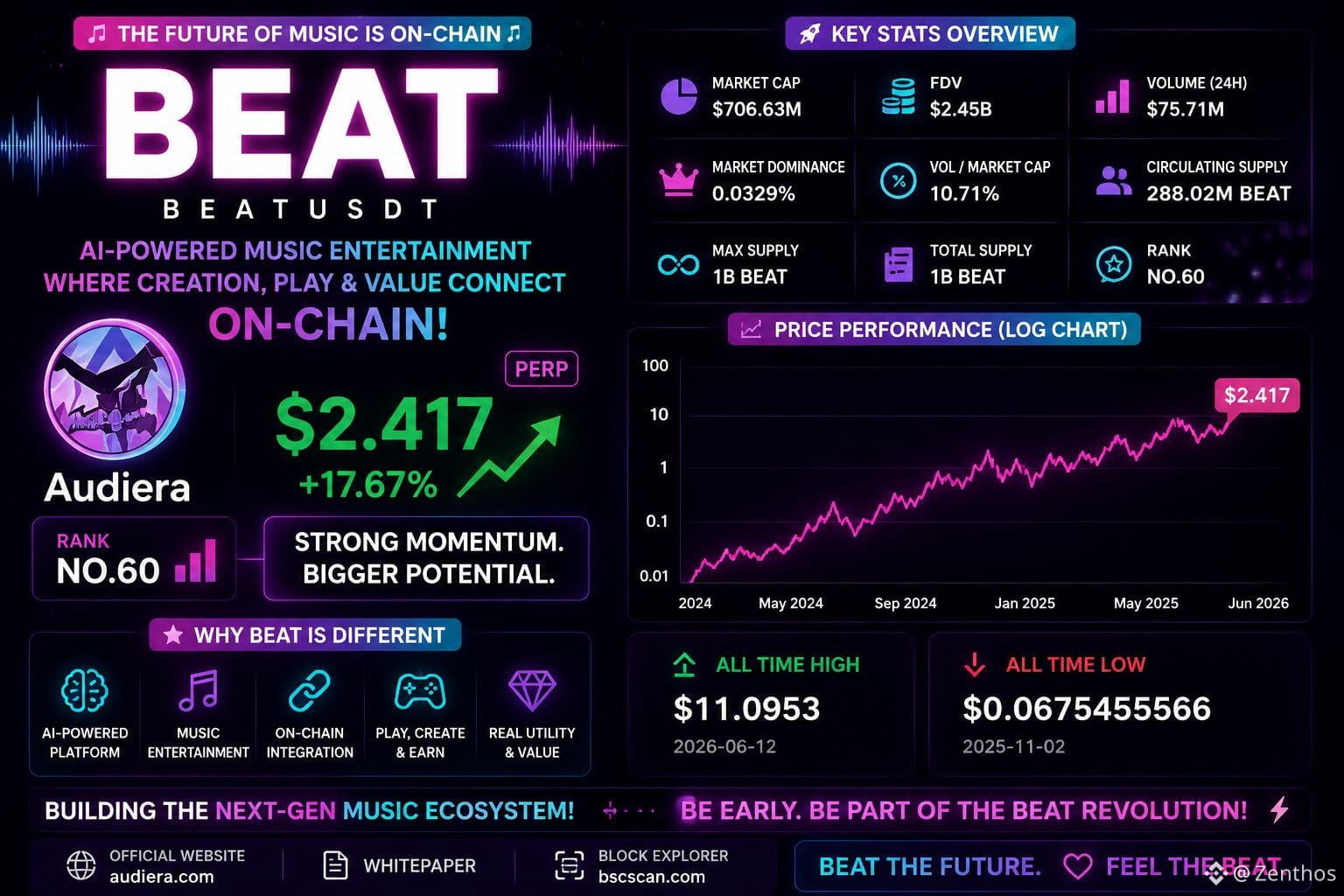
1
105

·
--
Bullish
AI coins are waking up again.🚨🚨🚨🚨
Not because anything changed in the tech… just because “AI” started trending on X this morning.
Funny how half these tokens still can’t explain their own product without hiding behind buzzwords. Yet every feed suddenly has a new price target like the roadmap magically updated overnight.
Narratives move faster than utility.
That’s the game. And it’s why this sector is dangerous: you’re never sure if you’re buying artificial intelligence or just artificial hype.
I’m watching the rotation, not chasing it. If momentum holds, fine. If it fades by tonight, also fine.
Just don’t pretend every AI ticker is the next OpenAI when most of them are barely the next Google Doc clone. Remember to do your own research, DYOR or just stick to $BTC
{spot}(BTCUSDT)
#altcoins #Ai #ChinaLaunchesBroadestTradeRetaliationOnUSFirms #ArtificialInteligence
{spot}(AIUSDT)
AI coins are waking up again.🚨🚨🚨🚨
Not because anything changed in the tech… just because “AI” started trending on X this morning.
Funny how half these tokens still can’t explain their own product without hiding behind buzzwords. Yet every feed suddenly has a new price target like the roadmap magically updated overnight.
Narratives move faster than utility.
That’s the game. And it’s why this sector is dangerous: you’re never sure if you’re buying artificial intelligence or just artificial hype.
I’m watching the rotation, not chasing it. If momentum holds, fine. If it fades by tonight, also fine.
Just don’t pretend every AI ticker is the next OpenAI when most of them are barely the next Google Doc clone. Remember to do your own research, DYOR or just stick to $BTC
#altcoins #Ai #ChinaLaunchesBroadestTradeRetaliationOnUSFirms #ArtificialInteligence
Not because anything changed in the tech… just because “AI” started trending on X this morning.
Funny how half these tokens still can’t explain their own product without hiding behind buzzwords. Yet every feed suddenly has a new price target like the roadmap magically updated overnight.
Narratives move faster than utility.
That’s the game. And it’s why this sector is dangerous: you’re never sure if you’re buying artificial intelligence or just artificial hype.
I’m watching the rotation, not chasing it. If momentum holds, fine. If it fades by tonight, also fine.
Just don’t pretend every AI ticker is the next OpenAI when most of them are barely the next Google Doc clone. Remember to do your own research, DYOR or just stick to $BTC
#altcoins #Ai #ChinaLaunchesBroadestTradeRetaliationOnUSFirms #ArtificialInteligence

138

#USToPressNationsToPickUSOrChinaAICoalition
🇺🇸 US Pushes Nations to Pick an AI Side
The U.S. is preparing to urge 35 countries to choose between the U.S.-led Pax Silica AI coalition and China’s competing AI framework. Countries joining both could risk exclusion from the U.S. coalition.
🤖 US: Secure AI, chips & critical-mineral supply chains
🇨🇳 China: World AI Cooperation Organization, backed by 29 founding countries
🌍 Impact: The global AI race is increasingly becoming a geopolitical divide.
#USToPressNationsToPickUSOrChinaAICoalition #ArtificialInteligence #solana
$FET
{spot}(FETUSDT)
$TAO
{spot}(TAOUSDT)
$RENDER
{spot}(RENDERUSDT)
#USToPressNationsToPickUSOrChinaAICoalition
🇺🇸 US Pushes Nations to Pick an AI Side
The U.S. is preparing to urge 35 countries to choose between the U.S.-led Pax Silica AI coalition and China’s competing AI framework. Countries joining both could risk exclusion from the U.S. coalition.
🤖 US: Secure AI, chips & critical-mineral supply chains
🇨🇳 China: World AI Cooperation Organization, backed by 29 founding countries
🌍 Impact: The global AI race is increasingly becoming a geopolitical divide.
#USToPressNationsToPickUSOrChinaAICoalition #ArtificialInteligence #solana
$FET
$TAO
$RENDER
🇺🇸 US Pushes Nations to Pick an AI Side
The U.S. is preparing to urge 35 countries to choose between the U.S.-led Pax Silica AI coalition and China’s competing AI framework. Countries joining both could risk exclusion from the U.S. coalition.
🤖 US: Secure AI, chips & critical-mineral supply chains
🇨🇳 China: World AI Cooperation Organization, backed by 29 founding countries
🌍 Impact: The global AI race is increasingly becoming a geopolitical divide.
#USToPressNationsToPickUSOrChinaAICoalition #ArtificialInteligence #solana
$FET
$TAO
$RENDER

460

·
--
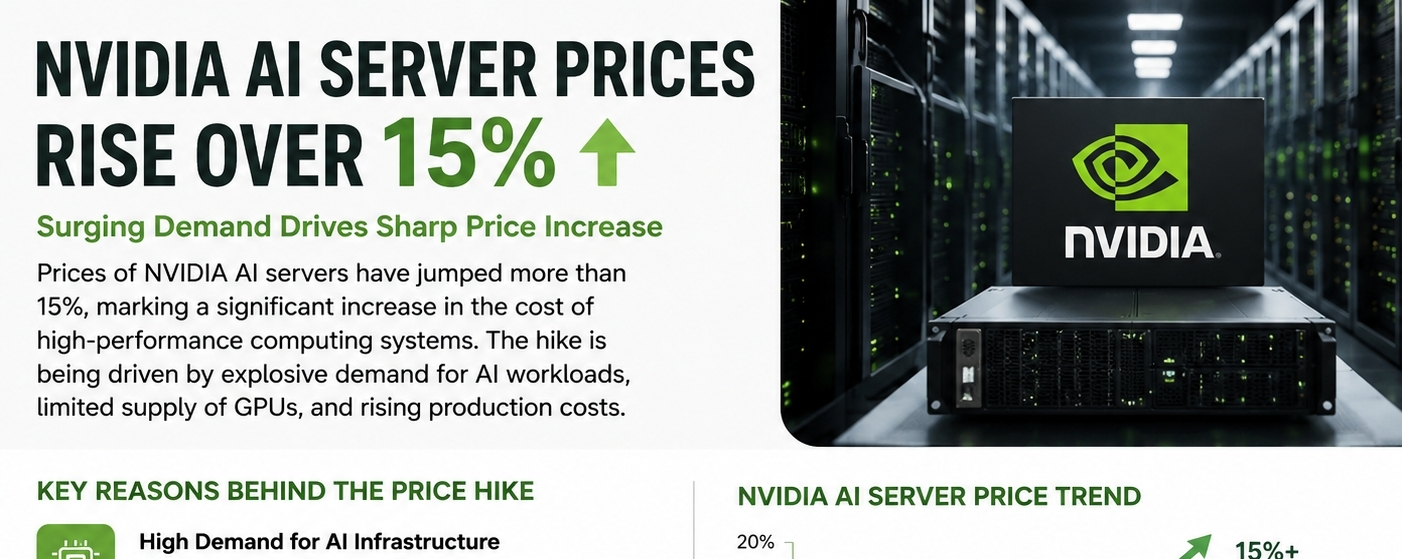
Article
NVIDIA AI Server Prices Rise Over 15%NVIDIA is reportedly preparing to raise prices for AI servers by more than 15% in many cases
The higher prices are expected to affect systems using NVIDIA’s latest Vera Rubin and Grace Blackwell platforms. The new pricing is expected to apply to systems shipped in early 2027, with the exact increase depending on the chip generation and memory configuration
This could make AI infrastructure more expensive for major technology companies and data-center operators. At the same time, the move shows how strong demand for AI computing continues to put pressure on the supply of advanced hardware and memory$ETH
What I’m Watching 👀
NVIDIA’s upcoming earnings report on August 26 could give the market more clues about AI demand, server costs, and the company’s future growth$BNB
For now, the key story is simple: AI demand remains strong, but the cost of building AI infrastructure is rising$NVDA.US
{stock_us}(NVDA.US)
#navida #AI #ArtificialInteligence #GPU
NVIDIA AI Server Prices Rise Over 15%
NVIDIA is reportedly preparing to raise prices for AI servers by more than 15% in many cases
The higher prices are expected to affect systems using NVIDIA’s latest Vera Rubin and Grace Blackwell platforms. The new pricing is expected to apply to systems shipped in early 2027, with the exact increase depending on the chip generation and memory configuration
This could make AI infrastructure more expensive for major technology companies and data-center operators. At the same time, the move shows how strong demand for AI computing continues to put pressure on the supply of advanced hardware and memory$ETH
What I’m Watching 👀
NVIDIA’s upcoming earnings report on August 26 could give the market more clues about AI demand, server costs, and the company’s future growth$BNB
For now, the key story is simple: AI demand remains strong, but the cost of building AI infrastructure is rising$NVDA.US
#navida #AI #ArtificialInteligence #GPU
The higher prices are expected to affect systems using NVIDIA’s latest Vera Rubin and Grace Blackwell platforms. The new pricing is expected to apply to systems shipped in early 2027, with the exact increase depending on the chip generation and memory configuration
This could make AI infrastructure more expensive for major technology companies and data-center operators. At the same time, the move shows how strong demand for AI computing continues to put pressure on the supply of advanced hardware and memory$ETH
What I’m Watching 👀
NVIDIA’s upcoming earnings report on August 26 could give the market more clues about AI demand, server costs, and the company’s future growth$BNB
For now, the key story is simple: AI demand remains strong, but the cost of building AI infrastructure is rising$NVDA.US
#navida #AI #ArtificialInteligence #GPU
NVDAUS-0.38%
1
66

·
--
Bullish
NVIDIA CEO just joined X, and his first post is about #AI #ArtificialInteligence
$NVDA.US CEO @JensenHuang is now on X and has asserted the importance of open-weight AI models in transforming industries worldwide. $NVDAB $XAI #JensenHuang
{spot}(NVDABUSDT)
{stock_us}(NVDA.US)
NVIDIA CEO just joined X, and his first post is about #AI #ArtificialInteligence
$NVDA.US CEO @JensenHuang is now on X and has asserted the importance of open-weight AI models in transforming industries worldwide. $NVDAB $XAI #JensenHuang
$NVDA.US CEO @JensenHuang is now on X and has asserted the importance of open-weight AI models in transforming industries worldwide. $NVDAB $XAI #JensenHuang

68
Log in to explore more content
Join global crypto users on Binance Square
⚡️ Get latest and useful information about crypto.
💬 Trusted by the world’s largest crypto exchange.
👍 Discover real insights from verified creators.
Email / Phone number
Trending Topics
1
#EarningsSeason
382,799 views
2,918 Discussing
2
#SECChairWantsStockMarketsOnChain
753 views
44 Discussing
3
#MulticoinInvestsInGrass
10 views
22 Discussing
4
#CEARenamesToBNBStandardUnderBNC
819 views
58 Discussing
5
#BitwiseLaunchesFirstSpotNEARETF
45,495 views
687 Discussing
6
#USJobOpeningsFallToFiveMonthLow
50,983 views
532 Discussing
7
#ECBToTestAIAgentsInDigitalEuroPayments
34,565 views
596 Discussing
8
#JapanFSABacksFourthStablecoinTradeSettlementPilot
39,261 views
623 Discussing
9
#BitgetHackerFailsToMoveStolenFunds
56,245 views
679 Discussing
10
#BitMineETHHoldingsTop6Million
44,109 views
748 Discussing