
#openledger
openledger
17.3M views
202,832 Discussing
Hot
Latest

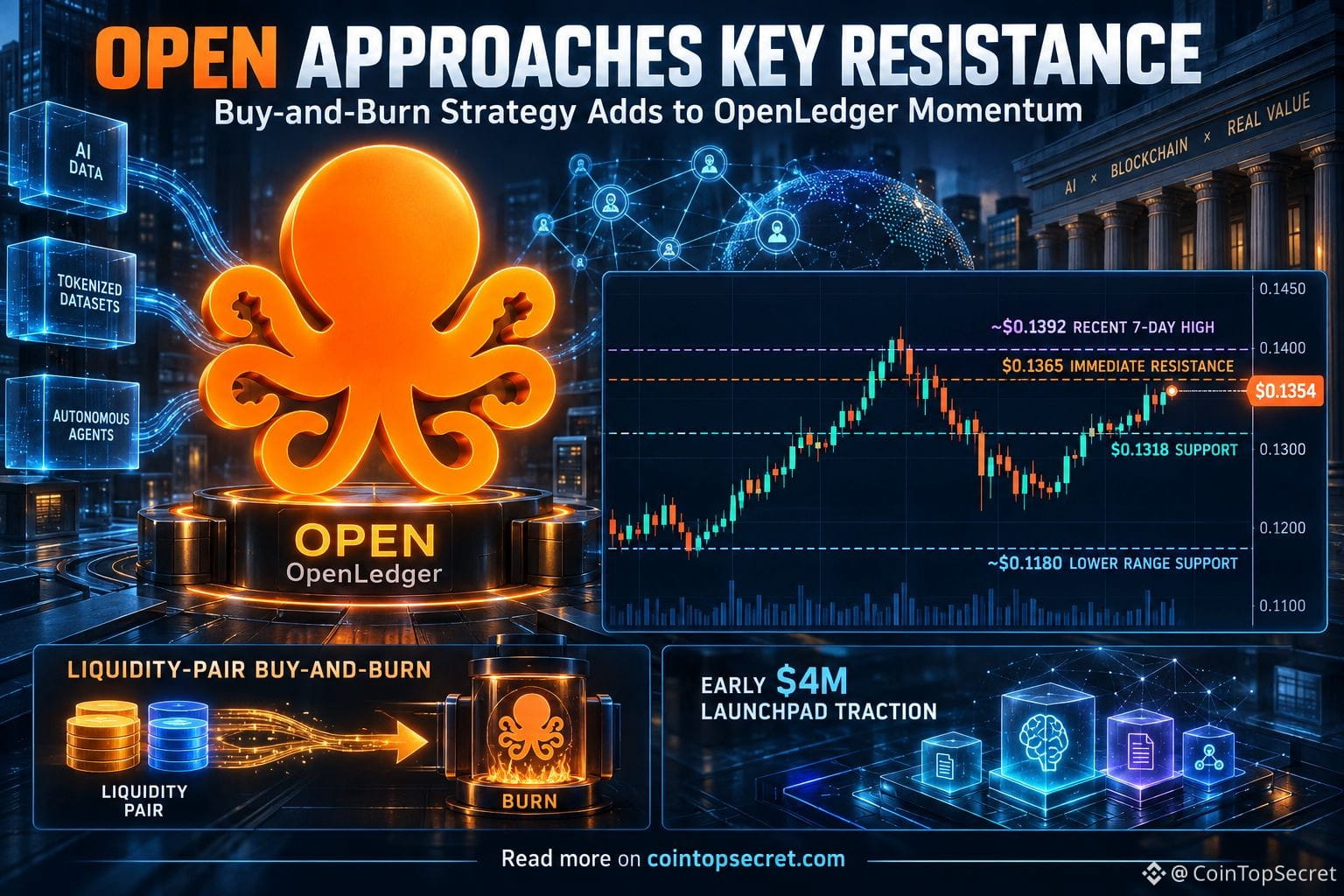
$OPEN Update 🔎 Can OPEN push through its recent high?
💰 Price now: $0.1354 | 24h: +0.6%
📊 Market cap: $29.18M | Rank: #675
📈 24h range: $0.1318 – $0.1365
📰 What's happening:
OPEN is holding above $0.13 after a stronger move from its September low. shows a 7-day gain of 5.3%, while 24h volume is about $4.29M.
🔥 Key catalyst:
OpenLedger recently outlined a liquidity-pair buy-and-burn strategy and reported early $4M launchpad traction.
👀 Next step to watch:
🔴 Bearish case: Below $0.1318 could expose the ~$0.1180 area.
🟢 Bullish case: Above $0.1365 could put ~$0.1392 into focus.
📝 My take: OPEN has improved short-term momentum, but the $0.1365–$0.1392 zone remains an important test.
Not financial advice, DYOR ⚠️
#OpenLedger #OPEN #CryptoAnalysis $OPEN
$OPEN Update 🔎 Can OPEN push through its recent high?
💰 Price now: $0.1354 | 24h: +0.6%
📊 Market cap: $29.18M | Rank: #675
📈 24h range: $0.1318 – $0.1365
📰 What's happening:
OPEN is holding above $0.13 after a stronger move from its September low. shows a 7-day gain of 5.3%, while 24h volume is about $4.29M.
🔥 Key catalyst:
OpenLedger recently outlined a liquidity-pair buy-and-burn strategy and reported early $4M launchpad traction.
👀 Next step to watch:
🔴 Bearish case: Below $0.1318 could expose the ~$0.1180 area.
🟢 Bullish case: Above $0.1365 could put ~$0.1392 into focus.
📝 My take: OPEN has improved short-term momentum, but the $0.1365–$0.1392 zone remains an important test.
Not financial advice, DYOR ⚠️
#OpenLedger #OPEN #CryptoAnalysis $OPEN
💰 Price now: $0.1354 | 24h: +0.6%
📊 Market cap: $29.18M | Rank: #675
📈 24h range: $0.1318 – $0.1365
📰 What's happening:
OPEN is holding above $0.13 after a stronger move from its September low. shows a 7-day gain of 5.3%, while 24h volume is about $4.29M.
🔥 Key catalyst:
OpenLedger recently outlined a liquidity-pair buy-and-burn strategy and reported early $4M launchpad traction.
👀 Next step to watch:
🔴 Bearish case: Below $0.1318 could expose the ~$0.1180 area.
🟢 Bullish case: Above $0.1365 could put ~$0.1392 into focus.
📝 My take: OPEN has improved short-term momentum, but the $0.1365–$0.1392 zone remains an important test.
Not financial advice, DYOR ⚠️
#OpenLedger #OPEN #CryptoAnalysis $OPEN
145

·
--
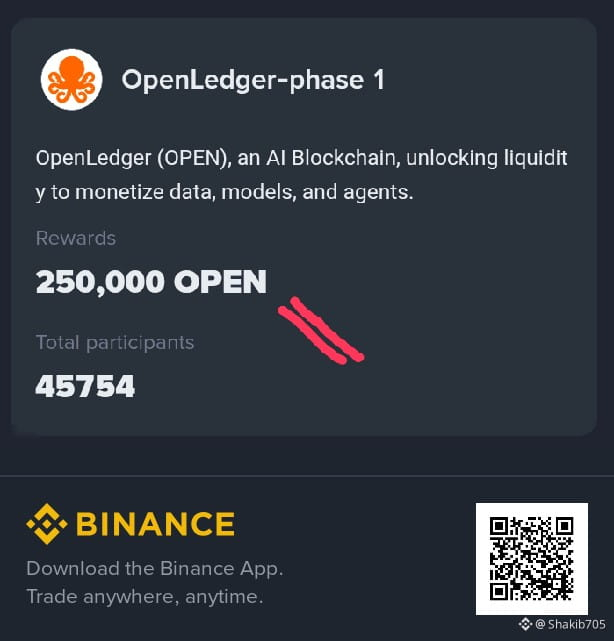
🎯 OpenLedger-Phase 1 and Reward Pool:
Currently its first step or the OpenLedger-phase 1 campaign is running, where a massive reward pool has been set up. Already, thousands of users (as shown in the image with 45,754+) are participating in this airdrop and booster program, earning FREE OPEN tokens!#OpenLedger #Phase1 $OPEN
{spot}(OPENUSDT)
🎯 OpenLedger-Phase 1 and Reward Pool:
Currently its first step or the OpenLedger-phase 1 campaign is running, where a massive reward pool has been set up. Already, thousands of users (as shown in the image with 45,754+) are participating in this airdrop and booster program, earning FREE OPEN tokens!#OpenLedger #Phase1 $OPEN
Currently its first step or the OpenLedger-phase 1 campaign is running, where a massive reward pool has been set up. Already, thousands of users (as shown in the image with 45,754+) are participating in this airdrop and booster program, earning FREE OPEN tokens!#OpenLedger #Phase1 $OPEN
264

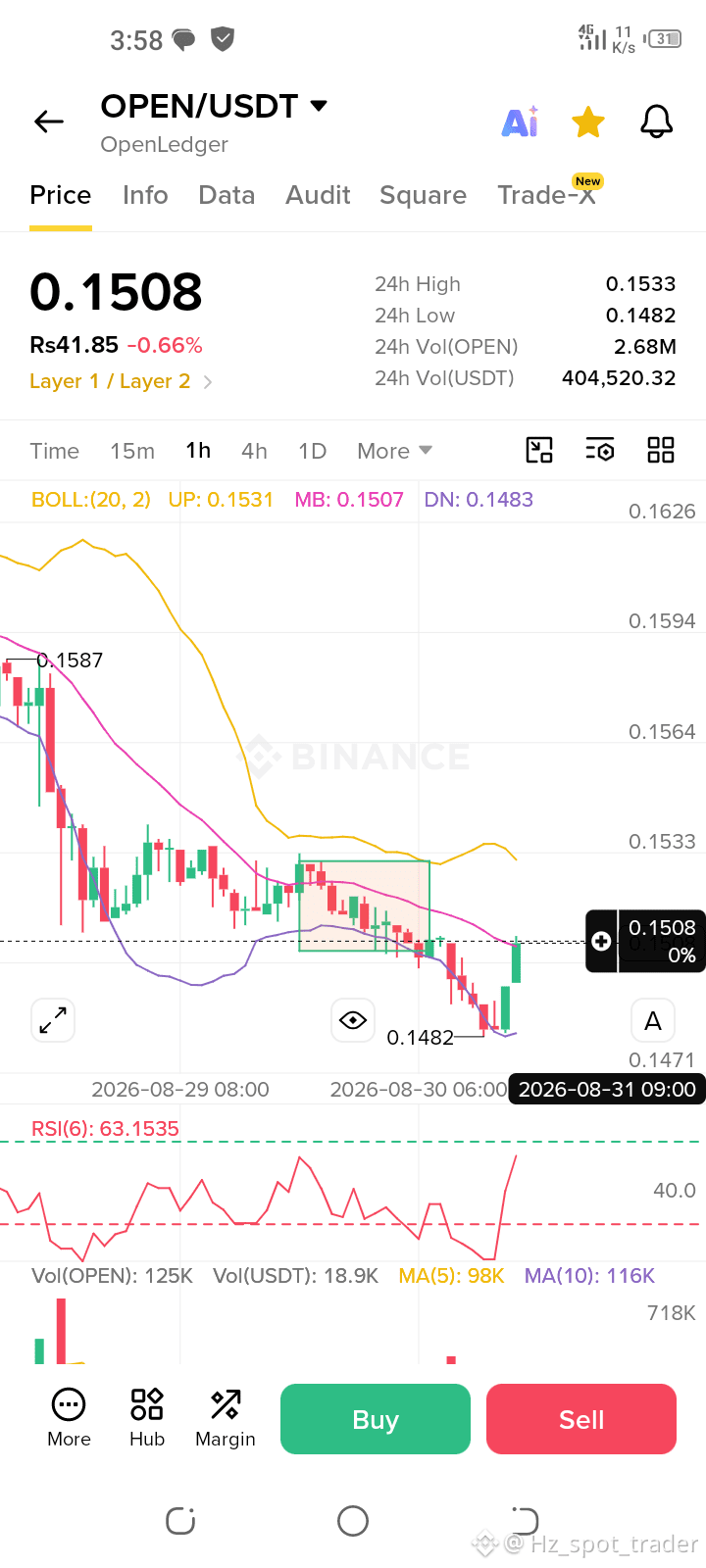
$OPEN — First Target HIT ✅
The first level I shared on open was around $0.1508.
Price reached it. 🎯
That was roughly +1.2% from the area I was watching.
I also shared a similar short-term setup on $HOME earlier, with the $0.00622 area as the level to watch.
I’m not claiming every target will work.
The important thing is to plan the level BEFORE the move and respect the risk.
Did anyone here take the open SPOT setup?
If you did, tell me your entry and result 👇
SPOT only. No futures. No leverage.
my first target / level to watch was $0.1508 — and price reached it
$OPEN
{spot}(OPENUSDT)
#OPEN #OpenLedger #SpotTrading
$OPEN — First Target HIT ✅
The first level I shared on open was around $0.1508.
Price reached it. 🎯
That was roughly +1.2% from the area I was watching.
I also shared a similar short-term setup on $HOME earlier, with the $0.00622 area as the level to watch.
I’m not claiming every target will work.
The important thing is to plan the level BEFORE the move and respect the risk.
Did anyone here take the open SPOT setup?
If you did, tell me your entry and result 👇
SPOT only. No futures. No leverage.
my first target / level to watch was $0.1508 — and price reached it
$OPEN
#OPEN #OpenLedger #SpotTrading
The first level I shared on open was around $0.1508.
Price reached it. 🎯
That was roughly +1.2% from the area I was watching.
I also shared a similar short-term setup on $HOME earlier, with the $0.00622 area as the level to watch.
I’m not claiming every target will work.
The important thing is to plan the level BEFORE the move and respect the risk.
Did anyone here take the open SPOT setup?
If you did, tell me your entry and result 👇
SPOT only. No futures. No leverage.
my first target / level to watch was $0.1508 — and price reached it
$OPEN
#OPEN #OpenLedger #SpotTrading
1
246
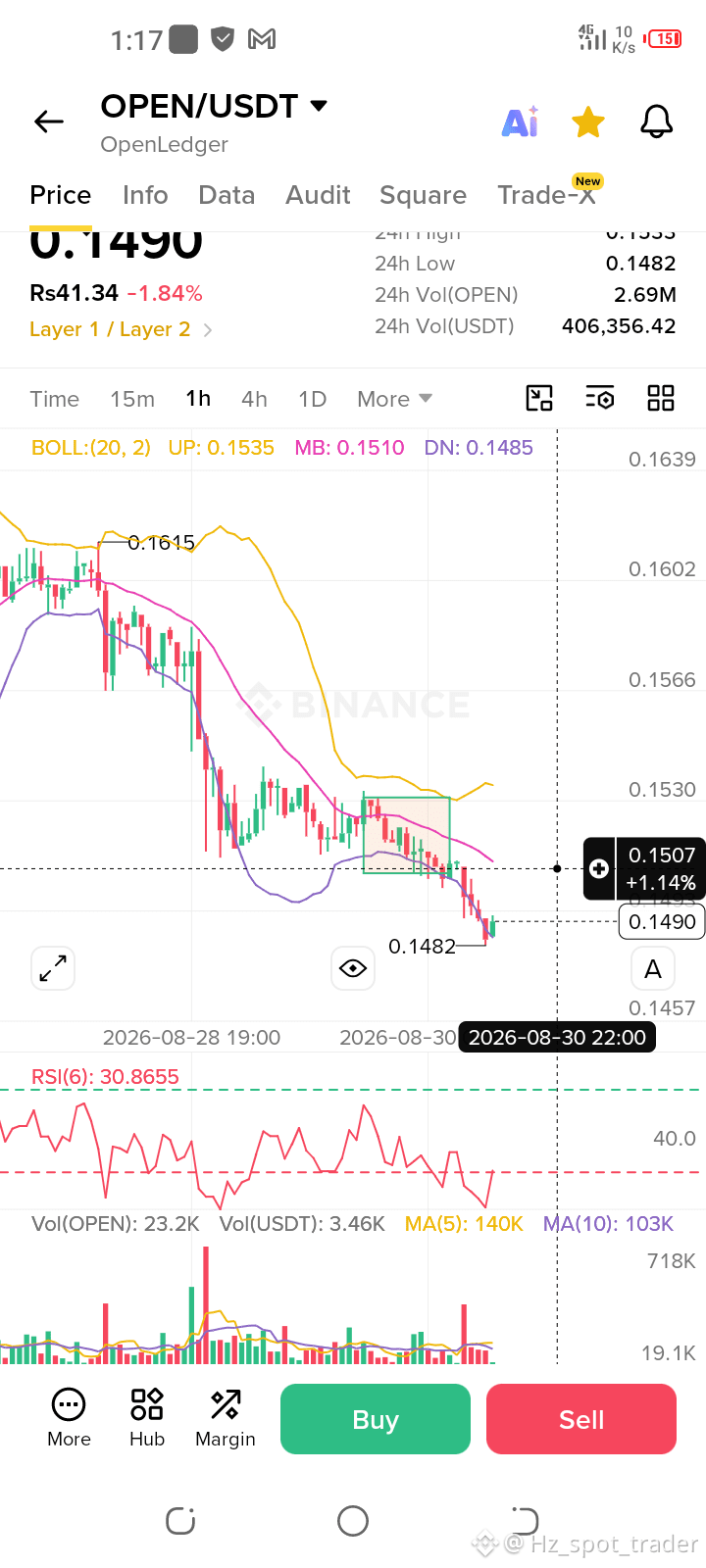
$OPEN — Bounce Setup or Just a Dead Cat Bounce? 👀
OPEN is trading around $0.1490 after the recent sell-off.
On the 1H chart:
• RSI(6) ≈ 30.9 — oversold area
• Lower Bollinger Band ≈ $0.1485
• Middle Band ≈ $0.1510
• My first level to watch: $0.1508
A move to $0.1508 would be around +1.2% from the current area.
If momentum returns, I’ll be watching the $0.1510–$0.1530 zone next.
But no guarantee — if $0.1482 breaks, the setup becomes weaker.
Would you take the SPOT bounce or wait for confirmation?
$OPEN
{spot}(OPENUSDT)
#OPEN #OpenLedger #SpotTrading
$OPEN — Bounce Setup or Just a Dead Cat Bounce? 👀
OPEN is trading around $0.1490 after the recent sell-off.
On the 1H chart:
• RSI(6) ≈ 30.9 — oversold area
• Lower Bollinger Band ≈ $0.1485
• Middle Band ≈ $0.1510
• My first level to watch: $0.1508
A move to $0.1508 would be around +1.2% from the current area.
If momentum returns, I’ll be watching the $0.1510–$0.1530 zone next.
But no guarantee — if $0.1482 breaks, the setup becomes weaker.
Would you take the SPOT bounce or wait for confirmation?
$OPEN
#OPEN #OpenLedger #SpotTrading
OPEN is trading around $0.1490 after the recent sell-off.
On the 1H chart:
• RSI(6) ≈ 30.9 — oversold area
• Lower Bollinger Band ≈ $0.1485
• Middle Band ≈ $0.1510
• My first level to watch: $0.1508
A move to $0.1508 would be around +1.2% from the current area.
If momentum returns, I’ll be watching the $0.1510–$0.1530 zone next.
But no guarantee — if $0.1482 breaks, the setup becomes weaker.
Would you take the SPOT bounce or wait for confirmation?
$OPEN
#OPEN #OpenLedger #SpotTrading
1
212

·
--
#open $OPEN
🚀❤️ THE OPENLEDGER CREATOR CAMPAIGN IS WRAPPING UP, AND IT HAS BEEN AN INCREDIBLE JOURNEY FOR THE COMMUNITY! ❤️🚀
OVER THE COURSE OF THIS CAMPAIGN, THOUSANDS OF CRYPTO ENTHUSIASTS, BUILDERS, AND CONTENT CREATORS CAME TOGETHER TO EXPLORE THE VISION OF @Openledger AND THE POTENTIAL OF $OPEN. 💎✨
🔥 FROM LEARNING ABOUT DECENTRALIZED AI TO DISCUSSING THE FUTURE OF DATA OWNERSHIP AND BLOCKCHAIN INNOVATION, THIS CAMPAIGN HAS HELPED SPREAD AWARENESS ABOUT HOW OPENLEDGER IS BUILDING A MORE OPEN AND COMMUNITY-DRIVEN AI ECOSYSTEM. EVERY POST, COMMENT, AND DISCUSSION ADDED VALUE TO THE GROWING NETWORK. 🔥
❤️ AS THE CREATOR CAMPAIGN COMES TO AN END, THE MISSION OF OPENLEDGER CONTINUES. THE FUTURE OF AI AND WEB3 IS STILL BEING WRITTEN, AND PROJECTS LIKE OPENLEDGER ARE HELPING SHAPE WHAT COMES NEXT. THANK YOU TO EVERYONE WHO SHARED IDEAS, CREATED CONTENT, AND SUPPORTED THE COMMUNITY ALONG THE WAY. ❤️
🔗 https://www.binance.com/en/square/profile/openledger
💎 $OPEN 💎
#OpenLedger #Aİ #Web3 #Crypto #Blockchain #DecentralizedAI ❤️🚀✨
{future}(OPENUSDT)
#open $OPEN
🚀❤️ THE OPENLEDGER CREATOR CAMPAIGN IS WRAPPING UP, AND IT HAS BEEN AN INCREDIBLE JOURNEY FOR THE COMMUNITY! ❤️🚀
OVER THE COURSE OF THIS CAMPAIGN, THOUSANDS OF CRYPTO ENTHUSIASTS, BUILDERS, AND CONTENT CREATORS CAME TOGETHER TO EXPLORE THE VISION OF @OpenLedger AND THE POTENTIAL OF $OPEN . 💎✨
🔥 FROM LEARNING ABOUT DECENTRALIZED AI TO DISCUSSING THE FUTURE OF DATA OWNERSHIP AND BLOCKCHAIN INNOVATION, THIS CAMPAIGN HAS HELPED SPREAD AWARENESS ABOUT HOW OPENLEDGER IS BUILDING A MORE OPEN AND COMMUNITY-DRIVEN AI ECOSYSTEM. EVERY POST, COMMENT, AND DISCUSSION ADDED VALUE TO THE GROWING NETWORK. 🔥
❤️ AS THE CREATOR CAMPAIGN COMES TO AN END, THE MISSION OF OPENLEDGER CONTINUES. THE FUTURE OF AI AND WEB3 IS STILL BEING WRITTEN, AND PROJECTS LIKE OPENLEDGER ARE HELPING SHAPE WHAT COMES NEXT. THANK YOU TO EVERYONE WHO SHARED IDEAS, CREATED CONTENT, AND SUPPORTED THE COMMUNITY ALONG THE WAY. ❤️
🔗 https://www.binance.com/en/square/profile/openledger
💎 $OPEN 💎
#OpenLedger #Aİ #Web3 #Crypto #Blockchain #DecentralizedAI ❤️🚀✨
🚀❤️ THE OPENLEDGER CREATOR CAMPAIGN IS WRAPPING UP, AND IT HAS BEEN AN INCREDIBLE JOURNEY FOR THE COMMUNITY! ❤️🚀
OVER THE COURSE OF THIS CAMPAIGN, THOUSANDS OF CRYPTO ENTHUSIASTS, BUILDERS, AND CONTENT CREATORS CAME TOGETHER TO EXPLORE THE VISION OF @OpenLedger AND THE POTENTIAL OF $OPEN . 💎✨
🔥 FROM LEARNING ABOUT DECENTRALIZED AI TO DISCUSSING THE FUTURE OF DATA OWNERSHIP AND BLOCKCHAIN INNOVATION, THIS CAMPAIGN HAS HELPED SPREAD AWARENESS ABOUT HOW OPENLEDGER IS BUILDING A MORE OPEN AND COMMUNITY-DRIVEN AI ECOSYSTEM. EVERY POST, COMMENT, AND DISCUSSION ADDED VALUE TO THE GROWING NETWORK. 🔥
❤️ AS THE CREATOR CAMPAIGN COMES TO AN END, THE MISSION OF OPENLEDGER CONTINUES. THE FUTURE OF AI AND WEB3 IS STILL BEING WRITTEN, AND PROJECTS LIKE OPENLEDGER ARE HELPING SHAPE WHAT COMES NEXT. THANK YOU TO EVERYONE WHO SHARED IDEAS, CREATED CONTENT, AND SUPPORTED THE COMMUNITY ALONG THE WAY. ❤️
🔗 https://www.binance.com/en/square/profile/openledger
💎 $OPEN 💎
#OpenLedger #Aİ #Web3 #Crypto #Blockchain #DecentralizedAI ❤️🚀✨
1
2
100

#OpenLedger #open
The transition of the token $OPEN from a speculative tool to the "nervous system" of Utility (gas fees, gOPEN governance, rewards) is a healthy indicator linking network growth to the true value of the token.
Companies focusing on solving root dilemmas (who owns the data? And how are the returns distributed?) like @Openledger may not be the fastest in pumping prices up, but they are definitely the most resilient and sustainable in the current market cycle of 2026.
{future}(OPENUSDT)
#OpenLedger #open
The transition of the token $OPEN from a speculative tool to the "nervous system" of Utility (gas fees, gOPEN governance, rewards) is a healthy indicator linking network growth to the true value of the token.
Companies focusing on solving root dilemmas (who owns the data? And how are the returns distributed?) like @OpenLedger may not be the fastest in pumping prices up, but they are definitely the most resilient and sustainable in the current market cycle of 2026.
The transition of the token $OPEN from a speculative tool to the "nervous system" of Utility (gas fees, gOPEN governance, rewards) is a healthy indicator linking network growth to the true value of the token.
Companies focusing on solving root dilemmas (who owns the data? And how are the returns distributed?) like @OpenLedger may not be the fastest in pumping prices up, but they are definitely the most resilient and sustainable in the current market cycle of 2026.
3
64


Article
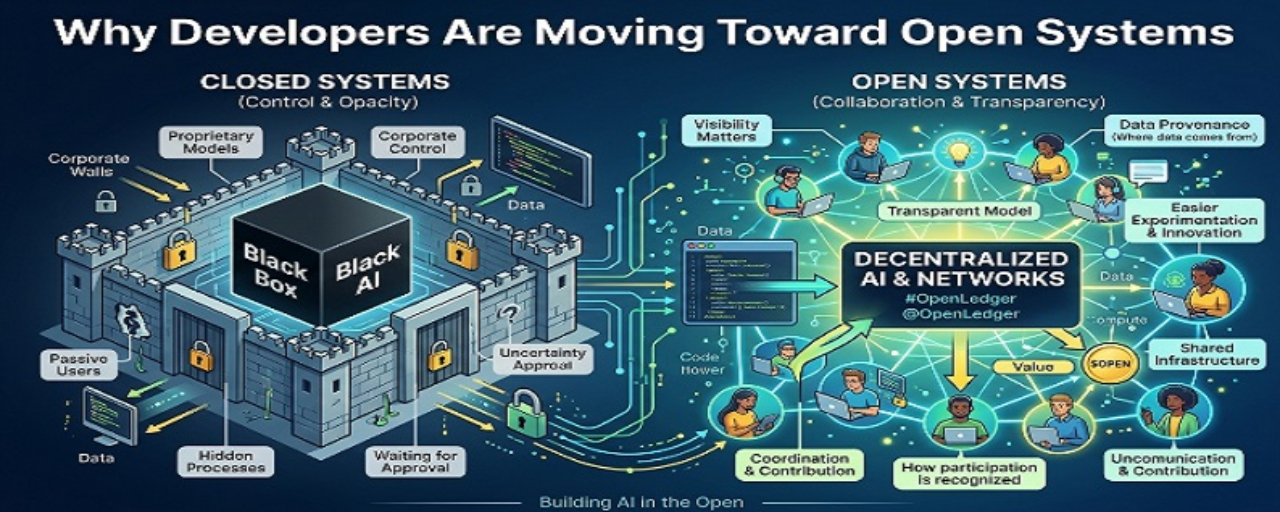
Why Developers Are Moving Toward Open SystemsI've been watching the AI space for a while, and one thing keeps standing out.
The conversation isn't only about what AI can do anymore. More and more, it seems to be about where AI is being built and who gets to participate in that process.
A few years ago, it felt normal to assume that the biggest and most useful systems would exist behind closed doors. Companies would build, users would use, and that was pretty much the relationship.
Lately, that assumption feels weaker.
I noticed that many developers seem increasingly interested in open systems, and I don't think it's just about ideology. It feels more practical than that.
When people build on open networks, they can see how things work. They can contribute, experiment, and sometimes even improve parts of the system themselves. There's a different feeling when you're building with something instead of simply using it.
That thought came to mind while reading about @Openledger .
What's interesting is that projects like #OpenLedger are appearing at a time when AI is becoming more important in everyday digital life. As AI grows, questions around ownership, contribution, and access naturally become harder to ignore.
Developers tend to notice those questions early.
Sometimes I wonder if open systems are attracting attention because they reduce uncertainty. Not because they solve every problem, but because they make parts of the process visible.
Visibility matters.
If data contributes to a model, people want to know where it came from.
If a network creates value, contributors want to understand how participation is recognized.
If AI becomes part of daily infrastructure, developers often want transparency instead of black boxes.
Those are not new concerns, but they seem more relevant now than ever.
I've also noticed that open systems create room for experimentation. Ideas don't need to wait for approval from a single organization before being tested. Different people can contribute from different places, and sometimes unexpected solutions emerge from that process.
That feels closely connected to what @Openledger is exploring.
The project often appears in discussions about decentralized AI, but what catches my attention is the broader shift behind it. There seems to be growing interest in infrastructure where contributors, builders, and users can all play visible roles.
Not because openness is automatically better.
Just because participation becomes easier.
The more I think about it, the more it feels like developers are responding to the direction technology is moving. AI systems are becoming larger, more connected, and increasingly dependent on data from many different sources.
In that environment, open frameworks may simply fit the moment better.
I see similar conversations around $OPEN , where people aren't only discussing technology. They're discussing coordination, contribution, and how networks can function when many participants are involved.
That's a different kind of discussion than we saw a few years ago.
It feels less focused on control and more focused on collaboration.
Whether that trend continues remains to be seen.
Technology changes quickly, and today's assumptions rarely survive forever.
Still, when I look at projects connected to #openledger and the broader ideas behind #open systems, it feels like developers are searching for environments that are easier to understand, easier to contribute to, and easier to trust.
Maybe that's the real shift taking place.
Not a move away from innovation, but a move toward building it in the open.
And the more I watch these conversations unfold, the more it feels like that preference isn't temporary. It feels like a natural response to the way AI networks are evolving.
{future}(OPENUSDT)
#GrowWithSAC
Why Developers Are Moving Toward Open Systems
I've been watching the AI space for a while, and one thing keeps standing out.
The conversation isn't only about what AI can do anymore. More and more, it seems to be about where AI is being built and who gets to participate in that process.
A few years ago, it felt normal to assume that the biggest and most useful systems would exist behind closed doors. Companies would build, users would use, and that was pretty much the relationship.
Lately, that assumption feels weaker.
I noticed that many developers seem increasingly interested in open systems, and I don't think it's just about ideology. It feels more practical than that.
When people build on open networks, they can see how things work. They can contribute, experiment, and sometimes even improve parts of the system themselves. There's a different feeling when you're building with something instead of simply using it.
That thought came to mind while reading about @OpenLedger .
What's interesting is that projects like #OpenLedger are appearing at a time when AI is becoming more important in everyday digital life. As AI grows, questions around ownership, contribution, and access naturally become harder to ignore.
Developers tend to notice those questions early.
Sometimes I wonder if open systems are attracting attention because they reduce uncertainty. Not because they solve every problem, but because they make parts of the process visible.
Visibility matters.
If data contributes to a model, people want to know where it came from.
If a network creates value, contributors want to understand how participation is recognized.
If AI becomes part of daily infrastructure, developers often want transparency instead of black boxes.
Those are not new concerns, but they seem more relevant now than ever.
I've also noticed that open systems create room for experimentation. Ideas don't need to wait for approval from a single organization before being tested. Different people can contribute from different places, and sometimes unexpected solutions emerge from that process.
That feels closely connected to what @OpenLedger is exploring.
The project often appears in discussions about decentralized AI, but what catches my attention is the broader shift behind it. There seems to be growing interest in infrastructure where contributors, builders, and users can all play visible roles.
Not because openness is automatically better.
Just because participation becomes easier.
The more I think about it, the more it feels like developers are responding to the direction technology is moving. AI systems are becoming larger, more connected, and increasingly dependent on data from many different sources.
In that environment, open frameworks may simply fit the moment better.
I see similar conversations around $OPEN , where people aren't only discussing technology. They're discussing coordination, contribution, and how networks can function when many participants are involved.
That's a different kind of discussion than we saw a few years ago.
It feels less focused on control and more focused on collaboration.
Whether that trend continues remains to be seen.
Technology changes quickly, and today's assumptions rarely survive forever.
Still, when I look at projects connected to #openledger and the broader ideas behind #open systems, it feels like developers are searching for environments that are easier to understand, easier to contribute to, and easier to trust.
Maybe that's the real shift taking place.
Not a move away from innovation, but a move toward building it in the open.
And the more I watch these conversations unfold, the more it feels like that preference isn't temporary. It feels like a natural response to the way AI networks are evolving.
#GrowWithSAC
The conversation isn't only about what AI can do anymore. More and more, it seems to be about where AI is being built and who gets to participate in that process.
A few years ago, it felt normal to assume that the biggest and most useful systems would exist behind closed doors. Companies would build, users would use, and that was pretty much the relationship.
Lately, that assumption feels weaker.
I noticed that many developers seem increasingly interested in open systems, and I don't think it's just about ideology. It feels more practical than that.
When people build on open networks, they can see how things work. They can contribute, experiment, and sometimes even improve parts of the system themselves. There's a different feeling when you're building with something instead of simply using it.
That thought came to mind while reading about @OpenLedger .
What's interesting is that projects like #OpenLedger are appearing at a time when AI is becoming more important in everyday digital life. As AI grows, questions around ownership, contribution, and access naturally become harder to ignore.
Developers tend to notice those questions early.
Sometimes I wonder if open systems are attracting attention because they reduce uncertainty. Not because they solve every problem, but because they make parts of the process visible.
Visibility matters.
If data contributes to a model, people want to know where it came from.
If a network creates value, contributors want to understand how participation is recognized.
If AI becomes part of daily infrastructure, developers often want transparency instead of black boxes.
Those are not new concerns, but they seem more relevant now than ever.
I've also noticed that open systems create room for experimentation. Ideas don't need to wait for approval from a single organization before being tested. Different people can contribute from different places, and sometimes unexpected solutions emerge from that process.
That feels closely connected to what @OpenLedger is exploring.
The project often appears in discussions about decentralized AI, but what catches my attention is the broader shift behind it. There seems to be growing interest in infrastructure where contributors, builders, and users can all play visible roles.
Not because openness is automatically better.
Just because participation becomes easier.
The more I think about it, the more it feels like developers are responding to the direction technology is moving. AI systems are becoming larger, more connected, and increasingly dependent on data from many different sources.
In that environment, open frameworks may simply fit the moment better.
I see similar conversations around $OPEN , where people aren't only discussing technology. They're discussing coordination, contribution, and how networks can function when many participants are involved.
That's a different kind of discussion than we saw a few years ago.
It feels less focused on control and more focused on collaboration.
Whether that trend continues remains to be seen.
Technology changes quickly, and today's assumptions rarely survive forever.
Still, when I look at projects connected to #openledger and the broader ideas behind #open systems, it feels like developers are searching for environments that are easier to understand, easier to contribute to, and easier to trust.
Maybe that's the real shift taking place.
Not a move away from innovation, but a move toward building it in the open.
And the more I watch these conversations unfold, the more it feels like that preference isn't temporary. It feels like a natural response to the way AI networks are evolving.
#GrowWithSAC
182

·
--
Bullish
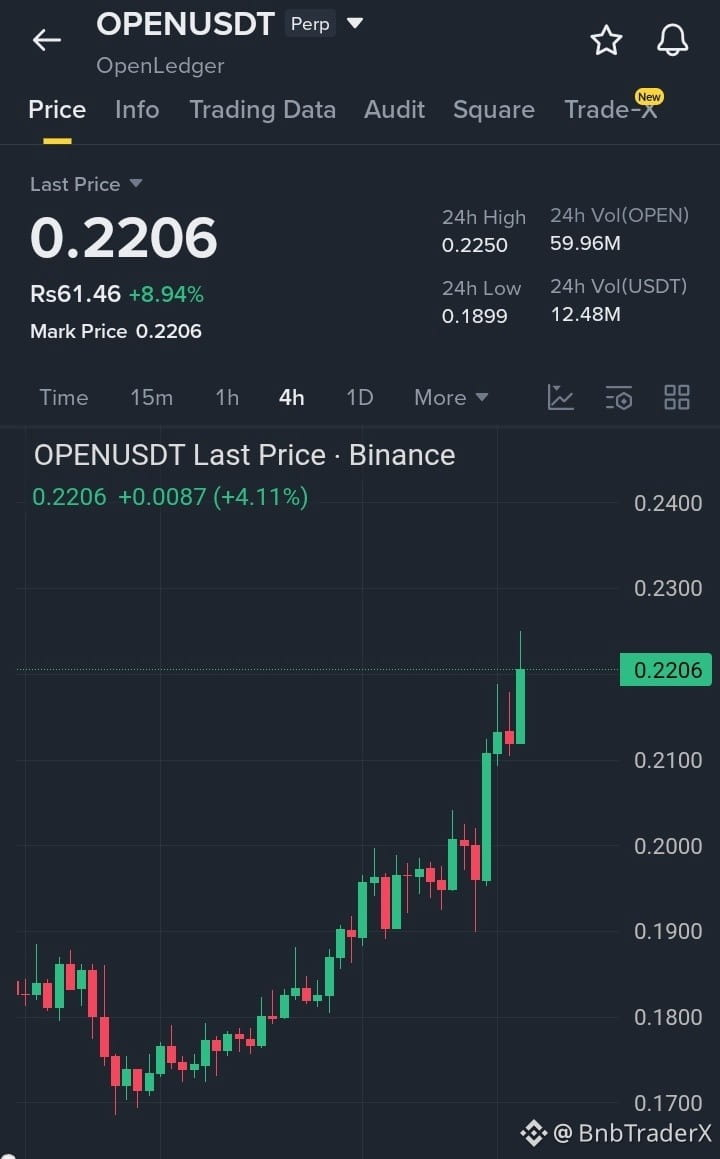
$OPEN is trading around 0.2206 after a steady intraday push from the 0.18–0.19 zone toward the 0.225 area, showing strong short-term momentum with price currently sitting just below local resistance. The structure suggests buyers are still active, but the market is entering a decision zone where continuation or rejection will likely define the next move.
Targets
0.2280
0.2350
0.2450
#OPEN #OpenLedger #CryptoTrading
{spot}(OPENUSDT)
$OPEN is trading around 0.2206 after a steady intraday push from the 0.18–0.19 zone toward the 0.225 area, showing strong short-term momentum with price currently sitting just below local resistance. The structure suggests buyers are still active, but the market is entering a decision zone where continuation or rejection will likely define the next move.
Targets
0.2280
0.2350
0.2450
#OPEN #OpenLedger #CryptoTrading
Targets
0.2280
0.2350
0.2450
#OPEN #OpenLedger #CryptoTrading
1
51

·
--
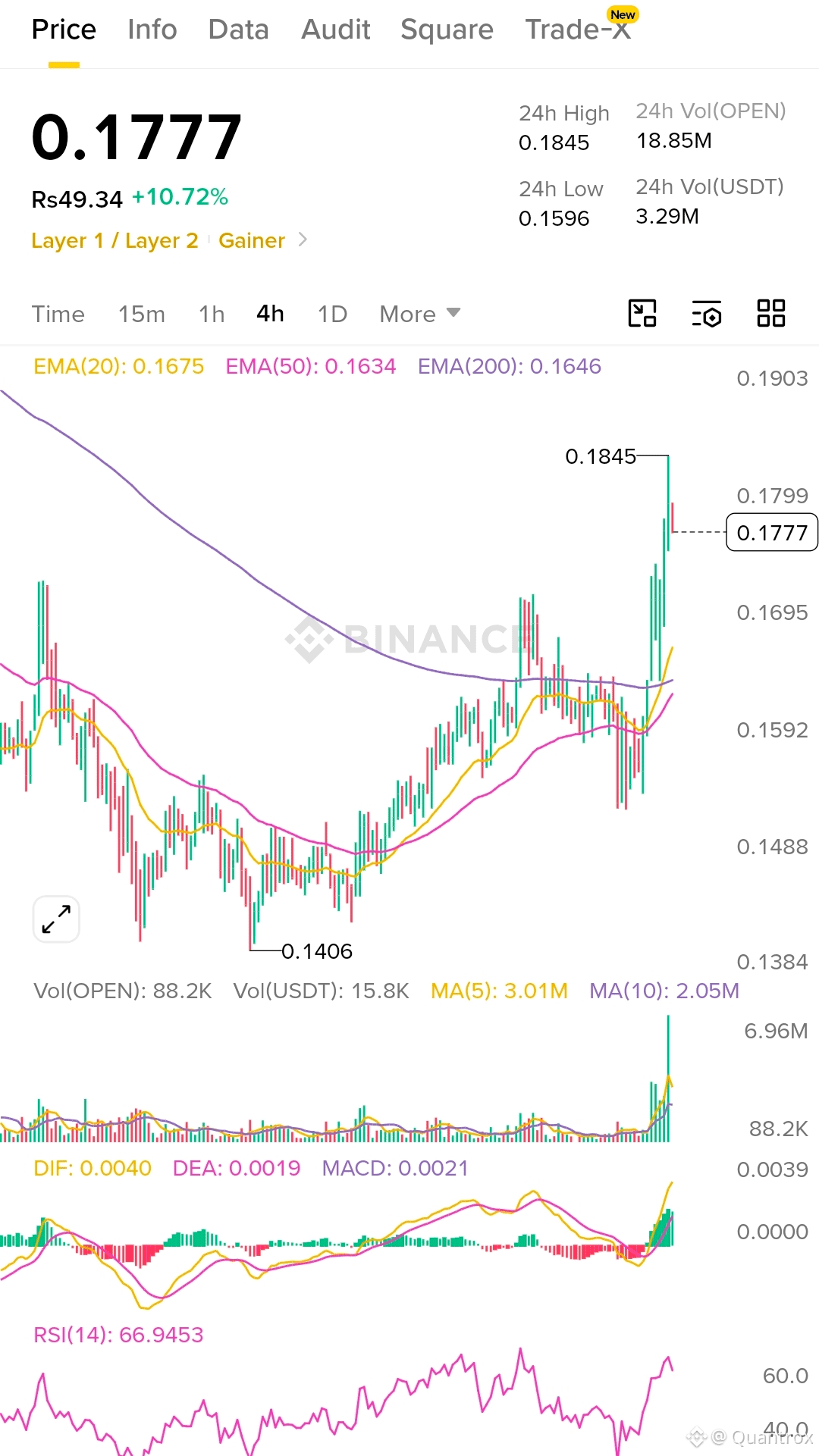
$OPEN Just Broke Above a Triple EMA Compression — This Is Textbook
EMA20, EMA50 and EMA200 were all within 0.004 of each other. Price just broke above all three at once. MACD exploding green. RSI at 67. Volume 47% above average.
I've been waiting for this exact setup.
🎯 Trade Plan
Entry Zone: 0.1720 – 0.1780
✅ Target 1: 0.1903
✅ Target 2: 0.2100
❌ Stop Loss: 0.1580
DYOR | NFA
#OPEN #OpenLedger #CryptoTrading
$OPEN Just Broke Above a Triple EMA Compression — This Is Textbook
EMA20, EMA50 and EMA200 were all within 0.004 of each other. Price just broke above all three at once. MACD exploding green. RSI at 67. Volume 47% above average.
I've been waiting for this exact setup.
🎯 Trade Plan
Entry Zone: 0.1720 – 0.1780
✅ Target 1: 0.1903
✅ Target 2: 0.2100
❌ Stop Loss: 0.1580
DYOR | NFA
#OPEN #OpenLedger #CryptoTrading
EMA20, EMA50 and EMA200 were all within 0.004 of each other. Price just broke above all three at once. MACD exploding green. RSI at 67. Volume 47% above average.
I've been waiting for this exact setup.
🎯 Trade Plan
Entry Zone: 0.1720 – 0.1780
✅ Target 1: 0.1903
✅ Target 2: 0.2100
❌ Stop Loss: 0.1580
DYOR | NFA
#OPEN #OpenLedger #CryptoTrading
132
How Open Infrastructure Changes Everything
I’ve been watching the AI space for a while, and one thing keeps standing out.
Most discussions focus on the models themselves. Which one is smarter, faster, or more capable. But lately I've found myself paying more attention to the infrastructure underneath.
It feels like that's where the real shift is happening.
When infrastructure is open, people can build without constantly asking for permission. Ideas move more freely, and different participants can contribute in ways that aren't controlled by a single platform.
That thought led me to spend more time looking at @Openledger .
What caught my attention wasn't a specific feature. It was the broader idea that AI networks might work differently when the foundations are open and contributions can be tracked more transparently.
The interesting part is that infrastructure often goes unnoticed. Most people only see the applications built on top. But over time, the structure underneath shapes everything that comes after.
That's why projects connected to decentralized AI feel worth observing. Not because they promise a perfect future, but because they are exploring different ways of organizing participation and value.
I see conversations around $OPEN increasingly tied to that idea.
The more I think about it, the more #OpenLedger seems less about a single product and more about creating conditions where many different tools, models, and participants can coexist.
Maybe that's why #openledger keeps appearing in discussions about the next stage of AI infrastructure.
It made me stop and think for a moment.
Sometimes the biggest changes aren't the things we use every day.
They're the foundations quietly being built underneath. And that may be what #open is really pointing toward.
#GrowWithSAC
How Open Infrastructure Changes Everything
I’ve been watching the AI space for a while, and one thing keeps standing out.
Most discussions focus on the models themselves. Which one is smarter, faster, or more capable. But lately I've found myself paying more attention to the infrastructure underneath.
It feels like that's where the real shift is happening.
When infrastructure is open, people can build without constantly asking for permission. Ideas move more freely, and different participants can contribute in ways that aren't controlled by a single platform.
That thought led me to spend more time looking at @OpenLedger .
What caught my attention wasn't a specific feature. It was the broader idea that AI networks might work differently when the foundations are open and contributions can be tracked more transparently.
The interesting part is that infrastructure often goes unnoticed. Most people only see the applications built on top. But over time, the structure underneath shapes everything that comes after.
That's why projects connected to decentralized AI feel worth observing. Not because they promise a perfect future, but because they are exploring different ways of organizing participation and value.
I see conversations around $OPEN increasingly tied to that idea.
The more I think about it, the more #OpenLedger seems less about a single product and more about creating conditions where many different tools, models, and participants can coexist.
Maybe that's why #openledger keeps appearing in discussions about the next stage of AI infrastructure.
It made me stop and think for a moment.
Sometimes the biggest changes aren't the things we use every day.
They're the foundations quietly being built underneath. And that may be what #open is really pointing toward.
#GrowWithSAC
I’ve been watching the AI space for a while, and one thing keeps standing out.
Most discussions focus on the models themselves. Which one is smarter, faster, or more capable. But lately I've found myself paying more attention to the infrastructure underneath.
It feels like that's where the real shift is happening.
When infrastructure is open, people can build without constantly asking for permission. Ideas move more freely, and different participants can contribute in ways that aren't controlled by a single platform.
That thought led me to spend more time looking at @OpenLedger .
What caught my attention wasn't a specific feature. It was the broader idea that AI networks might work differently when the foundations are open and contributions can be tracked more transparently.
The interesting part is that infrastructure often goes unnoticed. Most people only see the applications built on top. But over time, the structure underneath shapes everything that comes after.
That's why projects connected to decentralized AI feel worth observing. Not because they promise a perfect future, but because they are exploring different ways of organizing participation and value.
I see conversations around $OPEN increasingly tied to that idea.
The more I think about it, the more #OpenLedger seems less about a single product and more about creating conditions where many different tools, models, and participants can coexist.
Maybe that's why #openledger keeps appearing in discussions about the next stage of AI infrastructure.
It made me stop and think for a moment.
Sometimes the biggest changes aren't the things we use every day.
They're the foundations quietly being built underneath. And that may be what #open is really pointing toward.
#GrowWithSAC

454

$OPEN #open
As AI adoption accelerates, the demand for trustworthy data continues to grow. @Openledger is addressing this challenge by creating a decentralized framework that connects data, AI, and incentives in a meaningful way. Projects focused on real utility and sustainable ecosystems deserve attention. Looking forward to seeing how $OPEN expands its role in the decentralized AI space. #OpenLedger
For the calculate of profit or loss ,
CHECK NOW : TRADES CHECKER
$OPEN #open
As AI adoption accelerates, the demand for trustworthy data continues to grow. @OpenLedger is addressing this challenge by creating a decentralized framework that connects data, AI, and incentives in a meaningful way. Projects focused on real utility and sustainable ecosystems deserve attention. Looking forward to seeing how $OPEN expands its role in the decentralized AI space. #OpenLedger
For the calculate of profit or loss ,
CHECK NOW : TRADES CHECKER
As AI adoption accelerates, the demand for trustworthy data continues to grow. @OpenLedger is addressing this challenge by creating a decentralized framework that connects data, AI, and incentives in a meaningful way. Projects focused on real utility and sustainable ecosystems deserve attention. Looking forward to seeing how $OPEN expands its role in the decentralized AI space. #OpenLedger
For the calculate of profit or loss ,
CHECK NOW : TRADES CHECKER
131

·
--
AI is creating the future.
But who owns the value?
OpenLedger (OPEN) is building the infrastructure where data becomes capital, models become assets, and intelligence becomes an economy of its own.
The next wave of AI isn't just about smarter models—it's about ownership.
#OpenLedger #OPEN #AI #Blockchain #Web3 #DataEconomy
@Openledger #openledger $OPEN
AI is creating the future.
But who owns the value?
OpenLedger (OPEN) is building the infrastructure where data becomes capital, models become assets, and intelligence becomes an economy of its own.
The next wave of AI isn't just about smarter models—it's about ownership.
#OpenLedger #OPEN #AI #Blockchain #Web3 #DataEconomy
@OpenLedger #openledger $OPEN
But who owns the value?
OpenLedger (OPEN) is building the infrastructure where data becomes capital, models become assets, and intelligence becomes an economy of its own.
The next wave of AI isn't just about smarter models—it's about ownership.
#OpenLedger #OPEN #AI #Blockchain #Web3 #DataEconomy
@OpenLedger #openledger $OPEN
6
2
77

·
--
Bullish
$OPEN
{spot}(OPENUSDT)
/USDT | Bullish Continuation Setup 🚀
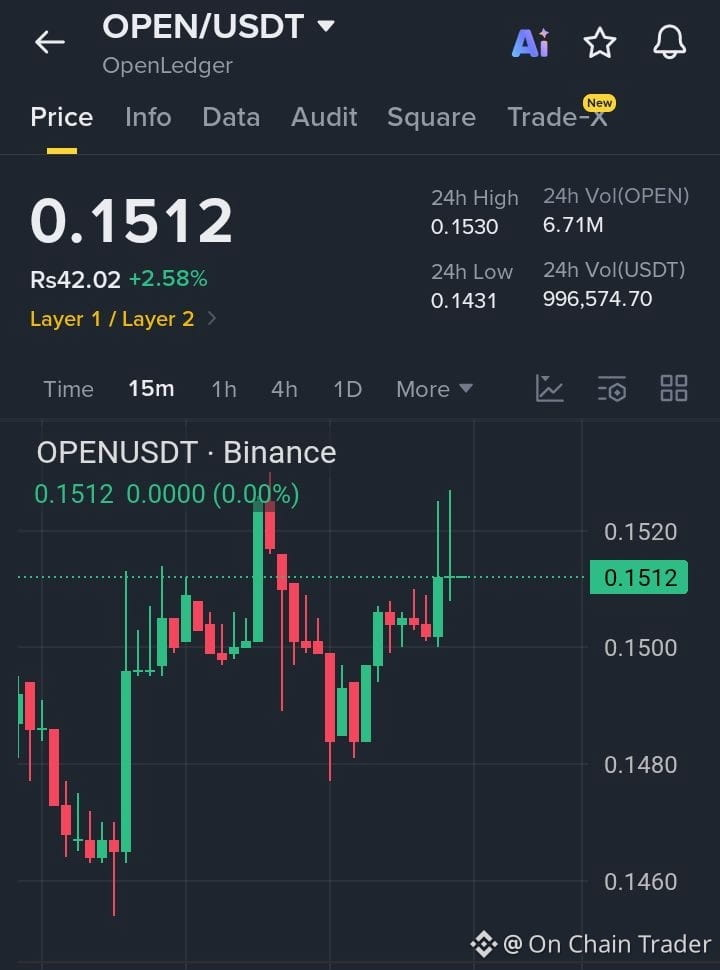
📈 Pattern: Ascending Triangle — price is holding above $0.1500, showing steady buying pressure.
🟢 Entry: $0.1500–0.1515 | SL: $0.1460
🎯 Targets: $0.1530 → $0.1580 → $0.1650
A decisive breakout above $0.1530 could trigger the next bullish leg, while a loss of $0.1500 would weaken the setup in the short term.
$OPEN #OPEN #OpenLedger #Binance
$OPEN
/USDT | Bullish Continuation Setup 🚀
📈 Pattern: Ascending Triangle — price is holding above $0.1500, showing steady buying pressure.
🟢 Entry: $0.1500–0.1515 | SL: $0.1460
🎯 Targets: $0.1530 → $0.1580 → $0.1650
A decisive breakout above $0.1530 could trigger the next bullish leg, while a loss of $0.1500 would weaken the setup in the short term.
$OPEN #OPEN #OpenLedger #Binance
/USDT | Bullish Continuation Setup 🚀
📈 Pattern: Ascending Triangle — price is holding above $0.1500, showing steady buying pressure.
🟢 Entry: $0.1500–0.1515 | SL: $0.1460
🎯 Targets: $0.1530 → $0.1580 → $0.1650
A decisive breakout above $0.1530 could trigger the next bullish leg, while a loss of $0.1500 would weaken the setup in the short term.
$OPEN #OPEN #OpenLedger #Binance
1
148

·
--
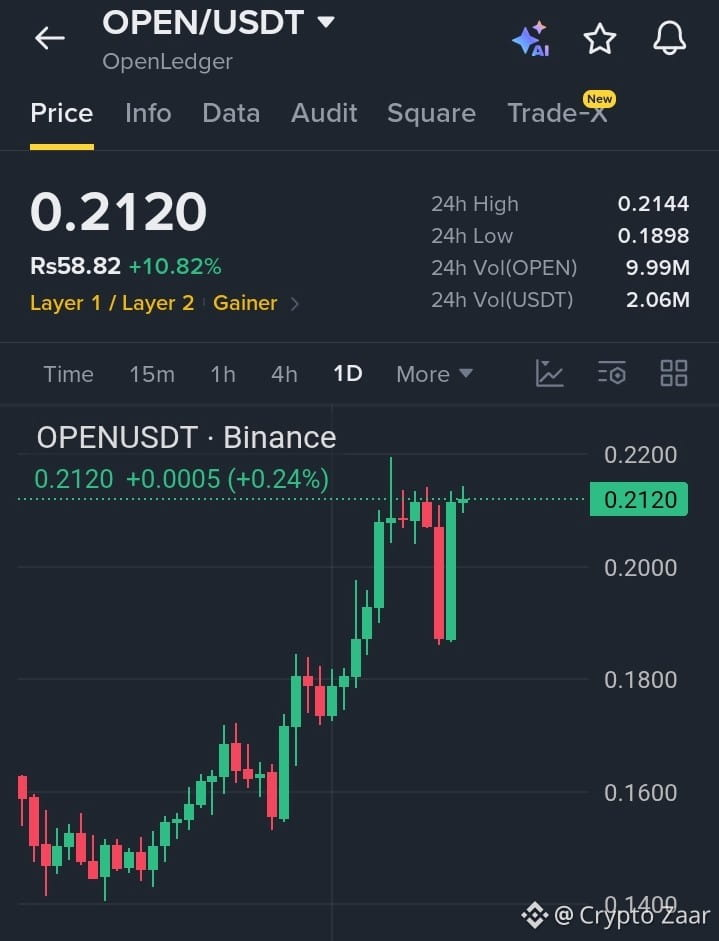
$OPEN
{future}(OPENUSDT)
/USDT is waking up 👀
+10.82% in 24h
Price: 0.2120 USDT
High: 0.2144 🔥
Momentum is getting interesting… now watching for a clean breakout or pullback. 📈
$OPEN #OPEN #OpenLedger #Binance #Crypto
$OPEN
/USDT is waking up 👀
+10.82% in 24h
Price: 0.2120 USDT
High: 0.2144 🔥
Momentum is getting interesting… now watching for a clean breakout or pullback. 📈
$OPEN #OPEN #OpenLedger #Binance #Crypto
/USDT is waking up 👀
+10.82% in 24h
Price: 0.2120 USDT
High: 0.2144 🔥
Momentum is getting interesting… now watching for a clean breakout or pullback. 📈
$OPEN #OPEN #OpenLedger #Binance #Crypto
1
115

·
--
Bullish
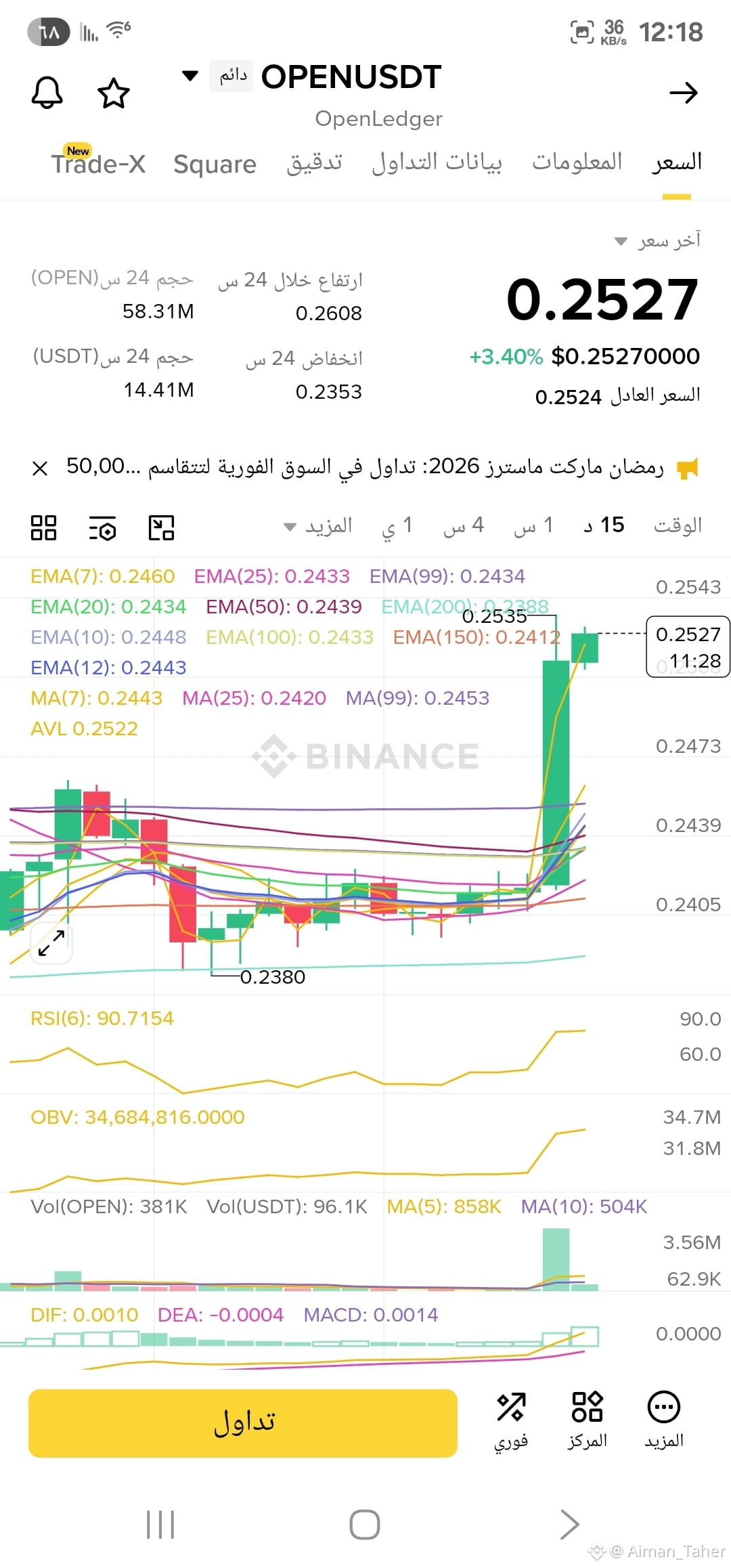
Strong buying momentum $OPEN and a massive breakout of levels
📉 Trade Details
📈 Entry Point: 0.2450 - 0.2527
🎯 Targets:
Target 1: 0.2608
Target 2: 0.2720
Target 3: 0.2850
Target 4: 0.2980
🛑 Stop Loss: 0.230
The candlestick chart shows a powerful price explosion driven by huge green volume bars that successfully broke through all the exponential moving averages. This rally is supported by a significant jump in liquidity flows on the OBV indicator, alongside a bullish crossover on the MACD, paving the way for continued momentum and targeting higher levels.
Trade here $OPEN
{future}(OPENUSDT)
#OPEN #OpenLedger #Crypto #Binance
Strong buying momentum $OPEN and a massive breakout of levels
📉 Trade Details
📈 Entry Point: 0.2450 - 0.2527
🎯 Targets:
Target 1: 0.2608
Target 2: 0.2720
Target 3: 0.2850
Target 4: 0.2980
🛑 Stop Loss: 0.230
The candlestick chart shows a powerful price explosion driven by huge green volume bars that successfully broke through all the exponential moving averages. This rally is supported by a significant jump in liquidity flows on the OBV indicator, alongside a bullish crossover on the MACD, paving the way for continued momentum and targeting higher levels.
Trade here $OPEN
#OPEN #OpenLedger #Crypto #Binance
📉 Trade Details
📈 Entry Point: 0.2450 - 0.2527
🎯 Targets:
Target 1: 0.2608
Target 2: 0.2720
Target 3: 0.2850
Target 4: 0.2980
🛑 Stop Loss: 0.230
The candlestick chart shows a powerful price explosion driven by huge green volume bars that successfully broke through all the exponential moving averages. This rally is supported by a significant jump in liquidity flows on the OBV indicator, alongside a bullish crossover on the MACD, paving the way for continued momentum and targeting higher levels.
Trade here $OPEN
#OPEN #OpenLedger #Crypto #Binance
1
226

·
--
OpenLedger’s recent volatility is not necessarily driven by changes in the project’s fundamentals, but by trading noise caused by a “name misreading”: some people in the market have mistaken OpenLedger for an Open USD (OUSD)-related project. However, OUSD is actually issued by Open Standard, and the two are not directly related.
This kind of confusion can easily amplify short-term expectations and trigger follow-the-crowd trading. When watching $OPEN , it’s recommended to first verify the project’s entity and the source of the information before deciding whether the price move is likely to persist. The current price is around $0.15934, 24h trading volume is about $8.5 million, and market cap is about $47.83 million.
#OpenLedger #OPEN #crypto market
OpenLedger’s recent volatility is not necessarily driven by changes in the project’s fundamentals, but by trading noise caused by a “name misreading”: some people in the market have mistaken OpenLedger for an Open USD (OUSD)-related project. However, OUSD is actually issued by Open Standard, and the two are not directly related.
This kind of confusion can easily amplify short-term expectations and trigger follow-the-crowd trading. When watching $OPEN , it’s recommended to first verify the project’s entity and the source of the information before deciding whether the price move is likely to persist. The current price is around $0.15934, 24h trading volume is about $8.5 million, and market cap is about $47.83 million.
#OpenLedger #OPEN #crypto market
This kind of confusion can easily amplify short-term expectations and trigger follow-the-crowd trading. When watching $OPEN , it’s recommended to first verify the project’s entity and the source of the information before deciding whether the price move is likely to persist. The current price is around $0.15934, 24h trading volume is about $8.5 million, and market cap is about $47.83 million.
#OpenLedger #OPEN #crypto market
59

·
--
Bullish
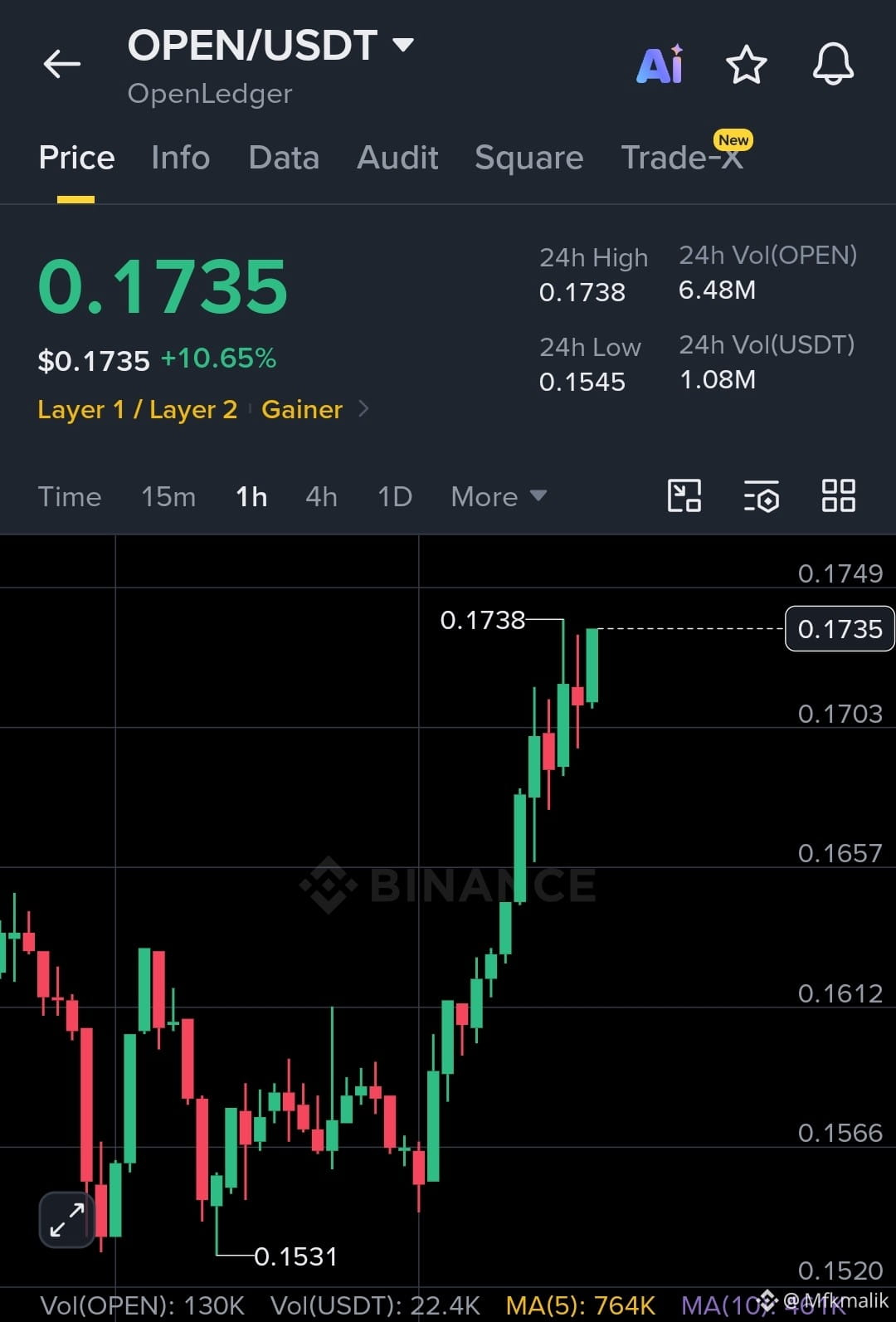
$OPEN Bullish Momentum Continues Building Stronger 💪 Don't Miss it keep your eyes on it and Ride The Wave 🌊🌊
Currently Trading At $0.1735 Up By 10.65%
$OPEN Buyers Are Back In Charge And Pushing Price Higher. Comment Below 👇 If You Are HOLDING or Riding This Move.
Click Here To Trade $OPEN
{future}(OPENUSDT)
#OpenLedger #Bullish #USTreasuryYieldsRetreat #Open #Mfkmalik
$OPEN Bullish Momentum Continues Building Stronger 💪 Don't Miss it keep your eyes on it and Ride The Wave 🌊🌊
Currently Trading At $0.1735 Up By 10.65%
$OPEN Buyers Are Back In Charge And Pushing Price Higher. Comment Below 👇 If You Are HOLDING or Riding This Move.
Click Here To Trade $OPEN
#OpenLedger #Bullish #USTreasuryYieldsRetreat #Open #Mfkmalik
Currently Trading At $0.1735 Up By 10.65%
$OPEN Buyers Are Back In Charge And Pushing Price Higher. Comment Below 👇 If You Are HOLDING or Riding This Move.
Click Here To Trade $OPEN
#OpenLedger #Bullish #USTreasuryYieldsRetreat #Open #Mfkmalik
2
156

·
--
Not every opportunity comes from the biggest names in the market.
🐙 $OPEN is gaining attention as more users explore emerging ecosystems and fresh ideas across Web3.
While trends can shift quickly, projects that focus on development, innovation, and community building often have the potential to create lasting value.
🚀 Growth is often driven by those who keep building.
#OpenLedger #Web3 #Crypto #open $OPEN
Not every opportunity comes from the biggest names in the market.
🐙 $OPEN is gaining attention as more users explore emerging ecosystems and fresh ideas across Web3.
While trends can shift quickly, projects that focus on development, innovation, and community building often have the potential to create lasting value.
🚀 Growth is often driven by those who keep building.
#OpenLedger #Web3 #Crypto #open $OPEN
🐙 $OPEN is gaining attention as more users explore emerging ecosystems and fresh ideas across Web3.
While trends can shift quickly, projects that focus on development, innovation, and community building often have the potential to create lasting value.
🚀 Growth is often driven by those who keep building.
#OpenLedger #Web3 #Crypto #open $OPEN
101

#open $OPEN
THE CREATORPAD CAMPAIGN IS OFFICIALLY WRAPPING UP! 🚨
As the massive 50,000 USDC campaign draws to its final hours, the spotlight is shining brighter than ever on decentralized AI infrastructure! @OpenLedger is completely rewriting the rules of Web3 by building an execution layer for AI where data, models, and agents operate with real cryptographic proof and automated value attribution. This isn't just about passive storage; it is about establishing true data provenance so data creators are finally fairly compensated for their digital assets.
DON'T LOSE OUT ON THE MOVEMENT SHAPING DECENTRALIZED INTELLIGENCE!
🌐 By combining on-chain execution with powerful innovations like DGrid AI for distributed compute pipelines, this network bypasses traditional big-tech monopolies entirely. At the absolute core of this ecosystem is the native $OPEN token, functioning as the master utility asset for network governance, transaction fees, and high-impact contributor rewards!
THE FUTURE OF SECURE, TRANSPARENT AI METRICS IS LIVE! 🚀 As the CreatorPad competition comes to a close, the momentum for this ecosystem is just heating up. Make sure your portfolio is positioned ahead of the curve by tracking $OPEN closely! Take action right now and review all the final verified project announcements directly through their official Binance Square hub here: https://www.binance.com/en/square/profile/openledger 👑⚡🔥
#OpenLedger #DeFi #Web3 #AI #DecentralizedAI @Openledger
{future}(OPENUSDT)
#open $OPEN
THE CREATORPAD CAMPAIGN IS OFFICIALLY WRAPPING UP! 🚨
As the massive 50,000 USDC campaign draws to its final hours, the spotlight is shining brighter than ever on decentralized AI infrastructure! @OpenLedger is completely rewriting the rules of Web3 by building an execution layer for AI where data, models, and agents operate with real cryptographic proof and automated value attribution. This isn't just about passive storage; it is about establishing true data provenance so data creators are finally fairly compensated for their digital assets.
DON'T LOSE OUT ON THE MOVEMENT SHAPING DECENTRALIZED INTELLIGENCE!
🌐 By combining on-chain execution with powerful innovations like DGrid AI for distributed compute pipelines, this network bypasses traditional big-tech monopolies entirely. At the absolute core of this ecosystem is the native $OPEN token, functioning as the master utility asset for network governance, transaction fees, and high-impact contributor rewards!
THE FUTURE OF SECURE, TRANSPARENT AI METRICS IS LIVE! 🚀 As the CreatorPad competition comes to a close, the momentum for this ecosystem is just heating up. Make sure your portfolio is positioned ahead of the curve by tracking $OPEN closely! Take action right now and review all the final verified project announcements directly through their official Binance Square hub here: https://www.binance.com/en/square/profile/openledger 👑⚡🔥
#OpenLedger #DeFi #Web3 #AI #DecentralizedAI @OpenLedger
THE CREATORPAD CAMPAIGN IS OFFICIALLY WRAPPING UP! 🚨
As the massive 50,000 USDC campaign draws to its final hours, the spotlight is shining brighter than ever on decentralized AI infrastructure! @OpenLedger is completely rewriting the rules of Web3 by building an execution layer for AI where data, models, and agents operate with real cryptographic proof and automated value attribution. This isn't just about passive storage; it is about establishing true data provenance so data creators are finally fairly compensated for their digital assets.
DON'T LOSE OUT ON THE MOVEMENT SHAPING DECENTRALIZED INTELLIGENCE!
🌐 By combining on-chain execution with powerful innovations like DGrid AI for distributed compute pipelines, this network bypasses traditional big-tech monopolies entirely. At the absolute core of this ecosystem is the native $OPEN token, functioning as the master utility asset for network governance, transaction fees, and high-impact contributor rewards!
THE FUTURE OF SECURE, TRANSPARENT AI METRICS IS LIVE! 🚀 As the CreatorPad competition comes to a close, the momentum for this ecosystem is just heating up. Make sure your portfolio is positioned ahead of the curve by tracking $OPEN closely! Take action right now and review all the final verified project announcements directly through their official Binance Square hub here: https://www.binance.com/en/square/profile/openledger 👑⚡🔥
#OpenLedger #DeFi #Web3 #AI #DecentralizedAI @OpenLedger
2
167

·
--
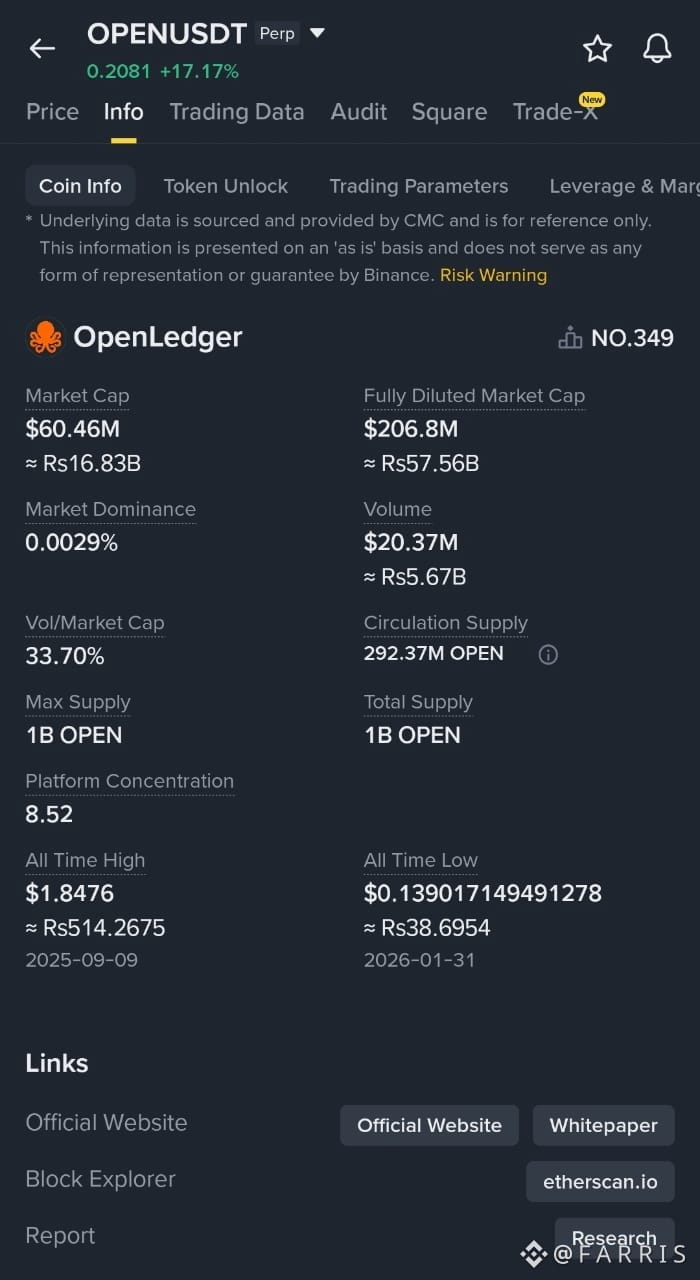
While Everyone Was Sleeping, $OPEN Just Quietly Rewrote the Entire Setup — And Most Traders Still Haven’t Noticed
+17.17% in a single day. No hype. Just numbers.
Here's why smart money is watching OpenLedger right now 👇
Market Cap is sitting at $60.46M — which means we are still EARLY. Fully Diluted Market Cap is $206.8M which shows the massive upside potential still left on the table. 24H Volume hit $20.37M — people are quietly moving in. Vol/Market Cap Ratio is 33.70% which is an insane liquidity signal. And only 292M tokens are circulating out of 1 Billion total — that's a very controlled and healthy release.
All Time Low was $0.139 back in January 2026.
All Time High was $1.84 in September 2025.
Current price right now? Only $0.2081.
Do the math. That's nearly 9x potential just to revisit the All Time High. And with this volume pumping in, the market is clearly waking up.
This isn't some random coin. It's listed on Binance, verified on Etherscan, ranked 349 globally, max supply is hard capped at 1 Billion so no infinite printing, and platform concentration is 8.52 which shows healthy distribution across holders.
The real question is — if $OPEN breaks its previous ATH again, will you be early enough to hold… or late enough to chase? 👀
#open #OpenLedger #Cryptowatch #SmartMoneyMoves
While Everyone Was Sleeping, $OPEN Just Quietly Rewrote the Entire Setup — And Most Traders Still Haven’t Noticed
+17.17% in a single day. No hype. Just numbers.
Here's why smart money is watching OpenLedger right now 👇
Market Cap is sitting at $60.46M — which means we are still EARLY. Fully Diluted Market Cap is $206.8M which shows the massive upside potential still left on the table. 24H Volume hit $20.37M — people are quietly moving in. Vol/Market Cap Ratio is 33.70% which is an insane liquidity signal. And only 292M tokens are circulating out of 1 Billion total — that's a very controlled and healthy release.
All Time Low was $0.139 back in January 2026.
All Time High was $1.84 in September 2025.
Current price right now? Only $0.2081.
Do the math. That's nearly 9x potential just to revisit the All Time High. And with this volume pumping in, the market is clearly waking up.
This isn't some random coin. It's listed on Binance, verified on Etherscan, ranked 349 globally, max supply is hard capped at 1 Billion so no infinite printing, and platform concentration is 8.52 which shows healthy distribution across holders.
The real question is — if $OPEN breaks its previous ATH again, will you be early enough to hold… or late enough to chase? 👀
#open #OpenLedger #Cryptowatch #SmartMoneyMoves
+17.17% in a single day. No hype. Just numbers.
Here's why smart money is watching OpenLedger right now 👇
Market Cap is sitting at $60.46M — which means we are still EARLY. Fully Diluted Market Cap is $206.8M which shows the massive upside potential still left on the table. 24H Volume hit $20.37M — people are quietly moving in. Vol/Market Cap Ratio is 33.70% which is an insane liquidity signal. And only 292M tokens are circulating out of 1 Billion total — that's a very controlled and healthy release.
All Time Low was $0.139 back in January 2026.
All Time High was $1.84 in September 2025.
Current price right now? Only $0.2081.
Do the math. That's nearly 9x potential just to revisit the All Time High. And with this volume pumping in, the market is clearly waking up.
This isn't some random coin. It's listed on Binance, verified on Etherscan, ranked 349 globally, max supply is hard capped at 1 Billion so no infinite printing, and platform concentration is 8.52 which shows healthy distribution across holders.
The real question is — if $OPEN breaks its previous ATH again, will you be early enough to hold… or late enough to chase? 👀
#open #OpenLedger #Cryptowatch #SmartMoneyMoves
10
9
322
Log in to explore more content
Join global crypto users on Binance Square
⚡️ Get latest and useful information about crypto.
💬 Trusted by the world’s largest crypto exchange.
👍 Discover real insights from verified creators.
Email / Phone number
Trending Topics
1
#AIStocksWhatNext
361,914 views
2,979 Discussing
2
#BitcoinBreaksAboveMayHighNears$86K
14,630 views
190 Discussing
3
#DogecoinRises15%
46,381 views
987 Discussing
4
#$14BBitcoinOptionsExpireFriday
3,784 views
89 Discussing
5
#BNBMarketCapPassesBNYMellon
29,388 views
705 Discussing
6
#CryptoMarketCapReclaims$3Trillion
4,982 views
81 Discussing
7
#MuseOvertakesChatGPTAsTopFreeIOSApp
17,351 views
530 Discussing
8
#TokenizedStockPlatformsCouldLaunchNextQuarter
27,594 views
587 Discussing
9
#StrategyAdds950Bitcoin
34,500 views
682 Discussing
10
#CardanoAddedToX402KitForADAPayments
29,536 views
654 Discussing