
#opengradient
opengradient
518,808 views
5,922 Discussing
Hot
Latest
·
--
Bullish
🚨 $OPG on the verge of exploding?! Don’t just watch the price… watch what’s happening behind it 👀🔥
$OPG has started drawing attention again, and with returning liquidity and renewed interest in the project, the real question is no longer: Will it move?
But: When will the move that surprises the market begin? ⚡
OpenGradient is betting on the intersection of Artificial Intelligence + Blockchain—sectors that still attract money and growing attention.
🎯 Watch the volume + breakout of resistance + the price holding above support.
If these signals come together…
OPG could shift from a “watchlist” coin to a trader favorite. 🔥
DON’T CHASE. WATCH THE BREAKOUT. 👁️
$OPG
{future}(OPGUSDT)
#OPG #OpenGradient #AI #Binance
🚨 $OPG on the verge of exploding?! Don’t just watch the price… watch what’s happening behind it 👀🔥
$OPG has started drawing attention again, and with returning liquidity and renewed interest in the project, the real question is no longer: Will it move?
But: When will the move that surprises the market begin? ⚡
OpenGradient is betting on the intersection of Artificial Intelligence + Blockchain—sectors that still attract money and growing attention.
🎯 Watch the volume + breakout of resistance + the price holding above support.
If these signals come together…
OPG could shift from a “watchlist” coin to a trader favorite. 🔥
DON’T CHASE. WATCH THE BREAKOUT. 👁️
$OPG
#OPG #OpenGradient #AI #Binance
$OPG has started drawing attention again, and with returning liquidity and renewed interest in the project, the real question is no longer: Will it move?
But: When will the move that surprises the market begin? ⚡
OpenGradient is betting on the intersection of Artificial Intelligence + Blockchain—sectors that still attract money and growing attention.
🎯 Watch the volume + breakout of resistance + the price holding above support.
If these signals come together…
OPG could shift from a “watchlist” coin to a trader favorite. 🔥
DON’T CHASE. WATCH THE BREAKOUT. 👁️
$OPG
#OPG #OpenGradient #AI #Binance
1
147

·
--
Bullish
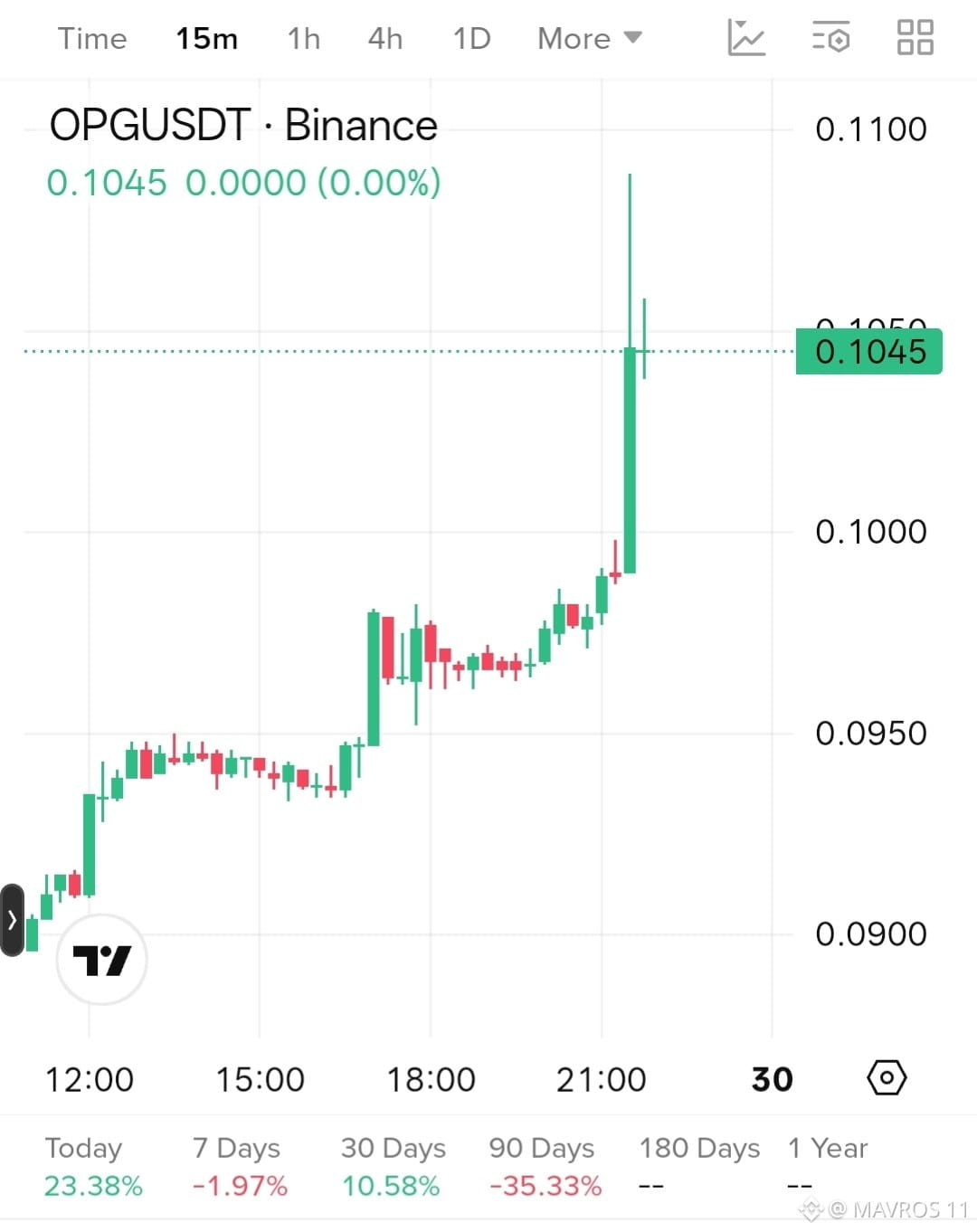
🚨 $OPG /USDT — BIG SHORT SETUP
$OPG just made a sharp 15M breakout toward 0.1090 and is showing rejection near the highs.
⚠️ After this aggressive pump, a pullback could be coming.
🎯 Watch: 0.102 → 0.098 → 0.094
🛑 Invalidation: above 0.110
Don’t chase the pump — wait for confirmation. 🔥📉
$OPG
{future}(OPGUSDT)
#OpenGradient #Crypto #NYSilverFuturesDrop3% #USShortTermTreasuryYieldsJump #TrumpSaysUSReachedVenezuelaOilDeal
🚨 $OPG /USDT — BIG SHORT SETUP
$OPG just made a sharp 15M breakout toward 0.1090 and is showing rejection near the highs.
⚠️ After this aggressive pump, a pullback could be coming.
🎯 Watch: 0.102 → 0.098 → 0.094
🛑 Invalidation: above 0.110
Don’t chase the pump — wait for confirmation. 🔥📉
$OPG
#OpenGradient #Crypto #NYSilverFuturesDrop3% #USShortTermTreasuryYieldsJump #TrumpSaysUSReachedVenezuelaOilDeal
$OPG just made a sharp 15M breakout toward 0.1090 and is showing rejection near the highs.
⚠️ After this aggressive pump, a pullback could be coming.
🎯 Watch: 0.102 → 0.098 → 0.094
🛑 Invalidation: above 0.110
Don’t chase the pump — wait for confirmation. 🔥📉
$OPG
#OpenGradient #Crypto #NYSilverFuturesDrop3% #USShortTermTreasuryYieldsJump #TrumpSaysUSReachedVenezuelaOilDeal
144
·
--
#opg $OPG 🔥 Everyone talks about token prices.
Few people talk about utility.
OpenGradient's ecosystem is designed around verifiable AI, where OPG helps power payments, rewards participants, and supports governance decisions.
If OpenGradient reaches mass adoption, who benefits the most?
✅ Early holders
✅ Active traders
✅ Node operators
✅ Developers building on the ecosystem
My prediction:
The biggest winners may not be the people watching charts all day, but the people actively participating in the ecosystem.
What's your prediction for OpenGradient in 2030? 👇
@OpenGradient $OPG #OpenGradient #AI
#opg $OPG 🔥 Everyone talks about token prices.
Few people talk about utility.
OpenGradient's ecosystem is designed around verifiable AI, where OPG helps power payments, rewards participants, and supports governance decisions.
If OpenGradient reaches mass adoption, who benefits the most?
✅ Early holders
✅ Active traders
✅ Node operators
✅ Developers building on the ecosystem
My prediction:
The biggest winners may not be the people watching charts all day, but the people actively participating in the ecosystem.
What's your prediction for OpenGradient in 2030? 👇
@OpenGradient $OPG #OpenGradient #AI
Few people talk about utility.
OpenGradient's ecosystem is designed around verifiable AI, where OPG helps power payments, rewards participants, and supports governance decisions.
If OpenGradient reaches mass adoption, who benefits the most?
✅ Early holders
✅ Active traders
✅ Node operators
✅ Developers building on the ecosystem
My prediction:
The biggest winners may not be the people watching charts all day, but the people actively participating in the ecosystem.
What's your prediction for OpenGradient in 2030? 👇
@OpenGradient $OPG #OpenGradient #AI
3
76

·
--
#opg $OPG
🔒 Stop trusting centralized AI corporations with your data. It is time for cryptographic proof.
I’ve been tracking @OpenGradient and their innovative OpenGradient Chat platform. Traditional AI models process your private conversations in vulnerable, centralized databases. OpenGradient completely changes the game by executing multi-model AI inference entirely within hardware-isolated Trusted Execution Environments (TEEs).
What this means for the user: Whether you are running complex queries on frontier models or interacting with unfiltered chat options, every request is protected by hardware-level cryptographic attestation that settles directly on-chain. This gives the $OPG token real, fundamental utility in an era where data privacy is non-negotiable.
If you believe the future of Decentralized AI (DeAI) relies on math over corporate promises, keep an eye on this project.
How do you see the utility of $OPG expanding as web3 AI gains mainstream adoption? 👇
#OPG #DeAI #Web3AI #CryptoPrivacy #OpenGradient
#opg $OPG
🔒 Stop trusting centralized AI corporations with your data. It is time for cryptographic proof.
I’ve been tracking @OpenGradient and their innovative OpenGradient Chat platform. Traditional AI models process your private conversations in vulnerable, centralized databases. OpenGradient completely changes the game by executing multi-model AI inference entirely within hardware-isolated Trusted Execution Environments (TEEs).
What this means for the user: Whether you are running complex queries on frontier models or interacting with unfiltered chat options, every request is protected by hardware-level cryptographic attestation that settles directly on-chain. This gives the $OPG token real, fundamental utility in an era where data privacy is non-negotiable.
If you believe the future of Decentralized AI (DeAI) relies on math over corporate promises, keep an eye on this project.
How do you see the utility of $OPG expanding as web3 AI gains mainstream adoption? 👇
#OPG #DeAI #Web3AI #CryptoPrivacy #OpenGradient
🔒 Stop trusting centralized AI corporations with your data. It is time for cryptographic proof.
I’ve been tracking @OpenGradient and their innovative OpenGradient Chat platform. Traditional AI models process your private conversations in vulnerable, centralized databases. OpenGradient completely changes the game by executing multi-model AI inference entirely within hardware-isolated Trusted Execution Environments (TEEs).
What this means for the user: Whether you are running complex queries on frontier models or interacting with unfiltered chat options, every request is protected by hardware-level cryptographic attestation that settles directly on-chain. This gives the $OPG token real, fundamental utility in an era where data privacy is non-negotiable.
If you believe the future of Decentralized AI (DeAI) relies on math over corporate promises, keep an eye on this project.
How do you see the utility of $OPG expanding as web3 AI gains mainstream adoption? 👇
#OPG #DeAI #Web3AI #CryptoPrivacy #OpenGradient
93

🔥 AI NEEDS TRUST NOT JUST INTELLIGENCE
Most AI projects are competing to create smarter and more powerful models.
@OpenGradient is focused on a much bigger challenge.
How can AI operate in a decentralized world where every output can be verified instead of blindly trusted?
The future of AI will not be defined only by intelligence. It will be defined by transparency accountability and verifiability.
With OpenGradient every prediction inference and decision can move closer to onchain verification creating a foundation for trustworthy AI systems.
As AI becomes a critical part of finance applications and digital infrastructure the demand for verifiable intelligence will continue to grow.
That is why I am watching @OpenGradient closely.
$OPG is not simply another AI token.
It represents a vision where decentralized AI can operate with trust transparency and accountability at scale.
#OPG #OpenGradient
{spot}(OPGUSDT)
#opg
$H
{future}(HUSDT)
$LAB
{future}(LABUSDT)
🔥 AI NEEDS TRUST NOT JUST INTELLIGENCE
Most AI projects are competing to create smarter and more powerful models.
@OpenGradient is focused on a much bigger challenge.
How can AI operate in a decentralized world where every output can be verified instead of blindly trusted?
The future of AI will not be defined only by intelligence. It will be defined by transparency accountability and verifiability.
With OpenGradient every prediction inference and decision can move closer to onchain verification creating a foundation for trustworthy AI systems.
As AI becomes a critical part of finance applications and digital infrastructure the demand for verifiable intelligence will continue to grow.
That is why I am watching @OpenGradient closely.
$OPG is not simply another AI token.
It represents a vision where decentralized AI can operate with trust transparency and accountability at scale.
#OPG #OpenGradient
#opg
$H
$LAB
Most AI projects are competing to create smarter and more powerful models.
@OpenGradient is focused on a much bigger challenge.
How can AI operate in a decentralized world where every output can be verified instead of blindly trusted?
The future of AI will not be defined only by intelligence. It will be defined by transparency accountability and verifiability.
With OpenGradient every prediction inference and decision can move closer to onchain verification creating a foundation for trustworthy AI systems.
As AI becomes a critical part of finance applications and digital infrastructure the demand for verifiable intelligence will continue to grow.
That is why I am watching @OpenGradient closely.
$OPG is not simply another AI token.
It represents a vision where decentralized AI can operate with trust transparency and accountability at scale.
#OPG #OpenGradient
#opg
$H
$LAB
1
1
12

·
--
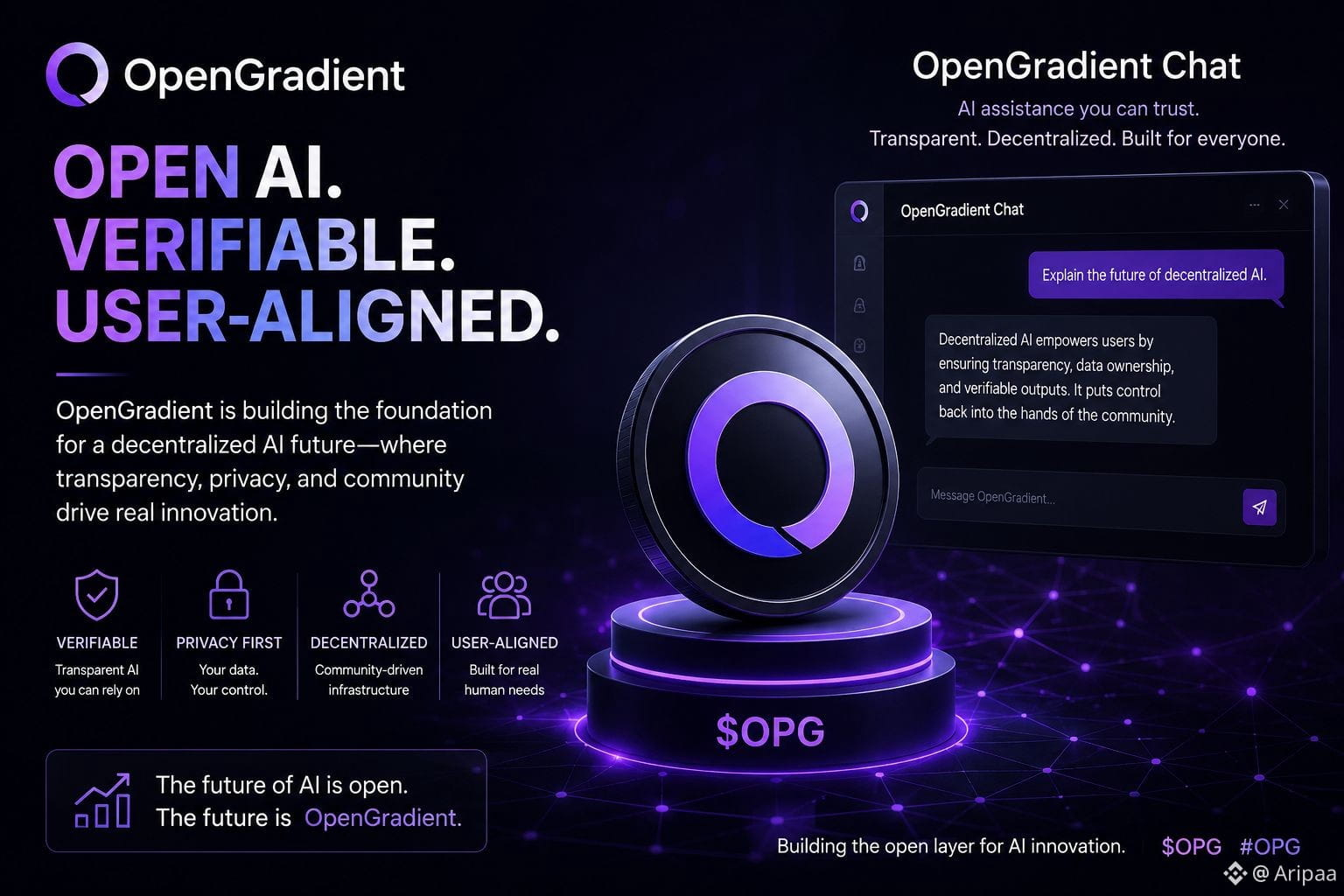
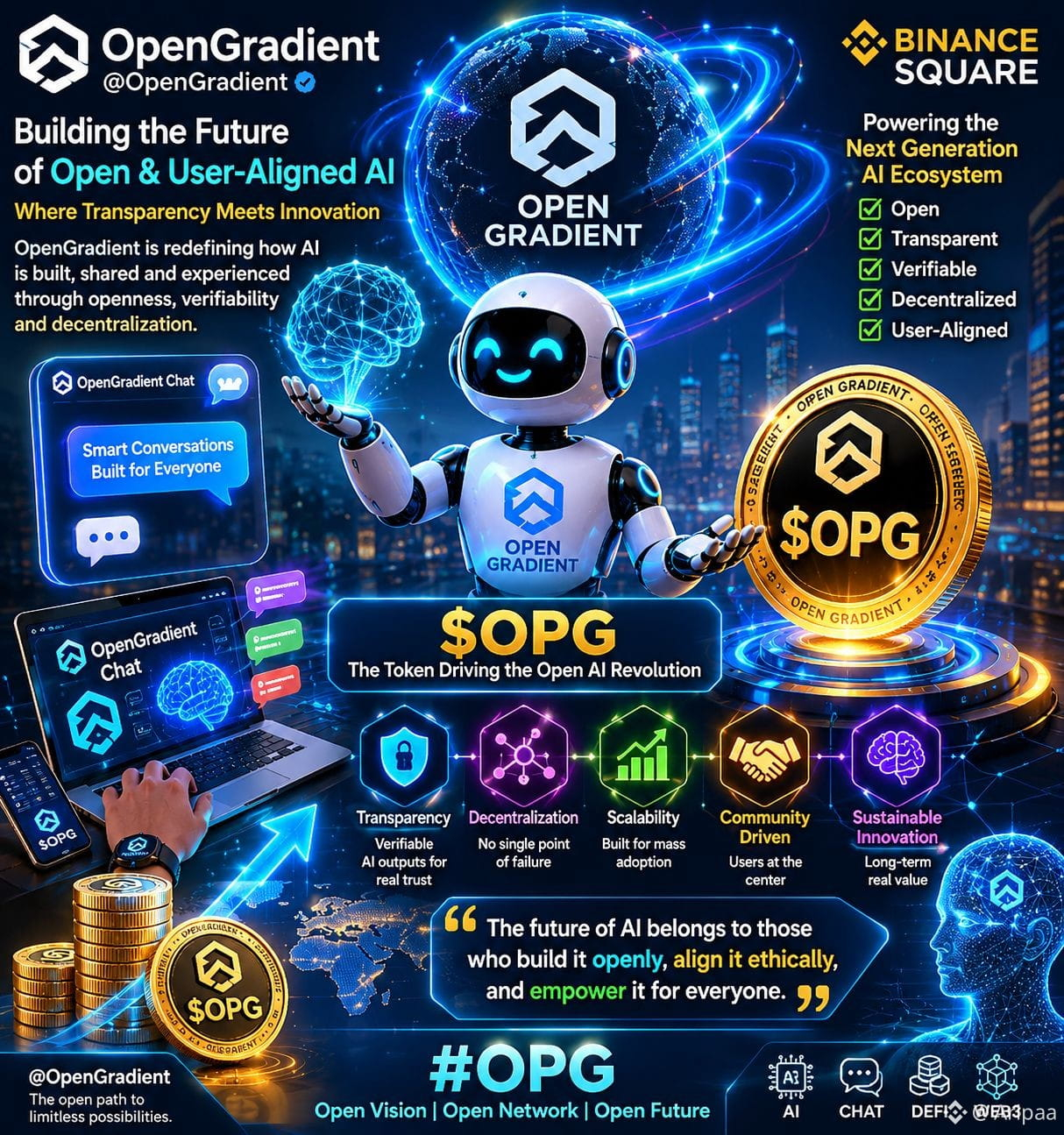
As AI continues to evolve, one of the biggest questions is not how powerful models can become, but how accessible, transparent, and verifiable they are for everyday users. This is why I’ve been paying close attention to @OpenGradient and the growing role of #OpenGradient Chat in the decentralized AI landscape.
Many AI platforms operate as black boxes, where users have little visibility into how outputs are generated or how data is handled. OpenGradient takes a different approach by focusing on openness, verifiability, and user alignment. This creates an environment where trust can be built through transparency rather than assumptions.
OpenGradient Chat demonstrates how AI can become more useful when users are given greater confidence in the systems they interact with. Instead of relying solely on centralized control, decentralized infrastructure can help create a more resilient and community-driven ecosystem. As adoption grows, this model could become increasingly important for developers, creators, researchers, and businesses seeking reliable AI tools.
The long-term opportunity for $OPG is not just about participating in the AI narrative. It is about supporting infrastructure that enables sustainable innovation while maintaining transparency and accountability. In a market filled with hype, projects that focus on real utility and verifiable outcomes may be the ones that create lasting value.
The future of AI may ultimately belong to platforms that balance performance, openness, and trust. OpenGradient is positioning itself at the intersection of these trends, making it a project worth following closely.
$OPG #OPG
#opg $OPG
As AI continues to evolve, one of the biggest questions is not how powerful models can become, but how accessible, transparent, and verifiable they are for everyday users. This is why I’ve been paying close attention to @OpenGradient and the growing role of #OpenGradient Chat in the decentralized AI landscape.
Many AI platforms operate as black boxes, where users have little visibility into how outputs are generated or how data is handled. OpenGradient takes a different approach by focusing on openness, verifiability, and user alignment. This creates an environment where trust can be built through transparency rather than assumptions.
OpenGradient Chat demonstrates how AI can become more useful when users are given greater confidence in the systems they interact with. Instead of relying solely on centralized control, decentralized infrastructure can help create a more resilient and community-driven ecosystem. As adoption grows, this model could become increasingly important for developers, creators, researchers, and businesses seeking reliable AI tools.
The long-term opportunity for $OPG is not just about participating in the AI narrative. It is about supporting infrastructure that enables sustainable innovation while maintaining transparency and accountability. In a market filled with hype, projects that focus on real utility and verifiable outcomes may be the ones that create lasting value.
The future of AI may ultimately belong to platforms that balance performance, openness, and trust. OpenGradient is positioning itself at the intersection of these trends, making it a project worth following closely.
$OPG #OPG
#opg $OPG
Many AI platforms operate as black boxes, where users have little visibility into how outputs are generated or how data is handled. OpenGradient takes a different approach by focusing on openness, verifiability, and user alignment. This creates an environment where trust can be built through transparency rather than assumptions.
OpenGradient Chat demonstrates how AI can become more useful when users are given greater confidence in the systems they interact with. Instead of relying solely on centralized control, decentralized infrastructure can help create a more resilient and community-driven ecosystem. As adoption grows, this model could become increasingly important for developers, creators, researchers, and businesses seeking reliable AI tools.
The long-term opportunity for $OPG is not just about participating in the AI narrative. It is about supporting infrastructure that enables sustainable innovation while maintaining transparency and accountability. In a market filled with hype, projects that focus on real utility and verifiable outcomes may be the ones that create lasting value.
The future of AI may ultimately belong to platforms that balance performance, openness, and trust. OpenGradient is positioning itself at the intersection of these trends, making it a project worth following closely.
$OPG #OPG
#opg $OPG
5
2
80

·
--
Everyone's obsessed with which chain is "fastest" but nobody's asking what actually happens after the transaction gets finalized.
That's where the real architecture debate lives.
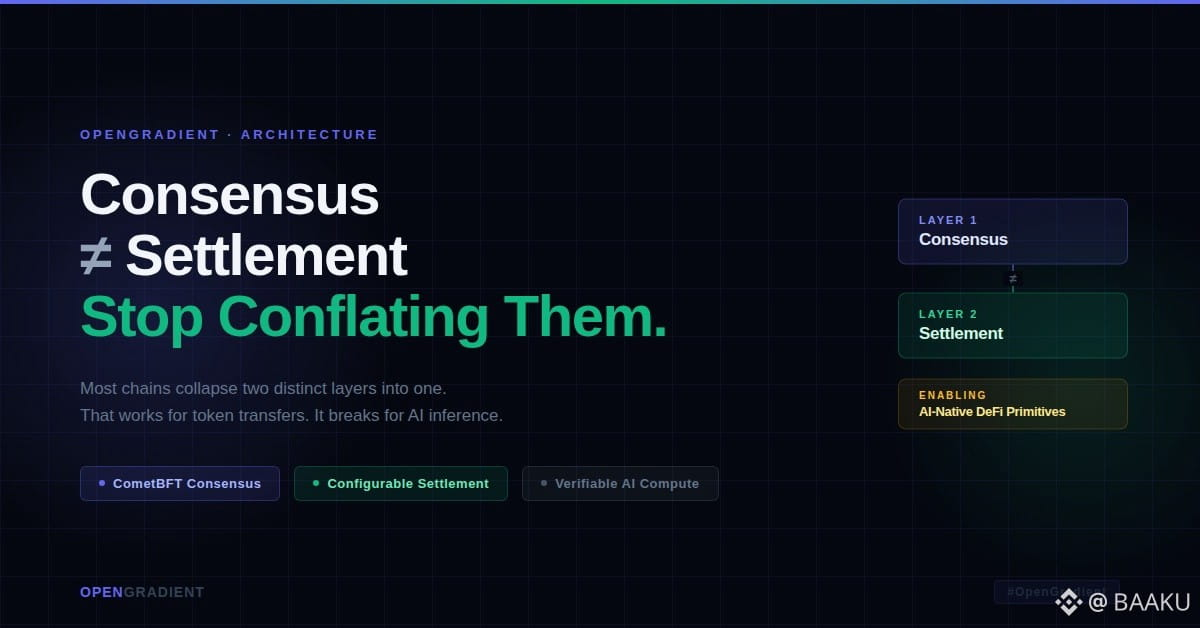
Most L1s treat consensus and settlement like they're the same thing. They're not. Consensus is nodes agreeing something happened. Settlement is the network actually committing to a state that downstream systems can trust and act on. Collapsing those two into one process feels clean until you're building something real on top of it.
The moment you need external systems — oracles, AI inference layers, cross-chain apps — to consume finalized state, you realize the gap matters enormously. A chain that finalizes fast but settles ambiguously is a liability disguised as a feature.
OpenGradient separates these. Consensus runs through CometBFT. Settlement operates as a distinct layer with configurable modes — you pick the settlement behavior that matches your use case. That design decision is quiet. Most people scroll past it. But if you're building AI-powered DeFi or on-chain inference pipelines, it changes what's actually possible.
Here's why: AI model outputs aren't static. They're probabilistic. They need a settlement layer that can handle verification of compute, not just token transfers. A monolithic consensus-settlement system was never designed for that. It was designed for "did wallet A send tokens to wallet B." Full stop.
The honest limitation? Separating consensus and settlement adds architectural complexity. More components means more surface area for failure. Any chain making this tradeoff is betting that the added expressiveness is worth the engineering overhead. That bet could absolutely be wrong depending on how the application layer evolves.
But collapsing them to stay simple also means you're permanently limited to what simple state transitions can express. And the next wave of on-chain primitives — verifiable AI inference, compute markets, model attestation — doesn't fit inside that box.
#OpenGradient #DeFi #Web3
#opg $OPG @OpenGradient
Everyone's obsessed with which chain is "fastest" but nobody's asking what actually happens after the transaction gets finalized.
That's where the real architecture debate lives.
Most L1s treat consensus and settlement like they're the same thing. They're not. Consensus is nodes agreeing something happened. Settlement is the network actually committing to a state that downstream systems can trust and act on. Collapsing those two into one process feels clean until you're building something real on top of it.
The moment you need external systems — oracles, AI inference layers, cross-chain apps — to consume finalized state, you realize the gap matters enormously. A chain that finalizes fast but settles ambiguously is a liability disguised as a feature.
OpenGradient separates these. Consensus runs through CometBFT. Settlement operates as a distinct layer with configurable modes — you pick the settlement behavior that matches your use case. That design decision is quiet. Most people scroll past it. But if you're building AI-powered DeFi or on-chain inference pipelines, it changes what's actually possible.
Here's why: AI model outputs aren't static. They're probabilistic. They need a settlement layer that can handle verification of compute, not just token transfers. A monolithic consensus-settlement system was never designed for that. It was designed for "did wallet A send tokens to wallet B." Full stop.
The honest limitation? Separating consensus and settlement adds architectural complexity. More components means more surface area for failure. Any chain making this tradeoff is betting that the added expressiveness is worth the engineering overhead. That bet could absolutely be wrong depending on how the application layer evolves.
But collapsing them to stay simple also means you're permanently limited to what simple state transitions can express. And the next wave of on-chain primitives — verifiable AI inference, compute markets, model attestation — doesn't fit inside that box.
#OpenGradient #DeFi #Web3
#opg $OPG @OpenGradient
That's where the real architecture debate lives.
Most L1s treat consensus and settlement like they're the same thing. They're not. Consensus is nodes agreeing something happened. Settlement is the network actually committing to a state that downstream systems can trust and act on. Collapsing those two into one process feels clean until you're building something real on top of it.
The moment you need external systems — oracles, AI inference layers, cross-chain apps — to consume finalized state, you realize the gap matters enormously. A chain that finalizes fast but settles ambiguously is a liability disguised as a feature.
OpenGradient separates these. Consensus runs through CometBFT. Settlement operates as a distinct layer with configurable modes — you pick the settlement behavior that matches your use case. That design decision is quiet. Most people scroll past it. But if you're building AI-powered DeFi or on-chain inference pipelines, it changes what's actually possible.
Here's why: AI model outputs aren't static. They're probabilistic. They need a settlement layer that can handle verification of compute, not just token transfers. A monolithic consensus-settlement system was never designed for that. It was designed for "did wallet A send tokens to wallet B." Full stop.
The honest limitation? Separating consensus and settlement adds architectural complexity. More components means more surface area for failure. Any chain making this tradeoff is betting that the added expressiveness is worth the engineering overhead. That bet could absolutely be wrong depending on how the application layer evolves.
But collapsing them to stay simple also means you're permanently limited to what simple state transitions can express. And the next wave of on-chain primitives — verifiable AI inference, compute markets, model attestation — doesn't fit inside that box.
#OpenGradient #DeFi #Web3
#opg $OPG @OpenGradient
1
1
103
Verified
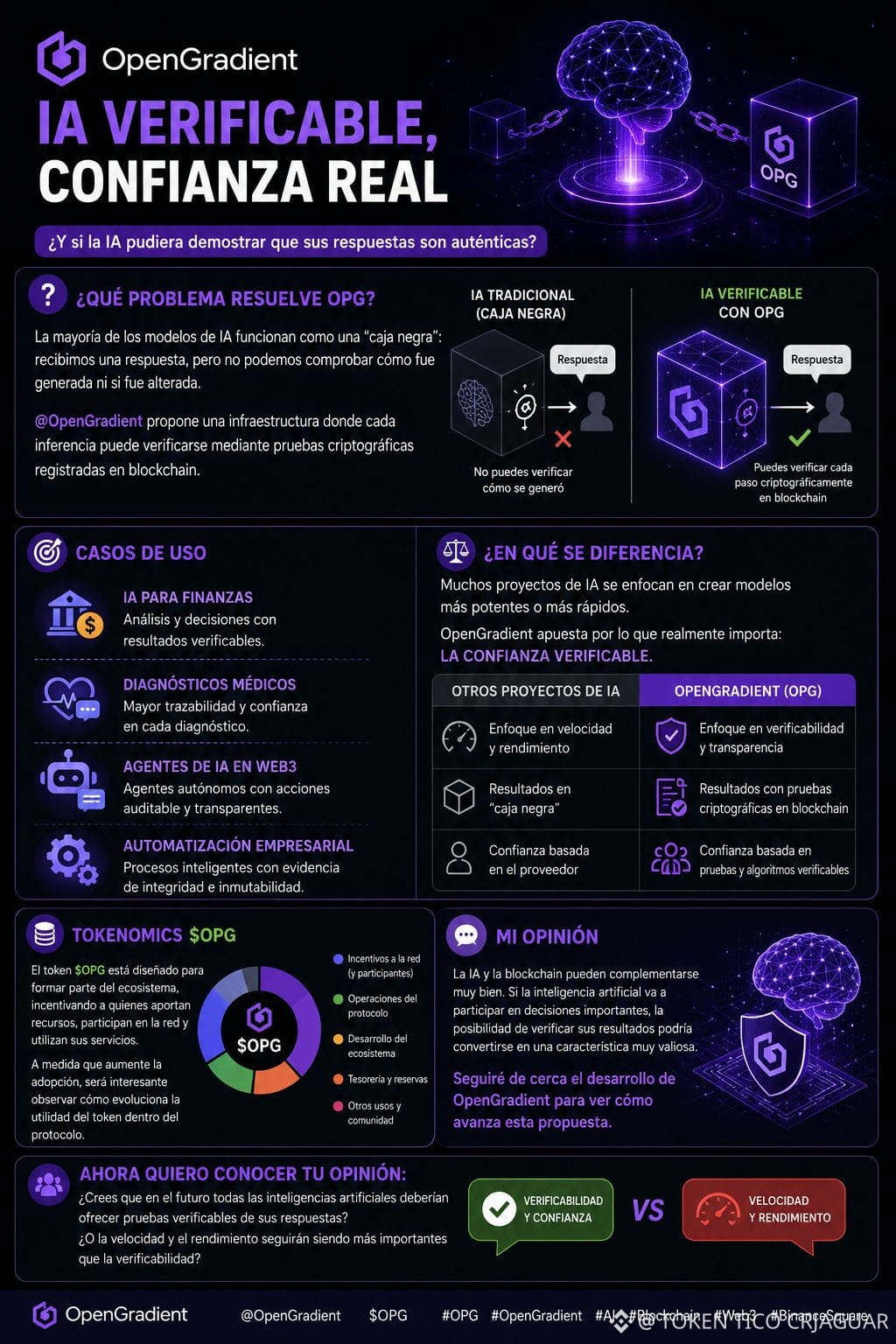
🤖 What if artificial intelligence could prove that its answers are authentic instead of asking us to simply trust them?
That’s the problem OpenGradient is trying to solve. Today, most AI models work like a “black box”: we receive an answer, but we can’t verify how it was generated or whether it was altered. OpenGradient proposes an infrastructure where every inference can be verified through cryptographic tests recorded on blockchain.
📌 Use cases
AI for finance with verifiable results.
Medical diagnostics with greater traceability.
AI agents in Web3.
Business automation with integrity evidence.
🔍 How is it different from other AI projects? Many projects focus on creating more powerful or faster models. OpenGradient bets on an aspect that’s equally important: verifiable trust, enabling proof that a result was not manipulated.
💰 Tokenomics The token $OPG is designed to be part of the ecosystem, incentivizing those who contribute resources, participate in the network, and use its services. As adoption grows, it will be interesting to see how the token’s utility evolves within the protocol.
📰 My take AI and blockchain can complement each other very well. If AI is going to be involved in important decisions, the ability to verify its results could become a highly valuable feature. I’ll keep an eye on OpenGradient’s development to see how this proposal progresses.
💬 Now I want to hear your opinion: Do you think that in the future all AIs should provide verifiable proofs of their answers? Or will speed and performance remain more important than verifiability?
@OpenGradient @Binancelatam @Binance_Labs
$OPG
#OPG #OpenGradient #AI #blockchain #Web3
🤖 What if artificial intelligence could prove that its answers are authentic instead of asking us to simply trust them?
That’s the problem OpenGradient is trying to solve. Today, most AI models work like a “black box”: we receive an answer, but we can’t verify how it was generated or whether it was altered. OpenGradient proposes an infrastructure where every inference can be verified through cryptographic tests recorded on blockchain.
📌 Use cases
AI for finance with verifiable results.
Medical diagnostics with greater traceability.
AI agents in Web3.
Business automation with integrity evidence.
🔍 How is it different from other AI projects? Many projects focus on creating more powerful or faster models. OpenGradient bets on an aspect that’s equally important: verifiable trust, enabling proof that a result was not manipulated.
💰 Tokenomics The token $OPG is designed to be part of the ecosystem, incentivizing those who contribute resources, participate in the network, and use its services. As adoption grows, it will be interesting to see how the token’s utility evolves within the protocol.
📰 My take AI and blockchain can complement each other very well. If AI is going to be involved in important decisions, the ability to verify its results could become a highly valuable feature. I’ll keep an eye on OpenGradient’s development to see how this proposal progresses.
💬 Now I want to hear your opinion: Do you think that in the future all AIs should provide verifiable proofs of their answers? Or will speed and performance remain more important than verifiability?
@OpenGradient @Binance LATAM Official @Binance Labs
$OPG
#OPG #OpenGradient #AI #blockchain #Web3
That’s the problem OpenGradient is trying to solve. Today, most AI models work like a “black box”: we receive an answer, but we can’t verify how it was generated or whether it was altered. OpenGradient proposes an infrastructure where every inference can be verified through cryptographic tests recorded on blockchain.
📌 Use cases
AI for finance with verifiable results.
Medical diagnostics with greater traceability.
AI agents in Web3.
Business automation with integrity evidence.
🔍 How is it different from other AI projects? Many projects focus on creating more powerful or faster models. OpenGradient bets on an aspect that’s equally important: verifiable trust, enabling proof that a result was not manipulated.
💰 Tokenomics The token $OPG is designed to be part of the ecosystem, incentivizing those who contribute resources, participate in the network, and use its services. As adoption grows, it will be interesting to see how the token’s utility evolves within the protocol.
📰 My take AI and blockchain can complement each other very well. If AI is going to be involved in important decisions, the ability to verify its results could become a highly valuable feature. I’ll keep an eye on OpenGradient’s development to see how this proposal progresses.
💬 Now I want to hear your opinion: Do you think that in the future all AIs should provide verifiable proofs of their answers? Or will speed and performance remain more important than verifiability?
@OpenGradient @Binance LATAM Official @Binance Labs
$OPG
#OPG #OpenGradient #AI #blockchain #Web3
6
6
257

·
--
$OPG OPG is one of the most exciting projects in crypto! With a fixed supply of only 1 Billion OPG, strong tokenomics, and listings on Binance, Bybit, and MEXC, the future looks bright. 📈 The foundation is strong, the community is growing, and the potential is worth watching. Stay informed, do your own research, and keep building. 🖤⬛📯💯 #OPG #OpenGradient
$OPG OPG is one of the most exciting projects in crypto! With a fixed supply of only 1 Billion OPG, strong tokenomics, and listings on Binance, Bybit, and MEXC, the future looks bright. 📈 The foundation is strong, the community is growing, and the potential is worth watching. Stay informed, do your own research, and keep building. 🖤⬛📯💯 #OPG #OpenGradient
1
1
96

·
--
Recently, in the OPG community, things have felt rather surreal: a group of people are staring at the 60-month ecosystem release curve, yet they’re still planning operations with a “snapshot–airdrop–dump” strategy.
This illusion is worth breaking down.
OpenGradient’s token structure is, in essence, a “long-term commitment letter.” TGE circulation is under 19%; of the 40% ecosystem pool, 90% is spread across 60 months with monthly unlocks. The team and investors face a 12-month cliff, and staking rewards are released over 96 months. The contract code is telling you that the budget cycle is measured in years, not days.
But many people haven’t realized that this kind of release curve doesn’t just fail to concentrate giveaways for “airdrop hunters.” The real damage goes far beyond that.
What’s truly fatal is the business layer. With projects like Genius, you can still fake “activity” by using multiple accounts to generate transactions—because DEXs only care about addresses and transaction counts. But OpenGradient’s HACA follows a different set of rules: TEE verifies real GPU computing power, the hub records effective inference, and cryptographic proofs distinguish “real computation” from “empty packets.” Ten wallets can “spam” 100 transfers, but they can’t produce 100 instances of genuine inference. In their system, “sybil” isn’t a moral problem—it’s that the technology simply can’t make it possible.
So if there’s any developer incentive later, the allocation logic is almost destined to be “continuous drip based on actual contributions,” not “one-time distribution based on addresses.” Multi-account matrices and low-quality interactions are, at their core, using farm tools to wage a computation-power war.
Of course, there will always be people betting that the project team will throw a “big party.” But betting on that is tantamount to betting that the 60-month plan written into the contract will be torn up. The odds are yours to calculate.
Instead of setting up multi-account schemes, answer this first: if over the next five years OPG’s incentives are allocated based on “model calls, node compute power, and staking duration,” rather than “number of wallets,” would you still be willing to stay?
If yes, then every piece of real inference you perform and every staking you commit today is already accumulating weight in the way the project team wants. If no, no matter how well prepared you are, you’re still just an arbitrageur that the five-year release curve is designed to filter out.
#OpenGradient $BTC $OPG @OpenGradient #OPG
Recently, in the OPG community, things have felt rather surreal: a group of people are staring at the 60-month ecosystem release curve, yet they’re still planning operations with a “snapshot–airdrop–dump” strategy.
This illusion is worth breaking down.
OpenGradient’s token structure is, in essence, a “long-term commitment letter.” TGE circulation is under 19%; of the 40% ecosystem pool, 90% is spread across 60 months with monthly unlocks. The team and investors face a 12-month cliff, and staking rewards are released over 96 months. The contract code is telling you that the budget cycle is measured in years, not days.
But many people haven’t realized that this kind of release curve doesn’t just fail to concentrate giveaways for “airdrop hunters.” The real damage goes far beyond that.
What’s truly fatal is the business layer. With projects like Genius, you can still fake “activity” by using multiple accounts to generate transactions—because DEXs only care about addresses and transaction counts. But OpenGradient’s HACA follows a different set of rules: TEE verifies real GPU computing power, the hub records effective inference, and cryptographic proofs distinguish “real computation” from “empty packets.” Ten wallets can “spam” 100 transfers, but they can’t produce 100 instances of genuine inference. In their system, “sybil” isn’t a moral problem—it’s that the technology simply can’t make it possible.
So if there’s any developer incentive later, the allocation logic is almost destined to be “continuous drip based on actual contributions,” not “one-time distribution based on addresses.” Multi-account matrices and low-quality interactions are, at their core, using farm tools to wage a computation-power war.
Of course, there will always be people betting that the project team will throw a “big party.” But betting on that is tantamount to betting that the 60-month plan written into the contract will be torn up. The odds are yours to calculate.
Instead of setting up multi-account schemes, answer this first: if over the next five years OPG’s incentives are allocated based on “model calls, node compute power, and staking duration,” rather than “number of wallets,” would you still be willing to stay?
If yes, then every piece of real inference you perform and every staking you commit today is already accumulating weight in the way the project team wants. If no, no matter how well prepared you are, you’re still just an arbitrageur that the five-year release curve is designed to filter out.
#OpenGradient $BTC $OPG @OpenGradient #OPG
This illusion is worth breaking down.
OpenGradient’s token structure is, in essence, a “long-term commitment letter.” TGE circulation is under 19%; of the 40% ecosystem pool, 90% is spread across 60 months with monthly unlocks. The team and investors face a 12-month cliff, and staking rewards are released over 96 months. The contract code is telling you that the budget cycle is measured in years, not days.
But many people haven’t realized that this kind of release curve doesn’t just fail to concentrate giveaways for “airdrop hunters.” The real damage goes far beyond that.
What’s truly fatal is the business layer. With projects like Genius, you can still fake “activity” by using multiple accounts to generate transactions—because DEXs only care about addresses and transaction counts. But OpenGradient’s HACA follows a different set of rules: TEE verifies real GPU computing power, the hub records effective inference, and cryptographic proofs distinguish “real computation” from “empty packets.” Ten wallets can “spam” 100 transfers, but they can’t produce 100 instances of genuine inference. In their system, “sybil” isn’t a moral problem—it’s that the technology simply can’t make it possible.
So if there’s any developer incentive later, the allocation logic is almost destined to be “continuous drip based on actual contributions,” not “one-time distribution based on addresses.” Multi-account matrices and low-quality interactions are, at their core, using farm tools to wage a computation-power war.
Of course, there will always be people betting that the project team will throw a “big party.” But betting on that is tantamount to betting that the 60-month plan written into the contract will be torn up. The odds are yours to calculate.
Instead of setting up multi-account schemes, answer this first: if over the next five years OPG’s incentives are allocated based on “model calls, node compute power, and staking duration,” rather than “number of wallets,” would you still be willing to stay?
If yes, then every piece of real inference you perform and every staking you commit today is already accumulating weight in the way the project team wants. If no, no matter how well prepared you are, you’re still just an arbitrageur that the five-year release curve is designed to filter out.
#OpenGradient $BTC $OPG @OpenGradient #OPG
365

·
--
#opg $OPG
🚀 As AI continues to transform industries, OpenGradient is positioning itself at the intersection of Artificial Intelligence and Web3. The project aims to create a decentralized AI ecosystem where intelligence is transparent, verifiable, and accessible to everyone. By leveraging blockchain technology, OpenGradient enables trustless AI services, reducing reliance on centralized providers while empowering developers to build innovative applications.
🌐 With a focus on decentralization, scalability, and community-driven innovation, OpenGradient has the potential to become a key infrastructure layer for the future of DeAI (Decentralized AI). As the demand for open and secure AI solutions grows, projects like OpenGradient are paving the way for a more transparent digital future.
#OpenGradient #AI
@OpenGradient
{future}(OPGUSDT)
#opg $OPG
🚀 As AI continues to transform industries, OpenGradient is positioning itself at the intersection of Artificial Intelligence and Web3. The project aims to create a decentralized AI ecosystem where intelligence is transparent, verifiable, and accessible to everyone. By leveraging blockchain technology, OpenGradient enables trustless AI services, reducing reliance on centralized providers while empowering developers to build innovative applications.
🌐 With a focus on decentralization, scalability, and community-driven innovation, OpenGradient has the potential to become a key infrastructure layer for the future of DeAI (Decentralized AI). As the demand for open and secure AI solutions grows, projects like OpenGradient are paving the way for a more transparent digital future.
#OpenGradient #AI
@OpenGradient
🚀 As AI continues to transform industries, OpenGradient is positioning itself at the intersection of Artificial Intelligence and Web3. The project aims to create a decentralized AI ecosystem where intelligence is transparent, verifiable, and accessible to everyone. By leveraging blockchain technology, OpenGradient enables trustless AI services, reducing reliance on centralized providers while empowering developers to build innovative applications.
🌐 With a focus on decentralization, scalability, and community-driven innovation, OpenGradient has the potential to become a key infrastructure layer for the future of DeAI (Decentralized AI). As the demand for open and secure AI solutions grows, projects like OpenGradient are paving the way for a more transparent digital future.
#OpenGradient #AI
@OpenGradient
31

What made me pause wasn’t the price action — it was realizing that the 2 million verifiable inferences milestone the network quietly crossed recently isn’t a marketing figure. Each one of those is a cryptographic proof that settled on-chain. OpenGradient’s network has processed over 1.85 million on-chain transactions with more than 10,000 occurring daily CoinMarketCap, and sitting with that for a moment changes how you read the project.
I went into this #OpenGradient CreatorPad task thinking $OPG was another AI narrative token dressed up in infrastructure language. What shifted was actually looking at how the SDK works. Every LLM call through the SDK returns both a chat output and a transaction hash — an on-chain proof GitHub. That’s not a wrapper around an API. That’s inference with a receipt. The @OpenGradient model isn’t “AI on blockchain.” It’s closer to a verification layer sitting underneath AI calls that would otherwise just be trusted blindly.
The Upbit listing on June 15 brought a volume spike that briefly hit $357M, which sounds like noise. But the part most people skipped: deposits and withdrawals run exclusively through the Base network Coin Gabbar, meaning OPG’s settlement chain is being enforced at the exchange level. The infrastructure choice is leaking into how liquidity actually moves.
I went in skeptical about whether verifiable inference is a real demand or a pitch. I’m still not certain it becomes a standard requirement. But the assumption I had — that this was positioning without product — didn’t survive contact with the actual transaction layer.
@OpenGradient $OPG #OPG
What made me pause wasn’t the price action — it was realizing that the 2 million verifiable inferences milestone the network quietly crossed recently isn’t a marketing figure. Each one of those is a cryptographic proof that settled on-chain. OpenGradient’s network has processed over 1.85 million on-chain transactions with more than 10,000 occurring daily CoinMarketCap, and sitting with that for a moment changes how you read the project.
I went into this #OpenGradient CreatorPad task thinking $OPG was another AI narrative token dressed up in infrastructure language. What shifted was actually looking at how the SDK works. Every LLM call through the SDK returns both a chat output and a transaction hash — an on-chain proof GitHub. That’s not a wrapper around an API. That’s inference with a receipt. The @OpenGradient model isn’t “AI on blockchain.” It’s closer to a verification layer sitting underneath AI calls that would otherwise just be trusted blindly.
The Upbit listing on June 15 brought a volume spike that briefly hit $357M, which sounds like noise. But the part most people skipped: deposits and withdrawals run exclusively through the Base network Coin Gabbar, meaning OPG’s settlement chain is being enforced at the exchange level. The infrastructure choice is leaking into how liquidity actually moves.
I went in skeptical about whether verifiable inference is a real demand or a pitch. I’m still not certain it becomes a standard requirement. But the assumption I had — that this was positioning without product — didn’t survive contact with the actual transaction layer.
@OpenGradient $OPG #OPG
I went into this #OpenGradient CreatorPad task thinking $OPG was another AI narrative token dressed up in infrastructure language. What shifted was actually looking at how the SDK works. Every LLM call through the SDK returns both a chat output and a transaction hash — an on-chain proof GitHub. That’s not a wrapper around an API. That’s inference with a receipt. The @OpenGradient model isn’t “AI on blockchain.” It’s closer to a verification layer sitting underneath AI calls that would otherwise just be trusted blindly.
The Upbit listing on June 15 brought a volume spike that briefly hit $357M, which sounds like noise. But the part most people skipped: deposits and withdrawals run exclusively through the Base network Coin Gabbar, meaning OPG’s settlement chain is being enforced at the exchange level. The infrastructure choice is leaking into how liquidity actually moves.
I went in skeptical about whether verifiable inference is a real demand or a pitch. I’m still not certain it becomes a standard requirement. But the assumption I had — that this was positioning without product — didn’t survive contact with the actual transaction layer.
@OpenGradient $OPG #OPG
5
6
100
What caught me was something small. Every verified AI call on OpenGradient settles payment in OPG on Base WEEX — meaning the token isn’t just sitting in a governance contract waiting to matter someday. It’s moving through the actual inference layer. I came into this #OpenGradient task through CreatorPad half-expecting the usual “utility token” wrapper around nothing much, and that assumption didn’t fully survive contact with the protocol.
The on-chain detail that made me pause: when Upbit listed $OPG on June 15, deposits and withdrawals ran exclusively through the Base network MEXC. That’s a routing choice, not just a listing. It locked every Korean user entering or exiting into Base-settled transactions — same rails the inference payments run on. Coincidence or coordination, it meant real volume hit the same network where the protocol actually operates. The network has crossed 1.85 million on-chain transactions with over 10,000 occurring daily CoinMarketCap, so it wasn’t landing on dead infrastructure.
My hesitation is still around what “verifiable” costs in practice. Developers can choose between zkML proofs and TEE attestations depending on their preferred balance of cost, speed, and security CoinGecko. That flexibility sounds useful until you realize it also means the verification level is optional — someone will choose cheaper and faster, and that default matters more than the ceiling.
@OpenGradient is building the layer that answers “did the model actually run that way” — but the interesting question is who’s enforcing that anyone asks.
#OPG
What caught me was something small. Every verified AI call on OpenGradient settles payment in OPG on Base WEEX — meaning the token isn’t just sitting in a governance contract waiting to matter someday. It’s moving through the actual inference layer. I came into this #OpenGradient task through CreatorPad half-expecting the usual “utility token” wrapper around nothing much, and that assumption didn’t fully survive contact with the protocol.
The on-chain detail that made me pause: when Upbit listed $OPG on June 15, deposits and withdrawals ran exclusively through the Base network MEXC. That’s a routing choice, not just a listing. It locked every Korean user entering or exiting into Base-settled transactions — same rails the inference payments run on. Coincidence or coordination, it meant real volume hit the same network where the protocol actually operates. The network has crossed 1.85 million on-chain transactions with over 10,000 occurring daily CoinMarketCap, so it wasn’t landing on dead infrastructure.
My hesitation is still around what “verifiable” costs in practice. Developers can choose between zkML proofs and TEE attestations depending on their preferred balance of cost, speed, and security CoinGecko. That flexibility sounds useful until you realize it also means the verification level is optional — someone will choose cheaper and faster, and that default matters more than the ceiling.
@OpenGradient is building the layer that answers “did the model actually run that way” — but the interesting question is who’s enforcing that anyone asks.
#OPG
The on-chain detail that made me pause: when Upbit listed $OPG on June 15, deposits and withdrawals ran exclusively through the Base network MEXC. That’s a routing choice, not just a listing. It locked every Korean user entering or exiting into Base-settled transactions — same rails the inference payments run on. Coincidence or coordination, it meant real volume hit the same network where the protocol actually operates. The network has crossed 1.85 million on-chain transactions with over 10,000 occurring daily CoinMarketCap, so it wasn’t landing on dead infrastructure.
My hesitation is still around what “verifiable” costs in practice. Developers can choose between zkML proofs and TEE attestations depending on their preferred balance of cost, speed, and security CoinGecko. That flexibility sounds useful until you realize it also means the verification level is optional — someone will choose cheaper and faster, and that default matters more than the ceiling.
@OpenGradient is building the layer that answers “did the model actually run that way” — but the interesting question is who’s enforcing that anyone asks.
#OPG
14
14
194

·
--
Bullish
Verified
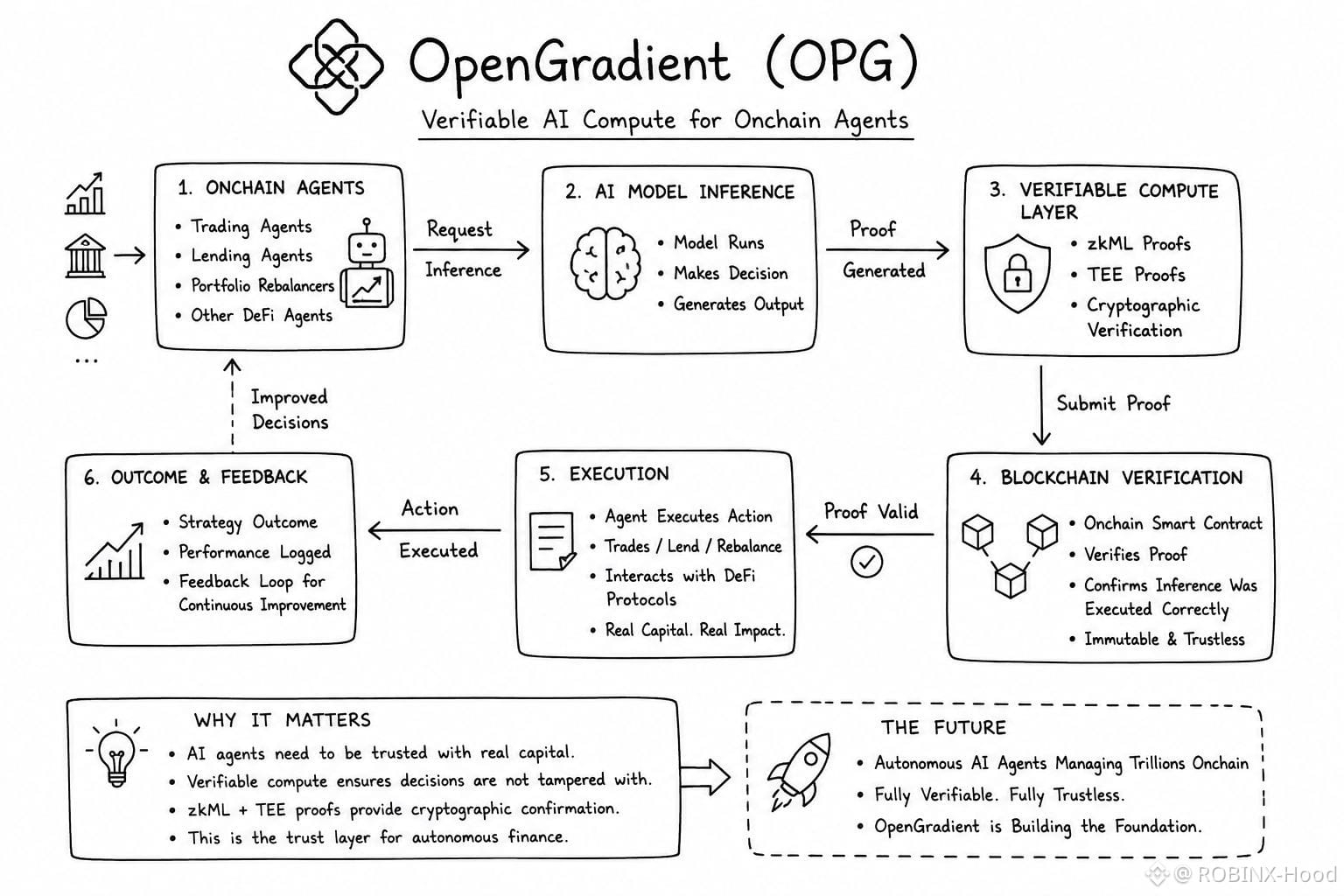
Honestly, I almost skipped $OPG when I first saw it. Another "AI x crypto" token, I thought, seen a hundred of those pump and fade. But the thing is, once I dug into what OpenGradient is actually building, it clicked differently. Look, AI models making decisions onchain is scary if you can't verify what's happening under the hood. That's the real problem OPG is solving. With zkML and TEE proofs, you get actual cryptographic confirmation that an AI inference ran correctly, not just a company telling you "trust us." For agents handling capital or executing trades autonomously, that verification layer isn't a nice-to-have, it's the whole game. Picture autonomous agents trading, lending, even rebalancing portfolios, all needing proof their decisions weren't tampered with. I feel like most people are still sleeping on this narrative. Verifiable compute is going to matter way more once agents start managing real money onchain. Still, I'm staying realistic. Adoption takes time and the infra needs to prove itself under real load. Are you tracking OPG yet, or still on the sidelines watching this play out? 👀
#OPG #OpenGradient @OpenGradient
{future}(OPGUSDT)
Honestly, I almost skipped $OPG when I first saw it. Another "AI x crypto" token, I thought, seen a hundred of those pump and fade. But the thing is, once I dug into what OpenGradient is actually building, it clicked differently. Look, AI models making decisions onchain is scary if you can't verify what's happening under the hood. That's the real problem OPG is solving. With zkML and TEE proofs, you get actual cryptographic confirmation that an AI inference ran correctly, not just a company telling you "trust us." For agents handling capital or executing trades autonomously, that verification layer isn't a nice-to-have, it's the whole game. Picture autonomous agents trading, lending, even rebalancing portfolios, all needing proof their decisions weren't tampered with. I feel like most people are still sleeping on this narrative. Verifiable compute is going to matter way more once agents start managing real money onchain. Still, I'm staying realistic. Adoption takes time and the infra needs to prove itself under real load. Are you tracking OPG yet, or still on the sidelines watching this play out? 👀
#OPG #OpenGradient @OpenGradient
#OPG #OpenGradient @OpenGradient
145
43
1k

#opg $OPG 💡 Are you ready for the future of AI? @OpenGradient provides a decentralized ecosystem that allows for secure and efficient AI deployment. Their Chat interface perfectly showcases the power of their technology. Don't sleep on this one! 🔥
@Binance_Square_Official
#OpenGradient
$OPG #OPG #KhmerSharing24h
#opg $OPG 💡 Are you ready for the future of AI? @OpenGradient provides a decentralized ecosystem that allows for secure and efficient AI deployment. Their Chat interface perfectly showcases the power of their technology. Don't sleep on this one! 🔥
@Binance Square Official
#OpenGradient
$OPG #OPG #KhmerSharing24h
@Binance Square Official
#OpenGradient
$OPG #OPG #KhmerSharing24h
3
2
121

·
--
#opg $OPG
#OpenGradient has dropped in price a lot, but it still gives results in its #TradingSpot yo operations; I keep using it, it gives me results, and I will continue using it. Hopefully it becomes strong in the future and keeps going for its user to stimulate more growth in the long term
$OPG
#opg $OPG
#OpenGradient has dropped in price a lot, but it still gives results in its #TradingSpot yo operations; I keep using it, it gives me results, and I will continue using it. Hopefully it becomes strong in the future and keeps going for its user to stimulate more growth in the long term
$OPG
#OpenGradient has dropped in price a lot, but it still gives results in its #TradingSpot yo operations; I keep using it, it gives me results, and I will continue using it. Hopefully it becomes strong in the future and keeps going for its user to stimulate more growth in the long term
$OPG
3
2
147

·
--
#opg $OPG The future of decentralized AI is officially here with @OpenGradient (https://www.binance.com/en/square/profile/OpenGradient)!
🚀Web3 AI has traditionally suffered from high latency and massive computational costs. #OpenGradient solves this by introducing a highly scalable, low-latency execution layer built specifically for AI models. Their breakthrough product, @OpenGradient OpenGradient Chat, showcases this power perfectly—allowing users to interact with advanced AI agents directly on-chain with unprecedented speed and minimal fees.By merging secure blockchain infrastructure with optimized machine learning compute, they are paving the way for truly autonomous, decentralized intelligence. Keep a close eye on $OPG as it drives this new era of Web3 machine learning. 💡🔥 #OPG
#opg $OPG The future of decentralized AI is officially here with @OpenGradient (https://www.binance.com/en/square/profile/OpenGradient)!
🚀Web3 AI has traditionally suffered from high latency and massive computational costs. #OpenGradient solves this by introducing a highly scalable, low-latency execution layer built specifically for AI models. Their breakthrough product, @OpenGradient OpenGradient Chat, showcases this power perfectly—allowing users to interact with advanced AI agents directly on-chain with unprecedented speed and minimal fees.By merging secure blockchain infrastructure with optimized machine learning compute, they are paving the way for truly autonomous, decentralized intelligence. Keep a close eye on $OPG as it drives this new era of Web3 machine learning. 💡🔥 #OPG
🚀Web3 AI has traditionally suffered from high latency and massive computational costs. #OpenGradient solves this by introducing a highly scalable, low-latency execution layer built specifically for AI models. Their breakthrough product, @OpenGradient OpenGradient Chat, showcases this power perfectly—allowing users to interact with advanced AI agents directly on-chain with unprecedented speed and minimal fees.By merging secure blockchain infrastructure with optimized machine learning compute, they are paving the way for truly autonomous, decentralized intelligence. Keep a close eye on $OPG as it drives this new era of Web3 machine learning. 💡🔥 #OPG
78

·
--
Bullish
#opg $OPG
With the advancement of artificial intelligence, it has become more important to access smart tools that are easy to use. I like the focus of @OpenGradient on Chat@OpenGradient and building an experience that brings together intelligence and ease of interaction—it's a project worth following as its ecosystem evolves. I’ll keep an eye on its updates with interest to see what the future holds. $OPG #OPG
#OpenGradient
$PEPE
#opg $OPG
With the advancement of artificial intelligence, it has become more important to access smart tools that are easy to use. I like the focus of @OpenGradient on Chat@OpenGradient and building an experience that brings together intelligence and ease of interaction—it's a project worth following as its ecosystem evolves. I’ll keep an eye on its updates with interest to see what the future holds. $OPG #OPG
#OpenGradient
$PEPE
With the advancement of artificial intelligence, it has become more important to access smart tools that are easy to use. I like the focus of @OpenGradient on Chat@OpenGradient and building an experience that brings together intelligence and ease of interaction—it's a project worth following as its ecosystem evolves. I’ll keep an eye on its updates with interest to see what the future holds. $OPG #OPG
#OpenGradient
$PEPE
82

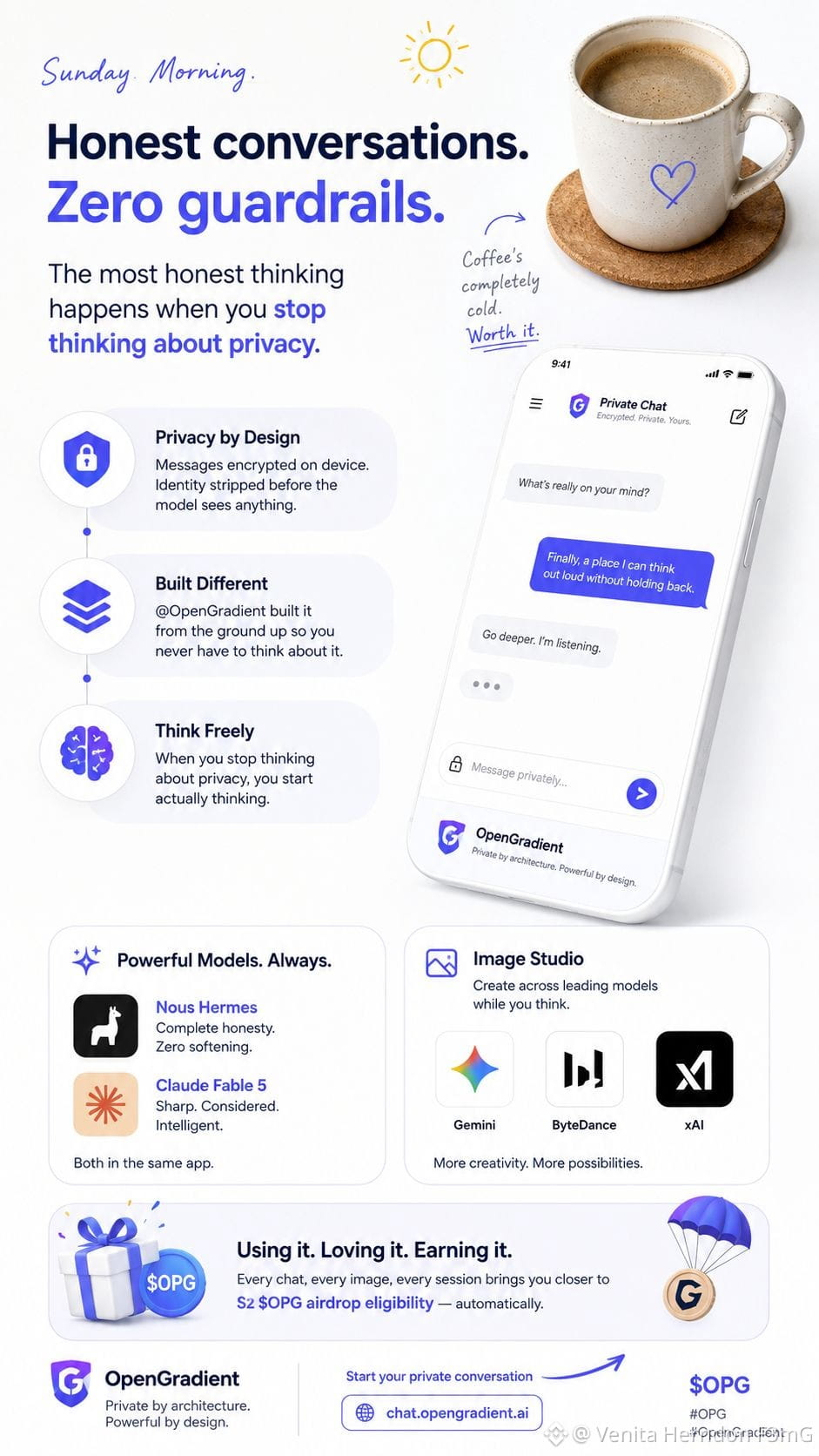
Sunday morning. Coffee getting cold. Still haven't put my phone down.
Not doomscrolling this time though.
Just deep in a conversation on chat.opengradient.ai that started as a simple question and somehow turned into the most honest thinking I've done all week.
That happens more than I expected with this app.
I think it's because there's no part of my brain standing guard while I type.
No internal editor checking whether this is the kind of thing I should be asking an AI.
The privacy isn't bolted on as a feature — it's underneath everything.
Messages encrypted on device. Identity stripped before the model sees anything.
@OpenGradient built it that way from the ground up so you never have to think about it.
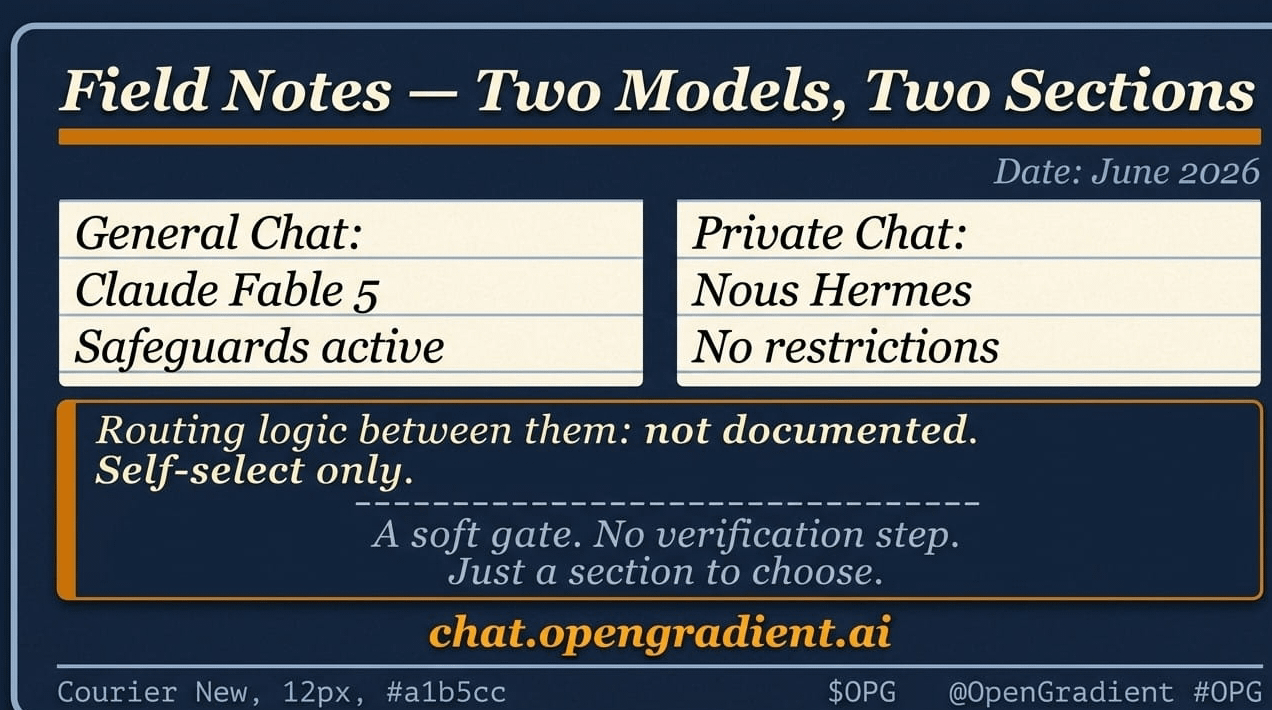
And when you stop thinking about it, you start actually thinking rotating between Nous Hermes when I want complete honesty and zero softening, and Claude Fable 5 when I want something sharp and considered.
Both are right there in the same app.
Image Studio has been open in the background too — generating visuals across Gemini, ByteDance, and xAI models while I think, which sounds small but somehow makes the whole session feel more creative.
Also been using credits consistently enough that S2 $OPG airdrop eligibility is just quietly happening in the background.
Didn't plan it that way. Just a natural side effect of actually liking the product.
Coffee's completely cold now. Worth it.
👉 chat.opengradient.ai
$OPG #OPG #OpenGradient
Sunday morning. Coffee getting cold. Still haven't put my phone down.
Not doomscrolling this time though.
Just deep in a conversation on chat.opengradient.ai that started as a simple question and somehow turned into the most honest thinking I've done all week.
That happens more than I expected with this app.
I think it's because there's no part of my brain standing guard while I type.
No internal editor checking whether this is the kind of thing I should be asking an AI.
The privacy isn't bolted on as a feature — it's underneath everything.
Messages encrypted on device. Identity stripped before the model sees anything.
@OpenGradient built it that way from the ground up so you never have to think about it.
And when you stop thinking about it, you start actually thinking rotating between Nous Hermes when I want complete honesty and zero softening, and Claude Fable 5 when I want something sharp and considered.
Both are right there in the same app.
Image Studio has been open in the background too — generating visuals across Gemini, ByteDance, and xAI models while I think, which sounds small but somehow makes the whole session feel more creative.
Also been using credits consistently enough that S2 $OPG airdrop eligibility is just quietly happening in the background.
Didn't plan it that way. Just a natural side effect of actually liking the product.
Coffee's completely cold now. Worth it.
👉 chat.opengradient.ai
$OPG #OPG #OpenGradient
Not doomscrolling this time though.
Just deep in a conversation on chat.opengradient.ai that started as a simple question and somehow turned into the most honest thinking I've done all week.
That happens more than I expected with this app.
I think it's because there's no part of my brain standing guard while I type.
No internal editor checking whether this is the kind of thing I should be asking an AI.
The privacy isn't bolted on as a feature — it's underneath everything.
Messages encrypted on device. Identity stripped before the model sees anything.
@OpenGradient built it that way from the ground up so you never have to think about it.
And when you stop thinking about it, you start actually thinking rotating between Nous Hermes when I want complete honesty and zero softening, and Claude Fable 5 when I want something sharp and considered.
Both are right there in the same app.
Image Studio has been open in the background too — generating visuals across Gemini, ByteDance, and xAI models while I think, which sounds small but somehow makes the whole session feel more creative.
Also been using credits consistently enough that S2 $OPG airdrop eligibility is just quietly happening in the background.
Didn't plan it that way. Just a natural side effect of actually liking the product.
Coffee's completely cold now. Worth it.
👉 chat.opengradient.ai
$OPG #OPG #OpenGradient
2
1
105

·
--
Lately I’ve been trying different AI assistants, and one thing always bothered me: every platform tells us to “trust” that our conversations are private. But trust isn’t the same as proof.
That’s why @OpenGradient caught my attention. Instead of relying only on a privacy policy, OpenGradient Chat is designed with privacy-first architecture. Messages are encrypted on your device, and your identity is removed before requests reach the AI model. That’s a completely different mindset compared to traditional AI platforms.
Another feature I enjoyed exploring is Image Studio available on chat.opengradient.ai. It’s convenient to generate AI images while having access to multiple leading models, including Gemini, ByteDance, and xAI, all within one platform. Having these capabilities combined with privacy-focused technology makes the experience even more interesting.
I also like that OpenGradient Chat continues adding new AI models, including the latest Claude Fable 5 and Nous Hermes for private conversations. Having different models available gives users the flexibility to choose the one that best fits their workflow, whether it’s writing, brainstorming, coding, or creative tasks.
An additional bonus for active users is that purchasing credits and regularly using OpenGradient Chat makes users eligible for the Season 2 OPG airdrop. It’s nice to see a project rewarding people who actually use the product instead of focusing only on speculation.
I’m looking forward to seeing how the platform evolves and what new features the team introduces next.
Explore it here: chat.opengradient.ai
@OpenGradient OpenGradient
$OPG
#OPG #AI #artificialintelligence #Web3 #Privacy #OpenGradient #Blockchain
#opg $OPG
Lately I’ve been trying different AI assistants, and one thing always bothered me: every platform tells us to “trust” that our conversations are private. But trust isn’t the same as proof.
That’s why @OpenGradient caught my attention. Instead of relying only on a privacy policy, OpenGradient Chat is designed with privacy-first architecture. Messages are encrypted on your device, and your identity is removed before requests reach the AI model. That’s a completely different mindset compared to traditional AI platforms.
Another feature I enjoyed exploring is Image Studio available on chat.opengradient.ai. It’s convenient to generate AI images while having access to multiple leading models, including Gemini, ByteDance, and xAI, all within one platform. Having these capabilities combined with privacy-focused technology makes the experience even more interesting.
I also like that OpenGradient Chat continues adding new AI models, including the latest Claude Fable 5 and Nous Hermes for private conversations. Having different models available gives users the flexibility to choose the one that best fits their workflow, whether it’s writing, brainstorming, coding, or creative tasks.
An additional bonus for active users is that purchasing credits and regularly using OpenGradient Chat makes users eligible for the Season 2 OPG airdrop. It’s nice to see a project rewarding people who actually use the product instead of focusing only on speculation.
I’m looking forward to seeing how the platform evolves and what new features the team introduces next.
Explore it here: chat.opengradient.ai
@OpenGradient OpenGradient
$OPG
#OPG #AI #artificialintelligence #Web3 #Privacy #OpenGradient #Blockchain
#opg $OPG
That’s why @OpenGradient caught my attention. Instead of relying only on a privacy policy, OpenGradient Chat is designed with privacy-first architecture. Messages are encrypted on your device, and your identity is removed before requests reach the AI model. That’s a completely different mindset compared to traditional AI platforms.
Another feature I enjoyed exploring is Image Studio available on chat.opengradient.ai. It’s convenient to generate AI images while having access to multiple leading models, including Gemini, ByteDance, and xAI, all within one platform. Having these capabilities combined with privacy-focused technology makes the experience even more interesting.
I also like that OpenGradient Chat continues adding new AI models, including the latest Claude Fable 5 and Nous Hermes for private conversations. Having different models available gives users the flexibility to choose the one that best fits their workflow, whether it’s writing, brainstorming, coding, or creative tasks.
An additional bonus for active users is that purchasing credits and regularly using OpenGradient Chat makes users eligible for the Season 2 OPG airdrop. It’s nice to see a project rewarding people who actually use the product instead of focusing only on speculation.
I’m looking forward to seeing how the platform evolves and what new features the team introduces next.
Explore it here: chat.opengradient.ai
@OpenGradient OpenGradient
$OPG
#OPG #AI #artificialintelligence #Web3 #Privacy #OpenGradient #Blockchain
#opg $OPG
1
85
Log in to explore more content
Join global crypto users on Binance Square
⚡️ Get latest and useful information about crypto.
💬 Trusted by the world’s largest crypto exchange.
👍 Discover real insights from verified creators.
Email / Phone number
Trending Topics
1
#NEARRisesNearly80%InAWeek
43,874 views
968 Discussing
2
#MultiversXPlansHardForkRecovery
36,615 views
738 Discussing
3
#CircleLaunchesInstitutionalBTCBackedBorrowing
34,573 views
803 Discussing
4
#BitcoinHits$85K
46,508 views
306 Discussing
5
#ZetaChainVotesToMigrateZETAToSolana
24,331 views
521 Discussing
6
#ECBStartsBlockchainEuroSettlement
49,883 views
806 Discussing
7
#SouthAfricaProposesCryptoExchangeControls
62,092 views
961 Discussing
8
#SolanaCutsTargetSlotTimeTo250ms
67,607 views
892 Discussing
9
#EthereumSurpasses$2700
37,487 views
236 Discussing
10
#CanaryFilesSecondAmendmentForStakedSEIETF
75,300 views
1,180 Discussing