
#ukfcapublishescryptoregframework
ukfcapublishescryptoregframework
125,753 views
931 Discussing
Hot
Latest
·
--
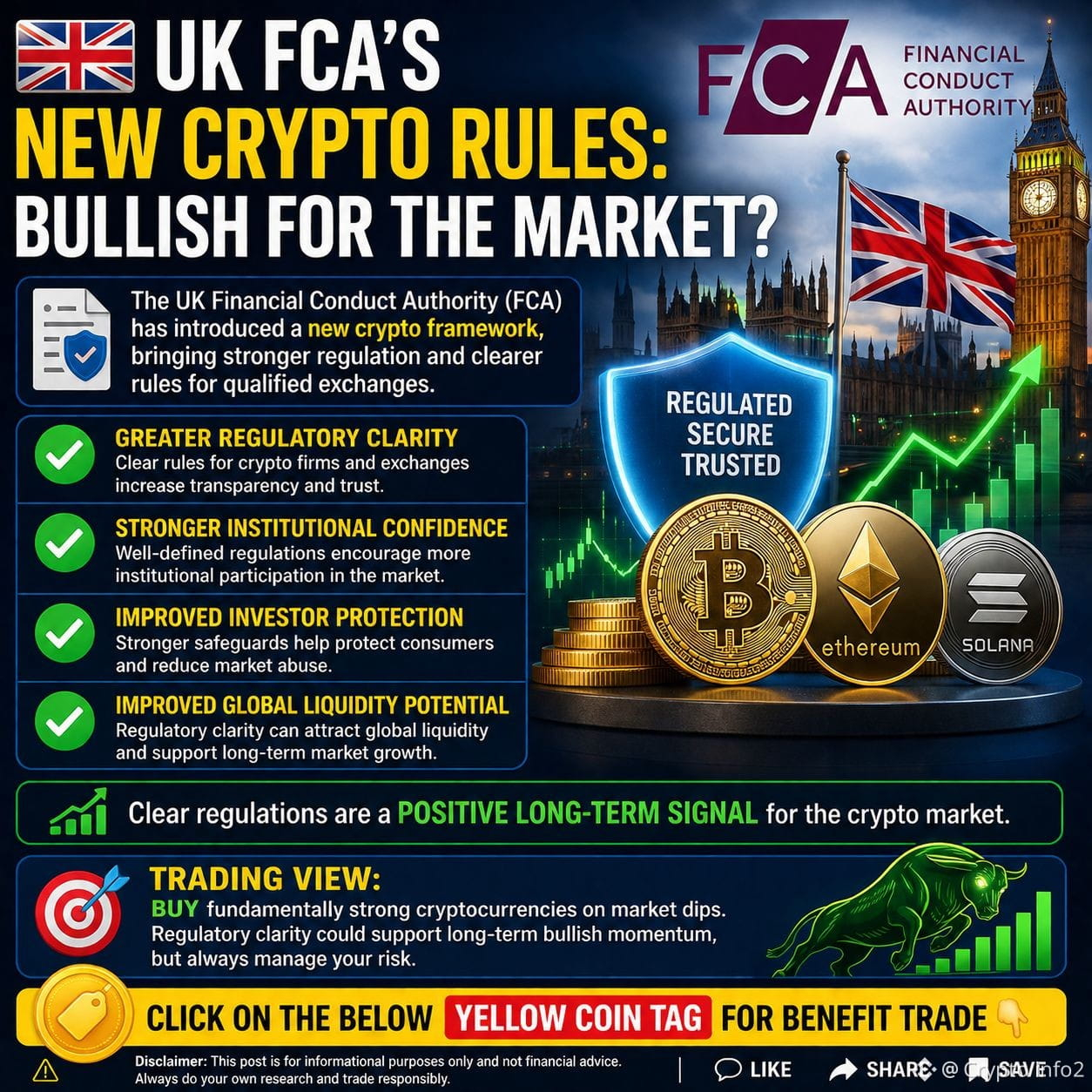
#ukfcapublishescryptoregframework 🇬🇧 UK FCA Unveils New Crypto Rules — Bullish for the Market? 🚀
The UK Financial Conduct Authority (FCA) has introduced a new crypto regulatory framework aimed at creating a safer, more transparent environment for digital assets and qualified crypto exchanges.
🔑 What This Could Mean for Crypto:
✅ Greater regulatory clarity for market participants
✅ Increased confidence from institutional investors
✅ Stronger investor protection measures
✅ Improved potential for long-term global liquidity and adoption
📈 Market Insight:
Clear and consistent regulations are often viewed as a positive catalyst for the crypto industry. While short-term volatility may continue, stronger regulatory frameworks can help attract institutional capital and support sustainable long-term growth.
💡 Trading View:
Consider accumulating fundamentally strong cryptocurrencies during market pullbacks rather than chasing short-term price spikes. As always, use proper risk management and invest according to your strategy.
👇 CLICK THE YELLOW COIN TAG BELOW to explore the featured cryptocurrency and stay ahead of the market!
$BTC $ETH $BNB
💬 Do you think the UK's new crypto framework is bullish for Bitcoin and the broader crypto market? Share your thoughts below!
#Crypto #UKFCA #Bitcoin #Ethereum
{spot}(BNBUSDT)
{spot}(ETHUSDT)
{spot}(BTCUSDT)
#ukfcapublishescryptoregframework 🇬🇧 UK FCA Unveils New Crypto Rules — Bullish for the Market? 🚀
The UK Financial Conduct Authority (FCA) has introduced a new crypto regulatory framework aimed at creating a safer, more transparent environment for digital assets and qualified crypto exchanges.
🔑 What This Could Mean for Crypto:
✅ Greater regulatory clarity for market participants
✅ Increased confidence from institutional investors
✅ Stronger investor protection measures
✅ Improved potential for long-term global liquidity and adoption
📈 Market Insight:
Clear and consistent regulations are often viewed as a positive catalyst for the crypto industry. While short-term volatility may continue, stronger regulatory frameworks can help attract institutional capital and support sustainable long-term growth.
💡 Trading View:
Consider accumulating fundamentally strong cryptocurrencies during market pullbacks rather than chasing short-term price spikes. As always, use proper risk management and invest according to your strategy.
👇 CLICK THE YELLOW COIN TAG BELOW to explore the featured cryptocurrency and stay ahead of the market!
$BTC $ETH $BNB
💬 Do you think the UK's new crypto framework is bullish for Bitcoin and the broader crypto market? Share your thoughts below!
#Crypto #UKFCA #Bitcoin #Ethereum
The UK Financial Conduct Authority (FCA) has introduced a new crypto regulatory framework aimed at creating a safer, more transparent environment for digital assets and qualified crypto exchanges.
🔑 What This Could Mean for Crypto:
✅ Greater regulatory clarity for market participants
✅ Increased confidence from institutional investors
✅ Stronger investor protection measures
✅ Improved potential for long-term global liquidity and adoption
📈 Market Insight:
Clear and consistent regulations are often viewed as a positive catalyst for the crypto industry. While short-term volatility may continue, stronger regulatory frameworks can help attract institutional capital and support sustainable long-term growth.
💡 Trading View:
Consider accumulating fundamentally strong cryptocurrencies during market pullbacks rather than chasing short-term price spikes. As always, use proper risk management and invest according to your strategy.
👇 CLICK THE YELLOW COIN TAG BELOW to explore the featured cryptocurrency and stay ahead of the market!
$BTC $ETH $BNB
💬 Do you think the UK's new crypto framework is bullish for Bitcoin and the broader crypto market? Share your thoughts below!
#Crypto #UKFCA #Bitcoin #Ethereum
5
15
4.3k

·
--

Article
The Hidden Danger of UK's New Crypto RulesHere's what happened behind the scenes when the UK Financial Conduct Authority released its comprehensive crypto regulatory framework last week.
Most retail investors assume regulatory clarity is an automatic green light for their portfolios. In reality, sudden compliance shifts usually catch projects off guard, leading to forced delistings and sudden liquidity drains that leave average traders holding the bag.
The FCA is targeting promotion rules and operational resilience. While the market focuses on price action for major assets like $BTC, the real risk lies in how stablecoins like $USDT and utility tokens like $FET will navigate these strict promotional guardrails. If a project cannot afford the massive legal overhead required to market to UK users, they will simply block the region, choking off local volume overnight.
We have seen this playbook before. When regulators tighten the screws, exchanges are forced to restrict access to compliance-heavy assets. This creates a silent migration of capital, where projects that fail to adapt are quietly phased out. It is not just about direct bans; it is about making compliance so expensive that only the largest institutional players can afford to play.
How do you think this will impact liquidity for smaller altcoins trying to maintain a global footprint?
#UKFCAPublishesCryptoRegFramework #BrazilCentralBankSaysStablecoinsElectronicMoney
The Hidden Danger of UK's New Crypto Rules
Here's what happened behind the scenes when the UK Financial Conduct Authority released its comprehensive crypto regulatory framework last week.
Most retail investors assume regulatory clarity is an automatic green light for their portfolios. In reality, sudden compliance shifts usually catch projects off guard, leading to forced delistings and sudden liquidity drains that leave average traders holding the bag.
The FCA is targeting promotion rules and operational resilience. While the market focuses on price action for major assets like $BTC , the real risk lies in how stablecoins like $USDT and utility tokens like $FET will navigate these strict promotional guardrails. If a project cannot afford the massive legal overhead required to market to UK users, they will simply block the region, choking off local volume overnight.
We have seen this playbook before. When regulators tighten the screws, exchanges are forced to restrict access to compliance-heavy assets. This creates a silent migration of capital, where projects that fail to adapt are quietly phased out. It is not just about direct bans; it is about making compliance so expensive that only the largest institutional players can afford to play.
How do you think this will impact liquidity for smaller altcoins trying to maintain a global footprint?
#UKFCAPublishesCryptoRegFramework #BrazilCentralBankSaysStablecoinsElectronicMoney
Most retail investors assume regulatory clarity is an automatic green light for their portfolios. In reality, sudden compliance shifts usually catch projects off guard, leading to forced delistings and sudden liquidity drains that leave average traders holding the bag.
The FCA is targeting promotion rules and operational resilience. While the market focuses on price action for major assets like $BTC , the real risk lies in how stablecoins like $USDT and utility tokens like $FET will navigate these strict promotional guardrails. If a project cannot afford the massive legal overhead required to market to UK users, they will simply block the region, choking off local volume overnight.
We have seen this playbook before. When regulators tighten the screws, exchanges are forced to restrict access to compliance-heavy assets. This creates a silent migration of capital, where projects that fail to adapt are quietly phased out. It is not just about direct bans; it is about making compliance so expensive that only the largest institutional players can afford to play.
How do you think this will impact liquidity for smaller altcoins trying to maintain a global footprint?
#UKFCAPublishesCryptoRegFramework #BrazilCentralBankSaysStablecoinsElectronicMoney
149

·
--

Article
Don't Let New Crypto Rules Tank Your PortfolioIf you are still ignoring regulatory updates because you think they do not affect your portfolio, stop now.
Watching your bag tank because a sudden policy shift catches you off guard is one of the most frustrating experiences in crypto. With market fear sitting high, reacting to headlines instead of understanding the actual rules is a recipe for losing capital.
The UK FCA just dropped its new crypto regulatory framework, and the community is split down the middle. Purists argue that strict rules kill the permissionless nature of assets like $BTC and make it harder for decentralized projects to survive. They believe compliance costs will drive innovation out of the country, leaving retail investors with fewer options.
But there is another side to this. If we want stablecoins like $USDT to be integrated into daily commerce and larger institutions to finally allocate capital, we need clear guardrails. Without legal clarity, major players will keep sitting on the sidelines. Having a defined playbook, even a strict one, is better than the constant uncertainty we have been dealing with.
Do you think strict compliance will stifle crypto innovation, or is it the only way we get mainstream adoption?
#UKFCAPublishesCryptoRegFramework #BrazilCentralBankSaysStablecoinsElectronicMoney
Don't Let New Crypto Rules Tank Your Portfolio
If you are still ignoring regulatory updates because you think they do not affect your portfolio, stop now.
Watching your bag tank because a sudden policy shift catches you off guard is one of the most frustrating experiences in crypto. With market fear sitting high, reacting to headlines instead of understanding the actual rules is a recipe for losing capital.
The UK FCA just dropped its new crypto regulatory framework, and the community is split down the middle. Purists argue that strict rules kill the permissionless nature of assets like $BTC and make it harder for decentralized projects to survive. They believe compliance costs will drive innovation out of the country, leaving retail investors with fewer options.
But there is another side to this. If we want stablecoins like $USDT to be integrated into daily commerce and larger institutions to finally allocate capital, we need clear guardrails. Without legal clarity, major players will keep sitting on the sidelines. Having a defined playbook, even a strict one, is better than the constant uncertainty we have been dealing with.
Do you think strict compliance will stifle crypto innovation, or is it the only way we get mainstream adoption?
#UKFCAPublishesCryptoRegFramework #BrazilCentralBankSaysStablecoinsElectronicMoney
Watching your bag tank because a sudden policy shift catches you off guard is one of the most frustrating experiences in crypto. With market fear sitting high, reacting to headlines instead of understanding the actual rules is a recipe for losing capital.
The UK FCA just dropped its new crypto regulatory framework, and the community is split down the middle. Purists argue that strict rules kill the permissionless nature of assets like $BTC and make it harder for decentralized projects to survive. They believe compliance costs will drive innovation out of the country, leaving retail investors with fewer options.
But there is another side to this. If we want stablecoins like $USDT to be integrated into daily commerce and larger institutions to finally allocate capital, we need clear guardrails. Without legal clarity, major players will keep sitting on the sidelines. Having a defined playbook, even a strict one, is better than the constant uncertainty we have been dealing with.
Do you think strict compliance will stifle crypto innovation, or is it the only way we get mainstream adoption?
#UKFCAPublishesCryptoRegFramework #BrazilCentralBankSaysStablecoinsElectronicMoney
34

·
--
Bullish
🚨 UK Crypto Rules: Good for Growth or Bad for Innovation?
The UK is introducing new crypto regulations, and the community is divided. Some traders worry stricter compliance requirements could increase costs and make it harder for smaller crypto companies to compete. Others believe clear rules are exactly what the industry needs to attract banks, institutions, and long-term investors.
While tighter oversight may slow things down in the short term, stronger regulatory clarity could help build trust and encourage wider adoption over time.
👇 What do you think? Will these new rules strengthen the UK's crypto future, or could they limit innovation and growth?
$BTC $BNB $SOL
#UKFCAPublishesCryptoRegFramework #BitcoinFallsOver50%FromOctoberHigh #VitalikOutlinesLeanEthereumRoadmap #CQ
🚨 UK Crypto Rules: Good for Growth or Bad for Innovation?
The UK is introducing new crypto regulations, and the community is divided. Some traders worry stricter compliance requirements could increase costs and make it harder for smaller crypto companies to compete. Others believe clear rules are exactly what the industry needs to attract banks, institutions, and long-term investors.
While tighter oversight may slow things down in the short term, stronger regulatory clarity could help build trust and encourage wider adoption over time.
👇 What do you think? Will these new rules strengthen the UK's crypto future, or could they limit innovation and growth?
$BTC $BNB $SOL
#UKFCAPublishesCryptoRegFramework #BitcoinFallsOver50%FromOctoberHigh #VitalikOutlinesLeanEthereumRoadmap #CQ
The UK is introducing new crypto regulations, and the community is divided. Some traders worry stricter compliance requirements could increase costs and make it harder for smaller crypto companies to compete. Others believe clear rules are exactly what the industry needs to attract banks, institutions, and long-term investors.
While tighter oversight may slow things down in the short term, stronger regulatory clarity could help build trust and encourage wider adoption over time.
👇 What do you think? Will these new rules strengthen the UK's crypto future, or could they limit innovation and growth?
$BTC $BNB $SOL
#UKFCAPublishesCryptoRegFramework #BitcoinFallsOver50%FromOctoberHigh #VitalikOutlinesLeanEthereumRoadmap #CQ
2
174

#UKFCAPublishesCryptoRegFramework Yes — the UK FCA did publish the crypto regulatory framework, and the key publication date was June 30, 2026. (fca.org.uk)
In the FCA’s own materials, this is described as a major package of final rules and guidance under the UK’s new cryptoasset regime. The FCA says these rules will apply to crypto firms that are granted permission under FSMA, and that the underlying Financial Services and Markets Act 2000 (Cryptoassets) Regulations 2026 were made by Parliament on February 4, 2026. (fca.org.uk)
The framework is broader than the UK’s earlier AML-registration and promotions approach. FCA documents say it covers areas including trading platforms, intermediaries, lending and borrowing, staking, disclosures/admissions, market abuse rules, and standards for authorised crypto firms. (fca.org.uk)
The current FCA timeline is:
July 1, 2026: pre-application support opened.
September 30, 2026: application window opens.
February 28, 2027: application window closes.
October 25, 2027: new regime expected to come into force. (fca.org.uk)
So if your hashtag is meant as a headline check, the short version is: confirmed — the FCA has now formally published the UK crypto regime package. (fca.org.uk)
If you want, I can also give you:
a 60-second summary,
the impact on exchanges like Binance, or
a UK vs EU MiCA comparison.@Binance_Announcement @Binance_News @Binance_Square_Official
#UKFCAPublishesCryptoRegFramework Yes — the UK FCA did publish the crypto regulatory framework, and the key publication date was June 30, 2026. (fca.org.uk)
In the FCA’s own materials, this is described as a major package of final rules and guidance under the UK’s new cryptoasset regime. The FCA says these rules will apply to crypto firms that are granted permission under FSMA, and that the underlying Financial Services and Markets Act 2000 (Cryptoassets) Regulations 2026 were made by Parliament on February 4, 2026. (fca.org.uk)
The framework is broader than the UK’s earlier AML-registration and promotions approach. FCA documents say it covers areas including trading platforms, intermediaries, lending and borrowing, staking, disclosures/admissions, market abuse rules, and standards for authorised crypto firms. (fca.org.uk)
The current FCA timeline is:
July 1, 2026: pre-application support opened.
September 30, 2026: application window opens.
February 28, 2027: application window closes.
October 25, 2027: new regime expected to come into force. (fca.org.uk)
So if your hashtag is meant as a headline check, the short version is: confirmed — the FCA has now formally published the UK crypto regime package. (fca.org.uk)
If you want, I can also give you:
a 60-second summary,
the impact on exchanges like Binance, or
a UK vs EU MiCA comparison.@Binance Announcement @Binance News @Binance Square Official
In the FCA’s own materials, this is described as a major package of final rules and guidance under the UK’s new cryptoasset regime. The FCA says these rules will apply to crypto firms that are granted permission under FSMA, and that the underlying Financial Services and Markets Act 2000 (Cryptoassets) Regulations 2026 were made by Parliament on February 4, 2026. (fca.org.uk)
The framework is broader than the UK’s earlier AML-registration and promotions approach. FCA documents say it covers areas including trading platforms, intermediaries, lending and borrowing, staking, disclosures/admissions, market abuse rules, and standards for authorised crypto firms. (fca.org.uk)
The current FCA timeline is:
July 1, 2026: pre-application support opened.
September 30, 2026: application window opens.
February 28, 2027: application window closes.
October 25, 2027: new regime expected to come into force. (fca.org.uk)
So if your hashtag is meant as a headline check, the short version is: confirmed — the FCA has now formally published the UK crypto regime package. (fca.org.uk)
If you want, I can also give you:
a 60-second summary,
the impact on exchanges like Binance, or
a UK vs EU MiCA comparison.@Binance Announcement @Binance News @Binance Square Official
2
75

#UKFCAPublishesCryptoRegFramework The UK Financial Conduct Authority (FCA) has published its landmark cryptoasset regulatory framework, establishing comprehensive rules for crypto businesses and moving the sector under full financial regulation. The new regime is intended to balance innovation with stronger consumer protection and market integrity.
Key highlights include:
Mandatory FCA authorization for crypto exchanges, custodians, trading platforms, intermediaries, qualifying stablecoin issuers, and staking providers operating in the UK.
Capital, liquidity, and stress-testing requirements to improve firms' financial resilience.
Market abuse rules targeting insider trading and market manipulation.
Stablecoin-specific standards, with the capital requirement for non-systemic issuers reduced from 2% to 1% after industry feedback.
Firms can begin applying for authorization from 30 September 2026, with the full regime taking effect on 25 October 2027.
The framework represents one of the UK's most significant crypto regulatory reforms, aiming to provide clearer rules for businesses while strengthening protections for consumers and supporting the country's ambition to become a global digital asset hub.
#UKFCAPublishesCryptoRegFramework The UK Financial Conduct Authority (FCA) has published its landmark cryptoasset regulatory framework, establishing comprehensive rules for crypto businesses and moving the sector under full financial regulation. The new regime is intended to balance innovation with stronger consumer protection and market integrity.
Key highlights include:
Mandatory FCA authorization for crypto exchanges, custodians, trading platforms, intermediaries, qualifying stablecoin issuers, and staking providers operating in the UK.
Capital, liquidity, and stress-testing requirements to improve firms' financial resilience.
Market abuse rules targeting insider trading and market manipulation.
Stablecoin-specific standards, with the capital requirement for non-systemic issuers reduced from 2% to 1% after industry feedback.
Firms can begin applying for authorization from 30 September 2026, with the full regime taking effect on 25 October 2027.
The framework represents one of the UK's most significant crypto regulatory reforms, aiming to provide clearer rules for businesses while strengthening protections for consumers and supporting the country's ambition to become a global digital asset hub.
Key highlights include:
Mandatory FCA authorization for crypto exchanges, custodians, trading platforms, intermediaries, qualifying stablecoin issuers, and staking providers operating in the UK.
Capital, liquidity, and stress-testing requirements to improve firms' financial resilience.
Market abuse rules targeting insider trading and market manipulation.
Stablecoin-specific standards, with the capital requirement for non-systemic issuers reduced from 2% to 1% after industry feedback.
Firms can begin applying for authorization from 30 September 2026, with the full regime taking effect on 25 October 2027.
The framework represents one of the UK's most significant crypto regulatory reforms, aiming to provide clearer rules for businesses while strengthening protections for consumers and supporting the country's ambition to become a global digital asset hub.
21

·
--
Bearish
#ukfcapublishescryptoregframework
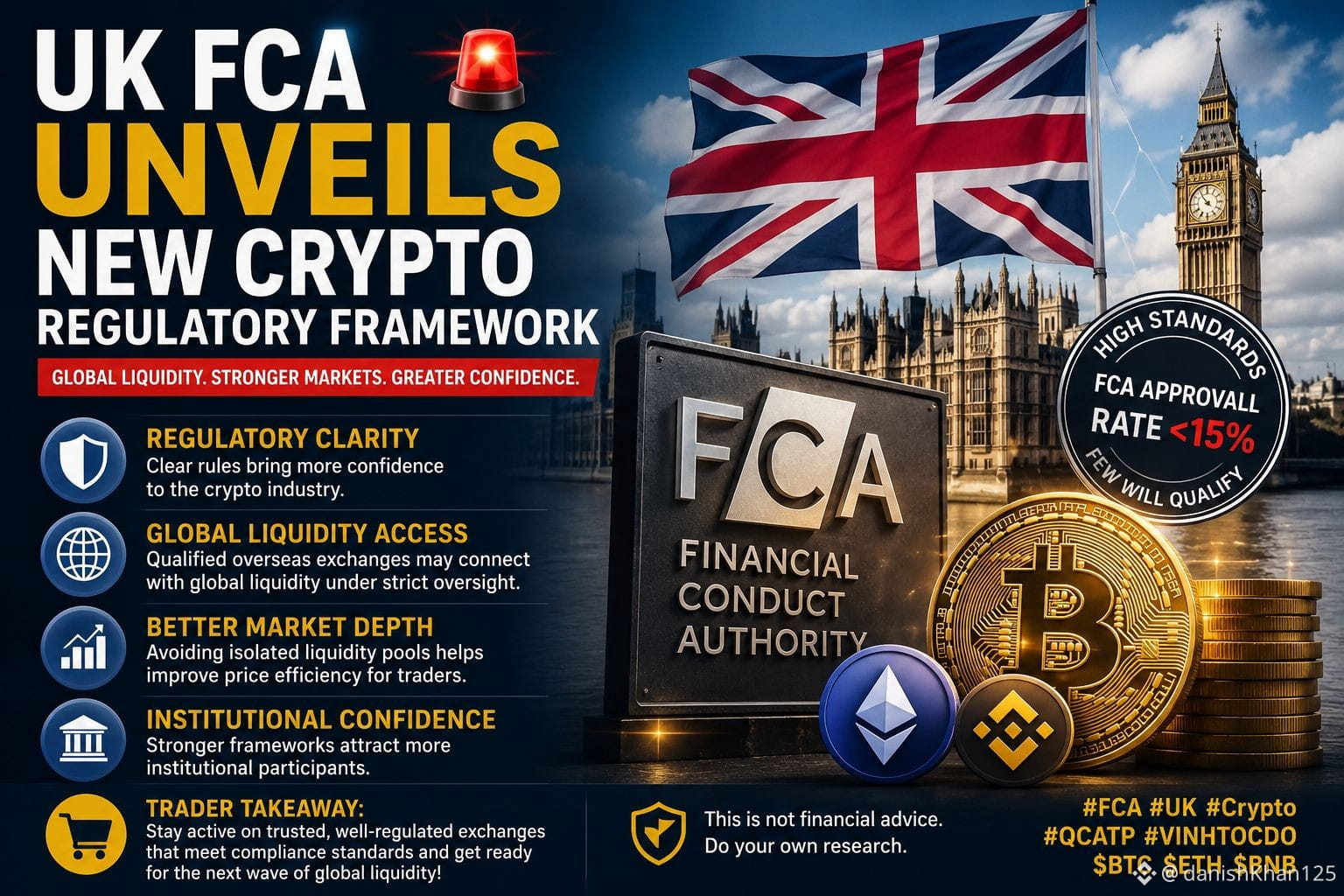
🚨 UK FCA Unveils New Crypto Regulatory Framework 🇬🇧
The UK's Financial Conduct Authority (FCA) has introduced a new regulatory framework that could allow qualified overseas crypto exchanges to connect with global liquidity under strict oversight.
What this means:
✅ Greater regulatory clarity for the crypto industry
✅ Potential for deeper global liquidity
✅ Better price efficiency for traders
✅ Increased confidence from institutional participants
📊 Market View:
The FCA has historically maintained very high approval standards, meaning only a limited number of firms are expected to qualify. While the rules are strict, they avoid isolating liquidity pools, which could support healthier market depth and more competitive pricing over time.
💡 Trader Takeaway:
Focus on well-regulated, trusted exchanges that meet evolving compliance standards. Clear regulations often strengthen long-term market confidence, even if the approval process remains challenging.
⚠️ This is not financial advice. Always do your own research.
#FCA #Crypto #UK #Bitcoin #Ethereum #BNB #CryptoRegulation #DeFi
$BTC
{future}(BTCUSDT)
$ETH
{future}(ETHUSDT)
$BNB
{future}(BNBUSDT)
#ukfcapublishescryptoregframework
🚨 UK FCA Unveils New Crypto Regulatory Framework 🇬🇧
The UK's Financial Conduct Authority (FCA) has introduced a new regulatory framework that could allow qualified overseas crypto exchanges to connect with global liquidity under strict oversight.
What this means:
✅ Greater regulatory clarity for the crypto industry
✅ Potential for deeper global liquidity
✅ Better price efficiency for traders
✅ Increased confidence from institutional participants
📊 Market View:
The FCA has historically maintained very high approval standards, meaning only a limited number of firms are expected to qualify. While the rules are strict, they avoid isolating liquidity pools, which could support healthier market depth and more competitive pricing over time.
💡 Trader Takeaway:
Focus on well-regulated, trusted exchanges that meet evolving compliance standards. Clear regulations often strengthen long-term market confidence, even if the approval process remains challenging.
⚠️ This is not financial advice. Always do your own research.
#FCA #Crypto #UK #Bitcoin #Ethereum #BNB #CryptoRegulation #DeFi
$BTC
$ETH
$BNB
🚨 UK FCA Unveils New Crypto Regulatory Framework 🇬🇧
The UK's Financial Conduct Authority (FCA) has introduced a new regulatory framework that could allow qualified overseas crypto exchanges to connect with global liquidity under strict oversight.
What this means:
✅ Greater regulatory clarity for the crypto industry
✅ Potential for deeper global liquidity
✅ Better price efficiency for traders
✅ Increased confidence from institutional participants
📊 Market View:
The FCA has historically maintained very high approval standards, meaning only a limited number of firms are expected to qualify. While the rules are strict, they avoid isolating liquidity pools, which could support healthier market depth and more competitive pricing over time.
💡 Trader Takeaway:
Focus on well-regulated, trusted exchanges that meet evolving compliance standards. Clear regulations often strengthen long-term market confidence, even if the approval process remains challenging.
⚠️ This is not financial advice. Always do your own research.
#FCA #Crypto #UK #Bitcoin #Ethereum #BNB #CryptoRegulation #DeFi
$BTC
$ETH
$BNB
2
9
5k

·
--
Bearish
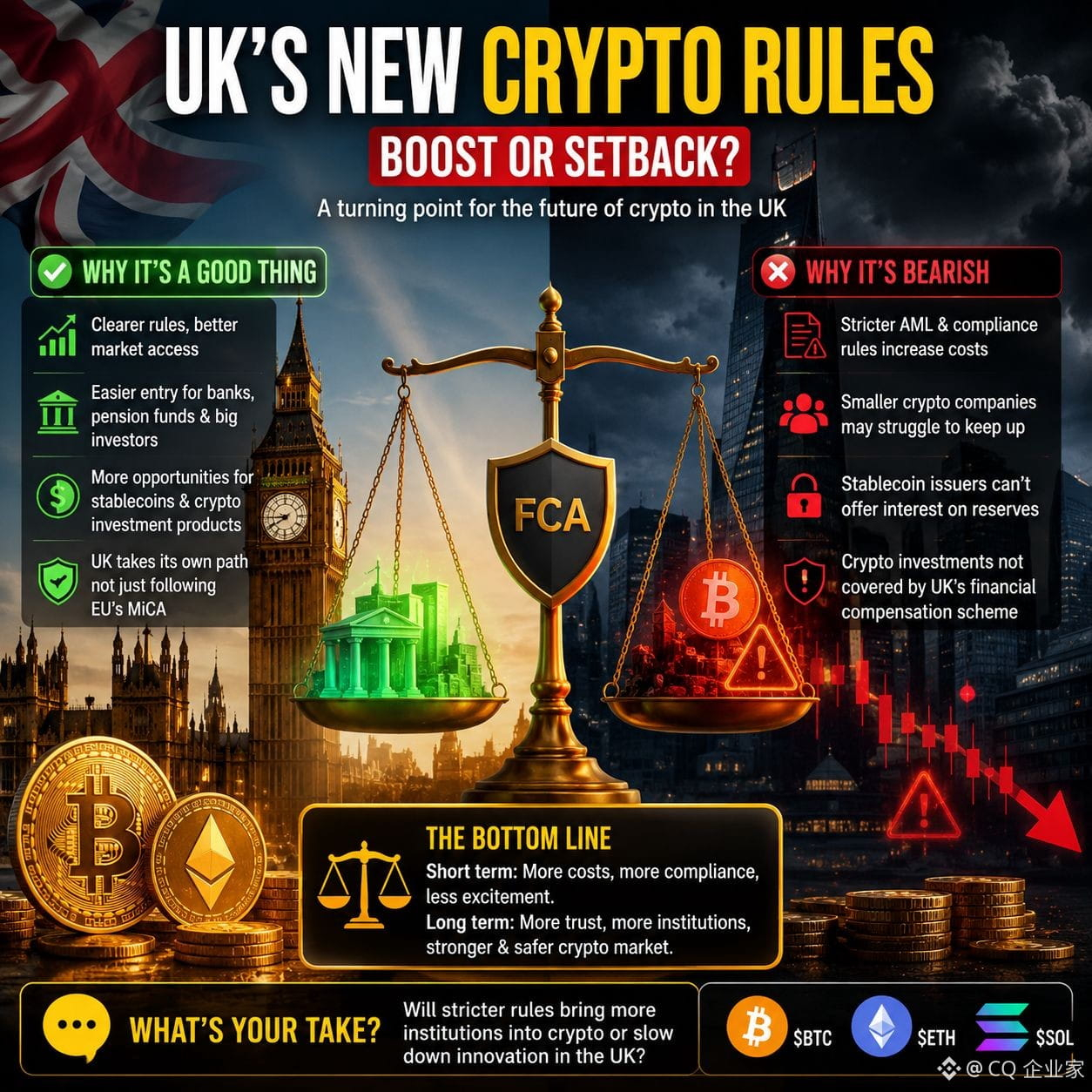
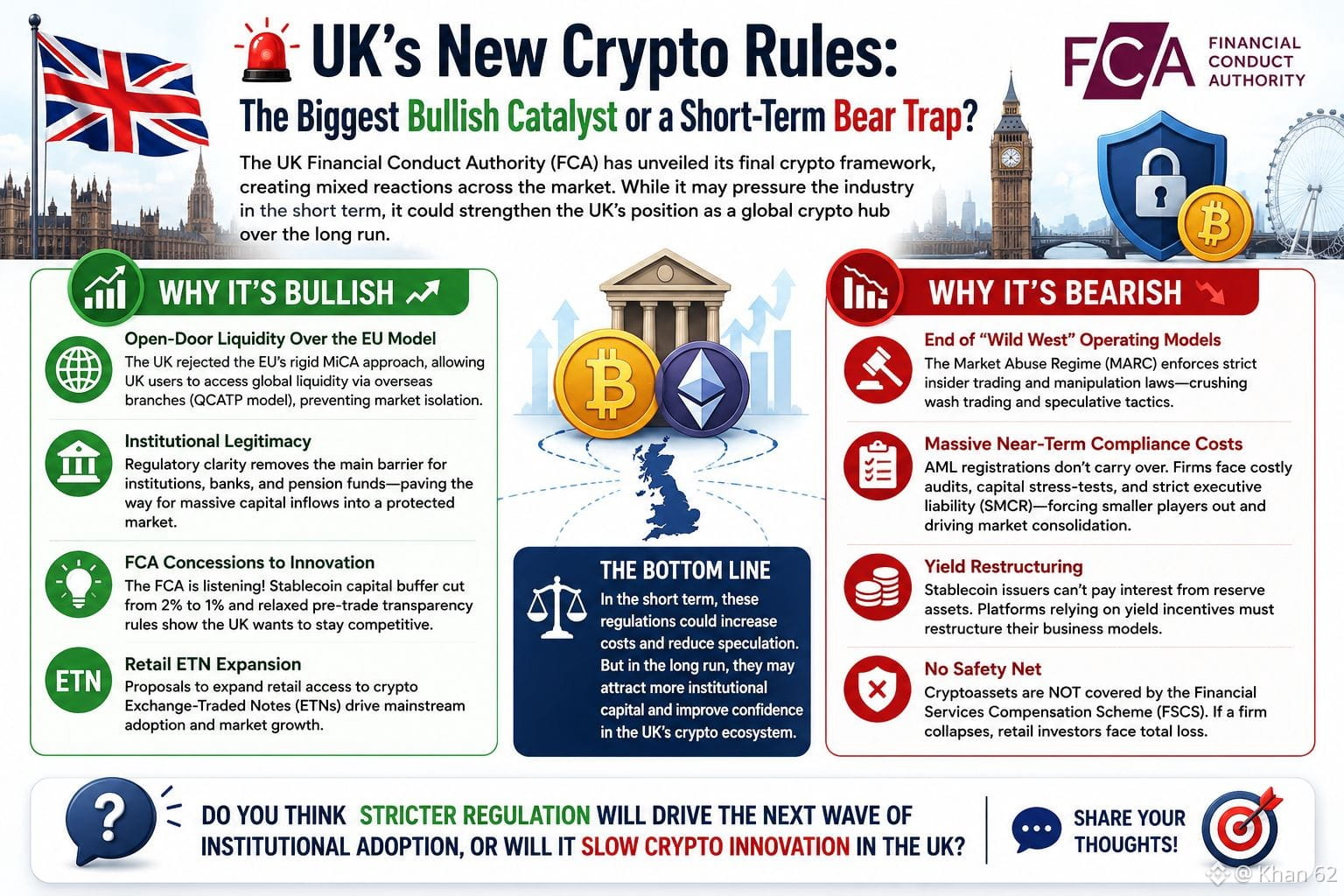
#ukfcapublishescryptoregframework 🚨 UKs New Crypto Rules: The Biggest Boost for Crypto or a Short-Term Setback?
Some think the rules will cause problems for the industry now. Others believe they will help the UK become a major player in crypto over time.
📈 Why It's a Good Thing
The FCA chose not to follow the EUs MiCA rules. This means that companies that follow the rules can work with markets more easily. The new rules also make it clear what is expected of companies, which will help banks, pension funds and other big investors get into crypto. The FCA also made it easier for stablecoin issuers to operate and is looking into making crypto ETNs available to people.
📉 Why It's Bearish
The new rules mean that crypto companies have to follow stricter rules to prevent money laundering and make sure people are not cheating. Some smaller crypto companies might struggle with the costs. Stablecoin issuers also can't pay interest using their reserve assets. The FCA also said that crypto investments won't be protected by the UKs Financial Services Compensation Scheme.
⚖️ The Bottom Line
In the Short term these rules might make it more expensive and less exciting for people to invest in crypto.. In the long run they could bring in more big investors and make people more confident in the UKs crypto market.
👇 Do you think stricter rules will help big investors get into crypto or will they slow down innovation, in the UK?
#Khan62 #CryptoRegulation #DigitalAssets #InstitutionalAdoption
$BTC $ETH $SOL
{future}(SOLUSDT)
{future}(ETHUSDT)
{future}(BTCUSDT)
#ukfcapublishescryptoregframework 🚨 UKs New Crypto Rules: The Biggest Boost for Crypto or a Short-Term Setback?
Some think the rules will cause problems for the industry now. Others believe they will help the UK become a major player in crypto over time.
📈 Why It's a Good Thing
The FCA chose not to follow the EUs MiCA rules. This means that companies that follow the rules can work with markets more easily. The new rules also make it clear what is expected of companies, which will help banks, pension funds and other big investors get into crypto. The FCA also made it easier for stablecoin issuers to operate and is looking into making crypto ETNs available to people.
📉 Why It's Bearish
The new rules mean that crypto companies have to follow stricter rules to prevent money laundering and make sure people are not cheating. Some smaller crypto companies might struggle with the costs. Stablecoin issuers also can't pay interest using their reserve assets. The FCA also said that crypto investments won't be protected by the UKs Financial Services Compensation Scheme.
⚖️ The Bottom Line
In the Short term these rules might make it more expensive and less exciting for people to invest in crypto.. In the long run they could bring in more big investors and make people more confident in the UKs crypto market.
👇 Do you think stricter rules will help big investors get into crypto or will they slow down innovation, in the UK?
#Khan62 #CryptoRegulation #DigitalAssets #InstitutionalAdoption
$BTC $ETH $SOL
Some think the rules will cause problems for the industry now. Others believe they will help the UK become a major player in crypto over time.
📈 Why It's a Good Thing
The FCA chose not to follow the EUs MiCA rules. This means that companies that follow the rules can work with markets more easily. The new rules also make it clear what is expected of companies, which will help banks, pension funds and other big investors get into crypto. The FCA also made it easier for stablecoin issuers to operate and is looking into making crypto ETNs available to people.
📉 Why It's Bearish
The new rules mean that crypto companies have to follow stricter rules to prevent money laundering and make sure people are not cheating. Some smaller crypto companies might struggle with the costs. Stablecoin issuers also can't pay interest using their reserve assets. The FCA also said that crypto investments won't be protected by the UKs Financial Services Compensation Scheme.
⚖️ The Bottom Line
In the Short term these rules might make it more expensive and less exciting for people to invest in crypto.. In the long run they could bring in more big investors and make people more confident in the UKs crypto market.
👇 Do you think stricter rules will help big investors get into crypto or will they slow down innovation, in the UK?
#Khan62 #CryptoRegulation #DigitalAssets #InstitutionalAdoption
$BTC $ETH $SOL
6
3.3k

·
--
Bearish
#ukfcapublishescryptoregframework
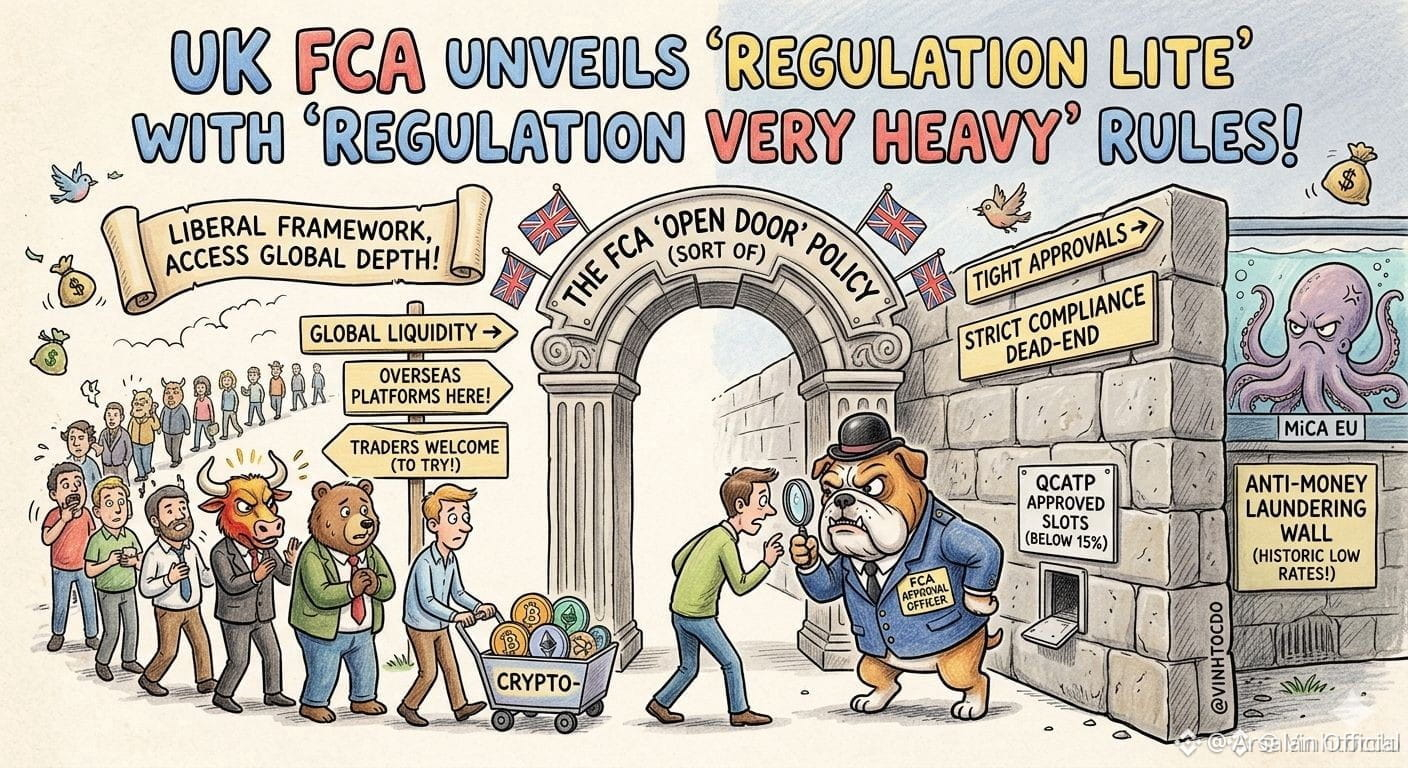
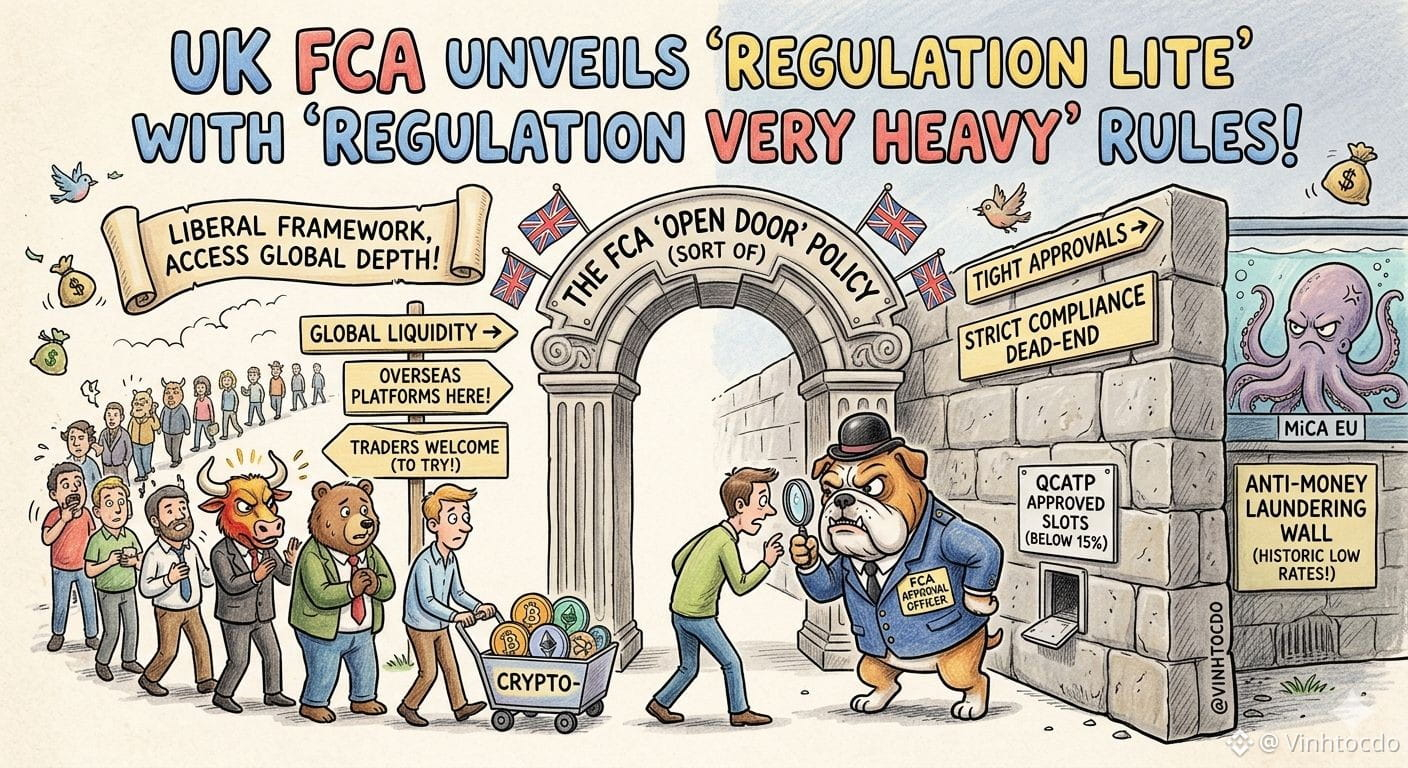
FCA UK has just unveiled a new legal framework, allowing foreign exchanges to connect to global liquidity! I’ve always supported a clear regulatory corridor like this—both protecting users’ funds and giving our traders a huge advantage, right guys? 🛡️🇬🇧
📉 Analysis: An open law, but the approval door is extremely narrow—the FCA’s historical approval rate has been under 15%. The upside is that they avoid a “closed domestic liquidity bubble” like the MiCA EU approach, helping increase market depth and optimize price efficiency for all of you who are accumulating positions.
🛒 What should traders do?
Rest assured—trading is safe because institutional capital is about to arrive. Just pick a major exchange that meets QCATP standards to catch the wave of global liquidity!
This is not financial advice. Enter code VINHTOCDO and wait for the changes!
#FCA #QCATP #UK #VINHTOCDO
$BTC
{future}(BTCUSDT)
$ETH
{future}(ETHUSDT)
$BNB
{future}(BNBUSDT)
#ukfcapublishescryptoregframework
FCA UK has just unveiled a new legal framework, allowing foreign exchanges to connect to global liquidity! I’ve always supported a clear regulatory corridor like this—both protecting users’ funds and giving our traders a huge advantage, right guys? 🛡️🇬🇧
📉 Analysis: An open law, but the approval door is extremely narrow—the FCA’s historical approval rate has been under 15%. The upside is that they avoid a “closed domestic liquidity bubble” like the MiCA EU approach, helping increase market depth and optimize price efficiency for all of you who are accumulating positions.
🛒 What should traders do?
Rest assured—trading is safe because institutional capital is about to arrive. Just pick a major exchange that meets QCATP standards to catch the wave of global liquidity!
This is not financial advice. Enter code VINHTOCDO and wait for the changes!
#FCA #QCATP #UK #VINHTOCDO
$BTC
$ETH
$BNB
FCA UK has just unveiled a new legal framework, allowing foreign exchanges to connect to global liquidity! I’ve always supported a clear regulatory corridor like this—both protecting users’ funds and giving our traders a huge advantage, right guys? 🛡️🇬🇧
📉 Analysis: An open law, but the approval door is extremely narrow—the FCA’s historical approval rate has been under 15%. The upside is that they avoid a “closed domestic liquidity bubble” like the MiCA EU approach, helping increase market depth and optimize price efficiency for all of you who are accumulating positions.
🛒 What should traders do?
Rest assured—trading is safe because institutional capital is about to arrive. Just pick a major exchange that meets QCATP standards to catch the wave of global liquidity!
This is not financial advice. Enter code VINHTOCDO and wait for the changes!
#FCA #QCATP #UK #VINHTOCDO
$BTC
$ETH
$BNB
6
8
2.6k

·
--
Bullish
#ukfcapublishescryptoregframework #bitcoin
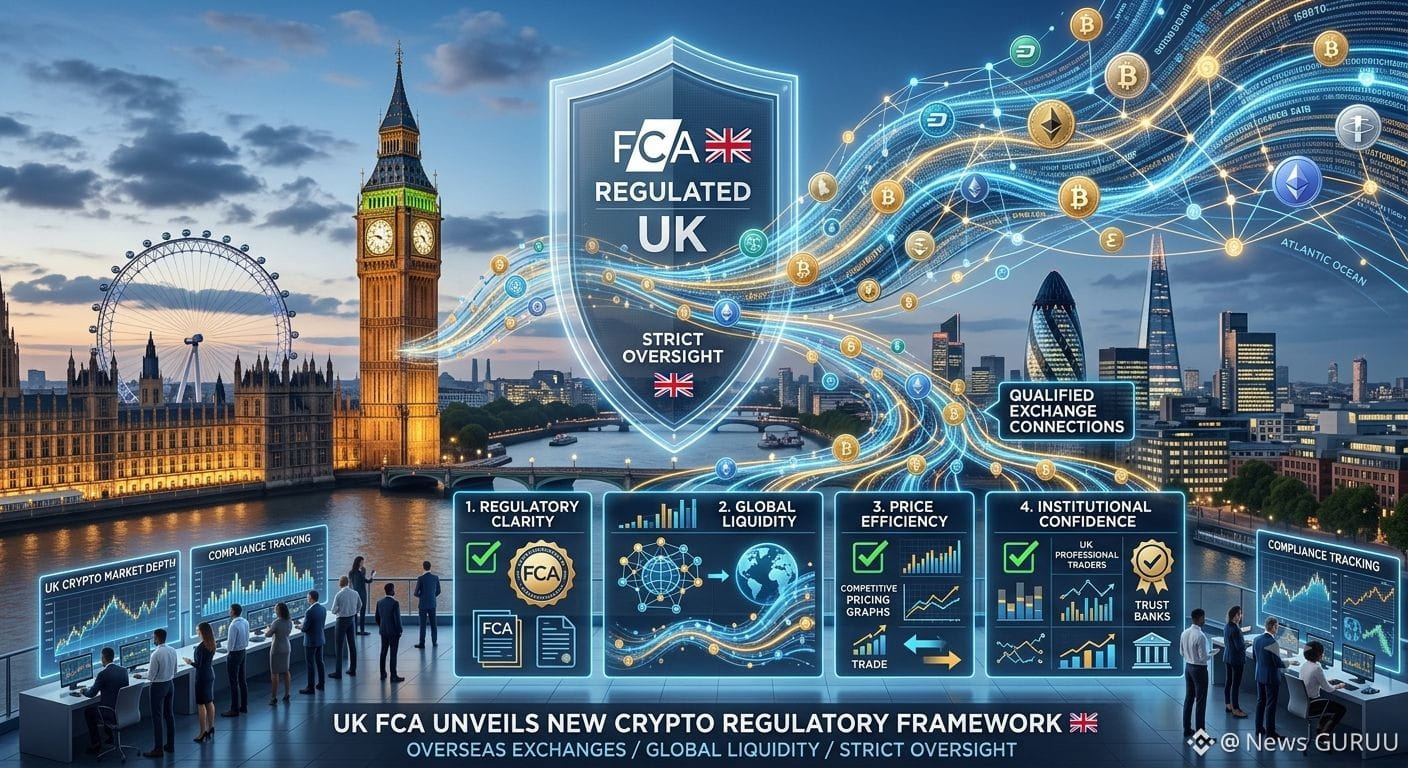
🇬🇧 UK FCA'S NEW CRYPTO RULES: BULLISH FOR THE MARKET?
The UK FCA has introduced a new crypto framework, bringing stronger regulation and clearer rules for qualified exchanges.
✅ Greater regulatory clarity
✅ Stronger institutional confidence
✅ Improved global liquidity potential
Clear regulations are a positive long-term signal for the crypto market.
📊 Trading View: BUY fundamentally strong cryptocurrencies on market dips. Regulatory clarity could support long-term bullish momentum, but always manage your risk.
"CLICK ON THE BELOW YELLOW COIN TAG FOR BENEFIT TRADE 👇👇👇👇
$BNB $ETH $BTC
{spot}(BTCUSDT)
{spot}(ETHUSDT)
{spot}(BNBUSDT)
#ukfcapublishescryptoregframework #bitcoin
🇬🇧 UK FCA'S NEW CRYPTO RULES: BULLISH FOR THE MARKET?
The UK FCA has introduced a new crypto framework, bringing stronger regulation and clearer rules for qualified exchanges.
✅ Greater regulatory clarity
✅ Stronger institutional confidence
✅ Improved global liquidity potential
Clear regulations are a positive long-term signal for the crypto market.
📊 Trading View: BUY fundamentally strong cryptocurrencies on market dips. Regulatory clarity could support long-term bullish momentum, but always manage your risk.
"CLICK ON THE BELOW YELLOW COIN TAG FOR BENEFIT TRADE 👇👇👇👇
$BNB $ETH $BTC
🇬🇧 UK FCA'S NEW CRYPTO RULES: BULLISH FOR THE MARKET?
The UK FCA has introduced a new crypto framework, bringing stronger regulation and clearer rules for qualified exchanges.
✅ Greater regulatory clarity
✅ Stronger institutional confidence
✅ Improved global liquidity potential
Clear regulations are a positive long-term signal for the crypto market.
📊 Trading View: BUY fundamentally strong cryptocurrencies on market dips. Regulatory clarity could support long-term bullish momentum, but always manage your risk.
"CLICK ON THE BELOW YELLOW COIN TAG FOR BENEFIT TRADE 👇👇👇👇
$BNB $ETH $BTC
2
9
6.3k
·
--
#ukfcapublishescryptoregframework 🚨 What Do The UKs New Crypto Rules Mean For Us?
The UKs Financial Conduct Authority has come up with rules for crypto. These rules might change the industry. Now smaller crypto companies might struggle because they have to follow more rules and pay more to operate.This could make people less likely to speculate.
In the long run things are looking up. The UK did not go with the rules that the EU has. This means crypto companies can still work with people and institutions from over the world.It also gives institutions the clarity they need to get involved with crypto. The new rules support ideas.
🚨 What's your verdict? One vote only! Are the UK's new crypto rules ultimately bullish or bearish for the Short Term ?
Note: This poll is based on the short-term market outlook only.
Please vote based on your short-term expectations.
#UKCrypto #CryptoRegulation #DigitalAssets #Khan62
$BTC $ETH $SOL
{future}(SOLUSDT)
{future}(ETHUSDT)
{future}(BTCUSDT)
#ukfcapublishescryptoregframework 🚨 What Do The UKs New Crypto Rules Mean For Us?
The UKs Financial Conduct Authority has come up with rules for crypto. These rules might change the industry. Now smaller crypto companies might struggle because they have to follow more rules and pay more to operate.This could make people less likely to speculate.
In the long run things are looking up. The UK did not go with the rules that the EU has. This means crypto companies can still work with people and institutions from over the world.It also gives institutions the clarity they need to get involved with crypto. The new rules support ideas.
🚨 What's your verdict? One vote only! Are the UK's new crypto rules ultimately bullish or bearish for the Short Term ?
Note: This poll is based on the short-term market outlook only.
Please vote based on your short-term expectations.
#UKCrypto #CryptoRegulation #DigitalAssets #Khan62
$BTC $ETH $SOL
The UKs Financial Conduct Authority has come up with rules for crypto. These rules might change the industry. Now smaller crypto companies might struggle because they have to follow more rules and pay more to operate.This could make people less likely to speculate.
In the long run things are looking up. The UK did not go with the rules that the EU has. This means crypto companies can still work with people and institutions from over the world.It also gives institutions the clarity they need to get involved with crypto. The new rules support ideas.
🚨 What's your verdict? One vote only! Are the UK's new crypto rules ultimately bullish or bearish for the Short Term ?
Note: This poll is based on the short-term market outlook only.
Please vote based on your short-term expectations.
#UKCrypto #CryptoRegulation #DigitalAssets #Khan62
$BTC $ETH $SOL
BULLISH FOR MARKER
33%
BEARISH FOR MARKET
67%
NOT SURE
0%
3 votes • Voting closed
1
1
254

#UKFCAPublishesCryptoRegFramework
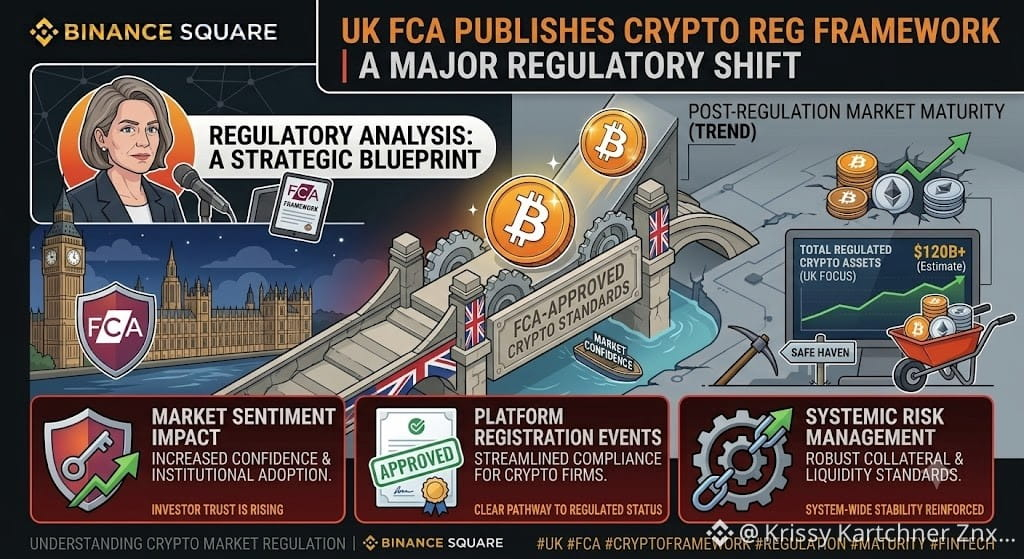
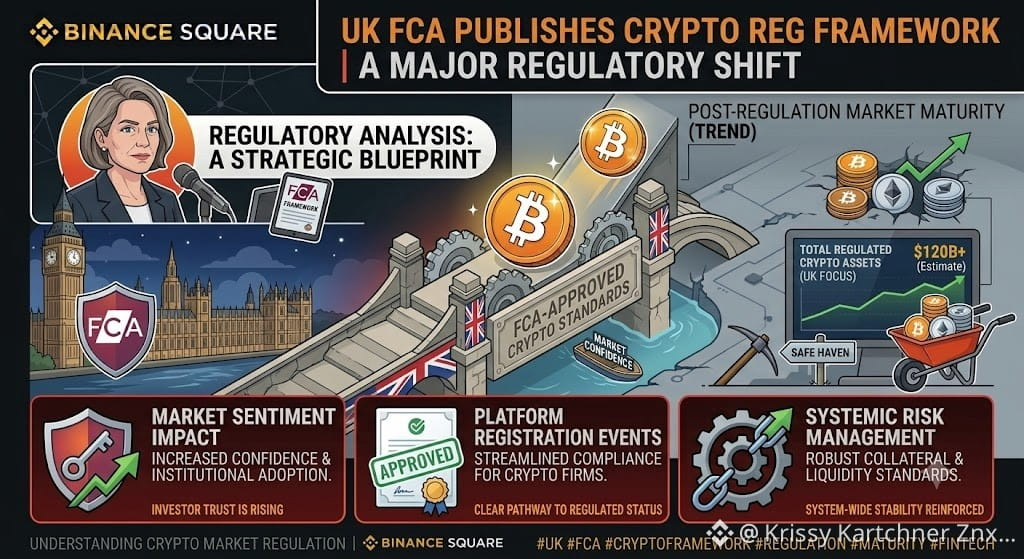
The cryptocurrency industry continues to mature as regulators worldwide work to establish clear guidelines for digital asset markets. The latest development, **#UKFCAPublishesCryptoRegFramework**, highlights the growing importance of regulatory clarity in supporting innovation while enhancing investor protection.
The United Kingdom's Financial Conduct Authority (FCA) aims to create a structured environment for crypto businesses, helping improve transparency, compliance, and market confidence. As digital assets become increasingly integrated into the global financial system, clear regulations can provide businesses and investors with greater certainty.
A well-defined regulatory framework may encourage broader institutional participation in the crypto sector. Financial institutions, fintech companies, and blockchain projects often seek regulatory clarity before expanding operations or launching new services. This can support long-term growth and strengthen the overall market ecosystem.
Major cryptocurrencies such as **$BTC**, **$ETH**, and **$BNB** continue to play a central role in the digital asset economy. As regulations evolve, these assets may benefit from improved market infrastructure, stronger compliance standards, and increased mainstream adoption.
The publication of a crypto regulatory framework reflects a broader global trend toward balancing innovation with responsible oversight. As governments and regulators develop clearer policies, the cryptocurrency industry may continue progressing toward greater maturity, stability, and long-term sustainability.
#CryptoRegulation #blockchain #BinanceSquare
#UKFCAPublishesCryptoRegFramework
The cryptocurrency industry continues to mature as regulators worldwide work to establish clear guidelines for digital asset markets. The latest development, **#UKFCAPublishesCryptoRegFramework**, highlights the growing importance of regulatory clarity in supporting innovation while enhancing investor protection.
The United Kingdom's Financial Conduct Authority (FCA) aims to create a structured environment for crypto businesses, helping improve transparency, compliance, and market confidence. As digital assets become increasingly integrated into the global financial system, clear regulations can provide businesses and investors with greater certainty.
A well-defined regulatory framework may encourage broader institutional participation in the crypto sector. Financial institutions, fintech companies, and blockchain projects often seek regulatory clarity before expanding operations or launching new services. This can support long-term growth and strengthen the overall market ecosystem.
Major cryptocurrencies such as **$BTC**, **$ETH**, and **$BNB** continue to play a central role in the digital asset economy. As regulations evolve, these assets may benefit from improved market infrastructure, stronger compliance standards, and increased mainstream adoption.
The publication of a crypto regulatory framework reflects a broader global trend toward balancing innovation with responsible oversight. As governments and regulators develop clearer policies, the cryptocurrency industry may continue progressing toward greater maturity, stability, and long-term sustainability.
#CryptoRegulation #blockchain #BinanceSquare
The cryptocurrency industry continues to mature as regulators worldwide work to establish clear guidelines for digital asset markets. The latest development, **#UKFCAPublishesCryptoRegFramework**, highlights the growing importance of regulatory clarity in supporting innovation while enhancing investor protection.
The United Kingdom's Financial Conduct Authority (FCA) aims to create a structured environment for crypto businesses, helping improve transparency, compliance, and market confidence. As digital assets become increasingly integrated into the global financial system, clear regulations can provide businesses and investors with greater certainty.
A well-defined regulatory framework may encourage broader institutional participation in the crypto sector. Financial institutions, fintech companies, and blockchain projects often seek regulatory clarity before expanding operations or launching new services. This can support long-term growth and strengthen the overall market ecosystem.
Major cryptocurrencies such as **$BTC**, **$ETH**, and **$BNB** continue to play a central role in the digital asset economy. As regulations evolve, these assets may benefit from improved market infrastructure, stronger compliance standards, and increased mainstream adoption.
The publication of a crypto regulatory framework reflects a broader global trend toward balancing innovation with responsible oversight. As governments and regulators develop clearer policies, the cryptocurrency industry may continue progressing toward greater maturity, stability, and long-term sustainability.
#CryptoRegulation #blockchain #BinanceSquare
1
93

#ukfcapublishescryptoregframework
#bitcoin
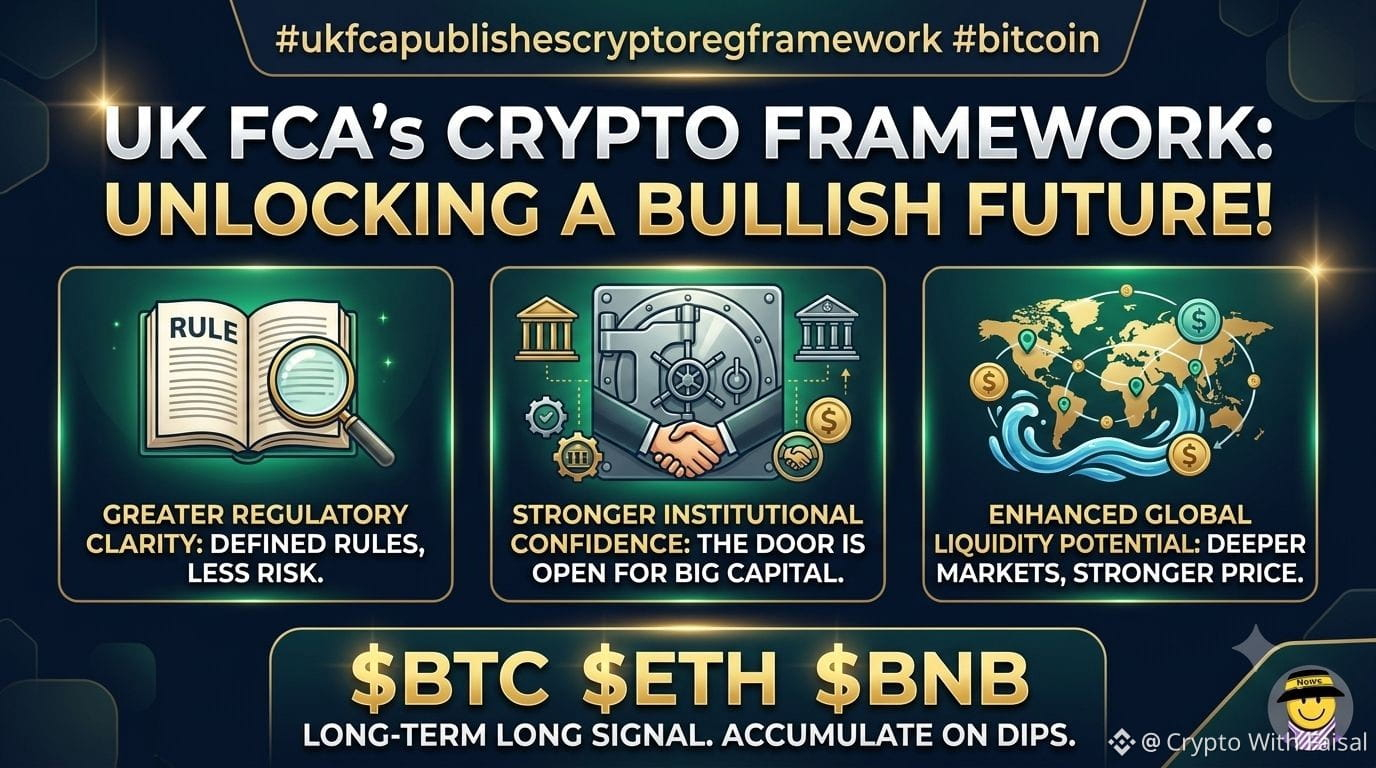
🇬🇧 UK FCA ROLLS OUT UPDATED CRYPTO GUIDELINES: A POSITIVE CATALYST?
The UK's Financial Conduct Authority just launched a comprehensive new framework for digital assets, establishing tighter oversight and highly transparent guidelines for approved exchanges.
✅ Enhanced rulebook transparency
✅ Boosted trust among institutional players
✅ Higher prospects for worldwide liquidity
Transparent guidelines serve as an excellent, long-term bullish indicator for the broader digital asset space.
📊 Market Strategy: Accumulate fundamentally solid assets during price pullbacks. Well-defined rules often fuel sustained upward trends, but remember to always manage your risk appropriately.
"TAP THE YELLOW COIN TAGS BELOW TO LEVERAGE YOUR TRADES 👇👇👇👇
$BNB
{spot}(BNBUSDT)
$ETH $BTC
{spot}(BTCUSDT)
{spot}(ETHUSDT)
#ukfcapublishescryptoregframework
#bitcoin
🇬🇧 UK FCA ROLLS OUT UPDATED CRYPTO GUIDELINES: A POSITIVE CATALYST?
The UK's Financial Conduct Authority just launched a comprehensive new framework for digital assets, establishing tighter oversight and highly transparent guidelines for approved exchanges.
✅ Enhanced rulebook transparency
✅ Boosted trust among institutional players
✅ Higher prospects for worldwide liquidity
Transparent guidelines serve as an excellent, long-term bullish indicator for the broader digital asset space.
📊 Market Strategy: Accumulate fundamentally solid assets during price pullbacks. Well-defined rules often fuel sustained upward trends, but remember to always manage your risk appropriately.
"TAP THE YELLOW COIN TAGS BELOW TO LEVERAGE YOUR TRADES 👇👇👇👇
$BNB
$ETH $BTC
#bitcoin
🇬🇧 UK FCA ROLLS OUT UPDATED CRYPTO GUIDELINES: A POSITIVE CATALYST?
The UK's Financial Conduct Authority just launched a comprehensive new framework for digital assets, establishing tighter oversight and highly transparent guidelines for approved exchanges.
✅ Enhanced rulebook transparency
✅ Boosted trust among institutional players
✅ Higher prospects for worldwide liquidity
Transparent guidelines serve as an excellent, long-term bullish indicator for the broader digital asset space.
📊 Market Strategy: Accumulate fundamentally solid assets during price pullbacks. Well-defined rules often fuel sustained upward trends, but remember to always manage your risk appropriately.
"TAP THE YELLOW COIN TAGS BELOW TO LEVERAGE YOUR TRADES 👇👇👇👇
$BNB
$ETH $BTC
8
1
23
20.1k

🔥 The approval of a shekel-pegged stablecoin is not just a local story — it's a signal that institutional confidence in crypto is growing, with the Israeli regulator's greenlight coming after a two-year pilot program on the Solana blockchain #BrazilCentralBankSaysStablecoinsElectronicMoney.
📊 This week's market sentiment is at Extreme Fear (23/100), but on-chain data tells a different story, with smart money buying into Solana-based tokens like ACM and Tate, and top traders on Binance going net long with an Open Interest of $6.59B for BTC and $4.02B for ETH #StablecoinMarketCapFalls.
💡 The bigger picture here is that stablecoins are becoming increasingly recognized as a form of electronic money, with the UK FCA also publishing a crypto regulation framework #UKFCAPublishesCryptoRegFramework, and this could lead to a surge in adoption and innovation in the space.
🤔 What's your take on the growing institutional acceptance of stablecoins — will it lead to a new wave of crypto adoption, or is it just a sign of a maturing market?
🔥 The approval of a shekel-pegged stablecoin is not just a local story — it's a signal that institutional confidence in crypto is growing, with the Israeli regulator's greenlight coming after a two-year pilot program on the Solana blockchain #BrazilCentralBankSaysStablecoinsElectronicMoney.
📊 This week's market sentiment is at Extreme Fear (23/100), but on-chain data tells a different story, with smart money buying into Solana-based tokens like ACM and Tate, and top traders on Binance going net long with an Open Interest of $6.59B for BTC and $4.02B for ETH #StablecoinMarketCapFalls.
💡 The bigger picture here is that stablecoins are becoming increasingly recognized as a form of electronic money, with the UK FCA also publishing a crypto regulation framework #UKFCAPublishesCryptoRegFramework, and this could lead to a surge in adoption and innovation in the space.
🤔 What's your take on the growing institutional acceptance of stablecoins — will it lead to a new wave of crypto adoption, or is it just a sign of a maturing market?
📊 This week's market sentiment is at Extreme Fear (23/100), but on-chain data tells a different story, with smart money buying into Solana-based tokens like ACM and Tate, and top traders on Binance going net long with an Open Interest of $6.59B for BTC and $4.02B for ETH #StablecoinMarketCapFalls.
💡 The bigger picture here is that stablecoins are becoming increasingly recognized as a form of electronic money, with the UK FCA also publishing a crypto regulation framework #UKFCAPublishesCryptoRegFramework, and this could lead to a surge in adoption and innovation in the space.
🤔 What's your take on the growing institutional acceptance of stablecoins — will it lead to a new wave of crypto adoption, or is it just a sign of a maturing market?
211

·
--
Bullish
#UKFCAPublishesCryptoRegFramework
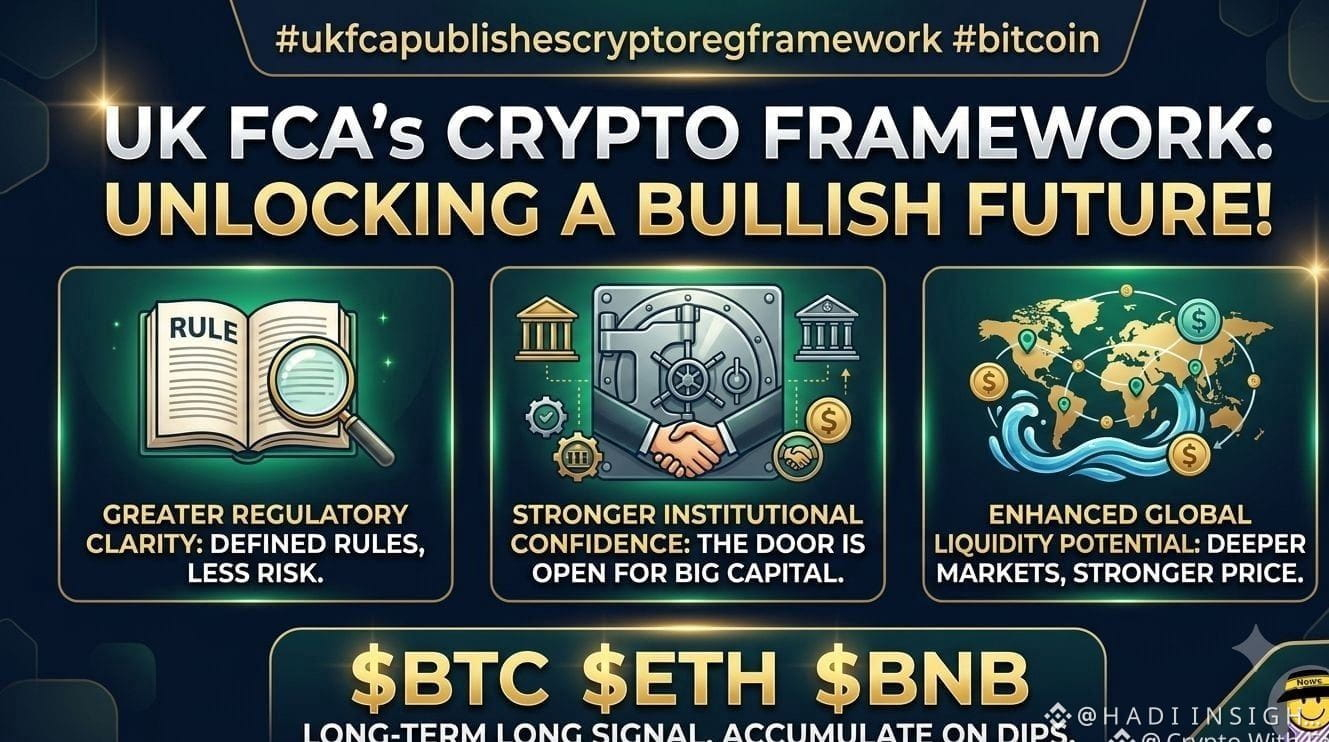
🇬🇧 UK Updates Crypto Rules — Bullish for the Market? 👀
The UK has introduced clearer crypto guidelines, aiming to improve transparency, investor confidence, and institutional participation. 📈
Clear regulations often create a stronger foundation for long-term market growth. 🚀
💎 My strategy: Accumulate quality projects during pullbacks and stay patient.
Trade smart. Always manage your risk. 🔥
$BNB
{spot}(BNBUSDT)
$BTC
{spot}(BTCUSDT)
$ETH
{spot}(ETHUSDT)
#UKFCAPublishesCryptoRegFramework
🇬🇧 UK Updates Crypto Rules — Bullish for the Market? 👀
The UK has introduced clearer crypto guidelines, aiming to improve transparency, investor confidence, and institutional participation. 📈
Clear regulations often create a stronger foundation for long-term market growth. 🚀
💎 My strategy: Accumulate quality projects during pullbacks and stay patient.
Trade smart. Always manage your risk. 🔥
$BNB
$BTC
$ETH
🇬🇧 UK Updates Crypto Rules — Bullish for the Market? 👀
The UK has introduced clearer crypto guidelines, aiming to improve transparency, investor confidence, and institutional participation. 📈
Clear regulations often create a stronger foundation for long-term market growth. 🚀
💎 My strategy: Accumulate quality projects during pullbacks and stay patient.
Trade smart. Always manage your risk. 🔥
$BNB
$BTC
$ETH
47


·
--
Bullish
$RPL
Price has reclaimed an important resistance level that is now acting as support. The structure favors bullish continuation while momentum remains positive above key demand.
EP: $2.18 - $2.23
TP1: $2.35
TP2: $2.50
TP3: $2.70
SL: $2.05
Trend Strength: The market continues printing higher lows with buyers protecting every retracement.
Momentum Bias: Bullish momentum remains stable without signs of structural weakness.
Why Targets Are Likely: The next liquidity cluster sits above recent highs, providing room for continuation toward higher resistance.
$RPL
{spot}(RPLUSDT)
USM2MoneySupplyHitsRecord$23.05T#UKFCAPublishesCryptoRegFramework StablecoinMarketCapFalls$10BTo$300BStablecoinMarketCapFalls$10BTo$300B#BitcoinFallsOver50%FromOctoberHigh #MoonbeamToMigrateGLMRToBase
$RPL
Price has reclaimed an important resistance level that is now acting as support. The structure favors bullish continuation while momentum remains positive above key demand.
EP: $2.18 - $2.23
TP1: $2.35
TP2: $2.50
TP3: $2.70
SL: $2.05
Trend Strength: The market continues printing higher lows with buyers protecting every retracement.
Momentum Bias: Bullish momentum remains stable without signs of structural weakness.
Why Targets Are Likely: The next liquidity cluster sits above recent highs, providing room for continuation toward higher resistance.
$RPL
USM2MoneySupplyHitsRecord$23.05T#UKFCAPublishesCryptoRegFramework StablecoinMarketCapFalls$10BTo$300BStablecoinMarketCapFalls$10BTo$300B#BitcoinFallsOver50%FromOctoberHigh #MoonbeamToMigrateGLMRToBase
Price has reclaimed an important resistance level that is now acting as support. The structure favors bullish continuation while momentum remains positive above key demand.
EP: $2.18 - $2.23
TP1: $2.35
TP2: $2.50
TP3: $2.70
SL: $2.05
Trend Strength: The market continues printing higher lows with buyers protecting every retracement.
Momentum Bias: Bullish momentum remains stable without signs of structural weakness.
Why Targets Are Likely: The next liquidity cluster sits above recent highs, providing room for continuation toward higher resistance.
$RPL
USM2MoneySupplyHitsRecord$23.05T#UKFCAPublishesCryptoRegFramework StablecoinMarketCapFalls$10BTo$300BStablecoinMarketCapFalls$10BTo$300B#BitcoinFallsOver50%FromOctoberHigh #MoonbeamToMigrateGLMRToBase
5
174

·
--
OMG 😱 – $PUMP Seed coin bleeding! 🩸 – 6.35% down – 53% bids – bounce incoming? 🤔
🚀 Entry: 0.00153 – 0.00154
🎯 Target: 0.00160
✅ TP (i): 0.00157
✅ TP (ii): 0.00159
✅ TP (iii): 0.00160
🛑 SL: 0.00150
Direction: Long
#VitalikOutlinesLeanEthereumRoadmap #BrazilCentralBankSaysStablecoinsElectronicMoney #UKFCAPublishesCryptoRegFramework #BitcoinFallsOver50%FromOctoberHigh #MoonbeamToMigrateGLMRToBase $VANRY $RPL
OMG 😱 – $PUMP Seed coin bleeding! 🩸 – 6.35% down – 53% bids – bounce incoming? 🤔
🚀 Entry: 0.00153 – 0.00154
🎯 Target: 0.00160
✅ TP (i): 0.00157
✅ TP (ii): 0.00159
✅ TP (iii): 0.00160
🛑 SL: 0.00150
Direction: Long
#VitalikOutlinesLeanEthereumRoadmap #BrazilCentralBankSaysStablecoinsElectronicMoney #UKFCAPublishesCryptoRegFramework #BitcoinFallsOver50%FromOctoberHigh #MoonbeamToMigrateGLMRToBase $VANRY $RPL
🚀 Entry: 0.00153 – 0.00154
🎯 Target: 0.00160
✅ TP (i): 0.00157
✅ TP (ii): 0.00159
✅ TP (iii): 0.00160
🛑 SL: 0.00150
Direction: Long
#VitalikOutlinesLeanEthereumRoadmap #BrazilCentralBankSaysStablecoinsElectronicMoney #UKFCAPublishesCryptoRegFramework #BitcoinFallsOver50%FromOctoberHigh #MoonbeamToMigrateGLMRToBase $VANRY $RPL
1
342

·
--
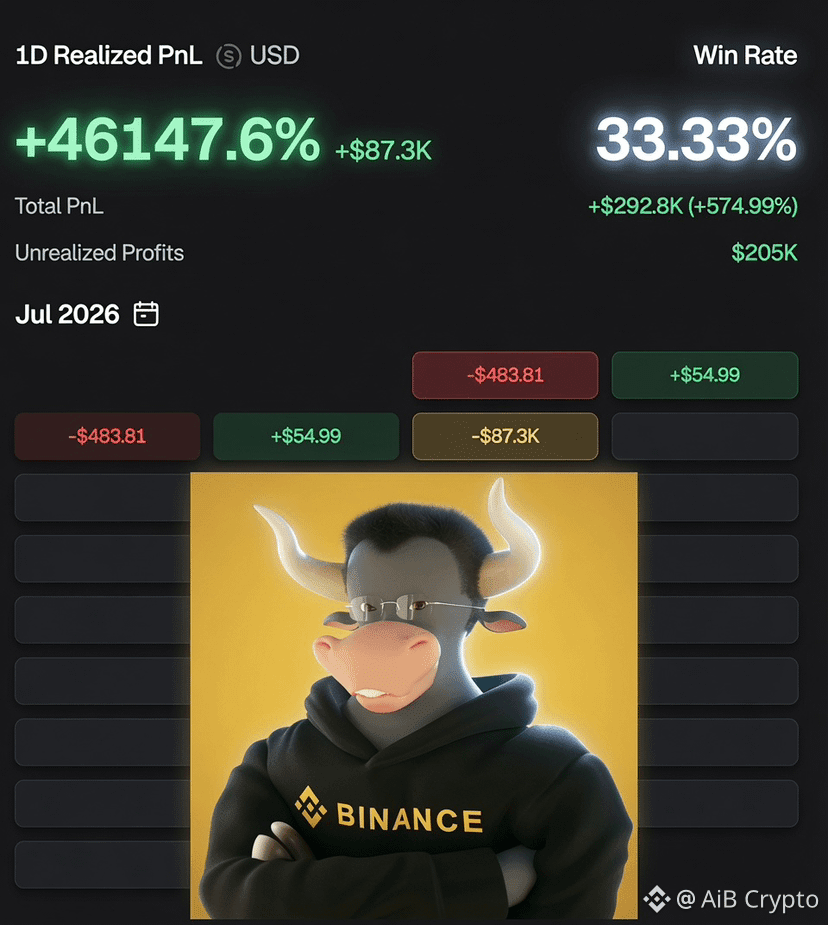
🤯 Someone turned $700 into $292K with the $CZ meme coin on BNB Chain!
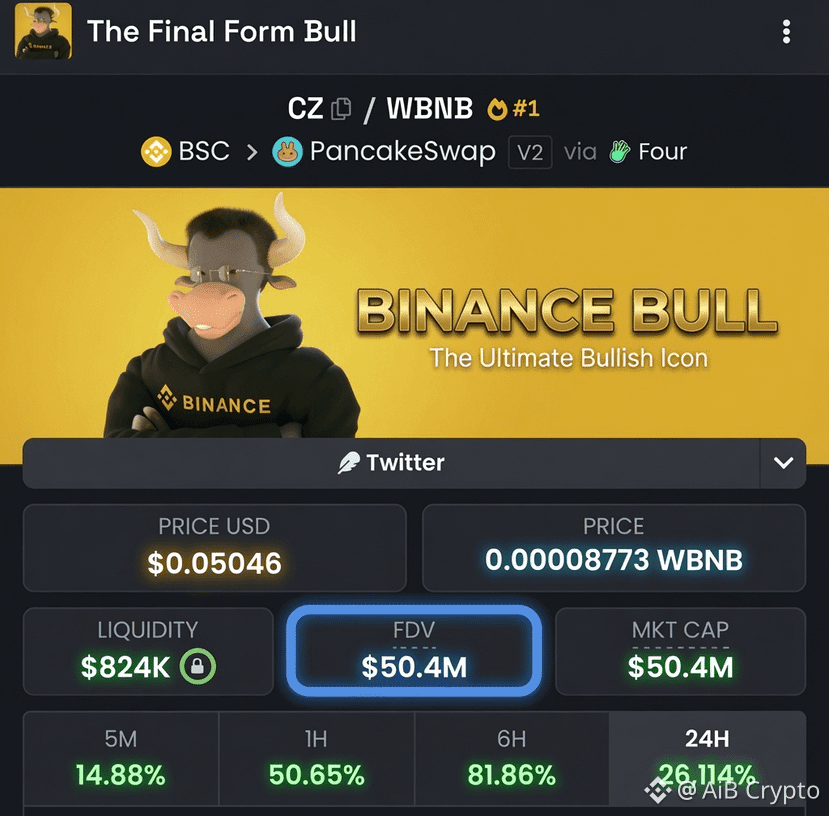
A new $CZ token launched on #BNBChain just 2 days ago. Someone bought around $700 worth of $CZ yesterday.
Today, the token hit an $80M market cap, turning that $700 position into an unrealized $292K. It's now sitting around a $50M market cap.
The interesting part? The developer sent 70% of the total supply directly to @cz_binance's wallet.
It reminds me of $ANSEM. 😅
And i missed both 🥲
That token peaked at around $360M FDV, and many believe it brought more attention to @BullpenFi.
Question is — could $CZ create the same kind of momentum for Aster?
Big upside potential… but big risks too. If whales dump, liquidity can disappear fast.
⚠️ Just my analysis. NFA. DYOR.
If you saw $CZ meme coin yesterday… would you have bought or just skipped? 👇
Like, Repost & Share ❤️🩹
Drop your thoughts in the comments 👇
#BitcoinFallsOver50%FromOctoberHigh #BOKWarnsSingleStockLeveragedETFRisks #VitalikOutlinesLeanEthereumRoadmap #BrazilCentralBankSaysStablecoinsElectronicMoney #UKFCAPublishesCryptoRegFramework
🤯 Someone turned $700 into $292K with the $CZ meme coin on BNB Chain!
A new $CZ token launched on #BNBChain just 2 days ago. Someone bought around $700 worth of $CZ yesterday.
Today, the token hit an $80M market cap, turning that $700 position into an unrealized $292K. It's now sitting around a $50M market cap.
The interesting part? The developer sent 70% of the total supply directly to @cz_binance's wallet.
It reminds me of $ANSEM. 😅
And i missed both 🥲
That token peaked at around $360M FDV, and many believe it brought more attention to @BullpenFi.
Question is — could $CZ create the same kind of momentum for Aster?
Big upside potential… but big risks too. If whales dump, liquidity can disappear fast.
⚠️ Just my analysis. NFA. DYOR.
If you saw $CZ meme coin yesterday… would you have bought or just skipped? 👇
Like, Repost & Share ❤️🩹
Drop your thoughts in the comments 👇
#BitcoinFallsOver50%FromOctoberHigh #BOKWarnsSingleStockLeveragedETFRisks #VitalikOutlinesLeanEthereumRoadmap #BrazilCentralBankSaysStablecoinsElectronicMoney #UKFCAPublishesCryptoRegFramework
A new $CZ token launched on #BNBChain just 2 days ago. Someone bought around $700 worth of $CZ yesterday.
Today, the token hit an $80M market cap, turning that $700 position into an unrealized $292K. It's now sitting around a $50M market cap.
The interesting part? The developer sent 70% of the total supply directly to @cz_binance's wallet.
It reminds me of $ANSEM. 😅
And i missed both 🥲
That token peaked at around $360M FDV, and many believe it brought more attention to @BullpenFi.
Question is — could $CZ create the same kind of momentum for Aster?
Big upside potential… but big risks too. If whales dump, liquidity can disappear fast.
⚠️ Just my analysis. NFA. DYOR.
If you saw $CZ meme coin yesterday… would you have bought or just skipped? 👇
Like, Repost & Share ❤️🩹
Drop your thoughts in the comments 👇
#BitcoinFallsOver50%FromOctoberHigh #BOKWarnsSingleStockLeveragedETFRisks #VitalikOutlinesLeanEthereumRoadmap #BrazilCentralBankSaysStablecoinsElectronicMoney #UKFCAPublishesCryptoRegFramework
1
214

I’m not brave enough to say with 100% certainty that it will go up next.
But $BTC has indeed reached a turning point.
There’s a 90% chance it will rise!!!
Buy digital currency on the upcoming pullback.
One month from now, you’ll thank yourself while vacationing in a resort for the decision you made today with courage!#BOKWarnsSingleStockLeveragedETFRisks #VitalikOutlinesLeanEthereumRoadmap IRENFalls10%After$700MCoCEOStockAwardEthicalHackersFindAptosFlawRisking$70BMonadTVLTops$447.9MSurpassingSui#BrazilCentralBankSaysStablecoinsElectronicMoney #BrazilCentralBankSaysStablecoinsElectronicMoney #UKFCAPublishesCryptoRegFramework $SPCXB $NVDAB $TSLAB
I’m not brave enough to say with 100% certainty that it will go up next.
But $BTC has indeed reached a turning point.
There’s a 90% chance it will rise!!!
Buy digital currency on the upcoming pullback.
One month from now, you’ll thank yourself while vacationing in a resort for the decision you made today with courage!#BOKWarnsSingleStockLeveragedETFRisks #VitalikOutlinesLeanEthereumRoadmap IRENFalls10%After$700MCoCEOStockAwardEthicalHackersFindAptosFlawRisking$70BMonadTVLTops$447.9MSurpassingSui#BrazilCentralBankSaysStablecoinsElectronicMoney #BrazilCentralBankSaysStablecoinsElectronicMoney #UKFCAPublishesCryptoRegFramework $SPCXB $NVDAB $TSLAB
But $BTC has indeed reached a turning point.
There’s a 90% chance it will rise!!!
Buy digital currency on the upcoming pullback.
One month from now, you’ll thank yourself while vacationing in a resort for the decision you made today with courage!#BOKWarnsSingleStockLeveragedETFRisks #VitalikOutlinesLeanEthereumRoadmap IRENFalls10%After$700MCoCEOStockAwardEthicalHackersFindAptosFlawRisking$70BMonadTVLTops$447.9MSurpassingSui#BrazilCentralBankSaysStablecoinsElectronicMoney #BrazilCentralBankSaysStablecoinsElectronicMoney #UKFCAPublishesCryptoRegFramework $SPCXB $NVDAB $TSLAB
32
CATHIE WOOD JUST EXPLAINED WHY ELON MUSK HAS SO MANY ENEMIES.
“TESLA WAS AN ENVIRONMENTAL MOVE.”
HE SOLVED A PROBLEM THAT MANY INSTITUTIONS WERE BUILT TO MANAGE.
THAT'S WHY THE ATTACKS NEVER STOP.#VitalikOutlinesLeanEthereumRoadmap IRENFalls10%After$700MCoCEOStockAwardEthicalHackersFindAptosFlawRisking$70BMonadTVLTops$447.9MSurpassingSui#BrazilCentralBankSaysStablecoinsElectronicMoney USM2MoneySupplyHitsRecord$23.05T#UKFCAPublishesCryptoRegFramework #BitcoinFallsOver50%FromOctoberHigh #MoonbeamToMigrateGLMRToBase $NVDAB $MSFTB $SPCXB
CATHIE WOOD JUST EXPLAINED WHY ELON MUSK HAS SO MANY ENEMIES.
“TESLA WAS AN ENVIRONMENTAL MOVE.”
HE SOLVED A PROBLEM THAT MANY INSTITUTIONS WERE BUILT TO MANAGE.
THAT'S WHY THE ATTACKS NEVER STOP.#VitalikOutlinesLeanEthereumRoadmap IRENFalls10%After$700MCoCEOStockAwardEthicalHackersFindAptosFlawRisking$70BMonadTVLTops$447.9MSurpassingSui#BrazilCentralBankSaysStablecoinsElectronicMoney USM2MoneySupplyHitsRecord$23.05T#UKFCAPublishesCryptoRegFramework #BitcoinFallsOver50%FromOctoberHigh #MoonbeamToMigrateGLMRToBase $NVDAB $MSFTB $SPCXB
“TESLA WAS AN ENVIRONMENTAL MOVE.”
HE SOLVED A PROBLEM THAT MANY INSTITUTIONS WERE BUILT TO MANAGE.
THAT'S WHY THE ATTACKS NEVER STOP.#VitalikOutlinesLeanEthereumRoadmap IRENFalls10%After$700MCoCEOStockAwardEthicalHackersFindAptosFlawRisking$70BMonadTVLTops$447.9MSurpassingSui#BrazilCentralBankSaysStablecoinsElectronicMoney USM2MoneySupplyHitsRecord$23.05T#UKFCAPublishesCryptoRegFramework #BitcoinFallsOver50%FromOctoberHigh #MoonbeamToMigrateGLMRToBase $NVDAB $MSFTB $SPCXB
TSLA+0.47%
TSLAUS+0.23%
21
Log in to explore more content
Join global crypto users on Binance Square
⚡️ Get latest and useful information about crypto.
💬 Trusted by the world’s largest crypto exchange.
👍 Discover real insights from verified creators.
Email / Phone number
Trending Topics
1
#AIStocksWhatNext
601,867 views
4,529 Discussing
2
#21SharesLaunchesEuropesFirstZcashETP
5,220 views
228 Discussing
3
#CardanoJoinsX402PaymentStandard
3,860 views
191 Discussing
4
#BitcoinTops$87KAtEightMonthHigh
5,496 views
71 Discussing
5
#ZECBreaksAbove$1600AtRecordHigh
2,682 views
60 Discussing
6
#BitwiseNEARStakingETPAssetsTop$100M
23,155 views
72 Discussing
7
#BitcoinBreaksAboveMayHighNears$86K
26,547 views
254 Discussing
8
#DogecoinRises15%
96,197 views
1,610 Discussing
9
#$14BBitcoinOptionsExpireFriday
7,678 views
109 Discussing
10
#BNBMarketCapPassesBNYMellon
59,594 views
1,291 Discussing