
#thailand
thailand
277,468 views
585 Discussing
Hot
Latest

BREAKING: TWO CHINESE NATIONALS ARRESTED IN THAILAND OVER $92M CRYPTO SCHEME!
Thai police have arrested two Chinese nationals in Bangkok who were reportedly wanted in connection with an alleged cryptocurrency pyramid scheme worth more than $92 MILLION.
⚠️ The case highlights the growing risks of crypto-related investment fraud.
🔍 Investors should:
- Verify platforms before depositing funds.
- Avoid guaranteed profit promises.
- Research project teams and ownership.
- Never invest based on pressure or hype.
Crypto scams can cause massive financial losses. Always DYOR!
Should international authorities strengthen cooperation to fight crypto fraud?
#thailand #CryptoScam #Bitcoin
74

·
--
#WORPTLetsTouristsConvertCryptoToThaiBaht
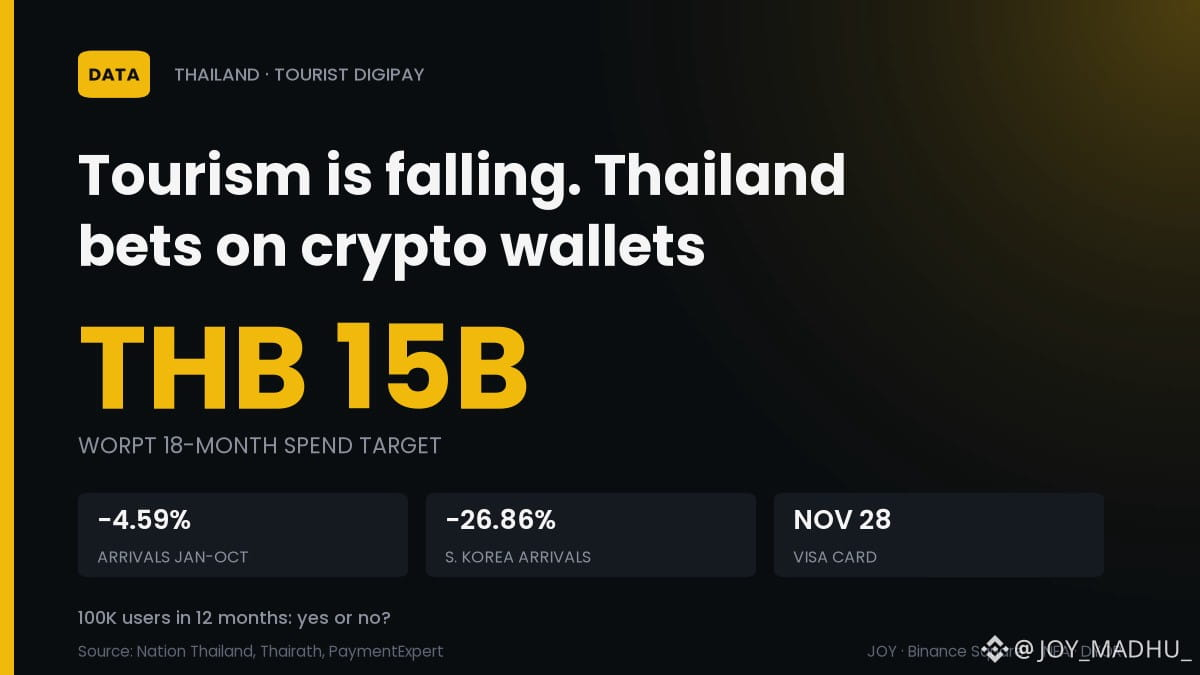
🧳 Arrivals Down 4.59%. Thailand Bets on Crypto Wallets
Thai tourism is shrinking for a 2nd year, and WORPT is a bid to unlock tourists' stablecoin spending.
📊 THB 15B target spend over 18 months, ~150K active users
📉 Arrivals Jan-Oct: 25.46M (-4.59% YoY), spending -2.85%
⚠️ South Korea, a key target market, is down 26.86%
📅 Physical Visa prepaid card slated for Nov 28
Zoom out: 15B baht vs 1.24T in foreign spend in Jan-Oct alone. A test, not a fix.
Will WORPT reach 100K users within 12 months, yes or no? 👇
$USDT $USDC
#WORPTLetsTouristsConvertCryptoToThaiBaht #Stablecoins #Thailand
12

Using WORPT compare to using Bitkub /local crypto exchanges & P2P opt in Thailand for tourists#worptletstouristsconvertcryptotothaibaht
When using crypto to fund travel in Thailand, WORPT, local exchanges like Bitkub, and P2P trading serve fundamentally different roles.
WORPT is designed for instant point-of-sale spending (street food, retail, restaurants) via PromptPay QR without requiring a Thai bank account.Bitkub and P2P are built for off-ramping bulk fiat into a bank account or cash.
Comparative Overview
Trade-Off Breakdown
1. Convenience & Accessibility for Short-Term Tourists
WORPT: Wins on friction. Foreign tourists cannot easily open a local Thai bank account on standard tourist visas. WORPT bypasses the banking system entirely by converting USDT/USDC directly into PromptPay QR payments, letting you pay street vendors, taxis, and malls instantly.Bitkub: High barrier to entry. Bitkub allows foreign passport holders to register, but you must link a verified Thai bank account to withdraw Baht.P2P: Requires finding trusted P2P sellers willing to do physical cash delivery/meetups in tourist hubs (e.g., Bangkok, Phuket), which carries security risks.
2. Cost Effectiveness
Bitkub / Local Exchanges: Offers the best exchange rates if you already have a Thai bank account. With standard trading fees (~0.25%) and direct FX pricing, it is cheaper for large lump-sum conversions.WORPT: Charges a flat 1.5% fee. While higher than a centralized exchange fee, it eliminates credit card foreign transaction fees (typically 3%) and traditional currency exchange booth markups.P2P: Rates fluctuate based on local liquidity. P2P cash merchants in Thailand often price USDT at a 1%–3% premium above market spot rates.
3. Spending Flexibility & Physical Cash
WORPT: strictly non-cash. It cannot be used to pull physical Baht notes out of an ATM. Furthermore, it imposes transaction caps (1,700 THB per single payment at small merchants, 50,000 THB total monthly limit).Bitkub & P2P: Superior for funding cash-heavy needs (e.g., long-term scooter rentals, cash-only night markets, apartment deposits) where QR codes aren't accepted.
Which Should You Choose?
Use WORPT if: You are visiting Thailand short-term, hold stablecoins (USDT/USDC), do not have a local bank account, and want to scan PromptPay QR codes for everyday meals, shopping, and transportation without carrying cash.Use P2P Cash Meetups if: You need physical cash in hand for places that do not accept PromptPay QR codes.Use Bitkub if: You are an expat, digital nomad, or long-stay tourist holding a Thai bank account who needs to convert larger sums (>50,000 THB/month) at the lowest possible conversion fee.
#thailand $BTC $USDE
Using WORPT compare to using Bitkub /local crypto exchanges & P2P opt in Thailand for tourists
#worptletstouristsconvertcryptotothaibaht
When using crypto to fund travel in Thailand, WORPT, local exchanges like Bitkub, and P2P trading serve fundamentally different roles.
WORPT is designed for instant point-of-sale spending (street food, retail, restaurants) via PromptPay QR without requiring a Thai bank account.Bitkub and P2P are built for off-ramping bulk fiat into a bank account or cash.
Comparative Overview
Trade-Off Breakdown
1. Convenience & Accessibility for Short-Term Tourists
WORPT: Wins on friction. Foreign tourists cannot easily open a local Thai bank account on standard tourist visas. WORPT bypasses the banking system entirely by converting USDT/USDC directly into PromptPay QR payments, letting you pay street vendors, taxis, and malls instantly.Bitkub: High barrier to entry. Bitkub allows foreign passport holders to register, but you must link a verified Thai bank account to withdraw Baht.P2P: Requires finding trusted P2P sellers willing to do physical cash delivery/meetups in tourist hubs (e.g., Bangkok, Phuket), which carries security risks.
2. Cost Effectiveness
Bitkub / Local Exchanges: Offers the best exchange rates if you already have a Thai bank account. With standard trading fees (~0.25%) and direct FX pricing, it is cheaper for large lump-sum conversions.WORPT: Charges a flat 1.5% fee. While higher than a centralized exchange fee, it eliminates credit card foreign transaction fees (typically 3%) and traditional currency exchange booth markups.P2P: Rates fluctuate based on local liquidity. P2P cash merchants in Thailand often price USDT at a 1%–3% premium above market spot rates.
3. Spending Flexibility & Physical Cash
WORPT: strictly non-cash. It cannot be used to pull physical Baht notes out of an ATM. Furthermore, it imposes transaction caps (1,700 THB per single payment at small merchants, 50,000 THB total monthly limit).Bitkub & P2P: Superior for funding cash-heavy needs (e.g., long-term scooter rentals, cash-only night markets, apartment deposits) where QR codes aren't accepted.
Which Should You Choose?
Use WORPT if: You are visiting Thailand short-term, hold stablecoins (USDT/USDC), do not have a local bank account, and want to scan PromptPay QR codes for everyday meals, shopping, and transportation without carrying cash.Use P2P Cash Meetups if: You need physical cash in hand for places that do not accept PromptPay QR codes.Use Bitkub if: You are an expat, digital nomad, or long-stay tourist holding a Thai bank account who needs to convert larger sums (>50,000 THB/month) at the lowest possible conversion fee.
#thailand $BTC $USDE
SHERAZ FAHEEM 01:
Users should follow official updates and avoid making assumptions until the full technical picture becomes clear.
1
1
161
·
--
#WORPTLetsTouristsConvertCryptoToThaiBaht
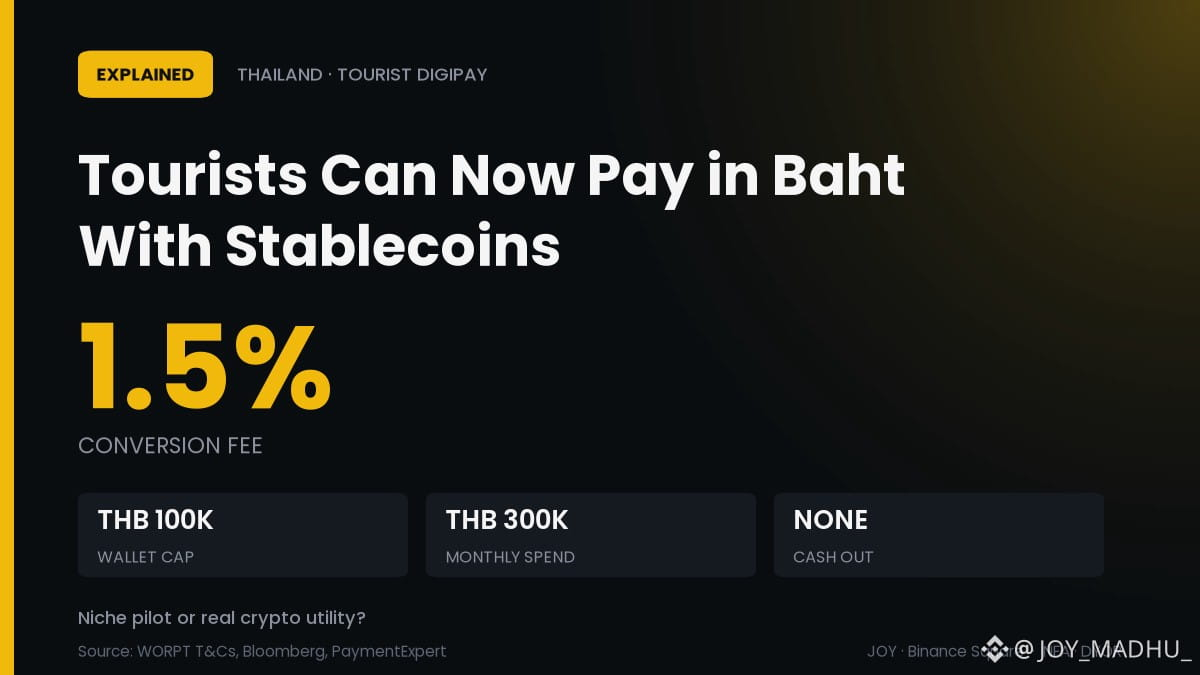
🇹🇭 1.5% Fee, Zero Crypto at the Till: Thailand's Tourist Test
WORPT lets foreign tourists turn USDT or USDC into baht and pay by Thai QR, shops get fiat only.
💳 Wallet cap THB 100,000, top-ups up to THB 500,000 a month
📊 Spending limit up to THB 300,000 per person per month
⚠️ 1.5% conversion fee incl. VAT, no cash withdrawals
🏦 In the Thai SEC's Tourist DigiPay sandbox
My read: real stablecoin utility, but the caps keep it a pilot for now.
Will Visa prepaid cards push WORPT past niche use within 6 months, yes or no? 👇
$USDT $USDC
#WORPTLetsTouristsConvertCryptoToThaiBaht #Stablecoins #Thailand
SHERAZ FAHEEM 01:
DeFi platforms need strong monitoring systems to identify unusual behavior and respond before risks escalate.
1
1
45
Verified
#WORPTLetsTouristsConvertCryptoToThaiBaht
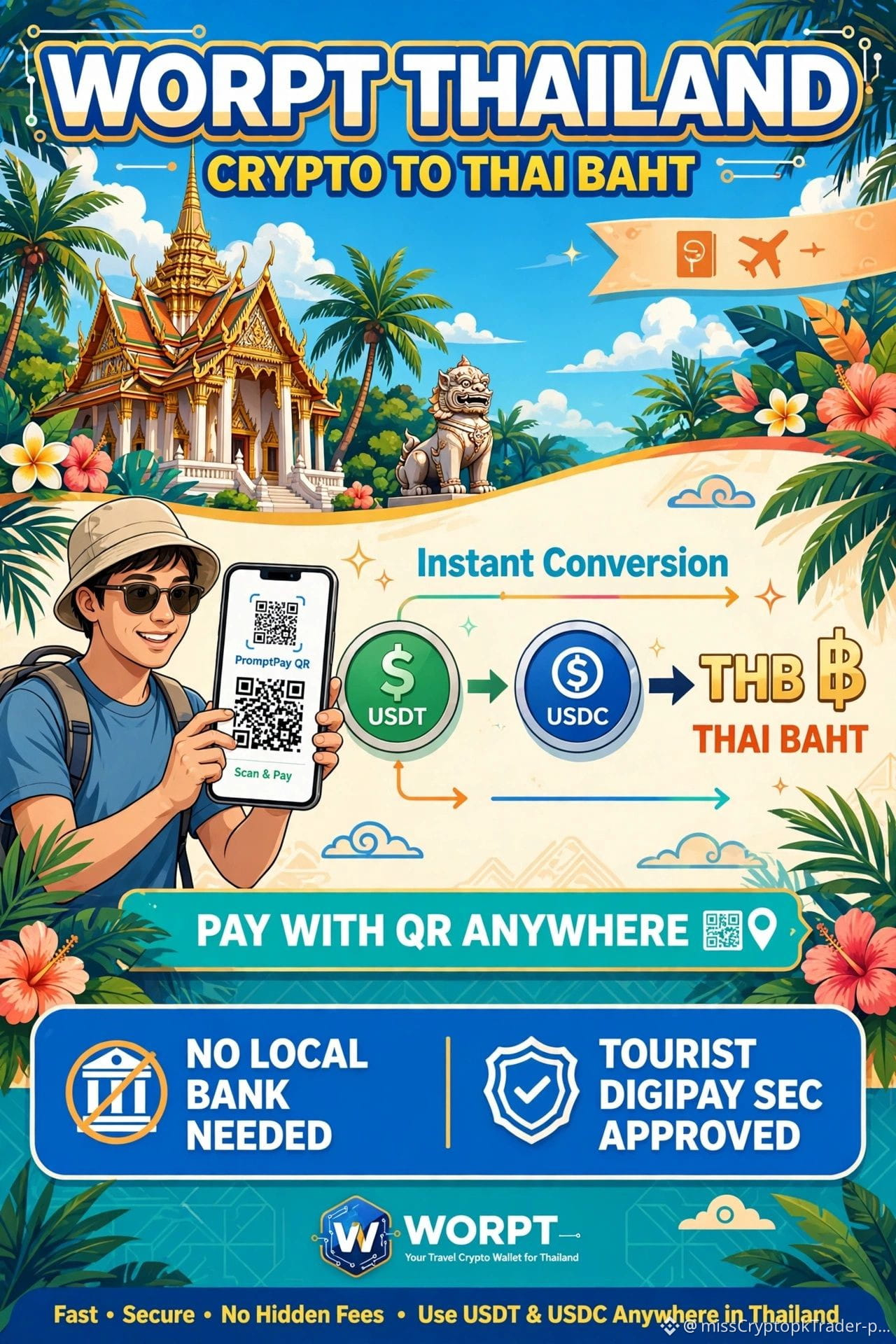
🇹🇭 WORPT Lets Tourists Convert Crypto To Thai Baht! 🇹🇭
Thailand just changed the game for crypto travellers!
No Thai bank account. No cash exchange. Just scan & pay ANYWHERE in Thailand with crypto.
How it works:
1. Verify ID
2. Link Wallet
3. Convert USDT / USDC → Baht
4. Scan PromptPay QR & Pay
Under SEC TouristDigiPay sandbox. Tether-backed.
Fee: 1.5% | Target: 200,000 users, 15B Baht in 18 months
Would you pay for your FULL Thailand trip with USDT? ✈️
YES or NO? 👇
#WORPTLetsTouristsConvertCryptoToThaiBaht
#Thailand #WORPT #USDT
$BTC $ETH
#WORPTLetsTouristsConvertCryptoToThaiBaht
🇹🇭 WORPT Lets Tourists Convert Crypto To Thai Baht! 🇹🇭
Thailand just changed the game for crypto travellers!
No Thai bank account. No cash exchange. Just scan & pay ANYWHERE in Thailand with crypto.
How it works:
1. Verify ID
2. Link Wallet
3. Convert USDT / USDC → Baht
4. Scan PromptPay QR & Pay
Under SEC TouristDigiPay sandbox. Tether-backed.
Fee: 1.5% | Target: 200,000 users, 15B Baht in 18 months
Would you pay for your FULL Thailand trip with USDT? ✈️
YES or NO? 👇
#WORPTLetsTouristsConvertCryptoToThaiBaht
#Thailand #WORPT #USDT
$BTC $ETH
SHERAZ FAHEEM 01:
Protecting user confidence requires transparency, timely communication, and responsible incident management.
2
2
59

·
--
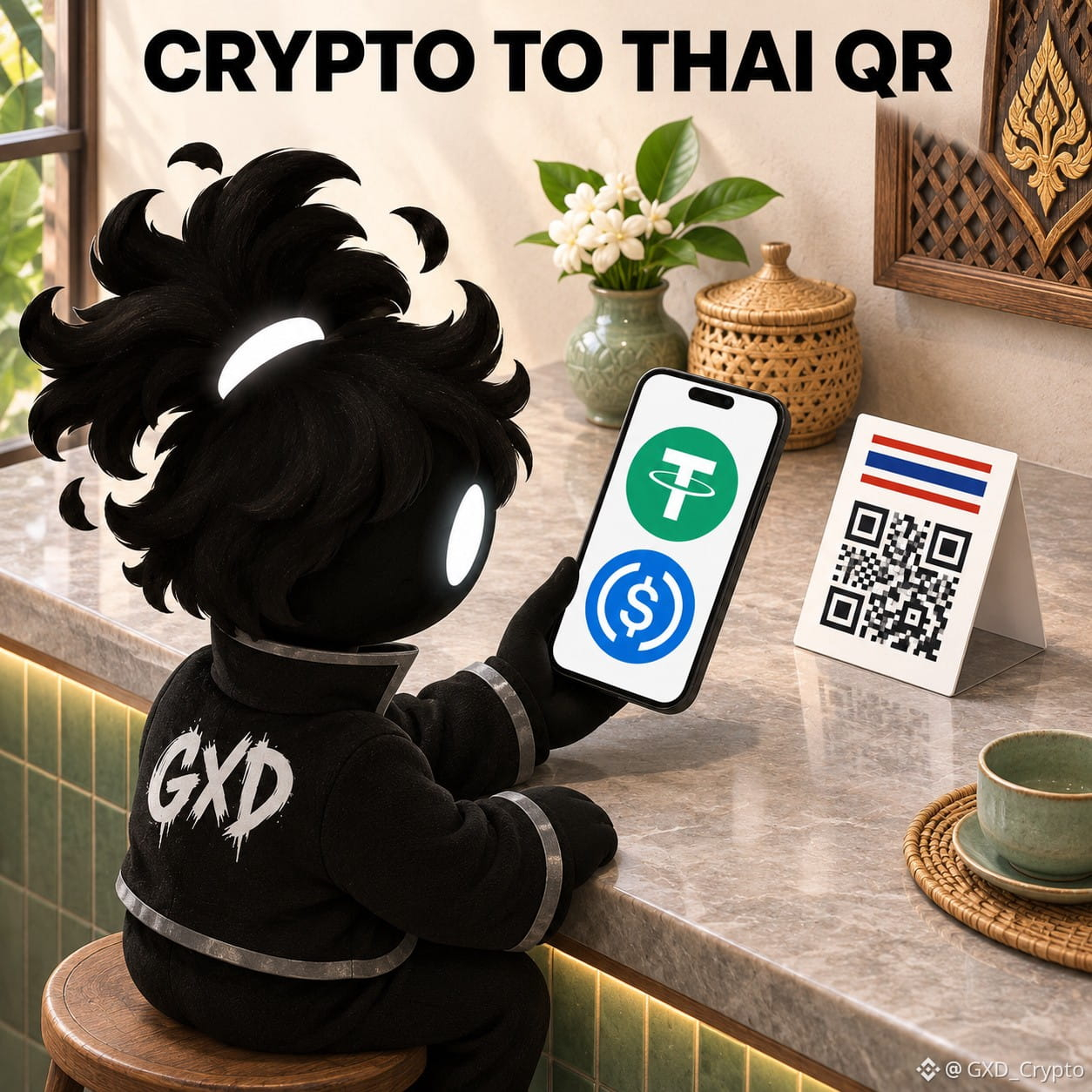
In Thailand, the WORPT service lets foreign tourists convert USDT or USDC on Ethereum into baht and pay via QR code; merchants receive baht, not crypto, and the conversion fee is 1.5% 💳🇹🇭🔄. Do you see this as a practical use? $USDT $USDC #Thailand
In Thailand, the WORPT service lets foreign tourists convert USDT or USDC on Ethereum into baht and pay via QR code; merchants receive baht, not crypto, and the conversion fee is 1.5% 💳🇹🇭🔄. Do you see this as a practical use? $USDT $USDC #Thailand
5


·
--
🇹🇭 Thailand launches an app that lets tourists spend crypto as baht
A new app called WORPT lets foreign visitors convert cryptocurrency into baht and pay at shops and restaurants by scanning Thailand's widely used payment barcodes, with no Thai bank account needed. Built by Wipay and Waan Exchange, it runs under TouristDigiPay, a regulatory pilot launched by Thailand's SEC.
The app targets crypto holders from South Korea, Japan, the Middle East and Southeast Asia, and expects 200,000 users in its first year and 15 billion baht of spending over the 18-month trial.
⭐ After Bhutan and Brazil, Thailand is turning crypto into a tourism payment rail, a real-world use case that could pull more visitor spending onchain in Asia.
#Thailand #CryptoPayments #Stablecoins #Asia
124

·
--
Thailand's stablecoin rules, in three questions people keep asking (Thai SEC draft, Nov 12):
Is it one 5M baht cap? No. 5 million baht (about $148K) applies to deposits and, separately, to withdrawals, per customer, per day, at each regulated operator.
Can I still send $USDT to a friend's wallet? Under the draft, no. Deposits and withdrawals must go to or from a wallet verified as yours, and the value must fit your income and financial position.
Who is exempt? Transfers between your own accounts at SEC-supervised operators (if both follow the Travel Rule), operators moving funds in their own names, Bank of Thailand-approved businesses, stablecoin/baht market makers, and approved token subscriptions.
My take: the daily cap matters less than the same-owner wallet rule. That one changes how people actually use stablecoins, and brokers also couldn't use liquidity providers for stablecoin-baht pairs. It's only a draft, and comments close Nov 26.
Which rule would change your habits more, the cap or the own-wallet requirement? $USDC
#Stablecoins #Regulation #Thailand
Disclosure: I can earn Binance Write to Earn rewards from this post.

·
--
Thailand's SEC proposes a 5 million baht (about 148,000 dollars) daily cap on stablecoin deposits and withdrawals per venue, plus same-owner transfers only. #Thailand #Stablecoins
YouTube: youtube.com/@aibarfasi | TikTok: tiktok.com/@aibarfasi.vn | CMC: coinmarketcap.com/community/profile/aibarfasi1
YouTube: youtube.com/@aibarfasi | TikTok: tiktok.com/@aibarfasi.vn | CMC: coinmarketcap.com/community/profile/aibarfasi1
6

·
--
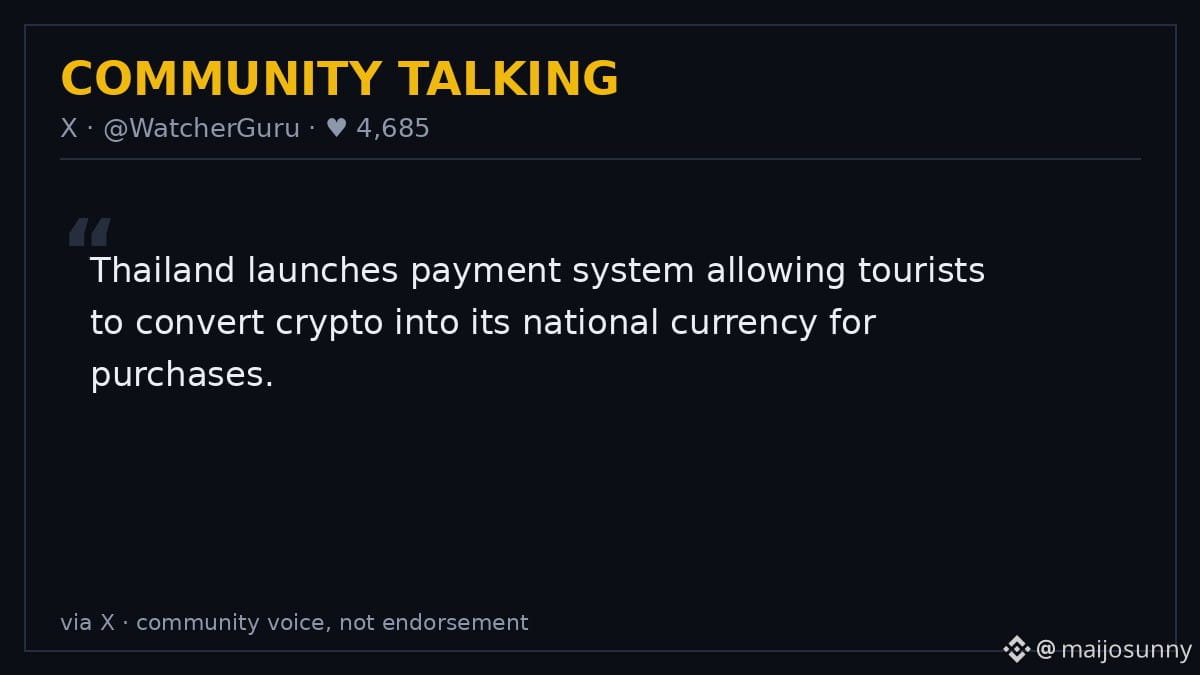
Picture landing in Bangkok with your phone as your wallet. You scan a QR code at a street stall, and the baht comes straight out of your stablecoin balance. No Thai bank account, no exchange booth, no cash.
Thailand just made that real. WORPT, a new app from Wipay and Waan Exchange built with Tether's support, lets foreign tourists convert $USDT and $USDC into baht and pay through the PromptPay QR network at shops and restaurants across the country. It runs inside the Thai SEC's TouristDigiPay sandbox, charges a 1.5% conversion fee, and targets 200,000 users in year one with 15 billion baht (about $440M) in spending over the 18-month pilot. (Bloomberg, Nov 13)
🤔 WHY SHOULD CRYPTO TRADERS CARE?
My take: this is bigger than one tourism app. Crypto keeps hunting for its first mass spending use case, and Thailand just handed it the friendliest test bed in Asia, a country where QR payments are already the default and tourists arrive holding stablecoins.
But keep the distinction straight. Merchants never touch crypto, they receive baht. This is a conversion layer, not merchant adoption, and it is an 18-month pilot, not a nationwide rollout. A separate SEC proposal from Nov 12 would cap stablecoin deposits and withdrawals at 5 million baht per day per operator.
👀 What to watch: whether WORPT hits its 200,000-user target, the Visa prepaid card planned for mid-November, and whether other tourist economies copy the sandbox.
Bottom line: Thailand is testing whether crypto's killer app is spending, not speculation. The pilot numbers will tell us if tourists actually use it.
Would you pay for your next holiday in stablecoins, or is cash still king? 👇
Not financial advice. DYOR.
#crypto #Thailand #stablecoins
9
·
--
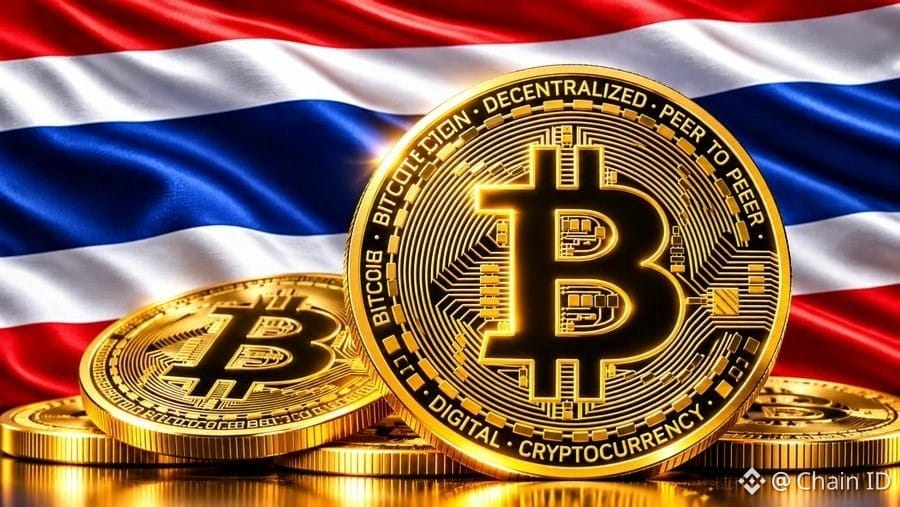
🇹🇭 Thailand is taking another step toward crypto adoption!
Tourists can now use crypto for payments in Thailand, with digital assets converted into Thai Baht at the point of purchase.
This could make traveling, shopping, and spending more convenient for crypto users while bringing digital assets closer to everyday life.
The future of payments is evolving! 🚀
#Thailand #CryptoAdoption #bitcoin #CryptoPayments #BinanceSquare
1
105
BREAKING: THAILAND BRINGS CRYPTO CLOSER TO EVERYDAY PAYMENTS!
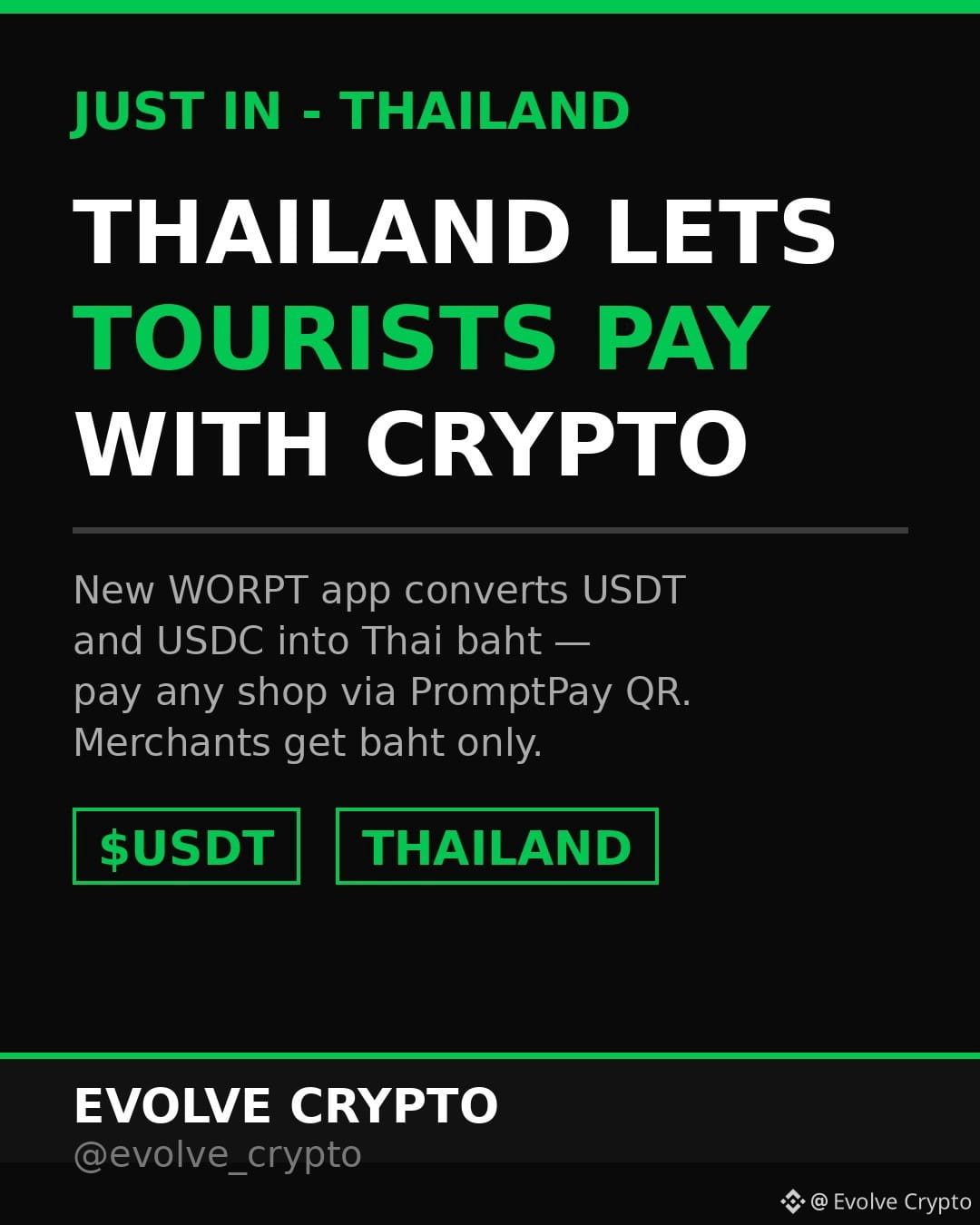
Thailand has launched WORPT a new payment app allowing foreign tourists to convert crypto into Thai Baht and spend it at local businesses — without opening a Thai bank account.
🔥 Key highlights:
🔹 Convert supported crypto into Thai Baht.
🔹 Pay at shops, restaurants and other merchants using Thai QR codes.
🔹 Supports $USDT and $USDC on Ethereum (ERC-20).
🔹 Merchants receive payments in Thai Baht.
🔹 Identity verification (KYC) is required.
🌍 This could make crypto spending more convenient for international travelers!
👀 Is crypto becoming part of everyday payments around the world?
#Thailand #CryptoAdoption #USDT #USDC #Bitcoin
29

JUST IN: 🇹🇭 Thailand has launched a payment system letting tourists convert crypto into baht for everyday purchases. The WORPT app turns $USDT and USDC into Thai baht to pay any shop via PromptPay QR — merchants receive baht only. Would you pay for your holiday in crypto? ✈️💳
#Thailand #Crypto #Stablecoins
DYOR. This is not financial advice.
#Thailand #Crypto #Stablecoins
DYOR. This is not financial advice.
9

#ThailandProposes$148KDailyStablecoinDepositWithdrawalCaps
🇹🇭 Thailand Proposes $148K Daily Stablecoin Deposit and Withdrawal Caps 🧾
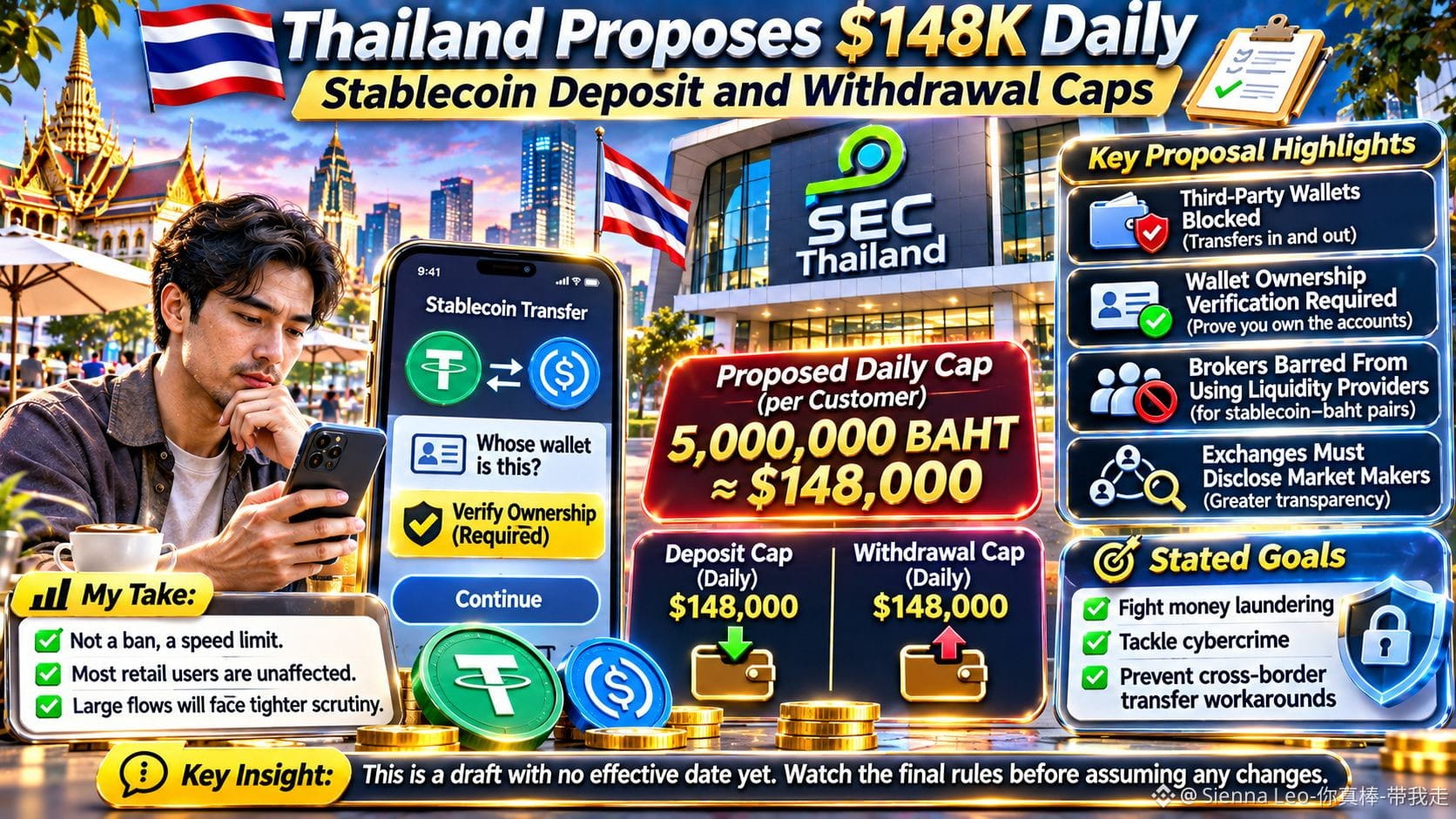
Picture a Bangkok trader sending stablecoins to a friend's wallet before a café meeting. The app pauses and asks one blunt question: whose wallet is this?
Thailand's SEC has proposed a 5 million baht cap, about $148,000, on daily stablecoin deposits and withdrawals per customer at regulated operators. Deposits and withdrawals would be counted separately.
The bigger shift may be the wallet rule. The draft would block transfers to and from third-party wallets and require users to prove they own the accounts they use.
The stated goals are fighting money laundering, cybercrime, and cross-border transfer workarounds. That makes regulation the primary driver here, not market demand.
My take: the cap looks less like a ban and more like a speed limit. Most retail users will never touch $148,000 a day, while large flows face tighter scrutiny.
Another detail matters. Brokers would be barred from using liquidity providers for stablecoin to baht pairs, and exchanges would have to disclose market makers.
Balanced view: stronger oversight can build trust and bring institutions closer. But strict wallet limits may reduce flexibility for businesses and users who rely on self-custody.
Practical insight: this is still a draft, with no effective date announced. Watch the final text before assuming anything changes.
Smart regulation does not stop money from moving, it decides who can see where it goes.
Will clear stablecoin rules make Southeast Asia safer for adoption, or push users toward less regulated routes?
Disclaimer: This is educational content, not financial advice. Always do your own research.
#Stablecoins #Thailand #GrowWithSAC $KITE $JST $ZMB
240

·
--
🚨 THAI REGULATORY SQUEEZE ON $USDT LIQUIDITY RAMPS SIGNALS A MAJOR SHIFT IN ASIA! 🦈
Regulatory bodies in Thailand are tightening the flow of capital by capping daily stablecoin transactions at roughly one hundred forty-eight thousand dollars per account. 📊 This structural squeeze aims to choke off capital flight vectors while forcing strict on-chain attribution across all local operators.
Market makers and regional brokers now face stringent third-party wallet restrictions and mandatory disclosure rules. 💡 As liquidity pathways fragment, order flow dynamics across regional ramps are undergoing an enforced institutional overhaul.
How will market participants adapt to these rigid compliance bottlenecks? 🤔
⚠️ Not financial advice. Always manage your risk. 🛡️
🏷️ #USDT #CryptoRegulation #Stablecoins #Thailand
🦈 ⚖️
17

·
--
⚖️ Thailand proposes daily limit on stablecoin transactions
On November 13, 2026, the Securities and Exchange Commission of Thailand put a draft set of limits on stablecoin transactions out for public consultation. The proposal would cap each client’s daily deposits and withdrawals on any one regulated platform at 5 million baht — about $148,000.
The draft also provides for stablecoin transfers only between accounts or wallets belonging to the same person. The initiative aims to reduce money-laundering risks. This is currently a regulatory proposal, not a ban that has taken effect; the final rules may change following the consultation.
Source: The Block, November 13, 2026.
#Stablecoins #Thailand
4
·
--
⚖️ THAILAND ORDERS CRYPTO BROKER TO FIX VIOLATIONS
Thailand’s Securities and Exchange Commission reported on November 6 that it had ordered Coins TH to improve its management, IT systems, and safekeeping of client assets, and to submit missing financial reports for 2024–2025. The deadline to report on the corrective measures is December 8, 2026.
This is not a company shutdown, nor is there proven theft of funds. The SEC pointed to shortcomings in controls and reporting; the order was issued on November 5 and published on November 6. Source: Securities and Exchange Commission of Thailand (SEC), announcement No. 245/2026.
#Crypto #Thailand
75
·
--
Thailand just put a date on a ban: December 5, 2026.
The Thai SEC filed a criminal complaint against BG Limited, the operator of Bitget, and says it will block the exchange's website and app from that day (COINOTAG).
The regulator's issue is unlicensed operation. Thailand has been steadily pushing offshore platforms to either register locally or exit.
My take: a licensing wall like this is a slow-motion test of where users go next. Local licensed venues and global platforms with compliant paths usually see the flow.
Watch whether other Southeast Asian regulators copy the playbook.
Which matters more for your exchange choice: licensing in your country or token selection?
$BNB $BTC
#Thailand #CryptoRegulation #Bitget
14
·
--
⚖️ THAILAND PREPARES TO BLOCK BITGET FROM DECEMBER 5
On November 5, Thailand’s securities regulator, the SEC, announced that it had filed a complaint with the police against Bitget’s operator, BG Limited, over the alleged operation of a crypto exchange without a local license. The agency also notified the Ministry of Digital Economy about blocking the website and app starting December 5, 2026.
The SEC recommends that users in Thailand make arrangements for their assets on the platform in advance. Filing a complaint does not mean criminal guilt has been proven: an investigation and possible court proceedings lie ahead. Source: Thailand SEC, announcement No. 241/2026.
#Bitget #Thailand
60

·
--
Thailand’s SEC Bans Bitget: Compliance Licenses Become a Lifeline for Asian Exchanges
Thailand’s Securities and Exchange Commission (SEC) has formally taken enforcement action against unlicensed crypto trading platform Bitget, announcing that access to its website and app will be completely blocked starting in December. The move marks a significant escalation in regulatory enforcement in Thailand and sounds a compliance warning to crypto exchanges worldwide.
According to Cointelegraph, Thailand’s SEC has filed a criminal complaint against Bitget’s operator and plans to use technical measures to restrict access for users in Thailand. The action aims to crack down on unapproved crypto trading services and protect investors from potential market manipulation and security risks. As one of Asia’s major economies, Thailand is sending a clear message: regulatory compliance is no longer optional—it is an absolute prerequisite for exchanges to operate.
Bitget’s failure to obtain a Thai license in time reflects how some leading exchanges have overlooked regional compliance requirements in their rapid expansion. As global regulatory frameworks become increasingly comprehensive, countries are steadily strengthening their jurisdiction over crypto assets. The Thai SEC’s action shows that operating without compliance can lead to direct restrictions on market access, potentially affecting Bitget’s user base in Southeast Asia in the short term.
In terms of market impact, enforcement actions of this kind often cause related assets to fluctuate in the short term. Investors should watch the price reaction of Bitget’s token (if one exists) and projects in Thailand’s local crypto ecosystem. Meanwhile, other non-compliant exchanges may accelerate their license applications to avoid similar risks.
However, it is worth noting that specific data on Bitget’s user base in Thailand has not been disclosed, making it difficult to assess the severity of the incident. In addition, although global regulatory trends are tightening, enforcement varies by region, and some markets may still have compliance grace periods.
The market will next be watching for details on how the Thai SEC’s enforcement action is carried out and whether Bitget takes remedial measures. Investors should remain cautious, avoid blindly following the crowd, and pay close attention to compliance developments and changes in market liquidity.
#Bitget #Thailand #CryptoRegulation
The above is a compilation of information and personal analysis, and does not constitute investment advice.
I will continue to provide updates as further policy details become clear.
11
Log in to explore more content
Join global crypto users on Binance Square
⚡️ Get latest and useful information about crypto.
💬 Trusted by the world’s largest crypto exchange.
👍 Discover real insights from verified creators.
Email / Phone number
Trending Topics
1
#A Packed Week of Earnings and Data Tests Markets
82,071 views
489 Discussing
2
#AnthropicIPOTestsInvestorAppetiteForAI
162,142 views
1,734 Discussing
3
#NvidiaBoardNotConsideringHuang’sReturnasCEO
15,948 views
227 Discussing
4
#WhatInvestmentSignalsDo13FFilingsReveal?
10,126 views
160 Discussing
5
#GoldmanSachsAndMillenniumEachHeldOver$1.2BInBitcoinETFs
0 views
0 Discussing
6
#InvescoStablecoinReservesFundLaunchesOnEthereum
3,998 views
88 Discussing
7
#CypherpunkReports$306MQ3NetProfit
770 views
16 Discussing
8
#OPTIMJACKAttackInfectsAtLeast186Websites
7,293 views
114 Discussing
9
#StrategySells2.09MMSTRSharesFor$244.7M
2,218 views
19 Discussing
10
#StablecoinMarketShrinksAtFastestPaceSinceTerraLuna
8,573 views
85 Discussing