
#bitget
bitget
1.4M views
2,870 Discussing
Hot
Latest

·
--
Thailand just put a date on a ban: December 5, 2026.
The Thai SEC filed a criminal complaint against BG Limited, the operator of Bitget, and says it will block the exchange's website and app from that day (COINOTAG).
The regulator's issue is unlicensed operation. Thailand has been steadily pushing offshore platforms to either register locally or exit.
My take: a licensing wall like this is a slow-motion test of where users go next. Local licensed venues and global platforms with compliant paths usually see the flow.
Watch whether other Southeast Asian regulators copy the playbook.
Which matters more for your exchange choice: licensing in your country or token selection?
$BNB $BTC
#Thailand #CryptoRegulation #Bitget

·
--
🎯 The hacker lurked inside the exchange’s internal network for 8 weeks before making a move
📰 SEAL report: The $6.3 billion incident wasn’t a one-off attack—the attackers stayed hidden for nearly two months. Same playbook as the $388 million Bitget loss: both were multi-stage intrusions
💬 This gave me chills. No matter how tightly cold wallets are secured, they can’t stop someone from slowly working their way up from inside. People are always the weakest link. When choosing an exchange from now on, I’ll first check whether it’s willing to publish its incident response procedures
🏷️ #安全事件 #SEAL #交易所被盗 #Bitget

·
--
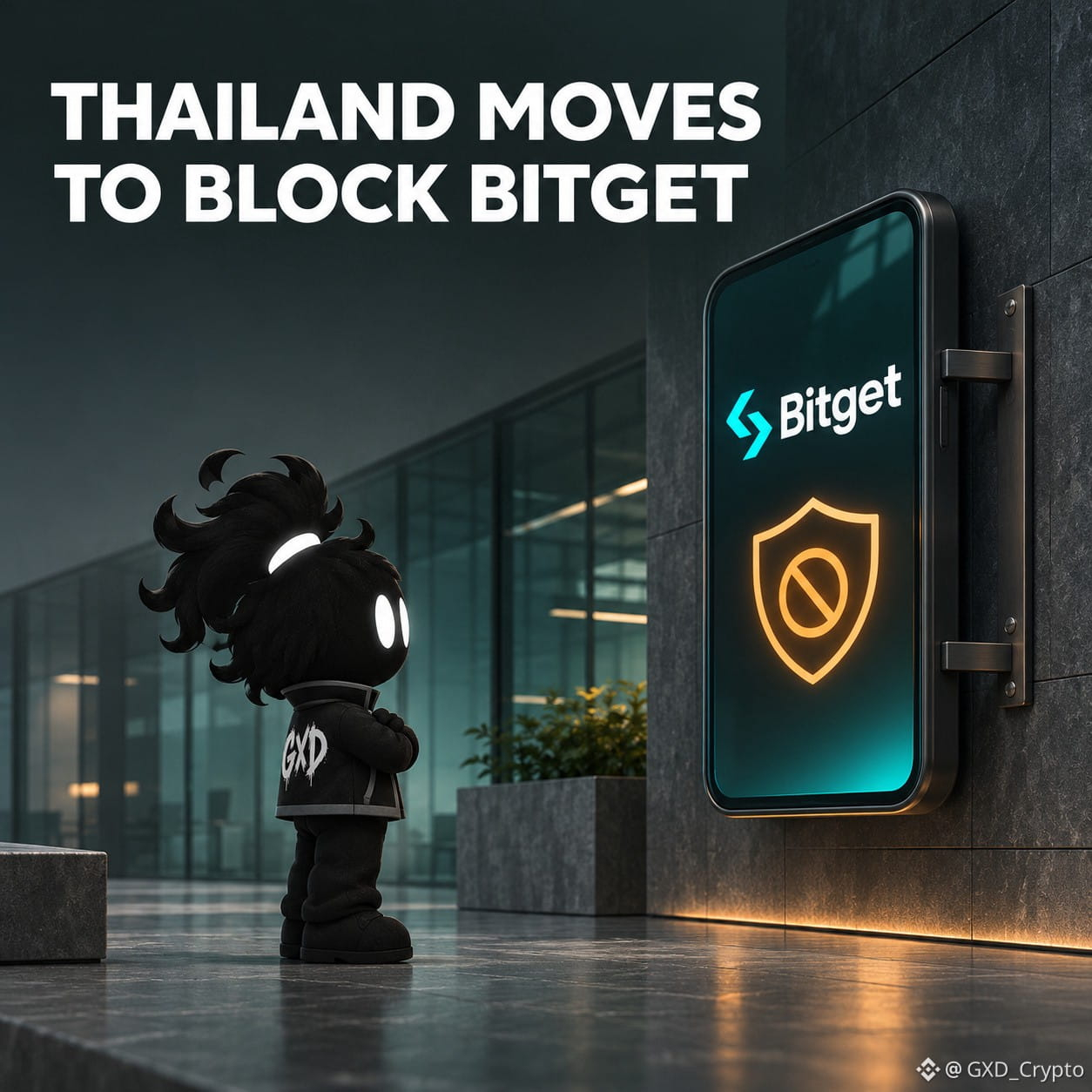
Thailand’s SEC said it had filed a complaint against Bitget’s operator for running an unlicensed platform and requested that its website and app be blocked from December 5. It urged users to arrange their assets before the deadline; the complaint does not mean a conviction, and the case is still under investigation ⚖️📱🔐 What’s the most important step for users here? #Crypto #Bitget
The most traded on Binance at the time of observation (21:57 Istanbul): $USDC, $BTC, $ETH —based on the trading volume of USDT pairs on Binance Spot /ticker/24hr over 24 hours. General market tracking; there is no causal link to the news.
Thailand’s SEC said it had filed a complaint against Bitget’s operator for running an unlicensed platform and requested that its website and app be blocked from December 5. It urged users to arrange their assets before the deadline; the complaint does not mean a conviction, and the case is still under investigation ⚖️📱🔐 What’s the most important step for users here? #Crypto #Bitget
The most traded on Binance at the time of observation (21:57 Istanbul): $USDC , $BTC , $ETH —based on the trading volume of USDT pairs on Binance Spot /ticker/24hr over 24 hours. General market tracking; there is no causal link to the news.
The most traded on Binance at the time of observation (21:57 Istanbul): $USDC , $BTC , $ETH —based on the trading volume of USDT pairs on Binance Spot /ticker/24hr over 24 hours. General market tracking; there is no causal link to the news.
34

·
--
【One month left! Thailand to block Bitget; criminal complaint filed over unlicensed operations】
On November 5, Thailand’s Securities and Exchange Commission filed a criminal complaint with the Economic Crime Suppression Division against BG Limited, Bitget’s operator, alleging that it traded digital assets in Thailand without a license from 2022 to 2025, operated a Thai-language website and quoted prices in Thai baht, and solicited customers through Thai-language social media. The SEC has notified the Ministry of Digital Economy and Society, which will block the website, related domains, and app starting December 5. Users are advised to withdraw assets held on the platform before the ban takes effect.
$BGB
#Bitget #泰国监管 #Exchange
84

·
--
⚖️ THAILAND PREPARES TO BLOCK BITGET FROM DECEMBER 5
On November 5, Thailand’s securities regulator, the SEC, announced that it had filed a complaint with the police against Bitget’s operator, BG Limited, over the alleged operation of a crypto exchange without a local license. The agency also notified the Ministry of Digital Economy about blocking the website and app starting December 5, 2026.
The SEC recommends that users in Thailand make arrangements for their assets on the platform in advance. Filing a complaint does not mean criminal guilt has been proven: an investigation and possible court proceedings lie ahead. Source: Thailand SEC, announcement No. 241/2026.
#Bitget #Thailand
42

·
--
Thailand’s SEC Bans Bitget: Compliance Licenses Become a Lifeline for Asian Exchanges
Thailand’s Securities and Exchange Commission (SEC) has formally taken enforcement action against unlicensed crypto trading platform Bitget, announcing that access to its website and app will be completely blocked starting in December. The move marks a significant escalation in regulatory enforcement in Thailand and sounds a compliance warning to crypto exchanges worldwide.
According to Cointelegraph, Thailand’s SEC has filed a criminal complaint against Bitget’s operator and plans to use technical measures to restrict access for users in Thailand. The action aims to crack down on unapproved crypto trading services and protect investors from potential market manipulation and security risks. As one of Asia’s major economies, Thailand is sending a clear message: regulatory compliance is no longer optional—it is an absolute prerequisite for exchanges to operate.
Bitget’s failure to obtain a Thai license in time reflects how some leading exchanges have overlooked regional compliance requirements in their rapid expansion. As global regulatory frameworks become increasingly comprehensive, countries are steadily strengthening their jurisdiction over crypto assets. The Thai SEC’s action shows that operating without compliance can lead to direct restrictions on market access, potentially affecting Bitget’s user base in Southeast Asia in the short term.
In terms of market impact, enforcement actions of this kind often cause related assets to fluctuate in the short term. Investors should watch the price reaction of Bitget’s token (if one exists) and projects in Thailand’s local crypto ecosystem. Meanwhile, other non-compliant exchanges may accelerate their license applications to avoid similar risks.
However, it is worth noting that specific data on Bitget’s user base in Thailand has not been disclosed, making it difficult to assess the severity of the incident. In addition, although global regulatory trends are tightening, enforcement varies by region, and some markets may still have compliance grace periods.
The market will next be watching for details on how the Thai SEC’s enforcement action is carried out and whether Bitget takes remedial measures. Investors should remain cautious, avoid blindly following the crowd, and pay close attention to compliance developments and changes in market liquidity.
#Bitget #Thailand #CryptoRegulation
The above is a compilation of information and personal analysis, and does not constitute investment advice.
I will continue to provide updates as further policy details become clear.
·
--
Thailand’s SEC Blocks Bitget: Compliance Licenses Become a Lifeline for Exchanges
Thailand’s Securities and Exchange Commission (SEC) recently took enforcement action against the unlicensed crypto trading platform Bitget, formally filing a criminal complaint and planning to block access to its website and app within the country starting in December. The move marks a significant step in the enforcement of crypto-asset regulations by a major Southeast Asian economy, and once again puts compliance licensing at the heart of exchanges’ global operations.
This action is not an isolated incident, but a clear response from Thai regulators to the long-standing presence of unlicensed crypto services in the country. According to Cointelegraph, Thailand’s SEC has filed a criminal complaint over the unlicensed trading activities of Bitget’s operator and explicitly instructed internet service providers to cooperate in blocking access. This means that, for unlicensed platforms relying on their Thai user base, local regulatory compliance is no longer optional—it is essential to their survival.
In terms of market impact, enforcement actions of this kind typically cause short-term disruption to the regional trading volumes of the platforms involved. If Bitget has a substantial user base in Thailand, it may experience a temporary loss of local liquidity. The move also sends a clear message to other exchanges operating in Southeast Asia that have yet to complete local licensing applications: the cost of regulatory compliance is rising, and enforcement is intensifying.
Notably, the Thai SEC’s action focuses on the core compliance issue of operating without a license, rather than the legality of crypto assets themselves. This suggests that the regulatory approach is shifting from prohibition to oversight: compliant entities may conduct business, but all participants must meet basic requirements, including anti-money laundering (AML), know-your-customer (KYC), and disclosure obligations.
However, the market reaction will depend on the details of how the action is implemented. It remains unclear how Thai authorities will coordinate the technical implementation of the access block, and whether Bitget has begun the process of applying for a local license. If enforcement is tougher than expected, it could trigger a regional regulatory ripple effect, prompting other Southeast Asian countries to accelerate similar legislative efforts.
Investors and industry participants should now closely monitor subsequent enforcement notices from Thailand’s SEC, Bitget’s official response, and compliance developments at other exchanges in the region. Rising compliance costs may accelerate industry consolidation, but they could also give licensed platforms a lasting competitive advantage.
#Bitget #Thailand #CryptoRegulation
The above is a compilation of information and personal analysis, and does not constitute investment advice.
26

·
--
Came across a pretty forceful notice from Thailand’s SEC: it named BG Limited, Bitget’s operator, for operating a digital asset exchange without a license. The regulator has filed a criminal complaint with the Economic Crime Suppression Division and notified the Ministry of Digital Economy and Society—which will block the website, related domains, and app starting December 5.
The regulator’s account: From 2022 to 2025, the company offered trading services and charged fees, ran a Thai-language website, quoted prices in Thai baht, and used Thai-language social media (X, Telegram, TikTok, etc.) to attract users—crossing the unlicensed-operation line under the Emergency Decree on Digital Asset Businesses. The notice also named an individual who allegedly helped promote the platform.
The regulator urged users to manage their assets before the block takes effect. Any further investigation, prosecution, and conviction will have to proceed through prosecutors and the courts. Bitget has not yet responded to Cointelegraph. Southeast Asia has tightened the screws another notch on unlicensed exchanges. #Bitget #泰国 #CryptoRegulation
3

Thailand to block Bitget from December over unlicensed crypto business
- Thailand’s Securities and Exchange Commission (SEC) has filed a criminal complaint against Bitget’s operator.
- Access to Bitget’s website and app will be blocked starting December 5.
- The reason is that Bitget has been conducting cryptocurrency business in Thailand without a valid license.
#BinanceSquare #CryptoNews #Bitget #ThailandSEC
$btc $eth
#vlikevn Titanbot
Source: CoinTelegraph
145
Bitget reports $1.86T in trading volume in Q3 2026, expands multi-asset trading
- Bitget reports global trading volume of $1.86 trillion in Q3 2026.
- Volume increased 21.2% compared with July–September, driven by derivatives, spot, and CFDs.
- Expands multi-asset trading, connecting crypto and traditional markets.
#BinanceSquare #CryptoNews #Bitget
$btc $eth
#vlikevn #Titanbot
Source: CoinGape
121

·
--
ZachXBT disclosed on October 30: stolen funds worth approximately $6.3 billion from Binance and $388 million from Bitget were routed through THORChain and sent to the same address starting with 0x151. The two sums were mixed in one place, pointing to the same attacker.
The Bitget funds had previously been attributed to the North Korea-linked TraderTraitor, which also has links to cases such as Kelp DAO. Based on this trail, the Binance funds most likely came from the same group—not two independent incidents, but one operation targeting two exchanges in succession.
Rather than focusing on the dollar amounts, this address is more worth watching. Once funds enter the mixing stage, the window for freezing them narrows. The two sums become one, and recovering them is more than twice as difficult. Next, watch where the THORChain cross-chain route ultimately leads, and how Bitget makes affected users whole.
#币安被盗 #Bitget #On-chainTracking
36

·
--
Bullish
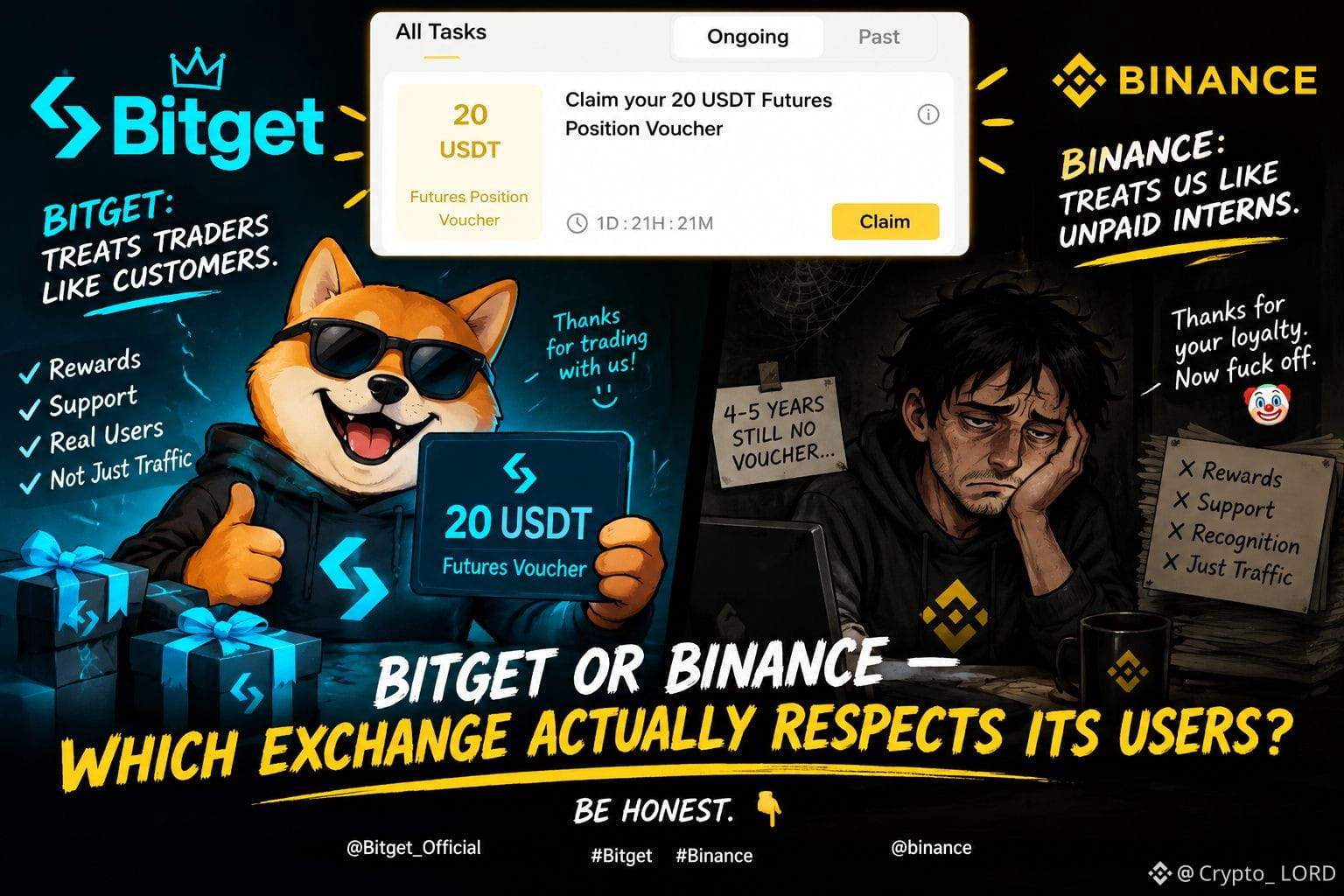
Bitget treats traders like customers. Binance treats us like unpaid interns. 💀😭
4–5 years on Binance, zero vouchers. Bitget shows more love, while Binance hands out rewards like they’re paying from CZ’s personal wallet. 🤡
Be honest: Bitget or Binance—which exchange actually respects its users? 👇🔥
@Bitget_Official @binance #Bitget #Binance #FOMCWatch
{spot}(BANKUSDT)
{spot}(INITUSDT)
{spot}(HAEDALUSDT)
Bitget treats traders like customers. Binance treats us like unpaid interns. 💀😭
4–5 years on Binance, zero vouchers. Bitget shows more love, while Binance hands out rewards like they’re paying from CZ’s personal wallet. 🤡
Be honest: Bitget or Binance—which exchange actually respects its users? 👇🔥
@Bitget_Official @binance #Bitget #Binance #FOMCWatch
4–5 years on Binance, zero vouchers. Bitget shows more love, while Binance hands out rewards like they’re paying from CZ’s personal wallet. 🤡
Be honest: Bitget or Binance—which exchange actually respects its users? 👇🔥
@Bitget_Official @binance #Bitget #Binance #FOMCWatch
903

·
--
Verified
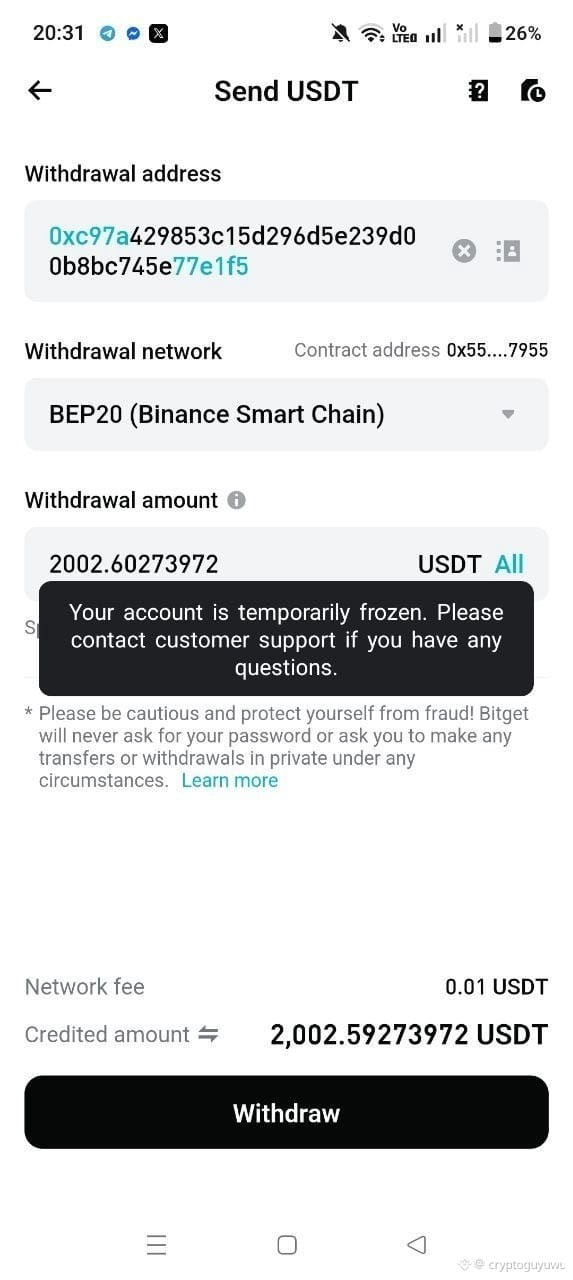
Bitget Freezes User’s $2,000 Deposit Without Explanation
Just weeks after the $387M hot-wallet incident, trust is being tested again.
A user’s account (UID: 2808768333) has been frozen with no clear reason given.
Support remains silent.
Community is asking Bitget & Gracy Chen for transparency.
A long-time Bitget supporter shared the case, saying the platform is disappointing genuine users right after people started trusting it again. The user hopes the freeze gets resolved quickly if there’s no actual violation.
This is a community-shared experience. DYOR. NFA.
#Bitget #BinancePick $BTC
1
3
633

A hard truth: Stolen money fears being tracked less than it fears sitting still.
The Bitget hacker is on the move again: 52 transfers tracked by Arkham moved $19.48 million over three days, from October 21 to 24. Of that, $19.33 million was in $BTC, and almost all of it went into new wallets that had never been used before. Since October 15, this round of transfers has moved $78.01 million. But let’s be precise: Arkham only reported that the funds were transferred. It didn’t say they’d been laundered, or identify any exchange, mixer, or OTC desk that received them—the blockchain proves they were moved, not cashed out.
The more troubling part: the hacker still has $242.54 million on record. The 2,960 bitcoins alone account for $241.99 million. Compared with Bitget’s revised total of $387.5 million stolen, more than 60% is still untouched. Are these 52 smaller transfers the prelude to laundering, or just a way to hide the funds somewhere else?
Place your bets in the comments: A) Splitting the funds is the first step in laundering—they’ll end up in a mixer sooner or later; B) If nobody’s taking the funds, it’s pointless busywork—even after 100 transfers, they’re still stolen money. Which side are you on?
$BTC $ETH $SOL #Bitget #黑客 #Arkham
A hard truth: Stolen money fears being tracked less than it fears sitting still.
The Bitget hacker is on the move again: 52 transfers tracked by Arkham moved $19.48 million over three days, from October 21 to 24. Of that, $19.33 million was in $BTC , and almost all of it went into new wallets that had never been used before. Since October 15, this round of transfers has moved $78.01 million. But let’s be precise: Arkham only reported that the funds were transferred. It didn’t say they’d been laundered, or identify any exchange, mixer, or OTC desk that received them—the blockchain proves they were moved, not cashed out.
The more troubling part: the hacker still has $242.54 million on record. The 2,960 bitcoins alone account for $241.99 million. Compared with Bitget’s revised total of $387.5 million stolen, more than 60% is still untouched. Are these 52 smaller transfers the prelude to laundering, or just a way to hide the funds somewhere else?
Place your bets in the comments: A) Splitting the funds is the first step in laundering—they’ll end up in a mixer sooner or later; B) If nobody’s taking the funds, it’s pointless busywork—even after 100 transfers, they’re still stolen money. Which side are you on?
$BTC $ETH $SOL #Bitget #黑客 #Arkham
14

·
--
🚨 The Bitget hacker is moving funds: 52 transfers, $19.48 million, 99% in BTC!
📌 Arkham data: From October 21 to 24, wallets linked to the September Bitget hack transferred out $19.48 million, including $19.33 million in BTC. Almost all of it went to brand-new addresses.
📌 From October 15 to 23, a total of $78.01 million was transferred to new addresses.
📌 The remaining holdings flagged by Arkham are worth about $243 million, mostly in BTC.
🔍 Important: The destination of the funds hasn’t been confirmed, and it’s not yet clear whether this is money laundering. Arkham itself presented this as a question.
👉 But splitting large BTC holdings into dozens of transfers to new addresses is a typical prelude to laundering. The key thing to watch next is whether the funds flow into mixers, cross-chain bridges, or OTC platforms.
💡 What this means for the market: If the hacker eventually dumps these holdings, BTC is already vulnerable around $80,000, so keep an eye out for sudden selling pressure. But for now, these are just transfers—not sales. Don’t let the headline steer you.
Do you think these coins will eventually be frozen and recovered, or disappear into a mixer? Share your thoughts in the comments 👇
$BTC $ETH
#链上监控 #Bitget #CryptoSecurity
Personal opinion only; not investment advice

15
Jio IPO Creates Buzz in Crypto Market 🚀
Reliance Jio Platforms is attracting attention ahead of its IPO, as crypto traders are already betting on its possible market value through a pre-IPO contract on Bitget.
The contract traded near $12, suggesting an estimated valuation of around $110 billion. Meanwhile, the official IPO pricing points to a valuation of approximately $106 billion.
How Does It Work?
These crypto contracts let traders speculate on a company's price before its shares are publicly listed. However, buying a Jio pre-IPO contract does not mean owning actual Jio shares or receiving dividends.
The IPO aims to raise around $3.6 billion, potentially making it India's largest IPO.
What Should Traders Know?
Pre-IPO contracts can be highly risky because prices may change quickly if the IPO is delayed, repriced, or cancelled. Leverage can also increase potential losses.
Conclusion: Jio's upcoming IPO highlights how crypto platforms are bringing traditional financial markets into the crypto space. However, traders should understand the risks before entering these contracts.
#JioIPO #CryptoMarket #Bitget #IPO
63
Jio pre-IPO contract on Bitget trades near $12, at a 4% premium
- Reliance Jio pre-IPO contract on Bitget trades at around $12
- Around 4% above the upper end of the IPO price range
- India’s largest IPO remains open for subscriptions
- The RSS source has not provided further details
#BinanceSquare #CryptoNews #Bitget #IPO #RelianceJio
$btc $eth
vlikevn Titanbot
Source: CoinDesk
203
·
--
🎯Bitget’s reserves rose 16% in a day—do you believe it?
📰DefiLlama shows Bitget sitting on $696 million in total reserves, up 16% in 24 hours and 13% in a week. Binance was up just 1.8% during the same period.
💬The whole market usually moves at most two or three points in a day, but Bitget jumped 16%. Either a lot of money really came in, or the data is being moved around. I can’t verify it, so I’ll just keep an eye on it for now.
🏷️#Bitget #链上数据 #交易所储备 #DefiLlama
17

Article
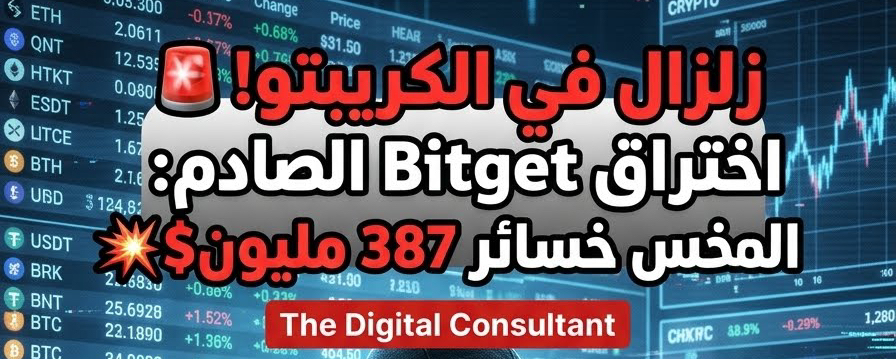
🚨 Earthquake in the crypto market... A massive $387 million hack rocks a global platform! 💸💥🚨 Earthquake in the crypto market... A massive $387 million hack rocks a global platform! 💸💥
In one of the biggest and most shocking security breaches of the year, global cryptocurrency exchange Bitget was hit by a highly sophisticated cyberattack. The attack resulted in the theft of a massive amount of digital assets, estimated at around $387.5 million in a single swoop!
🚨 Earthquake in the crypto market... A massive $387 million hack rocks a global platform! 💸💥
🚨 Earthquake in the crypto market... A massive $387 million hack rocks a global platform! 💸💥
In one of the biggest and most shocking security breaches of the year, global cryptocurrency exchange Bitget was hit by a highly sophisticated cyberattack. The attack resulted in the theft of a massive amount of digital assets, estimated at around $387.5 million in a single swoop!
In one of the biggest and most shocking security breaches of the year, global cryptocurrency exchange Bitget was hit by a highly sophisticated cyberattack. The attack resulted in the theft of a massive amount of digital assets, estimated at around $387.5 million in a single swoop!
1
255

Bitget had 88 million stolen, and the hackers’ funds still haven’t been recovered. Yet it’s turning around and announcing plans to acquire a Thai exchange. In plain English: the lost coins belong to users; the license it buys belongs to itself. The crypto world’s most ironic business model—turning security incidents into PR and acquisition news into a band-aid. You think it’s making amends, but it’s actually expanding. Remember one thing: an exchange has only one source of money. #Bitget #Exchange
Bitget had 88 million stolen, and the hackers’ funds still haven’t been recovered. Yet it’s turning around and announcing plans to acquire a Thai exchange. In plain English: the lost coins belong to users; the license it buys belongs to itself. The crypto world’s most ironic business model—turning security incidents into PR and acquisition news into a band-aid. You think it’s making amends, but it’s actually expanding. Remember one thing: an exchange has only one source of money. #Bitget #Exchange
3.9k
Log in to explore more content
Join global crypto users on Binance Square
⚡️ Get latest and useful information about crypto.
💬 Trusted by the world’s largest crypto exchange.
👍 Discover real insights from verified creators.
Email / Phone number
Trending Topics
1
#BitcoinRebounds$75KAsChipsLead
7,627 views
113 Discussing
2
#JobsReportRaisesHikeOdds
99,266 views
921 Discussing
3
#US Data Center Rules May Constrain AI Expansion
13,369 views
97 Discussing
4
#$2TWipedOutHedgeFundsFaceLiquidation
16,476 views
100 Discussing
5
#WillAnthropicListOnTime
15,850 views
272 Discussing
6
#USNovemberMichiganExpectationsIndexPrelimAt50.9
22,704 views
368 Discussing
7
#OilPlungesBelow$100
22,684 views
38 Discussing
8
#TradFiForBeginners
14,183 views
234 Discussing
9
#USMidtermsCouldShakeUpUS-IranTies
43,739 views
539 Discussing
10
#RussianCentralBankNamesBTCETHUSDTForNonQualifiedInvestors
815 views
11 Discussing