
#stablecoins
stablecoins
7.5M views
27,056 Discussing
Hot
Latest

·
--
Bullish
$STABLE
{alpha}(560x011ebe7d75e2c9d1e0bd0be0bef5c36f0a90075f)
coins just crossed $310B in market cap and analysts see them pushing toward the trillion-dollar range as regulation catches up. 🌐💵 From reserve-backed frameworks to new bank-issued chains, the "money of the internet" is going mainstream. Which stablecoin do you hold — and why? #Binance e #Stablecoins #crypto
$STABLE
coins just crossed $310B in market cap and analysts see them pushing toward the trillion-dollar range as regulation catches up. 🌐💵 From reserve-backed frameworks to new bank-issued chains, the "money of the internet" is going mainstream. Which stablecoin do you hold — and why? #Binance e #Stablecoins #crypto
coins just crossed $310B in market cap and analysts see them pushing toward the trillion-dollar range as regulation catches up. 🌐💵 From reserve-backed frameworks to new bank-issued chains, the "money of the internet" is going mainstream. Which stablecoin do you hold — and why? #Binance e #Stablecoins #crypto
SA-Trades:
good
2
2
12

·
--
Japan’s yen stablecoin story just got a very clear signal from Korea.
According to the article, Upbit now accounts for 54% of global trading volume in JPYC, making Korea the top market for Japan’s yen-backed stablecoin. That’s a bigger deal than it looks at first glance. It shows how fast stablecoin demand can move across borders when local rules are slow or unclear — and how traders will still find the product if the use case is real.
The key takeaway here is not just volume. It’s where that volume is coming from, and why. Korea’s won stablecoin rules are still stalled, so JPYC is benefiting from a market that wants stablecoin access now, not later. That makes this a useful read on how regulation can shape adoption in very practical ways.
What I’d watch next is whether this trading concentration keeps building, or whether it stays a temporary workaround while local stablecoin policy catches up.
Stablecoins keep proving they’re not just a side story — they’re becoming the rails of crypto activity. How fast do you think local regulators can move before traders keep choosing cross-border options like JPYC?
#Stablecoins #CryptoNews #JPYC
Japan’s yen stablecoin story just got a very clear signal from Korea.
According to the article, Upbit now accounts for 54% of global trading volume in JPYC, making Korea the top market for Japan’s yen-backed stablecoin. That’s a bigger deal than it looks at first glance. It shows how fast stablecoin demand can move across borders when local rules are slow or unclear — and how traders will still find the product if the use case is real.
The key takeaway here is not just volume. It’s where that volume is coming from, and why. Korea’s won stablecoin rules are still stalled, so JPYC is benefiting from a market that wants stablecoin access now, not later. That makes this a useful read on how regulation can shape adoption in very practical ways.
What I’d watch next is whether this trading concentration keeps building, or whether it stays a temporary workaround while local stablecoin policy catches up.
Stablecoins keep proving they’re not just a side story — they’re becoming the rails of crypto activity. How fast do you think local regulators can move before traders keep choosing cross-border options like JPYC?
#Stablecoins #CryptoNews #JPYC
According to the article, Upbit now accounts for 54% of global trading volume in JPYC, making Korea the top market for Japan’s yen-backed stablecoin. That’s a bigger deal than it looks at first glance. It shows how fast stablecoin demand can move across borders when local rules are slow or unclear — and how traders will still find the product if the use case is real.
The key takeaway here is not just volume. It’s where that volume is coming from, and why. Korea’s won stablecoin rules are still stalled, so JPYC is benefiting from a market that wants stablecoin access now, not later. That makes this a useful read on how regulation can shape adoption in very practical ways.
What I’d watch next is whether this trading concentration keeps building, or whether it stays a temporary workaround while local stablecoin policy catches up.
Stablecoins keep proving they’re not just a side story — they’re becoming the rails of crypto activity. How fast do you think local regulators can move before traders keep choosing cross-border options like JPYC?
#Stablecoins #CryptoNews #JPYC

8

·
--
USDe Suddenly Printed $0.9202 on BinanceUSDe JUST GAVE TRADERS A REMINDER THAT EVEN A “STABLE” ASSET CAN EXPERIENCE VIOLENT EXCHANGE-SPECIFIC PRICE DISLOCATIONS.
FACTS: USDe briefly fell to approximately 0.9202 USDT on Binance’s USDE/USDT market today, before recovering toward 0.9996 within minutes.
That represents an intraday dislocation of roughly 8%.
Importantly, Binance’s scheduled wallet maintenance began at 06:00 UTC—almost an hour later. There is currently no verified evidence connecting the wick to that maintenance.
WHY IT MATTERS: A sudden wick on one venue does not automatically mean the underlying stablecoin mechanism has failed. Liquidity, order-book depth and exchange-specific conditions matter.
INTERPRETATION: 🟢 The rapid return toward $1 is important. 🔴 A stable asset showing an 8% exchange-level wick still deserves scrutiny, especially when used as collateral.
$USDE $ENA
#ethena #Stablecoins
USDe Suddenly Printed $0.9202 on Binance
USDe JUST GAVE TRADERS A REMINDER THAT EVEN A “STABLE” ASSET CAN EXPERIENCE VIOLENT EXCHANGE-SPECIFIC PRICE DISLOCATIONS.
FACTS: USDe briefly fell to approximately 0.9202 USDT on Binance’s USDE/USDT market today, before recovering toward 0.9996 within minutes.
That represents an intraday dislocation of roughly 8%.
Importantly, Binance’s scheduled wallet maintenance began at 06:00 UTC—almost an hour later. There is currently no verified evidence connecting the wick to that maintenance.
WHY IT MATTERS: A sudden wick on one venue does not automatically mean the underlying stablecoin mechanism has failed. Liquidity, order-book depth and exchange-specific conditions matter.
INTERPRETATION: 🟢 The rapid return toward $1 is important. 🔴 A stable asset showing an 8% exchange-level wick still deserves scrutiny, especially when used as collateral.
$USDE $ENA
#ethena #Stablecoins
FACTS: USDe briefly fell to approximately 0.9202 USDT on Binance’s USDE/USDT market today, before recovering toward 0.9996 within minutes.
That represents an intraday dislocation of roughly 8%.
Importantly, Binance’s scheduled wallet maintenance began at 06:00 UTC—almost an hour later. There is currently no verified evidence connecting the wick to that maintenance.
WHY IT MATTERS: A sudden wick on one venue does not automatically mean the underlying stablecoin mechanism has failed. Liquidity, order-book depth and exchange-specific conditions matter.
INTERPRETATION: 🟢 The rapid return toward $1 is important. 🔴 A stable asset showing an 8% exchange-level wick still deserves scrutiny, especially when used as collateral.
$USDE $ENA
#ethena #Stablecoins
98


#applegoogleseekstablecointokenizeddeposittalent
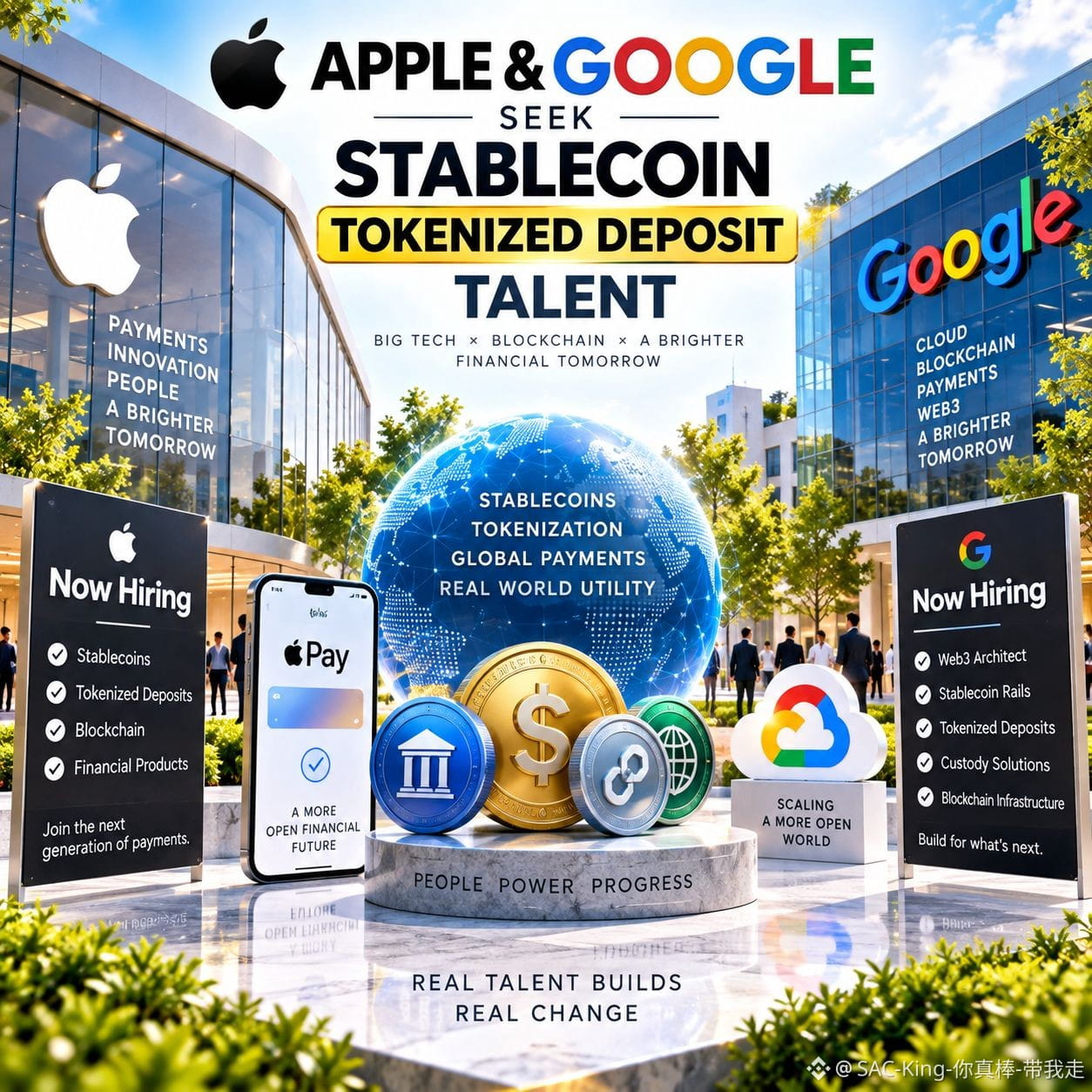
🍎 APPLE & GOOGLE ARE QUIETLY CHASING THE STABLECOIN FUTURE 🔥
The next payment revolution may not arrive with a product launch.
It may begin quietly, inside a job description.
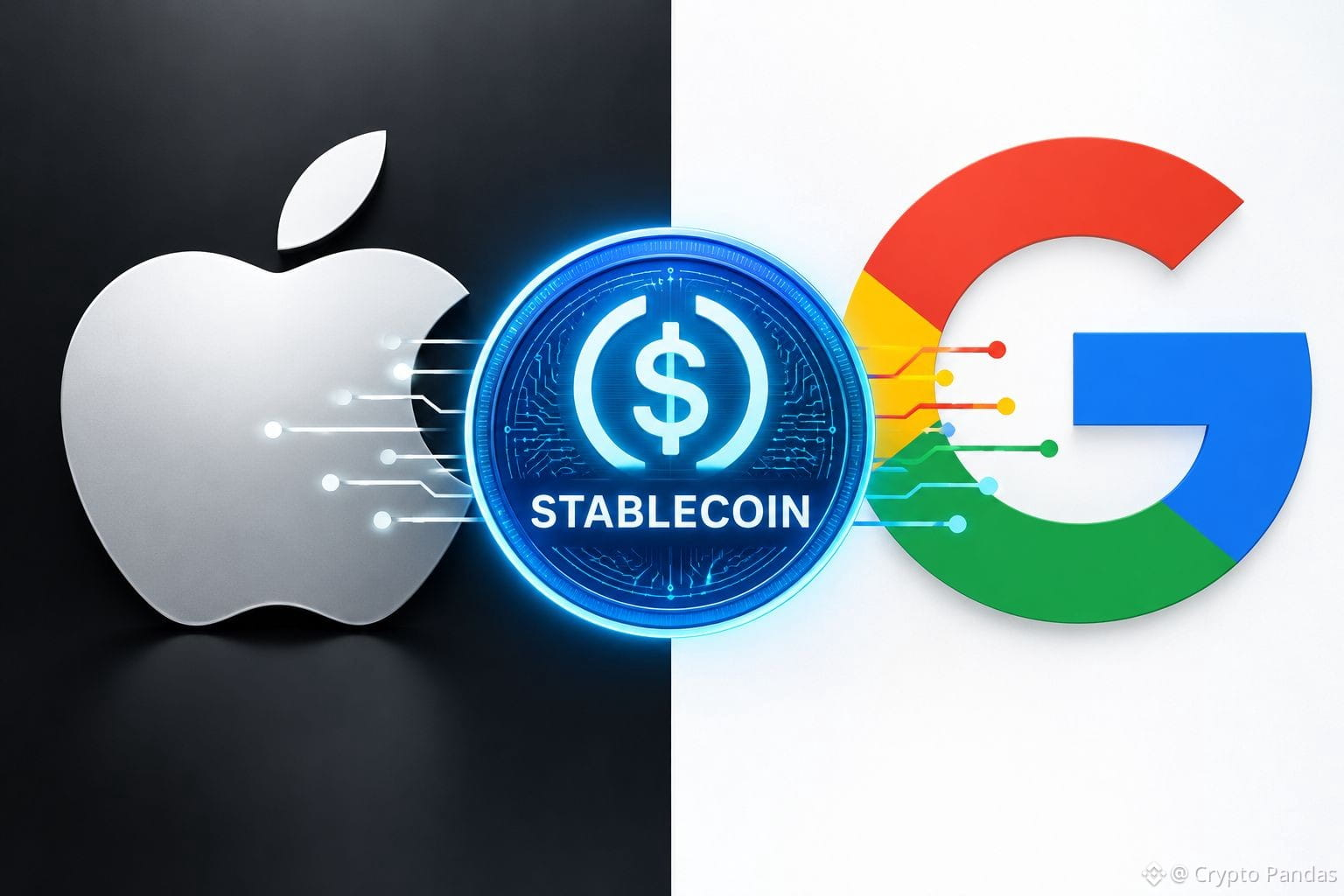
Apple is recruiting for an Apple Pay financial product strategy role that lists stablecoins, tokenized deposits, and blockchain technology among preferred qualifications. Google Cloud is also hiring a Hong Kong based Web3 architect with expertise in stablecoin payment rails, tokenized deposits, custody, and blockchain infrastructure.
My Take: This is less about Apple or Google suddenly becoming crypto companies, and more about Big Tech preparing for a financial system where tokenized money becomes part of the infrastructure.
Apple’s role sits closer to consumer payments and financial products, while Google’s position targets institutional Web3 architecture and financial clients. That distinction matters.
But hiring is not a product announcement. Neither company has confirmed a new stablecoin, tokenized deposit product, or integration into Apple Pay or Google Pay based on these listings.
The deeper signal is talent allocation. When global technology platforms start hiring people who understand stablecoin rails and tokenization, the conversation moves from “Will this matter?” toward “Where could this infrastructure fit?”
The biggest crypto shift may happen quietly, long before users ever see a crypto button.
❓Could stablecoin infrastructure become invisible plumbing behind mainstream payments?
Disclaimer: Informational content only, not financial advice. Future outcomes remain uncertain.
#Stablecoins #Tokenization #GrowWithSAC $AKE $AGT $MUBARAK
#AppleGoogleSeekStablecoinTokenizedDepositTalent
#applegoogleseekstablecointokenizeddeposittalent
🍎 APPLE & GOOGLE ARE QUIETLY CHASING THE STABLECOIN FUTURE 🔥
The next payment revolution may not arrive with a product launch.
It may begin quietly, inside a job description.
Apple is recruiting for an Apple Pay financial product strategy role that lists stablecoins, tokenized deposits, and blockchain technology among preferred qualifications. Google Cloud is also hiring a Hong Kong based Web3 architect with expertise in stablecoin payment rails, tokenized deposits, custody, and blockchain infrastructure.
My Take: This is less about Apple or Google suddenly becoming crypto companies, and more about Big Tech preparing for a financial system where tokenized money becomes part of the infrastructure.
Apple’s role sits closer to consumer payments and financial products, while Google’s position targets institutional Web3 architecture and financial clients. That distinction matters.
But hiring is not a product announcement. Neither company has confirmed a new stablecoin, tokenized deposit product, or integration into Apple Pay or Google Pay based on these listings.
The deeper signal is talent allocation. When global technology platforms start hiring people who understand stablecoin rails and tokenization, the conversation moves from “Will this matter?” toward “Where could this infrastructure fit?”
The biggest crypto shift may happen quietly, long before users ever see a crypto button.
❓Could stablecoin infrastructure become invisible plumbing behind mainstream payments?
Disclaimer: Informational content only, not financial advice. Future outcomes remain uncertain.
#Stablecoins #Tokenization #GrowWithSAC $AKE $AGT $MUBARAK
#AppleGoogleSeekStablecoinTokenizedDepositTalent
🍎 APPLE & GOOGLE ARE QUIETLY CHASING THE STABLECOIN FUTURE 🔥
The next payment revolution may not arrive with a product launch.
It may begin quietly, inside a job description.
Apple is recruiting for an Apple Pay financial product strategy role that lists stablecoins, tokenized deposits, and blockchain technology among preferred qualifications. Google Cloud is also hiring a Hong Kong based Web3 architect with expertise in stablecoin payment rails, tokenized deposits, custody, and blockchain infrastructure.
My Take: This is less about Apple or Google suddenly becoming crypto companies, and more about Big Tech preparing for a financial system where tokenized money becomes part of the infrastructure.
Apple’s role sits closer to consumer payments and financial products, while Google’s position targets institutional Web3 architecture and financial clients. That distinction matters.
But hiring is not a product announcement. Neither company has confirmed a new stablecoin, tokenized deposit product, or integration into Apple Pay or Google Pay based on these listings.
The deeper signal is talent allocation. When global technology platforms start hiring people who understand stablecoin rails and tokenization, the conversation moves from “Will this matter?” toward “Where could this infrastructure fit?”
The biggest crypto shift may happen quietly, long before users ever see a crypto button.
❓Could stablecoin infrastructure become invisible plumbing behind mainstream payments?
Disclaimer: Informational content only, not financial advice. Future outcomes remain uncertain.
#Stablecoins #Tokenization #GrowWithSAC $AKE $AGT $MUBARAK
#AppleGoogleSeekStablecoinTokenizedDepositTalent
278

·
--
#applegoogleseekstablecointokenizeddeposittalent
🚨 Apple and Google are hiring for the stablecoin era.
Neither company has announced its own stablecoin. But their latest hiring says a lot about where digital payments may be heading.
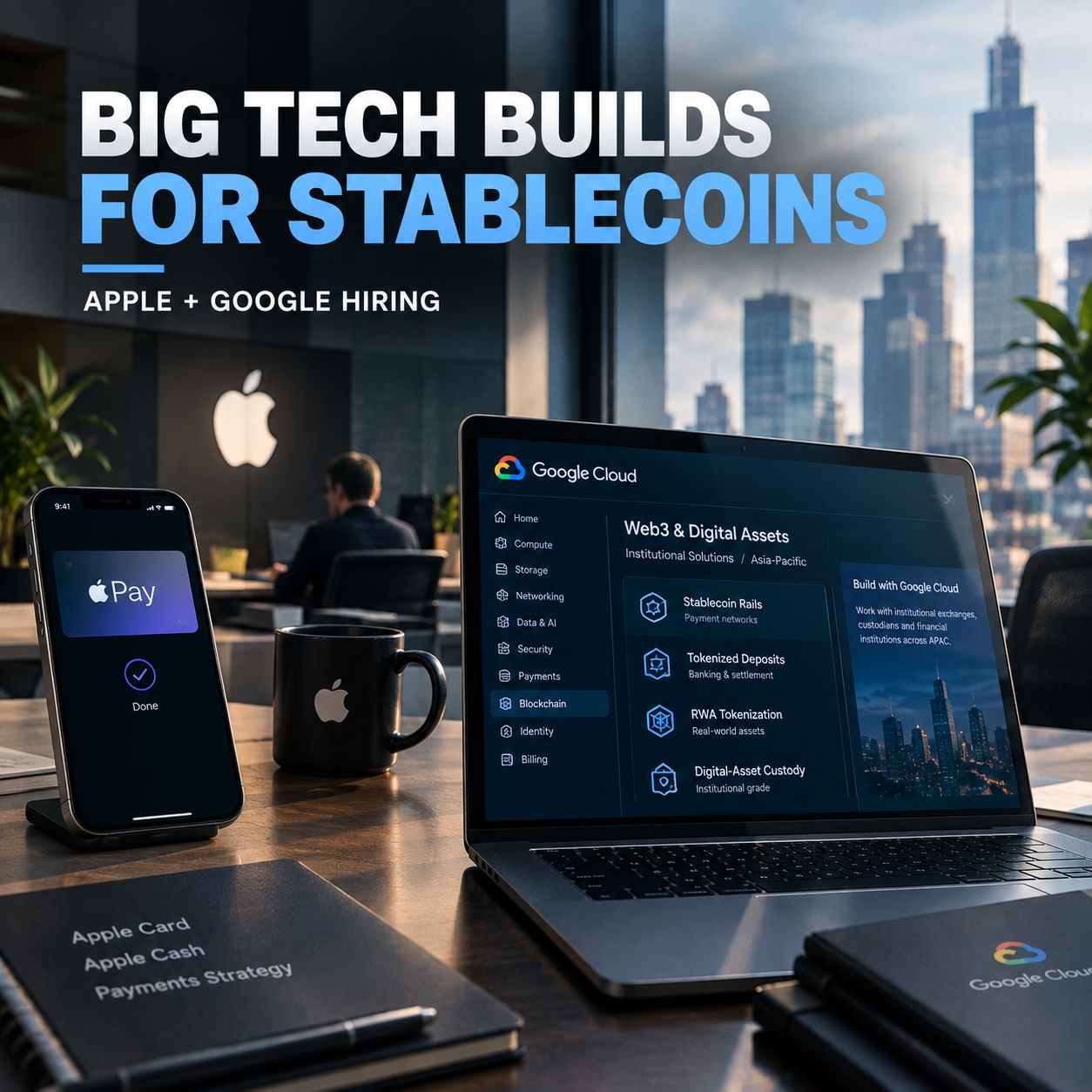
Apple is hiring an Apple Pay Financial Product Strategy Lead. The role sits around Apple Card, Apple Cash and payments strategy, with stablecoins, tokenized deposits and blockchain technology listed among the preferred qualifications.
Google Cloud is going even deeper on the infrastructure side.
Its Hong Kong Web3 architect role calls for experience with stablecoin payment rails, tokenized deposits, RWA tokenization and digital-asset custody, while working with financial institutions, exchanges and custodians across Asia-Pacific.
That distinction matters.
Apple is looking at the consumer payments and financial-product layer.
Google is building expertise around the institutional infrastructure layer.
Put them together and the bigger trend becomes clear:
Stablecoins are increasingly being treated as payment infrastructure, not just crypto assets.
The next wave may happen quietly inside products people already use every day.
And for now, that's the signal—not a confirmed Apple or Google coin.
$AAPL
{future}(AAPLUSDT)
$GOOGL
{future}(GOOGLUSDT)
#Stablecoins #crypto #blockchain
#applegoogleseekstablecointokenizeddeposittalent
🚨 Apple and Google are hiring for the stablecoin era.
Neither company has announced its own stablecoin. But their latest hiring says a lot about where digital payments may be heading.
Apple is hiring an Apple Pay Financial Product Strategy Lead. The role sits around Apple Card, Apple Cash and payments strategy, with stablecoins, tokenized deposits and blockchain technology listed among the preferred qualifications.
Google Cloud is going even deeper on the infrastructure side.
Its Hong Kong Web3 architect role calls for experience with stablecoin payment rails, tokenized deposits, RWA tokenization and digital-asset custody, while working with financial institutions, exchanges and custodians across Asia-Pacific.
That distinction matters.
Apple is looking at the consumer payments and financial-product layer.
Google is building expertise around the institutional infrastructure layer.
Put them together and the bigger trend becomes clear:
Stablecoins are increasingly being treated as payment infrastructure, not just crypto assets.
The next wave may happen quietly inside products people already use every day.
And for now, that's the signal—not a confirmed Apple or Google coin.
$AAPL
$GOOGL
#Stablecoins #crypto #blockchain
🚨 Apple and Google are hiring for the stablecoin era.
Neither company has announced its own stablecoin. But their latest hiring says a lot about where digital payments may be heading.
Apple is hiring an Apple Pay Financial Product Strategy Lead. The role sits around Apple Card, Apple Cash and payments strategy, with stablecoins, tokenized deposits and blockchain technology listed among the preferred qualifications.
Google Cloud is going even deeper on the infrastructure side.
Its Hong Kong Web3 architect role calls for experience with stablecoin payment rails, tokenized deposits, RWA tokenization and digital-asset custody, while working with financial institutions, exchanges and custodians across Asia-Pacific.
That distinction matters.
Apple is looking at the consumer payments and financial-product layer.
Google is building expertise around the institutional infrastructure layer.
Put them together and the bigger trend becomes clear:
Stablecoins are increasingly being treated as payment infrastructure, not just crypto assets.
The next wave may happen quietly inside products people already use every day.
And for now, that's the signal—not a confirmed Apple or Google coin.
$AAPL
$GOOGL
#Stablecoins #crypto #blockchain
92

Apple + Google + Stablecoins 👀
Big Tech is quietly building crypto expertise, and the job postings are the signal.
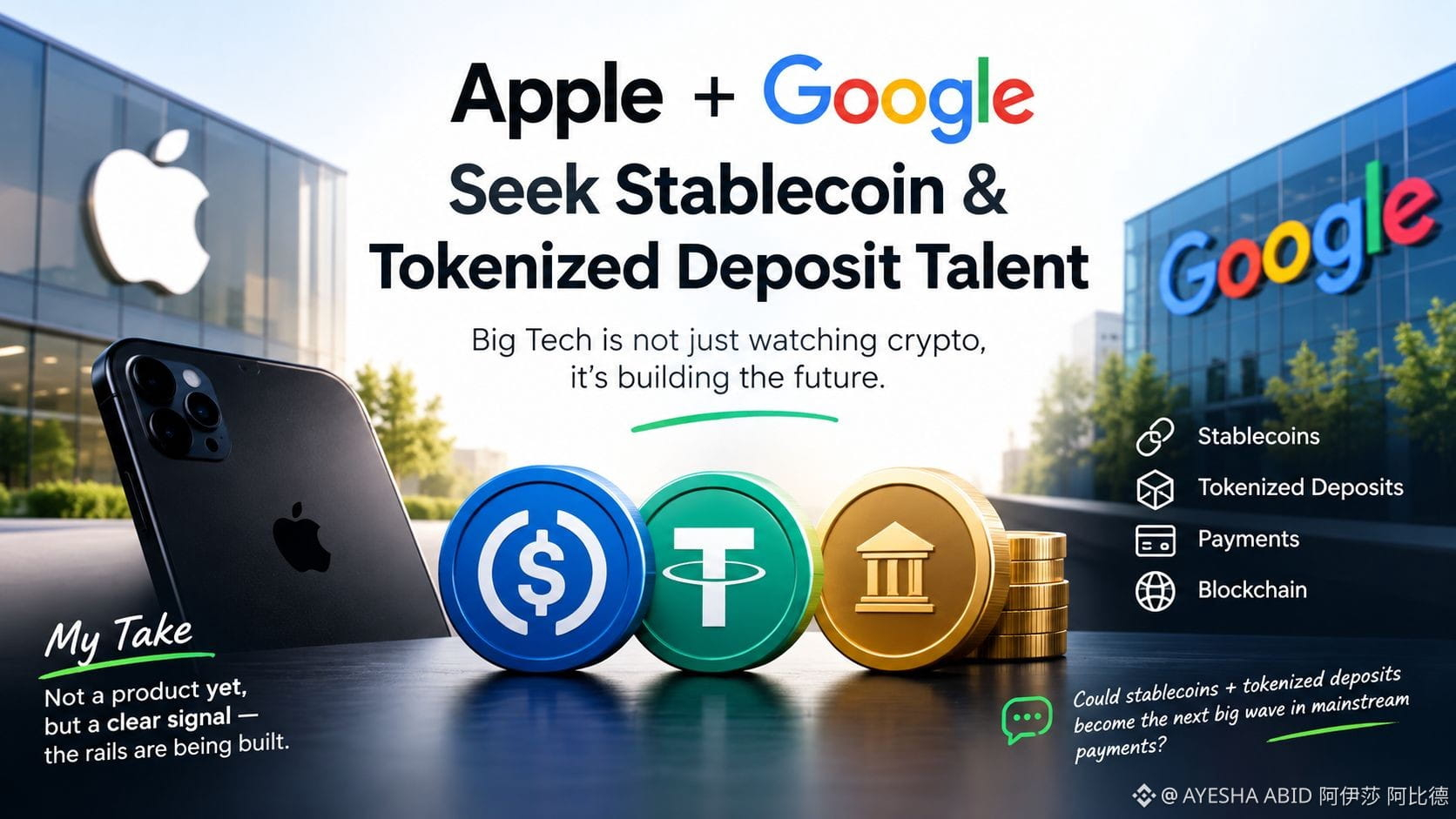
Apple is hiring an Apple Pay Financial Product Strategy Lead with knowledge of stablecoins, tokenized deposits and blockchain technology among the preferred qualifications. The role covers Apple Card, Apple Cash and future payment opportunities.
Google Cloud is also hiring a Web3 Industry Principal Architect in Hong Kong, focused on RWA tokenization, stablecoin payment networks, tokenized deposits, custody and institutional blockchain infrastructure across APAC.
My take: This is important because the narrative is shifting from crypto native companies building the rails to major tech companies studying how those rails could fit into payments and financial infrastructure.
But there is one key detail: neither Apple nor Google has confirmed a new stablecoin or specific crypto product. For now, the catalyst is talent and infrastructure development, not a product launch.
If this expands into real payment integration, could stablecoins + tokenized deposits become a major part of mainstream digital payments? 👀
#Stablecoins $GOOGL $BTC #Crypto #Apple
#AppleGoogleSeekStablecoinTokenizedDepositTalent
Apple + Google + Stablecoins 👀
Big Tech is quietly building crypto expertise, and the job postings are the signal.
Apple is hiring an Apple Pay Financial Product Strategy Lead with knowledge of stablecoins, tokenized deposits and blockchain technology among the preferred qualifications. The role covers Apple Card, Apple Cash and future payment opportunities.
Google Cloud is also hiring a Web3 Industry Principal Architect in Hong Kong, focused on RWA tokenization, stablecoin payment networks, tokenized deposits, custody and institutional blockchain infrastructure across APAC.
My take: This is important because the narrative is shifting from crypto native companies building the rails to major tech companies studying how those rails could fit into payments and financial infrastructure.
But there is one key detail: neither Apple nor Google has confirmed a new stablecoin or specific crypto product. For now, the catalyst is talent and infrastructure development, not a product launch.
If this expands into real payment integration, could stablecoins + tokenized deposits become a major part of mainstream digital payments? 👀
#Stablecoins $GOOGL $BTC #Crypto #Apple
#AppleGoogleSeekStablecoinTokenizedDepositTalent
Big Tech is quietly building crypto expertise, and the job postings are the signal.
Apple is hiring an Apple Pay Financial Product Strategy Lead with knowledge of stablecoins, tokenized deposits and blockchain technology among the preferred qualifications. The role covers Apple Card, Apple Cash and future payment opportunities.
Google Cloud is also hiring a Web3 Industry Principal Architect in Hong Kong, focused on RWA tokenization, stablecoin payment networks, tokenized deposits, custody and institutional blockchain infrastructure across APAC.
My take: This is important because the narrative is shifting from crypto native companies building the rails to major tech companies studying how those rails could fit into payments and financial infrastructure.
But there is one key detail: neither Apple nor Google has confirmed a new stablecoin or specific crypto product. For now, the catalyst is talent and infrastructure development, not a product launch.
If this expands into real payment integration, could stablecoins + tokenized deposits become a major part of mainstream digital payments? 👀
#Stablecoins $GOOGL $BTC #Crypto #Apple
#AppleGoogleSeekStablecoinTokenizedDepositTalent
1
343

South Korea's fintech giants Kakao Pay and KakaoBank are teaming up with digital asset platform Fireblocks to research stablecoin infrastructure. This move signals a major push by traditional financial institutions to bridge Web2 ecosystems with blockchain rails. As regulatory frameworks evolve across Asia, institutional-grade stablecoin adoption is becoming the next big battleground for payments. Expect more Asian banking giants to follow suit as tokenized finance matures. #Stablecoins #Kakao #Fireblocks
South Korea's fintech giants Kakao Pay and KakaoBank are teaming up with digital asset platform Fireblocks to research stablecoin infrastructure. This move signals a major push by traditional financial institutions to bridge Web2 ecosystems with blockchain rails. As regulatory frameworks evolve across Asia, institutional-grade stablecoin adoption is becoming the next big battleground for payments. Expect more Asian banking giants to follow suit as tokenized finance matures. #Stablecoins #Kakao #Fireblocks

#AppleGoogleSeekStablecoinTokenizedDepositTalent
🚨 APPLE & GOOGLE ARE SILENTLY BUILDING A STABLECOIN EMPIRE 🚨
You are watching the biggest transfer of wealth in real-time. Both Apple and Google just posted senior roles demanding deep Stablecoin and Blockchain expertise.
Why does this matter for YOUR portfolio❓
🍏 Apple's Angle: They are targeting their "Apple Pay" ecosystem. Imagine bypassing Visa/Mastercard interchange fees by settling via stablecoins for hundreds of millions of iOS users.
🌐 Google's Angle: Google Cloud is aggressively building backend digital asset infrastructure for institutional clients across Asia-Pacific.
🫴 My Verdict: STRONGLY BULLISH. This isn’t a crypto startup experimenting; these are trillion-dollar tech behemoths locking in their Web3 footprint. Expect a massive liquidity injection into stablecoin protocols once regulatory clarity hits.
Are you positioned for Web2’s hostile takeover of Web3? Drop your thoughts below! 👇
#CryptoAdoption #Stablecoins #BinanceSquare
#AppleGoogleSeekStablecoinTokenizedDepositTalent
🚨 APPLE & GOOGLE ARE SILENTLY BUILDING A STABLECOIN EMPIRE 🚨
You are watching the biggest transfer of wealth in real-time. Both Apple and Google just posted senior roles demanding deep Stablecoin and Blockchain expertise.
Why does this matter for YOUR portfolio❓
🍏 Apple's Angle: They are targeting their "Apple Pay" ecosystem. Imagine bypassing Visa/Mastercard interchange fees by settling via stablecoins for hundreds of millions of iOS users.
🌐 Google's Angle: Google Cloud is aggressively building backend digital asset infrastructure for institutional clients across Asia-Pacific.
🫴 My Verdict: STRONGLY BULLISH. This isn’t a crypto startup experimenting; these are trillion-dollar tech behemoths locking in their Web3 footprint. Expect a massive liquidity injection into stablecoin protocols once regulatory clarity hits.
Are you positioned for Web2’s hostile takeover of Web3? Drop your thoughts below! 👇
#CryptoAdoption #Stablecoins #BinanceSquare
🚨 APPLE & GOOGLE ARE SILENTLY BUILDING A STABLECOIN EMPIRE 🚨
You are watching the biggest transfer of wealth in real-time. Both Apple and Google just posted senior roles demanding deep Stablecoin and Blockchain expertise.
Why does this matter for YOUR portfolio❓
🍏 Apple's Angle: They are targeting their "Apple Pay" ecosystem. Imagine bypassing Visa/Mastercard interchange fees by settling via stablecoins for hundreds of millions of iOS users.
🌐 Google's Angle: Google Cloud is aggressively building backend digital asset infrastructure for institutional clients across Asia-Pacific.
🫴 My Verdict: STRONGLY BULLISH. This isn’t a crypto startup experimenting; these are trillion-dollar tech behemoths locking in their Web3 footprint. Expect a massive liquidity injection into stablecoin protocols once regulatory clarity hits.
Are you positioned for Web2’s hostile takeover of Web3? Drop your thoughts below! 👇
#CryptoAdoption #Stablecoins #BinanceSquare
1
85

Circle is taking a massive leap beyond just issuing tokens. The team behind $USDC has unveiled Arc, their brand new Layer 1 blockchain built from the ground up purely for stablecoin-native finance. 🌐
Think about why this matters for a second. Instead of dealing with unpredictable gas spikes or network congestion on general-purpose networks, Arc is engineered to provide seamless, hyper-efficient rails specifically designed for global digital dollar movement. It is Circle's clear bid to become the foundational base layer for enterprise payments and fintech applications. 💡
What to watch next is how smoothly developer tooling rolls out and whether major payment giants decide to build native apps directly on Arc. If they manage to bootstrap liquidity quickly, this could redefine how dollars flow on-chain.
#Stablecoins #CryptoInfrastructure #Write2Earn #USDC
Circle is taking a massive leap beyond just issuing tokens. The team behind $USDC has unveiled Arc, their brand new Layer 1 blockchain built from the ground up purely for stablecoin-native finance. 🌐
Think about why this matters for a second. Instead of dealing with unpredictable gas spikes or network congestion on general-purpose networks, Arc is engineered to provide seamless, hyper-efficient rails specifically designed for global digital dollar movement. It is Circle's clear bid to become the foundational base layer for enterprise payments and fintech applications. 💡
What to watch next is how smoothly developer tooling rolls out and whether major payment giants decide to build native apps directly on Arc. If they manage to bootstrap liquidity quickly, this could redefine how dollars flow on-chain.
#Stablecoins #CryptoInfrastructure #Write2Earn #USDC
Think about why this matters for a second. Instead of dealing with unpredictable gas spikes or network congestion on general-purpose networks, Arc is engineered to provide seamless, hyper-efficient rails specifically designed for global digital dollar movement. It is Circle's clear bid to become the foundational base layer for enterprise payments and fintech applications. 💡
What to watch next is how smoothly developer tooling rolls out and whether major payment giants decide to build native apps directly on Arc. If they manage to bootstrap liquidity quickly, this could redefine how dollars flow on-chain.
#Stablecoins #CryptoInfrastructure #Write2Earn #USDC

172

·
--
SOUTH KOREAN BANKING GIANTS PARTNER WITH FIREBLOCKS FOR INSTITUTIONAL STABLECOIN INFRASTRUCTURE $USDT 🏦 ⚡
Institutional adoption is quietly building the settlement rails for the next market phase. Kakao Bank and Kakao Pay aligning with Fireblocks represents a major structural shift toward regulated digital asset issuance and institutional liquidity routing in South Korea. 🔍
By anchoring their framework around stablecoins, smart money is finalizing enterprise custody architecture prior to retail inflow. 📊 As fintech balance sheets integrate on-chain distribution, transaction velocity and liquidity depth will expand significantly. ⚡
💬 Will South Korea's bank-backed stablecoin rails become the primary gateway for regional institutional volume? 👇
⚠️ Not financial advice. Always manage your risk. 🛡️
🏷️ #USDT #Stablecoins #Institutional #Crypto #Adoption
🎯 🦈
SOUTH KOREAN BANKING GIANTS PARTNER WITH FIREBLOCKS FOR INSTITUTIONAL STABLECOIN INFRASTRUCTURE $USDT 🏦 ⚡
Institutional adoption is quietly building the settlement rails for the next market phase. Kakao Bank and Kakao Pay aligning with Fireblocks represents a major structural shift toward regulated digital asset issuance and institutional liquidity routing in South Korea. 🔍
By anchoring their framework around stablecoins, smart money is finalizing enterprise custody architecture prior to retail inflow. 📊 As fintech balance sheets integrate on-chain distribution, transaction velocity and liquidity depth will expand significantly. ⚡
💬 Will South Korea's bank-backed stablecoin rails become the primary gateway for regional institutional volume? 👇
⚠️ Not financial advice. Always manage your risk. 🛡️
🏷️ #USDT #Stablecoins #Institutional #Crypto #Adoption
🎯 🦈
Institutional adoption is quietly building the settlement rails for the next market phase. Kakao Bank and Kakao Pay aligning with Fireblocks represents a major structural shift toward regulated digital asset issuance and institutional liquidity routing in South Korea. 🔍
By anchoring their framework around stablecoins, smart money is finalizing enterprise custody architecture prior to retail inflow. 📊 As fintech balance sheets integrate on-chain distribution, transaction velocity and liquidity depth will expand significantly. ⚡
💬 Will South Korea's bank-backed stablecoin rails become the primary gateway for regional institutional volume? 👇
⚠️ Not financial advice. Always manage your risk. 🛡️
🏷️ #USDT #Stablecoins #Institutional #Crypto #Adoption
🎯 🦈
5

·
--
Bullish
Verified
#agoragetspreliminaryoccapprovalfortrustbank
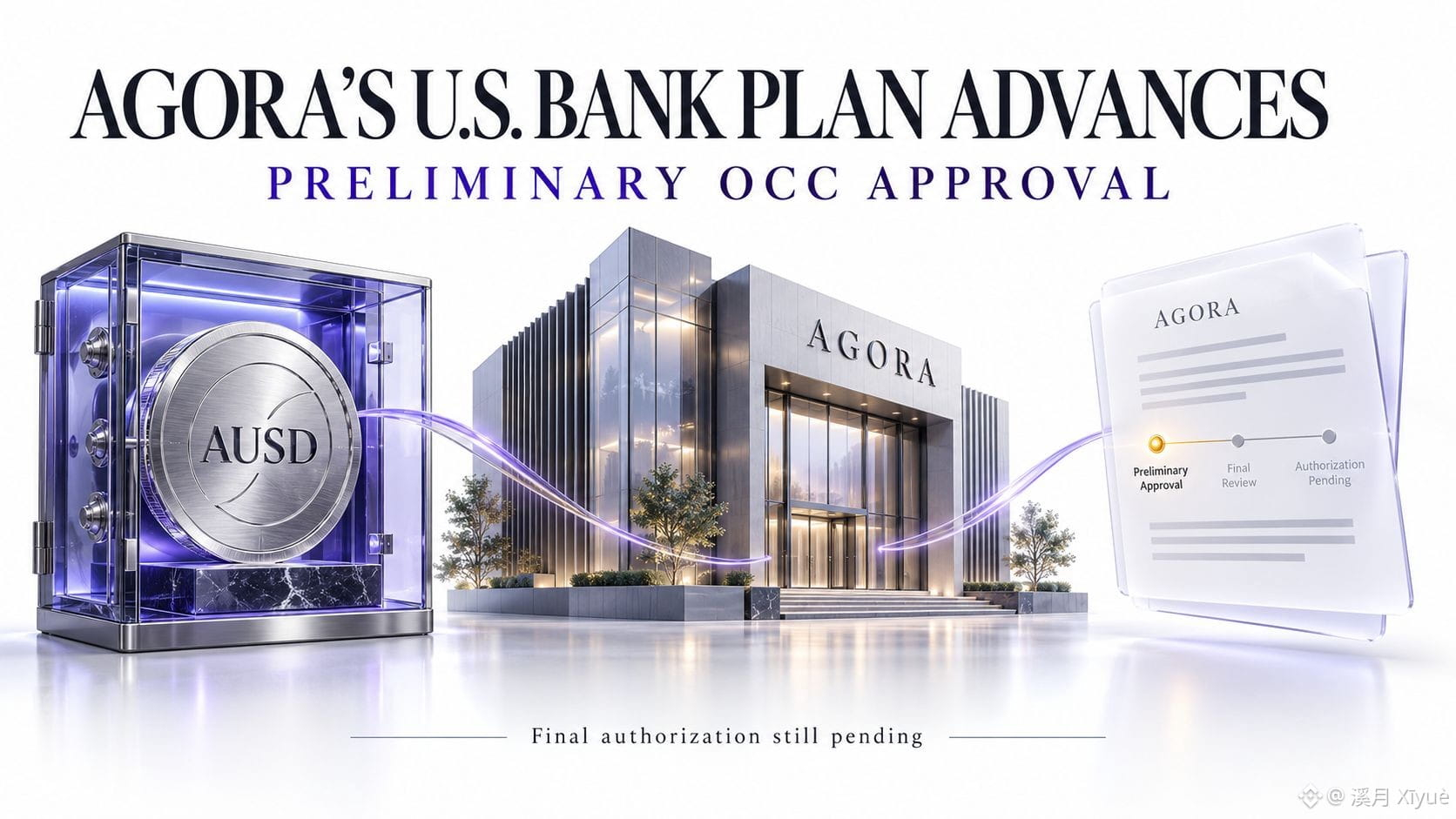
Agora Gets Preliminary OCC Approval — AUSD’s U.S. Banking Plan Advances
Agora has secured preliminary conditional approval to establish Agora National Trust Bank in New York. The OCC’s decision is dated September 18, 2026; Agora announced the milestone on September 21.
The proposed bank would serve institutions and businesses through stablecoin issuance, digital asset custody and related payment services. Agora also plans to move AUSD issuance from its Bermuda entity to the bank after establishment.
Final approval is still required. Permission to begin operations depends on satisfying the OCC’s preopening requirements.
My take: Bringing issuance, custody and payments into one federally supervised institution could make operational responsibilities clearer for corporate customers. That matters when a treasury team is assessing who manages reserves, processes redemptions and handles settlement.
The commercial test will be whether Agora can translate that structure into dependable service and repeat business. Regulatory progress strengthens the framework; reserve management, redemption reliability and payment costs will help determine how useful the product becomes.
For the stablecoin market, this is a concrete step toward more federally supervised infrastructure. Sustained adoption will depend on what Agora delivers once the remaining requirements are met.
Could this help AUSD win a bigger role in institutional payments?
#AgoraGetsPreliminaryOCCApprovalForTrustBank #Stablecoins #aUSDT
$MUBARAK $AGT $AKE
{future}(AKEUSDT)
{future}(AGTUSDT)
{future}(MUBARAKUSDT)
#agoragetspreliminaryoccapprovalfortrustbank
Agora Gets Preliminary OCC Approval — AUSD’s U.S. Banking Plan Advances
Agora has secured preliminary conditional approval to establish Agora National Trust Bank in New York. The OCC’s decision is dated September 18, 2026; Agora announced the milestone on September 21.
The proposed bank would serve institutions and businesses through stablecoin issuance, digital asset custody and related payment services. Agora also plans to move AUSD issuance from its Bermuda entity to the bank after establishment.
Final approval is still required. Permission to begin operations depends on satisfying the OCC’s preopening requirements.
My take: Bringing issuance, custody and payments into one federally supervised institution could make operational responsibilities clearer for corporate customers. That matters when a treasury team is assessing who manages reserves, processes redemptions and handles settlement.
The commercial test will be whether Agora can translate that structure into dependable service and repeat business. Regulatory progress strengthens the framework; reserve management, redemption reliability and payment costs will help determine how useful the product becomes.
For the stablecoin market, this is a concrete step toward more federally supervised infrastructure. Sustained adoption will depend on what Agora delivers once the remaining requirements are met.
Could this help AUSD win a bigger role in institutional payments?
#AgoraGetsPreliminaryOCCApprovalForTrustBank #Stablecoins #aUSDT
$MUBARAK $AGT $AKE
Agora Gets Preliminary OCC Approval — AUSD’s U.S. Banking Plan Advances
Agora has secured preliminary conditional approval to establish Agora National Trust Bank in New York. The OCC’s decision is dated September 18, 2026; Agora announced the milestone on September 21.
The proposed bank would serve institutions and businesses through stablecoin issuance, digital asset custody and related payment services. Agora also plans to move AUSD issuance from its Bermuda entity to the bank after establishment.
Final approval is still required. Permission to begin operations depends on satisfying the OCC’s preopening requirements.
My take: Bringing issuance, custody and payments into one federally supervised institution could make operational responsibilities clearer for corporate customers. That matters when a treasury team is assessing who manages reserves, processes redemptions and handles settlement.
The commercial test will be whether Agora can translate that structure into dependable service and repeat business. Regulatory progress strengthens the framework; reserve management, redemption reliability and payment costs will help determine how useful the product becomes.
For the stablecoin market, this is a concrete step toward more federally supervised infrastructure. Sustained adoption will depend on what Agora delivers once the remaining requirements are met.
Could this help AUSD win a bigger role in institutional payments?
#AgoraGetsPreliminaryOCCApprovalForTrustBank #Stablecoins #aUSDT
$MUBARAK $AGT $AKE
933

·
--
Bullish
🚨 USDT ON TRON IS TAKING OVER PAYMENTS.
USDT on TRON has become the most-used onchain payment option on CoinsBee as stablecoin spending continues to grow.
Stablecoins aren’t just for trading anymore.
They’re becoming real-world money. 💸⚡️
#USDT #Tron #TRX #Crypto #Stablecoins $USDT $TRX
{spot}(TRXUSDT)
🚨 USDT ON TRON IS TAKING OVER PAYMENTS.
USDT on TRON has become the most-used onchain payment option on CoinsBee as stablecoin spending continues to grow.
Stablecoins aren’t just for trading anymore.
They’re becoming real-world money. 💸⚡️
#USDT #Tron #TRX #Crypto #Stablecoins $USDT $TRX
USDT on TRON has become the most-used onchain payment option on CoinsBee as stablecoin spending continues to grow.
Stablecoins aren’t just for trading anymore.
They’re becoming real-world money. 💸⚡️
#USDT #Tron #TRX #Crypto #Stablecoins $USDT $TRX
56

·
--
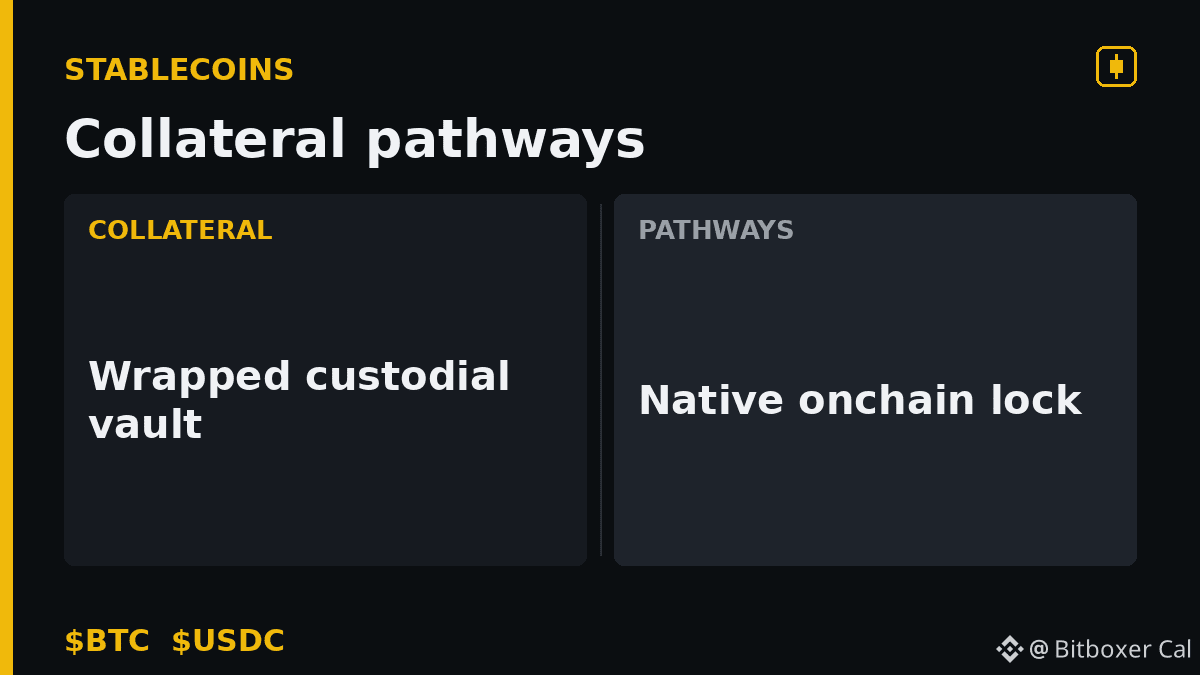
Institutional desks are forcing a showdown: synthetic wraps vs. native $BTC collateral for $USDC liquidity.
Wrapped assets rely on centralized custodians, which adds counterparty risk to every loan. Native collateral skips the bridge by using on-chain scripts to lock assets directly. During market volatility, the native route is safer because no custodian can freeze your funds.
$BTC $USDC #CryptoMarkets #Stablecoins #DYOR
Institutional desks are forcing a showdown: synthetic wraps vs. native $BTC collateral for $USDC liquidity.
Wrapped assets rely on centralized custodians, which adds counterparty risk to every loan. Native collateral skips the bridge by using on-chain scripts to lock assets directly. During market volatility, the native route is safer because no custodian can freeze your funds.
$BTC $USDC #CryptoMarkets #Stablecoins #DYOR
Wrapped assets rely on centralized custodians, which adds counterparty risk to every loan. Native collateral skips the bridge by using on-chain scripts to lock assets directly. During market volatility, the native route is safer because no custodian can freeze your funds.
$BTC $USDC #CryptoMarkets #Stablecoins #DYOR
89
Big tech is quietly making its biggest Web3 play yet. Both Apple and Google are aggressively recruiting senior crypto talent to spearhead consumer payment and institutional blockchain initiatives. This isn't just about hype anymore—it is clear preparation for a massive stablecoin integration. When the giants build the rails, mainstream adoption follows fast. Keep a close eye on payment infrastructure tokens as this narrative unfolds. $BTC #CryptoNews #Stablecoins #Web3
Big tech is quietly making its biggest Web3 play yet. Both Apple and Google are aggressively recruiting senior crypto talent to spearhead consumer payment and institutional blockchain initiatives. This isn't just about hype anymore—it is clear preparation for a massive stablecoin integration. When the giants build the rails, mainstream adoption follows fast. Keep a close eye on payment infrastructure tokens as this narrative unfolds. $BTC #CryptoNews #Stablecoins #Web3
5

·
--
If you are still assuming crypto adoption will only come from crypto-native protocols, stop right now.
Most investors keep missing structural market shifts because they stay locked inside an echo chamber of niche altcoins and short-term charts. We watch liquidity dry up across smaller protocols while overlooking where the real volume is actually heading.
Apple and Google are quietly hiring stablecoin and payment infrastructure experts, signaling a major transition in global settlements. Crypto purists argue that Big Tech entering the space will compromise decentralization, but that perspective ignores real-world distribution. A multi-billion user ecosystem integrating $USDC and $USDT rails will onboard more mainstream capital than any isolated DeFi front-end ever could.
While decentralization remains the core philosophy behind $BTC, consumer utility at global scale will inevitably run through established mobile operating systems. Tech giants are not entering the room to build experimental toys, they want frictionless settlement efficiency for billions of daily transactions.
Do you think Big Tech stablecoin adoption will kill crypto-native innovation or accelerate it to mainstream scale?
#Stablecoins #CryptoPayments #Web3
If you are still assuming crypto adoption will only come from crypto-native protocols, stop right now.
Most investors keep missing structural market shifts because they stay locked inside an echo chamber of niche altcoins and short-term charts. We watch liquidity dry up across smaller protocols while overlooking where the real volume is actually heading.
Apple and Google are quietly hiring stablecoin and payment infrastructure experts, signaling a major transition in global settlements. Crypto purists argue that Big Tech entering the space will compromise decentralization, but that perspective ignores real-world distribution. A multi-billion user ecosystem integrating $USDC and $USDT rails will onboard more mainstream capital than any isolated DeFi front-end ever could.
While decentralization remains the core philosophy behind $BTC , consumer utility at global scale will inevitably run through established mobile operating systems. Tech giants are not entering the room to build experimental toys, they want frictionless settlement efficiency for billions of daily transactions.
Do you think Big Tech stablecoin adoption will kill crypto-native innovation or accelerate it to mainstream scale?
#Stablecoins #CryptoPayments #Web3
Most investors keep missing structural market shifts because they stay locked inside an echo chamber of niche altcoins and short-term charts. We watch liquidity dry up across smaller protocols while overlooking where the real volume is actually heading.
Apple and Google are quietly hiring stablecoin and payment infrastructure experts, signaling a major transition in global settlements. Crypto purists argue that Big Tech entering the space will compromise decentralization, but that perspective ignores real-world distribution. A multi-billion user ecosystem integrating $USDC and $USDT rails will onboard more mainstream capital than any isolated DeFi front-end ever could.
While decentralization remains the core philosophy behind $BTC , consumer utility at global scale will inevitably run through established mobile operating systems. Tech giants are not entering the room to build experimental toys, they want frictionless settlement efficiency for billions of daily transactions.
Do you think Big Tech stablecoin adoption will kill crypto-native innovation or accelerate it to mainstream scale?
#Stablecoins #CryptoPayments #Web3
13

Why is nobody talking about Apple and Google quietly recruiting stablecoin experts while crypto still treats everything like a casino?
Traders keep getting wrecked chasing the next hype cycle and missing the actual shift. You FOMO into random alts only to get rugged while real capital builds on the rails that actually work.
Forget crypto-native firms pumping their own stories. Apple and Google want people who know how $USDC and $USDT can handle payments for billions of users without friction. These companies see stablecoins as core infrastructure, not a side bet. Transfer volumes already rival traditional systems in several markets and the sector now sits well over 170 billion in market cap.
The old narrative that this stays a niche experiment is outdated. When two of the largest tech names start staffing dedicated teams, regulation and scale are next. $USDT still dominates daily settlement while $USDC keeps expanding corridors and even $DAI fills gaps in decentralized use. Watch the job postings and compliance moves instead of just charts.
You can keep treating every new listing as a lottery ticket or start tracking the protocols that actually settle real volume.
Where do you think this goes from here?
#Stablecoins #Adoption #Crypto
Why is nobody talking about Apple and Google quietly recruiting stablecoin experts while crypto still treats everything like a casino?
Traders keep getting wrecked chasing the next hype cycle and missing the actual shift. You FOMO into random alts only to get rugged while real capital builds on the rails that actually work.
Forget crypto-native firms pumping their own stories. Apple and Google want people who know how $USDC and $USDT can handle payments for billions of users without friction. These companies see stablecoins as core infrastructure, not a side bet. Transfer volumes already rival traditional systems in several markets and the sector now sits well over 170 billion in market cap.
The old narrative that this stays a niche experiment is outdated. When two of the largest tech names start staffing dedicated teams, regulation and scale are next. $USDT still dominates daily settlement while $USDC keeps expanding corridors and even $DAI fills gaps in decentralized use. Watch the job postings and compliance moves instead of just charts.
You can keep treating every new listing as a lottery ticket or start tracking the protocols that actually settle real volume.
Where do you think this goes from here?
#Stablecoins #Adoption #Crypto
Traders keep getting wrecked chasing the next hype cycle and missing the actual shift. You FOMO into random alts only to get rugged while real capital builds on the rails that actually work.
Forget crypto-native firms pumping their own stories. Apple and Google want people who know how $USDC and $USDT can handle payments for billions of users without friction. These companies see stablecoins as core infrastructure, not a side bet. Transfer volumes already rival traditional systems in several markets and the sector now sits well over 170 billion in market cap.
The old narrative that this stays a niche experiment is outdated. When two of the largest tech names start staffing dedicated teams, regulation and scale are next. $USDT still dominates daily settlement while $USDC keeps expanding corridors and even $DAI fills gaps in decentralized use. Watch the job postings and compliance moves instead of just charts.
You can keep treating every new listing as a lottery ticket or start tracking the protocols that actually settle real volume.
Where do you think this goes from here?
#Stablecoins #Adoption #Crypto

4

·
--
everyone thinks the real threat to your bags is another crypto native protocol getting hacked, but actually the silent killer is big tech quietly building walled gardens around payments while we all stare at charts.
most of us keep fumbling entries and losing yield trying to chase the next shiny farm, completely ignoring where the actual trillions in liquidity are heading. while degens are busy debating decentralization, giants like apple and google are aggressively hiring stablecoin architects and payment rails specialists. they watched $USDT and $USDC settle trillions with near zero friction, and they realized they don't need to reinvent the wheel, they just need to integrate it into two billion devices.
ngl this is the textbook playbook. look at how fintech captured consumer banking; web2 titans aren't trying to build another volatile l1, they just want settled fiat rails running in the background of your app store checkouts. if you are positioned in random payment tokens thinking web2 will adopt them, ser, you might get left holding ghost chains when tech monopolies roll out their own compliant settlement layers.
where do you think this leaves crypto native payment protocols once apple rolls out native stablecoin rails?
#Crypto #Stablecoins #Web3
everyone thinks the real threat to your bags is another crypto native protocol getting hacked, but actually the silent killer is big tech quietly building walled gardens around payments while we all stare at charts.
most of us keep fumbling entries and losing yield trying to chase the next shiny farm, completely ignoring where the actual trillions in liquidity are heading. while degens are busy debating decentralization, giants like apple and google are aggressively hiring stablecoin architects and payment rails specialists. they watched $USDT and $USDC settle trillions with near zero friction, and they realized they don't need to reinvent the wheel, they just need to integrate it into two billion devices.
ngl this is the textbook playbook. look at how fintech captured consumer banking; web2 titans aren't trying to build another volatile l1, they just want settled fiat rails running in the background of your app store checkouts. if you are positioned in random payment tokens thinking web2 will adopt them, ser, you might get left holding ghost chains when tech monopolies roll out their own compliant settlement layers.
where do you think this leaves crypto native payment protocols once apple rolls out native stablecoin rails?
#Crypto #Stablecoins #Web3
most of us keep fumbling entries and losing yield trying to chase the next shiny farm, completely ignoring where the actual trillions in liquidity are heading. while degens are busy debating decentralization, giants like apple and google are aggressively hiring stablecoin architects and payment rails specialists. they watched $USDT and $USDC settle trillions with near zero friction, and they realized they don't need to reinvent the wheel, they just need to integrate it into two billion devices.
ngl this is the textbook playbook. look at how fintech captured consumer banking; web2 titans aren't trying to build another volatile l1, they just want settled fiat rails running in the background of your app store checkouts. if you are positioned in random payment tokens thinking web2 will adopt them, ser, you might get left holding ghost chains when tech monopolies roll out their own compliant settlement layers.
where do you think this leaves crypto native payment protocols once apple rolls out native stablecoin rails?
#Crypto #Stablecoins #Web3
3

·
--
Apple and Google are hiring stablecoin experts faster than most crypto-native shops can even get the job post live.
You're still grinding over the next $USDT mint cycle or another $USDC freeze rumor while the actual shift is happening at companies that already own the phones in everyone's pocket. Miss this and you could watch liquidity evaporate from the tokens you actually hold.
Apple sits on more than 2 billion active devices. Google's Android footprint is larger. They are not chasing yield or memes. They want stablecoins to slash the 2-3% card fees down to almost nothing and settle payments in seconds instead of days. That is why they are poaching people who understand how $USDC is minted and how $USDT liquidity actually moves on-chain.
The downside is obvious once you sit with it. These companies already know your location, purchases, and contacts. Plug stablecoins into Apple Pay or Google Wallet and they get to decide which coins survive, add extra KYC layers, or freeze funds the same way Circle already has. Smaller crypto-native issuers get squeezed and the volume that currently props up $ETH gas and DeFi activity can dry up fast.
Where do you think this goes if they start pushing their own rails?
#Stablecoins #Crypto #Payments
Apple and Google are hiring stablecoin experts faster than most crypto-native shops can even get the job post live.
You're still grinding over the next $USDT mint cycle or another $USDC freeze rumor while the actual shift is happening at companies that already own the phones in everyone's pocket. Miss this and you could watch liquidity evaporate from the tokens you actually hold.
Apple sits on more than 2 billion active devices. Google's Android footprint is larger. They are not chasing yield or memes. They want stablecoins to slash the 2-3% card fees down to almost nothing and settle payments in seconds instead of days. That is why they are poaching people who understand how $USDC is minted and how $USDT liquidity actually moves on-chain.
The downside is obvious once you sit with it. These companies already know your location, purchases, and contacts. Plug stablecoins into Apple Pay or Google Wallet and they get to decide which coins survive, add extra KYC layers, or freeze funds the same way Circle already has. Smaller crypto-native issuers get squeezed and the volume that currently props up $ETH gas and DeFi activity can dry up fast.
Where do you think this goes if they start pushing their own rails?
#Stablecoins #Crypto #Payments
You're still grinding over the next $USDT mint cycle or another $USDC freeze rumor while the actual shift is happening at companies that already own the phones in everyone's pocket. Miss this and you could watch liquidity evaporate from the tokens you actually hold.
Apple sits on more than 2 billion active devices. Google's Android footprint is larger. They are not chasing yield or memes. They want stablecoins to slash the 2-3% card fees down to almost nothing and settle payments in seconds instead of days. That is why they are poaching people who understand how $USDC is minted and how $USDT liquidity actually moves on-chain.
The downside is obvious once you sit with it. These companies already know your location, purchases, and contacts. Plug stablecoins into Apple Pay or Google Wallet and they get to decide which coins survive, add extra KYC layers, or freeze funds the same way Circle already has. Smaller crypto-native issuers get squeezed and the volume that currently props up $ETH gas and DeFi activity can dry up fast.
Where do you think this goes if they start pushing their own rails?
#Stablecoins #Crypto #Payments
5

Here's what happened when Apple and Google started hiring the same stablecoin people that used to only land at crypto-native firms.
Most traders treat $USDT as a waiting room and $USDC as a savings account. That is how you sit through a real institutional shift and only notice after the story has already moved on.
Facebook tried to build Libra from zero in 2019 and got shut down by regulators within three years. PayPal watched that crash and launched $PYUSD on existing rails instead of inventing a new chain. Apple and Google look like they took notes on the second attempt.
They are not launching an L1. They are hiring people who already understand issuance, reserves, and compliance. Circle and Tether spent a decade becoming crypto's settlement layer, with USDT sitting above $140 billion and USDC around $40 billion. That scale is why Big Tech wants the expertise now. A dollar token inside Apple Pay or Google Wallet would land in a few billion pockets overnight.
Crypto-native firms won the first innings. The next ones might not look like them at all. The comparison that actually matters is not Tether versus Circle. It is on-chain issuers versus companies that already run identity, payments, and regulation in a hundred countries.
Where do you think this goes from here if Apple or Google actually ship a dollar token?
#Stablecoins #BigTech #Crypto
Here's what happened when Apple and Google started hiring the same stablecoin people that used to only land at crypto-native firms.
Most traders treat $USDT as a waiting room and $USDC as a savings account. That is how you sit through a real institutional shift and only notice after the story has already moved on.
Facebook tried to build Libra from zero in 2019 and got shut down by regulators within three years. PayPal watched that crash and launched $PYUSD on existing rails instead of inventing a new chain. Apple and Google look like they took notes on the second attempt.
They are not launching an L1. They are hiring people who already understand issuance, reserves, and compliance. Circle and Tether spent a decade becoming crypto's settlement layer, with USDT sitting above $140 billion and USDC around $40 billion. That scale is why Big Tech wants the expertise now. A dollar token inside Apple Pay or Google Wallet would land in a few billion pockets overnight.
Crypto-native firms won the first innings. The next ones might not look like them at all. The comparison that actually matters is not Tether versus Circle. It is on-chain issuers versus companies that already run identity, payments, and regulation in a hundred countries.
Where do you think this goes from here if Apple or Google actually ship a dollar token?
#Stablecoins #BigTech #Crypto
Most traders treat $USDT as a waiting room and $USDC as a savings account. That is how you sit through a real institutional shift and only notice after the story has already moved on.
Facebook tried to build Libra from zero in 2019 and got shut down by regulators within three years. PayPal watched that crash and launched $PYUSD on existing rails instead of inventing a new chain. Apple and Google look like they took notes on the second attempt.
They are not launching an L1. They are hiring people who already understand issuance, reserves, and compliance. Circle and Tether spent a decade becoming crypto's settlement layer, with USDT sitting above $140 billion and USDC around $40 billion. That scale is why Big Tech wants the expertise now. A dollar token inside Apple Pay or Google Wallet would land in a few billion pockets overnight.
Crypto-native firms won the first innings. The next ones might not look like them at all. The comparison that actually matters is not Tether versus Circle. It is on-chain issuers versus companies that already run identity, payments, and regulation in a hundred countries.
Where do you think this goes from here if Apple or Google actually ship a dollar token?
#Stablecoins #BigTech #Crypto
12
The US Senate stalling the Clarity Act isn't just a legislative delay—it's a massive strategic win for traditional banking giants. By blocking regulatory clarity on stablecoin yields, lawmakers are effectively protecting legacy financial institutions from decentralized competition. Meanwhile, offshore hubs like Dubai are capitalizing on this regulatory vacuum, rolling out welcoming frameworks that attract top-tier crypto capital, talent, and innovation away from the US. #CryptoRegulation #Stablecoins #Banking
The US Senate stalling the Clarity Act isn't just a legislative delay—it's a massive strategic win for traditional banking giants. By blocking regulatory clarity on stablecoin yields, lawmakers are effectively protecting legacy financial institutions from decentralized competition. Meanwhile, offshore hubs like Dubai are capitalizing on this regulatory vacuum, rolling out welcoming frameworks that attract top-tier crypto capital, talent, and innovation away from the US. #CryptoRegulation #Stablecoins #Banking
Log in to explore more content
Join global crypto users on Binance Square
⚡️ Get latest and useful information about crypto.
💬 Trusted by the world’s largest crypto exchange.
👍 Discover real insights from verified creators.
Email / Phone number
Trending Topics
1
#AIStocksWhatNext
29,813 views
51 Discussing
2
#StrategyAdds950Bitcoin
869 views
0 Discussing
3
#CardanoAddedToX402KitForADAPayments
5,809 views
180 Discussing
4
#XRPRises8%
15,534 views
510 Discussing
5
#AMDHits$1TrillionMarketCap
534 views
24 Discussing
6
#BitcoinSpotETFs$999MNetInflow
1,169 views
40 Discussing
7
#AppleGoogleSeekStablecoinTokenizedDepositTalent
9,153 views
374 Discussing
8
#NvidiaToBuyAnother$1.5BSBEnergySharesPreIPO
1,596 views
33 Discussing
9
#AgoraGetsPreliminaryOCCApprovalForTrustBank
6,199 views
190 Discussing
10
#NEARRisesNearly80%InAWeek
84,985 views
1,339 Discussing