

#southkorean
southkorean
45,944 views
168 Discussing
Hot
Latest

·
--
Verified
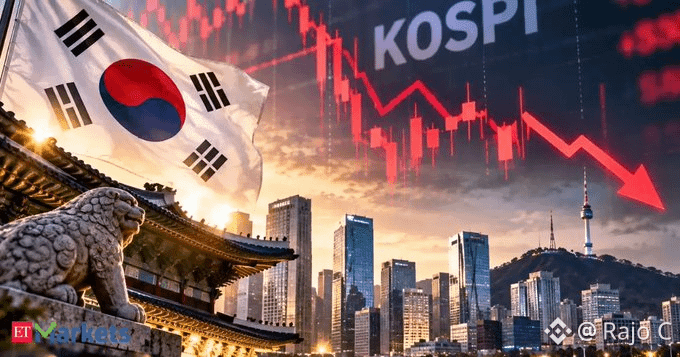
#kospipostsworstquartersince2020 #SouthKorean shares reversed early gains to trade lower on Wednesday as elevated bond yields weighed on investor sentiment, putting the benchmark KOSPI
on track for its biggest quarterly decline in six-and-a-half years, according to a report by Reuters.
#ETMarkets $PLAY $MARA $APE
#kospipostsworstquartersince2020 #SouthKorean shares reversed early gains to trade lower on Wednesday as elevated bond yields weighed on investor sentiment, putting the benchmark KOSPI
on track for its biggest quarterly decline in six-and-a-half years, according to a report by Reuters.
#ETMarkets $PLAY $MARA $APE
on track for its biggest quarterly decline in six-and-a-half years, according to a report by Reuters.
#ETMarkets $PLAY $MARA $APE
607

⚖️ South Korea’s Crypto Tax Faces Another Delay Push
🇰🇷 50,000-Signature Petition
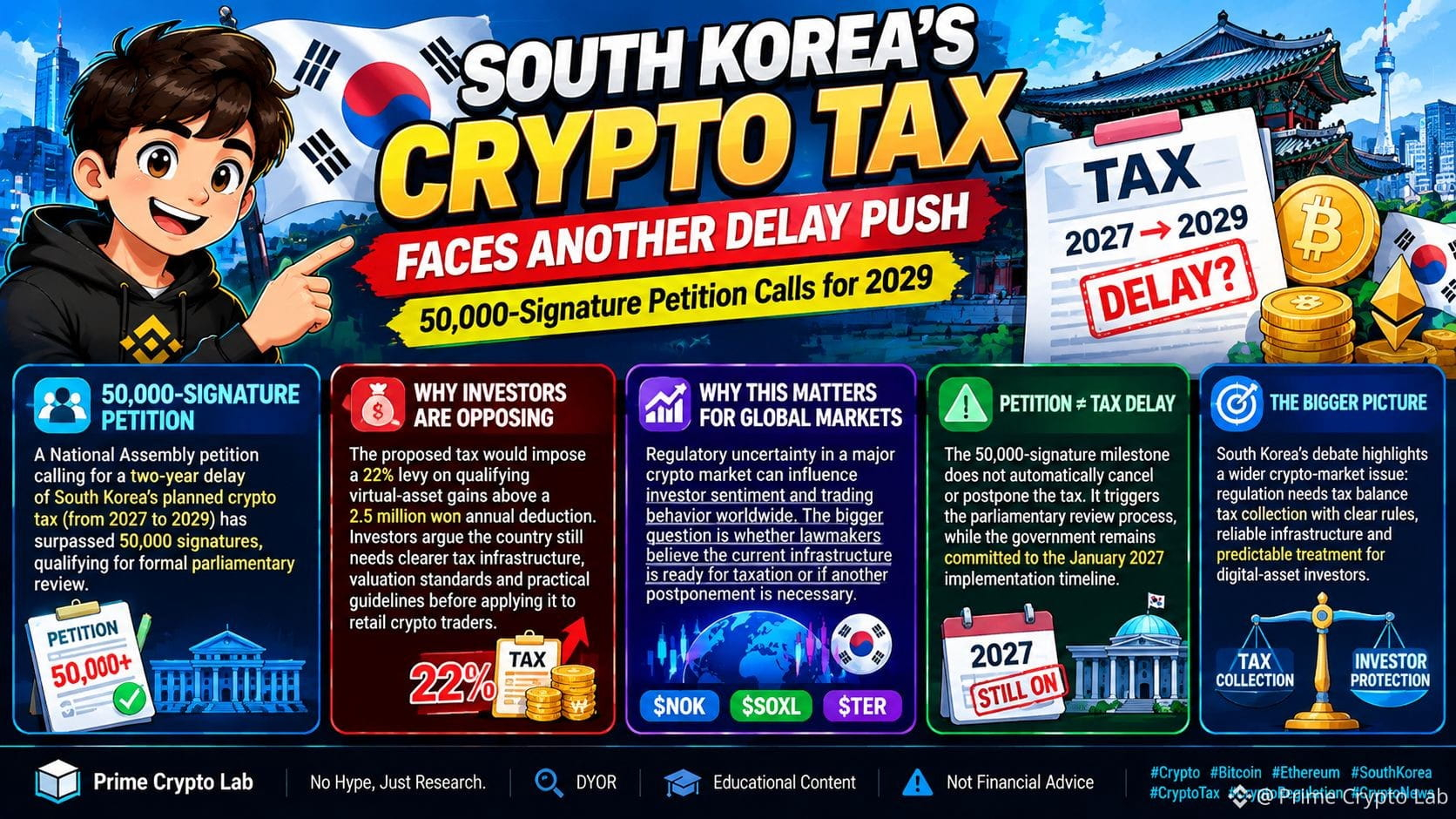
$NOK — South Korea’s planned cryptocurrency tax is facing renewed pressure from retail investors after a National Assembly petition calling for a two-year delay, from 2027 to 2029, surpassed 50,000 signatures. Reaching that threshold qualifies the petition for formal review by the relevant parliamentary committee.
💰Why Investors Are Opposing the Tax
The proposed system would impose a 22% tax on qualifying virtual-asset gains above a 2.5 million won annual deduction. Supporters of the delay argue that the country still needs clearer tax infrastructure, valuation standards and practical guidelines before applying the system to retail crypto investors.
📊 Why This Matters for Crypto Markets
$SOXL — Although the petition is focused on South Korea, regulatory uncertainty in a major crypto market can influence investor sentiment and trading behavior. The bigger issue is whether lawmakers believe the current infrastructure is ready for taxation or whether another postponement is necessary. Some lawmakers have also proposed separate delays extending into 2029 or even 2030.
⚠️ Petition ≠ Tax Delay
The 50,000-signature milestone does not automatically cancel or postpone the tax. It triggers the parliamentary review process, while the government currently remains committed to the January 2027 implementation timeline. Traders should therefore watch the National Assembly, tax authorities and any new legislative proposals before assuming a policy change is confirmed.
🌍 Bigger Picture
$TER — South Korea's debate highlights a wider crypto-market issue: regulation needs to balance tax collection with clear rules, reliable infrastructure and predictable treatment for digital-asset investors.
Prime Crypto Lab — No Hype, Just Research.
DYOR | Educational Content | Not Financial Advice
#crypto #bitcoin #Ethereum✅ #SouthKorean #cryptotax
⚖️ South Korea’s Crypto Tax Faces Another Delay Push
🇰🇷 50,000-Signature Petition
$NOK — South Korea’s planned cryptocurrency tax is facing renewed pressure from retail investors after a National Assembly petition calling for a two-year delay, from 2027 to 2029, surpassed 50,000 signatures. Reaching that threshold qualifies the petition for formal review by the relevant parliamentary committee.
💰Why Investors Are Opposing the Tax
The proposed system would impose a 22% tax on qualifying virtual-asset gains above a 2.5 million won annual deduction. Supporters of the delay argue that the country still needs clearer tax infrastructure, valuation standards and practical guidelines before applying the system to retail crypto investors.
📊 Why This Matters for Crypto Markets
$SOXL — Although the petition is focused on South Korea, regulatory uncertainty in a major crypto market can influence investor sentiment and trading behavior. The bigger issue is whether lawmakers believe the current infrastructure is ready for taxation or whether another postponement is necessary. Some lawmakers have also proposed separate delays extending into 2029 or even 2030.
⚠️ Petition ≠ Tax Delay
The 50,000-signature milestone does not automatically cancel or postpone the tax. It triggers the parliamentary review process, while the government currently remains committed to the January 2027 implementation timeline. Traders should therefore watch the National Assembly, tax authorities and any new legislative proposals before assuming a policy change is confirmed.
🌍 Bigger Picture
$TER — South Korea's debate highlights a wider crypto-market issue: regulation needs to balance tax collection with clear rules, reliable infrastructure and predictable treatment for digital-asset investors.
Prime Crypto Lab — No Hype, Just Research.
DYOR | Educational Content | Not Financial Advice
#crypto #bitcoin #Ethereum✅ #SouthKorean #cryptotax
🇰🇷 50,000-Signature Petition
$NOK — South Korea’s planned cryptocurrency tax is facing renewed pressure from retail investors after a National Assembly petition calling for a two-year delay, from 2027 to 2029, surpassed 50,000 signatures. Reaching that threshold qualifies the petition for formal review by the relevant parliamentary committee.
💰Why Investors Are Opposing the Tax
The proposed system would impose a 22% tax on qualifying virtual-asset gains above a 2.5 million won annual deduction. Supporters of the delay argue that the country still needs clearer tax infrastructure, valuation standards and practical guidelines before applying the system to retail crypto investors.
📊 Why This Matters for Crypto Markets
$SOXL — Although the petition is focused on South Korea, regulatory uncertainty in a major crypto market can influence investor sentiment and trading behavior. The bigger issue is whether lawmakers believe the current infrastructure is ready for taxation or whether another postponement is necessary. Some lawmakers have also proposed separate delays extending into 2029 or even 2030.
⚠️ Petition ≠ Tax Delay
The 50,000-signature milestone does not automatically cancel or postpone the tax. It triggers the parliamentary review process, while the government currently remains committed to the January 2027 implementation timeline. Traders should therefore watch the National Assembly, tax authorities and any new legislative proposals before assuming a policy change is confirmed.
🌍 Bigger Picture
$TER — South Korea's debate highlights a wider crypto-market issue: regulation needs to balance tax collection with clear rules, reliable infrastructure and predictable treatment for digital-asset investors.
Prime Crypto Lab — No Hype, Just Research.
DYOR | Educational Content | Not Financial Advice
#crypto #bitcoin #Ethereum✅ #SouthKorean #cryptotax
61

·
--
Bullish
#southkoreacryptotaxdelaypetitiontops50000
🇰🇷 SOUTH KOREA CRYPTO TAX PETITION HITS 50,000! 🚨
South Korea’s petition to delay the planned crypto tax has officially crossed 50,000 signatures, triggering formal review by the National Assembly.
The proposal wants to delay the crypto tax from 2027 to 2029.
Why does this matter? 👇
A 22% tax on qualifying crypto gains is currently planned for 2027, and investors argue that early taxation could push some trading activity overseas and hurt the local crypto market.
⚠️ Important: 50,000 signatures does NOT mean the tax is cancelled or delayed yet.
But if lawmakers support the delay, it could be a positive signal for South Korea’s crypto market.
🇰🇷 Bullish for crypto or just political noise?
#crypto #SouthKorean #cryptotax
#southkoreacryptotaxdelaypetitiontops50000
🇰🇷 SOUTH KOREA CRYPTO TAX PETITION HITS 50,000! 🚨
South Korea’s petition to delay the planned crypto tax has officially crossed 50,000 signatures, triggering formal review by the National Assembly.
The proposal wants to delay the crypto tax from 2027 to 2029.
Why does this matter? 👇
A 22% tax on qualifying crypto gains is currently planned for 2027, and investors argue that early taxation could push some trading activity overseas and hurt the local crypto market.
⚠️ Important: 50,000 signatures does NOT mean the tax is cancelled or delayed yet.
But if lawmakers support the delay, it could be a positive signal for South Korea’s crypto market.
🇰🇷 Bullish for crypto or just political noise?
#crypto #SouthKorean #cryptotax
🇰🇷 SOUTH KOREA CRYPTO TAX PETITION HITS 50,000! 🚨
South Korea’s petition to delay the planned crypto tax has officially crossed 50,000 signatures, triggering formal review by the National Assembly.
The proposal wants to delay the crypto tax from 2027 to 2029.
Why does this matter? 👇
A 22% tax on qualifying crypto gains is currently planned for 2027, and investors argue that early taxation could push some trading activity overseas and hurt the local crypto market.
⚠️ Important: 50,000 signatures does NOT mean the tax is cancelled or delayed yet.
But if lawmakers support the delay, it could be a positive signal for South Korea’s crypto market.
🇰🇷 Bullish for crypto or just political noise?
#crypto #SouthKorean #cryptotax
1
140
·
--
Bullish
🚨🇰🇷 SOUTH KOREA COULD BE SHOWING THE WORLD WHY STABLECOINS MATTER!
According to South Korea’s National Assembly Budget Office, $won-denominated stablecoins could potentially save Korean merchants up to $3.8 BILLION every year in fees. 💰🔥
Think about that number.
Stablecoins aren’t just about trading crypto anymore.
They could help businesses move money faster, cheaper and more efficiently, especially for payments and cross-border transactions. ⚡
💵 Lower payment costs
⚡ Faster settlement
🌎 Easier international transactions
🏦 Less dependence on traditional payment rails
And this is where it gets interesting for crypto…
If stablecoins start becoming part of everyday commerce, the demand for blockchain infrastructure and digital dollars/won could expand dramatically. 👀
South Korea is already one of the world's most active crypto markets.
Now imagine millions of merchants using stablecoins for payments.
$3.8B in potential savings is not just a crypto headline — it’s a massive signal for the future of digital payments. 🚀
The stablecoin race is getting REAL. 🔥
#Stablecoins #crypto #SouthKorean
$SOL $XRP
🚨🇰🇷 SOUTH KOREA COULD BE SHOWING THE WORLD WHY STABLECOINS MATTER!
According to South Korea’s National Assembly Budget Office, $won-denominated stablecoins could potentially save Korean merchants up to $3.8 BILLION every year in fees. 💰🔥
Think about that number.
Stablecoins aren’t just about trading crypto anymore.
They could help businesses move money faster, cheaper and more efficiently, especially for payments and cross-border transactions. ⚡
💵 Lower payment costs
⚡ Faster settlement
🌎 Easier international transactions
🏦 Less dependence on traditional payment rails
And this is where it gets interesting for crypto…
If stablecoins start becoming part of everyday commerce, the demand for blockchain infrastructure and digital dollars/won could expand dramatically. 👀
South Korea is already one of the world's most active crypto markets.
Now imagine millions of merchants using stablecoins for payments.
$3.8B in potential savings is not just a crypto headline — it’s a massive signal for the future of digital payments. 🚀
The stablecoin race is getting REAL. 🔥
#Stablecoins #crypto #SouthKorean
$SOL $XRP
According to South Korea’s National Assembly Budget Office, $won-denominated stablecoins could potentially save Korean merchants up to $3.8 BILLION every year in fees. 💰🔥
Think about that number.
Stablecoins aren’t just about trading crypto anymore.
They could help businesses move money faster, cheaper and more efficiently, especially for payments and cross-border transactions. ⚡
💵 Lower payment costs
⚡ Faster settlement
🌎 Easier international transactions
🏦 Less dependence on traditional payment rails
And this is where it gets interesting for crypto…
If stablecoins start becoming part of everyday commerce, the demand for blockchain infrastructure and digital dollars/won could expand dramatically. 👀
South Korea is already one of the world's most active crypto markets.
Now imagine millions of merchants using stablecoins for payments.
$3.8B in potential savings is not just a crypto headline — it’s a massive signal for the future of digital payments. 🚀
The stablecoin race is getting REAL. 🔥
#Stablecoins #crypto #SouthKorean
$SOL $XRP

46
·
--
Bearish
#koreanstocksslide20%frompeak
🚨 BEAR MARKET TERRITORY: SOUTH KOREAN STOCKS SLIDE 20% FROM THE PEAK! 🐋📉
⚠️ THE TECH AND SEMICONDUCTOR ENGINES CRASH INTO AN OFFICIAL MACRO RECESSION! 👇
Absolute historical panic is gripping Asian financial hubs! In an unyielding, high-volume selloff, South Korea's benchmark KOSPI index has officially tumbled over 20% from its recent cycle peak, crossing the line into a devastating, structural bear market!
The global AI and semiconductor bubble is experiencing an unprecedented reality check. Here is the cold, hard breakdown of what is sending shockwaves through international portfolios:
🔍 THE TECH CAPITULATION UNPACKED
The AI Growth Reset: Heavyweight memory chip giants like Samsung Electronics and SK Hynix are enduring an aggressive institutional liquidation phase. The market is screaming that future AI infrastructure spending has hit a temporary plateau.The Global Bond Contagion: With neighboring Japan's 30-year bond yields surging to multi-decade highs, billions in global "carry trade" capital are being pulled right out of emerging Asian equities to cover margin calls elsewhere.The Foreign Fund Exodus: Heavyweight international asset managers are relentlessly dumping won-denominated assets, shifting their positioning entirely into cash preservation instruments.
DYOR!! When one of the world's most critical industrial export engines enters an official 20% bear market slide, the rest of the globe feels the shockwaves. Safeguard your capital and avoid catching falling tech knives! 📉💼
#koreanstocksslide20%frompeak #KOSPI #SouthKorean
#koreanstocksslide20%frompeak
🚨 BEAR MARKET TERRITORY: SOUTH KOREAN STOCKS SLIDE 20% FROM THE PEAK! 🐋📉
⚠️ THE TECH AND SEMICONDUCTOR ENGINES CRASH INTO AN OFFICIAL MACRO RECESSION! 👇
Absolute historical panic is gripping Asian financial hubs! In an unyielding, high-volume selloff, South Korea's benchmark KOSPI index has officially tumbled over 20% from its recent cycle peak, crossing the line into a devastating, structural bear market!
The global AI and semiconductor bubble is experiencing an unprecedented reality check. Here is the cold, hard breakdown of what is sending shockwaves through international portfolios:
🔍 THE TECH CAPITULATION UNPACKED
The AI Growth Reset: Heavyweight memory chip giants like Samsung Electronics and SK Hynix are enduring an aggressive institutional liquidation phase. The market is screaming that future AI infrastructure spending has hit a temporary plateau.The Global Bond Contagion: With neighboring Japan's 30-year bond yields surging to multi-decade highs, billions in global "carry trade" capital are being pulled right out of emerging Asian equities to cover margin calls elsewhere.The Foreign Fund Exodus: Heavyweight international asset managers are relentlessly dumping won-denominated assets, shifting their positioning entirely into cash preservation instruments.
DYOR!! When one of the world's most critical industrial export engines enters an official 20% bear market slide, the rest of the globe feels the shockwaves. Safeguard your capital and avoid catching falling tech knives! 📉💼
#koreanstocksslide20%frompeak #KOSPI #SouthKorean
🚨 BEAR MARKET TERRITORY: SOUTH KOREAN STOCKS SLIDE 20% FROM THE PEAK! 🐋📉
⚠️ THE TECH AND SEMICONDUCTOR ENGINES CRASH INTO AN OFFICIAL MACRO RECESSION! 👇
Absolute historical panic is gripping Asian financial hubs! In an unyielding, high-volume selloff, South Korea's benchmark KOSPI index has officially tumbled over 20% from its recent cycle peak, crossing the line into a devastating, structural bear market!
The global AI and semiconductor bubble is experiencing an unprecedented reality check. Here is the cold, hard breakdown of what is sending shockwaves through international portfolios:
🔍 THE TECH CAPITULATION UNPACKED
The AI Growth Reset: Heavyweight memory chip giants like Samsung Electronics and SK Hynix are enduring an aggressive institutional liquidation phase. The market is screaming that future AI infrastructure spending has hit a temporary plateau.The Global Bond Contagion: With neighboring Japan's 30-year bond yields surging to multi-decade highs, billions in global "carry trade" capital are being pulled right out of emerging Asian equities to cover margin calls elsewhere.The Foreign Fund Exodus: Heavyweight international asset managers are relentlessly dumping won-denominated assets, shifting their positioning entirely into cash preservation instruments.
DYOR!! When one of the world's most critical industrial export engines enters an official 20% bear market slide, the rest of the globe feels the shockwaves. Safeguard your capital and avoid catching falling tech knives! 📉💼
#koreanstocksslide20%frompeak #KOSPI #SouthKorean
2
2
1.7k

🇰🇷 South Korea’s largest bank is moving toward blockchain
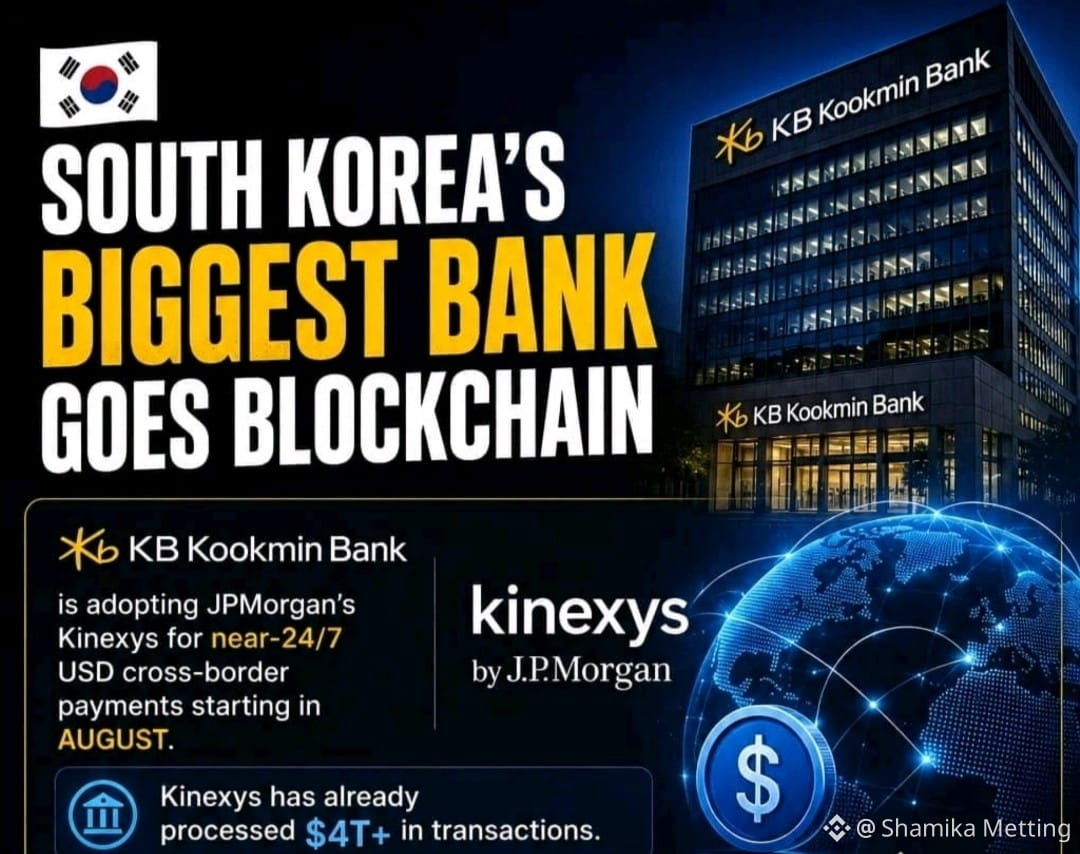
Bank <b>KB Kookmin Bank</b> is integrating <b>Kinexys</b> from <b>JPMorgan</b> for international payments in US dollars almost around the clock starting this August.
• More than $4 trillion has been processed in transactions using Kinexys.
• Faster, cheaper, and more efficient cross-border settlements.
• Another leading bank validates blockchain in real-world finance.
• Greater institutional adoption = stronger confidence in the blockchain infrastructure.
Why is this bullish for cryptocurrencies?
• More banks adopting blockchain increases global trust in the technology.
• Using blockchain in real life drives long-term ecosystem growth.
• Institutional adoption draws more capital into the crypto industry.
• Stronger infrastructure today can lead to higher demand for tokenized assets and on-chain financing tomorrow.
Traditional finance is moving even deeper into blockchain, and this is a long-term bullish signal for the entire cryptocurrency ecosystem. 🚀
Please follow
$BTC
#blockchain
#SouthKorean
🇰🇷 South Korea’s largest bank is moving toward blockchain
Bank <b>KB Kookmin Bank</b> is integrating <b>Kinexys</b> from <b>JPMorgan</b> for international payments in US dollars almost around the clock starting this August.
• More than $4 trillion has been processed in transactions using Kinexys.
• Faster, cheaper, and more efficient cross-border settlements.
• Another leading bank validates blockchain in real-world finance.
• Greater institutional adoption = stronger confidence in the blockchain infrastructure.
Why is this bullish for cryptocurrencies?
• More banks adopting blockchain increases global trust in the technology.
• Using blockchain in real life drives long-term ecosystem growth.
• Institutional adoption draws more capital into the crypto industry.
• Stronger infrastructure today can lead to higher demand for tokenized assets and on-chain financing tomorrow.
Traditional finance is moving even deeper into blockchain, and this is a long-term bullish signal for the entire cryptocurrency ecosystem. 🚀
Please follow
$BTC
#blockchain
#SouthKorean
Bank <b>KB Kookmin Bank</b> is integrating <b>Kinexys</b> from <b>JPMorgan</b> for international payments in US dollars almost around the clock starting this August.
• More than $4 trillion has been processed in transactions using Kinexys.
• Faster, cheaper, and more efficient cross-border settlements.
• Another leading bank validates blockchain in real-world finance.
• Greater institutional adoption = stronger confidence in the blockchain infrastructure.
Why is this bullish for cryptocurrencies?
• More banks adopting blockchain increases global trust in the technology.
• Using blockchain in real life drives long-term ecosystem growth.
• Institutional adoption draws more capital into the crypto industry.
• Stronger infrastructure today can lead to higher demand for tokenized assets and on-chain financing tomorrow.
Traditional finance is moving even deeper into blockchain, and this is a long-term bullish signal for the entire cryptocurrency ecosystem. 🚀
Please follow
$BTC
#blockchain
#SouthKorean
1
39
#SouthKoreaPreparesSecondCBDCPhase
🇰🇷 Everyone is talking about the CBDC...
At the same time, South Korea is quietly testing something that could be even more important. 👀
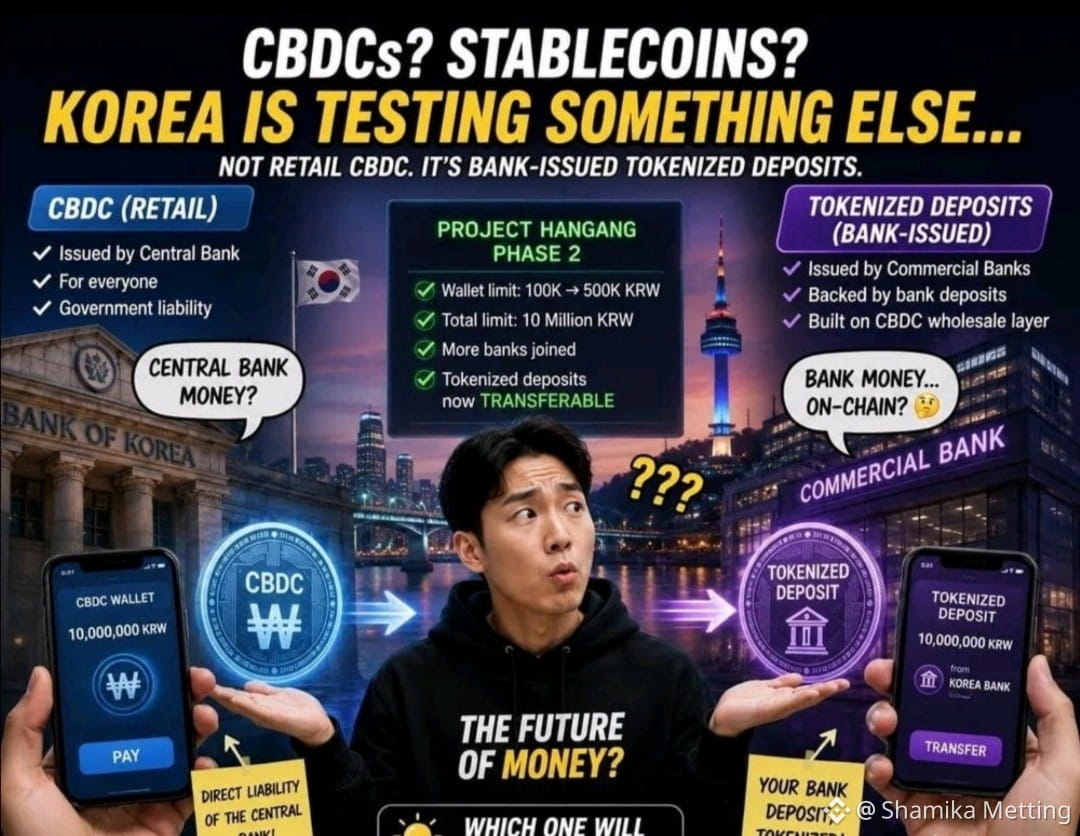
On 15/7, South Korea approved Phase 2 of the Hangang project.
The cap for holders was raised to 500,000 won, and the overall cap reached 10 million won.
It looks like a simple CBDC update.
But this isn’t the most interesting part.
🤣 A plot twist from the heart of the scene:...
This isn’t the kind of CBDC for individuals that many people thought.
What South Korea is actually testing is «deposit tokens» issued by commercial banks.
And this time, these tokens can be transferred rather than staying only in the wallet as happened in Phase 1.
In other words...
The Bank of Korea isn’t just testing a digital currency.
It’s testing a new payment model, where bank deposits are tokenized and operate on a CBDC infrastructure for devices/wholesale.
📌 Traders’ perspective:
Maybe in the future, competition won’t just be:
CBDC vs. Stablecoin.
Rather:
Private Stablecoin 🆚 Deposit tokens issued by banks.
If this model works efficiently, it’s very likely that many other countries will choose to tokenize bank deposits instead of issuing a CBDC for individuals across the entire population.
🤔 In your opinion, over the next 5–10 years, will the digital payments system be led by USDT/USDC, by CBDCs, or by tokenized bank deposits?
Please continue following
#CBDCs #SouthKorean
$USDT $USDC $ETH
{spot}(ETHUSDT)
#SouthKoreaPreparesSecondCBDCPhase
🇰🇷 Everyone is talking about the CBDC...
At the same time, South Korea is quietly testing something that could be even more important. 👀
On 15/7, South Korea approved Phase 2 of the Hangang project.
The cap for holders was raised to 500,000 won, and the overall cap reached 10 million won.
It looks like a simple CBDC update.
But this isn’t the most interesting part.
🤣 A plot twist from the heart of the scene:...
This isn’t the kind of CBDC for individuals that many people thought.
What South Korea is actually testing is «deposit tokens» issued by commercial banks.
And this time, these tokens can be transferred rather than staying only in the wallet as happened in Phase 1.
In other words...
The Bank of Korea isn’t just testing a digital currency.
It’s testing a new payment model, where bank deposits are tokenized and operate on a CBDC infrastructure for devices/wholesale.
📌 Traders’ perspective:
Maybe in the future, competition won’t just be:
CBDC vs. Stablecoin.
Rather:
Private Stablecoin 🆚 Deposit tokens issued by banks.
If this model works efficiently, it’s very likely that many other countries will choose to tokenize bank deposits instead of issuing a CBDC for individuals across the entire population.
🤔 In your opinion, over the next 5–10 years, will the digital payments system be led by USDT/USDC, by CBDCs, or by tokenized bank deposits?
Please continue following
#CBDCs #SouthKorean
$USDT $USDC $ETH
🇰🇷 Everyone is talking about the CBDC...
At the same time, South Korea is quietly testing something that could be even more important. 👀
On 15/7, South Korea approved Phase 2 of the Hangang project.
The cap for holders was raised to 500,000 won, and the overall cap reached 10 million won.
It looks like a simple CBDC update.
But this isn’t the most interesting part.
🤣 A plot twist from the heart of the scene:...
This isn’t the kind of CBDC for individuals that many people thought.
What South Korea is actually testing is «deposit tokens» issued by commercial banks.
And this time, these tokens can be transferred rather than staying only in the wallet as happened in Phase 1.
In other words...
The Bank of Korea isn’t just testing a digital currency.
It’s testing a new payment model, where bank deposits are tokenized and operate on a CBDC infrastructure for devices/wholesale.
📌 Traders’ perspective:
Maybe in the future, competition won’t just be:
CBDC vs. Stablecoin.
Rather:
Private Stablecoin 🆚 Deposit tokens issued by banks.
If this model works efficiently, it’s very likely that many other countries will choose to tokenize bank deposits instead of issuing a CBDC for individuals across the entire population.
🤔 In your opinion, over the next 5–10 years, will the digital payments system be led by USDT/USDC, by CBDCs, or by tokenized bank deposits?
Please continue following
#CBDCs #SouthKorean
$USDT $USDC $ETH
1
77
#SouthKoreaAdvancesStablecoinLawAndInstitutionalAccess
🚨 South Korea Advances Stablecoin Law & Institutional Access 🇰🇷
South Korea is moving forward with new stablecoin regulations as lawmakers continue efforts to create a clearer framework for digital assets.
📌 Why this matters for crypto:
🏦 A regulated stablecoin market could open more doors for institutional participation. 💵 Clear rules may increase trust in digital payments and blockchain-based finance. 🚀 Stronger regulatory clarity in major Asian markets could support broader crypto adoption.
South Korea remains one of the most active crypto markets globally, and stablecoin developments could become a major catalyst for the next phase of digital asset growth.
The race for regulated crypto infrastructure is accelerating. 👀
#SouthKorean #Stablecoins #CryptoRegulation
#SouthKoreaAdvancesStablecoinLawAndInstitutionalAccess
🚨 South Korea Advances Stablecoin Law & Institutional Access 🇰🇷
South Korea is moving forward with new stablecoin regulations as lawmakers continue efforts to create a clearer framework for digital assets.
📌 Why this matters for crypto:
🏦 A regulated stablecoin market could open more doors for institutional participation. 💵 Clear rules may increase trust in digital payments and blockchain-based finance. 🚀 Stronger regulatory clarity in major Asian markets could support broader crypto adoption.
South Korea remains one of the most active crypto markets globally, and stablecoin developments could become a major catalyst for the next phase of digital asset growth.
The race for regulated crypto infrastructure is accelerating. 👀
#SouthKorean #Stablecoins #CryptoRegulation
🚨 South Korea Advances Stablecoin Law & Institutional Access 🇰🇷
South Korea is moving forward with new stablecoin regulations as lawmakers continue efforts to create a clearer framework for digital assets.
📌 Why this matters for crypto:
🏦 A regulated stablecoin market could open more doors for institutional participation. 💵 Clear rules may increase trust in digital payments and blockchain-based finance. 🚀 Stronger regulatory clarity in major Asian markets could support broader crypto adoption.
South Korea remains one of the most active crypto markets globally, and stablecoin developments could become a major catalyst for the next phase of digital asset growth.
The race for regulated crypto infrastructure is accelerating. 👀
#SouthKorean #Stablecoins #CryptoRegulation
85
#southkoreataxplanomitscryptotaxdelay
🇰🇷⚖️South Korea's latest tax proposal does not include another delay to the planned crypto tax, signaling that digital asset taxation remains on the government's agenda.
📊 Why this matters:
• Crypto investors are closely watching the implementation timeline.
• Tax policy can influence trading activity and investor sentiment.
• Exchanges and market participants may need to prepare for new compliance requirements.
• Regulatory clarity is becoming a bigger focus across global crypto markets.
As governments continue refining digital asset regulations, tax policies are expected to play an increasingly important role in shaping the crypto landscape.
💬 Will clearer tax rules strengthen the crypto market, or discourage retail participation?
#crypto #SouthKorean #Regulation
#southkoreataxplanomitscryptotaxdelay
🇰🇷⚖️South Korea's latest tax proposal does not include another delay to the planned crypto tax, signaling that digital asset taxation remains on the government's agenda.
📊 Why this matters:
• Crypto investors are closely watching the implementation timeline.
• Tax policy can influence trading activity and investor sentiment.
• Exchanges and market participants may need to prepare for new compliance requirements.
• Regulatory clarity is becoming a bigger focus across global crypto markets.
As governments continue refining digital asset regulations, tax policies are expected to play an increasingly important role in shaping the crypto landscape.
💬 Will clearer tax rules strengthen the crypto market, or discourage retail participation?
#crypto #SouthKorean #Regulation
🇰🇷⚖️South Korea's latest tax proposal does not include another delay to the planned crypto tax, signaling that digital asset taxation remains on the government's agenda.
📊 Why this matters:
• Crypto investors are closely watching the implementation timeline.
• Tax policy can influence trading activity and investor sentiment.
• Exchanges and market participants may need to prepare for new compliance requirements.
• Regulatory clarity is becoming a bigger focus across global crypto markets.
As governments continue refining digital asset regulations, tax policies are expected to play an increasingly important role in shaping the crypto landscape.
💬 Will clearer tax rules strengthen the crypto market, or discourage retail participation?
#crypto #SouthKorean #Regulation
1
77


·
--
South Korea Just Broke a 40-Year Export Record and Semiconductors Are the Reason Why..........This is big news and the numbers don't lie South Korea's May exports exploded by 60.7% compared to last year after adjusting for working days and on raw unadjusted data alone exports still grew by an incredible 53.2% which is the biggest jump since January 1984 Imports rose 20.8% and the country ended up with a massive $26.9 billion trade surplus Semiconductors powered the entire rally thanks to a global wave of investment flowing into AI and data centers April's growth was also revised up to 48% and the Bank of Korea is now leaning more hawkish because of how strong this economic momentum has become The chips are winning and South Korea is cashing in big.!!!
#Binance #news #BTC #SouthKorean $BTC
{future}(BTCUSDT)
South Korea Just Broke a 40-Year Export Record and Semiconductors Are the Reason Why..........This is big news and the numbers don't lie South Korea's May exports exploded by 60.7% compared to last year after adjusting for working days and on raw unadjusted data alone exports still grew by an incredible 53.2% which is the biggest jump since January 1984 Imports rose 20.8% and the country ended up with a massive $26.9 billion trade surplus Semiconductors powered the entire rally thanks to a global wave of investment flowing into AI and data centers April's growth was also revised up to 48% and the Bank of Korea is now leaning more hawkish because of how strong this economic momentum has become The chips are winning and South Korea is cashing in big.!!!
#Binance #news #BTC #SouthKorean $BTC
#Binance #news #BTC #SouthKorean $BTC


Binance News
·
--
South Korea's May Exports Surge Amid Strong Semiconductor Demand
South Korea's exports in May continued their robust performance, reinforcing the increasingly hawkish stance of the Bank of Korea. According to Jin10, despite rising geopolitical and inflation risks, the booming demand for semiconductors has continued to support economic growth. Data released by South Korean customs on Monday showed that, after adjusting for working day differences, exports in May surged by 60.7% compared to the same period last year. Imports increased by 20.8%, resulting in a trade surplus of $26.9 billion. Based on unadjusted raw data, last month's exports grew by 53.2%, exceeding expectations and marking the largest increase since January 1984. In contrast, April's growth was revised to 48%. Semiconductor products once again led the export growth, driven by strong global investment demand in the fields of artificial intelligence and data centers.
4
203

Article
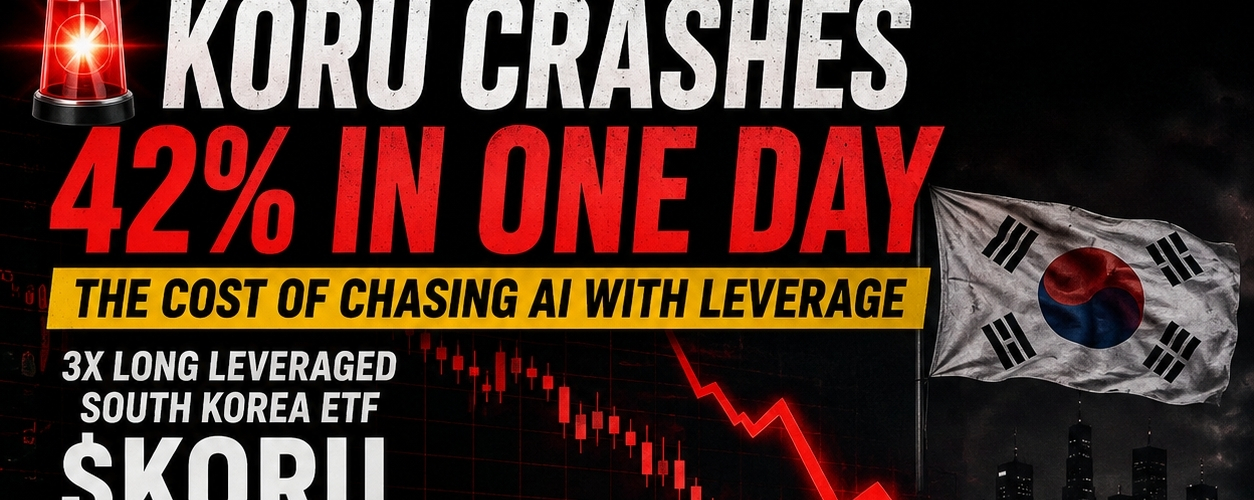
🚨 KORU Crashes 42% in One Day: The Hidden Danger of LeverageThe AI-driven rally in South Korean equities has hit a brutal reality check.
The 3x leveraged South Korea ETF, KORU, plunged nearly 42% in a single session, erasing weeks of gains in hours. In just three trading days, the fund has lost more than half of its value as traders rushed for the exits. �
StockAnalysis +1
Here's what happened:
• South Korea's tech-heavy market sold off sharply as AI and semiconductor momentum weakened.
• Because KORU delivers 3x daily exposure, losses were amplified dramatically.
• A ~14% decline in the underlying South Korea ETF translated into a ~42% collapse for KORU holders. �
24/7 Wall St.
This is the hidden risk of leverage:
When markets rise, gains feel unstoppable. When sentiment flips, leverage accelerates losses at the same speed.
The warnings were there. Excessive positioning, soaring margin debt, and crowded AI trades created the perfect setup for a violent unwind. As the trend reversed, forced selling and leveraged rebalancing added fuel to the decline. �
Reuters +2
Lesson: Leverage doesn't create opportunity—it magnifies outcomes. In euphoric markets, that distinction is often forgotten until volatility returns.
#ETH🔥🔥🔥🔥🔥🔥 TF #Leverage #KORU #SouthKorean orea #AI #Markets #Tra ding #Investing #RiskManage ment #BinanceSquare
🚨 KORU Crashes 42% in One Day: The Hidden Danger of Leverage
The AI-driven rally in South Korean equities has hit a brutal reality check.
The 3x leveraged South Korea ETF, KORU, plunged nearly 42% in a single session, erasing weeks of gains in hours. In just three trading days, the fund has lost more than half of its value as traders rushed for the exits. �
StockAnalysis +1
Here's what happened:
• South Korea's tech-heavy market sold off sharply as AI and semiconductor momentum weakened.
• Because KORU delivers 3x daily exposure, losses were amplified dramatically.
• A ~14% decline in the underlying South Korea ETF translated into a ~42% collapse for KORU holders. �
24/7 Wall St.
This is the hidden risk of leverage:
When markets rise, gains feel unstoppable. When sentiment flips, leverage accelerates losses at the same speed.
The warnings were there. Excessive positioning, soaring margin debt, and crowded AI trades created the perfect setup for a violent unwind. As the trend reversed, forced selling and leveraged rebalancing added fuel to the decline. �
Reuters +2
Lesson: Leverage doesn't create opportunity—it magnifies outcomes. In euphoric markets, that distinction is often forgotten until volatility returns.
#ETH🔥🔥🔥🔥🔥🔥 TF #Leverage #KORU #SouthKorean orea #AI #Markets #Tra ding #Investing #RiskManage ment #BinanceSquare
The 3x leveraged South Korea ETF, KORU, plunged nearly 42% in a single session, erasing weeks of gains in hours. In just three trading days, the fund has lost more than half of its value as traders rushed for the exits. �
StockAnalysis +1
Here's what happened:
• South Korea's tech-heavy market sold off sharply as AI and semiconductor momentum weakened.
• Because KORU delivers 3x daily exposure, losses were amplified dramatically.
• A ~14% decline in the underlying South Korea ETF translated into a ~42% collapse for KORU holders. �
24/7 Wall St.
This is the hidden risk of leverage:
When markets rise, gains feel unstoppable. When sentiment flips, leverage accelerates losses at the same speed.
The warnings were there. Excessive positioning, soaring margin debt, and crowded AI trades created the perfect setup for a violent unwind. As the trend reversed, forced selling and leveraged rebalancing added fuel to the decline. �
Reuters +2
Lesson: Leverage doesn't create opportunity—it magnifies outcomes. In euphoric markets, that distinction is often forgotten until volatility returns.
#ETH🔥🔥🔥🔥🔥🔥 TF #Leverage #KORU #SouthKorean orea #AI #Markets #Tra ding #Investing #RiskManage ment #BinanceSquare
103

·
--
South Korea Proposes Crypto Seizure Rules for Civil Debt EnforcementSouth Korea’s Supreme Court has unveiled draft rules that would establish a legal framework for seizing, transferring, and selling cryptocurrencies during civil debt collection. Following a public consultation period ending on Aug. 11, the new rules are expected to take effect on Oct. 1.
The proposal introduces digital assets into South Korea’s civil enforcement system, which has traditionally focused on property, bank accounts, and other financial claims. As cryptocurrency ownership continues to grow, the government aims to provide courts with clear procedures for handling crypto assets in debt recovery cases.
Under the draft rules, once a court issues a seizure order, cryptocurrency exchanges and other custodians would be prohibited from transferring the debtor’s digital assets. Debtors would also be barred from selling or otherwise disposing of their crypto holdings.
Creditors would have the right to request information from exchanges, including the existence of crypto holdings, the type and amount of assets, and whether any other creditors have existing claims on those assets.
The proposal also outlines how seized cryptocurrencies can be converted into cash. Enforcement officers could instruct licensed virtual asset service providers to sell the assets, transfer them to a dedicated enforcement account before liquidation, or exchange illiquid tokens for more actively traded cryptocurrencies before selling them.
In addition to transfer claims, the draft creates procedures for directly seizing digital assets. Once seized, the assets would be transferred to an enforcement officer. After court approval, the cryptocurrency could either be transferred directly to the creditor’s wallet or sold through a licensed exchange.
The rules also cover asset returns if enforcement requests are withdrawn, the enforcement of secured claims, and temporary preservation measures.
The proposal is part of South Korea’s broader effort to strengthen cryptocurrency regulation. Recent initiatives include stricter disclosure requirements for crypto holdings in debt relief applications and plans to bring digital asset legislation under the country’s financial regulatory sandbox.This version is suitable for publication on a crypto news website or social media summary.
#Bitcoin #crypto #SouthKorean
$BTC
{spot}(BTCUSDT)
South Korea Proposes Crypto Seizure Rules for Civil Debt Enforcement
South Korea’s Supreme Court has unveiled draft rules that would establish a legal framework for seizing, transferring, and selling cryptocurrencies during civil debt collection. Following a public consultation period ending on Aug. 11, the new rules are expected to take effect on Oct. 1.
The proposal introduces digital assets into South Korea’s civil enforcement system, which has traditionally focused on property, bank accounts, and other financial claims. As cryptocurrency ownership continues to grow, the government aims to provide courts with clear procedures for handling crypto assets in debt recovery cases.
Under the draft rules, once a court issues a seizure order, cryptocurrency exchanges and other custodians would be prohibited from transferring the debtor’s digital assets. Debtors would also be barred from selling or otherwise disposing of their crypto holdings.
Creditors would have the right to request information from exchanges, including the existence of crypto holdings, the type and amount of assets, and whether any other creditors have existing claims on those assets.
The proposal also outlines how seized cryptocurrencies can be converted into cash. Enforcement officers could instruct licensed virtual asset service providers to sell the assets, transfer them to a dedicated enforcement account before liquidation, or exchange illiquid tokens for more actively traded cryptocurrencies before selling them.
In addition to transfer claims, the draft creates procedures for directly seizing digital assets. Once seized, the assets would be transferred to an enforcement officer. After court approval, the cryptocurrency could either be transferred directly to the creditor’s wallet or sold through a licensed exchange.
The rules also cover asset returns if enforcement requests are withdrawn, the enforcement of secured claims, and temporary preservation measures.
The proposal is part of South Korea’s broader effort to strengthen cryptocurrency regulation. Recent initiatives include stricter disclosure requirements for crypto holdings in debt relief applications and plans to bring digital asset legislation under the country’s financial regulatory sandbox.This version is suitable for publication on a crypto news website or social media summary.
#Bitcoin #crypto #SouthKorean
$BTC
The proposal introduces digital assets into South Korea’s civil enforcement system, which has traditionally focused on property, bank accounts, and other financial claims. As cryptocurrency ownership continues to grow, the government aims to provide courts with clear procedures for handling crypto assets in debt recovery cases.
Under the draft rules, once a court issues a seizure order, cryptocurrency exchanges and other custodians would be prohibited from transferring the debtor’s digital assets. Debtors would also be barred from selling or otherwise disposing of their crypto holdings.
Creditors would have the right to request information from exchanges, including the existence of crypto holdings, the type and amount of assets, and whether any other creditors have existing claims on those assets.
The proposal also outlines how seized cryptocurrencies can be converted into cash. Enforcement officers could instruct licensed virtual asset service providers to sell the assets, transfer them to a dedicated enforcement account before liquidation, or exchange illiquid tokens for more actively traded cryptocurrencies before selling them.
In addition to transfer claims, the draft creates procedures for directly seizing digital assets. Once seized, the assets would be transferred to an enforcement officer. After court approval, the cryptocurrency could either be transferred directly to the creditor’s wallet or sold through a licensed exchange.
The rules also cover asset returns if enforcement requests are withdrawn, the enforcement of secured claims, and temporary preservation measures.
The proposal is part of South Korea’s broader effort to strengthen cryptocurrency regulation. Recent initiatives include stricter disclosure requirements for crypto holdings in debt relief applications and plans to bring digital asset legislation under the country’s financial regulatory sandbox.This version is suitable for publication on a crypto news website or social media summary.
#Bitcoin #crypto #SouthKorean
$BTC
39

·
--
Bullish
🇰🇷 South Korean stocks staged a strong comeback.
After nearly a 10% selloff over two sessions, the market rebounded 5% as investors reassessed AI-driven fears.
The takeaway? AI volatility is creating sharp swings, but confidence in the sector hasn't disappeared—it’s just becoming more selective.
Markets may stay choppy, but long-term AI narratives are far from over. 📈🤖#SouthKorean
🇰🇷 South Korean stocks staged a strong comeback.
After nearly a 10% selloff over two sessions, the market rebounded 5% as investors reassessed AI-driven fears.
The takeaway? AI volatility is creating sharp swings, but confidence in the sector hasn't disappeared—it’s just becoming more selective.
Markets may stay choppy, but long-term AI narratives are far from over. 📈🤖#SouthKorean
After nearly a 10% selloff over two sessions, the market rebounded 5% as investors reassessed AI-driven fears.
The takeaway? AI volatility is creating sharp swings, but confidence in the sector hasn't disappeared—it’s just becoming more selective.
Markets may stay choppy, but long-term AI narratives are far from over. 📈🤖#SouthKorean
124
·
--
Bearish
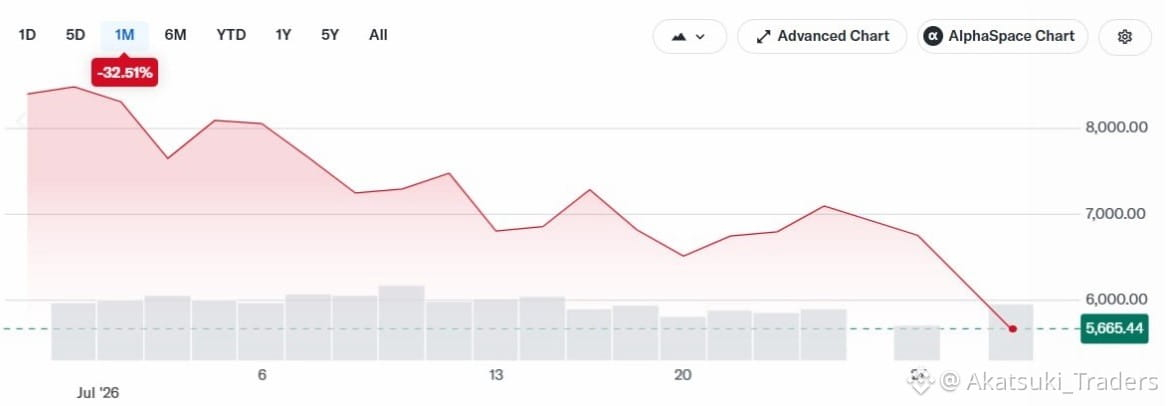
The stock market of New Korea plummeted by 18% in two days, and by 30% in a month.
Through the collapse, Pivdennaya Korea fell from 6th to 11th place among the largest stock markets in the world. #SouthKorean
$EWYB $EWY
{future}(EWYUSDT)
The stock market of New Korea plummeted by 18% in two days, and by 30% in a month.
Through the collapse, Pivdennaya Korea fell from 6th to 11th place among the largest stock markets in the world. #SouthKorean
$EWYB $EWY
Through the collapse, Pivdennaya Korea fell from 6th to 11th place among the largest stock markets in the world. #SouthKorean
$EWYB $EWY
126

·
--
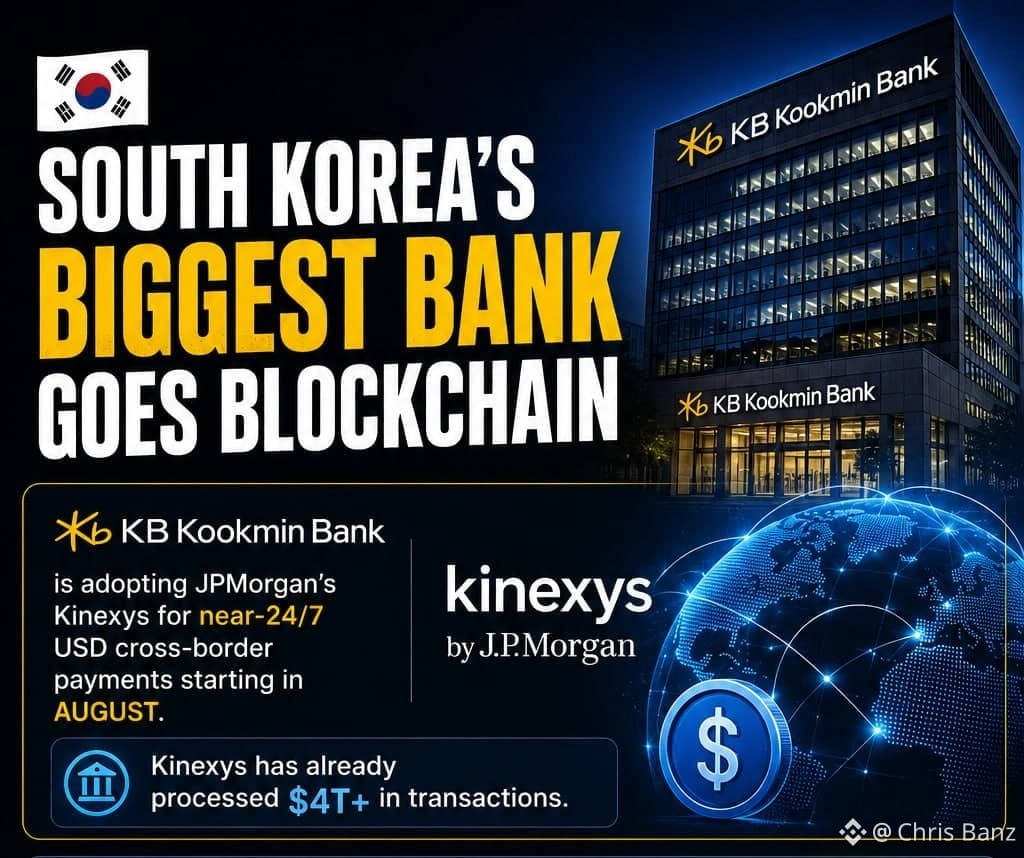
🇰🇷 South Korea's Biggest Bank Goes Blockchain
KB Kookmin Bank is integrating JPMorgan's Kinexys for near-24/7 USD cross-border payments starting this August.
• Kinexys has already processed $4T+ in transactions.
• Faster, cheaper, and more efficient international settlements.
• Another major bank validating blockchain for real-world finance.
• More institutional adoption = stronger trust in blockchain infrastructure.
Why is this bullish for crypto?
• More banks adopting blockchain increases global trust in the technology.
• Real-world blockchain usage drives long-term ecosystem growth.
• Institutional adoption attracts more capital into the crypto industry.
• Stronger infrastructure today can lead to greater demand for tokenized assets and on-chain finance tomorrow.
Traditional finance is moving deeper into blockchain, and that's a long-term bullish signal for the entire crypto ecosystem. 🚀
$BTC
#blockchain
#SouthKorean
🇰🇷 South Korea's Biggest Bank Goes Blockchain
KB Kookmin Bank is integrating JPMorgan's Kinexys for near-24/7 USD cross-border payments starting this August.
• Kinexys has already processed $4T+ in transactions.
• Faster, cheaper, and more efficient international settlements.
• Another major bank validating blockchain for real-world finance.
• More institutional adoption = stronger trust in blockchain infrastructure.
Why is this bullish for crypto?
• More banks adopting blockchain increases global trust in the technology.
• Real-world blockchain usage drives long-term ecosystem growth.
• Institutional adoption attracts more capital into the crypto industry.
• Stronger infrastructure today can lead to greater demand for tokenized assets and on-chain finance tomorrow.
Traditional finance is moving deeper into blockchain, and that's a long-term bullish signal for the entire crypto ecosystem. 🚀
$BTC
#blockchain
#SouthKorean
KB Kookmin Bank is integrating JPMorgan's Kinexys for near-24/7 USD cross-border payments starting this August.
• Kinexys has already processed $4T+ in transactions.
• Faster, cheaper, and more efficient international settlements.
• Another major bank validating blockchain for real-world finance.
• More institutional adoption = stronger trust in blockchain infrastructure.
Why is this bullish for crypto?
• More banks adopting blockchain increases global trust in the technology.
• Real-world blockchain usage drives long-term ecosystem growth.
• Institutional adoption attracts more capital into the crypto industry.
• Stronger infrastructure today can lead to greater demand for tokenized assets and on-chain finance tomorrow.
Traditional finance is moving deeper into blockchain, and that's a long-term bullish signal for the entire crypto ecosystem. 🚀
$BTC
#blockchain
#SouthKorean
1
1k
·
--
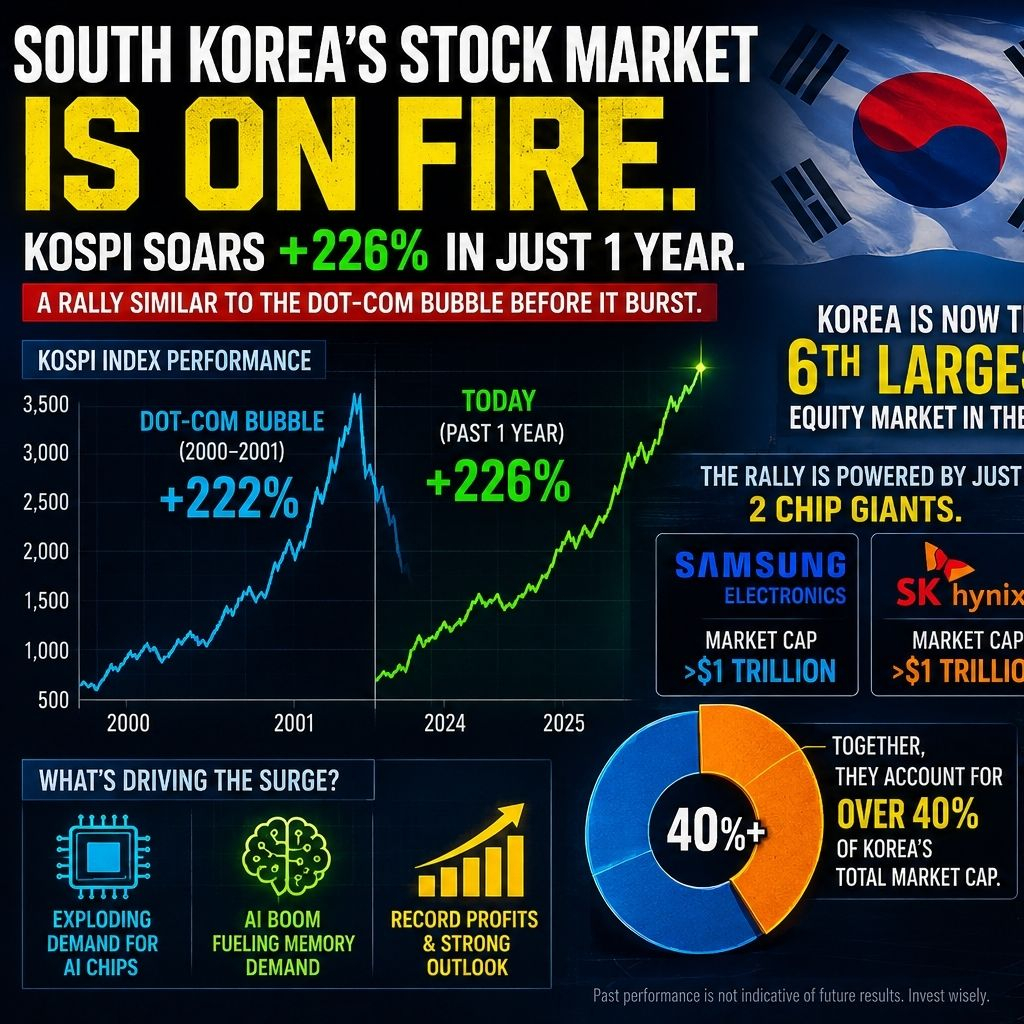
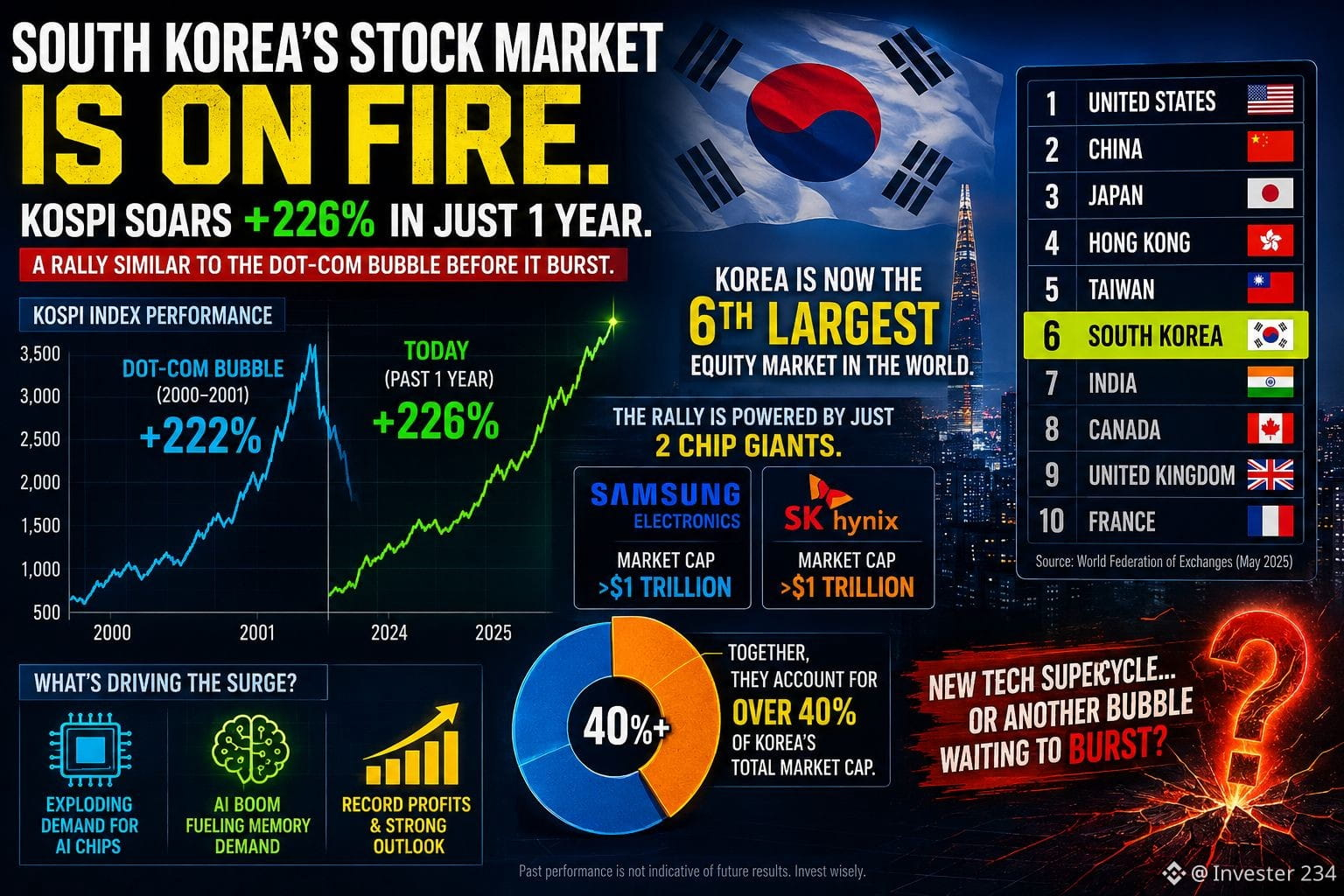
WHAT A CHART:
South Korea’s stock market has been on an incredible run, with the KOSPI index soaring over 200% in just one year.
The last time markets saw a rise this dramatic was during the Dot-Com era before the crash.
Because of this rally, South Korea has climbed to become the world’s 6th largest equity market, moving ahead of several major economies.
Most of this surge has been fueled by just two chip giants: Samsung and SK Hynix. Together, they make up a massive portion of Korea’s total market value.
Now the big question is:
Is this sustainable growth — or the start of a bubble?
#USDollarUpOnInflationFedHawk
#StockMarketSuccess
#SouthKorean
WHAT A CHART:
South Korea’s stock market has been on an incredible run, with the KOSPI index soaring over 200% in just one year.
The last time markets saw a rise this dramatic was during the Dot-Com era before the crash.
Because of this rally, South Korea has climbed to become the world’s 6th largest equity market, moving ahead of several major economies.
Most of this surge has been fueled by just two chip giants: Samsung and SK Hynix. Together, they make up a massive portion of Korea’s total market value.
Now the big question is:
Is this sustainable growth — or the start of a bubble?
#USDollarUpOnInflationFedHawk
#StockMarketSuccess
#SouthKorean
South Korea’s stock market has been on an incredible run, with the KOSPI index soaring over 200% in just one year.
The last time markets saw a rise this dramatic was during the Dot-Com era before the crash.
Because of this rally, South Korea has climbed to become the world’s 6th largest equity market, moving ahead of several major economies.
Most of this surge has been fueled by just two chip giants: Samsung and SK Hynix. Together, they make up a massive portion of Korea’s total market value.
Now the big question is:
Is this sustainable growth — or the start of a bubble?
#USDollarUpOnInflationFedHawk
#StockMarketSuccess
#SouthKorean
228

$BTC
{future}(BTCUSDT)
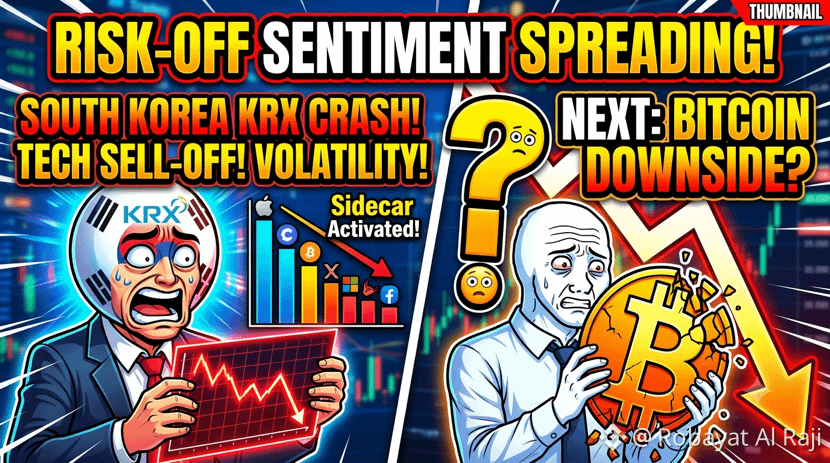
South Korea’s financial markets experienced heightened volatility after the Korea Exchange (KRX) activated an emergency sidecar mechanism in response to a sharp technology-sector sell-off. The move reflects increasing risk-off sentiment across traditional financial markets.
Periods of elevated uncertainty in traditional markets can influence broader investor sentiment and may extend to digital assets, potentially increasing short-term pressure on Bitcoin and the wider cryptocurrency market.
From a risk management perspective, traders may consider exercising caution by reducing exposure during periods of heightened volatility and avoiding aggressive long positions until market conditions stabilize and a clearer trend reversal is confirmed.
Do you believe the current risk-off sentiment in traditional financial markets could lead to further downside for Bitcoin?$TRUMP
{future}(TRUMPUSDT)
$WLFI
{future}(WLFIUSDT)
#SouthKorean #BitcoinHoldsNear$65400AsMagSevenLose$797B #$5BBitcoinOptionsClusterAt$70KAnd$72KStrikes
$BTC
South Korea’s financial markets experienced heightened volatility after the Korea Exchange (KRX) activated an emergency sidecar mechanism in response to a sharp technology-sector sell-off. The move reflects increasing risk-off sentiment across traditional financial markets.
Periods of elevated uncertainty in traditional markets can influence broader investor sentiment and may extend to digital assets, potentially increasing short-term pressure on Bitcoin and the wider cryptocurrency market.
From a risk management perspective, traders may consider exercising caution by reducing exposure during periods of heightened volatility and avoiding aggressive long positions until market conditions stabilize and a clearer trend reversal is confirmed.
Do you believe the current risk-off sentiment in traditional financial markets could lead to further downside for Bitcoin?$TRUMP
$WLFI
#SouthKorean #BitcoinHoldsNear$65400AsMagSevenLose$797B #$5BBitcoinOptionsClusterAt$70KAnd$72KStrikes
South Korea’s financial markets experienced heightened volatility after the Korea Exchange (KRX) activated an emergency sidecar mechanism in response to a sharp technology-sector sell-off. The move reflects increasing risk-off sentiment across traditional financial markets.
Periods of elevated uncertainty in traditional markets can influence broader investor sentiment and may extend to digital assets, potentially increasing short-term pressure on Bitcoin and the wider cryptocurrency market.
From a risk management perspective, traders may consider exercising caution by reducing exposure during periods of heightened volatility and avoiding aggressive long positions until market conditions stabilize and a clearer trend reversal is confirmed.
Do you believe the current risk-off sentiment in traditional financial markets could lead to further downside for Bitcoin?$TRUMP
$WLFI
#SouthKorean #BitcoinHoldsNear$65400AsMagSevenLose$797B #$5BBitcoinOptionsClusterAt$70KAnd$72KStrikes
104
Partly True
Article
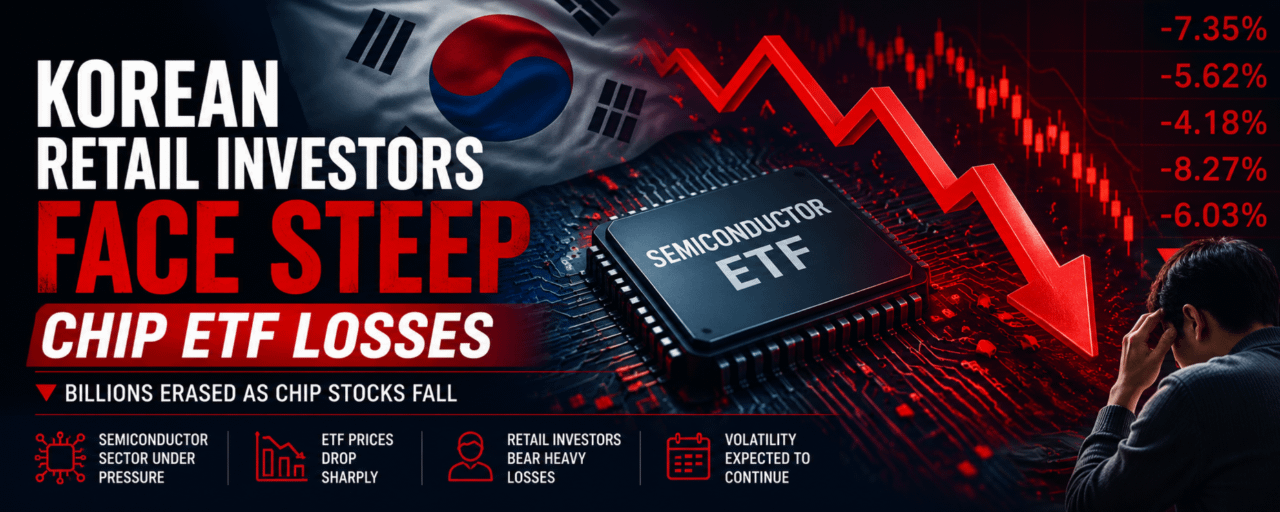
Korean Retail Investors Face Steep Losses in Chip ETF Trades$BNB $ETH $SOL
South Korean retail investors are facing significant losses after betting heavily on semiconductor exchange-traded funds (ETFs). The recent pullback in chip stocks has erased billions in market value, leaving many individual investors under pressure.
What Happened?
Semiconductor companies have been among the biggest winners of the AI boom over the past two years. Strong demand for AI chips pushed many chip-related ETFs to record highs, attracting a wave of retail investors hoping to benefit from continued growth.
However, recent market volatility, profit-taking, and concerns about global demand have caused semiconductor shares to decline. As a result, many chip-focused ETFs have fallen sharply, leading to steep paper losses for investors who bought near the peak.
Why Are Chip Stocks Falling?
Several factors have weighed on the sector:
Investors are taking profits after a strong rally.Concerns over slowing global economic growth.Uncertainty surrounding future AI spending.Market rotation into other sectors.Ongoing geopolitical risks affecting the semiconductor supply chain.
These factors have increased volatility across the semiconductor industry.
Impact on Retail Investors
Retail investors in South Korea have been particularly active buyers of leveraged and semiconductor-focused ETFs. While these products can amplify gains during bull markets, they also magnify losses when prices fall.
Many investors are now experiencing significant declines in their portfolios, highlighting the risks of concentrated exposure to a single sector.
Long-Term Outlook
Despite the recent correction, many analysts remain optimistic about the long-term outlook for semiconductors. Artificial intelligence, cloud computing, autonomous vehicles, and advanced electronics are expected to continue driving demand for high-performance chips over the coming years.
Still, short-term price swings may remain elevated as markets react to earnings reports, economic data, and global policy developments.
The recent losses in Korean chip ETFs serve as a reminder that even strong long-term investment themes can experience sharp corrections. Diversification, proper risk management, and a long-term investment strategy remain essential in volatile markets.
Disclaimer: This article is for informational purposes only and should not be considered financial or investment advice. Always conduct your own research before making investment decisions.
#koreanretailfacessteepchipetflosses #SouthKorean #KOSPI #ChipStocks
Korean Retail Investors Face Steep Losses in Chip ETF Trades
$BNB $ETH $SOL
South Korean retail investors are facing significant losses after betting heavily on semiconductor exchange-traded funds (ETFs). The recent pullback in chip stocks has erased billions in market value, leaving many individual investors under pressure.
What Happened?
Semiconductor companies have been among the biggest winners of the AI boom over the past two years. Strong demand for AI chips pushed many chip-related ETFs to record highs, attracting a wave of retail investors hoping to benefit from continued growth.
However, recent market volatility, profit-taking, and concerns about global demand have caused semiconductor shares to decline. As a result, many chip-focused ETFs have fallen sharply, leading to steep paper losses for investors who bought near the peak.
Why Are Chip Stocks Falling?
Several factors have weighed on the sector:
Investors are taking profits after a strong rally.Concerns over slowing global economic growth.Uncertainty surrounding future AI spending.Market rotation into other sectors.Ongoing geopolitical risks affecting the semiconductor supply chain.
These factors have increased volatility across the semiconductor industry.
Impact on Retail Investors
Retail investors in South Korea have been particularly active buyers of leveraged and semiconductor-focused ETFs. While these products can amplify gains during bull markets, they also magnify losses when prices fall.
Many investors are now experiencing significant declines in their portfolios, highlighting the risks of concentrated exposure to a single sector.
Long-Term Outlook
Despite the recent correction, many analysts remain optimistic about the long-term outlook for semiconductors. Artificial intelligence, cloud computing, autonomous vehicles, and advanced electronics are expected to continue driving demand for high-performance chips over the coming years.
Still, short-term price swings may remain elevated as markets react to earnings reports, economic data, and global policy developments.
The recent losses in Korean chip ETFs serve as a reminder that even strong long-term investment themes can experience sharp corrections. Diversification, proper risk management, and a long-term investment strategy remain essential in volatile markets.
Disclaimer: This article is for informational purposes only and should not be considered financial or investment advice. Always conduct your own research before making investment decisions.
#koreanretailfacessteepchipetflosses #SouthKorean #KOSPI #ChipStocks
South Korean retail investors are facing significant losses after betting heavily on semiconductor exchange-traded funds (ETFs). The recent pullback in chip stocks has erased billions in market value, leaving many individual investors under pressure.
What Happened?
Semiconductor companies have been among the biggest winners of the AI boom over the past two years. Strong demand for AI chips pushed many chip-related ETFs to record highs, attracting a wave of retail investors hoping to benefit from continued growth.
However, recent market volatility, profit-taking, and concerns about global demand have caused semiconductor shares to decline. As a result, many chip-focused ETFs have fallen sharply, leading to steep paper losses for investors who bought near the peak.
Why Are Chip Stocks Falling?
Several factors have weighed on the sector:
Investors are taking profits after a strong rally.Concerns over slowing global economic growth.Uncertainty surrounding future AI spending.Market rotation into other sectors.Ongoing geopolitical risks affecting the semiconductor supply chain.
These factors have increased volatility across the semiconductor industry.
Impact on Retail Investors
Retail investors in South Korea have been particularly active buyers of leveraged and semiconductor-focused ETFs. While these products can amplify gains during bull markets, they also magnify losses when prices fall.
Many investors are now experiencing significant declines in their portfolios, highlighting the risks of concentrated exposure to a single sector.
Long-Term Outlook
Despite the recent correction, many analysts remain optimistic about the long-term outlook for semiconductors. Artificial intelligence, cloud computing, autonomous vehicles, and advanced electronics are expected to continue driving demand for high-performance chips over the coming years.
Still, short-term price swings may remain elevated as markets react to earnings reports, economic data, and global policy developments.
The recent losses in Korean chip ETFs serve as a reminder that even strong long-term investment themes can experience sharp corrections. Diversification, proper risk management, and a long-term investment strategy remain essential in volatile markets.
Disclaimer: This article is for informational purposes only and should not be considered financial or investment advice. Always conduct your own research before making investment decisions.
#koreanretailfacessteepchipetflosses #SouthKorean #KOSPI #ChipStocks
705
·
--
Bullish
#kospirisesnearly1%
🚀 🇰🇷 KOSPI JUMPS NEARLY 1% — RISK SENTIMENT ROARS BACK! 📈🔥
South Korea’s KOSPI is climbing nearly 1%, signaling renewed buying interest across the market.
📈 What Happened:
• KOSPI gains nearly 1%
• Investor sentiment improves
• Tech and semiconductor stocks support the move
• Asian markets remain sensitive to global risk appetite
💡 Why It Matters for BTC / ETH:
Stronger Asian equities can signal improving risk-on sentiment, potentially supporting BTC and ETH if the momentum spreads across global markets. 🚀
🔥 KOSPI is waking up — can bulls keep the momentum alive?
#KOSPI #SouthKorean #stocks
#kospirisesnearly1%
🚀 🇰🇷 KOSPI JUMPS NEARLY 1% — RISK SENTIMENT ROARS BACK! 📈🔥
South Korea’s KOSPI is climbing nearly 1%, signaling renewed buying interest across the market.
📈 What Happened:
• KOSPI gains nearly 1%
• Investor sentiment improves
• Tech and semiconductor stocks support the move
• Asian markets remain sensitive to global risk appetite
💡 Why It Matters for BTC / ETH:
Stronger Asian equities can signal improving risk-on sentiment, potentially supporting BTC and ETH if the momentum spreads across global markets. 🚀
🔥 KOSPI is waking up — can bulls keep the momentum alive?
#KOSPI #SouthKorean #stocks
🚀 🇰🇷 KOSPI JUMPS NEARLY 1% — RISK SENTIMENT ROARS BACK! 📈🔥
South Korea’s KOSPI is climbing nearly 1%, signaling renewed buying interest across the market.
📈 What Happened:
• KOSPI gains nearly 1%
• Investor sentiment improves
• Tech and semiconductor stocks support the move
• Asian markets remain sensitive to global risk appetite
💡 Why It Matters for BTC / ETH:
Stronger Asian equities can signal improving risk-on sentiment, potentially supporting BTC and ETH if the momentum spreads across global markets. 🚀
🔥 KOSPI is waking up — can bulls keep the momentum alive?
#KOSPI #SouthKorean #stocks
22

·
--
#KoreaSingleStockLeveragedETFTradingFalls
Trading in South Korea’s single-stock leveraged ETFs is falling as tighter regulations and risk concerns reduce speculative activity.
Why It Matters:
📉 Lower trading volume signals weaker demand for high-risk leveraged products.
⚠️ Leveraged ETFs can amplify both profits and losses.
🛡️ Regulators are focusing on protecting retail investors and reducing excessive speculation.
Market Sentiment: 🟡 Cautiously Positive for Market Stability
Reply (R):
“Tighter regulations are cooling leveraged ETF speculation. High-risk trading may be slowing, but investors should remain cautious. 📉⚠️”
#SouthKorean #Leverage #MarketNews2026
$KOSPI $SKHYNIX
#KoreaSingleStockLeveragedETFTradingFalls
Trading in South Korea’s single-stock leveraged ETFs is falling as tighter regulations and risk concerns reduce speculative activity.
Why It Matters:
📉 Lower trading volume signals weaker demand for high-risk leveraged products.
⚠️ Leveraged ETFs can amplify both profits and losses.
🛡️ Regulators are focusing on protecting retail investors and reducing excessive speculation.
Market Sentiment: 🟡 Cautiously Positive for Market Stability
Reply (R):
“Tighter regulations are cooling leveraged ETF speculation. High-risk trading may be slowing, but investors should remain cautious. 📉⚠️”
#SouthKorean #Leverage #MarketNews2026
$KOSPI $SKHYNIX
Trading in South Korea’s single-stock leveraged ETFs is falling as tighter regulations and risk concerns reduce speculative activity.
Why It Matters:
📉 Lower trading volume signals weaker demand for high-risk leveraged products.
⚠️ Leveraged ETFs can amplify both profits and losses.
🛡️ Regulators are focusing on protecting retail investors and reducing excessive speculation.
Market Sentiment: 🟡 Cautiously Positive for Market Stability
Reply (R):
“Tighter regulations are cooling leveraged ETF speculation. High-risk trading may be slowing, but investors should remain cautious. 📉⚠️”
#SouthKorean #Leverage #MarketNews2026
$KOSPI $SKHYNIX
1
166
Log in to explore more content
Join global crypto users on Binance Square
⚡️ Get latest and useful information about crypto.
💬 Trusted by the world’s largest crypto exchange.
👍 Discover real insights from verified creators.
Email / Phone number
Trending Topics
1
#NEARFallsToAround$4.70Down14%
275 views
6 Discussing
2
#EvernorthPlansNasdaqListingOct8
217 views
26 Discussing
3
#SECProposesCryptoCustodyFramework
255 views
35 Discussing
4
#IMFApproves$139MDisbursementToElSalvador
163 views
11 Discussing
5
#AnthropicTargetsIPOAsSoonAsMidNovember
1,203 views
74 Discussing
6
#EtherGains70.9%InQ3
201,335 views
1,308 Discussing
7
#TreasuryLetsStatesFileStablecoinCertificationsEarly
14,189 views
101 Discussing
8
#US10YearYieldNears5.3%
170,929 views
1,251 Discussing
9
#DollarIndexHitsHighestSinceMay2025
55,788 views
704 Discussing
10
#USWeeklyJoblessClaimsFallTo197000
42,287 views
555 Discussing