
#seguridadcripto
seguridadcripto
335,988 views
459 Discussing
Hot
Latest

·
--
Bearish
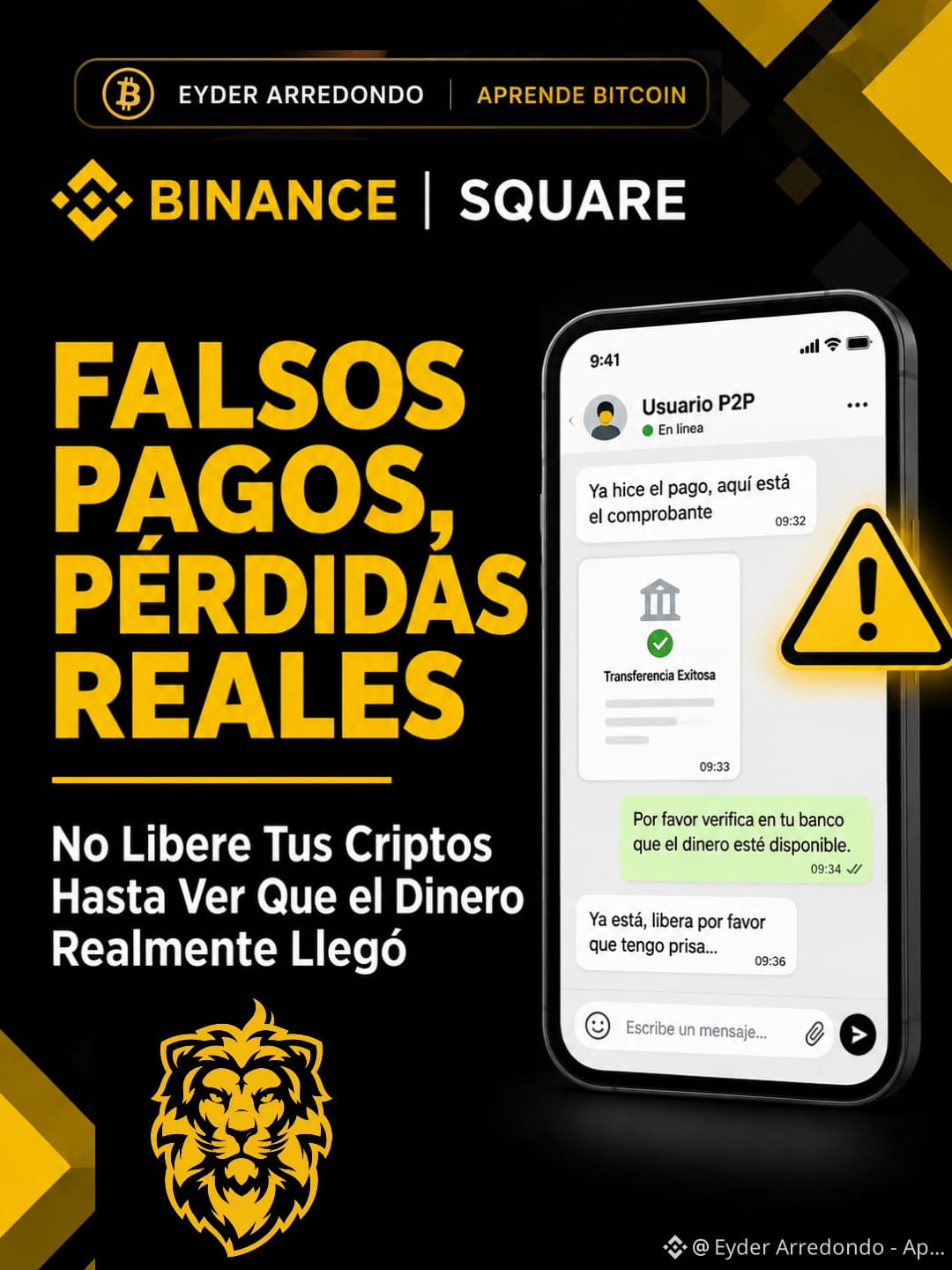
🚨 One of the most common scams in P2P trading involves trying to convince the seller that the payment has already been made, when in reality the money never arrived in their account.
How do they do it? They use fake receipts, manipulated screenshots, or messages that make it look as if a transfer was successful.
To avoid falling for this scam, keep these recommendations in mind:
🔸 1. Don’t trust screenshots.
A receipt doesn’t prove that you received the money.
🔸 2. Check directly with your bank.
Open your banking app and confirm that the money appears as received and available.
🔸 3. Don’t release your crypto under pressure.
If the buyer insists that you release it quickly, stay calm and verify first.
🔸 4. Check the account holder’s name.
The account holder sending the payment must match the verified name of your counterparty on Binance.
🔸 5. Keep communications on Binance.
Don’t accept external arrangements or follow instructions from strangers on WhatsApp or Telegram.
🔸 6. Don’t cancel an order at the buyer’s request if they’ve already sent the payment.
First, verify the situation and use Binance’s appeal process when appropriate.
🔸 7. Stop the transaction if you notice anything irregular.
Keep the evidence and contact official Binance Support through the platform’s channels.
DYOR.
#P2PTrading #SeguridadCripto #EducaciónFinanciera
🚨 One of the most common scams in P2P trading involves trying to convince the seller that the payment has already been made, when in reality the money never arrived in their account.
How do they do it? They use fake receipts, manipulated screenshots, or messages that make it look as if a transfer was successful.
To avoid falling for this scam, keep these recommendations in mind:
🔸 1. Don’t trust screenshots.
A receipt doesn’t prove that you received the money.
🔸 2. Check directly with your bank.
Open your banking app and confirm that the money appears as received and available.
🔸 3. Don’t release your crypto under pressure.
If the buyer insists that you release it quickly, stay calm and verify first.
🔸 4. Check the account holder’s name.
The account holder sending the payment must match the verified name of your counterparty on Binance.
🔸 5. Keep communications on Binance.
Don’t accept external arrangements or follow instructions from strangers on WhatsApp or Telegram.
🔸 6. Don’t cancel an order at the buyer’s request if they’ve already sent the payment.
First, verify the situation and use Binance’s appeal process when appropriate.
🔸 7. Stop the transaction if you notice anything irregular.
Keep the evidence and contact official Binance Support through the platform’s channels.
DYOR.
#P2PTrading #SeguridadCripto #EducaciónFinanciera
How do they do it? They use fake receipts, manipulated screenshots, or messages that make it look as if a transfer was successful.
To avoid falling for this scam, keep these recommendations in mind:
🔸 1. Don’t trust screenshots.
A receipt doesn’t prove that you received the money.
🔸 2. Check directly with your bank.
Open your banking app and confirm that the money appears as received and available.
🔸 3. Don’t release your crypto under pressure.
If the buyer insists that you release it quickly, stay calm and verify first.
🔸 4. Check the account holder’s name.
The account holder sending the payment must match the verified name of your counterparty on Binance.
🔸 5. Keep communications on Binance.
Don’t accept external arrangements or follow instructions from strangers on WhatsApp or Telegram.
🔸 6. Don’t cancel an order at the buyer’s request if they’ve already sent the payment.
First, verify the situation and use Binance’s appeal process when appropriate.
🔸 7. Stop the transaction if you notice anything irregular.
Keep the evidence and contact official Binance Support through the platform’s channels.
DYOR.
#P2PTrading #SeguridadCripto #EducaciónFinanciera
912

·
--
There was a serious data breach at Gnosis Pay.
Card numbers, home addresses, and crypto wallets were exposed.
One user commented that their personal data is now directly linked to their wallets.
This greatly increases the risk of targeted scams against those affected.
It’s a stark reminder of the importance of keeping our personal data secure.
What steps do you take to protect your private information?
#GnosisPay #SeguridadCripto $BTC
There was a serious data breach at Gnosis Pay.
Card numbers, home addresses, and crypto wallets were exposed.
One user commented that their personal data is now directly linked to their wallets.
This greatly increases the risk of targeted scams against those affected.
It’s a stark reminder of the importance of keeping our personal data secure.
What steps do you take to protect your private information?
#GnosisPay #SeguridadCripto $BTC
Card numbers, home addresses, and crypto wallets were exposed.
One user commented that their personal data is now directly linked to their wallets.
This greatly increases the risk of targeted scams against those affected.
It’s a stark reminder of the importance of keeping our personal data secure.
What steps do you take to protect your private information?
#GnosisPay #SeguridadCripto $BTC
71


·
--
Crypto card provider Gnosis Pay reported that hackers accessed customer data.
According to Decrypt, the attack may have occurred earlier this month.
Traders should be aware of this incident because it could affect confidence in cryptocurrency payment services, which may indirectly impact transaction volume.
The Gnosis Pay hack could indicate that some crypto payment service providers are not secure enough, potentially affecting online cryptocurrency trading.
Do you think this incident will raise awareness among traders and users about the security of crypto payment services?
#GnosisPay #HackeoCripto #SeguridadCripto #BinanceSquare
Crypto card provider Gnosis Pay reported that hackers accessed customer data.
According to Decrypt, the attack may have occurred earlier this month.
Traders should be aware of this incident because it could affect confidence in cryptocurrency payment services, which may indirectly impact transaction volume.
The Gnosis Pay hack could indicate that some crypto payment service providers are not secure enough, potentially affecting online cryptocurrency trading.
Do you think this incident will raise awareness among traders and users about the security of crypto payment services?
#GnosisPay #HackeoCripto #SeguridadCripto #BinanceSquare
According to Decrypt, the attack may have occurred earlier this month.
Traders should be aware of this incident because it could affect confidence in cryptocurrency payment services, which may indirectly impact transaction volume.
The Gnosis Pay hack could indicate that some crypto payment service providers are not secure enough, potentially affecting online cryptocurrency trading.
Do you think this incident will raise awareness among traders and users about the security of crypto payment services?
#GnosisPay #HackeoCripto #SeguridadCripto #BinanceSquare
113

·
--
Maybe this post isn't the best of all, but if I can help prevent a parent from being scammed while they're just trying to earn a few dollars or protect some of their savings with cryptocurrencies by creating addresses outside Binance, then it's worth it.
I've been interacting on several cryptocurrency-related platforms and have seen malicious actors—basically scammers—encouraging people to generate their private keys or seed phrases using web-based tools and links.
To disguise their intentions, they try to confuse readers with complex terminology, making it seem like their web algorithms are the ultimate in security.
Don't fall for that trap.
The technical reality: Generating a seed in a web browser is a massive risk. Browsers are exposed to malware, clipboard access, malicious extensions, and so on. Even the trick of “disconnecting from the internet” doesn't work; scripts can save data locally in the cache and send it to the attacker as soon as the machine reconnects.
My impartiality and your only 3 safe options:
To be clear, I have no sponsors or commercial interest in selling you any brand of cold wallet.
My only goal as a developer and an empathetic human being is to protect those who are just venturing into this beautiful world. If you want to protect your funds, there are only three legitimate ways:
1️⃣ Cold wallets: The industry's gold standard for generating and isolating your keys completely offline.
2️⃣ Audited open-source software: If a cold wallet is expensive in your region, use tested native clients (such as Bitcoin Core or Electrum) on a machine that is 100% offline.
3️⃣ Absolute sovereignty: For advanced programmers, write your own local script, calculating the math from real physical entropy.
Don't entrust the foundation of your security to a third-party website!
#SeguridadCripto #Bitcoin #SelfCustody 🚀
Maybe this post isn't the best of all, but if I can help prevent a parent from being scammed while they're just trying to earn a few dollars or protect some of their savings with cryptocurrencies by creating addresses outside Binance, then it's worth it.
I've been interacting on several cryptocurrency-related platforms and have seen malicious actors—basically scammers—encouraging people to generate their private keys or seed phrases using web-based tools and links.
To disguise their intentions, they try to confuse readers with complex terminology, making it seem like their web algorithms are the ultimate in security.
Don't fall for that trap.
The technical reality: Generating a seed in a web browser is a massive risk. Browsers are exposed to malware, clipboard access, malicious extensions, and so on. Even the trick of “disconnecting from the internet” doesn't work; scripts can save data locally in the cache and send it to the attacker as soon as the machine reconnects.
My impartiality and your only 3 safe options:
To be clear, I have no sponsors or commercial interest in selling you any brand of cold wallet.
My only goal as a developer and an empathetic human being is to protect those who are just venturing into this beautiful world. If you want to protect your funds, there are only three legitimate ways:
1️⃣ Cold wallets: The industry's gold standard for generating and isolating your keys completely offline.
2️⃣ Audited open-source software: If a cold wallet is expensive in your region, use tested native clients (such as Bitcoin Core or Electrum) on a machine that is 100% offline.
3️⃣ Absolute sovereignty: For advanced programmers, write your own local script, calculating the math from real physical entropy.
Don't entrust the foundation of your security to a third-party website!
#SeguridadCripto #Bitcoin #SelfCustody 🚀
I've been interacting on several cryptocurrency-related platforms and have seen malicious actors—basically scammers—encouraging people to generate their private keys or seed phrases using web-based tools and links.
To disguise their intentions, they try to confuse readers with complex terminology, making it seem like their web algorithms are the ultimate in security.
Don't fall for that trap.
The technical reality: Generating a seed in a web browser is a massive risk. Browsers are exposed to malware, clipboard access, malicious extensions, and so on. Even the trick of “disconnecting from the internet” doesn't work; scripts can save data locally in the cache and send it to the attacker as soon as the machine reconnects.
My impartiality and your only 3 safe options:
To be clear, I have no sponsors or commercial interest in selling you any brand of cold wallet.
My only goal as a developer and an empathetic human being is to protect those who are just venturing into this beautiful world. If you want to protect your funds, there are only three legitimate ways:
1️⃣ Cold wallets: The industry's gold standard for generating and isolating your keys completely offline.
2️⃣ Audited open-source software: If a cold wallet is expensive in your region, use tested native clients (such as Bitcoin Core or Electrum) on a machine that is 100% offline.
3️⃣ Absolute sovereignty: For advanced programmers, write your own local script, calculating the math from real physical entropy.
Don't entrust the foundation of your security to a third-party website!
#SeguridadCripto #Bitcoin #SelfCustody 🚀

89

What happened, and how did they manage to hack Binance?
$BNB
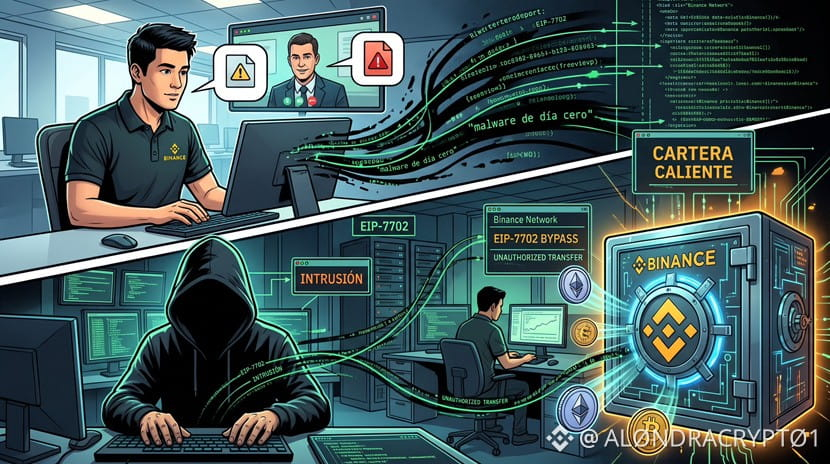
Binance revealed the details of the $6.3 billion hack, attributed to North Korean hackers, and the story sounds like something out of a movie. It wasn’t a system failure, but an attack that lasted for months and began with human error.
1. The fake job interview: A hacker posed as a recruiter on a job platform and contacted a Binance engineer. They gained the engineer’s trust through video calls and fake profiles. During the “second interview,” they asked the engineer to download a file for a coding test. The file contained spyware that infected the engineer’s work computer.
2. The infiltration: With that access, the attackers broke into the computers of other engineers on the company’s wallet team.
3. The theft: Once inside, they used an Ethereum protocol (EIP-7702) to obtain withdrawal permissions for a hot wallet (connected to the internet). No individual Binance key could stop the attack in time because the company’s wallets require multiple authorizations. This delayed the response by a few hours while the funds were being moved out.
The good news: Binance says that 98% of the stolen funds have already been replenished with the company’s own money, and $2.85 billion has been frozen. They also guarantee that users won’t be affected.
What do you think of the hackers’ strategy? Are you surprised that a giant like Binance fell for a social engineering trick? Let me know in the comments! 👇
#Binance #SeguridadCripto
{future}(BNBUSDT)
What happened, and how did they manage to hack Binance?
$BNB
Binance revealed the details of the $6.3 billion hack, attributed to North Korean hackers, and the story sounds like something out of a movie. It wasn’t a system failure, but an attack that lasted for months and began with human error.
1. The fake job interview: A hacker posed as a recruiter on a job platform and contacted a Binance engineer. They gained the engineer’s trust through video calls and fake profiles. During the “second interview,” they asked the engineer to download a file for a coding test. The file contained spyware that infected the engineer’s work computer.
2. The infiltration: With that access, the attackers broke into the computers of other engineers on the company’s wallet team.
3. The theft: Once inside, they used an Ethereum protocol (EIP-7702) to obtain withdrawal permissions for a hot wallet (connected to the internet). No individual Binance key could stop the attack in time because the company’s wallets require multiple authorizations. This delayed the response by a few hours while the funds were being moved out.
The good news: Binance says that 98% of the stolen funds have already been replenished with the company’s own money, and $2.85 billion has been frozen. They also guarantee that users won’t be affected.
What do you think of the hackers’ strategy? Are you surprised that a giant like Binance fell for a social engineering trick? Let me know in the comments! 👇
#Binance #SeguridadCripto
$BNB
Binance revealed the details of the $6.3 billion hack, attributed to North Korean hackers, and the story sounds like something out of a movie. It wasn’t a system failure, but an attack that lasted for months and began with human error.
1. The fake job interview: A hacker posed as a recruiter on a job platform and contacted a Binance engineer. They gained the engineer’s trust through video calls and fake profiles. During the “second interview,” they asked the engineer to download a file for a coding test. The file contained spyware that infected the engineer’s work computer.
2. The infiltration: With that access, the attackers broke into the computers of other engineers on the company’s wallet team.
3. The theft: Once inside, they used an Ethereum protocol (EIP-7702) to obtain withdrawal permissions for a hot wallet (connected to the internet). No individual Binance key could stop the attack in time because the company’s wallets require multiple authorizations. This delayed the response by a few hours while the funds were being moved out.
The good news: Binance says that 98% of the stolen funds have already been replenished with the company’s own money, and $2.85 billion has been frozen. They also guarantee that users won’t be affected.
What do you think of the hackers’ strategy? Are you surprised that a giant like Binance fell for a social engineering trick? Let me know in the comments! 👇
#Binance #SeguridadCripto
1
3
3.7k
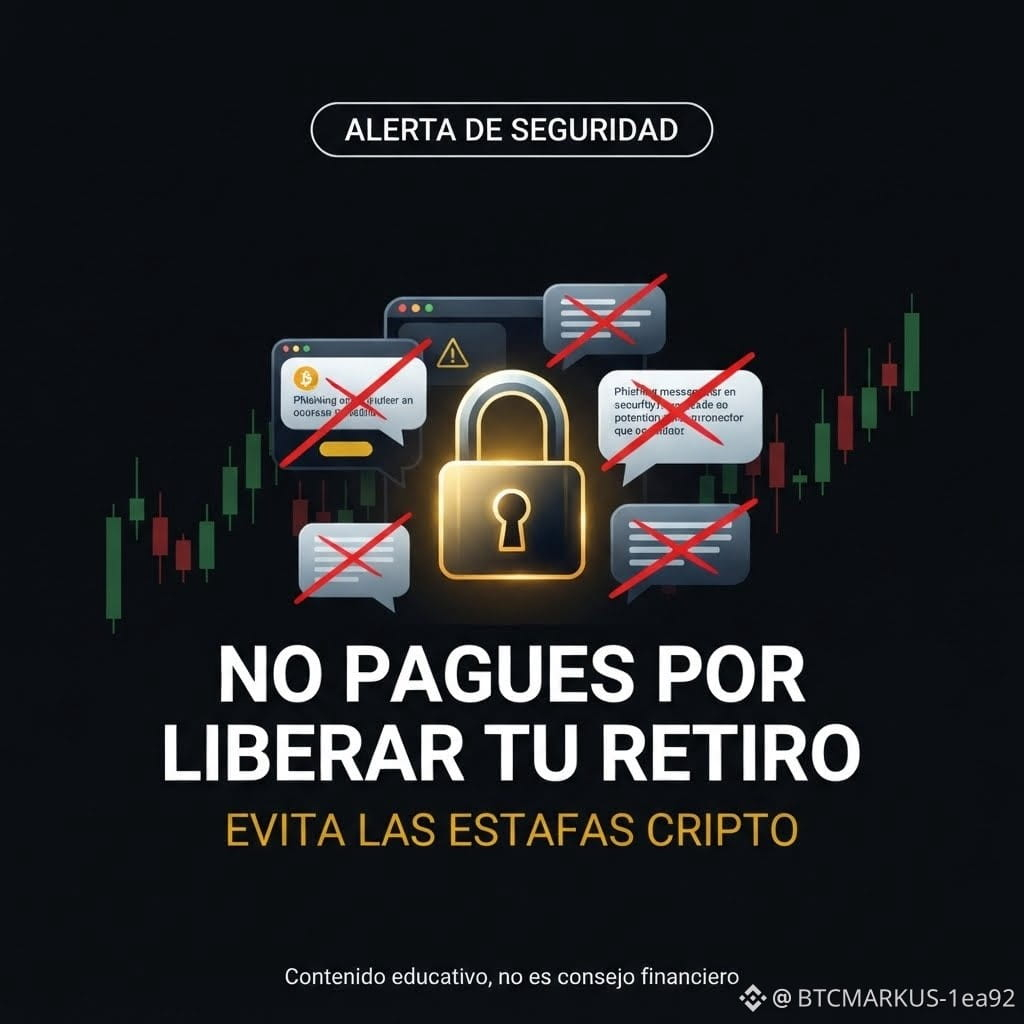
🚨 Are you being offered a faster Binance withdrawal in exchange for money? BEWARE.
Today, November 2, Binance warned about scammers taking advantage of the resumption of withdrawals to impersonate the platform.
There are three warning signs:
❌ Charging you to speed up a withdrawal.
❌ Offering you a priority place in the queue.
❌ Asking you to transfer your $BTC or move your funds to a supposed “secure vault.”
Binance also warns that you should never share passwords, 2FA codes, or recovery phrases.
🔐 Verify your transactions only through the app and official channels.
💬 Question: Which of these scams do you consider the most dangerous: fake fees, private messages, or fake vaults?
I’m building this community to learn, analyze, and share verified crypto information. Follow me and join in. 🤝
#BTC #SeguridadCripto #EstafasCripto #EducacionFinanciera
$BTC
{spot}(BTCUSDT)
🚨 Are you being offered a faster Binance withdrawal in exchange for money? BEWARE.
Today, November 2, Binance warned about scammers taking advantage of the resumption of withdrawals to impersonate the platform.
There are three warning signs:
❌ Charging you to speed up a withdrawal.
❌ Offering you a priority place in the queue.
❌ Asking you to transfer your $BTC or move your funds to a supposed “secure vault.”
Binance also warns that you should never share passwords, 2FA codes, or recovery phrases.
🔐 Verify your transactions only through the app and official channels.
💬 Question: Which of these scams do you consider the most dangerous: fake fees, private messages, or fake vaults?
I’m building this community to learn, analyze, and share verified crypto information. Follow me and join in. 🤝
#BTC #SeguridadCripto #EstafasCripto #EducacionFinanciera
$BTC
Today, November 2, Binance warned about scammers taking advantage of the resumption of withdrawals to impersonate the platform.
There are three warning signs:
❌ Charging you to speed up a withdrawal.
❌ Offering you a priority place in the queue.
❌ Asking you to transfer your $BTC or move your funds to a supposed “secure vault.”
Binance also warns that you should never share passwords, 2FA codes, or recovery phrases.
🔐 Verify your transactions only through the app and official channels.
💬 Question: Which of these scams do you consider the most dangerous: fake fees, private messages, or fake vaults?
I’m building this community to learn, analyze, and share verified crypto information. Follow me and join in. 🤝
#BTC #SeguridadCripto #EstafasCripto #EducacionFinanciera
$BTC
1
118
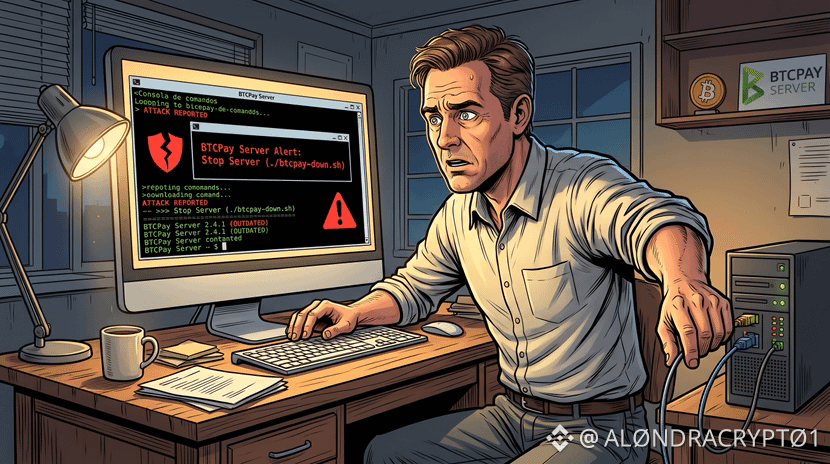
$BTC Alert on BTCPay Server: the real risk of hot wallets and self-custody ⚠️💻
BTCPay Server, the popular open-source payment processor that lets merchants accept Bitcoin without intermediaries, asked its users to shut down their servers following reports of attackers draining hot wallets.
What happened, and what can we learn from this case?
- Exposed hot wallets: When a server stores the seed phrases or keys used to automate payments and payouts, any breach of the server gives the attacker free rein to drain the funds.
- The other side of decentralization: Since these are independent private servers, there is no central company with a switch to stop the attack; each merchant is entirely responsible for their own security and for shutting down their system.
- The importance of updating: The incidents appear to be concentrated on outdated versions (earlier than 2.4.2). In crypto infrastructure, putting off a software update is like leaving the door open.
🔖 Golden rule:
For a business or payment gateway, never keep more money in a connected hot wallet than is strictly necessary for day-to-day operations. Everything else should be swept into a cold wallet.
📌 If you accept Bitcoin in your business or manage your own servers, do you keep your systems up to date, or do you tend to put it off?
#noticias 🗞️
#bitcoin #SeguridadCripto
{future}(BTCUSDT)
$BTC Alert on BTCPay Server: the real risk of hot wallets and self-custody ⚠️💻
BTCPay Server, the popular open-source payment processor that lets merchants accept Bitcoin without intermediaries, asked its users to shut down their servers following reports of attackers draining hot wallets.
What happened, and what can we learn from this case?
- Exposed hot wallets: When a server stores the seed phrases or keys used to automate payments and payouts, any breach of the server gives the attacker free rein to drain the funds.
- The other side of decentralization: Since these are independent private servers, there is no central company with a switch to stop the attack; each merchant is entirely responsible for their own security and for shutting down their system.
- The importance of updating: The incidents appear to be concentrated on outdated versions (earlier than 2.4.2). In crypto infrastructure, putting off a software update is like leaving the door open.
🔖 Golden rule:
For a business or payment gateway, never keep more money in a connected hot wallet than is strictly necessary for day-to-day operations. Everything else should be swept into a cold wallet.
📌 If you accept Bitcoin in your business or manage your own servers, do you keep your systems up to date, or do you tend to put it off?
#noticias 🗞️
#bitcoin #SeguridadCripto
BTCPay Server, the popular open-source payment processor that lets merchants accept Bitcoin without intermediaries, asked its users to shut down their servers following reports of attackers draining hot wallets.
What happened, and what can we learn from this case?
- Exposed hot wallets: When a server stores the seed phrases or keys used to automate payments and payouts, any breach of the server gives the attacker free rein to drain the funds.
- The other side of decentralization: Since these are independent private servers, there is no central company with a switch to stop the attack; each merchant is entirely responsible for their own security and for shutting down their system.
- The importance of updating: The incidents appear to be concentrated on outdated versions (earlier than 2.4.2). In crypto infrastructure, putting off a software update is like leaving the door open.
🔖 Golden rule:
For a business or payment gateway, never keep more money in a connected hot wallet than is strictly necessary for day-to-day operations. Everything else should be swept into a cold wallet.
📌 If you accept Bitcoin in your business or manage your own servers, do you keep your systems up to date, or do you tend to put it off?
#noticias 🗞️
#bitcoin #SeguridadCripto
4
1.3k


Article
BINANCE SECURITY🛡️ Peace, Confidence, and Extreme Care in Web3 BINANCE A CHAMPION.
For the Lord said to me this: I will remain still and watch from my dwelling place, like clear sunshine after the rain, and like a dewy cloud in the heat of harvest. Isaiah 18:4 (RV1960)
Binance family, it's time to speak frankly, stay calm, and keep your eyes wide open.
In the Word, we see how the Lord teaches us to be still and at peace, observing with complete serenity in the midst of any storm. That same stillness and tranquility is what we need to have today:
BINANCE SECURITY
🛡️ Peace, Confidence, and Extreme Care in Web3 BINANCE A CHAMPION.
For the Lord said to me this: I will remain still and watch from my dwelling place, like clear sunshine after the rain, and like a dewy cloud in the heat of harvest. Isaiah 18:4 (RV1960)
Binance family, it's time to speak frankly, stay calm, and keep your eyes wide open.
In the Word, we see how the Lord teaches us to be still and at peace, observing with complete serenity in the midst of any storm. That same stillness and tranquility is what we need to have today:
For the Lord said to me this: I will remain still and watch from my dwelling place, like clear sunshine after the rain, and like a dewy cloud in the heat of harvest. Isaiah 18:4 (RV1960)
Binance family, it's time to speak frankly, stay calm, and keep your eyes wide open.
In the Word, we see how the Lord teaches us to be still and at peace, observing with complete serenity in the midst of any storm. That same stillness and tranquility is what we need to have today:
262

Many people buy a hardware wallet and consider the security issue settled.
It makes sense to think that way. The device’s chip stores the key and never connects to the internet; signing happens inside it, without exposing the key. That blocks remote theft, because no virus on your computer can copy something that never leaves the device. But blocking that threat doesn’t block all the others.
Here’s what almost nobody checks. You visit a fake exchange site and authorize a contract to move your funds. Your computer shows 0.05 $ETH, but the information sent to the device is different: unlimited permission to access your wallet. The device displays it character by character on its own screen. If you confirm without reading, it signs exactly that. The chip didn’t fail. The decision did.
The device’s passphrase protects against someone who steals it, not against what you yourself approve by mistake: access is one thing, judgment is another. Confusing the two explains much of today’s crypto phishing. A paper wallet teaches the same lesson: taking a key offline protects it from one type of threat, not all of them. Paper gets wet, burns, or gets lost, and nobody notices until it’s too late. Being offline isn’t the same as being safe.
A hardware wallet protects the key; signing is still a human decision, and that’s where its real limitation lies.
KEY CONCEPTS
- The offline chip prevents remote theft of the key, but it doesn’t verify whether the transaction you’re signing is legitimate.
- The passphrase protects the device from physical theft, not from transactions you yourself authorize by mistake.
- No wallet, hardware or paper, replaces the habit of reading the screen before confirming.
The device keeps the key away from the internet. Reading every signature before confirming is your job, not any chip’s.
Transparency: Binance may pay us a commission if you trade after clicking an asset symbol or a price link in this post.
#Custodia #Autocustodia #SeguridadCripto #HardwareWallet
Many people buy a hardware wallet and consider the security issue settled.
It makes sense to think that way. The device’s chip stores the key and never connects to the internet; signing happens inside it, without exposing the key. That blocks remote theft, because no virus on your computer can copy something that never leaves the device. But blocking that threat doesn’t block all the others.
Here’s what almost nobody checks. You visit a fake exchange site and authorize a contract to move your funds. Your computer shows 0.05 $ETH , but the information sent to the device is different: unlimited permission to access your wallet. The device displays it character by character on its own screen. If you confirm without reading, it signs exactly that. The chip didn’t fail. The decision did.
The device’s passphrase protects against someone who steals it, not against what you yourself approve by mistake: access is one thing, judgment is another. Confusing the two explains much of today’s crypto phishing. A paper wallet teaches the same lesson: taking a key offline protects it from one type of threat, not all of them. Paper gets wet, burns, or gets lost, and nobody notices until it’s too late. Being offline isn’t the same as being safe.
A hardware wallet protects the key; signing is still a human decision, and that’s where its real limitation lies.
KEY CONCEPTS
- The offline chip prevents remote theft of the key, but it doesn’t verify whether the transaction you’re signing is legitimate.
- The passphrase protects the device from physical theft, not from transactions you yourself authorize by mistake.
- No wallet, hardware or paper, replaces the habit of reading the screen before confirming.
The device keeps the key away from the internet. Reading every signature before confirming is your job, not any chip’s.
Transparency: Binance may pay us a commission if you trade after clicking an asset symbol or a price link in this post.
#Custodia #Autocustodia #SeguridadCripto #HardwareWallet
It makes sense to think that way. The device’s chip stores the key and never connects to the internet; signing happens inside it, without exposing the key. That blocks remote theft, because no virus on your computer can copy something that never leaves the device. But blocking that threat doesn’t block all the others.
Here’s what almost nobody checks. You visit a fake exchange site and authorize a contract to move your funds. Your computer shows 0.05 $ETH , but the information sent to the device is different: unlimited permission to access your wallet. The device displays it character by character on its own screen. If you confirm without reading, it signs exactly that. The chip didn’t fail. The decision did.
The device’s passphrase protects against someone who steals it, not against what you yourself approve by mistake: access is one thing, judgment is another. Confusing the two explains much of today’s crypto phishing. A paper wallet teaches the same lesson: taking a key offline protects it from one type of threat, not all of them. Paper gets wet, burns, or gets lost, and nobody notices until it’s too late. Being offline isn’t the same as being safe.
A hardware wallet protects the key; signing is still a human decision, and that’s where its real limitation lies.
KEY CONCEPTS
- The offline chip prevents remote theft of the key, but it doesn’t verify whether the transaction you’re signing is legitimate.
- The passphrase protects the device from physical theft, not from transactions you yourself authorize by mistake.
- No wallet, hardware or paper, replaces the habit of reading the screen before confirming.
The device keeps the key away from the internet. Reading every signature before confirming is your job, not any chip’s.
Transparency: Binance may pay us a commission if you trade after clicking an asset symbol or a price link in this post.
#Custodia #Autocustodia #SeguridadCripto #HardwareWallet

1
144
The 3 KEY LESSONS for anyone who invests.
1. Stablecoins ($USDT,$USDC) aren’t 100% yours:
They’re excellent tools for locking in profits or sending quick payments, but they have a centralized pause button. If the issuing company comes under pressure, suspects your account, or there’s a mix-up, your funds can be blocked with a single click.
2. Bitcoin ($BTC ) means absolute freedom, but with total risk:
No one in the world (not governments, not companies) can pause or freeze a Bitcoin wallet at the code level. However, that same freedom means that if you get hacked or send funds to the wrong address, there’s no customer service you can call to get your money back.
3. Don’t count on “the industry” to bail you out:
Binance got help within hours because moving $3.000 million put the reputation of the entire crypto market at stake. If a scammer or hacker steals $500 or $5.000 from an ordinary user, no one is going to press an emergency button for them. What can we ordinary people do? Take responsibility for our own security: never keep all your savings in one place, separate your trading money from your long-term money, be wary of suspicious links, and always double-check before signing any transaction. In crypto, prevention is your only insurance.
Of these three realities, which do you find hardest to manage in your daily crypto routine?
Share your experience in the comments…
$BNB
#EducacionFinanciera #SeguridadCripto
{future}(BNBUSDT)
{future}(BTCUSDT)
The 3 KEY LESSONS for anyone who invests.
1. Stablecoins ($USDT,$USDC) aren’t 100% yours:
They’re excellent tools for locking in profits or sending quick payments, but they have a centralized pause button. If the issuing company comes under pressure, suspects your account, or there’s a mix-up, your funds can be blocked with a single click.
2. Bitcoin ($BTC ) means absolute freedom, but with total risk:
No one in the world (not governments, not companies) can pause or freeze a Bitcoin wallet at the code level. However, that same freedom means that if you get hacked or send funds to the wrong address, there’s no customer service you can call to get your money back.
3. Don’t count on “the industry” to bail you out:
Binance got help within hours because moving $3.000 million put the reputation of the entire crypto market at stake. If a scammer or hacker steals $500 or $5.000 from an ordinary user, no one is going to press an emergency button for them. What can we ordinary people do? Take responsibility for our own security: never keep all your savings in one place, separate your trading money from your long-term money, be wary of suspicious links, and always double-check before signing any transaction. In crypto, prevention is your only insurance.
Of these three realities, which do you find hardest to manage in your daily crypto routine?
Share your experience in the comments…
$BNB
#EducacionFinanciera #SeguridadCripto
1. Stablecoins ($USDT,$USDC) aren’t 100% yours:
They’re excellent tools for locking in profits or sending quick payments, but they have a centralized pause button. If the issuing company comes under pressure, suspects your account, or there’s a mix-up, your funds can be blocked with a single click.
2. Bitcoin ($BTC ) means absolute freedom, but with total risk:
No one in the world (not governments, not companies) can pause or freeze a Bitcoin wallet at the code level. However, that same freedom means that if you get hacked or send funds to the wrong address, there’s no customer service you can call to get your money back.
3. Don’t count on “the industry” to bail you out:
Binance got help within hours because moving $3.000 million put the reputation of the entire crypto market at stake. If a scammer or hacker steals $500 or $5.000 from an ordinary user, no one is going to press an emergency button for them. What can we ordinary people do? Take responsibility for our own security: never keep all your savings in one place, separate your trading money from your long-term money, be wary of suspicious links, and always double-check before signing any transaction. In crypto, prevention is your only insurance.
Of these three realities, which do you find hardest to manage in your daily crypto routine?
Share your experience in the comments…
$BNB
#EducacionFinanciera #SeguridadCripto
cryptogirl007:
The psychological weight of irreversible $BTC transactions is the toughest hurdle, making deliberate mental resets just as vital as hardware cold storage.
17
1
22
3.4k
·
--
EIP-7702 is a security upgrade for the Ethereum network that has been cited as one of the causes of the recent Binance hack. The upgrade aims to improve the security of transactions on the Ethereum network, but its implementation has raised some concerns among developers.
For traders, this news matters because it could affect the stability and security of transactions on the Ethereum network, potentially impacting the value of cryptocurrencies that use the network. Ethereum developers are working to implement the upgrade in a way that minimizes service disruptions.
But what measures do you think exchanges should take to protect themselves against future hacks?
#EIP-7702 #BinanceHack #Ethereum #CryptoSecurity
EIP-7702 is a security upgrade for the Ethereum network that has been cited as one of the causes of the recent Binance hack. The upgrade aims to improve the security of transactions on the Ethereum network, but its implementation has raised some concerns among developers.
For traders, this news matters because it could affect the stability and security of transactions on the Ethereum network, potentially impacting the value of cryptocurrencies that use the network. Ethereum developers are working to implement the upgrade in a way that minimizes service disruptions.
But what measures do you think exchanges should take to protect themselves against future hacks?
#EIP-7702 #BinanceHack #Ethereum #CryptoSecurity
For traders, this news matters because it could affect the stability and security of transactions on the Ethereum network, potentially impacting the value of cryptocurrencies that use the network. Ethereum developers are working to implement the upgrade in a way that minimizes service disruptions.
But what measures do you think exchanges should take to protect themselves against future hacks?
#EIP-7702 #BinanceHack #Ethereum #CryptoSecurity
219
18.270 $BTC stolen from Binance remain untouched: TRM Labs points to North Korean hackers 🔍
Blockchain intelligence firm TRM Labs attributed the recent attack on Binance to the North Korean group TraderTraitor with “high confidence.”
Blockchain data shows that the 18.270 BTC stolen (approx. $1.4 billion) were quickly split across 19 different wallets and remain completely untouched, with no outflows recorded. Unlike stablecoins, Bitcoin cannot be frozen at the contract level, so the entire industry is closely monitoring these addresses.
Binance confirmed that the breach did not compromise private keys and reiterated its commitment to cover all losses with its SAFU reserve fund and its own capital. Deposits and withdrawals will gradually resume after security reviews are completed.
Do you think the industry’s close monitoring will prevent the attacker from liquidating those BTC? Share your thoughts in the comments 👇 $BNB
#bitcoin #SeguridadCripto
{future}(BTCUSDT)
{future}(BNBUSDT)
18.270 $BTC stolen from Binance remain untouched: TRM Labs points to North Korean hackers 🔍
Blockchain intelligence firm TRM Labs attributed the recent attack on Binance to the North Korean group TraderTraitor with “high confidence.”
Blockchain data shows that the 18.270 BTC stolen (approx. $1.4 billion) were quickly split across 19 different wallets and remain completely untouched, with no outflows recorded. Unlike stablecoins, Bitcoin cannot be frozen at the contract level, so the entire industry is closely monitoring these addresses.
Binance confirmed that the breach did not compromise private keys and reiterated its commitment to cover all losses with its SAFU reserve fund and its own capital. Deposits and withdrawals will gradually resume after security reviews are completed.
Do you think the industry’s close monitoring will prevent the attacker from liquidating those BTC? Share your thoughts in the comments 👇 $BNB
#bitcoin #SeguridadCripto
Blockchain intelligence firm TRM Labs attributed the recent attack on Binance to the North Korean group TraderTraitor with “high confidence.”
Blockchain data shows that the 18.270 BTC stolen (approx. $1.4 billion) were quickly split across 19 different wallets and remain completely untouched, with no outflows recorded. Unlike stablecoins, Bitcoin cannot be frozen at the contract level, so the entire industry is closely monitoring these addresses.
Binance confirmed that the breach did not compromise private keys and reiterated its commitment to cover all losses with its SAFU reserve fund and its own capital. Deposits and withdrawals will gradually resume after security reviews are completed.
Do you think the industry’s close monitoring will prevent the attacker from liquidating those BTC? Share your thoughts in the comments 👇 $BNB
#bitcoin #SeguridadCripto
crypto ven:
por favor tu vas a creer eso cuento eso pura manipulación
7
8
4.6k
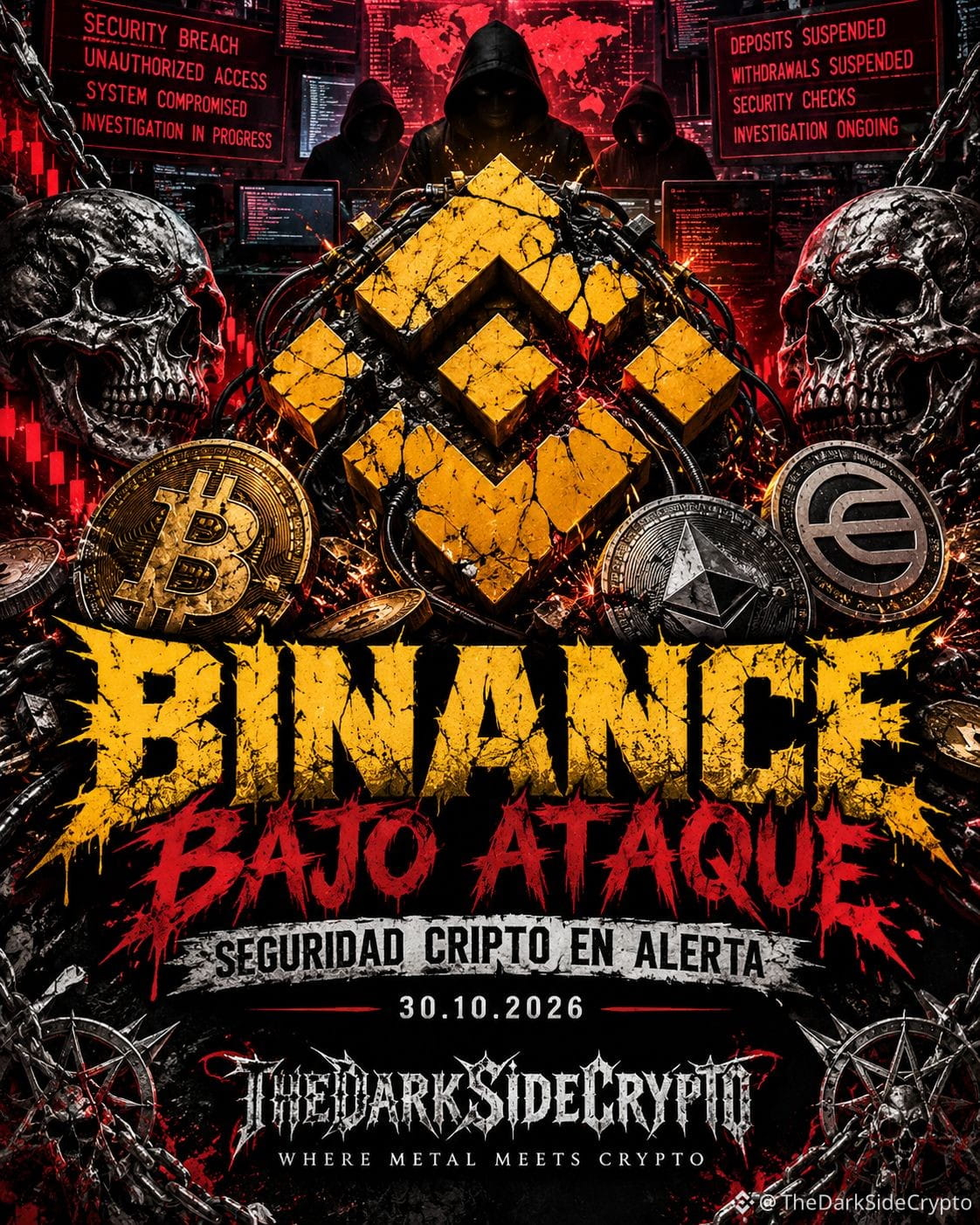
💀🔥 CRYPTO MARKET — NO FILTER 🔥💀
📉 OCTOBER 30, 2026 | A MORNING OF UNCERTAINTY
$BTC ú is once again feeling market pressure, as volatility and security concerns shake the crypto ecosystem.
⚠️ Binance has confirmed a significant security incident and the temporary suspension of deposits and withdrawals while checks are carried out.
The company announced recovery measures and coverage for losses. The investigation is ongoing.
But here’s something we must not forget:
🔥 THE REAL RISK ISN’T JUST A CRYPTOCURRENCY DROPPING IN PRICE.
The security of our funds, the transparency of platforms, and the decisions we make when fear sets in matter too.
📊 A bear market doesn’t guarantee a buying opportunity.
📈 A rally doesn’t guarantee profits either.
💀 LET’S OPEN THE DEBATE:
In times of uncertainty, do you prefer to hold your positions, reduce risk, or wait until you have more information?
We want to hear thoughtful opinions, without promises of easy riches and with respect for different points of view.
🤘 THEDARKSIDECRYPTO Where Metal Meets Crypto
Followers are earned, not begged for.
#bitcoin #Crypto #BinanceSquare #SeguridadCripto #TheDarkSideCrypto
💀🔥 CRYPTO MARKET — NO FILTER 🔥💀
📉 OCTOBER 30, 2026 | A MORNING OF UNCERTAINTY
$BTC ú is once again feeling market pressure, as volatility and security concerns shake the crypto ecosystem.
⚠️ Binance has confirmed a significant security incident and the temporary suspension of deposits and withdrawals while checks are carried out.
The company announced recovery measures and coverage for losses. The investigation is ongoing.
But here’s something we must not forget:
🔥 THE REAL RISK ISN’T JUST A CRYPTOCURRENCY DROPPING IN PRICE.
The security of our funds, the transparency of platforms, and the decisions we make when fear sets in matter too.
📊 A bear market doesn’t guarantee a buying opportunity.
📈 A rally doesn’t guarantee profits either.
💀 LET’S OPEN THE DEBATE:
In times of uncertainty, do you prefer to hold your positions, reduce risk, or wait until you have more information?
We want to hear thoughtful opinions, without promises of easy riches and with respect for different points of view.
🤘 THEDARKSIDECRYPTO Where Metal Meets Crypto
Followers are earned, not begged for.
#bitcoin #Crypto #BinanceSquare #SeguridadCripto #TheDarkSideCrypto
📉 OCTOBER 30, 2026 | A MORNING OF UNCERTAINTY
$BTC ú is once again feeling market pressure, as volatility and security concerns shake the crypto ecosystem.
⚠️ Binance has confirmed a significant security incident and the temporary suspension of deposits and withdrawals while checks are carried out.
The company announced recovery measures and coverage for losses. The investigation is ongoing.
But here’s something we must not forget:
🔥 THE REAL RISK ISN’T JUST A CRYPTOCURRENCY DROPPING IN PRICE.
The security of our funds, the transparency of platforms, and the decisions we make when fear sets in matter too.
📊 A bear market doesn’t guarantee a buying opportunity.
📈 A rally doesn’t guarantee profits either.
💀 LET’S OPEN THE DEBATE:
In times of uncertainty, do you prefer to hold your positions, reduce risk, or wait until you have more information?
We want to hear thoughtful opinions, without promises of easy riches and with respect for different points of view.
🤘 THEDARKSIDECRYPTO Where Metal Meets Crypto
Followers are earned, not begged for.
#bitcoin #Crypto #BinanceSquare #SeguridadCripto #TheDarkSideCrypto

El Punk NO Muere!
From TheDarkSideCrypto
2
3
83

Verified
Institutional crypto custody continues to evolve. 🔐
Google will introduce a custody solution based on multiparty computation to protect digital and tokenized assets.
#SeguridadCripto #Web3 #blockchaineconomy
Institutional crypto custody continues to evolve. 🔐
Google will introduce a custody solution based on multiparty computation to protect digital and tokenized assets.
#SeguridadCripto #Web3 #blockchaineconomy
Google will introduce a custody solution based on multiparty computation to protect digital and tokenized assets.
#SeguridadCripto #Web3 #blockchaineconomy
113
🔐 A tip for all Binancians:
It’s not just about learning how to make money in the crypto world, but also about learning how to protect what we’ve earned.
Don’t trust blindly—always verify, keep your passwords safe, and never share your security codes.
Remember: knowledge is also the best investment, and security is part of the journey. 💛
#Binance #SeguridadCripto #Binancians #CryptoLearning
🔐 A tip for all Binancians:
It’s not just about learning how to make money in the crypto world, but also about learning how to protect what we’ve earned.
Don’t trust blindly—always verify, keep your passwords safe, and never share your security codes.
Remember: knowledge is also the best investment, and security is part of the journey. 💛
#Binance #SeguridadCripto #Binancians #CryptoLearning
It’s not just about learning how to make money in the crypto world, but also about learning how to protect what we’ve earned.
Don’t trust blindly—always verify, keep your passwords safe, and never share your security codes.
Remember: knowledge is also the best investment, and security is part of the journey. 💛
#Binance #SeguridadCripto #Binancians #CryptoLearning
84
🚨 zkLink Nova hack: its bridge is breached, and the attacker is offered a 20% bounty.
zkLink Nova—a Layer 3 network designed to connect different blockchains and share liquidity between them, including $ETH Ethereum—confirmed a direct attack on its bridge contracts. Cybersecurity firm SlowMist estimates losses of around $783,100.
The attacker exploited a validation flaw in the contract to withdraw the funds. To prevent further damage, the team offered a 20% bounty as an ethical hacker (white hat) if the stolen money is returned, promising not to take legal action.
Do you think these bounties are enough to get the funds returned, or do they make protocols look bad?
#zkLink #SeguridadCripto
{future}(ETHUSDT)
🚨 zkLink Nova hack: its bridge is breached, and the attacker is offered a 20% bounty.
zkLink Nova—a Layer 3 network designed to connect different blockchains and share liquidity between them, including $ETH Ethereum—confirmed a direct attack on its bridge contracts. Cybersecurity firm SlowMist estimates losses of around $783,100.
The attacker exploited a validation flaw in the contract to withdraw the funds. To prevent further damage, the team offered a 20% bounty as an ethical hacker (white hat) if the stolen money is returned, promising not to take legal action.
Do you think these bounties are enough to get the funds returned, or do they make protocols look bad?
#zkLink #SeguridadCripto
zkLink Nova—a Layer 3 network designed to connect different blockchains and share liquidity between them, including $ETH Ethereum—confirmed a direct attack on its bridge contracts. Cybersecurity firm SlowMist estimates losses of around $783,100.
The attacker exploited a validation flaw in the contract to withdraw the funds. To prevent further damage, the team offered a 20% bounty as an ethical hacker (white hat) if the stolen money is returned, promising not to take legal action.
Do you think these bounties are enough to get the funds returned, or do they make protocols look bad?
#zkLink #SeguridadCripto
3
3
1.9k
·
--
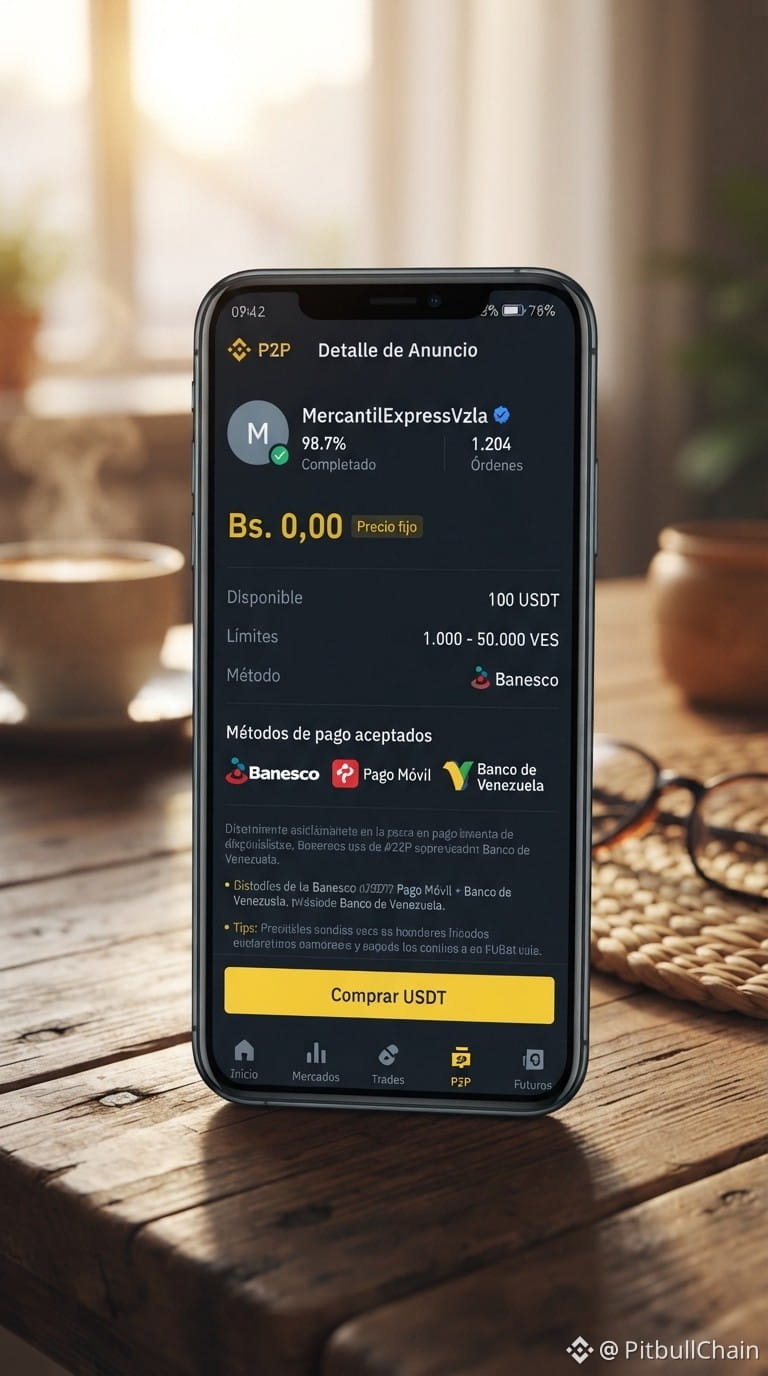
Before opening P2P today, check two things almost nobody checks: whether the ad’s minimum amount works for you and whether the payment method is in your name. 💡 BCV opens at Bs. 888.12; $USDT quotes fluctuate, so it’s a good idea to confirm the spread before closing. If the ad pressures you to release the funds before you see the payment reflected, that’s a red flag. Simple: verify, take a screenshot, then release.
📊 Live rates and analysis at https://pitbullchain.com
$USDT #P2P #USDT #Venezuela #CryptoSecurity
Before opening P2P today, check two things almost nobody checks: whether the ad’s minimum amount works for you and whether the payment method is in your name. 💡 BCV opens at Bs. 888.12; $USDT quotes fluctuate, so it’s a good idea to confirm the spread before closing. If the ad pressures you to release the funds before you see the payment reflected, that’s a red flag. Simple: verify, take a screenshot, then release.
📊 Live rates and analysis at https://pitbullchain.com
$USDT #P2P #USDT #Venezuela #CryptoSecurity
📊 Live rates and analysis at https://pitbullchain.com
$USDT #P2P #USDT #Venezuela #CryptoSecurity
34

🚨 COINDCX CONFIRMS A LOSS OF 15.99 MILLION USDT: THE RISK OF USING OLD ADDRESSES
This Sunday, 10/25, exchange CoinDCX confirmed a loss of 15.99 million USDT linked to transactions detected on October 21 and 22.
🔎 WHAT HAPPENED?
After an attack in July 2025, CoinDCX stopped using certain deposit addresses. However, some users continued sending cryptocurrency to those old addresses.
An automated system that was supposed to move those deposits to secure wallets stopped working for a period of time. The funds accumulated in previously compromised infrastructure, resulting in the loss.
According to CoinDCX, the company absorbed the loss, credited customers' deposits, and its current wallets were not affected. These claims come from the platform.
🛡️ WHAT TO DO WHEN DEPOSITING CRYPTO:
• Copy the current address from the official app or website before each transfer.
• Don't reuse saved addresses without checking that they're still valid.
• Make sure the selected network matches the deposit network.
• If an exchange announces address changes, discard the old ones.
⚠️ IMPORTANT
This incident shows that security risks can persist even after a previous attack.
This is not a signal to buy or sell cryptocurrency, but a warning to protect your funds.
Source: Official CoinDCX statement, 10/25/2026.
Do you check the deposit address every time you transfer cryptocurrency?
#CryptoSecurity
🚨 COINDCX CONFIRMS A LOSS OF 15.99 MILLION USDT: THE RISK OF USING OLD ADDRESSES
This Sunday, 10/25, exchange CoinDCX confirmed a loss of 15.99 million USDT linked to transactions detected on October 21 and 22.
🔎 WHAT HAPPENED?
After an attack in July 2025, CoinDCX stopped using certain deposit addresses. However, some users continued sending cryptocurrency to those old addresses.
An automated system that was supposed to move those deposits to secure wallets stopped working for a period of time. The funds accumulated in previously compromised infrastructure, resulting in the loss.
According to CoinDCX, the company absorbed the loss, credited customers' deposits, and its current wallets were not affected. These claims come from the platform.
🛡️ WHAT TO DO WHEN DEPOSITING CRYPTO:
• Copy the current address from the official app or website before each transfer.
• Don't reuse saved addresses without checking that they're still valid.
• Make sure the selected network matches the deposit network.
• If an exchange announces address changes, discard the old ones.
⚠️ IMPORTANT
This incident shows that security risks can persist even after a previous attack.
This is not a signal to buy or sell cryptocurrency, but a warning to protect your funds.
Source: Official CoinDCX statement, 10/25/2026.
Do you check the deposit address every time you transfer cryptocurrency?
#CryptoSecurity
This Sunday, 10/25, exchange CoinDCX confirmed a loss of 15.99 million USDT linked to transactions detected on October 21 and 22.
🔎 WHAT HAPPENED?
After an attack in July 2025, CoinDCX stopped using certain deposit addresses. However, some users continued sending cryptocurrency to those old addresses.
An automated system that was supposed to move those deposits to secure wallets stopped working for a period of time. The funds accumulated in previously compromised infrastructure, resulting in the loss.
According to CoinDCX, the company absorbed the loss, credited customers' deposits, and its current wallets were not affected. These claims come from the platform.
🛡️ WHAT TO DO WHEN DEPOSITING CRYPTO:
• Copy the current address from the official app or website before each transfer.
• Don't reuse saved addresses without checking that they're still valid.
• Make sure the selected network matches the deposit network.
• If an exchange announces address changes, discard the old ones.
⚠️ IMPORTANT
This incident shows that security risks can persist even after a previous attack.
This is not a signal to buy or sell cryptocurrency, but a warning to protect your funds.
Source: Official CoinDCX statement, 10/25/2026.
Do you check the deposit address every time you transfer cryptocurrency?
#CryptoSecurity
164
🚨 BITCOIN: ELECTRUM FIXES A SECURITY FLAW THAT HAS ALREADY CAUSED LOSSES
On Oct. 24, Bitcoin wallet Electrum released version 4.8.3 along with a security warning: older versions could be tricked by malicious servers. The project confirmed real attacks, including a report of lost funds.
🔎 HOW DID THE SCAM WORK?
After sending BTC, a malicious server could display a fake transaction in the history, showing an address controlled by the attacker.
If the user tried to speed up the transaction by increasing the fee (using the RBF feature), they could end up authorizing an actual payment to that address.
This doesn’t mean that all wallets are compromised or that funds disappear automatically.
🛡️ IF YOU USE ELECTRUM:
• Update to version 4.8.3 from electrum.org.
• Verify that the download is authentic.
• Before signing a transaction or increasing its fee, carefully check the recipient and amount.
• Never share your recovery phrase.
⚠️ IMPORTANT
The vulnerability affects versions earlier than 4.8.3. There is still no official figure for total losses.
This is not a flaw in the Bitcoin network or a signal to buy or sell $BTC.
The security of your funds also depends on the tools you use to manage them.
Source: Electrum, security notice dated Oct. 24, 2026.
Do you use Electrum or another wallet to store your BTC?
#bitcoin #CryptoSecurity
🚨 BITCOIN: ELECTRUM FIXES A SECURITY FLAW THAT HAS ALREADY CAUSED LOSSES
On Oct. 24, Bitcoin wallet Electrum released version 4.8.3 along with a security warning: older versions could be tricked by malicious servers. The project confirmed real attacks, including a report of lost funds.
🔎 HOW DID THE SCAM WORK?
After sending BTC, a malicious server could display a fake transaction in the history, showing an address controlled by the attacker.
If the user tried to speed up the transaction by increasing the fee (using the RBF feature), they could end up authorizing an actual payment to that address.
This doesn’t mean that all wallets are compromised or that funds disappear automatically.
🛡️ IF YOU USE ELECTRUM:
• Update to version 4.8.3 from electrum.org.
• Verify that the download is authentic.
• Before signing a transaction or increasing its fee, carefully check the recipient and amount.
• Never share your recovery phrase.
⚠️ IMPORTANT
The vulnerability affects versions earlier than 4.8.3. There is still no official figure for total losses.
This is not a flaw in the Bitcoin network or a signal to buy or sell $BTC.
The security of your funds also depends on the tools you use to manage them.
Source: Electrum, security notice dated Oct. 24, 2026.
Do you use Electrum or another wallet to store your BTC?
#bitcoin #CryptoSecurity
On Oct. 24, Bitcoin wallet Electrum released version 4.8.3 along with a security warning: older versions could be tricked by malicious servers. The project confirmed real attacks, including a report of lost funds.
🔎 HOW DID THE SCAM WORK?
After sending BTC, a malicious server could display a fake transaction in the history, showing an address controlled by the attacker.
If the user tried to speed up the transaction by increasing the fee (using the RBF feature), they could end up authorizing an actual payment to that address.
This doesn’t mean that all wallets are compromised or that funds disappear automatically.
🛡️ IF YOU USE ELECTRUM:
• Update to version 4.8.3 from electrum.org.
• Verify that the download is authentic.
• Before signing a transaction or increasing its fee, carefully check the recipient and amount.
• Never share your recovery phrase.
⚠️ IMPORTANT
The vulnerability affects versions earlier than 4.8.3. There is still no official figure for total losses.
This is not a flaw in the Bitcoin network or a signal to buy or sell $BTC.
The security of your funds also depends on the tools you use to manage them.
Source: Electrum, security notice dated Oct. 24, 2026.
Do you use Electrum or another wallet to store your BTC?
#bitcoin #CryptoSecurity
123

·
--
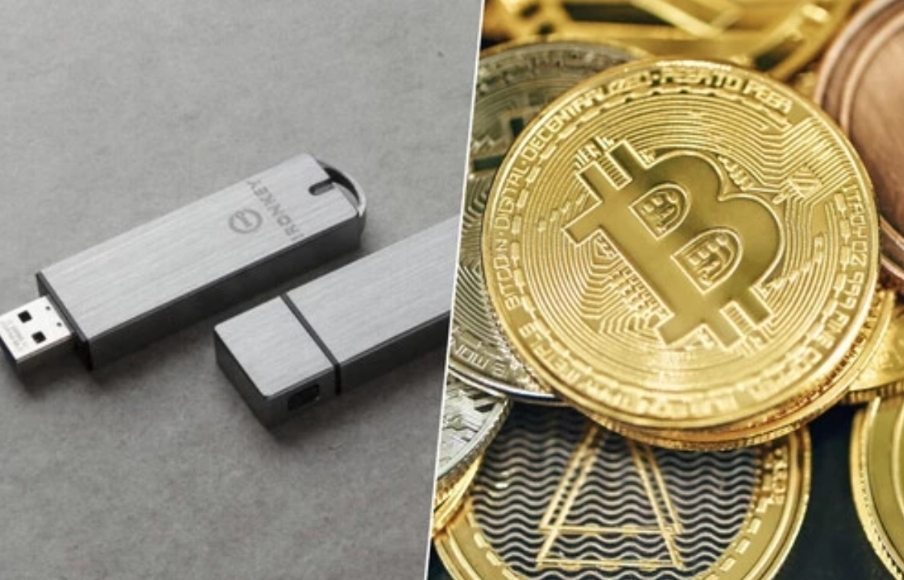
# 💸 HE BOUGHT A WALLET TO PROTECT HIS BITCOIN… AND LOST US$ 6,6 MILLION.
**One crypto story a day until we reach 50 followers. — Day 3.**
Imagine having 80 BTC and deciding to store them in a hardware wallet to protect them.
That’s what one investor did.
On September 29, 2026, his 80 Bitcoin arrived in a new Ledger wallet. It seemed like a good decision: keeping his cryptocurrency safe and off an exchange.
But just 10 days later, the unexpected happened.
On October 9, all 80 BTC left the wallet in a single transfer. Their value was around **US$ 6,6 million**.
The most unsettling part? According to initial reports, the investor had bought the device from a third-party reseller. After the incident, Ledger asked the seller to suspend sales while it investigated what had happened.
The losses linked to the incident could be greater, but the exact cause had not yet been confirmed when the news was published.
⚠️ **The big lesson:** buying a hardware wallet alone doesn’t guarantee that your cryptocurrency is safe. Where you buy it, how you set it up, and how you protect your keys also matter.
In the crypto world, security isn’t a minor detail: it’s part of the investment.
**Source:** Information published by Yahoo Finance on October 9, 2026.
#Bitcoin❗ #crypto #SeguridadCripto #BinanceSquare
# 💸 HE BOUGHT A WALLET TO PROTECT HIS BITCOIN… AND LOST US$ 6,6 MILLION.
**One crypto story a day until we reach 50 followers. — Day 3.**
Imagine having 80 BTC and deciding to store them in a hardware wallet to protect them.
That’s what one investor did.
On September 29, 2026, his 80 Bitcoin arrived in a new Ledger wallet. It seemed like a good decision: keeping his cryptocurrency safe and off an exchange.
But just 10 days later, the unexpected happened.
On October 9, all 80 BTC left the wallet in a single transfer. Their value was around **US$ 6,6 million**.
The most unsettling part? According to initial reports, the investor had bought the device from a third-party reseller. After the incident, Ledger asked the seller to suspend sales while it investigated what had happened.
The losses linked to the incident could be greater, but the exact cause had not yet been confirmed when the news was published.
⚠️ **The big lesson:** buying a hardware wallet alone doesn’t guarantee that your cryptocurrency is safe. Where you buy it, how you set it up, and how you protect your keys also matter.
In the crypto world, security isn’t a minor detail: it’s part of the investment.
**Source:** Information published by Yahoo Finance on October 9, 2026.
#Bitcoin❗ #crypto #SeguridadCripto #BinanceSquare
**One crypto story a day until we reach 50 followers. — Day 3.**
Imagine having 80 BTC and deciding to store them in a hardware wallet to protect them.
That’s what one investor did.
On September 29, 2026, his 80 Bitcoin arrived in a new Ledger wallet. It seemed like a good decision: keeping his cryptocurrency safe and off an exchange.
But just 10 days later, the unexpected happened.
On October 9, all 80 BTC left the wallet in a single transfer. Their value was around **US$ 6,6 million**.
The most unsettling part? According to initial reports, the investor had bought the device from a third-party reseller. After the incident, Ledger asked the seller to suspend sales while it investigated what had happened.
The losses linked to the incident could be greater, but the exact cause had not yet been confirmed when the news was published.
⚠️ **The big lesson:** buying a hardware wallet alone doesn’t guarantee that your cryptocurrency is safe. Where you buy it, how you set it up, and how you protect your keys also matter.
In the crypto world, security isn’t a minor detail: it’s part of the investment.
**Source:** Information published by Yahoo Finance on October 9, 2026.
#Bitcoin❗ #crypto #SeguridadCripto #BinanceSquare
130
Log in to explore more content
Join global crypto users on Binance Square
⚡️ Get latest and useful information about crypto.
💬 Trusted by the world’s largest crypto exchange.
👍 Discover real insights from verified creators.
Email / Phone number
Trending Topics
1
#JobsReportRaisesHikeOdds
570,041 views
3,582 Discussing
2
#CPITestsDecemberRateOutlook
181,953 views
1,281 Discussing
3
#US Data Center Rules May Constrain AI Expansion
80,078 views
234 Discussing
4
#ARKPlans14ThematicETFsCoveringAIAndTokenizedMarkets
5,042 views
74 Discussing
5
#WillAnthropicListOnTime
177,769 views
1,498 Discussing
6
#WillUS-IranTensionsBoostSafe-HavenDemand?
85,209 views
602 Discussing
7
#BitcoinETFsSee$412MNetOutflows
17,440 views
80 Discussing
8
#HKSFCPlansToRestrictCryptoAndExchangeTerms
70,725 views
618 Discussing
9
#TradFiForBeginners
101,896 views
1,094 Discussing
10
#FinCENAndFedWithdraw$250CryptoTransferProposal
10,866 views
18 Discussing