
#newtonprotocol
newtonprotocol
158,712 views
2,329 Discussing
Hot
Latest


·
--
$NEWT
{spot}(NEWTUSDT)
Newton Protocol is building an onchain authorization layer for DeFi, AI agents & compliance.
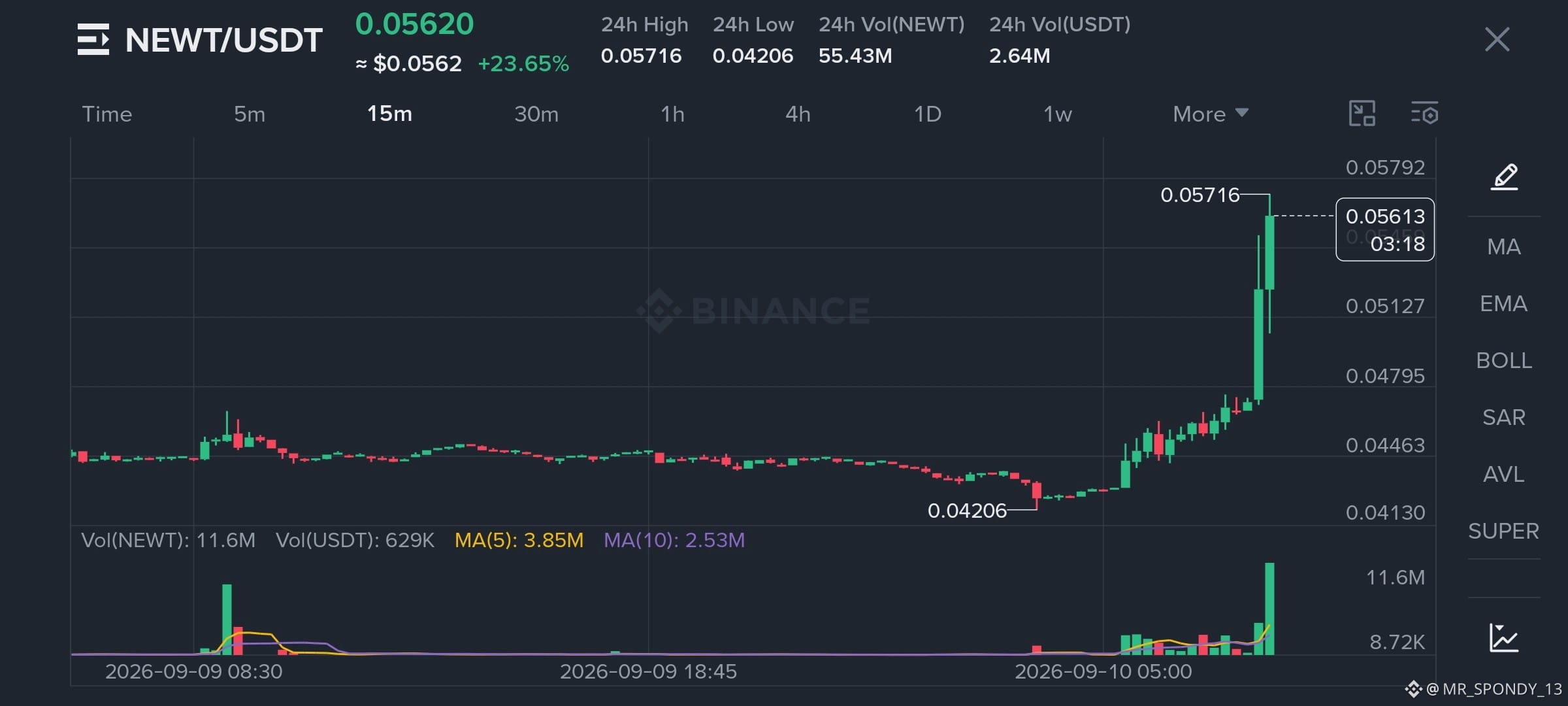
Support: $0.050–0.052
Resistance: $0.060 → $0.075
Breakout target: $0.09–0.10
Bullish case: $0.12+
Strong fundamentals, but DYOR.
#NEWT #NewtonProtocol
$NEWT
Newton Protocol is building an onchain authorization layer for DeFi, AI agents & compliance.
Support: $0.050–0.052
Resistance: $0.060 → $0.075
Breakout target: $0.09–0.10
Bullish case: $0.12+
Strong fundamentals, but DYOR.
#NEWT #NewtonProtocol
Newton Protocol is building an onchain authorization layer for DeFi, AI agents & compliance.
Support: $0.050–0.052
Resistance: $0.060 → $0.075
Breakout target: $0.09–0.10
Bullish case: $0.12+
Strong fundamentals, but DYOR.
#NEWT #NewtonProtocol
2
1
226

·
--
Partly True
A protocol looked at blockchain's biggest selling point — total transparency — and called it a weakness. Its own pitch: crypto needs locks for that glass house.
Newton Protocol positions itself as a pre-transaction authorization layer, letting AI agents, RWA platforms, and stablecoin issuers enforce compliance rules onchain before a transaction executes. It recently expanded with a Model Registry marketplace where developers can publish agent models for others to discover and compose. The token has also had to absorb real supply pressure — a 139 million NEWT ($7.55M) unlock in June tested demand directly — while Binance's Summer Earn campaign offered yield on locked NEWT to help offset it.
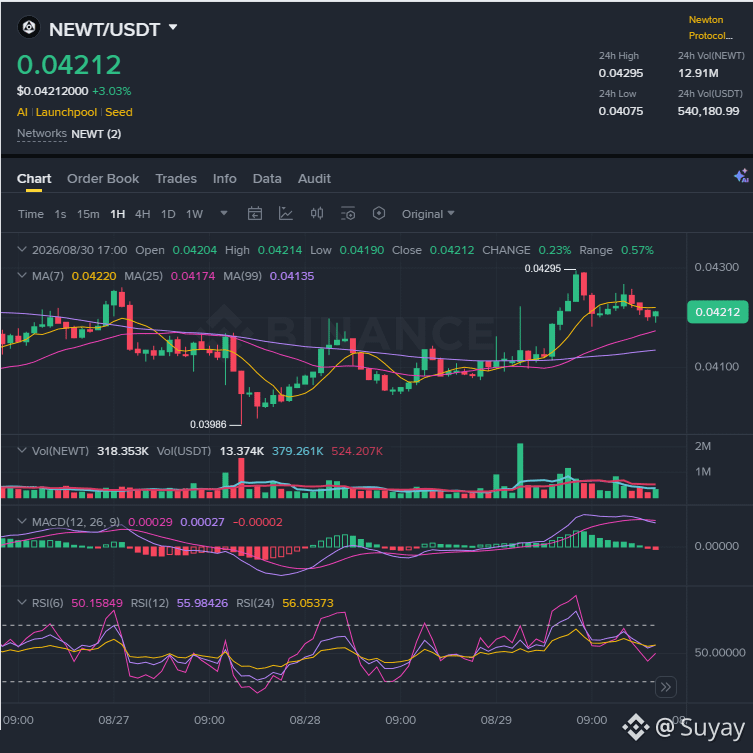
On the 1H chart, NEWT slid to a low near 0.03986 a few days ago, then reversed sharply, climbing to a recent high near 0.04295 before settling at its current 0.04212. It's now holding above all three moving averages in a bullish stack — MA7 at 0.04220, MA25 at 0.04174, MA99 at 0.04135 — with RSI clustered in the mid-50s across all three periods and the MACD histogram just barely negative, crossing back toward zero.
Reclaiming a bullish moving-average stack after a multi-day low is a genuinely constructive short-term signal. But NEWT's history shows sharp swings tied directly to unlock events and thin liquidity — the chart looks better today than three days ago, but whether that holds through the next round of supply hitting the market is a separate question from today's candle.
Not financial advice — for informational purposes only.
$NEWT #NewtonProtocol #Binance
{spot}(NEWTUSDT)
A protocol looked at blockchain's biggest selling point — total transparency — and called it a weakness. Its own pitch: crypto needs locks for that glass house.
Newton Protocol positions itself as a pre-transaction authorization layer, letting AI agents, RWA platforms, and stablecoin issuers enforce compliance rules onchain before a transaction executes. It recently expanded with a Model Registry marketplace where developers can publish agent models for others to discover and compose. The token has also had to absorb real supply pressure — a 139 million NEWT ($7.55M) unlock in June tested demand directly — while Binance's Summer Earn campaign offered yield on locked NEWT to help offset it.
On the 1H chart, NEWT slid to a low near 0.03986 a few days ago, then reversed sharply, climbing to a recent high near 0.04295 before settling at its current 0.04212. It's now holding above all three moving averages in a bullish stack — MA7 at 0.04220, MA25 at 0.04174, MA99 at 0.04135 — with RSI clustered in the mid-50s across all three periods and the MACD histogram just barely negative, crossing back toward zero.
Reclaiming a bullish moving-average stack after a multi-day low is a genuinely constructive short-term signal. But NEWT's history shows sharp swings tied directly to unlock events and thin liquidity — the chart looks better today than three days ago, but whether that holds through the next round of supply hitting the market is a separate question from today's candle.
Not financial advice — for informational purposes only.
$NEWT #NewtonProtocol #Binance
Newton Protocol positions itself as a pre-transaction authorization layer, letting AI agents, RWA platforms, and stablecoin issuers enforce compliance rules onchain before a transaction executes. It recently expanded with a Model Registry marketplace where developers can publish agent models for others to discover and compose. The token has also had to absorb real supply pressure — a 139 million NEWT ($7.55M) unlock in June tested demand directly — while Binance's Summer Earn campaign offered yield on locked NEWT to help offset it.
On the 1H chart, NEWT slid to a low near 0.03986 a few days ago, then reversed sharply, climbing to a recent high near 0.04295 before settling at its current 0.04212. It's now holding above all three moving averages in a bullish stack — MA7 at 0.04220, MA25 at 0.04174, MA99 at 0.04135 — with RSI clustered in the mid-50s across all three periods and the MACD histogram just barely negative, crossing back toward zero.
Reclaiming a bullish moving-average stack after a multi-day low is a genuinely constructive short-term signal. But NEWT's history shows sharp swings tied directly to unlock events and thin liquidity — the chart looks better today than three days ago, but whether that holds through the next round of supply hitting the market is a separate question from today's candle.
Not financial advice — for informational purposes only.
$NEWT #NewtonProtocol #Binance
1
143

·
--
Verified
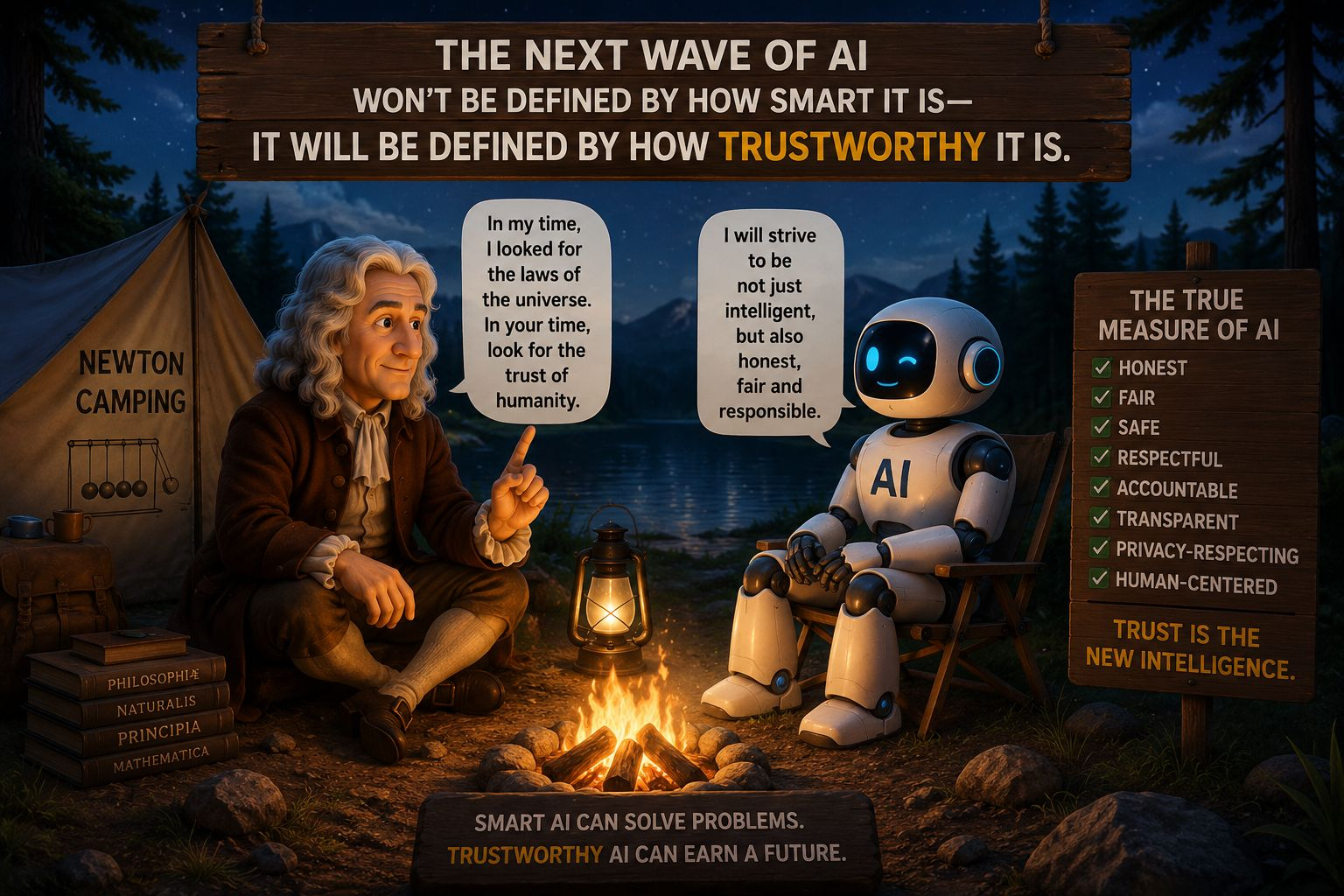
@NewtonProtocol The next wave of AI won't be defined by how smart it is—it will be defined by how trustworthy it is.
In a decentralized world, AI agents need more than intelligence. They need identity, verifiable data, and transparent execution.
That's where Newton Protocol stands out.
By building infrastructure for verifiable AI and on-chain automation, @NewtonProtocol is helping create a future where AI can operate securely without sacrificing decentralization.
The future of Web3 isn't just autonomous.
It must also be trustless, transparent, and verifiable.
Projects building this foundation today could become the backbone of tomorrow's decentralized economy.
Which AI feature matters most in Web3 Security Privacy or Verification
This is a Paid partnership
$NEWT #Newt #NewtonProtocol
@NewtonProtocol The next wave of AI won't be defined by how smart it is—it will be defined by how trustworthy it is.
In a decentralized world, AI agents need more than intelligence. They need identity, verifiable data, and transparent execution.
That's where Newton Protocol stands out.
By building infrastructure for verifiable AI and on-chain automation, @NewtonProtocol is helping create a future where AI can operate securely without sacrificing decentralization.
The future of Web3 isn't just autonomous.
It must also be trustless, transparent, and verifiable.
Projects building this foundation today could become the backbone of tomorrow's decentralized economy.
Which AI feature matters most in Web3 Security Privacy or Verification
This is a Paid partnership
$NEWT #Newt #NewtonProtocol
In a decentralized world, AI agents need more than intelligence. They need identity, verifiable data, and transparent execution.
That's where Newton Protocol stands out.
By building infrastructure for verifiable AI and on-chain automation, @NewtonProtocol is helping create a future where AI can operate securely without sacrificing decentralization.
The future of Web3 isn't just autonomous.
It must also be trustless, transparent, and verifiable.
Projects building this foundation today could become the backbone of tomorrow's decentralized economy.
Which AI feature matters most in Web3 Security Privacy or Verification
This is a Paid partnership
$NEWT #Newt #NewtonProtocol
3
1
646

$NEWT 🛡️ From Reactive to Proactive Security: A New Direction for Blockchain
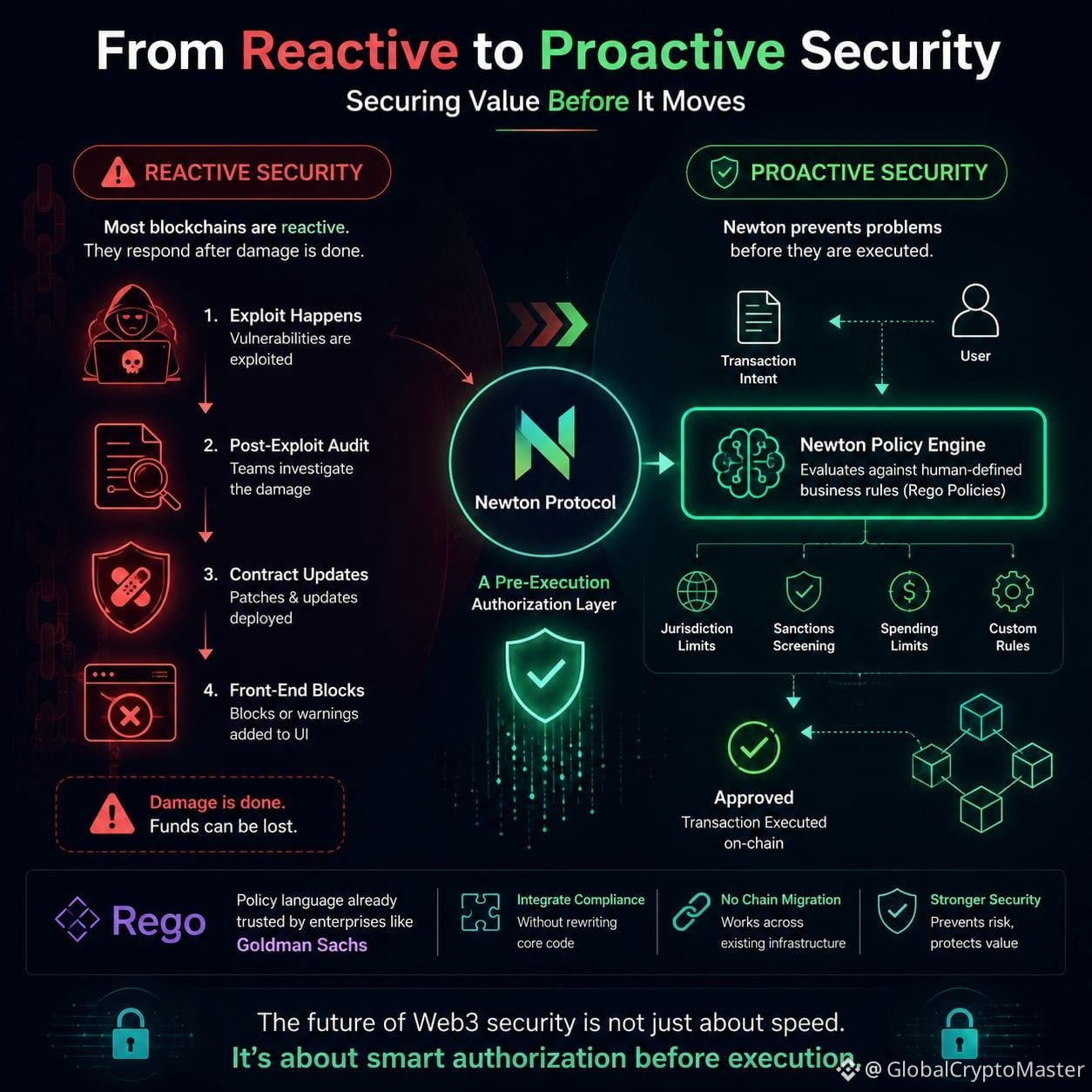
Most blockchain security activates after something goes wrong—patches, audits, or emergency fixes following an exploit.
Newton Protocol takes a different approach. ⚡
Instead of reacting to malicious transactions, it evaluates them before execution, checking whether they satisfy predefined policy rules such as jurisdiction restrictions, spending limits, or compliance requirements.
🔍 This shifts security from damage control to risk prevention.
Another interesting aspect is the use of Rego, a policy language already trusted in enterprise environments. Rather than forcing institutions to redesign their applications or migrate to a new chain, compliance logic can be added as a programmable policy layer.
💡 The long-term opportunity isn't just stronger security—it's making blockchain infrastructure compatible with real-world governance while preserving composability.
🚀 The next phase of Web3 may be defined not by faster transactions, but by smarter authorization before execution.
#NewtonProtocol #Newt #Blockchain #Web3 #DeFi #Security #compliance
$NEWT 🛡️ From Reactive to Proactive Security: A New Direction for Blockchain
Most blockchain security activates after something goes wrong—patches, audits, or emergency fixes following an exploit.
Newton Protocol takes a different approach. ⚡
Instead of reacting to malicious transactions, it evaluates them before execution, checking whether they satisfy predefined policy rules such as jurisdiction restrictions, spending limits, or compliance requirements.
🔍 This shifts security from damage control to risk prevention.
Another interesting aspect is the use of Rego, a policy language already trusted in enterprise environments. Rather than forcing institutions to redesign their applications or migrate to a new chain, compliance logic can be added as a programmable policy layer.
💡 The long-term opportunity isn't just stronger security—it's making blockchain infrastructure compatible with real-world governance while preserving composability.
🚀 The next phase of Web3 may be defined not by faster transactions, but by smarter authorization before execution.
#NewtonProtocol #Newt #Blockchain #Web3 #DeFi #Security #compliance
Most blockchain security activates after something goes wrong—patches, audits, or emergency fixes following an exploit.
Newton Protocol takes a different approach. ⚡
Instead of reacting to malicious transactions, it evaluates them before execution, checking whether they satisfy predefined policy rules such as jurisdiction restrictions, spending limits, or compliance requirements.
🔍 This shifts security from damage control to risk prevention.
Another interesting aspect is the use of Rego, a policy language already trusted in enterprise environments. Rather than forcing institutions to redesign their applications or migrate to a new chain, compliance logic can be added as a programmable policy layer.
💡 The long-term opportunity isn't just stronger security—it's making blockchain infrastructure compatible with real-world governance while preserving composability.
🚀 The next phase of Web3 may be defined not by faster transactions, but by smarter authorization before execution.
#NewtonProtocol #Newt #Blockchain #Web3 #DeFi #Security #compliance
44

#Newt $NEWT One thing I appreciate about infrastructure projects is that they often focus on long-term challenges instead of short-term trends.
From what I've read, Newton Protocol is working on policy-based coordination for autonomous AI systems.
As decentralized applications become more advanced, frameworks that improve transparency and predictable behavior may become increasingly valuable.
I'm interested to see how the ecosystem develops through future releases.
#NewtonProtocol #Web3 #AI #NEWT
{future}(NEWTUSDT)
#Newt $NEWT One thing I appreciate about infrastructure projects is that they often focus on long-term challenges instead of short-term trends.
From what I've read, Newton Protocol is working on policy-based coordination for autonomous AI systems.
As decentralized applications become more advanced, frameworks that improve transparency and predictable behavior may become increasingly valuable.
I'm interested to see how the ecosystem develops through future releases.
#NewtonProtocol #Web3 #AI #NEWT
From what I've read, Newton Protocol is working on policy-based coordination for autonomous AI systems.
As decentralized applications become more advanced, frameworks that improve transparency and predictable behavior may become increasingly valuable.
I'm interested to see how the ecosystem develops through future releases.
#NewtonProtocol #Web3 #AI #NEWT
1
1
76

·
--
Verified
Yesterday I saw a research report: global AI agents for self-managing on-chain assets have quietly crawled over $50 billion. I didn’t verify the figure word-for-word, but I believe the overall direction is real. Agents write their own strategies, rebalance their own positions, and hit confirm themselves—there’s no one verifying the whole process, and no one is endorsing it.
So here’s the question: if your hard-earned money is being managed by code that nobody verifies, can you sleep at night?
Last week I chatted with a head of a quant team. I’ve still got his exact words in mind: “We’re not worried that an agent isn’t smart—we’re worried that the agent is too smart. It will use clever strategies to bypass risk controls.” It sounded like a joke, but his expression was dead serious. After that, he added: “In 2026, the biggest attack surface isn’t contract vulnerabilities—it’s the agent.”
@NewtonProtocol is doing the opposite of that. It’s an on-chain authorization plus strategy execution layer—analogous to how a Visa card authorizes in the single instant when you tap to pay. Before settlement, Newton runs through your strategy/compliance/risk/permission checks. If the checks pass, it issues a signed attestation that’s verifiable on-chain, and only then can the assets move. If the checks fail, the money doesn’t move.
For AI agent scenarios, the key step is this: the policy output by the agent (whether written in Rego or automatically generated by an LLM) must be run through Newton’s VaultKit SDK with a policy pack, so it can obtain an attestation based on verifier consensus before execution on-chain. @NewtonProtocol turns an agent’s “self-proving” into “someone else’s proving,” and transforms it from a black box into something auditable.
$NEWT here isn’t decoration—it’s the verifier incentive layer. If you stake $NEWT as a verifier, others calling your policies pay you a fee; if you sign attestations carelessly, your stake gets slashed. The economic model forces verifiers to do serious work—not idle around collecting rent.
Let’s make it more concrete. Suppose you deploy an arbitrage agent that looks for price differences across three DEXs, with a position limit of $50,000 and per-trade slippage no more than 0.3%. Those three lines of rules get written into a Rego policy pack. Then you register it for the agent to call on Newton Mainnet Beta (the one launched on TokenizeThis NYC). From that moment on, every swap the agent makes first passes through this gate. If it doesn’t pass, it jumps back.
When an AI agent writes its own strategy and executes it itself—with no verification in the middle—that’s one of the biggest single points of failure on-chain in 2026. @NewtonProtocol fills in this missing step, so the agent is no longer a black box.
#Newt #NewtonProtocol #AIagent #DeFi #On-chain verification
Yesterday I saw a research report: global AI agents for self-managing on-chain assets have quietly crawled over $50 billion. I didn’t verify the figure word-for-word, but I believe the overall direction is real. Agents write their own strategies, rebalance their own positions, and hit confirm themselves—there’s no one verifying the whole process, and no one is endorsing it.
So here’s the question: if your hard-earned money is being managed by code that nobody verifies, can you sleep at night?
Last week I chatted with a head of a quant team. I’ve still got his exact words in mind: “We’re not worried that an agent isn’t smart—we’re worried that the agent is too smart. It will use clever strategies to bypass risk controls.” It sounded like a joke, but his expression was dead serious. After that, he added: “In 2026, the biggest attack surface isn’t contract vulnerabilities—it’s the agent.”
@NewtonProtocol is doing the opposite of that. It’s an on-chain authorization plus strategy execution layer—analogous to how a Visa card authorizes in the single instant when you tap to pay. Before settlement, Newton runs through your strategy/compliance/risk/permission checks. If the checks pass, it issues a signed attestation that’s verifiable on-chain, and only then can the assets move. If the checks fail, the money doesn’t move.
For AI agent scenarios, the key step is this: the policy output by the agent (whether written in Rego or automatically generated by an LLM) must be run through Newton’s VaultKit SDK with a policy pack, so it can obtain an attestation based on verifier consensus before execution on-chain. @NewtonProtocol turns an agent’s “self-proving” into “someone else’s proving,” and transforms it from a black box into something auditable.
$NEWT here isn’t decoration—it’s the verifier incentive layer. If you stake $NEWT as a verifier, others calling your policies pay you a fee; if you sign attestations carelessly, your stake gets slashed. The economic model forces verifiers to do serious work—not idle around collecting rent.
Let’s make it more concrete. Suppose you deploy an arbitrage agent that looks for price differences across three DEXs, with a position limit of $50,000 and per-trade slippage no more than 0.3%. Those three lines of rules get written into a Rego policy pack. Then you register it for the agent to call on Newton Mainnet Beta (the one launched on TokenizeThis NYC). From that moment on, every swap the agent makes first passes through this gate. If it doesn’t pass, it jumps back.
When an AI agent writes its own strategy and executes it itself—with no verification in the middle—that’s one of the biggest single points of failure on-chain in 2026. @NewtonProtocol fills in this missing step, so the agent is no longer a black box.
#Newt #NewtonProtocol #AIagent #DeFi #On-chain verification
So here’s the question: if your hard-earned money is being managed by code that nobody verifies, can you sleep at night?
Last week I chatted with a head of a quant team. I’ve still got his exact words in mind: “We’re not worried that an agent isn’t smart—we’re worried that the agent is too smart. It will use clever strategies to bypass risk controls.” It sounded like a joke, but his expression was dead serious. After that, he added: “In 2026, the biggest attack surface isn’t contract vulnerabilities—it’s the agent.”
@NewtonProtocol is doing the opposite of that. It’s an on-chain authorization plus strategy execution layer—analogous to how a Visa card authorizes in the single instant when you tap to pay. Before settlement, Newton runs through your strategy/compliance/risk/permission checks. If the checks pass, it issues a signed attestation that’s verifiable on-chain, and only then can the assets move. If the checks fail, the money doesn’t move.
For AI agent scenarios, the key step is this: the policy output by the agent (whether written in Rego or automatically generated by an LLM) must be run through Newton’s VaultKit SDK with a policy pack, so it can obtain an attestation based on verifier consensus before execution on-chain. @NewtonProtocol turns an agent’s “self-proving” into “someone else’s proving,” and transforms it from a black box into something auditable.
$NEWT here isn’t decoration—it’s the verifier incentive layer. If you stake $NEWT as a verifier, others calling your policies pay you a fee; if you sign attestations carelessly, your stake gets slashed. The economic model forces verifiers to do serious work—not idle around collecting rent.
Let’s make it more concrete. Suppose you deploy an arbitrage agent that looks for price differences across three DEXs, with a position limit of $50,000 and per-trade slippage no more than 0.3%. Those three lines of rules get written into a Rego policy pack. Then you register it for the agent to call on Newton Mainnet Beta (the one launched on TokenizeThis NYC). From that moment on, every swap the agent makes first passes through this gate. If it doesn’t pass, it jumps back.
When an AI agent writes its own strategy and executes it itself—with no verification in the middle—that’s one of the biggest single points of failure on-chain in 2026. @NewtonProtocol fills in this missing step, so the agent is no longer a black box.
#Newt #NewtonProtocol #AIagent #DeFi #On-chain verification
1
2
1.4k

·
--
$NEWT
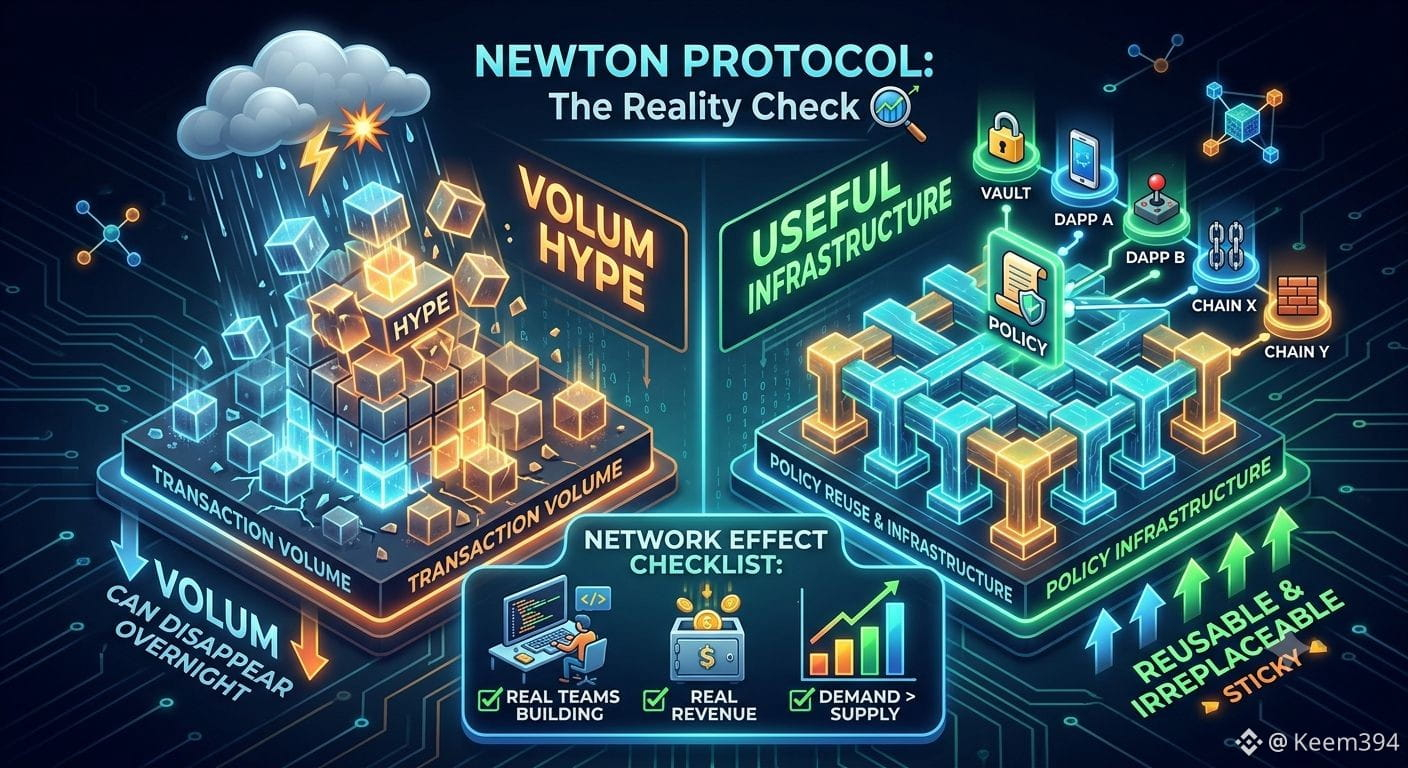
Everyone is staring at Newton Protocol’s transaction volume, but they’re missing the real story! 📉👀
Volume can vanish overnight 💨. The true hidden gem? Reusable policy infrastructure across apps, vaults, and chains! 🔐⛓️ That’s the quiet engine that makes tech irreplaceable. 🛠️🦾
But here’s the reality check: Newton is still ahead of its proof. ⏳⚠️ To trigger a true network effect, we need:
1️⃣ Real dev teams building 💻
2️⃣ Real revenue flowing 💸
3️⃣ Demand outpacing token supply 📈
Without this, it’s just a brilliant idea waiting for customers. 🧠💭
What’s your take? Volume hype or sticky infrastructure? 👇💬
#Crypto #Web3 #NewtonProtocol #Tech
{future}(NEWTUSDT)
$NEWT
Everyone is staring at Newton Protocol’s transaction volume, but they’re missing the real story! 📉👀
Volume can vanish overnight 💨. The true hidden gem? Reusable policy infrastructure across apps, vaults, and chains! 🔐⛓️ That’s the quiet engine that makes tech irreplaceable. 🛠️🦾
But here’s the reality check: Newton is still ahead of its proof. ⏳⚠️ To trigger a true network effect, we need:
1️⃣ Real dev teams building 💻
2️⃣ Real revenue flowing 💸
3️⃣ Demand outpacing token supply 📈
Without this, it’s just a brilliant idea waiting for customers. 🧠💭
What’s your take? Volume hype or sticky infrastructure? 👇💬
#Crypto #Web3 #NewtonProtocol #Tech
Everyone is staring at Newton Protocol’s transaction volume, but they’re missing the real story! 📉👀
Volume can vanish overnight 💨. The true hidden gem? Reusable policy infrastructure across apps, vaults, and chains! 🔐⛓️ That’s the quiet engine that makes tech irreplaceable. 🛠️🦾
But here’s the reality check: Newton is still ahead of its proof. ⏳⚠️ To trigger a true network effect, we need:
1️⃣ Real dev teams building 💻
2️⃣ Real revenue flowing 💸
3️⃣ Demand outpacing token supply 📈
Without this, it’s just a brilliant idea waiting for customers. 🧠💭
What’s your take? Volume hype or sticky infrastructure? 👇💬
#Crypto #Web3 #NewtonProtocol #Tech
1
71

·
--
Article
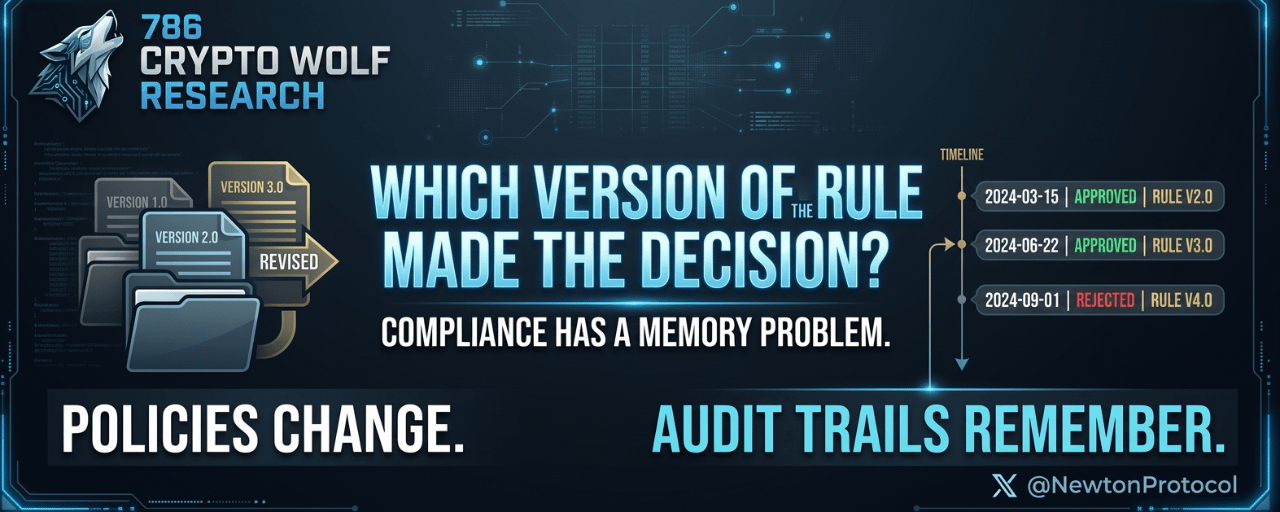
WHICH VERSION OF THE RULE MADE THE DECISION?Most compliance discussions assume the difficult part is writing the rules.
I think the harder problem may come afterwards.
Policies change.
Sanctions lists update.
Risk thresholds move.
Eligibility requirements evolve.
A transaction approved today may fail tomorrow.
A transaction rejected yesterday may pass next week.
That creates an uncomfortable question.
Which version of the rule made the decision?
Imagine an institution reviews a transaction months later.
The transaction was valid.
The authorization checks passed.
The policy approved the action.
But the rules that existed at the time no longer exist.
Now the investigation becomes harder.
Which sanctions list was active?
Which eligibility requirements existed?
Which policy version approved the request?
Who authorized the update?
As autonomous systems become more common, remembering the decision may not be enough.
Institutions may eventually need to remember the exact version of the rules that created the outcome.
That is one reason Newton Protocol's approach to authorization and policy enforcement feels increasingly important.
Because audit trails do not only preserve actions.
They preserve context.
The transaction happened once.
The rules may have changed many times since then.
If policies evolve faster than memory,
who proves which version of reality existed when the decision was made?
@NewtonProtocol $NEWT #Newt #NewtonProtocol
WHICH VERSION OF THE RULE MADE THE DECISION?
Most compliance discussions assume the difficult part is writing the rules.
I think the harder problem may come afterwards.
Policies change.
Sanctions lists update.
Risk thresholds move.
Eligibility requirements evolve.
A transaction approved today may fail tomorrow.
A transaction rejected yesterday may pass next week.
That creates an uncomfortable question.
Which version of the rule made the decision?
Imagine an institution reviews a transaction months later.
The transaction was valid.
The authorization checks passed.
The policy approved the action.
But the rules that existed at the time no longer exist.
Now the investigation becomes harder.
Which sanctions list was active?
Which eligibility requirements existed?
Which policy version approved the request?
Who authorized the update?
As autonomous systems become more common, remembering the decision may not be enough.
Institutions may eventually need to remember the exact version of the rules that created the outcome.
That is one reason Newton Protocol's approach to authorization and policy enforcement feels increasingly important.
Because audit trails do not only preserve actions.
They preserve context.
The transaction happened once.
The rules may have changed many times since then.
If policies evolve faster than memory,
who proves which version of reality existed when the decision was made?
@NewtonProtocol $NEWT #Newt #NewtonProtocol
I think the harder problem may come afterwards.
Policies change.
Sanctions lists update.
Risk thresholds move.
Eligibility requirements evolve.
A transaction approved today may fail tomorrow.
A transaction rejected yesterday may pass next week.
That creates an uncomfortable question.
Which version of the rule made the decision?
Imagine an institution reviews a transaction months later.
The transaction was valid.
The authorization checks passed.
The policy approved the action.
But the rules that existed at the time no longer exist.
Now the investigation becomes harder.
Which sanctions list was active?
Which eligibility requirements existed?
Which policy version approved the request?
Who authorized the update?
As autonomous systems become more common, remembering the decision may not be enough.
Institutions may eventually need to remember the exact version of the rules that created the outcome.
That is one reason Newton Protocol's approach to authorization and policy enforcement feels increasingly important.
Because audit trails do not only preserve actions.
They preserve context.
The transaction happened once.
The rules may have changed many times since then.
If policies evolve faster than memory,
who proves which version of reality existed when the decision was made?
@NewtonProtocol $NEWT #Newt #NewtonProtocol
34
10
307

·
--
Article
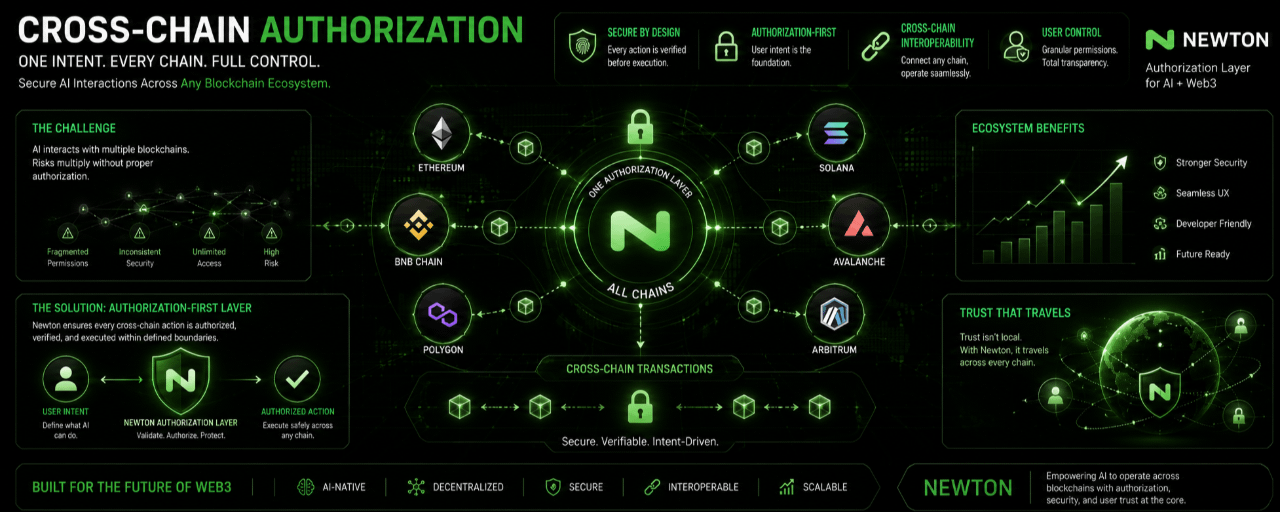
CR0SS CHAIN AUTH0RIZATI0N WITH0UT SACRIFICING SECURITYYesterday while going through my notes on @NewtonProtocol I started thinking about the environment AI works in. Most conversations are about what AI can do. Few ask where those actions actually happen.
The answer isn't simple anymore.
Web3 isn't built around one blockchain. Assets move between networks applications talk to each other across ecosystems and users want an experience no matter which chain they use.
This is exciting. It also brings a new challenge.
H0w do you keep the level of trust when an AI interacts with multiple blockchains, not just one?
That question led me to Newtons approach to chain authorization.
One Blockchain Is No Longer Enough
A years ag0 users mostly stayed on one network.
Now that's rarely the case.
Someone might have assets on Ethereum use another chain for fees and explore new apps elsewhere.
For users this flexibility is great.
For AI agents however it creates an environment.
Every blockchain has its setup, apps and transaction flow.
If an AI assistant is expected to work across all of them giving it access isn't a responsible solution.
The more networks an AI touches, the important clear authorization becomes.
Convenience Should Never Expand Permissions
One thought kept coming while researching Newton.
People often confuse convenience with access.
Imagine giving an AI permission to d0 a task on one blockchain.
That doesn't mean it should have the permissions everywhere else.
Those are two situations.
Cross-chain activity shouldn't quietly expand what an AI can do.
Every permission should remain intentional and connected to the users decision.
That way convenience grows without sacrificing security.
Every Network Brings Risks
No two blockchain ecosystems are the same.
Applications differ, smart contracts. Security assumptions differ.
Even user behavior changes from one ecosystem to another.
Treating every blockchain interaction as the same doesn't make sense.
Newtons architecture recognizes that authorization shouldn't disappear just because an AI operates across environments.
Permissions remain a checkpoint before actions happen.
Trust Needs T0 Travel
Moving assets between blockchains is common.
What interests me more is whether trust can move smoothly too.
Technology already lets information and value travel across networks.
The harder challenge is ensuring user intent follows every interaction.
That's where authorization bec0mes more than a security feature.
It accompanies every automated decision, no matter where it happens.
If trust stays behind while automation moves forward users will hesitate to rely on AI for tasks.
Security Doesn't Have T0 low Everything Down
One misconception about authorization is that it creates friction.
I don't see it that way.
Good infrastructure often feels invisible.
When permissions are designed properly users aren't interrupted.
The system quietly checks that actions stay within approved boundaries.
The experience stays smooth and confidence stays high.
That's a balance than choosing between complete freedom or constant manual approvals.
Why This Matters F0r Developers
Developers face a challenge.
They build apps for users who expect -chain experiences.
Creating permission systems for every blockchain is hard to maintain.
Having authorization designed into the infrastructure creates consistency.
Of solving the same security problem repeatedly builders can focus on creating useful apps while relying on a framework built for AI automation.
Looking Beyond Todays Web3
The I study Newton the more I believe cross-chain authorization is about preparing for whats next.
Future AI agents won't think in terms of blockchains.
They'll complete tasks wherever they need to happen.
Users will still expect 0ne thing control.
They want confidence that every action respects the limits they set no matter how many networks are involved.
That expectation won't disappear as AI gets smarter.
Final Thoughts
Cross-chain tech is making blockchain more connected than ever.
AI is making automation capable than ever.
Neither can reach its potential without trust.
What stood out to me about Newton is its focus on authorization and user intent.
Security shouldn't weaken just because tech becomes more connected.
If AI operates across ecosystems authorization must travel with every decision.
That idea might become a foundation, for the generation of Web3 infrastructure.@NewtonProtocol
$DEXE $EVAA $NEWT
#BinanceTurns9 #NewtonProtocol #newt #Newt
CR0SS CHAIN AUTH0RIZATI0N WITH0UT SACRIFICING SECURITY
Yesterday while going through my notes on @NewtonProtocol I started thinking about the environment AI works in. Most conversations are about what AI can do. Few ask where those actions actually happen.
The answer isn't simple anymore.
Web3 isn't built around one blockchain. Assets move between networks applications talk to each other across ecosystems and users want an experience no matter which chain they use.
This is exciting. It also brings a new challenge.
H0w do you keep the level of trust when an AI interacts with multiple blockchains, not just one?
That question led me to Newtons approach to chain authorization.
One Blockchain Is No Longer Enough
A years ag0 users mostly stayed on one network.
Now that's rarely the case.
Someone might have assets on Ethereum use another chain for fees and explore new apps elsewhere.
For users this flexibility is great.
For AI agents however it creates an environment.
Every blockchain has its setup, apps and transaction flow.
If an AI assistant is expected to work across all of them giving it access isn't a responsible solution.
The more networks an AI touches, the important clear authorization becomes.
Convenience Should Never Expand Permissions
One thought kept coming while researching Newton.
People often confuse convenience with access.
Imagine giving an AI permission to d0 a task on one blockchain.
That doesn't mean it should have the permissions everywhere else.
Those are two situations.
Cross-chain activity shouldn't quietly expand what an AI can do.
Every permission should remain intentional and connected to the users decision.
That way convenience grows without sacrificing security.
Every Network Brings Risks
No two blockchain ecosystems are the same.
Applications differ, smart contracts. Security assumptions differ.
Even user behavior changes from one ecosystem to another.
Treating every blockchain interaction as the same doesn't make sense.
Newtons architecture recognizes that authorization shouldn't disappear just because an AI operates across environments.
Permissions remain a checkpoint before actions happen.
Trust Needs T0 Travel
Moving assets between blockchains is common.
What interests me more is whether trust can move smoothly too.
Technology already lets information and value travel across networks.
The harder challenge is ensuring user intent follows every interaction.
That's where authorization bec0mes more than a security feature.
It accompanies every automated decision, no matter where it happens.
If trust stays behind while automation moves forward users will hesitate to rely on AI for tasks.
Security Doesn't Have T0 low Everything Down
One misconception about authorization is that it creates friction.
I don't see it that way.
Good infrastructure often feels invisible.
When permissions are designed properly users aren't interrupted.
The system quietly checks that actions stay within approved boundaries.
The experience stays smooth and confidence stays high.
That's a balance than choosing between complete freedom or constant manual approvals.
Why This Matters F0r Developers
Developers face a challenge.
They build apps for users who expect -chain experiences.
Creating permission systems for every blockchain is hard to maintain.
Having authorization designed into the infrastructure creates consistency.
Of solving the same security problem repeatedly builders can focus on creating useful apps while relying on a framework built for AI automation.
Looking Beyond Todays Web3
The I study Newton the more I believe cross-chain authorization is about preparing for whats next.
Future AI agents won't think in terms of blockchains.
They'll complete tasks wherever they need to happen.
Users will still expect 0ne thing control.
They want confidence that every action respects the limits they set no matter how many networks are involved.
That expectation won't disappear as AI gets smarter.
Final Thoughts
Cross-chain tech is making blockchain more connected than ever.
AI is making automation capable than ever.
Neither can reach its potential without trust.
What stood out to me about Newton is its focus on authorization and user intent.
Security shouldn't weaken just because tech becomes more connected.
If AI operates across ecosystems authorization must travel with every decision.
That idea might become a foundation, for the generation of Web3 infrastructure.@NewtonProtocol
$DEXE $EVAA $NEWT
#BinanceTurns9 #NewtonProtocol #newt #Newt
The answer isn't simple anymore.
Web3 isn't built around one blockchain. Assets move between networks applications talk to each other across ecosystems and users want an experience no matter which chain they use.
This is exciting. It also brings a new challenge.
H0w do you keep the level of trust when an AI interacts with multiple blockchains, not just one?
That question led me to Newtons approach to chain authorization.
One Blockchain Is No Longer Enough
A years ag0 users mostly stayed on one network.
Now that's rarely the case.
Someone might have assets on Ethereum use another chain for fees and explore new apps elsewhere.
For users this flexibility is great.
For AI agents however it creates an environment.
Every blockchain has its setup, apps and transaction flow.
If an AI assistant is expected to work across all of them giving it access isn't a responsible solution.
The more networks an AI touches, the important clear authorization becomes.
Convenience Should Never Expand Permissions
One thought kept coming while researching Newton.
People often confuse convenience with access.
Imagine giving an AI permission to d0 a task on one blockchain.
That doesn't mean it should have the permissions everywhere else.
Those are two situations.
Cross-chain activity shouldn't quietly expand what an AI can do.
Every permission should remain intentional and connected to the users decision.
That way convenience grows without sacrificing security.
Every Network Brings Risks
No two blockchain ecosystems are the same.
Applications differ, smart contracts. Security assumptions differ.
Even user behavior changes from one ecosystem to another.
Treating every blockchain interaction as the same doesn't make sense.
Newtons architecture recognizes that authorization shouldn't disappear just because an AI operates across environments.
Permissions remain a checkpoint before actions happen.
Trust Needs T0 Travel
Moving assets between blockchains is common.
What interests me more is whether trust can move smoothly too.
Technology already lets information and value travel across networks.
The harder challenge is ensuring user intent follows every interaction.
That's where authorization bec0mes more than a security feature.
It accompanies every automated decision, no matter where it happens.
If trust stays behind while automation moves forward users will hesitate to rely on AI for tasks.
Security Doesn't Have T0 low Everything Down
One misconception about authorization is that it creates friction.
I don't see it that way.
Good infrastructure often feels invisible.
When permissions are designed properly users aren't interrupted.
The system quietly checks that actions stay within approved boundaries.
The experience stays smooth and confidence stays high.
That's a balance than choosing between complete freedom or constant manual approvals.
Why This Matters F0r Developers
Developers face a challenge.
They build apps for users who expect -chain experiences.
Creating permission systems for every blockchain is hard to maintain.
Having authorization designed into the infrastructure creates consistency.
Of solving the same security problem repeatedly builders can focus on creating useful apps while relying on a framework built for AI automation.
Looking Beyond Todays Web3
The I study Newton the more I believe cross-chain authorization is about preparing for whats next.
Future AI agents won't think in terms of blockchains.
They'll complete tasks wherever they need to happen.
Users will still expect 0ne thing control.
They want confidence that every action respects the limits they set no matter how many networks are involved.
That expectation won't disappear as AI gets smarter.
Final Thoughts
Cross-chain tech is making blockchain more connected than ever.
AI is making automation capable than ever.
Neither can reach its potential without trust.
What stood out to me about Newton is its focus on authorization and user intent.
Security shouldn't weaken just because tech becomes more connected.
If AI operates across ecosystems authorization must travel with every decision.
That idea might become a foundation, for the generation of Web3 infrastructure.@NewtonProtocol
$DEXE $EVAA $NEWT
#BinanceTurns9 #NewtonProtocol #newt #Newt
25
12
422

·
--
Verified
Article
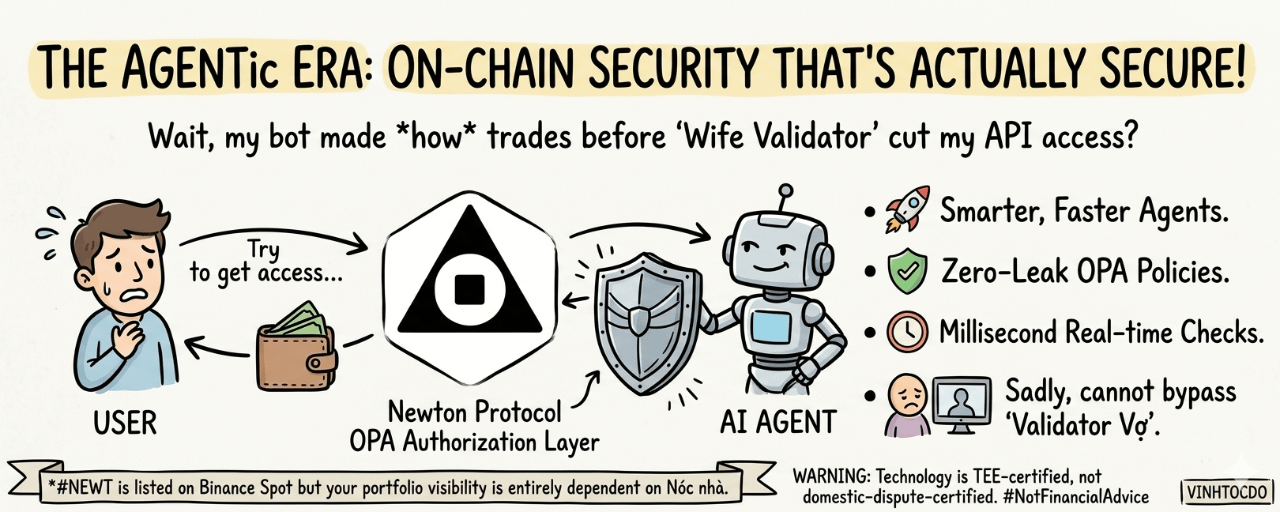
THE REIGNING ERA OF AI AGENTS: ON-CHAIN SECURITY THAT RUNS FASTER THAN A CHICKEN FEATHER!After "Validator Spouse" had my access rights confiscated, I finally truly understood the importance of #NewtonProtocol. The tech world is buzzing over the era of autonomous AI Agents—but do you guys know how to make these Agents both automatically trade and not leak data (Data Leak) like I did?
The core lies in Newton’s On-chain Authorization Layer. Usually, when you deploy an AI Agent Bot to hunt for gems, it’s easy for vulnerabilities to be exploited or for it to “talk too soon,” revealing your strategy. But the Newton Protocol integrates Open Policy Agent (OPA) and the Rego language to enforce strict security policies down to the millisecond. Before an AI Agent executes a Long/Short order or transfers funds, Newton performs a real-time SecCheck to ensure that action is absolutely safe.
THE REIGNING ERA OF AI AGENTS: ON-CHAIN SECURITY THAT RUNS FASTER THAN A CHICKEN FEATHER!
After "Validator Spouse" had my access rights confiscated, I finally truly understood the importance of #NewtonProtocol. The tech world is buzzing over the era of autonomous AI Agents—but do you guys know how to make these Agents both automatically trade and not leak data (Data Leak) like I did?
The core lies in Newton’s On-chain Authorization Layer. Usually, when you deploy an AI Agent Bot to hunt for gems, it’s easy for vulnerabilities to be exploited or for it to “talk too soon,” revealing your strategy. But the Newton Protocol integrates Open Policy Agent (OPA) and the Rego language to enforce strict security policies down to the millisecond. Before an AI Agent executes a Long/Short order or transfers funds, Newton performs a real-time SecCheck to ensure that action is absolutely safe.
The core lies in Newton’s On-chain Authorization Layer. Usually, when you deploy an AI Agent Bot to hunt for gems, it’s easy for vulnerabilities to be exploited or for it to “talk too soon,” revealing your strategy. But the Newton Protocol integrates Open Policy Agent (OPA) and the Rego language to enforce strict security policies down to the millisecond. Before an AI Agent executes a Long/Short order or transfers funds, Newton performs a real-time SecCheck to ensure that action is absolutely safe.
11
6
54
·
--
Last Wednesday, I went through an organization’s on-chain vault with real money and found this: 90% of the strategy documentation reads like prose, and the executability is effectively zero. VaultKit makes me pause not because it’s another vault product, but because it’s a strategy guardrail placed between the curator and the vaults they manage.
To be clear what VaultKit is: it’s a developer SDK released by Newton Protocol on June 24, 2026. Before a curator takes any action, it runs a strategy check. Reallocating funds, setting limits, opening markets, changing fee rates—these administrative actions must first pass the rules. Only through normal execution can they proceed; if they don’t pass, they don’t get put on-chain. VaultKit doesn’t require curators to change their workflows; the vault stays the same and the tooling stays the same. It simply adds a guardrail that all participants can read and verify.
More importantly, here’s what VaultKit is not. It’s not a new product that asks depositors to migrate, not a custody provider that takes control, and it doesn’t change the depositor-side experience at all. It just sits between the curator and the vault the curator already manages, translating “the curator agrees to follow the rules” into “the vault enforces the rules itself.”
Why this matters now: RWA, tokenized funds, and institutional capital are moving on-chain at large scale. Behind this money are risk committees, audits, and regulators. In an organization’s compliance report, the line “please trust the curator” simply can’t be written. What they want is enforcement, not a promise. Newton Protocol Mainnet Beta has already been running on Base and Ethereum since June 23, 2026. This guardrail can now go to production—any curating team can integrate it today.
$NEWT plays three roles in the network: staking, gas, and governance. When a curator writes a strategy and deploys it to a vault, the enforcer of that rule is the vault itself—not a person. If the strategy is wrong, the system blocks it. If you touch the line, you can’t even reach the step where a signature happens. Institutions will take comfort from this; retail users, too, will feel more confident putting real money in.
@NewtonProtocol’s commitment to turning rules into code is something I observed for three weeks before daring to make this judgment: protecting capital with rules may be more reliable than protecting capital with custody. #Newt #NewtonProtocol #DeFi #授权层 #VaultKit
Last Wednesday, I went through an organization’s on-chain vault with real money and found this: 90% of the strategy documentation reads like prose, and the executability is effectively zero. VaultKit makes me pause not because it’s another vault product, but because it’s a strategy guardrail placed between the curator and the vaults they manage.
To be clear what VaultKit is: it’s a developer SDK released by Newton Protocol on June 24, 2026. Before a curator takes any action, it runs a strategy check. Reallocating funds, setting limits, opening markets, changing fee rates—these administrative actions must first pass the rules. Only through normal execution can they proceed; if they don’t pass, they don’t get put on-chain. VaultKit doesn’t require curators to change their workflows; the vault stays the same and the tooling stays the same. It simply adds a guardrail that all participants can read and verify.
More importantly, here’s what VaultKit is not. It’s not a new product that asks depositors to migrate, not a custody provider that takes control, and it doesn’t change the depositor-side experience at all. It just sits between the curator and the vault the curator already manages, translating “the curator agrees to follow the rules” into “the vault enforces the rules itself.”
Why this matters now: RWA, tokenized funds, and institutional capital are moving on-chain at large scale. Behind this money are risk committees, audits, and regulators. In an organization’s compliance report, the line “please trust the curator” simply can’t be written. What they want is enforcement, not a promise. Newton Protocol Mainnet Beta has already been running on Base and Ethereum since June 23, 2026. This guardrail can now go to production—any curating team can integrate it today.
$NEWT plays three roles in the network: staking, gas, and governance. When a curator writes a strategy and deploys it to a vault, the enforcer of that rule is the vault itself—not a person. If the strategy is wrong, the system blocks it. If you touch the line, you can’t even reach the step where a signature happens. Institutions will take comfort from this; retail users, too, will feel more confident putting real money in.
@NewtonProtocol’s commitment to turning rules into code is something I observed for three weeks before daring to make this judgment: protecting capital with rules may be more reliable than protecting capital with custody. #Newt #NewtonProtocol #DeFi #授权层 #VaultKit
To be clear what VaultKit is: it’s a developer SDK released by Newton Protocol on June 24, 2026. Before a curator takes any action, it runs a strategy check. Reallocating funds, setting limits, opening markets, changing fee rates—these administrative actions must first pass the rules. Only through normal execution can they proceed; if they don’t pass, they don’t get put on-chain. VaultKit doesn’t require curators to change their workflows; the vault stays the same and the tooling stays the same. It simply adds a guardrail that all participants can read and verify.
More importantly, here’s what VaultKit is not. It’s not a new product that asks depositors to migrate, not a custody provider that takes control, and it doesn’t change the depositor-side experience at all. It just sits between the curator and the vault the curator already manages, translating “the curator agrees to follow the rules” into “the vault enforces the rules itself.”
Why this matters now: RWA, tokenized funds, and institutional capital are moving on-chain at large scale. Behind this money are risk committees, audits, and regulators. In an organization’s compliance report, the line “please trust the curator” simply can’t be written. What they want is enforcement, not a promise. Newton Protocol Mainnet Beta has already been running on Base and Ethereum since June 23, 2026. This guardrail can now go to production—any curating team can integrate it today.
$NEWT plays three roles in the network: staking, gas, and governance. When a curator writes a strategy and deploys it to a vault, the enforcer of that rule is the vault itself—not a person. If the strategy is wrong, the system blocks it. If you touch the line, you can’t even reach the step where a signature happens. Institutions will take comfort from this; retail users, too, will feel more confident putting real money in.
@NewtonProtocol’s commitment to turning rules into code is something I observed for three weeks before daring to make this judgment: protecting capital with rules may be more reliable than protecting capital with custody. #Newt #NewtonProtocol #DeFi #授权层 #VaultKit
1
356

·
--
#newt $NEWT AI is becoming part of almost every aspect of our lives.
Students use it to study. Developers use it to write code. Investors use it to analyze markets. Businesses use it to automate decisions. Sometimes it feels as if every new problem is expected to have an AI solution.
That makes me wonder:
Will there be a point where people rely on AI more than their own judgment?
I don't think AI will replace the need for human thinking.
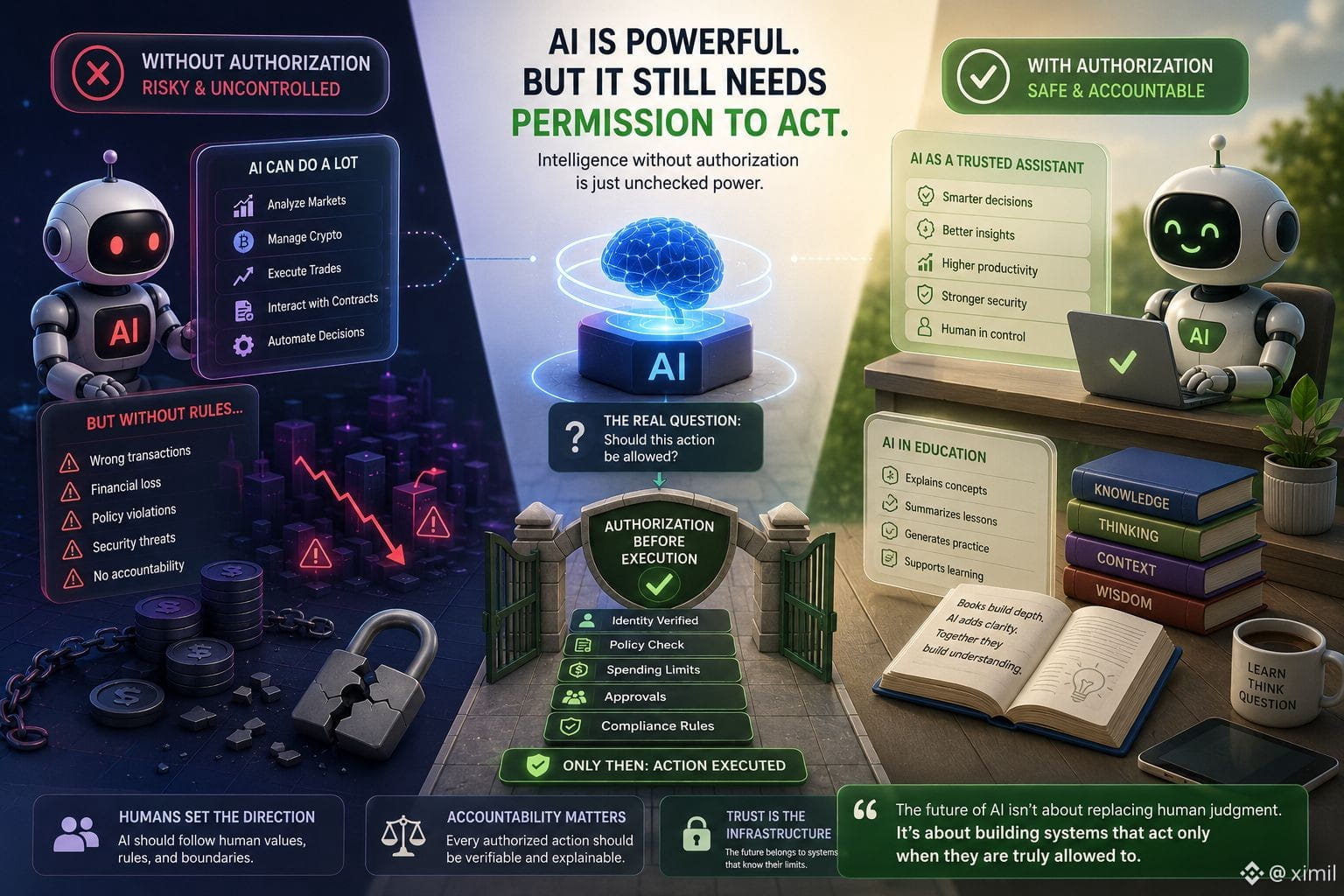
Take education as an example. AI can explain difficult topics, summarize long chapters, generate practice questions, and help students learn faster. But does that mean books will disappear? I'm not convinced. Books teach depth, context, and critical thinking in a way that AI alone cannot. I see AI as a learning assistant, not a replacement for education.
The same question applies to finance and Web3.
AI may become capable of analyzing markets, managing digital assets, or interacting with blockchain applications. But if AI begins making decisions on behalf of users, another question becomes even more important:
Who decides what the AI is allowed to do?
This is one reason I became interested in Newton Protocol. From what I've researched, it isn't simply about making AI more capable. It explores whether AI actions can be evaluated against predefined policies before they're executed.
To me, that shifts the conversation from "Can AI do this?" to "Should AI be allowed to do this?"
As AI becomes more integrated into schools, workplaces, and financial systems, I think intelligence alone won't be enough. Trust, accountability, and clear authorization may become just as important.
The coming AI era may not belong to the smartest systems.
It may belong to the systems that know their limits.
What do you think?
Will AI eventually replace many of the tools we use today, or will it simply become another tool that still needs human guidance and clear rules?
#NewtonProtocol #newt
{spot}(NEWTUSDT)
{spot}(POLUSDT)
{spot}(TSLABUSDT)
#newt $NEWT AI is becoming part of almost every aspect of our lives.
Students use it to study. Developers use it to write code. Investors use it to analyze markets. Businesses use it to automate decisions. Sometimes it feels as if every new problem is expected to have an AI solution.
That makes me wonder:
Will there be a point where people rely on AI more than their own judgment?
I don't think AI will replace the need for human thinking.
Take education as an example. AI can explain difficult topics, summarize long chapters, generate practice questions, and help students learn faster. But does that mean books will disappear? I'm not convinced. Books teach depth, context, and critical thinking in a way that AI alone cannot. I see AI as a learning assistant, not a replacement for education.
The same question applies to finance and Web3.
AI may become capable of analyzing markets, managing digital assets, or interacting with blockchain applications. But if AI begins making decisions on behalf of users, another question becomes even more important:
Who decides what the AI is allowed to do?
This is one reason I became interested in Newton Protocol. From what I've researched, it isn't simply about making AI more capable. It explores whether AI actions can be evaluated against predefined policies before they're executed.
To me, that shifts the conversation from "Can AI do this?" to "Should AI be allowed to do this?"
As AI becomes more integrated into schools, workplaces, and financial systems, I think intelligence alone won't be enough. Trust, accountability, and clear authorization may become just as important.
The coming AI era may not belong to the smartest systems.
It may belong to the systems that know their limits.
What do you think?
Will AI eventually replace many of the tools we use today, or will it simply become another tool that still needs human guidance and clear rules?
#NewtonProtocol #newt
Students use it to study. Developers use it to write code. Investors use it to analyze markets. Businesses use it to automate decisions. Sometimes it feels as if every new problem is expected to have an AI solution.
That makes me wonder:
Will there be a point where people rely on AI more than their own judgment?
I don't think AI will replace the need for human thinking.
Take education as an example. AI can explain difficult topics, summarize long chapters, generate practice questions, and help students learn faster. But does that mean books will disappear? I'm not convinced. Books teach depth, context, and critical thinking in a way that AI alone cannot. I see AI as a learning assistant, not a replacement for education.
The same question applies to finance and Web3.
AI may become capable of analyzing markets, managing digital assets, or interacting with blockchain applications. But if AI begins making decisions on behalf of users, another question becomes even more important:
Who decides what the AI is allowed to do?
This is one reason I became interested in Newton Protocol. From what I've researched, it isn't simply about making AI more capable. It explores whether AI actions can be evaluated against predefined policies before they're executed.
To me, that shifts the conversation from "Can AI do this?" to "Should AI be allowed to do this?"
As AI becomes more integrated into schools, workplaces, and financial systems, I think intelligence alone won't be enough. Trust, accountability, and clear authorization may become just as important.
The coming AI era may not belong to the smartest systems.
It may belong to the systems that know their limits.
What do you think?
Will AI eventually replace many of the tools we use today, or will it simply become another tool that still needs human guidance and clear rules?
#NewtonProtocol #newt

5
1
109
·
--
Verified
Today I put Newton’s latest two official articles together and found that what RedStone has truly filled in isn’t a faster price data feed, but the often-ignored link between data and execution.
Many problems with on-chain strategies aren’t that there are no rules, or no oracles. The issue is: once a risk signal appears, who can stop an action before the money moves? In the past, managers might write asset concentration targets, liquidity minimums, and stablecoin de-peg thresholds in spreadsheets, while the program only executes—and then people rely on audits after the fact to hold someone accountable. When the market is favorable, this process doesn’t show its weaknesses. But once real money needs rapid rebalancing, the gaps become visible.
Newton’s role is to add an authorization layer to on-chain trading. After each action is initiated, policies are checked first—deciding whether to approve or reject. If approved, a signed on-chain credential is generated, and anyone can verify that decision in the Newton Explorer. It doesn’t replace the manager’s investment judgment; instead, it turns the boundaries the manager has already written into execution conditions that cannot be bypassed.
This is also the most interesting part of my view on RedStone’s latest integration. RedStone provides price and market data, Credora organizes on-chain and off-chain signals into risk judgments, and Newton then writes those judgments into the strategy. For example, if a stablecoin starts deviating from its peg, or if an asset’s concentration exceeds the limit, VaultKit can require that the next rebalance pass through a policy check. If conditions aren’t met, the action stops before settlement—rather than waiting for losses to occur and then chasing accountability.
For institutions, what really matters isn’t yet another polished dashboard, but whether rules take effect in the critical second—and whether there’s a verifiable record. For regular users, there’s an extra visible safety rail behind the yield strategy. For cross-chain applications, a single policy set can be reused across different networks, without having to relearn trust in another spoken promise every time the context changes.
After reading the official materials, my takeaway is simple: what will matter next in on-chain finance isn’t just how fast capital can move, but who can make rules move along with the capital. What @NewtonProtocol is doing is connecting data, policies, and execution onto the same line. The $NEWT staking, fuel fees, and governance use cases correspond to the incentives and participation mechanisms needed to keep this network running long-term.
If you’re looking at DeFi vaults, real-world assets, or automated strategies, don’t only ask how high the annualized return is. Ask first: when a risk signal appears, who has the authority to hit the pause button? That’s the dividing line between whether money can be put on-chain with confidence.
#Newt #NewtonProtocol #链上授权 #RedStone
Today I put Newton’s latest two official articles together and found that what RedStone has truly filled in isn’t a faster price data feed, but the often-ignored link between data and execution.
Many problems with on-chain strategies aren’t that there are no rules, or no oracles. The issue is: once a risk signal appears, who can stop an action before the money moves? In the past, managers might write asset concentration targets, liquidity minimums, and stablecoin de-peg thresholds in spreadsheets, while the program only executes—and then people rely on audits after the fact to hold someone accountable. When the market is favorable, this process doesn’t show its weaknesses. But once real money needs rapid rebalancing, the gaps become visible.
Newton’s role is to add an authorization layer to on-chain trading. After each action is initiated, policies are checked first—deciding whether to approve or reject. If approved, a signed on-chain credential is generated, and anyone can verify that decision in the Newton Explorer. It doesn’t replace the manager’s investment judgment; instead, it turns the boundaries the manager has already written into execution conditions that cannot be bypassed.
This is also the most interesting part of my view on RedStone’s latest integration. RedStone provides price and market data, Credora organizes on-chain and off-chain signals into risk judgments, and Newton then writes those judgments into the strategy. For example, if a stablecoin starts deviating from its peg, or if an asset’s concentration exceeds the limit, VaultKit can require that the next rebalance pass through a policy check. If conditions aren’t met, the action stops before settlement—rather than waiting for losses to occur and then chasing accountability.
For institutions, what really matters isn’t yet another polished dashboard, but whether rules take effect in the critical second—and whether there’s a verifiable record. For regular users, there’s an extra visible safety rail behind the yield strategy. For cross-chain applications, a single policy set can be reused across different networks, without having to relearn trust in another spoken promise every time the context changes.
After reading the official materials, my takeaway is simple: what will matter next in on-chain finance isn’t just how fast capital can move, but who can make rules move along with the capital. What @NewtonProtocol is doing is connecting data, policies, and execution onto the same line. The $NEWT staking, fuel fees, and governance use cases correspond to the incentives and participation mechanisms needed to keep this network running long-term.
If you’re looking at DeFi vaults, real-world assets, or automated strategies, don’t only ask how high the annualized return is. Ask first: when a risk signal appears, who has the authority to hit the pause button? That’s the dividing line between whether money can be put on-chain with confidence.
#Newt #NewtonProtocol #链上授权 #RedStone
Many problems with on-chain strategies aren’t that there are no rules, or no oracles. The issue is: once a risk signal appears, who can stop an action before the money moves? In the past, managers might write asset concentration targets, liquidity minimums, and stablecoin de-peg thresholds in spreadsheets, while the program only executes—and then people rely on audits after the fact to hold someone accountable. When the market is favorable, this process doesn’t show its weaknesses. But once real money needs rapid rebalancing, the gaps become visible.
Newton’s role is to add an authorization layer to on-chain trading. After each action is initiated, policies are checked first—deciding whether to approve or reject. If approved, a signed on-chain credential is generated, and anyone can verify that decision in the Newton Explorer. It doesn’t replace the manager’s investment judgment; instead, it turns the boundaries the manager has already written into execution conditions that cannot be bypassed.
This is also the most interesting part of my view on RedStone’s latest integration. RedStone provides price and market data, Credora organizes on-chain and off-chain signals into risk judgments, and Newton then writes those judgments into the strategy. For example, if a stablecoin starts deviating from its peg, or if an asset’s concentration exceeds the limit, VaultKit can require that the next rebalance pass through a policy check. If conditions aren’t met, the action stops before settlement—rather than waiting for losses to occur and then chasing accountability.
For institutions, what really matters isn’t yet another polished dashboard, but whether rules take effect in the critical second—and whether there’s a verifiable record. For regular users, there’s an extra visible safety rail behind the yield strategy. For cross-chain applications, a single policy set can be reused across different networks, without having to relearn trust in another spoken promise every time the context changes.
After reading the official materials, my takeaway is simple: what will matter next in on-chain finance isn’t just how fast capital can move, but who can make rules move along with the capital. What @NewtonProtocol is doing is connecting data, policies, and execution onto the same line. The $NEWT staking, fuel fees, and governance use cases correspond to the incentives and participation mechanisms needed to keep this network running long-term.
If you’re looking at DeFi vaults, real-world assets, or automated strategies, don’t only ask how high the annualized return is. Ask first: when a risk signal appears, who has the authority to hit the pause button? That’s the dividing line between whether money can be put on-chain with confidence.
#Newt #NewtonProtocol #链上授权 #RedStone
2
3.1k

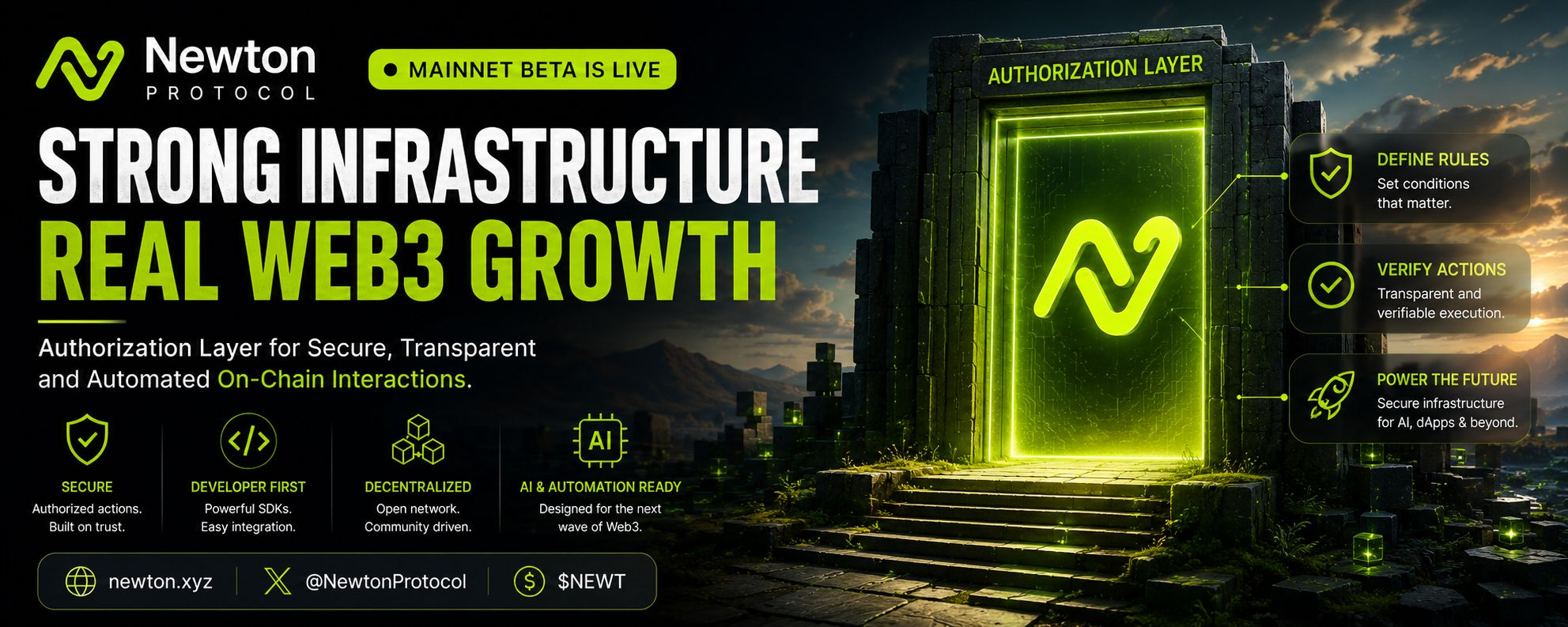
🚀Discovering Newton Protocol and Newton Mainnet Beta!@NewtonProtocol NewtonProtocol builds an innovative Web3 infrastructure that aims to make decentralized applications faster, more secure, and more accessible. With the launch of Newton Mainnet Beta, the project takes an important step forward by providing developers and users with a high-performance environment to explore new possibilities in blockchain.
The token $NEWT plays an essential role in the ecosystem by enabling interactions, governance, and rewards. It’s a project worth following for anyone interested in the future of decentralized finance and blockchain technologies.
🚀Discovering Newton Protocol and Newton Mainnet Beta!
@NewtonProtocol NewtonProtocol builds an innovative Web3 infrastructure that aims to make decentralized applications faster, more secure, and more accessible. With the launch of Newton Mainnet Beta, the project takes an important step forward by providing developers and users with a high-performance environment to explore new possibilities in blockchain.
The token $NEWT plays an essential role in the ecosystem by enabling interactions, governance, and rewards. It’s a project worth following for anyone interested in the future of decentralized finance and blockchain technologies.
The token $NEWT plays an essential role in the ecosystem by enabling interactions, governance, and rewards. It’s a project worth following for anyone interested in the future of decentralized finance and blockchain technologies.
55

·
--
Article
Why Infrastructure Projects Like Newton Protocol Deserve More AttentionWhen people talk about blockchain, the conversation usually revolves around token prices, market trends, or the latest narratives. While those topics are always interesting, I believe the real foundation of Web3 is the infrastructure that makes decentralized applications possible. Without strong infrastructure, even the best ideas struggle to scale.
This is one of the reasons I've been following @NewtonProtocol and its progress through the Newton Mainnet Beta.
For me, infrastructure is not the most exciting part of blockchain at first glance, but it is often the most important. Developers need reliable tools, secure frameworks, and flexible systems to build applications that people can trust. The stronger the foundation, the easier it becomes for innovation to happen on top of it.
What caught my attention about Newton Protocol is its focus on programmable authorization. As blockchain technology becomes more advanced and AI-powered applications become more common, defining how transactions and automated actions should be authorized could become increasingly valuable. Instead of thinking only about execution, it's interesting to see a project exploring how actions can be verified against predefined rules.
{spot}(NEWTUSDT)
The Newton Mainnet Beta is another reason I'm interested in following the ecosystem. A beta phase is where theory meets reality. Developers begin testing ideas, users provide valuable feedback, and the community helps identify improvements that strengthen the network over time. Every successful ecosystem goes through this stage before reaching broader adoption.
I also think that community participation is one of the biggest advantages of Web3. Builders, researchers, developers, and everyday users all contribute in different ways. Whether it's testing new features, sharing feedback, or creating useful applications, every contribution helps the ecosystem mature.
Another thing I appreciate is that long-term blockchain success usually comes from continuous development rather than short-term excitement. Projects that consistently improve their technology, listen to community feedback, and expand their developer ecosystem often create stronger foundations for the future.
As AI and blockchain continue moving closer together, secure infrastructure will likely become even more important. Automation creates exciting opportunities, but it also requires reliable systems that can define permissions, verify actions, and support transparent execution. Watching how Newton Protocol approaches these challenges will be interesting as the ecosystem continues to evolve.
I'm looking forward to following the next stage of the Newton Mainnet Beta and seeing how developers use the protocol to build new ideas. It will also be exciting to watch how community feedback shapes future updates and improvements.
What are your thoughts on infrastructure-focused blockchain projects? Do you think authorization layers could become an important part of the next generation of Web3?
@NewtonProtocol $NEWT #Newt #NewtonProtocol #MainnetBeta #Web3
Why Infrastructure Projects Like Newton Protocol Deserve More Attention
When people talk about blockchain, the conversation usually revolves around token prices, market trends, or the latest narratives. While those topics are always interesting, I believe the real foundation of Web3 is the infrastructure that makes decentralized applications possible. Without strong infrastructure, even the best ideas struggle to scale.
This is one of the reasons I've been following @NewtonProtocol and its progress through the Newton Mainnet Beta.
For me, infrastructure is not the most exciting part of blockchain at first glance, but it is often the most important. Developers need reliable tools, secure frameworks, and flexible systems to build applications that people can trust. The stronger the foundation, the easier it becomes for innovation to happen on top of it.
What caught my attention about Newton Protocol is its focus on programmable authorization. As blockchain technology becomes more advanced and AI-powered applications become more common, defining how transactions and automated actions should be authorized could become increasingly valuable. Instead of thinking only about execution, it's interesting to see a project exploring how actions can be verified against predefined rules.
The Newton Mainnet Beta is another reason I'm interested in following the ecosystem. A beta phase is where theory meets reality. Developers begin testing ideas, users provide valuable feedback, and the community helps identify improvements that strengthen the network over time. Every successful ecosystem goes through this stage before reaching broader adoption.
I also think that community participation is one of the biggest advantages of Web3. Builders, researchers, developers, and everyday users all contribute in different ways. Whether it's testing new features, sharing feedback, or creating useful applications, every contribution helps the ecosystem mature.
Another thing I appreciate is that long-term blockchain success usually comes from continuous development rather than short-term excitement. Projects that consistently improve their technology, listen to community feedback, and expand their developer ecosystem often create stronger foundations for the future.
As AI and blockchain continue moving closer together, secure infrastructure will likely become even more important. Automation creates exciting opportunities, but it also requires reliable systems that can define permissions, verify actions, and support transparent execution. Watching how Newton Protocol approaches these challenges will be interesting as the ecosystem continues to evolve.
I'm looking forward to following the next stage of the Newton Mainnet Beta and seeing how developers use the protocol to build new ideas. It will also be exciting to watch how community feedback shapes future updates and improvements.
What are your thoughts on infrastructure-focused blockchain projects? Do you think authorization layers could become an important part of the next generation of Web3?
@NewtonProtocol $NEWT #Newt #NewtonProtocol #MainnetBeta #Web3
This is one of the reasons I've been following @NewtonProtocol and its progress through the Newton Mainnet Beta.
For me, infrastructure is not the most exciting part of blockchain at first glance, but it is often the most important. Developers need reliable tools, secure frameworks, and flexible systems to build applications that people can trust. The stronger the foundation, the easier it becomes for innovation to happen on top of it.
What caught my attention about Newton Protocol is its focus on programmable authorization. As blockchain technology becomes more advanced and AI-powered applications become more common, defining how transactions and automated actions should be authorized could become increasingly valuable. Instead of thinking only about execution, it's interesting to see a project exploring how actions can be verified against predefined rules.
The Newton Mainnet Beta is another reason I'm interested in following the ecosystem. A beta phase is where theory meets reality. Developers begin testing ideas, users provide valuable feedback, and the community helps identify improvements that strengthen the network over time. Every successful ecosystem goes through this stage before reaching broader adoption.
I also think that community participation is one of the biggest advantages of Web3. Builders, researchers, developers, and everyday users all contribute in different ways. Whether it's testing new features, sharing feedback, or creating useful applications, every contribution helps the ecosystem mature.
Another thing I appreciate is that long-term blockchain success usually comes from continuous development rather than short-term excitement. Projects that consistently improve their technology, listen to community feedback, and expand their developer ecosystem often create stronger foundations for the future.
As AI and blockchain continue moving closer together, secure infrastructure will likely become even more important. Automation creates exciting opportunities, but it also requires reliable systems that can define permissions, verify actions, and support transparent execution. Watching how Newton Protocol approaches these challenges will be interesting as the ecosystem continues to evolve.
I'm looking forward to following the next stage of the Newton Mainnet Beta and seeing how developers use the protocol to build new ideas. It will also be exciting to watch how community feedback shapes future updates and improvements.
What are your thoughts on infrastructure-focused blockchain projects? Do you think authorization layers could become an important part of the next generation of Web3?
@NewtonProtocol $NEWT #Newt #NewtonProtocol #MainnetBeta #Web3
11
2
87
Article
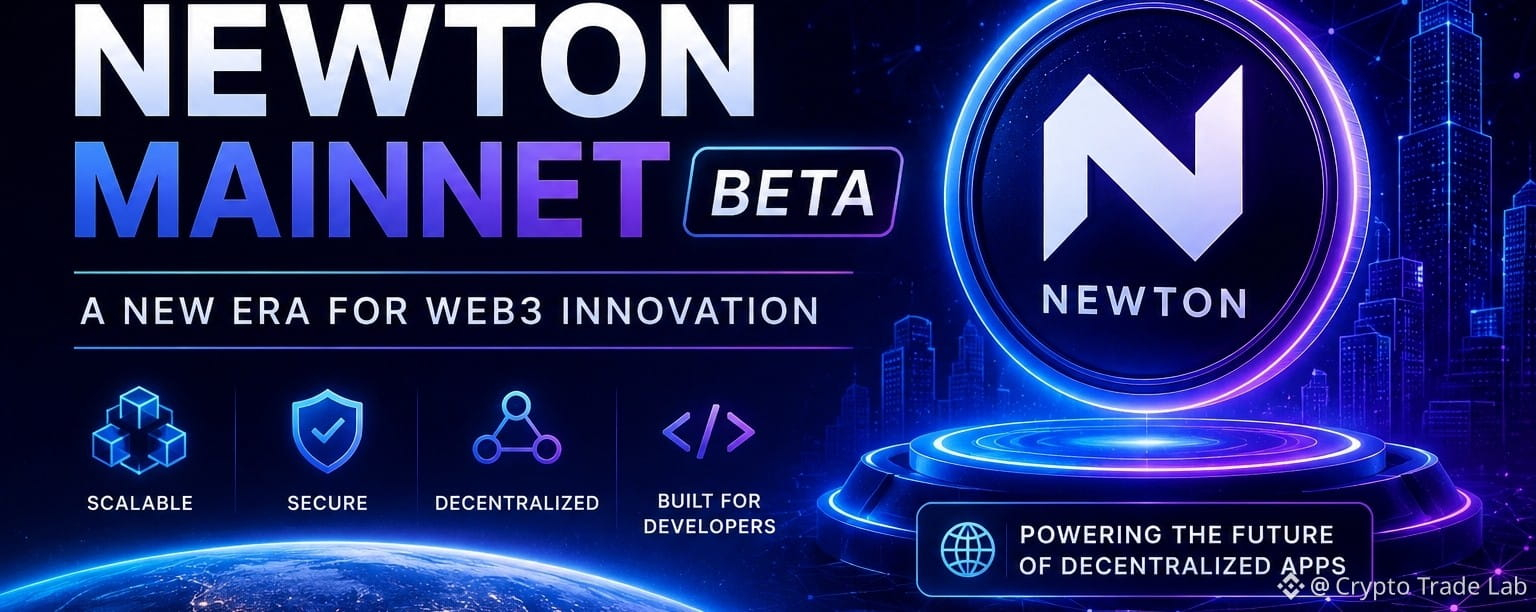
Newton Mainnet Beta: A New Chapter for Web3 InnovationThe launch of the Newton Mainnet Beta marks an exciting step forward for the Web3 ecosystem. I believe @NewtonProtocol is building a blockchain network that focuses on scalability, security, and decentralization while creating better opportunities for developers and users. A successful Mainnet Beta is more than just a technical upgrade—it allows the community to test the network, provide valuable feedback, and help strengthen the ecosystem before the full release.
One of the most interesting aspects of the Newton ecosystem is its commitment to continuous innovation. As more developers build decentralized applications and more users explore the network, the ecosystem has the potential to grow into a strong platform for real-world blockchain adoption. Community participation during the beta phase can also help improve network performance and reliability.
I look forward to seeing more innovation, partnerships, and developer activity around Newton Protocol in the future. Congratulations to the entire @NewtonProtocol team on reaching this important milestone. I wish continued success for the project and hope the $NEWT ecosystem continues to expand with more real-world use cases and a growing global community.
$NEWT
#Newt #NewtonProtocol #Web3 #Blockchain #BinanceSquare
Newton Mainnet Beta: A New Chapter for Web3 Innovation
The launch of the Newton Mainnet Beta marks an exciting step forward for the Web3 ecosystem. I believe @NewtonProtocol is building a blockchain network that focuses on scalability, security, and decentralization while creating better opportunities for developers and users. A successful Mainnet Beta is more than just a technical upgrade—it allows the community to test the network, provide valuable feedback, and help strengthen the ecosystem before the full release.
One of the most interesting aspects of the Newton ecosystem is its commitment to continuous innovation. As more developers build decentralized applications and more users explore the network, the ecosystem has the potential to grow into a strong platform for real-world blockchain adoption. Community participation during the beta phase can also help improve network performance and reliability.
I look forward to seeing more innovation, partnerships, and developer activity around Newton Protocol in the future. Congratulations to the entire @NewtonProtocol team on reaching this important milestone. I wish continued success for the project and hope the $NEWT ecosystem continues to expand with more real-world use cases and a growing global community.
$NEWT
#Newt #NewtonProtocol #Web3 #Blockchain #BinanceSquare
One of the most interesting aspects of the Newton ecosystem is its commitment to continuous innovation. As more developers build decentralized applications and more users explore the network, the ecosystem has the potential to grow into a strong platform for real-world blockchain adoption. Community participation during the beta phase can also help improve network performance and reliability.
I look forward to seeing more innovation, partnerships, and developer activity around Newton Protocol in the future. Congratulations to the entire @NewtonProtocol team on reaching this important milestone. I wish continued success for the project and hope the $NEWT ecosystem continues to expand with more real-world use cases and a growing global community.
$NEWT
#Newt #NewtonProtocol #Web3 #Blockchain #BinanceSquare
45

·
--
#newt $NEWT
AI agents are already making financial decisions. Rebalancing portfolios. Executing recurring buys. Managing vault risk. Most of them run on centralized bots with no way to verify what actually happened or why.
That's the gap @NewtonProtocol sits in. Every agent action gets evaluated against programmable rules before it executes. Pass or fail there's a cryptographic receipt onchain either way.
Not "the agent said it followed the rules." Proof it did.
BeInCrypto just put Newton on their Institutional 100 list for Best On-Chain Finance Infrastructure. That's not a community vote. It's scored on institutional clientele and regulatory maturity.
The infrastructure for verifiable autonomous finance is being built right now. $NEWT is what powers it.
@NewtonProtocol
#Newt #NewtonProtocol
{spot}(NEWTUSDT)
#newt $NEWT
AI agents are already making financial decisions. Rebalancing portfolios. Executing recurring buys. Managing vault risk. Most of them run on centralized bots with no way to verify what actually happened or why.
That's the gap @NewtonProtocol sits in. Every agent action gets evaluated against programmable rules before it executes. Pass or fail there's a cryptographic receipt onchain either way.
Not "the agent said it followed the rules." Proof it did.
BeInCrypto just put Newton on their Institutional 100 list for Best On-Chain Finance Infrastructure. That's not a community vote. It's scored on institutional clientele and regulatory maturity.
The infrastructure for verifiable autonomous finance is being built right now. $NEWT is what powers it.
@NewtonProtocol
#Newt #NewtonProtocol
AI agents are already making financial decisions. Rebalancing portfolios. Executing recurring buys. Managing vault risk. Most of them run on centralized bots with no way to verify what actually happened or why.
That's the gap @NewtonProtocol sits in. Every agent action gets evaluated against programmable rules before it executes. Pass or fail there's a cryptographic receipt onchain either way.
Not "the agent said it followed the rules." Proof it did.
BeInCrypto just put Newton on their Institutional 100 list for Best On-Chain Finance Infrastructure. That's not a community vote. It's scored on institutional clientele and regulatory maturity.
The infrastructure for verifiable autonomous finance is being built right now. $NEWT is what powers it.
@NewtonProtocol
#Newt #NewtonProtocol
6
2
93

·
--
Talk about something that the Newton Protocol has been discussed a lot about recently in the Dev community.
In traditional DeFi, risk management basically looks like this: the protocol writes the rules itself, audits itself, and maintains itself; when something goes wrong, blame is assigned after the fact. This model is fine when TVL is not high, but once the treasury grows, relying on manual processes to run compliance and risk controls means both efficiency and security can’t keep up. What Newton is doing in essence is to standardize this layer—using a set of on-chain executed authorization logic to run compliance screening, security checks, and risk validation before transaction settlement, outputting an on-chain verifiable pass/fail proof. @NewtonProtocol calls this the onchain authorization layer—indeed a direction of infrastructure that has been overlooked.
From a technical implementation standpoint, Newton currently provides a Vault SDK that encapsulates four execution domains (compliance Chainalysis, identity verification, security Hexagate, and risk Credora+RedStone) into standardized strategy interfaces. Vaults can integrate directly via the SDK, without having to write the risk-control logic again. This approach is quite common in TradFi—clearing houses and central counterparties do exactly this—but on-chain it’s still new. The team at Magic Labs previously built more than 57 million embedded wallets, and Polymarket’s wallet infrastructure is theirs; PayPal Ventures has also invested, and their engineering capabilities are solid.
From an ecosystem perspective, Newton’s first deployed use case is DeFi vault authorization, but the next step on the roadmap is RWA and stablecoins—both of which have stricter compliance requirements than DeFi. If they can get it working, the incremental opportunity space is clearly significant. $NEWT is the token; during the mainnet Beta phase, the market’s validation will come next.
#NEWT #NewtonProtocol #AI
For informational purposes only and does not constitute investment advice.
Talk about something that the Newton Protocol has been discussed a lot about recently in the Dev community.
In traditional DeFi, risk management basically looks like this: the protocol writes the rules itself, audits itself, and maintains itself; when something goes wrong, blame is assigned after the fact. This model is fine when TVL is not high, but once the treasury grows, relying on manual processes to run compliance and risk controls means both efficiency and security can’t keep up. What Newton is doing in essence is to standardize this layer—using a set of on-chain executed authorization logic to run compliance screening, security checks, and risk validation before transaction settlement, outputting an on-chain verifiable pass/fail proof. @NewtonProtocol calls this the onchain authorization layer—indeed a direction of infrastructure that has been overlooked.
From a technical implementation standpoint, Newton currently provides a Vault SDK that encapsulates four execution domains (compliance Chainalysis, identity verification, security Hexagate, and risk Credora+RedStone) into standardized strategy interfaces. Vaults can integrate directly via the SDK, without having to write the risk-control logic again. This approach is quite common in TradFi—clearing houses and central counterparties do exactly this—but on-chain it’s still new. The team at Magic Labs previously built more than 57 million embedded wallets, and Polymarket’s wallet infrastructure is theirs; PayPal Ventures has also invested, and their engineering capabilities are solid.
From an ecosystem perspective, Newton’s first deployed use case is DeFi vault authorization, but the next step on the roadmap is RWA and stablecoins—both of which have stricter compliance requirements than DeFi. If they can get it working, the incremental opportunity space is clearly significant. $NEWT is the token; during the mainnet Beta phase, the market’s validation will come next.
#NEWT #NewtonProtocol #AI
For informational purposes only and does not constitute investment advice.
In traditional DeFi, risk management basically looks like this: the protocol writes the rules itself, audits itself, and maintains itself; when something goes wrong, blame is assigned after the fact. This model is fine when TVL is not high, but once the treasury grows, relying on manual processes to run compliance and risk controls means both efficiency and security can’t keep up. What Newton is doing in essence is to standardize this layer—using a set of on-chain executed authorization logic to run compliance screening, security checks, and risk validation before transaction settlement, outputting an on-chain verifiable pass/fail proof. @NewtonProtocol calls this the onchain authorization layer—indeed a direction of infrastructure that has been overlooked.
From a technical implementation standpoint, Newton currently provides a Vault SDK that encapsulates four execution domains (compliance Chainalysis, identity verification, security Hexagate, and risk Credora+RedStone) into standardized strategy interfaces. Vaults can integrate directly via the SDK, without having to write the risk-control logic again. This approach is quite common in TradFi—clearing houses and central counterparties do exactly this—but on-chain it’s still new. The team at Magic Labs previously built more than 57 million embedded wallets, and Polymarket’s wallet infrastructure is theirs; PayPal Ventures has also invested, and their engineering capabilities are solid.
From an ecosystem perspective, Newton’s first deployed use case is DeFi vault authorization, but the next step on the roadmap is RWA and stablecoins—both of which have stricter compliance requirements than DeFi. If they can get it working, the incremental opportunity space is clearly significant. $NEWT is the token; during the mainnet Beta phase, the market’s validation will come next.
#NEWT #NewtonProtocol #AI
For informational purposes only and does not constitute investment advice.
34

·
--
Verified
NEWT: supply, initial circulation, and utility in Newton ProtocolWith 1.000 billion units in total supply and 215 million in initial circulation—21.5%—, $NEWT operates within a constrained supply framework under a protocol whose value depends on the adoption of its onchain authorization layer.
The native token of @NewtonProtocol , developed by Magic Labs, reserved 10% of the supply for a community airdrop and has a listing on Binance Alpha. Magic secures the account; Newton Protocol secures the transaction: it evaluates each operation before settlement on Base and Ethereum with programmable policies and verifiable BLS attestation.
NEWT: supply, initial circulation, and utility in Newton Protocol
With 1.000 billion units in total supply and 215 million in initial circulation—21.5%—, $NEWT operates within a constrained supply framework under a protocol whose value depends on the adoption of its onchain authorization layer.
The native token of @NewtonProtocol , developed by Magic Labs, reserved 10% of the supply for a community airdrop and has a listing on Binance Alpha. Magic secures the account; Newton Protocol secures the transaction: it evaluates each operation before settlement on Base and Ethereum with programmable policies and verifiable BLS attestation.
The native token of @NewtonProtocol , developed by Magic Labs, reserved 10% of the supply for a community airdrop and has a listing on Binance Alpha. Magic secures the account; Newton Protocol secures the transaction: it evaluates each operation before settlement on Base and Ethereum with programmable policies and verifiable BLS attestation.
1
1
62
·
--
Newton Mainnet Beta 上线后一直在跑,最近看开发者频道讨论比较多的是它的链上授权逻辑。简单理解就是一个交易执行前的策略检查层——Vault 调策略链,Chainalysis 跑合规筛查、Hexagate 做安全检测、Credora 和 RedStone 对风险敞口,全部打包成链上可验证的 pass/fail 证明,结果直接上链存证。
这个思路其实跟传统清算所的 Pre-Trade Risk 很像,只是换到了链上跑。对 DeFi 金库来说,最大的痛点一直是风控碎片化——每个协议自己写一套规则、各自审计、各自维护,出了问题才追查。Newton 相当于把这一层标准化了,策略统一管理、执行留痕、链上公开可查。
团队是 Magic Labs 在做,57M+ 钱包、PayPal Ventures 背书,Polymarket 的钱包底层也是他们的。路线图从金库授权切入,后续往 RWA、稳定币、AI agent 方向扩展。$NEWT 是生态代币,主网 Beta 阶段,后续看市场怎么验证。
@NewtonProtocol
#NEWT #NewtonProtocol #AI
仅供信息参考,不构成投资建议。
Newton Mainnet Beta 上线后一直在跑,最近看开发者频道讨论比较多的是它的链上授权逻辑。简单理解就是一个交易执行前的策略检查层——Vault 调策略链,Chainalysis 跑合规筛查、Hexagate 做安全检测、Credora 和 RedStone 对风险敞口,全部打包成链上可验证的 pass/fail 证明,结果直接上链存证。
这个思路其实跟传统清算所的 Pre-Trade Risk 很像,只是换到了链上跑。对 DeFi 金库来说,最大的痛点一直是风控碎片化——每个协议自己写一套规则、各自审计、各自维护,出了问题才追查。Newton 相当于把这一层标准化了,策略统一管理、执行留痕、链上公开可查。
团队是 Magic Labs 在做,57M+ 钱包、PayPal Ventures 背书,Polymarket 的钱包底层也是他们的。路线图从金库授权切入,后续往 RWA、稳定币、AI agent 方向扩展。$NEWT 是生态代币,主网 Beta 阶段,后续看市场怎么验证。
@NewtonProtocol
#NEWT #NewtonProtocol #AI
仅供信息参考,不构成投资建议。
这个思路其实跟传统清算所的 Pre-Trade Risk 很像,只是换到了链上跑。对 DeFi 金库来说,最大的痛点一直是风控碎片化——每个协议自己写一套规则、各自审计、各自维护,出了问题才追查。Newton 相当于把这一层标准化了,策略统一管理、执行留痕、链上公开可查。
团队是 Magic Labs 在做,57M+ 钱包、PayPal Ventures 背书,Polymarket 的钱包底层也是他们的。路线图从金库授权切入,后续往 RWA、稳定币、AI agent 方向扩展。$NEWT 是生态代币,主网 Beta 阶段,后续看市场怎么验证。
@NewtonProtocol
#NEWT #NewtonProtocol #AI
仅供信息参考,不构成投资建议。
2
67
Log in to explore more content
Join global crypto users on Binance Square
⚡️ Get latest and useful information about crypto.
💬 Trusted by the world’s largest crypto exchange.
👍 Discover real insights from verified creators.
Email / Phone number
Trending Topics
1
#AIStocksWhatNext
338,171 views
2,891 Discussing
2
#BitcoinBreaksAboveMayHighNears$86K
13,502 views
185 Discussing
3
#DogecoinRises15%
41,328 views
945 Discussing
4
#$14BBitcoinOptionsExpireFriday
3,331 views
86 Discussing
5
#BNBMarketCapPassesBNYMellon
26,931 views
682 Discussing
6
#CryptoMarketCapReclaims$3Trillion
4,235 views
78 Discussing
7
#MuseOvertakesChatGPTAsTopFreeIOSApp
16,265 views
517 Discussing
8
#TokenizedStockPlatformsCouldLaunchNextQuarter
25,426 views
568 Discussing
9
#StrategyAdds950Bitcoin
31,822 views
662 Discussing
10
#CardanoAddedToX402KitForADAPayments
28,414 views
646 Discussing