

#banking
banking
311,969 views
1,255 Discussing
Hot
Latest

·
--
REVOLUT SECURES ARGENTINA BANKING APPROVAL AS LATAM INSTITUTIONAL ADOPTION ACCELERATES $BTC 🏦 ⚡
Smart money continues building long-term infrastructure quietly behind regulatory curtains. 🔍 Revolut has officially secured Central Bank approval to acquire Banco Cetelem in Argentina, rebranding it into a localized banking entity following a 150,000-user waitlist.
This strategic acquisition mirrors their operational rollout across Mexico, Brazil, and Colombia. 📊 While commercial launch is projected for 2027, institutional players are positioning early, establishing compliant fiat-to-crypto gateways across high-inflation corridors where structural demand for $BTC remains unmatched.
💡 Institutional rails take years to construct, but once live, they unlock massive capital inflow potential. 💬 Will LATAM become the dominant engine for retail and institutional onboarding this decade? 👇
⚠️ Not financial advice. Always manage your risk. 🛡️
🏷️ #BTC #Crypto #Banking #LatAm #Adoption
🏦 ⚡
REVOLUT SECURES ARGENTINA BANKING APPROVAL AS LATAM INSTITUTIONAL ADOPTION ACCELERATES $BTC 🏦 ⚡
Smart money continues building long-term infrastructure quietly behind regulatory curtains. 🔍 Revolut has officially secured Central Bank approval to acquire Banco Cetelem in Argentina, rebranding it into a localized banking entity following a 150,000-user waitlist.
This strategic acquisition mirrors their operational rollout across Mexico, Brazil, and Colombia. 📊 While commercial launch is projected for 2027, institutional players are positioning early, establishing compliant fiat-to-crypto gateways across high-inflation corridors where structural demand for $BTC remains unmatched.
💡 Institutional rails take years to construct, but once live, they unlock massive capital inflow potential. 💬 Will LATAM become the dominant engine for retail and institutional onboarding this decade? 👇
⚠️ Not financial advice. Always manage your risk. 🛡️
🏷️ #BTC #Crypto #Banking #LatAm #Adoption
🏦 ⚡
Smart money continues building long-term infrastructure quietly behind regulatory curtains. 🔍 Revolut has officially secured Central Bank approval to acquire Banco Cetelem in Argentina, rebranding it into a localized banking entity following a 150,000-user waitlist.
This strategic acquisition mirrors their operational rollout across Mexico, Brazil, and Colombia. 📊 While commercial launch is projected for 2027, institutional players are positioning early, establishing compliant fiat-to-crypto gateways across high-inflation corridors where structural demand for $BTC remains unmatched.
💡 Institutional rails take years to construct, but once live, they unlock massive capital inflow potential. 💬 Will LATAM become the dominant engine for retail and institutional onboarding this decade? 👇
⚠️ Not financial advice. Always manage your risk. 🛡️
🏷️ #BTC #Crypto #Banking #LatAm #Adoption
🏦 ⚡
7
·
--
🚨 $QNT SURGES 70% AS INSTITUTIONAL BANKING INFRASTRUCTURE EXPANDS ON-CHAIN 📈
Smart money shifted attention toward $QNT following a 70% rally driven by institutional payment infrastructure integration. The technology is being deployed across global banking initiatives handling trillions in daily volume, bridging legacy settlement with tokenized deposits. 📊
However, sophisticated market participants must distinguish between protocol utility and direct token demand. While enterprise interoperability validation provides massive fundamental backing, network implementation timelines extend toward 2027 without explicit buy-side token mechanics confirmed. 💡
As structural liquidity absorbs this initial impulse wave, are you treating this momentum as an institutional repricing event or waiting for key support retests? 👇
⚠️ Not financial advice. Always manage your risk. 🛡️
🏷️ #QNT #Tokenization #Banking #Crypto
🎯 🦈
🚨 $QNT SURGES 70% AS INSTITUTIONAL BANKING INFRASTRUCTURE EXPANDS ON-CHAIN 📈
Smart money shifted attention toward $QNT following a 70% rally driven by institutional payment infrastructure integration. The technology is being deployed across global banking initiatives handling trillions in daily volume, bridging legacy settlement with tokenized deposits. 📊
However, sophisticated market participants must distinguish between protocol utility and direct token demand. While enterprise interoperability validation provides massive fundamental backing, network implementation timelines extend toward 2027 without explicit buy-side token mechanics confirmed. 💡
As structural liquidity absorbs this initial impulse wave, are you treating this momentum as an institutional repricing event or waiting for key support retests? 👇
⚠️ Not financial advice. Always manage your risk. 🛡️
🏷️ #QNT #Tokenization #Banking #Crypto
🎯 🦈
Smart money shifted attention toward $QNT following a 70% rally driven by institutional payment infrastructure integration. The technology is being deployed across global banking initiatives handling trillions in daily volume, bridging legacy settlement with tokenized deposits. 📊
However, sophisticated market participants must distinguish between protocol utility and direct token demand. While enterprise interoperability validation provides massive fundamental backing, network implementation timelines extend toward 2027 without explicit buy-side token mechanics confirmed. 💡
As structural liquidity absorbs this initial impulse wave, are you treating this momentum as an institutional repricing event or waiting for key support retests? 👇
⚠️ Not financial advice. Always manage your risk. 🛡️
🏷️ #QNT #Tokenization #Banking #Crypto
🎯 🦈
151

🚨 AI AGENTS AND $BTC ARE UNLOCKING A MASSIVE PARADIGM SHIFT AGAINST TRADITIONAL BANKS 💥
Apollo's chief economist just sounded the alarm on an upcoming agentic disruption, where smart AI engines automatically sweep idle cash from legacy 0.1% bank accounts into high-yield liquidity pools. 📊 When AI liquidity bots begin relentlessly optimizing every dollar, traditional banks will face unprecedented pressure on their low-cost deposit bases.
This marks a structural seismic shift where legacy financial gatekeepers lose their grip. 🔍 Both AI automation and permissionless networks like $BTC are accelerating capital efficiency and draining outdated banking rails.
💬 Will automated AI yield-hunting drive retail capital straight into decentralized crypto rails next? 👇
⚠️ Not financial advice. Always manage your risk. 🛡️
🏷️ #BTC #Crypto #Banking #ArtificialIntelligence
⚡ 💎
🚨 AI AGENTS AND $BTC ARE UNLOCKING A MASSIVE PARADIGM SHIFT AGAINST TRADITIONAL BANKS 💥
Apollo's chief economist just sounded the alarm on an upcoming agentic disruption, where smart AI engines automatically sweep idle cash from legacy 0.1% bank accounts into high-yield liquidity pools. 📊 When AI liquidity bots begin relentlessly optimizing every dollar, traditional banks will face unprecedented pressure on their low-cost deposit bases.
This marks a structural seismic shift where legacy financial gatekeepers lose their grip. 🔍 Both AI automation and permissionless networks like $BTC are accelerating capital efficiency and draining outdated banking rails.
💬 Will automated AI yield-hunting drive retail capital straight into decentralized crypto rails next? 👇
⚠️ Not financial advice. Always manage your risk. 🛡️
🏷️ #BTC #Crypto #Banking #ArtificialIntelligence
⚡ 💎
Apollo's chief economist just sounded the alarm on an upcoming agentic disruption, where smart AI engines automatically sweep idle cash from legacy 0.1% bank accounts into high-yield liquidity pools. 📊 When AI liquidity bots begin relentlessly optimizing every dollar, traditional banks will face unprecedented pressure on their low-cost deposit bases.
This marks a structural seismic shift where legacy financial gatekeepers lose their grip. 🔍 Both AI automation and permissionless networks like $BTC are accelerating capital efficiency and draining outdated banking rails.
💬 Will automated AI yield-hunting drive retail capital straight into decentralized crypto rails next? 👇
⚠️ Not financial advice. Always manage your risk. 🛡️
🏷️ #BTC #Crypto #Banking #ArtificialIntelligence
⚡ 💎
51

·
--
Here's what happened when Russia started folding crypto into licensed banking instead of treating it as an outside market.
Traders have lost enough to sudden regulatory shifts and unregulated platforms that vanish. The constant FOMO on news followed by rugs or frozen accounts is exhausting.
Russia is moving crypto into licensed banking, custody, brokerage and settlement rails while deliberately limiting banks’ balance-sheet exposure. That keeps the institutions from holding the volatile stuff themselves.
This stands apart from El Salvador's full $BTC legal tender experiment or the US path of ETFs where traditional players still hesitate on direct exposure. The Russian model lets access grow without forcing regulators to embrace crypto risk head on.
Other countries could take notes. It opens the door for scaled $USDT settlement and stronger $ETH custody through familiar banking channels, all while the banks themselves stay shielded.
Where do you think this goes from here?
#CryptoRegulation #RussiaCrypto #Banking
Here's what happened when Russia started folding crypto into licensed banking instead of treating it as an outside market.
Traders have lost enough to sudden regulatory shifts and unregulated platforms that vanish. The constant FOMO on news followed by rugs or frozen accounts is exhausting.
Russia is moving crypto into licensed banking, custody, brokerage and settlement rails while deliberately limiting banks’ balance-sheet exposure. That keeps the institutions from holding the volatile stuff themselves.
This stands apart from El Salvador's full $BTC legal tender experiment or the US path of ETFs where traditional players still hesitate on direct exposure. The Russian model lets access grow without forcing regulators to embrace crypto risk head on.
Other countries could take notes. It opens the door for scaled $USDT settlement and stronger $ETH custody through familiar banking channels, all while the banks themselves stay shielded.
Where do you think this goes from here?
#CryptoRegulation #RussiaCrypto #Banking
Traders have lost enough to sudden regulatory shifts and unregulated platforms that vanish. The constant FOMO on news followed by rugs or frozen accounts is exhausting.
Russia is moving crypto into licensed banking, custody, brokerage and settlement rails while deliberately limiting banks’ balance-sheet exposure. That keeps the institutions from holding the volatile stuff themselves.
This stands apart from El Salvador's full $BTC legal tender experiment or the US path of ETFs where traditional players still hesitate on direct exposure. The Russian model lets access grow without forcing regulators to embrace crypto risk head on.
Other countries could take notes. It opens the door for scaled $USDT settlement and stronger $ETH custody through familiar banking channels, all while the banks themselves stay shielded.
Where do you think this goes from here?
#CryptoRegulation #RussiaCrypto #Banking
37

Why is nobody talking about how traditional banking giants are quietly building real-world crypto rails while retail investors keep chasing vaporware?
Most market participants lose capital getting caught up in endless narrative rotations and memecoin pumps, completely missing the actual institutional infrastructure shifts happening right in front of them. When mainstream headlines still preach retail caution, the real capital is already setting up operational settlement networks.
Look at Russia right now. While the central bank designs a strict 1% risk-exposure ceiling to keep lenders safe, Sberbank has already launched live crypto-based cross-border settlement for corporate clients. Major financial institutions are not waiting for global regulatory clarity to move value through networks like $BTC and settlement assets like $USDT. They are hedging legacy payment friction with on-chain liquidity because global trade demands speed that traditional wire systems cannot deliver anymore.
When state-backed banking leaders integrate digital asset settlements directly into commercial trade, the macro adoption timeline accelerates faster than most realize.
Where do you think corporate cross-border settlement goes from here?
#CryptoAdoption #CrossBorderPayments #Banking
Why is nobody talking about how traditional banking giants are quietly building real-world crypto rails while retail investors keep chasing vaporware?
Most market participants lose capital getting caught up in endless narrative rotations and memecoin pumps, completely missing the actual institutional infrastructure shifts happening right in front of them. When mainstream headlines still preach retail caution, the real capital is already setting up operational settlement networks.
Look at Russia right now. While the central bank designs a strict 1% risk-exposure ceiling to keep lenders safe, Sberbank has already launched live crypto-based cross-border settlement for corporate clients. Major financial institutions are not waiting for global regulatory clarity to move value through networks like $BTC and settlement assets like $USDT. They are hedging legacy payment friction with on-chain liquidity because global trade demands speed that traditional wire systems cannot deliver anymore.
When state-backed banking leaders integrate digital asset settlements directly into commercial trade, the macro adoption timeline accelerates faster than most realize.
Where do you think corporate cross-border settlement goes from here?
#CryptoAdoption #CrossBorderPayments #Banking
Most market participants lose capital getting caught up in endless narrative rotations and memecoin pumps, completely missing the actual institutional infrastructure shifts happening right in front of them. When mainstream headlines still preach retail caution, the real capital is already setting up operational settlement networks.
Look at Russia right now. While the central bank designs a strict 1% risk-exposure ceiling to keep lenders safe, Sberbank has already launched live crypto-based cross-border settlement for corporate clients. Major financial institutions are not waiting for global regulatory clarity to move value through networks like $BTC and settlement assets like $USDT. They are hedging legacy payment friction with on-chain liquidity because global trade demands speed that traditional wire systems cannot deliver anymore.
When state-backed banking leaders integrate digital asset settlements directly into commercial trade, the macro adoption timeline accelerates faster than most realize.
Where do you think corporate cross-border settlement goes from here?
#CryptoAdoption #CrossBorderPayments #Banking
14

·
--
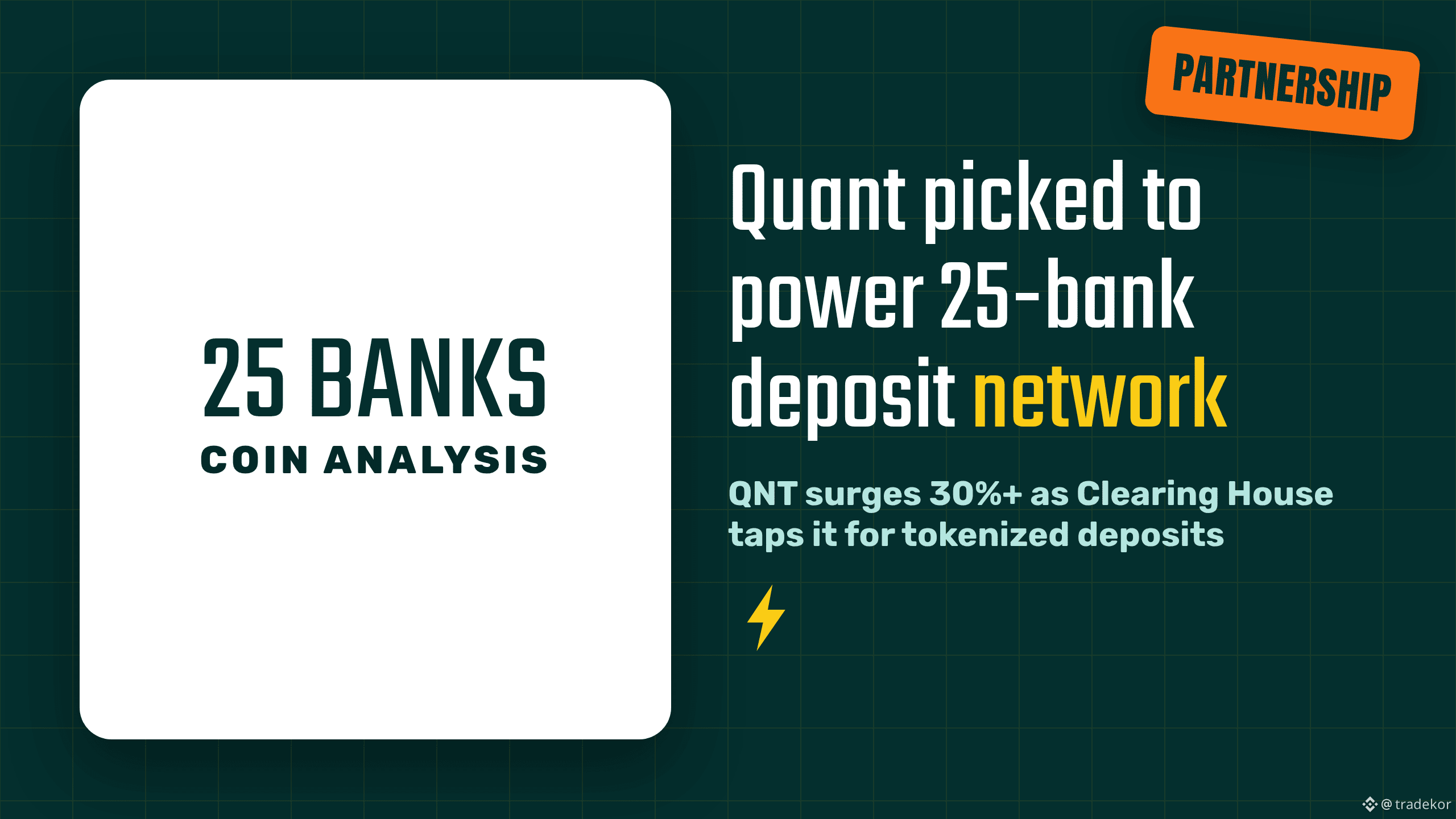
Quant just got picked to power a 25-bank tokenized-deposit network processing $2 trillion a day -- and QNT surged over 30% on the news, still holding gains a day later.
The news: The Clearing House (TCH) -- the bank-owned utility behind CHIPS and RTP, which together move over $2T daily -- named Quant Network as the interoperability and orchestration layer for its "On-Chain Money Initiative." The roster includes Bank of America, Citi, JPMorgan, Wells Fargo, HSBC, BNY, PNC, U.S. Bank, and Truist, targeting a first-half 2027 go-live. Quant supplies the layer that coordinates how tokenized bank deposits move between institutions and connects that movement to existing payment rails. The same day, seven UK banks (Barclays, HSBC UK, Lloyds, Monzo, Nationwide, NatWest, Santander) completed first live customer transactions on a separate Quant-built tokenized-sterling-deposit platform -- putting Quant under both major US and UK tokenized-deposit initiatives at once. QNT spiked past $100 to a yearly high (reports of the exact move range 26-40% depending on measurement window) and was still trading in the $100-109 range this morning, up roughly 10.8% in the trailing 24h on top of the initial pop.
The catch: a named technology vendor and a 2027 go-live target isn't a live production network yet -- this is a real institutional commitment, not proof the system ships on schedule or at the volume banks are projecting.
Our read: getting picked for both the largest US clearing utility and a live UK tokenized-deposit rollout in the same week is a genuine validation moment for enterprise blockchain infrastructure, independent of whether QNT's price holds here.
Does a bank-owned utility formally naming a crypto infrastructure vendor change how you think about "institutional adoption," or is a 2027 target still too far out to price in today?
Not financial advice. DYOR.
$QNT #CryptoNews #Quant #Banking
Quant just got picked to power a 25-bank tokenized-deposit network processing $2 trillion a day -- and QNT surged over 30% on the news, still holding gains a day later.
The news: The Clearing House (TCH) -- the bank-owned utility behind CHIPS and RTP, which together move over $2T daily -- named Quant Network as the interoperability and orchestration layer for its "On-Chain Money Initiative." The roster includes Bank of America, Citi, JPMorgan, Wells Fargo, HSBC, BNY, PNC, U.S. Bank, and Truist, targeting a first-half 2027 go-live. Quant supplies the layer that coordinates how tokenized bank deposits move between institutions and connects that movement to existing payment rails. The same day, seven UK banks (Barclays, HSBC UK, Lloyds, Monzo, Nationwide, NatWest, Santander) completed first live customer transactions on a separate Quant-built tokenized-sterling-deposit platform -- putting Quant under both major US and UK tokenized-deposit initiatives at once. QNT spiked past $100 to a yearly high (reports of the exact move range 26-40% depending on measurement window) and was still trading in the $100-109 range this morning, up roughly 10.8% in the trailing 24h on top of the initial pop.
The catch: a named technology vendor and a 2027 go-live target isn't a live production network yet -- this is a real institutional commitment, not proof the system ships on schedule or at the volume banks are projecting.
Our read: getting picked for both the largest US clearing utility and a live UK tokenized-deposit rollout in the same week is a genuine validation moment for enterprise blockchain infrastructure, independent of whether QNT's price holds here.
Does a bank-owned utility formally naming a crypto infrastructure vendor change how you think about "institutional adoption," or is a 2027 target still too far out to price in today?
Not financial advice. DYOR.
$QNT #CryptoNews #Quant #Banking
The news: The Clearing House (TCH) -- the bank-owned utility behind CHIPS and RTP, which together move over $2T daily -- named Quant Network as the interoperability and orchestration layer for its "On-Chain Money Initiative." The roster includes Bank of America, Citi, JPMorgan, Wells Fargo, HSBC, BNY, PNC, U.S. Bank, and Truist, targeting a first-half 2027 go-live. Quant supplies the layer that coordinates how tokenized bank deposits move between institutions and connects that movement to existing payment rails. The same day, seven UK banks (Barclays, HSBC UK, Lloyds, Monzo, Nationwide, NatWest, Santander) completed first live customer transactions on a separate Quant-built tokenized-sterling-deposit platform -- putting Quant under both major US and UK tokenized-deposit initiatives at once. QNT spiked past $100 to a yearly high (reports of the exact move range 26-40% depending on measurement window) and was still trading in the $100-109 range this morning, up roughly 10.8% in the trailing 24h on top of the initial pop.
The catch: a named technology vendor and a 2027 go-live target isn't a live production network yet -- this is a real institutional commitment, not proof the system ships on schedule or at the volume banks are projecting.
Our read: getting picked for both the largest US clearing utility and a live UK tokenized-deposit rollout in the same week is a genuine validation moment for enterprise blockchain infrastructure, independent of whether QNT's price holds here.
Does a bank-owned utility formally naming a crypto infrastructure vendor change how you think about "institutional adoption," or is a 2027 target still too far out to price in today?
Not financial advice. DYOR.
$QNT #CryptoNews #Quant #Banking
200

Torsten Slok, at Apollo, warns that AI agents can drain cheap bank deposits, putting banks' liquidity at risk. He highlights that automation can lead to mass withdrawals, pressuring the financial system. The message serves as a warning to investors and regulators.
#AI #Banking #Crypto #BinanceSquare
Read more: https://www.coindesk.com/markets/2026/09/28/ai-agents-could-drain-cheap-bank-deposits-apollo-s-torsten-slok-warns
Torsten Slok, at Apollo, warns that AI agents can drain cheap bank deposits, putting banks' liquidity at risk. He highlights that automation can lead to mass withdrawals, pressuring the financial system. The message serves as a warning to investors and regulators.
#AI #Banking #Crypto #BinanceSquare
Read more: https://www.coindesk.com/markets/2026/09/28/ai-agents-could-drain-cheap-bank-deposits-apollo-s-torsten-slok-warns
#AI #Banking #Crypto #BinanceSquare
Read more: https://www.coindesk.com/markets/2026/09/28/ai-agents-could-drain-cheap-bank-deposits-apollo-s-torsten-slok-warns
31

·
--
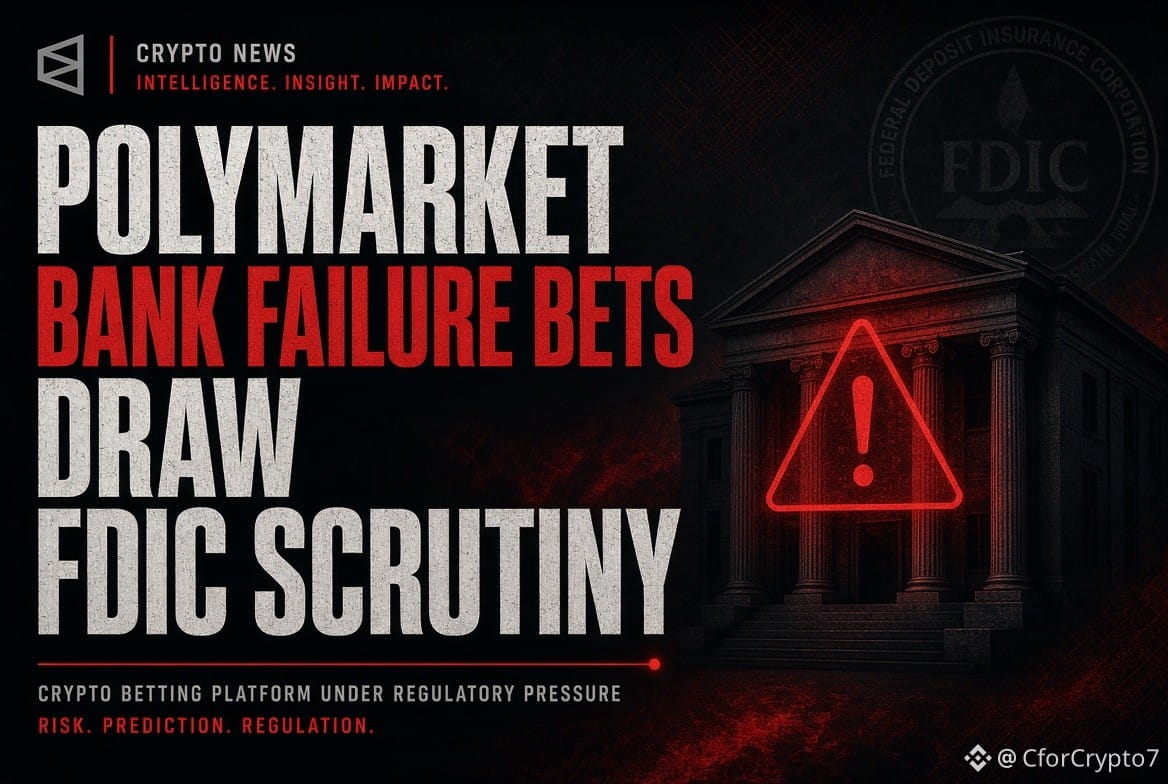
🚨 Polymarket bank-failure bets draw FDIC concern
Prediction markets on the failure of Wells Fargo, JPMorgan, and Bank of America have raised flags with U.S. regulators.
FDIC officials and lawmakers worry the contracts could grow and help spark real bank runs.
Current volume remains small — about $76,000 on year-end failure bets.
The platform bans U.S. traders. FDIC says existing ethics rules already block insiders from participating.
Prediction markets under fresh regulatory heat.
$POLYX
{future}(POLYXUSDT)
$SOL
{future}(SOLUSDT)
$ETH
{future}(ETHUSDT)
#Polymarket #FDIC #Banking #PolymarketBankFailureBetsDrawFDICConcern
🚨 Polymarket bank-failure bets draw FDIC concern
Prediction markets on the failure of Wells Fargo, JPMorgan, and Bank of America have raised flags with U.S. regulators.
FDIC officials and lawmakers worry the contracts could grow and help spark real bank runs.
Current volume remains small — about $76,000 on year-end failure bets.
The platform bans U.S. traders. FDIC says existing ethics rules already block insiders from participating.
Prediction markets under fresh regulatory heat.
$POLYX
$SOL
$ETH
#Polymarket #FDIC #Banking #PolymarketBankFailureBetsDrawFDICConcern
Prediction markets on the failure of Wells Fargo, JPMorgan, and Bank of America have raised flags with U.S. regulators.
FDIC officials and lawmakers worry the contracts could grow and help spark real bank runs.
Current volume remains small — about $76,000 on year-end failure bets.
The platform bans U.S. traders. FDIC says existing ethics rules already block insiders from participating.
Prediction markets under fresh regulatory heat.
$POLYX
$SOL
$ETH
#Polymarket #FDIC #Banking #PolymarketBankFailureBetsDrawFDICConcern
1
164

The next big blockchain product may not be a cryptocurrency.
It could be the money we use every day.
Banks and major institutions are exploring tokenized deposits, stablecoins, and blockchain-based settlement systems.
The difference from the previous cycle is enormous:
Back then, the goal was to bring cryptocurrencies into the financial system.
Now, part of the financial system is trying to bring its own assets and money onto blockchain networks.
#Tokenization #Stablecoins #Banking #crypto #fintech
The next big blockchain product may not be a cryptocurrency.
It could be the money we use every day.
Banks and major institutions are exploring tokenized deposits, stablecoins, and blockchain-based settlement systems.
The difference from the previous cycle is enormous:
Back then, the goal was to bring cryptocurrencies into the financial system.
Now, part of the financial system is trying to bring its own assets and money onto blockchain networks.
#Tokenization #Stablecoins #Banking #crypto #fintech
It could be the money we use every day.
Banks and major institutions are exploring tokenized deposits, stablecoins, and blockchain-based settlement systems.
The difference from the previous cycle is enormous:
Back then, the goal was to bring cryptocurrencies into the financial system.
Now, part of the financial system is trying to bring its own assets and money onto blockchain networks.
#Tokenization #Stablecoins #Banking #crypto #fintech
2


·
--
Bullish
Verified
#polymarketbankfailurebetsdrawfdicconcern
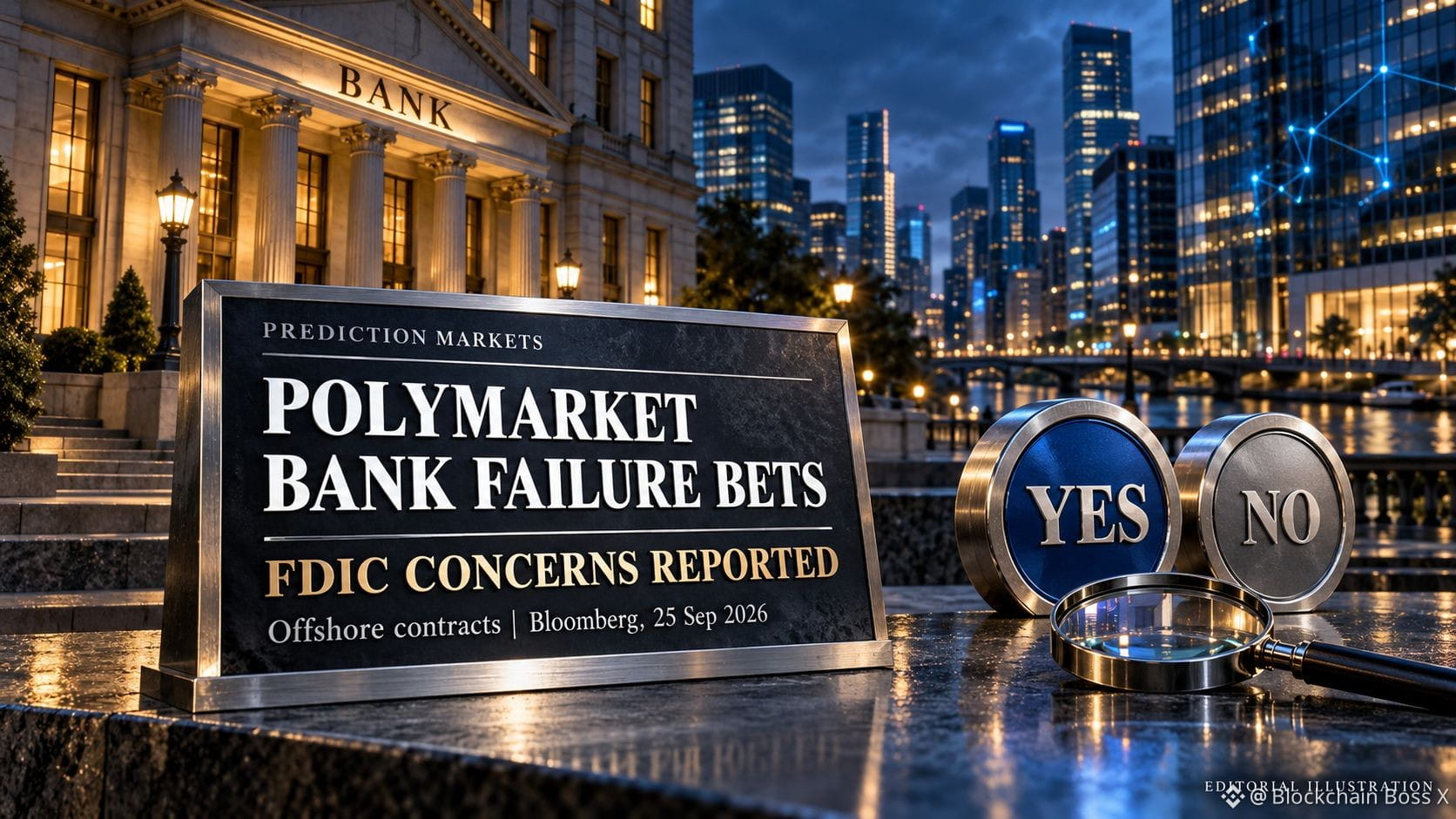
Polymarket’s Bank Failure Bets Raise Questions About Market Signals
A market designed to predict banking stress could also influence how people react to it.
Bloomberg reported on September 25, citing people familiar with internal discussions, that FDIC officials raised concerns about contracts on Polymarket’s offshore platform tied to individual bank failures. One worry is whether larger markets could eventually amplify depositor fears and contribute to a bank run. The FDIC declined to comment.
The report put trading volume in the year-end contracts at roughly $76,000 and said Polymarket’s separate U.S. exchange does not offer these bets. Polymarket argues that its markets broaden access to information and can help counter unfounded panic.
My take: A traded probability is not a diagnosis of bank solvency. In markets with limited liquidity, a small number of trades may significantly affect displayed odds. Sharing those odds without volume, spread or timing context could mislead readers.
I’d examine transaction history, concentration among participants and contract settlement rules before treating a price change as meaningful information. Bank filings and official regulatory disclosures remain essential to checking the underlying story.
The quality of a prediction market depends partly on how clearly its limitations are communicated.
How should platforms preserve useful market information while reducing the risk of spreading panic?
#PolymarketBankFailureBetsDrawFDICConcern #PredictionMarkets #Banking
$PHA $ARK $SAGA
{future}(SAGAUSDT)
{future}(ARKUSDT)
{future}(PHAUSDT)
#polymarketbankfailurebetsdrawfdicconcern
Polymarket’s Bank Failure Bets Raise Questions About Market Signals
A market designed to predict banking stress could also influence how people react to it.
Bloomberg reported on September 25, citing people familiar with internal discussions, that FDIC officials raised concerns about contracts on Polymarket’s offshore platform tied to individual bank failures. One worry is whether larger markets could eventually amplify depositor fears and contribute to a bank run. The FDIC declined to comment.
The report put trading volume in the year-end contracts at roughly $76,000 and said Polymarket’s separate U.S. exchange does not offer these bets. Polymarket argues that its markets broaden access to information and can help counter unfounded panic.
My take: A traded probability is not a diagnosis of bank solvency. In markets with limited liquidity, a small number of trades may significantly affect displayed odds. Sharing those odds without volume, spread or timing context could mislead readers.
I’d examine transaction history, concentration among participants and contract settlement rules before treating a price change as meaningful information. Bank filings and official regulatory disclosures remain essential to checking the underlying story.
The quality of a prediction market depends partly on how clearly its limitations are communicated.
How should platforms preserve useful market information while reducing the risk of spreading panic?
#PolymarketBankFailureBetsDrawFDICConcern #PredictionMarkets #Banking
$PHA $ARK $SAGA
Polymarket’s Bank Failure Bets Raise Questions About Market Signals
A market designed to predict banking stress could also influence how people react to it.
Bloomberg reported on September 25, citing people familiar with internal discussions, that FDIC officials raised concerns about contracts on Polymarket’s offshore platform tied to individual bank failures. One worry is whether larger markets could eventually amplify depositor fears and contribute to a bank run. The FDIC declined to comment.
The report put trading volume in the year-end contracts at roughly $76,000 and said Polymarket’s separate U.S. exchange does not offer these bets. Polymarket argues that its markets broaden access to information and can help counter unfounded panic.
My take: A traded probability is not a diagnosis of bank solvency. In markets with limited liquidity, a small number of trades may significantly affect displayed odds. Sharing those odds without volume, spread or timing context could mislead readers.
I’d examine transaction history, concentration among participants and contract settlement rules before treating a price change as meaningful information. Bank filings and official regulatory disclosures remain essential to checking the underlying story.
The quality of a prediction market depends partly on how clearly its limitations are communicated.
How should platforms preserve useful market information while reducing the risk of spreading panic?
#PolymarketBankFailureBetsDrawFDICConcern #PredictionMarkets #Banking
$PHA $ARK $SAGA
3
3.4k

·
--
🚨 POLYMARKET BANK FAILURE BETS DRAW FDIC CONCERN
Polymarket contracts betting on potential U.S. bank failures are drawing scrutiny from FDIC officials, who are concerned about possible risks to financial stability.
👀 Prediction markets are entering a new regulatory spotlight.
#Polymarket #Banking #FDIC $BTC
{spot}(BTCUSDT)
#polymarketbankfailurebetsdrawfdicconcern
🚨 POLYMARKET BANK FAILURE BETS DRAW FDIC CONCERN
Polymarket contracts betting on potential U.S. bank failures are drawing scrutiny from FDIC officials, who are concerned about possible risks to financial stability.
👀 Prediction markets are entering a new regulatory spotlight.
#Polymarket #Banking #FDIC $BTC
#polymarketbankfailurebetsdrawfdicconcern
Polymarket contracts betting on potential U.S. bank failures are drawing scrutiny from FDIC officials, who are concerned about possible risks to financial stability.
👀 Prediction markets are entering a new regulatory spotlight.
#Polymarket #Banking #FDIC $BTC
#polymarketbankfailurebetsdrawfdicconcern
1
532

·
--
Hong Kong bank stocks surge together, with ICBC up more than 3%, ABC up 2.8%, Postal Savings and CITIC up 2.6%, and BOC and CCB up 2.3%. Traditional finance is rebounding—is money flowing back? #港股 #银行股 $ICBC $ABC
Hong Kong bank stocks on fire! ICBC +3%, ABC +2.8%, PSBC & CITIC +2.6%, BOC & CCB +2.3%. Is money flowing back to traditional finance? #HongKongStocks #Banking $ICBC $ABC
Hong Kong bank stocks surge together, with ICBC up more than 3%, ABC up 2.8%, Postal Savings and CITIC up 2.6%, and BOC and CCB up 2.3%. Traditional finance is rebounding—is money flowing back? #港股 #银行股 $ICBC $ABC
Hong Kong bank stocks on fire! ICBC +3%, ABC +2.8%, PSBC & CITIC +2.6%, BOC & CCB +2.3%. Is money flowing back to traditional finance? #HongKongStocks #Banking $ICBC $ABC
Hong Kong bank stocks on fire! ICBC +3%, ABC +2.8%, PSBC & CITIC +2.6%, BOC & CCB +2.3%. Is money flowing back to traditional finance? #HongKongStocks #Banking $ICBC $ABC
·
--
If you are still ignoring how sovereign states are quietly onboarding digital assets, stop now.
Most retail investors keep getting caught off guard by sudden regulatory shifts, sitting on the sidelines while institutional rails get built right under their noses.
While Western regulators spent years playing catch-up with spot ETFs, Russia is taking a direct route by integrating $BTC and other digital assets straight into traditional banking pipelines. Since September 1, regulated intermediaries are opening doors for both qualified and retail players, capping retail exposure at a ₽300,000 annual limit per intermediary. Domestic payments remain off-limits, but cross-border settlement with $USDT and major assets is explicitly on the table.
Now the central bank is floating a 1% risk-exposure ceiling for commercial banks to hold $ETH and digital assets on their balance sheets. We saw similar cautious frameworks when Swiss private banks first dipped their toes in custody, and it completely altered European capital flow over the following market cycle.
Where do you see this state-led banking integration heading next?
#CryptoRegulation #Bitcoin #Banking
If you are still ignoring how sovereign states are quietly onboarding digital assets, stop now.
Most retail investors keep getting caught off guard by sudden regulatory shifts, sitting on the sidelines while institutional rails get built right under their noses.
While Western regulators spent years playing catch-up with spot ETFs, Russia is taking a direct route by integrating $BTC and other digital assets straight into traditional banking pipelines. Since September 1, regulated intermediaries are opening doors for both qualified and retail players, capping retail exposure at a ₽300,000 annual limit per intermediary. Domestic payments remain off-limits, but cross-border settlement with $USDT and major assets is explicitly on the table.
Now the central bank is floating a 1% risk-exposure ceiling for commercial banks to hold $ETH and digital assets on their balance sheets. We saw similar cautious frameworks when Swiss private banks first dipped their toes in custody, and it completely altered European capital flow over the following market cycle.
Where do you see this state-led banking integration heading next?
#CryptoRegulation #Bitcoin #Banking
Most retail investors keep getting caught off guard by sudden regulatory shifts, sitting on the sidelines while institutional rails get built right under their noses.
While Western regulators spent years playing catch-up with spot ETFs, Russia is taking a direct route by integrating $BTC and other digital assets straight into traditional banking pipelines. Since September 1, regulated intermediaries are opening doors for both qualified and retail players, capping retail exposure at a ₽300,000 annual limit per intermediary. Domestic payments remain off-limits, but cross-border settlement with $USDT and major assets is explicitly on the table.
Now the central bank is floating a 1% risk-exposure ceiling for commercial banks to hold $ETH and digital assets on their balance sheets. We saw similar cautious frameworks when Swiss private banks first dipped their toes in custody, and it completely altered European capital flow over the following market cycle.
Where do you see this state-led banking integration heading next?
#CryptoRegulation #Bitcoin #Banking
22

🚨 Polymarket is now betting on major bank failures/destabilizations — and the “FDIC” isn’t happy!
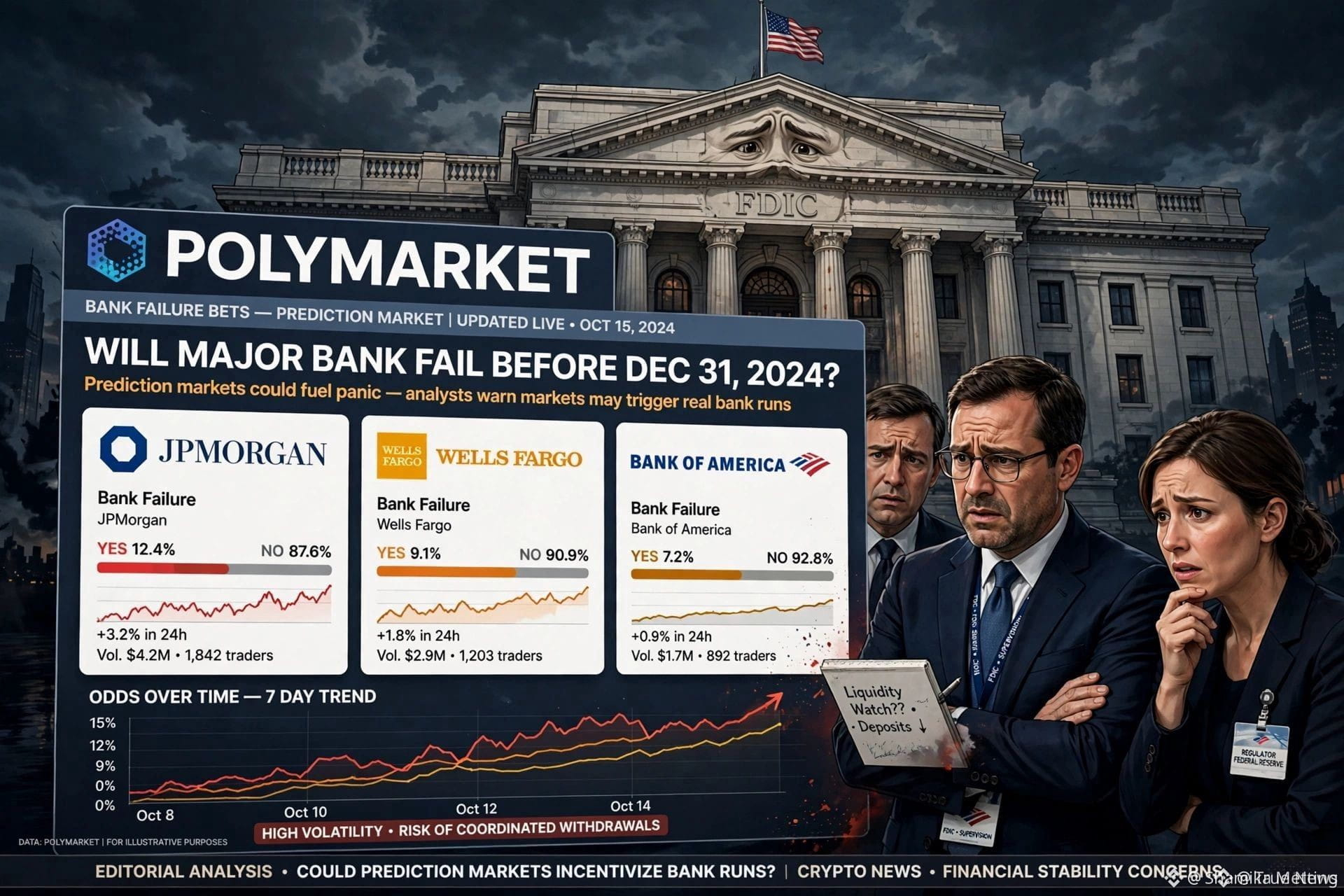
According to Bloomberg on September 26, the prediction markets platform Polymarket has contracts related to the extent to which giants like JPMorgan, Wells Fargo, and Bank of America will fail.
The FDIC and Congress are concerned: if enough traders assess that a sufficient number of failures will occur, those odds could spread on social media, frighten depositors, and effectively create the “bank run” that traders are betting on. 😱
The current trading volume is small ($76,000), but the feedback loop is the real danger.
Even Kalshi called it “bad taste,” and former FDIC chair Sheila Bair warned about the existence of dangerous incentives.
Has the prediction market gone too far? Should bank failures be bet on?
Please follow up
#Polymarket #FDIC #Banking $AAPLB $BTC #CryptoNews #polymarketbankfailurebetsdrawfdicconcern
🚨 Polymarket is now betting on major bank failures/destabilizations — and the “FDIC” isn’t happy!
According to Bloomberg on September 26, the prediction markets platform Polymarket has contracts related to the extent to which giants like JPMorgan, Wells Fargo, and Bank of America will fail.
The FDIC and Congress are concerned: if enough traders assess that a sufficient number of failures will occur, those odds could spread on social media, frighten depositors, and effectively create the “bank run” that traders are betting on. 😱
The current trading volume is small ($76,000), but the feedback loop is the real danger.
Even Kalshi called it “bad taste,” and former FDIC chair Sheila Bair warned about the existence of dangerous incentives.
Has the prediction market gone too far? Should bank failures be bet on?
Please follow up
#Polymarket #FDIC #Banking $AAPLB $BTC #CryptoNews #polymarketbankfailurebetsdrawfdicconcern
According to Bloomberg on September 26, the prediction markets platform Polymarket has contracts related to the extent to which giants like JPMorgan, Wells Fargo, and Bank of America will fail.
The FDIC and Congress are concerned: if enough traders assess that a sufficient number of failures will occur, those odds could spread on social media, frighten depositors, and effectively create the “bank run” that traders are betting on. 😱
The current trading volume is small ($76,000), but the feedback loop is the real danger.
Even Kalshi called it “bad taste,” and former FDIC chair Sheila Bair warned about the existence of dangerous incentives.
Has the prediction market gone too far? Should bank failures be bet on?
Please follow up
#Polymarket #FDIC #Banking $AAPLB $BTC #CryptoNews #polymarketbankfailurebetsdrawfdicconcern
1
1k
#PolymarketBankFailureBetsDrawFDICConcern 🚨 Polymarket is giving people the chance to bet on the failure of JPMorgan, Wells Fargo, and Bank of America — and the FDIC is worried!
This is not a movie plot. This is happening now.
Polymarket has markets: "Will JPMorgan fail by December 31?"
Size: $76,000 in end-of-year bets, and $591,000 in July bets.
The FDIC is watching because:
- If traders bet heavily that a bank will fail, depositors notice and panic → a real bank attack/run
- The FDIC has a “secret” list of “banks exposed to problems” — is there a risk of insider trading?
- Unlike betting on a stock drop, this is a direct bet on failure
Banks on the list: JPMorgan Chase, Wells Fargo, Bank of America, and Deutsche Bank.
Polymarket says: "Provide real-time signals, and reduce fear"
The FDIC says: "Is there any legitimate business benefit to betting on a bank collapse?"
Prediction markets vs. the banking system — who will win?
If this expands, could a $100 bet trigger a $1 billion banking run?
What do you think? 👇
Please follow-up
#PolymarketBankFailureBetsDrawFDICConcern $BTC #Polymarket #FDIC #Banking
#PolymarketBankFailureBetsDrawFDICConcern 🚨 Polymarket is giving people the chance to bet on the failure of JPMorgan, Wells Fargo, and Bank of America — and the FDIC is worried!
This is not a movie plot. This is happening now.
Polymarket has markets: "Will JPMorgan fail by December 31?"
Size: $76,000 in end-of-year bets, and $591,000 in July bets.
The FDIC is watching because:
- If traders bet heavily that a bank will fail, depositors notice and panic → a real bank attack/run
- The FDIC has a “secret” list of “banks exposed to problems” — is there a risk of insider trading?
- Unlike betting on a stock drop, this is a direct bet on failure
Banks on the list: JPMorgan Chase, Wells Fargo, Bank of America, and Deutsche Bank.
Polymarket says: "Provide real-time signals, and reduce fear"
The FDIC says: "Is there any legitimate business benefit to betting on a bank collapse?"
Prediction markets vs. the banking system — who will win?
If this expands, could a $100 bet trigger a $1 billion banking run?
What do you think? 👇
Please follow-up
#PolymarketBankFailureBetsDrawFDICConcern $BTC #Polymarket #FDIC #Banking
This is not a movie plot. This is happening now.
Polymarket has markets: "Will JPMorgan fail by December 31?"
Size: $76,000 in end-of-year bets, and $591,000 in July bets.
The FDIC is watching because:
- If traders bet heavily that a bank will fail, depositors notice and panic → a real bank attack/run
- The FDIC has a “secret” list of “banks exposed to problems” — is there a risk of insider trading?
- Unlike betting on a stock drop, this is a direct bet on failure
Banks on the list: JPMorgan Chase, Wells Fargo, Bank of America, and Deutsche Bank.
Polymarket says: "Provide real-time signals, and reduce fear"
The FDIC says: "Is there any legitimate business benefit to betting on a bank collapse?"
Prediction markets vs. the banking system — who will win?
If this expands, could a $100 bet trigger a $1 billion banking run?
What do you think? 👇
Please follow-up
#PolymarketBankFailureBetsDrawFDICConcern $BTC #Polymarket #FDIC #Banking
1
81

Verified
#polymarketbankfailurebetsdrawfdicconcern
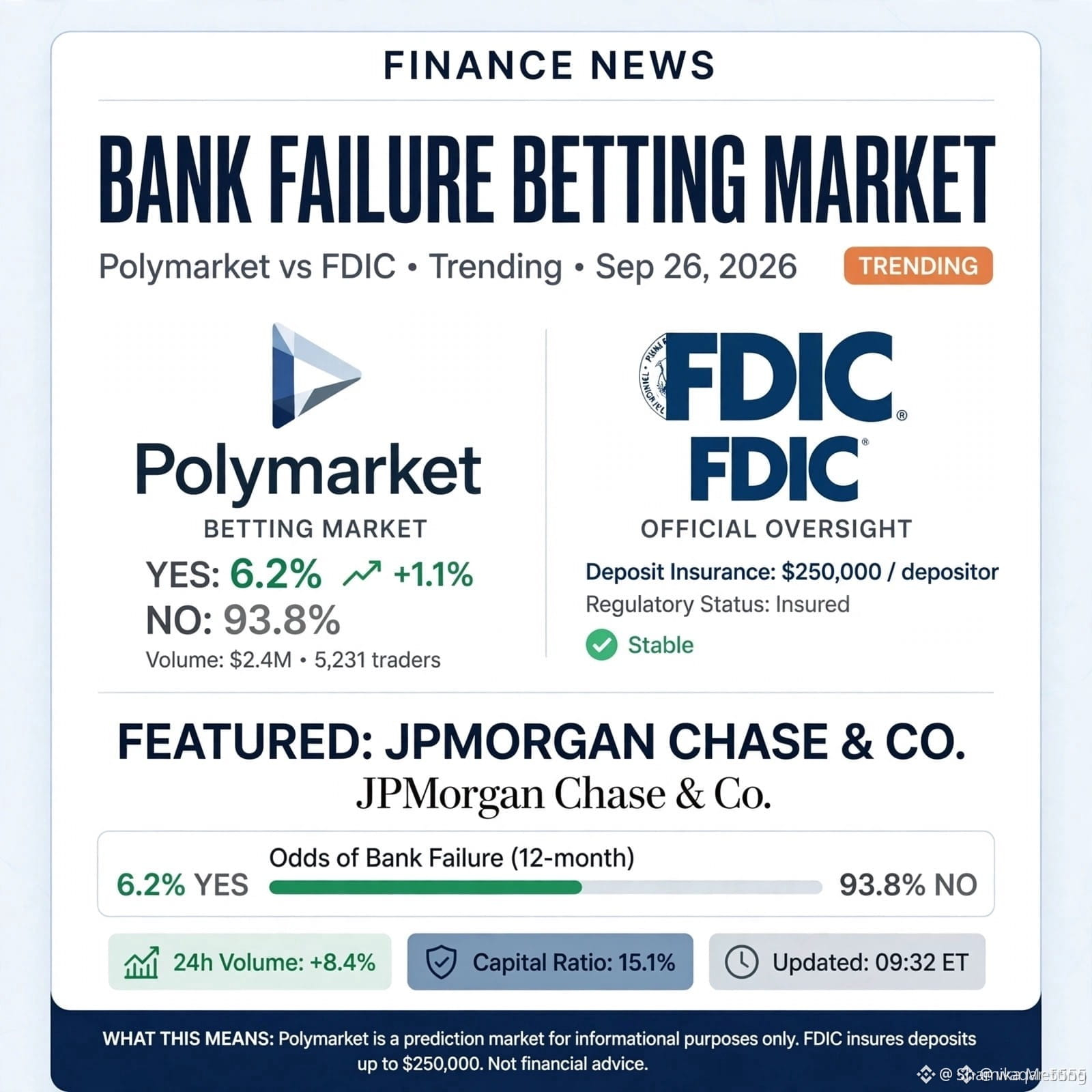
Polymarket: bets on bank failure raise concerns at the FDIC.
Volume: ~US$ 76,000 in year-end contracts.
Offshore platform. The US exchange does not offer these bets.
The FDIC asks whether there is a legitimate business benefit and whether ethics rules prevent insider trading.
Polymarket argues that markets expand access to information.
My view: the traded probability is not a diagnosis of solvency. Limited liquidity can distort probabilities.
Observe: transaction history, concentration of participants, settlement rules.
Official documents remain essential.
The quality of a prediction market depends on how clearly its limitations are communicated.
#PolymarketBankFailureBetsDrawFDICConcern #PredictionMarkets #Banking $PHA $ARK $SAGA
{spot}(ARKUSDT)
{spot}(PHAUSDT)
{spot}(SAGAUSDT)
#polymarketbankfailurebetsdrawfdicconcern
Polymarket: bets on bank failure raise concerns at the FDIC.
Volume: ~US$ 76,000 in year-end contracts.
Offshore platform. The US exchange does not offer these bets.
The FDIC asks whether there is a legitimate business benefit and whether ethics rules prevent insider trading.
Polymarket argues that markets expand access to information.
My view: the traded probability is not a diagnosis of solvency. Limited liquidity can distort probabilities.
Observe: transaction history, concentration of participants, settlement rules.
Official documents remain essential.
The quality of a prediction market depends on how clearly its limitations are communicated.
#PolymarketBankFailureBetsDrawFDICConcern #PredictionMarkets #Banking $PHA $ARK $SAGA
Polymarket: bets on bank failure raise concerns at the FDIC.
Volume: ~US$ 76,000 in year-end contracts.
Offshore platform. The US exchange does not offer these bets.
The FDIC asks whether there is a legitimate business benefit and whether ethics rules prevent insider trading.
Polymarket argues that markets expand access to information.
My view: the traded probability is not a diagnosis of solvency. Limited liquidity can distort probabilities.
Observe: transaction history, concentration of participants, settlement rules.
Official documents remain essential.
The quality of a prediction market depends on how clearly its limitations are communicated.
#PolymarketBankFailureBetsDrawFDICConcern #PredictionMarkets #Banking $PHA $ARK $SAGA

4
3k
·
--
🔥 IBM connects 17 banks to SWIFT! Digital Asset Haven's ISO 20022 adapter supports tokenized deposit instructions, but final settlement remains with existing systems. Traditional finance is embracing blockchain, but cloud risks still exist. #区块链 #传统金融 $IBM $XRP
🔥 IBM connects 17 banks to SWIFT! Digital Asset Haven's ISO 20022 adapter supports tokenized deposit instructions while final settlement remains with existing systems. Traditional finance is embracing blockchain, but cloud risks persist. #SWIFT #banking $IBM $XRP
🔥 IBM connects 17 banks to SWIFT! Digital Asset Haven's ISO 20022 adapter supports tokenized deposit instructions, but final settlement remains with existing systems. Traditional finance is embracing blockchain, but cloud risks still exist. #区块链 #传统金融 $IBM $XRP
🔥 IBM connects 17 banks to SWIFT! Digital Asset Haven's ISO 20022 adapter supports tokenized deposit instructions while final settlement remains with existing systems. Traditional finance is embracing blockchain, but cloud risks persist. #SWIFT #banking $IBM $XRP
🔥 IBM connects 17 banks to SWIFT! Digital Asset Haven's ISO 20022 adapter supports tokenized deposit instructions while final settlement remains with existing systems. Traditional finance is embracing blockchain, but cloud risks persist. #SWIFT #banking $IBM $XRP
273

·
--
Barclays, NatWest, HSBC and other UK banks completed the world's first interbank transactions using tokenized deposits. Banks are moving on-chain, not fighting it. #Tokenization #Crypto #Banking
Barclays, NatWest, HSBC and other UK banks completed the world's first interbank transactions using tokenized deposits. Banks are moving on-chain, not fighting it. #Tokenization #Crypto #Banking
60

🚨 JUST IN: THE UK JUST COMPLETED THE WORLD’S FIRST INTERBANK TRANSACTIONS USING TOKENIZED POUND DEPOSITS.
Lloyds, NatWest and Barclays collectively managing £1.52 TRILLION just used blockchain-based versions of bank deposits to complete mortgage transactions between banks.
Think about what just happened.
Traditional bank deposits were represented as digital tokens and transferred between financial institutions.
No new cryptocurrency.
No stablecoin.
Actual bank money moving on blockchain rails.
This could mark a major step toward bringing traditional banking infrastructure onchain.
And mortgage payments may only be the beginning.
If banks can tokenize deposits and move them across institutions more efficiently, the same infrastructure could eventually support faster settlement, programmable payments and broader tokenized financial markets.
The biggest shift in crypto may not be people replacing banks.
It may be banks quietly moving their existing financial system onto blockchain.
The tokenization race is getting very real.
#Crypto #Blockchain #Tokenization #Fintech #Banking
🚨 JUST IN: THE UK JUST COMPLETED THE WORLD’S FIRST INTERBANK TRANSACTIONS USING TOKENIZED POUND DEPOSITS.
Lloyds, NatWest and Barclays collectively managing £1.52 TRILLION just used blockchain-based versions of bank deposits to complete mortgage transactions between banks.
Think about what just happened.
Traditional bank deposits were represented as digital tokens and transferred between financial institutions.
No new cryptocurrency.
No stablecoin.
Actual bank money moving on blockchain rails.
This could mark a major step toward bringing traditional banking infrastructure onchain.
And mortgage payments may only be the beginning.
If banks can tokenize deposits and move them across institutions more efficiently, the same infrastructure could eventually support faster settlement, programmable payments and broader tokenized financial markets.
The biggest shift in crypto may not be people replacing banks.
It may be banks quietly moving their existing financial system onto blockchain.
The tokenization race is getting very real.
#Crypto #Blockchain #Tokenization #Fintech #Banking
Lloyds, NatWest and Barclays collectively managing £1.52 TRILLION just used blockchain-based versions of bank deposits to complete mortgage transactions between banks.
Think about what just happened.
Traditional bank deposits were represented as digital tokens and transferred between financial institutions.
No new cryptocurrency.
No stablecoin.
Actual bank money moving on blockchain rails.
This could mark a major step toward bringing traditional banking infrastructure onchain.
And mortgage payments may only be the beginning.
If banks can tokenize deposits and move them across institutions more efficiently, the same infrastructure could eventually support faster settlement, programmable payments and broader tokenized financial markets.
The biggest shift in crypto may not be people replacing banks.
It may be banks quietly moving their existing financial system onto blockchain.
The tokenization race is getting very real.
#Crypto #Blockchain #Tokenization #Fintech #Banking


1
16

🚨 Canada’s Six Largest Banks Collaborate to Build a Digital Dollar Network 🧠
📊 | $BTC | $ETH | $BNB |
- Please follow, like, and leave a comment to share your thoughts on this project 📈
- RBC, TD, BMO, Scotiabank, CIBC, and National Bank join forces to explore a system for Canadian-dollar tokenized deposits
- The first phase focuses on token-to-token transfers between banks, enabling instant cross-bank settlement
- The system plans to digitize Canadian-dollar assets, providing customers with more efficient liquidity services
- The project is still at the proof-of-concept stage; regulatory approvals and technical standards remain to be defined 🔥
- Market sentiment is relatively weak, and digital assets overall are expected to face downward pressure in the short term
- If the project progresses slowly, it may lead to further capital withdrawal by investors, intensifying volatility
- On the other hand, whale accounts showing selling or distribution behavior could further deepen the decline
- If regulators clearly support it, the project is expected to attract institutional capital, and a rebound may occur in the short term
- What do you think the long-term impact of bank-led tokenization schemes on the crypto market will be?
- Feel free to keep following our in-depth analysis—looking forward to your comments and engagement
#Crypto #Blockchain #Whales #DigitalDollar #Banking
🚨 Canada’s Six Largest Banks Collaborate to Build a Digital Dollar Network 🧠
📊 | $BTC | $ETH | $BNB |
- Please follow, like, and leave a comment to share your thoughts on this project 📈
- RBC, TD, BMO, Scotiabank, CIBC, and National Bank join forces to explore a system for Canadian-dollar tokenized deposits
- The first phase focuses on token-to-token transfers between banks, enabling instant cross-bank settlement
- The system plans to digitize Canadian-dollar assets, providing customers with more efficient liquidity services
- The project is still at the proof-of-concept stage; regulatory approvals and technical standards remain to be defined 🔥
- Market sentiment is relatively weak, and digital assets overall are expected to face downward pressure in the short term
- If the project progresses slowly, it may lead to further capital withdrawal by investors, intensifying volatility
- On the other hand, whale accounts showing selling or distribution behavior could further deepen the decline
- If regulators clearly support it, the project is expected to attract institutional capital, and a rebound may occur in the short term
- What do you think the long-term impact of bank-led tokenization schemes on the crypto market will be?
- Feel free to keep following our in-depth analysis—looking forward to your comments and engagement
#Crypto #Blockchain #Whales #DigitalDollar #Banking
📊 | $BTC | $ETH | $BNB |
- Please follow, like, and leave a comment to share your thoughts on this project 📈
- RBC, TD, BMO, Scotiabank, CIBC, and National Bank join forces to explore a system for Canadian-dollar tokenized deposits
- The first phase focuses on token-to-token transfers between banks, enabling instant cross-bank settlement
- The system plans to digitize Canadian-dollar assets, providing customers with more efficient liquidity services
- The project is still at the proof-of-concept stage; regulatory approvals and technical standards remain to be defined 🔥
- Market sentiment is relatively weak, and digital assets overall are expected to face downward pressure in the short term
- If the project progresses slowly, it may lead to further capital withdrawal by investors, intensifying volatility
- On the other hand, whale accounts showing selling or distribution behavior could further deepen the decline
- If regulators clearly support it, the project is expected to attract institutional capital, and a rebound may occur in the short term
- What do you think the long-term impact of bank-led tokenization schemes on the crypto market will be?
- Feel free to keep following our in-depth analysis—looking forward to your comments and engagement
#Crypto #Blockchain #Whales #DigitalDollar #Banking
1
193
Log in to explore more content
Join global crypto users on Binance Square
⚡️ Get latest and useful information about crypto.
💬 Trusted by the world’s largest crypto exchange.
👍 Discover real insights from verified creators.
Email / Phone number
Trending Topics
1
#EarningsSeason
134,749 views
1,307 Discussing
2
#BitwiseLaunchesFirstSpotNEARETF
575 views
75 Discussing
3
#USJobOpeningsFallToFiveMonthLow
871 views
57 Discussing
4
#ECBToTestAIAgentsInDigitalEuroPayments
6,639 views
255 Discussing
5
#JapanFSABacksFourthStablecoinTradeSettlementPilot
7,305 views
321 Discussing
6
#BitgetHackerFailsToMoveStolenFunds
19,483 views
452 Discussing
7
#BitMineETHHoldingsTop6Million
20,373 views
594 Discussing
8
#StrategyAdds1666BTCHoldingsReach847666
16,355 views
419 Discussing
9
#NvidiaApproves$150BBuyback
3,907 views
65 Discussing
10
#OpenAIDelaysGPT6.1OverSafetyIssues
29,239 views
773 Discussing