
#anza
anza
4,523 views
20 Discussing
Hot
Latest

·
--
#solana SOLANA BREAKING UPDATE: ANZA URGES VALIDATORS TO UPGRADE
Solana's core development team, Anza, has urged mainnet validators to upgrade to Agave v4.4.2, following the release of updated client builds.
The updated builds are also available through Jito-Solana and Harmonic. Anza reported that Solana's network clusters were operating normally as validators were being encouraged to adopt the update.
Why this matters:
🔹 Network maintenance: Keeping validator software updated is important for the health and reliability of blockchain infrastructure.
🔹 Validator coordination: Solana depends on validators running compatible and properly maintained software.
🔹 Network stability: Software updates are part of ongoing efforts to maintain performance and resilience.
🔹 Ecosystem confidence: Reliable infrastructure is essential for developers, users, DeFi applications and investors.
📊 My opinion:
This is a technical development worth watching. It is not a signal that SOL price must rise or fall, but network maintenance and infrastructure reliability are important to the long-term health of any blockchain.
Solana's real test is not just speed or hype — it's how consistently the network serves users.
Do you think Solana's infrastructure improvements will strengthen its long-term position in the blockchain industry?
#SOL #Blockchain #anza
90

#SolanaStopsWastedWork
⚡ SOLANA WANTS TO ELIMINATE WASTED WORK ON THE NETWORK
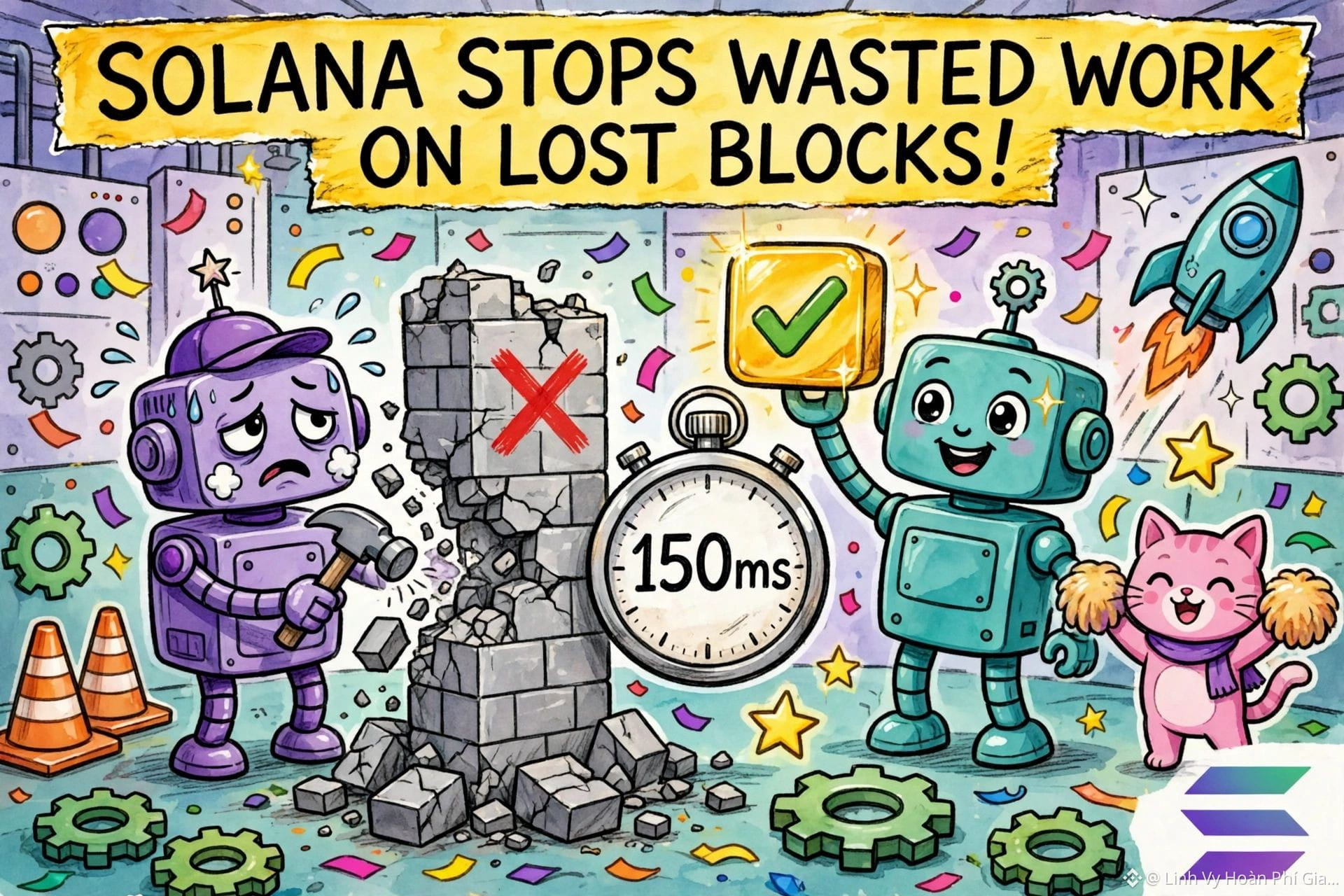
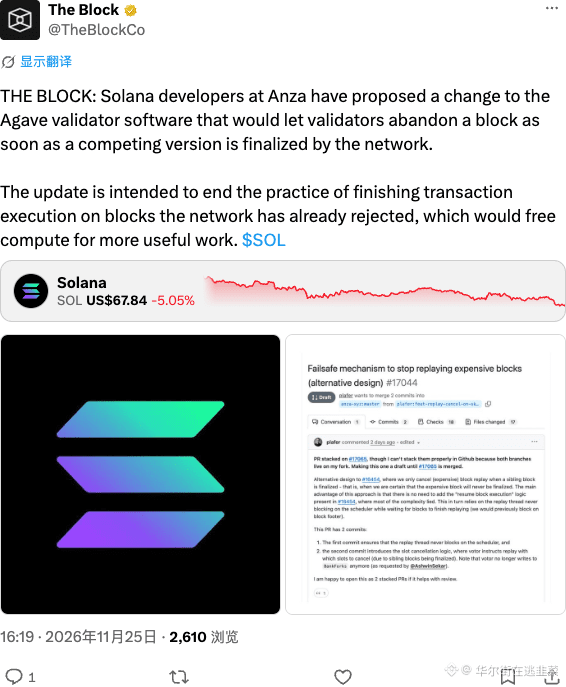
Anyone running a Solana validator probably knows this scenario: the network has just finalized a block, but the machine keeps working away on the losing block—what a waste. The Anza team has just proposed dropping the losing block as soon as a competing block is finalized, following up on Alpenglow from October, which cut transaction finalization time from 12.8 seconds to around 150 milliseconds. But this is still a draft, with no savings figures or release date yet. $SOL Perpetual is hovering around $67.45, while Bitcoin continues to languish below the $60,000 mark.
Most volatile perpetuals today: $MON 0,0102 dollars, $HYPE 57,95 dollars
#Solana #Anza #Alpenglow
317

·
--
#solanasets2027roadmaptodoublecomputecapacity
Solana’s 2027 roadmap: more capacity, but what gets cheaper? 🔍
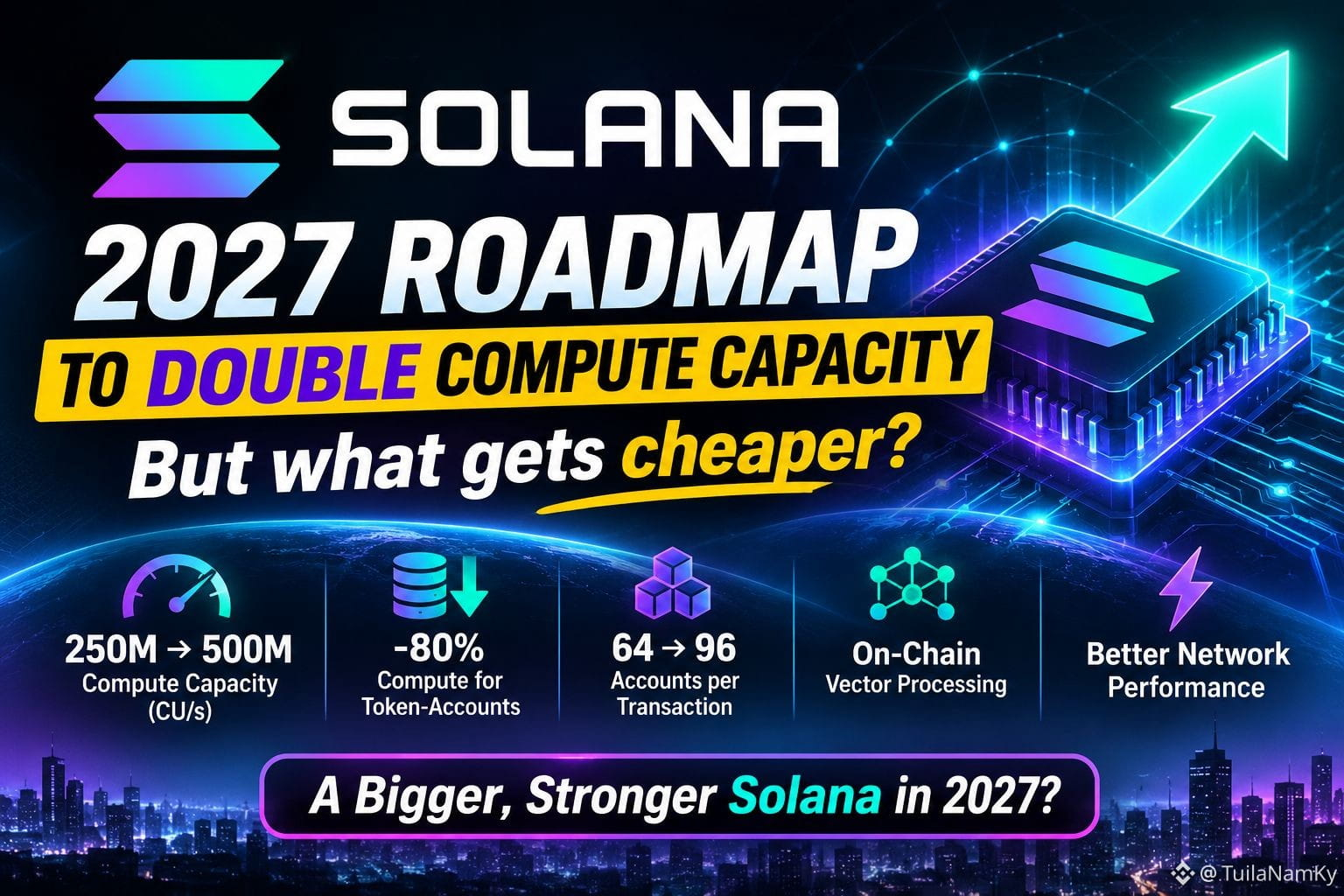
Anza targets compute capacity rising from 250M to 500M units per second, while cutting compute use for token-account operations by 80%. It also proposes raising accounts per transaction from 64 to 96, adding on-chain vector processing and improving block propagation and transaction ordering.
Why it matters: common token operations could use fewer resources, freeing capacity for swaps, stablecoin transfers and complex apps.
Two caveats: an 80% cut in compute units does NOT mean user fees fall 80%. And 2x compute capacity does not automatically mean 2x TPS. These are 2027 targets, not completed upgrades.
Cross-check: Solana says Alpenglow went live on Oct. 21, targeting ~150ms finality. That is a delivered milestone; the new roadmap still needs implementation and measurable results.
My take: watch shipped upgrades, congestion, fees and app usage—not headlines. Which matters more: lower token-account compute or higher capacity?
$SOL
{future}(SOLUSDT)
#Solana #Anza #Blockchain
#solanasets2027roadmaptodoublecomputecapacity
Solana’s 2027 roadmap: more capacity, but what gets cheaper? 🔍
Anza targets compute capacity rising from 250M to 500M units per second, while cutting compute use for token-account operations by 80%. It also proposes raising accounts per transaction from 64 to 96, adding on-chain vector processing and improving block propagation and transaction ordering.
Why it matters: common token operations could use fewer resources, freeing capacity for swaps, stablecoin transfers and complex apps.
Two caveats: an 80% cut in compute units does NOT mean user fees fall 80%. And 2x compute capacity does not automatically mean 2x TPS. These are 2027 targets, not completed upgrades.
Cross-check: Solana says Alpenglow went live on Oct. 21, targeting ~150ms finality. That is a delivered milestone; the new roadmap still needs implementation and measurable results.
My take: watch shipped upgrades, congestion, fees and app usage—not headlines. Which matters more: lower token-account compute or higher capacity?
$SOL
#Solana #Anza #Blockchain
547

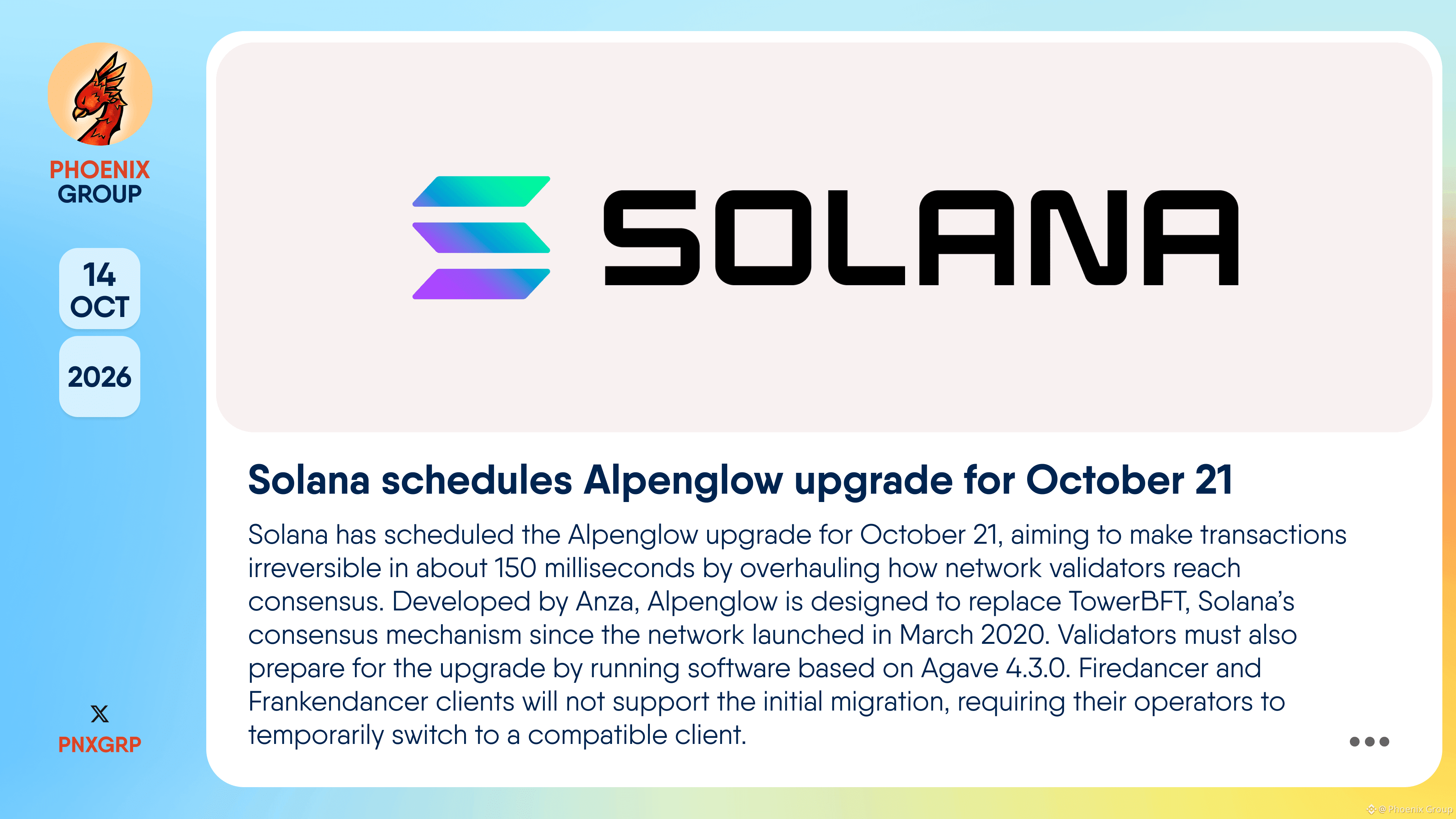
Solana schedules Alpenglow upgrade for October 21
#Solana has scheduled the Alpenglow upgrade for October 21, aiming to make transactions irreversible in about 150 milliseconds by overhauling how network validators reach consensus. Developed by #Anza , Alpenglow is designed to replace TowerBFT, Solana’s consensus mechanism since the network launched in March 2020. Validators must also prepare for the upgrade by running software based on Agave 4.3.0. Firedancer and Frankendancer clients will not support the initial migration, requiring their operators to temporarily switch to a compatible client.
With vote transactions removed, validators will no longer pay roughly 1 SOL per epoch in voting fees. Instead, they will pay a one-time admission fee of 0.8 SOL. The migration is scheduled for epoch 1064, expected to start around 15:00 UTC on October 21. Solana will retain its existing voting system for the first 5,000 slots before transitioning to Alpenglow approximately 18 minutes later.
👉 coindesk.com/tech/2026/10/14/solana-sets-oct-21-for-alpenglow-upgrade-targeting-150-millisecond-finality
225

·
--
Verified
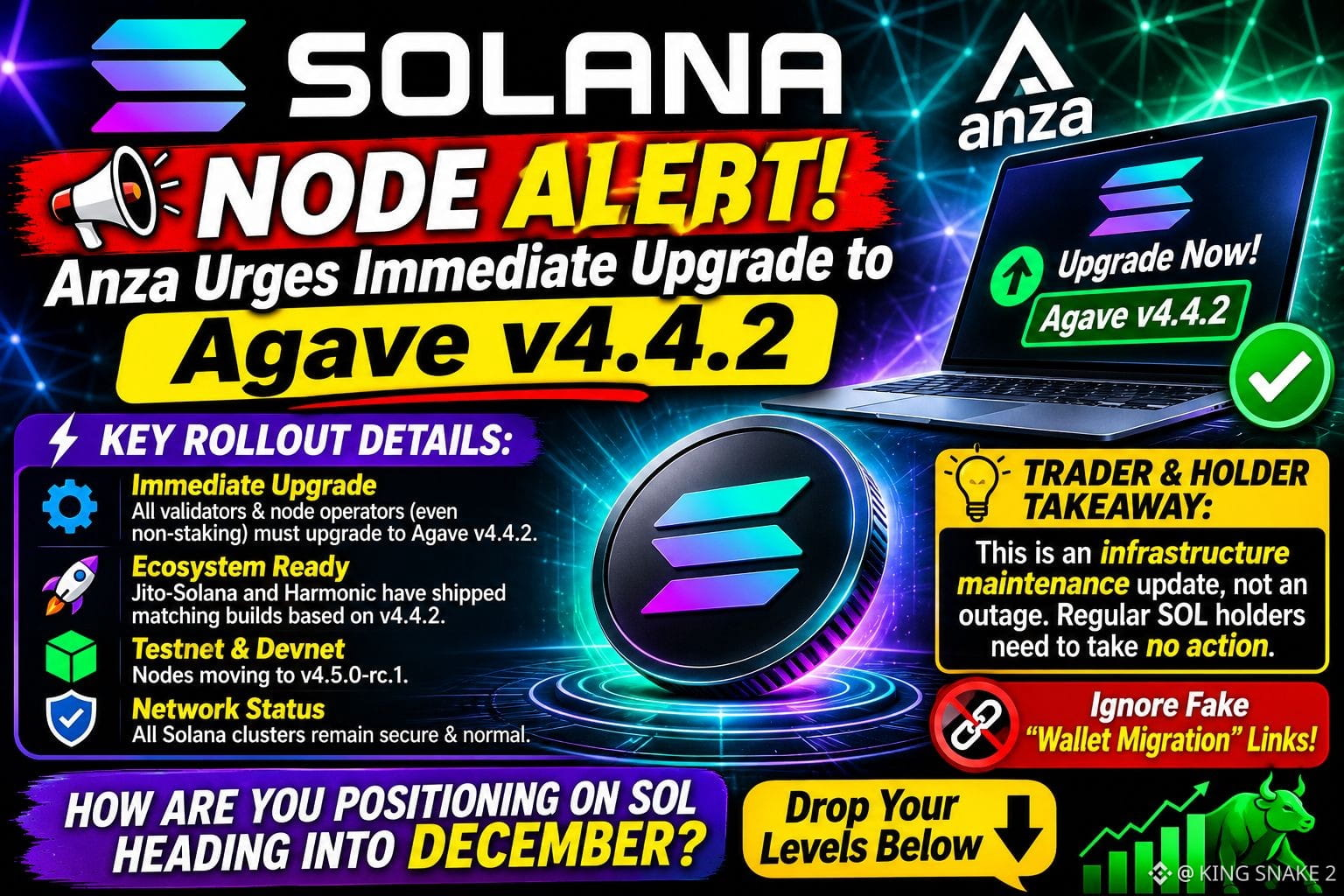
#anzaurgessolananodesupgradeagave 🚨 SOLANA VALIDATORS URGED TO UPGRADE IMMEDIATELY — AGAVE v4.4.2 NOTICE! ⚡
Solana's client development team, Anza, has issued an important mainnet notice urging all validators and node operators to upgrade their Agave client to v4.4.2.
This update highlights the importance of keeping blockchain infrastructure secure, synchronized and up to date.
📊 KEY DEVELOPMENTS:
🔹 Immediate Upgrade: Anza is asking all validators and node operators, including non-staking operators, to install Agave v4.4.2.
🔹 Ecosystem Support: Jito-Solana and Harmonic have already released matching builds based on v4.4.2.
🔹 Testnet & Devnet: Nodes are moving toward Agave v4.5.0-rc.1.
🔹 Network Status: Anza reports that all Solana clusters remain secure and are operating normally.
⚠️ WHAT DOES THIS MEAN FOR SOL HOLDERS?
This is an infrastructure maintenance notice, not a confirmed network outage.
Regular SOL holders and traders do not need to upgrade validator software or take any special wallet action.
Stay alert and avoid fake wallet migration links or suspicious upgrade announcements.
💡 MY TAKE:
Fast coordination between validator operators and ecosystem teams is important for maintaining blockchain reliability.
Strong infrastructure and timely updates help build long-term confidence in Solana's ecosystem.
December could bring new opportunities, but market direction and risk management still matter.
👇 WHAT'S YOUR PLAN FOR SOL IN DECEMBER?
Are you bullish, bearish, or waiting for confirmation?
Share your thoughts and price levels below!
Follow for more crypto news, blockchain updates and market insights.
#Solana #SOL #Anza #Agave
CLICK TO BELOW TRADE👇
$JTO $JUP $SOL
{future}(SOLUSDT)
{future}(JUPUSDT)
{future}(JTOUSDT)
#anzaurgessolananodesupgradeagave 🚨 SOLANA VALIDATORS URGED TO UPGRADE IMMEDIATELY — AGAVE v4.4.2 NOTICE! ⚡
Solana's client development team, Anza, has issued an important mainnet notice urging all validators and node operators to upgrade their Agave client to v4.4.2.
This update highlights the importance of keeping blockchain infrastructure secure, synchronized and up to date.
📊 KEY DEVELOPMENTS:
🔹 Immediate Upgrade: Anza is asking all validators and node operators, including non-staking operators, to install Agave v4.4.2.
🔹 Ecosystem Support: Jito-Solana and Harmonic have already released matching builds based on v4.4.2.
🔹 Testnet & Devnet: Nodes are moving toward Agave v4.5.0-rc.1.
🔹 Network Status: Anza reports that all Solana clusters remain secure and are operating normally.
⚠️ WHAT DOES THIS MEAN FOR SOL HOLDERS?
This is an infrastructure maintenance notice, not a confirmed network outage.
Regular SOL holders and traders do not need to upgrade validator software or take any special wallet action.
Stay alert and avoid fake wallet migration links or suspicious upgrade announcements.
💡 MY TAKE:
Fast coordination between validator operators and ecosystem teams is important for maintaining blockchain reliability.
Strong infrastructure and timely updates help build long-term confidence in Solana's ecosystem.
December could bring new opportunities, but market direction and risk management still matter.
👇 WHAT'S YOUR PLAN FOR SOL IN DECEMBER?
Are you bullish, bearish, or waiting for confirmation?
Share your thoughts and price levels below!
Follow for more crypto news, blockchain updates and market insights.
#Solana #SOL #Anza #Agave
CLICK TO BELOW TRADE👇
$JTO $JUP $SOL
1
1.5k

·
--
Bullish
Verified
#solanasets2027roadmaptodoublecomputecapacity
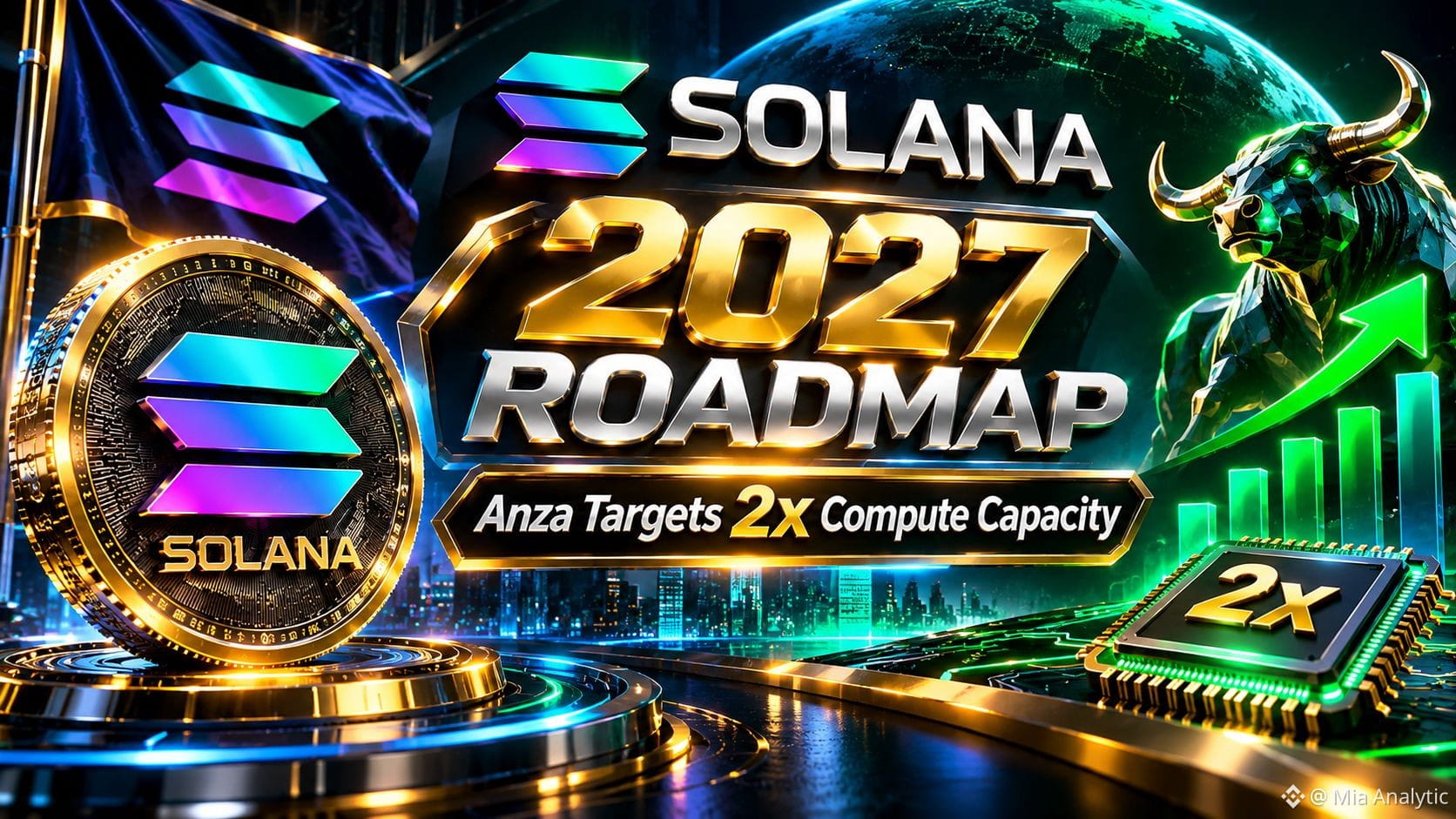
🚀 Solana's 2027 Roadmap: Anza Targets 2x Compute Capacity
At Breakpoint 2026 in London, Anza CEO Brennan Watt presented Solana's 2027 roadmap on November 19. It follows Alpenglow, which went live on October 21 and cut finality from about 12.8 seconds to roughly 150 milliseconds.
Key targets 📊
Compute capacity rises from about 250M to 500M compute units per second Compute needed for token-account transactions falls by 80% Vector processing for on-chain models and a higher per-transaction account limit (64 to 96)
Why it matters
Alpenglow improved speed. This plan targets throughput and cost. Cheaper token operations also free up capacity for other network activity, which could help complex DeFi and on-chain apps.
Reality check 🧠
These are targets, and the main capacity goal sits at the end of 2027, with mainnet activation dates still open. Delivery also depends on validator upgrade coordination. After a tough year for SOL, the market will likely want to see results before pricing this in.
Bottom line: A credible engineering roadmap, but a plan, not a price catalyst. Watch delivery, not headlines.
Not financial advice.
#solana #sol #anza #Breakpoint2026
$BULLA $PIEVERSE $BTW
{future}(BTWUSDT)
{future}(PIEVERSEUSDT)
{future}(BULLAUSDT)
#solanasets2027roadmaptodoublecomputecapacity
🚀 Solana's 2027 Roadmap: Anza Targets 2x Compute Capacity
At Breakpoint 2026 in London, Anza CEO Brennan Watt presented Solana's 2027 roadmap on November 19. It follows Alpenglow, which went live on October 21 and cut finality from about 12.8 seconds to roughly 150 milliseconds.
Key targets 📊
Compute capacity rises from about 250M to 500M compute units per second Compute needed for token-account transactions falls by 80% Vector processing for on-chain models and a higher per-transaction account limit (64 to 96)
Why it matters
Alpenglow improved speed. This plan targets throughput and cost. Cheaper token operations also free up capacity for other network activity, which could help complex DeFi and on-chain apps.
Reality check 🧠
These are targets, and the main capacity goal sits at the end of 2027, with mainnet activation dates still open. Delivery also depends on validator upgrade coordination. After a tough year for SOL, the market will likely want to see results before pricing this in.
Bottom line: A credible engineering roadmap, but a plan, not a price catalyst. Watch delivery, not headlines.
Not financial advice.
#solana #sol #anza #Breakpoint2026
$BULLA $PIEVERSE $BTW
1
1.4k

·
--
Verified
Solana has laid out its vision for 2027, with computing capacity set to double.
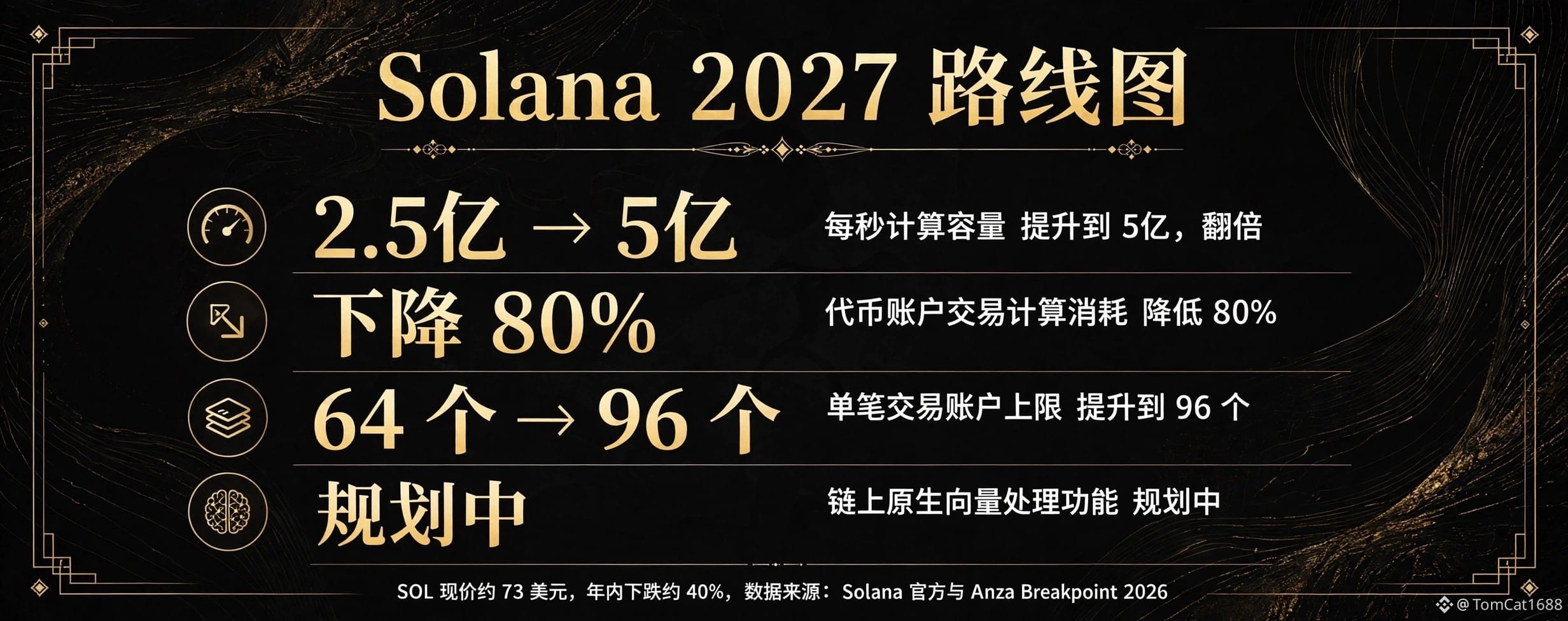
On November 19, core development team Anza unveiled Solana’s 2027 technical roadmap at Breakpoint 2026. Anza CEO Brennan Watt presented it in person, with one clear goal: by the end of 2027, Solana should be able to handle twice as much activity.
Here are the numbers. Computing capacity per second will rise from 250 million CUs to 500 million—double the current amount. Compute costs for token account transactions will be cut by 80%, so the same transfer will use just one-fifth of the computing power it does today. The number of accounts a single transaction can access will increase from 64 to 96, meaning complex transactions won’t need to be split up.
The bigger ambition is on-chain AI. The roadmap calls for native vector processing, allowing AI models to run entirely on-chain. Other planned upgrades include Rotor replacing Turbine for block propagation, and Constellation embedding transaction-ordering rules in the protocol to foster more competition among validators.
These are all goals, not live features. Anza hasn’t set firm timelines for most of the projects either. The nearest commitment is to reduce storage rent by another factor of seven within two weeks.
The market hasn’t been impressed so far. SOL is currently trading around $73, down about 40% this year, after hitting a low of $69.93 this week. The price barely moved after the roadmap was announced.
For comparison, Alpenglow went live on October 21, cutting finality from 12.8 seconds to 150 milliseconds. That was an upgrade that actually shipped. This roadmap is about next year, and delivery will depend on development progress.
In the long term, this is Solana’s declaration of intent to evolve from a fast blockchain into high-performance financial infrastructure. In the short term, it won’t change the flow of funds. The Fear & Greed Index is currently just 11, signaling extreme fear.
The roadmap is for 2027; the market is happening today. Don’t confuse the two.
#Solana2027路线图拟将网络计算容量翻倍 #Solana #SOL #Anza #On-chain AI
5
3.7k

Anza: The company behind Solana’s biggest Alpenglow upgrade
- Solana is attracting attention with its Alpenglow upgrade, which aims to reduce transaction finality time to 150 milliseconds.
- Anza is the engineering company responsible for building this upgrade.
- CoinGape’s article discusses Anza’s story, but the RSS summary doesn’t provide any further details.
#Solana #Alpenglow #Anza #CryptoNews #BinanceSquare
$sol
vlikevn Titanbot
Source: CoinGape
47

·
--
📰 Why has Solana suddenly accelerated? Alpenglow launches at 150 ms—so why did SOL still fall?
We talked about this just two days ago, and now there’s a new development. Solana’s mainnet has launched a new version, Alpenglow, cutting transaction finality from 12.8 seconds to just 150 milliseconds—faster than lightning. This is a major boost for the Solana ecosystem, so why has the coin price instead hit a new low? This unusual phenomenon reveals two things.
Why does this news matter? The fundamental reason is that Solana is working hard to fix an old problem: finality has been too slow, directly hurting the user experience. Transfers that once took more than ten seconds to confirm are now almost as fast as local transfers. This means Solana is polishing its “high performance” reputation to a shine, which could make it exponentially more attractive to DeFi and GameFi. If computing power can’t keep up with this speed boost, that would pose an even greater risk.
As for the market impact, SOL may continue to diverge in the short term. 150 ms is just a number; whether it can translate into more users depends on ecosystem projects getting on board. If NFT and GameFi projects don’t actively build on Solana, this speed advantage will be little more than an illusion. In the medium term, SOL may stabilize in the $107.12–110 range, provided Bitcoin holds above $107.12K. If BTC falls below that level, this positive development could be overwhelmed by risk aversion.
💡 If exchanges impose widespread restrictions on Solana deposits, this 150 ms speed advantage will be meaningless, and this assessment will no longer hold.
This article is not sponsored by any project, and the author does not hold any of the assets mentioned.
⚠️ This is not investment advice. Predictions are for reference only.
#Anza’sAlpenglowgoesliveonSolana,cuttingfinalityto150milliseconds
$SOL $BTC

1
310

·
--
Bearish
Verified
#solanatransactionv1goesliveonmainnet
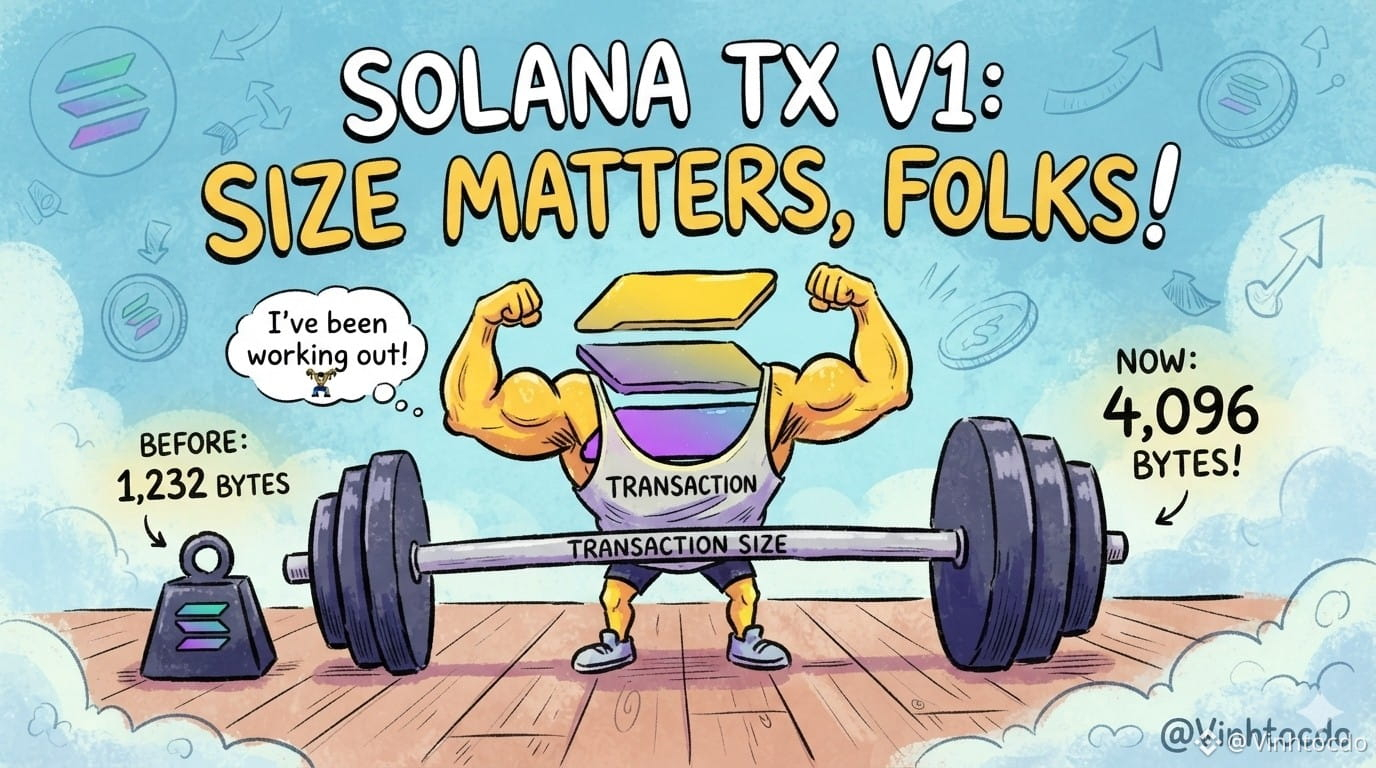
🚀 Solana TX V1 is LIVE: Size Matters, Folks!
Breaking news! Solana’s Transaction V1 (SIMD-0385) just hit the mainnet. What does this upgrade mean? Solana basically went to the gym and pumped its maximum transaction size from a tiny 1,232 bytes to a massive 4,096 bytes! 🏋️♂️
What should traders do now?
1️⃣ Stop panicking: The network isn't congested (yet).
2️⃣ Enjoy the gains: Massive multi-sigs and ZK-proofs can now fit into a single atomic transaction. No more multi-step nightmares!
⚠️ Reminder: This is NOT financial advice. Do your own research!
Want to join the future of crypto? Sign up on Binance now using my referral link or code!
🔗 Link: [cf-workers-proxy-cyt.pages.dev](https://www.binance.com/register?ref=VINHTOCDO)🆔 Code: VINHTOCDO
👇 Click and trade the tokens below to support my content!
#Solana #SOL #Anza #VINHTOCDO
$SOL
{future}(SOLUSDT)
$BTC
{future}(BTCUSDT)
$ETH
{future}(ETHUSDT)
#solanatransactionv1goesliveonmainnet
🚀 Solana TX V1 is LIVE: Size Matters, Folks!
Breaking news! Solana’s Transaction V1 (SIMD-0385) just hit the mainnet. What does this upgrade mean? Solana basically went to the gym and pumped its maximum transaction size from a tiny 1,232 bytes to a massive 4,096 bytes! 🏋️♂️
What should traders do now?
1️⃣ Stop panicking: The network isn't congested (yet).
2️⃣ Enjoy the gains: Massive multi-sigs and ZK-proofs can now fit into a single atomic transaction. No more multi-step nightmares!
⚠️ Reminder: This is NOT financial advice. Do your own research!
Want to join the future of crypto? Sign up on Binance now using my referral link or code!
🔗 Link: cf-workers-proxy-cyt.pages.dev🆔 Code: VINHTOCDO
👇 Click and trade the tokens below to support my content!
#Solana #SOL #Anza #VINHTOCDO
$SOL
$BTC
$ETH
1
128

📰 Why are miners calling it quits? Solana’s first-ever drop in hash rate comes as AI competes for electricity
After the Alpenglow upgrade to the Solana network, transaction finality time fell from 12.8 seconds to 150 milliseconds. At the same time, however, the network’s total hash rate recorded its first-ever decline. Behind this is a surge in electricity costs, driving miners to cheaper platforms. In particular, the enormous electricity demand from AI training is beginning to squeeze the space available for cryptocurrency mining.
Why does this news matter?
Solana’s upgrade was an industry milestone, dramatically reducing Tendermint BFT’s 12.8-second finality time to a human-perceptible 150 milliseconds. But the drop in hash rate exposes a deeper problem: as demand for AI computing power surges (the cost of computing power has already surpassed that of the entire cryptocurrency industry), electricity is becoming a key resource in the competition. Miners are finding that training a large language model consumes as much electricity as mining 100 bitcoins, while mining revenues on public blockchains such as Solana are no longer enough to cover local electricity prices. This means the race for computing power will shift from capital to control over electricity resources—a major test for public blockchains that depend on miners for security.
Market impact
This is a short-term positive for SOL, but a long-term risk. In the short term, an increase in hash rate would strengthen network resilience (if miners are in it for the long haul). But in the long run, if electricity costs aren’t addressed, the SOL ecosystem could suffer the same fate as some sidechains. The takeaway for BTC/ETH is that computing efficiency will no longer be the only dimension of competition: electricity costs will become a matter of survival for underlying public blockchains. In particular, if electricity prices remain higher than block rewards, ETH’s merged mining model could see miners leave, as Solana is now experiencing.
💡 Solana’s improved computing efficiency is worth recognizing, but if electricity costs aren’t addressed, this advantage could be wiped out. If California’s electricity policies continue to tighten over the next few months (commercial electricity prices are already above $0.35/kWh), SOL could face the risk of further miner exits. This means the $80–85 range could be a key resistance level for SOL.
This article was not sponsored by any project, and the author does not hold any of the assets mentioned.
$BTC $ETH #BTC #ETH
⚠️ This does not constitute investment advice. Forecasts are for reference only.
#Anza’sAlpenglowgoesliveonSolana,cuttingfinalityto150milliseconds
$SOL

6
Log in to explore more content
Join global crypto users on Binance Square
⚡️ Get latest and useful information about crypto.
💬 Trusted by the world’s largest crypto exchange.
👍 Discover real insights from verified creators.
Email / Phone number
Trending Topics
1
#EvolveAtBinanceBlockchainWeek
1.6M views
16,898 Discussing
2
#ColdcardFlawLeadsToTheftOfAtLeast1789BTC
16,779 views
204 Discussing
3
#ChainflipVaultTheftHaltsProtocol
20,934 views
336 Discussing
4
#MalaysiaFirstBitcoinETFToListOnDecember2
11,739 views
155 Discussing
5
#SECIssuesNoActionLetterOnMoleculeModel
1,891 views
28 Discussing
6
#DowJonesAdds591.99Points
16,458 views
103 Discussing
7
#ClaudeAccusedOfDroppingUserPreferences
9,614 views
101 Discussing
8
#VitalikWantsWalletChipDesignsOpened
30,117 views
405 Discussing
9
#AnzaUrgesSolanaNodesUpgradeAgave
9,857 views
164 Discussing
10
#EthereumGlamsterdamKeepsStorageFeeChange
53,726 views
518 Discussing