
#yield
yield
117,308 views
1,873 Discussing
Hot
Latest

·
--
🚨 LOCK-UP VAULTS OPEN AS $UNI AIRDROP REWARDS DRAIN FREE LIQUIDITY! ⚡
Supply is about to tighten significantly as collateral moves off the open market into dedicated yield pools, releasing 2,400 $UNI to participants. 🔒 Smart money is positioning early to harvest yield before the five-day lock-up window closes. 📊
When circulating tokens get pulled into locked pools, sell-side liquidity thins out rapidly, paving the way for sharp shifts in market dynamics. 💡 Are you locking up assets to earn passive yield, or waiting to trade the secondary market volatility? 👇
⚠️ Not financial advice. Always manage your risk. 🛡️
🏷️ #UNI #Airdrop #Yield #Crypto
🔥 💎
🚨 LOCK-UP VAULTS OPEN AS $UNI AIRDROP REWARDS DRAIN FREE LIQUIDITY! ⚡
Supply is about to tighten significantly as collateral moves off the open market into dedicated yield pools, releasing 2,400 $UNI to participants. 🔒 Smart money is positioning early to harvest yield before the five-day lock-up window closes. 📊
When circulating tokens get pulled into locked pools, sell-side liquidity thins out rapidly, paving the way for sharp shifts in market dynamics. 💡 Are you locking up assets to earn passive yield, or waiting to trade the secondary market volatility? 👇
⚠️ Not financial advice. Always manage your risk. 🛡️
🏷️ #UNI #Airdrop #Yield #Crypto
🔥 💎
Supply is about to tighten significantly as collateral moves off the open market into dedicated yield pools, releasing 2,400 $UNI to participants. 🔒 Smart money is positioning early to harvest yield before the five-day lock-up window closes. 📊
When circulating tokens get pulled into locked pools, sell-side liquidity thins out rapidly, paving the way for sharp shifts in market dynamics. 💡 Are you locking up assets to earn passive yield, or waiting to trade the secondary market volatility? 👇
⚠️ Not financial advice. Always manage your risk. 🛡️
🏷️ #UNI #Airdrop #Yield #Crypto
🔥 💎
49

🔥 70M+ Revolut users just unlocked on‑chain credit yields via Maple Finance’s SYRUP token — the biggest retail gateway to institutional‑grade yield since the Bitcoin ETF wave.
📊 BTC sits at $86,004 (+0.96%) with RSI 75.2, a bullish MACD crossover and Bollinger Band hugging the upper 81.4% line, while ETH trades $2,753 (RSI 69.5, MACD bullish) and BNB holds $790; extreme greed (78/100) means capital is scrambling for yield‑rich alternatives beyond spot.
💡 Smart money is already shifting: Solana smart wallets X7 and X7CAT have added up to +0.0298% net inflow, ETH futures show a 2.47 L/S ratio and +0.0093% funding, and BTC futures OI sits at $9.41 B with longs netting 69.1%; #DeFi #Yield #SYRUP are climbing Binance Alpha watchlists alongside BSC meme tokens like #HONon.
🚀 The next catalyst is SYRUP’s $0.12 resistance on Binance – a clean break, especially if BTC cracks $88 k, could trigger a 30%+ rally; watch the $86.5k‑$87k BTC zone as a proxy trigger for on‑chain inflows, and note that a sustained BTC move above $86 k often precedes a surge in SOL‑based yield products. #BTC
❓ Are you ready to allocate retail‑scale credit yield now, or will you sit on the sidelines as the next institutional wave rolls in?
🔥 70M+ Revolut users just unlocked on‑chain credit yields via Maple Finance’s SYRUP token — the biggest retail gateway to institutional‑grade yield since the Bitcoin ETF wave.
📊 BTC sits at $86,004 (+0.96%) with RSI 75.2, a bullish MACD crossover and Bollinger Band hugging the upper 81.4% line, while ETH trades $2,753 (RSI 69.5, MACD bullish) and BNB holds $790; extreme greed (78/100) means capital is scrambling for yield‑rich alternatives beyond spot.
💡 Smart money is already shifting: Solana smart wallets X7 and X7CAT have added up to +0.0298% net inflow, ETH futures show a 2.47 L/S ratio and +0.0093% funding, and BTC futures OI sits at $9.41 B with longs netting 69.1%; #DeFi #Yield #SYRUP are climbing Binance Alpha watchlists alongside BSC meme tokens like #HONon.
🚀 The next catalyst is SYRUP’s $0.12 resistance on Binance – a clean break, especially if BTC cracks $88 k, could trigger a 30%+ rally; watch the $86.5k‑$87k BTC zone as a proxy trigger for on‑chain inflows, and note that a sustained BTC move above $86 k often precedes a surge in SOL‑based yield products. #BTC
❓ Are you ready to allocate retail‑scale credit yield now, or will you sit on the sidelines as the next institutional wave rolls in?
📊 BTC sits at $86,004 (+0.96%) with RSI 75.2, a bullish MACD crossover and Bollinger Band hugging the upper 81.4% line, while ETH trades $2,753 (RSI 69.5, MACD bullish) and BNB holds $790; extreme greed (78/100) means capital is scrambling for yield‑rich alternatives beyond spot.
💡 Smart money is already shifting: Solana smart wallets X7 and X7CAT have added up to +0.0298% net inflow, ETH futures show a 2.47 L/S ratio and +0.0093% funding, and BTC futures OI sits at $9.41 B with longs netting 69.1%; #DeFi #Yield #SYRUP are climbing Binance Alpha watchlists alongside BSC meme tokens like #HONon.
🚀 The next catalyst is SYRUP’s $0.12 resistance on Binance – a clean break, especially if BTC cracks $88 k, could trigger a 30%+ rally; watch the $86.5k‑$87k BTC zone as a proxy trigger for on‑chain inflows, and note that a sustained BTC move above $86 k often precedes a surge in SOL‑based yield products. #BTC
❓ Are you ready to allocate retail‑scale credit yield now, or will you sit on the sidelines as the next institutional wave rolls in?
45
🔥 Stablecoins aren't just a cash peg—they're morphing into the fastest‑growing yield engine for institutions.
📈 Coinbase’s asset manager just announced CUSHY, a tokenized stablecoin credit fund that will harvest on‑chain lending and private credit returns via Superstate, targeting institutional capital. #Stablecoin #Yield
🔭 With market sentiment at a greedy 70/100, Bitcoin is perched at $86,664 (RSI 86.6, overbought) and ETH at $2,773 (RSI 79.1), yet BTC futures show $9.43 B open interest and a +0.0048 % funding rate—longs are paying shorts, signaling confidence in higher‑yield avenues. This aligns with the broader cycle where capital rotates from pure speculation to income‑focused assets as the bull market matures. #DeFi #Institutional
💡 Actionable takeaway: Allocate a modest slice of your crypto portfolio to tokenized stablecoin credit products or similar on‑chain yield strategies now, while the greedy sentiment fuels premium pricing and the overbought market still supports strong funding flows.
❓ How are you positioning for the shift from pure price play to on‑chain yield—diversifying into tokenized funds, staying in cash, or chasing other opportunities?
🔥 Stablecoins aren't just a cash peg—they're morphing into the fastest‑growing yield engine for institutions.
📈 Coinbase’s asset manager just announced CUSHY, a tokenized stablecoin credit fund that will harvest on‑chain lending and private credit returns via Superstate, targeting institutional capital. #Stablecoin #Yield
🔭 With market sentiment at a greedy 70/100, Bitcoin is perched at $86,664 (RSI 86.6, overbought) and ETH at $2,773 (RSI 79.1), yet BTC futures show $9.43 B open interest and a +0.0048 % funding rate—longs are paying shorts, signaling confidence in higher‑yield avenues. This aligns with the broader cycle where capital rotates from pure speculation to income‑focused assets as the bull market matures. #DeFi #Institutional
💡 Actionable takeaway: Allocate a modest slice of your crypto portfolio to tokenized stablecoin credit products or similar on‑chain yield strategies now, while the greedy sentiment fuels premium pricing and the overbought market still supports strong funding flows.
❓ How are you positioning for the shift from pure price play to on‑chain yield—diversifying into tokenized funds, staying in cash, or chasing other opportunities?
📈 Coinbase’s asset manager just announced CUSHY, a tokenized stablecoin credit fund that will harvest on‑chain lending and private credit returns via Superstate, targeting institutional capital. #Stablecoin #Yield
🔭 With market sentiment at a greedy 70/100, Bitcoin is perched at $86,664 (RSI 86.6, overbought) and ETH at $2,773 (RSI 79.1), yet BTC futures show $9.43 B open interest and a +0.0048 % funding rate—longs are paying shorts, signaling confidence in higher‑yield avenues. This aligns with the broader cycle where capital rotates from pure speculation to income‑focused assets as the bull market matures. #DeFi #Institutional
💡 Actionable takeaway: Allocate a modest slice of your crypto portfolio to tokenized stablecoin credit products or similar on‑chain yield strategies now, while the greedy sentiment fuels premium pricing and the overbought market still supports strong funding flows.
❓ How are you positioning for the shift from pure price play to on‑chain yield—diversifying into tokenized funds, staying in cash, or chasing other opportunities?
31
·
--
⚡ NIGHT SHIFT GRIND DELIVERS A SURGE IN REAL YIELD WITH $GRAB ! 📈
📌 Running a tight two-hour evening shift pulled in 153,000 VND, breaking down to an impressive hourly rate of 76,000 VND. 📊 That far outpaces standard service industry wages, proving that targeting peak volume windows generates superior immediate cash flow.
💡 If net retention stays above ninety percent after fee cuts, this operational model rivals high-velocity arbitrage setups in efficiency. ⚡ Smart hustlers capitalize on prime liquidity hours to maximize capital velocity. 💬 Are you sticking to fixed hourly wages or rotating your effort into high-yield peak windows? 👇
⚠️ Not financial advice. Always manage your risk. 🛡️
🏷️ #GRAB #Yield #SideHustle #Crypto #Income
🔥 💎
⚡ NIGHT SHIFT GRIND DELIVERS A SURGE IN REAL YIELD WITH $GRAB ! 📈
📌 Running a tight two-hour evening shift pulled in 153,000 VND, breaking down to an impressive hourly rate of 76,000 VND. 📊 That far outpaces standard service industry wages, proving that targeting peak volume windows generates superior immediate cash flow.
💡 If net retention stays above ninety percent after fee cuts, this operational model rivals high-velocity arbitrage setups in efficiency. ⚡ Smart hustlers capitalize on prime liquidity hours to maximize capital velocity. 💬 Are you sticking to fixed hourly wages or rotating your effort into high-yield peak windows? 👇
⚠️ Not financial advice. Always manage your risk. 🛡️
🏷️ #GRAB #Yield #SideHustle #Crypto #Income
🔥 💎
📌 Running a tight two-hour evening shift pulled in 153,000 VND, breaking down to an impressive hourly rate of 76,000 VND. 📊 That far outpaces standard service industry wages, proving that targeting peak volume windows generates superior immediate cash flow.
💡 If net retention stays above ninety percent after fee cuts, this operational model rivals high-velocity arbitrage setups in efficiency. ⚡ Smart hustlers capitalize on prime liquidity hours to maximize capital velocity. 💬 Are you sticking to fixed hourly wages or rotating your effort into high-yield peak windows? 👇
⚠️ Not financial advice. Always manage your risk. 🛡️
🏷️ #GRAB #Yield #SideHustle #Crypto #Income
🔥 💎

33

Traditional finance is throwing a major wrench into DeFi lending dynamics. With US Treasury yields climbing well past 4%, investors now face a tough reality check. Why chase risky smart contract yields in crypto protocols when you can earn a safer return backed by the government? This risk-free rate hike puts massive pressure on decentralized platforms to boost their native incentives just to stay competitive, potentially shifting capital flows back to traditional safe havens. #DeFi #Macro #Yield
Traditional finance is throwing a major wrench into DeFi lending dynamics. With US Treasury yields climbing well past 4%, investors now face a tough reality check. Why chase risky smart contract yields in crypto protocols when you can earn a safer return backed by the government? This risk-free rate hike puts massive pressure on decentralized platforms to boost their native incentives just to stay competitive, potentially shifting capital flows back to traditional safe havens. #DeFi #Macro #Yield
1


·
--
Theo’s thSLVR: Silver Meets On-Chain Yield
RWA is starting to move beyond simply putting real-world assets on-chain.
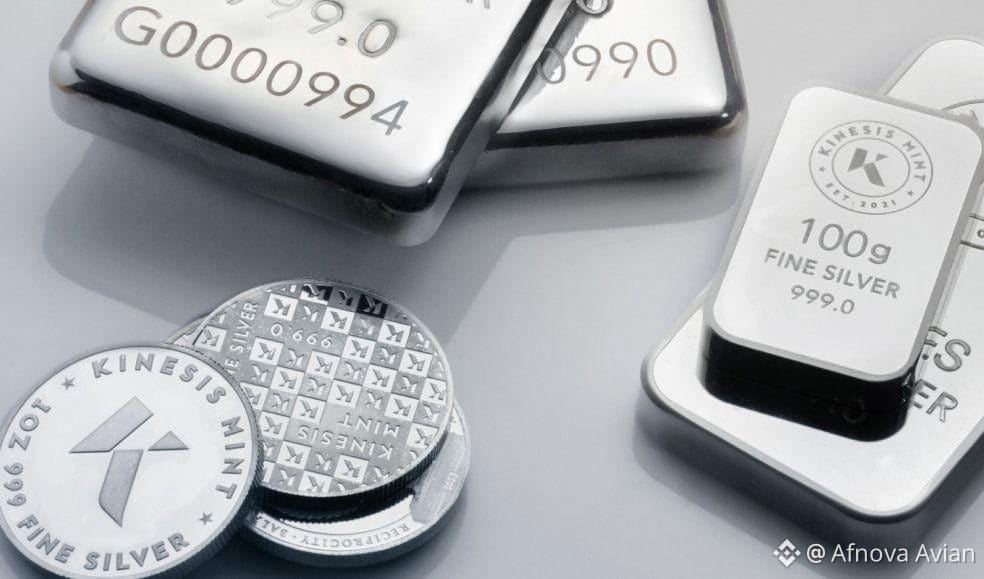
Theo is pushing that idea further with thSLVR, a yield-bearing tokenized silver product backed by more than $40 million in active silver leases, according to CoinDesk.
The interesting part is that holders aren’t only getting exposure to the price of silver.
They can also receive a share of the income generated when the underlying silver is leased to institutional borrowers.
That changes the RWA narrative.
Instead of just tokenizing an asset and tracking its price, the goal is now to bring the cash flow generated by that asset on-chain as well.
And silver could be an interesting market for this, especially with ongoing supply constraints and existing demand for silver leasing.
The broader RWA sector is also expanding beyond U.S. Treasuries and gold, with tokenized commodities now covering around $4.9 billion across roughly 130 products.
For now, thSLVR is limited to institutional and whitelisted investors. The next big test will be whether Theo can expand liquidity and eventually reach a much wider user base.
RWA is evolving: from tokenizing assets to tokenizing the yield they generate.
#RWAS #yield #Onchain
Theo’s thSLVR: Silver Meets On-Chain Yield
RWA is starting to move beyond simply putting real-world assets on-chain.
Theo is pushing that idea further with thSLVR, a yield-bearing tokenized silver product backed by more than $40 million in active silver leases, according to CoinDesk.
The interesting part is that holders aren’t only getting exposure to the price of silver.
They can also receive a share of the income generated when the underlying silver is leased to institutional borrowers.
That changes the RWA narrative.
Instead of just tokenizing an asset and tracking its price, the goal is now to bring the cash flow generated by that asset on-chain as well.
And silver could be an interesting market for this, especially with ongoing supply constraints and existing demand for silver leasing.
The broader RWA sector is also expanding beyond U.S. Treasuries and gold, with tokenized commodities now covering around $4.9 billion across roughly 130 products.
For now, thSLVR is limited to institutional and whitelisted investors. The next big test will be whether Theo can expand liquidity and eventually reach a much wider user base.
RWA is evolving: from tokenizing assets to tokenizing the yield they generate.
#RWAS #yield #Onchain
RWA is starting to move beyond simply putting real-world assets on-chain.
Theo is pushing that idea further with thSLVR, a yield-bearing tokenized silver product backed by more than $40 million in active silver leases, according to CoinDesk.
The interesting part is that holders aren’t only getting exposure to the price of silver.
They can also receive a share of the income generated when the underlying silver is leased to institutional borrowers.
That changes the RWA narrative.
Instead of just tokenizing an asset and tracking its price, the goal is now to bring the cash flow generated by that asset on-chain as well.
And silver could be an interesting market for this, especially with ongoing supply constraints and existing demand for silver leasing.
The broader RWA sector is also expanding beyond U.S. Treasuries and gold, with tokenized commodities now covering around $4.9 billion across roughly 130 products.
For now, thSLVR is limited to institutional and whitelisted investors. The next big test will be whether Theo can expand liquidity and eventually reach a much wider user base.
RWA is evolving: from tokenizing assets to tokenizing the yield they generate.
#RWAS #yield #Onchain
276
🔥 Tokenizing treasury yields isn’t a gimmick – it’s the next evolution of cash management for any business.
📈 Today Stable Sea announced a partnership with WisdomTree to let finance teams sweep idle dollars into the tokenized WTGXX fund, earning daily dividends while staying in a stablecoin pocket, and the market is already buzzing #StablecoinYield #TreasuryToken.
🌐 With BTC at $77,321 (‑0.63%) and a bullish MACD crossover despite a bearish RSI 42.3, plus ETH at $2,531 showing a bullish RSI 58, the crypto ecosystem is signaling confidence in real‑world yield products; this aligns with the current #DeFi expansion and a Greed sentiment score of 63/100.
💡 Practical move: allocate a modest slice of your treasury (5‑10%) into the WTGXX token via Binance, monitor the on‑chain inflow metrics, and let the daily dividend #Yield compound while your core cash stays liquid.
❓ How are you balancing liquidity and yield in your corporate cash strategy—keep everything in cash, dip into tokenized treasuries, or wait for more data?
🔥 Tokenizing treasury yields isn’t a gimmick – it’s the next evolution of cash management for any business.
📈 Today Stable Sea announced a partnership with WisdomTree to let finance teams sweep idle dollars into the tokenized WTGXX fund, earning daily dividends while staying in a stablecoin pocket, and the market is already buzzing #StablecoinYield #TreasuryToken.
🌐 With BTC at $77,321 (‑0.63%) and a bullish MACD crossover despite a bearish RSI 42.3, plus ETH at $2,531 showing a bullish RSI 58, the crypto ecosystem is signaling confidence in real‑world yield products; this aligns with the current #DeFi expansion and a Greed sentiment score of 63/100.
💡 Practical move: allocate a modest slice of your treasury (5‑10%) into the WTGXX token via Binance, monitor the on‑chain inflow metrics, and let the daily dividend #Yield compound while your core cash stays liquid.
❓ How are you balancing liquidity and yield in your corporate cash strategy—keep everything in cash, dip into tokenized treasuries, or wait for more data?
📈 Today Stable Sea announced a partnership with WisdomTree to let finance teams sweep idle dollars into the tokenized WTGXX fund, earning daily dividends while staying in a stablecoin pocket, and the market is already buzzing #StablecoinYield #TreasuryToken.
🌐 With BTC at $77,321 (‑0.63%) and a bullish MACD crossover despite a bearish RSI 42.3, plus ETH at $2,531 showing a bullish RSI 58, the crypto ecosystem is signaling confidence in real‑world yield products; this aligns with the current #DeFi expansion and a Greed sentiment score of 63/100.
💡 Practical move: allocate a modest slice of your treasury (5‑10%) into the WTGXX token via Binance, monitor the on‑chain inflow metrics, and let the daily dividend #Yield compound while your core cash stays liquid.
❓ How are you balancing liquidity and yield in your corporate cash strategy—keep everything in cash, dip into tokenized treasuries, or wait for more data?
35
·
--
🚀 $BNB UNLOCKS UNCAPED REWARDS WITH 6% VARIABLE APR! 💎
📊 The latest staking pool on the top‑tier exchange drops the individual reward cap entirely, letting the whale‑sized liquidity flow unshackled. With a variable APR hovering around 6%, the engine stays primed for steady accrual as market conditions shift. ⚡ Smart money is already reallocating, using the open‑cap to stack positions while the variable boost smooths out volatility spikes. Expect the liquidity wave to ride higher as more bids flood the pool, turning modest APR into compounding firepower. 💡
💬 Are you ready to lock in the uncapped yield or waiting for the next boost? 👇
⚠️ Not financial advice. Always manage your risk. 🛡️
🏷️ #BNB #Staking #Yield #Crypto
🔥 💎
🚀 $BNB UNLOCKS UNCAPED REWARDS WITH 6% VARIABLE APR! 💎
📊 The latest staking pool on the top‑tier exchange drops the individual reward cap entirely, letting the whale‑sized liquidity flow unshackled. With a variable APR hovering around 6%, the engine stays primed for steady accrual as market conditions shift. ⚡ Smart money is already reallocating, using the open‑cap to stack positions while the variable boost smooths out volatility spikes. Expect the liquidity wave to ride higher as more bids flood the pool, turning modest APR into compounding firepower. 💡
💬 Are you ready to lock in the uncapped yield or waiting for the next boost? 👇
⚠️ Not financial advice. Always manage your risk. 🛡️
🏷️ #BNB #Staking #Yield #Crypto
🔥 💎
📊 The latest staking pool on the top‑tier exchange drops the individual reward cap entirely, letting the whale‑sized liquidity flow unshackled. With a variable APR hovering around 6%, the engine stays primed for steady accrual as market conditions shift. ⚡ Smart money is already reallocating, using the open‑cap to stack positions while the variable boost smooths out volatility spikes. Expect the liquidity wave to ride higher as more bids flood the pool, turning modest APR into compounding firepower. 💡
💬 Are you ready to lock in the uncapped yield or waiting for the next boost? 👇
⚠️ Not financial advice. Always manage your risk. 🛡️
🏷️ #BNB #Staking #Yield #Crypto
🔥 💎
63

·
--
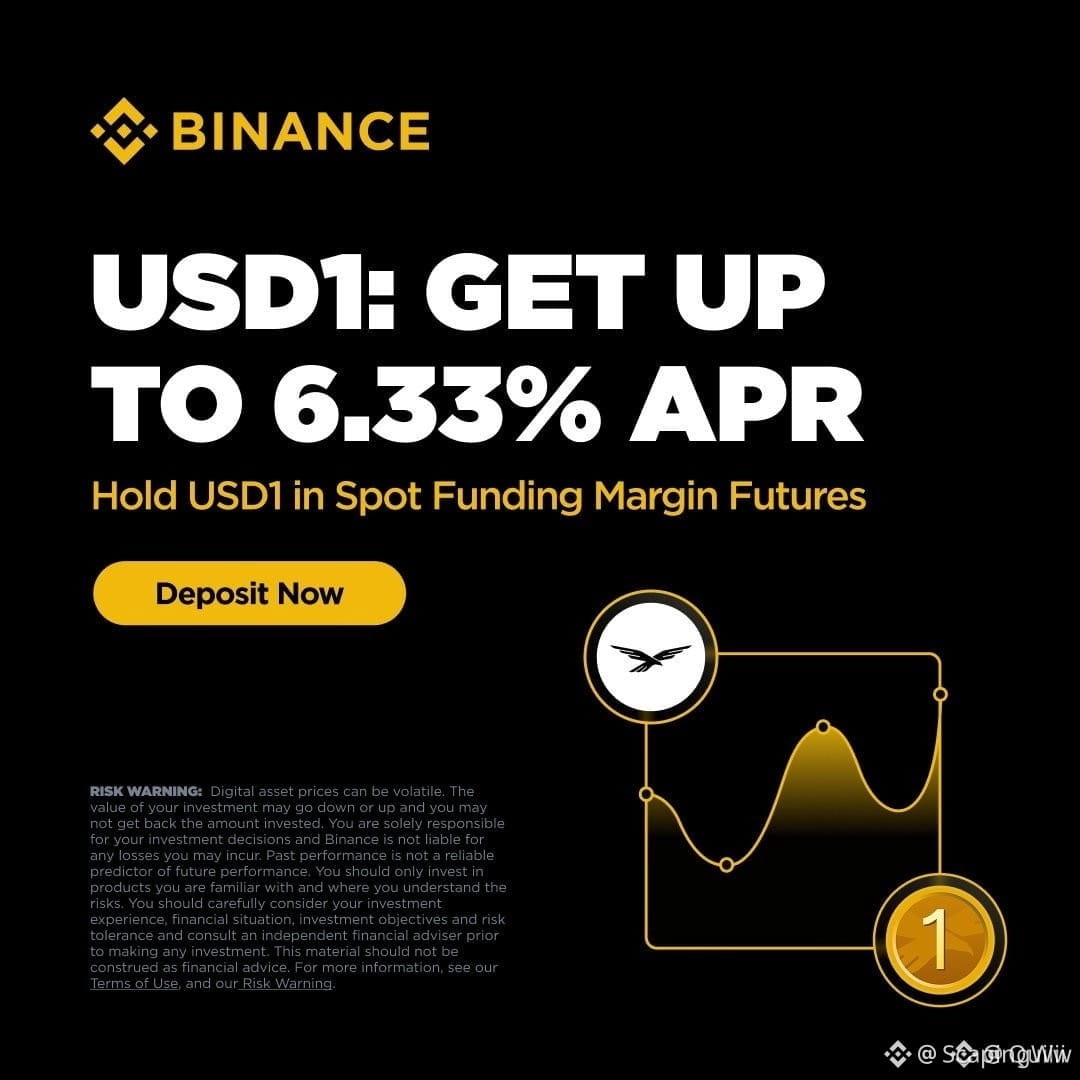
💰 7% APR ON USDT — YIELD OPPORTUNITY ALERT
Looking for a way to put your idle USDT to work? 👀
Binance Earn is currently offering up to 7% APR on eligible USDT Flexible Products, including an additional tiered bonus APR.
🔥 Key Details:
💵 Asset: USDT
📈 Potential Yield: Up to 7% APR
⏳ Offer Period: Until September 8, 2026 (UTC+8)
🔓 Product: Flexible — subject to the applicable terms
Why is this interesting?
Unlike simply holding idle stablecoins, eligible Earn products can potentially generate rewards while maintaining a flexible structure.
⚠️ Important: APR can vary, eligibility and availability may differ by region, and promotional rates are subject to Binance's terms. Always check the current rate before subscribing.
👀 Would you put your idle USDT into a yield product?
🟢 YES
🔴 NO — I prefer to hold
#BinanceEarn #USDT #DeFi #Yield #Crypto #BinanceSquare #PassiveIncome #Stablecoin
💰 7% APR ON USDT — YIELD OPPORTUNITY ALERT
Looking for a way to put your idle USDT to work? 👀
Binance Earn is currently offering up to 7% APR on eligible USDT Flexible Products, including an additional tiered bonus APR.
🔥 Key Details:
💵 Asset: USDT
📈 Potential Yield: Up to 7% APR
⏳ Offer Period: Until September 8, 2026 (UTC+8)
🔓 Product: Flexible — subject to the applicable terms
Why is this interesting?
Unlike simply holding idle stablecoins, eligible Earn products can potentially generate rewards while maintaining a flexible structure.
⚠️ Important: APR can vary, eligibility and availability may differ by region, and promotional rates are subject to Binance's terms. Always check the current rate before subscribing.
👀 Would you put your idle USDT into a yield product?
🟢 YES
🔴 NO — I prefer to hold
#BinanceEarn #USDT #DeFi #Yield #Crypto #BinanceSquare #PassiveIncome #Stablecoin
Looking for a way to put your idle USDT to work? 👀
Binance Earn is currently offering up to 7% APR on eligible USDT Flexible Products, including an additional tiered bonus APR.
🔥 Key Details:
💵 Asset: USDT
📈 Potential Yield: Up to 7% APR
⏳ Offer Period: Until September 8, 2026 (UTC+8)
🔓 Product: Flexible — subject to the applicable terms
Why is this interesting?
Unlike simply holding idle stablecoins, eligible Earn products can potentially generate rewards while maintaining a flexible structure.
⚠️ Important: APR can vary, eligibility and availability may differ by region, and promotional rates are subject to Binance's terms. Always check the current rate before subscribing.
👀 Would you put your idle USDT into a yield product?
🟢 YES
🔴 NO — I prefer to hold
#BinanceEarn #USDT #DeFi #Yield #Crypto #BinanceSquare #PassiveIncome #Stablecoin

1
26

·
--
Bullish
Verified
Holding $PENDLE 435.6 USDT
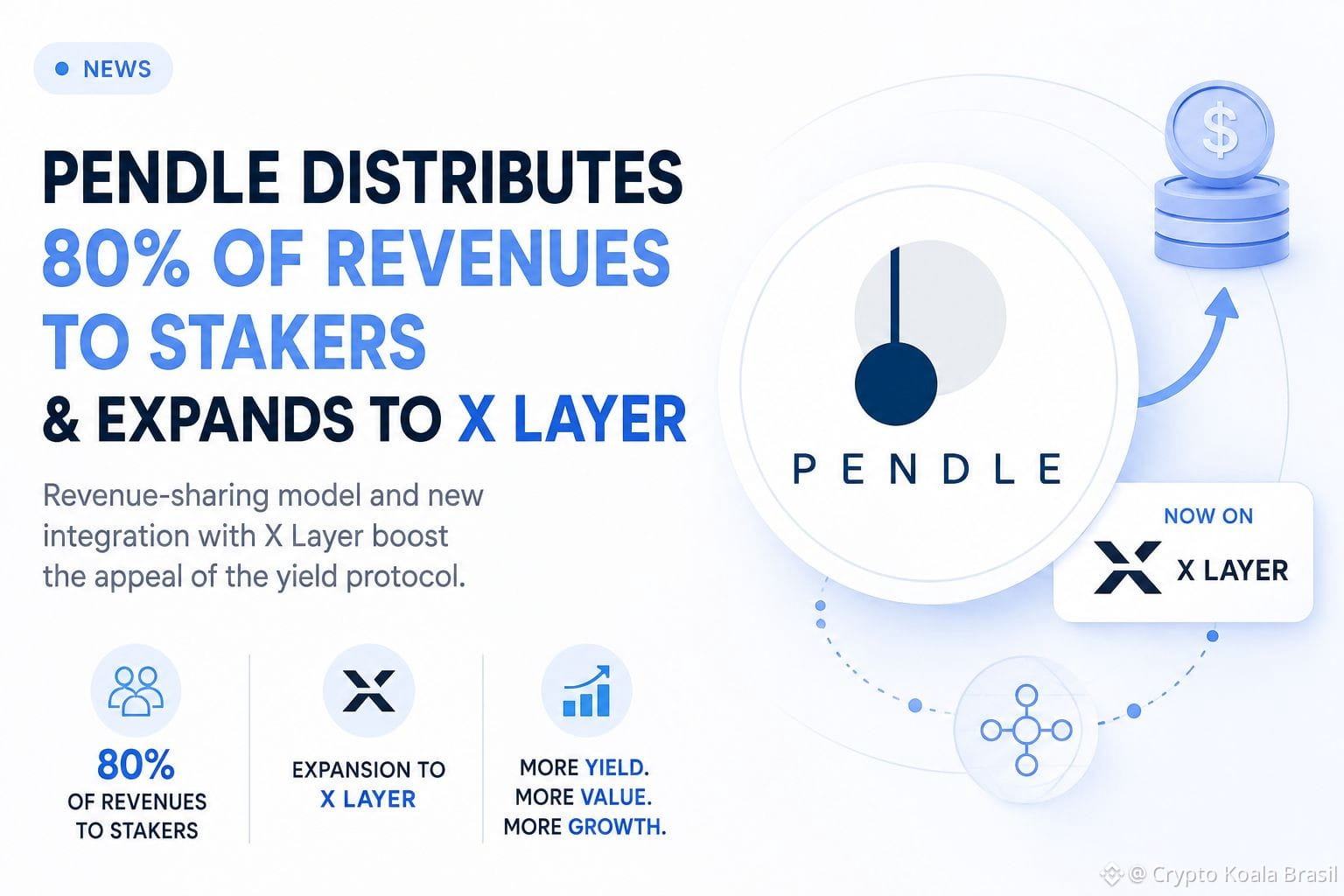
🚨 PENDLE IS RETURNING 80% OF REVENUES TO STAKERS — AND NOW EXPANDING TO X LAYER.
The yield protocol Pendle has announced an expansion to X Layer, while maintaining a revenue-sharing model that directs 80% of revenues to stakers. 💰
🔥 Why does this matter?
The combination of revenue distribution and expansion to a new network can increase ecosystem utility and make PENDLE more attractive to participants seeking exposure to yield and on-chain revenue generation.
📊 Key points:
• 80% of revenues allocated to stakers
• Expansion to X Layer
• Greater reach for the protocol
• Model based on revenue generation and sharing
• Strengthening of yield market infrastructure
💡 Unlike tokens that rely only on price appreciation, revenue-sharing models connect the growth of protocol activity directly to the participants who stake.
👀 More revenue + more integration = a combination that may increase the attractiveness of the Pendle ecosystem.
$PENDLE
#Pendle #XLayer #DeFi #Yield
🚨 PENDLE IS RETURNING 80% OF REVENUES TO STAKERS — AND NOW EXPANDING TO X LAYER.
The yield protocol Pendle has announced an expansion to X Layer, while maintaining a revenue-sharing model that directs 80% of revenues to stakers. 💰
🔥 Why does this matter?
The combination of revenue distribution and expansion to a new network can increase ecosystem utility and make PENDLE more attractive to participants seeking exposure to yield and on-chain revenue generation.
📊 Key points:
• 80% of revenues allocated to stakers
• Expansion to X Layer
• Greater reach for the protocol
• Model based on revenue generation and sharing
• Strengthening of yield market infrastructure
💡 Unlike tokens that rely only on price appreciation, revenue-sharing models connect the growth of protocol activity directly to the participants who stake.
👀 More revenue + more integration = a combination that may increase the attractiveness of the Pendle ecosystem.
$PENDLE
#Pendle #XLayer #DeFi #Yield
The yield protocol Pendle has announced an expansion to X Layer, while maintaining a revenue-sharing model that directs 80% of revenues to stakers. 💰
🔥 Why does this matter?
The combination of revenue distribution and expansion to a new network can increase ecosystem utility and make PENDLE more attractive to participants seeking exposure to yield and on-chain revenue generation.
📊 Key points:
• 80% of revenues allocated to stakers
• Expansion to X Layer
• Greater reach for the protocol
• Model based on revenue generation and sharing
• Strengthening of yield market infrastructure
💡 Unlike tokens that rely only on price appreciation, revenue-sharing models connect the growth of protocol activity directly to the participants who stake.
👀 More revenue + more integration = a combination that may increase the attractiveness of the Pendle ecosystem.
$PENDLE
#Pendle #XLayer #DeFi #Yield
1
298

·
--
Pendle Trends as DeFi Yield Tokenization Gains Fresh Market AttentionPendle (PENDLE) Current Price: $1.82 | 24h Change: 3.81%
Pendle has surged into the spotlight as a trending asset across crypto trackers, drawing renewed interest to the protocol's yield-tokenization model. The platform allows users to separate the yield from an underlying yield-bearing asset, trading fixed-yield and variable-yield positions independently. This mechanism has made Pendle a recurring topic whenever traders look beyond blue-chip assets for higher-return opportunities in decentralized finance.
The renewed interest comes at a time when on-chain activity across DeFi is showing measurable shifts. Trading volumes on Pendle's AMM pools have historically spiked during periods of elevated yield farming, and current market dynamics suggest liquidity is rotating back into structured-yield products. Analysts watching the charts note that the protocol's total value locked serves as a key indicator of user conviction, while price action on the $PENDLE token often leads broader attention to yield derivatives by several hours.
From a technical perspective, traders are monitoring support zones established during earlier consolidation periods. A sustained hold above these levels, combined with rising volume on major centralized and decentralized venues, would reinforce the bullish momentum currently being reflected in trending trackers. Conversely, a break below key support could signal that the social attention is not yet backed by structural demand.
Pendle's continued presence on trending lists also reflects a maturing appetite for DeFi instruments that offer defined risk and return parameters. As yield strategies become more sophisticated, protocols that abstract complexity for retail users tend to capture outsized mindshare. Whether this translates into longer-term inflows will depend on how the broader DeFi sector performs in the coming sessions.
For investors evaluating $PENDLE alongside other trending assets, the underlying fundamentals, including audited smart contracts and on-chain liquidity depth, remain the most reliable starting points before any allocation decision.
#DeFi #Yield #Binance
Sources: CoinGecko
This news digest was compiled with AI assistance; it is not financial advice. Always do your own research (DYOR).
Pendle Trends as DeFi Yield Tokenization Gains Fresh Market Attention
Pendle (PENDLE) Current Price: $1.82 | 24h Change: 3.81%
Pendle has surged into the spotlight as a trending asset across crypto trackers, drawing renewed interest to the protocol's yield-tokenization model. The platform allows users to separate the yield from an underlying yield-bearing asset, trading fixed-yield and variable-yield positions independently. This mechanism has made Pendle a recurring topic whenever traders look beyond blue-chip assets for higher-return opportunities in decentralized finance.
The renewed interest comes at a time when on-chain activity across DeFi is showing measurable shifts. Trading volumes on Pendle's AMM pools have historically spiked during periods of elevated yield farming, and current market dynamics suggest liquidity is rotating back into structured-yield products. Analysts watching the charts note that the protocol's total value locked serves as a key indicator of user conviction, while price action on the $PENDLE token often leads broader attention to yield derivatives by several hours.
From a technical perspective, traders are monitoring support zones established during earlier consolidation periods. A sustained hold above these levels, combined with rising volume on major centralized and decentralized venues, would reinforce the bullish momentum currently being reflected in trending trackers. Conversely, a break below key support could signal that the social attention is not yet backed by structural demand.
Pendle's continued presence on trending lists also reflects a maturing appetite for DeFi instruments that offer defined risk and return parameters. As yield strategies become more sophisticated, protocols that abstract complexity for retail users tend to capture outsized mindshare. Whether this translates into longer-term inflows will depend on how the broader DeFi sector performs in the coming sessions.
For investors evaluating $PENDLE alongside other trending assets, the underlying fundamentals, including audited smart contracts and on-chain liquidity depth, remain the most reliable starting points before any allocation decision.
#DeFi #Yield #Binance
Sources: CoinGecko
This news digest was compiled with AI assistance; it is not financial advice. Always do your own research (DYOR).
Pendle has surged into the spotlight as a trending asset across crypto trackers, drawing renewed interest to the protocol's yield-tokenization model. The platform allows users to separate the yield from an underlying yield-bearing asset, trading fixed-yield and variable-yield positions independently. This mechanism has made Pendle a recurring topic whenever traders look beyond blue-chip assets for higher-return opportunities in decentralized finance.
The renewed interest comes at a time when on-chain activity across DeFi is showing measurable shifts. Trading volumes on Pendle's AMM pools have historically spiked during periods of elevated yield farming, and current market dynamics suggest liquidity is rotating back into structured-yield products. Analysts watching the charts note that the protocol's total value locked serves as a key indicator of user conviction, while price action on the $PENDLE token often leads broader attention to yield derivatives by several hours.
From a technical perspective, traders are monitoring support zones established during earlier consolidation periods. A sustained hold above these levels, combined with rising volume on major centralized and decentralized venues, would reinforce the bullish momentum currently being reflected in trending trackers. Conversely, a break below key support could signal that the social attention is not yet backed by structural demand.
Pendle's continued presence on trending lists also reflects a maturing appetite for DeFi instruments that offer defined risk and return parameters. As yield strategies become more sophisticated, protocols that abstract complexity for retail users tend to capture outsized mindshare. Whether this translates into longer-term inflows will depend on how the broader DeFi sector performs in the coming sessions.
For investors evaluating $PENDLE alongside other trending assets, the underlying fundamentals, including audited smart contracts and on-chain liquidity depth, remain the most reliable starting points before any allocation decision.
#DeFi #Yield #Binance
Sources: CoinGecko
This news digest was compiled with AI assistance; it is not financial advice. Always do your own research (DYOR).
95

·
--

Article
Ethena’s USDe App Could Be the Quiet Catalyst for Stablecoin AdoptionMost traders focus on price swings, but the real game-changer is how stablecoins are being integrated into everyday commerce. Ethena’s launch of a self‑custodial USDe payments app, offering up to 6 % annualized rewards, signals a shift toward stablecoin‑centric financial ecosystems that could reshape the $USDC/$USDT landscape.
The signal: Ethena’s app is not just a wallet; it’s a full‑stack payments platform that lets users spend USDe at merchants, save with high‑yield interest, and execute cross‑border transfers without the friction of fiat intermediaries. The 6 % reward rate, comparable to high‑yield savings accounts, is a clear incentive for users to lock in USDe rather than move to other stablecoins. #USDe #Stablecoins #Yield
Interpretation: This move aligns with a broader macro trend of institutional players seeking stable, yield‑generating assets that can be seamlessly used in commerce. If merchants adopt USDe as a payment method, the demand curve for USDe will shift leftward, potentially driving its price up relative to other stablecoins. Moreover, the high reward rate could attract liquidity from $USDC and $USDT holders, tightening the peg and increasing overall market depth for USDe. In the next 30‑60 days, watch for a spike in on‑chain USDe balances and merchant onboarding metrics.
Watch list: Monitor Ethena’s merchant adoption rate and the daily active wallet count on the app. A sudden uptick in merchant sign‑ups could be a precursor to a broader stablecoin shift. #Ethena
If stablecoins are the new cash, could USDe’s high‑yield model become the standard for everyday transactions?
Ethena’s USDe App Could Be the Quiet Catalyst for Stablecoin Adoption
Most traders focus on price swings, but the real game-changer is how stablecoins are being integrated into everyday commerce. Ethena’s launch of a self‑custodial USDe payments app, offering up to 6 % annualized rewards, signals a shift toward stablecoin‑centric financial ecosystems that could reshape the $USDC /$USDT landscape.
The signal: Ethena’s app is not just a wallet; it’s a full‑stack payments platform that lets users spend USDe at merchants, save with high‑yield interest, and execute cross‑border transfers without the friction of fiat intermediaries. The 6 % reward rate, comparable to high‑yield savings accounts, is a clear incentive for users to lock in USDe rather than move to other stablecoins. #USDe #Stablecoins #Yield
Interpretation: This move aligns with a broader macro trend of institutional players seeking stable, yield‑generating assets that can be seamlessly used in commerce. If merchants adopt USDe as a payment method, the demand curve for USDe will shift leftward, potentially driving its price up relative to other stablecoins. Moreover, the high reward rate could attract liquidity from $USDC and $USDT holders, tightening the peg and increasing overall market depth for USDe. In the next 30‑60 days, watch for a spike in on‑chain USDe balances and merchant onboarding metrics.
Watch list: Monitor Ethena’s merchant adoption rate and the daily active wallet count on the app. A sudden uptick in merchant sign‑ups could be a precursor to a broader stablecoin shift. #Ethena
If stablecoins are the new cash, could USDe’s high‑yield model become the standard for everyday transactions?
The signal: Ethena’s app is not just a wallet; it’s a full‑stack payments platform that lets users spend USDe at merchants, save with high‑yield interest, and execute cross‑border transfers without the friction of fiat intermediaries. The 6 % reward rate, comparable to high‑yield savings accounts, is a clear incentive for users to lock in USDe rather than move to other stablecoins. #USDe #Stablecoins #Yield
Interpretation: This move aligns with a broader macro trend of institutional players seeking stable, yield‑generating assets that can be seamlessly used in commerce. If merchants adopt USDe as a payment method, the demand curve for USDe will shift leftward, potentially driving its price up relative to other stablecoins. Moreover, the high reward rate could attract liquidity from $USDC and $USDT holders, tightening the peg and increasing overall market depth for USDe. In the next 30‑60 days, watch for a spike in on‑chain USDe balances and merchant onboarding metrics.
Watch list: Monitor Ethena’s merchant adoption rate and the daily active wallet count on the app. A sudden uptick in merchant sign‑ups could be a precursor to a broader stablecoin shift. #Ethena
If stablecoins are the new cash, could USDe’s high‑yield model become the standard for everyday transactions?
26

·
--
Yield ≠ interest rate
Earlier, I looked at Binance Earn quite simply: I saw a high percentage—so the product looked interesting.
Now I first check where this number comes from.
APR and APY show profitability differently. APR does not account for the effect of compound interest, while APY may account for reinvestment of rewards.
But even that isn’t enough.
I also check the product term, limits on the amount, the rules for calculating rewards, and the terms for early redemption or buyback, if they’re provided for by the specific product.
Separately, I look at whether the interest rate is fixed.
In some Earn products, the rewards may change, so the figure I see today doesn’t necessarily stay the same throughout the entire period.
That’s why I don’t treat yield as a promise of profit, but as a metric that needs to be read together with the product’s terms.
A high rate by itself still doesn’t tell me how much I’ll actually earn.
First, the terms. Then the math. And only after that—my decision.
#BinanceEarn #yield #BinanceUA
Yield ≠ interest rate
Earlier, I looked at Binance Earn quite simply: I saw a high percentage—so the product looked interesting.
Now I first check where this number comes from.
APR and APY show profitability differently. APR does not account for the effect of compound interest, while APY may account for reinvestment of rewards.
But even that isn’t enough.
I also check the product term, limits on the amount, the rules for calculating rewards, and the terms for early redemption or buyback, if they’re provided for by the specific product.
Separately, I look at whether the interest rate is fixed.
In some Earn products, the rewards may change, so the figure I see today doesn’t necessarily stay the same throughout the entire period.
That’s why I don’t treat yield as a promise of profit, but as a metric that needs to be read together with the product’s terms.
A high rate by itself still doesn’t tell me how much I’ll actually earn.
First, the terms. Then the math. And only after that—my decision.
#BinanceEarn #yield #BinanceUA
Earlier, I looked at Binance Earn quite simply: I saw a high percentage—so the product looked interesting.
Now I first check where this number comes from.
APR and APY show profitability differently. APR does not account for the effect of compound interest, while APY may account for reinvestment of rewards.
But even that isn’t enough.
I also check the product term, limits on the amount, the rules for calculating rewards, and the terms for early redemption or buyback, if they’re provided for by the specific product.
Separately, I look at whether the interest rate is fixed.
In some Earn products, the rewards may change, so the figure I see today doesn’t necessarily stay the same throughout the entire period.
That’s why I don’t treat yield as a promise of profit, but as a metric that needs to be read together with the product’s terms.
A high rate by itself still doesn’t tell me how much I’ll actually earn.
First, the terms. Then the math. And only after that—my decision.
#BinanceEarn #yield #BinanceUA
1
197

·
--
If you're still treating multi-currency yield like a single-asset savings account, stop now.
The costly mistake is comparing APYs while ignoring the infrastructure underneath. A higher number means little if custody, accrual, or settlement breaks when markets get volatile.
With $BTC, $ETH, and other assets, each currency needs its own yield-rate logic, custody requirements, accrual and payout mechanics, settlement rules, and operational maintenance. That is five separate infrastructure demands per supported asset before anyone even thinks about returns.
This is why multi-currency yield can look similar to older single-asset products while carrying a much larger operational surface. Adding $SOL or another token is not just adding a ticker. It means adding new accounting, custody, payout, and settlement paths. Competing projects may advertise the same APY, but the real comparison is how well those five layers hold up across every asset.
Would you choose the higher APY, or the product with the stronger infrastructure behind it?
#DeFi #Yield #Crypto
If you're still treating multi-currency yield like a single-asset savings account, stop now.
The costly mistake is comparing APYs while ignoring the infrastructure underneath. A higher number means little if custody, accrual, or settlement breaks when markets get volatile.
With $BTC , $ETH , and other assets, each currency needs its own yield-rate logic, custody requirements, accrual and payout mechanics, settlement rules, and operational maintenance. That is five separate infrastructure demands per supported asset before anyone even thinks about returns.
This is why multi-currency yield can look similar to older single-asset products while carrying a much larger operational surface. Adding $SOL or another token is not just adding a ticker. It means adding new accounting, custody, payout, and settlement paths. Competing projects may advertise the same APY, but the real comparison is how well those five layers hold up across every asset.
Would you choose the higher APY, or the product with the stronger infrastructure behind it?
#DeFi #Yield #Crypto
The costly mistake is comparing APYs while ignoring the infrastructure underneath. A higher number means little if custody, accrual, or settlement breaks when markets get volatile.
With $BTC , $ETH , and other assets, each currency needs its own yield-rate logic, custody requirements, accrual and payout mechanics, settlement rules, and operational maintenance. That is five separate infrastructure demands per supported asset before anyone even thinks about returns.
This is why multi-currency yield can look similar to older single-asset products while carrying a much larger operational surface. Adding $SOL or another token is not just adding a ticker. It means adding new accounting, custody, payout, and settlement paths. Competing projects may advertise the same APY, but the real comparison is how well those five layers hold up across every asset.
Would you choose the higher APY, or the product with the stronger infrastructure behind it?
#DeFi #Yield #Crypto
42

If you're treating multi-currency yield like a simple APY menu, stop now.
That shortcut can cost traders money through hidden settlement issues, inconsistent payouts, or custody risks. A high rate means little if you do not understand how the underlying system handles each asset.
The bullish case is that multi-currency yield gives users more ways to put idle capital to work across $BTC, $ETH, and stablecoins. But the complexity is real: every asset needs its own yield-rate logic, custody requirements, accrual and payout mechanics, settlement rules, and ongoing operational maintenance.
My take is that this infrastructure complexity is a feature to manage, not a reason to avoid the product. The real risk is pretending every asset can be processed under one universal model. Would you prioritize higher yield or simpler, more transparent infrastructure?
#Crypto #DeFi #Yield
If you're treating multi-currency yield like a simple APY menu, stop now.
That shortcut can cost traders money through hidden settlement issues, inconsistent payouts, or custody risks. A high rate means little if you do not understand how the underlying system handles each asset.
The bullish case is that multi-currency yield gives users more ways to put idle capital to work across $BTC , $ETH , and stablecoins. But the complexity is real: every asset needs its own yield-rate logic, custody requirements, accrual and payout mechanics, settlement rules, and ongoing operational maintenance.
My take is that this infrastructure complexity is a feature to manage, not a reason to avoid the product. The real risk is pretending every asset can be processed under one universal model. Would you prioritize higher yield or simpler, more transparent infrastructure?
#Crypto #DeFi #Yield
That shortcut can cost traders money through hidden settlement issues, inconsistent payouts, or custody risks. A high rate means little if you do not understand how the underlying system handles each asset.
The bullish case is that multi-currency yield gives users more ways to put idle capital to work across $BTC , $ETH , and stablecoins. But the complexity is real: every asset needs its own yield-rate logic, custody requirements, accrual and payout mechanics, settlement rules, and ongoing operational maintenance.
My take is that this infrastructure complexity is a feature to manage, not a reason to avoid the product. The real risk is pretending every asset can be processed under one universal model. Would you prioritize higher yield or simpler, more transparent infrastructure?
#Crypto #DeFi #Yield
21

Picture this: you deposit $BTC, ETH, and another asset into a yield product, see one attractive APY, and assume the system is doing the same thing for each coin.
That assumption is where the risk starts. When markets move or a payout fails, traders can discover that the advertised yield was the easy part, while custody, settlement, and asset-specific operations were carrying the real complexity.
Each supported asset needs its own yield-rate logic, custody requirements, accrual and payout mechanics, settlement rules, and ongoing operational maintenance. With just three assets, that already means 15 separate areas that must work correctly, before accounting for liquidity, rebalancing, or changes in market conditions.
The part most people miss is that multi-currency yield is not one product with several tickers attached. It is a collection of different financial workflows presented through one interface. A problem in the $ETH payout process or the custody setup for $BTC can affect user confidence across the entire product, even when the other assets are operating normally.
What part of multi-currency yield infrastructure do you think carries the greatest hidden risk?
#Crypto #DeFi #Yield
Picture this: you deposit $BTC , ETH, and another asset into a yield product, see one attractive APY, and assume the system is doing the same thing for each coin.
That assumption is where the risk starts. When markets move or a payout fails, traders can discover that the advertised yield was the easy part, while custody, settlement, and asset-specific operations were carrying the real complexity.
Each supported asset needs its own yield-rate logic, custody requirements, accrual and payout mechanics, settlement rules, and ongoing operational maintenance. With just three assets, that already means 15 separate areas that must work correctly, before accounting for liquidity, rebalancing, or changes in market conditions.
The part most people miss is that multi-currency yield is not one product with several tickers attached. It is a collection of different financial workflows presented through one interface. A problem in the $ETH payout process or the custody setup for $BTC can affect user confidence across the entire product, even when the other assets are operating normally.
What part of multi-currency yield infrastructure do you think carries the greatest hidden risk?
#Crypto #DeFi #Yield
That assumption is where the risk starts. When markets move or a payout fails, traders can discover that the advertised yield was the easy part, while custody, settlement, and asset-specific operations were carrying the real complexity.
Each supported asset needs its own yield-rate logic, custody requirements, accrual and payout mechanics, settlement rules, and ongoing operational maintenance. With just three assets, that already means 15 separate areas that must work correctly, before accounting for liquidity, rebalancing, or changes in market conditions.
The part most people miss is that multi-currency yield is not one product with several tickers attached. It is a collection of different financial workflows presented through one interface. A problem in the $ETH payout process or the custody setup for $BTC can affect user confidence across the entire product, even when the other assets are operating normally.
What part of multi-currency yield infrastructure do you think carries the greatest hidden risk?
#Crypto #DeFi #Yield
25

·
--
Everyone thinks multi-currency yield is just adding a few assets, displaying an APY, and waiting for returns, but actually it works more like running separate banks for every currency.
That simplicity can hide serious risks. When the infrastructure is misunderstood, traders may chase attractive yields without seeing how quickly custody issues, payout errors, or settlement problems can affect their funds.
1. Every supported asset needs its own yield-rate logic. The rules that work for $BTC may not work the same way for $ETH.
2. Each currency also brings separate custody requirements, accrual calculations, payout mechanics, and settlement rules. One product can involve five different operational layers for every asset.
3. Then comes ongoing maintenance. Adding more currencies does not just expand the menu. It multiplies the systems that must be monitored and kept accurate.
A high APY is only one part of the picture. Before choosing a yield product, ask what happens behind the interface when markets move, payouts are due, or settlement gets delayed.
How much visibility should investors demand into the infrastructure behind multi-currency yield?
#Crypto #DeFi #Yield
Everyone thinks multi-currency yield is just adding a few assets, displaying an APY, and waiting for returns, but actually it works more like running separate banks for every currency.
That simplicity can hide serious risks. When the infrastructure is misunderstood, traders may chase attractive yields without seeing how quickly custody issues, payout errors, or settlement problems can affect their funds.
1. Every supported asset needs its own yield-rate logic. The rules that work for $BTC may not work the same way for $ETH .
2. Each currency also brings separate custody requirements, accrual calculations, payout mechanics, and settlement rules. One product can involve five different operational layers for every asset.
3. Then comes ongoing maintenance. Adding more currencies does not just expand the menu. It multiplies the systems that must be monitored and kept accurate.
A high APY is only one part of the picture. Before choosing a yield product, ask what happens behind the interface when markets move, payouts are due, or settlement gets delayed.
How much visibility should investors demand into the infrastructure behind multi-currency yield?
#Crypto #DeFi #Yield
That simplicity can hide serious risks. When the infrastructure is misunderstood, traders may chase attractive yields without seeing how quickly custody issues, payout errors, or settlement problems can affect their funds.
1. Every supported asset needs its own yield-rate logic. The rules that work for $BTC may not work the same way for $ETH .
2. Each currency also brings separate custody requirements, accrual calculations, payout mechanics, and settlement rules. One product can involve five different operational layers for every asset.
3. Then comes ongoing maintenance. Adding more currencies does not just expand the menu. It multiplies the systems that must be monitored and kept accurate.
A high APY is only one part of the picture. Before choosing a yield product, ask what happens behind the interface when markets move, payouts are due, or settlement gets delayed.
How much visibility should investors demand into the infrastructure behind multi-currency yield?
#Crypto #DeFi #Yield

15
everyone thinks multi-currency yield is just plug in a few assets like $BTC and $ETH, show an apy, and let the yield print. actually, that’s where a lot of teams and traders underestimate the real risk.
ser, the trap is thinking the headline rate tells the whole story. when you chase the highest yield without checking how it’s built, you can end up holding something that’s way harder to manage than it looks, or exiting too late when the structure starts breaking down.
i looked at how these products work and the infrastructure gets ugly fast. every supported asset needs its own yield-rate logic, custody rules, accrual and payout mechanics, settlement rules, and ongoing ops. add a few tokens and suddenly it’s not one product anymore, it’s a stack of moving parts with different failure points.
that’s the real case study here: multi-currency yield looks simple on the surface, but the complexity compounds with every extra asset. $BTC, $ETH, $SOL. more choice sounds nice until the maintenance and risk surface start eating the edge.
where do you think most people get this wrong?
#crypto #bitcoin #yield
everyone thinks multi-currency yield is just plug in a few assets like $BTC and $ETH , show an apy, and let the yield print. actually, that’s where a lot of teams and traders underestimate the real risk.
ser, the trap is thinking the headline rate tells the whole story. when you chase the highest yield without checking how it’s built, you can end up holding something that’s way harder to manage than it looks, or exiting too late when the structure starts breaking down.
i looked at how these products work and the infrastructure gets ugly fast. every supported asset needs its own yield-rate logic, custody rules, accrual and payout mechanics, settlement rules, and ongoing ops. add a few tokens and suddenly it’s not one product anymore, it’s a stack of moving parts with different failure points.
that’s the real case study here: multi-currency yield looks simple on the surface, but the complexity compounds with every extra asset. $BTC , $ETH , $SOL . more choice sounds nice until the maintenance and risk surface start eating the edge.
where do you think most people get this wrong?
#crypto #bitcoin #yield
ser, the trap is thinking the headline rate tells the whole story. when you chase the highest yield without checking how it’s built, you can end up holding something that’s way harder to manage than it looks, or exiting too late when the structure starts breaking down.
i looked at how these products work and the infrastructure gets ugly fast. every supported asset needs its own yield-rate logic, custody rules, accrual and payout mechanics, settlement rules, and ongoing ops. add a few tokens and suddenly it’s not one product anymore, it’s a stack of moving parts with different failure points.
that’s the real case study here: multi-currency yield looks simple on the surface, but the complexity compounds with every extra asset. $BTC , $ETH , $SOL . more choice sounds nice until the maintenance and risk surface start eating the edge.
where do you think most people get this wrong?
#crypto #bitcoin #yield

49
·
--
If you’re still treating multi-currency yield as “add BTC and ETH, pick an APY, and wait,” stop now.
That simplicity can hide the risks that lead to missed payouts, bad pricing, or losses when markets move fast. A high APY means little if you don’t understand how the product actually generates and settles yield.
The bullish case is obvious: supporting multiple assets such as $BTC, $ETH, and $USDC gives users more flexibility and creates a smoother experience. But the “one product, one APY” view is misleading.
Each asset requires its own five operational layers: yield-rate logic, custody, accrual and payouts, settlement, and ongoing maintenance. That complexity is exactly why transparent infrastructure matters more than an attractive headline rate.
Would you prioritize a higher APY or a simpler, more transparent yield system?
#Crypto #DeFi #Yield
If you’re still treating multi-currency yield as “add BTC and ETH, pick an APY, and wait,” stop now.
That simplicity can hide the risks that lead to missed payouts, bad pricing, or losses when markets move fast. A high APY means little if you don’t understand how the product actually generates and settles yield.
The bullish case is obvious: supporting multiple assets such as $BTC , $ETH , and $USDC gives users more flexibility and creates a smoother experience. But the “one product, one APY” view is misleading.
Each asset requires its own five operational layers: yield-rate logic, custody, accrual and payouts, settlement, and ongoing maintenance. That complexity is exactly why transparent infrastructure matters more than an attractive headline rate.
Would you prioritize a higher APY or a simpler, more transparent yield system?
#Crypto #DeFi #Yield
That simplicity can hide the risks that lead to missed payouts, bad pricing, or losses when markets move fast. A high APY means little if you don’t understand how the product actually generates and settles yield.
The bullish case is obvious: supporting multiple assets such as $BTC , $ETH , and $USDC gives users more flexibility and creates a smoother experience. But the “one product, one APY” view is misleading.
Each asset requires its own five operational layers: yield-rate logic, custody, accrual and payouts, settlement, and ongoing maintenance. That complexity is exactly why transparent infrastructure matters more than an attractive headline rate.
Would you prioritize a higher APY or a simpler, more transparent yield system?
#Crypto #DeFi #Yield

22
·
--
Multi-currency yield looks clean on the dashboard, but each new asset can quietly add 5 separate layers of risk and ops behind the scenes.
A lot of traders see $BTC, $ETH, or $SOL sitting next to an APY and assume the product is basically the same no matter what you deposit. That’s how people end up chasing yield without noticing how much more can break, misprice, or lag when the asset mix gets wider.
Every supported coin needs its own yield logic, custody setup, accrual and payout rules, settlement process, and ongoing maintenance. So adding one more asset is not just “more yield.” It can mean another set of edge cases, another failure point, and another place where the numbers on screen stop matching reality.
That’s why multi-currency yield products can look simple while hiding the part that matters most: operational complexity. If one asset settles slowly, another has different custody handling, and a third accrues rewards on a different schedule, the user only sees a smooth APY until something slips.
The real lesson is to ask how each asset is actually managed before trusting the headline rate. Where do you think the biggest hidden risk is, the yield logic or the settlement layer?
#Crypto #Yield #DeFi
Multi-currency yield looks clean on the dashboard, but each new asset can quietly add 5 separate layers of risk and ops behind the scenes.
A lot of traders see $BTC , $ETH , or $SOL sitting next to an APY and assume the product is basically the same no matter what you deposit. That’s how people end up chasing yield without noticing how much more can break, misprice, or lag when the asset mix gets wider.
Every supported coin needs its own yield logic, custody setup, accrual and payout rules, settlement process, and ongoing maintenance. So adding one more asset is not just “more yield.” It can mean another set of edge cases, another failure point, and another place where the numbers on screen stop matching reality.
That’s why multi-currency yield products can look simple while hiding the part that matters most: operational complexity. If one asset settles slowly, another has different custody handling, and a third accrues rewards on a different schedule, the user only sees a smooth APY until something slips.
The real lesson is to ask how each asset is actually managed before trusting the headline rate. Where do you think the biggest hidden risk is, the yield logic or the settlement layer?
#Crypto #Yield #DeFi
A lot of traders see $BTC , $ETH , or $SOL sitting next to an APY and assume the product is basically the same no matter what you deposit. That’s how people end up chasing yield without noticing how much more can break, misprice, or lag when the asset mix gets wider.
Every supported coin needs its own yield logic, custody setup, accrual and payout rules, settlement process, and ongoing maintenance. So adding one more asset is not just “more yield.” It can mean another set of edge cases, another failure point, and another place where the numbers on screen stop matching reality.
That’s why multi-currency yield products can look simple while hiding the part that matters most: operational complexity. If one asset settles slowly, another has different custody handling, and a third accrues rewards on a different schedule, the user only sees a smooth APY until something slips.
The real lesson is to ask how each asset is actually managed before trusting the headline rate. Where do you think the biggest hidden risk is, the yield logic or the settlement layer?
#Crypto #Yield #DeFi
44
Log in to explore more content
Join global crypto users on Binance Square
⚡️ Get latest and useful information about crypto.
💬 Trusted by the world’s largest crypto exchange.
👍 Discover real insights from verified creators.
Email / Phone number
Trending Topics
1
#AIStocksWhatNext
121,024 views
1,525 Discussing
2
#BitcoinBreaksAboveMayHighNears$86K
2,965 views
56 Discussing
3
#DogecoinRises15%
6,911 views
331 Discussing
4
#$14BBitcoinOptionsExpireFriday
285 views
31 Discussing
5
#BNBMarketCapPassesBNYMellon
3,716 views
251 Discussing
6
#CryptoMarketCapReclaims$3Trillion
746 views
28 Discussing
7
#MuseOvertakesChatGPTAsTopFreeIOSApp
4,115 views
258 Discussing
8
#TokenizedStockPlatformsCouldLaunchNextQuarter
6,440 views
285 Discussing
9
#StrategyAdds950Bitcoin
10,571 views
370 Discussing
10
#CardanoAddedToX402KitForADAPayments
14,986 views
485 Discussing