

#wendy
wendy
17.2M views
9,380 Discussing
Hot
Latest

·
--
Bullish
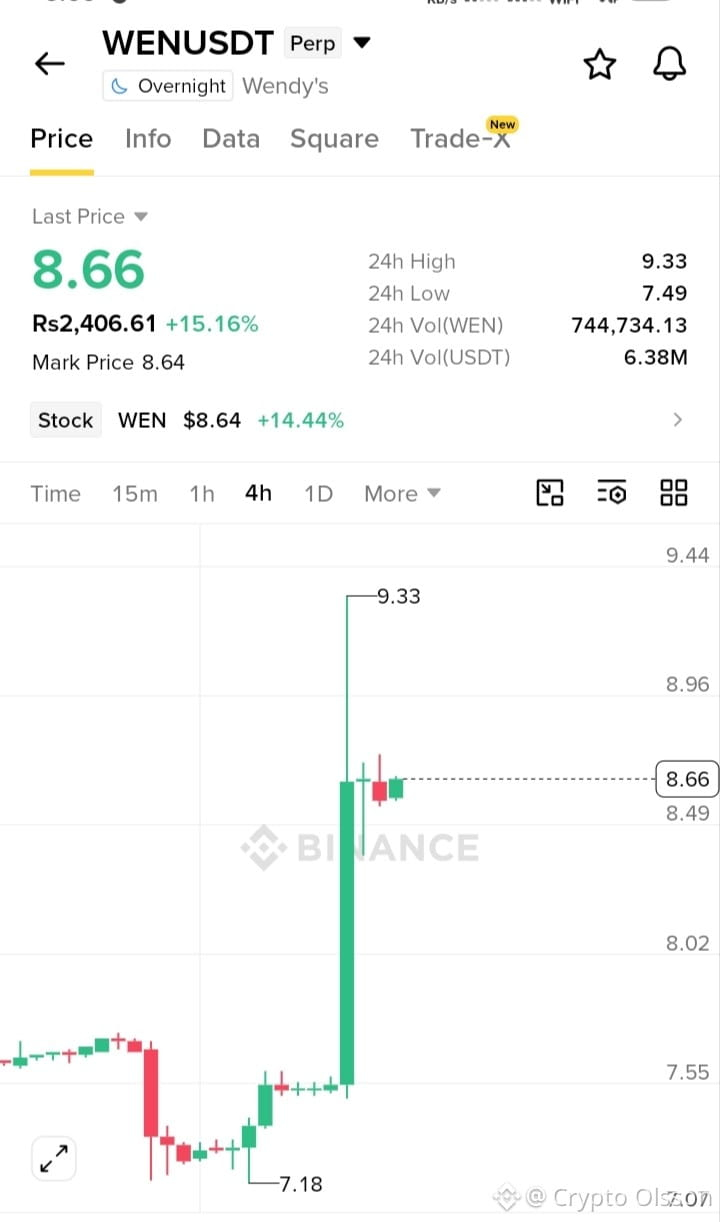
🔥 $WEN /USDT — MOMENTUM WATCH
Wendy’s is moving hot today! 🍔⚡
Price: 8.66 | +15.16%
24H High: 9.33 | 24H Low: 7.49
Volume: 6.38M USDT
📌 Key Levels 🟢 Support: 8.49 → 8.02 🔴 Resistance: 8.96 → 9.33 → 9.44
⚠️ Price is already extended after a strong +15% move. Watch the 8.49 area for a hold or breakdown before entering.
🎯 Trade smart. Protect capital. Don’t chase green candles.
#WEN #Wendy #USDT #Crypto #BinanceSquare
$WEN
{future}(WENUSDT)
🔥 $WEN /USDT — MOMENTUM WATCH
Wendy’s is moving hot today! 🍔⚡
Price: 8.66 | +15.16%
24H High: 9.33 | 24H Low: 7.49
Volume: 6.38M USDT
📌 Key Levels 🟢 Support: 8.49 → 8.02 🔴 Resistance: 8.96 → 9.33 → 9.44
⚠️ Price is already extended after a strong +15% move. Watch the 8.49 area for a hold or breakdown before entering.
🎯 Trade smart. Protect capital. Don’t chase green candles.
#WEN #Wendy #USDT #Crypto #BinanceSquare
$WEN
Wendy’s is moving hot today! 🍔⚡
Price: 8.66 | +15.16%
24H High: 9.33 | 24H Low: 7.49
Volume: 6.38M USDT
📌 Key Levels 🟢 Support: 8.49 → 8.02 🔴 Resistance: 8.96 → 9.33 → 9.44
⚠️ Price is already extended after a strong +15% move. Watch the 8.49 area for a hold or breakdown before entering.
🎯 Trade smart. Protect capital. Don’t chase green candles.
#WEN #Wendy #USDT #Crypto #BinanceSquare
$WEN
1
124


·
--

Article
How to Register a Binance Account With Referral Code WENDYYY: A Step-by-Step Guide for BeginnersIf you are new to Binance and want to create an account, this guide will walk you through the registration process step by step.
The goal is simple:
Help you register through the correct link, check the correct referral code, complete the basic setup, and understand what to do after creating your Binance account.
Wendy’s Binance registration link:
[https://www.binance.com/join?ref=WENDYYY](https://www.binance.com/join?ref=WENDYYY)
Referral code: WENDYYY
When you register through this link or enter referral code WENDYYY, eligible users may receive a lifetime 20% trading fee rebate on Binance Spot and Futures, plus access to Binance welcome rewards if the account meets the program requirements.
Here is the step-by-step guide.
Step 1: Open the Correct Binance Registration Link
First, open Wendy’s Binance registration link:
[https://www.binance.com/join?ref=WENDYYY](https://www.binance.com/join?ref=WENDYYY)
After clicking the link, you will be redirected to Binance’s registration page.
Before entering any personal information, make sure you are on the official Binance website or inside the official Binance app.
This is important because crypto users are often targeted by fake websites and phishing links.
Step 2: Check the Referral Code WENDYYY
When you open the registration link, the referral code should usually be filled in automatically.
Before completing registration, check that the referral code shown is: WENDYYY
This step is very important.
If the referral code does not appear automatically, enter it manually WENDYYY
Make sure the spelling is correct before creating your account.
Do not enter WENDYY, WENDYYD, or any other variation.
Why does this matter?
Because the fee rebate and referral benefits depend on whether your account is correctly linked to referral code WENDYYY.
Once an account is created and linked to a referral code, Binance may not allow the referral relationship to be changed later.
So it is better to check carefully from the beginning.
Step 3: Choose Your Registration Method
Binance may allow you to register using different methods, depending on your region and account options.
Common registration methods include:
Email addressPhone numberGoogle accountApple account
For beginners, using your main email address or phone number is usually the easiest option.
Make sure the email or phone number is active because Binance will send verification codes during registration and future security checks.
Step 4: Enter Your Email or Phone Number
After choosing your registration method, enter your email address or phone number.
Make sure the information is correct.
Binance will then send a verification code to your email inbox or phone number.
Open your email or SMS, copy the verification code, and enter it on the Binance registration page.
Important:
Never share your verification code with anyone.
Your email code, SMS code, OTP, and account security codes should always stay private.
Step 5: Create a Strong Password
Next, you will need to create a password for your Binance account.
Choose a strong password that includes:
Uppercase lettersLowercase lettersNumbersSpecial characters
Avoid using simple passwords such as your birthday, phone number, name, or a password you already use on other platforms.
Your Binance account is connected to your assets, so security should be treated seriously from the first day.
Step 6: Complete Account Registration
After entering the verification code and creating your password, complete the account registration process.
At this point, your Binance account has been created.
However, to use more Binance features and potentially qualify for certain welcome rewards, you should continue with identity verification, also known as KYC.
Step 7: Complete Identity Verification / KYC
After logging in to your Binance account, go to the account verification section.
Depending on your region, Binance may ask you to provide information such as:
Full nameDate of birthCountry or region of residenceIdentity documentFace verification
Simply follow the instructions shown on Binance.
A few tips for KYC:
Use your own valid identity documentMake sure the photo is clear and not blurryAvoid glare or shadows when taking photosMake sure the information matches your registration detailsDo not edit the identity document photoFollow the instructions inside the Binance app or website
Completing KYC is important because some features, limits, and welcome reward tasks may only be available after successful verification.
Step 8: Set Up Account Security
After creating and verifying your account, you should set up security as soon as possible.
Here are a few basic security steps for beginners:
Enable Two-Factor Authentication / 2FA
Use an authenticator app or another security method supported by Binance.
Set Up Anti-Phishing Code if available
This helps you recognize real Binance emails more easily.
Never share your OTP
Binance, Wendy, or any official support channel will never ask you to send your password, OTP, email code, SMS code, or private security information.
Be careful with fake links
Only log in through the official Binance website or official Binance app.
Check the website carefully before logging in
Before entering your account information, make sure you are on Binance’s official domain.
Security is one of the most important steps for every new user.
Step 9: Check Rewards Hub
After registration and identity verification, you can open:
Rewards Hub
This is where Binance may display vouchers, welcome tasks, or campaign rewards available to your account.
Inside Rewards Hub, check:
Whether you received any welcome tasksWhat the task requirements areHow long you have to complete themWhat type of voucher or reward is availableWhether the voucher has an expiration date
Do not assume that every reward is automatic.
Each account may receive different tasks or rewards depending on eligibility, region, KYC status, risk review, and Binance program rules.
Always check the exact information shown inside your own Binance account.
Step 10: Start Using Binance Carefully
After completing the basic setup, you can start exploring Binance.
For beginners, I recommend keeping things simple at first.
Start by following major assets such as BTC, ETH, and BNB.
Learn Spot trading before using Futures.
Understand charts, trading volume, fees, liquidity, and risk management.
Do not deposit too much money at the beginning.
Do not use leverage if you do not understand Futures.
Do not trade only because of rewards.
Rewards can be useful, but learning and risk management are much more important.
Benefits of Registering With Referral Code WENDYYY
When you register through Wendy’s Binance link or enter referral code WENDYYY, eligible users may receive:
✅ Lifetime 20% trading fee rebate on Binance Spot and Futures
✅ Access to Binance welcome rewards worth up to $19,800, depending on eligibility and task completion
✅ The option to link Binance Wallet with referral code WENDYYY for a 30% fee rebate
Binance registration link: [https://www.binance.com/join?ref=WENDYYY](https://www.binance.com/join?ref=WENDYYY)
Binance Wallet referral link: [https://web3.binance.com/en/referral?ref=WENDYYY](https://web3.binance.com/en/referral?ref=WENDYYY)
Quick Checklist for New Users
Before you finish your setup, check this list:
✅ Opened Wendy’s correct Binance registration link
✅ Confirmed the referral code is WENDYYY
✅ Used your own email address or phone number
✅ Created a strong password
✅ Verified your email or phone number
✅ Completed KYC
✅ Enabled account security
✅ Checked Rewards Hub
✅ Understood the risks before depositing or trading
Start Here
Register your Binance account with referral code WENDYYY here:
[https://www.binance.com/join?ref=WENDYYY](https://www.binance.com/join?ref=WENDYYY)
Starting with the correct referral code from the beginning may help eligible users receive long-term fee rebate benefits and a clearer path when learning how to use Binance.
Start small. Learn first. Trade responsibly.
Note: Fee rebates, rewards, eligibility, tasks, and availability may vary depending on region, account status, KYC, risk review, and official Binance rules. This post is for beginner onboarding and educational purposes only. It is not financial advice.
#Binance #wendy $BTC $ETH $BNB
How to Register a Binance Account With Referral Code WENDYYY: A Step-by-Step Guide for Beginners
If you are new to Binance and want to create an account, this guide will walk you through the registration process step by step.
The goal is simple:
Help you register through the correct link, check the correct referral code, complete the basic setup, and understand what to do after creating your Binance account.
Wendy’s Binance registration link:
https://www.binance.com/join?ref=WENDYYY
Referral code: WENDYYY
When you register through this link or enter referral code WENDYYY, eligible users may receive a lifetime 20% trading fee rebate on Binance Spot and Futures, plus access to Binance welcome rewards if the account meets the program requirements.
Here is the step-by-step guide.
Step 1: Open the Correct Binance Registration Link
First, open Wendy’s Binance registration link:
https://www.binance.com/join?ref=WENDYYY
After clicking the link, you will be redirected to Binance’s registration page.
Before entering any personal information, make sure you are on the official Binance website or inside the official Binance app.
This is important because crypto users are often targeted by fake websites and phishing links.
Step 2: Check the Referral Code WENDYYY
When you open the registration link, the referral code should usually be filled in automatically.
Before completing registration, check that the referral code shown is: WENDYYY
This step is very important.
If the referral code does not appear automatically, enter it manually WENDYYY
Make sure the spelling is correct before creating your account.
Do not enter WENDYY, WENDYYD, or any other variation.
Why does this matter?
Because the fee rebate and referral benefits depend on whether your account is correctly linked to referral code WENDYYY.
Once an account is created and linked to a referral code, Binance may not allow the referral relationship to be changed later.
So it is better to check carefully from the beginning.
Step 3: Choose Your Registration Method
Binance may allow you to register using different methods, depending on your region and account options.
Common registration methods include:
Email addressPhone numberGoogle accountApple account
For beginners, using your main email address or phone number is usually the easiest option.
Make sure the email or phone number is active because Binance will send verification codes during registration and future security checks.
Step 4: Enter Your Email or Phone Number
After choosing your registration method, enter your email address or phone number.
Make sure the information is correct.
Binance will then send a verification code to your email inbox or phone number.
Open your email or SMS, copy the verification code, and enter it on the Binance registration page.
Important:
Never share your verification code with anyone.
Your email code, SMS code, OTP, and account security codes should always stay private.
Step 5: Create a Strong Password
Next, you will need to create a password for your Binance account.
Choose a strong password that includes:
Uppercase lettersLowercase lettersNumbersSpecial characters
Avoid using simple passwords such as your birthday, phone number, name, or a password you already use on other platforms.
Your Binance account is connected to your assets, so security should be treated seriously from the first day.
Step 6: Complete Account Registration
After entering the verification code and creating your password, complete the account registration process.
At this point, your Binance account has been created.
However, to use more Binance features and potentially qualify for certain welcome rewards, you should continue with identity verification, also known as KYC.
Step 7: Complete Identity Verification / KYC
After logging in to your Binance account, go to the account verification section.
Depending on your region, Binance may ask you to provide information such as:
Full nameDate of birthCountry or region of residenceIdentity documentFace verification
Simply follow the instructions shown on Binance.
A few tips for KYC:
Use your own valid identity documentMake sure the photo is clear and not blurryAvoid glare or shadows when taking photosMake sure the information matches your registration detailsDo not edit the identity document photoFollow the instructions inside the Binance app or website
Completing KYC is important because some features, limits, and welcome reward tasks may only be available after successful verification.
Step 8: Set Up Account Security
After creating and verifying your account, you should set up security as soon as possible.
Here are a few basic security steps for beginners:
Enable Two-Factor Authentication / 2FA
Use an authenticator app or another security method supported by Binance.
Set Up Anti-Phishing Code if available
This helps you recognize real Binance emails more easily.
Never share your OTP
Binance, Wendy, or any official support channel will never ask you to send your password, OTP, email code, SMS code, or private security information.
Be careful with fake links
Only log in through the official Binance website or official Binance app.
Check the website carefully before logging in
Before entering your account information, make sure you are on Binance’s official domain.
Security is one of the most important steps for every new user.
Step 9: Check Rewards Hub
After registration and identity verification, you can open:
Rewards Hub
This is where Binance may display vouchers, welcome tasks, or campaign rewards available to your account.
Inside Rewards Hub, check:
Whether you received any welcome tasksWhat the task requirements areHow long you have to complete themWhat type of voucher or reward is availableWhether the voucher has an expiration date
Do not assume that every reward is automatic.
Each account may receive different tasks or rewards depending on eligibility, region, KYC status, risk review, and Binance program rules.
Always check the exact information shown inside your own Binance account.
Step 10: Start Using Binance Carefully
After completing the basic setup, you can start exploring Binance.
For beginners, I recommend keeping things simple at first.
Start by following major assets such as BTC, ETH, and BNB.
Learn Spot trading before using Futures.
Understand charts, trading volume, fees, liquidity, and risk management.
Do not deposit too much money at the beginning.
Do not use leverage if you do not understand Futures.
Do not trade only because of rewards.
Rewards can be useful, but learning and risk management are much more important.
Benefits of Registering With Referral Code WENDYYY
When you register through Wendy’s Binance link or enter referral code WENDYYY, eligible users may receive:
✅ Lifetime 20% trading fee rebate on Binance Spot and Futures
✅ Access to Binance welcome rewards worth up to $19,800, depending on eligibility and task completion
✅ The option to link Binance Wallet with referral code WENDYYY for a 30% fee rebate
Binance registration link: https://www.binance.com/join?ref=WENDYYY
Binance Wallet referral link: https://web3.binance.com/en/referral?ref=WENDYYY
Quick Checklist for New Users
Before you finish your setup, check this list:
✅ Opened Wendy’s correct Binance registration link
✅ Confirmed the referral code is WENDYYY
✅ Used your own email address or phone number
✅ Created a strong password
✅ Verified your email or phone number
✅ Completed KYC
✅ Enabled account security
✅ Checked Rewards Hub
✅ Understood the risks before depositing or trading
Start Here
Register your Binance account with referral code WENDYYY here:
https://www.binance.com/join?ref=WENDYYY
Starting with the correct referral code from the beginning may help eligible users receive long-term fee rebate benefits and a clearer path when learning how to use Binance.
Start small. Learn first. Trade responsibly.
Note: Fee rebates, rewards, eligibility, tasks, and availability may vary depending on region, account status, KYC, risk review, and official Binance rules. This post is for beginner onboarding and educational purposes only. It is not financial advice.
#Binance #wendy $BTC $ETH $BNB
The goal is simple:
Help you register through the correct link, check the correct referral code, complete the basic setup, and understand what to do after creating your Binance account.
Wendy’s Binance registration link:
https://www.binance.com/join?ref=WENDYYY
Referral code: WENDYYY
When you register through this link or enter referral code WENDYYY, eligible users may receive a lifetime 20% trading fee rebate on Binance Spot and Futures, plus access to Binance welcome rewards if the account meets the program requirements.
Here is the step-by-step guide.
Step 1: Open the Correct Binance Registration Link
First, open Wendy’s Binance registration link:
https://www.binance.com/join?ref=WENDYYY
After clicking the link, you will be redirected to Binance’s registration page.
Before entering any personal information, make sure you are on the official Binance website or inside the official Binance app.
This is important because crypto users are often targeted by fake websites and phishing links.
Step 2: Check the Referral Code WENDYYY
When you open the registration link, the referral code should usually be filled in automatically.
Before completing registration, check that the referral code shown is: WENDYYY
This step is very important.
If the referral code does not appear automatically, enter it manually WENDYYY
Make sure the spelling is correct before creating your account.
Do not enter WENDYY, WENDYYD, or any other variation.
Why does this matter?
Because the fee rebate and referral benefits depend on whether your account is correctly linked to referral code WENDYYY.
Once an account is created and linked to a referral code, Binance may not allow the referral relationship to be changed later.
So it is better to check carefully from the beginning.
Step 3: Choose Your Registration Method
Binance may allow you to register using different methods, depending on your region and account options.
Common registration methods include:
Email addressPhone numberGoogle accountApple account
For beginners, using your main email address or phone number is usually the easiest option.
Make sure the email or phone number is active because Binance will send verification codes during registration and future security checks.
Step 4: Enter Your Email or Phone Number
After choosing your registration method, enter your email address or phone number.
Make sure the information is correct.
Binance will then send a verification code to your email inbox or phone number.
Open your email or SMS, copy the verification code, and enter it on the Binance registration page.
Important:
Never share your verification code with anyone.
Your email code, SMS code, OTP, and account security codes should always stay private.
Step 5: Create a Strong Password
Next, you will need to create a password for your Binance account.
Choose a strong password that includes:
Uppercase lettersLowercase lettersNumbersSpecial characters
Avoid using simple passwords such as your birthday, phone number, name, or a password you already use on other platforms.
Your Binance account is connected to your assets, so security should be treated seriously from the first day.
Step 6: Complete Account Registration
After entering the verification code and creating your password, complete the account registration process.
At this point, your Binance account has been created.
However, to use more Binance features and potentially qualify for certain welcome rewards, you should continue with identity verification, also known as KYC.
Step 7: Complete Identity Verification / KYC
After logging in to your Binance account, go to the account verification section.
Depending on your region, Binance may ask you to provide information such as:
Full nameDate of birthCountry or region of residenceIdentity documentFace verification
Simply follow the instructions shown on Binance.
A few tips for KYC:
Use your own valid identity documentMake sure the photo is clear and not blurryAvoid glare or shadows when taking photosMake sure the information matches your registration detailsDo not edit the identity document photoFollow the instructions inside the Binance app or website
Completing KYC is important because some features, limits, and welcome reward tasks may only be available after successful verification.
Step 8: Set Up Account Security
After creating and verifying your account, you should set up security as soon as possible.
Here are a few basic security steps for beginners:
Enable Two-Factor Authentication / 2FA
Use an authenticator app or another security method supported by Binance.
Set Up Anti-Phishing Code if available
This helps you recognize real Binance emails more easily.
Never share your OTP
Binance, Wendy, or any official support channel will never ask you to send your password, OTP, email code, SMS code, or private security information.
Be careful with fake links
Only log in through the official Binance website or official Binance app.
Check the website carefully before logging in
Before entering your account information, make sure you are on Binance’s official domain.
Security is one of the most important steps for every new user.
Step 9: Check Rewards Hub
After registration and identity verification, you can open:
Rewards Hub
This is where Binance may display vouchers, welcome tasks, or campaign rewards available to your account.
Inside Rewards Hub, check:
Whether you received any welcome tasksWhat the task requirements areHow long you have to complete themWhat type of voucher or reward is availableWhether the voucher has an expiration date
Do not assume that every reward is automatic.
Each account may receive different tasks or rewards depending on eligibility, region, KYC status, risk review, and Binance program rules.
Always check the exact information shown inside your own Binance account.
Step 10: Start Using Binance Carefully
After completing the basic setup, you can start exploring Binance.
For beginners, I recommend keeping things simple at first.
Start by following major assets such as BTC, ETH, and BNB.
Learn Spot trading before using Futures.
Understand charts, trading volume, fees, liquidity, and risk management.
Do not deposit too much money at the beginning.
Do not use leverage if you do not understand Futures.
Do not trade only because of rewards.
Rewards can be useful, but learning and risk management are much more important.
Benefits of Registering With Referral Code WENDYYY
When you register through Wendy’s Binance link or enter referral code WENDYYY, eligible users may receive:
✅ Lifetime 20% trading fee rebate on Binance Spot and Futures
✅ Access to Binance welcome rewards worth up to $19,800, depending on eligibility and task completion
✅ The option to link Binance Wallet with referral code WENDYYY for a 30% fee rebate
Binance registration link: https://www.binance.com/join?ref=WENDYYY
Binance Wallet referral link: https://web3.binance.com/en/referral?ref=WENDYYY
Quick Checklist for New Users
Before you finish your setup, check this list:
✅ Opened Wendy’s correct Binance registration link
✅ Confirmed the referral code is WENDYYY
✅ Used your own email address or phone number
✅ Created a strong password
✅ Verified your email or phone number
✅ Completed KYC
✅ Enabled account security
✅ Checked Rewards Hub
✅ Understood the risks before depositing or trading
Start Here
Register your Binance account with referral code WENDYYY here:
https://www.binance.com/join?ref=WENDYYY
Starting with the correct referral code from the beginning may help eligible users receive long-term fee rebate benefits and a clearer path when learning how to use Binance.
Start small. Learn first. Trade responsibly.
Note: Fee rebates, rewards, eligibility, tasks, and availability may vary depending on region, account status, KYC, risk review, and official Binance rules. This post is for beginner onboarding and educational purposes only. It is not financial advice.
#Binance #wendy $BTC $ETH $BNB
3
393
·
--

Article
Summer With Binance: Register With Code WENDYYY and Get a Chance to Unlock 8–28 USDT Reward BoxesIf you are planning to create a Binance account, this is a campaign worth paying attention to.
Binance is running the “Summer Referral: Invite New Friends and Earn 8–28 USDT Rewards Together” campaign for new users who register, deposit, trade, and log in to the Binance App during the campaign period.
The exciting part is this:
When an invited friend completes all required tasks and meets the campaign conditions, both the inviter and the invited friend may get a chance to unlock a random Reward Box worth 8, 12, 18, or 28 USDT.
The total reward for each successful pair can be up to 56 USDT.
If you are a new user and want to start using Binance, you can register through Wendy’s referral link/code:
Referral code: WENDYYY
Binance registration link: [https://www.binance.com/vi/referral/mystery-box/vn-mohoprungrinh-10/claim?ref=WENDYYY](https://www.binance.com/vi/referral/mystery-box/vn-mohoprungrinh-10/claim?ref=WENDYYY)
In addition to the campaign reward, eligible users who register with referral code WENDYYY may also receive a lifetime 20% trading fee rebate on Binance Spot and Futures, subject to Binance’s applicable rules.
Campaign Period
10:00 on June 16, 2026 to 06:59 on July 3, 2026
Since rewards are distributed on a first-come, first-served basis, users who want to participate should register and complete the required tasks early.
What Do New Users Need to Do to Unlock a Reward Box?
To become eligible for a Reward Box, new users need to register through a valid referral link/code during the campaign period and complete the required tasks.
Here is the simple participation guide.
Step 1: Register for Binance With Code WENDYYY
First, open Wendy’s Binance registration link:
[https://www.binance.com/vi/referral/mystery-box/vn-mohoprungrinh-10/claim?ref=WENDYYY](https://www.binance.com/vi/referral/mystery-box/vn-mohoprungrinh-10/claim?ref=WENDYYY)
When registering, check that the referral code shown is: WENDYYY
Entering the correct referral code is important because it helps the system recognize your account under the correct referral relationship.
After registration, complete the basic setup such as email/phone verification and account security.
Step 2: Complete Account Verification / KYC
To participate in the campaign and receive rewards, new users need to pass Binance’s platform risk review, including the KYC process.
You should complete account verification as early as possible.
Binance may require:
Basic personal informationIdentity document verificationFace verificationAdditional security steps depending on your region
Use your own valid information and follow the instructions shown inside the Binance App.
Step 3: Deposit at Least $100 Through Buy Crypto or P2P
After your account is ready, new users need to make a cumulative deposit equivalent to at least $100 through the Buy Crypto page using available payment methods, including P2P.
Only buy orders are counted for this campaign.
Some payment methods such as bank cards, Apple Pay, and Google Pay may not be counted under the campaign rules.
Before completing the task, check the details shown on Binance’s campaign page carefully.
Step 4: Trade at Least $300 Through Spot or Convert
Next, new users need to complete a cumulative trading amount equivalent to at least $300 through:
Binance Spot, buy orders onlyBinance Convert, buy orders only
Some zero-fee Spot trading pairs or Convert transactions between certain stablecoins may not count as eligible trading volume under the campaign rules.
That is why you should read the task requirements on the campaign page before trading.
If you are a beginner, I recommend starting simple and understanding the product before trading a large amount.
Do not trade only for rewards.
Think of the reward as an extra benefit while you learn how to use Binance properly.
Step 5: Log In to the Binance App During the Campaign Period
The invited user must have at least one Binance App login record during the campaign period.
So after registering and verifying your account, you should download the official Binance App, log in to your account, and check sections such as:
Rewards HubCampaign pageAssigned tasksReward Box if you are eligible to unlock one
This is a simple step, but it is important for completing the campaign requirements.
Step 6: Open the Reward Box and Receive a USDT Voucher
After the new user completes all required tasks, both the inviter and the invited user may become eligible to open a Reward Box.
The Reward Box may contain a random token voucher worth:
8 USDT, 12 USDT, 18 USDT, or 28 USDT
Rewards will be distributed to the eligible user’s Rewards Hub.
Users need to open the Reward Box during the campaign period. After receiving the voucher, check the expiration date and redeem it on time.
According to the campaign information, token vouchers are valid for 7 calendar days from the date of distribution.
Start With Wendy Today
If you are already planning to create a Binance account, this is a good time to start.
The Summer Referral campaign is only available for a limited time. Rewards are distributed on a first-come, first-served basis, and Reward Boxes can only be unlocked when you register through the correct link, complete the required tasks, and meet the campaign eligibility rules.
#Binance #wendy $BTC $ETH $BNB
Summer With Binance: Register With Code WENDYYY and Get a Chance to Unlock 8–28 USDT Reward Boxes
If you are planning to create a Binance account, this is a campaign worth paying attention to.
Binance is running the “Summer Referral: Invite New Friends and Earn 8–28 USDT Rewards Together” campaign for new users who register, deposit, trade, and log in to the Binance App during the campaign period.
The exciting part is this:
When an invited friend completes all required tasks and meets the campaign conditions, both the inviter and the invited friend may get a chance to unlock a random Reward Box worth 8, 12, 18, or 28 USDT.
The total reward for each successful pair can be up to 56 USDT.
If you are a new user and want to start using Binance, you can register through Wendy’s referral link/code:
Referral code: WENDYYY
Binance registration link: https://www.binance.com/vi/referral/mystery-box/vn-mohoprungrinh-10/claim?ref=WENDYYY
In addition to the campaign reward, eligible users who register with referral code WENDYYY may also receive a lifetime 20% trading fee rebate on Binance Spot and Futures, subject to Binance’s applicable rules.
Campaign Period
10:00 on June 16, 2026 to 06:59 on July 3, 2026
Since rewards are distributed on a first-come, first-served basis, users who want to participate should register and complete the required tasks early.
What Do New Users Need to Do to Unlock a Reward Box?
To become eligible for a Reward Box, new users need to register through a valid referral link/code during the campaign period and complete the required tasks.
Here is the simple participation guide.
Step 1: Register for Binance With Code WENDYYY
First, open Wendy’s Binance registration link:
https://www.binance.com/vi/referral/mystery-box/vn-mohoprungrinh-10/claim?ref=WENDYYY
When registering, check that the referral code shown is: WENDYYY
Entering the correct referral code is important because it helps the system recognize your account under the correct referral relationship.
After registration, complete the basic setup such as email/phone verification and account security.
Step 2: Complete Account Verification / KYC
To participate in the campaign and receive rewards, new users need to pass Binance’s platform risk review, including the KYC process.
You should complete account verification as early as possible.
Binance may require:
Basic personal informationIdentity document verificationFace verificationAdditional security steps depending on your region
Use your own valid information and follow the instructions shown inside the Binance App.
Step 3: Deposit at Least $100 Through Buy Crypto or P2P
After your account is ready, new users need to make a cumulative deposit equivalent to at least $100 through the Buy Crypto page using available payment methods, including P2P.
Only buy orders are counted for this campaign.
Some payment methods such as bank cards, Apple Pay, and Google Pay may not be counted under the campaign rules.
Before completing the task, check the details shown on Binance’s campaign page carefully.
Step 4: Trade at Least $300 Through Spot or Convert
Next, new users need to complete a cumulative trading amount equivalent to at least $300 through:
Binance Spot, buy orders onlyBinance Convert, buy orders only
Some zero-fee Spot trading pairs or Convert transactions between certain stablecoins may not count as eligible trading volume under the campaign rules.
That is why you should read the task requirements on the campaign page before trading.
If you are a beginner, I recommend starting simple and understanding the product before trading a large amount.
Do not trade only for rewards.
Think of the reward as an extra benefit while you learn how to use Binance properly.
Step 5: Log In to the Binance App During the Campaign Period
The invited user must have at least one Binance App login record during the campaign period.
So after registering and verifying your account, you should download the official Binance App, log in to your account, and check sections such as:
Rewards HubCampaign pageAssigned tasksReward Box if you are eligible to unlock one
This is a simple step, but it is important for completing the campaign requirements.
Step 6: Open the Reward Box and Receive a USDT Voucher
After the new user completes all required tasks, both the inviter and the invited user may become eligible to open a Reward Box.
The Reward Box may contain a random token voucher worth:
8 USDT, 12 USDT, 18 USDT, or 28 USDT
Rewards will be distributed to the eligible user’s Rewards Hub.
Users need to open the Reward Box during the campaign period. After receiving the voucher, check the expiration date and redeem it on time.
According to the campaign information, token vouchers are valid for 7 calendar days from the date of distribution.
Start With Wendy Today
If you are already planning to create a Binance account, this is a good time to start.
The Summer Referral campaign is only available for a limited time. Rewards are distributed on a first-come, first-served basis, and Reward Boxes can only be unlocked when you register through the correct link, complete the required tasks, and meet the campaign eligibility rules.
#Binance #wendy $BTC $ETH $BNB
Binance is running the “Summer Referral: Invite New Friends and Earn 8–28 USDT Rewards Together” campaign for new users who register, deposit, trade, and log in to the Binance App during the campaign period.
The exciting part is this:
When an invited friend completes all required tasks and meets the campaign conditions, both the inviter and the invited friend may get a chance to unlock a random Reward Box worth 8, 12, 18, or 28 USDT.
The total reward for each successful pair can be up to 56 USDT.
If you are a new user and want to start using Binance, you can register through Wendy’s referral link/code:
Referral code: WENDYYY
Binance registration link: https://www.binance.com/vi/referral/mystery-box/vn-mohoprungrinh-10/claim?ref=WENDYYY
In addition to the campaign reward, eligible users who register with referral code WENDYYY may also receive a lifetime 20% trading fee rebate on Binance Spot and Futures, subject to Binance’s applicable rules.
Campaign Period
10:00 on June 16, 2026 to 06:59 on July 3, 2026
Since rewards are distributed on a first-come, first-served basis, users who want to participate should register and complete the required tasks early.
What Do New Users Need to Do to Unlock a Reward Box?
To become eligible for a Reward Box, new users need to register through a valid referral link/code during the campaign period and complete the required tasks.
Here is the simple participation guide.
Step 1: Register for Binance With Code WENDYYY
First, open Wendy’s Binance registration link:
https://www.binance.com/vi/referral/mystery-box/vn-mohoprungrinh-10/claim?ref=WENDYYY
When registering, check that the referral code shown is: WENDYYY
Entering the correct referral code is important because it helps the system recognize your account under the correct referral relationship.
After registration, complete the basic setup such as email/phone verification and account security.
Step 2: Complete Account Verification / KYC
To participate in the campaign and receive rewards, new users need to pass Binance’s platform risk review, including the KYC process.
You should complete account verification as early as possible.
Binance may require:
Basic personal informationIdentity document verificationFace verificationAdditional security steps depending on your region
Use your own valid information and follow the instructions shown inside the Binance App.
Step 3: Deposit at Least $100 Through Buy Crypto or P2P
After your account is ready, new users need to make a cumulative deposit equivalent to at least $100 through the Buy Crypto page using available payment methods, including P2P.
Only buy orders are counted for this campaign.
Some payment methods such as bank cards, Apple Pay, and Google Pay may not be counted under the campaign rules.
Before completing the task, check the details shown on Binance’s campaign page carefully.
Step 4: Trade at Least $300 Through Spot or Convert
Next, new users need to complete a cumulative trading amount equivalent to at least $300 through:
Binance Spot, buy orders onlyBinance Convert, buy orders only
Some zero-fee Spot trading pairs or Convert transactions between certain stablecoins may not count as eligible trading volume under the campaign rules.
That is why you should read the task requirements on the campaign page before trading.
If you are a beginner, I recommend starting simple and understanding the product before trading a large amount.
Do not trade only for rewards.
Think of the reward as an extra benefit while you learn how to use Binance properly.
Step 5: Log In to the Binance App During the Campaign Period
The invited user must have at least one Binance App login record during the campaign period.
So after registering and verifying your account, you should download the official Binance App, log in to your account, and check sections such as:
Rewards HubCampaign pageAssigned tasksReward Box if you are eligible to unlock one
This is a simple step, but it is important for completing the campaign requirements.
Step 6: Open the Reward Box and Receive a USDT Voucher
After the new user completes all required tasks, both the inviter and the invited user may become eligible to open a Reward Box.
The Reward Box may contain a random token voucher worth:
8 USDT, 12 USDT, 18 USDT, or 28 USDT
Rewards will be distributed to the eligible user’s Rewards Hub.
Users need to open the Reward Box during the campaign period. After receiving the voucher, check the expiration date and redeem it on time.
According to the campaign information, token vouchers are valid for 7 calendar days from the date of distribution.
Start With Wendy Today
If you are already planning to create a Binance account, this is a good time to start.
The Summer Referral campaign is only available for a limited time. Rewards are distributed on a first-come, first-served basis, and Reward Boxes can only be unlocked when you register through the correct link, complete the required tasks, and meet the campaign eligibility rules.
#Binance #wendy $BTC $ETH $BNB
5
10
546
·
--
Binance 9YA Treasure Hunt: Earn Daily Spins and Unlock Rewards
Binance Vietnam is celebrating Binance’s 9th anniversary with a special Treasure Hunt event.
Eligible users can complete tasks during the campaign period to earn spins and get a chance to receive USDT vouchers, Binance 9YA swag, FWC 2026 gifts, and USDT Shared Pool entries.
Campaign period:
July 9, 2026, 17:00 to August 1, 2026, 06:59 (UTC+7)
How it works:
1. Log in to your Binance account
2. Visit the event page
3. Complete eligible tasks to earn spins
4. Tap “GO” to spin and discover your reward
Possible rewards include:
• 999 USDT token voucher
• 99 USDT token voucher
• 14.7 USDT Birthday Voucher
• 9 USDT token voucher
• 1.99 USDT token voucher
• Binance 9YA MKT Swag Box
• FWC 2026 Shirt + Bottle Combo
• USDT Shared Pool Entry
How to earn more spins:
New or first-time users can earn spins by completing first-time P2P/Fiat deposits, Spot trades, or Futures trades.
All users can earn daily spins through eligible P2P/Fiat deposits, Spot trading, Stock trading with USDC, Futures trading, volume boost tasks, and valid referrals.
Important notes:
• Daily tasks refresh at 07:00 (UTC+7)
• First-time user tasks can only be completed once
• Referral tasks can be completed multiple times, subject to campaign limits
• USDT Shared Pool rewards are capped at 5 USDT per user
• Token vouchers expire 14 days after issuance
• Products like Stock, Futures, P2P and Fiat may not be available to all users
New users can register or link their Binance account through Wendy here to access the eligible 20% Spot/Futures fee rebate, subject to Binance’s terms:
[https://www.binance.com/join?ref=WENDYYY](https://www.binance.com/join?ref=WENDYYY)
Disclaimer: This is not financial advice. Please read Binance’s official terms carefully and make sure the activity is available in your region before participating. Futures trading carries high risk and may not be suitable for everyone.
#Binance #wendy $BTC
Binance 9YA Treasure Hunt: Earn Daily Spins and Unlock Rewards
Binance Vietnam is celebrating Binance’s 9th anniversary with a special Treasure Hunt event.
Eligible users can complete tasks during the campaign period to earn spins and get a chance to receive USDT vouchers, Binance 9YA swag, FWC 2026 gifts, and USDT Shared Pool entries.
Campaign period:
July 9, 2026, 17:00 to August 1, 2026, 06:59 (UTC+7)
How it works:
1. Log in to your Binance account
2. Visit the event page
3. Complete eligible tasks to earn spins
4. Tap “GO” to spin and discover your reward
Possible rewards include:
• 999 USDT token voucher
• 99 USDT token voucher
• 14.7 USDT Birthday Voucher
• 9 USDT token voucher
• 1.99 USDT token voucher
• Binance 9YA MKT Swag Box
• FWC 2026 Shirt + Bottle Combo
• USDT Shared Pool Entry
How to earn more spins:
New or first-time users can earn spins by completing first-time P2P/Fiat deposits, Spot trades, or Futures trades.
All users can earn daily spins through eligible P2P/Fiat deposits, Spot trading, Stock trading with USDC, Futures trading, volume boost tasks, and valid referrals.
Important notes:
• Daily tasks refresh at 07:00 (UTC+7)
• First-time user tasks can only be completed once
• Referral tasks can be completed multiple times, subject to campaign limits
• USDT Shared Pool rewards are capped at 5 USDT per user
• Token vouchers expire 14 days after issuance
• Products like Stock, Futures, P2P and Fiat may not be available to all users
New users can register or link their Binance account through Wendy here to access the eligible 20% Spot/Futures fee rebate, subject to Binance’s terms:
https://www.binance.com/join?ref=WENDYYY
Disclaimer: This is not financial advice. Please read Binance’s official terms carefully and make sure the activity is available in your region before participating. Futures trading carries high risk and may not be suitable for everyone.
#Binance #wendy $BTC
Binance Vietnam is celebrating Binance’s 9th anniversary with a special Treasure Hunt event.
Eligible users can complete tasks during the campaign period to earn spins and get a chance to receive USDT vouchers, Binance 9YA swag, FWC 2026 gifts, and USDT Shared Pool entries.
Campaign period:
July 9, 2026, 17:00 to August 1, 2026, 06:59 (UTC+7)
How it works:
1. Log in to your Binance account
2. Visit the event page
3. Complete eligible tasks to earn spins
4. Tap “GO” to spin and discover your reward
Possible rewards include:
• 999 USDT token voucher
• 99 USDT token voucher
• 14.7 USDT Birthday Voucher
• 9 USDT token voucher
• 1.99 USDT token voucher
• Binance 9YA MKT Swag Box
• FWC 2026 Shirt + Bottle Combo
• USDT Shared Pool Entry
How to earn more spins:
New or first-time users can earn spins by completing first-time P2P/Fiat deposits, Spot trades, or Futures trades.
All users can earn daily spins through eligible P2P/Fiat deposits, Spot trading, Stock trading with USDC, Futures trading, volume boost tasks, and valid referrals.
Important notes:
• Daily tasks refresh at 07:00 (UTC+7)
• First-time user tasks can only be completed once
• Referral tasks can be completed multiple times, subject to campaign limits
• USDT Shared Pool rewards are capped at 5 USDT per user
• Token vouchers expire 14 days after issuance
• Products like Stock, Futures, P2P and Fiat may not be available to all users
New users can register or link their Binance account through Wendy here to access the eligible 20% Spot/Futures fee rebate, subject to Binance’s terms:
https://www.binance.com/join?ref=WENDYYY
Disclaimer: This is not financial advice. Please read Binance’s official terms carefully and make sure the activity is available in your region before participating. Futures trading carries high risk and may not be suitable for everyone.
#Binance #wendy $BTC

1
4
595
·
--
THE BINANCE COMMODITY PERP PANIC THIS MORNING. HERE'S WHAT ACTUALLY CHANGED.
So Binance put out an announcement earlier today and it caused some confusion — a lot of people read it as weekend trading on commodity perps being shut down.
Not the case.
Gold, silver, oil perps still trade 24/7. Binance came back and clarified that pretty quickly.
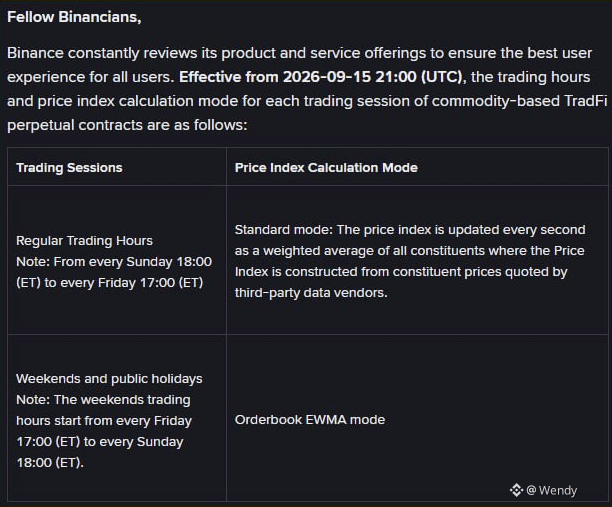
What's actually changing is just the price index calculation method on weekends and public holidays. During regular hours, the price index works the same as before — weighted average from third-party data providers. When markets close on weekends, it switches to an orderbook EWMA model using Binance's own book.
Effective from September 15, 21:00 UTC.
The initial communication wasn't the clearest, which is probably what triggered the confusion. The actual change itself is pretty minor.
#Binance #CommodityPerps #wendy
THE BINANCE COMMODITY PERP PANIC THIS MORNING. HERE'S WHAT ACTUALLY CHANGED.
So Binance put out an announcement earlier today and it caused some confusion — a lot of people read it as weekend trading on commodity perps being shut down.
Not the case.
Gold, silver, oil perps still trade 24/7. Binance came back and clarified that pretty quickly.
What's actually changing is just the price index calculation method on weekends and public holidays. During regular hours, the price index works the same as before — weighted average from third-party data providers. When markets close on weekends, it switches to an orderbook EWMA model using Binance's own book.
Effective from September 15, 21:00 UTC.
The initial communication wasn't the clearest, which is probably what triggered the confusion. The actual change itself is pretty minor.
#Binance #CommodityPerps #wendy
So Binance put out an announcement earlier today and it caused some confusion — a lot of people read it as weekend trading on commodity perps being shut down.
Not the case.
Gold, silver, oil perps still trade 24/7. Binance came back and clarified that pretty quickly.
What's actually changing is just the price index calculation method on weekends and public holidays. During regular hours, the price index works the same as before — weighted average from third-party data providers. When markets close on weekends, it switches to an orderbook EWMA model using Binance's own book.
Effective from September 15, 21:00 UTC.
The initial communication wasn't the clearest, which is probably what triggered the confusion. The actual change itself is pretty minor.
#Binance #CommodityPerps #wendy
3
360
·
--

Article
Cardano Trader Incinerates $6 Million in ADA After a Stablecoin Swap Spirals Out of ControlA routine stablecoin swap on Cardano turned into a multimillion-dollar catastrophe this week after a dormant wallet attempted to convert ADA into USDA on Minswap-only to collide head-on with a liquidity vacuum. According to on-chain analyst ZachXBT, the misstep wiped out roughly $6.05 million worth of ADA in a matter of minutes, offering a harsh reminder of how unforgiving DeFi can be when liquidity thins.
A Long-Silent Wallet Awakens—and Walks Into a Liquidity Trap
The incident began when a Cardano wallet, inactive since 2020, suddenly reappeared and attempted to trade 14.4 million ADA-valued around $6.9 million-for just 847,000 USDA. On paper, this kind of swap should have been uneventful. In practice, the ADA-USDA liquidity pool held only about $1.5 million.
That imbalance triggered catastrophic slippage. As the transaction tore through the pool, USDA’s price shot into the stratosphere, briefly spiking to an absurd $60–$70 per token-dozens of times higher than its intended $1 peg. The trader received far fewer stablecoins than expected, while the pool’s pricing mechanism distorted wildly.
Screenshots from Dexscreener show the blowout clearly: USDA’s candle tore upward in a violent vertical burst before crashing back to earth. Arbitrage traders-always quick on the draw-swooped in almost immediately, vacuuming up ADA at bargain prices once liquidity and pricing normalized, which happened within about an hour.
Conflicting Market Data Highlights the Scale of the Spike
Market trackers painted different pictures of how high USDA truly went. Coingecko recorded a modest peak near $4.85-a figure that barely hints at the chaos. In contrast, platforms monitoring live DEX data, including Dexscreener and on-chain explorers such as Lookonchain, captured USDA soaring well above $60. On the 15-second chart, the surge lasted around 20 minutes before markets digested the shock.
When Human Error Meets DeFi, the Protocol Never Takes the Blame
The fallout from the swap serves as a blunt reminder of a truth DeFi veterans know well: blockchains can guarantee execution, but they cannot protect users from their own mistakes. Immutable ledgers, rigorously designed smart contracts, and decentralized rails may keep systems transparent and secure, yet none of them can prevent a trader from overlooking slippage settings or liquidity depth.
Cardano’s DeFi ecosystem will continue to expand and mature, but no amount of technical refinement can fully eliminate the oldest vulnerability in any financial system- human error.
#Binance #wendy $ADA
Cardano Trader Incinerates $6 Million in ADA After a Stablecoin Swap Spirals Out of Control
A routine stablecoin swap on Cardano turned into a multimillion-dollar catastrophe this week after a dormant wallet attempted to convert ADA into USDA on Minswap-only to collide head-on with a liquidity vacuum. According to on-chain analyst ZachXBT, the misstep wiped out roughly $6.05 million worth of ADA in a matter of minutes, offering a harsh reminder of how unforgiving DeFi can be when liquidity thins.
A Long-Silent Wallet Awakens—and Walks Into a Liquidity Trap
The incident began when a Cardano wallet, inactive since 2020, suddenly reappeared and attempted to trade 14.4 million ADA-valued around $6.9 million-for just 847,000 USDA. On paper, this kind of swap should have been uneventful. In practice, the ADA-USDA liquidity pool held only about $1.5 million.
That imbalance triggered catastrophic slippage. As the transaction tore through the pool, USDA’s price shot into the stratosphere, briefly spiking to an absurd $60–$70 per token-dozens of times higher than its intended $1 peg. The trader received far fewer stablecoins than expected, while the pool’s pricing mechanism distorted wildly.
Screenshots from Dexscreener show the blowout clearly: USDA’s candle tore upward in a violent vertical burst before crashing back to earth. Arbitrage traders-always quick on the draw-swooped in almost immediately, vacuuming up ADA at bargain prices once liquidity and pricing normalized, which happened within about an hour.
Conflicting Market Data Highlights the Scale of the Spike
Market trackers painted different pictures of how high USDA truly went. Coingecko recorded a modest peak near $4.85-a figure that barely hints at the chaos. In contrast, platforms monitoring live DEX data, including Dexscreener and on-chain explorers such as Lookonchain, captured USDA soaring well above $60. On the 15-second chart, the surge lasted around 20 minutes before markets digested the shock.
When Human Error Meets DeFi, the Protocol Never Takes the Blame
The fallout from the swap serves as a blunt reminder of a truth DeFi veterans know well: blockchains can guarantee execution, but they cannot protect users from their own mistakes. Immutable ledgers, rigorously designed smart contracts, and decentralized rails may keep systems transparent and secure, yet none of them can prevent a trader from overlooking slippage settings or liquidity depth.
Cardano’s DeFi ecosystem will continue to expand and mature, but no amount of technical refinement can fully eliminate the oldest vulnerability in any financial system- human error.
#Binance #wendy $ADA
A Long-Silent Wallet Awakens—and Walks Into a Liquidity Trap
The incident began when a Cardano wallet, inactive since 2020, suddenly reappeared and attempted to trade 14.4 million ADA-valued around $6.9 million-for just 847,000 USDA. On paper, this kind of swap should have been uneventful. In practice, the ADA-USDA liquidity pool held only about $1.5 million.
That imbalance triggered catastrophic slippage. As the transaction tore through the pool, USDA’s price shot into the stratosphere, briefly spiking to an absurd $60–$70 per token-dozens of times higher than its intended $1 peg. The trader received far fewer stablecoins than expected, while the pool’s pricing mechanism distorted wildly.
Screenshots from Dexscreener show the blowout clearly: USDA’s candle tore upward in a violent vertical burst before crashing back to earth. Arbitrage traders-always quick on the draw-swooped in almost immediately, vacuuming up ADA at bargain prices once liquidity and pricing normalized, which happened within about an hour.
Conflicting Market Data Highlights the Scale of the Spike
Market trackers painted different pictures of how high USDA truly went. Coingecko recorded a modest peak near $4.85-a figure that barely hints at the chaos. In contrast, platforms monitoring live DEX data, including Dexscreener and on-chain explorers such as Lookonchain, captured USDA soaring well above $60. On the 15-second chart, the surge lasted around 20 minutes before markets digested the shock.
When Human Error Meets DeFi, the Protocol Never Takes the Blame
The fallout from the swap serves as a blunt reminder of a truth DeFi veterans know well: blockchains can guarantee execution, but they cannot protect users from their own mistakes. Immutable ledgers, rigorously designed smart contracts, and decentralized rails may keep systems transparent and secure, yet none of them can prevent a trader from overlooking slippage settings or liquidity depth.
Cardano’s DeFi ecosystem will continue to expand and mature, but no amount of technical refinement can fully eliminate the oldest vulnerability in any financial system- human error.
#Binance #wendy $ADA
1
6
2.2k
·
--
Bullish
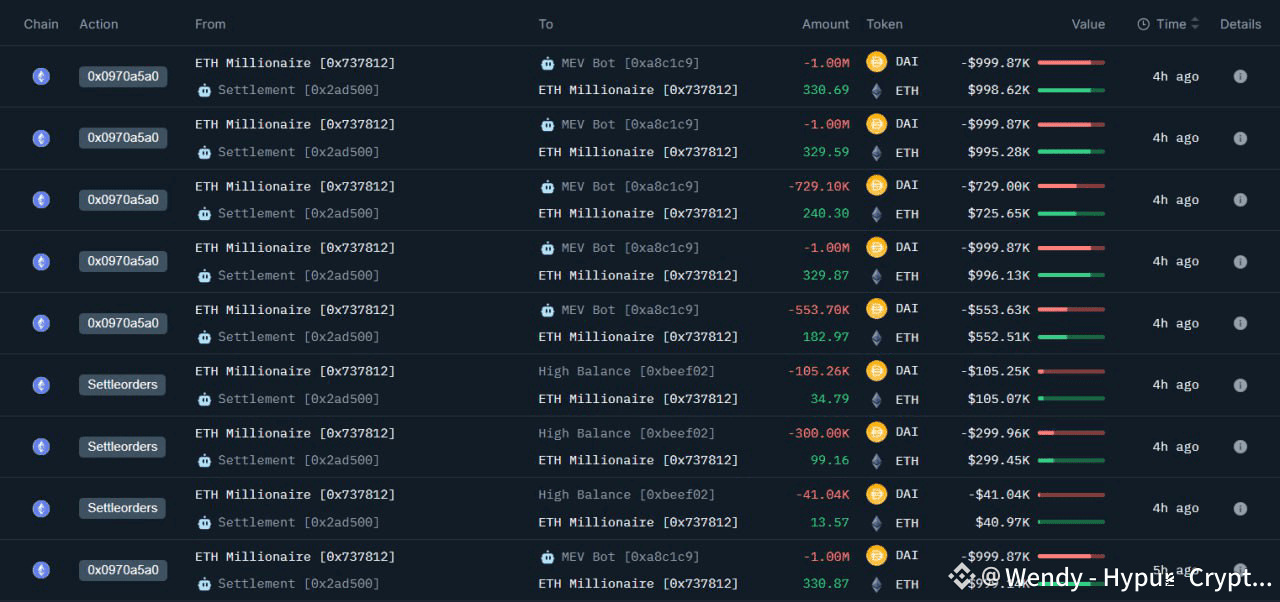
$ETH Whale Spends Another $12.82M DAI to Buy 4,234 ETH — Total Now 5,343 ETH Accumulated
A major ETH accumulator is ramping up their buying spree. The wallet 0x737812… has just deployed $12.82M DAI to purchase 4,234 ETH within the last few hours.
This follows earlier activity where the same whale spent $3.26M DAI for 1,109 ETH — bringing the totals to:
• 5,343 ETH accumulated
• $16.08M DAI spent
• Average entry: ~$3,010
• $55M DAI still remaining on-hand
The whale is clearly buying the dip aggressively and still has massive dry powder left to deploy.
Is this whale preparing for a larger ETH leg up?
Follow Wendy for more latest updates
#wendy
$ETH Whale Spends Another $12.82M DAI to Buy 4,234 ETH — Total Now 5,343 ETH Accumulated
A major ETH accumulator is ramping up their buying spree. The wallet 0x737812… has just deployed $12.82M DAI to purchase 4,234 ETH within the last few hours.
This follows earlier activity where the same whale spent $3.26M DAI for 1,109 ETH — bringing the totals to:
• 5,343 ETH accumulated
• $16.08M DAI spent
• Average entry: ~$3,010
• $55M DAI still remaining on-hand
The whale is clearly buying the dip aggressively and still has massive dry powder left to deploy.
Is this whale preparing for a larger ETH leg up?
Follow Wendy for more latest updates
#wendy
A major ETH accumulator is ramping up their buying spree. The wallet 0x737812… has just deployed $12.82M DAI to purchase 4,234 ETH within the last few hours.
This follows earlier activity where the same whale spent $3.26M DAI for 1,109 ETH — bringing the totals to:
• 5,343 ETH accumulated
• $16.08M DAI spent
• Average entry: ~$3,010
• $55M DAI still remaining on-hand
The whale is clearly buying the dip aggressively and still has massive dry powder left to deploy.
Is this whale preparing for a larger ETH leg up?
Follow Wendy for more latest updates
#wendy
1
7
4.4k
·
--
Bullish
$BNB Binance Tops CoinDesk’s 2025 Exchange Benchmark — AA Rating for Spot & Derivatives
Binance has once again claimed the #1 global ranking in the 2025 @CoinDesk Exchange Benchmark, earning an AA rating across both spot and derivatives markets.
The report highlights Binance’s leadership in security, compliance, and market quality, reinforcing its position as the top-performing exchange in the industry.
As market standards evolve, Binance continues to set the pace for transparency and user protection, pushing the bar higher for the entire crypto exchange ecosystem.
Leading by example — and still raising the standard. 🔥
#Binance #wendy #CoinDesk
$BNB Binance Tops CoinDesk’s 2025 Exchange Benchmark — AA Rating for Spot & Derivatives
Binance has once again claimed the #1 global ranking in the 2025 @CoinDesk Exchange Benchmark, earning an AA rating across both spot and derivatives markets.
The report highlights Binance’s leadership in security, compliance, and market quality, reinforcing its position as the top-performing exchange in the industry.
As market standards evolve, Binance continues to set the pace for transparency and user protection, pushing the bar higher for the entire crypto exchange ecosystem.
Leading by example — and still raising the standard. 🔥
#Binance #wendy #CoinDesk
Binance has once again claimed the #1 global ranking in the 2025 @CoinDesk Exchange Benchmark, earning an AA rating across both spot and derivatives markets.
The report highlights Binance’s leadership in security, compliance, and market quality, reinforcing its position as the top-performing exchange in the industry.
As market standards evolve, Binance continues to set the pace for transparency and user protection, pushing the bar higher for the entire crypto exchange ecosystem.
Leading by example — and still raising the standard. 🔥
#Binance #wendy #CoinDesk
8
3.1k
·
--
$ETH Ethereum App Revenue Is Crashing - Is Activity Leaving the Chain?
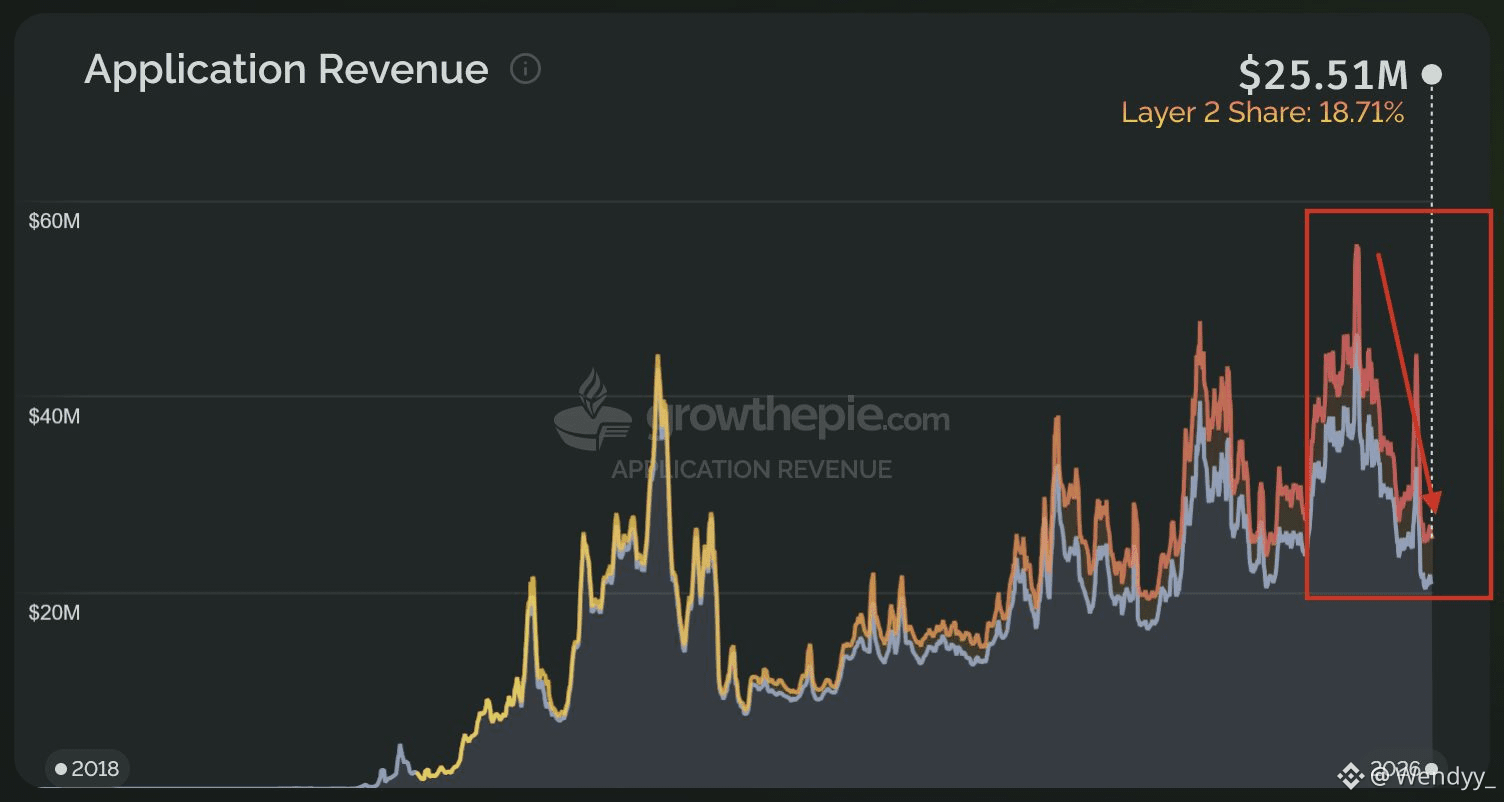
Ethereum’s onchain economy is showing clear signs of cooling. Application revenue on the network has dropped sharply to around $25.5M, a steep fall from the $60M+ peaks seen during 2025.
The decline reflects a noticeable slowdown in onchain activity, trading volumes, and user interactions across major dApps. At the same time, the ecosystem itself is evolving. Layer 2 networks are now capturing nearly 18.7% of total application revenue, as users migrate to cheaper and faster environments.
While Ethereum remains the backbone of DeFi and smart contracts, the data suggests value generation is increasingly shifting away from the main chain toward scaling layers.
The big question now isn’t whether Ethereum survives - but where the economic activity will ultimately settle.
Is this a temporary cooldown… or the start of a deeper structural shift in the Ethereum ecosystem?
Follow Wendy for more latest updates
#Crypto #Ethereum #DeFi #wendy
$ETH Ethereum App Revenue Is Crashing - Is Activity Leaving the Chain?
Ethereum’s onchain economy is showing clear signs of cooling. Application revenue on the network has dropped sharply to around $25.5M, a steep fall from the $60M+ peaks seen during 2025.
The decline reflects a noticeable slowdown in onchain activity, trading volumes, and user interactions across major dApps. At the same time, the ecosystem itself is evolving. Layer 2 networks are now capturing nearly 18.7% of total application revenue, as users migrate to cheaper and faster environments.
While Ethereum remains the backbone of DeFi and smart contracts, the data suggests value generation is increasingly shifting away from the main chain toward scaling layers.
The big question now isn’t whether Ethereum survives - but where the economic activity will ultimately settle.
Is this a temporary cooldown… or the start of a deeper structural shift in the Ethereum ecosystem?
Follow Wendy for more latest updates
#Crypto #Ethereum #DeFi #wendy
Ethereum’s onchain economy is showing clear signs of cooling. Application revenue on the network has dropped sharply to around $25.5M, a steep fall from the $60M+ peaks seen during 2025.
The decline reflects a noticeable slowdown in onchain activity, trading volumes, and user interactions across major dApps. At the same time, the ecosystem itself is evolving. Layer 2 networks are now capturing nearly 18.7% of total application revenue, as users migrate to cheaper and faster environments.
While Ethereum remains the backbone of DeFi and smart contracts, the data suggests value generation is increasingly shifting away from the main chain toward scaling layers.
The big question now isn’t whether Ethereum survives - but where the economic activity will ultimately settle.
Is this a temporary cooldown… or the start of a deeper structural shift in the Ethereum ecosystem?
Follow Wendy for more latest updates
#Crypto #Ethereum #DeFi #wendy
10
4.8k
·
--
Article
Turtle (TURTLE): Turning Web3 Activity Into Sustainable LiquidityAs decentralized finance continues to scale, one challenge keeps resurfacing: how to reward real user activity without adding friction or pushing unnecessary risk onto participants. Turtle (TURTLE) approaches this problem from a distribution-first perspective, focusing on how liquidity actually moves across Web3 and how that movement can be monetized more intelligently.
Rather than asking users to change behavior, Turtle observes what wallets already do on-chain and builds incentives around those actions. The result is a system designed to align liquidity providers, protocols, and communities in a way that feels organic rather than forced.
What Turtle Is Really About
Turtle is a distribution protocol that tracks Web3 wallet activity through APIs. It follows actions such as providing liquidity, executing swaps, staking with validators, and even using referral codes across partner protocols. By analyzing this data, Turtle enables partners to create new revenue streams and incentive programs without requiring users to lock funds, give up custody, or navigate complex new workflows.
The broader ambition is to create a transparent and cooperative environment where liquidity providers, builders, investors, and auditors all benefit proportionally from real economic contribution. Instead of chasing short-term yield spikes, Turtle emphasizes sustainable liquidity and long-term alignment.
How the Protocol Functions
Turtle is built around three main participant groups, each interacting with the system in a different way but benefiting from the same underlying infrastructure.
Liquidity providers join Turtle by linking their wallets through a simple digital signature. From that point forward, they continue using supported DeFi protocols as usual. In the background, Turtle tracks eligible activity and unlocks additional rewards. These can include boosted deals that enhance token incentives beyond standard yields, as well as access to pooled vaults designed to smooth risk and automate participation in larger ecosystem initiatives.
For DeFi protocols, Turtle acts as both a distribution layer and an intelligence engine. With insight into a network of hundreds of thousands of liquidity providers, including a strong concentration of larger wallets, protocols can design more efficient liquidity strategies. Instead of relying solely on aggressive token emissions, they can deploy targeted incentives, monitor performance, and evaluate results through Turtle’s client-facing analytics tools.
Distribution partners, such as platforms and communities, use Turtle to monetize engagement. By integrating Turtle’s earning infrastructure via hosted links or SDKs, they can offer users access to liquidity opportunities while sharing in the value generated by their audience.
Core Products and Modules
Boosted Deals are a central feature within Turtle’s ecosystem. These deals offer enhanced token rewards sourced from Turtle’s treasury and partner allocations. Participation is tracked over time, meaning liquidity providers build a history that can translate into additional long-term benefits rather than one-off payouts.
Turtle Vaults simplify liquidity management by pooling capital into shared strategies. This approach reduces operational complexity for users while helping protocols tap into a unified liquidity source. Vaults are designed to prioritize capital efficiency and risk mitigation, making them especially appealing for participants who prefer a more hands-off experience.
Campaigns take this model further by offering what Turtle describes as “Ecosystem-as-a-Service.” Through coordinated use of vaults, incentives, and partnerships, campaigns are structured to attract specific types of liquidity aligned with a protocol’s goals. One notable example is the TAC Summoning Campaign, which reportedly drew in more than 650 million dollars in liquidity during its first month by focusing on targeted distribution rather than broad emissions.
On the user side, the Earn Widget and Liquidity Leaderboard add a discovery and social layer. The widget highlights active opportunities within the Turtle ecosystem, while the leaderboard rewards users who contribute liquidity and help grow the network through referrals and engagement.
TURTLE and Binance HODLer Airdrops
In October 2025, Binance introduced TURTLE as the 55th project featured in its HODLer Airdrops program. Users who committed BNB to eligible Simple Earn or On-Chain Yields products during the snapshot period received TURTLE tokens as rewards. Ten million tokens were distributed through the airdrop, representing one percent of the maximum token supply.
Following the distribution, TURTLE was listed with a Seed Tag and became tradable across multiple pairs, including major stablecoins, BNB, and selected fiat-linked markets.
Final Perspective
Turtle positions itself not as another yield protocol, but as an infrastructure layer for liquidity distribution in Web3. By observing wallet activity instead of reshaping it, the protocol offers a way to coordinate incentives without compromising user custody or introducing unnecessary complexity.
For liquidity providers seeking additional upside, protocols looking for smarter capital deployment, and communities aiming to monetize engagement, Turtle presents a framework that prioritizes transparency, alignment, and long-term sustainability over short-lived incentives.
#Binance #wendy #Turtle $TURTLE
{future}(TURTLEUSDT)
Turtle (TURTLE): Turning Web3 Activity Into Sustainable Liquidity
As decentralized finance continues to scale, one challenge keeps resurfacing: how to reward real user activity without adding friction or pushing unnecessary risk onto participants. Turtle (TURTLE) approaches this problem from a distribution-first perspective, focusing on how liquidity actually moves across Web3 and how that movement can be monetized more intelligently.
Rather than asking users to change behavior, Turtle observes what wallets already do on-chain and builds incentives around those actions. The result is a system designed to align liquidity providers, protocols, and communities in a way that feels organic rather than forced.
What Turtle Is Really About
Turtle is a distribution protocol that tracks Web3 wallet activity through APIs. It follows actions such as providing liquidity, executing swaps, staking with validators, and even using referral codes across partner protocols. By analyzing this data, Turtle enables partners to create new revenue streams and incentive programs without requiring users to lock funds, give up custody, or navigate complex new workflows.
The broader ambition is to create a transparent and cooperative environment where liquidity providers, builders, investors, and auditors all benefit proportionally from real economic contribution. Instead of chasing short-term yield spikes, Turtle emphasizes sustainable liquidity and long-term alignment.
How the Protocol Functions
Turtle is built around three main participant groups, each interacting with the system in a different way but benefiting from the same underlying infrastructure.
Liquidity providers join Turtle by linking their wallets through a simple digital signature. From that point forward, they continue using supported DeFi protocols as usual. In the background, Turtle tracks eligible activity and unlocks additional rewards. These can include boosted deals that enhance token incentives beyond standard yields, as well as access to pooled vaults designed to smooth risk and automate participation in larger ecosystem initiatives.
For DeFi protocols, Turtle acts as both a distribution layer and an intelligence engine. With insight into a network of hundreds of thousands of liquidity providers, including a strong concentration of larger wallets, protocols can design more efficient liquidity strategies. Instead of relying solely on aggressive token emissions, they can deploy targeted incentives, monitor performance, and evaluate results through Turtle’s client-facing analytics tools.
Distribution partners, such as platforms and communities, use Turtle to monetize engagement. By integrating Turtle’s earning infrastructure via hosted links or SDKs, they can offer users access to liquidity opportunities while sharing in the value generated by their audience.
Core Products and Modules
Boosted Deals are a central feature within Turtle’s ecosystem. These deals offer enhanced token rewards sourced from Turtle’s treasury and partner allocations. Participation is tracked over time, meaning liquidity providers build a history that can translate into additional long-term benefits rather than one-off payouts.
Turtle Vaults simplify liquidity management by pooling capital into shared strategies. This approach reduces operational complexity for users while helping protocols tap into a unified liquidity source. Vaults are designed to prioritize capital efficiency and risk mitigation, making them especially appealing for participants who prefer a more hands-off experience.
Campaigns take this model further by offering what Turtle describes as “Ecosystem-as-a-Service.” Through coordinated use of vaults, incentives, and partnerships, campaigns are structured to attract specific types of liquidity aligned with a protocol’s goals. One notable example is the TAC Summoning Campaign, which reportedly drew in more than 650 million dollars in liquidity during its first month by focusing on targeted distribution rather than broad emissions.
On the user side, the Earn Widget and Liquidity Leaderboard add a discovery and social layer. The widget highlights active opportunities within the Turtle ecosystem, while the leaderboard rewards users who contribute liquidity and help grow the network through referrals and engagement.
TURTLE and Binance HODLer Airdrops
In October 2025, Binance introduced TURTLE as the 55th project featured in its HODLer Airdrops program. Users who committed BNB to eligible Simple Earn or On-Chain Yields products during the snapshot period received TURTLE tokens as rewards. Ten million tokens were distributed through the airdrop, representing one percent of the maximum token supply.
Following the distribution, TURTLE was listed with a Seed Tag and became tradable across multiple pairs, including major stablecoins, BNB, and selected fiat-linked markets.
Final Perspective
Turtle positions itself not as another yield protocol, but as an infrastructure layer for liquidity distribution in Web3. By observing wallet activity instead of reshaping it, the protocol offers a way to coordinate incentives without compromising user custody or introducing unnecessary complexity.
For liquidity providers seeking additional upside, protocols looking for smarter capital deployment, and communities aiming to monetize engagement, Turtle presents a framework that prioritizes transparency, alignment, and long-term sustainability over short-lived incentives.
#Binance #wendy #Turtle $TURTLE
Rather than asking users to change behavior, Turtle observes what wallets already do on-chain and builds incentives around those actions. The result is a system designed to align liquidity providers, protocols, and communities in a way that feels organic rather than forced.
What Turtle Is Really About
Turtle is a distribution protocol that tracks Web3 wallet activity through APIs. It follows actions such as providing liquidity, executing swaps, staking with validators, and even using referral codes across partner protocols. By analyzing this data, Turtle enables partners to create new revenue streams and incentive programs without requiring users to lock funds, give up custody, or navigate complex new workflows.
The broader ambition is to create a transparent and cooperative environment where liquidity providers, builders, investors, and auditors all benefit proportionally from real economic contribution. Instead of chasing short-term yield spikes, Turtle emphasizes sustainable liquidity and long-term alignment.
How the Protocol Functions
Turtle is built around three main participant groups, each interacting with the system in a different way but benefiting from the same underlying infrastructure.
Liquidity providers join Turtle by linking their wallets through a simple digital signature. From that point forward, they continue using supported DeFi protocols as usual. In the background, Turtle tracks eligible activity and unlocks additional rewards. These can include boosted deals that enhance token incentives beyond standard yields, as well as access to pooled vaults designed to smooth risk and automate participation in larger ecosystem initiatives.
For DeFi protocols, Turtle acts as both a distribution layer and an intelligence engine. With insight into a network of hundreds of thousands of liquidity providers, including a strong concentration of larger wallets, protocols can design more efficient liquidity strategies. Instead of relying solely on aggressive token emissions, they can deploy targeted incentives, monitor performance, and evaluate results through Turtle’s client-facing analytics tools.
Distribution partners, such as platforms and communities, use Turtle to monetize engagement. By integrating Turtle’s earning infrastructure via hosted links or SDKs, they can offer users access to liquidity opportunities while sharing in the value generated by their audience.
Core Products and Modules
Boosted Deals are a central feature within Turtle’s ecosystem. These deals offer enhanced token rewards sourced from Turtle’s treasury and partner allocations. Participation is tracked over time, meaning liquidity providers build a history that can translate into additional long-term benefits rather than one-off payouts.
Turtle Vaults simplify liquidity management by pooling capital into shared strategies. This approach reduces operational complexity for users while helping protocols tap into a unified liquidity source. Vaults are designed to prioritize capital efficiency and risk mitigation, making them especially appealing for participants who prefer a more hands-off experience.
Campaigns take this model further by offering what Turtle describes as “Ecosystem-as-a-Service.” Through coordinated use of vaults, incentives, and partnerships, campaigns are structured to attract specific types of liquidity aligned with a protocol’s goals. One notable example is the TAC Summoning Campaign, which reportedly drew in more than 650 million dollars in liquidity during its first month by focusing on targeted distribution rather than broad emissions.
On the user side, the Earn Widget and Liquidity Leaderboard add a discovery and social layer. The widget highlights active opportunities within the Turtle ecosystem, while the leaderboard rewards users who contribute liquidity and help grow the network through referrals and engagement.
TURTLE and Binance HODLer Airdrops
In October 2025, Binance introduced TURTLE as the 55th project featured in its HODLer Airdrops program. Users who committed BNB to eligible Simple Earn or On-Chain Yields products during the snapshot period received TURTLE tokens as rewards. Ten million tokens were distributed through the airdrop, representing one percent of the maximum token supply.
Following the distribution, TURTLE was listed with a Seed Tag and became tradable across multiple pairs, including major stablecoins, BNB, and selected fiat-linked markets.
Final Perspective
Turtle positions itself not as another yield protocol, but as an infrastructure layer for liquidity distribution in Web3. By observing wallet activity instead of reshaping it, the protocol offers a way to coordinate incentives without compromising user custody or introducing unnecessary complexity.
For liquidity providers seeking additional upside, protocols looking for smarter capital deployment, and communities aiming to monetize engagement, Turtle presents a framework that prioritizes transparency, alignment, and long-term sustainability over short-lived incentives.
#Binance #wendy #Turtle $TURTLE
2
2
49
13.8k
·
--
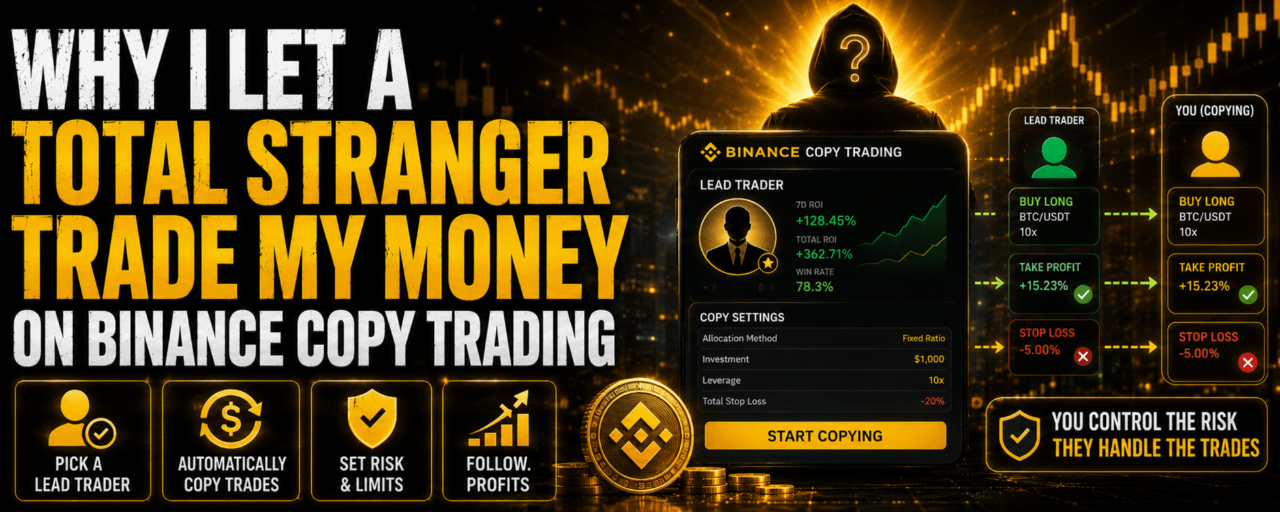
Article
Why I Let a Total Stranger Trade My Money on Binance Copy TradingA friend asked me: why learn to trade futures myself when I can just copy someone who already knows what they're doing? Turns out that's a real feature, not a shortcut. Here's how it actually works.
The basic idea: you pick a Lead Trader, and their trades get automatically mirrored into your own account, opening, closing, stop-loss, take-profit, all of it, without you placing a single order manually. Binance gives each Lead Trader a public profile showing their trading performance, strategy style, risk level, and historical data, so the selection process isn't a blind guess.
Once you've picked someone to copy, you choose how funds get allocated. There are two methods: Fixed Amount, where you set a fixed cost per order until your allocated capital runs out, and Fixed Ratio, where your orders open in proportion to both the Lead Trader's position size and your available balance. So if a trader with a $10,000 portfolio opens a position worth 10% of that, and you've allocated $1,000, your order opens at the same 10% ratio, automatically scaled to your size.
You're not fully hands-off, though. You can set a Total Stop Loss to cap downside, adjust how much capital is allocated, and stop copying a trader at any time. Under Advanced Settings, you can also tweak margin mode, leverage, and position risk before committing.
Who this actually fits: people who want crypto market exposure but don't have the time to watch charts all day, and people newer to futures who want to observe how an experienced trader manages entries, exits, and risk before trying it solo. It's not a "set it and forget it forever" tool, since trader performance changes over time and your copy trading balance sits separately from your main account, worth keeping an eye on.
The part that matters most before you start: copying a trader doesn't remove risk, it transfers the decision-making, not the outcome. If their strategy underperforms, your copied account underperforms with it.
Want to try copying a Lead Trader the way I described? This is the account I set mine up on — 20% lifetime fee rebate included: [https://www.binance.com/join?ref=WENDYYY](https://www.binance.com/join?ref=WENDYYY)
#Binance #wendy $BTC
Why I Let a Total Stranger Trade My Money on Binance Copy Trading
A friend asked me: why learn to trade futures myself when I can just copy someone who already knows what they're doing? Turns out that's a real feature, not a shortcut. Here's how it actually works.
The basic idea: you pick a Lead Trader, and their trades get automatically mirrored into your own account, opening, closing, stop-loss, take-profit, all of it, without you placing a single order manually. Binance gives each Lead Trader a public profile showing their trading performance, strategy style, risk level, and historical data, so the selection process isn't a blind guess.
Once you've picked someone to copy, you choose how funds get allocated. There are two methods: Fixed Amount, where you set a fixed cost per order until your allocated capital runs out, and Fixed Ratio, where your orders open in proportion to both the Lead Trader's position size and your available balance. So if a trader with a $10,000 portfolio opens a position worth 10% of that, and you've allocated $1,000, your order opens at the same 10% ratio, automatically scaled to your size.
You're not fully hands-off, though. You can set a Total Stop Loss to cap downside, adjust how much capital is allocated, and stop copying a trader at any time. Under Advanced Settings, you can also tweak margin mode, leverage, and position risk before committing.
Who this actually fits: people who want crypto market exposure but don't have the time to watch charts all day, and people newer to futures who want to observe how an experienced trader manages entries, exits, and risk before trying it solo. It's not a "set it and forget it forever" tool, since trader performance changes over time and your copy trading balance sits separately from your main account, worth keeping an eye on.
The part that matters most before you start: copying a trader doesn't remove risk, it transfers the decision-making, not the outcome. If their strategy underperforms, your copied account underperforms with it.
Want to try copying a Lead Trader the way I described? This is the account I set mine up on — 20% lifetime fee rebate included: https://www.binance.com/join?ref=WENDYYY
#Binance #wendy $BTC
The basic idea: you pick a Lead Trader, and their trades get automatically mirrored into your own account, opening, closing, stop-loss, take-profit, all of it, without you placing a single order manually. Binance gives each Lead Trader a public profile showing their trading performance, strategy style, risk level, and historical data, so the selection process isn't a blind guess.
Once you've picked someone to copy, you choose how funds get allocated. There are two methods: Fixed Amount, where you set a fixed cost per order until your allocated capital runs out, and Fixed Ratio, where your orders open in proportion to both the Lead Trader's position size and your available balance. So if a trader with a $10,000 portfolio opens a position worth 10% of that, and you've allocated $1,000, your order opens at the same 10% ratio, automatically scaled to your size.
You're not fully hands-off, though. You can set a Total Stop Loss to cap downside, adjust how much capital is allocated, and stop copying a trader at any time. Under Advanced Settings, you can also tweak margin mode, leverage, and position risk before committing.
Who this actually fits: people who want crypto market exposure but don't have the time to watch charts all day, and people newer to futures who want to observe how an experienced trader manages entries, exits, and risk before trying it solo. It's not a "set it and forget it forever" tool, since trader performance changes over time and your copy trading balance sits separately from your main account, worth keeping an eye on.
The part that matters most before you start: copying a trader doesn't remove risk, it transfers the decision-making, not the outcome. If their strategy underperforms, your copied account underperforms with it.
Want to try copying a Lead Trader the way I described? This is the account I set mine up on — 20% lifetime fee rebate included: https://www.binance.com/join?ref=WENDYYY
#Binance #wendy $BTC
2
303
·
--
$BTC BREAKING: SAYLOR PAUSES BTC BUYING — SIGNAL OR STRATEGY SHIFT?
For the first time in 13 weeks, Michael Saylor has gone silent. No new Bitcoin purchase from MicroStrategy this morning, abruptly ending one of the most consistent accumulation streaks in the market.
This pause is raising eyebrows. After aggressively stacking BTC week after week, even through volatility, this sudden توقف could signal a shift in strategy, timing, or market outlook. With over 762,000 BTC already accumulated at an average cost near $75K, the stakes are massive.
Is this a calculated cooldown before the next mega buy… or a subtle warning that something bigger is brewing beneath the surface?
When the biggest buyer steps back, the market usually pays attention.
What do you think, reload incoming or momentum fading?
#Crypto #Bitcoin #wendy
$BTC BREAKING: SAYLOR PAUSES BTC BUYING — SIGNAL OR STRATEGY SHIFT?
For the first time in 13 weeks, Michael Saylor has gone silent. No new Bitcoin purchase from MicroStrategy this morning, abruptly ending one of the most consistent accumulation streaks in the market.
This pause is raising eyebrows. After aggressively stacking BTC week after week, even through volatility, this sudden توقف could signal a shift in strategy, timing, or market outlook. With over 762,000 BTC already accumulated at an average cost near $75K, the stakes are massive.
Is this a calculated cooldown before the next mega buy… or a subtle warning that something bigger is brewing beneath the surface?
When the biggest buyer steps back, the market usually pays attention.
What do you think, reload incoming or momentum fading?
#Crypto #Bitcoin #wendy
For the first time in 13 weeks, Michael Saylor has gone silent. No new Bitcoin purchase from MicroStrategy this morning, abruptly ending one of the most consistent accumulation streaks in the market.
This pause is raising eyebrows. After aggressively stacking BTC week after week, even through volatility, this sudden توقف could signal a shift in strategy, timing, or market outlook. With over 762,000 BTC already accumulated at an average cost near $75K, the stakes are massive.
Is this a calculated cooldown before the next mega buy… or a subtle warning that something bigger is brewing beneath the surface?
When the biggest buyer steps back, the market usually pays attention.
What do you think, reload incoming or momentum fading?
#Crypto #Bitcoin #wendy
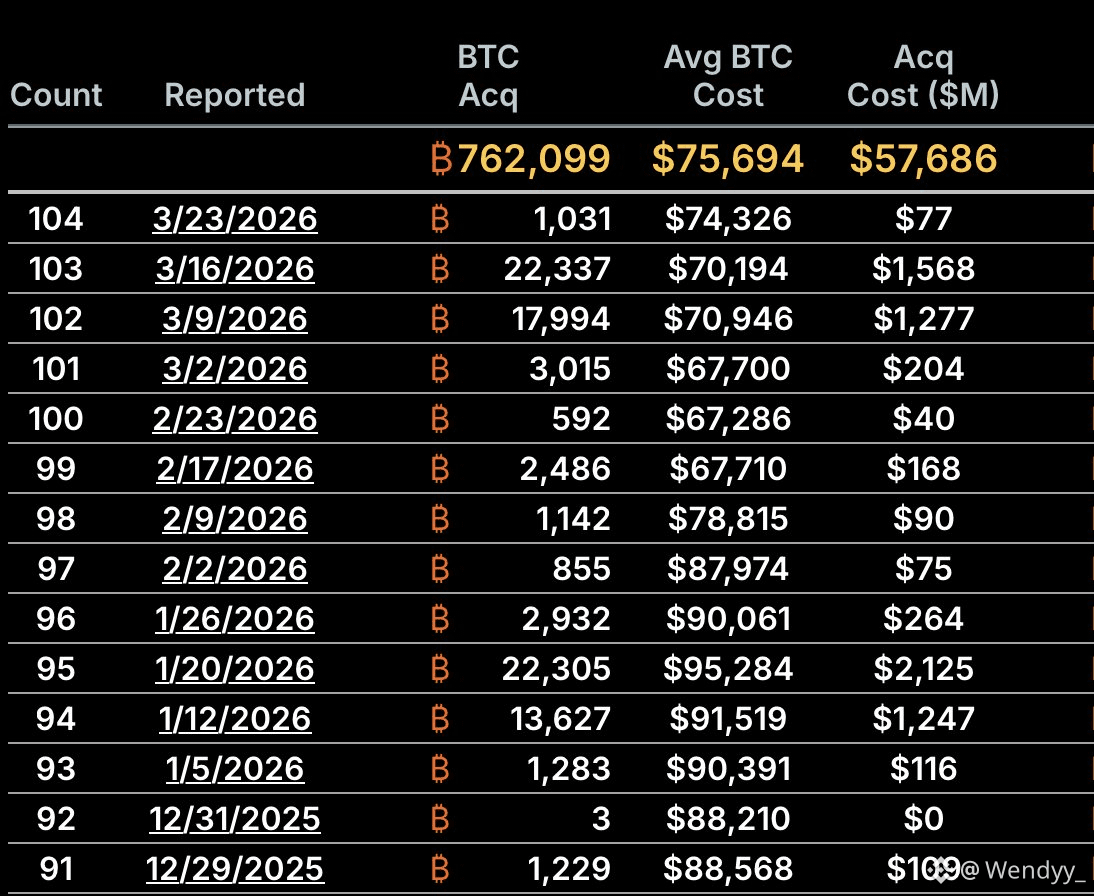
4
7
2k
·
--
Bullish
$BTC WALL STREET MEETS BINANCE: Tokenized Funds Now Powering Crypto Trades 🚨
Institutional crypto just leveled up. Franklin Templeton and Binance are now allowing institutions to use tokenized money market fund shares as trading collateral-a move that blurs the line between traditional finance and crypto markets.
Through Franklin’s Benji platform, these assets remain in regulated, off-exchange custody, yet can still be deployed to trade on Binance. Translation? Institutions can park capital in yield-bearing money market funds while simultaneously unlocking liquidity for crypto trading. No need to fully move assets on-exchange.
This isn’t just another partnership-it’s infrastructure. It signals growing confidence in tokenization as a bridge between TradFi security and crypto flexibility.
Is this the beginning of tokenized real-world assets becoming standard collateral across exchanges?
Follow Wendy for more latest updates
#Crypto #RWA #wendy
$BTC WALL STREET MEETS BINANCE: Tokenized Funds Now Powering Crypto Trades 🚨
Institutional crypto just leveled up. Franklin Templeton and Binance are now allowing institutions to use tokenized money market fund shares as trading collateral-a move that blurs the line between traditional finance and crypto markets.
Through Franklin’s Benji platform, these assets remain in regulated, off-exchange custody, yet can still be deployed to trade on Binance. Translation? Institutions can park capital in yield-bearing money market funds while simultaneously unlocking liquidity for crypto trading. No need to fully move assets on-exchange.
This isn’t just another partnership-it’s infrastructure. It signals growing confidence in tokenization as a bridge between TradFi security and crypto flexibility.
Is this the beginning of tokenized real-world assets becoming standard collateral across exchanges?
Follow Wendy for more latest updates
#Crypto #RWA #wendy
Institutional crypto just leveled up. Franklin Templeton and Binance are now allowing institutions to use tokenized money market fund shares as trading collateral-a move that blurs the line between traditional finance and crypto markets.
Through Franklin’s Benji platform, these assets remain in regulated, off-exchange custody, yet can still be deployed to trade on Binance. Translation? Institutions can park capital in yield-bearing money market funds while simultaneously unlocking liquidity for crypto trading. No need to fully move assets on-exchange.
This isn’t just another partnership-it’s infrastructure. It signals growing confidence in tokenization as a bridge between TradFi security and crypto flexibility.
Is this the beginning of tokenized real-world assets becoming standard collateral across exchanges?
Follow Wendy for more latest updates
#Crypto #RWA #wendy
3
2
9
7.6k
·
--
$BTC BITCOIN POWER MOVE: Strategy Drops $1.57B in Massive BTC Buy
Michael Saylor’s Strategy just made its largest Bitcoin purchase of the year, scooping up 22,337 BTC at around $70,194 per coin - a bold move that echoes its aggressive accumulation strategy.
To find a buy of this scale, you’d have to rewind back to November 2024. And the timing? Far from random. This purchase comes as global markets face geopolitical tension, oil volatility, and macro uncertainty - the exact conditions where Bitcoin’s narrative as a neutral, hard asset starts gaining strength again.
What stands out even more: Strategy hasn’t sold a single BTC. Instead, it continues to raise capital through equity and convertible notes just to accumulate more.
With BTC now hovering near $74K, the company is closing in on breakeven across its entire position - while still stacking aggressively.
When institutions buy this big during uncertainty, it usually means one thing…
What do they see coming next?
#Bitcoin #BTC #wendy
$BTC BITCOIN POWER MOVE: Strategy Drops $1.57B in Massive BTC Buy
Michael Saylor’s Strategy just made its largest Bitcoin purchase of the year, scooping up 22,337 BTC at around $70,194 per coin - a bold move that echoes its aggressive accumulation strategy.
To find a buy of this scale, you’d have to rewind back to November 2024. And the timing? Far from random. This purchase comes as global markets face geopolitical tension, oil volatility, and macro uncertainty - the exact conditions where Bitcoin’s narrative as a neutral, hard asset starts gaining strength again.
What stands out even more: Strategy hasn’t sold a single BTC. Instead, it continues to raise capital through equity and convertible notes just to accumulate more.
With BTC now hovering near $74K, the company is closing in on breakeven across its entire position - while still stacking aggressively.
When institutions buy this big during uncertainty, it usually means one thing…
What do they see coming next?
#Bitcoin #BTC #wendy
Michael Saylor’s Strategy just made its largest Bitcoin purchase of the year, scooping up 22,337 BTC at around $70,194 per coin - a bold move that echoes its aggressive accumulation strategy.
To find a buy of this scale, you’d have to rewind back to November 2024. And the timing? Far from random. This purchase comes as global markets face geopolitical tension, oil volatility, and macro uncertainty - the exact conditions where Bitcoin’s narrative as a neutral, hard asset starts gaining strength again.
What stands out even more: Strategy hasn’t sold a single BTC. Instead, it continues to raise capital through equity and convertible notes just to accumulate more.
With BTC now hovering near $74K, the company is closing in on breakeven across its entire position - while still stacking aggressively.
When institutions buy this big during uncertainty, it usually means one thing…
What do they see coming next?
#Bitcoin #BTC #wendy
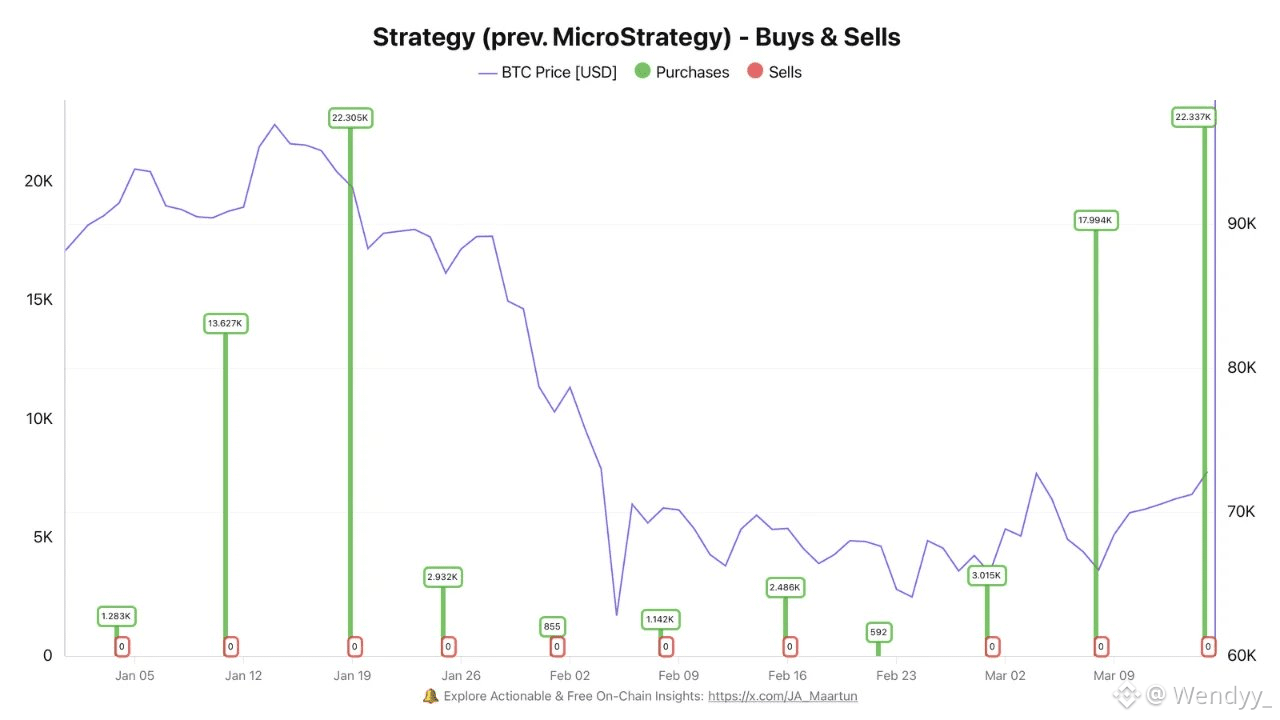
11
2.7k
·
--
FIVE YEARS AGO, CRYPTO SUFFERED ITS MOST BRUTAL SINGLE-DAY CRASH
Five years ago today, the crypto market experienced one of the most violent liquidations in its history as panic selling wiped out billions across digital assets in less than 24 hours.
Bitcoin collapsed more than 30%, Ethereum plunged roughly 40%, and Dogecoin crashed around 45% during the selloff. More than $8 billion in leveraged positions were liquidated, with an estimated 775,000 traders wiped out across major exchanges.
The collapse followed a rapid sequence of negative catalysts that shattered market sentiment within days.
On May 12, Elon Musk announced that Tesla would suspend Bitcoin payments over environmental concerns, triggering the first major wave of selling pressure.
Less than a week later, China’s central bank intensified its crackdown on crypto activity by prohibiting financial institutions from offering crypto-related services, accelerating fear across global markets.
As volatility exploded, major trading platforms including Binance, Coinbase and Robinhood experienced outages and disruptions while traders rushed to exit positions.
The event became one of the defining moments of the 2021 cycle, exposing the fragility of leverage-driven markets and setting the stage for months of heightened volatility across the crypto sector.
Follow Wendy for more latest updates
$BTC #wendy
{future}(BTCUSDT)
FIVE YEARS AGO, CRYPTO SUFFERED ITS MOST BRUTAL SINGLE-DAY CRASH
Five years ago today, the crypto market experienced one of the most violent liquidations in its history as panic selling wiped out billions across digital assets in less than 24 hours.
Bitcoin collapsed more than 30%, Ethereum plunged roughly 40%, and Dogecoin crashed around 45% during the selloff. More than $8 billion in leveraged positions were liquidated, with an estimated 775,000 traders wiped out across major exchanges.
The collapse followed a rapid sequence of negative catalysts that shattered market sentiment within days.
On May 12, Elon Musk announced that Tesla would suspend Bitcoin payments over environmental concerns, triggering the first major wave of selling pressure.
Less than a week later, China’s central bank intensified its crackdown on crypto activity by prohibiting financial institutions from offering crypto-related services, accelerating fear across global markets.
As volatility exploded, major trading platforms including Binance, Coinbase and Robinhood experienced outages and disruptions while traders rushed to exit positions.
The event became one of the defining moments of the 2021 cycle, exposing the fragility of leverage-driven markets and setting the stage for months of heightened volatility across the crypto sector.
Follow Wendy for more latest updates
$BTC #wendy
Five years ago today, the crypto market experienced one of the most violent liquidations in its history as panic selling wiped out billions across digital assets in less than 24 hours.
Bitcoin collapsed more than 30%, Ethereum plunged roughly 40%, and Dogecoin crashed around 45% during the selloff. More than $8 billion in leveraged positions were liquidated, with an estimated 775,000 traders wiped out across major exchanges.
The collapse followed a rapid sequence of negative catalysts that shattered market sentiment within days.
On May 12, Elon Musk announced that Tesla would suspend Bitcoin payments over environmental concerns, triggering the first major wave of selling pressure.
Less than a week later, China’s central bank intensified its crackdown on crypto activity by prohibiting financial institutions from offering crypto-related services, accelerating fear across global markets.
As volatility exploded, major trading platforms including Binance, Coinbase and Robinhood experienced outages and disruptions while traders rushed to exit positions.
The event became one of the defining moments of the 2021 cycle, exposing the fragility of leverage-driven markets and setting the stage for months of heightened volatility across the crypto sector.
Follow Wendy for more latest updates
$BTC #wendy
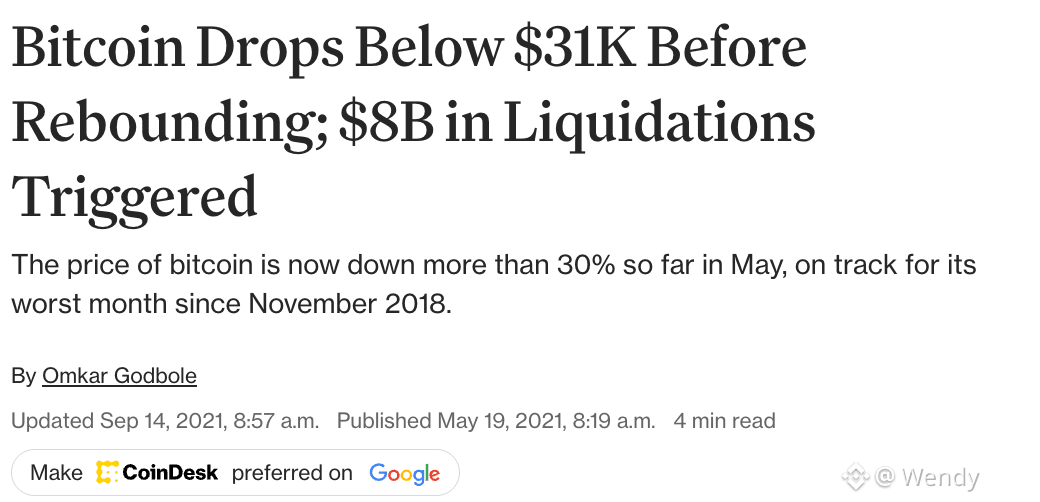
2
3
960
·
--
Bullish
$BNB The 33rd $BNB Burn Is Complete — 1.44M BNB Vanished Forever
BNB Chain has officially completed its 33rd quarterly $BNB burn, permanently removing 1.44 million BNB from circulation directly on the BNB Smart Chain (BSC).
The token burn — a key part of BNB’s deflationary mechanism — helps maintain scarcity and strengthen long-term value for holders.
#wendy
{future}(BNBUSDT)
$BNB The 33rd $BNB Burn Is Complete — 1.44M BNB Vanished Forever
BNB Chain has officially completed its 33rd quarterly $BNB burn, permanently removing 1.44 million BNB from circulation directly on the BNB Smart Chain (BSC).
The token burn — a key part of BNB’s deflationary mechanism — helps maintain scarcity and strengthen long-term value for holders.
#wendy
BNB Chain has officially completed its 33rd quarterly $BNB burn, permanently removing 1.44 million BNB from circulation directly on the BNB Smart Chain (BSC).
The token burn — a key part of BNB’s deflationary mechanism — helps maintain scarcity and strengthen long-term value for holders.
#wendy
9
5
20
10.1k
·
--
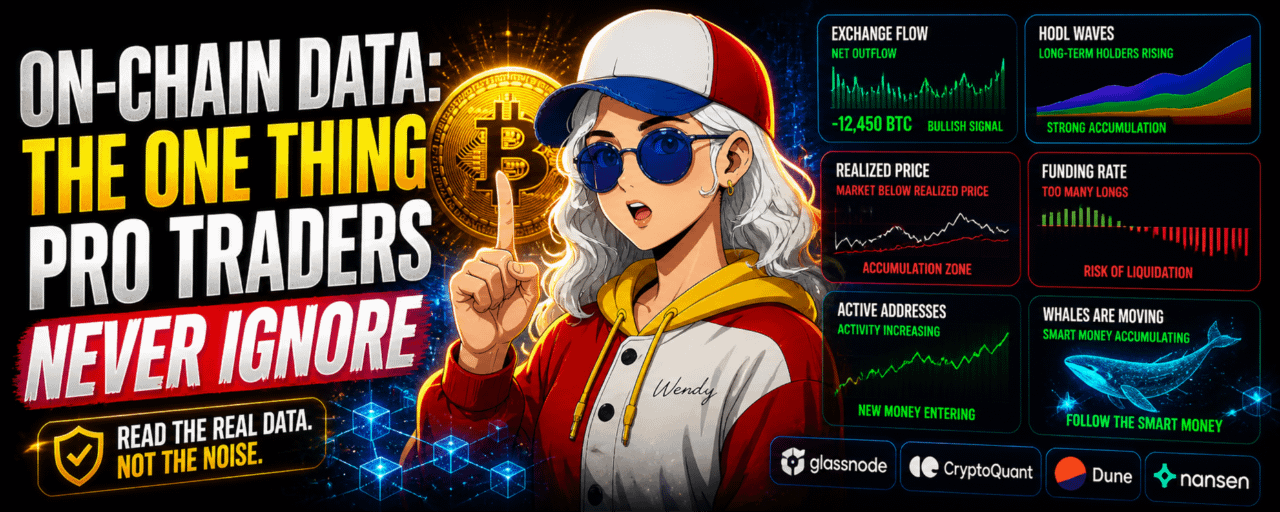
Article
On-chain data: The one thing professional traders never ignoreThere's a question I get constantly from people new to crypto: "How do you actually know where the market is heading?"
My answer is always the same: read the on-chain data.
Not the price. Not the news. Not what KOLs are saying on social media. But the real data happening directly on the blockchain — where nothing can be faked and nothing can be hidden.
This is what separates people who can actually read the market from people who are just guessing.
What is on-chain data?
The blockchain is a public ledger. Every transaction, every movement of coins, every action taken by a large wallet is recorded and can be accessed by anyone.
On-chain data is the collection of all that information. When you analyze on-chain data, you're reading directly what's happening on the blockchain instead of relying on derivatives like price or news.
The key distinction here: price reflects the market's emotions. On-chain data reflects the market's actual behavior. And behavior always matters more than emotion.
Why does on-chain data matter so much?
Think about it this way. When a large institution or whale is accumulating Bitcoin, they don't announce it on Twitter. But every single one of their transactions is recorded on the blockchain. If you know how to read that data, you can see where real money is actually flowing before the price reflects it.
This is why on-chain data is called a leading indicator. It tends to show signals before price moves, not after.
The most important on-chain metrics you need to know
Exchange Inflow and Outflow
This metric tracks the amount of Bitcoin or altcoins being moved into or out of centralized exchanges.
When large amounts of coins flow into exchanges, it typically means holders are preparing to sell. Selling pressure builds. This is often an early warning signal for a price correction.
On the flip side, when coins flow out of exchanges into cold wallets, it usually means holders have no intention of selling in the near term. Available supply on exchanges drops. Under stable demand conditions, this is a positive signal.
HODL Waves
This metric analyzes Bitcoin by how long each coin has been held without moving. It shows you the ratio of Bitcoin being held long-term versus Bitcoin being actively traded.
When the proportion of coins held for over a year rises, it signals that long-term believers are accumulating and not selling. History shows that high HODL Wave periods tend to occur at the end of bear markets and the beginning of bull markets.
Realized Price
This is the average price at which all currently circulating Bitcoin was last moved. In simpler terms, it's the average cost basis of the entire market.
When the market price falls below the Realized Price, it means the average market participant is underwater. History consistently shows this tends to be the bear market accumulation zone, where long-term investors start buying aggressively.
Funding Rate
This metric is especially important for the Futures market. Funding Rate tells you which direction leveraged players are leaning more heavily toward.
A high positive Funding Rate means too many people are long. The market is vulnerable to mass liquidations if price drops suddenly. A deeply negative Funding Rate means too many people are short. This is often the foundation for a powerful short squeeze.
Active Addresses
The number of wallet addresses actively transacting on the blockchain each day. This metric reflects the true level of network activity without being influenced by price.
When Active Addresses rise while price hasn't moved yet, it can signal that new money is quietly entering the market. When Active Addresses decline while price is still rising, it's a sign that the rally is losing its real foundation.
Where do you actually find on-chain data?
Here are the tools I use most regularly:
Glassnode is the most comprehensive on-chain analytics platform available. The free version already offers a solid range of useful metrics. The paid version provides deeper data for serious researchers.
CryptoQuant focuses heavily on exchange flow data and miner data. This is the tool I use most often to track Exchange Inflow and Outflow in real time.
Dune Analytics lets you build custom dashboards to track any on-chain data you want. Better suited for those with some technical background.
Nansen specializes in wallet labeling and tracking smart money behavior. If you want to know what whales and institutions are actually doing, this is the tool you need.
On-chain data is not a crystal ball
I need to say this clearly before you take this too far.
On-chain data is a powerful tool, but it's not a magic formula. The crypto market is influenced by far too many variables — macroeconomic policy decisions, crowd psychology, and events that are completely impossible to predict.
On-chain data gives you an additional layer of information to make better decisions. It does not replace critical thinking and risk management.
Professional traders don't use on-chain data to predict price. They use it to understand the context of the market more clearly and avoid emotionally driven decisions during periods of high volatility.
Want to follow more on-chain analysis?
Follow my channel. I regularly share real on-chain observations from the market, not textbook theory.
No hype. No price predictions. Just data and analysis with real depth.
👉 Follow Wendy 🇻🇳 on Binance Square right now and turn on notifications so you never miss a post.
The market doesn't wait for anyone. But the right knowledge means you'll never be left behind. 🔍
This is not financial advice. All investment decisions carry risk. Always do your own research before making any decision.
#OnChainData #CryptoResearch #Bitcoin #wendy #Binance $BTC $ETH $BNB
On-chain data: The one thing professional traders never ignore
There's a question I get constantly from people new to crypto: "How do you actually know where the market is heading?"
My answer is always the same: read the on-chain data.
Not the price. Not the news. Not what KOLs are saying on social media. But the real data happening directly on the blockchain — where nothing can be faked and nothing can be hidden.
This is what separates people who can actually read the market from people who are just guessing.
What is on-chain data?
The blockchain is a public ledger. Every transaction, every movement of coins, every action taken by a large wallet is recorded and can be accessed by anyone.
On-chain data is the collection of all that information. When you analyze on-chain data, you're reading directly what's happening on the blockchain instead of relying on derivatives like price or news.
The key distinction here: price reflects the market's emotions. On-chain data reflects the market's actual behavior. And behavior always matters more than emotion.
Why does on-chain data matter so much?
Think about it this way. When a large institution or whale is accumulating Bitcoin, they don't announce it on Twitter. But every single one of their transactions is recorded on the blockchain. If you know how to read that data, you can see where real money is actually flowing before the price reflects it.
This is why on-chain data is called a leading indicator. It tends to show signals before price moves, not after.
The most important on-chain metrics you need to know
Exchange Inflow and Outflow
This metric tracks the amount of Bitcoin or altcoins being moved into or out of centralized exchanges.
When large amounts of coins flow into exchanges, it typically means holders are preparing to sell. Selling pressure builds. This is often an early warning signal for a price correction.
On the flip side, when coins flow out of exchanges into cold wallets, it usually means holders have no intention of selling in the near term. Available supply on exchanges drops. Under stable demand conditions, this is a positive signal.
HODL Waves
This metric analyzes Bitcoin by how long each coin has been held without moving. It shows you the ratio of Bitcoin being held long-term versus Bitcoin being actively traded.
When the proportion of coins held for over a year rises, it signals that long-term believers are accumulating and not selling. History shows that high HODL Wave periods tend to occur at the end of bear markets and the beginning of bull markets.
Realized Price
This is the average price at which all currently circulating Bitcoin was last moved. In simpler terms, it's the average cost basis of the entire market.
When the market price falls below the Realized Price, it means the average market participant is underwater. History consistently shows this tends to be the bear market accumulation zone, where long-term investors start buying aggressively.
Funding Rate
This metric is especially important for the Futures market. Funding Rate tells you which direction leveraged players are leaning more heavily toward.
A high positive Funding Rate means too many people are long. The market is vulnerable to mass liquidations if price drops suddenly. A deeply negative Funding Rate means too many people are short. This is often the foundation for a powerful short squeeze.
Active Addresses
The number of wallet addresses actively transacting on the blockchain each day. This metric reflects the true level of network activity without being influenced by price.
When Active Addresses rise while price hasn't moved yet, it can signal that new money is quietly entering the market. When Active Addresses decline while price is still rising, it's a sign that the rally is losing its real foundation.
Where do you actually find on-chain data?
Here are the tools I use most regularly:
Glassnode is the most comprehensive on-chain analytics platform available. The free version already offers a solid range of useful metrics. The paid version provides deeper data for serious researchers.
CryptoQuant focuses heavily on exchange flow data and miner data. This is the tool I use most often to track Exchange Inflow and Outflow in real time.
Dune Analytics lets you build custom dashboards to track any on-chain data you want. Better suited for those with some technical background.
Nansen specializes in wallet labeling and tracking smart money behavior. If you want to know what whales and institutions are actually doing, this is the tool you need.
On-chain data is not a crystal ball
I need to say this clearly before you take this too far.
On-chain data is a powerful tool, but it's not a magic formula. The crypto market is influenced by far too many variables — macroeconomic policy decisions, crowd psychology, and events that are completely impossible to predict.
On-chain data gives you an additional layer of information to make better decisions. It does not replace critical thinking and risk management.
Professional traders don't use on-chain data to predict price. They use it to understand the context of the market more clearly and avoid emotionally driven decisions during periods of high volatility.
Want to follow more on-chain analysis?
Follow my channel. I regularly share real on-chain observations from the market, not textbook theory.
No hype. No price predictions. Just data and analysis with real depth.
👉 Follow Wendy 🇻🇳 on Binance Square right now and turn on notifications so you never miss a post.
The market doesn't wait for anyone. But the right knowledge means you'll never be left behind. 🔍
This is not financial advice. All investment decisions carry risk. Always do your own research before making any decision.
#OnChainData #CryptoResearch #Bitcoin #wendy #Binance $BTC $ETH $BNB
My answer is always the same: read the on-chain data.
Not the price. Not the news. Not what KOLs are saying on social media. But the real data happening directly on the blockchain — where nothing can be faked and nothing can be hidden.
This is what separates people who can actually read the market from people who are just guessing.
What is on-chain data?
The blockchain is a public ledger. Every transaction, every movement of coins, every action taken by a large wallet is recorded and can be accessed by anyone.
On-chain data is the collection of all that information. When you analyze on-chain data, you're reading directly what's happening on the blockchain instead of relying on derivatives like price or news.
The key distinction here: price reflects the market's emotions. On-chain data reflects the market's actual behavior. And behavior always matters more than emotion.
Why does on-chain data matter so much?
Think about it this way. When a large institution or whale is accumulating Bitcoin, they don't announce it on Twitter. But every single one of their transactions is recorded on the blockchain. If you know how to read that data, you can see where real money is actually flowing before the price reflects it.
This is why on-chain data is called a leading indicator. It tends to show signals before price moves, not after.
The most important on-chain metrics you need to know
Exchange Inflow and Outflow
This metric tracks the amount of Bitcoin or altcoins being moved into or out of centralized exchanges.
When large amounts of coins flow into exchanges, it typically means holders are preparing to sell. Selling pressure builds. This is often an early warning signal for a price correction.
On the flip side, when coins flow out of exchanges into cold wallets, it usually means holders have no intention of selling in the near term. Available supply on exchanges drops. Under stable demand conditions, this is a positive signal.
HODL Waves
This metric analyzes Bitcoin by how long each coin has been held without moving. It shows you the ratio of Bitcoin being held long-term versus Bitcoin being actively traded.
When the proportion of coins held for over a year rises, it signals that long-term believers are accumulating and not selling. History shows that high HODL Wave periods tend to occur at the end of bear markets and the beginning of bull markets.
Realized Price
This is the average price at which all currently circulating Bitcoin was last moved. In simpler terms, it's the average cost basis of the entire market.
When the market price falls below the Realized Price, it means the average market participant is underwater. History consistently shows this tends to be the bear market accumulation zone, where long-term investors start buying aggressively.
Funding Rate
This metric is especially important for the Futures market. Funding Rate tells you which direction leveraged players are leaning more heavily toward.
A high positive Funding Rate means too many people are long. The market is vulnerable to mass liquidations if price drops suddenly. A deeply negative Funding Rate means too many people are short. This is often the foundation for a powerful short squeeze.
Active Addresses
The number of wallet addresses actively transacting on the blockchain each day. This metric reflects the true level of network activity without being influenced by price.
When Active Addresses rise while price hasn't moved yet, it can signal that new money is quietly entering the market. When Active Addresses decline while price is still rising, it's a sign that the rally is losing its real foundation.
Where do you actually find on-chain data?
Here are the tools I use most regularly:
Glassnode is the most comprehensive on-chain analytics platform available. The free version already offers a solid range of useful metrics. The paid version provides deeper data for serious researchers.
CryptoQuant focuses heavily on exchange flow data and miner data. This is the tool I use most often to track Exchange Inflow and Outflow in real time.
Dune Analytics lets you build custom dashboards to track any on-chain data you want. Better suited for those with some technical background.
Nansen specializes in wallet labeling and tracking smart money behavior. If you want to know what whales and institutions are actually doing, this is the tool you need.
On-chain data is not a crystal ball
I need to say this clearly before you take this too far.
On-chain data is a powerful tool, but it's not a magic formula. The crypto market is influenced by far too many variables — macroeconomic policy decisions, crowd psychology, and events that are completely impossible to predict.
On-chain data gives you an additional layer of information to make better decisions. It does not replace critical thinking and risk management.
Professional traders don't use on-chain data to predict price. They use it to understand the context of the market more clearly and avoid emotionally driven decisions during periods of high volatility.
Want to follow more on-chain analysis?
Follow my channel. I regularly share real on-chain observations from the market, not textbook theory.
No hype. No price predictions. Just data and analysis with real depth.
👉 Follow Wendy 🇻🇳 on Binance Square right now and turn on notifications so you never miss a post.
The market doesn't wait for anyone. But the right knowledge means you'll never be left behind. 🔍
This is not financial advice. All investment decisions carry risk. Always do your own research before making any decision.
#OnChainData #CryptoResearch #Bitcoin #wendy #Binance $BTC $ETH $BNB
3
494
·
--
Bullish
$BNB B² Network’s $B2 Token Debuts in 14th Exclusive TGE on @BinanceWallet
Gear up for the 14th Exclusive Token Generation Event (TGE) featuring B² Network’s $B2 token, hosted by Binance Wallet in collaboration with PancakeSwap on April 30, 2025, from 8:00 AM to 10:00 AM UTC.
B² Network, a Bitcoin Layer 2 solution, aims to boost Bitcoin’s utility by scaling functionality while preserving Layer 1’s security and simplicity. The $B2 token, operating on the BNB Smart Chain, will drive governance and staking within the ecosystem.
Eligibility hinges on meeting an Alpha Points threshold, revealed just before the subscription window opens. An extra 8,400,000 $B2 tokens are set aside for future marketing, with details to follow.
The Wallet Campaign Portal will launch soon, enabling seamless participation. Post-TGE, $B2 tokens will be tradable immediately on PancakeSwap, offering instant liquidity for early adopters.
What’s your plan for the $B2 TGE—are you aiming to stack Alpha Points now or waiting to see the threshold?
#Binance #wendy @BinanceWallet
$BNB B² Network’s $B2 Token Debuts in 14th Exclusive TGE on @Binance Wallet
Gear up for the 14th Exclusive Token Generation Event (TGE) featuring B² Network’s $B2 token, hosted by Binance Wallet in collaboration with PancakeSwap on April 30, 2025, from 8:00 AM to 10:00 AM UTC.
B² Network, a Bitcoin Layer 2 solution, aims to boost Bitcoin’s utility by scaling functionality while preserving Layer 1’s security and simplicity. The $B2 token, operating on the BNB Smart Chain, will drive governance and staking within the ecosystem.
Eligibility hinges on meeting an Alpha Points threshold, revealed just before the subscription window opens. An extra 8,400,000 $B2 tokens are set aside for future marketing, with details to follow.
The Wallet Campaign Portal will launch soon, enabling seamless participation. Post-TGE, $B2 tokens will be tradable immediately on PancakeSwap, offering instant liquidity for early adopters.
What’s your plan for the $B2 TGE—are you aiming to stack Alpha Points now or waiting to see the threshold?
#Binance #wendy @Binance Wallet
Gear up for the 14th Exclusive Token Generation Event (TGE) featuring B² Network’s $B2 token, hosted by Binance Wallet in collaboration with PancakeSwap on April 30, 2025, from 8:00 AM to 10:00 AM UTC.
B² Network, a Bitcoin Layer 2 solution, aims to boost Bitcoin’s utility by scaling functionality while preserving Layer 1’s security and simplicity. The $B2 token, operating on the BNB Smart Chain, will drive governance and staking within the ecosystem.
Eligibility hinges on meeting an Alpha Points threshold, revealed just before the subscription window opens. An extra 8,400,000 $B2 tokens are set aside for future marketing, with details to follow.
The Wallet Campaign Portal will launch soon, enabling seamless participation. Post-TGE, $B2 tokens will be tradable immediately on PancakeSwap, offering instant liquidity for early adopters.
What’s your plan for the $B2 TGE—are you aiming to stack Alpha Points now or waiting to see the threshold?
#Binance #wendy @Binance Wallet
15
5.2k
·
--
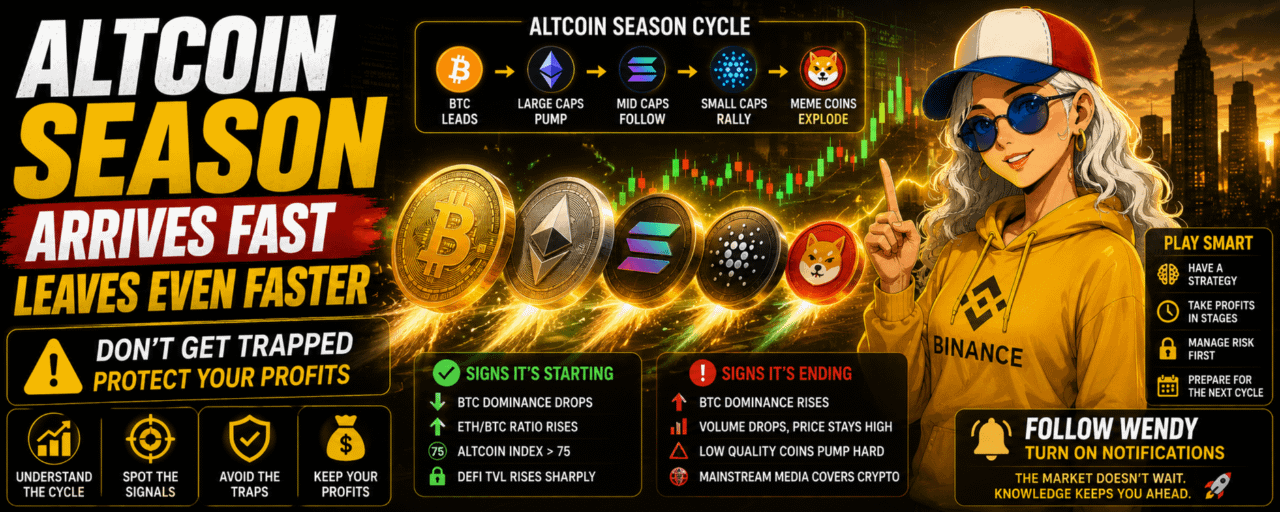
Article
Altcoin season arrives fast and leaves even faster — here's how not to get trappedNo period in the crypto market creates more overnight millionaires than altcoin season. And no period creates more people losing everything for exactly the same reason.
When altcoin season hits, everything pumps. Tokens nobody mentioned during the entire bear market suddenly surge 200%, 500%, even 1000% within weeks. It feels like every single thing you buy is the right decision.
That's precisely when it's most dangerous.
What is altcoin season?
Altcoin season is the phase in the crypto market cycle when capital rotates heavily from Bitcoin into altcoins, causing most altcoins to rise simultaneously and usually at a much faster rate than Bitcoin.
This doesn't happen randomly. It typically follows a predictable sequence of events within each cycle.
Bitcoin rises first, setting new highs and attracting large capital flows from institutions and new investors. Once Bitcoin appears "expensive" or momentum slows, capital begins searching for higher growth opportunities in large-cap altcoins like ETH and BNB. From there it flows further into mid-cap altcoins, then small-caps, then the smallest tokens at the bottom of the market.
This is why altcoin season usually arrives after, not at the same time as, Bitcoin's peak.
Signs that altcoin season is approaching
Bitcoin Dominance drops sharply
Bitcoin Dominance is the percentage of Bitcoin's market cap relative to the total crypto market cap. When this figure starts declining significantly — for example from 55% down to 48% — that's a clear signal that capital is flowing out of Bitcoin and into altcoins.
This is the first metric I look at when assessing whether altcoin season is approaching.
ETH/BTC ratio rises
The ratio of ETH's price relative to BTC is one of the most reliable altcoin season indicators available. When Ethereum starts outperforming Bitcoin, it's typically the first signal that capital is shifting toward the broader altcoin market.
Altcoin Index surpasses 75
The Crypto Fear & Greed Index has a dedicated metric called the Altcoin Season Index, running from 0 to 100. When this index crosses 75, it shows that most altcoins in the top 50 have been outperforming Bitcoin over the past 90 days. This is official confirmation that altcoin season is underway.
Total DeFi TVL rises sharply
Total value locked in DeFi protocols rising quickly tends to accompany altcoin season, as users deploy capital into protocols searching for higher yield opportunities.
Warning signs that altcoin season is ending
This is the most critical section that most altcoin season content skips entirely. Knowing when it starts matters, but knowing when it ends matters even more.
Bitcoin Dominance starts rising again. When capital rotates back into Bitcoin, altcoins typically drop faster and harder than they rose.
Trading volume drops while prices remain high. This is the most dangerous divergence. Price is sitting at highs but fewer and fewer buyers are participating. When buyers run dry, sellers take control.
Tokens with no real fundamentals start pumping the hardest. This signals the final stage of altcoin season, when capital has flowed all the way down to the highest risk layer. History consistently shows this is usually the top.
Mainstream media starts covering crypto heavily. When general newspapers begin writing about ordinary people making money from altcoins, the market is usually very close to its peak.
Why do most people end up buying the top during altcoin season?
Altcoin season creates one of the most dangerous psychological states in investing: double FOMO.
You see token A surge 300%. You regret not buying. You promise yourself you'll get in earlier next time. Token B rises 200%. You buy because you're afraid of missing out again. But by the time you buy, token B has already moved 200%.
The earliest buyers are those who were looking for opportunities when the market was still quiet. The latest buyers are those pulled in by FOMO at exactly the moment the market is in its final stage.
Understanding the cycle doesn't guarantee you'll always buy the bottom and sell the top. But it keeps you from becoming the person buying when everyone around you is at peak euphoria.
A lesson from someone who has watched multiple cycles
Altcoin season doesn't disappear after you exit it empty-handed. The next cycle will come. And the person best prepared for the next cycle is the one using the current quiet period to research, build a watchlist, and deeply understand what they're actually investing in.
When altcoin season genuinely arrives, the person who prepared doesn't need to chase anything. They're already there.
👉 Follow me on Binance Square right now and turn on notifications so you never miss a post.
#AltcoinSeason #CryptoResearch #MarketInsight #wendy $BTC $ETH $BNB
Altcoin season arrives fast and leaves even faster — here's how not to get trapped
No period in the crypto market creates more overnight millionaires than altcoin season. And no period creates more people losing everything for exactly the same reason.
When altcoin season hits, everything pumps. Tokens nobody mentioned during the entire bear market suddenly surge 200%, 500%, even 1000% within weeks. It feels like every single thing you buy is the right decision.
That's precisely when it's most dangerous.
What is altcoin season?
Altcoin season is the phase in the crypto market cycle when capital rotates heavily from Bitcoin into altcoins, causing most altcoins to rise simultaneously and usually at a much faster rate than Bitcoin.
This doesn't happen randomly. It typically follows a predictable sequence of events within each cycle.
Bitcoin rises first, setting new highs and attracting large capital flows from institutions and new investors. Once Bitcoin appears "expensive" or momentum slows, capital begins searching for higher growth opportunities in large-cap altcoins like ETH and BNB. From there it flows further into mid-cap altcoins, then small-caps, then the smallest tokens at the bottom of the market.
This is why altcoin season usually arrives after, not at the same time as, Bitcoin's peak.
Signs that altcoin season is approaching
Bitcoin Dominance drops sharply
Bitcoin Dominance is the percentage of Bitcoin's market cap relative to the total crypto market cap. When this figure starts declining significantly — for example from 55% down to 48% — that's a clear signal that capital is flowing out of Bitcoin and into altcoins.
This is the first metric I look at when assessing whether altcoin season is approaching.
ETH/BTC ratio rises
The ratio of ETH's price relative to BTC is one of the most reliable altcoin season indicators available. When Ethereum starts outperforming Bitcoin, it's typically the first signal that capital is shifting toward the broader altcoin market.
Altcoin Index surpasses 75
The Crypto Fear & Greed Index has a dedicated metric called the Altcoin Season Index, running from 0 to 100. When this index crosses 75, it shows that most altcoins in the top 50 have been outperforming Bitcoin over the past 90 days. This is official confirmation that altcoin season is underway.
Total DeFi TVL rises sharply
Total value locked in DeFi protocols rising quickly tends to accompany altcoin season, as users deploy capital into protocols searching for higher yield opportunities.
Warning signs that altcoin season is ending
This is the most critical section that most altcoin season content skips entirely. Knowing when it starts matters, but knowing when it ends matters even more.
Bitcoin Dominance starts rising again. When capital rotates back into Bitcoin, altcoins typically drop faster and harder than they rose.
Trading volume drops while prices remain high. This is the most dangerous divergence. Price is sitting at highs but fewer and fewer buyers are participating. When buyers run dry, sellers take control.
Tokens with no real fundamentals start pumping the hardest. This signals the final stage of altcoin season, when capital has flowed all the way down to the highest risk layer. History consistently shows this is usually the top.
Mainstream media starts covering crypto heavily. When general newspapers begin writing about ordinary people making money from altcoins, the market is usually very close to its peak.
Why do most people end up buying the top during altcoin season?
Altcoin season creates one of the most dangerous psychological states in investing: double FOMO.
You see token A surge 300%. You regret not buying. You promise yourself you'll get in earlier next time. Token B rises 200%. You buy because you're afraid of missing out again. But by the time you buy, token B has already moved 200%.
The earliest buyers are those who were looking for opportunities when the market was still quiet. The latest buyers are those pulled in by FOMO at exactly the moment the market is in its final stage.
Understanding the cycle doesn't guarantee you'll always buy the bottom and sell the top. But it keeps you from becoming the person buying when everyone around you is at peak euphoria.
A lesson from someone who has watched multiple cycles
Altcoin season doesn't disappear after you exit it empty-handed. The next cycle will come. And the person best prepared for the next cycle is the one using the current quiet period to research, build a watchlist, and deeply understand what they're actually investing in.
When altcoin season genuinely arrives, the person who prepared doesn't need to chase anything. They're already there.
👉 Follow me on Binance Square right now and turn on notifications so you never miss a post.
#AltcoinSeason #CryptoResearch #MarketInsight #wendy $BTC $ETH $BNB
When altcoin season hits, everything pumps. Tokens nobody mentioned during the entire bear market suddenly surge 200%, 500%, even 1000% within weeks. It feels like every single thing you buy is the right decision.
That's precisely when it's most dangerous.
What is altcoin season?
Altcoin season is the phase in the crypto market cycle when capital rotates heavily from Bitcoin into altcoins, causing most altcoins to rise simultaneously and usually at a much faster rate than Bitcoin.
This doesn't happen randomly. It typically follows a predictable sequence of events within each cycle.
Bitcoin rises first, setting new highs and attracting large capital flows from institutions and new investors. Once Bitcoin appears "expensive" or momentum slows, capital begins searching for higher growth opportunities in large-cap altcoins like ETH and BNB. From there it flows further into mid-cap altcoins, then small-caps, then the smallest tokens at the bottom of the market.
This is why altcoin season usually arrives after, not at the same time as, Bitcoin's peak.
Signs that altcoin season is approaching
Bitcoin Dominance drops sharply
Bitcoin Dominance is the percentage of Bitcoin's market cap relative to the total crypto market cap. When this figure starts declining significantly — for example from 55% down to 48% — that's a clear signal that capital is flowing out of Bitcoin and into altcoins.
This is the first metric I look at when assessing whether altcoin season is approaching.
ETH/BTC ratio rises
The ratio of ETH's price relative to BTC is one of the most reliable altcoin season indicators available. When Ethereum starts outperforming Bitcoin, it's typically the first signal that capital is shifting toward the broader altcoin market.
Altcoin Index surpasses 75
The Crypto Fear & Greed Index has a dedicated metric called the Altcoin Season Index, running from 0 to 100. When this index crosses 75, it shows that most altcoins in the top 50 have been outperforming Bitcoin over the past 90 days. This is official confirmation that altcoin season is underway.
Total DeFi TVL rises sharply
Total value locked in DeFi protocols rising quickly tends to accompany altcoin season, as users deploy capital into protocols searching for higher yield opportunities.
Warning signs that altcoin season is ending
This is the most critical section that most altcoin season content skips entirely. Knowing when it starts matters, but knowing when it ends matters even more.
Bitcoin Dominance starts rising again. When capital rotates back into Bitcoin, altcoins typically drop faster and harder than they rose.
Trading volume drops while prices remain high. This is the most dangerous divergence. Price is sitting at highs but fewer and fewer buyers are participating. When buyers run dry, sellers take control.
Tokens with no real fundamentals start pumping the hardest. This signals the final stage of altcoin season, when capital has flowed all the way down to the highest risk layer. History consistently shows this is usually the top.
Mainstream media starts covering crypto heavily. When general newspapers begin writing about ordinary people making money from altcoins, the market is usually very close to its peak.
Why do most people end up buying the top during altcoin season?
Altcoin season creates one of the most dangerous psychological states in investing: double FOMO.
You see token A surge 300%. You regret not buying. You promise yourself you'll get in earlier next time. Token B rises 200%. You buy because you're afraid of missing out again. But by the time you buy, token B has already moved 200%.
The earliest buyers are those who were looking for opportunities when the market was still quiet. The latest buyers are those pulled in by FOMO at exactly the moment the market is in its final stage.
Understanding the cycle doesn't guarantee you'll always buy the bottom and sell the top. But it keeps you from becoming the person buying when everyone around you is at peak euphoria.
A lesson from someone who has watched multiple cycles
Altcoin season doesn't disappear after you exit it empty-handed. The next cycle will come. And the person best prepared for the next cycle is the one using the current quiet period to research, build a watchlist, and deeply understand what they're actually investing in.
When altcoin season genuinely arrives, the person who prepared doesn't need to chase anything. They're already there.
👉 Follow me on Binance Square right now and turn on notifications so you never miss a post.
#AltcoinSeason #CryptoResearch #MarketInsight #wendy $BTC $ETH $BNB
2
403
·
--
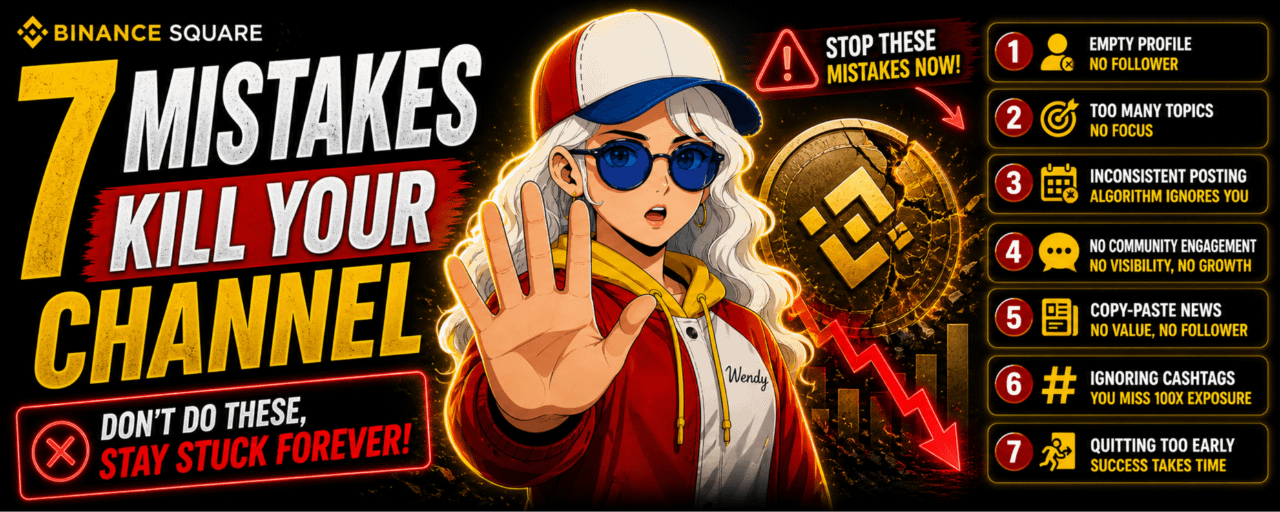
Article
These 7 mistakes are quietly killing your Binance Square channelMost new creators don't fail because they lack talent. They fail because they keep repeating mistakes they don't even know they're making.
I've watched enough channels to recognize a clear pattern. Channels stuck under 500 followers after 3 months almost always have at least 3 to 4 of the 7 mistakes below. And what's frustrating is that every single one of them is completely avoidable.
Mistake 1: An empty profile
You write a great post, someone clicks your profile, and they see no avatar, no bio, no previous posts. They leave within 3 seconds. A potential new follower just disappeared.
Your profile is your storefront. If the storefront looks abandoned, nobody walks in.
Mistake 2: Writing about too many topics at once
Bitcoin today, NFTs tomorrow, macro the day after, then DeFi. The algorithm doesn't know which group of users to push your channel toward. Readers don't know what they're actually following you for.
One consistent topic always beats every attempt at diversification in the early stages.
Mistake 3: Posting inconsistently
5 posts in week one, then silence for 2 weeks, then 3 posts back to back. Binance Square's algorithm ranks unstable channels lower. Every time you disappear, you're breaking your own growth momentum.
1 post every day, even a short one, will always outperform 7 posts in one day followed by a week of nothing.
Mistake 4: Not engaging with the community
Binance Square is a social network. The algorithm actively favors people who participate in the community, not just those who broadcast content one way.
Spending 15 minutes a day leaving substantive comments on other creators' posts will bring you more followers than you'd expect.
Mistake 5: Copy-pasting news without any original perspective
This is the most common mistake of all. People don't need you to retell news they've already read in 10 other places. They follow you for your perspective, for the way you analyze and connect information in your own unique way.
Every post needs at least one opinion or piece of analysis that's genuinely yours, even if it's just a short paragraph.
Mistake 6: Ignoring cashtags
Cashtags don't just activate Write To Earn. They push your post into the feeds of people already following that token. Every post without a cashtag is a missed opportunity to reach new readers entirely.
Attach at least 2 to 3 relevant cashtags to every post. No need to force it — just make sure they're actually related to what you're writing about.
Mistake 7: Quitting too early
This is the most expensive mistake of all. The first 30 days on Binance Square are almost always slow and discouraging. The algorithm needs time to learn your channel. The community needs time to discover you exist.
Most creators quit exactly when they're about to start seeing results. Don't be that person.
Go back and check your channel right now. If you're making 3 or more of these mistakes, that's exactly why your channel hasn't grown the way you expected.
Fix them one by one. The results will follow.
👉 Follow Wendy 🇻🇳 on Binance Square and turn on notifications so you never miss a post.
The market doesn't wait for anyone. But the right knowledge means you'll never be left behind. 🔍
#BinanceSquare #CreatorTips #GrowthHack #wendy #Binance $BTC $ETH $BNB
These 7 mistakes are quietly killing your Binance Square channel
Most new creators don't fail because they lack talent. They fail because they keep repeating mistakes they don't even know they're making.
I've watched enough channels to recognize a clear pattern. Channels stuck under 500 followers after 3 months almost always have at least 3 to 4 of the 7 mistakes below. And what's frustrating is that every single one of them is completely avoidable.
Mistake 1: An empty profile
You write a great post, someone clicks your profile, and they see no avatar, no bio, no previous posts. They leave within 3 seconds. A potential new follower just disappeared.
Your profile is your storefront. If the storefront looks abandoned, nobody walks in.
Mistake 2: Writing about too many topics at once
Bitcoin today, NFTs tomorrow, macro the day after, then DeFi. The algorithm doesn't know which group of users to push your channel toward. Readers don't know what they're actually following you for.
One consistent topic always beats every attempt at diversification in the early stages.
Mistake 3: Posting inconsistently
5 posts in week one, then silence for 2 weeks, then 3 posts back to back. Binance Square's algorithm ranks unstable channels lower. Every time you disappear, you're breaking your own growth momentum.
1 post every day, even a short one, will always outperform 7 posts in one day followed by a week of nothing.
Mistake 4: Not engaging with the community
Binance Square is a social network. The algorithm actively favors people who participate in the community, not just those who broadcast content one way.
Spending 15 minutes a day leaving substantive comments on other creators' posts will bring you more followers than you'd expect.
Mistake 5: Copy-pasting news without any original perspective
This is the most common mistake of all. People don't need you to retell news they've already read in 10 other places. They follow you for your perspective, for the way you analyze and connect information in your own unique way.
Every post needs at least one opinion or piece of analysis that's genuinely yours, even if it's just a short paragraph.
Mistake 6: Ignoring cashtags
Cashtags don't just activate Write To Earn. They push your post into the feeds of people already following that token. Every post without a cashtag is a missed opportunity to reach new readers entirely.
Attach at least 2 to 3 relevant cashtags to every post. No need to force it — just make sure they're actually related to what you're writing about.
Mistake 7: Quitting too early
This is the most expensive mistake of all. The first 30 days on Binance Square are almost always slow and discouraging. The algorithm needs time to learn your channel. The community needs time to discover you exist.
Most creators quit exactly when they're about to start seeing results. Don't be that person.
Go back and check your channel right now. If you're making 3 or more of these mistakes, that's exactly why your channel hasn't grown the way you expected.
Fix them one by one. The results will follow.
👉 Follow Wendy 🇻🇳 on Binance Square and turn on notifications so you never miss a post.
The market doesn't wait for anyone. But the right knowledge means you'll never be left behind. 🔍
#BinanceSquare #CreatorTips #GrowthHack #wendy #Binance $BTC $ETH $BNB
I've watched enough channels to recognize a clear pattern. Channels stuck under 500 followers after 3 months almost always have at least 3 to 4 of the 7 mistakes below. And what's frustrating is that every single one of them is completely avoidable.
Mistake 1: An empty profile
You write a great post, someone clicks your profile, and they see no avatar, no bio, no previous posts. They leave within 3 seconds. A potential new follower just disappeared.
Your profile is your storefront. If the storefront looks abandoned, nobody walks in.
Mistake 2: Writing about too many topics at once
Bitcoin today, NFTs tomorrow, macro the day after, then DeFi. The algorithm doesn't know which group of users to push your channel toward. Readers don't know what they're actually following you for.
One consistent topic always beats every attempt at diversification in the early stages.
Mistake 3: Posting inconsistently
5 posts in week one, then silence for 2 weeks, then 3 posts back to back. Binance Square's algorithm ranks unstable channels lower. Every time you disappear, you're breaking your own growth momentum.
1 post every day, even a short one, will always outperform 7 posts in one day followed by a week of nothing.
Mistake 4: Not engaging with the community
Binance Square is a social network. The algorithm actively favors people who participate in the community, not just those who broadcast content one way.
Spending 15 minutes a day leaving substantive comments on other creators' posts will bring you more followers than you'd expect.
Mistake 5: Copy-pasting news without any original perspective
This is the most common mistake of all. People don't need you to retell news they've already read in 10 other places. They follow you for your perspective, for the way you analyze and connect information in your own unique way.
Every post needs at least one opinion or piece of analysis that's genuinely yours, even if it's just a short paragraph.
Mistake 6: Ignoring cashtags
Cashtags don't just activate Write To Earn. They push your post into the feeds of people already following that token. Every post without a cashtag is a missed opportunity to reach new readers entirely.
Attach at least 2 to 3 relevant cashtags to every post. No need to force it — just make sure they're actually related to what you're writing about.
Mistake 7: Quitting too early
This is the most expensive mistake of all. The first 30 days on Binance Square are almost always slow and discouraging. The algorithm needs time to learn your channel. The community needs time to discover you exist.
Most creators quit exactly when they're about to start seeing results. Don't be that person.
Go back and check your channel right now. If you're making 3 or more of these mistakes, that's exactly why your channel hasn't grown the way you expected.
Fix them one by one. The results will follow.
👉 Follow Wendy 🇻🇳 on Binance Square and turn on notifications so you never miss a post.
The market doesn't wait for anyone. But the right knowledge means you'll never be left behind. 🔍
#BinanceSquare #CreatorTips #GrowthHack #wendy #Binance $BTC $ETH $BNB
4
617
Log in to explore more content
Join global crypto users on Binance Square
⚡️ Get latest and useful information about crypto.
💬 Trusted by the world’s largest crypto exchange.
👍 Discover real insights from verified creators.
Email / Phone number
Trending Topics
1
#PolymarketBankFailureBetsDrawFDICConcern
3,685 views
178 Discussing
2
#BlackRockBuildsTokenizedPortfoliosForOndo
2,788 views
120 Discussing
3
#BitwiseFilesToListNEARETFOnNYSEArca
3,802 views
149 Discussing
4
#SECCommissionerPeirceToLeaveOct2
3,387 views
114 Discussing
5
#SECSaysBuybacksUpgradesDontMakeTokenSecurity
6,568 views
139 Discussing
6
#StrategyProposesDailyDividendsForPreferreds
998 views
34 Discussing
7
#CircleTetherFreezeBitgetHackerWallet
398 views
28 Discussing
8
#CoinMarketCapCompletesCoinglassAcquisition
2,090 views
50 Discussing
9
#QNTRises39%
70,415 views
1,299 Discussing
10
#EthereumBreaksAbove$2700
6,540 views
129 Discussing