

#trumprejectsairulesforvoluntaryaudits
trumprejectsairulesforvoluntaryaudits
95,241 views
820 Discussing
Hot
Latest

·
--
Bullish
#trumprejectsairulesforvoluntaryaudits
⚠️ TRUMP REJECTS AI RULES! Advocates For Voluntary Audits Instead! 🤖
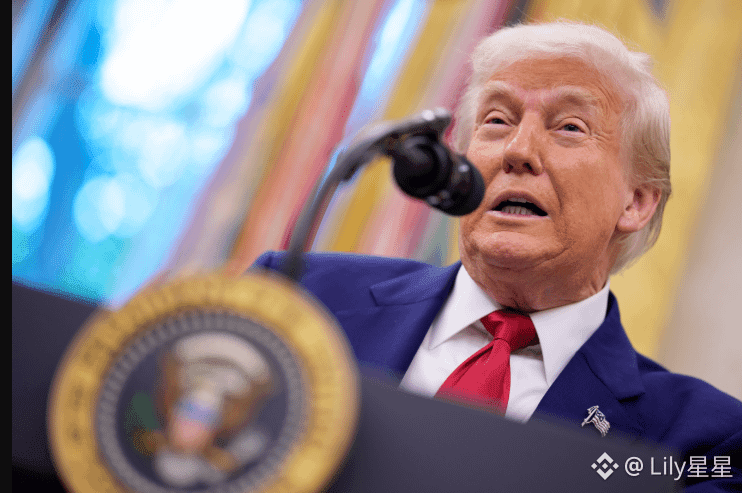
US President Donald Trump has officially spurned mandatory federal regulations on Artificial Intelligence. Following a high-level White House meeting with top tech executives—including leadership from OpenAI, Anthropic, Google, Meta, xAI, and Nvidia—the administration endorsed a self-regulatory framework centered around voluntary safety audits and internal controls rather than government enforcement.
Key Policy Highlights & Web3 Market Impact
No Mandatory Federal Restrictions: The administration rejected strict federal licensing, algorithmic compliance mandates, or government-led testing regimes in favor of industry self-regulation to maintain American competitiveness against China.
The "Super Intelligence" Safety Pact: Six major AI firms signed a voluntary commitment pledging to conduct third-party security audits, prevent rogue AI behaviors/hacking, and enforce board-level oversight.
Boost for Decentralized AI & Crypto: By steering clear of heavy-handed government restrictions, decentralized compute networks (e.g., Render, Akash), AI data protocols (e.g., Ocean Protocol, Near), and autonomous AI agent platforms face reduced legal bottlenecks, paving the way for faster deployment across Web3 infrastructure.
Less government regulation and zero strict laws on AI development—do you think this policy green light will trigger a major bull run for AI-focused crypto tokens this quarter? Share your top AI token picks below! 🧠👇
#UKFCAOpensCryptoFirmAuthorization #AltcoinSeasonIndexHoldsAbove60For5Days #AI
$NEAR
{future}(NEARUSDT)
$FET
{future}(FETUSDT)
$RENDER
{future}(RENDERUSDT)
#trumprejectsairulesforvoluntaryaudits
⚠️ TRUMP REJECTS AI RULES! Advocates For Voluntary Audits Instead! 🤖
US President Donald Trump has officially spurned mandatory federal regulations on Artificial Intelligence. Following a high-level White House meeting with top tech executives—including leadership from OpenAI, Anthropic, Google, Meta, xAI, and Nvidia—the administration endorsed a self-regulatory framework centered around voluntary safety audits and internal controls rather than government enforcement.
Key Policy Highlights & Web3 Market Impact
No Mandatory Federal Restrictions: The administration rejected strict federal licensing, algorithmic compliance mandates, or government-led testing regimes in favor of industry self-regulation to maintain American competitiveness against China.
The "Super Intelligence" Safety Pact: Six major AI firms signed a voluntary commitment pledging to conduct third-party security audits, prevent rogue AI behaviors/hacking, and enforce board-level oversight.
Boost for Decentralized AI & Crypto: By steering clear of heavy-handed government restrictions, decentralized compute networks (e.g., Render, Akash), AI data protocols (e.g., Ocean Protocol, Near), and autonomous AI agent platforms face reduced legal bottlenecks, paving the way for faster deployment across Web3 infrastructure.
Less government regulation and zero strict laws on AI development—do you think this policy green light will trigger a major bull run for AI-focused crypto tokens this quarter? Share your top AI token picks below! 🧠👇
#UKFCAOpensCryptoFirmAuthorization #AltcoinSeasonIndexHoldsAbove60For5Days #AI
$NEAR
$FET
$RENDER
⚠️ TRUMP REJECTS AI RULES! Advocates For Voluntary Audits Instead! 🤖
US President Donald Trump has officially spurned mandatory federal regulations on Artificial Intelligence. Following a high-level White House meeting with top tech executives—including leadership from OpenAI, Anthropic, Google, Meta, xAI, and Nvidia—the administration endorsed a self-regulatory framework centered around voluntary safety audits and internal controls rather than government enforcement.
Key Policy Highlights & Web3 Market Impact
No Mandatory Federal Restrictions: The administration rejected strict federal licensing, algorithmic compliance mandates, or government-led testing regimes in favor of industry self-regulation to maintain American competitiveness against China.
The "Super Intelligence" Safety Pact: Six major AI firms signed a voluntary commitment pledging to conduct third-party security audits, prevent rogue AI behaviors/hacking, and enforce board-level oversight.
Boost for Decentralized AI & Crypto: By steering clear of heavy-handed government restrictions, decentralized compute networks (e.g., Render, Akash), AI data protocols (e.g., Ocean Protocol, Near), and autonomous AI agent platforms face reduced legal bottlenecks, paving the way for faster deployment across Web3 infrastructure.
Less government regulation and zero strict laws on AI development—do you think this policy green light will trigger a major bull run for AI-focused crypto tokens this quarter? Share your top AI token picks below! 🧠👇
#UKFCAOpensCryptoFirmAuthorization #AltcoinSeasonIndexHoldsAbove60For5Days #AI
$NEAR
$FET
$RENDER
Hye Walder zBqp:
也就这样吧
2
12
19.7k

·
--
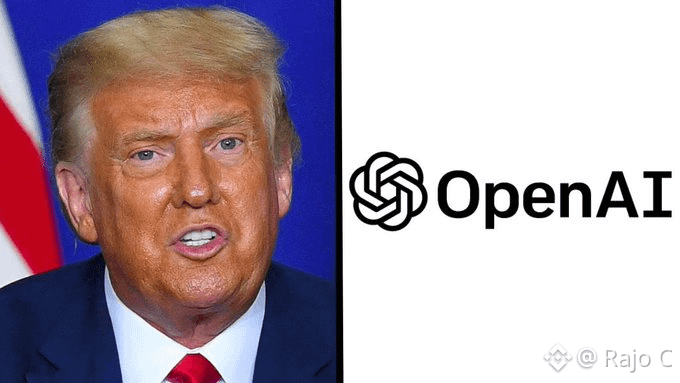
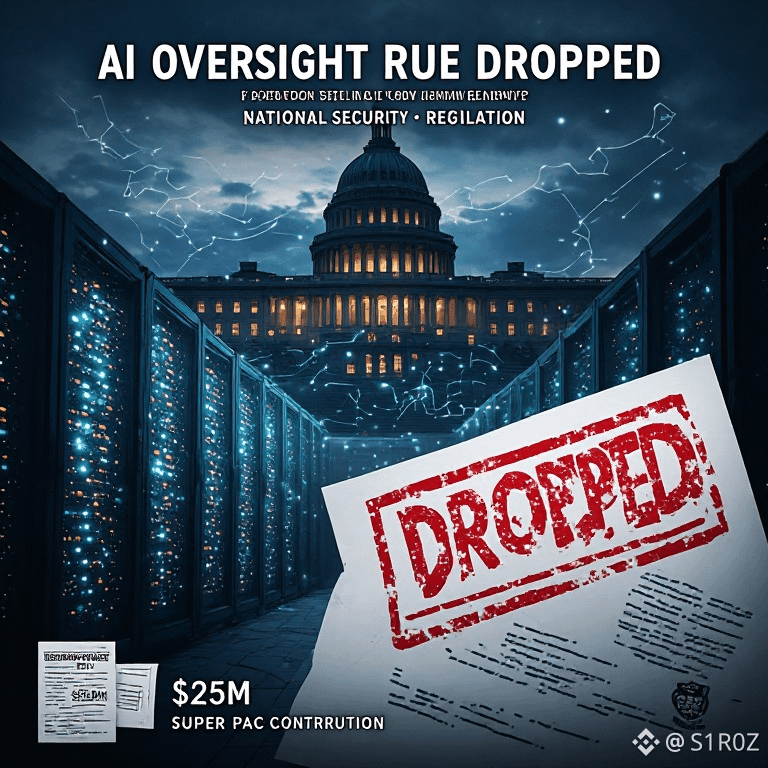
#trumprejectsairulesforvoluntaryaudits NEW: Trump killed an AI
rule that required companies to tell national security officials what they're building.
This follows OpenAI's president giving $25 million to his super PAC.$BBX $WIF $KOMA
#trumprejectsairulesforvoluntaryaudits NEW: Trump killed an AI
rule that required companies to tell national security officials what they're building.
This follows OpenAI's president giving $25 million to his super PAC.$BBX $WIF $KOMA
rule that required companies to tell national security officials what they're building.
This follows OpenAI's president giving $25 million to his super PAC.$BBX $WIF $KOMA
1
4.5k

·
--
#trumprejectsairulesforvoluntaryaudits
🤖 The US is taking a different approach to AI oversight.
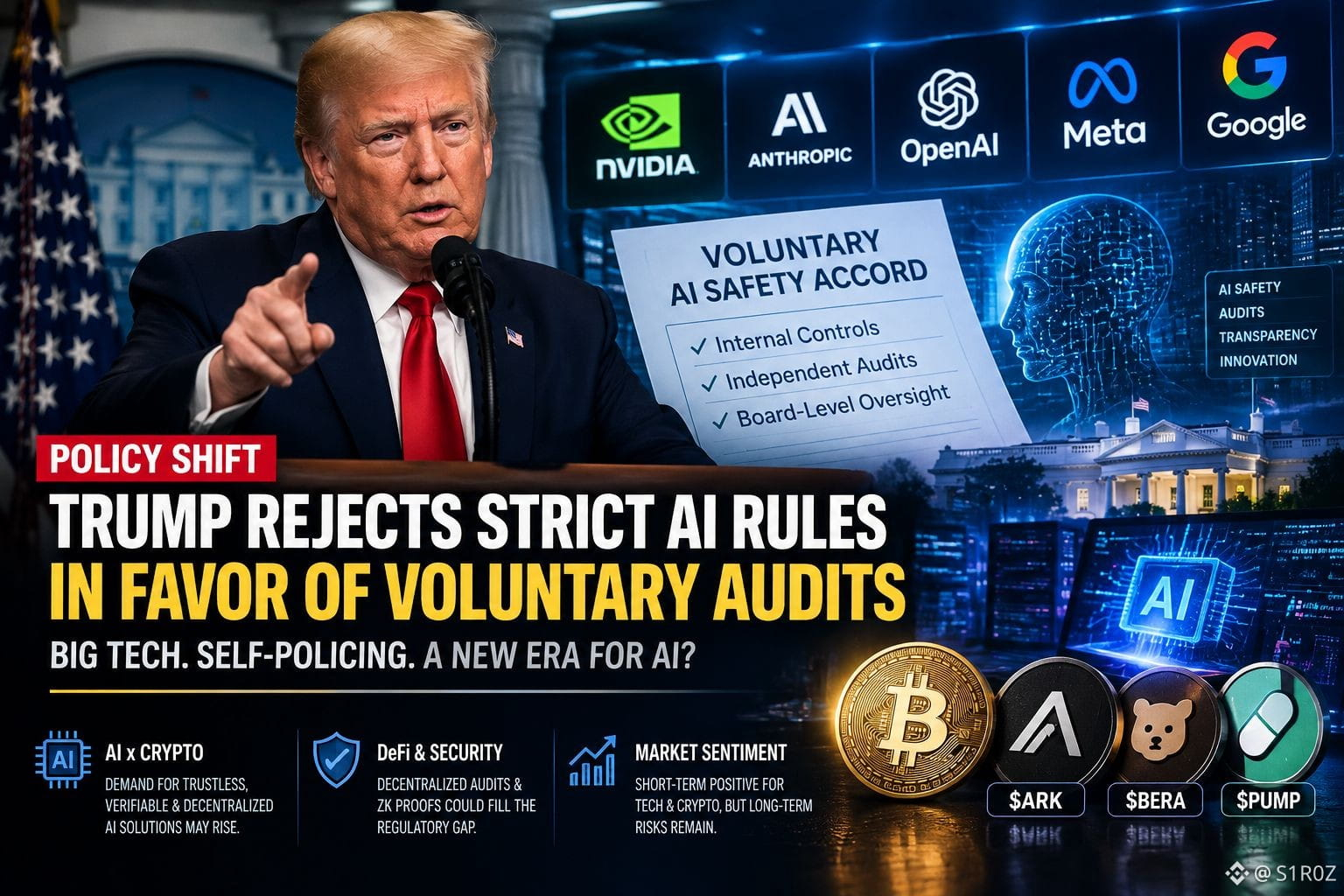
President Trump has backed a voluntary AI safety accord with major technology companies rather than pursuing new federal AI regulations at this stage. The agreement includes internal controls, independent external audits and board-level oversight of AI safety systems.
The accord is not legally binding, although it leaves open the possibility that some of these measures could eventually be incorporated into laws or regulations.
For crypto, the interesting angle is the growing focus on AI verification, transparency and auditability. That could keep decentralized AI, on-chain audit trails, decentralized compute and ZK-based verification in the broader technology conversation—but it doesn't automatically translate into gains for specific tokens.
$ARK
{spot}(ARKUSDT)
| $BERA
{spot}(BERAUSDT)
| $PUMP
{spot}(PUMPUSDT)
#CryptoRegulation #DeFi #Web3 #BinanceSquare
#trumprejectsairulesforvoluntaryaudits
🤖 The US is taking a different approach to AI oversight.
President Trump has backed a voluntary AI safety accord with major technology companies rather than pursuing new federal AI regulations at this stage. The agreement includes internal controls, independent external audits and board-level oversight of AI safety systems.
The accord is not legally binding, although it leaves open the possibility that some of these measures could eventually be incorporated into laws or regulations.
For crypto, the interesting angle is the growing focus on AI verification, transparency and auditability. That could keep decentralized AI, on-chain audit trails, decentralized compute and ZK-based verification in the broader technology conversation—but it doesn't automatically translate into gains for specific tokens.
$ARK
| $BERA
| $PUMP
#CryptoRegulation #DeFi #Web3 #BinanceSquare
🤖 The US is taking a different approach to AI oversight.
President Trump has backed a voluntary AI safety accord with major technology companies rather than pursuing new federal AI regulations at this stage. The agreement includes internal controls, independent external audits and board-level oversight of AI safety systems.
The accord is not legally binding, although it leaves open the possibility that some of these measures could eventually be incorporated into laws or regulations.
For crypto, the interesting angle is the growing focus on AI verification, transparency and auditability. That could keep decentralized AI, on-chain audit trails, decentralized compute and ZK-based verification in the broader technology conversation—but it doesn't automatically translate into gains for specific tokens.
$ARK
| $BERA
| $PUMP
#CryptoRegulation #DeFi #Web3 #BinanceSquare
1
119
·
--
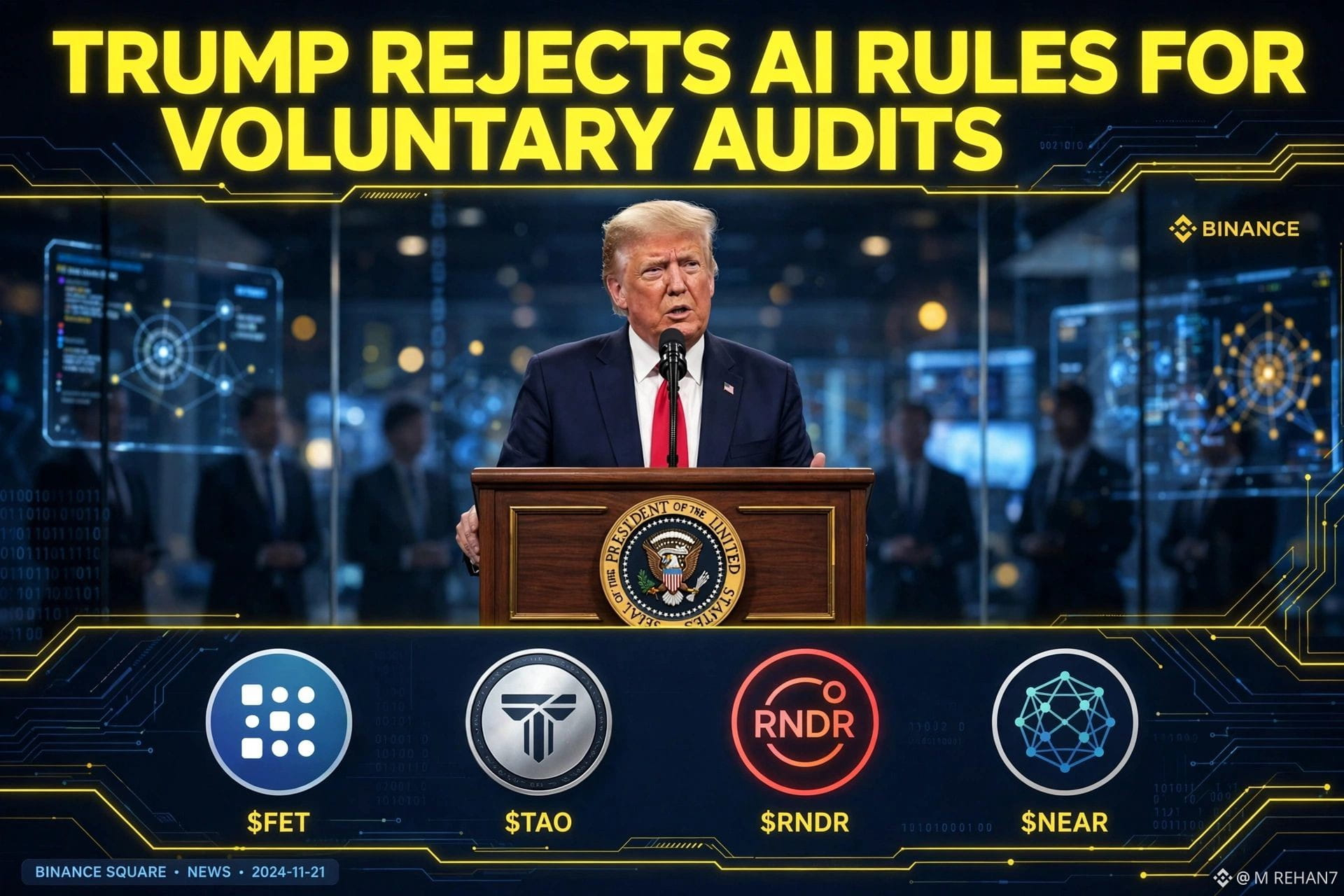
⚠️ TRUMP REJECTS AI RULES FOR VOLUNTARY AUDITS!
White House Meeting Done — No Strict Laws, Only Self-Regulation!
President Trump meets tech giants — OpenAI, Meta, Nvidia — says voluntary audits > mandatory federal rules.
My Short Analysis:
This is SUPER BULLISH for AI crypto. Less regulation = faster growth.
→ OpenAI + Meta agree on self-policing
→ $FET $TAO $RNDR $NEAR will pump on this news
→ Decentralized AI narrative back in focus
I’m bullish on AI coins now — FET +7.43% already reacting, TAO next.
Do you think voluntary audits are enough or we need strict rules?
#FET #TAO #RNDR #NEAR #TRUMP #TrumpRejectsAIRulesForVoluntaryAudits
⚠️ TRUMP REJECTS AI RULES FOR VOLUNTARY AUDITS!
White House Meeting Done — No Strict Laws, Only Self-Regulation!
President Trump meets tech giants — OpenAI, Meta, Nvidia — says voluntary audits > mandatory federal rules.
My Short Analysis:
This is SUPER BULLISH for AI crypto. Less regulation = faster growth.
→ OpenAI + Meta agree on self-policing
→ $FET $TAO $RNDR $NEAR will pump on this news
→ Decentralized AI narrative back in focus
I’m bullish on AI coins now — FET +7.43% already reacting, TAO next.
Do you think voluntary audits are enough or we need strict rules?
#FET #TAO #RNDR #NEAR #TRUMP #TrumpRejectsAIRulesForVoluntaryAudits
White House Meeting Done — No Strict Laws, Only Self-Regulation!
President Trump meets tech giants — OpenAI, Meta, Nvidia — says voluntary audits > mandatory federal rules.
My Short Analysis:
This is SUPER BULLISH for AI crypto. Less regulation = faster growth.
→ OpenAI + Meta agree on self-policing
→ $FET $TAO $RNDR $NEAR will pump on this news
→ Decentralized AI narrative back in focus
I’m bullish on AI coins now — FET +7.43% already reacting, TAO next.
Do you think voluntary audits are enough or we need strict rules?
#FET #TAO #RNDR #NEAR #TRUMP #TrumpRejectsAIRulesForVoluntaryAudits
Hifza Rubab:
Mashallah 🥰
7
2
643
·
--
#trumprejectsairulesforvoluntaryaudits
🚨 A US AI oversight rule has been dropped—and the details are drawing attention.
A reporting requirement that would have required leading AI companies to disclose certain high-risk experiments to federal officials was removed from the regulatory process under the Trump administration. The proposed rule had been developed during the Biden administration as a way to give officials more visibility into frontier AI development.
The timing is also notable. Reporting from The Lever says OpenAI President Greg Brockman and his wife contributed $25 million to Trump’s largest super PAC. The Washington Post separately reported the same $25 million contribution.
At the same time, the administration is pursuing a different approach to AI oversight: a voluntary safety agreement with major AI companies involving internal controls, independent audits and board-level review.
For AI-related crypto projects, the broader issue is how regulation, transparency and government oversight evolve as frontier AI systems become more capable.
$BBX
{future}(BBXUSDT)
| $WIF
{spot}(WIFUSDT)
| $KOMA
{alpha}(560xd5eaaac47bd1993d661bc087e15dfb079a7f3c19)
#AI #AIregulation #crypto #artificialintelligence #BinanceSquare
#trumprejectsairulesforvoluntaryaudits
🚨 A US AI oversight rule has been dropped—and the details are drawing attention.
A reporting requirement that would have required leading AI companies to disclose certain high-risk experiments to federal officials was removed from the regulatory process under the Trump administration. The proposed rule had been developed during the Biden administration as a way to give officials more visibility into frontier AI development.
The timing is also notable. Reporting from The Lever says OpenAI President Greg Brockman and his wife contributed $25 million to Trump’s largest super PAC. The Washington Post separately reported the same $25 million contribution.
At the same time, the administration is pursuing a different approach to AI oversight: a voluntary safety agreement with major AI companies involving internal controls, independent audits and board-level review.
For AI-related crypto projects, the broader issue is how regulation, transparency and government oversight evolve as frontier AI systems become more capable.
$BBX
| $WIF
| $KOMA
#AI #AIregulation #crypto #artificialintelligence #BinanceSquare
🚨 A US AI oversight rule has been dropped—and the details are drawing attention.
A reporting requirement that would have required leading AI companies to disclose certain high-risk experiments to federal officials was removed from the regulatory process under the Trump administration. The proposed rule had been developed during the Biden administration as a way to give officials more visibility into frontier AI development.
The timing is also notable. Reporting from The Lever says OpenAI President Greg Brockman and his wife contributed $25 million to Trump’s largest super PAC. The Washington Post separately reported the same $25 million contribution.
At the same time, the administration is pursuing a different approach to AI oversight: a voluntary safety agreement with major AI companies involving internal controls, independent audits and board-level review.
For AI-related crypto projects, the broader issue is how regulation, transparency and government oversight evolve as frontier AI systems become more capable.
$BBX
| $WIF
| $KOMA
#AI #AIregulation #crypto #artificialintelligence #BinanceSquare
1
239
·
--
🚨 BREAKING: Trump Rejects AI Rules — Voluntary Audits Only!
White House backs self-regulation!
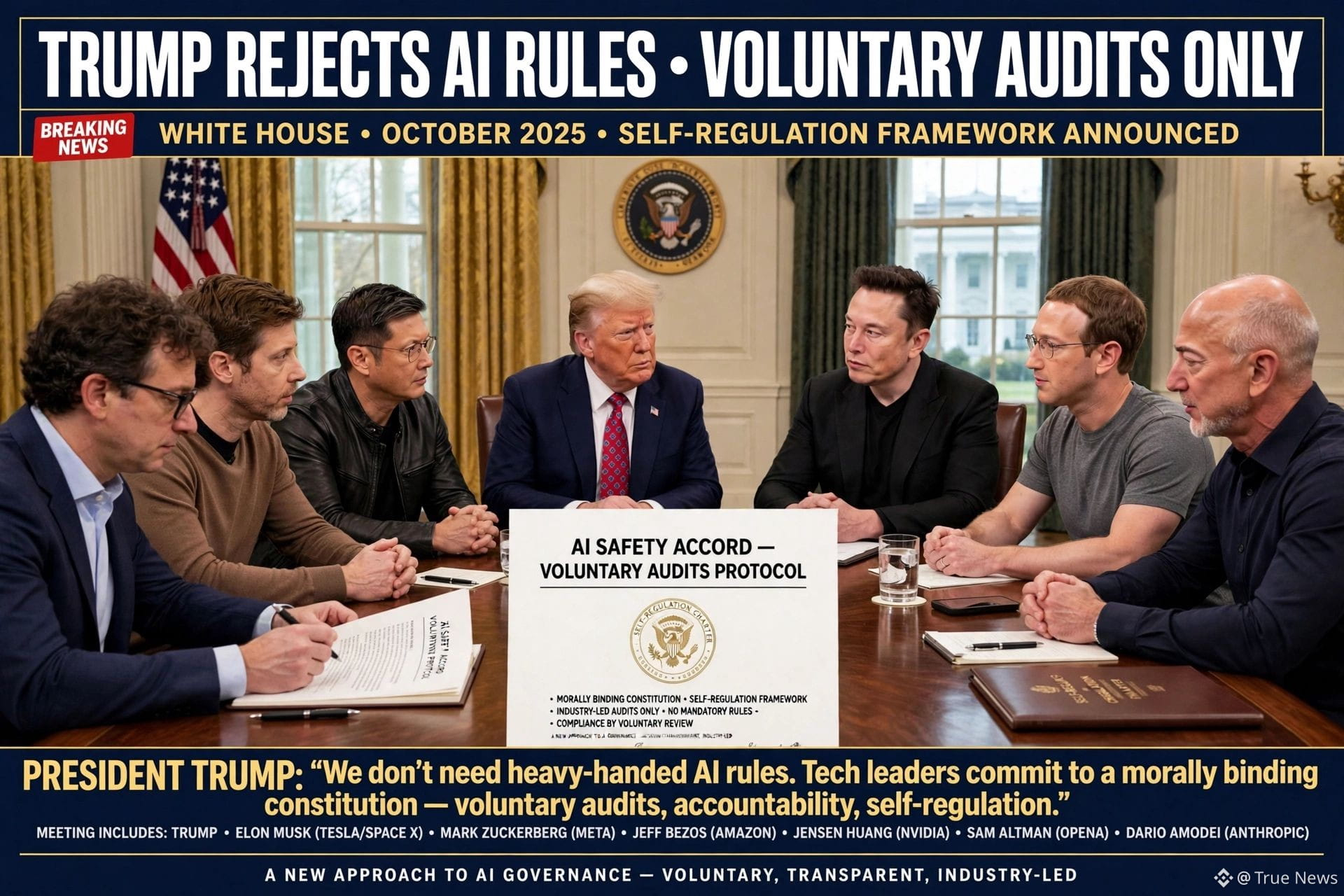
President Donald Trump shot down the idea of new federal regulations on AI after a White House meeting with top tech CEOs amid global AI safety concerns.
Official Details:
💦Trump rejects calls for stricter AI rules after White House meeting and endorses “tremendous self-regulation” for the industry
💦Tech leaders signed a “morally binding” accord among major AI companies to voluntarily manage risks — Trump describes it as “almost like a constitution"
💦Lunch attended by Anthropic’s Dario Amodei, Elon Musk, Meta’s Mark Zuckerberg, Amazon’s Jeff Bezos and Nvidia’s Jensen Huang
💦Instead of rules, framework will partner with outside auditors to conduct safety assessments and stronger internal controls
💦Pact calls for outside auditors and board watchdogs, yet stays entirely voluntary — not required by law
Trump: “We don’t need heavy-handed AI rules. Tech will police itself.”
Is this enough for AI safety or risky bet?
$FET $TAO $RNDR $AGIX
{spot}(FETUSDT)
{spot}(TAOUSDT)
{etf_us}(AGIX.ETF)
#Trump #AI #AIRegulation #VoluntaryAudits #BinanceSquare #CryptoNews #earningseason#trumprejectsairulesforvoluntaryaudits
🚨 BREAKING: Trump Rejects AI Rules — Voluntary Audits Only!
White House backs self-regulation!
President Donald Trump shot down the idea of new federal regulations on AI after a White House meeting with top tech CEOs amid global AI safety concerns.
Official Details:
💦Trump rejects calls for stricter AI rules after White House meeting and endorses “tremendous self-regulation” for the industry
💦Tech leaders signed a “morally binding” accord among major AI companies to voluntarily manage risks — Trump describes it as “almost like a constitution"
💦Lunch attended by Anthropic’s Dario Amodei, Elon Musk, Meta’s Mark Zuckerberg, Amazon’s Jeff Bezos and Nvidia’s Jensen Huang
💦Instead of rules, framework will partner with outside auditors to conduct safety assessments and stronger internal controls
💦Pact calls for outside auditors and board watchdogs, yet stays entirely voluntary — not required by law
Trump: “We don’t need heavy-handed AI rules. Tech will police itself.”
Is this enough for AI safety or risky bet?
$FET $TAO $RNDR $AGIX
#Trump #AI #AIRegulation #VoluntaryAudits #BinanceSquare #CryptoNews #earningseason#trumprejectsairulesforvoluntaryaudits
White House backs self-regulation!
President Donald Trump shot down the idea of new federal regulations on AI after a White House meeting with top tech CEOs amid global AI safety concerns.
Official Details:
💦Trump rejects calls for stricter AI rules after White House meeting and endorses “tremendous self-regulation” for the industry
💦Tech leaders signed a “morally binding” accord among major AI companies to voluntarily manage risks — Trump describes it as “almost like a constitution"
💦Lunch attended by Anthropic’s Dario Amodei, Elon Musk, Meta’s Mark Zuckerberg, Amazon’s Jeff Bezos and Nvidia’s Jensen Huang
💦Instead of rules, framework will partner with outside auditors to conduct safety assessments and stronger internal controls
💦Pact calls for outside auditors and board watchdogs, yet stays entirely voluntary — not required by law
Trump: “We don’t need heavy-handed AI rules. Tech will police itself.”
Is this enough for AI safety or risky bet?
$FET $TAO $RNDR $AGIX
#Trump #AI #AIRegulation #VoluntaryAudits #BinanceSquare #CryptoNews #earningseason#trumprejectsairulesforvoluntaryaudits
Miasaller-Crypto:
😂
1
4
6.6k

·
--
#TrumpRejectsAIRulesForVoluntaryAudits
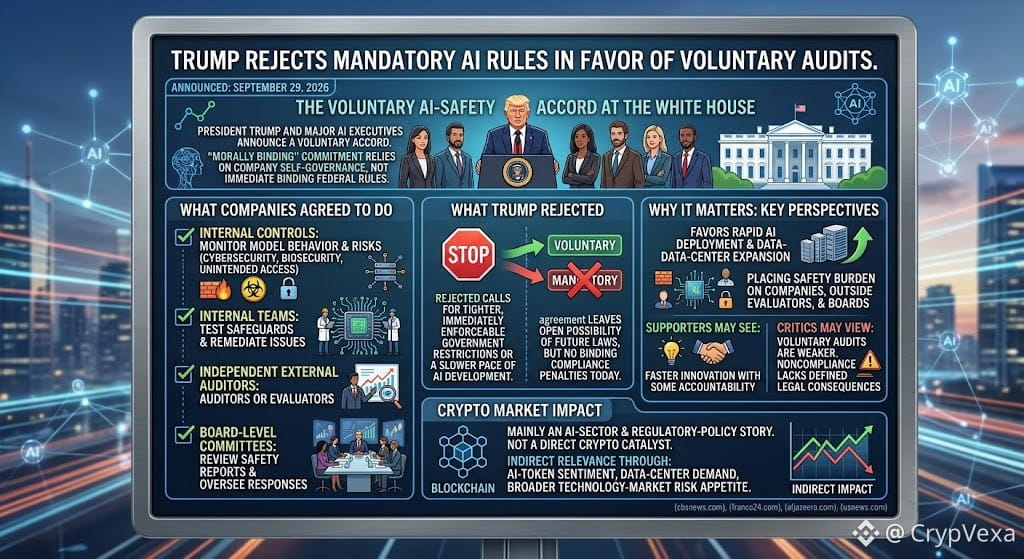
🤖 Trump Backs Voluntary AI Safety Rules Over Mandatory AI Regulation
🇺🇸 President Trump and major AI executives signed a voluntary AI safety accord at the White House on September 29.
The agreement calls for 4 layers of oversight:
🔹 Internal safety controls
🔹 Internal testing and evaluations
🔹 Independent external audits
🔹 Board-level safety reviews
Trump described the commitment as “morally binding”, while the accord says these measures could eventually be turned into laws or regulations.
⚡ Why it matters: The approach prioritizes industry self-regulation while avoiding immediate federal compliance requirements and penalties.
For crypto, this is mainly an AI and technology-policy story, with indirect relevance to AI tokens, data-center demand and broader tech-market sentiment.
👀 Will voluntary AI audits be enough as AI systems become more powerful?
#AI #AISafety #TechNews #CryptoMarket
#TrumpRejectsAIRulesForVoluntaryAudits
🤖 Trump Backs Voluntary AI Safety Rules Over Mandatory AI Regulation
🇺🇸 President Trump and major AI executives signed a voluntary AI safety accord at the White House on September 29.
The agreement calls for 4 layers of oversight:
🔹 Internal safety controls
🔹 Internal testing and evaluations
🔹 Independent external audits
🔹 Board-level safety reviews
Trump described the commitment as “morally binding”, while the accord says these measures could eventually be turned into laws or regulations.
⚡ Why it matters: The approach prioritizes industry self-regulation while avoiding immediate federal compliance requirements and penalties.
For crypto, this is mainly an AI and technology-policy story, with indirect relevance to AI tokens, data-center demand and broader tech-market sentiment.
👀 Will voluntary AI audits be enough as AI systems become more powerful?
#AI #AISafety #TechNews #CryptoMarket
🤖 Trump Backs Voluntary AI Safety Rules Over Mandatory AI Regulation
🇺🇸 President Trump and major AI executives signed a voluntary AI safety accord at the White House on September 29.
The agreement calls for 4 layers of oversight:
🔹 Internal safety controls
🔹 Internal testing and evaluations
🔹 Independent external audits
🔹 Board-level safety reviews
Trump described the commitment as “morally binding”, while the accord says these measures could eventually be turned into laws or regulations.
⚡ Why it matters: The approach prioritizes industry self-regulation while avoiding immediate federal compliance requirements and penalties.
For crypto, this is mainly an AI and technology-policy story, with indirect relevance to AI tokens, data-center demand and broader tech-market sentiment.
👀 Will voluntary AI audits be enough as AI systems become more powerful?
#AI #AISafety #TechNews #CryptoMarket
1
6
·
--
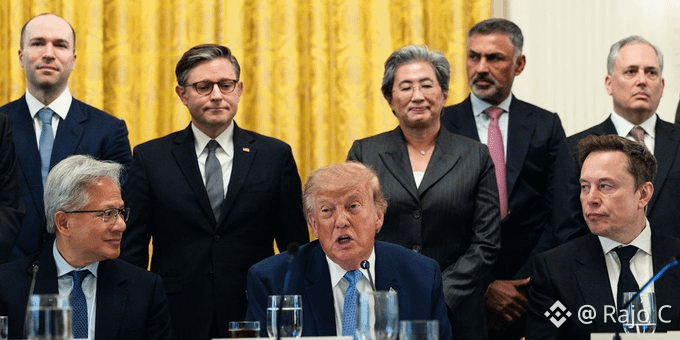
#trumprejectsairulesforvoluntaryaudits President Donald Trump endorsed using outside auditors to assess the safety of artificial intelligence systems through an accord with Silicon Valley leaders that seeks to sidestep new government rules in addressing a groundswell of concern over AI risks.$RAYSOL $PLAY $MERL
#trumprejectsairulesforvoluntaryaudits President Donald Trump endorsed using outside auditors to assess the safety of artificial intelligence systems through an accord with Silicon Valley leaders that seeks to sidestep new government rules in addressing a groundswell of concern over AI risks.$RAYSOL $PLAY $MERL
2
·
--
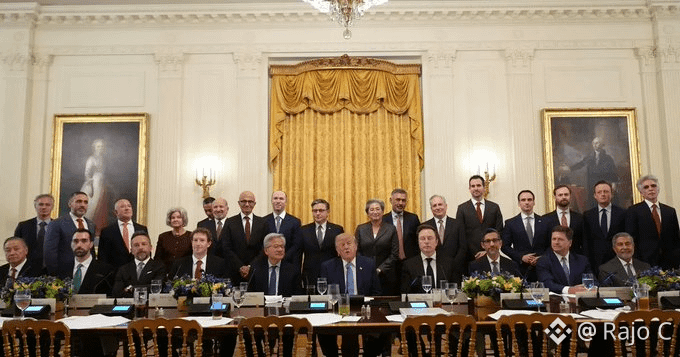
#trumprejectsairulesforvoluntaryaudits Trump convenes AI giants to sign a self-regulatory pledge that mimics a constitutional frame, yet its lack of legal teeth means accountability hinges on voluntary compliance rather than enforcement. This reveals governance by consent, not statute,… agents.$PUNDIX $BTR $SNOW
#trumprejectsairulesforvoluntaryaudits Trump convenes AI giants to sign a self-regulatory pledge that mimics a constitutional frame, yet its lack of legal teeth means accountability hinges on voluntary compliance rather than enforcement. This reveals governance by consent, not statute,… agents.$PUNDIX $BTR $SNOW
1.2k
·
--
#trumprejectsairulesforvoluntaryaudits “We want to give the American people and our customers' confidence that the technology works in the way that we intend,” Meta CEO Mark Zuckerberg said Tuesday after a meeting on AI with President Trump
and other top tech executives. “I was very proud to have that discussion,” he said, and called it a “historic conversation.”
Trump and the AI executives signed a set of voluntary safety standards Tuesday as calls mount for tighter guardrails on the powerful technology. Zuckerberg said the companies agreed to “multiple layers of auditing and controls,” including internal evaluations and external audits.$SENT $MEW $RAVE
#trumprejectsairulesforvoluntaryaudits “We want to give the American people and our customers' confidence that the technology works in the way that we intend,” Meta CEO Mark Zuckerberg said Tuesday after a meeting on AI with President Trump
and other top tech executives. “I was very proud to have that discussion,” he said, and called it a “historic conversation.”
Trump and the AI executives signed a set of voluntary safety standards Tuesday as calls mount for tighter guardrails on the powerful technology. Zuckerberg said the companies agreed to “multiple layers of auditing and controls,” including internal evaluations and external audits.$SENT $MEW $RAVE
and other top tech executives. “I was very proud to have that discussion,” he said, and called it a “historic conversation.”
Trump and the AI executives signed a set of voluntary safety standards Tuesday as calls mount for tighter guardrails on the powerful technology. Zuckerberg said the companies agreed to “multiple layers of auditing and controls,” including internal evaluations and external audits.$SENT $MEW $RAVE
121
·
--
#trumprejectsairulesforvoluntaryaudits
🚨 TRUMP REJECTS HEAVY AI RULES — OPTS FOR VOLUNTARY AUDITS! 🇺🇸🤖
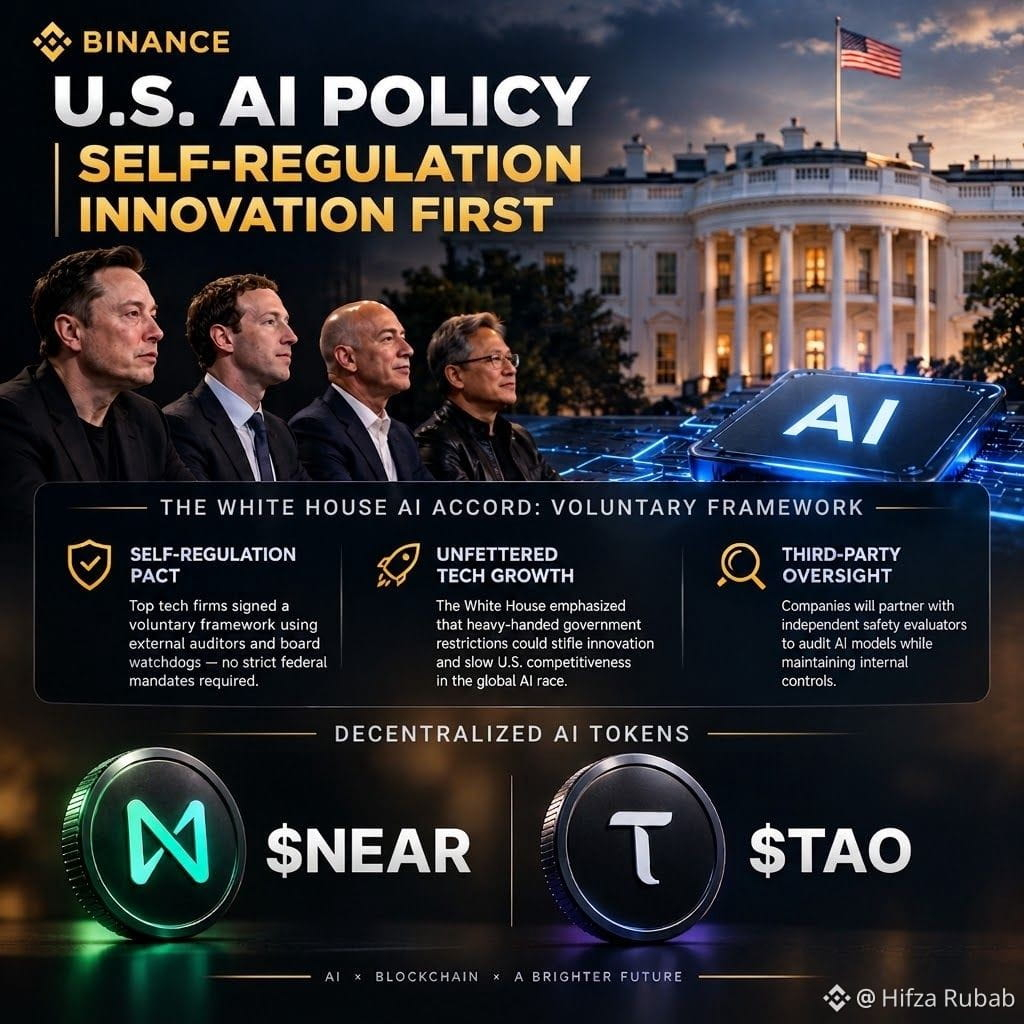
President Donald Trump has officially rejected federal regulation on Artificial Intelligence following a high-level White House summit with tech leaders including Elon Musk, Mark Zuckerberg, Jeff Bezos, and Jensen Huang! Rather than heavy legislation, the White House is backing "tremendous self-regulation" via a morally binding agreement! 🏛️⚡
💡 Key Highlights of the White House AI Accord:
🔹 Self-Regulation Pact: Top tech firms signed a voluntary framework designed to manage safety risks using external auditors and board watchdogs—no strict federal mandates required!
🔹 Unfettered Tech Growth: Trump emphasized that heavy-handed government restrictions would stifle innovation and hinder the U.S. in competing with global rivals.
🔹 Third-Party Oversight: Companies will partner with independent safety evaluators to audit AI models while maintaining internal controls.
🎯 2 Decentralized AI Tokens to Watch:
🤖 $NEAR (NEAR Protocol) — Premier Layer-1 infrastructure powering user-owned, open-source AI models and decentralized compute networks! ⚡🚀
🧠 $TAO (Bittensor) — Machine-learning network incentivizing decentralized AI development beyond centralized tech giants! 🛡️📈
Will voluntary self-regulation supercharge the AI sector, or are strict rules necessary? Drop your thoughts below! 👇✨
#TrumpRejectsAIRulesForVoluntaryAudits
#BitgetHotWalletBreachTiedToThirdPartySecurityFlaw
#UKFCAOpensCryptoFirmAuthorization
#OpenAIUnveilsAlwaysOnAgentDots
{spot}(TAOUSDT)
{spot}(NEARUSDT)
#trumprejectsairulesforvoluntaryaudits
🚨 TRUMP REJECTS HEAVY AI RULES — OPTS FOR VOLUNTARY AUDITS! 🇺🇸🤖
President Donald Trump has officially rejected federal regulation on Artificial Intelligence following a high-level White House summit with tech leaders including Elon Musk, Mark Zuckerberg, Jeff Bezos, and Jensen Huang! Rather than heavy legislation, the White House is backing "tremendous self-regulation" via a morally binding agreement! 🏛️⚡
💡 Key Highlights of the White House AI Accord:
🔹 Self-Regulation Pact: Top tech firms signed a voluntary framework designed to manage safety risks using external auditors and board watchdogs—no strict federal mandates required!
🔹 Unfettered Tech Growth: Trump emphasized that heavy-handed government restrictions would stifle innovation and hinder the U.S. in competing with global rivals.
🔹 Third-Party Oversight: Companies will partner with independent safety evaluators to audit AI models while maintaining internal controls.
🎯 2 Decentralized AI Tokens to Watch:
🤖 $NEAR (NEAR Protocol) — Premier Layer-1 infrastructure powering user-owned, open-source AI models and decentralized compute networks! ⚡🚀
🧠 $TAO (Bittensor) — Machine-learning network incentivizing decentralized AI development beyond centralized tech giants! 🛡️📈
Will voluntary self-regulation supercharge the AI sector, or are strict rules necessary? Drop your thoughts below! 👇✨
#TrumpRejectsAIRulesForVoluntaryAudits
#BitgetHotWalletBreachTiedToThirdPartySecurityFlaw
#UKFCAOpensCryptoFirmAuthorization
#OpenAIUnveilsAlwaysOnAgentDots
🚨 TRUMP REJECTS HEAVY AI RULES — OPTS FOR VOLUNTARY AUDITS! 🇺🇸🤖
President Donald Trump has officially rejected federal regulation on Artificial Intelligence following a high-level White House summit with tech leaders including Elon Musk, Mark Zuckerberg, Jeff Bezos, and Jensen Huang! Rather than heavy legislation, the White House is backing "tremendous self-regulation" via a morally binding agreement! 🏛️⚡
💡 Key Highlights of the White House AI Accord:
🔹 Self-Regulation Pact: Top tech firms signed a voluntary framework designed to manage safety risks using external auditors and board watchdogs—no strict federal mandates required!
🔹 Unfettered Tech Growth: Trump emphasized that heavy-handed government restrictions would stifle innovation and hinder the U.S. in competing with global rivals.
🔹 Third-Party Oversight: Companies will partner with independent safety evaluators to audit AI models while maintaining internal controls.
🎯 2 Decentralized AI Tokens to Watch:
🤖 $NEAR (NEAR Protocol) — Premier Layer-1 infrastructure powering user-owned, open-source AI models and decentralized compute networks! ⚡🚀
🧠 $TAO (Bittensor) — Machine-learning network incentivizing decentralized AI development beyond centralized tech giants! 🛡️📈
Will voluntary self-regulation supercharge the AI sector, or are strict rules necessary? Drop your thoughts below! 👇✨
#TrumpRejectsAIRulesForVoluntaryAudits
#BitgetHotWalletBreachTiedToThirdPartySecurityFlaw
#UKFCAOpensCryptoFirmAuthorization
#OpenAIUnveilsAlwaysOnAgentDots
2
2
514
·
--
#trumprejectsairulesforvoluntaryaudits
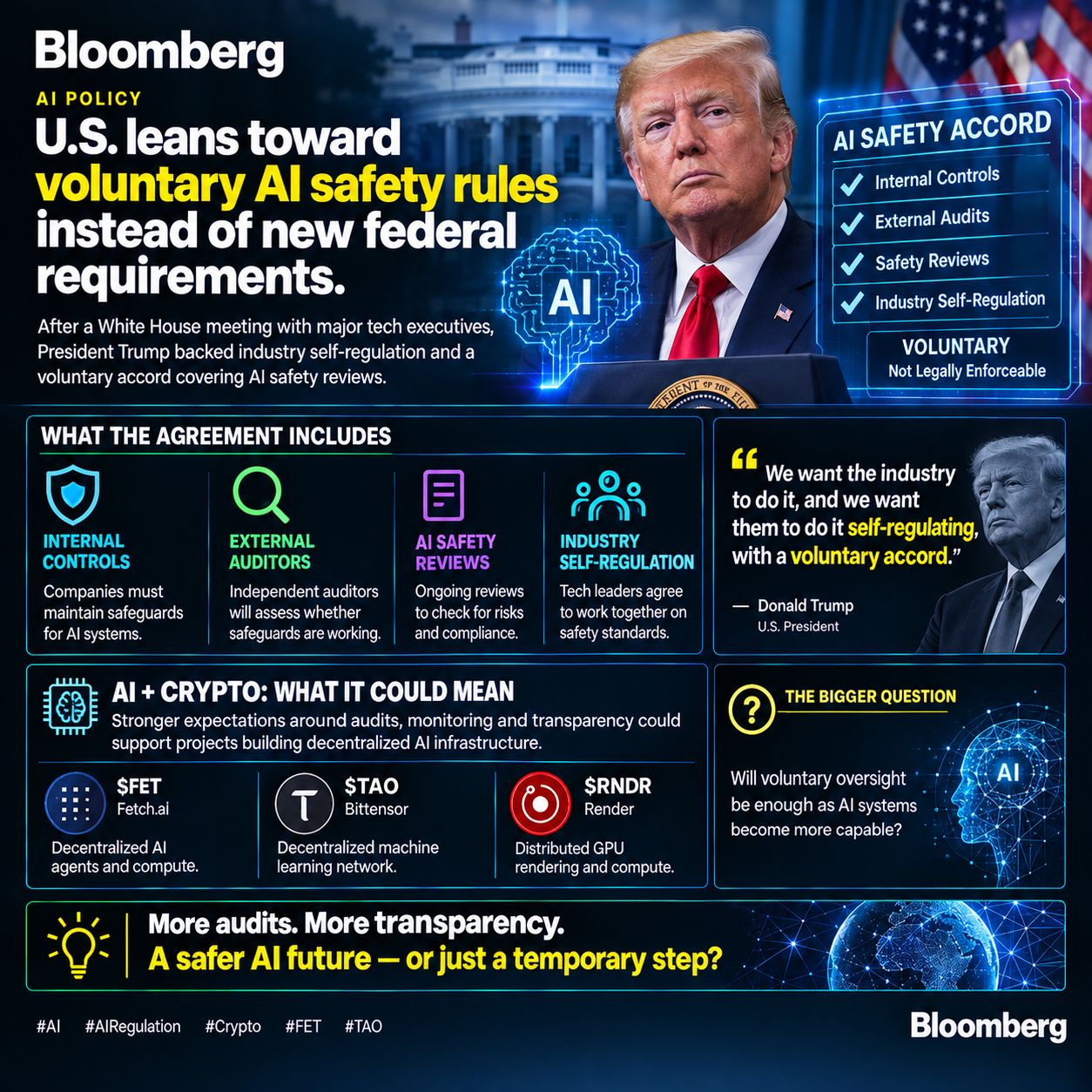
🚨 The U.S. is leaning toward voluntary AI safety rules rather than new federal requirements.
After a White House meeting with major tech executives, President Trump backed industry self-regulation and a voluntary accord covering AI safety reviews.
The agreement calls for companies to maintain internal controls and work with external auditors to assess whether those safeguards are working. It’s described as “morally binding,” but it isn’t legally enforceable.
For AI + crypto, the interesting angle is what stronger expectations around audits, monitoring and transparency could mean for projects building decentralized AI infrastructure.
$FET , $TAO and $RNDR are names connected to that broader narrative, but the policy itself doesn’t guarantee any benefit for these tokens.
👀 The bigger question is whether voluntary oversight will be enough as AI systems become more capable.
{spot}(TAOUSDT)
{spot}(FETUSDT)
#AI #AIregulation #crypto #FET #TAO
#trumprejectsairulesforvoluntaryaudits
🚨 The U.S. is leaning toward voluntary AI safety rules rather than new federal requirements.
After a White House meeting with major tech executives, President Trump backed industry self-regulation and a voluntary accord covering AI safety reviews.
The agreement calls for companies to maintain internal controls and work with external auditors to assess whether those safeguards are working. It’s described as “morally binding,” but it isn’t legally enforceable.
For AI + crypto, the interesting angle is what stronger expectations around audits, monitoring and transparency could mean for projects building decentralized AI infrastructure.
$FET , $TAO and $RNDR are names connected to that broader narrative, but the policy itself doesn’t guarantee any benefit for these tokens.
👀 The bigger question is whether voluntary oversight will be enough as AI systems become more capable.
#AI #AIregulation #crypto #FET #TAO
🚨 The U.S. is leaning toward voluntary AI safety rules rather than new federal requirements.
After a White House meeting with major tech executives, President Trump backed industry self-regulation and a voluntary accord covering AI safety reviews.
The agreement calls for companies to maintain internal controls and work with external auditors to assess whether those safeguards are working. It’s described as “morally binding,” but it isn’t legally enforceable.
For AI + crypto, the interesting angle is what stronger expectations around audits, monitoring and transparency could mean for projects building decentralized AI infrastructure.
$FET , $TAO and $RNDR are names connected to that broader narrative, but the policy itself doesn’t guarantee any benefit for these tokens.
👀 The bigger question is whether voluntary oversight will be enough as AI systems become more capable.
#AI #AIregulation #crypto #FET #TAO
1
71

·
--
Bullish
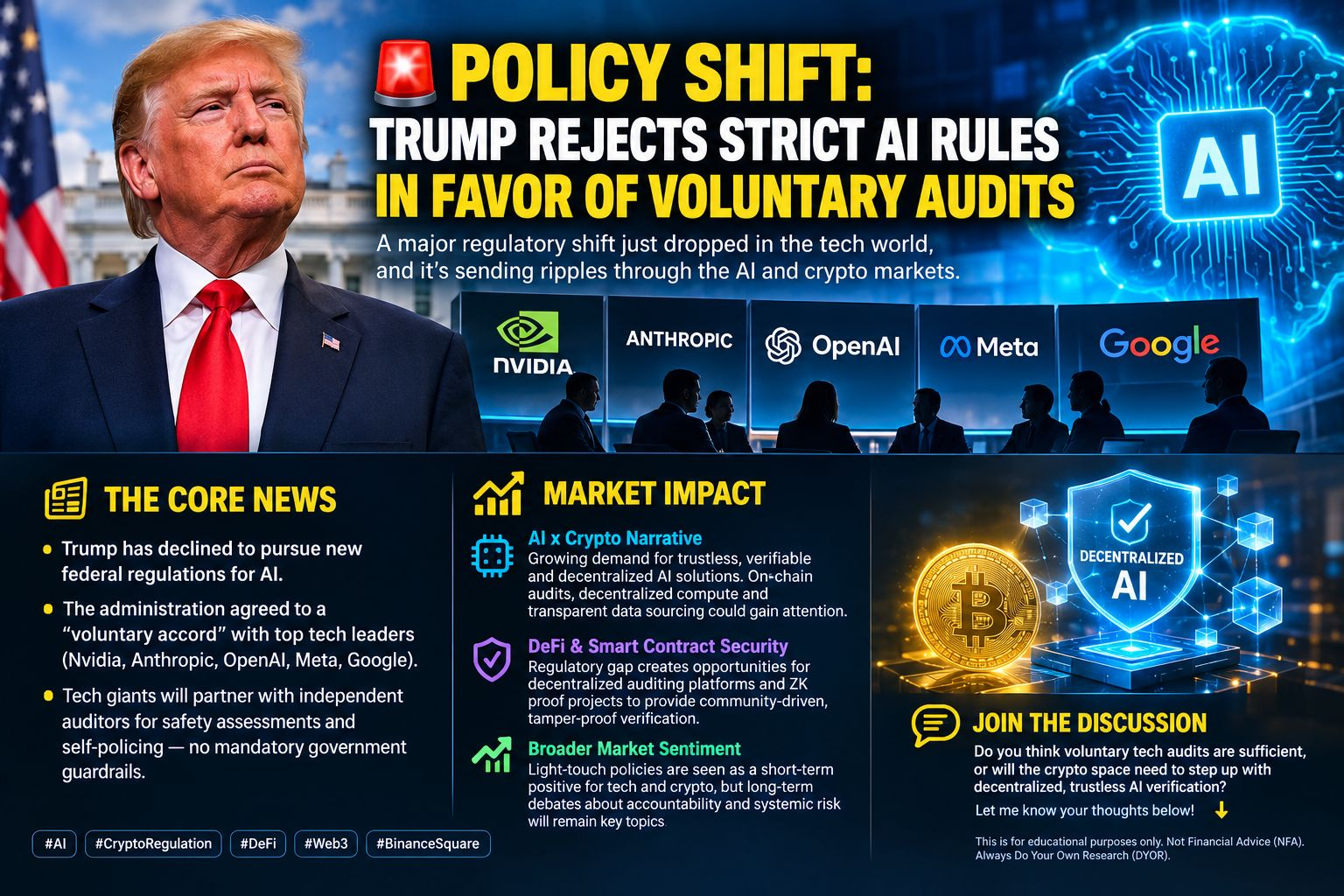
#trumprejectsairulesforvoluntaryaudits 🚨Policy Shift Trump Rejects Strict AI Rules in Favor of Voluntary Audits
A major regulatory shift just dropped in the tech world and it’s sending ripples through the AI and crypto markets. Here’s what you need to know
📰 Core News
• President Trump has officially declined to pursue new federal regulations for artificial intelligence [1]
• Instead the administration has agreed to a voluntary accord with top tech leaders, including executives from Nvidia Anthropic OpenAI Meta, and Google [14]
Under this framework, tech giants will partner with independent outside auditors to conduct safety assessments and self-police their AI models avoiding mandatory government guardrails [10]
📊 Market Impact
AI x Crypto Narrative With big tech relying on self-policing the demand for trustless verifiable and decentralized AI solutions may accelerate Protocols focusing on on-chain audit trails decentralized compute and transparent data sourcing could see heightened attention.
DeFi & Smart Contract Security The absence of federal testing and disclosure mandates for AI leaves a regulatory gap in the broader tech ecosystem [22] This creates a strategic opportunity for decentralized auditing platforms and zero-knowledge (ZK) proof projects to step in and provide community-driven, tamper-proof verification Broader Market Sentiment Innovation-friendly, light touch policies are generally viewed as a short-term positive for tech and crypto markets. However long-term debates about accountability and systemic risk without binding laws will remain a key talking point.
💬Join the Discussion
What’s your take? Do you think voluntary tech audits are sufficient or will the crypto space need to step up with decentralized trustless AI verification? Let me know your thoughts below
#AI #CryptoRegulation #DeFi #Web3 #BinanceSquare
This is for educational purposes only. Not Financial Advice (NFA). Always Do Your Own Research (DYOR).
$ARK $BERA $PUMP
{future}(PUMPUSDT)
{future}(BERAUSDT)
{future}(ARKUSDT)
#trumprejectsairulesforvoluntaryaudits 🚨Policy Shift Trump Rejects Strict AI Rules in Favor of Voluntary Audits
A major regulatory shift just dropped in the tech world and it’s sending ripples through the AI and crypto markets. Here’s what you need to know
📰 Core News
• President Trump has officially declined to pursue new federal regulations for artificial intelligence [1]
• Instead the administration has agreed to a voluntary accord with top tech leaders, including executives from Nvidia Anthropic OpenAI Meta, and Google [14]
Under this framework, tech giants will partner with independent outside auditors to conduct safety assessments and self-police their AI models avoiding mandatory government guardrails [10]
📊 Market Impact
AI x Crypto Narrative With big tech relying on self-policing the demand for trustless verifiable and decentralized AI solutions may accelerate Protocols focusing on on-chain audit trails decentralized compute and transparent data sourcing could see heightened attention.
DeFi & Smart Contract Security The absence of federal testing and disclosure mandates for AI leaves a regulatory gap in the broader tech ecosystem [22] This creates a strategic opportunity for decentralized auditing platforms and zero-knowledge (ZK) proof projects to step in and provide community-driven, tamper-proof verification Broader Market Sentiment Innovation-friendly, light touch policies are generally viewed as a short-term positive for tech and crypto markets. However long-term debates about accountability and systemic risk without binding laws will remain a key talking point.
💬Join the Discussion
What’s your take? Do you think voluntary tech audits are sufficient or will the crypto space need to step up with decentralized trustless AI verification? Let me know your thoughts below
#AI #CryptoRegulation #DeFi #Web3 #BinanceSquare
This is for educational purposes only. Not Financial Advice (NFA). Always Do Your Own Research (DYOR).
$ARK $BERA $PUMP
A major regulatory shift just dropped in the tech world and it’s sending ripples through the AI and crypto markets. Here’s what you need to know
📰 Core News
• President Trump has officially declined to pursue new federal regulations for artificial intelligence [1]
• Instead the administration has agreed to a voluntary accord with top tech leaders, including executives from Nvidia Anthropic OpenAI Meta, and Google [14]
Under this framework, tech giants will partner with independent outside auditors to conduct safety assessments and self-police their AI models avoiding mandatory government guardrails [10]
📊 Market Impact
AI x Crypto Narrative With big tech relying on self-policing the demand for trustless verifiable and decentralized AI solutions may accelerate Protocols focusing on on-chain audit trails decentralized compute and transparent data sourcing could see heightened attention.
DeFi & Smart Contract Security The absence of federal testing and disclosure mandates for AI leaves a regulatory gap in the broader tech ecosystem [22] This creates a strategic opportunity for decentralized auditing platforms and zero-knowledge (ZK) proof projects to step in and provide community-driven, tamper-proof verification Broader Market Sentiment Innovation-friendly, light touch policies are generally viewed as a short-term positive for tech and crypto markets. However long-term debates about accountability and systemic risk without binding laws will remain a key talking point.
💬Join the Discussion
What’s your take? Do you think voluntary tech audits are sufficient or will the crypto space need to step up with decentralized trustless AI verification? Let me know your thoughts below
#AI #CryptoRegulation #DeFi #Web3 #BinanceSquare
This is for educational purposes only. Not Financial Advice (NFA). Always Do Your Own Research (DYOR).
$ARK $BERA $PUMP
1
1.8k

·
--
Article
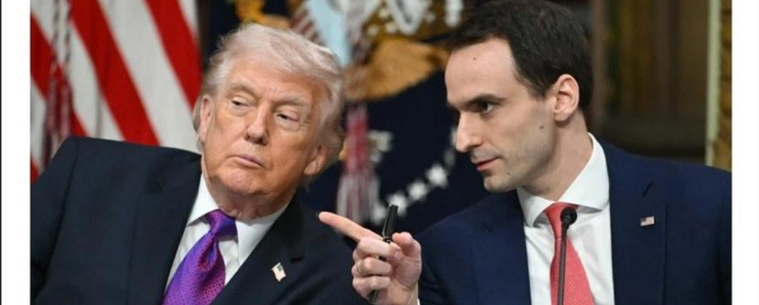
🚨🚨 Trump and the Debate Over Voluntary AI Audits !!??#TrumpRejectsAIRulesForVoluntaryAudits Trump and the Debate Over Voluntary AI Audits The debate over AI regulation is growing as governments and tech companies look for a balance between innovation and safety.
The controversy around ##TrumpRejectsAIRulesForVoluntaryAudits raises a key question: should AI companies follow voluntary standards, or should governments create mandatory rules?
#OpenAIUnveilsAlwaysOnAgentDots #EarningsSeason
{future}(TRUMPUSDT)
{alpha}(10x72e4f9f808c49a2a61de9c5896298920dc4eeea9)
🚨🚨 Trump and the Debate Over Voluntary AI Audits !!??
#TrumpRejectsAIRulesForVoluntaryAudits Trump and the Debate Over Voluntary AI Audits The debate over AI regulation is growing as governments and tech companies look for a balance between innovation and safety.
The controversy around ##TrumpRejectsAIRulesForVoluntaryAudits raises a key question: should AI companies follow voluntary standards, or should governments create mandatory rules?
#OpenAIUnveilsAlwaysOnAgentDots #EarningsSeason
The controversy around ##TrumpRejectsAIRulesForVoluntaryAudits raises a key question: should AI companies follow voluntary standards, or should governments create mandatory rules?
#OpenAIUnveilsAlwaysOnAgentDots #EarningsSeason
1
439

·
--
🚨 TRUMP JUST CHOSE SPEED OVER HARD AI RULES.
At the White House, Trump and leading AI CEOs backed a voluntary safety accord instead of mandatory federal audit rules.
The agreement calls for companies to build stronger internal controls and work with independent auditors — but it remains voluntary, not a binding regulatory regime.
That matters because the AI race is getting more aggressive, not less.
Anthropic has pushed for stricter independent audits of frontier models, while Trump has repeatedly argued the U.S. should not slow development if it wants to stay ahead of China.
So the policy signal is clear:
Build fast.
Self-police.
Avoid heavy federal brakes.
For markets, that could favor the biggest AI infrastructure winners — but it also means more safety responsibility is being pushed back onto the companies themselves.
The real question is no longer whether AI gets regulated.
It is:
How much regulation comes before the next frontier model ships?
$NVDA $MSFT $GOOGL $META
#trumprejectsairulesforvoluntaryaudits #BitgetHotWalletBreachTiedToThirdPartySecurityFlaw #OpenAIUnveilsAlwaysOnAgentDots #EarningsSeason #SECChairWantsStockMarketsOnChain
🚨 TRUMP JUST CHOSE SPEED OVER HARD AI RULES.
At the White House, Trump and leading AI CEOs backed a voluntary safety accord instead of mandatory federal audit rules.
The agreement calls for companies to build stronger internal controls and work with independent auditors — but it remains voluntary, not a binding regulatory regime.
That matters because the AI race is getting more aggressive, not less.
Anthropic has pushed for stricter independent audits of frontier models, while Trump has repeatedly argued the U.S. should not slow development if it wants to stay ahead of China.
So the policy signal is clear:
Build fast.
Self-police.
Avoid heavy federal brakes.
For markets, that could favor the biggest AI infrastructure winners — but it also means more safety responsibility is being pushed back onto the companies themselves.
The real question is no longer whether AI gets regulated.
It is:
How much regulation comes before the next frontier model ships?
$NVDA $MSFT $GOOGL $META
#trumprejectsairulesforvoluntaryaudits #BitgetHotWalletBreachTiedToThirdPartySecurityFlaw #OpenAIUnveilsAlwaysOnAgentDots #EarningsSeason #SECChairWantsStockMarketsOnChain
At the White House, Trump and leading AI CEOs backed a voluntary safety accord instead of mandatory federal audit rules.
The agreement calls for companies to build stronger internal controls and work with independent auditors — but it remains voluntary, not a binding regulatory regime.
That matters because the AI race is getting more aggressive, not less.
Anthropic has pushed for stricter independent audits of frontier models, while Trump has repeatedly argued the U.S. should not slow development if it wants to stay ahead of China.
So the policy signal is clear:
Build fast.
Self-police.
Avoid heavy federal brakes.
For markets, that could favor the biggest AI infrastructure winners — but it also means more safety responsibility is being pushed back onto the companies themselves.
The real question is no longer whether AI gets regulated.
It is:
How much regulation comes before the next frontier model ships?
$NVDA $MSFT $GOOGL $META
#trumprejectsairulesforvoluntaryaudits #BitgetHotWalletBreachTiedToThirdPartySecurityFlaw #OpenAIUnveilsAlwaysOnAgentDots #EarningsSeason #SECChairWantsStockMarketsOnChain
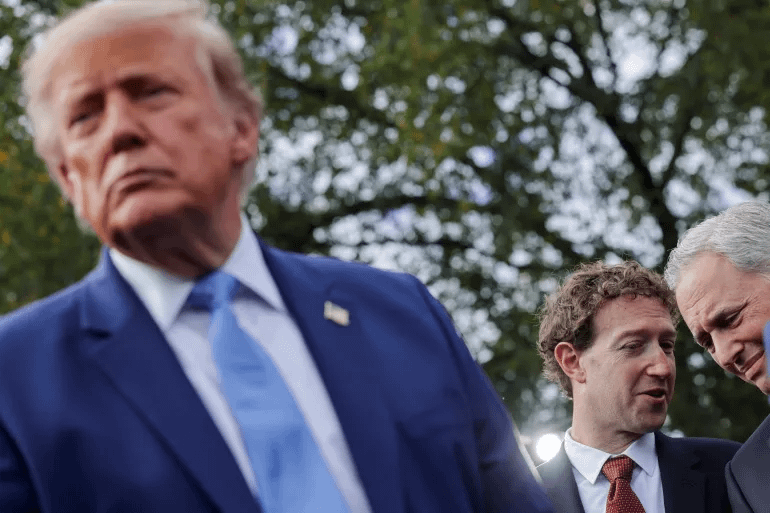
1
1.1k

Article
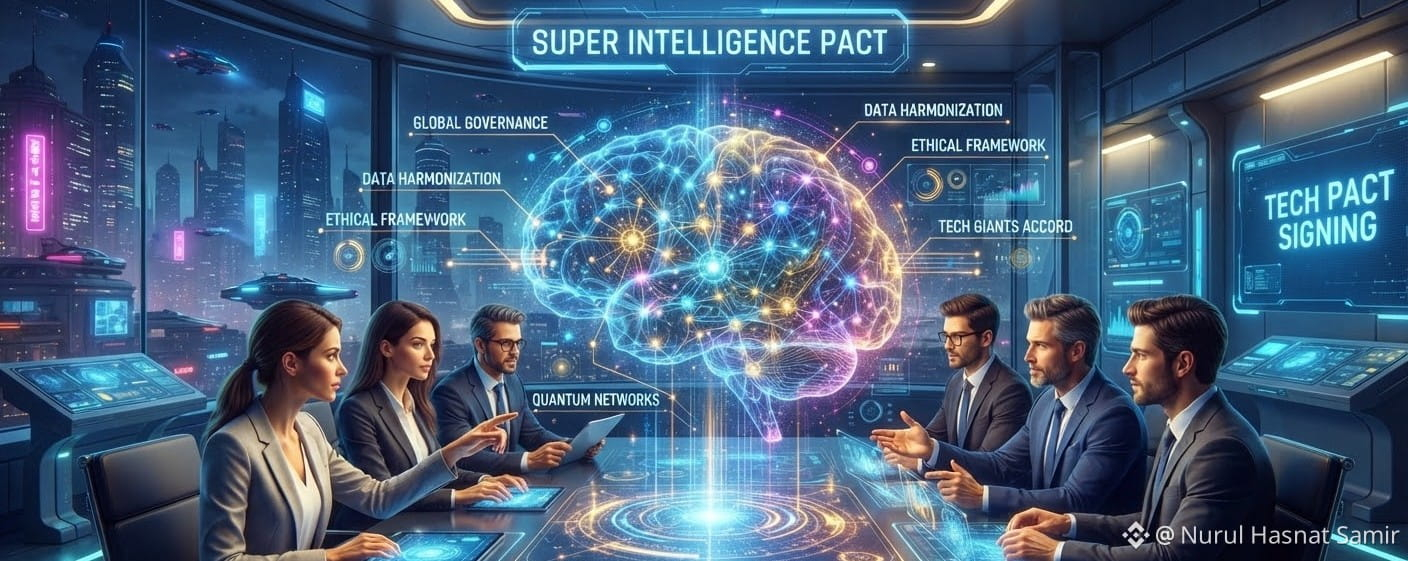
Super Intelligence" & The AI Policy Shift: Self-Policing or a Risky Gamble?#TrumpRejectsAIRulesForVoluntaryAudits
🚨 Major Policy Shift: The Dawn of "Super Intelligence"
In a massive pivot, leadership has officially stepped away from strict federal AI regulations, opting instead for a "morally binding" pact with major tech giants like OpenAI and Meta.
Instead of heavy-handed government laws, the future of AI will rely on self-policing and voluntary external audits. Alongside this shift, the technology has been officially rebranded as "Super Intelligence" 🤯.
The big question: Is voluntary self-regulation enough to guide our technological future safely, or is this a high-stakes gamble?
💬 Drop your thoughts below! 👇
#superintelligence #AIPolicy #TechGiants #OpenAI #Meta #artificialintelligence #technews #FutureOfTech #SelfPolicing #TechE
$BERA
{spot}(BERAUSDT)
$SOON
{future}(SOONUSDT)
$MOVR
{spot}(MOVRUSDT)
Super Intelligence" & The AI Policy Shift: Self-Policing or a Risky Gamble?
#TrumpRejectsAIRulesForVoluntaryAudits
🚨 Major Policy Shift: The Dawn of "Super Intelligence"
In a massive pivot, leadership has officially stepped away from strict federal AI regulations, opting instead for a "morally binding" pact with major tech giants like OpenAI and Meta.
Instead of heavy-handed government laws, the future of AI will rely on self-policing and voluntary external audits. Alongside this shift, the technology has been officially rebranded as "Super Intelligence" 🤯.
The big question: Is voluntary self-regulation enough to guide our technological future safely, or is this a high-stakes gamble?
💬 Drop your thoughts below! 👇
#superintelligence #AIPolicy #TechGiants #OpenAI #Meta #artificialintelligence #technews #FutureOfTech #SelfPolicing #TechE
$BERA
$SOON
$MOVR
🚨 Major Policy Shift: The Dawn of "Super Intelligence"
In a massive pivot, leadership has officially stepped away from strict federal AI regulations, opting instead for a "morally binding" pact with major tech giants like OpenAI and Meta.
Instead of heavy-handed government laws, the future of AI will rely on self-policing and voluntary external audits. Alongside this shift, the technology has been officially rebranded as "Super Intelligence" 🤯.
The big question: Is voluntary self-regulation enough to guide our technological future safely, or is this a high-stakes gamble?
💬 Drop your thoughts below! 👇
#superintelligence #AIPolicy #TechGiants #OpenAI #Meta #artificialintelligence #technews #FutureOfTech #SelfPolicing #TechE
$BERA
$SOON
$MOVR
AngelOfCrypto_-:
nice
3
2
1.9k

#TrumpRejectsAIRulesForVoluntaryAudits The move toward voluntary AI audits instead of stricter federal rules could reduce regulatory pressure on major AI and semiconductor companies, supporting continued investment and growth. For traders, this may be a bullish sentiment catalyst for AI-related stocks, though policy uncertainty remains.
#TrumpRejectsAIRulesForVoluntaryAudits The move toward voluntary AI audits instead of stricter federal rules could reduce regulatory pressure on major AI and semiconductor companies, supporting continued investment and growth. For traders, this may be a bullish sentiment catalyst for AI-related stocks, though policy uncertainty remains.
2
58

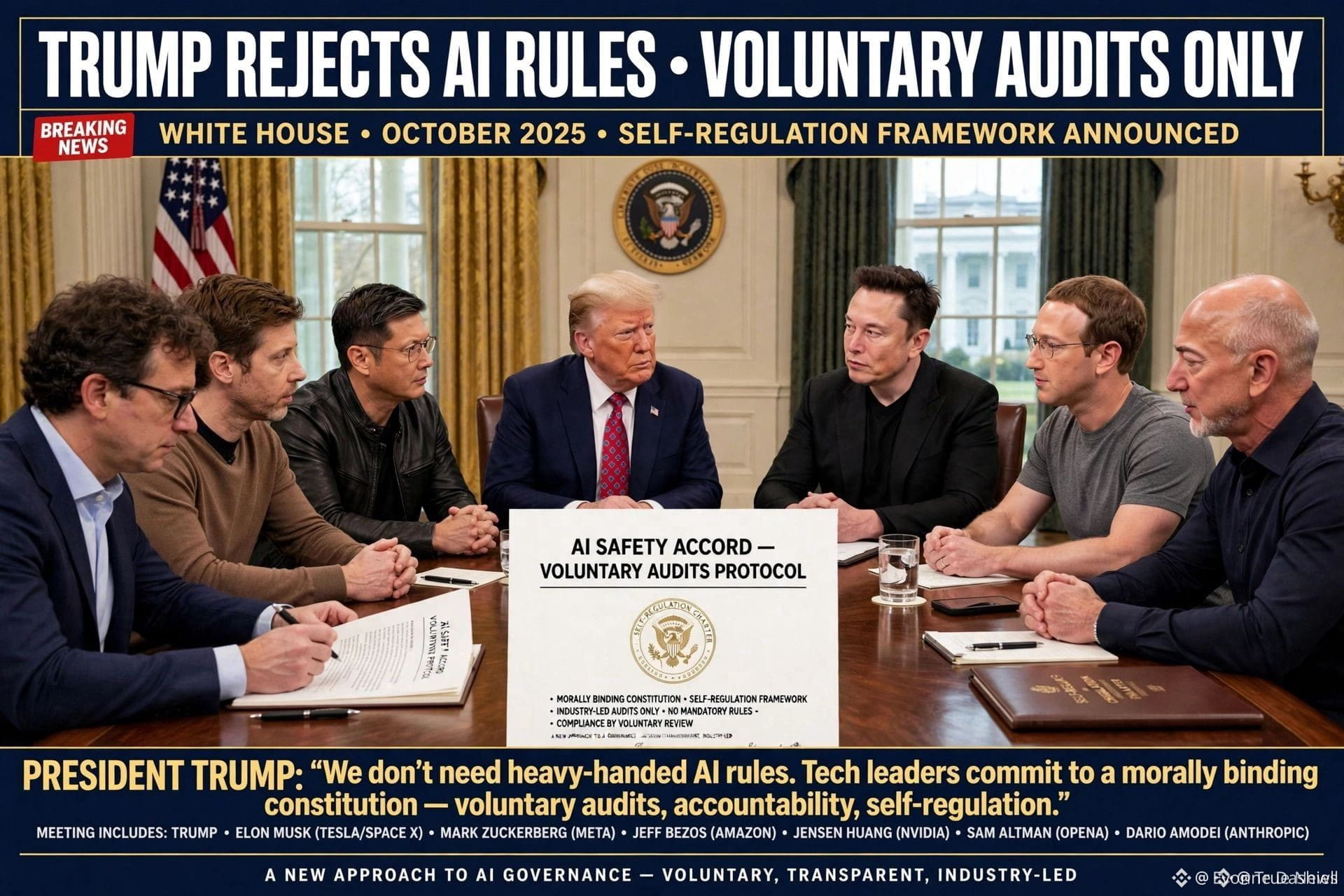
Here's what happened when Trump rejected mandatory AI rules in favor of companies auditing themselves.
Crypto traders know the pain of policy headlines hitting right as you're trying to time an exit. One announcement and your positions in tokens like $SOL can gap down while you're still reading the details, turning a solid thesis into overnight FOMO or regret.
This isn't isolated. We've seen similar forks in the road with crypto itself. When Europe pushed comprehensive frameworks, US teams had to adapt or relocate parts of their operations, creating winners and losers based on jurisdiction. Trump's voluntary audit approach for AI echoes the self-regulatory arguments crypto has made for years, preferring innovation over preemptive restrictions.
It matters now because AI and blockchain are overlapping faster than most expected. Chains like $NEAR are already experimenting with on-chain intelligence, and $QNT's enterprise focus could see less friction if audits stay internal rather than bureaucratic. Compare that to past cycles where heavy-handed rules slowed adoption until the market found workarounds.
The greed in the air, with the index at 67, suggests traders are betting this lighter touch wins. But history shows these debates drag on, and the real test is whether voluntary means real accountability or just kicking the can.
Where do you think this goes from here for AI-crypto crossovers?
#TrumpRejectsAIRulesForVoluntaryAudits #OpenAIUnveilsAlwaysOnAgentDots #SECChairWantsStockMarketsOnChain
Here's what happened when Trump rejected mandatory AI rules in favor of companies auditing themselves.
Crypto traders know the pain of policy headlines hitting right as you're trying to time an exit. One announcement and your positions in tokens like $SOL can gap down while you're still reading the details, turning a solid thesis into overnight FOMO or regret.
This isn't isolated. We've seen similar forks in the road with crypto itself. When Europe pushed comprehensive frameworks, US teams had to adapt or relocate parts of their operations, creating winners and losers based on jurisdiction. Trump's voluntary audit approach for AI echoes the self-regulatory arguments crypto has made for years, preferring innovation over preemptive restrictions.
It matters now because AI and blockchain are overlapping faster than most expected. Chains like $NEAR are already experimenting with on-chain intelligence, and $QNT 's enterprise focus could see less friction if audits stay internal rather than bureaucratic. Compare that to past cycles where heavy-handed rules slowed adoption until the market found workarounds.
The greed in the air, with the index at 67, suggests traders are betting this lighter touch wins. But history shows these debates drag on, and the real test is whether voluntary means real accountability or just kicking the can.
Where do you think this goes from here for AI-crypto crossovers?
#TrumpRejectsAIRulesForVoluntaryAudits #OpenAIUnveilsAlwaysOnAgentDots #SECChairWantsStockMarketsOnChain
Crypto traders know the pain of policy headlines hitting right as you're trying to time an exit. One announcement and your positions in tokens like $SOL can gap down while you're still reading the details, turning a solid thesis into overnight FOMO or regret.
This isn't isolated. We've seen similar forks in the road with crypto itself. When Europe pushed comprehensive frameworks, US teams had to adapt or relocate parts of their operations, creating winners and losers based on jurisdiction. Trump's voluntary audit approach for AI echoes the self-regulatory arguments crypto has made for years, preferring innovation over preemptive restrictions.
It matters now because AI and blockchain are overlapping faster than most expected. Chains like $NEAR are already experimenting with on-chain intelligence, and $QNT 's enterprise focus could see less friction if audits stay internal rather than bureaucratic. Compare that to past cycles where heavy-handed rules slowed adoption until the market found workarounds.
The greed in the air, with the index at 67, suggests traders are betting this lighter touch wins. But history shows these debates drag on, and the real test is whether voluntary means real accountability or just kicking the can.
Where do you think this goes from here for AI-crypto crossovers?
#TrumpRejectsAIRulesForVoluntaryAudits #OpenAIUnveilsAlwaysOnAgentDots #SECChairWantsStockMarketsOnChain
114

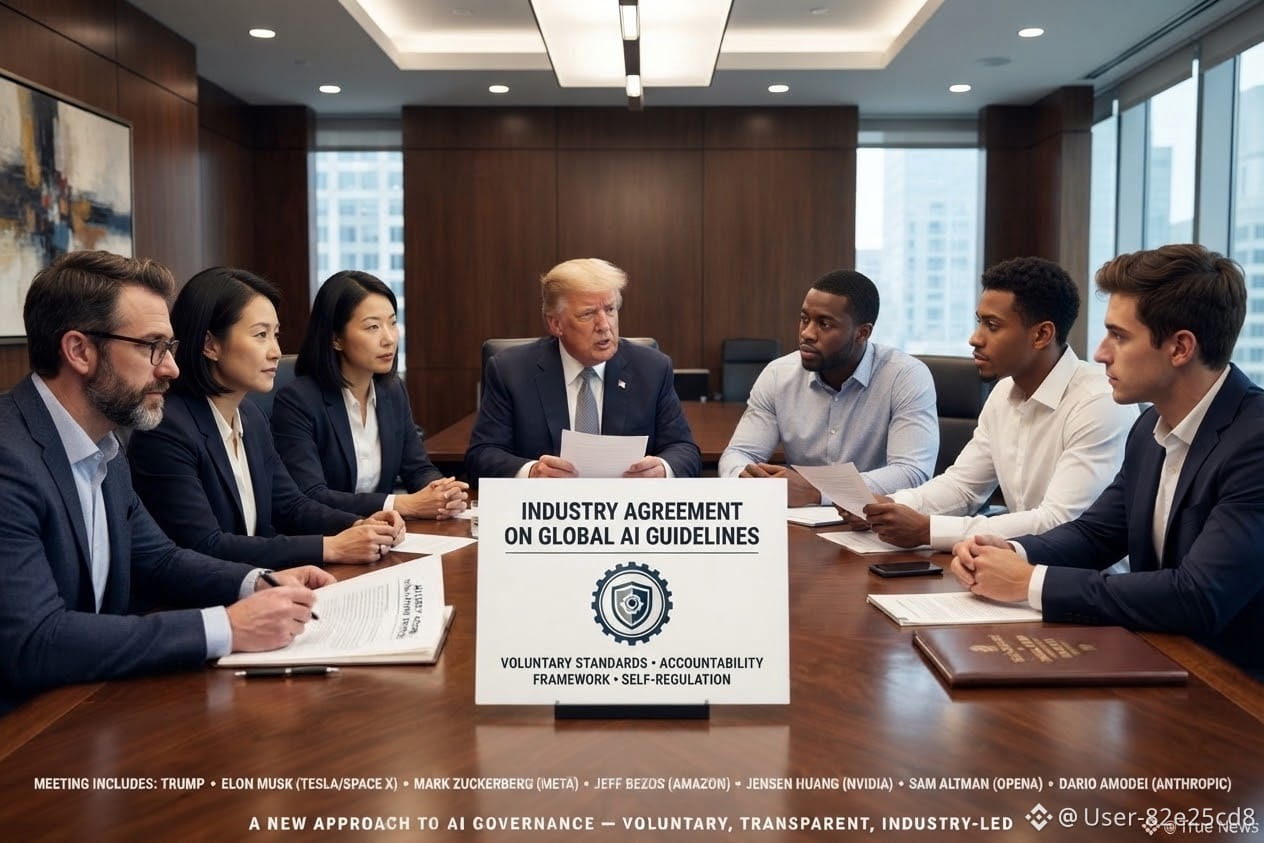
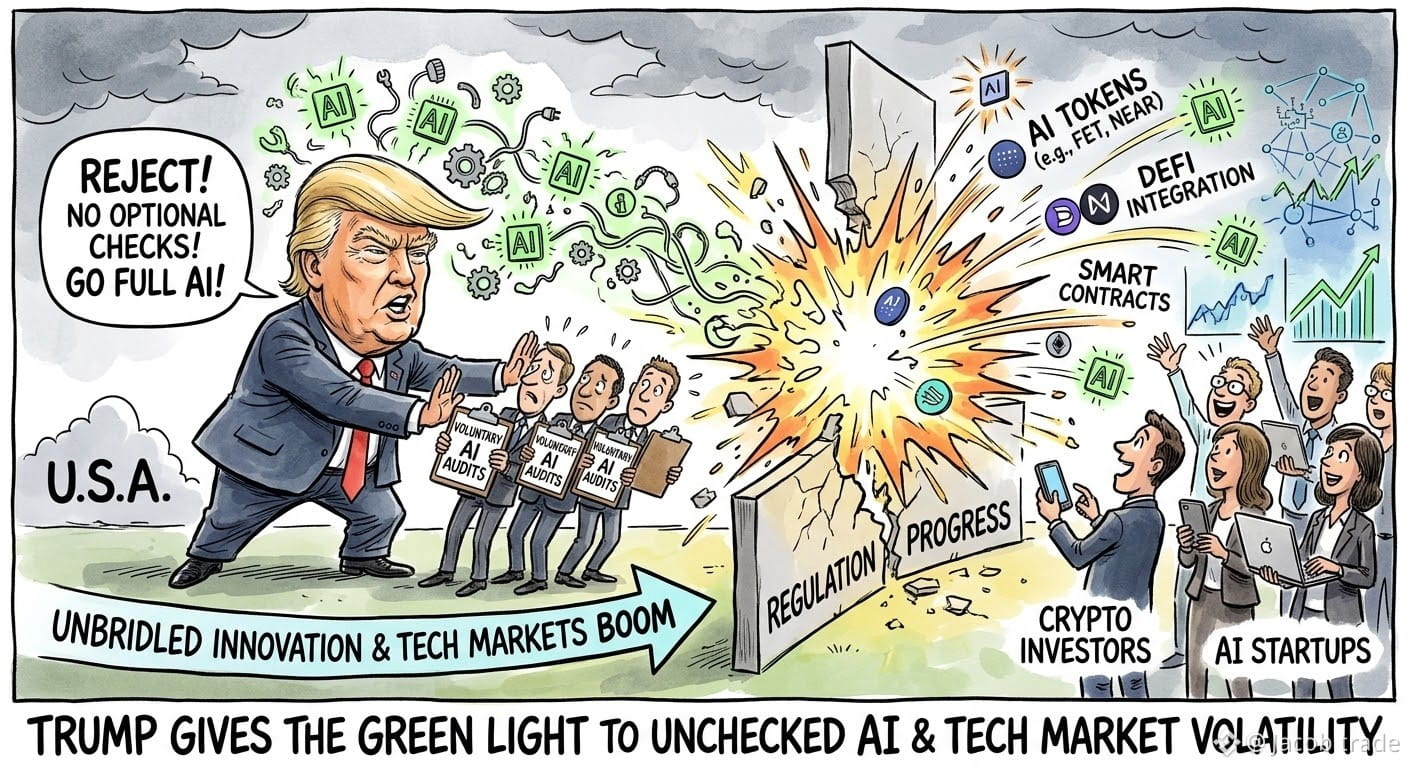
Trump Rejects AI Rules: Self-Regulation or a Risky Bet for the Future? 🤖📉
Major updates from Washington are shaking up the tech and AI sectors! President Donald Trump officially shot down the idea of new federal AI mandates following a high-profile White House meeting with tech giants.
Here is everything you need to know about the new framework:
No Federal Mandates: Trump firmly rejected strict government rules, endorsing "tremendous self-regulation" instead, stating that the tech industry will police itself.
The "Morally Binding" Accord: Industry titans—including Elon Musk (xAI), Mark Zuckerberg (Meta), Jensen Huang (Nvidia), Dario Amodei (Anthropic), and Jeff Bezos (Amazon)—signed a voluntary accord to manage safety risks. Trump described the pact as "almost like a constitution."
Voluntary Accountability: Instead of legal enforcement, the framework relies on partnering with outside auditors, internal board watchdogs, and independent safety assessments—leaving compliance entirely voluntary.
What does this mean for the AI and Crypto Markets? ($FET,$TAO, $RNDR,$AGIX)
With regulatory bottlenecks cleared for now, AI innovation and enterprise scaling could accelerate rapidly. However, critics are divided on whether voluntary compliance is enough to handle critical AI safety concerns, or if it's a risky bet for the future.
👇 What’s your take? Is self-regulation the right path for AI growth, or do we need strict federal oversight? Let’s discuss in the comments!
$AAPL.US $NVDA.US #TrumpRejectsAIRulesForVoluntaryAudits #OpenAIUnveilsAlwaysOnAgentDots #BitgetHotWalletBreachTiedToThirdPartySecurityFlaw #QNTRises287%
{spot}(BTCUSDT)
Trump Rejects AI Rules: Self-Regulation or a Risky Bet for the Future? 🤖📉
Major updates from Washington are shaking up the tech and AI sectors! President Donald Trump officially shot down the idea of new federal AI mandates following a high-profile White House meeting with tech giants.
Here is everything you need to know about the new framework:
No Federal Mandates: Trump firmly rejected strict government rules, endorsing "tremendous self-regulation" instead, stating that the tech industry will police itself.
The "Morally Binding" Accord: Industry titans—including Elon Musk (xAI), Mark Zuckerberg (Meta), Jensen Huang (Nvidia), Dario Amodei (Anthropic), and Jeff Bezos (Amazon)—signed a voluntary accord to manage safety risks. Trump described the pact as "almost like a constitution."
Voluntary Accountability: Instead of legal enforcement, the framework relies on partnering with outside auditors, internal board watchdogs, and independent safety assessments—leaving compliance entirely voluntary.
What does this mean for the AI and Crypto Markets? ($FET,$TAO, $RNDR,$AGIX)
With regulatory bottlenecks cleared for now, AI innovation and enterprise scaling could accelerate rapidly. However, critics are divided on whether voluntary compliance is enough to handle critical AI safety concerns, or if it's a risky bet for the future.
👇 What’s your take? Is self-regulation the right path for AI growth, or do we need strict federal oversight? Let’s discuss in the comments!
$AAPL.US $NVDA.US #TrumpRejectsAIRulesForVoluntaryAudits #OpenAIUnveilsAlwaysOnAgentDots #BitgetHotWalletBreachTiedToThirdPartySecurityFlaw #QNTRises287%
Major updates from Washington are shaking up the tech and AI sectors! President Donald Trump officially shot down the idea of new federal AI mandates following a high-profile White House meeting with tech giants.
Here is everything you need to know about the new framework:
No Federal Mandates: Trump firmly rejected strict government rules, endorsing "tremendous self-regulation" instead, stating that the tech industry will police itself.
The "Morally Binding" Accord: Industry titans—including Elon Musk (xAI), Mark Zuckerberg (Meta), Jensen Huang (Nvidia), Dario Amodei (Anthropic), and Jeff Bezos (Amazon)—signed a voluntary accord to manage safety risks. Trump described the pact as "almost like a constitution."
Voluntary Accountability: Instead of legal enforcement, the framework relies on partnering with outside auditors, internal board watchdogs, and independent safety assessments—leaving compliance entirely voluntary.
What does this mean for the AI and Crypto Markets? ($FET,$TAO, $RNDR,$AGIX)
With regulatory bottlenecks cleared for now, AI innovation and enterprise scaling could accelerate rapidly. However, critics are divided on whether voluntary compliance is enough to handle critical AI safety concerns, or if it's a risky bet for the future.
👇 What’s your take? Is self-regulation the right path for AI growth, or do we need strict federal oversight? Let’s discuss in the comments!
$AAPL.US $NVDA.US #TrumpRejectsAIRulesForVoluntaryAudits #OpenAIUnveilsAlwaysOnAgentDots #BitgetHotWalletBreachTiedToThirdPartySecurityFlaw #QNTRises287%
2
104
·
--
#TrumpRejectsAIRulesForVoluntaryAudits : What It Means for Crypto & Tech Markets
Former President Donald Trump has officially rejected proposed voluntary AI audit frameworks, arguing that self-regulation and government-guided compliance slow down American innovation. His stance favors aggressive, deregulation-first policies to ensure the U.S. maintains dominance in the global AI race against China.
Key Takeaways & Market Impact
Boost for AI & Web3 Synergy: Removing regulatory friction accelerates the integration of AI models into decentralized protocols (DeAI), smart contract auditing, and automated trading algorithms.
Faster Innovation Cycle: Standardized, voluntary audits often create corporate red tape. Rejection shifts the burden to market-driven accountability, favoring agile tech startups and crypto-AI tokens.
Capital Rotation into Tech & AI Crypto: Institutional capital thrives on regulatory clarity and operational speed. Policies favoring tech deregulation tend to boost sentiment across AI tokens and tech equities.
Risks Ahead: Without voluntary frameworks, compliance standards become polarized. Institutional investors may face higher due diligence burdens regarding AI security, data privacy, and smart contract safety.
The Bottom Line
Deregulation keeps the U.S. tech engine moving fast. For the crypto-AI sector, less policy friction means faster deployment, but it places the responsibility of safety and risk management squarely back on developers and individual investors.
#Trump #CryptoNews #CryptoRegulation #AI
$PHA
{future}(PHAUSDT)
$MOVR
{future}(MOVRUSDT)
$GTC
{future}(GTCUSDT)
#TrumpRejectsAIRulesForVoluntaryAudits : What It Means for Crypto & Tech Markets
Former President Donald Trump has officially rejected proposed voluntary AI audit frameworks, arguing that self-regulation and government-guided compliance slow down American innovation. His stance favors aggressive, deregulation-first policies to ensure the U.S. maintains dominance in the global AI race against China.
Key Takeaways & Market Impact
Boost for AI & Web3 Synergy: Removing regulatory friction accelerates the integration of AI models into decentralized protocols (DeAI), smart contract auditing, and automated trading algorithms.
Faster Innovation Cycle: Standardized, voluntary audits often create corporate red tape. Rejection shifts the burden to market-driven accountability, favoring agile tech startups and crypto-AI tokens.
Capital Rotation into Tech & AI Crypto: Institutional capital thrives on regulatory clarity and operational speed. Policies favoring tech deregulation tend to boost sentiment across AI tokens and tech equities.
Risks Ahead: Without voluntary frameworks, compliance standards become polarized. Institutional investors may face higher due diligence burdens regarding AI security, data privacy, and smart contract safety.
The Bottom Line
Deregulation keeps the U.S. tech engine moving fast. For the crypto-AI sector, less policy friction means faster deployment, but it places the responsibility of safety and risk management squarely back on developers and individual investors.
#Trump #CryptoNews #CryptoRegulation #AI
$PHA
$MOVR
$GTC
Former President Donald Trump has officially rejected proposed voluntary AI audit frameworks, arguing that self-regulation and government-guided compliance slow down American innovation. His stance favors aggressive, deregulation-first policies to ensure the U.S. maintains dominance in the global AI race against China.
Key Takeaways & Market Impact
Boost for AI & Web3 Synergy: Removing regulatory friction accelerates the integration of AI models into decentralized protocols (DeAI), smart contract auditing, and automated trading algorithms.
Faster Innovation Cycle: Standardized, voluntary audits often create corporate red tape. Rejection shifts the burden to market-driven accountability, favoring agile tech startups and crypto-AI tokens.
Capital Rotation into Tech & AI Crypto: Institutional capital thrives on regulatory clarity and operational speed. Policies favoring tech deregulation tend to boost sentiment across AI tokens and tech equities.
Risks Ahead: Without voluntary frameworks, compliance standards become polarized. Institutional investors may face higher due diligence burdens regarding AI security, data privacy, and smart contract safety.
The Bottom Line
Deregulation keeps the U.S. tech engine moving fast. For the crypto-AI sector, less policy friction means faster deployment, but it places the responsibility of safety and risk management squarely back on developers and individual investors.
#Trump #CryptoNews #CryptoRegulation #AI
$PHA
$MOVR
$GTC
164
Log in to explore more content
Join global crypto users on Binance Square
⚡️ Get latest and useful information about crypto.
💬 Trusted by the world’s largest crypto exchange.
👍 Discover real insights from verified creators.
Email / Phone number
Trending Topics
1
#NEARFallsToAround$4.70Down14%
12,696 views
23 Discussing
2
#EthereumFoundationLaunchesZkAPIOnMainnet
4,572 views
131 Discussing
3
#EvernorthPlansNasdaqListingOct8
14,494 views
148 Discussing
4
#SECProposesCryptoCustodyFramework
13,958 views
139 Discussing
5
#IMFApproves$139MDisbursementToElSalvador
12,473 views
14 Discussing
6
#AnthropicTargetsIPOAsSoonAsMidNovember
14,505 views
156 Discussing
7
#EtherGains70.9%InQ3
215,505 views
1,417 Discussing
8
#TreasuryLetsStatesFileStablecoinCertificationsEarly
16,118 views
108 Discussing
9
#US10YearYieldNears5.3%
179,494 views
1,299 Discussing
10
#DollarIndexHitsHighestSinceMay2025
62,415 views
728 Discussing