

#revoluttodelistusdt
revoluttodelistusdt
122,026 views
1,085 Discussing
Hot
Latest

#RevolutToDelistUSDT
🚨 Revolut Is Delisting USDT — 65 Million Users Must Act Now!
If you're holding USDT on Revolut, you need to read this! ⚠️
📌 Important Timeline:
⛔ July 6 — Last day to BUY $USDT on Revolut
⛔ July 30 — No new USDT deposits allowed
⛔ Aug 31 — Remaining USDT auto-converted to fiat!
💡 Why Is This Happening?
The EU's new crypto law MiCA requires platforms to only list approved stablecoins. Tether never got EU approval — so Revolut has no choice but to remove it! 🏛️
Revolut isn't alone — Coinbase, Binance, Kraken, and OKX already delisted $USDT for European users earlier!
🔄 What Should You Do?
✅ Sell or withdraw USDT before July 6
✅ Move to an external wallet like MetaMask or Ledger
✅ Swap to $USDC — the MiCA-compliant alternative
✅ Or move to Binance — still supports USDT globally! 🌐
Are you holding USDT on Revolut? What's your plan? 👇 Comment below!
{spot}(USDCUSDT)
#RevolutToDelistUSDT
🚨 Revolut Is Delisting USDT — 65 Million Users Must Act Now!
If you're holding USDT on Revolut, you need to read this! ⚠️
📌 Important Timeline:
⛔ July 6 — Last day to BUY $USDT on Revolut
⛔ July 30 — No new USDT deposits allowed
⛔ Aug 31 — Remaining USDT auto-converted to fiat!
💡 Why Is This Happening?
The EU's new crypto law MiCA requires platforms to only list approved stablecoins. Tether never got EU approval — so Revolut has no choice but to remove it! 🏛️
Revolut isn't alone — Coinbase, Binance, Kraken, and OKX already delisted $USDT for European users earlier!
🔄 What Should You Do?
✅ Sell or withdraw USDT before July 6
✅ Move to an external wallet like MetaMask or Ledger
✅ Swap to $USDC — the MiCA-compliant alternative
✅ Or move to Binance — still supports USDT globally! 🌐
Are you holding USDT on Revolut? What's your plan? 👇 Comment below!
🚨 Revolut Is Delisting USDT — 65 Million Users Must Act Now!
If you're holding USDT on Revolut, you need to read this! ⚠️
📌 Important Timeline:
⛔ July 6 — Last day to BUY $USDT on Revolut
⛔ July 30 — No new USDT deposits allowed
⛔ Aug 31 — Remaining USDT auto-converted to fiat!
💡 Why Is This Happening?
The EU's new crypto law MiCA requires platforms to only list approved stablecoins. Tether never got EU approval — so Revolut has no choice but to remove it! 🏛️
Revolut isn't alone — Coinbase, Binance, Kraken, and OKX already delisted $USDT for European users earlier!
🔄 What Should You Do?
✅ Sell or withdraw USDT before July 6
✅ Move to an external wallet like MetaMask or Ledger
✅ Swap to $USDC — the MiCA-compliant alternative
✅ Or move to Binance — still supports USDT globally! 🌐
Are you holding USDT on Revolut? What's your plan? 👇 Comment below!
133

·
--
Bullish
#RevolutToDelistUSDT
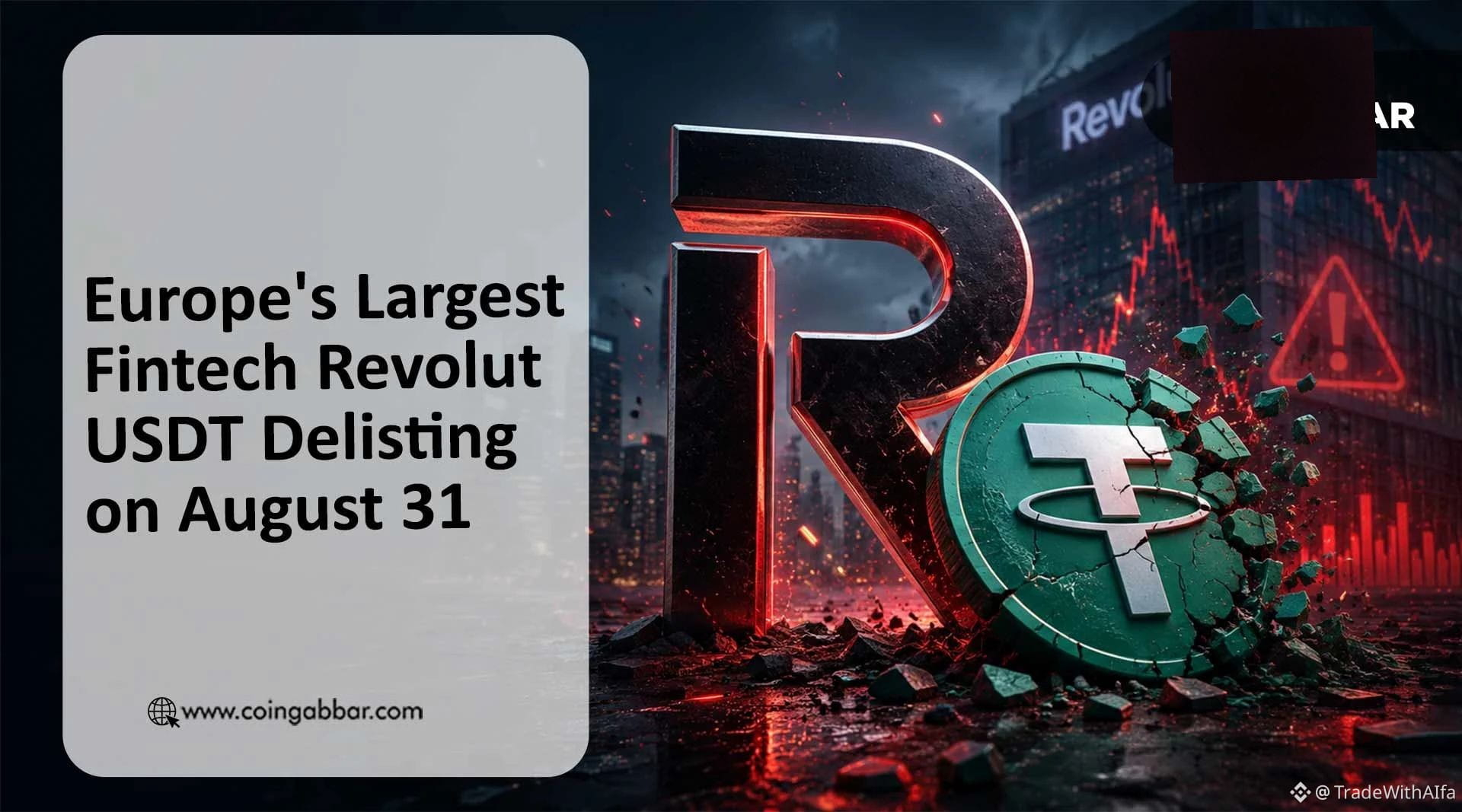
Revolut Just Broke Up With USDT and Half of Crypto Twitter Thinks the World Is Ending 💔😂
Quick relief before the drama. If you are not an EU resident, this changes literally nothing about your Binance account. USDT keeps working exactly as it always has for the roughly 190 countries outside Europe's regulatory blast radius. Breathe. 🌍
Now the actual story 📊
Revolut, Europe's largest fintech with 65 million users, will stop supporting USDT entirely by August 31. Users can buy it only until July 6. New deposits stop July 30. After that, holdouts get their remaining balance auto converted to fiat whether they like it or not. Revolut held out longer than almost everyone. Coinbase left in December 2024. Binance geofenced EEA spot pairs back in March 2025. Kraken, Crypto.com, and OKX followed. Tether simply never applied for the EU authorization MiCA requires, and refusing to do paperwork has consequences even for the world's largest stablecoin. 💀
The part worth actually understanding 🧠
This is not a ban. Nobody is confiscating anyone's USDT. You can still hold it, send it, and use it in self custody or on any non EU platform. What disappears is the ability for a MiCA licensed venue like Revolut to list it for trading. Compliance, not market share, decides who gets shelf space now. USDT sits above $130 billion globally. Inside the EU that number means nothing. 🎭
The honest takeaway 💎
USDC quietly inherits the entire European regulated market by default, not because it won an argument, but because it filled out a form Tether refused to touch. Sometimes the revolution really is just paperwork. 🚀
$BTC $USDC
{spot}(BTCUSDT)
{spot}(USDCUSDT)
#RevolutToDelistUSDT
Revolut Just Broke Up With USDT and Half of Crypto Twitter Thinks the World Is Ending 💔😂
Quick relief before the drama. If you are not an EU resident, this changes literally nothing about your Binance account. USDT keeps working exactly as it always has for the roughly 190 countries outside Europe's regulatory blast radius. Breathe. 🌍
Now the actual story 📊
Revolut, Europe's largest fintech with 65 million users, will stop supporting USDT entirely by August 31. Users can buy it only until July 6. New deposits stop July 30. After that, holdouts get their remaining balance auto converted to fiat whether they like it or not. Revolut held out longer than almost everyone. Coinbase left in December 2024. Binance geofenced EEA spot pairs back in March 2025. Kraken, Crypto.com, and OKX followed. Tether simply never applied for the EU authorization MiCA requires, and refusing to do paperwork has consequences even for the world's largest stablecoin. 💀
The part worth actually understanding 🧠
This is not a ban. Nobody is confiscating anyone's USDT. You can still hold it, send it, and use it in self custody or on any non EU platform. What disappears is the ability for a MiCA licensed venue like Revolut to list it for trading. Compliance, not market share, decides who gets shelf space now. USDT sits above $130 billion globally. Inside the EU that number means nothing. 🎭
The honest takeaway 💎
USDC quietly inherits the entire European regulated market by default, not because it won an argument, but because it filled out a form Tether refused to touch. Sometimes the revolution really is just paperwork. 🚀
$BTC $USDC
Revolut Just Broke Up With USDT and Half of Crypto Twitter Thinks the World Is Ending 💔😂
Quick relief before the drama. If you are not an EU resident, this changes literally nothing about your Binance account. USDT keeps working exactly as it always has for the roughly 190 countries outside Europe's regulatory blast radius. Breathe. 🌍
Now the actual story 📊
Revolut, Europe's largest fintech with 65 million users, will stop supporting USDT entirely by August 31. Users can buy it only until July 6. New deposits stop July 30. After that, holdouts get their remaining balance auto converted to fiat whether they like it or not. Revolut held out longer than almost everyone. Coinbase left in December 2024. Binance geofenced EEA spot pairs back in March 2025. Kraken, Crypto.com, and OKX followed. Tether simply never applied for the EU authorization MiCA requires, and refusing to do paperwork has consequences even for the world's largest stablecoin. 💀
The part worth actually understanding 🧠
This is not a ban. Nobody is confiscating anyone's USDT. You can still hold it, send it, and use it in self custody or on any non EU platform. What disappears is the ability for a MiCA licensed venue like Revolut to list it for trading. Compliance, not market share, decides who gets shelf space now. USDT sits above $130 billion globally. Inside the EU that number means nothing. 🎭
The honest takeaway 💎
USDC quietly inherits the entire European regulated market by default, not because it won an argument, but because it filled out a form Tether refused to touch. Sometimes the revolution really is just paperwork. 🚀
$BTC $USDC

121

#revoluttodelistusdt
🚨 BREAKING: Revolut to Delist USDT — Major Blow for Tether?
Revolut, one of Europe’s largest fintech platforms, is reportedly planning to delist USDT.
This move comes amid growing regulatory pressure and concerns over stablecoin compliance in the EU and UK markets.
What this means:
Reduced accessibility for millions of Revolut users Potential selling pressure on USDT in the short term Further signals of tightening regulations on stablecoins
USDT remains the most used stablecoin globally, but platforms are starting to feel the heat.
Your take?
Is this a nothingburger or the start of more delistings for Tether?
Drop your thoughts 👇
#RevolutToDelistUSDT #USDT #Tether #CryptoRegulation
#revoluttodelistusdt
🚨 BREAKING: Revolut to Delist USDT — Major Blow for Tether?
Revolut, one of Europe’s largest fintech platforms, is reportedly planning to delist USDT.
This move comes amid growing regulatory pressure and concerns over stablecoin compliance in the EU and UK markets.
What this means:
Reduced accessibility for millions of Revolut users Potential selling pressure on USDT in the short term Further signals of tightening regulations on stablecoins
USDT remains the most used stablecoin globally, but platforms are starting to feel the heat.
Your take?
Is this a nothingburger or the start of more delistings for Tether?
Drop your thoughts 👇
#RevolutToDelistUSDT #USDT #Tether #CryptoRegulation
🚨 BREAKING: Revolut to Delist USDT — Major Blow for Tether?
Revolut, one of Europe’s largest fintech platforms, is reportedly planning to delist USDT.
This move comes amid growing regulatory pressure and concerns over stablecoin compliance in the EU and UK markets.
What this means:
Reduced accessibility for millions of Revolut users Potential selling pressure on USDT in the short term Further signals of tightening regulations on stablecoins
USDT remains the most used stablecoin globally, but platforms are starting to feel the heat.
Your take?
Is this a nothingburger or the start of more delistings for Tether?
Drop your thoughts 👇
#RevolutToDelistUSDT #USDT #Tether #CryptoRegulation
4
238


Article
Revolut will remove USDT from its platform after August 31 due to regulatory pressureRevolut informed some of its customers that it will stop operating with Tether (USDT), the largest stablecoin in the market, starting August 31. According to the notice sent by the firm, any holdings that remain in accounts after that date will be automatically converted to each user’s base currency, citing regulatory and risk-management reasons.
The measure places the British neobank on the growing list of platforms that have begun to distance themselves from the stablecoin issued by Tether in the European market. The backdrop is the entry into force of the European Union’s crypto-asset regulatory framework, known as MiCA, which imposes strict requirements on issuers of stablecoins that want to operate within the bloc.
Revolut will remove USDT from its platform after August 31 due to regulatory pressure
Revolut informed some of its customers that it will stop operating with Tether (USDT), the largest stablecoin in the market, starting August 31. According to the notice sent by the firm, any holdings that remain in accounts after that date will be automatically converted to each user’s base currency, citing regulatory and risk-management reasons.
The measure places the British neobank on the growing list of platforms that have begun to distance themselves from the stablecoin issued by Tether in the European market. The backdrop is the entry into force of the European Union’s crypto-asset regulatory framework, known as MiCA, which imposes strict requirements on issuers of stablecoins that want to operate within the bloc.
The measure places the British neobank on the growing list of platforms that have begun to distance themselves from the stablecoin issued by Tether in the European market. The backdrop is the entry into force of the European Union’s crypto-asset regulatory framework, known as MiCA, which imposes strict requirements on issuers of stablecoins that want to operate within the bloc.
COINUS-0.18%
3
63

·
--
#revoluttodelistusdt
Macro Friction: Revolut Delists USDT as MiCA Reshapes Europe 👇
The Reality of the Move:
The MiCA Enforcer:
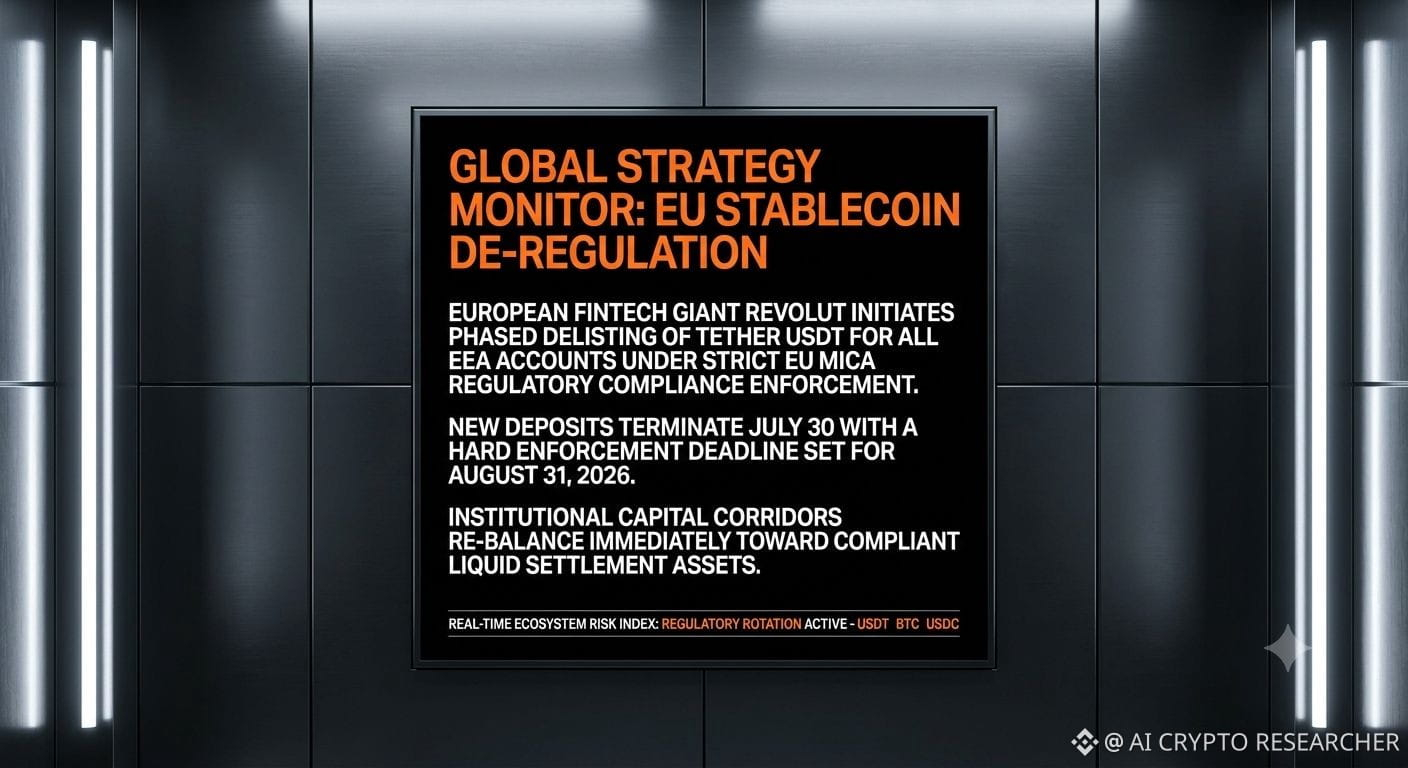
Fintech giant Revolut has officially initiated the phased delisting of Tether’s USDT for all eligible European Economic Area (EEA) accounts. This structural exit is a direct result of stricter enforcement under the EU’s Markets in Crypto-Assets (MiCA) framework, which mandates localized e-money licensing that Tether does not hold.
The Phased Timeline:
Revolut users can purchase USDT until July 6, 2026. New deposits halt on July 30, with a hard deadline of August 31, 2026, to sell or transfer remaining holdings before automated fiat conversion triggers.
Technical Setup & Trader Capital Shifts:
Bitcoin $BTC
{spot}(BTCUSDT)
Shaking off regional stablecoin friction to forcefully defend the structural $61,000 corridor. A decisive daily close above the immediate $62,200 resistance flips the bias back to bullish, charting a clear programmatic path back toward the macro $64,000–$65,000 supply zones.
MiCA-Compliant Anchors $USDC
{spot}(USDCUSDT)
EURC:
As un-licensed stablecoins face geofencing across regulated European entities, capital is moving heavily into compliant settlement alternatives. This liquidity rotation is significantly boosting on-chain metrics for native MiCA-approved ecosystems.
Active Execution Strategy:
Liquidity Base Swaps:
Traders are actively front-running the August 31 deadline by rotating out of restricted centralized custodial structures. Capital is fleeing toward self-hosted wallets and decentralized liquidity pools where USDT remains completely unfrozen and operational for global cross-border order books.
Let data guide, enforce defense, and let charts validate!
#MiCA #bitcoin #cryptotrading #TechnicalAnalysis
#revoluttodelistusdt
Macro Friction: Revolut Delists USDT as MiCA Reshapes Europe 👇
The Reality of the Move:
The MiCA Enforcer:
Fintech giant Revolut has officially initiated the phased delisting of Tether’s USDT for all eligible European Economic Area (EEA) accounts. This structural exit is a direct result of stricter enforcement under the EU’s Markets in Crypto-Assets (MiCA) framework, which mandates localized e-money licensing that Tether does not hold.
The Phased Timeline:
Revolut users can purchase USDT until July 6, 2026. New deposits halt on July 30, with a hard deadline of August 31, 2026, to sell or transfer remaining holdings before automated fiat conversion triggers.
Technical Setup & Trader Capital Shifts:
Bitcoin $BTC
Shaking off regional stablecoin friction to forcefully defend the structural $61,000 corridor. A decisive daily close above the immediate $62,200 resistance flips the bias back to bullish, charting a clear programmatic path back toward the macro $64,000–$65,000 supply zones.
MiCA-Compliant Anchors $USDC
EURC:
As un-licensed stablecoins face geofencing across regulated European entities, capital is moving heavily into compliant settlement alternatives. This liquidity rotation is significantly boosting on-chain metrics for native MiCA-approved ecosystems.
Active Execution Strategy:
Liquidity Base Swaps:
Traders are actively front-running the August 31 deadline by rotating out of restricted centralized custodial structures. Capital is fleeing toward self-hosted wallets and decentralized liquidity pools where USDT remains completely unfrozen and operational for global cross-border order books.
Let data guide, enforce defense, and let charts validate!
#MiCA #bitcoin #cryptotrading #TechnicalAnalysis
Macro Friction: Revolut Delists USDT as MiCA Reshapes Europe 👇
The Reality of the Move:
The MiCA Enforcer:
Fintech giant Revolut has officially initiated the phased delisting of Tether’s USDT for all eligible European Economic Area (EEA) accounts. This structural exit is a direct result of stricter enforcement under the EU’s Markets in Crypto-Assets (MiCA) framework, which mandates localized e-money licensing that Tether does not hold.
The Phased Timeline:
Revolut users can purchase USDT until July 6, 2026. New deposits halt on July 30, with a hard deadline of August 31, 2026, to sell or transfer remaining holdings before automated fiat conversion triggers.
Technical Setup & Trader Capital Shifts:
Bitcoin $BTC
Shaking off regional stablecoin friction to forcefully defend the structural $61,000 corridor. A decisive daily close above the immediate $62,200 resistance flips the bias back to bullish, charting a clear programmatic path back toward the macro $64,000–$65,000 supply zones.
MiCA-Compliant Anchors $USDC
EURC:
As un-licensed stablecoins face geofencing across regulated European entities, capital is moving heavily into compliant settlement alternatives. This liquidity rotation is significantly boosting on-chain metrics for native MiCA-approved ecosystems.
Active Execution Strategy:
Liquidity Base Swaps:
Traders are actively front-running the August 31 deadline by rotating out of restricted centralized custodial structures. Capital is fleeing toward self-hosted wallets and decentralized liquidity pools where USDT remains completely unfrozen and operational for global cross-border order books.
Let data guide, enforce defense, and let charts validate!
#MiCA #bitcoin #cryptotrading #TechnicalAnalysis
4
196

·
--
Bullish
#RevolutToDelistUSDT 🚨 Big news in crypto!
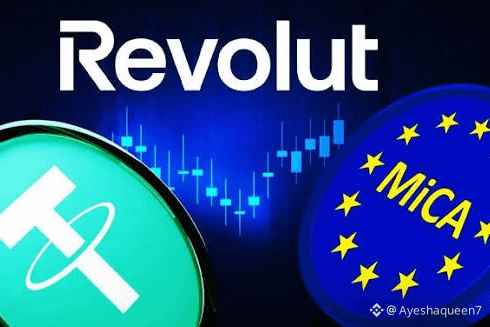
Revolut is delisting USDT (and 8 other stablecoins) for EU customers starting 2026 – all due to new MiCA regulations.
⚠️ What this means for you:$RE
{future}(REUSDT)
· USDT, DAI, & others will be converted to USDC or Euro
· Transfers to external wallets stop July 2026
· No action needed – Revolut handles it automatically
Your options:$BREV
{future}(BREVUSDT)
$MIRA
{future}(MIRAUSDT)
· HODL? It'll auto-swap to USDC
· Trade now? You can still buy/sell until July 4, 2026
· Withdraw? Send to an external wallet before July
#RevolutToDelistUSDT 🚨 Big news in crypto!
Revolut is delisting USDT (and 8 other stablecoins) for EU customers starting 2026 – all due to new MiCA regulations.
⚠️ What this means for you:$RE
· USDT, DAI, & others will be converted to USDC or Euro
· Transfers to external wallets stop July 2026
· No action needed – Revolut handles it automatically
Your options:$BREV
$MIRA
· HODL? It'll auto-swap to USDC
· Trade now? You can still buy/sell until July 4, 2026
· Withdraw? Send to an external wallet before July
Revolut is delisting USDT (and 8 other stablecoins) for EU customers starting 2026 – all due to new MiCA regulations.
⚠️ What this means for you:$RE
· USDT, DAI, & others will be converted to USDC or Euro
· Transfers to external wallets stop July 2026
· No action needed – Revolut handles it automatically
Your options:$BREV
$MIRA
· HODL? It'll auto-swap to USDC
· Trade now? You can still buy/sell until July 4, 2026
· Withdraw? Send to an external wallet before July
1
118

·
--
#RevolutToDelistUSDT
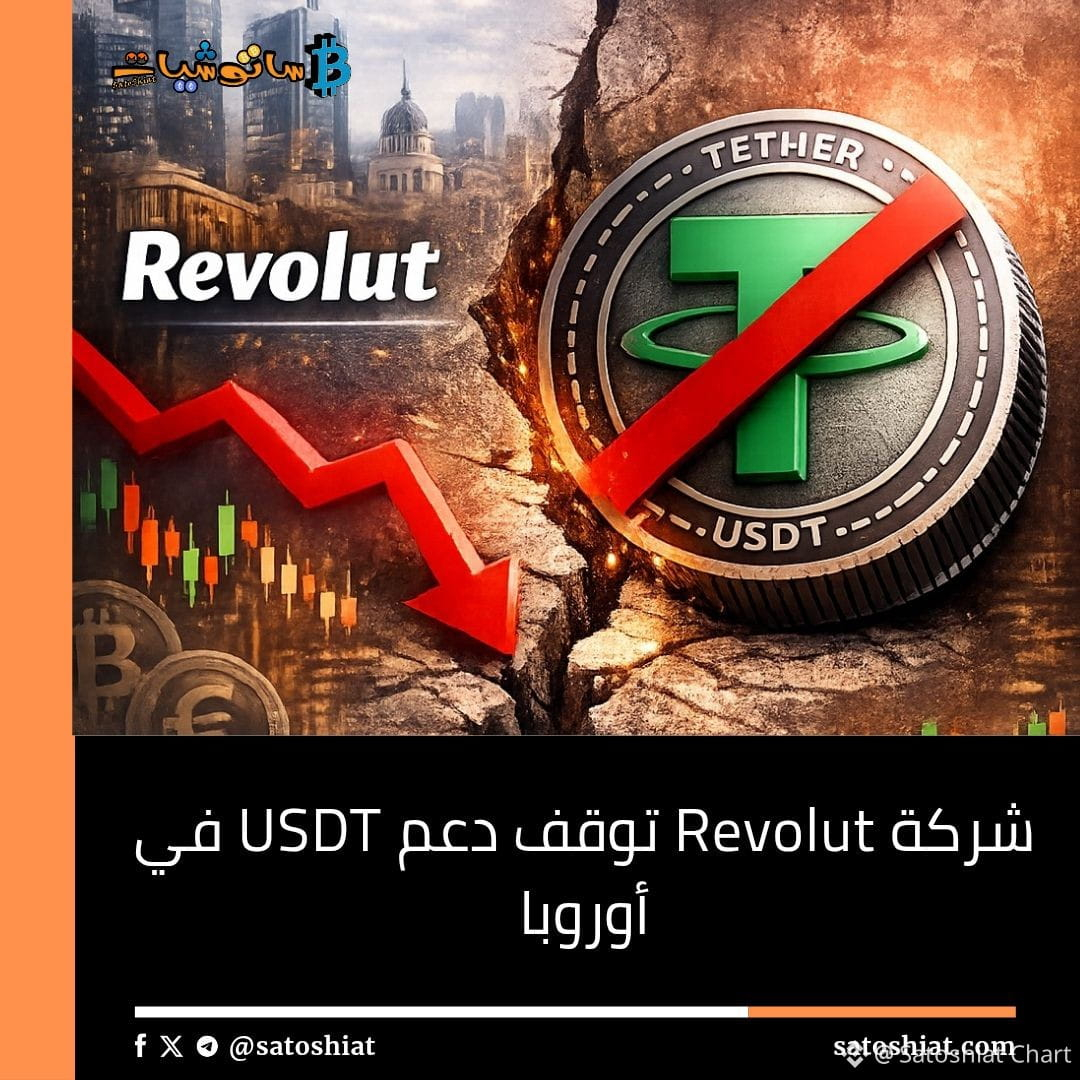
After the BOOOM 💥 💥 💥 💥 that triggered the exit of the BINANCE platform from European Union markets, now it’s Revolut’s turn, which will stop offering Tether (USDT) to users 👥 👥 👥 in the European Union 🇪🇺 on August 31 😱😰.
This decision, guys, is due to the fact that Tether did not request authorization under the MiCA (Markets in Crypto-Assets) regulation of the European Union 🇪🇺.
Now, customers 👤👤👤 will be able to buy $USDT until July 6. After that, a gradual liquidation ❌ will be carried out through the end of August, at which point the remaining balances will be converted to fiat currency 🪙.
#RevolutToDelistUSDT
After the BOOOM 💥 💥 💥 💥 that triggered the exit of the BINANCE platform from European Union markets, now it’s Revolut’s turn, which will stop offering Tether (USDT) to users 👥 👥 👥 in the European Union 🇪🇺 on August 31 😱😰.
This decision, guys, is due to the fact that Tether did not request authorization under the MiCA (Markets in Crypto-Assets) regulation of the European Union 🇪🇺.
Now, customers 👤👤👤 will be able to buy $USDT until July 6. After that, a gradual liquidation ❌ will be carried out through the end of August, at which point the remaining balances will be converted to fiat currency 🪙.
After the BOOOM 💥 💥 💥 💥 that triggered the exit of the BINANCE platform from European Union markets, now it’s Revolut’s turn, which will stop offering Tether (USDT) to users 👥 👥 👥 in the European Union 🇪🇺 on August 31 😱😰.
This decision, guys, is due to the fact that Tether did not request authorization under the MiCA (Markets in Crypto-Assets) regulation of the European Union 🇪🇺.
Now, customers 👤👤👤 will be able to buy $USDT until July 6. After that, a gradual liquidation ❌ will be carried out through the end of August, at which point the remaining balances will be converted to fiat currency 🪙.

168

Revolut, the largest fintech company in Europe, has officially announced the suspension of support for the USDT stablecoin effective August 31, 2026, in accordance with the EU’s new Digital Assets regulations (MiCA)
According to the timeline, users will be able to buy USDT until July 6 and deposit it until July 30, while any remaining balances will be automatically converted to cash after the deadline
This decision reflects regulatory shifts in the stablecoin market and encourages users toward compliant alternatives such as USDC
#RevolutToDelistUSDT
Revolut, the largest fintech company in Europe, has officially announced the suspension of support for the USDT stablecoin effective August 31, 2026, in accordance with the EU’s new Digital Assets regulations (MiCA)
According to the timeline, users will be able to buy USDT until July 6 and deposit it until July 30, while any remaining balances will be automatically converted to cash after the deadline
This decision reflects regulatory shifts in the stablecoin market and encourages users toward compliant alternatives such as USDC
#RevolutToDelistUSDT
According to the timeline, users will be able to buy USDT until July 6 and deposit it until July 30, while any remaining balances will be automatically converted to cash after the deadline
This decision reflects regulatory shifts in the stablecoin market and encourages users toward compliant alternatives such as USDC
#RevolutToDelistUSDT
1
213

·
--
Bullish
Revolut is considering removing USDT from its platform
Reports indicate that fintech firm Revolut may consider removing support for Tether (USDT) in some European markets in response to regulatory compliance requirements.
This step does not mean the currency will collapse, but it reflects a clear trend toward tightening rules on stablecoins within centralized platforms.
The main outcome: greater pressure on liquidity inside regulated platforms, while USDT remains widely used outside them.
{future}(USDCUSDT)
#RevolutToDelistUSDT
Revolut is considering removing USDT from its platform
Reports indicate that fintech firm Revolut may consider removing support for Tether (USDT) in some European markets in response to regulatory compliance requirements.
This step does not mean the currency will collapse, but it reflects a clear trend toward tightening rules on stablecoins within centralized platforms.
The main outcome: greater pressure on liquidity inside regulated platforms, while USDT remains widely used outside them.
#RevolutToDelistUSDT
Reports indicate that fintech firm Revolut may consider removing support for Tether (USDT) in some European markets in response to regulatory compliance requirements.
This step does not mean the currency will collapse, but it reflects a clear trend toward tightening rules on stablecoins within centralized platforms.
The main outcome: greater pressure on liquidity inside regulated platforms, while USDT remains widely used outside them.
#RevolutToDelistUSDT
2
2
7.1k

·
--
#RevolutToDelistUSDT
The digital asset landscape continues to evolve as financial platforms refine their crypto offerings to align with changing regulatory requirements. Reports that Revolut plans to delist USDT have sparked discussions across the crypto community about the future of stablecoins and the importance of regulatory compliance.
USDT has long been one of the most widely used stablecoins, providing liquidity for trading, cross-border transfers, and decentralized finance. Any change involving its availability on major platforms naturally attracts attention from traders and investors.
For users, this serves as a reminder to stay informed about platform announcements, understand how regulatory changes may affect their holdings, and always have a plan for managing digital assets. Market conditions and exchange policies can change quickly, making it important to keep up with official updates.
While individual platform decisions may impact access to certain assets, the broader crypto industry continues to innovate, with stablecoins remaining an essential part of the digital economy.
The key takeaway: stay informed, diversify your strategy, and always follow official platform announcements before making investment decisions.
#Revolut #USDT #Stablecoins #Crypto #Blockchain #Bitcoin #Ethereum #CryptoNews #DigitalAssets #Web3 #Trading #Finance
#RevolutToDelistUSDT
The digital asset landscape continues to evolve as financial platforms refine their crypto offerings to align with changing regulatory requirements. Reports that Revolut plans to delist USDT have sparked discussions across the crypto community about the future of stablecoins and the importance of regulatory compliance.
USDT has long been one of the most widely used stablecoins, providing liquidity for trading, cross-border transfers, and decentralized finance. Any change involving its availability on major platforms naturally attracts attention from traders and investors.
For users, this serves as a reminder to stay informed about platform announcements, understand how regulatory changes may affect their holdings, and always have a plan for managing digital assets. Market conditions and exchange policies can change quickly, making it important to keep up with official updates.
While individual platform decisions may impact access to certain assets, the broader crypto industry continues to innovate, with stablecoins remaining an essential part of the digital economy.
The key takeaway: stay informed, diversify your strategy, and always follow official platform announcements before making investment decisions.
#Revolut #USDT #Stablecoins #Crypto #Blockchain #Bitcoin #Ethereum #CryptoNews #DigitalAssets #Web3 #Trading #Finance
The digital asset landscape continues to evolve as financial platforms refine their crypto offerings to align with changing regulatory requirements. Reports that Revolut plans to delist USDT have sparked discussions across the crypto community about the future of stablecoins and the importance of regulatory compliance.
USDT has long been one of the most widely used stablecoins, providing liquidity for trading, cross-border transfers, and decentralized finance. Any change involving its availability on major platforms naturally attracts attention from traders and investors.
For users, this serves as a reminder to stay informed about platform announcements, understand how regulatory changes may affect their holdings, and always have a plan for managing digital assets. Market conditions and exchange policies can change quickly, making it important to keep up with official updates.
While individual platform decisions may impact access to certain assets, the broader crypto industry continues to innovate, with stablecoins remaining an essential part of the digital economy.
The key takeaway: stay informed, diversify your strategy, and always follow official platform announcements before making investment decisions.
#Revolut #USDT #Stablecoins #Crypto #Blockchain #Bitcoin #Ethereum #CryptoNews #DigitalAssets #Web3 #Trading #Finance
95

·
--
Verified
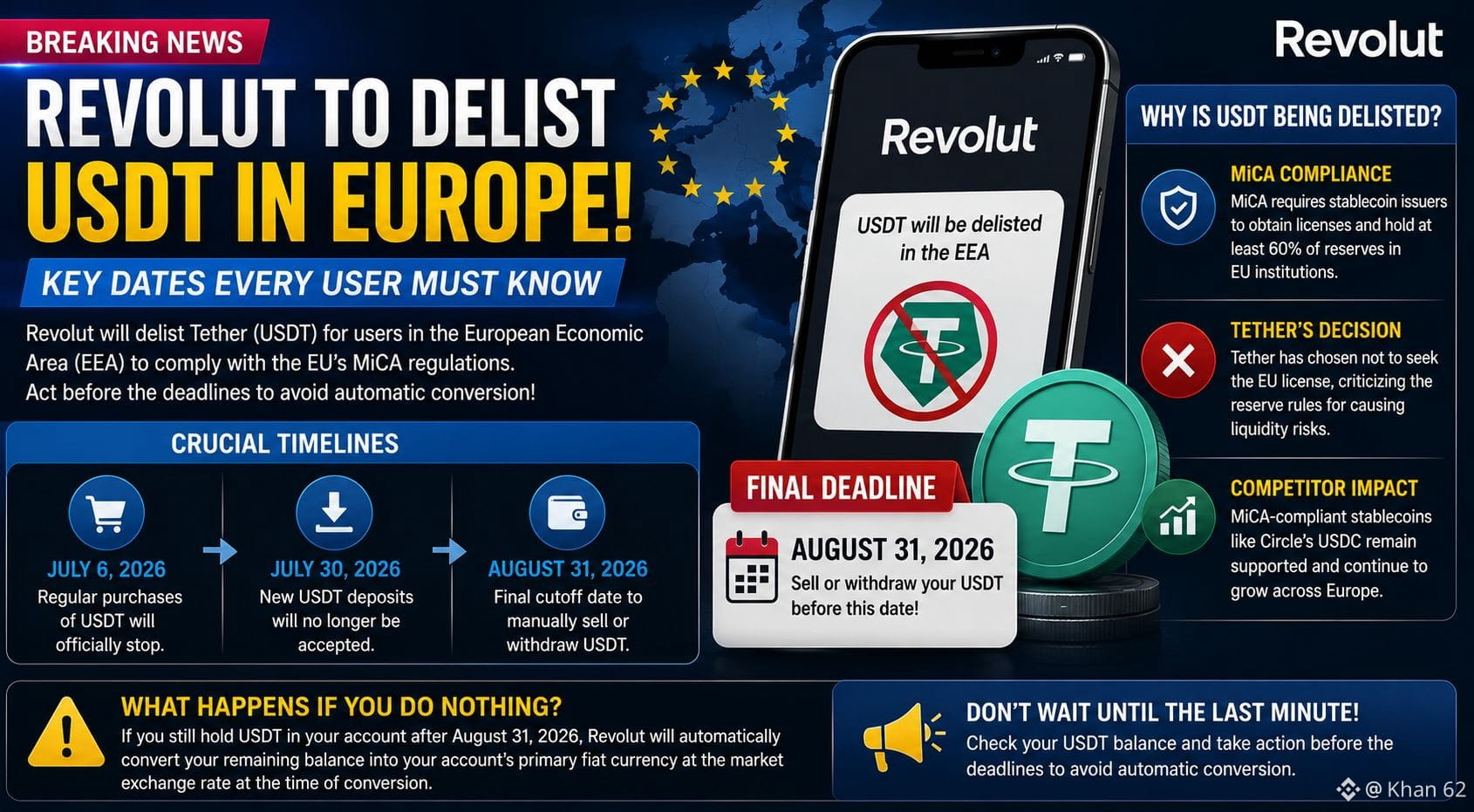
#revoluttodelistusdt 🚨 🚨 Revolut to Delist USDT in Europe! What Every Holder Needs to Know ⚠️
1- Revolut is going to stop letting users in Europe buy and sell USDT. This is because they have to follow the rules set by the European Union. On July 6 2026 you will not be able to buy USDT. Then on July 30 you will not be able to add USDT to your account.
2- You have until August 31 to get rid of your USDT or move it out of Revolut. If you still have USDT after August 31 it will be turned into the currency you use like euros or dollars at the current market price.
3- Revolut is doing this because the company that makes USDT, Tether does not want to get a license from the European Union.. You will still be able to use other stablecoins like USDC that are following the rules.
👇 Do you think these new rules will make stablecoins like USDT safer and better or will they make people, in Europe not want to use USDT ?
#USDT #Khan62 #MiCA #CryptoNews $USDC $USDS
{spot}(USDSUSDT)
$FDUSD
{spot}(FDUSDUSDT)
{future}(USDCUSDT)
#revoluttodelistusdt 🚨 🚨 Revolut to Delist USDT in Europe! What Every Holder Needs to Know ⚠️
1- Revolut is going to stop letting users in Europe buy and sell USDT. This is because they have to follow the rules set by the European Union. On July 6 2026 you will not be able to buy USDT. Then on July 30 you will not be able to add USDT to your account.
2- You have until August 31 to get rid of your USDT or move it out of Revolut. If you still have USDT after August 31 it will be turned into the currency you use like euros or dollars at the current market price.
3- Revolut is doing this because the company that makes USDT, Tether does not want to get a license from the European Union.. You will still be able to use other stablecoins like USDC that are following the rules.
👇 Do you think these new rules will make stablecoins like USDT safer and better or will they make people, in Europe not want to use USDT ?
#USDT #Khan62 #MiCA #CryptoNews $USDC $USDS
$FDUSD
1- Revolut is going to stop letting users in Europe buy and sell USDT. This is because they have to follow the rules set by the European Union. On July 6 2026 you will not be able to buy USDT. Then on July 30 you will not be able to add USDT to your account.
2- You have until August 31 to get rid of your USDT or move it out of Revolut. If you still have USDT after August 31 it will be turned into the currency you use like euros or dollars at the current market price.
3- Revolut is doing this because the company that makes USDT, Tether does not want to get a license from the European Union.. You will still be able to use other stablecoins like USDC that are following the rules.
👇 Do you think these new rules will make stablecoins like USDT safer and better or will they make people, in Europe not want to use USDT ?
#USDT #Khan62 #MiCA #CryptoNews $USDC $USDS
$FDUSD
2
1
82

·
--
Bearish
#revoluttodelistusdt
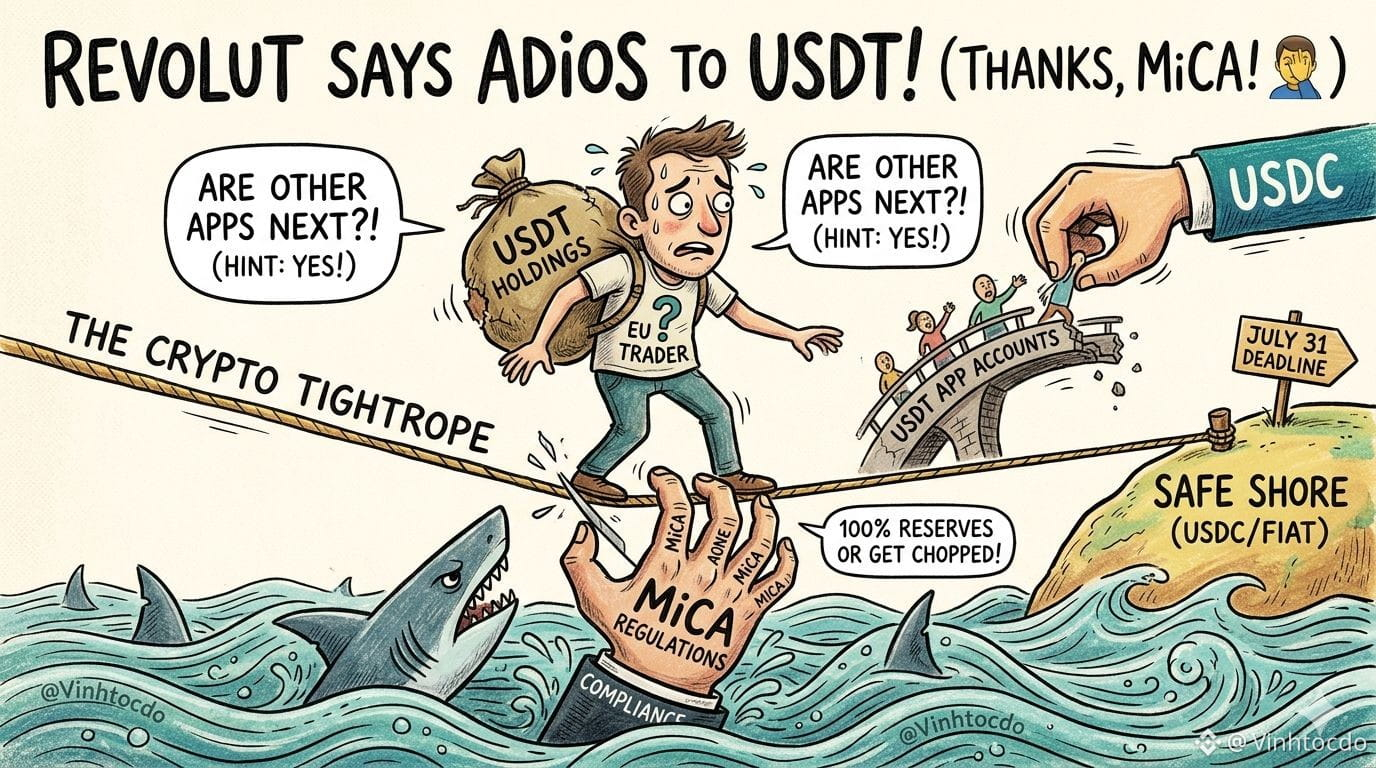
Revolut sends USDT out and about due to MiCA law, so come on everyone! 🤦♂️
Will other apps follow suit? Definitely, if they want to keep their license in Europe!
This MiCA law is extremely strict—any party issuing stablecoins must hold 100% safe, transparent reserve assets. USDC has gathered everyone this time!
What are EU traders supposed to do around this time? Make sure to switch USDT to Fiat or USDC before the deadline 31/8, or else it’ll be automatically converted to Fiat at that “surprising” exchange rate!
⚠️ This is not financial advice.
Enter the code VINHTOCDO to get updates as fast as possible! 🚀
#MiCA #revolut #Tether #VINHTOCDO
$BNB
{future}(BNBUSDT)
$ETH
{future}(ETHUSDT)
$BTC
{future}(BTCUSDT)
#revoluttodelistusdt
Revolut sends USDT out and about due to MiCA law, so come on everyone! 🤦♂️
Will other apps follow suit? Definitely, if they want to keep their license in Europe!
This MiCA law is extremely strict—any party issuing stablecoins must hold 100% safe, transparent reserve assets. USDC has gathered everyone this time!
What are EU traders supposed to do around this time? Make sure to switch USDT to Fiat or USDC before the deadline 31/8, or else it’ll be automatically converted to Fiat at that “surprising” exchange rate!
⚠️ This is not financial advice.
Enter the code VINHTOCDO to get updates as fast as possible! 🚀
#MiCA #revolut #Tether #VINHTOCDO
$BNB
$ETH
$BTC
Revolut sends USDT out and about due to MiCA law, so come on everyone! 🤦♂️
Will other apps follow suit? Definitely, if they want to keep their license in Europe!
This MiCA law is extremely strict—any party issuing stablecoins must hold 100% safe, transparent reserve assets. USDC has gathered everyone this time!
What are EU traders supposed to do around this time? Make sure to switch USDT to Fiat or USDC before the deadline 31/8, or else it’ll be automatically converted to Fiat at that “surprising” exchange rate!
⚠️ This is not financial advice.
Enter the code VINHTOCDO to get updates as fast as possible! 🚀
#MiCA #revolut #Tether #VINHTOCDO
$BNB
$ETH
$BTC
9
12
15.9k

Revolut is planning to delist USDT for users in the European Economic Area to comply with the EU's new crypto rules. The change is about regulation, not a global ban on USDT, and affected users will need to convert or move their holdings before the deadline.
#RevolutToDelistUSDT
Revolut is planning to delist USDT for users in the European Economic Area to comply with the EU's new crypto rules. The change is about regulation, not a global ban on USDT, and affected users will need to convert or move their holdings before the deadline.
#RevolutToDelistUSDT
#RevolutToDelistUSDT
61


·
--
#RevolutToDelistUSDT
JUST IN:
🚨🚨 Europe's Largest Fintech Revolut to Stop Supporting USDT on August 31.
$USDT
$BNB
{future}(BNBUSDT)
#RevolutToDelistUSDT
JUST IN:
🚨🚨 Europe's Largest Fintech Revolut to Stop Supporting USDT on August 31.
$USDT
$BNB
JUST IN:
🚨🚨 Europe's Largest Fintech Revolut to Stop Supporting USDT on August 31.
$USDT
$BNB
6
265


Article
Cryptocurrency in the crosshairs🔫 MіCA#RevolutToDelistUSDT
How it works and who else will be “taken down”:
1. Under the threat — unregulated stablecoins
MiCA rules impose strict requirements specifically on stablecoin issuers (they must have a license in the EU and provide reserves in European banks).
Who’s out: Any other stablecoins whose issuers have not received approval from EU regulators. This may include algorithmic stablecoins, illiquid coins, or assets from other major issuers that decided to ignore MiCA (as Tether did with USDT).
Cryptocurrency in the crosshairs🔫 MіCA
#RevolutToDelistUSDT
How it works and who else will be “taken down”:
1. Under the threat — unregulated stablecoins
MiCA rules impose strict requirements specifically on stablecoin issuers (they must have a license in the EU and provide reserves in European banks).
Who’s out: Any other stablecoins whose issuers have not received approval from EU regulators. This may include algorithmic stablecoins, illiquid coins, or assets from other major issuers that decided to ignore MiCA (as Tether did with USDT).
How it works and who else will be “taken down”:
1. Under the threat — unregulated stablecoins
MiCA rules impose strict requirements specifically on stablecoin issuers (they must have a license in the EU and provide reserves in European banks).
Who’s out: Any other stablecoins whose issuers have not received approval from EU regulators. This may include algorithmic stablecoins, illiquid coins, or assets from other major issuers that decided to ignore MiCA (as Tether did with USDT).
4
298

·
--
Removal of Tether (USDT) support in certain European markets in accordance with regulatory compliance requirements.
This step does not mean the collapse of the currency, but rather reflects a clear trend toward tightening rules for stablecoins within centralized platforms.
The key outcome: greater pressure on liquidity within regulated platforms, while USDT remains widely used outside them.
#RevolutToDelistUSDT
Removal of Tether (USDT) support in certain European markets in accordance with regulatory compliance requirements.
This step does not mean the collapse of the currency, but rather reflects a clear trend toward tightening rules for stablecoins within centralized platforms.
The key outcome: greater pressure on liquidity within regulated platforms, while USDT remains widely used outside them.
#RevolutToDelistUSDT
This step does not mean the collapse of the currency, but rather reflects a clear trend toward tightening rules for stablecoins within centralized platforms.
The key outcome: greater pressure on liquidity within regulated platforms, while USDT remains widely used outside them.
#RevolutToDelistUSDT
1
111

·
--
Breaking News: #RevolutToDelistUSDT is getting a lot of talk
My opinion: I think this is FUD short term but people will just move to $USDC
Exchanges delist and relist all the time bro
Don’t panic sell your stables over headlines 😅
Breaking News: #RevolutToDelistUSDT is getting a lot of talk
My opinion: I think this is FUD short term but people will just move to $USDC
Exchanges delist and relist all the time bro
Don’t panic sell your stables over headlines 😅
My opinion: I think this is FUD short term but people will just move to $USDC
Exchanges delist and relist all the time bro
Don’t panic sell your stables over headlines 😅
64

·
--
Bullish
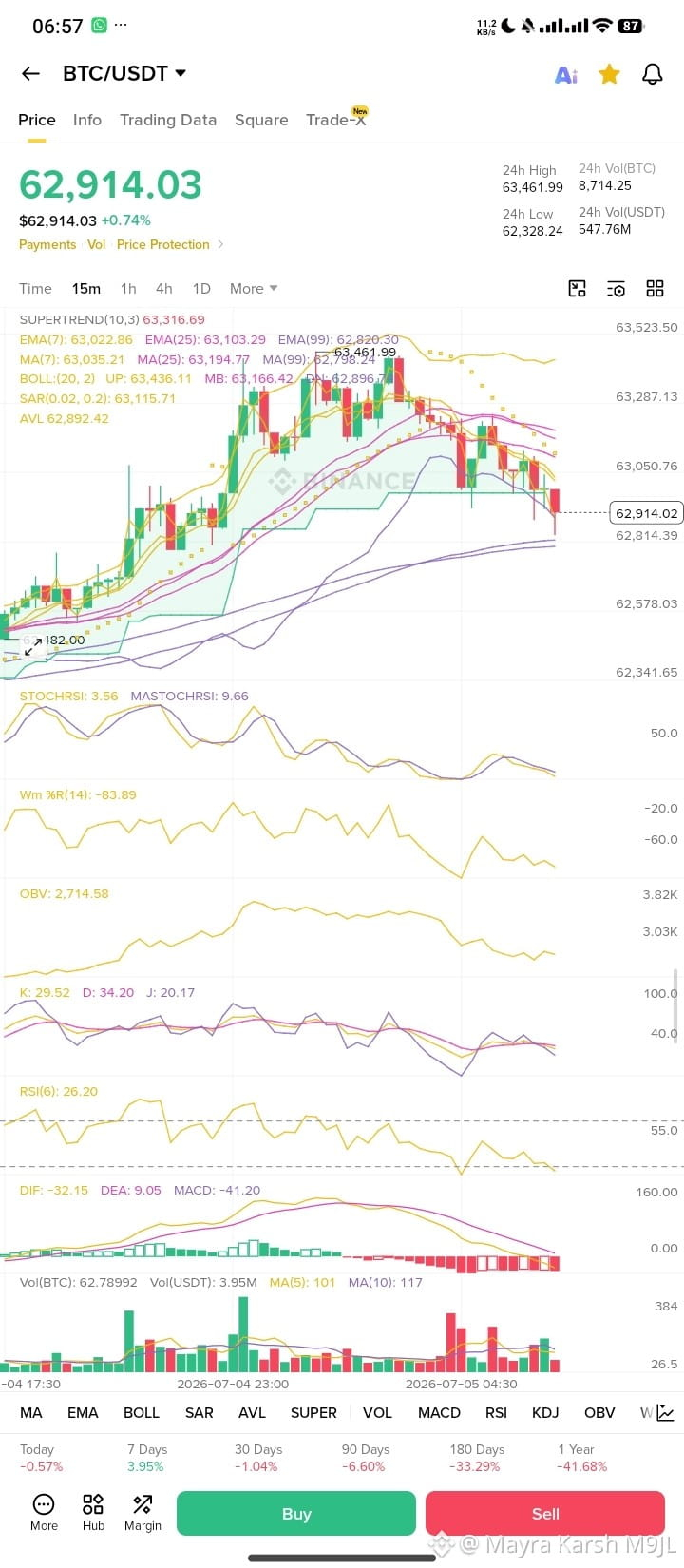
🚨 Market Update: Big Moves and Hard Times! 📉
Bitcoin has fallen over 50% from its October high (#BitcoinFallsOver50%FromOctoberHigh ). On top of that, rumors say Revolut might delist USDT (#RevolutToDelistUSDT ).
Fear is high, but is this the ultimate buying opportunity for smart investors, or is the drop going to continue?
What is your next plan? Are you buying the dip or holding cash? Let me know in the comments! 👇
$BTC $USDT
{future}(BTCUSDT)
🚨 Market Update: Big Moves and Hard Times! 📉
Bitcoin has fallen over 50% from its October high (#BitcoinFallsOver50%FromOctoberHigh ). On top of that, rumors say Revolut might delist USDT (#RevolutToDelistUSDT ).
Fear is high, but is this the ultimate buying opportunity for smart investors, or is the drop going to continue?
What is your next plan? Are you buying the dip or holding cash? Let me know in the comments! 👇
$BTC $USDT
Bitcoin has fallen over 50% from its October high (#BitcoinFallsOver50%FromOctoberHigh ). On top of that, rumors say Revolut might delist USDT (#RevolutToDelistUSDT ).
Fear is high, but is this the ultimate buying opportunity for smart investors, or is the drop going to continue?
What is your next plan? Are you buying the dip or holding cash? Let me know in the comments! 👇
$BTC $USDT
1
178

·
--
Bullish
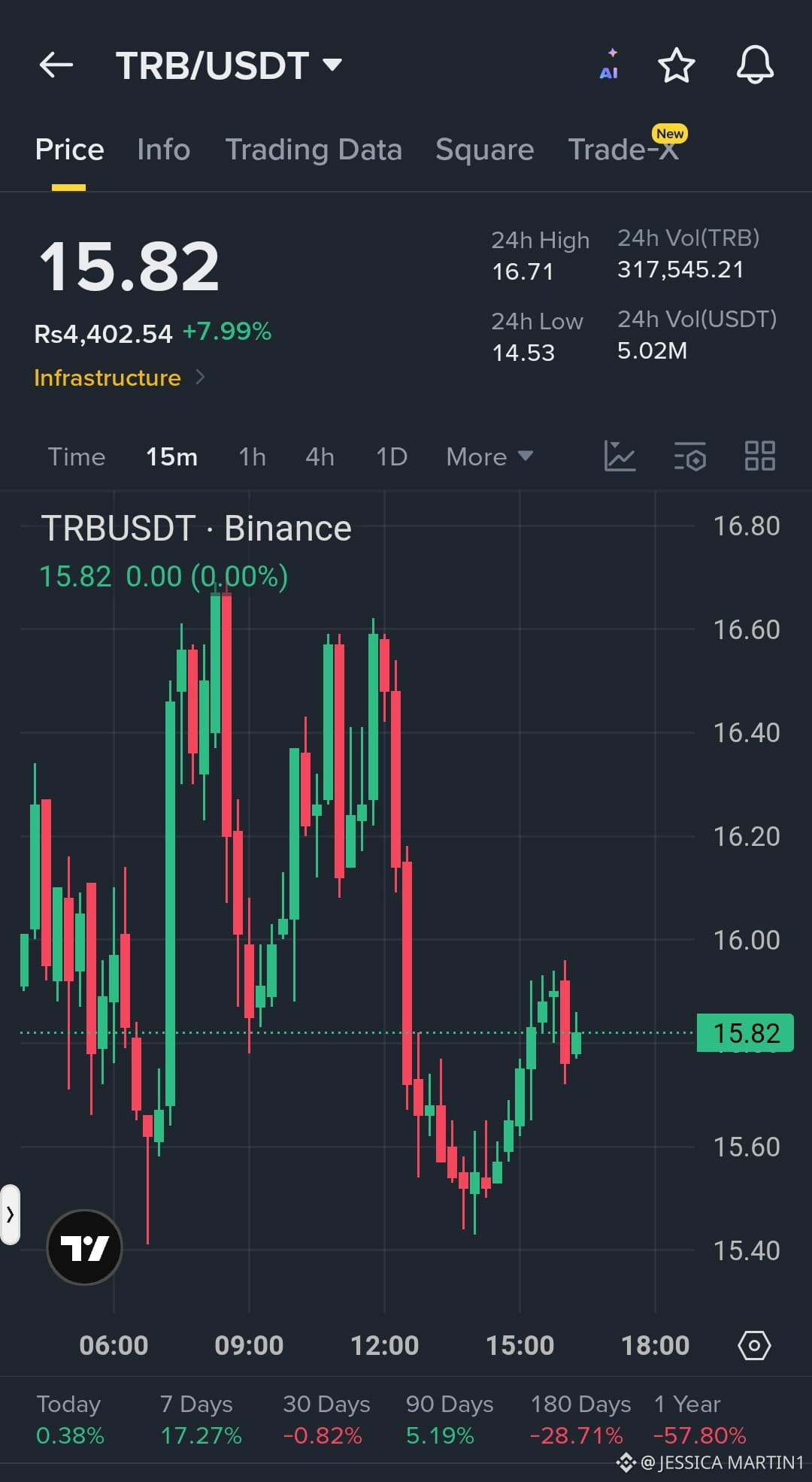
$TRB / USDT – Short-Term Outlook
$TRB has come under short-term selling pressure following recent long liquidations, with price action remaining volatile.
Entry Zone: $15.60 – $15.85
Bullish Confirmation: Above $15.95 / Bearish Confirmation: Below $15.60
Targets:
TP1: $16.10
TP2: $16.50
TP3: $16.90
Stop-Loss: $15.35
Recent liquidation activity indicates elevated trading volume and increased market participation as traders respond to short-term price movements.
$TRB
{spot}(TRBUSDT)
#TRB #BitcoinFallsOver50%FromOctoberHigh #MoonbeamToMigrateGLMRToBase #GillibrandCallsForDigitalAssetEthicsBan #RevolutToDelistUSDT
$TRB / USDT – Short-Term Outlook
$TRB has come under short-term selling pressure following recent long liquidations, with price action remaining volatile.
Entry Zone: $15.60 – $15.85
Bullish Confirmation: Above $15.95 / Bearish Confirmation: Below $15.60
Targets:
TP1: $16.10
TP2: $16.50
TP3: $16.90
Stop-Loss: $15.35
Recent liquidation activity indicates elevated trading volume and increased market participation as traders respond to short-term price movements.
$TRB
#TRB #BitcoinFallsOver50%FromOctoberHigh #MoonbeamToMigrateGLMRToBase #GillibrandCallsForDigitalAssetEthicsBan #RevolutToDelistUSDT
$TRB has come under short-term selling pressure following recent long liquidations, with price action remaining volatile.
Entry Zone: $15.60 – $15.85
Bullish Confirmation: Above $15.95 / Bearish Confirmation: Below $15.60
Targets:
TP1: $16.10
TP2: $16.50
TP3: $16.90
Stop-Loss: $15.35
Recent liquidation activity indicates elevated trading volume and increased market participation as traders respond to short-term price movements.
$TRB
#TRB #BitcoinFallsOver50%FromOctoberHigh #MoonbeamToMigrateGLMRToBase #GillibrandCallsForDigitalAssetEthicsBan #RevolutToDelistUSDT
140

·
--
Bullish
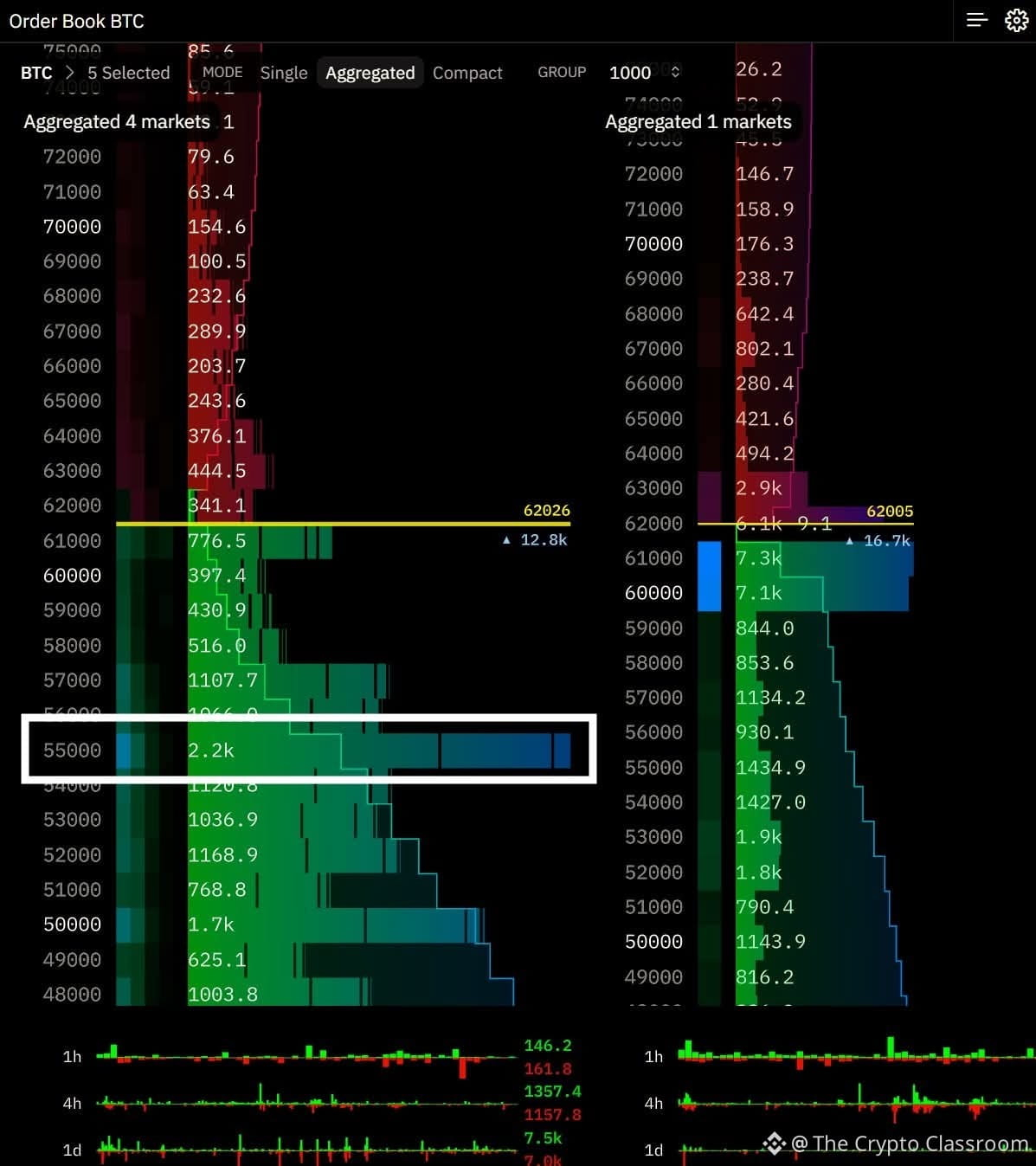
$BTC in Order Books
OB's heaviest now at 55k 🧲
Think we see that level soon?
#GillibrandCallsForDigitalAssetEthicsBan #RevolutToDelistUSDT #NHHB639ProtectsDigitalAssetSelfCustody #JunePayrolls57KHikeOddsFallTo50%
{future}(BTCUSDT)
$BTC in Order Books
OB's heaviest now at 55k 🧲
Think we see that level soon?
#GillibrandCallsForDigitalAssetEthicsBan #RevolutToDelistUSDT #NHHB639ProtectsDigitalAssetSelfCustody #JunePayrolls57KHikeOddsFallTo50%
OB's heaviest now at 55k 🧲
Think we see that level soon?
#GillibrandCallsForDigitalAssetEthicsBan #RevolutToDelistUSDT #NHHB639ProtectsDigitalAssetSelfCustody #JunePayrolls57KHikeOddsFallTo50%
44
Log in to explore more content
Join global crypto users on Binance Square
⚡️ Get latest and useful information about crypto.
💬 Trusted by the world’s largest crypto exchange.
👍 Discover real insights from verified creators.
Email / Phone number
Trending Topics
1
#OpenAIUnveilsAlwaysOnAgentDots
518 views
45 Discussing
2
#ChainlinkLaunchesBankSWIFTLedgerFramework
1,615 views
58 Discussing
3
#EarningsSeason
424,848 views
3,210 Discussing
4
#SECChairWantsStockMarketsOnChain
4,382 views
154 Discussing
5
#MulticoinInvestsInGrass
2,666 views
116 Discussing
6
#CEARenamesToBNBStandardUnderBNC
3,887 views
120 Discussing
7
#BitwiseLaunchesFirstSpotNEARETF
56,350 views
749 Discussing
8
#USJobOpeningsFallToFiveMonthLow
59,884 views
583 Discussing
9
#ECBToTestAIAgentsInDigitalEuroPayments
37,709 views
617 Discussing
10
#JapanFSABacksFourthStablecoinTradeSettlementPilot
42,641 views
638 Discussing