
#netflix
netflix
317,992 views
393 Discussing
Hot
Latest

·
--
Bearish
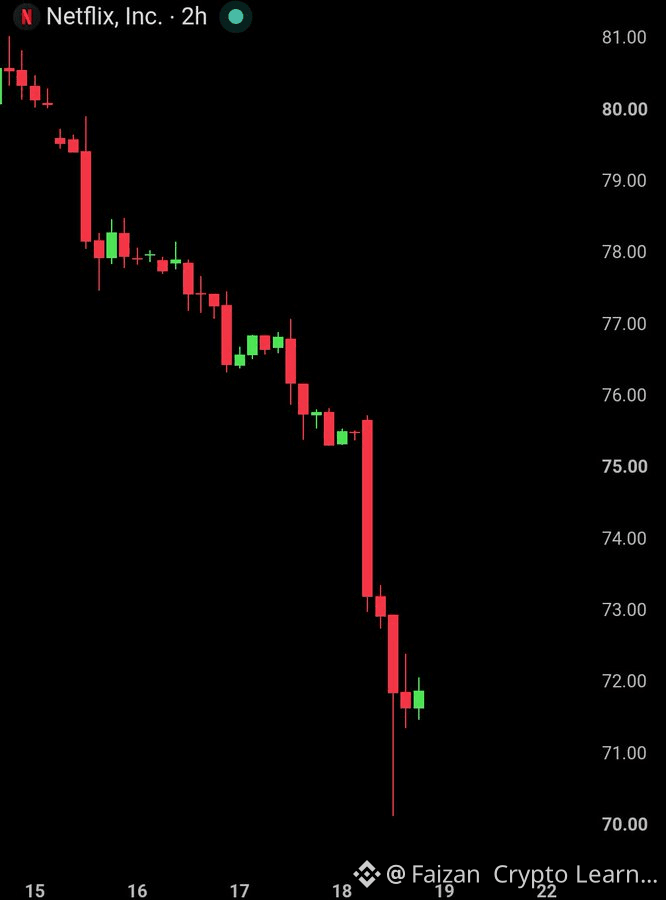
🚨 NETFLIX DROPS 5% AFTER WELLS FARGO DOWNGRADE! 📉
$NFLX came under pressure after Wells Fargo downgraded the stock to Underweight and slashed its price target from $80 → $57.
📉 Why the concern?
• Viewer engagement is weakening
• Wells Fargo estimates viewing per subscriber was down about 8% vs. 2023 in H1 2026
• The bank expects viewing hours for Netflix’s Top 100 originals to fall 21% YoY in H2 2026
• Analysts say Netflix needs more breakout original hits to reignite engagement
🗳️ WHAT HAPPENS NEXT FOR $NFLX?
🔴 Falls toward $57
📉 Drops below $70
📈 Rebounds above $80
🚀 Strong recovery + new highs
Is this a buying opportunity or the start of a deeper correction? 👀
DYOR before making any investment decision.
#netflix #NFLXB #stocks
🚨 NETFLIX DROPS 5% AFTER WELLS FARGO DOWNGRADE! 📉
$NFLX came under pressure after Wells Fargo downgraded the stock to Underweight and slashed its price target from $80 → $57.
📉 Why the concern?
• Viewer engagement is weakening
• Wells Fargo estimates viewing per subscriber was down about 8% vs. 2023 in H1 2026
• The bank expects viewing hours for Netflix’s Top 100 originals to fall 21% YoY in H2 2026
• Analysts say Netflix needs more breakout original hits to reignite engagement
🗳️ WHAT HAPPENS NEXT FOR $NFLX ?
🔴 Falls toward $57
📉 Drops below $70
📈 Rebounds above $80
🚀 Strong recovery + new highs
Is this a buying opportunity or the start of a deeper correction? 👀
DYOR before making any investment decision.
#netflix #NFLXB #stocks
$NFLX came under pressure after Wells Fargo downgraded the stock to Underweight and slashed its price target from $80 → $57.
📉 Why the concern?
• Viewer engagement is weakening
• Wells Fargo estimates viewing per subscriber was down about 8% vs. 2023 in H1 2026
• The bank expects viewing hours for Netflix’s Top 100 originals to fall 21% YoY in H2 2026
• Analysts say Netflix needs more breakout original hits to reignite engagement
🗳️ WHAT HAPPENS NEXT FOR $NFLX ?
🔴 Falls toward $57
📉 Drops below $70
📈 Rebounds above $80
🚀 Strong recovery + new highs
Is this a buying opportunity or the start of a deeper correction? 👀
DYOR before making any investment decision.
#netflix #NFLXB #stocks
177

🔵 #NFLXB (Netflix) — Deeply Oversold, Bounce Setup 📈
Technical Picture:
Stochastic oscillator at %K 6.03 / %D 4.83 — deeply oversold territory that historically precedes sharp snap-back bounces.
Smart Money Positioning:
Top traders on Binance Futures are at a 2.11 long/short ratio, with 67.9% positioned long. Taker buy/sell volume running at 2.12 (buyers outpacing sellers).
Key Level:
Bulls need a daily close back above $79.82 to shift structure from distribution to accumulation. #bstock #netflix $NFLXB
{spot}(NFLXBUSDT)
🔵 #NFLXB (Netflix) — Deeply Oversold, Bounce Setup 📈
Technical Picture:
Stochastic oscillator at %K 6.03 / %D 4.83 — deeply oversold territory that historically precedes sharp snap-back bounces.
Smart Money Positioning:
Top traders on Binance Futures are at a 2.11 long/short ratio, with 67.9% positioned long. Taker buy/sell volume running at 2.12 (buyers outpacing sellers).
Key Level:
Bulls need a daily close back above $79.82 to shift structure from distribution to accumulation. #bstock #netflix $NFLXB
Technical Picture:
Stochastic oscillator at %K 6.03 / %D 4.83 — deeply oversold territory that historically precedes sharp snap-back bounces.
Smart Money Positioning:
Top traders on Binance Futures are at a 2.11 long/short ratio, with 67.9% positioned long. Taker buy/sell volume running at 2.12 (buyers outpacing sellers).
Key Level:
Bulls need a daily close back above $79.82 to shift structure from distribution to accumulation. #bstock #netflix $NFLXB
1
146

·
--
From a short-term perspective, although $NFLX ’s recent trend is relatively weak, the RSI has already formed a bullish divergence, and the price has moved back above the blue line—technical indicators are now beginning to release rebound signals. There is still a 7.4% unfilled gap above; if volume can cooperate, it may become a target for the long side to attempt repairs.
The fundamentals are not without interest either: AI cloud partnerships can improve efficiency and expand the imagination space for content recommendations, and the expansion of the advertising business can also create a new revenue growth curve. The current quote is around 77.17 USDT, but trading volume over the past 24 hours is relatively light. With a smaller market cap, volatility risk should not be ignored.
In terms of strategy, it’s not advisable to chase gains blindly. You can monitor the pace of the gap-filling and the blue-line support. If support breaks, position size must be strictly controlled.
#Netflix #tokenized stock
From a short-term perspective, although $NFLX ’s recent trend is relatively weak, the RSI has already formed a bullish divergence, and the price has moved back above the blue line—technical indicators are now beginning to release rebound signals. There is still a 7.4% unfilled gap above; if volume can cooperate, it may become a target for the long side to attempt repairs.
The fundamentals are not without interest either: AI cloud partnerships can improve efficiency and expand the imagination space for content recommendations, and the expansion of the advertising business can also create a new revenue growth curve. The current quote is around 77.17 USDT, but trading volume over the past 24 hours is relatively light. With a smaller market cap, volatility risk should not be ignored.
In terms of strategy, it’s not advisable to chase gains blindly. You can monitor the pace of the gap-filling and the blue-line support. If support breaks, position size must be strictly controlled.
#Netflix #tokenized stock
The fundamentals are not without interest either: AI cloud partnerships can improve efficiency and expand the imagination space for content recommendations, and the expansion of the advertising business can also create a new revenue growth curve. The current quote is around 77.17 USDT, but trading volume over the past 24 hours is relatively light. With a smaller market cap, volatility risk should not be ignored.
In terms of strategy, it’s not advisable to chase gains blindly. You can monitor the pace of the gap-filling and the blue-line support. If support breaks, position size must be strictly controlled.
#Netflix #tokenized stock

$NFLX Recent trend is weak, but the chart is showing reversal clues worth paying attention to. As RSI dips below the price, a bullish divergence forms on the back of the move, indicating that selling pressure momentum is fading. The price has also moved above the blue trend line, and technical indicators are simultaneously releasing buy signals.
There is still an unfilled gap of about 7.4% overhead. If market sentiment remains supportive, it could become a target for long-side attempts to repair that gap. Fundamentals also offer some support: AI cloud collaborations can help improve content recommendations as well as production and operational efficiency, while expansion in the advertising business creates fresh room for revenue expectations.
The current quote is about $77.17. In the short term, watch whether the market can confirm the fill of the gap—but the signals still need volume confirmation. If the price slips back below the trend line, the divergence may fail. Manage position size carefully and don’t treat possibilities as certainty.
#Netflix #代币化股票 #Market Watch
$NFLX Recent trend is weak, but the chart is showing reversal clues worth paying attention to. As RSI dips below the price, a bullish divergence forms on the back of the move, indicating that selling pressure momentum is fading. The price has also moved above the blue trend line, and technical indicators are simultaneously releasing buy signals.
There is still an unfilled gap of about 7.4% overhead. If market sentiment remains supportive, it could become a target for long-side attempts to repair that gap. Fundamentals also offer some support: AI cloud collaborations can help improve content recommendations as well as production and operational efficiency, while expansion in the advertising business creates fresh room for revenue expectations.
The current quote is about $77.17. In the short term, watch whether the market can confirm the fill of the gap—but the signals still need volume confirmation. If the price slips back below the trend line, the divergence may fail. Manage position size carefully and don’t treat possibilities as certainty.
#Netflix #代币化股票 #Market Watch
There is still an unfilled gap of about 7.4% overhead. If market sentiment remains supportive, it could become a target for long-side attempts to repair that gap. Fundamentals also offer some support: AI cloud collaborations can help improve content recommendations as well as production and operational efficiency, while expansion in the advertising business creates fresh room for revenue expectations.
The current quote is about $77.17. In the short term, watch whether the market can confirm the fill of the gap—but the signals still need volume confirmation. If the price slips back below the trend line, the divergence may fail. Manage position size carefully and don’t treat possibilities as certainty.
#Netflix #代币化股票 #Market Watch
17

Netflix tokenized ETF (Robinhood) short-term still remains in a bearish setup, but the price action shows three changes worth tracking:
1. RSI forms a bullish divergence; the price has moved back above the blue trend line, and technical indicators are releasing buy signals;
2. There is still an unfilled gap of about 7.4% overhead, which could become a pull factor for the rebound;
3. Fundamentals are supported by cooperation on AI cloud and the expansion of the advertising business.
Current price is around $77.17, with a 24-hour trading volume of about $201,000, and a market cap of about $802,000. Small-cap tokenized assets tend to be highly volatile; if volume and momentum can’t keep up, the gap may fill and price could keep oscillating even before the gap is fully closed. The above is for information sharing only and does not constitute investment advice.
$NFLX #Netflix #Tokenized Stocks
Netflix tokenized ETF (Robinhood) short-term still remains in a bearish setup, but the price action shows three changes worth tracking:
1. RSI forms a bullish divergence; the price has moved back above the blue trend line, and technical indicators are releasing buy signals;
2. There is still an unfilled gap of about 7.4% overhead, which could become a pull factor for the rebound;
3. Fundamentals are supported by cooperation on AI cloud and the expansion of the advertising business.
Current price is around $77.17, with a 24-hour trading volume of about $201,000, and a market cap of about $802,000. Small-cap tokenized assets tend to be highly volatile; if volume and momentum can’t keep up, the gap may fill and price could keep oscillating even before the gap is fully closed. The above is for information sharing only and does not constitute investment advice.
$NFLX #Netflix #Tokenized Stocks
1. RSI forms a bullish divergence; the price has moved back above the blue trend line, and technical indicators are releasing buy signals;
2. There is still an unfilled gap of about 7.4% overhead, which could become a pull factor for the rebound;
3. Fundamentals are supported by cooperation on AI cloud and the expansion of the advertising business.
Current price is around $77.17, with a 24-hour trading volume of about $201,000, and a market cap of about $802,000. Small-cap tokenized assets tend to be highly volatile; if volume and momentum can’t keep up, the gap may fill and price could keep oscillating even before the gap is fully closed. The above is for information sharing only and does not constitute investment advice.
$NFLX #Netflix #Tokenized Stocks
12
·
--
Bullish
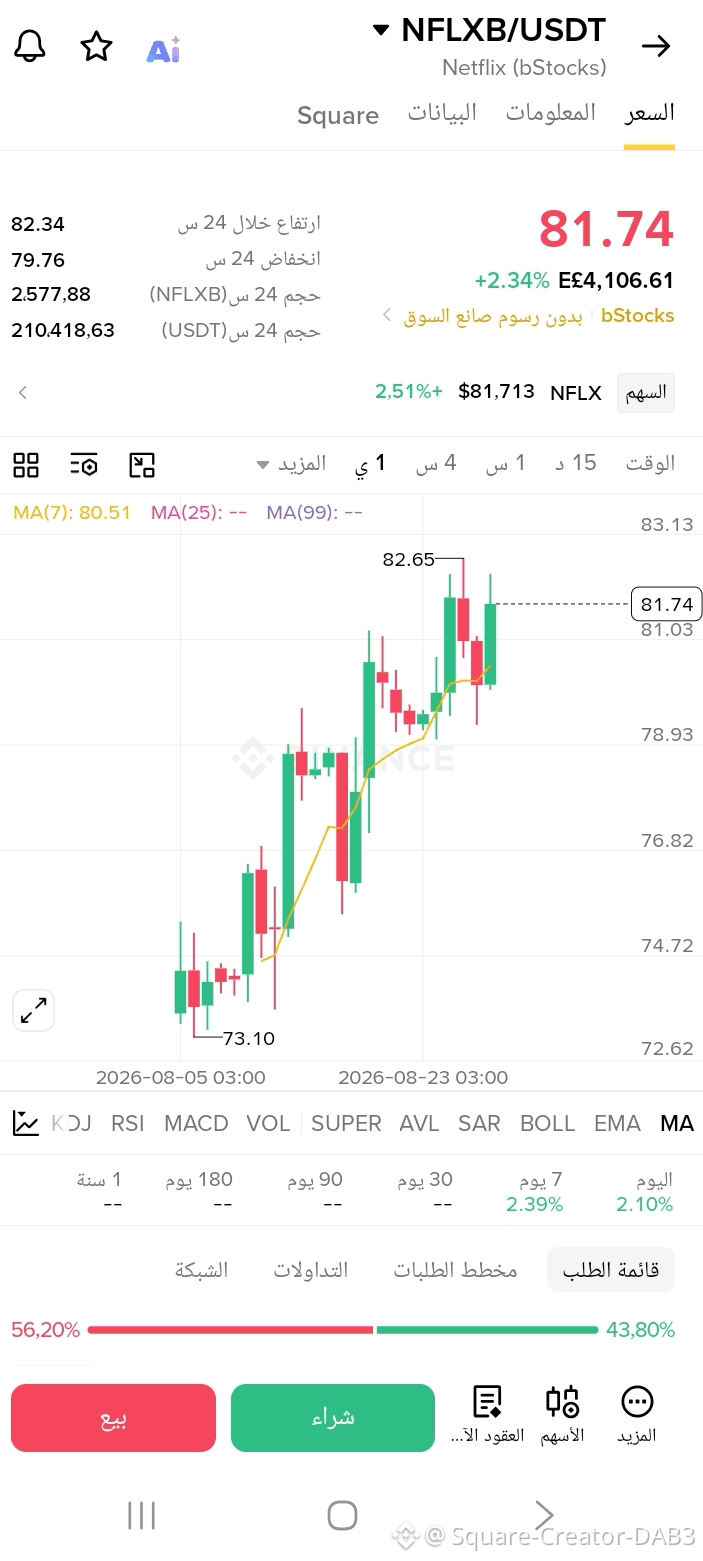
The share $NFLXB of company #netflix continues to rise—it’s great, it’s like an exciting musical scale.. It dips a little ⬇️ and rises higher 🚀 Now it’s at the level of 81 $
I will set the target to 100 $ to see 🥇
#stocks #BStocks #الأسهم_الأمريكية
{stock_us}(NFLX.US)
{spot}(NFLXBUSDT)
The share $NFLXB of company #netflix continues to rise—it’s great, it’s like an exciting musical scale.. It dips a little ⬇️ and rises higher 🚀 Now it’s at the level of 81 $
I will set the target to 100 $ to see 🥇
#stocks #BStocks #الأسهم_الأمريكية
I will set the target to 100 $ to see 🥇
#stocks #BStocks #الأسهم_الأمريكية
NFLXUS-1.83%
NFLXB-1.82%
3
176

·
--
🎮 GTA VI PREVIEW ON NETFLIX SPARKS A TRAFFIC JAM OF INFLUENCERS AND CREATORS 🎬
An exclusive preview of Grand Theft Auto VI (GTA VI) aired on Netflix sparked a wave of positive reactions among viewers, strongly boosting traffic to influencers and content creators who analyze the trailer, Bloomberg reported 📈.
The phenomenon reinforces the massive interest in Rockstar Games’ title, which is projected to become one of the most lucrative media launches in history 🚀.
Despite the big impact on social media, Netflix’s shares saw a one-off technical adjustment (NFLX -1.05%) 📊.
#Netflix #GTAVI #RockstarGames #Gaming #WallStreet
$NFLX
{future}(NFLXUSDT)
$BTC
{spot}(BTCUSDT)
$ETH
{spot}(ETHUSDT)
🎮 GTA VI PREVIEW ON NETFLIX SPARKS A TRAFFIC JAM OF INFLUENCERS AND CREATORS 🎬
An exclusive preview of Grand Theft Auto VI (GTA VI) aired on Netflix sparked a wave of positive reactions among viewers, strongly boosting traffic to influencers and content creators who analyze the trailer, Bloomberg reported 📈.
The phenomenon reinforces the massive interest in Rockstar Games’ title, which is projected to become one of the most lucrative media launches in history 🚀.
Despite the big impact on social media, Netflix’s shares saw a one-off technical adjustment (NFLX -1.05%) 📊.
#Netflix #GTAVI #RockstarGames #Gaming #WallStreet
$NFLX
$BTC
$ETH
An exclusive preview of Grand Theft Auto VI (GTA VI) aired on Netflix sparked a wave of positive reactions among viewers, strongly boosting traffic to influencers and content creators who analyze the trailer, Bloomberg reported 📈.
The phenomenon reinforces the massive interest in Rockstar Games’ title, which is projected to become one of the most lucrative media launches in history 🚀.
Despite the big impact on social media, Netflix’s shares saw a one-off technical adjustment (NFLX -1.05%) 📊.
#Netflix #GTAVI #RockstarGames #Gaming #WallStreet
$NFLX
$BTC
$ETH

1
851

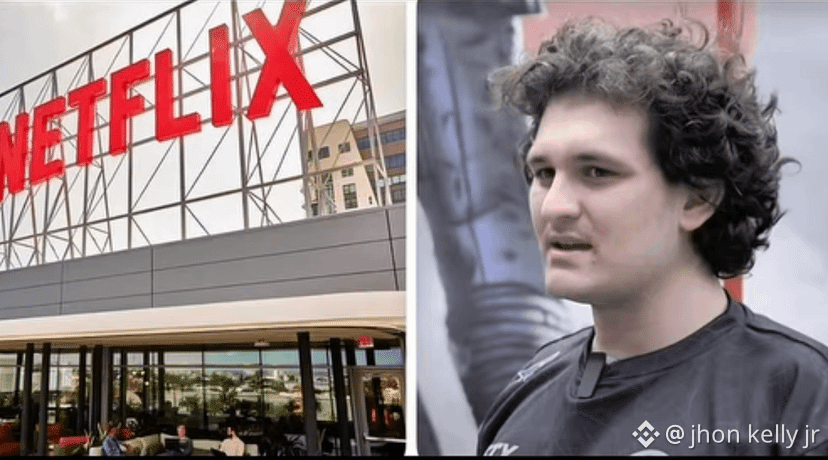
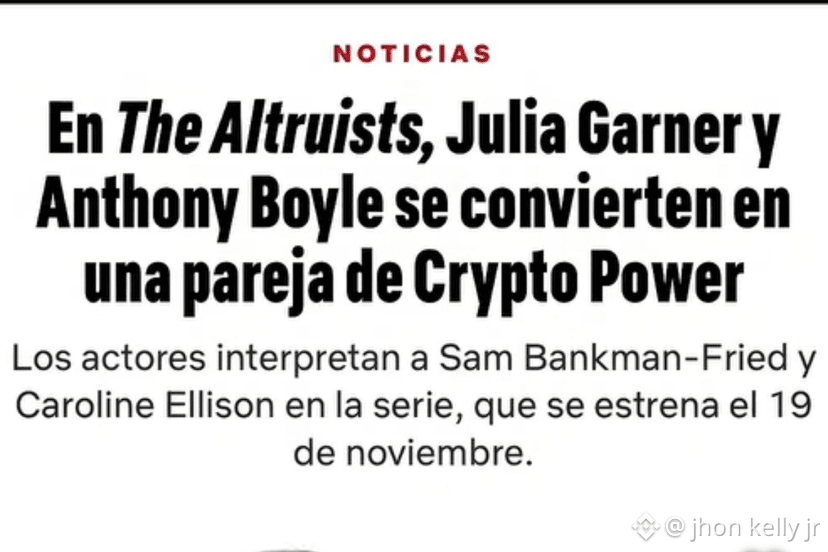
announces a new Netflix series called The Altruists.
Julia Garner plays Caroline Ellison.
Anthony Boyle plays Sam Bankman-Fried (SBF).
The story revolves around the personal and professional relationship between the two, and the rise and collapse of FTX, the cryptocurrency empire founded by Bankman-Fried.
The series will have 8 episodes and is scheduled to premiere on Netflix on November 19, 2026.
Which presents itself as a kind of “Crypto Power couple,” but the background is far more serious: the plot addresses fraud and the fall of FTX. $BTC $USDT #cryptouniverseofficial #netflix #Crypto_Jobs🎯
announces a new Netflix series called The Altruists.
Julia Garner plays Caroline Ellison.
Anthony Boyle plays Sam Bankman-Fried (SBF).
The story revolves around the personal and professional relationship between the two, and the rise and collapse of FTX, the cryptocurrency empire founded by Bankman-Fried.
The series will have 8 episodes and is scheduled to premiere on Netflix on November 19, 2026.
Which presents itself as a kind of “Crypto Power couple,” but the background is far more serious: the plot addresses fraud and the fall of FTX. $BTC $USDT #cryptouniverseofficial #netflix #Crypto_Jobs🎯
Julia Garner plays Caroline Ellison.
Anthony Boyle plays Sam Bankman-Fried (SBF).
The story revolves around the personal and professional relationship between the two, and the rise and collapse of FTX, the cryptocurrency empire founded by Bankman-Fried.
The series will have 8 episodes and is scheduled to premiere on Netflix on November 19, 2026.
Which presents itself as a kind of “Crypto Power couple,” but the background is far more serious: the plot addresses fraud and the fall of FTX. $BTC $USDT #cryptouniverseofficial #netflix #Crypto_Jobs🎯
181

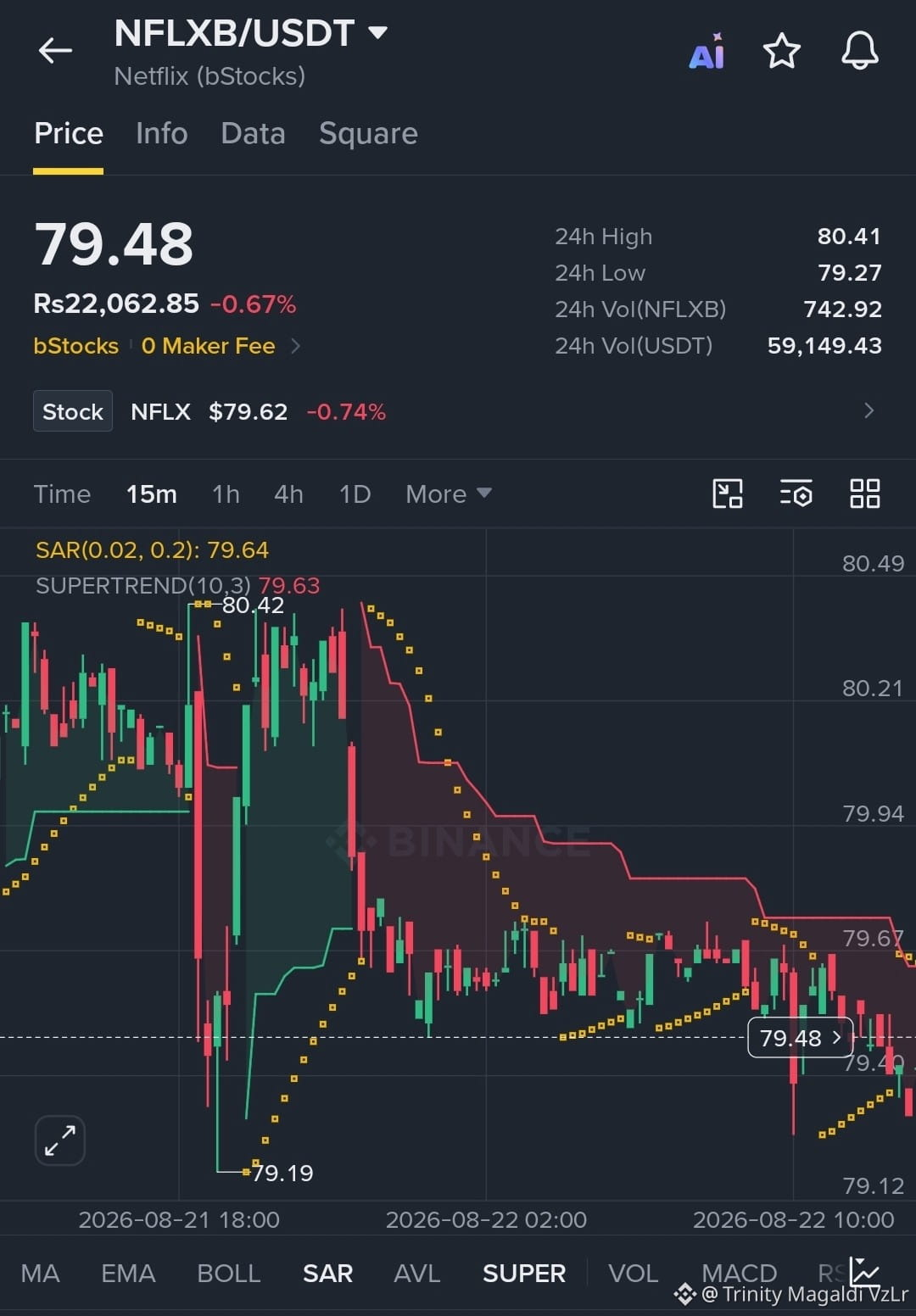
$NFLX NFLX WATCH: $79.48
Netflix is sitting near the day’s low after closing at $79.59, while momentum remains weak below the $79.63 Supertrend. A break above $80.50 could trigger a sharp recovery; losing $79.20 risks further downside.
#NFLX #Netflix #bStocks #BinanceSquare
$GIGGLE
{spot}(GIGGLEUSDT)
$RIVER
{future}(RIVERUSDT)
$NFLX NFLX WATCH: $79.48
Netflix is sitting near the day’s low after closing at $79.59, while momentum remains weak below the $79.63 Supertrend. A break above $80.50 could trigger a sharp recovery; losing $79.20 risks further downside.
#NFLX #Netflix #bStocks #BinanceSquare
$GIGGLE
$RIVER
Netflix is sitting near the day’s low after closing at $79.59, while momentum remains weak below the $79.63 Supertrend. A break above $80.50 could trigger a sharp recovery; losing $79.20 risks further downside.
#NFLX #Netflix #bStocks #BinanceSquare
$GIGGLE
$RIVER
1
205
·
--
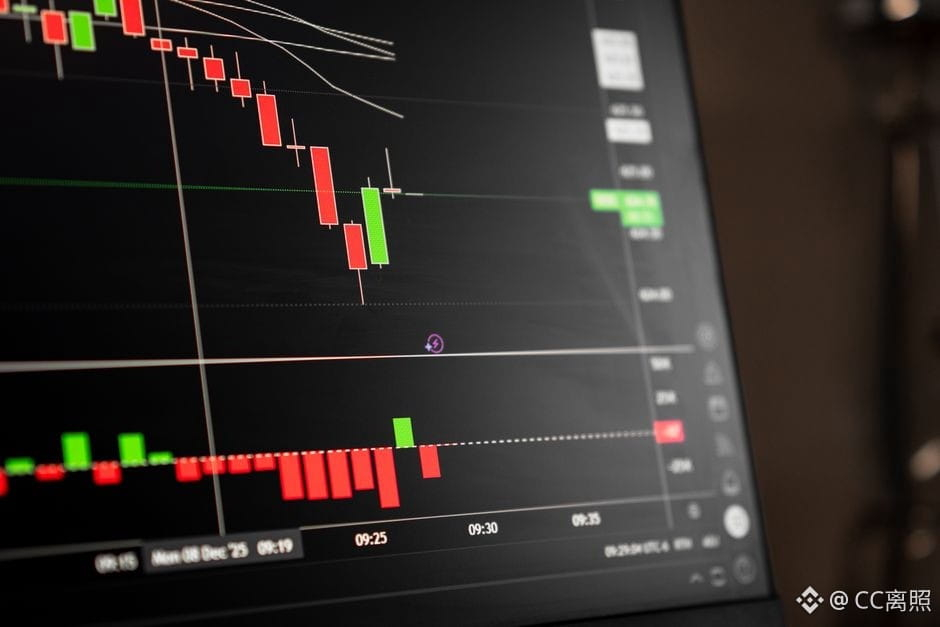
📊 Netflix turned FTX into a TV series. This time, they’ve swapped in actors to play SBF and Ellison.
It launches on November 19, with the title “The Altruists.” Julia Garner plays Caroline Ellison, and Anthony Boyle plays Sam Bankman-Fried. Garner is also serving as an executive producer.
The casting is pretty vicious. Garner previously played Anna Delvey—the con woman who fleeced New York’s high society in “Inventing Anna.” This time she plays Ellison; the character is still “a genius girl,” and the ending is still that she falls for her lies. Boyle just rose to fame with “Masters of the Air,” and now he’s playing SBF, complete with those signature wild, disheveled locks.
What’s interesting is what comes next. FTX has been collapsed for almost four years, and crypto insiders have chewed this case to death already. Netflix is only serving it now. That suggests the story has shifted from a “crypto scandal” into a mainstream commodity—front and center on the streaming homepage for everyone to see.
The satire is there, too. Back then, SBF and Ellison talked nonstop about “effective altruism,” claiming they wanted to change the world. Now it’s become just another episode on a production line. The harshest lesson in the crypto world—packaged by Hollywood and sold as tickets.
Four years after the blowup, nobody expected there would be an episode like this. But it’s here.
$BTC
#中本聪国际社区Baoluo币商资本 #FTX #Netflix
📊 Netflix turned FTX into a TV series. This time, they’ve swapped in actors to play SBF and Ellison.
It launches on November 19, with the title “The Altruists.” Julia Garner plays Caroline Ellison, and Anthony Boyle plays Sam Bankman-Fried. Garner is also serving as an executive producer.
The casting is pretty vicious. Garner previously played Anna Delvey—the con woman who fleeced New York’s high society in “Inventing Anna.” This time she plays Ellison; the character is still “a genius girl,” and the ending is still that she falls for her lies. Boyle just rose to fame with “Masters of the Air,” and now he’s playing SBF, complete with those signature wild, disheveled locks.
What’s interesting is what comes next. FTX has been collapsed for almost four years, and crypto insiders have chewed this case to death already. Netflix is only serving it now. That suggests the story has shifted from a “crypto scandal” into a mainstream commodity—front and center on the streaming homepage for everyone to see.
The satire is there, too. Back then, SBF and Ellison talked nonstop about “effective altruism,” claiming they wanted to change the world. Now it’s become just another episode on a production line. The harshest lesson in the crypto world—packaged by Hollywood and sold as tickets.
Four years after the blowup, nobody expected there would be an episode like this. But it’s here.
$BTC
#中本聪国际社区Baoluo币商资本 #FTX #Netflix
It launches on November 19, with the title “The Altruists.” Julia Garner plays Caroline Ellison, and Anthony Boyle plays Sam Bankman-Fried. Garner is also serving as an executive producer.
The casting is pretty vicious. Garner previously played Anna Delvey—the con woman who fleeced New York’s high society in “Inventing Anna.” This time she plays Ellison; the character is still “a genius girl,” and the ending is still that she falls for her lies. Boyle just rose to fame with “Masters of the Air,” and now he’s playing SBF, complete with those signature wild, disheveled locks.
What’s interesting is what comes next. FTX has been collapsed for almost four years, and crypto insiders have chewed this case to death already. Netflix is only serving it now. That suggests the story has shifted from a “crypto scandal” into a mainstream commodity—front and center on the streaming homepage for everyone to see.
The satire is there, too. Back then, SBF and Ellison talked nonstop about “effective altruism,” claiming they wanted to change the world. Now it’s become just another episode on a production line. The harshest lesson in the crypto world—packaged by Hollywood and sold as tickets.
Four years after the blowup, nobody expected there would be an episode like this. But it’s here.
$BTC
#中本聪国际社区Baoluo币商资本 #FTX #Netflix
208


·
--
Disputed
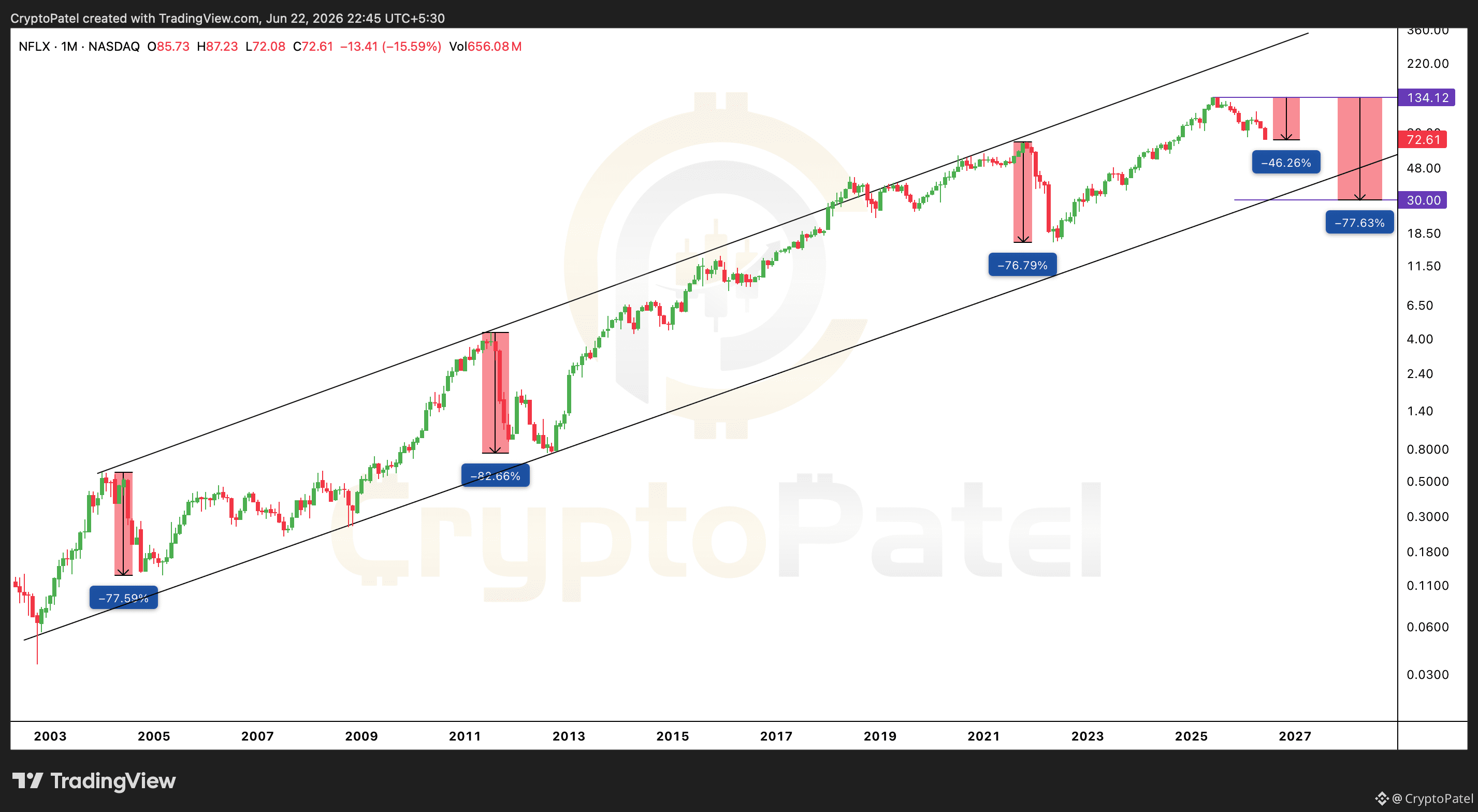
Netflix Is Down 46% Over The Last Year, And Based On Historical Fractals, I Still See The Possibility Of A Move Toward $30.
But Zoom Out.
If You Had Invested Just $100 In $NFLX Back In October 2002, That Investment Would Be Worth Approximately $387,454 Today.
👉Return: ~387,543%
👉 That's About 3,875× Your Money.
Short-Term Volatility Creates Fear.
Long-Term Compounding Creates Wealth.
The Real Question Is:
If Netflix Delivered Returns Like This In The Past, Will #Netflix Hit $500 Again In The Future?
Netflix Is Down 46% Over The Last Year, And Based On Historical Fractals, I Still See The Possibility Of A Move Toward $30.
But Zoom Out.
If You Had Invested Just $100 In $NFLX Back In October 2002, That Investment Would Be Worth Approximately $387,454 Today.
👉Return: ~387,543%
👉 That's About 3,875× Your Money.
Short-Term Volatility Creates Fear.
Long-Term Compounding Creates Wealth.
The Real Question Is:
If Netflix Delivered Returns Like This In The Past, Will #Netflix Hit $500 Again In The Future?
But Zoom Out.
If You Had Invested Just $100 In $NFLX Back In October 2002, That Investment Would Be Worth Approximately $387,454 Today.
👉Return: ~387,543%
👉 That's About 3,875× Your Money.
Short-Term Volatility Creates Fear.
Long-Term Compounding Creates Wealth.
The Real Question Is:
If Netflix Delivered Returns Like This In The Past, Will #Netflix Hit $500 Again In The Future?
226

·
--
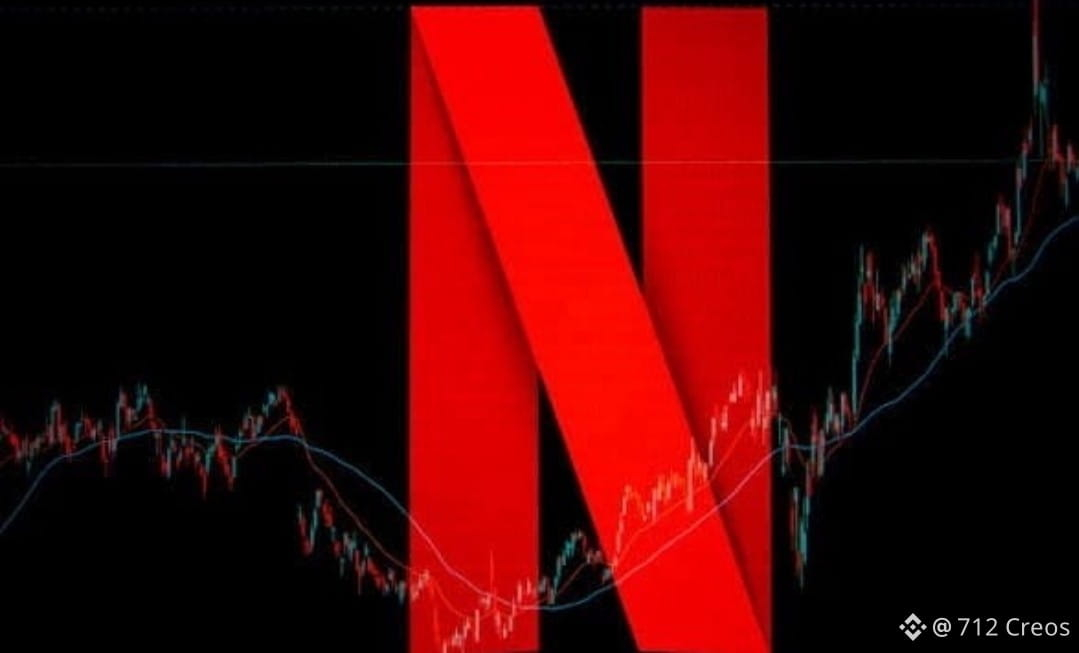
🚨 $NFLX Drops 10%+ 📉
Netflix shares fell sharply after a weaker-than-expected Q3 revenue outlook.
📊 Despite strong earnings, cautious guidance triggered investor selling.
⚠️ Wall Street doesn't only price today's results — it prices future growth expectations.
👀 Streaming and tech sentiment are under pressure.
#NFLX #Netflix #Stocks #StockMarket
🚨 $NFLX Drops 10%+ 📉
Netflix shares fell sharply after a weaker-than-expected Q3 revenue outlook.
📊 Despite strong earnings, cautious guidance triggered investor selling.
⚠️ Wall Street doesn't only price today's results — it prices future growth expectations.
👀 Streaming and tech sentiment are under pressure.
#NFLX #Netflix #Stocks #StockMarket
Netflix shares fell sharply after a weaker-than-expected Q3 revenue outlook.
📊 Despite strong earnings, cautious guidance triggered investor selling.
⚠️ Wall Street doesn't only price today's results — it prices future growth expectations.
👀 Streaming and tech sentiment are under pressure.
#NFLX #Netflix #Stocks #StockMarket
1
52

·
--
1、Background: AI film and video production enters the M&A window 🎬
Today, market news reports that Netflix has paid USD 587 million to acquire an AI film production startup founded by Hollywood actor and director Ben Affleck, with related information spread via technology media channels. If the report is true, it suggests that streaming platforms are moving further from “using AI tools to reduce costs and improve efficiency” toward “directly securing the AI content production infrastructure.” However, for now, such M&A rumors still need official confirmation from Netflix and the relevant companies, and investors should not make judgments based on a single news source.
2、Analysis: Why Netflix is betting on AI production
The streaming industry is currently under pressures such as high content costs, slowing user growth, and intensifying competition. If AI film production tools can improve efficiency across script development, storyboard generation, visual effects, post-production editing, voiceover translation, and marketing collateral generation, they will directly affect production timelines and profit margins. For Netflix, acquiring an AI production company is not only a technology investment, but may also be part of an upgrade toward content industrialization.
More importantly, AI can help platforms test content preferences across different genres, languages, and regional markets more quickly. For example, the same IP can be produced at lower cost in multiple language versions, short-video trailers, interactive content, or personalized recommendation assets. This aligns closely with Netflix’s long-standing data-driven approach to content decisions.
3、Impact: Positive for AI storytelling, but also comes with risks
For the capital market, this news strengthens expectations for AI’s application in the media and entertainment sector. Related concepts may extend to areas such as cloud computing, GPU compute power, generative video, digital humans, copyright management, and on-chain content verification and rights confirmation. Crypto investors may also look at projects combining AI and Web3, such as decentralized compute power, AI content copyrights, the creator economy, and data licensing markets.
But risks are just as clear. AI film and video production involves actor rights, screenwriter copyrights, compliance of training data, deepfake governance, and union negotiations. If regulation tightens or the industry pushes back, the pace of technology deployment may fall short of expectations. In addition, lowering the production threshold with AI can lead to an oversupply of content, and only platforms that truly have distribution capabilities, IP resources, and user data may gain long-term advantages.
Overall, the core trend reflected in this news is: AI is moving from being an assisting tool to becoming the underlying production power of the content industry. In the short term, you can pay attention to market sentiment and the heat of AI-related sectors; in the long term, you should assess whether a company truly owns commercially viable technology, copyright resources, and distribution channels.
#AI #Netflix #科技趋势
1、Background: AI film and video production enters the M&A window 🎬
Today, market news reports that Netflix has paid USD 587 million to acquire an AI film production startup founded by Hollywood actor and director Ben Affleck, with related information spread via technology media channels. If the report is true, it suggests that streaming platforms are moving further from “using AI tools to reduce costs and improve efficiency” toward “directly securing the AI content production infrastructure.” However, for now, such M&A rumors still need official confirmation from Netflix and the relevant companies, and investors should not make judgments based on a single news source.
2、Analysis: Why Netflix is betting on AI production
The streaming industry is currently under pressures such as high content costs, slowing user growth, and intensifying competition. If AI film production tools can improve efficiency across script development, storyboard generation, visual effects, post-production editing, voiceover translation, and marketing collateral generation, they will directly affect production timelines and profit margins. For Netflix, acquiring an AI production company is not only a technology investment, but may also be part of an upgrade toward content industrialization.
More importantly, AI can help platforms test content preferences across different genres, languages, and regional markets more quickly. For example, the same IP can be produced at lower cost in multiple language versions, short-video trailers, interactive content, or personalized recommendation assets. This aligns closely with Netflix’s long-standing data-driven approach to content decisions.
3、Impact: Positive for AI storytelling, but also comes with risks
For the capital market, this news strengthens expectations for AI’s application in the media and entertainment sector. Related concepts may extend to areas such as cloud computing, GPU compute power, generative video, digital humans, copyright management, and on-chain content verification and rights confirmation. Crypto investors may also look at projects combining AI and Web3, such as decentralized compute power, AI content copyrights, the creator economy, and data licensing markets.
But risks are just as clear. AI film and video production involves actor rights, screenwriter copyrights, compliance of training data, deepfake governance, and union negotiations. If regulation tightens or the industry pushes back, the pace of technology deployment may fall short of expectations. In addition, lowering the production threshold with AI can lead to an oversupply of content, and only platforms that truly have distribution capabilities, IP resources, and user data may gain long-term advantages.
Overall, the core trend reflected in this news is: AI is moving from being an assisting tool to becoming the underlying production power of the content industry. In the short term, you can pay attention to market sentiment and the heat of AI-related sectors; in the long term, you should assess whether a company truly owns commercially viable technology, copyright resources, and distribution channels.
#AI #Netflix #科技趋势
Today, market news reports that Netflix has paid USD 587 million to acquire an AI film production startup founded by Hollywood actor and director Ben Affleck, with related information spread via technology media channels. If the report is true, it suggests that streaming platforms are moving further from “using AI tools to reduce costs and improve efficiency” toward “directly securing the AI content production infrastructure.” However, for now, such M&A rumors still need official confirmation from Netflix and the relevant companies, and investors should not make judgments based on a single news source.
2、Analysis: Why Netflix is betting on AI production
The streaming industry is currently under pressures such as high content costs, slowing user growth, and intensifying competition. If AI film production tools can improve efficiency across script development, storyboard generation, visual effects, post-production editing, voiceover translation, and marketing collateral generation, they will directly affect production timelines and profit margins. For Netflix, acquiring an AI production company is not only a technology investment, but may also be part of an upgrade toward content industrialization.
More importantly, AI can help platforms test content preferences across different genres, languages, and regional markets more quickly. For example, the same IP can be produced at lower cost in multiple language versions, short-video trailers, interactive content, or personalized recommendation assets. This aligns closely with Netflix’s long-standing data-driven approach to content decisions.
3、Impact: Positive for AI storytelling, but also comes with risks
For the capital market, this news strengthens expectations for AI’s application in the media and entertainment sector. Related concepts may extend to areas such as cloud computing, GPU compute power, generative video, digital humans, copyright management, and on-chain content verification and rights confirmation. Crypto investors may also look at projects combining AI and Web3, such as decentralized compute power, AI content copyrights, the creator economy, and data licensing markets.
But risks are just as clear. AI film and video production involves actor rights, screenwriter copyrights, compliance of training data, deepfake governance, and union negotiations. If regulation tightens or the industry pushes back, the pace of technology deployment may fall short of expectations. In addition, lowering the production threshold with AI can lead to an oversupply of content, and only platforms that truly have distribution capabilities, IP resources, and user data may gain long-term advantages.
Overall, the core trend reflected in this news is: AI is moving from being an assisting tool to becoming the underlying production power of the content industry. In the short term, you can pay attention to market sentiment and the heat of AI-related sectors; in the long term, you should assess whether a company truly owns commercially viable technology, copyright resources, and distribution channels.
#AI #Netflix #科技趋势
154

·
--
Bullish
Partly True
🚨 BREAKING: Netflix ($NFLX ) plunged more than 10% after investors reacted to a weaker-than-expected third-quarter revenue forecast.
Despite delivering strong results, the company's cautious outlook sparked a sharp sell-off, reminding investors that future guidance often matters more than current earnings.
The drop has also weighed on sentiment across the broader technology and streaming sectors, as markets continue to demand stronger growth expectations from major companies.
📉 A strong earnings report isn't always enough—Wall Street is focused on what's next.
#Netflix #NFLX #StockMarket #Stocks
🚨 BREAKING: Netflix ($NFLX ) plunged more than 10% after investors reacted to a weaker-than-expected third-quarter revenue forecast.
Despite delivering strong results, the company's cautious outlook sparked a sharp sell-off, reminding investors that future guidance often matters more than current earnings.
The drop has also weighed on sentiment across the broader technology and streaming sectors, as markets continue to demand stronger growth expectations from major companies.
📉 A strong earnings report isn't always enough—Wall Street is focused on what's next.
#Netflix #NFLX #StockMarket #Stocks
Despite delivering strong results, the company's cautious outlook sparked a sharp sell-off, reminding investors that future guidance often matters more than current earnings.
The drop has also weighed on sentiment across the broader technology and streaming sectors, as markets continue to demand stronger growth expectations from major companies.
📉 A strong earnings report isn't always enough—Wall Street is focused on what's next.
#Netflix #NFLX #StockMarket #Stocks
861

·
--
Bullish
📺 Just a quick reminder about Netflix (NFLX)
Margins are growing, revenue is growing, cash is growing, free cash flow is growing, and there are no massive debts threatening the business. People simply aren't going to stop watching movies and shows.
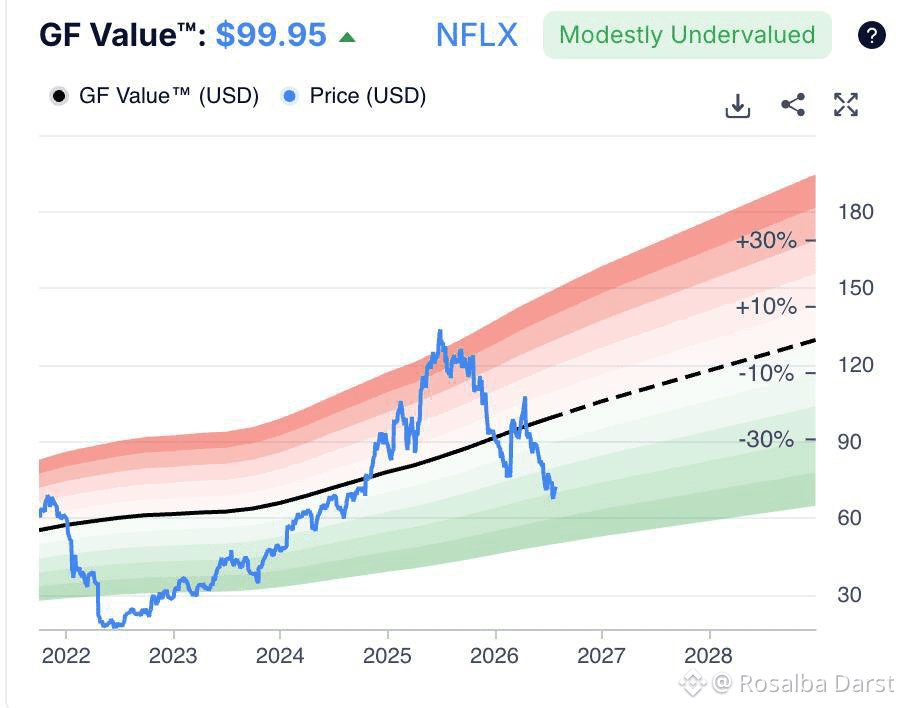
The company’s fundamentals are rock solid. We saw a similar sell-off back in 2022 when everyone was terrified as well 😱. Back then, it pulled back 70% from its peak; right now, it’s down about 50%. However, there's no guarantee it will drop any further, which is why I’ve already built a position in this stock 📹
AI isn't ready to generate full-fledged TV series just yet. Doing that would require so many resources over the next few years that, for now, it's still way cheaper and easier to just shoot them in a studio.
#netflix #markets #ai
📺 Just a quick reminder about Netflix (NFLX)
Margins are growing, revenue is growing, cash is growing, free cash flow is growing, and there are no massive debts threatening the business. People simply aren't going to stop watching movies and shows.
The company’s fundamentals are rock solid. We saw a similar sell-off back in 2022 when everyone was terrified as well 😱. Back then, it pulled back 70% from its peak; right now, it’s down about 50%. However, there's no guarantee it will drop any further, which is why I’ve already built a position in this stock 📹
AI isn't ready to generate full-fledged TV series just yet. Doing that would require so many resources over the next few years that, for now, it's still way cheaper and easier to just shoot them in a studio.
#netflix #markets #ai
Margins are growing, revenue is growing, cash is growing, free cash flow is growing, and there are no massive debts threatening the business. People simply aren't going to stop watching movies and shows.
The company’s fundamentals are rock solid. We saw a similar sell-off back in 2022 when everyone was terrified as well 😱. Back then, it pulled back 70% from its peak; right now, it’s down about 50%. However, there's no guarantee it will drop any further, which is why I’ve already built a position in this stock 📹
AI isn't ready to generate full-fledged TV series just yet. Doing that would require so many resources over the next few years that, for now, it's still way cheaper and easier to just shoot them in a studio.
#netflix #markets #ai
69
Netflix announces the FTX-themed drama series 《The Altruists》, scheduled to premiere on November 19, and releases the first batch of stills.
The series consists of 8 episodes and focuses on the rise and fall of FTX founder SBF and Caroline Ellison, the former CEO of Alameda Research. Julia Garner plays Caroline, Anthony Boyle plays SBF, and Alex Lawther and Karan Soni, among others, portray key characters. Graham Moore serves as writer and executive producer, with Barack Obama and Michelle Obama as executive producers.
The SBF case shook the entire crypto industry—from a top-tier exchange to a sudden overnight collapse. The story itself is dramatic enough. By choosing a live-action adaptation, Netflix signals that the impact of the FTX incident has long spilled beyond the crypto world and become a mainstream cultural topic.
Of particular note is that the Obama couple personally stepped in as executive producers, adding a subtle political tone and further sparking discussion around the show. For those in the crypto industry, this is both an opportunity to revisit the industry’s wounds and an educational window for mainstream audiences.
On November 19, will this series truly capture the madness and the cost of the crypto world? We’ll have to wait and see.
#Netflix #FTX #加密往事
Netflix announces the FTX-themed drama series 《The Altruists》, scheduled to premiere on November 19, and releases the first batch of stills.
The series consists of 8 episodes and focuses on the rise and fall of FTX founder SBF and Caroline Ellison, the former CEO of Alameda Research. Julia Garner plays Caroline, Anthony Boyle plays SBF, and Alex Lawther and Karan Soni, among others, portray key characters. Graham Moore serves as writer and executive producer, with Barack Obama and Michelle Obama as executive producers.
The SBF case shook the entire crypto industry—from a top-tier exchange to a sudden overnight collapse. The story itself is dramatic enough. By choosing a live-action adaptation, Netflix signals that the impact of the FTX incident has long spilled beyond the crypto world and become a mainstream cultural topic.
Of particular note is that the Obama couple personally stepped in as executive producers, adding a subtle political tone and further sparking discussion around the show. For those in the crypto industry, this is both an opportunity to revisit the industry’s wounds and an educational window for mainstream audiences.
On November 19, will this series truly capture the madness and the cost of the crypto world? We’ll have to wait and see.
#Netflix #FTX #加密往事
The series consists of 8 episodes and focuses on the rise and fall of FTX founder SBF and Caroline Ellison, the former CEO of Alameda Research. Julia Garner plays Caroline, Anthony Boyle plays SBF, and Alex Lawther and Karan Soni, among others, portray key characters. Graham Moore serves as writer and executive producer, with Barack Obama and Michelle Obama as executive producers.
The SBF case shook the entire crypto industry—from a top-tier exchange to a sudden overnight collapse. The story itself is dramatic enough. By choosing a live-action adaptation, Netflix signals that the impact of the FTX incident has long spilled beyond the crypto world and become a mainstream cultural topic.
Of particular note is that the Obama couple personally stepped in as executive producers, adding a subtle political tone and further sparking discussion around the show. For those in the crypto industry, this is both an opportunity to revisit the industry’s wounds and an educational window for mainstream audiences.
On November 19, will this series truly capture the madness and the cost of the crypto world? We’ll have to wait and see.
#Netflix #FTX #加密往事
11
·
--
Director Carl Erik Rinsch Sentenced to 2.5 Years After Spending Netflix Budget on Crypto
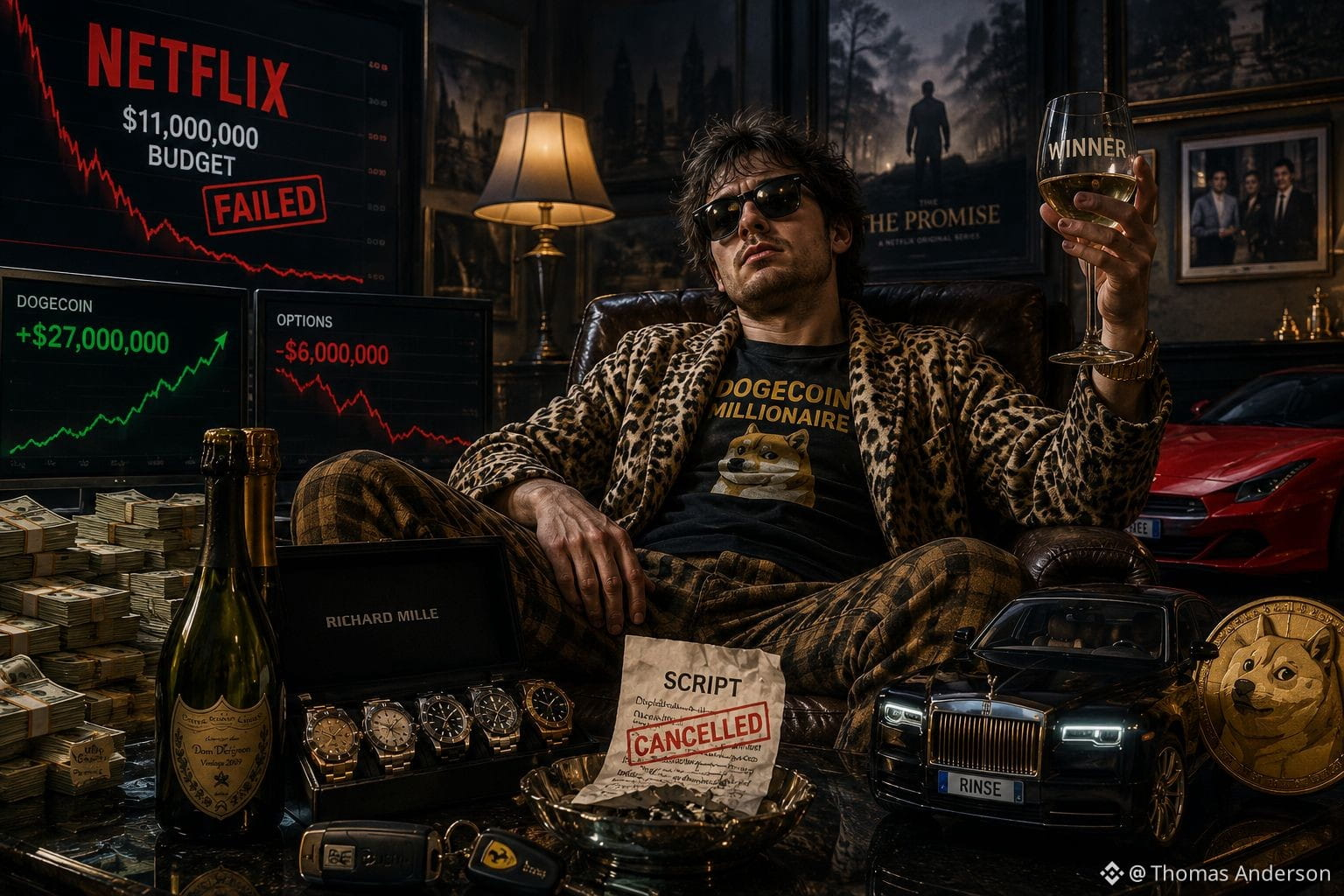
Director Carl Erik Rinsch has been sentenced to 2.5 years in prison after using $11 million in Netflix production funds for speculative trading instead of finishing a TV series.
According to prosecutors, Rinsch initially lost around $6 million trading stock options. He later invested $4 million in Dogecoin, turning it into nearly $27 million during the cryptocurrency's surge.
Instead of using the profits to complete the project, he reportedly spent the money on luxury purchases, including a Rolls-Royce, a Ferrari, expensive watches, and other high-end items.
In addition to his prison sentence, Rinsch has been ordered to repay Netflix $11 million.
Subscribe for updates
#Netflix #Crypto
Director Carl Erik Rinsch Sentenced to 2.5 Years After Spending Netflix Budget on Crypto
Director Carl Erik Rinsch has been sentenced to 2.5 years in prison after using $11 million in Netflix production funds for speculative trading instead of finishing a TV series.
According to prosecutors, Rinsch initially lost around $6 million trading stock options. He later invested $4 million in Dogecoin, turning it into nearly $27 million during the cryptocurrency's surge.
Instead of using the profits to complete the project, he reportedly spent the money on luxury purchases, including a Rolls-Royce, a Ferrari, expensive watches, and other high-end items.
In addition to his prison sentence, Rinsch has been ordered to repay Netflix $11 million.
Subscribe for updates
#Netflix #Crypto
Director Carl Erik Rinsch has been sentenced to 2.5 years in prison after using $11 million in Netflix production funds for speculative trading instead of finishing a TV series.
According to prosecutors, Rinsch initially lost around $6 million trading stock options. He later invested $4 million in Dogecoin, turning it into nearly $27 million during the cryptocurrency's surge.
Instead of using the profits to complete the project, he reportedly spent the money on luxury purchases, including a Rolls-Royce, a Ferrari, expensive watches, and other high-end items.
In addition to his prison sentence, Rinsch has been ordered to repay Netflix $11 million.
Subscribe for updates
#Netflix #Crypto
1
3.9k

·
--
Bullish
Verified
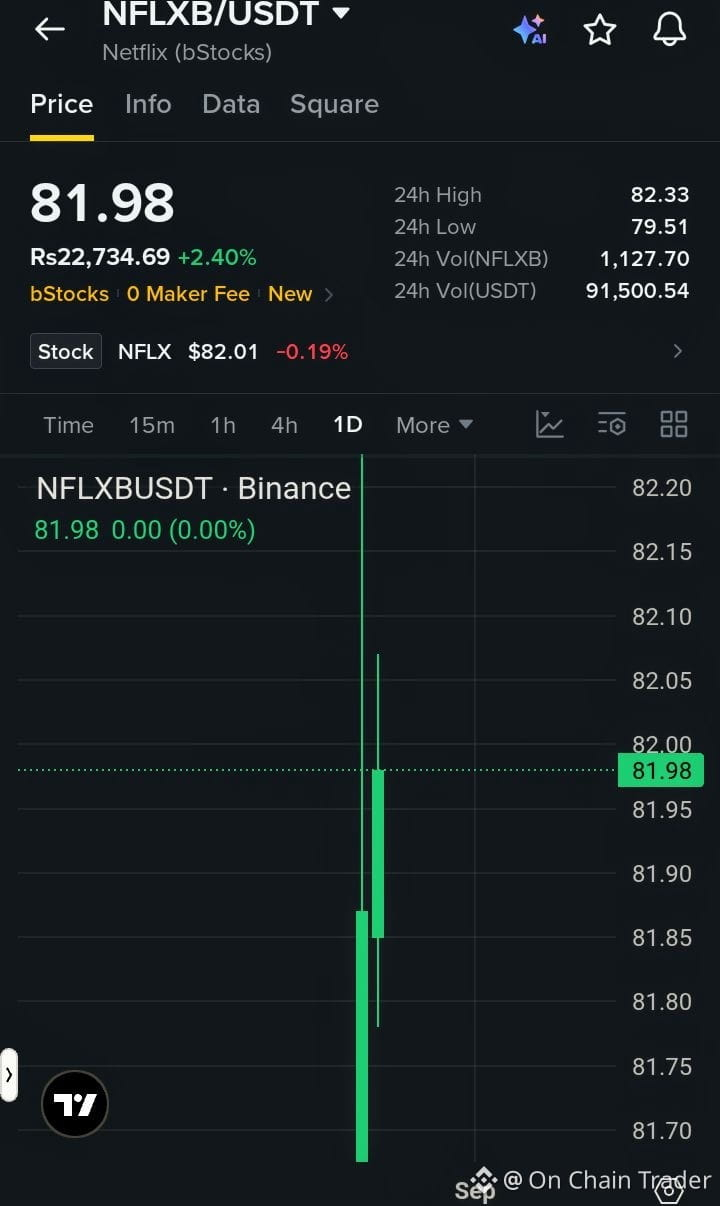
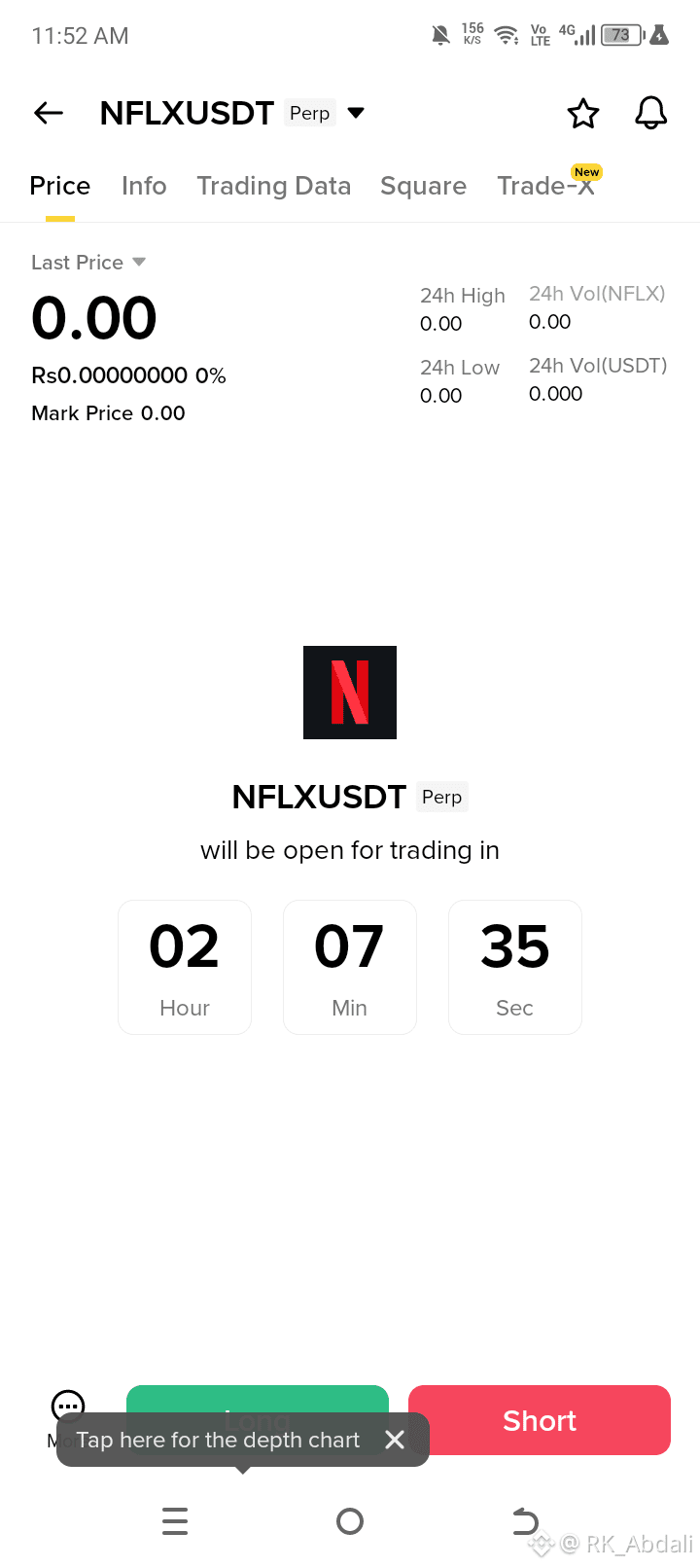
No1.#netflix come with binance today in few hours .
Netflix launch his own coin on binance .
Guys we have opportunity .
What you think it gave Best results or not $NFLX ?
No1.#netflix come with binance today in few hours .
Netflix launch his own coin on binance .
Guys we have opportunity .
What you think it gave Best results or not $NFLX ?
Netflix launch his own coin on binance .
Guys we have opportunity .
What you think it gave Best results or not $NFLX ?
2
674
Netflix brings the story of FTX to the screen. The eight-episode limited series <The Altruists>, starring Julia Garner as Caroline Ellison and Anthony Boyle as Sam Bankman-Fried, is officially scheduled to premiere on November 19 and has released its first batch of stills. Screenwriter Graham Moore pens the script, while Higher Ground, the couple Obama’s production company, serves as executive producer. Alameda’s reconciliation spreadsheets, SBF’s “effective altruism,” and the $32 billion empire that collapsed overnight will all be laid out before audiences anew. For retail investors still holding $FTT -unlock-period tokens, this isn’t just a show—it’s a long replay.
#FTX #SBF #Netflix
Netflix brings the story of FTX to the screen. The eight-episode limited series <The Altruists>, starring Julia Garner as Caroline Ellison and Anthony Boyle as Sam Bankman-Fried, is officially scheduled to premiere on November 19 and has released its first batch of stills. Screenwriter Graham Moore pens the script, while Higher Ground, the couple Obama’s production company, serves as executive producer. Alameda’s reconciliation spreadsheets, SBF’s “effective altruism,” and the $32 billion empire that collapsed overnight will all be laid out before audiences anew. For retail investors still holding $FTT -unlock-period tokens, this isn’t just a show—it’s a long replay.
#FTX #SBF #Netflix
#FTX #SBF #Netflix
357
Log in to explore more content
Join global crypto users on Binance Square
⚡️ Get latest and useful information about crypto.
💬 Trusted by the world’s largest crypto exchange.
👍 Discover real insights from verified creators.
Email / Phone number
Trending Topics
1
#AIStocksWhatNext
125,039 views
1,549 Discussing
2
#BitcoinBreaksAboveMayHighNears$86K
2,965 views
56 Discussing
3
#DogecoinRises15%
7,421 views
343 Discussing
4
#$14BBitcoinOptionsExpireFriday
316 views
31 Discussing
5
#BNBMarketCapPassesBNYMellon
3,716 views
251 Discussing
6
#CryptoMarketCapReclaims$3Trillion
746 views
28 Discussing
7
#MuseOvertakesChatGPTAsTopFreeIOSApp
4,115 views
258 Discussing
8
#TokenizedStockPlatformsCouldLaunchNextQuarter
6,440 views
285 Discussing
9
#StrategyAdds950Bitcoin
10,571 views
370 Discussing
10
#CardanoAddedToX402KitForADAPayments
15,313 views
490 Discussing