

#mica
mica
2.2M views
3,324 Discussing
Hot
Latest

·
--
#ESMA #MiCA
The EU’s crypto regulation shifts from legislation to enforcement, and this time it’s focused on 2027.
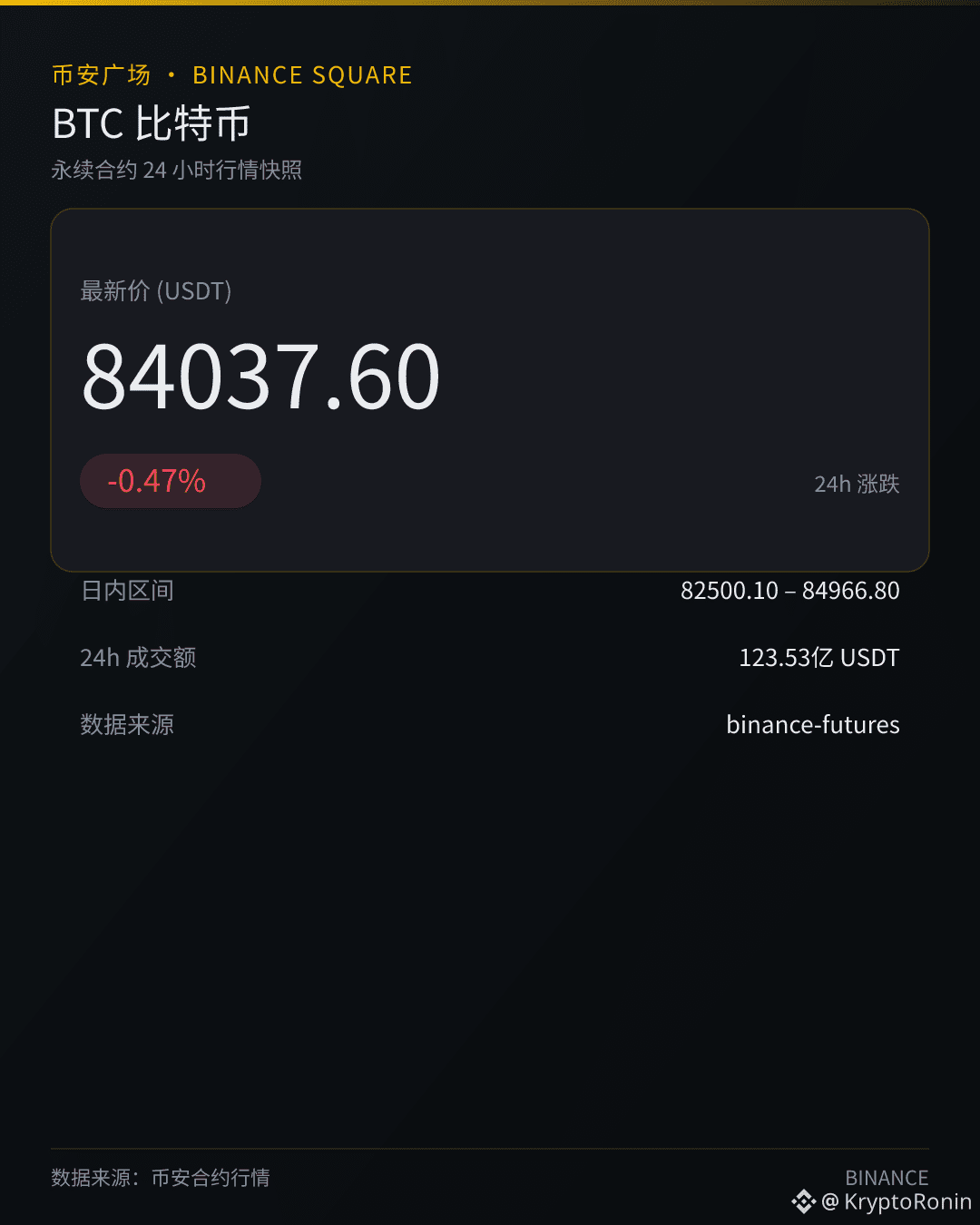
ESMA lists operational resilience, outsourcing, and sufficient EU-based operations as top priorities for crypto regulation in 2027, and also expects its MIDAS crypto market monitoring system to be fully operational in Phase 1 in 2027. After the news, $BTC moved from 82917.1 to 84037.6; since the announcement, it has risen 1.38%. In the past hour, trading value was 1.93 times the 24-hour average; the buy-sell ratio for active trading was 1.345; and open positions increased by 0.94% over the past hour.
Largely bullish. The tightening of the regulatory framework is a prerequisite for compliant capital to enter. The fact that the order book’s active buy demand and open positions are strengthening in sync does not contradict this direction. If the price falls back near 82500.1 and the active buy-sell ratio drops to below 1, this view would no longer hold.
#ESMA #MiCA
The EU’s crypto regulation shifts from legislation to enforcement, and this time it’s focused on 2027.
ESMA lists operational resilience, outsourcing, and sufficient EU-based operations as top priorities for crypto regulation in 2027, and also expects its MIDAS crypto market monitoring system to be fully operational in Phase 1 in 2027. After the news, $BTC moved from 82917.1 to 84037.6; since the announcement, it has risen 1.38%. In the past hour, trading value was 1.93 times the 24-hour average; the buy-sell ratio for active trading was 1.345; and open positions increased by 0.94% over the past hour.
Largely bullish. The tightening of the regulatory framework is a prerequisite for compliant capital to enter. The fact that the order book’s active buy demand and open positions are strengthening in sync does not contradict this direction. If the price falls back near 82500.1 and the active buy-sell ratio drops to below 1, this view would no longer hold.
The EU’s crypto regulation shifts from legislation to enforcement, and this time it’s focused on 2027.
ESMA lists operational resilience, outsourcing, and sufficient EU-based operations as top priorities for crypto regulation in 2027, and also expects its MIDAS crypto market monitoring system to be fully operational in Phase 1 in 2027. After the news, $BTC moved from 82917.1 to 84037.6; since the announcement, it has risen 1.38%. In the past hour, trading value was 1.93 times the 24-hour average; the buy-sell ratio for active trading was 1.345; and open positions increased by 0.94% over the past hour.
Largely bullish. The tightening of the regulatory framework is a prerequisite for compliant capital to enter. The fact that the order book’s active buy demand and open positions are strengthening in sync does not contradict this direction. If the price falls back near 82500.1 and the active buy-sell ratio drops to below 1, this view would no longer hold.
144

·
--
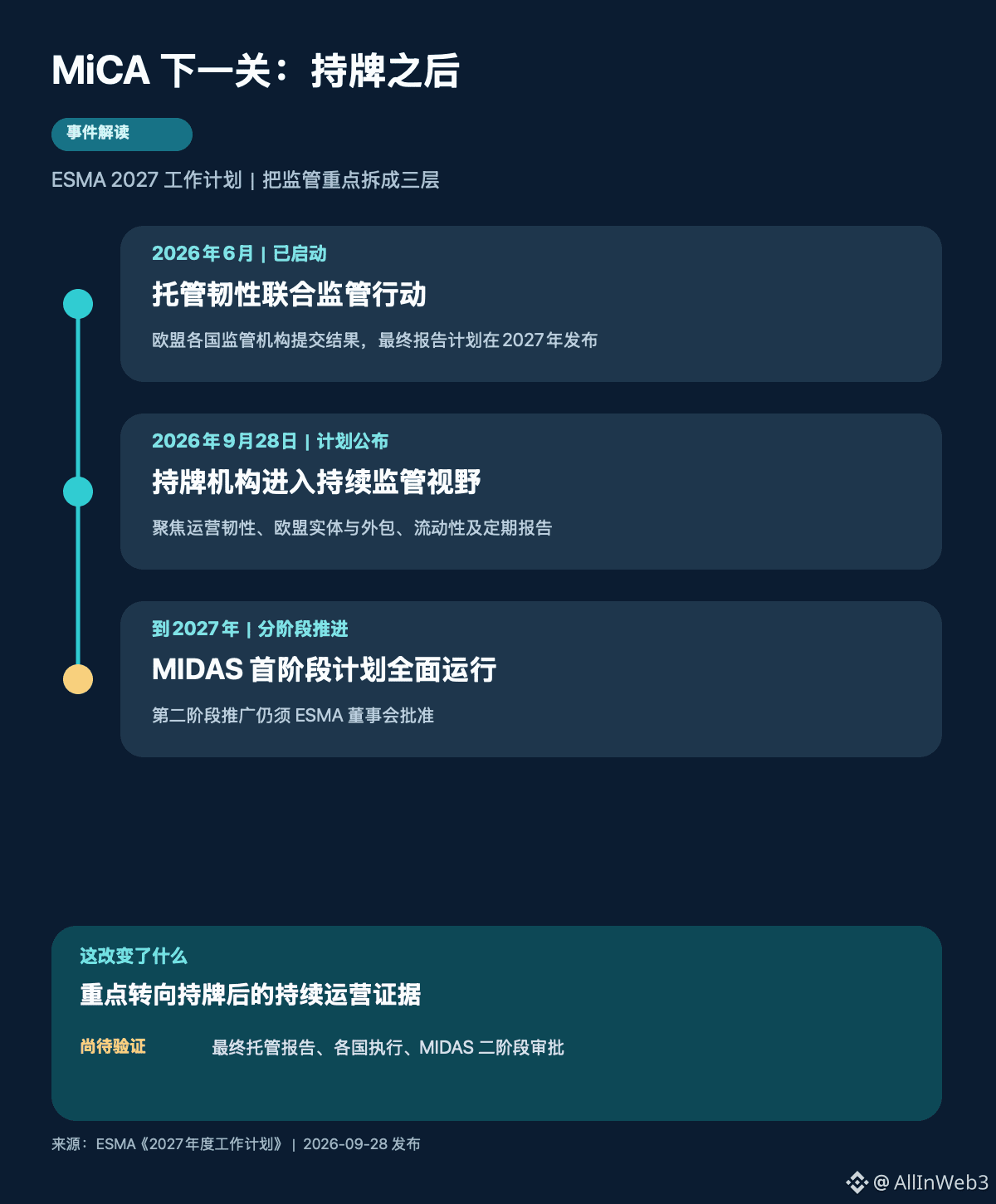
#MiCA #ESMA #加密监管 Have you passed just by obtaining a MiCA license? Today, in the ESMA’s 2027 work programme, there’s another perspective: regulators are shifting their focus to whether licensed institutions can continuously demonstrate that they have genuine operational capabilities.
This isn’t news about the EU issuing yet another new prohibition today. The document is the work programme for the year ahead—so you can’t write the proposed supervisory actions as if they’ve already been punishment for specific parties. It’s worth looking at because it breaks abstract compliance requirements into several items that can be checked: the digital operational resilience of crypto-asset service providers (CASPs), whether there are sufficient business entities and personnel within the EU, outsourcing risks, liquidity in the EU crypto market, and cross-border solicitation of clients and asset classification. ESMA also intends to push for greater consistency in the reporting format of CASP periodic reports received by regulators in different member states.
The timeline matters too. In June 2026, a joint supervisory action targeting operational resilience of crypto-custody services was already launched; ESMA plans to publish in 2027 a consolidated final report of findings across countries. What was published today is the 2027 execution list—its report conclusions have not been issued yet. The plan also states that the first phase of MIDAS, ESMA’s monitoring system for the MiCA crypto market, is expected to be fully operational by 2027; the rollout of the second phase still depends on approval by the ESMA Management Board. Calling it “comprehensive monitoring already live today” would be premature.
I believe the real variable here is “verifiability after licensing.” If member states gradually use more aligned reporting formats, custody outages, outsourcing of critical functions, and liquidity arrangements can be compared against a single yardstick more easily. Institutions that obtain authorization but cannot continuously explain operational risks may face greater pressure later. However, this is an inference based on the work programme—not a conclusion from an investigation into any specific trading platform, and it doesn’t mean any particular token will immediately benefit or be harmed.
Next, watch three things: which gaps the 2027 final report on custody resilience specifically points out; how member states implement consistent reporting formats; and whether the second phase of MIDAS can be approved. In your view, what evidence will licensed institutions find hardest to provide in the future—responses to custody failures, outsourcing controls, or local liquidity within the EU?
Source: ESMA “2027 Annual Work Programme”, 2026-09-28.
#MiCA #ESMA #加密监管 Have you passed just by obtaining a MiCA license? Today, in the ESMA’s 2027 work programme, there’s another perspective: regulators are shifting their focus to whether licensed institutions can continuously demonstrate that they have genuine operational capabilities.
This isn’t news about the EU issuing yet another new prohibition today. The document is the work programme for the year ahead—so you can’t write the proposed supervisory actions as if they’ve already been punishment for specific parties. It’s worth looking at because it breaks abstract compliance requirements into several items that can be checked: the digital operational resilience of crypto-asset service providers (CASPs), whether there are sufficient business entities and personnel within the EU, outsourcing risks, liquidity in the EU crypto market, and cross-border solicitation of clients and asset classification. ESMA also intends to push for greater consistency in the reporting format of CASP periodic reports received by regulators in different member states.
The timeline matters too. In June 2026, a joint supervisory action targeting operational resilience of crypto-custody services was already launched; ESMA plans to publish in 2027 a consolidated final report of findings across countries. What was published today is the 2027 execution list—its report conclusions have not been issued yet. The plan also states that the first phase of MIDAS, ESMA’s monitoring system for the MiCA crypto market, is expected to be fully operational by 2027; the rollout of the second phase still depends on approval by the ESMA Management Board. Calling it “comprehensive monitoring already live today” would be premature.
I believe the real variable here is “verifiability after licensing.” If member states gradually use more aligned reporting formats, custody outages, outsourcing of critical functions, and liquidity arrangements can be compared against a single yardstick more easily. Institutions that obtain authorization but cannot continuously explain operational risks may face greater pressure later. However, this is an inference based on the work programme—not a conclusion from an investigation into any specific trading platform, and it doesn’t mean any particular token will immediately benefit or be harmed.
Next, watch three things: which gaps the 2027 final report on custody resilience specifically points out; how member states implement consistent reporting formats; and whether the second phase of MIDAS can be approved. In your view, what evidence will licensed institutions find hardest to provide in the future—responses to custody failures, outsourcing controls, or local liquidity within the EU?
Source: ESMA “2027 Annual Work Programme”, 2026-09-28.
This isn’t news about the EU issuing yet another new prohibition today. The document is the work programme for the year ahead—so you can’t write the proposed supervisory actions as if they’ve already been punishment for specific parties. It’s worth looking at because it breaks abstract compliance requirements into several items that can be checked: the digital operational resilience of crypto-asset service providers (CASPs), whether there are sufficient business entities and personnel within the EU, outsourcing risks, liquidity in the EU crypto market, and cross-border solicitation of clients and asset classification. ESMA also intends to push for greater consistency in the reporting format of CASP periodic reports received by regulators in different member states.
The timeline matters too. In June 2026, a joint supervisory action targeting operational resilience of crypto-custody services was already launched; ESMA plans to publish in 2027 a consolidated final report of findings across countries. What was published today is the 2027 execution list—its report conclusions have not been issued yet. The plan also states that the first phase of MIDAS, ESMA’s monitoring system for the MiCA crypto market, is expected to be fully operational by 2027; the rollout of the second phase still depends on approval by the ESMA Management Board. Calling it “comprehensive monitoring already live today” would be premature.
I believe the real variable here is “verifiability after licensing.” If member states gradually use more aligned reporting formats, custody outages, outsourcing of critical functions, and liquidity arrangements can be compared against a single yardstick more easily. Institutions that obtain authorization but cannot continuously explain operational risks may face greater pressure later. However, this is an inference based on the work programme—not a conclusion from an investigation into any specific trading platform, and it doesn’t mean any particular token will immediately benefit or be harmed.
Next, watch three things: which gaps the 2027 final report on custody resilience specifically points out; how member states implement consistent reporting formats; and whether the second phase of MIDAS can be approved. In your view, what evidence will licensed institutions find hardest to provide in the future—responses to custody failures, outsourcing controls, or local liquidity within the EU?
Source: ESMA “2027 Annual Work Programme”, 2026-09-28.
16

·
--
The EU’s MiCA regulatory focus has shifted from rulemaking to supervision! ESMA will focus on CASP resilience, outsourcing and reverse solicitation, and push for harmonized reporting across national regulators. The crypto regulatory storm is coming—get ready! #MiCA #CryptoRegulation $BTC $ETH
EU's MiCA focus shifts from rulemaking to supervision! ESMA will zero in on CASP resilience, outsourcing & reverse solicitation while pushing for harmonized reporting across national regulators. Get ready for the crypto regulatory storm! #MiCA #CryptoRegulation $BTC $ETH
The EU’s MiCA regulatory focus has shifted from rulemaking to supervision! ESMA will focus on CASP resilience, outsourcing and reverse solicitation, and push for harmonized reporting across national regulators. The crypto regulatory storm is coming—get ready! #MiCA #CryptoRegulation $BTC $ETH
EU's MiCA focus shifts from rulemaking to supervision! ESMA will zero in on CASP resilience, outsourcing & reverse solicitation while pushing for harmonized reporting across national regulators. Get ready for the crypto regulatory storm! #MiCA #CryptoRegulation $BTC $ETH
EU's MiCA focus shifts from rulemaking to supervision! ESMA will zero in on CASP resilience, outsourcing & reverse solicitation while pushing for harmonized reporting across national regulators. Get ready for the crypto regulatory storm! #MiCA #CryptoRegulation $BTC $ETH
187

MiCA shifts focus from rulemaking to supervision, ESMA Chairman said
- ESMA will focus on the resilience of crypto-asset service providers (CASPs), outsourcing activities, and reverse solicitation.
- The agency also pursues harmonized reporting among national regulators.
- Additional details have not been provided in the RSS source.
#MiCA #ESMA #CryptoRegulation #BinanceSquare
$btc $eth
#vlikevn Titanbot
Source: CoinTelegraph
MiCA shifts focus from rulemaking to supervision, ESMA Chairman said
- ESMA will focus on the resilience of crypto-asset service providers (CASPs), outsourcing activities, and reverse solicitation.
- The agency also pursues harmonized reporting among national regulators.
- Additional details have not been provided in the RSS source.
#MiCA #ESMA #CryptoRegulation #BinanceSquare
$btc $eth
#vlikevn Titanbot
Source: CoinTelegraph
- ESMA will focus on the resilience of crypto-asset service providers (CASPs), outsourcing activities, and reverse solicitation.
- The agency also pursues harmonized reporting among national regulators.
- Additional details have not been provided in the RSS source.
#MiCA #ESMA #CryptoRegulation #BinanceSquare
$btc $eth
#vlikevn Titanbot
Source: CoinTelegraph
375

·
--
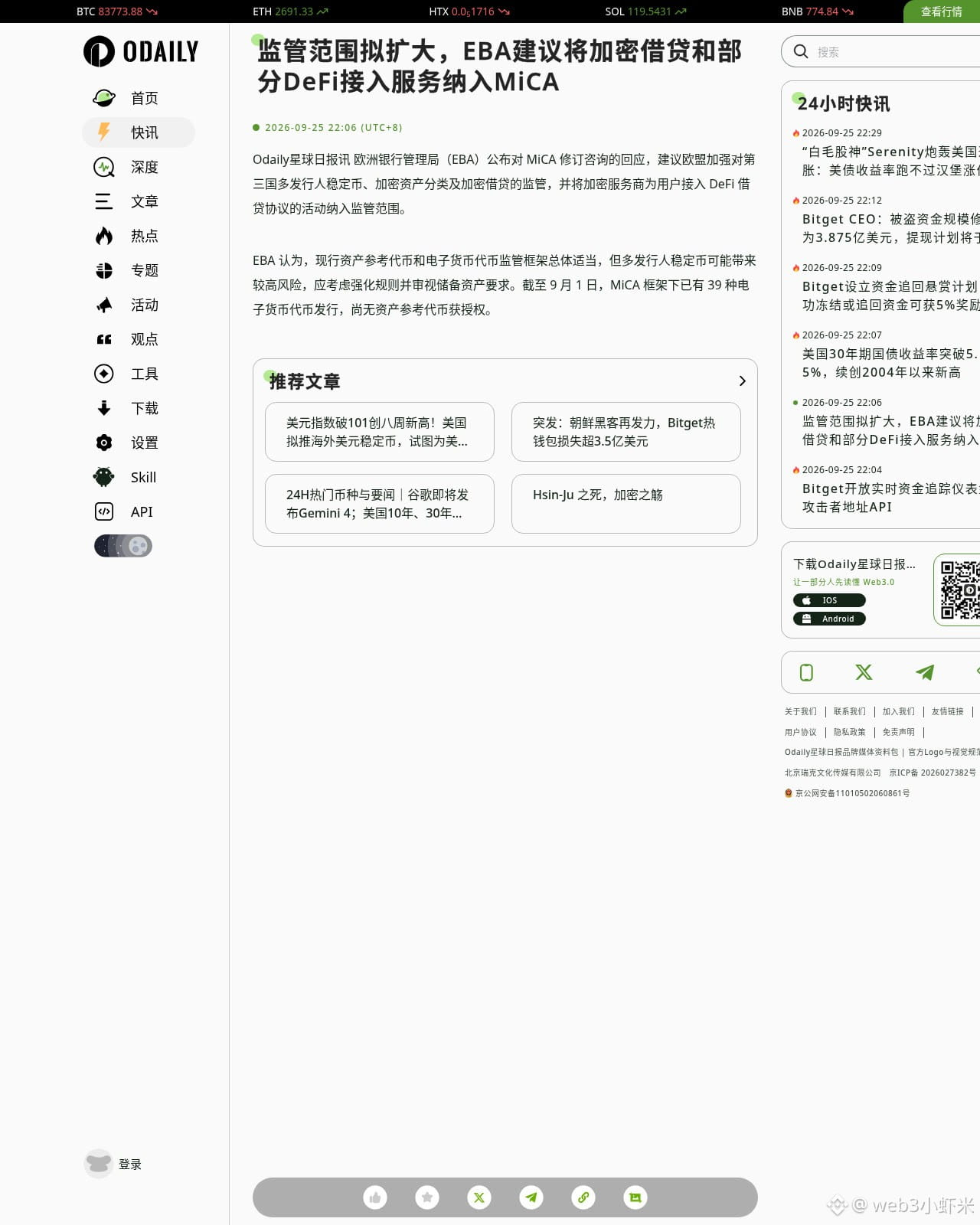
Read on Odaily: The European Banking Authority (EBA) has replied to the MiCA amendments consultation—suggesting that the regulatory scope be expanded further. More third-country issuers, stablecoins, crypto-asset classification, crypto lending, and even crypto service providers helping users access DeFi lending protocols all want to be included in the scope.
The EBA believes the current framework for Asset-Referenced Tokens (ART) and Electronic Money Tokens (EMT) is broadly workable, but that multi-issuer stablecoins carry higher risks. It recommends considering stricter rules and reviewing the requirements for reserve assets. As of September 1, there are 39 types of EMT issued under MiCA, while no ART has yet been authorized.
Once lending and DeFi access are added to the regulatory list, the compliance boundary in Europe is pushed forward another notch.#加密监管 #MiCA #DeFi
Read on Odaily: The European Banking Authority (EBA) has replied to the MiCA amendments consultation—suggesting that the regulatory scope be expanded further. More third-country issuers, stablecoins, crypto-asset classification, crypto lending, and even crypto service providers helping users access DeFi lending protocols all want to be included in the scope.
The EBA believes the current framework for Asset-Referenced Tokens (ART) and Electronic Money Tokens (EMT) is broadly workable, but that multi-issuer stablecoins carry higher risks. It recommends considering stricter rules and reviewing the requirements for reserve assets. As of September 1, there are 39 types of EMT issued under MiCA, while no ART has yet been authorized.
Once lending and DeFi access are added to the regulatory list, the compliance boundary in Europe is pushed forward another notch.#加密监管 #MiCA #DeFi
The EBA believes the current framework for Asset-Referenced Tokens (ART) and Electronic Money Tokens (EMT) is broadly workable, but that multi-issuer stablecoins carry higher risks. It recommends considering stricter rules and reviewing the requirements for reserve assets. As of September 1, there are 39 types of EMT issued under MiCA, while no ART has yet been authorized.
Once lending and DeFi access are added to the regulatory list, the compliance boundary in Europe is pushed forward another notch.#加密监管 #MiCA #DeFi
15

EU regulators eyeing DeFi lending
The EBA is calling for new crypto lending rules and tighter controls for entities accessing DeFi protocols as part of the EU MiCA review.
#MiCA #EBALending
EU regulators eyeing DeFi lending
The EBA is calling for new crypto lending rules and tighter controls for entities accessing DeFi protocols as part of the EU MiCA review.
#MiCA #EBALending
The EBA is calling for new crypto lending rules and tighter controls for entities accessing DeFi protocols as part of the EU MiCA review.
#MiCA #EBALending
18

·
--
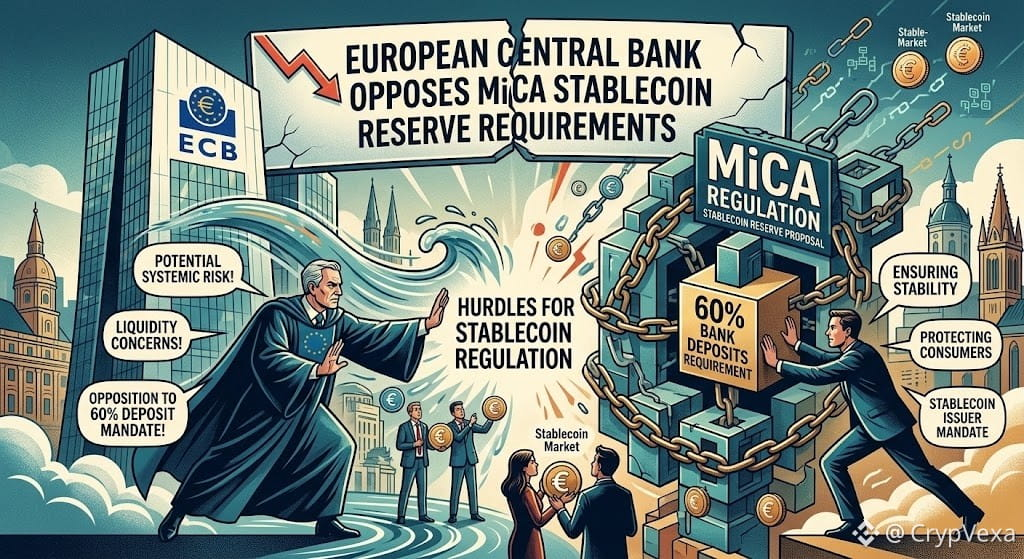
📉 ECB Challenges MiCA Stablecoin Reserve Rule
🏦 The European Central Bank (ECB) and EU national central banks have called for changes to a MiCA requirement that major stablecoin issuers keep 60% of reserves in bank deposits.
⚠️ The central banks argue the rule could create risks for the banking system, particularly if stablecoin reserves move in and out of bank deposits quickly.
🔄 They have proposed using short-maturity assets that can be converted into cash within 1–5 working days instead.
🌐 The debate highlights the challenge of balancing stablecoin liquidity, financial stability, and crypto-market innovation in the EU.
👀 Could changes to MiCA’s reserve rules reshape how stablecoins operate in Europe?
#MiCA #Stablecoins #ECB #CryptoRegulation
📉 ECB Challenges MiCA Stablecoin Reserve Rule
🏦 The European Central Bank (ECB) and EU national central banks have called for changes to a MiCA requirement that major stablecoin issuers keep 60% of reserves in bank deposits.
⚠️ The central banks argue the rule could create risks for the banking system, particularly if stablecoin reserves move in and out of bank deposits quickly.
🔄 They have proposed using short-maturity assets that can be converted into cash within 1–5 working days instead.
🌐 The debate highlights the challenge of balancing stablecoin liquidity, financial stability, and crypto-market innovation in the EU.
👀 Could changes to MiCA’s reserve rules reshape how stablecoins operate in Europe?
#MiCA #Stablecoins #ECB #CryptoRegulation
🏦 The European Central Bank (ECB) and EU national central banks have called for changes to a MiCA requirement that major stablecoin issuers keep 60% of reserves in bank deposits.
⚠️ The central banks argue the rule could create risks for the banking system, particularly if stablecoin reserves move in and out of bank deposits quickly.
🔄 They have proposed using short-maturity assets that can be converted into cash within 1–5 working days instead.
🌐 The debate highlights the challenge of balancing stablecoin liquidity, financial stability, and crypto-market innovation in the EU.
👀 Could changes to MiCA’s reserve rules reshape how stablecoins operate in Europe?
#MiCA #Stablecoins #ECB #CryptoRegulation
1
72
·
--
#EBA #MiCA
The European Banking Authority (EBA) suggests incorporating crypto lending into MiCA, and also regulating the service providers that help customers access DeFi lending protocols.
For platforms running lending businesses in the EU, this also brings the on-chain portion under the licensing scope: suitability testing, leverage limits, and additional disclosures are all included in the proposed list. The suggestion is part of MiCA review guidance and has not yet become legislation.
The real point to watch is whether the European Commission decides to conduct a cost-benefit analysis—if it does, DeFi front-end integration providers will feel the pressure first.
$SOL $ONDO $TST
#EBA #MiCA
The European Banking Authority (EBA) suggests incorporating crypto lending into MiCA, and also regulating the service providers that help customers access DeFi lending protocols.
For platforms running lending businesses in the EU, this also brings the on-chain portion under the licensing scope: suitability testing, leverage limits, and additional disclosures are all included in the proposed list. The suggestion is part of MiCA review guidance and has not yet become legislation.
The real point to watch is whether the European Commission decides to conduct a cost-benefit analysis—if it does, DeFi front-end integration providers will feel the pressure first.
$SOL $ONDO $TST
The European Banking Authority (EBA) suggests incorporating crypto lending into MiCA, and also regulating the service providers that help customers access DeFi lending protocols.
For platforms running lending businesses in the EU, this also brings the on-chain portion under the licensing scope: suitability testing, leverage limits, and additional disclosures are all included in the proposed list. The suggestion is part of MiCA review guidance and has not yet become legislation.
The real point to watch is whether the European Commission decides to conduct a cost-benefit analysis—if it does, DeFi front-end integration providers will feel the pressure first.
$SOL $ONDO $TST
8


·
--
$USDT reported 0.9999U, with a discount of about 1 bp for $USDC .
What the market is focusing on now is whether European regulatory interpretations may change.
If the requirements in MiCA regarding stablecoin reserves and bank custody are loosened, the compliance constraints Tether faces in the EU market could also be reduced.
【Bullish rationale】
If regulation further shifts toward reserve liquidity and on-chain settlement efficiency, the reserves and settlement model for USDT will have greater room to perform.
Currently, USDT is only discounted versus USDC by about 1 bp; the key is whether the subsequent regulatory moves genuinely get implemented.
In the stablecoin battle, the final winners are still liquidity, compliance, and settlement use cases.#USDT #USDC #稳定币 #MiCA
$USDT reported 0.9999U, with a discount of about 1 bp for $USDC .
What the market is focusing on now is whether European regulatory interpretations may change.
If the requirements in MiCA regarding stablecoin reserves and bank custody are loosened, the compliance constraints Tether faces in the EU market could also be reduced.
【Bullish rationale】
If regulation further shifts toward reserve liquidity and on-chain settlement efficiency, the reserves and settlement model for USDT will have greater room to perform.
Currently, USDT is only discounted versus USDC by about 1 bp; the key is whether the subsequent regulatory moves genuinely get implemented.
In the stablecoin battle, the final winners are still liquidity, compliance, and settlement use cases.#USDT #USDC #稳定币 #MiCA
What the market is focusing on now is whether European regulatory interpretations may change.
If the requirements in MiCA regarding stablecoin reserves and bank custody are loosened, the compliance constraints Tether faces in the EU market could also be reduced.
【Bullish rationale】
If regulation further shifts toward reserve liquidity and on-chain settlement efficiency, the reserves and settlement model for USDT will have greater room to perform.
Currently, USDT is only discounted versus USDC by about 1 bp; the key is whether the subsequent regulatory moves genuinely get implemented.
In the stablecoin battle, the final winners are still liquidity, compliance, and settlement use cases.#USDT #USDC #稳定币 #MiCA
128


·
--
Verified
#ECBStartsBlockchainEuroSettlement
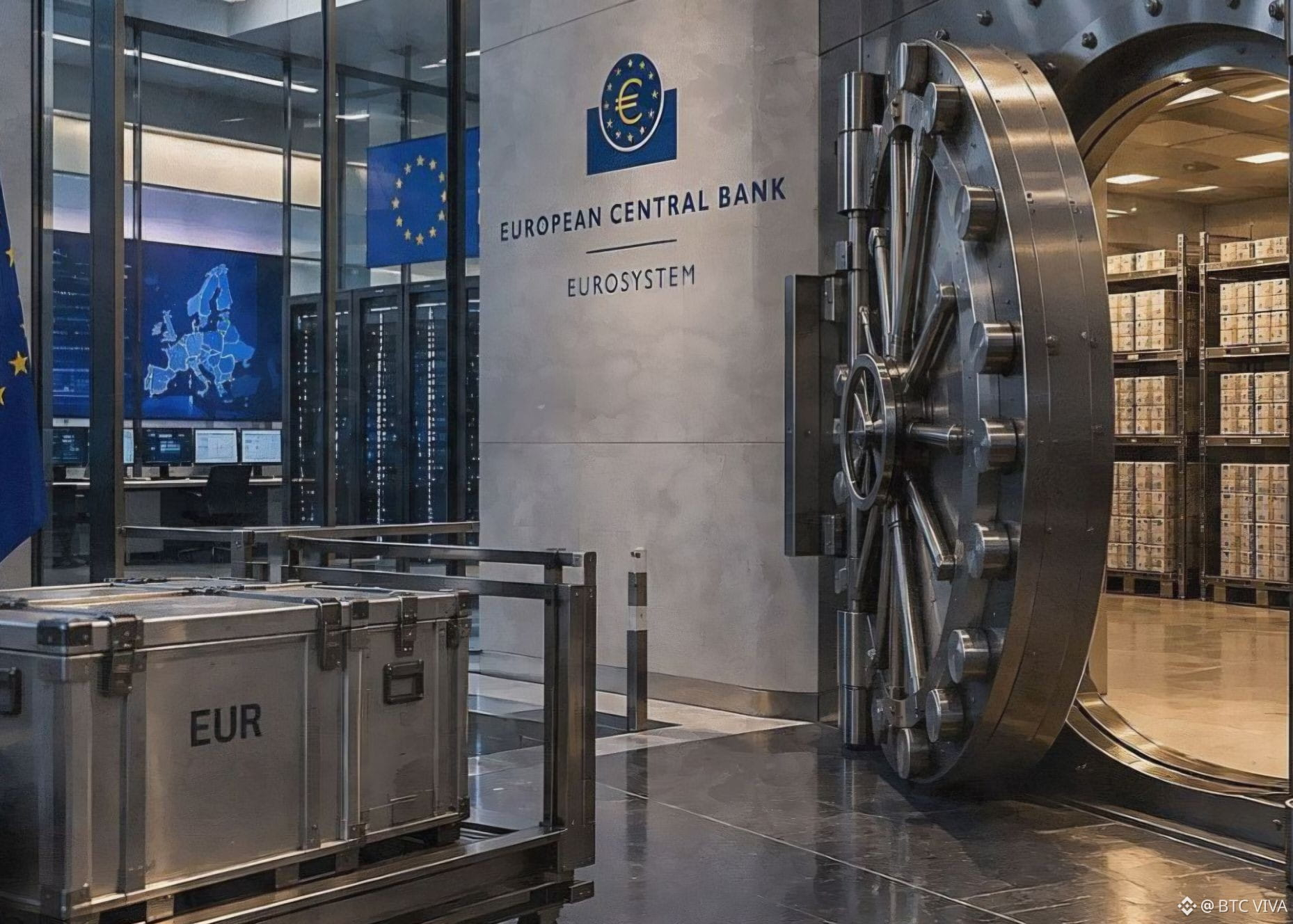
🔥 ECB pushes for changes to MiCA rules
The ECB wants to amend MiCA to allow large stablecoin issuers to hold fewer reserves in banks.
📊 EU central banks believe the current rule could transmit stress from stablecoins to the banking sector.
A revision could affect euro-backed stablecoins, such as Circle’s EURC.
#MiCA
$BNB
{spot}(BNBUSDT)
#ECBStartsBlockchainEuroSettlement
🔥 ECB pushes for changes to MiCA rules
The ECB wants to amend MiCA to allow large stablecoin issuers to hold fewer reserves in banks.
📊 EU central banks believe the current rule could transmit stress from stablecoins to the banking sector.
A revision could affect euro-backed stablecoins, such as Circle’s EURC.
#MiCA
$BNB
🔥 ECB pushes for changes to MiCA rules
The ECB wants to amend MiCA to allow large stablecoin issuers to hold fewer reserves in banks.
📊 EU central banks believe the current rule could transmit stress from stablecoins to the banking sector.
A revision could affect euro-backed stablecoins, such as Circle’s EURC.
#MiCA
$BNB
1
11
2.1k

·
--
Bullish
🔸 "not as a means of saving" #MiCA
that's the ECB and the EU central banks on stablecoins, in their answer to the MiCA review
MiCA already bans interest on them. now they want the workaround shut too: lending and staking that work like interest, plus some loyalty perks
my $USDC sits in Binance Simple Earn Flexible. exactly that kind of yield
not a law yet, so nothing moves on my side
where do you park stables if this passes? i'll post it here when Brussels decides, follow for that one
🔸 "not as a means of saving" #MiCA
that's the ECB and the EU central banks on stablecoins, in their answer to the MiCA review
MiCA already bans interest on them. now they want the workaround shut too: lending and staking that work like interest, plus some loyalty perks
my $USDC sits in Binance Simple Earn Flexible. exactly that kind of yield
not a law yet, so nothing moves on my side
where do you park stables if this passes? i'll post it here when Brussels decides, follow for that one
that's the ECB and the EU central banks on stablecoins, in their answer to the MiCA review
MiCA already bans interest on them. now they want the workaround shut too: lending and staking that work like interest, plus some loyalty perks
my $USDC sits in Binance Simple Earn Flexible. exactly that kind of yield
not a law yet, so nothing moves on my side
where do you park stables if this passes? i'll post it here when Brussels decides, follow for that one

7
136

·
--
The ECB and European central banks oppose a MiCA rule that would require 60% of stablecoin reserves to be held in bank deposits, for fear of transferring crypto volatility to banks. On the other side, the head of the CFTC urges markets to prepare for massive tokenization and 24/7 trading. Two philosophies clash: Europe protects, America builds. Meanwhile, BTC remains firm at 86 460 $ (+0,84% over 24h) and ETH at 2 758 $ (+0,57%). Can Europe really slow down stablecoins while the United States accelerates? #MiCA #Stablecoins
The ECB and European central banks oppose a MiCA rule that would require 60% of stablecoin reserves to be held in bank deposits, for fear of transferring crypto volatility to banks. On the other side, the head of the CFTC urges markets to prepare for massive tokenization and 24/7 trading. Two philosophies clash: Europe protects, America builds. Meanwhile, BTC remains firm at 86 460 $ (+0,84% over 24h) and ETH at 2 758 $ (+0,57%). Can Europe really slow down stablecoins while the United States accelerates? #MiCA #Stablecoins
95
·
--
European central banks are openly opposed to the MiCA rule imposing 60% stable reserves in bank deposits: according to them, this would expose banks to stablecoin volatility and weaken traditional deposits. Meanwhile, BNB has just surpassed the market capitalization of BNY Mellon with $104.95 billion. The paradox is delicious: traditional finance is being caught up by the crypto it is trying to regulate at all costs. Bitcoin consolidates at 86 581 $ (+0,83%) and Ethereum at 2 751 $ (+0,44%) while Brussels is still looking for how to regulate an industry that isn’t waiting for it. The real question: can Europe regulate what it doesn’t understand? #MiCA #Stablecoins
European central banks are openly opposed to the MiCA rule imposing 60% stable reserves in bank deposits: according to them, this would expose banks to stablecoin volatility and weaken traditional deposits. Meanwhile, BNB has just surpassed the market capitalization of BNY Mellon with $104.95 billion. The paradox is delicious: traditional finance is being caught up by the crypto it is trying to regulate at all costs. Bitcoin consolidates at 86 581 $ (+0,83%) and Ethereum at 2 751 $ (+0,44%) while Brussels is still looking for how to regulate an industry that isn’t waiting for it. The real question: can Europe regulate what it doesn’t understand? #MiCA #Stablecoins
37

·
--
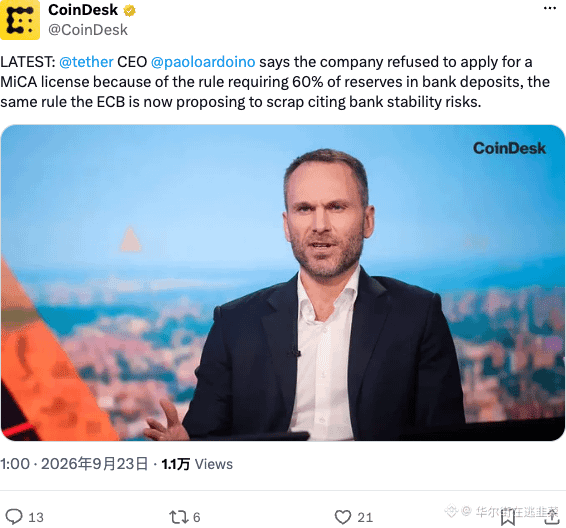
Tether goes all the way, and the ECB backs down first. It refuses to apply for MiCA because 60% of reserves must be kept in banks; now the ECB proposes to scrap that rule, and the reason is still the risk to bank stability. Did the rules get drafted on the spur of the moment? Keeping stablecoin reserves in banks turns all the books into bad debts the moment a liquidity crisis hits. The market wasn’t wrong—regulators finally wake up.
$USDT #MiCA
Tether goes all the way, and the ECB backs down first. It refuses to apply for MiCA because 60% of reserves must be kept in banks; now the ECB proposes to scrap that rule, and the reason is still the risk to bank stability. Did the rules get drafted on the spur of the moment? Keeping stablecoin reserves in banks turns all the books into bad debts the moment a liquidity crisis hits. The market wasn’t wrong—regulators finally wake up.
$USDT #MiCA
$USDT #MiCA
22

·
--
#Tether #MiCA
Tether CEO Paolo Ardoino said that, because MiCA requires major stablecoin issuers to keep at least 60% of reserves in commercial bank deposits, the company declined to apply for an EU license.
The European Central Bank and others have proposed removing this reserve requirement and replacing it with a liquidity requirement based on short-term maturing assets, but this change has not yet been approved.
This rule ties the issuers’ balance sheets to those of the banking system; the affected parties are issuers that want to operate in the EU in a compliant manner. Assessment: as long as the 60% deposit requirement remains, Tether’s position will not change.
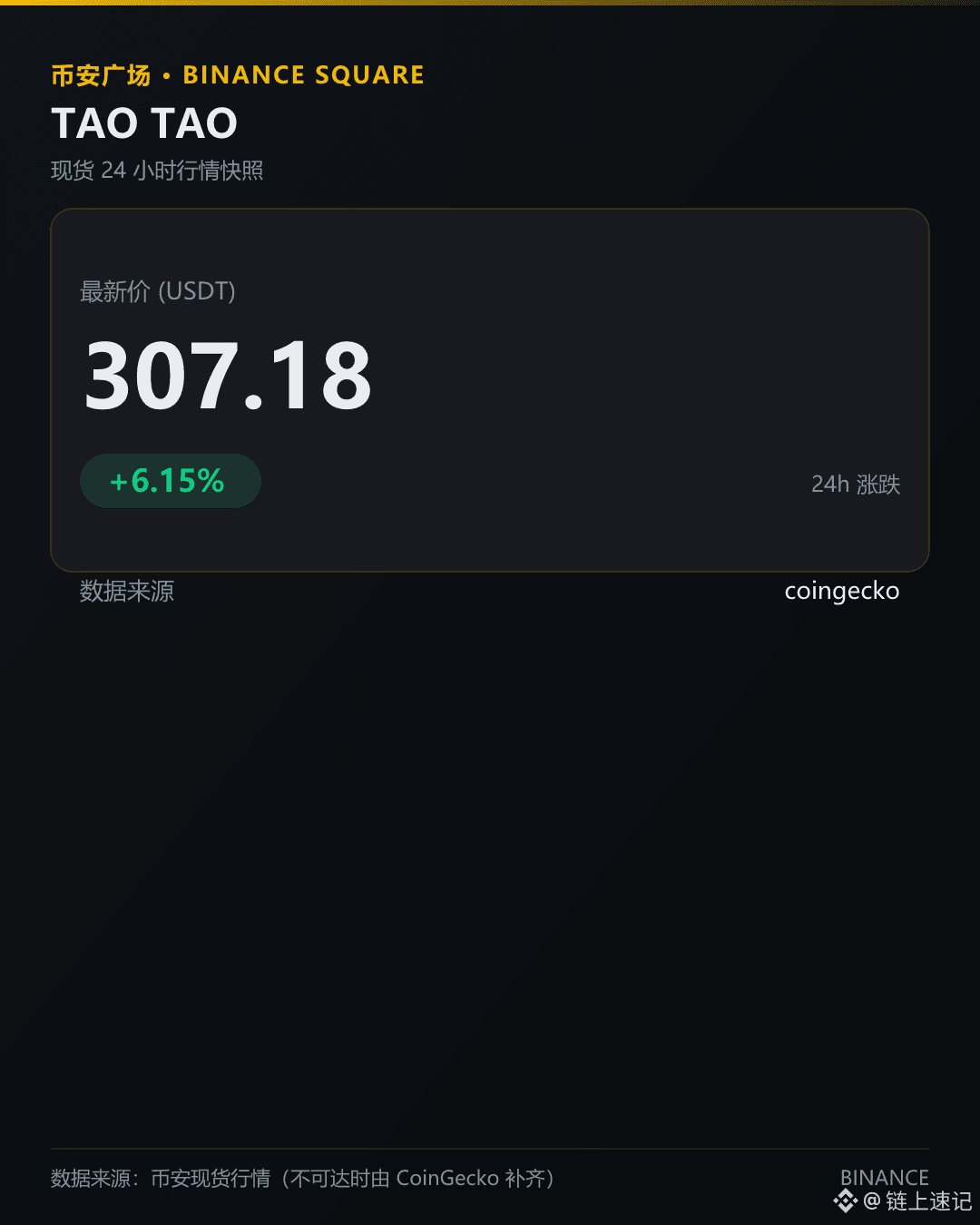
$TAO $ONDO $KITE
#Tether #MiCA
Tether CEO Paolo Ardoino said that, because MiCA requires major stablecoin issuers to keep at least 60% of reserves in commercial bank deposits, the company declined to apply for an EU license.
The European Central Bank and others have proposed removing this reserve requirement and replacing it with a liquidity requirement based on short-term maturing assets, but this change has not yet been approved.
This rule ties the issuers’ balance sheets to those of the banking system; the affected parties are issuers that want to operate in the EU in a compliant manner. Assessment: as long as the 60% deposit requirement remains, Tether’s position will not change.
$TAO $ONDO $KITE
Tether CEO Paolo Ardoino said that, because MiCA requires major stablecoin issuers to keep at least 60% of reserves in commercial bank deposits, the company declined to apply for an EU license.
The European Central Bank and others have proposed removing this reserve requirement and replacing it with a liquidity requirement based on short-term maturing assets, but this change has not yet been approved.
This rule ties the issuers’ balance sheets to those of the banking system; the affected parties are issuers that want to operate in the EU in a compliant manner. Assessment: as long as the 60% deposit requirement remains, Tether’s position will not change.
$TAO $ONDO $KITE
35
·
--
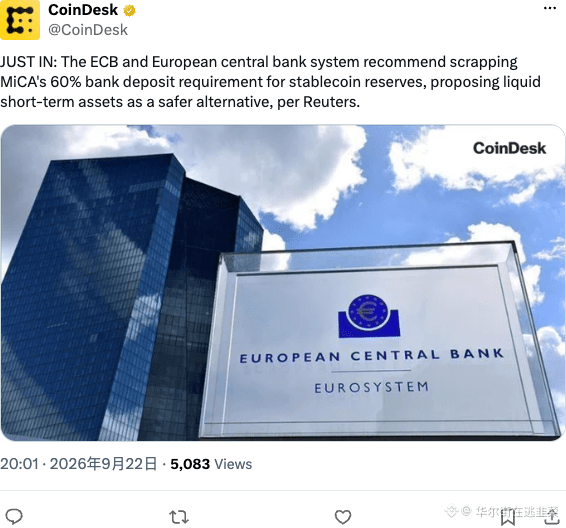
The ECB recommends scrapping the MiCA requirement of a 60% bank reserve for deposits and instead pushing short-term liquid assets. On the stablecoin reserves issue, the hawks are quite aggressive: banks backing deposits are swapped for short-dated Treasuries, and the ability to withstand bank runs looks stronger—but who will take over the risks of liquidity segmentation and discounting?
If this actually comes to pass, the reserve structures of USDC and USDT will have to be reshuffled again, and compliance costs for the European region will keep rising. Don’t rush to pick sides on the pros and cons yet—wait to see how the detailed rules are written.
$USDC $USDT #MiCA #stablecoin
The ECB recommends scrapping the MiCA requirement of a 60% bank reserve for deposits and instead pushing short-term liquid assets. On the stablecoin reserves issue, the hawks are quite aggressive: banks backing deposits are swapped for short-dated Treasuries, and the ability to withstand bank runs looks stronger—but who will take over the risks of liquidity segmentation and discounting?
If this actually comes to pass, the reserve structures of USDC and USDT will have to be reshuffled again, and compliance costs for the European region will keep rising. Don’t rush to pick sides on the pros and cons yet—wait to see how the detailed rules are written.
$USDC $USDT #MiCA #stablecoin
If this actually comes to pass, the reserve structures of USDC and USDT will have to be reshuffled again, and compliance costs for the European region will keep rising. Don’t rush to pick sides on the pros and cons yet—wait to see how the detailed rules are written.
$USDC $USDT #MiCA #stablecoin
19

·
--
Kraken co-CEO David Ripley said that U.S. crypto regulation is “adversarial,” and that it’s not as pragmatic as Europe. Europe is moving from following the U.S. to leading the way, and it has drawn a comparison between MiCA and the CLARITY bill that the U.S. just saw collapse, praising MiCA for setting clear rules for the industry.
Kraken itself obtained an MiCA license from the Central Bank of Ireland starting in June 2025, covering all 30 EU countries. Coming from the mouth of a trading-exchange CEO who has already benefited from Europe’s regulatory regime, the statement sounds more like an advertisement for its own regulatory environment. The report also doesn’t provide specific token, enforcement, or fund-flow data. For ordinary users, this information is more suitable as an observation of industry policy, not as a basis for taking action in any given direction. #欧洲央行启动区块链欧元结算 #南非拟将加密纳入外汇管制 #Clarity #MiCA
Kraken co-CEO David Ripley said that U.S. crypto regulation is “adversarial,” and that it’s not as pragmatic as Europe. Europe is moving from following the U.S. to leading the way, and it has drawn a comparison between MiCA and the CLARITY bill that the U.S. just saw collapse, praising MiCA for setting clear rules for the industry.
Kraken itself obtained an MiCA license from the Central Bank of Ireland starting in June 2025, covering all 30 EU countries. Coming from the mouth of a trading-exchange CEO who has already benefited from Europe’s regulatory regime, the statement sounds more like an advertisement for its own regulatory environment. The report also doesn’t provide specific token, enforcement, or fund-flow data. For ordinary users, this information is more suitable as an observation of industry policy, not as a basis for taking action in any given direction. #欧洲央行启动区块链欧元结算 #南非拟将加密纳入外汇管制 #Clarity #MiCA
Kraken itself obtained an MiCA license from the Central Bank of Ireland starting in June 2025, covering all 30 EU countries. Coming from the mouth of a trading-exchange CEO who has already benefited from Europe’s regulatory regime, the statement sounds more like an advertisement for its own regulatory environment. The report also doesn’t provide specific token, enforcement, or fund-flow data. For ordinary users, this information is more suitable as an observation of industry policy, not as a basis for taking action in any given direction. #欧洲央行启动区块链欧元结算 #南非拟将加密纳入外汇管制 #Clarity #MiCA
90
·
--
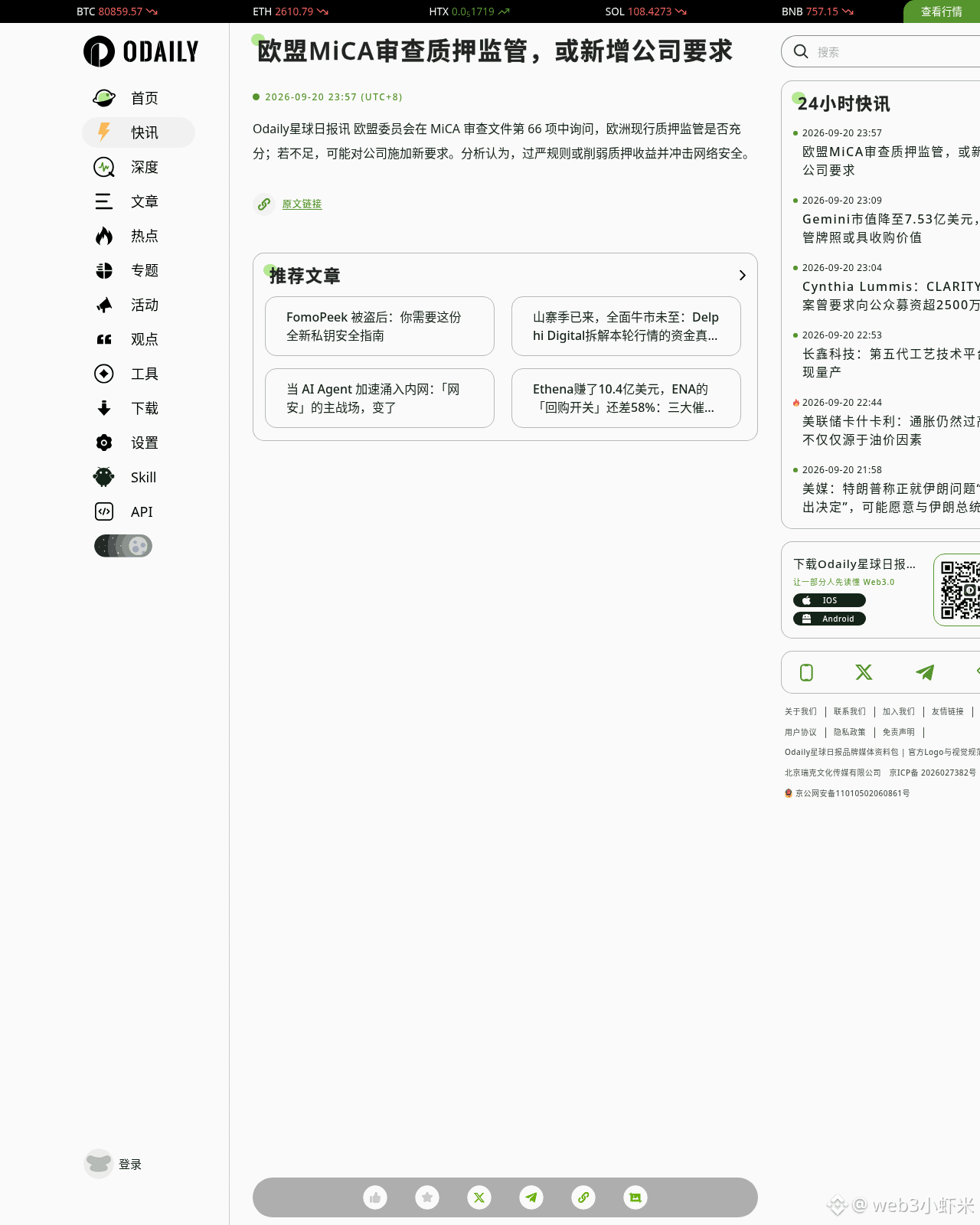
Stumbled upon Odaily: In the EU Commission’s review document item 66 for MiCA, there was a question—does the current EU staking regulation go far enough? If not, the relevant companies may be given new requirements.
The analysis is quite straightforward: if the rules are too strict, staking returns could be reduced, which in turn could also impact network security. MiCA has only just rolled out, and now another review is underway; in the staking space, it’s moved one step from “indirect oversight” toward “whether to regulate it specifically.” #加密监管 #MiCA
Stumbled upon Odaily: In the EU Commission’s review document item 66 for MiCA, there was a question—does the current EU staking regulation go far enough? If not, the relevant companies may be given new requirements.
The analysis is quite straightforward: if the rules are too strict, staking returns could be reduced, which in turn could also impact network security. MiCA has only just rolled out, and now another review is underway; in the staking space, it’s moved one step from “indirect oversight” toward “whether to regulate it specifically.” #加密监管 #MiCA
The analysis is quite straightforward: if the rules are too strict, staking returns could be reduced, which in turn could also impact network security. MiCA has only just rolled out, and now another review is underway; in the staking space, it’s moved one step from “indirect oversight” toward “whether to regulate it specifically.” #加密监管 #MiCA
28

·
--
Bullish
ECB and MiCA: new compliance challenges for EU exchanges
Latest breaking news: while it was known that the ECB had blocked the Binance MiCA license in Greece, new revelations show that several other exchanges are facing similar hurdles in different European countries. The MiCA regulation (Markets in Crypto-Assets) scheduled for 2024 is running into national delays. Implications: exchanges must strengthen their compliance or risk suspensions. To watch as the weekend begins.
#news_update #NewsAboutCrypto #ECB #MiCA
ECB and MiCA: new compliance challenges for EU exchanges
Latest breaking news: while it was known that the ECB had blocked the Binance MiCA license in Greece, new revelations show that several other exchanges are facing similar hurdles in different European countries. The MiCA regulation (Markets in Crypto-Assets) scheduled for 2024 is running into national delays. Implications: exchanges must strengthen their compliance or risk suspensions. To watch as the weekend begins.
#news_update #NewsAboutCrypto #ECB #MiCA
Latest breaking news: while it was known that the ECB had blocked the Binance MiCA license in Greece, new revelations show that several other exchanges are facing similar hurdles in different European countries. The MiCA regulation (Markets in Crypto-Assets) scheduled for 2024 is running into national delays. Implications: exchanges must strengthen their compliance or risk suspensions. To watch as the weekend begins.
#news_update #NewsAboutCrypto #ECB #MiCA
217
Log in to explore more content
Join global crypto users on Binance Square
⚡️ Get latest and useful information about crypto.
💬 Trusted by the world’s largest crypto exchange.
👍 Discover real insights from verified creators.
Email / Phone number
Trending Topics
1
#EarningsSeason
44,484 views
393 Discussing
2
#JapanFSABacksFourthStablecoinTradeSettlementPilot
326 views
38 Discussing
3
#BitgetHackerFailsToMoveStolenFunds
4,480 views
178 Discussing
4
#BitMineETHHoldingsTop6Million
7,610 views
344 Discussing
5
#StrategyAdds1666BTCHoldingsReach847666
7,062 views
262 Discussing
6
#NvidiaApproves$150BBuyback
3,013 views
59 Discussing
7
#OpenAIDelaysGPT6.1OverSafetyIssues
19,528 views
573 Discussing
8
#AMDToAcquireWorldLabsFor$8.2B
1,518 views
50 Discussing
9
#AnthropicIPOProspectusCouldValueItOver$2T
5,037 views
74 Discussing
10
#HackersDrainOver12.4MXRPFromDCENTWallets
35,909 views
663 Discussing