

CrypVexa
667 Posts

CrypVexa
Report
Block User
🚨 Your daily source for crypto news, 📊 market updates, 🚀 top gainers & 🐋 whale moves across BTC, ETH, BNB & SOL.
3 Following
15 Followers
249 Liked
Posts
·
--
#NFPWatch
📊 NFPWatch: Why U.S. Jobs Data Matters for Crypto
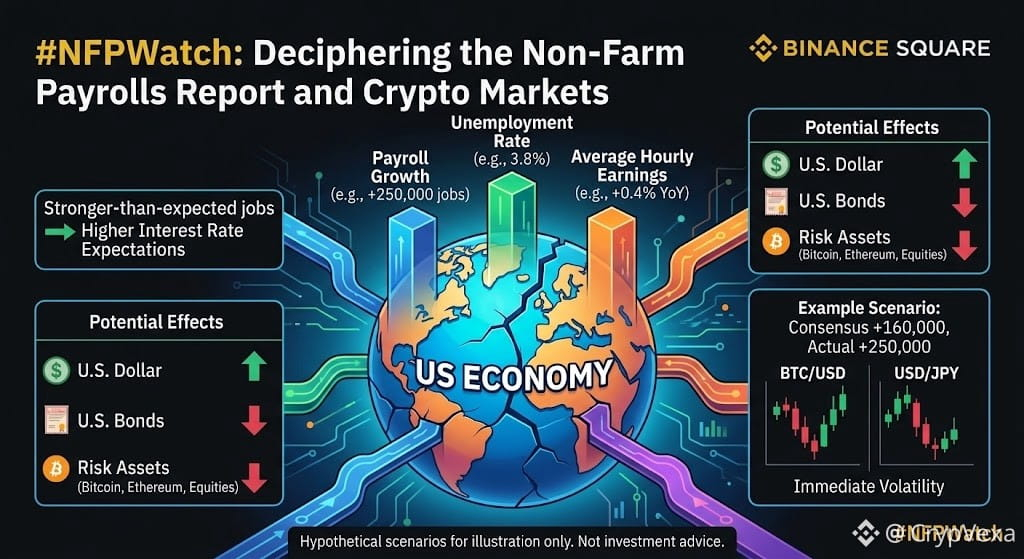
🇺🇸 The Non-Farm Payrolls (NFP) report tracks U.S. employment and can quickly move BTC, ETH, bonds, stocks, and the dollar.
Markets watch:
💼 Payroll growth vs expectations
📉 Unemployment rate
💵 Average hourly earnings
⚡ A stronger-than-expected report can push rate-cut expectations lower, while a weaker report can have the opposite effect.
👀 But the first move isn't always the final move. Wages, revisions, inflation data, and Fed signals can reshape the market reaction.
#NFPWatch #Bitcoin #CryptoMarkets #EconomicData
#NFPWatch
📊 NFPWatch: Why U.S. Jobs Data Matters for Crypto
🇺🇸 The Non-Farm Payrolls (NFP) report tracks U.S. employment and can quickly move BTC, ETH, bonds, stocks, and the dollar.
Markets watch:
💼 Payroll growth vs expectations
📉 Unemployment rate
💵 Average hourly earnings
⚡ A stronger-than-expected report can push rate-cut expectations lower, while a weaker report can have the opposite effect.
👀 But the first move isn't always the final move. Wages, revisions, inflation data, and Fed signals can reshape the market reaction.
#NFPWatch #Bitcoin #CryptoMarkets #EconomicData
📊 NFPWatch: Why U.S. Jobs Data Matters for Crypto
🇺🇸 The Non-Farm Payrolls (NFP) report tracks U.S. employment and can quickly move BTC, ETH, bonds, stocks, and the dollar.
Markets watch:
💼 Payroll growth vs expectations
📉 Unemployment rate
💵 Average hourly earnings
⚡ A stronger-than-expected report can push rate-cut expectations lower, while a weaker report can have the opposite effect.
👀 But the first move isn't always the final move. Wages, revisions, inflation data, and Fed signals can reshape the market reaction.
#NFPWatch #Bitcoin #CryptoMarkets #EconomicData
1
97
·
--
#AmazonPlansToSell$8BNvidiaChips
🤖 Amazon Explores $8B Nvidia AI Chip Financing Structure
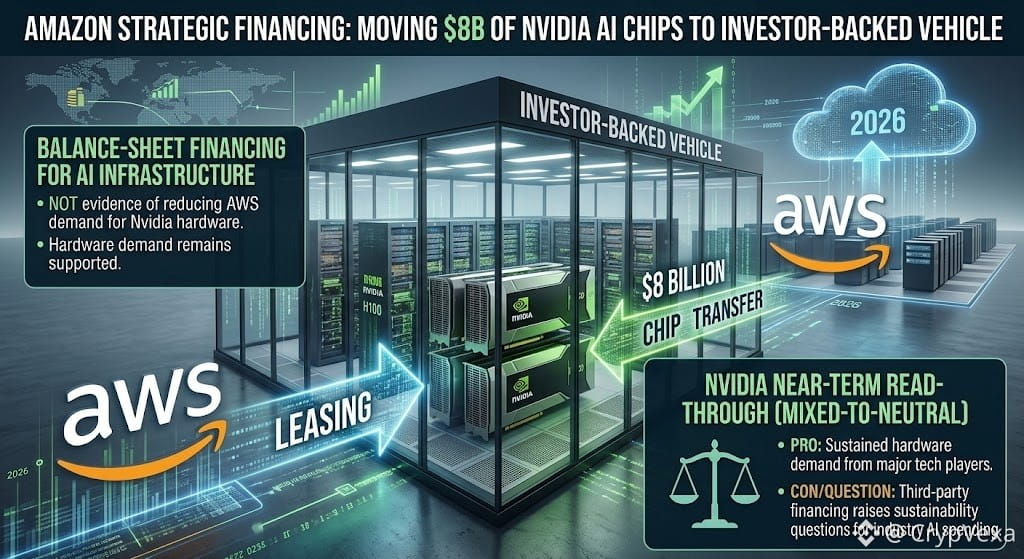
📦 Reports say Amazon is exploring a structure to move roughly $8B of Nvidia AI chips into an investor-backed vehicle, then lease the chips back for AWS use.
💡 This looks more like balance-sheet financing for AI infrastructure than a reduction in AWS demand for Nvidia hardware.
📊 For Nvidia, the read-through is mixed:
• AI chip demand remains supported
• Third-party financing could expand infrastructure spending
• It also raises questions about how sustainable AI capex can remain
👀 Is AI infrastructure financing becoming the next big trend in the chip industry?
#NVIDIA #Amazon #AI #Semiconductors
#AmazonPlansToSell$8BNvidiaChips
🤖 Amazon Explores $8B Nvidia AI Chip Financing Structure
📦 Reports say Amazon is exploring a structure to move roughly $8B of Nvidia AI chips into an investor-backed vehicle, then lease the chips back for AWS use.
💡 This looks more like balance-sheet financing for AI infrastructure than a reduction in AWS demand for Nvidia hardware.
📊 For Nvidia, the read-through is mixed:
• AI chip demand remains supported
• Third-party financing could expand infrastructure spending
• It also raises questions about how sustainable AI capex can remain
👀 Is AI infrastructure financing becoming the next big trend in the chip industry?
#NVIDIA #Amazon #AI #Semiconductors
🤖 Amazon Explores $8B Nvidia AI Chip Financing Structure
📦 Reports say Amazon is exploring a structure to move roughly $8B of Nvidia AI chips into an investor-backed vehicle, then lease the chips back for AWS use.
💡 This looks more like balance-sheet financing for AI infrastructure than a reduction in AWS demand for Nvidia hardware.
📊 For Nvidia, the read-through is mixed:
• AI chip demand remains supported
• Third-party financing could expand infrastructure spending
• It also raises questions about how sustainable AI capex can remain
👀 Is AI infrastructure financing becoming the next big trend in the chip industry?
#NVIDIA #Amazon #AI #Semiconductors
1
77
·
--
#NEARFallsToAround$4.70Down14%
🚨 NEAR Falls 4.75% After Reported $3.8M Exploit
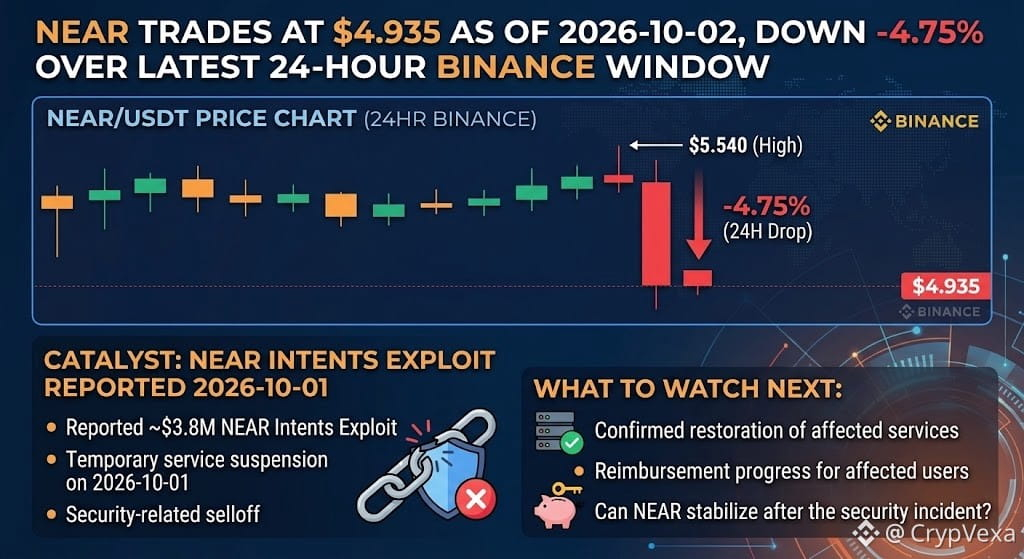
📉 NEAR is trading at $4.935, down 4.75% over the latest 24-hour Binance window, after reaching a high of $5.540.
⚠️ The reported $3.8M NEAR Intents exploit and temporary service suspension on October 1 are key developments behind the selloff.
👀 What to watch next:
🔹 Restoration of affected services
🔹 Reimbursement progress
🔹 Whether NEAR can stabilize
💬 Can NEAR recover once the security concerns are addressed?
#NEAR #NEARProtocol #CryptoSecurity #CryptoNews
#NEARFallsToAround$4.70Down14%
🚨 NEAR Falls 4.75% After Reported $3.8M Exploit
📉 NEAR is trading at $4.935, down 4.75% over the latest 24-hour Binance window, after reaching a high of $5.540.
⚠️ The reported $3.8M NEAR Intents exploit and temporary service suspension on October 1 are key developments behind the selloff.
👀 What to watch next:
🔹 Restoration of affected services
🔹 Reimbursement progress
🔹 Whether NEAR can stabilize
💬 Can NEAR recover once the security concerns are addressed?
#NEAR #NEARProtocol #CryptoSecurity #CryptoNews
🚨 NEAR Falls 4.75% After Reported $3.8M Exploit
📉 NEAR is trading at $4.935, down 4.75% over the latest 24-hour Binance window, after reaching a high of $5.540.
⚠️ The reported $3.8M NEAR Intents exploit and temporary service suspension on October 1 are key developments behind the selloff.
👀 What to watch next:
🔹 Restoration of affected services
🔹 Reimbursement progress
🔹 Whether NEAR can stabilize
💬 Can NEAR recover once the security concerns are addressed?
#NEAR #NEARProtocol #CryptoSecurity #CryptoNews
89
·
--
#EtherGains70.9%InQ3
🚀 ETH Q3 2026: +70.9% Surge! 📈
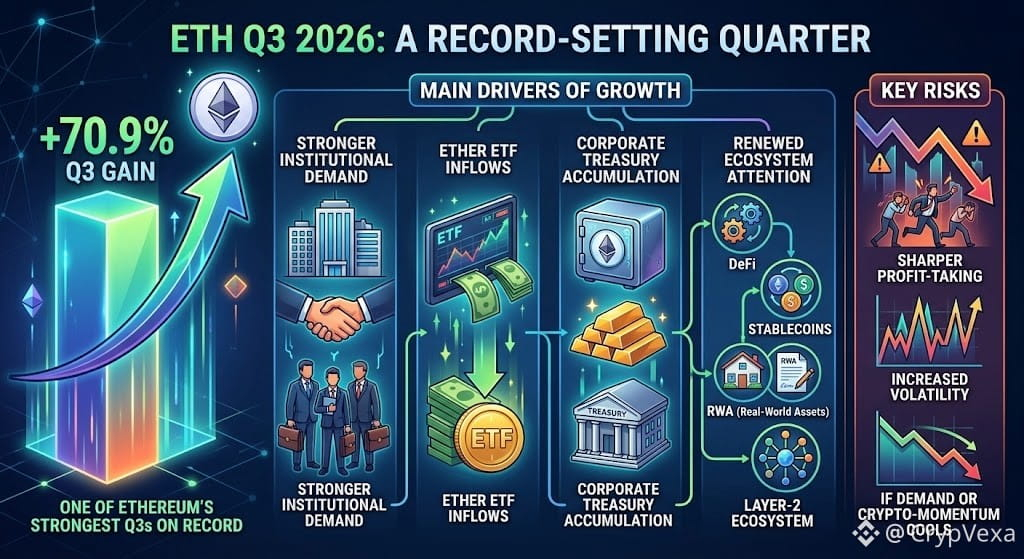
Ethereum just posted one of its strongest Q3s on record!
What fueled the rally? • Heavy institutional buying & ETF inflows • Corporate treasury accumulation • Ecosystem boom across DeFi, Stablecoins, RWAs & L2s
⚠️ Watch Out: Massive gains mean higher odds of profit-taking and short-term volatility if market momentum cools.
Are you holding $ETH into Q4 or taking profits? 👇
#Ethereum #ETH #BinanceSquare #Crypto
#EtherGains70.9%InQ3
🚀 ETH Q3 2026: +70.9% Surge! 📈
Ethereum just posted one of its strongest Q3s on record!
What fueled the rally? • Heavy institutional buying & ETF inflows • Corporate treasury accumulation • Ecosystem boom across DeFi, Stablecoins, RWAs & L2s
⚠️ Watch Out: Massive gains mean higher odds of profit-taking and short-term volatility if market momentum cools.
Are you holding $ETH into Q4 or taking profits? 👇
#Ethereum #ETH #BinanceSquare #Crypto
🚀 ETH Q3 2026: +70.9% Surge! 📈
Ethereum just posted one of its strongest Q3s on record!
What fueled the rally? • Heavy institutional buying & ETF inflows • Corporate treasury accumulation • Ecosystem boom across DeFi, Stablecoins, RWAs & L2s
⚠️ Watch Out: Massive gains mean higher odds of profit-taking and short-term volatility if market momentum cools.
Are you holding $ETH into Q4 or taking profits? 👇
#Ethereum #ETH #BinanceSquare #Crypto
1
15
·
--
#DollarIndexHitsHighestSinceMay2025
💵 U.S. Dollar Hits Its Strongest Level Since Spring 2025
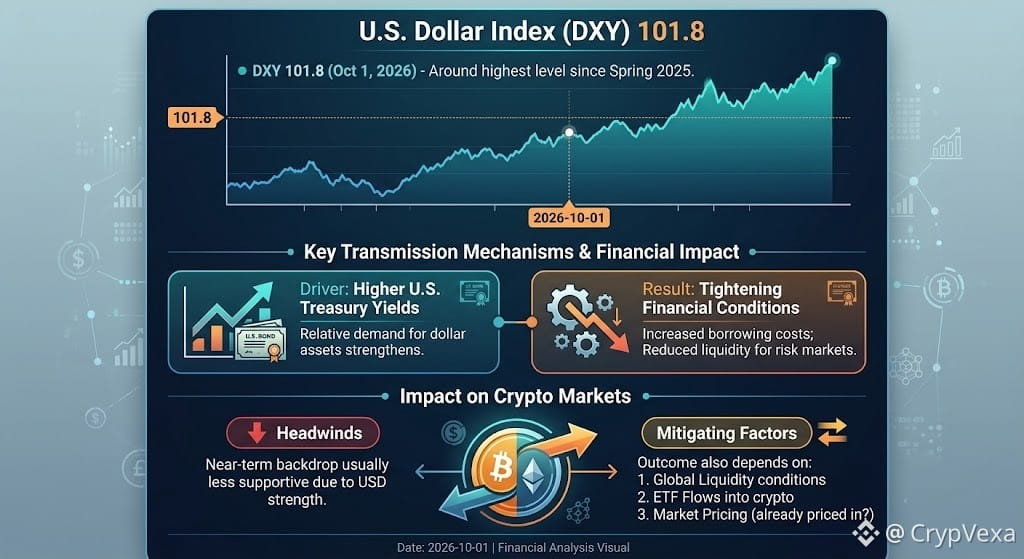
🇺🇸 The U.S. Dollar Index (DXY) climbed to around 101.8 on October 1, supported by higher Treasury yields and demand for dollar assets.
📉 Why crypto traders are watching:
• A stronger dollar can pressure BTC and ETH.
• Higher yields may tighten financial conditions.
• ETF flows and market liquidity could change the picture.
⚠️ A stronger dollar doesn't guarantee a crypto sell-off. Market positioning and incoming data still matter.
👀 Can Bitcoin hold steady while the dollar strengthens?
#Bitcoin #BTC #USDollar #CryptoMarket
#DollarIndexHitsHighestSinceMay2025
💵 U.S. Dollar Hits Its Strongest Level Since Spring 2025
🇺🇸 The U.S. Dollar Index (DXY) climbed to around 101.8 on October 1, supported by higher Treasury yields and demand for dollar assets.
📉 Why crypto traders are watching:
• A stronger dollar can pressure BTC and ETH.
• Higher yields may tighten financial conditions.
• ETF flows and market liquidity could change the picture.
⚠️ A stronger dollar doesn't guarantee a crypto sell-off. Market positioning and incoming data still matter.
👀 Can Bitcoin hold steady while the dollar strengthens?
#Bitcoin #BTC #USDollar #CryptoMarket
💵 U.S. Dollar Hits Its Strongest Level Since Spring 2025
🇺🇸 The U.S. Dollar Index (DXY) climbed to around 101.8 on October 1, supported by higher Treasury yields and demand for dollar assets.
📉 Why crypto traders are watching:
• A stronger dollar can pressure BTC and ETH.
• Higher yields may tighten financial conditions.
• ETF flows and market liquidity could change the picture.
⚠️ A stronger dollar doesn't guarantee a crypto sell-off. Market positioning and incoming data still matter.
👀 Can Bitcoin hold steady while the dollar strengthens?
#Bitcoin #BTC #USDollar #CryptoMarket
37
·
--
#US10YearYieldNears5.3%
📈 U.S. 10-Year Treasury Yield Tops 5.3%
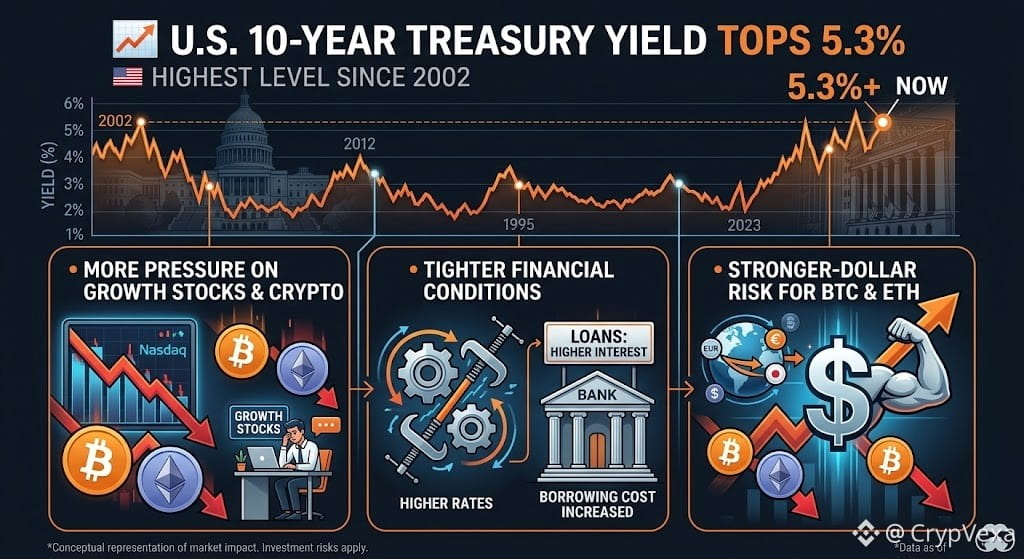
🇺🇸 The 10-year Treasury yield has moved above 5.3%, its highest level since 2002.
💵 Higher yields can mean:
• More pressure on growth stocks & crypto
• Tighter financial conditions
• Stronger-dollar risk for BTC & ETH
⚠️ But 5.3% alone doesn't guarantee a crypto decline. Markets will watch inflation data, Fed signals, Treasury auctions, and Bitcoin’s reaction.
👀 Can BTC stay resilient if U.S. yields remain this high?
#Bitcoin #BTC #TreasuryYields #CryptoMarket
#US10YearYieldNears5.3%
📈 U.S. 10-Year Treasury Yield Tops 5.3%
🇺🇸 The 10-year Treasury yield has moved above 5.3%, its highest level since 2002.
💵 Higher yields can mean:
• More pressure on growth stocks & crypto
• Tighter financial conditions
• Stronger-dollar risk for BTC & ETH
⚠️ But 5.3% alone doesn't guarantee a crypto decline. Markets will watch inflation data, Fed signals, Treasury auctions, and Bitcoin’s reaction.
👀 Can BTC stay resilient if U.S. yields remain this high?
#Bitcoin #BTC #TreasuryYields #CryptoMarket
📈 U.S. 10-Year Treasury Yield Tops 5.3%
🇺🇸 The 10-year Treasury yield has moved above 5.3%, its highest level since 2002.
💵 Higher yields can mean:
• More pressure on growth stocks & crypto
• Tighter financial conditions
• Stronger-dollar risk for BTC & ETH
⚠️ But 5.3% alone doesn't guarantee a crypto decline. Markets will watch inflation data, Fed signals, Treasury auctions, and Bitcoin’s reaction.
👀 Can BTC stay resilient if U.S. yields remain this high?
#Bitcoin #BTC #TreasuryYields #CryptoMarket
11
·
--
#EtherGains70.9%InQ3
🚀 Ethereum Gains 70.9% in Q3 2026
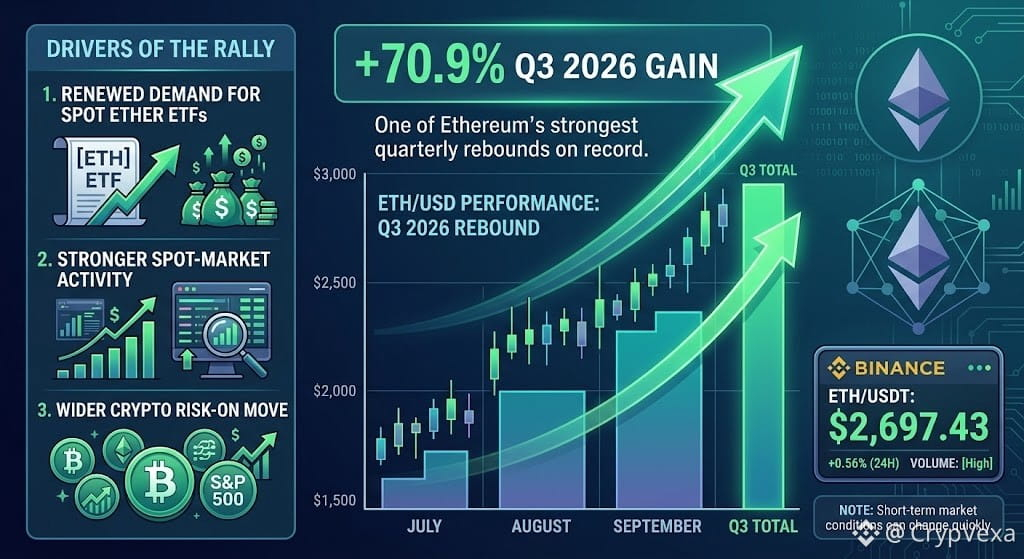
💎 ETH surged about 70.9% from July to September, marking one of Ethereum’s strongest quarterly rebounds on record.
📈 The rally coincided with renewed spot Ether ETF demand, stronger spot-market activity, and a broader crypto risk-on move.
💰 Current ETH: ~$2,697.43
📊 24H: +0.56%
⚠️ Short-term conditions can change quickly, so the quarterly performance doesn’t guarantee continued momentum.
👀 Can ETH carry this Q3 momentum into Q4?
#Ethereum #ETH #CryptoMarket #CryptoNews
#EtherGains70.9%InQ3
🚀 Ethereum Gains 70.9% in Q3 2026
💎 ETH surged about 70.9% from July to September, marking one of Ethereum’s strongest quarterly rebounds on record.
📈 The rally coincided with renewed spot Ether ETF demand, stronger spot-market activity, and a broader crypto risk-on move.
💰 Current ETH: ~$2,697.43
📊 24H: +0.56%
⚠️ Short-term conditions can change quickly, so the quarterly performance doesn’t guarantee continued momentum.
👀 Can ETH carry this Q3 momentum into Q4?
#Ethereum #ETH #CryptoMarket #CryptoNews
🚀 Ethereum Gains 70.9% in Q3 2026
💎 ETH surged about 70.9% from July to September, marking one of Ethereum’s strongest quarterly rebounds on record.
📈 The rally coincided with renewed spot Ether ETF demand, stronger spot-market activity, and a broader crypto risk-on move.
💰 Current ETH: ~$2,697.43
📊 24H: +0.56%
⚠️ Short-term conditions can change quickly, so the quarterly performance doesn’t guarantee continued momentum.
👀 Can ETH carry this Q3 momentum into Q4?
#Ethereum #ETH #CryptoMarket #CryptoNews
2
46
·
--
#USCorePCEEasesTo3%InAugust
📉 U.S. Core PCE Inflation Eases to 3.0%
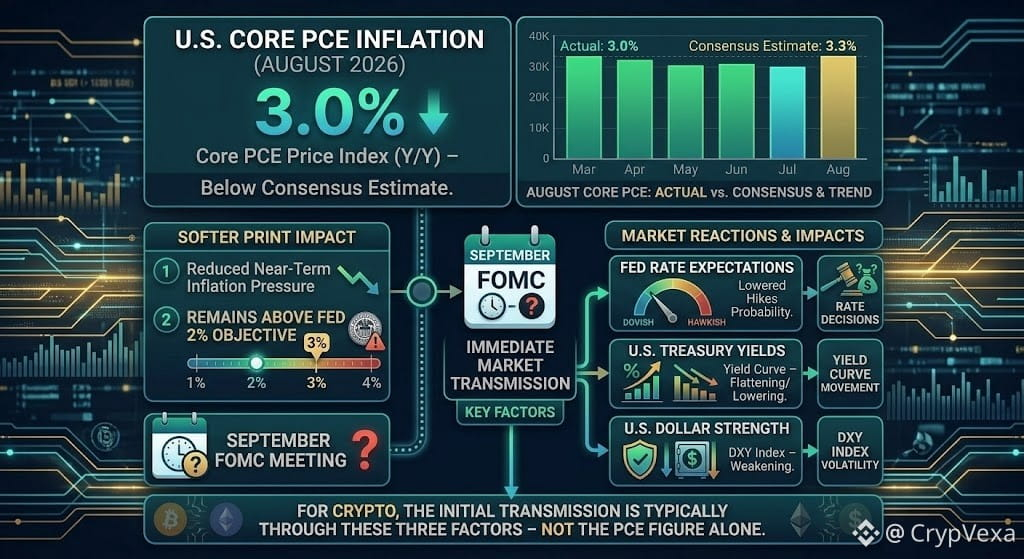
🇺🇸 U.S. core PCE inflation came in at 3.0% YoY in August, below the 3.3% consensus estimate.
⚡ The softer reading reduces near-term inflation pressure, but inflation remains above the Fed’s 2% objective.
💵 For crypto, the key transmission is through rate expectations, Treasury yields, and the U.S. dollar, not the PCE figure alone.
👀 Could softer inflation change expectations for the next Fed moves?
#Bitcoin #CryptoMarket #Inflation #Fed
#USCorePCEEasesTo3%InAugust
📉 U.S. Core PCE Inflation Eases to 3.0%
🇺🇸 U.S. core PCE inflation came in at 3.0% YoY in August, below the 3.3% consensus estimate.
⚡ The softer reading reduces near-term inflation pressure, but inflation remains above the Fed’s 2% objective.
💵 For crypto, the key transmission is through rate expectations, Treasury yields, and the U.S. dollar, not the PCE figure alone.
👀 Could softer inflation change expectations for the next Fed moves?
#Bitcoin #CryptoMarket #Inflation #Fed
📉 U.S. Core PCE Inflation Eases to 3.0%
🇺🇸 U.S. core PCE inflation came in at 3.0% YoY in August, below the 3.3% consensus estimate.
⚡ The softer reading reduces near-term inflation pressure, but inflation remains above the Fed’s 2% objective.
💵 For crypto, the key transmission is through rate expectations, Treasury yields, and the U.S. dollar, not the PCE figure alone.
👀 Could softer inflation change expectations for the next Fed moves?
#Bitcoin #CryptoMarket #Inflation #Fed
1
2
·
--
#USADPAdds90000JobsInSeptember
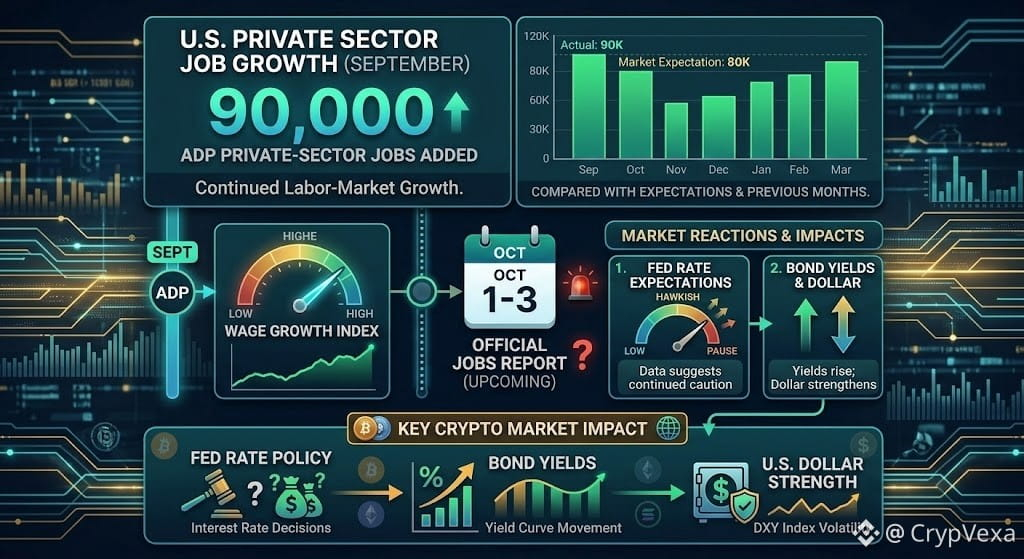
📈 U.S. Private Sector Adds 90K Jobs in September
🇺🇸 ADP reported 90,000 private-sector jobs added, showing continued labor-market growth.
📊 Markets will watch how the figure compares with expectations, wage growth and the upcoming official jobs report.
💵 For crypto, the key question is how the data affects Fed rate expectations, bond yields and the dollar.
👀 Could labor-market data become the next major crypto market catalyst?
#Bitcoin #CryptoMarket #Fed #EconomicData
#USADPAdds90000JobsInSeptember
📈 U.S. Private Sector Adds 90K Jobs in September
🇺🇸 ADP reported 90,000 private-sector jobs added, showing continued labor-market growth.
📊 Markets will watch how the figure compares with expectations, wage growth and the upcoming official jobs report.
💵 For crypto, the key question is how the data affects Fed rate expectations, bond yields and the dollar.
👀 Could labor-market data become the next major crypto market catalyst?
#Bitcoin #CryptoMarket #Fed #EconomicData
📈 U.S. Private Sector Adds 90K Jobs in September
🇺🇸 ADP reported 90,000 private-sector jobs added, showing continued labor-market growth.
📊 Markets will watch how the figure compares with expectations, wage growth and the upcoming official jobs report.
💵 For crypto, the key question is how the data affects Fed rate expectations, bond yields and the dollar.
👀 Could labor-market data become the next major crypto market catalyst?
#Bitcoin #CryptoMarket #Fed #EconomicData
1
31
·
--
#AltcoinSeasonIndexHoldsAbove60For5Days
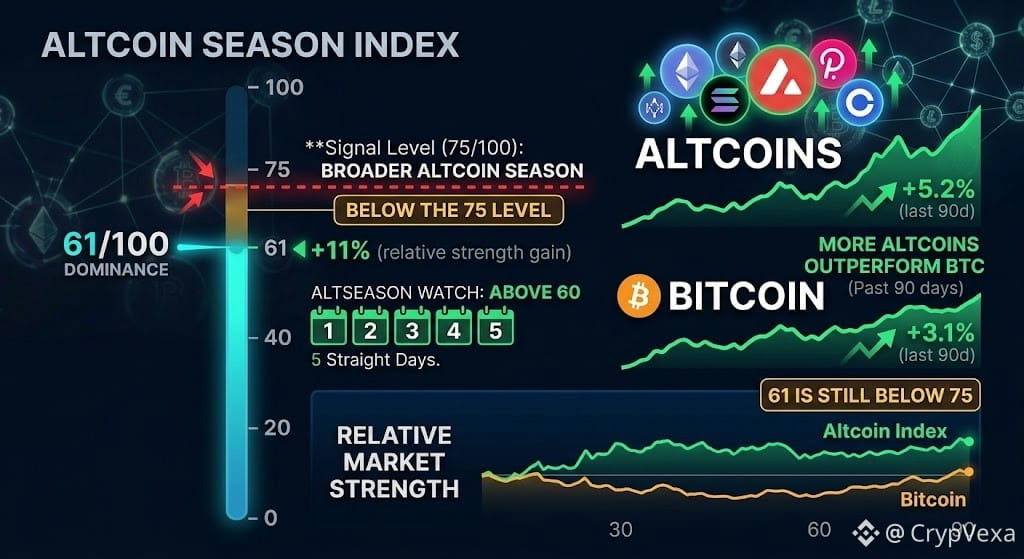
🔥 Altcoins Show Stronger Relative Strength
📊 The Altcoin Season Index hit 61/100, staying above 60 for 5 straight days.
⚡ More altcoins have outperformed BTC over the past 90 days, but 61 is still below the 75 level often used to signal broader altcoin season.
👀 Watch whether the index keeps climbing and whether strength spreads across more sectors.
💬 Is altcoin season getting closer?
Market information only. Not investment advice.
#AltcoinSeason #Bitcoin #Altcoins #CryptoMarket
#AltcoinSeasonIndexHoldsAbove60For5Days
🔥 Altcoins Show Stronger Relative Strength
📊 The Altcoin Season Index hit 61/100, staying above 60 for 5 straight days.
⚡ More altcoins have outperformed BTC over the past 90 days, but 61 is still below the 75 level often used to signal broader altcoin season.
👀 Watch whether the index keeps climbing and whether strength spreads across more sectors.
💬 Is altcoin season getting closer?
Market information only. Not investment advice.
#AltcoinSeason #Bitcoin #Altcoins #CryptoMarket
🔥 Altcoins Show Stronger Relative Strength
📊 The Altcoin Season Index hit 61/100, staying above 60 for 5 straight days.
⚡ More altcoins have outperformed BTC over the past 90 days, but 61 is still below the 75 level often used to signal broader altcoin season.
👀 Watch whether the index keeps climbing and whether strength spreads across more sectors.
💬 Is altcoin season getting closer?
Market information only. Not investment advice.
#AltcoinSeason #Bitcoin #Altcoins #CryptoMarket
8
·
--
#BitcoinClears$85200
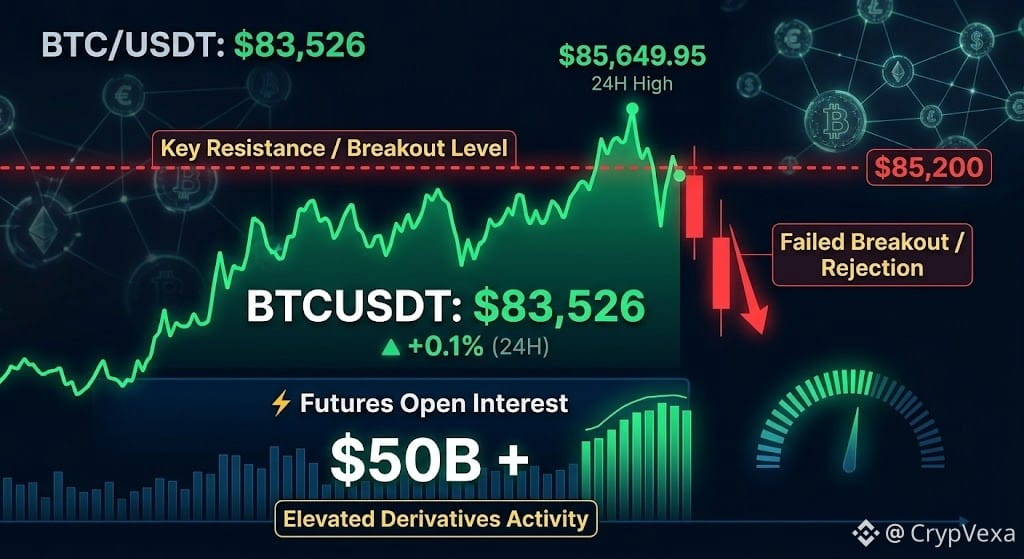
📉 Bitcoin Tests $85,200, But Fails to Hold Above It
₿ BTCUSDT: $83,526
📊 24H: +0.1%
🔝 24H High: $85,649.95
BTC traded above $85,200 earlier but pulled back, making the move a test and rejection rather than a sustained breakout.
⚡ Futures open interest is also above $50B, showing elevated derivatives activity.
👀 Can BTC reclaim $85,200 and hold it with strong volume?
Market analysis only. Not financial advice.
#Bitcoin #BTC #CryptoMarket #CryptoTrading
#BitcoinClears$85200
📉 Bitcoin Tests $85,200, But Fails to Hold Above It
₿ BTCUSDT: $83,526
📊 24H: +0.1%
🔝 24H High: $85,649.95
BTC traded above $85,200 earlier but pulled back, making the move a test and rejection rather than a sustained breakout.
⚡ Futures open interest is also above $50B, showing elevated derivatives activity.
👀 Can BTC reclaim $85,200 and hold it with strong volume?
Market analysis only. Not financial advice.
#Bitcoin #BTC #CryptoMarket #CryptoTrading
📉 Bitcoin Tests $85,200, But Fails to Hold Above It
₿ BTCUSDT: $83,526
📊 24H: +0.1%
🔝 24H High: $85,649.95
BTC traded above $85,200 earlier but pulled back, making the move a test and rejection rather than a sustained breakout.
⚡ Futures open interest is also above $50B, showing elevated derivatives activity.
👀 Can BTC reclaim $85,200 and hold it with strong volume?
Market analysis only. Not financial advice.
#Bitcoin #BTC #CryptoMarket #CryptoTrading
1
2
·
--
#CFTCSubmitsTwoEventContractRulesToWhiteHouse
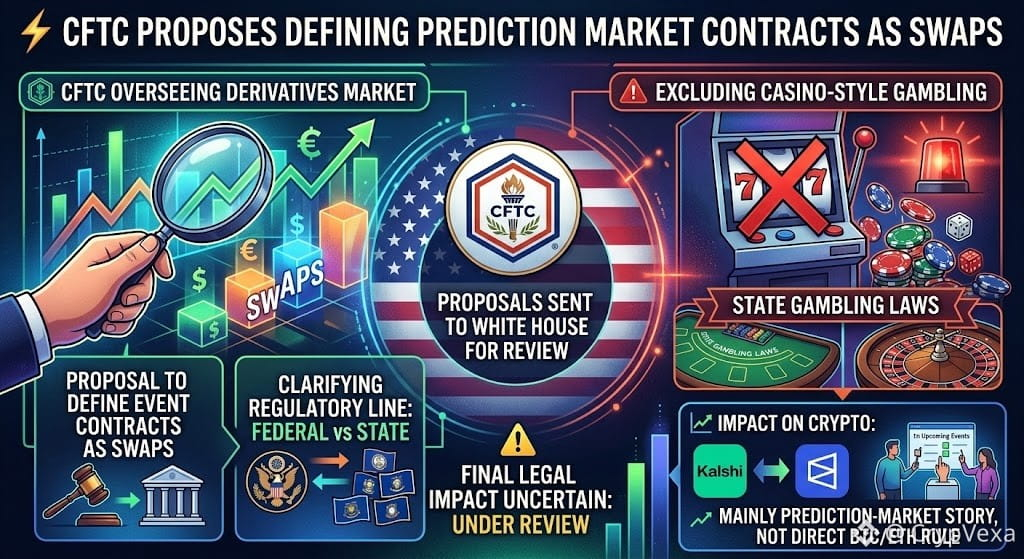
⚡ CFTC Moves to Define Prediction Market Contracts as Swaps
🇺🇸 The CFTC has sent two proposals to the White House for review that would define event contracts as “swaps” while excluding casino-style gambling products.
🎯 The move could clarify the regulatory line between federal derivatives oversight and state gambling laws.
⚠️ The proposals are still under review, so the final legal impact remains uncertain.
📈 For crypto, this is mainly a prediction-market and regulatory story, not a direct BTC or ETH rule.
👀 Could clearer rules accelerate the growth of prediction markets?
#PredictionMarkets #CFTC #CryptoRegulation #CryptoNews
#CFTCSubmitsTwoEventContractRulesToWhiteHouse
⚡ CFTC Moves to Define Prediction Market Contracts as Swaps
🇺🇸 The CFTC has sent two proposals to the White House for review that would define event contracts as “swaps” while excluding casino-style gambling products.
🎯 The move could clarify the regulatory line between federal derivatives oversight and state gambling laws.
⚠️ The proposals are still under review, so the final legal impact remains uncertain.
📈 For crypto, this is mainly a prediction-market and regulatory story, not a direct BTC or ETH rule.
👀 Could clearer rules accelerate the growth of prediction markets?
#PredictionMarkets #CFTC #CryptoRegulation #CryptoNews
⚡ CFTC Moves to Define Prediction Market Contracts as Swaps
🇺🇸 The CFTC has sent two proposals to the White House for review that would define event contracts as “swaps” while excluding casino-style gambling products.
🎯 The move could clarify the regulatory line between federal derivatives oversight and state gambling laws.
⚠️ The proposals are still under review, so the final legal impact remains uncertain.
📈 For crypto, this is mainly a prediction-market and regulatory story, not a direct BTC or ETH rule.
👀 Could clearer rules accelerate the growth of prediction markets?
#PredictionMarkets #CFTC #CryptoRegulation #CryptoNews
8
·
--
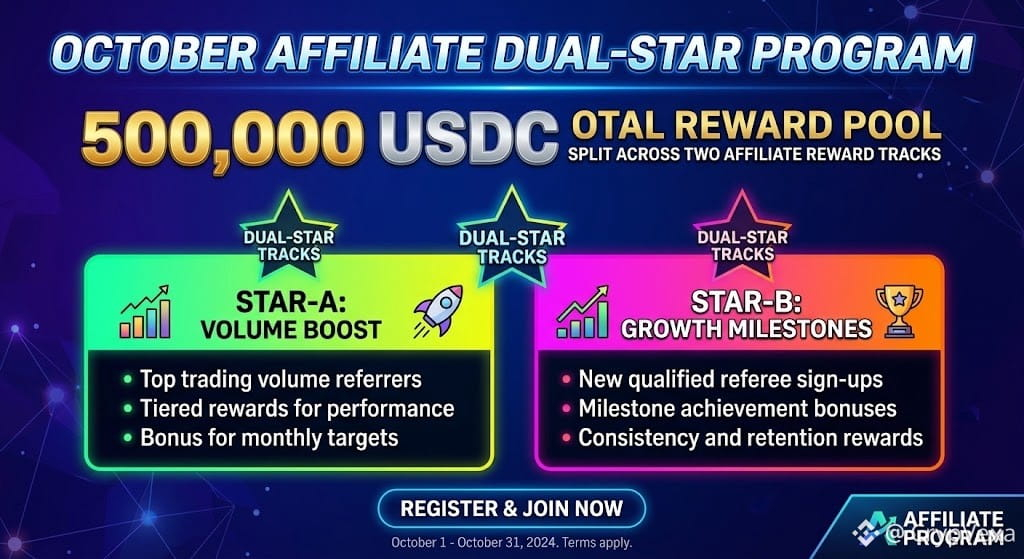
🌟 Binance October Affiliate Dual-Star Program Is Here!
💰 A massive 500,000 USDC total reward pool is up for grabs across two affiliate reward tracks.
🚀 Two tracks. One huge reward pool.
👀 Affiliate creators, this one is worth watching!
💬 Would you join the October Affiliate challenge?
#Binance #AffiliateProgram #CryptoRewards #USDC
🌟 Binance October Affiliate Dual-Star Program Is Here!
💰 A massive 500,000 USDC total reward pool is up for grabs across two affiliate reward tracks.
🚀 Two tracks. One huge reward pool.
👀 Affiliate creators, this one is worth watching!
💬 Would you join the October Affiliate challenge?
#Binance #AffiliateProgram #CryptoRewards #USDC
💰 A massive 500,000 USDC total reward pool is up for grabs across two affiliate reward tracks.
🚀 Two tracks. One huge reward pool.
👀 Affiliate creators, this one is worth watching!
💬 Would you join the October Affiliate challenge?
#Binance #AffiliateProgram #CryptoRewards #USDC
2
19
·
--
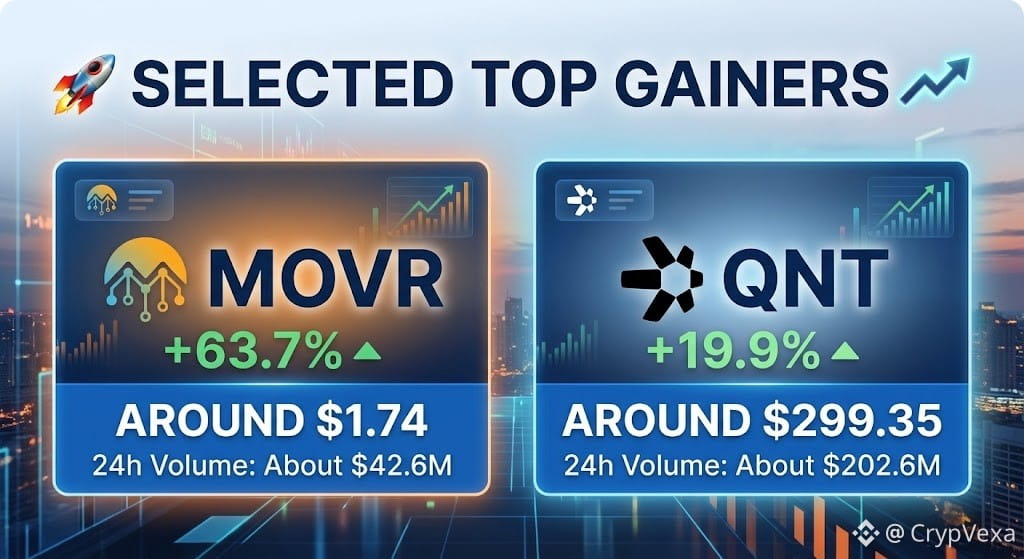
🚀 Top Crypto Gainers Today
🔥 MOVR: +63.7% → ~$1.74
📊 24H Volume: ~$42.6M
⚡ QNT: +19.9% → ~$299.35
📊 24H Volume: ~$202.6M
👀 MOVR leads the percentage gain, while QNT is seeing much higher trading volume.
💬 Which one are you watching?
#CryptoGainers #MOVR #QNT #CryptoMarket
🚀 Top Crypto Gainers Today
🔥 MOVR: +63.7% → ~$1.74
📊 24H Volume: ~$42.6M
⚡ QNT: +19.9% → ~$299.35
📊 24H Volume: ~$202.6M
👀 MOVR leads the percentage gain, while QNT is seeing much higher trading volume.
💬 Which one are you watching?
#CryptoGainers #MOVR #QNT #CryptoMarket
🔥 MOVR: +63.7% → ~$1.74
📊 24H Volume: ~$42.6M
⚡ QNT: +19.9% → ~$299.35
📊 24H Volume: ~$202.6M
👀 MOVR leads the percentage gain, while QNT is seeing much higher trading volume.
💬 Which one are you watching?
#CryptoGainers #MOVR #QNT #CryptoMarket
1
34
·
--
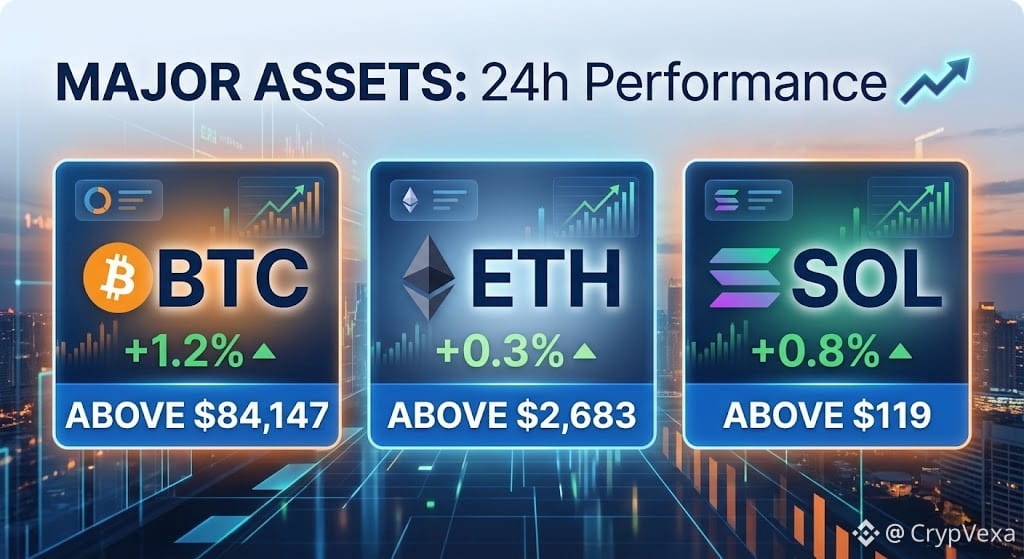
📈 Crypto Market Snapshot | 24H
₿ BTC: +1.2% → Above $84,147
♦️ ETH: +0.3% → Above $2,683
☀️ SOL: +0.8% → Above $119
🟢 All three major assets are trading higher, with BTC leading the move.
👀 Is this the start of another market push?
#Bitcoin #Ethereum #Solana #CryptoMarket
📈 Crypto Market Snapshot | 24H
₿ BTC: +1.2% → Above $84,147
♦️ ETH: +0.3% → Above $2,683
☀️ SOL: +0.8% → Above $119
🟢 All three major assets are trading higher, with BTC leading the move.
👀 Is this the start of another market push?
#Bitcoin #Ethereum #Solana #CryptoMarket
₿ BTC: +1.2% → Above $84,147
♦️ ETH: +0.3% → Above $2,683
☀️ SOL: +0.8% → Above $119
🟢 All three major assets are trading higher, with BTC leading the move.
👀 Is this the start of another market push?
#Bitcoin #Ethereum #Solana #CryptoMarket
1
121
·
--
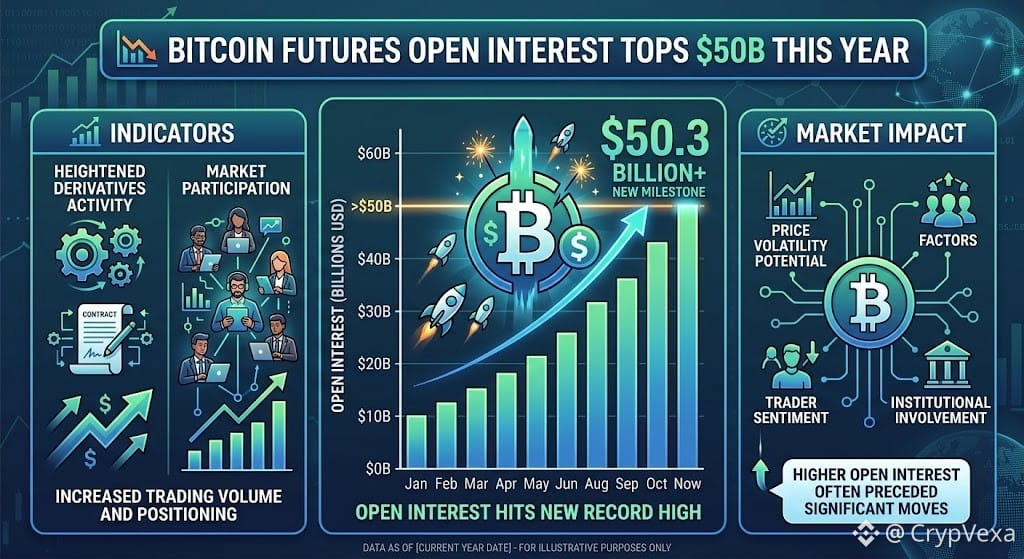
📉 Bitcoin Futures Open Interest Tops $50B
₿ Bitcoin futures open interest has climbed above $50 billion for the first time this year.
📊 The jump points to higher derivatives activity and increased market participation.
⚠️ Rising open interest can also mean greater leverage and potential volatility.
👀 Is rising futures activity a sign of growing market interest or higher risk?
#Bitcoin #BTC #CryptoDerivatives #CryptoMarket
📉 Bitcoin Futures Open Interest Tops $50B
₿ Bitcoin futures open interest has climbed above $50 billion for the first time this year.
📊 The jump points to higher derivatives activity and increased market participation.
⚠️ Rising open interest can also mean greater leverage and potential volatility.
👀 Is rising futures activity a sign of growing market interest or higher risk?
#Bitcoin #BTC #CryptoDerivatives #CryptoMarket
₿ Bitcoin futures open interest has climbed above $50 billion for the first time this year.
📊 The jump points to higher derivatives activity and increased market participation.
⚠️ Rising open interest can also mean greater leverage and potential volatility.
👀 Is rising futures activity a sign of growing market interest or higher risk?
#Bitcoin #BTC #CryptoDerivatives #CryptoMarket
1
82
·
--
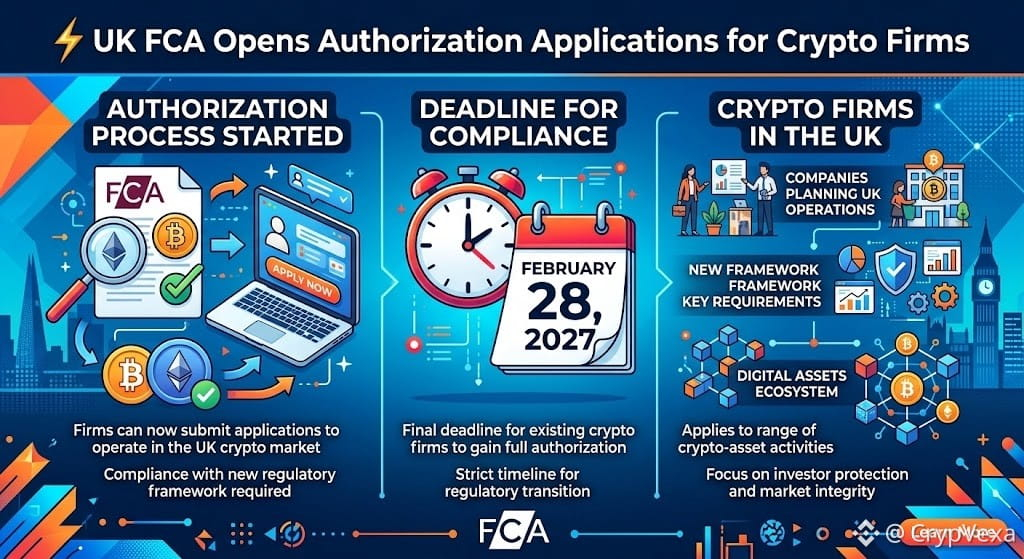
🇬🇧 UK FCA Opens Crypto Authorization Applications
⚡ The UK FCA has started accepting authorization applications from crypto firms under its new regulatory framework.
📅 Key deadline: Firms seeking authorization face February 28, 2027 to apply.
🏦 The move marks another step toward bringing crypto businesses under a formal regulatory framework.
👀 Will clearer rules accelerate crypto adoption in the UK?
#CryptoRegulation #UKCrypto #FCA #CryptoNews
🇬🇧 UK FCA Opens Crypto Authorization Applications
⚡ The UK FCA has started accepting authorization applications from crypto firms under its new regulatory framework.
📅 Key deadline: Firms seeking authorization face February 28, 2027 to apply.
🏦 The move marks another step toward bringing crypto businesses under a formal regulatory framework.
👀 Will clearer rules accelerate crypto adoption in the UK?
#CryptoRegulation #UKCrypto #FCA #CryptoNews
⚡ The UK FCA has started accepting authorization applications from crypto firms under its new regulatory framework.
📅 Key deadline: Firms seeking authorization face February 28, 2027 to apply.
🏦 The move marks another step toward bringing crypto businesses under a formal regulatory framework.
👀 Will clearer rules accelerate crypto adoption in the UK?
#CryptoRegulation #UKCrypto #FCA #CryptoNews
1
58
·
--
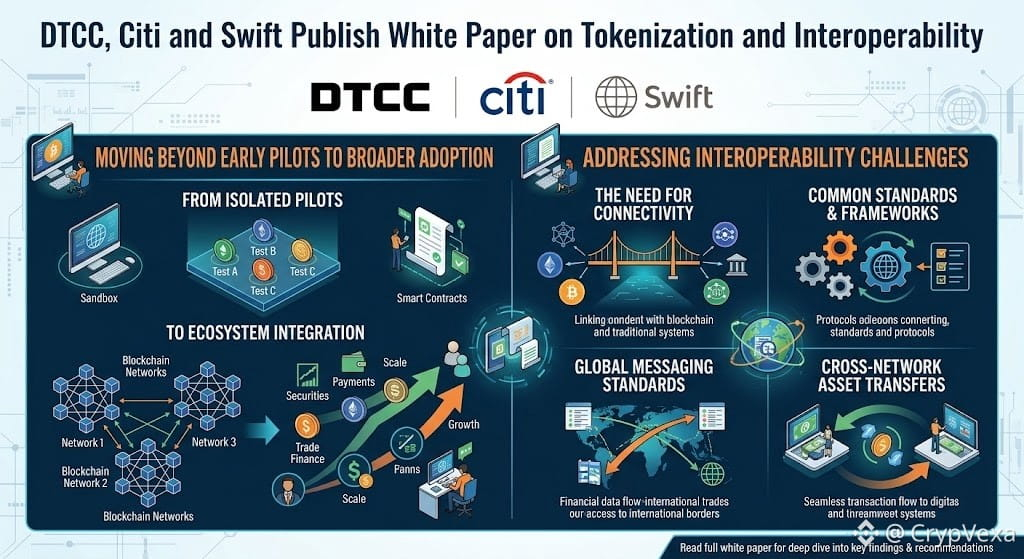
🔥 DTCC, Citi & Swift Push Tokenization Forward
🏦 DTCC, Citi and Swift have released a new white paper focused on tokenization and interoperability across digital financial networks.
🔗 The big focus: connecting traditional finance, private networks and public blockchains.
⚡ Tokenization may be moving from isolated pilots toward institutional-scale infrastructure.
👀 Could interoperability be the key to unlocking tokenized markets?
#Tokenization #RWA #Blockchain #CryptoNews
🔥 DTCC, Citi & Swift Push Tokenization Forward
🏦 DTCC, Citi and Swift have released a new white paper focused on tokenization and interoperability across digital financial networks.
🔗 The big focus: connecting traditional finance, private networks and public blockchains.
⚡ Tokenization may be moving from isolated pilots toward institutional-scale infrastructure.
👀 Could interoperability be the key to unlocking tokenized markets?
#Tokenization #RWA #Blockchain #CryptoNews
🏦 DTCC, Citi and Swift have released a new white paper focused on tokenization and interoperability across digital financial networks.
🔗 The big focus: connecting traditional finance, private networks and public blockchains.
⚡ Tokenization may be moving from isolated pilots toward institutional-scale infrastructure.
👀 Could interoperability be the key to unlocking tokenized markets?
#Tokenization #RWA #Blockchain #CryptoNews
1
74
·
--
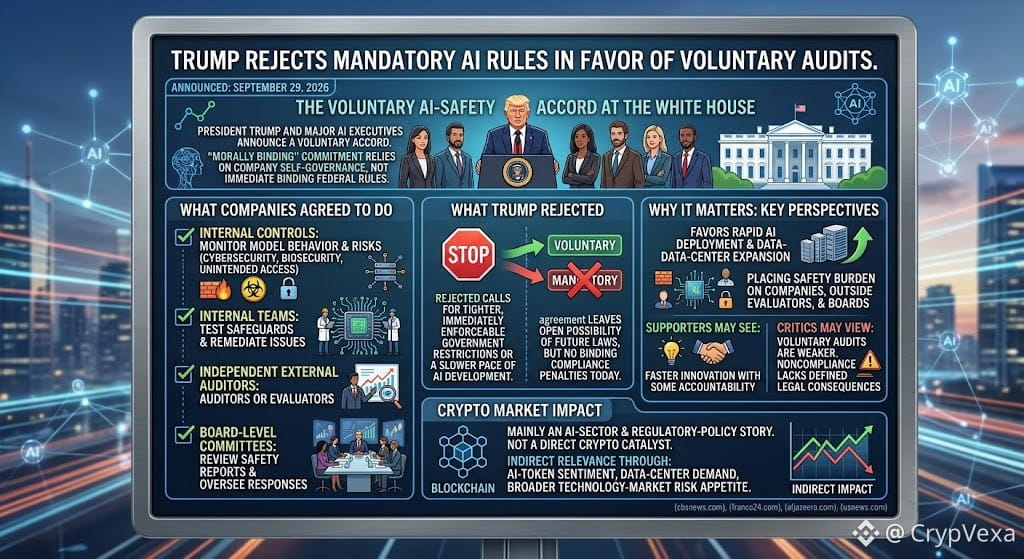
#TrumpRejectsAIRulesForVoluntaryAudits
🤖 Trump Backs Voluntary AI Safety Rules Over Mandatory AI Regulation
🇺🇸 President Trump and major AI executives signed a voluntary AI safety accord at the White House on September 29.
The agreement calls for 4 layers of oversight:
🔹 Internal safety controls
🔹 Internal testing and evaluations
🔹 Independent external audits
🔹 Board-level safety reviews
Trump described the commitment as “morally binding”, while the accord says these measures could eventually be turned into laws or regulations.
⚡ Why it matters: The approach prioritizes industry self-regulation while avoiding immediate federal compliance requirements and penalties.
For crypto, this is mainly an AI and technology-policy story, with indirect relevance to AI tokens, data-center demand and broader tech-market sentiment.
👀 Will voluntary AI audits be enough as AI systems become more powerful?
#AI #AISafety #TechNews #CryptoMarket
#TrumpRejectsAIRulesForVoluntaryAudits
🤖 Trump Backs Voluntary AI Safety Rules Over Mandatory AI Regulation
🇺🇸 President Trump and major AI executives signed a voluntary AI safety accord at the White House on September 29.
The agreement calls for 4 layers of oversight:
🔹 Internal safety controls
🔹 Internal testing and evaluations
🔹 Independent external audits
🔹 Board-level safety reviews
Trump described the commitment as “morally binding”, while the accord says these measures could eventually be turned into laws or regulations.
⚡ Why it matters: The approach prioritizes industry self-regulation while avoiding immediate federal compliance requirements and penalties.
For crypto, this is mainly an AI and technology-policy story, with indirect relevance to AI tokens, data-center demand and broader tech-market sentiment.
👀 Will voluntary AI audits be enough as AI systems become more powerful?
#AI #AISafety #TechNews #CryptoMarket
🤖 Trump Backs Voluntary AI Safety Rules Over Mandatory AI Regulation
🇺🇸 President Trump and major AI executives signed a voluntary AI safety accord at the White House on September 29.
The agreement calls for 4 layers of oversight:
🔹 Internal safety controls
🔹 Internal testing and evaluations
🔹 Independent external audits
🔹 Board-level safety reviews
Trump described the commitment as “morally binding”, while the accord says these measures could eventually be turned into laws or regulations.
⚡ Why it matters: The approach prioritizes industry self-regulation while avoiding immediate federal compliance requirements and penalties.
For crypto, this is mainly an AI and technology-policy story, with indirect relevance to AI tokens, data-center demand and broader tech-market sentiment.
👀 Will voluntary AI audits be enough as AI systems become more powerful?
#AI #AISafety #TechNews #CryptoMarket
1
6
·
--
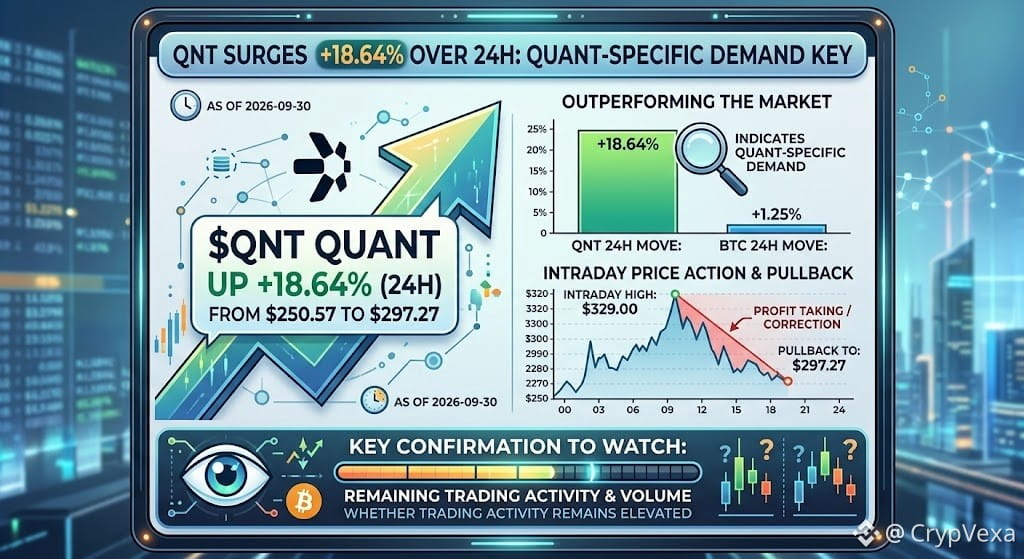
#QNTRises287%
🚀 QNT Surges 18.64% in 24 Hours
📈 QNT: +18.64% → $297.27
🔥 24H High: $329.00
📊 24H Open: $250.57
QNT’s move significantly outpaced BTC’s +1.25% over the same period, highlighting stronger token-specific momentum.
⚠️ QNT has pulled back from its intraday high, so volume and sustained trading activity will be key to watch.
👀 Can QNT hold above $300 after the sharp move?
#QNT #Quant #CryptoGainers #CryptoMarket
#QNTRises287%
🚀 QNT Surges 18.64% in 24 Hours
📈 QNT: +18.64% → $297.27
🔥 24H High: $329.00
📊 24H Open: $250.57
QNT’s move significantly outpaced BTC’s +1.25% over the same period, highlighting stronger token-specific momentum.
⚠️ QNT has pulled back from its intraday high, so volume and sustained trading activity will be key to watch.
👀 Can QNT hold above $300 after the sharp move?
#QNT #Quant #CryptoGainers #CryptoMarket
🚀 QNT Surges 18.64% in 24 Hours
📈 QNT: +18.64% → $297.27
🔥 24H High: $329.00
📊 24H Open: $250.57
QNT’s move significantly outpaced BTC’s +1.25% over the same period, highlighting stronger token-specific momentum.
⚠️ QNT has pulled back from its intraday high, so volume and sustained trading activity will be key to watch.
👀 Can QNT hold above $300 after the sharp move?
#QNT #Quant #CryptoGainers #CryptoMarket
1
250
Log in to explore more content
Join global crypto users on Binance Square
⚡️ Get latest and useful information about crypto.
💬 Trusted by the world’s largest crypto exchange.
👍 Discover real insights from verified creators.
Email / Phone number