

#marketdynamics
marketdynamics
365,012 views
1,034 Discussing
Hot
Latest

Demystifying Crypto Liquidity: How Order Books, Market Depth, and Slippage Shape Every TradeLiquidity is often cited as the lifeblood of financial markets, yet it remains one of the most misunderstood concepts among developing crypto traders. While many market participants focus overwhelmingly on technical chart patterns, momentum indicators, or fundamental project updates, the underlying liquidity structure ultimately dictates how smoothly—or brutally—orders are executed.
Understanding liquidity is not merely an academic exercise; it is a vital component of risk management, execution strategy, and market analysis. In crypto, where trading occurs around the clock across hundreds of fragmented centralized and decentralized venues, liquidity dynamics can change in a fraction of a second.
This guide breaks down the core mechanics of crypto liquidity, examining how order books function, why slippage occurs, how liquidity differs between exchange models, and how intermediate traders can evaluate market depth to improve their execution and protect their capital.
---
### What Is Crypto Liquidity and Why Does It Matter?
In simple terms, liquidity refers to the ease with which an asset can be converted into cash or another asset without causing a significant shift in its market price.
An asset is considered highly liquid if there are large amounts of buy and sell interest present at prices near the current market rate. Conversely, an illiquid asset lacks sufficient buy or sell orders nearby, meaning even modest trade sizes can push the market price dramatically up or down.
Liquidity matters for three primary reasons:
1. **Price Stability:** Highly liquid markets absorb large sell or buy orders with minimal price movement, reducing erratic spikes and wicks.
2. **Execution Efficiency:** Traders can enter and exit positions at prices that closely match their expectations.
3. **Market Integrity:** Liquid markets are harder to manipulate because moving the price requires substantially more capital.
---
### The Architecture of Liquidity: Order Books and Market Depth
To understand where liquidity comes from on traditional centralized exchanges, one must look at the continuous limit order book (CLOB).
An order book is a real-time ledger of pending buy and sell orders for a specific trading asset. It is split into two sides:
* **The Bid Side:** Represents buyer demand. Traders place limit orders specifying the maximum price they are willing to pay and the quantity they wish to buy. Bids are ranked from highest price to lowest.
* **The Ask (or Offer) Side:** Represents seller supply. Traders place limit orders specifying the minimum price they are willing to accept and the quantity they wish to sell. Asks are ranked from lowest price to highest.
The difference between the highest bid price and the lowest ask price is called the **bid-ask spread**. In highly liquid assets like Bitcoin or Ethereum during peak hours, this spread can be as narrow as a fraction of a cent or a single basis point. In obscure altcoins, the spread can be several percent wide.
#### Understanding Market Depth
Market depth visualizes the cumulative volume of limit orders waiting at various price levels away from the current mid-price. A "deep" market has massive resting orders clustered closely around the current price, creating a thick cushion that absorbs incoming market orders. A "thin" market has sparse resting orders spread widely apart, leaving the price vulnerable to severe volatility when large market orders hit the order book.
---
### Mechanics in Action: Market Orders, Slippage, and Price Impact
To grasp how order books impact execution, it is essential to distinguish between two types of market participants:
* **Liquidity Providers (Makers):** Traders who submit limit orders that do not execute immediately. These orders rest on the order book, adding depth and providing liquidity for others.
* **Liquidity Takers (Makers):** Traders who submit market orders that match instantly against existing limit orders, removing liquidity from the book.
When a market taker submits a buy order, the exchange’s matching engine consumes the lowest available ask order. If the size of the buy order exceeds the volume available at that lowest ask, the engine automatically walks up the order book, consuming subsequent ask levels until the entire order is filled.
#### A Practical Numerical Example
Imagine a scenario where an investor wants to purchase 10 units of an asset using a market order. The order book currently looks as follows:
* **Ask Level 1:** 2 units at $100.00
* **Ask Level 2:** 3 units at $100.50
* **Ask Level 3:** 5 units at $101.00
When the market order for 10 units is placed, it executes as follows:
1. 2 units are purchased at $100.00 (Cost: $200.00)
2. 3 units are purchased at $100.50 (Cost: $301.50)
3. 5 units are purchased at $101.00 (Cost: $505.00)
**Total Spent:** $1,006.50
**Average Execution Price:** $100.65 per unit.
The trader expected to buy at the best ask price of $100.00, but because the market depth was insufficient for their size, their average price was $100.65. This difference between the expected execution price and the actual execution price is known as **slippage**.
Slippage is not a hidden exchange fee; it is the natural consequence of consuming more order book depth than is available at a single price level.
---
### Centralized vs. Decentralized Liquidity Models
Liquidity functions differently depending on the exchange venue structure:
#### 1. Centralized Exchanges (CEXs)
Centralized platforms use matching engines and limit order books. Professional market makers play a critical role here, using automated algorithms to continually quote bids and asks on both sides of the market. They earn a margin from the bid-ask spread while ensuring constant order depth for regular traders.
#### 2. Decentralized Exchanges (DEXs)
Decentralized platforms often rely on Automated Market Makers (AMMs) and Liquidity Pools rather than order books. Instead of matching buyers with sellers directly, users trade against a smart contract containing a reserve of two or more tokens.
In a classic constant-product AMM, the liquidity pool maintains a balancing formula where the product of the quantities of two tokens remains constant. When a trader buys Token A from the pool, they deposit Token B, which increases the supply of Token B and decreases the supply of Token A within the pool. This automatically shifts the price along a mathematical curve.
On DEXs, trade size relative to total pool size dictates price impact. If a swap represents a large percentage of the liquidity pool's reserves, the trader experiences exponential price impact.
---
### Evaluating Liquidity: Practical Indicators for Intermediate Traders
Relying solely on 24-hour trading volume can be misleading, as volume can be artificially inflated through wash trading or concentrated in brief, isolated bursts. Intermediate traders should look at a broader set of indicators:
1. **Order Book Depth at 1% and 2% Levels:** Check how many dollars' worth of bids or asks exist within 1% or 2% of the current price. Higher depth at these tight bands indicates better structural liquidity.
2. **Bid-Ask Spread Consistency:** Monitor the spread during different global time zones. A widening spread often signals that market makers are withdrawing liquidity due to expected risk or low activity.
3. **Volume-to-Depth Ratio:** An asset with high volume but low order book depth can experience violent price gaps if a major player decides to liquidate a position rapidly.
---
### Risks, Limitations, and "Phantom Liquidity"
Liquidity is dynamic, not permanent. Traders must account for several structural risks and limitations:
* **Phantom Liquidity (Spoofing):** Limit orders visible on the order book can be canceled in milliseconds. Unscrupulous actors sometimes place massive orders to create a false impression of support or resistance, only to cancel them right before they are executed.
* **Liquidity Dry-Ups During Crunches:** During extreme macro events or flash crashes, market makers frequently pull their limit orders to protect themselves from continuous toxic flow. This causes order books to thin out dramatically precisely when panic-sellers are rushing to exit, magnifying downward spirals.
* **Fragmentation Across Venues:** Because crypto trades across dozens of isolated exchanges simultaneously, liquidity is fragmented. An asset might be highly liquid on one major platform while remaining dangerously illiquid on a smaller venue.
---
### Practical Execution Strategies to Minimize Slippage
To preserve capital and optimize trade entries, consider applying these operational best practices:
* **Use Limit Orders Instead of Market Orders:** By placing limit orders, you act as a liquidity provider. You guarantee your execution price (or better), though you accept the risk that your order may not be filled if the market moves away from you.
* **Break Up Large Orders:** If entering a larger position, split the trade into smaller tranches over time rather than executing a single large market order.
* **Utilize Time-Weighted Average Price (TWAP) Strategies:** For significant trade sizes, automated TWAP algorithms spread execution evenly over a designated timeframe, minimizing overall price impact on the book.
* **Beware of Off-Peak Hours:** Liquidity often thins out during weekends or low-volume global trading windows. Trading during peak liquidity windows helps ensure tighter spreads and deeper books.
---
### Final Thoughts
Liquidity is the hidden structure beneath every market movement. By looking beyond simple price charts and paying attention to order book depth, bid-ask spreads, and execution dynamics, traders can make far more informed decisions. Understanding how your orders interact with market liquidity is one of the essential steps in transitioning from an amateur participant to a disciplined, risk-conscious trader.
#CryptoEducation #MarketDynamics #TradingStrategies
Demystifying Crypto Liquidity: How Order Books, Market Depth, and Slippage Shape Every Trade
Liquidity is often cited as the lifeblood of financial markets, yet it remains one of the most misunderstood concepts among developing crypto traders. While many market participants focus overwhelmingly on technical chart patterns, momentum indicators, or fundamental project updates, the underlying liquidity structure ultimately dictates how smoothly—or brutally—orders are executed.
Understanding liquidity is not merely an academic exercise; it is a vital component of risk management, execution strategy, and market analysis. In crypto, where trading occurs around the clock across hundreds of fragmented centralized and decentralized venues, liquidity dynamics can change in a fraction of a second.
This guide breaks down the core mechanics of crypto liquidity, examining how order books function, why slippage occurs, how liquidity differs between exchange models, and how intermediate traders can evaluate market depth to improve their execution and protect their capital.
---
### What Is Crypto Liquidity and Why Does It Matter?
In simple terms, liquidity refers to the ease with which an asset can be converted into cash or another asset without causing a significant shift in its market price.
An asset is considered highly liquid if there are large amounts of buy and sell interest present at prices near the current market rate. Conversely, an illiquid asset lacks sufficient buy or sell orders nearby, meaning even modest trade sizes can push the market price dramatically up or down.
Liquidity matters for three primary reasons:
1. **Price Stability:** Highly liquid markets absorb large sell or buy orders with minimal price movement, reducing erratic spikes and wicks.
2. **Execution Efficiency:** Traders can enter and exit positions at prices that closely match their expectations.
3. **Market Integrity:** Liquid markets are harder to manipulate because moving the price requires substantially more capital.
---
### The Architecture of Liquidity: Order Books and Market Depth
To understand where liquidity comes from on traditional centralized exchanges, one must look at the continuous limit order book (CLOB).
An order book is a real-time ledger of pending buy and sell orders for a specific trading asset. It is split into two sides:
* **The Bid Side:** Represents buyer demand. Traders place limit orders specifying the maximum price they are willing to pay and the quantity they wish to buy. Bids are ranked from highest price to lowest.
* **The Ask (or Offer) Side:** Represents seller supply. Traders place limit orders specifying the minimum price they are willing to accept and the quantity they wish to sell. Asks are ranked from lowest price to highest.
The difference between the highest bid price and the lowest ask price is called the **bid-ask spread**. In highly liquid assets like Bitcoin or Ethereum during peak hours, this spread can be as narrow as a fraction of a cent or a single basis point. In obscure altcoins, the spread can be several percent wide.
#### Understanding Market Depth
Market depth visualizes the cumulative volume of limit orders waiting at various price levels away from the current mid-price. A "deep" market has massive resting orders clustered closely around the current price, creating a thick cushion that absorbs incoming market orders. A "thin" market has sparse resting orders spread widely apart, leaving the price vulnerable to severe volatility when large market orders hit the order book.
---
### Mechanics in Action: Market Orders, Slippage, and Price Impact
To grasp how order books impact execution, it is essential to distinguish between two types of market participants:
* **Liquidity Providers (Makers):** Traders who submit limit orders that do not execute immediately. These orders rest on the order book, adding depth and providing liquidity for others.
* **Liquidity Takers (Makers):** Traders who submit market orders that match instantly against existing limit orders, removing liquidity from the book.
When a market taker submits a buy order, the exchange’s matching engine consumes the lowest available ask order. If the size of the buy order exceeds the volume available at that lowest ask, the engine automatically walks up the order book, consuming subsequent ask levels until the entire order is filled.
#### A Practical Numerical Example
Imagine a scenario where an investor wants to purchase 10 units of an asset using a market order. The order book currently looks as follows:
* **Ask Level 1:** 2 units at $100.00
* **Ask Level 2:** 3 units at $100.50
* **Ask Level 3:** 5 units at $101.00
When the market order for 10 units is placed, it executes as follows:
1. 2 units are purchased at $100.00 (Cost: $200.00)
2. 3 units are purchased at $100.50 (Cost: $301.50)
3. 5 units are purchased at $101.00 (Cost: $505.00)
**Total Spent:** $1,006.50
**Average Execution Price:** $100.65 per unit.
The trader expected to buy at the best ask price of $100.00, but because the market depth was insufficient for their size, their average price was $100.65. This difference between the expected execution price and the actual execution price is known as **slippage**.
Slippage is not a hidden exchange fee; it is the natural consequence of consuming more order book depth than is available at a single price level.
---
### Centralized vs. Decentralized Liquidity Models
Liquidity functions differently depending on the exchange venue structure:
#### 1. Centralized Exchanges (CEXs)
Centralized platforms use matching engines and limit order books. Professional market makers play a critical role here, using automated algorithms to continually quote bids and asks on both sides of the market. They earn a margin from the bid-ask spread while ensuring constant order depth for regular traders.
#### 2. Decentralized Exchanges (DEXs)
Decentralized platforms often rely on Automated Market Makers (AMMs) and Liquidity Pools rather than order books. Instead of matching buyers with sellers directly, users trade against a smart contract containing a reserve of two or more tokens.
In a classic constant-product AMM, the liquidity pool maintains a balancing formula where the product of the quantities of two tokens remains constant. When a trader buys Token A from the pool, they deposit Token B, which increases the supply of Token B and decreases the supply of Token A within the pool. This automatically shifts the price along a mathematical curve.
On DEXs, trade size relative to total pool size dictates price impact. If a swap represents a large percentage of the liquidity pool's reserves, the trader experiences exponential price impact.
---
### Evaluating Liquidity: Practical Indicators for Intermediate Traders
Relying solely on 24-hour trading volume can be misleading, as volume can be artificially inflated through wash trading or concentrated in brief, isolated bursts. Intermediate traders should look at a broader set of indicators:
1. **Order Book Depth at 1% and 2% Levels:** Check how many dollars' worth of bids or asks exist within 1% or 2% of the current price. Higher depth at these tight bands indicates better structural liquidity.
2. **Bid-Ask Spread Consistency:** Monitor the spread during different global time zones. A widening spread often signals that market makers are withdrawing liquidity due to expected risk or low activity.
3. **Volume-to-Depth Ratio:** An asset with high volume but low order book depth can experience violent price gaps if a major player decides to liquidate a position rapidly.
---
### Risks, Limitations, and "Phantom Liquidity"
Liquidity is dynamic, not permanent. Traders must account for several structural risks and limitations:
* **Phantom Liquidity (Spoofing):** Limit orders visible on the order book can be canceled in milliseconds. Unscrupulous actors sometimes place massive orders to create a false impression of support or resistance, only to cancel them right before they are executed.
* **Liquidity Dry-Ups During Crunches:** During extreme macro events or flash crashes, market makers frequently pull their limit orders to protect themselves from continuous toxic flow. This causes order books to thin out dramatically precisely when panic-sellers are rushing to exit, magnifying downward spirals.
* **Fragmentation Across Venues:** Because crypto trades across dozens of isolated exchanges simultaneously, liquidity is fragmented. An asset might be highly liquid on one major platform while remaining dangerously illiquid on a smaller venue.
---
### Practical Execution Strategies to Minimize Slippage
To preserve capital and optimize trade entries, consider applying these operational best practices:
* **Use Limit Orders Instead of Market Orders:** By placing limit orders, you act as a liquidity provider. You guarantee your execution price (or better), though you accept the risk that your order may not be filled if the market moves away from you.
* **Break Up Large Orders:** If entering a larger position, split the trade into smaller tranches over time rather than executing a single large market order.
* **Utilize Time-Weighted Average Price (TWAP) Strategies:** For significant trade sizes, automated TWAP algorithms spread execution evenly over a designated timeframe, minimizing overall price impact on the book.
* **Beware of Off-Peak Hours:** Liquidity often thins out during weekends or low-volume global trading windows. Trading during peak liquidity windows helps ensure tighter spreads and deeper books.
---
### Final Thoughts
Liquidity is the hidden structure beneath every market movement. By looking beyond simple price charts and paying attention to order book depth, bid-ask spreads, and execution dynamics, traders can make far more informed decisions. Understanding how your orders interact with market liquidity is one of the essential steps in transitioning from an amateur participant to a disciplined, risk-conscious trader.
#CryptoEducation #MarketDynamics #TradingStrategies
Understanding liquidity is not merely an academic exercise; it is a vital component of risk management, execution strategy, and market analysis. In crypto, where trading occurs around the clock across hundreds of fragmented centralized and decentralized venues, liquidity dynamics can change in a fraction of a second.
This guide breaks down the core mechanics of crypto liquidity, examining how order books function, why slippage occurs, how liquidity differs between exchange models, and how intermediate traders can evaluate market depth to improve their execution and protect their capital.
---
### What Is Crypto Liquidity and Why Does It Matter?
In simple terms, liquidity refers to the ease with which an asset can be converted into cash or another asset without causing a significant shift in its market price.
An asset is considered highly liquid if there are large amounts of buy and sell interest present at prices near the current market rate. Conversely, an illiquid asset lacks sufficient buy or sell orders nearby, meaning even modest trade sizes can push the market price dramatically up or down.
Liquidity matters for three primary reasons:
1. **Price Stability:** Highly liquid markets absorb large sell or buy orders with minimal price movement, reducing erratic spikes and wicks.
2. **Execution Efficiency:** Traders can enter and exit positions at prices that closely match their expectations.
3. **Market Integrity:** Liquid markets are harder to manipulate because moving the price requires substantially more capital.
---
### The Architecture of Liquidity: Order Books and Market Depth
To understand where liquidity comes from on traditional centralized exchanges, one must look at the continuous limit order book (CLOB).
An order book is a real-time ledger of pending buy and sell orders for a specific trading asset. It is split into two sides:
* **The Bid Side:** Represents buyer demand. Traders place limit orders specifying the maximum price they are willing to pay and the quantity they wish to buy. Bids are ranked from highest price to lowest.
* **The Ask (or Offer) Side:** Represents seller supply. Traders place limit orders specifying the minimum price they are willing to accept and the quantity they wish to sell. Asks are ranked from lowest price to highest.
The difference between the highest bid price and the lowest ask price is called the **bid-ask spread**. In highly liquid assets like Bitcoin or Ethereum during peak hours, this spread can be as narrow as a fraction of a cent or a single basis point. In obscure altcoins, the spread can be several percent wide.
#### Understanding Market Depth
Market depth visualizes the cumulative volume of limit orders waiting at various price levels away from the current mid-price. A "deep" market has massive resting orders clustered closely around the current price, creating a thick cushion that absorbs incoming market orders. A "thin" market has sparse resting orders spread widely apart, leaving the price vulnerable to severe volatility when large market orders hit the order book.
---
### Mechanics in Action: Market Orders, Slippage, and Price Impact
To grasp how order books impact execution, it is essential to distinguish between two types of market participants:
* **Liquidity Providers (Makers):** Traders who submit limit orders that do not execute immediately. These orders rest on the order book, adding depth and providing liquidity for others.
* **Liquidity Takers (Makers):** Traders who submit market orders that match instantly against existing limit orders, removing liquidity from the book.
When a market taker submits a buy order, the exchange’s matching engine consumes the lowest available ask order. If the size of the buy order exceeds the volume available at that lowest ask, the engine automatically walks up the order book, consuming subsequent ask levels until the entire order is filled.
#### A Practical Numerical Example
Imagine a scenario where an investor wants to purchase 10 units of an asset using a market order. The order book currently looks as follows:
* **Ask Level 1:** 2 units at $100.00
* **Ask Level 2:** 3 units at $100.50
* **Ask Level 3:** 5 units at $101.00
When the market order for 10 units is placed, it executes as follows:
1. 2 units are purchased at $100.00 (Cost: $200.00)
2. 3 units are purchased at $100.50 (Cost: $301.50)
3. 5 units are purchased at $101.00 (Cost: $505.00)
**Total Spent:** $1,006.50
**Average Execution Price:** $100.65 per unit.
The trader expected to buy at the best ask price of $100.00, but because the market depth was insufficient for their size, their average price was $100.65. This difference between the expected execution price and the actual execution price is known as **slippage**.
Slippage is not a hidden exchange fee; it is the natural consequence of consuming more order book depth than is available at a single price level.
---
### Centralized vs. Decentralized Liquidity Models
Liquidity functions differently depending on the exchange venue structure:
#### 1. Centralized Exchanges (CEXs)
Centralized platforms use matching engines and limit order books. Professional market makers play a critical role here, using automated algorithms to continually quote bids and asks on both sides of the market. They earn a margin from the bid-ask spread while ensuring constant order depth for regular traders.
#### 2. Decentralized Exchanges (DEXs)
Decentralized platforms often rely on Automated Market Makers (AMMs) and Liquidity Pools rather than order books. Instead of matching buyers with sellers directly, users trade against a smart contract containing a reserve of two or more tokens.
In a classic constant-product AMM, the liquidity pool maintains a balancing formula where the product of the quantities of two tokens remains constant. When a trader buys Token A from the pool, they deposit Token B, which increases the supply of Token B and decreases the supply of Token A within the pool. This automatically shifts the price along a mathematical curve.
On DEXs, trade size relative to total pool size dictates price impact. If a swap represents a large percentage of the liquidity pool's reserves, the trader experiences exponential price impact.
---
### Evaluating Liquidity: Practical Indicators for Intermediate Traders
Relying solely on 24-hour trading volume can be misleading, as volume can be artificially inflated through wash trading or concentrated in brief, isolated bursts. Intermediate traders should look at a broader set of indicators:
1. **Order Book Depth at 1% and 2% Levels:** Check how many dollars' worth of bids or asks exist within 1% or 2% of the current price. Higher depth at these tight bands indicates better structural liquidity.
2. **Bid-Ask Spread Consistency:** Monitor the spread during different global time zones. A widening spread often signals that market makers are withdrawing liquidity due to expected risk or low activity.
3. **Volume-to-Depth Ratio:** An asset with high volume but low order book depth can experience violent price gaps if a major player decides to liquidate a position rapidly.
---
### Risks, Limitations, and "Phantom Liquidity"
Liquidity is dynamic, not permanent. Traders must account for several structural risks and limitations:
* **Phantom Liquidity (Spoofing):** Limit orders visible on the order book can be canceled in milliseconds. Unscrupulous actors sometimes place massive orders to create a false impression of support or resistance, only to cancel them right before they are executed.
* **Liquidity Dry-Ups During Crunches:** During extreme macro events or flash crashes, market makers frequently pull their limit orders to protect themselves from continuous toxic flow. This causes order books to thin out dramatically precisely when panic-sellers are rushing to exit, magnifying downward spirals.
* **Fragmentation Across Venues:** Because crypto trades across dozens of isolated exchanges simultaneously, liquidity is fragmented. An asset might be highly liquid on one major platform while remaining dangerously illiquid on a smaller venue.
---
### Practical Execution Strategies to Minimize Slippage
To preserve capital and optimize trade entries, consider applying these operational best practices:
* **Use Limit Orders Instead of Market Orders:** By placing limit orders, you act as a liquidity provider. You guarantee your execution price (or better), though you accept the risk that your order may not be filled if the market moves away from you.
* **Break Up Large Orders:** If entering a larger position, split the trade into smaller tranches over time rather than executing a single large market order.
* **Utilize Time-Weighted Average Price (TWAP) Strategies:** For significant trade sizes, automated TWAP algorithms spread execution evenly over a designated timeframe, minimizing overall price impact on the book.
* **Beware of Off-Peak Hours:** Liquidity often thins out during weekends or low-volume global trading windows. Trading during peak liquidity windows helps ensure tighter spreads and deeper books.
---
### Final Thoughts
Liquidity is the hidden structure beneath every market movement. By looking beyond simple price charts and paying attention to order book depth, bid-ask spreads, and execution dynamics, traders can make far more informed decisions. Understanding how your orders interact with market liquidity is one of the essential steps in transitioning from an amateur participant to a disciplined, risk-conscious trader.
#CryptoEducation #MarketDynamics #TradingStrategies
130


·
--
Market Making and Order Book Manipulation
In low-liquidity markets, market makers can easily paint the tape by placing fake walls and wash trading to simulate organic volume.
Retail traders relying purely on order book data often get trapped in false breakouts.
Volume analysis must always be cross-referenced with on-chain wallet movements.
#MarketDynamics #CryptoTrading #OrderBook
Market Making and Order Book Manipulation
In low-liquidity markets, market makers can easily paint the tape by placing fake walls and wash trading to simulate organic volume.
Retail traders relying purely on order book data often get trapped in false breakouts.
Volume analysis must always be cross-referenced with on-chain wallet movements.
#MarketDynamics #CryptoTrading #OrderBook
In low-liquidity markets, market makers can easily paint the tape by placing fake walls and wash trading to simulate organic volume.
Retail traders relying purely on order book data often get trapped in false breakouts.
Volume analysis must always be cross-referenced with on-chain wallet movements.
#MarketDynamics #CryptoTrading #OrderBook
173

·
--
🚨 BREAKING: Perpetual Funding Rates Reset Across Top Tier Altcoins
Funding rates on high-beta perpetual pairs have neutralized following a sharp liquidation cascade. Over-leveraged retail positions were flushed out while aggregate open interest began consolidating at value zones.
💡 Macro Impact:
A neutral funding environment gives market makers the green light to initiate sustained trend legs.
How are you positioning your trading desk for this shift? Share your take below! 👇
#Futures #MarketDynamics #Liquidations #BinanceSquare
🚨 BREAKING: Perpetual Funding Rates Reset Across Top Tier Altcoins
Funding rates on high-beta perpetual pairs have neutralized following a sharp liquidation cascade. Over-leveraged retail positions were flushed out while aggregate open interest began consolidating at value zones.
💡 Macro Impact:
A neutral funding environment gives market makers the green light to initiate sustained trend legs.
How are you positioning your trading desk for this shift? Share your take below! 👇
#Futures #MarketDynamics #Liquidations #BinanceSquare
Funding rates on high-beta perpetual pairs have neutralized following a sharp liquidation cascade. Over-leveraged retail positions were flushed out while aggregate open interest began consolidating at value zones.
💡 Macro Impact:
A neutral funding environment gives market makers the green light to initiate sustained trend legs.
How are you positioning your trading desk for this shift? Share your take below! 👇
#Futures #MarketDynamics #Liquidations #BinanceSquare
1
5

·
--
🚨 $BTC VOLATILITY SPIKE LEAVES TRADERS HOLDING THEIR BREATH AS LIQUIDITY SWEEPS 💥
The market just pulled a classic high-tension maneuver, catching overleveraged positions off-guard as order books thin out. 🌊 When price action hits this level of shock dynamic, weak hands panic while sharp liquidity hunters quietly stack their orders. 📊
Spot absorption is whispering a very different story beneath the chaotic wick. 💡 Momentum is coiling tight, and the next directional expansion will punish anyone sitting indecisive on the sidelines. 🔍
💬 Did this move catch you off guard, or are you already positioned for the real expansion? 👇
⚠️ Not financial advice. Always manage your risk. 🛡️
🏷️ #BTC #Volatility #Crypto #MarketDynamics
⚡ 💎
🚨 $BTC VOLATILITY SPIKE LEAVES TRADERS HOLDING THEIR BREATH AS LIQUIDITY SWEEPS 💥
The market just pulled a classic high-tension maneuver, catching overleveraged positions off-guard as order books thin out. 🌊 When price action hits this level of shock dynamic, weak hands panic while sharp liquidity hunters quietly stack their orders. 📊
Spot absorption is whispering a very different story beneath the chaotic wick. 💡 Momentum is coiling tight, and the next directional expansion will punish anyone sitting indecisive on the sidelines. 🔍
💬 Did this move catch you off guard, or are you already positioned for the real expansion? 👇
⚠️ Not financial advice. Always manage your risk. 🛡️
🏷️ #BTC #Volatility #Crypto #MarketDynamics
⚡ 💎
The market just pulled a classic high-tension maneuver, catching overleveraged positions off-guard as order books thin out. 🌊 When price action hits this level of shock dynamic, weak hands panic while sharp liquidity hunters quietly stack their orders. 📊
Spot absorption is whispering a very different story beneath the chaotic wick. 💡 Momentum is coiling tight, and the next directional expansion will punish anyone sitting indecisive on the sidelines. 🔍
💬 Did this move catch you off guard, or are you already positioned for the real expansion? 👇
⚠️ Not financial advice. Always manage your risk. 🛡️
🏷️ #BTC #Volatility #Crypto #MarketDynamics
⚡ 💎
15

·
--
A headline showing $70.7M in net outflows sounds like pure panic, but the underlying data tells a completely different story.
Most investors look at a single negative headline, dump their spot positions in fear, and end up sitting on the sidelines while institutions finish rotating. I saw this exact emotional overreaction during the brutal chop of 2019 and late 2021.
Last week, U.S. crypto ETFs logged $70.7M in net outflows, yet treating that figure as a blanket exit is where retail gets caught off guard. The broader market did not simply bleed out; capital shifted between asset classes. While funds holding $BTC absorbed the majority of the redemptions, selective accumulation quietly supported $ETH vehicles that had been previously ignored.
After a decade in this market, you learn that divergence is the earliest sign of structural maturity. When every fund dumps together, that is systemic fear. When one product bleeds while capital quietly rotates into another, that is strategic rebalancing.
Where do you think institutional liquidity rotates next from here?
#CryptoETFs #Bitcoin #MarketDynamics
A headline showing $70.7M in net outflows sounds like pure panic, but the underlying data tells a completely different story.
Most investors look at a single negative headline, dump their spot positions in fear, and end up sitting on the sidelines while institutions finish rotating. I saw this exact emotional overreaction during the brutal chop of 2019 and late 2021.
Last week, U.S. crypto ETFs logged $70.7M in net outflows, yet treating that figure as a blanket exit is where retail gets caught off guard. The broader market did not simply bleed out; capital shifted between asset classes. While funds holding $BTC absorbed the majority of the redemptions, selective accumulation quietly supported $ETH vehicles that had been previously ignored.
After a decade in this market, you learn that divergence is the earliest sign of structural maturity. When every fund dumps together, that is systemic fear. When one product bleeds while capital quietly rotates into another, that is strategic rebalancing.
Where do you think institutional liquidity rotates next from here?
#CryptoETFs #Bitcoin #MarketDynamics
Most investors look at a single negative headline, dump their spot positions in fear, and end up sitting on the sidelines while institutions finish rotating. I saw this exact emotional overreaction during the brutal chop of 2019 and late 2021.
Last week, U.S. crypto ETFs logged $70.7M in net outflows, yet treating that figure as a blanket exit is where retail gets caught off guard. The broader market did not simply bleed out; capital shifted between asset classes. While funds holding $BTC absorbed the majority of the redemptions, selective accumulation quietly supported $ETH vehicles that had been previously ignored.
After a decade in this market, you learn that divergence is the earliest sign of structural maturity. When every fund dumps together, that is systemic fear. When one product bleeds while capital quietly rotates into another, that is strategic rebalancing.
Where do you think institutional liquidity rotates next from here?
#CryptoETFs #Bitcoin #MarketDynamics

16
Demystifying Crypto Liquidity: The Hidden Engine Behind Price Stability and Order ExecutionWhen evaluating cryptocurrency markets, most traders focus heavily on price action, chart patterns, and trading indicators. However, price is only the visible surface of a far more complex system. Beneath every price movement lies an essential structural component: liquidity.
Whether you are executing a small trade on a major digital asset like Bitcoin or rebalancing a portfolio on a decentralized exchange, liquidity determines how quickly, efficiently, and cost-effectively your orders are filled. Understanding liquidity is one of the key milestones that separates beginner traders from seasoned market participants.
In this guide, we will break down what liquidity actually means in the crypto ecosystem, how order books and liquidity pools operate, the hidden risks of illiquid markets, and practical methods for managing liquidity risk in your trading strategy.
---
### What Is Crypto Liquidity?
At its simplest, liquidity refers to the ease with which a digital asset can be converted into cash or another asset without causing a drastic movement in its market price.
- **High Liquidity:** A liquid market contains a dense concentration of buyers and sellers actively placing orders. Trades can be executed quickly at stable prices with minimal slippage.
- **Low Liquidity:** An illiquid market features few active orders or low overall activity. Executing even moderate-sized trades in these environments can cause dramatic price swings.
Liquidity is not static; it fluctuates based on market hours, global macroeconomic conditions, exchange health, and overall investor sentiment. Furthermore, because cryptocurrency trading operates 24/7 across hundreds of centralized and decentralized platforms worldwide, liquidity is highly fragmented compared to traditional financial markets.
---
### The Mechanics: Order Books, Spreads, and Depth
To understand liquidity in practice, it helps to examine how orders are processed on a Centralized Exchange (CEX). Most traditional and crypto exchanges rely on an **order book** system driven by two main participants:
1. **Market Makers:** Traders or institutional entities that provide liquidity by placing limit orders—both buy (bids) and sell (asks)—at various price levels. They profit primarily from the bid-ask spread or volume rebates.
2. **Market Takers:** Traders who execute orders immediately at the current available market prices (using market orders). Takers absorb the liquidity provided by makers.
#### The Bid-Ask Spread
The difference between the highest price a buyer is willing to pay (the highest bid) and the lowest price a seller is willing to accept (the lowest ask) is known as the **bid-ask spread**.
- In highly liquid markets (such as Bitcoin or Ethereum trading against high-volume stablecoins like Tether), the bid-ask spread is extremely narrow—often just a fraction of a cent or a tiny decimal percentage.
- In low-liquidity altcoin markets, the spread can widen significantly, meaning buyers pay a premium while sellers take a discount relative to the prevailing mid-market price.
#### Order Book Depth
Order book depth reflects the total volume of buy and sell limit orders resting at different price levels away from the current market price. Analysts often look at **2% depth**—the volume of orders resting within 2% above and below the current mid-price. Deep order books absorb large trades with minimal price displacement, whereas thin order books suffer severe price impact from even modest buy or sell orders.
---
### Practical Example: The Reality of Slippage
To see why market depth matters, consider an example involving **slippage**. Slippage occurs when there is a difference between the expected price of a trade and the actual price at which the trade is executed.
Suppose you want to execute a market buy order for $50,000 worth of a mid-cap altcoin currently showing a quoted market price of $1.00.
- **Scenario A (High Liquidity Market):** The order book contains $100,000 in sell limit orders between $1.00 and $1.001. Your $50,000 market buy order absorbs orders entirely within this tight range. Your average execution price is $1.0005. Slippage is negligible (0.05%).
- **Scenario B (Low Liquidity Market):** The order book is thin. There is only $5,000 in sell orders at $1.00, another $10,000 at $1.05, $15,000 at $1.10, and $20,000 at $1.20. To fill your $50,000 order, the exchange engine sweeps through all these price levels. Your average execution price jumps to roughly $1.11. You suffered 11% slippage instantly.
This example illustrates a critical rule: **The quoted price on your screen is only guaranteed for the top of the order book.** For larger orders, market depth dictates your true execution price.
---
### CEX vs. DEX Liquidity: Order Books vs. Automated Market Makers
Crypto liquidity operates differently depending on the architecture of the venue:
#### Centralized Exchanges (CEX)
CEXs rely primarily on central limit order books (CLOB). Liquidity is provided by professional market-making firms using automated algorithms to adjust orders continuously based on volatility, order flow, and prices on competing venues.
#### Decentralized Exchanges (DEX)
Decentralized platforms often use **Automated Market Makers (AMMs)** based on smart contracts. Instead of matching buyers and sellers, traders execute swaps directly against a deterministic Liquidity Pool holding paired tokens (e.g., Ethereum and USD Coin).
In standard constant-product AMMs (governed by equations like $x \cdot y = k$), trade size relative to pool size determines **price impact**. Swapping large amounts against small liquidity pools results in high price impact, mirroring the slippage experienced in thin order books. Modern DEX protocols use concentrated liquidity to improve efficiency, but the fundamental constraint remains: smaller liquidity backing a pool leads to worse execution rates.
---
### Illiquidity Traps, Cascades, and Risks
Operating in low-liquidity environments introduces unique structural risks that every intermediate trader must respect.
#### 1. Liquidity Traps and Cascading Liquidations
During periods of severe market panic, liquidity can evaporate rapidly. Market makers may disable their automated software or widen their spreads drastically to protect themselves from extreme directional losses. When market liquidity disappears, stop-loss orders and automated liquidations on leveraged positions hit empty order books, creating rapid price drops or "flash crashes."
#### 2. Illusion of Liquidity (Wash Trading and Spoofing)
High trading volume on an exchange does not always equal genuine liquidity. Unregulated or secondary exchanges sometimes report artificially inflated volume via wash trading (trading with oneself to simulate activity). Additionally, traders may encounter **spoofing**—large orders placed in the order book to create a false impression of support or resistance, only to be canceled right before they are executed.
#### 3. DeFi Liquidity Withdrawal and Rug Pulls
In decentralized finance, liquidity providers can choose to withdraw their deposited tokens at any time unless those funds are programmatically locked. In high-risk altcoin pools, project developers or large liquidity providers may suddenly remove their capital from the pool, leaving other holders unable to swap their tokens back into liquid assets—a event commonly referred to as a "rug pull."
---
### How to Assess Liquidity and Protect Your Portfolio
To improve your execution quality and safeguard your capital, consider incorporating the following practices into your market analysis:
1. **Examine Order Book Depth Beyond Volume:** Do not rely solely on 24-hour volume figures, as volume reflects past trades rather than present order depth. Look specifically at the bid-ask spread percentage and the volume resting within 1% to 2% of the market price.
2. **Use Limit Orders Instead of Market Orders:** In volatile or secondary markets, market orders expose you to unexpected slippage. Utilizing limit orders ensures you control the maximum acceptable purchase price or minimum acceptable sell price.
3. **Break Up Large Orders (TWAP/VWAP):** If you need to execute a position that exceeds the available depth, break the total sum into smaller tranches over time. Algorithmic techniques such as Time-Weighted Average Price (TWAP) help minimize market impact.
4. **Monitor On-Chain Pool Metrics:** When trading on DEXs, check the Total Value Locked (TVL) in the specific liquidity pool, verify whether liquidity ownership is locked, and check the calculated price impact on your transaction pre-flight screen before signing the smart contract.
---
### Summary
Liquidity is the bedrock of transparent, efficient, and healthy financial markets. It dictates how orders execute, governs how volatility propagates, and determines the true cost of entering and exiting positions. By evaluating order book depth, bid-ask spreads, and pool mechanics before executing trades, intermediate traders can significantly reduce unnecessary slippage losses, avoid illiquidity traps, and navigate digital asset markets with far greater precision.
#CryptoEducation #MarketDynamics #TradingStrategies
Demystifying Crypto Liquidity: The Hidden Engine Behind Price Stability and Order Execution
When evaluating cryptocurrency markets, most traders focus heavily on price action, chart patterns, and trading indicators. However, price is only the visible surface of a far more complex system. Beneath every price movement lies an essential structural component: liquidity.
Whether you are executing a small trade on a major digital asset like Bitcoin or rebalancing a portfolio on a decentralized exchange, liquidity determines how quickly, efficiently, and cost-effectively your orders are filled. Understanding liquidity is one of the key milestones that separates beginner traders from seasoned market participants.
In this guide, we will break down what liquidity actually means in the crypto ecosystem, how order books and liquidity pools operate, the hidden risks of illiquid markets, and practical methods for managing liquidity risk in your trading strategy.
---
### What Is Crypto Liquidity?
At its simplest, liquidity refers to the ease with which a digital asset can be converted into cash or another asset without causing a drastic movement in its market price.
- **High Liquidity:** A liquid market contains a dense concentration of buyers and sellers actively placing orders. Trades can be executed quickly at stable prices with minimal slippage.
- **Low Liquidity:** An illiquid market features few active orders or low overall activity. Executing even moderate-sized trades in these environments can cause dramatic price swings.
Liquidity is not static; it fluctuates based on market hours, global macroeconomic conditions, exchange health, and overall investor sentiment. Furthermore, because cryptocurrency trading operates 24/7 across hundreds of centralized and decentralized platforms worldwide, liquidity is highly fragmented compared to traditional financial markets.
---
### The Mechanics: Order Books, Spreads, and Depth
To understand liquidity in practice, it helps to examine how orders are processed on a Centralized Exchange (CEX). Most traditional and crypto exchanges rely on an **order book** system driven by two main participants:
1. **Market Makers:** Traders or institutional entities that provide liquidity by placing limit orders—both buy (bids) and sell (asks)—at various price levels. They profit primarily from the bid-ask spread or volume rebates.
2. **Market Takers:** Traders who execute orders immediately at the current available market prices (using market orders). Takers absorb the liquidity provided by makers.
#### The Bid-Ask Spread
The difference between the highest price a buyer is willing to pay (the highest bid) and the lowest price a seller is willing to accept (the lowest ask) is known as the **bid-ask spread**.
- In highly liquid markets (such as Bitcoin or Ethereum trading against high-volume stablecoins like Tether), the bid-ask spread is extremely narrow—often just a fraction of a cent or a tiny decimal percentage.
- In low-liquidity altcoin markets, the spread can widen significantly, meaning buyers pay a premium while sellers take a discount relative to the prevailing mid-market price.
#### Order Book Depth
Order book depth reflects the total volume of buy and sell limit orders resting at different price levels away from the current market price. Analysts often look at **2% depth**—the volume of orders resting within 2% above and below the current mid-price. Deep order books absorb large trades with minimal price displacement, whereas thin order books suffer severe price impact from even modest buy or sell orders.
---
### Practical Example: The Reality of Slippage
To see why market depth matters, consider an example involving **slippage**. Slippage occurs when there is a difference between the expected price of a trade and the actual price at which the trade is executed.
Suppose you want to execute a market buy order for $50,000 worth of a mid-cap altcoin currently showing a quoted market price of $1.00.
- **Scenario A (High Liquidity Market):** The order book contains $100,000 in sell limit orders between $1.00 and $1.001. Your $50,000 market buy order absorbs orders entirely within this tight range. Your average execution price is $1.0005. Slippage is negligible (0.05%).
- **Scenario B (Low Liquidity Market):** The order book is thin. There is only $5,000 in sell orders at $1.00, another $10,000 at $1.05, $15,000 at $1.10, and $20,000 at $1.20. To fill your $50,000 order, the exchange engine sweeps through all these price levels. Your average execution price jumps to roughly $1.11. You suffered 11% slippage instantly.
This example illustrates a critical rule: **The quoted price on your screen is only guaranteed for the top of the order book.** For larger orders, market depth dictates your true execution price.
---
### CEX vs. DEX Liquidity: Order Books vs. Automated Market Makers
Crypto liquidity operates differently depending on the architecture of the venue:
#### Centralized Exchanges (CEX)
CEXs rely primarily on central limit order books (CLOB). Liquidity is provided by professional market-making firms using automated algorithms to adjust orders continuously based on volatility, order flow, and prices on competing venues.
#### Decentralized Exchanges (DEX)
Decentralized platforms often use **Automated Market Makers (AMMs)** based on smart contracts. Instead of matching buyers and sellers, traders execute swaps directly against a deterministic Liquidity Pool holding paired tokens (e.g., Ethereum and USD Coin).
In standard constant-product AMMs (governed by equations like $x \cdot y = k$), trade size relative to pool size determines **price impact**. Swapping large amounts against small liquidity pools results in high price impact, mirroring the slippage experienced in thin order books. Modern DEX protocols use concentrated liquidity to improve efficiency, but the fundamental constraint remains: smaller liquidity backing a pool leads to worse execution rates.
---
### Illiquidity Traps, Cascades, and Risks
Operating in low-liquidity environments introduces unique structural risks that every intermediate trader must respect.
#### 1. Liquidity Traps and Cascading Liquidations
During periods of severe market panic, liquidity can evaporate rapidly. Market makers may disable their automated software or widen their spreads drastically to protect themselves from extreme directional losses. When market liquidity disappears, stop-loss orders and automated liquidations on leveraged positions hit empty order books, creating rapid price drops or "flash crashes."
#### 2. Illusion of Liquidity (Wash Trading and Spoofing)
High trading volume on an exchange does not always equal genuine liquidity. Unregulated or secondary exchanges sometimes report artificially inflated volume via wash trading (trading with oneself to simulate activity). Additionally, traders may encounter **spoofing**—large orders placed in the order book to create a false impression of support or resistance, only to be canceled right before they are executed.
#### 3. DeFi Liquidity Withdrawal and Rug Pulls
In decentralized finance, liquidity providers can choose to withdraw their deposited tokens at any time unless those funds are programmatically locked. In high-risk altcoin pools, project developers or large liquidity providers may suddenly remove their capital from the pool, leaving other holders unable to swap their tokens back into liquid assets—a event commonly referred to as a "rug pull."
---
### How to Assess Liquidity and Protect Your Portfolio
To improve your execution quality and safeguard your capital, consider incorporating the following practices into your market analysis:
1. **Examine Order Book Depth Beyond Volume:** Do not rely solely on 24-hour volume figures, as volume reflects past trades rather than present order depth. Look specifically at the bid-ask spread percentage and the volume resting within 1% to 2% of the market price.
2. **Use Limit Orders Instead of Market Orders:** In volatile or secondary markets, market orders expose you to unexpected slippage. Utilizing limit orders ensures you control the maximum acceptable purchase price or minimum acceptable sell price.
3. **Break Up Large Orders (TWAP/VWAP):** If you need to execute a position that exceeds the available depth, break the total sum into smaller tranches over time. Algorithmic techniques such as Time-Weighted Average Price (TWAP) help minimize market impact.
4. **Monitor On-Chain Pool Metrics:** When trading on DEXs, check the Total Value Locked (TVL) in the specific liquidity pool, verify whether liquidity ownership is locked, and check the calculated price impact on your transaction pre-flight screen before signing the smart contract.
---
### Summary
Liquidity is the bedrock of transparent, efficient, and healthy financial markets. It dictates how orders execute, governs how volatility propagates, and determines the true cost of entering and exiting positions. By evaluating order book depth, bid-ask spreads, and pool mechanics before executing trades, intermediate traders can significantly reduce unnecessary slippage losses, avoid illiquidity traps, and navigate digital asset markets with far greater precision.
#CryptoEducation #MarketDynamics #TradingStrategies
Whether you are executing a small trade on a major digital asset like Bitcoin or rebalancing a portfolio on a decentralized exchange, liquidity determines how quickly, efficiently, and cost-effectively your orders are filled. Understanding liquidity is one of the key milestones that separates beginner traders from seasoned market participants.
In this guide, we will break down what liquidity actually means in the crypto ecosystem, how order books and liquidity pools operate, the hidden risks of illiquid markets, and practical methods for managing liquidity risk in your trading strategy.
---
### What Is Crypto Liquidity?
At its simplest, liquidity refers to the ease with which a digital asset can be converted into cash or another asset without causing a drastic movement in its market price.
- **High Liquidity:** A liquid market contains a dense concentration of buyers and sellers actively placing orders. Trades can be executed quickly at stable prices with minimal slippage.
- **Low Liquidity:** An illiquid market features few active orders or low overall activity. Executing even moderate-sized trades in these environments can cause dramatic price swings.
Liquidity is not static; it fluctuates based on market hours, global macroeconomic conditions, exchange health, and overall investor sentiment. Furthermore, because cryptocurrency trading operates 24/7 across hundreds of centralized and decentralized platforms worldwide, liquidity is highly fragmented compared to traditional financial markets.
---
### The Mechanics: Order Books, Spreads, and Depth
To understand liquidity in practice, it helps to examine how orders are processed on a Centralized Exchange (CEX). Most traditional and crypto exchanges rely on an **order book** system driven by two main participants:
1. **Market Makers:** Traders or institutional entities that provide liquidity by placing limit orders—both buy (bids) and sell (asks)—at various price levels. They profit primarily from the bid-ask spread or volume rebates.
2. **Market Takers:** Traders who execute orders immediately at the current available market prices (using market orders). Takers absorb the liquidity provided by makers.
#### The Bid-Ask Spread
The difference between the highest price a buyer is willing to pay (the highest bid) and the lowest price a seller is willing to accept (the lowest ask) is known as the **bid-ask spread**.
- In highly liquid markets (such as Bitcoin or Ethereum trading against high-volume stablecoins like Tether), the bid-ask spread is extremely narrow—often just a fraction of a cent or a tiny decimal percentage.
- In low-liquidity altcoin markets, the spread can widen significantly, meaning buyers pay a premium while sellers take a discount relative to the prevailing mid-market price.
#### Order Book Depth
Order book depth reflects the total volume of buy and sell limit orders resting at different price levels away from the current market price. Analysts often look at **2% depth**—the volume of orders resting within 2% above and below the current mid-price. Deep order books absorb large trades with minimal price displacement, whereas thin order books suffer severe price impact from even modest buy or sell orders.
---
### Practical Example: The Reality of Slippage
To see why market depth matters, consider an example involving **slippage**. Slippage occurs when there is a difference between the expected price of a trade and the actual price at which the trade is executed.
Suppose you want to execute a market buy order for $50,000 worth of a mid-cap altcoin currently showing a quoted market price of $1.00.
- **Scenario A (High Liquidity Market):** The order book contains $100,000 in sell limit orders between $1.00 and $1.001. Your $50,000 market buy order absorbs orders entirely within this tight range. Your average execution price is $1.0005. Slippage is negligible (0.05%).
- **Scenario B (Low Liquidity Market):** The order book is thin. There is only $5,000 in sell orders at $1.00, another $10,000 at $1.05, $15,000 at $1.10, and $20,000 at $1.20. To fill your $50,000 order, the exchange engine sweeps through all these price levels. Your average execution price jumps to roughly $1.11. You suffered 11% slippage instantly.
This example illustrates a critical rule: **The quoted price on your screen is only guaranteed for the top of the order book.** For larger orders, market depth dictates your true execution price.
---
### CEX vs. DEX Liquidity: Order Books vs. Automated Market Makers
Crypto liquidity operates differently depending on the architecture of the venue:
#### Centralized Exchanges (CEX)
CEXs rely primarily on central limit order books (CLOB). Liquidity is provided by professional market-making firms using automated algorithms to adjust orders continuously based on volatility, order flow, and prices on competing venues.
#### Decentralized Exchanges (DEX)
Decentralized platforms often use **Automated Market Makers (AMMs)** based on smart contracts. Instead of matching buyers and sellers, traders execute swaps directly against a deterministic Liquidity Pool holding paired tokens (e.g., Ethereum and USD Coin).
In standard constant-product AMMs (governed by equations like $x \cdot y = k$), trade size relative to pool size determines **price impact**. Swapping large amounts against small liquidity pools results in high price impact, mirroring the slippage experienced in thin order books. Modern DEX protocols use concentrated liquidity to improve efficiency, but the fundamental constraint remains: smaller liquidity backing a pool leads to worse execution rates.
---
### Illiquidity Traps, Cascades, and Risks
Operating in low-liquidity environments introduces unique structural risks that every intermediate trader must respect.
#### 1. Liquidity Traps and Cascading Liquidations
During periods of severe market panic, liquidity can evaporate rapidly. Market makers may disable their automated software or widen their spreads drastically to protect themselves from extreme directional losses. When market liquidity disappears, stop-loss orders and automated liquidations on leveraged positions hit empty order books, creating rapid price drops or "flash crashes."
#### 2. Illusion of Liquidity (Wash Trading and Spoofing)
High trading volume on an exchange does not always equal genuine liquidity. Unregulated or secondary exchanges sometimes report artificially inflated volume via wash trading (trading with oneself to simulate activity). Additionally, traders may encounter **spoofing**—large orders placed in the order book to create a false impression of support or resistance, only to be canceled right before they are executed.
#### 3. DeFi Liquidity Withdrawal and Rug Pulls
In decentralized finance, liquidity providers can choose to withdraw their deposited tokens at any time unless those funds are programmatically locked. In high-risk altcoin pools, project developers or large liquidity providers may suddenly remove their capital from the pool, leaving other holders unable to swap their tokens back into liquid assets—a event commonly referred to as a "rug pull."
---
### How to Assess Liquidity and Protect Your Portfolio
To improve your execution quality and safeguard your capital, consider incorporating the following practices into your market analysis:
1. **Examine Order Book Depth Beyond Volume:** Do not rely solely on 24-hour volume figures, as volume reflects past trades rather than present order depth. Look specifically at the bid-ask spread percentage and the volume resting within 1% to 2% of the market price.
2. **Use Limit Orders Instead of Market Orders:** In volatile or secondary markets, market orders expose you to unexpected slippage. Utilizing limit orders ensures you control the maximum acceptable purchase price or minimum acceptable sell price.
3. **Break Up Large Orders (TWAP/VWAP):** If you need to execute a position that exceeds the available depth, break the total sum into smaller tranches over time. Algorithmic techniques such as Time-Weighted Average Price (TWAP) help minimize market impact.
4. **Monitor On-Chain Pool Metrics:** When trading on DEXs, check the Total Value Locked (TVL) in the specific liquidity pool, verify whether liquidity ownership is locked, and check the calculated price impact on your transaction pre-flight screen before signing the smart contract.
---
### Summary
Liquidity is the bedrock of transparent, efficient, and healthy financial markets. It dictates how orders execute, governs how volatility propagates, and determines the true cost of entering and exiting positions. By evaluating order book depth, bid-ask spreads, and pool mechanics before executing trades, intermediate traders can significantly reduce unnecessary slippage losses, avoid illiquidity traps, and navigate digital asset markets with far greater precision.
#CryptoEducation #MarketDynamics #TradingStrategies
88

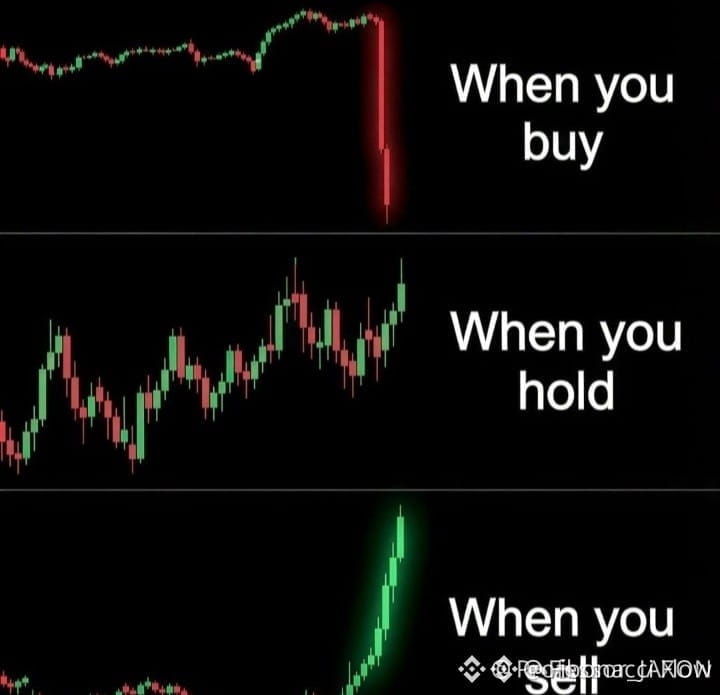
WHY $BTC TRADERS KEEP GETTING SHAKEN OUT RIGHT BEFORE EXPLOSIVE MOVES 🦈 ⚡
Smart money feeds on retail emotional exhaustion. When you feel the market is grinding sideways to punish your patience, algorithmic market makers are quietly building massive inventory behind the scenes. 🌊
The moment capitulation reaches a peak and weak hands hit market sell, liquidity sweeps complete and price rips upward. Mastering trader psychology means staying cold when the board tests your conviction. 📊
💡 The market exists to transfer wealth from the impatient to the disciplined. 💬 What is your strict rule for holding through sideways torture without panic selling? 👇
⚠️ Not financial advice. Always manage your risk. 🛡️
🏷️ #BTC #TradingPsychology #MarketDynamics #Crypto
🔥 💎
WHY $BTC TRADERS KEEP GETTING SHAKEN OUT RIGHT BEFORE EXPLOSIVE MOVES 🦈 ⚡
Smart money feeds on retail emotional exhaustion. When you feel the market is grinding sideways to punish your patience, algorithmic market makers are quietly building massive inventory behind the scenes. 🌊
The moment capitulation reaches a peak and weak hands hit market sell, liquidity sweeps complete and price rips upward. Mastering trader psychology means staying cold when the board tests your conviction. 📊
💡 The market exists to transfer wealth from the impatient to the disciplined. 💬 What is your strict rule for holding through sideways torture without panic selling? 👇
⚠️ Not financial advice. Always manage your risk. 🛡️
🏷️ #BTC #TradingPsychology #MarketDynamics #Crypto
🔥 💎
Smart money feeds on retail emotional exhaustion. When you feel the market is grinding sideways to punish your patience, algorithmic market makers are quietly building massive inventory behind the scenes. 🌊
The moment capitulation reaches a peak and weak hands hit market sell, liquidity sweeps complete and price rips upward. Mastering trader psychology means staying cold when the board tests your conviction. 📊
💡 The market exists to transfer wealth from the impatient to the disciplined. 💬 What is your strict rule for holding through sideways torture without panic selling? 👇
⚠️ Not financial advice. Always manage your risk. 🛡️
🏷️ #BTC #TradingPsychology #MarketDynamics #Crypto
🔥 💎
21

The Macro / Crypto News Angle 📰
Best for discussing broader economic changes, inflation data, or institutional trends.
💡 Is Macro Data Triggering a Shift in Crypto?
With the latest global market updates and inflation inputs driving yields higher, we are seeing a massive rotation in capital. While speculative assets are experiencing short-term volatility, the long-term thesis for foundational assets remains stronger than ever.
Binance +4
The narrative for this cycle has clearly shifted away from random memecoins and toward Real World Assets (#RWA) and Artificial Intelligence (#AICrypto). True value and institutional capital are targeting utility.
Binance +2
🧠 Remember: Slower periods or sudden market dips are where smart portfolios are structured—not during the absolute top of the pump!
Binance
🔍 Which sector are you accumulating during these market moves?
1️⃣ Layer 1s ($BTC / ETH / BNB)
2️⃣ AI Agents & Compute
3️⃣ Real World Assets (RWA)
Let's discuss in the comments! 👇
#MarketDynamics #CryptoNews🚀🔥 #AgenticFinance #BinanceSquareFamily
The Macro / Crypto News Angle 📰
Best for discussing broader economic changes, inflation data, or institutional trends.
💡 Is Macro Data Triggering a Shift in Crypto?
With the latest global market updates and inflation inputs driving yields higher, we are seeing a massive rotation in capital. While speculative assets are experiencing short-term volatility, the long-term thesis for foundational assets remains stronger than ever.
Binance +4
The narrative for this cycle has clearly shifted away from random memecoins and toward Real World Assets (#RWA) and Artificial Intelligence (#AICrypto). True value and institutional capital are targeting utility.
Binance +2
🧠 Remember: Slower periods or sudden market dips are where smart portfolios are structured—not during the absolute top of the pump!
Binance
🔍 Which sector are you accumulating during these market moves?
1️⃣ Layer 1s ($BTC / ETH / BNB)
2️⃣ AI Agents & Compute
3️⃣ Real World Assets (RWA)
Let's discuss in the comments! 👇
#MarketDynamics #CryptoNews🚀🔥 #AgenticFinance #BinanceSquareFamily
Best for discussing broader economic changes, inflation data, or institutional trends.
💡 Is Macro Data Triggering a Shift in Crypto?
With the latest global market updates and inflation inputs driving yields higher, we are seeing a massive rotation in capital. While speculative assets are experiencing short-term volatility, the long-term thesis for foundational assets remains stronger than ever.
Binance +4
The narrative for this cycle has clearly shifted away from random memecoins and toward Real World Assets (#RWA) and Artificial Intelligence (#AICrypto). True value and institutional capital are targeting utility.
Binance +2
🧠 Remember: Slower periods or sudden market dips are where smart portfolios are structured—not during the absolute top of the pump!
Binance
🔍 Which sector are you accumulating during these market moves?
1️⃣ Layer 1s ($BTC / ETH / BNB)
2️⃣ AI Agents & Compute
3️⃣ Real World Assets (RWA)
Let's discuss in the comments! 👇
#MarketDynamics #CryptoNews🚀🔥 #AgenticFinance #BinanceSquareFamily
63
·
--
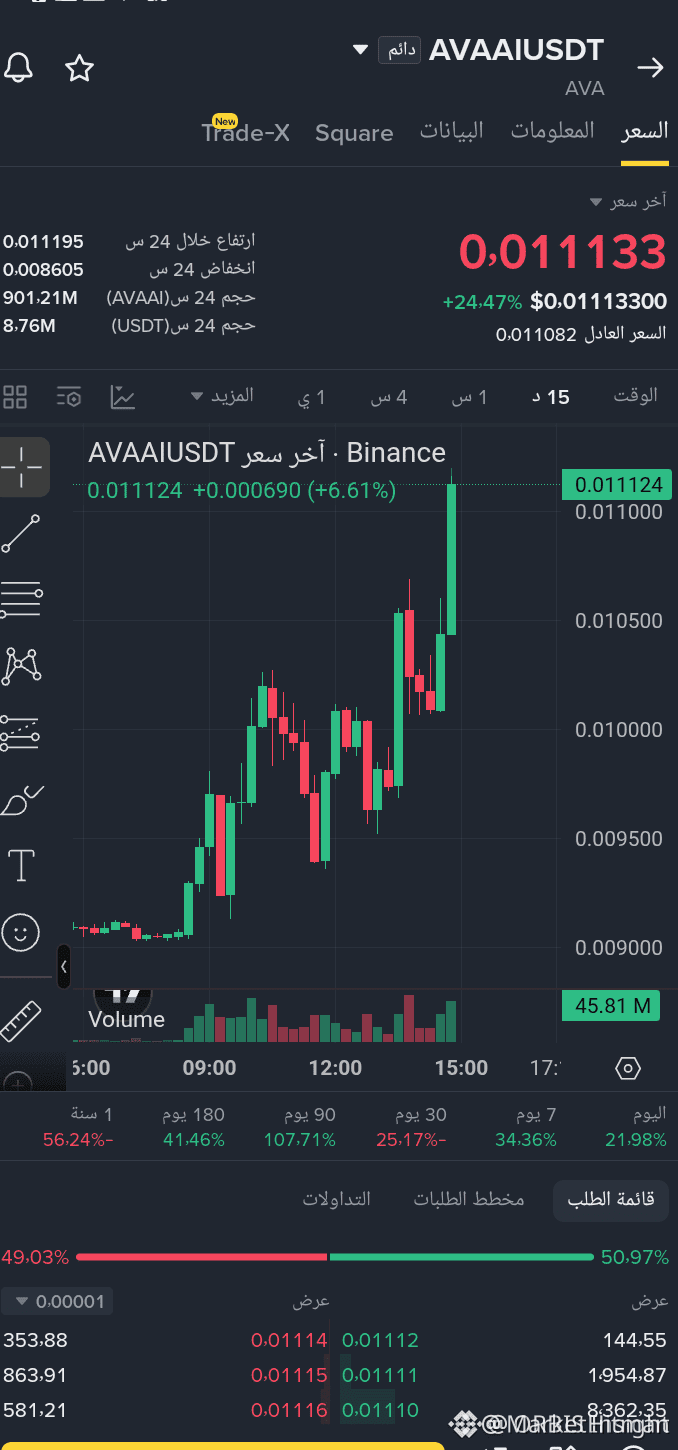
🚨 MARKET MAKERS ARE FAKING MOMENTUM ON $AVAAI BEFORE THE LIQUIDITY FLUSH! 📉
Entry: 0.011400 - 0.011750 ⚡
Target: 0.011000 - 0.010300 📉
Stop Loss: 0.012500 ⚠️
The recent bid on $AVAAI is showing clear signs of buyer exhaustion while smart money engineers a classic bull trap. 🔍 Buying volume is rapidly fading at local highs, leaving late momentum chasers exposed at the top.
Order flow indicates sell-side distribution is accelerating, preparing for a fast liquidity sweep back down toward major demand levels. 📌 Once thin bid support gives way, the downside momentum should accelerate sharply.
💡 Risk-to-reward heavily favors short positioning before market makers step back and let price reset. 💬 Are you front-running this sell-off now or waiting for key support to break? 👇
⚠️ Not financial advice. Always manage your risk. 🛡️
🏷️ #AVAAI #ShortSetup #Crypto #MarketDynamics
🐻 🩸
🚨 MARKET MAKERS ARE FAKING MOMENTUM ON $AVAAI BEFORE THE LIQUIDITY FLUSH! 📉
Entry: 0.011400 - 0.011750 ⚡
Target: 0.011000 - 0.010300 📉
Stop Loss: 0.012500 ⚠️
The recent bid on $AVAAI is showing clear signs of buyer exhaustion while smart money engineers a classic bull trap. 🔍 Buying volume is rapidly fading at local highs, leaving late momentum chasers exposed at the top.
Order flow indicates sell-side distribution is accelerating, preparing for a fast liquidity sweep back down toward major demand levels. 📌 Once thin bid support gives way, the downside momentum should accelerate sharply.
💡 Risk-to-reward heavily favors short positioning before market makers step back and let price reset. 💬 Are you front-running this sell-off now or waiting for key support to break? 👇
⚠️ Not financial advice. Always manage your risk. 🛡️
🏷️ #AVAAI #ShortSetup #Crypto #MarketDynamics
🐻 🩸
Entry: 0.011400 - 0.011750 ⚡
Target: 0.011000 - 0.010300 📉
Stop Loss: 0.012500 ⚠️
The recent bid on $AVAAI is showing clear signs of buyer exhaustion while smart money engineers a classic bull trap. 🔍 Buying volume is rapidly fading at local highs, leaving late momentum chasers exposed at the top.
Order flow indicates sell-side distribution is accelerating, preparing for a fast liquidity sweep back down toward major demand levels. 📌 Once thin bid support gives way, the downside momentum should accelerate sharply.
💡 Risk-to-reward heavily favors short positioning before market makers step back and let price reset. 💬 Are you front-running this sell-off now or waiting for key support to break? 👇
⚠️ Not financial advice. Always manage your risk. 🛡️
🏷️ #AVAAI #ShortSetup #Crypto #MarketDynamics
🐻 🩸
55

·
--
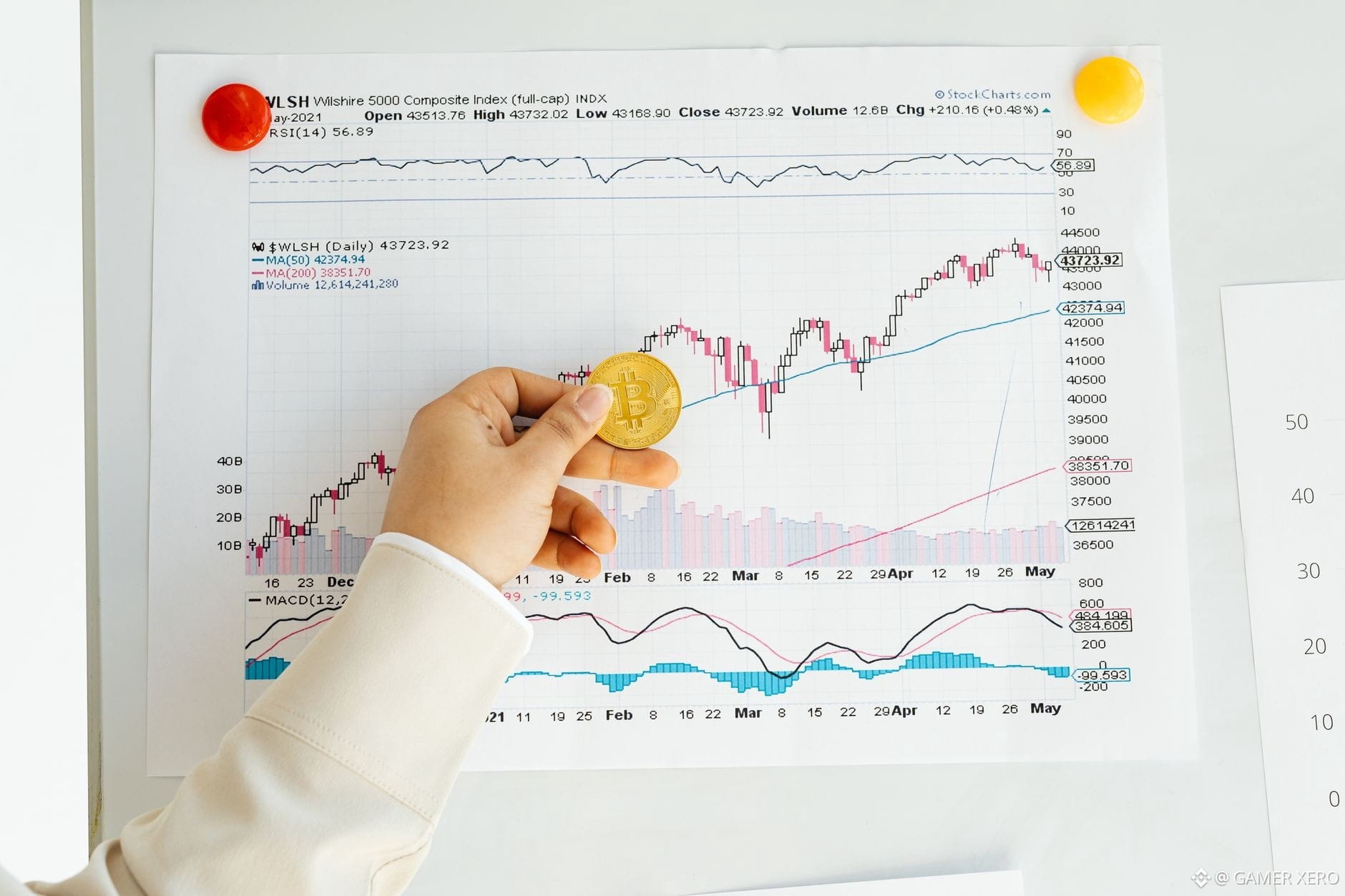
$BTC is edging just under $80 k, trading at $79 932 with a barely‑whisked 0.47 % move today. The candle’s narrow band between $79 442 and $80 200 feels more like a pause than a breakout, and the order book shows a modest buy wall near $79 900. Meanwhile $ETH managed a 2 % climb, sitting at $2 503 and testing the $2 514 high. What I find interesting is how the modest $ETH rally is holding up while $BTC’s range tightens – it suggests some traders are reallocating risk toward the higher‑yielding alt, especially with the recent U.S. jobs data nudging Fed expectations.
Do you think the current tight range on $BTC will keep the capital flowing into $ETH for the next few sessions, or will we see a fresh push on the Bitcoin side once the CPI numbers drop?
#CryptoTalk #BinanceCommunity #MarketDynamics #GAMERXERO
$BTC is edging just under $80 k, trading at $79 932 with a barely‑whisked 0.47 % move today. The candle’s narrow band between $79 442 and $80 200 feels more like a pause than a breakout, and the order book shows a modest buy wall near $79 900. Meanwhile $ETH managed a 2 % climb, sitting at $2 503 and testing the $2 514 high. What I find interesting is how the modest $ETH rally is holding up while $BTC ’s range tightens – it suggests some traders are reallocating risk toward the higher‑yielding alt, especially with the recent U.S. jobs data nudging Fed expectations.
Do you think the current tight range on $BTC will keep the capital flowing into $ETH for the next few sessions, or will we see a fresh push on the Bitcoin side once the CPI numbers drop?
#CryptoTalk #BinanceCommunity #MarketDynamics #GAMERXERO
Do you think the current tight range on $BTC will keep the capital flowing into $ETH for the next few sessions, or will we see a fresh push on the Bitcoin side once the CPI numbers drop?
#CryptoTalk #BinanceCommunity #MarketDynamics #GAMERXERO
51

🚨 WHEN MARKET SYSTEM ERRORS STRIKE $BTC RECLAIMS CRITICAL ORDER BLOCKS INSTANTLY! 🦈
Market glitches and delayed API feeds frequently trigger temporary panic selling, clearing out fragile stops while institutional algorithms quietly absorb every single market sell order. 🦈 When retail traders see an error message, smart money sees an inefficient spread begging to be exploited.
🔍 Order flow dynamics show clear accumulation absorbing panic selling as bid depth thickens beneath the chaos. 💡 True edge comes from maintaining discipline when technical noise disrupts scrollers, letting high-volume reclaims confirm momentum before committing capital. 💬 How do you handle unexpected market anomalies when execution feeds stall out? 👇
⚠️ Not financial advice. Always manage your risk. 🛡️
🏷️ #BTC #MarketDynamics #OrderFlow #Crypto
🔥 💎
🚨 WHEN MARKET SYSTEM ERRORS STRIKE $BTC RECLAIMS CRITICAL ORDER BLOCKS INSTANTLY! 🦈
Market glitches and delayed API feeds frequently trigger temporary panic selling, clearing out fragile stops while institutional algorithms quietly absorb every single market sell order. 🦈 When retail traders see an error message, smart money sees an inefficient spread begging to be exploited.
🔍 Order flow dynamics show clear accumulation absorbing panic selling as bid depth thickens beneath the chaos. 💡 True edge comes from maintaining discipline when technical noise disrupts scrollers, letting high-volume reclaims confirm momentum before committing capital. 💬 How do you handle unexpected market anomalies when execution feeds stall out? 👇
⚠️ Not financial advice. Always manage your risk. 🛡️
🏷️ #BTC #MarketDynamics #OrderFlow #Crypto
🔥 💎
Market glitches and delayed API feeds frequently trigger temporary panic selling, clearing out fragile stops while institutional algorithms quietly absorb every single market sell order. 🦈 When retail traders see an error message, smart money sees an inefficient spread begging to be exploited.
🔍 Order flow dynamics show clear accumulation absorbing panic selling as bid depth thickens beneath the chaos. 💡 True edge comes from maintaining discipline when technical noise disrupts scrollers, letting high-volume reclaims confirm momentum before committing capital. 💬 How do you handle unexpected market anomalies when execution feeds stall out? 👇
⚠️ Not financial advice. Always manage your risk. 🛡️
🏷️ #BTC #MarketDynamics #OrderFlow #Crypto
🔥 💎
24

·
--

Article
AI Bots Are Replacing Human Traders—But the Market Still Loves Human InsightIn the last 24 hours, AI‑driven trading platforms processed over $4.2 B in crypto volume, yet human‑led desks still captured 38 % of the total market share. This paradox is the new reality of 2026’s trading landscape.
Why it matters now: The shift from experimental AI to mainstream trading workflows is not a gradual evolution—it’s a seismic shift. According to CoinMetrics, AI‑powered order books now account for 42 % of all on‑chain activity, while traditional discretionary desks hold only 28 %. This imbalance signals that market participants are testing the limits of algorithmic edge, but still rely on human intuition for risk management and macro‑context.
What smart money is doing: Hedge funds and institutional traders are deploying multi‑agent systems that combine reinforcement learning with real‑time sentiment analysis. These bots can execute micro‑strategies in milliseconds, yet they are programmed to pause during high‑volatility regimes, a behavior mirrored by human traders who exit positions during the 3‑pm “flash crash” window. #AITrading #CryptoStrategy #MarketDynamics
Forward signal: Watch the $BTC/USD pair around the 30‑minute 24‑hour moving average at $29,800. AI bots have been consistently buying at support levels below this threshold, while human desks are scaling out at resistance near $31,200. A breakout above $31,200 could trigger a 12‑15 % rally before the next earnings cycle.
Are you ready to blend algorithmic speed with human judgment to capture the next wave of market efficiency?
AI Bots Are Replacing Human Traders—But the Market Still Loves Human Insight
In the last 24 hours, AI‑driven trading platforms processed over $4.2 B in crypto volume, yet human‑led desks still captured 38 % of the total market share. This paradox is the new reality of 2026’s trading landscape.
Why it matters now: The shift from experimental AI to mainstream trading workflows is not a gradual evolution—it’s a seismic shift. According to CoinMetrics, AI‑powered order books now account for 42 % of all on‑chain activity, while traditional discretionary desks hold only 28 %. This imbalance signals that market participants are testing the limits of algorithmic edge, but still rely on human intuition for risk management and macro‑context.
What smart money is doing: Hedge funds and institutional traders are deploying multi‑agent systems that combine reinforcement learning with real‑time sentiment analysis. These bots can execute micro‑strategies in milliseconds, yet they are programmed to pause during high‑volatility regimes, a behavior mirrored by human traders who exit positions during the 3‑pm “flash crash” window. #AITrading #CryptoStrategy #MarketDynamics
Forward signal: Watch the $BTC /USD pair around the 30‑minute 24‑hour moving average at $29,800. AI bots have been consistently buying at support levels below this threshold, while human desks are scaling out at resistance near $31,200. A breakout above $31,200 could trigger a 12‑15 % rally before the next earnings cycle.
Are you ready to blend algorithmic speed with human judgment to capture the next wave of market efficiency?
Why it matters now: The shift from experimental AI to mainstream trading workflows is not a gradual evolution—it’s a seismic shift. According to CoinMetrics, AI‑powered order books now account for 42 % of all on‑chain activity, while traditional discretionary desks hold only 28 %. This imbalance signals that market participants are testing the limits of algorithmic edge, but still rely on human intuition for risk management and macro‑context.
What smart money is doing: Hedge funds and institutional traders are deploying multi‑agent systems that combine reinforcement learning with real‑time sentiment analysis. These bots can execute micro‑strategies in milliseconds, yet they are programmed to pause during high‑volatility regimes, a behavior mirrored by human traders who exit positions during the 3‑pm “flash crash” window. #AITrading #CryptoStrategy #MarketDynamics
Forward signal: Watch the $BTC /USD pair around the 30‑minute 24‑hour moving average at $29,800. AI bots have been consistently buying at support levels below this threshold, while human desks are scaling out at resistance near $31,200. A breakout above $31,200 could trigger a 12‑15 % rally before the next earnings cycle.
Are you ready to blend algorithmic speed with human judgment to capture the next wave of market efficiency?
15

When 'Whales L/S' for $KITE is at 31.3% Long, it indicates a more bearish lean from large holders, despite the 'Heavy Buy Walls'. This creates a nuanced picture. I consider the 'Declining Open Interest' as potentially washing out leveraged positions, which could clear the path for price appreciation if the buy walls hold.
🔥 Deep Market Intel
👉 Order Book: Balanced DOM (1.04x)
👉 1H Open Interest: Declining (-)
👉 Whales L/S: 32.8% Long
👉 Taker Flow: 0.60x
👉
🎯 $KITE MACRO BREAKOUT 📈
👉 Entry Zone: 0.20478 - 0.20790
👉 🎯 Target 1: 0.21165
👉 🎯 Target 2: 0.21540
👉 🎯 Target 3: 0.21990
👉 🛑 Invalidation (SL): 0.20028
🔥 Deep Market Intel
👉 Order Book: Heavy Buy Walls (2.26x)
👉 1H Open Interest: Declining (-)
👉 Whales L/S: 31.3% Long
👉 Taker Flow: 0.58x 📊
#WhaleWatching #MarketDynamics
When 'Whales L/S' for $KITE is at 31.3% Long, it indicates a more bearish lean from large holders, despite the 'Heavy Buy Walls'. This creates a nuanced picture. I consider the 'Declining Open Interest' as potentially washing out leveraged positions, which could clear the path for price appreciation if the buy walls hold.
🔥 Deep Market Intel
👉 Order Book: Balanced DOM (1.04x)
👉 1H Open Interest: Declining (-)
👉 Whales L/S: 32.8% Long
👉 Taker Flow: 0.60x
👉
🎯 $KITE MACRO BREAKOUT 📈
👉 Entry Zone: 0.20478 - 0.20790
👉 🎯 Target 1: 0.21165
👉 🎯 Target 2: 0.21540
👉 🎯 Target 3: 0.21990
👉 🛑 Invalidation (SL): 0.20028
🔥 Deep Market Intel
👉 Order Book: Heavy Buy Walls (2.26x)
👉 1H Open Interest: Declining (-)
👉 Whales L/S: 31.3% Long
👉 Taker Flow: 0.58x 📊
#WhaleWatching #MarketDynamics
🔥 Deep Market Intel
👉 Order Book: Balanced DOM (1.04x)
👉 1H Open Interest: Declining (-)
👉 Whales L/S: 32.8% Long
👉 Taker Flow: 0.60x
👉
🎯 $KITE MACRO BREAKOUT 📈
👉 Entry Zone: 0.20478 - 0.20790
👉 🎯 Target 1: 0.21165
👉 🎯 Target 2: 0.21540
👉 🎯 Target 3: 0.21990
👉 🛑 Invalidation (SL): 0.20028
🔥 Deep Market Intel
👉 Order Book: Heavy Buy Walls (2.26x)
👉 1H Open Interest: Declining (-)
👉 Whales L/S: 31.3% Long
👉 Taker Flow: 0.58x 📊
#WhaleWatching #MarketDynamics
197
·
--
Imagine you're a seasoned investor, but the crypto market just got a little tougher. Coinbase, one of the biggest names in the industry, just dropped a bombshell: after a record-breaking Q2 for market share, stability, and growth, they're still posting losses. What's behind the shockingly bad numbers?
#cryptoexchange #marketdynamics
It all comes down to one thing: the concept of volatile revenue. When crypto markets go wild, businesses that rely on them can see massive spikes in income - or equally massive drops. In Coinbase's case, that volatility led to a $1.2 billion quarterly revenue, but a loss of $1.36 per share.
Consider Binance, the platform we call home. What happens when we see sudden price swings? Our team springs into action, making tactical moves to optimize our trading and user experience. That's what keeps us ahead of the game.
So, what can you do when markets get tough? Stay ahead of the curve by keeping a close eye on your portfolio and adapting to changes. Ask yourself: what can you do today to future-proof your crypto investments?
Imagine you're a seasoned investor, but the crypto market just got a little tougher. Coinbase, one of the biggest names in the industry, just dropped a bombshell: after a record-breaking Q2 for market share, stability, and growth, they're still posting losses. What's behind the shockingly bad numbers?
#cryptoexchange #marketdynamics
It all comes down to one thing: the concept of volatile revenue. When crypto markets go wild, businesses that rely on them can see massive spikes in income - or equally massive drops. In Coinbase's case, that volatility led to a $1.2 billion quarterly revenue, but a loss of $1.36 per share.
Consider Binance, the platform we call home. What happens when we see sudden price swings? Our team springs into action, making tactical moves to optimize our trading and user experience. That's what keeps us ahead of the game.
So, what can you do when markets get tough? Stay ahead of the curve by keeping a close eye on your portfolio and adapting to changes. Ask yourself: what can you do today to future-proof your crypto investments?
#cryptoexchange #marketdynamics
It all comes down to one thing: the concept of volatile revenue. When crypto markets go wild, businesses that rely on them can see massive spikes in income - or equally massive drops. In Coinbase's case, that volatility led to a $1.2 billion quarterly revenue, but a loss of $1.36 per share.
Consider Binance, the platform we call home. What happens when we see sudden price swings? Our team springs into action, making tactical moves to optimize our trading and user experience. That's what keeps us ahead of the game.
So, what can you do when markets get tough? Stay ahead of the curve by keeping a close eye on your portfolio and adapting to changes. Ask yourself: what can you do today to future-proof your crypto investments?
17
The market for $OP and $ASTER is constantly evolving. I adapt, or I get left behind. My strategies aren't static; they respond to current conditions. That includes reassessing Target 1, Target 2, and Target 3 based on real-time flow.
🔥 Deep Market Intel
✅ Order Book: Balanced DOM (1.01x)
✅ 1H Open Interest: Accumulating (+)
✅ Whales L/S: 50.9% Long
✅ Taker Flow: 0.87x 📊
#AdaptOrDie #MarketDynamics
The market for $OP and $ASTER is constantly evolving. I adapt, or I get left behind. My strategies aren't static; they respond to current conditions. That includes reassessing Target 1, Target 2, and Target 3 based on real-time flow.
🔥 Deep Market Intel
✅ Order Book: Balanced DOM (1.01x)
✅ 1H Open Interest: Accumulating (+)
✅ Whales L/S: 50.9% Long
✅ Taker Flow: 0.87x 📊
#AdaptOrDie #MarketDynamics
🔥 Deep Market Intel
✅ Order Book: Balanced DOM (1.01x)
✅ 1H Open Interest: Accumulating (+)
✅ Whales L/S: 50.9% Long
✅ Taker Flow: 0.87x 📊
#AdaptOrDie #MarketDynamics
520
When I see a setup like $D with balanced DOM and OI accumulating, it tells me that price discovery might be underway or a breakout is brewing. The low Taker Flow (0.98x) implies neither side is dominating aggressively yet.
🔥 Deep Market Intel
💎 Order Book: Balanced DOM (1.04x)
💎 1H Open Interest: Accumulating (+)
💎 Whales L/S: 52.0% Long
💎 Taker Flow: 0.90x
💎
🎯 $D DEEP VALUE 📌
💎 Entry Zone: 0.01248 - 0.01267
💎 🎯 Target 1: 0.01297
💎 🎯 Target 2: 0.01328
💎 🎯 Target 3: 0.01364
💎 🛑 Invalidation (SL): 0.01212
🔥 Deep Market Intel
💎 Order Book: Balanced DOM (0.91x)
💎 1H Open Interest: Accumulating (+)
💎 Whales L/S: 52.6% Long
💎 Taker Flow: 0.98x 📊
This scenario for $D is a prime example of why I look beyond just price action. It helps me anticipate moves for coins like PENGU and RIF that might be in similar stages.
#MarketDynamics #CryptoInsights
When I see a setup like $D with balanced DOM and OI accumulating, it tells me that price discovery might be underway or a breakout is brewing. The low Taker Flow (0.98x) implies neither side is dominating aggressively yet.
🔥 Deep Market Intel
💎 Order Book: Balanced DOM (1.04x)
💎 1H Open Interest: Accumulating (+)
💎 Whales L/S: 52.0% Long
💎 Taker Flow: 0.90x
💎
🎯 $D DEEP VALUE 📌
💎 Entry Zone: 0.01248 - 0.01267
💎 🎯 Target 1: 0.01297
💎 🎯 Target 2: 0.01328
💎 🎯 Target 3: 0.01364
💎 🛑 Invalidation (SL): 0.01212
🔥 Deep Market Intel
💎 Order Book: Balanced DOM (0.91x)
💎 1H Open Interest: Accumulating (+)
💎 Whales L/S: 52.6% Long
💎 Taker Flow: 0.98x 📊
This scenario for $D is a prime example of why I look beyond just price action. It helps me anticipate moves for coins like PENGU and RIF that might be in similar stages.
#MarketDynamics #CryptoInsights
🔥 Deep Market Intel
💎 Order Book: Balanced DOM (1.04x)
💎 1H Open Interest: Accumulating (+)
💎 Whales L/S: 52.0% Long
💎 Taker Flow: 0.90x
💎
🎯 $D DEEP VALUE 📌
💎 Entry Zone: 0.01248 - 0.01267
💎 🎯 Target 1: 0.01297
💎 🎯 Target 2: 0.01328
💎 🎯 Target 3: 0.01364
💎 🛑 Invalidation (SL): 0.01212
🔥 Deep Market Intel
💎 Order Book: Balanced DOM (0.91x)
💎 1H Open Interest: Accumulating (+)
💎 Whales L/S: 52.6% Long
💎 Taker Flow: 0.98x 📊
This scenario for $D is a prime example of why I look beyond just price action. It helps me anticipate moves for coins like PENGU and RIF that might be in similar stages.
#MarketDynamics #CryptoInsights
2
403
·
--
Derivative-Led Price Discovery
When futures volume dwarfs spot volume by massive multipliers, price action is driven by leverage, not real accumulation.
Trading in these conditions means navigating liquidation cascades and funding rate flips rather than structural trends. Size down when the perp tape dictates the spot price.
#CryptoTrading #Leverage #MarketDynamics
Derivative-Led Price Discovery
When futures volume dwarfs spot volume by massive multipliers, price action is driven by leverage, not real accumulation.
Trading in these conditions means navigating liquidation cascades and funding rate flips rather than structural trends. Size down when the perp tape dictates the spot price.
#CryptoTrading #Leverage #MarketDynamics
When futures volume dwarfs spot volume by massive multipliers, price action is driven by leverage, not real accumulation.
Trading in these conditions means navigating liquidation cascades and funding rate flips rather than structural trends. Size down when the perp tape dictates the spot price.
#CryptoTrading #Leverage #MarketDynamics
157
The declining Open Interest for $U, even with a balanced DOM, suggests that short-term speculative interest might be waning, which can lead to volatility. However, the 50.0% Whales Long still provides a foundation. I compare this to the accumulating OI in $ETH to understand differing market dynamics. $POL and KAT are other tickers I analyze with these nuances in mind.
#MarketDynamics #CryptoEducation
The declining Open Interest for $U , even with a balanced DOM, suggests that short-term speculative interest might be waning, which can lead to volatility. However, the 50.0% Whales Long still provides a foundation. I compare this to the accumulating OI in $ETH to understand differing market dynamics. $POL and KAT are other tickers I analyze with these nuances in mind.
#MarketDynamics #CryptoEducation
#MarketDynamics #CryptoEducation
1
673

·
--
THE CRAMER EFFECT STRIKES AGAIN AS $BTC RIPS +16% HIGHER! 📈 ⚡
When mainstream media panics over theoretical threats, smart money quietly absorbs the floating supply. 🦈 The market's most famous inverse indicator delivered once again after quantum computing FUD triggered weak-hand capitulation in late July.
Since that exit call on July 31, $BTC has squeezed a solid +16% upward, leaving aggressive bears trapped while institutional bids comfortably defended structural demand. 📊 High-conviction order flow continues to prove that real market liquidity overrides fear-driven headlines every single time.
With price action validating buyer dominance across key timeframes, momentum remains firmly with the accumulators. 💬 How far do you expect this rally to push $BTC before sellers attempt a stand? 👇
⚠️ Not financial advice. Always manage your risk. 🛡️
🏷️ #BTC #Bitcoin #MarketDynamics #Crypto
🎯 ⚡
THE CRAMER EFFECT STRIKES AGAIN AS $BTC RIPS +16% HIGHER! 📈 ⚡
When mainstream media panics over theoretical threats, smart money quietly absorbs the floating supply. 🦈 The market's most famous inverse indicator delivered once again after quantum computing FUD triggered weak-hand capitulation in late July.
Since that exit call on July 31, $BTC has squeezed a solid +16% upward, leaving aggressive bears trapped while institutional bids comfortably defended structural demand. 📊 High-conviction order flow continues to prove that real market liquidity overrides fear-driven headlines every single time.
With price action validating buyer dominance across key timeframes, momentum remains firmly with the accumulators. 💬 How far do you expect this rally to push $BTC before sellers attempt a stand? 👇
⚠️ Not financial advice. Always manage your risk. 🛡️
🏷️ #BTC #Bitcoin #MarketDynamics #Crypto
🎯 ⚡
When mainstream media panics over theoretical threats, smart money quietly absorbs the floating supply. 🦈 The market's most famous inverse indicator delivered once again after quantum computing FUD triggered weak-hand capitulation in late July.
Since that exit call on July 31, $BTC has squeezed a solid +16% upward, leaving aggressive bears trapped while institutional bids comfortably defended structural demand. 📊 High-conviction order flow continues to prove that real market liquidity overrides fear-driven headlines every single time.
With price action validating buyer dominance across key timeframes, momentum remains firmly with the accumulators. 💬 How far do you expect this rally to push $BTC before sellers attempt a stand? 👇
⚠️ Not financial advice. Always manage your risk. 🛡️
🏷️ #BTC #Bitcoin #MarketDynamics #Crypto
🎯 ⚡
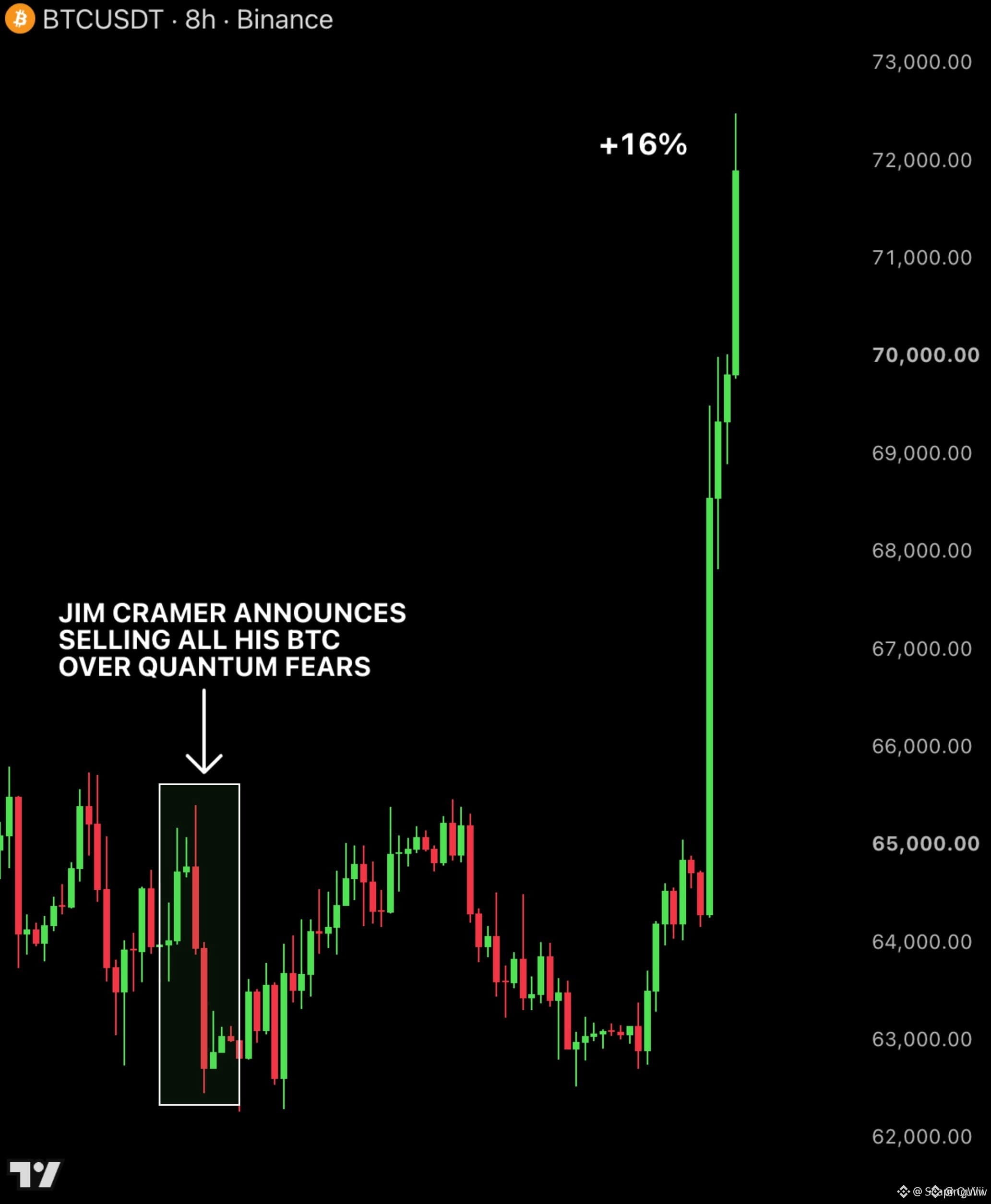
26

·
--
Bullish
🧿 The Rotation Back to Utility
$NEAR , $FIL , and $AAVE are surging, signaling a clear shift from speculative meme mania back toward infrastructure and decentralized finance protocols. I view this as a healthy maturation of market sentiment where capital is finally prioritizing projects with tangible utility and established network effects over pure hype cycles.
While some might dismiss these moves as mere sector rotation, the underlying strength suggests a deepening conviction in the core pillars of the ecosystem. I am leaning toward the view that this represents a flight to quality rather than a fleeting rally, as participants seek assets that actually power the decentralized stack. This trend likely gains momentum if liquidity continues to migrate away from purely social-driven assets toward those solving genuine coordination or storage problems. ⛓️💥
🎯 Focus on the protocols that underpin the digital economy rather than the ones merely capturing the current discourse.
⚠️ Personal analysis only. Not financial advice. DYOR.
#CryptoAnalysisUpdate #MarketDynamics #defi
🧿 The Rotation Back to Utility
$NEAR , $FIL , and $AAVE are surging, signaling a clear shift from speculative meme mania back toward infrastructure and decentralized finance protocols. I view this as a healthy maturation of market sentiment where capital is finally prioritizing projects with tangible utility and established network effects over pure hype cycles.
While some might dismiss these moves as mere sector rotation, the underlying strength suggests a deepening conviction in the core pillars of the ecosystem. I am leaning toward the view that this represents a flight to quality rather than a fleeting rally, as participants seek assets that actually power the decentralized stack. This trend likely gains momentum if liquidity continues to migrate away from purely social-driven assets toward those solving genuine coordination or storage problems. ⛓️💥
🎯 Focus on the protocols that underpin the digital economy rather than the ones merely capturing the current discourse.
⚠️ Personal analysis only. Not financial advice. DYOR.
#CryptoAnalysisUpdate #MarketDynamics #defi
$NEAR , $FIL , and $AAVE are surging, signaling a clear shift from speculative meme mania back toward infrastructure and decentralized finance protocols. I view this as a healthy maturation of market sentiment where capital is finally prioritizing projects with tangible utility and established network effects over pure hype cycles.
While some might dismiss these moves as mere sector rotation, the underlying strength suggests a deepening conviction in the core pillars of the ecosystem. I am leaning toward the view that this represents a flight to quality rather than a fleeting rally, as participants seek assets that actually power the decentralized stack. This trend likely gains momentum if liquidity continues to migrate away from purely social-driven assets toward those solving genuine coordination or storage problems. ⛓️💥
🎯 Focus on the protocols that underpin the digital economy rather than the ones merely capturing the current discourse.
⚠️ Personal analysis only. Not financial advice. DYOR.
#CryptoAnalysisUpdate #MarketDynamics #defi
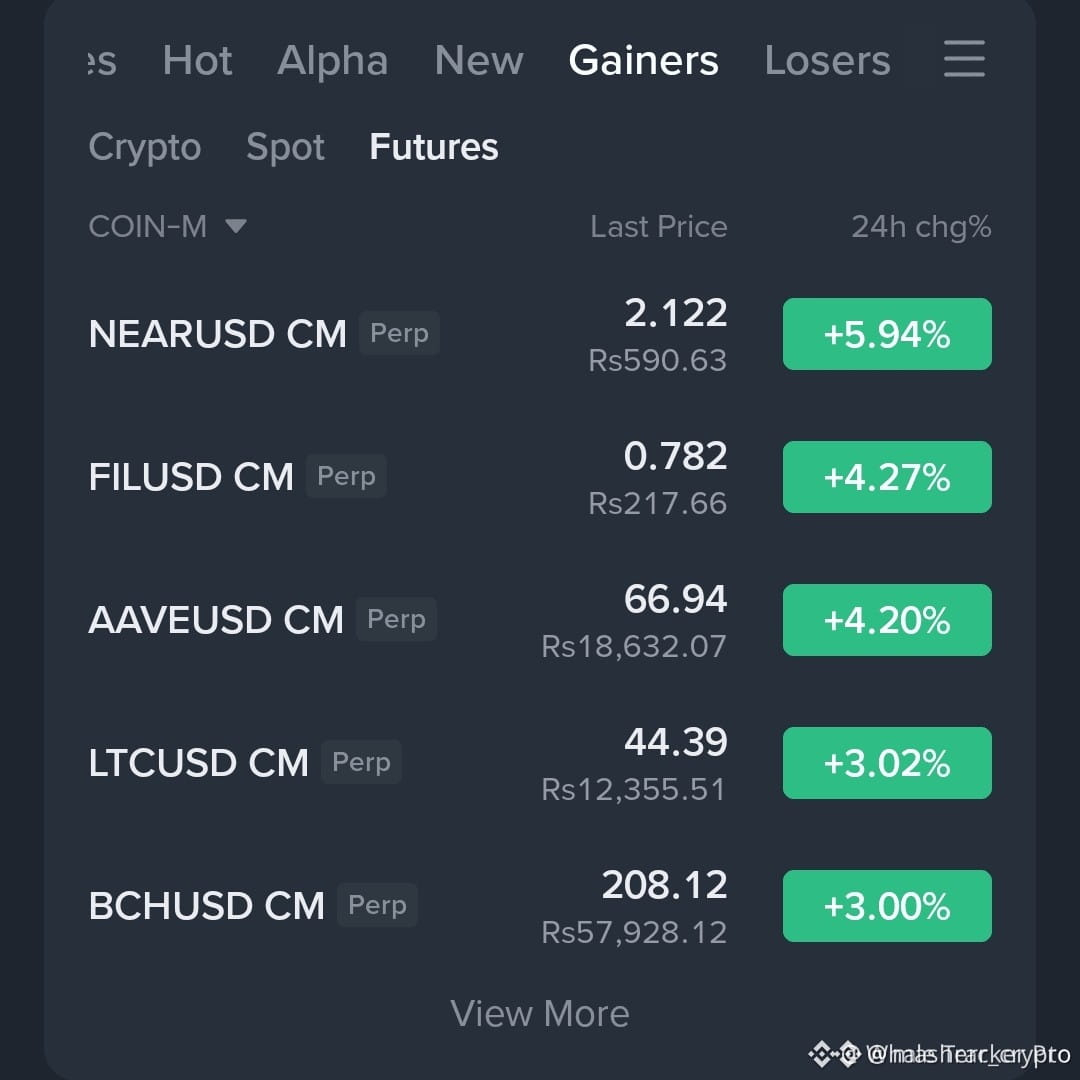
1
234
Log in to explore more content
Join global crypto users on Binance Square
⚡️ Get latest and useful information about crypto.
💬 Trusted by the world’s largest crypto exchange.
👍 Discover real insights from verified creators.
Email / Phone number
Trending Topics
1
#QNTRises39%
23,583 views
938 Discussing
2
#EthereumBreaksAbove$2700
2,314 views
95 Discussing
3
#BitgetBreachForgedRequestsNotStolenKeys
20,624 views
727 Discussing
4
#BitcoinSpotETFsTurnNetPositiveYTD
13,604 views
593 Discussing
5
#GrayscaleZcashETFHits$1BNetAssets
1,506 views
43 Discussing
6
#BitcoinSpotETFsNetInflow$191M
7,504 views
181 Discussing
7
#CFTCUpdatesGuidanceOnTokenizedAssets
53,458 views
1,528 Discussing
8
#BitgetSays$352MAffectedInHack
19,066 views
95 Discussing
9
#BinanceWillListHyperliquid(HYPE)
280,705 views
4,095 Discussing
10
#BrazilOrdersReportingOf$10KSelfCustodyTransfers
7,040 views
55 Discussing