
#exchangesecurity
exchangesecurity
2,770 views
58 Discussing
Hot
Latest

·
--
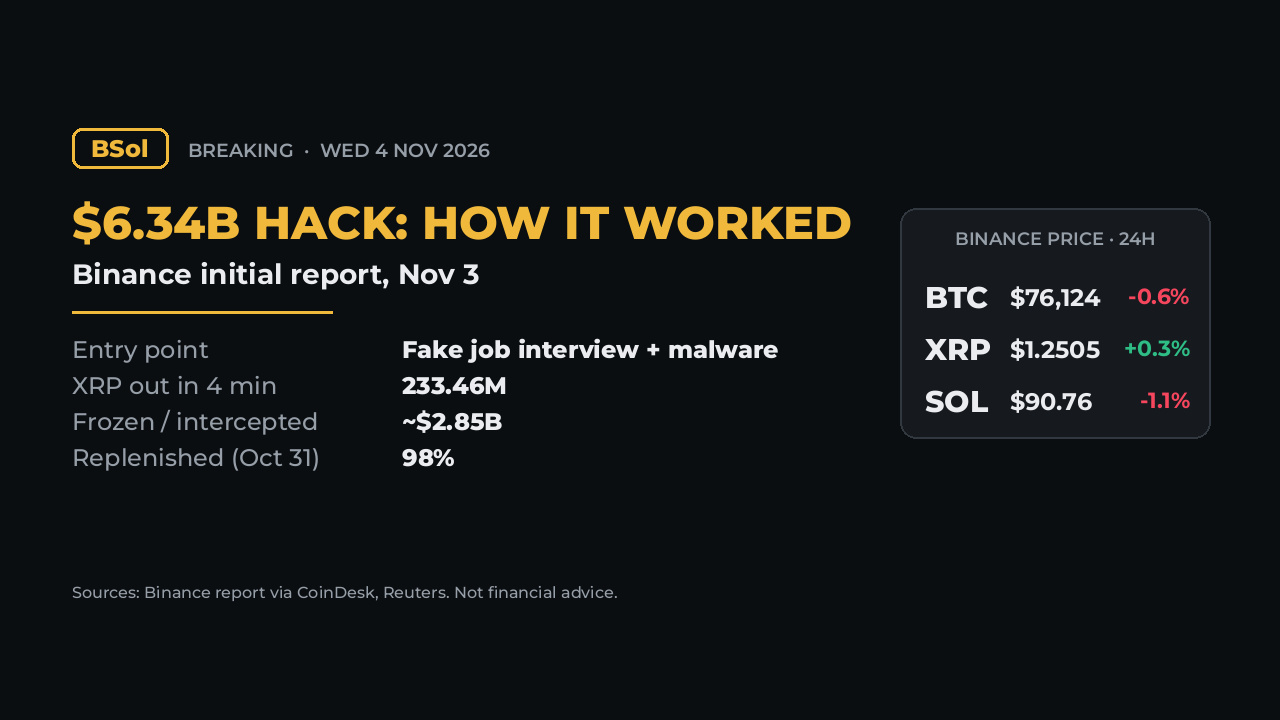
Binance's $6.34B hack began with a fake job interview. Now we know how.
What Binance's first report says:
• A tampered tool (June) + a fake "CEO interview" malware repo (Sept) compromised wallet engineers
• Oct 29: 233.46M XRP left 5 hot wallets in 4 minutes; also ~970.5K SOL, 44.2M OP, 18,270 BTC
• Attackers used Ethereum's EIP-7702 and an internal AI tool; last transfer came ~4h after the first
• ~$2.85B frozen or intercepted; 98% of affected tokens replenished from company funds (as of Oct 31)
Why it matters: the weak link was people and internal tooling, not the chain. Independent security reviews are coming.
Watch: more freezes, the external audit, and whether other exchanges tighten hiring and dev-tool security.
Binance prices now (10:05 ICT):
$BTC $76,124 (-0.6% 24h)
$XRP $1.2505 (+0.3%)
$SOL $90.76 (-1.1%)
What should exchanges change first: hot-wallet design, or how staff are vetted and what tools they can install?
#CryptoNews #Binance #ExchangeSecurity #BTC
44

Brazil’s Mercado Bitcoin Hit by ~$40M Hack, Withdrawals Frozen
Brazil’s largest crypto exchange Mercado Bitcoin just confirmed a ~$40M hack, with deposits and withdrawals paused indefinitely.
The hack was first flagged by multiple blockchain security firms, with Hypernative estimating the total loss at $40M from the exchange’s hot wallets. This is the second major exchange hack in under a week, coming just days after Binance’s record $6B security breach. $BTC is currently trading at $77,980, down just 0.06% in the last 24 hours, showing minimal immediate reaction to the news so far.
For $BTC traders, the invalidation level for short positions sits at $78,200; don’t chase downside until that level breaks, exit immediately if it reclaims.
#Write2Earn #BinanceSquare #BTC #ExchangeSecurity #TradingTournament

·
--
🚨 $BTC EXCHANGE SECURITY ALERT: BRAZIL'S MERCADO BITCOIN HALTS ALL MOVES 🛑
📊 The abrupt freeze on deposits and withdrawals signals a liquidity choke point that smart money watches closely. 🦈 A top-tier exchange in Brazil pulling the plug suggests heightened risk aversion and a potential reallocation of capital to more fortified venues. 📈 Institutional order flow will likely shift as traders seek venues with airtight custody protocols.
💡 With no client losses reported, the incident underscores the importance of robust security layers rather than panic‑driven exits. 👇 How will this affect your positioning on $BTC across major platforms?
⚠️ Not financial advice. Always manage your risk. 🛡️
🏷️ #BTC #ExchangeSecurity #CryptoRisk #Brazil
🔥 💎
8

·
--
South Korea’s 80% Cold Wallet Rule Takes Effect, Raising Compliance Costs and the Bar for Exchange Operations
South Korean financial regulators have once again put pressure on domestic crypto exchanges, requiring them to strictly enforce the rule that at least 80% of customer assets be held in cold wallets. The measure aims to strengthen industry security standards and prevent a repeat of asset-loss incidents like those following recent hacks of other major platforms. According to Cointelegraph, South Korean exchanges were already required to hold at least 80% of customers’ cryptocurrency in cold wallets, but regulators are now emphasizing closer oversight of implementation details and stronger compliance.
From the perspective of capital flows and macro trends, this policy shift could have a far-reaching impact on how exchanges allocate operating funds and on industry concentration. Rising compliance costs generally benefit leading exchanges with strong technical resources and economies of scale. As a global leader, Coinbase stands to gain from greater industry concentration and a trust premium. For smaller exchanges, maintaining a high proportion of assets in cold storage requires stronger technical infrastructure and stricter internal processes, which could significantly increase operating costs. Over the long term, this trend may steer the industry toward greater compliance and security, but it could also intensify competitive imbalances.
How might the market react? In the short term, the policy is unlikely to have much direct impact on crypto-market volatility, since it does not introduce new mandatory requirements but rather strengthens enforcement of existing rules. However, as compliance costs continue to rise, exchanges may adjust their service strategies or fee structures to cope with the increased operating pressures. For investors, tracking the performance and market-share changes of leading compliant exchanges may be an important way to gauge industry trends.
On the downside and risk front, the specific implementation details have not yet been fully disclosed, and differences in exchanges’ technical infrastructure could lead to uneven compliance costs. In addition, if regulators introduce stricter measures in the future, smaller exchanges could face even greater pressure to survive, potentially forcing some platforms out of the market. Therefore, while the short-term impact on market volatility is likely to be limited, changes to the industry landscape over the long term remain to be seen.
What should you watch next? From a trading perspective, it is more important to wait for confirmation from the market than to chase a rally. If you are watching $COIN, in the short term it is worth looking for confirmation that the company can realize the long-term growth potential arising from increased industry concentration.
$COIN #CryptoRegulation #ColdStorage #ExchangeSecurity
The above is a compilation of information and personal analysis, and does not constitute investment advice.
I will continue to provide updates as further policy details become clear.
South Korea’s 80% Cold Wallet Rule Takes Effect, Raising Compliance Costs and the Bar for Exchange Operations
South Korean financial regulators have once again put pressure on domestic crypto exchanges, requiring them to strictly enforce the rule that at least 80% of customer assets be held in cold wallets. The measure aims to strengthen industry security standards and prevent a repeat of asset-loss incidents like those following recent hacks of other major platforms. According to Cointelegraph, South Korean exchanges were already required to hold at least 80% of customers’ cryptocurrency in cold wallets, but regulators are now emphasizing closer oversight of implementation details and stronger compliance.
From the perspective of capital flows and macro trends, this policy shift could have a far-reaching impact on how exchanges allocate operating funds and on industry concentration. Rising compliance costs generally benefit leading exchanges with strong technical resources and economies of scale. As a global leader, Coinbase stands to gain from greater industry concentration and a trust premium. For smaller exchanges, maintaining a high proportion of assets in cold storage requires stronger technical infrastructure and stricter internal processes, which could significantly increase operating costs. Over the long term, this trend may steer the industry toward greater compliance and security, but it could also intensify competitive imbalances.
How might the market react? In the short term, the policy is unlikely to have much direct impact on crypto-market volatility, since it does not introduce new mandatory requirements but rather strengthens enforcement of existing rules. However, as compliance costs continue to rise, exchanges may adjust their service strategies or fee structures to cope with the increased operating pressures. For investors, tracking the performance and market-share changes of leading compliant exchanges may be an important way to gauge industry trends.
On the downside and risk front, the specific implementation details have not yet been fully disclosed, and differences in exchanges’ technical infrastructure could lead to uneven compliance costs. In addition, if regulators introduce stricter measures in the future, smaller exchanges could face even greater pressure to survive, potentially forcing some platforms out of the market. Therefore, while the short-term impact on market volatility is likely to be limited, changes to the industry landscape over the long term remain to be seen.
What should you watch next? From a trading perspective, it is more important to wait for confirmation from the market than to chase a rally. If you are watching $COIN , in the short term it is worth looking for confirmation that the company can realize the long-term growth potential arising from increased industry concentration.
$COIN #CryptoRegulation #ColdStorage #ExchangeSecurity
The above is a compilation of information and personal analysis, and does not constitute investment advice.
I will continue to provide updates as further policy details become clear.
90

Brazilian exchange Mercado Bitcoin SUDDENLY halted deposits and withdrawals after more than $40 MILLION in crypto was siphoned off across 10+ blockchains in a security incident! The incident has left the community deeply alarmed.
The company confirmed that it had detected and contained the incident, insisting that NOT a single cent of customer funds was lost and no data was exposed. This is simply a precautionary measure while it investigates in coordination with the authorities.
However, $40M in crypto was moved from wallets linked to the exchange on Ethereum, Bitcoin, Solana, Tron, and several other chains. What’s concerning is that investigators still don’t know how the attackers gained access to transaction signing.
Mercado Bitcoin said the funds belonged to the exchange’s internal reserves and that it would bear the losses itself. The company pledged to keep user assets safe.
Is a hack that doesn’t affect customer funds enough to reassure people? Or is this still a reminder of the risks of centralization, when $40M can “vanish” in the blink of an eye?
#CryptoNews #ExchangeSecurity
$BTC $ETH
363

·
--
How "SAFU" was deployed in a major exchange breach — what we know
A large exchange reported a hot‑wallet breach and said it has replenished most affected assets using corporate treasury, a dedicated user‑protection fund (SAFU) and insurance reserves. The company claims roughly 90% recovery and says law enforcement and partners have frozen a portion of stolen funds.
Key points:
- SAFU functions as a backstop: a reserve meant to cover user losses when hot‑wallets are compromised.
- Coverage reported to come from three sources: corporate funds, the SAFU pool, and futures insurance—illustrating scale can matter when exchanges self‑insure.
- Operational impact: deposits remained operational per the company; withdrawals were subject to security checks.
Counterpoint:
- Company figures and timelines are company statements; some asset recoveries and the fate of less‑liquid tokens remain unverified.
Takeaway:
SAFU‑style reserves can mitigate consumer losses but don’t replace independent transparency, third‑party audits, and clearer industry standards for custody and insurance.
#SAFU #ExchangeSecurity #CryptoCustody #CryptoInsurance
86

·
--
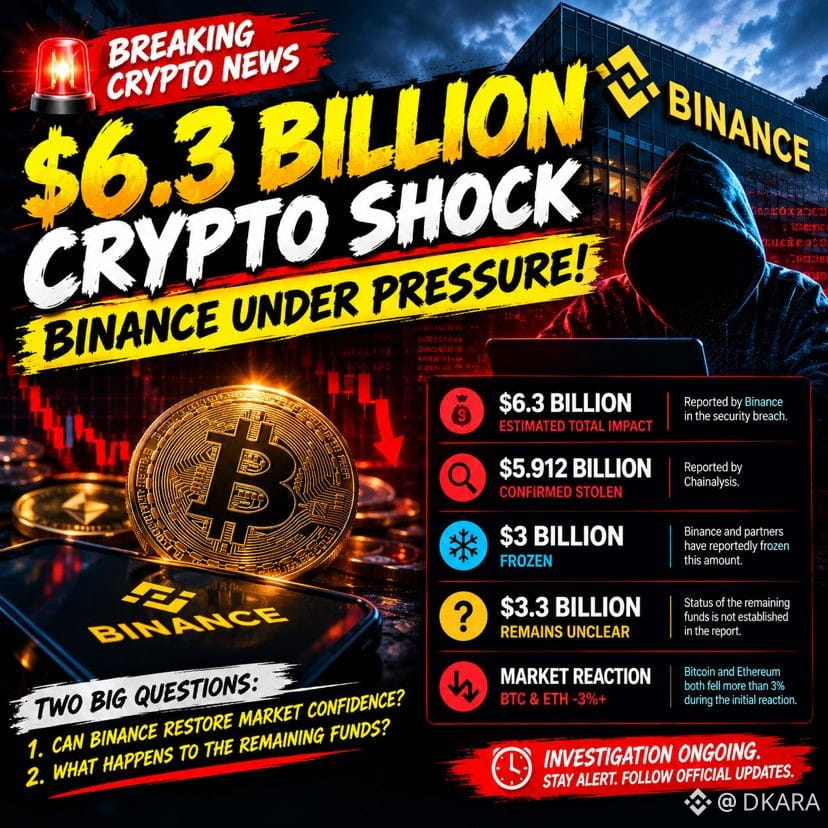
🚨 BINANCE HIT BY A $6.3 BILLION SECURITY CRISIS?! ⚠️
One of the biggest security incidents in crypto history is making headlines today.
According to Reuters, Binance reported a security breach with an estimated $6.3 BILLION impact.
Here’s what we know so far:
💥 $6.3 BILLION — estimated total impact reported by Binance.
🔍 $5.912 BILLION — at least this amount has been confirmed stolen by Chainalysis.
🧊 $3 BILLION FROZEN — Binance and its partners have reportedly managed to freeze approximately $3 billion.
❓ $3.3 BILLION REMAINS UNCLEAR — the status of the remaining funds has not been established in the report.
📉 MARKET REACTION
Bitcoin and Ethereum both fell more than 3% during the initial market reaction, according to Reuters.
⚠️ WHY THIS MATTERS
This incident raises serious questions about centralized exchange security, liquidity, withdrawal access and investor confidence.
The investigation is ongoing. The exact cause, final losses and recovery outcome remain uncertain.
🔥 THE BIG QUESTION:
Can Binance restore market confidence and account for the remaining funds?
This is a developing story. Stay alert and follow official updates.
🔗 Source: Reuters — October 30, 2026
https://www.reuters.com/legal/government/view-analysts-react-binance-freezes-assets-after-63-billion-security-breach-2026-10-30/
#Binance #CryptoSecurity #Bitcoin #BTC #Ethereum #ETH #CryptoNews #Blockchain #CryptoMarket #ExchangeSecurity $BTC
{spot}(BTCUSDT)
$BNB
{future}(BNBUSDT)
🚨 BINANCE HIT BY A $6.3 BILLION SECURITY CRISIS?! ⚠️
One of the biggest security incidents in crypto history is making headlines today.
According to Reuters, Binance reported a security breach with an estimated $6.3 BILLION impact.
Here’s what we know so far:
💥 $6.3 BILLION — estimated total impact reported by Binance.
🔍 $5.912 BILLION — at least this amount has been confirmed stolen by Chainalysis.
🧊 $3 BILLION FROZEN — Binance and its partners have reportedly managed to freeze approximately $3 billion.
❓ $3.3 BILLION REMAINS UNCLEAR — the status of the remaining funds has not been established in the report.
📉 MARKET REACTION
Bitcoin and Ethereum both fell more than 3% during the initial market reaction, according to Reuters.
⚠️ WHY THIS MATTERS
This incident raises serious questions about centralized exchange security, liquidity, withdrawal access and investor confidence.
The investigation is ongoing. The exact cause, final losses and recovery outcome remain uncertain.
🔥 THE BIG QUESTION:
Can Binance restore market confidence and account for the remaining funds?
This is a developing story. Stay alert and follow official updates.
🔗 Source: Reuters — October 30, 2026
https://www.reuters.com/legal/government/view-analysts-react-binance-freezes-assets-after-63-billion-security-breach-2026-10-30/
#Binance #CryptoSecurity #Bitcoin #BTC #Ethereum #ETH #CryptoNews #Blockchain #CryptoMarket #ExchangeSecurity $BTC
$BNB
TradingOnlain:
мой сосед говорит что вы тугодумы ведь всем понятно что произошло с другими 3 их уже по карманам распихали что бы втюряжку не сесть и при этом ещё на Багамах жить припиваючи )) сосед говорит вы овцы если до сих пор не поняли что это все запланированное дело. так как сосед мне про рождение рынка говорил ещё месяц назад, хз может он тоже в доле, я не знаю.
1
1
589

·
--
A “false alarm” that became a $16 million loss? That makes me uneasy. 😬
CoinDCX, India’s largest crypto exchange, initially dismissed reports of suspicious outflows. Now it says an internal process failure tied to a retired wallet caused a $16 million loss—and the exchange will absorb it.
I’m relieved it’s taking the hit, but that reversal deserves scrutiny. 🔍
What matters more to your trust: absorbing the loss or explaining exactly how the failure happened?
#Crypto #CoinDCX #ExchangeSecurity
117

·
--
Bullish
India's biggest crypto exchange is facing fresh heat.
On-chain investigator Darcy flagged ~$16M in $USDT + $TRX moving out of wallets linked to CoinDCX — first into a single TRON address, then split and routed to deposit addresses at Binance, OKX and Gate.
CoinDCX says it's old loot from the July 2025 hack, but ZachXBT disputes that with on-chain evidence. The exchange now admits its deposit-sweep process failed and absorbed the losses.
Would you keep funds on an exchange after this?
#Crypto #CoinDCX #USDT #TRX #ExchangeSecurity
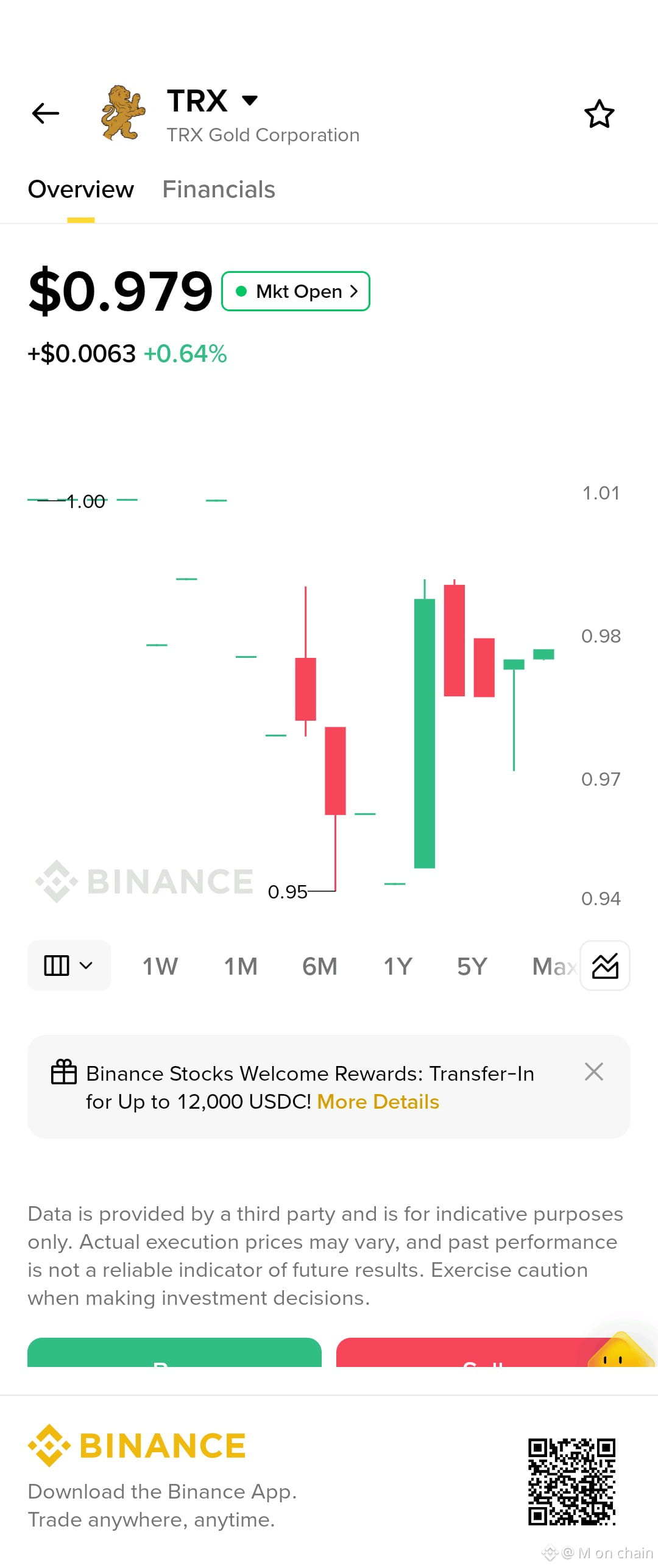
$TRX.US
{stock_us}(TRX.US)
India's biggest crypto exchange is facing fresh heat.
On-chain investigator Darcy flagged ~$16M in $USDT + $TRX moving out of wallets linked to CoinDCX — first into a single TRON address, then split and routed to deposit addresses at Binance, OKX and Gate.
CoinDCX says it's old loot from the July 2025 hack, but ZachXBT disputes that with on-chain evidence. The exchange now admits its deposit-sweep process failed and absorbed the losses.
Would you keep funds on an exchange after this?
#Crypto #CoinDCX #USDT #TRX #ExchangeSecurity
$TRX.US
TRXUS+4.74%
68

India's leading crypto exchange is in a public dispute with ZachXBT over $16M that moved last night.
Timeline: on Oct 21 at 23:35 UTC+8, wallets linked to CoinDCX sent ~15.99M USDT and 5,783 TRX to a single Tron address, which then split the funds — some landing at Binance, OKX and Gate, per the transaction report. The flag came from Darcy's post at Salus.
CoinDCX CEO Sumit Gupta says this is not a new hack: the wallets were created in January 2025 and compromised in last year's $44M breach, and the hackers are just reusing old addresses. Users' funds are safe, trading is normal.
But ZachXBT pushed back: one flagged address, he says, kept sweeping user deposits and receiving gas funds as recently as May 2026, and sent funds to CoinDCX's current hot wallet — asking how a "dead" wallet handled user deposits.
Tape: BTC $81,877 (-2.0%/24h), ETH $2,403 (-2.6%/24h) — context only; no market move tied to this.
So why was a "compromised" July 2025 wallet still touching user deposits in May 2026? DYOR. $BTC #CryptoNews #CoinDCX #ExchangeSecurity #CryptoHacks
40

·
--
South Korean regulators pull out all the stops! They directly blocked 27 exchanges, including BitMart and KuCoin. From restricting apps to outright website bans, they're cracking down on non-compliant platforms to keep investors from getting burned!
$BTC $ETH
#加密监管 #ExchangeSecurity
South Korea just dropped the hammer! Blocked 27 exchanges including BitMart and KuCoin. Upgraded from app restrictions to website bans, targeting unregistered exchanges before investors get burned. Major crackdown!
$BTC $ETH
#CryptoRegulation #ExchangeSecurity
$BTC $ETH
#加密监管 #ExchangeSecurity
South Korea just dropped the hammer! Blocked 27 exchanges including BitMart and KuCoin. Upgraded from app restrictions to website bans, targeting unregistered exchanges before investors get burned. Major crackdown!
$BTC $ETH
#CryptoRegulation #ExchangeSecurity
173

·
--
DESTRUCTIONA catastrophic blow has struck the cryptocurrency space, as Coinsbuy, a lesser-known exchange, has suffered an astonishing loss of $8 million in a coordinated attack. According to Onchain forensics, a single actor is responsible for draining funds across both TRON and Ethereum, with the attack vector still eerily shrouded in mystery #CryptoThreat #ExchangeSecurity #ForensicAnalysis.
The attack, described as a "coordinated two-blockchain attack," saw funds routed primarily through FixedFloat, sparking widespread alarm and concern within the trading community. The investigation has already led to some surprising conclusions: despite the attack being carried out by a single actor, no clear motive has been established, raising questions about the true intentions behind this brazen heist.
This brazen assault on security highlights the evolving threat landscape, where coordinated attacks are proving increasingly sophisticated. Given the relative ease with which funds were moved across two separate blockchain networks, it is likely that similar exploits will be tried in the future. For this reason, traders, investors, and exchanges alike would do well to reassess security measures, ensuring robust protection against similar threats.
In the face of this escalating threat, exchanges will need to demonstrate unwavering vigilance. As security becomes increasingly paramount, any lapse in protocol can lead to devastating consequences. This is not merely a threat to smaller exchanges like Coinsbuy but also a stark reminder for all market participants to be ever-vigilant and adaptable.
What will the response be from the wider trading community? Will exchanges redouble efforts to shore up vulnerabilities, and what measures will they implement to prevent similar attacks in the future?
DESTRUCTION
A catastrophic blow has struck the cryptocurrency space, as Coinsbuy, a lesser-known exchange, has suffered an astonishing loss of $8 million in a coordinated attack. According to Onchain forensics, a single actor is responsible for draining funds across both TRON and Ethereum, with the attack vector still eerily shrouded in mystery #CryptoThreat #ExchangeSecurity #ForensicAnalysis.
The attack, described as a "coordinated two-blockchain attack," saw funds routed primarily through FixedFloat, sparking widespread alarm and concern within the trading community. The investigation has already led to some surprising conclusions: despite the attack being carried out by a single actor, no clear motive has been established, raising questions about the true intentions behind this brazen heist.
This brazen assault on security highlights the evolving threat landscape, where coordinated attacks are proving increasingly sophisticated. Given the relative ease with which funds were moved across two separate blockchain networks, it is likely that similar exploits will be tried in the future. For this reason, traders, investors, and exchanges alike would do well to reassess security measures, ensuring robust protection against similar threats.
In the face of this escalating threat, exchanges will need to demonstrate unwavering vigilance. As security becomes increasingly paramount, any lapse in protocol can lead to devastating consequences. This is not merely a threat to smaller exchanges like Coinsbuy but also a stark reminder for all market participants to be ever-vigilant and adaptable.
What will the response be from the wider trading community? Will exchanges redouble efforts to shore up vulnerabilities, and what measures will they implement to prevent similar attacks in the future?
27
·
--
Oh wow, Bitget got hacked! $318k is gone just like that... Luckily Circle and Tether reacted fast and froze the USDT and USDC in the hacker wallet. Unfortunately, most of it is in ETH, which can't be frozen. Brothers, choose exchanges carefully for safety! #加密安全 #交易所被黑 $USDT $ETH
Holy crap Bitget just got hacked! $318k gone but kudos to Circle and Teter for freezing USDT/USDC in hacker wallet. Sadly most is in ETH which can't be frozen. Choose secure exchanges people! #CryptoHack #ExchangeSecurity $USDT $ETH
Holy crap Bitget just got hacked! $318k gone but kudos to Circle and Teter for freezing USDT/USDC in hacker wallet. Sadly most is in ETH which can't be frozen. Choose secure exchanges people! #CryptoHack #ExchangeSecurity $USDT $ETH
180
·
--
Emergency! Bitget has frozen XRP withdrawals after 27M tokens were stolen! The stolen tokens are being transferred but have not yet entered the spot market. XRP users, please watch your funds’ safety! The platform is handling the issue urgently. $XRP #交易所安全 #Hack
Breaking! Bitget freezes XRP withdrawals after 27M tokens stolen! The stolen tokens are on the move but haven't hit spot markets yet. XRP holders, be cautious! Platform working to resolve the issue. $XRP #ExchangeSecurity #Hack
Breaking! Bitget freezes XRP withdrawals after 27M tokens stolen! The stolen tokens are on the move but haven't hit spot markets yet. XRP holders, be cautious! Platform working to resolve the issue. $XRP #ExchangeSecurity #Hack
1
226

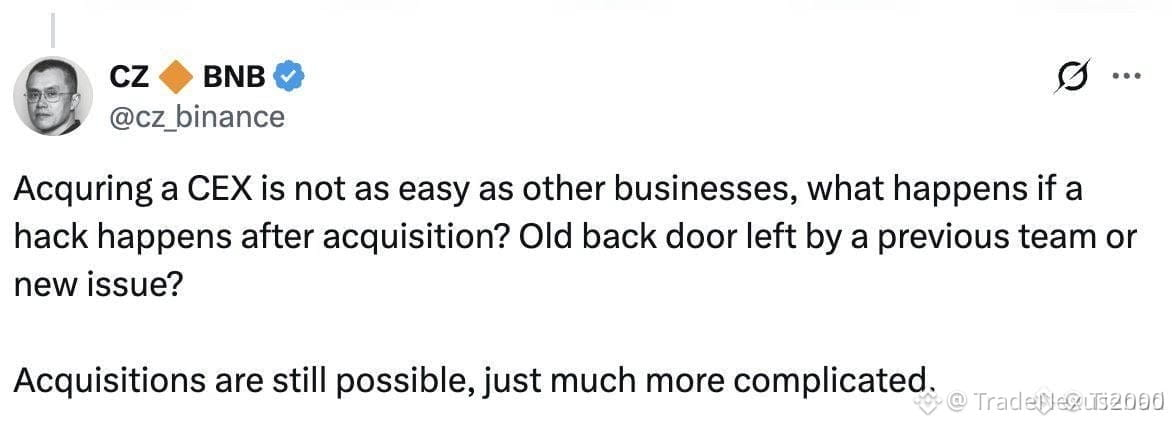
🚨 $ESP $DIA CZ DROPS A LIQUIDITY BOMB ON EXCHANGE ACQUISITIONS 💣
🦈 When the Binance founder flags hidden security risks in exchange M&A, smart money recalibrates. This isn't fearmongering—it's a structural warning about counterparty exposure that can cascade through order flow. 📊 Smaller exchange integrations often introduce untested smart contracts and opaque wallet architectures that institutional liquidity providers avoid.
💡 The shutdown announcements from major exchanges amplify this caution, adding a layer of systemic risk that compresses spreads and fragments liquidity pools. 🛡️ Whether this stifles growth or filters out weak infrastructure, the market is now pricing in a higher cost of trust. 💬 How do you see this reshaping the DeFi-to-CeFi bridge? 👇
⚠️ Not financial advice. Always manage your risk. 🛡️
🏷️ #ESP #DIA #CryptoNews #ExchangeSecurity #Liquidity
🦈 ⚡
281

🚨 $BTC WATCHES TOP EXCHANGE FREEZE $1.5B LAZARUS LOOT — NORTH KOREA SUED! ⚡
This is the kind of announcement that doesn't hit price instantly but quietly rewires the entire risk map. A top-tier exchange just took North Korea, its spy agency, and Lazarus Group straight to federal court over that $1.5B theft — and secured a preliminary injunction that nails the stolen goods in place. 🔍
Key detail: a list of unnamed "John Doe" defendants can no longer transfer or sell the frozen assets while the case moves. That removes one giant overhang of potential sell pressure from the market. 🌊
The exchange stresses this civil action is separate from U.S. criminal probes — meaning more dominoes are still falling. ⚡ 💬 Will this legal pressure force the hackers to move through darker corridors, or is $1.5B already washed clean? 👇
⚠️ Not financial advice. Always manage your risk. 🛡️
🏷️ #BTC #CryptoNews #LazarusGroup #ExchangeSecurity
🦈 ⚡
49

·
--
A $351.6M hot-wallet drain at Bitget, converted into ~68K $ETH, isn't just a headline — it's a liquidity event. Forced market sells of that size thin resting bids, and the aftershock shows in depth, not just price.
Check the tape: $BTC $84,291 (+1.12%), $ETH $2,718 (+1.65%), $BNB $772 (+1.06%). Funding is benign — BTC 0.0054%, ETH 0.0066% — and sentiment sits at 74 (Greed). No panic bid, no capitulation wick. That tells you the market absorbed the flow.
The overlooked angle: security incidents are order-book events. Binance's $1B SAFU and Proof of Reserves matter because deep, verifiable reserves keep spreads tight when someone else's hot wallet breaks.
Key level: $BTC must hold $83,500 on a closing basis. Lose it, and thin weekend depth accelerates moves.
Size positions so a single exchange failure can't impair your book — diversify custody and cap exposure per venue.
#BNB #BTC #ProofOfReserves #ExchangeSecurity
A $351.6M hot-wallet drain at Bitget, converted into ~68K $ETH , isn't just a headline — it's a liquidity event. Forced market sells of that size thin resting bids, and the aftershock shows in depth, not just price.
Check the tape: $BTC $84,291 (+1.12%), $ETH $2,718 (+1.65%), $BNB $772 (+1.06%). Funding is benign — BTC 0.0054%, ETH 0.0066% — and sentiment sits at 74 (Greed). No panic bid, no capitulation wick. That tells you the market absorbed the flow.
The overlooked angle: security incidents are order-book events. Binance's $1B SAFU and Proof of Reserves matter because deep, verifiable reserves keep spreads tight when someone else's hot wallet breaks.
Key level: $BTC must hold $83,500 on a closing basis. Lose it, and thin weekend depth accelerates moves.
Size positions so a single exchange failure can't impair your book — diversify custody and cap exposure per venue.
#BNB #BTC #ProofOfReserves #ExchangeSecurity
77

📰 Market Integrity: How Crypto Exchanges Are Building Trust
On July 11, 2026, the crypto industry continues strengthening its integrity infrastructure. With $59.81B traded daily across 17,467 coins, exchanges are investing in compliance and security.
Kraken's AI overhaul and Robinhood's AI agents represent not just innovation but also a commitment to better user experience. Meanwhile, the DOJ's moves in the BitClub case show legal accountability is catching up.
A market cap of $2.28T demands robust infrastructure. Major assets like $BTC and $ETH benefit from the most liquid and compliant trading environments available.
📌 Key Takeaway:
Exchanges are investing heavily in trust and compliance — a necessary evolution for a market worth $2.28 trillion.
#ExchangeSecurity #CryptoTrust #Compliance
#BinanceAlphaAlert
52

·
--
Article
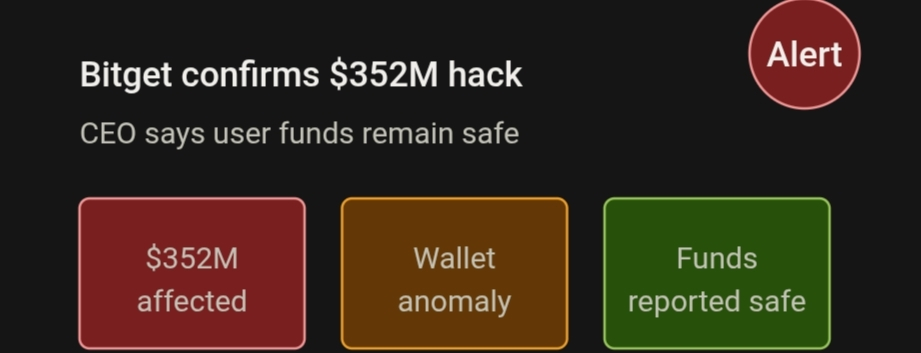
Bitget Confirms $352M Hack — Here's What Traders Need to KnowBreaking (September 25, 2026): Bitget has confirmed a security incident affecting $352 million, after independent researchers flagged unusual wallet movements earlier today. CEO Gracy Chen says user funds remain safe, but the exchange hasn't yet released a full timeline or breakdown of what happened.
What we know so far:
🔹 Researchers spotted abnormal wallet activity before Bitget's official confirmation today
🔹 $352M is the reported figure affected — exact time of the exploit not yet disclosed
🔹 Bitget's leadership is publicly stating user funds are secure
🔹 This follows a string of exchange-security incidents this year, keeping self-custody debates alive
Why this matters:
Every major hack reshapes how the market thinks about exchange risk. Whether Bitget fully contains this or details keep evolving over the next 24–48 hours, this is the kind of event that tests an exchange's transparency and incident response — and traders remember how it's handled.
My take:
The real signal isn't the hack itself — it's the response. Fast, transparent communication and full reimbursement (if needed) build trust; silence or shifting numbers erode it fast. Worth watching how this develops before drawing conclusions.
Questions for the community:
Do you keep funds on exchanges, or has this year's run of incidents pushed you further toward self-custody? What's your personal risk threshold for CEX exposure?
$BNB
{spot}(BNBUSDT)
#BitgetHack #ExchangeSecurity #CryptoNews #SelfCustody
Bitget Confirms $352M Hack — Here's What Traders Need to Know
Breaking (September 25, 2026): Bitget has confirmed a security incident affecting $352 million, after independent researchers flagged unusual wallet movements earlier today. CEO Gracy Chen says user funds remain safe, but the exchange hasn't yet released a full timeline or breakdown of what happened.
What we know so far:
🔹 Researchers spotted abnormal wallet activity before Bitget's official confirmation today
🔹 $352M is the reported figure affected — exact time of the exploit not yet disclosed
🔹 Bitget's leadership is publicly stating user funds are secure
🔹 This follows a string of exchange-security incidents this year, keeping self-custody debates alive
Why this matters:
Every major hack reshapes how the market thinks about exchange risk. Whether Bitget fully contains this or details keep evolving over the next 24–48 hours, this is the kind of event that tests an exchange's transparency and incident response — and traders remember how it's handled.
My take:
The real signal isn't the hack itself — it's the response. Fast, transparent communication and full reimbursement (if needed) build trust; silence or shifting numbers erode it fast. Worth watching how this develops before drawing conclusions.
Questions for the community:
Do you keep funds on exchanges, or has this year's run of incidents pushed you further toward self-custody? What's your personal risk threshold for CEX exposure?
$BNB
#BitgetHack #ExchangeSecurity #CryptoNews #SelfCustody
54
·
--
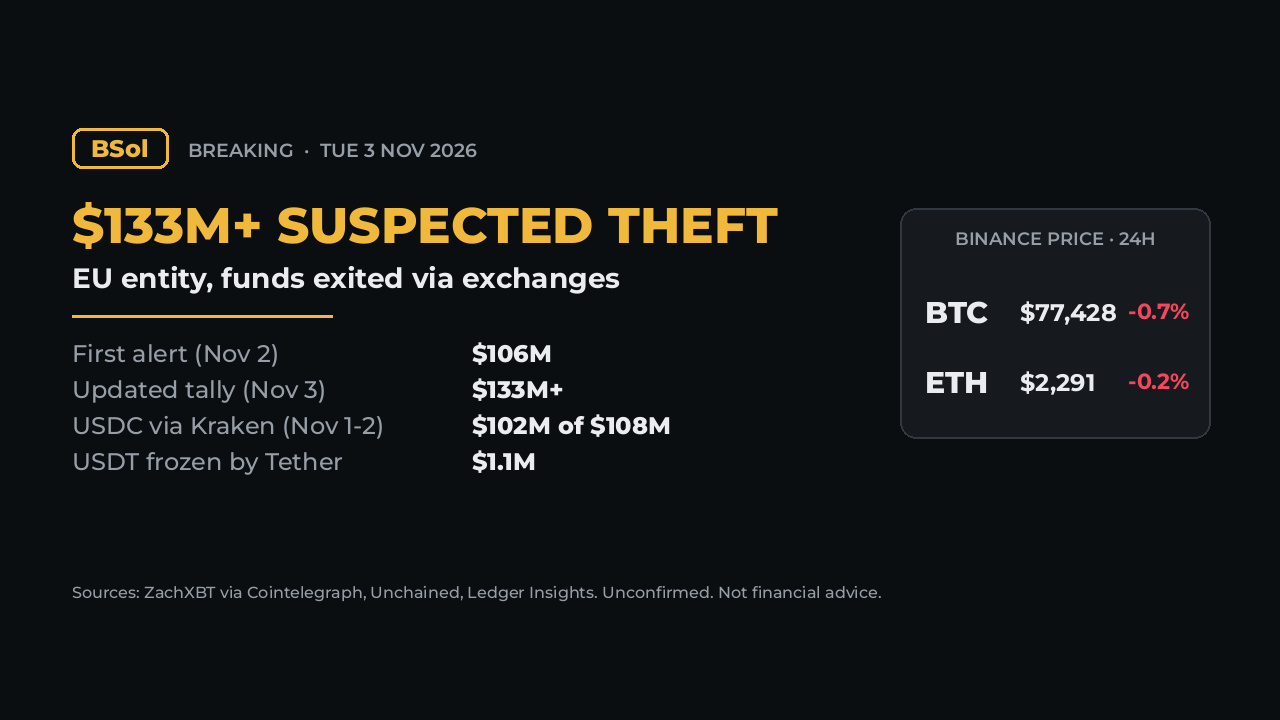
$133M+ suspected stolen from an EU entity, cashed out through exchange withdrawals.
What happened:
• ZachXBT says losses rose from $106M to $133M+ after he traced another $27M+ in exchange withdrawals by the same actor (he puts it down to a Western European financial institution, unconfirmed)
• Kraken restricted linked accounts and says its systems and customer accounts were not compromised; Crypto.com says it blocked related funds; OKX is investigating
• Ledger Insights: of $108M USDC moved on Nov 1-2, $102M left via Kraken
• Funds were swapped into ETH and Monero via instant exchanges and bridges; Tether froze $1.1M USDT
Why it matters: no wallet hack seems to be involved, just normal withdrawals. No victim has come forward, and ZachXBT says the silence let $30M+ get laundered.
Watch: whether the victim is named, and any more freezes.
Binance prices now:
$BTC $77,428 (-0.7% 24h)
$ETH $2,291 (-0.2%)
Exchanges keep getting used as exit ramps: should platforms hold large withdrawals from new addresses longer?
#CryptoNews #ExchangeSecurity #BTC #ETH
Log in to explore more content
Join global crypto users on Binance Square
⚡️ Get latest and useful information about crypto.
💬 Trusted by the world’s largest crypto exchange.
👍 Discover real insights from verified creators.
Email / Phone number
Trending Topics
1
#BTCRebounds80K
23,222 views
506 Discussing
2
#Binance98PercentReplenished
21,260 views
458 Discussing
3
#USMidterms-WhatAreMarketsExpecting?
284,529 views
1,931 Discussing
4
#USOctoberNFP-AreRateCutsStillPossible
365,300 views
2,749 Discussing
5
#AMDBeatsExpectations-AINarrativeContinues
81,410 views
738 Discussing
6
#CircleQ3Revenue865M
21,626 views
414 Discussing
7
#BinanceIncidentReport
483,923 views
2,044 Discussing
8
#USStocksOpenHigherAsDowGains1.9%
2,993 views
64 Discussing
9
#ADPUSPrivateEmployersAdd86000JobsInOctober
2,447 views
45 Discussing
10
#FrenchAssemblyPassesSelfCustodiedCryptoReportingAmendment
740 views
21 Discussing