

#energynews
energynews
25,559 views
114 Discussing
Hot
Latest

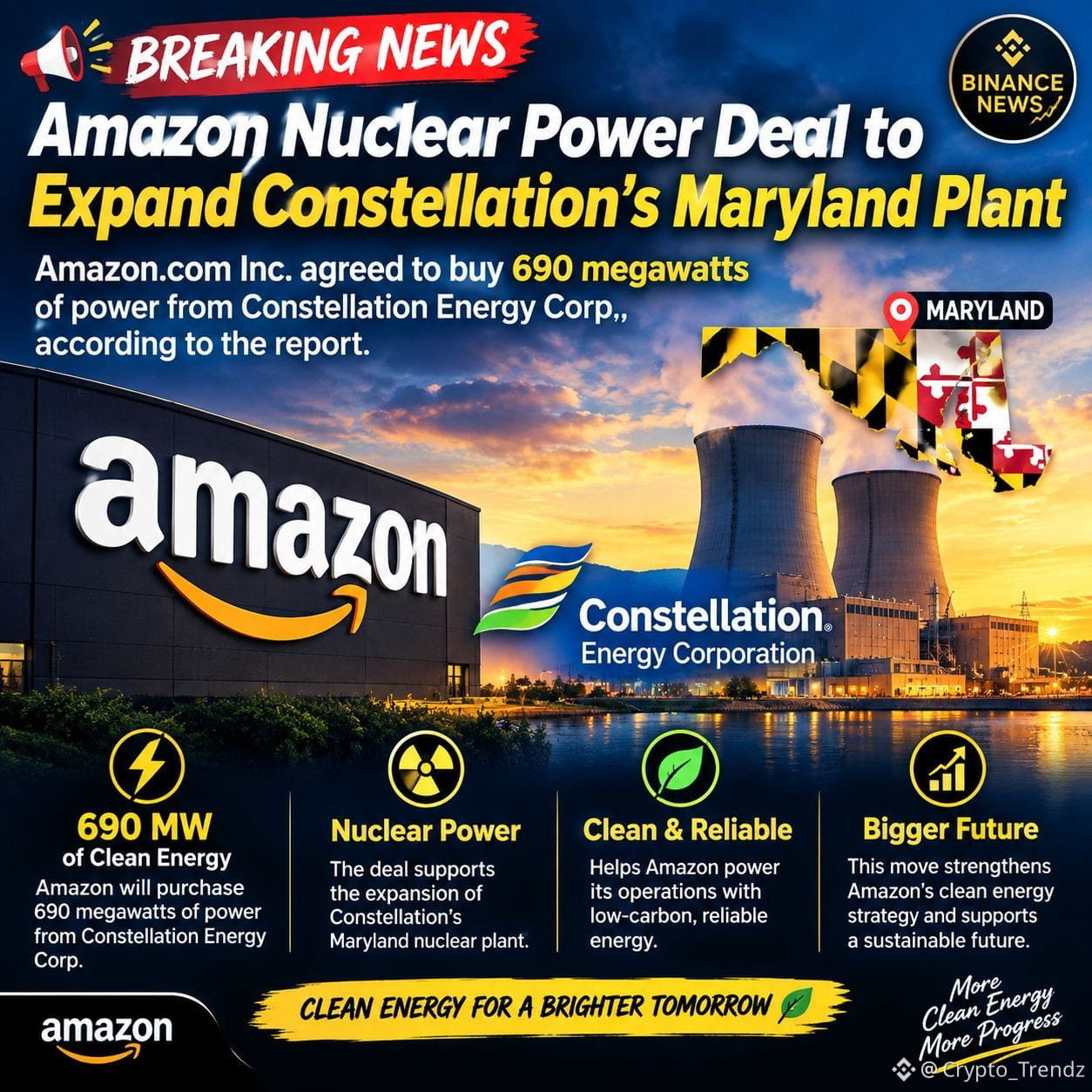
🚨 Amazon’s $690M Nuclear Power Deal: Big Move for Clean Energy! ⚡☢️
Short caption:
Amazon Expands Nuclear Power Deal in Maryland | 690 MW Energy Deal 📈
Hashtags:
#Amazon #AMZNB #NuclearEnergy ergy #EnergyNews #stockmarketnews rket #BinanceNews
🚨 Amazon’s $690M Nuclear Power Deal: Big Move for Clean Energy! ⚡☢️
Short caption:
Amazon Expands Nuclear Power Deal in Maryland | 690 MW Energy Deal 📈
Hashtags:
#Amazon #AMZNB #NuclearEnergy ergy #EnergyNews #stockmarketnews rket #BinanceNews
Short caption:
Amazon Expands Nuclear Power Deal in Maryland | 690 MW Energy Deal 📈
Hashtags:
#Amazon #AMZNB #NuclearEnergy ergy #EnergyNews #stockmarketnews rket #BinanceNews
33

🚨 Breaking News
The United States has granted a temporary authorization allowing the production, transportation, and sale of Iranian-origin crude oil, petroleum products, and petrochemicals through August 21, 2026.
The move follows recent U.S.-Iran diplomatic agreements and includes waivers covering related banking, insurance, shipping, and energy transactions, signaling a significant easing of restrictions on Iran's energy sector.
📌 Source: Reuters, June 22, 2026.
#Iran #USA #OilMarket #CrudeOil #EnergyNews
$BTC $XAG $XAU
🚨 Breaking News
The United States has granted a temporary authorization allowing the production, transportation, and sale of Iranian-origin crude oil, petroleum products, and petrochemicals through August 21, 2026.
The move follows recent U.S.-Iran diplomatic agreements and includes waivers covering related banking, insurance, shipping, and energy transactions, signaling a significant easing of restrictions on Iran's energy sector.
📌 Source: Reuters, June 22, 2026.
#Iran #USA #OilMarket #CrudeOil #EnergyNews
$BTC $XAG $XAU
The United States has granted a temporary authorization allowing the production, transportation, and sale of Iranian-origin crude oil, petroleum products, and petrochemicals through August 21, 2026.
The move follows recent U.S.-Iran diplomatic agreements and includes waivers covering related banking, insurance, shipping, and energy transactions, signaling a significant easing of restrictions on Iran's energy sector.
📌 Source: Reuters, June 22, 2026.
#Iran #USA #OilMarket #CrudeOil #EnergyNews
$BTC $XAG $XAU
205

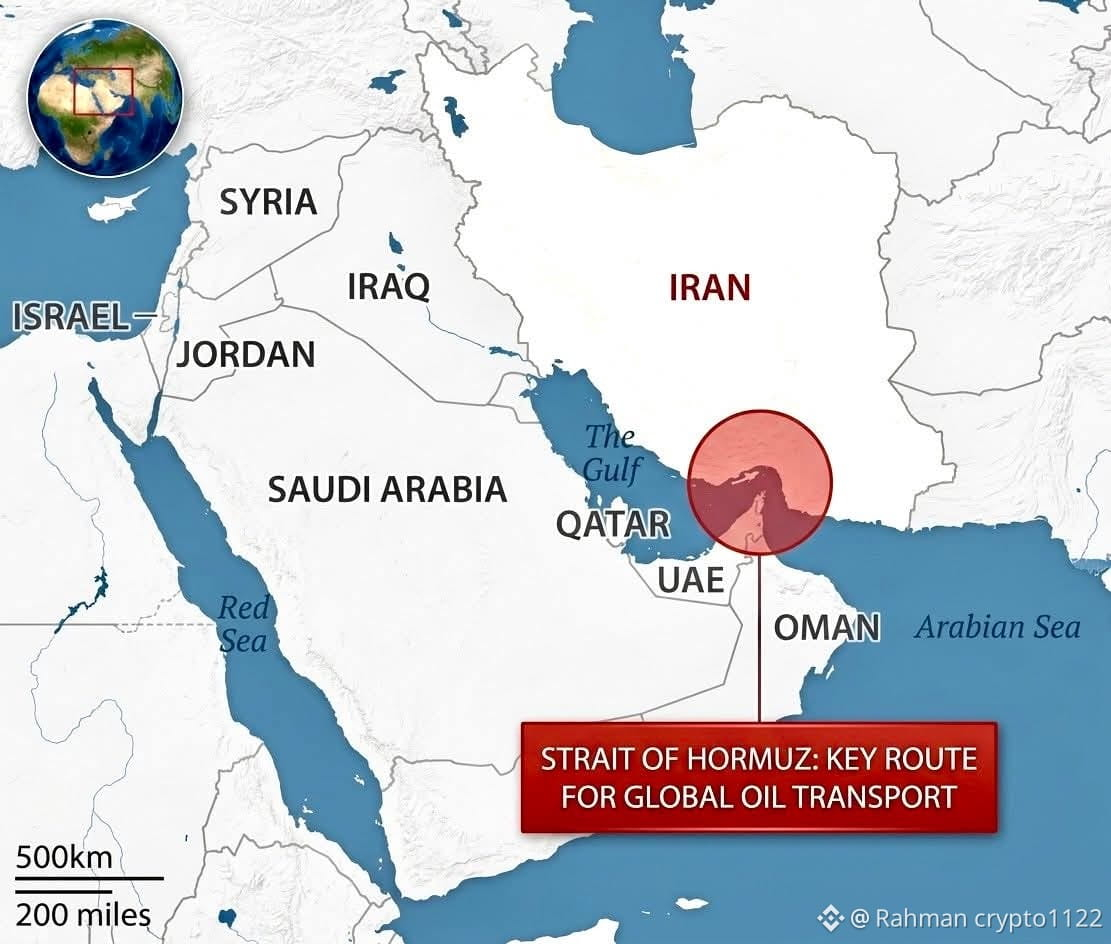
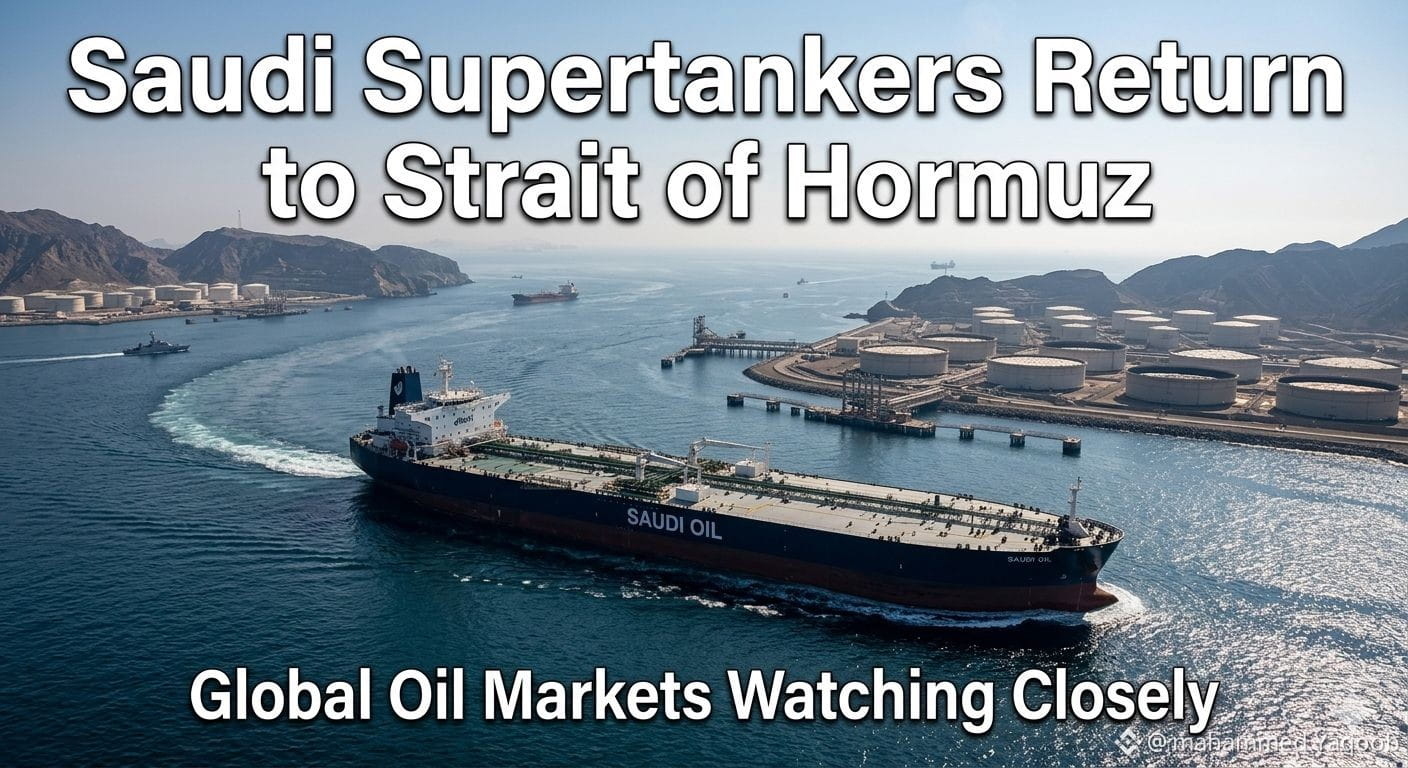
#SaudiSupertankersBeginCrossingStraitOfHormuz After weeks of uncertainty, Saudi supertankers have started crossing the Strait of Hormuz again, signaling renewed confidence in one of the world's most important energy routes. This could improve global oil supply flows and reduce pressure on energy markets. Traders should keep an eye on oil prices, shipping activity, and how geopolitical developments may impact market sentiment in the coming days. 🌍📈
#SaudiSupertankersBeginCrossingStraitOfHormuz #OilMarket #EnergyNews #CryptoNews #BinanceSquare �
Reuters +1
$BNB
{spot}(BNBUSDT)
$BTC
{spot}(BTCUSDT)
#SaudiSupertankersBeginCrossingStraitOfHormuz After weeks of uncertainty, Saudi supertankers have started crossing the Strait of Hormuz again, signaling renewed confidence in one of the world's most important energy routes. This could improve global oil supply flows and reduce pressure on energy markets. Traders should keep an eye on oil prices, shipping activity, and how geopolitical developments may impact market sentiment in the coming days. 🌍📈
#SaudiSupertankersBeginCrossingStraitOfHormuz #OilMarket #EnergyNews #CryptoNews #BinanceSquare �
Reuters +1
$BNB
$BTC
#SaudiSupertankersBeginCrossingStraitOfHormuz #OilMarket #EnergyNews #CryptoNews #BinanceSquare �
Reuters +1
$BNB
$BTC
38

Article
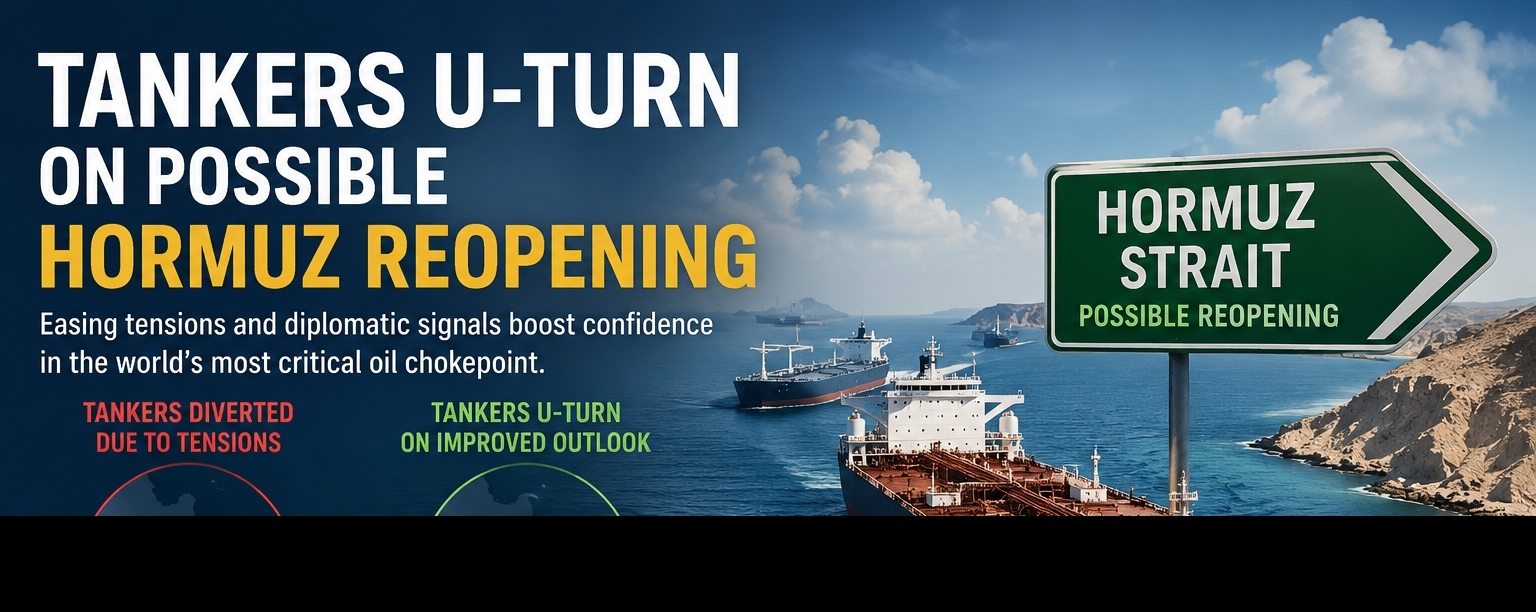
Tankers Reverse Course Despite Optimism Over Possible Strait of Hormuz ReopeningJune 17, 2026 | Global Energy & Shipping Markets
The global energy sector is closely monitoring developments in the Strait of Hormuz as reports indicate that several oil tankers have altered their routes or reversed course despite growing expectations that the vital maritime corridor could soon resume normal operations.$ETH
The Strait of Hormuz, located between the Persian Gulf and the Gulf of Oman, serves as one of the world's most strategically important shipping lanes. A significant portion of global crude oil and liquefied natural gas (LNG) exports passes through the narrow waterway, making its stability critical to international energy markets and global trade flows.
Recent diplomatic progress and easing regional tensions have fueled speculation that shipping activity through the strait may gradually return to normal. However, market participants remain cautious, with many vessel operators choosing to wait for greater clarity regarding security conditions before committing to regular transit schedules.
Shipping Industry Prioritizes Risk Management
Despite optimism surrounding a potential reopening, tanker operators continue to assess operational risks carefully. Concerns surrounding maritime security, insurance costs, crew safety, and navigation conditions have prompted some vessels to delay journeys or change course entirely.
Industry analysts note that while political developments may signal progress, shipping companies require tangible assurances regarding safety before resuming full-scale operations. The reported tanker U-turns underscore the industry's preference for caution in an environment where uncertainty remains elevated.
Impact on Global Oil Markets
The prospect of a fully functioning Strait of Hormuz has already influenced energy markets. Crude oil prices have experienced increased volatility as traders evaluate the likelihood of improved supply flows from major oil-producing nations in the Gulf region.
A sustained reopening could ease supply concerns, reduce transportation disruptions, and improve market confidence. Conversely, any setbacks in negotiations or renewed security incidents could reignite fears of supply constraints, placing upward pressure on energy prices.
Strategic Importance of Hormuz
Often described as the world's most important energy chokepoint, the Strait of Hormuz is essential for connecting Middle Eastern producers with global markets. Any disruption to traffic through the corridor has far-reaching implications for energy-importing economies, shipping companies, and commodity traders worldwide.$EVAA
As a result, governments, energy firms, and investors continue to monitor developments closely, recognizing that stability in the region remains a key factor influencing global economic conditions.
Outlook
While hopes for a reopening have improved market sentiment, the recent tanker reversals demonstrate that confidence among shipping operators has yet to be fully restored. Industry observers believe that sustained security assurances and consistent maritime operations will be necessary before normal shipping patterns return.$TRUMP
Until then, the global energy market is likely to remain sensitive to every development surrounding the Strait of Hormuz, with traders and shipping companies balancing optimism against the realities of operational risk.
Keywords: Strait of Hormuz, Oil Tankers, Global Shipping, Crude Oil Market, Energy Security, Maritime Trade, LNG Transport, Gulf Region, Oil Prices, Shipping Industry
#TankersUTurnOnPossibleHormuzReopening g #Hormuz #OilMarket #EnergyNews #ShippingIndustry #GlobalTrade #EnergySecurity #CrudeOil #MaritimeNews
Tankers Reverse Course Despite Optimism Over Possible Strait of Hormuz Reopening
June 17, 2026 | Global Energy & Shipping Markets
The global energy sector is closely monitoring developments in the Strait of Hormuz as reports indicate that several oil tankers have altered their routes or reversed course despite growing expectations that the vital maritime corridor could soon resume normal operations.$ETH
The Strait of Hormuz, located between the Persian Gulf and the Gulf of Oman, serves as one of the world's most strategically important shipping lanes. A significant portion of global crude oil and liquefied natural gas (LNG) exports passes through the narrow waterway, making its stability critical to international energy markets and global trade flows.
Recent diplomatic progress and easing regional tensions have fueled speculation that shipping activity through the strait may gradually return to normal. However, market participants remain cautious, with many vessel operators choosing to wait for greater clarity regarding security conditions before committing to regular transit schedules.
Shipping Industry Prioritizes Risk Management
Despite optimism surrounding a potential reopening, tanker operators continue to assess operational risks carefully. Concerns surrounding maritime security, insurance costs, crew safety, and navigation conditions have prompted some vessels to delay journeys or change course entirely.
Industry analysts note that while political developments may signal progress, shipping companies require tangible assurances regarding safety before resuming full-scale operations. The reported tanker U-turns underscore the industry's preference for caution in an environment where uncertainty remains elevated.
Impact on Global Oil Markets
The prospect of a fully functioning Strait of Hormuz has already influenced energy markets. Crude oil prices have experienced increased volatility as traders evaluate the likelihood of improved supply flows from major oil-producing nations in the Gulf region.
A sustained reopening could ease supply concerns, reduce transportation disruptions, and improve market confidence. Conversely, any setbacks in negotiations or renewed security incidents could reignite fears of supply constraints, placing upward pressure on energy prices.
Strategic Importance of Hormuz
Often described as the world's most important energy chokepoint, the Strait of Hormuz is essential for connecting Middle Eastern producers with global markets. Any disruption to traffic through the corridor has far-reaching implications for energy-importing economies, shipping companies, and commodity traders worldwide.$EVAA
As a result, governments, energy firms, and investors continue to monitor developments closely, recognizing that stability in the region remains a key factor influencing global economic conditions.
Outlook
While hopes for a reopening have improved market sentiment, the recent tanker reversals demonstrate that confidence among shipping operators has yet to be fully restored. Industry observers believe that sustained security assurances and consistent maritime operations will be necessary before normal shipping patterns return.$TRUMP
Until then, the global energy market is likely to remain sensitive to every development surrounding the Strait of Hormuz, with traders and shipping companies balancing optimism against the realities of operational risk.
Keywords: Strait of Hormuz, Oil Tankers, Global Shipping, Crude Oil Market, Energy Security, Maritime Trade, LNG Transport, Gulf Region, Oil Prices, Shipping Industry
#TankersUTurnOnPossibleHormuzReopening g #Hormuz #OilMarket #EnergyNews #ShippingIndustry #GlobalTrade #EnergySecurity #CrudeOil #MaritimeNews
The global energy sector is closely monitoring developments in the Strait of Hormuz as reports indicate that several oil tankers have altered their routes or reversed course despite growing expectations that the vital maritime corridor could soon resume normal operations.$ETH
The Strait of Hormuz, located between the Persian Gulf and the Gulf of Oman, serves as one of the world's most strategically important shipping lanes. A significant portion of global crude oil and liquefied natural gas (LNG) exports passes through the narrow waterway, making its stability critical to international energy markets and global trade flows.
Recent diplomatic progress and easing regional tensions have fueled speculation that shipping activity through the strait may gradually return to normal. However, market participants remain cautious, with many vessel operators choosing to wait for greater clarity regarding security conditions before committing to regular transit schedules.
Shipping Industry Prioritizes Risk Management
Despite optimism surrounding a potential reopening, tanker operators continue to assess operational risks carefully. Concerns surrounding maritime security, insurance costs, crew safety, and navigation conditions have prompted some vessels to delay journeys or change course entirely.
Industry analysts note that while political developments may signal progress, shipping companies require tangible assurances regarding safety before resuming full-scale operations. The reported tanker U-turns underscore the industry's preference for caution in an environment where uncertainty remains elevated.
Impact on Global Oil Markets
The prospect of a fully functioning Strait of Hormuz has already influenced energy markets. Crude oil prices have experienced increased volatility as traders evaluate the likelihood of improved supply flows from major oil-producing nations in the Gulf region.
A sustained reopening could ease supply concerns, reduce transportation disruptions, and improve market confidence. Conversely, any setbacks in negotiations or renewed security incidents could reignite fears of supply constraints, placing upward pressure on energy prices.
Strategic Importance of Hormuz
Often described as the world's most important energy chokepoint, the Strait of Hormuz is essential for connecting Middle Eastern producers with global markets. Any disruption to traffic through the corridor has far-reaching implications for energy-importing economies, shipping companies, and commodity traders worldwide.$EVAA
As a result, governments, energy firms, and investors continue to monitor developments closely, recognizing that stability in the region remains a key factor influencing global economic conditions.
Outlook
While hopes for a reopening have improved market sentiment, the recent tanker reversals demonstrate that confidence among shipping operators has yet to be fully restored. Industry observers believe that sustained security assurances and consistent maritime operations will be necessary before normal shipping patterns return.$TRUMP
Until then, the global energy market is likely to remain sensitive to every development surrounding the Strait of Hormuz, with traders and shipping companies balancing optimism against the realities of operational risk.
Keywords: Strait of Hormuz, Oil Tankers, Global Shipping, Crude Oil Market, Energy Security, Maritime Trade, LNG Transport, Gulf Region, Oil Prices, Shipping Industry
#TankersUTurnOnPossibleHormuzReopening g #Hormuz #OilMarket #EnergyNews #ShippingIndustry #GlobalTrade #EnergySecurity #CrudeOil #MaritimeNews
347

·
--
$BTC
$TRUMP
$BZ
The market is reacting to every headline. Expect continued swings until there is clear, concrete progress on the ground.
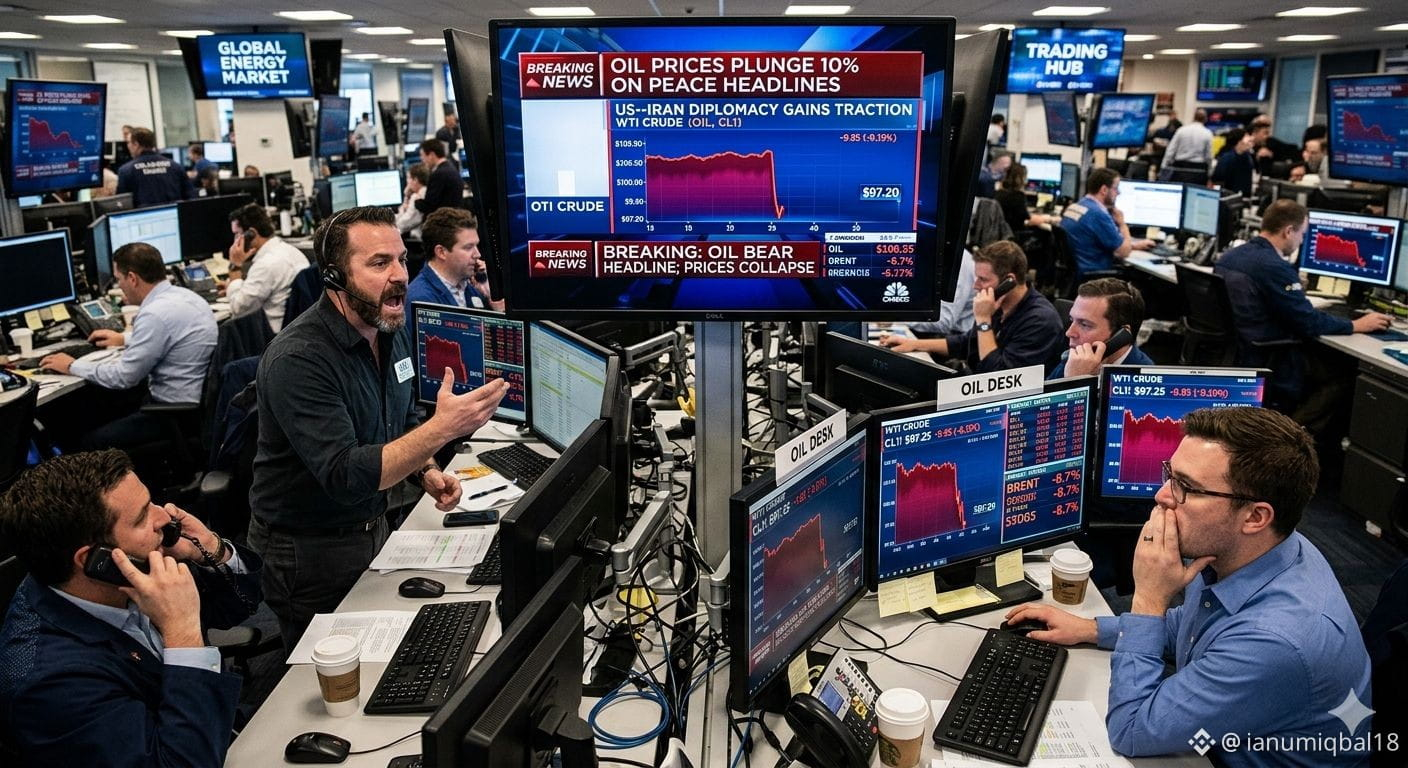
The energy market is currently caught in a volatile "wait-and-see" loop. While there was earlier hope for a diplomatic breakthrough between the U.S. and Iran, the latest reports indicate that uncertainty remains high, causing oil prices to rebound today.
Here is the quick take for your feed:
Market Alert: Oil Volatility Continues
The "peace deal" rally just hit a speed bump. After some initial optimism earlier this week, oil prices are back on the rise today as negotiations between the U.S. and Iran face fresh hurdles over uranium stockpiles and control of the Strait of Hormuz.
Key takeaways:
The Price Swing: Brent crude is seeing a rebound, keeping markets on edge as traders weigh diplomatic "good signs" against the reality of continued regional tensions.
The "Red Zone" Warning: The IEA is warning of a potential supply "red zone" this summer due to peak fuel demand and tight global inventories.
What to Watch: All eyes are on the Strait of Hormuz. Analysts suggest that even if a ceasefire were reached today, a full return to normal energy flows might not happen until 2027.
#OilMarket #EnergyNews #GeopoliticsOnChain #TradingUpdates
$BTC
$TRUMP
$BZ
The market is reacting to every headline. Expect continued swings until there is clear, concrete progress on the ground.
The energy market is currently caught in a volatile "wait-and-see" loop. While there was earlier hope for a diplomatic breakthrough between the U.S. and Iran, the latest reports indicate that uncertainty remains high, causing oil prices to rebound today.
Here is the quick take for your feed:
Market Alert: Oil Volatility Continues
The "peace deal" rally just hit a speed bump. After some initial optimism earlier this week, oil prices are back on the rise today as negotiations between the U.S. and Iran face fresh hurdles over uranium stockpiles and control of the Strait of Hormuz.
Key takeaways:
The Price Swing: Brent crude is seeing a rebound, keeping markets on edge as traders weigh diplomatic "good signs" against the reality of continued regional tensions.
The "Red Zone" Warning: The IEA is warning of a potential supply "red zone" this summer due to peak fuel demand and tight global inventories.
What to Watch: All eyes are on the Strait of Hormuz. Analysts suggest that even if a ceasefire were reached today, a full return to normal energy flows might not happen until 2027.
#OilMarket #EnergyNews #GeopoliticsOnChain #TradingUpdates
$TRUMP
$BZ
The market is reacting to every headline. Expect continued swings until there is clear, concrete progress on the ground.
The energy market is currently caught in a volatile "wait-and-see" loop. While there was earlier hope for a diplomatic breakthrough between the U.S. and Iran, the latest reports indicate that uncertainty remains high, causing oil prices to rebound today.
Here is the quick take for your feed:
Market Alert: Oil Volatility Continues
The "peace deal" rally just hit a speed bump. After some initial optimism earlier this week, oil prices are back on the rise today as negotiations between the U.S. and Iran face fresh hurdles over uranium stockpiles and control of the Strait of Hormuz.
Key takeaways:
The Price Swing: Brent crude is seeing a rebound, keeping markets on edge as traders weigh diplomatic "good signs" against the reality of continued regional tensions.
The "Red Zone" Warning: The IEA is warning of a potential supply "red zone" this summer due to peak fuel demand and tight global inventories.
What to Watch: All eyes are on the Strait of Hormuz. Analysts suggest that even if a ceasefire were reached today, a full return to normal energy flows might not happen until 2027.
#OilMarket #EnergyNews #GeopoliticsOnChain #TradingUpdates
1
1
263

·
--
#irancutscrudeprices
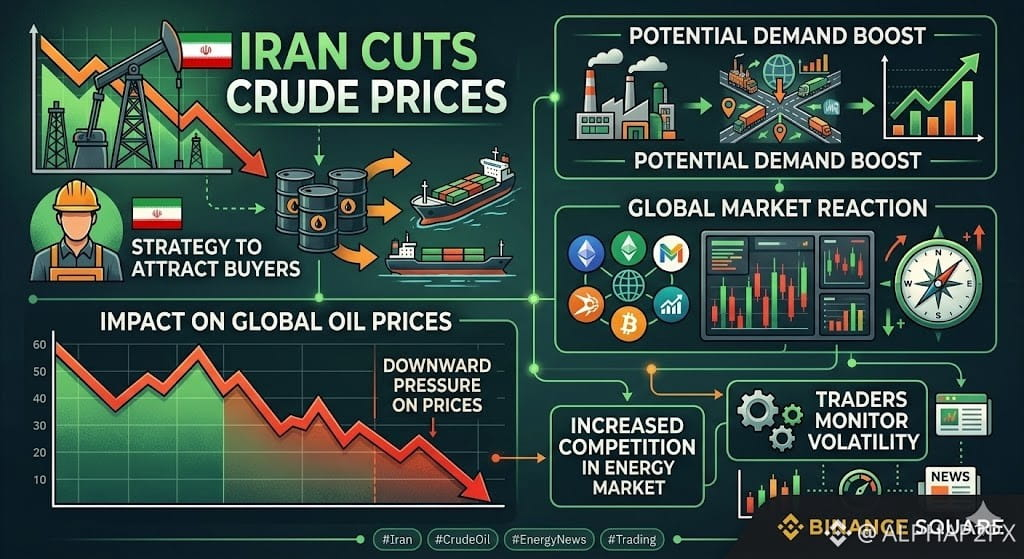
🚨 Iran Cuts Crude Prices — What Does It Mean for Markets?
Iran has reportedly lowered crude oil prices to attract buyers as global energy markets remain volatile. Lower oil prices could help boost demand and increase exports, while also easing some pressure on global fuel costs.
🛢️ Cheaper Iranian crude may increase supply in the market
📉 Oil prices could face downward pressure if supply keeps rising
📊 Traders are watching energy markets closely for the next move
While geopolitical risks remain, this price cut is a signal that competition in the oil market is heating up again. 🌍
#Iran #CrudeOil #OilMarket #EnergyNews
#irancutscrudeprices
🚨 Iran Cuts Crude Prices — What Does It Mean for Markets?
Iran has reportedly lowered crude oil prices to attract buyers as global energy markets remain volatile. Lower oil prices could help boost demand and increase exports, while also easing some pressure on global fuel costs.
🛢️ Cheaper Iranian crude may increase supply in the market
📉 Oil prices could face downward pressure if supply keeps rising
📊 Traders are watching energy markets closely for the next move
While geopolitical risks remain, this price cut is a signal that competition in the oil market is heating up again. 🌍
#Iran #CrudeOil #OilMarket #EnergyNews
🚨 Iran Cuts Crude Prices — What Does It Mean for Markets?
Iran has reportedly lowered crude oil prices to attract buyers as global energy markets remain volatile. Lower oil prices could help boost demand and increase exports, while also easing some pressure on global fuel costs.
🛢️ Cheaper Iranian crude may increase supply in the market
📉 Oil prices could face downward pressure if supply keeps rising
📊 Traders are watching energy markets closely for the next move
While geopolitical risks remain, this price cut is a signal that competition in the oil market is heating up again. 🌍
#Iran #CrudeOil #OilMarket #EnergyNews
2
2
1.9k
·
--
🔥 GAME-CHANGER: $100B Energy Deal Unfolded! 🛢️
$ETH
{spot}(ETHUSDT)
$BTC
{spot}(BTCUSDT)
Big macroeconomic news just dropped that could impact global inflation metrics and market liquidity!
📍 The Details:
U.S. and Venezuela reportedly lock in a 100-year strategic oil pact.
Tapping into 65B barrels across 17 major oil fields.
$100B expected investment to boost production & restore U.S. reserves.
💡 Why Traders Should Care:
Energy market moves directly sway dollar strength and inflation expectations, driving funds into risk assets or safe havens.
👇 Stay Ahead of the Market:
👉 Tap $BTC to trade live order book reactions!
💬 Bullish or Bearish for overall market liquidity? Let’s hear your take! 👇
#BinanceSquare #MacroMarkets #Bitcoin #CryptoTrading #EnergyNews
🔥 GAME-CHANGER: $100B Energy Deal Unfolded! 🛢️
$ETH
$BTC
Big macroeconomic news just dropped that could impact global inflation metrics and market liquidity!
📍 The Details:
U.S. and Venezuela reportedly lock in a 100-year strategic oil pact.
Tapping into 65B barrels across 17 major oil fields.
$100B expected investment to boost production & restore U.S. reserves.
💡 Why Traders Should Care:
Energy market moves directly sway dollar strength and inflation expectations, driving funds into risk assets or safe havens.
👇 Stay Ahead of the Market:
👉 Tap $BTC to trade live order book reactions!
💬 Bullish or Bearish for overall market liquidity? Let’s hear your take! 👇
#BinanceSquare #MacroMarkets #Bitcoin #CryptoTrading #EnergyNews
$ETH
$BTC
Big macroeconomic news just dropped that could impact global inflation metrics and market liquidity!
📍 The Details:
U.S. and Venezuela reportedly lock in a 100-year strategic oil pact.
Tapping into 65B barrels across 17 major oil fields.
$100B expected investment to boost production & restore U.S. reserves.
💡 Why Traders Should Care:
Energy market moves directly sway dollar strength and inflation expectations, driving funds into risk assets or safe havens.
👇 Stay Ahead of the Market:
👉 Tap $BTC to trade live order book reactions!
💬 Bullish or Bearish for overall market liquidity? Let’s hear your take! 👇
#BinanceSquare #MacroMarkets #Bitcoin #CryptoTrading #EnergyNews
1
87
Verified
🚨 BIG ENERGY MOVE: ExxonMobil is taking its fracking powerhouse overseas! 🛢️⚡
Texas energy giant ExxonMobil has officially signed a major deal to extract oil and natural gas from Azerbaijan’s Middle Kura Basin shale fields.
💡 Why this matters:
* Global Expansion: U.S. fracking tech is going global in a big way.
* Energy Supply Shift: Unlocking massive untapped shale potential in Eastern Europe / Central Asia.
* Market Impact: Keep an eye on global oil ($CL), Brent ($BZ), and Natural Gas ($NATGAS) prices!
What’s your take on Exxon’s overseas expansion? Drop your thoughts below! 👇
#ExxonMobil #EnergyNews #OilAndGas #GlobalEconomy #Trading $CL
{future}(CLUSDT)
$NATGAS
{future}(NATGASUSDT)
🚨 BIG ENERGY MOVE: ExxonMobil is taking its fracking powerhouse overseas! 🛢️⚡
Texas energy giant ExxonMobil has officially signed a major deal to extract oil and natural gas from Azerbaijan’s Middle Kura Basin shale fields.
💡 Why this matters:
* Global Expansion: U.S. fracking tech is going global in a big way.
* Energy Supply Shift: Unlocking massive untapped shale potential in Eastern Europe / Central Asia.
* Market Impact: Keep an eye on global oil ($CL ), Brent ($BZ), and Natural Gas ($NATGAS ) prices!
What’s your take on Exxon’s overseas expansion? Drop your thoughts below! 👇
#ExxonMobil #EnergyNews #OilAndGas #GlobalEconomy #Trading $CL
$NATGAS
Texas energy giant ExxonMobil has officially signed a major deal to extract oil and natural gas from Azerbaijan’s Middle Kura Basin shale fields.
💡 Why this matters:
* Global Expansion: U.S. fracking tech is going global in a big way.
* Energy Supply Shift: Unlocking massive untapped shale potential in Eastern Europe / Central Asia.
* Market Impact: Keep an eye on global oil ($CL ), Brent ($BZ), and Natural Gas ($NATGAS ) prices!
What’s your take on Exxon’s overseas expansion? Drop your thoughts below! 👇
#ExxonMobil #EnergyNews #OilAndGas #GlobalEconomy #Trading $CL
$NATGAS
165

#SaudiHaltsSouthernEnergySitesAfterAttacks
🚨 BREAKING: Saudi Energy Sites Halted After Attacks 🚨
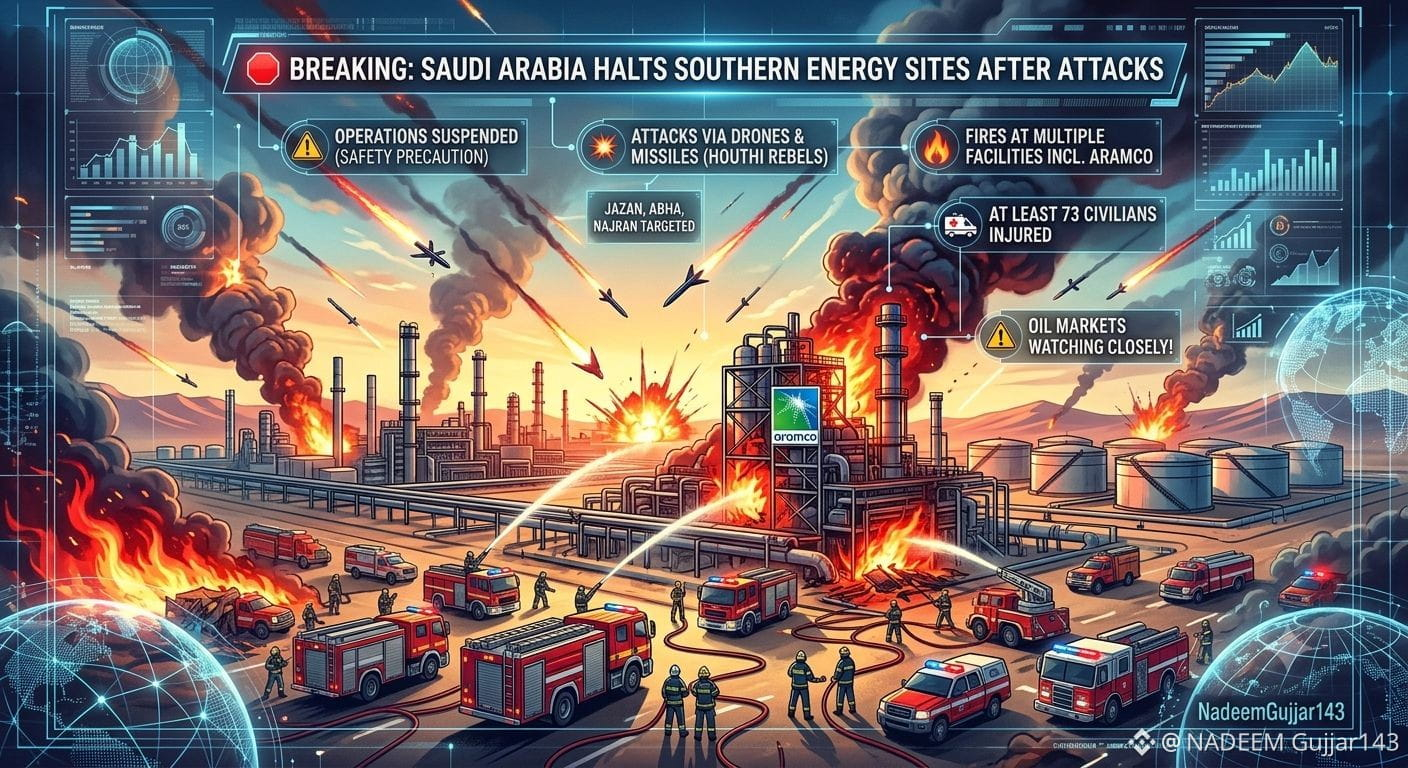
Saudi Arabia’s Energy Ministry has confirmed that operations at several energy facilities in the southern region have been temporarily suspended. The move follows a series of drone and missile strikes launched by Yemen's Houthi rebels, targeting sites in Abha, Jazan, and Najran.
The attacks ignited fires at multiple facilities, including Aramco infrastructure, and left at least 73 civilians injured. Firefighters and emergency crews quickly moved in to contain the blazes and secure the infrastructure.
Authorities emphasize that operations are halted purely as a safety precaution while damage assessments continue. Oil markets are watching closely! 🛢️⚠️
#MiddleEast #EnergyNews #OilMarket
#Nadeemgujjar143
@NADEEMGujjar @Square-Creator-ab32e3b38edb0 @Lawyer007
$BTC
{spot}(BTCUSDT)
$ZEC
{spot}(ZECUSDT)
$BB
{spot}(BBUSDT)
#SaudiHaltsSouthernEnergySitesAfterAttacks
🚨 BREAKING: Saudi Energy Sites Halted After Attacks 🚨
Saudi Arabia’s Energy Ministry has confirmed that operations at several energy facilities in the southern region have been temporarily suspended. The move follows a series of drone and missile strikes launched by Yemen's Houthi rebels, targeting sites in Abha, Jazan, and Najran.
The attacks ignited fires at multiple facilities, including Aramco infrastructure, and left at least 73 civilians injured. Firefighters and emergency crews quickly moved in to contain the blazes and secure the infrastructure.
Authorities emphasize that operations are halted purely as a safety precaution while damage assessments continue. Oil markets are watching closely! 🛢️⚠️
#MiddleEast #EnergyNews #OilMarket
#Nadeemgujjar143
@NADEEM Gujjar143 @khushi 14 @Honeyfairy
$BTC
$ZEC
$BB
🚨 BREAKING: Saudi Energy Sites Halted After Attacks 🚨
Saudi Arabia’s Energy Ministry has confirmed that operations at several energy facilities in the southern region have been temporarily suspended. The move follows a series of drone and missile strikes launched by Yemen's Houthi rebels, targeting sites in Abha, Jazan, and Najran.
The attacks ignited fires at multiple facilities, including Aramco infrastructure, and left at least 73 civilians injured. Firefighters and emergency crews quickly moved in to contain the blazes and secure the infrastructure.
Authorities emphasize that operations are halted purely as a safety precaution while damage assessments continue. Oil markets are watching closely! 🛢️⚠️
#MiddleEast #EnergyNews #OilMarket
#Nadeemgujjar143
@NADEEM Gujjar143 @khushi 14 @Honeyfairy
$BTC
$ZEC
$BB
2
631

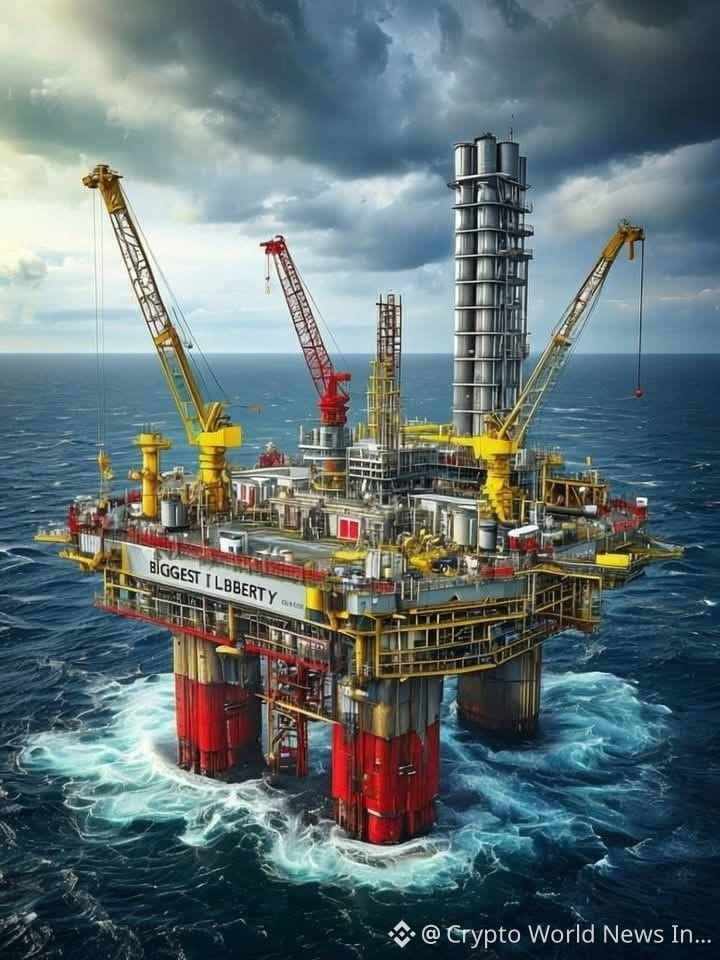
🛢️ Oil Prices Slip as Trump Remarks Ease Iran Tensions
📌 Short Summary:
Crude oil prices edged lower after U.S. President Donald Trump’s comments on Iran reduced immediate supply disruption fears, though markets remain highly sensitive.
🔑 Key Points:
📉 Oil prices fell around 1% after Trump’s Iran-related remarks
🌍 Geopolitical tensions still keep oil above normal levels
⚠️ Strait of Hormuz risk continues to support long-term price pressure
💡 Expert Insight:
This is a classic “fear vs relief” market—short-term dips happen on diplomatic signals, but structural supply risk keeps oil elevated.
#OilPrices #CrudeOil #GlobalMarkets #Geopolitics #EnergyNews $CL $BZ
{future}(BZUSDT)
{future}(CLUSDT)
🛢️ Oil Prices Slip as Trump Remarks Ease Iran Tensions
📌 Short Summary:
Crude oil prices edged lower after U.S. President Donald Trump’s comments on Iran reduced immediate supply disruption fears, though markets remain highly sensitive.
🔑 Key Points:
📉 Oil prices fell around 1% after Trump’s Iran-related remarks
🌍 Geopolitical tensions still keep oil above normal levels
⚠️ Strait of Hormuz risk continues to support long-term price pressure
💡 Expert Insight:
This is a classic “fear vs relief” market—short-term dips happen on diplomatic signals, but structural supply risk keeps oil elevated.
#OilPrices #CrudeOil #GlobalMarkets #Geopolitics #EnergyNews $CL $BZ
📌 Short Summary:
Crude oil prices edged lower after U.S. President Donald Trump’s comments on Iran reduced immediate supply disruption fears, though markets remain highly sensitive.
🔑 Key Points:
📉 Oil prices fell around 1% after Trump’s Iran-related remarks
🌍 Geopolitical tensions still keep oil above normal levels
⚠️ Strait of Hormuz risk continues to support long-term price pressure
💡 Expert Insight:
This is a classic “fear vs relief” market—short-term dips happen on diplomatic signals, but structural supply risk keeps oil elevated.
#OilPrices #CrudeOil #GlobalMarkets #Geopolitics #EnergyNews $CL $BZ
245

·
--
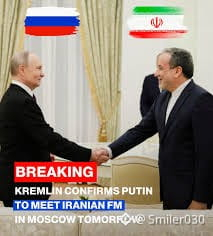
Diplomatic Deadlock: Iran Criticizes U.S. Stance During Putin Meeting 🌍⚖️
Tensions are rising in international negotiations. Iran's Foreign Minister targeted the United States in a meeting with Russian President Vladimir Putin.
Key Highlights:
Diplomatic Friction: Iran's Foreign Minister stated clearly that America's "destructive habits," "unreasonable demands," and frequently changing stance have completely stalled diplomatic progress.
Geopolitical Stance: This meeting takes place at a time when there is a deadlock in the Middle East over energy corridors and nuclear negotiations.
Market Impact: Global markets and the energy sector are currently very sensitive. Until this "trust deficit" between Washington and Tehran is resolved, volatility in oil and risk assets is likely to persist.
Is this mere rhetoric?
Experts believe this statement is not merely a diplomatic statement, but a signal that negotiations are still a long way off. Until common ground is reached between the major powers (Russia, the US, and Iran), this will have a direct impact on global stability.
$PRL $PENGU $AIOT
What do you think? Will diplomatic efforts pave a way forward, or will the situation worsen? Share your opinion below! 👇
#Geopolitics #Iran #usa #Diplomacy #MarketVolatility #EnergyNews
Diplomatic Deadlock: Iran Criticizes U.S. Stance During Putin Meeting 🌍⚖️
Tensions are rising in international negotiations. Iran's Foreign Minister targeted the United States in a meeting with Russian President Vladimir Putin.
Key Highlights:
Diplomatic Friction: Iran's Foreign Minister stated clearly that America's "destructive habits," "unreasonable demands," and frequently changing stance have completely stalled diplomatic progress.
Geopolitical Stance: This meeting takes place at a time when there is a deadlock in the Middle East over energy corridors and nuclear negotiations.
Market Impact: Global markets and the energy sector are currently very sensitive. Until this "trust deficit" between Washington and Tehran is resolved, volatility in oil and risk assets is likely to persist.
Is this mere rhetoric?
Experts believe this statement is not merely a diplomatic statement, but a signal that negotiations are still a long way off. Until common ground is reached between the major powers (Russia, the US, and Iran), this will have a direct impact on global stability.
$PRL $PENGU $AIOT
What do you think? Will diplomatic efforts pave a way forward, or will the situation worsen? Share your opinion below! 👇
#Geopolitics #Iran #usa #Diplomacy #MarketVolatility #EnergyNews
Tensions are rising in international negotiations. Iran's Foreign Minister targeted the United States in a meeting with Russian President Vladimir Putin.
Key Highlights:
Diplomatic Friction: Iran's Foreign Minister stated clearly that America's "destructive habits," "unreasonable demands," and frequently changing stance have completely stalled diplomatic progress.
Geopolitical Stance: This meeting takes place at a time when there is a deadlock in the Middle East over energy corridors and nuclear negotiations.
Market Impact: Global markets and the energy sector are currently very sensitive. Until this "trust deficit" between Washington and Tehran is resolved, volatility in oil and risk assets is likely to persist.
Is this mere rhetoric?
Experts believe this statement is not merely a diplomatic statement, but a signal that negotiations are still a long way off. Until common ground is reached between the major powers (Russia, the US, and Iran), this will have a direct impact on global stability.
$PRL $PENGU $AIOT
What do you think? Will diplomatic efforts pave a way forward, or will the situation worsen? Share your opinion below! 👇
#Geopolitics #Iran #usa #Diplomacy #MarketVolatility #EnergyNews
331


·
--
🚨 BREAKING: STRAIT OF HORMUZ RE-OPENED! 🚨
🌊 Iran confirms the strategic Strait of Hormuz is now fully open after recent tensions disrupted global oil flows. This crucial waterway, responsible for nearly 20% of the world’s oil shipments, reopening signals relief for energy markets worldwide.
📈 Immediate market reaction: Oil prices are stabilizing, shipping routes normalizing, and global trade confidence surging. Analysts predict smoother supply chains and reduced geopolitical risk premiums.
💹 Investors, energy traders, and global markets are cheering — this is a major win for stability and economic momentum.
#Markets #Oil #GlobalTrade #BreakingNews #EnergyNews
🚨 BREAKING: STRAIT OF HORMUZ RE-OPENED! 🚨
🌊 Iran confirms the strategic Strait of Hormuz is now fully open after recent tensions disrupted global oil flows. This crucial waterway, responsible for nearly 20% of the world’s oil shipments, reopening signals relief for energy markets worldwide.
📈 Immediate market reaction: Oil prices are stabilizing, shipping routes normalizing, and global trade confidence surging. Analysts predict smoother supply chains and reduced geopolitical risk premiums.
💹 Investors, energy traders, and global markets are cheering — this is a major win for stability and economic momentum.
#Markets #Oil #GlobalTrade #BreakingNews #EnergyNews
🌊 Iran confirms the strategic Strait of Hormuz is now fully open after recent tensions disrupted global oil flows. This crucial waterway, responsible for nearly 20% of the world’s oil shipments, reopening signals relief for energy markets worldwide.
📈 Immediate market reaction: Oil prices are stabilizing, shipping routes normalizing, and global trade confidence surging. Analysts predict smoother supply chains and reduced geopolitical risk premiums.
💹 Investors, energy traders, and global markets are cheering — this is a major win for stability and economic momentum.
#Markets #Oil #GlobalTrade #BreakingNews #EnergyNews

4
258

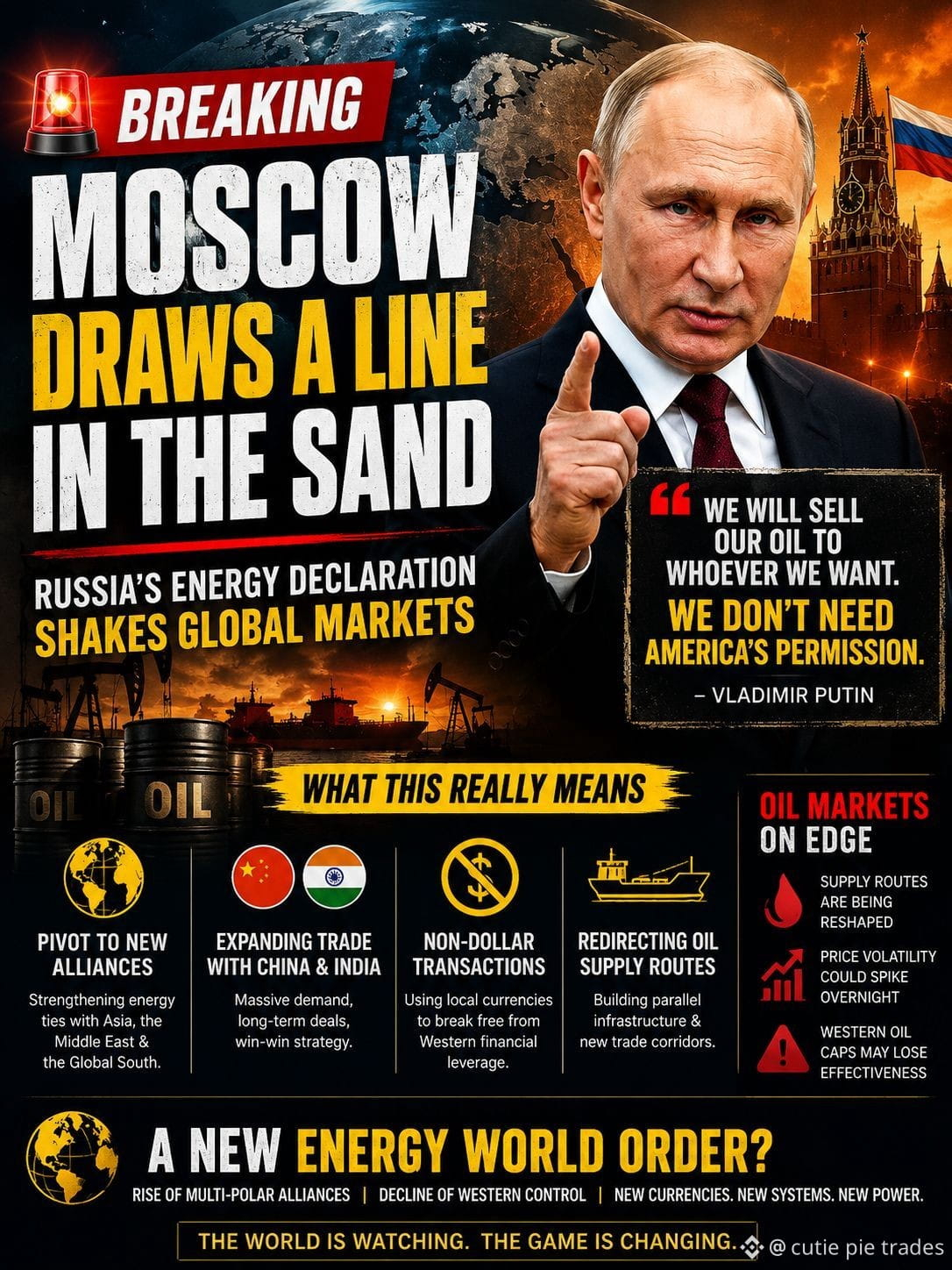
🚨 BREAKING: Putin Sends a Strong Warning to the West 🌍🛢️
Russian President Vladimir Putin has once again made Russia’s stance very clear:
“Russia will sell oil to whoever it chooses. No approval from the U.S. is needed.”
This is more than just a political statement — it’s a major signal for global energy markets and the future of international trade.
⚡ Russia is rapidly strengthening ties with:
🇨🇳 China
🇮🇳 India
🌏 Global South nations
At the same time, it is:
🔄 Expanding non-dollar oil settlements
🛢️ Redirecting exports beyond Western-controlled systems
📉 Reducing dependence on U.S.-linked financial networks
🔥 Why the market is paying attention:
• Oil market volatility could increase sharply
• Western sanctions may become less effective
• A new multi-polar energy structure is forming
The global energy balance is changing fast, and investors worldwide are watching every move closely 👀🌐
The era of one-sided dominance over global oil trade may slowly be coming to an end.
#Putin #OilMarket #Geopolitics #EnergyNews #CryptoNews
🚨 BREAKING: Putin Sends a Strong Warning to the West 🌍🛢️
Russian President Vladimir Putin has once again made Russia’s stance very clear:
“Russia will sell oil to whoever it chooses. No approval from the U.S. is needed.”
This is more than just a political statement — it’s a major signal for global energy markets and the future of international trade.
⚡ Russia is rapidly strengthening ties with:
🇨🇳 China
🇮🇳 India
🌏 Global South nations
At the same time, it is:
🔄 Expanding non-dollar oil settlements
🛢️ Redirecting exports beyond Western-controlled systems
📉 Reducing dependence on U.S.-linked financial networks
🔥 Why the market is paying attention:
• Oil market volatility could increase sharply
• Western sanctions may become less effective
• A new multi-polar energy structure is forming
The global energy balance is changing fast, and investors worldwide are watching every move closely 👀🌐
The era of one-sided dominance over global oil trade may slowly be coming to an end.
#Putin #OilMarket #Geopolitics #EnergyNews #CryptoNews
Russian President Vladimir Putin has once again made Russia’s stance very clear:
“Russia will sell oil to whoever it chooses. No approval from the U.S. is needed.”
This is more than just a political statement — it’s a major signal for global energy markets and the future of international trade.
⚡ Russia is rapidly strengthening ties with:
🇨🇳 China
🇮🇳 India
🌏 Global South nations
At the same time, it is:
🔄 Expanding non-dollar oil settlements
🛢️ Redirecting exports beyond Western-controlled systems
📉 Reducing dependence on U.S.-linked financial networks
🔥 Why the market is paying attention:
• Oil market volatility could increase sharply
• Western sanctions may become less effective
• A new multi-polar energy structure is forming
The global energy balance is changing fast, and investors worldwide are watching every move closely 👀🌐
The era of one-sided dominance over global oil trade may slowly be coming to an end.
#Putin #OilMarket #Geopolitics #EnergyNews #CryptoNews
3
1
1.4k

·
--
UAE Exits OPEC, Triggering Oil Market Volatility
The oil market has entered a new shock phase.
The United Arab Emirates has officially announced its decision to exit OPEC and OPEC+ effective May 1, 2026, marking one of the biggest structural shifts in global energy politics in years. According to the UAE’s official news agency, the move reflects Abu Dhabi’s long-term economic strategy, its expanding domestic energy capacity, and its desire for a more flexible role in global oil markets. 
This is not just another policy headline — it strikes at the heart of OPEC’s power.
For decades, OPEC’s influence came from coordination: members limiting or increasing supply together to manage prices. But with the UAE stepping away, the market now faces a more uncertain future where one of the Gulf’s major producers can pursue production strategy outside cartel limits.
Analysts warn this could weaken OPEC’s cohesion, increase supply competition, and raise volatility across crude markets. Reuters commentary said the exit risks reducing OPEC’s influence and could open the door to a more aggressive market-share battle once regional disruptions ease. 
Goldman Sachs also said the UAE’s exit creates more medium-term upside risk to oil supply, because Abu Dhabi may eventually have more freedom to increase production beyond OPEC restrictions. 
For traders, the message is clear: oil is no longer reacting only to demand, inflation, and geopolitics. It is now pricing in a potential breakdown in producer coordination.
The UAE’s exit from OPEC is more than an energy decision — it is a signal that the balance of power in global oil markets is shifting.
#UAE
#OPEC
#OilMarket
#EnergyNews
UAE Exits OPEC, Triggering Oil Market Volatility
The oil market has entered a new shock phase.
The United Arab Emirates has officially announced its decision to exit OPEC and OPEC+ effective May 1, 2026, marking one of the biggest structural shifts in global energy politics in years. According to the UAE’s official news agency, the move reflects Abu Dhabi’s long-term economic strategy, its expanding domestic energy capacity, and its desire for a more flexible role in global oil markets. 
This is not just another policy headline — it strikes at the heart of OPEC’s power.
For decades, OPEC’s influence came from coordination: members limiting or increasing supply together to manage prices. But with the UAE stepping away, the market now faces a more uncertain future where one of the Gulf’s major producers can pursue production strategy outside cartel limits.
Analysts warn this could weaken OPEC’s cohesion, increase supply competition, and raise volatility across crude markets. Reuters commentary said the exit risks reducing OPEC’s influence and could open the door to a more aggressive market-share battle once regional disruptions ease. 
Goldman Sachs also said the UAE’s exit creates more medium-term upside risk to oil supply, because Abu Dhabi may eventually have more freedom to increase production beyond OPEC restrictions. 
For traders, the message is clear: oil is no longer reacting only to demand, inflation, and geopolitics. It is now pricing in a potential breakdown in producer coordination.
The UAE’s exit from OPEC is more than an energy decision — it is a signal that the balance of power in global oil markets is shifting.
#UAE
#OPEC
#OilMarket
#EnergyNews
The oil market has entered a new shock phase.
The United Arab Emirates has officially announced its decision to exit OPEC and OPEC+ effective May 1, 2026, marking one of the biggest structural shifts in global energy politics in years. According to the UAE’s official news agency, the move reflects Abu Dhabi’s long-term economic strategy, its expanding domestic energy capacity, and its desire for a more flexible role in global oil markets. 
This is not just another policy headline — it strikes at the heart of OPEC’s power.
For decades, OPEC’s influence came from coordination: members limiting or increasing supply together to manage prices. But with the UAE stepping away, the market now faces a more uncertain future where one of the Gulf’s major producers can pursue production strategy outside cartel limits.
Analysts warn this could weaken OPEC’s cohesion, increase supply competition, and raise volatility across crude markets. Reuters commentary said the exit risks reducing OPEC’s influence and could open the door to a more aggressive market-share battle once regional disruptions ease. 
Goldman Sachs also said the UAE’s exit creates more medium-term upside risk to oil supply, because Abu Dhabi may eventually have more freedom to increase production beyond OPEC restrictions. 
For traders, the message is clear: oil is no longer reacting only to demand, inflation, and geopolitics. It is now pricing in a potential breakdown in producer coordination.
The UAE’s exit from OPEC is more than an energy decision — it is a signal that the balance of power in global oil markets is shifting.
#UAE
#OPEC
#OilMarket
#EnergyNews
2
2.1k

·
--
Bullish
Verified
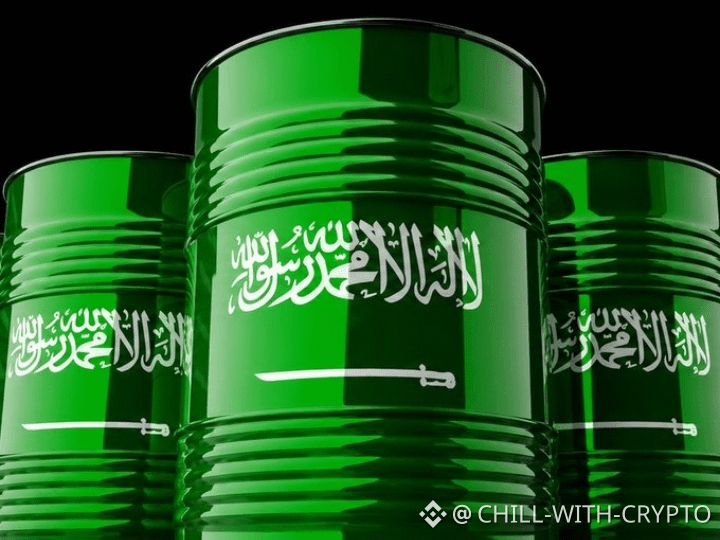
🛑Global energy markets are back in focus as three Saudi supertankers carrying nearly 6 million barrels of crude oil successfully transit the Strait of Hormuz.
The vessels departed Saudi ports shortly after the signing of the US-Iran memorandum, marking the largest oil movement through the strategic waterway in weeks. While this signals improving confidence in regional shipping routes, hundreds of vessels remain queued for passage, and insurers warn that a full return to normal operations could take months.
With global supply chains watching closely, the Strait of Hormuz remains one of the world's most critical energy chokepoints, and every major shipment is being viewed as a key signal for oil markets worldwide.
#OilMarket #SaudiSupertankersBeginCrossingStraitOfHormuz #FedHoldsRatesAt3.5%-3.75% #EnergyNews #CrudeOil $SPCXB
{spot}(SPCXBUSDT)
$SPCX
{future}(SPCXUSDT)
$BZ
{future}(BZUSDT)
🛑Global energy markets are back in focus as three Saudi supertankers carrying nearly 6 million barrels of crude oil successfully transit the Strait of Hormuz.
The vessels departed Saudi ports shortly after the signing of the US-Iran memorandum, marking the largest oil movement through the strategic waterway in weeks. While this signals improving confidence in regional shipping routes, hundreds of vessels remain queued for passage, and insurers warn that a full return to normal operations could take months.
With global supply chains watching closely, the Strait of Hormuz remains one of the world's most critical energy chokepoints, and every major shipment is being viewed as a key signal for oil markets worldwide.
#OilMarket #SaudiSupertankersBeginCrossingStraitOfHormuz #FedHoldsRatesAt3.5%-3.75% #EnergyNews #CrudeOil $SPCXB
$SPCX
$BZ
The vessels departed Saudi ports shortly after the signing of the US-Iran memorandum, marking the largest oil movement through the strategic waterway in weeks. While this signals improving confidence in regional shipping routes, hundreds of vessels remain queued for passage, and insurers warn that a full return to normal operations could take months.
With global supply chains watching closely, the Strait of Hormuz remains one of the world's most critical energy chokepoints, and every major shipment is being viewed as a key signal for oil markets worldwide.
#OilMarket #SaudiSupertankersBeginCrossingStraitOfHormuz #FedHoldsRatesAt3.5%-3.75% #EnergyNews #CrudeOil $SPCXB
$SPCX
$BZ
508
·
--
🛢️ Oil Market Update: Big inventory draw, what is expected to happen to prices?
According to the latest report released by the American Petroleum Institute (API), US refined oil inventories have seen a significant decline in the week ending April 17.
Key points from the report:
Big draw: Stocks have recorded an unexpected decline of 4.59 million barrels.
Expectations vs. Reality: The market had expected a decline of only 2.5 million barrels, meaning that the decline is much higher than expectations.
Previous record: This was also the result of a decline of 3.363 million barrels seen last week, indicating that the balance of supply and demand in the market is changing rapidly.
Market Impact:
Such a large and sustained decline in oil inventories usually signals a bullish trend in the market. When supply is tight and demand is strong, it can put upward pressure on oil prices in the global market.
This is an important signal for investors and traders that volatility in the energy sector may be in store in the coming days. 📈
Follow me for more market analysis and important updates!
$CL $BAS $RAVE
#OilMarket #EnergyNews #API #crudeoil #MarketAnalysis #BinanceSquare
🛢️ Oil Market Update: Big inventory draw, what is expected to happen to prices?
According to the latest report released by the American Petroleum Institute (API), US refined oil inventories have seen a significant decline in the week ending April 17.
Key points from the report:
Big draw: Stocks have recorded an unexpected decline of 4.59 million barrels.
Expectations vs. Reality: The market had expected a decline of only 2.5 million barrels, meaning that the decline is much higher than expectations.
Previous record: This was also the result of a decline of 3.363 million barrels seen last week, indicating that the balance of supply and demand in the market is changing rapidly.
Market Impact:
Such a large and sustained decline in oil inventories usually signals a bullish trend in the market. When supply is tight and demand is strong, it can put upward pressure on oil prices in the global market.
This is an important signal for investors and traders that volatility in the energy sector may be in store in the coming days. 📈
Follow me for more market analysis and important updates!
$CL $BAS $RAVE
#OilMarket #EnergyNews #API #crudeoil #MarketAnalysis #BinanceSquare
According to the latest report released by the American Petroleum Institute (API), US refined oil inventories have seen a significant decline in the week ending April 17.
Key points from the report:
Big draw: Stocks have recorded an unexpected decline of 4.59 million barrels.
Expectations vs. Reality: The market had expected a decline of only 2.5 million barrels, meaning that the decline is much higher than expectations.
Previous record: This was also the result of a decline of 3.363 million barrels seen last week, indicating that the balance of supply and demand in the market is changing rapidly.
Market Impact:
Such a large and sustained decline in oil inventories usually signals a bullish trend in the market. When supply is tight and demand is strong, it can put upward pressure on oil prices in the global market.
This is an important signal for investors and traders that volatility in the energy sector may be in store in the coming days. 📈
Follow me for more market analysis and important updates!
$CL $BAS $RAVE
#OilMarket #EnergyNews #API #crudeoil #MarketAnalysis #BinanceSquare
458

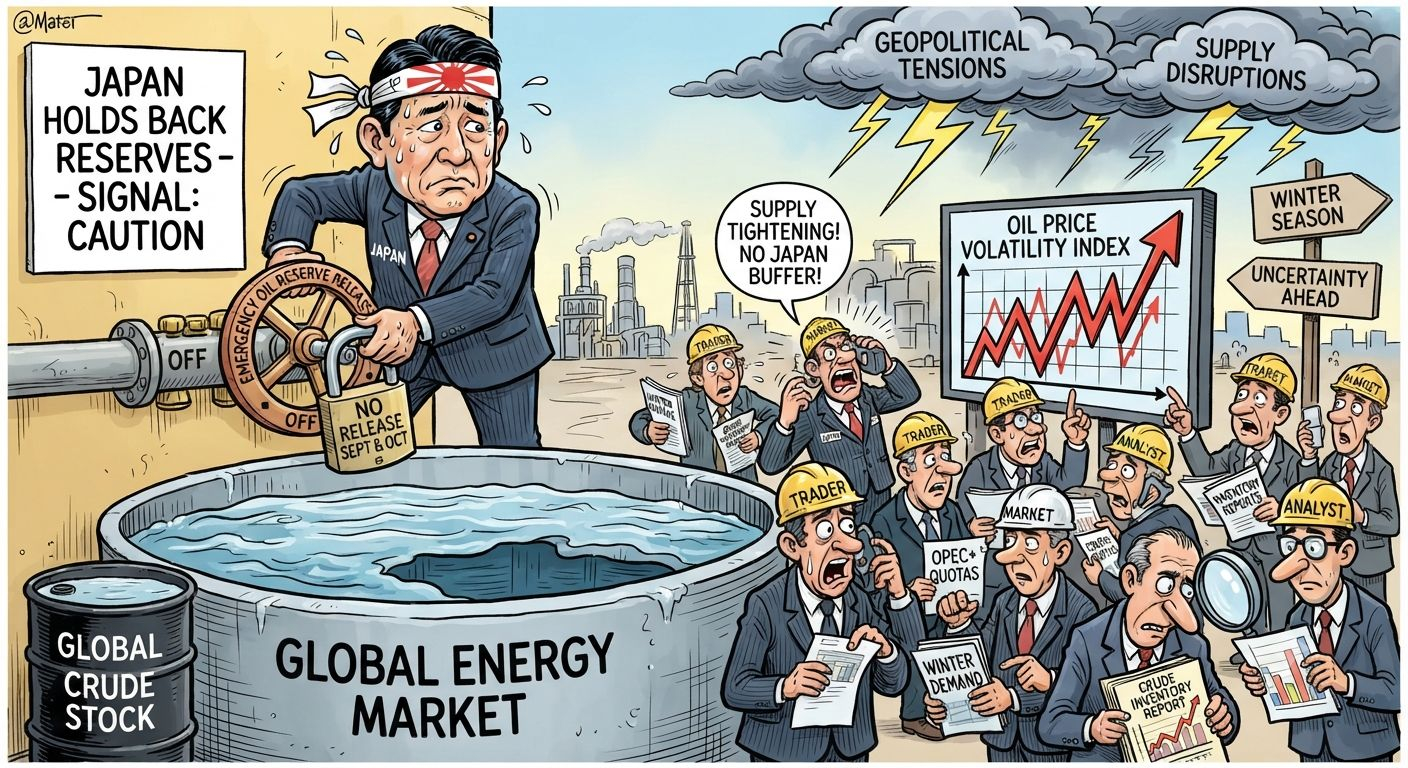
#JapanNoAdditionalOilReserveReleaseInSepOct
Japan has officially decided to withhold any additional emergency oil reserve releases for September and October, sending a clear and cautious signal to global energy markets.
This choice leaves a notable gap in potential supply buffers as traders carefully watch how autumn inventories will unfold. Without extra barrels flowing from strategic stockpiles, global energy markets remain highly sensitive to any sudden supply disruptions or shifts in geopolitical stability.
Market focus has now shifted entirely toward core market fundamentals, including upcoming crude inventory reports, overall OPEC+ production quotas, and shifting global demand patterns heading into the winter season. Energy analysts emphasize that monitoring these physical stock levels will be crucial for navigating short-term price volatility. As supplies tighten, traders should prepare for potential price swings across major energy and commodity sectors.
#BinanceSquare #OilMarkets #EnergyNews #CryptoTrading
$CL
{future}(CLUSDT)
$ONG
{future}(ONGUSDT)
$TAC
{future}(TACUSDT)
#JapanNoAdditionalOilReserveReleaseInSepOct
Japan has officially decided to withhold any additional emergency oil reserve releases for September and October, sending a clear and cautious signal to global energy markets.
This choice leaves a notable gap in potential supply buffers as traders carefully watch how autumn inventories will unfold. Without extra barrels flowing from strategic stockpiles, global energy markets remain highly sensitive to any sudden supply disruptions or shifts in geopolitical stability.
Market focus has now shifted entirely toward core market fundamentals, including upcoming crude inventory reports, overall OPEC+ production quotas, and shifting global demand patterns heading into the winter season. Energy analysts emphasize that monitoring these physical stock levels will be crucial for navigating short-term price volatility. As supplies tighten, traders should prepare for potential price swings across major energy and commodity sectors.
#BinanceSquare #OilMarkets #EnergyNews #CryptoTrading
$CL
$ONG
$TAC
Japan has officially decided to withhold any additional emergency oil reserve releases for September and October, sending a clear and cautious signal to global energy markets.
This choice leaves a notable gap in potential supply buffers as traders carefully watch how autumn inventories will unfold. Without extra barrels flowing from strategic stockpiles, global energy markets remain highly sensitive to any sudden supply disruptions or shifts in geopolitical stability.
Market focus has now shifted entirely toward core market fundamentals, including upcoming crude inventory reports, overall OPEC+ production quotas, and shifting global demand patterns heading into the winter season. Energy analysts emphasize that monitoring these physical stock levels will be crucial for navigating short-term price volatility. As supplies tighten, traders should prepare for potential price swings across major energy and commodity sectors.
#BinanceSquare #OilMarkets #EnergyNews #CryptoTrading
$CL
$ONG
$TAC
14

·
--
Bearish
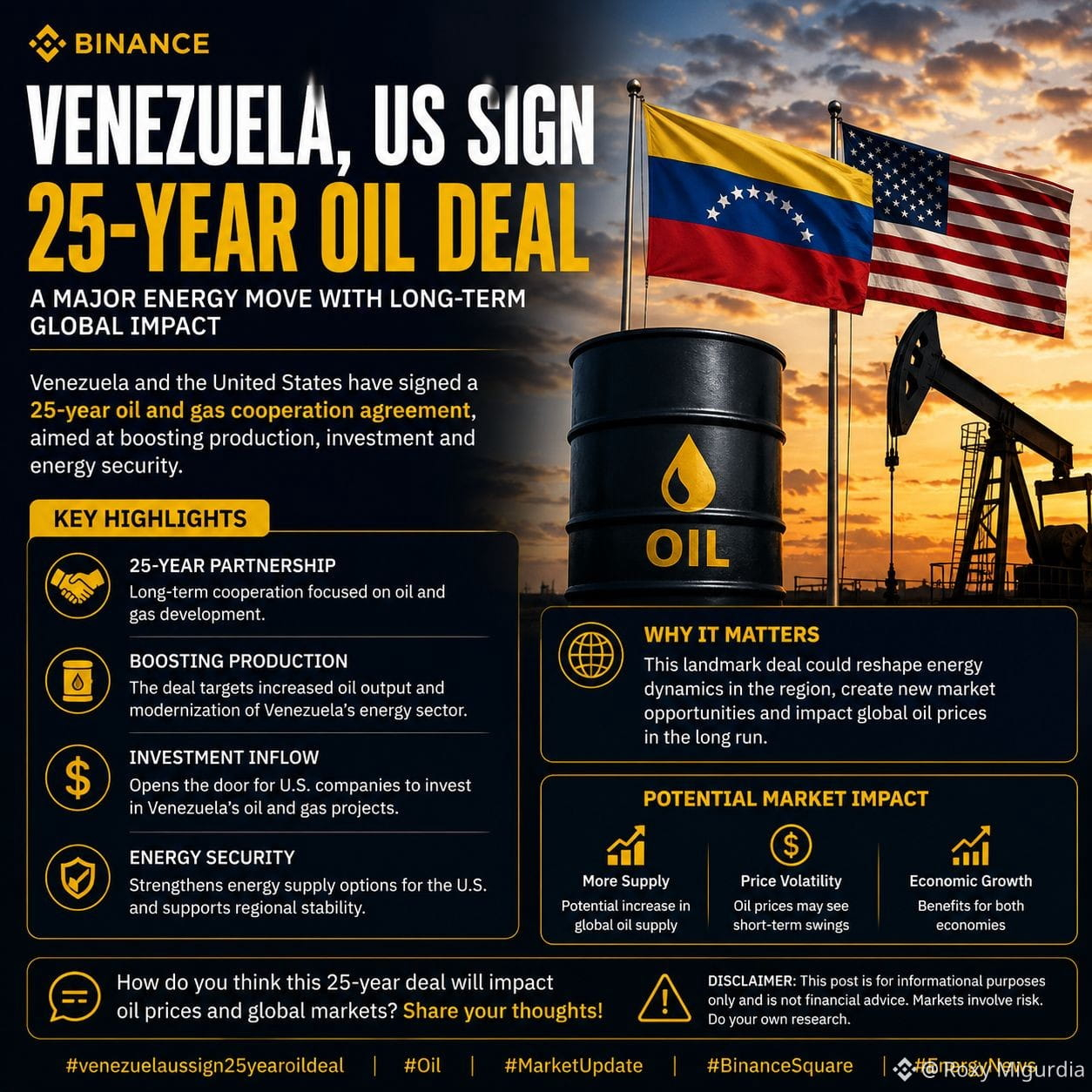
🇻🇪🇺🇸 VENEZUELA–U.S. SIGN 25-YEAR OIL DEAL
A major development in the global energy market is unfolding as Venezuela and the United States move forward with a 25-year energy agreement aimed at expanding Venezuela’s oil production and attracting investment.
Key Highlights
🛢️ 25-Year Agreement
The deal is expected to remain in effect for 25 years and focuses on long-term development of Venezuela’s energy sector.
📈 Production Target
Venezuela says the agreement includes plans to develop 17 strategic oil fields, with production targeted at more than 1.5 million barrels per day.
💰 Investment & Revenue
The agreement is designed to bring additional investment and help revive Venezuela’s underperforming oil industry. Venezuelan officials said around $19 per barrel could flow directly to the government.
🌎 Global Market Impact
Venezuela holds some of the world’s largest proven oil reserves. Greater production could eventually affect global oil supply, prices and energy security, although the scale and timing of any impact remain uncertain.
Why Crypto Traders Should Watch This
Oil is closely connected to inflation, currency markets, interest-rate expectations and global risk sentiment. Any major change in oil supply could therefore create broader effects across financial markets.
Could this deal push global oil prices lower over the long term? 👇
Share your view and follow for more market-moving developments.
⚠️ This post is for informational purposes only and is not financial advice. Markets involve risk. Do your own research.
.
.
.
.
.
#VenezuelaUSSign25YearOilDeal #Oil #EnergyNews #BinanceSquare #MarketUpdate
🇻🇪🇺🇸 VENEZUELA–U.S. SIGN 25-YEAR OIL DEAL
A major development in the global energy market is unfolding as Venezuela and the United States move forward with a 25-year energy agreement aimed at expanding Venezuela’s oil production and attracting investment.
Key Highlights
🛢️ 25-Year Agreement
The deal is expected to remain in effect for 25 years and focuses on long-term development of Venezuela’s energy sector.
📈 Production Target
Venezuela says the agreement includes plans to develop 17 strategic oil fields, with production targeted at more than 1.5 million barrels per day.
💰 Investment & Revenue
The agreement is designed to bring additional investment and help revive Venezuela’s underperforming oil industry. Venezuelan officials said around $19 per barrel could flow directly to the government.
🌎 Global Market Impact
Venezuela holds some of the world’s largest proven oil reserves. Greater production could eventually affect global oil supply, prices and energy security, although the scale and timing of any impact remain uncertain.
Why Crypto Traders Should Watch This
Oil is closely connected to inflation, currency markets, interest-rate expectations and global risk sentiment. Any major change in oil supply could therefore create broader effects across financial markets.
Could this deal push global oil prices lower over the long term? 👇
Share your view and follow for more market-moving developments.
⚠️ This post is for informational purposes only and is not financial advice. Markets involve risk. Do your own research.
.
.
.
.
.
#VenezuelaUSSign25YearOilDeal #Oil #EnergyNews #BinanceSquare #MarketUpdate
A major development in the global energy market is unfolding as Venezuela and the United States move forward with a 25-year energy agreement aimed at expanding Venezuela’s oil production and attracting investment.
Key Highlights
🛢️ 25-Year Agreement
The deal is expected to remain in effect for 25 years and focuses on long-term development of Venezuela’s energy sector.
📈 Production Target
Venezuela says the agreement includes plans to develop 17 strategic oil fields, with production targeted at more than 1.5 million barrels per day.
💰 Investment & Revenue
The agreement is designed to bring additional investment and help revive Venezuela’s underperforming oil industry. Venezuelan officials said around $19 per barrel could flow directly to the government.
🌎 Global Market Impact
Venezuela holds some of the world’s largest proven oil reserves. Greater production could eventually affect global oil supply, prices and energy security, although the scale and timing of any impact remain uncertain.
Why Crypto Traders Should Watch This
Oil is closely connected to inflation, currency markets, interest-rate expectations and global risk sentiment. Any major change in oil supply could therefore create broader effects across financial markets.
Could this deal push global oil prices lower over the long term? 👇
Share your view and follow for more market-moving developments.
⚠️ This post is for informational purposes only and is not financial advice. Markets involve risk. Do your own research.
.
.
.
.
.
#VenezuelaUSSign25YearOilDeal #Oil #EnergyNews #BinanceSquare #MarketUpdate
60

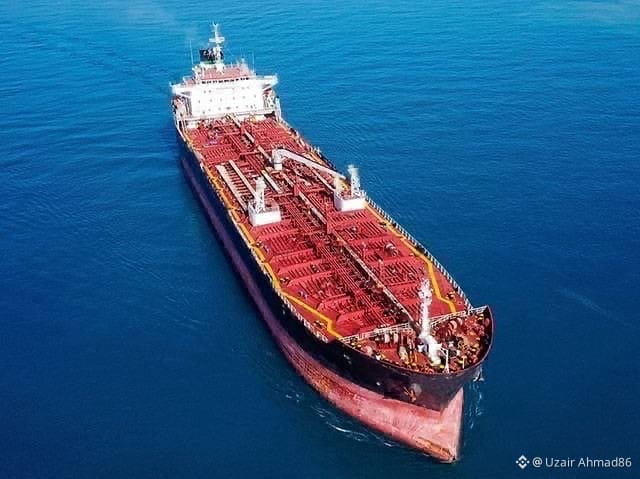
🚨 BREAKING: 🇺🇸🇮🇷
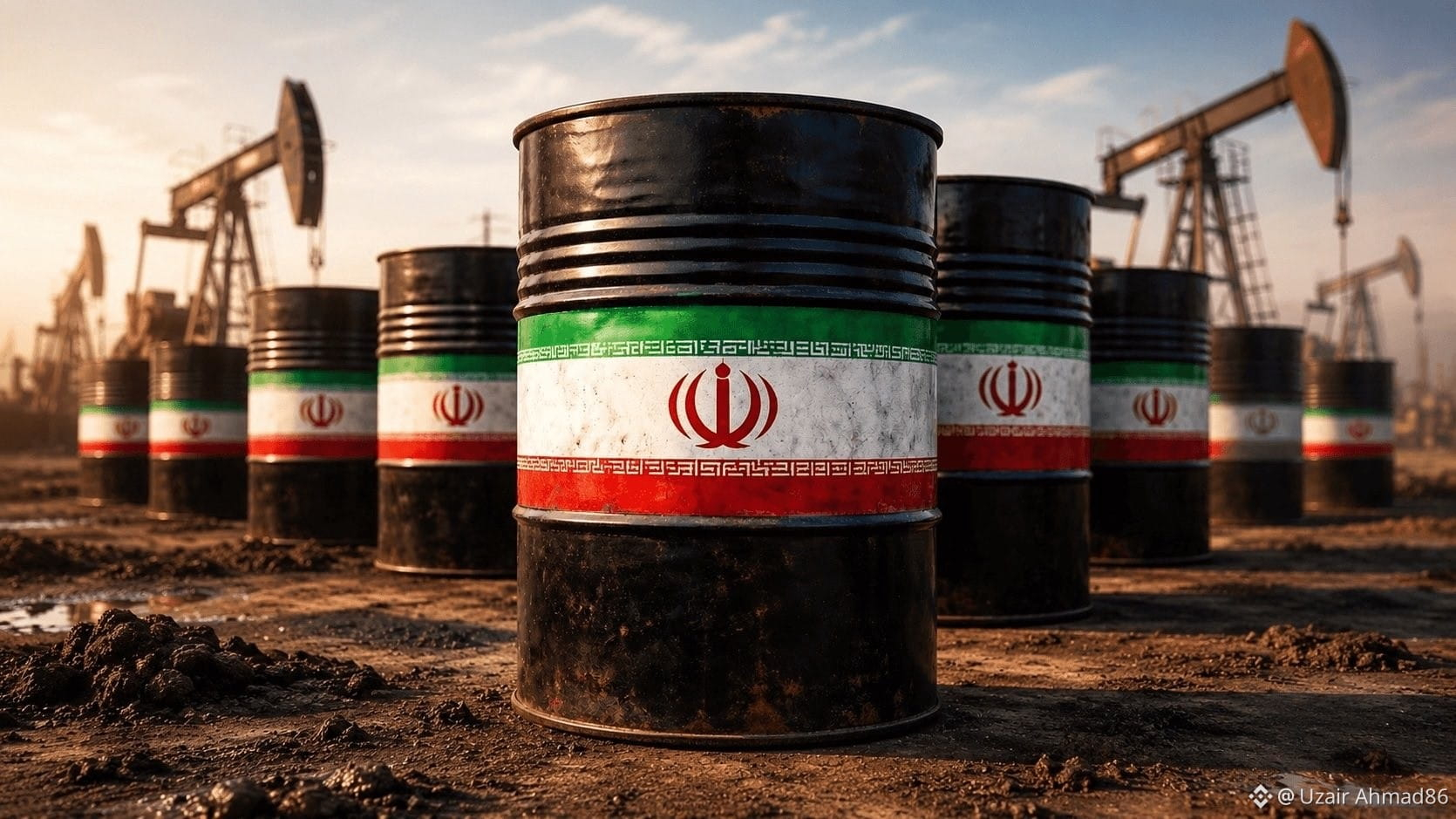
Iran successfully resumes crude oil exports after a two-month pause, signaling renewed momentum in global energy markets. 🌍🛢️
As shipments begin moving again, investors are closely watching the impact on oil prices, regional dynamics, and the broader economic landscape. The energy game is shifting once more. $JELLYJELLY
{future}(JELLYJELLYUSDT)
$TRIA
{future}(TRIAUSDT)
$BANANAS31
{future}(BANANAS31USDT)
⚡📈
#Iran #CrudeOil #OilMarket #EnergyNews #GlobalMarkets
🚨 BREAKING: 🇺🇸🇮🇷
Iran successfully resumes crude oil exports after a two-month pause, signaling renewed momentum in global energy markets. 🌍🛢️
As shipments begin moving again, investors are closely watching the impact on oil prices, regional dynamics, and the broader economic landscape. The energy game is shifting once more. $JELLYJELLY
$TRIA
$BANANAS31
⚡📈
#Iran #CrudeOil #OilMarket #EnergyNews #GlobalMarkets
Iran successfully resumes crude oil exports after a two-month pause, signaling renewed momentum in global energy markets. 🌍🛢️
As shipments begin moving again, investors are closely watching the impact on oil prices, regional dynamics, and the broader economic landscape. The energy game is shifting once more. $JELLYJELLY
$TRIA
$BANANAS31
⚡📈
#Iran #CrudeOil #OilMarket #EnergyNews #GlobalMarkets
142
·
--
Bullish
A major rift appears to be emerging within OPEC, raising fresh concerns about the stability of global oil markets.
Internal disagreements among member states over production policies, market strategy, and geopolitical alignments are beginning to surface at a critical time for the energy sector.
As the world continues to grapple with economic uncertainty and shifting energy demands, any division within OPEC could significantly impact oil prices and supply chains worldwide.
Analysts warn that prolonged discord within the group may weaken its influence over global energy markets and open the door for increased competition from non-OPEC producers.
This development comes amid heightened geopolitical tensions and an evolving global energy landscape, making unity within OPEC more crucial than ever.
The coming weeks will be critical in determining whether the alliance can maintain cohesion or face deeper fractures that could reshape the global energy order.
🔗 Reference: Reuters
Stay updated: https://www.reuters.com/�
#OPEC #OilMarkets #EnergyCrisis #OilPrices #EnergyNews
$BTC $ETH $BNB
A major rift appears to be emerging within OPEC, raising fresh concerns about the stability of global oil markets.
Internal disagreements among member states over production policies, market strategy, and geopolitical alignments are beginning to surface at a critical time for the energy sector.
As the world continues to grapple with economic uncertainty and shifting energy demands, any division within OPEC could significantly impact oil prices and supply chains worldwide.
Analysts warn that prolonged discord within the group may weaken its influence over global energy markets and open the door for increased competition from non-OPEC producers.
This development comes amid heightened geopolitical tensions and an evolving global energy landscape, making unity within OPEC more crucial than ever.
The coming weeks will be critical in determining whether the alliance can maintain cohesion or face deeper fractures that could reshape the global energy order.
🔗 Reference: Reuters
Stay updated: https://www.reuters.com/�
#OPEC #OilMarkets #EnergyCrisis #OilPrices #EnergyNews
$BTC $ETH $BNB
Internal disagreements among member states over production policies, market strategy, and geopolitical alignments are beginning to surface at a critical time for the energy sector.
As the world continues to grapple with economic uncertainty and shifting energy demands, any division within OPEC could significantly impact oil prices and supply chains worldwide.
Analysts warn that prolonged discord within the group may weaken its influence over global energy markets and open the door for increased competition from non-OPEC producers.
This development comes amid heightened geopolitical tensions and an evolving global energy landscape, making unity within OPEC more crucial than ever.
The coming weeks will be critical in determining whether the alliance can maintain cohesion or face deeper fractures that could reshape the global energy order.
🔗 Reference: Reuters
Stay updated: https://www.reuters.com/�
#OPEC #OilMarkets #EnergyCrisis #OilPrices #EnergyNews
$BTC $ETH $BNB

74
Log in to explore more content
Join global crypto users on Binance Square
⚡️ Get latest and useful information about crypto.
💬 Trusted by the world’s largest crypto exchange.
👍 Discover real insights from verified creators.
Email / Phone number
Trending Topics
1
#NFPWatch
10.8M views
19,014 Discussing
2
#BitcoinFundingRateTriplesTo10%
116,987 views
1,008 Discussing
3
#BitcoinSurpasses$86KUp2.99%
35,320 views
97 Discussing
4
#ZcashFalls21%FromSeptemberPeak
68,512 views
760 Discussing
5
#USSeptemberPayrollsAdd29KUnemploymentRises4.2%
56,843 views
451 Discussing
6
#XRPPostsFirstThreeGreenMonthsInQ3
45,410 views
632 Discussing
7
#BNBChainTokenizedStocksTop$1BAt30%Share
19,996 views
32 Discussing
8
#BitcoinRisesToward$85K
103,619 views
147 Discussing
9
#AmazonPlansToSell$8BNvidiaChips
7,399 views
88 Discussing
10
#NEARFallsToAround$4.70Down14%
46,808 views
115 Discussing