
#eip8288
eip8288
499 views
6 Discussing
Hot
Latest

·
--
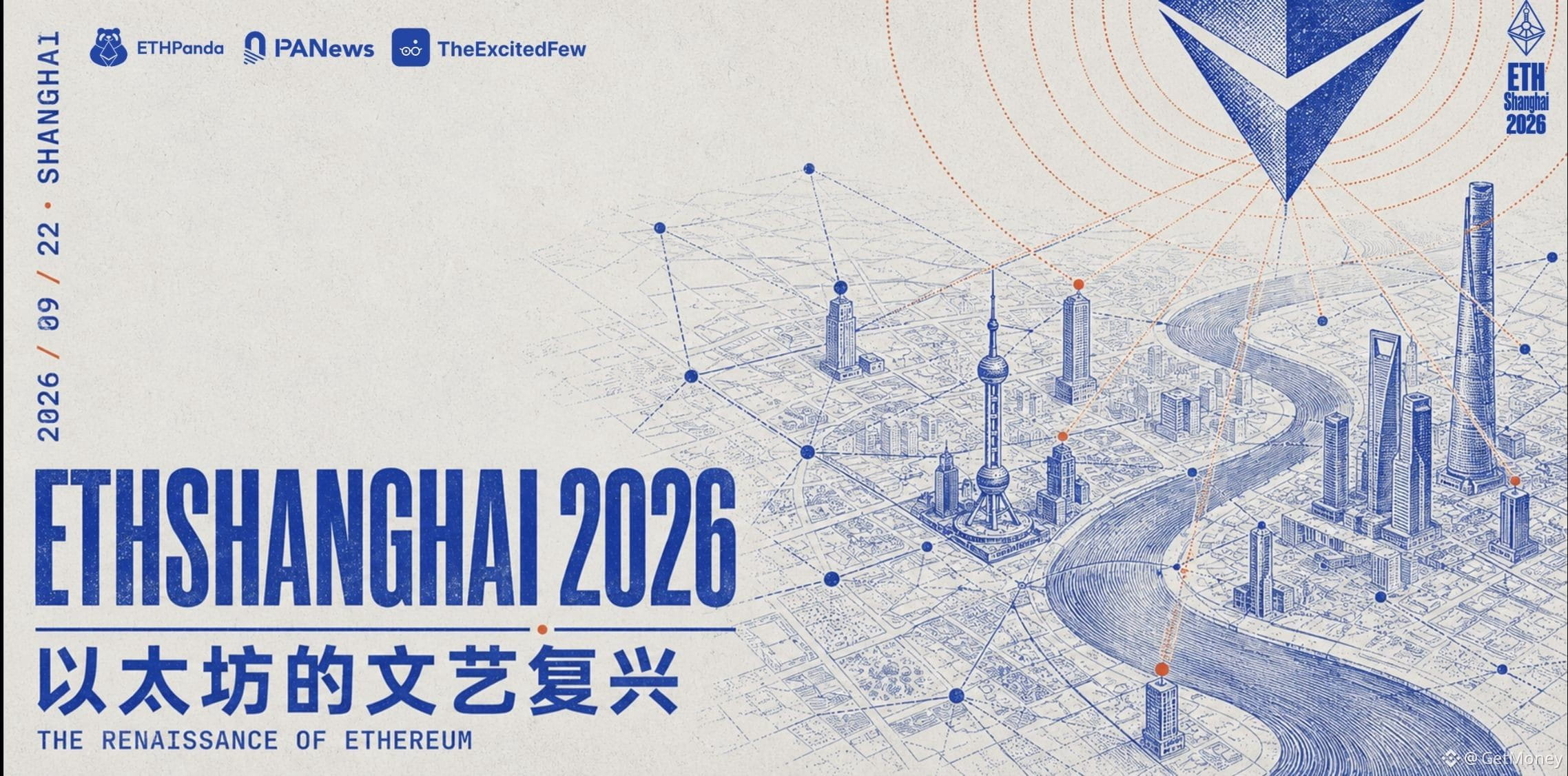
📰 At ETHShanghai 2026, Vitalik detailed EIP-8288. The core idea isn’t to build yet another more complex on-chain verification system, but to keep a large number of signatures and proofs in the mempool for aggregation first—then write only a single aggregated proof into the block.
🔥 Now, a typical Ethereum transaction consumes about 21,000 gas, while verifying a single ECDSA signature alone requires around 4,000 gas. With quantum-safe signatures, costs could rise to 100,000–300,000 gas. For privacy protocols, ZK operations usually cost at least 350,000 gas, and in complex cases even up to 1,000,000 gas.
Even more extreme: if you pursue both quantum safety and privacy at the same time, STARK proofs can consume roughly 8 million gas. Based on the estimates in the talk, Ethereum’s throughput could drop from about 25 TPS to around 0.25 TPS—the stronger the security and privacy, the harder transactions become to run.
💡 EIP-8288’s approach is to have mempool nodes collect transactions along with their signatures and proofs, perform aggregation before the transactions enter the block. The chain no longer stores these huge original objects; in the end, it only verifies one STARK proof that covers the entire batch of transactions. Each dependency’s data takes up about 96 bytes, and some are even as small as 65 bytes.
This design builds on EIP-8141 native account abstraction. Transactions can clearly declare their signature schemes and verification algorithms. Vitalik likened it to a kind of “specialized sharding”: split out the heaviest verification work, handle it in parallel off-chain by nodes, while the consensus layer only needs to manage the data volume—kept to roughly 100–300 KB per block.
🤔 Of course, having a clear technical path doesn’t mean all problems will automatically disappear after deployment. The real key is whether the aggregation process can run reliably, and whether nodes are willing to take on this off-chain computation. Do you think EIP-8288 will first drive privacy applications, or quantum-safe wallets?
#以太坊 #EIP8288 #Vitalik #区块链技术
📰 At ETHShanghai 2026, Vitalik detailed EIP-8288. The core idea isn’t to build yet another more complex on-chain verification system, but to keep a large number of signatures and proofs in the mempool for aggregation first—then write only a single aggregated proof into the block.
🔥 Now, a typical Ethereum transaction consumes about 21,000 gas, while verifying a single ECDSA signature alone requires around 4,000 gas. With quantum-safe signatures, costs could rise to 100,000–300,000 gas. For privacy protocols, ZK operations usually cost at least 350,000 gas, and in complex cases even up to 1,000,000 gas.
Even more extreme: if you pursue both quantum safety and privacy at the same time, STARK proofs can consume roughly 8 million gas. Based on the estimates in the talk, Ethereum’s throughput could drop from about 25 TPS to around 0.25 TPS—the stronger the security and privacy, the harder transactions become to run.
💡 EIP-8288’s approach is to have mempool nodes collect transactions along with their signatures and proofs, perform aggregation before the transactions enter the block. The chain no longer stores these huge original objects; in the end, it only verifies one STARK proof that covers the entire batch of transactions. Each dependency’s data takes up about 96 bytes, and some are even as small as 65 bytes.
This design builds on EIP-8141 native account abstraction. Transactions can clearly declare their signature schemes and verification algorithms. Vitalik likened it to a kind of “specialized sharding”: split out the heaviest verification work, handle it in parallel off-chain by nodes, while the consensus layer only needs to manage the data volume—kept to roughly 100–300 KB per block.
🤔 Of course, having a clear technical path doesn’t mean all problems will automatically disappear after deployment. The real key is whether the aggregation process can run reliably, and whether nodes are willing to take on this off-chain computation. Do you think EIP-8288 will first drive privacy applications, or quantum-safe wallets?
#以太坊 #EIP8288 #Vitalik #区块链技术
🔥 Now, a typical Ethereum transaction consumes about 21,000 gas, while verifying a single ECDSA signature alone requires around 4,000 gas. With quantum-safe signatures, costs could rise to 100,000–300,000 gas. For privacy protocols, ZK operations usually cost at least 350,000 gas, and in complex cases even up to 1,000,000 gas.
Even more extreme: if you pursue both quantum safety and privacy at the same time, STARK proofs can consume roughly 8 million gas. Based on the estimates in the talk, Ethereum’s throughput could drop from about 25 TPS to around 0.25 TPS—the stronger the security and privacy, the harder transactions become to run.
💡 EIP-8288’s approach is to have mempool nodes collect transactions along with their signatures and proofs, perform aggregation before the transactions enter the block. The chain no longer stores these huge original objects; in the end, it only verifies one STARK proof that covers the entire batch of transactions. Each dependency’s data takes up about 96 bytes, and some are even as small as 65 bytes.
This design builds on EIP-8141 native account abstraction. Transactions can clearly declare their signature schemes and verification algorithms. Vitalik likened it to a kind of “specialized sharding”: split out the heaviest verification work, handle it in parallel off-chain by nodes, while the consensus layer only needs to manage the data volume—kept to roughly 100–300 KB per block.
🤔 Of course, having a clear technical path doesn’t mean all problems will automatically disappear after deployment. The real key is whether the aggregation process can run reliably, and whether nodes are willing to take on this off-chain computation. Do you think EIP-8288 will first drive privacy applications, or quantum-safe wallets?
#以太坊 #EIP8288 #Vitalik #区块链技术

86

Verified
Article
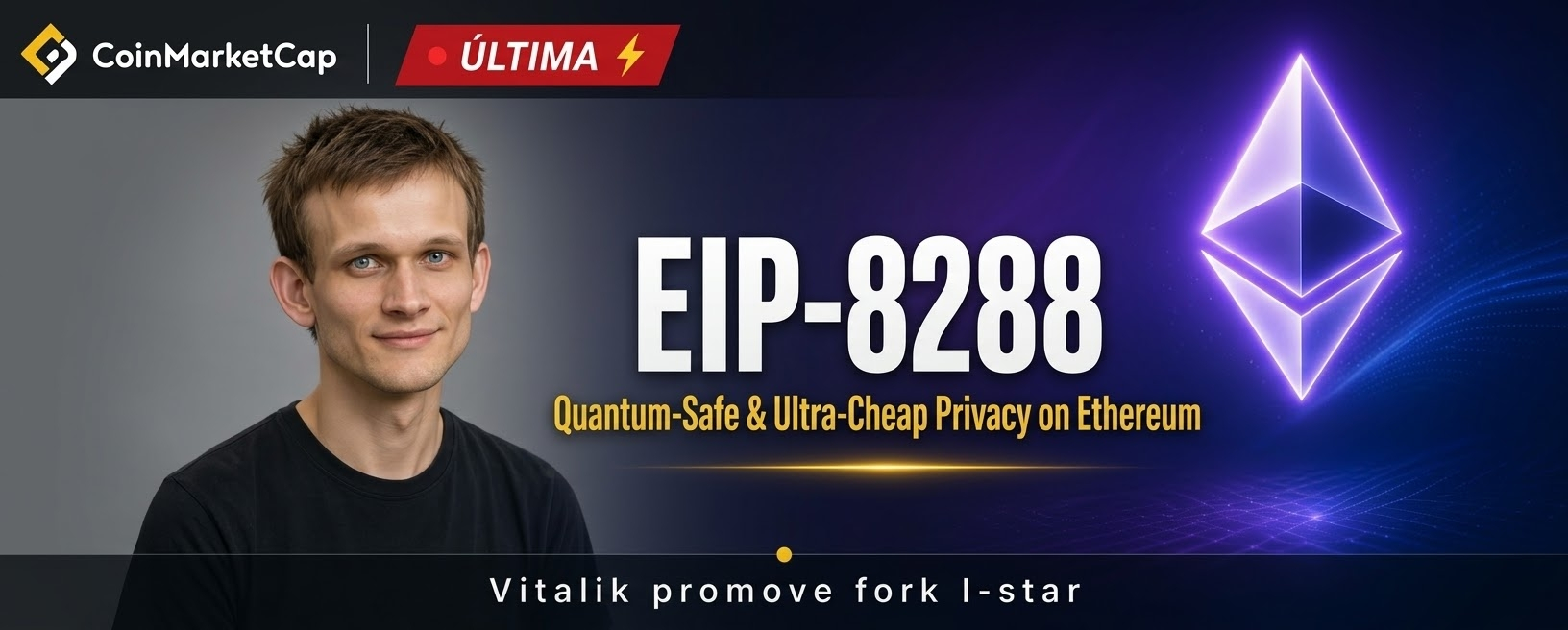
Vitalik wants to make privacy and cheap quantum signatures on EthereumOn September 9, 2026, Vitalik Buterin published on X a post that quickly circulated through the crypto market. In it, the Ethereum co-founder highlighted EIP-8288 and said he expects to see it included in I-star — the hard fork planned after Hegota. According to him, the proposal would unlock “extreme amounts of power,” especially in quantum-resistant signatures and in privacy protocols.
The CoinMarketCap text, which went viral in Portuguese, captured the essence well: ultra-cheap quantum-proof signatures and private transactions at a fraction of the current gas cost. But what exactly is at stake?
Vitalik wants to make privacy and cheap quantum signatures on Ethereum
On September 9, 2026, Vitalik Buterin published on X a post that quickly circulated through the crypto market. In it, the Ethereum co-founder highlighted EIP-8288 and said he expects to see it included in I-star — the hard fork planned after Hegota. According to him, the proposal would unlock “extreme amounts of power,” especially in quantum-resistant signatures and in privacy protocols.
The CoinMarketCap text, which went viral in Portuguese, captured the essence well: ultra-cheap quantum-proof signatures and private transactions at a fraction of the current gas cost. But what exactly is at stake?
The CoinMarketCap text, which went viral in Portuguese, captured the essence well: ultra-cheap quantum-proof signatures and private transactions at a fraction of the current gas cost. But what exactly is at stake?
1
568

🚀 $ETH SET TO SLASH GAS WITH RECURSIVE STARK MEMPOOL! 🟢
📊 Vitalik’s EIP‑8288 pushes signatures and proofs out of the core, letting nodes batch STARKs in the mempool. The result? Quantum‑safe transactions could tumble from 10 M Gas to mere tens of thousands, opening the door for Falcon, ML‑DSA and private account abstraction without a single EVM tweak. 🌊
⚡ This low‑overhead design (≈100‑300 KB per block + 96 bytes per statement) is a classic smart‑money play, priming the network for RISC‑V‑based recursive proof engines and a fresh wave of privacy‑first dApps. 🦈
💬 How will this reshape your $ETH strategy in the next upgrade cycle? 👇
⚠️ Not financial advice. Always manage your risk. 🛡️
🏷️ #ETH #EIP8288 #Scaling #Crypto
🔥 💎
🚀 $ETH SET TO SLASH GAS WITH RECURSIVE STARK MEMPOOL! 🟢
📊 Vitalik’s EIP‑8288 pushes signatures and proofs out of the core, letting nodes batch STARKs in the mempool. The result? Quantum‑safe transactions could tumble from 10 M Gas to mere tens of thousands, opening the door for Falcon, ML‑DSA and private account abstraction without a single EVM tweak. 🌊
⚡ This low‑overhead design (≈100‑300 KB per block + 96 bytes per statement) is a classic smart‑money play, priming the network for RISC‑V‑based recursive proof engines and a fresh wave of privacy‑first dApps. 🦈
💬 How will this reshape your $ETH strategy in the next upgrade cycle? 👇
⚠️ Not financial advice. Always manage your risk. 🛡️
🏷️ #ETH #EIP8288 #Scaling #Crypto
🔥 💎
📊 Vitalik’s EIP‑8288 pushes signatures and proofs out of the core, letting nodes batch STARKs in the mempool. The result? Quantum‑safe transactions could tumble from 10 M Gas to mere tens of thousands, opening the door for Falcon, ML‑DSA and private account abstraction without a single EVM tweak. 🌊
⚡ This low‑overhead design (≈100‑300 KB per block + 96 bytes per statement) is a classic smart‑money play, priming the network for RISC‑V‑based recursive proof engines and a fresh wave of privacy‑first dApps. 🦈
💬 How will this reshape your $ETH strategy in the next upgrade cycle? 👇
⚠️ Not financial advice. Always manage your risk. 🛡️
🏷️ #ETH #EIP8288 #Scaling #Crypto
🔥 💎
34

·
--
Vitalik Buterin proposed implementing the EIP-8288 update in the Ethereum network, which would radically reduce the cost of private transactions. The blockchain co-founder plans to include this initiative in a hard fork scheduled immediately after the upcoming Hegota upgrade.
The core of the proposal is to aggregate cryptographic proofs before transactions reach a block. According to Buterin’s calculations, this technological solution would reduce gas costs for private operations protected against quantum attacks from 10 million to tens of thousands of units. Additionally, the upgrade would simplify the integration and support of new types of digital signatures within the Ethereum ecosystem.
#EthereumUpgrades #VitalikButerin #EIP8288 #CryptoPrivacy #EthereumNews
Vitalik Buterin proposed implementing the EIP-8288 update in the Ethereum network, which would radically reduce the cost of private transactions. The blockchain co-founder plans to include this initiative in a hard fork scheduled immediately after the upcoming Hegota upgrade.
The core of the proposal is to aggregate cryptographic proofs before transactions reach a block. According to Buterin’s calculations, this technological solution would reduce gas costs for private operations protected against quantum attacks from 10 million to tens of thousands of units. Additionally, the upgrade would simplify the integration and support of new types of digital signatures within the Ethereum ecosystem.
#EthereumUpgrades #VitalikButerin #EIP8288 #CryptoPrivacy #EthereumNews
The core of the proposal is to aggregate cryptographic proofs before transactions reach a block. According to Buterin’s calculations, this technological solution would reduce gas costs for private operations protected against quantum attacks from 10 million to tens of thousands of units. Additionally, the upgrade would simplify the integration and support of new types of digital signatures within the Ethereum ecosystem.
#EthereumUpgrades #VitalikButerin #EIP8288 #CryptoPrivacy #EthereumNews
1
383

·
--
🚀 $ETH RECURSIVE STARK MEMPOOL UNVEILS QUANTUM‑SAFE EDGE 💎
📊 Vitalik’s EIP‑8288 pushes signature aggregation out of the execution core, letting smart‑money nodes batch STARK proofs in the mempool. This recursive design slashes on‑chain computation, turning a 10 M‑gas quantum‑safe transaction into a few‑tens‑of‑thousands gas – a liquidity‑friendly shift that institutional builders can’t ignore. 🦈
⚡ By off‑loading proofs, block builders gain a leaner data footprint (≈ 100‑300 KB per block) and pave the way for RISC‑V as the native ISA for recursive STARKs. Expect private account abstraction and new proof schemes to accelerate, reshaping order flow dynamics. 📌
💬 How will this cost compression alter your allocation to privacy‑focused dApps? 👇
⚠️ Not financial advice. Always manage your risk. 🛡️
🏷️ #ETH #EIP8288 #Ethereum #Layer2 #Crypto
🦈 🚀
🚀 $ETH RECURSIVE STARK MEMPOOL UNVEILS QUANTUM‑SAFE EDGE 💎
📊 Vitalik’s EIP‑8288 pushes signature aggregation out of the execution core, letting smart‑money nodes batch STARK proofs in the mempool. This recursive design slashes on‑chain computation, turning a 10 M‑gas quantum‑safe transaction into a few‑tens‑of‑thousands gas – a liquidity‑friendly shift that institutional builders can’t ignore. 🦈
⚡ By off‑loading proofs, block builders gain a leaner data footprint (≈ 100‑300 KB per block) and pave the way for RISC‑V as the native ISA for recursive STARKs. Expect private account abstraction and new proof schemes to accelerate, reshaping order flow dynamics. 📌
💬 How will this cost compression alter your allocation to privacy‑focused dApps? 👇
⚠️ Not financial advice. Always manage your risk. 🛡️
🏷️ #ETH #EIP8288 #Ethereum #Layer2 #Crypto
🦈 🚀
📊 Vitalik’s EIP‑8288 pushes signature aggregation out of the execution core, letting smart‑money nodes batch STARK proofs in the mempool. This recursive design slashes on‑chain computation, turning a 10 M‑gas quantum‑safe transaction into a few‑tens‑of‑thousands gas – a liquidity‑friendly shift that institutional builders can’t ignore. 🦈
⚡ By off‑loading proofs, block builders gain a leaner data footprint (≈ 100‑300 KB per block) and pave the way for RISC‑V as the native ISA for recursive STARKs. Expect private account abstraction and new proof schemes to accelerate, reshaping order flow dynamics. 📌
💬 How will this cost compression alter your allocation to privacy‑focused dApps? 👇
⚠️ Not financial advice. Always manage your risk. 🛡️
🏷️ #ETH #EIP8288 #Ethereum #Layer2 #Crypto
🦈 🚀
19
Log in to explore more content
Join global crypto users on Binance Square
⚡️ Get latest and useful information about crypto.
💬 Trusted by the world’s largest crypto exchange.
👍 Discover real insights from verified creators.
Email / Phone number
Trending Topics
1
#AIStocksWhatNext
804,303 views
6,221 Discussing
2
#BitcoinRejectedAt$87,300Twice
0 views
0 Discussing
3
#BCHJumps28%OnCMEFuturesListing
3,592 views
347 Discussing
4
#WallStreetEarningsRevisionsTurnBearish
2,760 views
247 Discussing
5
#DollarIndexReclaims101
2,078 views
213 Discussing
6
#21SharesLaunchesEuropesFirstZcashETP
32,161 views
987 Discussing
7
#CardanoJoinsX402PaymentStandard
20,936 views
717 Discussing
8
#BitcoinTops$87KAtEightMonthHigh
11,325 views
127 Discussing
9
#ZECBreaksAbove$1600AtRecordHigh
7,811 views
103 Discussing
10
#BitwiseNEARStakingETPAssetsTop$100M
36,551 views
105 Discussing